



Round faces and side bangs get along better than most people think. The catch is placement. Cut the fringe too short, too dense, or too centered, and it adds width where you do not want it. Cut it with the right angle, and it pulls the eye diagonally across the face, which is the whole trick.
That diagonal line matters. It softens the widest part of the cheeks, gives the face a little more length, and keeps the bangs from sitting like a heavy curtain. The best side bangs for round faces usually start off-center, stay a touch longer than you first expect, and taper into the cheekbone or jaw instead of stopping dead at the brow.
Tiny difference. Big payoff.
The styles below cover straight hair, curls, fine hair, thick hair, bobs, lobs, pixies, and the low-maintenance versions that do not demand a round brush and a prayer every morning. A good side bang should work with your cut, not fight it. That is where the good ones live.
1. Long Side Bangs That Skim the Cheekbone
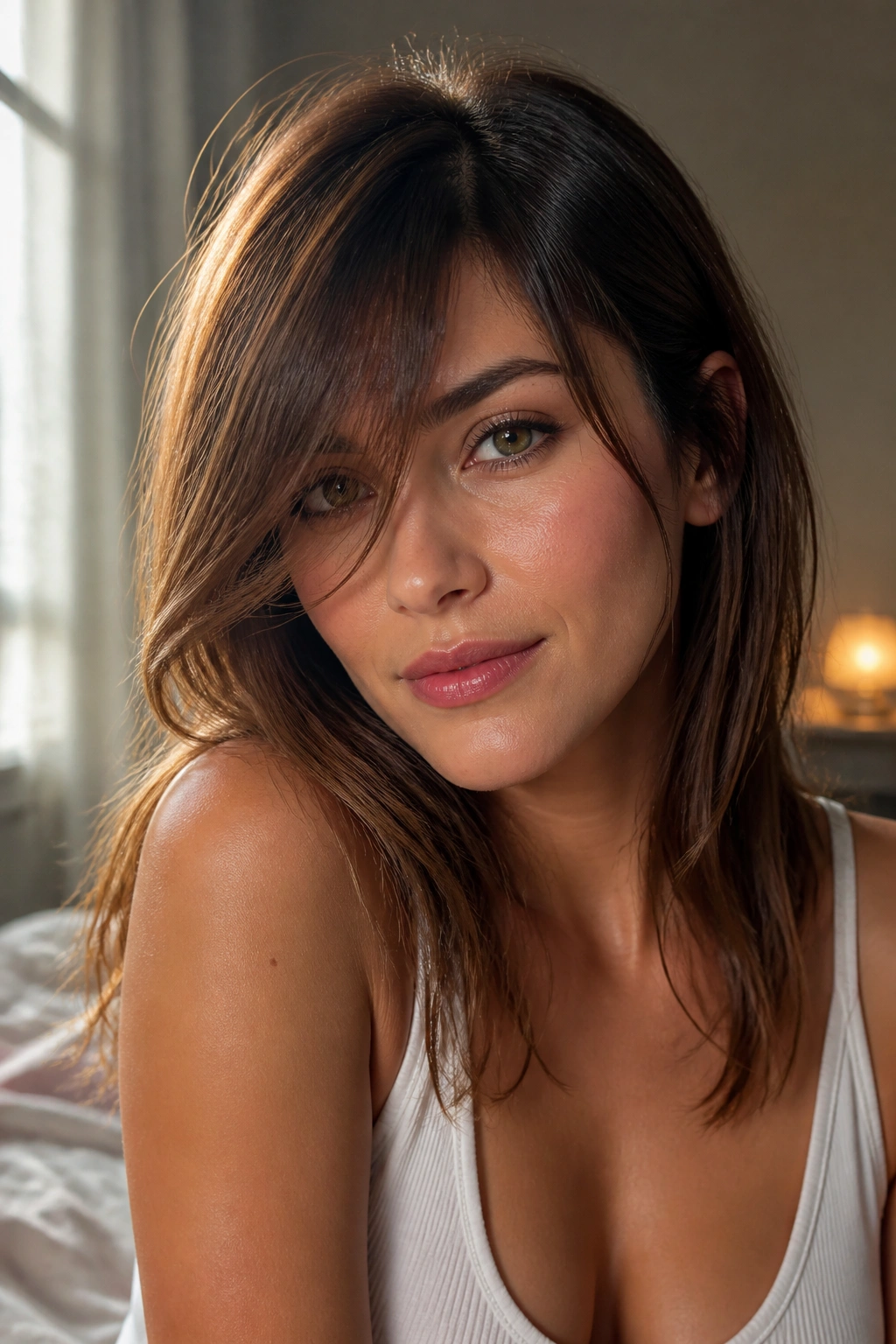
The safest place to start is longer than you think. Long side bangs that graze the cheekbone give a round face a clean diagonal line without pinning the width of the cheeks in place.
Why This Length Works
A bang that lands around the outer eye and cheekbone does two jobs at once. It breaks up the roundness near the face, and it leaves enough length to tuck behind the ear on days when you want it out of the way. That flexibility matters more than people admit.
Best starting point: just past the outer edge of the eyebrow, then angle down toward the cheekbone.
Best finish point: somewhere between the top of the cheekbone and the upper jaw.
- Keep the shortest side soft, not choppy.
- Ask for the ends to be point-cut or lightly sliced.
- Let the bang taper into the front layer instead of ending in a hard line.
- Trim every 4 to 6 weeks so the shape does not collapse into your eyes.
My strong opinion: if you are nervous, start here. Long side bangs are easier to grow out, easier to pin back, and less likely to make a round face look wider.
2. Deep Side-Swept Bangs With an Off-Center Part
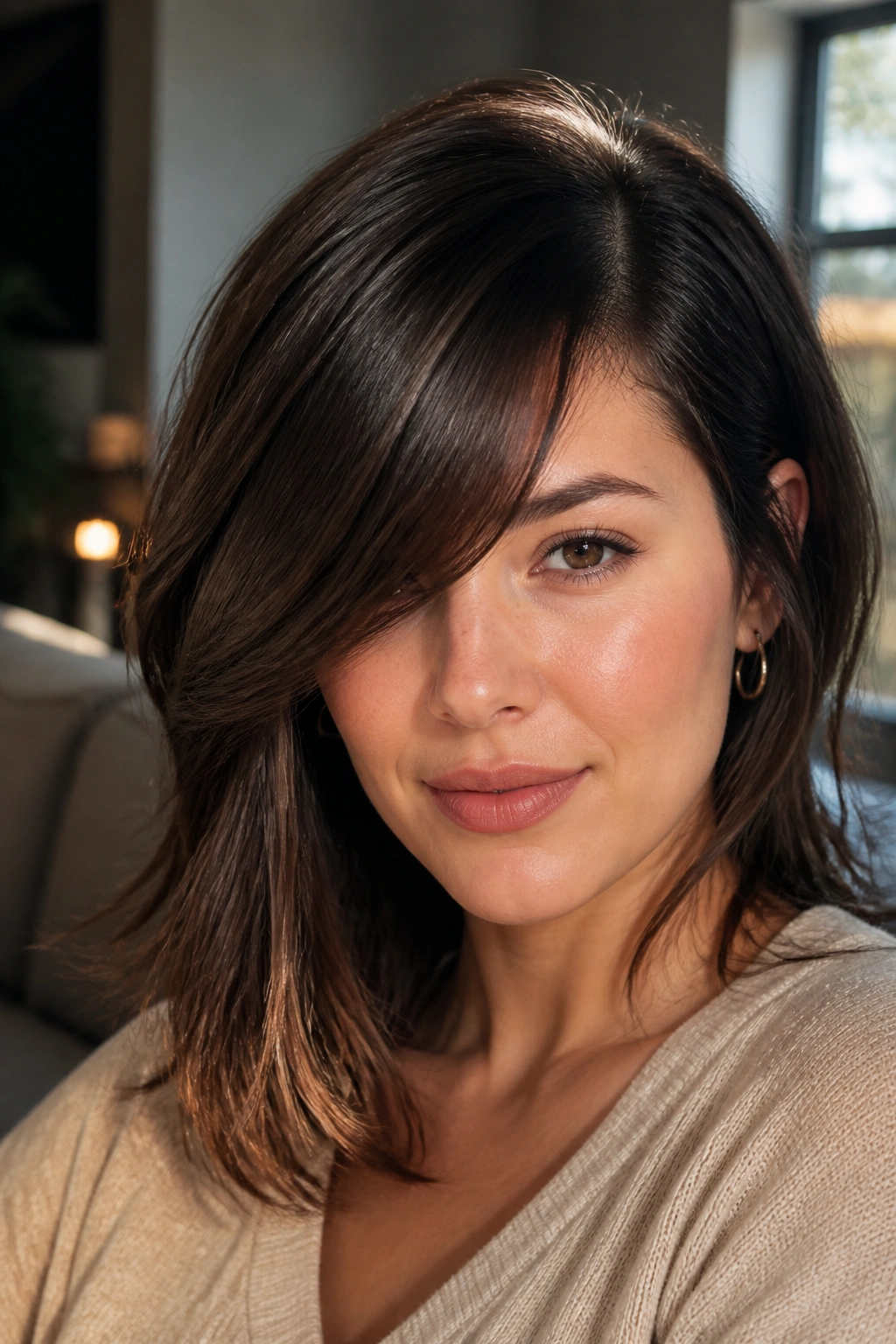
A deep side part is the easiest way to make side bangs work hard for a round face. The part itself creates height at the crown, and that little bit of lift helps lengthen the whole silhouette before the bang even starts moving.
The trick is not just moving the part. It is keeping the front section light enough to sweep across without flopping flat against the cheek. A bang that lies plastered to the face does the opposite of what you want. It widens the front instead of slimming it.
When I like this look, I like it with a blow-dry that pushes the roots up and away from the part, then bends the bang across the forehead with a round brush. Use a brush that is about 1 to 1.5 inches wide if your hair is short to medium length; bigger brushes tend to smooth too much and kill the curve. A little bend is better than a stiff swoop.
One more thing. Do not over-tease the root. A half-inch of lift is enough. Any more and the bang starts looking stiff, and stiff hair around a round face can feel strangely harsh.
3. Wispy Side Bangs That Keep Fine Hair Airy
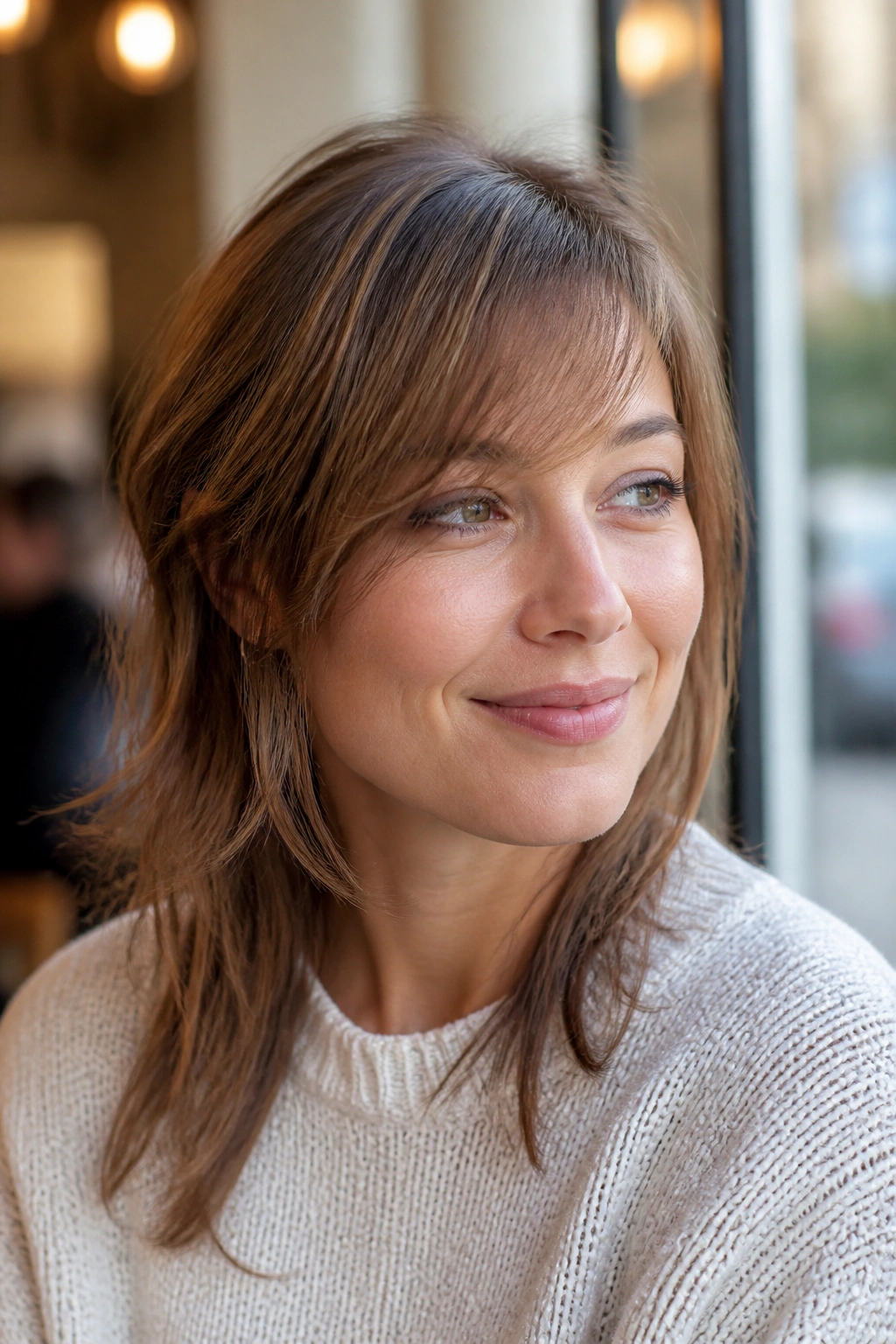
Can fine hair wear side bangs without looking sparse? Yes, but the cut has to be careful. Wispy side bangs are the answer when you want softness without losing the illusion of density.
Fine hair gets weighed down fast, so a heavy bang can turn limp by lunchtime. Wispy bangs avoid that by leaving little gaps of skin between the pieces. The eye reads movement instead of bulk, which is exactly what a round face needs from a fringe.
How to Keep Them Light, Not See-Through
Ask for a soft perimeter and avoid aggressive thinning shears. That sounds backward if you have fine hair, but too much texturizing can make the ends fray and separate in ugly little strings. Better to remove shape with clean, minimal cutting and then style with a tiny amount of mousse or root spray.
- Blow-dry the bang forward first, then sweep it sideways.
- Use a pea-sized amount of lightweight cream, not a heavy serum.
- Keep the longest strands near the cheekbone.
- If the bang starts clumping, brush it out and re-dry for 20 seconds.
The best wispy side bangs for round faces do not try to hide the forehead completely. They leave a little skin visible, which keeps the face open and the whole cut from feeling boxed in.
4. Side Bangs Paired With a Collarbone Lob
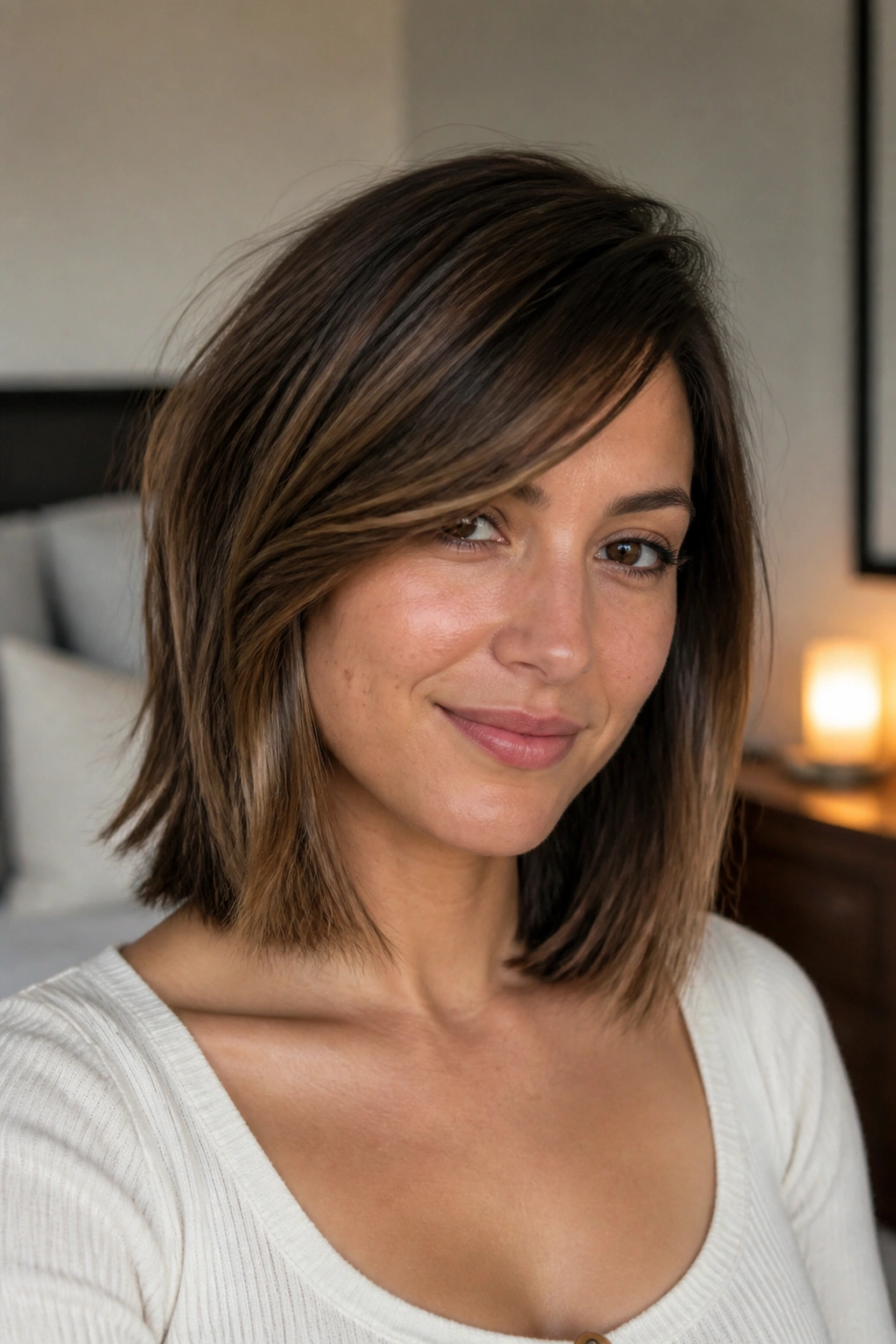
A lob can go boxy fast on a round face. Side bangs fix that if the angles are set well. The bang gives the eye something diagonal to follow, and the lob keeps the length just long enough to avoid that chin-level puffiness that sometimes happens with shorter cuts.
Picture this: hair resting at the collarbone, ends slightly beveled under, with a side bang that starts near the temple and sweeps toward the cheek. The shape looks easy, but it is doing a lot of work. It keeps the face from reading as one big circle and gives the haircut a little swing every time you turn your head.
A good version of this cut should have a touch of front layering, not a blunt wall at the cheeks. If the front of the lob is left too heavy, the bangs have to fight the shape instead of supporting it.
- Keep the front pieces 1 to 2 inches longer than the back.
- Ask for the bang to blend into those front pieces.
- Style with a slight bend under the ends, not a hard curl.
- Avoid pushing the bang too far across the forehead; soft movement is enough.
The effect is clean, not fussy. That is the sweet spot.
5. Feathered Side Bangs for Thick Hair
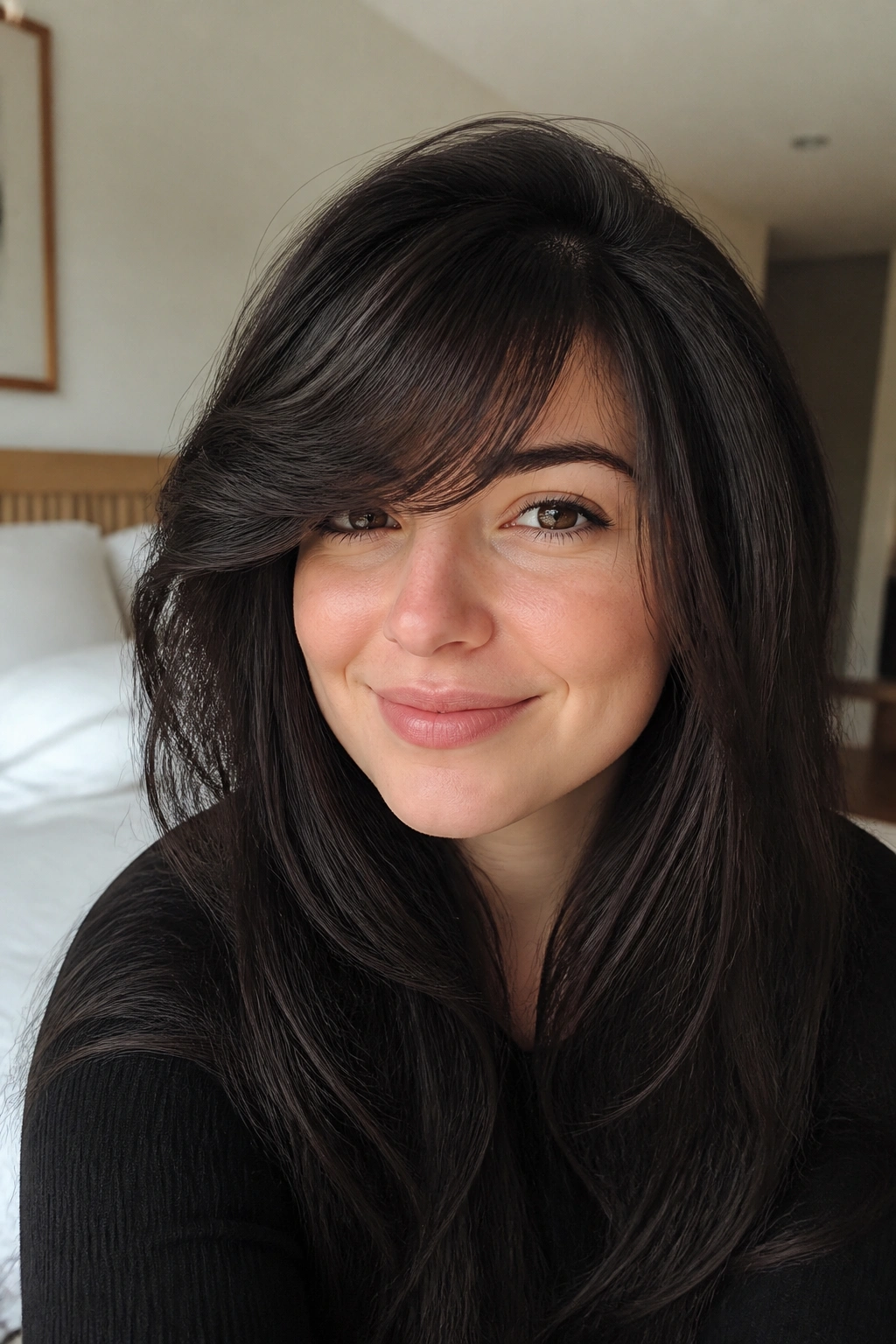
Thick hair needs room to move. If the bang is cut too full, it can sit like a slab across the face, and that is a bad match for a round shape. Feathered side bangs solve that by taking out weight in a controlled way, which lets the fringe fall in pieces instead of one solid block.
I like this style because it keeps the hair from swallowing the face. Thick hair can get bossy fast. A feathered bang calms it down without making it look thin or overprocessed. The surface should feel soft, not fuzzy, and the ends should flick rather than stab.
A good stylist will usually cut this kind of fringe with a mix of point cutting and slide cutting, especially if the hair is dense around the temple. That makes the bang bend naturally instead of sitting stiff. If your hair is coarse, a tiny bit of smoothing cream can help, but too much product will make the fringe hang flat and greasy by noon.
The other win here is movement. Feathered side bangs catch a breeze better than blunt ones, and that small bit of motion keeps a round face from feeling overly framed. I like the cut because it gives shape without fuss. The maintenance is honest, though: it needs trims before the weight builds back up.
6. Curly Side Bangs That Follow the Curl Pattern
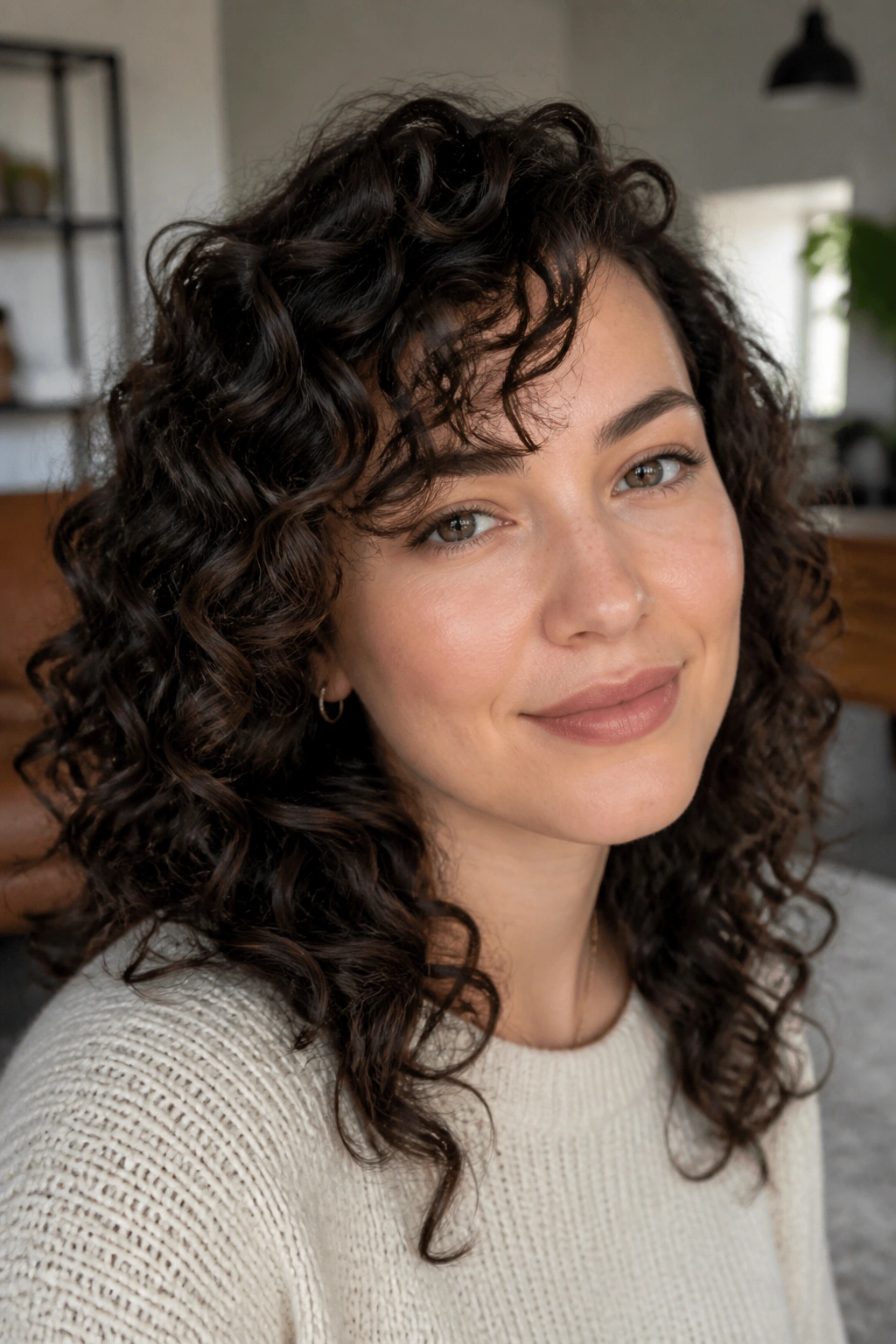
Curly side bangs work best when they are cut like curls, not like straight hair pretending to be curly. That sounds obvious, but it is where a lot of bad fringe starts. A curl shrinks. A wave bends. If you cut the bang as though it will stay flat, it usually jumps up too short.
What Makes Them Behave
Dry cutting or cutting at least partially dry is the safer move here, because you can see the curl pattern in its real shape. A round face looks good with curls that sweep sideways, but not with a short puff that springs straight out from the forehead.
- Leave the shortest curl a little longer than you think.
- Ask for the bang to be shaped with the natural fall of your curls.
- Use a diffuser on low heat.
- Scrunch only at the ends if you want separation.
One thing I love about curly side bangs is that they soften the cheeks without trying too hard. The texture does the job. You get movement, shadow, and a little asymmetry, all of which keep a round face from looking too symmetrical.
Do not brush curly side bangs dry unless you want a cloud. Finger-shape them with a touch of leave-in conditioner and let the curl decide the final direction. That is usually the best outcome anyway.
7. Cropped Side Bangs for Pixies and Short Cuts
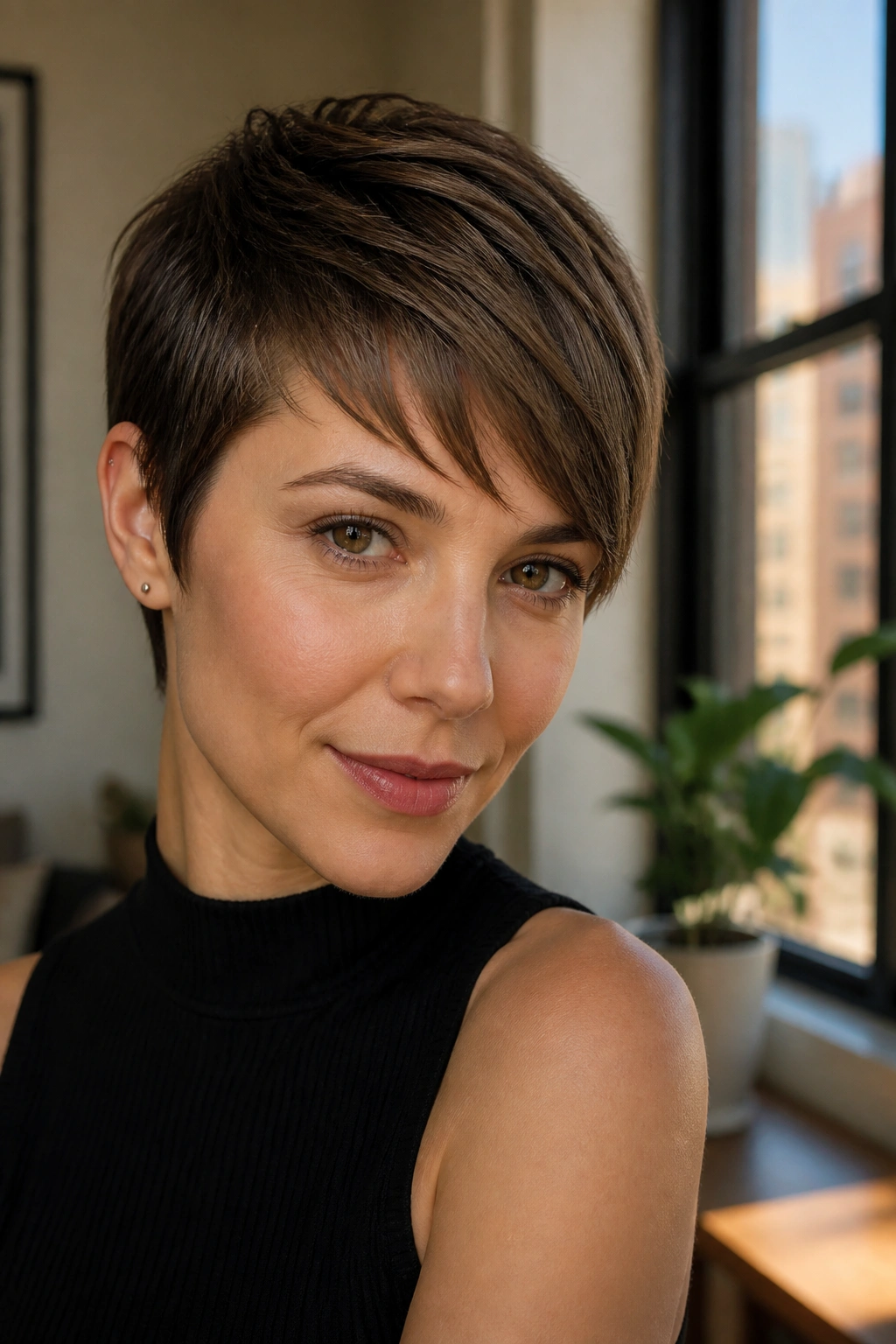
Short hair and round faces can be a terrific match when the fringe is cut with intention. Cropped side bangs give a pixie or short crop a bit of direction, which is useful because short cuts can feel extra circular if every edge is soft and close to the head.
The key is angle. You want the bang to travel sideways, not sit like a tiny horizontal shelf. A short side bang should begin near the higher part of the hairline and taper down toward one temple, leaving the other side lighter. That asymmetry stretches the eye.
I would not cut this bang blunt. Ever. A blunt short fringe on a round face can look sweet for about five minutes, then it starts making the face seem shorter. A light, feathered edge is the better call. It keeps the cut airy and gives the front a bit of lift.
This style is also good if you like strong earrings or bold glasses, because the short fringe does not fight those details. It frames the face, then gets out of the way. Clean. Sharp. No extra drama.
8. Shaggy Side Bangs With Choppy Layers
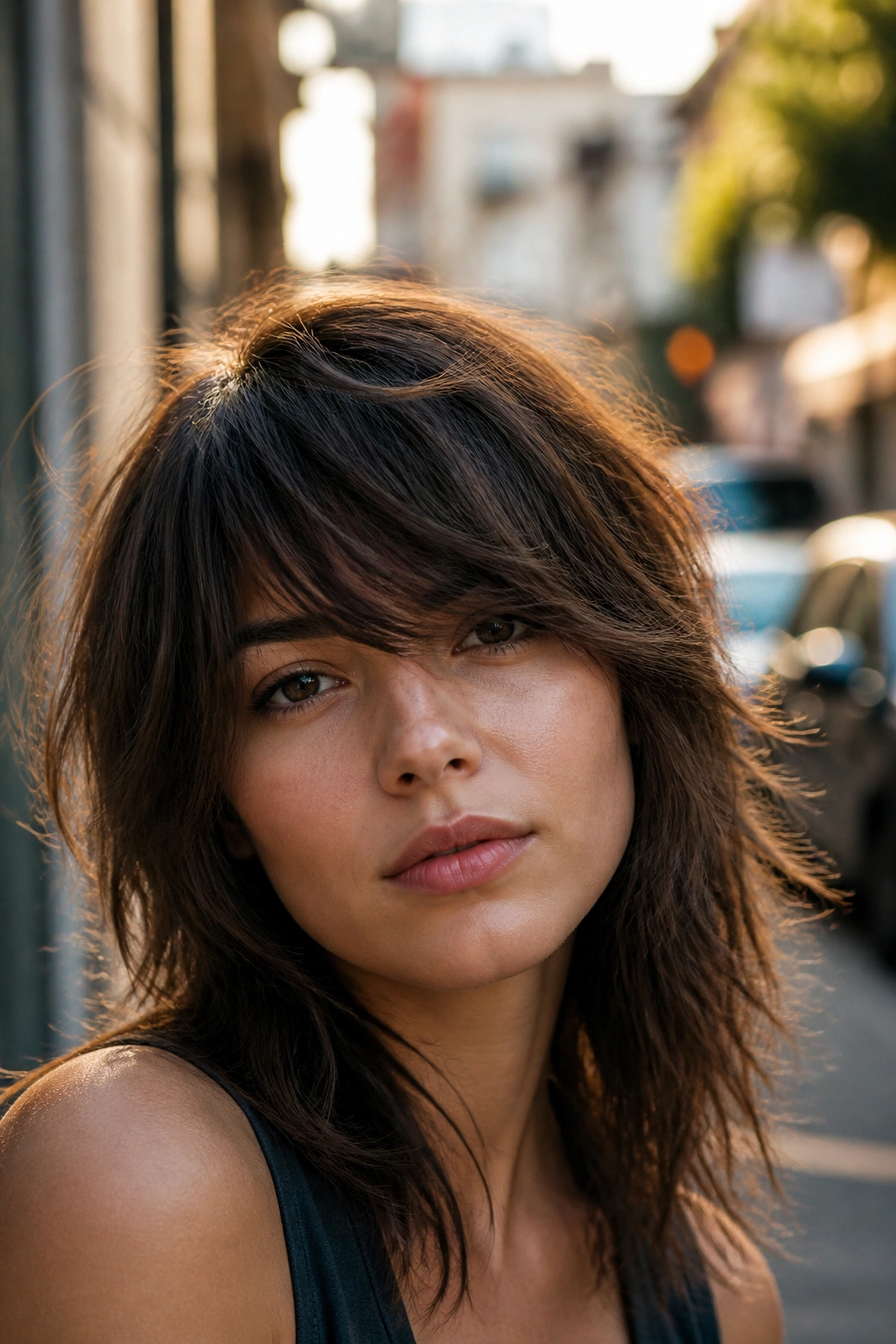
A shag is one of the easiest haircuts to make work on a round face, and the side bang is a big reason why. The layers break up the curve around the cheeks, while the fringe pulls the shape down and across instead of out.
Why the Shag Shape Helps
The shag thrives on uneven movement. That matters, because a perfectly even cut can make a round face look fuller than it is. Choppy layers and a side bang create different lengths around the face, which keeps the eye moving. Nothing sits in one place for too long.
A shaggy side bang should feel a little broken up at the ends. Not ragged. Broken up. There is a difference. Ragged means careless; broken up means the pieces have texture and the cut can live a little.
- Use a texturizing spray at the roots and through the bang.
- Twist small sections while drying to encourage piecey movement.
- Ask for the fringe to blend into the top layers.
- Keep a lightweight hold product nearby, because shag bangs can separate too much in dry air.
I’m biased here, but this is one of the most forgiving side bang looks for round faces. Even when it is messy, it still looks intentional. That is a nice thing to have on a bad hair day.
9. Side Bangs That Blend Into a Bob
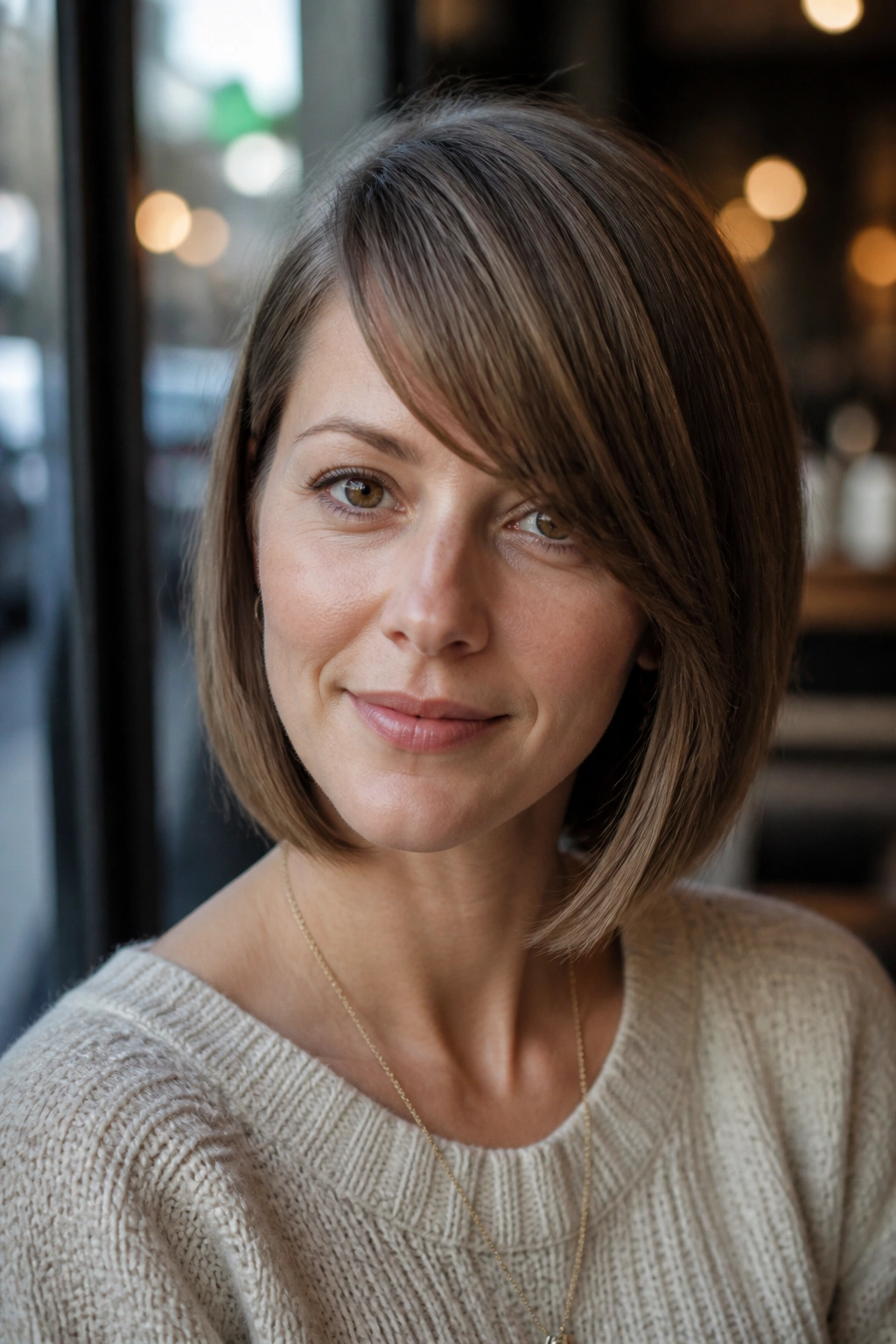
A bob and a round face can be tricky if the cut ends exactly at the widest part of the jaw. Side bangs help, but only if they blend into the bob instead of sitting like a separate piece glued onto the front.
Think of the bang as the first step of the bob, not an add-on. The front should fall in a diagonal line that meets the cheekbone or jaw and then keeps going into the length. If the transition is smooth, the whole haircut reads longer and slimmer. If the transition is abrupt, the front can puff.
The best version of this look usually uses soft graduation in the front. That means the shortest bit of the bang is not super short, and the longest front piece is left a little longer to pull the eye downward. A chin-length bob with a side bang can be sharp. A jaw-length bob with the same bang can be too round unless there is some front length to balance it.
This is one of those cuts where a millimeter matters more than people expect. A quarter inch too short and the shape changes. That is why I like to have a bob-and-bang combo trimmed dry, or at least checked dry before the final snip.
10. Side Bangs on Straight Hair With a Soft Bend
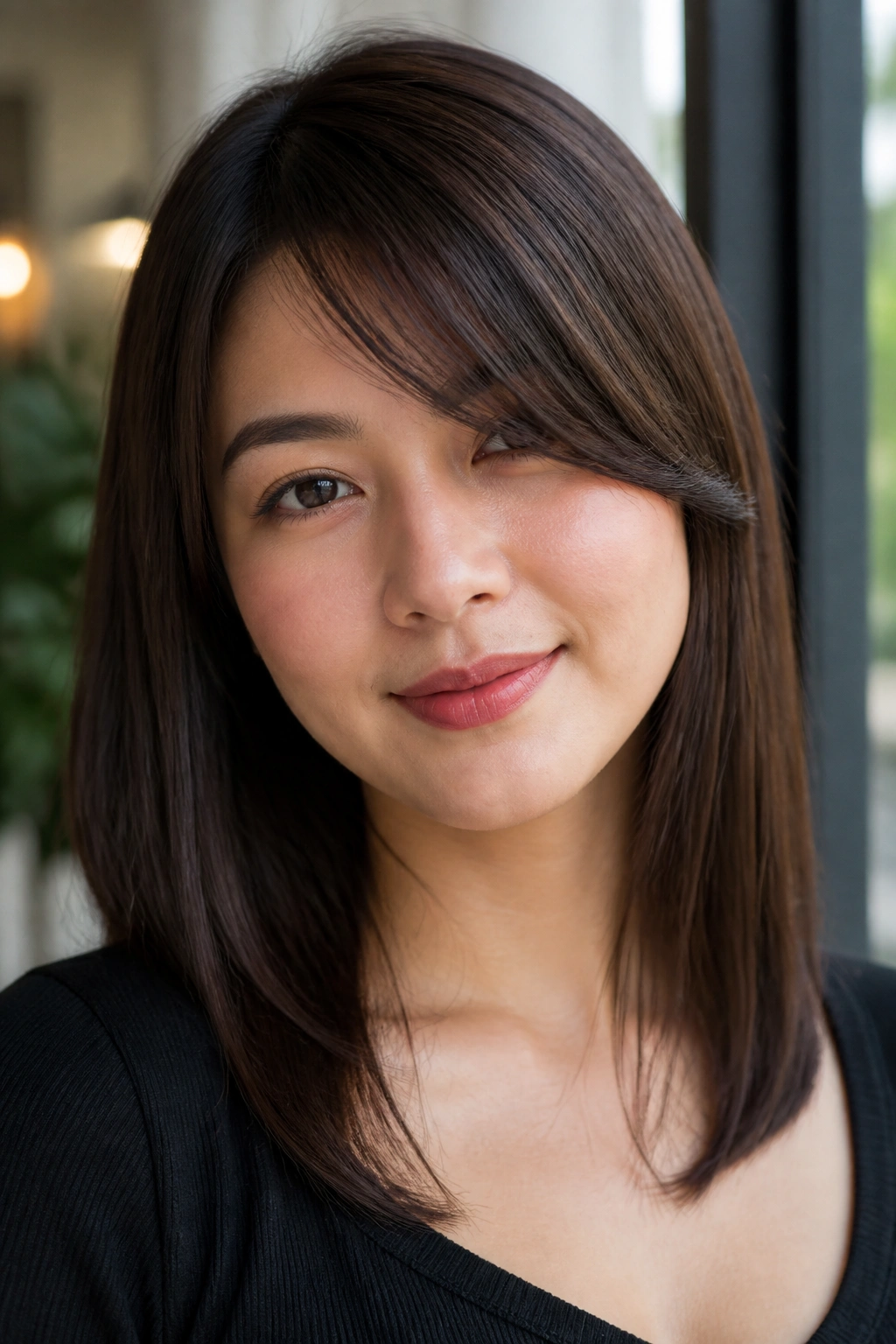
Straight hair shows every line. Every one. That is why side bangs on straight hair need a bit of bend, or they can fall flat and create a hard horizontal shape that does a round face no favors.
Styling Moves That Stop the Bang From Sticking Flat
The bang should not lie like a ruler. It needs a curve. A small round brush, a blow dryer pointed down the shaft, and a quick wrap away from the face usually do the trick. After that, a brief pass with a flat iron can smooth the edge if your hair is glassy and tends to kink.
- Blow-dry the root first for lift.
- Roll the ends under for 5 to 8 seconds.
- Let the bang cool on the brush before touching it.
- Finish with a tiny mist of flexible hold spray.
A soft bend makes straight hair look deliberate instead of severe. That matters on a round face, because severe lines can emphasize fullness in places you may not want emphasized. A bit of movement fixes the problem without making the cut look overstyled.
I also like this look because it survives second-day hair better than people expect. A quick mist of water, a comb-through, and 30 seconds with the dryer often bring the shape back.
11. Side Bangs That Work With Glasses
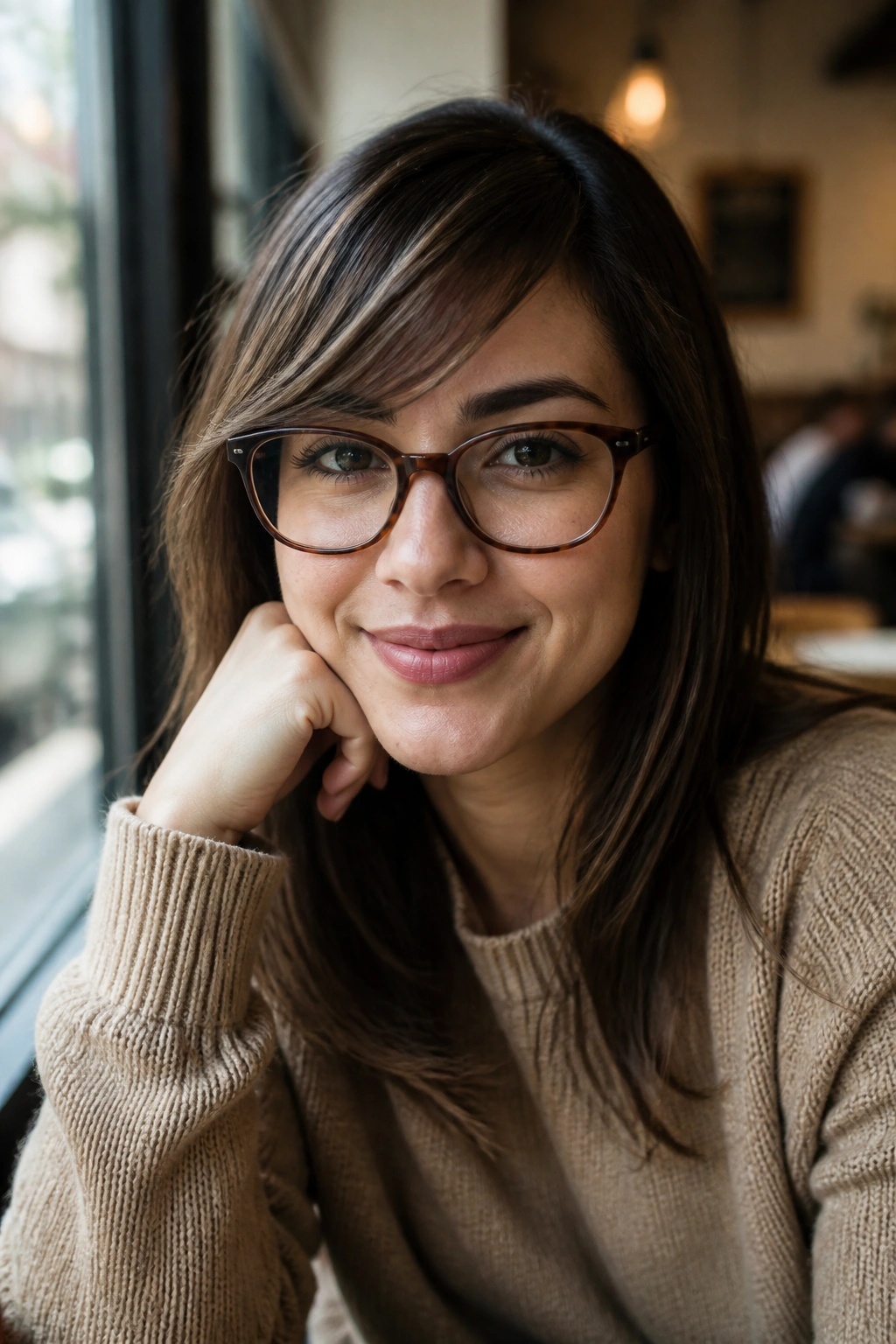
Glasses change everything around the eyes, which means the fringe has to share space instead of competing for it. Side bangs are useful here because they can sit above the frame, skim past it, or tuck into the temple area without making the whole front look crowded.
The number one mistake is cutting the bang so it lands right on the top rim of the glasses. That spot gets busy fast. The hair rubs, the lenses fog in cool weather, and the bang starts flipping in odd directions. Better to keep the shortest point just above the frame or let it sweep cleanly past it.
I like a softer, lighter bang for glasses wearers with round faces. Heavy bangs near the eyes can make the face feel compressed. A side sweep opens the center of the face and lets the frames do their job. If your frames are bold, keep the bang lighter. If your frames are thin, you can get away with a little more texture.
A useful rule: leave enough space between the lash line and the fringe that your eyes still show clearly. If the bang gets in the way of your expression, it is too short or too dense. Simple as that.
12. Side Bangs With Face-Framing Layers on Long Hair
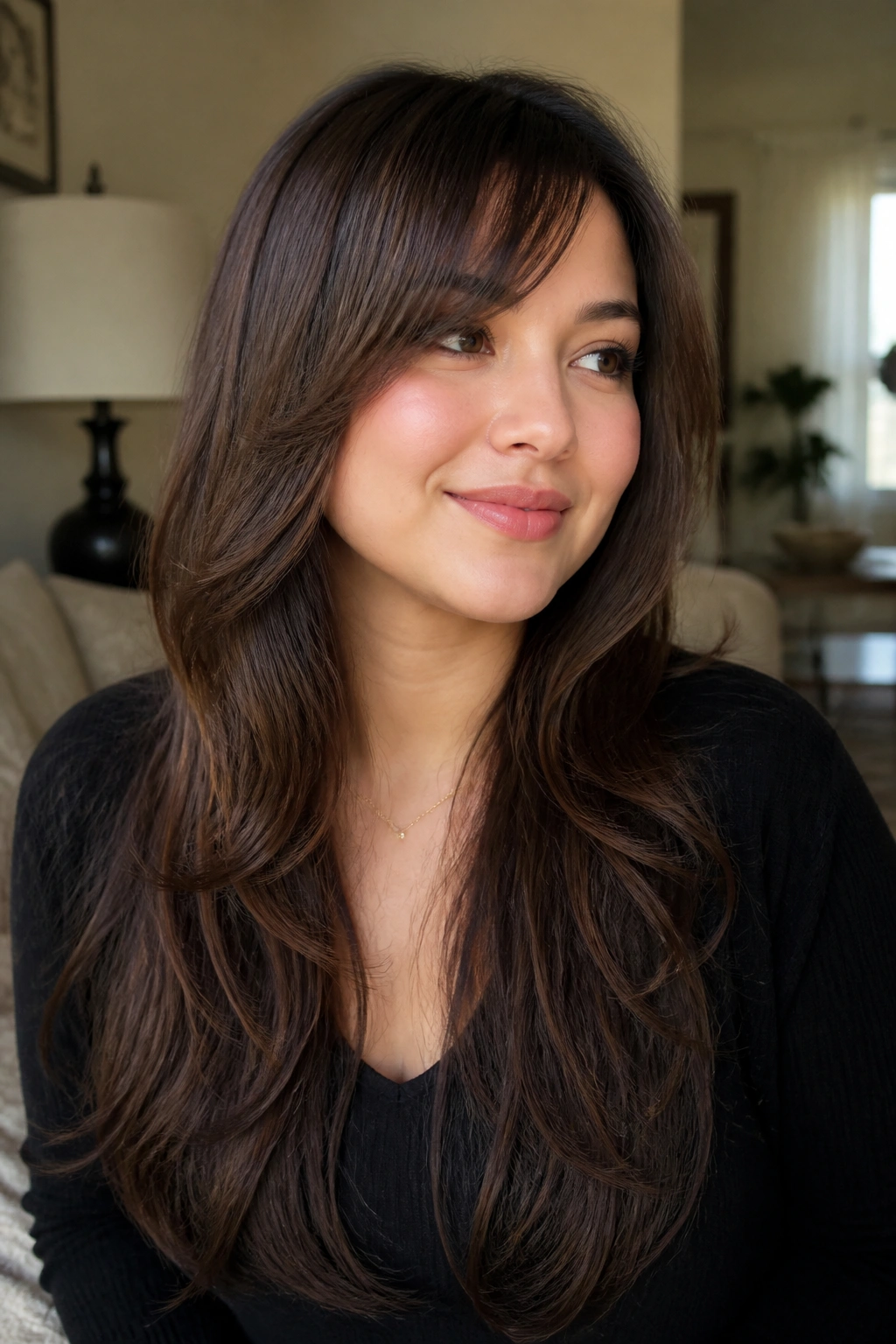
Long hair can flatter a round face, but it can also drag the eye straight down in a heavy sheet if the front is not cut well. Side bangs paired with face-framing layers fix that by building a shape around the cheeks and jaw instead of leaving the length to do all the work.
Where the Layers Should Fall
The shortest layer should start near the cheekbone or just below it. The next should land near the jaw. After that, the length can flow down toward the collarbone or chest. That progression creates a gentle line that keeps the face from looking overly wide at the center.
This style is useful if you want softness without losing length. You still get the security of long hair, but the front has enough movement to stop the look from going flat. And long hair with no front shape can be a little boring, honestly.
- Keep the side bang connected to the front layers.
- Use a large round brush for a smoother bend.
- Avoid cutting the face-framing pieces too close to the chin if your face is very round.
- Add a few subtle bends through the mid-lengths if the hair hangs too straight.
The best part is how easily this grows out. Even when the bang gets longer, it just slides into the rest of the cut.
13. Side Bangs for High Foreheads and Fuller Cheeks
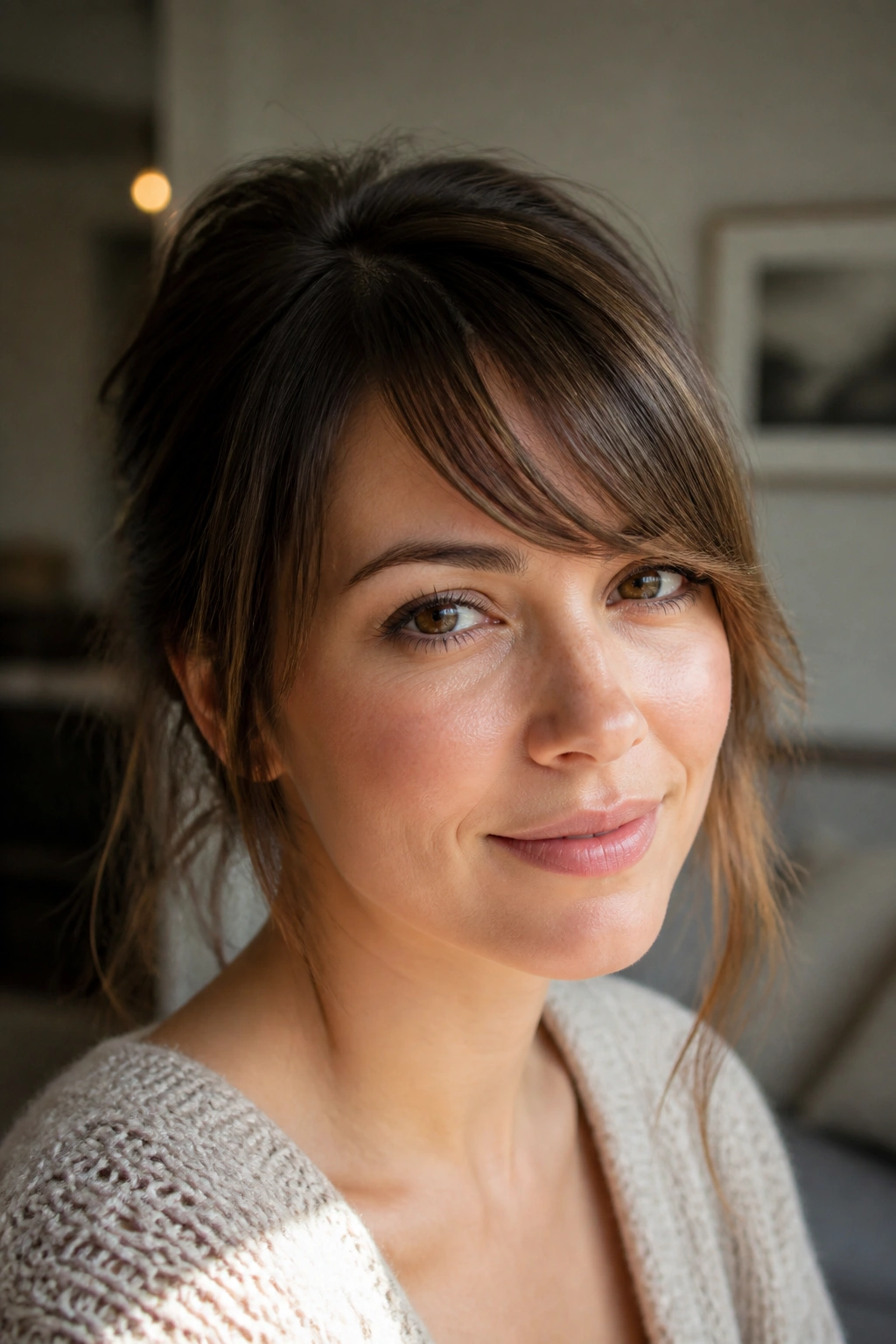
This is where longer, softer side bangs earn their keep. A high forehead gives you space to play with, but a round face still needs the front to narrow gently instead of stopping at the middle of the cheek.
A side bang that starts a touch higher, then sweeps low and long, can balance both features at once. The forehead gets a little coverage, the cheeks get a diagonal line, and the overall shape feels less circular. I prefer this look when the bang has a bit of transparency at the ends. Heavy coverage can make the face feel shortened, and that is not the goal.
The safest route is usually a bang that begins around the brow’s outer third and drops toward the cheekbone. Not too short. Not too thick. You want the eye to move, not land and stay put. If the hair around the temple is too bulky, ask for weight to be removed there so the bang does not puff outward.
A small detail matters here: keep the top of the bang soft at the root. A flat, dense root can make the forehead look heavier than it is. A little lift changes the whole line.
14. Side Bangs That Survive Busy Mornings
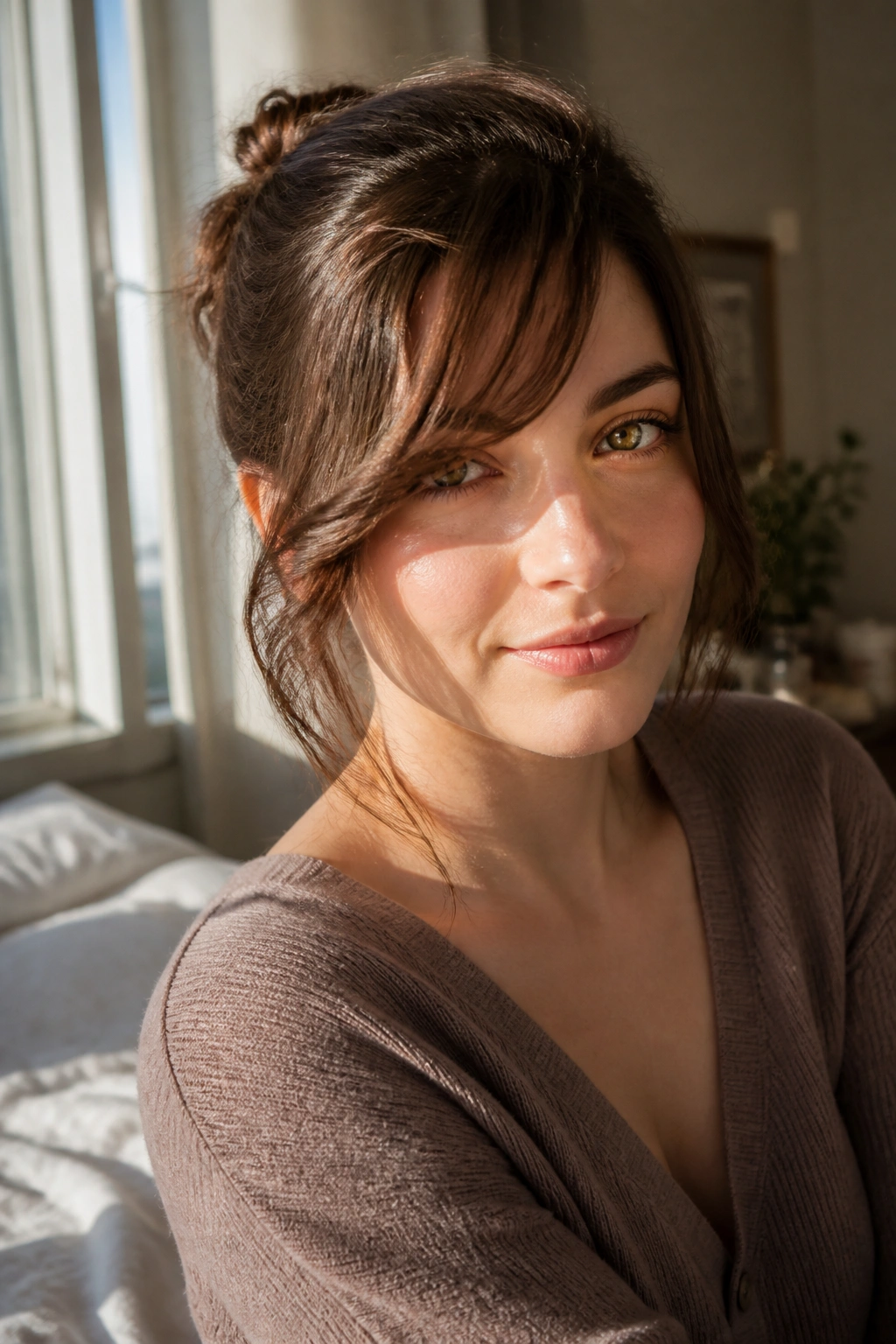
What if you do not want to round-brush your bangs every day? Then choose a side bang that can live a little rough. The cut matters more than the styling when you want low maintenance.
This is usually a longer, softer shape with a gentle taper and no hard edge. It should fall into place after a quick shake, not after a ten-minute battle in front of the mirror. Hair with a natural bend, a soft wave, or a slightly coarse texture tends to do well here because it does not need to be forced into shape every morning.
The Low-Fuss Setup
- Dry the bang in the direction you want it to sit.
- Pin it to one side for 10 minutes while you do other things.
- Use dry shampoo at the root if the fringe starts separating.
- Sleep with the bang loosely clipped or tucked so it does not flatten weirdly.
A low-maintenance side bang should still look intentional, even when it is not perfect. That is the whole point. If a tiny cowlick or a little separation ruins the style, the cut is too strict for real life.
I like this version for people who wear their hair up a lot. It stays useful in a ponytail, but it also looks clean when the rest of the hair is down.
15. The Softest Side Bang That Grows Out Gracefully
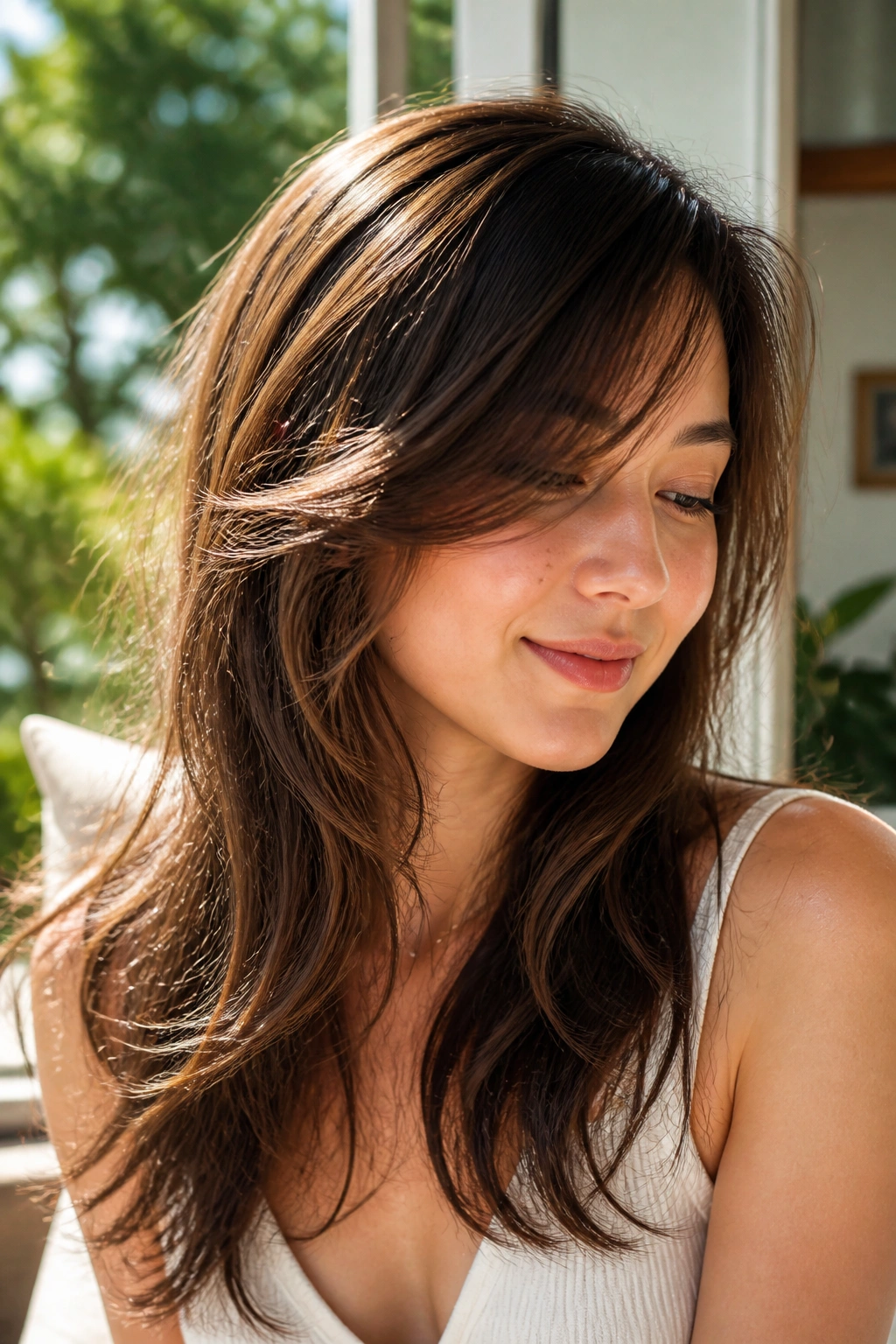
If you want one side bang style that behaves well on a round face and does not turn into a haircut emergency six weeks later, this is the one I’d point to first. It is long, soft, slightly feathered, and built to drift into the rest of the cut as it grows.
The charm is in how little it fights you. The bang starts near the temple, sweeps across the forehead at a shallow angle, and ends somewhere around the cheek or upper jaw. That leaves enough room for tucking, pinning, or wearing it loose without the front ever looking severe. It also means the grow-out phase is less annoying, which matters more than people admit.
A soft side bang like this is especially good if you are still figuring out how much fringe you want. It gives you the face-framing effect without locking you into a high-maintenance shape. On a round face, that softer structure keeps the look open and flattering instead of overbuilt.
There is a reason stylists keep coming back to this version. It works with straight hair, waves, and even a gentle curl. It is the bang you choose when you want shape, movement, and a little bit of forgiveness on the same head. And forgiveness counts.
If you want the shortest possible answer, start long, keep it light, and let the angle do the work. That is the move that keeps side bangs for round faces looking fresh instead of fussy.
