



Round faces are not the problem. A blunt, boxy fringe is.
The right curtain bangs for round faces open in the right place, skim the cheekbones, and taper long enough to pull the eye downward instead of parking it across the widest part of the face. That small shift changes the whole mood of a haircut. Softer. Longer. Easier to wear.
What usually goes wrong is pretty simple: bangs get cut too high, too dense, or too straight. Any of those can make the front of the hair feel heavy and the face look shorter, which is the exact opposite of what most people want from fringe.
Soft curtain bangs fix that by acting like a frame instead of a wall. Some versions are polished, some are shaggy, and some practically vanish into the rest of the cut. The trick is choosing the shape that works with your hair texture, your styling habits, and the part of your face you want to bring forward.
1. Cheekbone-Skimming Feathered Curtain Bangs for Round Faces
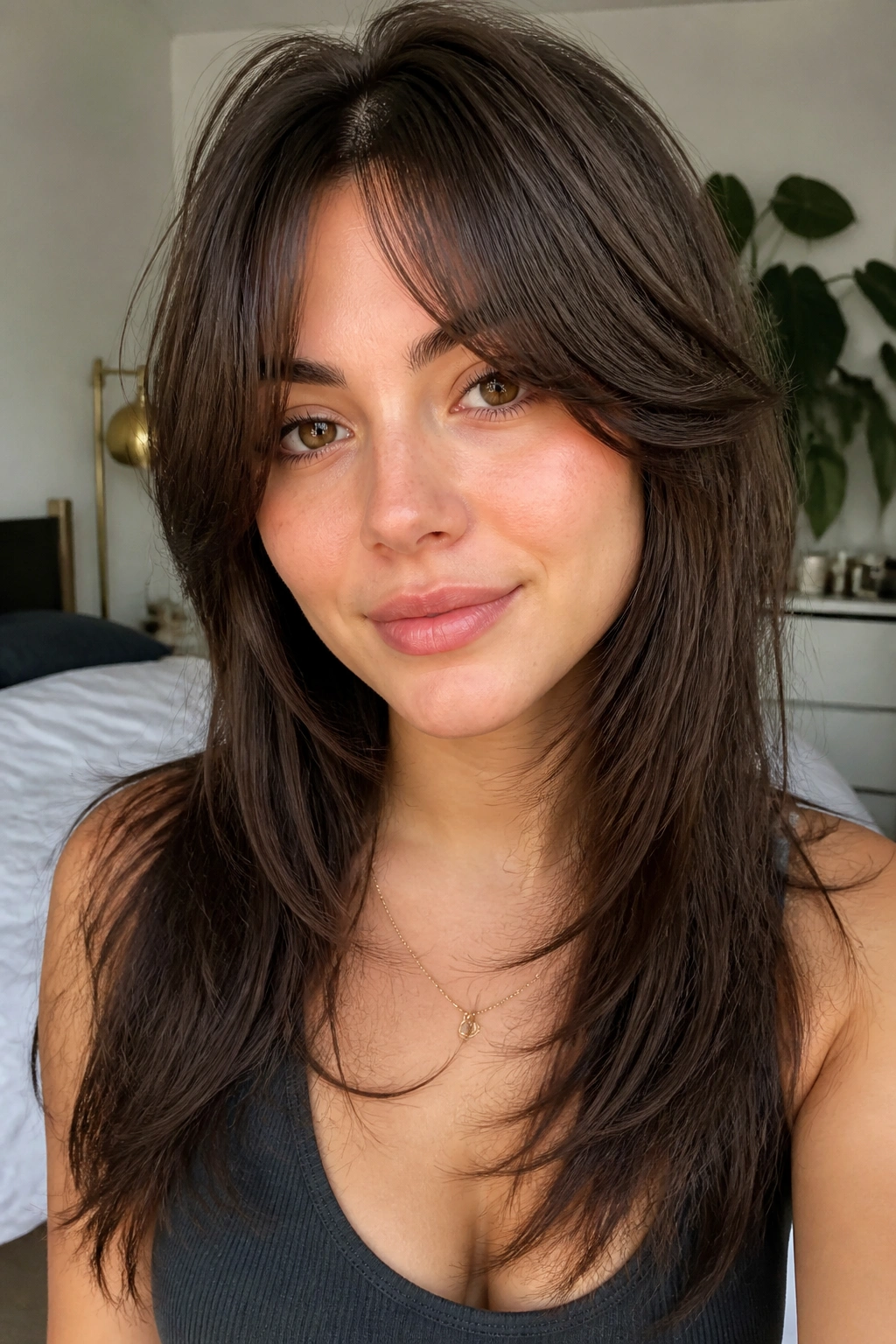
If you want the safest place to start, start here.
Cheekbone-skimming curtain bangs are the sweet spot for a round face because they don’t stop at the widest part of the cheeks. They land right where the face starts to narrow, then drift into long, feathered sides that feel light instead of blunt. That shape gives you softness without adding width, and honestly, that’s the whole game.
Why the Shape Helps
The shortest point usually sits around the upper cheekbone or just below the brow line. From there, the sides should angle down in a soft arc, not hang straight like two curtains clipped in place. That diagonal line matters more than people think. It gives the face length, and it keeps the fringe from looking heavy across the forehead.
A cut like this also plays nicely with medium and long hair because it blends into face-framing layers instead of looking like a separate piece. If your hair already has some movement, this style will seem even more natural. If your hair is straighter, a round brush and a quick bend at the ends are usually enough.
- Ask for point-cut ends so the fringe looks soft, not chopped.
- Keep the center shorter than the sides by about 1 to 1.5 inches.
- Style with a 1.25-inch round brush and direct the bangs away from the face.
- Let the ends cool before touching them, or they’ll fall flatter than you want.
Best tip: tell your stylist you want the bangs to open at the cheekbones, not at the temples. That one phrase saves a lot of bad bangs.
2. Chin-Grazing Curtain Bangs with Soft Ends
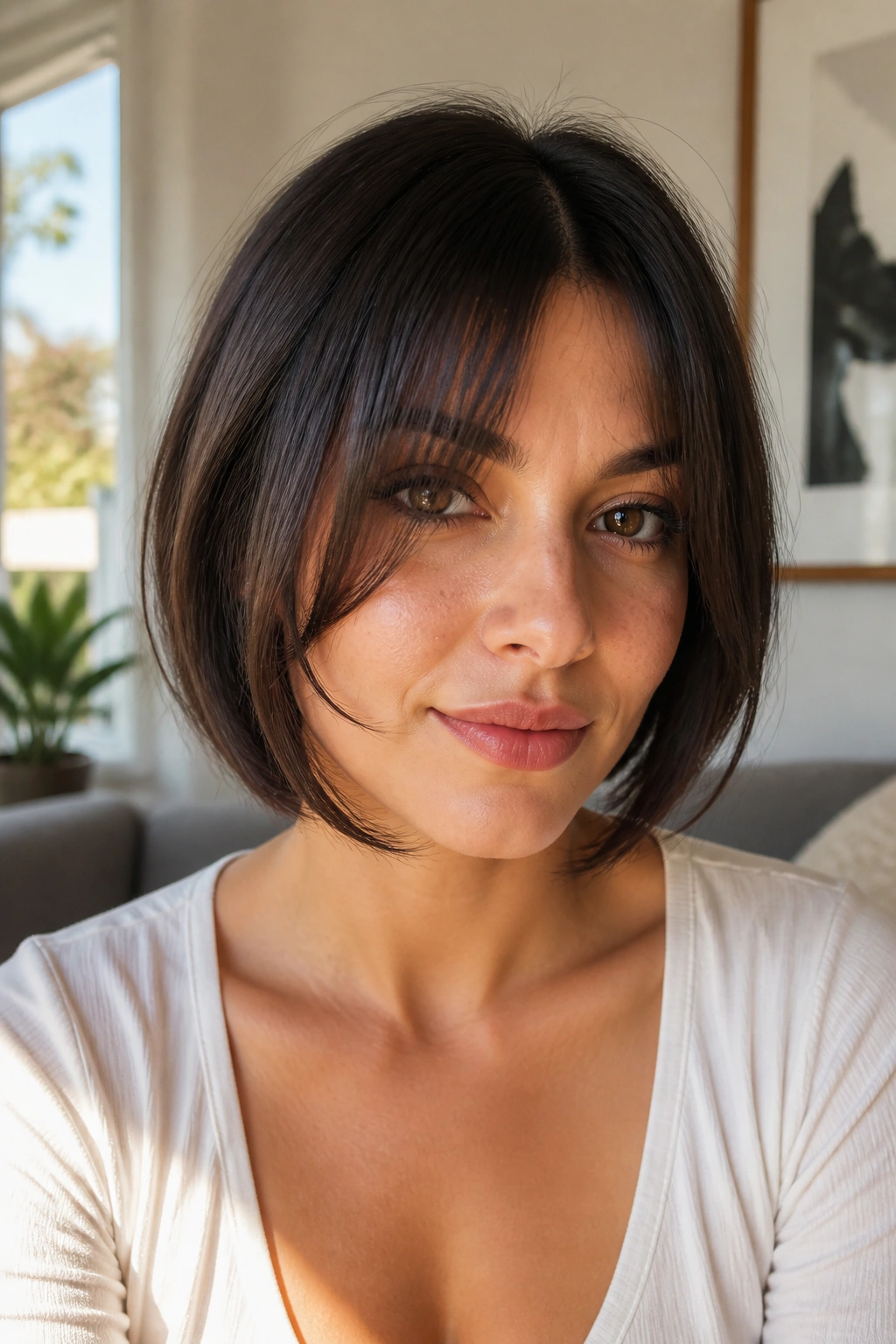
This length does a lot of heavy lifting.
Chin-grazing curtain bangs are for anyone who wants visible fringe without crowding the upper half of the face. On a round face, the chin level is useful because it creates a stronger vertical line. The eyes move down. The cheeks look a touch slimmer. The whole front section of the haircut feels more intentional.
The real trick is keeping the ends soft. If the bang line gets too solid near the chin, the style starts to look stiff and dated, and that is not the vibe here. You want the center to be lighter and the outer pieces to melt into the jawline. That keeps the shape airy while still giving you the face-lengthening effect.
This version also works well if you wear your hair tucked behind one ear a lot. The bangs still fall forward enough to frame the face, but they don’t fight the rest of the cut. And if you like a little drama without committing to full fringe, this is a good middle ground.
One thing I like about this shape: it hides grow-out better than shorter bangs. The extra length gives you room. That matters more than people admit.
3. Long Layered Curtain Bangs That Blend Into the Cut
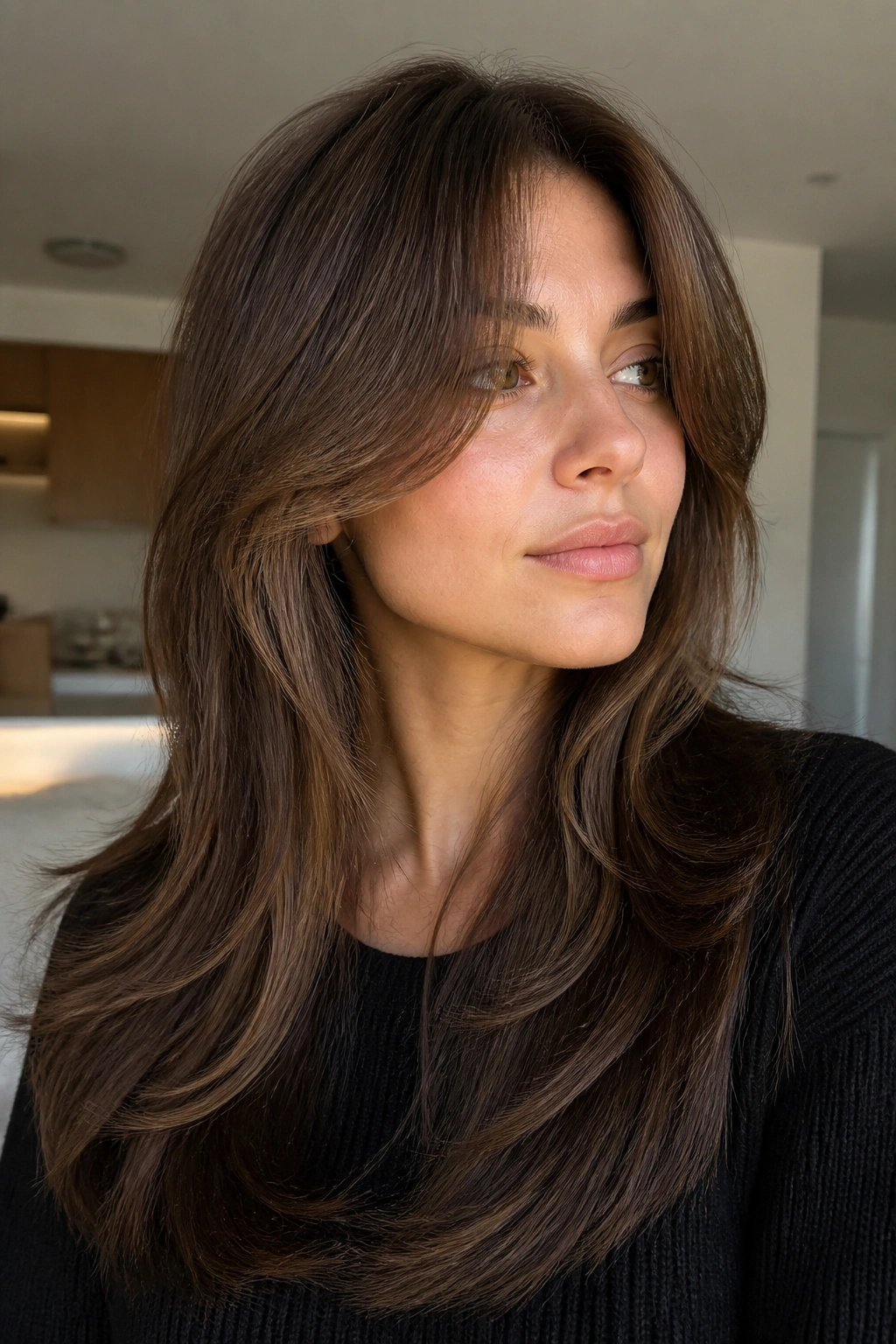
Why do some bangs look like bangs and others look like part of the haircut?
Because the good ones are blended on purpose.
Long layered curtain bangs are the version I’d suggest for someone nervous about taking the full fringe plunge. The shortest pieces usually graze the nose bridge or the top of the cheekbone, then the rest flows into layers around the jaw and collarbone. On a round face, that soft cascade helps keep the eye moving downward instead of widening the middle of the face.
How to Ask for Them
Ask your stylist to keep the center short enough to open, but not so short that it sits like a little shelf across the forehead. Then ask for the sides to step down gradually into the rest of the haircut. The blend should feel smooth, not obvious.
If you like a clean finish, blow them out with a round brush and a little tension at the roots. If you like a looser finish, twist each side once while it cools and let it fall that way. Either version works. The point is that the bangs should look like they belong to the haircut, not like they were pasted on top.
These are also good if you wear your hair in a lob or long layers. The front pieces can keep getting longer without losing shape, which is a nice thing when you hate constant trims. Not glamorous, maybe. Useful, absolutely.
4. Wispy Curtain Bangs for Fine Hair
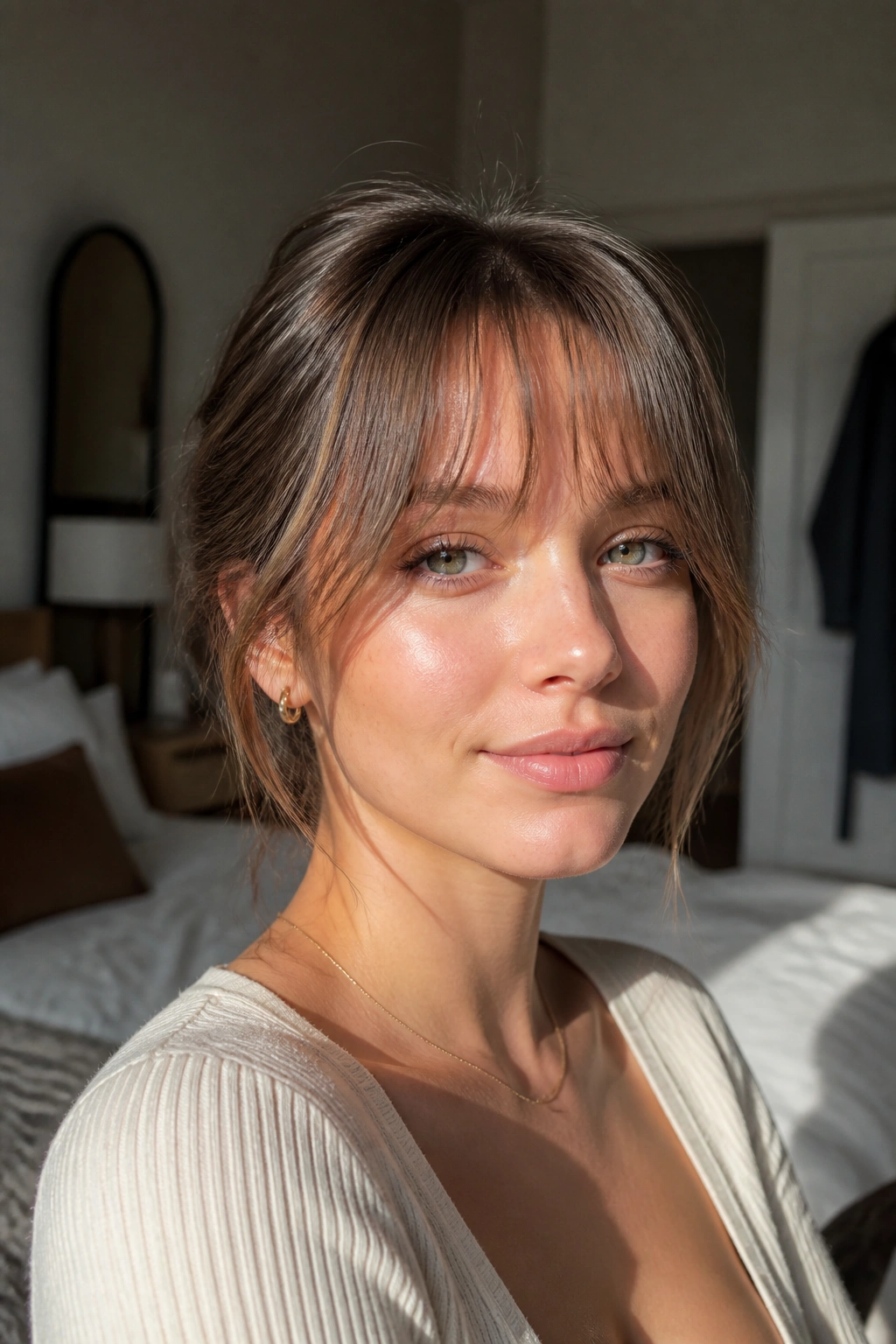
Fine hair can be tricky with fringe. Too much hair in the bang area, and the front goes flat. Too little, and the whole thing disappears by lunchtime.
Wispy curtain bangs solve that by keeping the density light enough to move. They don’t need to be see-through in a bad way. They just need broken-up ends and enough separation to let the forehead breathe. On a round face, that little bit of negative space makes the haircut feel taller and less heavy around the center.
The other win here is texture. Fine hair usually hates bulky bangs because bulky bangs steal volume from the rest of the head. A wispy version leaves more hair where it matters and gives the front a soft split that you can style with almost no fuss. Dry shampoo at the roots helps, but a heavy cream usually makes the bangs collapse, so skip that.
What to Tell Your Stylist
- Keep the bang section small and narrow so it doesn’t swallow the forehead.
- Use light point cutting instead of blunt snips.
- Leave the ends soft enough to separate into pieces.
- Avoid over-thinning; wispy is good, sparse is not.
One quick rule: if the bangs need three products to stay alive, they were cut too heavy.
5. Air-Dried Curtain Bangs for Wavy Hair
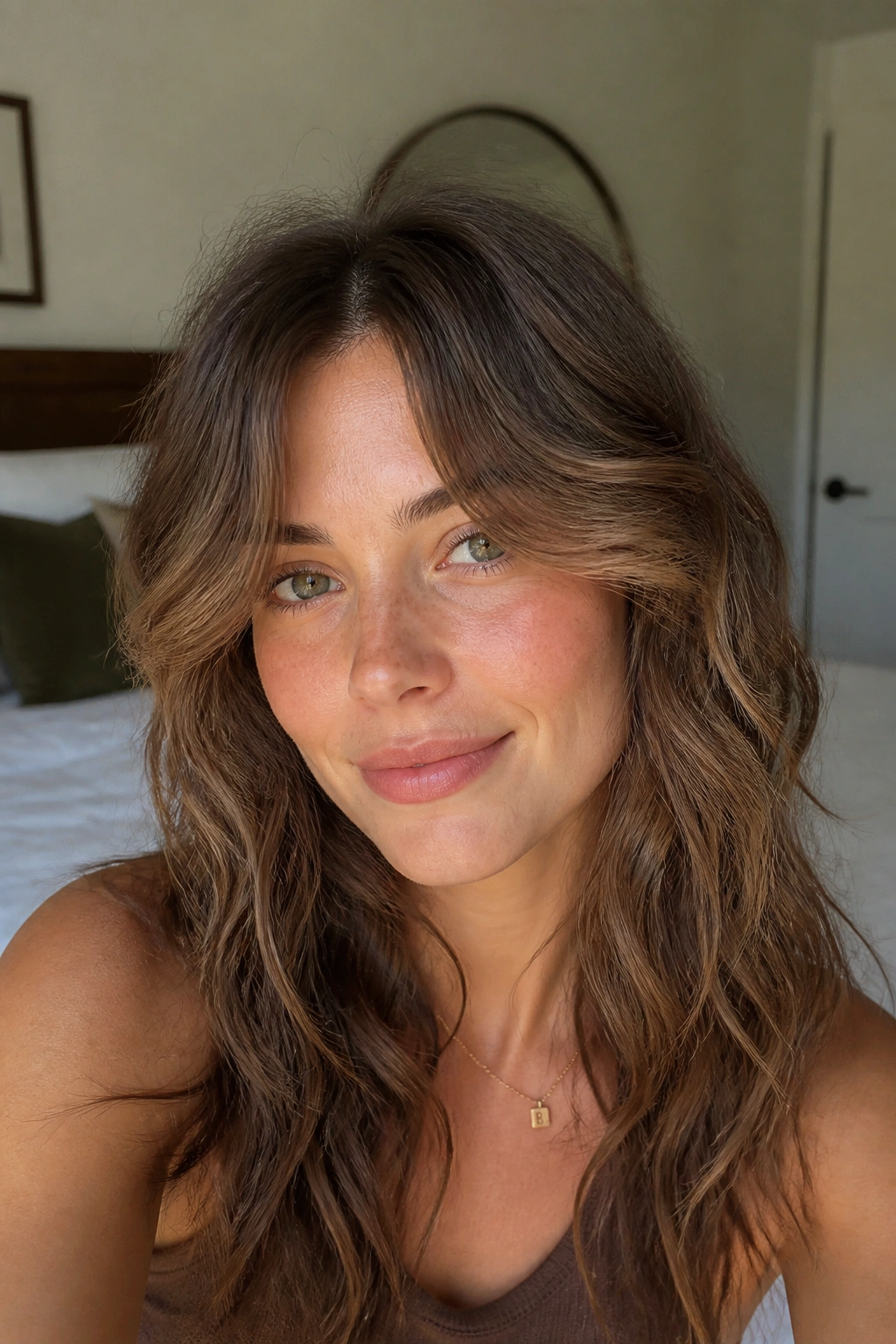
Wavy hair has a built-in advantage here, and I wish more people trusted it.
Instead of forcing the fringe into a perfect blowout, let the wave decide where the curtain wants to split. On a round face, that slight irregularity can be a gift. It softens symmetry, breaks up width, and keeps the front from looking too neat. A perfectly smooth bang can sometimes make a round face feel more circular. A little bend changes that fast.
The best version starts with damp hair and a small amount of light cream or mousse through the bang area. Then you separate the center with your fingers, not a brush, and let the pieces fall away from the face. If your wave is strong, clip the sides back for five or ten minutes while they dry so the part opens cleanly. If your wave is soft, just leave them alone. Seriously. The more you fuss, the puffier they can get.
Once dry, don’t keep brushing them. That’s how you get frizz and a weird halo at the root. A tiny bit of serum on the ends is fine. Too much product near the forehead is not.
This is the low-drama option for anyone who wants movement without standing in front of a mirror with a round brush every morning.
6. Shaggy Curtain Bangs with Broken Texture
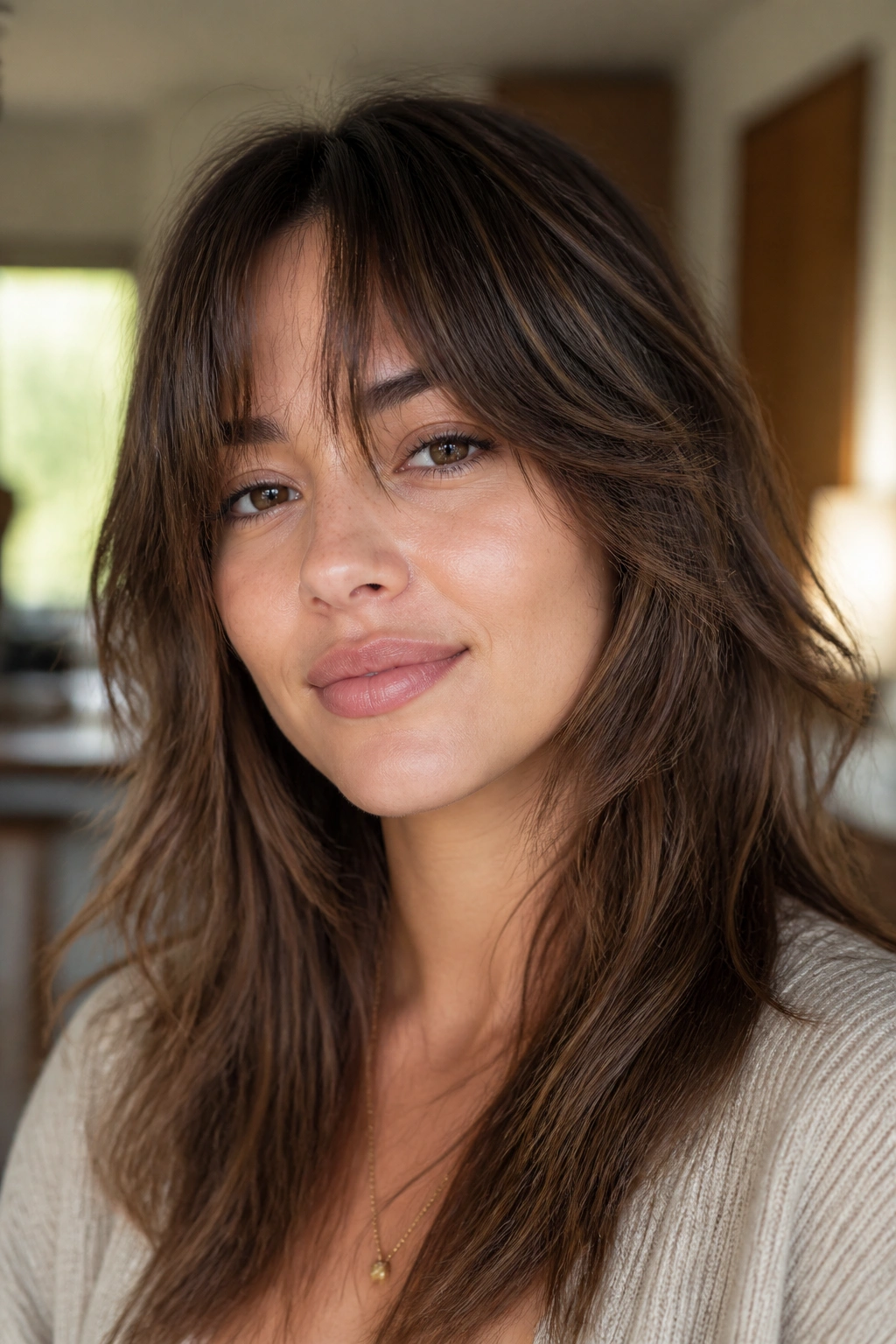
Shaggy curtain bangs are the cooler, rougher cousin of the polished blowout version.
They work especially well on round faces because the texture breaks up the shape. Instead of one smooth arc across the forehead, you get little shifts, gaps, and softer edges that keep the front from looking too full. That unevenness is the whole point. It makes the haircut feel lighter and a little more lived-in, which helps if your hair has natural volume.
Unlike a sleek curtain bang, this version does not need to be perfect. It can lean a little messy. The sides can fall at slightly different lengths. The ends can be choppy in a deliberate way. That broken line is what keeps thick or medium-thick hair from turning into a heavy block around the face.
What Makes It Different
- The ends are shattered, not blunt.
- The center can sit a touch shorter, but not stiff.
- The style works best with texturizing spray or a light wax on the ends.
- It looks even better on day two, which is always a nice little bonus.
If your hair hates a polished round-brush finish, this is the version I’d choose first. It has enough shape to flatter a round face, but it doesn’t demand too much from your morning routine.
7. Rounded Blowout Curtain Bangs
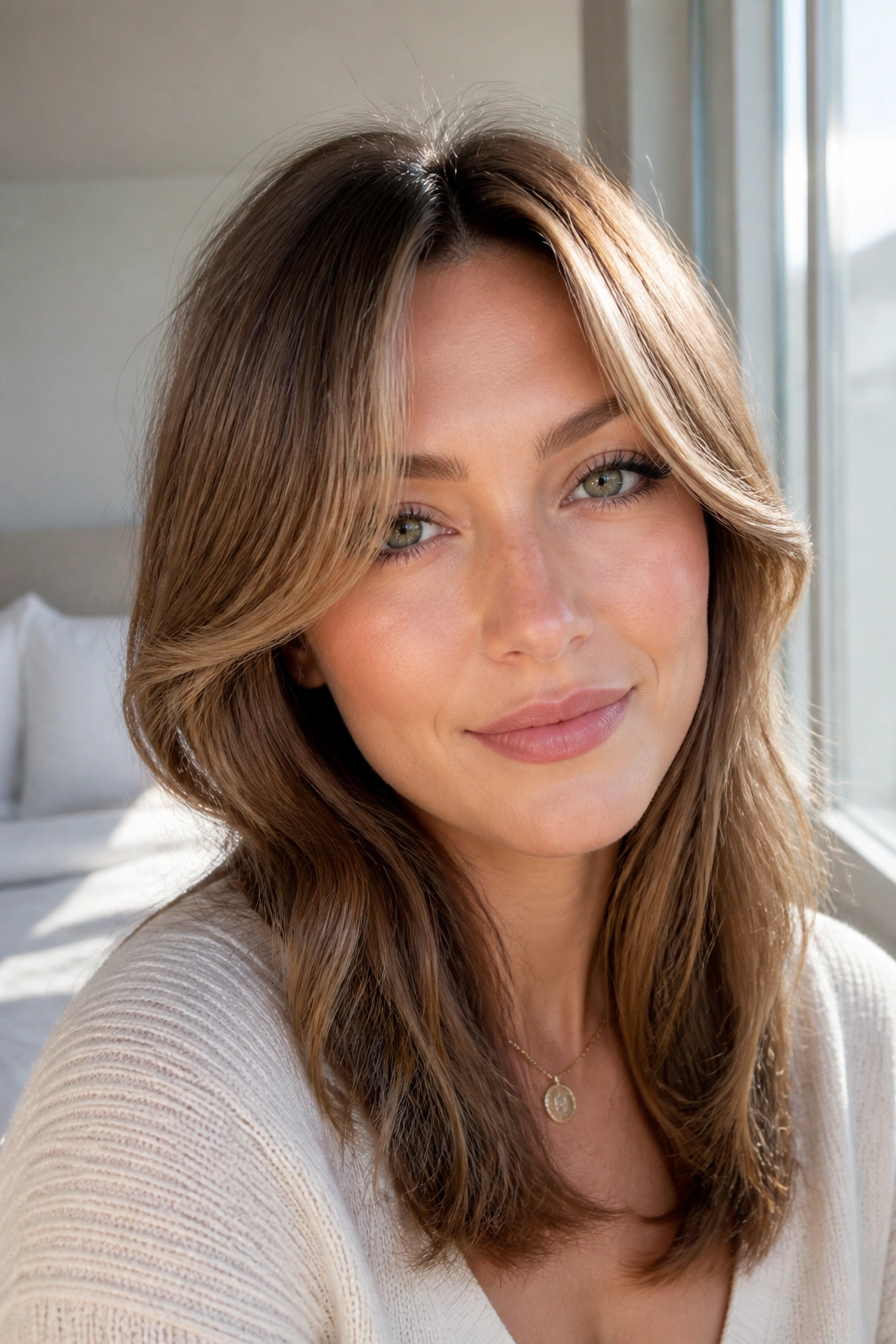
This is the polished one, and it has a very specific job.
Rounded blowout curtain bangs lift the roots, bend the ends away from the face, and create a soft curve that opens the forehead without flattening the sides. On a round face, that little bit of height at the top helps a lot. You’re not trying to make the face smaller. You’re trying to give it a longer line and a cleaner frame.
Why the Bend Matters
A hard curl under the chin area can make the front feel old-fashioned. A hard curl inward at the brow can do the same thing. What you want instead is a loose bend that starts at the root and relaxes before the ends. That keeps the fringe soft. Airy. A little bit bouncy.
A 1.25-inch round brush is usually enough for this style, though I’d go smaller if your bangs are very dense. Dry the roots first, then roll the brush away from the face and hold the shape for a few seconds with the dryer on medium heat. Finish with a cool shot. That last part matters more than people think.
A tiny bit of shine spray on the ends can help, but don’t overload the roots. Too much product there kills the lift, and the lift is half the reason this works on round faces.
8. Slight Off-Center Curtain Bangs
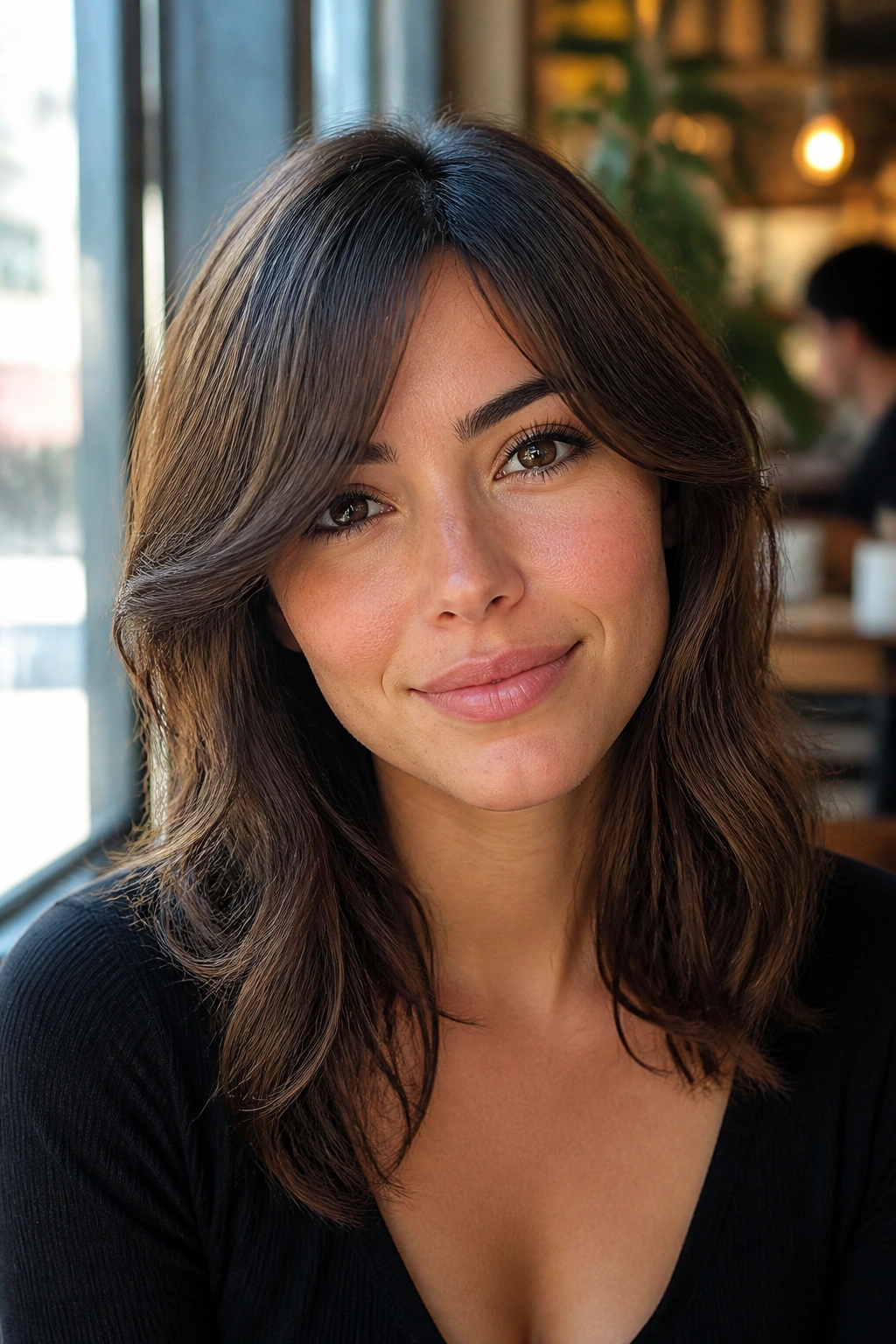
Can curtain bangs be off-center? Yes. And on a round face, that tiny shift can be smarter than a perfect middle split.
A dead-center part creates symmetry, which can sometimes make round features look even rounder. A slight off-center part breaks that symmetry just enough to create a diagonal line across the forehead. That line helps the face feel longer, and it keeps the bangs from reading as one wide curtain stretched from temple to temple.
This is a good choice if your hair naturally falls a little to one side anyway. Fight your growth pattern and you’ll spend every morning wrestling with it. Work with it and the bangs settle faster. The center can still look like a curtain fringe; it just doesn’t have to be mathematically perfect.
The other nice thing about this style is that it softens a cowlick. If one side wants to stick up, shift the part a bit and let the stronger side carry more weight. The result looks intentional instead of forced.
A lot of people worry that a side lean means they are abandoning curtain bangs. Not true. It just means the fringe is shaped around your face instead of around a ruler.
9. Curtain Bangs with Collarbone Layers
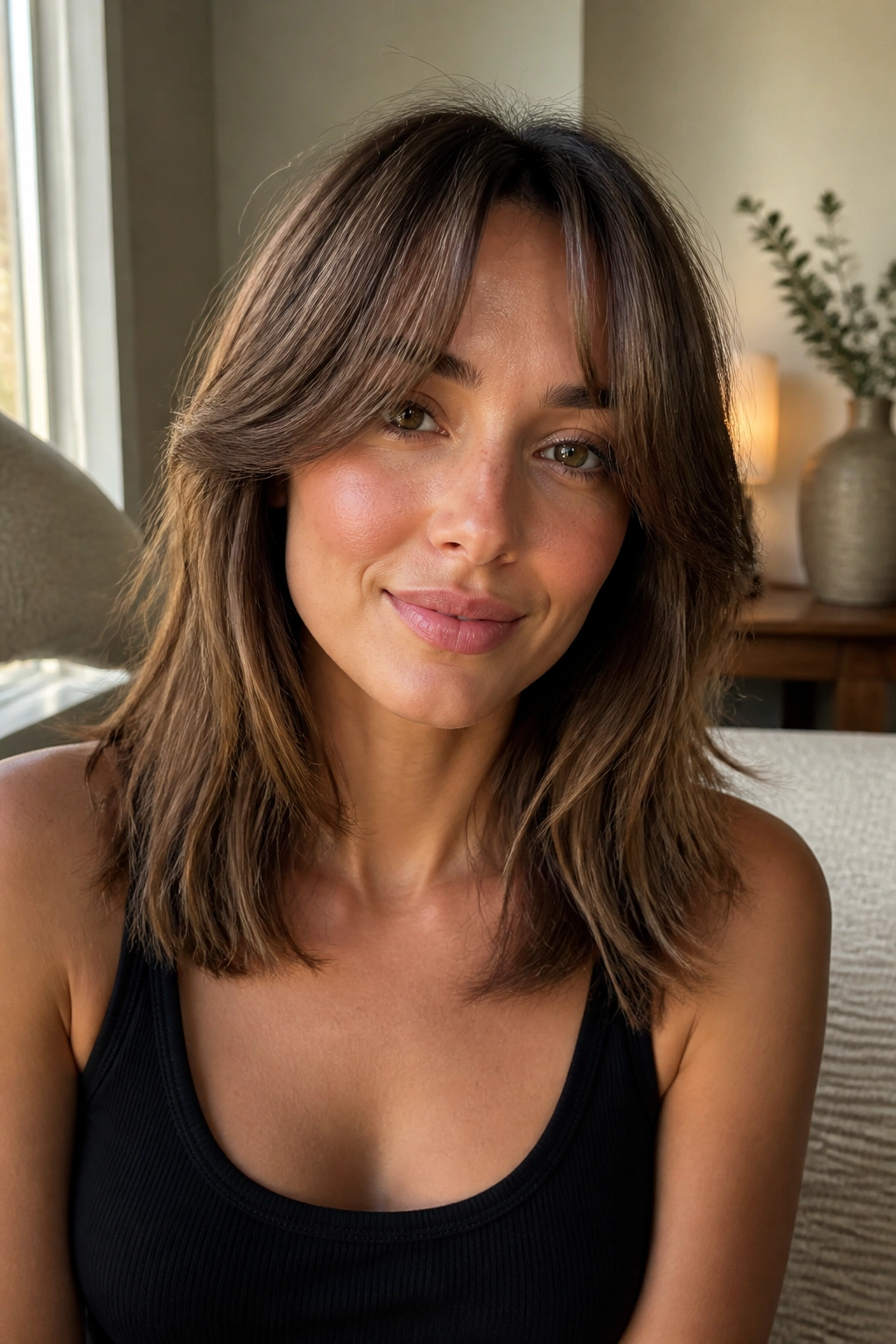
Shoulder-length cuts and collarbone layers give curtain bangs a place to land.
That matters on a round face because the haircut needs more than a cute fringe. It needs a vertical shape. When the bangs blend into layers that keep going down toward the collarbone, the whole front section stretches the face visually instead of stopping right at cheek level. The effect is soft, but it’s not weak.
This pairing is especially good if you wear a lob or medium-length cut. The bangs can open at the brows or cheekbones, then melt into the front layers without making the haircut feel crowded. If your hair is thick, these layers keep the sides from ballooning. If your hair is fine, they keep the cut from looking top-heavy.
Not dramatic. That is the point.
A lot of round-faced people get pulled toward short face-framing pieces because they want movement, but the shorter pieces can sometimes land right at the widest part of the face and create a little too much width. Collarbone layers solve that by making the frame longer and softer. The bangs still do their job. They just have room to breathe.
10. Curly Curtain Bangs That Open at the Cheekbones
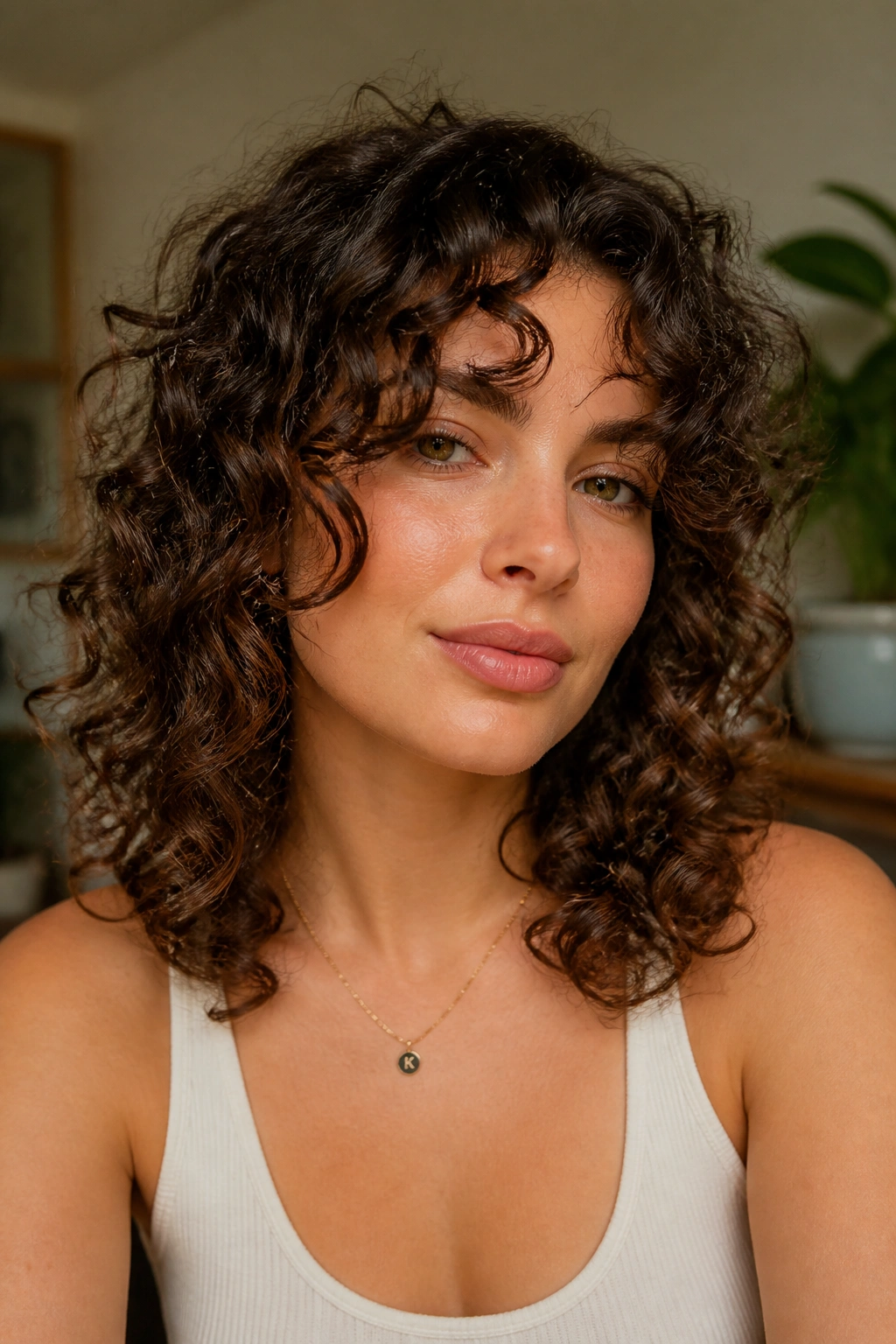
Curly bangs are not scary if they’re cut with shrinkage in mind.
The main mistake is cutting them too short while they’re wet, then wondering why they bounce up like little springs. For a round face, that can be rough because the bangs may sit too high and too wide at the same time. The better move is to cut curls dry or nearly dry, then shape the front so the shortest pieces sit around the cheekbone area once they settle.
How to Ask for the Cut
Tell your stylist you want the curls to open around the face, not sit like a dense arch across the forehead. The sides should angle down and away from the cheeks. If the hair is very springy, the shortest piece may need to start lower than you expect. That’s normal.
How to Style It
Use a light cream or gel while the hair is damp, then encourage the bangs to split with your fingers. A diffuser on low heat keeps the curl pattern intact without blasting it apart. Once the bangs are dry, leave them alone. Brushing curl fringe after it sets usually turns it into fluff, and fluffy curl fringe is not the same thing as soft curtain bangs.
The payoff is worth it. Curly curtain bangs can give a round face a lovely open shape, especially when the curl falls in two soft halves instead of one broad mound.
11. Thick-Hair Curtain Bangs with Interior Weight Removal
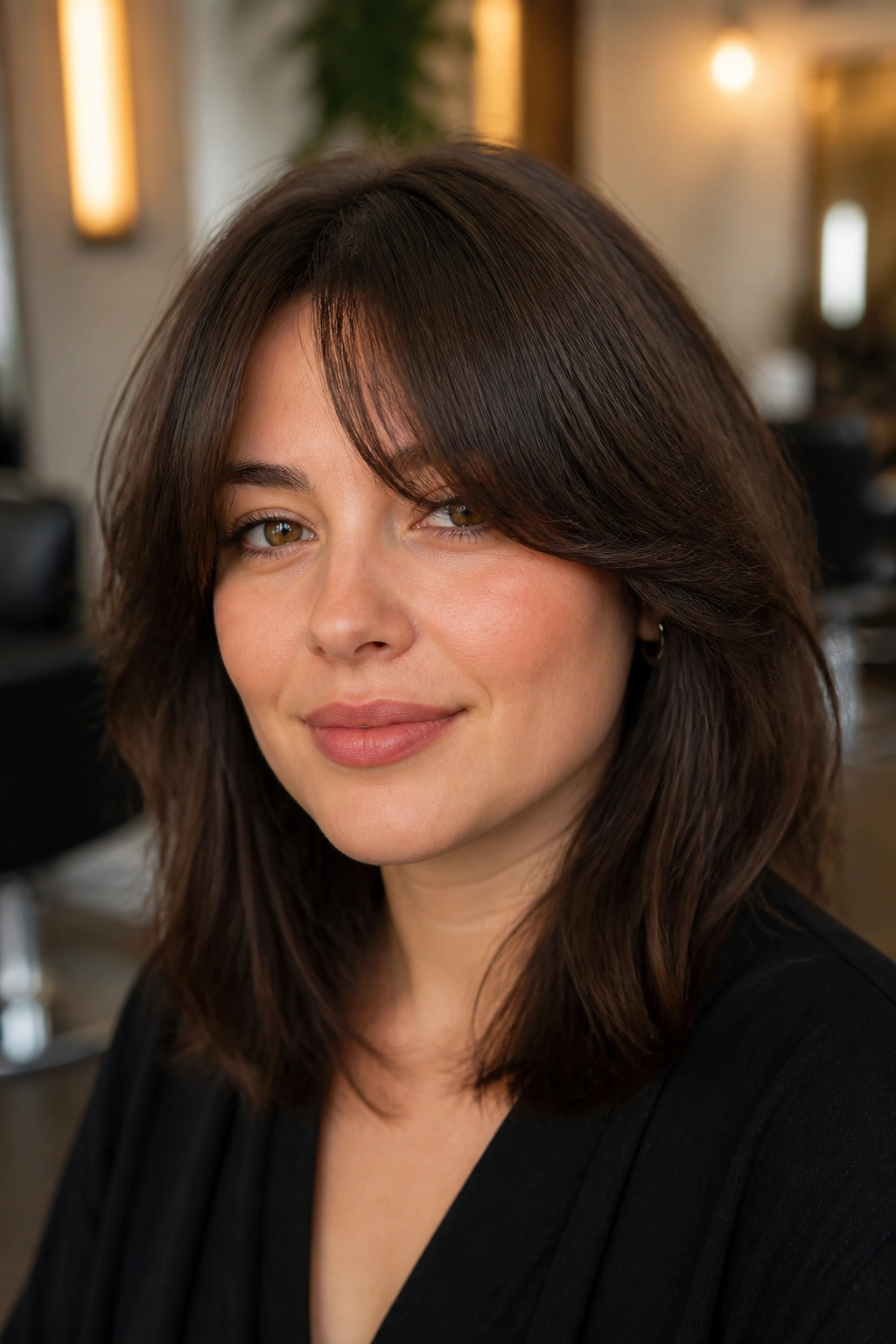
Thick hair needs fewer tricks and more good structure.
If the bang section is too heavy, it can sit like a shelf across the forehead. On a round face, that’s usually a bad trade. Interior weight removal fixes the problem by taking bulk out from inside the section while keeping the outer shape soft and full. The fringe still looks rich, but it moves instead of sitting there like a helmet.
The key is not to over-thin the ends. Too much thinning at the edge can make thick hair frizzy or piecey in the wrong way. You want the weight removed from the middle of the bang area so the curtain can part cleanly and fall in a curve. That difference is subtle in the salon chair and obvious at home.
What to Ask For
- Keep the bangs long enough to skim the cheekbones.
- Remove weight from the interior, not just the perimeter.
- Leave enough density so the fringe still looks full when it dries.
- Use a soft point-cut finish so the ends don’t form a hard line.
This style is one of my favorites for dense hair because it gives you shape without forcing you to fight the texture. The bangs feel lighter, and the round face gets a cleaner frame. Win, win.
12. Low-Maintenance Curtain Bangs for Grow-Out
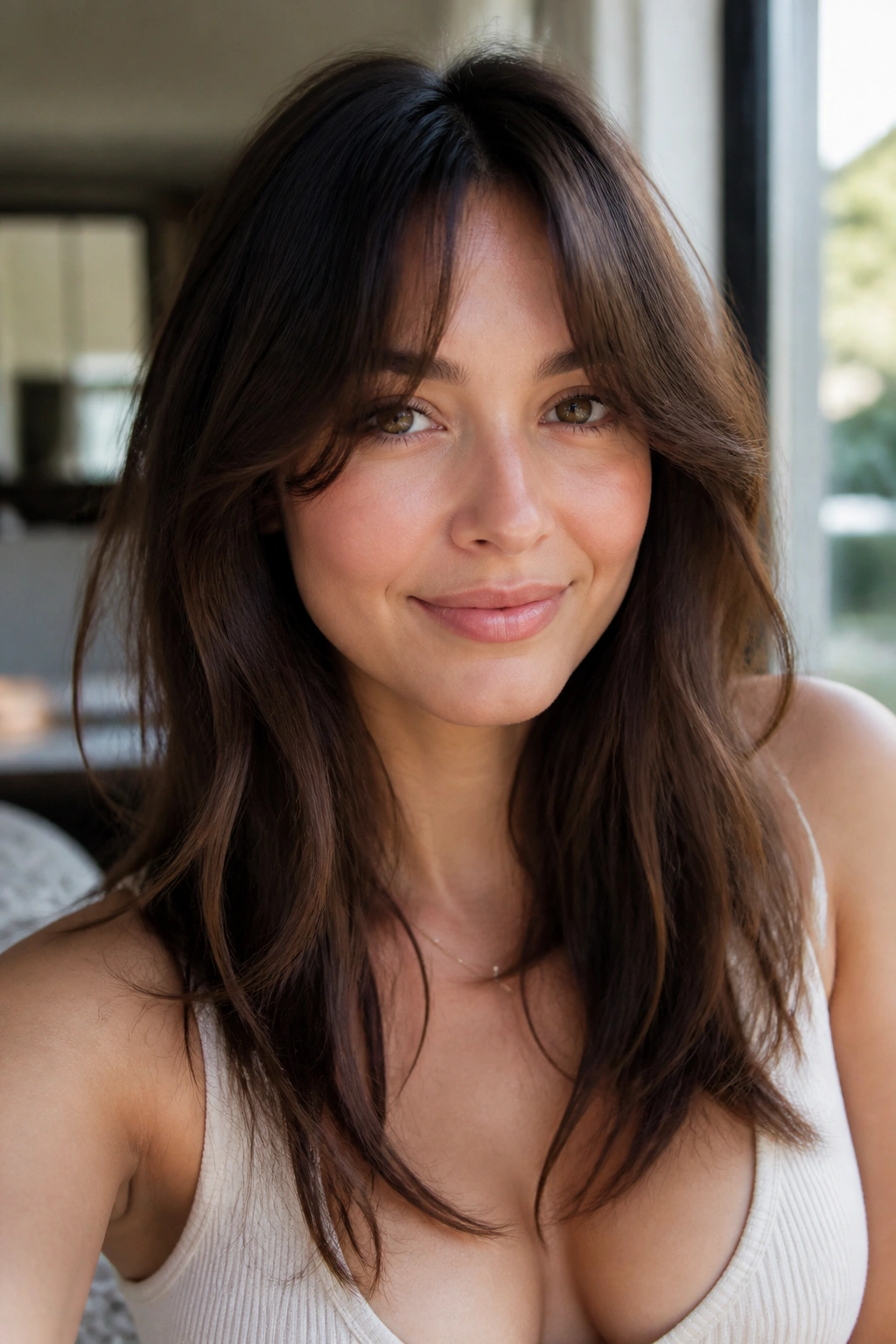
Some people want bangs that look cute on day one. Others want bangs that do not become a daily problem by week three.
Low-maintenance curtain bangs are for the second group. The idea is simple: choose a length and shape that already looks good as it grows. On a round face, that usually means starting with softer center pieces and longer sides that can drift into face-framing layers later on. The cut should age gracefully. That is the whole point.
Unlike a short, strict fringe, this version gets better when it relaxes. A little extra length turns into more cheekbone framing. A little extra bend becomes easier to style. Even when the bangs are between salon visits, they still read as part of the haircut instead of a mistake you are waiting to fix.
If you hate constant trims, this is the one to choose. It also works well if you air-dry more often than you blow-dry. The shape doesn’t depend on precision every morning, which makes the whole thing easier to live with.
A good sign you have the right version is this: the bangs should still look flattering when they fall a bit flat. If they only look good in a highly styled blowout, they are not truly low-maintenance.
13. Bottleneck Curtain Bangs for Round Faces
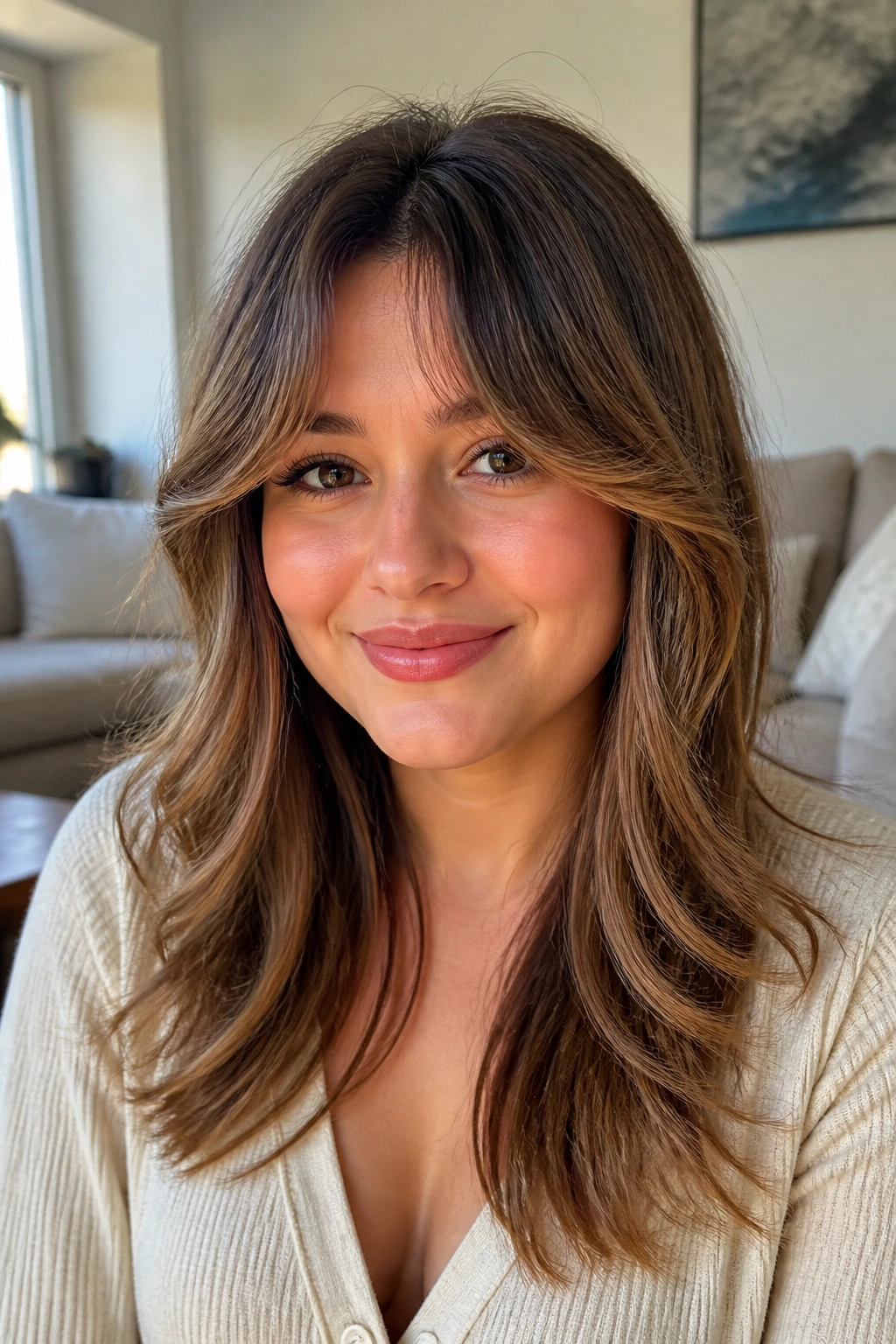
Bottleneck bangs are sneaky in the best way.
They start narrower near the center of the forehead, then widen as they move outward toward the cheekbones. That shape resembles a bottleneck, which sounds odd until you see it on a round face. The narrow center creates lift, while the wider sides soften the cheeks without making the fringe look bulky.
Why It Works
A round face usually benefits from a little more structure at the top and a little more softness lower down. Bottleneck bangs do both at once. The center gives you a clean opening. The sides bring in movement and help guide the eye downward. It feels balanced, but not symmetrical in a boring way.
This style also tends to flatter people who like curtain bangs but don’t want a heavy split right at the middle of the forehead. The shape is softer than a straight fringe and a little more defined than a very wispy curtain. That middle ground is what makes it useful.
Styling Note
Dry the center first, then direct the side pieces away from the face with a round brush or your fingers. Do not overcurl the outer pieces. You want them to curve, not flip. A small amount of mousse at the roots can help the center stay lifted if your hair collapses easily.
This is one of the smartest options in the whole group if you want the face to look a bit longer without giving up softness.
14. Shoulder-Grazing Curtain Bangs with Long Face-Framing Pieces
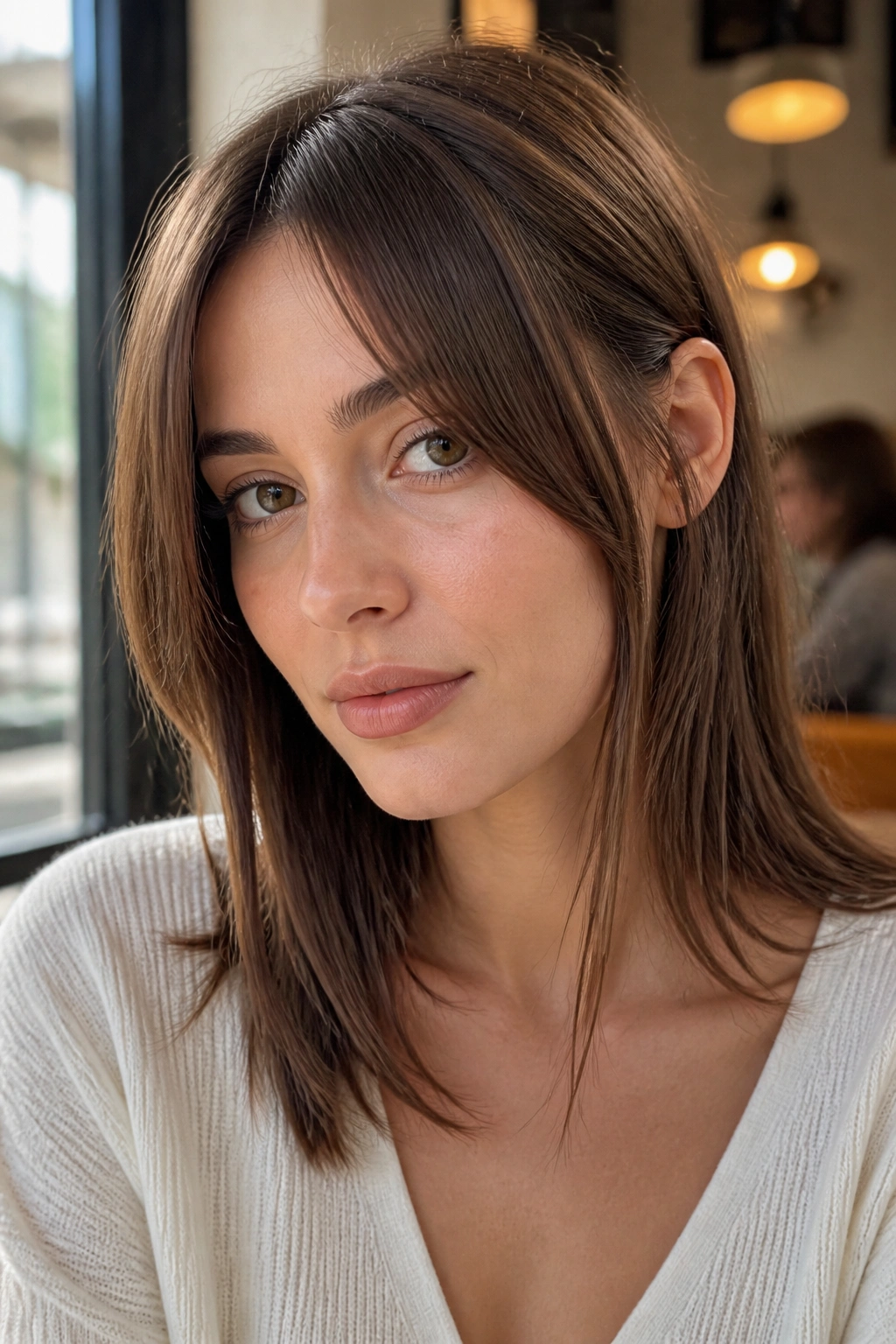
This is the quiet choice, and I like it more than people expect.
Shoulder-grazing curtain bangs with long face-framing pieces work because they create a long, unbroken line down the front of the haircut. On a round face, long front pieces are useful. They pull the eye from the forehead toward the jaw and shoulders, which gives the face more length without making the haircut look severe.
The bangs themselves are barely bangs in the traditional sense. The shortest pieces usually sit around the bridge of the nose or upper cheekbone, then the shape slides into long, soft side pieces that can tuck behind the ear or rest against the collarbone. That relaxed shape makes the cut feel grown-up without feeling stiff.
This style is especially nice if your hair is shoulder length or just past it. The bangs and the front layers can connect cleanly, which keeps the face from looking boxed in. If your hair is shorter than that, the effect can feel a little disconnected, so the length matters here.
No drama. No hard line. Just a long frame that does its job quietly.
15. Brow-Grazing Curtain Bangs with a Soft Arch

Shorter curtain bangs can work on a round face, but only if the shape stays soft.
Brow-grazing curtain bangs with a gentle arch bring attention to the eyes and show a little forehead, which can be a nice trade when the rest of the face is fuller. The curve matters. If the line is too straight, the style can widen the face and make the bangs feel abrupt. If the arch is soft and the sides taper quickly, the result is lighter and more flattering.
When to Choose This Cut
This is a smart option if your forehead is a little longer than the rest of your face, or if you like the look of fringe but don’t want it hanging near your cheeks. It can also work well with bold glasses because the bangs sit high enough to leave room for the frames.
What to Ask For
- Keep the center at or just below the brow line.
- Let the sides drop quickly toward the temples and cheekbones.
- Ask for a soft arch, not a straight-across edge.
- Style with a small round brush or a flat brush and a slight bend away from the face.
This cut needs a little precision, so I would not recommend it if you want zero styling. But when it’s done well, it gives a round face a lifted, open look that feels fresh without being fussy.
Final Thoughts
The most flattering curtain bangs for round faces usually do one thing very well: they make the face feel longer without making the hair feel hard.
If you want the safest bet, start with cheekbone-skimming feathered bangs or a chin-grazing version with soft ends. If you want less daily work, lean into the low-maintenance grow-out shapes. If you have waves or curls, let the texture help you instead of trying to flatten it into submission.
Bring photos, yes. But bring one more thing too: a rough idea of where you want the shortest piece to land. Cheekbone, brow, or chin. That single detail saves more bad haircuts than almost anything else.
