



Round faces can wear fringe without fighting the shape of the face. The trick is choosing bangs that break the circle instead of tracing it, which is why the best bangs ideas for round faces usually add a little length, a little angle, or a little air around the cheeks.
A heavy straight line across the forehead can make the widest part of the face read even wider. A softer line can do the opposite. That sounds fussy, but it isn’t; a few millimeters of length at the temples or cheekbones can change the whole feel of a cut.
Texture matters too. Fine hair needs enough density to look intentional, thick hair needs bulk removed so the fringe does not sit like a shelf, and curly hair needs room for shrinkage. If you’ve ever left the salon with bangs that felt cute at first and then settled into a stubborn little wall, you already know why the details matter.
The good news is that “flattering” does not mean “boring.” Some of the smartest fringe shapes are soft and airy, some are bold, and a few are a little messy in the best way. The first one is the easiest place to start.
1. Long Curtain Bangs for Round Faces

Long curtain bangs are the safest yes for a round face when you want movement without a hard line. They part at the center or just off-center, then fall down and out so the eye travels vertically instead of stopping at a blunt edge. That vertical pull is the whole point.
How to Ask for the Shape
Tell your stylist you want the shortest pieces to sit around the cheekbone or just below it, not right at the brows. From there, the sides should taper toward the lips or jaw so the fringe blends into the rest of the cut instead of ending in a chunk. If your hair is thick, ask for internal weight removal, not aggressive thinning.
These bangs work especially well when the rest of the haircut has a little movement. Straight hair can wear them, but a soft bend from a round brush or large Velcro roller makes the shape feel finished. One quick bend away from the face is usually enough.
Best for: medium to thick hair, shoulder-length cuts, and anyone who wants a fringe that grows out gracefully.
Trim check: every 6 to 8 weeks, unless you like a more overgrown look.
2. Side-Swept Fringe With a Deep Part
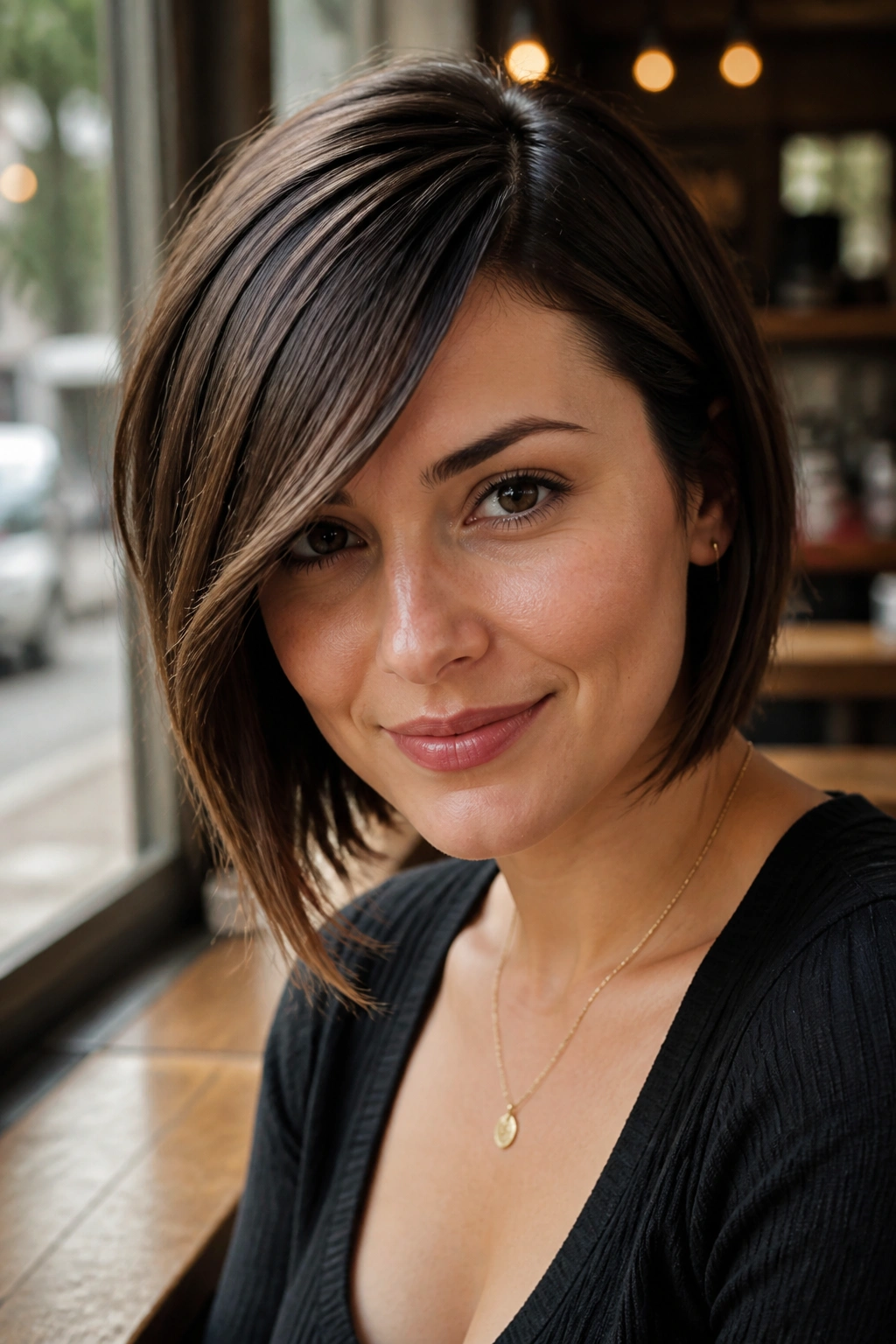
A deep side part can be more flattering than a full fringe because it creates a diagonal line across the forehead. That diagonal is doing quiet work. It pulls the eye from the center of the face toward the temples and cheekbones, which keeps the face from reading too wide.
This is the bang shape for someone who wants fringe but does not want to commit to a strong front-and-center cut. The longest piece usually lands near the cheekbone, and the shortest piece starts around the outer brow. The result feels soft, not severe.
A side-swept fringe also gives you options on days when you want the forehead open. Tuck it, clip it, pin it back, and the haircut still looks intentional. That flexibility matters more than people admit.
3. Bottleneck Bangs That Open at the Center
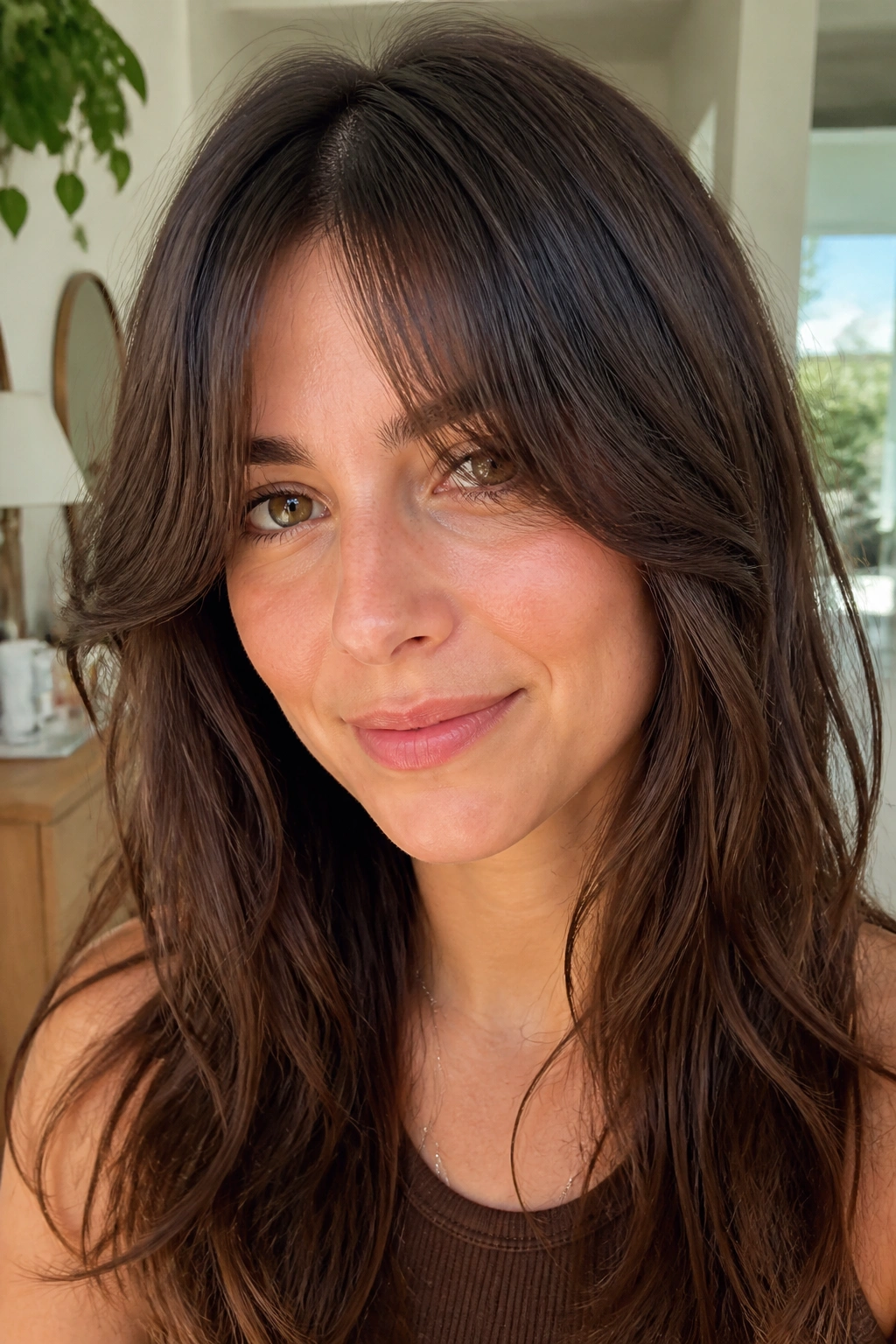
Why do bottleneck bangs keep showing up in good salons? Because the shape is clever without trying too hard. The center is narrower, then the fringe widens toward the brows and temples, which means the forehead gets a soft opening right where a round face needs it.
Where the Shortest Point Should Sit
Ask for the center to fall between the brows and lashes, then let the side pieces get longer and blend into the front layers. You do not want a solid block of hair across the forehead. You want a soft curve that starts small and opens out.
These bangs are especially nice on medium-density hair because they have enough body to look deliberate, but not so much bulk that they crowd the face. If your hair is very fine, keep the ends a little blunt so the fringe does not disappear. If it is thick, point-cutting at the edges helps.
The styling part is not hard. A small round brush, a quick bend, and a bit of root lift usually do it. Leave them too flat and they can feel ordinary. Give them a little shape and they suddenly make sense.
4. Wispy Eyebrow-Grazing Fringe
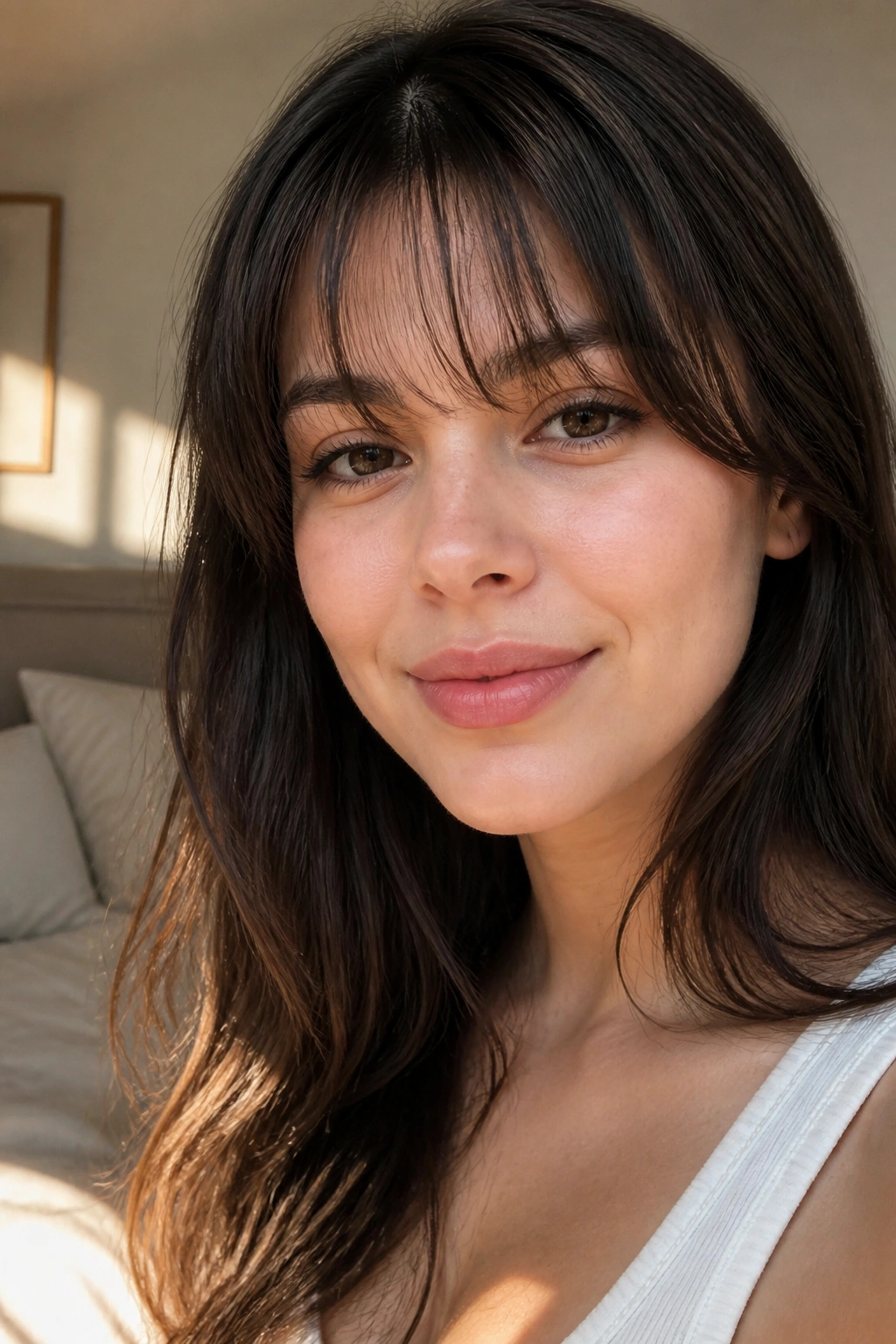
Wispy bangs are for the person who likes the idea of fringe but hates the feeling of being covered up. They sit light across the forehead, leave small gaps, and stop the cut from looking heavy. On a round face, that airiness matters because it keeps the upper face open.
The key is density. Too little hair and the fringe looks accidental. Too much and it starts behaving like a full blunt bang, which is not the same thing at all. The sweet spot is a soft, feathered line that skims the eyebrows and moves a little when you blink.
These bangs are especially good if your hair is fine, because the lightness makes the strands look fuller without creating bulk. They also work if you want something that dries quickly and does not need a full styling routine every morning.
5. Shag Bangs With Choppy Ends
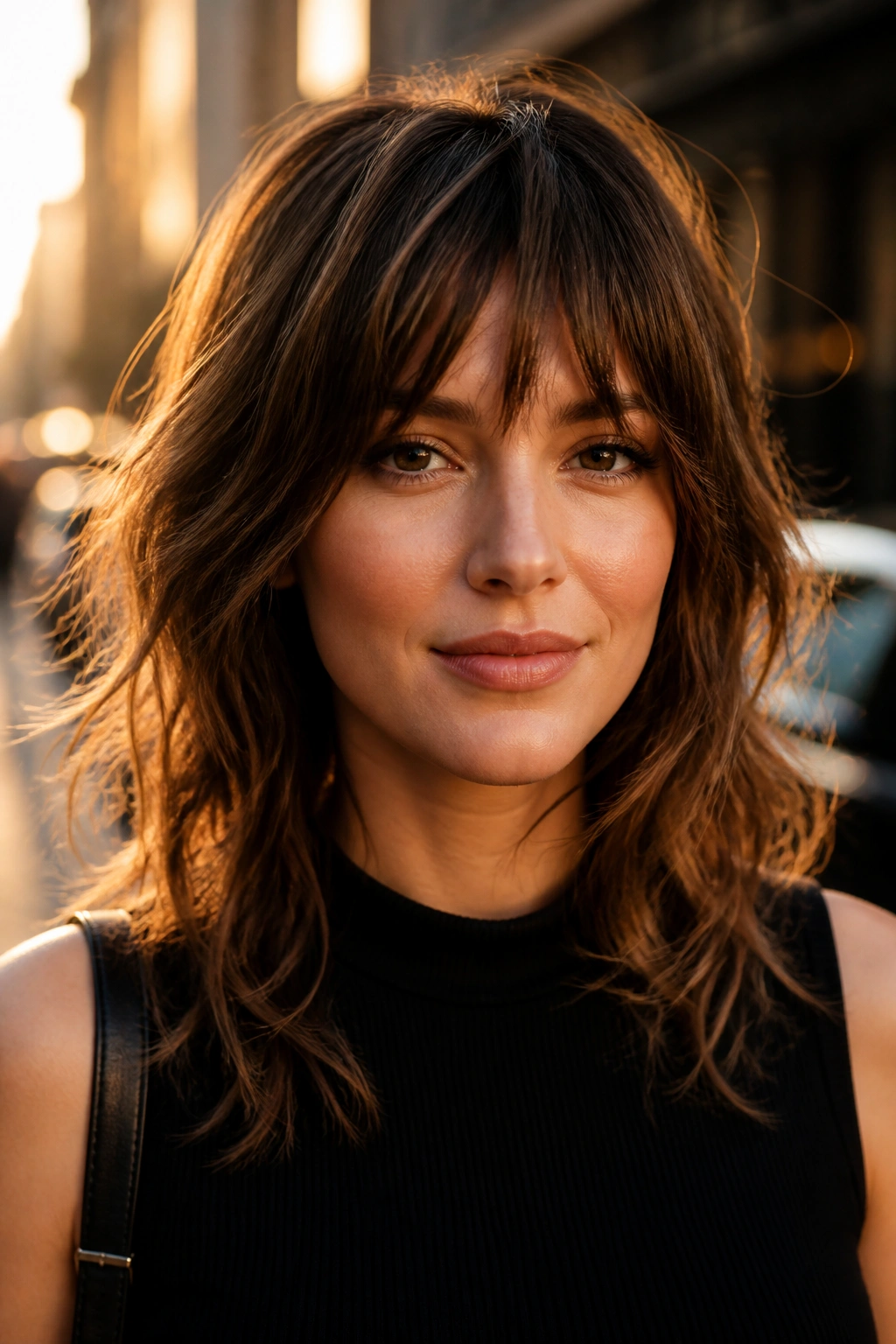
Shag bangs are a little rough around the edges, and that is exactly why they work. The choppy ends break up the roundness of the face, and the overall shape feels lived-in rather than neatly boxed in. If you wear wavy hair, this one is a natural fit.
The cut should connect to the rest of the shag, not sit on the forehead like a separate piece. Ask for the shortest layer to hit around the brows or just below, then let the side bits slide into the cheekbone area. That way the fringe becomes part of the haircut instead of a front panel.
Shag bangs are forgiving on busy mornings. A bit of mousse, a rough blow-dry, maybe a touch of texturizing spray, and you are done. No one expects them to be sleek. That is the charm.
6. French Bangs With a Soft, Lived-In Line
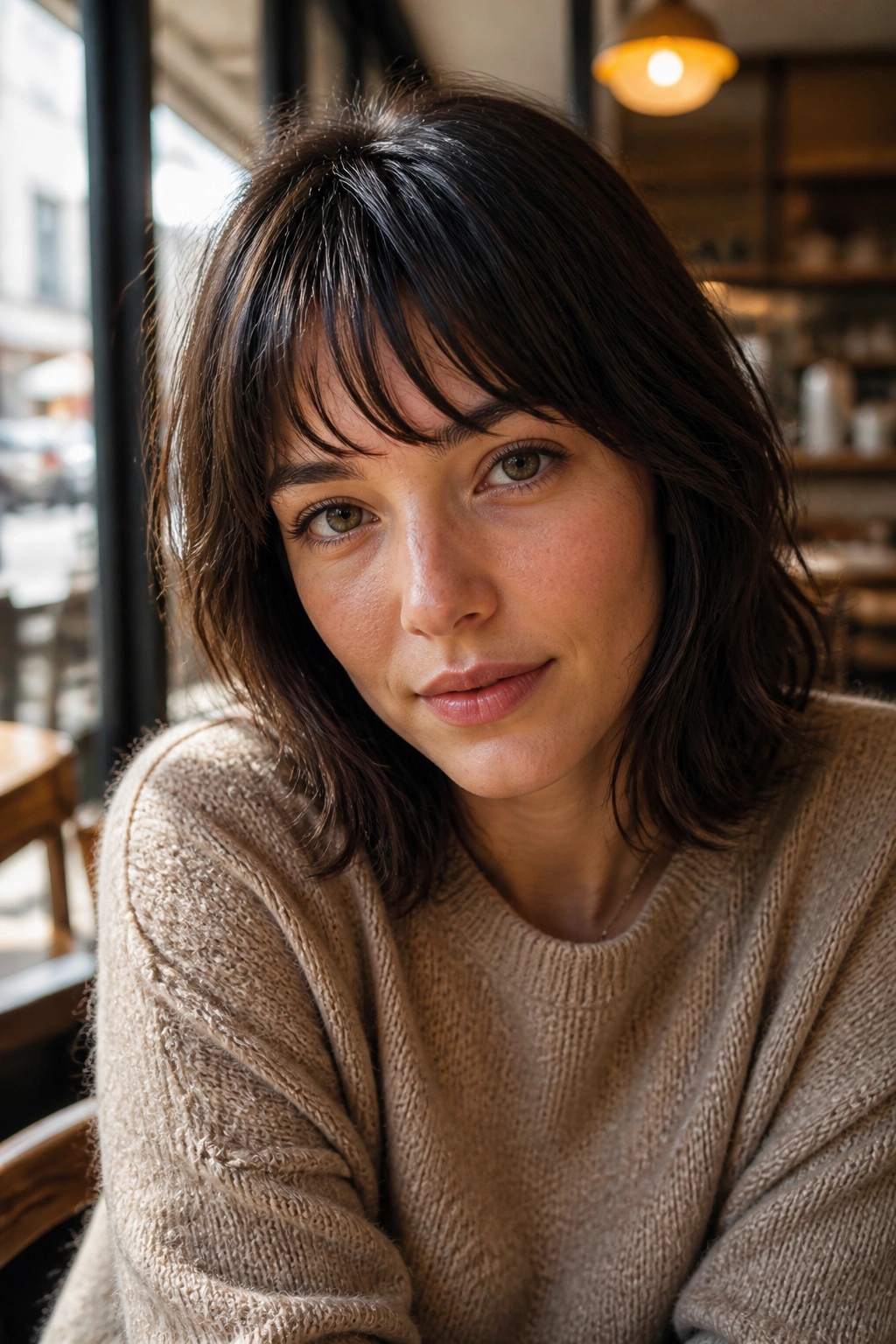
French bangs are softer than a blunt fringe and less fussy than a polished curtain shape. They usually sit around the eyebrows, with a slightly uneven edge that makes them feel relaxed rather than engineered. On a round face, that loose edge helps the forehead feel less broad.
Compared with a sharp straight bang, this version looks more wearable because the line is broken just enough to avoid a hard horizontal block. The ends can graze the temples a little, which keeps the face from feeling boxed in. It is a small thing, but hair is full of small things.
If you like a haircut that looks better with a bit of movement, this one is worth a serious look. It works with blow-dried polish, but it also holds up when it air-dries with a little bend. That flexibility is the reason so many stylists keep coming back to it.
7. Cheekbone-Length Bangs That Hit the High Point
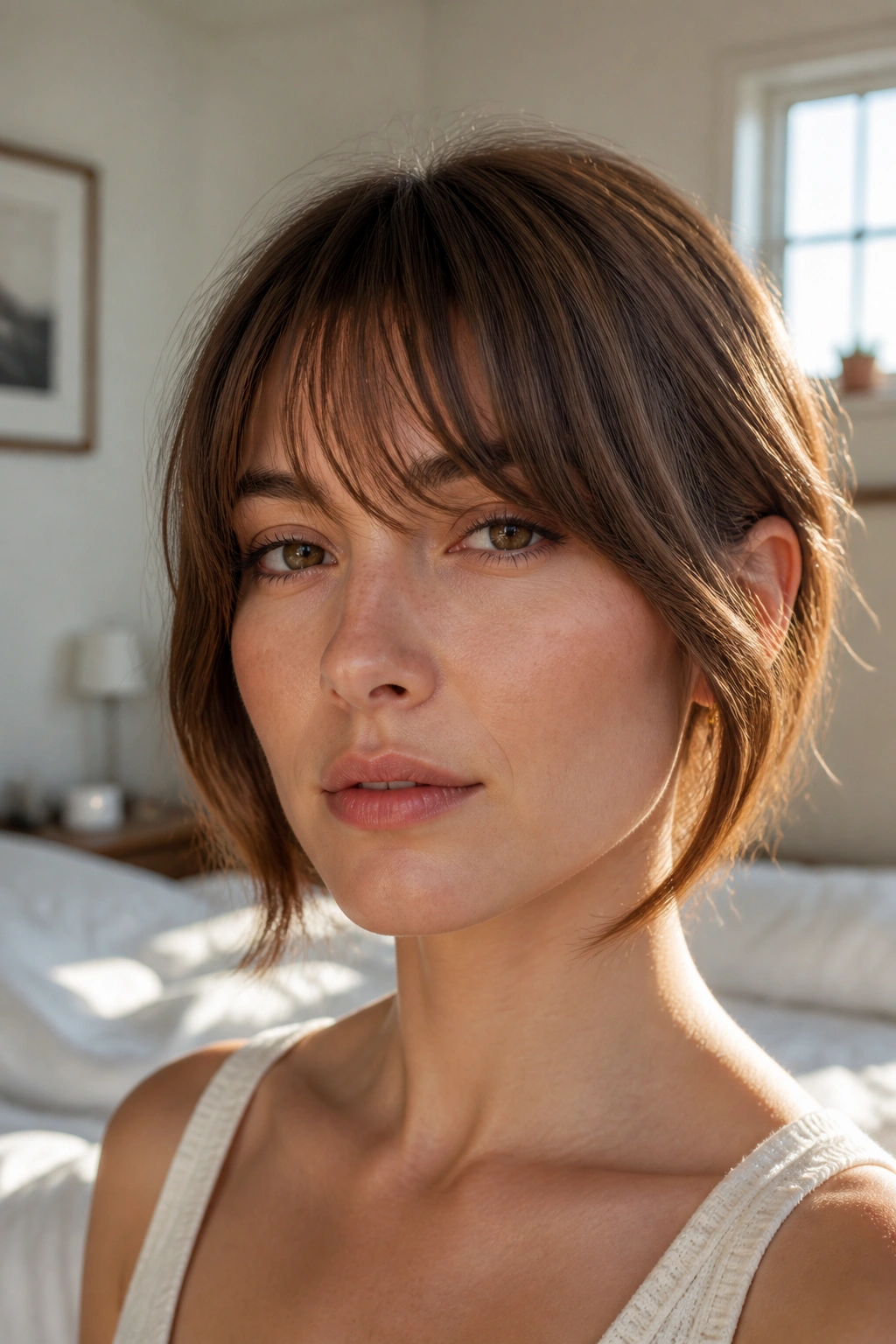
Cheekbone-length bangs are a smart move when you want to draw attention upward and inward. They end right where the face starts to narrow, which means the eye lands on one of the most flattering points of the head. That does a lot of work with very little hair.
What Makes Them Different
- The ends sit at the cheekbone, not the chin.
- The fringe should be soft at the edge, not cut into a straight shelf.
- The side pieces need enough length to blend into layers.
- A slight bend away from the face gives the cut room to breathe.
These bangs are especially nice if you like long hair and do not want to lose length around the face. They can make the cheekbones look more defined and give the haircut a bit of shape without taking over the whole look.
Pro tip: keep the center slightly shorter than the outer edges. That tiny difference helps the bang open up instead of closing down the face.
8. Deep Side-Part Bangs for Round Faces
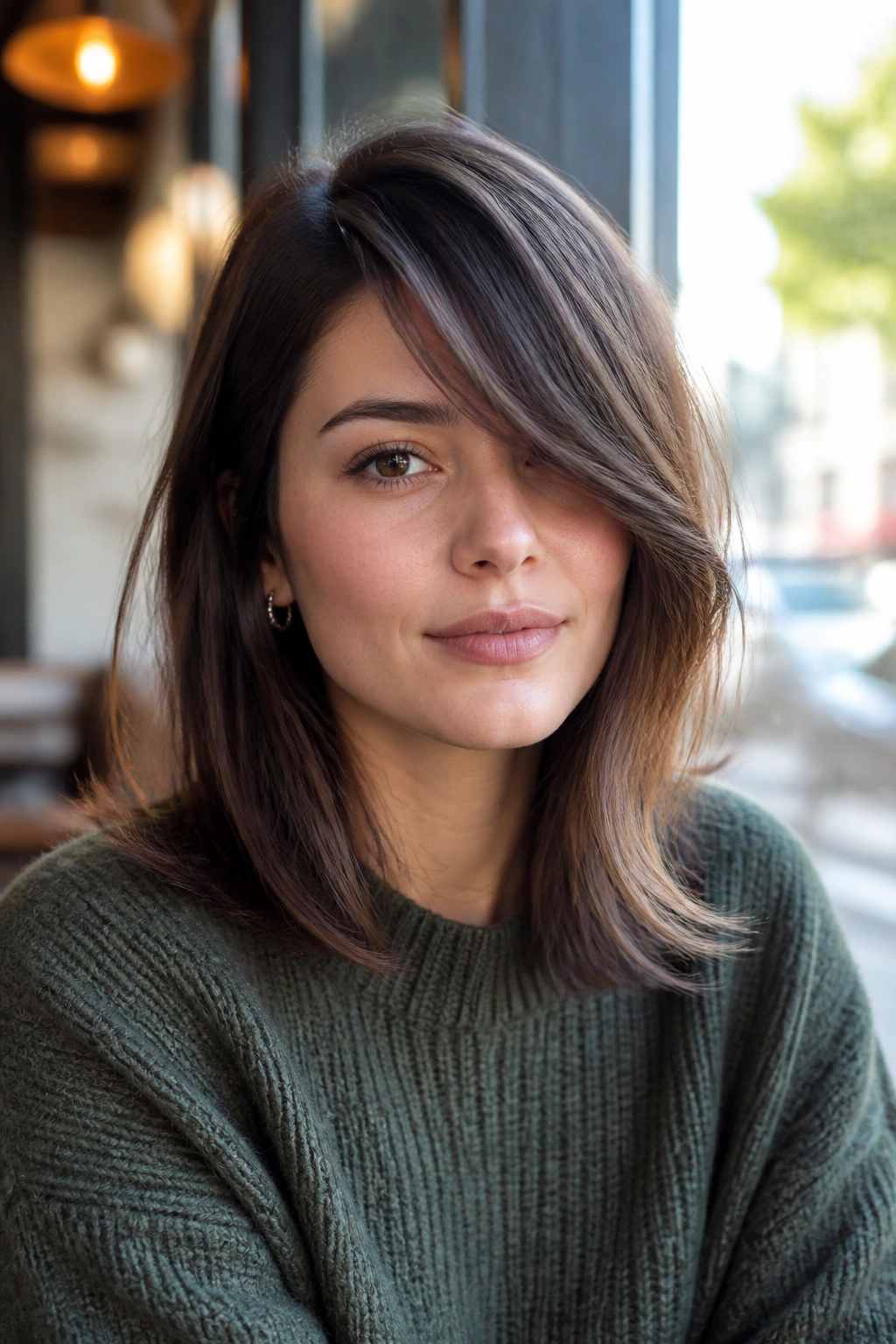
A deep side part can change the way a round face reads almost instantly. The part itself creates direction, and direction is useful when the natural face shape is soft and full. It keeps the eye moving instead of resting in one wide horizontal zone.
This is less about the bangs alone and more about the whole front of the haircut. One side gets more weight, the other side gets tucked or lifted, and the result looks cleaner than a straight-across fringe. It is a good choice if you like a little drama but not a lot of maintenance.
I also like this option for people who are still testing the idea of fringe. You can wear it on a cut that is already growing out, then decide later whether you want to commit to more defined bangs. Low risk. Useful. No regret spiral.
9. Arched Bangs That Follow the Brow
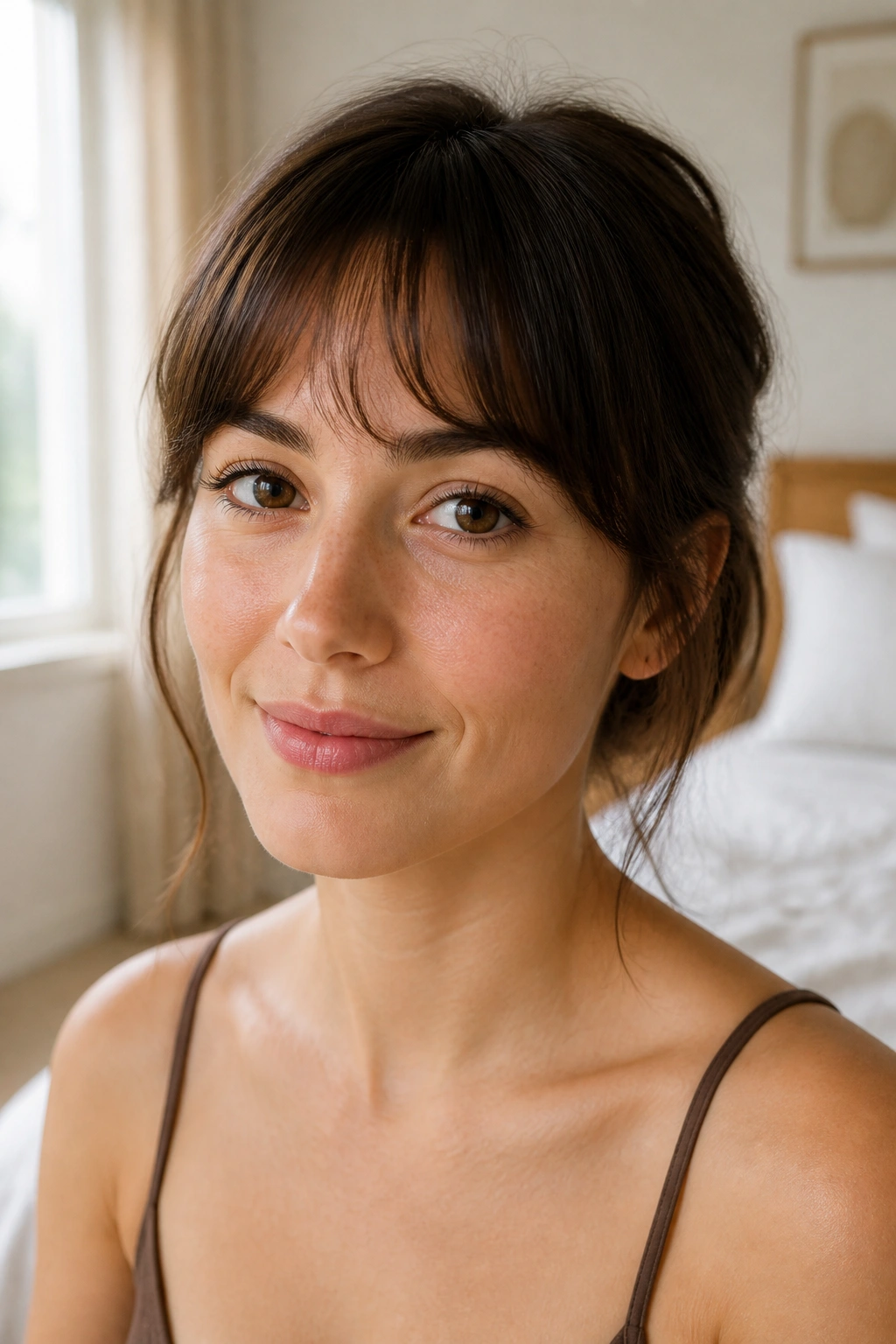
An arched fringe is a small shape with a big payoff. The center sits a touch higher, then the line curves down toward the temples so it follows the brow rather than slicing across it. That curve softens the forehead while keeping the face open.
The mistake to avoid is making the arch too severe. A hard half-moon can start to look costume-like fast, and on a round face it can feel even more obvious. You want a gentle arch, not a graphic one.
These bangs can be a smart match for straight or slightly wavy hair because the curve is visible without much styling. If your brows are already well-shaped, the haircut and brow line can work together in a clean way. That is the kind of detail people notice without always knowing why.
10. Piecey Textured Bangs
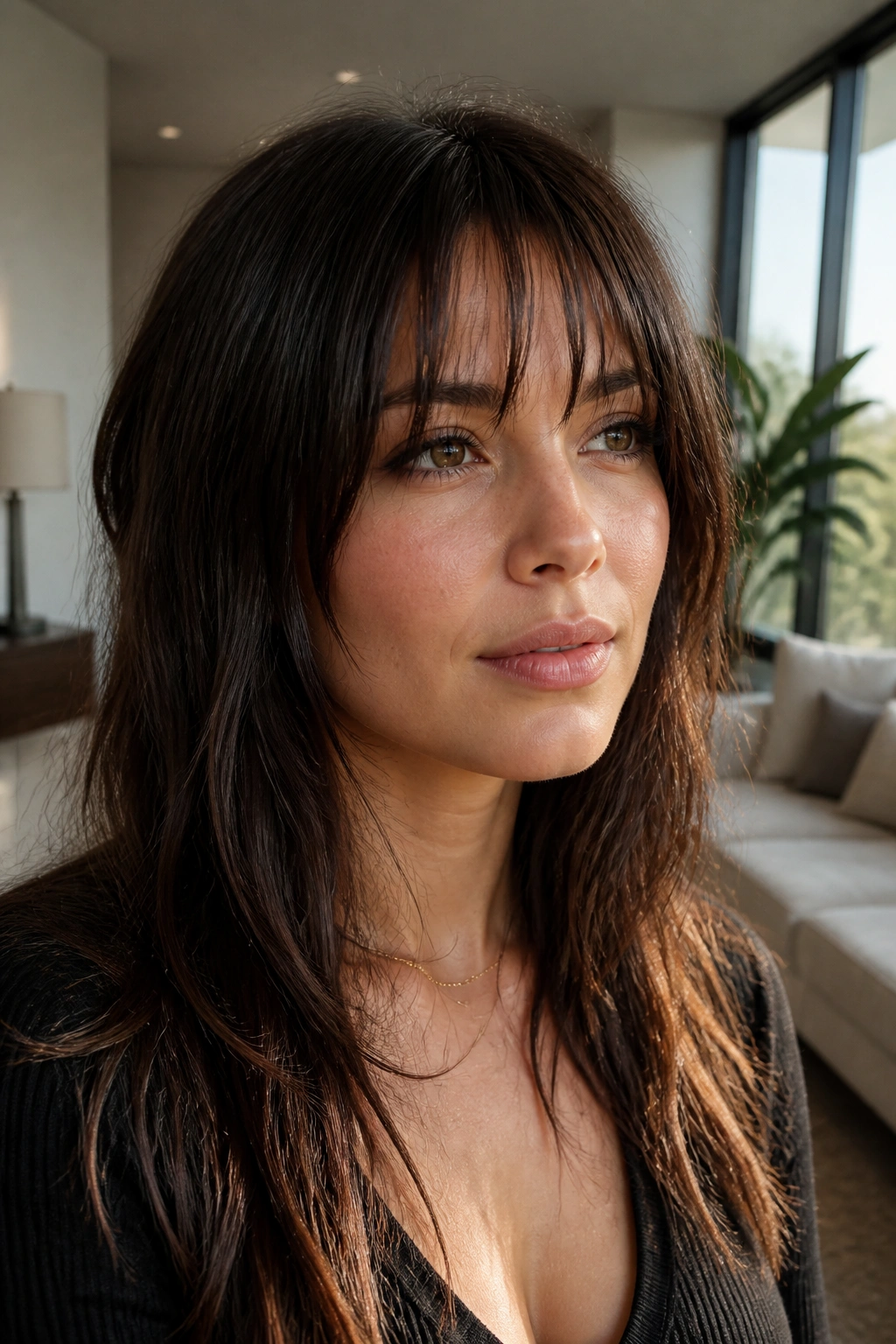
Piecey bangs are a good answer if you hate the feeling of a heavy curtain of hair on your forehead. The strands separate a bit, which creates tiny vertical breaks and keeps the face from reading as a solid block. That separation is the whole point.
This kind of fringe usually looks best when the stylist point-cuts or razor-texturizes the ends so the pieces move independently. If the cut is too neat, the effect disappears. If it is too shredded, the bangs can look thin and tired. The balance matters.
A little styling product helps here, but not much. Think light wax, a touch of paste, or a whisper of texturizing spray. You are not trying to freeze the bangs. You are trying to let them fall in uneven little pieces that feel casual on purpose.
11. Face-Framing Layers With Fringe for Round Faces
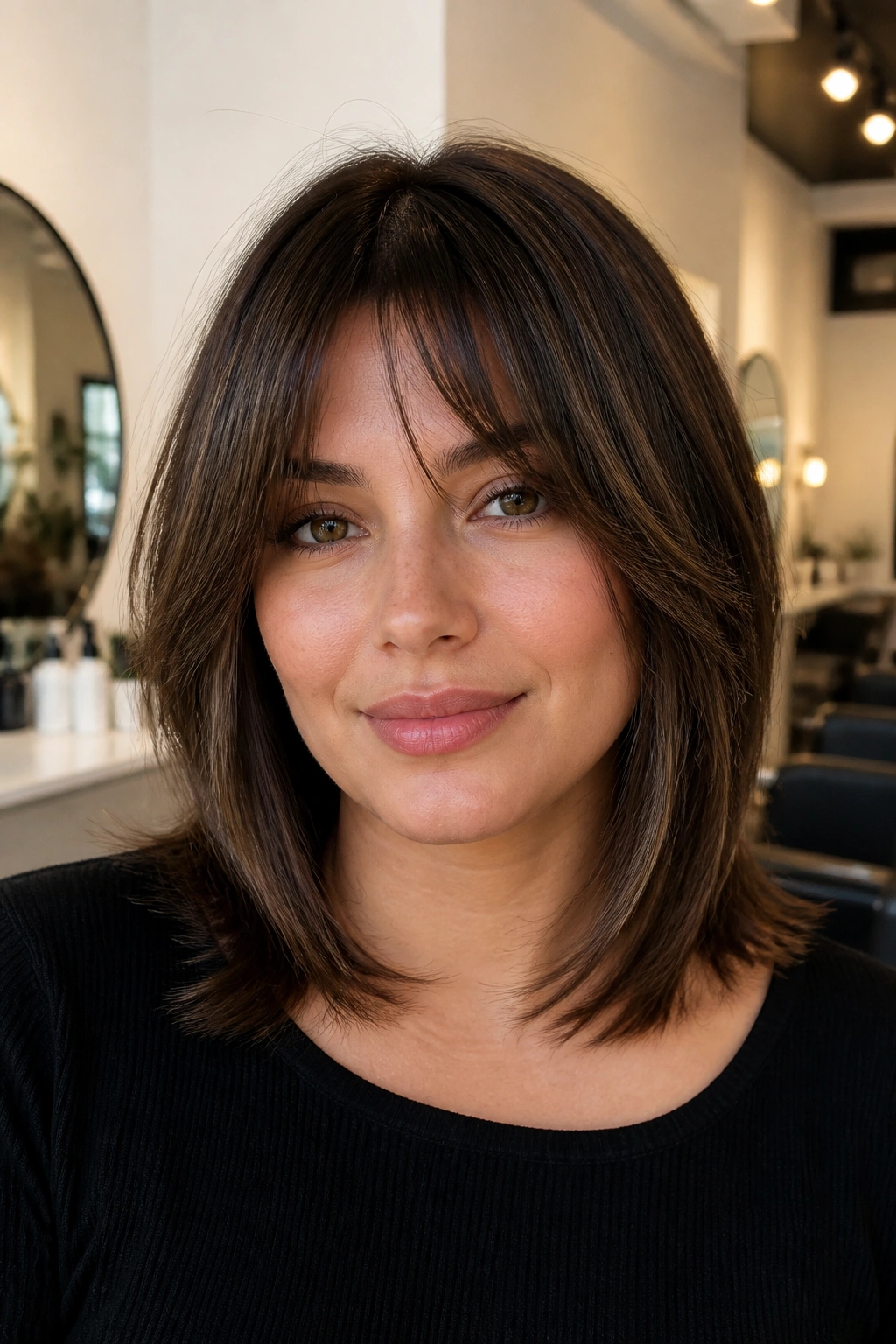
Sometimes the smartest fringe is not really a fringe at all. Face-framing layers can do the work of bangs while blending into the rest of the haircut, and that blend is useful on round faces because it avoids a straight line across the forehead.
Why It Works
The shortest front pieces usually start around the cheekbone or just below, then drop toward the jaw and collarbone. That creates two things at once: a vertical line near the face and movement around the cheeks. The face looks longer without feeling hidden.
- Ask for the front layers to start below the widest part of the cheek.
- Keep the blend soft so the layers do not stop in one blunt point.
- If your hair is thick, remove weight under the surface.
- If it is fine, keep enough perimeter so the ends do not vanish.
This is a strong option if you wear your hair up a lot. Even when the back is tied, the front pieces keep the shape alive.
12. Soft Blunt Bangs With Rounded Corners
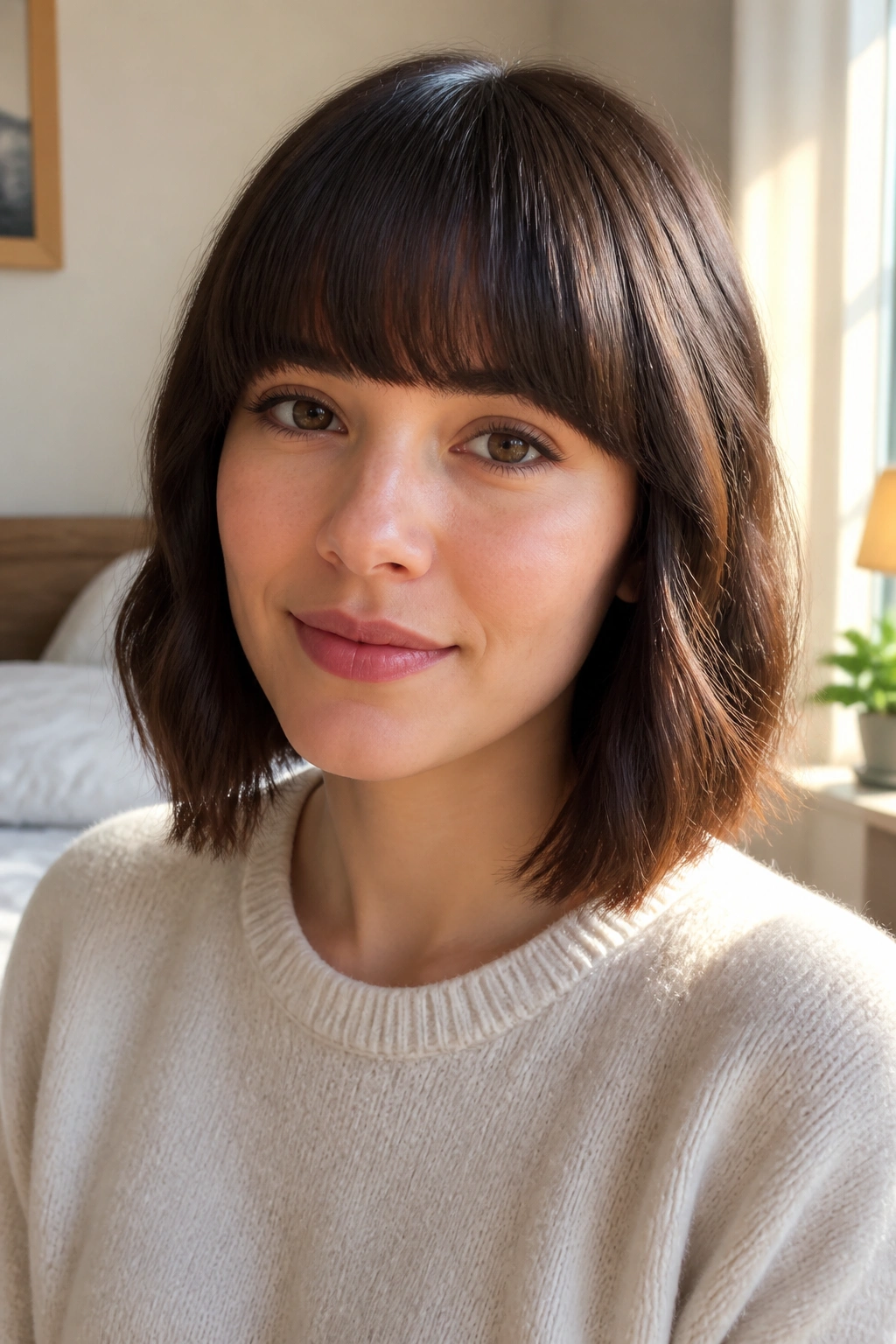
Soft blunt bangs are a little more structured, but they still can work on a round face if the corners are rounded and the density is controlled. The trick is not to make the fringe look like a perfect block. You want a line with some give in it.
The center can sit around the brows or just below, while the edges ease outward instead of stopping hard at the temples. That soft cornering keeps the haircut from widening the face. It also stops the bangs from looking too stiff when they move.
This style suits someone who likes polish and does not mind regular trims. It is not the easiest fringe to grow out, and it is not the most forgiving on a cowlick. But when it is cut well, it can look sharp in a way that feels clean rather than severe.
13. Curly Fringe Cut for Natural Texture
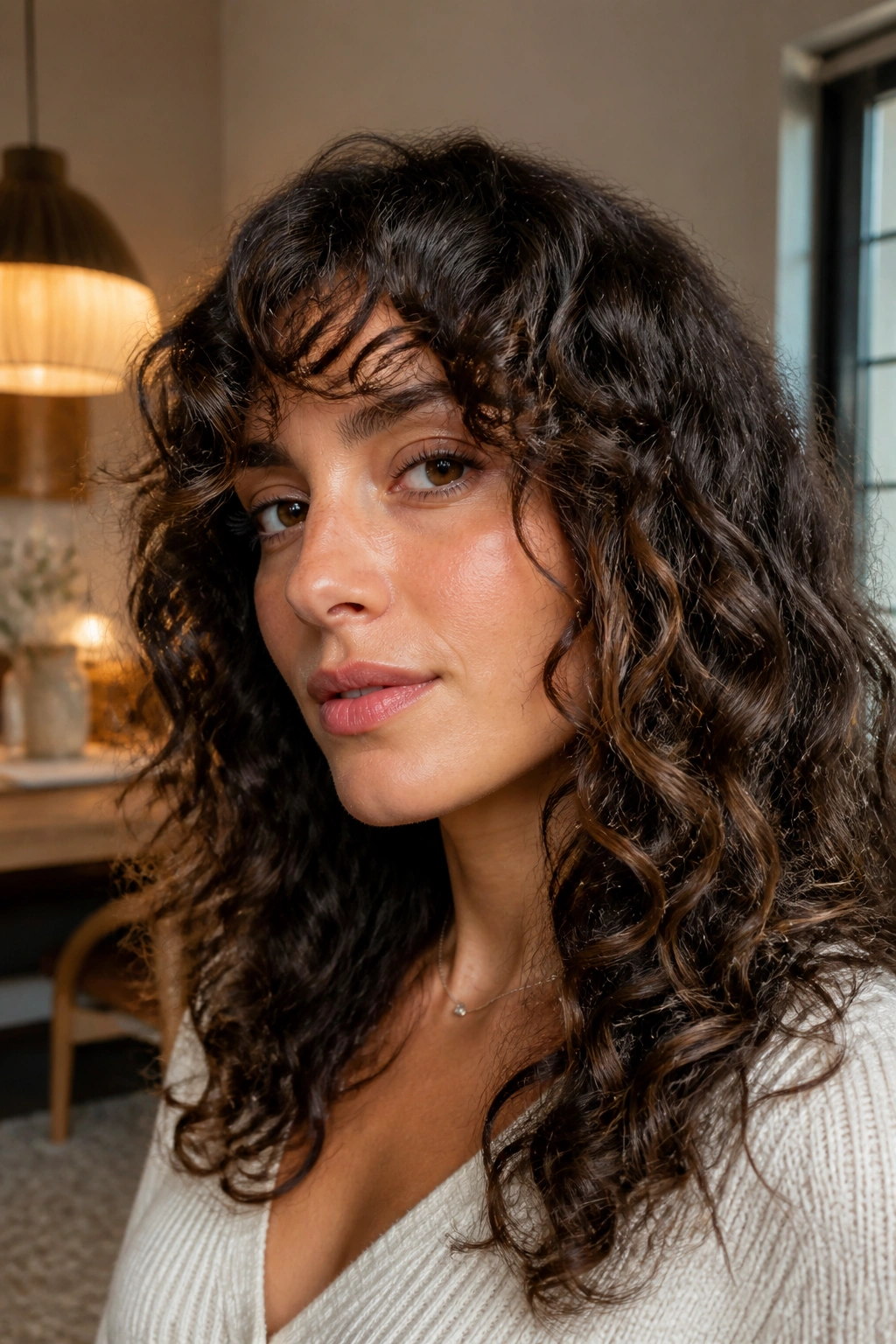
Curly fringe needs a different hand. If the bangs are cut wet and too short, they spring up and can sit higher than you expected. On a round face, that can shift the balance in a strange direction, so the cut has to respect the curl pattern.
The best curly fringe is usually cut dry or close to dry, with the stylist watching how each curl lands around the forehead. The outer pieces should be a touch longer so the shape narrows instead of flaring wide. That little adjustment matters more than people think.
A curly fringe works best when it is part of a layered cut, not a single dense block at the front. Diffuse it gently, then leave it alone. Overbrushing turns good curls into fuzz. Nobody needs that.
14. Birkin Bangs With a Loose Finish
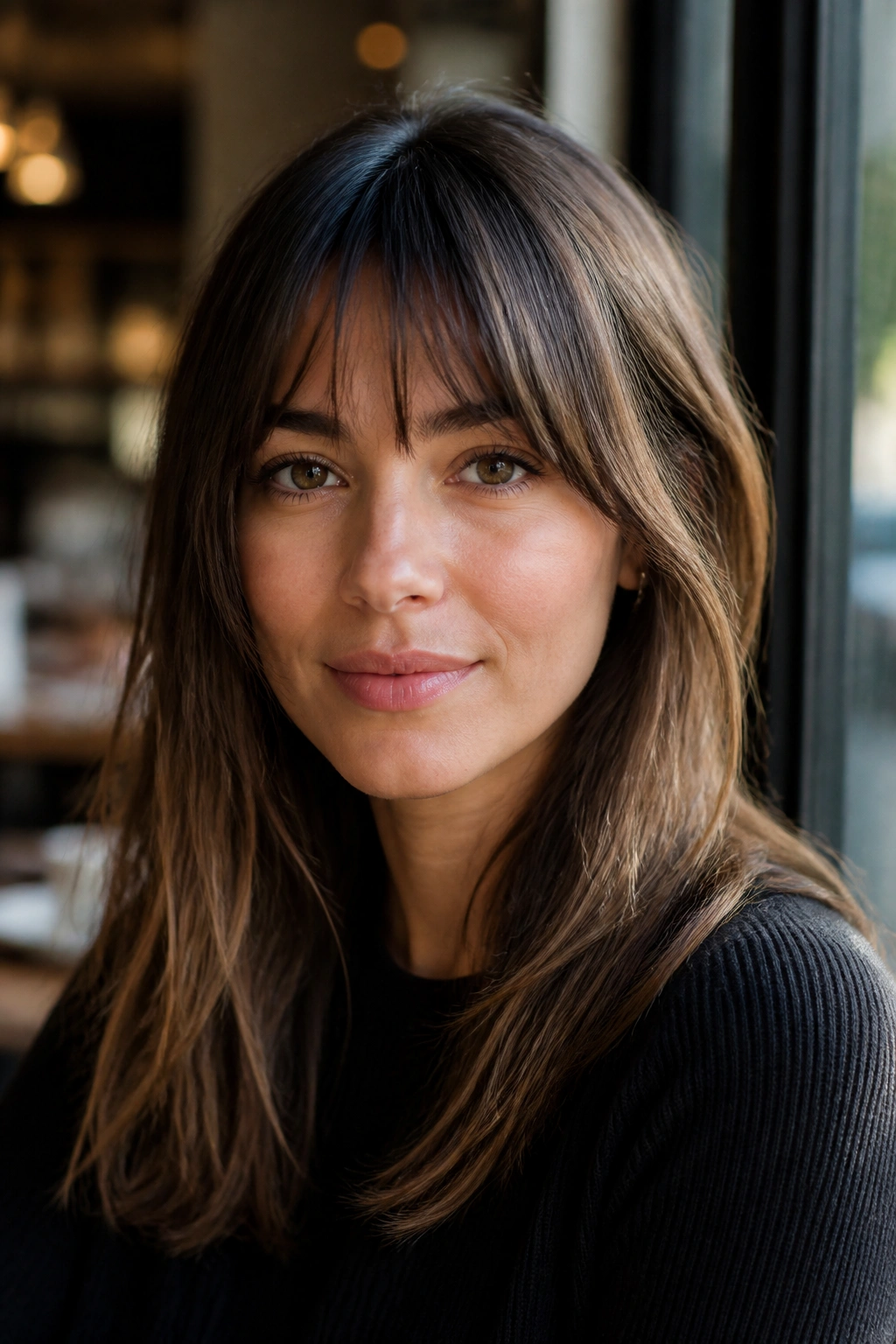
Birkin bangs live in that sweet spot between polished and undone. They are named after Jane Birkin, but the modern version is softer, longer, and less rigid than the old reference might suggest. On a round face, that looseness helps keep the front open.
The bangs usually fall around the brows, then slip a little longer at the sides. The edge is not perfect. In fact, a tiny bit of irregularity is part of the appeal. That unevenness makes the fringe feel lighter and keeps it from creating a strong horizontal line.
These are good if you like the idea of fringe but want something that ages well as it grows out. A quick pass with a brush and a little dry shampoo at the roots is usually enough. They do not demand much, which is probably why they keep staying in style.
15. Grown-Out Bangs That Skim the Eyes
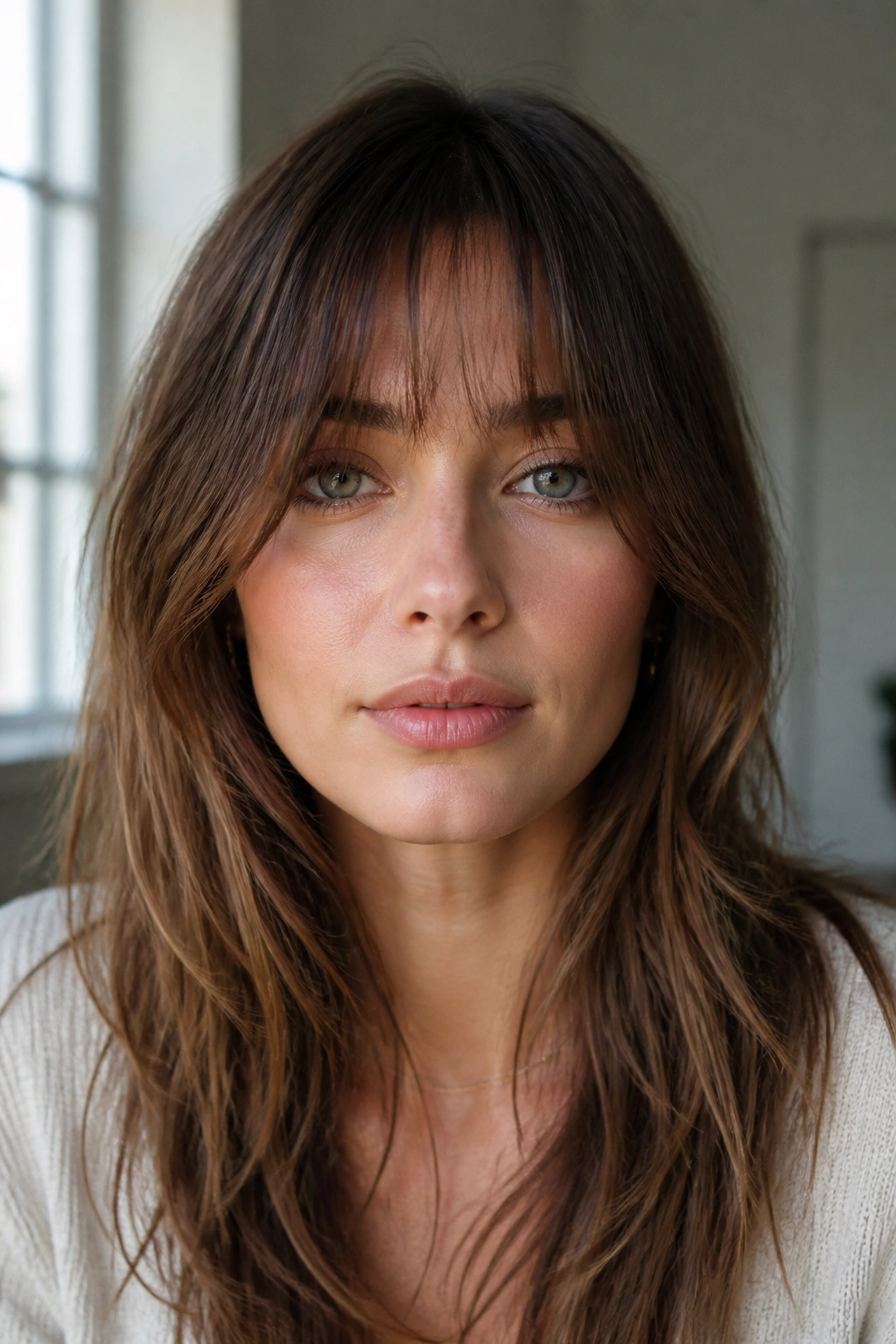
Grown-out bangs are underrated because they solve the awkward middle stage that so many people dislike. Instead of trying to hide the length between “short fringe” and “no fringe,” you lean into it. The result is long enough to move, but still short enough to frame the face.
On a round face, this works because the fringe hits the eye line and creates a vertical break. The eye goes down, not sideways. That tiny shift can make the face feel longer and slimmer without any dramatic cutting.
I like this shape for people who want bangs but do not want a hard schedule. You can trim the corners, let the center get a little longer, and wear it pushed aside on off days. It is not fussy. That is the point.
16. Razored Fringe for Thick Hair
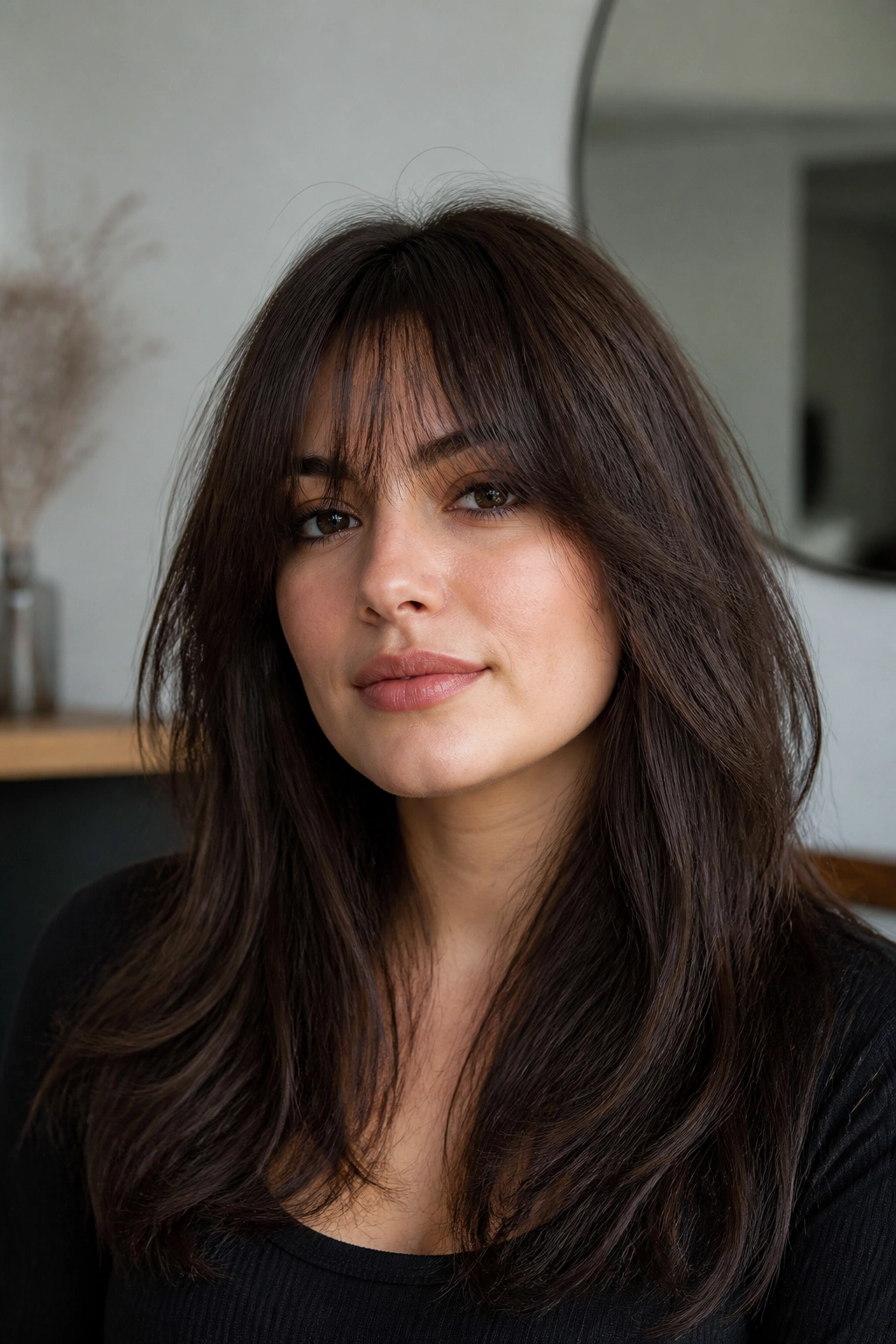
Razored fringe can be a lifesaver if your hair is dense and the forehead area tends to puff up. A razor removes some bulk from the ends, so the bangs fall in a lighter way instead of sitting like a compact wall. On a round face, that lightness helps.
What to Watch For
- Ask for feathered ends, not a shredded finish.
- Keep the weight below the widest part of the cheeks.
- Avoid over-razoring if your hair frizzes easily.
- Use a small amount of cream, not a heavy gel.
The warning is simple: a razor cut needs skill. If the hands behind it are rough, the fringe can look stringy. If the hands are good, the bangs have movement and air. It is one of those cuts where the tool matters, but the judgment matters more.
This is not the best choice for everyone. It is a strong choice for thick hair, though, and that difference is worth taking seriously.
17. Micro Bangs With Soft Edges
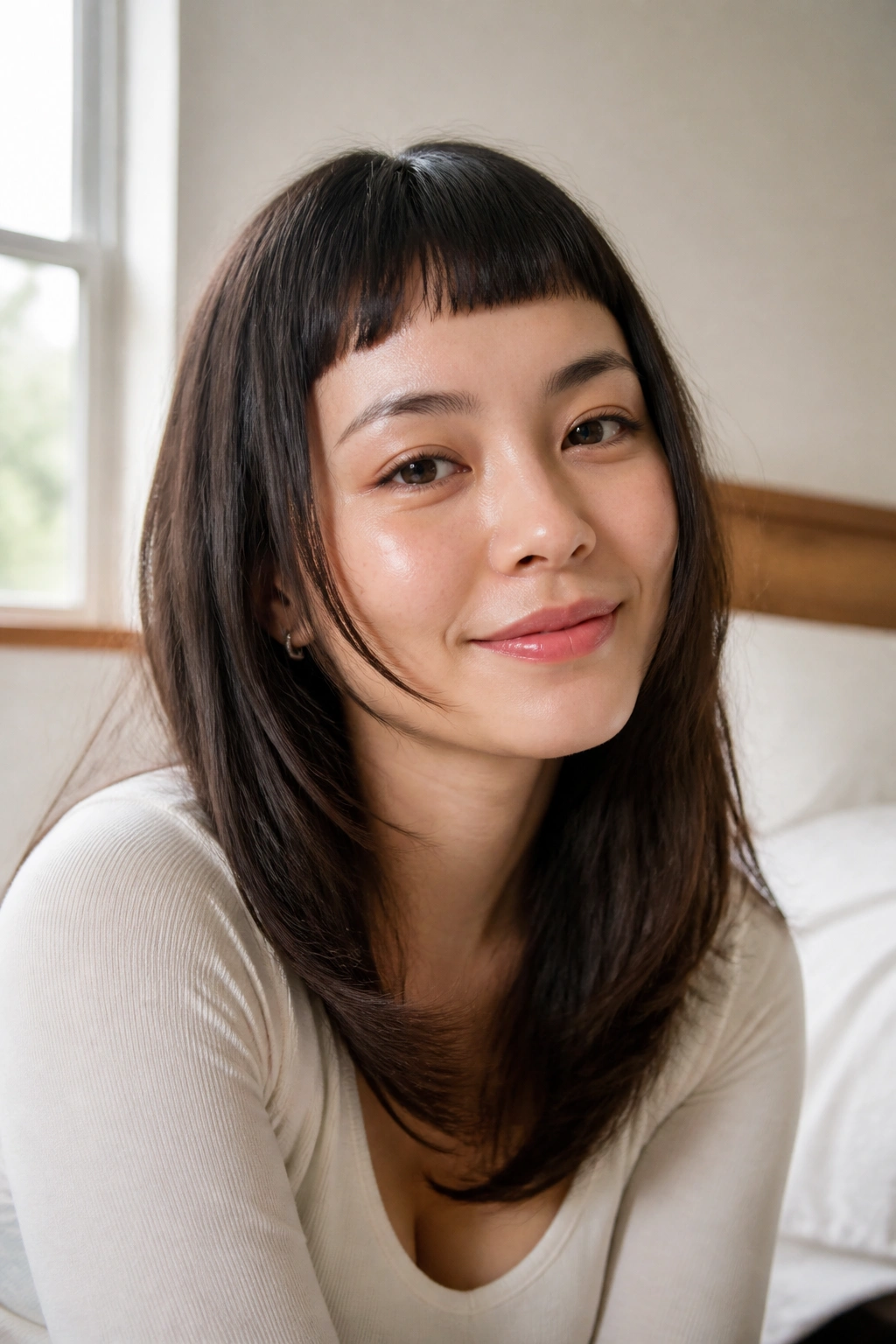
Micro bangs are not the easy option. They are a statement, and on a round face they only work when the rest of the cut helps carry the shape. The upside is that the eye jumps upward, which can give the face more lift. The downside is that any harsh line will show fast.
The safest version keeps the edge broken and the sides a little longer. That softness keeps the fringe from turning into a hard line that sits like a strip across the forehead. Strong brows help here, because the contrast between brow and fringe gives the cut more shape.
Bring photos if you are thinking about this. Better yet, bring photos plus a clear note about how short you are willing to go. Maintenance is frequent, and the trim window is short. This is one of those styles that looks simple and is not.
18. Split Fringe That Parts at the Bridge

A split fringe gives you forehead coverage without the full curtain effect. Instead of falling evenly from the center, it opens at the bridge of the nose and drifts outward. That opening matters on a round face because it keeps the center lighter.
It works well if you dislike bangs that sit flat on your forehead. The split creates a little lift and lets some skin show through, which makes the haircut feel less dense. It also gives you an easy styling route: twist the front sections away from the face and let them fall where they want.
This is a smart in-between shape for anyone who wants something softer than a blunt fringe and less full than curtain bangs. It is especially handy with medium-length cuts, where the front pieces can blend into the cheek and jaw without disappearing.
19. Curly Curtain Bangs
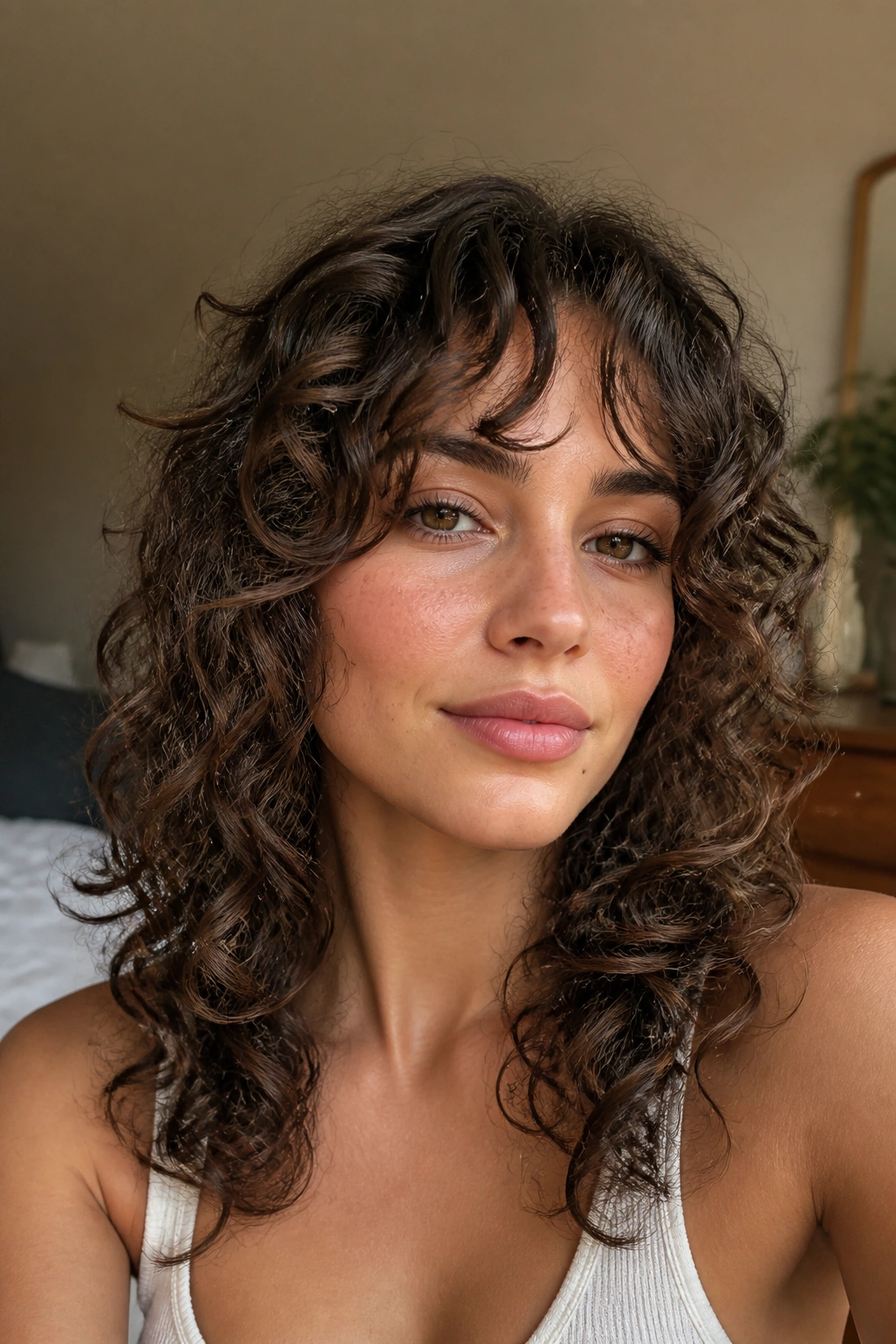
Curly curtain bangs need patience, and they need a stylist who respects shrinkage. A curl that looks like brow length when wet may spring much shorter once dry, which is why these bangs should usually be left longer than you first think. That sounds cautious because it is.
The shape still follows the curtain idea: shorter in the middle, longer toward the sides, then softening into the rest of the cut. On a round face, that outward movement helps the fringe frame the cheeks without adding width right across the forehead.
A diffuser helps, but so does restraint. Let the curls form before you touch them too much. If you keep scrunching, they can puff out sideways, and sideways volume is the thing you are trying to manage. A little patience beats a lot of fussing.
20. See-Through Bangs With Air Between the Strands
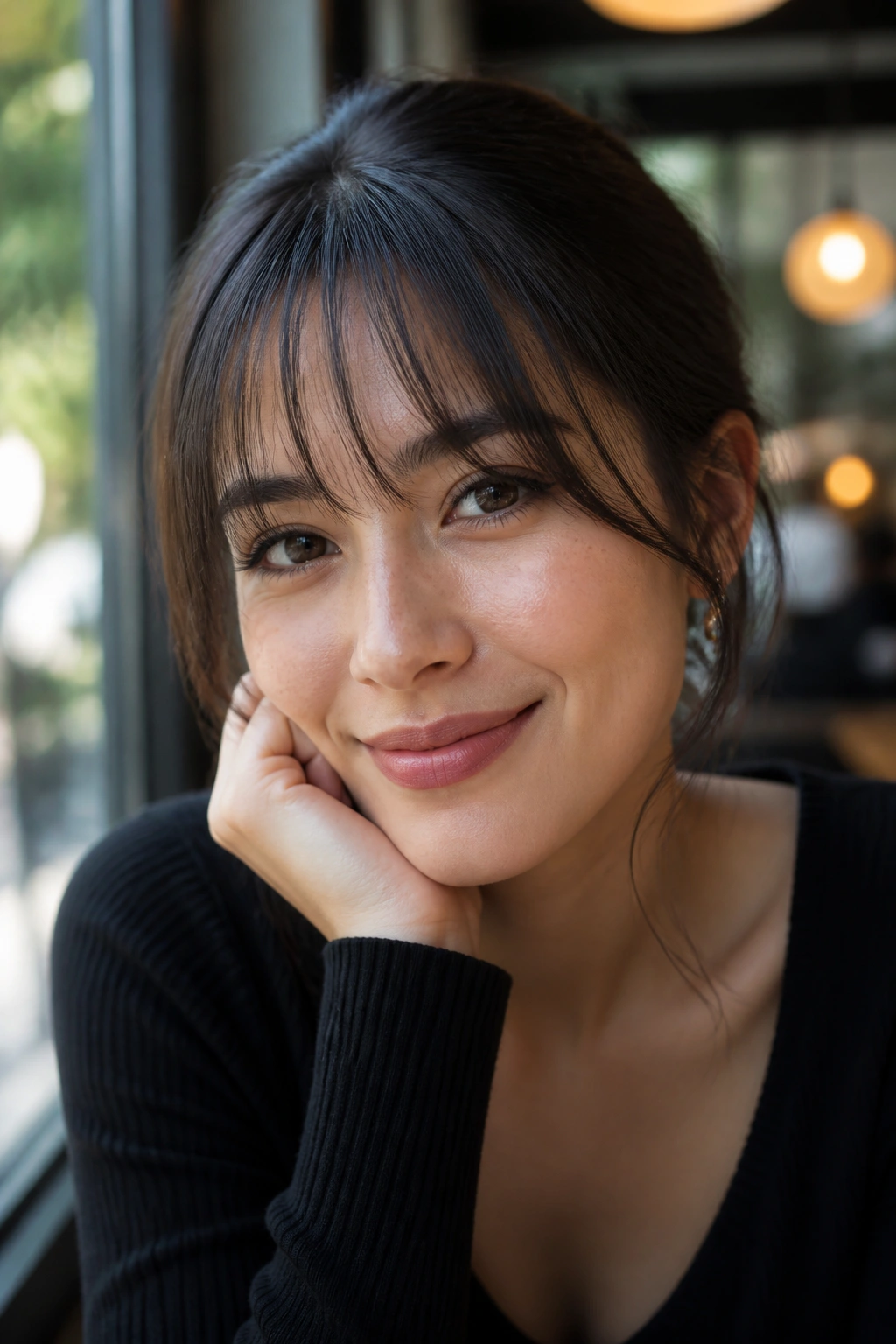
See-through bangs are light by design. They let the forehead peek through, which keeps the face from looking boxed in, and that open space can be helpful on a rounder face. The fringe still frames the eyes, but it does not close off the top half of the face.
This shape works best when the hair is fine to medium and naturally lies fairly flat. If the texture is coarse, the strands can separate too much and lose their line. You want airy, not patchy. Those are not the same thing.
The cut should still have enough length to sit around the brows or just below. Too short and the bangs start to feel fussy. Too sparse and they stop looking like bangs. The middle ground is where the style makes sense.
21. Tapered Feathered Fringe
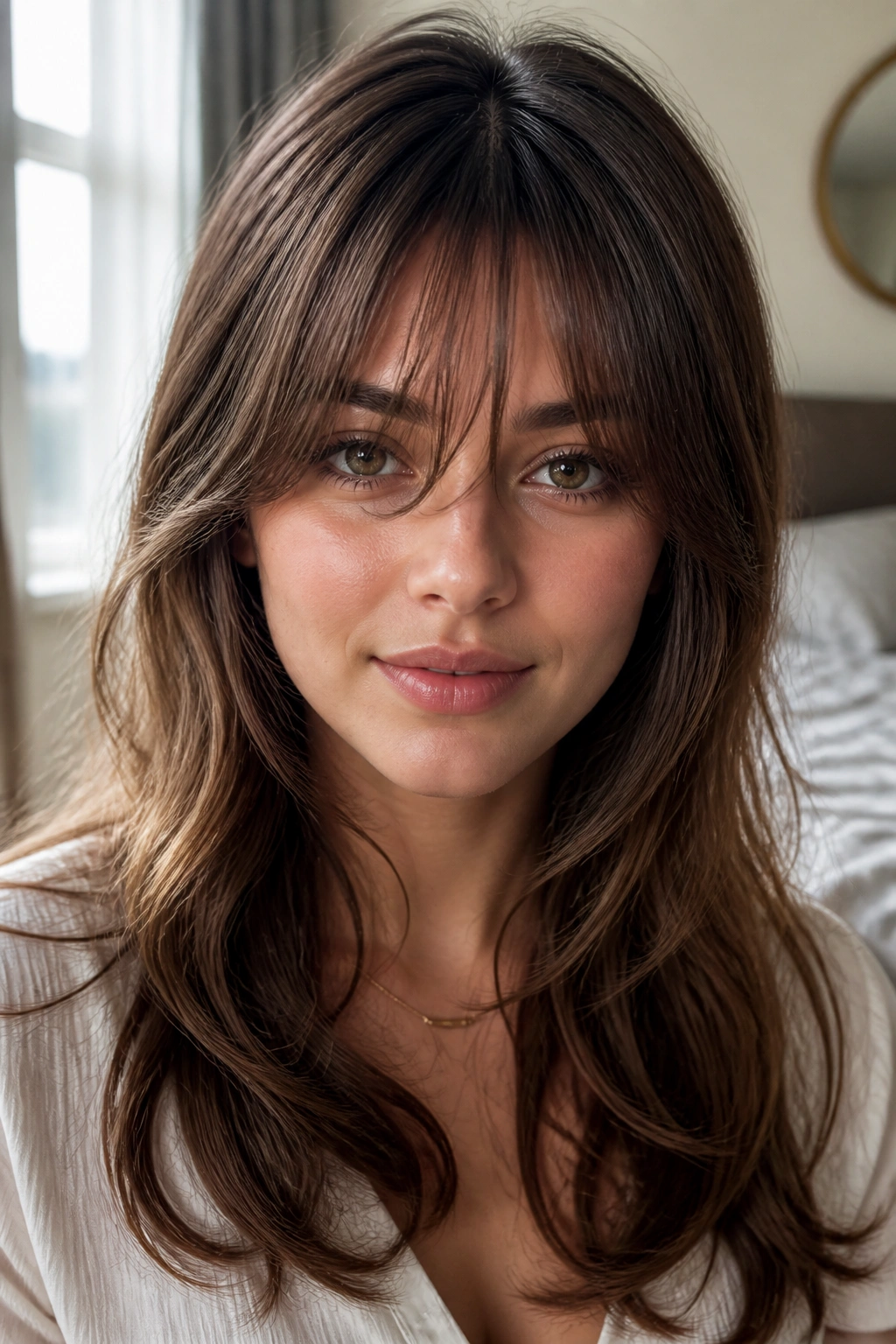
Tapered feathered fringe is one of my favorite choices for a round face because it gives direction without shouting. The center is shorter, the sides gradually lengthen, and the ends soften into the temples and cheek area. That taper makes the face read longer.
The Salon Wording That Helps
Tell your stylist you want the fringe to narrow at the center and feather out toward the temples. That phrase gives them the shape you want without locking them into one exact bang type. It also leaves room for your texture to do some of the work.
- Best on medium-density hair.
- Strong on wavy textures.
- Good with collarbone-length cuts.
- Needs light trim work to keep the taper visible.
This one is quietly practical. It does not ask for a lot of styling, and it keeps looking sensible as it grows. That alone makes it worth a spot on the list.
22. Asymmetric Fringe With a Diagonal Line
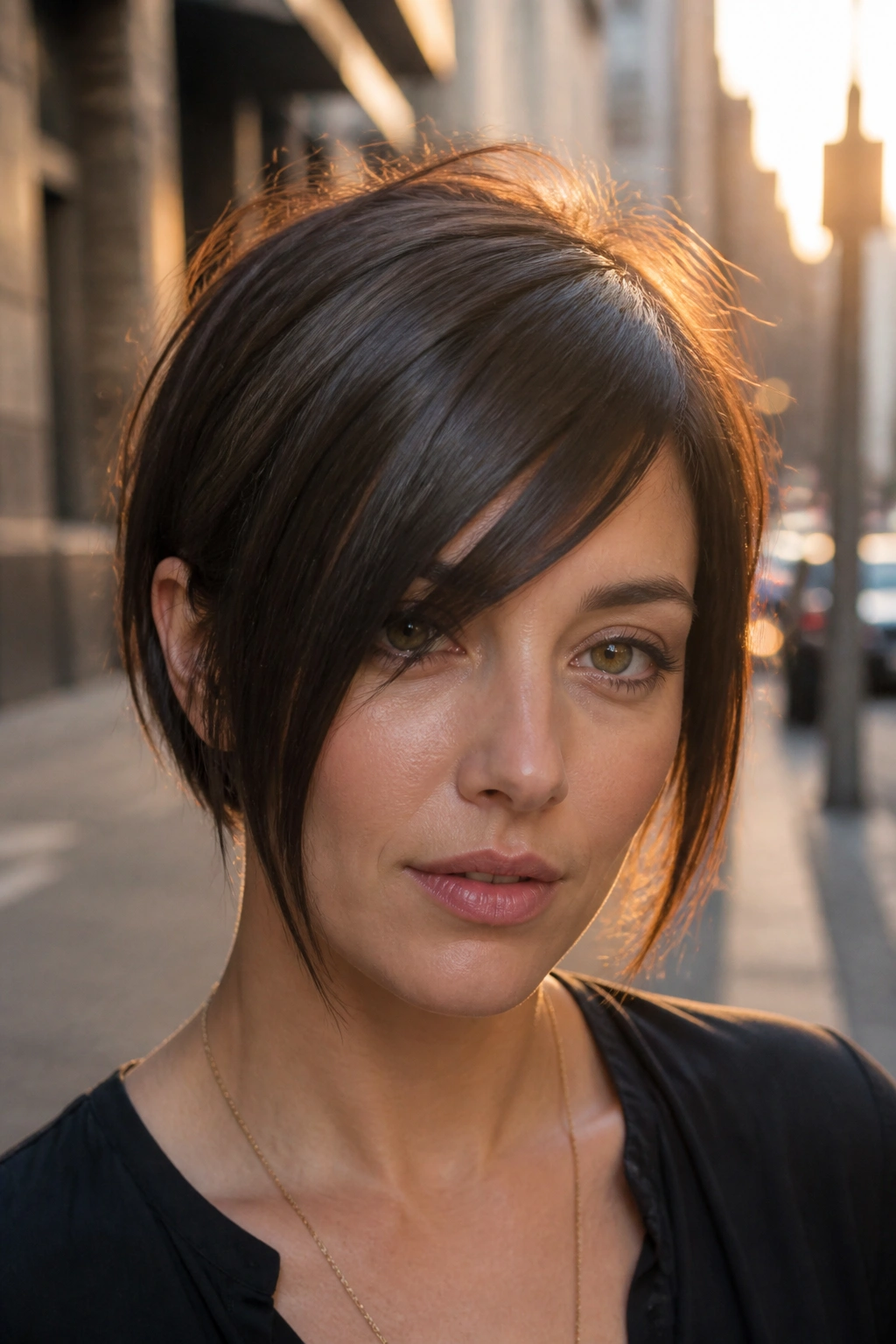
An asymmetric fringe is a clean way to create direction on a face that naturally reads in curves. One side sits shorter, the other side sweeps longer, and the line travels diagonally instead of flat across the forehead. Diagonals are your friend here.
This is a stronger look than most of the softer bangs in the list, and that is the appeal. It gives the haircut a little edge while still staying friendly to round features. The longer side can skim the cheekbone, which pulls the eye downward, while the shorter side keeps the forehead from feeling closed in.
It works best when the part is deliberate and the front has some root lift. Flat roots make the whole shape collapse. A little lift at the part keeps the angle visible, and that angle is the whole reason to wear it.
Final Thoughts
Round faces do not need one perfect fringe shape. They need the right line in the right place. Sometimes that is a long curtain bang. Sometimes it is a side sweep, a feathered taper, or a soft blunt edge that stops just before it gets boxy.
If you are nervous, start long. That gives you room to adjust the shape without losing length. Bring one photo of the bang you want and one photo of the side view you want; the second image matters more than most people realize, because that is where the balance shows up.
And ask to see the fringe dry before anyone calls it done. Hair changes when it dries, especially if it has wave or curl. That last check can save you from a haircut that looks fine in the chair and awkward ten minutes later.
