



Round faces can wear bangs beautifully, but the wrong fringe can make the whole haircut feel wider than it needs to. The sweet spot is a shape that leaves some forehead visible, bends around the cheeks, and keeps the eye moving instead of stopping at one blunt line.
That is exactly why wispy bangs for round faces are such a smart option. They soften the front of the haircut without piling on bulk, and they can work on straight hair, waves, curls, fine strands, or thick hair that needs a little air removed from the front.
Texture matters. A lot.
The best versions usually have some separation at the ends, a little length through the outer corners, and enough movement that the fringe shifts when you turn your head. If you ask for “soft bangs” and leave it there, you may get something too heavy. If you ask for a wispy fringe with a clear plan for the center, the sides, and the grow-out, you get bangs that actually flatter a round face instead of fighting it.
1. Curtain Wispy Bangs for Round Faces
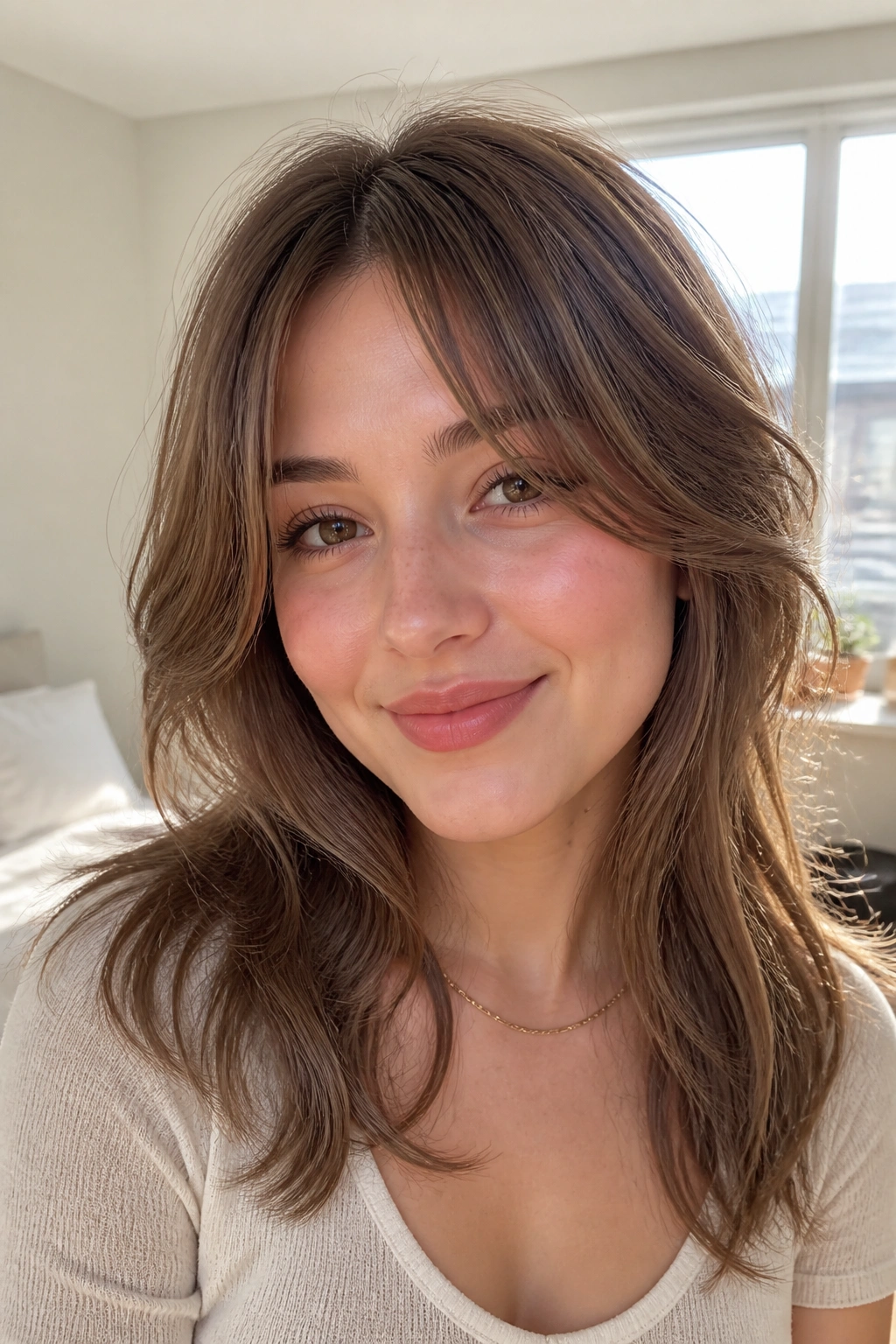
Curtain bangs are the first style I’d hand to someone with a round face who wants a low-stress starting point. The center opens up the forehead, while the longer sides drop toward the cheekbones and create a vertical line where a blunt fringe would spread things out horizontally. That little bit of length at the temples does a lot of work.
Why They Work
The parting is the whole trick. A center split breaks up the width across the face, and the soft taper on each side keeps the shape from feeling harsh. If your cheeks are full, this version is kind to them.
Ask for the shortest pieces to sit around the brow area and the longest pieces to land near the top of the cheekbones. That gives you movement without losing the airy feel. Do not let the center get too short unless you want a more dramatic look; too much gap can make styling fussy.
A round brush or a large Velcro roller helps the pieces bend away from the face. Light hold spray is enough. Heavy wax or paste will kill the softness fast.
2. Side-Swept Wispy Bangs

If you want the safest entry point, this is it. Side-swept wispy bangs cut a diagonal line across the forehead, and that diagonal is a friend to round faces because it breaks the symmetry that can make the face read wider.
The angle matters more than people think. A bang that starts a little deeper on one side and drifts across to the other creates length in the eye line, which is exactly the kind of visual shift a round face benefits from. It also gives you a little room if your hairline grows in stubbornly or your cowlick pushes things around.
I like this style on medium to long cuts, especially if the rest of the hair has some bend. Blow-dry the bangs in the opposite direction first, then sweep them over with your fingers. That keeps the root from collapsing flat against the forehead.
One more thing: side-swept fringe looks best when the ends are soft, not perfectly even. Tiny irregular pieces at the tip make the whole thing feel lighter.
3. Brow-Grazing See-Through Bangs
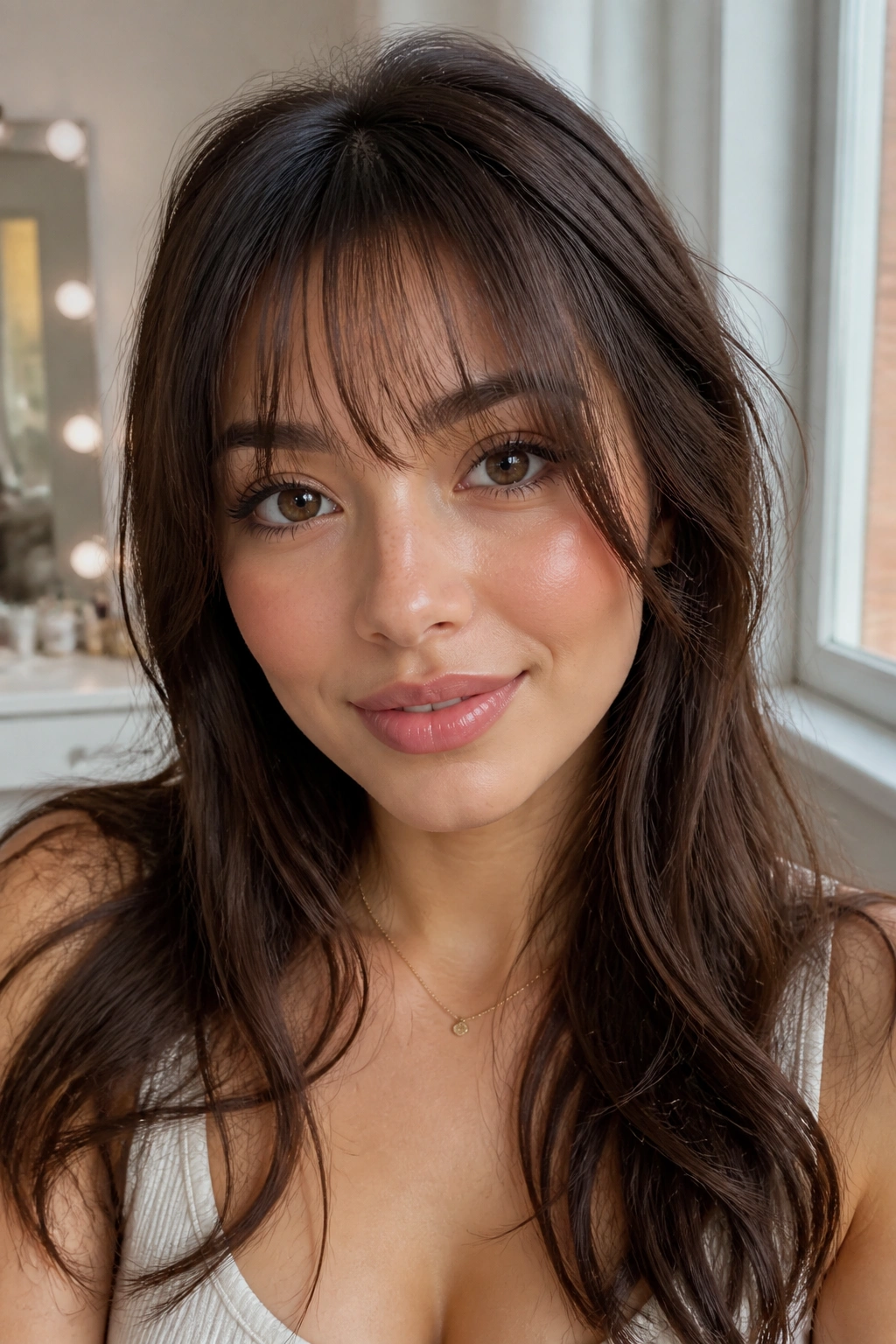
A heavy fringe is the quickest way to box in a round face. See-through bangs do the opposite. They let skin show through the fringe, so the forehead stays visible and the face keeps its softness.
These work especially well if you like bangs but hate the feeling of being hidden behind them. The hair sits around the brows, but the density is light enough that you can still see the shape of your face. That little bit of transparency is the point.
What to Ask Your Stylist For
- Keep the density soft enough that you can see the forehead through the ends.
- Point-cut the bottom edge so it doesn’t sit as one hard line.
- Leave the outer corners a touch longer than the center.
- Style with a small round brush and a quick blast of cool air to lock in the bend.
See-through bangs are also forgiving during grow-out. They don’t turn into a heavy shelf. They just get a little longer and a little softer, which is much easier to live with.
4. Bottleneck Bangs
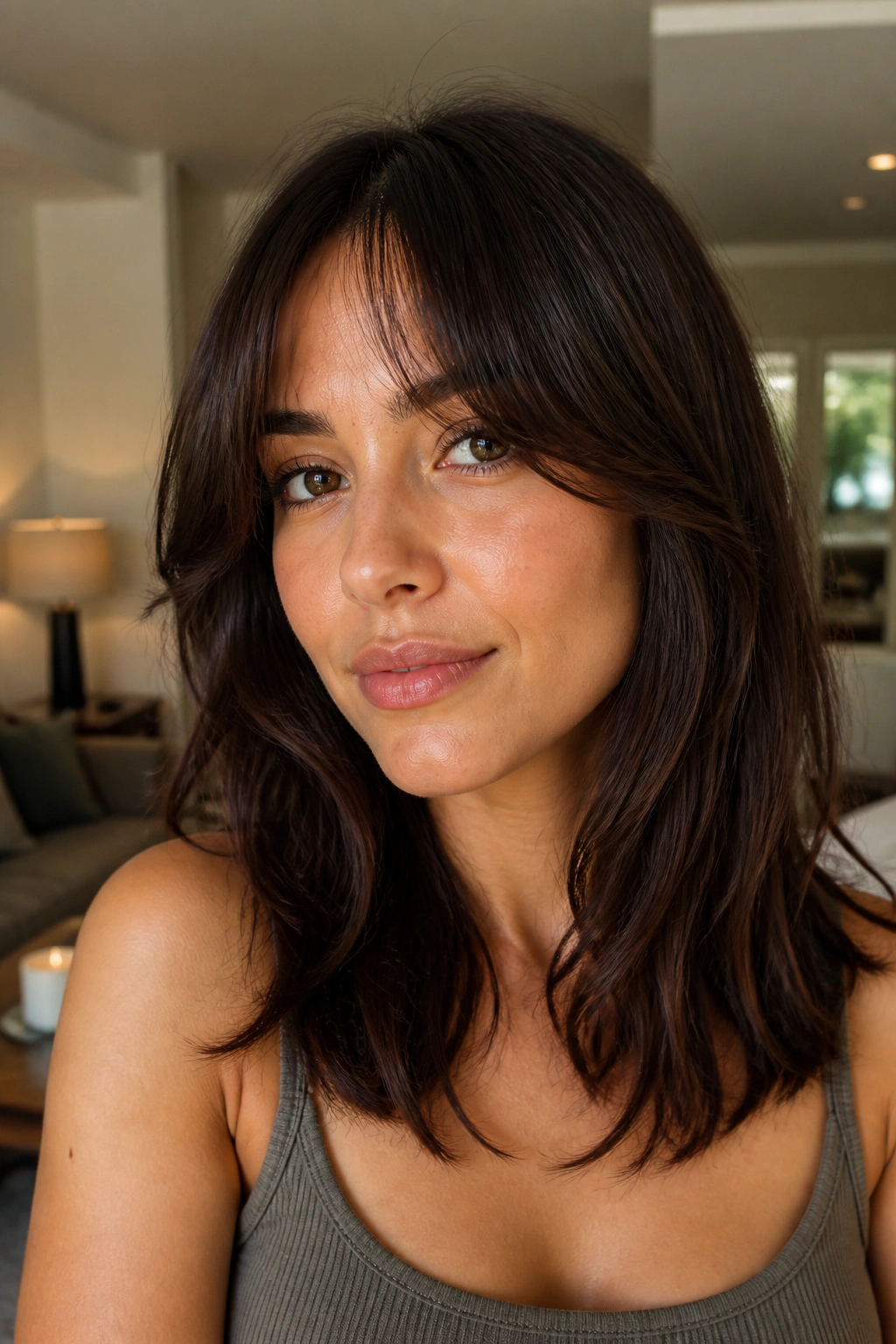
Why do bottleneck bangs flatter a round face so well? Because they start narrow in the center and open up toward the sides, which gives you the softness of curtain bangs with a more controlled middle section. The shape echoes the face without copying its width.
The center pieces usually sit a bit higher, then the sides fall in a longer sweep around the eyes and cheekbones. That creates movement in two directions at once. Up in the middle. Out at the edges. The result feels airy, not flat.
How to Style Them
Blow-dry the center downward first, then wrap the side pieces away from the face with a brush or your fingers. A dab of lightweight styling cream on the very ends helps keep the fringe separated, but don’t overload the root area.
Bottleneck bangs are a nice fit if you want something modern-looking without going full statement fringe. They also work well with layered cuts, because the bangs can blend into the rest of the haircut instead of sitting there like a separate piece.
Short note. Keep the middle soft.
5. Choppy Wispy Bangs with Long Layers
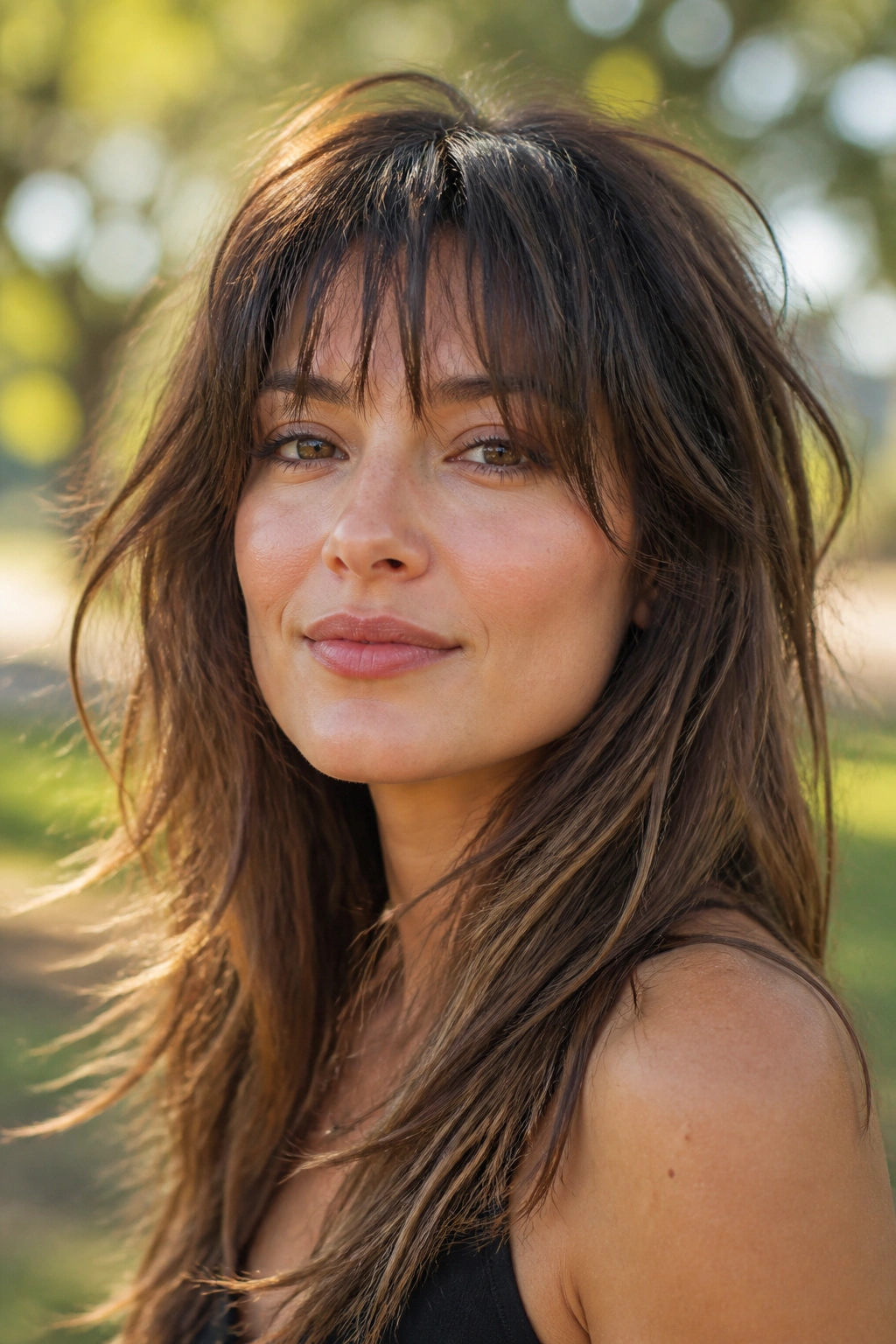
Choppy wispy bangs are all about broken texture. Instead of one clean edge, you get little uneven pieces that move independently, which keeps the front of the haircut from feeling dense. On a round face, that broken line is useful because it stops the eye from reading a single wide band across the forehead.
This style is especially flattering with long layers through the rest of the hair. The bangs can be short enough to show the brows, while the side pieces drop into the cheek area and add length where you want it most. The whole cut feels lighter because nothing sits in one place for too long.
A razor can work here, but a skilled point-cut with shears often gives more control. The goal is not ragged ends. The goal is air between the strands. If your hair is thick, this may be one of the best ways to keep bangs from puffing up into a little helmet.
Air-dried waves love this look. So does a touch of texturizing spray at the roots.
6. Curly Wispy Fringe

Curly hair and wispy bangs can be a very good match, provided the cut respects the curl pattern. A round face often benefits from the vertical bounce curls create, and a fringe with soft, separated curls keeps the front from becoming a solid wall.
The big mistake is cutting curly bangs as if they were straight. They spring up. They spread out. They do their own thing. A dry cut, done curl by curl, usually gives a much cleaner result because the stylist can see the actual shape instead of guessing.
What Makes This Fringe Work
- The center should be a little shorter than the sides so the fringe opens at the forehead.
- The curls at the temples should stay long enough to skim the upper cheek.
- Styling should be light; too much cream turns separated curls into a blob.
- Diffuse on low heat if you want the shape to stay airy and defined.
If your curls are loose, the fringe can look almost feathered. If they’re tighter, the shape becomes softer and fuller, which can still work beautifully as long as the edges stay broken up.
7. Long Face-Framing Wispy Bangs
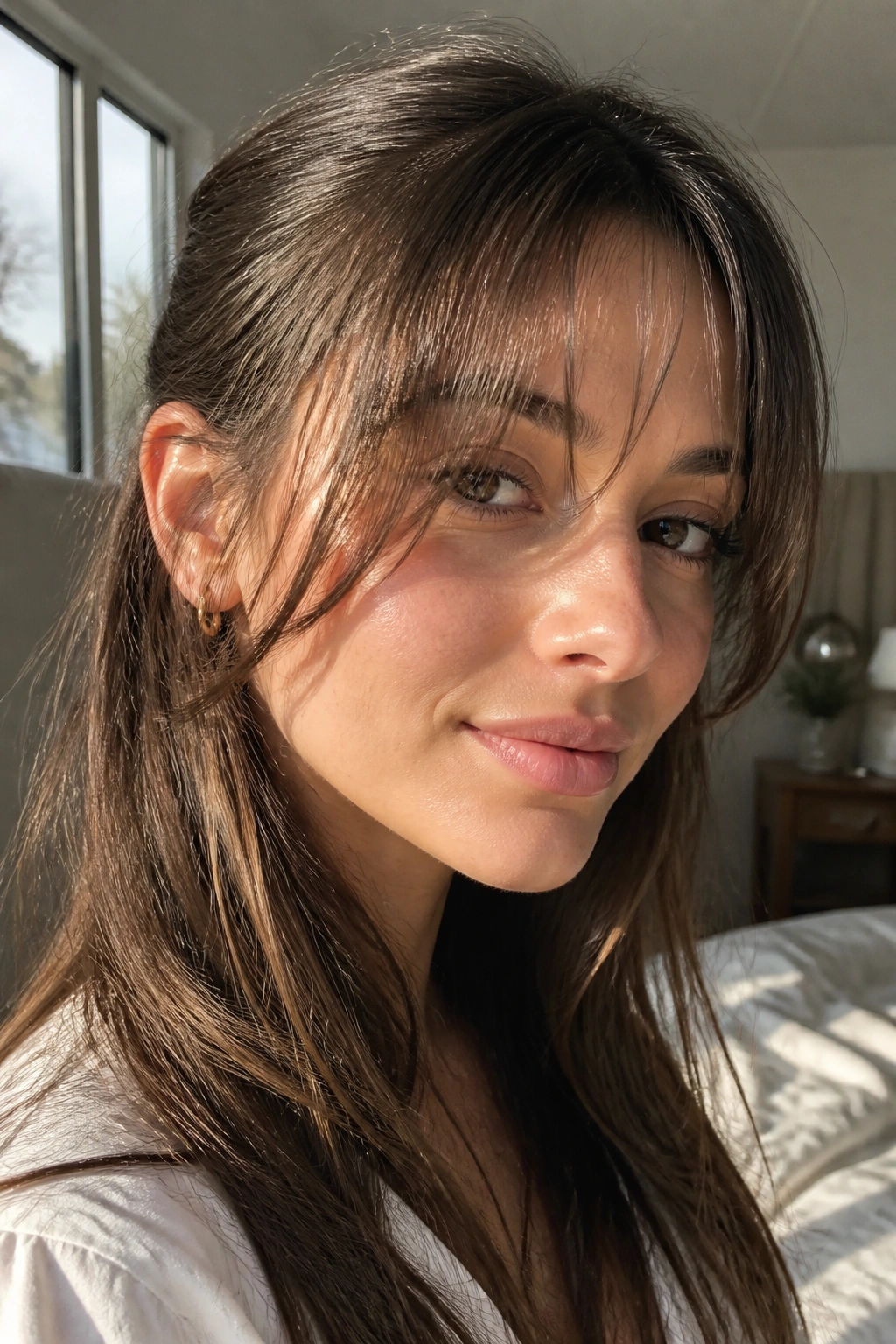
Long wispy bangs are the choice for anyone growing out shorter fringe or just not ready for a full bang commitment. They start near the brows, then stretch into face-framing pieces that hit the cheekbones or jawline. On a round face, that extra length is gold. It pulls the eye downward and gives the face a slimmer visual line.
There’s a nice in-between feeling here. You still get bangs, but they don’t sit like a separate panel at the front of the haircut. They blend into the rest of the hair, which makes the overall shape feel more open. That matters if you wear your hair loose most of the time.
Ask for the shortest pieces to stay light and feathered, not blunt. The side pieces should be able to tuck behind the ear without getting bulky. And if your hair is straight, a small bend at the ends helps the whole style feel intentional instead of half-grown-out.
This is also one of the easiest styles to pin back on busy days. Not glamorous. Very useful.
8. Razor-Cut Wispy Fringe
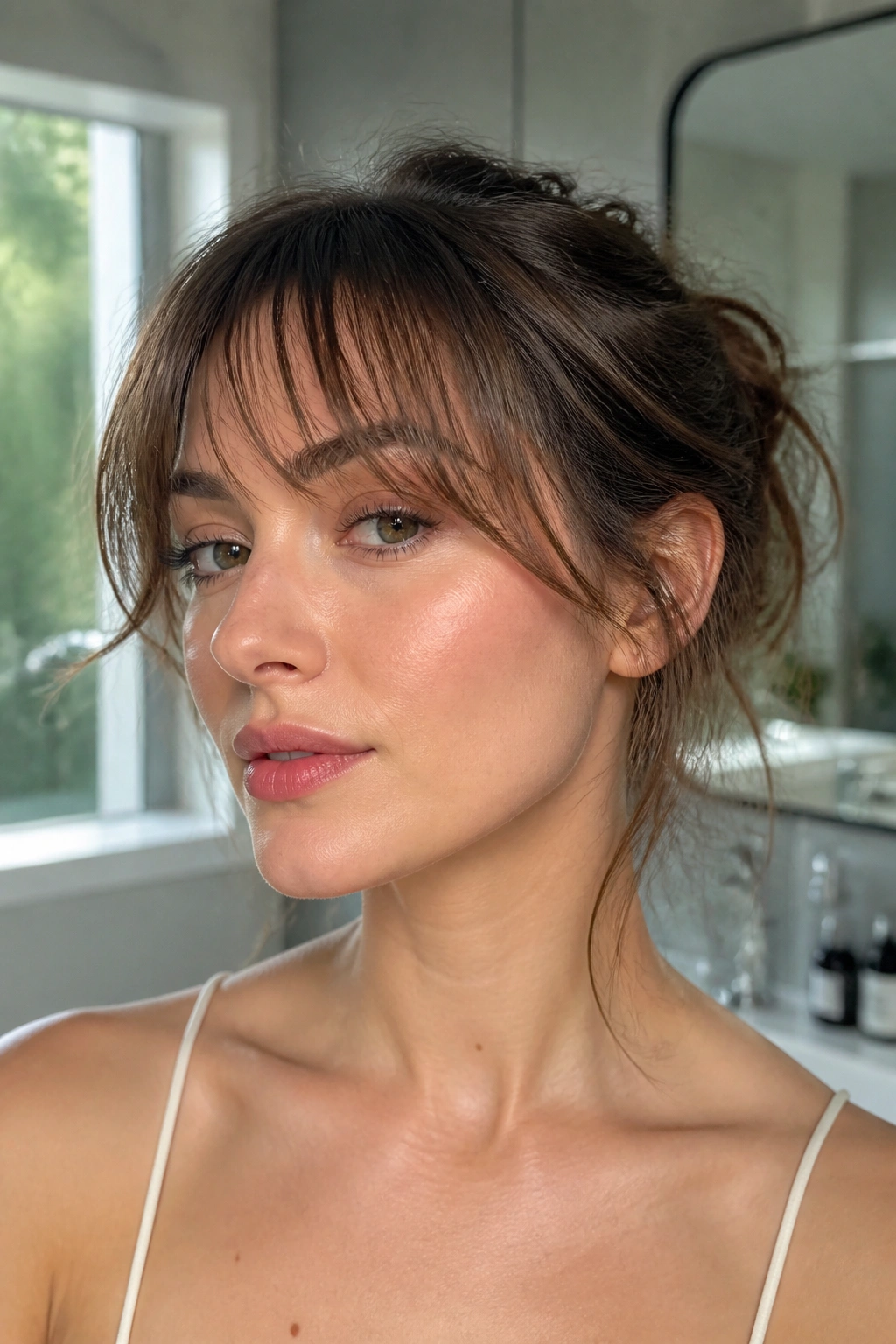
A razor-cut fringe has a softer edge than a straight scissor cut, and that softness can be a gift on a round face. The ends look feathery, almost brushed out, which keeps the bangs from drawing one solid line across the forehead.
The catch is hair condition. Razor cutting can make already fragile ends look stringy if the hair is too fine or too damaged, so this is better for healthy straight to wavy hair with a little body. You want movement, not fray.
The shape tends to look best when the bangs are cut dry and then finished with a quick blow-dry using a flat brush. A drop of serum on the very tips can calm flyaways without making the fringe limp. Skip heavy oils near the root. They drag the whole style down.
I like this look on people who want a fringe that feels a little undone on purpose. It has edge, but it still reads soft.
9. Arched Wispy Bangs

Why does a soft arch help a round face? Because it adds a little height in the middle while keeping the edges light. That tiny lift gives the forehead a more open shape, and the rounded curve of the bangs doesn’t fight the face. It works with it.
An arched fringe should never look like a half-moon helmet. That’s too neat, and neat can turn stiff fast. The version worth wearing has broken ends, a lighter center, and slightly longer sides that skim the outer brows. The arch should feel like a suggestion, not a rigid shape.
What to Tell the Stylist
Ask for a curved line that is soft through the center and feathered at the sides. A point-cut finish helps keep the ends from looking blocky. If your forehead is short, keep the arch shallow; if you have a longer forehead, a bit more lift in the middle can look especially nice.
This one works best when you blow-dry the center upward just a little, then direct the sides down and out. It’s a small detail, but it keeps the shape from collapsing into one flat plane.
10. Shaggy Wispy Bangs

Shaggy bangs belong to hair that likes motion. If the rest of your cut already has layers, texture, and a little messiness, the fringe should match that energy. A round face tends to look better when the front pieces move independently instead of sitting as one static block.
The shaggy version usually includes uneven lengths, face-framing pieces, and a little separation between strands. That’s not sloppiness. It’s the point. Each piece does its own job, and together they make the haircut feel lighter around the cheeks.
Best Ways to Wear It
- Let the bangs air-dry if your natural texture has a bend.
- Use a small amount of texture spray at the roots, not the ends.
- Push the fringe into place with your fingers instead of a brush.
- Avoid heavy finishing creams unless your hair frizzes badly.
This style is especially good if you hate perfect hair. It looks best with a little roughness. Freshly washed and overworked? Not as good. Second-day texture tends to be the sweet spot.
11. Micro Wispy Bangs
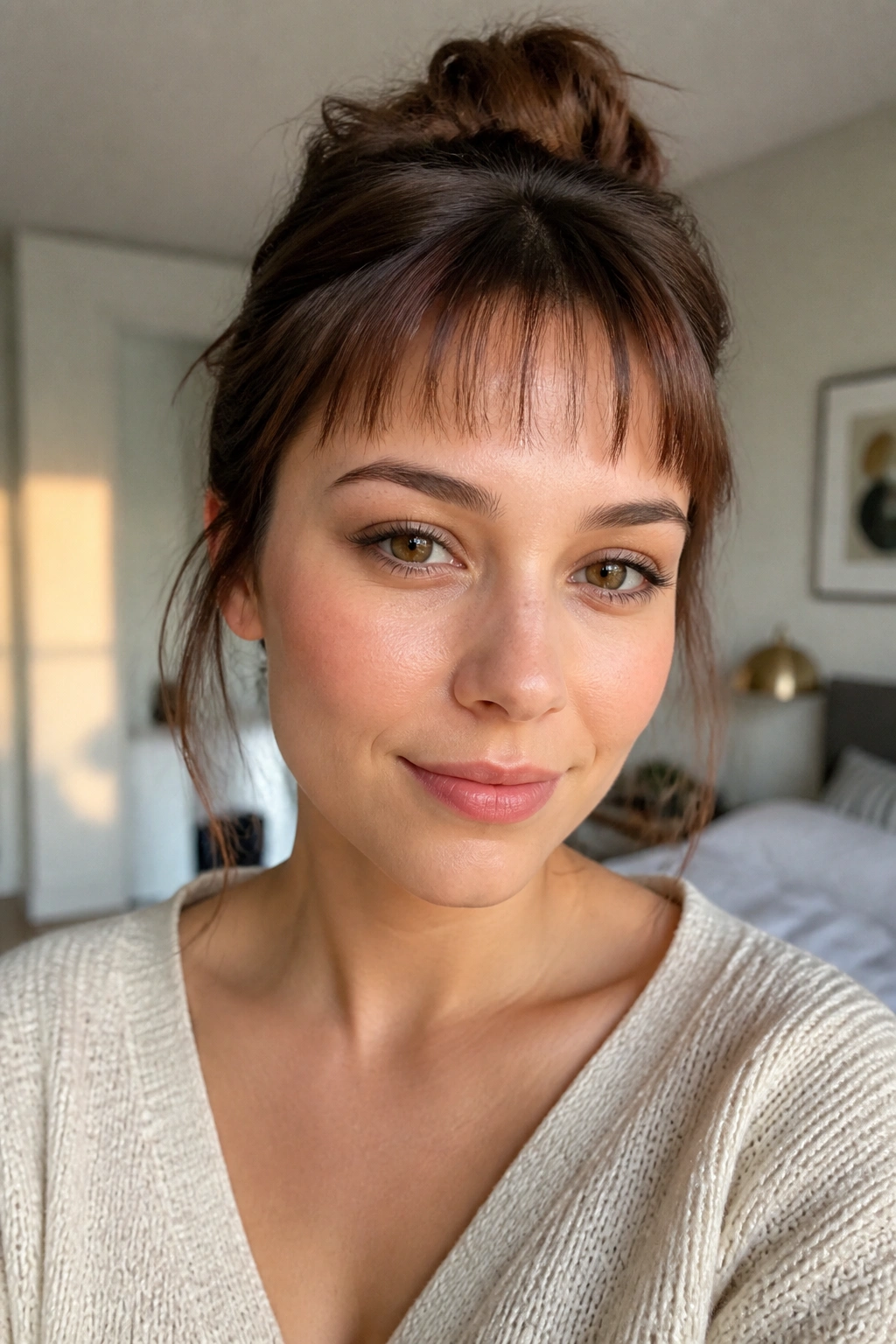
Micro bangs can work on a round face, but the wispy version needs a soft touch. A blunt micro fringe can emphasize width if it’s too solid. A wispy micro fringe, on the other hand, shows the forehead, keeps the edges airy, and adds a little edge without locking the face into one shape.
The key is separation. You want tiny pieces, not a thick strip. The center can sit higher on the forehead, while the outer edges soften out before they reach the temples. That breaks up the line and keeps the look light.
This style is best if you like bold haircuts and don’t mind some upkeep. Tiny bangs show every cowlick, every oil patch, every bad trim. They also ask for regular cleanups because a quarter-inch of growth changes the whole mood. If you want them to sit right, a flat brush and a quick pass of the dryer will do more than a bunch of product.
Not for everyone. But when it works, it looks sharp.
12. Thin Fringe for Fine Hair
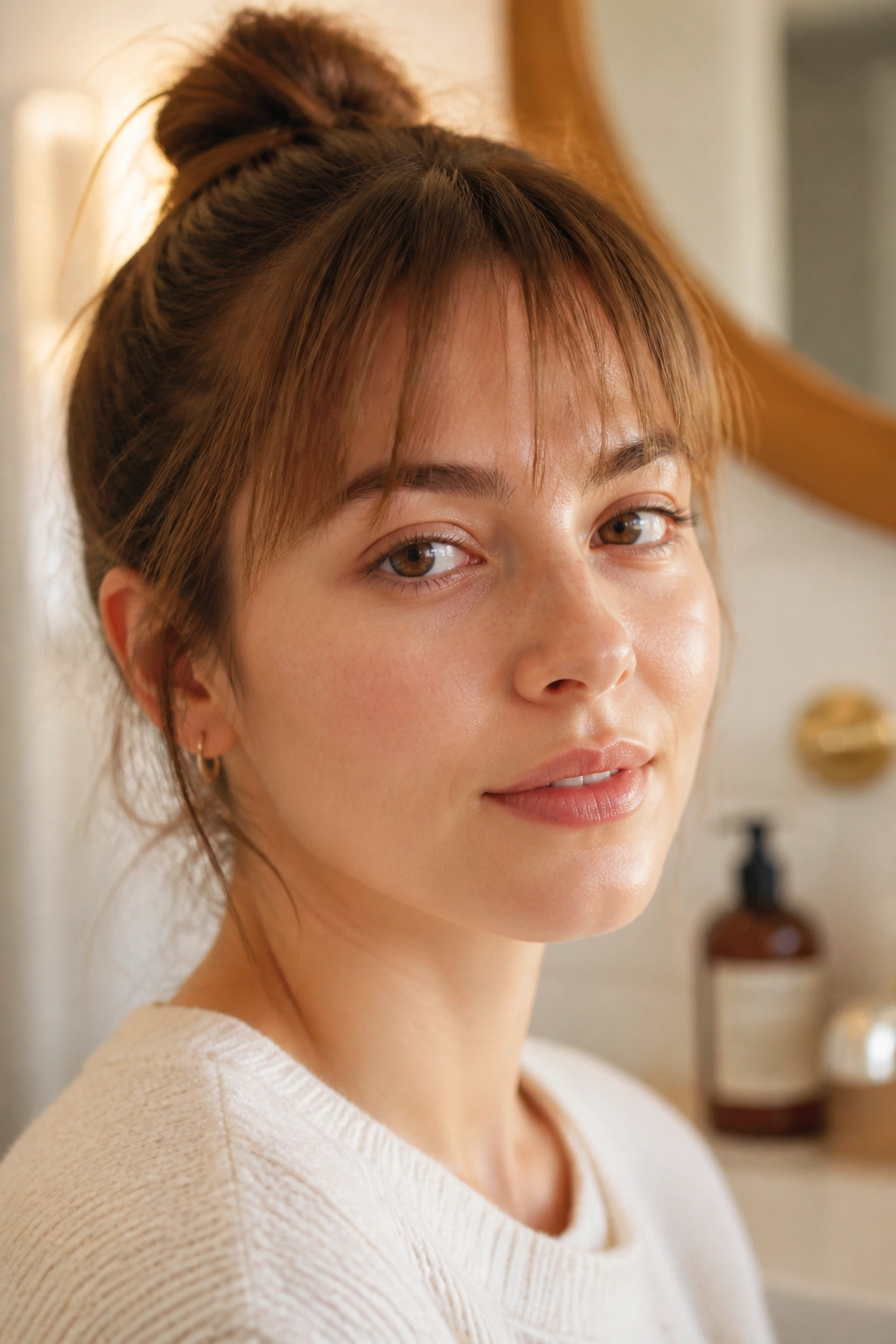
Fine hair and heavy bangs rarely get along. The fringe sinks. It separates at the wrong place. It can even make the front of the haircut look thinner than it is. A thin, wispy bang solves that problem by keeping the density light enough to move.
On a round face, that lightness matters because you want the fringe to soften the forehead without creating a thick bar across it. The more space between the strands, the more the face feels open. That’s one reason thin fringe can look better than fuller bangs on fine hair.
Use a root-lifting spray before blow-drying, then direct the bangs side to side until they cool. That gives the roots some memory. A round brush is fine, but don’t stretch the hair too hard or it will lose its bend and fall flat by lunchtime.
Heavy products are the enemy here. A pea-sized amount of cream is plenty, and even that may be too much if your hair is very fine. Light hands win.
13. Wispy Bangs with a Lob
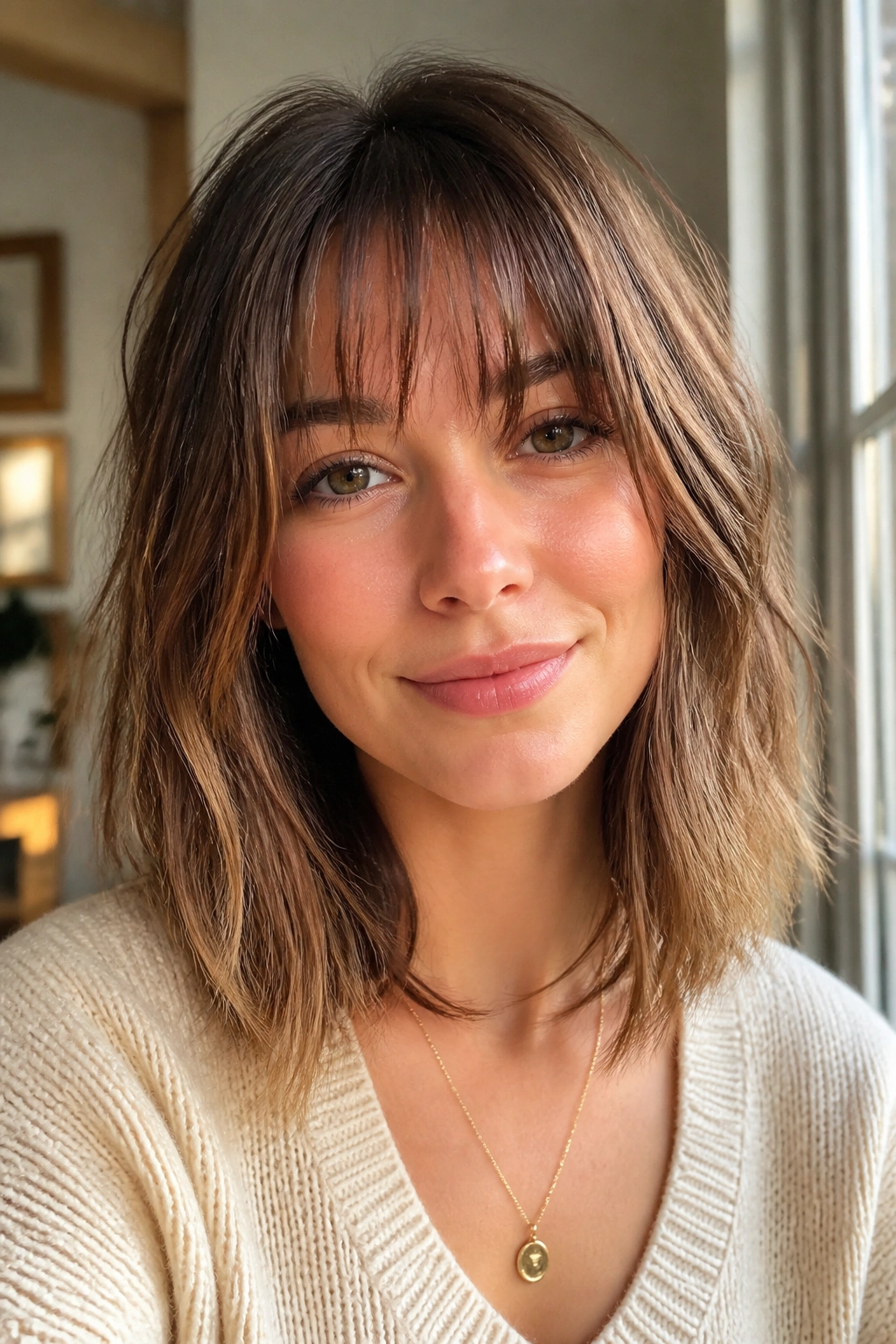
A lob gives round faces a clean vertical line, and wispy bangs make the front of that cut feel softer and more balanced. The shoulder-grazing length already helps stretch the shape of the face, while the bangs keep the forehead from looking too bare.
This combination works because it spreads the visual weight. The bob hits lower, the bangs stay airy, and the face gets framed without being boxed in. If your hair is straight, a slight bend at the ends keeps the whole cut from looking too blunt. If it’s wavy, even better. The texture does half the work.
A Few Details That Matter
- Ask for the bangs to blend into the front layers instead of stopping abruptly.
- Keep the longest pieces around the cheekbone area.
- Style the lob with a soft underbend, not a sharp curl.
- Tuck one side behind the ear when you want more face opening.
This is one of those cuts that looks polished with very little fuss. It also grows out in a civilized way, which I appreciate more than I should.
14. Soft Split Bangs

A soft split fringe is not the same thing as a dramatic curtain bang. The split sits a little looser, sometimes a touch off-center, and the pieces fall in a less symmetrical way. On a round face, that slight imbalance can be flattering because it keeps the front from feeling too even or too wide.
The trick is to keep the split gentle. If the part is too sharp, you can end up with a gap that feels accidental. If the pieces are too thick, the fringe loses the wispy effect. You want air between the sections and a little irregularity in the ends.
I like this look on people who wear their hair tucked back sometimes. The bangs can fall naturally when loose, then sweep aside when pinned. A little styling cream through the mid-lengths helps, but again, stay away from the roots unless your hair is dry and coarse.
Soft split bangs give off an easy, lived-in feel. They are also less annoying on windy days than a fringe that has to sit in one exact place.
15. Pixie Wispy Fringe
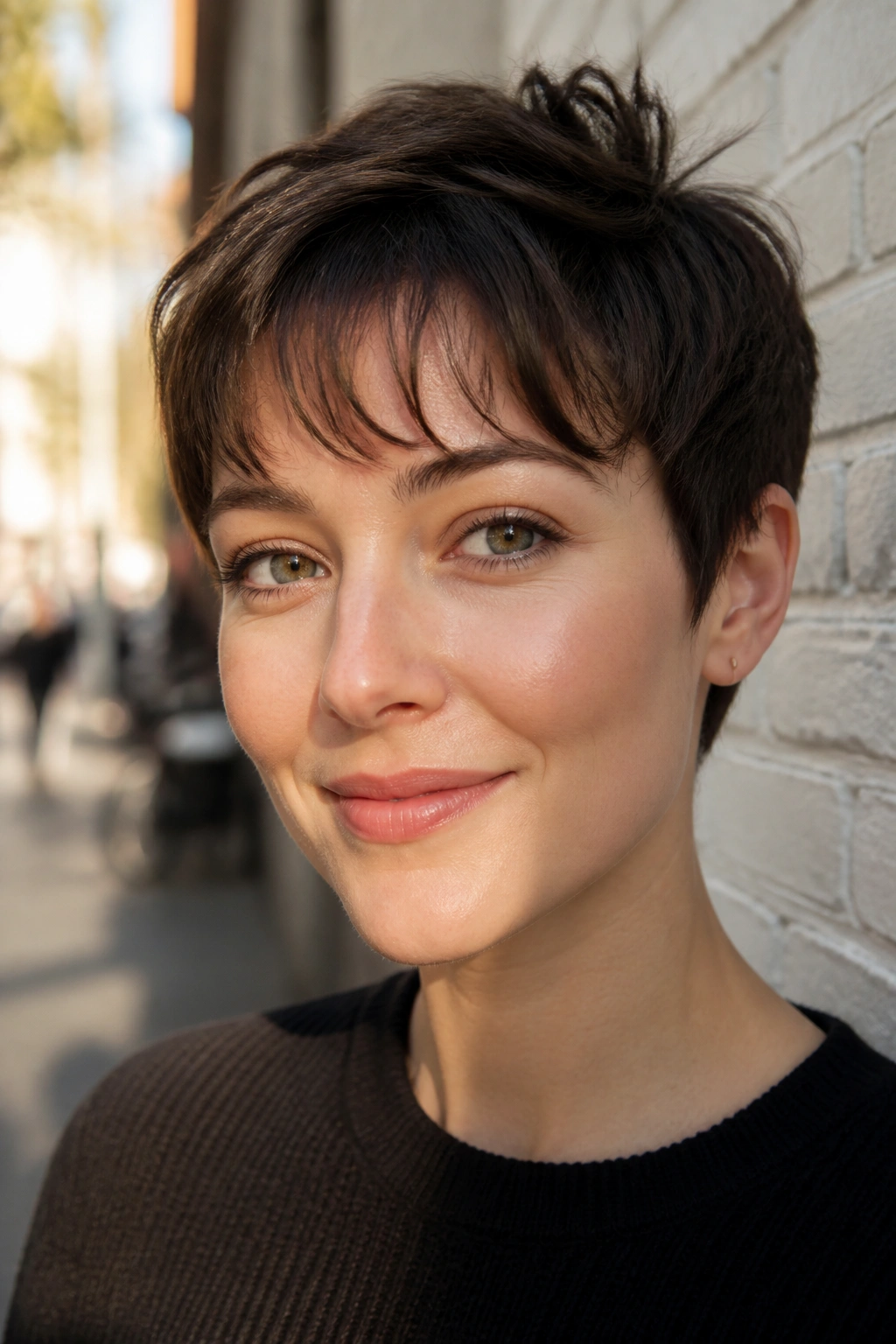
A pixie cut can absolutely work with a round face, but the fringe has to stay soft. A heavy, blunt bang on a short cut can make the face look more circular. A wispy fringe keeps the crop light and lets the cheekbones stay visible.
The best version is often short in the center and feathered at the sides, with enough texture that the bangs can be pushed around a little. You do not want a helmet. You want movement over the forehead and a clear, tapered shape around the temples.
Who It Suits Best
- People with straight or slightly wavy hair.
- Anyone who likes a cropped cut but wants some softness at the front.
- Faces that need a little length at the brow area without losing the short-hair feel.
- Wearers who don’t mind styling the fringe with fingers, not a heavy brush.
The styling is fast. A dot of paste on the ends, a quick dry, and a finger-comb into place usually does the job. The whole cut feels cleaner when the fringe stays piecey instead of smooth.
16. Thick-Hair Wispy Bangs
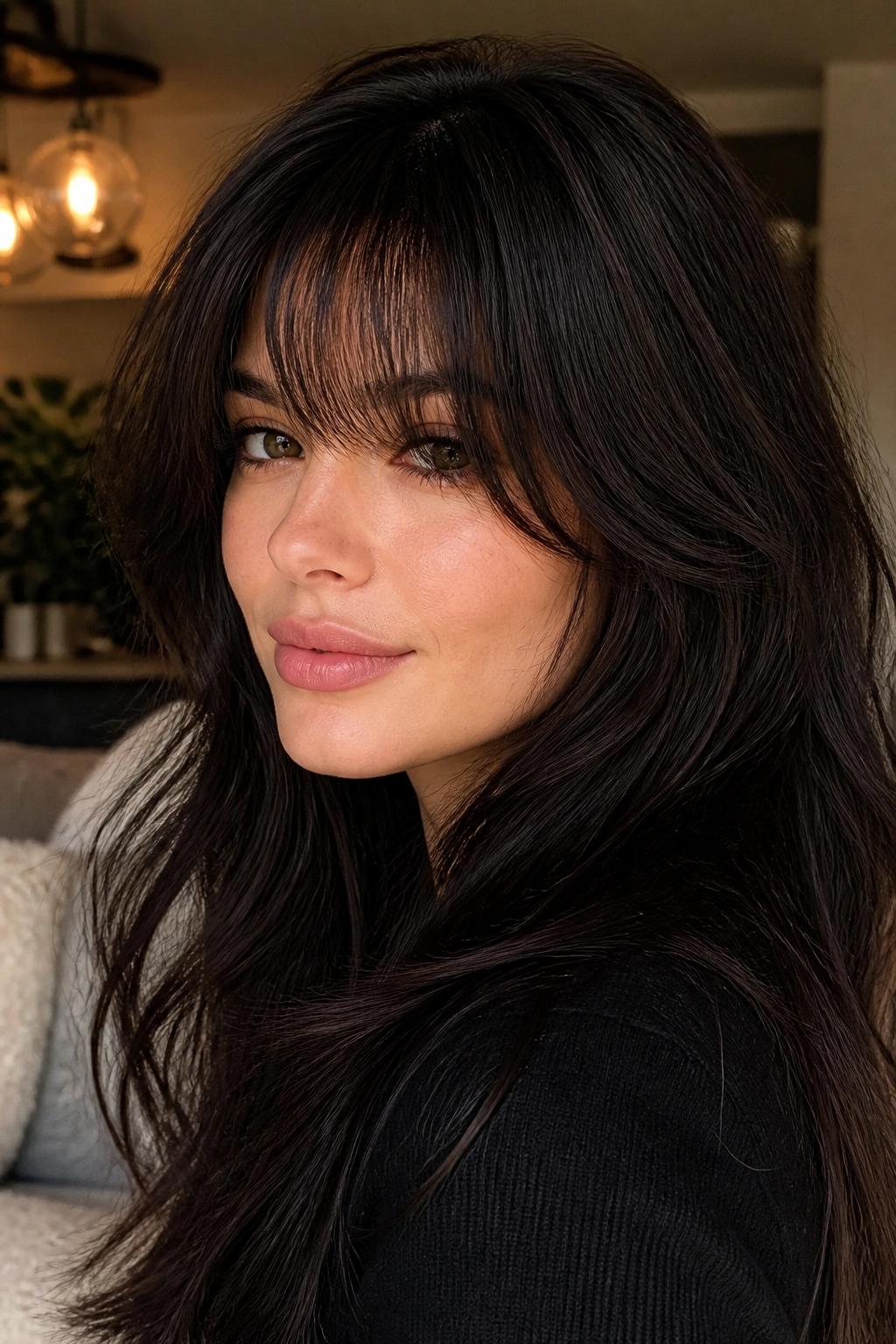
Thick hair can take a lot of bang shapes, but the wrong cut can turn the front into a dense curtain. Wispy bangs solve that by removing bulk in a controlled way. On a round face, that control matters because you want softness, not weight.
Ask for internal debulking, not just thinning shears slapped through the front. Thinning shears alone can leave thick hair looking fuzzy at the ends. Point cutting and careful sectioning usually give a cleaner result. The stylist should be checking how the bangs fall when the hair moves, not only when it’s sitting still.
Styling Cues That Help
- Blow-dry the fringe from side to side before settling it into place.
- Use a medium round brush if the hair resists movement.
- Keep the products light; thick hair often needs less than you think.
- Trim every 5 to 7 weeks if the fringe starts to crowd the eyes.
Thick hair bangs can be beautiful, but they need room to breathe. Too much density and the whole look turns heavy fast.
17. Layered Bangs with a Long Shag

Layered bangs and a long shag belong together. The layers in the haircut create movement through the sides, and the fringe should echo that same airy shape at the front. On a round face, the long shag helps by drawing the eye down and out instead of straight across.
The bang pieces are usually uneven in the nicest possible way. Some sit closer to the brows, some sweep past the cheekbones, and some disappear into the layers around the jaw. That mix keeps the face from looking boxed in. It also gives you more room to style the fringe in different directions.
If your face is very round, ask that the shortest pieces stay soft rather than chopped short. The longest pieces can hit somewhere between the outer eye and the top of the cheekbone. That gives a little angle without making the fringe feel severe.
Too short, and the face widens. Too long, and the fringe vanishes. The middle ground is where this one lives.
18. Rounded Wispy Fringe
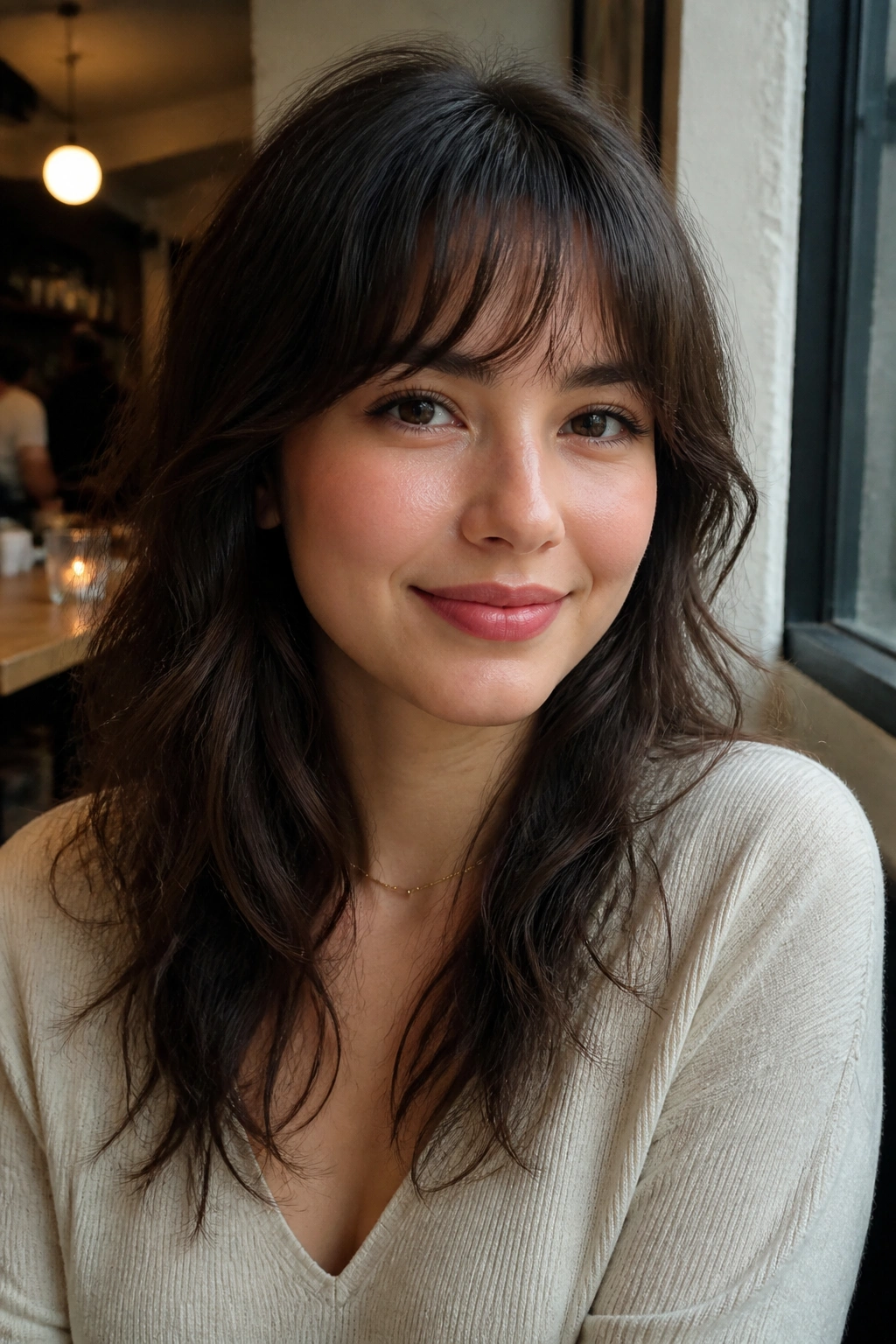
A rounded fringe can sound risky for a round face, and a blunt rounded fringe often is. But a wispy version changes the game. The curve stays soft, the ends are feathered, and the center never gets dense enough to add unnecessary width.
This style works best when the shape is more like a soft smile than a hard arc. The middle is slightly shorter, the sides ease outward, and the whole thing sits with a little air under it. You still get forehead coverage, but it doesn’t press the face inward.
Rounder fringe shapes pair well with wavy hair because the natural movement keeps the front from feeling rigid. If your hair is straight, a quick bend with a flat brush or a small round brush helps. The aim is a gentle curve, not a set-in-stone line.
I like this option for people who dislike the middle split of curtain bangs but want more shape than a straight fringe gives. It has a softer personality.
19. Mixed-Length Piecey Bangs
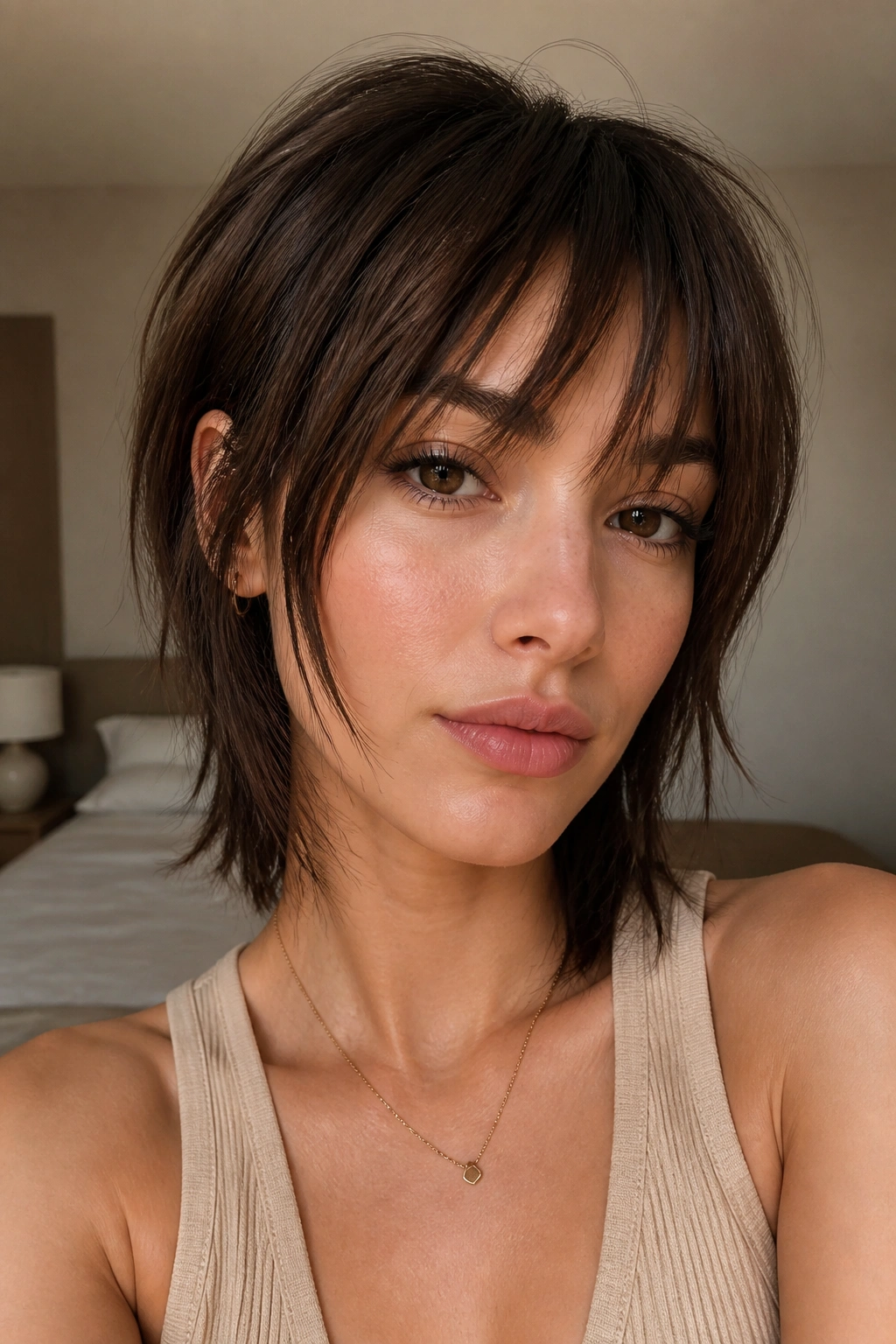
Mixed-length bangs are one of the easiest ways to fake movement at the front of a haircut. A few pieces may sit at 1.5 inches, others closer to 3 inches, and that unevenness keeps the fringe from reading as one heavy band. On a round face, that broken-up line is useful because it gives the eye more places to travel.
The style can be subtle or a little messy, depending on how much separation you want. If you prefer polish, the pieces can be directed into a tidy sweep. If you like texture, a dry texturizing spray and finger styling will keep the ends separated and light.
What Makes It Different
Unlike uniform bangs, mixed lengths let the fringe follow the face instead of sitting on top of it. The shortest pieces open the forehead, while the longer ones soften the cheeks. That balance is why the style feels easy rather than fussy.
It also grows out well. Even when the lengths shift, the shape still has movement. That matters more than people admit.
20. Low-Maintenance Wispy Bangs for Round Faces

Some bangs look lovely in a salon chair and become a minor daily project at home. The lower-maintenance wispy options usually have more length, softer edges, and a shape that still looks good after a few weeks of growth. For round faces, that often means curtain bangs, side-swept fringe, or a gentle bottleneck shape.
The reason is simple: those styles keep the forehead open enough that a little extra length does not ruin the shape. They also tend to blend into the rest of the haircut instead of sitting as a separate chunk that needs constant fixing.
The Easiest Versions to Live With
- Curtain bangs that start near the brow and taper long at the sides.
- Side-swept fringe that can be pushed over with minimal effort.
- Bottleneck bangs with soft ends and a narrow center.
- Long face-framing pieces that let you pin the front back when needed.
If you want the least fuss, ask your stylist to build in grow-out room. That means keeping the sides a little longer and avoiding a blunt bottom edge. A bang that still looks intentional at 6 weeks is worth far more than one that looks perfect for 10 minutes.
Final Thoughts
Wispy fringe works on round faces because it bends the front of the haircut instead of flattening it. That sounds small, but it changes everything. A little forehead showing, a little softness at the temples, and a little length near the cheekbones can make the whole cut feel easier.
The best choice is the one that fits your hair texture and your patience level. Fine hair wants lightness. Thick hair needs controlled removal of bulk. Curly hair wants a dry cut and room to spring. Straight hair usually needs a bit of bend so the front does not sit flat and wide.
Bring photos to the salon, sure, but point to the parts that matter most: the length at the brow, the width at the sides, and whether you want a center split or a sweep. That is the real conversation.
