



A heavy fringe can make a round face feel wider in a hurry. A short blonde cut can do the same thing if the line sits too straight or the sides puff out at cheek level, which is why the smartest short blonde fringe hairstyles for round faces rely on movement, not bulk.
A good fringe changes the shape of the whole haircut. It can pull the eye upward, tilt the face a little, and keep the widest part of the face from becoming the first thing people notice. That sounds like a small detail. It isn’t.
The trick is not to hide your face. It’s to give it angles, lift, and a bit of breathing room around the cheeks. A side sweep, a broken curtain fringe, a feathered crop, even a tiny bottleneck bang can do more than a lot of heavy contouring ever will.
The best versions also understand blonde hair. Light shades show texture fast, especially around the fringe area, so a cut that looks soft in a photo can go fuzzy or flat in real life if the shape is wrong. The twenty looks here lean on the things that keep short blonde hair working hard: crown height, clean edges, diagonal lines, and fringe that has some air in it.
1. Feathered Pixie with Side-Swept Butter Blonde Fringe
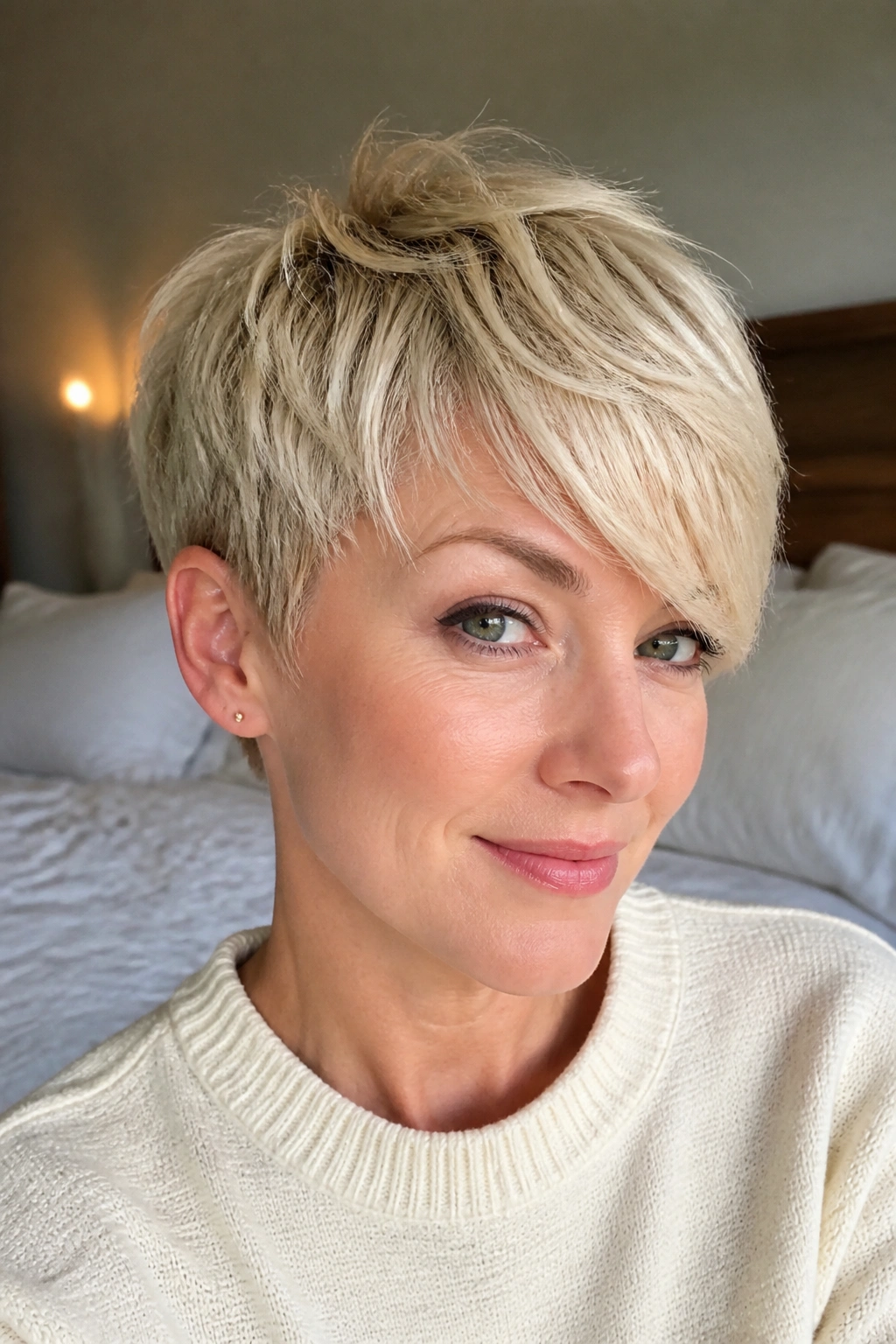
A feathered pixie is one of the easiest ways to put height where a round face needs it most. The whole point is that the fringe doesn’t sit like a shelf; it sweeps diagonally across the forehead and melts into soft layers on top.
Why It Works on a Round Face
The side sweep breaks the horizontal line that can make a face look broader. Keep the top around 2 to 3 inches long, with the fringe longest near the arch of the brow and slightly shorter near the temple. That small difference matters.
Butter blonde or soft wheat blonde keeps the cut light, but the feathering is what gives it shape. Ask for point-cut ends rather than blunt ones. You want movement, not a helmet.
- Keep the crown a little longer than the sides.
- Ask for a deep side part, even if it’s only temporary.
- Use a pea-sized amount of matte paste on dry hair.
- Blow-dry the fringe in the opposite direction first, then sweep it over.
Best detail to ask for: a soft taper around the ears so the face opens up instead of closing in.
2. Chin-Length French Bob with Curtain Fringe

Why does a French bob work so well on round faces? Because it stops where the jaw starts to matter. That gives the face a little structure, and the curtain fringe splits the difference between softness and shape.
The best version lands right around the chin, not above it. If it sits too high, the width of the cheeks gets more attention than you probably want. A subtle bend at the ends helps, but the line should still feel clean.
Blonde makes this cut look lighter, which is useful here. Champagne blonde, beige blonde, or a pale honey tone all work nicely because they keep the bob from feeling too hard. The fringe should part slightly off center and graze the brows, not sit in a straight wall.
How to Style the Bend
Use a 1-inch round brush and lift the fringe up and away from the face. Let the ends roll under just a touch. Then hit it with a cool shot so the shape stays soft instead of collapsing.
3. Textured Crop with Wispy Baby Bangs
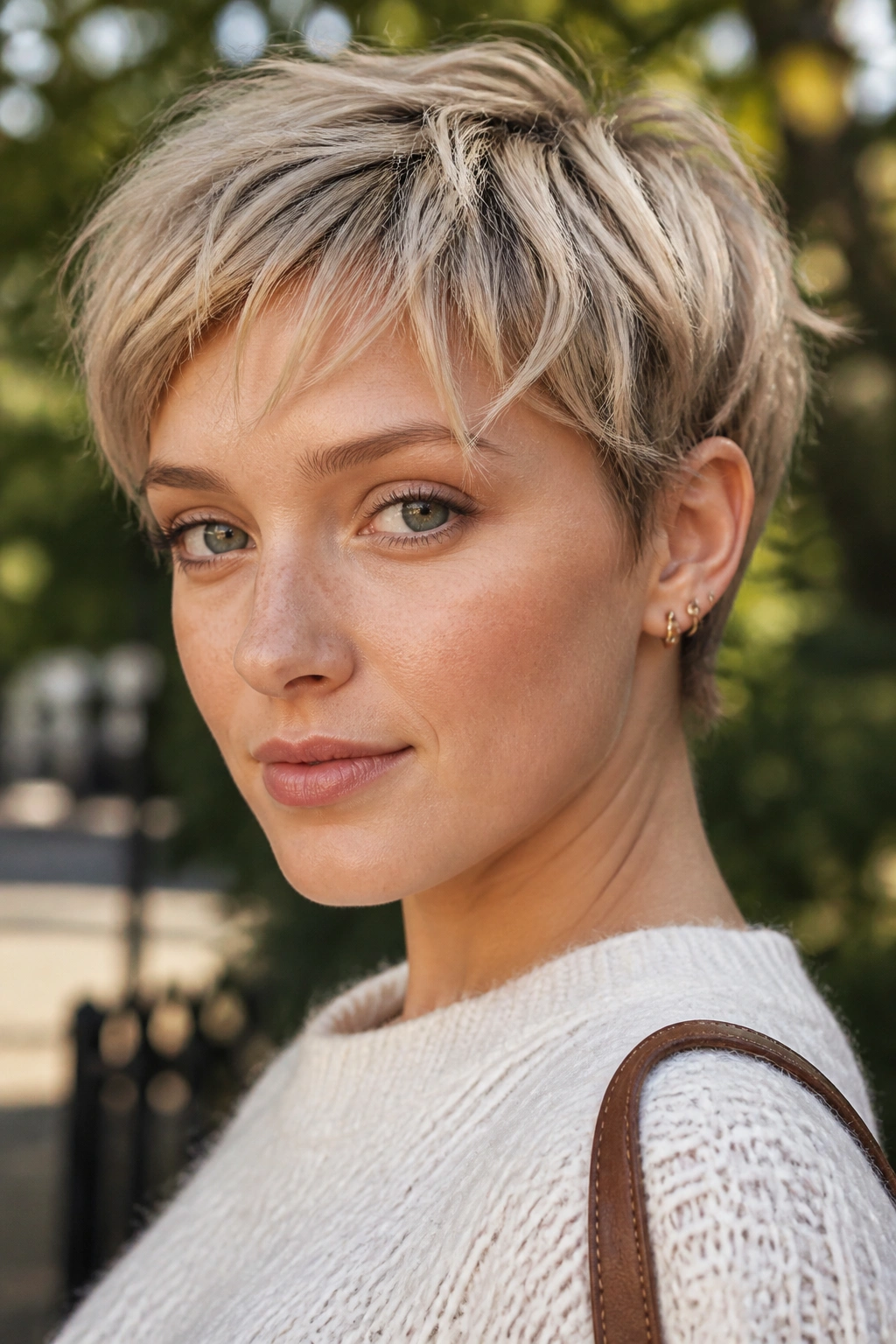
If your hair is fine and a heavy fringe tends to separate by lunchtime, this is the cut that behaves. Wispy baby bangs keep the forehead open, which is a real win on a round face, and the cropped layers create shape without dumping weight at the sides.
The key is not to make the bangs too full. A wispy fringe should look a little broken and slightly uneven in the best way. It can sit a half-inch above the brow or touch the brow in a few places, but it should never form a solid bar across the forehead.
This style loves beige blonde and ash-gold blonde because those shades show the texture without shouting. It’s also one of the better choices if you prefer a haircut that looks better a little messy.
- Ask for dry cutting on the fringe so the length lands where it should.
- Keep the crown short and lifted.
- Use texture spray at the roots, not oil.
- Skip heavy conditioners near the fringe area.
The goal is air, not density. That’s the whole haircut.
4. Angled Bob with Deep Side Fringe
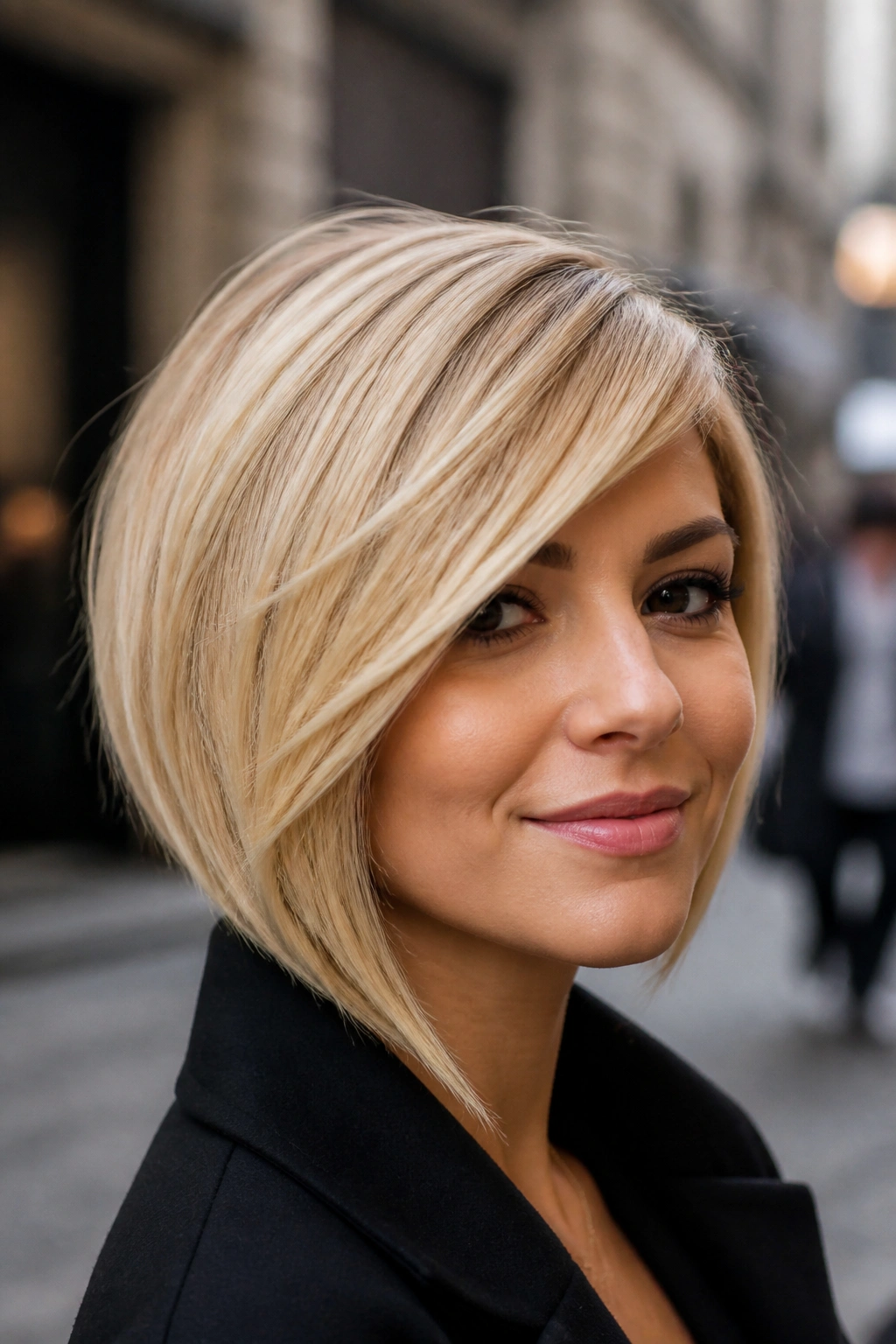
An angled bob does more for a round face than most people expect. The front sits longer than the back, so the eye travels down instead of out, and that alone helps the face feel a little narrower.
The side fringe should start high, near the part, and sweep down toward the cheekbone. Keep the front roughly 1.5 to 2 inches longer than the nape. That creates a clean diagonal line, which is exactly the kind of shape a round face likes.
This cut works especially well on thicker hair because the angle removes bulk without making the head look too flat. A cool blonde or soft beige blonde keeps the line crisp. If the hair is straight, bevel the ends under with a flat brush or flat iron just enough to keep the bob from flaring out.
One small thing: don’t overcurve the front. Too much bend at the chin can make the face look rounder, not slimmer. A little movement is enough.
5. Bixie with Piecey Fringe and Crown Lift
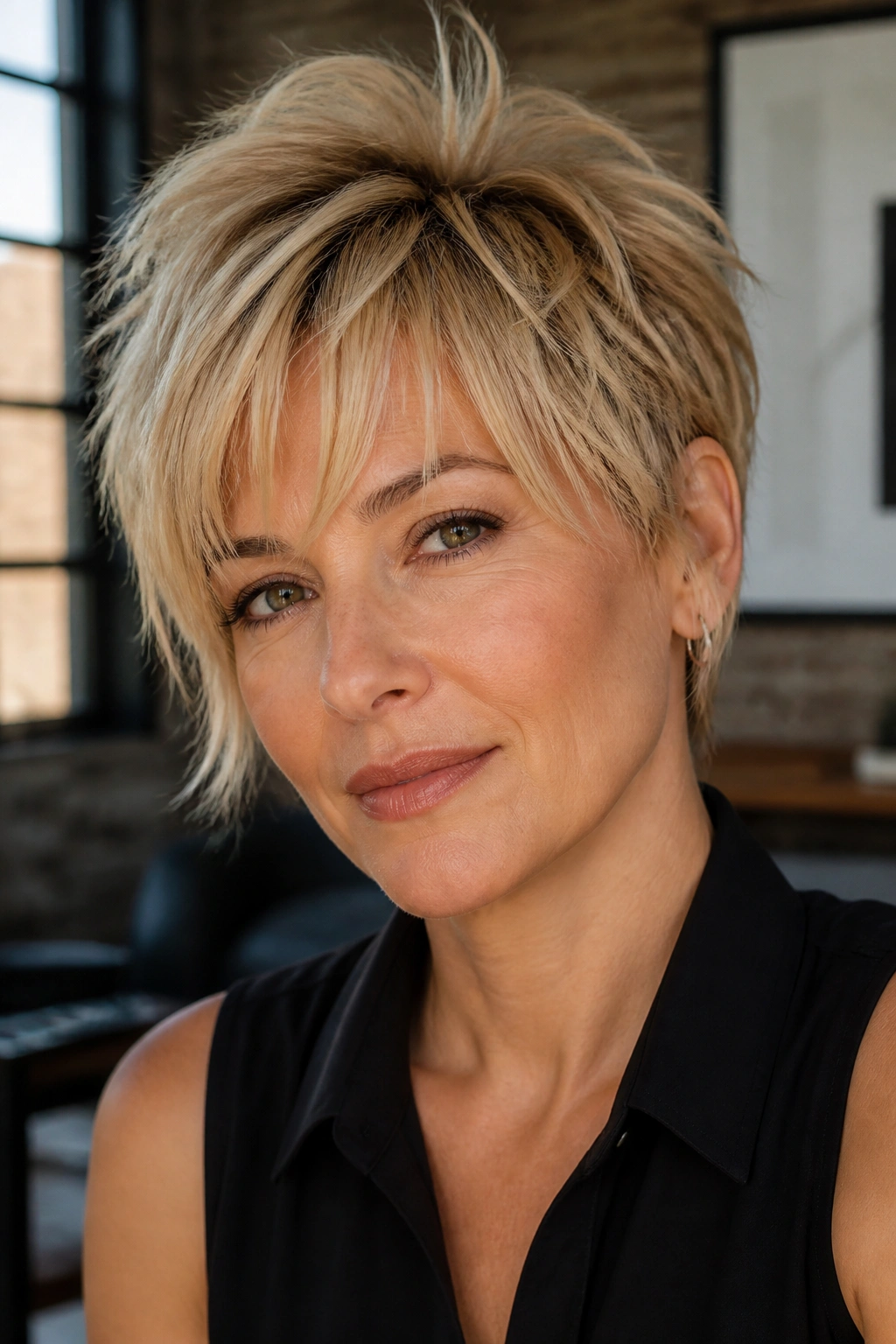
Want something between a bob and a pixie? The bixie is the sweet spot. It keeps enough length on top for movement, but the sides stay short enough to show the neck and jaw.
The piecey fringe is what makes it work on a round face. Instead of one heavy bang, you get small, separated sections that fall in different directions. That keeps the forehead from looking boxed in and gives the cut a little edge.
How to Wear It
Work a small dab of mousse through damp roots, then rough-dry the top with your fingers. Once it’s dry, pinch the fringe with a light paste so the pieces stay distinct. You want lift at the crown and a soft scatter around the face.
This is a good cut for pale gold blonde or creamy blonde with a root shadow. The darker root helps the top look fuller, which matters when the cut is short. A bixie with flat roots looks tired fast. One with volume looks intentional.
The best version has a little mess. Too polished and it loses the charm.
6. Rounded Bob with Bottleneck Fringe

A round face does not need sharp corners all the time. Sometimes the smartest move is a softly rounded bob with a bottleneck fringe, because the fringe creates shape in the middle and opens up at the temples.
That bottleneck shape matters. The center of the fringe sits a little shorter, while the sides grow longer and melt into the rest of the cut. It’s a small shift, but it keeps the forehead from feeling squared off.
The bob itself should fall somewhere between the cheekbone and the jaw. If it ends right at the widest part of the cheek, it can draw too much attention there. Keep the blonde shade warm but not brassy — honey blonde or vanilla blonde both work well here.
Soft doesn’t mean shapeless.
Ask for a gentle bend around the ends and just enough layering to keep the bob from puffing out at the side of the face. If the hair is thick, a little internal debulking helps. If it’s fine, skip too much thinning and keep the outline clean.
7. Short Shag with Airy Eyebrow-Grazing Fringe
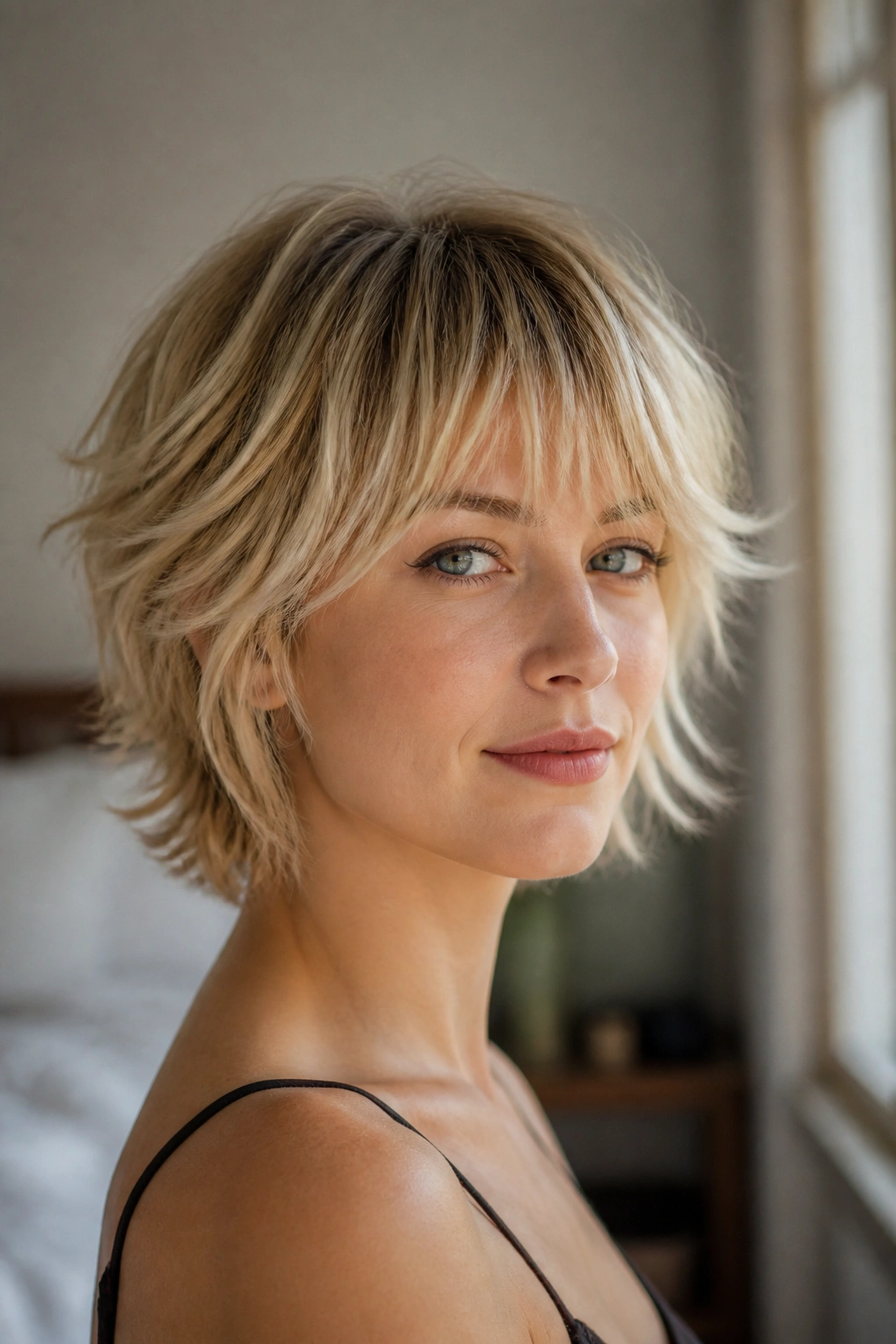
The first thing you notice about a good short shag is movement. Not chaos. Movement. The layers lift, the fringe shifts a little when you turn your head, and the whole cut keeps the face from looking too round or too still.
An airy fringe that grazes the eyebrows can be a smart choice here because it makes the forehead part of the cut rather than a blank space. The shaggy layers below it soften the cheeks without building width. That’s the real trick.
What the Texture Needs
- A light mousse at the roots before drying.
- A diffuser if your hair is wavy.
- Point-cut ends so the fringe doesn’t feel heavy.
- A touch of dry texture spray after styling, not before.
This cut looks especially good in sandy blonde, oat blonde, or a pale golden mix with darker roots. The color variation helps the layers show up. If you smooth it too much, the shape can disappear and the fringe starts to look flat.
Do not over-iron this cut. A little bend is the whole point.
8. Platinum Undercut Pixie with Sweeping Fringe
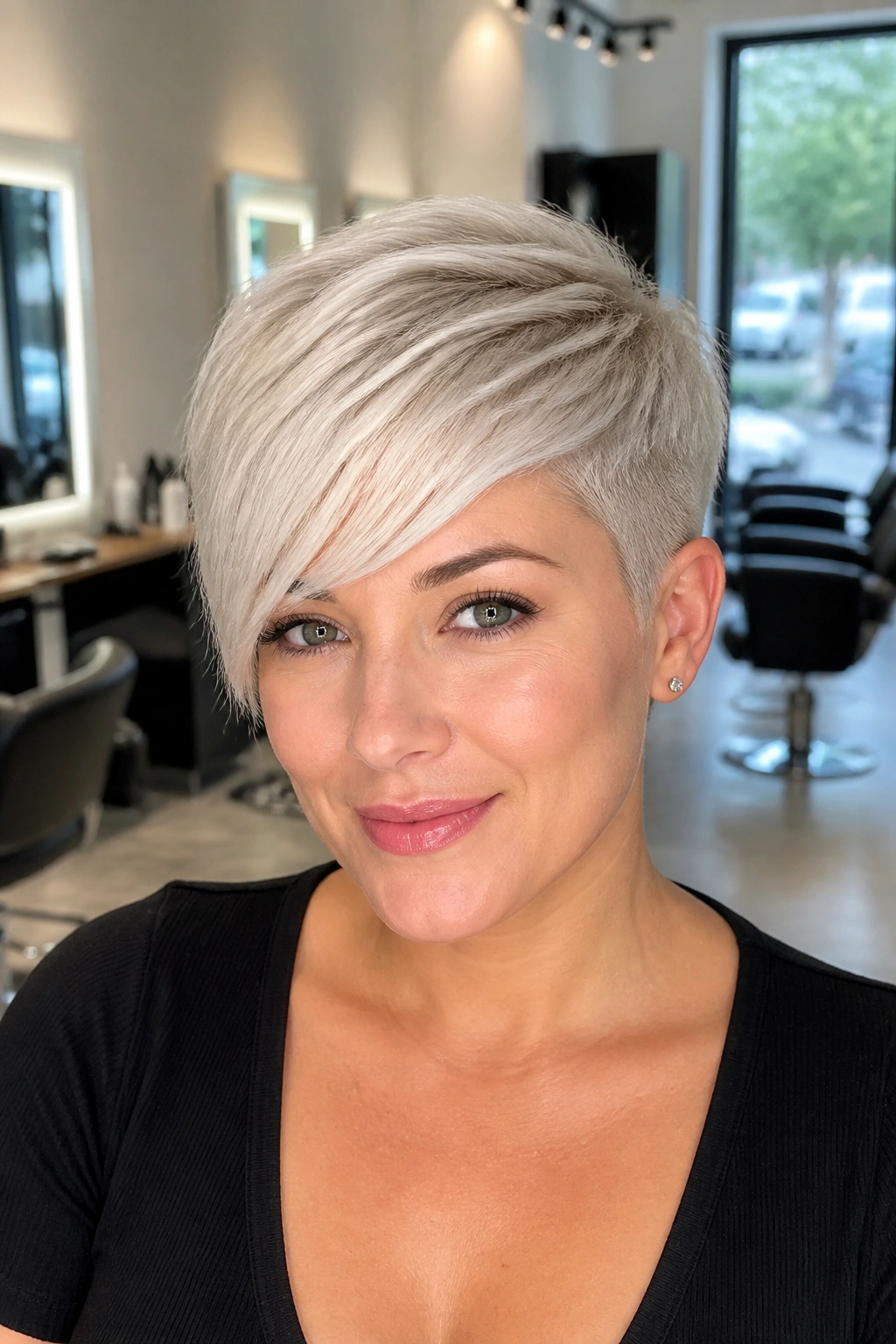
Platinum makes a short pixie look sharper, but only if the fringe has enough swing to balance all that brightness. A sweeping fringe does that job beautifully. It moves diagonally across the face and keeps the top from feeling like a flat white cap.
The undercut matters more than people think. It removes bulk from the sides and back, which helps a round face because it opens the outline near the jaw and neck. The top stays longer, the fringe stays directional, and the cut gets its shape from contrast.
This one wants regular trims. Short blonde hair shows growth fast, and platinum or icy blonde shows every shift in length even faster. That is part of the deal. If you like neat lines and don’t mind a little upkeep, it’s a strong look.
One more thing. The fringe should have enough length to brush past the brow, not sit above it like a tiny shelf. That little extra length keeps the face from feeling wider.
9. Wavy Bob with Split Fringe
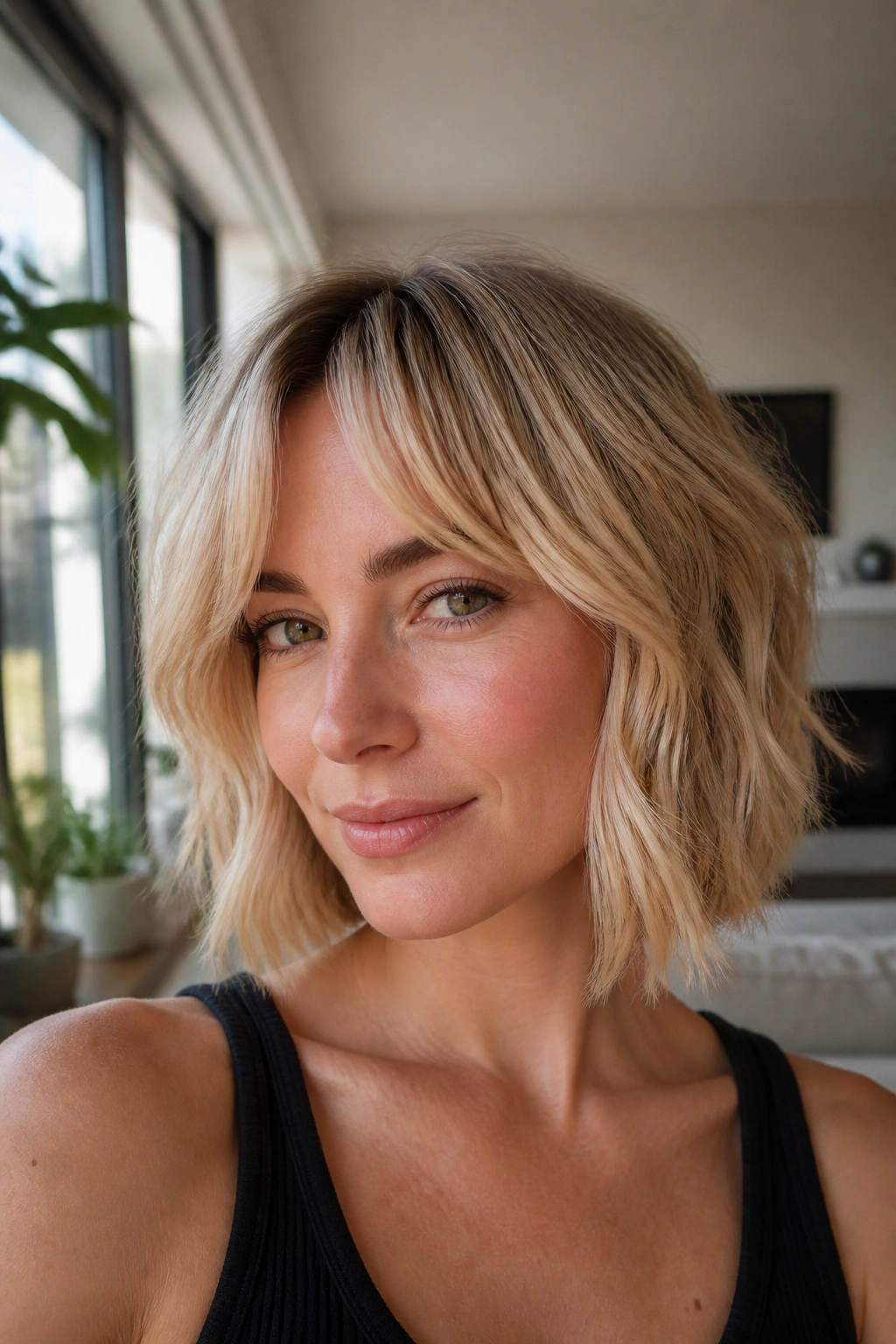
Picture a chin-length bob with soft waves, one side tucked behind the ear and the fringe split so it opens the center of the forehead. That’s a very good shape for a round face, and it’s easier to wear than it sounds.
The split fringe keeps the eye moving up and out, which helps the face feel longer. A crisp center part can be too severe, so I’d shift it about half an inch off center. That tiny move makes the whole thing feel more relaxed.
A 1-inch iron works well if your hair needs a little help with bend. Wrap only the mid-lengths, leave the ends a touch straighter, and then finger-comb the fringe so it doesn’t look too perfect. In blonde hair, perfect often reads as stiff.
The best shades here are soft beige, pearl blonde, and sun-kissed blonde with lighter pieces around the face. The color should look like it happened in the hair, not on top of it.
10. Tapered Crop with Choppy Fringe
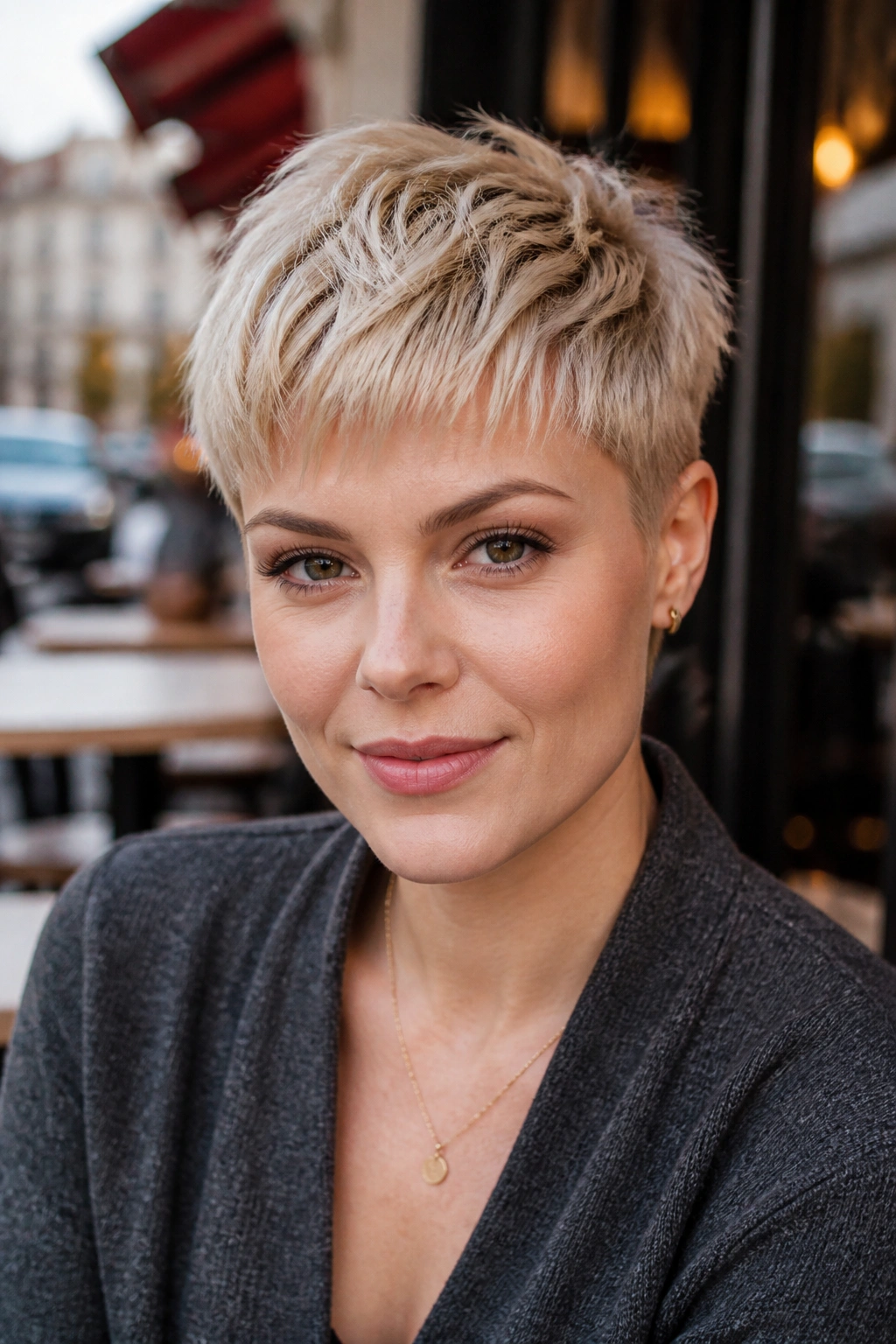
A tapered crop gives you a neat shape at the nape and sides, which is a nice thing on a round face when you want less bulk around the cheeks. The top stays loose, and the fringe is cut in broken little sections so it doesn’t form a heavy band.
This is one of those haircuts that looks almost minimalist until you see it move. The choppy fringe keeps the front from feeling boxed in, and the tapering in the back makes the head shape look cleaner from every angle. It’s especially useful if your hair grows out around the ears in a puffy way.
Blonde hair makes the texture visible fast, so a cream blonde or soft neutral blonde works well. If the hair is coarse, ask for a little weight removed through the top layers, but not so much that the cut becomes wispy and thin. There’s a fine line there.
I like this one on people who want short hair but don’t want anything too cute or too polished. It feels practical. A little cool, too.
11. Retro Flipped Bob with Arched Fringe
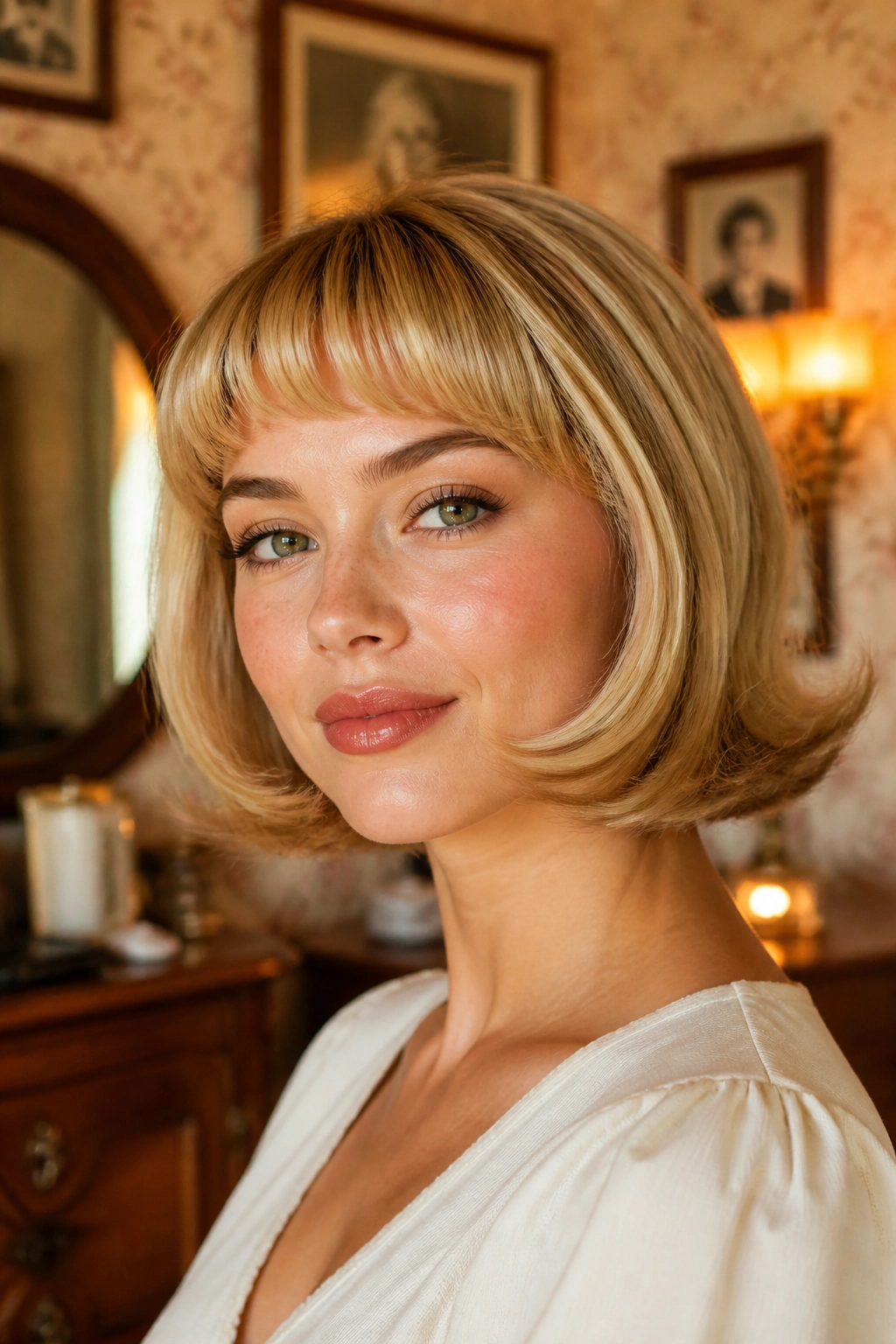
Can a retro bob work on a round face? Absolutely, if the flip is kept light and the fringe is arched instead of blunt. The old-fashioned version of this cut was too solid. The newer version moves.
The bob should sit close to the jaw, with the ends flipped just enough to reveal the neck. That upward bend creates lift, which keeps the lower half of the face from looking heavy. The arched fringe mirrors that shape without drawing one hard line across the forehead.
Who It Suits
- Fine to medium hair that can hold a bend.
- Oval-leaning round faces that want a little polish.
- Honey blonde, apricot blonde, or beige blonde shades.
- People who like a blowout and don’t mind a brush and dryer.
The fringe should be a touch longer in the middle and shorter at the sides, so it arches rather than sits flat. If you use a round brush, roll the fringe under lightly and then out at the ends. That soft curve keeps the style from feeling costume-like.
12. Curly Crop with Curly Fringe
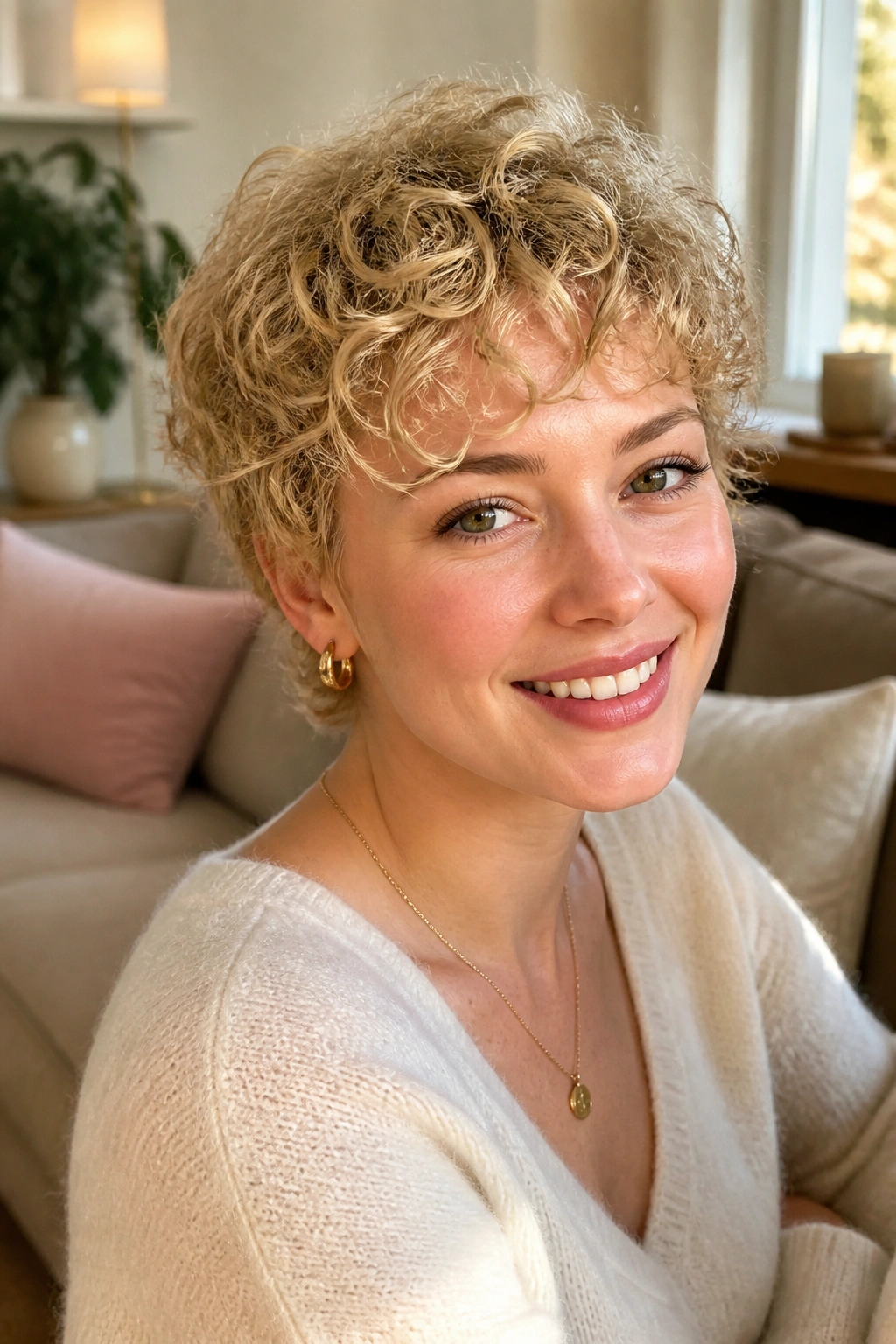
Curly fringe should look light, springy, and a little imperfect. If every curl is forced into one line, the cut will fight your face shape. If the curls are left with room to move, the forehead opens up and the roundness of the face feels softer.
The best curly crop is usually cut dry, curl by curl, so the stylist can see where each ringlet actually sits. That matters more than any textbook measurement. A curl that looks short when wet can spring up half an inch or more.
A blonde curl cut needs softness around the edges. Think cream blonde, honey blonde, or warm beige with a few brighter pieces near the fringe. Too much one-tone blonde can flatten the texture. A little contrast helps the curls separate.
- Leave the fringe about 1/4 inch longer when cut dry, because curls bounce up.
- Use curl cream, not a heavy gel.
- Diffuse on low heat and low speed.
- Separate a few front curls with your fingers after drying.
Never brush this one out. It turns into fuzz fast.
13. Asymmetrical Pixie Bob with Long Top Fringe
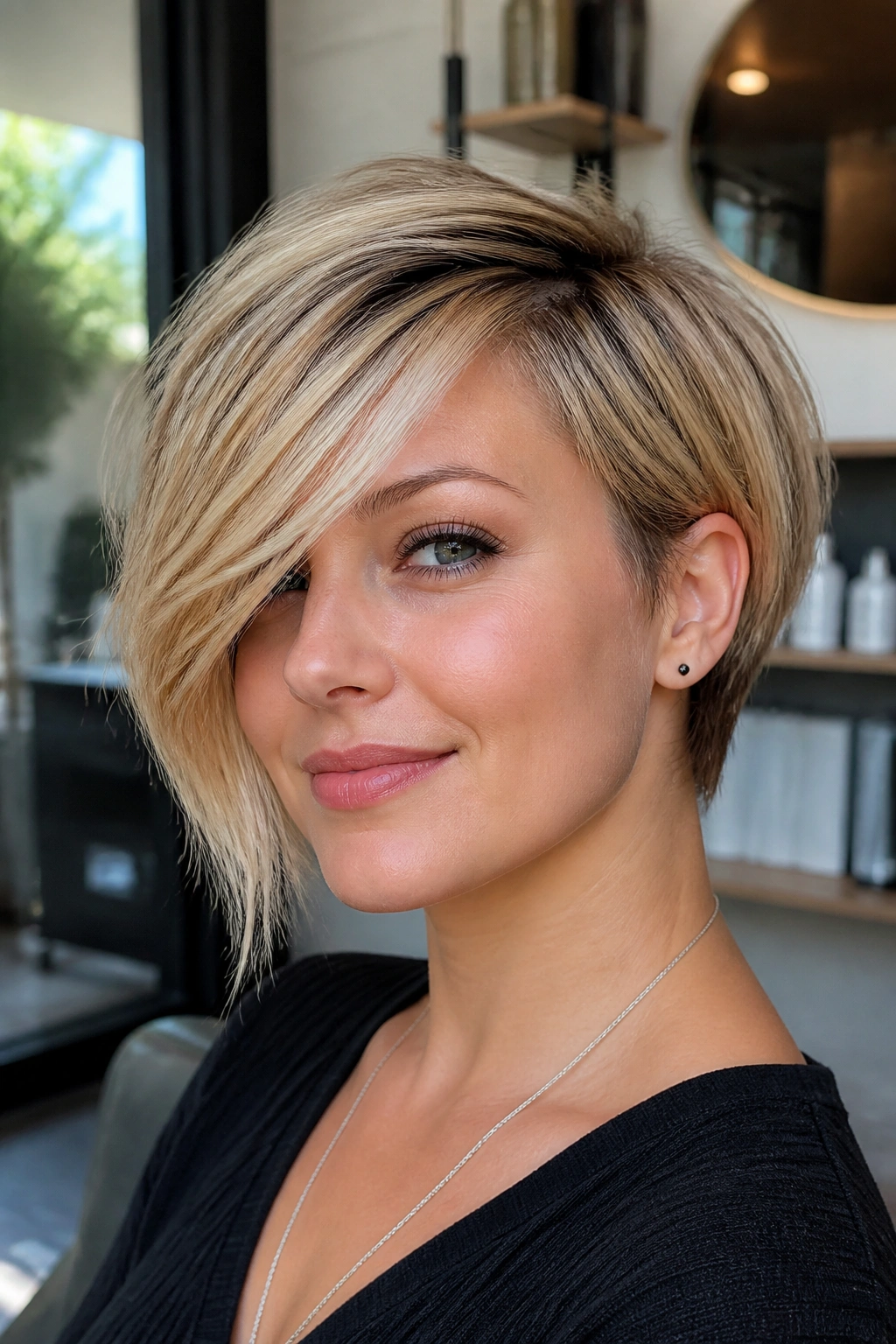
Asymmetry is a round face’s best friend when you want a pixie bob to feel modern. One side can skim the cheekbone while the other stays shorter and tighter, and the long fringe sweeps across the forehead like a line drawn by hand.
That diagonal gives the face somewhere to go. Straight-across shapes tend to sit right on the width of the cheeks, which is where round faces already carry visual weight. A tilted shape changes that.
Why Asymmetry Helps
The long side acts like a visual slash. It pulls attention downward and away from the widest part of the face. The shorter side keeps the haircut crisp and stops it from ballooning.
Ask for the front fringe to land just below the brow on the longer side, with the shorter side staying around the temple. The contrast should be obvious enough to matter, but not so dramatic that the cut feels lopsided in a bad way. Blonde with a soft root shadow helps the shape read better.
This is a good choice if you like a little drama without losing wearability. It looks sharp, but not fussy.
14. Feathered Mullet-Lite with Side-Swept Fringe
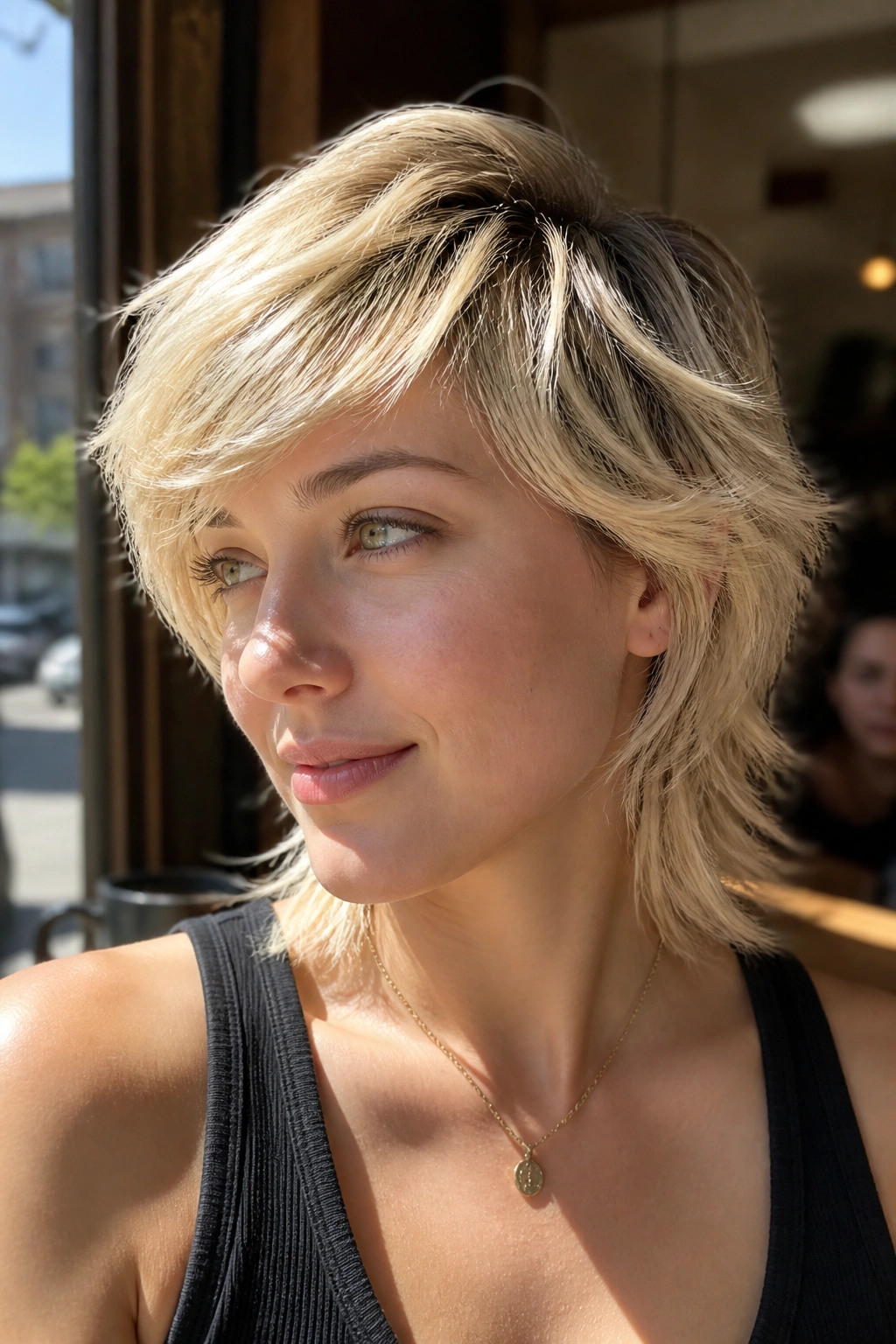
A soft mullet sounds wild, and sometimes it is. The version that works on a round face keeps the sides feathered, the nape a little longer, and the fringe swept to one side so the front never feels heavy.
The reason this shape works is simple. The extra length at the back stretches the silhouette, while the shorter crown and sides remove puff around the cheeks. That’s a useful trade when the face is full through the middle.
Blonde makes the layers easier to see, which is both good and annoying. Good, because the shape looks airy. Annoying, because uneven cutting shows up fast. Keep the layers soft and the fringe light, or the whole thing turns shaggy in the wrong way.
This is a better pick for wavy or slightly rough hair than for sleek, pin-straight hair. The texture gives the cut its edge. Without it, the style can lose momentum and feel unfinished.
If you like hair that looks like it has a bit of attitude, this one earns its keep.
15. Sleek Jaw-Length Bob with Split Fringe
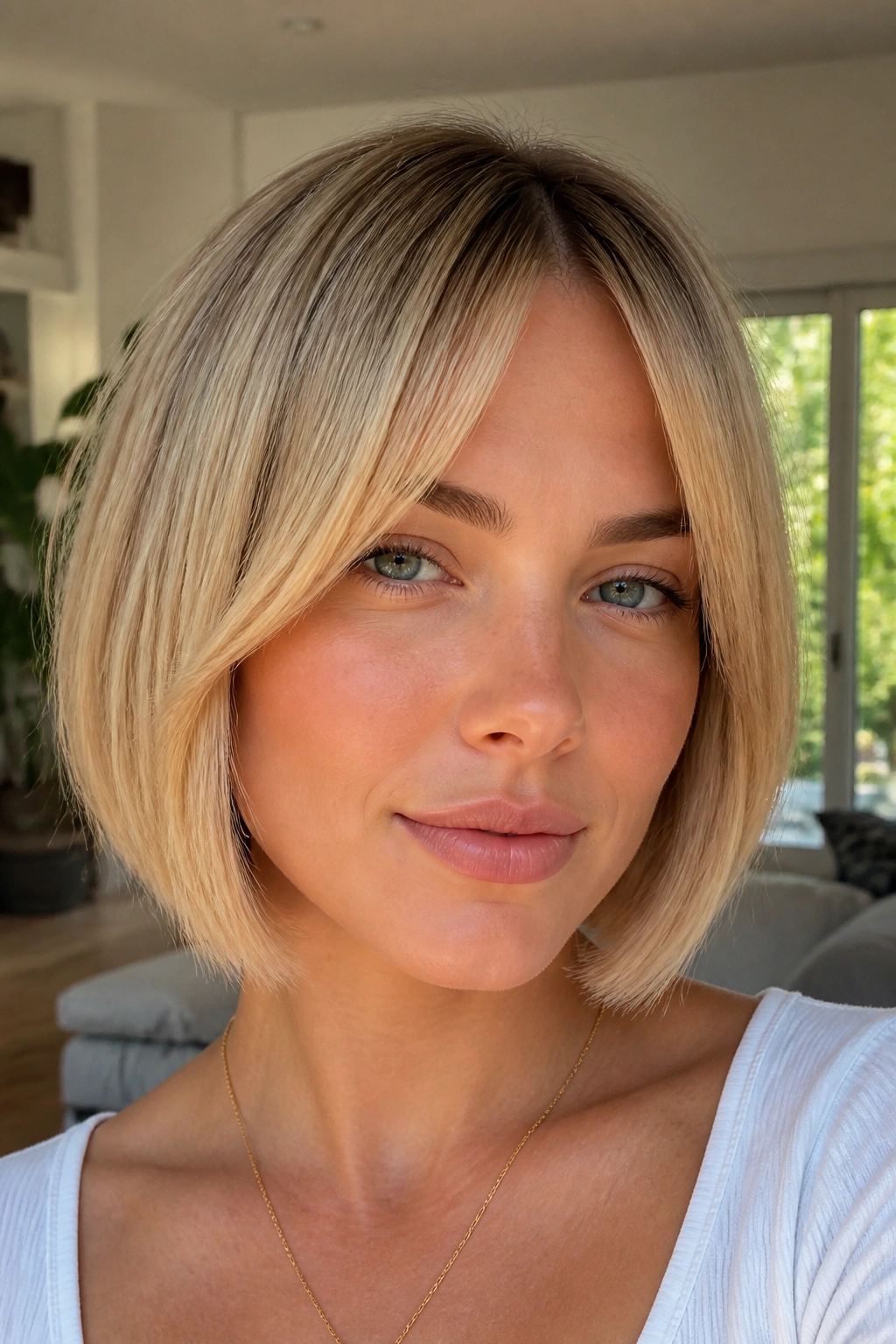
If you prefer clean lines, a jaw-length bob with a split fringe is the neatest option on this list. The length sits right where the jaw starts to define the face, and the fringe breaks the forehead in the middle instead of boxing it in.
This cut loves smooth blow-drying. A paddle brush can get the body flat and controlled, while a slight bend at the ends keeps the bob from looking severe. The split fringe should open enough to show a little forehead, because that vertical space helps a round face look longer.
A root shadow is useful here. It stops the blonde from looking too one-note and gives the bob depth near the crown, which is where some round faces need the most lift. Pearl blonde, soft beige, and cool vanilla tones all work.
The trick is not to curve the ends too much under the chin. That can round things out in a way you probably don’t want. A clean line, a slight part, and a fringe that falls away from the center — that’s the formula.
16. Shattered Bob with Razored Fringe
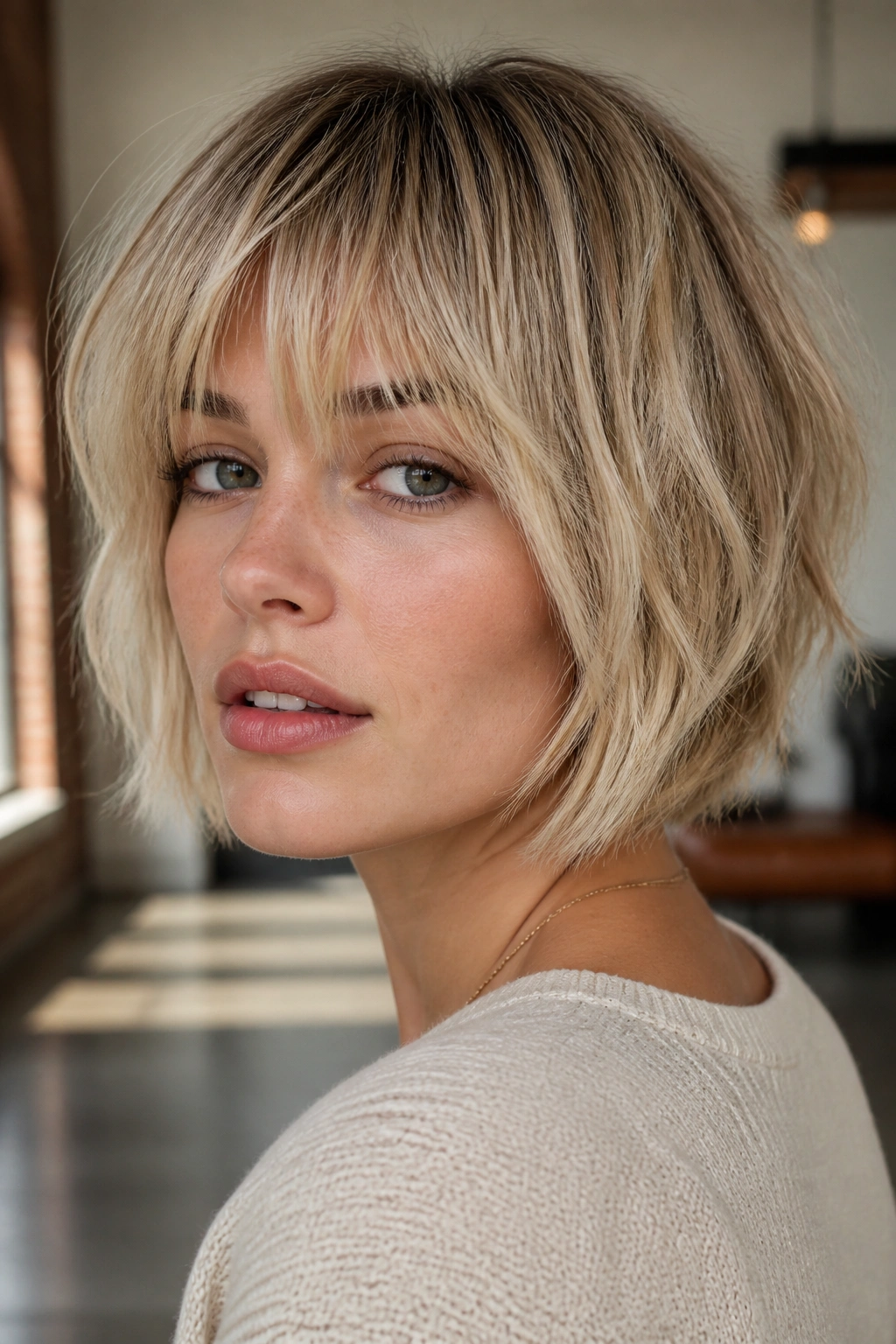
Razored ends make blonde hair look lighter than blunt ends ever will. That’s the whole appeal of a shattered bob. The fringe is broken up with a razor or slide cutting, so it sits in soft pieces rather than one solid block.
On a round face, that broken edge is useful because it keeps the style from feeling heavy at the widest part of the cheeks. The bob can still be short and structured, but the texture does a lot of the visual work. You get shape without stiffness.
This one is especially useful for dense hair. Thick hair can carry a razored fringe without collapsing. Fine hair can, too, but only if the cutting is careful. Too much razoring and the ends fray. That’s not the same as texture.
Weight is the enemy here.
A beige-blonde or creamy wheat shade helps the cut look soft, while a slightly darker root keeps the shattered pieces from disappearing into one pale blur. If the hair is styled with a flat iron, keep the bends subtle and uneven. Too much uniformity kills the point.
17. Sunkissed Crop with Crown Lift and Long Fringe
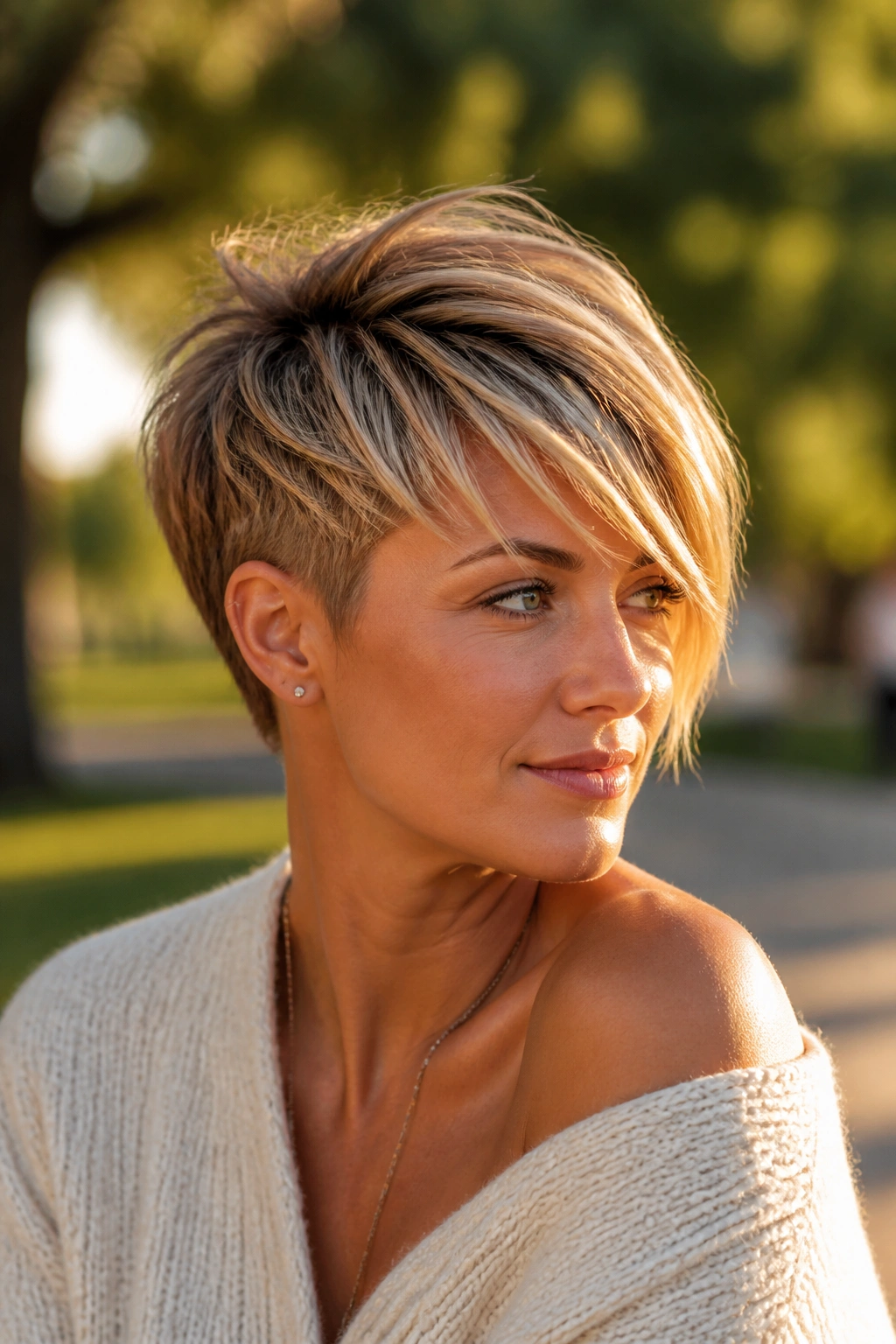
How do you keep a crop from collapsing on a round face? Give it lift at the crown and leave enough length in the fringe to sweep, not stick. That’s the formula, and it works better than trying to hide the face with heavy bangs.
The color matters here, too. Sunkissed pieces around the crown and fringe line draw the eye upward. A little dimension at the roots and a few brighter strands near the front make the cut feel taller. Flat blonde can work, but the cut has to do more work when the color is one-note.
Styling Move
- Apply mousse to damp roots.
- Clip the top section up while blow-drying the sides.
- Use your fingers to direct the fringe diagonally.
- Finish with a light mist of texture spray, not hairspray shell.
A long fringe on a crop gives you options. Wear it tucked, swept, or pushed forward with softness. That flexibility is the payoff.
This is a good pick if you want short hair that still feels a little playful. It doesn’t sit still for long.
18. Airy Pageboy Bob with See-Through Bangs

A pageboy only looks dated when it is cut too heavy. Give it air, and the shape becomes useful again. See-through bangs are the key here because they keep the forehead visible and stop the front from becoming one blunt panel.
The bob should curve around the head, but the perimeter needs a little breathing room. Think soft, rounded, and tidy rather than stiff. On a round face, that lightness matters because a dense pageboy can make the cheeks feel even fuller.
Blonde is a natural fit for this shape, especially a pale wheat blonde or creamy beige. The lighter color lets the spacing in the fringe show through. If the bangs are too thick, the whole front gets dense fast.
This is a quiet haircut, not a loud one. The kind that looks neat in daylight and even better when it moves.
The fringe should sit just at or slightly below the brow, with tiny gaps between the pieces. That’s what keeps it from reading like a blunt cut. A round brush and a soft bend at the ends are enough. No need to overwork it.
19. Textured Bowl Bob with Broken Fringe
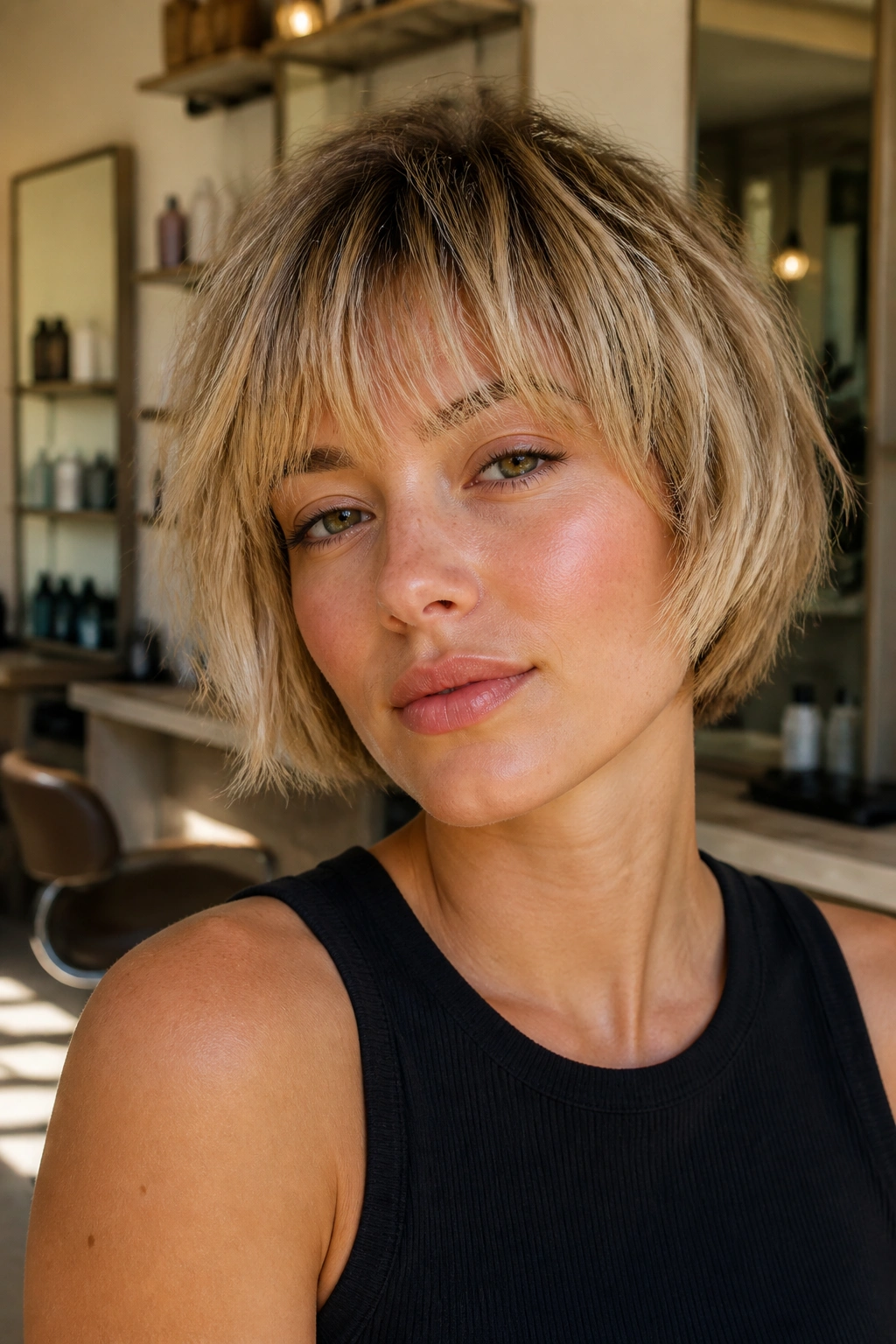
A modern bowl-inspired cut can flatter a round face if the fringe is broken up instead of sealed across the forehead. That is a big if. Done blunt, it can widen the face. Done with texture, it can look fresh and surprisingly wearable.
The sides should stay airy, not puffy, and the top should carry the weight. A broken fringe means the front is cut into uneven little pieces that leave small gaps of skin and forehead showing through. That breaks the horizontal line that causes trouble.
A root-shadow blonde works better than a flat platinum here because it gives the shape more depth. The perimeter can sit around the cheekbone or just above the jaw, but the side sections should not be too thick. That’s the trap with bowl shapes — they can pile on width fast.
- Keep the fringe piecey, not dense.
- Leave a little height at the crown.
- Ask for soft internal layering.
- Finish with a light cream, not a heavy wax.
It’s edgy. It’s not for everyone. But when it’s cut well, it has a clean, modern edge that round faces can absolutely wear.
20. Soft Crop with Long Face-Skimming Fringe
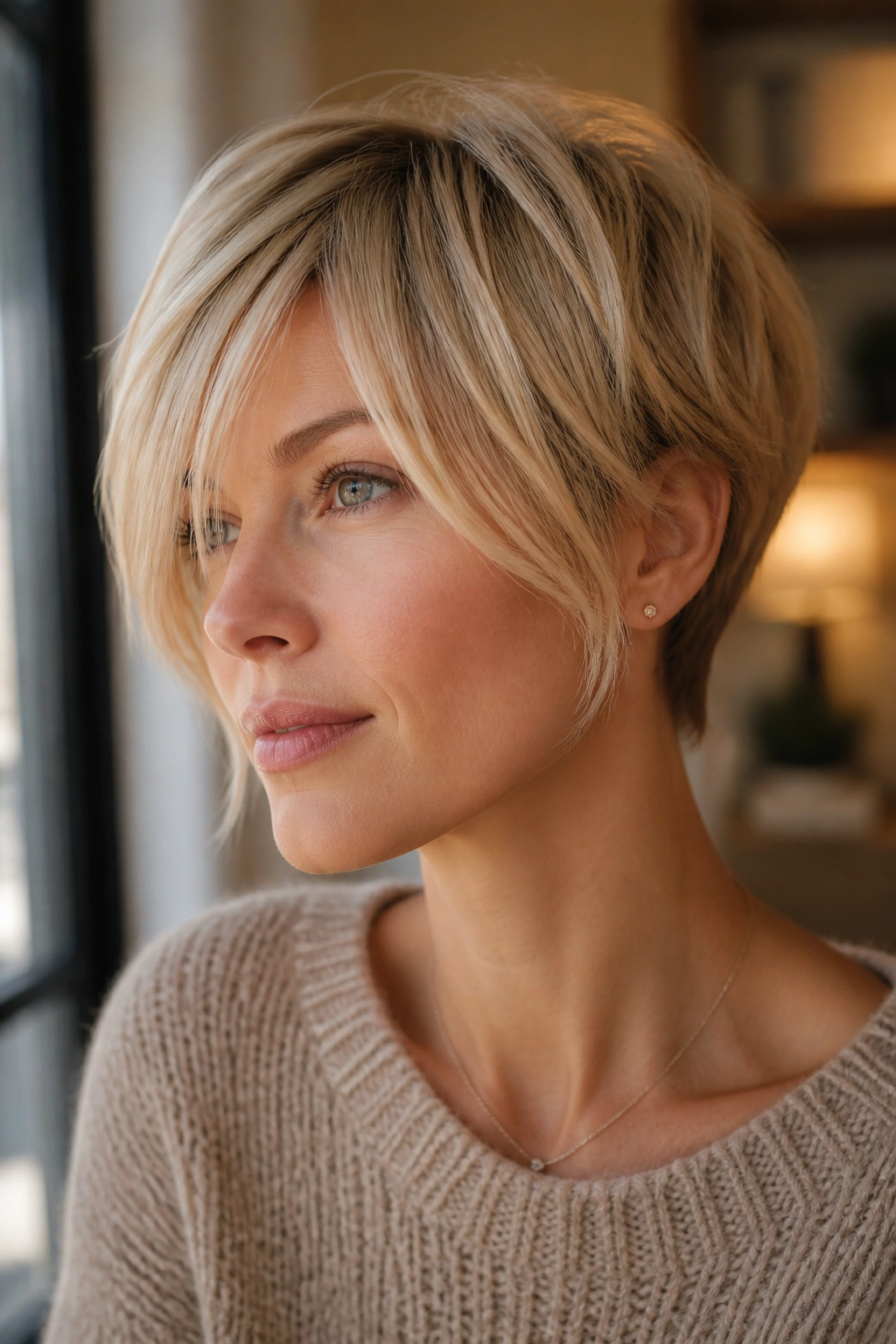
The safest short blonde fringe look is usually the one that leaves room around the cheeks. A soft crop with a longer face-skimming fringe does exactly that, and it does not ask you to fight your hair every morning.
The fringe should graze the cheekbone or sit just under the brow at the center, then taper longer toward the sides. That creates a narrow frame around the face without boxing it in. It is especially useful if you want something low-drama that still looks styled.
Blonde tones with a little depth — sand, beige, soft gold, or pale honey with a root shadow — help the cut stay dimensional. Flat light blonde can still work, but the shape needs to be very good. There is less room for error.
This is the haircut I’d suggest to someone who wants short hair, wants a fringe, and does not want to spend twenty minutes with a round brush every morning. It can be air-dried with a dab of cream, then touched up with fingers. Simple. Useful.
The face-skimming fringe is the reason it works. It softens the forehead, angles the eye, and keeps the cheeks from taking over the whole story.
The Bottom Line
Short blonde fringe hairstyles for round faces work best when they break up the widest part of the face instead of sitting right on it. That can mean side-swept movement, a split fringe, a feathered crop, or a bob that lands at the jaw and not the cheeks.
The boring version of fringe is a straight line. The better version is broken, angled, lifted, or softly parted. That small change is what keeps the haircut from making the face look broader.
If you’re talking to a stylist, ask for the fringe to be cut dry or dry-finished, especially if your hair bends, waves, or shrinks when it dries. That one request saves a lot of regret.
