



Fine hair makes bangs feel personal in a way most cuts do not. A fringe can look airy one day and see-through the next, and if the front section gets too heavy, it tends to flatten the whole face before you’ve even had coffee.
That’s why short French bangs are such a useful lane to explore. They keep the front light, they show a little brow, and they can make fine strands look fuller when the shape is cut with care instead of stuffed with too much texture.
The trick is not chasing density that isn’t there. It’s choosing a fringe shape that works with fine hair’s actual behavior: a bit slippery at the roots, quick to separate, and usually happiest when the line is soft, slightly broken, and not too long. Half an inch matters here. So does the angle of the cut.
1. Cheekbone-Skimming French Bangs
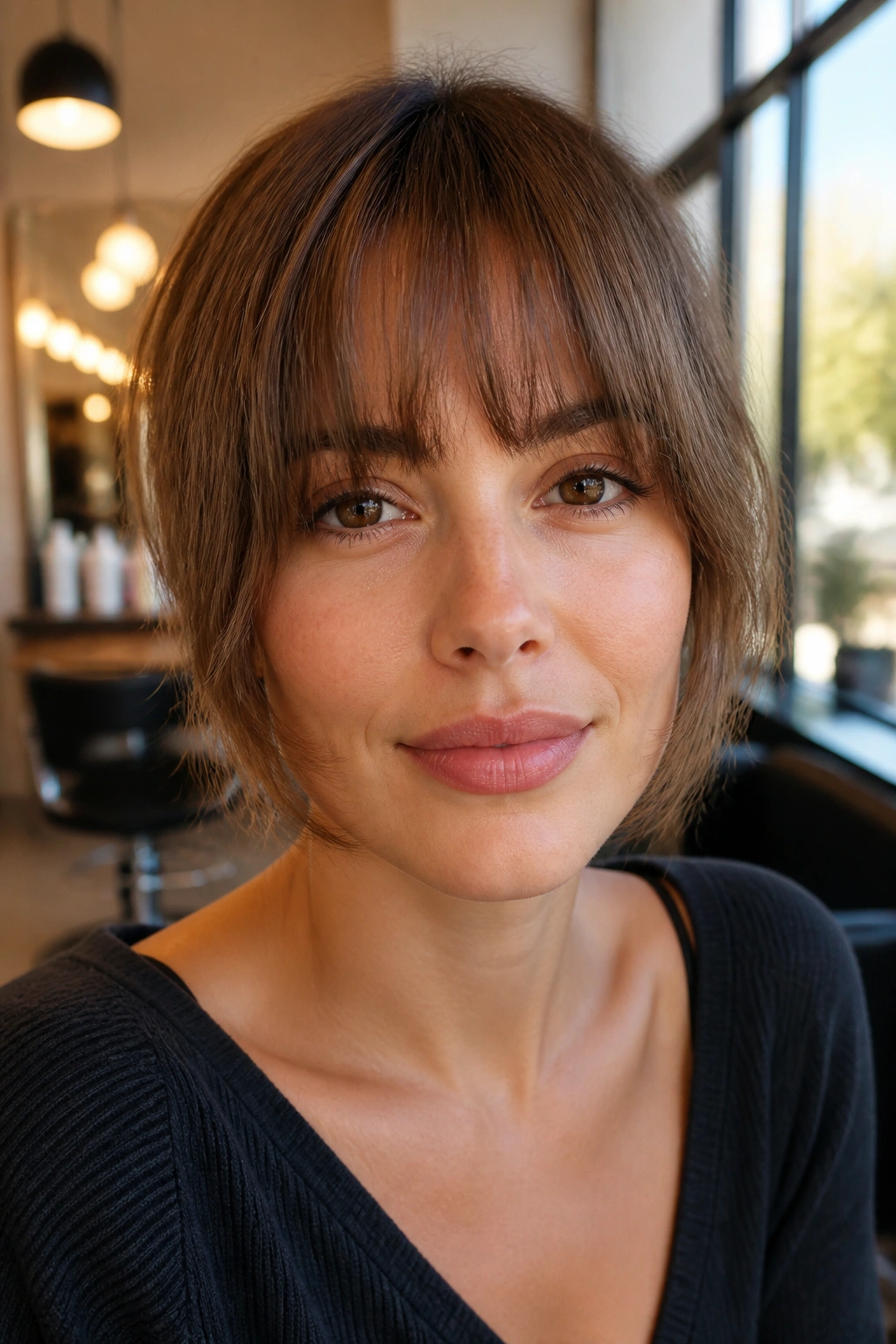
These are the French bangs I’d point to first for fine hair. The front stays short enough to feel airy, but the longest pieces land near the cheekbones, which gives the eye somewhere to go and keeps the fringe from looking like a thin strip pasted across the forehead.
Why This Shape Works
The cheekbone length gives the illusion of more hair because the pieces fan out a little instead of hanging straight down. That matters on fine strands, where a blunt wall can look sparse if there isn’t enough density to support it.
Ask for the center to sit just above the brows, then let the sides drift longer in a soft arc. The finish should feel lived-in, not choppy for the sake of being choppy.
- Best for straight or softly bent hair
- Good if your forehead is medium to long
- Keep the ends point-cut, not heavily thinned
- Use a 1-inch round brush for a quick bend
Tiny tip: blow the fringe forward first, then sweep it side to side while it cools. That little wobble in the shape keeps the line from clinging flat to your forehead.
2. Feather-Light Brow Skimmers

A feather-light brow skimmer can look fuller than a thick fringe that got thinned too hard. That sounds backwards until you see it in the mirror. Fine hair usually looks best when the bang line has a little body at the center and a soft edge at the sides.
This version sits close to the brow without covering everything. The goal is a soft frame, not a curtain. If your hair lies flat fast, this is one of the easiest ways to keep movement at the front without asking the cut to do more than your strands can handle.
A clean blow-dry matters here. Dry the roots forward, then direct them slightly off-center for the last minute so the fringe doesn’t split into two awkward strings.
Use a pea-size touch of lightweight cream only on the ends. The roots need air.
3. Bottleneck Bangs With A Short Center
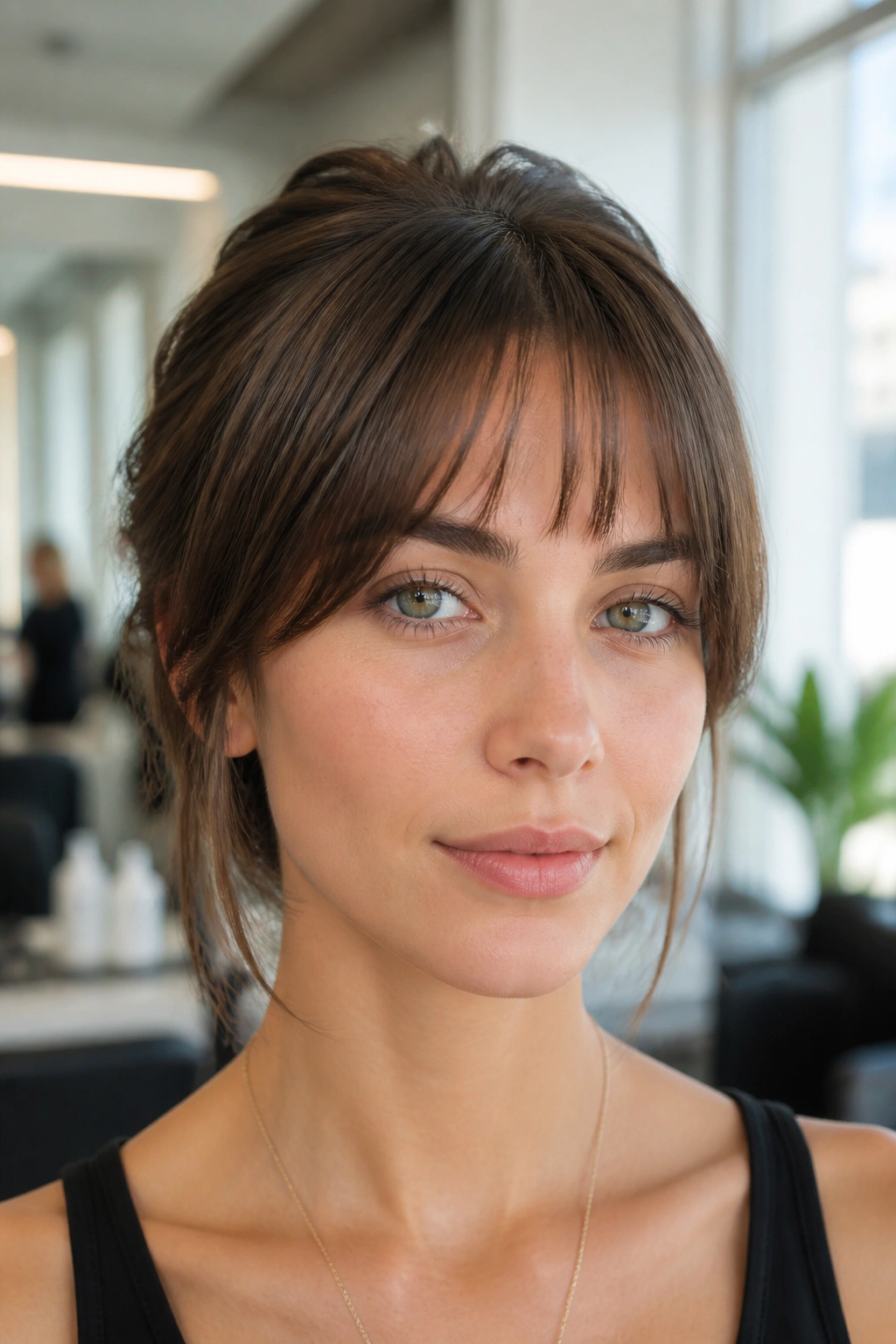
Why do bottleneck bangs work so well on fine hair? Because they create width where you want it and softness where you do not. The center stays a little shorter, the outer pieces open out toward the temples, and that shape makes the front look denser without turning heavy.
How To Style It
Start by drying the middle section straight down with a small brush. Then guide each side piece away from the face in a soft diagonal. That order matters. If you send everything sideways first, the center can split and show too much scalp.
This shape is especially good if your fine hair has a cowlick right at the front. The shorter middle section helps control the lift, while the longer corners can be tucked, bent, or left loose.
Best detail to ask for: keep the corners at least 1 inch longer than the center. That narrow spread is what gives the cut its shape, and it keeps the fringe from reading as plain short bangs.
4. Wispy Micro Fringe
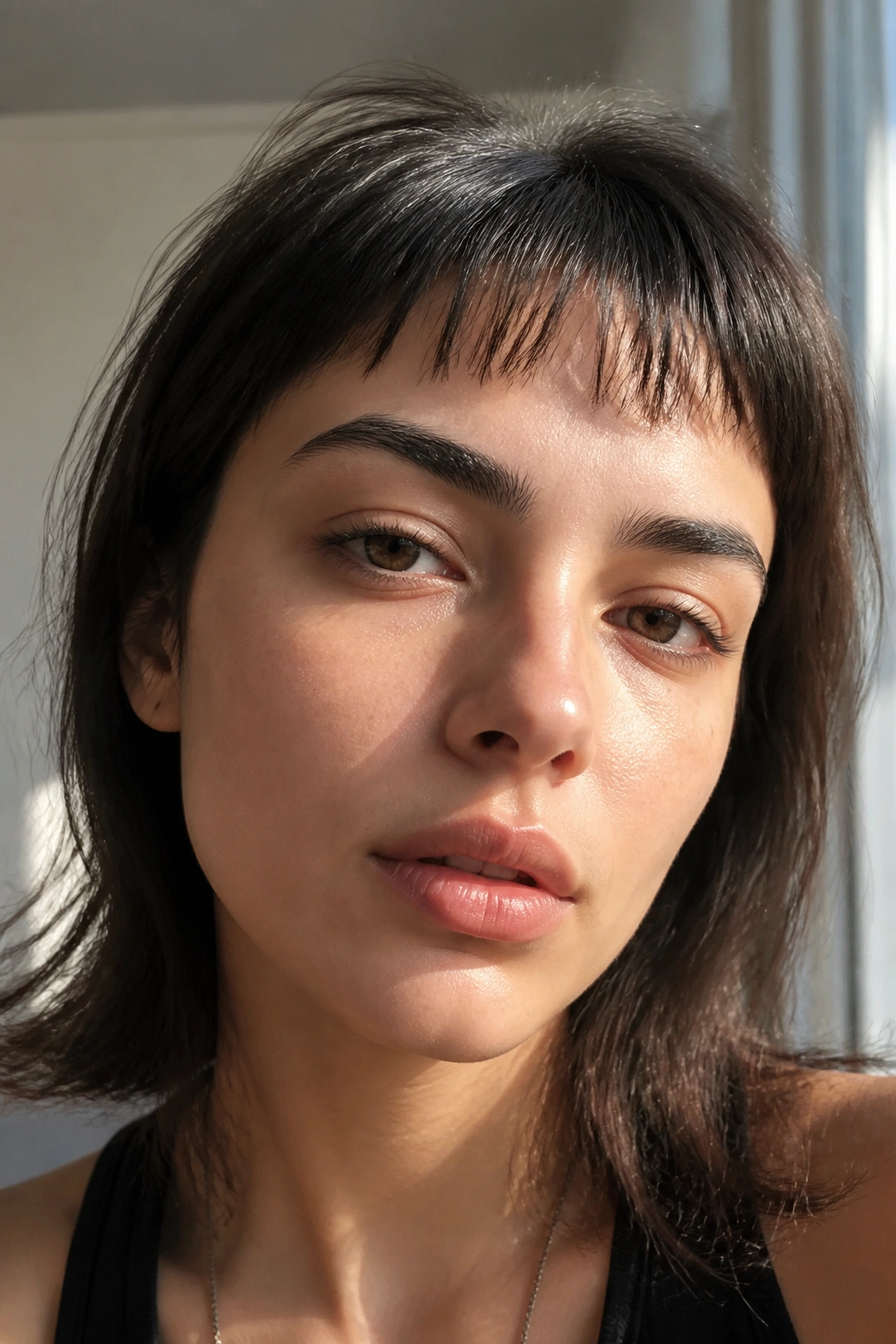
If you have fine hair that goes limp by noon, a wispy micro fringe can still work. The secret is keeping it soft at the edge and a touch uneven so it does not look like a hard line cut with a ruler.
This version sits higher on the forehead, but not so high that it feels severe. The best micro fringe on fine hair has a little separation. You should be able to see forehead through it.
What To Ask For
- Keep the shortest point around mid-forehead
- Leave the ends soft, not blunt
- Cut dry, so the true density shows
- Avoid razoring the top layer too much
A tiny flat brush helps here, but so does restraint. Don’t push for extra texture spray at the roots. That just makes the hair stick in odd places and exposes gaps.
The look is sharp, but it still needs a soft hand.
5. Rounded French Bangs
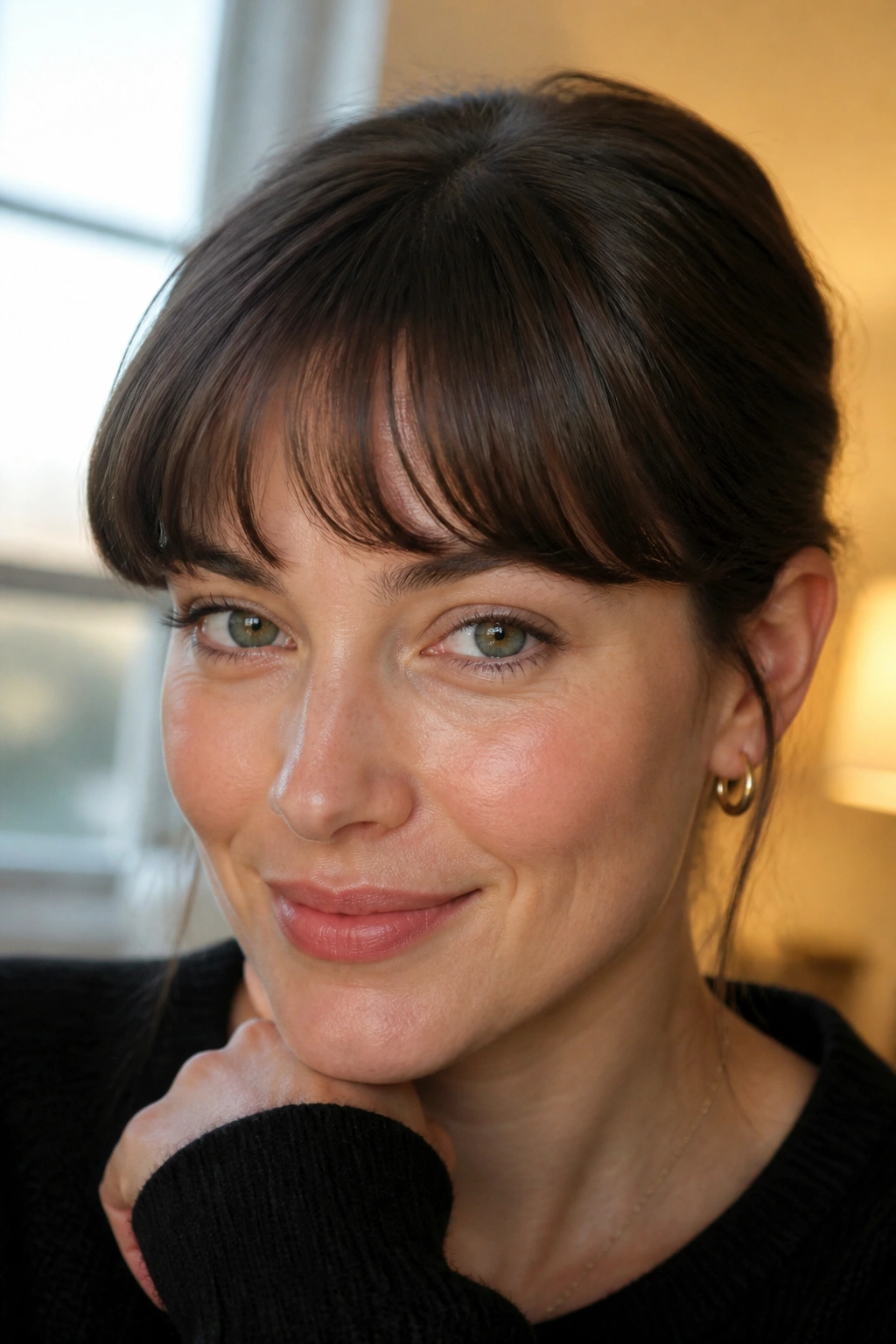
Rounded French bangs are the quiet heroes of fine hair. The curved line softens the forehead, makes the fringe feel fuller at the center, and helps the sides fold gently into the rest of the cut.
The shape works especially well if your face has a longer forehead or a narrow jawline. That soft crescent across the front gives balance without making the cut look stiff. It also hides small density changes better than a straight-across line, which is useful when one side of your fringe grows faster than the other.
I like this shape with a low, smooth blow-dry and a slight bend under the ends. Not curled. Just guided. The finish should look like the fringe naturally decided to live there.
If you wear your hair tucked behind one ear a lot, this is a nice choice. The curve still reads even when the side pieces move around.
6. Side-Swept Short Fringe
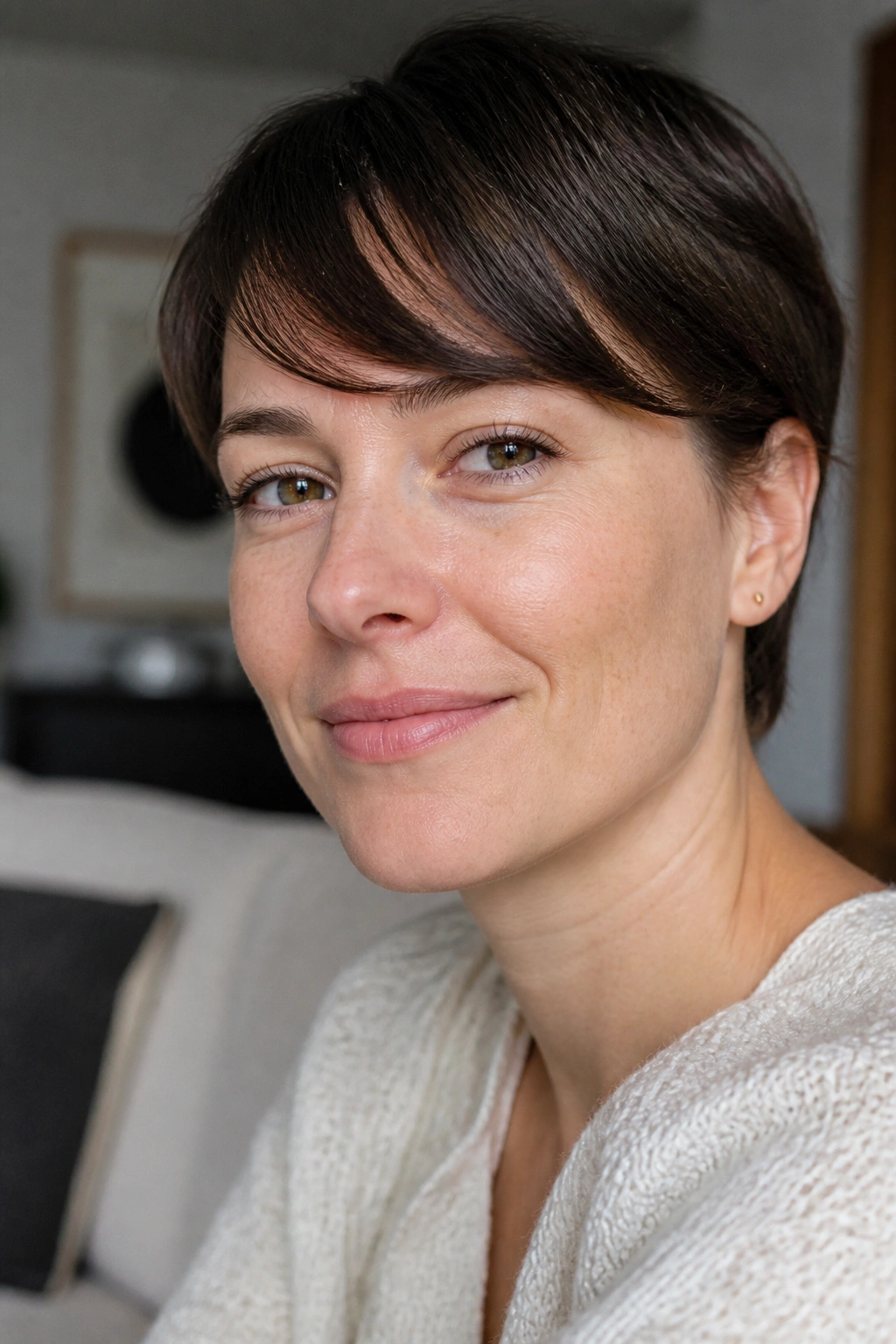
Unlike a dead-center fringe, a side-swept short fringe borrows density from the part. That makes it a smart pick for fine hair because it doesn’t ask every strand to do the same job at once.
It is also easier to live with on days when your roots are flat. Sweep the fringe in the direction your hair already wants to go, and you fight less of the natural movement. Less fighting usually means better hair.
Best For
- Hair that splits at the front
- Round faces that want a little vertical lift
- Readers who wear glasses and want less friction at the bridge
- People who hate trimming every four weeks
This shape can get too fluffy if it’s cut too long, so keep the shortest section close to the brow and let the sweep travel softly across the forehead. A side part that sits about 2 inches off center usually does the trick.
One sweep. No drama.
7. Choppy Piecey Fringe

Choppy piecey bangs can make fine hair look busier than it really is. That is the whole point. The small separation between strands catches the eye, and a fringe with a little break in it often looks more intentional than one smooth sheet of hair.
The trick is not to overdo the slicing. If the ends are too shredded, fine hair starts to look fragile instead of textured. Ask for irregular ends, not a lot of internal removal. There’s a difference, and it’s a big one.
A little matte texture spray through the mid-lengths can help on dry hair, but keep it away from the roots or the fringe can collapse into little sticky bits. Nobody wants that.
This is a strong choice if you like a slightly undone feel and do not mind a bit of morning rearranging with your fingertips.
8. Airy Baby Bangs

Baby bangs can work on fine hair, but only when they stay airy. If they are cut too blunt or too short, they can expose every dip in the hairline. Kept soft, though, they can look smart and modern without swallowing your face.
This style sits high, usually around the middle of the forehead or just above it, and it works best when the fringe is clean at the base but not heavy through the ends. You want a light edge, not a block.
How To Wear It
- Dry the roots forward first
- Use a small flat brush for direction
- Keep the ends slightly uneven
- Trim often, since short lengths show growth fast
This is a bolder choice, which means it looks best when the rest of the cut is simple. A plain bob or a neat crop gives the bangs room to stand on their own. Too many layers nearby and the whole shape starts to wobble.
Sharp, but not severe. That’s the sweet spot.
9. Soft Arched Fringe

Why do soft arched bangs keep showing up on fine hair? Because they make the face look open while still giving the front a clear shape. The arch pulls the eye upward and then back down the sides, which is useful when the fringe needs help looking full.
The Shape To Ask For
Keep the center shortest, then let the corners grow a little longer as they curve toward the temples. The arch should feel gentle. If it’s too high, the fringe starts to look dated fast. If it’s too flat, you lose the shape that makes it work.
This is a good choice if your forehead is broad or if your brows are one of your best features and you want them visible. The curve frames them instead of hiding them.
A round brush and a quick cool-down with the brush still in place is enough. You’re not trying to sculpt a helmet. You’re just building a small bend.
10. Temple-Skimming Fringe
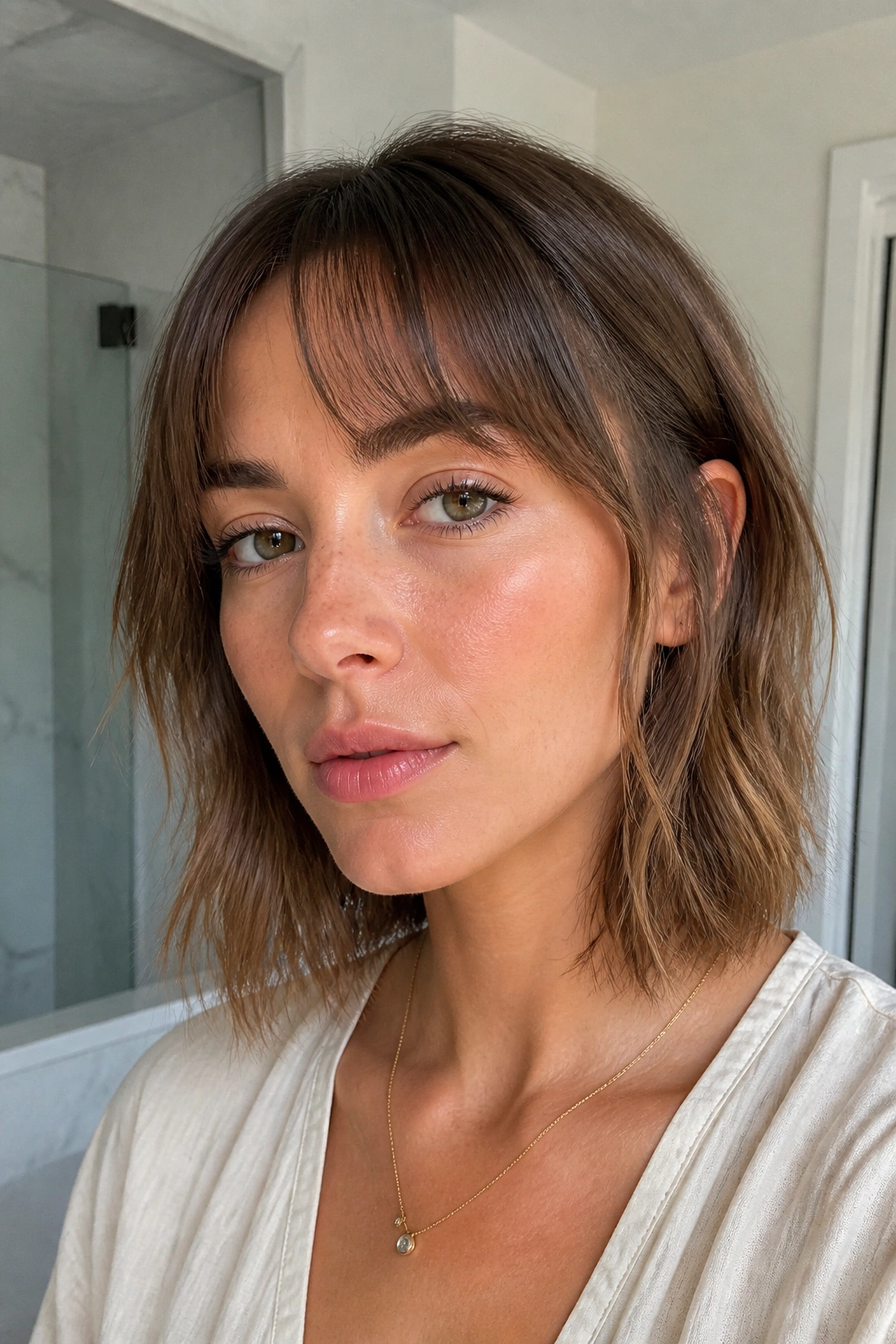
Temple-skimming fringe is one of those cuts that sounds subtle and ends up doing a lot. The shorter center keeps the focus forward, while the temple pieces add weight where fine hair usually needs it most.
It is especially good if your front hairline is sparse at the corners. Leaving a little more length there can cover that softness without making the whole fringe heavy. The result feels balanced and easy to move around.
Quick Notes
- Ask for the side pieces to reach the temple area
- Keep the center short enough to show some brow
- Use a light root spray at the front only
- Tuck one side behind the ear when you want more shape
This is also a nice option if you like to change your part. You can wear it slightly center-split, then shift it to the side on the next wash day and get a different read without changing the cut.
Small shift. Big payoff.
11. Grown-Out French Bangs
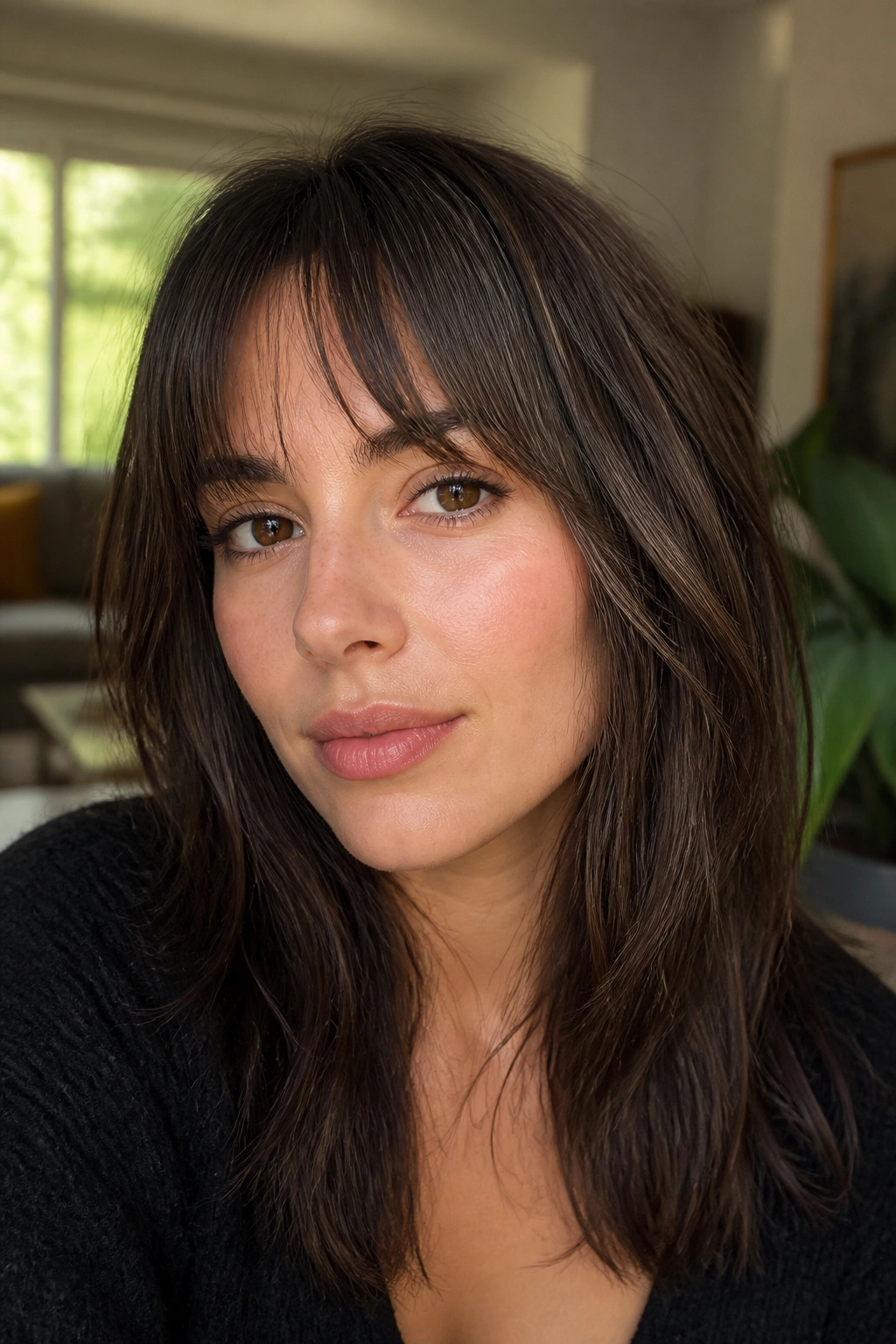
Grown-out French bangs are probably the most forgiving version for fine hair. They keep the softness of a fringe, but they let you move between shapes without that harsh line that some short cuts create as they grow.
The best part is how easily they blend. One day they look like bangs. A few weeks later they read more like face-framing pieces. That makes them ideal if you are nervous about committing to something sharp.
Fine hair often behaves better once it has a little length to hold together, and this style takes advantage of that. The longer corners help the fringe stay visible even on flatter days, while the center can sit just at or below the brows.
If you want low stress, start here. It is the version I’d trust on someone who wants bangs but not a constant appointment calendar.
12. Face-Framing Fringe That Blends Into Layers
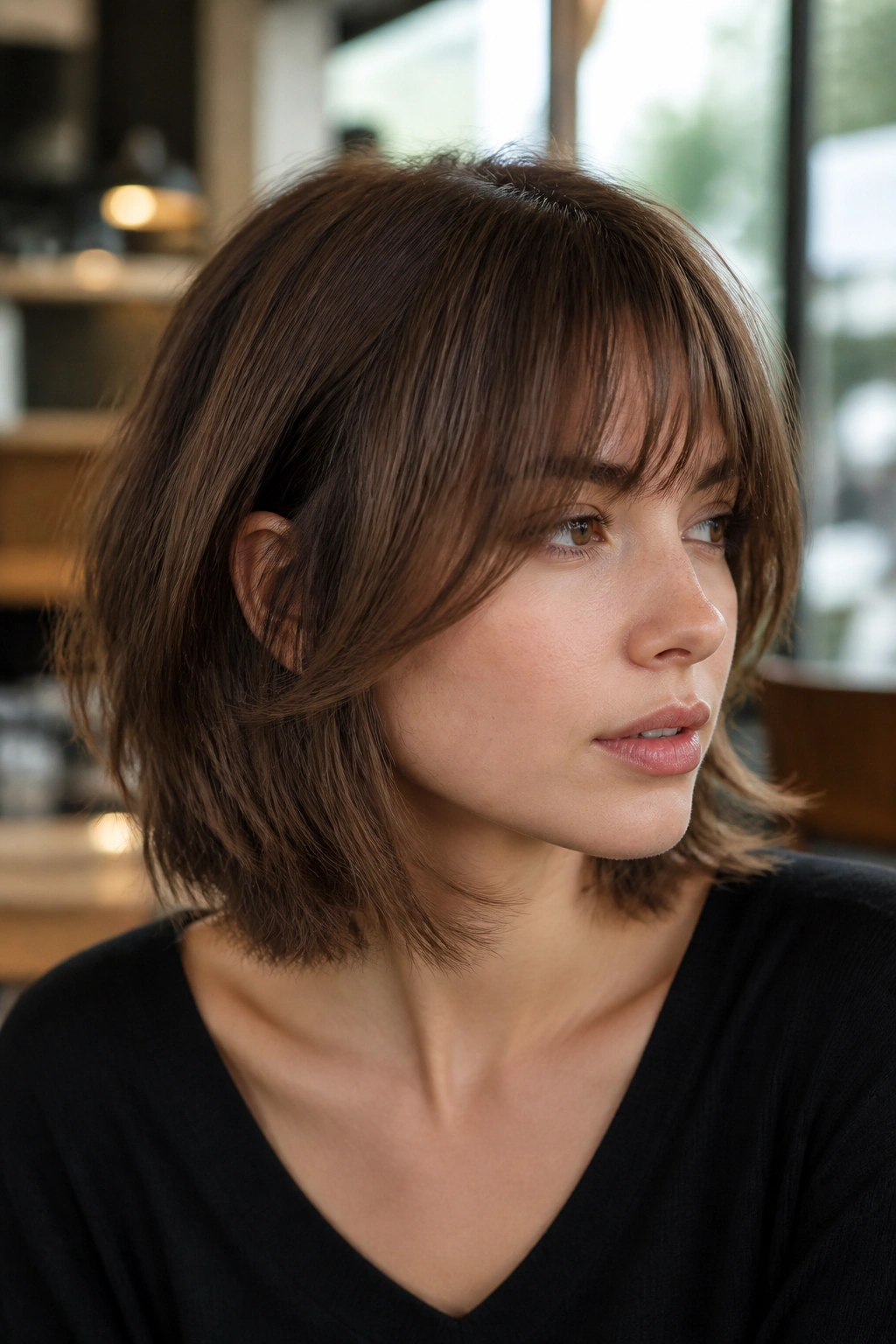
Unlike a strict bang line, a blended fringe melts into the rest of the haircut. That matters on fine hair because every hard edge gets exposed. A soft connection from the fringe into the layers keeps the cut from looking thin in one obvious strip across the forehead.
This style usually starts around the cheekbones and then drifts into the sides. The transition should feel smooth, almost like the bangs are part of the haircut’s front layers rather than a separate piece added at the last minute.
It is a strong pick if you wear your hair in a bob or lob. The fringe can sit short enough to matter, while the side layers give the illusion of more fullness around the face.
Ask your stylist to keep the shortest section dense and the transition long. That sentence alone changes a lot. Fine hair does not need more carving; it needs shape that stays together.
13. Short Blunt Fringe With Soft Ends

A short blunt fringe can look beautiful on fine hair when the ends are softened just enough to avoid a hard block. The blunt part gives you the visual weight. The soft ends keep it from feeling brittle.
This is a good move if your hair is naturally straight or only bends a little. The cut line shows clearly, which can help fine hair look fuller than it would in a heavily layered fringe. Still, the edge should not be razor-clean from side to side. That can start to look skinny after a few washes.
What To Tell Your Stylist
- Keep the center shortest, around brow level
- Let the edges soften rather than taper away
- Cut it dry so the fullness is easier to judge
- Trim every 4 to 6 weeks if you want the line to stay crisp
Use a dab of smoothing cream only on the last inch of the fringe. If you coat the root area, you’ll lose the lift that gives this style its shape.
14. Deep Side-Part Bangs
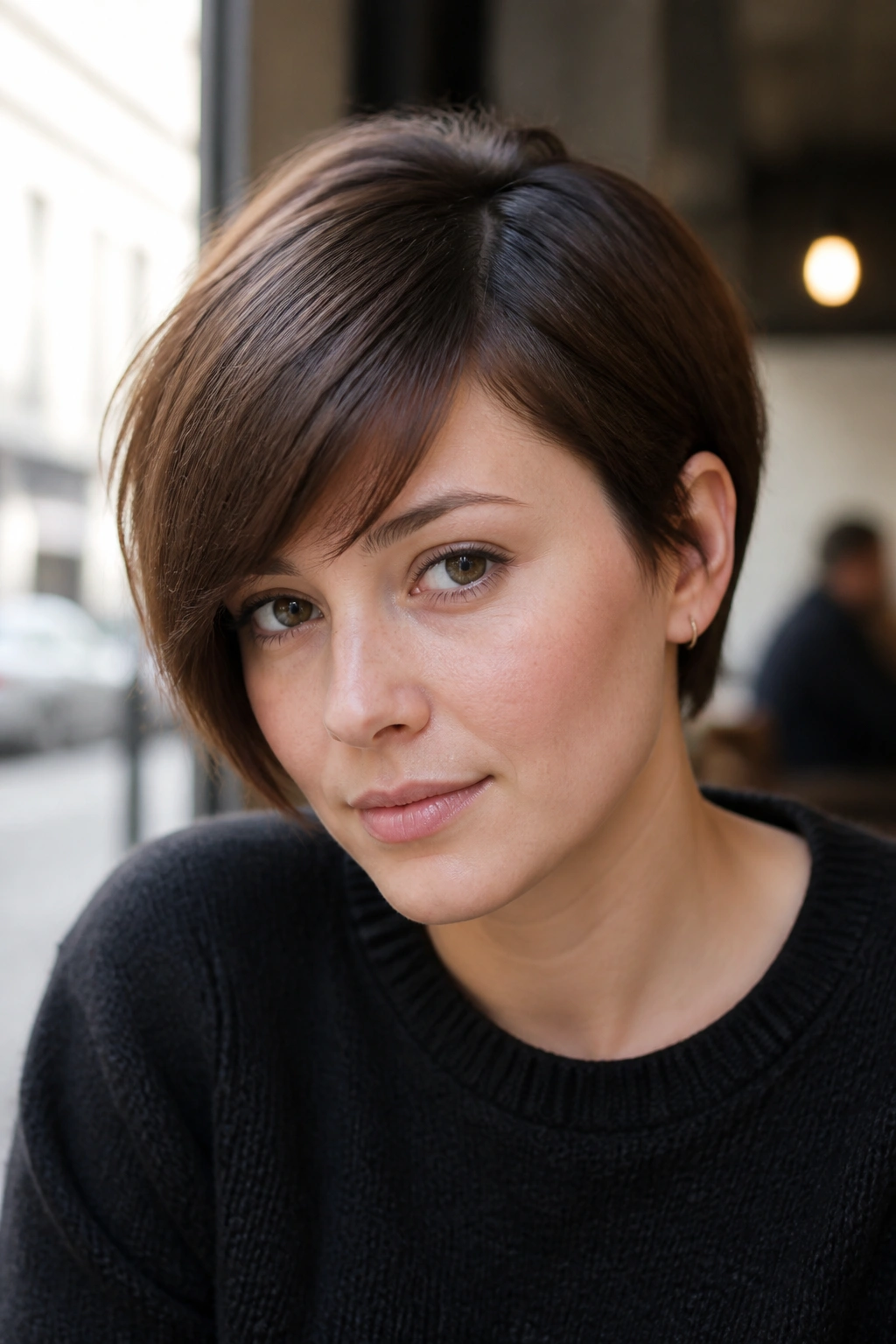
A deep side part is a sneaky fix for fine hair that refuses to sit still. It gives the fringe direction, and direction is half the battle when the front keeps splitting open.
This version is especially useful if one side of your hairline has more density than the other. Instead of fighting that, you lean into it. The heavier side becomes the anchor, and the lighter side gets swept across in a soft arc.
Blow the fringe in the opposite direction first. That sounds odd, but it trains the hair to lift at the root and then fall where you want it. A quick clip while it cools can help too.
If you hate fuss, this is a strong compromise between having bangs and having access to your forehead on demand. It also grows out with less of a shock than a blunt center fringe.
15. Curved-Under Blowout Bangs
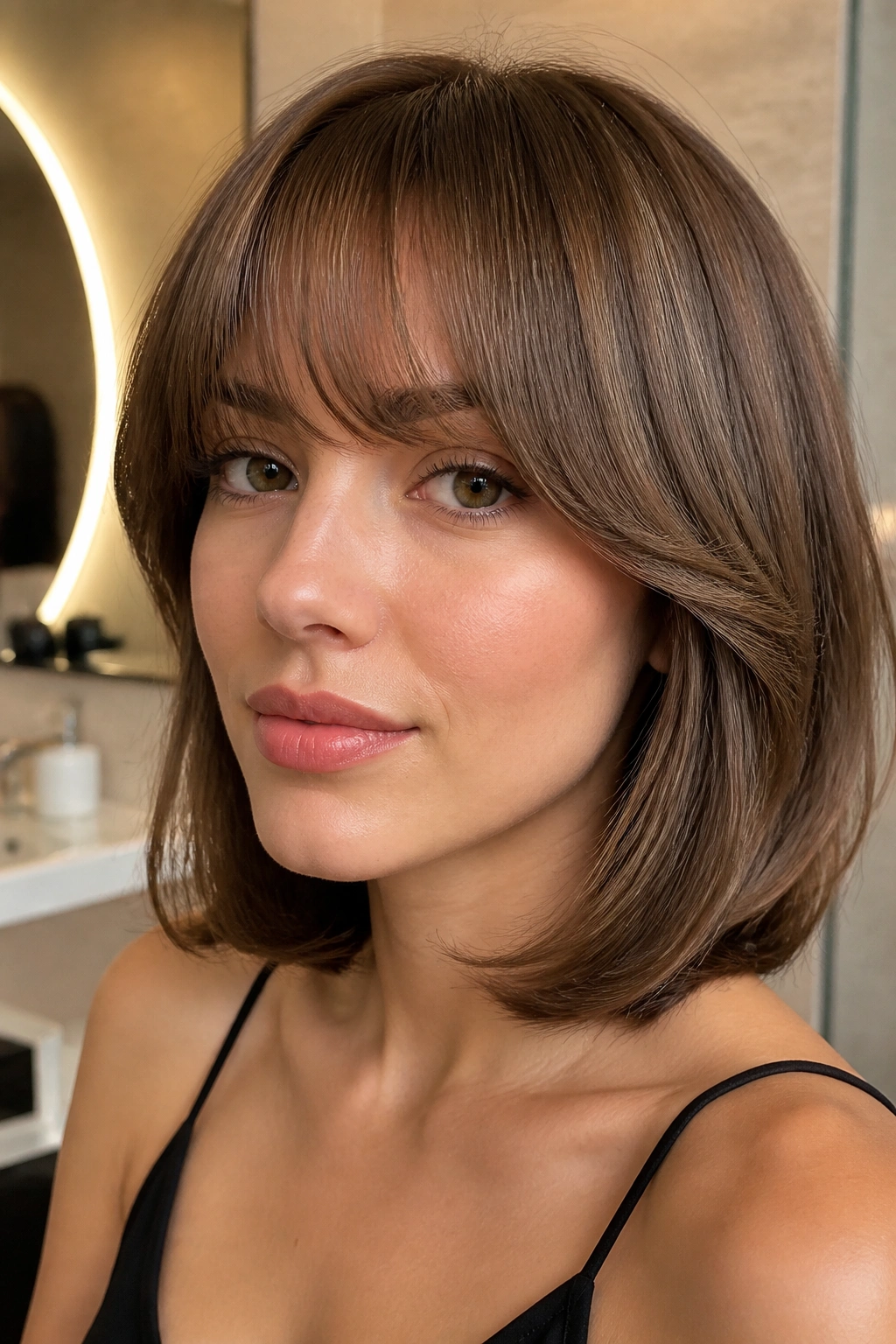
Curved-under bangs give fine hair a shape that feels polished without looking stiff. The bend underneath the ends adds a little weight, and that extra movement can make a small fringe look more substantial.
How To Style It
Use a 1-inch round brush and roll the fringe under while you dry it on medium heat. Keep the nozzle pointed down the shaft, not blasting side to side. Once the hair is dry, leave the brush in place for 5 to 10 seconds so the shape cools and holds.
This style works best when the bangs are cut with a touch of length at the corners. Too short, and the curve pops up too much. Too long, and it starts to sit flat against the face.
It is a good choice for anyone who wants a neat front section without losing softness. The look is tidy. Not fussy. There’s a difference.
16. Shaggy French Fringe

If you like a little movement at the front, a shaggy fringe can be a smart match for fine hair. The cut borrows energy from the surrounding layers, so the bangs do not have to carry the whole look on their own.
A shaggy version should still have shape. That matters. You want pieces that separate lightly, not ends that look chewed up. Fine hair can tip into scraggly fast if the texturizing gets too aggressive.
Best Characteristics
- Light layer support around the temples
- Soft separation through the center
- A fringe that can air-dry into shape
- Enough length to tuck or sweep
This is a good option if you already wear a layered cut and want the bangs to feel like part of the same story. It looks best with a bit of bend and a little mess. Not chaos. Just enough looseness to keep it alive.
17. See-Through Fringe
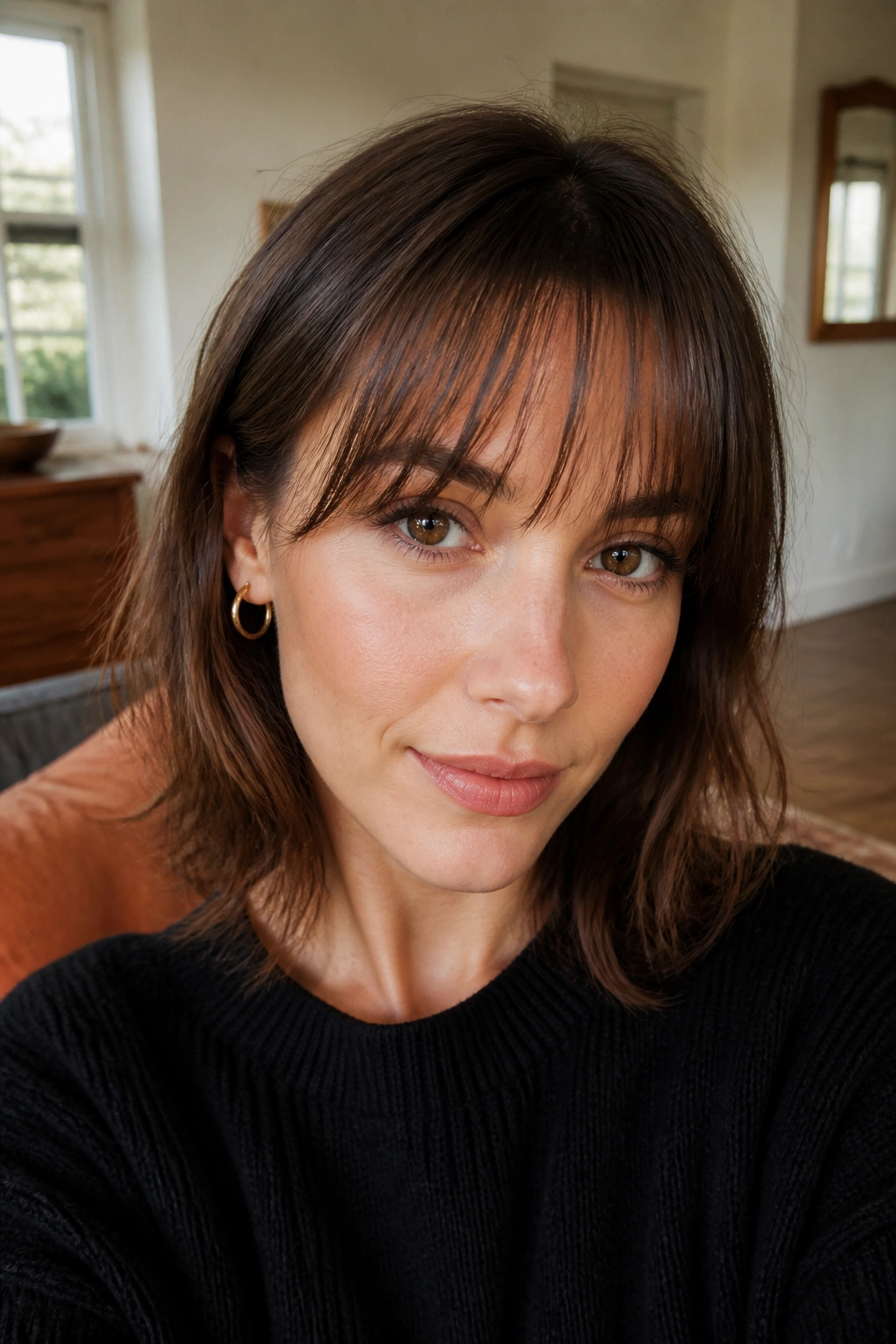
A see-through fringe is exactly what it sounds like: light enough that some forehead shows through, but deliberate enough that it still reads as a fringe. On fine hair, that can be a feature, not a flaw.
The style works because it accepts translucency instead of fighting it. When the density is soft and the ends are tidy, the fringe looks airy and modern. If it gets too sparse, though, the effect falls apart fast, so this one needs a careful hand.
It suits straight to softly wavy hair best, since those textures keep the pieces grouped together just enough. A dab of lightweight mousse before drying can help the strands stay connected without becoming stiff.
This is not the fringe for someone who wants a heavy front. It is for someone who likes a little skin, a little movement, and a cut that breathes.
18. Asymmetrical Fringe
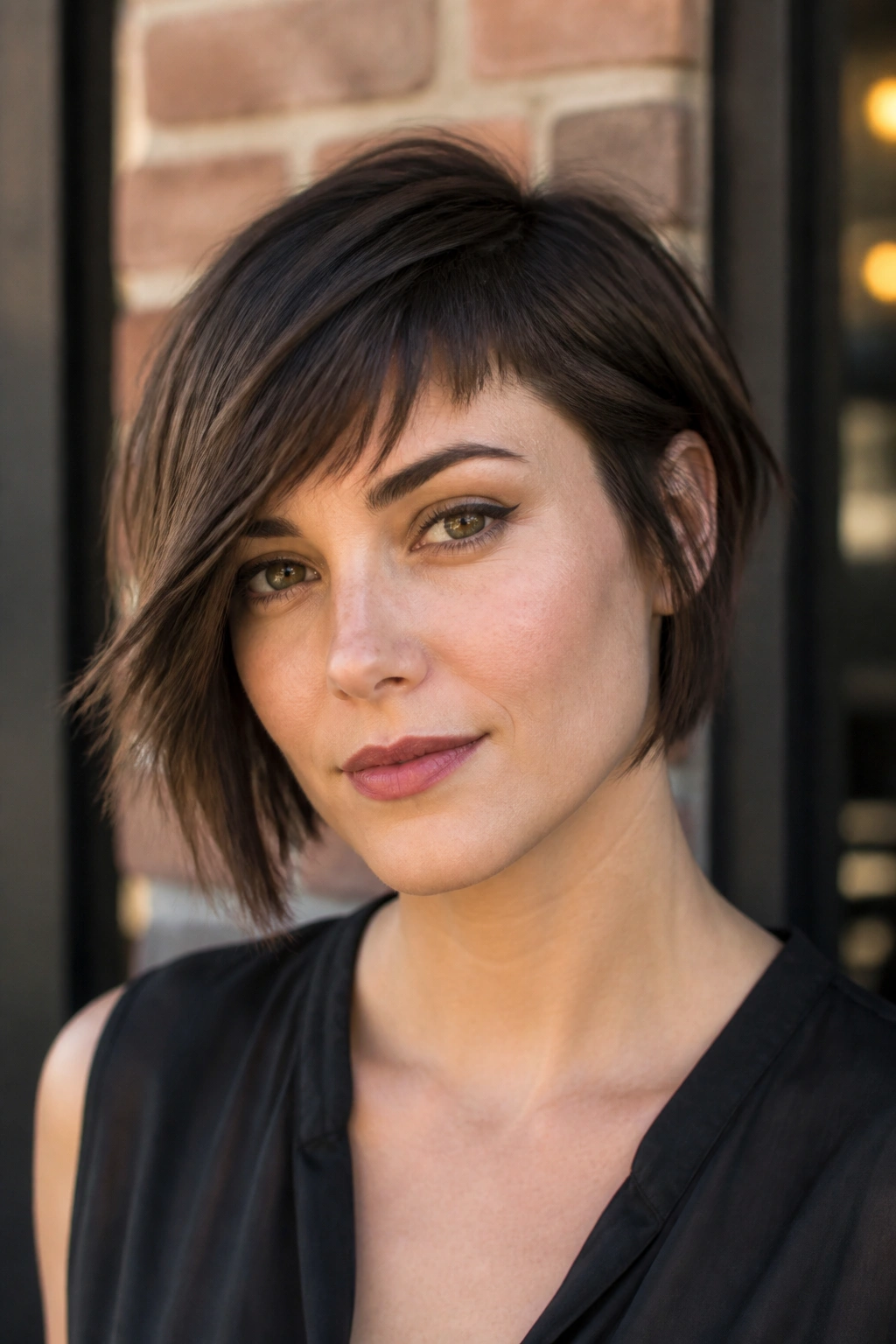
An asymmetrical fringe can be a lifesaver when fine hair grows unevenly. One side carries a little more length, the other side stays shorter, and the imbalance becomes part of the design instead of a problem to hide.
That small difference gives the front more personality than a perfectly centered cut. It also helps distract from low-density spots or a stubborn cowlick, which is useful if your hairline never behaves the same way twice.
This look works best when the longer side lands somewhere between the cheekbone and temple. If it gets much longer, the shape starts to read as side bangs instead of a French fringe. Fine hair can lose its outline quickly, so keep the asymmetry subtle.
It is a good choice for anyone who wants a fringe with movement and a little edge, but not a full dramatic crop. Messy on purpose. That’s the feeling.
19. Glasses-Friendly Short Bangs

Glasses change the whole conversation. A fringe that looks perfect on bare skin can end up bumping into your frames, sitting in the lens line, or sliding into the bridge by lunch.
That is why glasses-friendly short bangs usually need a touch more precision around the center. Keep them just above the frame line if you want the front clear, or let them graze the top of the glasses if you want a softer overlap. Both can work.
Good Things To Check
- The fringe should not hit the bridge of your glasses
- The sides should sit past the frame corners
- A light, flexible hold spray is enough
- The cut should still move when you blink and smile
I like this option for readers who wear frames every day and don’t want to baby their bangs. It gives you the French feel without constant brushing. Which, honestly, is half the appeal.
20. Bob-And-Bangs Pairing

A bob with short French bangs is one of the cleanest ways to make fine hair look fuller. The blunt or softly curved line at the bottom of the bob gives the fringe a visual partner, and the whole haircut feels more solid because the weight is distributed instead of scattered.
The front section does not have to be heavy. It just needs enough shape to echo the bob’s edge. That echo matters. Fine hair often looks better in a haircut that has one clear idea rather than three competing ones.
A chin-length bob with a short, soft fringe is especially good if your hair tends to lie flat at the back but still has a little body near the face. It creates a better frame and makes the front feel intentional.
If you’ve been thinking about bangs but worry they’ll look too thin on their own, pairing them with a bob is a smart move.
21. Pixie-Length French Fringe
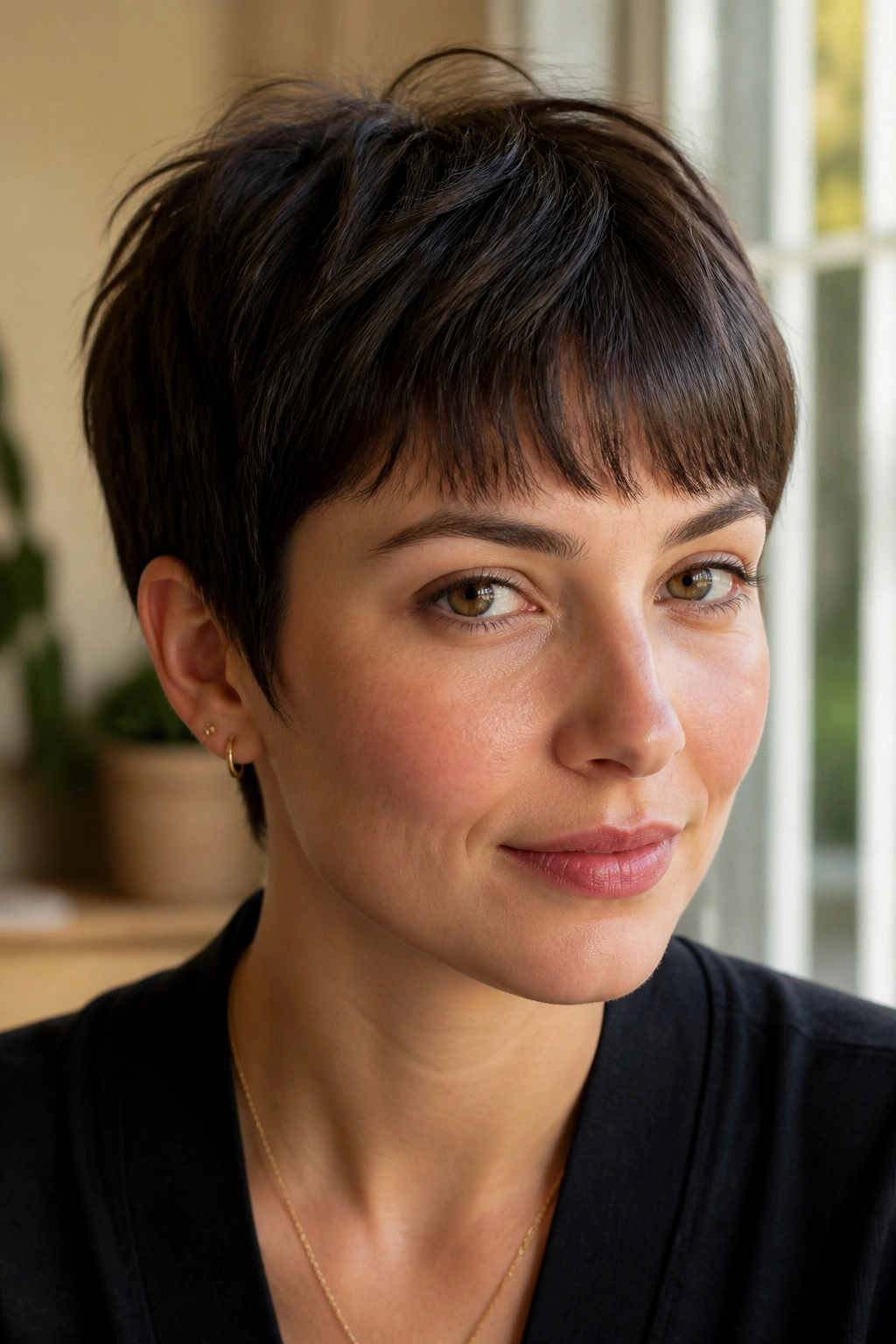
Pixie-length French bangs are short, yes, but they do not have to feel harsh. On fine hair, the best version keeps enough width across the front to avoid that tiny, pinched look that some ultra-short fringes get.
How To Pull It Off
Dry the fringe forward with a small brush, then use your fingertips to break the line just a little. That tiny separation helps the cut stay soft. A root clip at the crown while the fringe cools can also give the front a little lift, which matters when the hair is short and close to the forehead.
This shape is best if you like seeing your brows and want the bangs to act more like a frame than a curtain. It works well with sharp cheekbones, a short bob, or a cropped cut.
Short does not mean severe. If the edge is gentle, the whole thing can read playful instead.
22. Wavy Fine-Hair Fringe
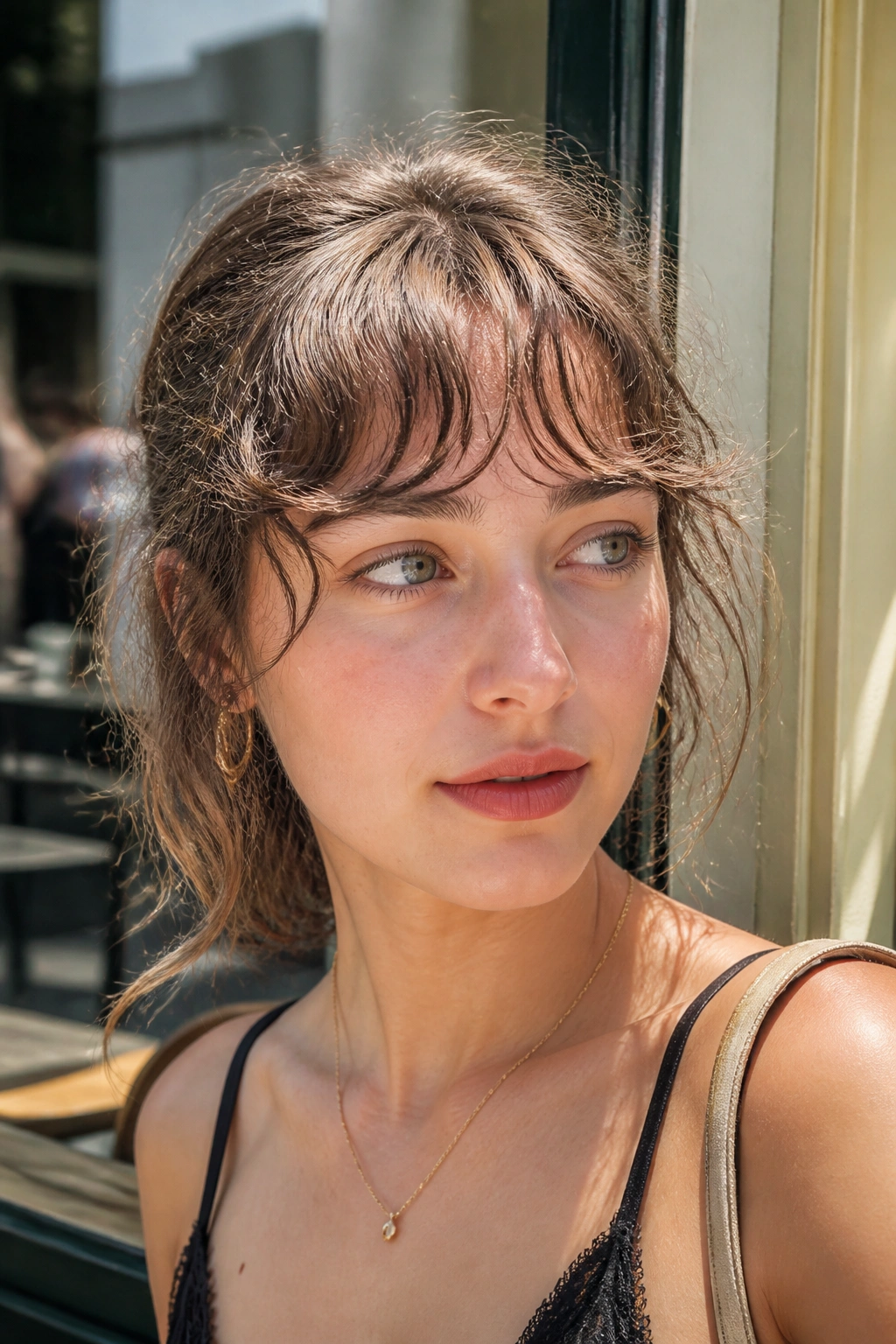
Fine hair with a wave pattern needs a different approach. A fringe cut too straight can spring apart, while one cut too short can shrink up and vanish. A wavy French fringe works when the shape respects the bend already in the hair.
Cut it dry if possible. That lets the stylist see where the wave actually lands, which saves you from a bang that looks one length when wet and another length once it dries. You want the fringe to sit in the wave, not fight it.
Good Habits For This Shape
- Scrunch lightly with a towel, don’t rub
- Use a small round brush only at the roots
- Let the ends air-dry if they already curve well
- Trim in small increments, around 1/4 inch at a time
This is one of those cuts that looks easiest when it’s been handled with restraint. The wave does the work if you stop trying to flatten it into obedience.
23. Polished Straight Fringe

A polished straight fringe can look striking on fine hair when the cut is precise and the styling stays clean. The danger is heaviness. The win is a neat line that makes the hair appear denser than it is.
This version suits naturally sleek hair best, especially if your strands fall smooth without much effort. A light heat protectant and a low-temp flat iron are enough to keep it tidy. No need to crank the heat and fry the ends into static.
The fringe should stay soft at the edges, even if the line looks crisp from a distance. That small softness keeps it from reading as flat cardboard. Fine hair does not need a lot of product here. It needs control.
If you love a neat face frame and don’t mind regular trims, this is a strong, grown-up option.
24. Tucked-Back Grow-Out Fringe
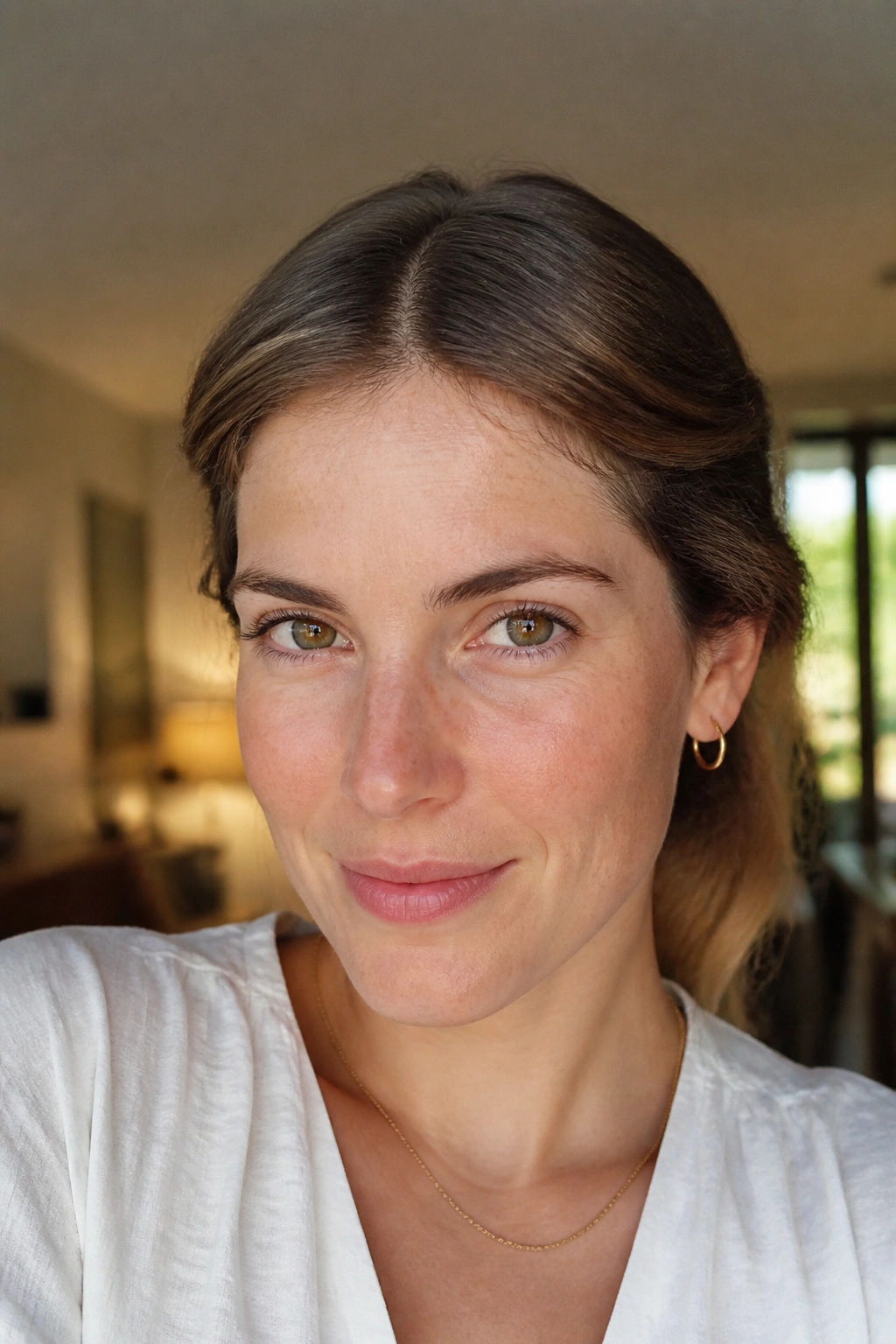
A tucked-back grow-out fringe is for the in-between stage, which is where a lot of people live. The bangs are too short to ignore, too long to cut again, and fine hair tends to show that awkward period fast.
The good news: you can make that stage look deliberate. A center part, a small side tuck, or a couple of flat pins at the temples can keep the fringe off your face while the shape softens. If the front is dry and a little bendy, it often looks better after an extra day of wear anyway.
This is also a useful look if you want to test whether shorter French bangs suit you before committing to more maintenance. Fine hair grows in a way that can change the whole mood of the cut in a few weeks, so having a grow-out plan helps.
Not glamorous. Very practical. Which is often what matters.
25. The Softest Short French Bangs Formula For Fine Hair
If you want one safe salon ask, make it this: keep the center short, keep the corners longer, and keep the ends soft enough to move. That formula gives fine hair a fringe shape without stripping away the density it needs to look full.
What To Say At The Chair
- “I want short French bangs, not a heavy blunt line.”
- “Keep the center around brow level.”
- “Leave the temples longer so I can sweep them.”
- “Please point-cut the ends lightly instead of thinning them out.”
That last line matters more than people think. Fine hair can look wispy fast if the stylist removes too much from the inside of the fringe. A soft edge with enough perimeter usually wears better between trims.
This is the version I’d choose for someone who wants the French feel, a little forehead showing, and a fringe that still behaves when the hair is not in a perfect mood. Clean, soft, and easier to live with than it sounds.
