



Round faces do not need hiding. They need angles.
That is why short fringe hairstyles for round faces can look so good when the cut is planned with a little care. The right fringe can pull the eye upward, break up width across the cheeks, and make the whole cut feel sharper. The wrong one does the opposite. A thick, straight band that starts too wide at the temples can make a face look fuller than it is. A softer, narrower, or diagonally cut fringe usually works better.
Length matters, too. On a round face, a short cut only works if something in the shape creates movement or vertical line — crown height, longer temple pieces, a side part, or a fringe that sits a touch lighter than the rest of the cut. Texture helps. So does restraint. I’ve seen too many bangs ruined by cutting them too heavy on day one, then trying to “fix” them with styling cream and hope. Doesn’t work.
Short hair can still feel soft, feminine, sharp, or a little undone. It just needs the right balance.
1. French Bob with a Soft Micro Fringe
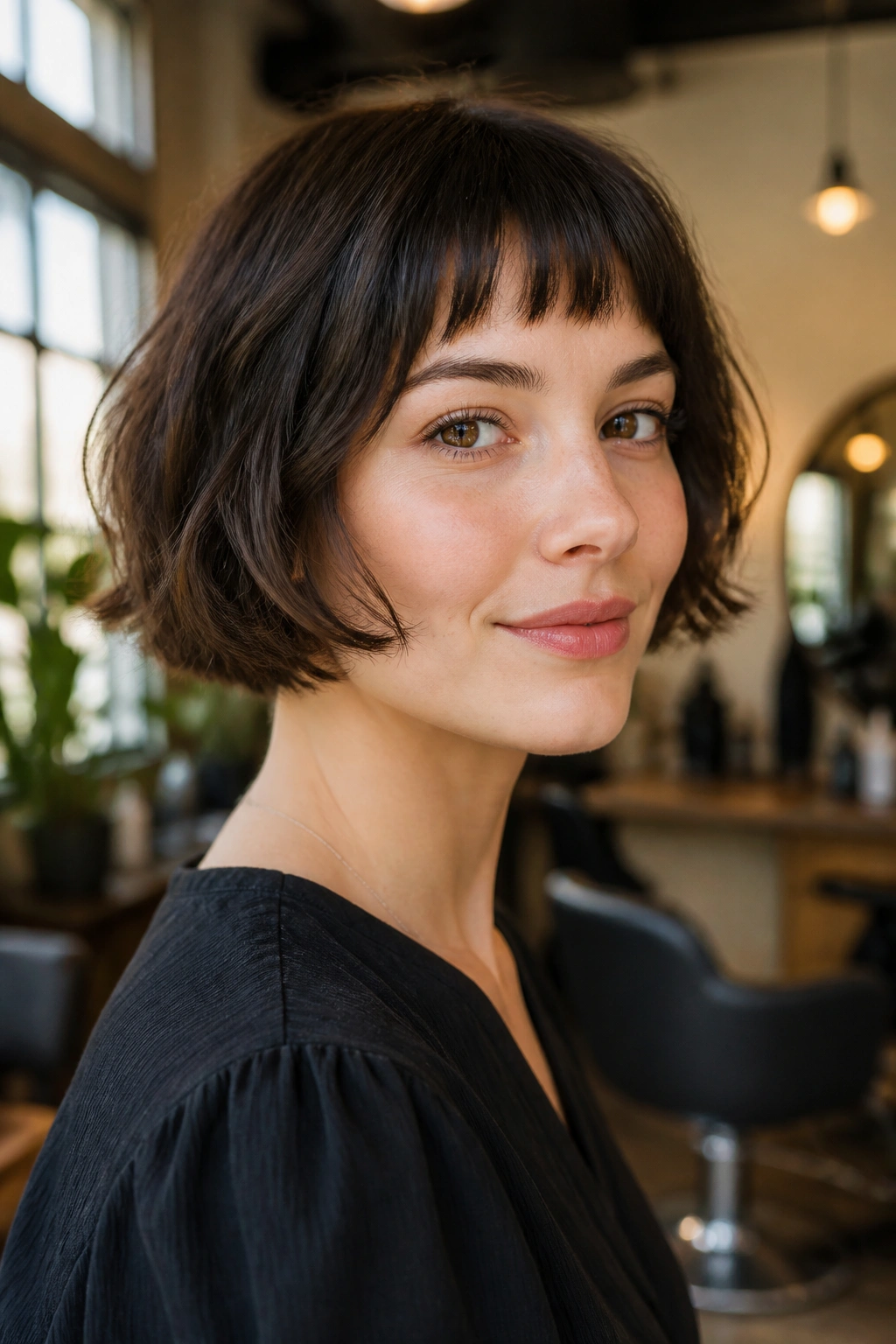
A French bob gets away with a lot because it knows where to stop. On a round face, that clean line at the cheekbone or just below the ear creates shape fast, and the soft micro fringe keeps the forehead from feeling boxed in.
Why the Fringe Works Here
The trick is keeping the fringe narrow, airy, and slightly broken at the edge. It should look like it was cut for movement, not pasted on as a solid curtain. I like this shape when the hair has a little bend or natural wave, because the texture softens the jawline and keeps the cut from feeling too stiff.
- Ask for the fringe to sit about 1/2 inch above the brows if you want a true micro look.
- Keep the sides of the bob grazing the cheekbone, not the widest part of the cheeks.
- Style with a small round brush and a blow-dryer nozzle so the fringe bends gently, not pin-straight.
Best for: fine to medium hair that can hold a little shape without puffing out.
Watch out for: a fringe that’s too wide across the temples. That’s the part that can make a round face look broader.
2. Textured Pixie with Wispy Bangs
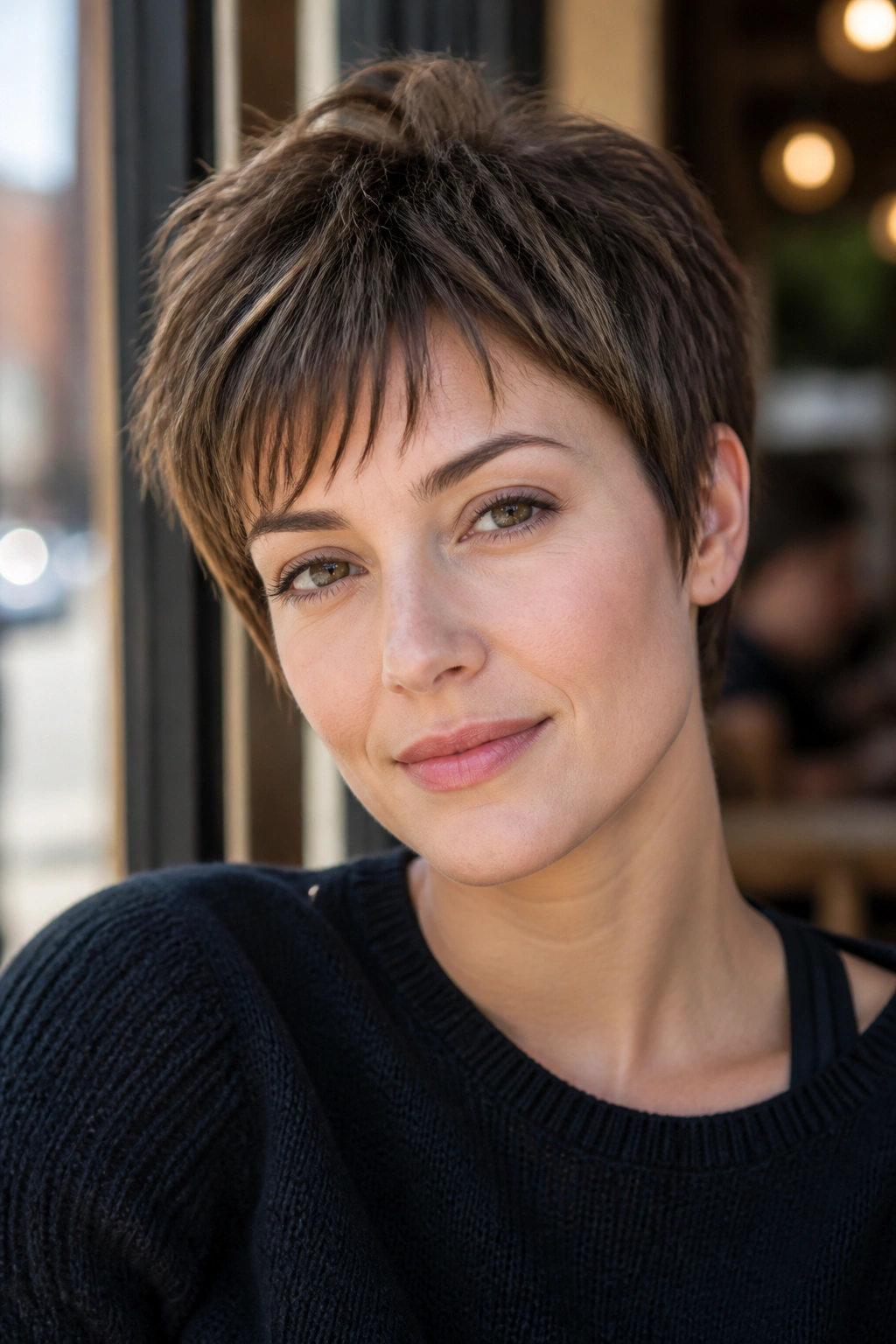
Why do some pixies make a round face look sharper while others make it look fuller? Texture. Plain and simple. A pixie with wispy bangs works because it breaks the shape into little pieces instead of drawing one heavy line across the forehead.
The best version keeps a bit of lift at the crown and softness around the ears. That gives the face more vertical space. The bangs should skim, not sit like a shelf. If your hair is thick, ask for internal texture through the top so the cut can move instead of ballooning out.
This is one of those cuts that looks better when it’s not too polished. Rub a pea-sized amount of matte paste between your fingers and pinch the bangs in small sections. A little mess is the point. Too much shine can make every strand stick together, and then the cut loses the broken, flattering look.
3. Chin-Length Bob with Eyebrow-Grazing Fringe
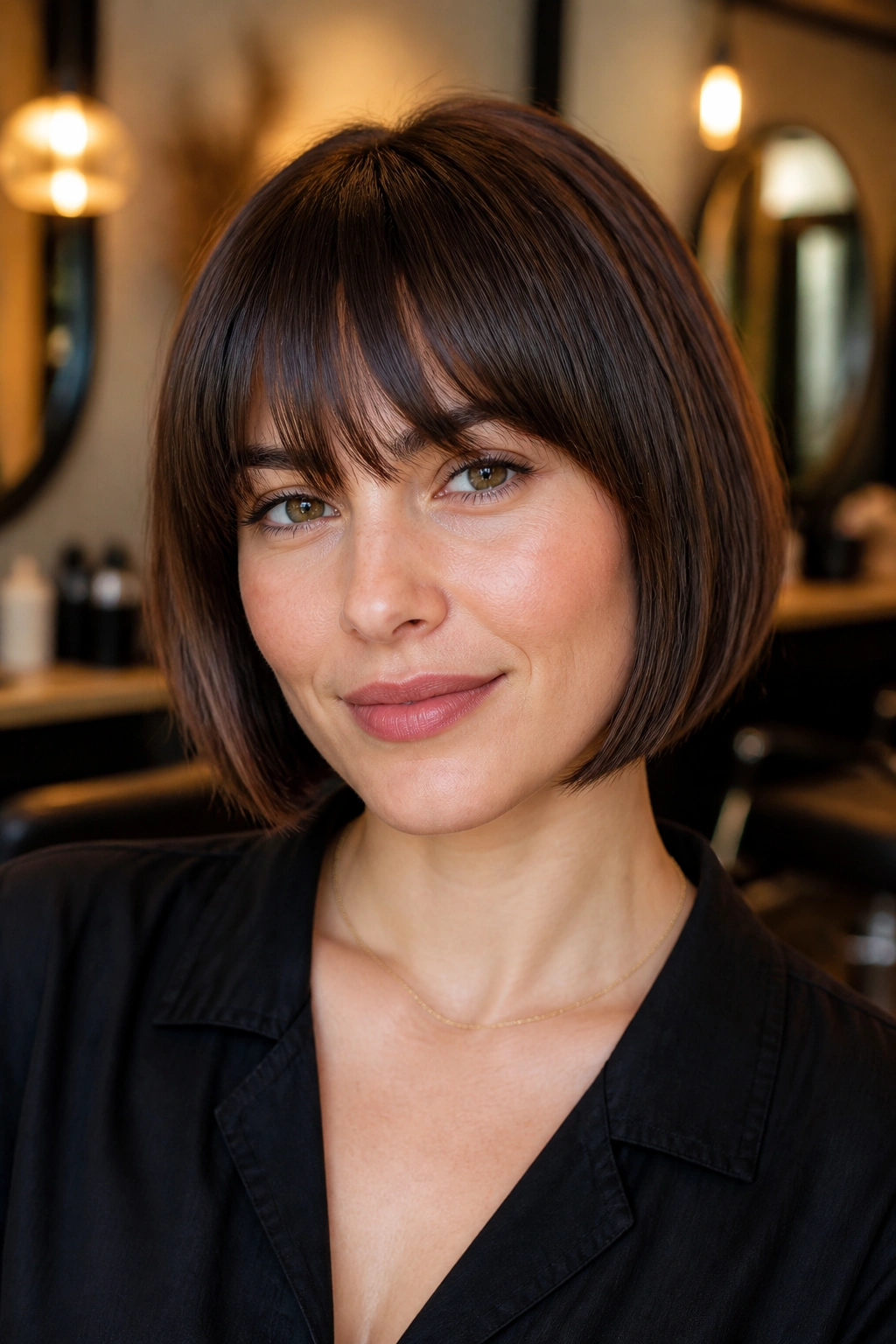
Picture a bob that lands right at the chin, with a fringe that touches the brows and lifts slightly in the center. That shape can work beautifully on a round face because it creates a strong lower edge without widening the cheeks.
What Makes It Different
This bob depends on precision. If the ends are blunt and the fringe is too thick, the cut turns boxy fast. Keep the line clean but not severe. I prefer a soft bevel at the ends — just enough bend to avoid a shelf effect. The fringe should sit close to the brow but not crush it.
A flat iron can help if your hair is very straight, but use it lightly. One slow pass at a low to medium setting is enough. You want the fringe to graze the forehead, not clamp down on it.
This style is especially good if you like a classic look with a little edge. It feels neat. It also photographs with a clean outline, which is helpful when your face shape already has a naturally rounded curve.
4. Side-Swept Pixie Cut with Long Fringe
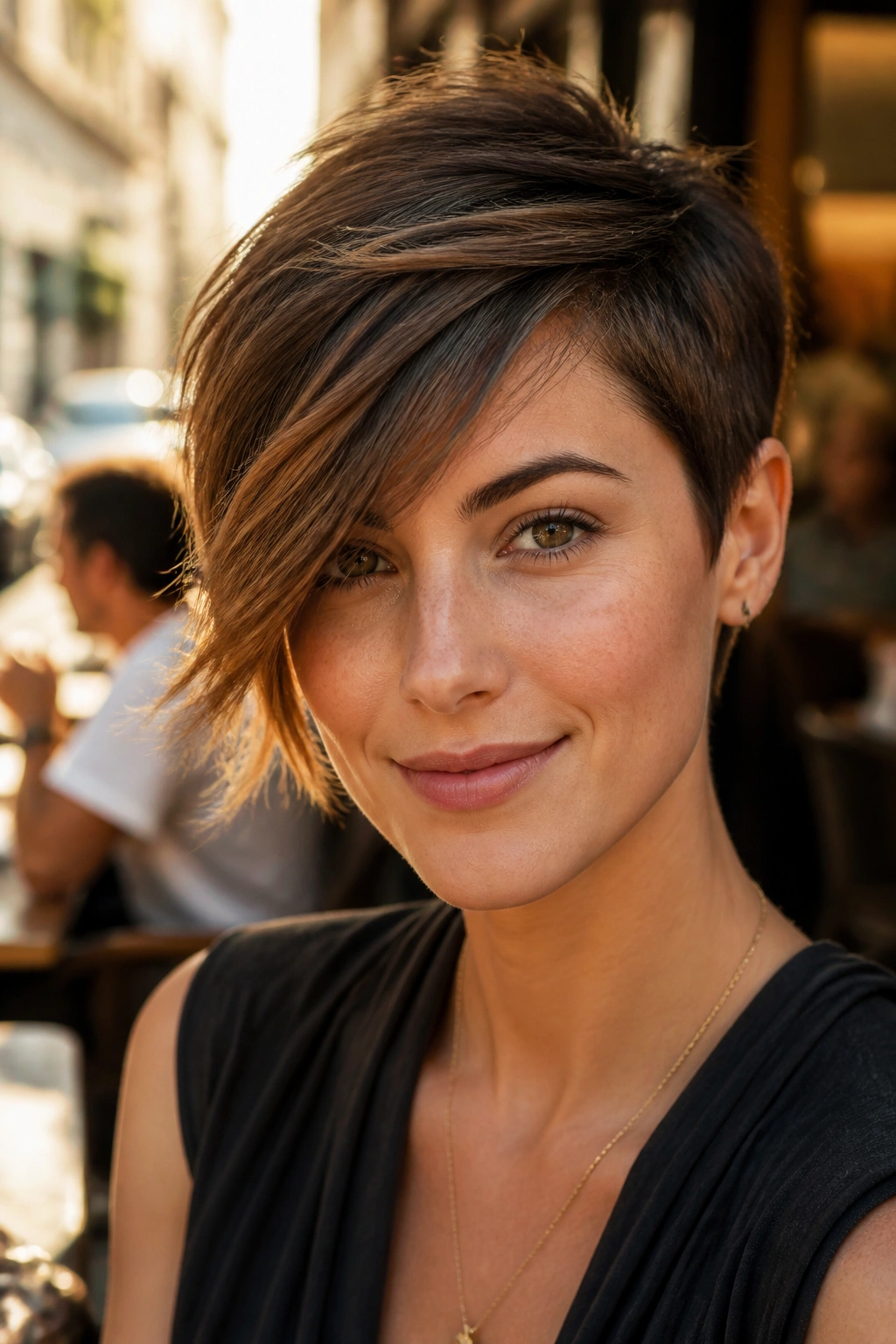
A side-swept pixie is one of the easiest ways to make a round face look longer without giving up short hair. The diagonal fringe changes everything. It draws the eye across the face instead of straight across it, which is exactly the move you want.
The longer fringe should start near the deep side part and skim down toward one cheekbone. Don’t cut it so long that it flops into your eyes all day, though. There’s a sweet spot between dramatic and annoying. Usually that means the longest point lands around the top of the cheekbone or just below the brow.
For styling, blow-dry the fringe in the opposite direction first, then sweep it over. That little trick gives the hair memory and stops it from splitting too soon. Works especially well on straight or slightly wavy hair. Very curly hair needs a different approach, and I’ll get to that later.
5. Shaggy Bob with Piecey Fringe
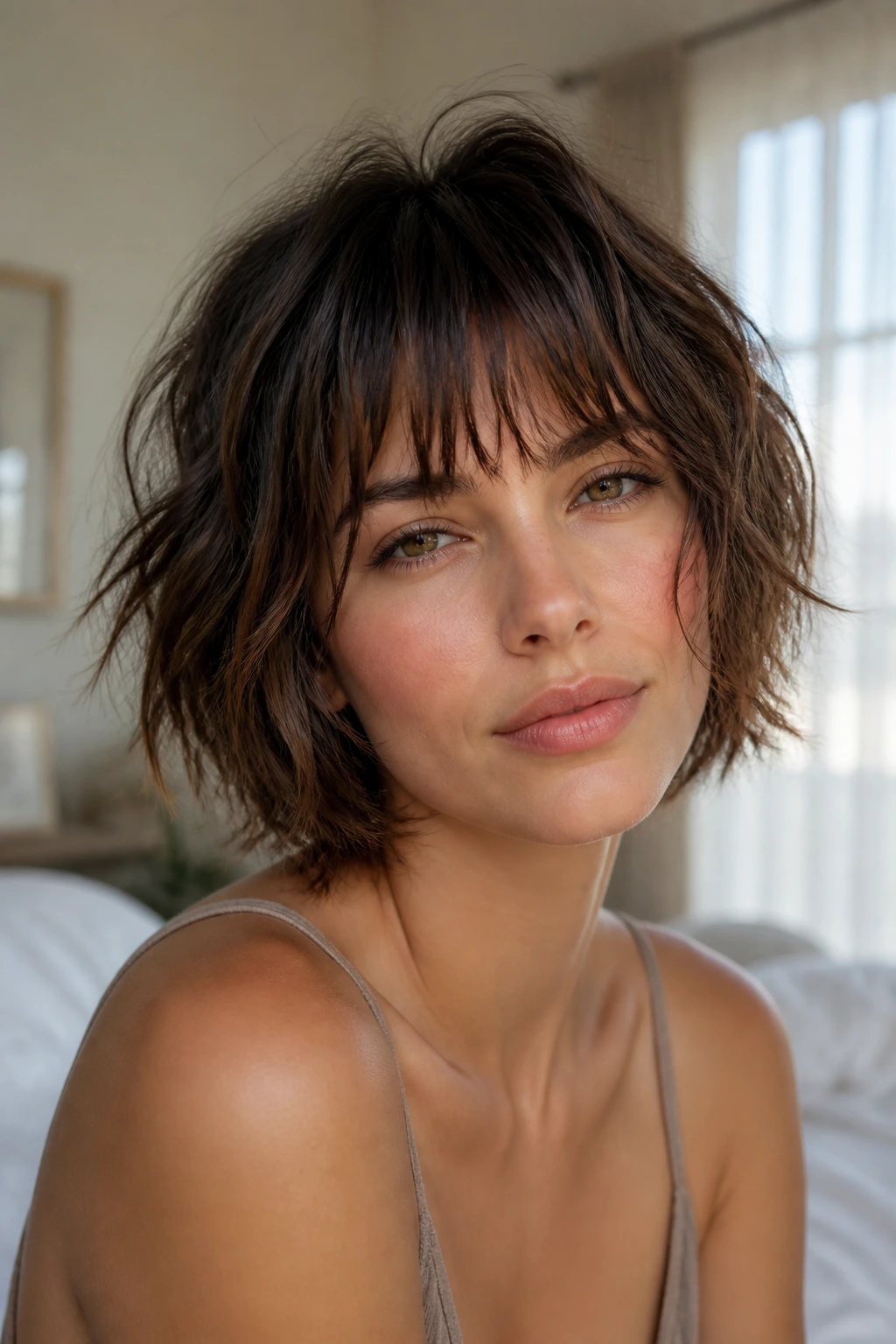
A shaggy bob is the antidote to anything too tidy. On a round face, all those broken layers keep the shape from feeling wide, especially when the fringe is cut into small, separated pieces instead of one solid line.
The Texture Map
Think of this cut in three parts: shorter crown layers, cheekbone-skimming front pieces, and a fringe that falls in bits. That mix gives the face some lift up top and some narrowing at the sides. It also means you can air-dry without the cut losing its shape.
- Use a lightweight mousse at the roots.
- Scrunch the fringe while it’s damp so it dries with separation.
- Add texture spray only at the mid-lengths and ends; too much at the fringe makes it stiff.
This style shines on hair that has a little natural wave or body. Fine hair can wear it, too, but it may need a root spray or a quick pass with a diffuser. The payoff is a cut that feels modern without trying too hard.
6. Asymmetrical Bob with a Long Fringe
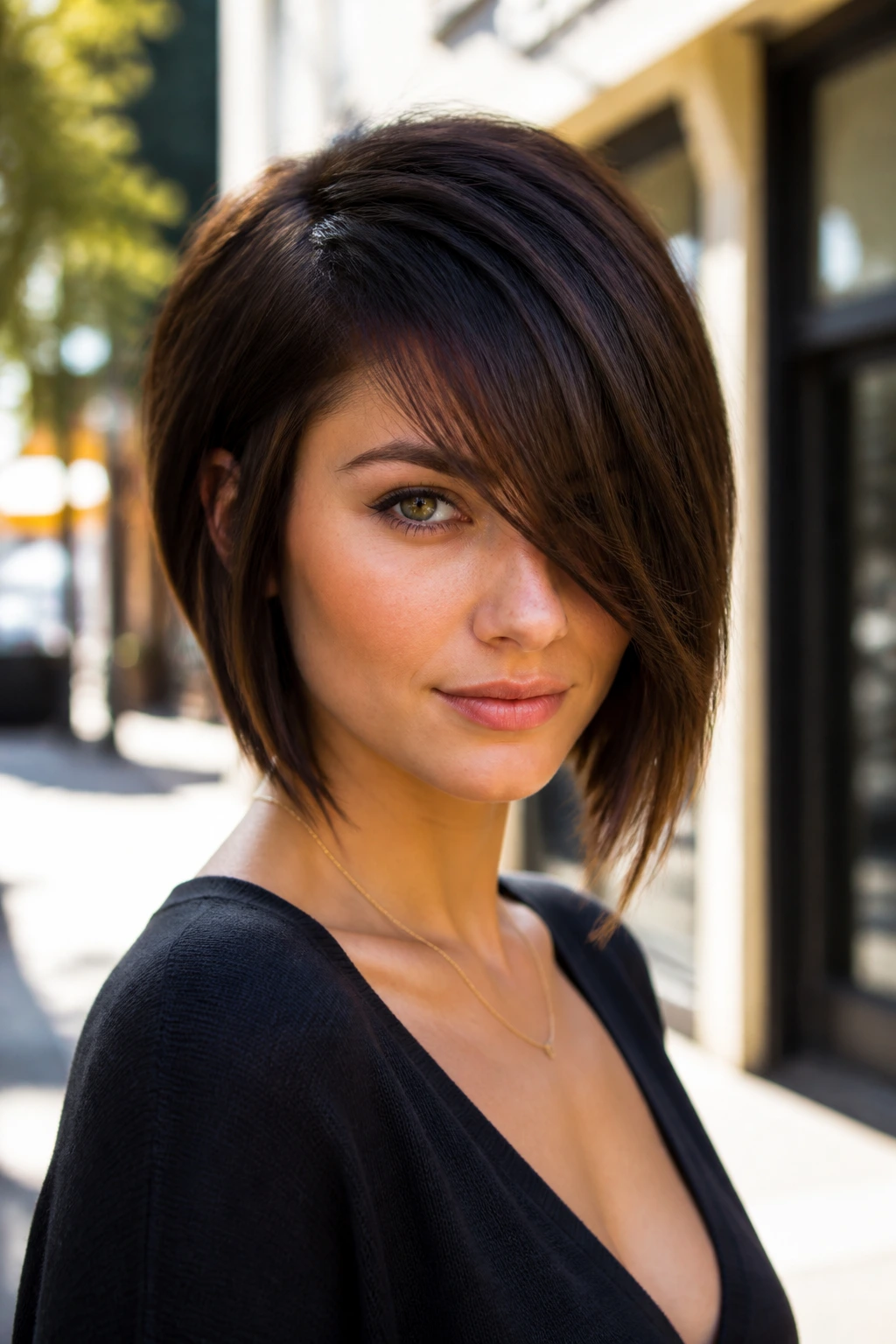
Sometimes the best thing you can do for a round face is make one side longer. Not dramatically longer — just enough to break the symmetry. An asymmetrical bob does that cleanly, and a long fringe helps pull the whole shape downward.
This is a sharper, more graphic look. The longer side adds a vertical line near the jaw, while the shorter side keeps the cut from feeling heavy. The fringe should follow the same logic: long enough to sweep across, short enough to keep movement. If it all ends at the same level, the cut can feel flat.
I like this style on straight hair because the line shows up clearly. On wavy hair, the asymmetry softens a bit, which can be lovely if you want less severity. Ask your stylist to keep the perimeter clean and the internal layers subtle. Too many layers will blur the asymmetry, and that defeats the purpose.
7. Bixie with Feathered Bangs
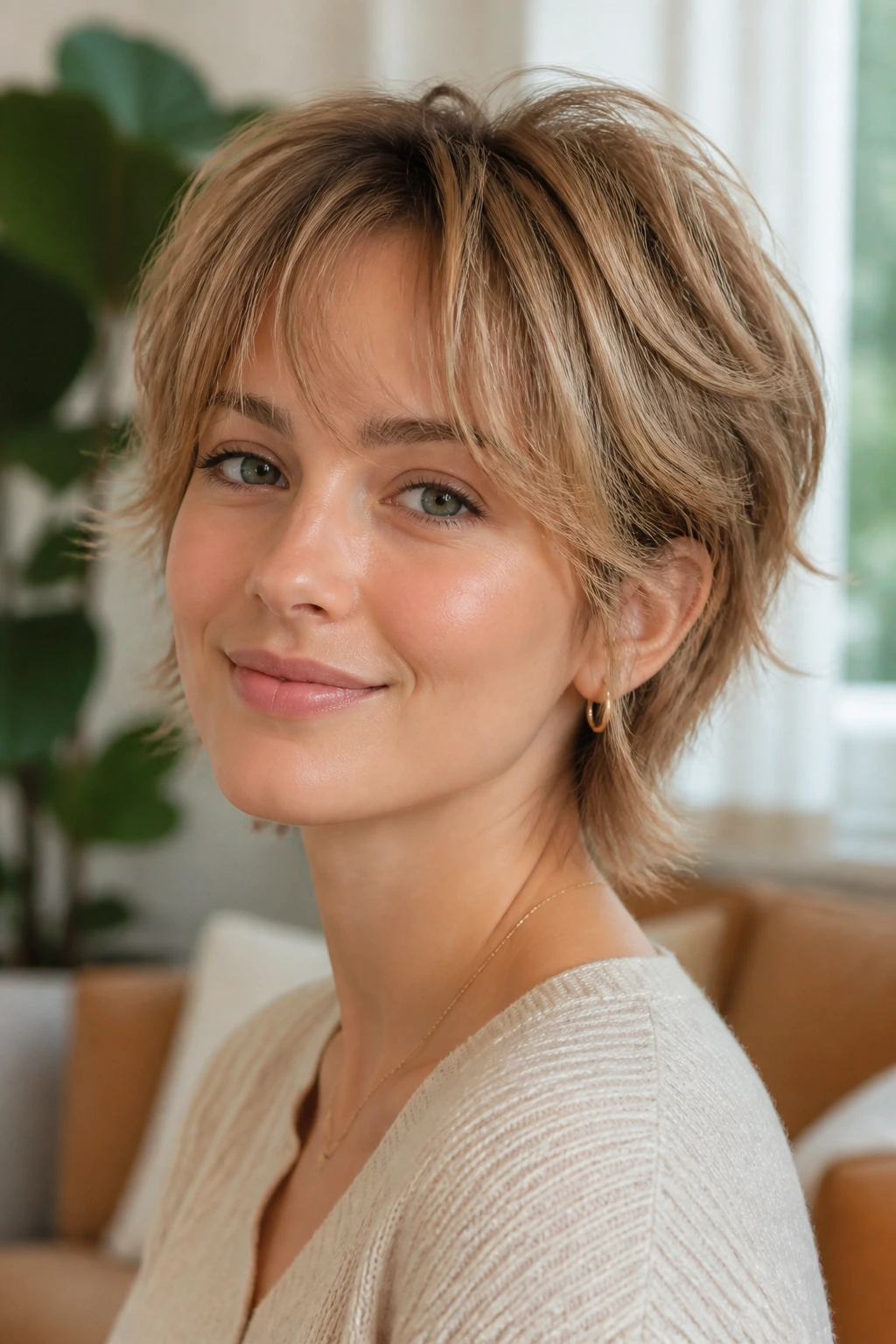
A bixie sits in that useful middle zone between a bob and a pixie. It gives you short hair, but with a little more length around the face. On a round face, that extra length matters. It creates a narrow frame instead of a circular one.
Why It Flatters a Rounder Face Shape
The feathered bangs keep the front light, which stops the cut from feeling heavy over the forehead. They also let the brow peek through. That tiny gap makes a bigger difference than people expect.
A bixie works best when the top layers are cut with movement, not stacked like a helmet. The back can be tighter, the sides can skim the ear, and the fringe can fall in soft feathers that separate as you style them. If you want a low-effort morning routine, this is one of the better short fringe hairstyles for round faces.
Use a cream-paste hybrid if your hair frizzes easily. Pure paste can feel dry; pure cream can go limp. You want a touch of control and a touch of slip. That balance matters more here than people admit.
8. Curly Crop with Soft Curly Fringe
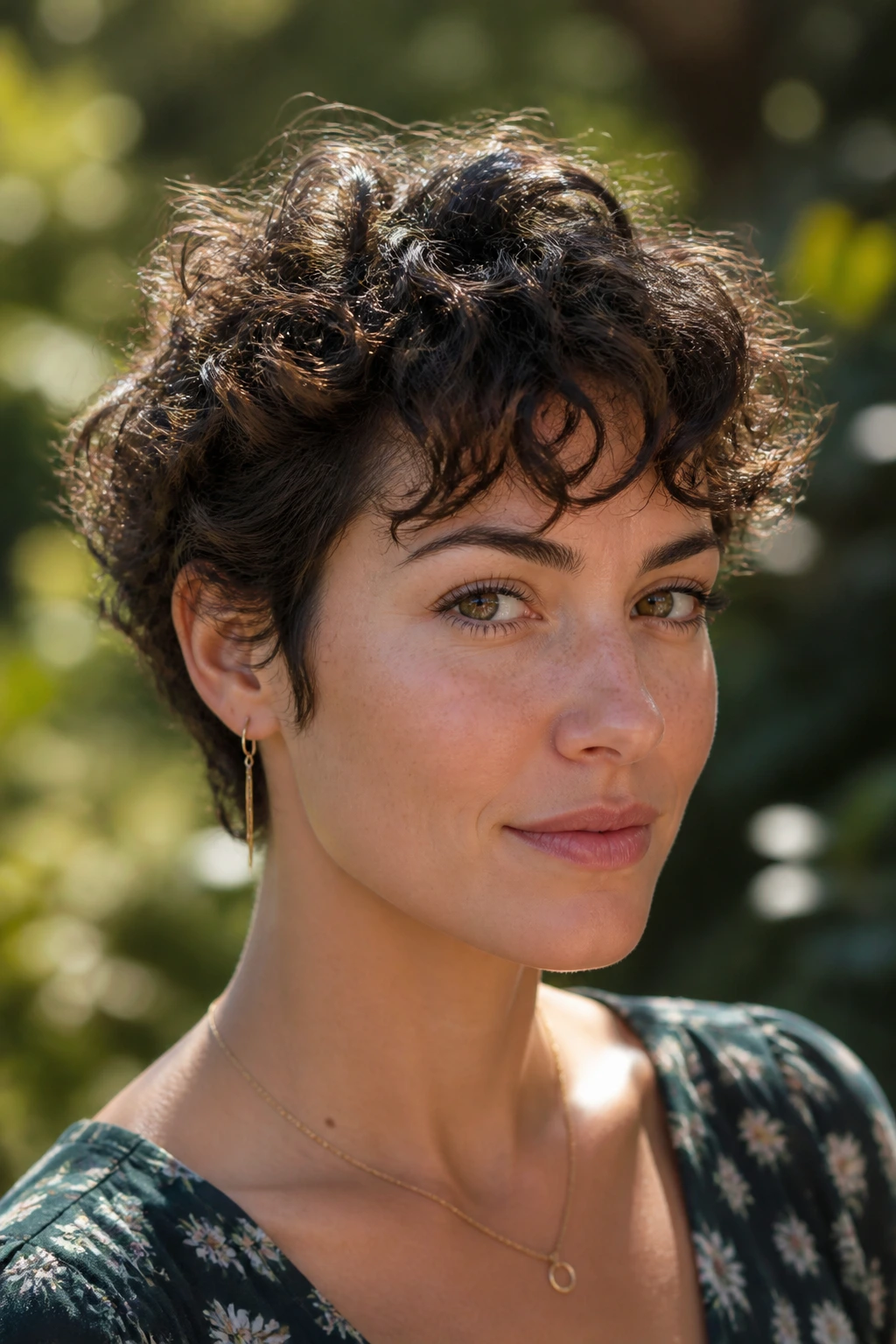
Curly hair and fringe can be tricky, but a short curly crop can look fantastic on a round face when the fringe is cut with the curl pattern in mind. The key is not forcing the fringe to lie flat. Let the curls do their thing.
This style works because the shape naturally lifts away from the cheeks. A round face often looks best when the hair creates space around the temples and cheekbones, and curls can do that in a way straight hair can’t. The fringe should be soft and diffused, not a dense, springy block. That means cutting it dry, or nearly dry, so the shrinkage is visible before the scissors close.
Use a curl cream, not a heavy butter. Heavy products make the fringe clump and stretch, which can drag the cut downward. A light gel over the cream helps if your curls are loose and frizz-prone. If they’re tighter, skip the gel and keep the shape airy. The face looks longer when the front isn’t crowded.
9. Sleek Jaw-Length Bob with Curtain Bangs

A jaw-length bob with curtain bangs is one of the most reliable shapes for a round face because it opens the center and narrows the sides. The bangs split away from the middle, which leaves more forehead visible and keeps the whole cut from feeling too closed in.
What makes this version work is the jaw-length line. It sits just where the face starts to narrow, so the cut feels intentional rather than blunt. The curtain fringe should be long enough to tuck into the sides, usually around cheekbone length or a touch shorter. If it’s too short, it bounces at the wrong place and widens the upper face.
This style likes a round brush. Pull the fringe away from the face, then curve the ends slightly under. You’re not chasing a blown-out salon finish here. A little bend is enough. If your hair is dense, ask for soft internal layering so the bob stays close to the head instead of puffing outward.
10. Choppy Crop with Baby Bangs
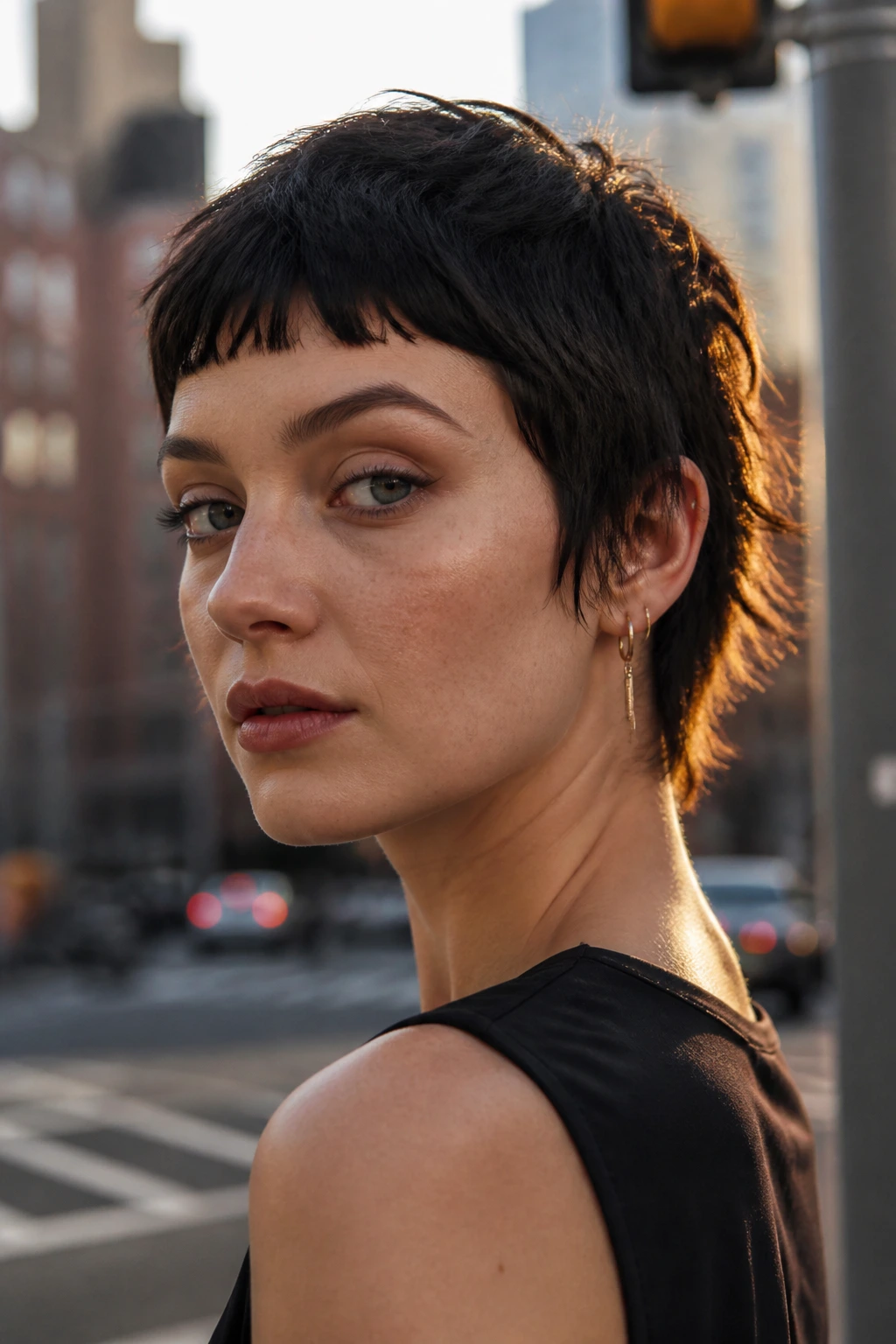
Baby bangs are not subtle. That’s the point. On a round face, they can work because they expose the forehead and make the face feel taller, but the rest of the cut has to be choppy enough to keep it from turning into a hard shape.
A solid, blunt crop with baby bangs can feel too square. A choppy one feels sharper and more alive. The texture should be visible from the hairline through the crown. I like this look when the ends are a little ragged and the bangs are slightly uneven. Perfect lines can look too severe here.
How to Keep It Wearable
The fringe needs to sit high enough to show some brow. If it drops too low, the effect gets heavy. Use a tiny amount of styling balm and separate the bangs with your fingertips. No brush. A brush can flatten the little bit of roughness that makes this style work.
This is a strong look. Not everyone wants that. But if you like a haircut with some attitude, it’s one of the smartest short fringe hairstyles for round faces because it changes the face shape fast.
11. Layered Lob with Bottleneck Fringe
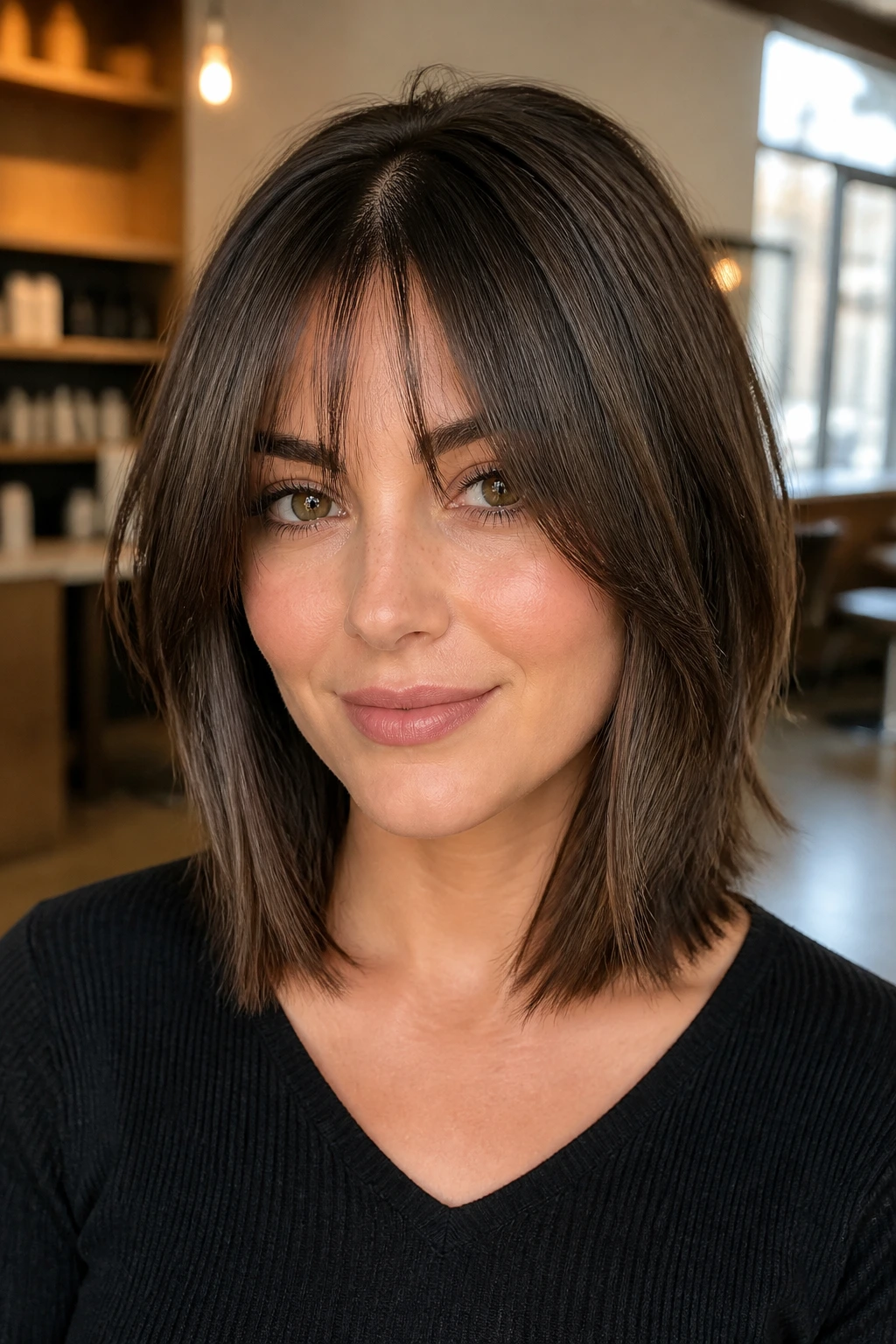
A lob is slightly longer than the shortest cuts here, but it still earns a place because the right fringe can turn it into a face-shaping machine. Bottleneck bangs start narrow near the forehead and open out toward the cheekbones. On a round face, that widening lower down helps frame the center without making the top look too wide.
What to Ask Your Stylist For
Ask for a lob that hits around the collarbone or just above it, with soft face-framing layers that start near the chin. The fringe should be the bottleneck shape: shorter in the middle, longer at the sides. That shape is especially kind to round faces because it creates a vertical line in the center while softening the cheeks.
- Keep the longest fringe pieces at the top of the cheekbone.
- Avoid over-thinning the fringe; it needs enough weight to fall with shape.
- Blow-dry the front with a medium round brush, directing it away from the nose.
This one works for people who want movement but not a lot of daily fuss. It grows out well, too, which matters more than people think.
12. Undercut Pixie with Long Top Fringe
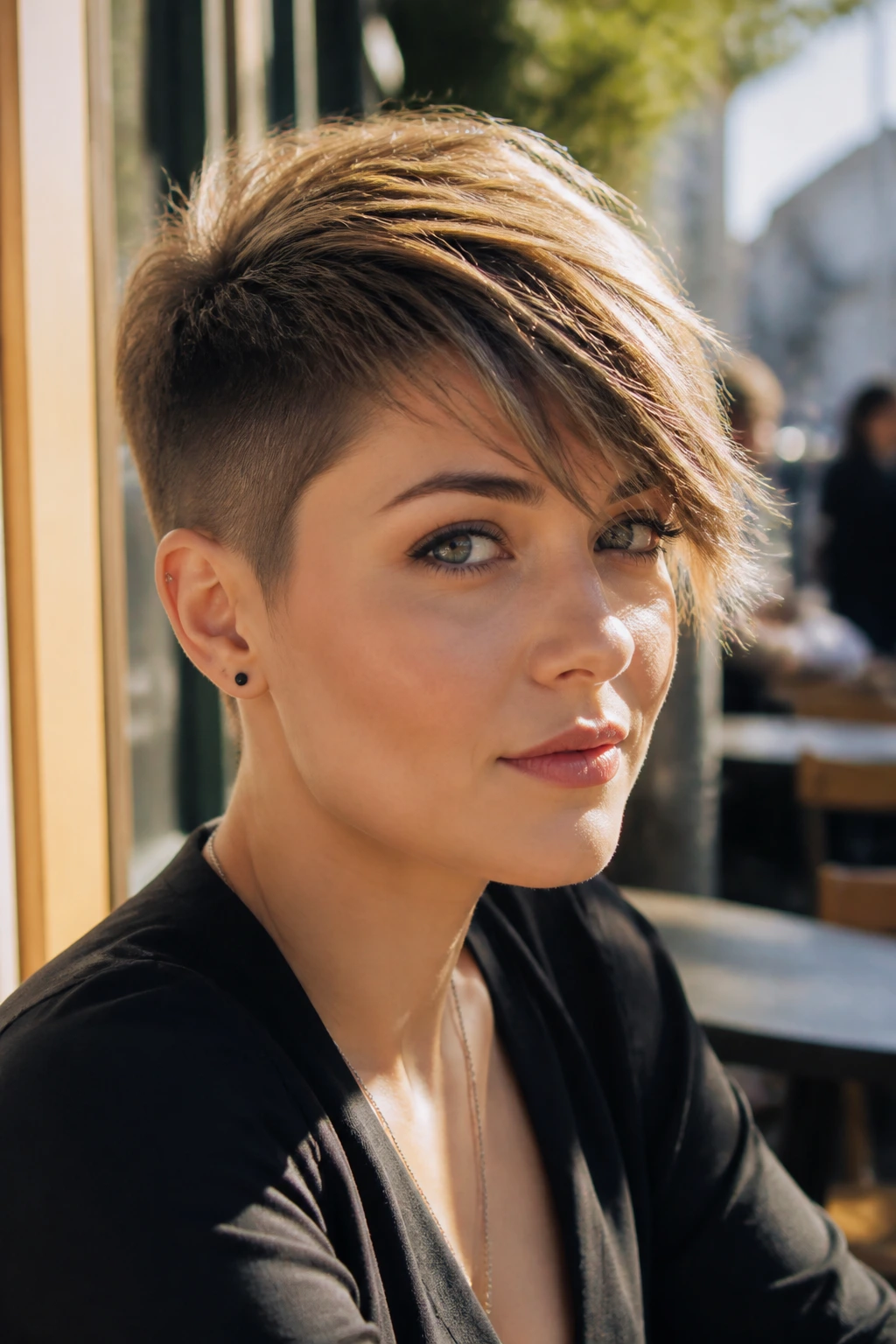
Here’s the blunt truth: if your hair is thick, an undercut pixie can save you from the mushroom effect. The short sides take out bulk, and the long top fringe gives you enough length to create angles around a round face.
This cut has a bit of edge. The fringe can fall forward, sweep diagonally, or be pushed up and over. That flexibility is the reason it flatters so many face shapes. For round faces, I like a fringe that starts with height at the crown and then bends across one side. It gives lift without making the face look shorter.
The undercut also keeps the neck area clean, which makes the whole shape feel lighter. If you wear glasses, this cut can be especially good because the frame, fringe, and cheekbone line all get their own space. Ask for the top to stay long enough to move. Too short, and you lose the whole point.
13. Wavy Italian Bob with Airy Bangs

A wavy Italian bob is a little glamorous without trying to be precious. The key is fullness through the middle and softness around the face. On a round face, the airy bangs stop the cut from getting too dense at the forehead.
Why It Works So Well
The waves create vertical rhythm. They move the eye down and along the hair, not just out across the cheeks. The fringe should be light enough to separate into two or three soft sections when dry. That gives the forehead breathing room.
I like this cut when the ends land between the chin and the jaw. Any shorter, and the wave can puff outward. Any longer, and you lose the crisp silhouette that makes the bob feel fresh. A diffuser helps if your hair is wavy but not naturally controlled. If it’s straight, wrap the front pieces loosely around a round brush and let them cool before touching them.
This is a polished option that still feels easy. Not stiff. Just put together.
14. Rounded Curly Bob with Diffused Fringe
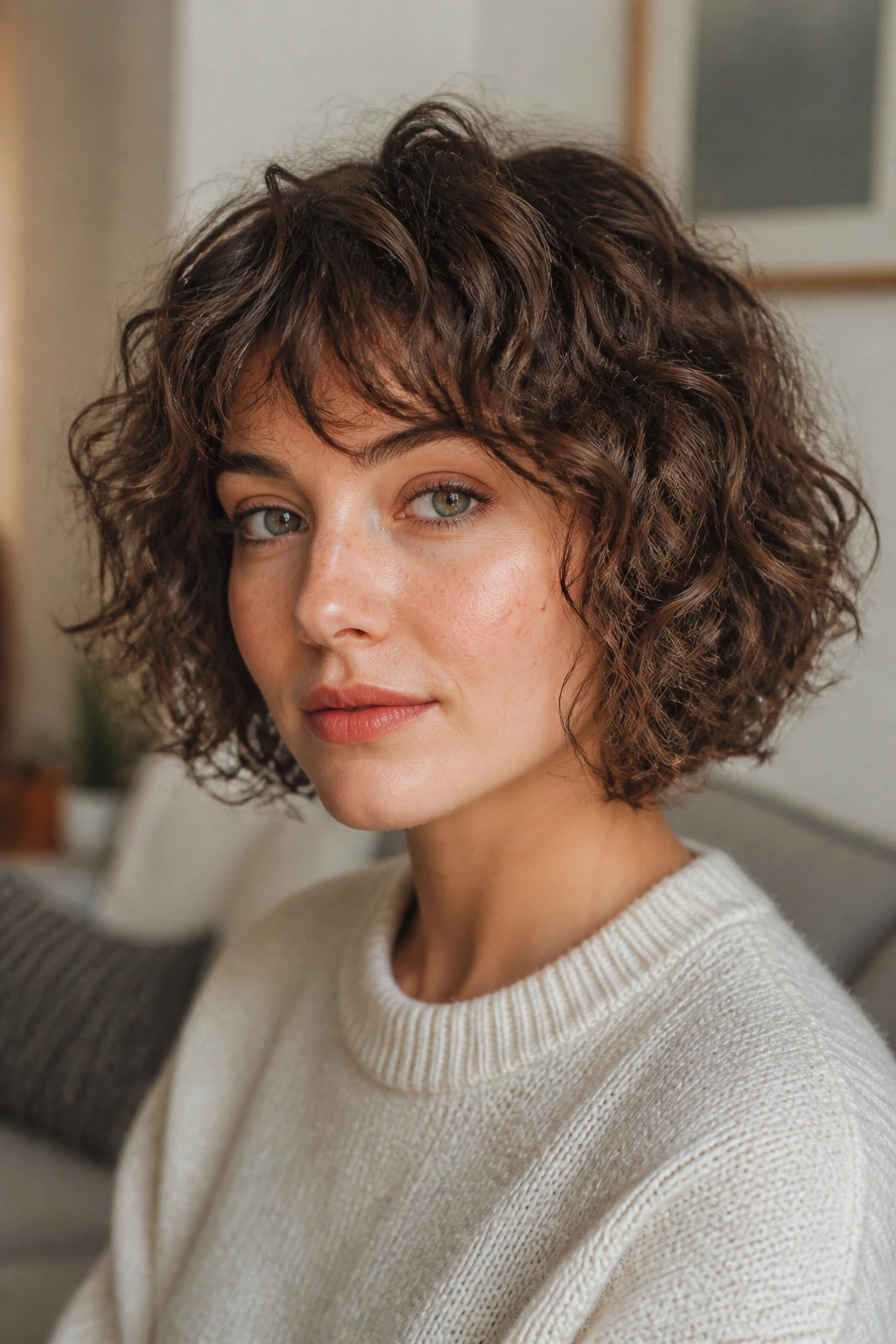
A rounded curly bob sounds like it might make a round face look even rounder, but the opposite happens when the curl shape is cut properly. The trick is keeping the fullness higher and the fringe diffused instead of dense.
The fringe should blend into the front curls so it reads as a soft cloud of texture, not a hard line. That keeps the face open. I’ve seen this look fail when the front is cut too bluntly. It turns heavy fast. Better to keep the front pieces a touch longer and let the curls stack naturally.
This style is happiest with curl-defining cream and a little gel scrunched in at the ends. Air-dry if you can. If not, diffuse on low heat and low speed. The cut should bounce, not expand. That difference matters a lot on a round face, where uncontrolled width can undo all the shaping work.
15. Soft Mullet Pixie with Face-Framing Fringe
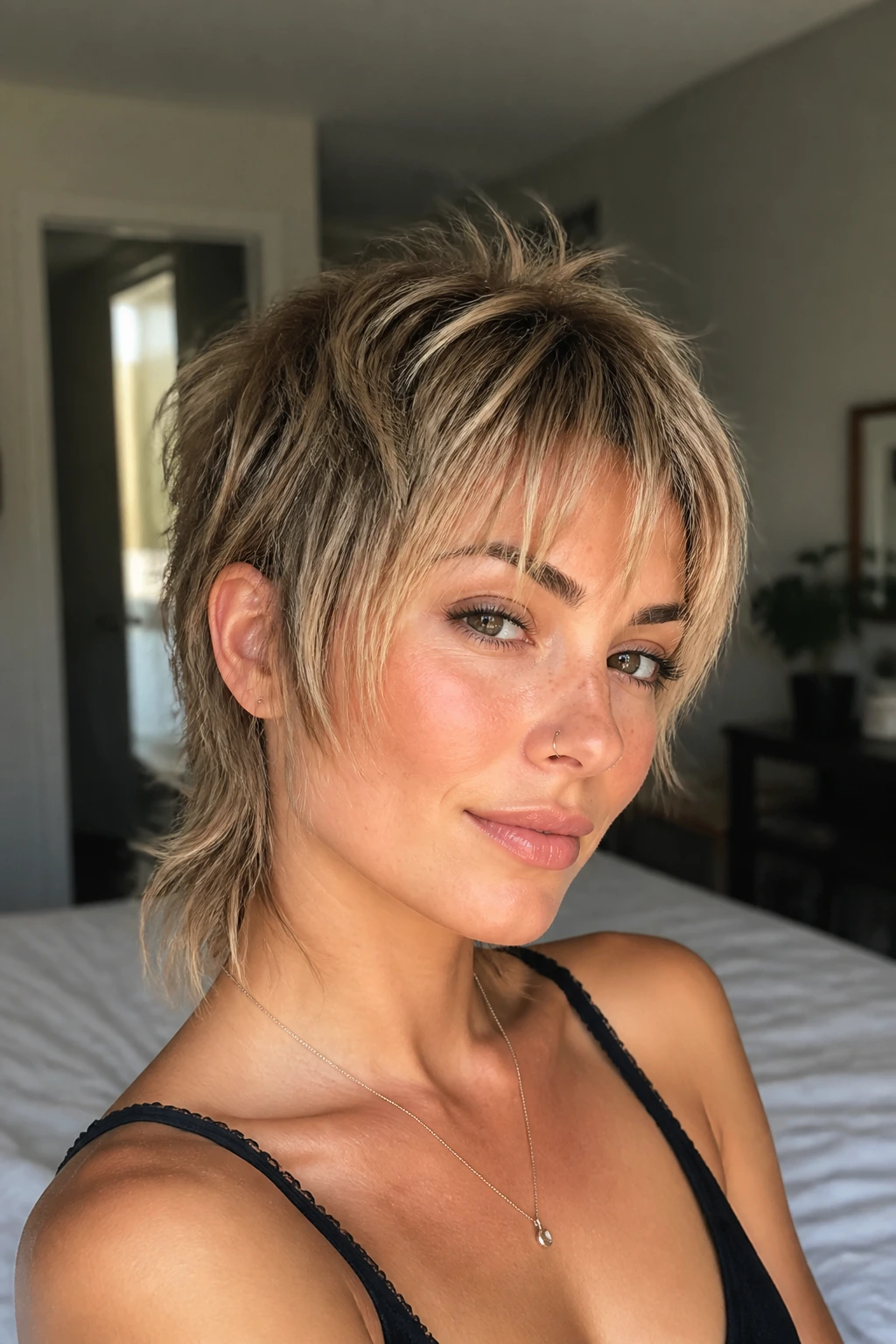
The soft mullet pixie is for someone who wants a little rebellion without turning their head into a costume. It’s short on the sides, fuller on top, and longer at the nape. On a round face, those longer bits at the back and temples help stretch the shape.
The Details That Make It Work
The face-framing fringe should be the softest part of the cut. Not a helmet fringe. Not a heavy bang. Think wisps that fall forward and then break apart at the ends. The nape length gives a slight tail effect, which draws the eye down. That’s useful. Very useful.
- Keep the crown a little longer than the sides so the cut can be styled upward or forward.
- Ask for soft tapering around the ears instead of a hard line.
- Use a matte paste only at the ends; too much product flattens the lift.
This cut looks best when it’s slightly imperfect. If you smooth every strand into place, it loses its point. A little roughness gives it energy.
16. A-Line Bob with a Deep Side Fringe
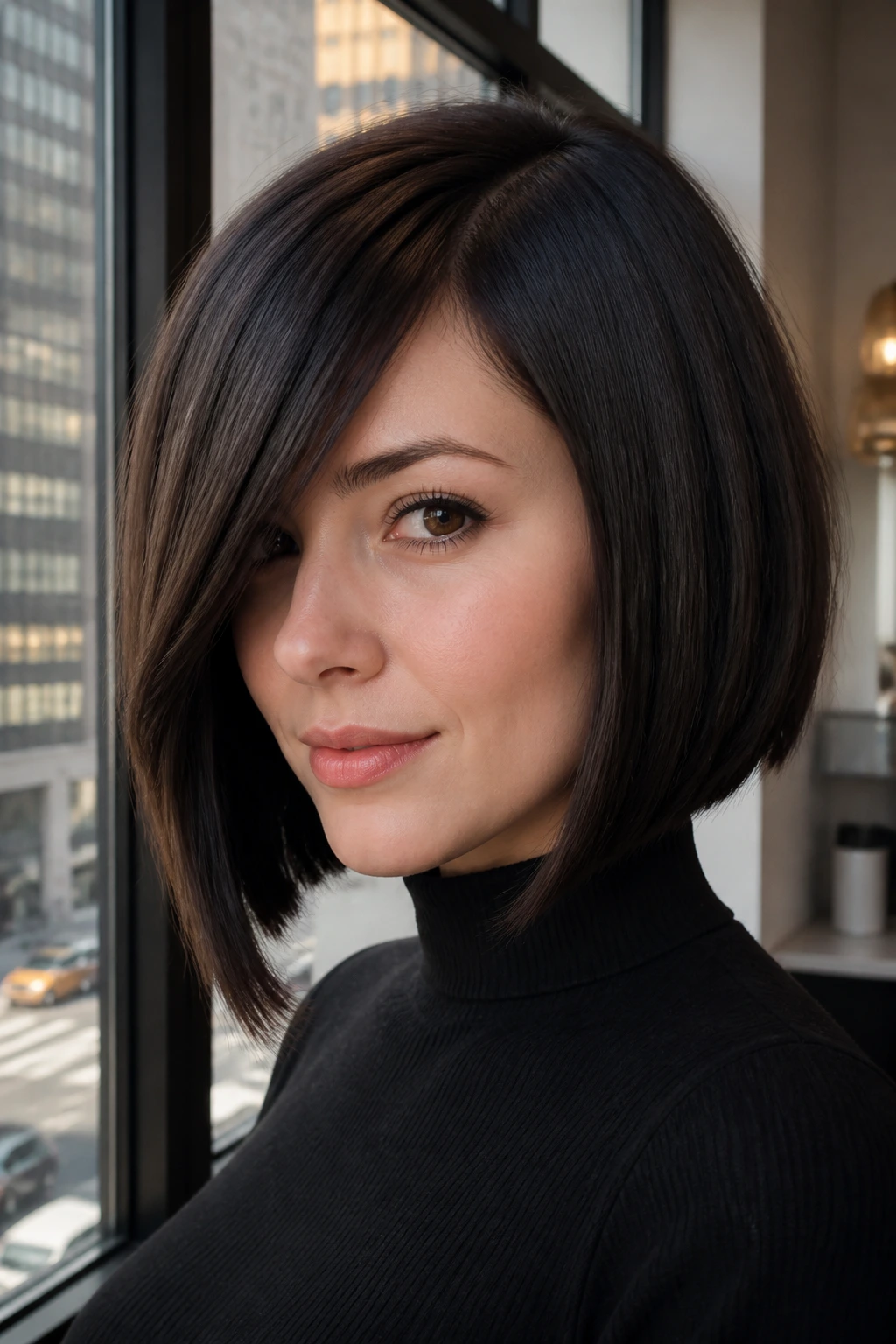
An A-line bob is shorter in the back and longer in front, which is exactly why it can work so well on a round face. The front pieces pull the eye downward along the cheek and jaw, and the deep side fringe adds even more length.
This cut feels clean. Almost architectural. The back should be neat, not stacked too high. The front should angle forward enough to frame the face without swallowing it. If the angle is too dramatic, the style can look dated fast. If it’s too soft, you lose the slimming effect.
I like this one on straight hair because the line shows clearly. But it can work on wavy hair if the front is kept a little longer and the side fringe is styled with a bend instead of a curve. A flat brush and blow-dryer can help smooth the base while leaving the fringe free. That combination keeps the face looking longer and the cut looking intentional.
17. Tapered Crop with Brushed-Forward Fringe
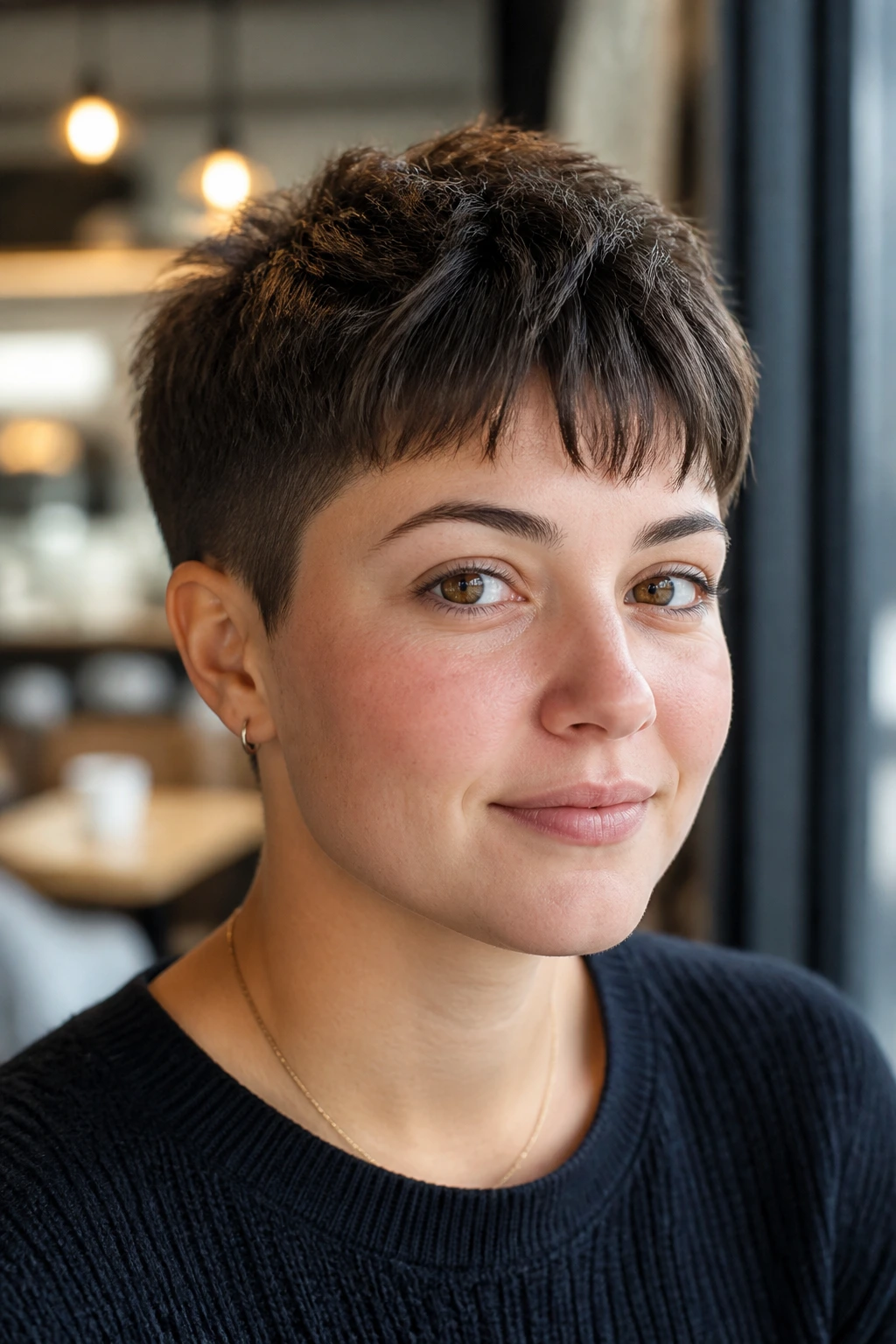
A tapered crop is neat on the sides and fuller on top, which gives a round face a useful bit of height. The brushed-forward fringe keeps the look soft enough that it does not feel severe.
What to Watch For
The top should stay textured, not fluffy. There’s a difference. Fluffy adds width. Texture adds movement. A good tapered crop uses close sides and a slightly longer top to create contrast, and contrast is what shapes the face. The fringe can be pushed forward, then broken up with fingers so it doesn’t sit as one slab.
This is one of the better options if you want short hair that still feels tidy. It suits people who like low drama in the morning and clear edges at the salon. Ask for the taper to stay soft around the temples. If those spots are cut too high, the face can look wider.
A small amount of styling clay is enough. Start with less than you think. You can always add more, and too much will make the fringe look greasy.
18. Textured Lob with Split Fringe

A split fringe is a smart move on a round face because it opens the center of the forehead and sends the eye outward in two directions. Pair it with a textured lob, and the whole cut feels longer and lighter.
This is the kind of cut that can air-dry well if your hair has a little bend. The split fringe does not need to be perfect. It just needs enough separation to show skin in the middle. That sliver of forehead changes the balance a lot more than people expect. It keeps the cut from reading as one solid shape.
The lob itself should sit somewhere between the collarbone and the top of the shoulders. Too short and the sides can balloon. Too long and the roundness in the face starts to feel less balanced. If you want a softer effect, ask for slightly bevelled ends. If you want something sharper, keep the perimeter blunt and the fringe loose.
19. Mini Shag with Eyebrow-Skimming Bangs
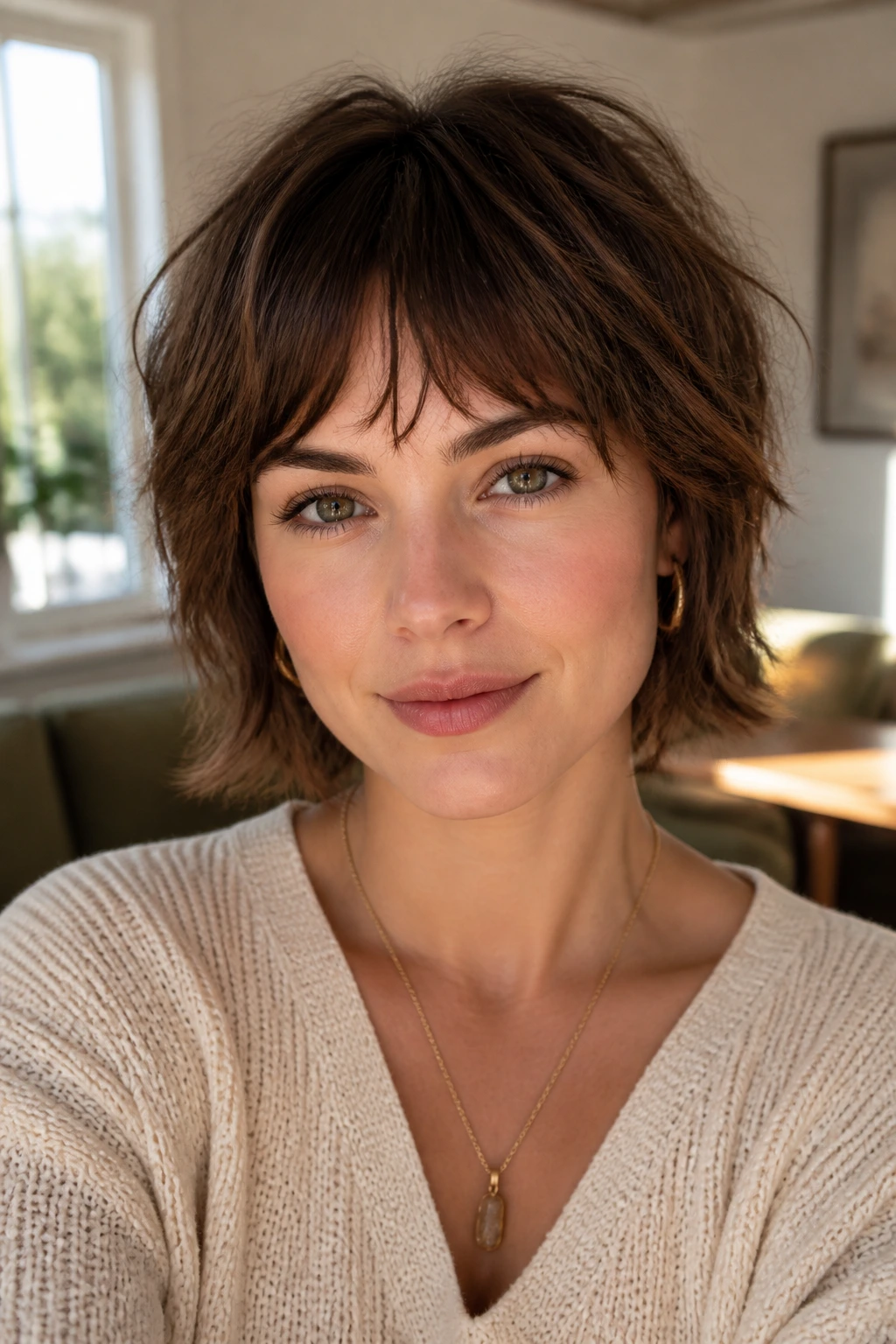
A mini shag is messy in the best way. The layers create movement through the crown and sides, while the eyebrow-skimming bangs keep the forehead framed without closing it off.
Why It Flatters
A round face often benefits from hair that moves in little directional shifts. The mini shag does exactly that. It gives you a lift at the crown, texture around the cheekbones, and a fringe that’s soft enough to show a little skin above the brow.
Use mousse at the roots and a tiny bit of texture spray on the ends. That combo helps the layers separate without going crunchy. If your hair is thick, the cut may need a bit more internal debulking so it doesn’t widen around the cheeks. If it’s fine, keep the layers lighter so the shape doesn’t collapse by noon.
This cut has range. It can feel casual, artsy, or a little rocker depending on how you dry it. That flexibility is a big reason stylists keep coming back to it for round faces.
20. Sleek French Crop with a Narrow Fringe
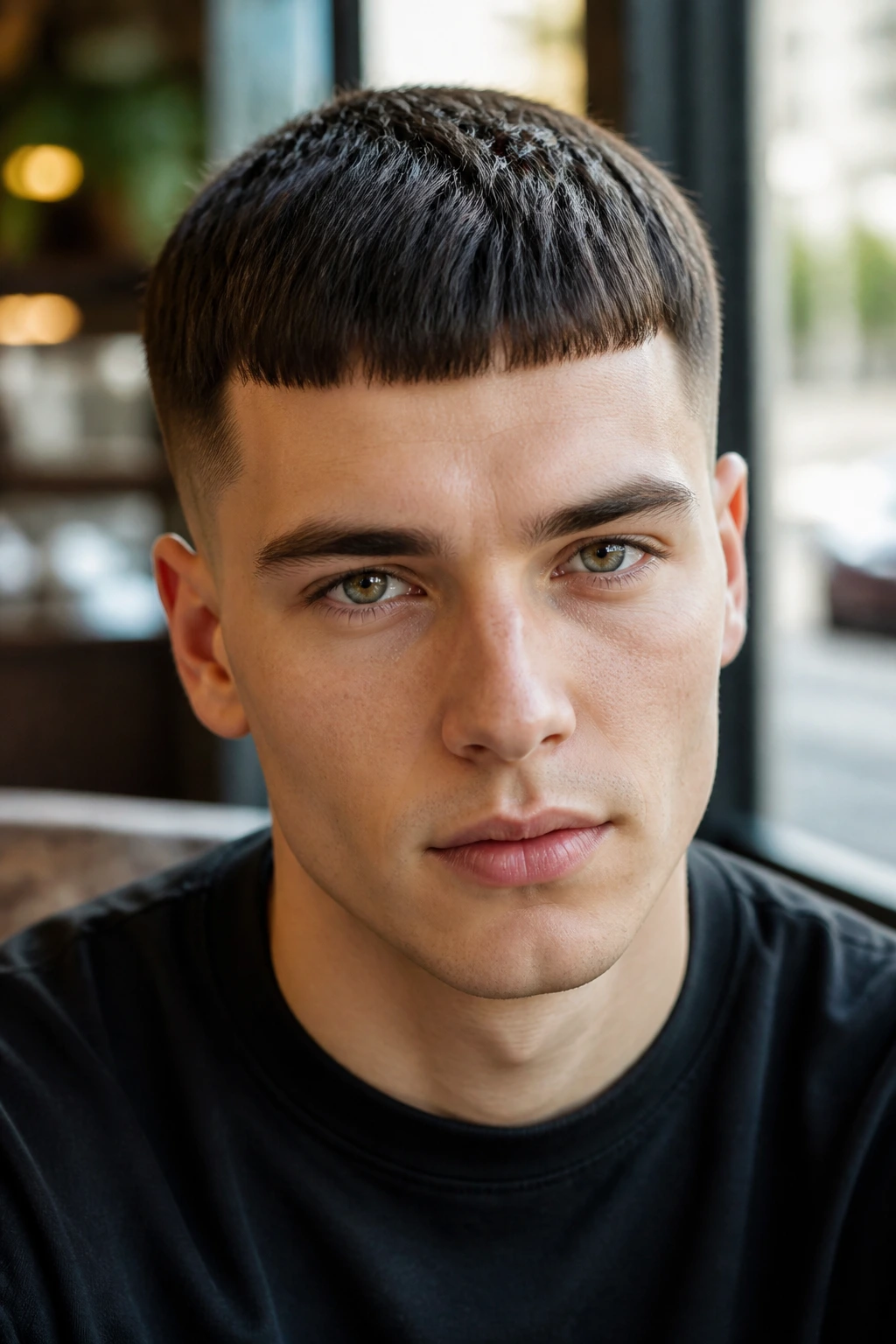
A French crop can be a strong choice for a round face when the fringe is kept narrow and the sides are neat. The cut is short enough to feel bold, but the slimmer fringe prevents it from turning boxy.
The main thing here is proportion. A narrow fringe should sit in the center of the forehead, not spread all the way across the temples. That small difference keeps the face from looking wider. The sides can be cut close, almost cropped, while the top has just enough length to move forward or slightly sideways.
I like this on straight hair or hair that can be smoothed easily. It’s not the best cut if your hair wants to poof in humidity. It’s better for someone who likes structure and doesn’t mind a bit of trim maintenance. The reward is a very clean line that gives the round face a sharper outline. Not soft. Sharp.
21. Soft Blunt Bob with Bent-Under Fringe
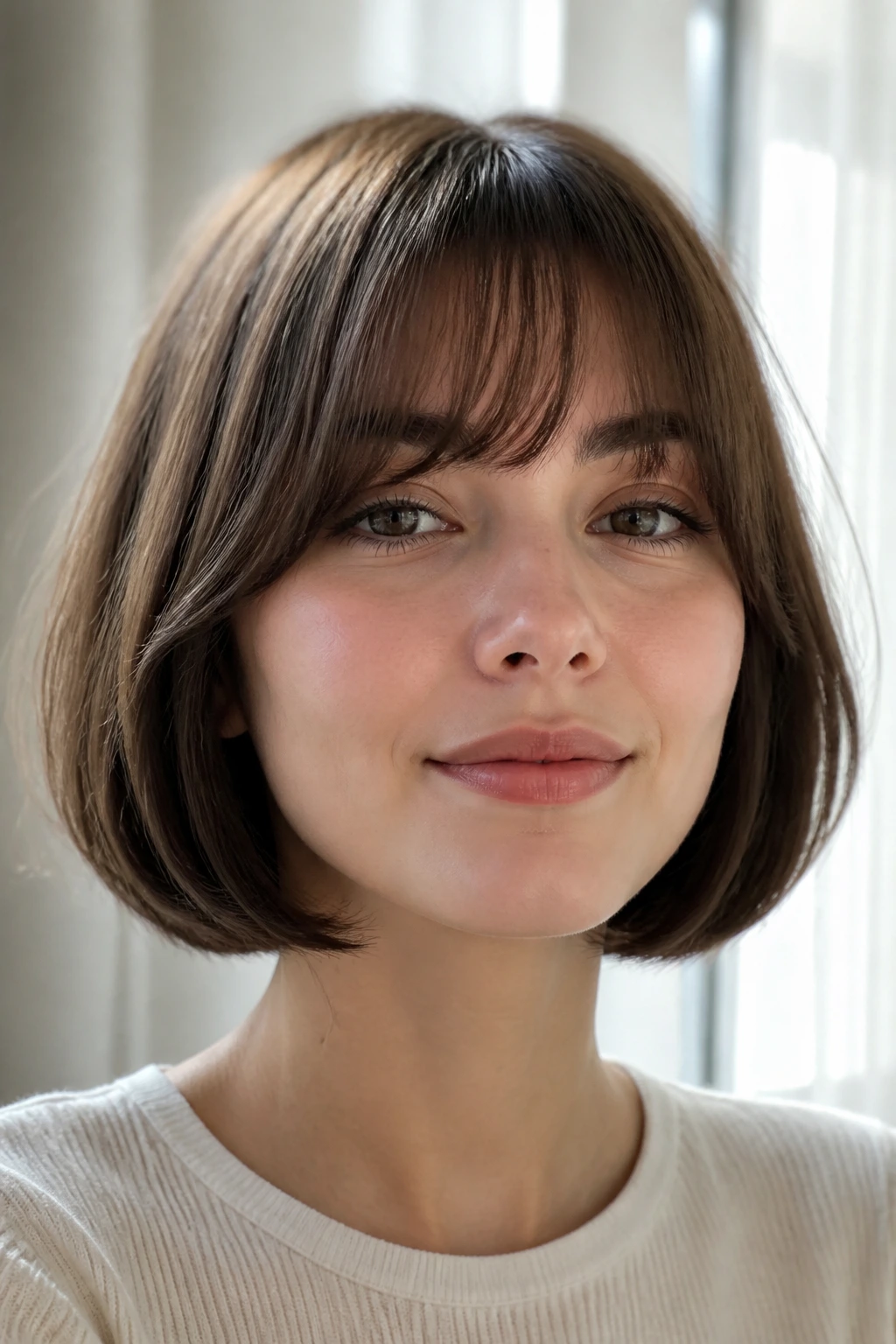
A blunt bob does not have to feel harsh. When the ends are softened and the fringe bends under just a touch, the whole cut becomes more wearable on a round face.
The Shape That Keeps It Balanced
The blunt line at the bottom gives the style structure, while the slight bend under the fringe stops the forehead from looking boxed in. That bend is subtle. You’re not curling the bangs under into a bubble. You’re just giving them a small arc so they sit with the face instead of across it.
- Keep the bob one or two centimeters below the jawline if you want extra length.
- Ask for point-cutting at the fringe ends so the line looks softer.
- Use a round brush only at the very front; the rest can stay straight and clean.
This cut is a good choice if you want a polished shape without layers all over the place. It’s neat, easy to understand, and flattering when the proportion is right.
22. Curved Pixie Bob with Longer Temple Pieces
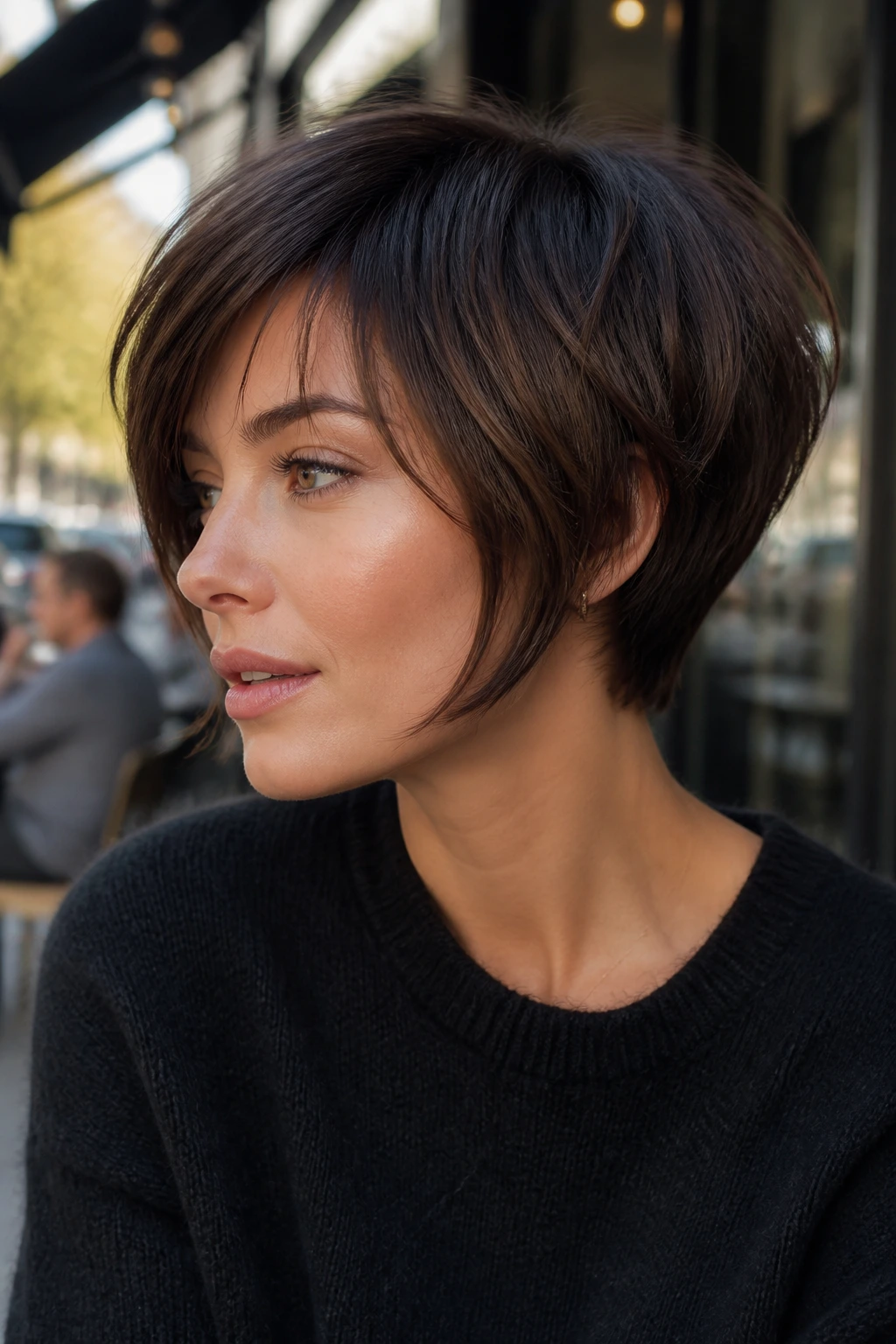
A curved pixie bob is the bridge between a pixie and a bob, and that middle ground can be excellent for round faces. The longer temple pieces are the key. They drape near the cheekbones and pull the eye downward, which helps lengthen the face without giving up short hair.
This cut has a lovely side profile when it’s done well. The back stays compact, the crown has a little lift, and the sides curve gently around the jaw. The fringe can be swept forward, parted slightly off-center, or left piecey. I like it best when the temple pieces are the longest part of the cut because they soften the widest point of the face without hiding it.
The styling part is easy if you keep the cut shaped. A quick blow-dry with your fingers, a touch of cream on the ends, and maybe one pass with a small round brush at the fringe is usually enough. Short, balanced, and a bit cheeky. That’s the sweet spot.
