



A round face does not need to be hidden. It needs a line.
That is why wispy side bangs for round faces work so well when they’re cut with a little thought. A soft diagonal across the forehead changes the whole read of the face. It pulls the eye upward, then down, then across again, which is exactly the sort of movement that keeps roundness from feeling too centered or too wide.
The mistake most people make is asking for bangs that are too blunt, too short, or too thick at the middle. Those cuts can sit right on the widest part of the face and stop the eye cold. A better side bang feels lighter, longer, and a touch broken up at the ends. Not ragged. Just airy. The difference is small on paper and obvious in the mirror.
Some of the best versions almost vanish into the rest of the haircut. Others make a stronger statement. A few are polished enough for a blowout, while others look best a little messy, tucked, or air-dried. The point is not to obey one formula. It is to find the kind of fringe that gives a round face some movement, some angle, and a little breathing room at the front.
1. Soft Brow-Grazing Sweep
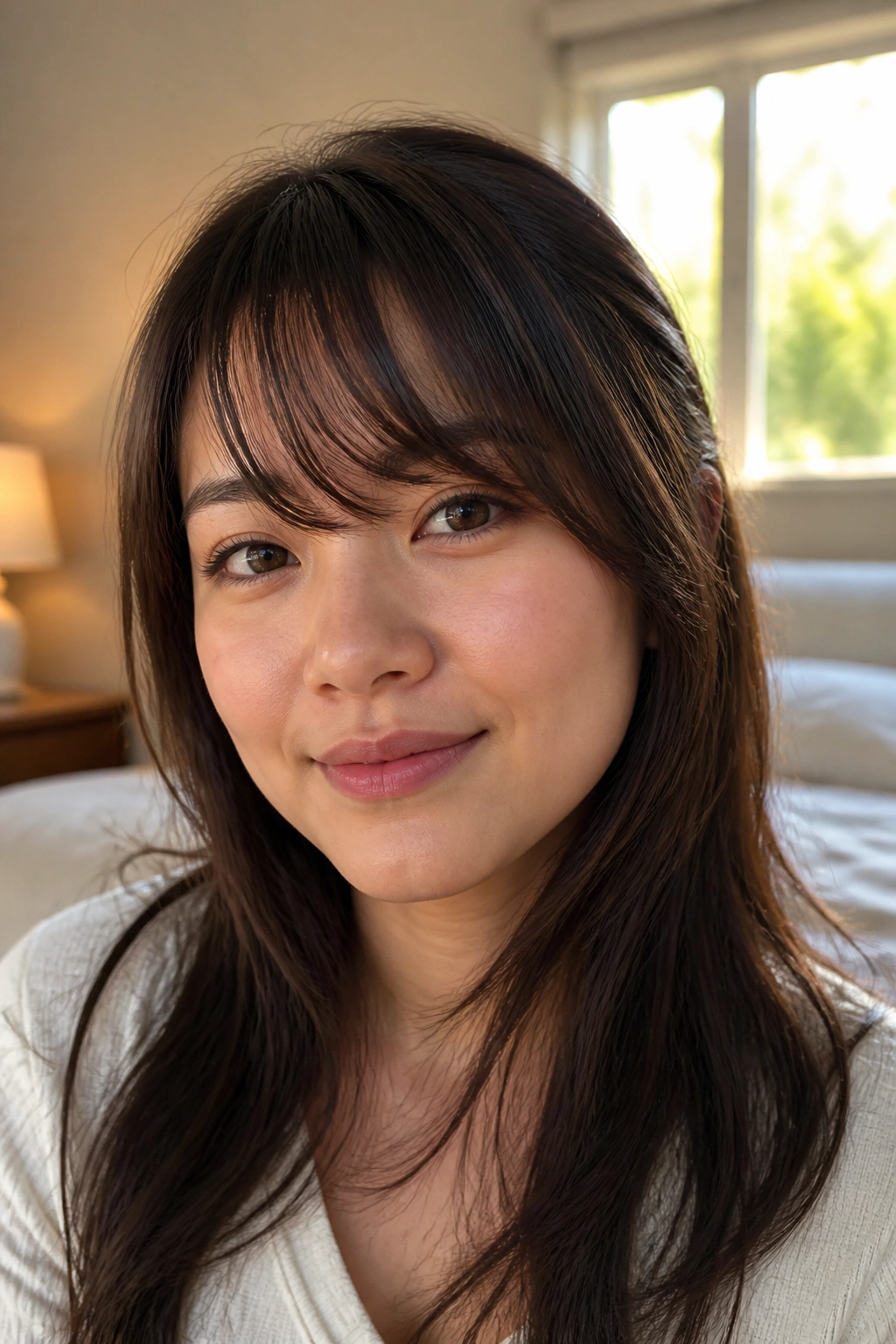
This is the easiest starting point, and I still think it is the one most people should try first. A soft brow-grazing sweep gives you the side-bang effect without taking a huge leap into fringe territory. It lands near the brow, then fades into longer face-framing pieces, so the front never feels heavy.
Why the Length Matters
The sweet spot is just long enough to brush the eyebrow, then move off toward the temple. That length keeps the face open while still breaking up the width of the cheeks. If you cut it too short, the bang can sit like a shelf. Too long, and it stops behaving like a bang at all.
- Ask for the shortest pieces to start around the outer third of the brow.
- Keep the ends lightly point-cut so they do not look blunt.
- Style with a round brush and a soft bend away from the face.
- A tiny mist of flexible hairspray is enough.
Pro tip: If you wear your part on the same side every day, cut the bang in that part. The whole shape will behave better.
2. Deep Side Part With a Cheekbone Arc
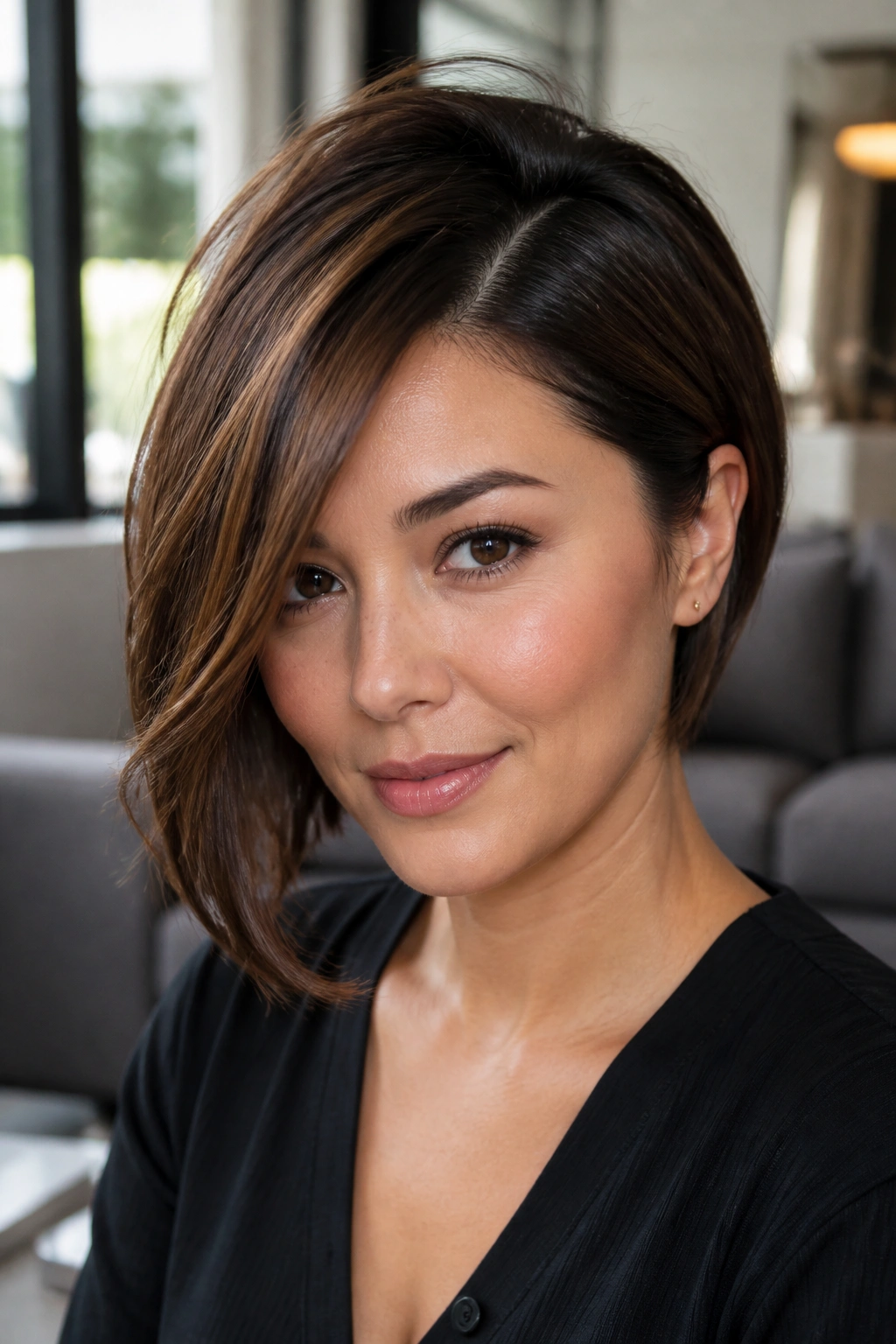
What happens when you want more shape without more hair in your face? You go deeper on the part.
A deep side part with a cheekbone arc can be one of the nicest choices for a round face because it creates a strong diagonal right away. The bang starts higher, drops across one side, then curves toward the cheekbone instead of landing straight across the forehead.
How to Ask for It
Tell your stylist you want the shortest piece to start high enough to lift the face, then taper through the cheekbone. That taper matters. It keeps the front from looking like one heavy sheet of hair.
For styling, blow-dry the bang in the opposite direction first, then sweep it back over. Sounds fussy. It works.
- Best on medium to thick hair
- Needs a light root-lift spray at the front
- Looks especially good with shoulder-length cuts
- Grows out gracefully if the ends are soft
The whole point is diagonal movement. Round faces love that.
3. Feathered Length That Skims the Cheek
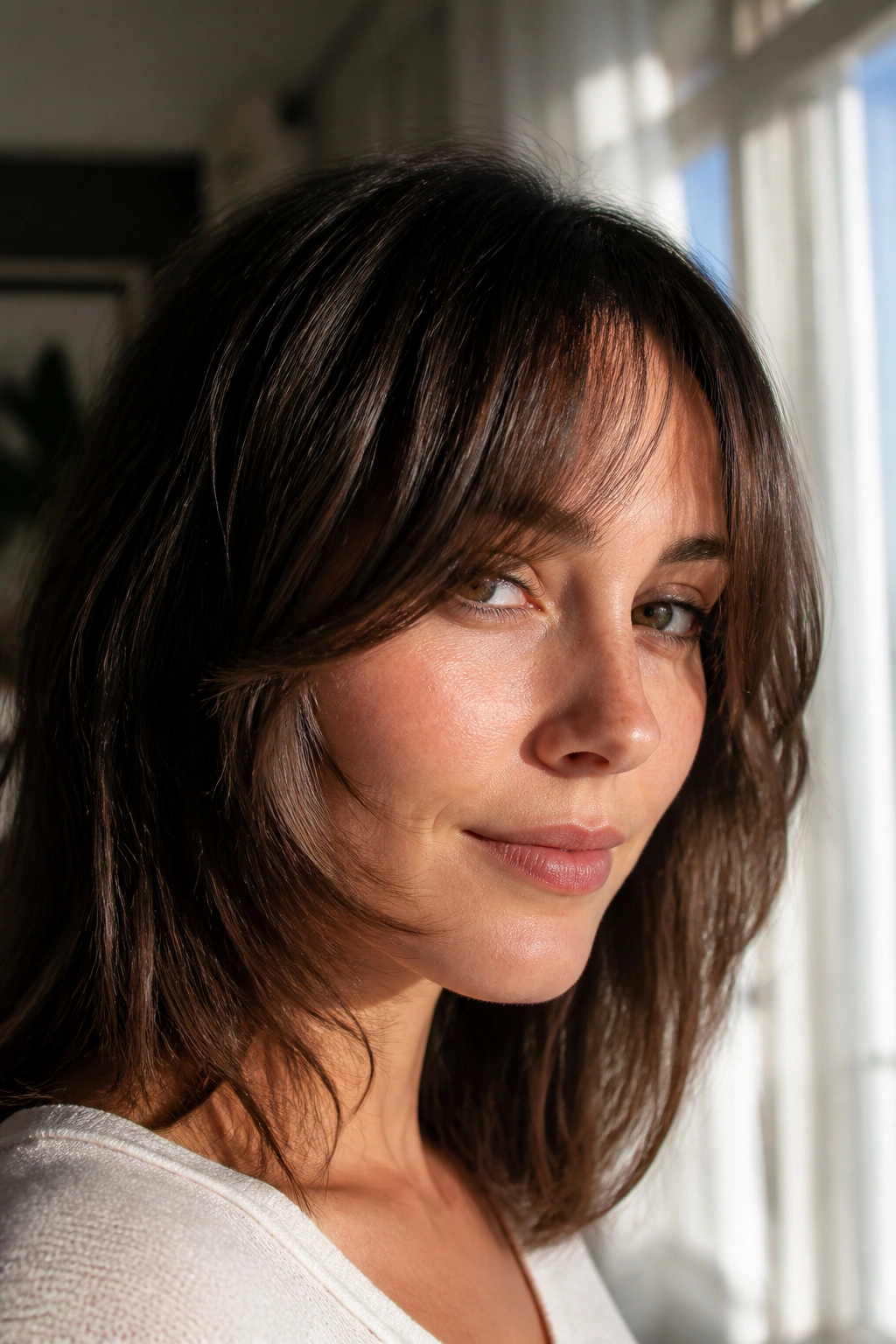
I like this style on days when the hair is a little imperfect and the bang still needs to look intentional. A feathered side bang with longer cheek-skimming pieces brings softness without turning into a curtain.
It works because the outer edge does not stop at one hard line. Instead, it breaks apart as it drops toward the jaw. That little breakup keeps the front light, which matters on a round face. Heavy bangs can box the features in. Feathered ones do the opposite.
The Sweet Spot
The longest pieces should graze the upper cheek, not hang at mouth level unless the rest of the haircut is very long. Anything shorter can feel choppy. Anything much longer starts to read as a grown-out fringe.
If you have fine hair, this one can be a little tricky. Keep the layers minimal near the front, or the bang may split in odd places. If your hair is fuller, ask for subtle thinning through the very ends only. Not the middle. The middle needs to hold its shape.
4. Collarbone Lob With Airy Bangs
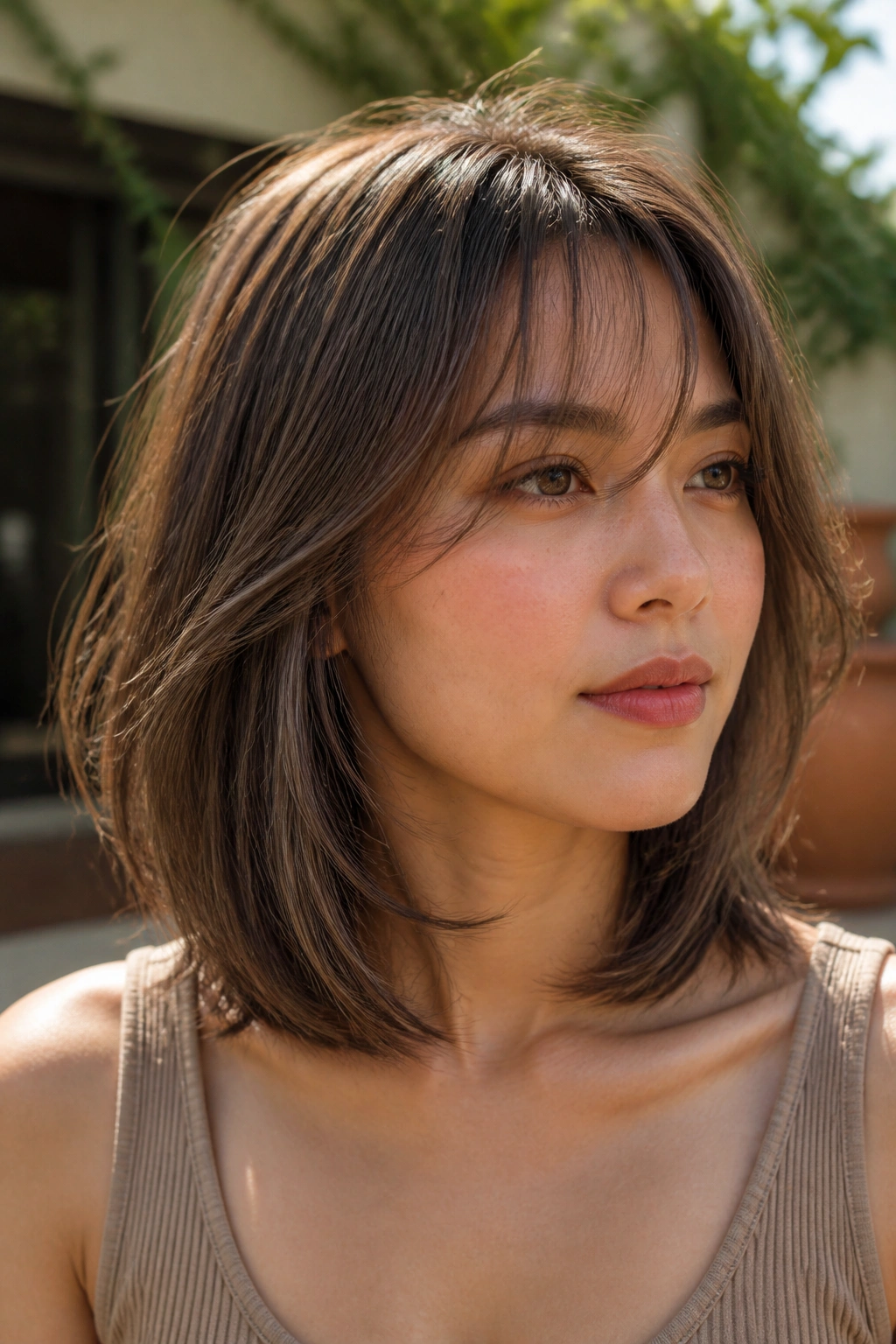
A collarbone lob and side bangs are a good pair because the haircut already gives the face some vertical length. Add a wispy side fringe and the whole silhouette gets softer, not wider.
Unlike a blunt bob with a hard fringe, this cut stays light around the face. That is what makes it friendly for round shapes. The movement happens below the cheeks, so the eye keeps traveling. It never gets stuck.
What Makes It Different
The bang should feel like part of the haircut, not a separate piece sitting on top. Ask for the front to blend into the lob’s outer layers. If the bang is too disconnected, the front can look top-heavy.
This is also a good one for people who like to tuck hair behind the ear. The side bang can fall forward on one side, then disappear when you tuck the rest back.
A few notes help:
- Keep the front slightly longer than you think
- Use a 1-inch round brush for the bend
- Avoid a harsh center split
- Let the ends flick away from the cheek
5. Curtain-Bang Hybrid With a Side Sweep
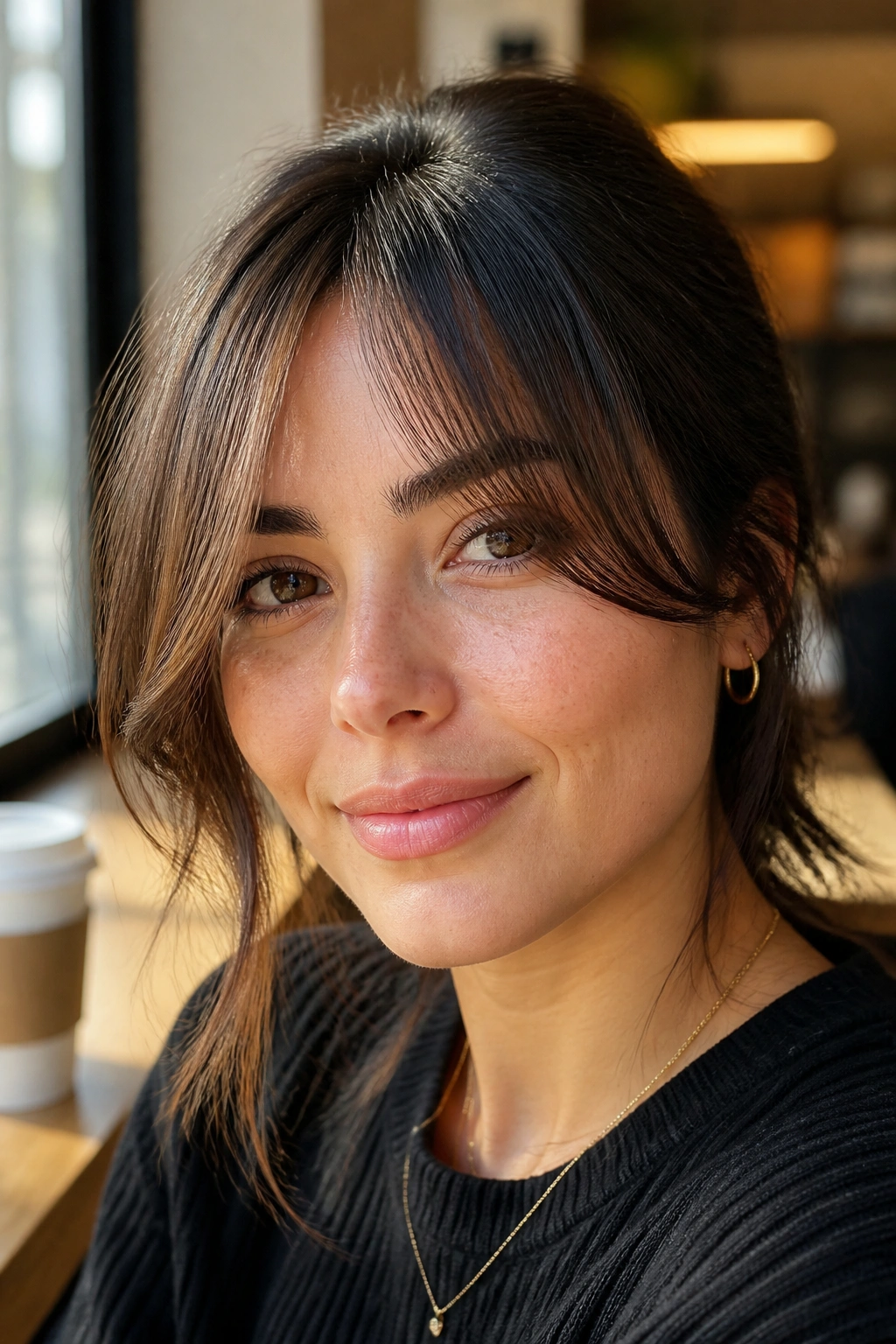
Some side bangs grow into curtain bangs almost by accident. I do not mind that. In fact, I think the hybrid looks better on round faces than a strict, trimmed fringe a lot of the time.
This shape gives you the openness of curtain bangs with the directional pull of a side sweep. The middle is soft and parted enough to frame the face, while one side drops lower and does more of the shaping. You get movement without the full commitment of a blunt fringe.
The trick is keeping the shortest section away from the center of the forehead. Let the part do some work. A slightly off-center start keeps the face from feeling boxed in, and the longer outer pieces help stretch the silhouette downward.
If you want low drama, this is a smart cut. If you like a little bend and swing, even better. It dries well with a round brush, but it also behaves under a quick pass of a flat iron with a soft wrist turn.
6. Short Pixie Fringe With a Long Diagonal
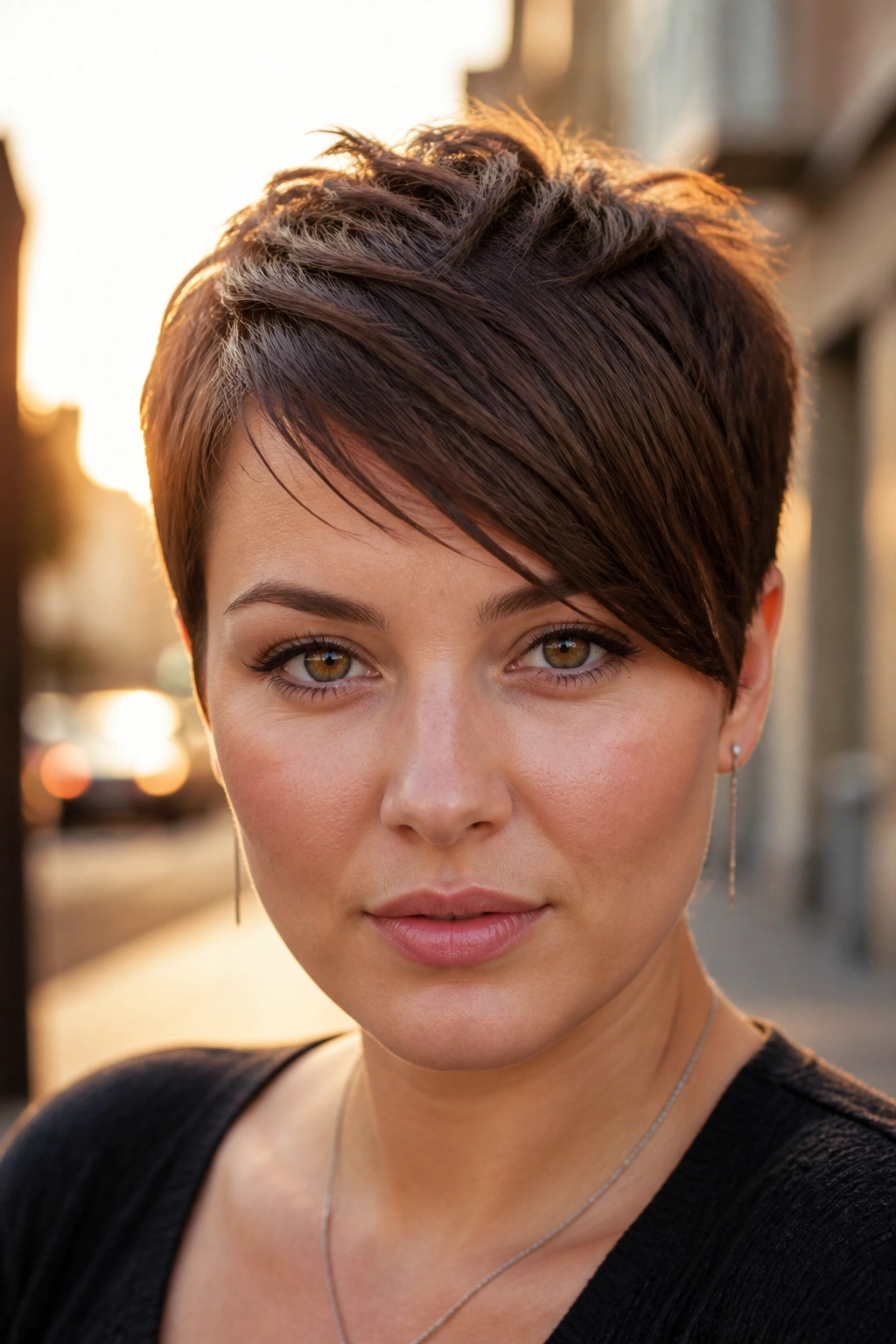
A round face can wear short hair. The problem is not short hair. It is short hair with no direction.
A pixie fringe with a long diagonal gives the cut a line to follow, which keeps the face from looking too full at the sides. One side can be a touch longer and swept across the forehead, while the other stays cropped and light. That contrast is doing the real work.
What to Watch For
Short side bangs need precision. If the fringe sits too high, it can feel severe. If it is too thick, it overwhelms the face. The best version is pieced out, with a little separation between the strands.
- Use a matte paste, not a heavy cream
- Keep the shortest point just above the brow ridge
- Ask for texture at the ends, not bulk removal everywhere
- Dry it forward, then sweep it sideways with your fingers
The vibe is sharp, but not harsh. That balance matters.
7. Wavy Lob and S-Curve Bang
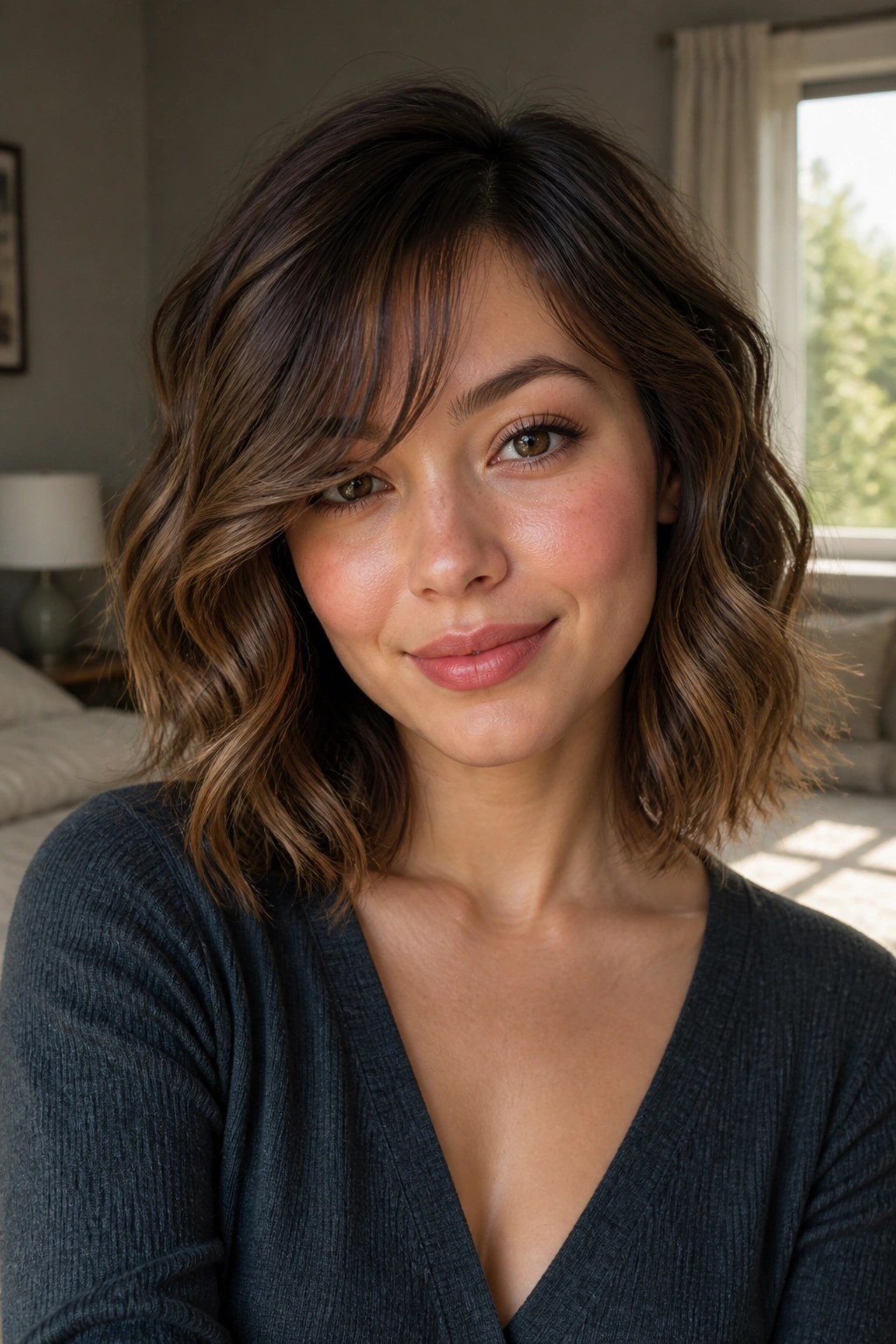
A wavy lob with an S-curve bang can be gorgeous on round faces because the bend in the hair creates motion on its own. You do not need the bang to do all the work. It just needs to cooperate with the wave.
The side fringe should follow the same loose rhythm as the rest of the cut. A stiff bang on a wavy haircut looks pasted on. A soft one slides into the front wave, then bends away from the cheeks. Much better.
I like this style when the hair has natural body. The wave gives the face height, while the side bang keeps the front from opening too wide. If your hair tends to poof at the sides, keep the layers around the cheekbone light and the fringe a touch longer.
A 1-inch curling iron or a flat iron bend can shape the front fast. Wrap only the first inch or two, then stop. The goal is movement, not a curl.
8. Sleek Angled Bob With a Thin Side Fringe
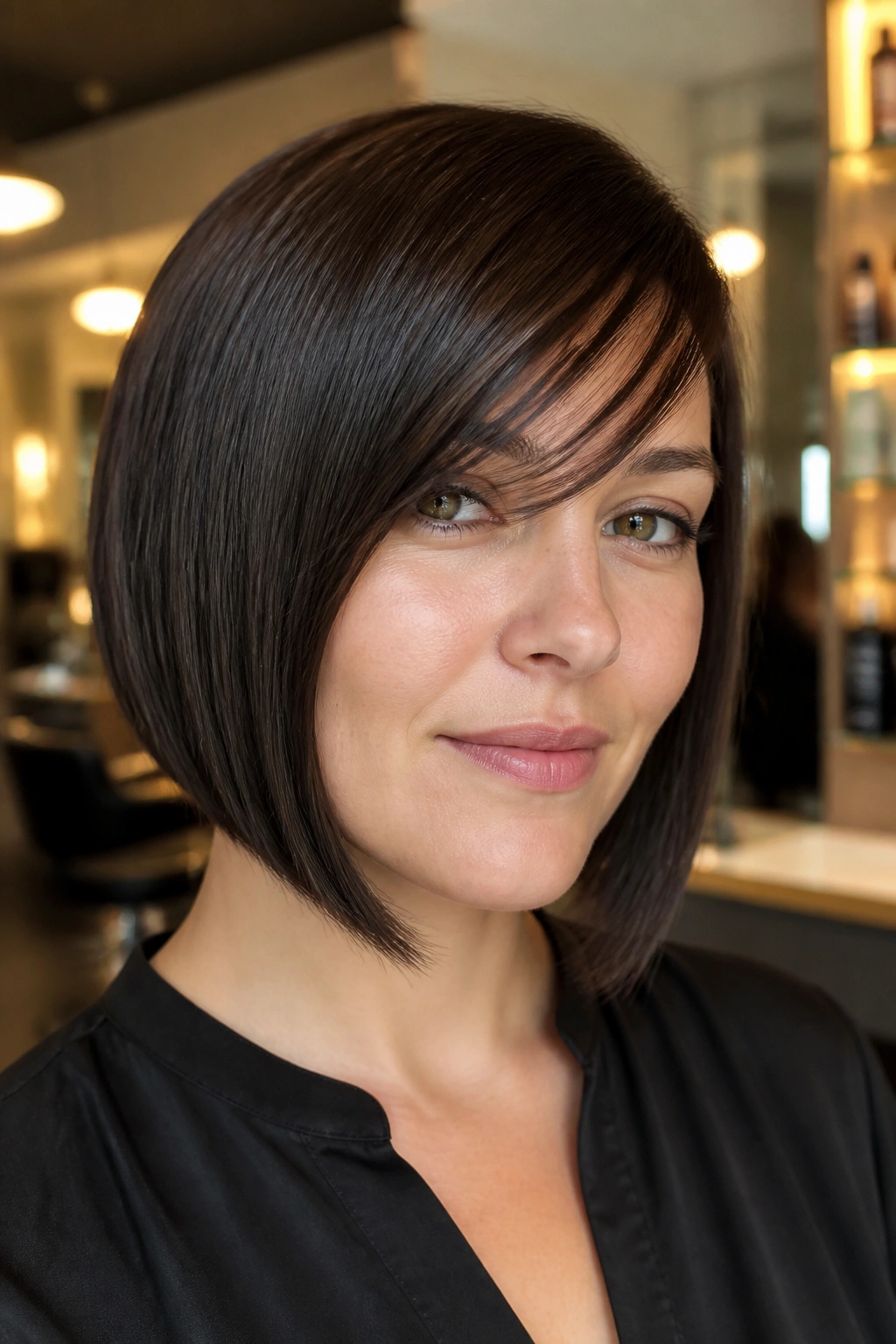
A sleek bob can look a little unforgiving on a round face if the front is cut square. Add a thin side fringe and the whole shape changes. It stops feeling boxy and starts feeling deliberate.
Why It Works
The angle of the bob already creates length. The wispy bang adds a second diagonal near the forehead, which is where the face usually needs help. That combination is strong without being loud.
You want the fringe to be fine enough that it does not compete with the bob’s clean line. Too much thickness at the front ruins the effect. I prefer a bang that breaks into small pieces when the hair moves.
This cut loves shine. A smoothing serum, a boar-bristle brush, and a clean side part are enough. If the hair is very straight, ask for the front to be cut a touch longer than the nose bridge. That gives room for shrinkage and keeps the bang from sitting too high.
9. Messy Shag With Long Pieces
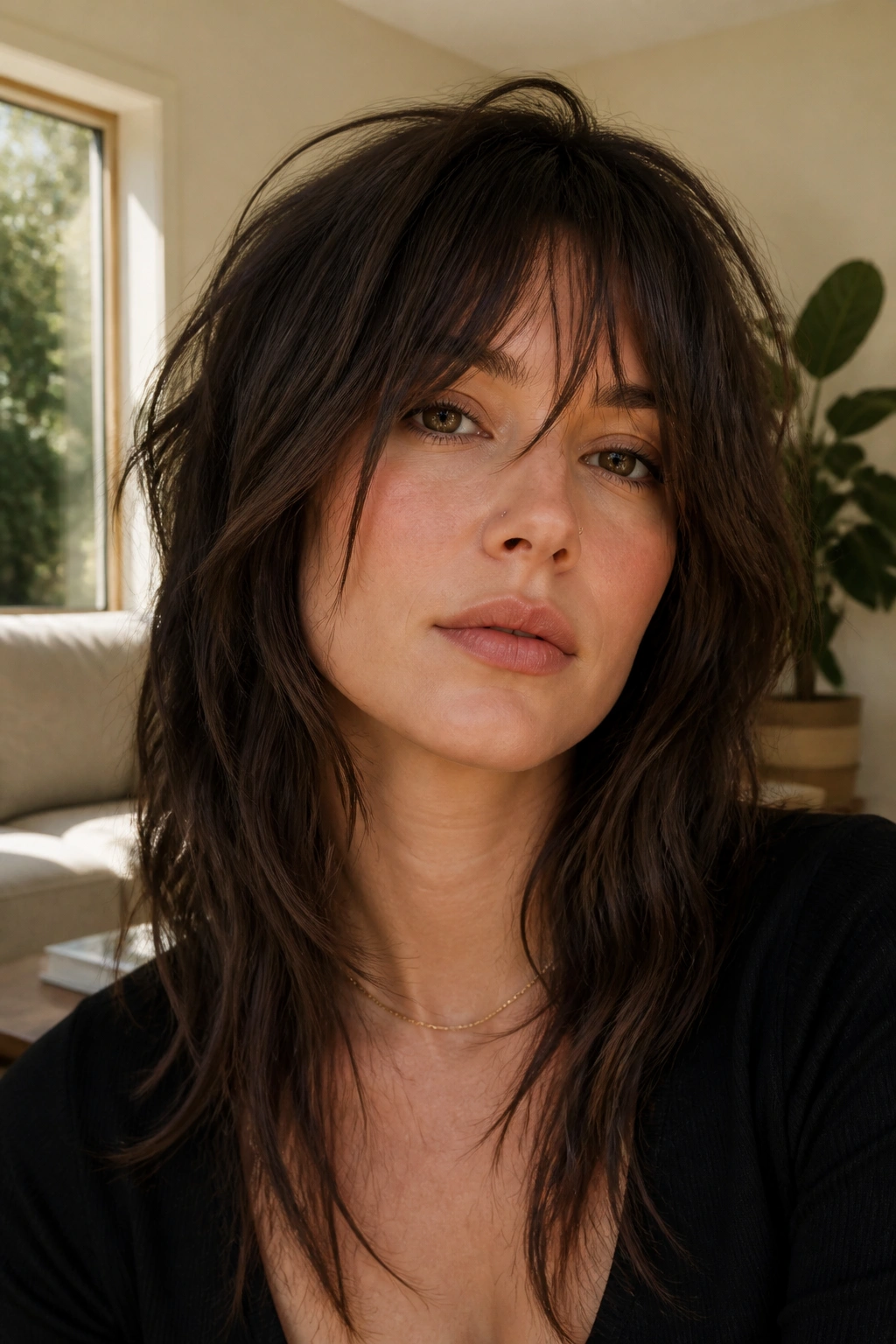
A shag can be a lifesaver for round faces when it is cut with restraint. Too many choppy layers and the shape turns fuzzy. Keep the front long, and the messy shag with long pieces starts to make sense.
The bang in this cut should feel broken, not blunt. A few pieces can hit the brow. Others can fall near the cheek. The unevenness is the charm. It gives the face vertical movement without a hard edge.
If your hair air-dries with a little bend, this style can be easy to live with. Scrunch in mousse, twist the front once or twice while it dries, and leave it alone. The mistake is overbrushing. That can puff the bang and flatten the shape at the same time. Annoying combination.
This is one of those cuts that looks better on day two. The texture settles. The front falls a little softer. Good hair, but not too polished.
10. Soft Mullet With Broken-Up Fringe
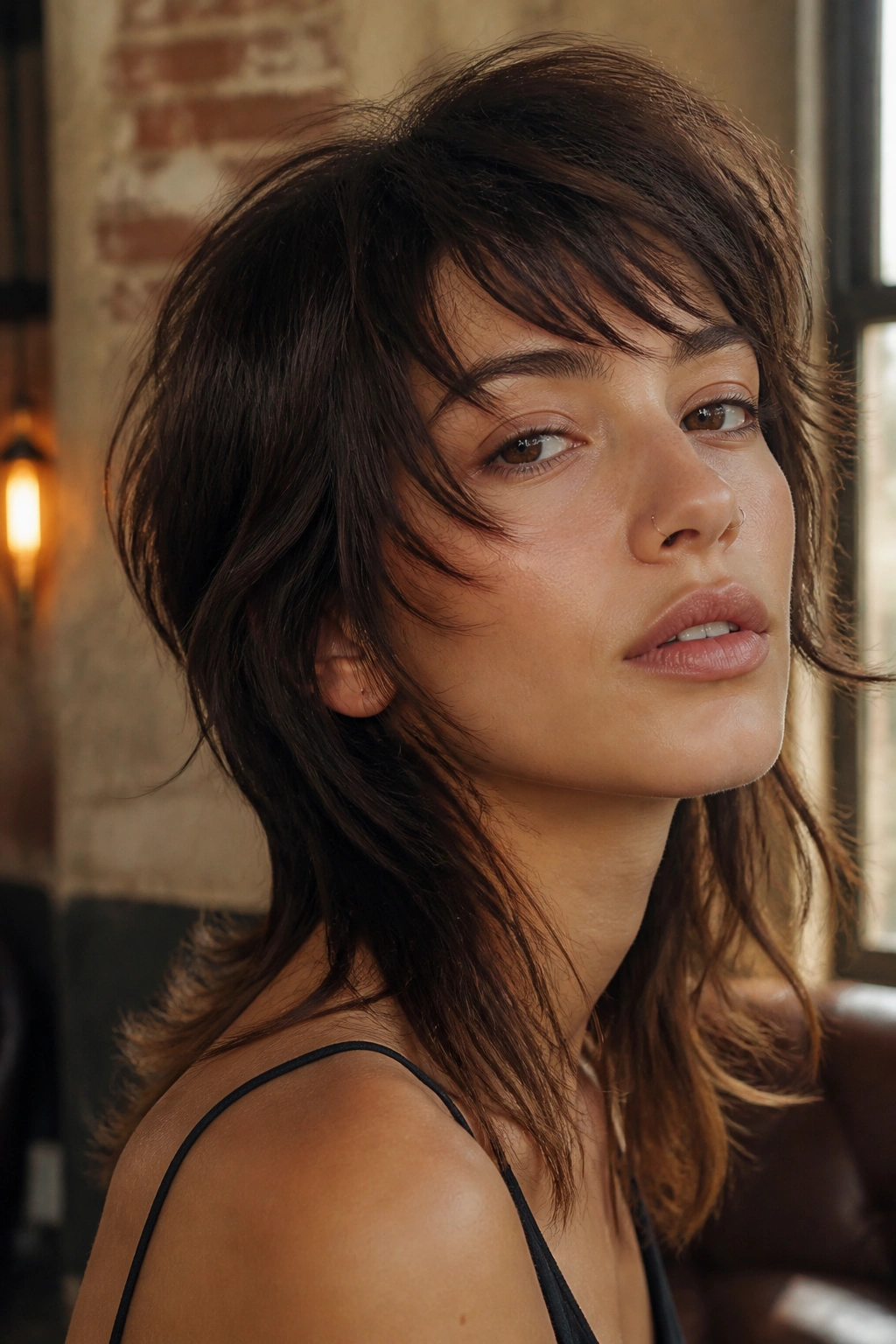
A soft mullet sounds bold because it is, but it can be surprisingly flattering on a round face when the fringe is handled well. The broken-up side bang is the part that keeps the cut from feeling too blunt up front.
Unlike a classic bob, the mullet leaves extra length in the back and sides. That longer tail helps elongate the silhouette. The fringe should then stay light and slightly irregular, so the front does not fight the shape. It is a cut with attitude, yes, but the real trick is balance.
Who It Suits
This one suits people who like texture and a bit of edge. It works best if you are happy with product in the hair. Dry paste, texture spray, and a little finger shaping go a long way.
- Keep the fringe pieces soft around the temples
- Let the side bang blend into the cheek layers
- Avoid heavy round-brush blowouts that erase the texture
- Ask for movement, not a sharp line
If you want sweet and polished, skip it. If you want cool and slightly undone, keep reading.
11. Mid-Length Cut With a Tucked Side Bang
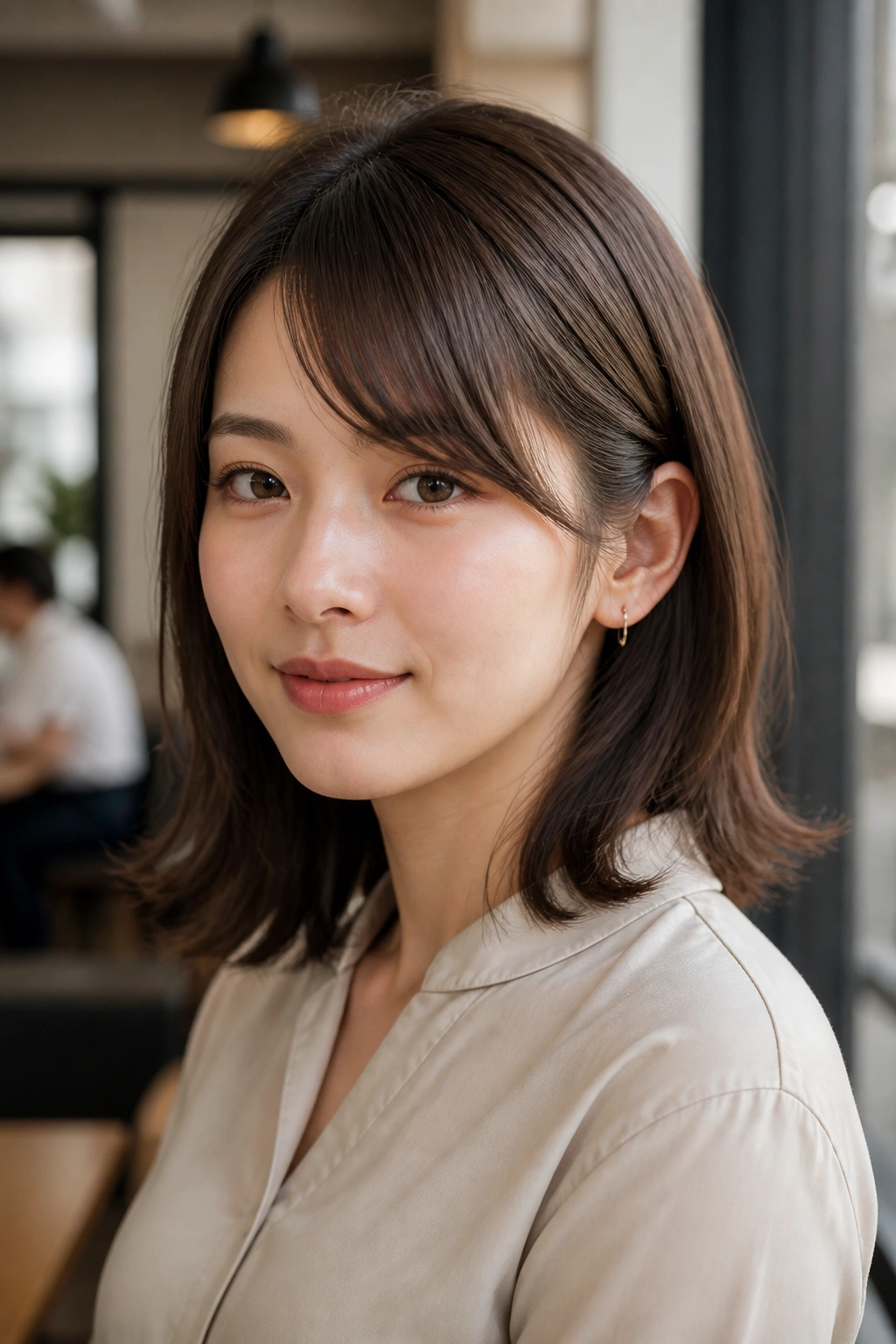
There is something nice about a mid-length cut that can be tucked behind the ear and still look finished. A tucked side bang helps with that, because it gives the front just enough presence before it disappears into the rest of the hair.
The shape is subtle. The bang starts soft near the part, curves across the forehead, then blends into a longer front section that tucks easily. That little curve is what keeps a round face from feeling too open and wide at once.
I think this one is underrated for office hair. It looks neat, but not stiff. If you wear glasses, even better. The bang can sit above the frame line, then move aside when you need a clearer view. No awkward forehead clamp. No thick band of hair.
A flat iron bend at the ends helps. So does a very small amount of lightweight cream. Too much product, and the fringe loses its airy finish fast.
12. Natural Curls and a Curved Fringe
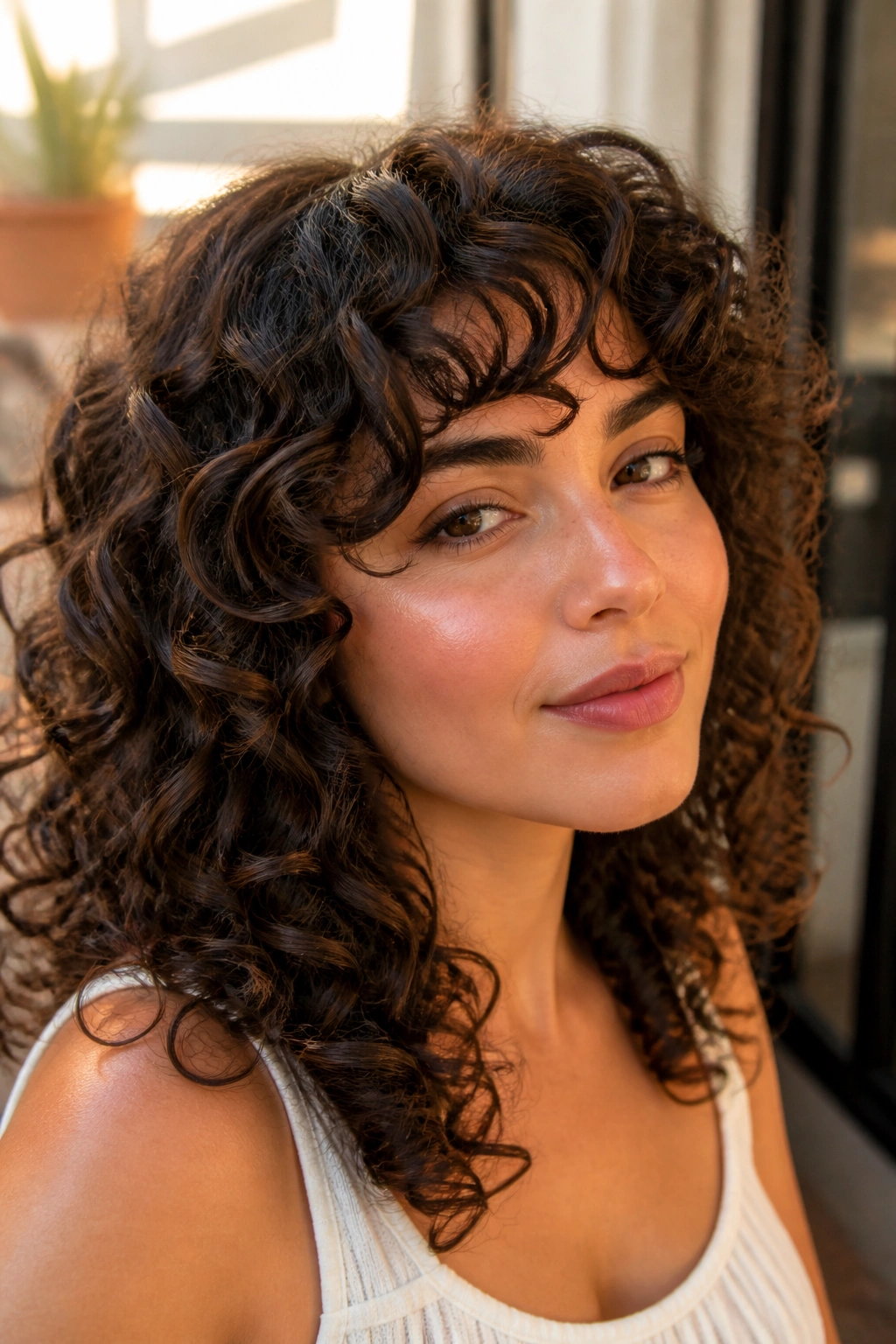
Can curly hair wear side bangs on a round face? Yes. It just needs a different cut than straight hair does.
A curved fringe for curls should be shaped dry, not guessed at while wet. Curly hair springs up, twists, and shifts, so the shortest point usually needs to be left longer than you think. That gives the curl room to settle into a soft diagonal instead of a cropped kink.
How to Get It Right
Ask for the fringe to follow the curl pattern from temple to cheek. The goal is a soft sweep, not a neat little chop. A narrow curl can sit at the brow. A wider curl can fall lower. Both are fine if the line stays diagonal.
A few things help:
- Use a curl cream with a light hold
- Diffuse the front on low heat
- Clip the roots for a little lift if they collapse
- Leave some pieces longer at the outer edge
Curly bangs should not fight the texture. They should ride it.
13. Blowout Bangs That Float Off the Forehead
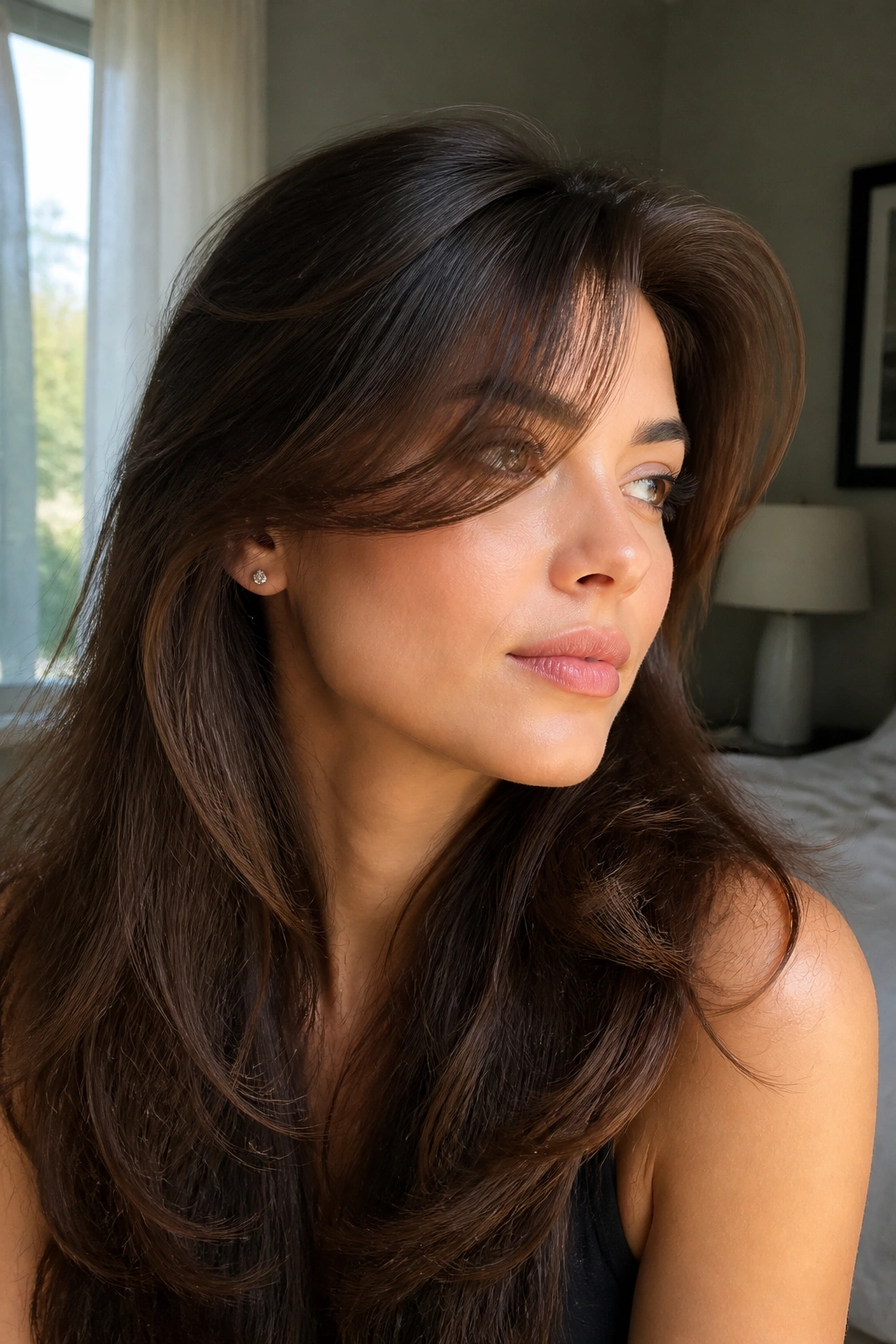
This is the polished one. The hair is smooth, bouncy, and the fringe lifts just enough to feel airy.
Blowout side bangs are flattering on round faces because the volume sits above and beside the face, not right across the widest point. The shape opens the forehead while still keeping a diagonal line in front. That balance matters more than people think.
A round brush makes the difference here. Roll the bang up at the roots, then turn it away from the face as you dry. Let it cool on the brush for a second before releasing. That tiny pause helps the bend hold. If the hair is stubborn, pin the front for five minutes while it cools. Old trick. Still works.
This style does need maintenance. Humidity can flatten it fast, and very fine hair may need a light root spray to keep the front from dropping.
14. Collarbone Cut With a Low Side Part
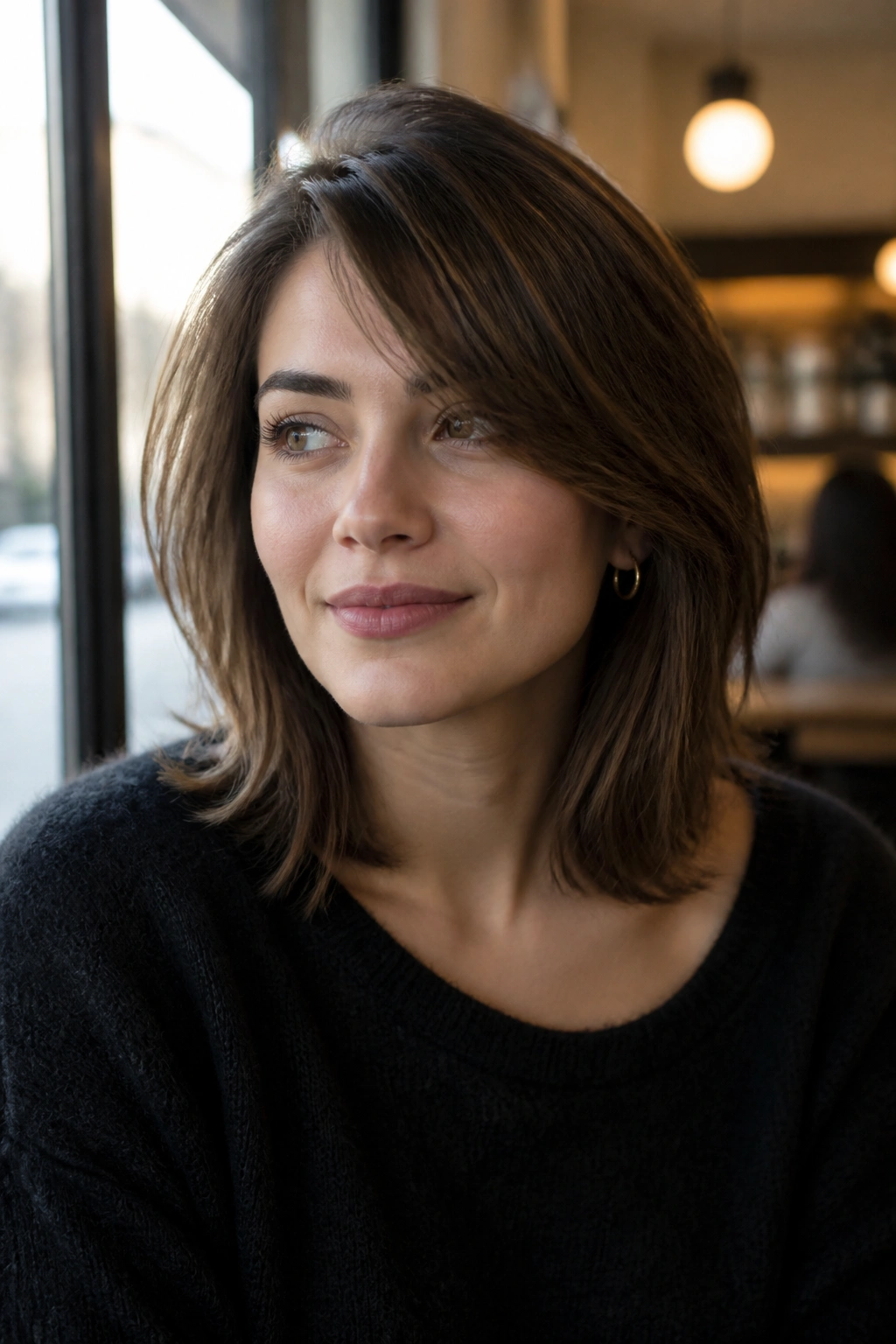
A low side part can change a haircut faster than most people expect. Put it with a collarbone cut, and a round face gets a long, graceful front line almost immediately.
The part shifts the bulk of the hair to one side, which creates asymmetry. That asymmetry is what keeps the face from feeling too centered. The side bang becomes a soft panel rather than a wide curtain. Much better for anyone who hates hair sitting directly on the middle of the forehead.
This cut looks especially nice when the ends are slightly beveled, not poker-straight. The front should move. If it hangs there like a strip of rope, the whole thing feels too flat.
One practical note: if you change your part often, this style can be a little fussy. The bang will behave best when you pick a side and stay with it for a while. Hair gets trained. Slowly, but it does.
15. Chin-Length Bob With Longer Front Pieces
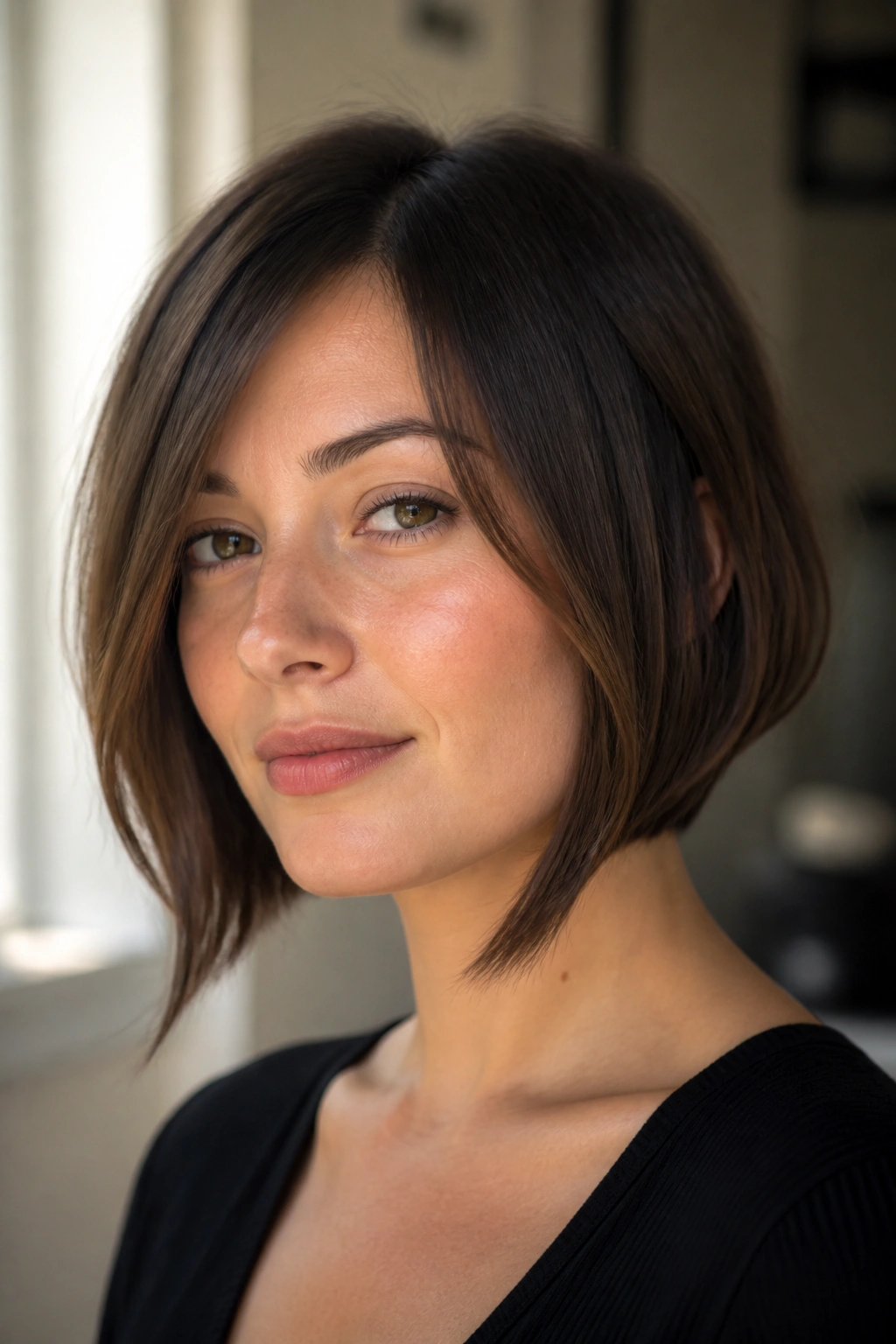
A chin-length bob can be tricky on round faces. A good side bang fixes a lot of that, especially when the front pieces are left longer than the rest of the cut.
The key is not to let the bang stop at the cheek. Let it slip past that point so it can stretch the face visually. A longer front piece draws the eye down, which is what you want when the bob sits high and clean around the jaw.
The Right Cut Shape
I would avoid a super blunt chin bob with a heavy side fringe. That combo can feel boxy fast. Instead, ask for the front to angle slightly longer toward the mouth, then soften the bang with point cutting.
- Best with smooth hair or a neat blow-dry
- Needs regular trimming to keep the line clean
- Works well with a tucked side behind one ear
- Looks sharper when the ends are beveled inward
This is a strong choice if you like clean lines and do not mind upkeep.
16. Wolf Cut With a Wispy Diagonal Fringe
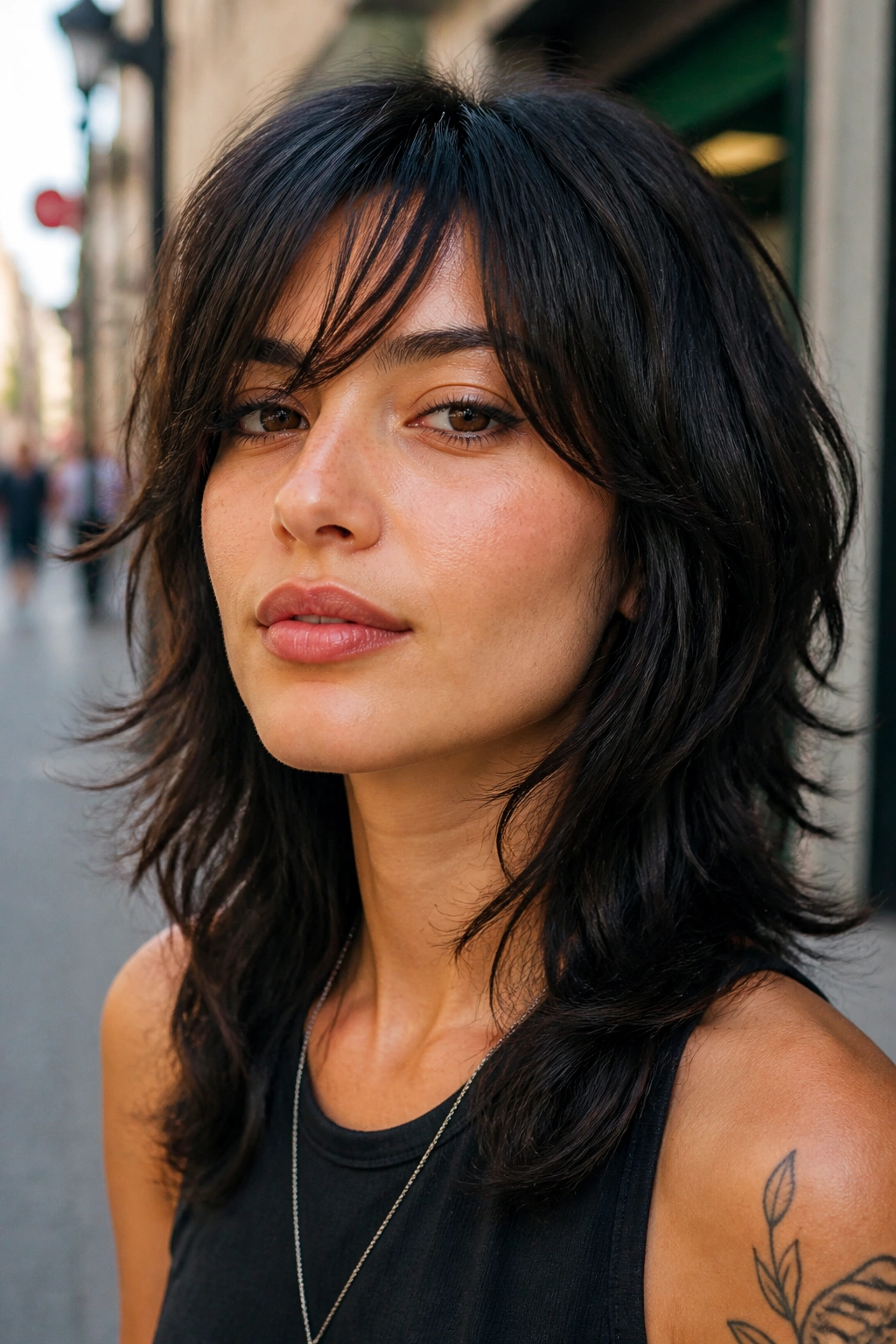
A wolf cut already has attitude. Add a wispy diagonal fringe, and the front gets enough softness to work on a round face without losing the cut’s rough charm.
Why the Angle Helps
The wolf cut can be heavy if the fringe is too thick. A diagonal side bang cuts across that bulk and gives the eye a path to follow. The length around the cheeks and neck then does the rest. It is one of the few cuts where a little mess looks better than too much polish.
If you style with a blow dryer, keep the roots lifted and the ends a touch separated. If you air-dry, twist the bang once while damp and let it fall on its own. That creates the broken, pieced-out front the cut wants.
I would not choose this if you want neatness. I would choose it if you like shape, texture, and a little movement that feels lived in.
17. Face-Framing Highlights and a Light Sweep
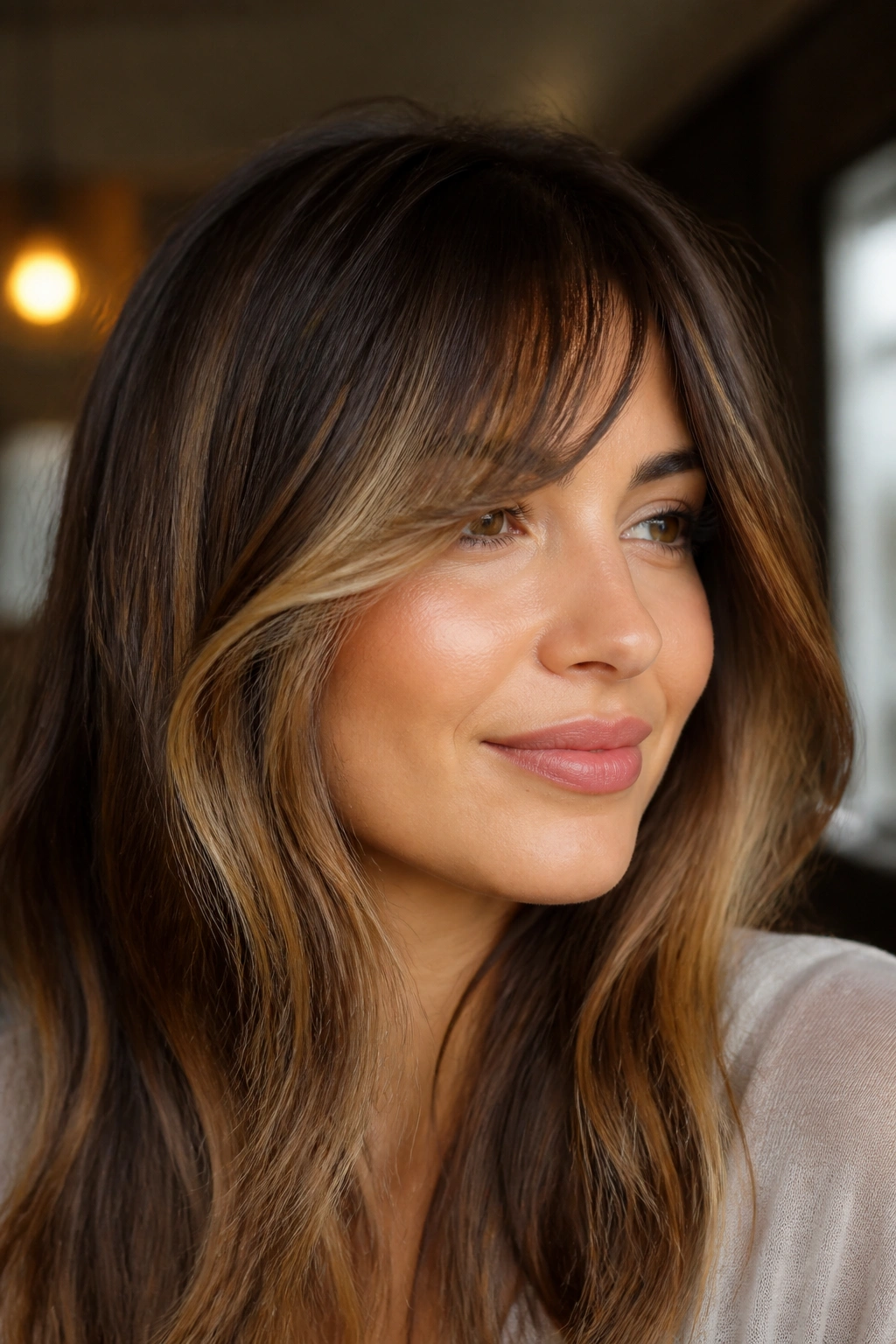
A side bang does not have to work alone. Sometimes a few face-framing highlights do half the job.
When the lightest pieces sit around the bang and cheek, they create a visual break that pulls attention downward and outward. That can make the front feel lighter without taking away length. On a round face, that lighter front can be a real help, especially if the natural hair color is dense and uniform.
The trick is placement. Put the brighter pieces where the bang curves across the face, not all over the head. Too many highlights and the face loses shape. A few fine ribbons near the side part are enough.
This is also a good move for people who want the bang to stand out less. The highlight makes the fringe blend into the haircut. It reads softer, more textured, and less like a separate chunk of hair sitting on top.
18. Fine Hair With a Feather-Thin Bang
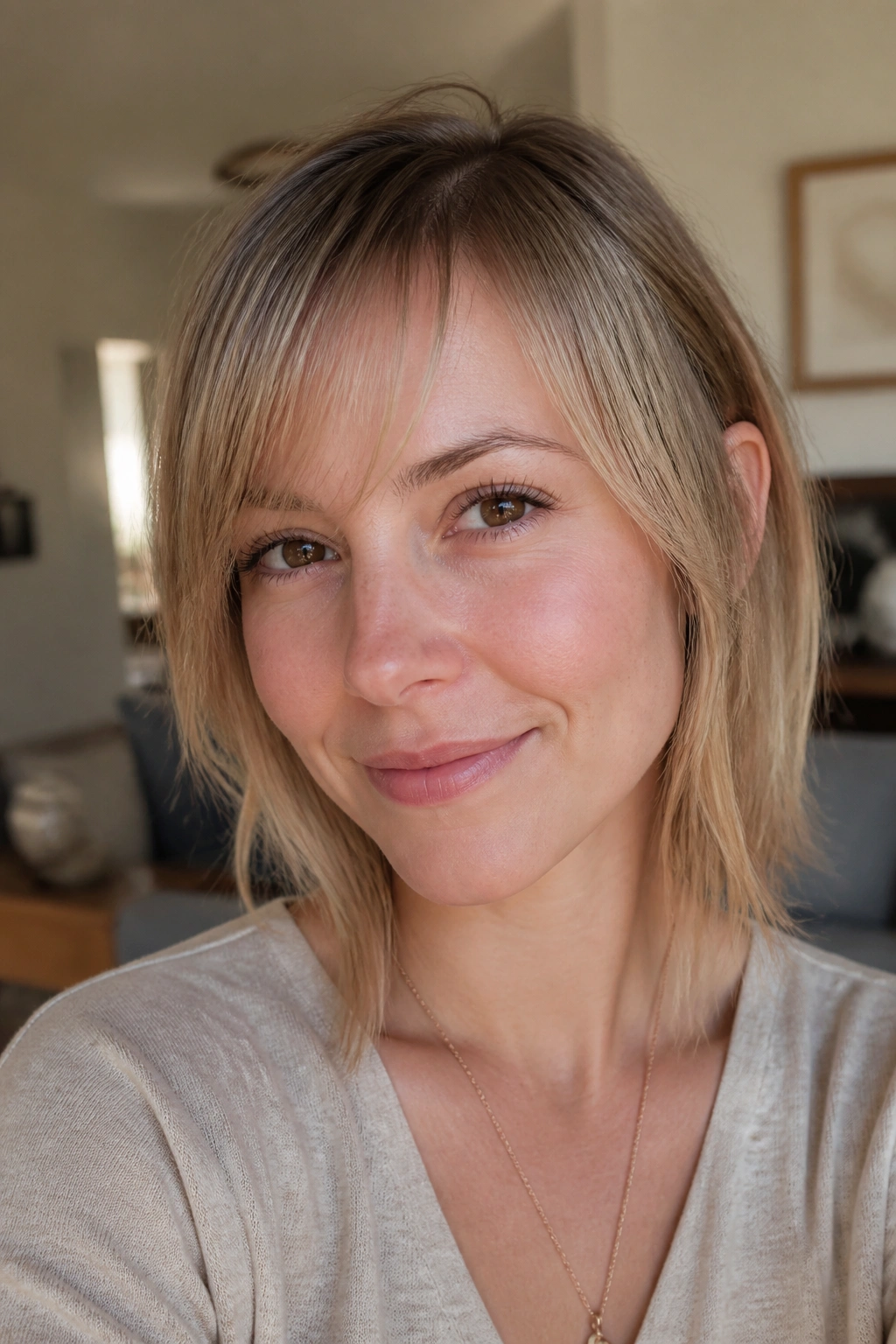
Fine hair needs a light hand. Always has. And a feather-thin side bang can be one of the best choices, because it gives shape without asking the hair to do more than it can.
The mistake with fine hair is cutting too much into the front. That leaves the bang sparse and see-through in a bad way. Keep the fringe narrow, then let the longer pieces around it help fill out the shape. The bang should look airy, not missing.
What Helps Most
A little root lift spray at the part. A tiny round brush. And less product than you think.
- Use low heat so the front does not collapse
- Keep the ends soft, not choppy
- Ask for a narrow section instead of a wide one
- Trim just enough to hold the diagonal line
Fine hair can look elegant with side bangs when the cut respects its density. Force it, and the bang disappears.
19. Thick Hair With a Thinned-Out Side Fringe
Thick hair can wear a side bang beautifully, but it needs control. Otherwise the fringe turns into a heavy slab, and that is not the mood.
A thinned-out side fringe lets the front move instead of sitting in one dense block. The removal should happen at the ends and inside the shape, not right at the top. Too much thinning near the root can make the bang frizzy or split in strange ways. Been there. Regretted it.
This style works well when the rest of the haircut has some internal layering. The bang should blend into those layers, so the front line feels lighter. A wide paddle brush during drying can smooth the bulk, while a flat iron can add a soft bend if needed.
If your hair is coarse, ask for the fringe to be cut a little longer than usual. Thick hair shrinks up more than people expect when it dries.
20. Glass-Hair Finish With a Narrow Sweep
A sleek, shiny finish can make a side bang look expensive without trying too hard. The glass-hair side sweep is all about neatness, control, and a clean diagonal line.
What makes this work on a round face is the contrast. The hair lies smooth, but the bang still moves sideways instead of straight down. That little directional shift keeps the forehead from feeling boxed in.
Use a heat protectant, then a small flat iron pass from root to end. Bend the wrist very slightly at the finish. Not a curl. Just a soft turn. If the hair is too shiny from product, the bang can stick to the forehead, which defeats the point. A pea-sized amount of serum is enough.
This style suits people who like a polished look and do not mind spending a few extra minutes in the morning. It is neat. Clean. A little exacting.
21. Asymmetrical Bob With a Long Fringe
An asymmetrical bob is already doing a lot visually, so the side bang should stay light and deliberate. A long fringe keeps the front from fighting the slant of the cut.
This is one of the easiest ways to make a round face look longer without using much length overall. One side of the bob sits slightly longer, and the bang echoes that angle. The eye follows the line down. Simple. Effective.
You do need to keep the asymmetry clear. If the bang gets too thick, it hides the shape of the cut. If it gets too short, the balance falls apart. The best version feels sleek but soft, with the longer front piece landing somewhere between the cheekbone and the mouth.
This cut likes structure. If you prefer messy air-dried hair, it may not be your favorite. If you enjoy a precise finish, it can be a standout.
22. Side Bangs That Work With Glasses
Glasses change the front of the face more than people expect. A good side bang has to clear the frames, not fight them.
The best side bangs with glasses usually start a little longer and stay lighter near the brow. That gives the frame line room. A bang that drops directly into the top of the glasses can make the whole face feel crowded. Nobody needs that.
How to Keep the Balance
Ask your stylist to shape the bang around the top rim of your frames. The shortest piece should not sit where the glasses press into the face. That small adjustment saves a lot of annoyance later.
A few things matter:
- Keep the bang airy enough to move off the lenses
- Avoid a thick, full front that lands on the frame line
- Style with a soft side bend, not a curl
- Trim regularly if the front grows fast
This is a practical haircut, and I like that about it. It solves an actual problem.
23. Air-Dried Fringe for Low-Maintenance Days
Some bangs only look good after a full blowout. These are not those bangs.
An air-dried side fringe works when the cut is intentionally soft and a little broken up from the start. The pieces should fall into place with minimal help. A bit of mousse, a finger twist at the front, and you are done. That is the appeal.
The risk is frizz. If your hair blooms when it dries, the bang can widen too much and lose the diagonal line. A smoothing cream or a light gel at the roots can keep the shape from puffing out. I would rather use a tiny bit of hold than fight a fuzzy front all day.
This style is excellent for people who do not want to round-brush every morning. It still needs a good cut, though. Lazy styling only works when the haircut is carrying half the load.
24. Jaw-Softening Sweep With Longer Sides
A round face often gets strongest around the cheeks and jaw, so a jaw-softening sweep is useful when you want the front to look gentler.
The trick is to keep the bang long enough that it can slide past the jawline instead of ending right there. If the shortest pieces stop above the cheek, the eye stays high. If they fall a little lower, the front relaxes and the jaw feels less boxed in.
I like this shape with layered cuts that already have some movement through the ends. It keeps the hair from puffing at the sides, which matters if your face already has fullness. The bang can be blown forward first, then swept sideways to lock in the curve. Old-school, maybe. Reliable, yes.
This is the sort of fringe that looks better the second it is slightly imperfect. Perfect hair can be a little too rigid here.
25. Flipped Ends and a Light Bang
A little flip at the ends can make a side bang feel more playful and less serious. That matters more than people think.
The flipped-ends fringe works because the curl at the bottom sends the eye outward while the bang itself stays light across the forehead. The whole haircut feels lifted. On a round face, that lift helps create vertical space around the cheeks.
Styling Notes
Use a round brush or a flat iron to turn only the last inch of the front pieces outward. Leave the bang itself soft. If the flip starts too high, the style can look dated fast. Keep it at the ends.
- Great with shoulder-length cuts
- Looks lively on straight hair
- Needs heat protectant before styling
- Pairs well with side layers that move away from the face
I like this one when the hair needs a little personality without going full retro.
26. Pinned-Back Side Bangs for Busy Mornings
What if you love the look of side bangs but do not want them on your face all day? Pin them back.
A pinned-back side bang is less about the cut and more about the way the cut behaves. You want enough length to sweep across the forehead, then enough softness to tuck or pin without leaving a hard crease. That flexibility makes life easier, especially if you work out, travel, or just hate hair in your eyes.
A small bobby pin hidden under a top layer can hold the bang off the face while still leaving the diagonal shape visible. A decorative clip works too, though I usually prefer the hidden pin if the rest of the hair is neat. That keeps the style from looking fussy.
The main thing is length. If the bang is too short, it cannot be pinned well. Too long, and it droops. The middle ground is the sweet spot.
27. Polished Fringe for Events
A round face can look especially elegant with a polished side fringe, because the bang gives structure while the rest of the hair stays smooth and lifted.
This style is less about everyday wear and more about clean finish. The fringe should sweep cleanly across the forehead, tuck into the rest of the style, and hold its shape through the evening. I like it with a low bun, a soft chignon, or a glossy blowout. It feels finished, but not hard.
The prep matters. Blow-dry the front carefully, set the bend with a clip while it cools, then brush it into place with a soft-bristle brush. Hairspray should be light. If it feels crunchy, it is too much.
A polished fringe can be very flattering on round faces because it creates lines where the face wants them most. The key is keeping the front sleek and the ends feathered. Clean, not stiff.
28. Shaggy Texture With Long Layers
A shaggy cut with long layers can be a beautiful fit for someone who wants movement up front and softness everywhere else. The side bang should not sit as a separate piece. It should slip into the layers and disappear when the hair moves.
The point of this look is texture that feels lived in. Not messy-for-the-sake-of-it. Just broken up enough to stop the shape from feeling round on round. That is the danger with a round face and too much curl or too much uniform layering. Everything starts echoing the same shape.
Ask for the front to stay longer than the crown area. That gives the eye a downward line. A texturizing spray can help, but use it lightly. Too much and the front gets dry and rough, which is not the same thing as airy.
This one suits people who like hair with some swing. It is not precious. I respect that.
29. Vintage-Inspired Side Sweep
There is a softer, more old-school way to wear side bangs, and I think it deserves more attention. A vintage-inspired side sweep brings a little polish without making the face look boxed in.
The shape usually starts with a deep side part and a fuller front curve, then narrows into the rest of the hair. Think of the front as a soft wave, not a hard bang. On a round face, that curve can be lovely because it frames the forehead while still leaving the cheeks open.
The trick is restraint. You want the sweep to feel rich, not heavy. If the front gets too wide, the face loses its length. If it is too thin, the style loses that old-school grace.
I like this best with smooth shoulder-length hair, a tucked side, or even a low bun. It has a little mood. In the good way.
30. The Softest Finish
If you want the safest all-around version, this is it. A softest-finish side bang stays long, light, and slightly broken at the ends so it can move with the rest of the haircut instead of sitting on top of it.
The shape is not dramatic. That is the point. It skims across the forehead, opens the face, and fades into the layers before it gets thick. Round faces tend to do well with that kind of easy line because it gives definition without sharp edges.
I would ask for extra length at the outer corner of the eye and keep the interior weight light. A tiny bit of bend, a tiny bit of texture, and no blunt cut line. That keeps the fringe from feeling too neat or too modern in a stiff way. Soft wins here. Every time.
Final Thoughts
A round face is not hard to work with. It just needs a front shape that moves diagonally instead of sitting flat and wide. That is the real reason wispy side bangs for round faces keep showing up in good salons: they add line, not bulk.
The best choice is the one that matches your hair texture and your patience level. Fine hair likes lighter bangs. Thick hair needs thinning and shape control. Curls want room to spring. Straight hair can handle the cleanest sweep of all.
If you are stuck between two options, choose the longer one. It is easier to shorten a bang than to wait out a bad short cut. And with side bangs, a little extra length usually gives you more ways to wear them anyway.
