



Round faces and blunt bangs have a messy relationship. Side bangs for round faces work because they cut across the face on a diagonal, and that line does more than a center-framed fringe ever will. It pulls the eye outward, breaks up width, and gives the cheek area somewhere to go.
The catch is that not every side fringe does the same job. A soft sweep near the brow behaves one way. A chin-skimming bang behaves another. Hair texture changes the whole effect, too — a wavy fringe can look airy and easy, while a straight, heavy fringe can turn boxy fast if the cut lands in the wrong spot.
That’s why the best side bang ideas are not just “swept to one side.” They’re shaped with a length, a weight, and a finish that work with your face instead of against it. Some are subtle. Some are bolder. A few need a little heat styling, and a few can survive a rushed morning without complaint.
Start with the shape that fits how you wear your hair most days. That matters more than chasing a photo that looked good from one angle.
1. Long Feathered Sweep
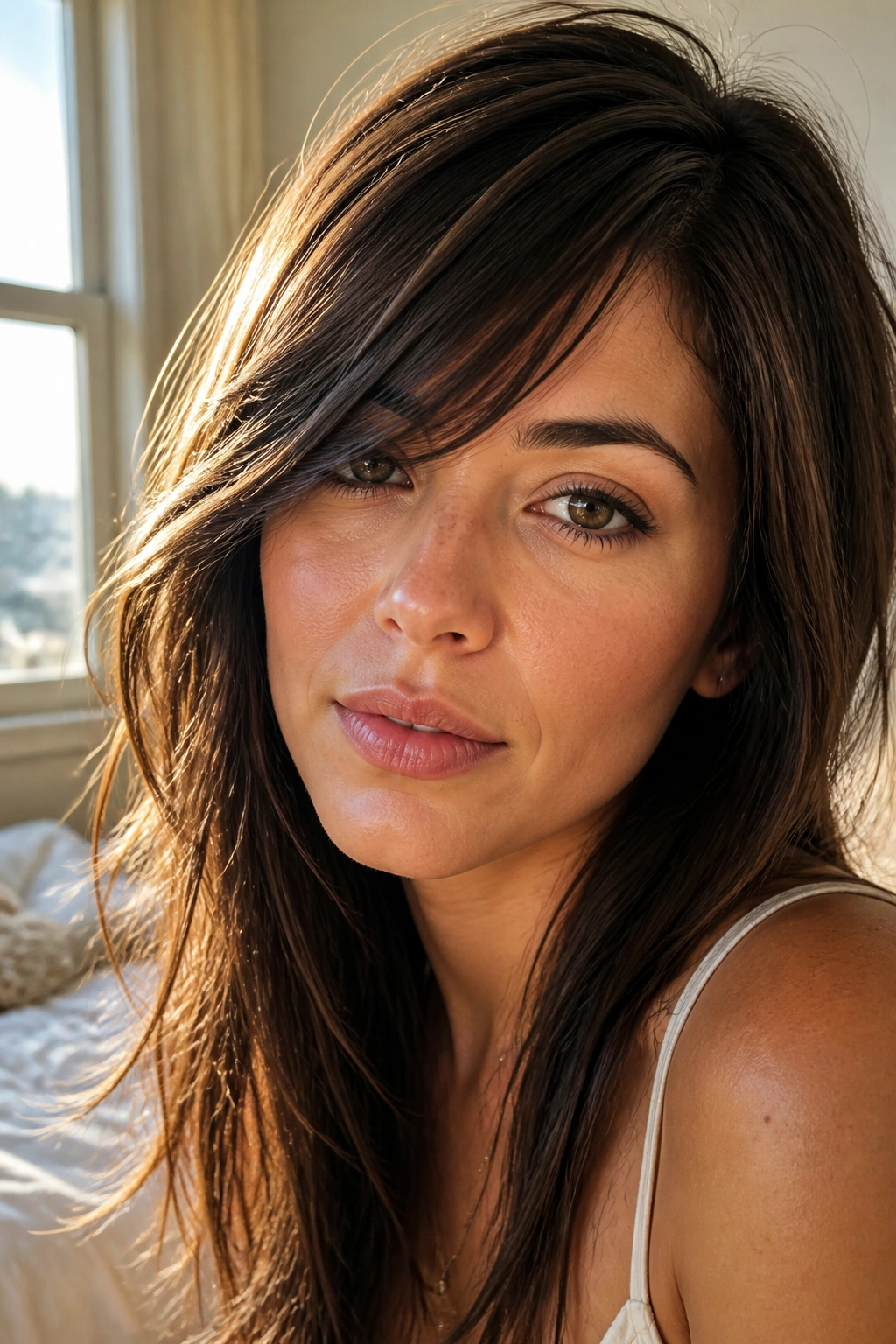
A long feathered sweep is one of the easiest wins for a round face. The fringe starts near a deep side part, then drifts down and away from the face instead of stopping in a hard line across the forehead.
Why it works
The trick is the diagonal. A long sweep draws the eye from the hairline toward the cheekbone, which gives the face a little more length and less width. Ask for the shortest point to land around brow level, then let the longest pieces skim the top of the cheek or even brush the lip if you wear your hair long.
Best for: medium to long hair, soft layers, and anyone who wants bangs without the full commitment of a blunt fringe.
What to ask for
- Keep the front piece light, not chunky.
- Point-cut the ends so they feather instead of block out.
- Leave enough length to tuck behind the ear on lazy days.
Tip: Blow-dry the fringe from side to side with a small round brush so it learns the direction instead of fighting it.
2. Deep Side Part with Curtain Fringe
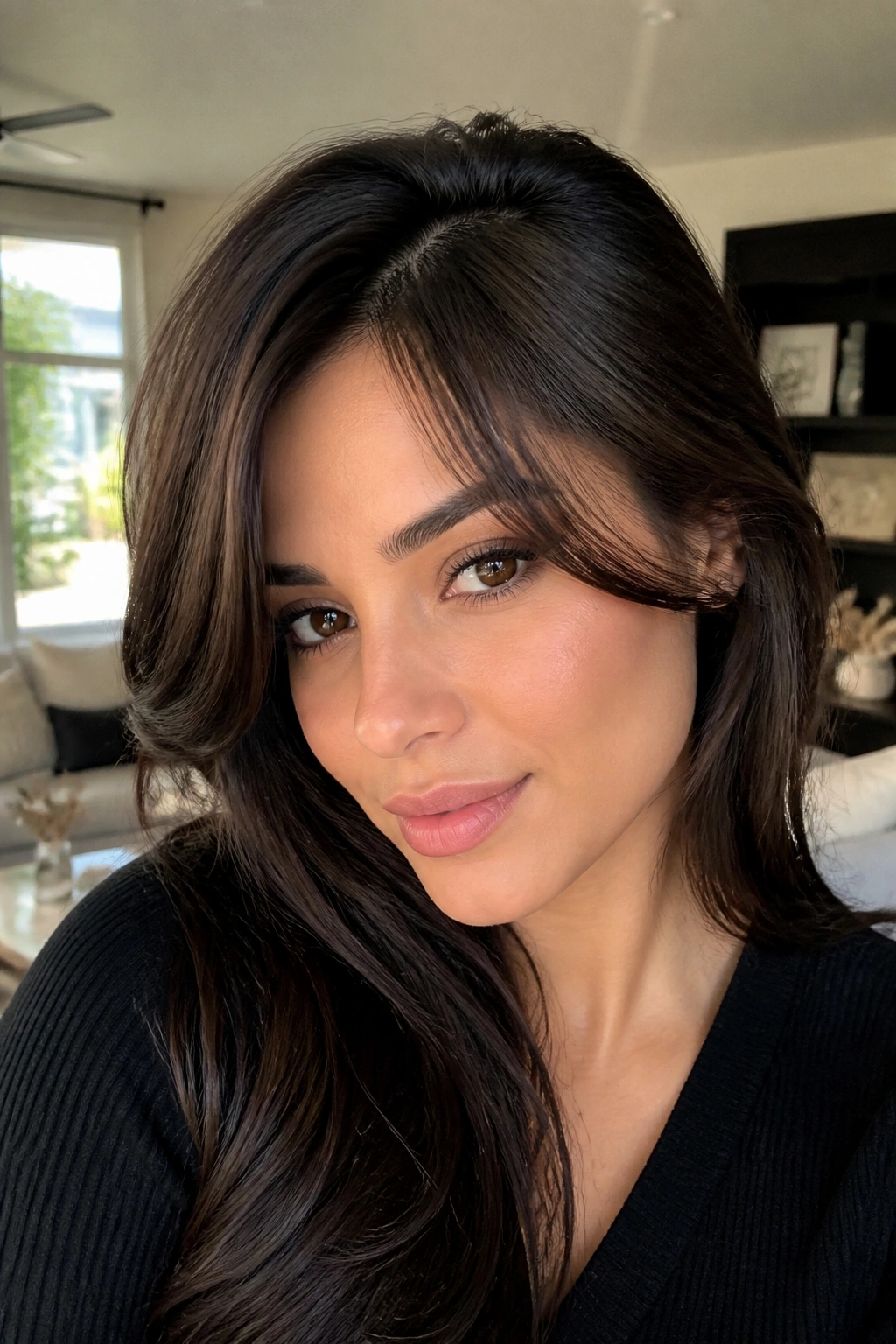
A deeper side part changes the whole face shape before the bang even moves. That’s why this one looks better than people expect on round faces. The part itself creates lift and a stronger vertical line, which helps the fringe feel intentional instead of heavy.
The curtain piece should open gently around the brow, then fall away at the temple. Not wide. Not blunt. A 70/30 or 80/20 part usually gives enough angle to sharpen the face without making the crown look flat.
This style is especially good if you like a softer, grown-out fringe. It does not need to be perfect every morning. A little bend, a little swoop, and you’re done.
3. Chin-Grazing Swoop
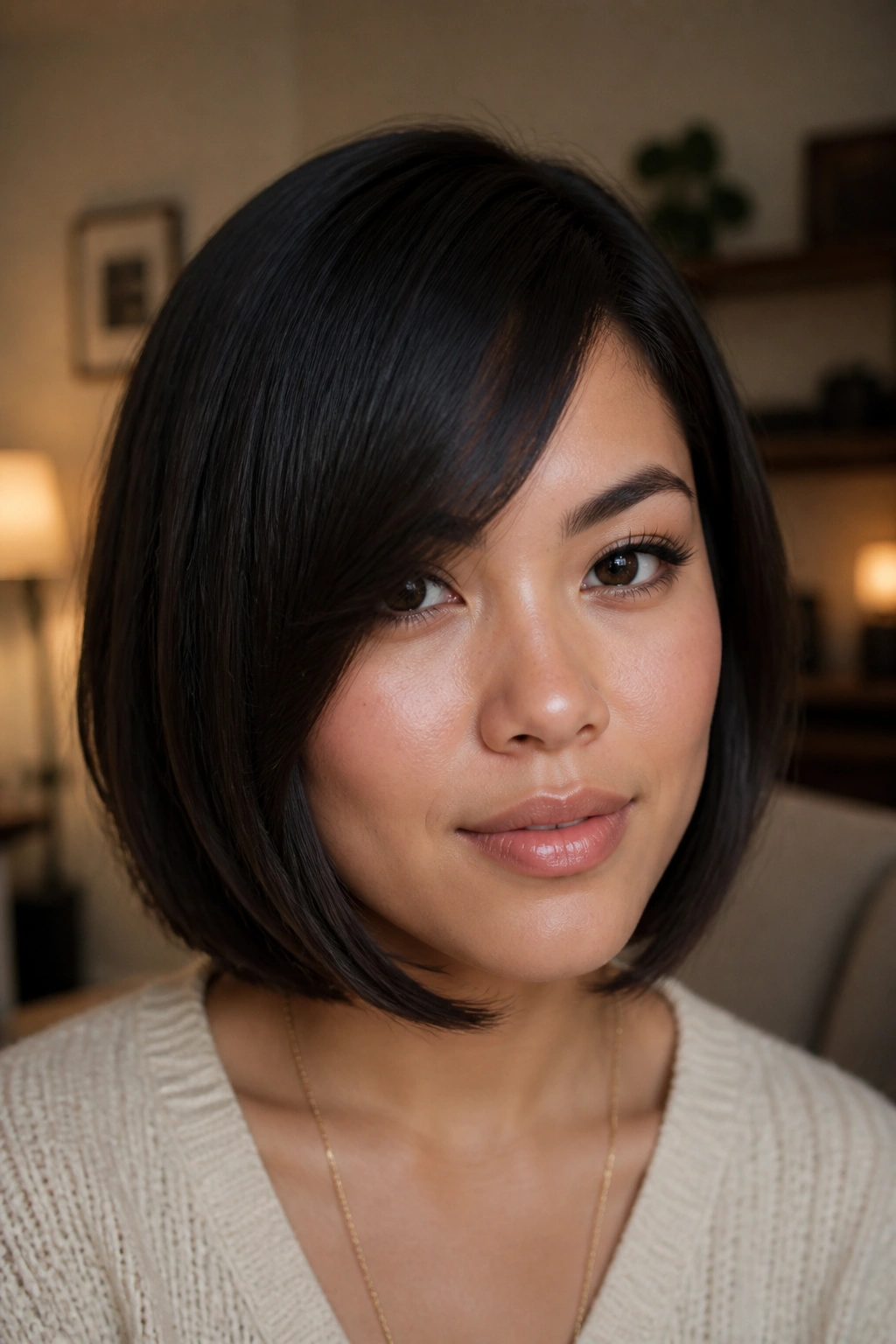
Why does this one flatter round faces so well? Because it stretches the side of the face in a way short bangs cannot. A chin-grazing swoop makes the cheek area feel longer, and that matters when the goal is to avoid adding width at the center of the face.
The cut should start around the brow, then curve down toward the jawline. If your hair is thick, keep the interior of the bang slightly layered so it does not swing like one solid sheet. That extra movement keeps it from sitting like a curtain.
How to wear it
A smooth blowout gives the best shape, but a side-swept bend from a flat iron works too. Aim the ends inward just once, not with a tight curl. You want a soft arc, not a flip.
4. Wispy Eyebrow-Grazing Fringe
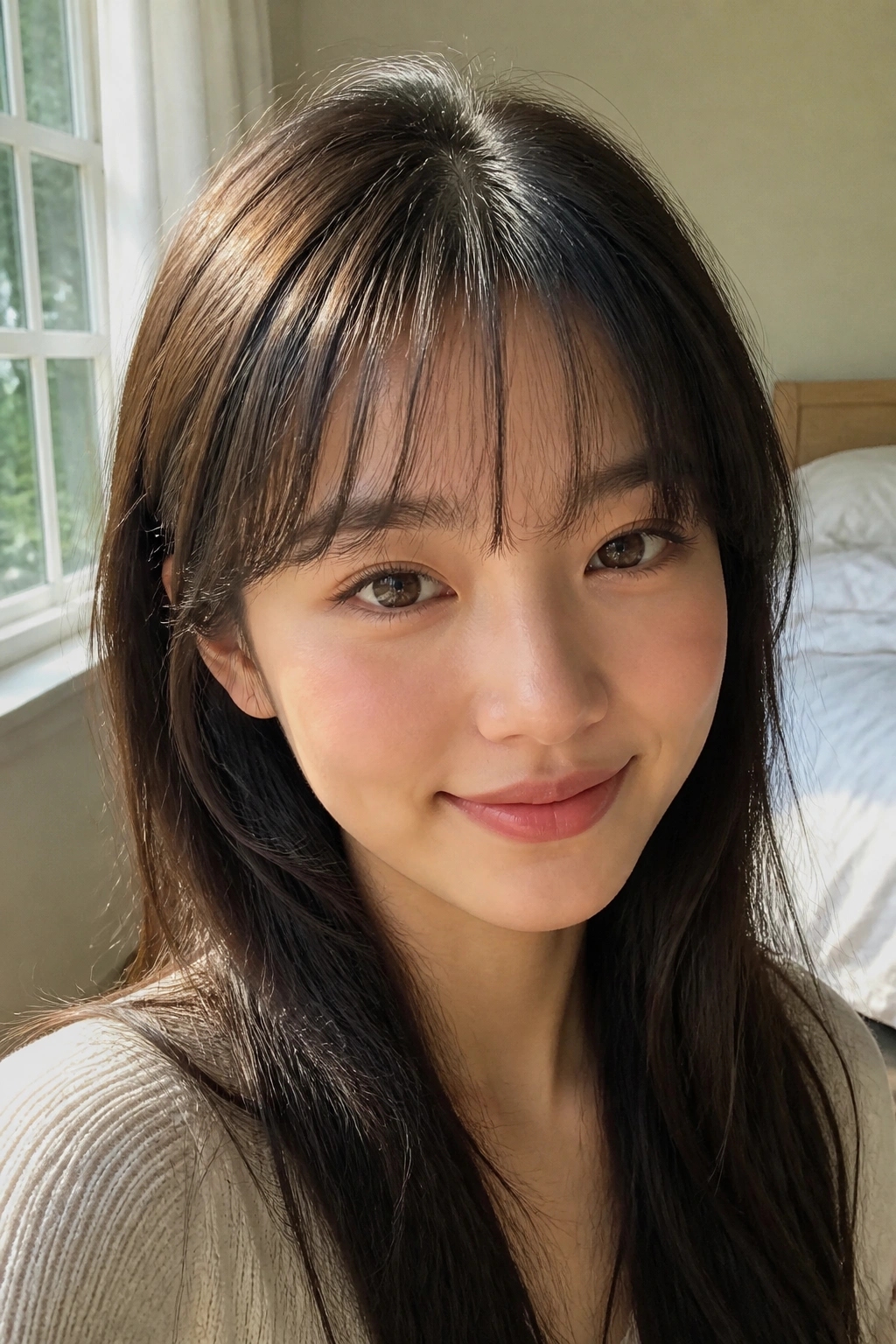
This is the bang for someone who wants softness, not drama. Wispy side bangs sit higher on the face, usually around the eyebrow or just below it, and they work because they break up the forehead without crowding the cheeks.
The important part is the amount of hair. Too much density and the fringe starts to feel heavy. Too little and it looks like a few pieces that wandered off. The sweet spot is a light, airy panel that can move when you turn your head.
Ask for point-cut ends and a little separation through the center. That helps the fringe sit in soft strands instead of one flat strip. A pea-sized amount of styling cream is enough.
5. Soft Blunt Side Bang

A blunt edge can work on a round face. People forget that. The mistake is making it too straight and too heavy across the forehead, which just throws more attention to width. A soft blunt side bang keeps the clean line but pushes it off-center, where it feels sharper and more modern.
This cut looks good on fine hair because the edge gives the fringe some substance. It also works if you like a neat finish and do not want pieces flying around all day. The key is to soften the very ends so the bang doesn’t look chopped off.
A flat brush, a quick bend at the temple, and a small touch of dry shampoo at the roots usually do the job.
6. Face-Framing Layers with a Side Sweep
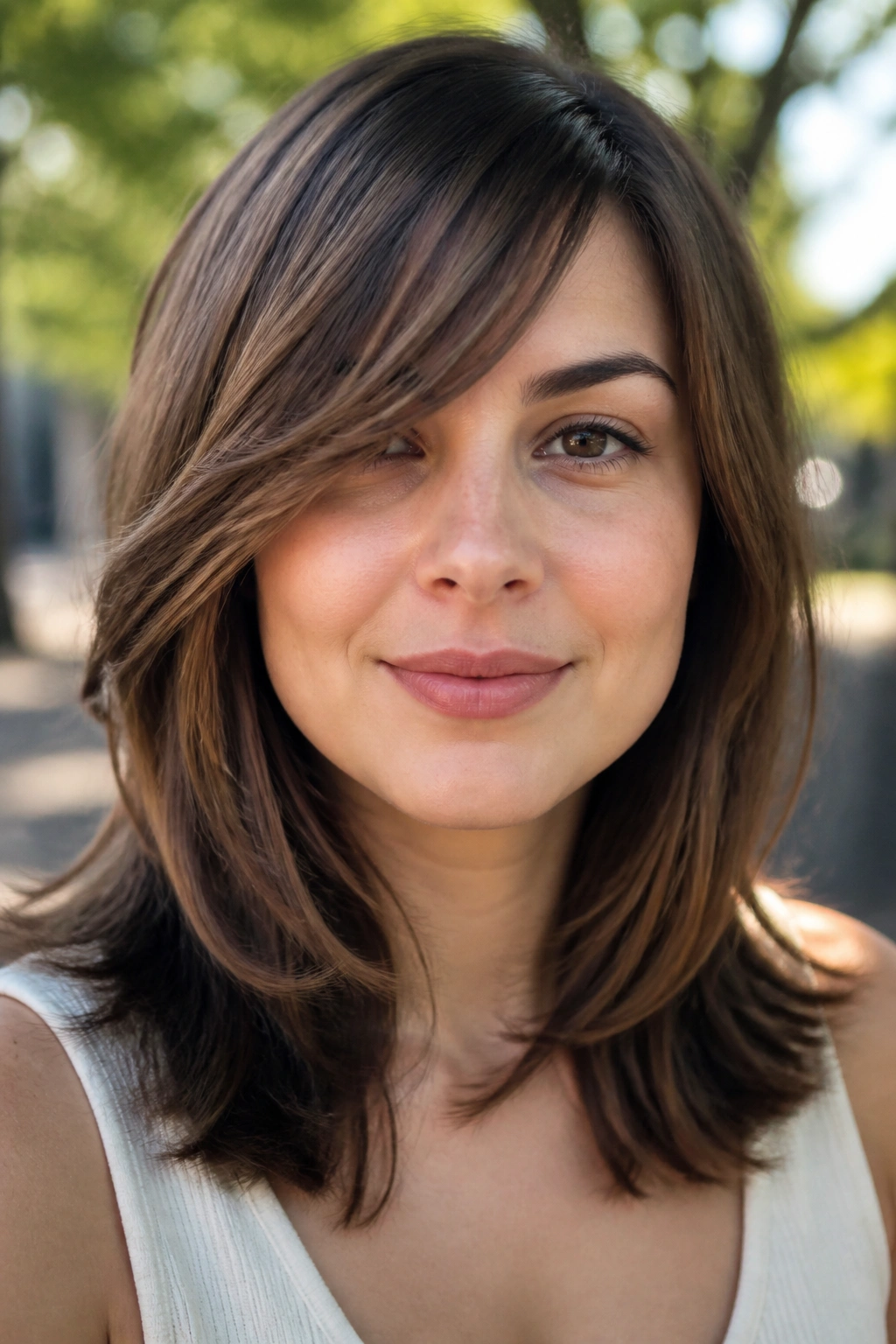
A side bang does not always have to carry the whole job by itself. Sometimes the smartest move is pairing it with long face-framing layers that start at the cheekbone and fall toward the jaw. That combination gives the face more angles, which round faces tend to need.
Why it feels different
Instead of one obvious bang, you get a softer frame that fades into the rest of the cut. That makes this style feel easy, especially if you wear your hair down more than half the time. It also helps if you hate the feeling of a “bang line” sitting on your forehead.
Good details to ask for
- Layer the front pieces first, then blend them into the rest of the cut.
- Keep the shortest layer near the cheekbone.
- Avoid over-thinning the front if your hair is already fine.
The result should move when you turn your head, not hang there like decoration.
7. Side Bangs on a Shag Cut
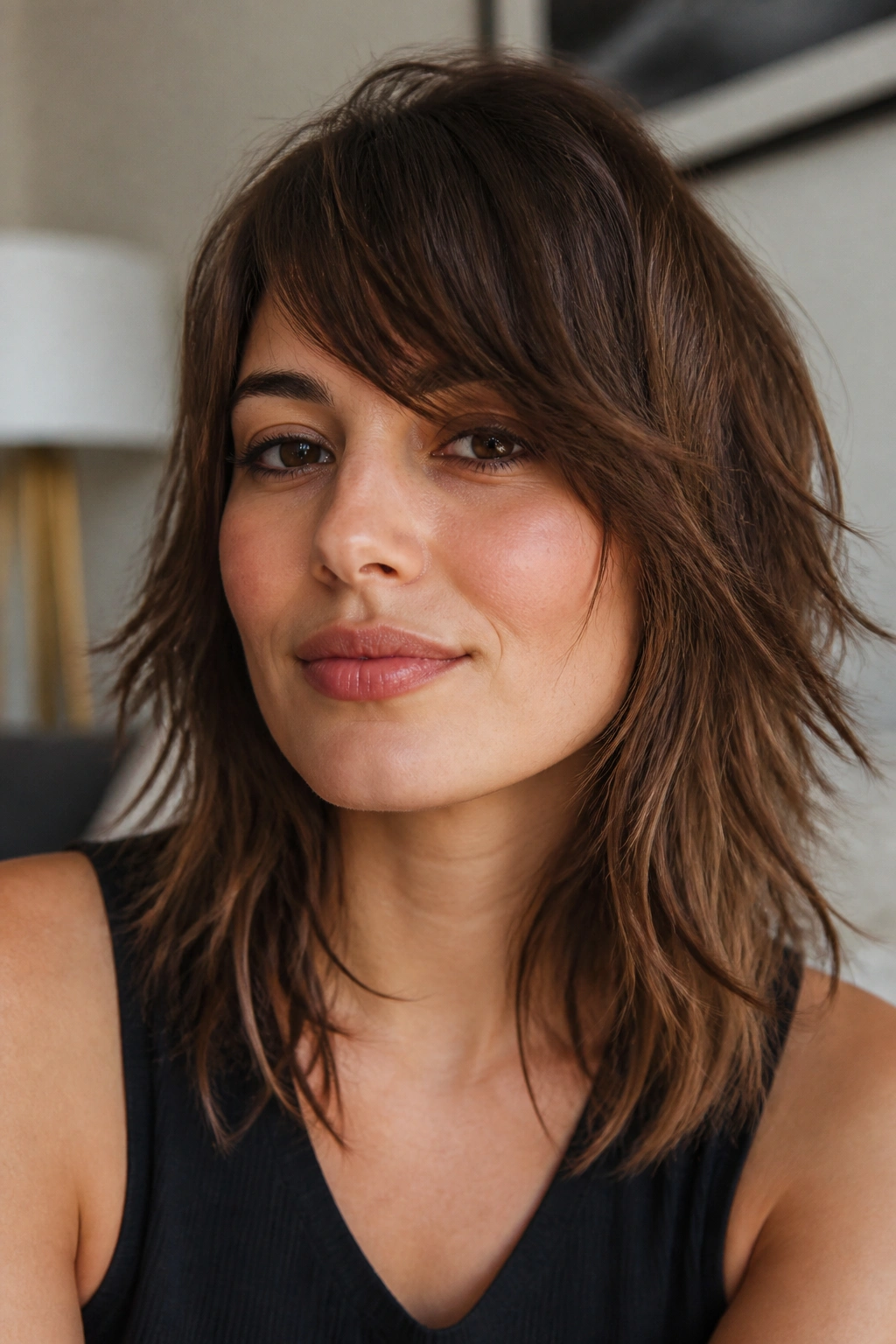
A shag and a round face get along better than most people think. The reason is simple: the shag brings uneven texture, and uneven texture breaks up the curve of the face. Add a side fringe, and the whole cut starts pulling in different directions, which keeps it from feeling too sweet.
What makes it different
The fringe in a shag should not look polished to death. A little choppiness is the point. You want pieces that fall slightly different lengths, especially at the outer edge, where the bang meets the layers around the cheek.
Best for: wavy hair, thick hair, or anyone who likes a cut with some edge.
Watch out for: too much fullness at the temple. That can add width right where you don’t want it.
A little styling paste through the ends helps, but don’t overwork it.
8. Side Bangs on a Bob
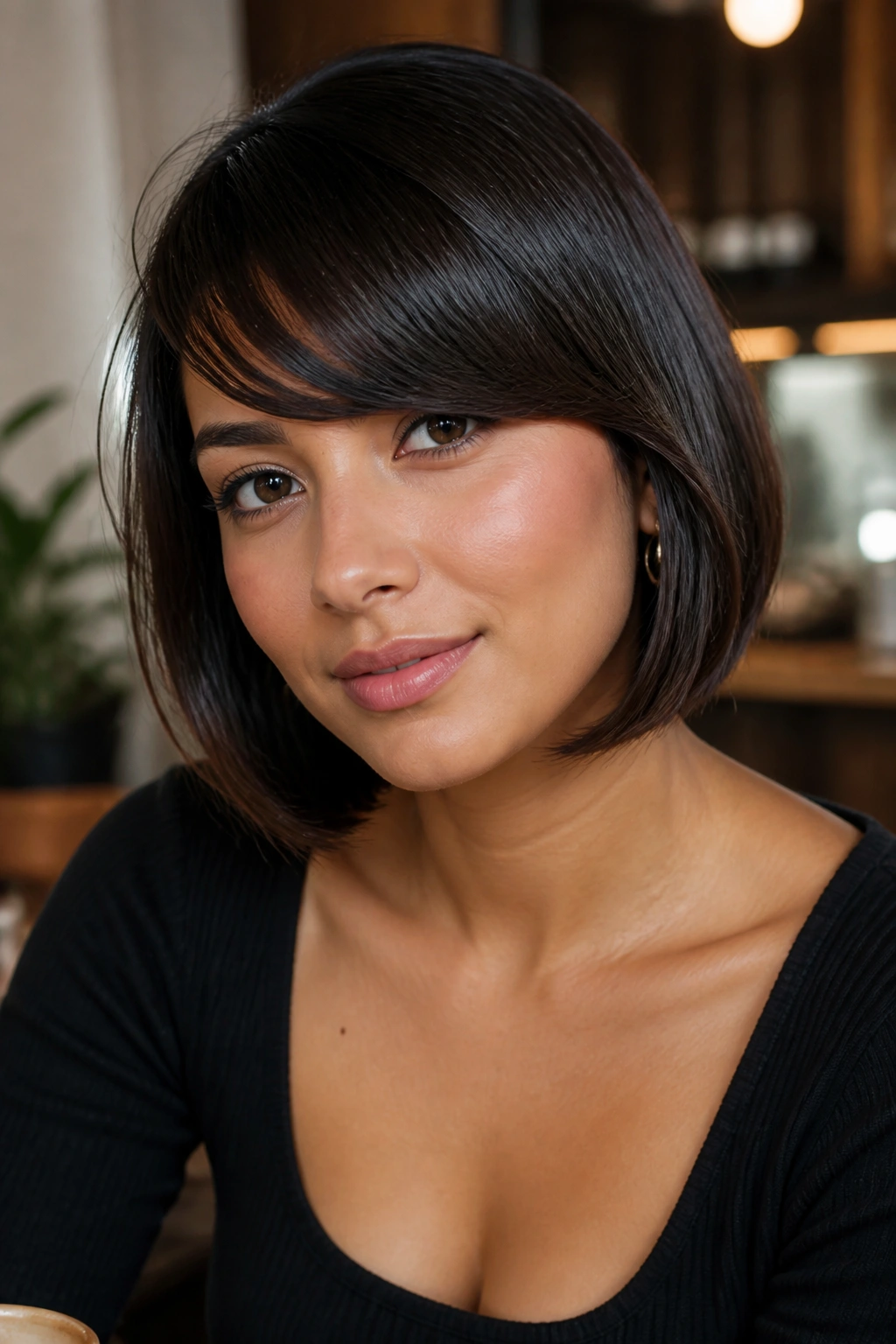
A bob with side bangs can be sharp in a good way, but the length has to be right. If the bob stops right at the widest part of the cheek, the face can look wider. Push the length a little lower, somewhere near the jaw, and the side bang starts making more sense.
Think of this as a clean frame with one soft piece breaking the line. The bang should sweep into the bob, not sit on top of it. That blend is what keeps the cut from feeling boxy.
Shorter round brushes work well here. So does a quick tuck behind one ear, which opens the face and lets the fringe do its job without crowding everything at once.
9. Side Bangs on a Lob
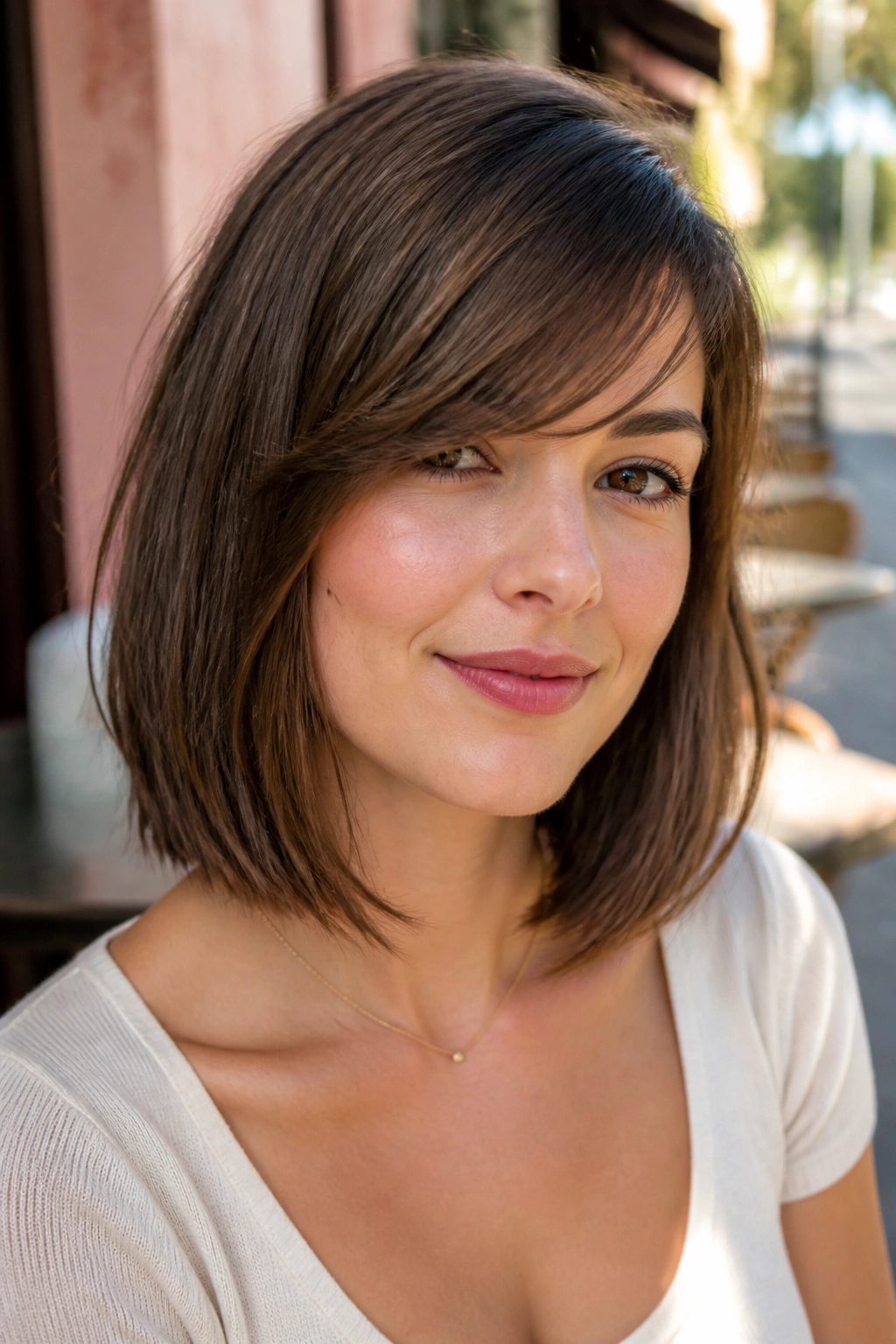
The lob is almost unfairly good on round faces, and a side bang makes it even easier to wear. Collarbone length gives the face vertical space, and the fringe adds a diagonal on top of that. You get shape without the haircut feeling fussy.
This is the style I’d point to if someone wants bangs but is nervous about commitment. The lob gives the fringe room to grow out cleanly, and the side bang can be shifted deeper or softer depending on the day.
A few loose layers around the front help the cut move. Keep the bang long enough to brush the cheekbone, and you avoid that “stuck on” look that shorter fringes can create.
10. Side Bangs on a Pixie
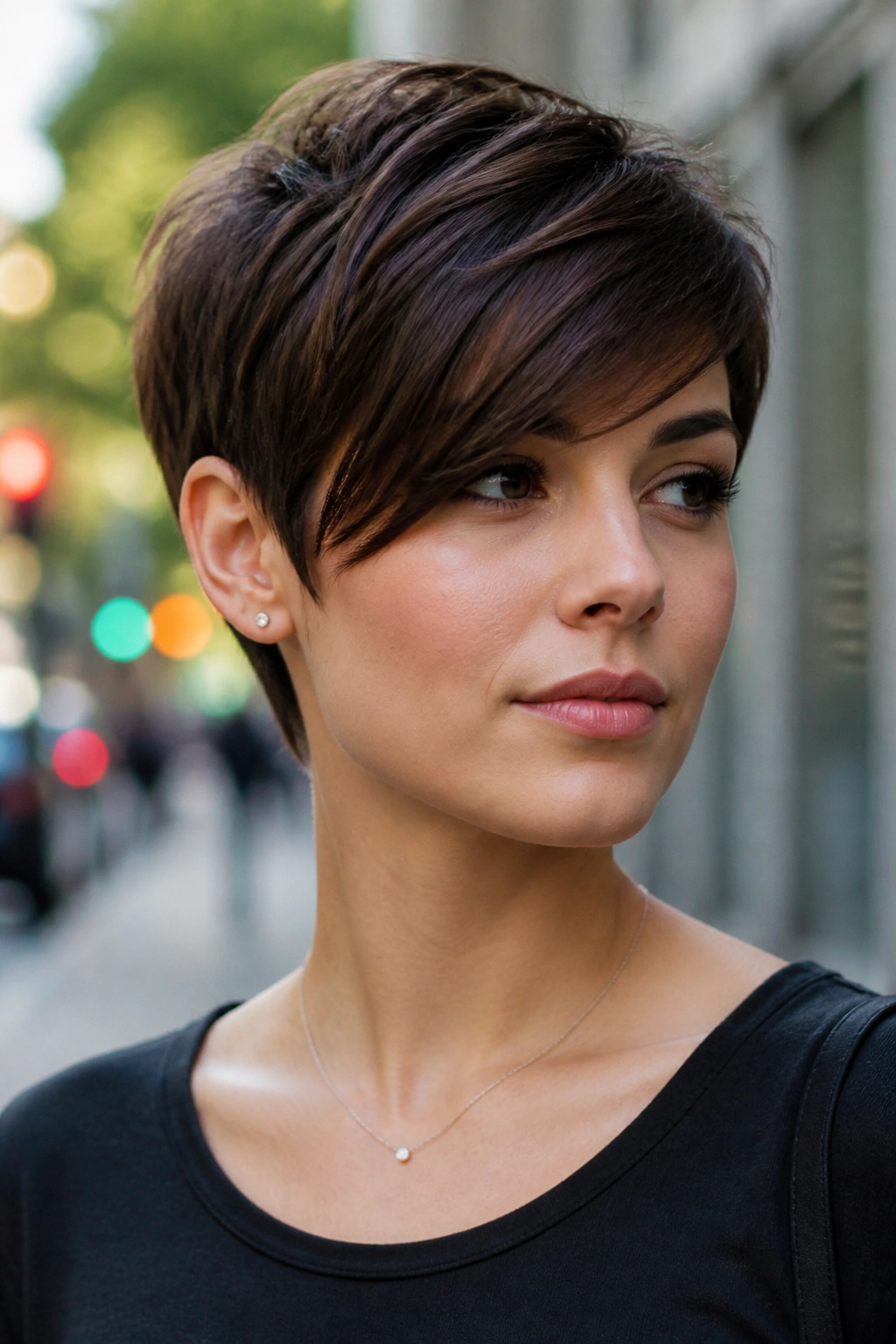
A pixie needs a side bang more than most short cuts do. Without it, the shape can feel too open around the face. With it, the cut suddenly has direction.
The fringe should stay longer than the top layer near the temple. That small difference gives the whole style a swoop instead of a spike. On a round face, that swoop matters because it interrupts the curve and keeps the cut from looking too circular.
Styling note
- Use a tiny bit of matte paste at the roots.
- Sweep the bang from the heavier side of your part across the forehead.
- Keep the ends piece-y, not spiky.
You’ll probably want trims more often than with a lob. Short bangs have less room to forgive growth.
11. Curly Side Bangs
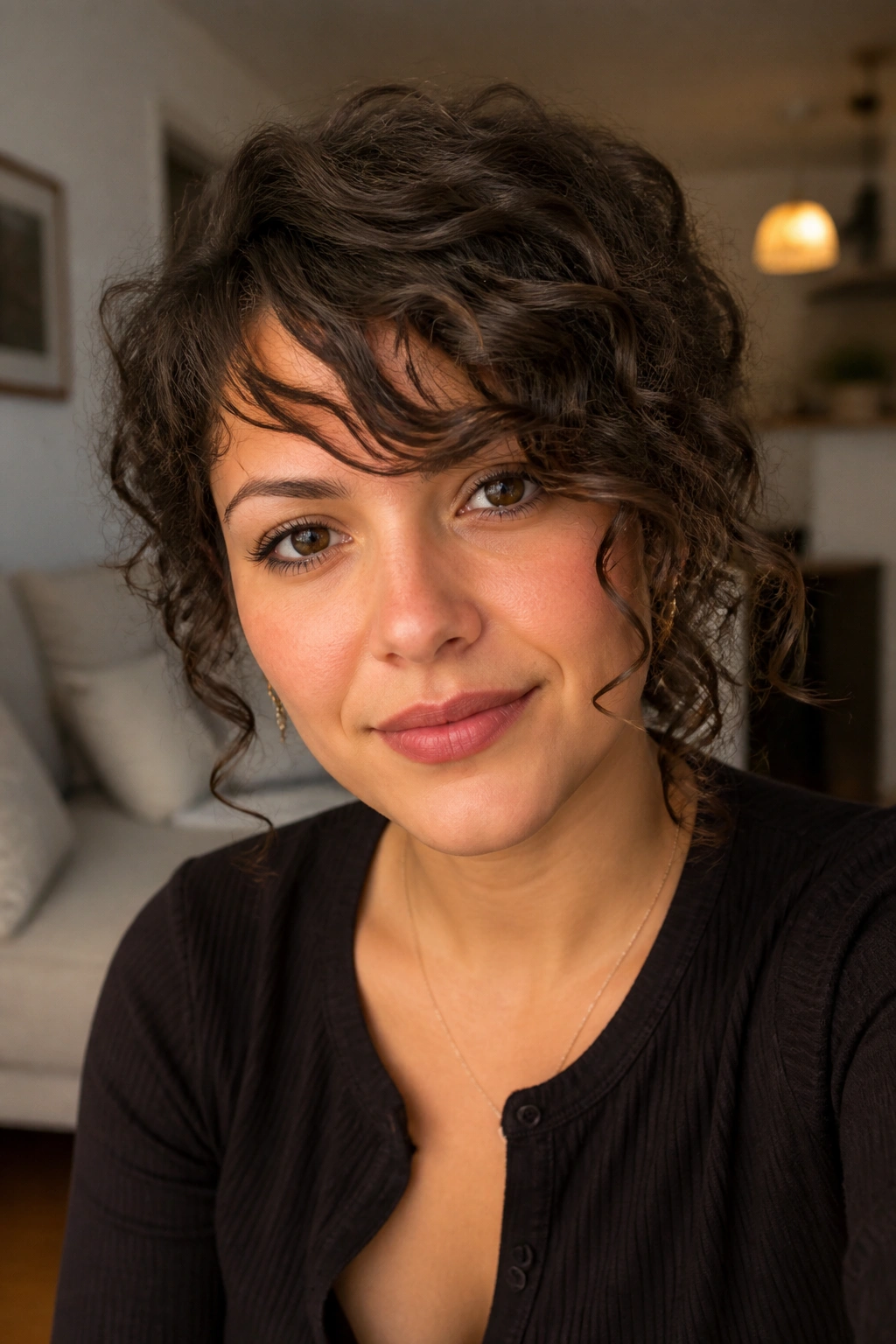
Curly side bangs are one of those styles that looks intimidating until you see the right version on the right curl pattern. The important thing is not to cut them too short. Curls bounce upward, and a fringe that seems long enough wet can land far higher once it dries.
A good curly side bang should fall softly across one side of the forehead and blend into the front curls near the cheekbone. That curve does a lot for a round face because it keeps the fringe from widening the forehead area.
Cut them dry if you can. Or at least dry enough to see the shape. Wet curls lie.
12. Wavy Side Bangs
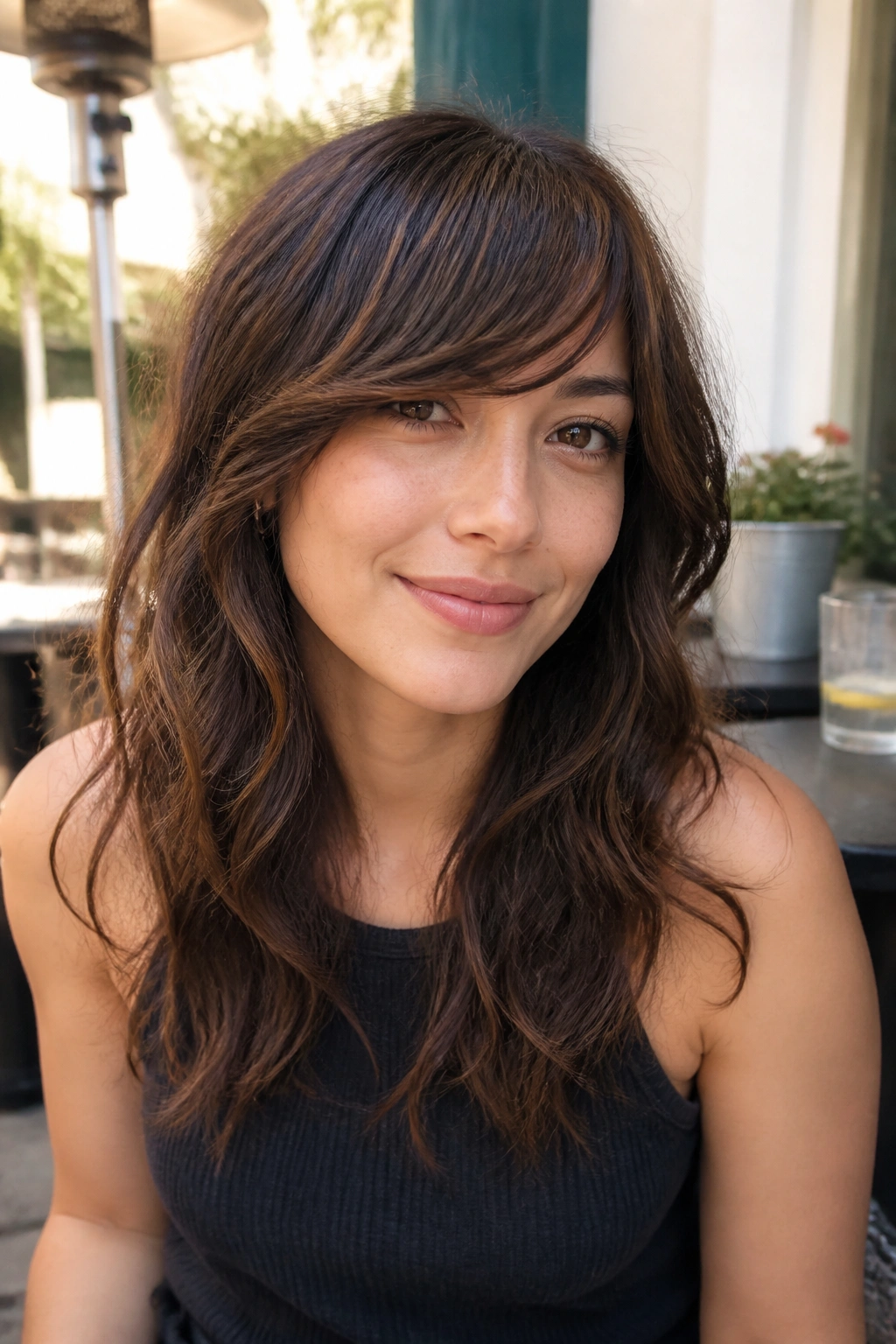
Wavy hair gives side bangs built-in movement, and that helps the face look less circular. The bend in the hair keeps the fringe from sitting flat, which is a huge advantage if your strands are medium to thick.
The shape should feel loose and lived-in, not forced. You can let the wave start at the part, then fall through the brow and cheek area with a little separation between pieces. That broken line is what makes the fringe look light.
A sea-salt spray or light wave cream is enough here. Too much product and the bang clumps into one heavy section. Nobody wants that.
13. Straight-Hair Side Bangs
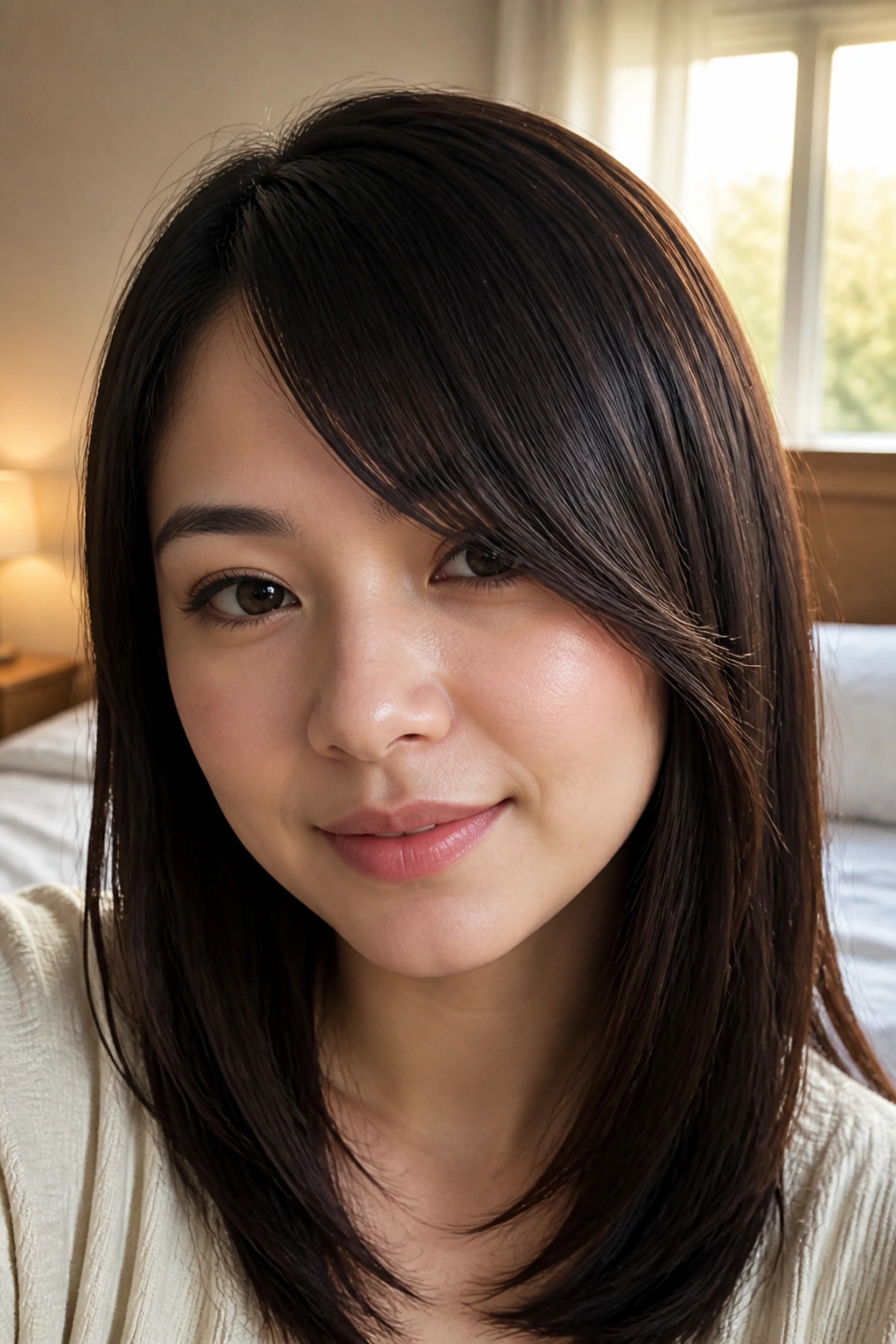
Straight hair is honest. It shows every line, every angle, every mistake. That can be annoying, but it also means a side bang on straight hair can look incredibly clean when the cut is right.
What to do differently
The ends need a small bevel so the fringe does not sit like a ruler. Ask for a soft diagonal that starts near the part and lands closer to the cheek than the middle of the forehead. If the bang is too thick, it will hang heavy and underline the roundness of the face instead of softening it.
A flat iron can help, but only use a tiny bend. You want a curve that suggests movement. Not a curl. Just enough to keep the edge from feeling hard.
14. Side Bangs with a High Ponytail
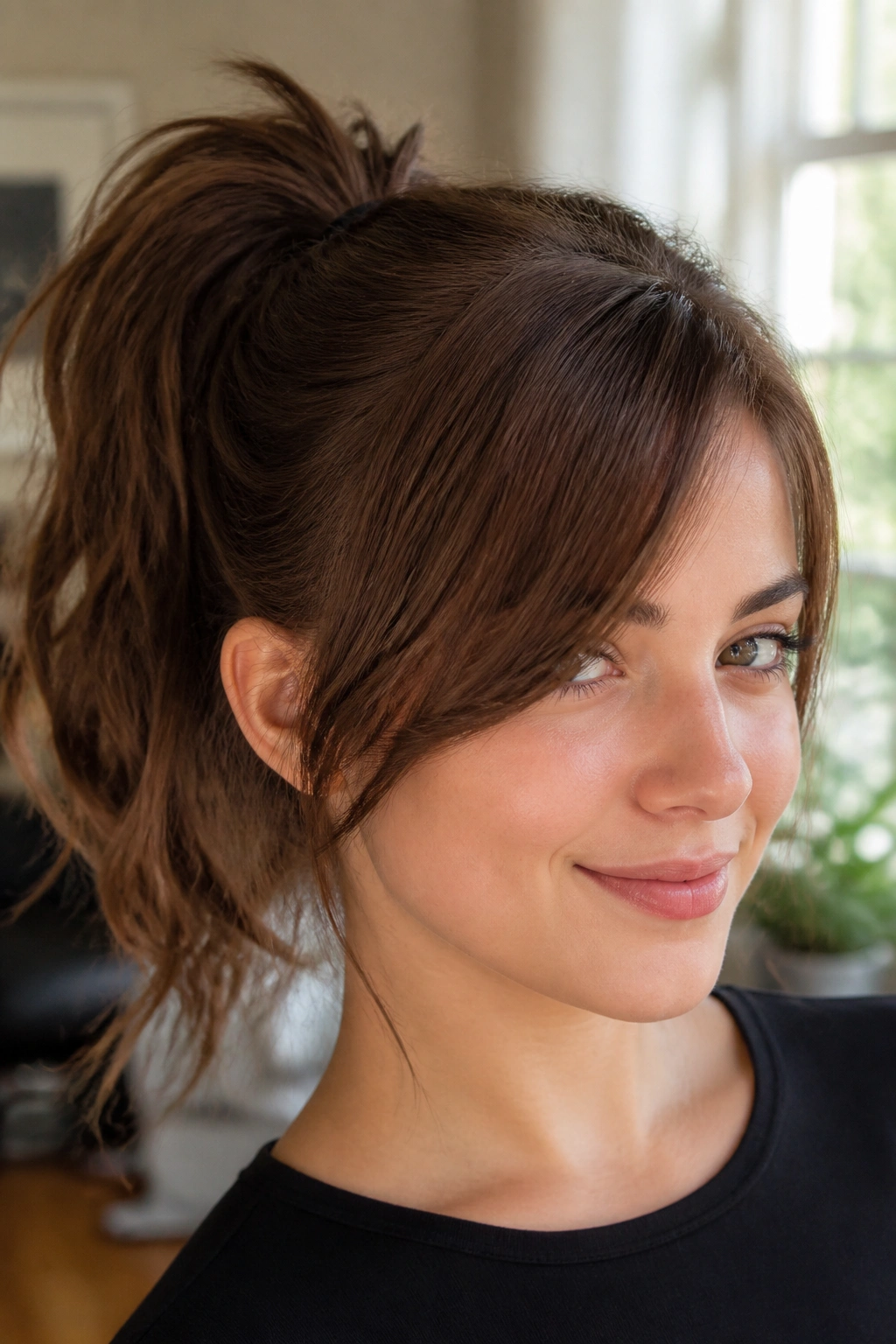
A high ponytail can pull a round face upward, and side bangs stop it from looking severe. That’s the entire trick. The ponytail gives height, the fringe gives softness, and the face gets both structure and motion.
This is one of the easiest everyday styles to wear because the bang does the face-framing work while the rest of the hair stays out of the way. If your fringe is long enough, let it fall loose and pin only the back section of the front layer if needed. That keeps the shape from collapsing.
A quick mist of flexible hairspray at the roots will hold the sweep without making it crunchy. Good. That stuff is the worst when it feels like shellacked paper.
15. Side Bangs with a Low Bun

A low bun can make a face look elegant or severe. Side bangs are what keep it from drifting into the second category. The fringe softens the forehead and gives the bun somewhere to balance.
This works especially well with a bun that sits at the nape, not too tight, not too polished. The side bang should have enough movement to cross the face lightly and settle near the cheekbone. If the bun is sleek, keep the fringe a little airy so the contrast does not feel stiff.
A small face-framing piece near the temple can help here. One piece is enough. You do not need to drag half your hair out of the bun to make it work.
16. Side Bangs with Braids
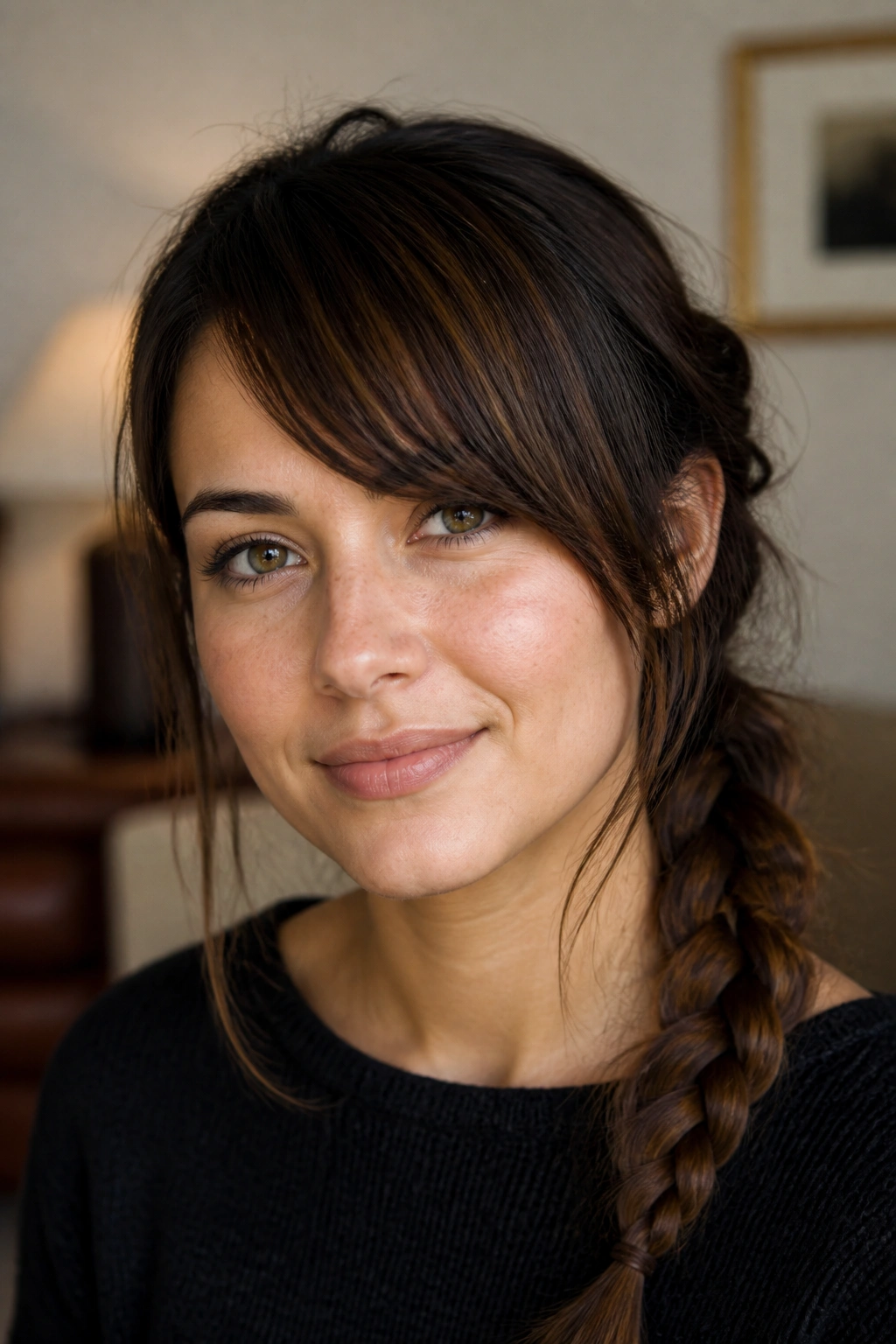
Braids can look a little too neat on a round face if every strand is pulled back tightly. Side bangs fix that fast. They add softness right where braids often feel harsh, especially around the hairline and temples.
How they help
A loose side fringe keeps the face from looking fully framed in. It also makes crown braids, side braids, and braided buns feel less severe. If you wear your braid for a full day, the bang can be the piece that keeps the style from looking overdone by hour three.
Best braid pairings
- Loose side braid with a long swoop
- Dutch braid with wispy fringe
- Braided low bun with one diagonal bang
- Half-up braid with a feathered side piece
The bang doesn’t have to be big. It just has to be there.
17. Side Bangs and a Wolf Cut

A wolf cut already brings texture, layers, and a little attitude. Add a side bang, and the whole shape feels more intentional. On a round face, that matters because the uneven layers start carving out angles where the face is naturally soft.
The fringe should blend into the shortest layers near the temple, then fall toward the cheek with a broken, choppy edge. That keeps the cut from looking like a clean helmet, which is the last thing you want with this style.
If you like pieces that move and change shape through the day, this is a strong option. If you want neatness, skip it. A wolf cut is not here to behave.
18. Air-Dried Textured Side Fringe
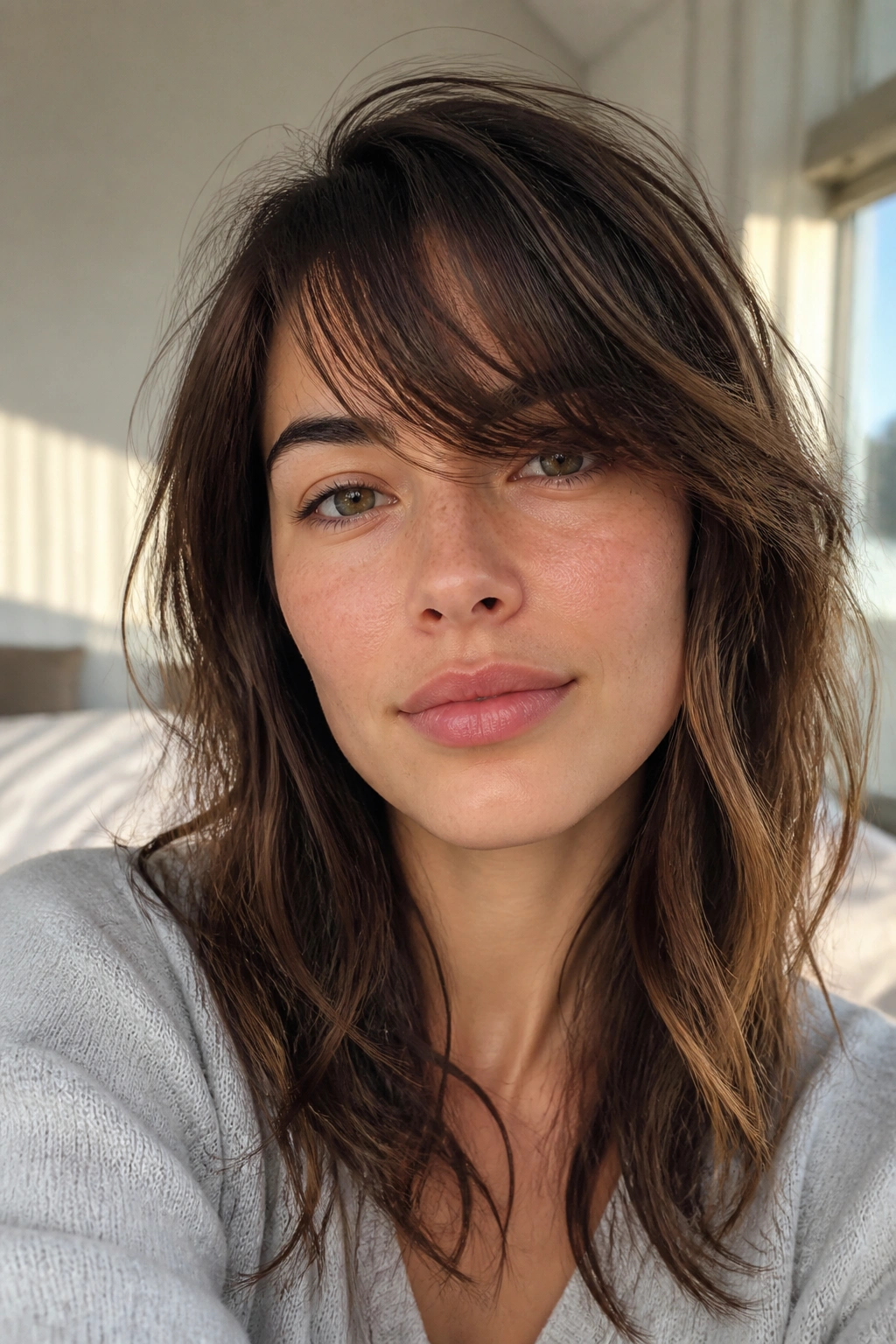
Air-dried side bangs can look great on a round face because they keep the hair from clinging flat to the forehead. The texture adds little gaps and bends, and those gaps matter. They break up the shape.
The main thing is product control. Too much cream makes the fringe limp. Too little leaves it puffy in the wrong places. A small amount of leave-in, then a light scrunch while the hair is still damp, usually gives enough shape to work with.
If the bang wants to split, let it. A slightly undone side fringe often flatters rounder features more than a too-perfect sweep.
19. Blowout Side Fringe
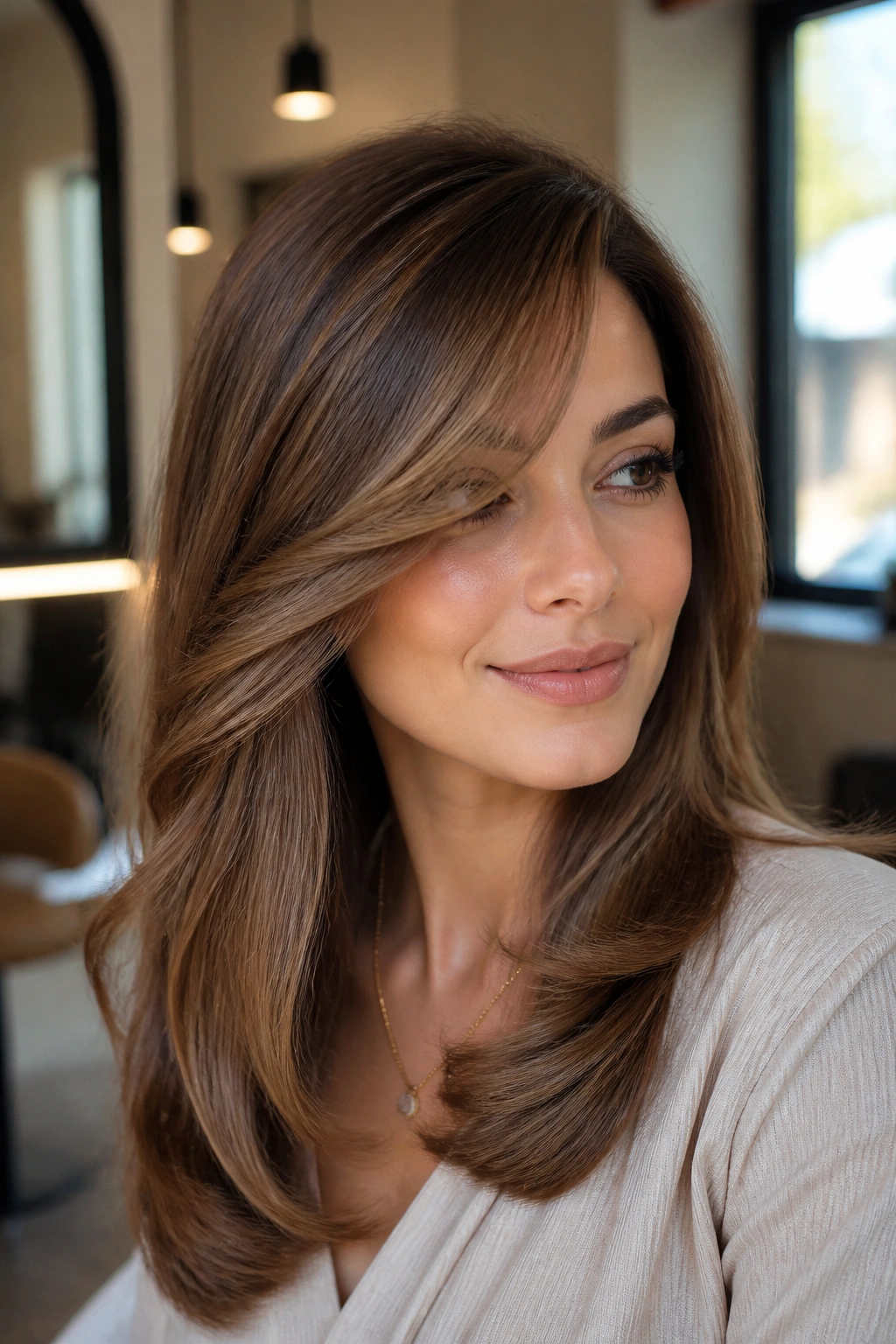
A blowout side fringe has more polish than the air-dried version, but it can still look soft. The point is movement, not stiffness. You want the fringe to bend away from the face with a smooth curve and a little lift at the root.
A 1- to 1.5-inch round brush is usually enough. Pull the hair over and away from the face, then let the ends cool in that direction. That’s the part people skip, and it’s the reason the fringe falls back in two minutes.
This style feels especially good when the rest of the hair is smooth too. A blowout gives the face a longer line, which round faces usually love.
20. Tucked-Behind-Ear Side Bangs
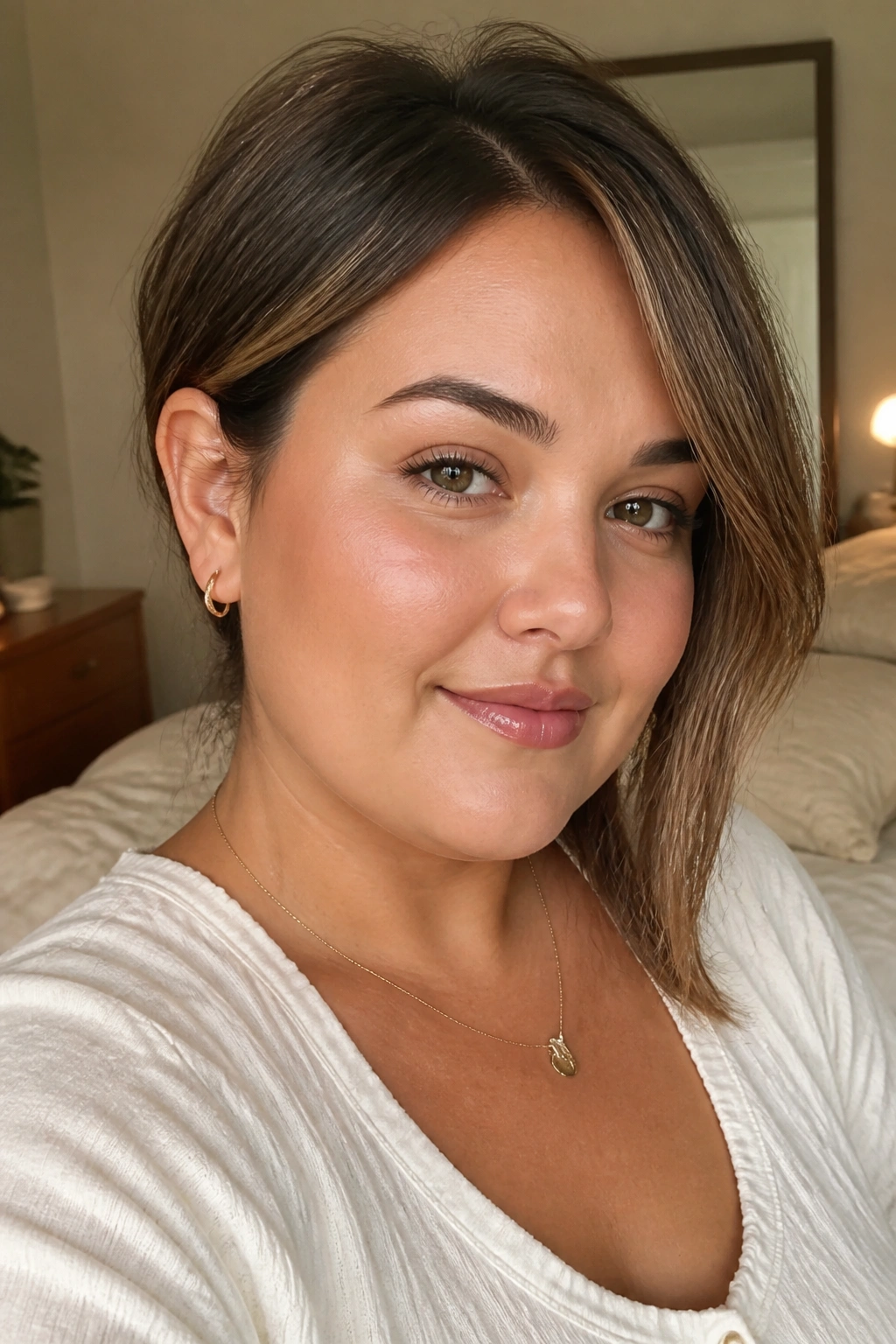
Sometimes the smartest side bang is the one you can move out of the way. Tucked-behind-ear styling gives you a clean face on one side and a soft sweep on the other, which creates a nice imbalance. Round faces benefit from that asymmetry.
It works best when the fringe is long enough to tuck without popping back out. If the shortest piece lands right around the cheekbone, it usually holds better. A small clip at the temple can help train it while you’re getting dressed. Nothing fancy.
This is a good weekday style. It looks done, but not overworked.
21. S-Curve Side Fringe
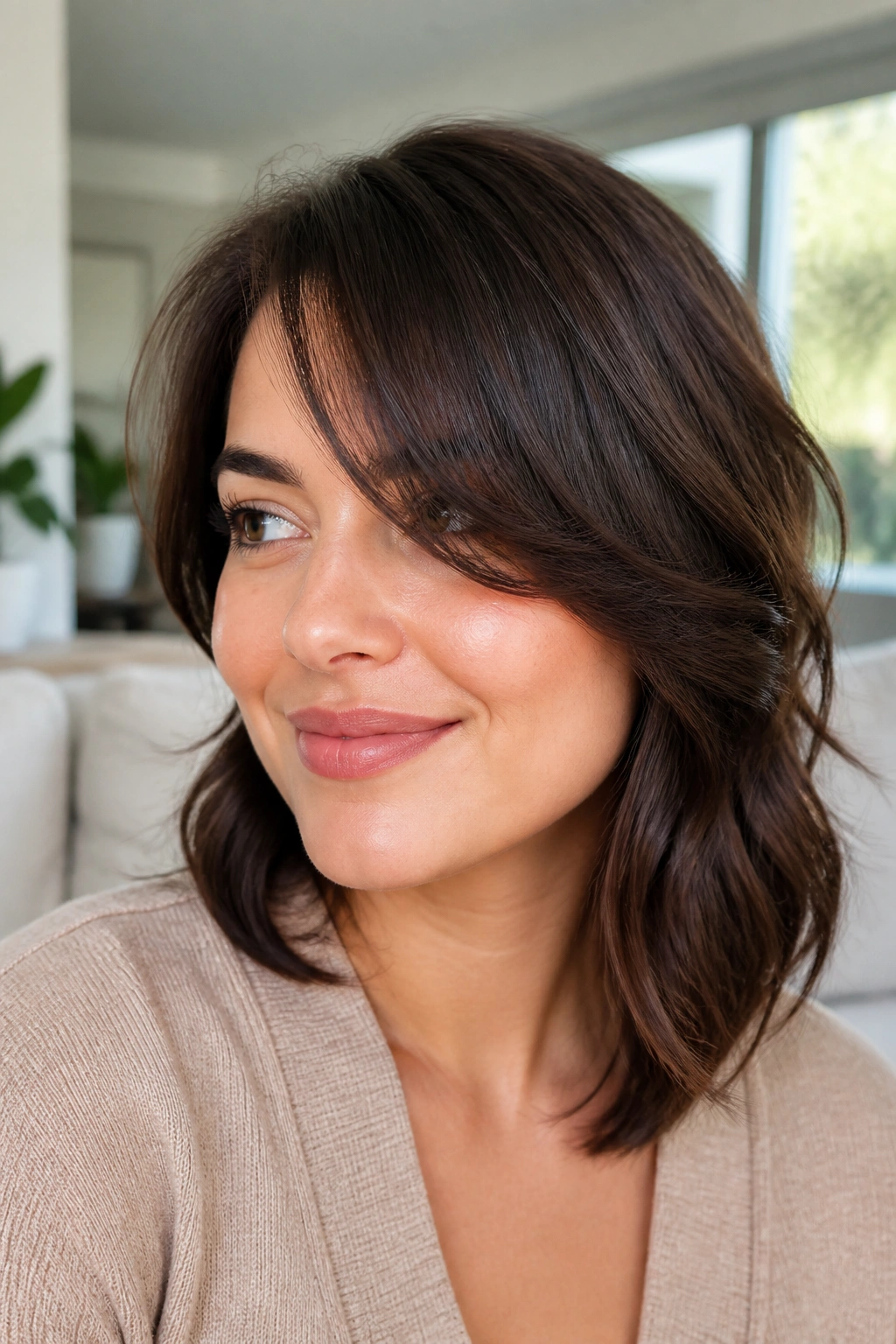
What makes an S-curve bang different from a regular sweep? The bend. Instead of dropping in one straight diagonal, the fringe lifts slightly at the root, curves around the forehead, then turns out near the cheekbone. That small change makes the haircut feel more fluid.
The curve is especially useful on round faces because it keeps the bang from cutting across the face in one heavy block. You get shape, but not weight. That matters a lot if your hair tends to sit flat.
Ask your stylist to keep the bend soft. A dramatic S looks theatrical fast. A subtle one looks expensive in the practical sense — neat, useful, and easy to live with.
22. Razor-Cut Side Bangs
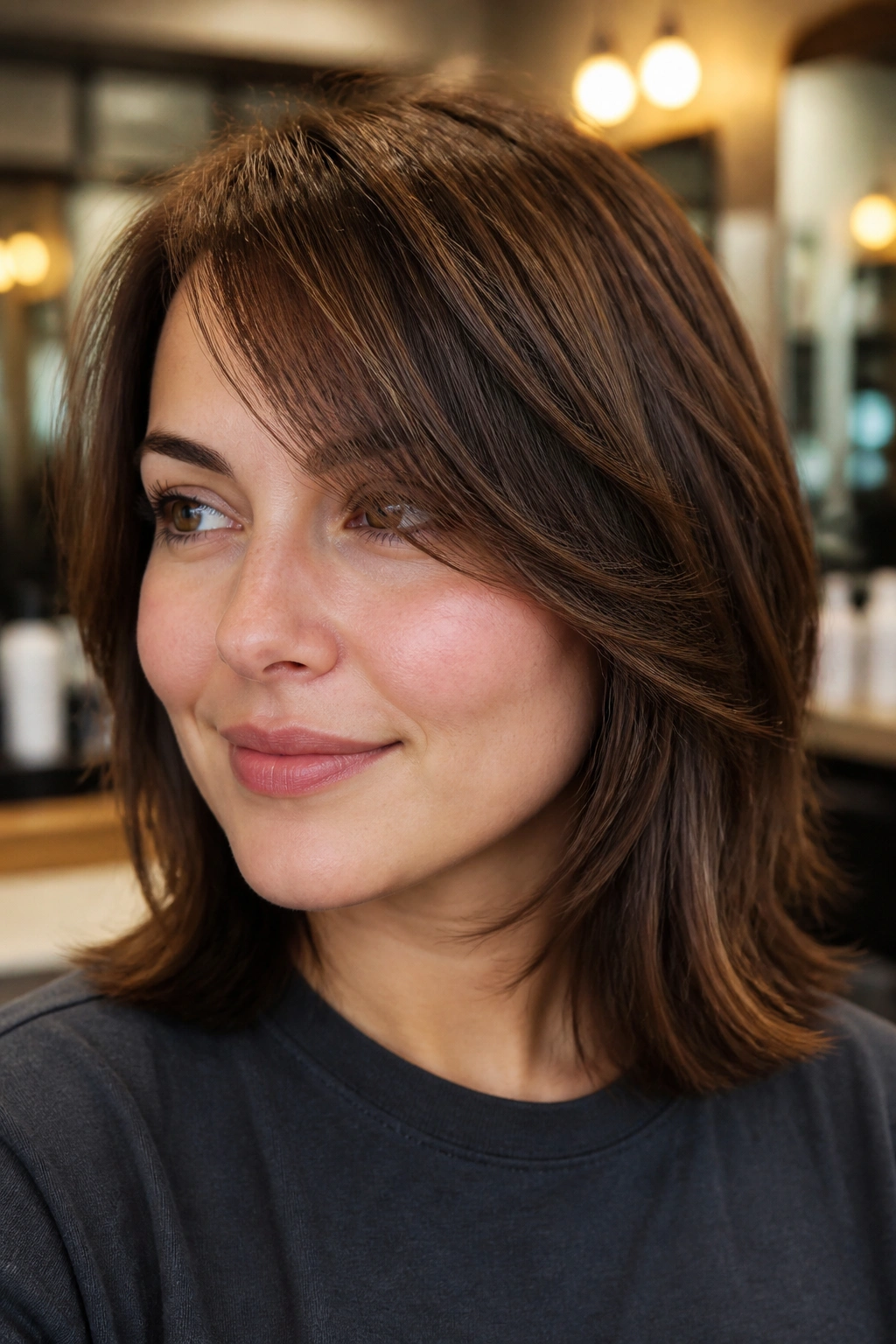
Razor-cut side bangs have a softer edge than blunt ones. The hair tapers out instead of ending in one firm line, which gives round faces a little relief around the forehead and cheeks.
What to watch for
Razor cutting can make fine hair look airy, but it can also make frizzy hair look rough if the ends are too shredded. That’s why the technique matters. You want controlled texture, not fuzz.
Good fit for: thick hair, straight hair with body, or anyone who likes a fringe that moves.
Less ideal for: very dry strands or hair that already splits at the ends.
If you’ve ever wanted a side bang that looks light but still has shape, this is the one to study.
23. Layered Side Bangs for Thick Hair
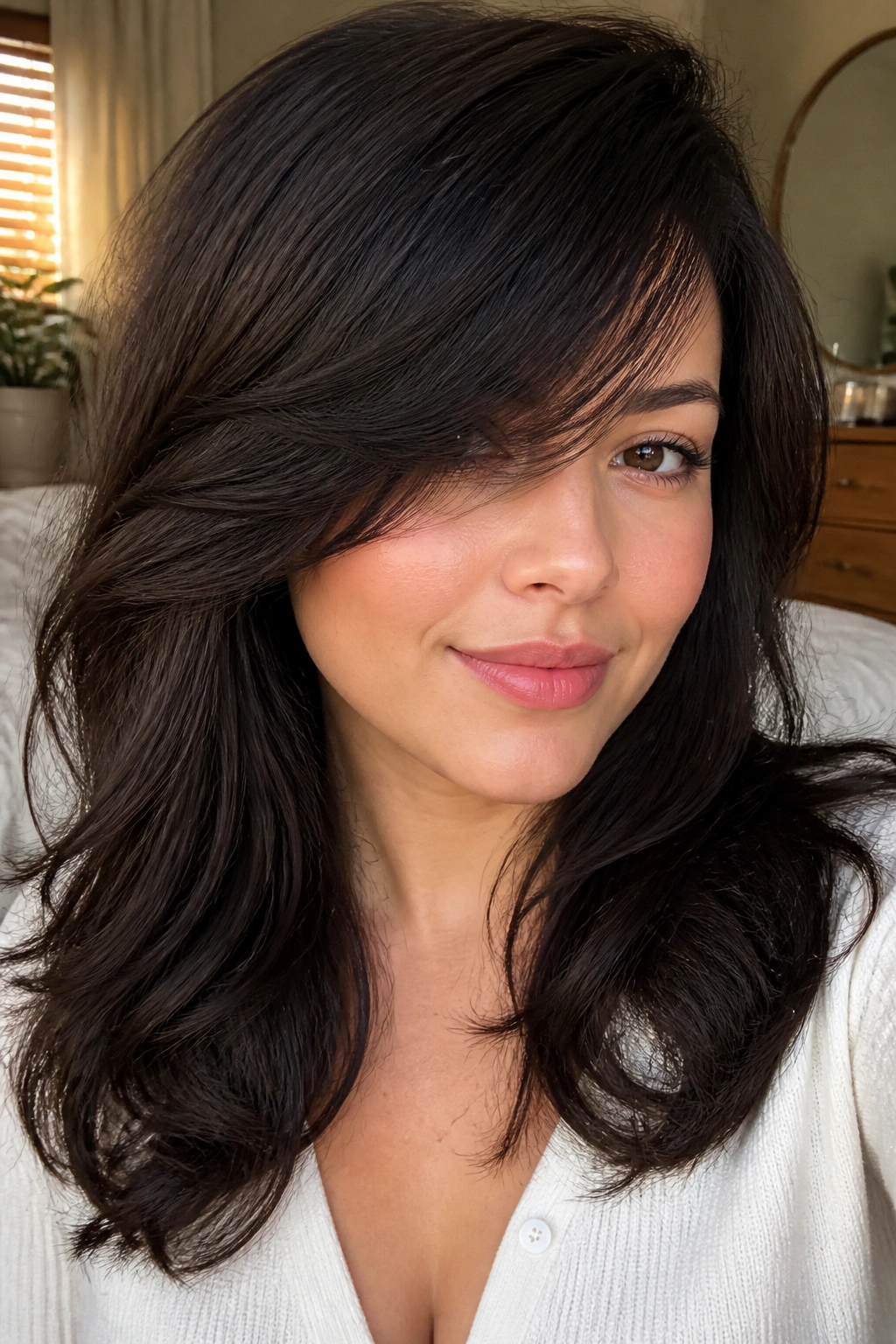
Thick hair can swallow a bang whole if the cut is too dense. That’s where layered side bangs help. They remove bulk at the interior, keep the front from puffing outward, and give the fringe a chance to fall across the face instead of sticking straight out.
The biggest mistake here is over-thinning the front. That can leave the ends wispy while the root area still feels heavy. Ask for internal layering, not a shredded mess. There’s a difference, and it’s not small.
A thick fringe also benefits from a little heat shaping. Even five minutes with a round brush makes the front sit better.
24. Side Bangs for Fine Hair
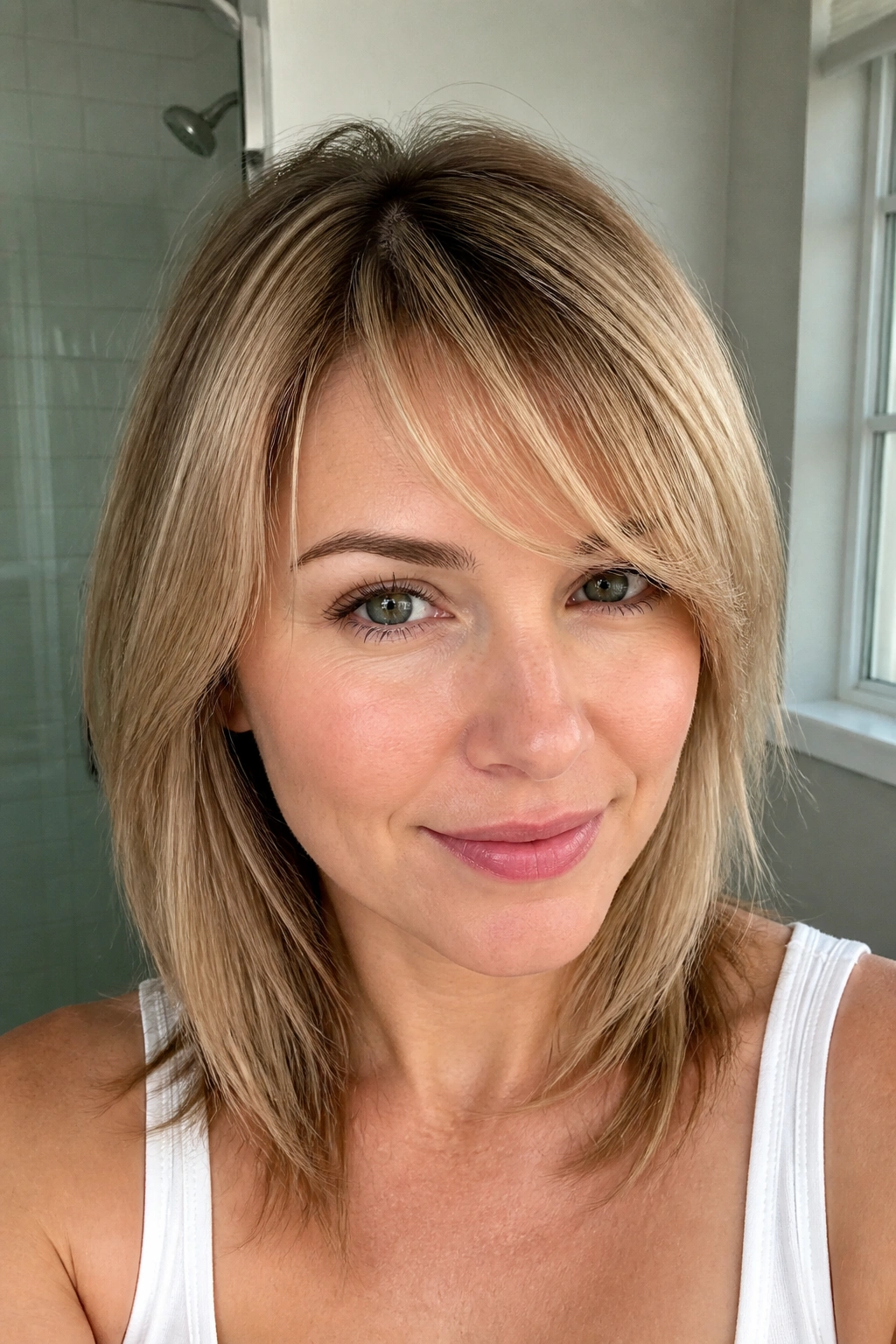
Fine hair needs a different kind of side bang. Too much thinning and it disappears. Too much weight and it lies flat against the forehead. The sweet spot is a light fringe with enough body to hold a shape.
A side part helps here because it creates lift at the root. So does a dry shampoo mist before styling, not after the hair has gone limp. You want the fringe to have grip.
Skip heavy serums near the front. They make fine bangs collapse fast. A tiny amount of spray wax at the ends can help with separation, but keep it light.
25. Side Bangs with Glasses
Glasses change the whole conversation. The frame sits right where a bad fringe can become annoying fast, so the bang needs to stay out of the lens area and avoid crowding the eyes.
A side bang that skims the outer brow and fades toward the temple usually works best. It gives softness without fighting the frame. If your glasses are bold, keep the fringe lighter. If the frames are thin, you can wear a stronger sweep.
Small fitting details matter
- Leave enough room between the bang and the top of the frame.
- Keep the longest piece near the temple, not the pupil.
- Use a bend, not a full curl, so the fringe doesn’t spring into the lenses.
That small gap makes a big difference in how comfortable the style feels.
26. Long-Layered Side Bangs
Long layers and side bangs are a good pair because they let the fringe melt into the haircut. That blending makes the face look longer without putting too much weight in one place. On a round face, that’s a nice trade.
This is one of the easier looks to grow out. The bang can slide into the front layers, then into the lengths below. You don’t get that sudden awkward line that makes some fringes feel high-maintenance.
It’s a calm haircut. Not boring. Just calm. And sometimes that is exactly what you want.
27. Short-Layered Side Bangs
Short layers give a side bang a sharper edge. The fringe sits higher, moves more, and creates a livelier line across the forehead. On a round face, that can be useful if you want more structure near the eyes and temples.
The risk is overdoing it. Short layers can kick out and add width if they’re too fluffy. Keep the ends controlled and let the shortest point stay closer to the brow than the top of the cheek. That keeps the shape from floating away.
This style is a good match for shorter cuts and for people who like a little lift around the face. It does ask for styling. Not a lot. But some.
28. Asymmetrical Side Bangs
An asymmetrical side bang is one of the easiest ways to make a round face look more angular. One side stays longer, the other side sits shorter, and that difference creates a line the eye follows immediately.
Why it feels sharper
The unequal length does more work than a symmetrical fringe because it interrupts the face in a less predictable way. That can be useful if your features are soft and you want a little contrast. It’s also a good choice if you like your hair with a bit of edge but don’t want a full dramatic cut.
Best with: a deep side part, a bob, or a lob with movement.
Skip if: you want a style you can forget about after you leave the salon. This one needs a hand in the morning.
29. Side Bangs with a Collarbone Cut
A collarbone cut and side bangs make a strong pair because both pieces lengthen the silhouette. The collarbone length keeps the ends from stopping at the widest part of the cheeks, and the fringe adds a diagonal right where the face needs one.
This is one of the most forgiving choices if you’re unsure how short to go. The cut is long enough to pull back, but short enough to feel fresh. The bang gives it shape without locking you into a heavy fringe.
The styling is easy too. A little bend at the front, a little polish on the ends, and the haircut does most of the talking.
30. Soft Exit Sweep
A soft exit sweep is the one I’d hand to someone who wants side bangs without ever feeling trapped by them. The fringe starts as a side sweep, then thins out and disappears into the rest of the haircut. No hard line. No obvious bang shelf. Just a clean taper that sits lightly across the face.
That taper matters on a round face because it creates shape without stacking weight at the cheeks. The cut grows out gracefully, which is more useful than people admit. Haircuts that grow out badly spend too much time looking awkward between trims.
If you want one bang idea that can be worn with long hair, medium hair, loose waves, or a simple ponytail, this is the safest bet. It does its job quietly. And honestly, that’s part of the appeal.
