



Round faces and straight bangs can be a gorgeous match. They can also go sideways fast.
The difference usually comes down to placement, density, and length more than some rigid face-shape rule. A fringe that sits too high can make the forehead feel boxed in. A fringe that spreads too wide at the temples can make the face look broader than it is.
That does not mean you have to avoid bangs. It means you need the right straight line, the right softness at the edges, and a cut that works with your hair texture instead of fighting it. A blunt fringe can flatter a round face. So can a wispy one, a long lash-skimming one, or a tiny micro fringe if you like a little edge.
The ideas below lean on different kinds of straight bangs—clean, heavy, airy, piecey, long, and softly shaped—so you can find a version that adds length instead of width.
1. Brow-Grazing Blunt Bangs for Round Faces
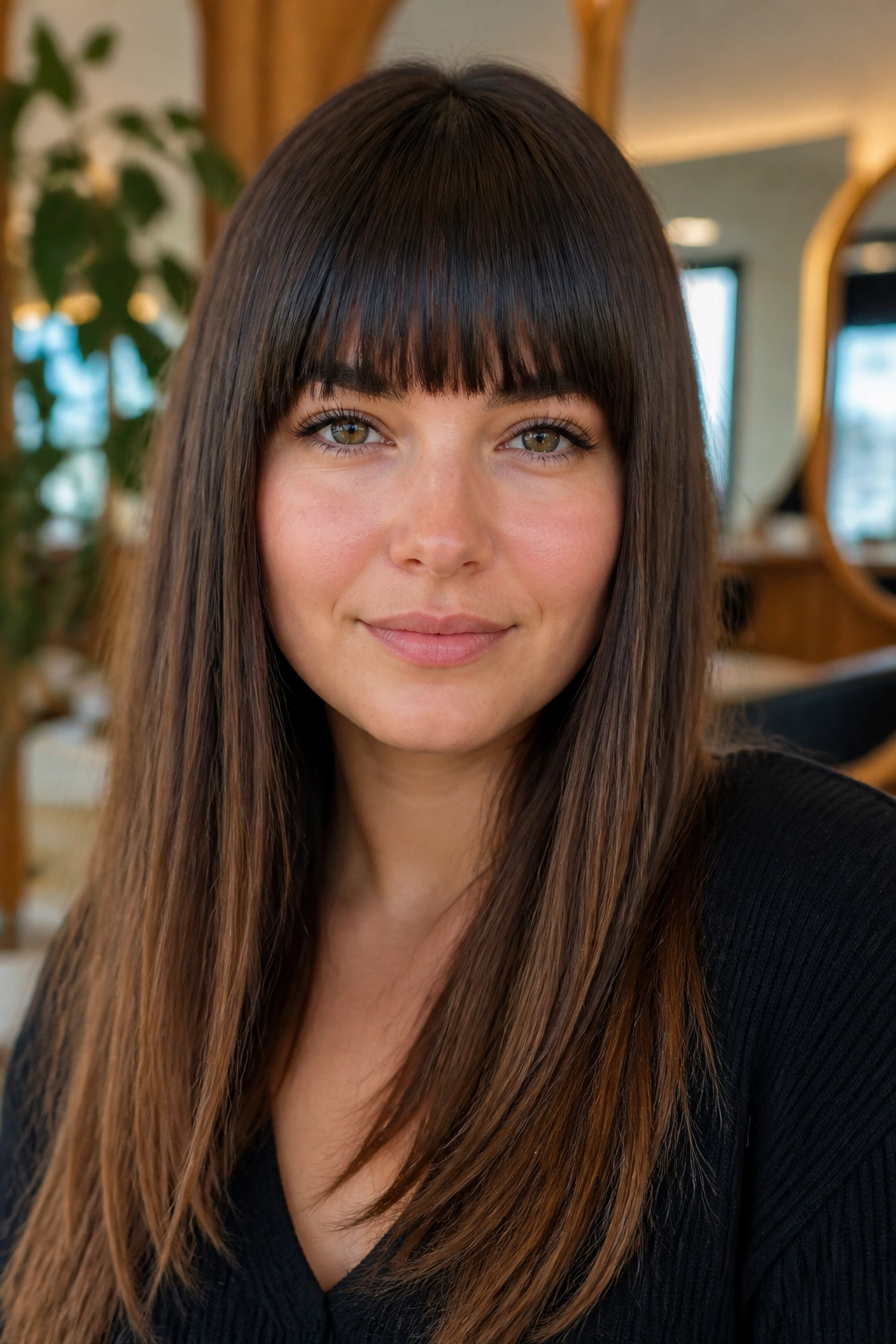
A blunt fringe that just kisses the brows is one of the easiest straight bangs for round faces because it gives you a crisp top line without making the forehead disappear. The trick is to keep the center low enough to feel intentional, but not so short that it jumps above the strongest part of the brows.
Why the line works
A straight horizontal line can be flattering when the rest of the haircut stays long and vertical. The eye goes down, not out. That matters on a round face, where the widest point usually sits around the cheeks.
Ask your stylist to keep the corners a touch softer than the middle. That tiny adjustment keeps the bang from feeling like a shelf. A flat, wide fringe is the version that causes trouble.
- Keep the length at or just below the brow line when dry.
- Ask for the fringe to stop before it reaches the outer corners of the face.
- Blow-dry with a paddle brush, pointing the nozzle downward.
Best for: medium to thick hair that holds a line well.
2. Eyebrow-Skimming Full Fringe
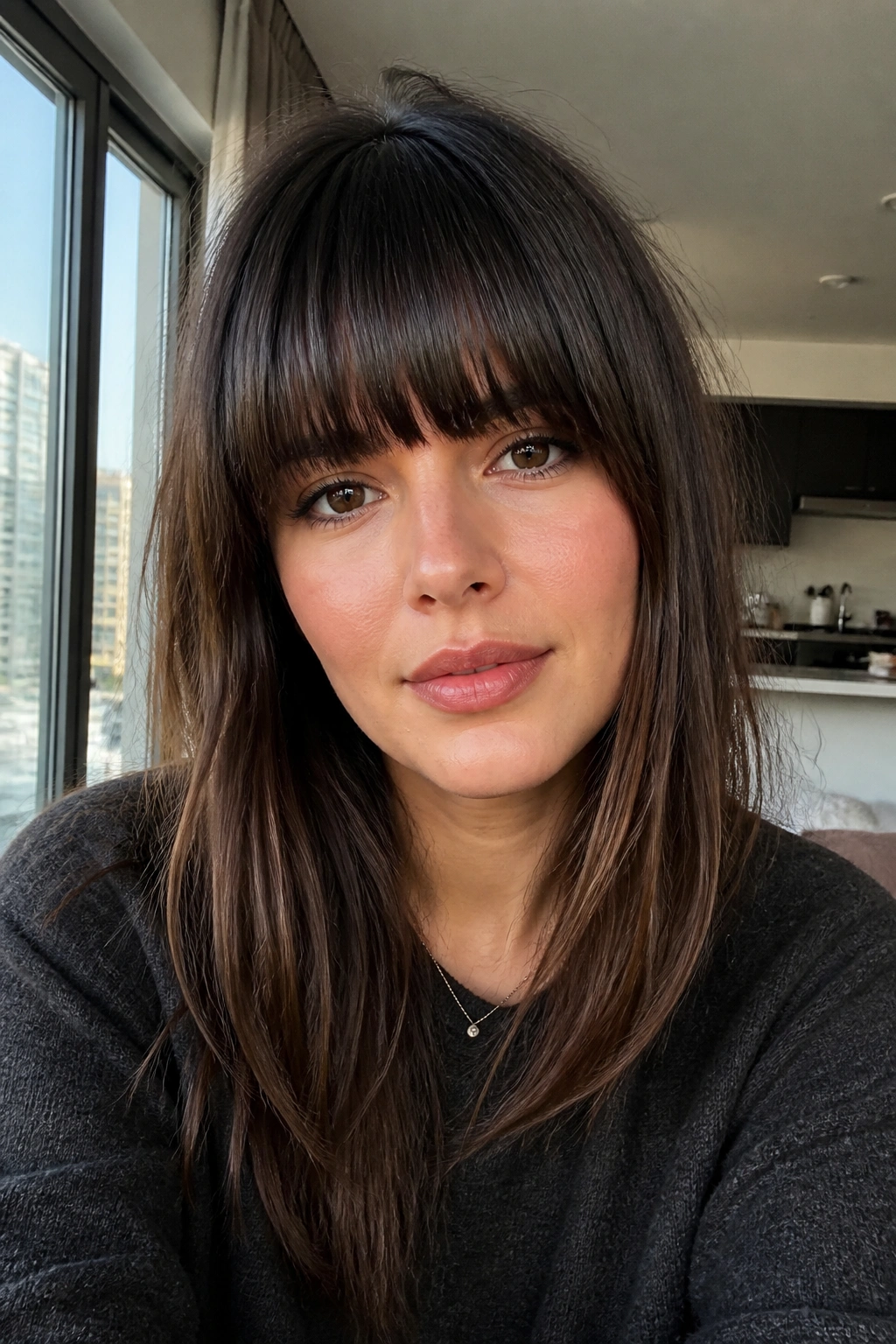
What if you want classic bangs without the heavy, boxed-in feeling? Go one shade longer and let the fringe skim the eyebrows instead of sitting above them. That little bit of extra length helps the face read longer.
This works especially well when the ends are blunt but not carved into a hard edge. You want the fringe to feel full, not stiff. If the hair swirls at the forehead, cut it a touch longer than you think you need. Bangs shrink when they dry. They always do.
Best for: straight or slightly wavy hair with moderate density.
Styling note: a tiny bend at the ends is fine. A puff at the roots is not.
3. Micro Bangs with a Clean Edge
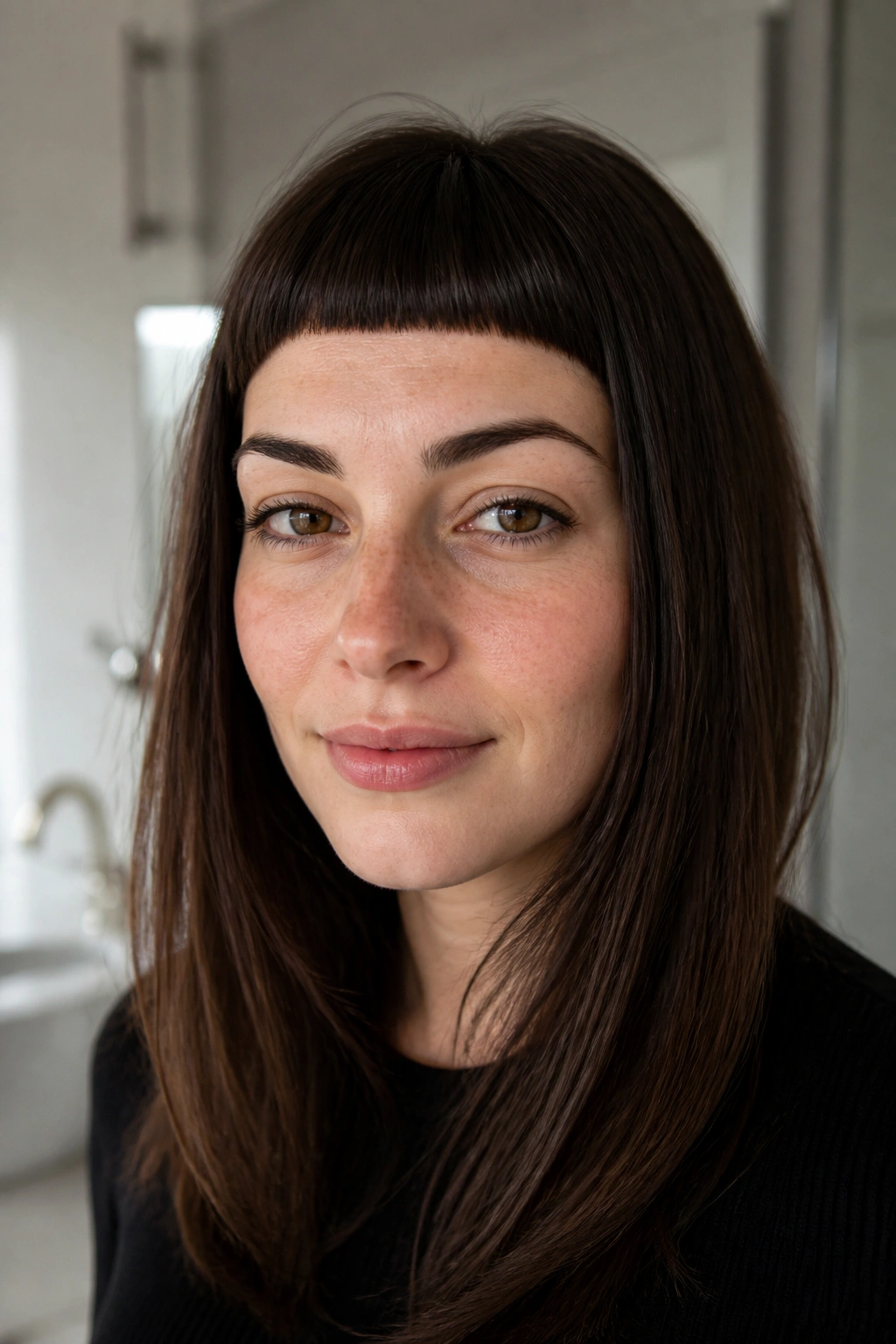
Micro bangs sound dramatic because they are. On a round face, they only work when the rest of the haircut keeps the shape long and sleek, so the forehead stays open and the eye sees vertical lines around the face.
How to wear it
Keep the fringe narrow, not wide. That is the part people miss. A tiny fringe that spreads too far across the forehead can make the face feel broader, even if the bangs themselves are short.
The cleaner the edge, the better this cut looks. Choppy micro bangs can get messy fast. A neat line looks sharper and more deliberate.
- Ask for the fringe to stay centered over the middle of the forehead.
- Keep the width close to your brow span.
- Style with a quick flat-iron pass, not a blowout that lifts the roots too much.
Pro tip: pair micro bangs with long layers below the chin. That contrast does the work.
4. See-Through Straight Bangs

See-through bangs are the low-pressure option, and I like them for people who want movement more than drama. You still get the bang effect, but your forehead doesn’t get covered by one solid sheet of hair.
On a round face, that softness matters. The skin showing through breaks up the horizontal line, and the fringe feels lighter around the cheeks. Keep the strands separated on purpose. If they clump together, the whole thing starts looking heavy.
A light mist of flexible spray is enough. Skip thick creams. They flatten the gaps and kill the point of the cut.
Best for: fine to medium hair, especially if you wear your hair long.
5. Heavy Straight Bangs with Point-Cut Ends
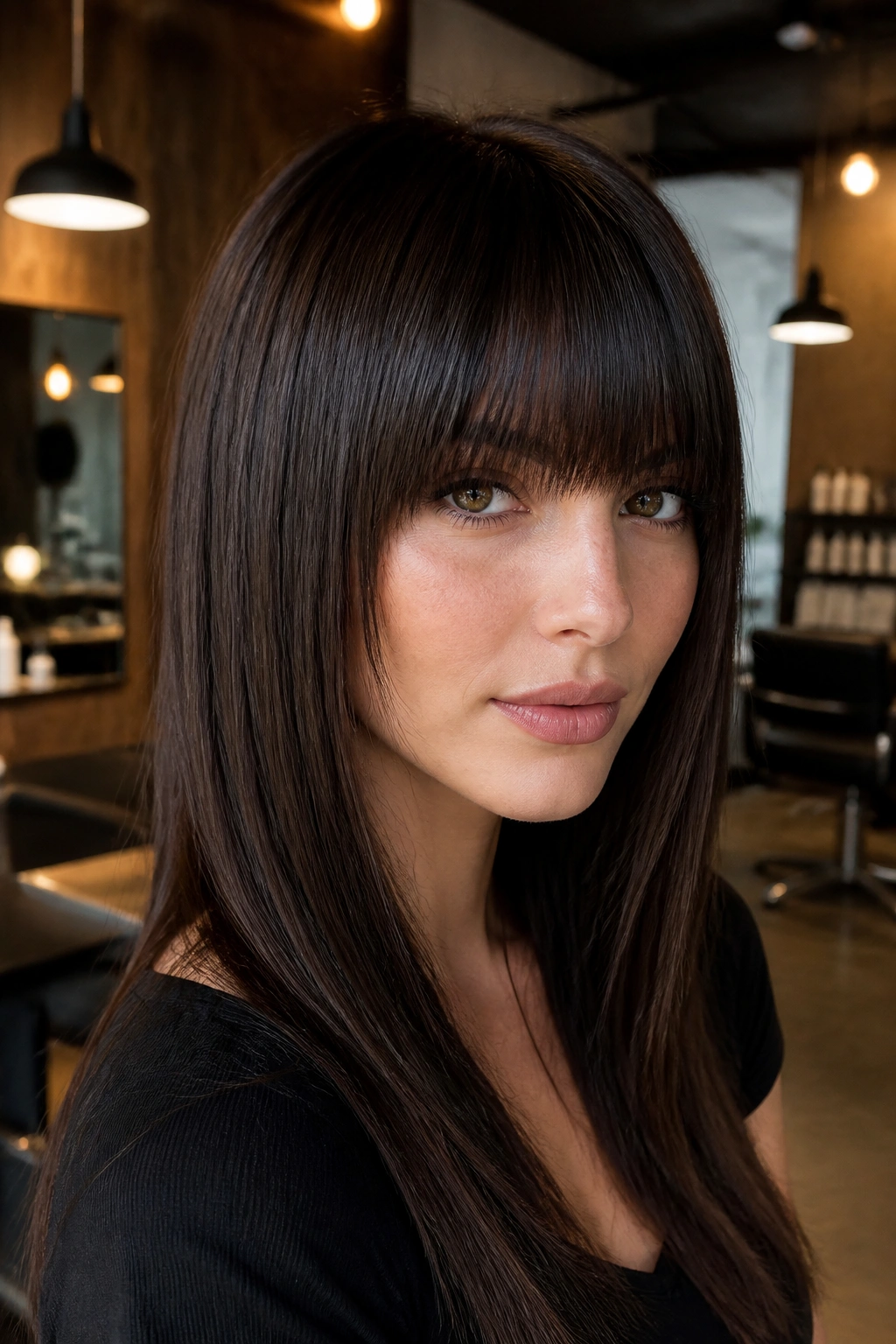
Heavy bangs get a bad rap, but they can work on a round face when the edge is softened. The point-cut ends stop the fringe from looking like a solid wall across the forehead.
That little bit of texture changes everything. A perfectly blunt, thick bang can feel boxy; a point-cut version still looks bold but has some air at the bottom. The eye notices the shape without getting stuck on it.
This is the kind of fringe I’d pick if your hair is thick and naturally straight. Fine hair can do it too, but it usually needs a stronger blow-dry to keep the line from falling apart by noon.
Good to know: the heavier the fringe, the more important the side lengths become. Keep them long.
6. Slightly Arched Straight Bangs

A soft arch does more than people expect. Instead of cutting the bangs into one hard line, the center sits a touch shorter and the corners drift slightly longer. It’s still a straight bang, just with a little curve built in.
That curve helps a round face because it creates lift in the middle and leaves the sides calmer. The face looks a bit longer, and the brow area gets a cleaner frame. It’s a subtle shape, not a fussy one.
This cut is especially useful if you want blunt bangs but hate the feeling of a heavy slab of hair. It gives structure without the weight.
7. Lash-Grazing Long Fringe
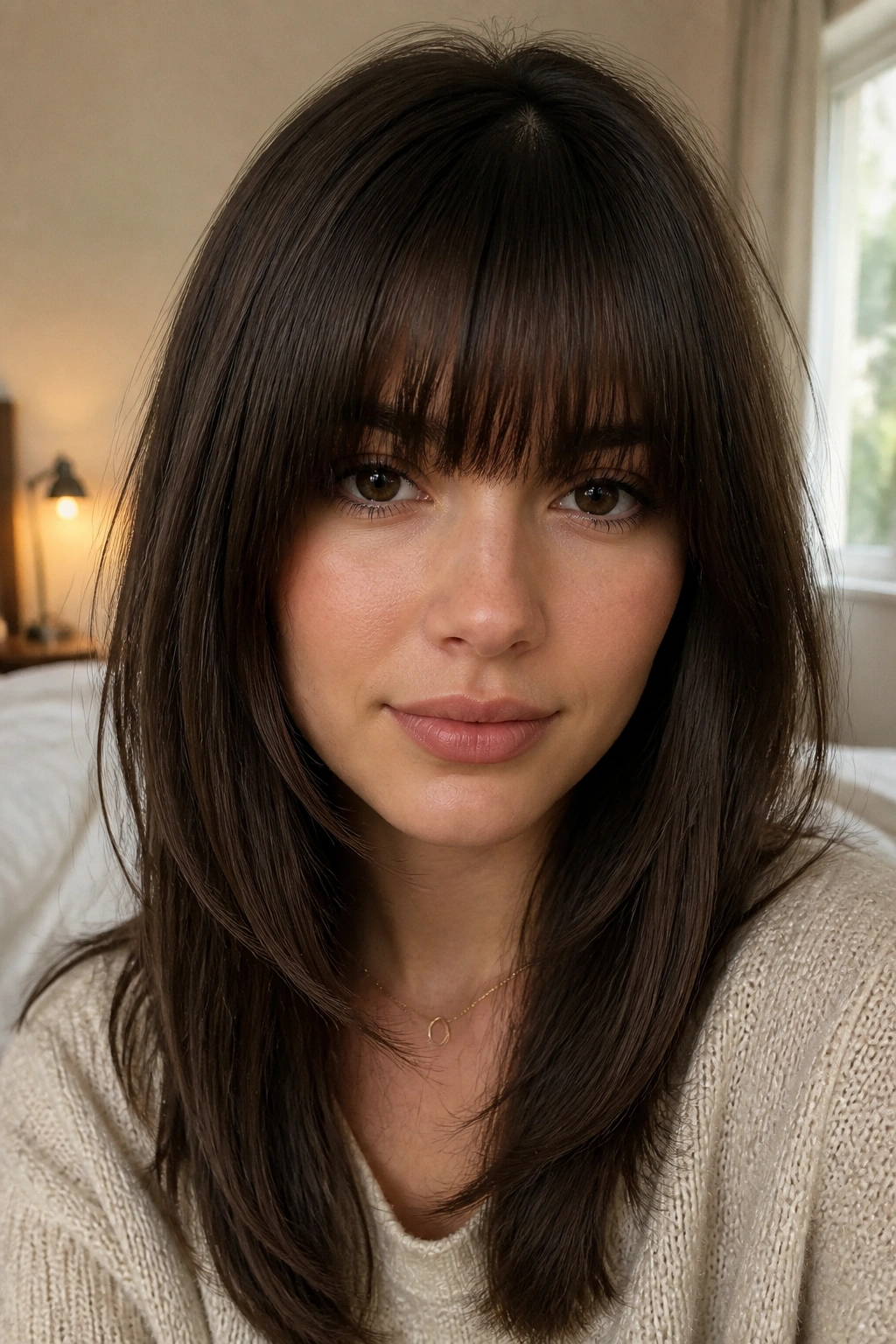
Picture bangs that barely clear the eyelashes when you look straight ahead. That’s the sweet spot for a lot of round faces, because the longer line pulls attention downward and gives the forehead more breathing room.
The fringe should stay straight, but not stiff. A slight bend at the ends is fine. What you do not want is a puffed-up, overstyled shape that lands right on the widest part of the cheeks. That ends up fighting the face instead of working with it.
How to style it
- Blow-dry the fringe forward, then down.
- Use a round brush only at the last inch if you need a soft bend.
- Finish with a touch of serum on the ends, not the roots.
It looks best with hair that falls past the chin. Short lengths can feel too top-heavy.
8. Straight Bangs with Longer Temple Pieces
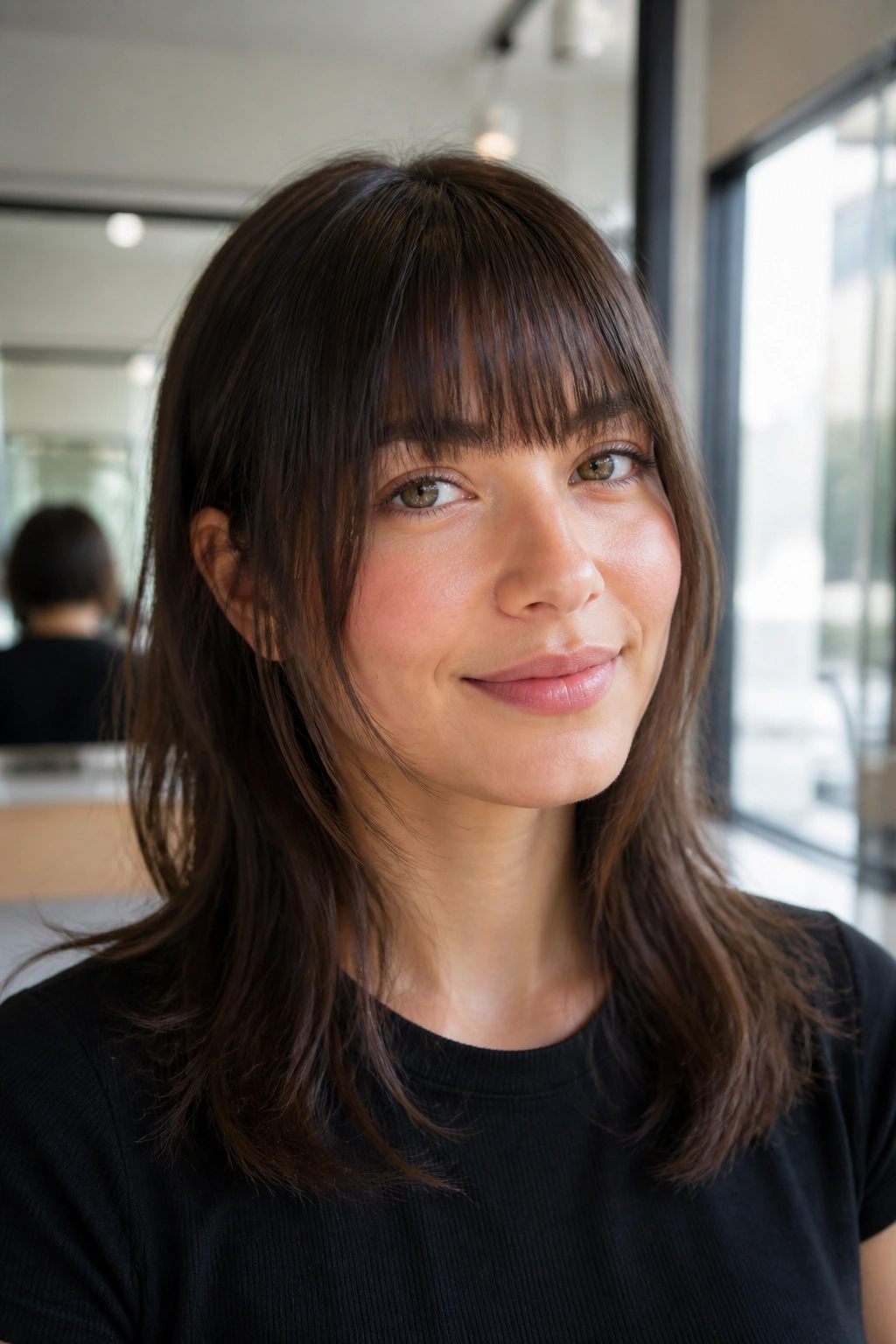
This is one of the most useful shapes for round faces because it cheats the eye in a smart way. The fringe is straight in the middle, then the pieces near the temples grow a little longer and blend into the sides.
What to tell your stylist
Ask for the center to stay bang-like, but let the edges connect to the face frame instead of stopping abruptly. That small transition makes the face look less wide at the sides.
The cut feels polished, but not severe. It also grows out better than a hard blunt fringe, which matters if you don’t want to be back in the chair every few weeks.
This is my pick for someone who likes bangs but gets nervous once the scissors get close.
9. Piecey Straight Fringe
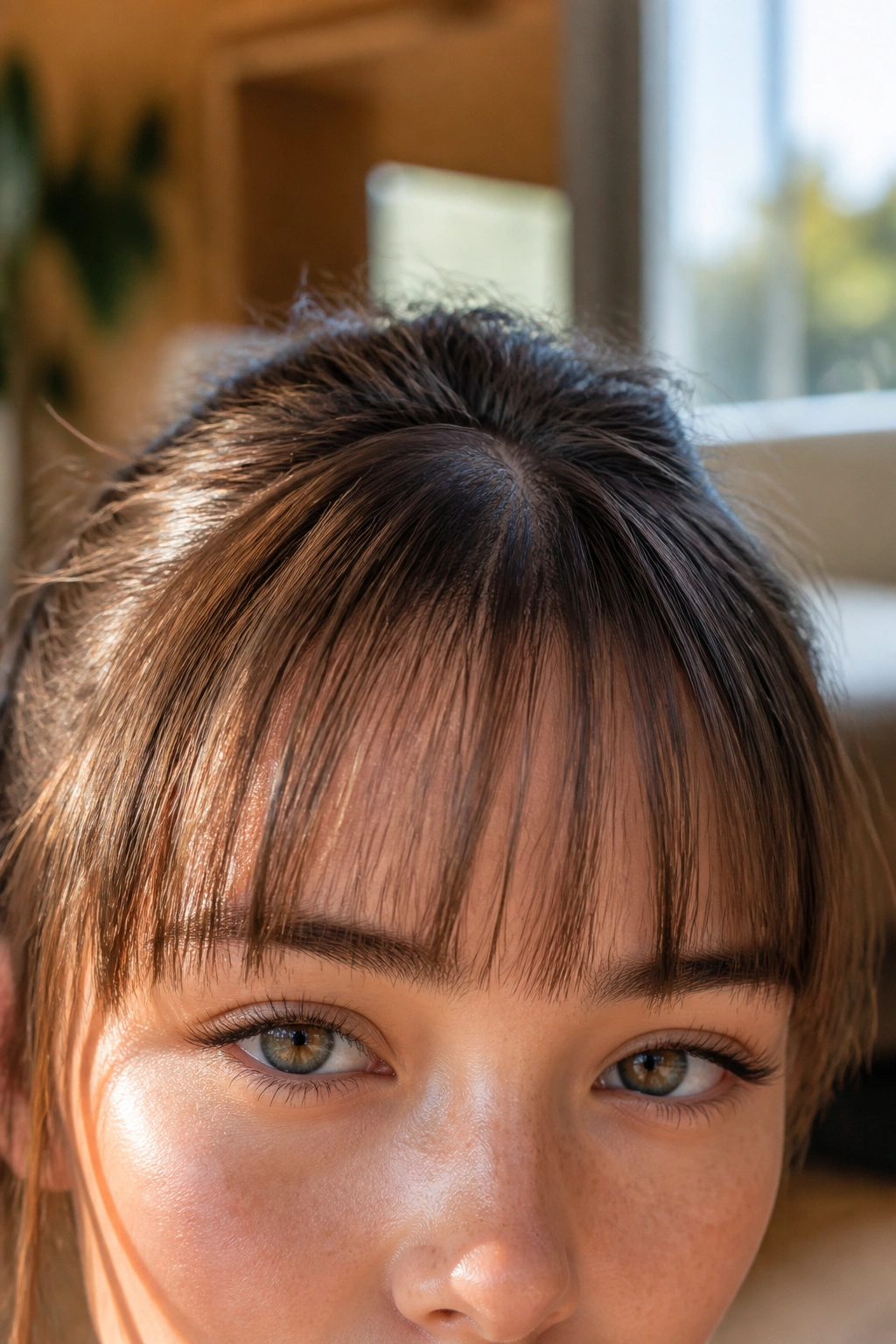
Piecey bangs are softer than a solid fringe, and that softness helps on a round face. Instead of one continuous line, the bangs break into small sections that let light and forehead show through.
The key is restraint. Too much separation turns the fringe into scraps. Too little separation makes it look flat and random. You want a clean overall shape with a few visible pieces.
This style works well if your hair is fine or medium and you like a less polished finish. A little dry texture spray at the roots can keep the pieces from clinging together.
Best for: people who want bangs that feel casual, not precious.
10. Feathered Straight Bangs
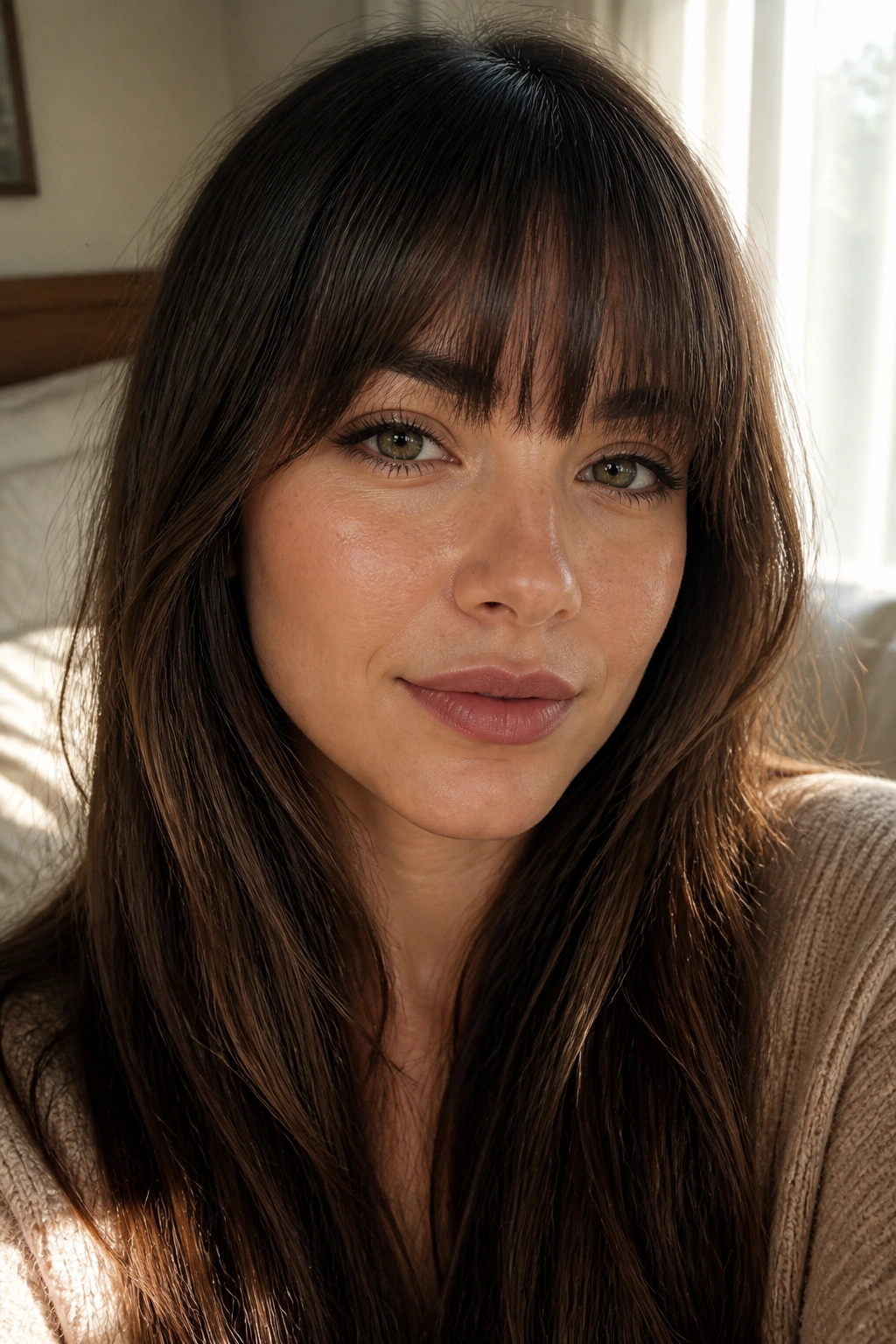
Feathered bangs sound old-school, but they can look sharp on a round face when they’re cut with a light hand. The edge is still straight, yet the ends are softened enough to move instead of sit like cardboard.
That movement keeps the face from feeling boxed in. It also makes the fringe easier to live with on days when your hair wants to do its own thing. A stiff bang on a humid day is a small disaster. Feathered bangs at least bend with you.
Use a flat brush and medium heat, then let the last inch fall naturally. The point is shape, not perfection.
11. Tapered Center-Weighted Fringe
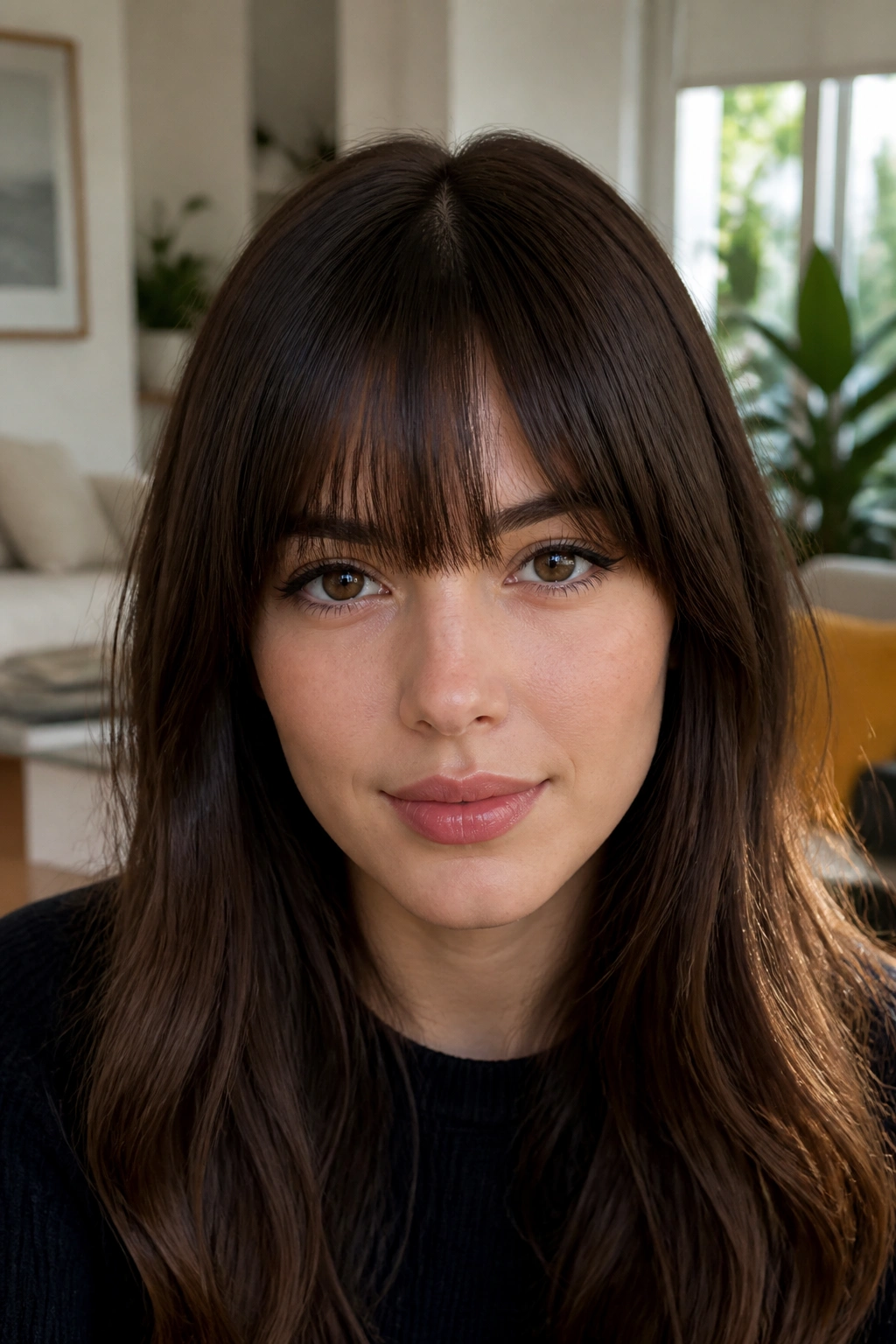
This is a smart choice if you want the bang to feel full in the middle but lighter near the temples. The center gets the most visual weight, which helps draw the eye down the face instead of across it.
A round face benefits from that center pull. The sides stay softer, so the width doesn’t keep echoing near the cheekbones. It’s a small cut adjustment, but it changes the whole read of the style.
Unlike a heavy full fringe, this one doesn’t feel like a curtain. Unlike a wispy fringe, it still has enough body to hold its shape.
Best for: medium-density hair and anyone who wants a little more structure without going blunt-heavy.
12. Straight Bangs with Soft Side Corners
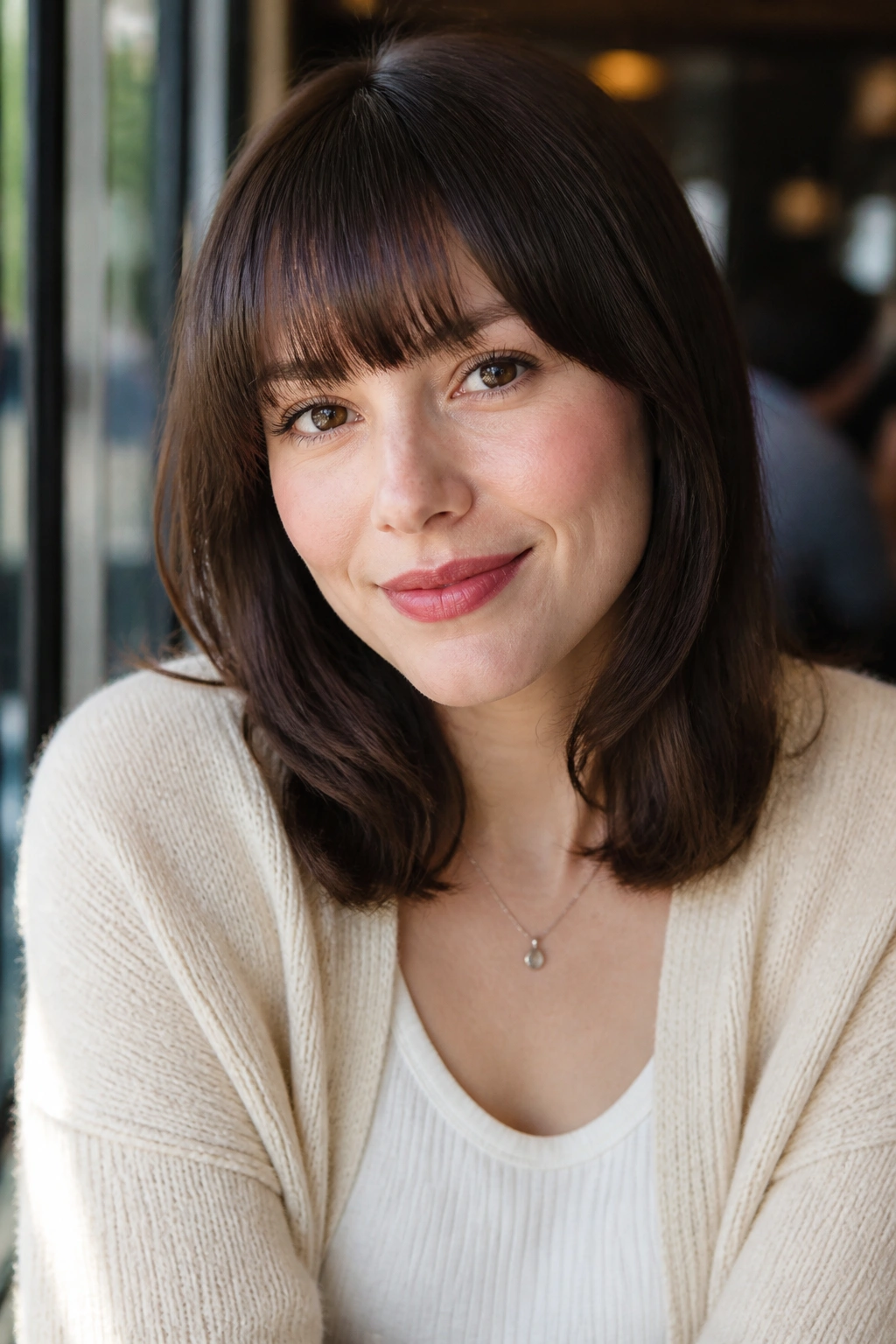
Hard corners are where many straight bangs go wrong. On a round face, the outer edges can feel abrupt if they stop too bluntly at the temple.
Soft side corners fix that. The bangs stay straight through the center, but the outer bits are lightly beveled so they flow into the rest of the haircut. It’s not a curtain bang. It’s a smarter version of a straight one.
I like this cut on shoulder-length hair because it keeps the fringe from feeling detached. The whole haircut reads as one shape, which is what you want.
If your stylist likes precise lines, tell them you want the corners softened, not thinned out. That distinction matters.
13. Box Bangs for Pin-Straight Hair
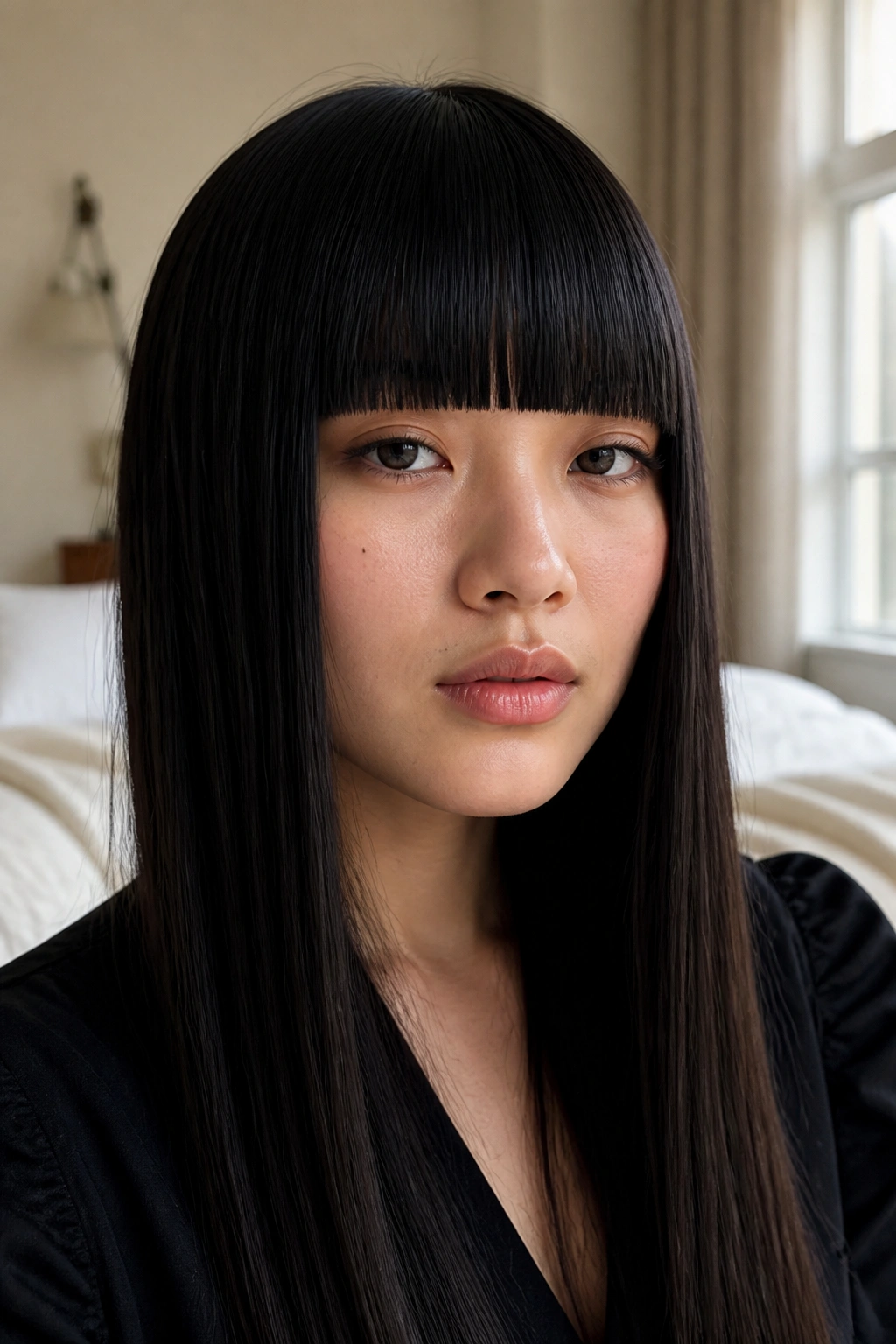
Box bangs are bold, and I would not pretend otherwise. They’re sharp, graphic, and best when your hair is already straight or easy to smooth flat.
On a round face, the version that works has to be narrower and a touch longer than the dramatic photos people save on their phones. If the box is too wide, the face can look broader. If it sits low and clean, though, it creates a striking frame that actually helps the face feel longer.
This cut asks for confidence and a decent flat iron. It does not want frizz. It does not want to be half-styled. Commit or skip it.
14. Rounded Straight Fringe
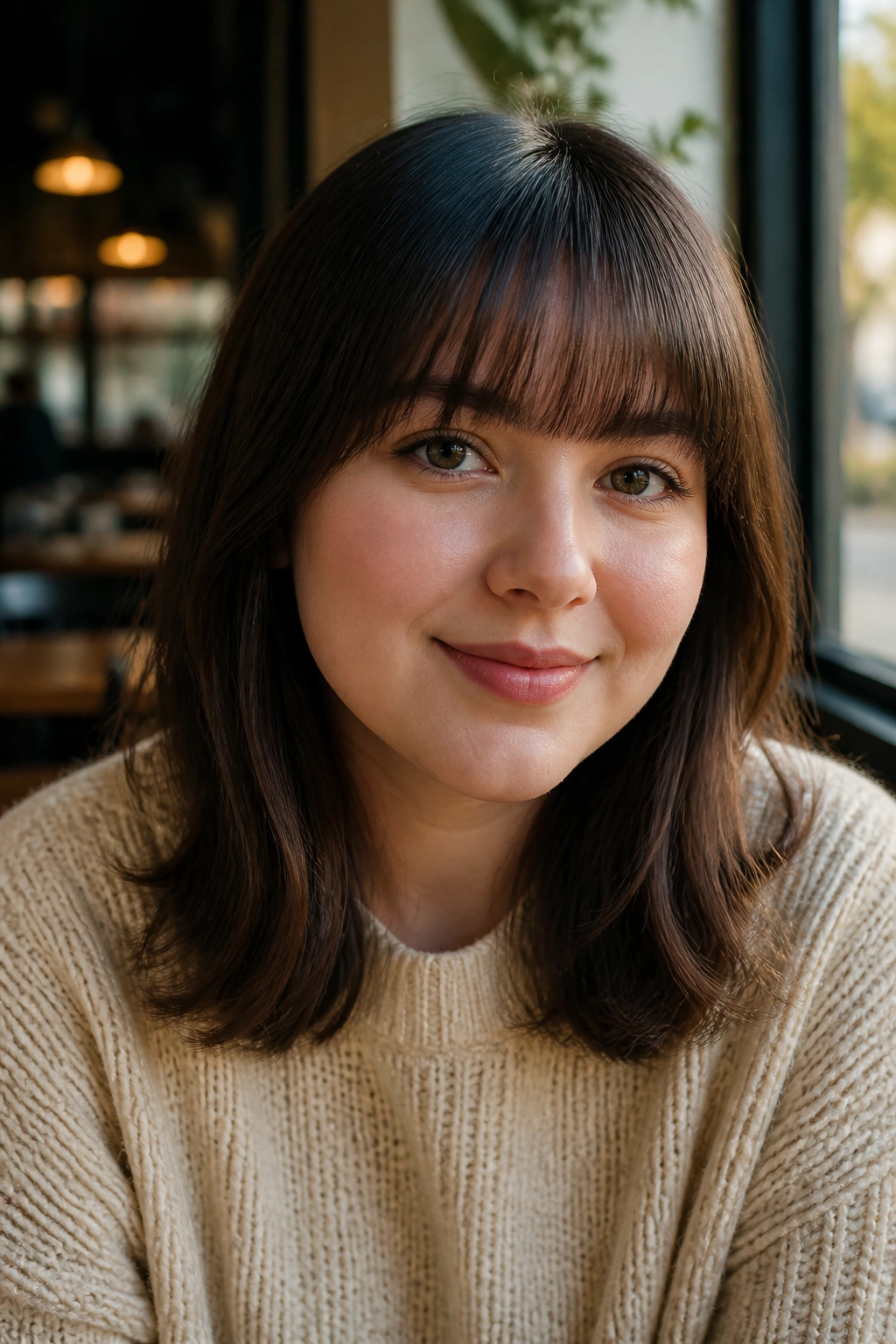
A rounded fringe is a good middle ground if you want softness without losing that straight-bang feeling. The center stays clean, while the shape curves just enough at the sides to follow the forehead.
How to ask for it
Tell your stylist you want a straight fringe with a gentle arc, not a heavy U-shape. The goal is subtle contour, not a dramatic swoop.
This shape flatters round faces because it shifts the eye upward and inward. The curve also keeps the temples from looking too wide. If you wear your hair in a sleek lob or long layers, this fringe can look especially balanced.
A rounded fringe is one of those cuts that looks simple until you see how much it does.
15. Sleek Flat Bangs on Medium-Density Hair

Flat bangs look sharper than people think. When the texture is smooth and the density is moderate, a straight fringe can sit like a neat band across the forehead without feeling bulky.
The secret is not to overinflate it. No round-brush drama. No root lift that pushes the bangs forward like a shelf. You want the hair to lie close, clean, and controlled.
This is a good option if your style leans polished and you like a crisp finish. It pairs well with long, straight lengths or a blunt collarbone cut. On a round face, the sleekness keeps the shape from getting too soft all over.
One warning: if your roots are prone to cowlicks, this cut will ask for daily effort.
16. Shaggy Straight Fringe with a Soft Texture

A shaggy fringe sounds messy, but it doesn’t have to be. Think of it as a straight bang with a little broken texture through the ends, so it moves instead of sitting like a block.
That softness is useful on a round face because it stops the hairline from becoming too heavy. The fringe still frames the eyes, but it doesn’t crowd the cheeks. There’s a lightness to it that works especially well with layered hair.
What makes it different
- The line is straight, but the ends are lightly shattered.
- The texture is subtle, not choppy.
- It looks best with a loose bend, not a pin-straight finish.
This one feels a little lived-in, which I think keeps it from looking too precious.
17. Straight Bangs with Cheekbone-Lengthening Sides
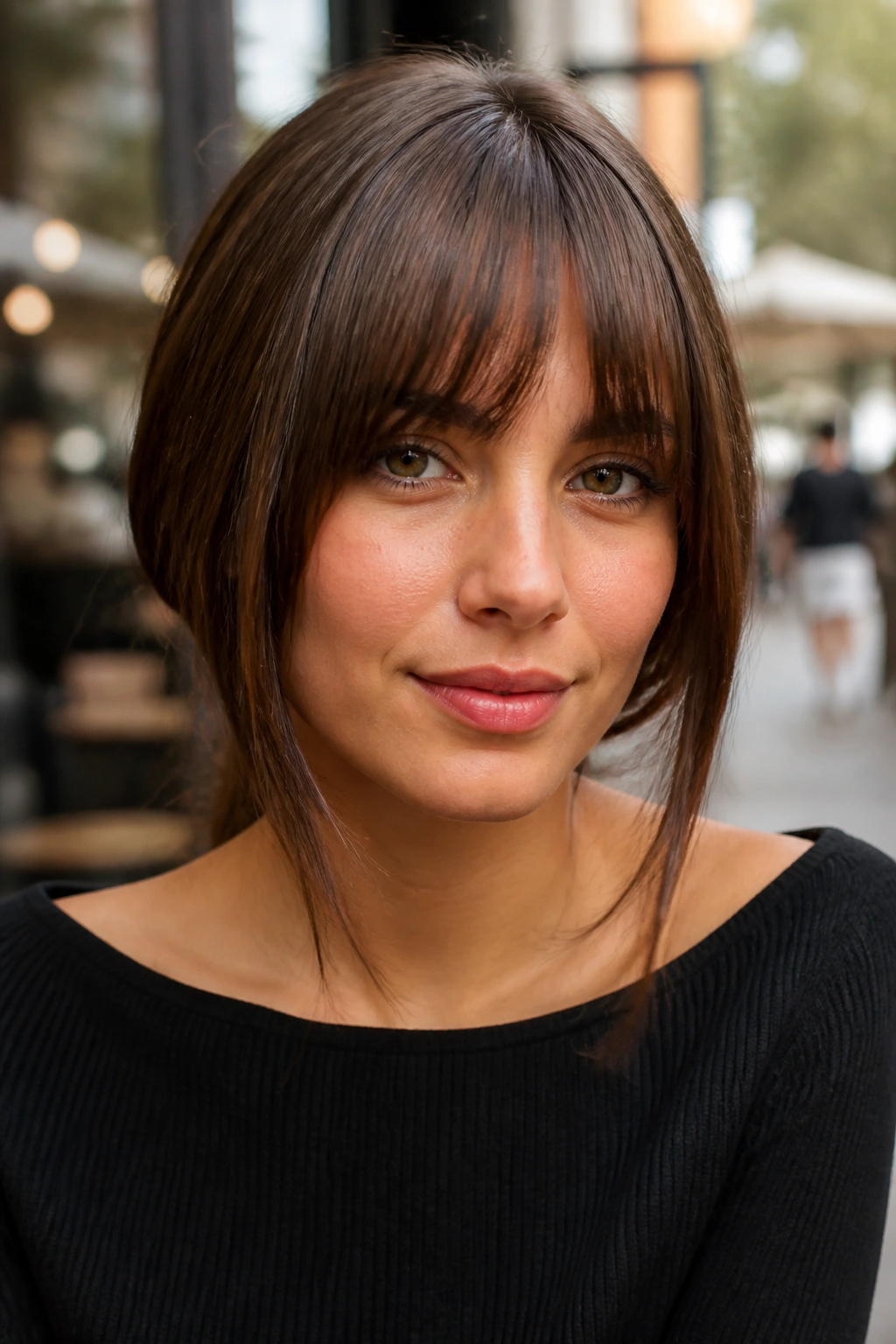
This is one of the sneakiest flattering shapes for round faces. The center stays bang-like, but the outer sections drop toward the cheekbones, making the whole face look longer.
The side lengths create a vertical path right where a round face usually needs it. Instead of ending at the widest point, the fringe pulls the eye below it. That shift matters more than people realize.
If you like the idea of bangs but worry about softness around the cheeks, start here. It gives you the frame without the blunt width.
I’d call this the “easy yes” option for anyone who wants shape without a major commitment.
18. Layered Straight Fringe for Thick Hair
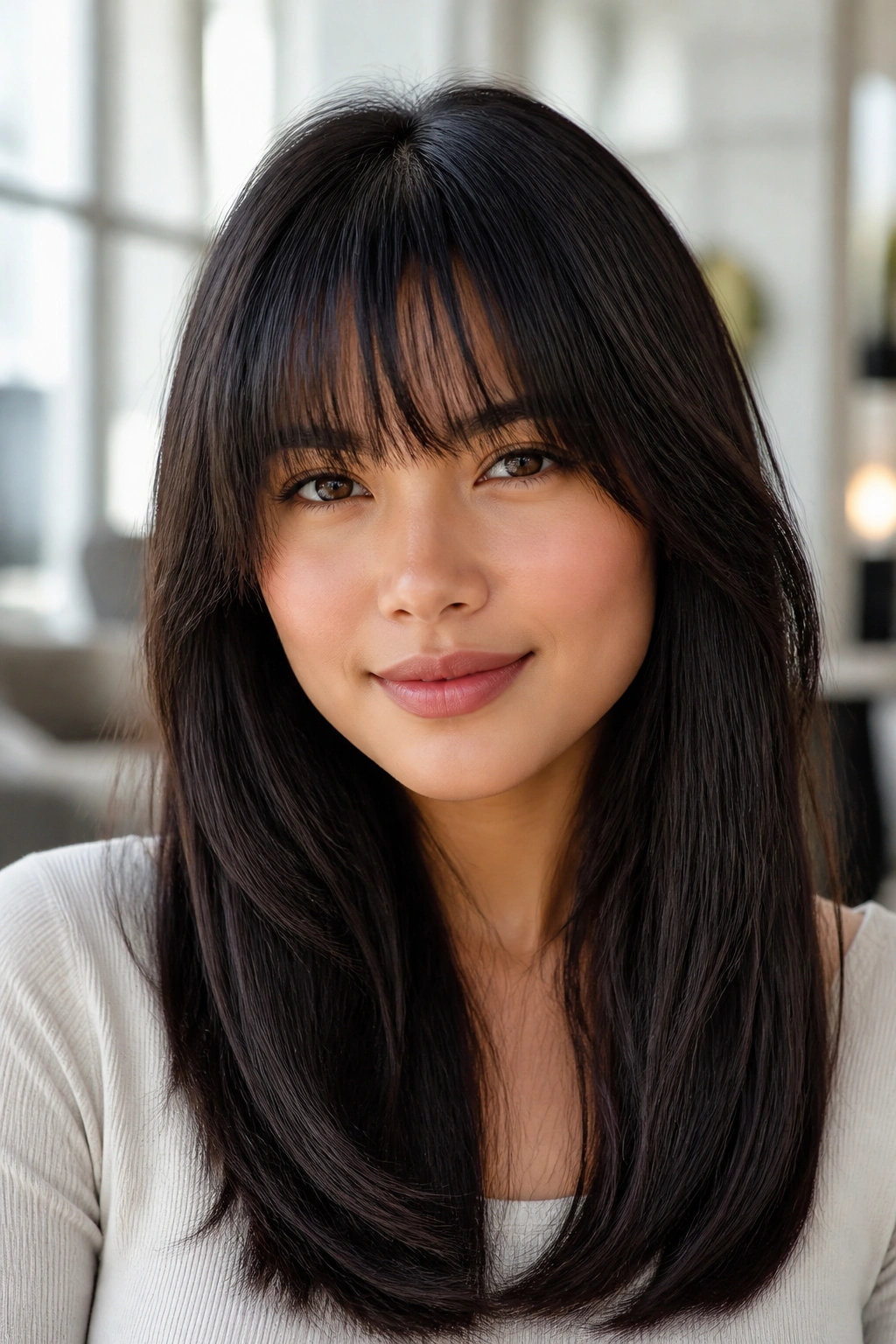
Thick hair needs control, and invisible layering inside the fringe can save you from the dreaded helmet effect. The outside still reads as straight bangs, but the inside is reduced enough to lie flatter.
That matters on a round face because a thick, bulky fringe can add width fast. A layered version keeps the front light, so the bangs sit closer to the forehead and the face keeps its length.
This cut also behaves better when you wear your hair up. A thick blunt bang can look overpowering in a ponytail; a layered one tends to fold in more naturally.
If you have dense hair, ask your stylist not to thin the ends too aggressively. You want less bulk, not a wispy mess.
19. Minimal Ultra-Clean Fringe
There’s something hard to beat about a minimal straight fringe when it’s done well. No fluff. No extra texture. Just a clean line, usually cut a touch longer so it doesn’t look severe.
On a round face, this works when the rest of the haircut keeps the silhouette narrow and long. Think long layers, a sharp bob, or a sleek length past the shoulders. The fringe becomes a detail, not the whole story.
I like this look on people with strong brows and straight hair that settles fast. If your texture fights back, the cut can lose its edge by lunch. But when it holds, it looks precise in a way that’s hard to fake.
20. Soft-Broken Blunt Bangs
What breaks up a blunt fringe without losing the line? Tiny internal gaps and lightly shattered ends. That’s the whole game here.
What to watch for
The overall shape should still feel straight. If the texture gets too choppy, the bangs start looking accidental. The goal is a blunt idea with some air in it.
On a round face, soft-broken bangs keep the forehead framed without making the top of the face feel too closed in. They also grow out a bit better than a perfectly solid line, which is a nice bonus.
Use a light styling cream on damp bangs, then flatten the roots with a brush. Skip heavy waxes. They clump the texture and make the fringe look greasy fast.
21. Straight Bangs with Invisible Internal Layers
This is the haircutting trick that keeps a straight fringe from puffing out. The top layer stays smooth, while the inside gets a little hidden removal so the bangs sit flatter and cleaner.
A round face benefits because the fringe doesn’t balloon across the forehead. It stays close, controlled, and narrow enough to keep the face from looking wider. The line is still there. It just behaves better.
This option is especially good if your hair is thick but not super coarse. The internal layers take away bulk without changing the outside shape too much. I’d choose this over heavy thinning every time.
Best for: anyone who wants a polished straight bang with less daily wrestling.
22. Straight Fringe with a Tiny Center Gap
A tiny center gap can make straight bangs feel lighter without turning them into full curtain bangs. The split should be subtle—almost like the fringe naturally parts for a second before falling back together.
That little opening gives the face a vertical break right in the middle. On a round face, that can be a quiet but useful trick because it keeps the fringe from reading as one wide line.
This version works best when the rest of the bangs still feel full. If the gap is too big, the style loses its point and just looks overgrown.
I’d use this one for someone who wants straight bangs but doesn’t love a dense forehead cover.
23. Heavy Fringe with Airy Temples
Heavy through the center, lighter at the edges—that’s the formula here. The middle gives you a bold frame, while the temples stay soft enough to avoid adding width to the sides of the face.
That balance is exactly why it works on round faces. A full bang alone can overwhelm. A bang with airy temples feels more controlled and less boxy.
This is a good choice if you have thick hair and like a strong front line. It also photographs well in real life, meaning it holds up when you move, not just when you’re standing still.
Recommendation: keep the temple pieces at least a little longer than the center. That small difference does the heavy lifting.
24. Straight Bangs and a Deep Side Part
A straight bang doesn’t have to sit dead center. If you train it into a deep side part, the fringe can sweep diagonally across the forehead and change the whole mood of the cut.
Why it flatters
A diagonal line is useful on a round face because it breaks up the width. The fringe still reads straight, but the styling introduces angle, and angle is your friend here.
This version is also practical if you want to keep options open. On days when you wear the part one way, the bangs feel softer. Flip it back, and they look more classic.
I like this for people who change their mood with their hair. It gives you two looks from one cut, which is never a bad thing.
25. Short Straight Bangs with a Longer Face Frame
Short bangs can work on a round face when the sides are left long enough to anchor the shape. That longer face frame matters more than the bang length itself.
The contrast keeps the cut from becoming top-heavy. Your eyes still go to the fringe, but the longer pieces around the jaw and cheekbones add the length the face needs. Without that balance, short bangs can feel too playful and too wide at once.
This is a good cut if you like a little edge and don’t mind making a statement. It also suits strong glasses frames, which can be a nice bonus if you wear them.
Honestly, this one is more specific than people think. Done well, it looks crisp. Done wrong, it looks like a school picture gone off the rails.
26. Just-Under-Brow Bangs
There’s a sweet spot just below the brows that often works better than a bang that sits high above them. The extra length gives the face more vertical room, and the fringe feels a little less aggressive.
On a round face, that matters because you want the line to frame the eyes, not cut the forehead into a smaller box. Just-under-brow bangs keep the look soft while still feeling straight and intentional.
This length is also forgiving when you style it at home. A small bend or a clean blow-dry both work. If the fringe shrinks a bit as it dries, you still have enough length to keep it flattering.
My opinion: this is one of the easiest straight bang lengths to live with.
27. Straight Bangs with a Narrow Center Window
A narrow center window is a subtle version of separation, and it can be a neat fix for round faces that want movement without full split bangs.
What to ask for
- Keep the fringe mostly straight across the front.
- Leave only a slim opening at the center.
- Let the sides stay full enough to frame the brows.
That tiny opening helps the face feel less boxed in. It also makes the fringe easier to style when the roots are stubborn, because the hair has a natural place to fall.
The cut should still read as bangs at first glance. If the opening gets too wide, you’re heading into curtain-bang territory, which is a different animal entirely.
Pro tip: keep the center window narrow and the edges soft. That combination is the whole point.
28. The Grow-Out-Friendly Straight Fringe
If you’re nervous about commitment, start here. A grow-out-friendly straight fringe is long enough to tuck, part, pin, or blend into layers when you want a break from it.
That flexibility is a gift for round faces because you can test the look without locking yourself into a single shape. Some days you wear the fringe straight down. Other days you sweep it slightly aside and let the face frame do more of the work.
I think this is the smartest first bang for anyone who’s unsure. It gives you the straight-bang effect, but it doesn’t trap you. And when the cut starts to grow, it still looks intentional instead of awkward.
If you want one safe place to start, make it this one.
