



Baby bangs are a sharp move. They put the forehead on display, make the eyes work harder, and change the mood of a haircut faster than almost anything else you can do with scissors.
That is the reason people either love them or talk themselves out of them for months. There is no hiding in a baby fringe. No soft landing. If the line is good, the whole face looks cleaner, cooler, and more deliberate. If the line is off by half an inch, it can feel a little too serious, a little too blunt, or a little too fussy. Small cut. Big opinion.
The tricky part is that “baby bangs” is not one look. A blunt micro fringe on pin-straight hair reads very differently from a wispy curl-friendly version, and both are miles away from a choppy, side-swept cut that barely brushes the top of the brows. Hairline, cowlicks, brow shape, texture, and how much time you want to spend with a brush all matter here. A good stylist looks at those pieces first, then decides where the fringe should sit and how much movement it should have.
If you want a bold fringe that still feels wearable, the trick is choosing the right version of baby bangs for your face and your hair. Some cuts bring edge. Some bring polish. Some look best when they feel a little undone. The styles below cover the strongest options, and each one earns its place for a different reason.
1. Ultra-Blunt Baby Bangs
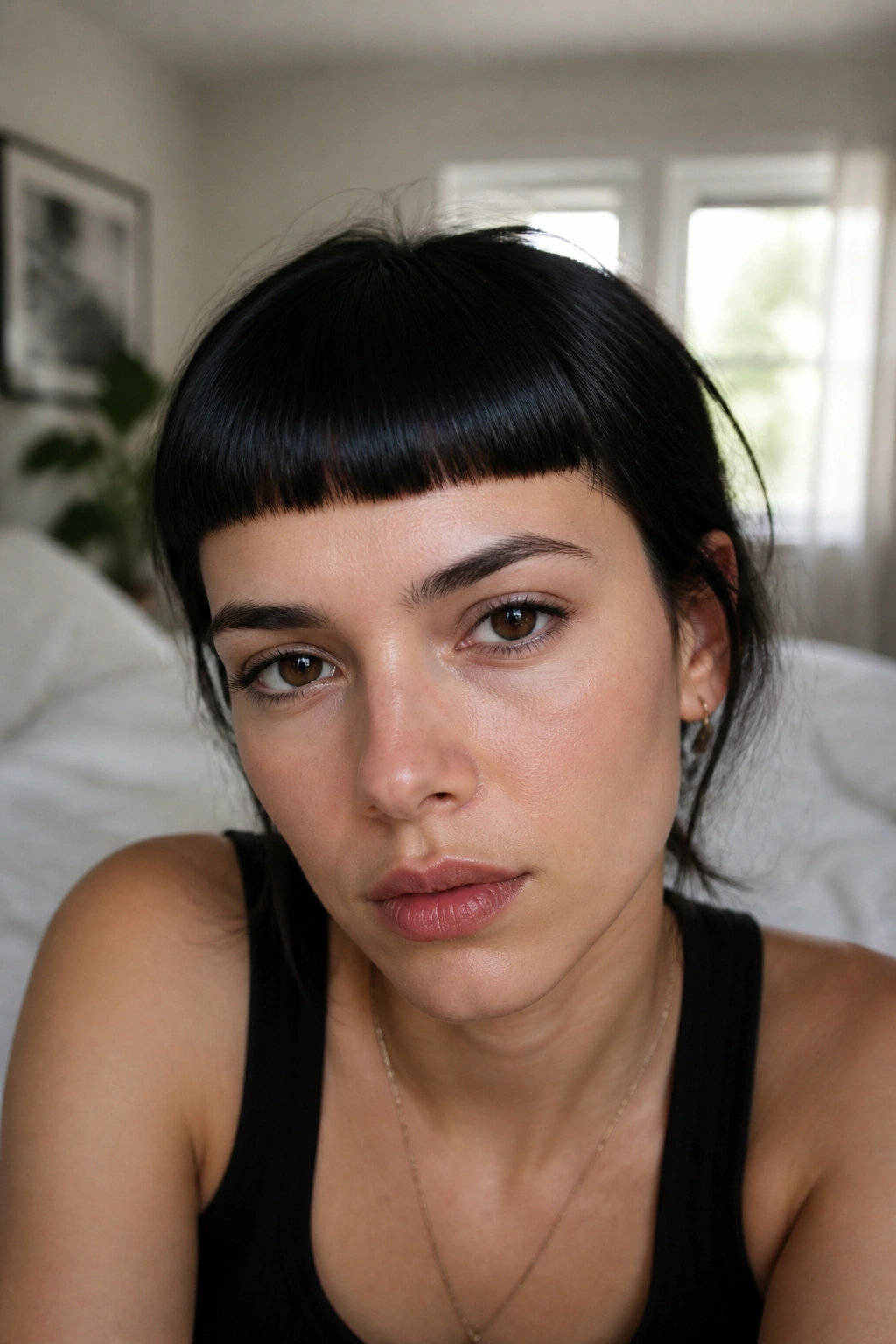
This is the version that announces itself first. A straight, blunt baby fringe sits high on the forehead and gives the haircut a hard line that feels clean, graphic, and a little fearless.
Why the line matters
The magic is in the edge. A blunt cut makes the fringe look intentional, not accidental, which is exactly why it reads so bold. It works best when the hair is dense enough to hold a solid shape, because thin ends can make the whole thing look wispy in the wrong way. With the right density, though, the line is crisp and the eyes suddenly get framed by a much tighter border.
A blunt baby bang also changes the balance of the face. It shortens the visible forehead and puts more attention on brows, lashes, and cheekbones. That can be a huge plus if you like strong makeup, thick glasses, or a haircut that does not fade into the background. It also looks especially sharp with a bob, a pixie, or a one-length crop.
One sentence is enough here: this cut either suits your style or it doesn’t.
What to ask for at the salon
- Ask for a dry cut if your hair has a lot of bend or shrinkage.
- Keep the line straight across or with a tiny bevel, not rounded to the point of softness.
- Tell the stylist how short you want the fringe relative to your brows, because even a quarter inch changes the whole read.
- Avoid over-thinning at the ends; too much texture kills the clean line.
Pro tip: If your hair grows forward at the center, ask for the middle to be left a touch longer than the sides. It keeps the fringe from springing up and looking uneven by lunch.
2. Wispy See-Through Baby Bangs
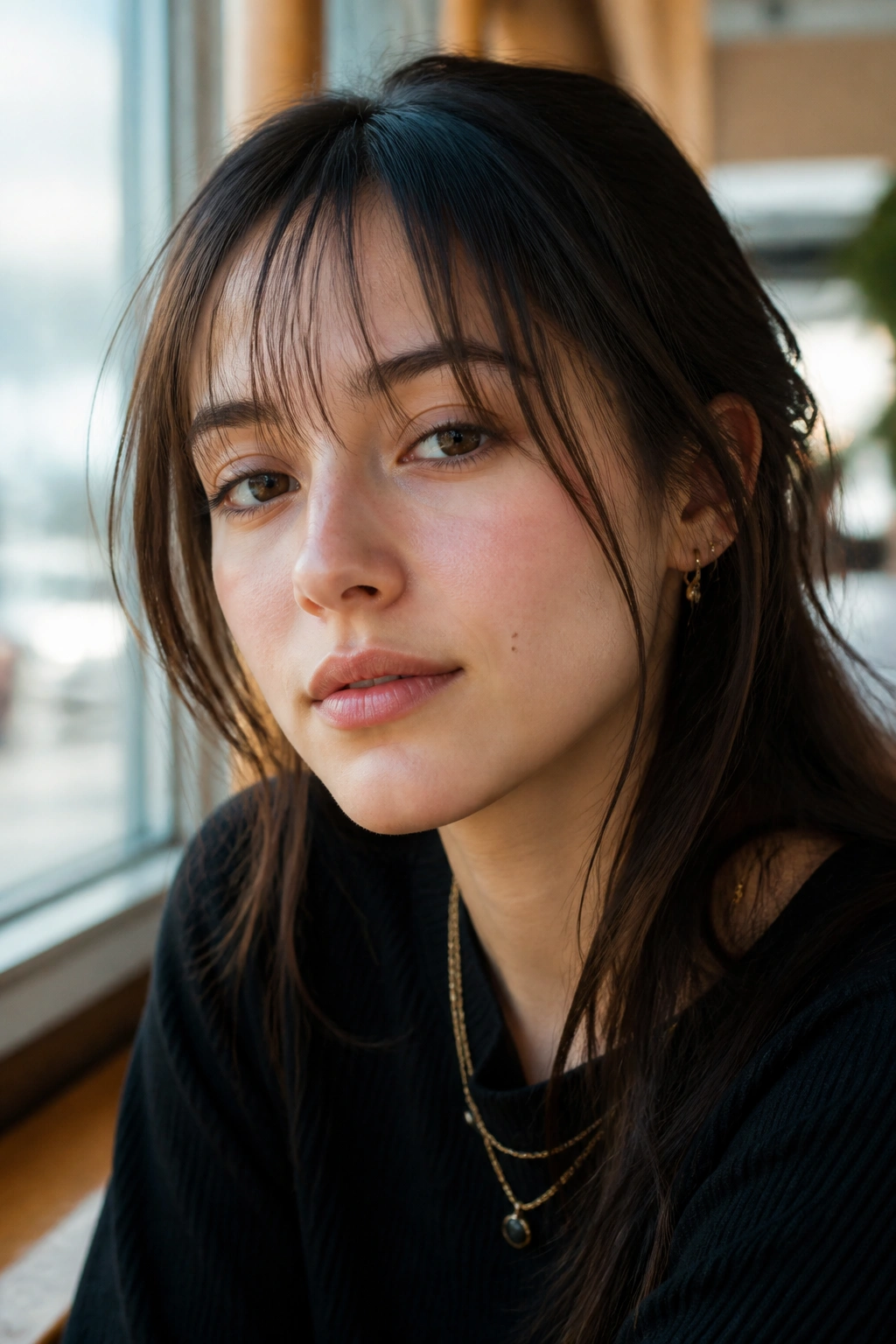
Not every short fringe has to hit like a hammer. A wispy baby bang keeps the length short, but the ends are feather-light and soft enough to let skin show through.
That transparency is the whole point. See-through baby bangs reduce the visual weight across the forehead, which makes them easier to wear if you are nervous about going short. They still look bold, but they do it in a quieter way. Less wall. More veil.
This version tends to flatter fine hair because the fringe does not need to look full to work. It also plays well with soft makeup, a bare face, or a haircut that already has movement in the layers. A heavy blunt line can feel too rigid in those settings. Wispy baby bangs look a little less precious, which I like. They can get a bit messy and still hold their shape.
The trick is not to over-texturize the whole thing. You want soft ends, not broken ends. A stylist can point-cut the tips or slice just the last few millimeters so the fringe falls in tiny, separate pieces instead of one hard sheet. At home, a light blow-dry with a small brush and a touch of flexible hairspray is usually enough. No need to bake them into place.
If you want bold without the hard edge, this is the smartest starting point.
3. Curved Baby Bangs That Follow the Brow
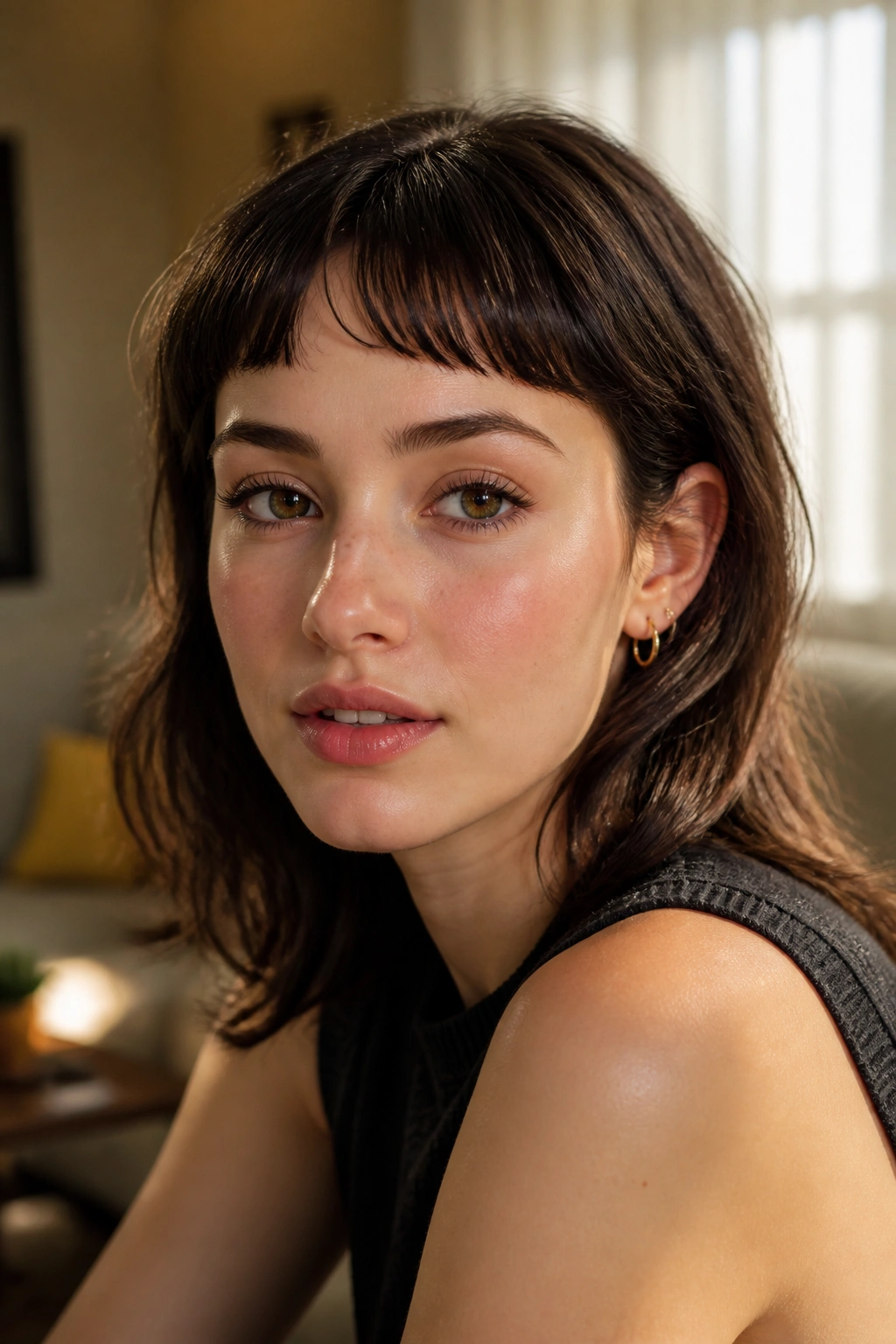
Why do curved baby bangs feel softer than a straight cut? Because the eye reads the arc before it reads the length. The shape follows the brow line instead of fighting it, and that small shift changes the whole mood.
A curved fringe works well when the center is just a little shorter and the corners feather down toward the temples. The result is still short, still noticeable, but less severe than a blunt cut. It suits people who want the forehead open without the feeling of a hard shelf across the face. On an oval face, the curve can look elegant. On a square face, it takes some of the edge off the angles. On a heart-shaped face, it helps keep the upper half from feeling too narrow.
How to style the arc
- Blow-dry the fringe down and slightly inward with a small round brush.
- Keep the brush movement gentle; you want a soft bend, not a curl.
- Finish with a tiny amount of lightweight cream on the tips if the ends puff out.
- Trim every 3 to 5 weeks to keep the curve readable.
The thing people miss is that the shape matters more than the exact length. A curved baby bang at brow-bone height can look softer than a shorter blunt one sitting much higher. That is why this cut is such a useful middle ground. It has attitude, but it doesn’t shout.
4. Choppy, Piecey Baby Bangs
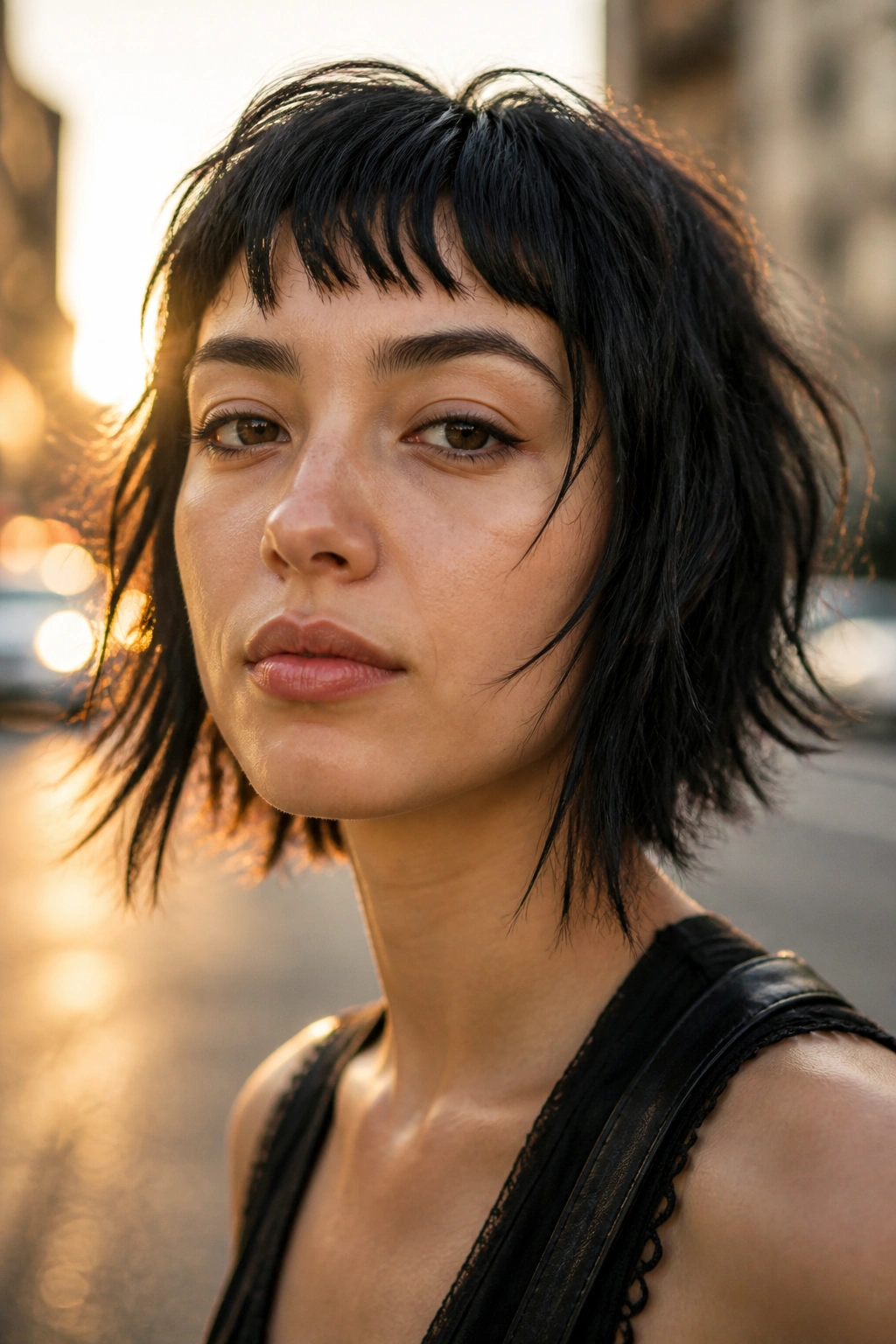
If your fringe tends to sit flat like a paper strip, choppy ends can save the whole look. The piecey finish breaks up the line just enough to make the haircut feel lively instead of helmet-like.
This cut is a good fit for hair that has a bit of natural bend or a little grit from being air-dried. The layers are cut into small sections, usually with point-cutting or a razor held carefully at the ends, so the bangs separate into visible little strands. That separation gives the fringe motion even when the rest of the haircut is still.
Picture a short fringe that moves a little when you shake your head. That is the feeling here. Not polished to the millimeter. Not messy in a sloppy way either. Just lived-in enough to keep the forehead from looking boxed in.
A matte paste or a tiny bit of styling cream works better here than shiny product. Too much slip and the pieces will collapse into each other. Too little and they puff outward. Dry shampoo can help on the second day, especially if your roots get oily fast. A quick blast of cool air at the roots after restyling is usually enough to bring the texture back.
This is the baby bang for people who like a haircut with a little grit.
5. Side-Swept Baby Bangs
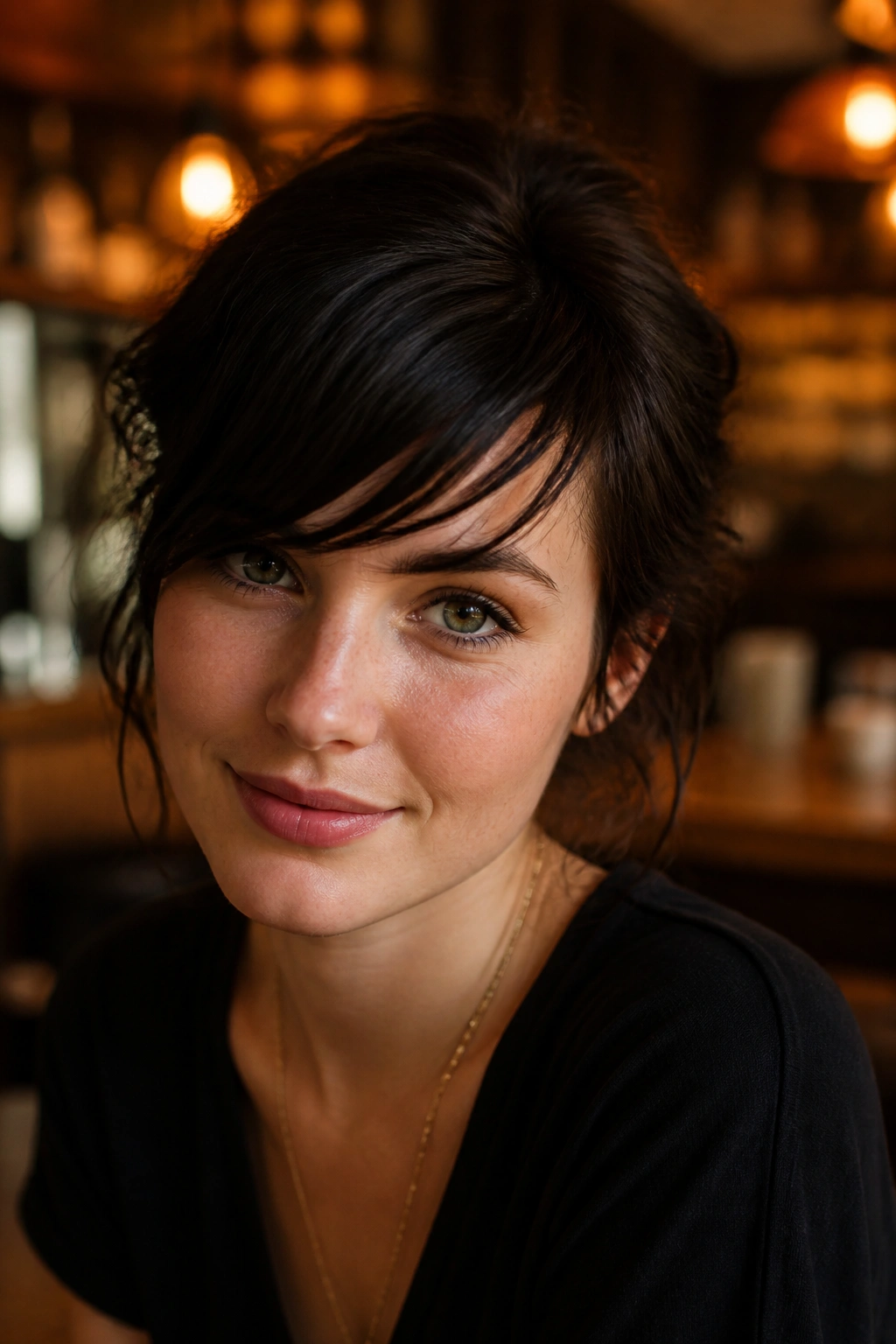
This is the easiest way to wear a short fringe if your hairline has opinions of its own. A side-swept baby bang keeps the length short but shifts the direction, which makes the cut easier to live with around cowlicks and uneven growth patterns.
The sweep softens the face instead of boxing it in. One brow gets a little more coverage, the other stays more open, and that slight asymmetry gives the haircut some movement. The longest point should still read as a baby bang, though. If it gets too long, you lose the whole effect and land in regular fringe territory.
What I like about this version is how forgiving it is. Morning styling can be fast. A small round brush or even fingers and a blow-dryer nozzle can push the fringe to the side while it is still damp. Once the roots dry in that direction, the shape tends to stay put better than a straight-across cut that wants to spring up.
It also plays nicely with strong brows and glasses. Straight baby bangs plus thick frames can look a little crowded. A side-swept line opens a sliver of space and keeps the look from feeling too boxed in. If you want the energy of baby bangs without the strictness, start here.
6. Micro Curtain Bangs Cut Short
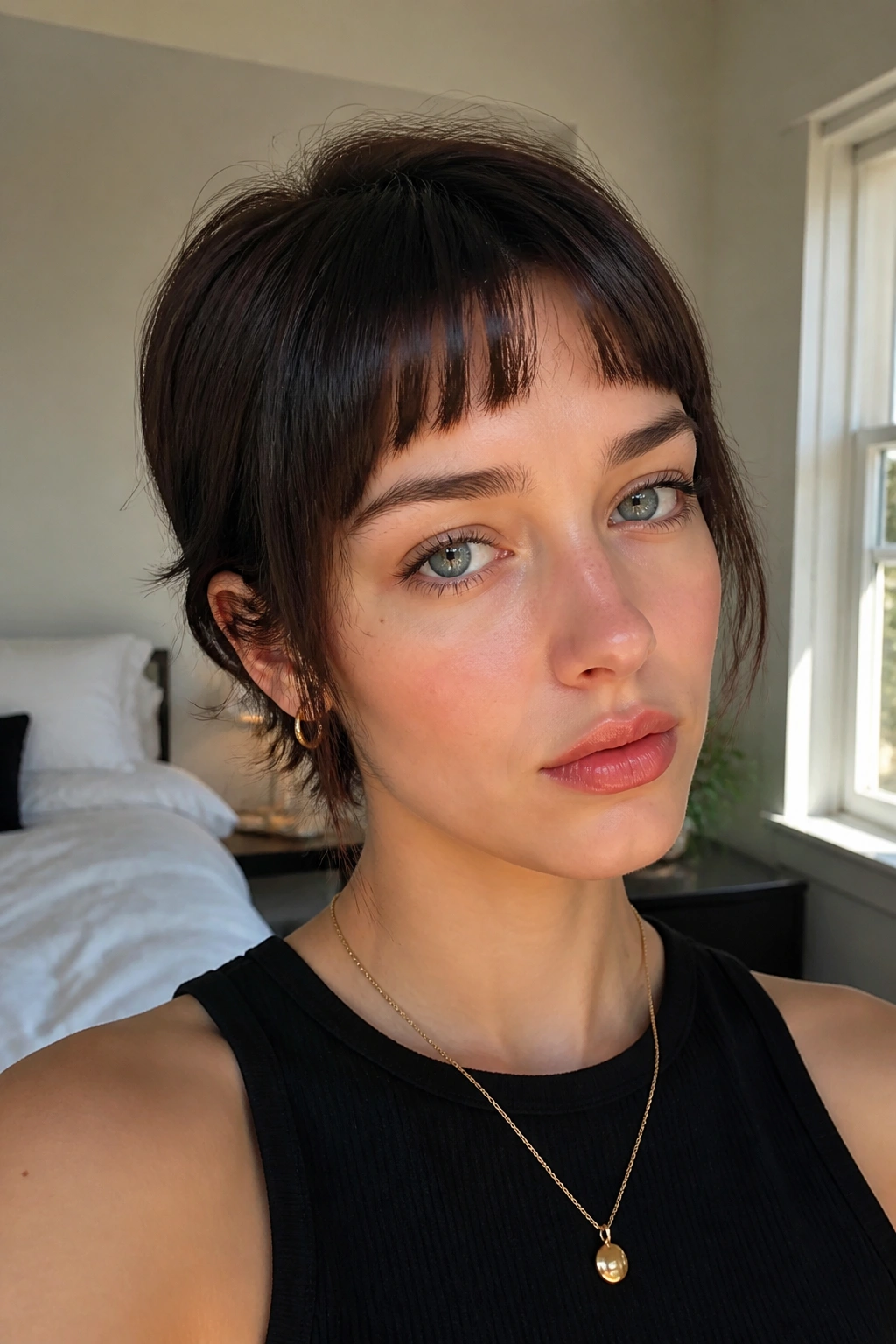
Unlike full curtain bangs, this version is short enough to show the forehead but split enough to keep things soft. The center opening gives the haircut air, and the short side pieces make the face feel framed instead of covered.
Micro curtain bangs are a good choice if you like the idea of baby bangs but do not want one solid wall across the front. The middle can sit just above the brows, while the sides angle toward the temples in a tiny, face-framing sweep. It is a useful cut for people who want the edge of a short fringe with a little room to grow out gracefully.
They also behave better than people expect. Because the center is broken up, the fringe can move a bit without losing the shape. That makes it easier to style on days when you do not want to fuss. A quick bend with a flat iron, a soft blow-dry away from the face, and a touch of texturizing spray is usually enough.
What makes it different
- The center is open, not sealed into a hard line.
- The side pieces are short, so it still reads as baby bangs.
- It grows out into a mini curtain shape instead of a blunt shelf.
If you like haircuts that look intentional even when they are slightly messy, this one is a smart pick. It has structure, but not stiffness.
7. Rounded Baby Bangs for a Bob
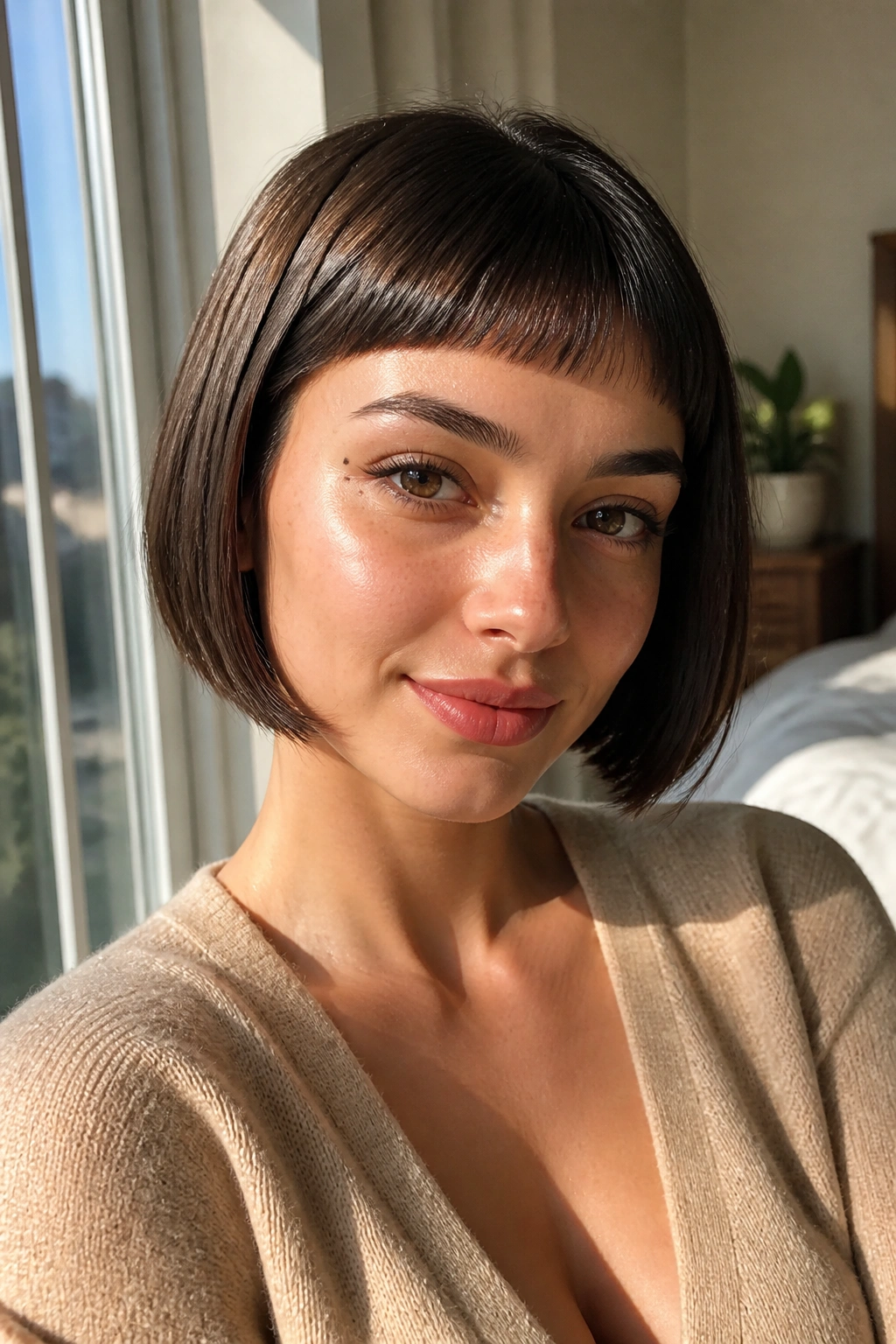
Pair baby bangs with a bob and the haircut suddenly feels sharper. The short fringe gives the bob a front-facing edge, and the rounded shape keeps the whole thing from feeling too hard.
A rounded baby bang curves gently from the center toward the temples, almost like a tiny arch sitting above the eyes. On a chin-length bob, that shape can make the haircut feel more finished. On a jaw-length bob, it adds a little bite. Either way, the fringe gives the bob a clear personality instead of leaving it to float around on its own.
This works best when the bob itself is clean. If the back is already stacked or the ends are too choppy, the rounded fringe can get lost. But on a blunt or softly beveled bob, the two shapes support each other. The bang draws the eye up; the bob keeps the line grounded.
Where the curve should land
- Keep the highest point near the center of the forehead.
- Let the sides taper slightly so they do not look boxy.
- Ask for the fringe to connect visually with the bob’s perimeter, not sit as a separate piece.
- Style with a small round brush and a low heat setting.
The strongest version of this look feels deliberate from every angle. Front, side, and profile all matter. That’s the fun of it.
8. Textured Baby Bangs for Wavy Hair
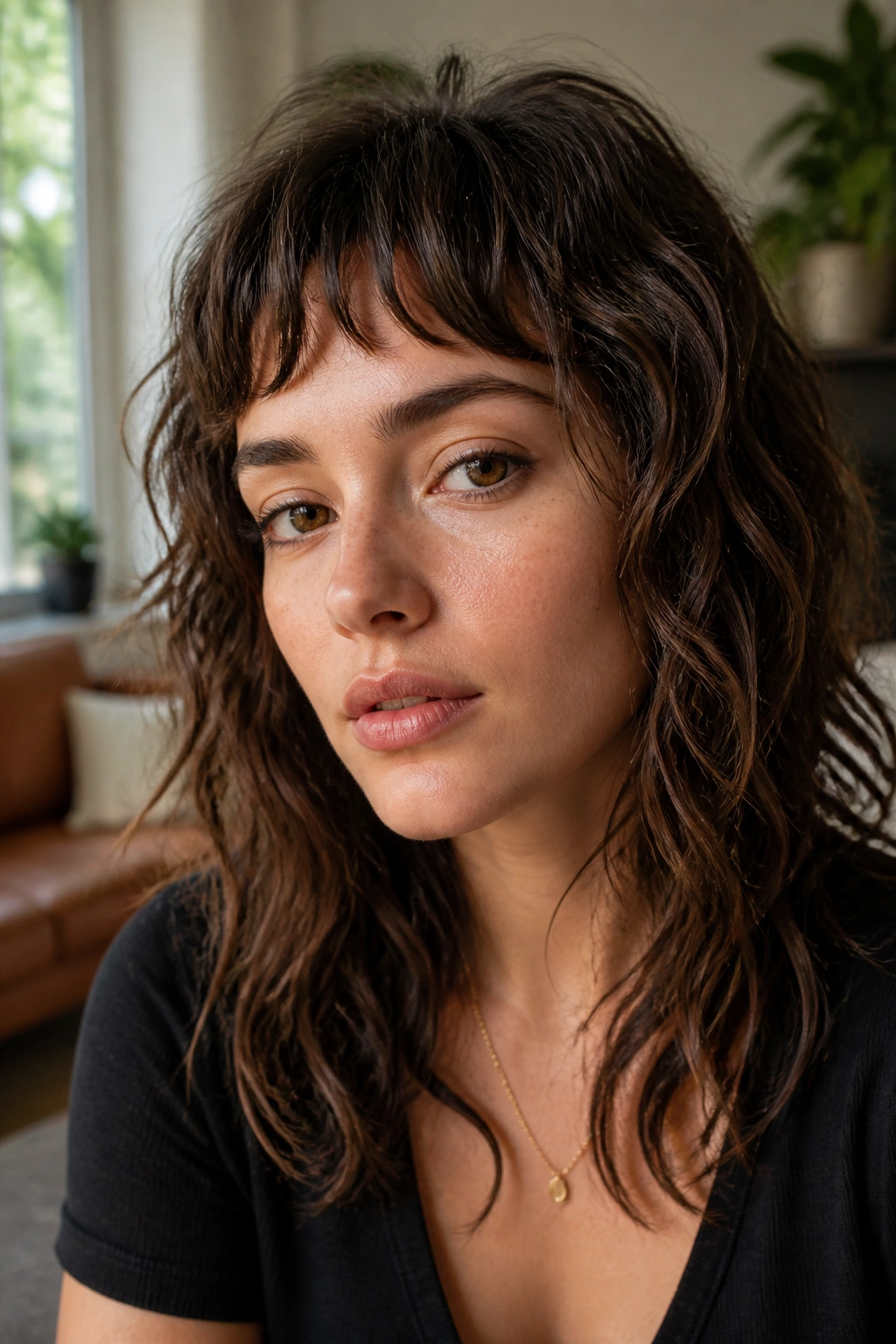
Can wavy hair pull off baby bangs? Yes, and often better than straight hair can, because the texture gives the fringe a little movement from the start. The catch is that the cut has to respect the wave pattern instead of trying to flatten it out.
Wavy hair usually needs a bit more length left in the fringe than straight hair does. Dry curls or waves can bounce up as they finish drying, so a stylist who cuts the bangs too short can leave you with a tiny fringe that stands too high. A good wave-friendly baby bang should look slightly longer when wet than you want it to look dry.
That extra length matters. It gives the hair room to settle without springing into a weird line. It also keeps the front from looking uneven if one side bends more than the other. A little asymmetry is fine. A jagged, accidental line is not.
How to get the waves to sit right
- Ask for the fringe to be cut mostly dry so the wave pattern is visible.
- Use a small amount of curl cream, not a heavy one.
- Scrunch the bangs gently and let them air-dry partway before touching them again.
- If you blow-dry, use a diffuser on low speed and low heat.
This version of baby bangs is for people who want movement without looking too styled. It has a bit of bounce, a bit of roughness, and enough shape to feel purposeful.
9. Baby Bangs With a Shag Cut
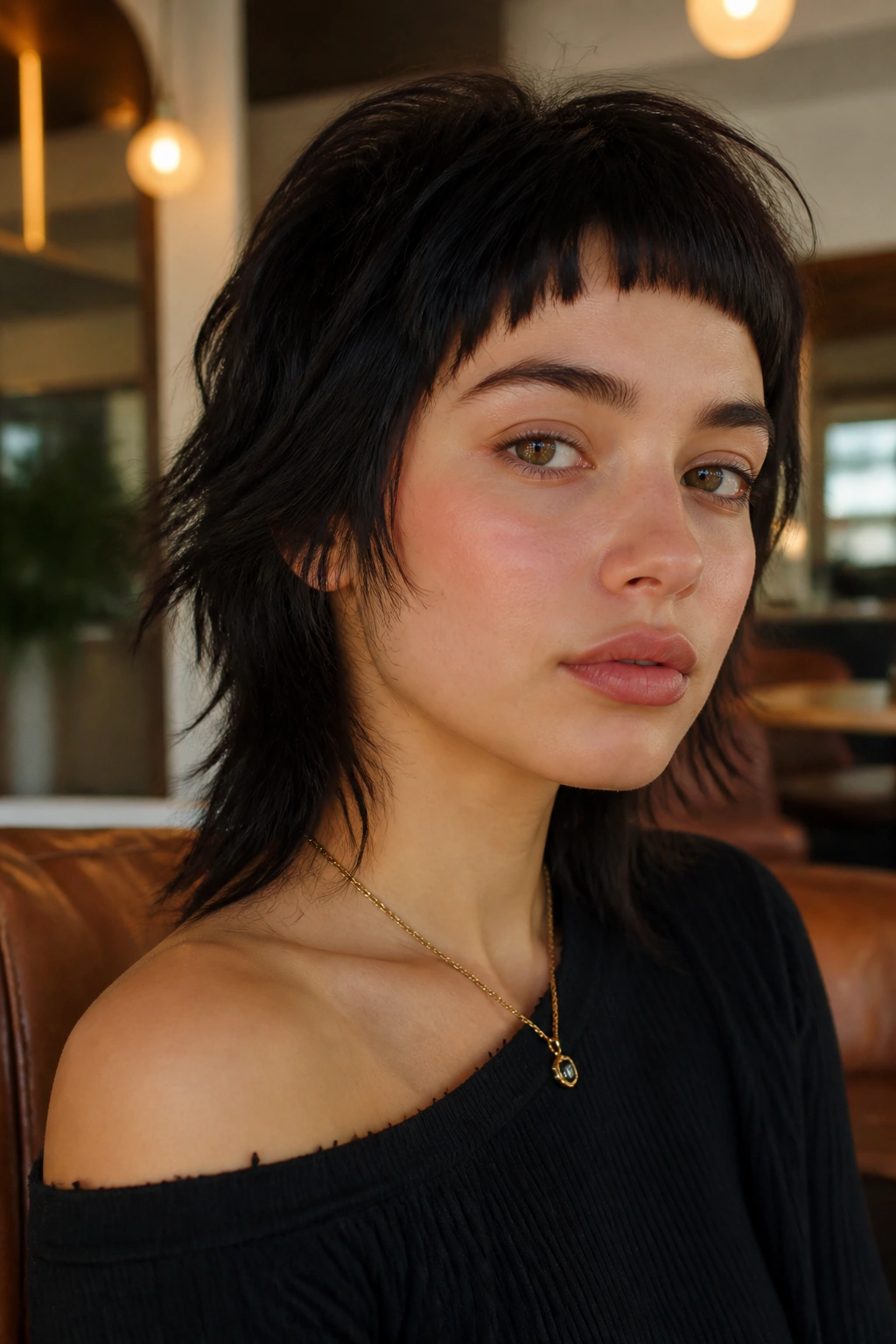
If you like a haircut with a little mess in it, this is the one. A shag gives baby bangs somewhere to live, because the layers around the face already have movement and the short fringe does not have to carry all the drama by itself.
That pairing works so well because the fringe and the top layers speak the same language. The bangs are short, textured, and slightly broken up. The shag does the same thing everywhere else. Nothing looks too finished, which is exactly why it feels cool rather than overworked.
The best version is usually a fringe that is cut with some softness at the ends and connected to the top layer by a gentle slope. Too much separation and the bangs will look pasted on. Too little and you lose the contrast that makes the cut fun. The fringe should look like it belongs to the haircut, not like it was dropped onto it later.
A shag with baby bangs also gives you options on day two or day three. A little dry shampoo, a rough blow-dry, maybe a dab of paste at the ends, and the whole cut wakes up again. That matters more than people think. A fringe that only looks good in the salon chair is not much use in real life.
- Best with medium to thick hair.
- Works well when the top layers are already choppy.
- Needs a trim schedule that keeps the front from losing its edge.
It’s a lively cut. Never boring.
10. Soft Arched Baby Bangs for Curly Hair
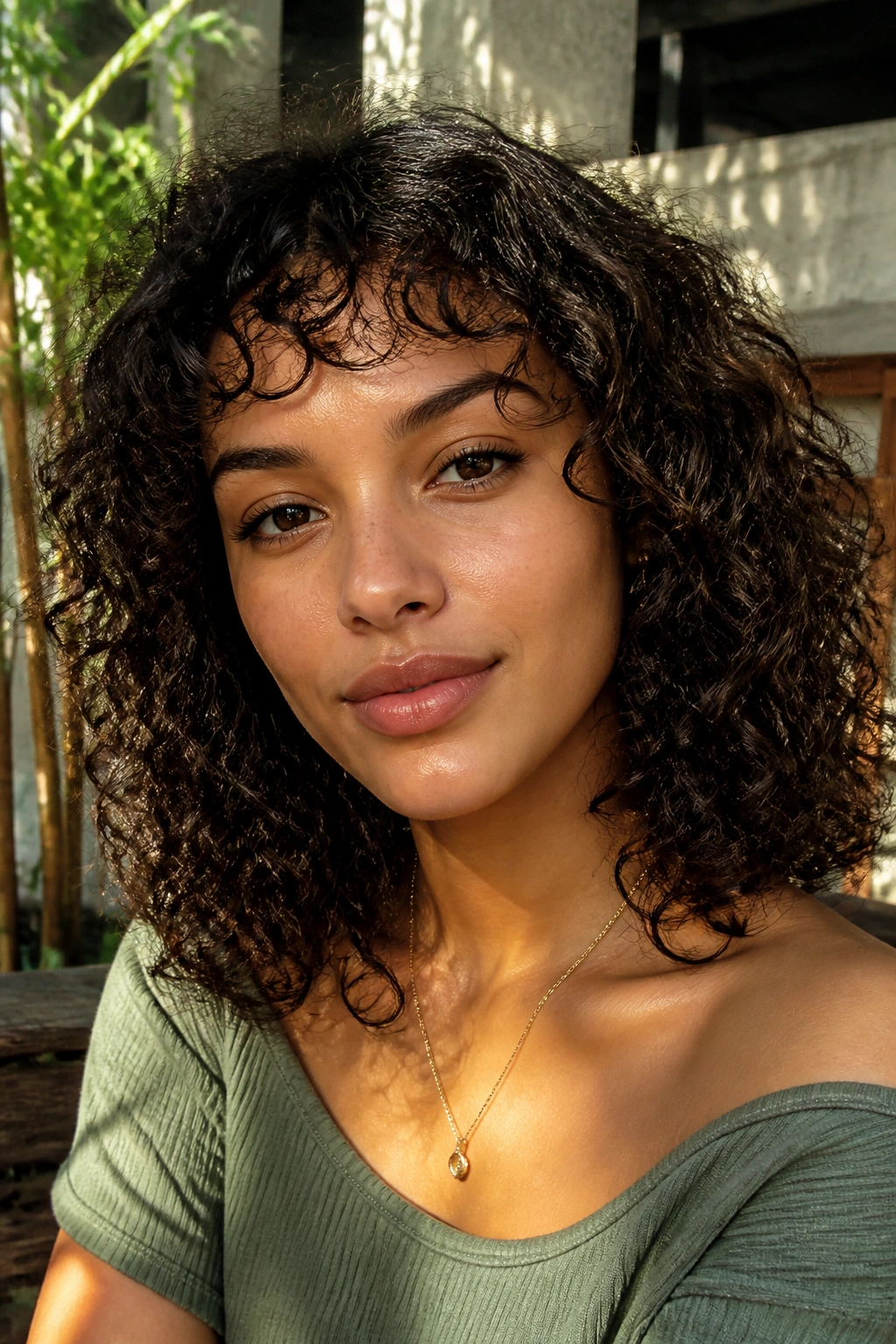
Wet curls lie. That sounds blunt, but it matters here, because curly hair can shrink enough at the front to turn a nice short fringe into a tiny loop if the cut is too aggressive.
Soft arched baby bangs are the safer, smarter version for curls. The shape is still short, but the stylist leaves room for shrinkage and follows the natural curve of the curl instead of forcing a straight line where one doesn’t belong. On tighter curls, that can mean leaving the front slightly longer than you think you need. On looser curls, it might just mean cutting dry so the natural bend shows right away.
This cut works because it respects the hair’s own movement. The arch can sit high in the center and fall gently at the sides, which keeps the forehead visible without pinning the curl pattern down. The fringe should look shaped, not flattened. That is the difference between a short curl-friendly bang and a bad haircut.
A little curl cream can help the bangs clump in a good way. Too much product makes them droop. Too little lets them puff and separate too far. I like to start with a pea-sized amount, rake it through with fingertips, and stop there unless the hair needs more. Hands work better than a brush for most curly fringes because they keep the shape from getting too stretched.
One sentence here matters: cut curly baby bangs dry or near-dry whenever possible.
11. Asymmetrical Baby Bangs
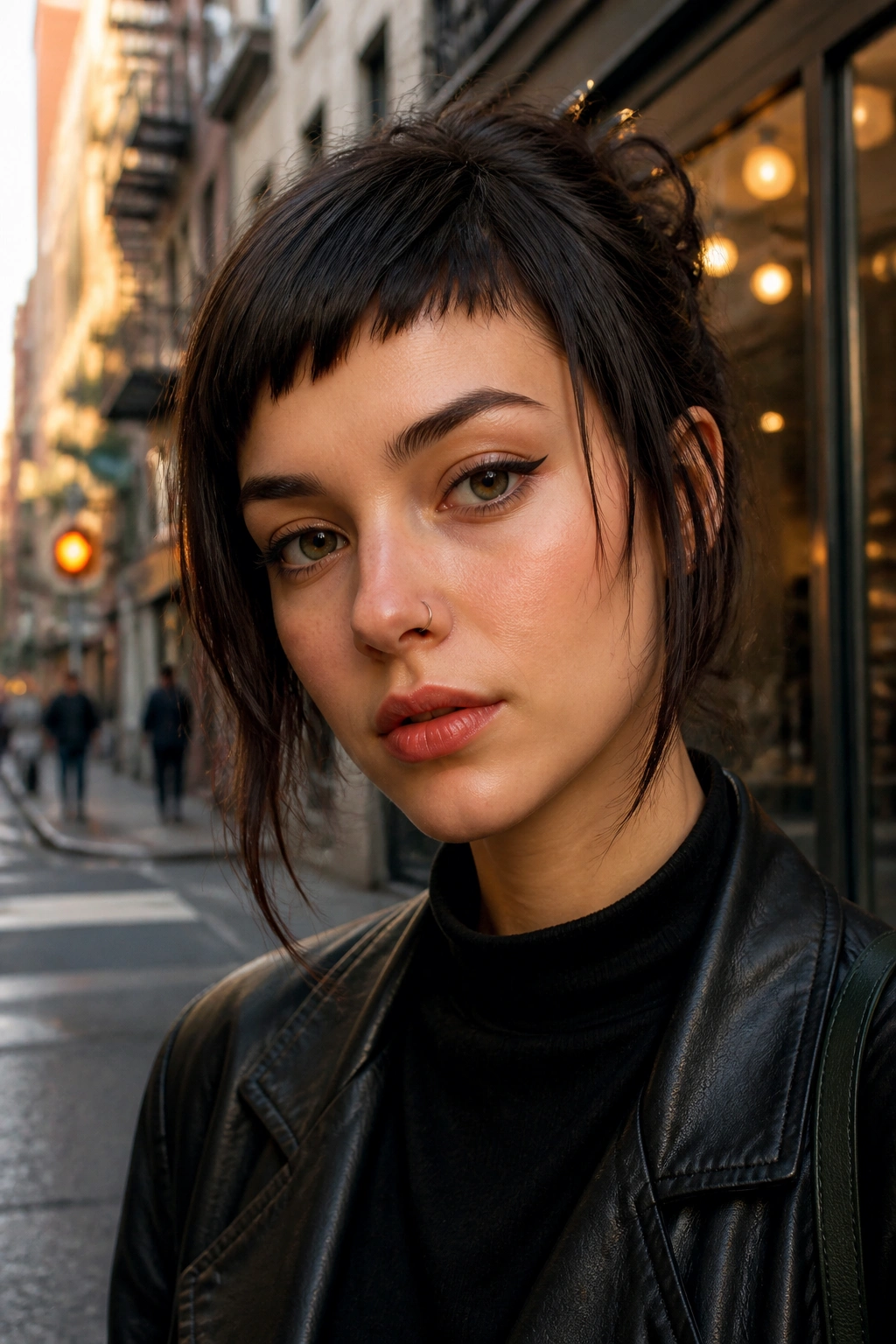
A straight line is not the only way to get a bold fringe. An asymmetrical baby bang shifts the weight to one side, which makes the haircut feel a little sharper and a little less predictable.
The difference between the two sides does not need to be huge. Sometimes a quarter inch is enough. Sometimes half an inch across the front gives the whole cut a slanted energy that looks intentional from across the room. The point is not to make the fringe uneven by mistake. The point is to make the imbalance part of the design.
This style works especially well when the rest of the haircut has a side part, an angled bob, or a face-framing layer that already leans in one direction. It can also be useful if one side of your hairline grows faster than the other. A skilled cut can use that difference instead of fighting it.
How to ask for it
- Tell the stylist which side should sit higher and which should fall lower.
- Ask for a visible but controlled difference, usually 1/4 to 1/2 inch.
- Keep the ends soft enough that the slope looks deliberate, not jagged.
- Style the fringe in the same direction every day so the shape stays readable.
I like this version on people who want a little edge without a full severe line. It has character. It also photographs well in the real-world sense — which is to say, it still looks good when the light is bad and the hair has moved around a bit.
12. Baby Bangs With a Pixie or Undercut
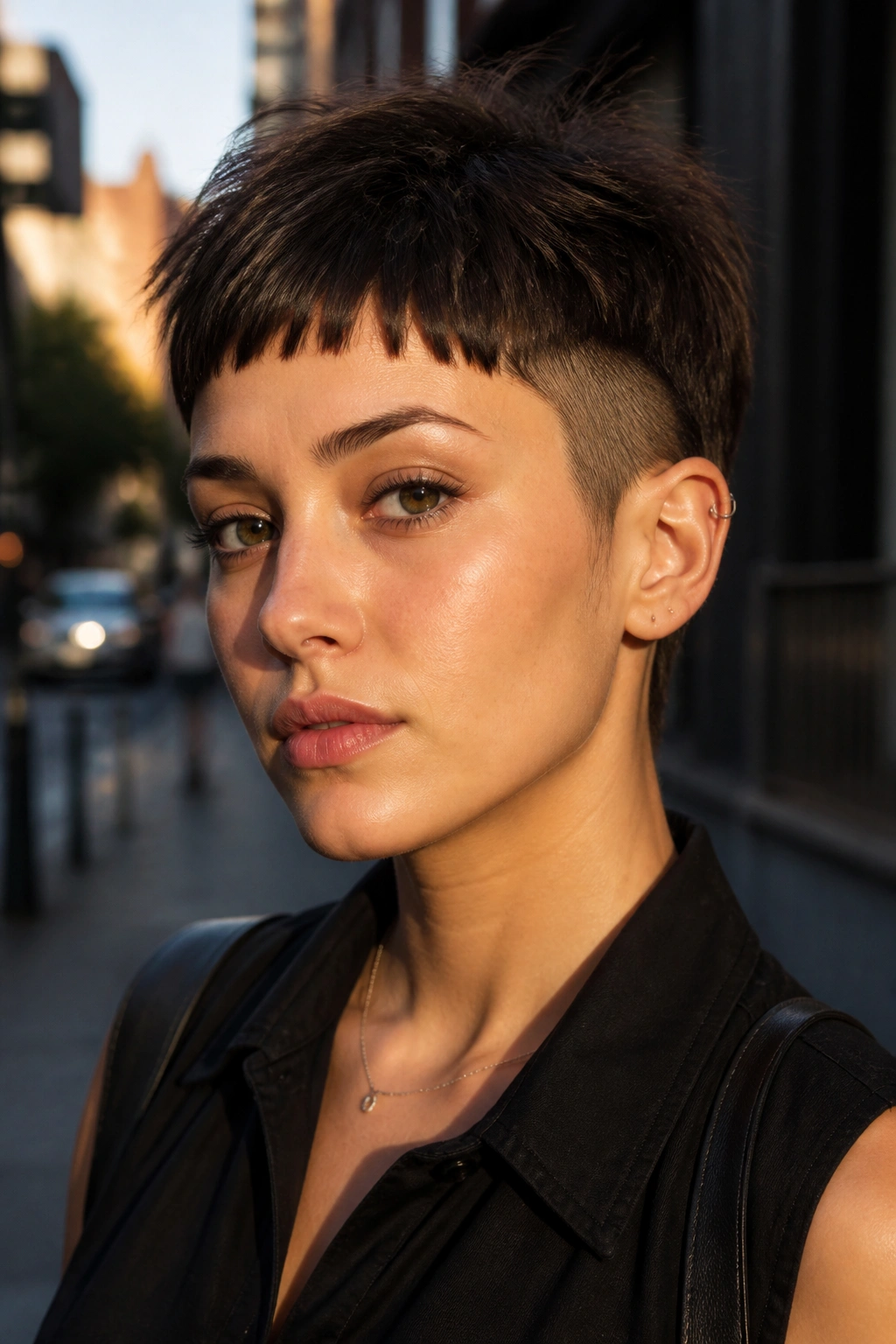
This is the strongest version of the whole bunch. Short sides, short fringe, and a face that gets to do most of the talking.
Baby bangs with a pixie or undercut create a clean, almost architectural shape. The fringe becomes part of the haircut’s structure instead of a separate decorative piece. If the top is textured and the sides are tight, the bangs can sit blunt, choppy, or softly curved depending on how much sharpness you want. The smaller the haircut, the more every millimeter matters.
What makes this combo work is contrast. The sides are short enough to show the shape of the head. The fringe sits just above the eyes. The whole cut feels assertive, but not bulky. It also cuts styling time down, which is a nice bonus if you do not want to spend ten minutes arguing with a brush every morning.
There is a catch, though. Grow-out happens fast here. A pixie with baby bangs can start to feel softer after only a few weeks, and that is either a plus or a nuisance depending on how attached you are to the line. I usually think of that as part of the fun. The cut can shift into a longer fringe, then into a side-swept shape, then back again if you keep trimming the perimeter.
If you want a bold look that reads confident even when the rest of the outfit is plain, this is the one to keep in your back pocket.
