



Side swept bangs ideas for round faces work because they change the shape of the face without fighting it. A clean diagonal line pulls the eye sideways and upward at the same time, which is exactly what you want when you’re trying to make soft cheeks and a fuller middle section feel a little leaner and longer.
The mistake people make is reaching for bangs that are too blunt, too dense, or too short. Those cuts can sit right across the widest part of the face and make everything feel more circular than it already does. A side fringe is smarter. It gives you movement, a little shadow, and that nice break in symmetry that keeps the whole cut from looking boxy.
I’m picky about bang length for round faces. Too short and they puff up; too long and they lose purpose. The sweet spot is usually somewhere between the outer brow and the cheekbone, with enough softness at the ends that the fringe melts into the rest of the haircut instead of sitting there like a separate piece.
The difference between flattering and fussy is often a quarter inch, maybe less. That’s why the details matter so much here.
1. Soft Side Swept Bangs for Round Faces
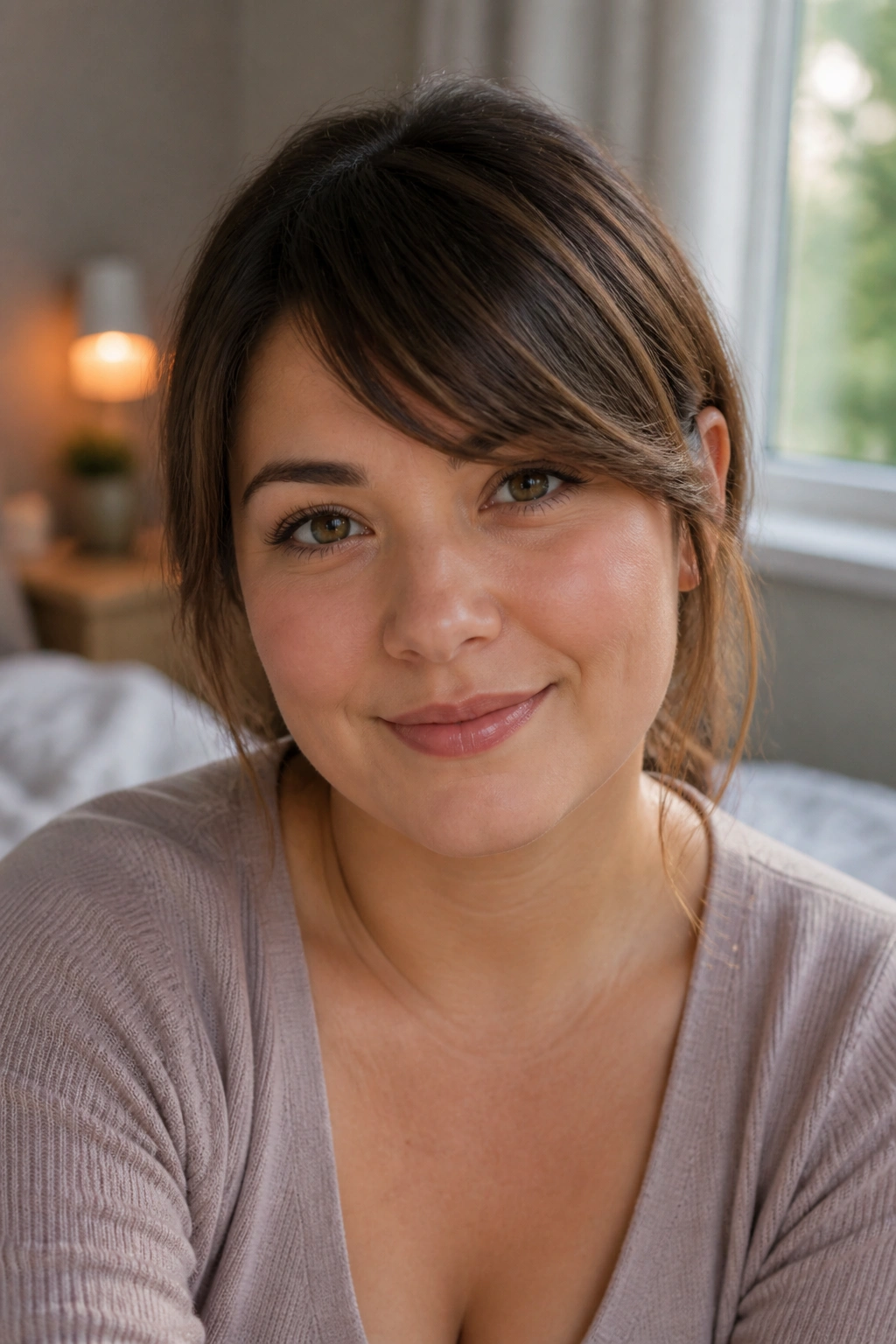
A soft side sweep is the safest place to start, and I mean that in the best way. It gives you the diagonal line you want without making the front of the haircut feel heavy or fussy.
Why It Works
The trick is to keep the bang light at the base and longer toward the outer corner, so the fringe falls across the face instead of sitting flat against it. I like this shape when the goal is to make the cheek area look a little less dominant without hiding the forehead completely.
A good cut here usually starts a bit back on the temple and lands around the top of the cheekbone. That longer point is doing the real work. It gives the eye a place to travel, and round faces always look better when there’s a line to follow.
- Ask for soft point-cutting at the ends, not a blunt chop.
- Keep the shortest point near the brow, then let it angle down.
- Style with a small round brush and a low heat setting.
- Finish with a light mist of flexible spray so the fringe moves.
My favorite version of this look is one that still tucks behind the ear on a lazy day. If it only works when it’s freshly blown out, it’s too precious.
2. A Deep Side Part With a Long Diagonal Fringe
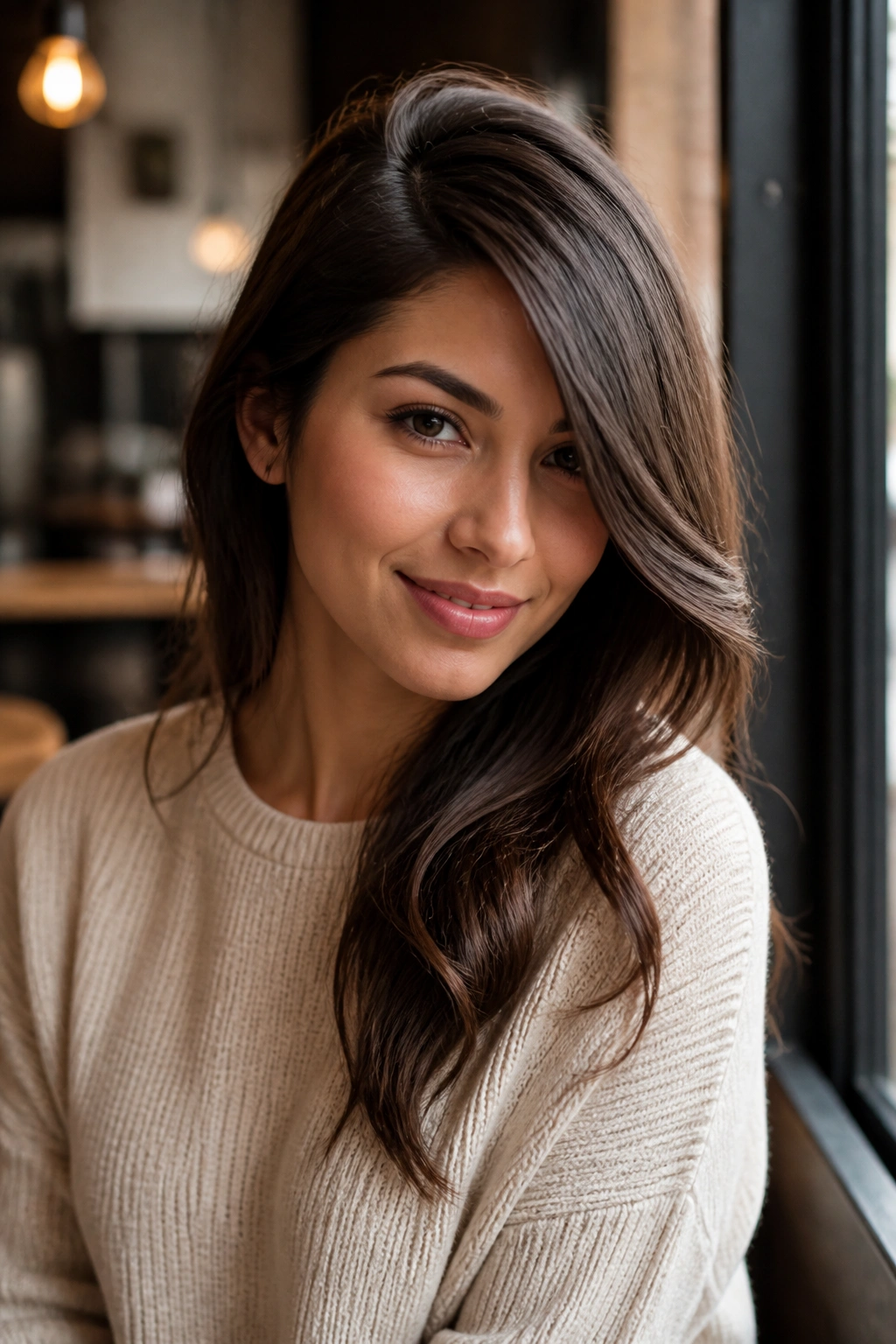
This is the bang version of a sharp blazer. It adds structure fast.
A deep side part creates an obvious vertical shift near the crown, and that matters because round faces usually benefit from anything that adds height near the top of the head. The fringe then drops on a long angle, which keeps the face from feeling wide across the middle.
I like this cut on hair that already has a little bend or wave, because the part has more grip and the bang doesn’t collapse by noon. Straight hair can wear it too, though. You just need a root lift spray and a quick blast with the dryer while the hair is still warm.
Keep the fringe long enough to graze the outer cheek, not the center of the face. That one detail changes everything.
A deep part like this can feel dramatic the first time you wear it. Good. It should. A little drama works.
3. Wispy Side Bangs That Barely Touch the Brows
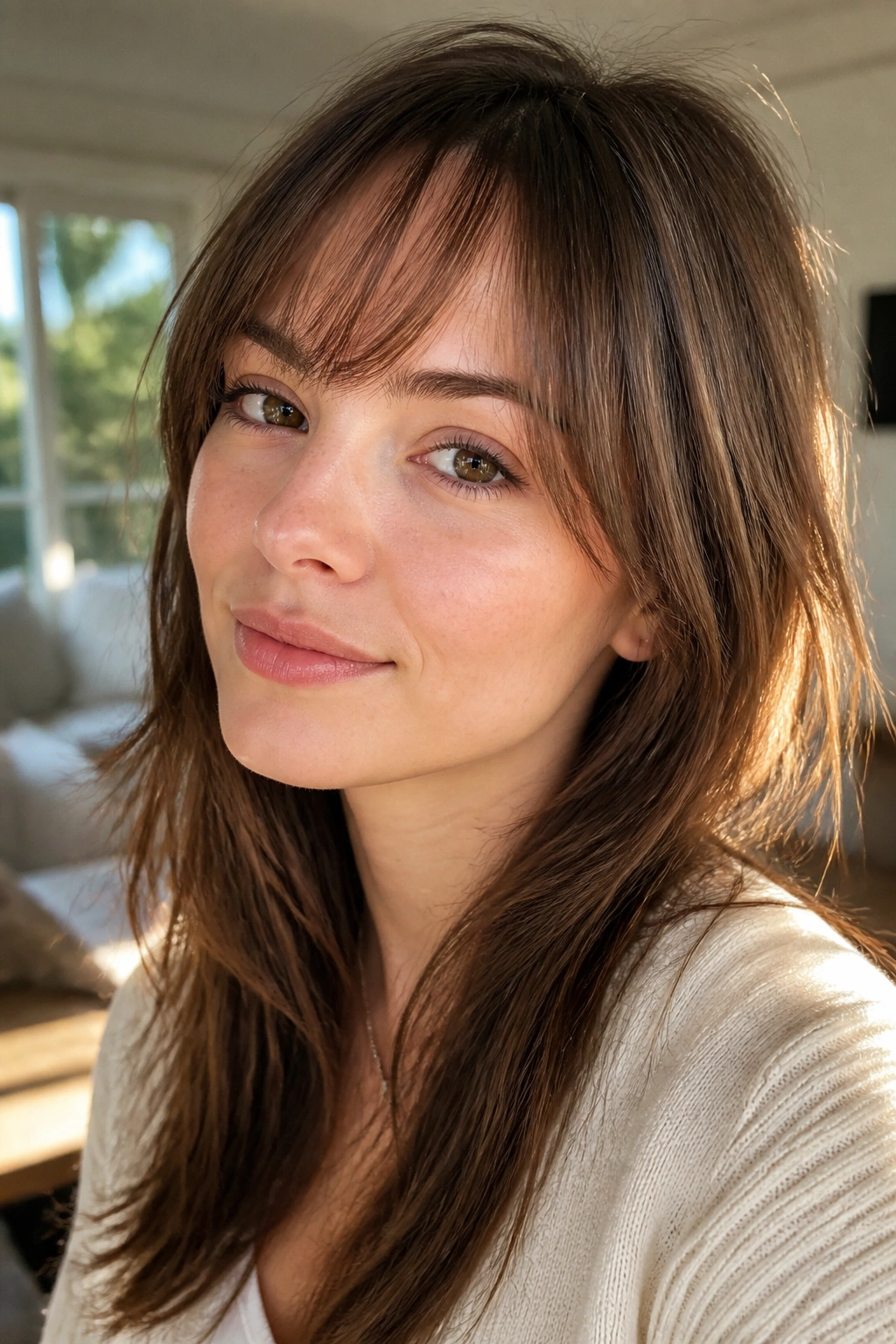
Can a fringe be short and still flatter a round face? Yes, if it’s feather-light and not packed with too much hair.
What to Ask For
Tell your stylist you want a wispy side bang with narrow density. That means the bang should not look like a solid curtain. It should feel see-through, almost like a soft veil of hair that leaves some forehead visible.
- Keep the center slightly shorter than the outer edge.
- Ask for point-cut ends to avoid a hard line.
- Blow-dry the bang sideways, not straight down.
- Use a pea-sized amount of light cream, not a heavy balm.
The reason this works is simple: you get the face-framing effect without adding a thick band across the forehead. For round faces, that’s a nice trade. The forehead stays open, the cheek area gets a soft shadow, and the whole cut feels lighter.
I’d choose this version if your hair is fine or if you hate the feeling of a lot of bang in your face. It’s delicate. That’s the point.
4. Face-Framing Side Bangs That Melt Into Layers
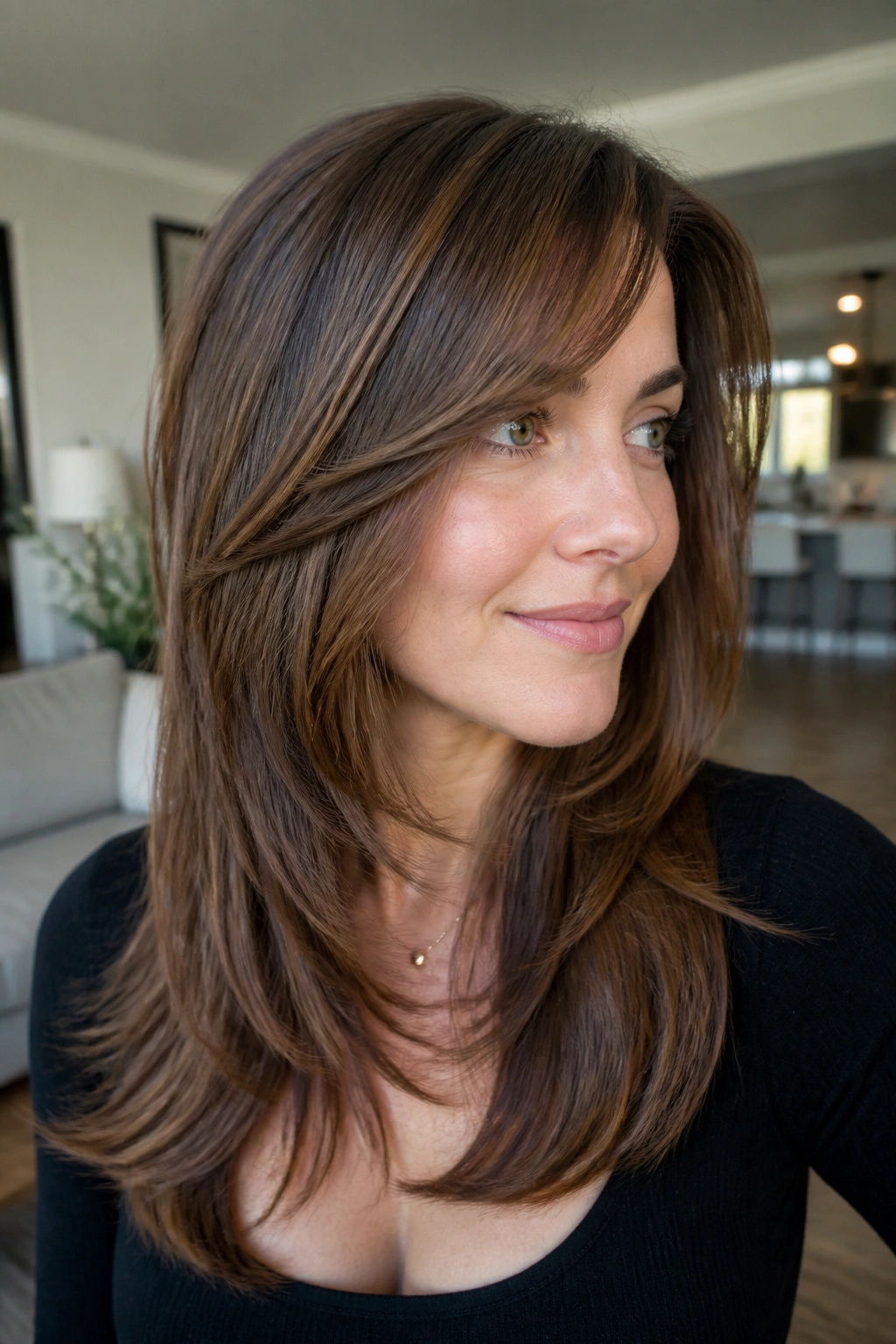
Picture this: you toss your hair into a half-up clip, and the bangs still look like they belong there. That’s the sweet spot.
When side bangs blend into longer face-framing layers, the haircut stops reading as “bangs only” and starts acting like a whole shape. For round faces, that extra length near the front helps pull the eye downward. It also softens the cheeks without cutting a hard line across the face.
The Shape You Want
The shortest point should still be movable, not sticky. Then the front layers can fall around the jaw or even the top of the neck, depending on your haircut. That long front angle is what keeps the style from feeling too sweet or too round.
A Few Things That Help
- Ask for front layers that begin around the lip or chin.
- Keep the bang piece connected to those layers.
- Dry the front forward first, then sweep it off to the side.
- Use a round brush only on the last inch or two.
This is a smart cut if you like ponytails, clips, and quick styles. The fringe doesn’t fight the rest of the hair. It cooperates.
5. Choppy Piecey Side Fringe
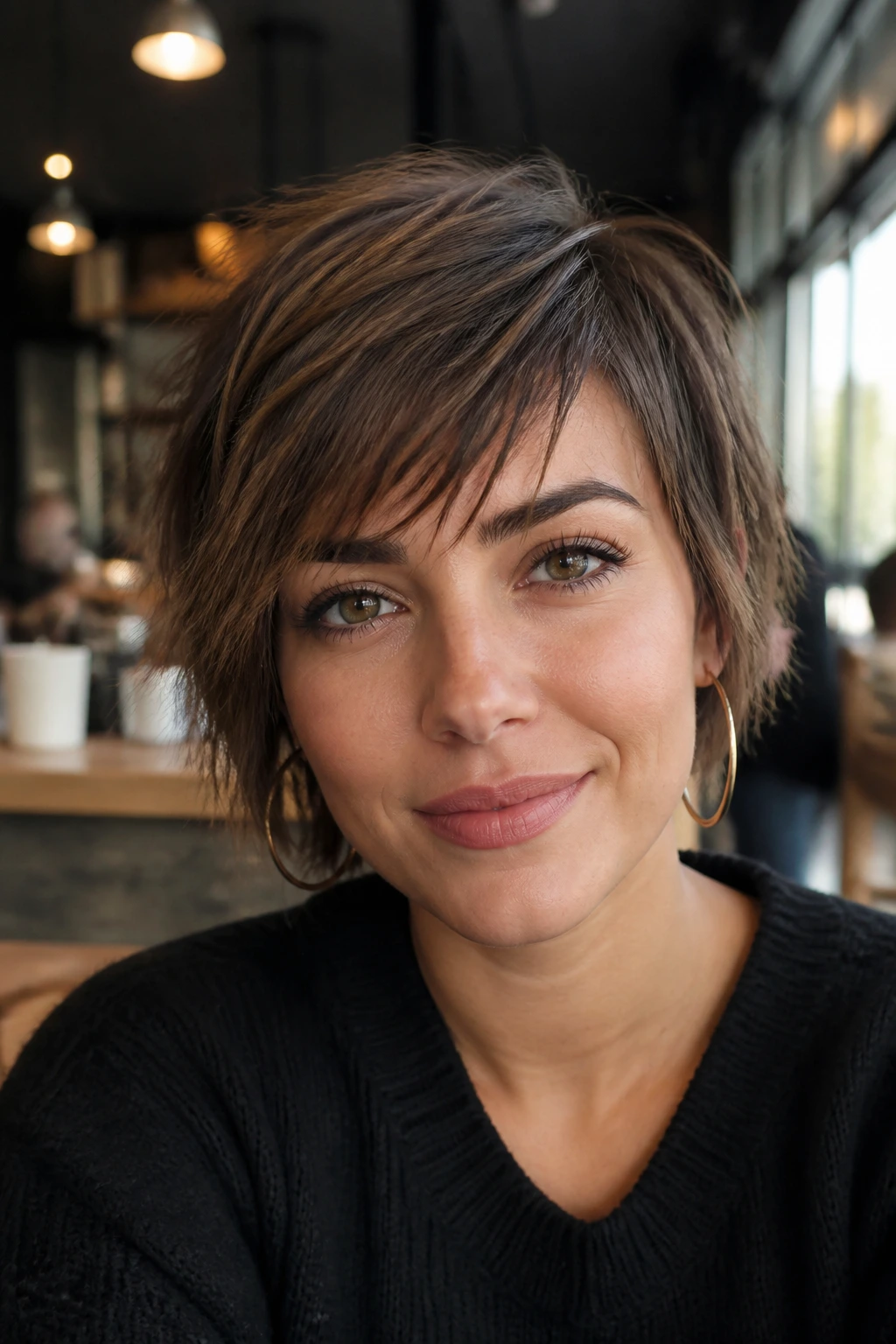
Choppy bangs can go wrong fast if they’re too chunky. Done well, though, they add texture in a way that feels modern without looking styled to death.
I like this look on straight hair that tends to lie flat around the forehead. The broken-up ends stop the fringe from becoming one heavy block. That matters on round faces, because a hard, thick bang can make the face feel shorter than it is.
The best choppy version has separation, not frizz. There’s a difference. Separation means you can see the shape of the pieces. Frizz means the cut was too dry or too thinned out in the wrong places.
A tiny bit of styling paste on the ends helps. So does twisting the bang once while it’s warm from the dryer. Don’t overwork it. That’s how you kill the shape and end up with a bang that looks tired by lunch.
This is the fringe I reach for when a haircut needs a little grit.
6. Long Side Fringe With Soft Volume at the Root
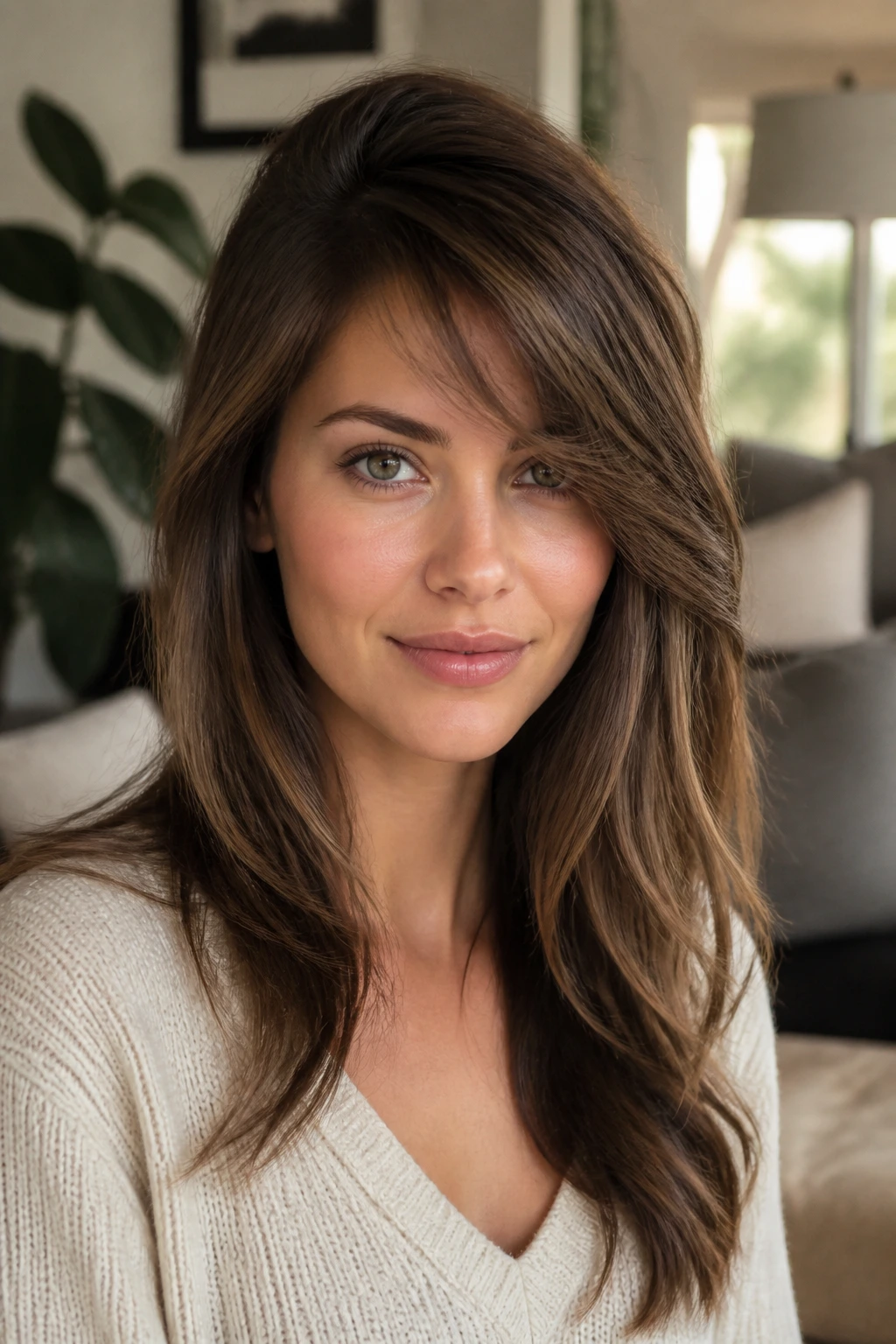
Flat bangs are the enemy here. A little lift changes the whole face.
A long side fringe with root volume works especially well when you want the front of the hair to feel airy, not pasted down. The lift near the part gives the face a longer line, and the length keeps the fringe from sitting on the cheeks in a blunt way.
This is one of the better side swept bangs ideas for round faces if your hair is fine or medium in density. A soft root boost makes the front look fuller without making it heavy. And that’s the balance you want: enough body to show shape, not so much that the bang turns into a helmet.
A velcro roller at the front can help if your hair tends to collapse fast. So can a dryer nozzle aimed at the root while you sweep the hair across the forehead. Keep the air moving from the thick side toward the thin side. It gives a cleaner line and less puffiness.
7. Feathered Side Bangs for Thick Hair
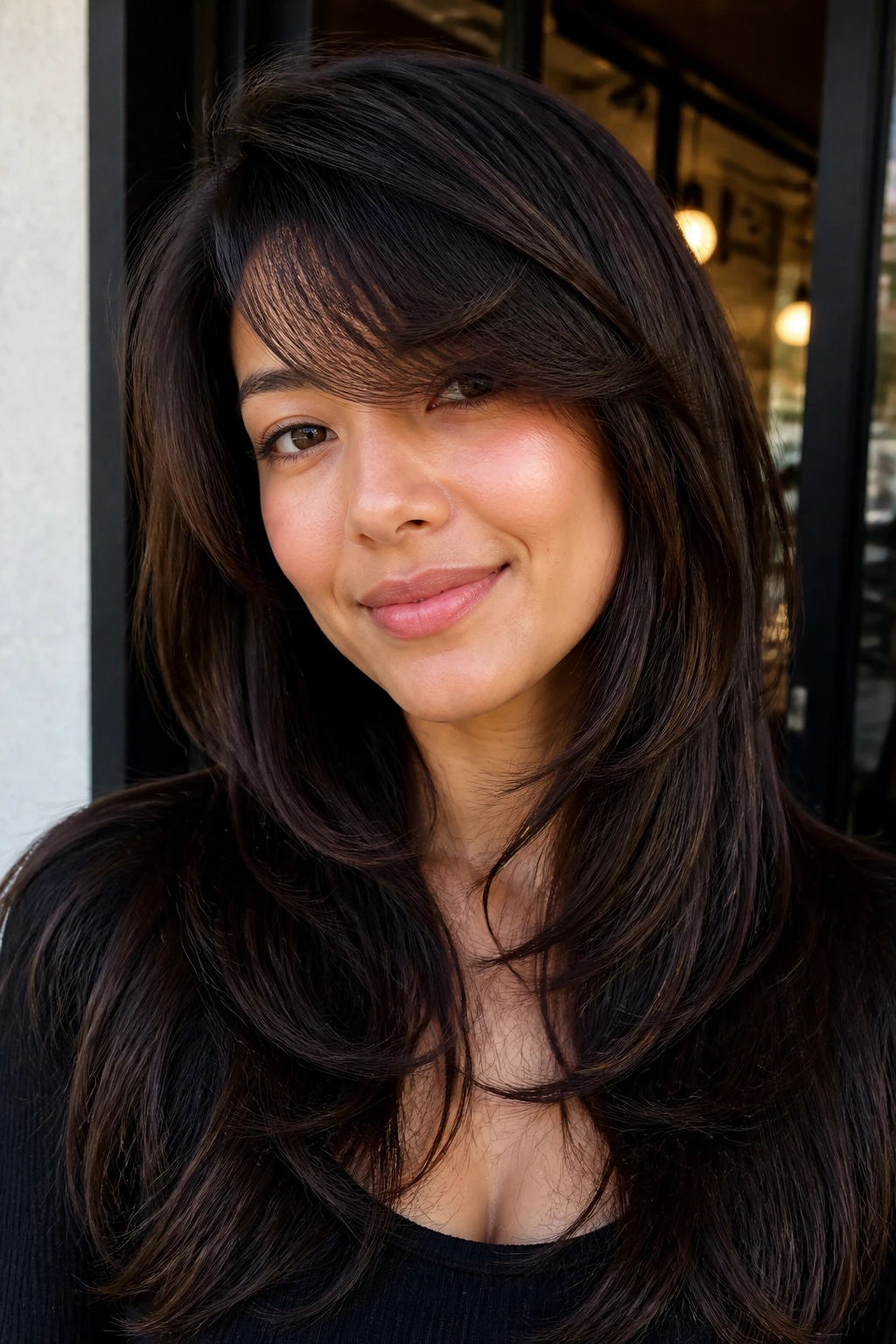
Thick hair needs a lighter hand. Always.
Cutting It the Right Way
The biggest mistake with thick fringe is trying to remove bulk in big chunks. That can leave the ends fuzzy and uneven. I prefer a feathered cut with controlled internal weight removal, usually done with point cutting or a razor only if the hair texture can handle it.
Styling Notes
- Dry the bangs in two passes: first for shape, second for polish.
- Use a paddle brush near the roots if the hair is stubborn.
- Keep the ends soft and airy, not chopped straight across.
- Skip heavy oils at the front; they make the fringe collapse.
A feathered side bang is useful when the face already has strong curves. It breaks up the density and keeps the front from feeling overpowering. It also grows out better than a packed, blunt fringe, which matters more than people think. Nobody wants to babysit bangs every ten days.
8. Side Swept Bangs With a Wavy Lob
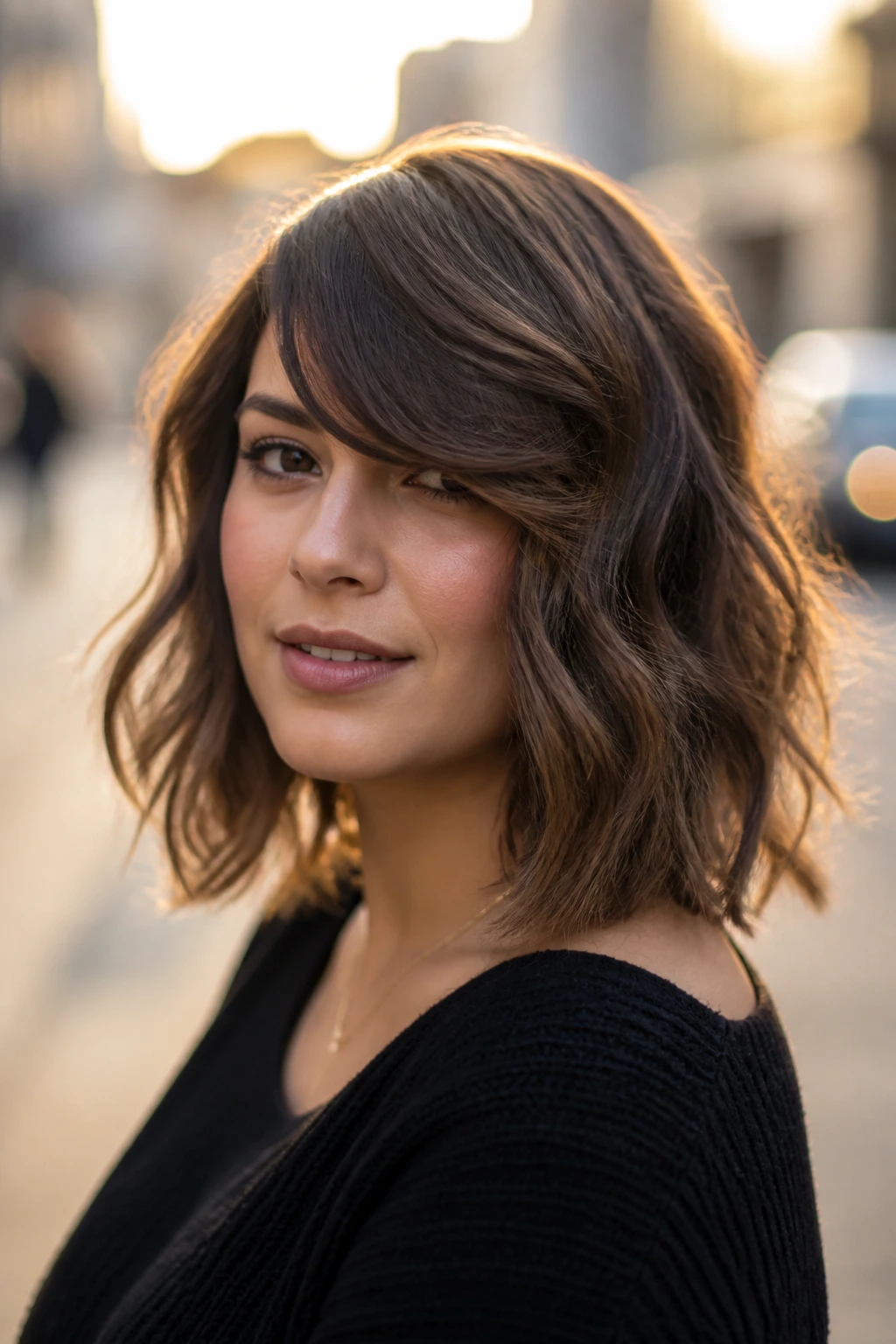
A wavy lob and a side sweep are a very good pair. The cut gives you length, and the bang gives you direction.
Round faces usually look stronger when the haircut includes some vertical pull, and a lob does that better than a chin-length bob in many cases. Add a side-swept bang, and the whole shape starts to feel longer and more relaxed. The wave keeps it from looking too neat.
I like this combo with a bang that lands somewhere between the eyebrow and the cheekbone. Shorter than that can feel choppy; longer than that can blur into the wave before it does much. The sweet spot is where the fringe still reads as a fringe.
Air-dry texture works here too, as long as the bang gets a little help. Scrunch the ends of the lob, then smooth the front with your fingers while it’s still damp. You want movement, not fluff. Big difference.
9. Side Fringe That Skims the Brow and Tucks Behind the Ear
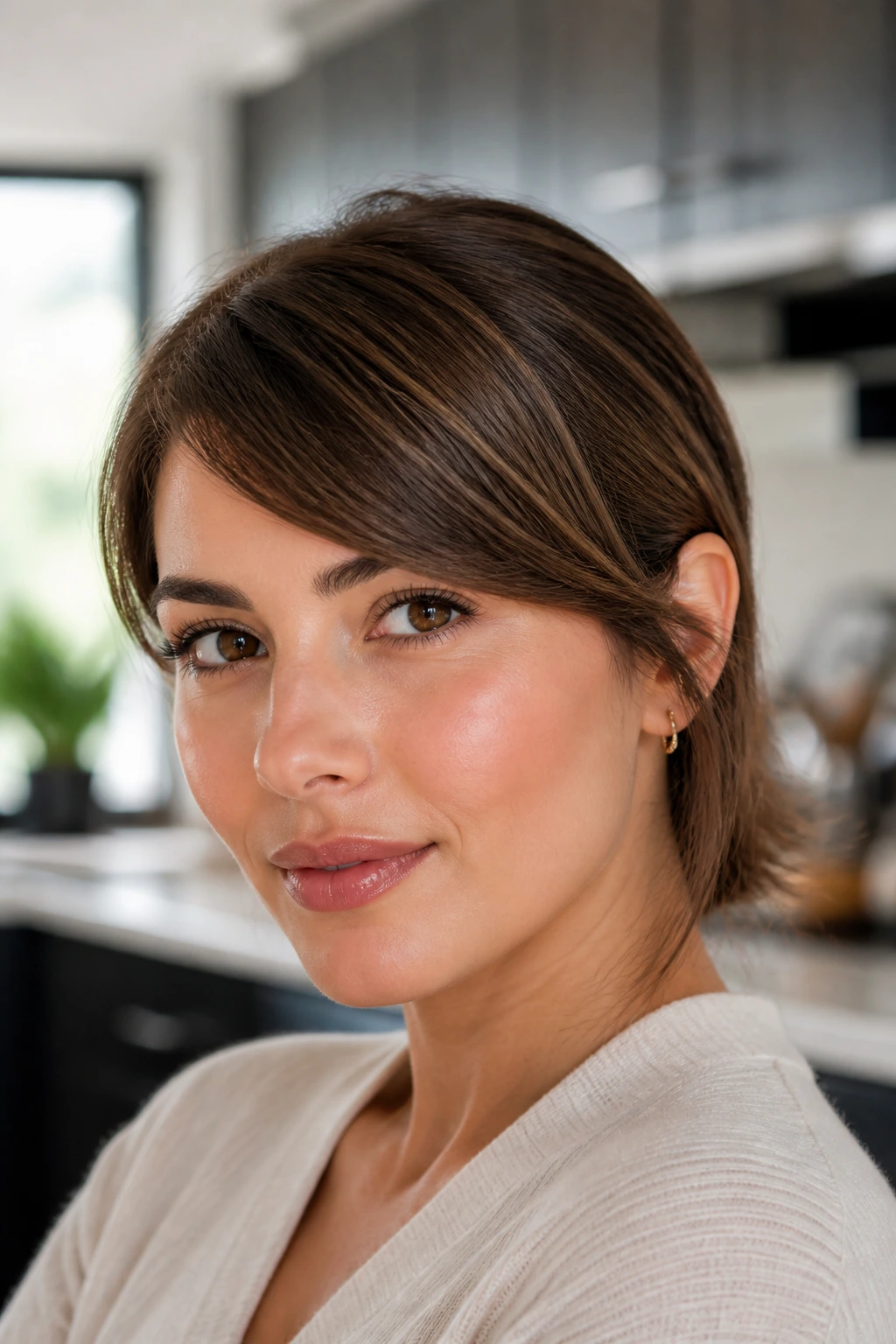
Can a side bang stay out of your face all day and still flatter a round face? Absolutely, if the length is right.
A fringe that skims the brow and tucks back easily gives you flexibility. Wear it forward when you want softness. Sweep it behind the ear when you want a cleaner cheek line. That versatility is useful if you hate a bang that feels “stuck” in one position.
What Makes This Cut Work
The front piece should be long enough to move, but not so long that it disappears. A good benchmark is a length that brushes the outer brow and keeps going toward the cheek. Once it reaches that point, it can tuck without looking like you forgot to cut it.
- Great for people who wear glasses or earrings.
- Helpful on medium-density hair.
- Easy to pin back with one small clip.
- Better with a soft bend than a hard curl.
I like this style because it doesn’t demand a perfect blowout. It behaves.
10. Long Sweep That Lands at the Cheekbone
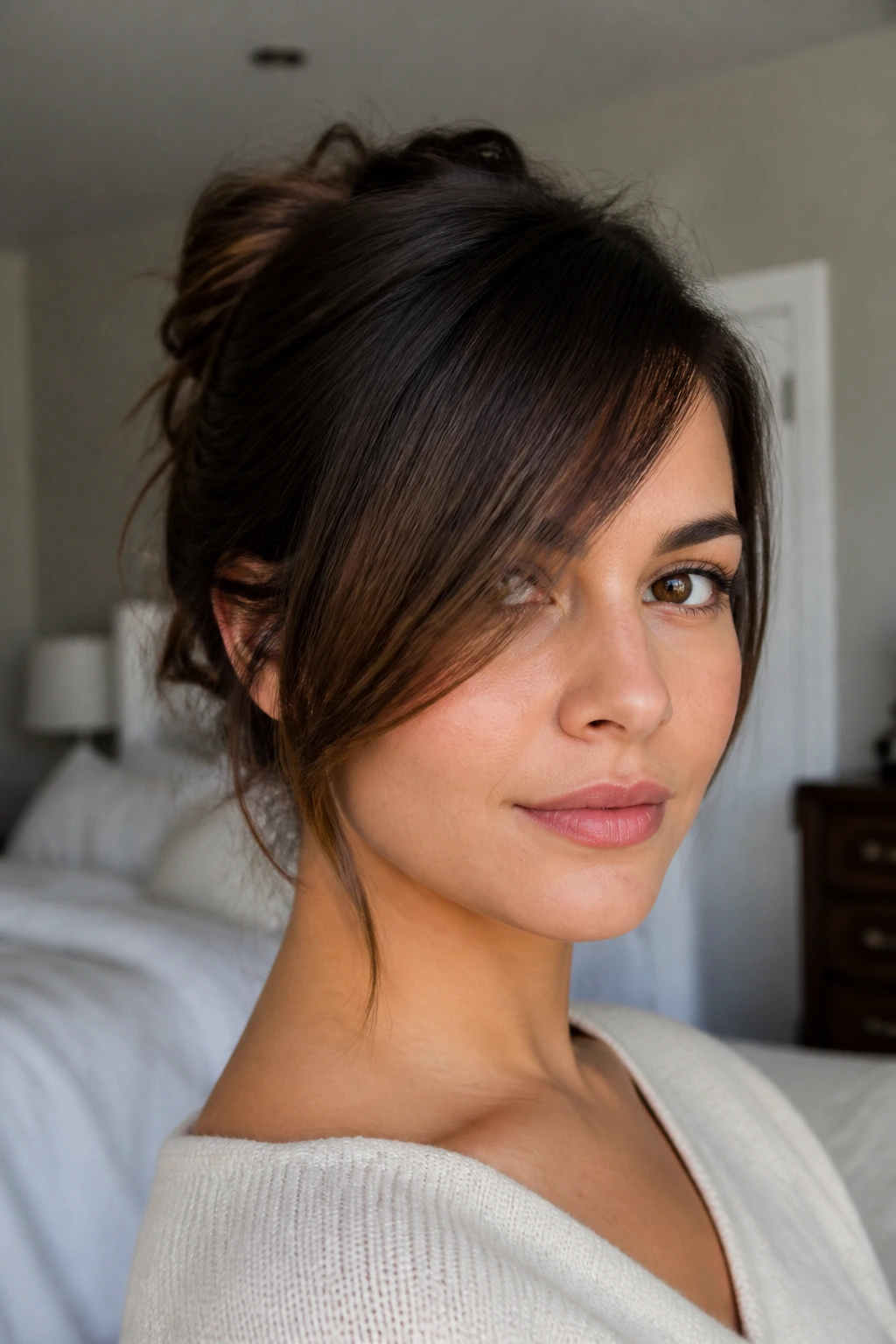
Cheekbone length is a useful landmark. It gives the fringe somewhere to end.
When a side sweep lands near the high point of the cheekbone, it creates a clean diagonal across the face. That line matters on round faces because it interrupts width in a way that feels natural, not forced. The eye sees the angle before it sees the fullness.
A Few Good Markers
- Start the part about an inch above the outer brow.
- Keep the shortest area soft and movable.
- Let the longest corner skim the upper cheek, not the jaw.
- Add a slight bend away from the face for lift.
I like this shape on people who want a polished look without a lot of styling time. It works with straight hair, but it looks even better if the ends have a slight bevel. That little curl under or away from the face keeps the fringe from flattening into the cheek area.
The result is tidy, but not stiff. That’s the sweet spot.
11. Side Bangs With a Soft S-Curve
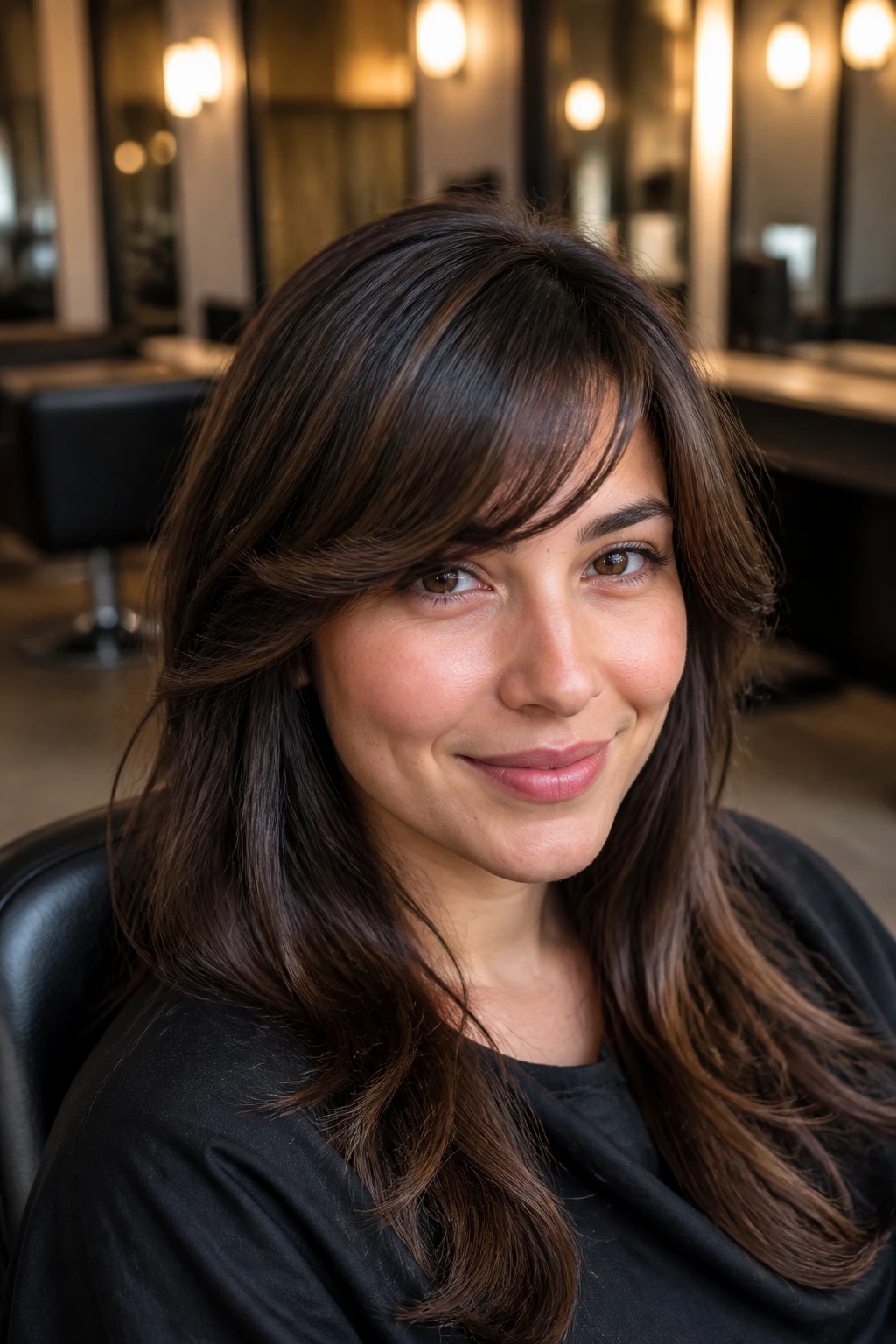
A soft S-curve sounds fussy until you see what it does. Then it makes sense.
The front hair arcs away from the face, curves back in slightly, and then falls again. That movement breaks up roundness in a nicer way than a straight, heavy sweep. It’s a subtle shape, but subtle is good when you want the haircut to work with your face instead of shouting over it.
I like this look on straight or slightly wavy hair that needs a little direction. A round brush can create the curve, but so can a large roller if you prefer heatless styling. The main thing is keeping the bend loose. Tight curls at the front can make the cut feel dated fast.
There’s a softness to this one that I find appealing. It doesn’t try too hard. It just makes the front of the haircut feel smarter.
12. Curtain-Bang Hybrid With a Side Sweep
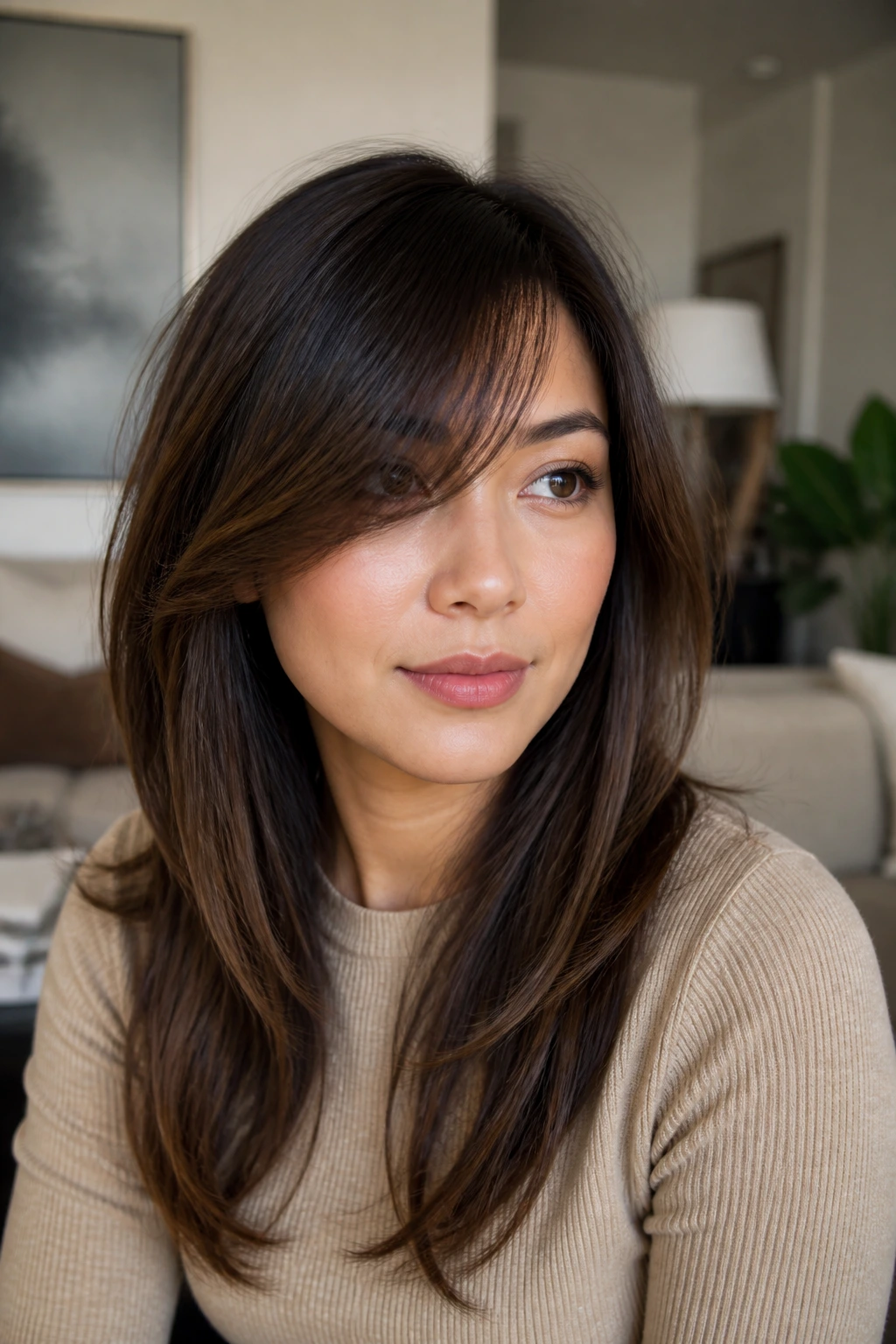
Not everyone wants a true curtain bang. Fair.
A side-swept curtain hybrid gives you the split-front feeling without the center part commitment. On a round face, that can be a nice compromise because it still opens the middle a bit while keeping one side fuller and more directional. The result is softer than a strict side fringe and less symmetrical than curtains.
This version is best when you want grow-out flexibility. It can slide toward the center, or it can stay off to one side with a deeper part. That means fewer awkward weeks as the fringe gets longer. I appreciate that. Bangs should not become a monthly crisis.
Ask for the shortest point to sit around brow level, then let the outer pieces angle down toward the cheek. You’ll get lift at the top and softness around the face. It’s a flexible shape, which is half the battle.
13. Side Bangs for Curly Hair That Keep Their Shape
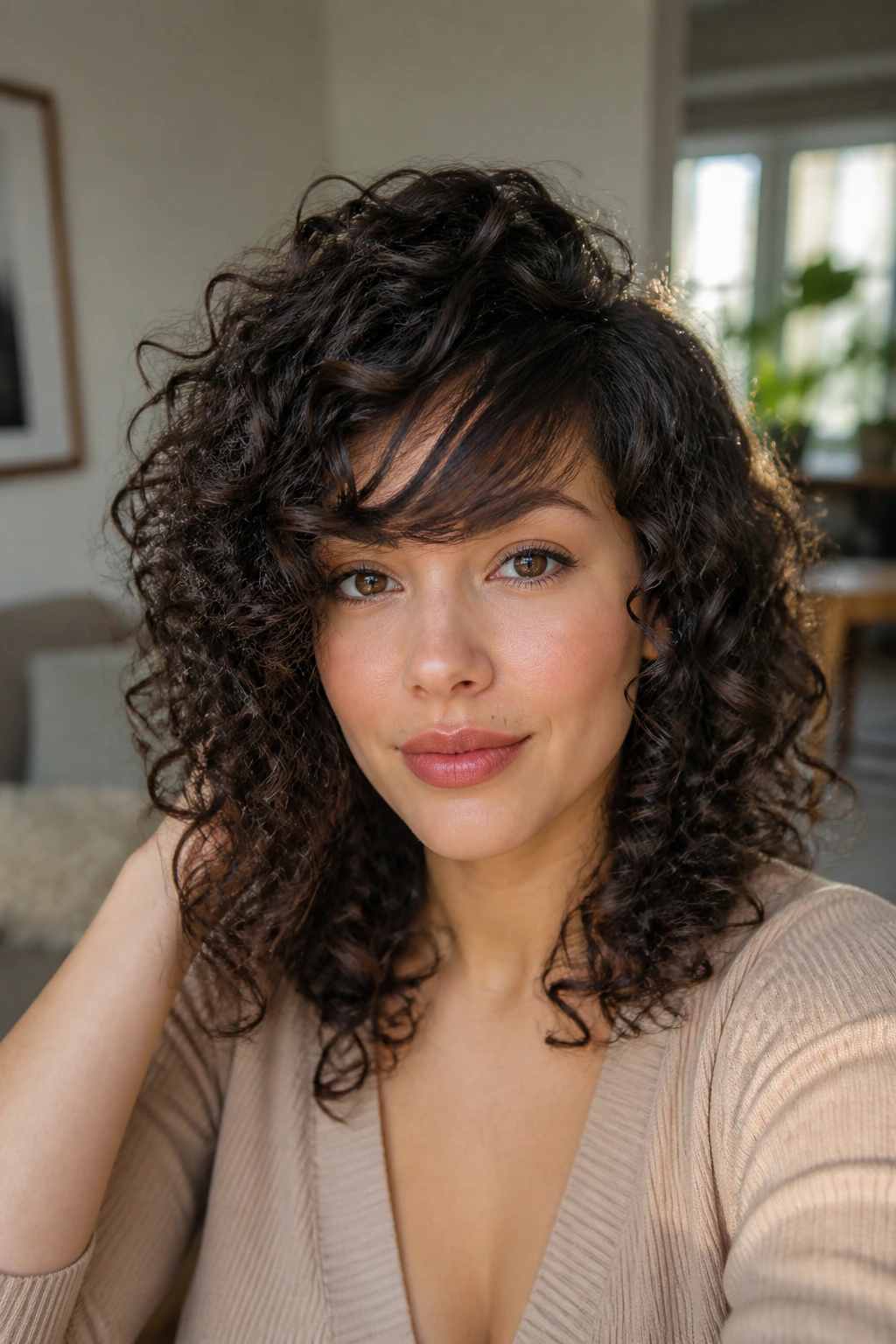
Curly hair needs a different approach. Cutting it the same way as straight hair is how people end up with surprise shrinkage and a bang that sits too high.
Cutting Curl by Curl
A dry cut usually makes the most sense here, because curls tell the truth when they’re dry. Your stylist can see where each curl lands and avoid taking off too much. Leave extra length. Seriously. Curly bangs spring upward more than most people expect.
What Helps at Home
- Diffuse on low heat and low speed.
- Smooth only the roots, not the whole curl.
- Use a cream that supports curl shape without making it crunchy.
- Trim only when the curl pattern starts to split or puff out.
A curly side sweep can be gorgeous on a round face because the curves are controlled by the angle of the bang, not the width of the face. The key is keeping the fringe long enough to sit below the brow after it dries. Shorter than that is risky.
14. Glasses-Friendly Side Swept Bangs for Round Faces

If you wear glasses, the bang needs to cooperate with the frames. No drama at the lens line, please.
A side sweep that clears the top of the frames keeps the face from feeling crowded. That’s especially useful on round faces, where too much hair near the eyes can make everything feel compressed. A light diagonal line above the frames creates space.
I like a fringe that starts a bit higher at the temple and angles downward so it doesn’t stop right where the glasses sit. That little gap matters more than most people realize. Hair on top of frames can look muddy fast. Hair above frames looks deliberate.
This is one of those cuts that can be elegant without being stiff. A quick brush-through in the morning, a small bend at the ends, and you’re done. No fighting with the frames. No endless re-sweeping. Nice.
15. Pixie-Friendly Side Fringe That Keeps the Face Open
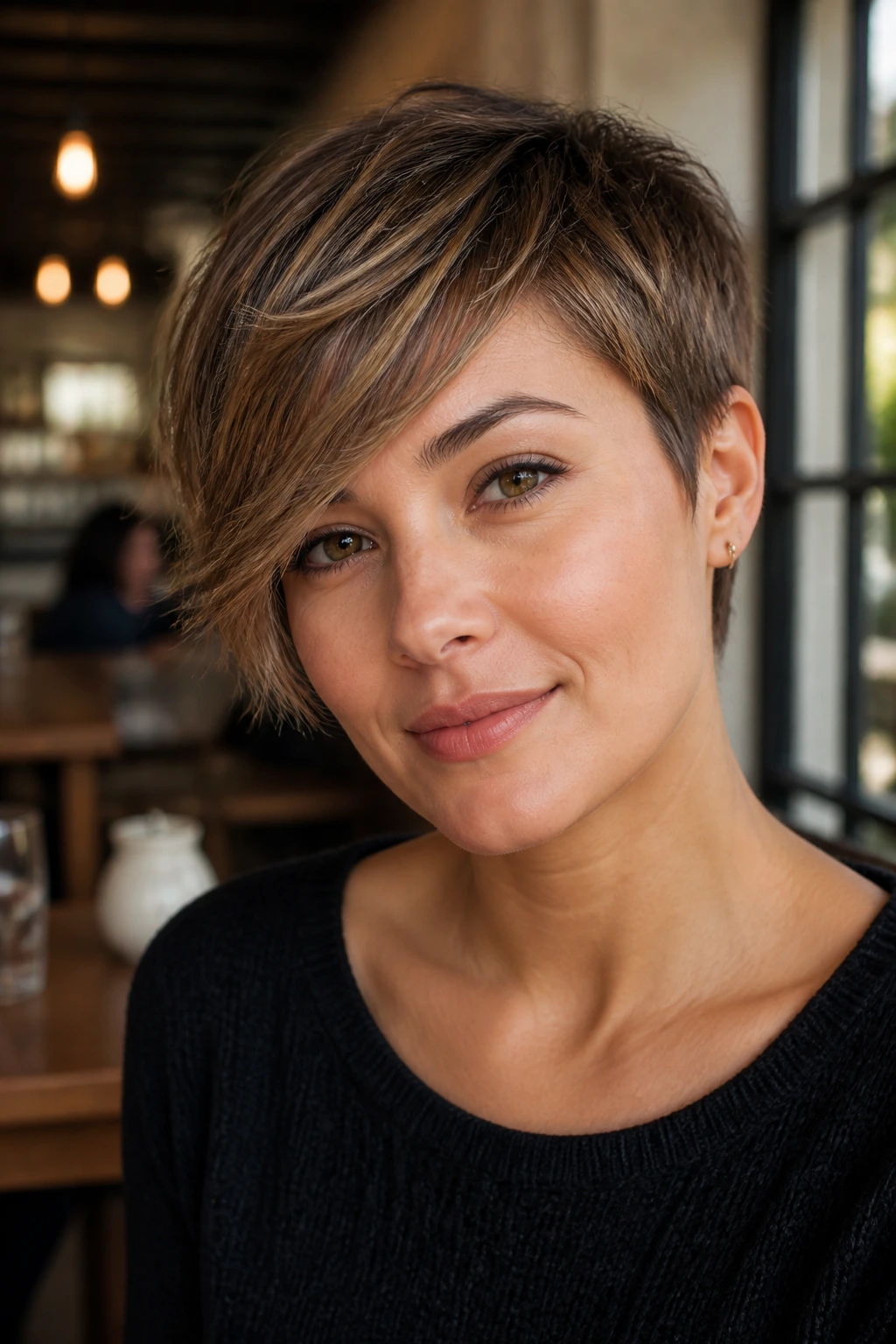
Can short hair have side bangs that flatter a round face? Yes, and I’d argue it should.
A pixie with a longer side fringe gives the cut direction. Without that front angle, short hair can sometimes make a round face feel more open than balanced. The fringe gives the eye a line to follow across the forehead, while the cropped sides keep the shape light.
Why It Works
The top needs enough length to sweep from the crown toward one eyebrow, and the sides should stay close so the fringe has contrast. That contrast is what makes the shape interesting. If everything is the same length, the cut can go flat fast.
A light pomade or styling cream is usually enough. Too much product turns short fringe into a sticky mess, and that’s a quick way to lose the softness you wanted in the first place.
I like this on people who want polish with very little hair. It’s neat. It’s direct. And it doesn’t pretend to be something else.
16. A Shaggy Side Sweep With Grit
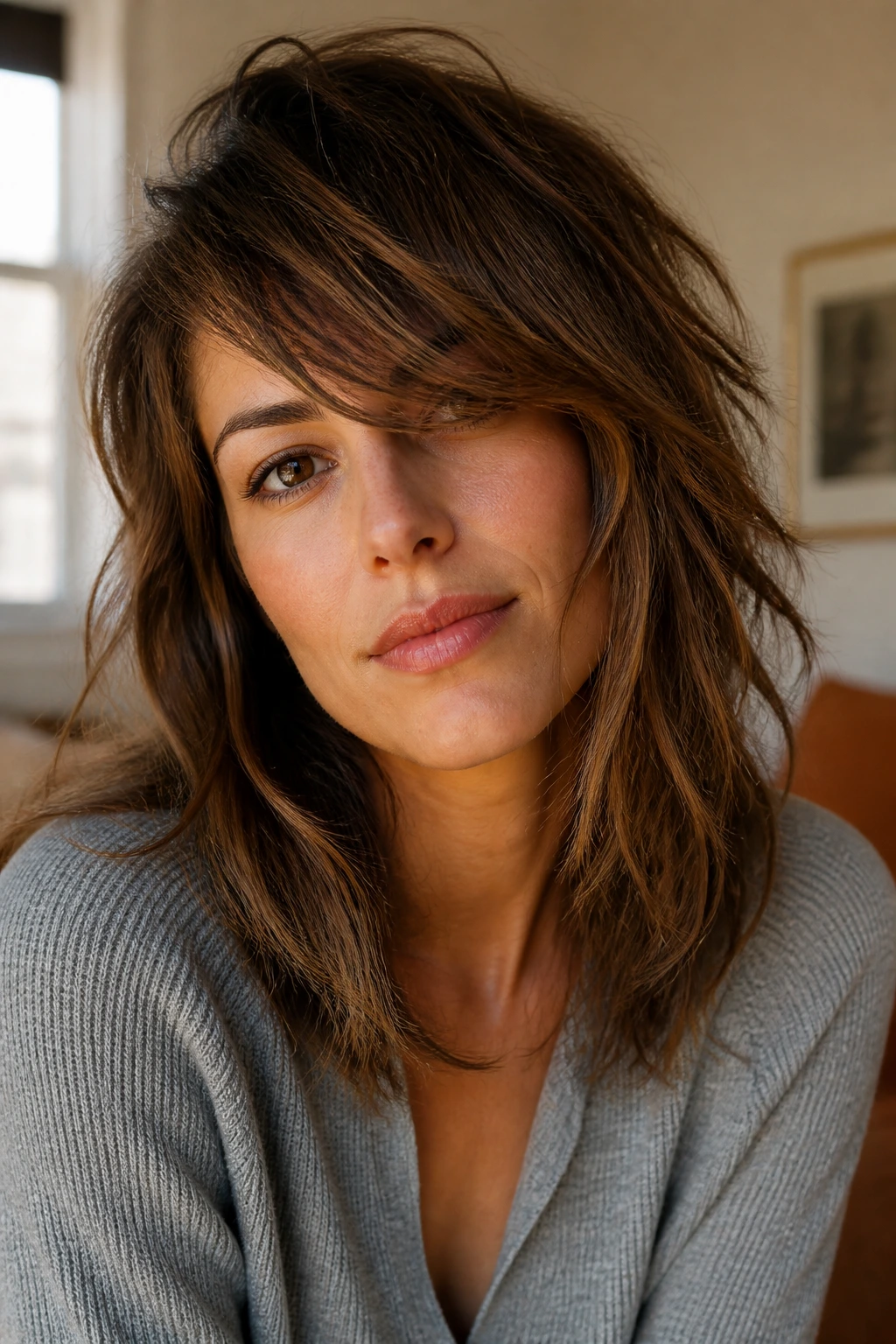
A shag and a side sweep belong together more often than people admit.
The shag gives you layers, broken texture, and movement around the face. The side sweep adds direction, which keeps the haircut from turning into a cloud. On round faces, that direction is useful because it lets the layers point downward and outward instead of puffing straight across.
I’m a fan of a razor or heavily textured cut here, but only when the hair can handle it. Fine hair can get wispy in a bad way if it’s over-thinned. Thicker hair usually wears this shape better because there’s enough body left after the texture work.
A little dry texture spray at the roots can keep the fringe lifted. The rest can stay rough. That’s the point. A shag should not look too cleaned up.
17. Side Bangs for Fine Hair That Need Lift
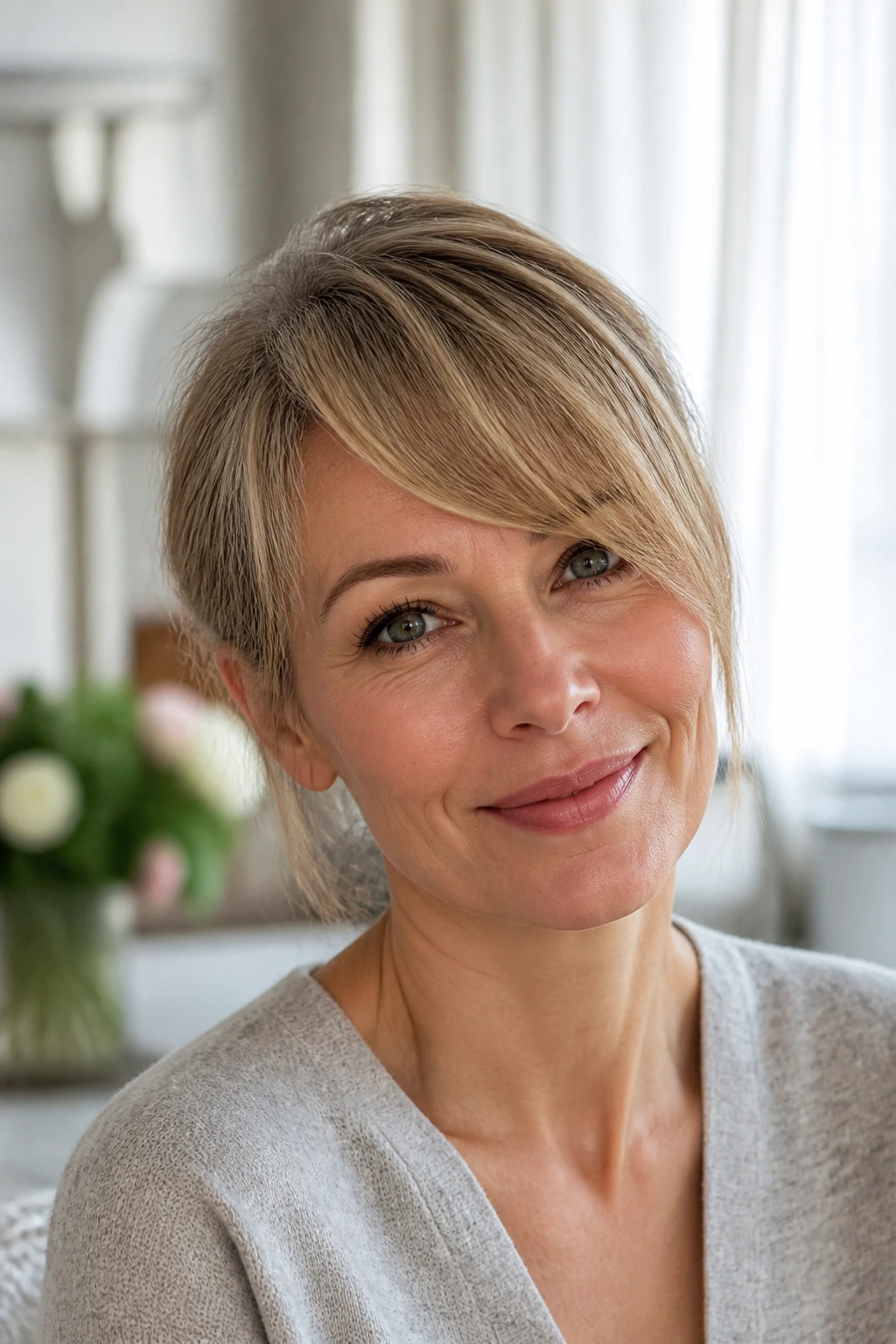
Fine hair needs discipline at the front. Too much cutting and it vanishes. Too little shaping and it lies there like a flat ribbon.
The trick is to keep the side bang light, but not sparse. You still need enough hair for the fringe to read as a shape. What you do not want is a see-through strand that disappears the second the wind hits it. A small amount of root mousse before blow-drying helps the hair keep a little body.
I’d avoid heavy layering right around the part if the hair is very fine. That can leave the bang too wispy at the top and too thin at the ends. Instead, keep the weight controlled and the edge soft. A slight bevel at the front can make a big difference.
This is one of those cuts that rewards good styling habits. A quick round-brush pass and a cool shot at the end are worth the effort. Not much more than that.
18. Rounded Blowout Side Bangs
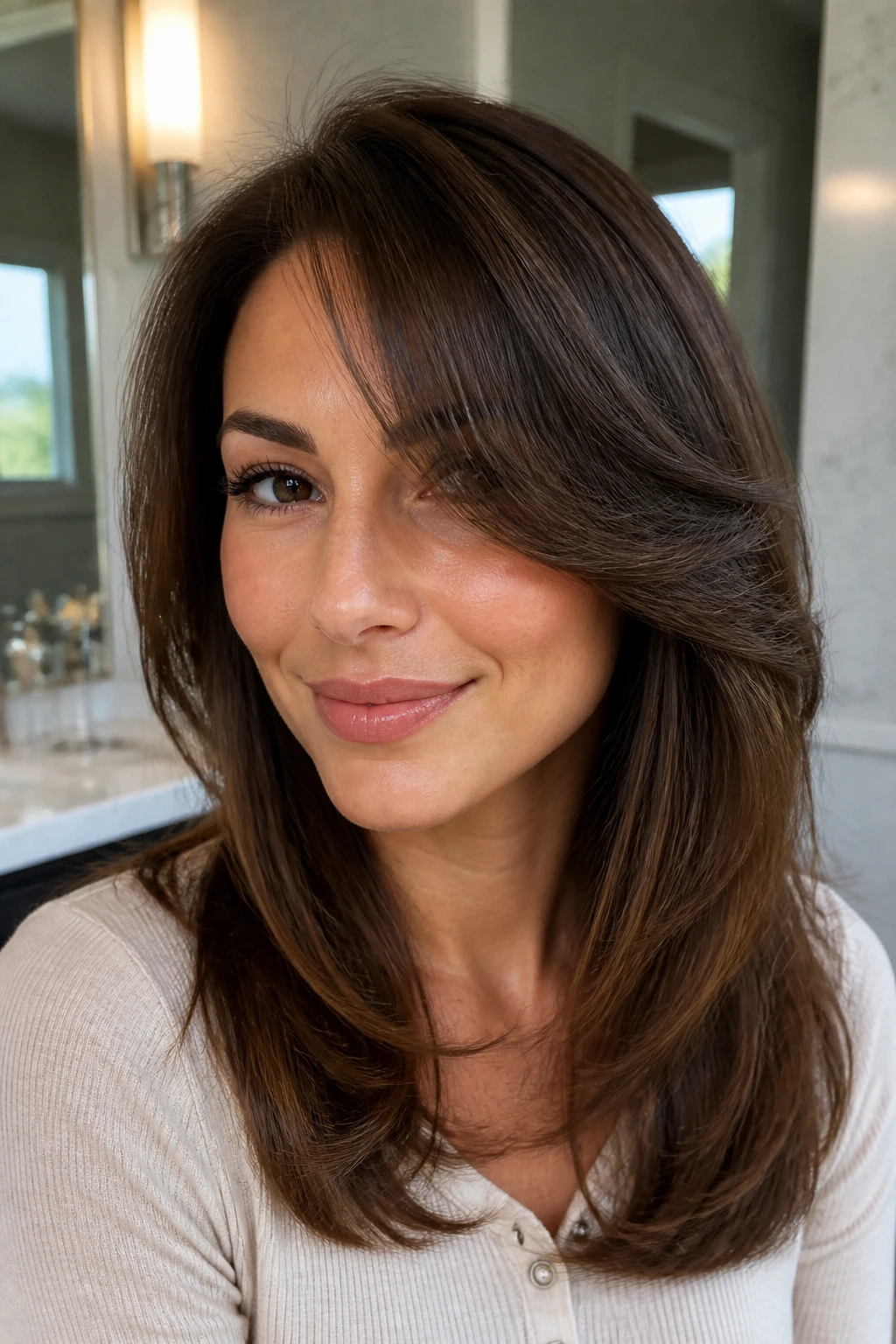
A rounded blowout can make a side fringe look expensive without feeling stiff. That’s the appeal.
The blowout adds a smooth curve that softens the face and keeps the bang from dropping straight down. For round faces, the lift at the root matters because it adds height where the eye starts. I like this best on medium to thick hair, though fine hair can wear it too with the right mousse and a smaller brush.
Use a 1.25-inch round brush if you want a visible bend, or a larger brush if you prefer something looser. Wrap the front away from the face, hold tension for a few seconds, then cool it while it’s still shaped. That cooling step is not glamorous, but it works.
A blowout like this looks especially good when the rest of the hair has a bit of movement too. Pin-straight lengths can make the bang feel disconnected. A little curve throughout the cut ties everything together.
19. Asymmetric Bangs That Start High and Finish Low
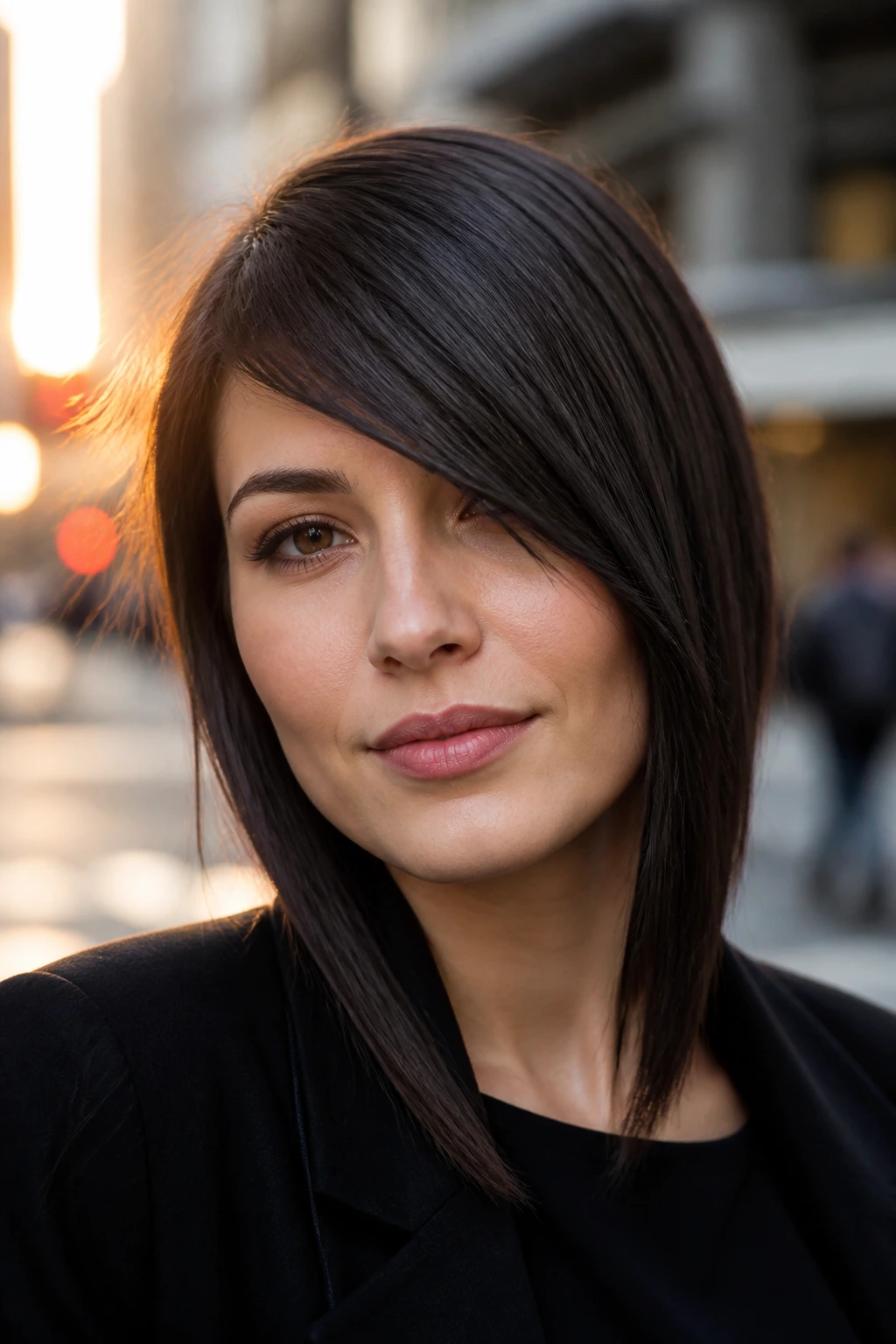
A sharp asymmetrical fringe can be a nice reset when softer bangs feel too sweet.
Starting high near the temple and finishing lower near the cheek creates a very clear diagonal. Round faces tend to benefit from that kind of line because it adds edge and length at once. The haircut feels more tailored, less rounded.
I like this look on straight hair or hair that can hold a smooth bend. If the texture is too fluffy, the asymmetry gets lost. If the texture is too stiff, the cut can look severe. You want that middle ground where the fringe looks intentional but still soft enough to move.
This one is for people who like a little shape with their bangs. Not cute. Not fussy. Just sharp enough to do the job.
20. Side Swept Bangs Ideas for Round Faces With Short Hair
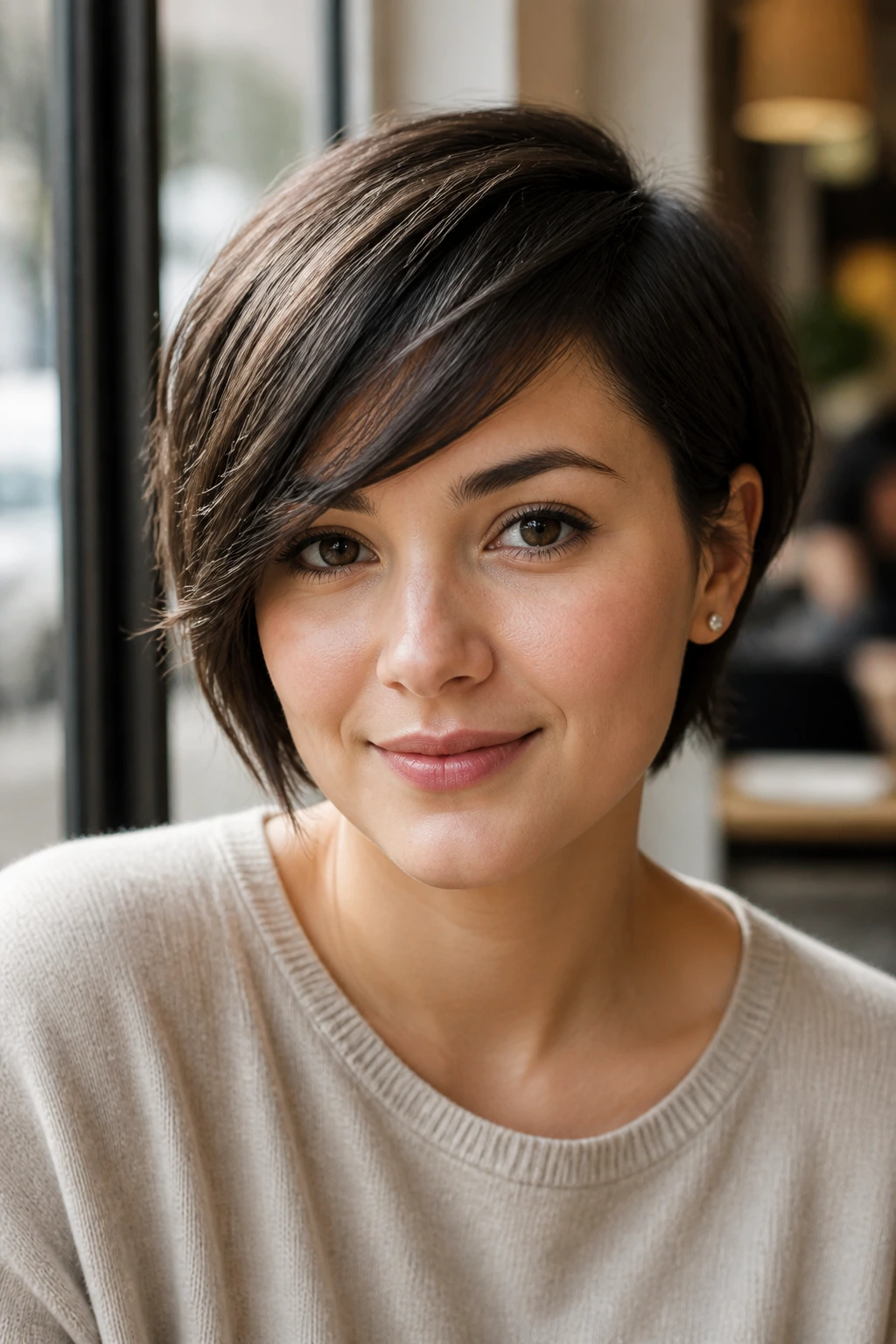
Short hair changes the whole game, so the fringe has to work harder.
What Makes This Version Different
A bob, bixie, or short layered crop leaves less room for the bang to blend, which means the sweep has to create the shape on its own. Keep the longest point near the cheekbone and the shortest point soft near the brow. That gives the haircut a clear diagonal without making it feel chopped up.
Good Styling Details
- Blow-dry the fringe across the forehead first.
- Use a tiny round brush, not a big one.
- Keep the ends narrow so they don’t puff.
- Tuck one side behind the ear if you want extra lift.
Short hair on a round face can look especially good when the bang adds a bit of asymmetry. That single detail stops the cut from feeling too centered or too symmetrical. And symmetry is overrated anyway.
21. Side Fringe That Works With Ponytails and Buns
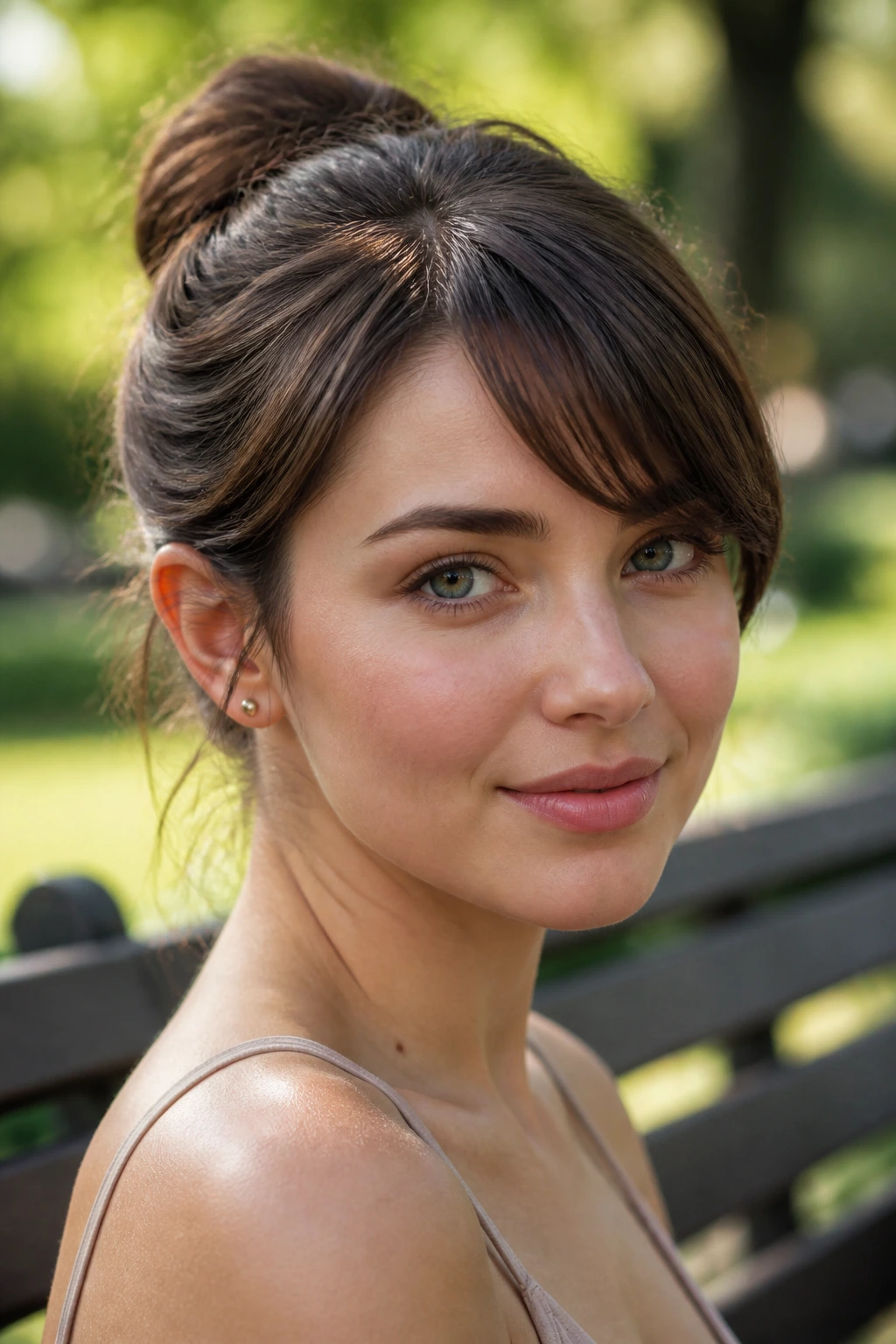
A fringe that still looks good after you tie your hair up is worth its weight in gold.
If your bangs are long enough to fall to one side and soft enough to pin back, they can frame ponytails and buns instead of fighting them. That’s useful on round faces because updos expose the cheeks and jaw more. The fringe gives the face a little structure so the look doesn’t go fully open.
I prefer a side bang that can either sweep forward or tuck back with a small bobby pin. That means the length should be somewhere between the brow and the cheekbone, with enough weight to stay put. Too short and it springs loose. Too long and it loses the bang effect.
This is one of those styles that makes daily life easier. Gym hair. Errand hair. Dinner hair. Same cut, different use.
22. Grown-Out Side Bangs That Still Look Intentional
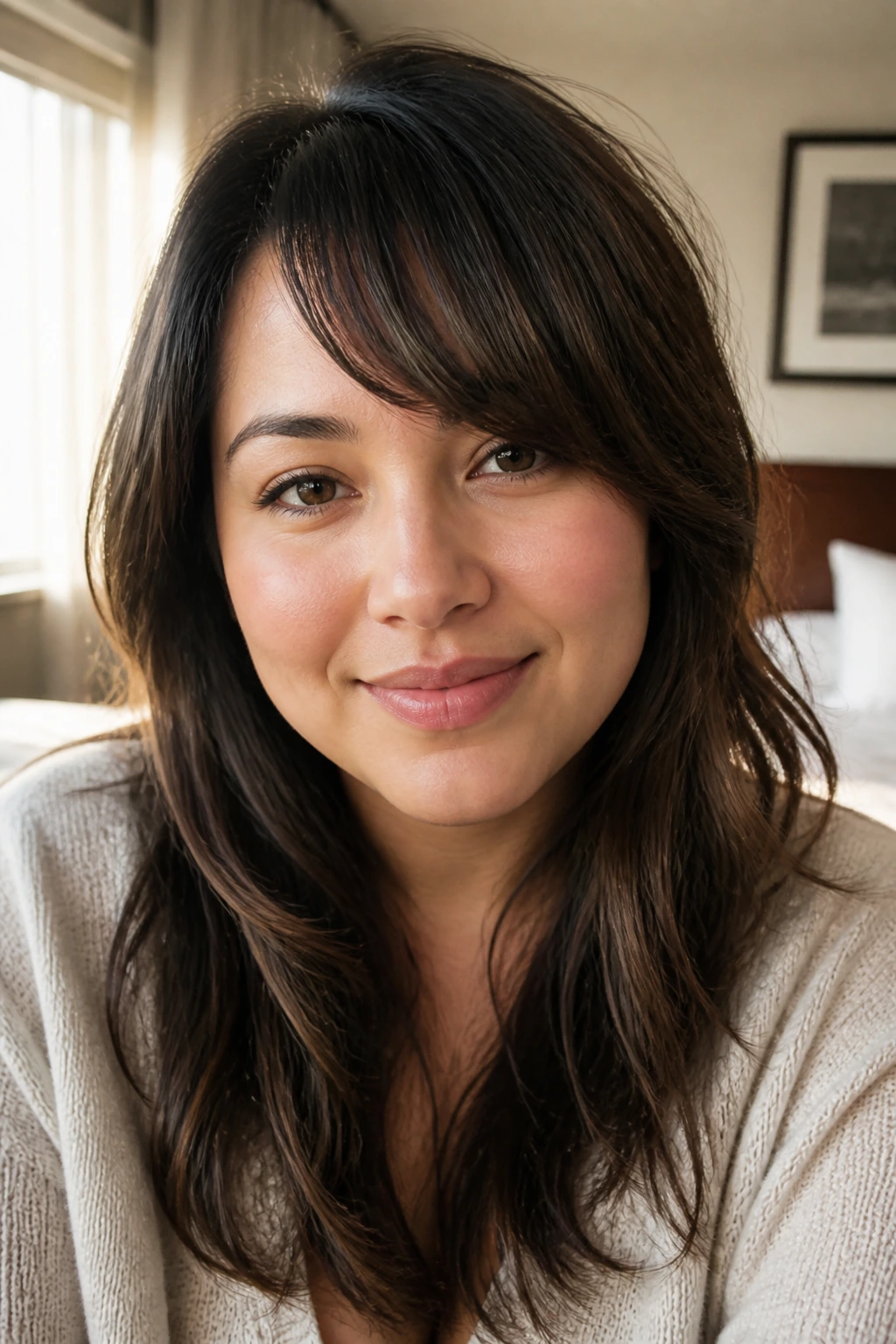
Not every good fringe starts out perfect. Some of the best ones are the grown-out version.
A longer side sweep can still flatter a round face if the line stays diagonal and the front layers keep moving. In fact, a little extra length can be useful because it gives you more ways to wear it. You can sweep it across the forehead, tuck part of it behind the ear, or let it fall into the rest of the haircut.
I like this stage for people who hate frequent trims. A bang that sits between the brow and the upper cheek can last a lot longer before it starts feeling awkward. The key is to keep the ends soft so the fringe blends instead of separating into a heavy block.
A Simple Rule
If the bang still looks good when you tuck one side and shake the rest out, you’re in a good place. If it only looks good in one exact position, it’s too rigid.
23. Side Bangs With a Smooth S-Curve
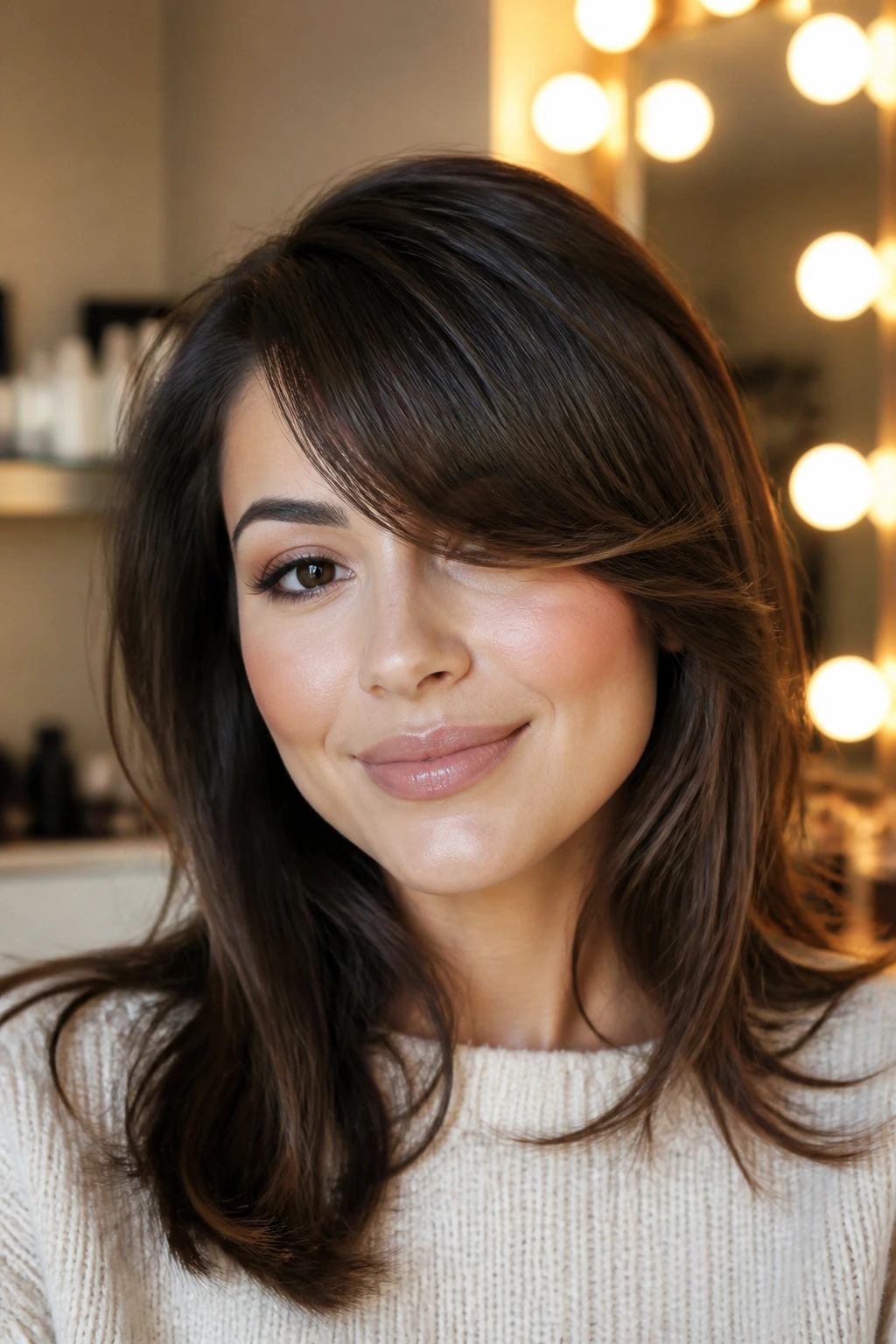
A smooth S-curve gives the fringe a little more personality than a straight sweep.
The front hair bends away from the face, then returns slightly as it drops. That shape can soften fuller cheeks without making the haircut feel flat. It also helps the bang move with the rest of the hair instead of sitting on top of it like a separate piece.
I like this especially on blowouts that already have a polished finish. A round brush and a quick twist at the ends can create the curve. You do not need a full salon set-up at home, just a dryer, a brush, and a few clips if you want to set the shape while it cools.
This version feels a little more dressed up than a plain sweep. Not fancy. Just smoother.
24. Piecey Side Fringe for Straight Hair
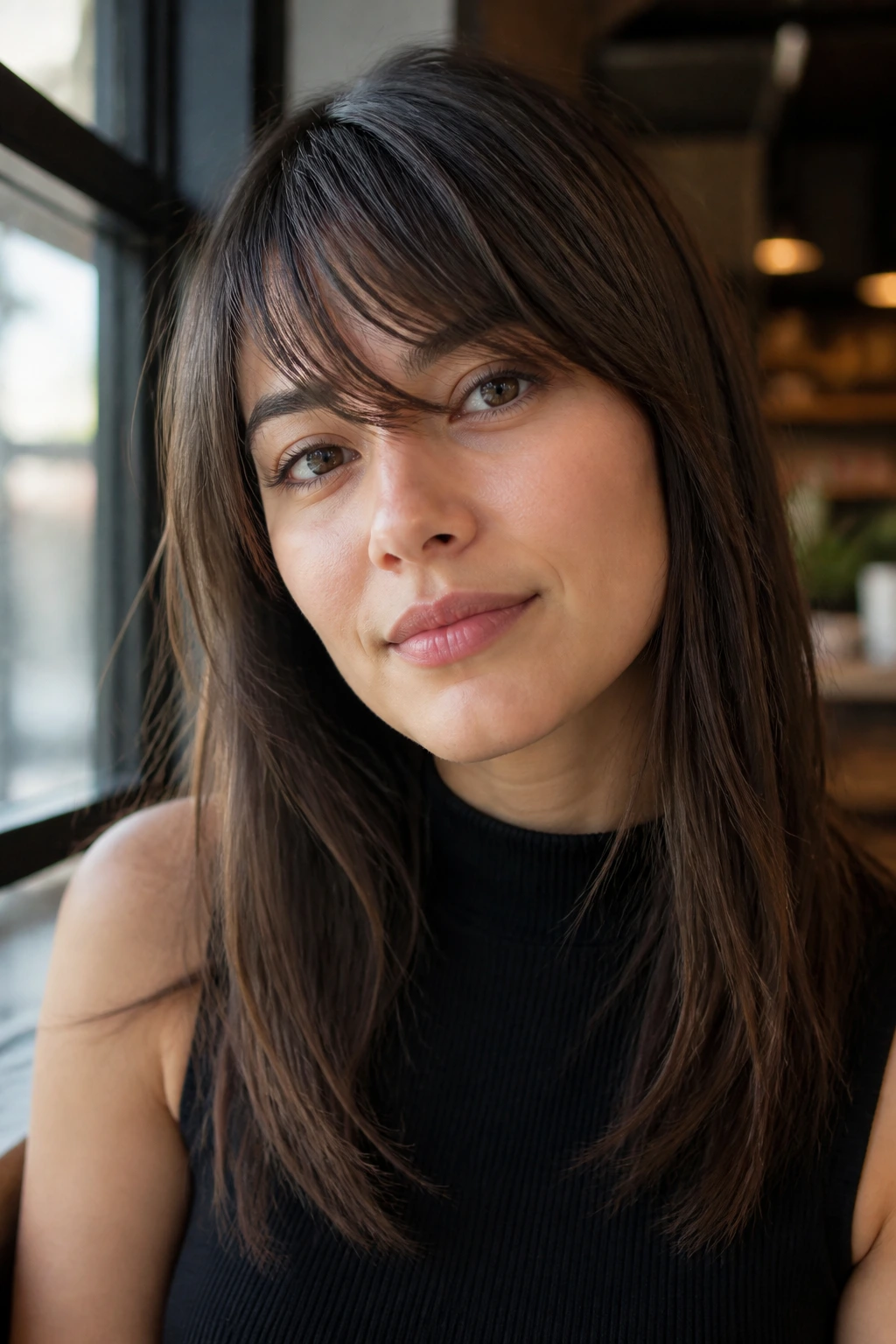
Straight hair can make bangs look severe if the cut is too even. Piecey texture fixes that.
The idea is to break up the fringe into small sections so it doesn’t create one solid line across the forehead. On a round face, that broken edge is useful because it keeps the eye moving. A hard line can stop the gaze too soon.
I like using a light texturizing spray on the mid-lengths, not the roots. The roots need lift; the ends need separation. Too much product at the top makes the bang sticky. Too little on the ends makes the fringe look like it was ironed into place.
This is a good option if your hair is very straight and tends to show every blunt edge. Piecey bangs give you a little air. That’s enough.
25. Side Swept Bangs for Round Faces That Need Less Maintenance
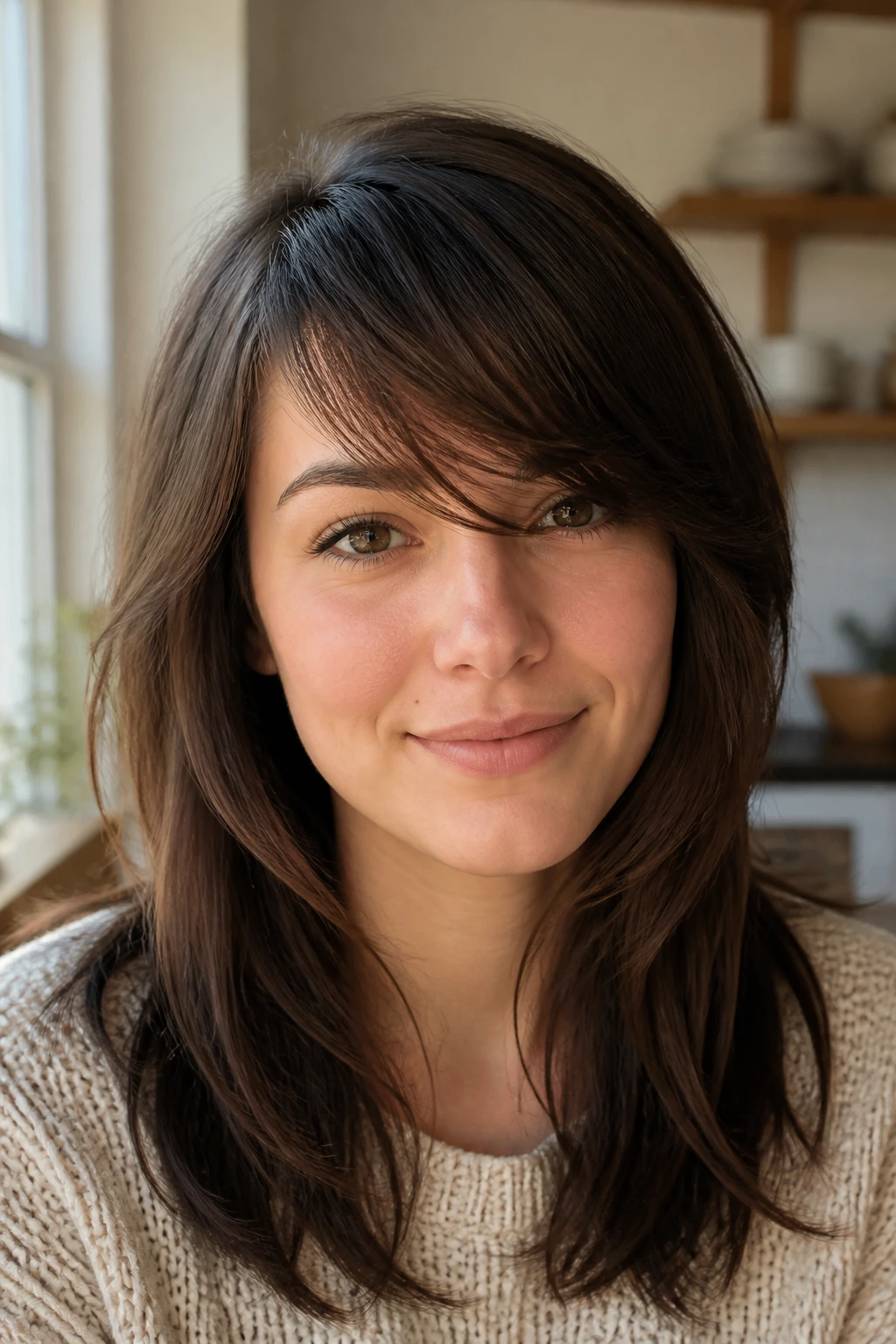
Some bangs are high effort. These are not.
A lower-maintenance side sweep usually has a longer starting point, a softer angle, and a shape that can dry with minimal help. That makes it easier to wear if you do not want to round-brush the front every morning. A little movement is built in, so the hair can air-dry and still look deliberate.
This works especially well with layered cuts where the front pieces already have some direction. The bang can slide into the shape of the haircut instead of having to create the shape on its own. That saves time and cuts down on fighting with cowlicks.
If your hair naturally bends away from the face, don’t fight it too hard. Shape the cut to match that movement. Life gets easier when the haircut cooperates.
26. Side Fringe With a Slightly Longer Temple Corner
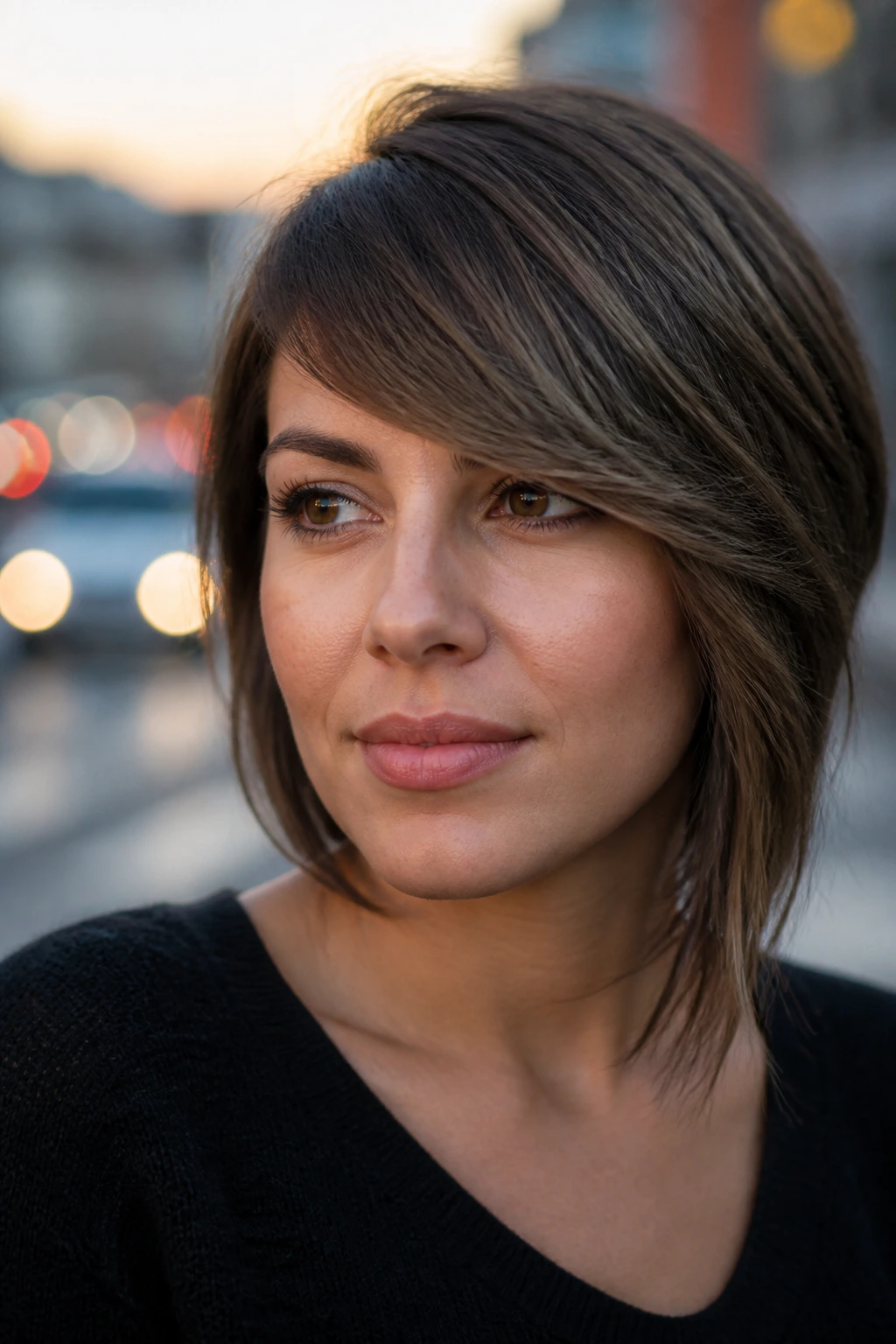
A longer temple corner does a quiet job, which is why I like it.
That extra length near the temple creates a longer diagonal and keeps the hair from sitting right on the widest part of the face. For round faces, that small shift can make a big difference in how open or full the front looks. It also gives the stylist a little more room to blend the fringe into the rest of the haircut.
What to Tell Your Stylist
- Keep the temple corner longer than the center.
- Blend the front into the side layers, not across them.
- Avoid cutting the outer edge too blunt.
- Leave enough length to tuck behind the ear if needed.
This shape tends to look especially nice as it grows. The line stays readable longer, which means fewer awkward weeks between trims. That alone makes it worth considering.
27. Side Bangs That Soften a Full Cheek Line
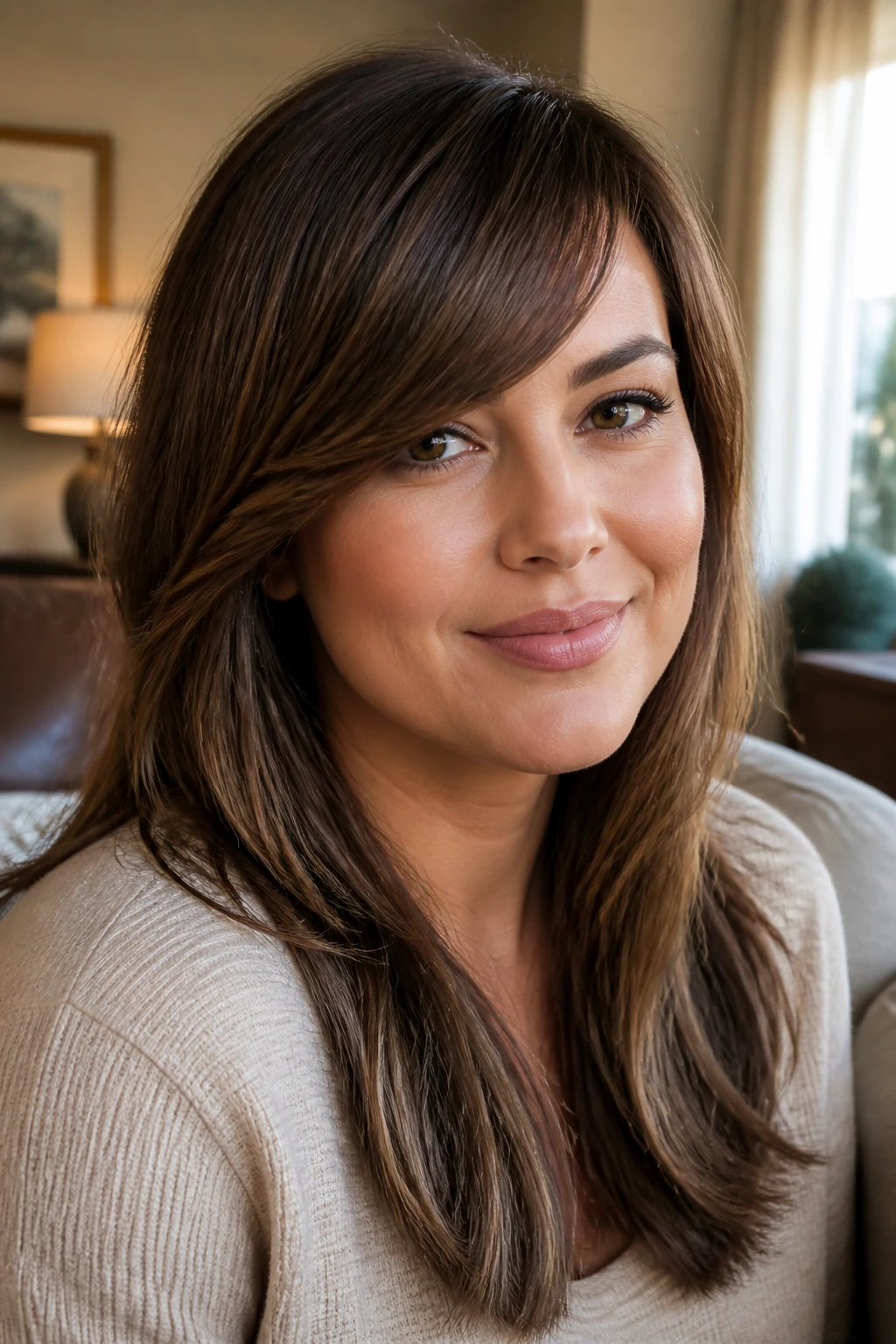
This is the version I’d pick if the goal is softness, not drama.
A side bang that lands around the cheekbone and feathers into the front layers can take the edge off a fuller cheek line without drawing too much attention to the middle of the face. The cut should feel almost like a veil at the front. Light, but not flimsy.
I like a little bend near the ends so the fringe doesn’t collapse into the cheek. The bend keeps the shape alive and gives the eye something to follow. That diagonal line matters more than most people realize. It gives the face room.
This is a quietly flattering shape. Nothing loud. Nothing severe. Just enough movement to make the face look a little longer and a little softer.
28. The Long Easy Sweep That Grows Out Cleanly
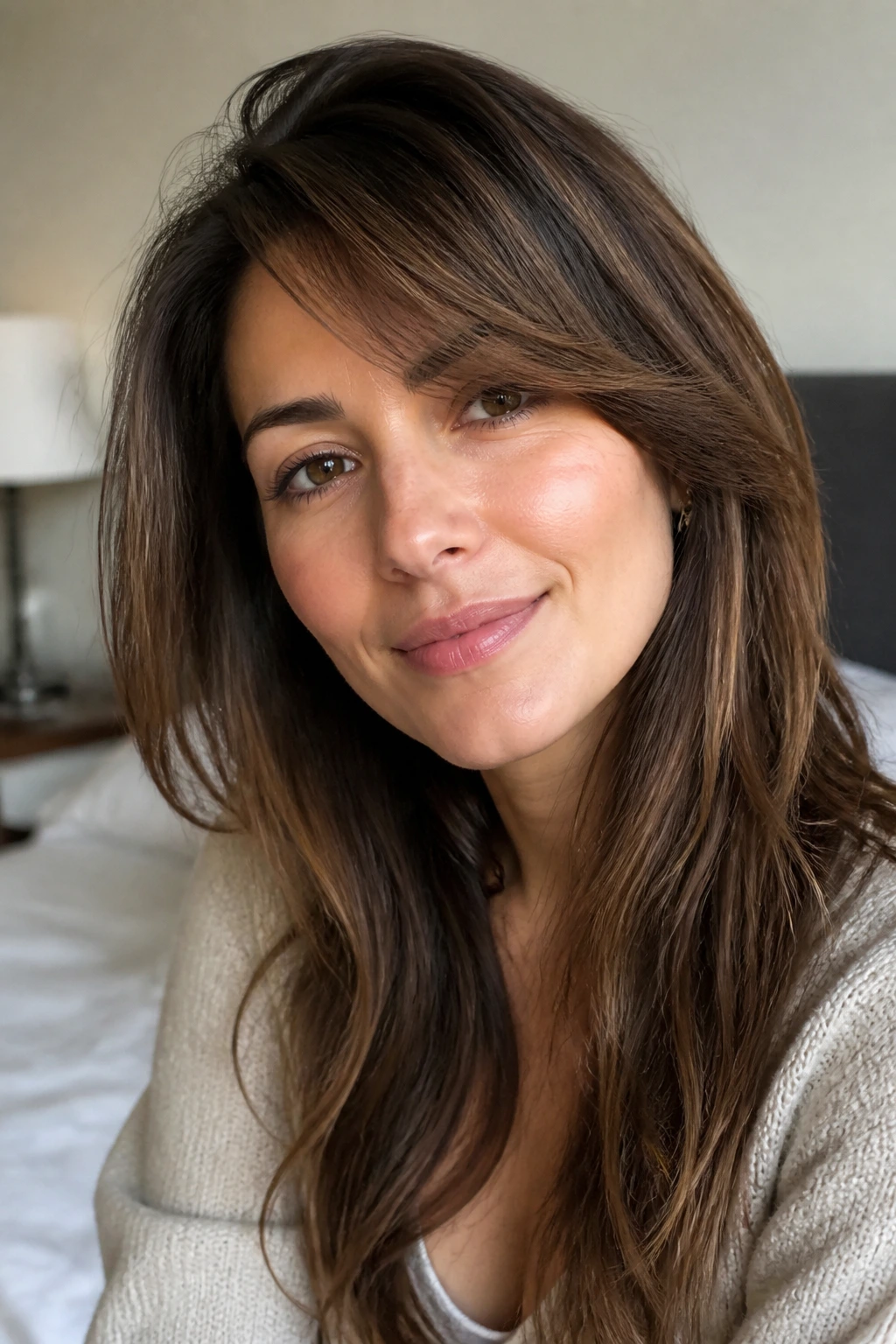
The best long side sweep for a round face is often the one that still looks good after it’s been worn for a few weeks. That’s the honest answer.
A fringe that grows out cleanly gives you flexibility. It can sit across the forehead, curve into the side layers, or tuck away on tired days. The cut keeps working even when it is no longer freshly trimmed, which makes it a smart choice if you want shape without constant salon trips.
I like this version to start high enough to add lift, then slide down past the brow toward the cheekbone. The line stays diagonal, the forehead stays open, and the face gets that gentle lengthening effect without the bangs ever feeling too precious. That is the real win.
If you want one side-swept fringe that plays nicely with most hair textures, most outfits, and most schedules, this is the one I’d point to first. It’s the least fussy, the easiest to live with, and the one most likely to still look good when you catch yourself in the mirror on a busy morning.
