



Men’s bangs can change a haircut faster than almost anything else. A clean fringe can hide a high forehead, soften a strong hairline, or pull a messy cut back into shape. A bad one sits there like a helmet. No mercy.
The trick is not picking a fringe at random. Hair that grows straight ahead wants a different cut than hair with a hard cowlick at the front. Fine hair needs weight removed carefully; thick hair needs it removed aggressively or the bangs puff up and sit on the forehead like a shelf.
Barbers talk about face shape a lot, but I care just as much about how much time you want to spend in front of a mirror. Some men’s bangs take 30 seconds with a matte cream. Others need a blow-dryer, a vent brush, and a little patience. That tradeoff matters more than the trendiest photo on your phone.
There are more options than the blunt, bowl-like cuts most guys picture first. Soft curtain pieces, choppy crops, long sweeping fringe, sharp angular bangs, and easy grow-out versions all do different jobs. Start with the cut that fits your hairline, then worry about the rest.
1. Classic Straight Fringe
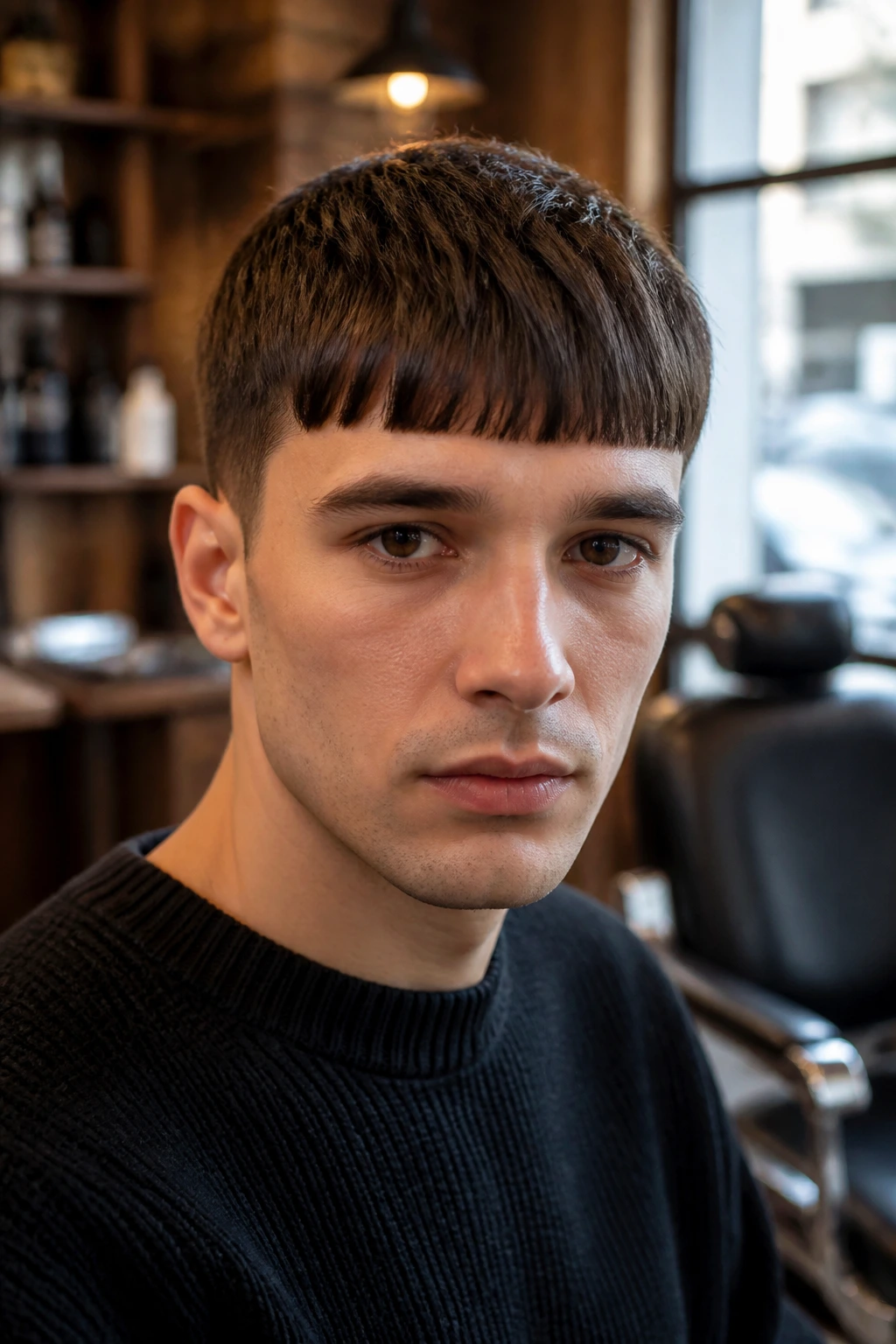
A straight fringe looks simple because the cut does the heavy lifting. The front drops forward in a clean line, usually ending right at the brows or a touch above them, and that makes the whole haircut feel neat without trying too hard. On straight hair, it can look sharp and almost architectural. On thicker hair, it needs weight taken out near the ends or it turns into a heavy shelf.
What to ask for
- Leave about 2 to 3 inches in front if your hair is straight and dense.
- Ask for point-cut ends if you want the fringe to move a little instead of sitting like cardboard.
- Keep the sides tighter, but not skin-tight, so the front stays the focus.
- If your hairline has a cowlick, tell the barber before the first snip. That matters.
A straight fringe suits guys who want a clean look without a lot of styling drama. It can sharpen a rounder face and balance a long forehead. The main thing to watch is the width of the front section. Too wide, and it starts reading as a bowl cut. Too narrow, and it looks accidental.
One pass with a blow-dryer and a pea-sized amount of matte paste is usually enough. Leave the shine products alone. This cut likes texture, not gloss.
2. Curtain Bangs
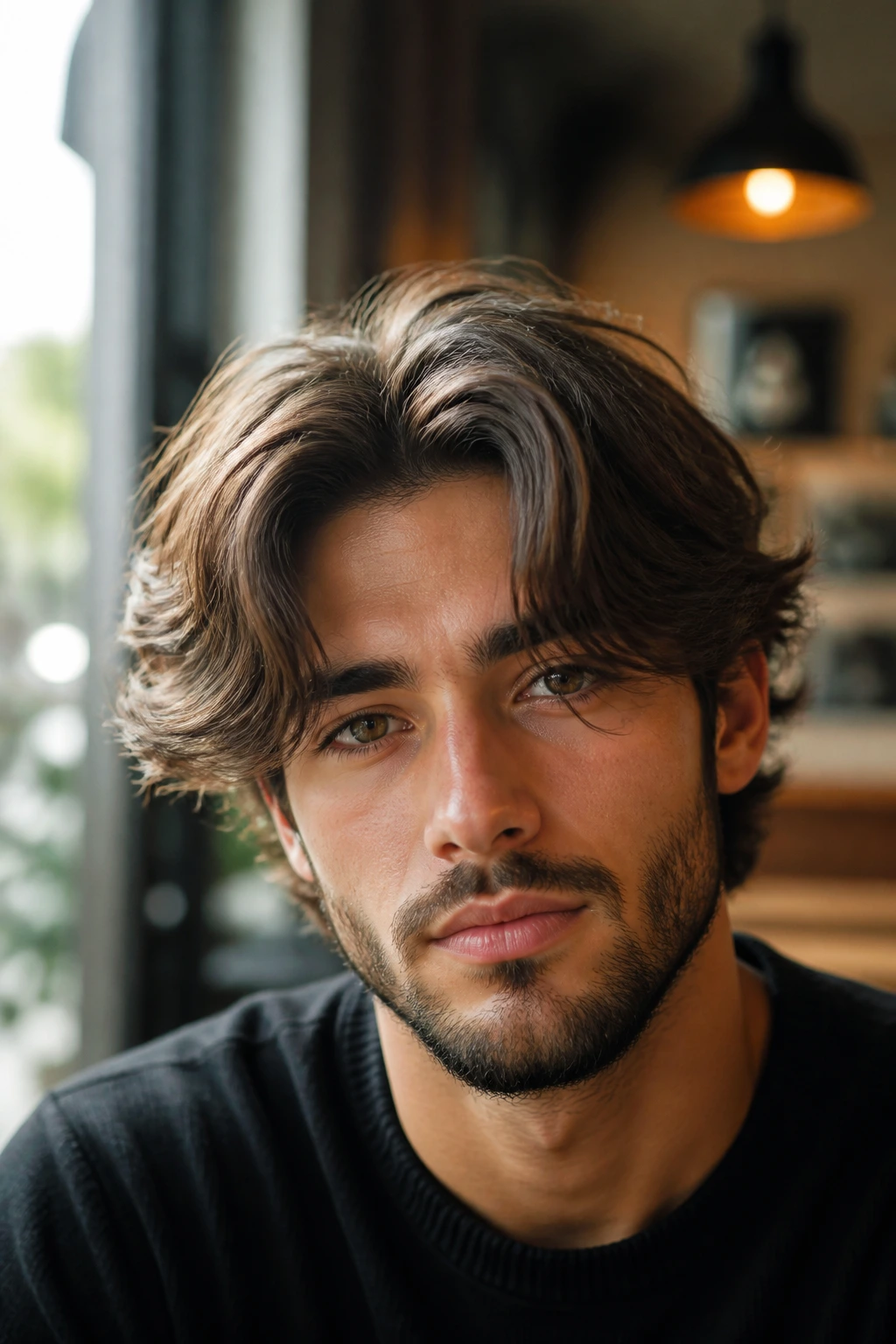
Want bangs that do not look like you tried too hard? Curtain bangs are the easy answer. The hair parts near the center, falls to each side, and opens the face instead of covering it. Done right, it feels relaxed, a little romantic, and surprisingly masculine when the rest of the cut stays tidy.
Curtain bangs work best when the front is long enough to bend, not just flop. Think 4 to 6 inches on top, with the shortest point hitting somewhere between the brow and the cheekbone. That length gives the hair enough weight to fall in that split shape without fighting every breeze.
They suit straight, wavy, and even slightly curly hair, though thick hair needs more layering or the center part gets bulky. I like this style on guys with wider foreheads or strong cheekbones because it pulls the eye inward. A middle part can also make a longer face feel a little shorter, which is a nice trick when you want balance without looking staged.
A light cream or sea salt spray is usually enough. Blow-dry the front from side to side for 20 or 30 seconds, then let it settle where it wants.
3. Textured Crop Fringe
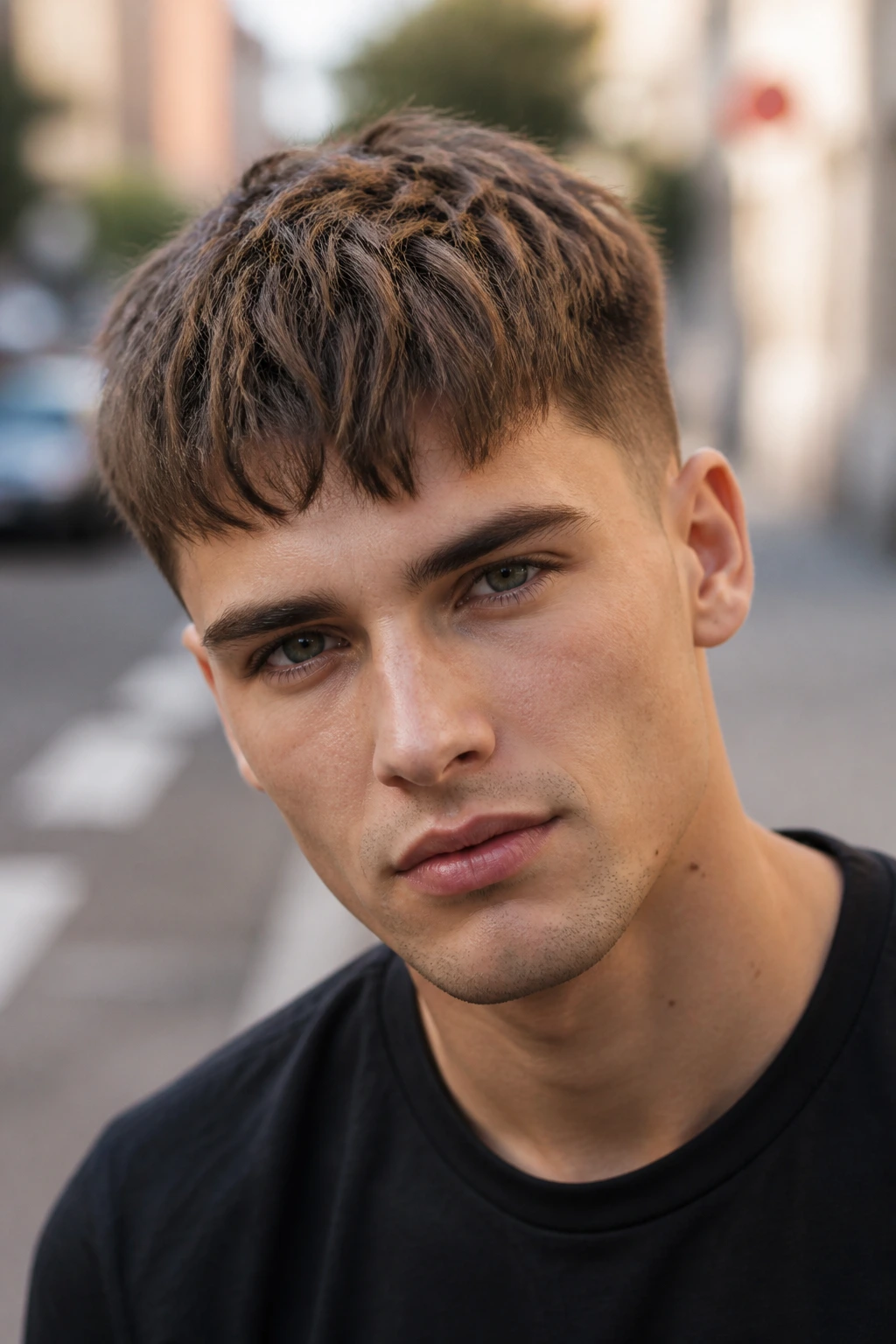
When a client says he wants short hair but still wants something happening in front, this is the cut I’d put on the table first. A textured crop fringe keeps the back and sides tight while leaving the front choppy and lived-in. It’s one of those styles that looks deliberate even when you ran a hand through it and walked out the door.
Why it works
- The short length keeps it from collapsing on fine hair.
- Choppy ends stop thick hair from puffing up.
- A forward direction helps hide uneven growth at the hairline.
- It dries fast. Very fast.
The crop fringe is a favorite for men who do not want to wrestle with a round brush every morning. It works especially well with a low or mid fade, but a taper is cleaner if you want something more classic. The front usually sits around 1 to 2 inches, though dense hair can handle a bit more length if it’s point-cut well.
Styling is simple. Start with towel-dried hair, rub in a matte clay, and push the fringe forward with your fingers. If the front looks too flat, hit the roots with warm air for 15 seconds and rough it up again. That little reset makes a bigger difference than another scoop of product.
4. Side-Swept Bangs
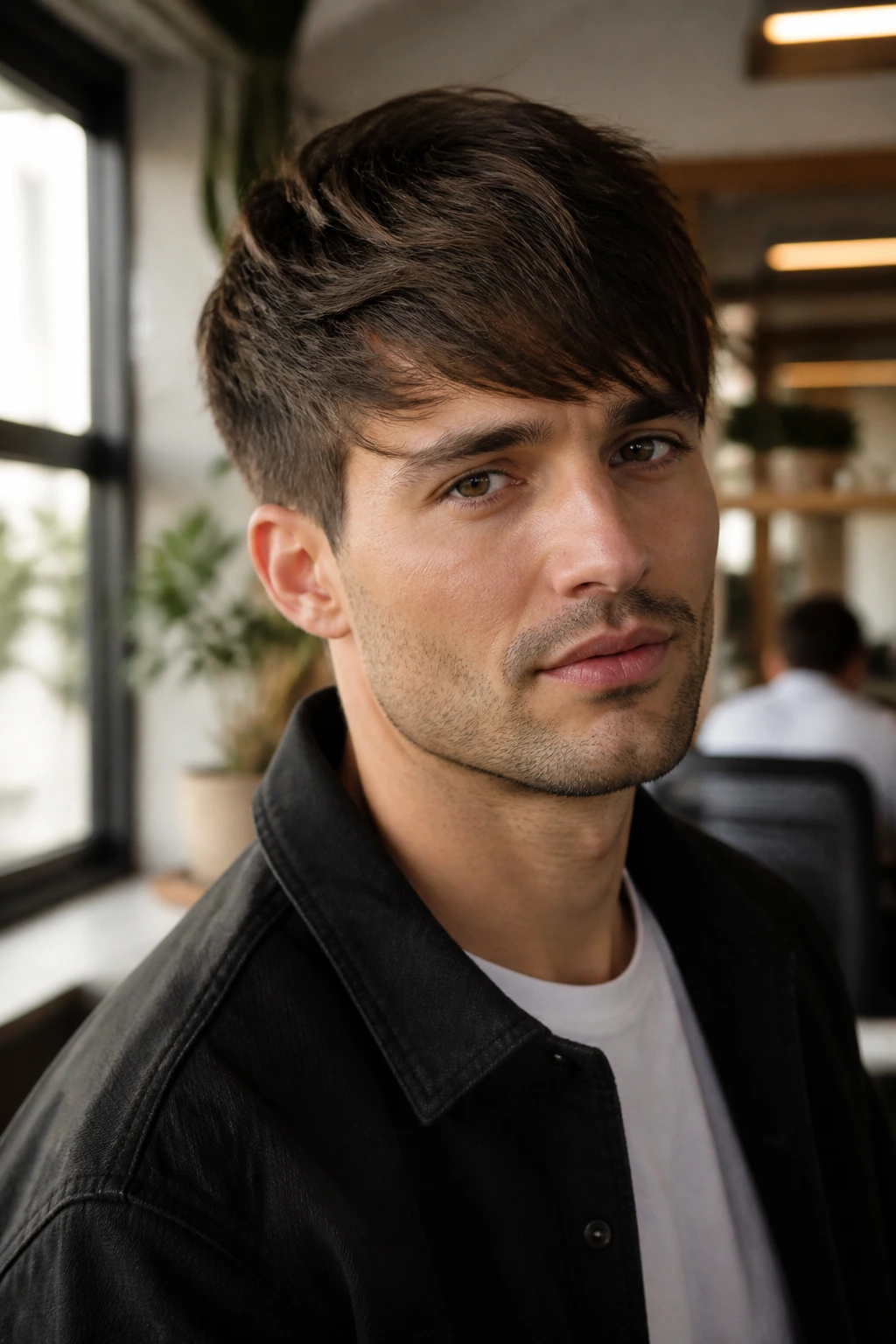
Side-swept bangs are for the guy who wants movement without the commitment of a full fringe. The hair falls diagonally across the forehead, usually starting with more weight on one side and tapering softly toward the other. It reads polished, but not stiff. That matters.
This style is especially kind to fine hair because the diagonal line creates the illusion of density. It also works well if your face is square or oval, since the sweep softens sharp angles a bit. I’d avoid making it too neat. The second the part gets too perfect, the style loses its ease and starts looking dated.
Keep the top long enough to push, usually 3 to 5 inches, depending on thickness. A barber can blend the front into the sides with scissors or a guard length that still leaves some softness. Blow-dry the hair in the direction you want it to fall, then set it with a light cream or low-hold paste.
A small detail: if your hair naturally pushes the opposite way, don’t fight it for the whole day. Train it with heat first. Much easier.
5. French Crop With a Short Fringe
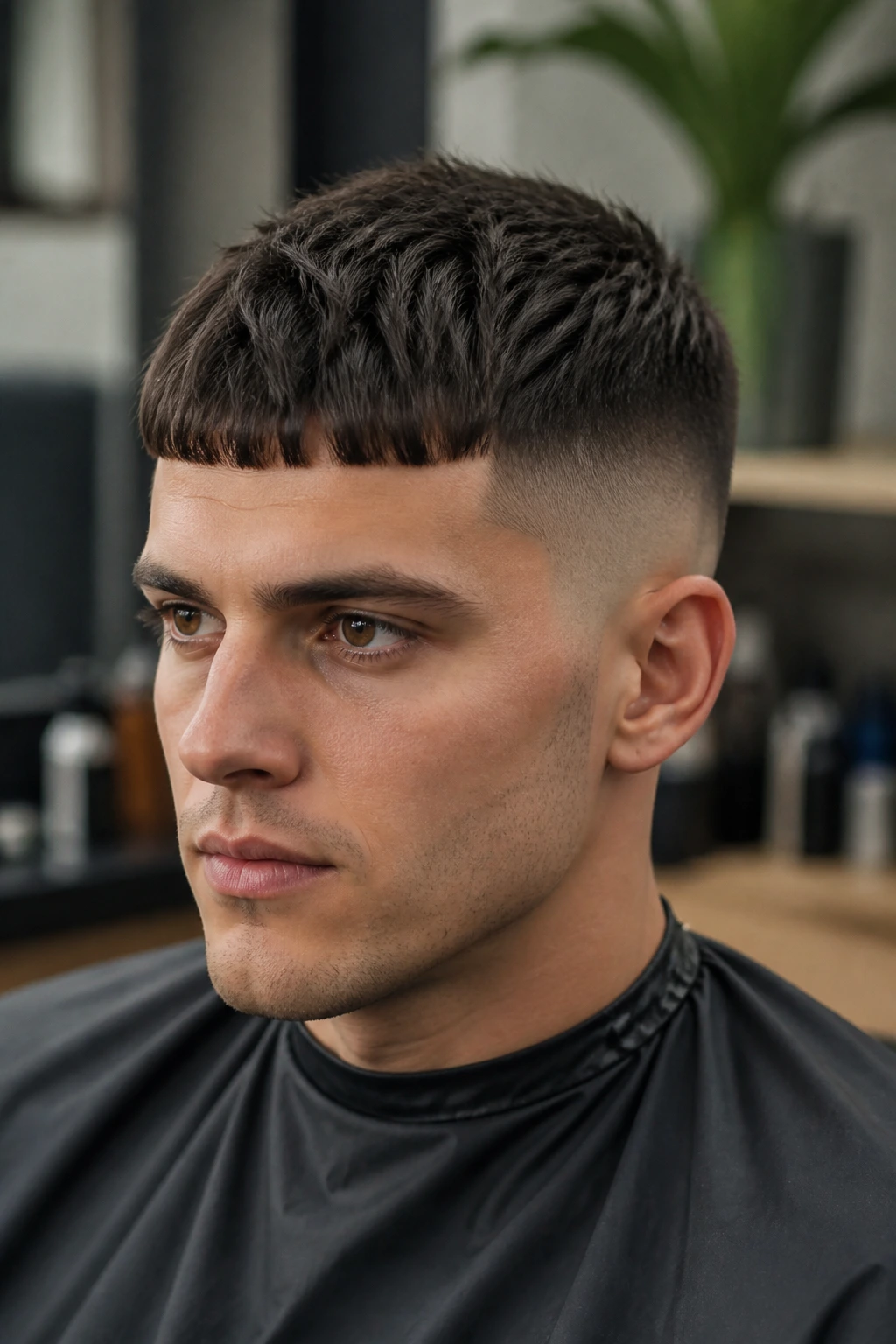
The French crop is blunt, compact, and surprisingly modern when the edges are done well. It’s not the kind of haircut that whispers. It speaks in short sentences. The fringe sits low and straight, often paired with a fade or tapered sides, and the top stays short enough to feel neat even after a long day.
This is a strong choice for thick hair because the crop takes away bulk without removing the front shape. It also helps if your hairline is starting to thin at the corners. The short fringe keeps attention forward and gives the cut a stronger outline. If you have a straight hair texture, even better. The lines stay crisp longer.
Barber note
- Ask for texture through the top, not a flat chop.
- Keep the fringe short and blunt, around brow level or slightly above.
- Use a low fade if you want contrast.
- Use a taper if you want the style to feel cleaner and less aggressive.
I like this cut because it stays respectable without looking boring. A little matte paste and five seconds with the fingers is enough. That’s a rare thing.
6. Messy Forward Fringe
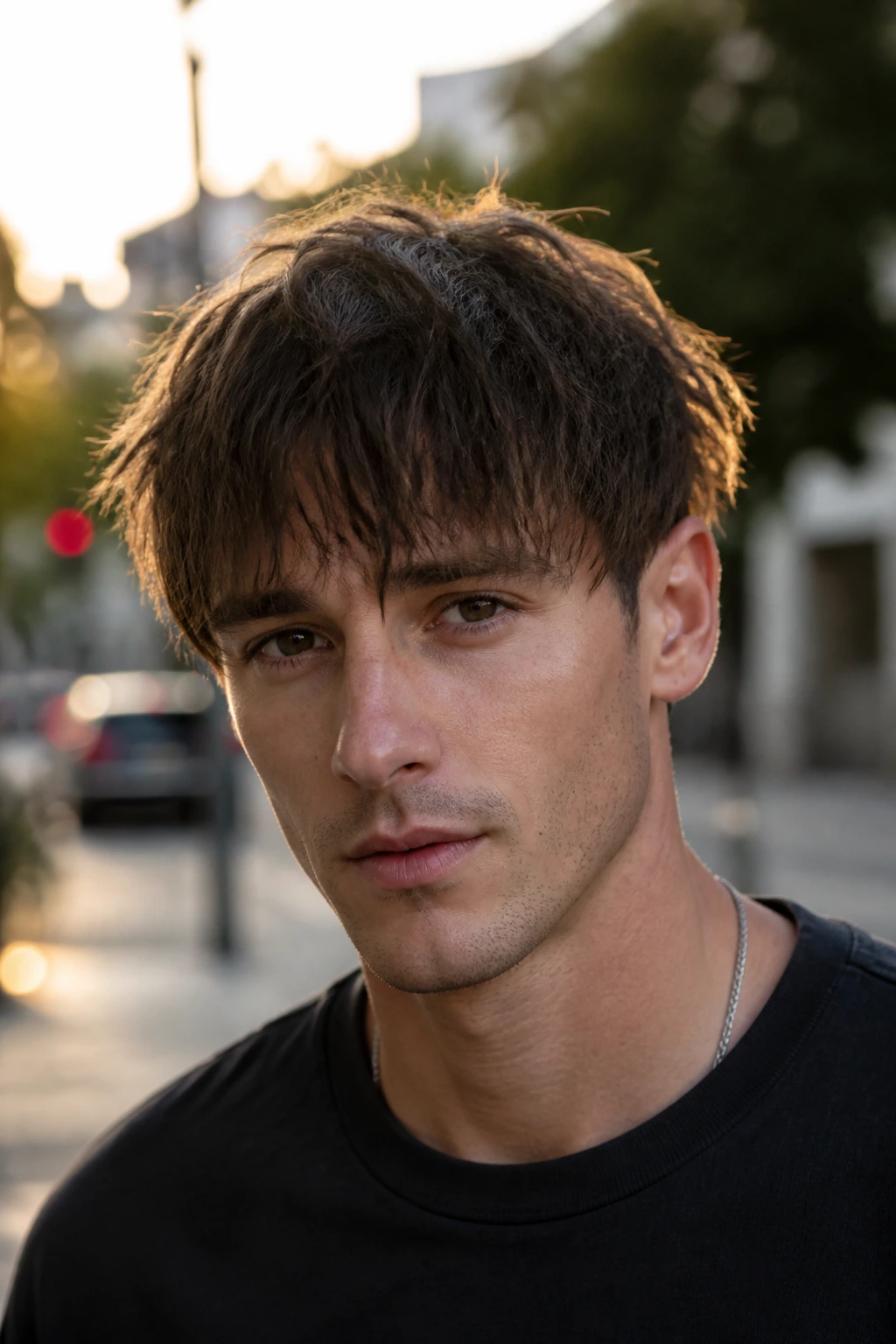
Messy forward fringe is what you wear when you want your hair to look like it has a life of its own, but not too much of one. The front falls forward, gets broken up with texture, and lands just above or across the brows in pieces rather than one clean line. It has a casual feel that works especially well on younger guys or anyone who hates neatness.
The cut lives and dies by texture. If the hair is cut too even, the whole thing turns mushy. If the ends are too jagged, it starts looking like you did it yourself in bad light. The sweet spot is somewhere in the middle: soft layers on top, a little weight left in the front, and enough length to push the fringe forward without glueing it there.
A nickel-sized dab of matte clay or paste is usually enough. Work it through dry or nearly dry hair, then pinch a few front pieces and let others fall loose. That unevenness is the point. Too much brushing kills the shape.
This one is easy to live with. It does not ask for perfection, and that is part of the appeal.
7. Wavy Fringe
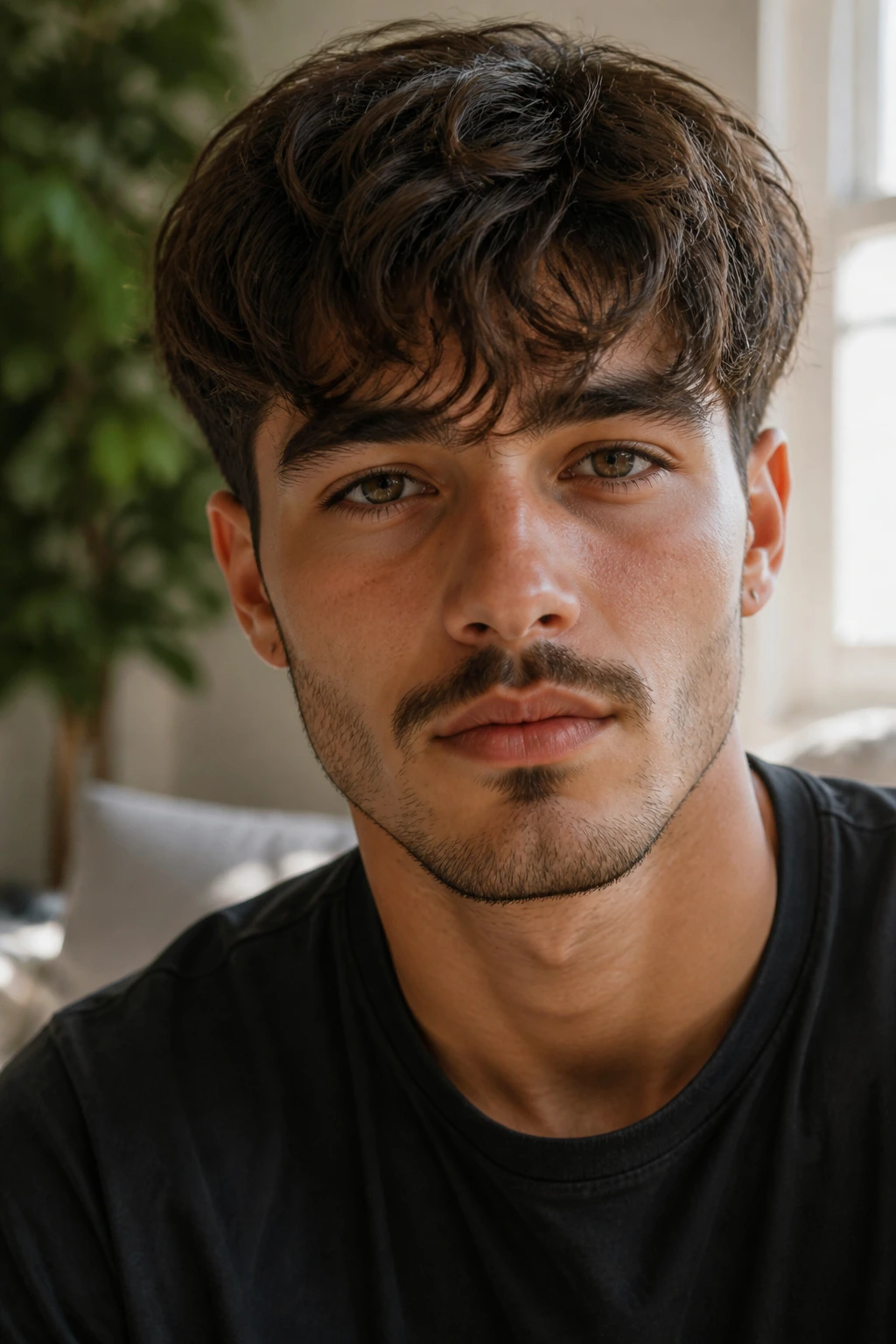
Wavy fringe has movement built in. You do not have to fake it, which is why it looks so natural when the cut is right. The front bends, dips, and makes a soft line across the forehead instead of a hard one. On the right head, it looks like the hair knows exactly what it is doing.
The cut needs enough length for the wave pattern to show, usually 3 to 5 inches in the front. Too short, and the wave gets crushed. Too long, and the fringe starts falling into the eyes in a way that feels more annoying than stylish. Layers matter here. Without them, wavy hair turns bulky at the forehead and puffs up instead of flowing.
How to keep it from getting puffy
- Use a curl cream or light leave-in on damp hair.
- Scrunch gently; do not rake through it ten times.
- Air-dry if you want softness.
- Diffuse on low heat if your wave needs a little shape.
This style can be a headache in humidity if the hair is coarse, but that’s true of a lot of wavy cuts. The fix is not more product. The fix is less product and a better cut. Usually.
8. Long Layered Fringe
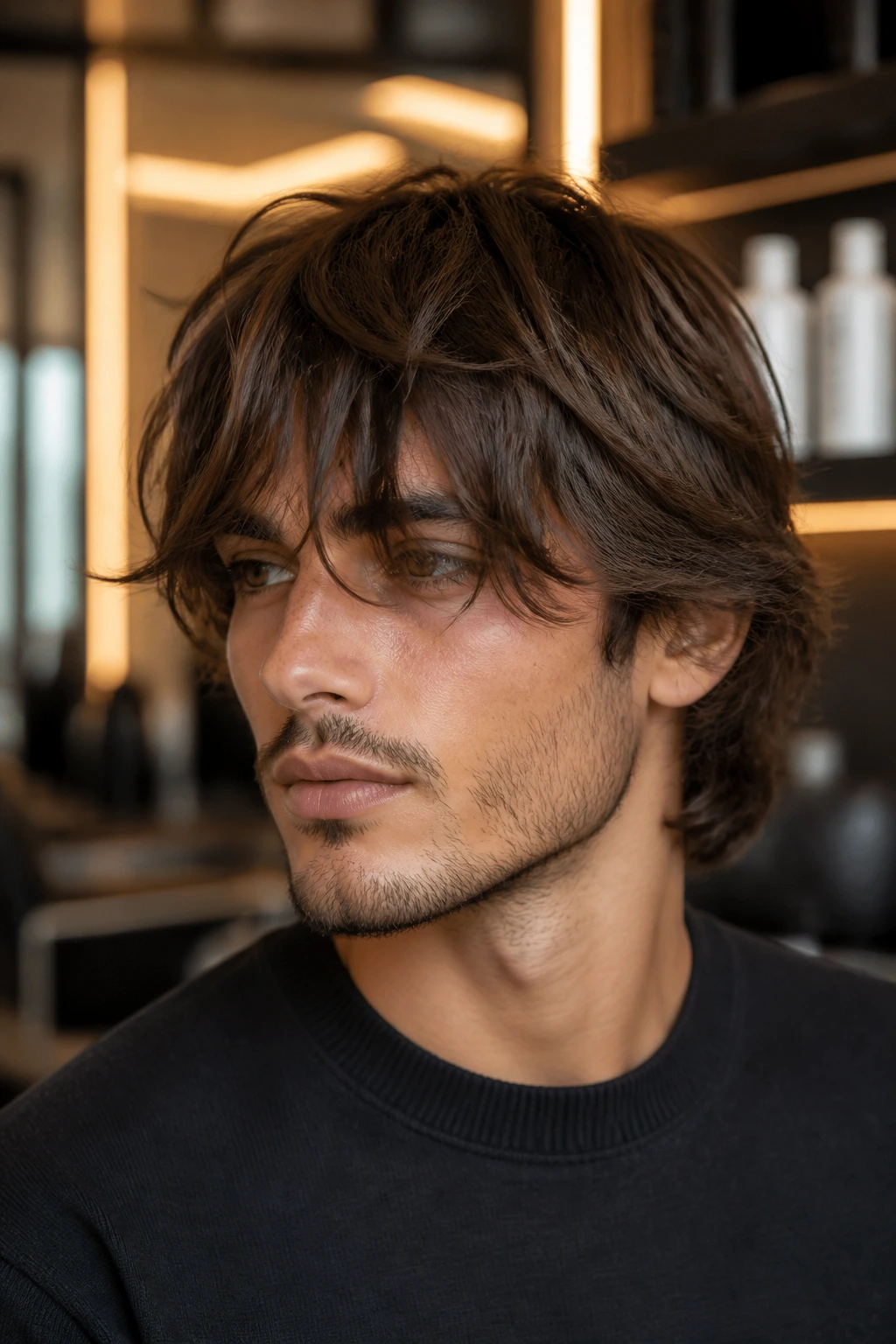
Long layered fringe gives you options, which is half the reason people like it. You can wear it down, part it, brush it off the forehead, or let it fall into the eyes a little. The shape is softer than a blunt bang and less rigid than a crop, so it works well for men who want the front of the haircut to move.
The trick is keeping the layers connected. If the front is long but the top behind it is chopped too short, the whole thing gets lumpy. A good cut leaves the fringe long enough to reach the brows or cheekbones, then tapers the weight back into the crown. That lets the hair fall in pieces instead of one heavy curtain.
How to style it
- Start with damp hair and a small amount of light cream.
- Blow-dry the fringe forward first, then slightly off-center.
- Use your fingers to separate the front into 2 or 3 sections.
- Finish with a mist of flexible spray if you need the shape to last.
This is a smart pick if you like a bit of softness around the face. It can also grow out well, which is not something every fringe can say.
9. Angular Fringe
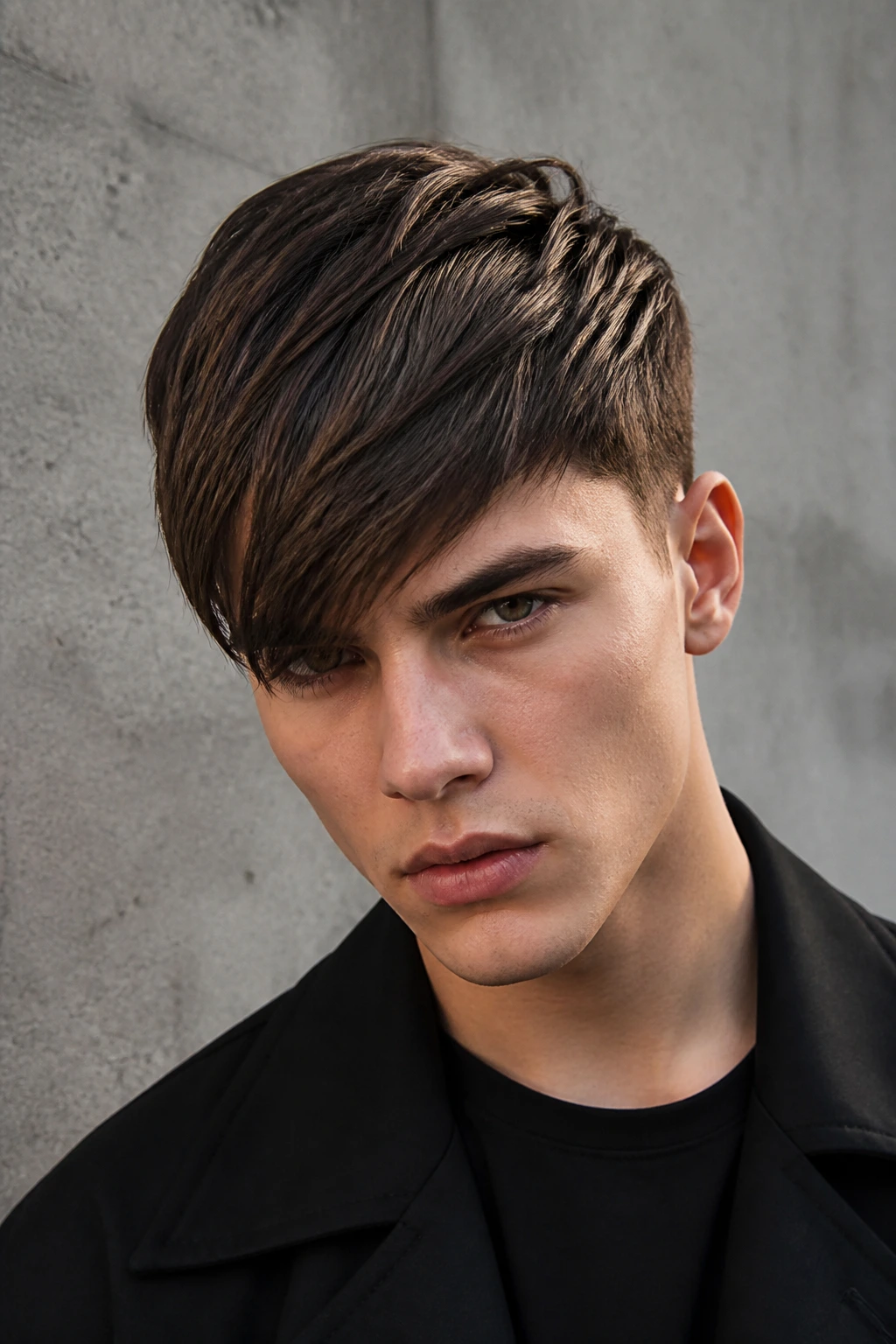
An angular fringe changes the whole mood of a haircut. Instead of falling evenly, the front cuts across the forehead on a diagonal, usually longer on one side and shorter on the other. The effect is sharp, directional, and a little dramatic without going full costume.
I like this cut on round faces because the slanted line helps create length. It also works on straight or slightly wavy hair that can hold a clear edge. Thick hair needs careful removal of bulk or the angle looks clumsy. Fine hair can handle it too, but only if the barber keeps enough weight in the front to support the shape.
The styling is straightforward. Dry the hair in the direction of the angle, then pinch the ends with a small amount of matte product. Don’t brush it too much. The more you force the line, the more obvious the fight becomes.
An angular fringe is not the most laid-back option on this list. That is the point. If you want a haircut with some attitude, this one gives it to you without making the sides wild.
10. Blunt Bangs
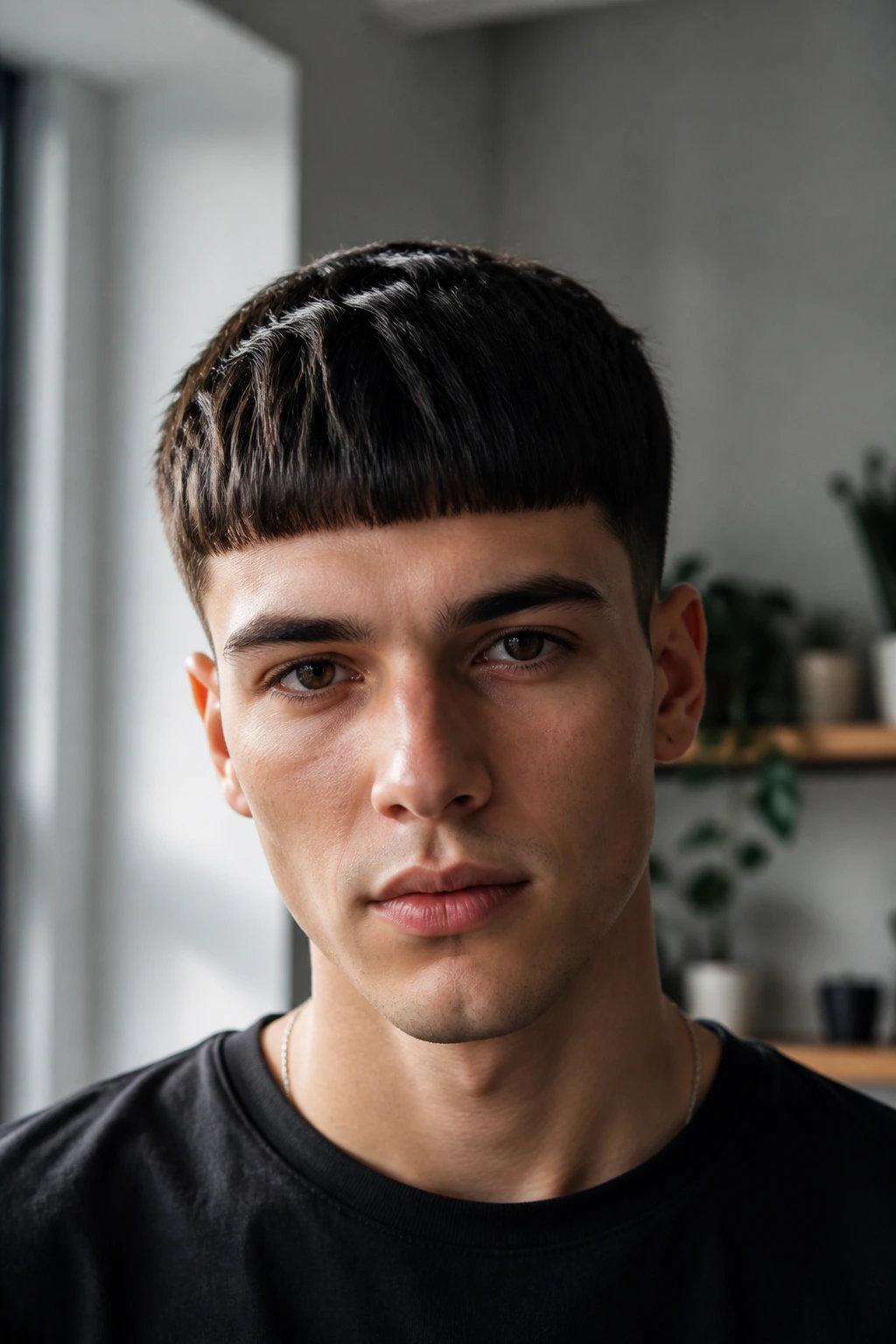
Can men wear blunt bangs without looking like they walked out of a costume department? Yes, if the rest of the cut is clean and the fringe is cut with precision. Blunt bangs run straight across the forehead, usually just above the brows, and they make a strong visual line right away.
This style asks for confidence and decent density at the front. Thin hair can do it, but only if the cut is carefully layered behind the bangs so the front does not look stringy. Thick hair is easier because it holds a solid line, though it needs some internal weight removal or the fringe becomes a thick block.
The shape suits guys who like a graphic haircut. It pairs well with sharp fades, undercuts, or very tidy tapers. If you have a long face, the horizontal line can help shorten it a little. If your forehead is narrow, be cautious. The whole point here is structure, and too much structure can feel tight.
A matte finish keeps it modern. Shiny products push it into retro territory fast.
11. Curly Fringe
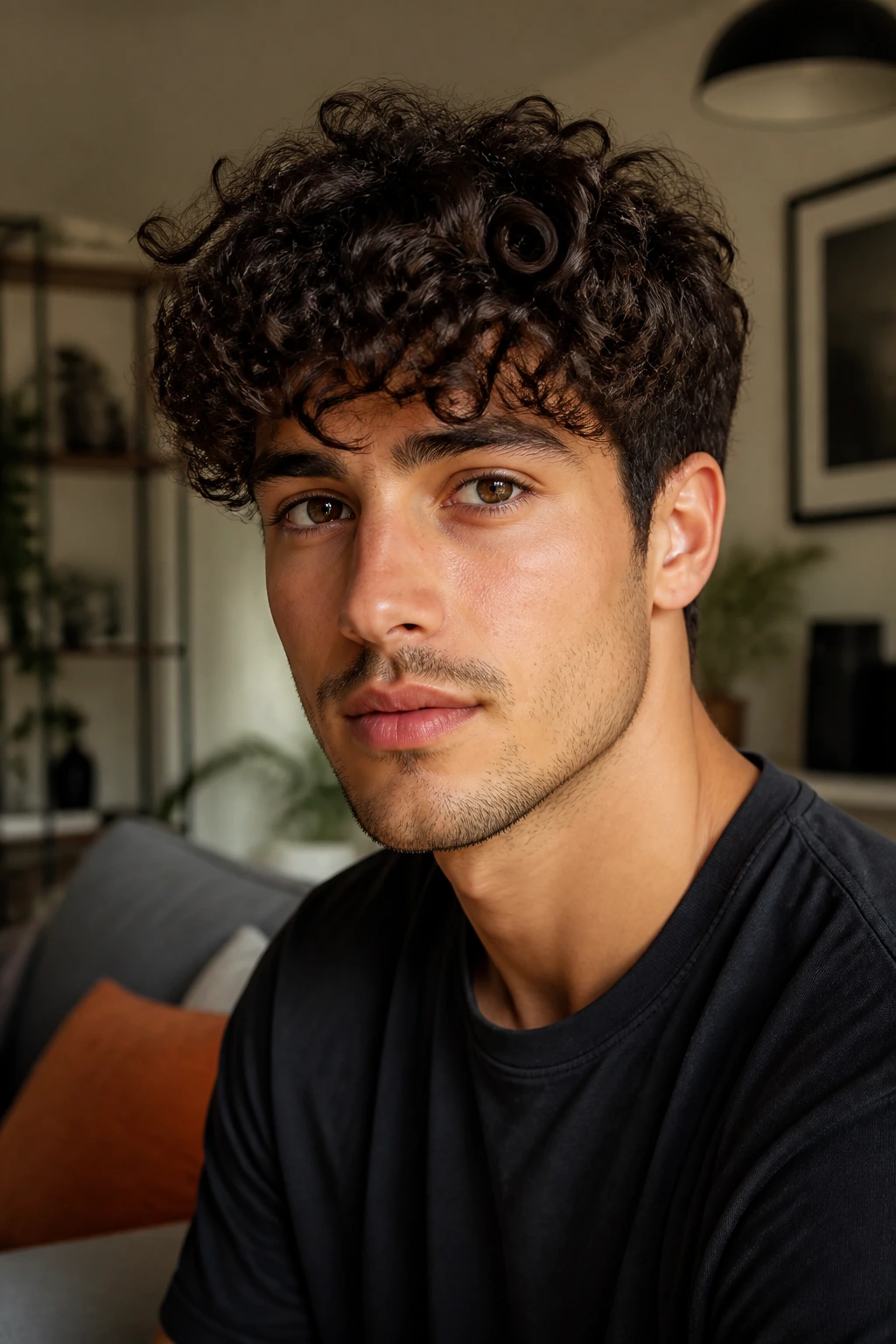
Curly fringe works because it lets the hair be what it already is. No battling. No flattening. The curls spill forward in a soft, rounded edge that can look bold, relaxed, or even a little wild, depending on how much length you leave in front.
The key is restraint. Curly hair shrinks, sometimes by a lot, so the front needs to be longer than you think. A barber may leave 2 to 4 inches in front, with shape cut around the curl pattern rather than against it. If the front is cut too short, the curls spring up and sit above the forehead in a way that feels accidental.
Moisture matters more here than styling hold. Use a curl cream or leave-in conditioner on damp hair, then diffuse on low heat or air-dry if you have time. A wide-tooth comb is kinder than a brush, which can wreck the pattern and make the front frizz out.
Curly fringe looks best when it is a little imperfect. That’s not a flaw. It’s the whole charm.
12. Feathered Fringe
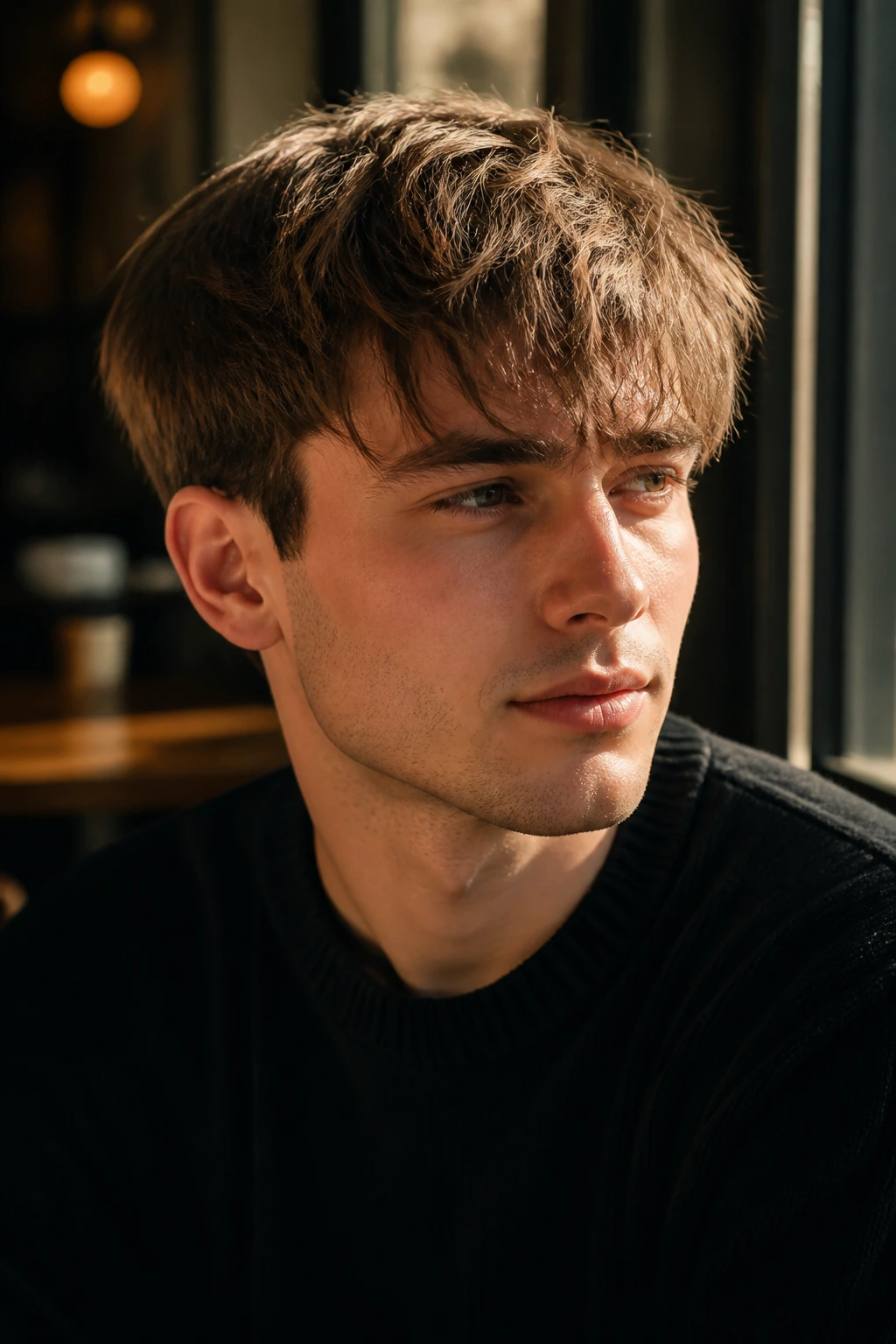
Feathered fringe is softer than a blunt bang and less choppy than a crop. The ends are cut to move, so the front breaks into light pieces instead of one solid curtain. It works well on medium-thickness hair, especially if you want a fringe that sits across the forehead without feeling heavy.
This style has a nice side effect: it makes the haircut look less severe. Sharp bangs can drag a face down if the line is too hard. Feathering solves that by letting some forehead show through the gaps. The result is cleaner and easier on the eyes. Not flashy. Just easier.
A round brush and blow-dryer help here, but you do not need to spend ten minutes on it. Lift the front slightly at the roots, curve the ends under or forward, and stop when the fringe still has some air in it. Heavy cream will flatten the shape. Use a light one or skip product altogether if your hair already holds.
This is a good option for men who want bangs but do not want a heavy look at all.
13. Split Fringe
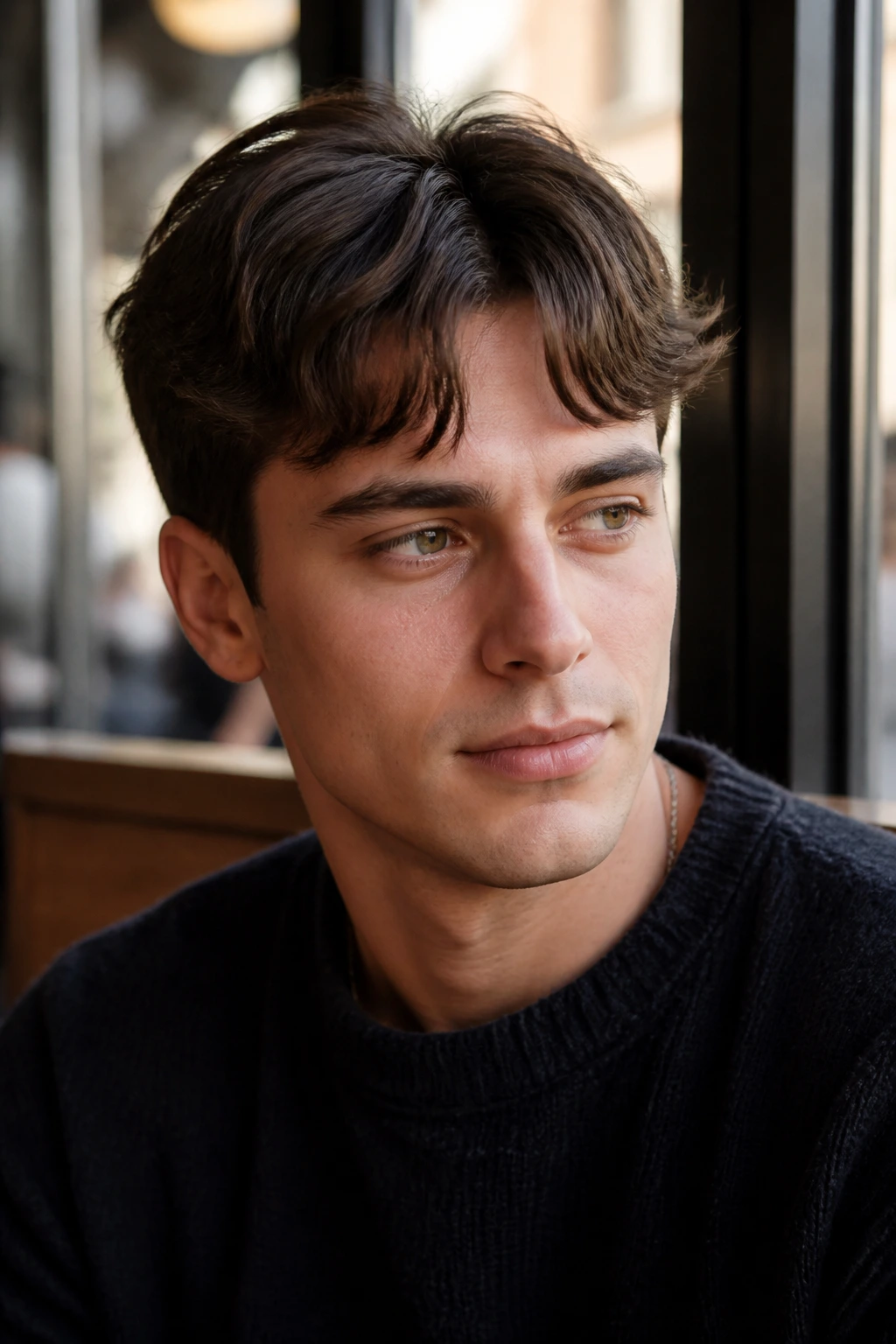
A split fringe sits in the middle of the road between curtain bangs and a side part, and that’s exactly why it works. The front separates into two sections with a small gap at the center, but the pieces are shorter and tighter than a full curtain style. You get the face-framing effect without needing a lot of length.
Unlike a full curtain fringe, this cut doesn’t need the front to hang all the way down to the cheekbones. A few inches can be enough if the hair is fine or medium. The shape looks especially good when the front has a natural bend, because the split feels easy instead of forced.
I’d suggest this for guys who dislike hair directly on the forehead but still want movement near the front. It softens a strong brow line and keeps the cut open. A little styling cream and a center-focused blow-dry are usually enough.
The nice thing about a split fringe is that it can shift. Push it wider for a looser look, or let the pieces meet if you want more coverage. That flexibility is useful when you do not want a haircut to lock you into one mood.
14. Micro Fringe
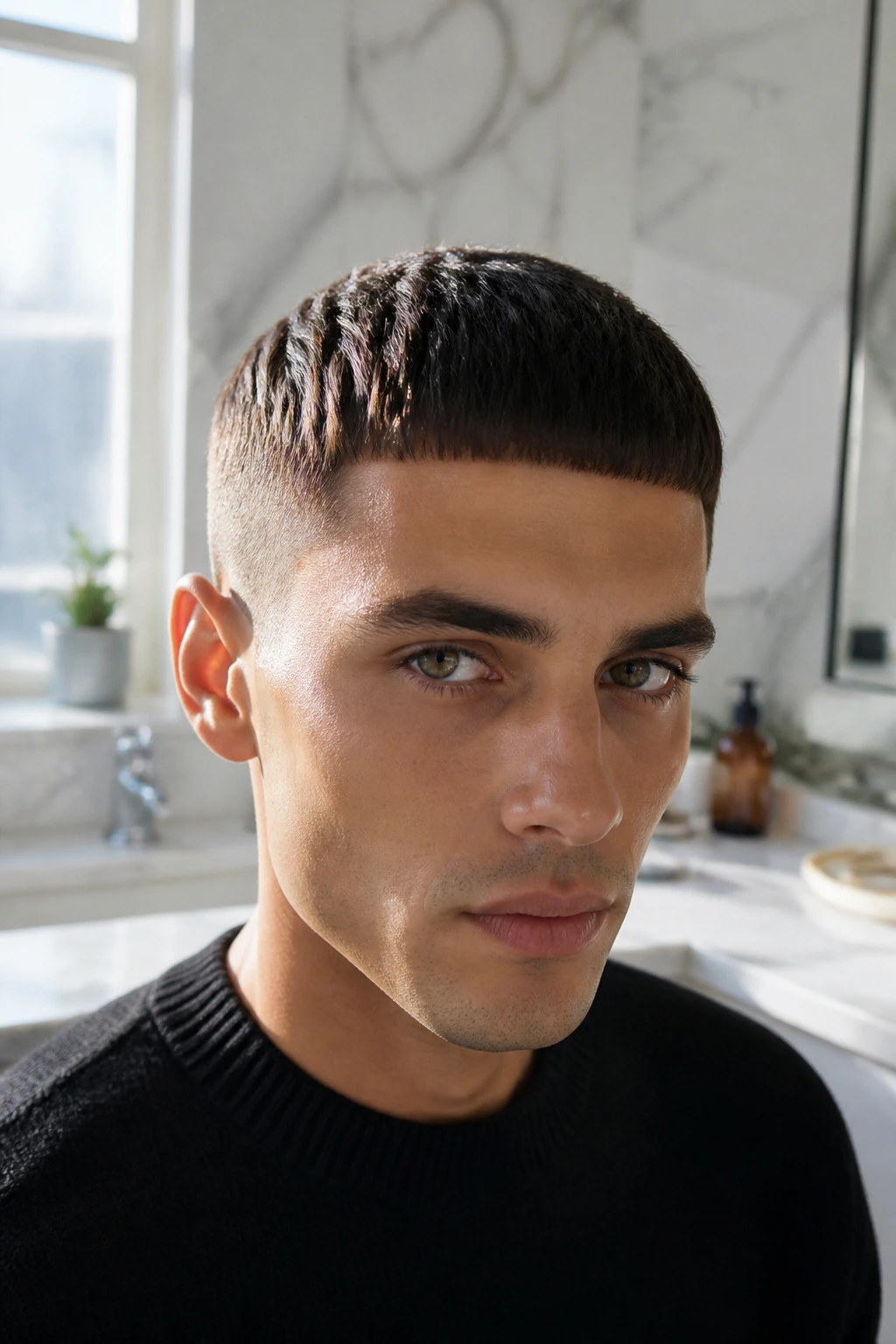
Micro fringe is a bold cut, and there’s no point pretending otherwise. The bangs sit short, usually well above the brows, and make a sharp little line across the forehead. It can look striking on the right face, especially if your features are strong and your hair grows straight.
This one is not low-maintenance. Short bangs mean frequent trims, often every 2 to 3 weeks if you want the shape to stay intentional. If the cut grows out unevenly, it can go from edgy to awkward in a hurry. That’s the tradeoff. You get a clean, compact look, but you also sign up for upkeep.
Micro fringe works best when the rest of the haircut is tidy and the texture is controlled. A skin fade can make it look harder, while a taper can soften the whole thing. Either way, the fringe itself needs precision. Uneven lines show fast at this length.
I like it on guys who want something different without long hair. I do not like it when the front hairline is weak or patchy. The cut is too honest for that.
15. Heavy Fringe With Undercut
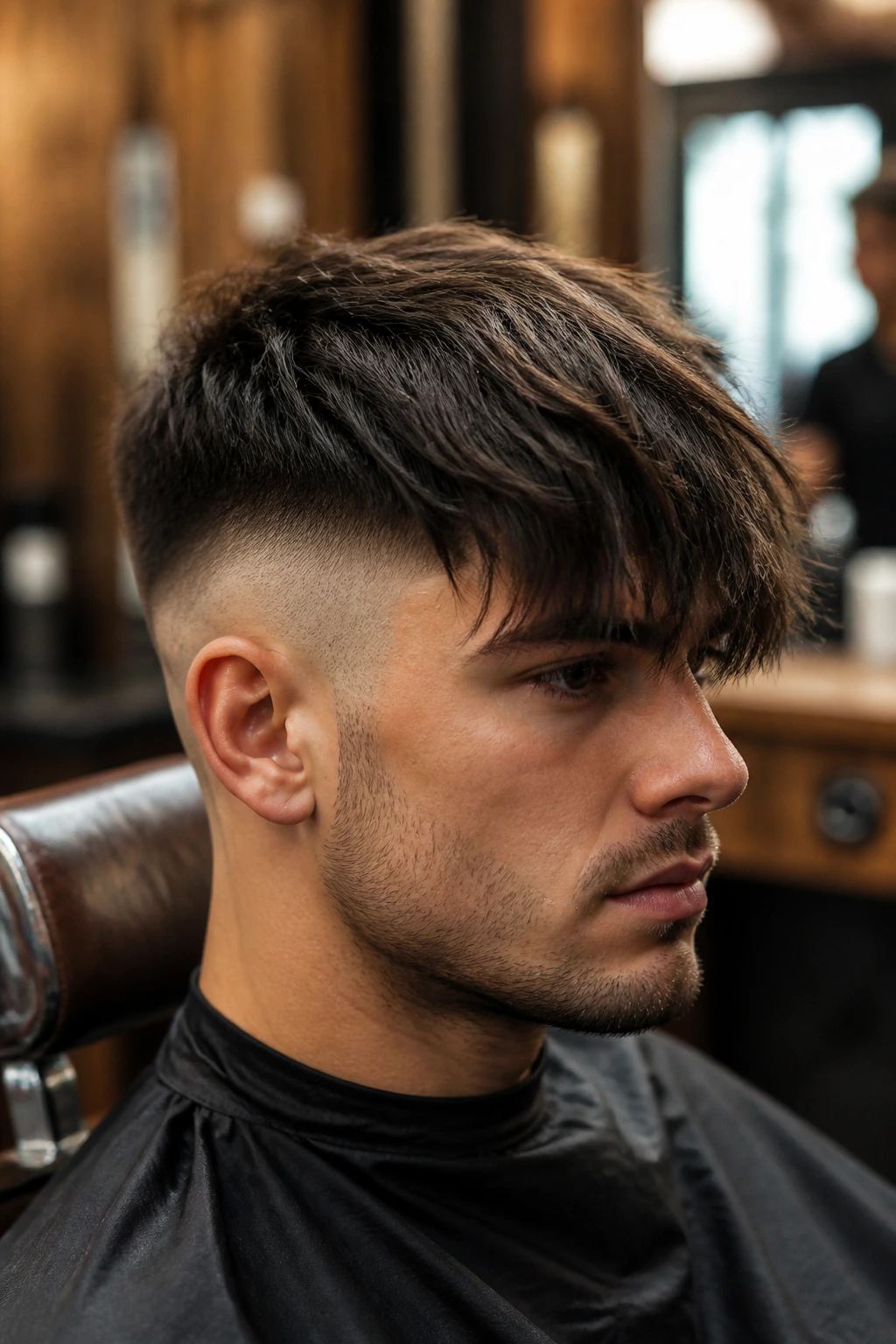
A heavy fringe with an undercut has presence. The top stays long and full, the sides get cut down short, and the front drops forward with real weight. The contrast is strong, and that makes the whole haircut feel sharper than a standard long fringe.
This cut suits thick hair better than fine hair, plain and simple. Dense strands need a place to go, and the undercut gives them that. Without the short sides, the front can balloon out. With them, the fringe becomes the star. Keep the top long enough to fall forward—5 to 7 inches is common—and let the barber remove bulk from underneath.
What to watch for
- The disconnect should look clean, not hacked.
- The front needs internal layering or it will sit too boxy.
- Styling works best with a blow-dryer and a medium-hold matte paste.
- Trims matter, because the shape loses its edge fast once the sides grow out.
This is a loud cut, and that is fine. Some men want their hair to make a point before they do.
16. Tapered Fringe
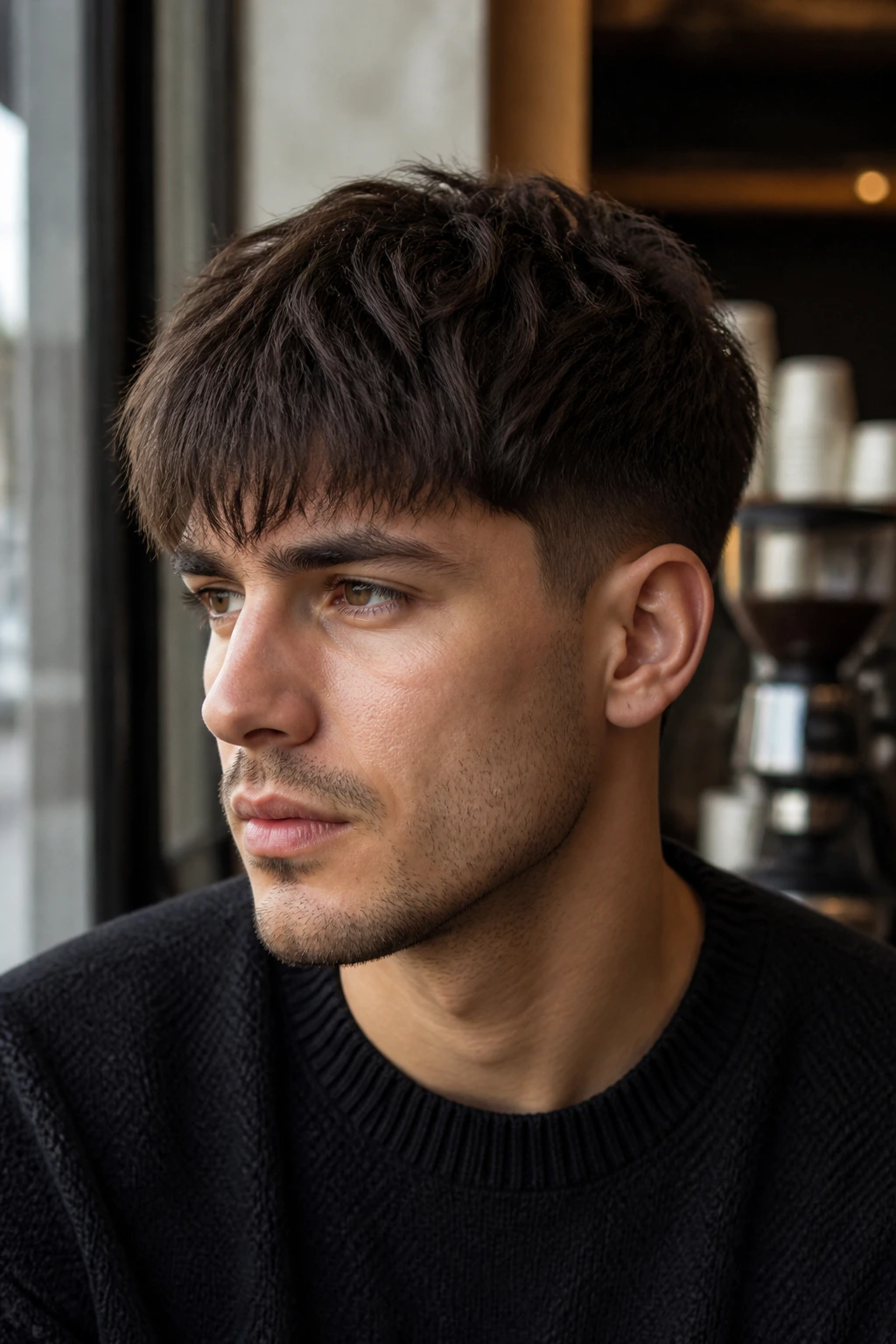
Need a fringe that behaves in a meeting and still looks relaxed after work? A tapered fringe is the answer. The front stays long enough to count as bangs, but the length softens gradually into the rest of the cut instead of stopping hard. The taper keeps the style neat and wearable.
This is one of the easiest men’s bangs ideas to live with because it grows out cleanly. The front may start around eyebrow length, then blend into slightly shorter sections as it moves back. That soft transition helps the haircut stay tidy for weeks, not days. It also means less fuss with product. Nice.
A taper suits almost any hair texture if the barber respects the growth pattern. Thick hair gets bulk removed. Fine hair gets kept soft so it doesn’t look scraggly. Wavy hair benefits from light layering, which lets the front fall in a natural arc instead of puffing out.
If you want a fringe that doesn’t look like a fringe all the time, this is a smart place to start.
17. Asymmetrical Fringe
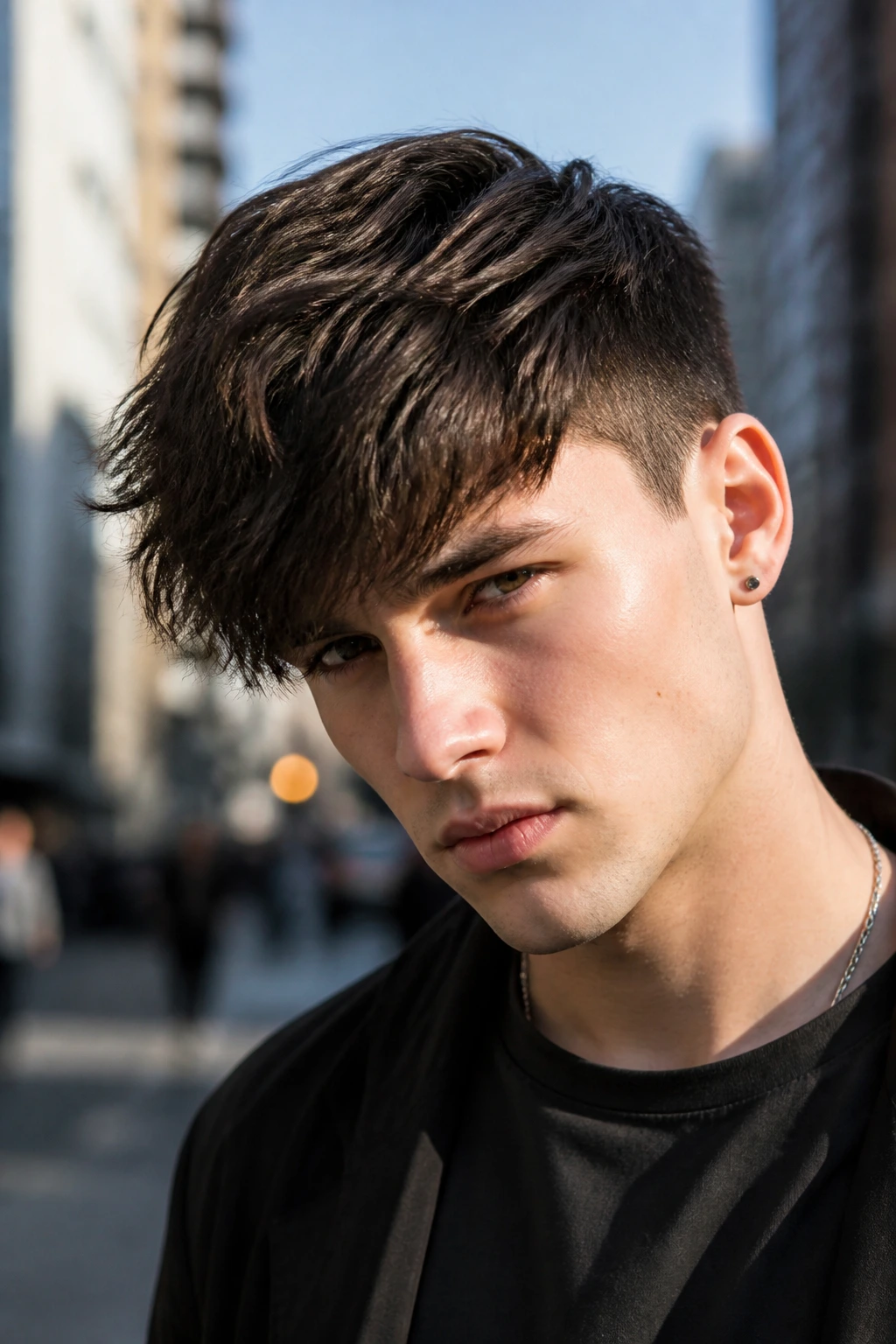
Asymmetry gives a haircut a little tension, and that tension is what makes it interesting. One side of the fringe sits longer than the other, so the front feels tilted rather than balanced. It can be subtle or obvious, depending on how far you want to push it.
This style works well if you want to draw attention to one side of the face or soften a hairline that isn’t perfectly even. It also gives straight hair a more styled look without needing a lot of volume. The cut has to be done carefully, though. If the difference between the two sides is random instead of planned, it just looks off.
Keep the longer side soft at the ends. A hard edge makes the whole thing too rigid. A matte cream or lightweight paste helps keep the shape in place while still letting the shorter side sit naturally.
I’d call this one creative, but not difficult. The maintenance is regular, not brutal, and the payoff is a haircut that feels a little less expected.
18. Swept-Back Fringe
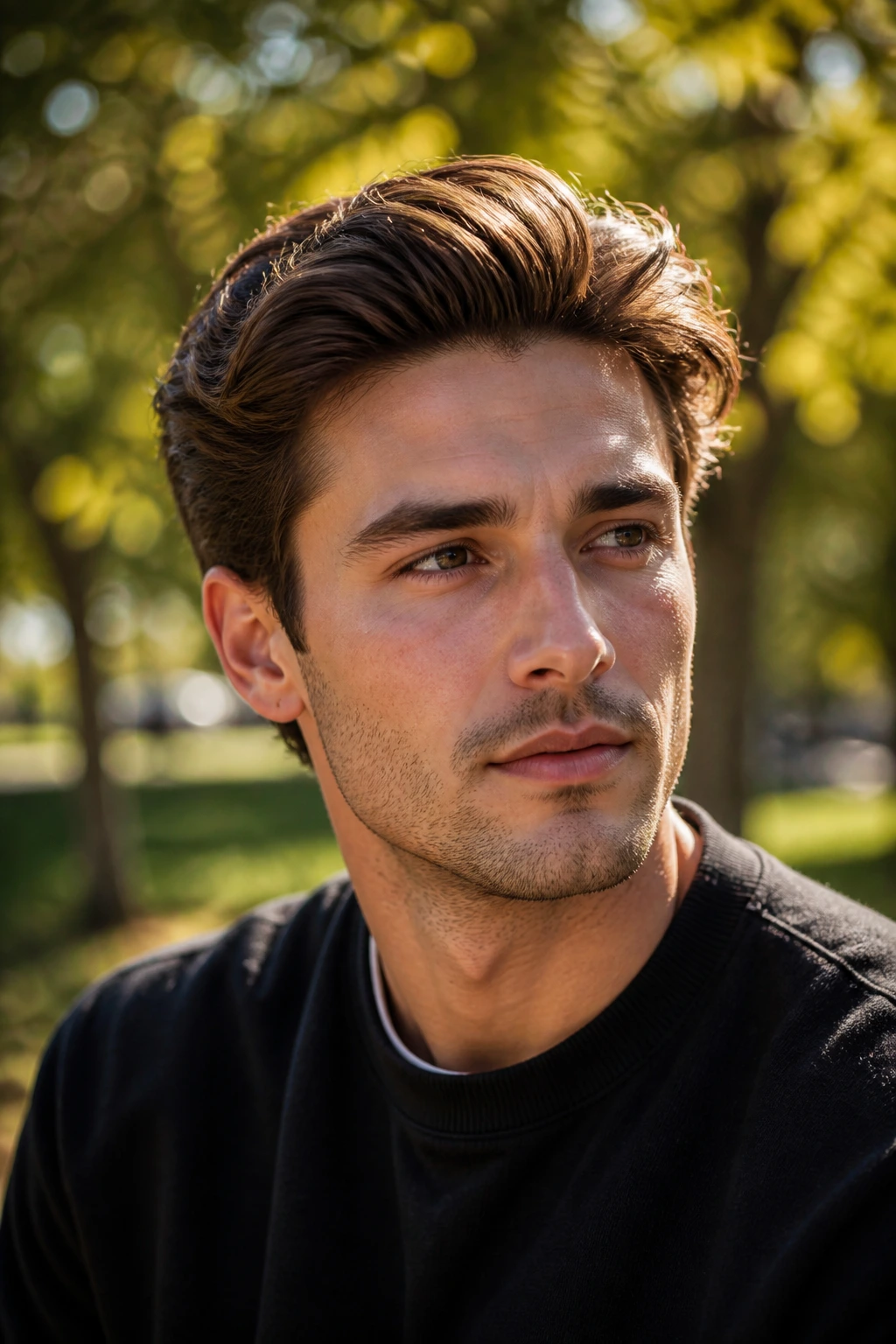
Swept-back fringe is for guys who want bangs but don’t want hair in the eyes. The front lifts away from the forehead and moves back, usually with a bit of volume at the roots before it falls into the rest of the top. It lives somewhere between a fringe and a quiff, which gives it some range.
This cut likes thicker, straighter hair best because it needs enough body to stay off the face. Blow-drying is part of the deal. Pull the front up and back with your fingers or a vent brush, then set it with a matte cream or light clay. You do not need a high shine finish. That usually makes it look too polished.
Swept-back fringe is a good middle ground for men who are growing out shorter bangs. It keeps the front controlled while you wait for more length. It also helps if your forehead gets sweaty easily, because the hair is out of the way.
The style feels easy, but only if the cut gives you enough length to push around. Too short, and it collapses immediately.
19. Drop Fringe
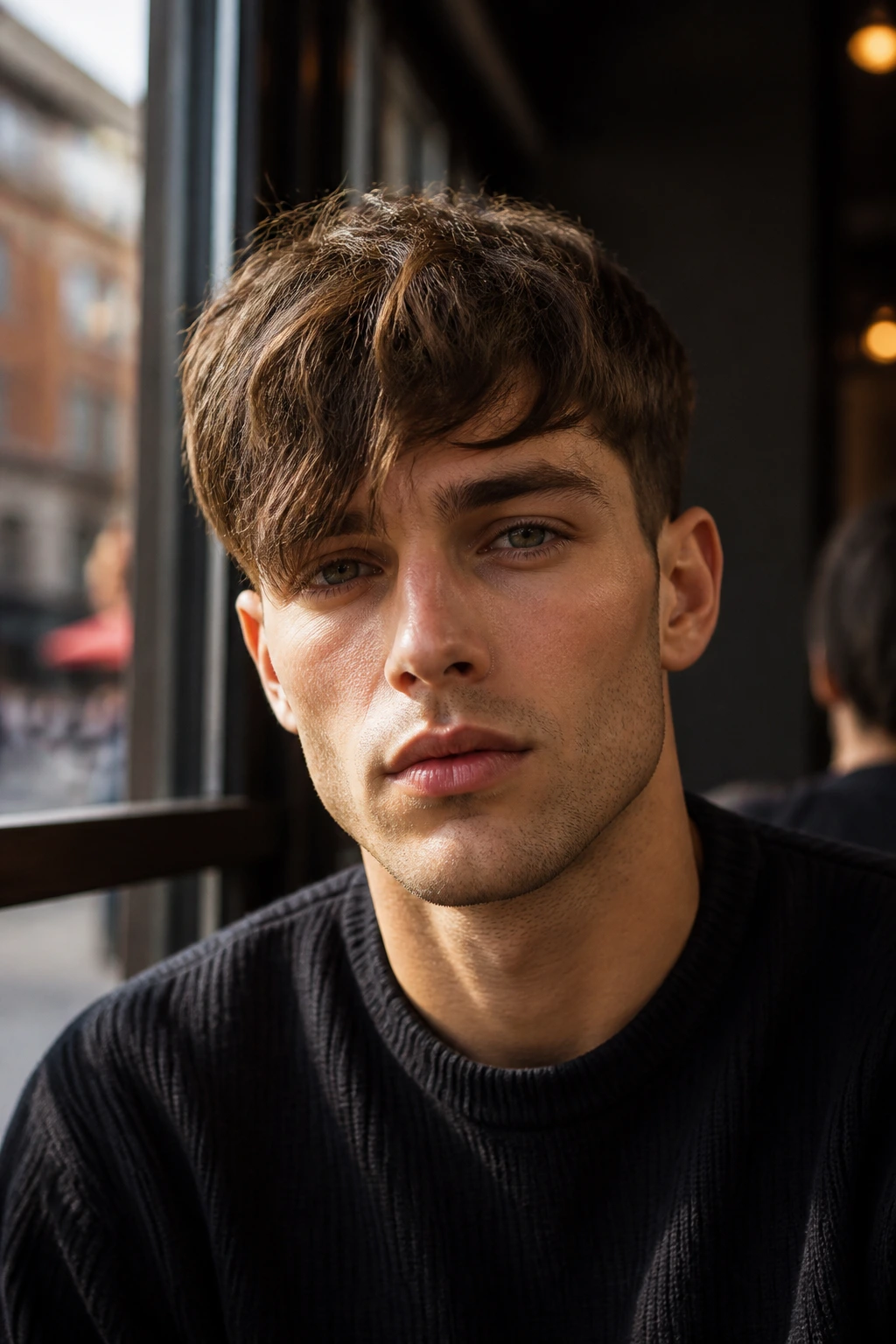
Drop fringe has a softer fall on one side, with the hair seeming to drop lower across part of the forehead instead of sitting evenly. It creates a slanted shape that feels relaxed but still intentional. There’s a little movement in it, which is why it looks better in motion than in a still photo.
This is a good choice for men with angular faces who want to soften things without losing character. It can also help if one side of the hairline is slightly higher than the other. The asymmetry becomes part of the style instead of a flaw to hide. That’s a nice trick when your hair does not grow perfectly evenly, which is most of us.
A barber usually needs to build this with longer pieces on one side and a lighter, more tapered finish on the other. Styling is quick. A light paste, some finger shaping, and a little downward push near the longer side are enough.
Drop fringe works because it doesn’t feel over-constructed. It lands, and that’s the point.
20. Two-Block Fringe
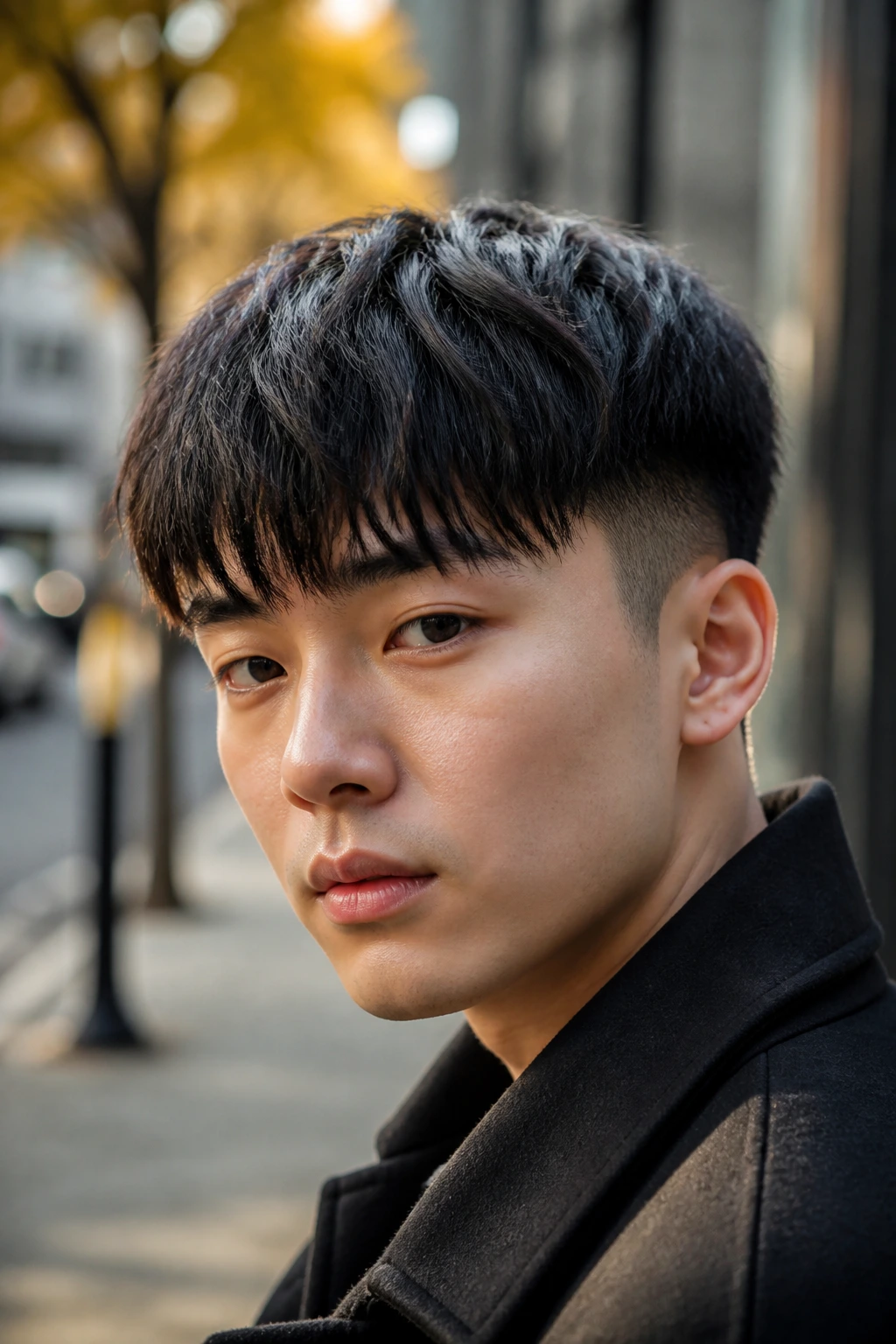
Two-block fringe brings a strong contrast: the sides and back are cut tight, while the top stays longer and falls forward. It has roots in Korean-style men’s cuts, but the idea works anywhere hair is straight enough to sit well in front. The fringe is often soft and airy rather than heavy.
This style is a solid pick if you like a clean outline with a bit of softness near the eyes. The front can be split, brushed down, or moved slightly to the side depending on how the cut is layered. That flexibility makes it more wearable than it first looks. The danger is flatness. If the top gets too heavy and the front isn’t texturized, the whole thing can slump.
Use a light cream or low-hold wax and work from damp hair. A center or near-center part often helps, though you can shift it a little if your face needs more open space on one side. The clean sides do the visual work, so the fringe can stay soft.
It’s a tidy cut with personality. Hard to beat that combination.
21. Mullet Fringe
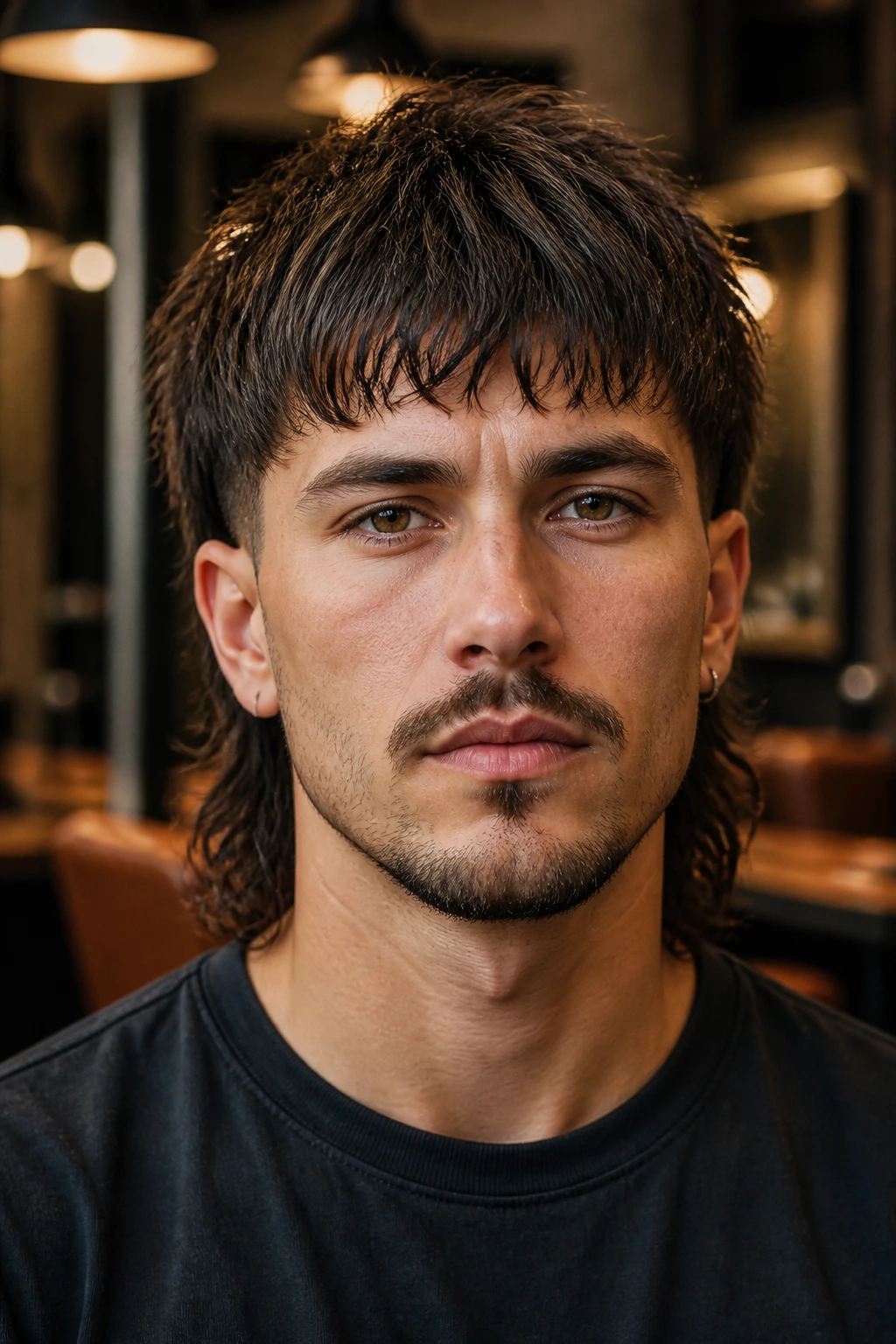
A mullet fringe is not for the faint of heart, and that’s half the fun. The front usually stays choppy and forward, while the back grows longer and looser. When the balance is right, the bangs keep the haircut grounded and stop the mullet from becoming all back and no shape.
Barber notes
- Keep the front piecey, not blunt.
- Let the top connect to the back with layers.
- Leave enough length in front so the fringe can move.
- Do not overblend the sides if you want the shape to read properly.
This cut works best on hair with some texture. Straight hair can do it, but wavy hair gives the fringe more life. I’d also say it looks better when styled with restraint. A little spray and a small amount of clay are plenty. Too much product turns the whole thing stiff, and stiffness kills the point of a mullet fringe.
If you want a fringe that feels rebellious but still styled, this one has real personality.
22. Bro Flow Fringe
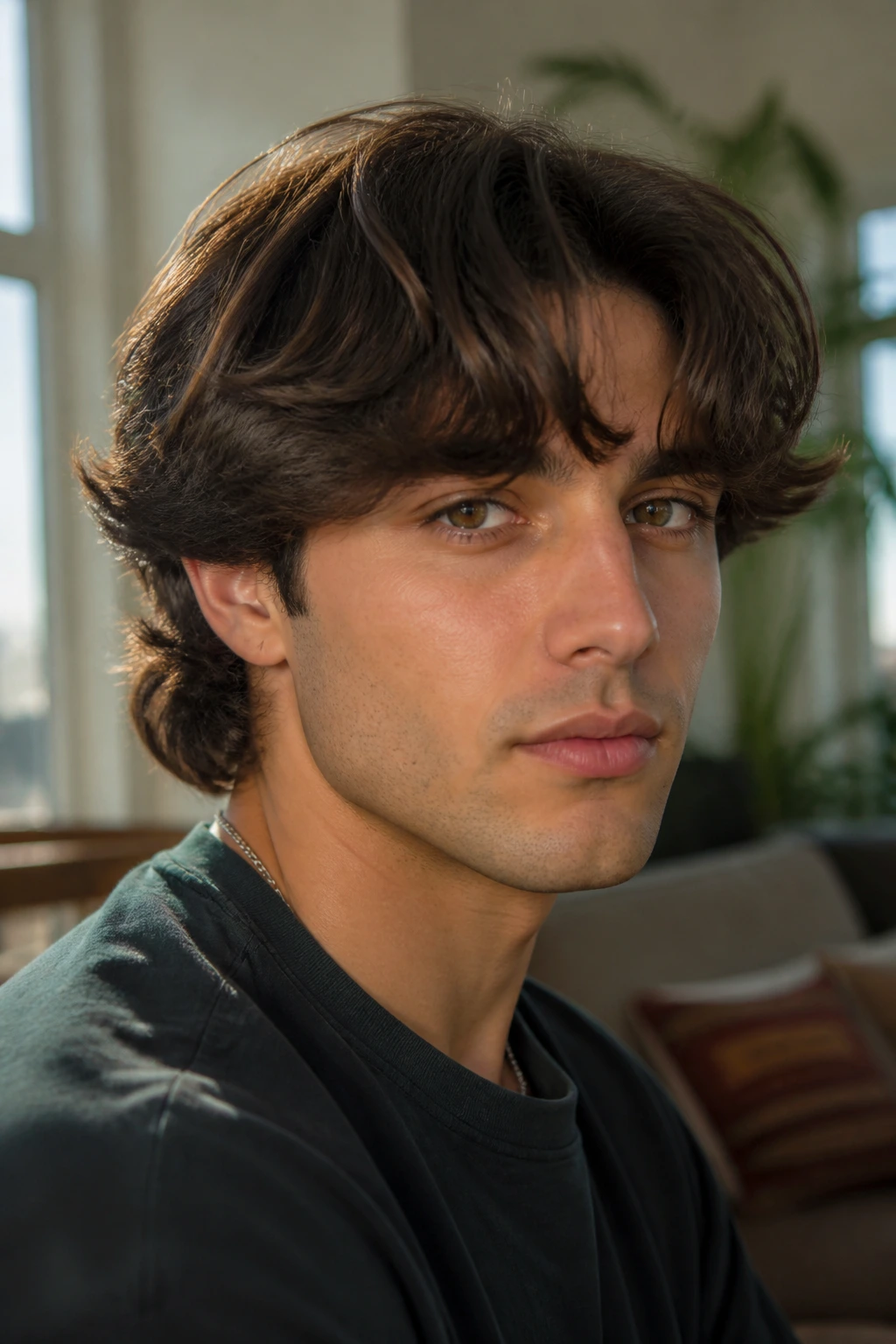
Bro flow fringe is what happens when bangs grow into a longer, relaxed shape that still frames the face. The front falls forward first, then starts to brush aside and blend into the length around the ears and neck. It’s casual, but not careless.
This is a good option for men who are growing their hair out and want the awkward stage to look on purpose. A center part can help, but it does not have to be perfect. The key is layers. Without them, the front gets too heavy and blocks the face. With them, the hair falls in easy pieces that move when you walk.
Styling should stay light. A touch of leave-in conditioner or light cream is enough for most hair types. If you blow-dry, keep the heat low and work the front backward just a little before letting it settle. That gives the fringe some lift instead of flatness.
Bro flow fringe is laid-back in the best way. It does not need to shout.
23. Temple-Faded Fringe
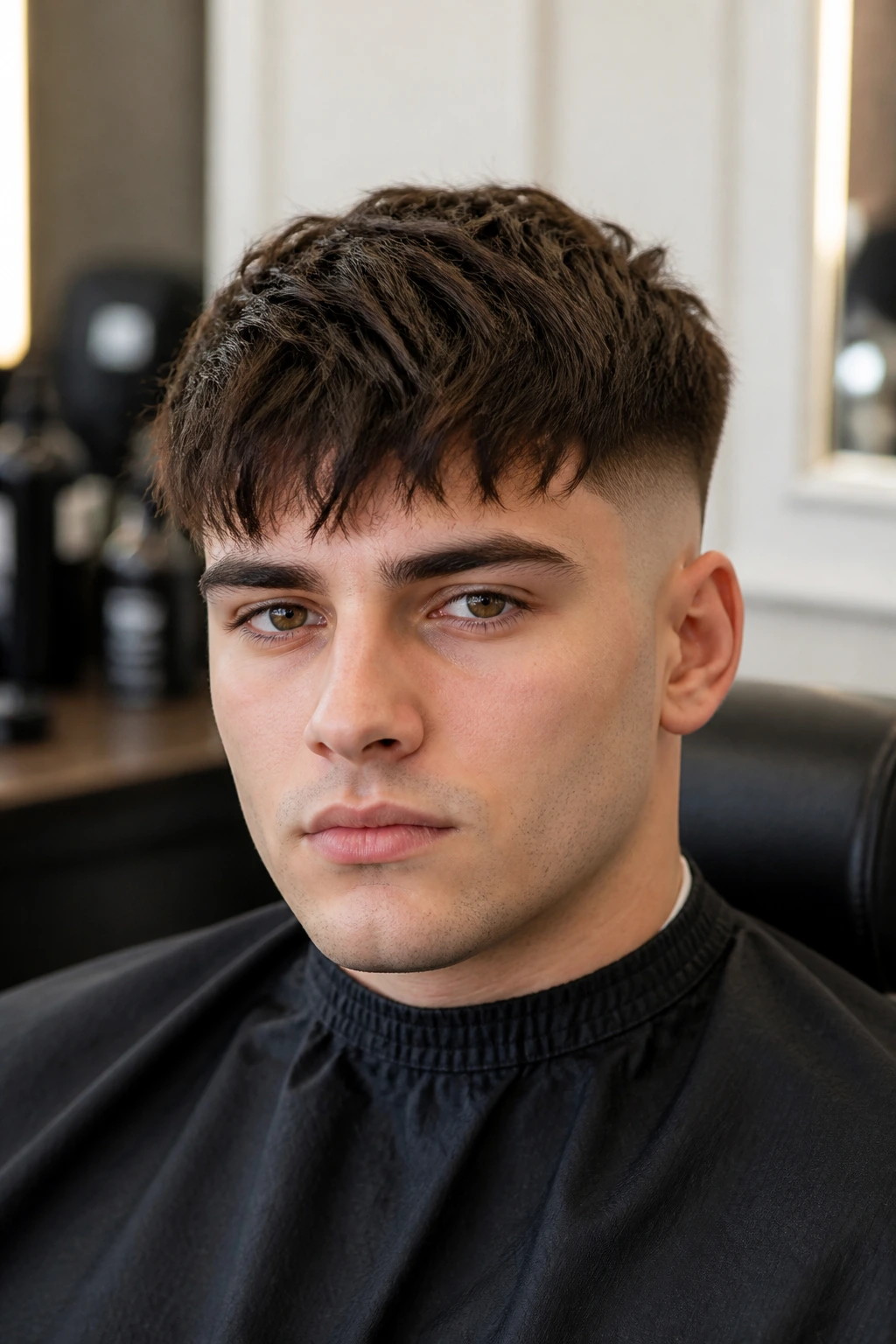
The temple-faded fringe combines a soft front with very tight sides around the temples. That fade makes the fringe pop more than it would on a heavier side line, and it gives the whole haircut a cleaner outline. The front can be short, long, or somewhere in the middle, as long as the fade is crisp.
I like this style when the goal is contrast without overdoing the top. A low temple fade keeps the haircut tidy around the ears and temples, where hair tends to get bulky fastest. The fringe then becomes the visual anchor. On thick hair, that helps a lot. On finer hair, it keeps the front from looking lost.
A matte finish usually works best. Shine can make the faded sides stand out too much and pull attention away from the front shape. Ask for the fade to be smooth but not skin-tight if you want a softer effect.
This is one of those cuts that looks sharper after the barber chair than on paper. The clean sides do a lot of quiet work.
24. Choppy Piecey Fringe
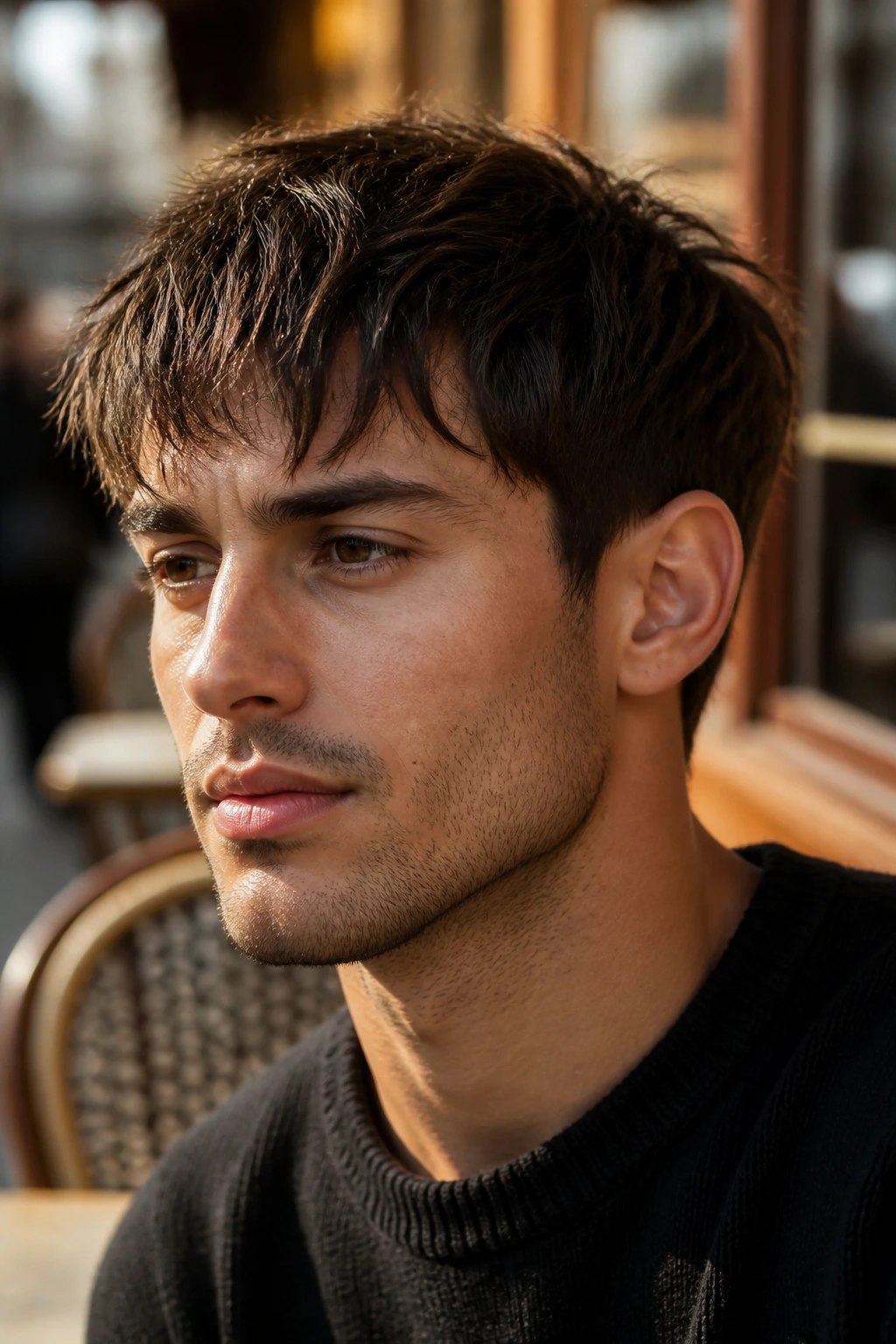
Choppy piecey fringe is all about separation. Instead of one solid line, the front breaks into visible pieces that move independently. That gives the haircut texture and keeps it from looking flat, which is a nice fix for hair that hangs limply over the forehead.
The best version starts with point-cutting. A barber trims into the ends rather than across them, which leaves small differences in length that show once the hair falls forward. That texture matters more than product. You can use a little matte paste or dry texture spray, but the cut has to do the main job.
This fringe is especially useful on thin hair because the pieces create the illusion of more body. Thick hair can wear it too, though the shape needs enough internal removal or it can get puffy. I’d avoid heavy gels and wet looks here. They make the separation disappear, which defeats the purpose.
Choppy fringe looks best when it’s touched, not combed. Fingers only. That’s the whole move.
25. Soft Grow-Out Fringe
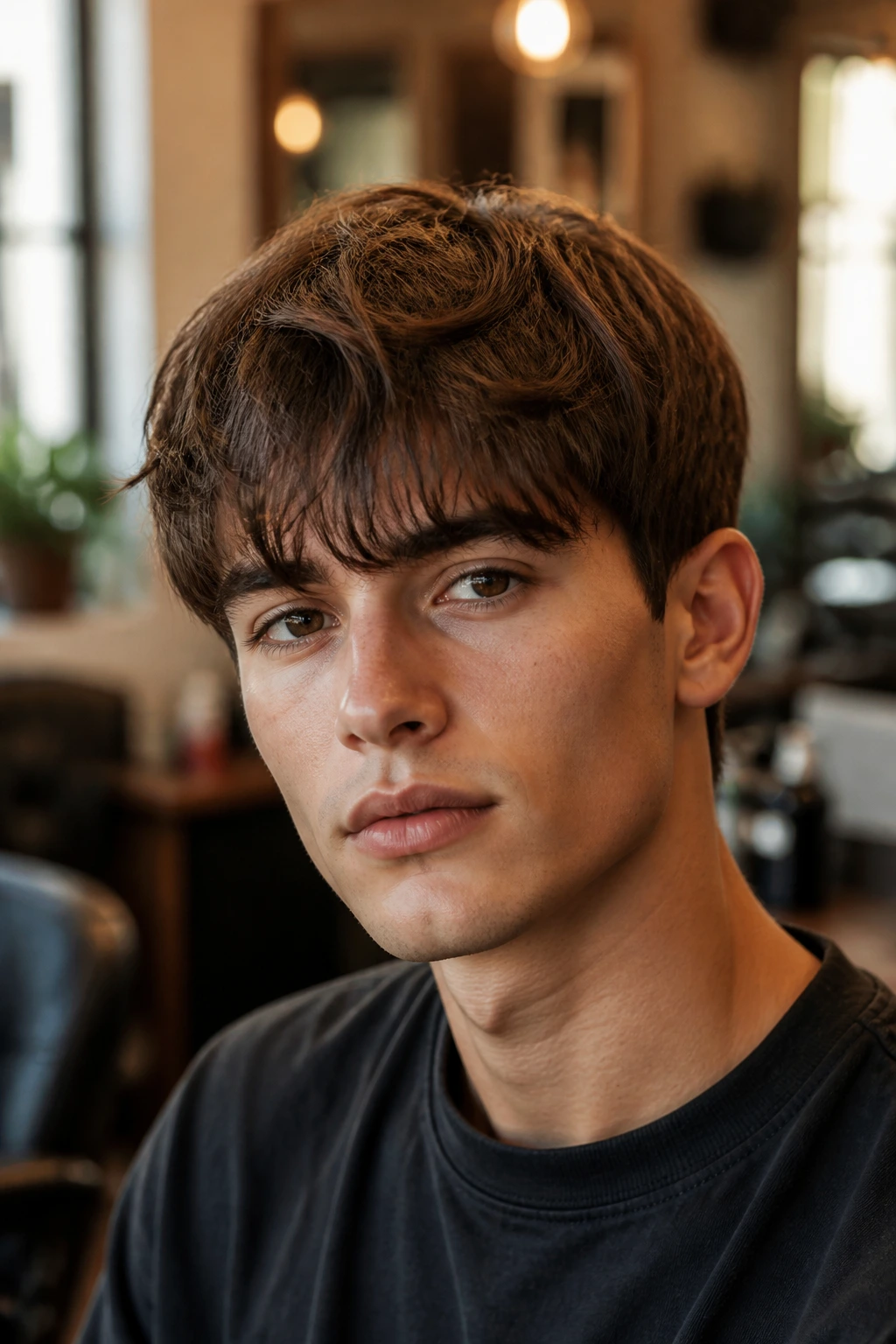
Soft grow-out fringe is the most practical bangs idea on the list, and maybe the easiest to live with. It keeps enough length in front to count as bangs, but the edges are softened so the style can change shape as it grows. You can wear it forward one day, split it the next, or tuck it back a little when you want the forehead open.
This is the cut I recommend to men who are unsure about committing. It gives you fringe now and options later. Ask for the front to stay long enough to reach the brows, with gentle layering through the top so the fringe does not hit all at once. That layering is what keeps the grow-out from turning into a bad accident.
A small amount of cream or light clay is enough for most days. If the fringe starts feeling too heavy, a quick trim around the eyes and temples usually resets it without changing the whole shape. That makes the style forgiving, which is a rare advantage when hair grows at its own pace.
If you want bangs without the pressure, start here.
