



A round face can handle bangs better than people think. The catch is placement. A fringe that lands right at the fullest part of the cheeks can make the face read wider, while one that opens at the center, angles to the sides, or sits a little higher on the forehead can sharpen everything up fast.
That’s why the best bangs ideas for round faces usually borrow from three tricks: vertical lift, diagonal movement, and small breaks of space across the forehead. Curtain bangs do one thing. A side sweep does another. A blunt fringe can work too, but only when the rest of the cut gives the face some length and shape.
Round faces are not identical, and that’s where a lot of bad advice falls apart. Some faces carry width through the cheeks, some through the jaw, and some just need the eye to stop hanging out in the middle of the face. The nice part is that fringe can change all of that without a dramatic haircut.
These 25 ideas cover soft, edgy, polished, and slightly messy versions, because bold does not have to mean severe. Start with the styles that create a line, then choose the one that fits your hair’s weight and how much forehead you want to show.
1. Long Curtain Bangs for Round Faces
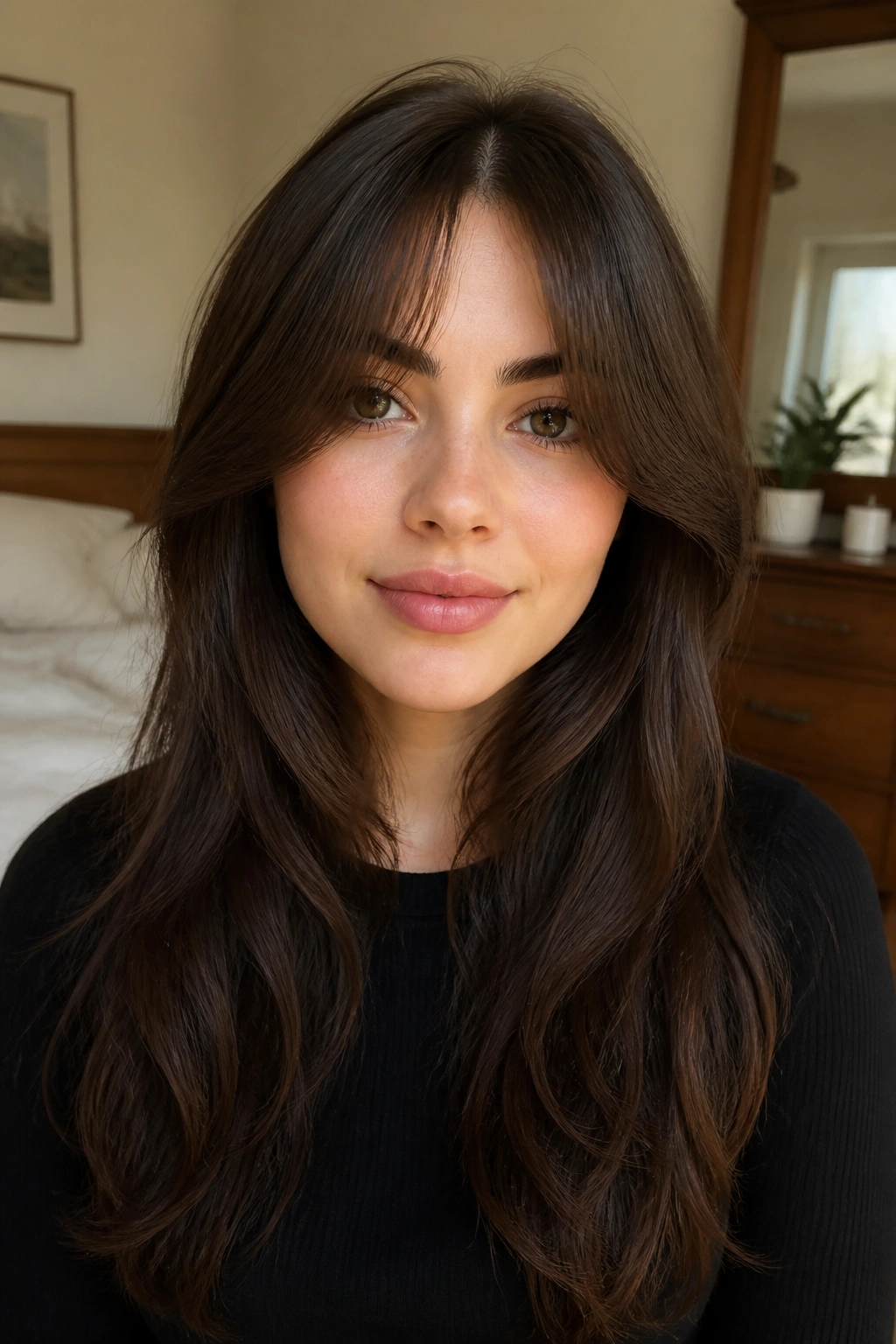
Long curtain bangs are the safest bold move, which sounds boring until you see how much they can change a face. They split down the center or just off-center, then fall away from the cheeks instead of sitting on top of them. That simple bend makes the face look a little longer.
Why they work
The trick is in the length. If the shortest point hits around the brow or just below it, and the outer pieces fall past the cheekbones, the eye gets a clean vertical path. That is what you want on a round face: movement that travels downward instead of spreading outward.
- Ask for the shortest point near the brows.
- Keep the side pieces long enough to touch the upper cheek or jaw.
- Blow-dry with a round brush so the bend goes away from the face, not in toward it.
- Use a light styling cream, not a heavy paste.
Best tip: If the ends flip too much, they start to widen the face again. Keep the curve soft.
2. Bottleneck Bangs With a Soft Center Dip
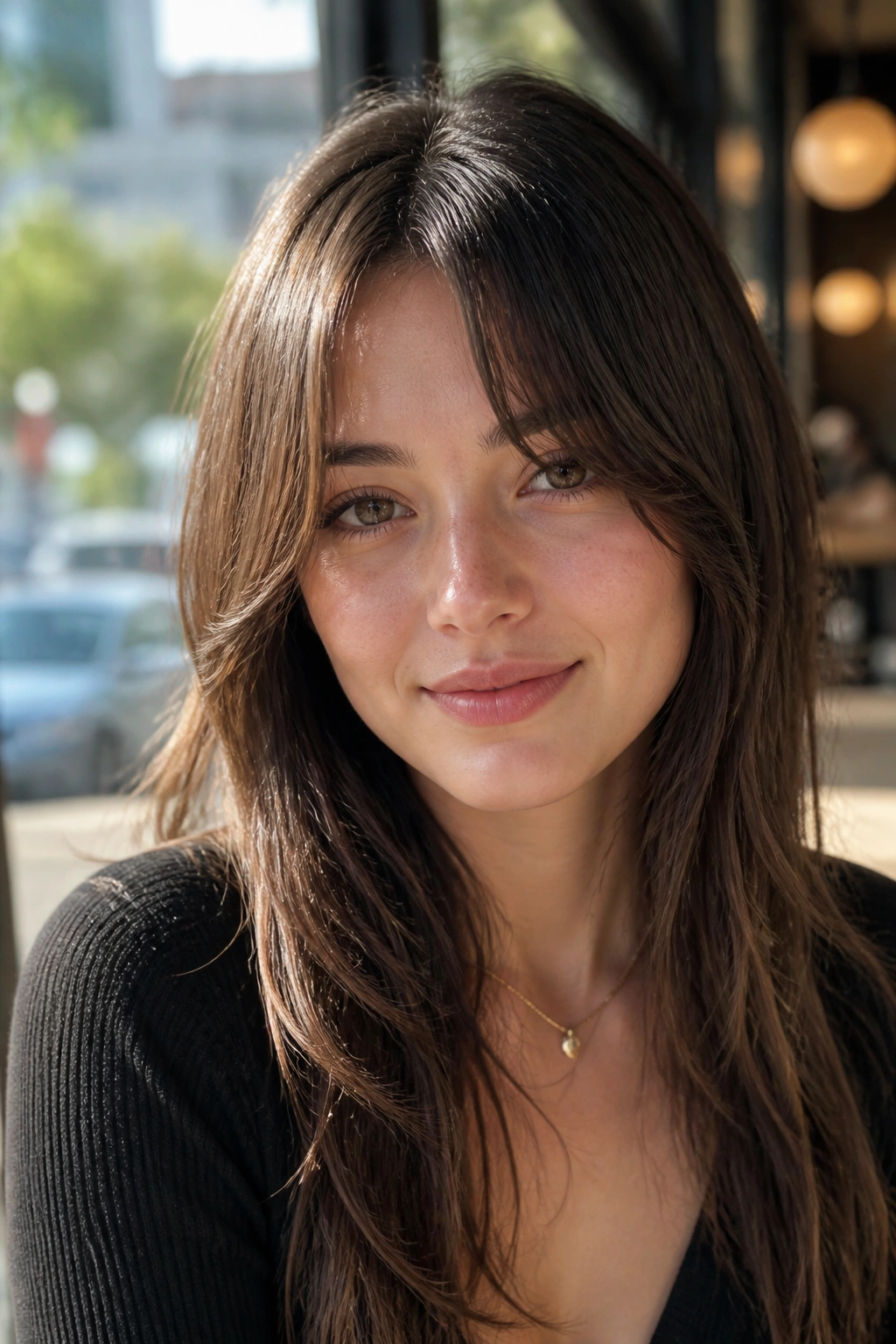
What if you want something that feels a little cooler than curtain bangs but still easy to wear? Bottleneck bangs are the answer I keep coming back to. They start narrow in the center, open wider at the temples, and leave enough air around the forehead that the whole look stays light.
That center dip matters. It gives the face a small vertical line right where you need it, then lets the outer sections frame the cheek area without stopping there. On a round face, that shape can make the cheeks look a little less dominant.
The cut also works because it doesn’t demand perfect hair. A little wave, a little bend, even a slight messy finish is fine. If your hair tends to puff up in humidity, ask for the longest points to stay below the brow line so the shape doesn’t shrink too much.
3. Deep Side-Swept Fringe
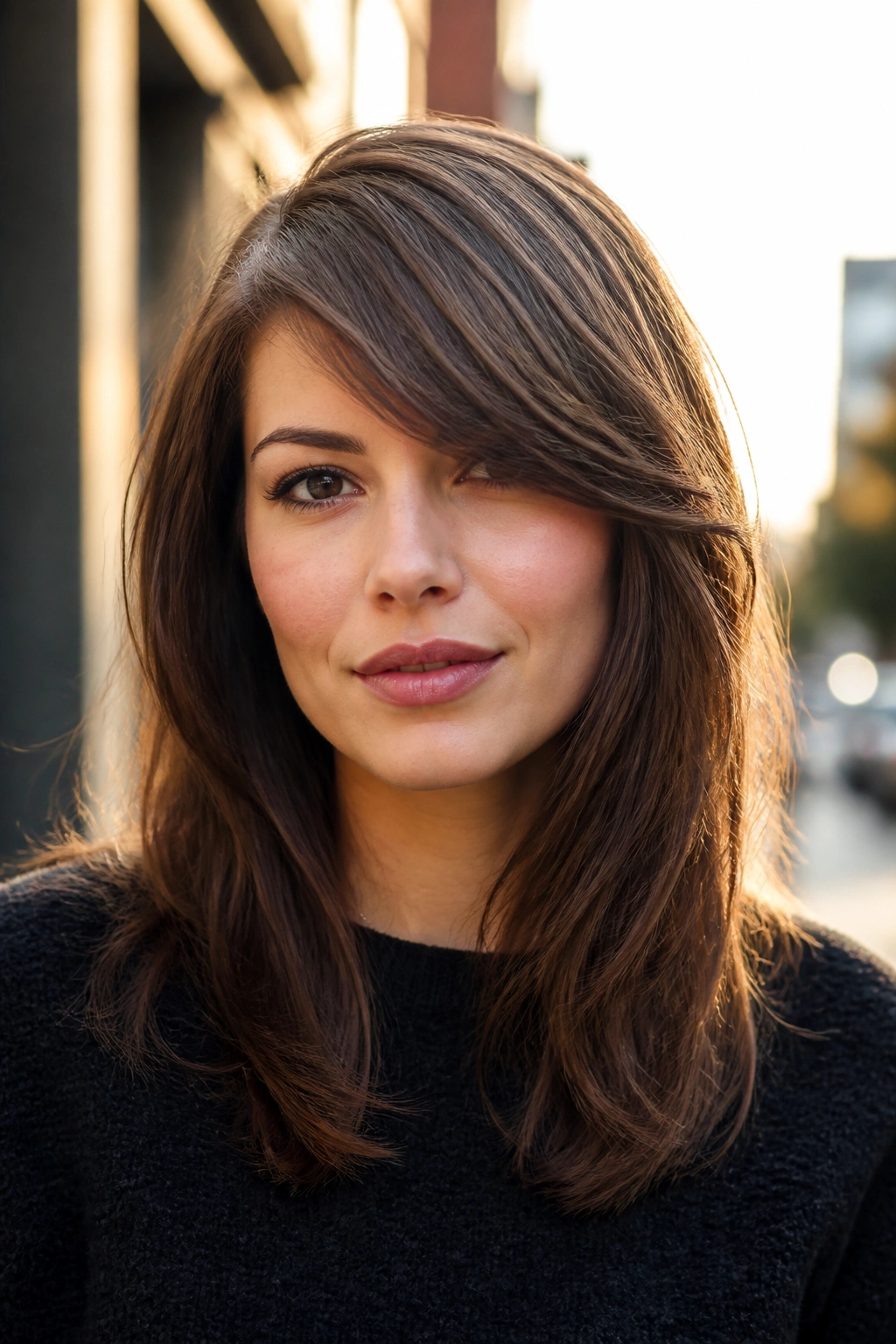
A deep side-swept fringe is one of those styles that looks simple and does a lot of quiet work. The diagonal line pulls the eye across the face, which is a nice reset when you want to break up width. It also gives you a way to keep some forehead covered without boxing everything in.
What makes it different
Unlike straight-across bangs, this fringe has a built-in angle. That angle is flattering because it doesn’t stop at one point on the cheeks. It keeps moving. The eye follows it, and the face feels longer in the process.
A side sweep is also forgiving if your hair grows fast or your part shifts during the day. It blends into layers better than a blunt fringe, and it’s easier to tuck behind the ear when you want a cleaner look. If you wear glasses, this is one of the easiest fringe shapes to live with.
- Works well with medium to long hair
- Good for fine hair that needs a little front volume
- Easy to style with a side part and a small round brush
4. Brow-Grazing Blunt Bangs
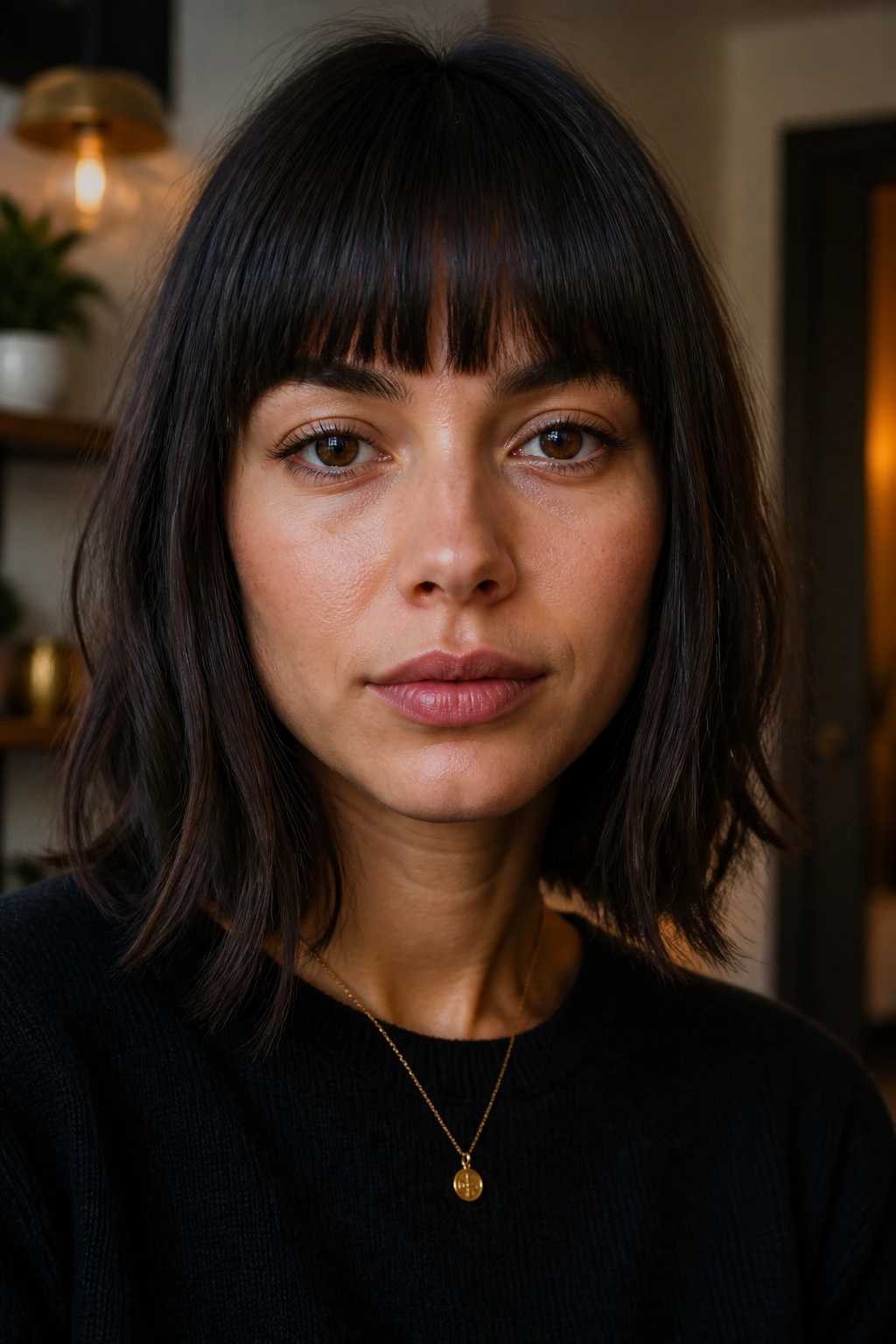
Blunt bangs are not off-limits for a round face. They just need some control. If the line is too heavy and too thick, it can make the face feel wider. If the edges are softened a little, the style turns into a strong shape instead of a flat wall.
That’s why brow-grazing blunt bangs work best when they stop right at the brow line and stay lightly textured at the tips. The cut gives the forehead a clean frame, but the slight softness keeps it from feeling severe. You get structure without that helmet effect.
This look is especially good if your hair has some density. Thin hair can do it, but the fringe usually needs a little root lift and a precise trim so it does not separate too much. Ask your stylist to keep the line firm but not boxed-in.
5. Wispy See-Through Bangs
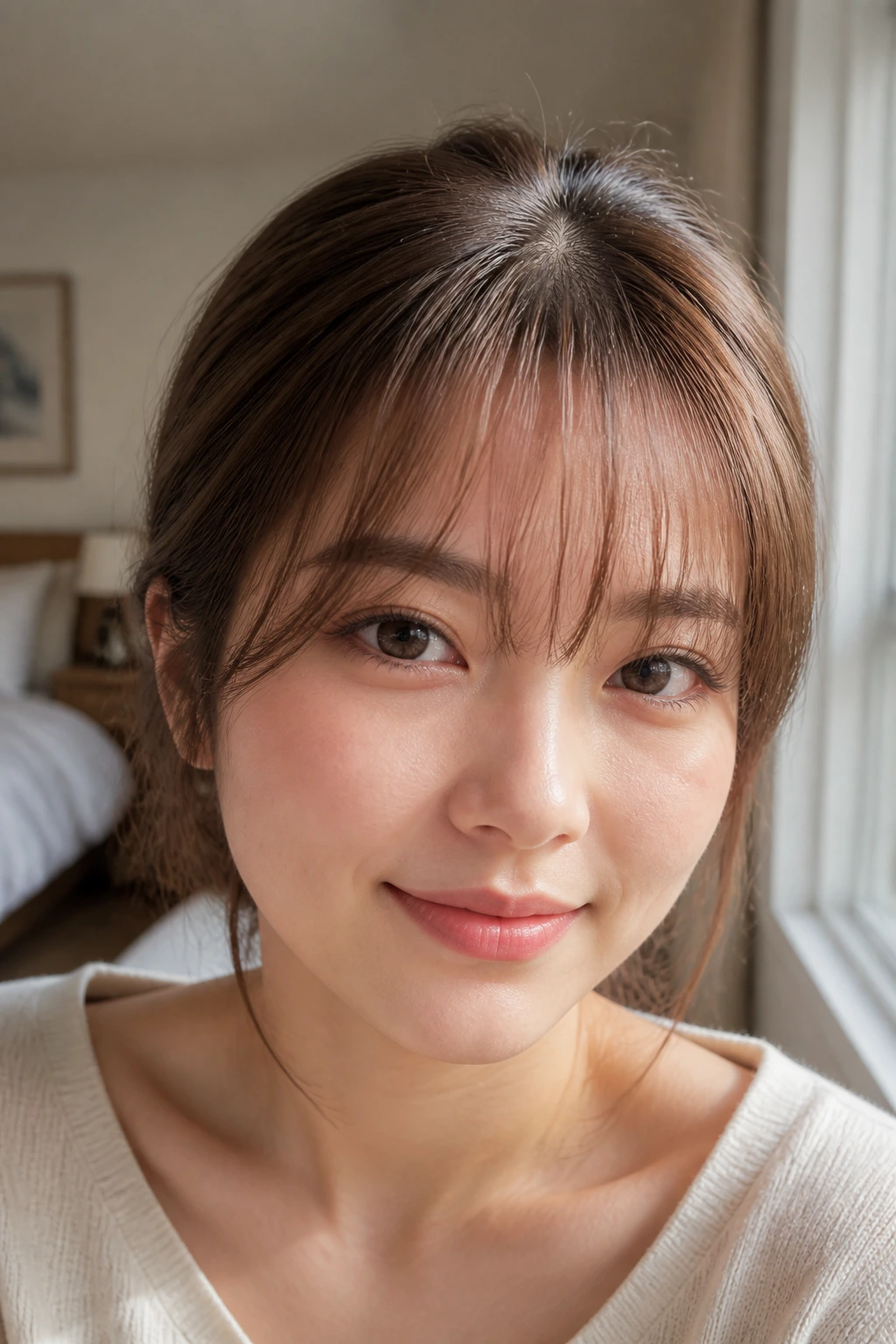
Wispy bangs are the ones that look airy even when they are freshly cut. You can see small spaces between the strands, and that softness is part of the charm. On a round face, those little gaps keep the forehead from feeling crowded.
The style works because it lowers the visual weight of the fringe. Instead of one solid band across the top of the face, you get a loose veil that lets skin show through. That tiny bit of openness matters more than people expect.
They’re also handy if you want bangs without a big commitment. Wispy fringe grows out with less drama than blunt bangs, and it plays nicely with soft makeup or a low-key haircut. The only real catch is maintenance: if the strands get too long, they stop looking wispy and start looking limp.
6. Choppy Shag Fringe
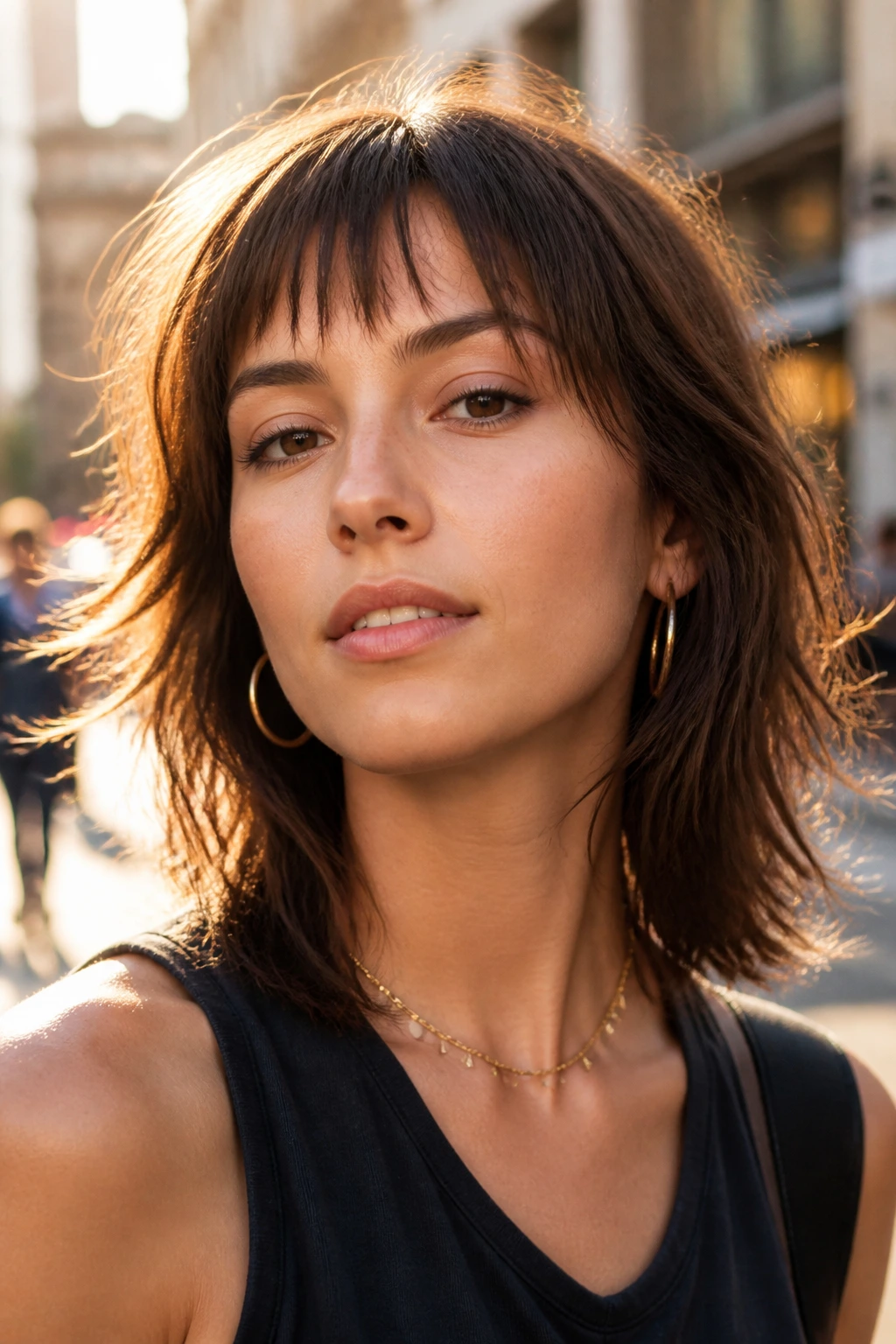
Messy works. Especially here.
A choppy shag fringe breaks up roundness by refusing to sit in one clean line. The pieces land at different lengths, which creates movement across the forehead and keeps the face from reading too symmetrical. That little bit of disorder is the whole point.
This style shines with layered hair, because the fringe can flow into the rest of the cut instead of standing apart from it. It also gives fine hair more lift than a blunt bang usually does. If your hair is thick, the choppy finish removes some bulk so the fringe doesn’t feel heavy.
A shag fringe looks best when it’s not overpolished. Air drying with a touch of mousse or a salt-free texture spray keeps the pieces separated. Too much brushing will flatten the shape, and then you lose the edge that makes it work.
7. Micro Bangs With a Sharp Finish
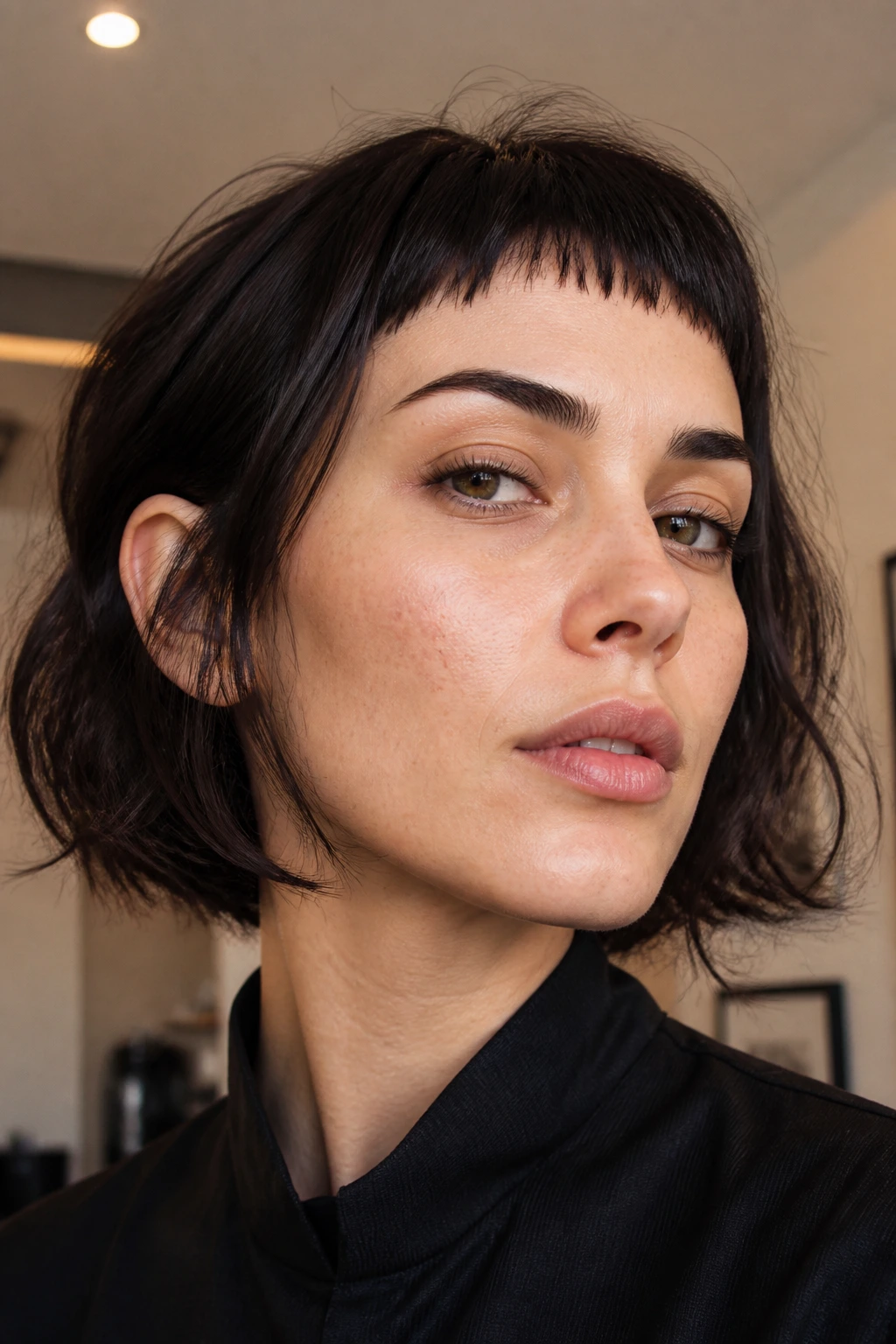
Can micro bangs work on a round face? Yes, but only if you want contrast. Tiny bangs expose a lot of forehead, which creates a strong break above the eyes and can make the rest of the face feel longer by comparison.
They’re bold. No pretending otherwise.
Because the fringe is so short, the attention shifts away from the cheeks and up toward the brow area. That can be a great move if the rest of your haircut has some height, like a textured bob, a shag, or a lifted crown. If the hair is flat everywhere else, micro bangs can look disconnected.
This is the one to choose when you want personality more than softness. It suits sharp bone structure, short hair, and people who do not mind trimming every few weeks. The upkeep is real, and it’s not for someone who wants a wash-and-go style with zero fuss.
8. Arched Bangs That Follow the Brow Line

An arched fringe sounds subtle, but it can be the kind of detail that changes the whole front of a haircut. The shape curves gently over the brows, usually a little shorter in the middle and slightly longer at the sides. That small arc opens the face without turning into a flat line.
Why it flatters round faces
The curve gives the eye a path to follow. Instead of stopping straight across the forehead, the shape eases outward, which helps the face look less wide. It also works well when you wear your hair tucked back, because the arch stays visible even when the rest of the style is simple.
This fringe is a smart pick for thick hair that wants a controlled shape, not a super-heavy one. It can be cut cleanly or softened with point-cutting, depending on how neat you like your front pieces.
- Ask for a curve, not a hard U-shape.
- Keep the center short enough to clear the eyes.
- Let the outer edges slide toward the temples.
- Style with a small brush and a light bend, not a stiff flip.
9. Curly Curtain Bangs
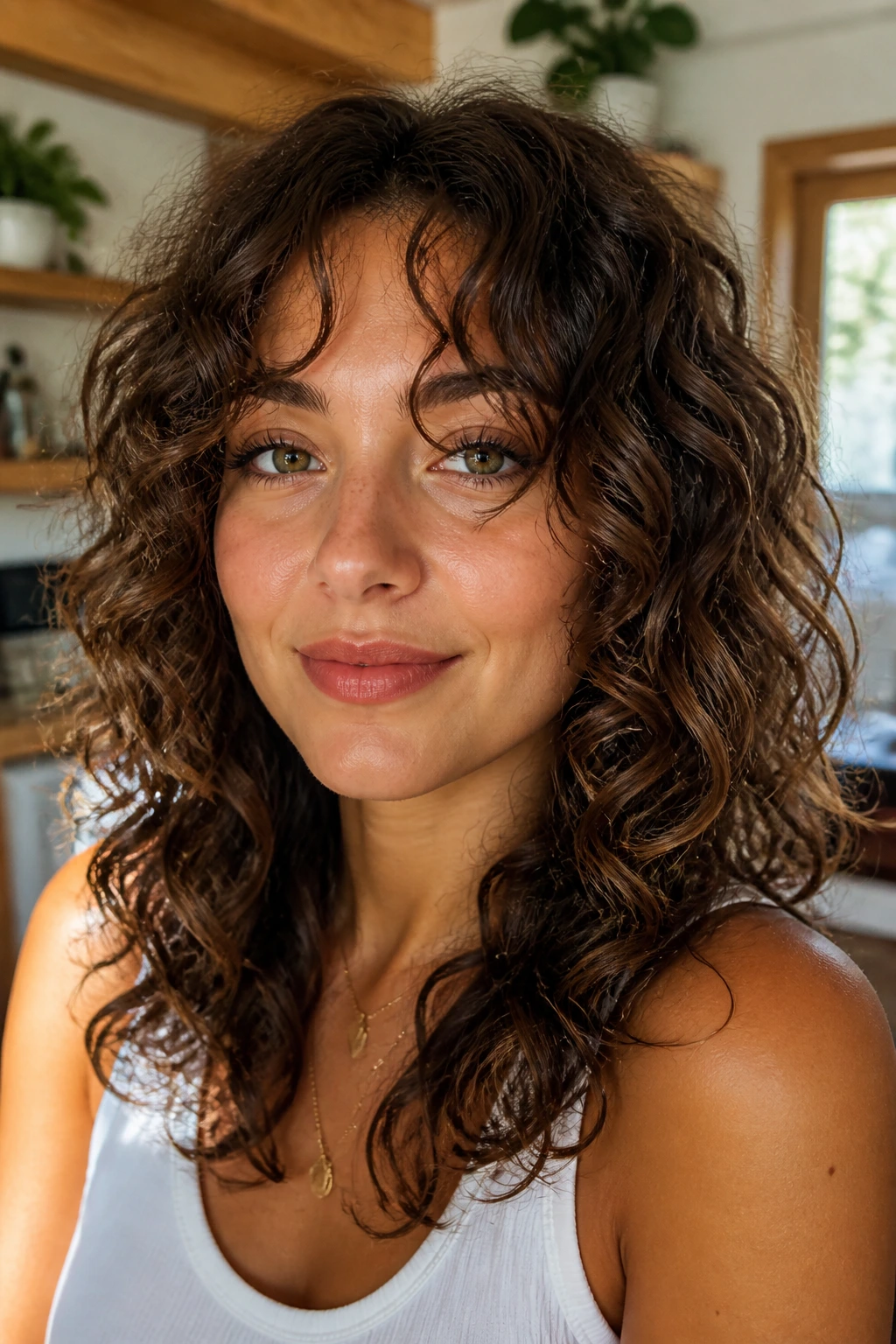
Curly curtain bangs can look fantastic on a round face because the curls add lift while the center part opens the forehead. The shape feels generous instead of boxed in, which is a nice change if your curls tend to take over when they’re cut too bluntly.
The biggest mistake people make is forgetting shrinkage. Curly bangs should usually be cut longer than straight bangs, often well below where you think they need to sit, because the curl springs up once it dries. If the shortest point is too high, the front can jump into a puffy shape that sits right on the middle of the face.
A good curly curtain fringe is cut dry or nearly dry, so the curl pattern is visible while the shape is being built. That lets the front pieces fall where they should, not where they pretend to fall when wet.
10. Feathered Bangs With a Soft Flip
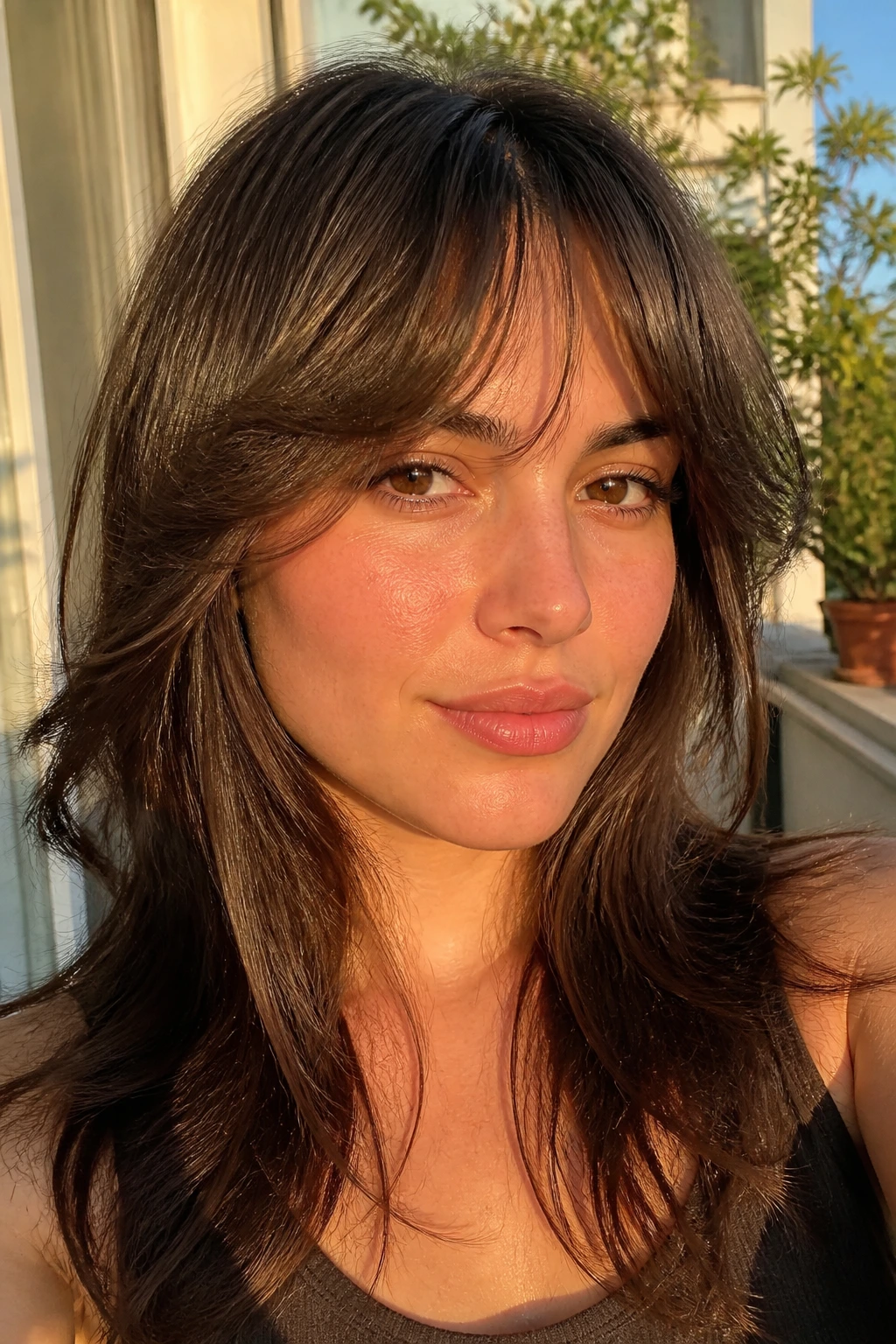
Feathered bangs have that relaxed, blown-out feel that keeps the face from looking boxed in. The ends are light, the center has a little shape, and the fringe often flips away from the forehead instead of lying flat against it.
That flip matters. On a round face, it adds motion near the eyes and temples, which pulls attention outward in a softer way than a blunt cut. It also gives a nice lift if you like a little volume at the root.
This style looks especially good with medium-thick hair and a round brush blow-dry. The fringe should feel touchable, not stiff. If it starts to separate too much, a tiny bit of cream on the ends will bring it back together without killing the feathered look.
11. Asymmetrical Bangs That Angle Across the Forehead
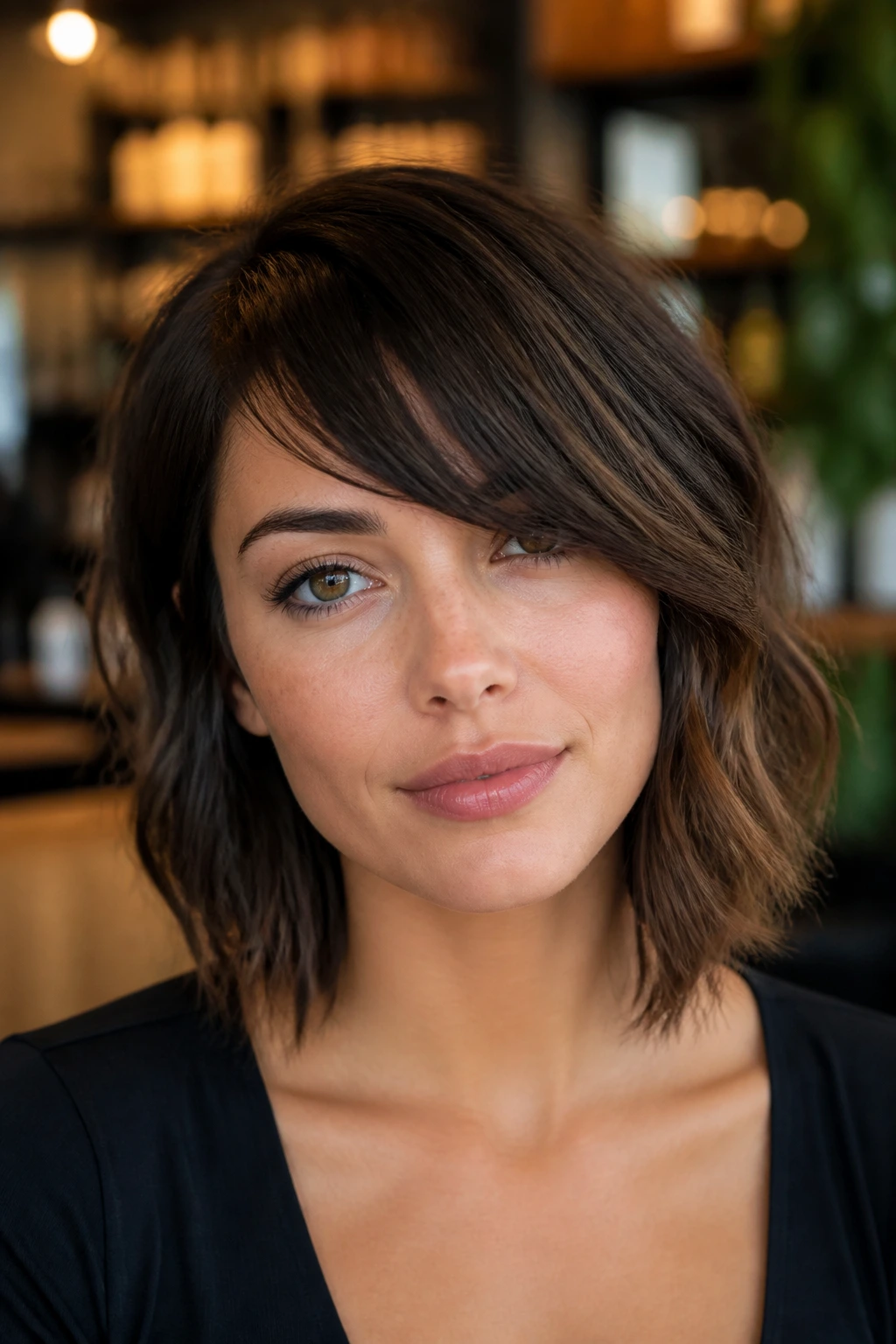
An asymmetrical fringe is one of the bolder choices here, and I like it because it makes the face feel less predictable. One side usually sits shorter, while the other sweeps longer across the forehead or cheek area. That offset line is doing real work.
The diagonal shape is the point. It creates movement that cuts across the widest part of a round face instead of echoing it. You get a little drama, a little edge, and a much less symmetrical outline.
What to ask for
- One side that starts closer to the brow
- A longer side that blends into the cheek or jaw
- Soft ends, not a hard shelf
- Enough length to tuck if needed
This cut pairs well with strong side parts and layered bobs. It does take confidence, though. If you like tidy, balanced hair, this may feel too loud.
12. Blended Long Fringe
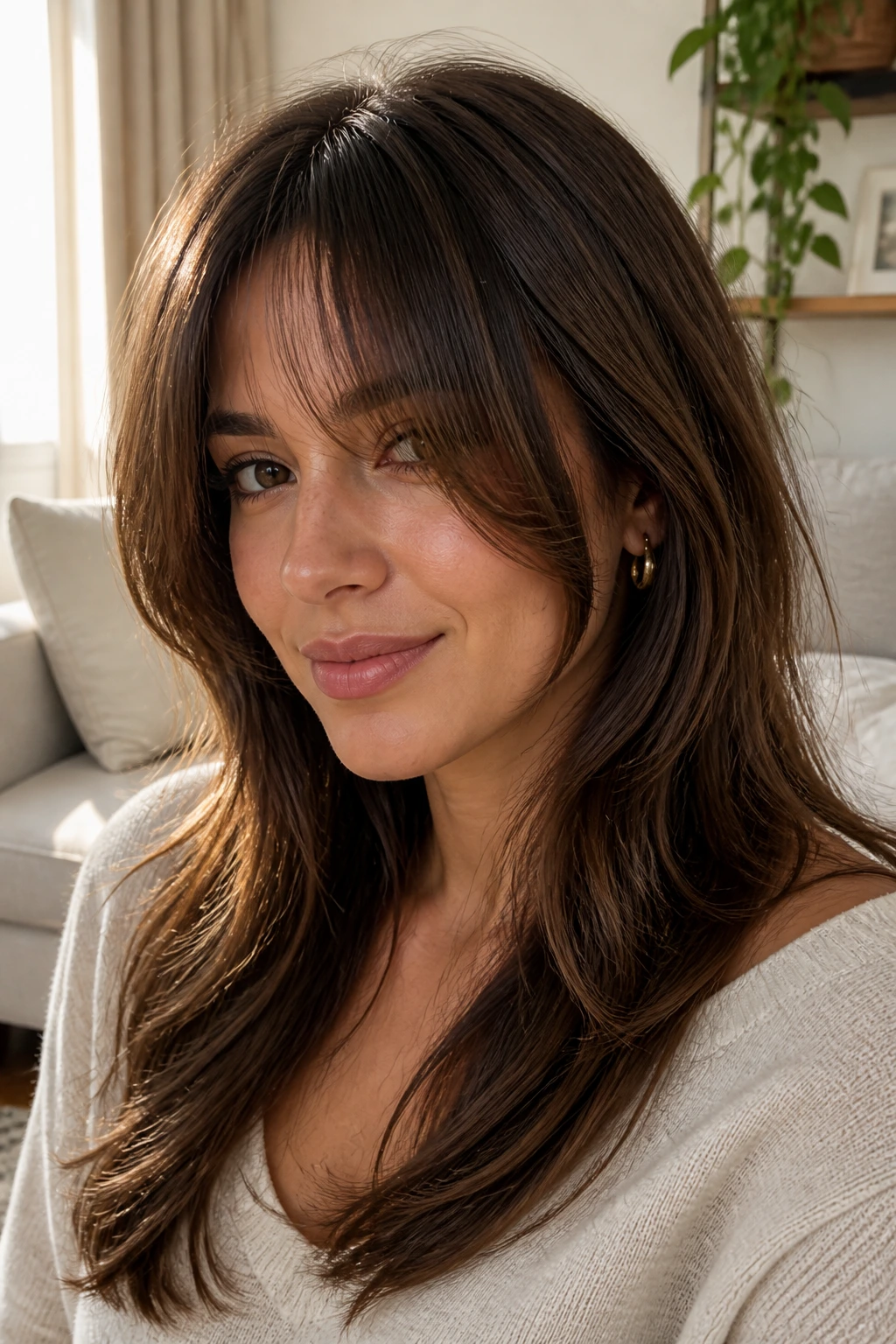
A blended long fringe is for the person who wants bangs but does not want the haircut to announce itself from across the room. The front pieces blend into the layers around the face, so the line is there, but it is not shouting.
That softness can be a gift on a round face. The fringe still creates a frame, yet the eye keeps moving because nothing stops in one place. It feels like the haircut has a little secret built into it.
This is a smart option if you wear your hair up a lot. The front pieces can fall free, sit behind the ears, or slip into a ponytail without looking awkward. It’s also one of the easiest fringes to grow out because it already lives in the same family as face-framing layers.
13. Bottleneck Bangs on a Lob
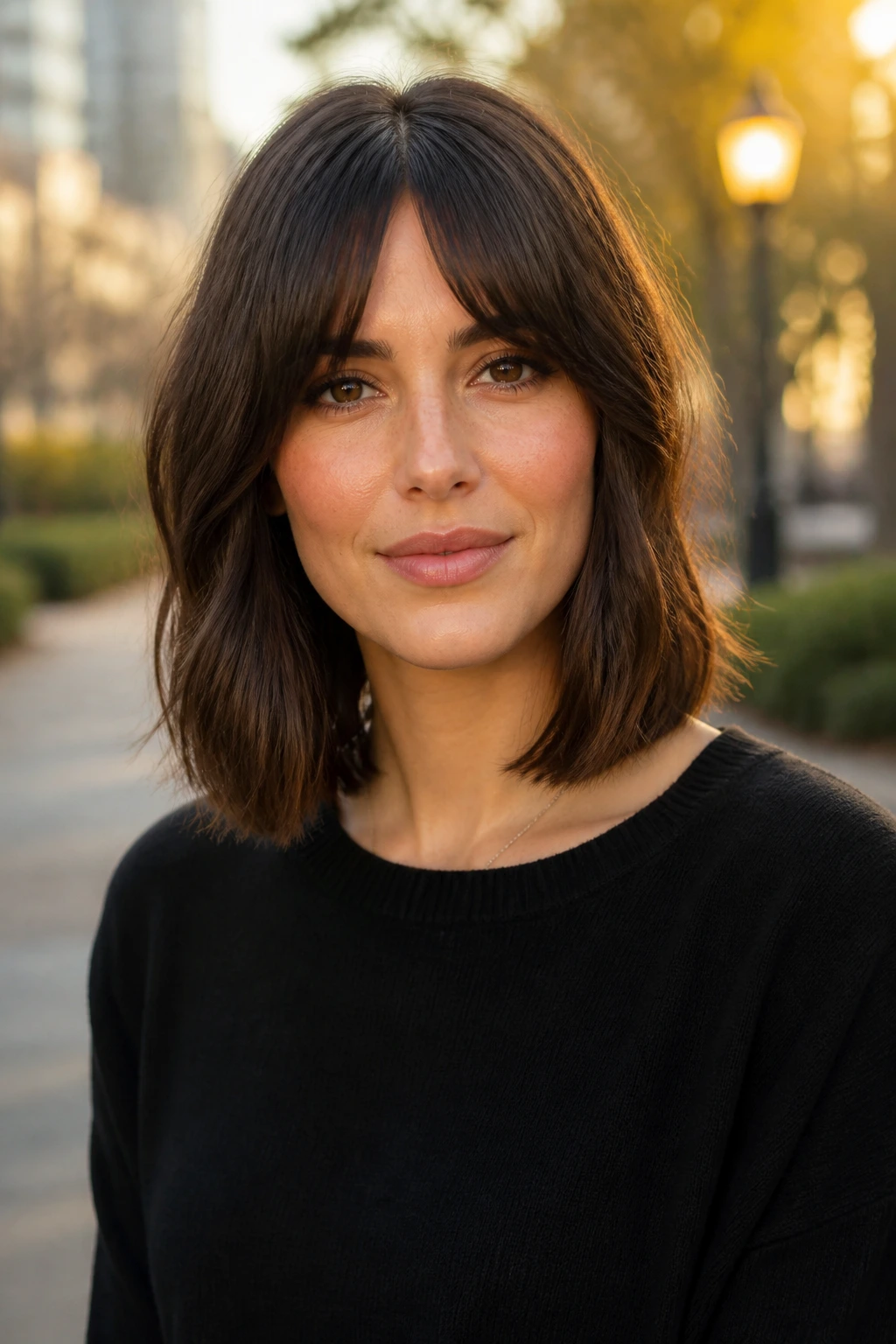
A lob gives bottleneck bangs a different personality. The shorter haircut adds more visible shape around the jaw and neck, and the fringe keeps the front from feeling too wide. That balance is the whole appeal.
Unlike the longer version, this one feels a little sharper. The lob gives structure below the face, while the narrow center of the fringe keeps the forehead open. Together, they create a cleaner line from top to bottom.
Best pairings
- A blunt or lightly textured lob
- Hair that sits just above or below the shoulders
- Soft bends through the middle lengths
- A root-lift spray for a small amount of height
This version is especially good if you want bangs but don’t want to lose all your neck line. It keeps the look crisp, and it grows out more gracefully than a super-short fringe.
14. Full Fringe With Long Side Pieces
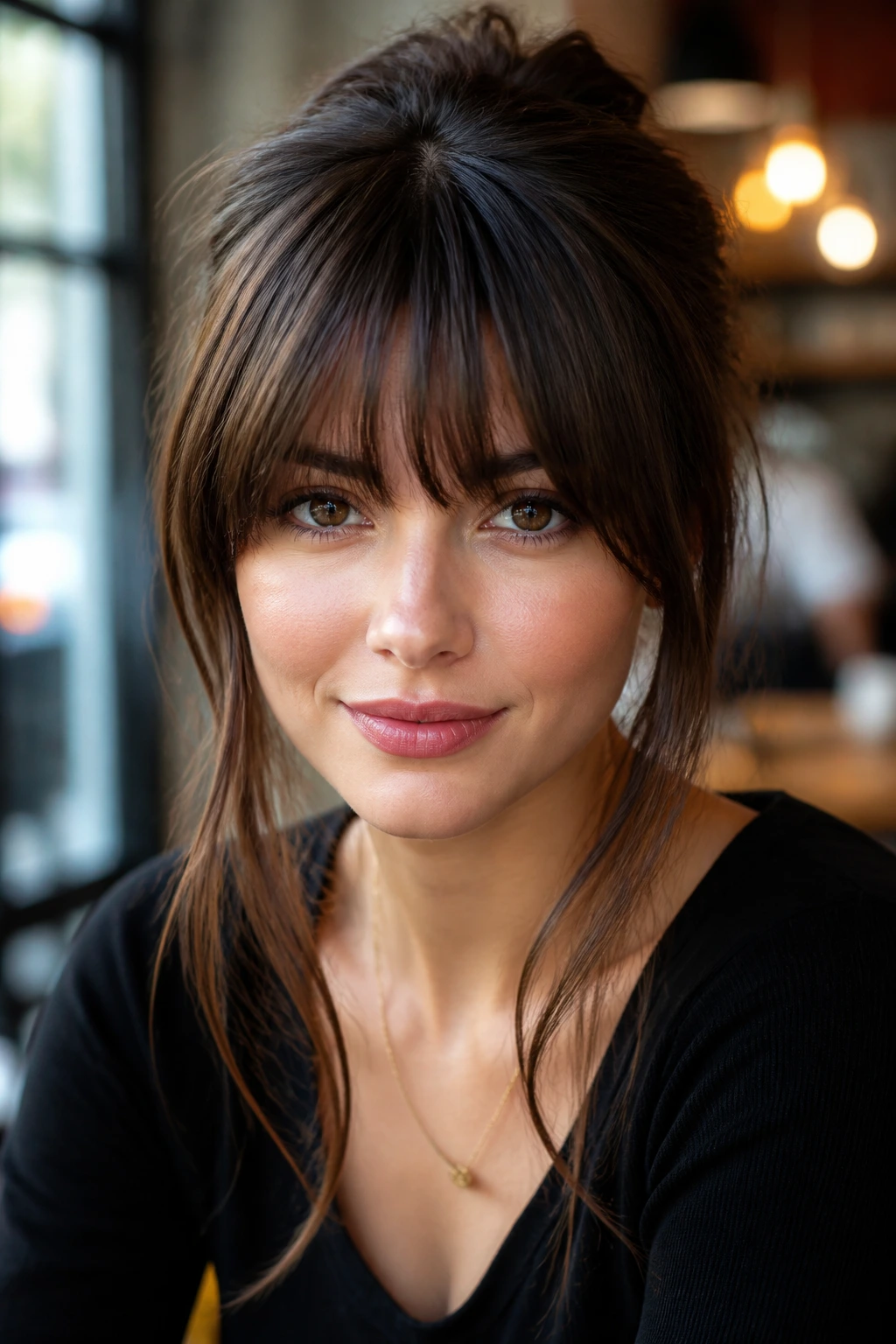
A full fringe can work on a round face when the sides are allowed to stay long. That’s the part people miss. If the bang is dense in the middle but the outer pieces extend toward the cheekbones, the cut feels bold without turning boxy.
The center brings the drama. The sides bring the balance.
I like this version for thick hair because the density gives the fringe a strong shape, but the long side pieces keep the face from closing in. It also works if you like a more polished look. The haircut feels deliberate, almost tailored, and it photographs in a clean line without needing a lot of product.
The risk is weight. If the fringe is cut too low and too straight all the way across, the face can look shorter. Keep the center controlled and the edges a touch softer.
15. Peekaboo Bangs From the Temples
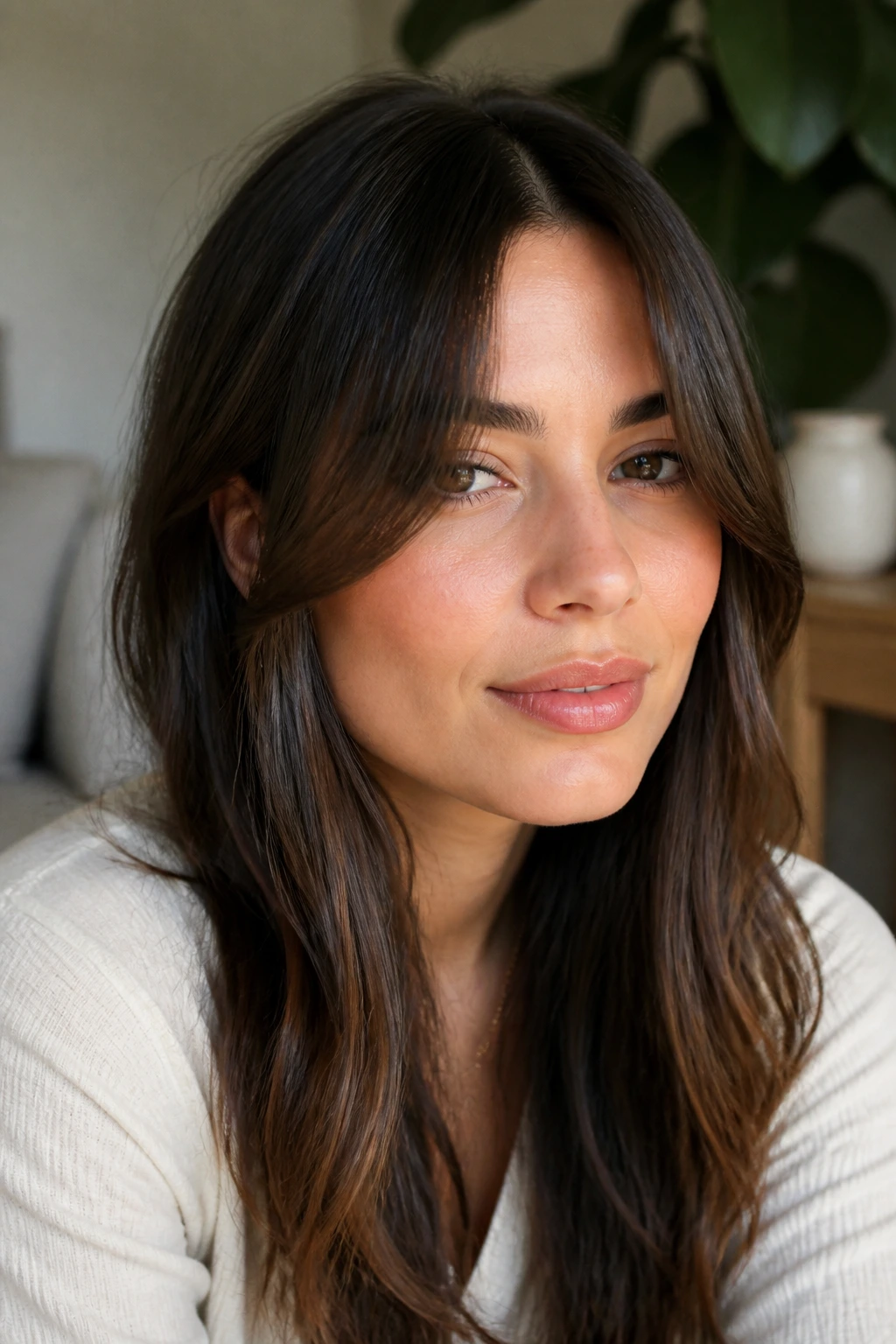
The smartest fringe sometimes starts farther out than you expect. Peekaboo bangs leave the center of the forehead more open and let the front pieces come in from the temples instead. That creates a subtle frame instead of a full curtain.
For a round face, that side framing can be a really good thing. It makes the face feel a little longer, because the attention lands near the eyes and cheekbones rather than across the widest part of the forehead. The style also works well if you have a forehead you like to show but still want some shape around the face.
This is a nice option for people who like soft movement and hate the feeling of hair sitting directly on the brows. It’s almost a fringe, but not quite. That makes it easier to tuck, pin, or grow out later.
16. French-Girl Choppy Fringe
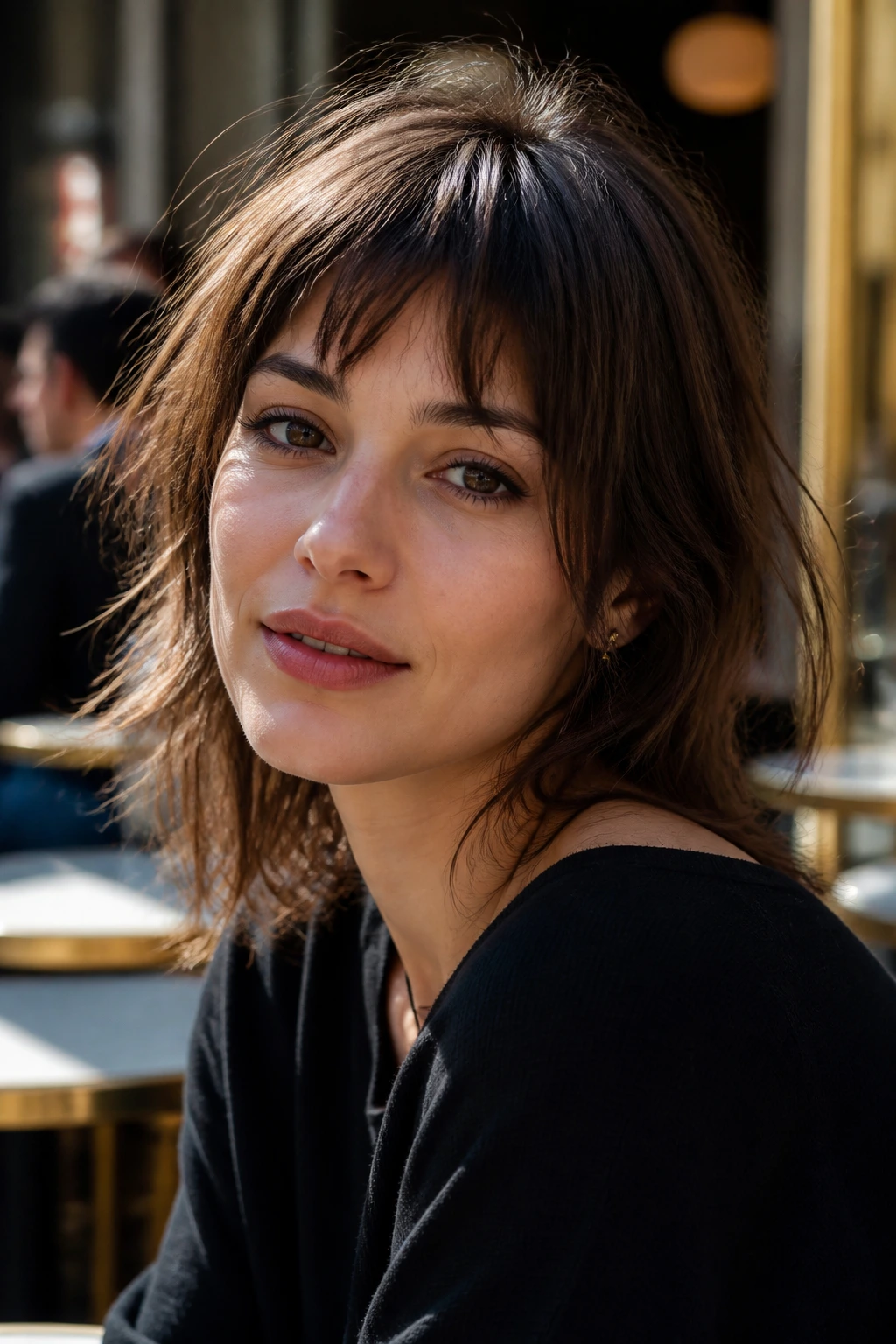
French-girl bangs get talked about a lot, but the choppy version is the one I find more useful on a round face. It’s a little uneven, a little airy, and not trying too hard to make a perfect line. That roughness keeps the front from feeling heavy.
The uneven pieces give the forehead some breathing room. They also make the eye travel instead of stopping at one blunt point. If the fringe is cut with tiny separations at the ends, it adds a bit of edge without looking aggressive.
This style likes texture. A soft wave, a bend from a round brush, or even a natural air-dry can make it look better. If you straighten it pin-flat, the charm fades fast and the fringe starts to feel too tidy.
17. Rounded U-Shaped Bangs
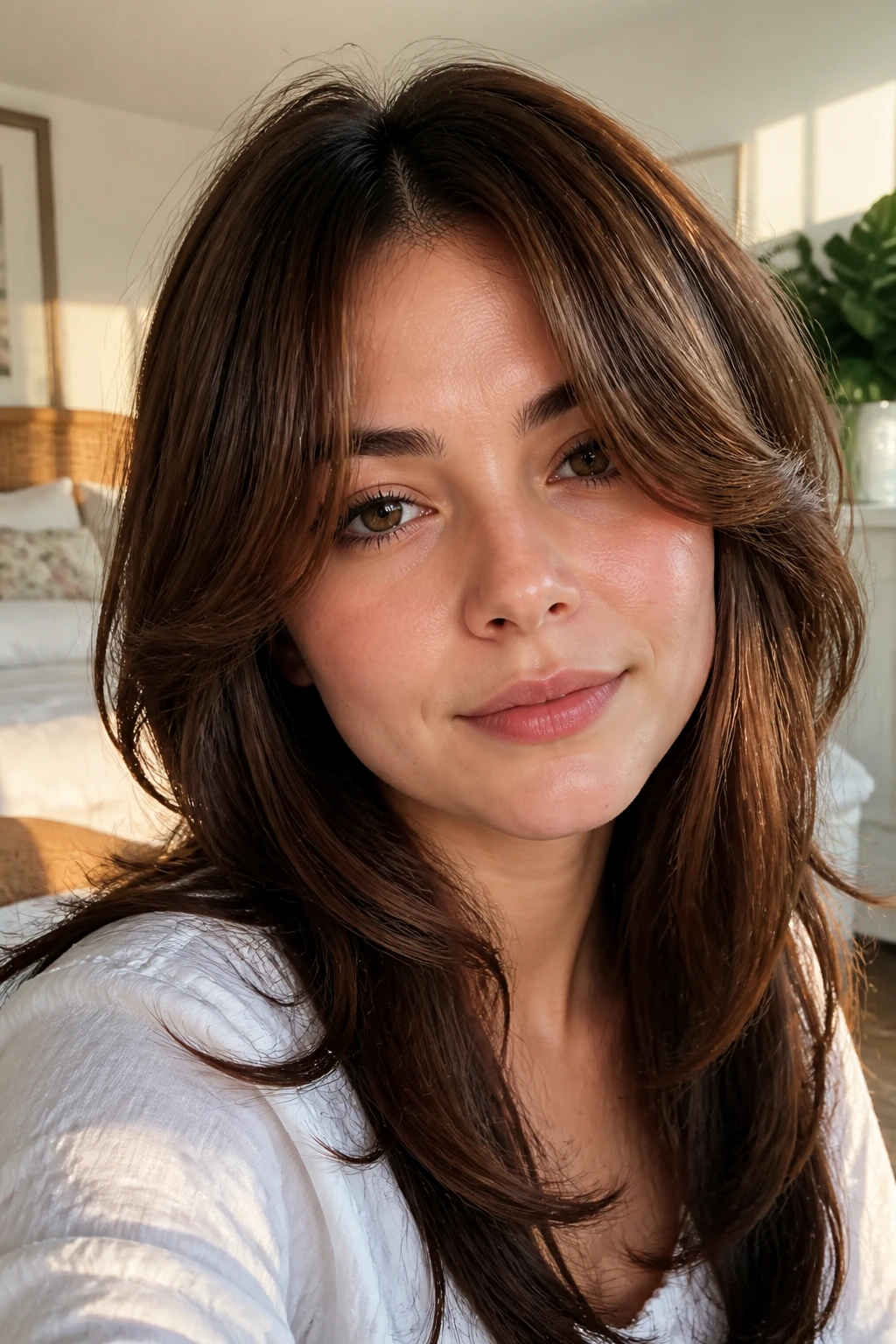
Rounded U-shaped bangs sit somewhere between blunt and curtain styles. The middle is a little shorter, the sides fall longer, and the overall outline curves softly instead of making a hard horizontal line. That shape can be very flattering on a round face when you want softness with a bit of control.
Why it works
The center opening keeps the forehead from feeling crowded. The longer edges pull the eye toward the temples and cheekbones, which is helpful if the face already has a lot of width through the middle. It’s a quiet way to reshape the front without going full curtain.
- Good for thick hair that needs a defined outline
- Easier to style than a super-piecey fringe
- Works with straight or gently wavy textures
- Best when the side pieces blend into layers
One thing to watch: if the U-shape drops too low, it can start to feel heavy. Keep the curve soft and the center slightly lifted.
18. Curly Shag Fringe

Curly shag fringe is a different animal from straight bangs, and that’s what makes it fun. The front pieces are cut to work with curl spring, so the fringe bounces instead of hanging. On a round face, that lift helps create length above the cheeks.
The shag part matters because it stops the curls from bunching into one solid block. Each piece can do its own thing a little, which keeps the face from looking wider than it is. It’s not neat. That’s the point.
This cut is best done by someone who understands curls and knows how much they shrink when dry. If your curls are tight, the fringe should usually be cut longer and then shaped again after drying. If your curls are loose, the front can sit closer to the brows without much trouble.
19. Side Fringe With Shoulder-Length Waves
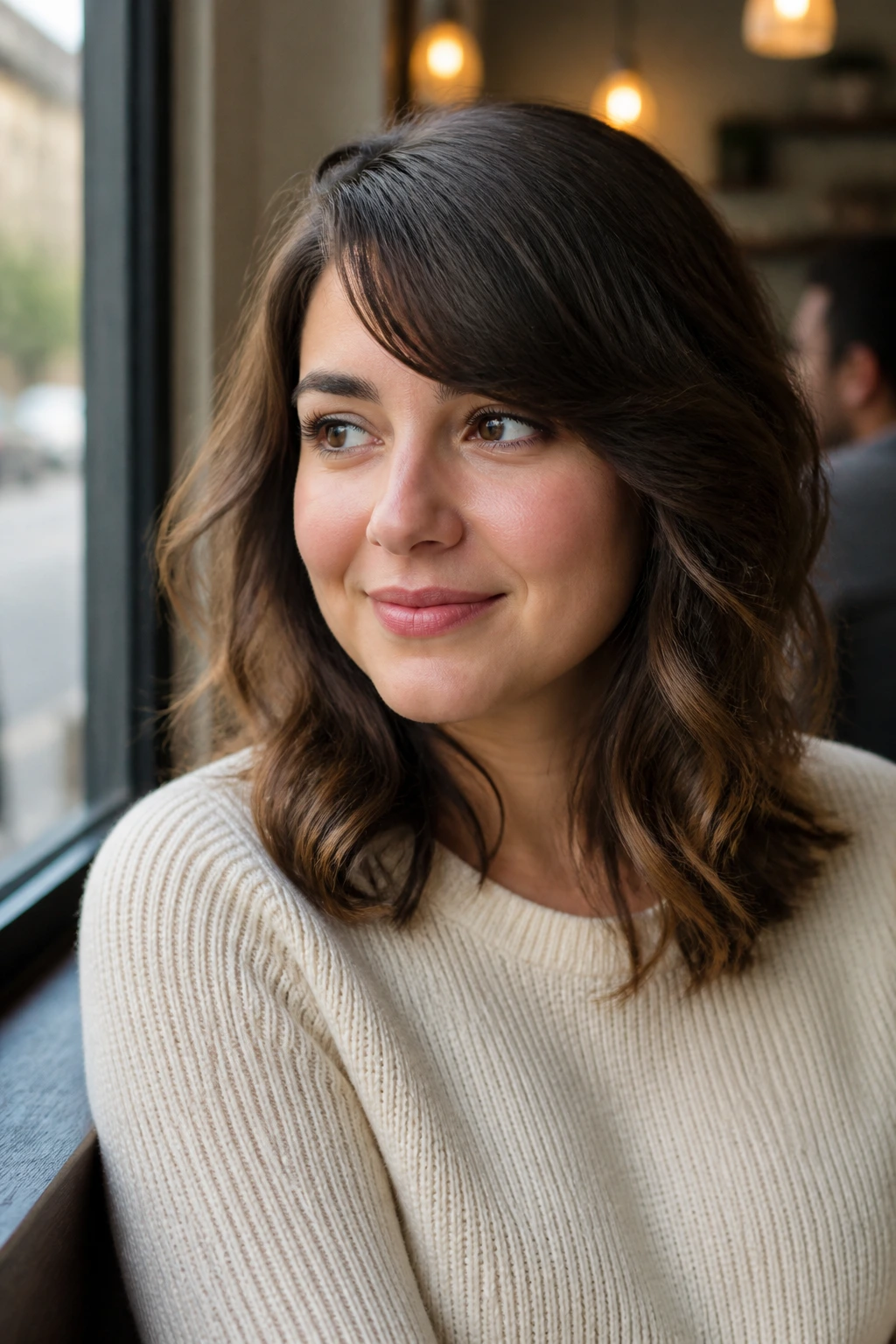
If you live in waves, don’t force them straight just to make bangs happen. A side fringe with shoulder-length waves can be one of the easiest ways to flatter a round face because the whole style moves in the same direction. Nothing fights the texture.
The side fringe gives you that diagonal line again, while the waves soften the cheeks and jaw. Together, they make the face feel longer and a little less circular. It’s a friendly shape. Not precious.
This is also a good cut if you like hair that can look done with minimal effort. A quick blow-dry or a bend from a curling iron is enough. Let some pieces fall unevenly around the face. That tiny bit of looseness keeps the whole style from feeling too neat.
20. Heavy Straight Fringe With Long Layers
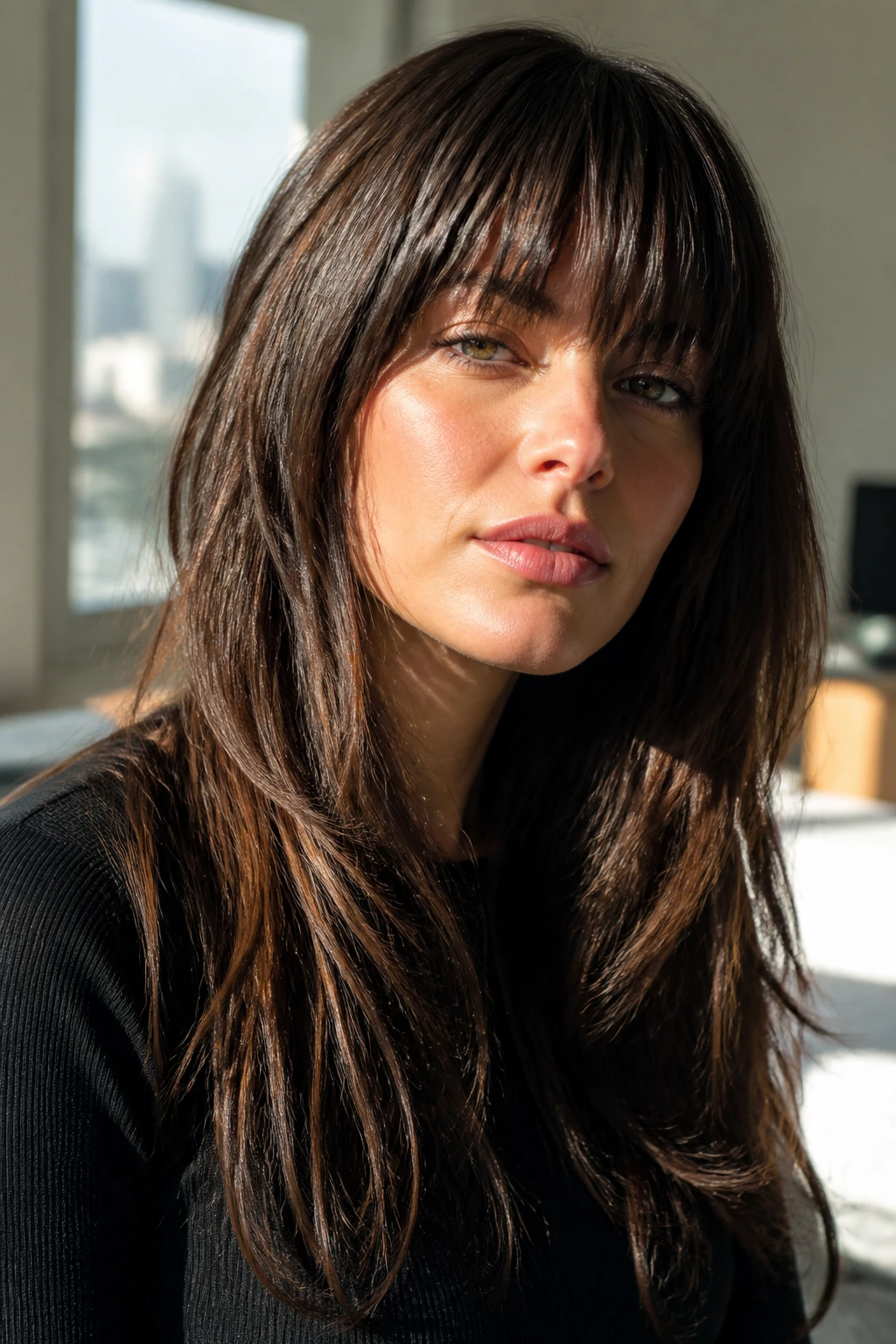
Heavy straight bangs can work on a round face if the rest of the hair is long and layered. That balance is the whole game. The fringe creates a strong line up top, while the lengths below keep the face from feeling compressed.
Unlike wispy bangs, this style wants weight. It gives you drama. If you like strong haircuts and clean edges, that may be exactly the appeal. The long layers around the face stop the style from turning into a square block, which is what usually goes wrong with a heavy fringe.
The key is to keep the fringe dense but not too low. Brow to just above brow is the sweet zone. Any lower and the whole front can feel closed off. This one looks best when the layers underneath are lively enough to offset the seriousness of the bang.
21. Tapered Bangs That Open at the Temples
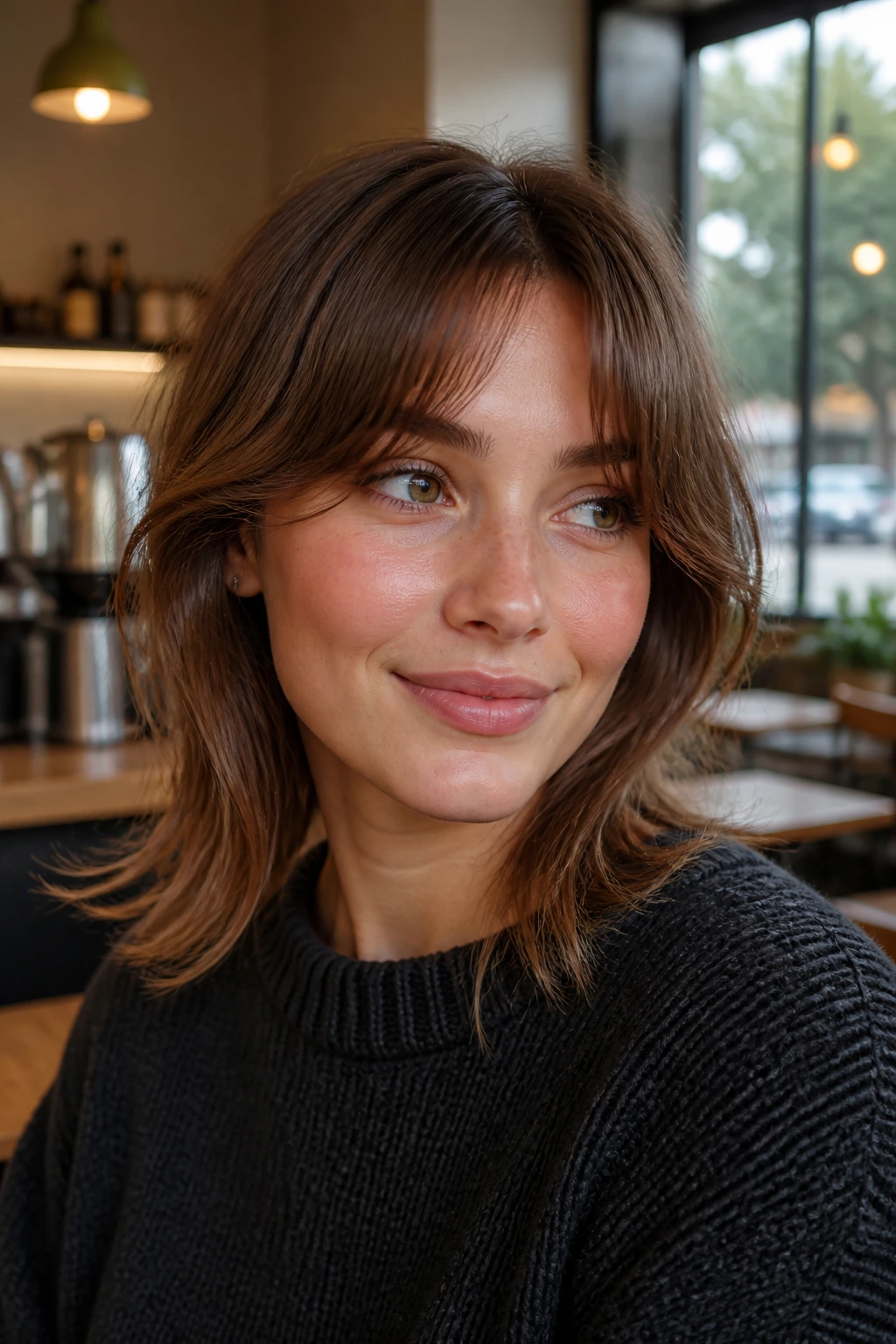
Tapered bangs are narrower in the middle and wider near the temples, which sounds simple until you see how much shape that tiny shift creates. On a round face, the flare near the sides helps guide the eye outward and upward at the same time.
The style works well when you want something softer than a blunt fringe but less center-heavy than a curtain bang. It gives the forehead a frame without loading the middle with too much hair. There’s a little lift built in, which is useful if your face needs more vertical line.
A round brush helps here, but the cut should do most of the work. Ask for the sides to stay light and mobile so they don’t stack against the cheeks. That’s the part that makes the style feel airy instead of bulky.
22. Razor-Cut Piecey Fringe
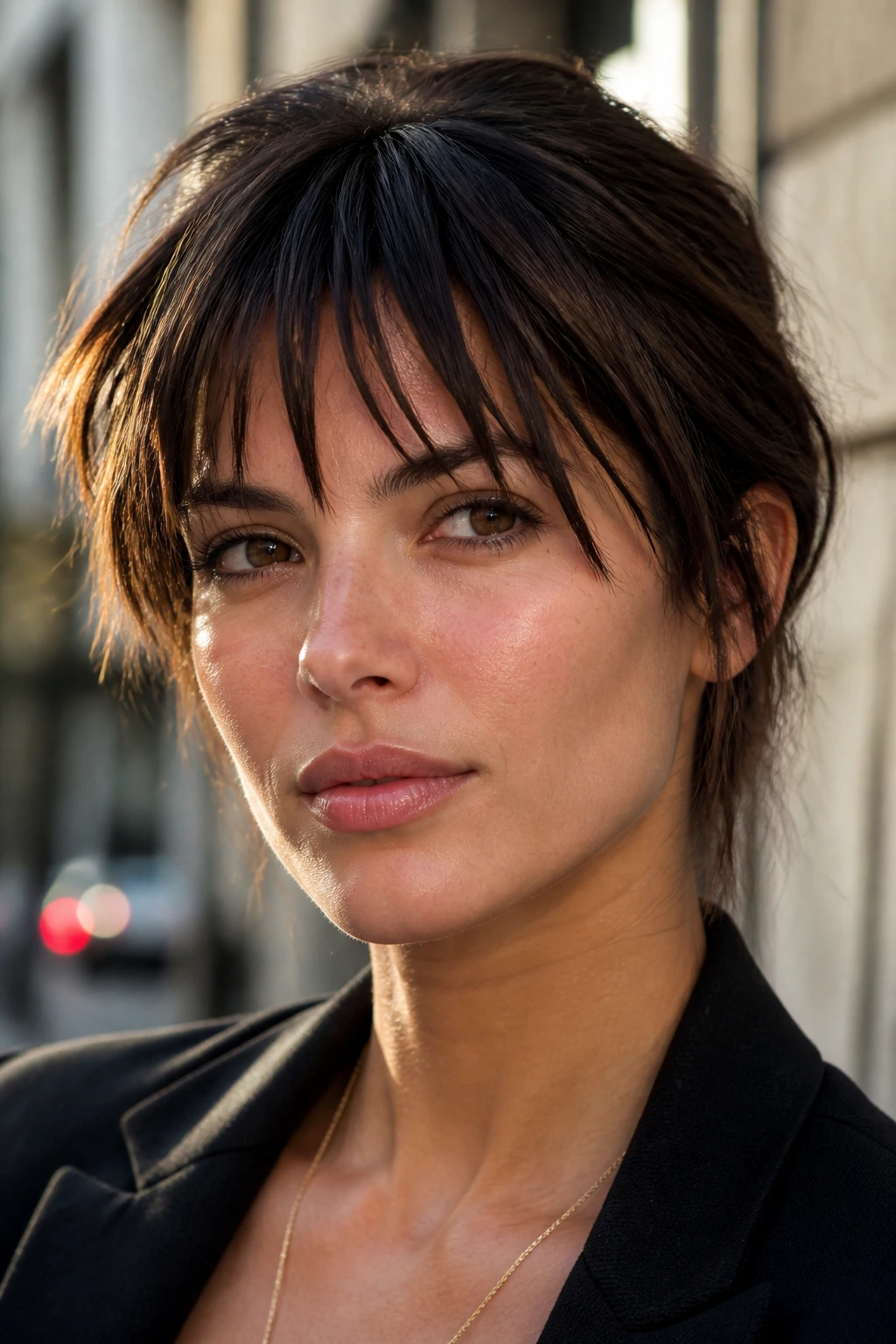
Razor-cut bangs have a sharper, airier edge than scissor-cut fringe. The ends come apart a little, and that separation is useful on a round face because it keeps the fringe from acting like a solid band across the forehead.
What to watch for
Razor cutting is great on thick hair. It removes some weight and gives the bangs a little swing. On very fine hair, though, it can go too far if the stylist takes out too much density. Then the fringe starts looking stringy instead of piecey.
- Ask for separation, not thinning for the sake of thinning
- Keep the shortest pieces controlled around the brow
- Use a light wax or cream only on the ends
- Trim before the shape gets frayed
This is a fringe with attitude. It looks especially good when the rest of the haircut has texture, because the front can echo that choppy feeling instead of standing alone.
23. Air-Dried Fringe With Natural Texture

Air-dried bangs are not lazy if they’re cut right. Sometimes the smartest move is to let the front do what your hair already wants to do. For a round face, natural texture can create soft movement that keeps the forehead from looking boxed in.
The important part is shape. If the bangs are cut with enough length and a little room for shrinkage, they can dry into a loose, flattering frame. If they’re cut too short or too blunt, they may puff up in a way that adds width right where you don’t want it.
A small amount of mousse or lightweight cream can help the fringe dry with more control. Scrunching is fine. Raking through with heavy product is not. You want texture, not clumps.
24. Chin-Length Front Pieces That Act Like Bangs
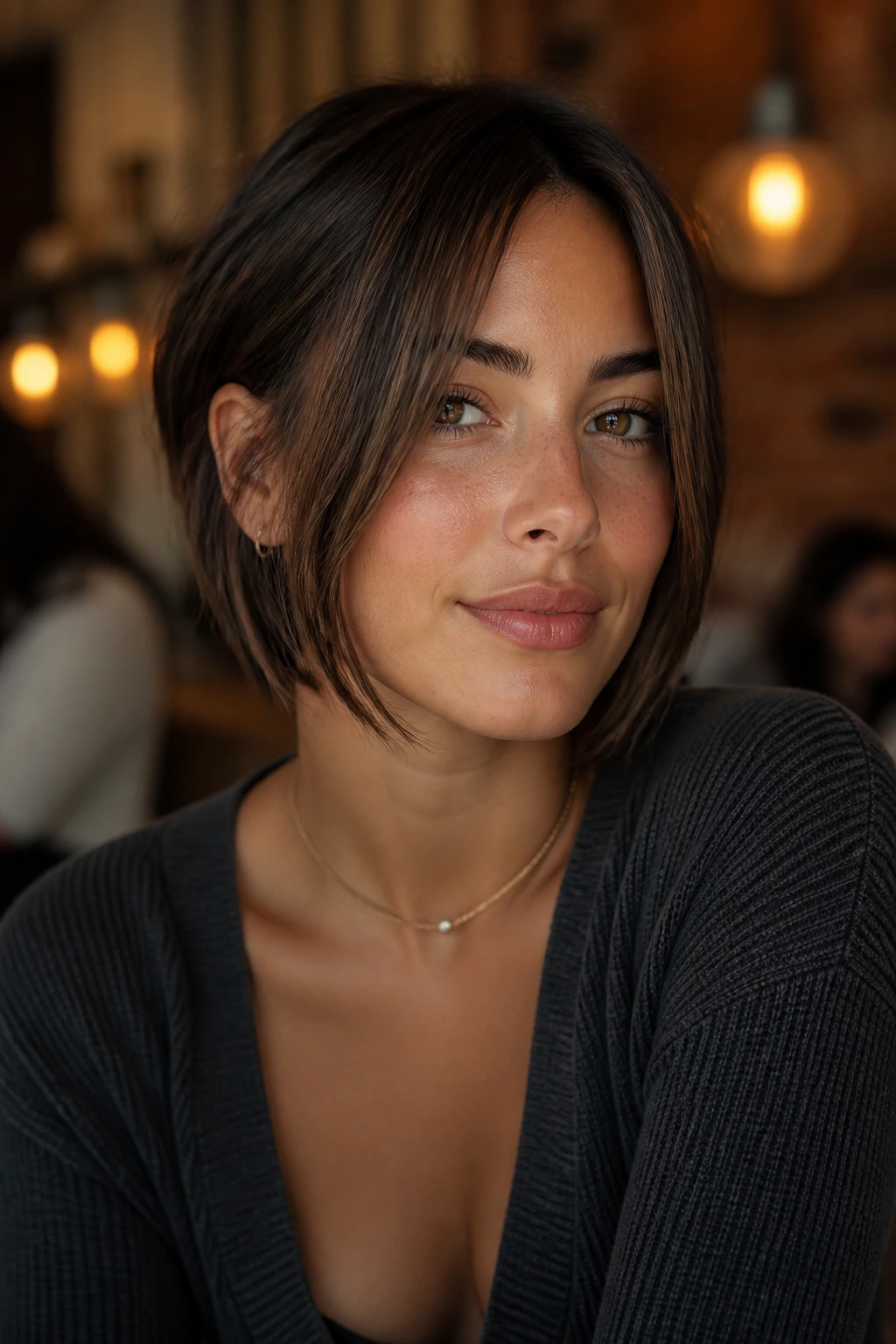
These aren’t bangs in the strictest sense, and that’s why they’re useful. Chin-length front pieces can behave like fringe when you part them forward, but they also tuck back into layers when you want a cleaner face. For a round face, that flexibility is gold.
They work because they draw a long line down the sides of the face. Instead of stopping at the forehead or cheek, the pieces travel toward the jaw and chin, which makes the face feel more elongated. It’s one of the easiest ways to get a bold front without the maintenance of a true bang.
This style suits people who get tired of trimming every few weeks. It grows out gracefully, and it can be curled, pinned, or left loose depending on the day. If you want bang energy with less commitment, this is a smart place to land.
25. Bold Center-Part Curtain Fringe
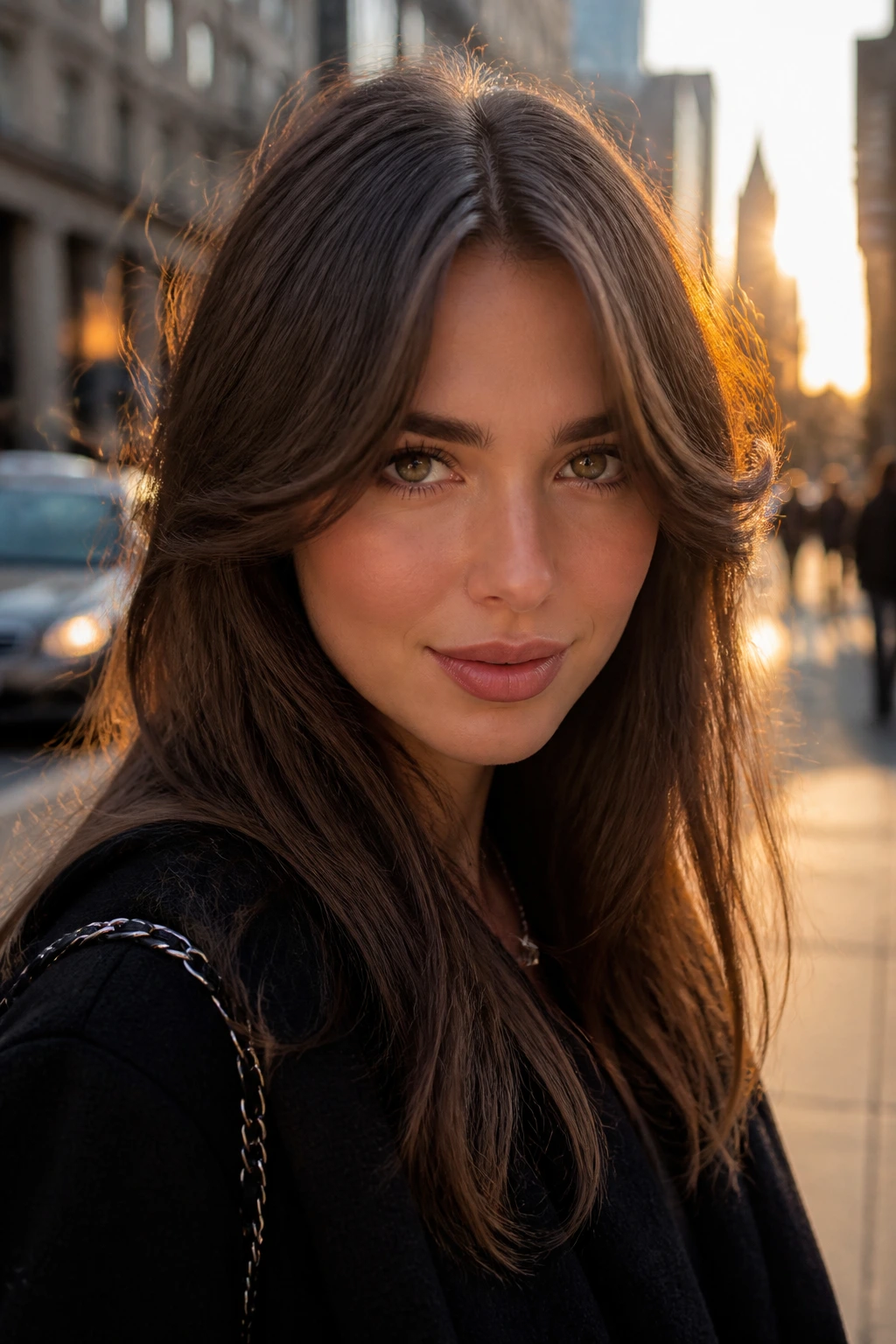
A center-part curtain fringe can look surprisingly strong when the pieces are cut with extra width and a little weight at the temple. The center stays open, which keeps the forehead from feeling crowded, and the sides create enough movement to frame the cheeks without sitting on them.
This is the version I’d point to if you want something dramatic that still feels wearable. It has shape, but not stiffness. It works with long hair, lobs, and layered cuts, and it can be styled sleek or a little undone depending on what your hair does best.
The final detail is the finish. Keep the front pieces soft at the ends and a touch lifted at the root. That small lift is what keeps the fringe from collapsing toward the cheeks. If you want one bold bangs idea for a round face that can slide between polished and casual without much trouble, this is the one I’d try first.
