



Round faces do not need to be hidden; they need lines that move the eye somewhere interesting. That’s why a choppy fringe can work so well when it’s cut with some thought. A blunt, heavy bang tends to stop the eye right across the widest part of the face. A broken, piecey fringe does the opposite. It adds angles, lightness, and a little bit of movement where a round face usually needs it most.
The sweet spot is almost never a straight wall of hair. It’s the fringe that falls in sections, not one solid line. Sometimes that means a curtain shape that splits in the middle. Sometimes it’s a side sweep that cuts diagonally across the forehead. Sometimes it’s a jagged little fringe that sits above the brow and keeps the whole look sharp instead of soft and puffy.
Hair texture matters more than people think. So does density. So does where your cowlick lives. A fringe can look airy in one salon chair and stubbornly split in another if the cut ignores those details. That is why the best choppy fringe hairstyles for round faces are less about following a trend and more about matching the cut to your hair’s actual behavior.
The styles below all do that in different ways. Some are low-key and easy to wear. Some are sharper and more fashion-forward. All of them use shape, texture, and placement to make a round face look a little longer, a little leaner, and a lot more intentional.
1. Curtain Fringe That Skims the Cheekbones

Curtain fringe is one of the easiest places to start if you want movement without a harsh line. The center opens the forehead, the sides fall softly toward the cheeks, and the whole shape gives a round face more vertical flow. When it’s cut choppy, the ends don’t sit like a curtain rod. They break apart and look lived-in.
Why It Flatters Round Faces
The best version starts shorter near the bridge of the nose and then drops toward the cheekbones. That diagonal movement matters. It pulls the eye down instead of sending it straight across the widest part of the face. If your fringe sits right on the fullest part of your cheeks, it can make the face look wider. If it lands just below that, it usually reads cleaner.
I like this shape on hair that already has a little bend. Straight hair can wear it too, but it often needs a quick round-brush blowout to keep the pieces from hanging flat. Wavy hair usually gives the most natural result.
What to Ask For
- Shorter center pieces that open just above the brows
- Longer side pieces that graze the cheekbones
- Point-cut ends, not a blunt edge
- Soft texture through the middle so it does not sit in one heavy sheet
Best move: blow the fringe forward first, then bend the side pieces away from the face with a round brush or a small flat iron curve.
2. Side-Swept Choppy Fringe for Round Faces

A deep side part can do more work than a lot of people expect. It creates a diagonal line right away, and diagonals are excellent on round faces because they interrupt that full, circular shape. Add choppy ends, and the fringe stops looking neat in the boring way. It starts looking sharp.
This is the version I reach for when someone wants bangs but does not want to feel boxed in by them. The forehead stays partly open. One side gets a little lift. The other side falls longer and softer, which gives the face a bit of asymmetry. That asymmetry is the whole trick.
The fringe should not be thick. If it is too dense, the side sweep turns into a heavy shelf and loses the point. Ask for a feathered, pieced-out finish through the ends, especially around the temple. That tiny detail keeps the shape from collapsing by midday.
It also plays nicely with shoulder-length cuts and long layers. And yes, it grows out well, which matters. A fringe that can survive a grow-out phase without looking awkward is worth more than one that looks good for two weeks and then turns into a fight.
3. Bottleneck Fringe with Tapered Ends

Why does bottleneck fringe work so well on a round face? Because the center stays short enough to show some forehead, while the outer edges widen and then taper away at the cheekbones. That shape gives you the openness of curtain bangs without the fullness that can bulk up the middle of the face.
The cut should feel narrow at the start and softer near the ends. If the stylist makes the outer pieces too thick, the fringe can look blocky. If they go too light, it loses the shape and just looks like random wisps. The sweet spot sits right between those two mistakes.
This fringe likes a little texture spray or a pea-sized bit of styling cream worked through dry hair. Not much. Too much product and the whole thing clumps together, which is the fastest way to ruin the airy effect. You want separation you can see, not grease.
The Shape Rule
- Center: short enough to open the forehead
- Sides: longer, grazing the cheekbone or just below
- Ends: chipped, not blunt
- Finish: piecey, with visible separation
If you have a cowlick in the middle, tell your stylist before they cut. A bottleneck fringe can work around it, but only if the shortest point respects how your hair naturally falls.
4. Shag Fringe for Round Faces

A shag makes sense on a round face because it never sits still for long. The layers keep moving, the fringe breaks apart instead of forming a solid block, and the whole cut creates the kind of vertical texture that makes a face feel longer. It is messy in the right way. Not sloppy. Just relaxed.
I’ve seen this cut rescue heavy hair more times than I can count. Thick hair tends to puff up around the cheeks if it’s all one length. A shag takes some of that weight away and lets the fringe land in separate little pieces. That matters more than people realize.
Use this shape if you like air-drying. Really. It often looks better when it is not overworked. A little curl cream or mousse through damp hair, then finger-scrunching and a quick diffuse, is usually enough. You do not need perfect symmetry here.
- Best for wavy or thick hair
- Looks good with some crown height
- Needs internal layers, not just surface texture
- Avoid a fringe that sits in one solid strip across the forehead
The cut should feel slightly rough around the edges. That is the point.
5. Micro Choppy Fringe for Fine Hair

Micro fringe can look risky on a round face, and I would not pretend otherwise. When it works, though, it works because it shows the forehead and keeps the lower face from feeling crowded. A choppy finish is what makes it wearable. A blunt micro bang can feel severe. A broken one feels lighter.
Fine hair is the natural home for this cut. The pieces stay soft, and the fringe does not turn into a thick slab. The trick is keeping the ends uneven enough to move. A tiny point-cut at the tips makes a bigger difference than most people expect. It turns the bang from a line into a texture.
You do need to be comfortable with upkeep. Short fringe shows growth fast. It also reacts to humidity, sweat, and cowlicks in a way that longer fringe does not. Still, if you like a clean brow line and a sharper outline, this can be a great choice.
I would pair it with a textured bob, a pixie, or a short crop. On longer hair, it can look disconnected in a bad way unless the rest of the cut carries enough structure.
6. Razored Bob with Piecey Fringe

Unlike a blunt bob, a razored bob does not sit like a helmet. It has air in it. That alone makes it friendlier for a round face, because the hair around the jaw stays light instead of widening the lower half. Add a piecey fringe, and the front of the cut starts pulling the eye downward in small, broken lines.
The fringe should not be thick or perfectly even. It should look chipped. A razor can help, but only if the hair type can take it. On very fine hair, too much razor work can fray the ends. On thick hair, it can be the thing that keeps the fringe from feeling heavy. Hair density decides a lot here.
This cut works especially well when the bob ends somewhere between the chin and the top of the neck. Too short, and the face can look rounder. Too long, and the fringe loses contrast. That in-between length usually feels right.
The Best Styling Habit
Dry the fringe first. Always. A quick blast with a round brush or a small brush and a dryer gives the front enough control before the rest of the bob starts doing its own thing. If you wait until everything is damp and puffy, the fringe tends to lose shape fast.
7. Wolf Cut with Broken-Up Fringe

A wolf cut is not shy. It puts volume where volume belongs and takes weight away where it gets in the way. On a round face, that means the crown gets some lift, the sides stay broken, and the fringe becomes part of the overall angle instead of a separate block sitting on top.
This is one of those cuts that either looks perfectly undone or looks like a haircut that is still trying to become one. The difference is in the layering. The fringe needs to blend into shorter face-framing pieces, and those pieces need enough texture to move. If everything is too neat, the wolf cut loses its edge.
I like this with a little grit in the finish. A root-lift spray, a diffuser, or a rough dry with your fingers can keep the top from collapsing. Dry shampoo helps on day two and day three, which is often when this cut looks its best anyway.
- Adds height at the crown
- Breaks up cheek width
- Works on wavy and thick hair
- Needs a fringe that looks chipped, not polished
If you want a cute, tidy hairstyle, this is probably not it. If you want a cut with attitude that still flatters a round face, it’s a solid one.
8. Arched Fringe That Opens the Center
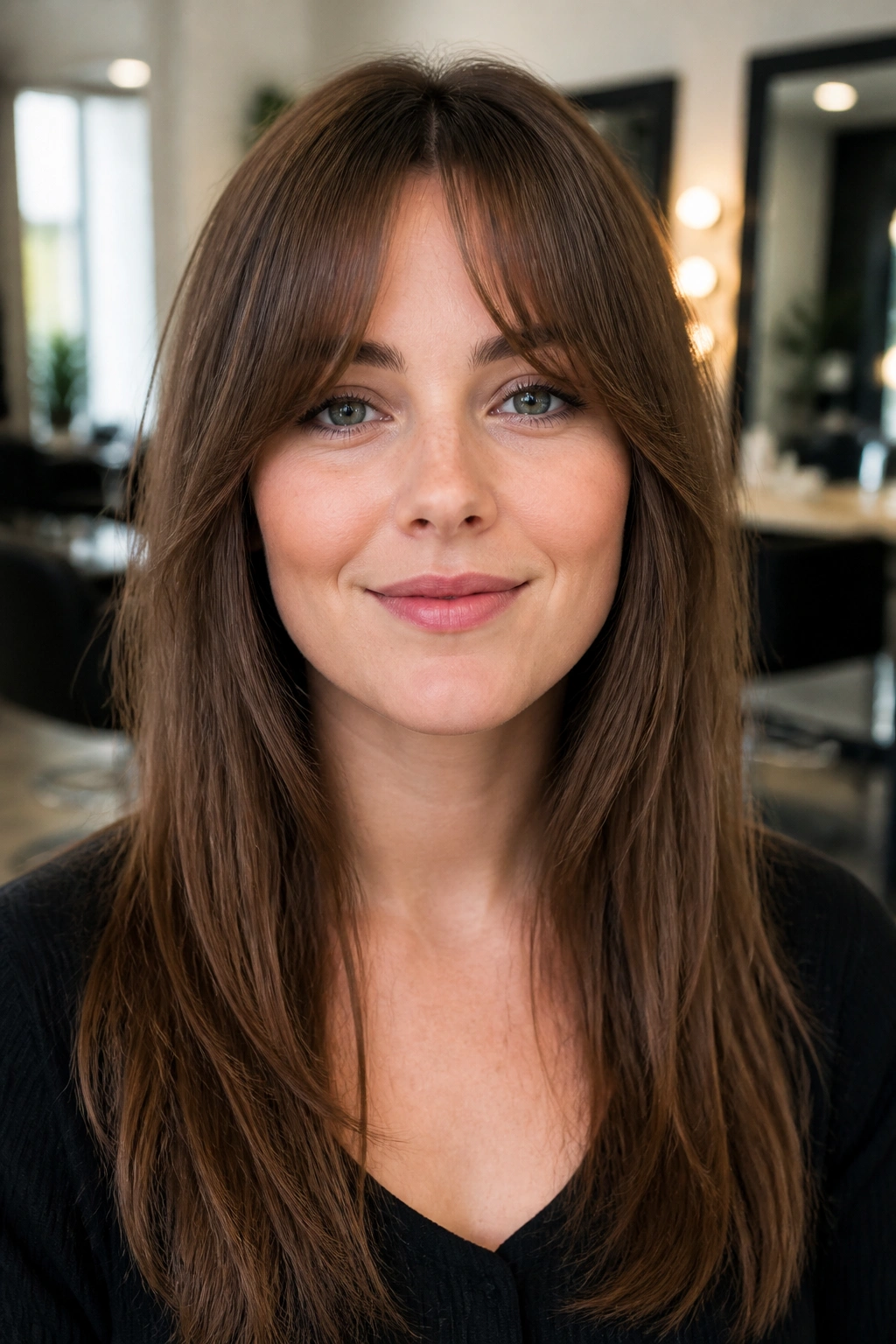
A softly arched fringe can do something straight-across bangs cannot: it leaves the center open while keeping the outer corners long enough to shape the cheeks. That little arch gives the face more height. Not a cartoon arc. A gentle one.
The key is restraint. If the arch is too sharp, the fringe starts looking dated or too styled. If it is too flat, you lose the lifting effect and the cut goes back to acting like a horizontal line. The best version has a slight rise in the middle and a softer drop at the sides.
This works well on straight hair because the shape shows clearly. Wavy hair can wear it too, but it often needs a little round-brush work after washing. Keep the ends lightly textured so they do not form a hard edge around the forehead.
A lot of stylists cut this dry for that reason. Dry cutting shows the real fall of the fringe, especially if your hair shrinks a little as it dries. That matters more than people think. A fringe that looks perfect when wet can finish half an inch shorter and feel entirely different.
9. Lob with a Long, Wispy Fringe

A long bob and a wispy fringe are a safe pair for a reason. The lob gives the face clean length, and the fringe stops the front from feeling too plain or heavy. On a round face, that combination works because it creates two things at once: a vertical line from the length and a soft break across the forehead.
The fringe should barely touch the eyebrows at the center and taper longer toward the temples. You do not want a thick curtain here. You want a light, broken veil of hair that moves when you turn your head. It sounds fussy, but it is actually the opposite. A wispy fringe is easier to live with than a dense one.
I’d style this with a flat brush and a dryer, then add one loose bend through the front pieces with a low-heat iron if the hair goes too straight. Keep the ends smooth, not puffy. That small detail keeps the lob from looking top-heavy.
If you wear glasses, this can be a good option too. The fringe sits softly above or just at the frames instead of crowding them.
10. French-Girl Fringe with Uneven Texture

The French-girl version of fringe gets over-romanticized. People picture a perfect little curtain and forget that the real reason it works is texture. On a round face, that texture matters even more because a soft, uneven fringe avoids the clean horizontal line that can make the face read broader.
Dry-Cut Details
A dry cut helps here because the stylist can see where the fringe naturally breaks apart. That means less guessing and fewer surprises once the hair dries at home. The shortest pieces should sit near the brows, with stray ends falling a touch lower around the temples.
A lot of people pair this fringe with a bob or shoulder-length cut, and that makes sense. The hair around the face stays light. The overall outline stays relaxed. If the fringe gets too dense, though, the whole look starts feeling closed in. That’s the mistake to avoid.
I would not wear this with heavy, uniform layers unless the rest of the cut has some movement. The fringe wants a little imperfection around it. That is what gives it life.
11. Bixie with Choppy Bangs
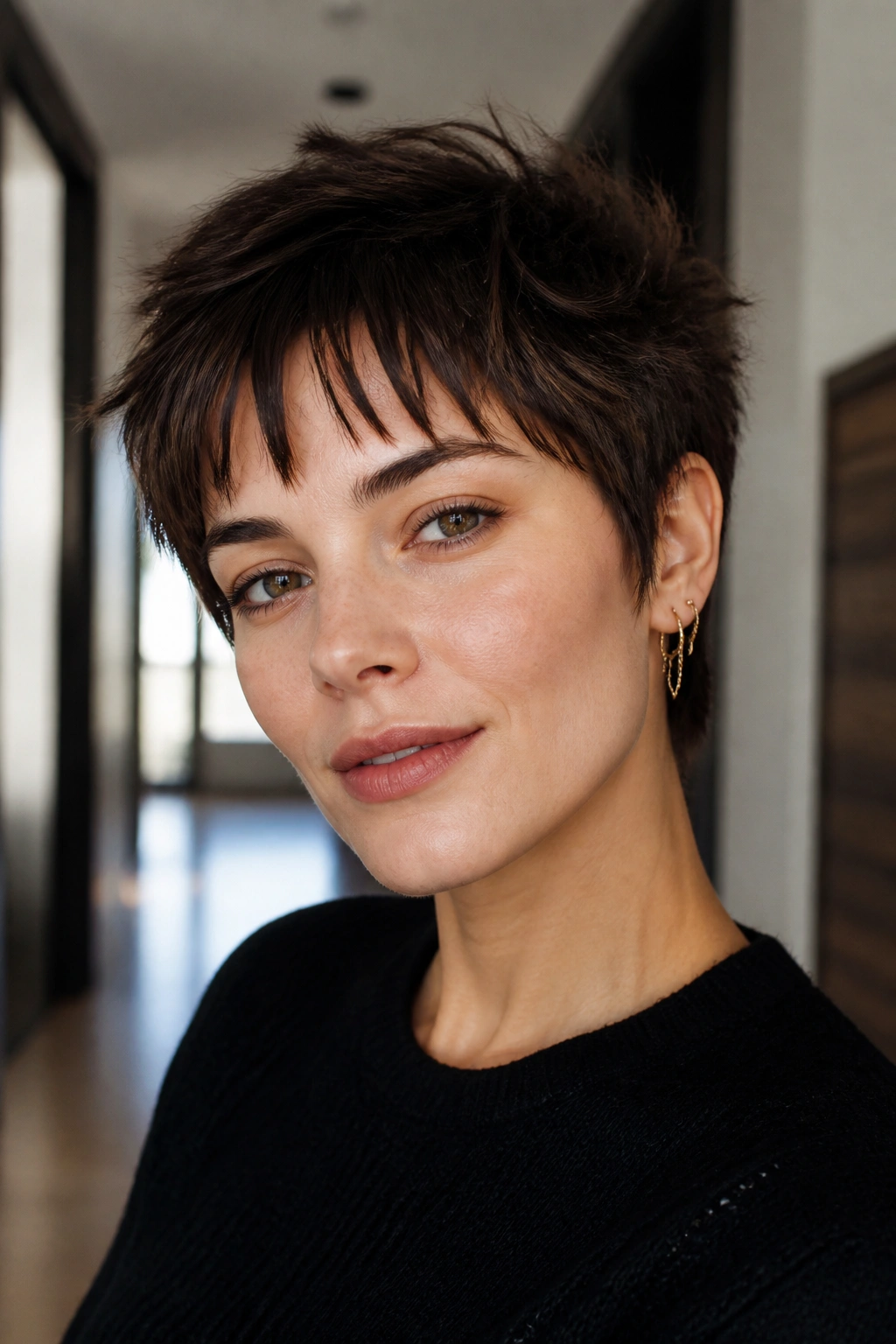
A bixie sits between a bob and a pixie, which makes it useful if you want short hair but not a full crop. On a round face, the shape works because it can add height on top while keeping the sides tidy. Choppy bangs finish the job by breaking the front into pieces instead of drawing a hard line across the forehead.
This cut has a little attitude. It should. The top is usually more textured than the sides, and the fringe often falls in separate little sections that can be pushed forward, swept over, or finger-styled into place. It is one of the better options if you like short hair and do not want your face to feel boxed in.
The nape and temple area matter a lot here. Longer sideburns or soft side pieces help elongate a round face, while a clean taper keeps the whole thing from puffing out. If the sides are too full, the balance goes wrong fast.
A matte paste is usually enough. Use a tiny amount. Seriously, a tiny amount. Too much and the fringe starts clumping, which defeats the entire point of the cut.
12. Long Curls with Shattered Fringe

Can curly hair wear fringe without turning into a triangle? Yes, if the fringe is shattered and cut with the curl pattern in mind. On a round face, that broken fringe gives shape without a heavy block sitting across the forehead. It also keeps the eyes open, which matters more than people think.
The big mistake with curly bangs is cutting them too short when wet. Shrinkage is real. A fringe that lands at brow level in the chair may bounce well above the brows once it dries. That is why dry cutting or cautious wet cutting works better. Leave room. Curly hair will use it.
How the Curl Rule Works
- Leave the fringe longer than you think you need
- Cut into the curl pattern, not against it
- Keep the ends uneven so the bangs do not form a shelf
- Use curl cream lightly, then let the pieces fall where they want
A shattered fringe on curls should feel soft and airy, not flat. If the curl is tight, the longer side pieces help a lot. They pull the eye down and keep the face from looking wider through the middle.
13. Textured Blunt Bob and Jagged Fringe
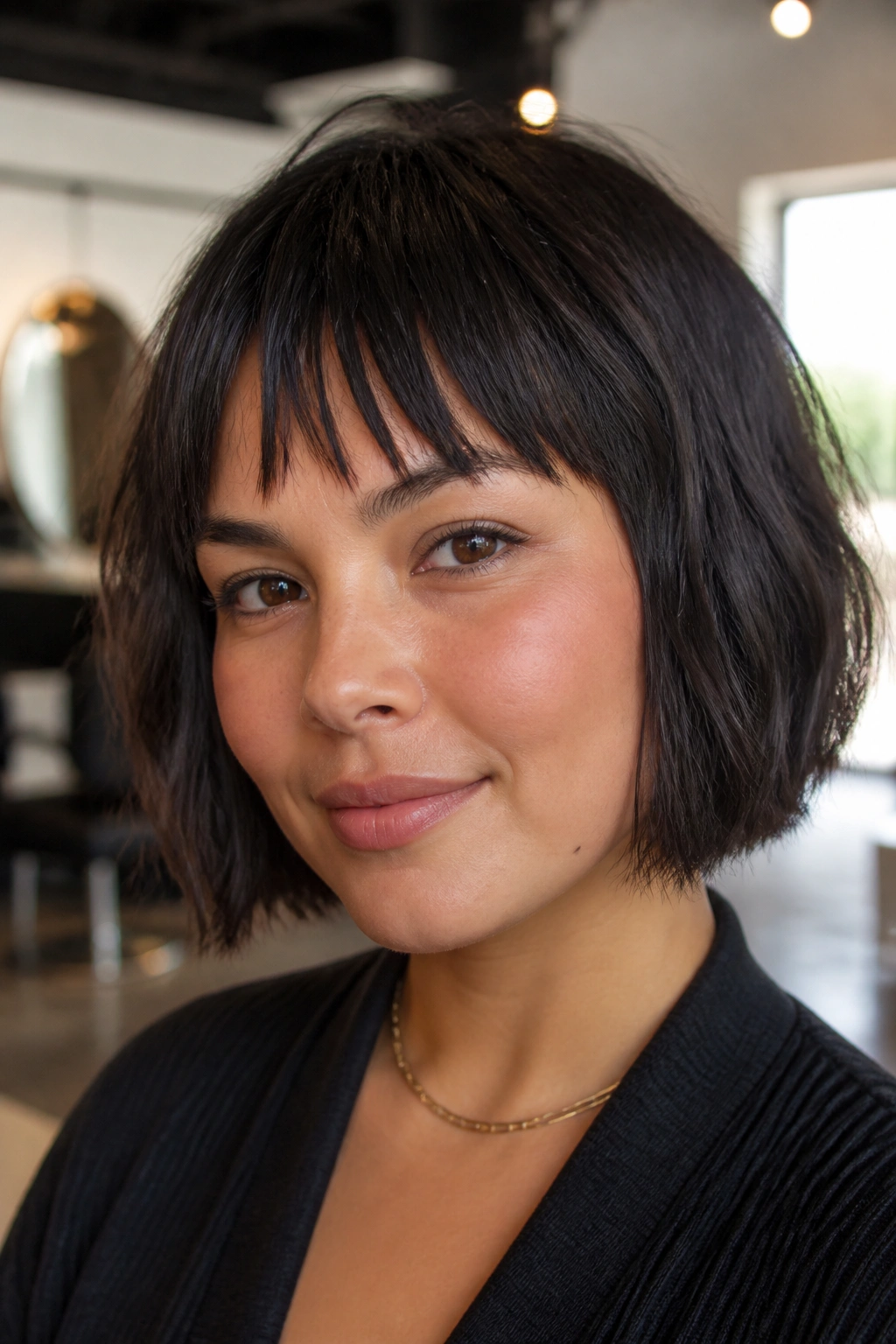
A blunt bob sounds like the opposite of a flattering cut for a round face, but the fringe changes the story. If the bob line is clean and the fringe is jagged, the contrast creates structure. The eye sees the haircut as intentional, not broad. That matters.
This works best when the bob lands at the jaw or a touch below it. The fringe should be broken into tiny sections so it does not become a straight bar. If both the bob and the fringe are blunt, the whole shape can feel heavy. One clean edge is enough. Two is too much.
Thick hair loves this if the ends are thinned carefully. Fine hair can wear it too, but the bob needs enough density to hold the shape. A root-lift spray at the crown helps keep the silhouette from collapsing, especially if the hair tends to sit flat after drying.
I’d call this a sharper, more graphic option. It is not soft. That is the point. Sometimes a round face looks best when the hair adds a little hard line.
14. Feathered Layers with a Light Fringe
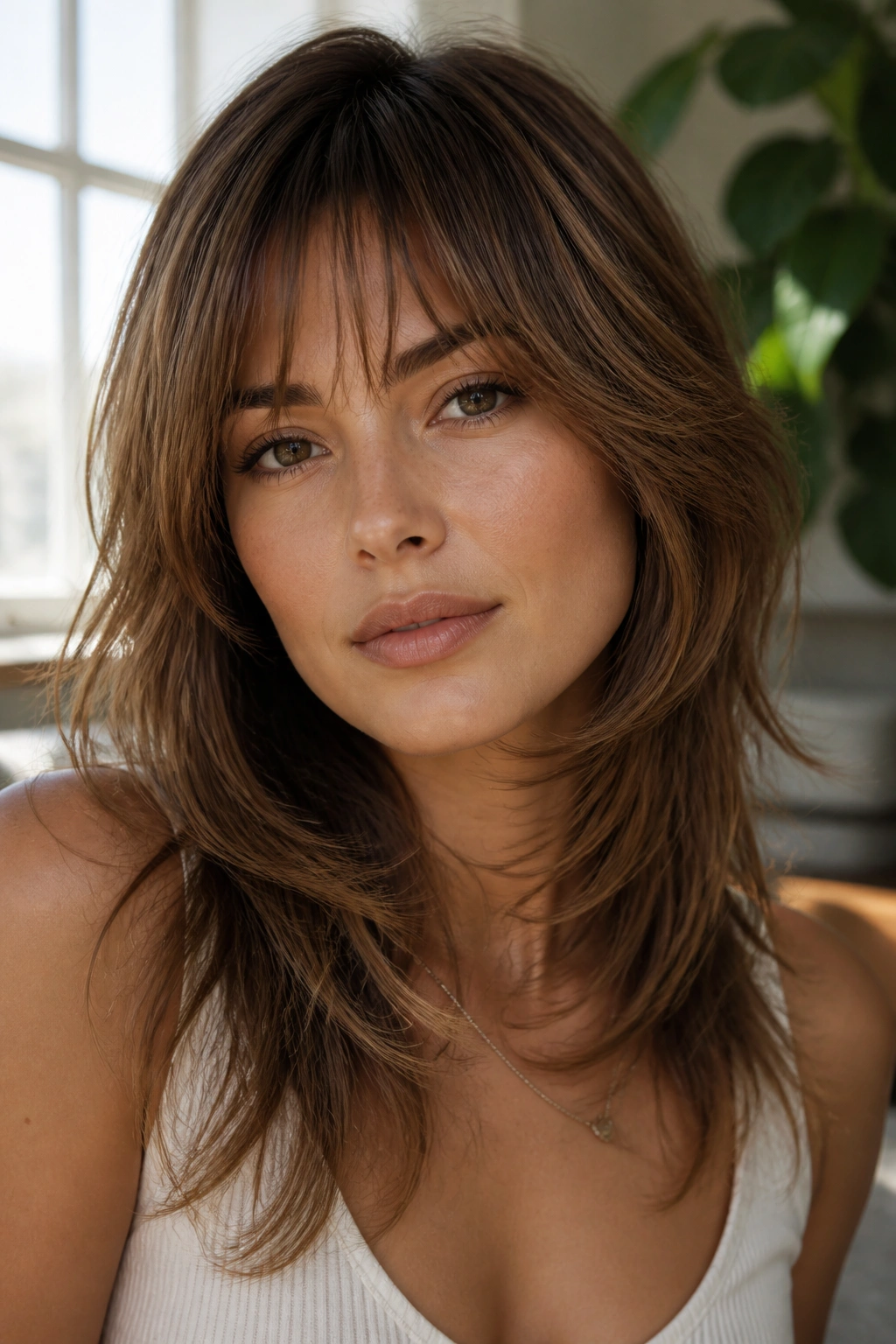
Feathered layers give you softness without dragging the face wider. They taper the outline, lift the ends, and keep the front of the cut moving. A light fringe fits right into that idea. It should hover, not sit heavy.
This is a good choice if you like hair that feels feminine and low-pressure. The fringe does not need to be dense to matter. A few wispy pieces across the forehead and a couple of longer ones at the temples can be enough. The result is subtle, but it works.
Where the Movement Should Happen
The most useful motion is usually around the cheekbones and jaw, not right at the ends of the fringe. That’s where the face gets its shape. If the feathering starts too low, the haircut can look too soft and lose definition. If it starts too high, the top can get fluffy.
Blow-dry with a medium round brush and keep the wrist loose. A stiff hand makes the fringe look over-trained. A little bend is better.
15. Deep Side Part and Face-Framing Fringe for Round Faces
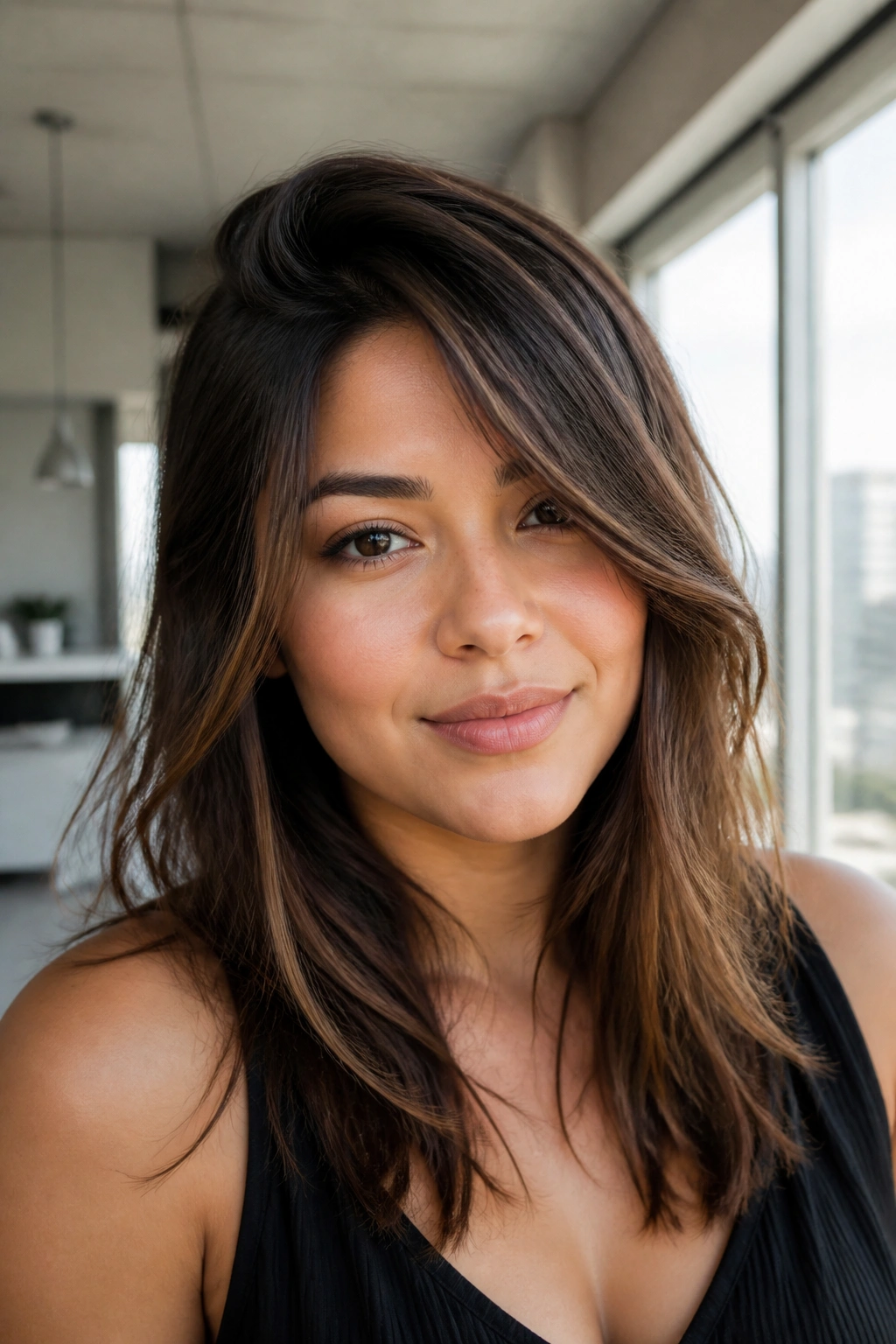
Some people do not want “bangs” at all. They want the feeling of fringe without the commitment of hair sitting on the forehead. A deep side part with a face-framing fringe does exactly that. It keeps the front open, adds a diagonal line, and gives a round face more length than a centered shape usually does.
The fringe pieces should begin around the cheekbone and taper down toward the jaw. That line helps the face look narrower through the middle. If the shortest piece sits too high and too close to the temple, the style can become top-heavy. If it starts too low, it loses the lifting effect.
This is a clean choice for straight, wavy, or softly curled hair. It also plays well with ponytails and clips, which makes it more practical than a lot of full fringe styles. You get movement without having to wear hair over your forehead every single day.
My favorite trick: set the side part while the hair is still damp, then clip the front away from the face for ten minutes before drying. It holds the direction better and cuts down on that awkward flat patch at the root.
16. Curly Fringe for Round Faces

Curly fringe gets a bad reputation from people who have only seen it cut wrong. On a round face, it can be excellent when the length is left long enough to account for shrinkage and the shape is broken into small, wearable pieces. The fringe becomes a soft frame instead of a blunt wall.
How Much Length to Leave
Usually more than you think. That is the honest answer. Curly hair can spring up a full inch or more, depending on texture and curl pattern. Cut too short and the fringe can sit in the middle of the forehead with no way to fix it except waiting. Nobody enjoys that.
A curly fringe should blend into the front layers. If it sits separate from the rest of the haircut, the face can feel wider instead of longer. Dry cutting is often the safer route because it shows where each curl naturally lands. The stylist can trim curl by curl rather than guessing.
Use a small amount of curl cream or gel, then leave the fringe alone. Touching it too much makes the pieces frizz and spread. A defined curl reads cleaner around the face than a fuzzy one.
17. Airy Baby Fringe with Longer Sides
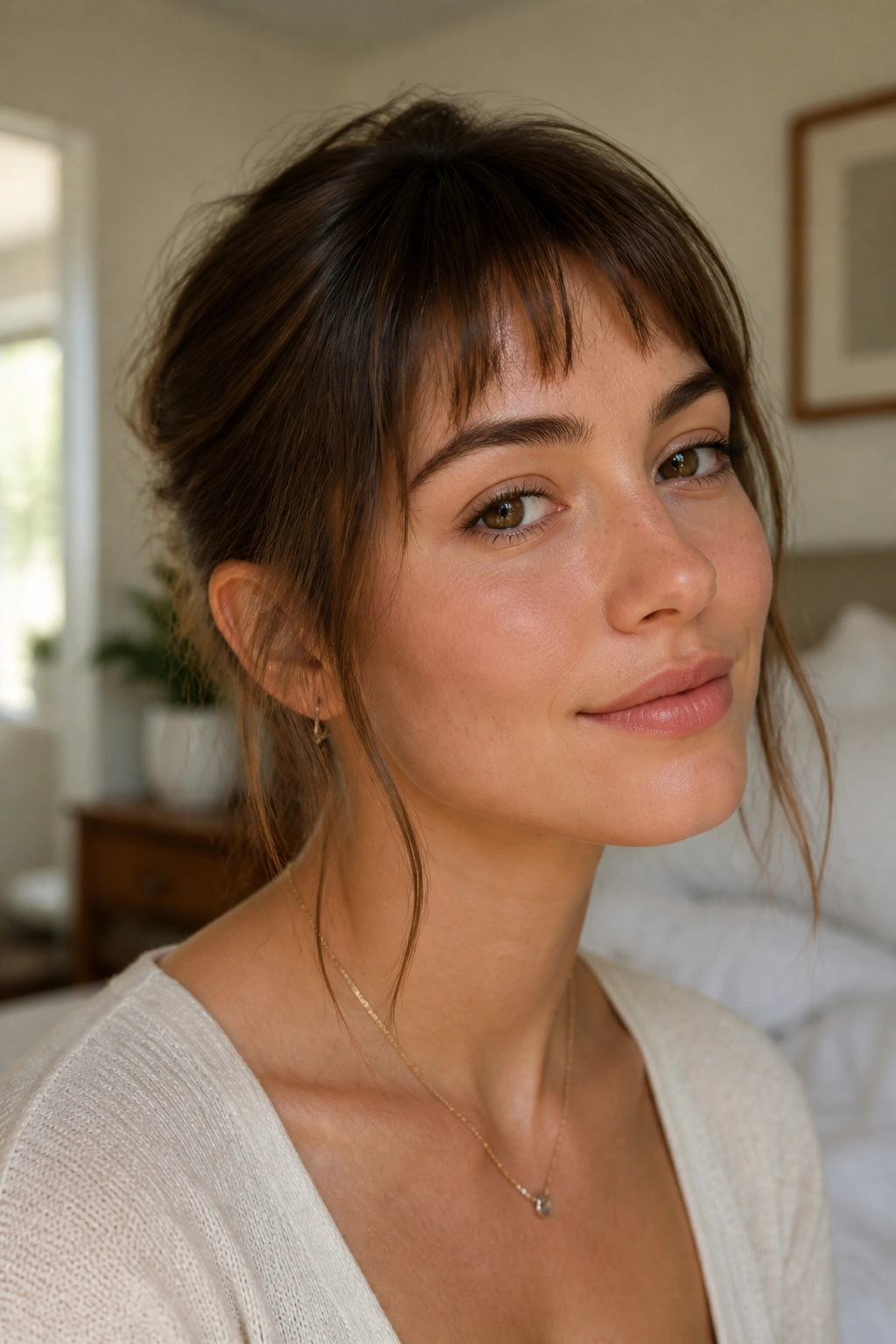
Airy baby fringe is tiny, yes, but it does not have to feel severe. The trick is keeping it broken and pairing it with longer side pieces that soften the temples. On a round face, that combination can look fresh instead of harsh.
The fringe should sit above the brows without forming a solid block. If it gets too dense, it stops looking airy and starts looking like a statement cut that is trying a little too hard. Keep it choppy. Keep it light. That is the whole job.
This style works best on hair that can hold a bit of direction. Straight and slightly wavy textures are easiest. Very curly hair can do it, but the maintenance climbs fast. If you like bold makeup or strong brows, this fringe can be a fun way to show them off.
Nope, it is not the easiest option. It is one of the sharper ones. But if you want a small fringe that still leaves most of the forehead open, it earns its place.
18. Disconnected Fringe with Long Lengths

A disconnected fringe gives you two jobs at once: shape at the front and length at the temples. That length matters on a round face because it keeps the sides from looking cut off. The eye follows the longer pieces down, and the face feels a touch slimmer.
This style is especially useful if you want bangs but still wear your hair up often. The longer temple pieces can tuck behind the ears, blend into layers, or fall out of a ponytail in a soft way. It is practical without being boring.
What to Watch For
- Keep the center shorter than the sides
- Leave enough length to tuck or clip the fringe back
- Avoid a dense root area that fights the disconnect
- Style with a light bend, not a stiff curl
A disconnected fringe can look unfinished if the cut is too random. The disconnection needs to be intentional. That distinction matters more than people think.
19. Shaggy Mullet with Wispy Fringe

A shaggy mullet is not subtle, and that is exactly why it works for some round faces. The crown has lift, the sides stay broken, and the back length pulls the silhouette downward. Add a wispy fringe, and the front stays light enough to keep the whole cut from feeling square.
This is one of those styles that benefits from a bit of mess. Not chaos. Just movement. The fringe should be soft and separated, with the shortest pieces sitting higher than the brow and the longer pieces trailing toward the temples. If the fringe gets too full, the cut loses the airy look that makes it flattering.
I would not choose this if you want a tidy, polished style every day. I would choose it if you like texture, a bit of edge, and a haircut that does not need to be perfect to look right. It is also one of the best places to let natural wave do the work.
Short sentence. The cut needs attitude.
20. Collarbone Cut with Split Fringe

A collarbone-length cut gives a round face a little more vertical space, and a split fringe keeps the front from becoming a solid band of hair. That pairing works because it gives you length through the body of the cut and openness at the forehead.
Why It Behaves Well on Round Faces
The split at the center creates a soft frame, not a hard line. The longest pieces sit near the cheekbones and draw attention down the side of the face. That is where the shape starts to feel slimmer. If the fringe is too thick, the collarbone length cannot save it. The front still matters.
This cut is a smart choice if you like to wear your hair both down and half-up. The fringe can part and fall naturally, or it can be tucked behind the ears without looking awkward. That kind of flexibility makes a difference in real life.
A light blowout cream is enough for most hair types. Heavy serums can make the split fringe collapse and lose that gentle opening at the center.
21. Tousled Pixie with Choppy Fringe
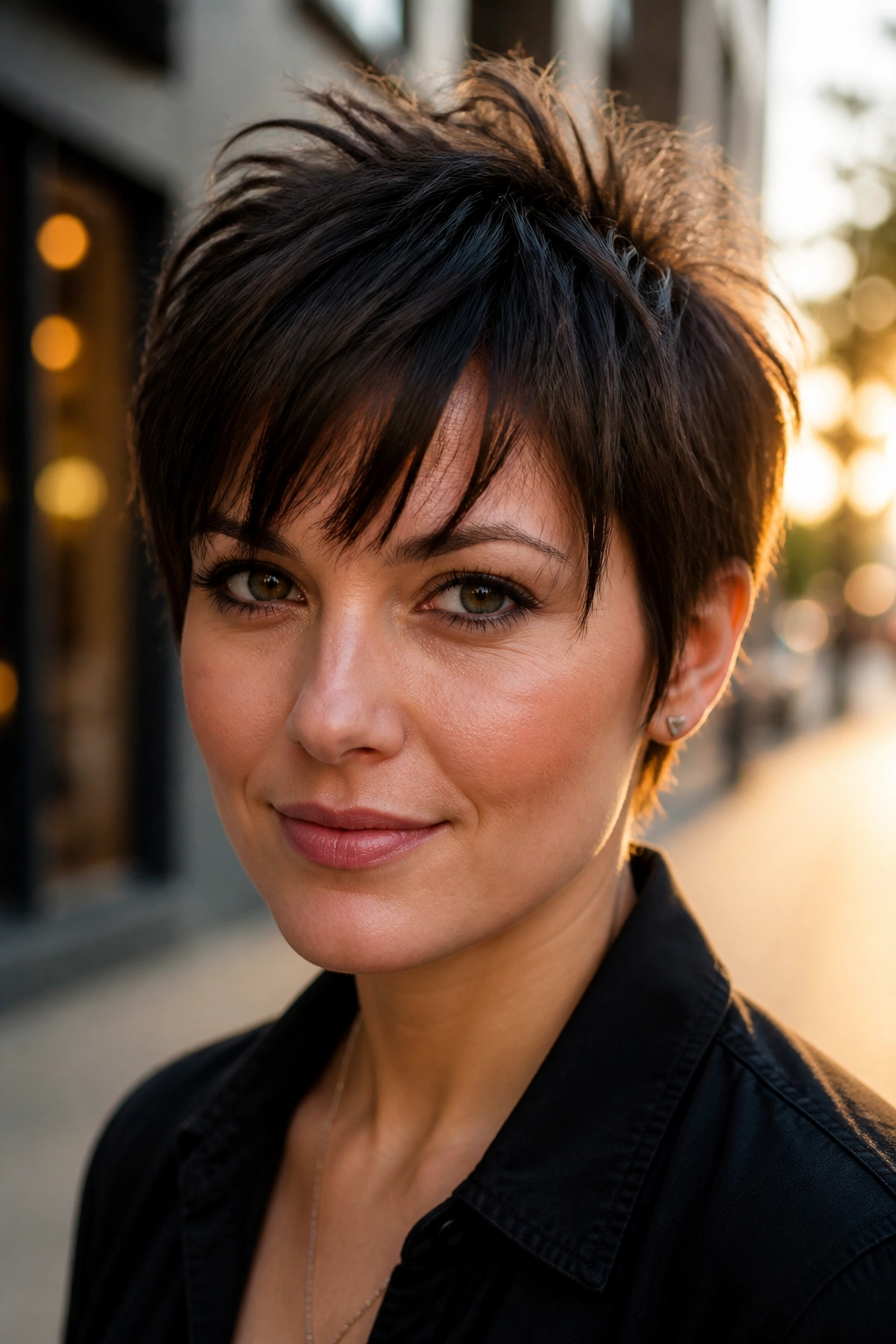
A pixie can flatter a round face if the top has enough lift and the fringe is not cut in one blunt strip. Choppy fringe gives the front texture, while the tousled top keeps the silhouette from hugging the face too closely. That lift is what matters.
This is not a lazy haircut. It needs trimming. It also needs a little styling product to keep the top from lying flat. A matte paste or a light clay can work, depending on hair density. Use a small amount and push the hair up and forward rather than smoothing it down. Smoothing is the enemy here.
What I like about this shape is the contrast. The ears and nape can be tight, while the front stays soft and slightly irregular. That contrast creates angles. Angles are good on round faces. Simple, but true.
If you want a short cut that still has movement around the forehead, this is a strong one.
22. Long Layers with a Soft, Broken Fringe for Round Faces
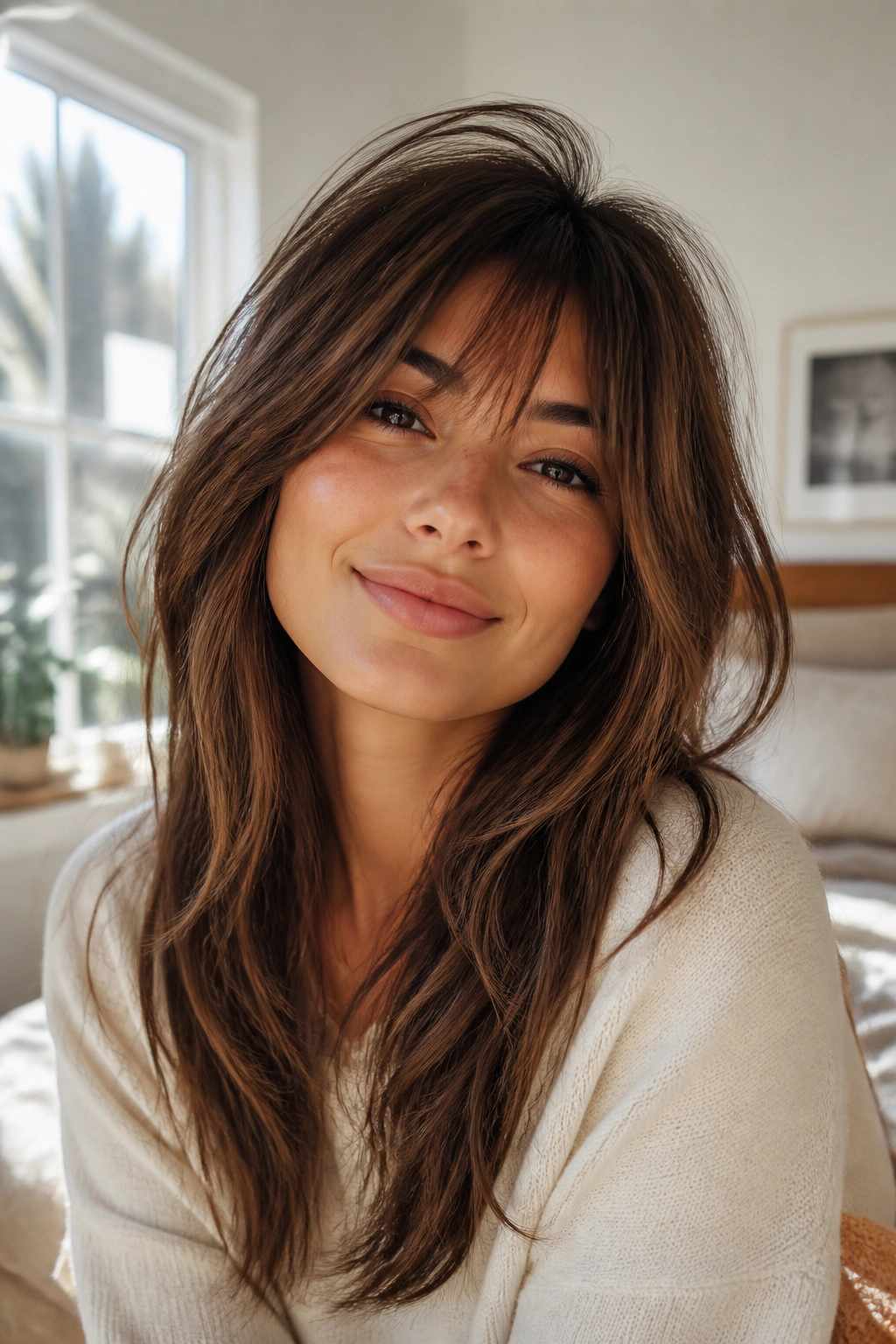
Long hair can absolutely wear fringe on a round face, but the fringe has to earn its place. A soft, broken fringe keeps the front from feeling heavy while the long layers carry the length down the body of the hair. That combination is calm, flattering, and easier to grow out than most sharper cuts.
The fringe should not sit as one dense section. It needs separation. A few short pieces near the center, longer ones at the edges, and enough texture to let the forehead breathe. If the bangs are too thick, the face can look shorter than it is. If they are too wispy, they disappear. Right in the middle is usually best.
This is the style I’d suggest to someone who wants bangs but is nervous about regret. The grow-out is forgiving. The styling is straightforward. And on a round face, the long layers keep the outline from looking wide at the cheeks.
One last thing: if your hair is very thick, ask for internal weight removal, not surface thinning that frays the ends. Those are not the same thing. A good cut will move. A bad one will puff.
