



Micro bangs are not polite hair.
They sit high on the forehead, stop short of the brows, and change the whole face with one sharp snip. That’s the appeal, and also the warning label. If you’ve ever looked at a fringe and thought, too sweet, too safe, too much hair in my eyes, micro bangs come in with a very different mood.
The cut can make a bob feel harder, a shag feel cooler, and long hair feel intentional instead of plain. It also shows everything: a cowlick near the hairline, a strong brow, a slightly off-center part, the way your hair dries when you forget to blow-dry it straight. There’s no hiding behind a long curtain of fringe here.
Tiny fringe. Big attitude.
Some versions are crisp and graphic. Others are wispy, curly, shattered at the ends, or paired with cuts that carry most of the drama. The 14 looks below give you the range, from clean and blunt to shaggy, slicked, and high-contrast, so you can find the version that matches the kind of bold you actually want.
1. Blunt Micro Bangs
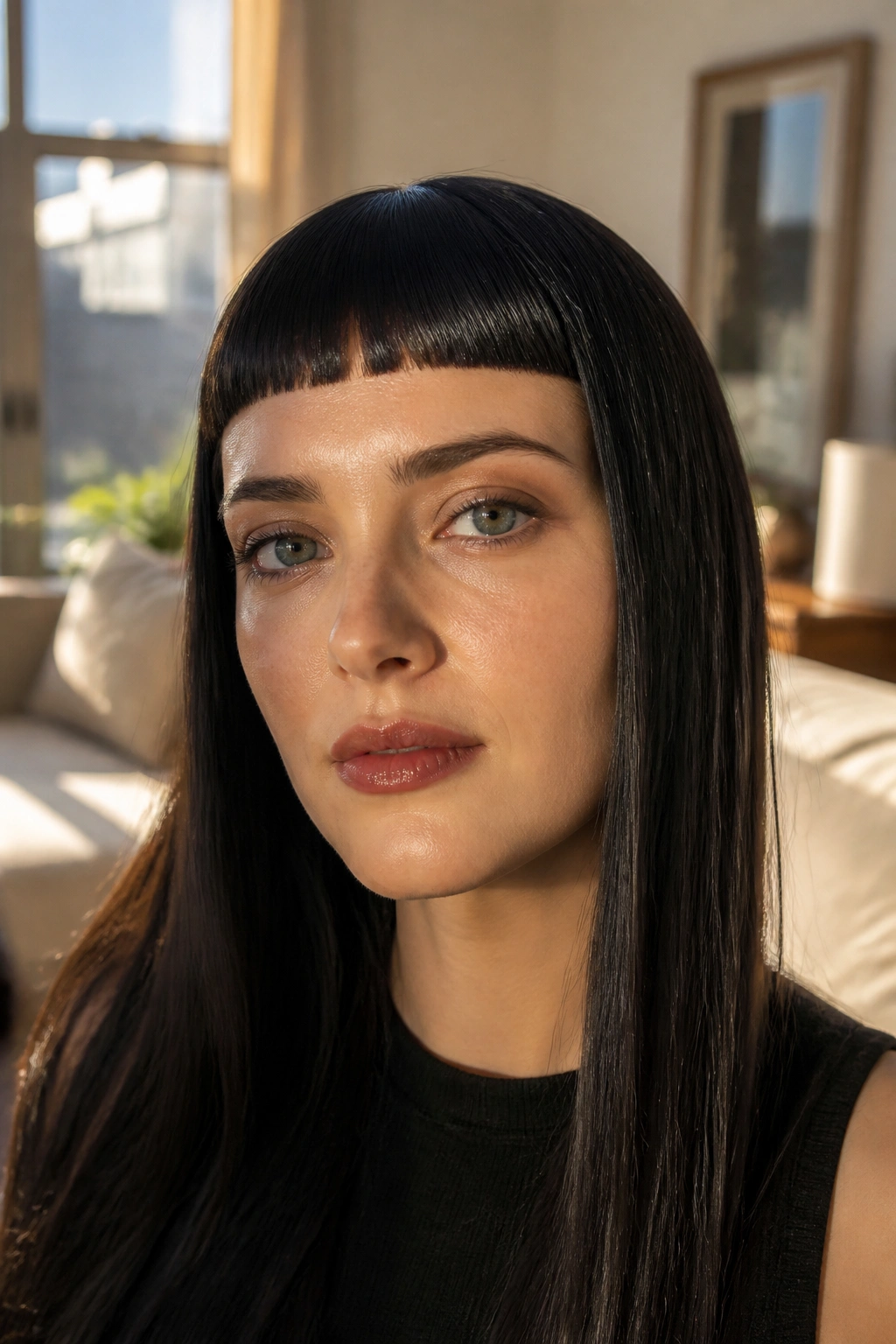
Blunt micro bangs do not whisper. They land as a hard line across the forehead, usually cut a little above the brows so the shape feels deliberate rather than accidental. On straight hair, they can look almost architectural, which is a fancy way of saying they draw a clean box around the eyes and brows.
Why the line matters
A blunt fringe works because it gives the face a clear edge. There’s no feathering to soften the shape, so your eyes go straight to the center of the face. That can make a jaw-length bob look sharper, and it can also wake up long hair that was starting to drift into “just hair” territory.
Quick details that help
- Best with hair that falls straight or only has a slight bend.
- Usually needs a flat iron or a small round brush after washing.
- Looks strongest when the ends are cut clean, not thinned to death.
- Needs trims every 2 to 4 weeks if you want to keep the line tight.
Pro tip: ask for the tiniest bit of softness at the temples if your hairline is high or your face is very narrow. That small adjustment keeps the fringe from feeling like a ruler pressed across your forehead.
2. Wispy Micro Bangs
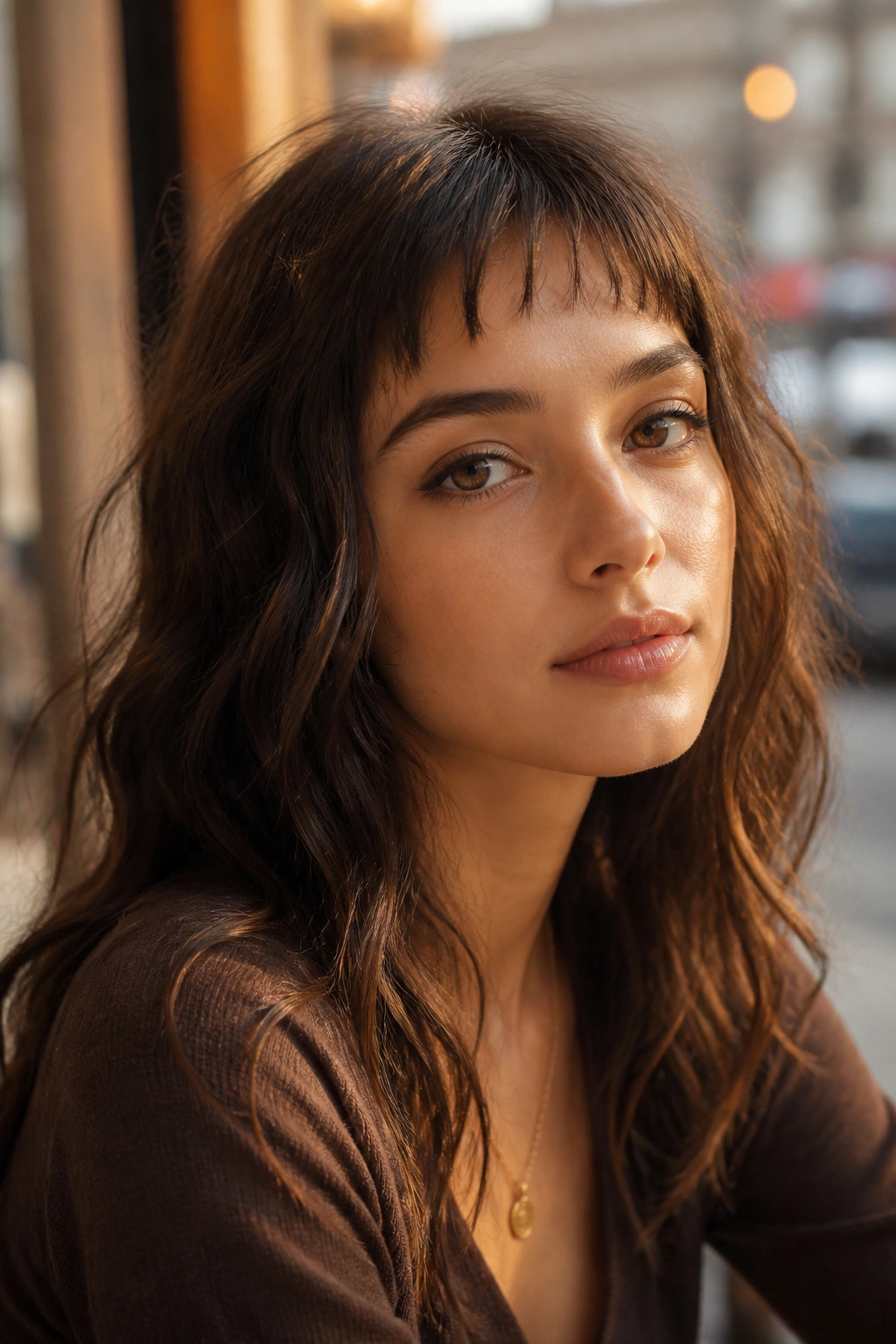
If blunt micro bangs feel too stern, wispy ones are the better move. The shape still sits short, but the ends are broken up so a little forehead shows through. That small bit of air changes everything. The cut reads lighter, less severe, and easier to grow out if you decide the commitment was a little too dramatic for your taste.
What makes them different
Wispy micro bangs are usually point-cut or lightly textured, which means the ends don’t form one solid wall. That’s useful if your hair is fine, because the fringe can still look full without turning heavy at the roots. It also helps if you wear makeup and want the bangs to frame your eyes instead of stealing the whole show.
How to wear them without flattening them
A tiny amount of mousse on damp hair goes a long way here. Rough-dry the fringe with your fingers, then bend any stubborn pieces with a 1-inch iron so they sit in a soft curve instead of sticking straight out. Skip heavy oils at the root; they make wispy bangs collapse by lunchtime.
This is the version I’d send to someone who wants a little bite, not a full haircut takeover.
3. Curly Micro Bangs
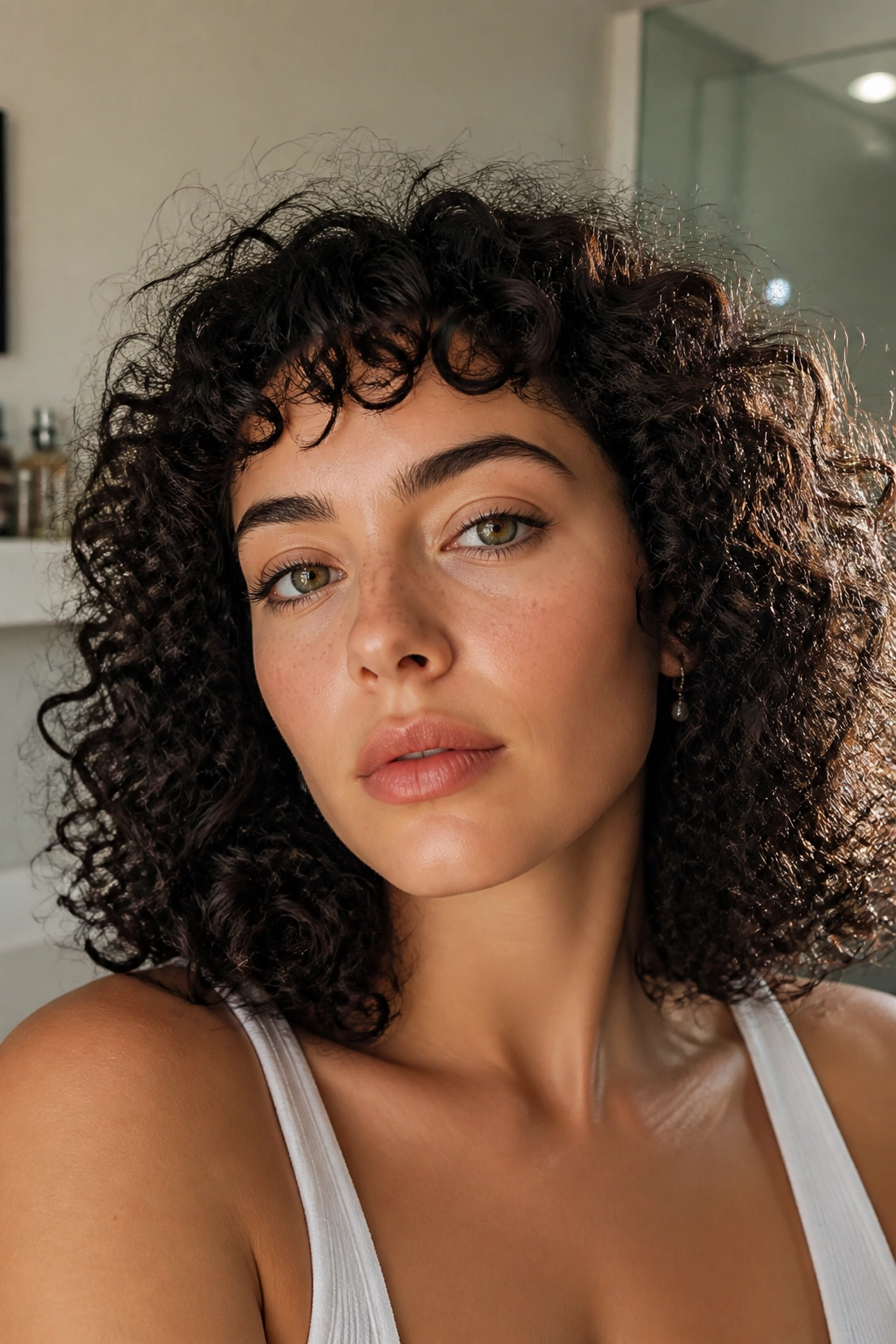
Can curls wear micro bangs without turning into a puffed-up fringe? Yes, but only if the cut respects the curl pattern. Curly micro bangs need to be shaped dry, curl by curl, because shrinkage can turn a tidy fringe into a surprise crop if the scissors are too optimistic.
That’s the part people get wrong. They cut for wet length and end up with a fringe that sits much shorter once it dries. With curls, a tiny bit of extra length at the center often saves the whole look. The result is bouncy rather than bulky, which is the difference between cool and confusing.
How to wear it
- Ask for a dry cut or a cut on hair that’s already been diffused halfway dry.
- Leave the center of the fringe a little longer if your curl pattern springs up fast.
- Use curl cream or a light gel, not a crunchy shell.
- Diffuse on low heat until the fringe is about 80 percent dry, then let it finish on its own.
Micro bangs on curls look best when they feel intentional, not tamed. That’s the trick. You want the curl to be visible, not smoothed into a fake straight line that fights the rest of your hair.
4. Choppy Micro Bangs
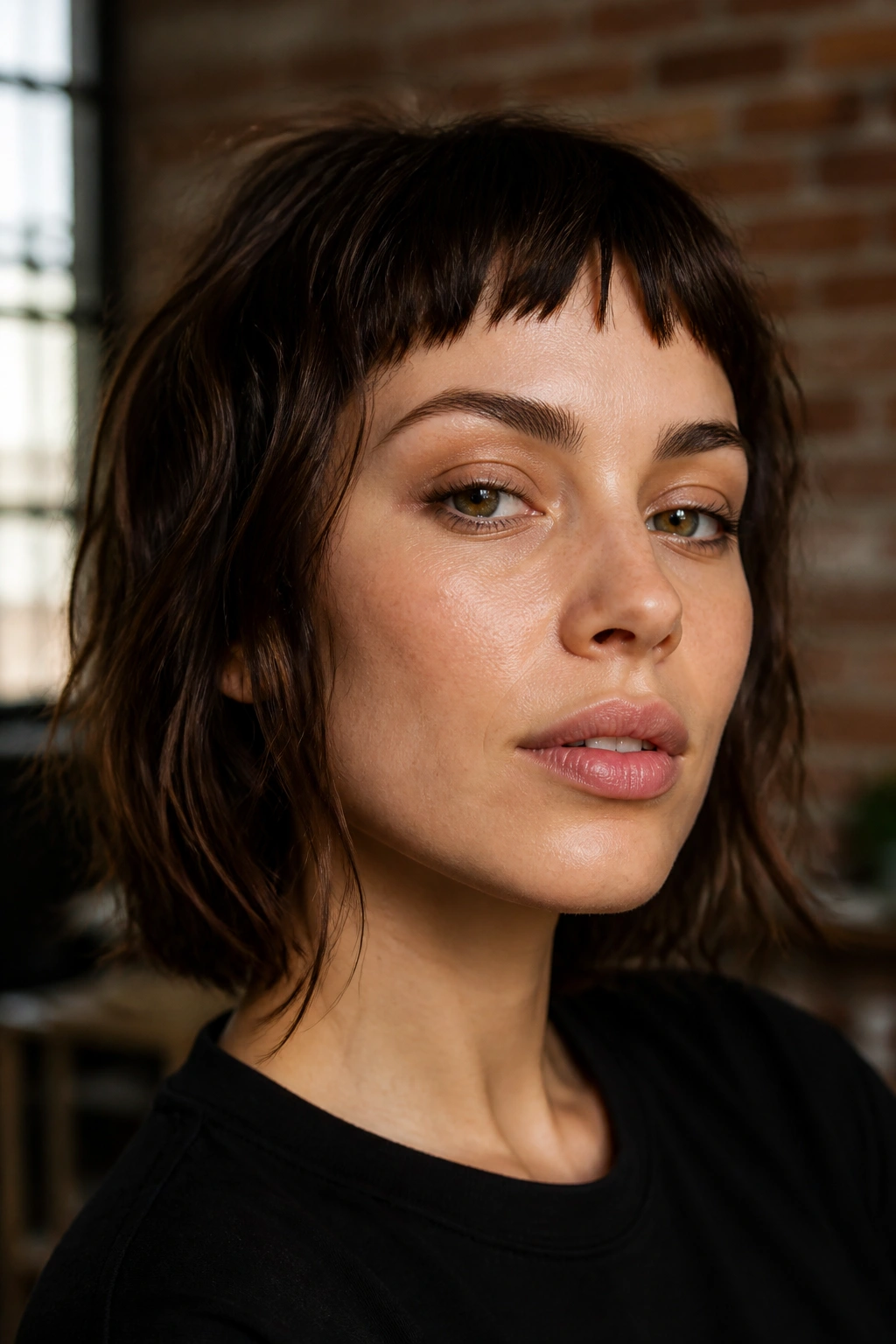
Picture a fringe that had a little argument with a razor. That’s the feeling here. Choppy micro bangs break the line into small, uneven pieces, which makes them look tough in a low-key way—less polished, more lived-in, and a lot more forgiving if your hair has a mind of its own.
The cut works especially well when the bangs are point-cut or sliced so the ends land at different lengths. That little irregularity keeps the fringe from sitting like a solid block. It also helps if your hair is thick, because the choppiness removes weight without making the fringe look sparse.
What they’re good at
- Softening a square forehead or strong brow line.
- Hiding the exact point where a cowlick tries to boss the fringe around.
- Working with matte texture spray or a tiny dab of styling paste.
- Pairing with shags, mullets, or rough dry cuts.
A choppy fringe is the one I’d pick if you want movement more than neatness. It’s not the most precise version of micro bangs, and that’s exactly why it feels so current. The shape can look a little rebellious even when the rest of the haircut is tame.
5. Arched Micro Bangs
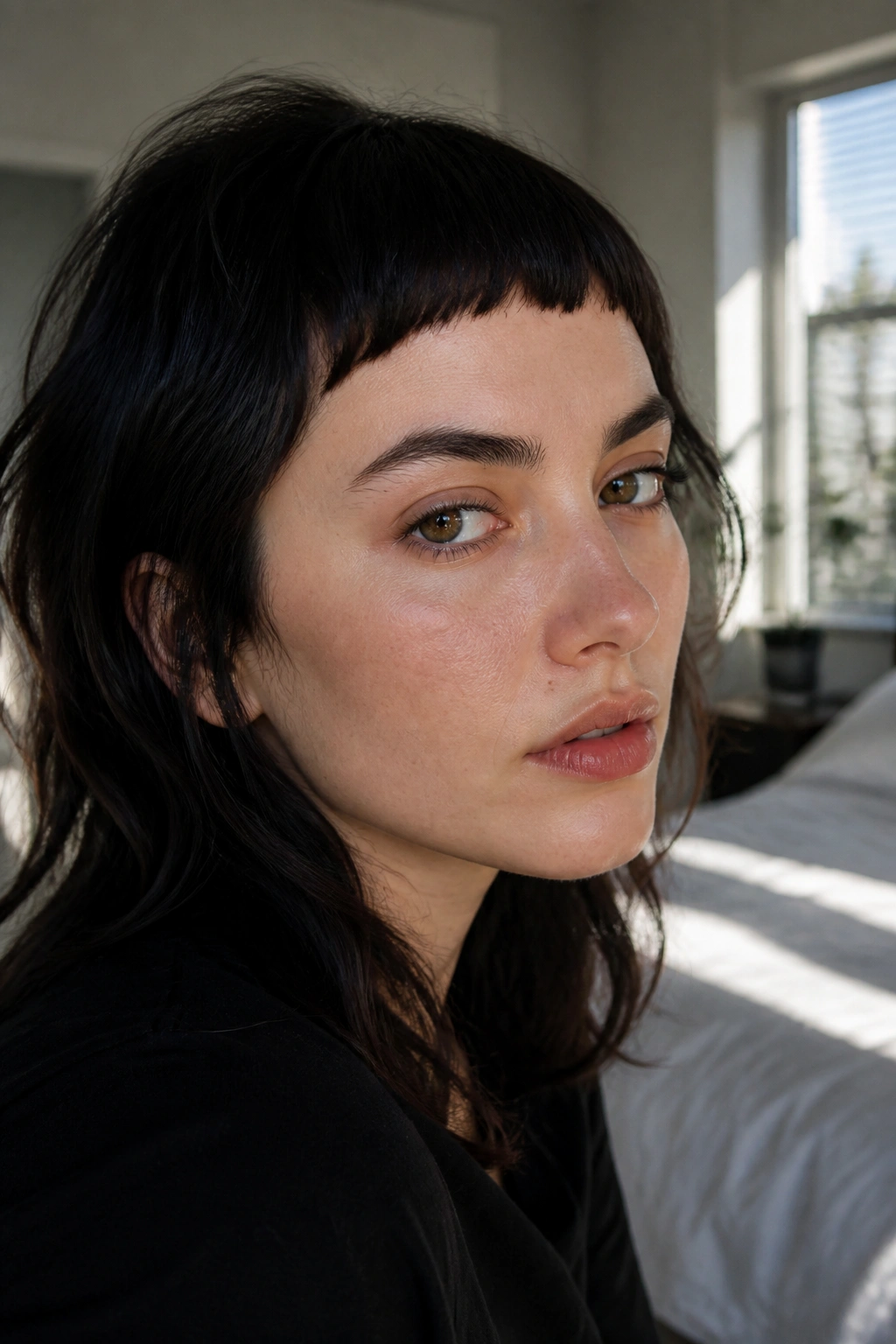
Straight across isn’t the only way to wear a short fringe. Arched micro bangs curve gently so the center sits a touch shorter and the sides sweep down a bit longer. That shape sounds small on paper, but in a mirror it changes the whole balance of the face.
The curve softens the look of a micro fringe without taking away the boldness. You still get the short, exposed forehead moment, but the line feels friendlier. I like this version on faces with strong brows or sharper angles, because the arch gives the eye somewhere to travel instead of stopping cold.
A good arched fringe also behaves well with tucked hair, low buns, and sleek ponytails. The curve keeps the style from reading boxy, which is the big danger with shorter bangs when they’re cut too evenly. And if your hair naturally wants to bend at the temples, this shape works with that instead of fighting it.
One thing people miss: the arch should be subtle. If the center is too short and the sides drop too much, the fringe can start looking like a crescent moon instead of a bang line. Keep it gentle. That restraint is what makes it chic.
6. Micro Bangs With a Bob
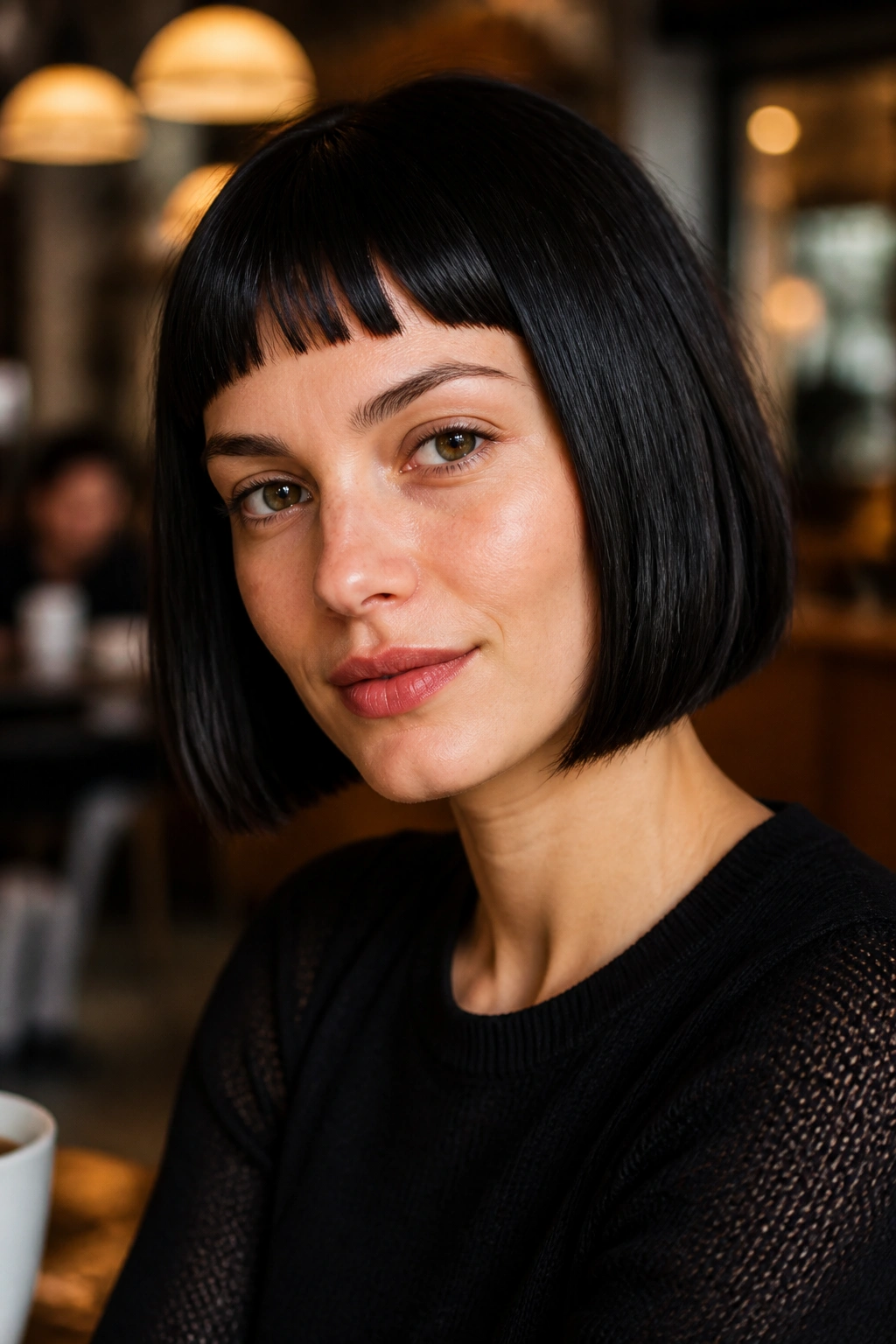
A bob without bangs can feel neat. Add micro bangs and the whole haircut gets a spine.
The appeal is the clean geometry. A chin-length or jaw-length bob already has shape, and the tiny fringe gives it a second line across the face. That makes the haircut read sharper and more finished, especially when the bob itself is blunt rather than heavily layered. The two shapes speak the same language, and that matters more than people think.
Best bob lengths for this look
- Chin-length bob: the sharpest version, with a strong line that sits close to the jaw.
- Jaw-length bob: a little softer, easier to grow out if you tire of the fringe.
- Rounded bob: gives the micro bangs a prettier, more face-framing feel.
- Blunt bob: the loudest match, since both cut lines stay clean.
The best version keeps the bob and fringe in the same mood. If the bob is messy and the bangs are perfectly straight, the haircut can feel split in half. If both are slightly rough or both are sleek, the shape makes sense at once. That’s the version that gets compliments from strangers who can’t quite tell why the haircut looks expensive. It’s the line work.
7. Micro Bangs With a Pixie Cut
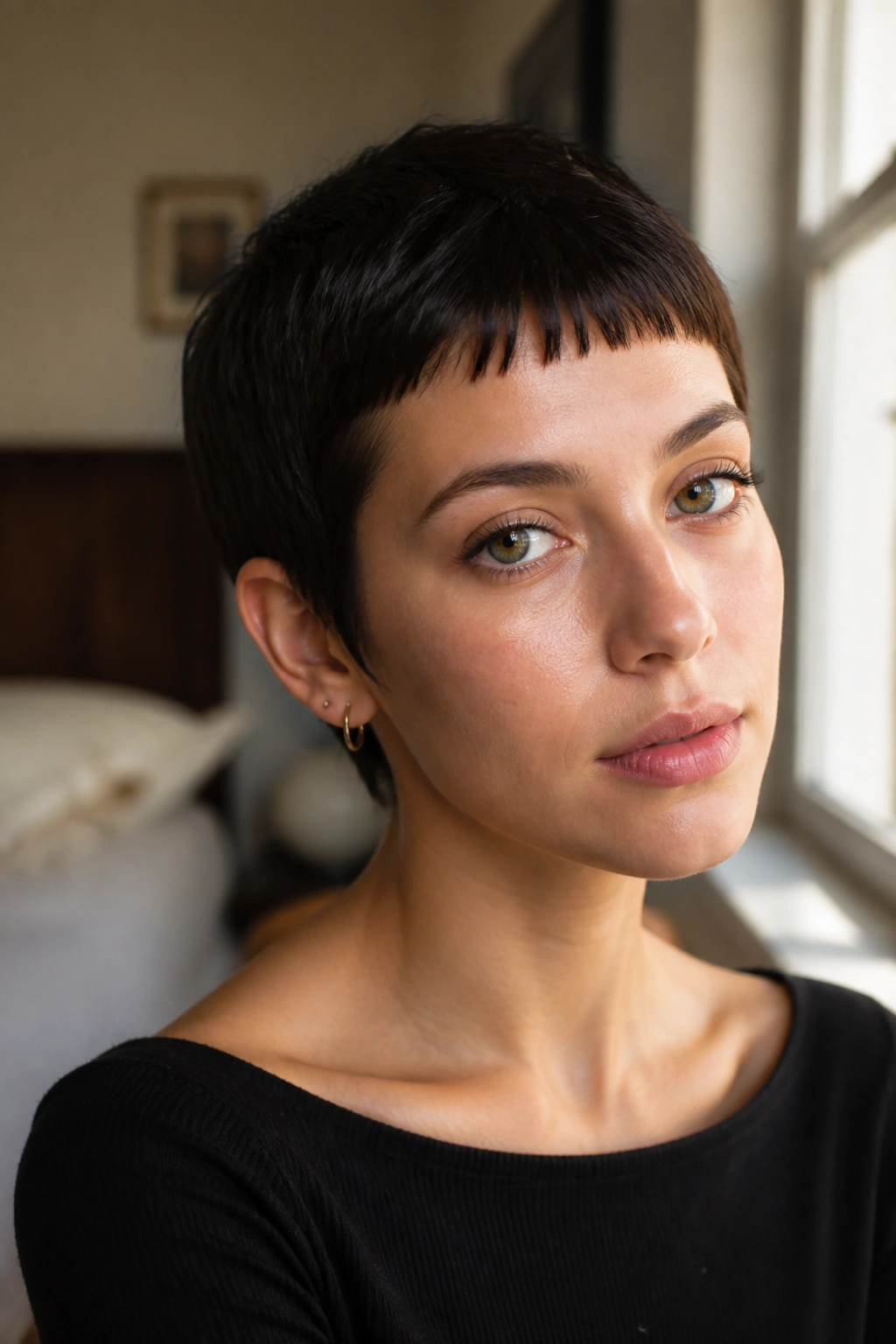
This is the shortest route to a bold look. A pixie cut with micro bangs exposes the face, the ears, the neck, and most of the forehead, so the fringe becomes the one piece of softness left near the eyes. That contrast is what gives the style its energy.
The nice thing about pairing micro bangs with a pixie is that the cut doesn’t look random. It looks chosen. A lot of short cuts can tip into practical or sporty territory, but a tiny fringe pulls the whole thing back toward fashion. It frames the face without hiding it, which is a harder trick than it sounds.
The styling is mercifully simple. A pea-sized amount of paste or matte cream is usually enough to separate the bangs and keep them from sticking flat to the forehead. If you want a little lift, rough-dry the fringe in the direction you want it to sit, then pinch the ends between your fingers while they cool. That tiny bit of shaping goes a long way.
The catch is upkeep. Pixies grow out fast, and micro bangs grow out even faster in your line of sight. If you like a neat shape, this cut asks for regular trims and a little discipline. No drama. Just maintenance.
8. Micro Bangs With a Wolf Cut
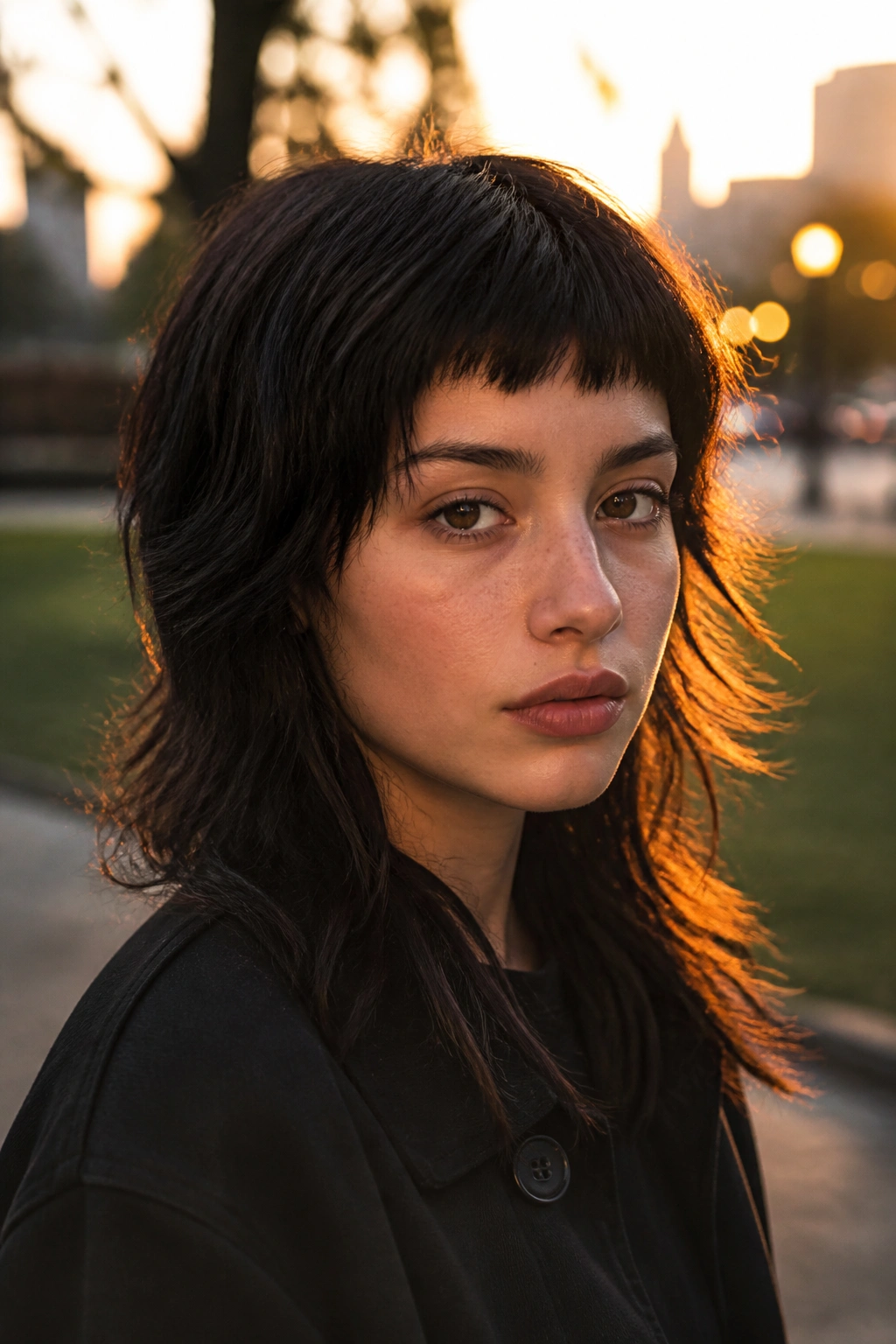
If your fringe is tiny but the rest of your hair wants to live a little, the wolf cut is where that tension starts to work. The layers give the haircut movement, while the micro bangs keep the front from getting too soft or predictable.
What I like about this pairing is the contrast. The bangs are blunt or slightly broken, and the rest of the hair falls in loose, shaggy pieces that can flip, bend, and move around the face. That stops the short fringe from feeling isolated. It belongs to a larger shape, not just a patch of forehead.
A wolf cut also buys you a little freedom with styling. Air-dried waves, rough blowouts, and a touch of texture spray all make sense here. The more polished you make it, the more the bangs stand out. The more undone it is, the more the whole cut leans into that messy-rock energy people keep trying to copy and usually overthink.
If you ask for this cut, keep the face-framing layers below the cheekbone and let the fringe stay separate. That separation is part of the charm. Blend too much and you lose the snap.
9. Micro Bangs With a Mullet
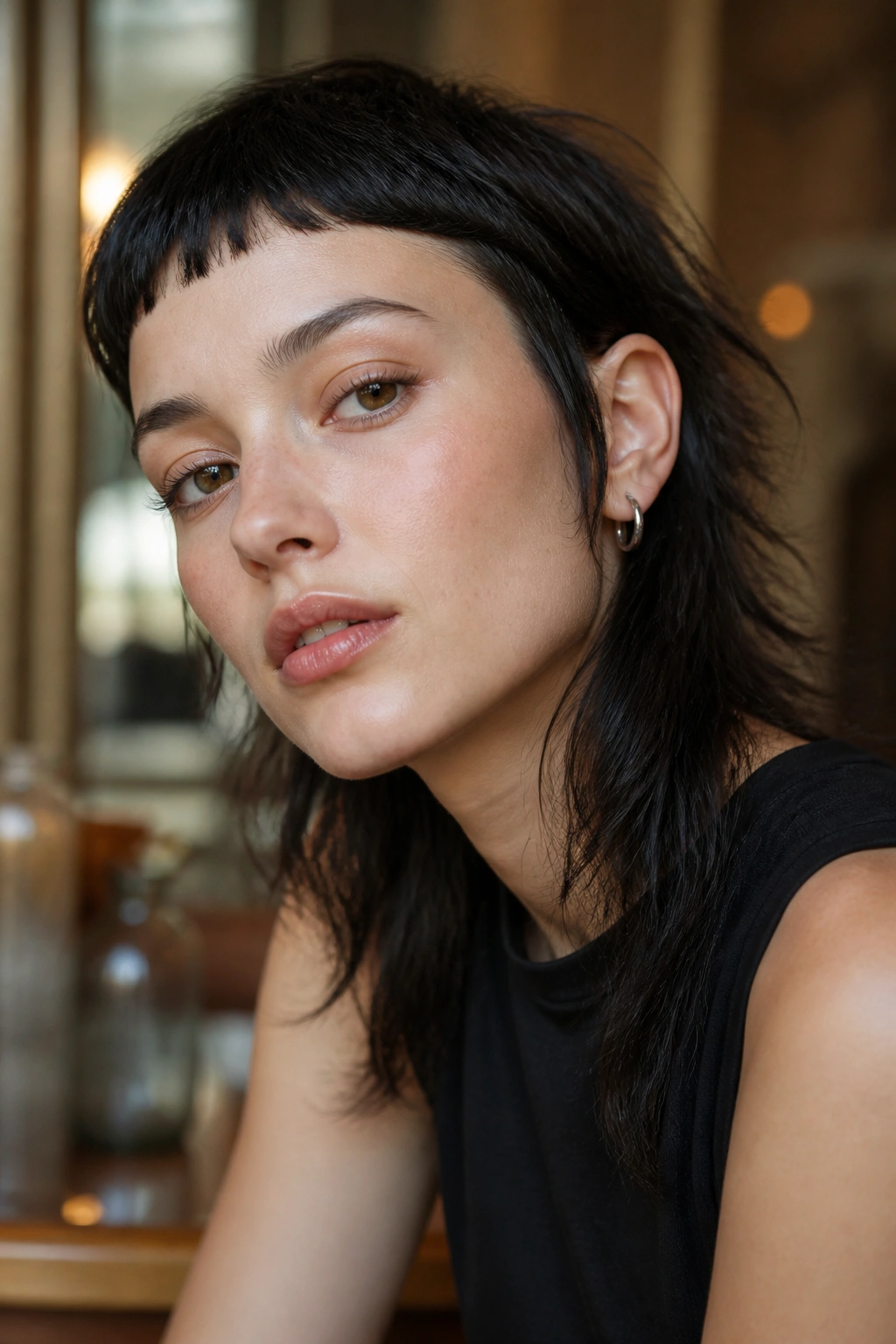
Why does a mullet make micro bangs look even bolder? Because the haircut is built on contrast. The front is short and direct, the back stays longer, and the shift between the two gives the whole style a deliberate, slightly cheeky edge.
A mullet with micro bangs can be surprisingly wearable when the layers are controlled. The shape needs movement, not chaos. You want the sides to taper, the back to keep some length, and the fringe to stay short enough that it reads as a feature instead of a mistake. The result is a haircut with a point of view. It knows exactly what it’s doing.
How to keep it wearable
- Ask for softer lengths through the nape if you don’t want the back too heavy.
- Keep the fringe separated from the top layers so it doesn’t disappear.
- Use a light wax or cream only on the bangs, not through the whole head.
- Let the back move; don’t iron every piece flat.
A mullet fringe suits someone who likes hair with a little attitude and doesn’t mind being noticed from the front and the back. That’s not everybody. Fine. The style is better when it doesn’t try to be democratic.
10. Micro Bangs With Long Layers
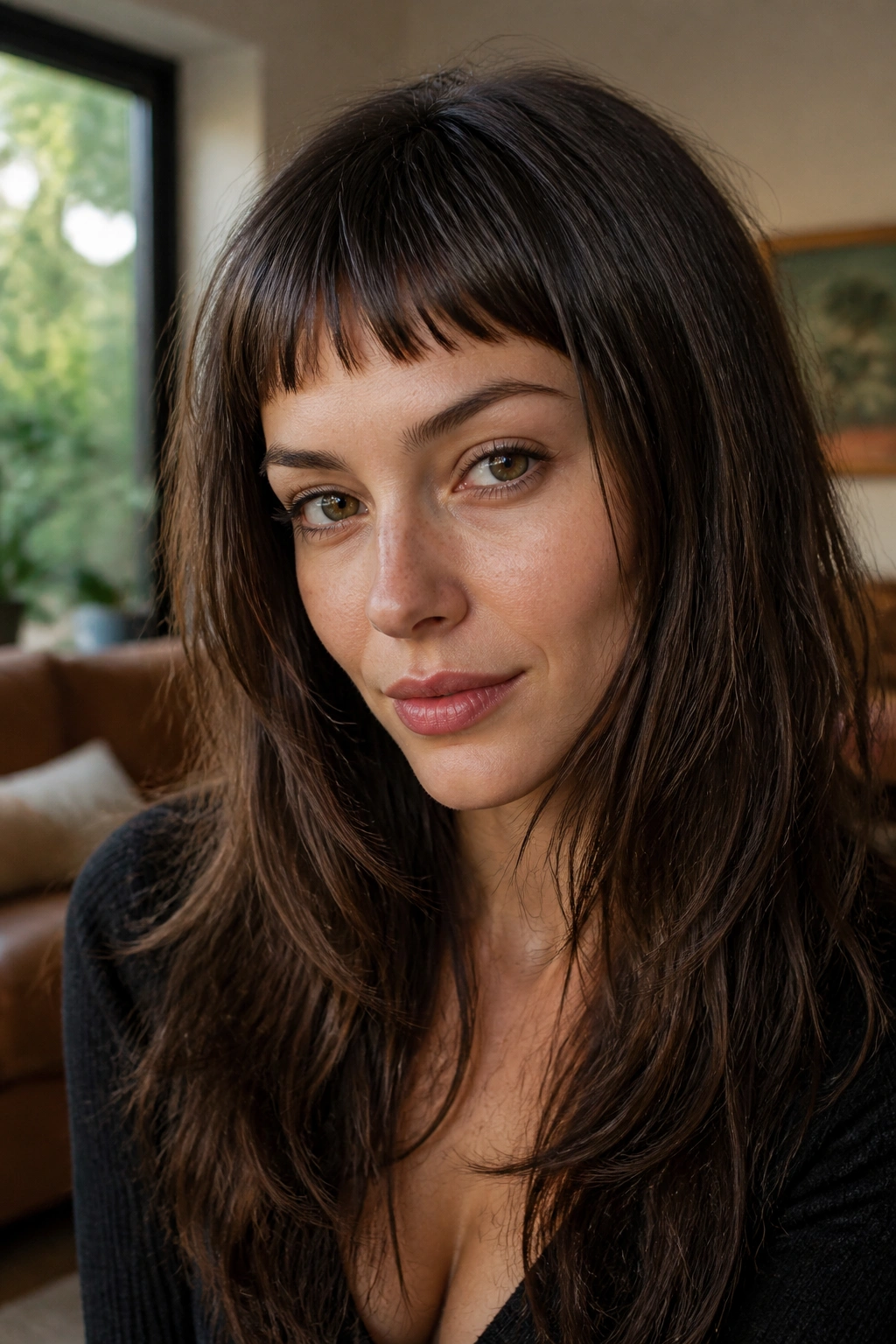
The trick is weight.
Tiny bangs against long layers create a strong contrast, and that contrast is the whole story. The fringe becomes the sharp point, while the rest of the hair stays soft and heavy enough to balance it out. Without those longer lengths, micro bangs can feel too exposed. With them, the look lands as bold but still grounded.
This pairing works especially well if you don’t want to chop off your length just to try a fringe. Long layers keep the ends moving so the haircut doesn’t turn boxy, and the bangs do the face-framing work up top. It’s a clean way to test the style without changing the entire silhouette of your hair.
The styling choice matters here, too. Loose bends through the lengths make the short fringe look sharper. Straight, glossy lengths do the opposite; they make the bangs feel even more graphic. Both work, but they say different things. One feels a little softer. The other is sleeker and more graphic.
If your hair is naturally fine, this combo can be a smart one, because the long layers keep most of the weight below the ears where it helps shape the face. The fringe gets to be the loud piece. Everything else does the supporting work.
11. Micro Bangs With an Undercut
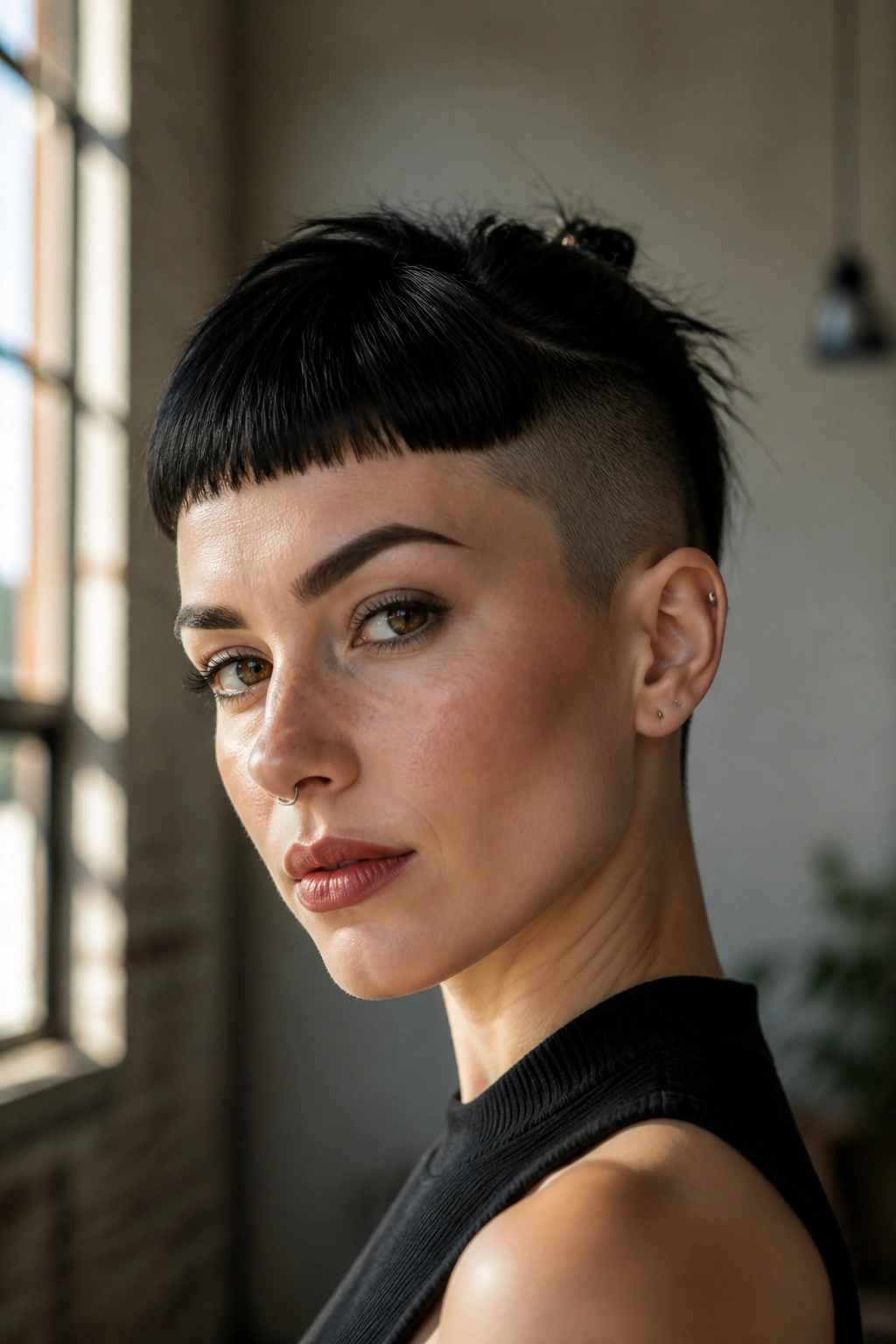
An undercut changes the whole game because it removes bulk where you don’t want it. Pair that with micro bangs and the front of the haircut sits cleaner, lighter, and a lot closer to the scalp. The result is sharp, but not fluffy.
This is a strong choice for dense hair, coarse hair, or anyone whose fringe tends to puff out faster than they can style it. By taking weight away underneath, the bangs don’t have as much hair fighting for space. They lay flatter, dry faster, and usually behave better in humid weather. That can feel like a miracle if you’ve spent years wrestling a heavy fringe.
What the undercut changes
- It cuts down on bulk at the sides or nape.
- It helps the micro bangs sit closer to the head.
- It shortens blow-dry time because there’s less hair to move.
- It grows out in stages, so you can adjust the shape as it returns.
The hidden version is my favorite if you want the edge without making the cut scream from the street. Keep the undercut low and let the top stay soft. If you want the whole thing to look louder, shave the sides higher and keep the fringe blunt. Either way, this is a haircut that feels engineered, which is a little addictive once you get used to it.
12. Asymmetrical Micro Bangs
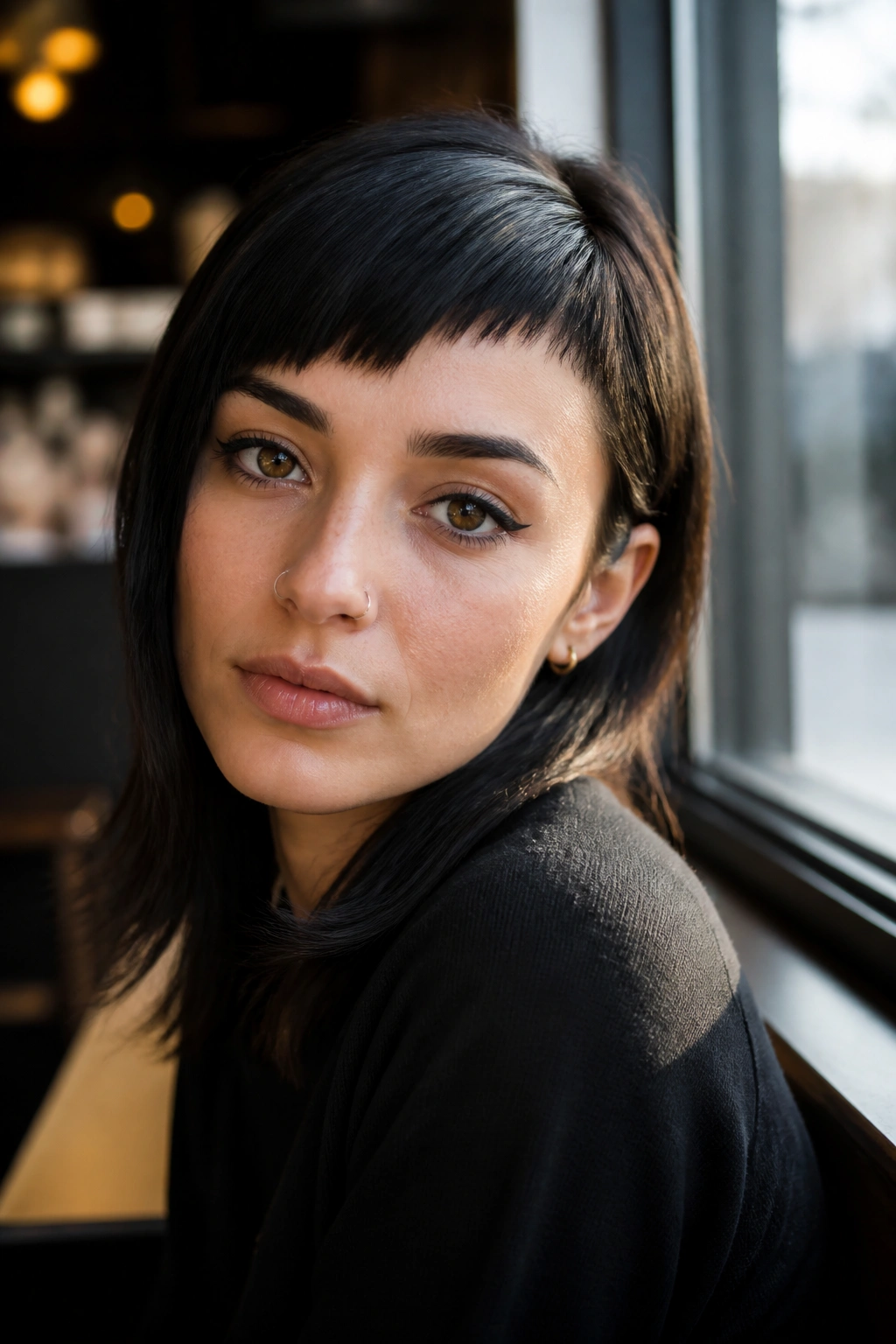
A crooked line can be more wearable than a perfect one.
Asymmetrical micro bangs tilt slightly, with one side cut a little longer than the other. That small shift changes the whole mood. Instead of reading as doll-like or severe, the fringe feels more relaxed and a bit more personal, like it was cut for a face rather than a template.
This shape is useful if you wear a side part, have one stubborn cowlick near the front, or simply don’t like the feeling of a perfectly centered bang line. The diagonal gives the eye something to follow, and it makes the forehead look less boxed in. That matters more than it sounds. A tiny offset can take the edge off a short fringe without making it boring.
How to ask for it
- Keep the longer side only about 1/4 to 1/2 inch longer.
- Let the stylist follow your natural part.
- Ask for the line to be visible, not blended away.
- Style the shorter side first so the shape doesn’t collapse.
The best asymmetrical fringe still looks intentional from straight on. If the difference gets too large, it stops reading as a design choice and starts looking like a haircut that escaped the mirror. Keep the shift small, and the look stays sharp.
13. High-Contrast Micro Bangs
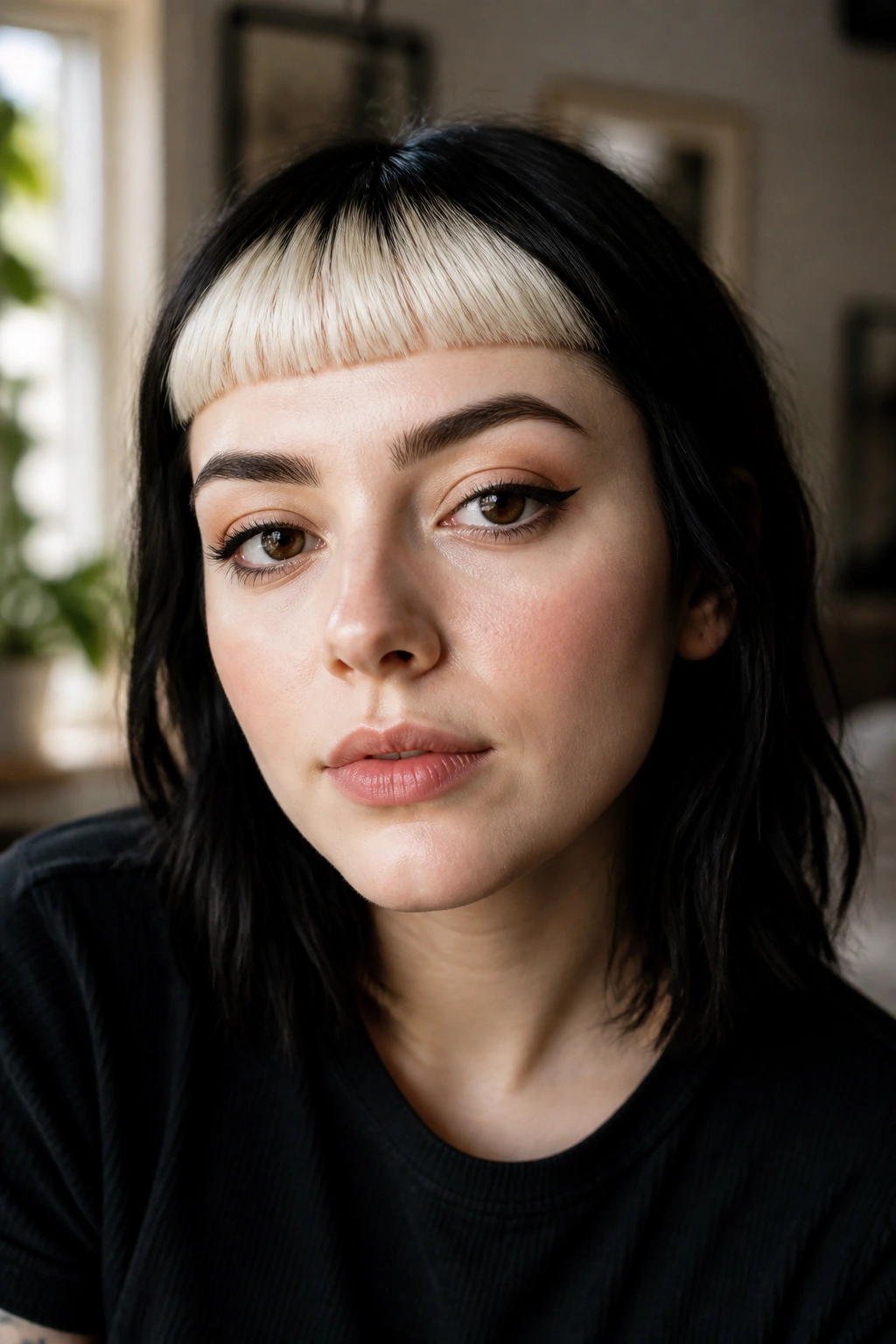
On dark hair, a pale micro fringe lands like a punctuation mark. On light hair, a dark or vivid fringe does the same thing. That’s why high-contrast micro bangs feel so bold: the color makes the shape louder before the cut even gets a chance to do its work.
This look can mean platinum bangs with darker roots, a copper fringe against brown lengths, a black micro fringe on blond hair, or even a bright color that sets off the face. The point is not novelty for its own sake. The point is emphasis. Your eyes go straight to the front of the haircut because the color blocks it out.
What to tell the colorist
- Keep the fringe healthy; bleach shows damage fast on short pieces.
- Expect the tone to need upkeep sooner than the rest of the hair.
- If your hair is fragile, lighten only the bangs first and leave the lengths alone.
- Tone the fringe carefully so it doesn’t pick up yellow or muddy warmth.
This is a strong move if you want the cut to shout before you style it. It also pairs well with simple makeup and clean clothes, because the bangs already do a lot of the talking. Too many loud choices at once can turn the whole thing into costume. One loud thing is enough.
14. Wet-Look Micro Bangs
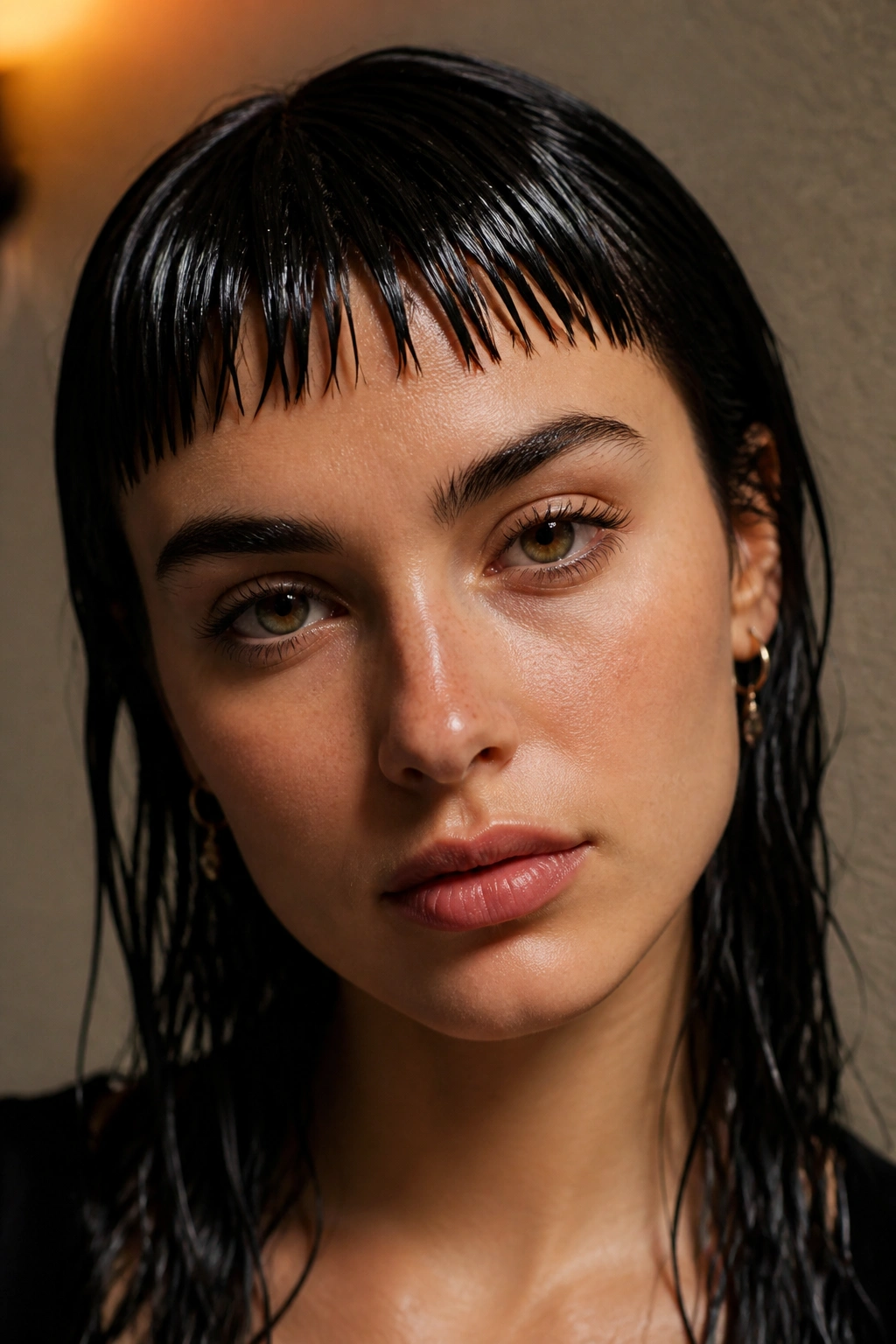
Wet-look micro bangs have a kind of slick, sharp drama that plain dry styling can’t touch. A little gel, a little cream, a comb, and suddenly the fringe looks deliberate in a way that borders on editorial. It’s one of the easiest ways to make short bangs feel dressed up.
The style works because shine changes the shape. Dry micro bangs can look airy, fluffy, or rough around the edges. Wet-look styling flattens the line and makes every piece read as chosen. That’s especially good with a bob, a bun, or any haircut where you want the fringe to feel like the centerpiece instead of an afterthought.
The process is simple, but the details matter. Start with damp bangs, not soaking wet ones. Smooth a small amount of gel or styling cream through the fringe, comb it where you want it, then leave it alone while it sets. If you keep touching it, the surface frizzes up and loses that polished shine. No need to fuss. The shape is the point.
This is the version I’d save for nights out, sharp collars, bold earrings, or days when you want your haircut to do the heavy lifting. Short fringe, hard line, a little shine. Clean and direct.
A good micro bang doesn’t just shorten the forehead. It changes the whole attitude of the haircut, and that’s why the best version is the one that fits the rest of your style instead of fighting it.
