



Round faces can wear bangs beautifully, but the fringe has to work a little harder. Wispy fringe hairstyles for round faces do their best work when they break up width, skim the brows, and leave some air around the eyes instead of sitting in one heavy line across the forehead.
The mistake I see most is a bang that ends exactly where the cheeks are fullest. That draws a little too much attention sideways. A softer edge — piecey ends, a slight off-center part, a bit of length at the temples — changes the whole effect. The face reads longer, the eyes get more room, and the haircut starts doing the flattering for you.
Texture matters too. Straight hair needs bend. Wavy hair needs shape. Curly hair needs a fringe cut with shrinkage in mind, not one guessed at while it’s wet and stretched. That detail alone can save a lot of regret.
So these 15 cuts are not just “bangs plus hair.” They are the versions that actually make sense on a round face, with enough range that you can find something polished, shaggy, short, long, curly, or low-maintenance without getting trapped in one look.
1. Long Curtain Fringe That Opens the Cheeks
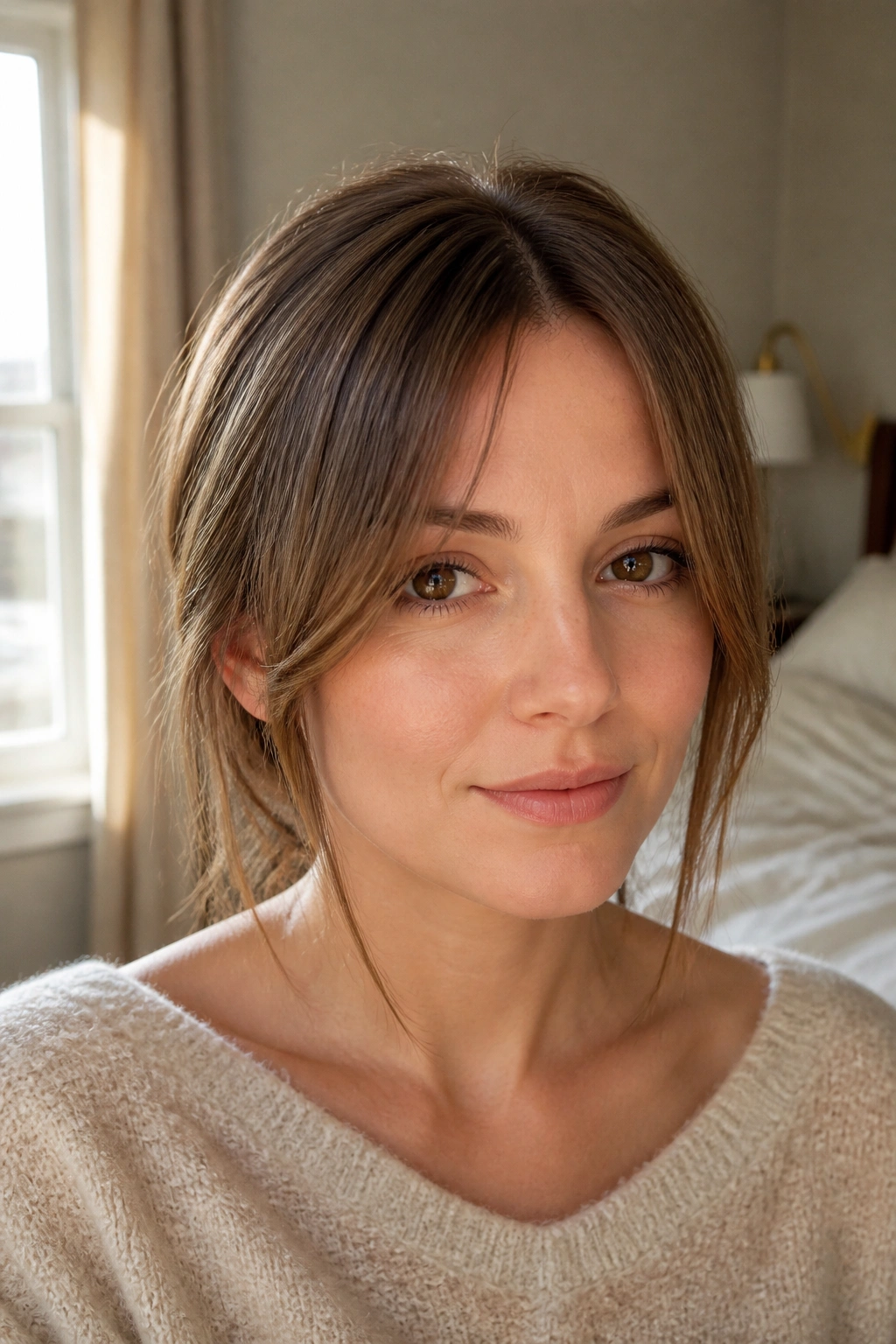
This is the classic for a reason. Long curtain fringe splits the forehead in the middle, then falls away toward the cheekbones, which gives a round face more vertical movement and less width at the sides.
The sweet spot is a fringe that starts around brow level in the center and drifts longer at the temples. If it lands too short, it can puff out. If it lands too blunt, it loses the airy effect that makes it so flattering.
What to ask for
- The shortest piece should sit near the eyebrow, not above it.
- The side pieces should brush the top of the cheekbone or slightly below.
- The ends should be point-cut or razor-softened, not chopped into a straight line.
- Keep the rest of the hair in long layers that move away from the face.
That last part matters more than people think. A curtain fringe with heavy, one-length hair underneath can feel flat. A few long layers around the chin and collarbone keep the shape open.
Best for: medium to thick hair, straight or wavy textures, anyone who likes a softer grow-out.
Skip it if: your crown is very flat and you never want to round-brush your fringe.
Pro tip: Blow-dry the fringe from side to side with a small round brush, then finish by rolling each side away from the face. That little bend keeps the center from sticking to the forehead.
2. Collarbone Lob with Side-Swept Wispy Bangs
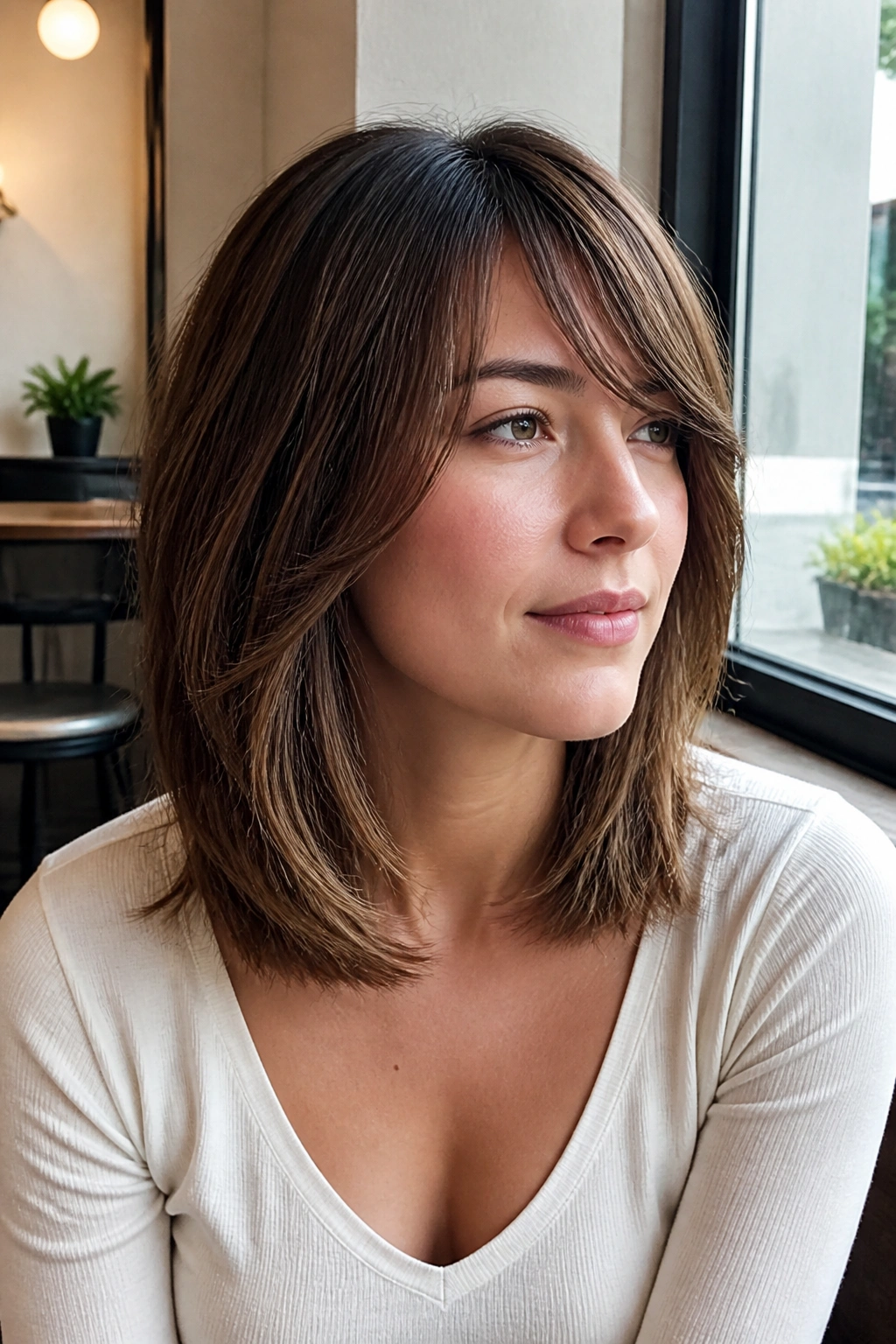
A side-swept lob can be a relief if you like bangs but do not want them sitting directly across the forehead. The diagonal line of the fringe makes the face feel a touch longer, and the collarbone length keeps the shape from widening at the jaw.
I like this cut on round faces because it is calm hair. Not boring. Calm. It looks easy even when it has been carefully thought through.
The key is angle. You want a deep side part and a fringe that starts around the arch of the brow, then drifts down and out across one side of the face. The longest piece can brush the cheek, but it should not sit right at the cheekbone on both sides. That would flatten the whole point.
The lob itself should hit at or just below the collarbone. Any shorter, and the ends can push outward on round faces. A tiny bit of bevel inward at the ends helps a lot.
3. Feathered Shag with Airy Brow Framing
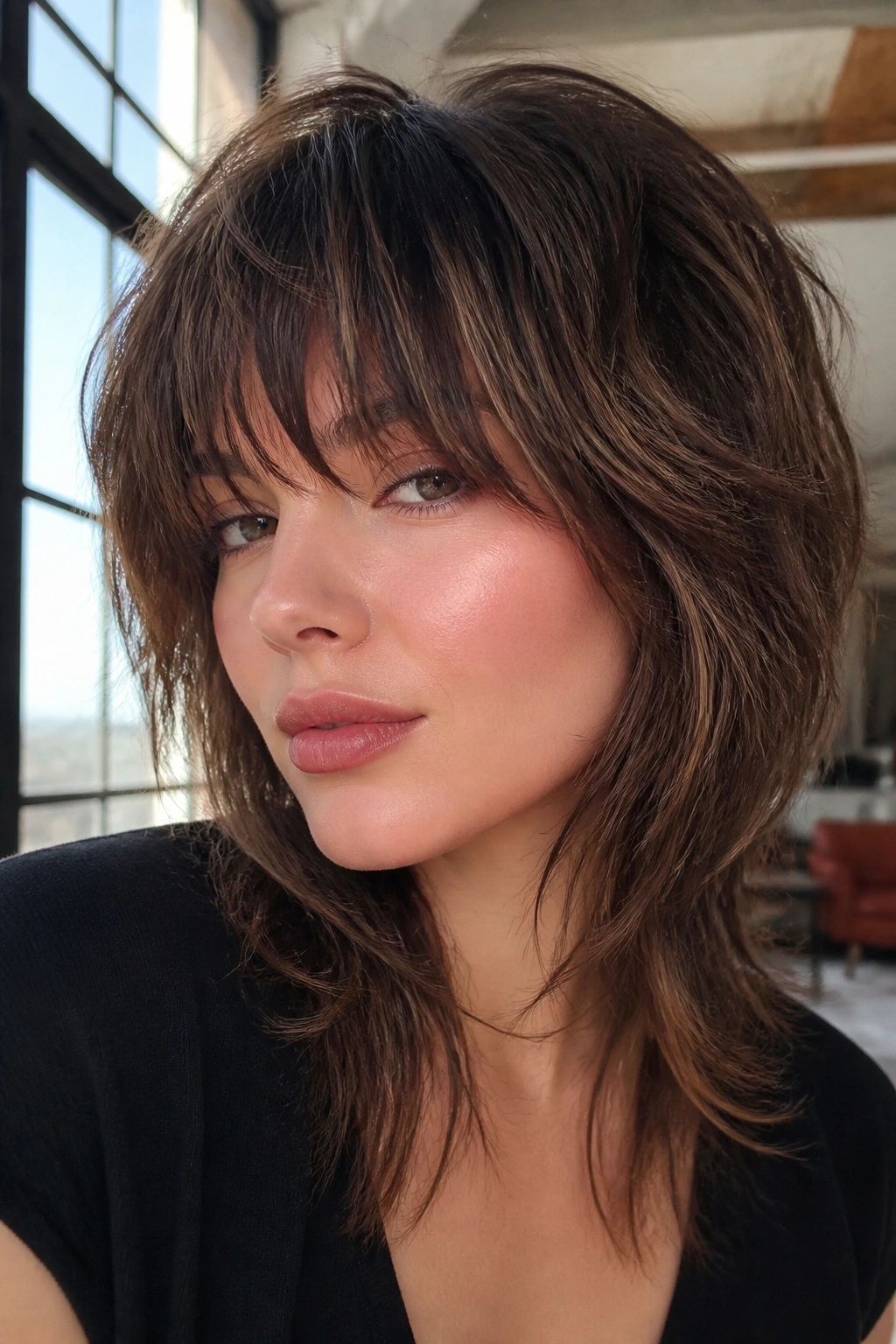
Why do shags keep showing up on round-face mood boards? Because they give you height at the crown, movement through the sides, and fringe that does not sit there like a helmet.
A feathered shag is all about break-up. The layers are shorter near the top, then soften as they fall, which pulls the eye up and down instead of across. On a round face, that vertical rhythm matters. It is one of the few cuts that can make texture look intentional even when it gets messy.
How to keep it light
- Ask for internal layers, not just surface layers.
- Keep the fringe wispy and slightly irregular at the ends.
- Use mousse at the roots before diffusing or air-drying.
- Scrunch a pea-sized amount of cream through the ends, not the fringe roots.
The fringe should skim the brows and split into little pieces instead of forming one thick curtain. If your hair is dense, a stylist should remove weight from inside the shape so it does not balloon at the sides.
This cut looks best when it is not over-perfect. That is part of the charm.
4. Textured Pixie with Piecey Fringe
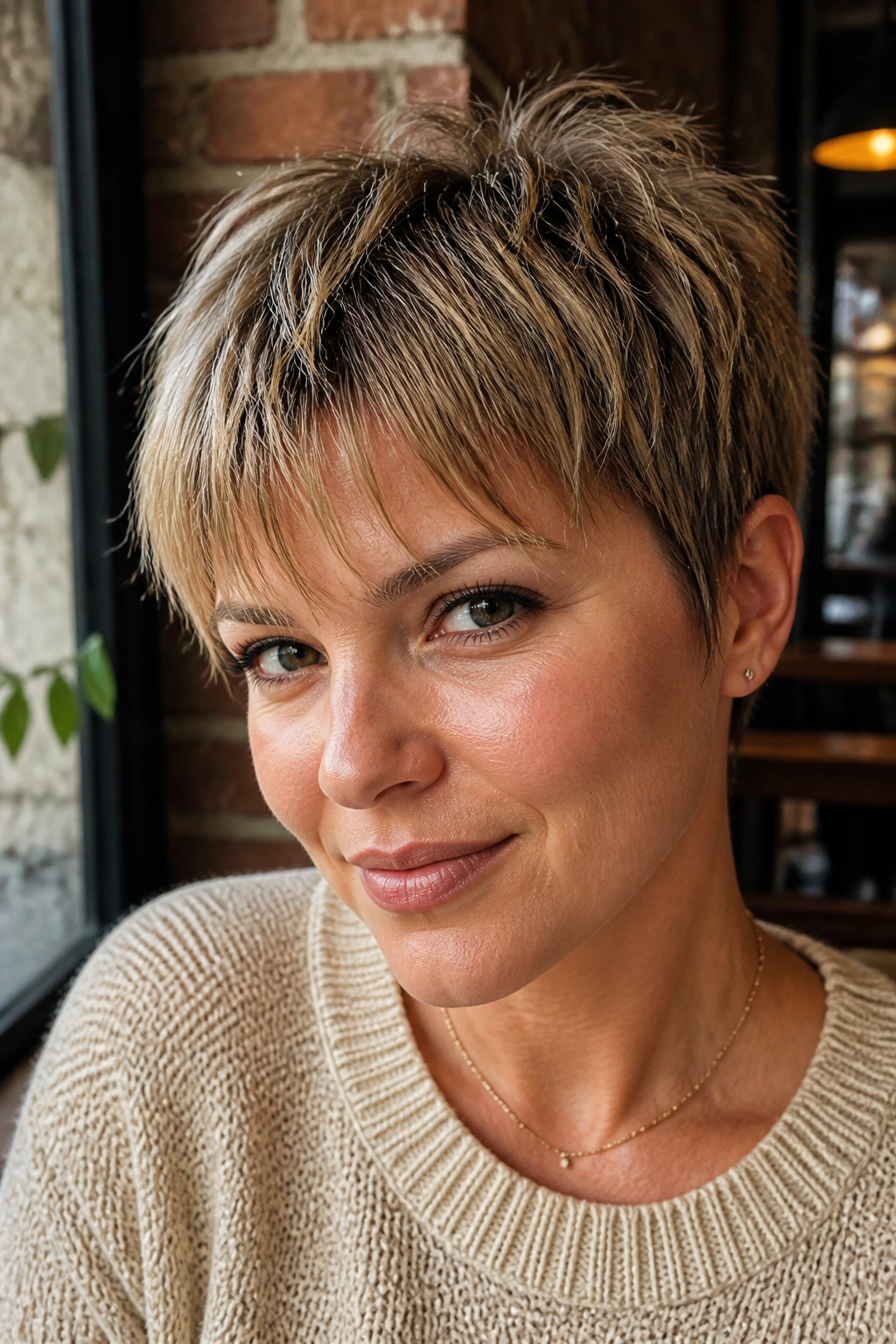
Picture a pixie that leaves a little length on top, tapers close at the ears, and lets the fringe fall in soft, separate pieces. That shape can be superb on a round face because it creates height and leaves the cheeks visible instead of boxed in.
The trick is keeping the crown slightly taller than the sides. A flat pixie can widen the face if the fringe is too dense. A textured one, though, opens everything up. The eye goes to the top of the head first, which is exactly where you want it.
A piecey fringe should not be heavy enough to cover half the forehead. It should land just over the brow or graze the upper lashes in a few strands, with air between the pieces. That little gap makes a big difference.
If you want this cut to feel soft rather than severe, ask for a nape that hugs the neck and sides that stay close without looking shaved. A little softness at the temple keeps the whole style from turning sharp.
5. Butterfly Cut with Bottleneck Bangs
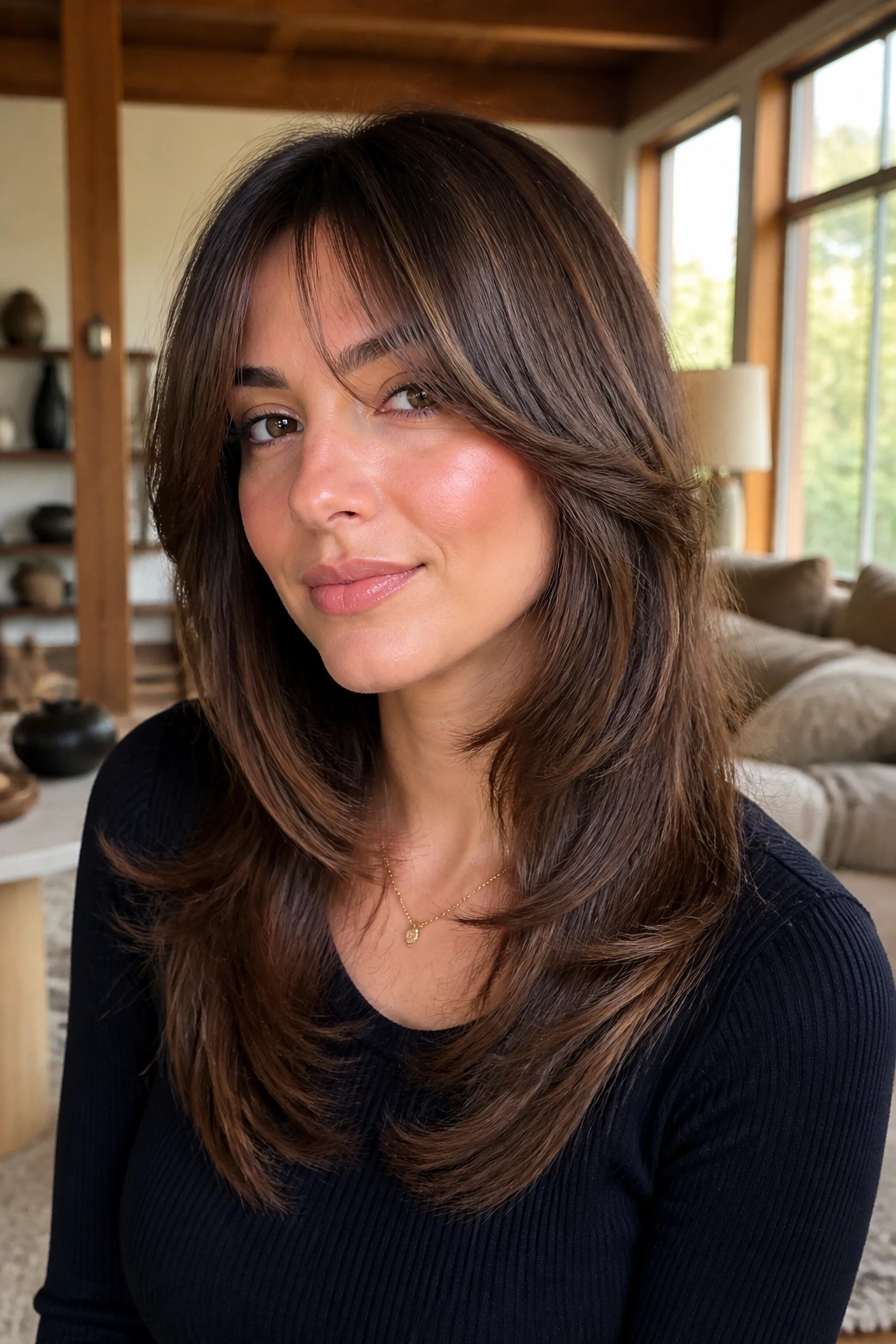
The butterfly cut earns its place because it gives you long hair without the heaviness that sometimes drags a round face downward. The shorter top layers lift around the crown, while the longer layers keep the length dramatic. Add bottleneck bangs, and the result feels balanced rather than bulky.
Bottleneck bangs start narrow between the brows, then widen slightly as they curve toward the temples. That shape matters. It creates a gentle frame without drawing a hard horizontal line across the forehead.
What to tell your stylist
- Shortest point: between eyebrow and lash level.
- Side points: curve toward the outer brow or cheekbone.
- Layers: keep the upper section lighter, but not choppy.
- Ends: soften them so they move with the blowout.
This is one of those cuts that looks expensive when the layers are placed well, and a little awkward when they are not. The difference usually comes down to where the shortest layer sits. Too high, and the fringe feels abrupt. Too low, and it loses that narrowing shape through the center.
If your hair is thick, this cut can feel lighter within the first hour. Honestly, that alone is reason enough for some people to ask for it.
6. French Bob with Brow-Skimming Fringe
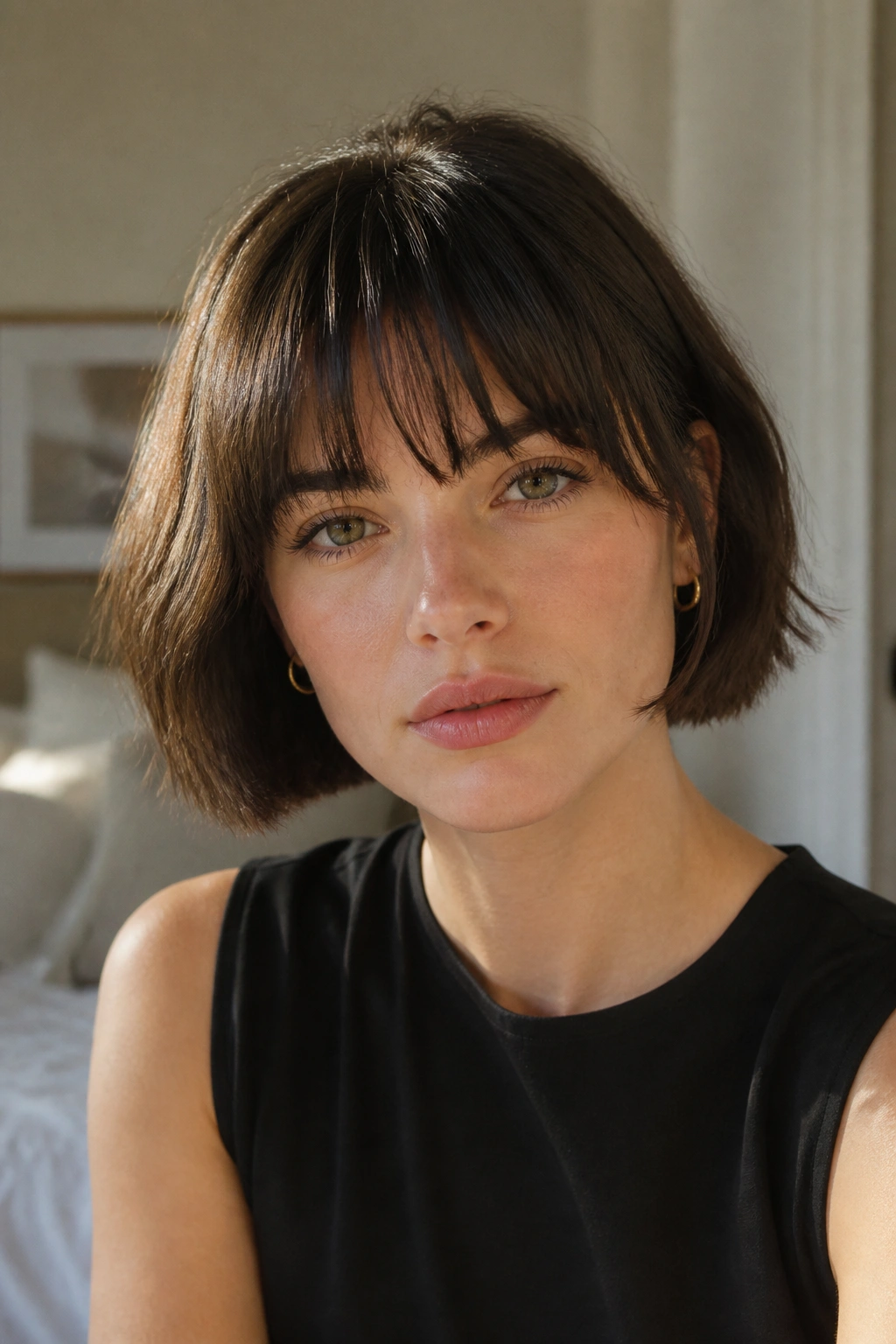
A bob does not have to sit at the jaw to flatter a round face. The trick is where the weight lands and how much texture you let into the fringe. A French bob with a wispy brow-skimming fringe can look sharp, cheeky, and unexpectedly soft all at once.
Keep the length around the chin or just under it, not at the fullest point of the jaw. That tiny adjustment helps the silhouette feel tighter. Then pair it with a fringe that brushes the brows and breaks apart at the ends.
The fringe should not be thick enough to hide the whole forehead. A round face already has lovely openness in the middle; you do not want to shut that down. A little see-through texture lets the brows show through and keeps the haircut from feeling boxy.
This is the cut I’d choose for someone who likes a face-framing shape with a bit of attitude but does not want long layers everywhere. It is neat, but not stiff. That matters.
7. Long Waves with Split Fringe and Face Framing
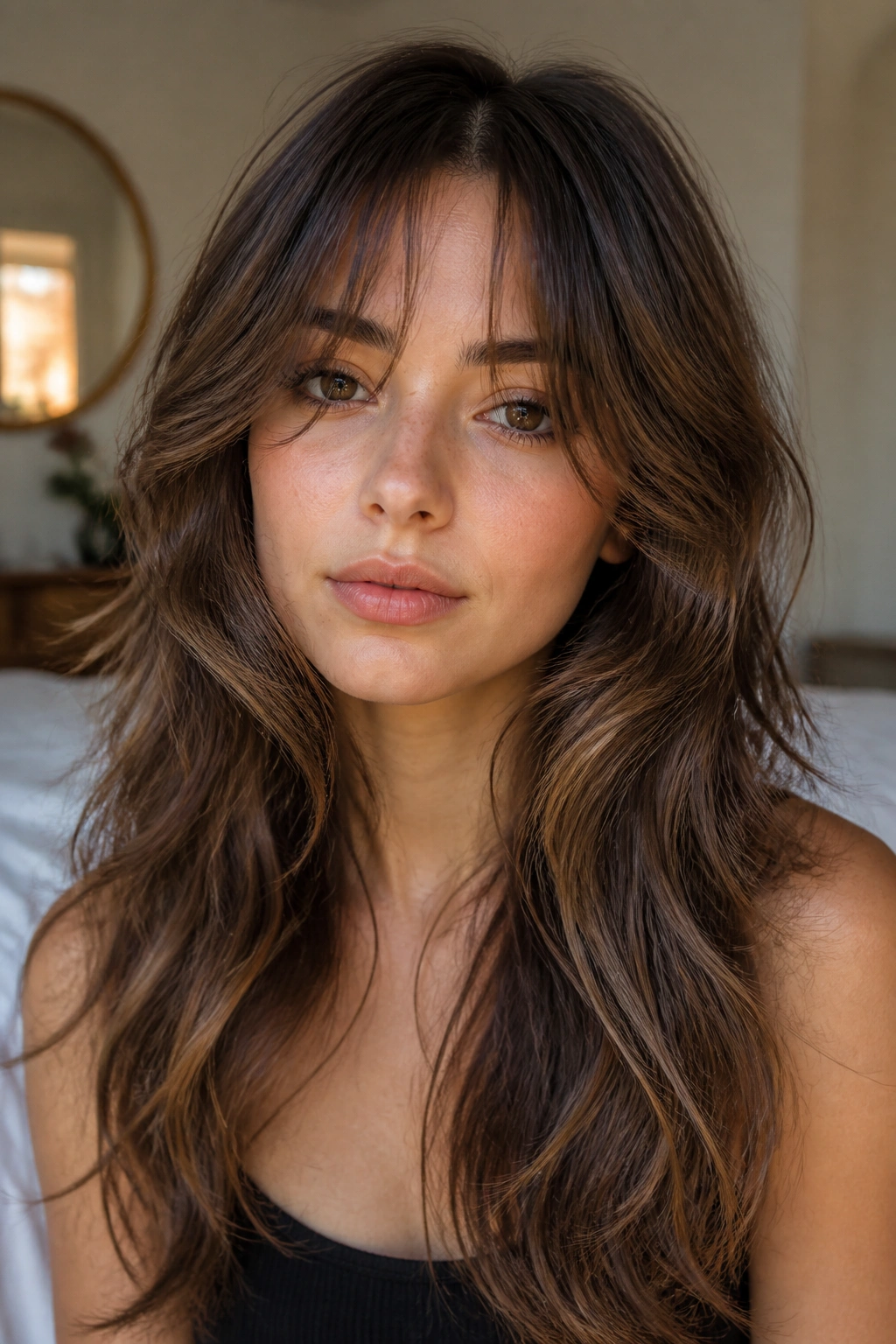
Long hair can work on a round face when the front pieces do real work. A split fringe — not too full, not too center-heavy — can carve out shape around the eyes while the waves below keep the length alive.
Think of the fringe as the first bend in the haircut. It should open at the center, skim the eyebrows, then slide into face-framing pieces that start around the cheekbone and continue down toward the chin. That line pulls the gaze downward and keeps the face from reading too wide.
Styling notes
- Use a 1.25- or 1.5-inch curling iron for loose waves.
- Leave the ends out on the bottom half for a softer finish.
- Bend the fringe away from the face with a round brush or Velcro rollers.
- Finish with a light mist of flexible spray, not a stiff helmet of hairspray.
This style looks especially good when the waves start below the chin. If the curl sits too high near the cheekbones, it can puff the face outward. Lower placement keeps the shape long and loose.
I like this one for people who want movement without a haircut that shouts for attention. It whispers. That is enough.
8. Sleek Collarbone Cut with Diagonal Fringe
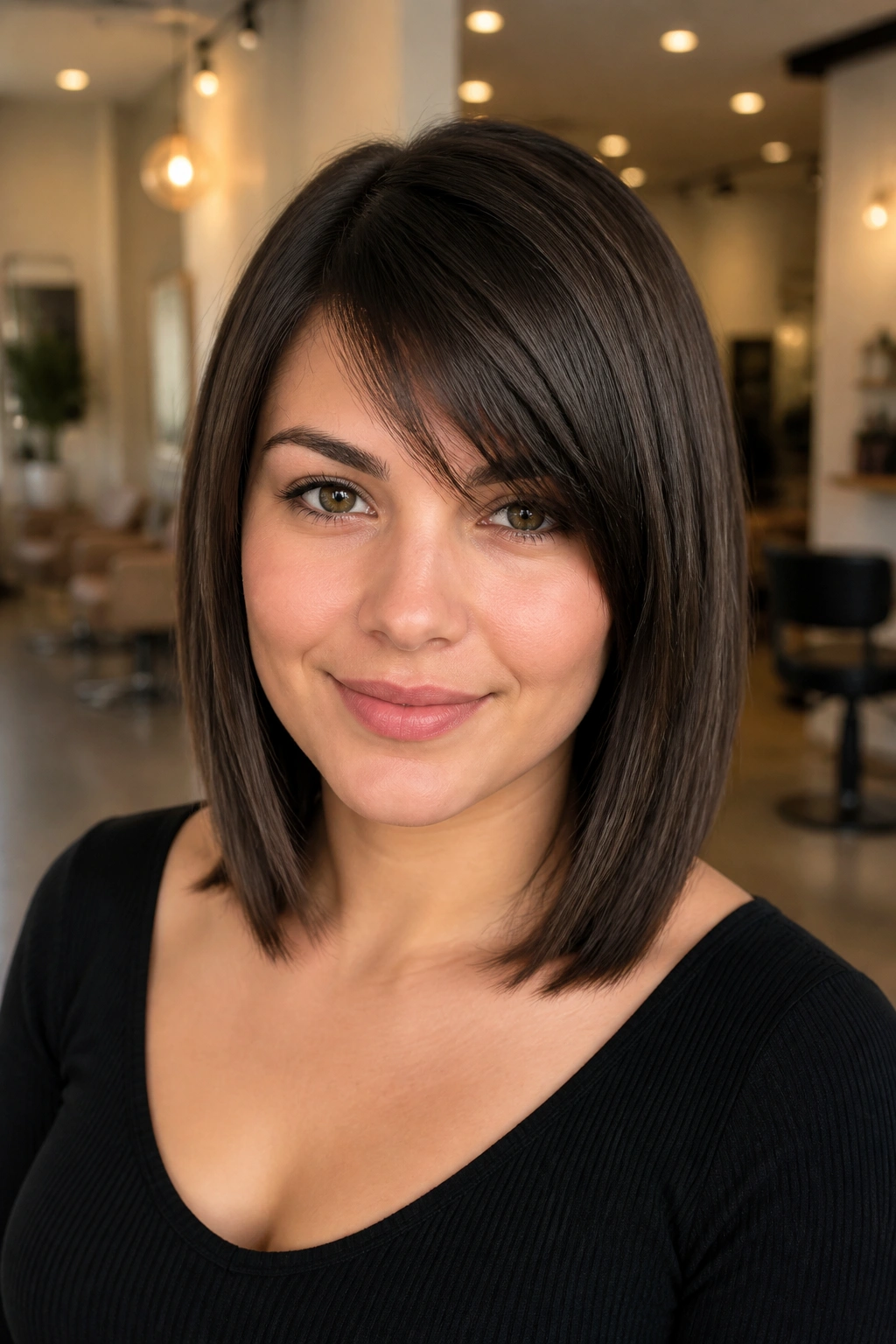
A sleek cut can flatter a round face if the lines are chosen with a little discipline. Straight across can be risky. A diagonal fringe, though, gives you structure without making the style feel severe.
The haircut should hit around the collarbone, with the front pieces just a touch longer. That creates a vertical sweep on the body and lets the fringe travel across the forehead on an angle instead of a straight line. Diagonal movement is the whole point here.
The fringe itself should begin fuller near one brow and taper as it crosses over. It does not need to be dramatic. It needs to be directional. Even a small slant changes how the face is framed.
Best detail to keep in mind: ask for the fringe to be cut dry, or at least checked dry, especially if your hair lies flat or swells when it dries. Wet bangs can hide a lot. Dry bangs tell the truth.
This cut is for someone who likes crisp lines but does not want anything blunt around the face. There is a clean feeling to it. That clean feeling helps.
9. Curly Shag with a Soft Curly Fringe
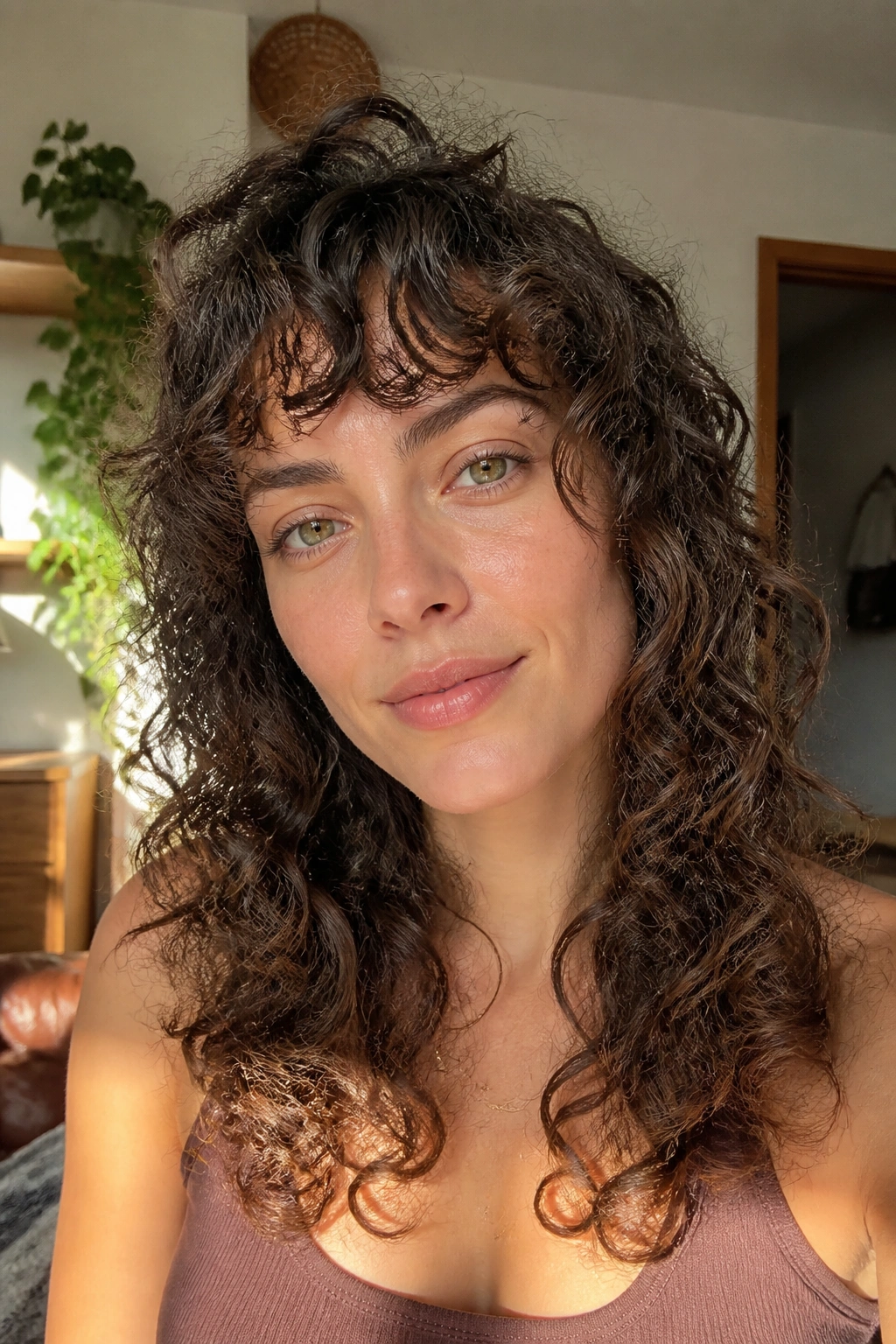
Curly hair does not need to fight the fringe. It needs the right fringe. A curly shag with a soft, shorter front section can take a round face and give it height, movement, and shape without trying to flatten the curls into obedience.
The big thing here is shrinkage. Curly fringe often springs up more than people expect, sometimes by an inch or more, so the length has to be judged on dry curls, not stretched ones. If your stylist cuts it too short while the hair is pulled long, you can end up with a fringe that floats far above the brow.
What to ask for
- A dry cut or a dry check at the end.
- Fringe pieces that follow your natural curl pattern.
- Shorter layers at the crown for lift.
- Longer layers around the cheekbones to keep width in check.
A curly fringe should feel light, not sparse. Too many disconnected pieces and the front can frizz into a halo. Too much weight and it hangs like a curtain. The sweet spot is somewhere in the middle, where the curls bounce apart but still sit together as a shape.
This is one of my favorites for round faces because it does not pretend curls should behave like straight hair. That honesty pays off.
10. Bixie Cut with Tapered Fringe
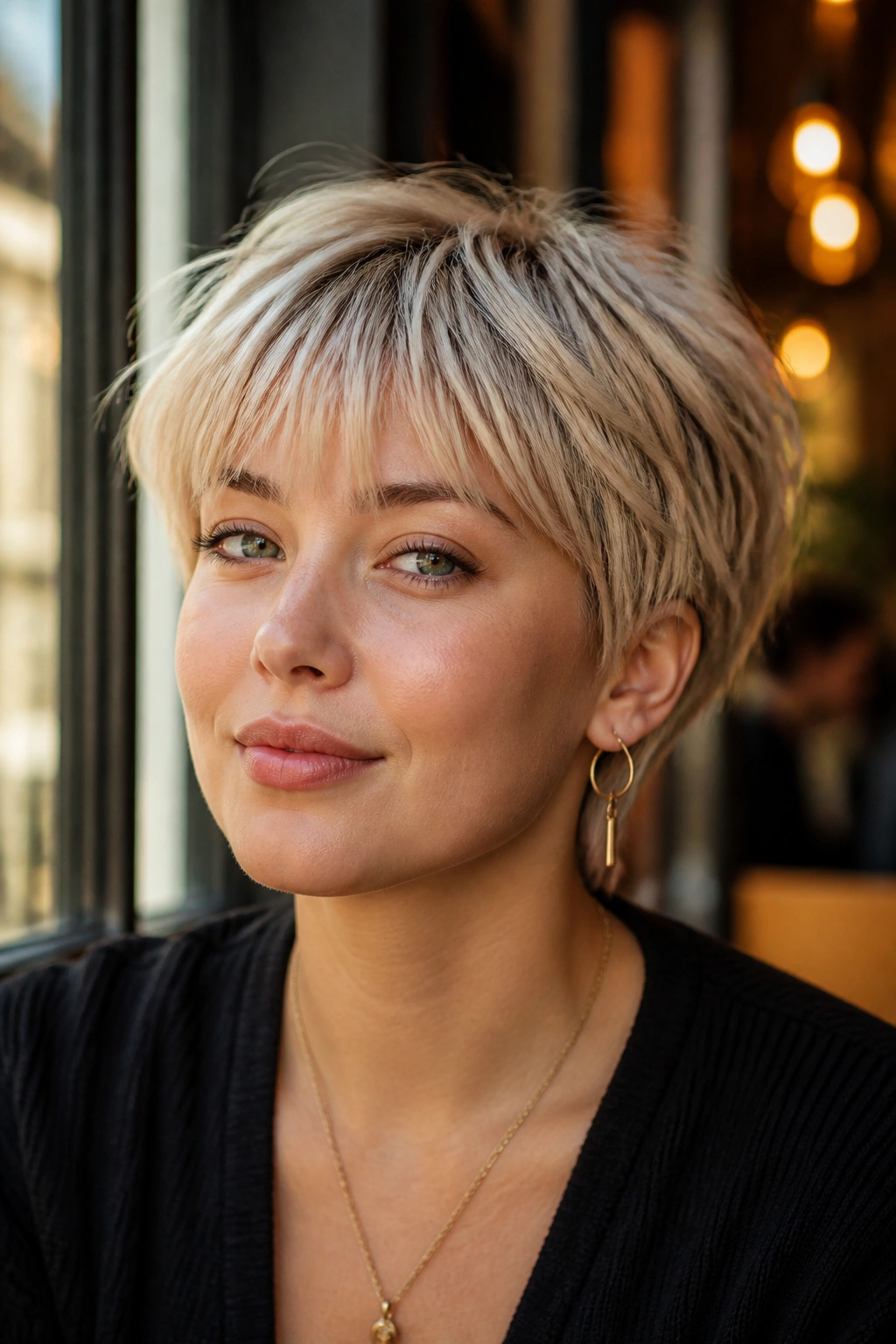
A bixie sits between a bob and a pixie, and that middle ground is useful on a round face. You get the cheekbone exposure of a short cut, but the tapered fringe softens the front so the style does not feel too sharp.
The longer top gives you a bit of lift. The shorter nape keeps the neck clean. Then the fringe comes forward in a soft taper, usually with the shortest point near the center and longer strands skimming toward the temples. That shape narrows the face visually without making the haircut severe.
This one works especially well if your hair is fine to medium and you want something that dries fast. It also suits people who like to tuck one side behind the ear. That tiny gesture creates an asymmetry that round faces often benefit from.
One thing I would avoid: over-thinning the fringe. A wispy edge is one thing. A see-through fringe with no shape is another. You still need enough hair there to frame the eyes.
11. Wolf Cut with Feather-Light Fringe
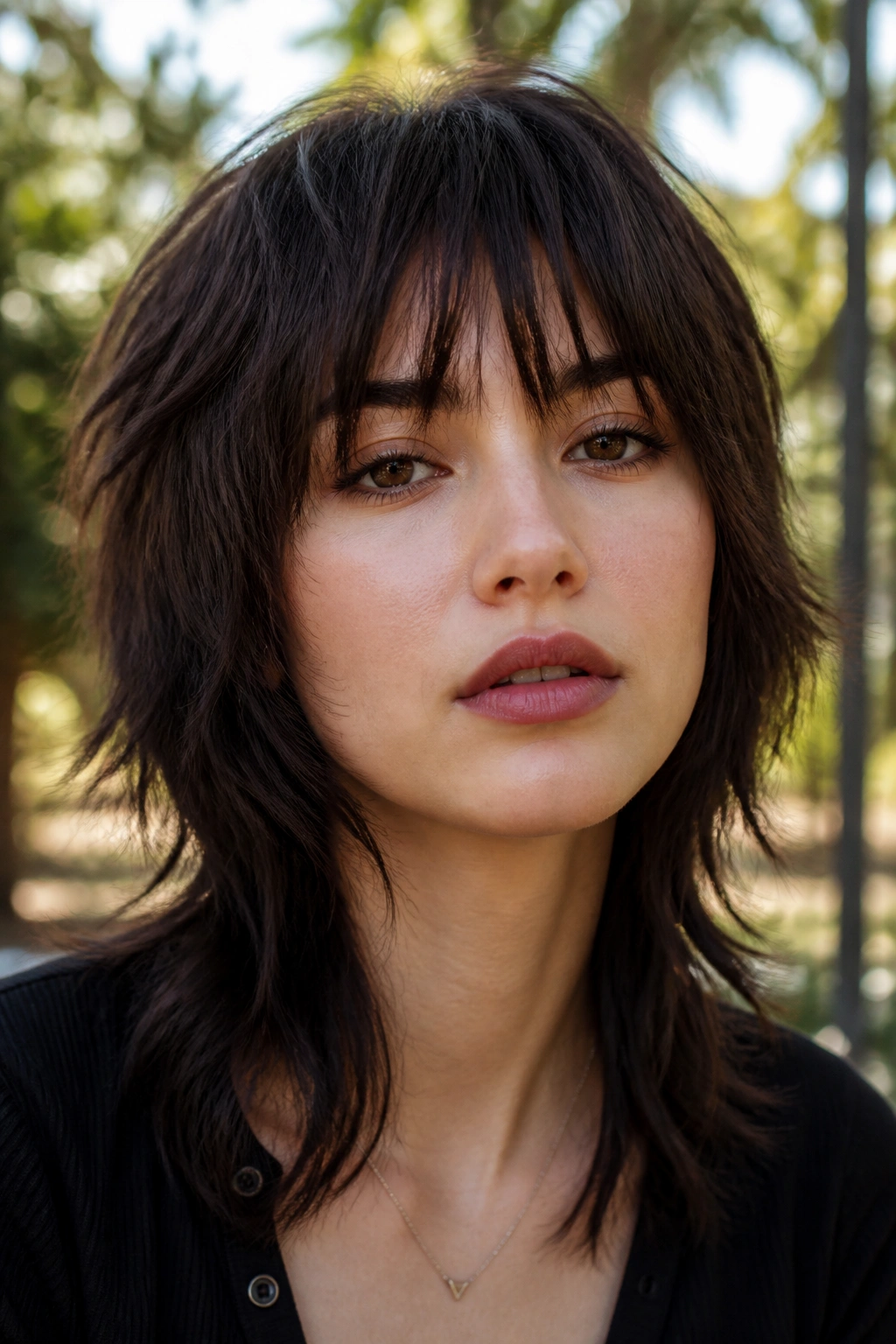
If you like hair that looks a little undone by lunch and still good at dinner, the wolf cut has a case to make. It mixes shaggy top layers with longer ends, and the feather-light fringe helps break up a round face without crowding it.
The reason it works is simple: the crown gets height, the sides stay broken up, and the fringe lands in soft, irregular pieces instead of one dense strip. That combination keeps the eye moving. Round faces need that movement more than people think.
A wolf cut is not the same thing as “messy hair.” It still needs shape. The top layers should be short enough to lift, but not so short that they pop up like a shelf. The fringe should hover around the brows and feather into the temples.
I’d choose this cut for someone who already wears texture well and does not mind a little product. A dab of paste through the ends and a touch of dry shampoo at the roots can keep the layers from collapsing.
This cut has edge, but it is not blunt. That is why it works here.
12. Shoulder-Length Layers with an Arched Wispy Fringe
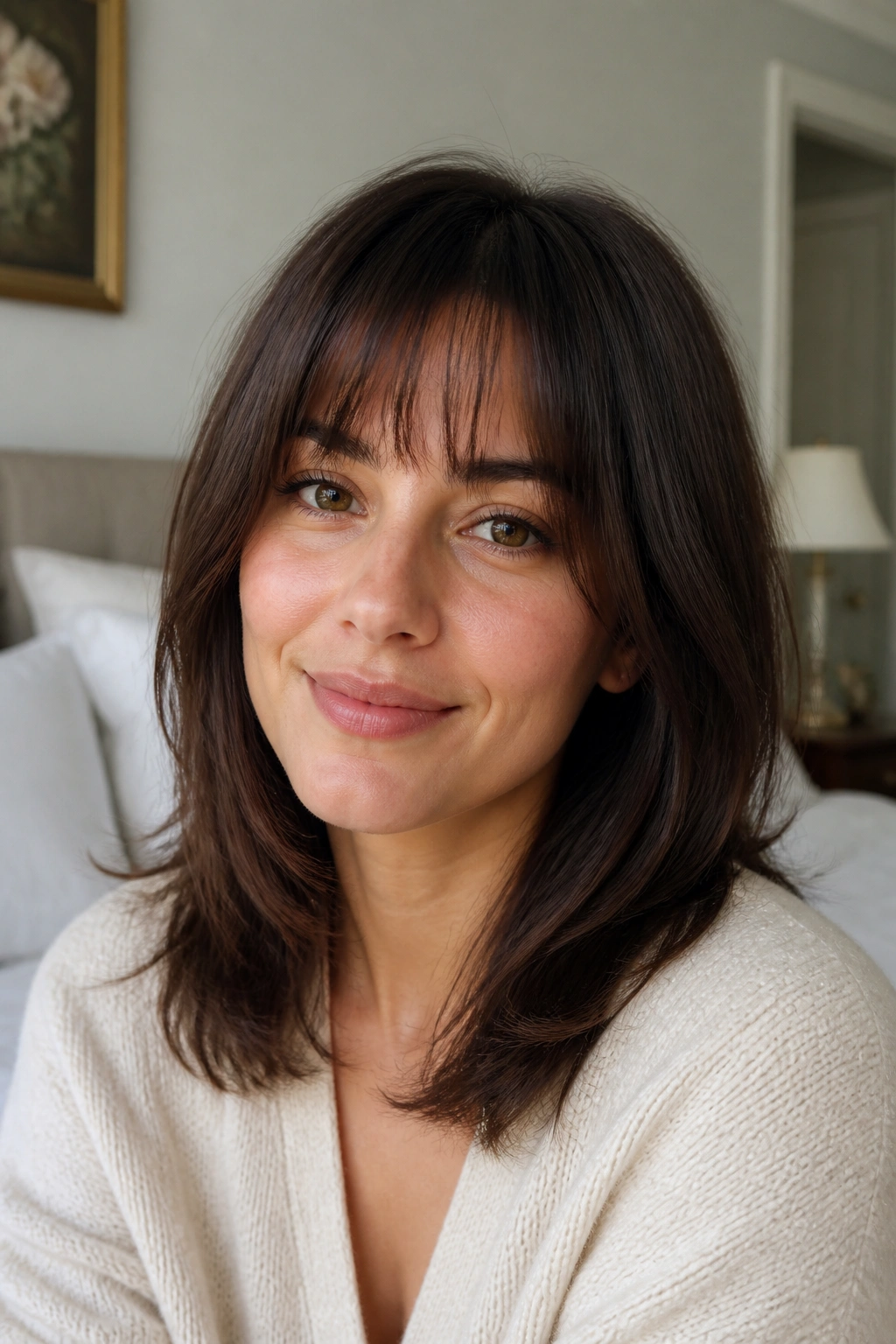
Shoulder-length hair can be tricky on a round face if the ends hit the cheeks in a heavy way. Add soft layers and an arched wispy fringe, though, and the shape changes fast. The arch gives a subtle curve across the forehead, while the layers below guide the eye downward.
The fringe should be shortest in the middle, then gradually longer at the sides. Not a hard U-shape. More of a soft bend. That arc opens the center of the face and keeps the bangs from cutting the forehead in half.
Where the arch should sit
- Center point: just at or slightly below the brows.
- Outer points: taper toward the temple or upper cheek.
- Shape: soft, not sharply rounded.
- Finish: point-cut so the edges move instead of sitting flat.
This style is lovely when the rest of the hair has loose bends or soft blowout volume. It gives you enough fringe to matter, but not so much that you lose openness around the eyes.
It is also a good option if you want bangs that grow out in a civilized way. Some fringe types turn into an awkward middle stage fast. This one tends to soften rather than fight you.
13. Asymmetrical Bob with One-Side Fringe
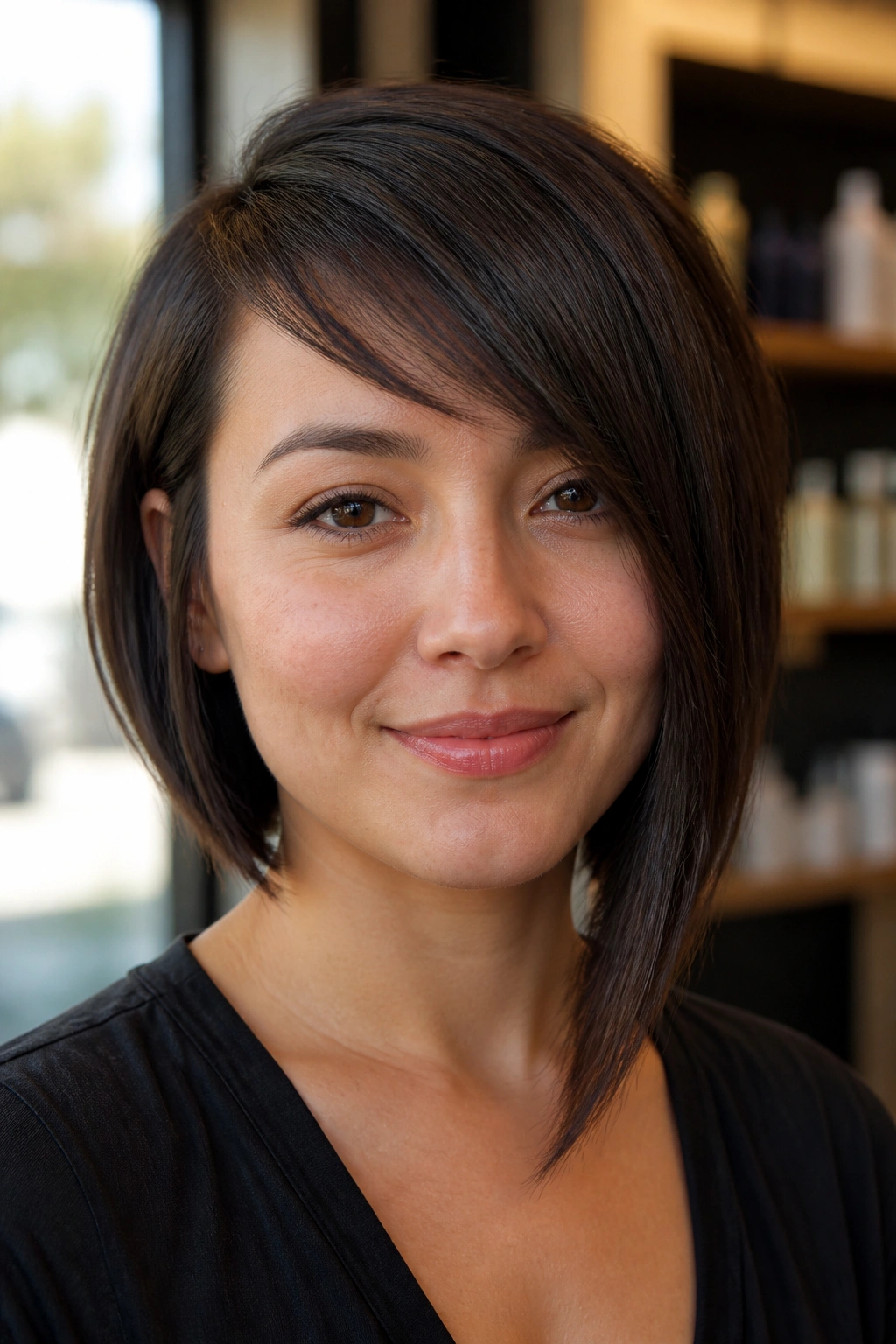
A little imbalance can be flattering. In fact, it often is. An asymmetrical bob with a one-side fringe breaks up the symmetry that can make a round face look wider, and it does it without asking for a lot of styling drama.
The shorter side usually sits a bit higher at the jaw or just under the cheekbone, while the longer side falls toward the collarbone. The fringe follows that same logic, sweeping across the forehead and opening the opposite side of the face. It is a clean diagonal, not a heavy sweep.
This cut is a smart pick if you like hair that feels tailored. It looks deliberate. It also gives you a built-in tuck, which is handy when you want one side behind the ear and the other side doing the framing work.
The only caution is density. If the fringe is too thick, the asymmetry gets lost. You want enough softness that the shape feels light, not a blunt block that happens to sit sideways.
14. Long Straight Hair with Feathered Center Fringe
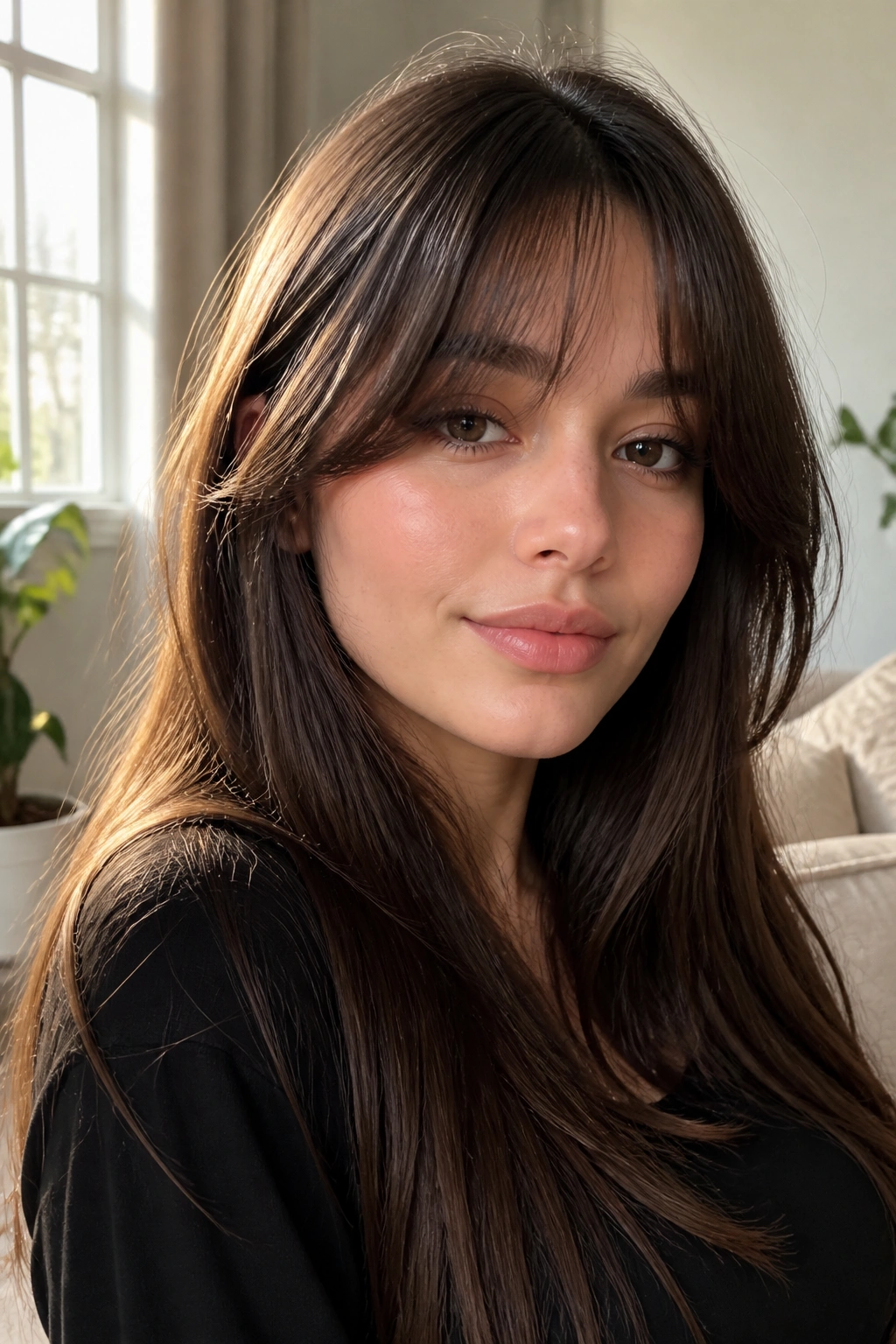
Long hair does not need to mean no shape. A feathered center fringe can give straight hair movement at the front without forcing you into heavy layers all over the place. On a round face, that matters because the fringe becomes the thing that opens the center while the length stretches the line downward.
The center should not be pinned tight to the middle of the forehead. It should part softly, then fall into two slender pieces that skim the brows and continue toward the temples. A tiny bit of feathering at the ends keeps the fringe from looking severe.
Styling notes
- Use a blow-dryer with a concentrator nozzle for a smoother finish.
- Wrap the fringe around a small round brush, then release it before it cools.
- Add a light mist of heat protectant and a touch of shine spray on the ends only.
- Keep the layers around the face narrow so they do not balloon out at cheek level.
This is a good choice if you like length and do not want to lose it. It gives structure without a major haircut. The trade-off is upkeep, because straight hair shows every cowlick and every uneven snip. Still, when it is cut well, the effect is clean and easy to wear.
15. Rounded Lob with Peekaboo Fringe
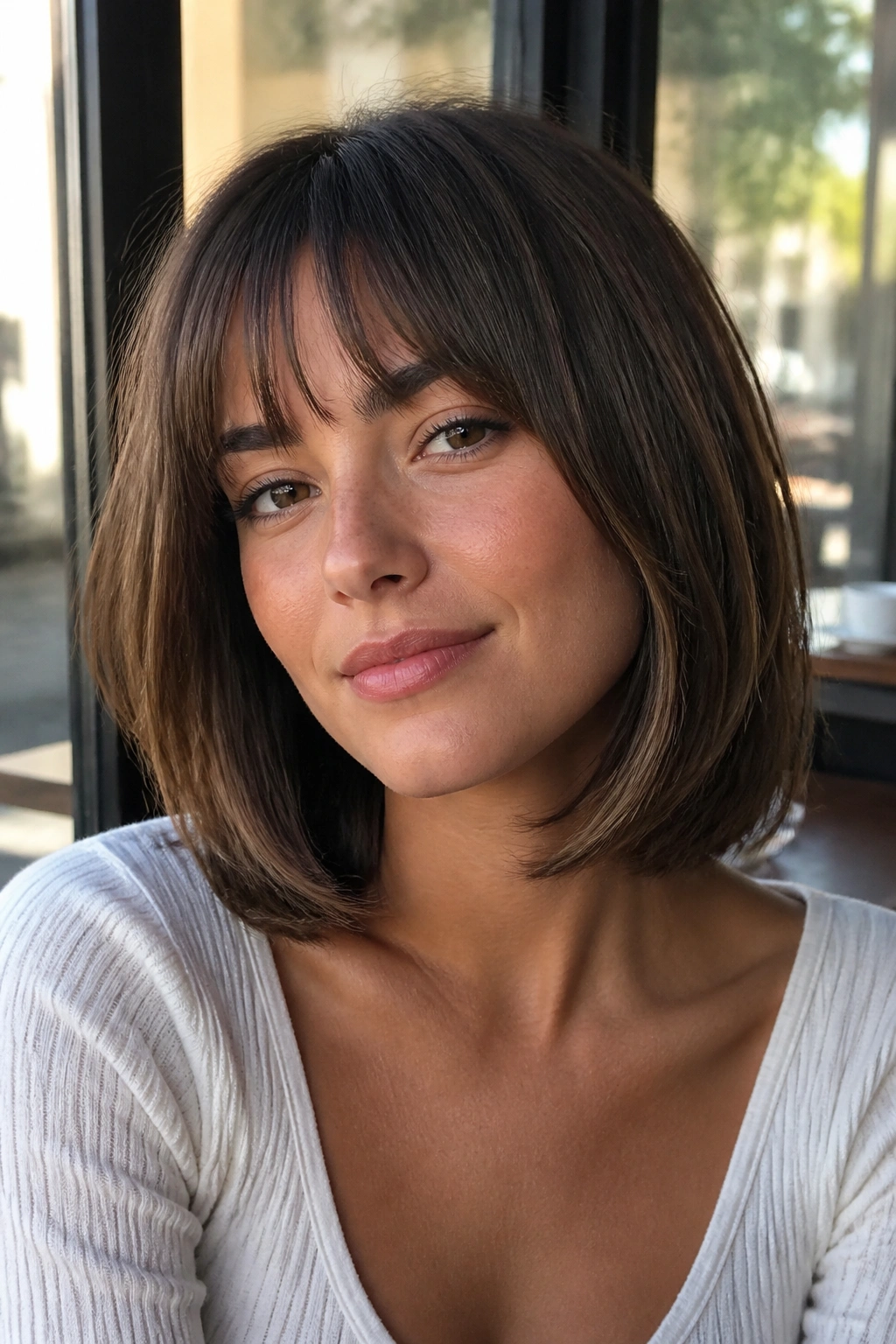
A rounded lob sounds soft, and that is exactly why it works. The shape curves gently around the head instead of sitting boxy at the sides, and a peekaboo fringe keeps the forehead open while still giving the face something to frame it.
The fringe here is the opposite of heavy. It slips in and out of view, brushing the brows in thin pieces and letting a little skin show through. That “peekaboo” quality keeps the front light, which round faces usually appreciate more than a thick straight fringe.
The lob should hit around the collarbone or just above it, with ends that curve in slightly. If the cut is too blunt, the roundness of the face can echo too much. A small bit of layering underneath fixes that fast.
This style is especially good if you want a softer finish that does not feel trendy in a loud way. It is easy to wear, easy to grow out, and forgiving on days when you do not want to fuss with the front. That’s a real benefit, not a throwaway one.
Final Thoughts
The best wispy fringe hairstyles for round faces are the ones that add shape without piling more width onto the cheeks. A fringe that is too blunt, too full, or too short in the wrong place can make the face feel wider. A fringe with soft edges, a little lift, and a smart parting does the opposite.
If you are sitting in a stylist’s chair with a round face and a photo in your hand, the details matter more than the name of the cut. Ask where the shortest point will land. Ask how the fringe will grow out. Ask whether the weight is being taken out at the sides or the crown. Those tiny choices decide whether the haircut feels flattering on day one and still wearable six weeks later.
Bring a couple of photos, but also bring your habits. If you air-dry, say so. If you wear glasses, mention that too. A fringe that looks lovely in a salon chair can behave differently once it meets your forehead, your cowlick, and your morning routine. That part never changes.
