



Round faces can wear bangs beautifully, but the cut has to do some work. A blunt line that sits too high or too wide can make the face look broader; a choppy fringe with broken ends, on the other hand, can add lift, movement, and a little visual length right where you want it.
The smartest choppy bangs ideas for round faces usually do two things at once: they break up width and they guide the eye vertically. That might mean a center part, a side sweep, longer pieces at the temples, or a fringe that lands at the brows and then feathers away at the edges. Tiny details. Big difference.
Texture matters. So does placement. A fringe that’s cut with point cutting or a light razor touch tends to sit softer than a heavy blunt bang, and that softness is doing real shape work on a round face.
The cuts below are not all the same, and that’s the point. Some are soft and airy, some are bold, some are best with short hair, and some only work if you’re willing to style them for five minutes with a round brush or your fingers and a little texturizing spray.
1. Eyebrow-Skimming Choppy Bangs for Round Faces
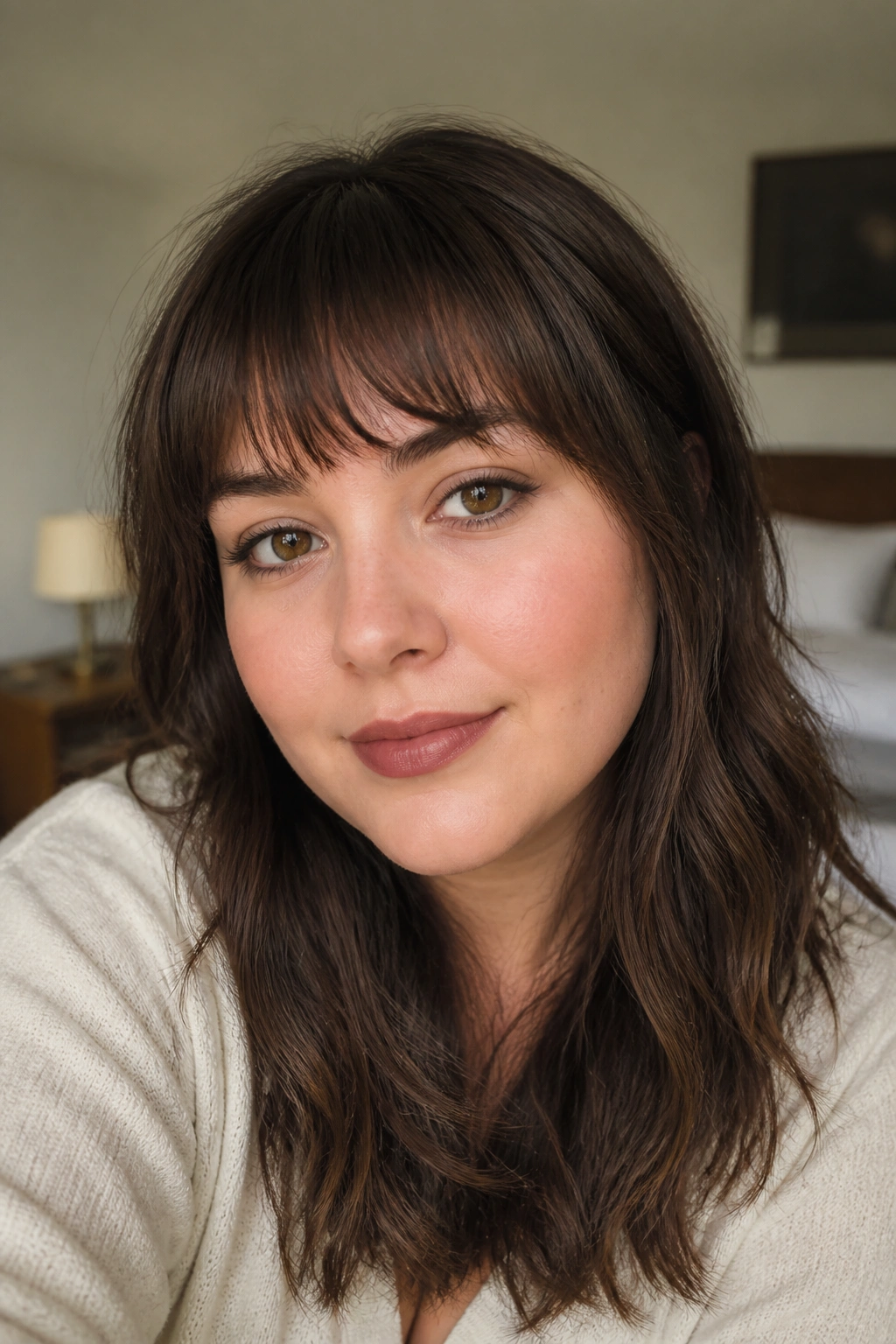
Eyebrow-skimming choppy bangs are the easiest entry point if you want a change without crossing into harsh territory. The line sits close enough to the brows to frame the eyes, but the broken ends keep it from forming one heavy horizontal bar across the face.
Why It Works
Round faces usually benefit from a little vertical pull, and this shape gives you that without taking over your forehead. Keeping the center slightly fuller than the edges helps the fringe look deliberate, not stringy.
Ask for soft point cutting at the ends and a length that lands just on or a touch below the brow line. That tiny extra length keeps the fringe from feeling too short, which matters more than people think.
- Best for medium-density hair
- Works well with straight or slightly wavy textures
- Ask for a light, feathered perimeter
- Style with a small round brush or fingers
Pro tip: blow the fringe forward first, then sweep the outer pieces a little outward. That keeps the center light and the sides from puffing wide.
2. Long Curtain Bangs with Choppy Ends
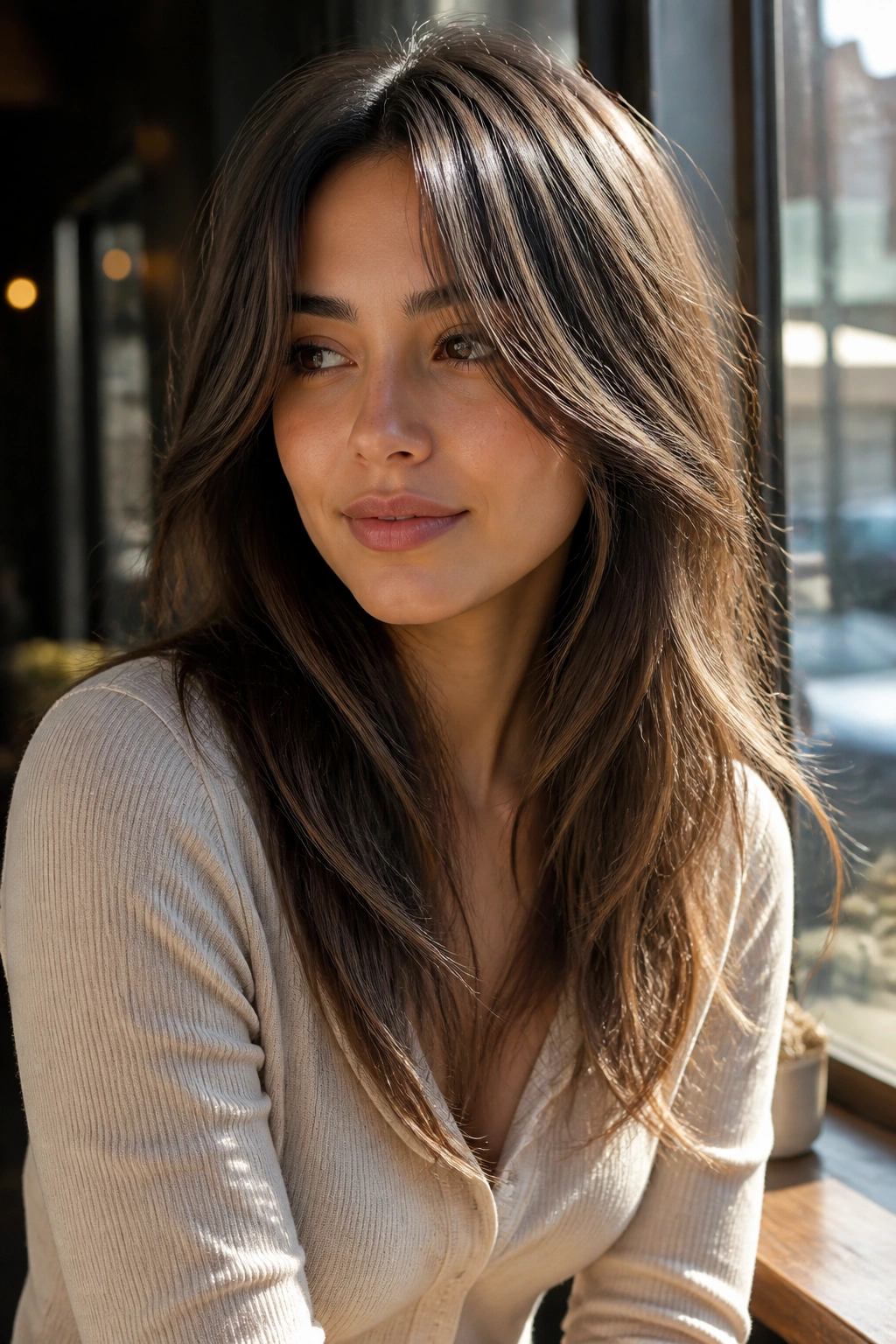
Long curtain bangs are one of the safest bets for a round face because they split the forehead and drop the eye line lower. When the ends are choppy rather than blunt, the whole shape feels less heavy and more lived-in.
Do not cut these too short. The sweet spot is usually somewhere between the cheekbone and the corner of the mouth, depending on face length and hair density. Shorter can work, but longer is usually kinder to a rounder face shape.
The best version has a soft center part and pieces that taper away toward the jaw. That diagonal line matters. It creates movement where a round face needs it most.
3. Side-Swept Choppy Bangs
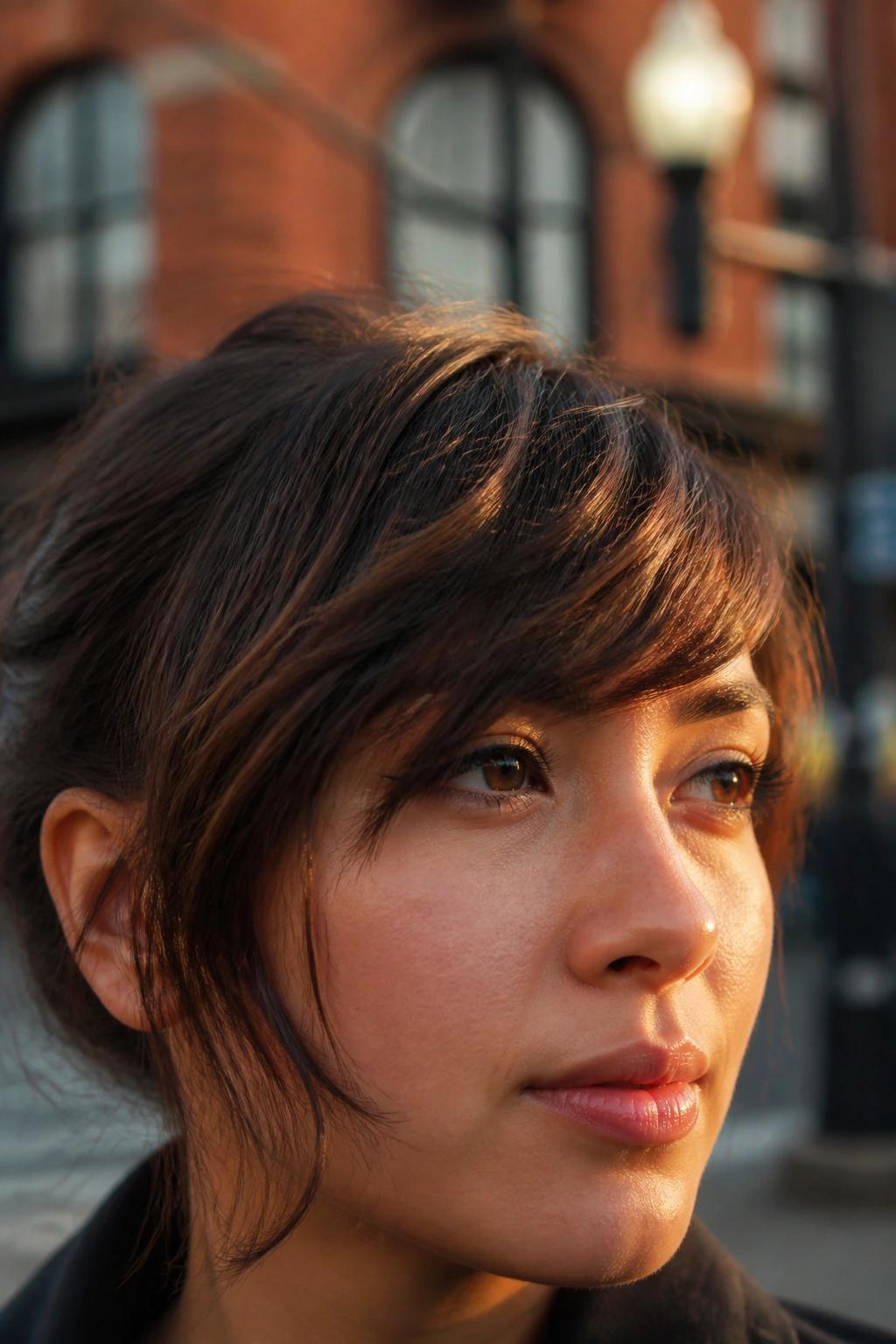
Side-swept bangs bring a diagonal line across the face, and that diagonal is the whole trick. A round face already has plenty of curves, so a slanted fringe gives the eye something else to follow.
Picture hair that starts a little fuller at one temple and gradually gets lighter as it crosses the forehead. That shape narrows the visual width at the top, then lets the fringe fall softly into the rest of the cut. It feels easy, but it has structure.
A flat brush and a quick blast from the dryer are usually enough. Push the bangs in the direction you want while they’re still warm, then let them cool in place. If you want more separation, work in a grain-of-rice amount of styling paste through the ends only.
4. Bottleneck Bangs with Texture
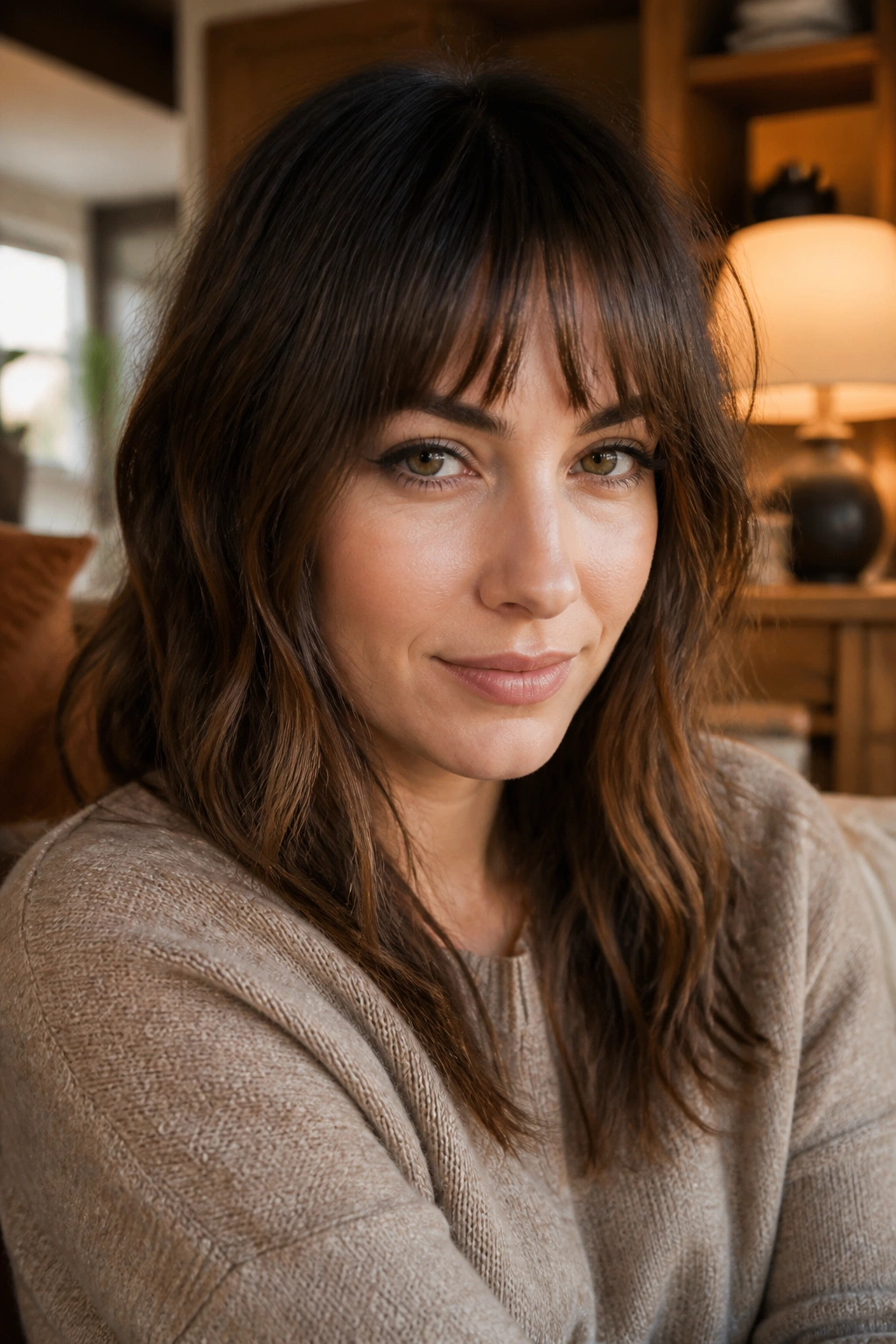
Bottleneck bangs look wider at the center and narrower at the sides, which is why they flatter round faces so well. The shape opens the forehead just enough, then guides the eye down through those thinner side pieces.
What keeps this version from looking too polished is texture. Choppy edges stop the bang from becoming a neat curtain. The result feels softer and more modern, and it sits especially well on hair that has a little natural bend.
This cut is a good choice if you want something that can grow out gracefully. The longest points blend into the cheekbones, so when the fringe starts to lengthen, it still looks intentional instead of awkward.
5. Piecey French Fringe
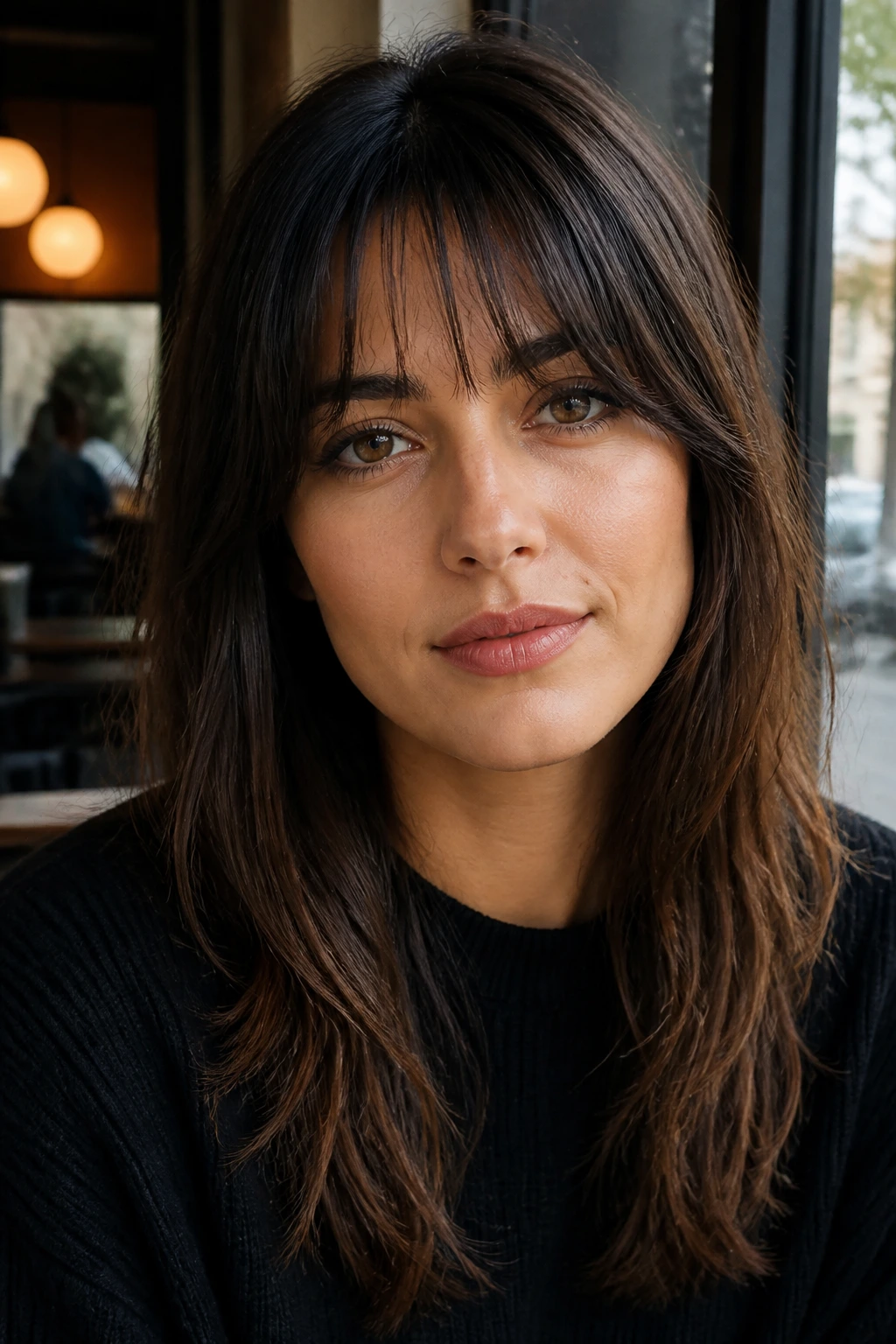
French fringe has a slightly cooler, looser feel than a classic full bang. On a round face, that looseness matters because it keeps the forehead from being boxed in by a straight line of hair.
What Makes It Different
The fringe is usually cut with a little more density in the center, then softened at the sides. That keeps the eyes framed while the rest of the face stays open. If the ends are broken up with a razor or point cutting, the fringe looks airy rather than solid.
How to Wear It
Wear it with a center part, a slight off-center part, or even tucked loosely into a bend from a round brush. It’s especially good with cuts that already have movement, like a shag or a long layered bob.
- Keep the ends feathery
- Let the bangs hit around the brows
- Avoid making the fringe too wide
- Use dry shampoo at the roots if they collapse fast
Small warning: this shape can look flat if the crown has no lift, so a little root spray helps.
6. Razored Brow-Grazers

Razored bangs bring a sharper edge, but not a hard one if they’re done well. The razor removes bulk and leaves the ends broken, which helps a round face look less wide through the middle.
The cut works best when the fringe is kept slightly uneven on purpose. Not ragged. Uneven. That subtle irregularity stops the bangs from reading like one solid strip. It’s a nicer match for round faces than a precise blunt line, especially if your hair is thick.
I like this shape on hair that tends to sit heavy at the forehead. The razor creates movement fast. If your strands are fine, though, ask for a lighter hand so the fringe doesn’t turn wispy and disappear by lunchtime.
7. Shaggy Bangs with a Wolf Cut
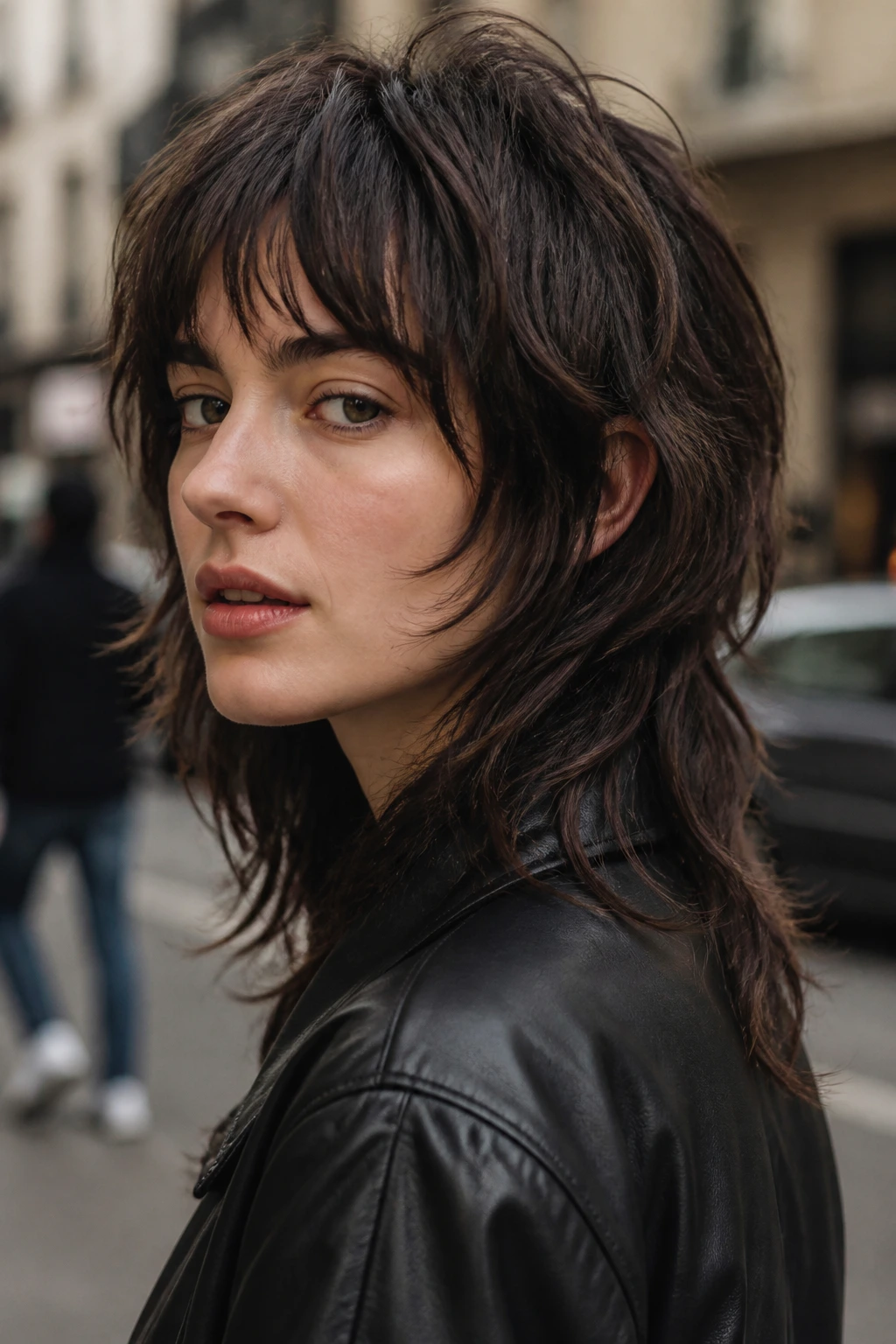
A wolf cut can be a little wild, and that’s exactly why it flatters a round face when the bangs are choppy. The layers around the crown add height, while the broken fringe keeps the front from turning boxy.
The bangs should not be too neat here. A wolf cut looks best when the fringe blends into the rest of the layers, almost like the bangs were cut out of the haircut rather than added on top of it. That keeps the face looking longer and the whole style feeling balanced.
This is one of those cuts that looks better when it’s not over-styled. Rough-dry it, shake the roots a bit, then pinch a few pieces with texturizing cream. Done.
8. Soft See-Through Bangs
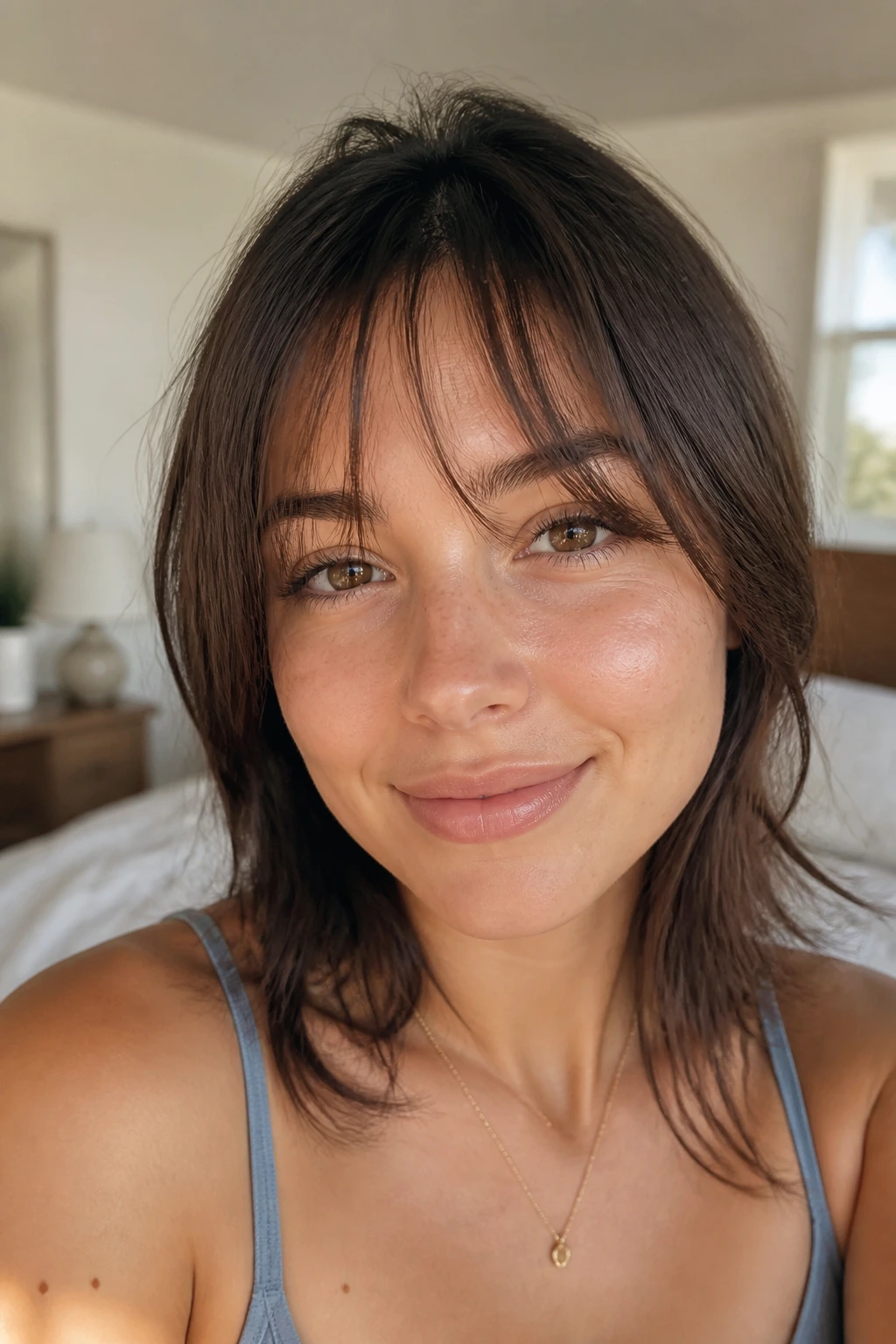
See-through bangs sound delicate because they are. The fringe is airy, with space between the strands, so it never piles too much hair across the forehead. On a round face, that lightness is gold.
Why does this shape work so well? Because it softens the forehead without adding width. A dense fringe can create a straight visual line that stops the eye. A see-through fringe keeps the face open and lets your features breathe.
The key is restraint. Leave the center sparse enough to show some skin, then add just enough choppy texture to keep it from looking stringy. A little round brush lift at the roots gives the fringe shape without turning it into a helmet.
9. Choppy Bangs With a Bob
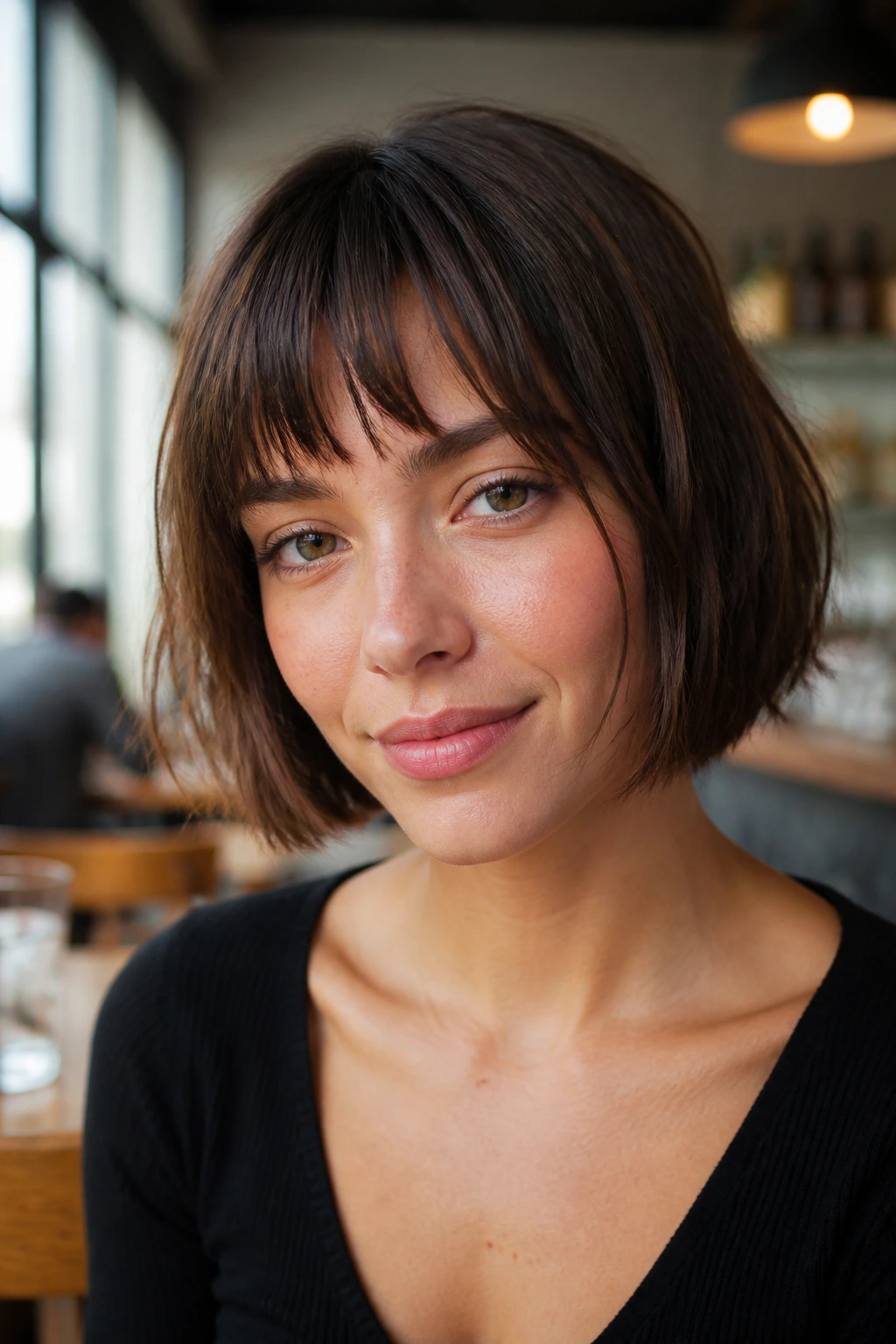
A bob and choppy bangs can be a sharp little pairing when the proportions are right. The fringe draws attention upward, while the bob keeps the jawline clean and tidy instead of adding more width through the cheeks.
The best version for a round face usually sits somewhere between chin length and just under the jaw. That length creates a vertical frame around the face, and the choppy bangs prevent the top from feeling too severe.
If your bob is blunt, keep the bangs softer. If your bob has internal layers, you can go a bit bolder with the fringe. That balance matters. Two strong shapes together can overwhelm a round face if neither one has air.
10. Choppy Bangs for Round Faces With a Shag Cut
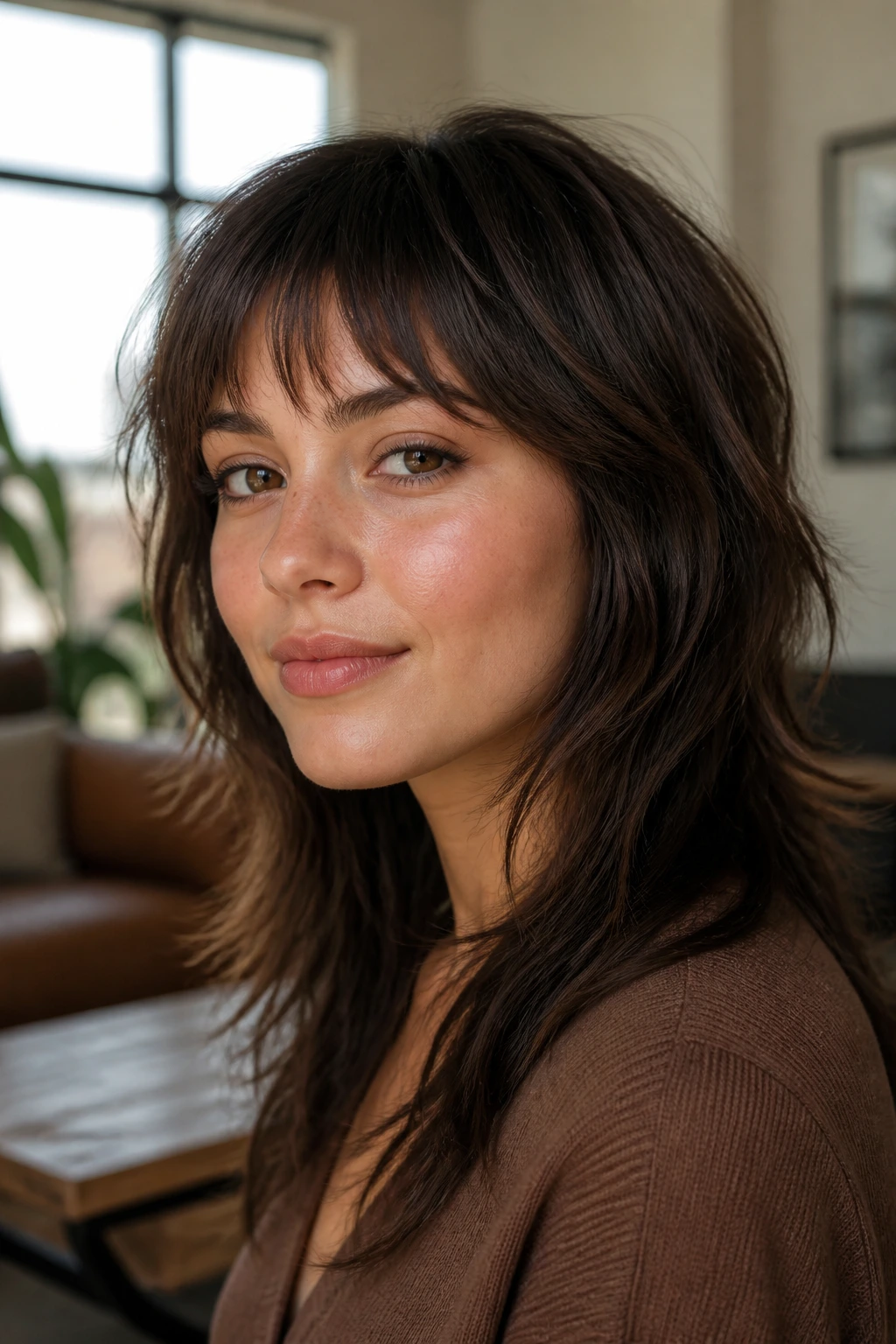
Shag cuts and round faces get along because the layers create movement instead of a single wide shape. Add choppy bangs, and the whole haircut starts pulling the eye up, down, and diagonally instead of side to side.
Ask Your Stylist For
- A fringe that starts narrow at the center
- Broken ends at the brows or slightly below
- Layering that opens at the cheekbones
- A soft connection between fringe and crown layers
The real strength of this look is that it feels busy in a good way. There’s texture everywhere, but none of it is thick enough to weigh the face down. If your hair gets puffy, ask for less bulk at the temples and more movement through the top layers.
I’d choose this shape for someone who hates a rigid haircut. It looks best with a little mess.
11. Arched Choppy Fringe
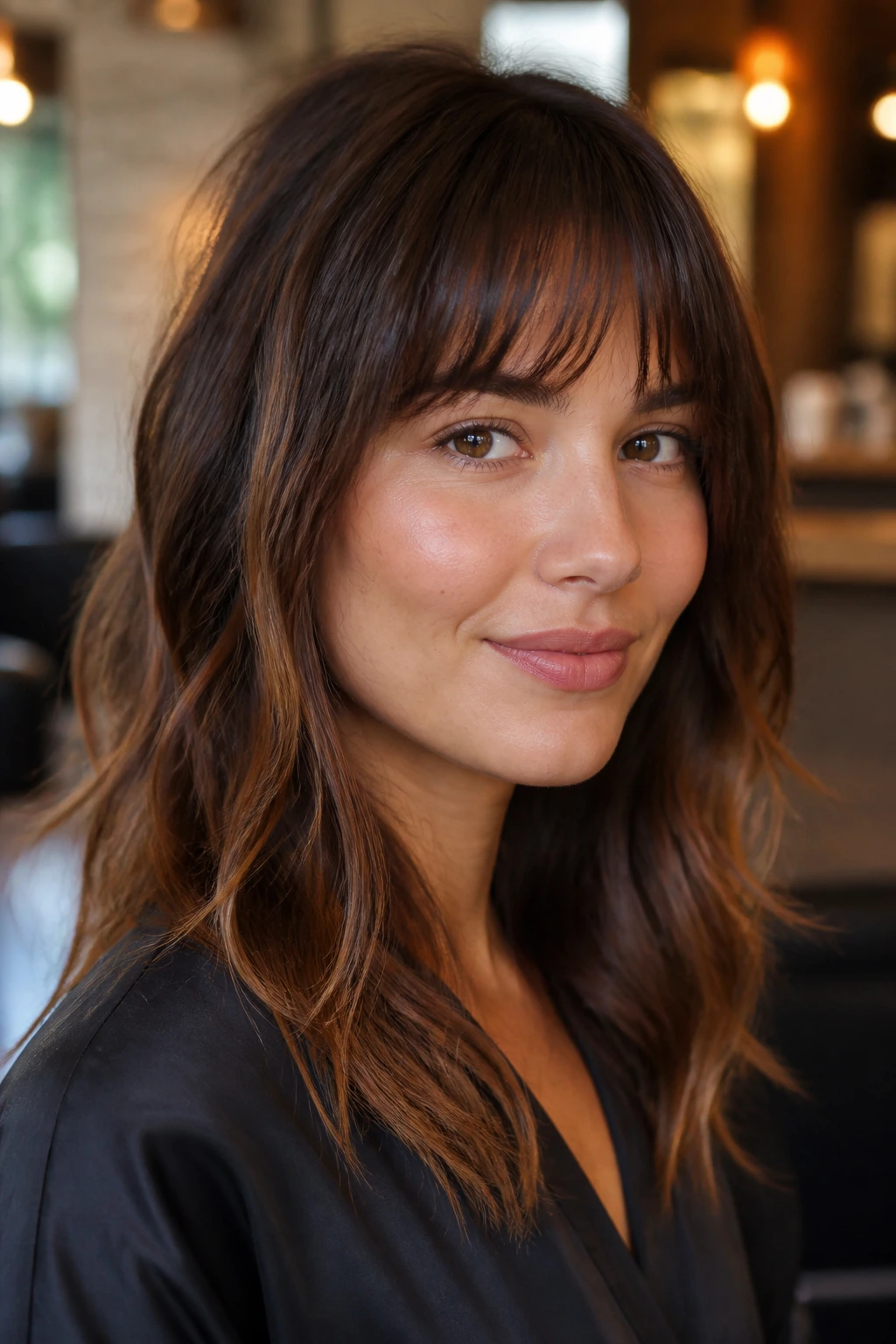
An arched fringe follows a gentle curve, which can sound risky on a round face, but choppy ends keep it from reading as heavy. The arch gives a hint of lift in the middle while the edges taper away softly.
That middle lift is useful. It helps lengthen the face visually, especially if the arch starts just a touch higher at the center than the outer corners. The trick is not to make the curve too perfect. A perfect curve can feel stiff. Broken pieces make it feel softer and more natural.
This is a nice option if you like a polished look but still want movement. It works well with blowouts and rounded brush styling, though it can also be finger-styled for a looser finish.
12. Curly Choppy Bangs
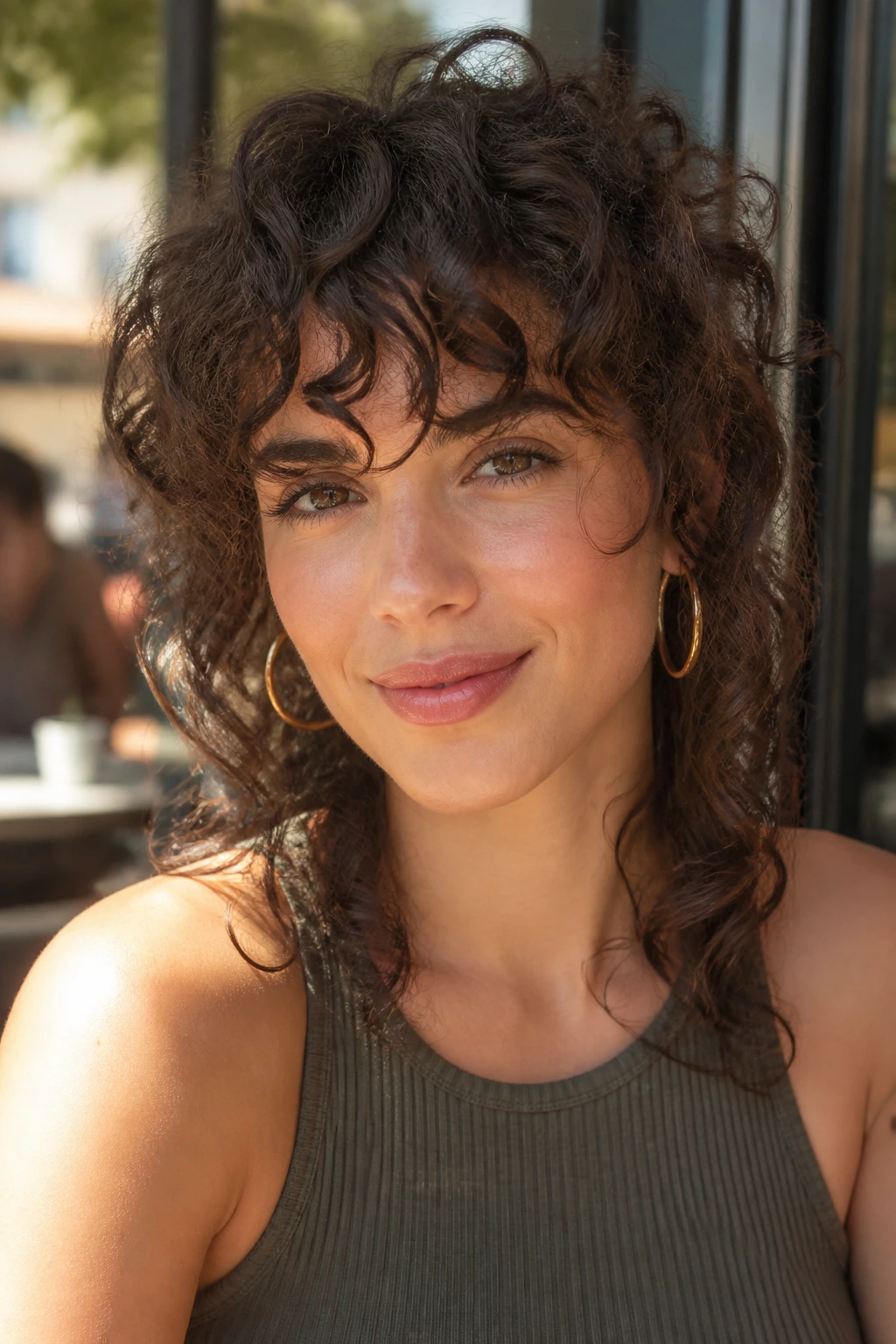
Curly bangs need space to spring, which is why choppy ends help so much. A round face can easily get swallowed by a curly fringe that’s too dense, but a lighter, broken shape lets the curls bounce without building too much width.
The best cut leaves the bangs a bit longer than you think you need. Shrinkage is real. A curl that lands at the brow when wet may sit an inch higher once dry. If your stylist cuts curly bangs dry, that’s a good sign they understand how the shape will live on your head.
Use a light cream, scrunch the fringe gently, and leave the curl pattern alone as much as possible. Stretching curly bangs too flat often makes the face look wider, not slimmer.
13. Wavy Choppy Fringe

Wavy hair gives choppy bangs a head start because the movement is already there. The fringe falls in broken ribbons instead of one clean sheet, and that irregular line suits a round face nicely.
A wavy fringe works best when the longest pieces brush the brow and the shortest ones sit a bit higher in the center. That tiny difference adds shape. It also keeps the bangs from collapsing into your eyes every time humidity shows up.
Air-dry if you can. Then touch the fringe with a diffuser for 30 seconds or so if the roots need lift. The goal is separation, not frizz. A few defined pieces are better than one frayed cloud.
14. Straight Hair Choppy Bangs
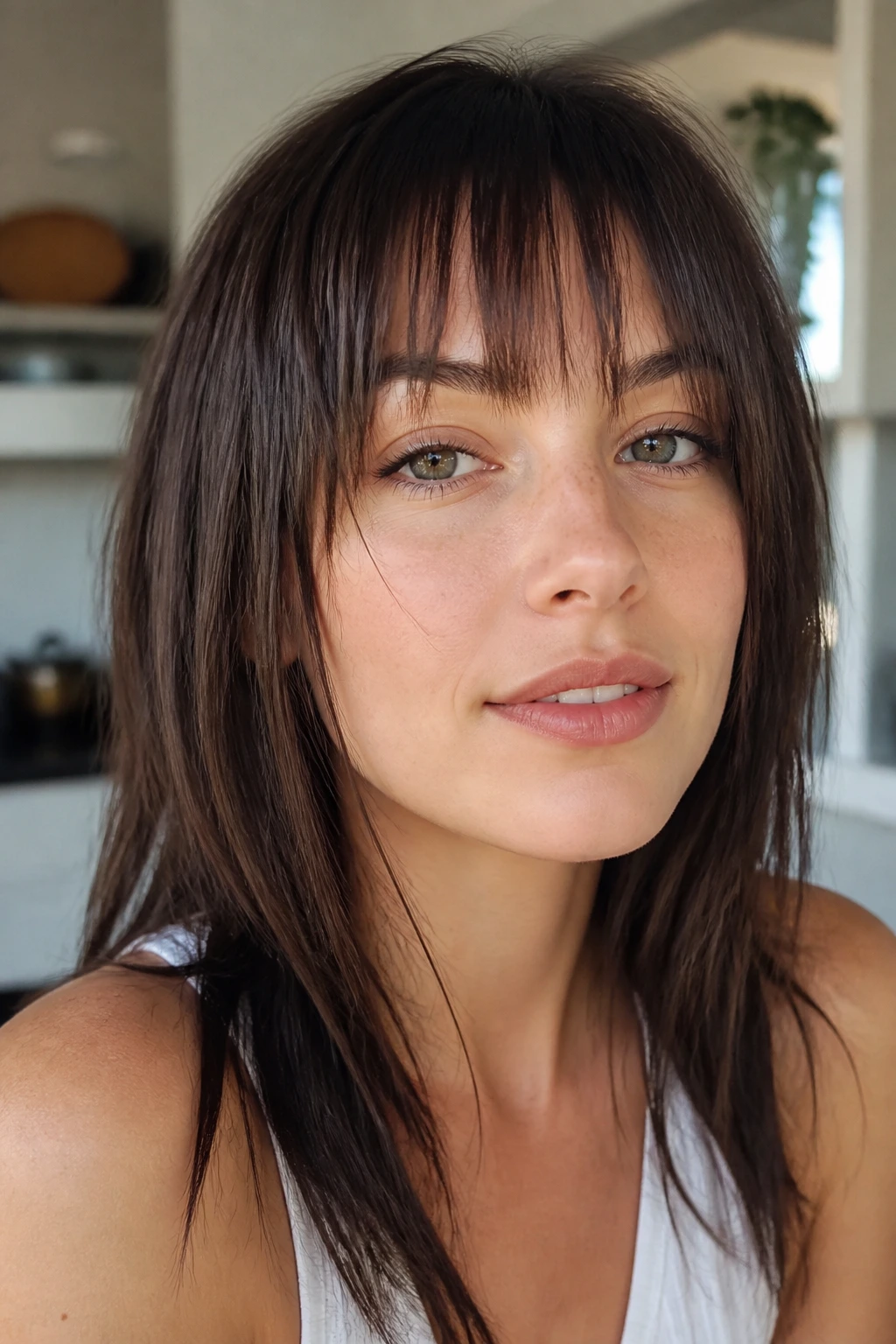
Straight hair can make bangs look harsher than expected, so choppy cutting matters even more here. Without texture, a straight fringe on a round face can feel like a hard line. Add broken ends, and the whole thing loosens up.
A straight texture also lets you control the shape more precisely. You can keep the center slightly longer, taper the sides, and use a flat iron in tiny bends only where the fringe needs movement. That gives the haircut direction instead of a static curtain.
This shape is a solid match if your hair goes flat fast. The fringe can be styled quickly, then left alone. Just avoid over-flattening the roots. Too much polish makes the bangs look cut off rather than blended.
15. Pixie Cut With Choppy Bangs
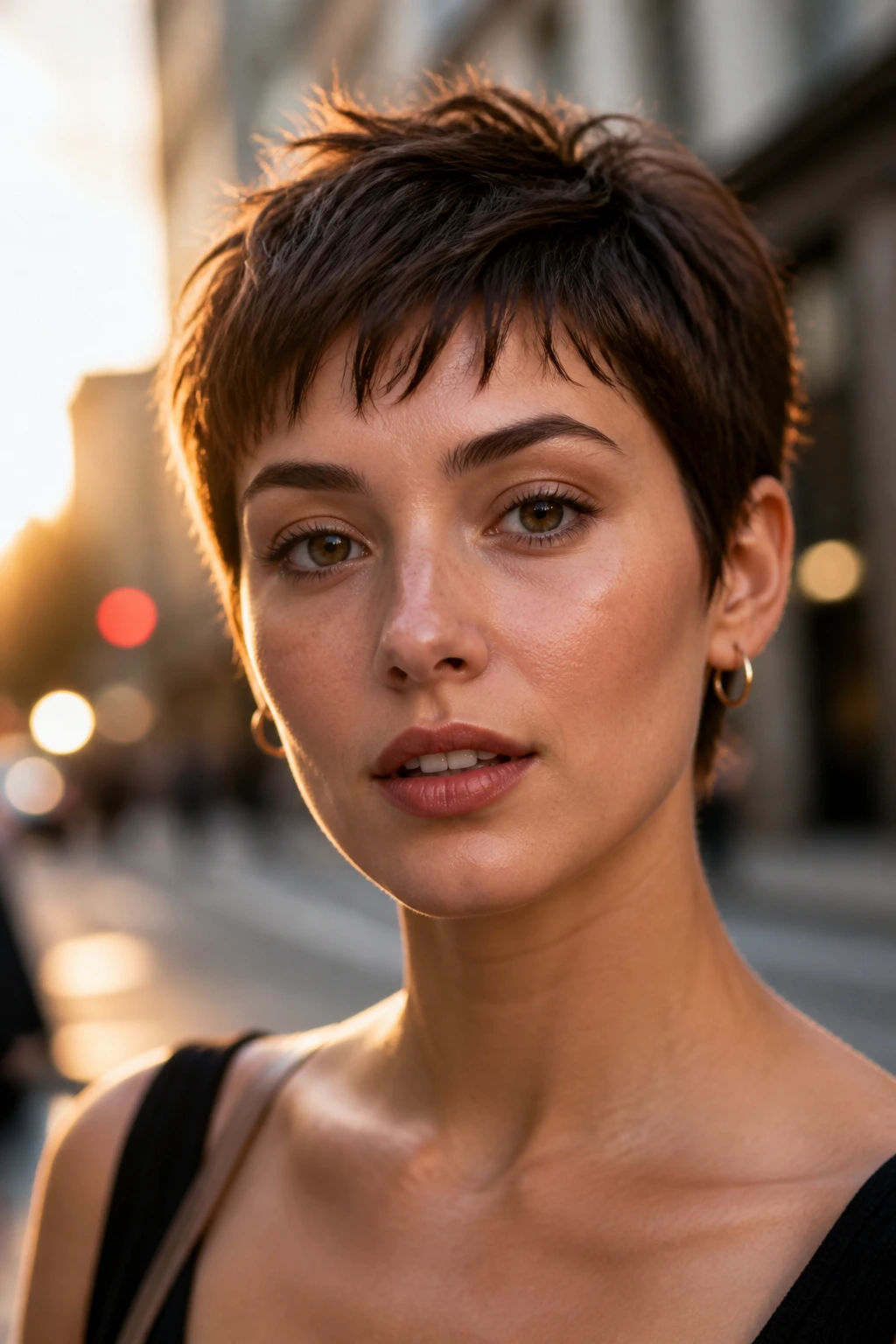
A pixie with choppy bangs can be one of the most face-flattering short cuts for a round face because it shifts attention upward. The bangs break up the forehead while the cropped sides keep the cheeks from being boxed in.
The fringe should stay light and slightly uneven. If it gets too heavy, the cut loses its shape and starts to feel helmet-like. If it gets too short, the face can look wider. That middle ground is where the magic sits.
Short hair asks for confident styling. A dab of matte paste through the fringe and a quick pinch at the ends is usually enough. You want lift, not stiffness. A little edge goes a long way.
16. Lob With Choppy Bangs

A lob gives you a long, clean line around the face, and that line can be very helpful on a round shape. Add choppy bangs, and the haircut stops feeling too smooth or too predictable.
The best lob-bang combo usually lands around the collarbone or just above it. That length stretches the face a bit, while the fringe keeps the front from looking flat. If the bangs are too full, they compete with the lob. If they’re too sparse, the look loses definition.
I like this style for people who want movement but still need something that behaves at work. It can air-dry into a soft bend, or you can give it a quick pass with a brush and leave the ends a little undone.
17. Bixie With Piecey Fringe
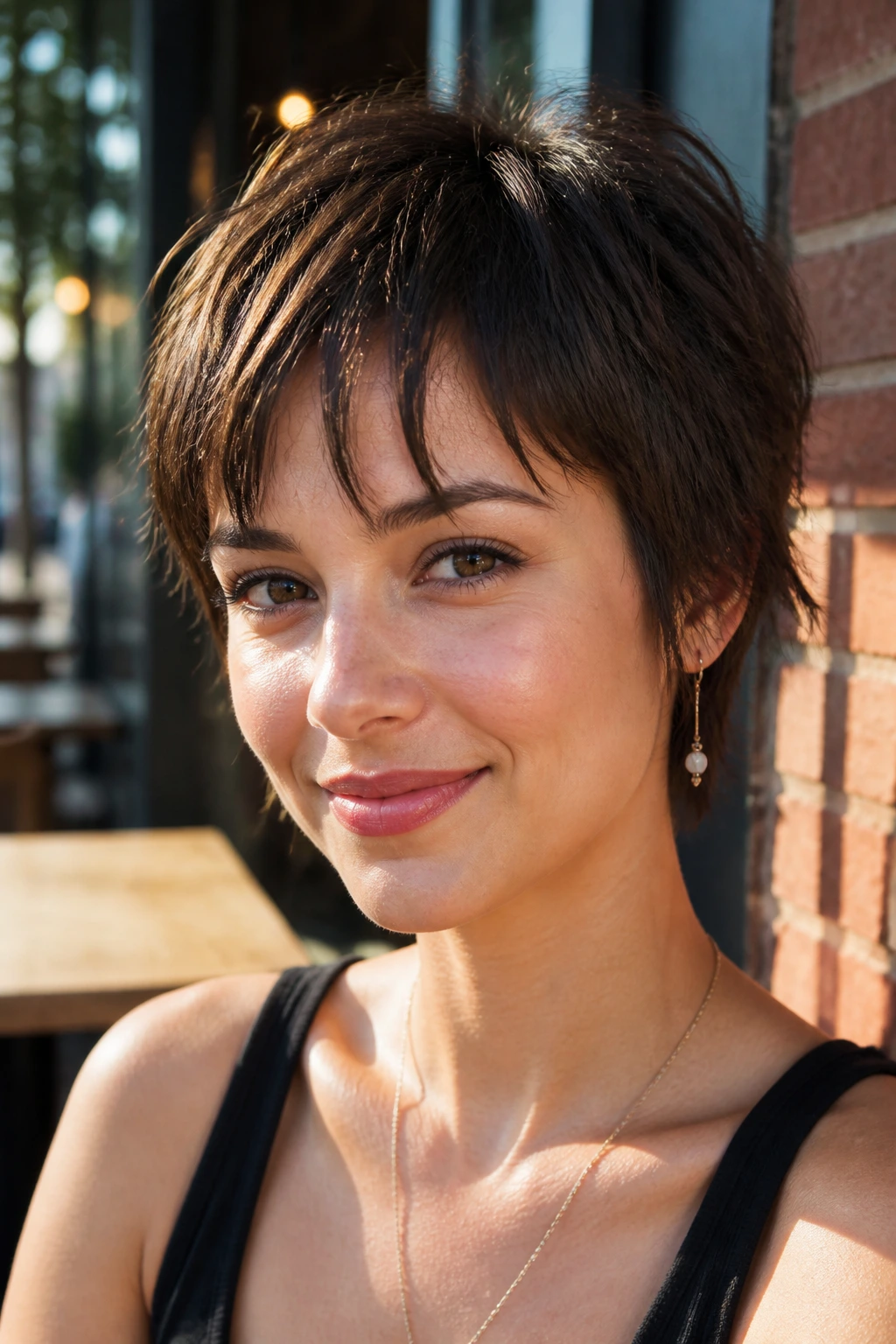
A bixie sits between a bob and a pixie, which gives it a playful shape without going too short. Pair it with piecey fringe and you get a cut that opens the face instead of crowding it.
The Shape to Ask For
- Shorter sides with a little softness around the ears
- Top layers kept airy, not packed down
- Bang pieces that separate into 3 or 4 visible sections
- A fringe that can be pushed forward or slightly off-center
The piecey part matters because it keeps the forehead from being covered in one block. On a round face, that openness is useful. It creates the feeling of height, which short cuts need if they’re going to flatter rather than widen.
This is not a cut for somebody who wants to wash and forget. It likes a bit of styling cream, finger shaping, and a mirror check before you walk out the door.
18. Deep Side-Part Choppy Bangs
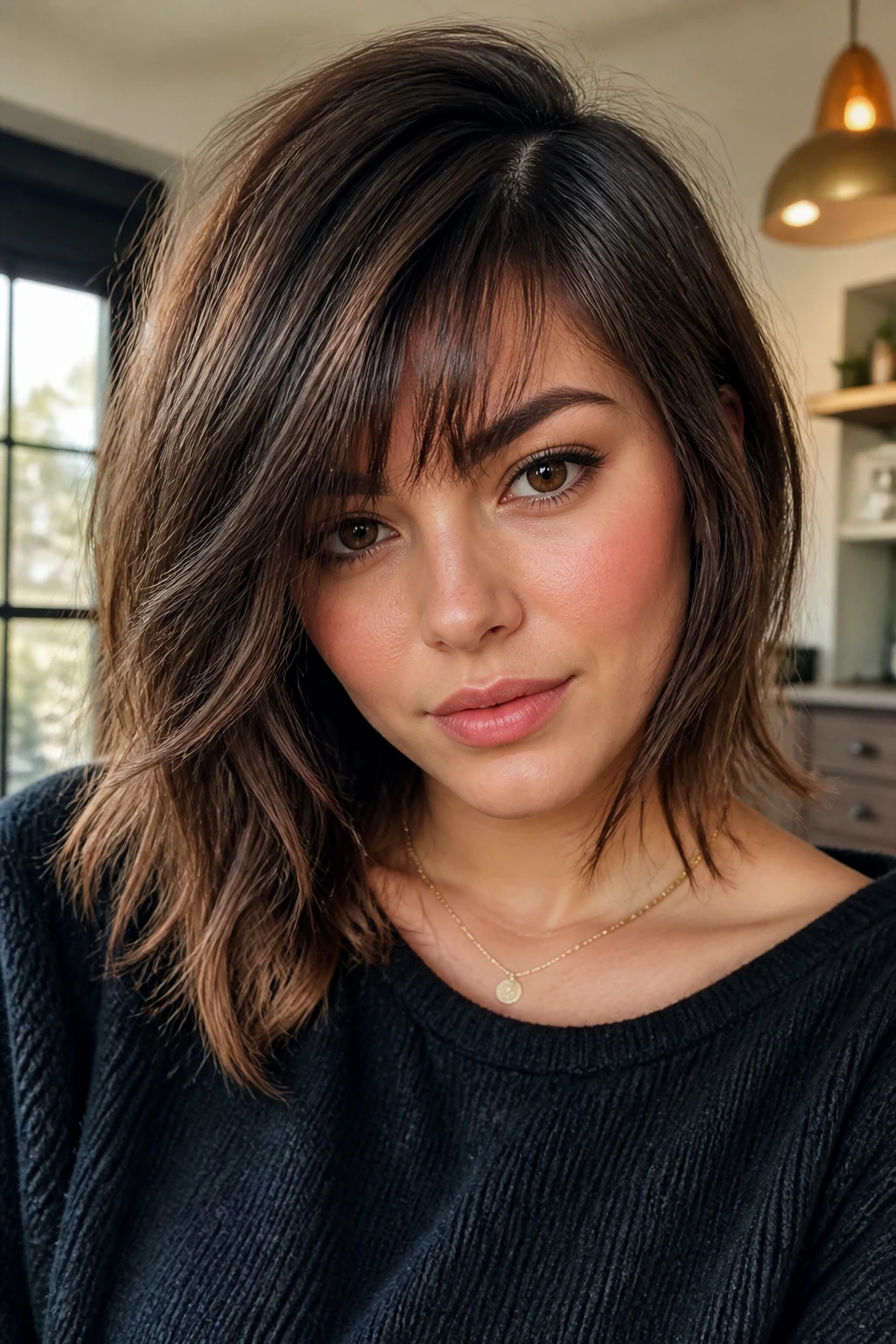
A deep side part can change the whole mood of choppy bangs. One side falls heavier, the other stays open, and that asymmetry is exactly what a round face often needs.
The longer side creates a diagonal line across the forehead, which narrows the visual width. The shorter side keeps the look from becoming too heavy near the temple. It’s a small shift, but it changes the balance a lot.
This style suits people who do not want a full fringe but still want something that feels intentional. It can be brushed flat for a clean day or shaken loose for a softer finish. Either way, the side part does the shape work for you.
19. Cheekbone-Grazing Grown-Out Bangs
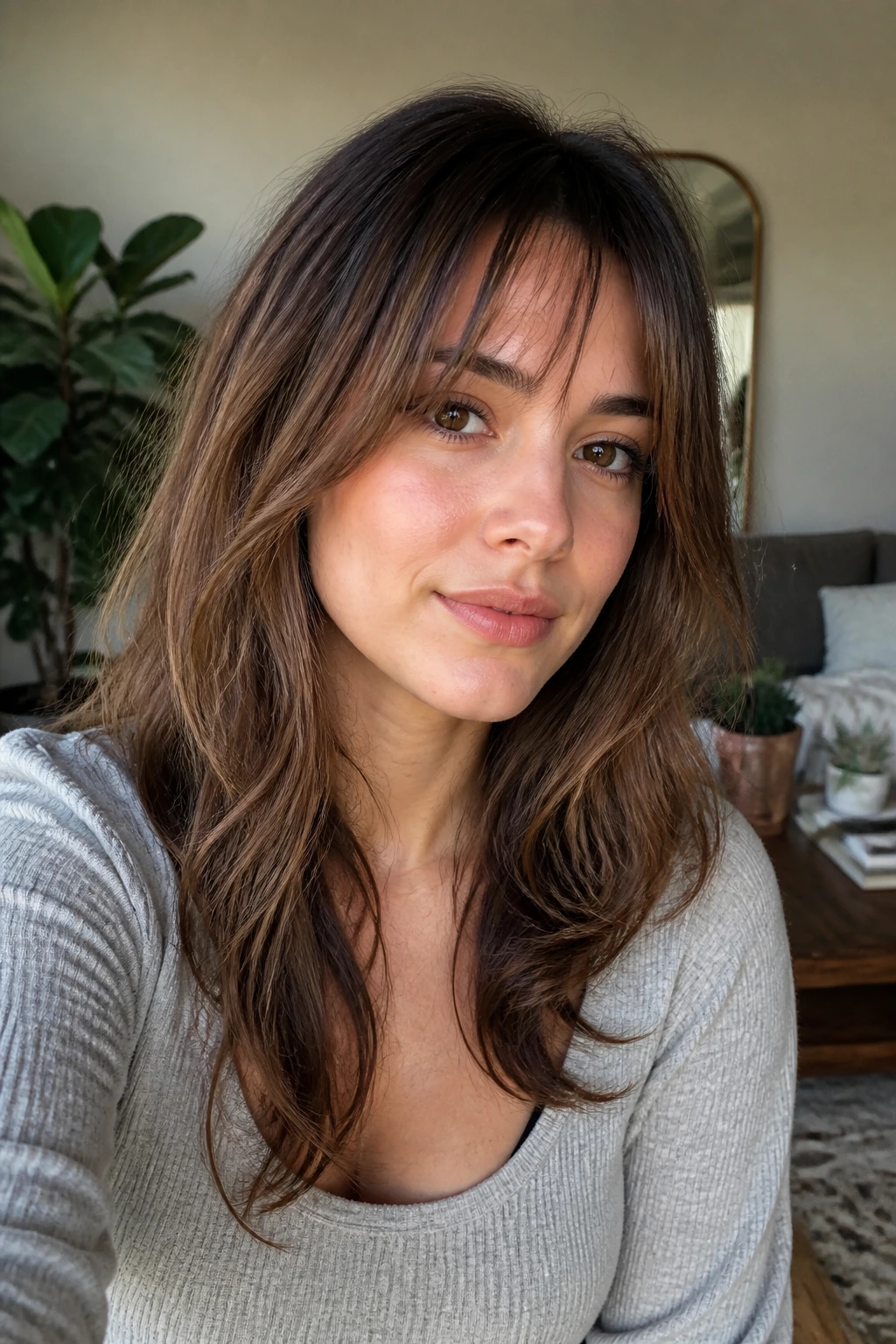
Cheekbone-grazing bangs are one of those cuts that look accidental in the best way. They land right where the face starts to turn inward, so they help guide attention to the bone structure instead of the width of the cheeks.
That length is forgiving. It can be tucked behind the ear, blended into layers, or left to fall forward in a soft sweep. On a round face, that flexibility matters because it keeps the style from feeling locked in one position.
If you’re growing out bangs, this is usually the stage where the cut starts feeling chic again. The pieces are long enough to move, but short enough to still read as bangs. It’s a useful middle ground, and not a boring one.
20. Highlighted Choppy Bangs for Round Faces

Color changes how bangs read. A few lighter pieces through a choppy fringe can break up the mass of hair and make the texture stand out more clearly, which helps a round face look less covered across the forehead.
Where to Place the Lighter Pieces
- Brighten the center by the brows
- Keep the temple pieces a shade softer
- Ask for thin ribbons, not chunky stripes
- Match the color placement to the cut, not the other way around
The reason this works is simple: contrast creates shape. A fringe that has a little depth and a few lighter strands feels lighter on the face, even when the actual amount of hair stays the same.
I’d skip harsh block highlights here. They can make bangs look heavy in a strange way. Soft ribbons, face-framing pieces, and a little dimension around the crown do the job much better.
21. Tapered Choppy Bangs That Blend Into Layers
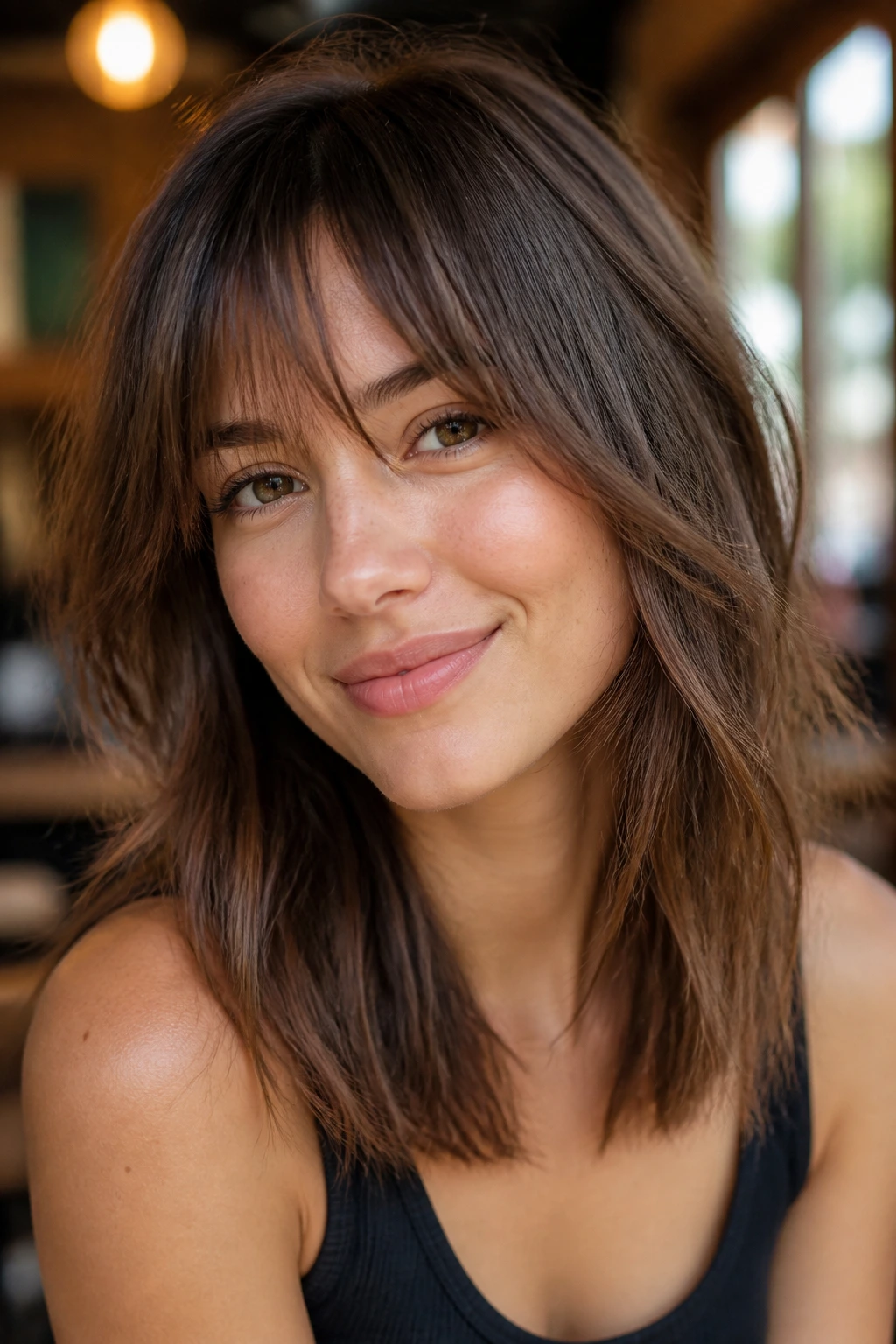
Tapered bangs are useful when you want fringe, but you do not want a hard line. The center can be slightly shorter, then the edges feather into the rest of the haircut so the whole front moves like one piece.
That blend is flattering on a round face because it avoids creating a strong horizontal stop across the forehead. Instead, the eye travels naturally down through the layers. It feels less like “bangs” and more like a soft shape around the face.
This is a smart choice if you usually wear your hair down and loose. The fringe doesn’t need constant fixing. A bit of bend at the front and a blow-dry through the crown is often enough.
22. Baby Bangs With Texture
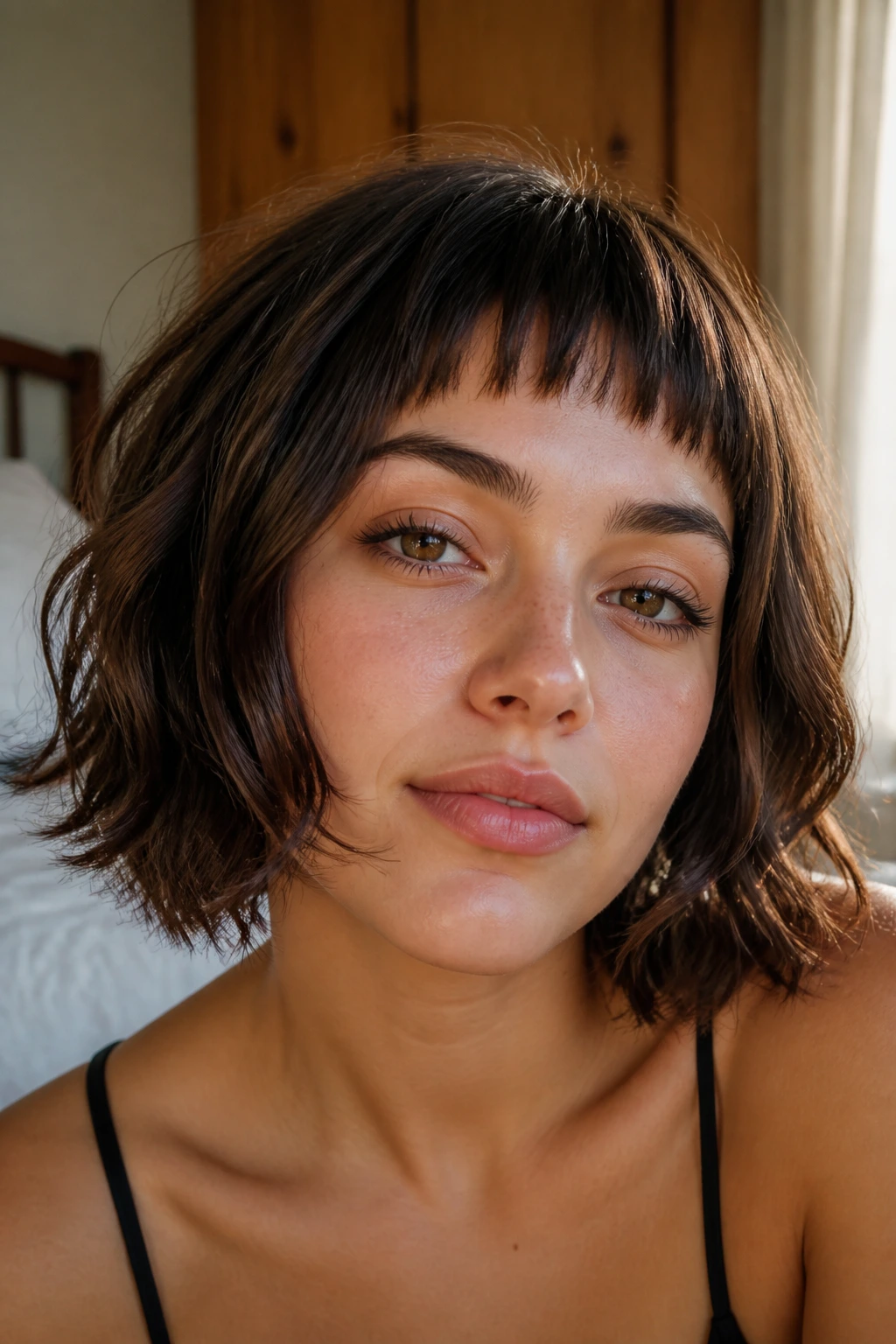
Baby bangs are a bold move, and they do not suit every round face. When they work, though, they create a strong style point above the widest part of the face and leave the eyes and cheekbones doing the talking.
Texture is what keeps them from feeling severe. A choppy edge softens the hard short line, and that matters a lot. Straight-across baby bangs can look boxy fast. Broken ends bring a little air into the shape.
This cut is best for someone who likes an obvious style choice and is fine with upkeep. It needs trims more often than longer fringe, and it can be unforgiving if the rest of the haircut is too soft or too long. Sharp little fringe, sharp little mood.
23. Curtain Bangs With Broken Ends
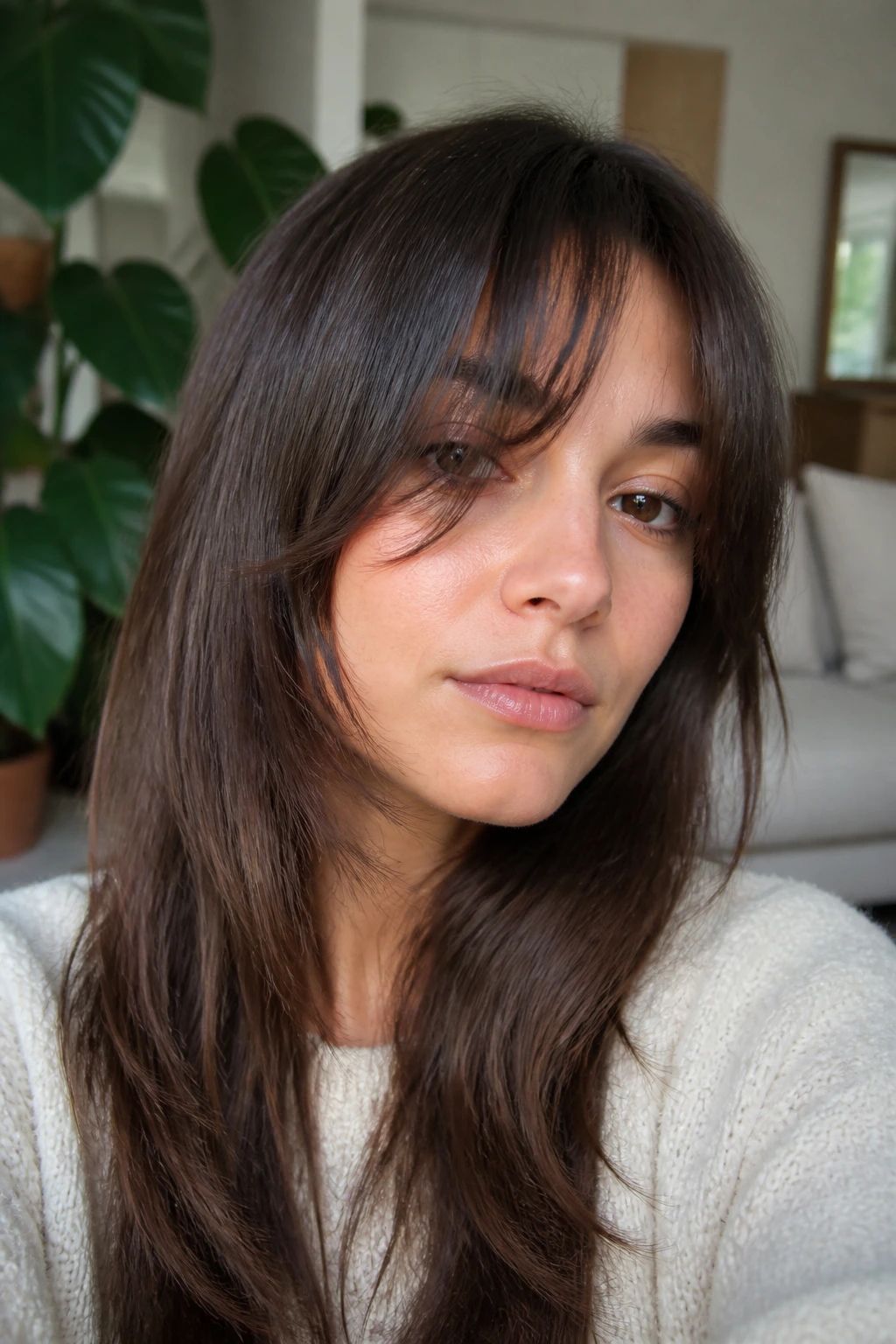
Curtain bangs already flatter round faces because they open the center of the forehead and frame the sides. Add broken ends, and the shape feels less polished, more relaxed, and easier to wear with everyday hair.
The biggest mistake is making them too symmetrical. Slight differences between the left and right side keep them alive. A little unevenness also helps the bangs fall around the cheeks instead of sitting flat against them.
This version is especially good if you like to tuck hair behind your ears. The bangs stay visible, but the face still feels open. You get frame without crowding, which is the whole reason curtain bangs stay so popular.
24. Choppy Bangs for Round Faces and Glasses

Glasses change the game. The frame already sits on the face, so the bangs need to work with it instead of fighting for attention. Choppy bangs help because they break up the forehead line and keep the area around the eyes from feeling overloaded.
What to Watch For
- Avoid bangs that stop exactly at the top of the glasses frame
- Keep a little space between the brow and the fringe
- Let the ends sit softer near the temples
- Choose lighter texture if your frames are thick or dark
I usually like a slightly longer fringe with glasses. It keeps the lenses from looking crowded and gives the face a cleaner vertical line. If the bangs are too short, the eye area can feel boxed in. If they’re too dense, the frames disappear.
A side part or soft center part tends to work better than a blunt straight-across line. It gives the whole look room to breathe.
25. Layered Bangs With Flipped Ends
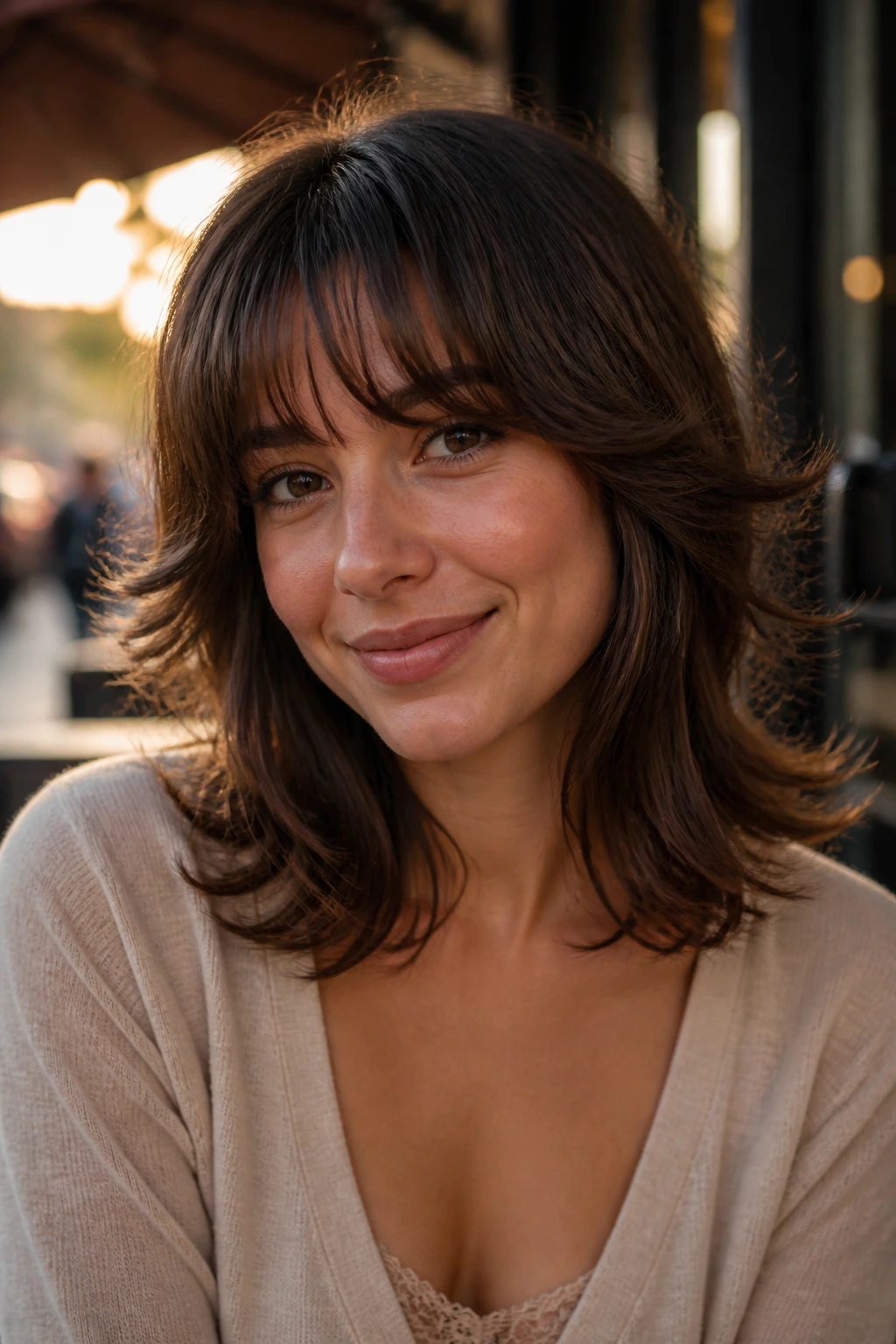
Flipped ends sound playful, and they are, but they also add shape. When the fringe turns outward just a little at the edges, it opens the face and keeps the bangs from sitting like a flat curtain.
This shape works well with layered cuts because the bangs can echo the rest of the haircut. The flip at the end should be subtle, not retro in a costume way. A tiny bend with a brush or flat iron is enough.
On a round face, this style is useful because it lifts the eye slightly upward and outward without building width right across the cheeks. It feels light, a little spirited, and easier to style than it looks.
26. Low-Maintenance Choppy Fringe
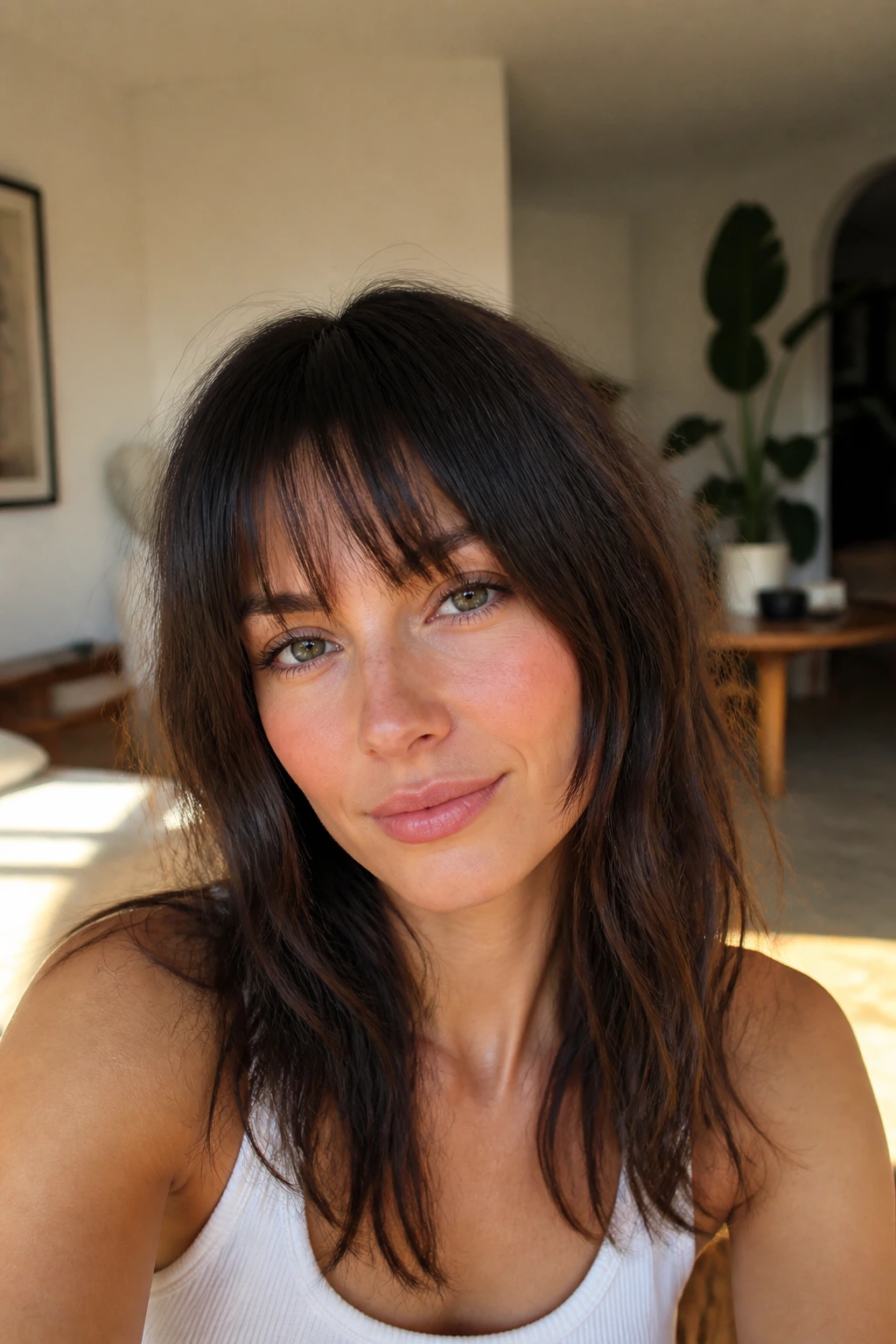
Some bangs need fuss. This one needs less. A low-maintenance choppy fringe is cut to fall into place with minimal effort, usually with enough texture that it still looks intentional after a quick finger comb.
The ideal version sits somewhere between brow length and cheekbone length, depending on your hair type. Too short and it demands constant attention. Too long and it stops reading as fringe. The middle range is where it stays easy.
I like this for people who want the effect of bangs without the daily blowout. A tiny bit of dry shampoo at the roots and a quick shake at the ends often does the job. If the fringe starts to split in odd places, that’s usually a sign it needs a trim, not more product.
27. Middle-Part Choppy Bangs

A middle part can be the right move on a round face when the bangs are broken up enough to stay soft. The center opening creates a longer line down the face, while the choppy pieces keep the part from looking stark.
This shape is especially nice if you want to show some forehead but still need face-framing detail. The two sides don’t need to match perfectly. A little difference makes the part feel more natural and less staged.
It works well with long hair, but I also like it with shoulder-length cuts. The fringe gives the front some motion, and the part keeps the face from losing its vertical shape. Clean, but not severe.
28. Piecey Bangs With Volume at the Crown
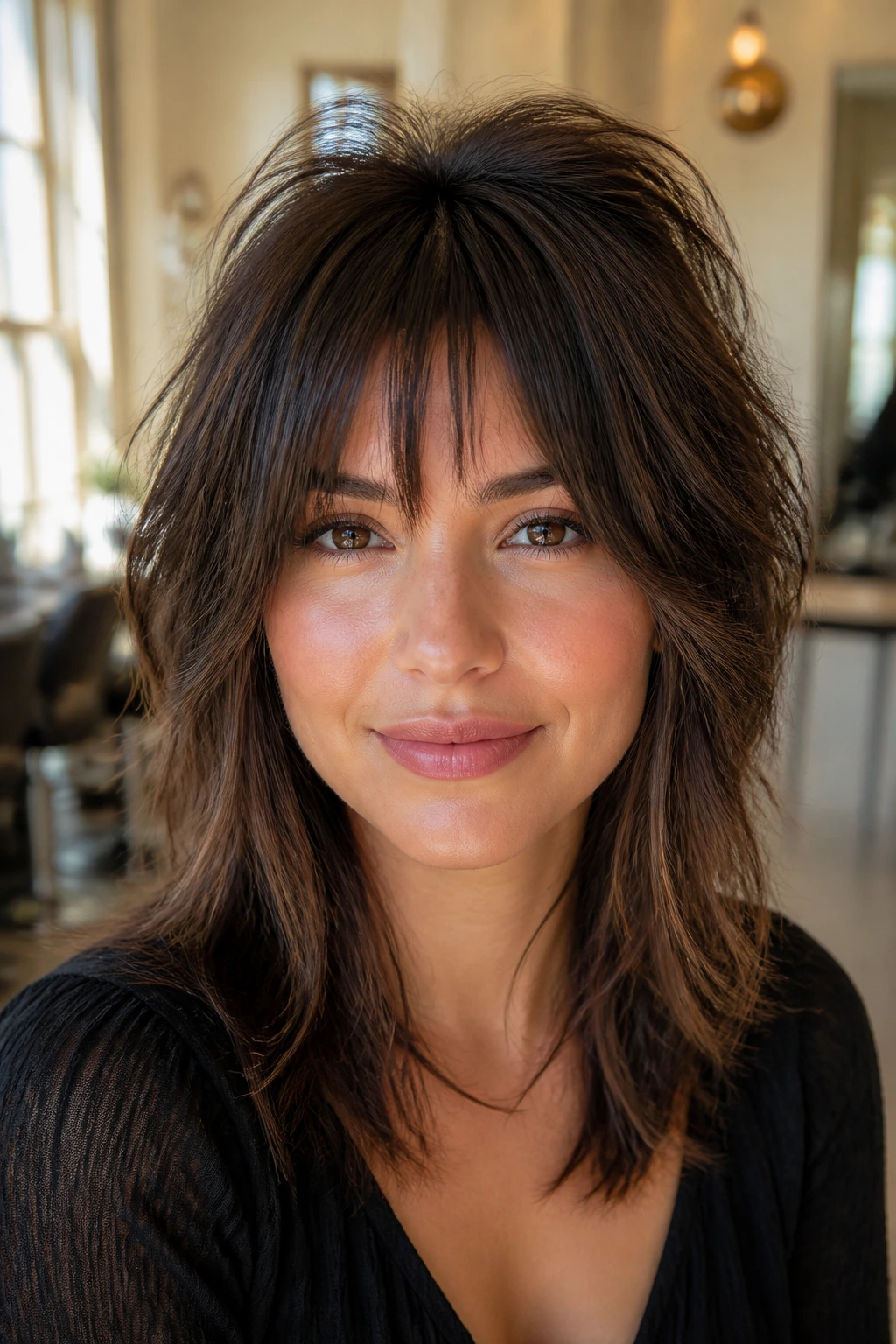
Volume at the crown is underrated for round faces. Lift at the top gives the face more length, and piecey bangs help the front stay light enough to support that lift.
The trick is to keep the roots airy and the fringe separated into visible strands. You don’t want one thick block across the forehead. You want a few clear pieces that frame the eyes while the crown does the lifting work.
This is a strong choice if your hair tends to sit flat after a few hours. A root spray at the base and a quick lift with a vent brush can make the whole haircut look sharper. The bangs are only part of the effect; the crown is doing half the styling.
29. Razor-Cut Fringe for Thick Hair
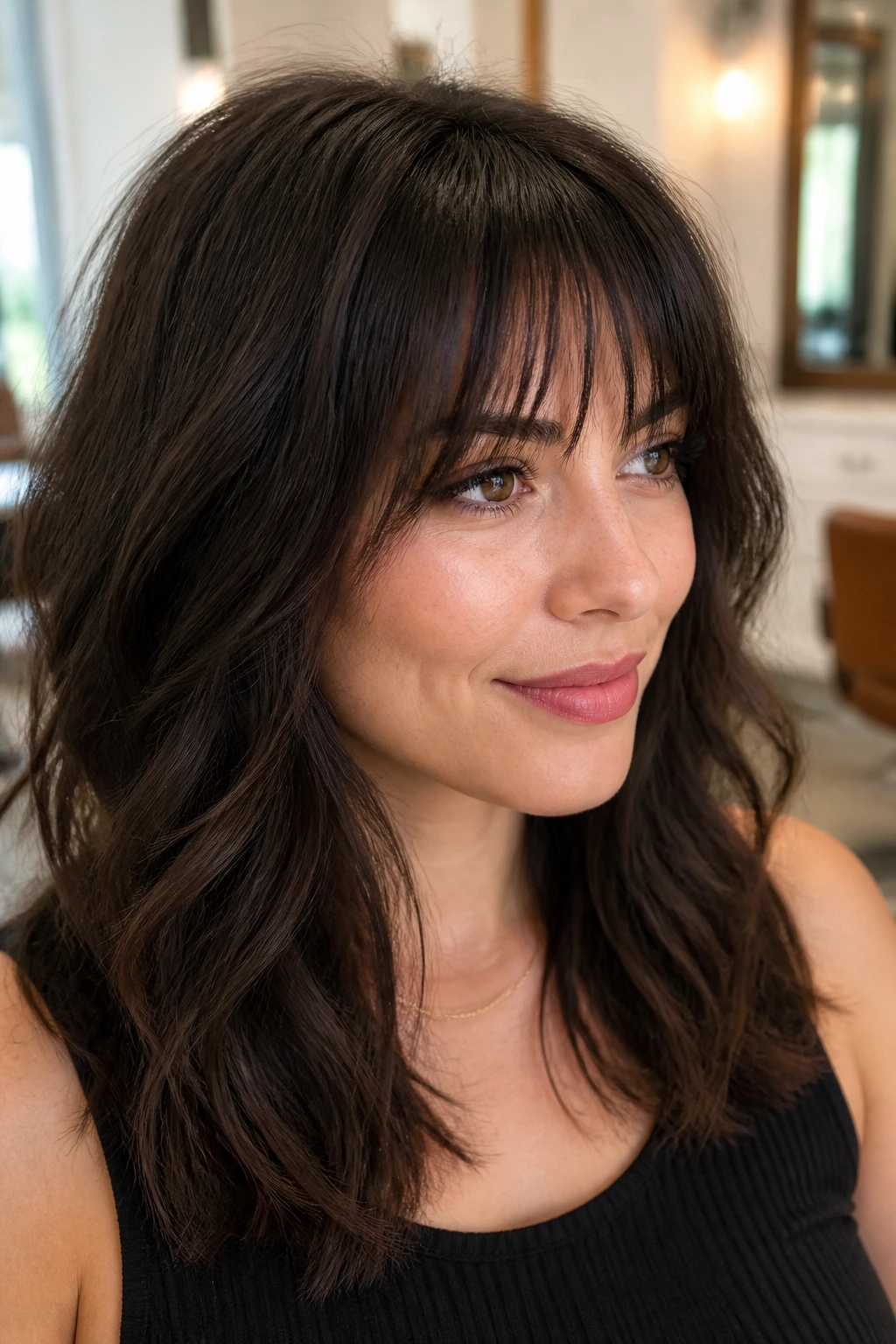
Thick hair can make bangs feel heavy fast, and that’s where a razor-cut fringe earns its keep. The razor removes weight from the ends, so the fringe moves instead of sitting like a curtain across the forehead.
Why Thick Hair Benefits
- Less bulk at the center
- Softer edges around the brows
- Easier blending into layers
- Better movement when air-dried
On a round face, the lighter finish helps keep the face from looking wider. The hair doesn’t pile up in one dense strip, which is the problem with many thick fringes. If your hair is coarse as well as thick, this cut can feel cooler and less puffy.
You do need a careful stylist for this one. A heavy hand with the razor can leave the ends frayed in a bad way. When it’s cut well, though, the fringe has swing, and swing is doing a lot of the flattering work here.
30. Soft Grown-Out Choppy Bangs for Round Faces
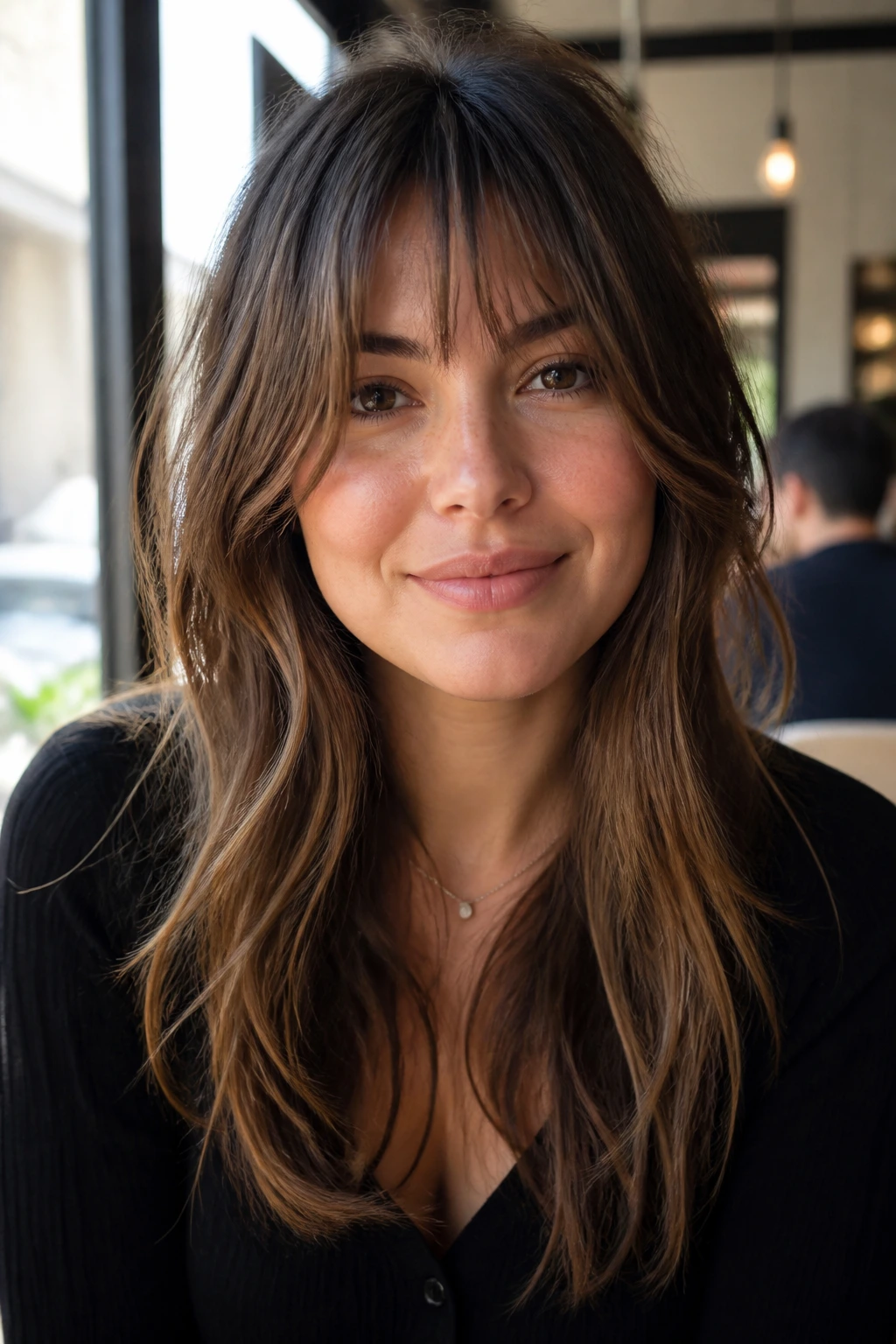
Grown-out bangs are not a backup plan. They can be the best version, especially if you want something that keeps your face open while still giving you fringe movement. The longer pieces curve into the cheekbones, and that soft line helps lengthen a round face without looking overdone.
This shape is especially nice when you’re between salon visits. The bangs can be tucked, parted, or left loose, and they still look like part of the haircut. That flexibility is a big part of the appeal.
If you want a fringe that grows out well, ask for a cut that already has some taper built in at the sides. Then the grow-out stage feels like a second style instead of a problem. That’s the version I’d choose if you like your hair to behave with less effort.
The Bottom Line
Round faces do not need to avoid bangs. They need the right kind of fringe, and choppy texture is one of the easiest ways to get there.
The strongest shapes here all do the same quiet job: they break up width, add movement, and keep the forehead from turning into one solid block of hair. Some are soft and easy, some are sharper, and some ask for more styling, but they all work because the texture stays alive.
If you’re bringing one of these to a stylist, bring a photo and point out the part you care about most — brow length, temple softness, cheekbone sweep, or crown lift. That small detail usually matters more than the name of the haircut.
