



Having a round face often comes with a specific set of frustrations when you walk into a salon. You hear the same advice on repeat: “Avoid bangs, they’ll make your face look shorter.” It is a tired, outdated rule that ignores the reality of how hair can actually shape and contour your features. The secret isn’t avoiding fringe; it is all about the texture.
Blunt, heavy, straight-across bangs are usually the culprit behind that “helmet” look people fear, as they draw a hard horizontal line right across your forehead, effectively chopping your face in half and highlighting its width. But when you introduce texture—choppiness, layers, wispiness, and intentional gaps—you break up that solid line. You create vertical movement that draws the eye upward or outward, which is exactly what creates the illusion of elongation.
The right textured fringe acts like soft curtains or framing layers, skimming the cheekbones and drawing attention to your eyes rather than the width of your cheeks. It changes the geometry of your face entirely. Here are 28 ways to wear textured bangs that actually work, tailored to flatter rounder features while maintaining that modern, effortless aesthetic.
1. Wispy Curtain Bangs
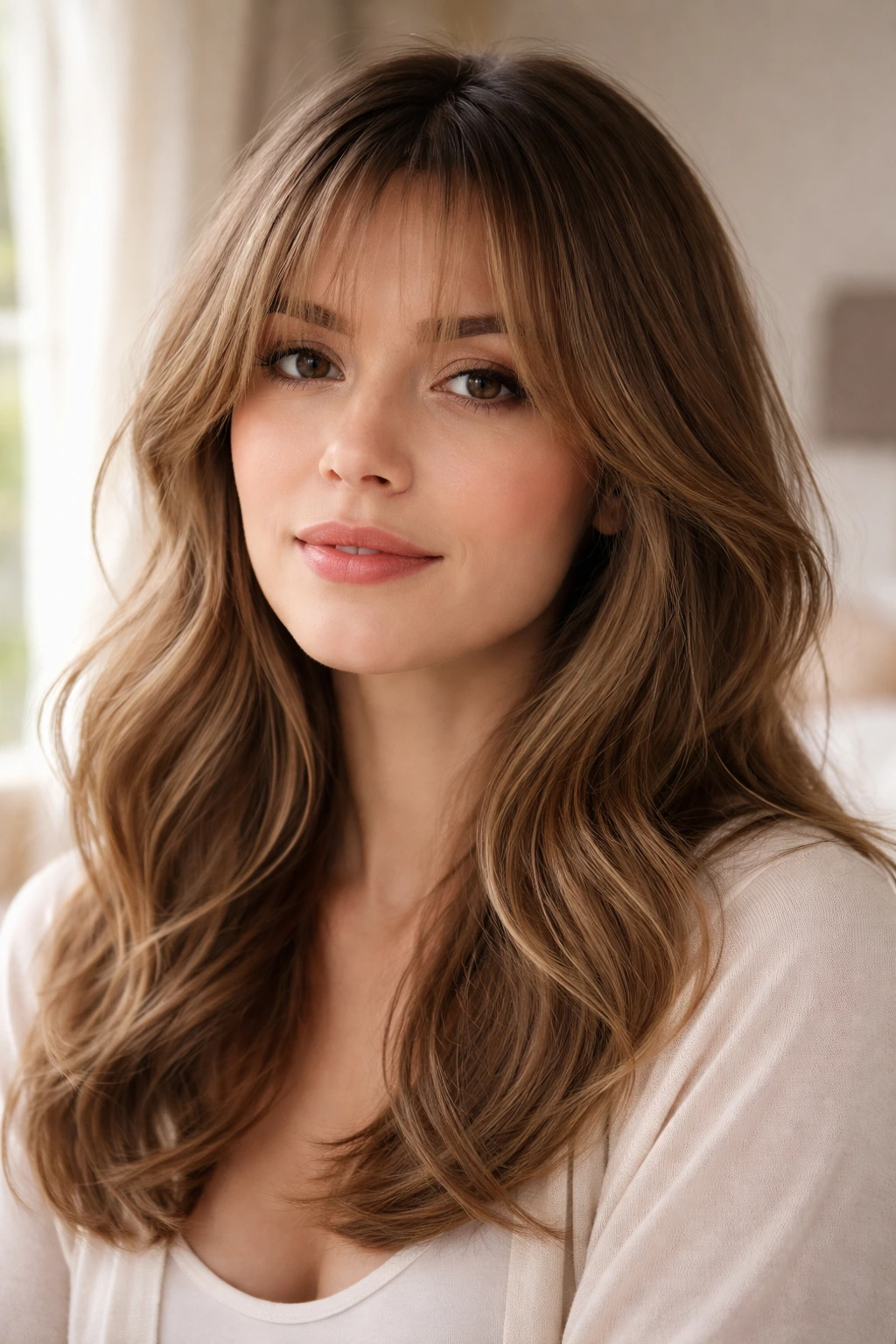
These are the gold standard for anyone hesitant about committing to a full fringe. They are cut with significantly less density than traditional bangs, meaning you can see the forehead through the hair. The ends are heavily point-cut to ensure they don’t look blocky.
Why They Flatter a Round Face
Because they aren’t heavy, they don’t box the face in. Instead, they frame the temples and cheekbones, acting like a veil that softens the edges of your hairline. The “curtain” effect draws the eye toward the center of your face, which creates a natural, flattering narrowness.
Styling for Softness
You want to avoid using a flat iron here. Instead, take a small, round brush—preferably one with natural bristles—and blow-dry the bangs away from your face. A light spritz of texture spray keeps them from clumping together. If they look too perfect, they aren’t wispy enough. Mess them up with your fingers.
2. Choppy Side-Swept Bangs
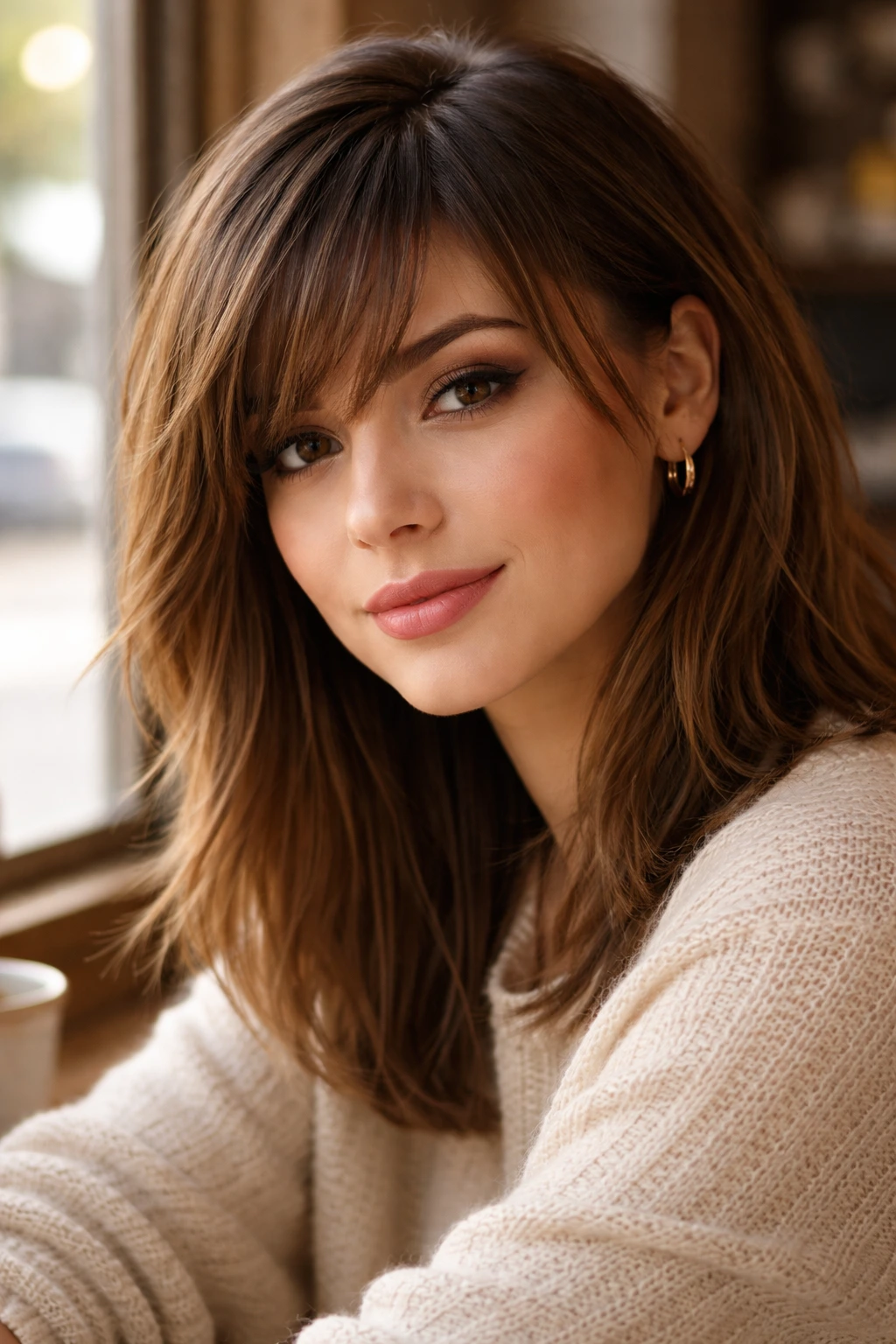
Side-swept bangs are an architectural classic for a reason. By creating a diagonal line across the forehead, you disrupt the circular symmetry of a round face. When you make those ends choppy, you get a modern edge that keeps them from looking like a relic of the mid-2000s.
How to Achieve the Look
Ask your stylist for a deep side part with the bangs cut at an angle, starting shorter at the temple and gradually getting longer as they blend into your cheekbones. The “choppiness” is achieved through point-cutting—this prevents the bottom edge from being a single, solid line.
Maintenance and Growth
This style is incredibly forgiving. Because they are designed to blend into the rest of your hair, they don’t require a trim every two weeks. You can let them grow out for a while before they start bothering you, making them a low-maintenance option for busy mornings.
3. Bottleneck Bangs
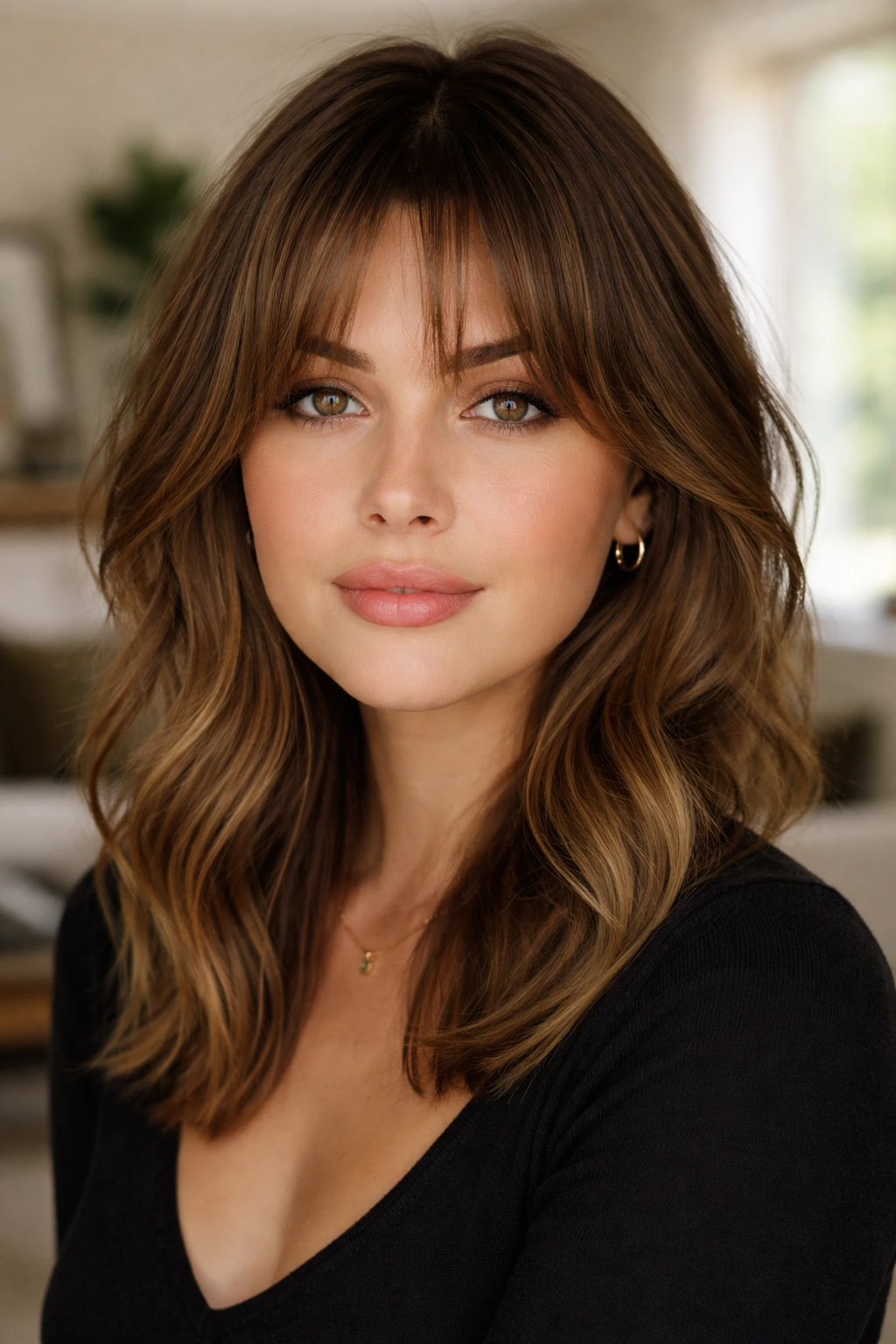
Think of the shape of a bottle: narrow at the top and widening at the bottom. These bangs are shorter in the middle and get progressively longer as they sweep toward your ears. They mimic the look of a grown-out fringe that has been styled intentionally.
The Visual Effect
They function similarly to curtain bangs but offer a slightly more “styled” finish. The shortest point sits in the middle of your forehead, which adds a bit of vertical length to the face, while the longer sides sweep down to contour your cheekbones. It is a win-win.
Texture Tips
This cut relies heavily on the texture of your hair. If you have fine hair, use a volumizing mousse before drying to give the middle section some lift. Without that lift, they can look limp and flat against your forehead, which defeats the purpose of the bottleneck shape.
4. Long, Piecey Fringe
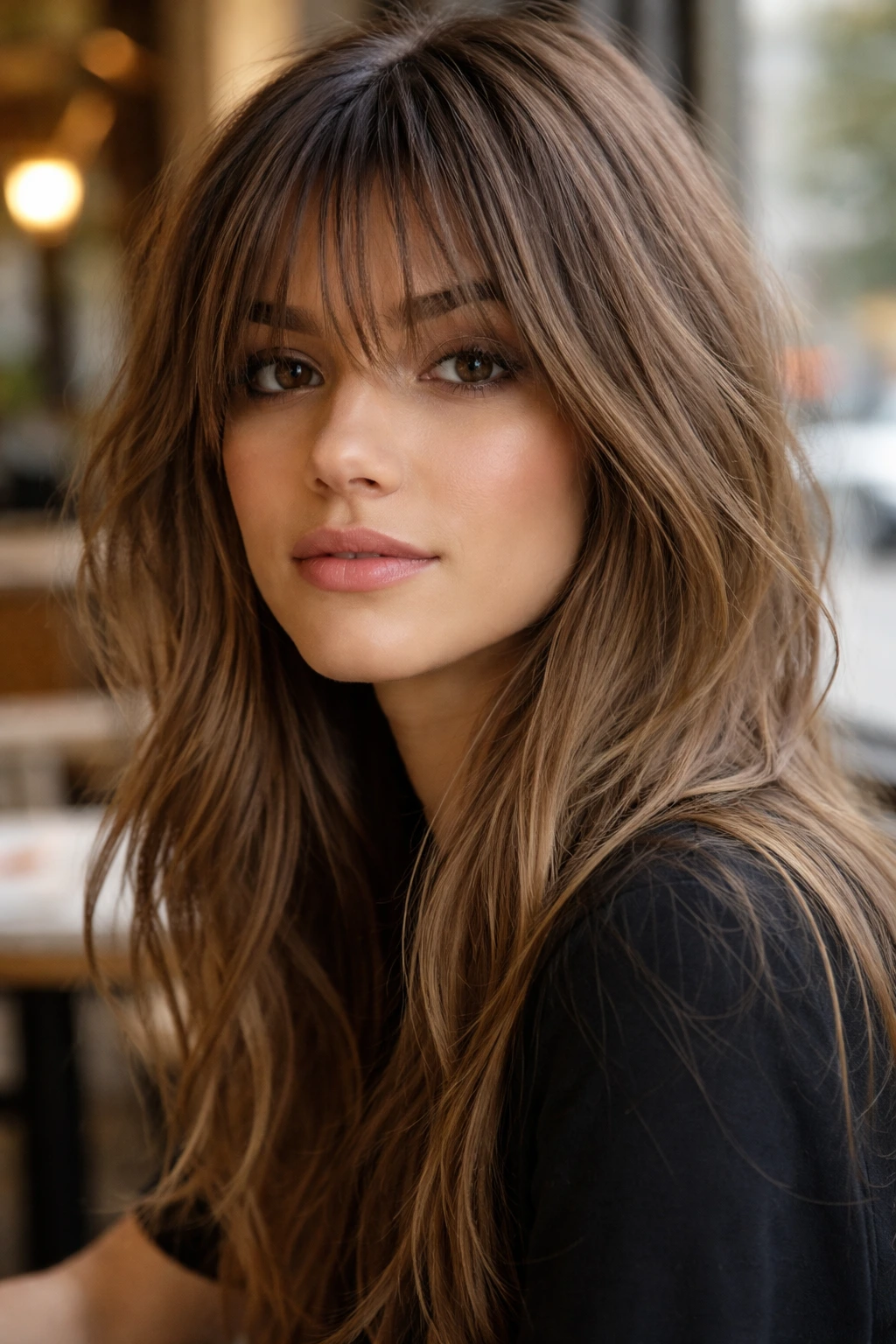
If you are terrified of your face looking rounder, go long. These bangs start at the usual spot but are cut to graze the top of your cheekbones or even the tip of your nose. They are intentionally “piecey,” meaning they aren’t a solid curtain of hair.
Styling for Movement
The trick here is to ensure they don’t just hang there like a curtain. You need to use a texturizing paste or a light pomade on your fingertips to separate the strands. You want to see individual sections of hair rather than one big clump.
Why It Elongates
By creating long, vertical lines that fall near the sides of your face, you pull the visual focus downward. It softens the fullness of the cheeks and brings a sophisticated, lived-in feel to your overall look. It works particularly well with long, layered haircuts.
5. Textured Baby Bangs (Micro)
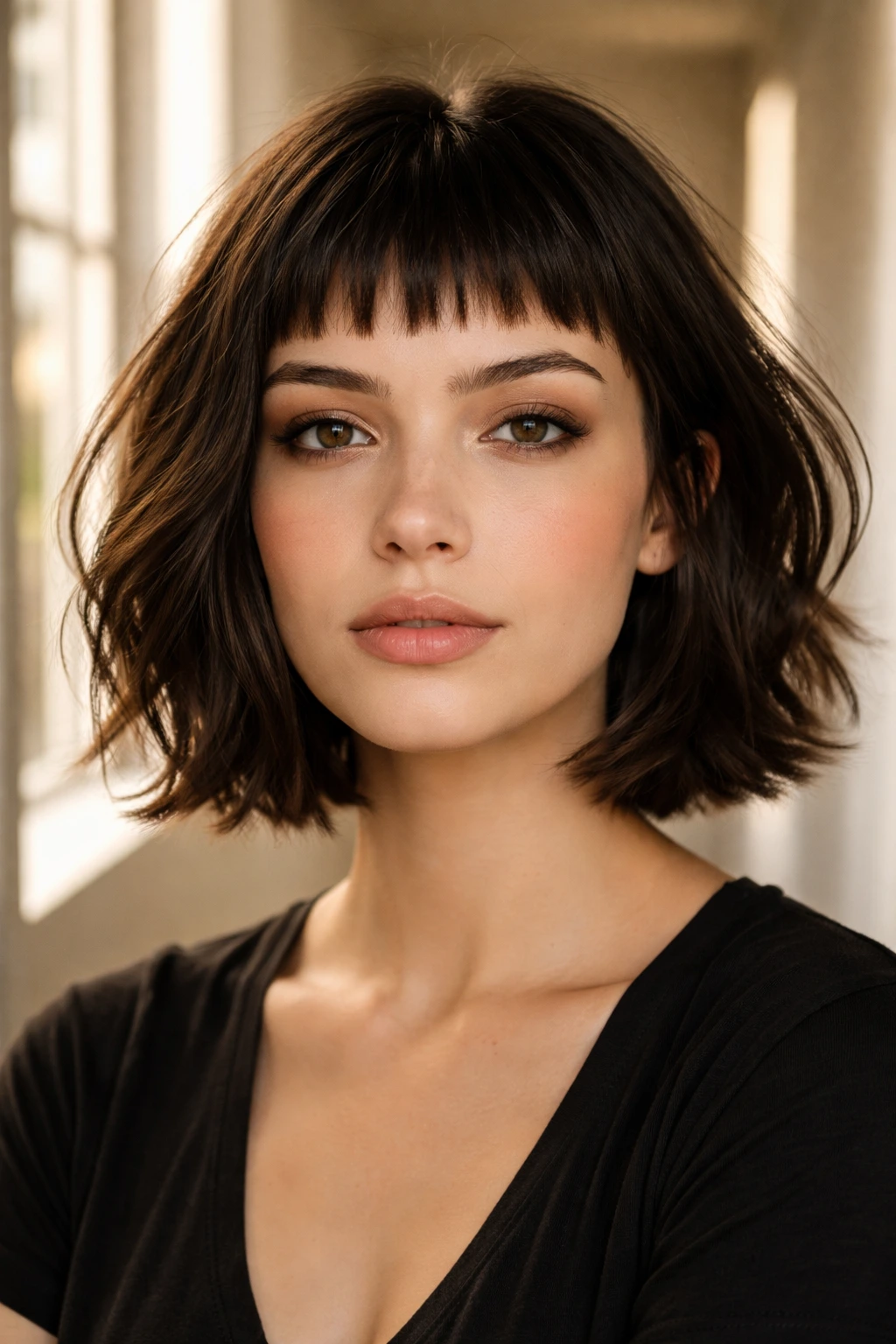
Yes, micro-bangs are controversial, but hear me out. A blunt micro-bang is usually a disaster for a round face, but a textured baby bang is a style statement. Think of a choppy, uneven, slightly shorter fringe that sits well above the eyebrows.
The Geometry of It
By exposing a large portion of your forehead, you are essentially adding a vertical window to your face. It creates a bold, fashion-forward look that actually elongates the face because of the high, horizontal placement of the cut.
Who Should Try This
If you have a lower forehead, this is your best friend. It gives you space that you didn’t have before. Pair this with a bob or a shag cut for a cohesive, intentional vibe. Just be prepared to style them every single morning; there is no “waking up with this” unless you have naturally perfect hair.
6. Shaggy Layers with Bangs
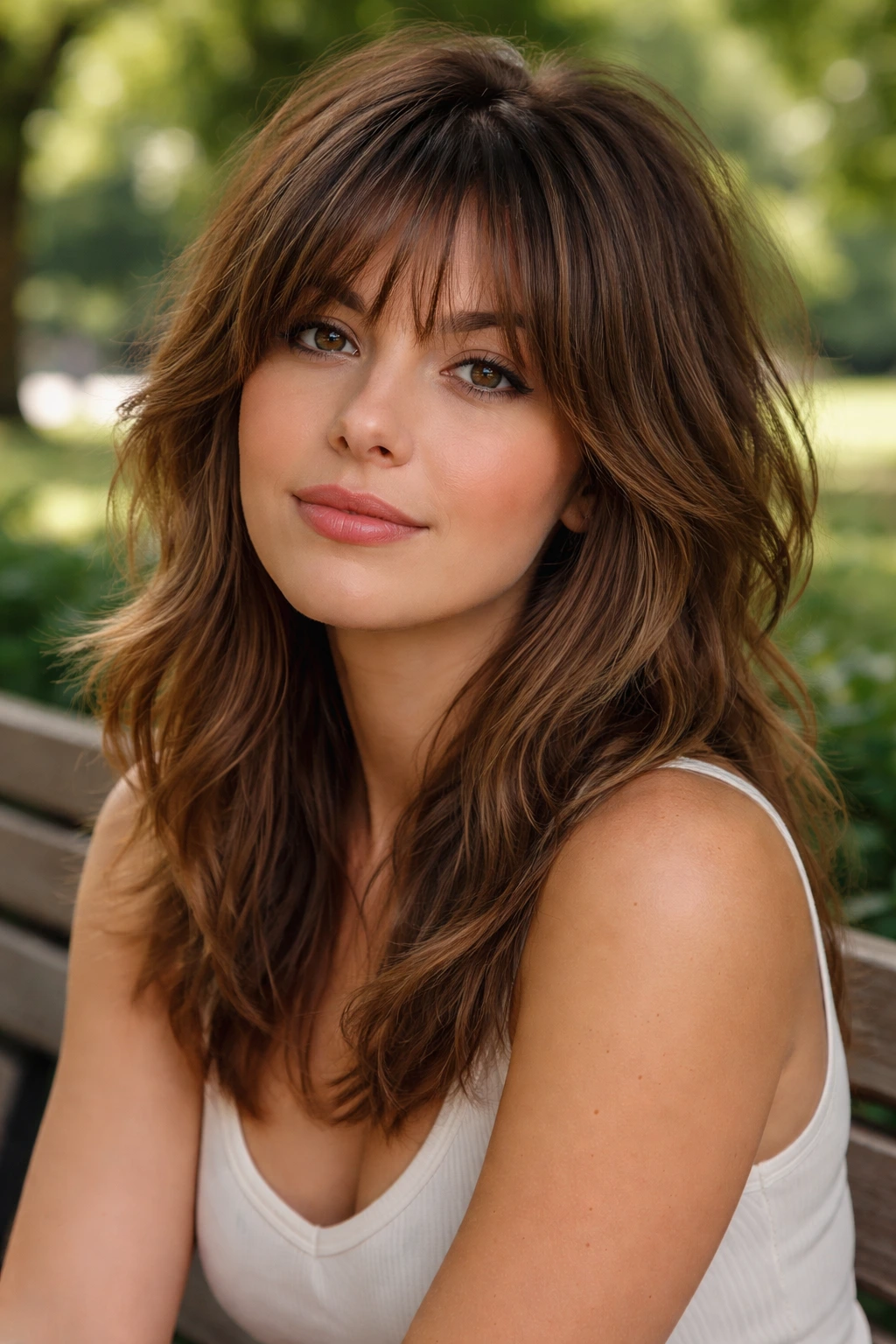
The “shag” haircut is arguably the best friend of the round-faced individual. It is built on layers, volume, and deliberate messiness. When you pair this with textured bangs, you get a look that is harmonious from top to bottom.
Creating the Blend
The bangs shouldn’t exist in a vacuum. Your stylist should cut them so they blend seamlessly into the first layer of your shaggy haircut. This prevents that “bangs-on-a-separate-head” look. You want your face-framing layers to flow directly from the fringe.
Why It Works
A round face often looks great with volume. The shaggy layers add width and lift around the crown, which creates a more oval-like silhouette. The textured bangs ensure the front of the face remains open and airy rather than blocked off.
7. Soft, Feathered Bangs
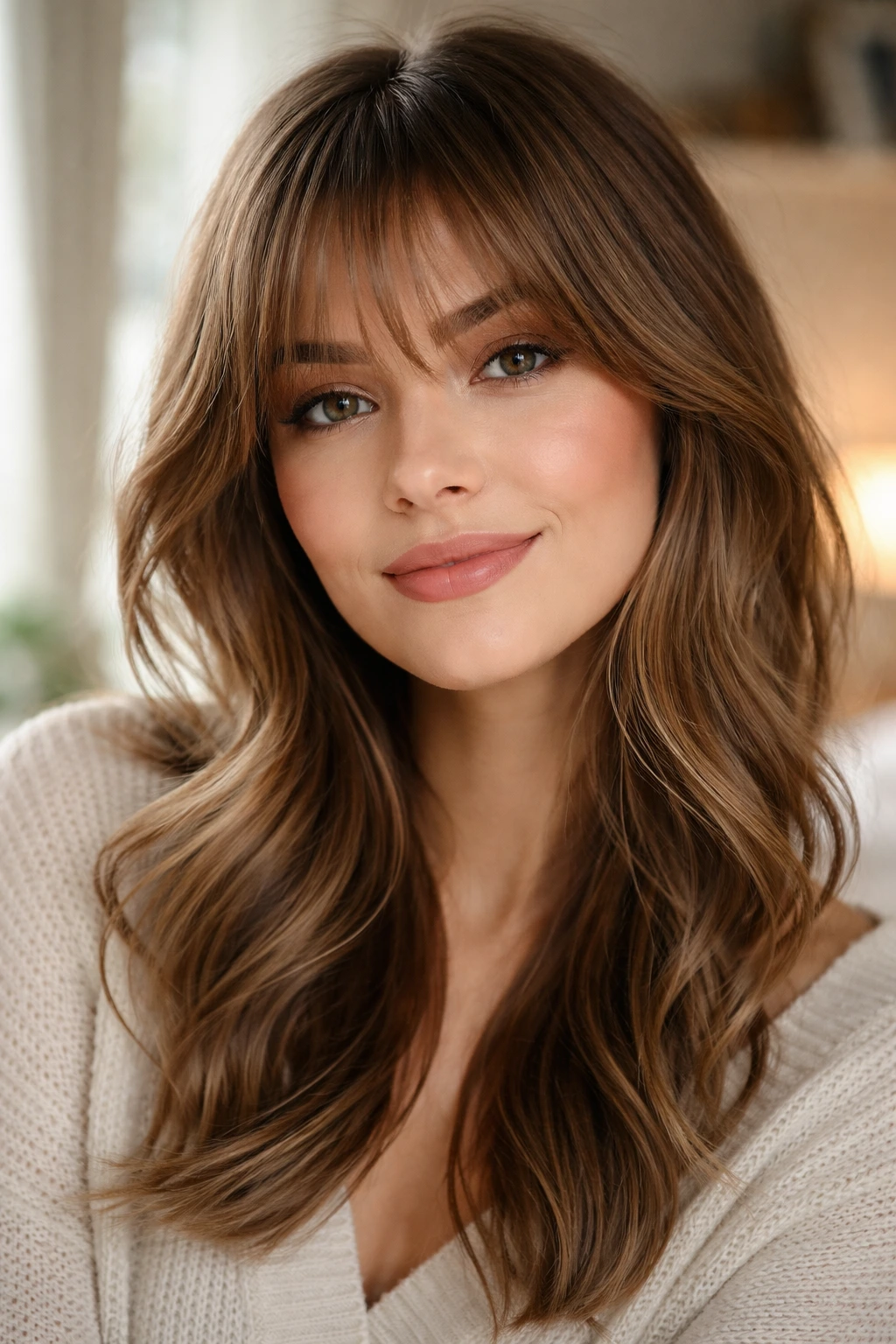
Feathering is a technique where the stylist cuts into the hair at an angle to thin out the ends, creating a soft, light, almost “airy” effect. These bangs move when you move and don’t sit heavily on the forehead.
The Stylist’s Approach
You want your stylist to use thinning shears or a razor to create that tapered end. A blunt edge is the enemy here. The goal is to make the bangs look like they are floating on your forehead rather than glued to it.
Product Recommendations
Because these are so lightweight, they can easily get oily or weighed down by product. Stick to a dry shampoo at the roots if you have oily hair, and avoid heavy creams or oils. You want to maintain that “feathered” lightness throughout the day.
8. Rounded, Wispy Fringe
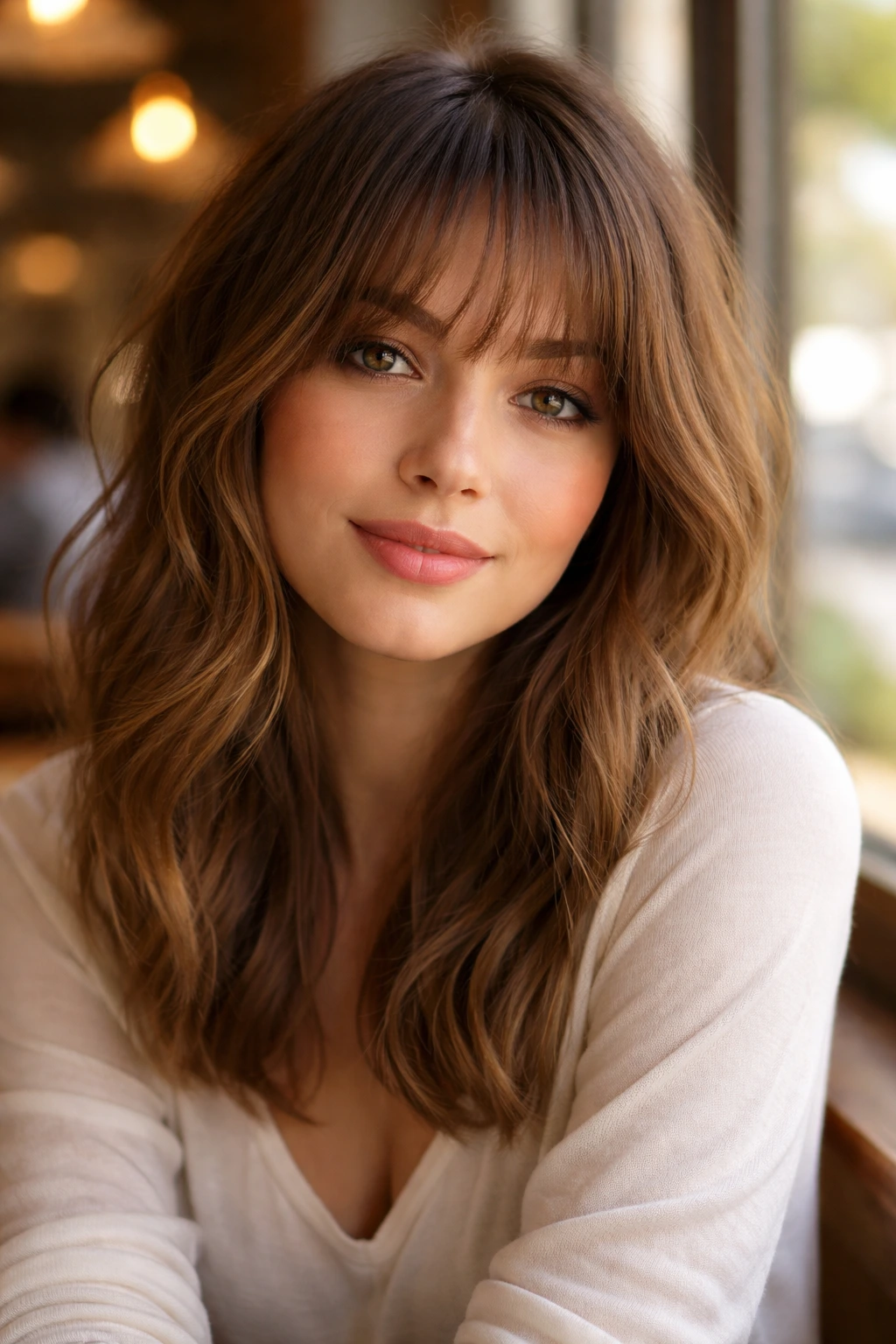
Most people think round faces should avoid rounded haircuts, but this is a nuance. A soft, rounded fringe that frames the eyes can be incredibly flattering if it remains wispy and light.
The Softness Factor
By rounding the shape slightly, you are essentially mirroring the softness of your face shape, which can be very aesthetically pleasing. It feels more intentional and “finished” than a straight-across cut. The key is ensuring the ends are textured to keep it from looking like a bowl cut.
Balancing the Face
This works best if the rest of your hair has some texture or wave. If you wear your hair poker-straight with a rounded fringe, you risk emphasizing the roundness of your face. Add a little wave or bend to the lengths of your hair to balance the shape.
9. Asymmetric Textured Bangs
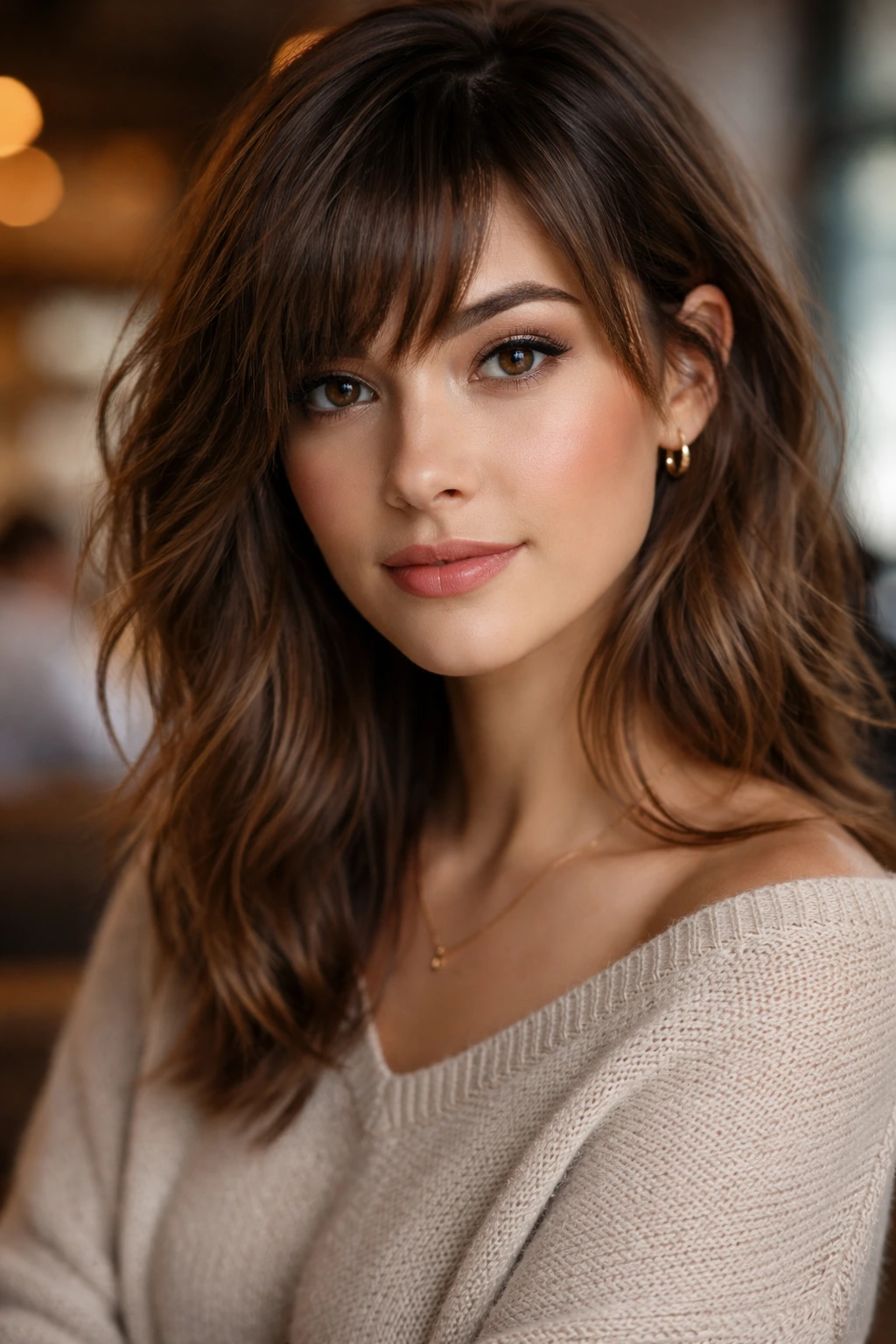
Asymmetry is an instant fix for a perfectly round face. By making one side of your bangs longer than the other, you are creating a dynamic line that prevents the eye from settling on the horizontal width of your face.
Cutting Techniques
This is a cut that requires a skilled hand. You are looking for a fringe that starts short on one temple and cascades into a longer, layered side-swept look on the other. It is edgy, modern, and draws the eye toward your eyes and away from your cheeks.
Versatility
This style is surprisingly versatile. You can style it messy for a rock-and-roll vibe, or blow it out smooth for something more professional. It’s a great way to experiment with bangs without committing to the maintenance of a straight-across, symmetrical style.
10. See-Through (K-Style) Bangs
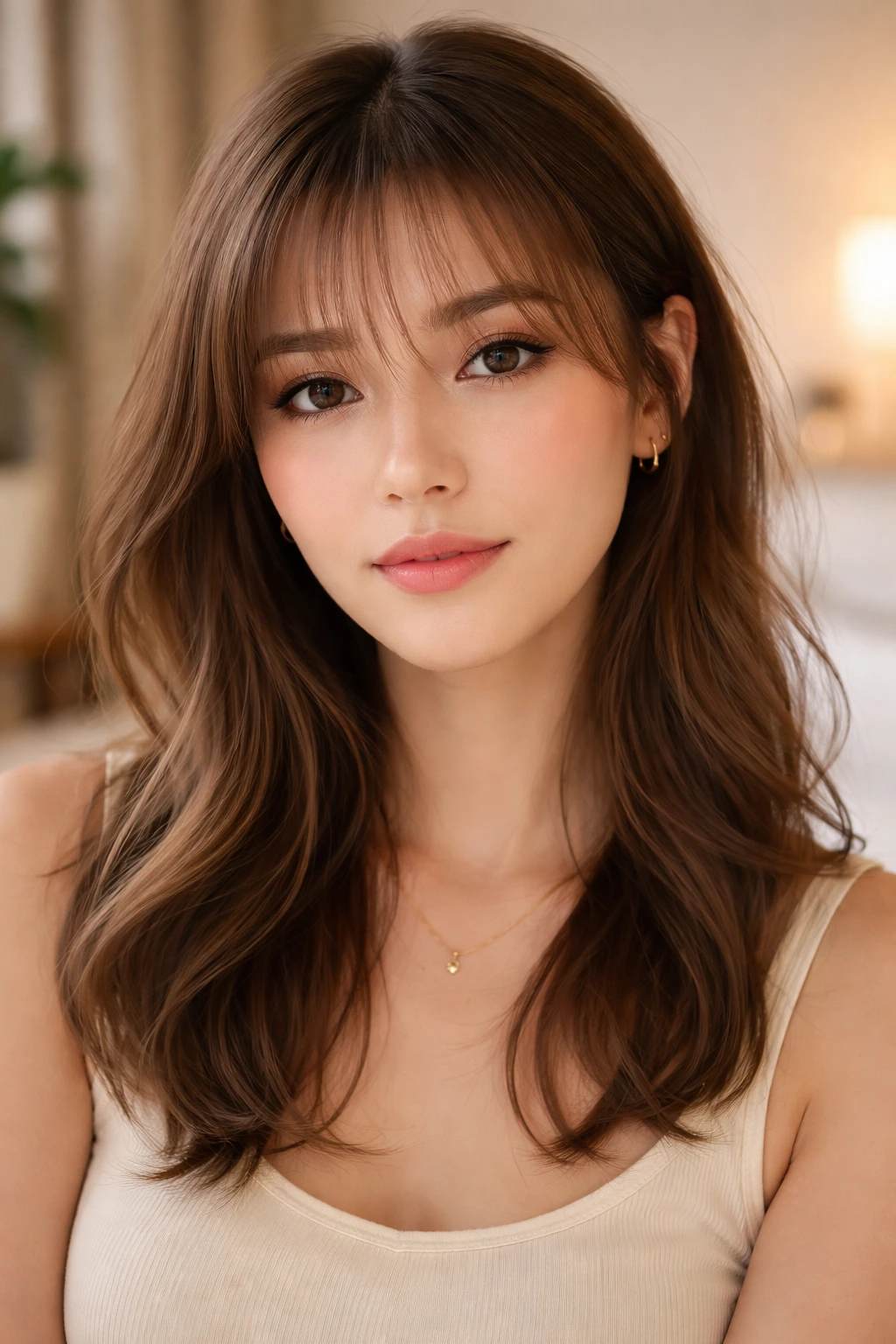
Popularized by Korean beauty trends, these bangs are the ultimate in “barely there” fringe. They are incredibly sparse, allowing you to see almost your entire forehead, and they are usually slightly longer, hitting just at or below the eyebrows.
The “Barely There” Look
They aren’t supposed to cover your forehead; they are supposed to accent your face. Because they are so thin, they add a touch of texture to the front of the face without creating any solid lines.
Maintenance Tips
These are remarkably easy to maintain because you only have a few hairs to worry about. If you are nervous about bangs, start here. If you hate them, they are long enough to tuck behind your ears or pin back into your hair in a matter of days.
11. Layered Curtain Bangs
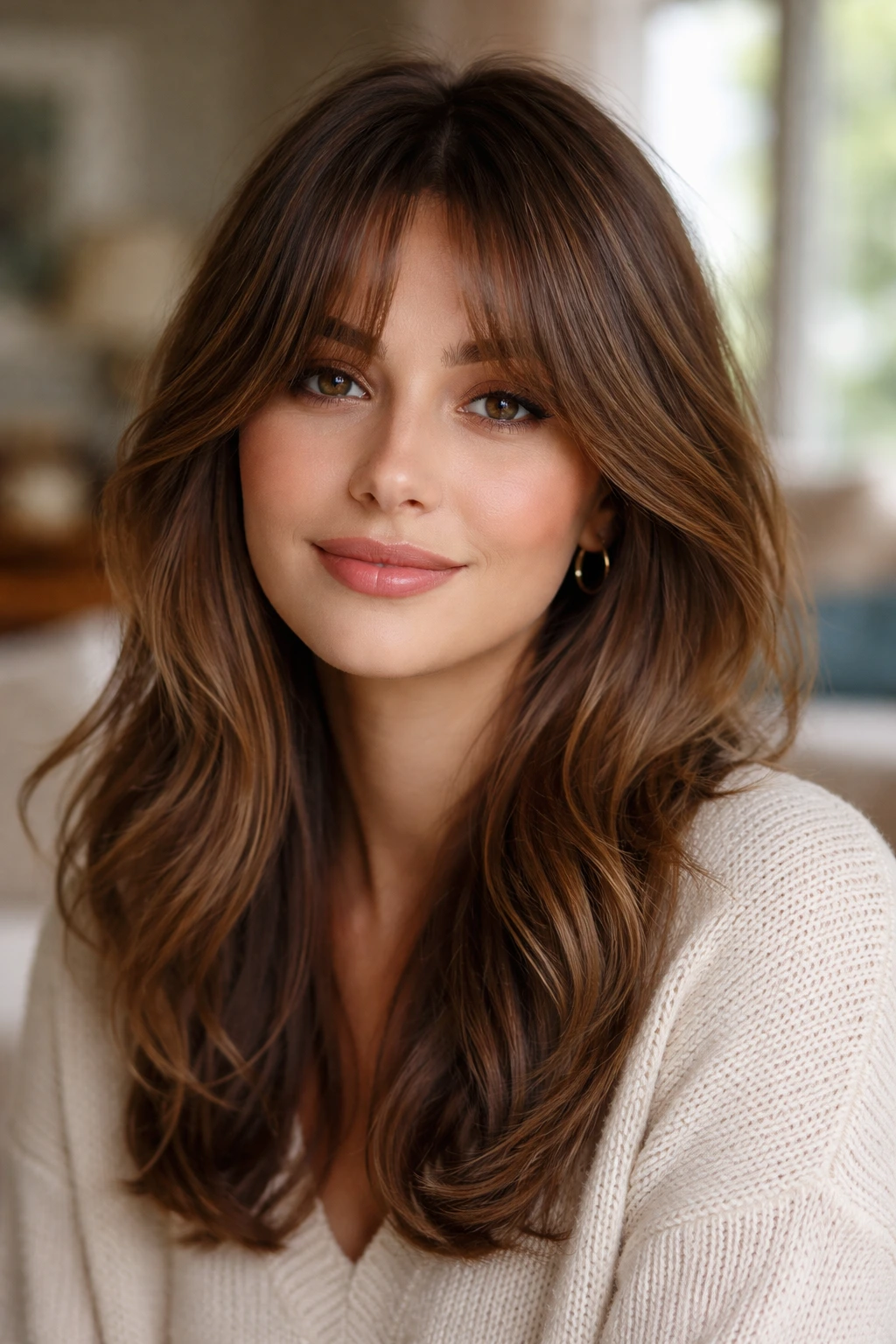
Take standard curtain bangs and add internal layers. By cutting into the length of the bangs themselves, you create a variation in density. Some strands hit shorter, some longer, all within the curtain shape.
Why This Beats Standard Curtains
Standard curtain bangs can sometimes feel a bit heavy if you have thick hair. The layered version breaks up that density, making them feel lighter and more blended. This texture helps them separate naturally, framing the face in a way that feels organic.
Styling Tip
Use a velcro roller. Roll your bangs back and away from your face while the hair is slightly damp, let it sit for ten minutes, then unroll and shake them out. This gives them that perfect “flick” that blends them into your longer layers.
12. Curly, Shaggy Fringe
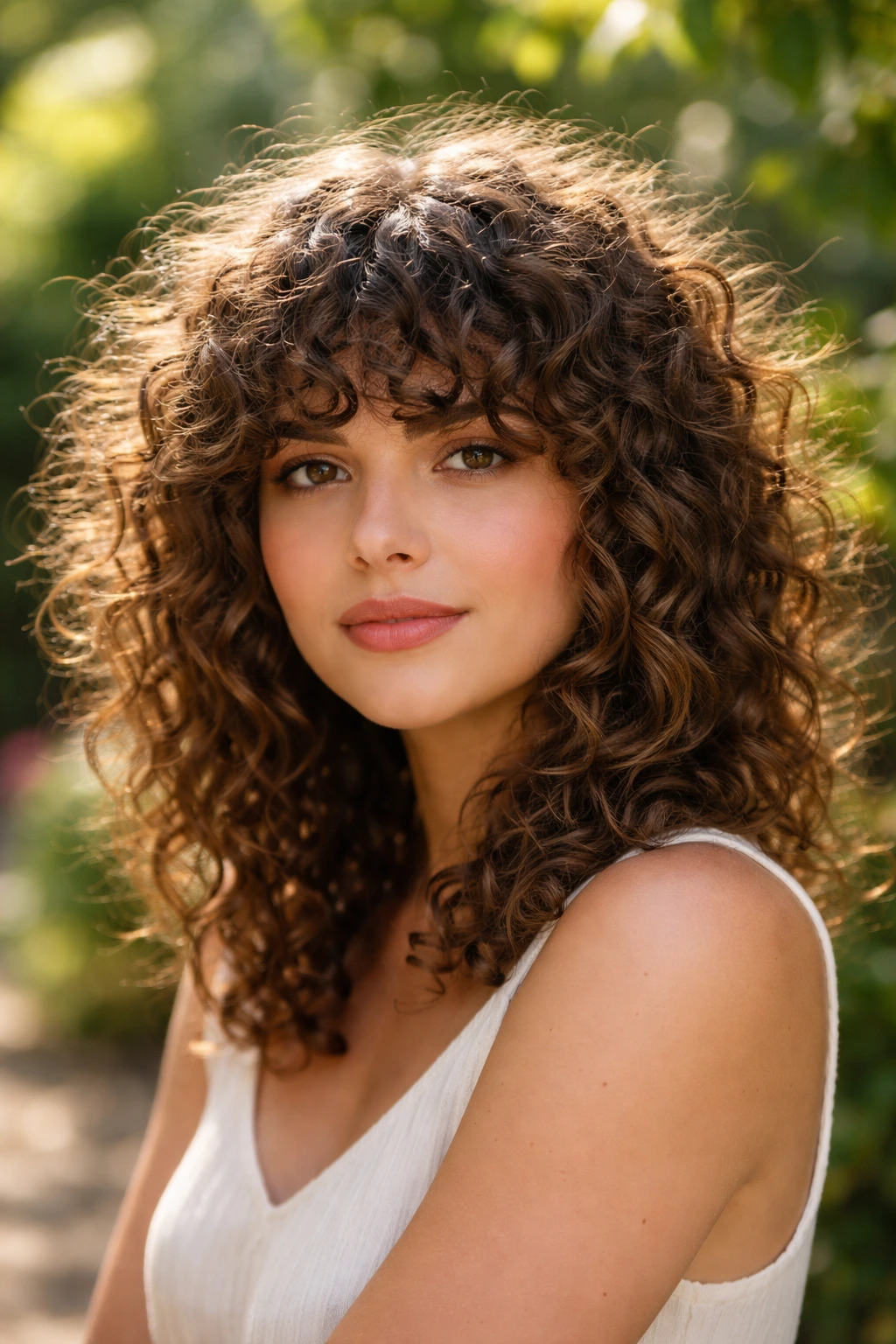
If you have naturally curly or wavy hair, you have an advantage. You don’t need to work hard to get texture—it’s built-in. A curly fringe that is cut to sit around the eyebrows is incredibly chic for round faces.
Embracing the Volume
Don’t be afraid of the volume. A curly fringe adds height and life to the top of your head. Just make sure your stylist cuts them while your hair is dry. If they cut them wet, they will bounce up way higher than you expect, and you’ll end up with a very short fringe.
Curl Definition
The biggest pitfall here is frizz. Use a curl-defining cream on your bangs while they are wet and scrunch them gently. Let them air dry. Touching them while they are drying is a recipe for a fuzzy, unkempt mess.
13. Wavy, Elongated Bangs
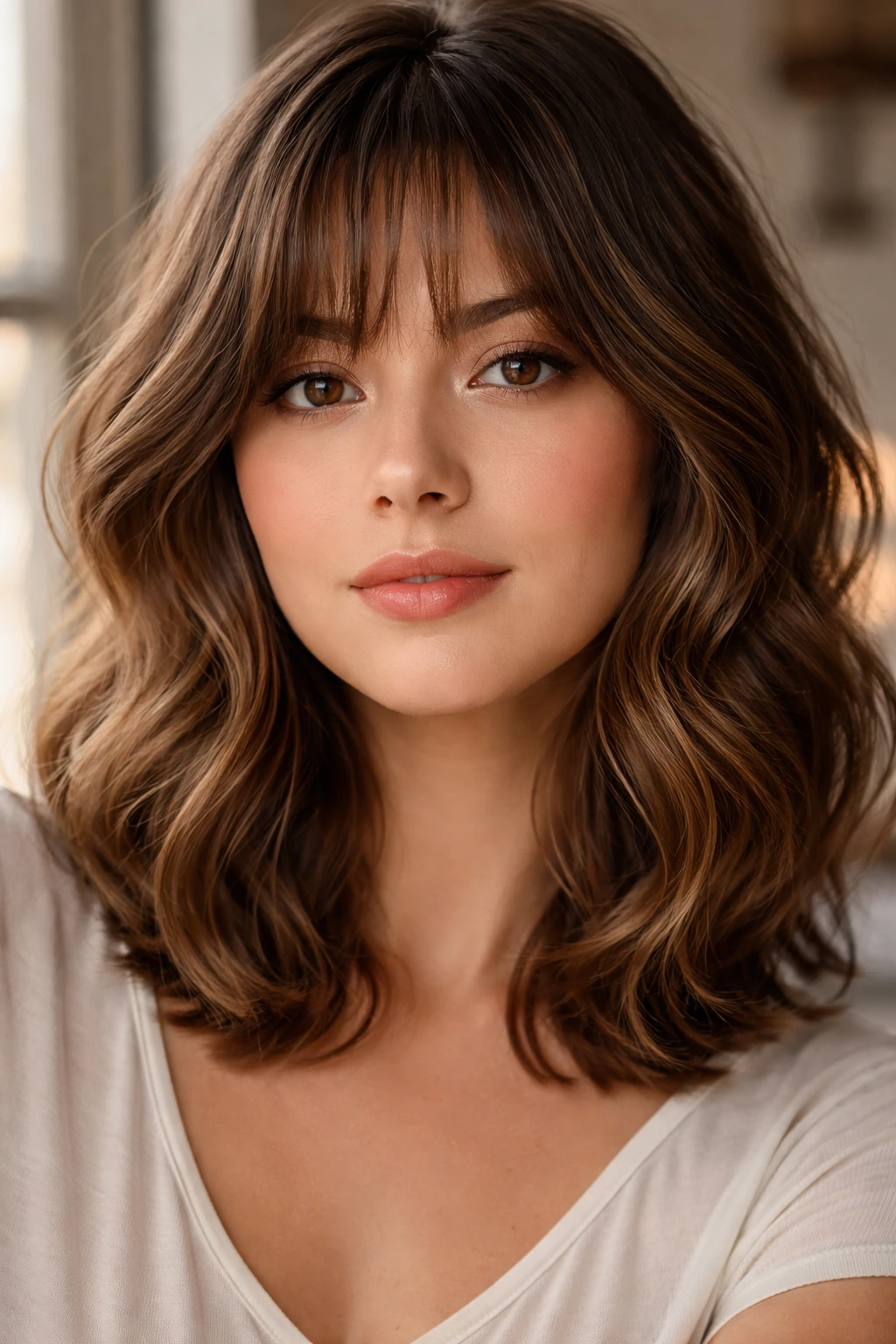
This is for those who want the look of a fringe but don’t want the commitment. These are essentially very short, face-framing layers that can be styled to look like bangs when you want them to.
The Illusion
They are usually cut to jaw-length or chin-length. When styled forward with a bit of a wave, they mimic the appearance of a fringe. When you are tired of them, they blend back into the rest of your hair seamlessly.
Softening the Jawline
Because they end near the chin or cheek, they help break up the roundness of the jawline. It is a fantastic option if you feel your face is too circular and you want to introduce some angularity to your look.
14. Peek-a-Boo Textured Bangs
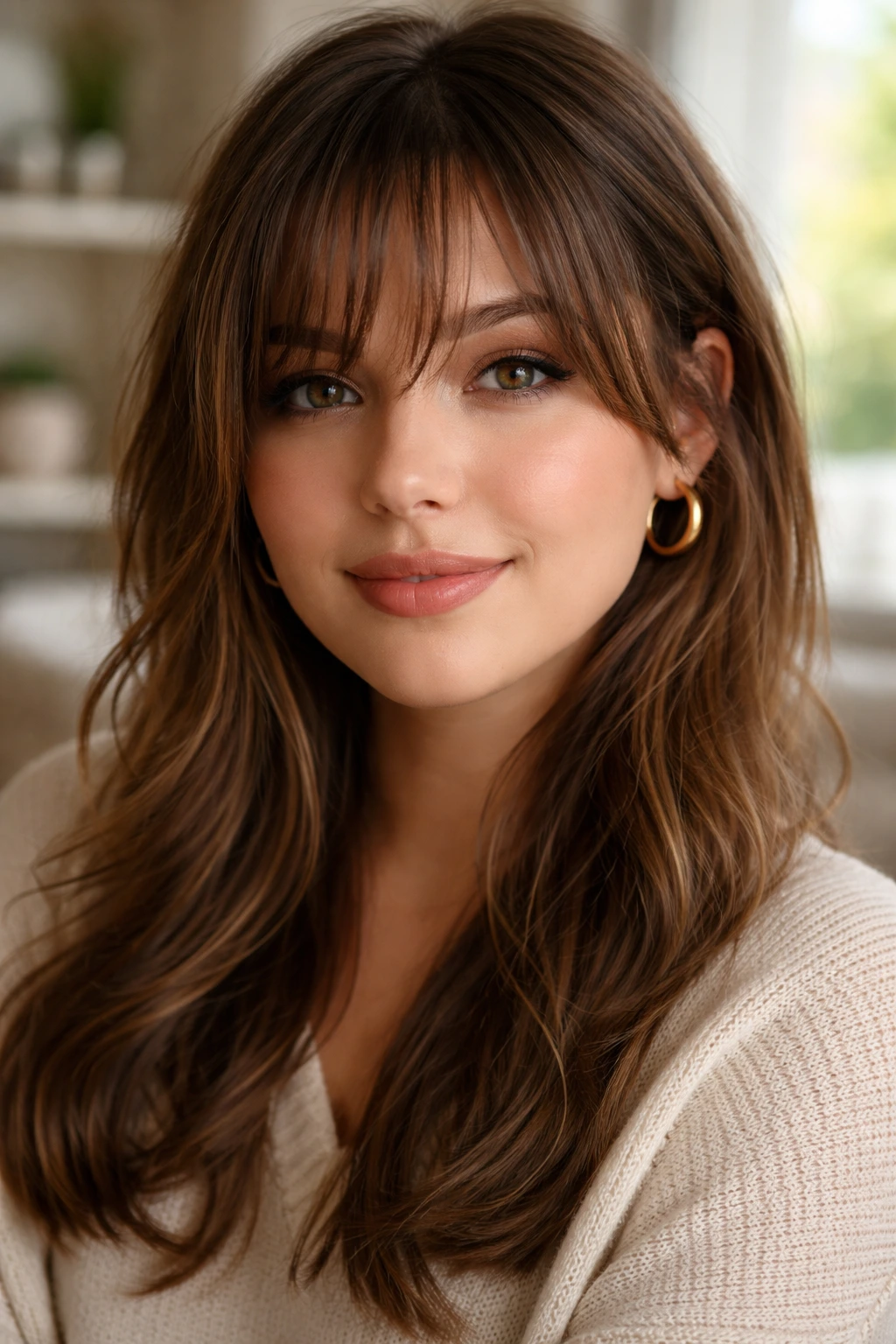
These are bangs that are cut slightly long and kept very thin, so they constantly move in and out of your face. You get glimpses of your forehead, then glimpses of the fringe. It is a very playful, youthful style.
Styling the “Messy” Aesthetic
This look relies on product. A light sea salt spray or a flexible-hold hairspray is your best friend. You don’t want these to be stiff; you want them to sway. The point is to make them look like they aren’t trying hard.
Why It Works for You
The constant movement draws the eye, preventing it from resting on the roundness of your cheeks. It keeps the energy of your hairstyle focused on the front, which effectively balances your features.
15. Airy, Center-Parted Bangs
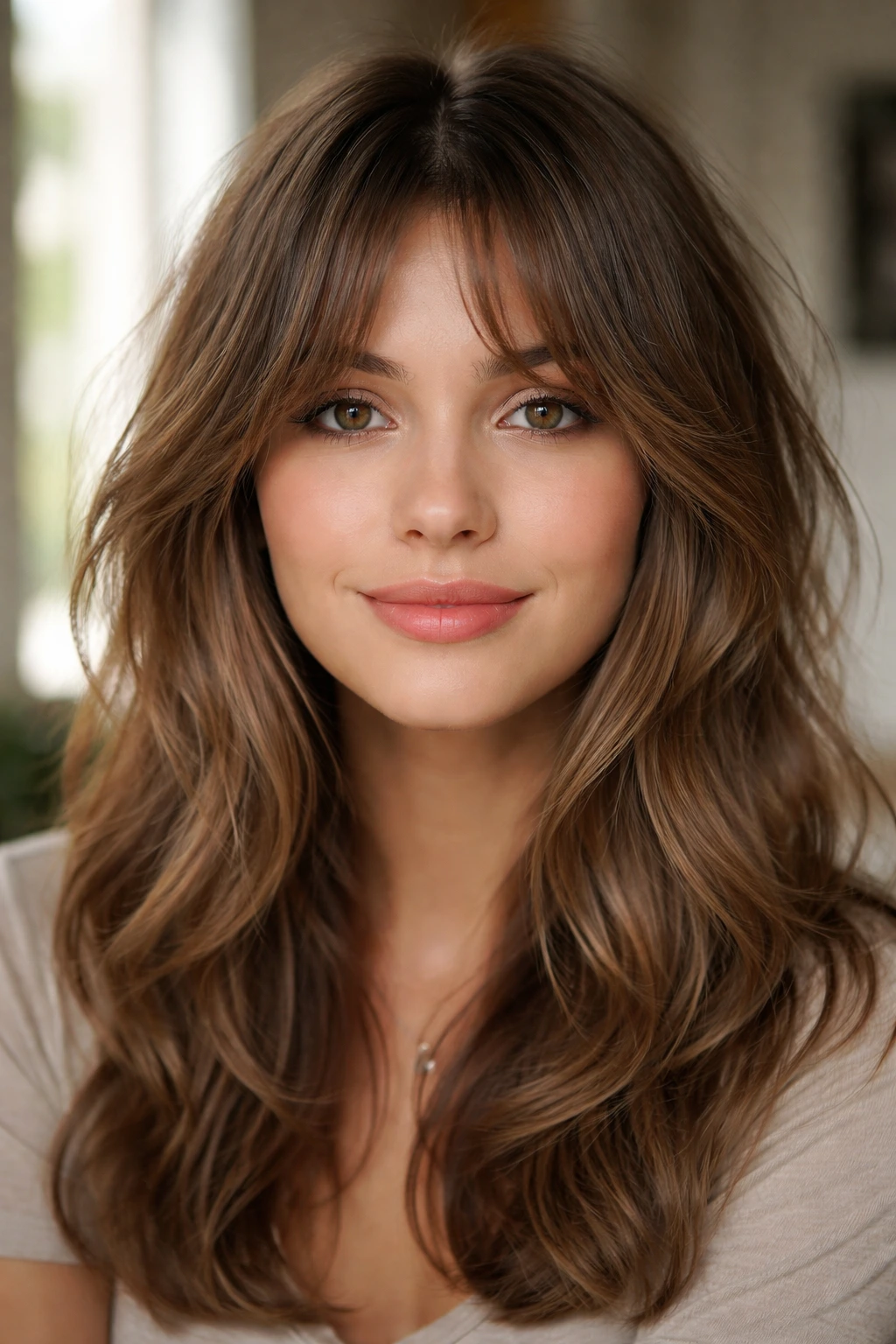
Similar to curtain bangs but with a much wider, more pronounced center part. The hair is parted precisely in the middle and swept toward the temples. It is a very 70s-inspired look that remains completely relevant.
The Geometric Advantage
A center part can sometimes be tricky for round faces, but when you pair it with textured, airy bangs, it works. The split creates a “V” shape on your forehead, which acts as a downward-pointing arrow, adding a sense of length to the face.
Essential Tools
Invest in a good texturizing spray. You want the roots to have lift. If this style goes flat, it will absolutely make your face look rounder. The lift at the root is what saves this style.
16. Choppy, Blunt-Adjacent Bangs
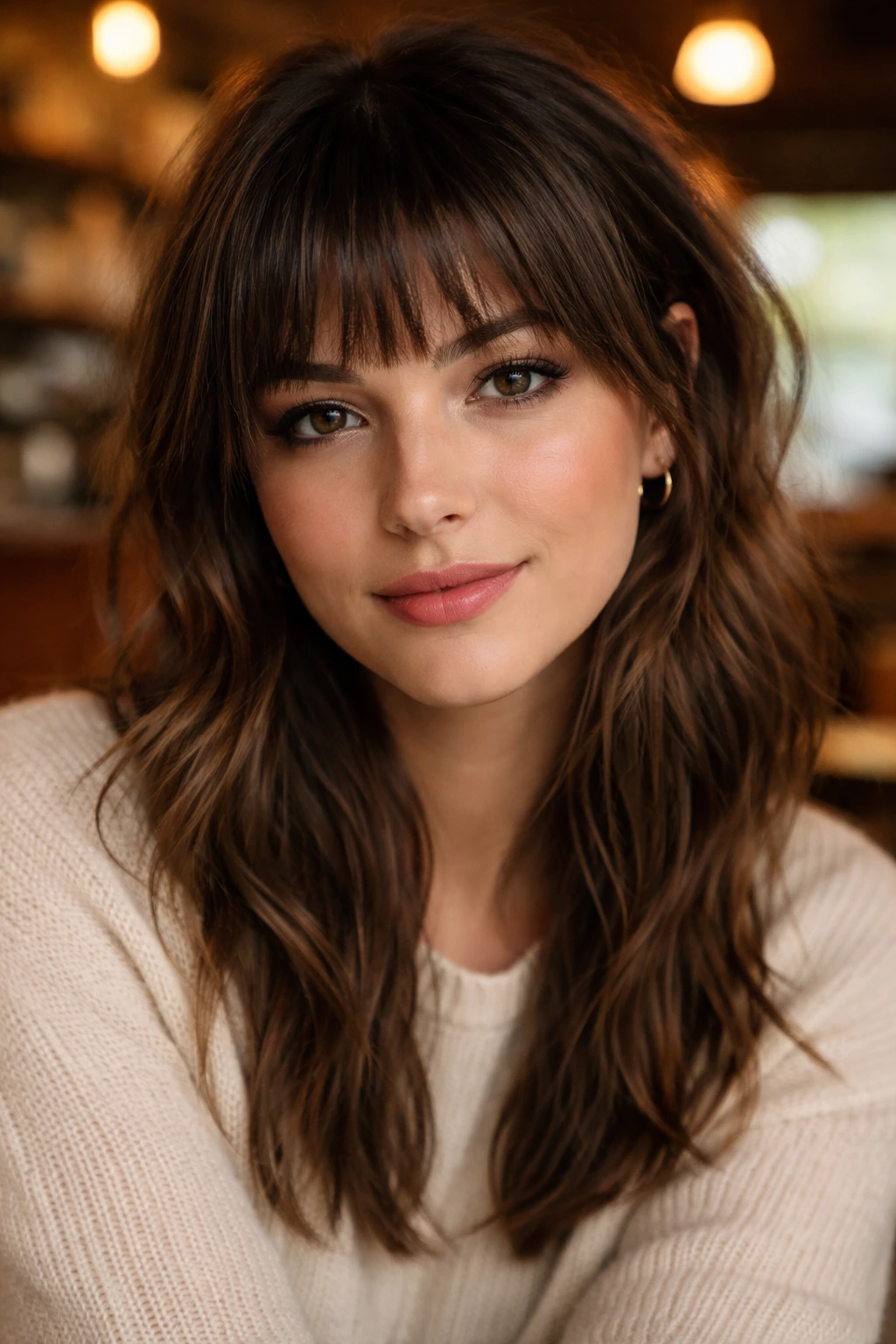
This is a specific technique. It looks blunt at a glance, but upon closer inspection, it is heavily textured. The stylist uses a razor or point-cutting shears to create an uneven, “bitten” edge to the fringe.
The Visual Trick
Because the edge isn’t perfectly straight, it doesn’t create a hard line across your face. It has a softness to it that is flattering, even though it provides the coverage of a traditional bang.
Managing the Look
This style requires more frequent trims than a wispy style because the “choppy” edge is a specific design choice. Once it grows out too long, it loses its edge. Plan on seeing your stylist every 4 to 6 weeks to keep it sharp.
17. Wispy, Long Side-Swept Fringe
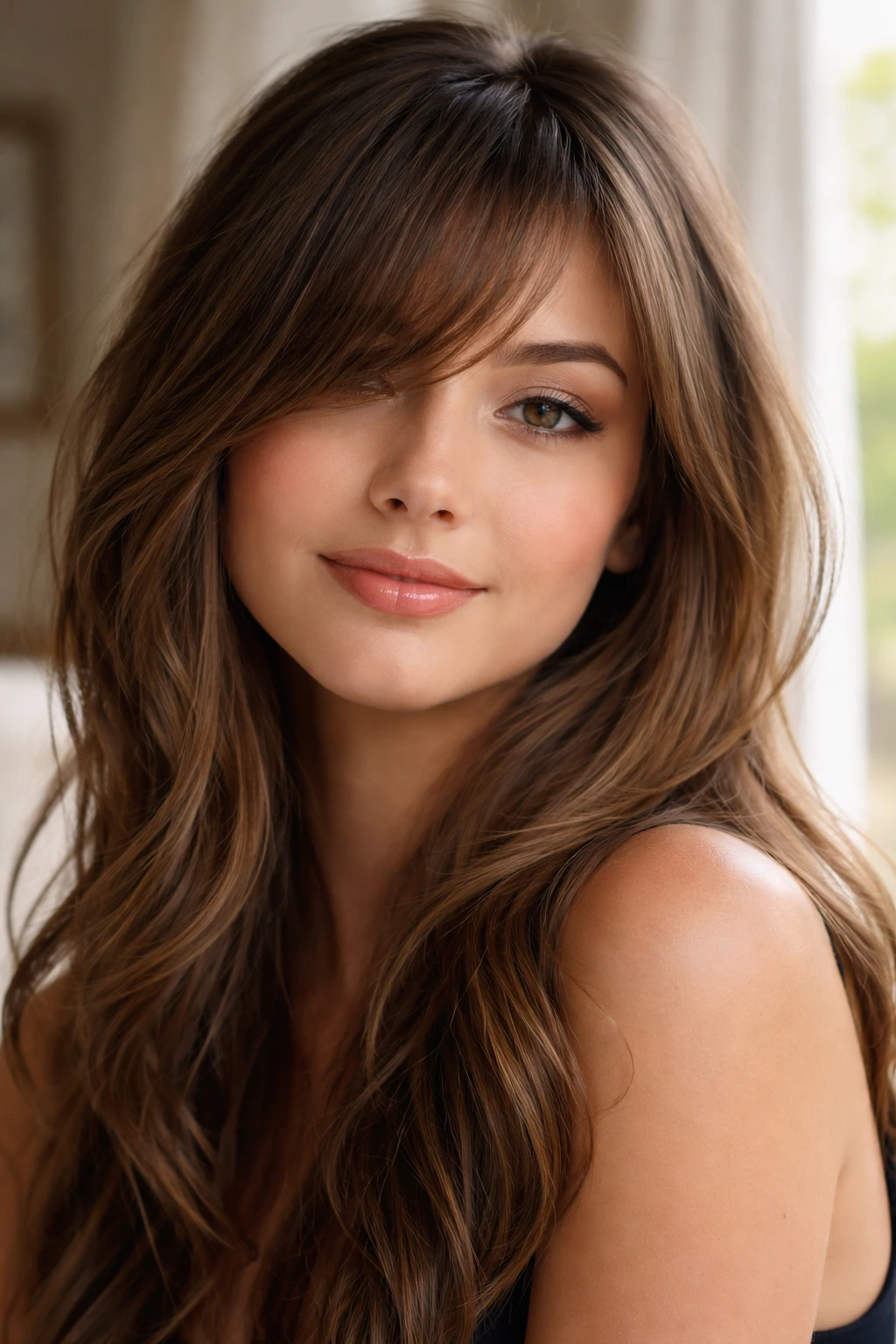
This is the “grown-out” side-swept look. It hits past the eyebrows and flows into the rest of the hair. It is incredibly soft and very feminine.
Why It Softens Features
The length is the key. Because these bangs are long, they don’t visually cut off your forehead. They create a soft, diagonal frame that highlights the cheekbones. It’s perhaps the safest and most universally flattering option on this list.
Low-Commitment Styling
If you are worried about bangs, start here. If you don’t like them, you can simply tuck them behind your ear. They are functionally part of your hair, not a separate entity.
18. Softly Layered Bangs
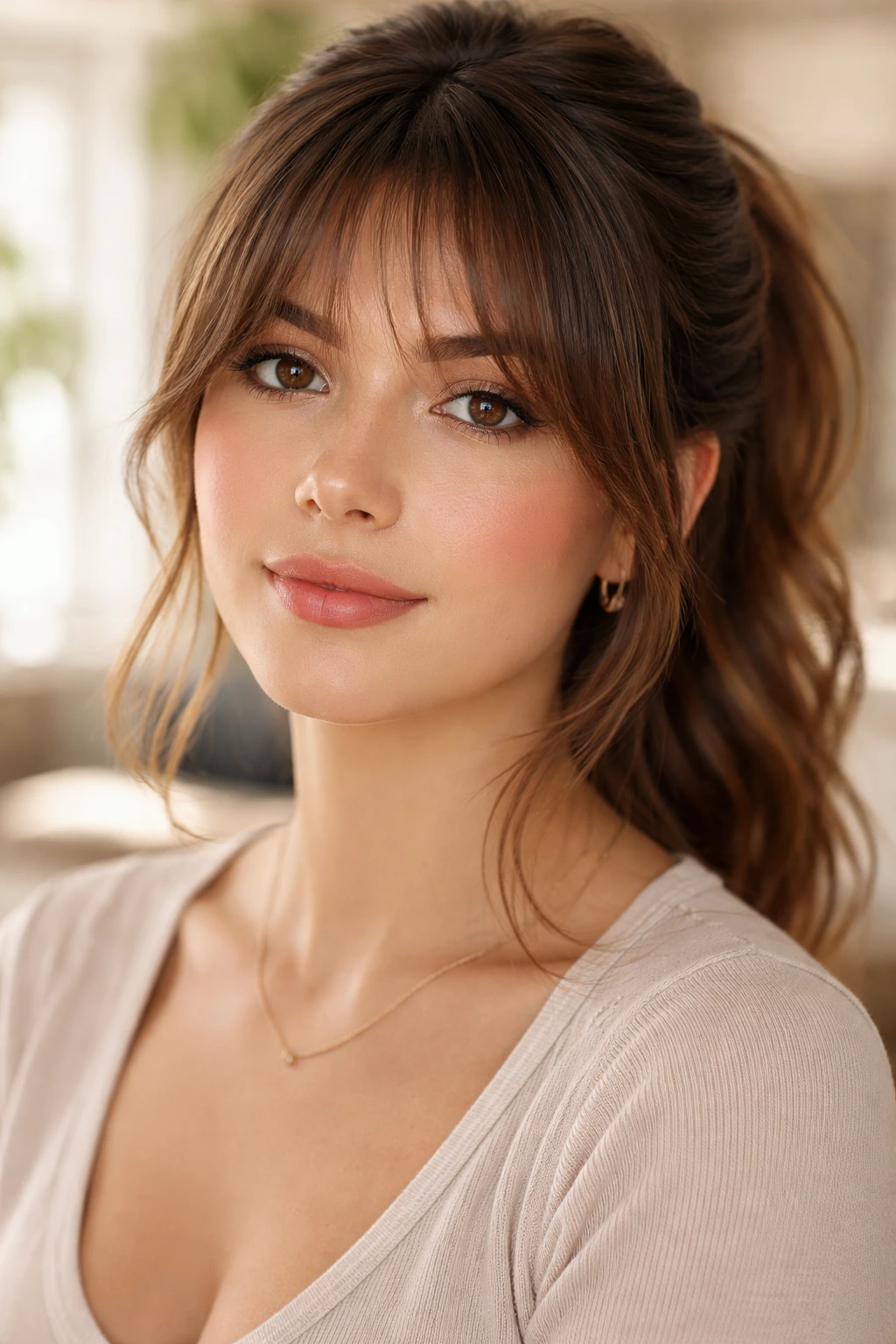
These aren’t just “bangs”; they are the front section of your hair cut specifically to create texture. The layers start at the forehead and continue around the face, creating a seamless gradient of length.
The “Face-Frame” Effect
This is less about having a “fringe” and more about having a dynamic, layered cut. The layers provide the volume and texture that round faces need to avoid looking flat or one-dimensional.
Versatility
This style looks fantastic in an updo. When you pull your hair back, the layers around your face fall out naturally, creating a soft, romantic look that requires zero effort. It’s the definition of “effortless chic.”
19. Rounded Shaggy Fringe
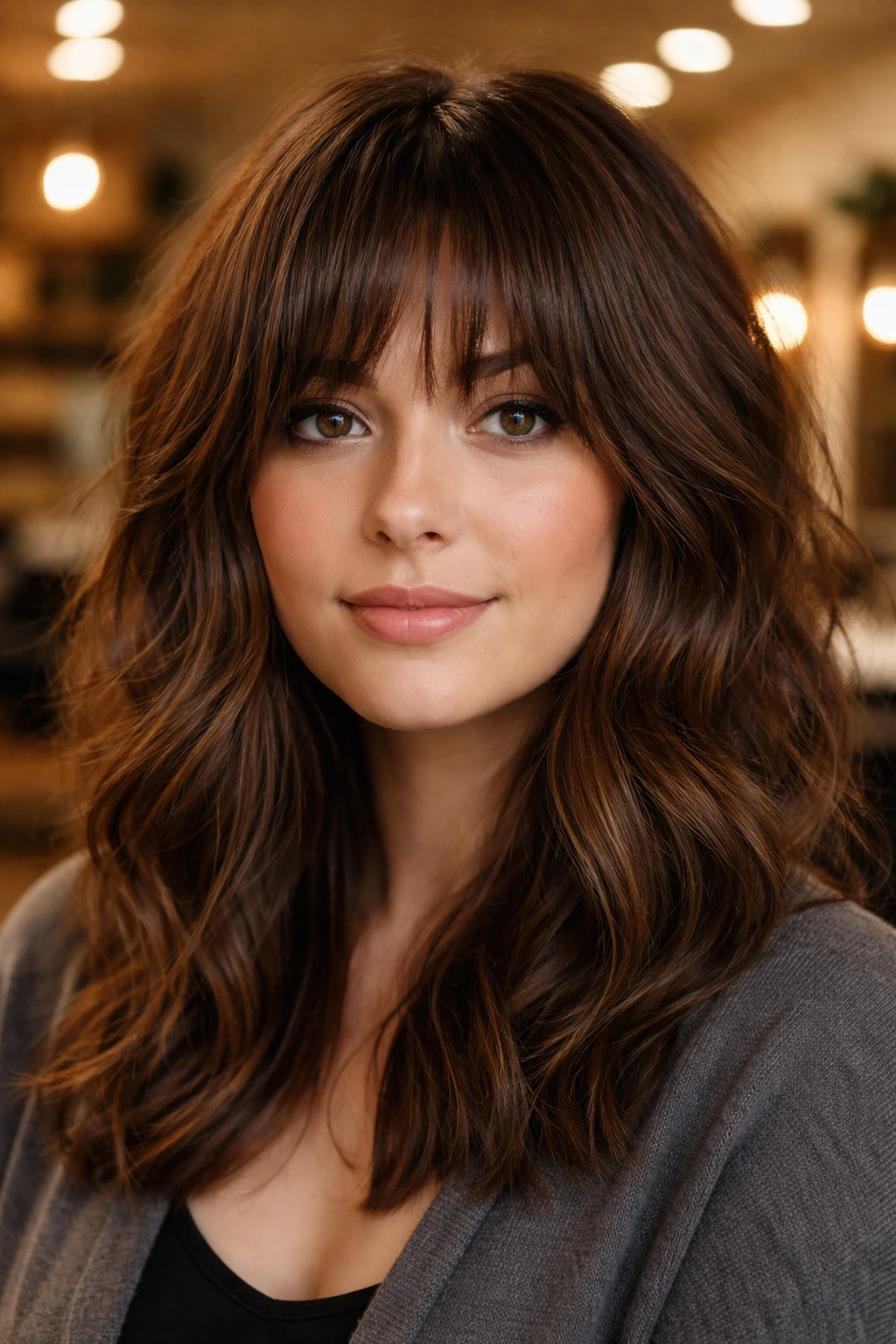
Take the shag cut idea (messy, layered) and apply it specifically to a fringe. The bangs themselves are rounded, but because they are shaggy, they don’t create a harsh circle. They look like they’ve been lived in.
Creating the Texture
This is all about the cutting technique. Your stylist should be using a razor. A razor creates a soft, frayed end that a pair of scissors simply cannot replicate. The frayed end is what makes the rounded shape look modern rather than retro.
Who This Suits
This is brilliant for anyone with medium-to-thick hair. If you have thin, straight hair, the shagginess might look more like “thinness,” so you would need to use a root-lifting powder to build up the necessary volume.
20. Textured Bangs with High-Volume Waves
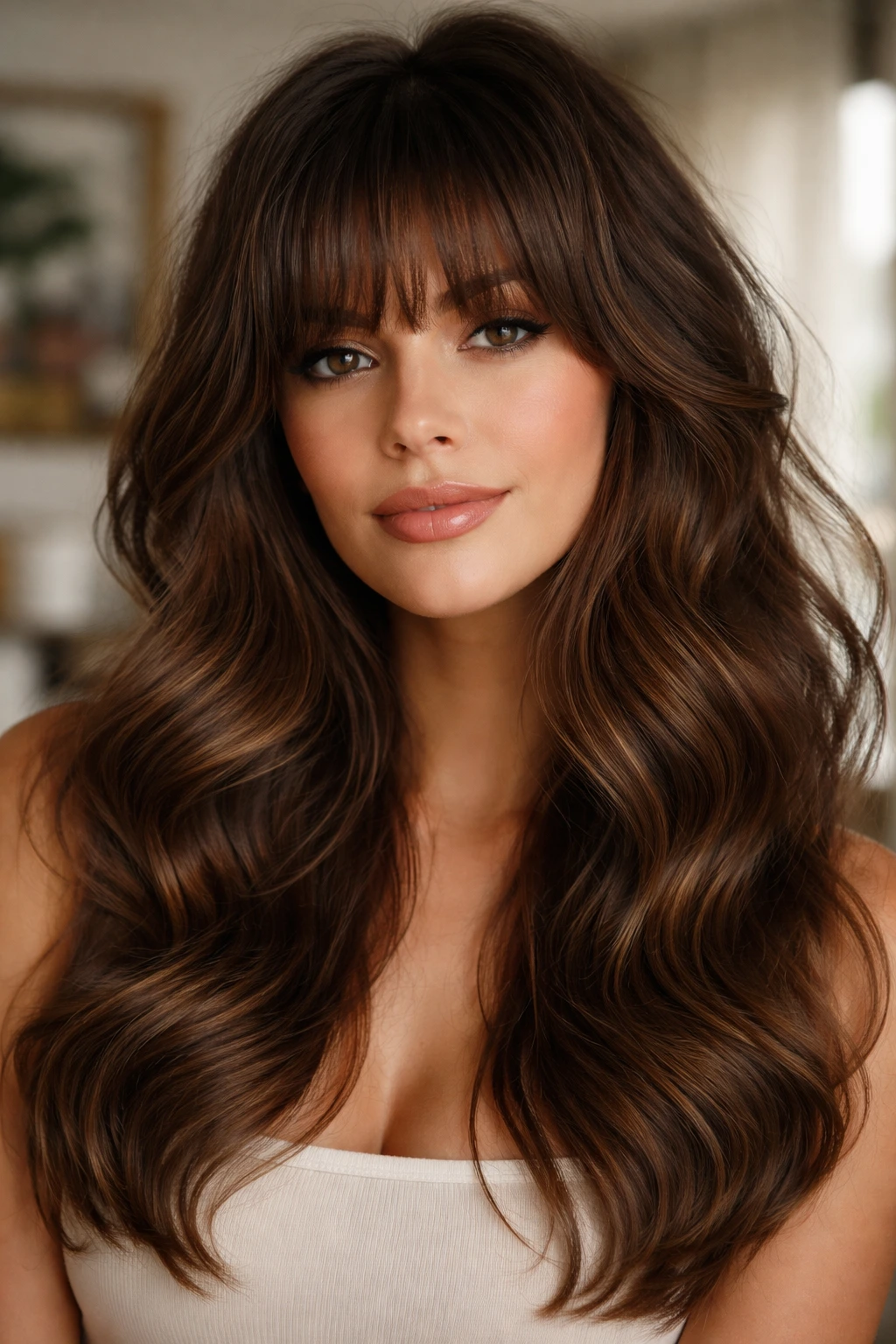
The bangs aren’t the only star here. You pair a textured, medium-length fringe with big, voluminous waves throughout the rest of your hair. The waves provide the drama, and the fringe provides the frame.
Balancing Volume
If you have big hair, don’t pair it with thin, sparse bangs—they will disappear. You need a fringe that has some substance, something that can hold its own against the volume of your hair. Textured, blunt-cut pieces work well here.
Daily Maintenance
You have to style the waves. A quick 15-minute session with a curling wand or hot rollers will give you that polished finish. Without the waves, the bangs might feel too stark against your face.
21. Piecey, Tapered Bangs
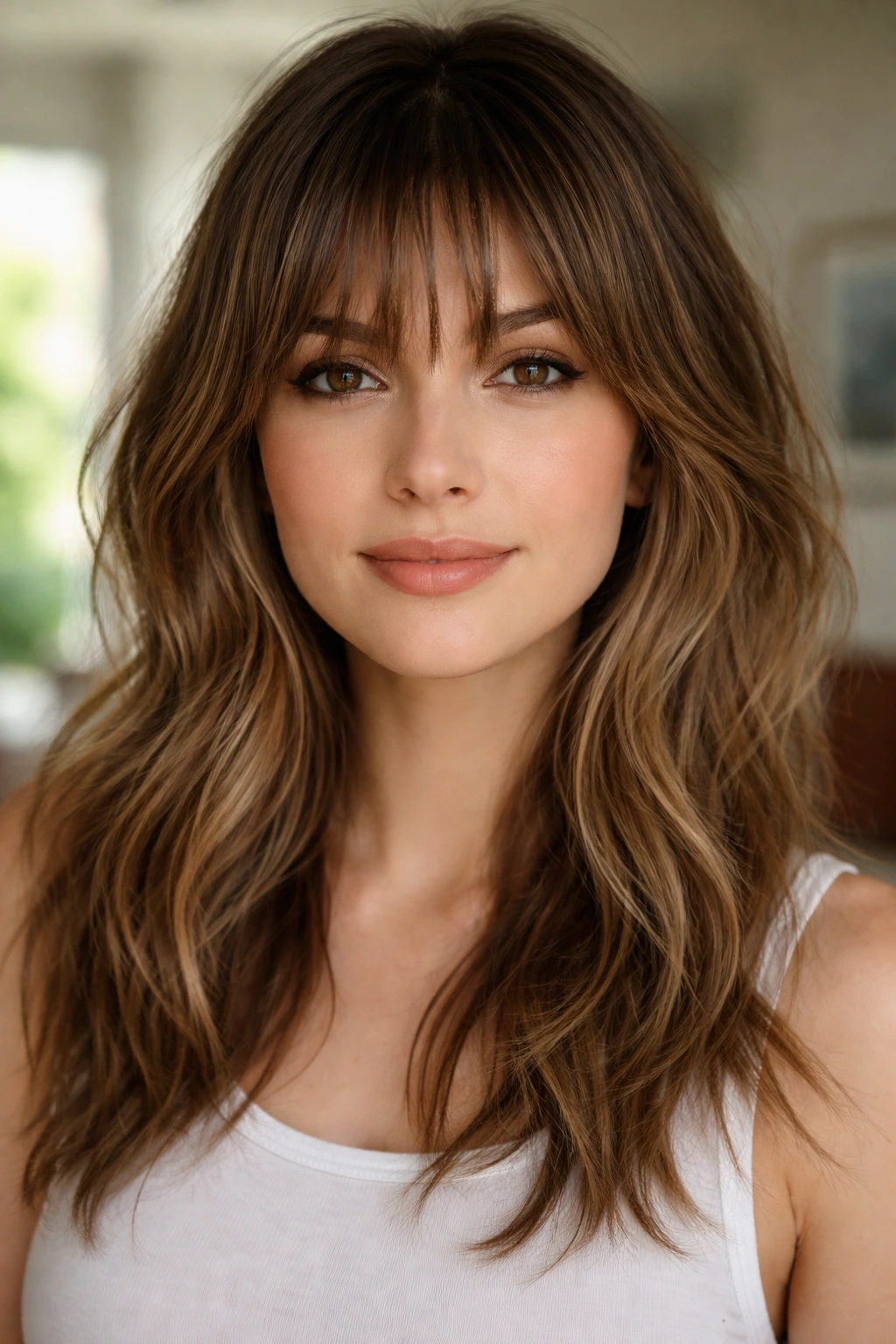
These bangs are thick at the root but taper down to very thin, almost sparse ends. It is a “tapered” effect that gives you the best of both worlds: the fullness of a heavy bang at the top and the wispiness of a curtain bang at the ends.
Why They Work
The weight at the root gives you the “bang” feel, but the thin ends ensure you aren’t hiding your face. It’s a very balanced look that works with almost every hair texture.
Precision Styling
You need a heat protectant and a flat iron for this. Smooth the roots down to keep them sleek, then use a tiny bit of wax on the tips to define those tapered pieces. It creates a very modern, refined silhouette.
22. Curtain Bangs for Thick Hair
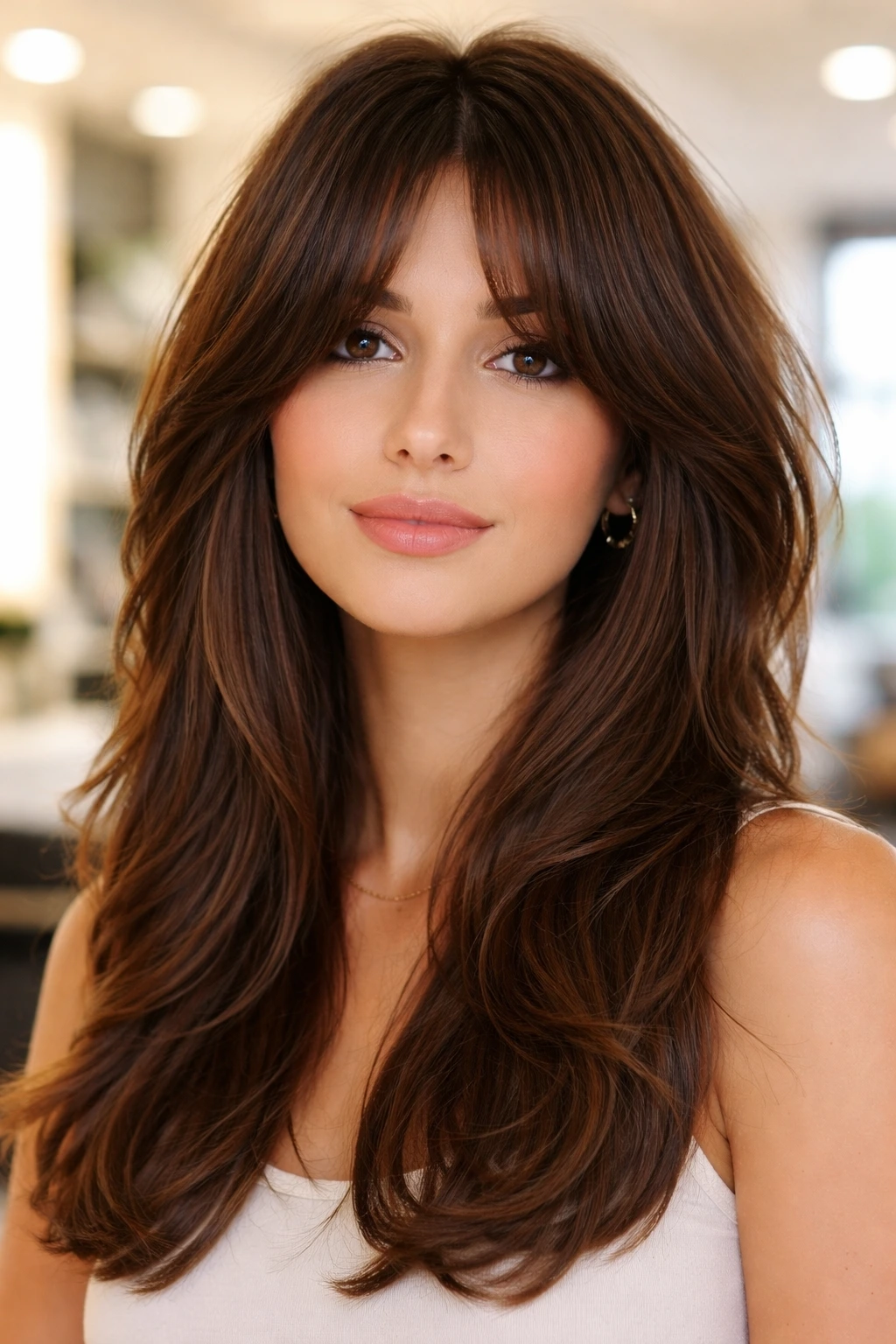
If you have very thick, dense hair, standard curtain bangs can become a heavy curtain that hides your face. The “textured” version for thick hair involves removing a significant amount of weight from the interior of the bangs.
Thinning Out
Ask for “internal layering.” This is where the stylist cuts into the hair that no one sees—the underneath part of the bangs—to reduce bulk without changing the look of the bangs from the outside.
Management
Because thick hair has a mind of its own, you might need a light pomade. Rub a tiny amount between your hands and run it through the bangs to keep them from poofing out too much. You want them to lay flat against the face.
23. Light, Textured Fringe for Thin Hair
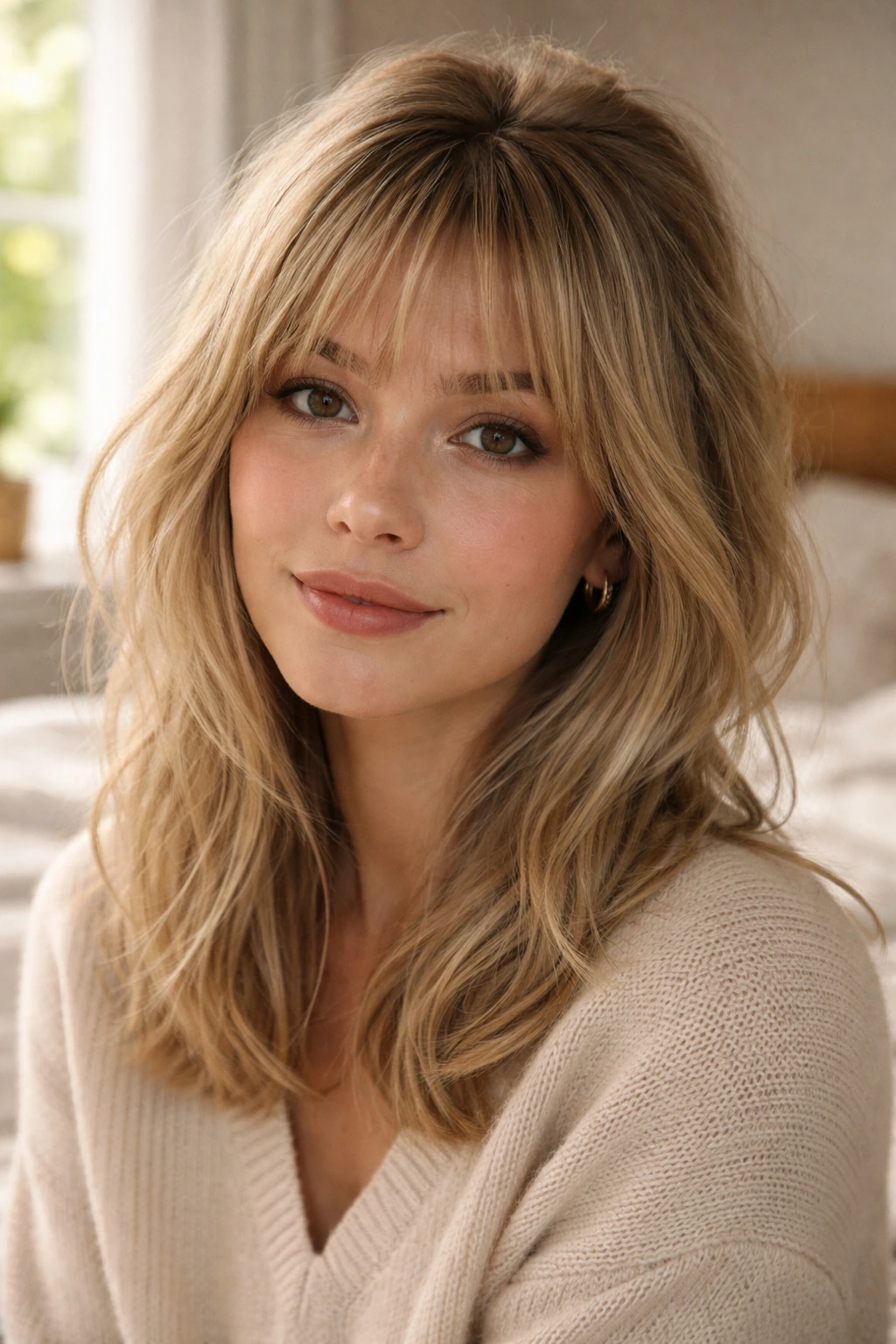
Thin hair is tricky with bangs. If you cut too much hair for the fringe, you have no hair left on your head! This style uses only a small amount of hair from the very front, keeping the fringe light and airy.
Maximizing Volume
Focus the bangs on the crown of the head. By pulling more hair from further back on your scalp to create the fringe, you make the bangs look thicker than they actually are. It is an optical illusion that works wonders.
Product Selection
Avoid heavy oils at all costs. They will make your hair clump, which is the last thing you want if you have thin hair. Use a texturizing powder at the roots to give them the appearance of density and thickness.
24. Jagged, Textured Bangs
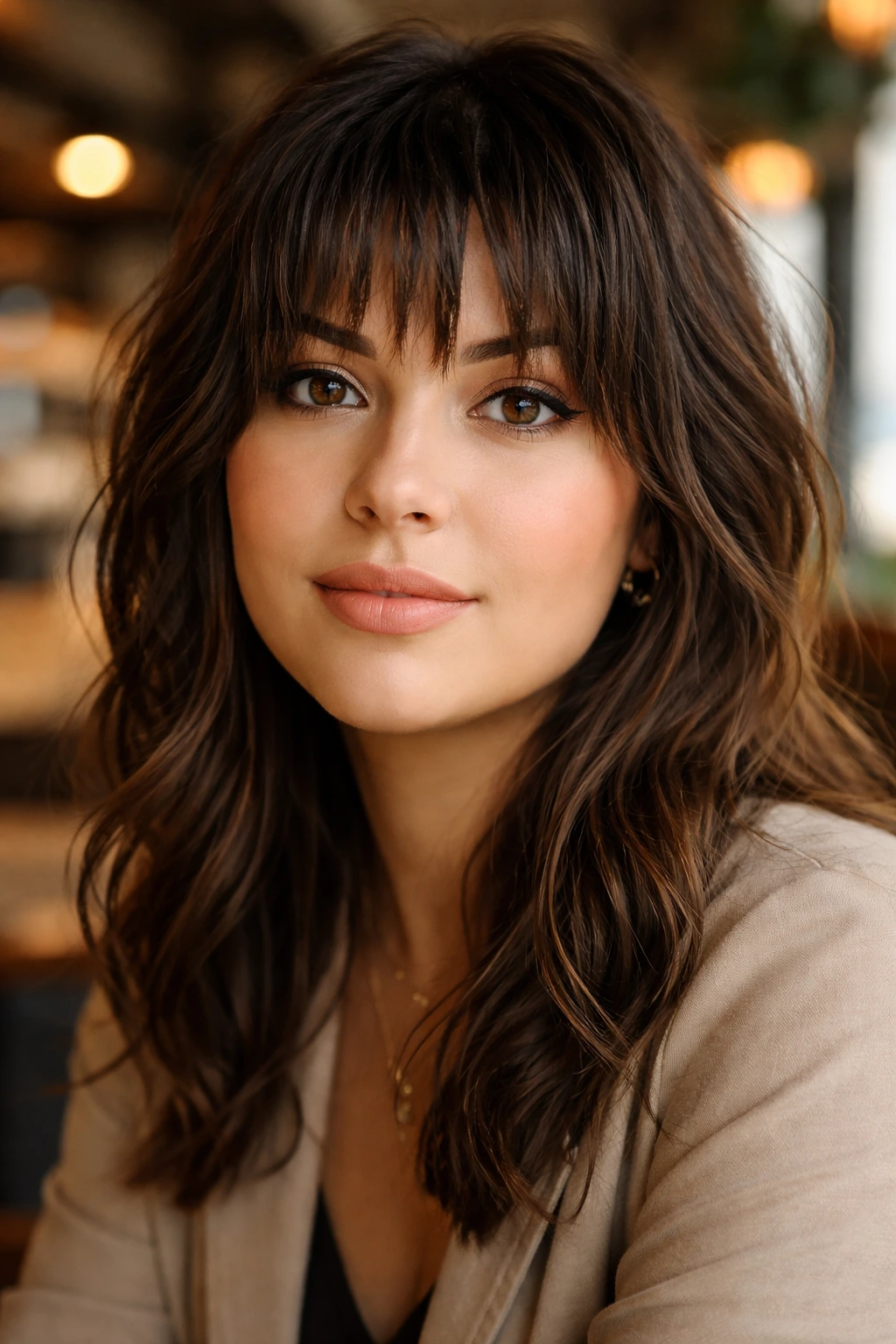
Think of this as a deliberate “oops.” The ends are cut unevenly, at different lengths, creating a jagged, edgy profile. It is the antithesis of the perfect, salon-blown-out bang.
The Attitude
This is a look for someone who wants to express personality. It doesn’t look “done.” It looks like you just woke up, or perhaps you cut them yourself in a burst of inspiration. It is confident and bold.
How to Style
Don’t use a brush. Seriously, don’t. Use your fingers to dry them, maybe with a little bit of hairspray to hold the jagged shape. The more imperfect they are, the better they look.
25. Soft, Wispy Fringe with Bob
The “French Girl” aesthetic. A short, chin-length bob paired with a soft, whispy fringe that barely covers the eyebrows. It is classic, timeless, and surprisingly flattering for a round face.
The Contrast
The structure of the bob creates a clean line around your jaw, which helps to define the lower part of your face. The wispy fringe softens the upper part. It is a harmonious balance of structure and softness.
Why It’s Great
It is incredibly low-maintenance. A little bit of texture spray, a quick scrunch, and you are out the door. If you want a style that takes five minutes to look good, this is it.
26. Long, Wispy Bangs with Layers
If you love your length but want a change, adding long, wispy bangs that blend into long, face-framing layers is the perfect transition. They sit just below the cheekbone and add movement to an otherwise static haircut.
The Face-Framing Flow
The bangs should not stand alone. They should lead the eye down into the rest of the layers. When you have a round face, you want those layers to start somewhere near the chin or collarbone to break up the roundness.
Styling Tip
Use a large barrel curling iron. Wrap the bangs around the barrel for just a few seconds to give them a gentle wave. This creates that “bouncy” look that makes the hair look full and healthy.
27. Textured Curtain Bangs for Curly Hair
Yes, you can have curtain bangs with curly hair. The key is to cut them longer than you think you need. When curly hair dries, it bounces up significantly.
The Cut
Your stylist should treat these as “layers” that happen to sit on your forehead. Because the texture is already there, you don’t need to do much to make them look “textured.” They do it themselves.
Product Strategy
Use a lightweight cream. You want the curls in your bangs to be defined, but you don’t want them to be heavy. If you have a stray piece that is acting up, pin it back with a decorative bobby pin. It’s part of the curly hair journey.
28. Piecey, Tapered Fringe with Undercut
For the boldest among us. You take the textured, piecey fringe and pair it with an undercut at the nape of the neck or on the sides. The fringe creates softness; the undercut adds edge.
The Balance
This is a high-contrast style. It says you are feminine and edgy at the same time. The textured bangs soften the face, while the shaved sections give you a structured, modern look.
Why It Works
It changes the silhouette of your head completely. It removes weight and bulk, which can be fantastic if you have a lot of hair. It is not for the faint of heart, but it is one of the most stylish, intentional looks you can choose.
Final Thoughts
The idea that you have to be afraid of bangs just because your face shape is round is a myth that needs to be retired. The problem has never been the fringe itself—it has always been the lack of texture. When you introduce movement, gaps, and layers, you transform the way the hair interacts with your features, creating a frame that is infinitely more flattering than a bare forehead.
Take your time with your stylist. Bring reference photos, but focus on the “texture” of the bangs in those photos rather than the length. Talk about point-cutting, razor techniques, and how you plan to style them at home. The best haircut is the one that you can actually manage, so if you are nervous, start long and whispy. You can always go shorter, but you cannot add length back once it’s gone. At the end of the day, it is just hair, and finding the right fringe is about having a little bit of fun with your look.
