



Wispy French bangs can be a smart move on a round face, but only when they stay soft around the temples and a little lighter through the center. A heavy, blunt fringe cuts the face in half. A wispy one does something better: it keeps the forehead open just enough to add length, then drifts away from the widest part of the cheeks.
That matters because round faces already have sweetness and fullness built into them. The goal is not to hide that shape. It’s to add a few vertical and diagonal lines so the eye keeps moving instead of stopping at one wide horizontal band. A fringe that skims the brow, splits gently, or melts into cheekbone pieces can do that without looking fussy.
French bangs are also more flexible than people give them credit for. They can be center-parted, side-swept, feathered, shattered, long, short, airy, or almost invisible. Same family. Very different result. And on a round face, those little changes matter a lot.
The best version usually leaves room to breathe at the roots, bends softly at the brow, and lets the sides fall toward the cheekbones instead of boxing them in. That’s the sweet spot. Now, the fun part.
1. Center-Part Wispy French Bangs

If you want the safest, most wearable place to start, start here. A center-part wispy French fringe opens the face right down the middle, which is exactly the kind of line a round face can use. It creates a little vertical space without making the haircut look severe.
The trick is keeping the shortest point just at or a hair below the brows, then tapering the sides so they skim outward toward the cheekbones. No hard edge. That’s the whole point. Ask for soft point-cut ends, not a thick shelf across the forehead.
This style also plays nicely with low-maintenance days. You can blow-dry each side away from the part, then separate the pieces with your fingers once they cool. If you tuck one side behind your ear, it still looks intentional.
2. Cheekbone-Grazing Curtain Bangs
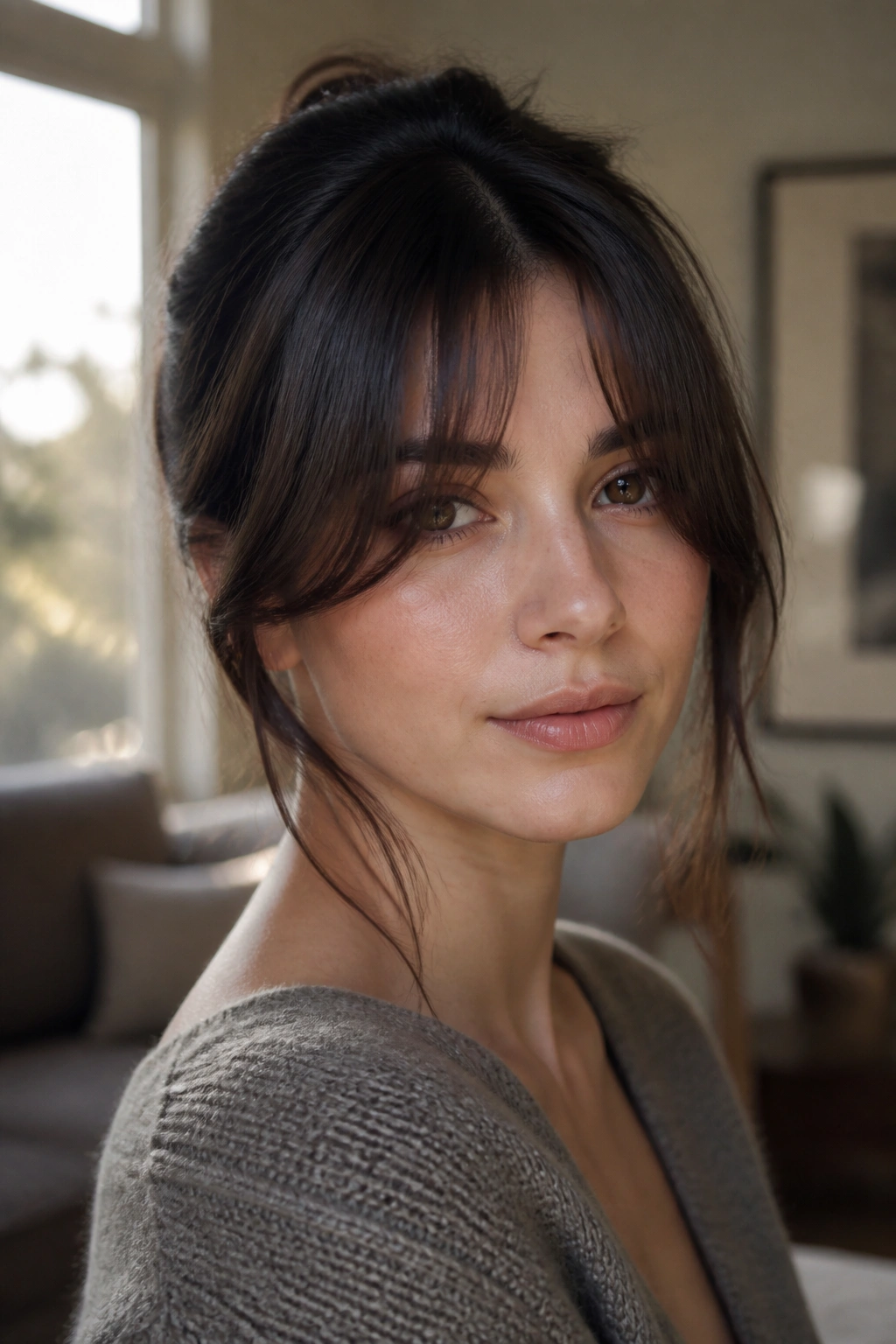
Why do these work so well on round faces? Because the longest pieces land right where the face wants structure most: around the cheekbones. That length pulls attention outward and down, which helps the face read a touch longer.
A good cheekbone-grazing curtain bang should feel soft, not dramatic. You want a middle split, but not a perfect, rigid one. The front pieces should bend away from the center and settle near the outer corners of the eyes or the top of the cheeks.
If you wear your hair medium-long, this is one of the easiest bangs shapes to keep flattering over time. It grows out in a useful way, and it doesn’t demand a perfect blowout every morning. A quick round-brush lift at the roots is usually enough.
3. Brow-Skimming Feathered Fringe
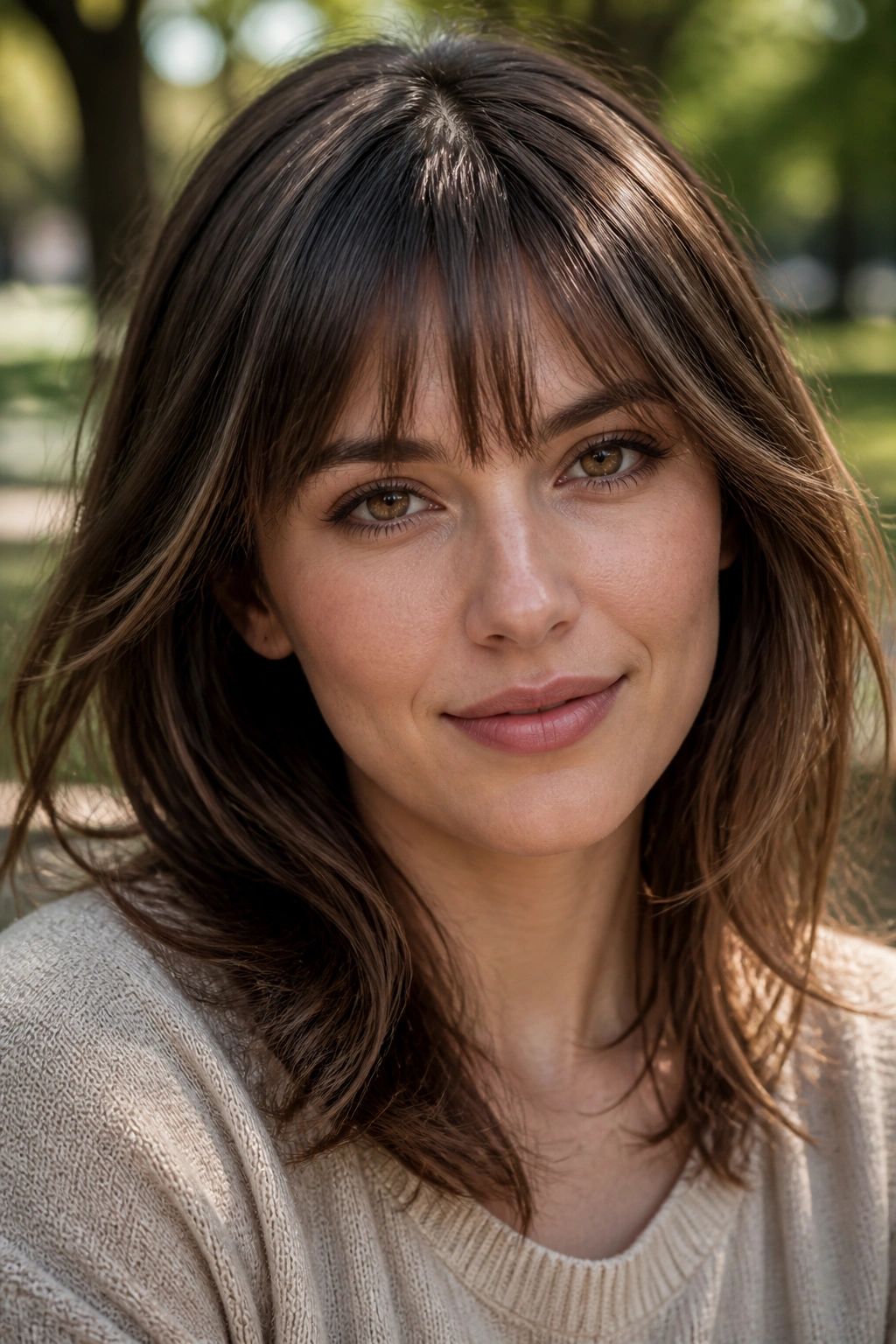
A brow-skimming fringe can be lovely on a round face when it’s feathered instead of blunt. The difference is huge. One looks like a solid line. The other looks like movement.
What Makes It Work
The ends should be soft enough that you can still see bits of forehead through them. That little bit of space matters. It stops the fringe from widening the face visually, which is the last thing you want from a heavy bang.
What to Ask For
- Keep the shortest pieces right at the brow, not far above it.
- Point-cut the ends so they break apart naturally.
- Leave the temple pieces a touch longer so they feather outward.
- Skip a dense, straight-across edge.
If your hair is fine, this shape gives you fringe without the weight. If your hair is thicker, it keeps the bang from taking over your whole face.
4. Soft Side-Swept French Bangs
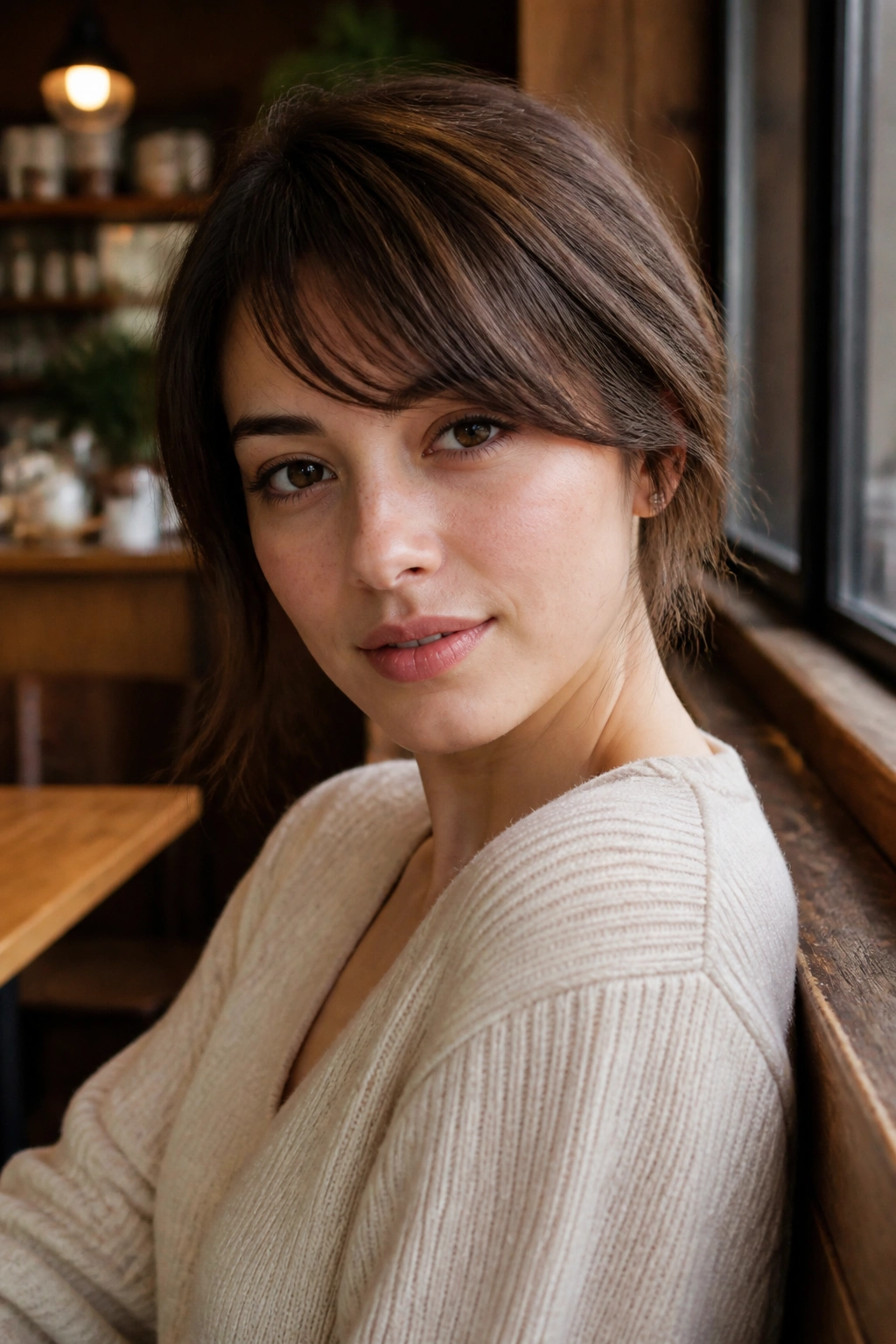
A side-swept French bang is the quiet overachiever of the group. It breaks symmetry, and symmetry is often what makes a round face feel even rounder. A soft side sweep changes that fast.
The part matters here. Move it just a little off center — not all the way to the ear unless you want a deeper sweep. That shift creates a diagonal line across the forehead and cheek area, which is a simple trick, but it works. The eye follows the angle instead of reading width.
This style is especially good if one side of your face feels fuller than the other or if you like tucking hair behind one ear. It’s also a solid choice if you want bangs that don’t look like bangs all the time. Some days they read as fringe. Other days they look like a face-framing layer.
5. Bottleneck Bangs With a Narrow Center
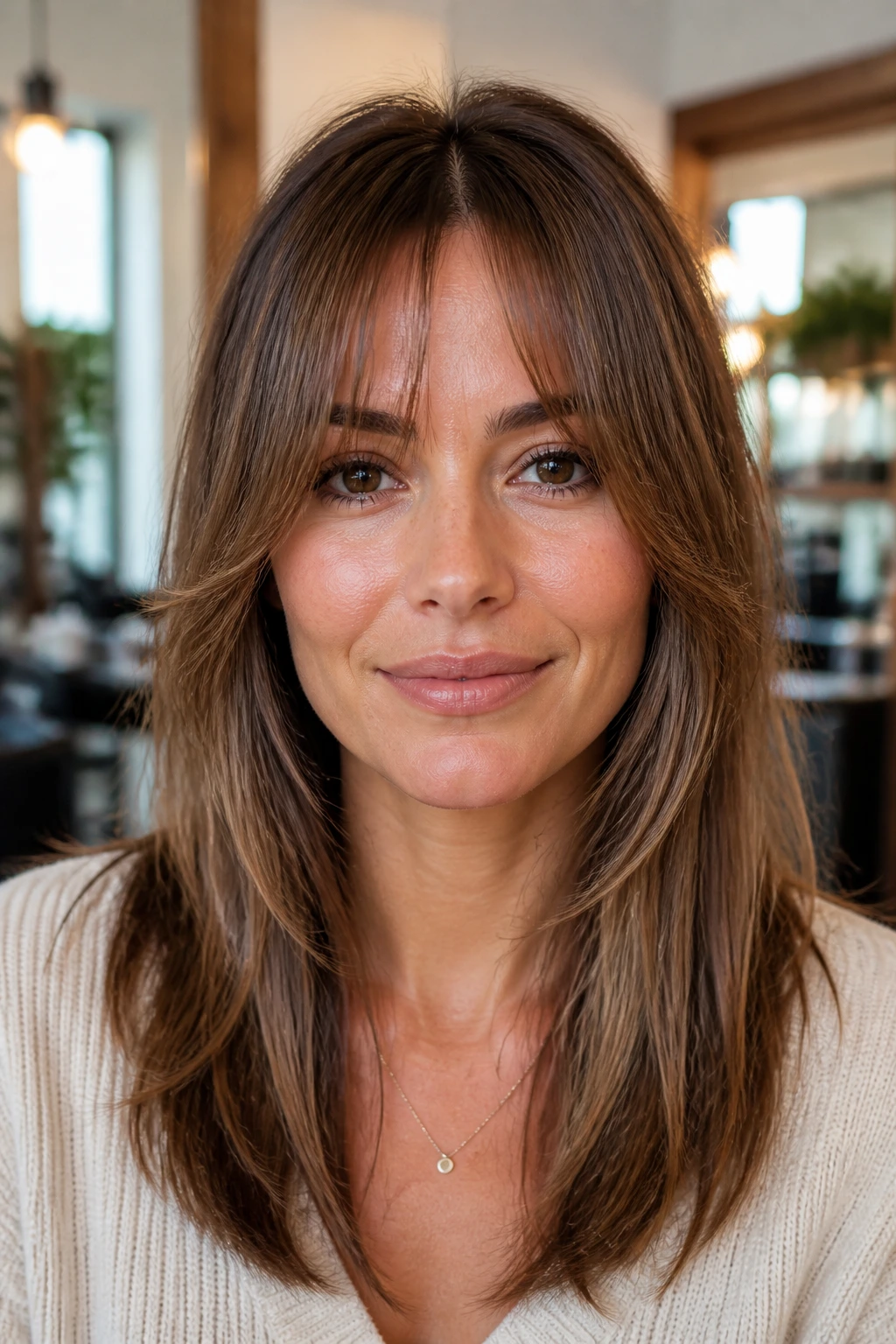
Bottleneck bangs are one of those cuts that sounds technical and then turns out to be surprisingly wearable. The center is narrower and shorter, then the sides open up and curve wider before tapering down. On a round face, that shape can do a lot of quiet work.
Why the Bottleneck Shape Helps
The narrow center opens the forehead, which keeps the face from feeling boxed in. The fuller side sections add movement near the temples and cheekbones, where a round face usually benefits from a little visual length.
How to Ask For It
- Keep the center pieces light and airy.
- Let the side sections start opening near the outer brow.
- Ask for soft graduation into the front layers.
- Avoid a thick center chunk that drops straight down.
This shape is especially good if you want a French-bang feel without committing to a full curtain fringe. It has polish, but it still feels relaxed.
6. Long Grown-Out French Bangs

These are the bangs for people who like their hair to feel lived-in. Long grown-out French bangs sit below the brow, often brushing the upper cheek or even the top of the lip, and that extra length gives a round face some much-needed vertical pull.
They also feel softer than fresh, short fringe. There’s no sharp edge fighting the cheeks. The fringe just drifts into the rest of the haircut. That’s useful if you like to wear your hair loose and want the bangs to disappear a bit when you’re in a hurry.
A little bend at the ends keeps them from hanging flat. Blow-dry them forward first, then sweep them slightly apart with your fingers. The result should feel more like a veil than a border.
7. Razor-Cut Piecey Fringe
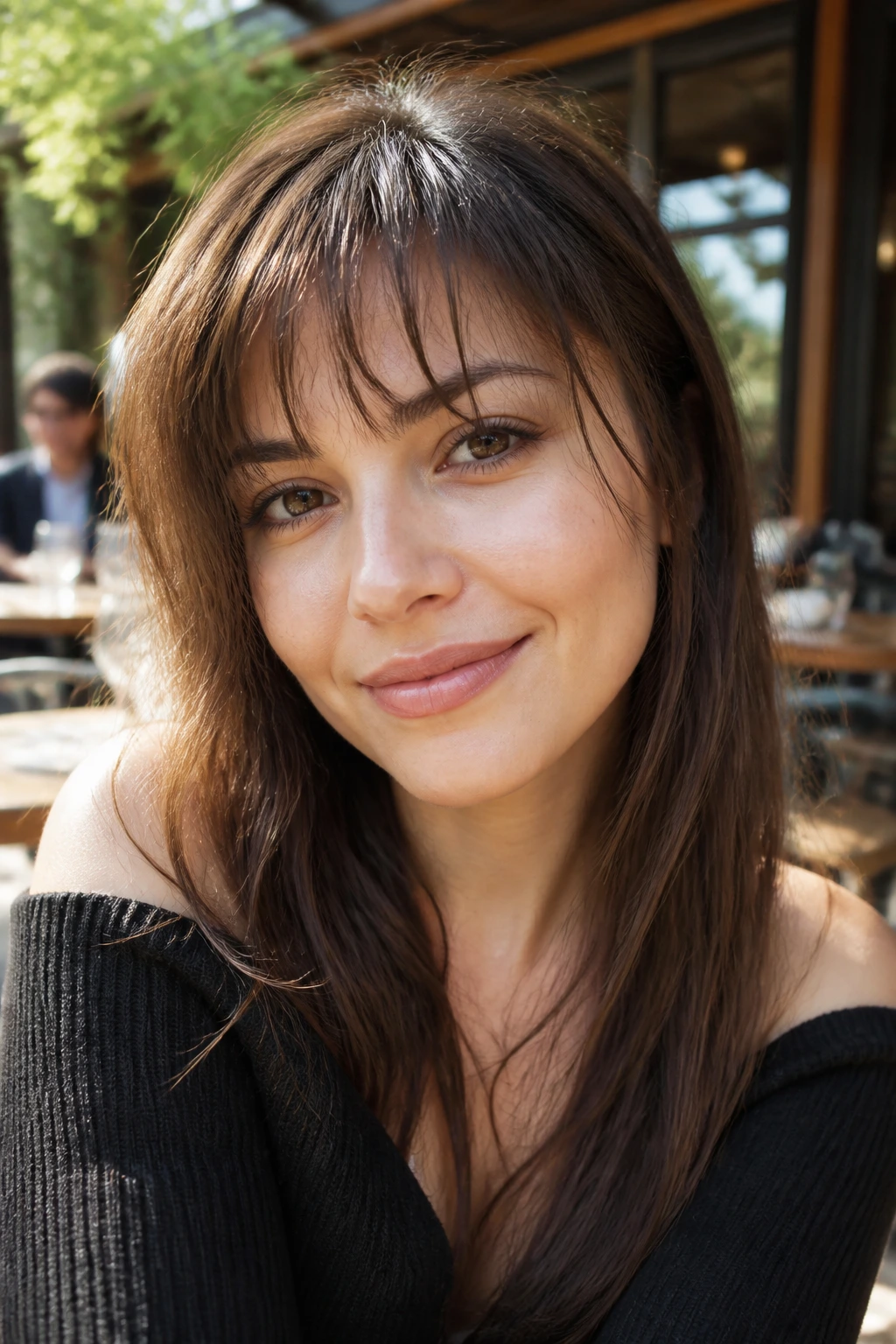
A razor cut can save thick bangs from turning into a solid block. It removes bulk and leaves the ends more broken up, which gives you those wispy little gaps that work so well on round faces.
This is not the best choice for very dry or fragile hair. Razor cutting can rough up ends that already struggle. But if your hair is healthy and tends to puff wide, the piecey finish can be a gift. It keeps the fringe from sitting like one heavy panel across the forehead.
Use a light styling cream or a soft mousse, not a greasy serum. Too much product collapses the separation and turns “wispy” into “stringy.” There’s a line there. Stay on the right side of it.
8. Shattered Bangs With Airy Ends
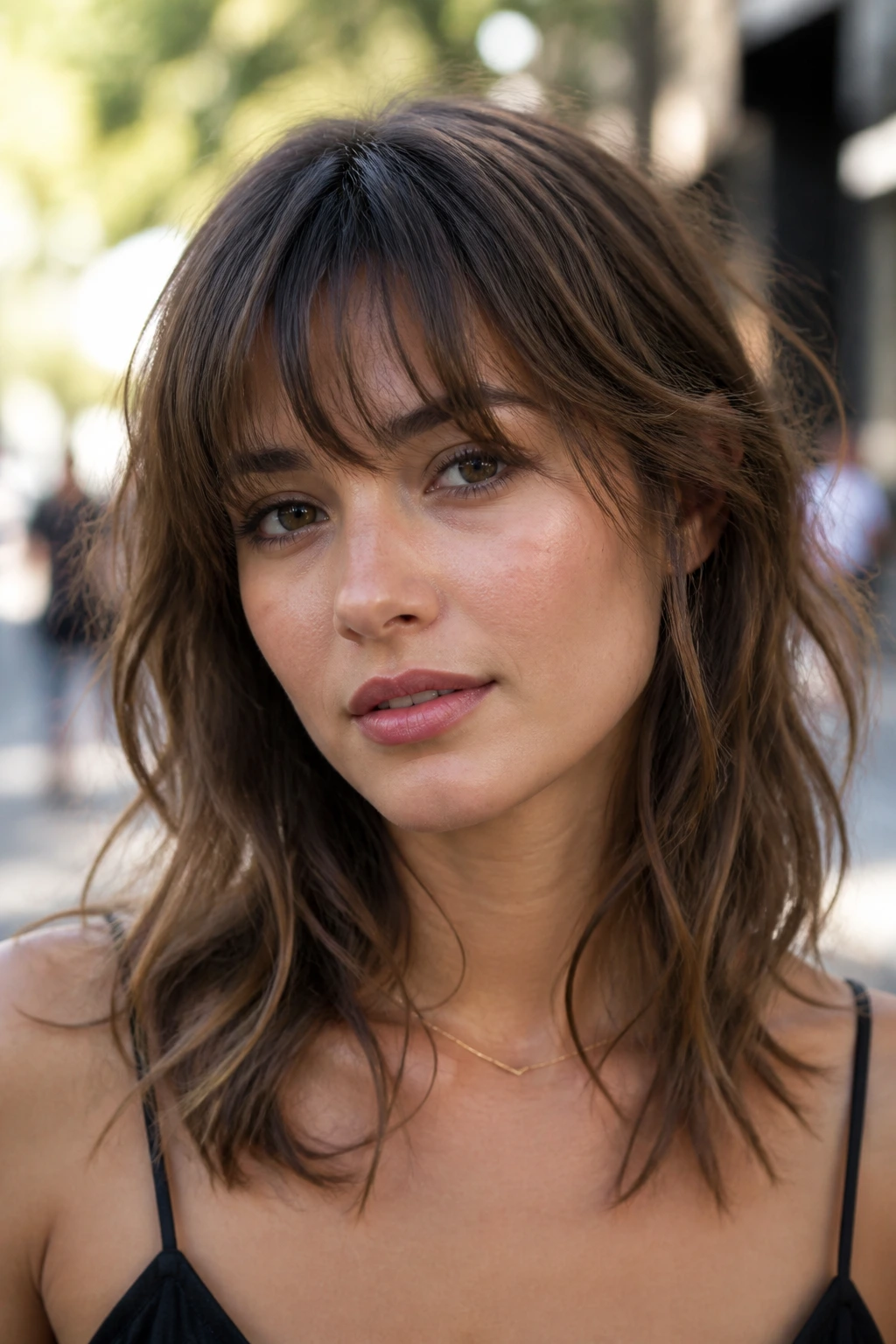
If your bangs tend to swell up after a blow-dry, shattered ends can help. They remove that solid, helmet-like feeling and give the fringe room to move, which is exactly what a round face needs when it wants a little extra length.
Who This Works Best For
- Thick or medium-thick hair that fills out fast.
- Round faces that look better with broken lines than with blunt edges.
- People who want fringe that blends into layers instead of standing alone.
- Anyone who hates spending ten minutes fighting a bang on the forehead.
The best shattered fringe looks a little imperfect on purpose. It shouldn’t sit in neat little teeth or look over-thinned. Ask for texture, yes, but keep the density balanced so the fringe still reads as fringe.
9. French Bangs With a Lob

A lob gives French bangs a cleaner stage to sit on. The haircut usually lands around the collarbone, which is a useful length on a round face because it pulls the silhouette downward instead of ending right at the jaw.
That extra length matters more than people think. If the hair stops too high, the face can look wider. A lob keeps the eye moving down the neck and shoulders, while the wispy fringe softens the top half. Together, they create a shape that feels open but not overly exposed.
This is a good option if you want bangs but still need a haircut that behaves at work, in a ponytail, or on lazy days. The lob does the heavier lifting. The fringe just adds the face-framing detail.
10. French Bangs With Long Layers
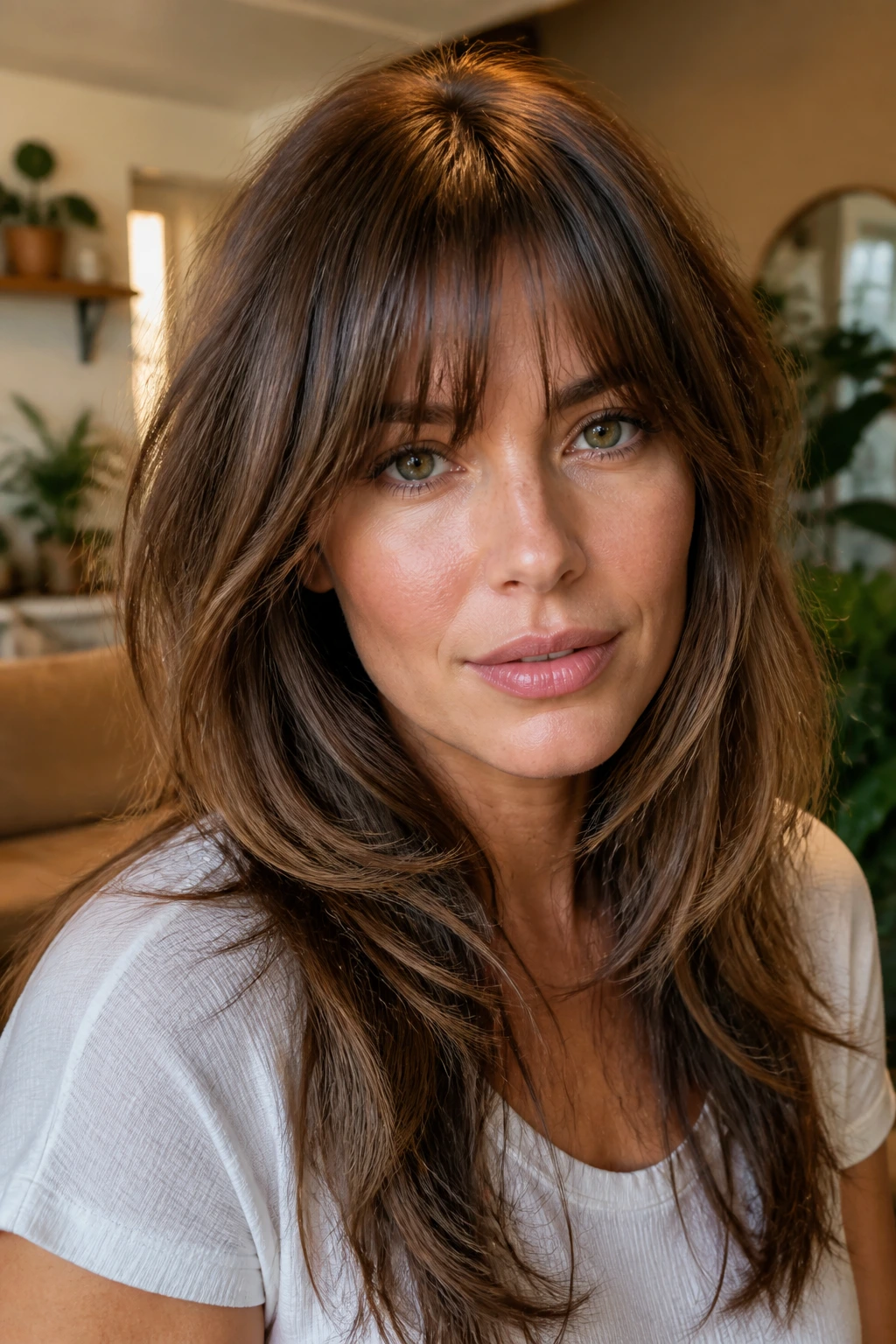
Long layers and French bangs are a better pair than most people expect. The layers stop the haircut from looking square, and the fringe keeps the front from feeling too plain.
Where the Layers Should Start
For a round face, I like layers that begin somewhere below the cheekbone and above the collarbone. That keeps the top from puffing out too much while still giving the front some shape. If the layers start too high, you can end up with a halo effect you probably don’t want.
The fringe should connect, not disconnect. That means the shortest pieces in front should melt into the first layers instead of looking pasted on. When that happens, the whole cut reads longer and softer at once.
11. Curly Wispy French Bangs

Curly French bangs are not a compromise. They’re a look. The trick is cutting them long enough to respect the shrinkage and light enough to keep the forehead from disappearing.
A dry cut helps here because curls don’t always behave when they’re wet. You want the shape to be judged in its natural state. Leave the fringe a little longer than you think you need — often around half an inch to an inch longer, depending on curl tightness — so it springs up instead of jumping too high.
On a round face, curly bangs add softness around the forehead and temples without forcing a straight line where one doesn’t belong. They’re lively, a little messy, and far more forgiving than most people assume.
12. Wavy French Bangs With a Bend
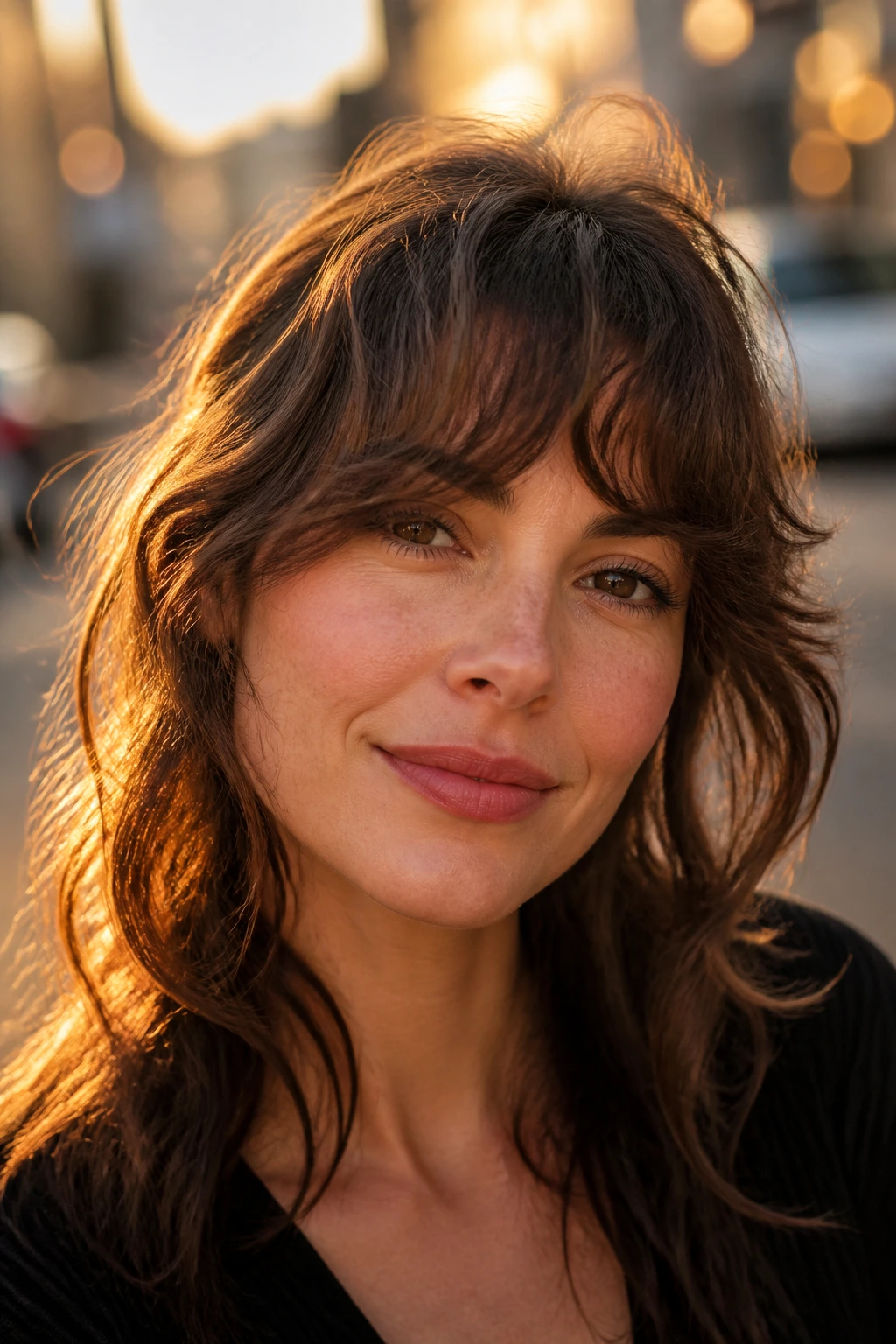
What if your hair lives in that in-between zone — not straight, not curly, just a little bendy? Then wavy French bangs are probably your best friend. That tiny curve through the front makes the fringe feel soft instead of exact.
How to Set the Shape
- Rough-dry the bangs until they’re about 80 percent dry.
- Twist each front piece once or twice while the hair is still warm.
- Let the curl fall, then separate it with your fingers.
- Stop brushing once the shape is set. Brushing it too much turns the wave flat and wide.
The bend helps round faces because it breaks the horizontal line. It doesn’t need to be polished. In fact, a little unevenness is what gives it charm.
13. Soft-Edged Fringe for Straight Hair
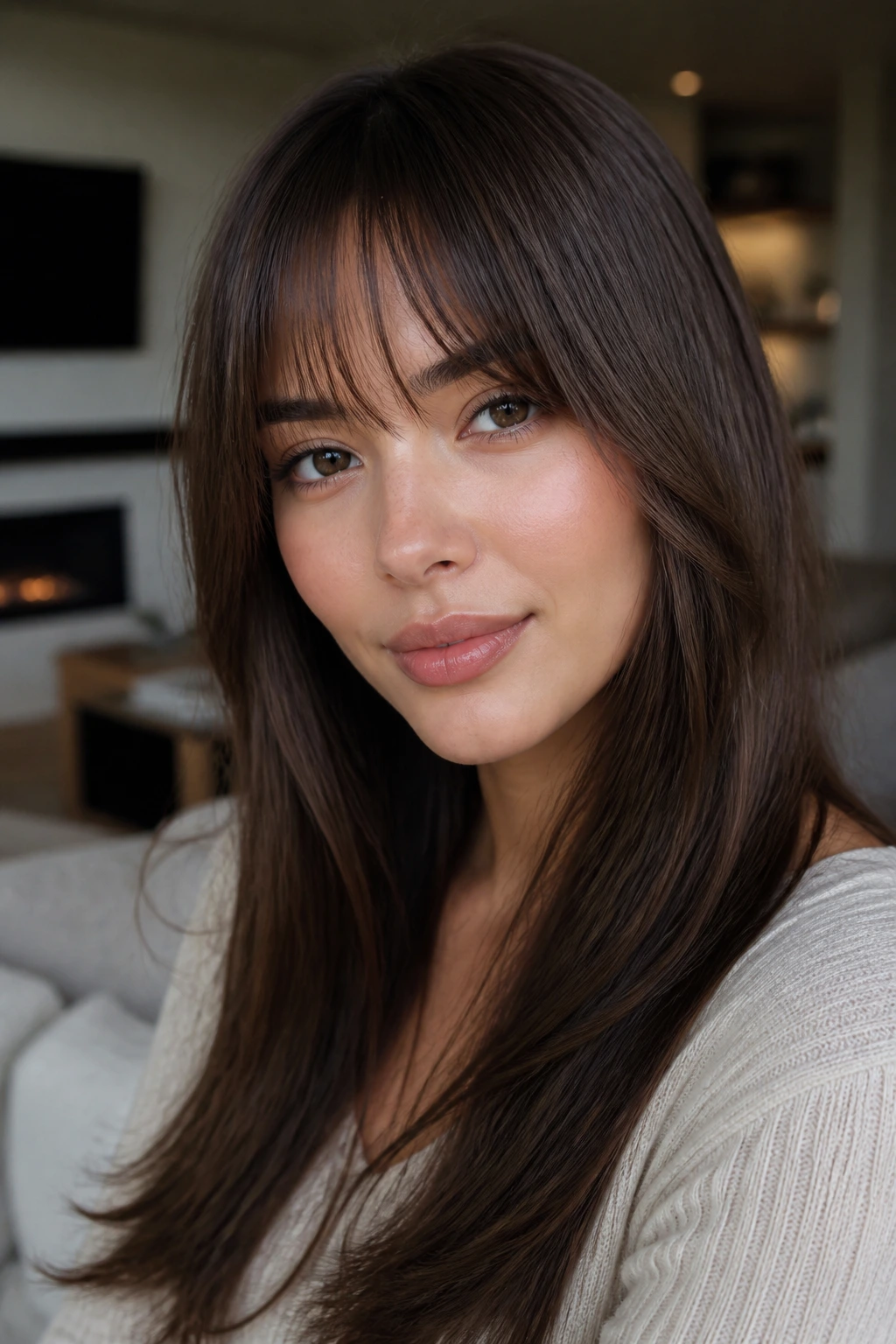
Straight hair can make bangs look sharper than intended, so the cut has to do more of the work. A soft-edged fringe keeps the look French instead of severe.
Ask for point-cut ends and a bit of length through the temples. That way, the fringe doesn’t become a straight bar across the face. A round brush can add a small curve, but do not iron it poker-straight unless you want the full blunt effect.
For round faces, this softer edge matters. A hard line can cut the face wide. A broken one leaves more air around the brow and makes the eyes stand out instead.
14. Invisible Bangs
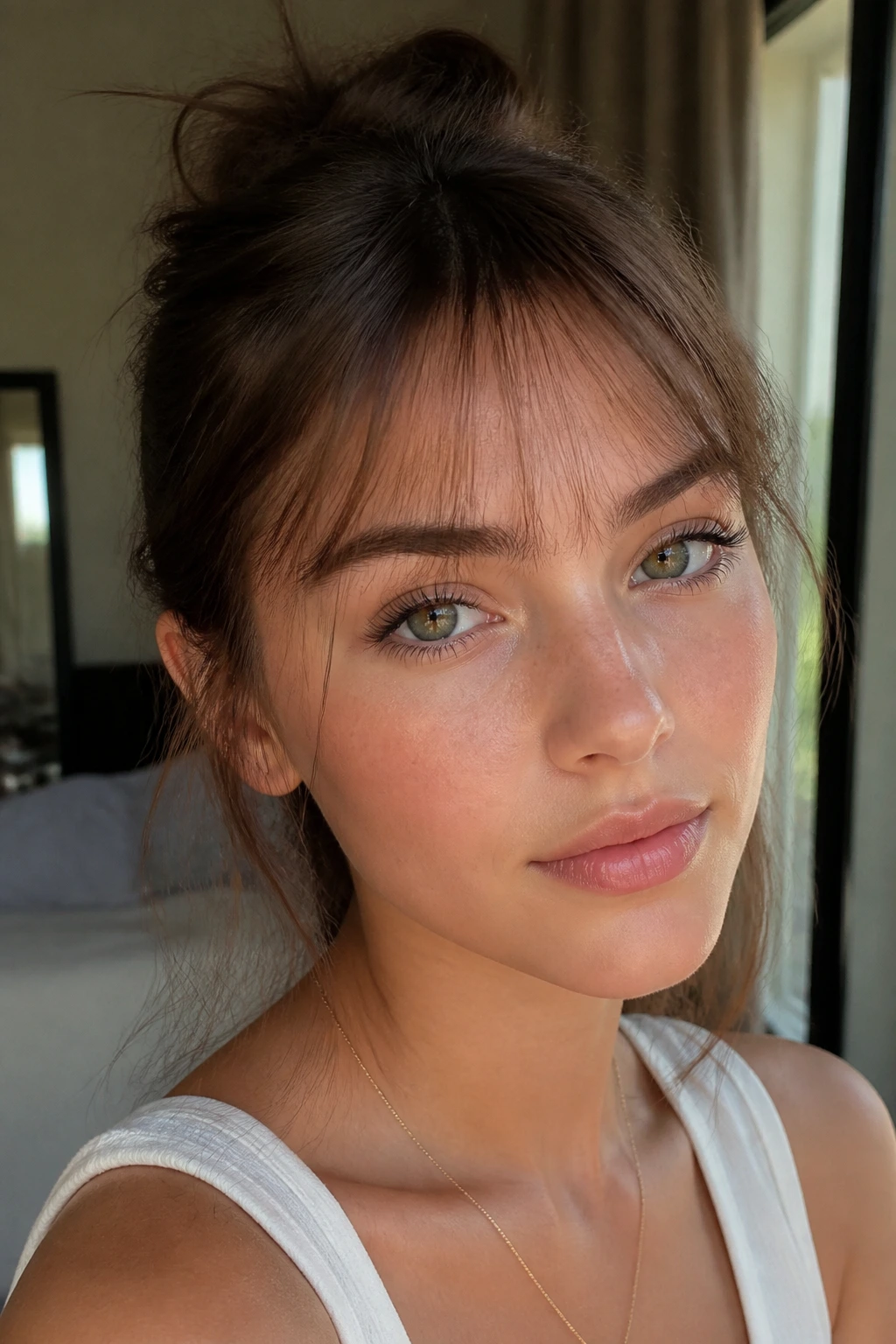
Can bangs be there without announcing themselves? Absolutely. Invisible bangs are the lightest version of the French fringe family, with sparse pieces that peek through the forehead instead of covering it.
This is a good place to start if you’ve never worn bangs or if you’re nervous about changing the shape of your face too much. The fringe is soft enough to blend in, but it still gives that little front-of-face detail that makes a haircut feel finished.
The danger is going too thin. Too little hair at the front can look stringy instead of airy. Keep the pieces separated, not wispy to the point of disappearing. A round face usually looks best when the fringe is present but not crowded.
15. Arched French Bangs
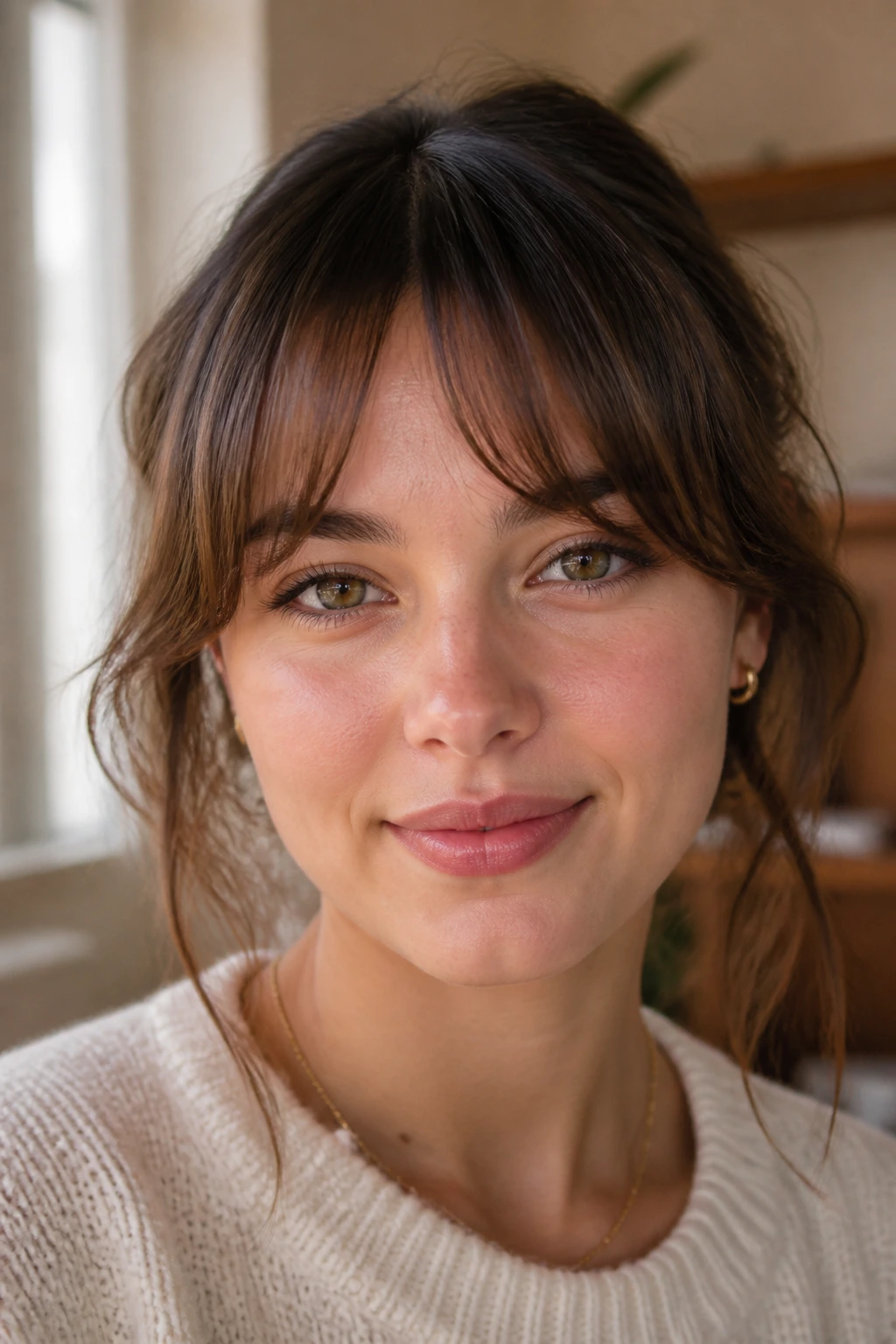
A gentle arch can be very flattering on a round face because it gives the forehead shape without adding width. The middle stays a touch shorter, then the sides fall a little longer, creating a soft curve instead of a straight line.
Why the Arch Helps
The eye reads the center first, then glides outward along the curve. That movement keeps the face from feeling blocky. It’s subtle, but subtle is what makes it work.
How to Style It
- Dry the center first so it keeps a little lift.
- Brush the side pieces slightly outward.
- Use a small round brush, not a huge one.
- Stop before the fringe gets over-curled. You want bend, not a retro bubble.
This shape is especially useful if your forehead is a bit shorter and you still want bangs that feel soft.
16. Deep Side-Part Fringe
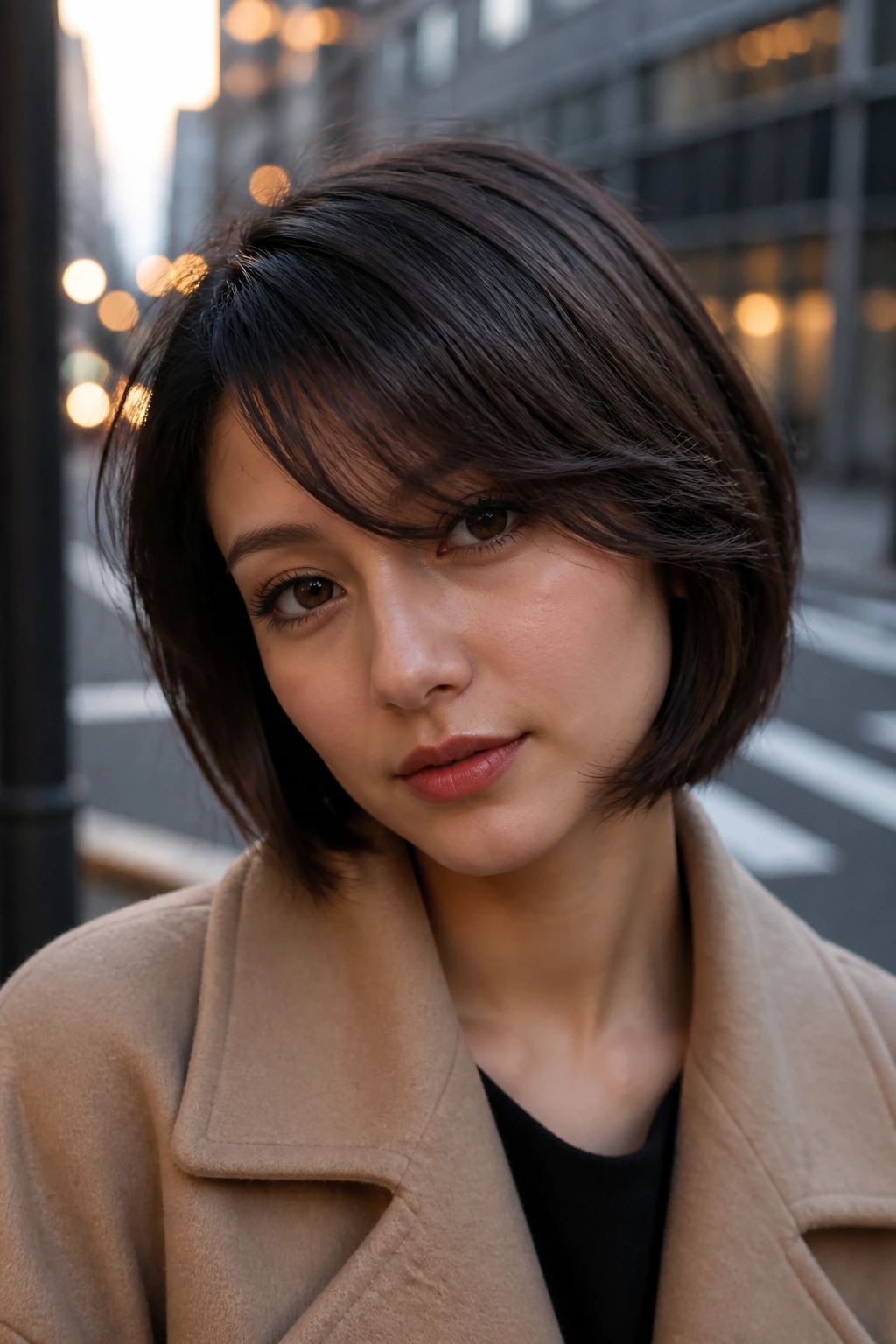
If your hair already falls to one side without much effort, a deep side-part fringe can feel like a relief. It works with the hair’s natural direction instead of arguing with it.
The diagonal line created by the part is the part that matters. It pulls the eye across the face and down, which can make round cheeks look a little narrower. You’re not trying to hide the face; you’re giving it a line that travels.
This is also one of the easier ways to grow out a bang without looking stuck in between lengths. The fringe just keeps sliding farther to the side until it becomes a face-framing layer. Nice and easy.
17. Tiny Open Curtain Bangs
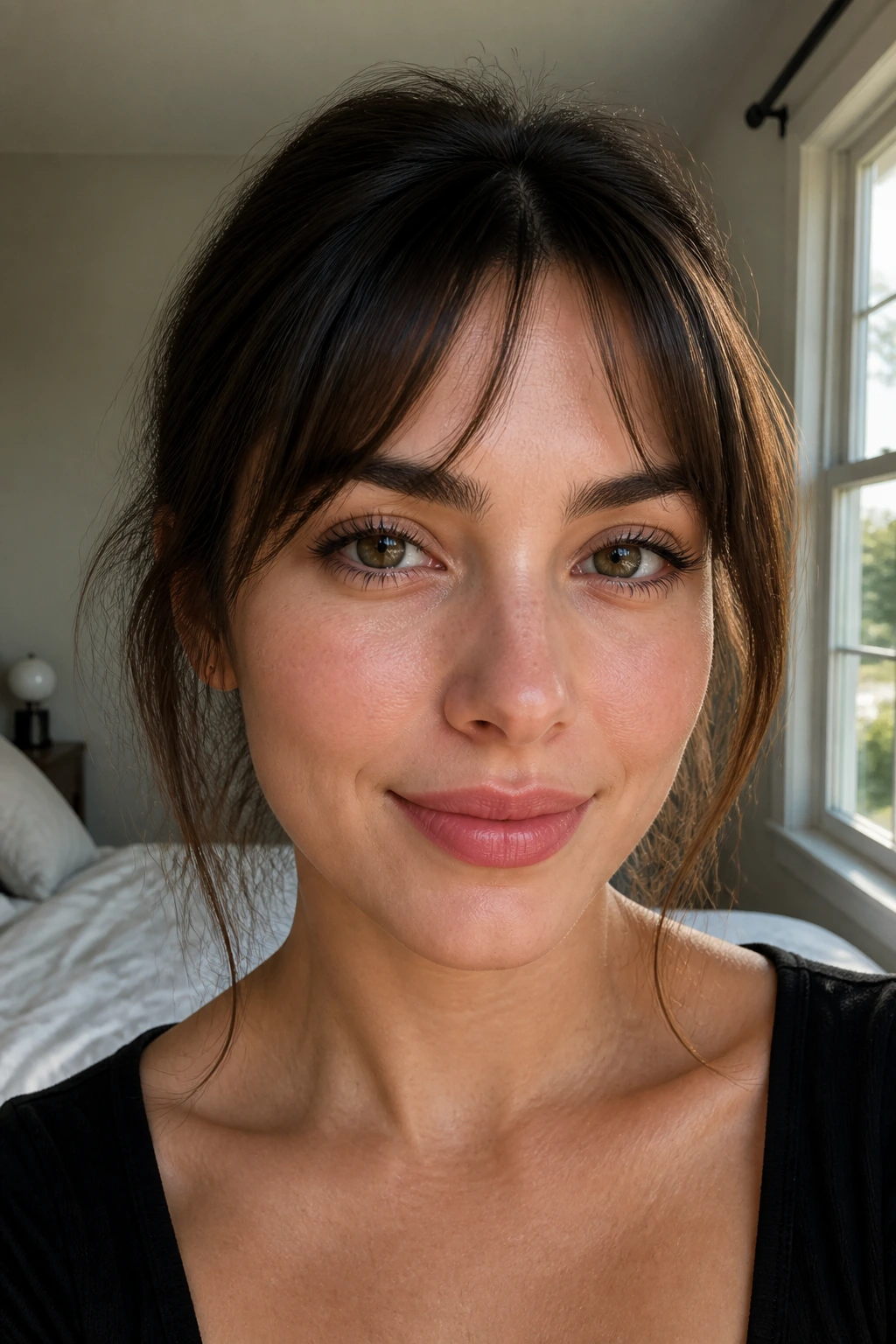
Tiny open curtain bangs are for people who want the curtain-bang feeling without a full sweep. The center stays short and open, while the sides curve down just enough to touch the outer brow or upper cheek.
Where They Should Sit
- Keep the center light and see-through.
- Let the sides sit longer than the middle.
- Make sure the fringe opens away from the face instead of hanging straight down.
- Avoid over-thickening the center. That defeats the point.
On a round face, this shape gives you forehead space without losing softness. It’s a good middle ground if you like bangs but don’t want them to swallow your features.
18. Heavy-Top, Light-Ends Fringe
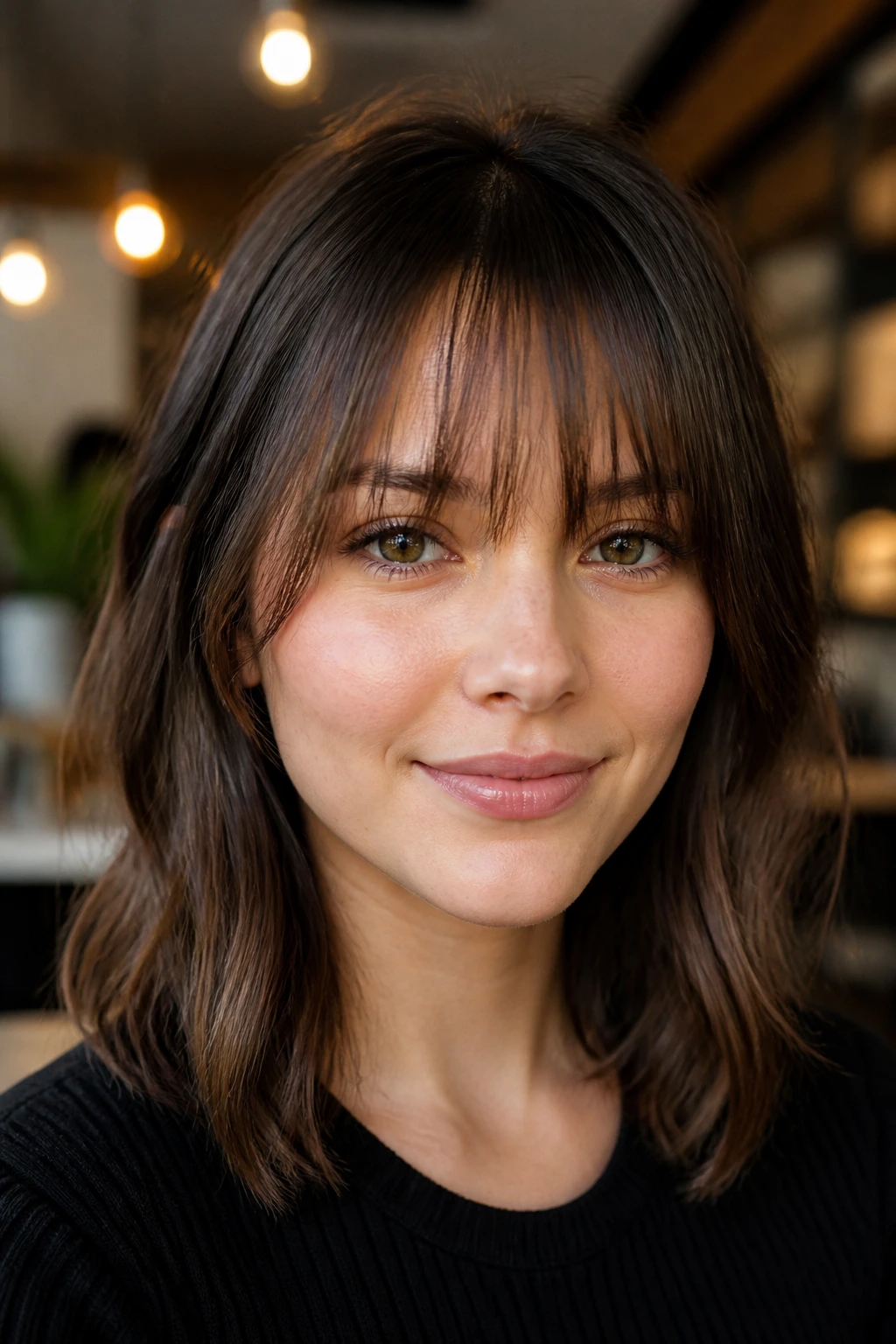
This one sounds contradictory, and that’s exactly why it works. You keep a little more density near the roots so the fringe has shape, then feather the ends until they fall apart softly.
Thick hair benefits from this a lot. If the entire bang is equally full, it can sit like a block across the forehead. When the ends are lighter, the line breaks up and the face feels less boxed in.
A round face usually looks better with that kind of break. The fringe has enough presence to matter, but not enough weight to widen the middle of the face. Use a root-lifting spray at the front and rough it up with your fingertips.
19. Face-Framing Fringe With Angled Pieces
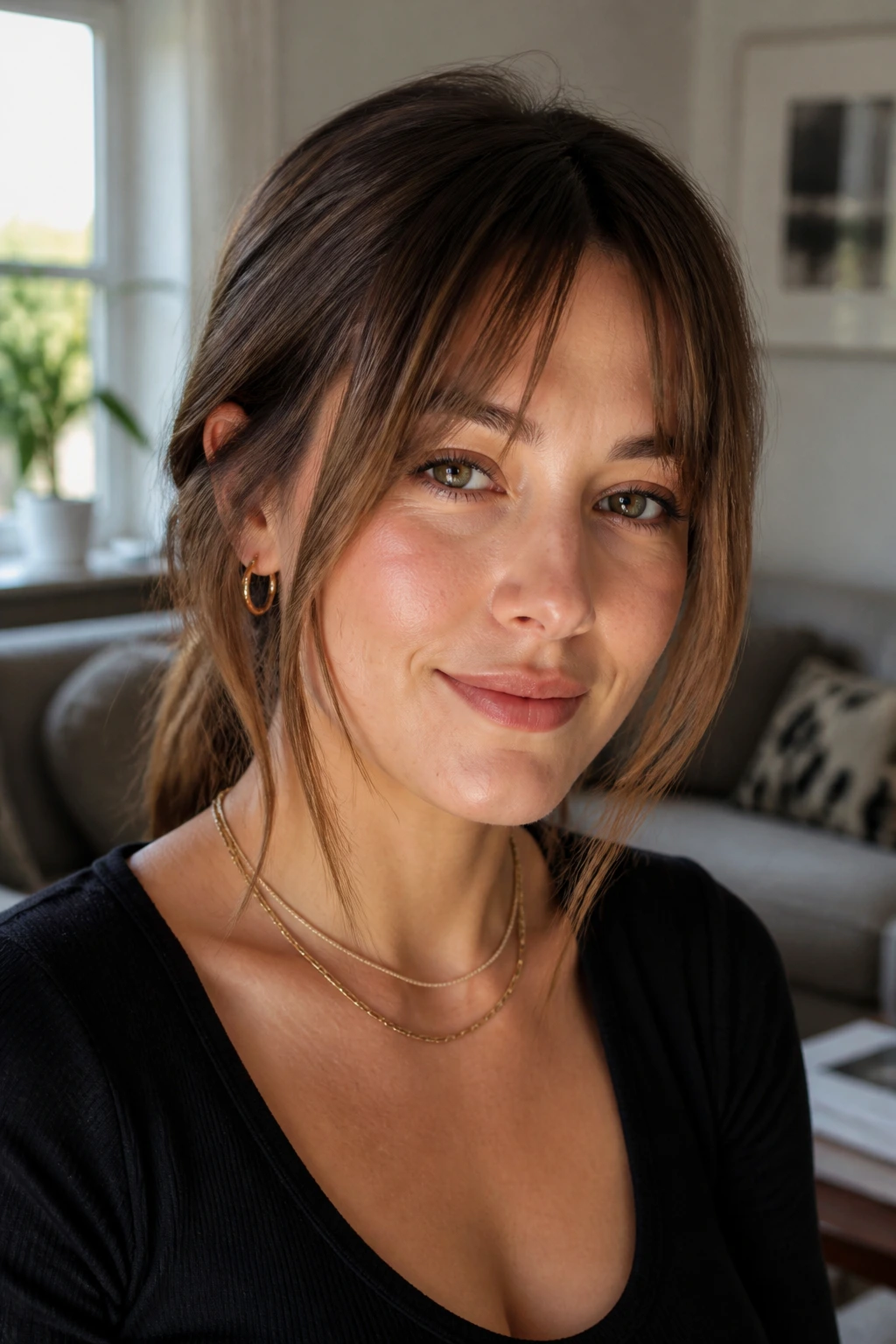
This is the version I’d point to if someone wants bangs but worries about regret. The angled pieces make the fringe feel less like a separate feature and more like part of the haircut.
What the Diagonal Line Does
A diagonal line is flattering because it guides the eye from the forehead toward the cheekbones and jaw. It adds movement without forcing the face into a strict shape. On round faces, that’s gold.
You can ask for the shortest piece near the outer brow, then longer pieces that drift into the front layers. Keep the transition soft. If the angle is too obvious, it looks chopped. If it’s too subtle, it reads as a plain grown-out bang.
This style is good when you want something polished enough for everyday wear but relaxed enough to air-dry.
20. Shaggy French Bangs
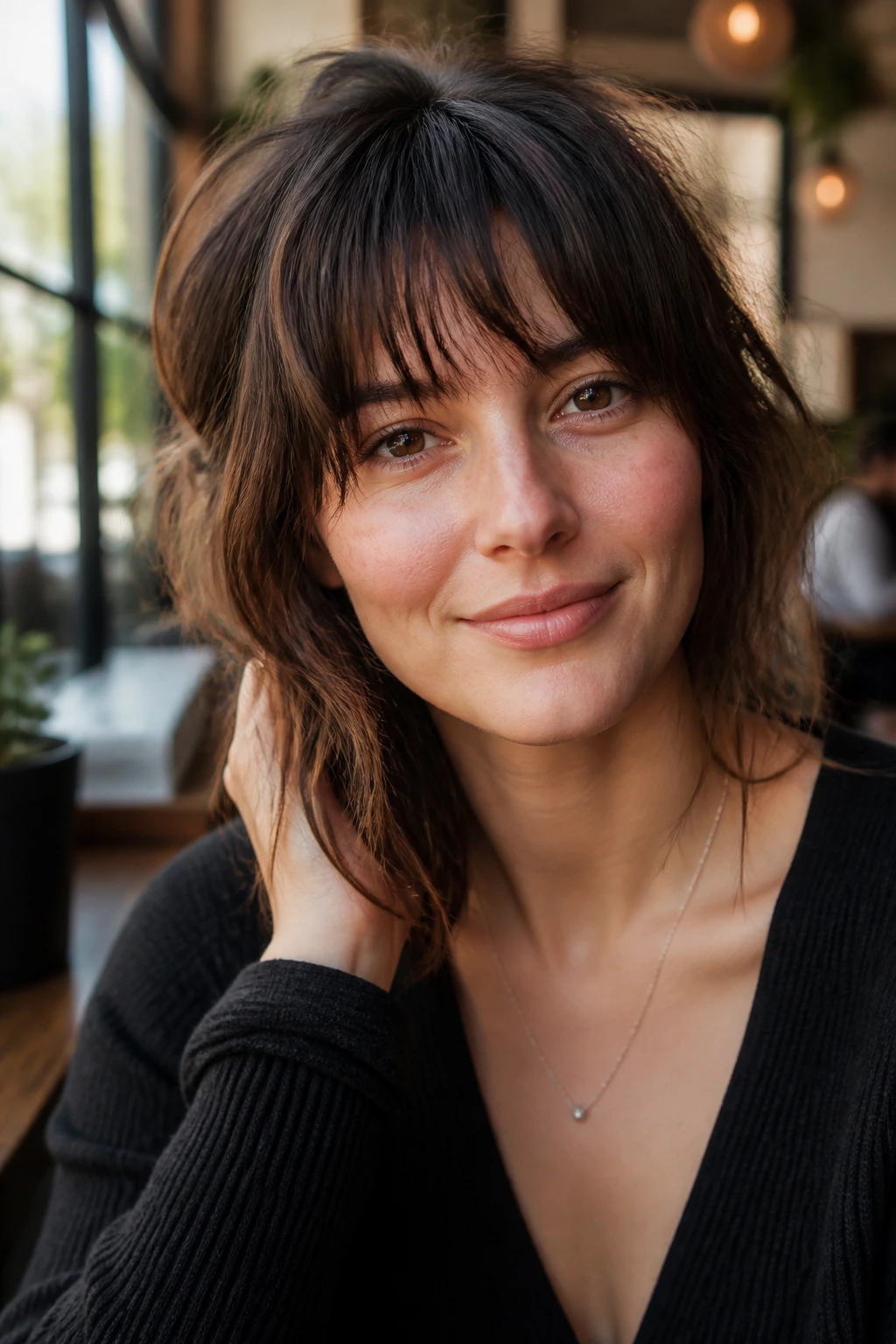
I keep coming back to shaggy French bangs because they’re forgiving. A round face often looks better with broken texture than with a strict, exact shape, and the shag gives you that from the start.
The fringe should be a little uneven, a little soft at the ends, and tied into the rest of the cut. It doesn’t need to sit perfectly every morning. That’s the point. If a few pieces go their own way, the style still works.
Shaggy bangs are also a strong choice if you have a cowlick or if your hair likes to split unevenly. Instead of fighting the mess, you build it into the shape. That usually looks better, and it saves time.
21. Pixie With Wispy Fringe
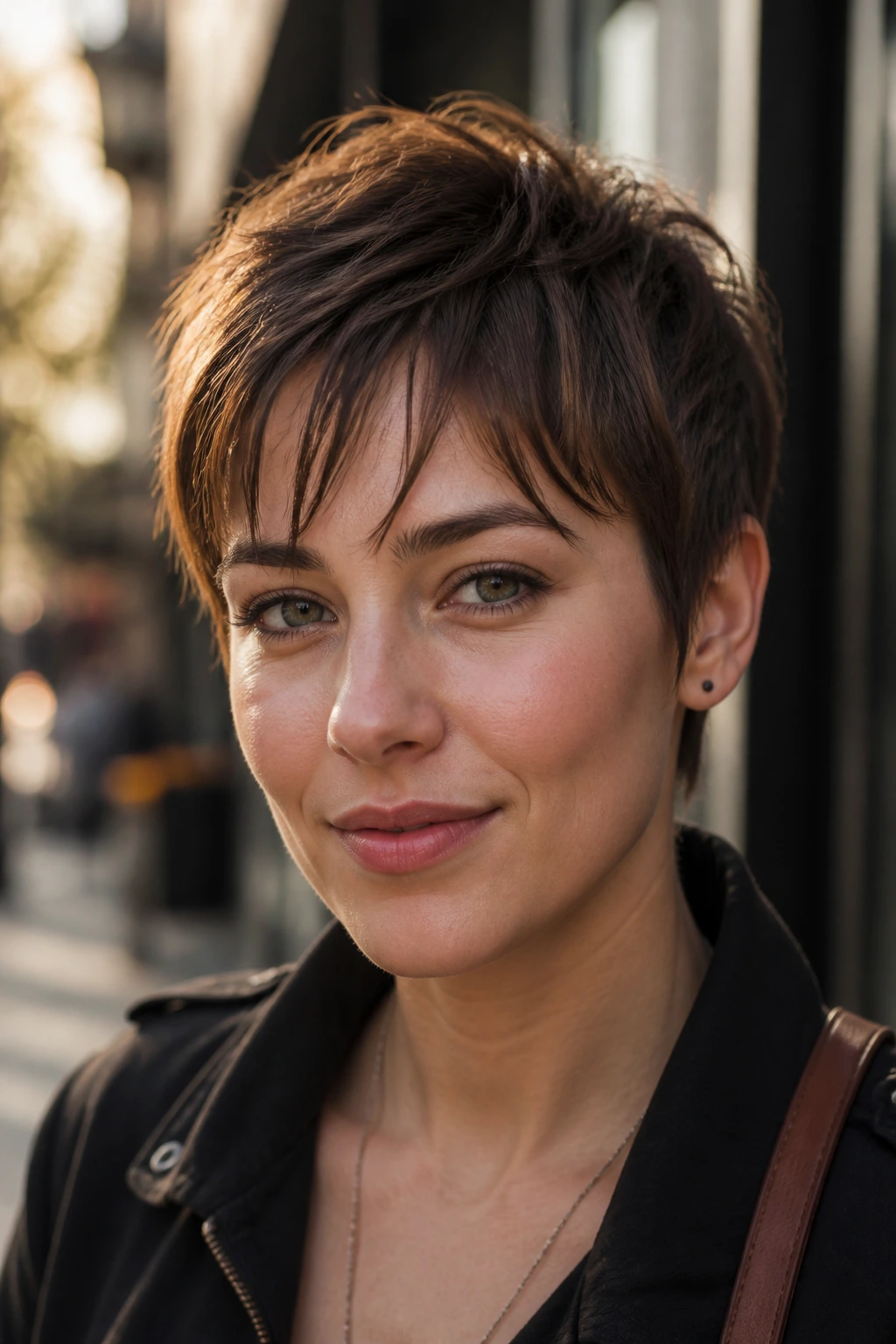
Short hair can flatter a round face if the fringe has enough softness. A pixie with wispy French bangs keeps the top light and the front mobile, which stops the haircut from looking too boxy.
The crown should have a bit of lift, and the fringe should be longer than the shortest side pieces. That creates a gentle angle through the face. If the bang is cut too short and too straight, the whole look can widen the forehead area instead of softening it.
A small amount of styling paste goes a long way here. Work it through the front with your fingertips, then separate a few strands so the fringe doesn’t look solid. It’s a little piecey, a little airy. That’s the sweet spot.
22. Bob With Wispy French Bangs
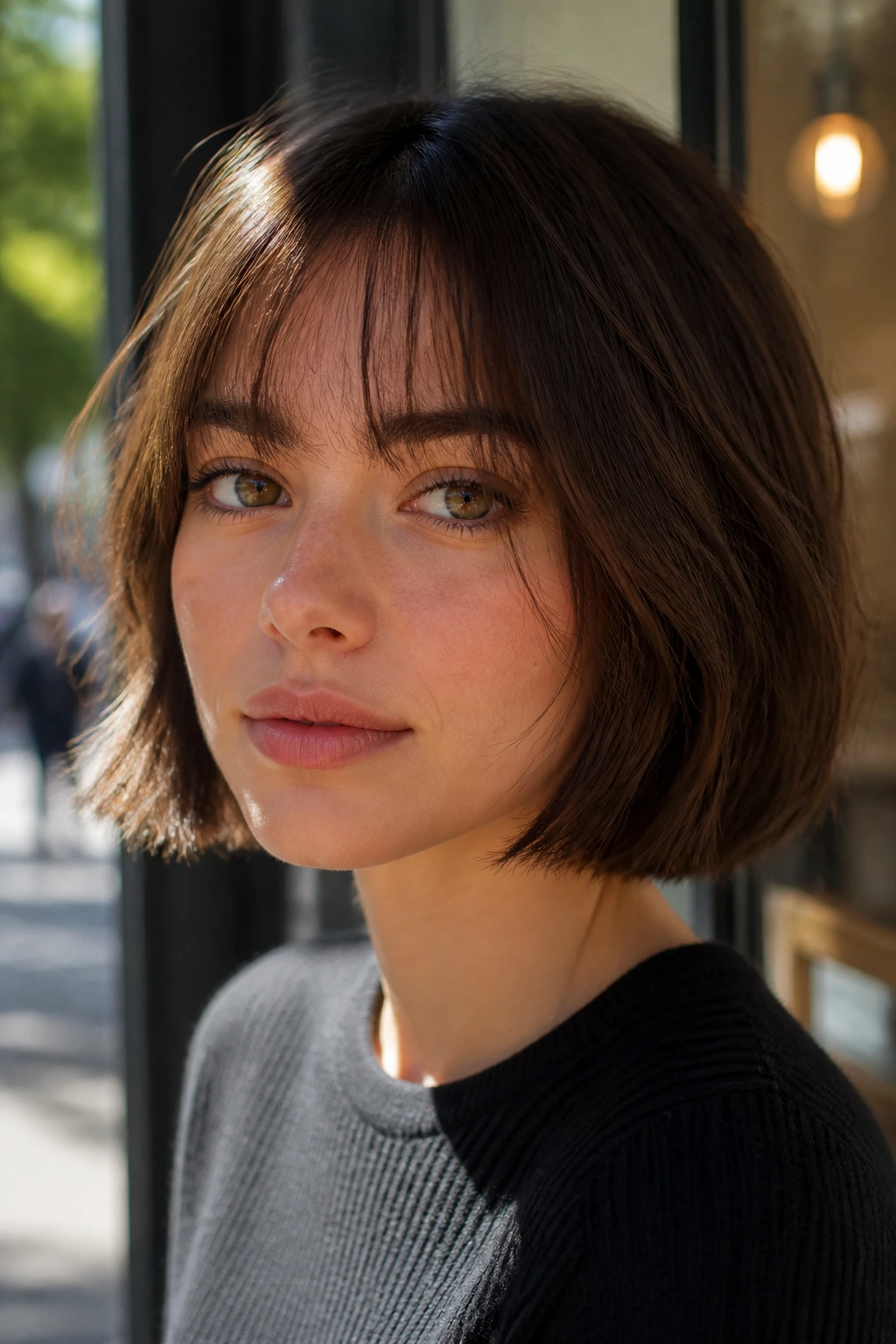
Can a bob and a round face get along with bangs? Yes, if the bob lands in the right spot and the fringe stays light. The old mistake is cutting the bob exactly at the jaw and adding a dense bang on top. That combination can feel boxy fast.
A better version sits slightly below the chin or just brushes the jawline, which helps lengthen the face. The wispy fringe then adds softness up top without making the upper face look crowded. It’s a clean, easy shape.
If your bob is blunt, keep the bangs a touch more broken. If the bob is layered, the fringe can be a little fuller. The two pieces should speak to each other.
23. Long Hair and a Shorter Fringe
Long hair can carry a shorter fringe better than most people think. The reason is simple: the length below the face acts like an anchor, so the bangs don’t feel like the only thing happening.
On a round face, that balance matters. The long hair drops the eye downward, while the French fringe softens the upper third of the face. Together, they create a longer line from brow to shoulder.
The fringe itself should still be wispy. Short does not mean heavy. If the front is cut too bluntly, it fights the length of the hair and the face starts to feel wider. Keep the ends feathered and let the side pieces melt into the front lengths.
24. Feathered Fringe for Thick Hair
Thick hair needs a different kind of lightness. A feathered fringe removes enough bulk to keep the front from ballooning, but it still leaves enough density that the bangs don’t look sparse.
Three Things to Tell Your Stylist
- Use point cutting or slide cutting at the ends.
- Keep the center light, but don’t thin the fringe to the point of transparency.
- Blend the temples into the front layers so the bang doesn’t sit alone.
The styling matters too. Blow-dry with tension so the roots lie flat, then lift the front just a little as it cools. If thick bangs dry on their own, they often puff wider than you want. A round face usually does better when that puff is controlled.
25. Feathered Fringe for Fine Hair
Fine hair needs finesse, not aggression. Too much thinning can make the fringe look stringy, and stringy bangs on a round face usually draw attention in the wrong way. The goal is softness with enough body to stay visible.
Keep the fringe a bit fuller through the center and only lightly feather the ends. A small amount of mousse at the roots helps, but heavy cream can flatten the whole shape. That’s the trade-off. Fine hair loves lift more than product.
This is where French bangs shine. They can look airy without being sparse. The trick is leaving enough hair in the bang so it still frames the face instead of floating away from it.
26. Glasses-Friendly French Bangs
Glasses and bangs can work together nicely if the lengths are chosen with care. A round face with frames needs a fringe that either sits above the top rim or splits softly around it. Otherwise the bangs and the glasses can crowd the center of the face.
Where the Fringe Should Sit
- Keep the shortest pieces just above the frame line or softly parted.
- Let the side pieces move outward so they don’t rub the lenses.
- Avoid a straight, heavy center bang that lands right on the glasses.
- Use feathered ends so the fringe doesn’t press against the frame.
This style can look especially good when the frames are round or oval, because the soft bangs keep the overall shape from becoming too circular. A little opening at the center helps a lot.
27. Air-Dried Fringe With Natural Texture
There’s a kind of fringe that looks best when you stop fussing with it. Air-dried French bangs, especially on wavy or slightly curly hair, keep the movement soft and imperfect in a good way.
Scrunch the front pieces lightly after washing, twist them once or twice if they need direction, and leave them alone while they dry. A tiny bit of curl cream or leave-in conditioner is enough. Too much product weighs the front down and makes it separate in odd places.
Round faces often benefit from this texture because the fringe doesn’t sit as one clean line. It breaks up, bends, and settles where it wants to. That irregularity keeps the face from feeling too wide at the top.
28. Grow-Out French Bangs
The grow-out stage is where a lot of people quietly discover their best fringe. The bangs are long enough to split, tuck, pin, or sweep aside, but they still keep that French softness around the face.
This is a good final stop if you’re not sure how much maintenance you want. It gives you freedom. One day the fringe sits in the middle, the next day it’s off to one side, and both versions still work on a round face because the pieces stay light and movable.
How to Wear Them Between Cuts
- Split them in the middle for a softer, longer line.
- Push one side behind the ear when you want more openness.
- Use a flat clip at the temple if a piece keeps falling into your eye.
- Let the ends stay feathered so the grow-out phase still looks deliberate.
The nicest thing about this shape is that it never has to look finished to look good. A little looseness helps. A little mess helps too. That’s probably why the softest French bangs often end up being the ones that were allowed to grow for a while before they were cut again.
