



Round faces and bangs get treated like a bad match far too often. They’re not. The problem is usually the cut: a heavy, straight fringe can make the face feel wider, while soft bangs for round faces can pull the eye up, then let it move down along the cheeks instead of stopping at one blunt line.
I’ve always thought fringe works best when it behaves a little badly. It should break the line, not sit there like a ruler across the forehead. That is why the softer options below lean on movement, gaps, tapers, and pieces that land near the cheekbone or brush the brow instead of slicing the face in half.
And the details matter more than people expect. A small shift in where the shortest piece lands can change the whole feel, especially if your hair is thick, fine, straight, wavy, or prone to cowlicks at the hairline. That’s the part most inspiration photos skip, and it’s the part that matters when you’re standing in your bathroom mirror with a round face and a pair of scissors nowhere near as forgiving as they look.
Some fringe styles make the cheeks seem wider. Others add lift, length, and movement without turning the haircut into a project. The styles below stay on the softer side, which is usually the smarter lane when you want bangs that flatter a round face and still look good once they grow out a little.
1. Curtain Bangs That Split at the Cheekbones
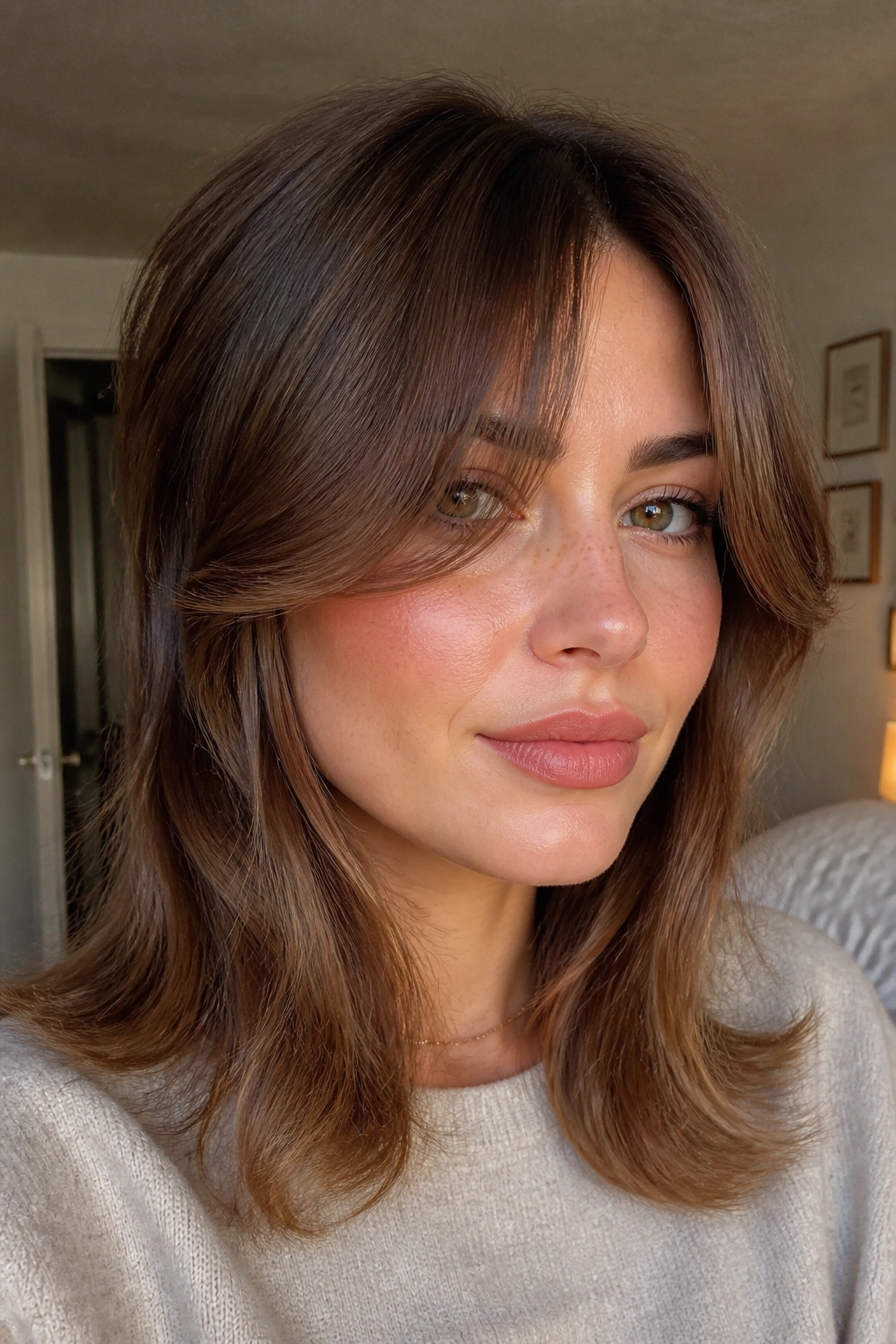
Curtain bangs are the first style I’d point to for a round face because they create a clean opening in the middle and then drift outward near the cheeks. That split is doing real work. It gives the face a vertical pull that a straight-across fringe can’t match.
Why They Work on a Round Face
The longest pieces should skim the outer corners of the eyes or hit the top of the cheekbones, not stop in the middle of the cheeks. That outward sweep helps your face read longer, and the center gap keeps the forehead from feeling boxed in.
- Ask for a soft center part.
- Keep the shortest area around brow level.
- Let the sides stretch to cheekbone length.
- Point-cut the ends so they don’t look thick.
Styling note: blow-dry the fringe forward first, then sweep each side away with a round brush. A quick pass of heat on the roots gives the bangs lift before the hair falls into place. If your hair is wavy, leave the front a touch longer so it does not spring up above the brow.
That extra length saves you from the “too short on day one, awkward on day ten” problem. Worth it.
2. Side-Swept Bangs With a Long Diagonal
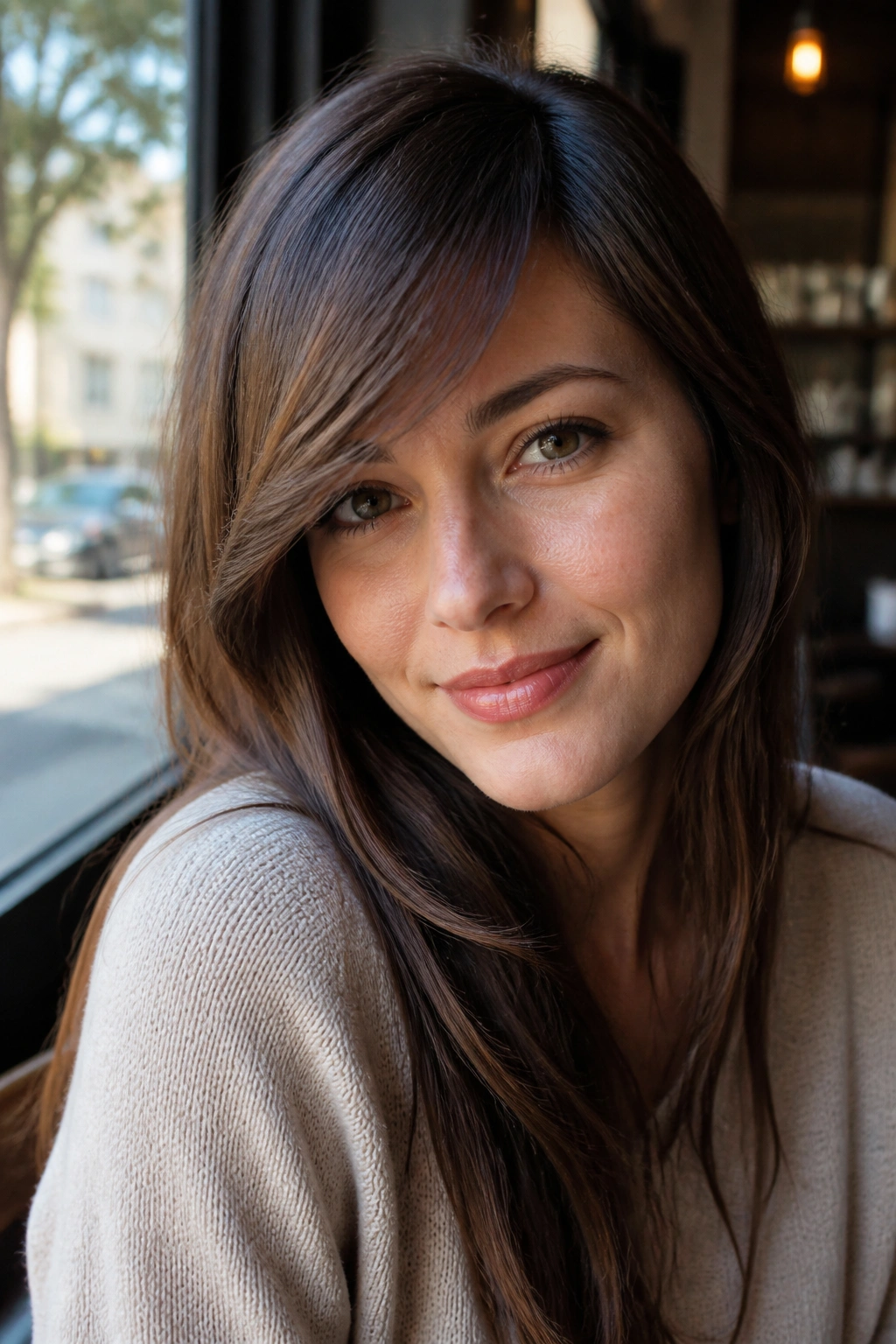
A deep side-swept fringe is one of the fastest ways to make a round face feel longer. The diagonal line does the heavy lifting; it cuts across the face instead of echoing its curve.
Keep the sweep long enough that it does not puff out at the widest part of the cheek. I like this style when the hair has a little bend, because the bang can melt into the rest of the cut instead of sitting on top of it like a separate piece. Straight hair works too, but it needs a bit more root lift.
At styling time, dry the front section in the opposite direction first, then flip it over. That old salon trick gives you lift at the root without making the bang stiff. If your hair falls flat by lunchtime, a light spray at the roots helps more than a heavy paste ever will.
The nicest thing about side-swept bangs is how quietly they grow out. They don’t go from “done” to “bad” in one week. They just get a little softer, which is a good place for fringe to be.
3. Bottleneck Bangs With a Soft Center Gap
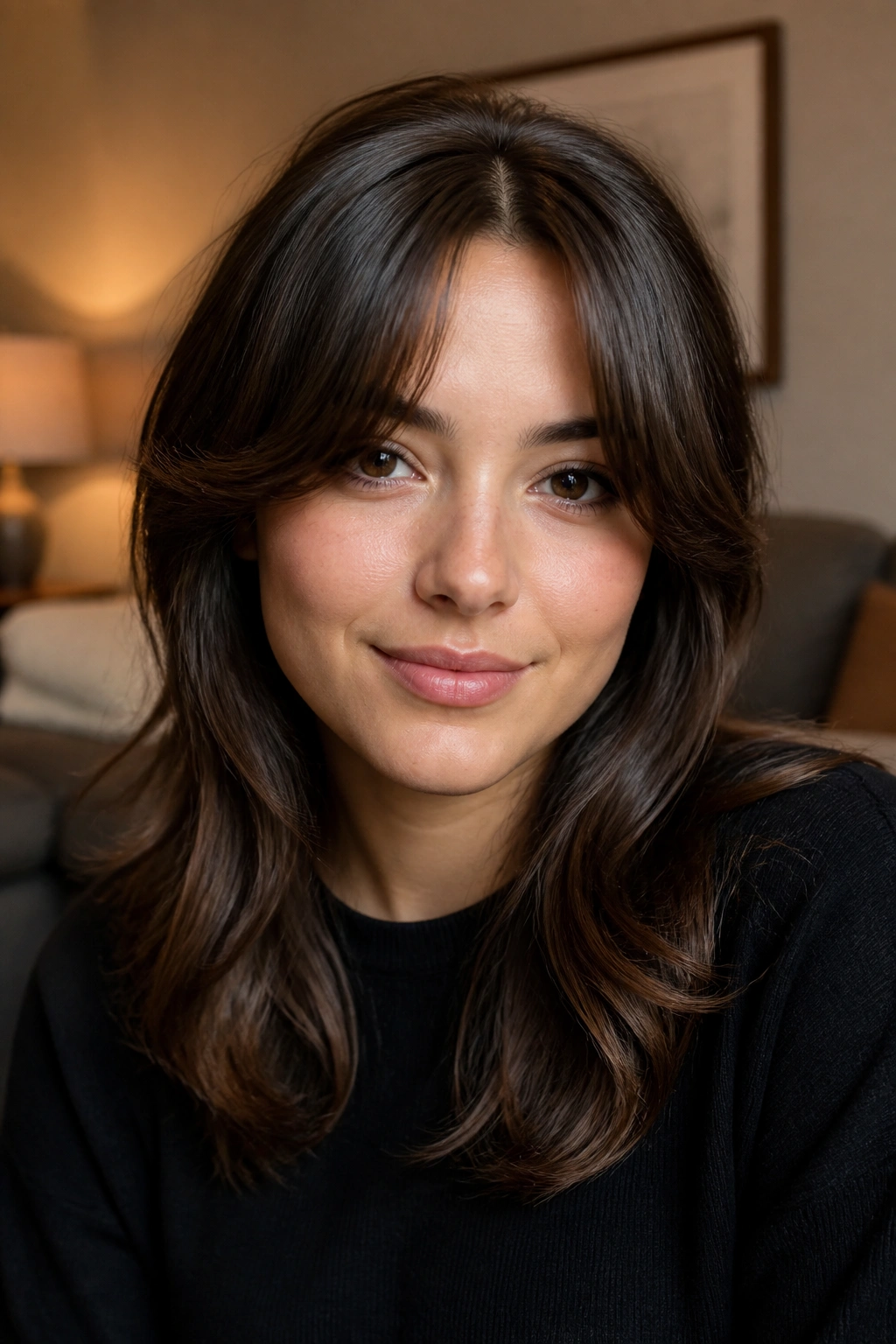
I once watched a friend cut her own fringe into a blunt little block, then spend two months pinning it back like a mistake she had to live with. Bottleneck bangs are the fix for that kind of regret. They start lighter in the middle and open out before they reach the cheeks.
What Makes Them Different
The center sits shorter, usually around the brows, while the sides stretch longer and feather out. That shape keeps the forehead visible and breaks up the widest part of a round face without making the front of the haircut feel thin.
- Best on hair that can hold a bend.
- Easier to grow out than a hard blunt bang.
- Looks best when the ends are soft, not chopped square.
- Works especially well with shoulder-length cuts and longer layers.
Because the middle is lighter, the style doesn’t crowd the eyes. That matters more than people think. A fringe that lands too low can make a round face feel shorter, and bottleneck bangs avoid that by opening a little space right where the face needs it.
If you want soft bangs that look styled even on a lazy day, this is a strong pick.
4. Wispy Brow-Skimming Bangs
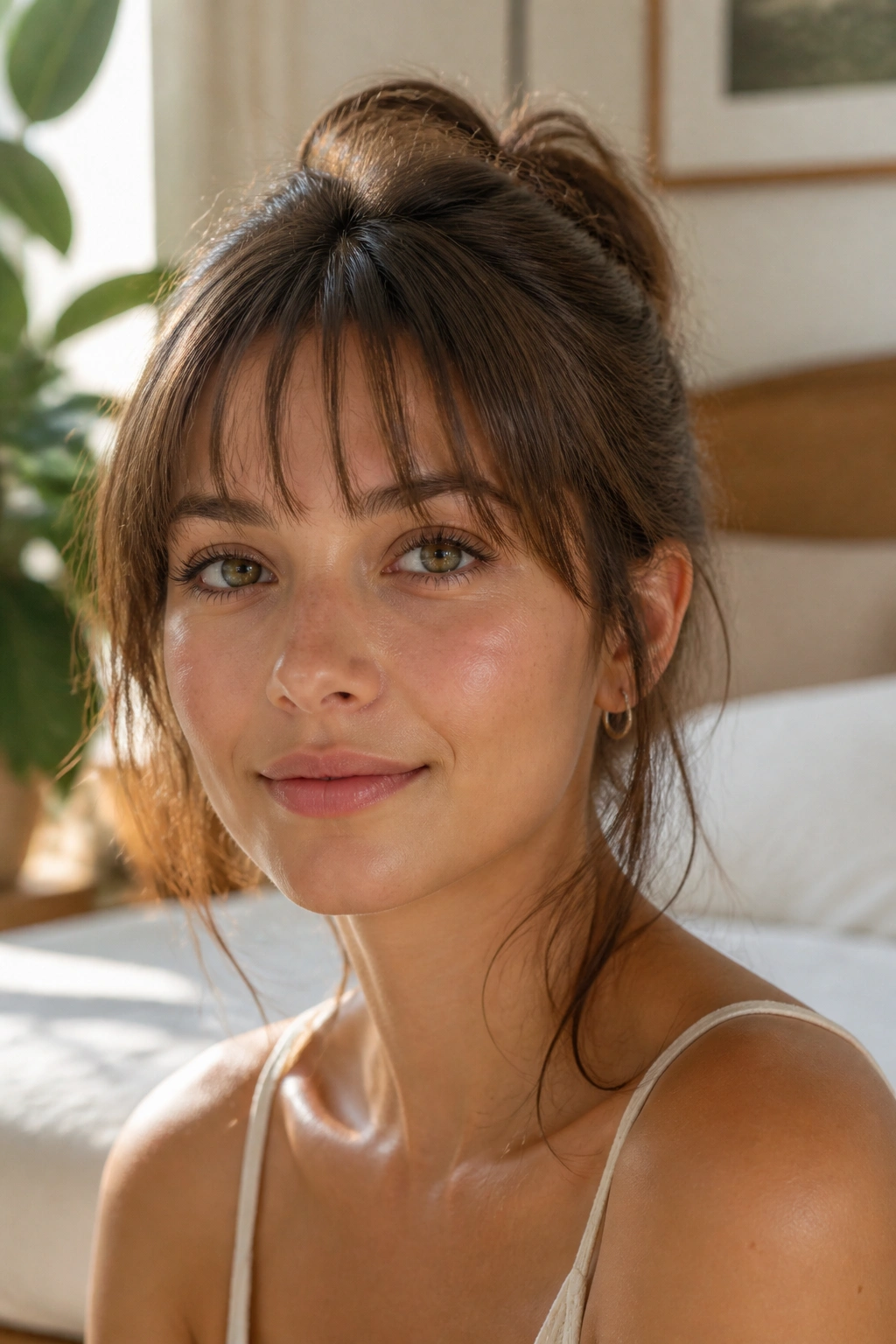
Wispy bangs are the low-drama choice, and I mean that as a compliment. They sit near the brows, but the ends are broken up enough that you still see skin between the strands. That airiness keeps the forehead from looking sealed off.
A round face usually benefits from softness near the top, not a dense block of hair. Wispy fringe gives you that softness without making the haircut feel sparse. The trick is density control. You want enough hair to register as bangs, but not so much that the front line turns heavy.
I also like this style for people who are nervous about commitment. If you decide you want more bang later, wispy fringe can be thickened up. If you decide you want less, it grows out with much less drama than a blunt cut.
The most common mistake is asking for them too short. Keep the shortest pieces around eyebrow level or just below it, then let the taper do the softening. That small bit of length makes the whole thing easier to live with.
Plain and simple.
5. Feathered Fringe With Piecey Ends

Can feathered bangs still look clean? Absolutely. They just need shape, not fluff. The best version has separated ends, a little bend, and enough movement that the fringe never reads like a helmet.
How to Ask for It
Ask for soft feathering through the edges, then keep the middle slightly fuller so the fringe doesn’t disappear. That gives you a light front that still has presence. On a round face, the pieces should fall a touch past the brow and taper toward the cheekbones.
This cut loves a dry texture spray. A pea-sized amount worked through the ends with your fingers is usually enough. You’re not trying to make every strand obey. You’re trying to make the fringe break apart in a natural way.
Feathered bangs suit hair that has some body, because the cut relies on movement. Fine hair can wear them too, but the ends need to stay blunt enough underneath to avoid looking wispy in a sad way. There’s a difference, and it’s a big one.
I tend to like feathered fringe on round faces that also have fuller cheeks. The broken edges soften the forehead while the longer side pieces help drag the eye downward.
6. Arched Bangs That Follow the Brow

Unlike blunt bangs, arched bangs mirror the curve of the brow and keep the face open. That alone makes them friendlier on round faces. A straight line across the forehead can feel stubborn; an arch feels more relaxed.
The shape matters here. You don’t want a dramatic rainbow shape. You want a gentle curve that is shortest at the center and slightly longer near the temples. That subtle lift at the edges helps the face look less wide without turning the fringe into a heavy curtain.
Arched bangs are also a good fit if your eyebrows are part of your look. They frame the brow instead of hiding it. If you like a tidy face and don’t want hair dropping into your eyes all day, this cut can be a happy middle ground.
Best on straight to slightly wavy hair. If your hair is very curly, the arch needs more length, because shrinkage can pull the curve too high. Keep that in mind before the scissors come out.
7. Long Layered Bangs That Melt Into Face-Framing Pieces
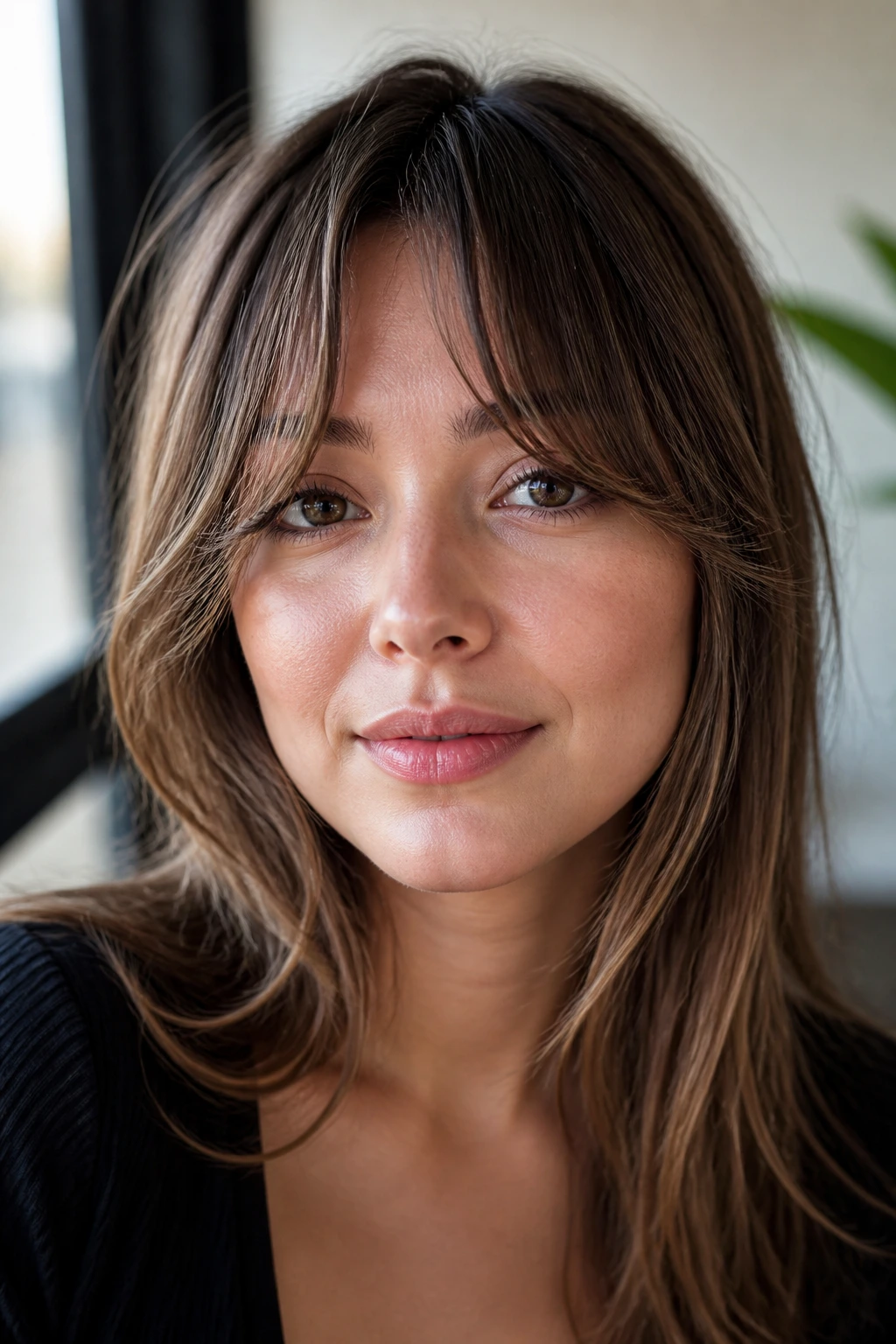
This is the option for people who say they want bangs, then panic when the haircut starts looking like bangs. Long layered fringe solves that problem neatly. It begins as a bang, then disappears into the front lengths before it turns blunt.
The effect on a round face is subtle but useful. The layers that fall into the cheek area create vertical movement, and that movement keeps the face from feeling fixed in a circle. The hair near the temples matters just as much as the center fringe, maybe more.
I like this cut on medium and long hair because it gives you choices. Wear the front pieces forward on a windy day, tuck them behind the ears when you want your face open, or let them fall naturally when the hair is air-drying. It does not demand a single styling rule.
One good version of this cut starts with the shortest piece around the eyebrow, then moves down in a soft slope so the longer front pieces land near the jaw. That line is forgiving. It also grows out better than a hard bang, which is worth a lot if you are not into frequent trims.
8. See-Through Bangs With Air Between the Strands
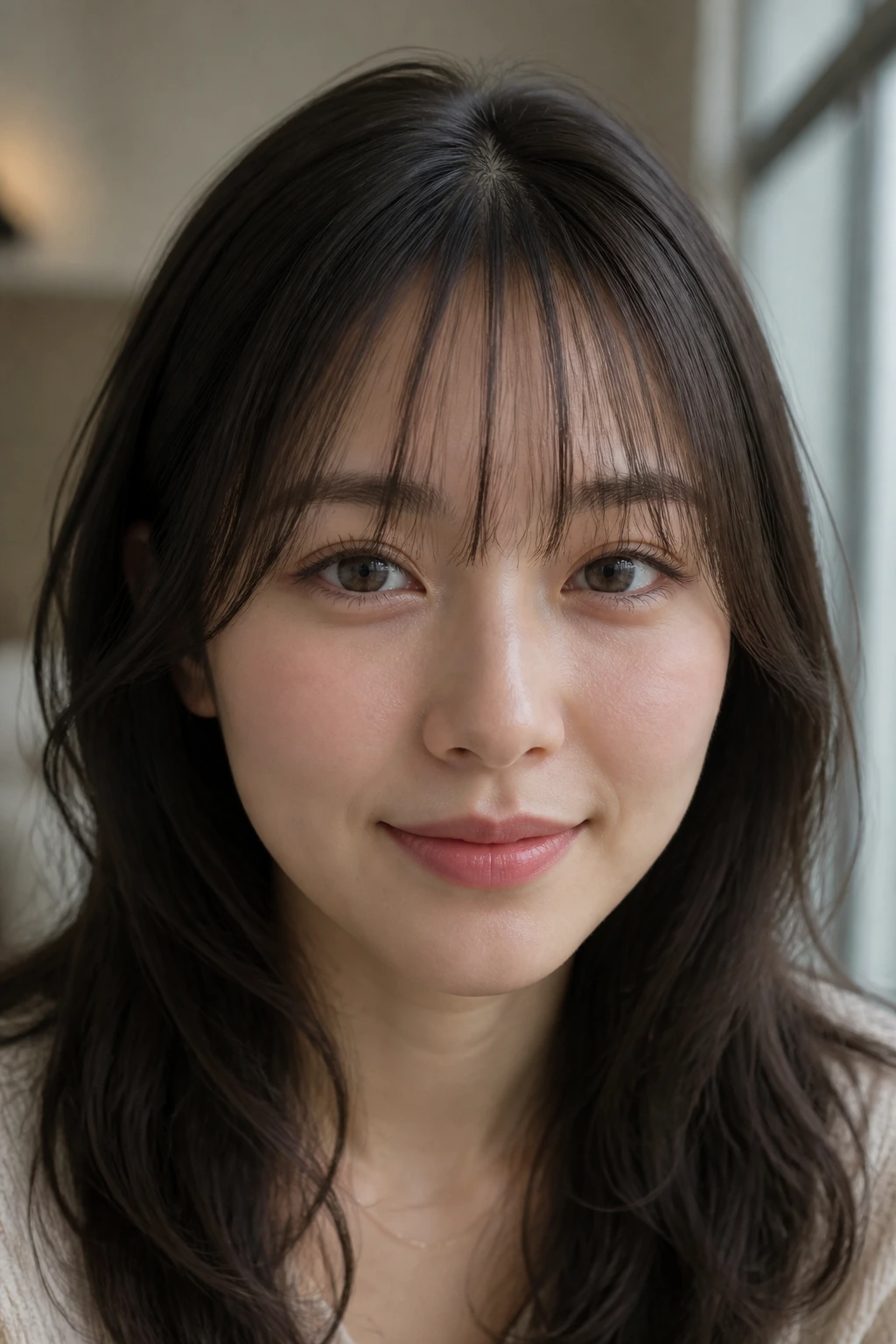
Thin, airy fringe can look fantastic on a round face when the density is controlled. You still get the frame of bangs, but the forehead remains visible through the strands, which stops the haircut from feeling boxy.
The Shape That Works Best
Keep the ends separated and the center slightly fuller than the sides. That gives the style enough structure to read as bangs while still feeling light around the face.
- Works well on fine hair.
- Can also suit thick hair if the interior is thinned carefully.
- Needs a soft blow-dry, not rough towel drying.
- Looks best when the shortest strands skim the brows.
This is one of those cuts that looks better when it is not trying too hard. A small round brush, a fast pass of heat, and a bit of finger separation is usually enough. If you pile on product, the strands clump and the airy effect disappears.
A round face usually does well with this kind of lightness. The visible skin between the pieces helps keep the front of the haircut open, and open is good when the face already has softer curves.
9. Off-Center Fringe That Breaks Up the Width
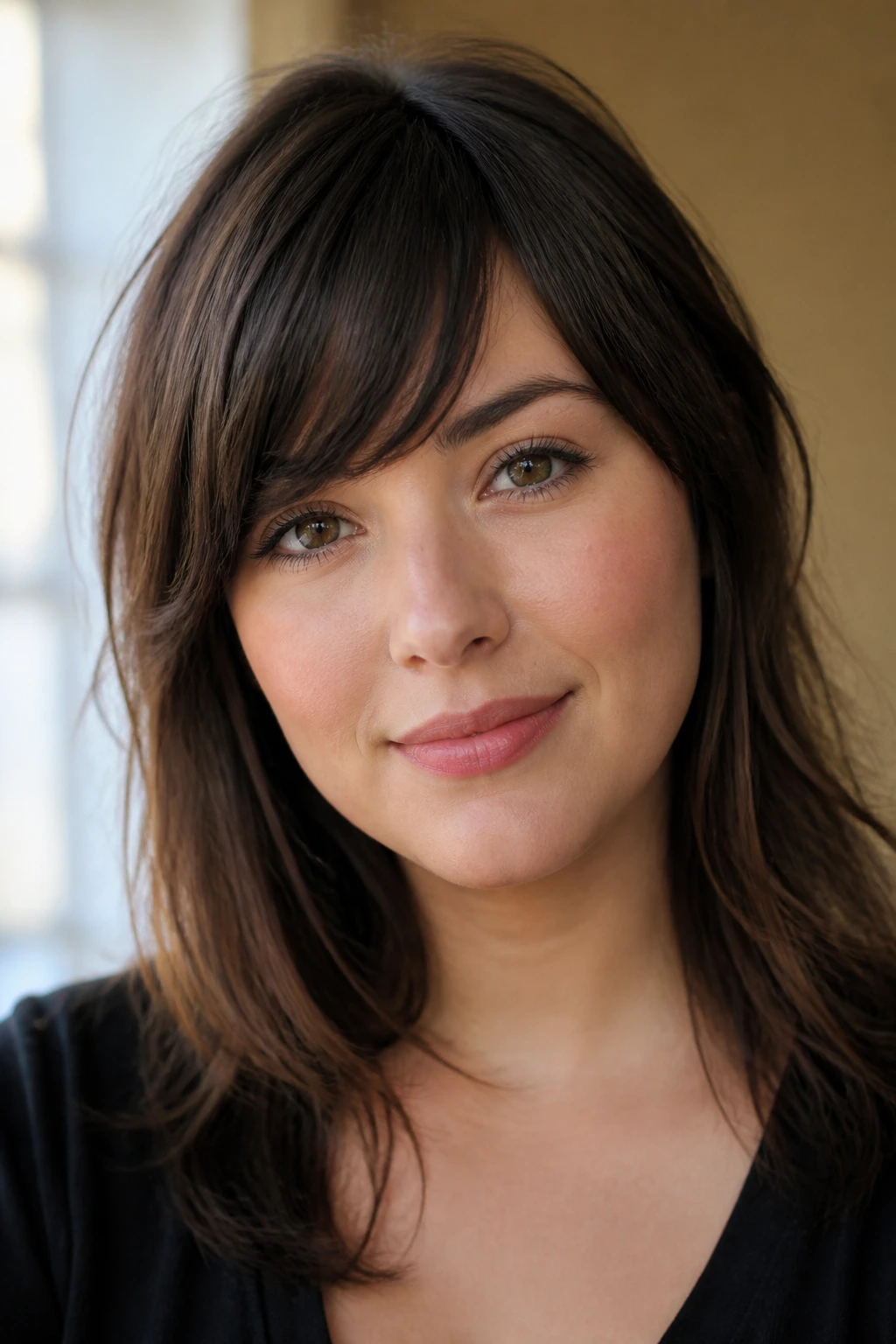
Do you need a full side part to get the face-slimming effect of a diagonal fringe? Not always. A slight off-center part can do a lot of the same work with less drama.
The shift only needs to be small. Move the part half an inch or so from center, let the fringe fall a little heavier on one side, and keep the other side lighter. That unevenness breaks the symmetry that can make a round face feel fuller than it is.
Why It Helps
The eye follows the longer side, then keeps going. It doesn’t stop at the widest part of the cheeks. That’s the whole game with bangs on a round face: get the gaze moving.
This style also behaves well on hair with a cowlick. If your front sections refuse to sit in a perfect center part, stop fighting them. Let the natural bend help you. A small mismatch often looks more polished than a forced straight line.
I’d choose this one for someone who wants fringe but also wants an easy morning. It’s less fussy than a perfect curtain bang and less formal than a strict side sweep. It sits in a nice middle spot.
10. Shag Bangs With Soft, Choppy Texture
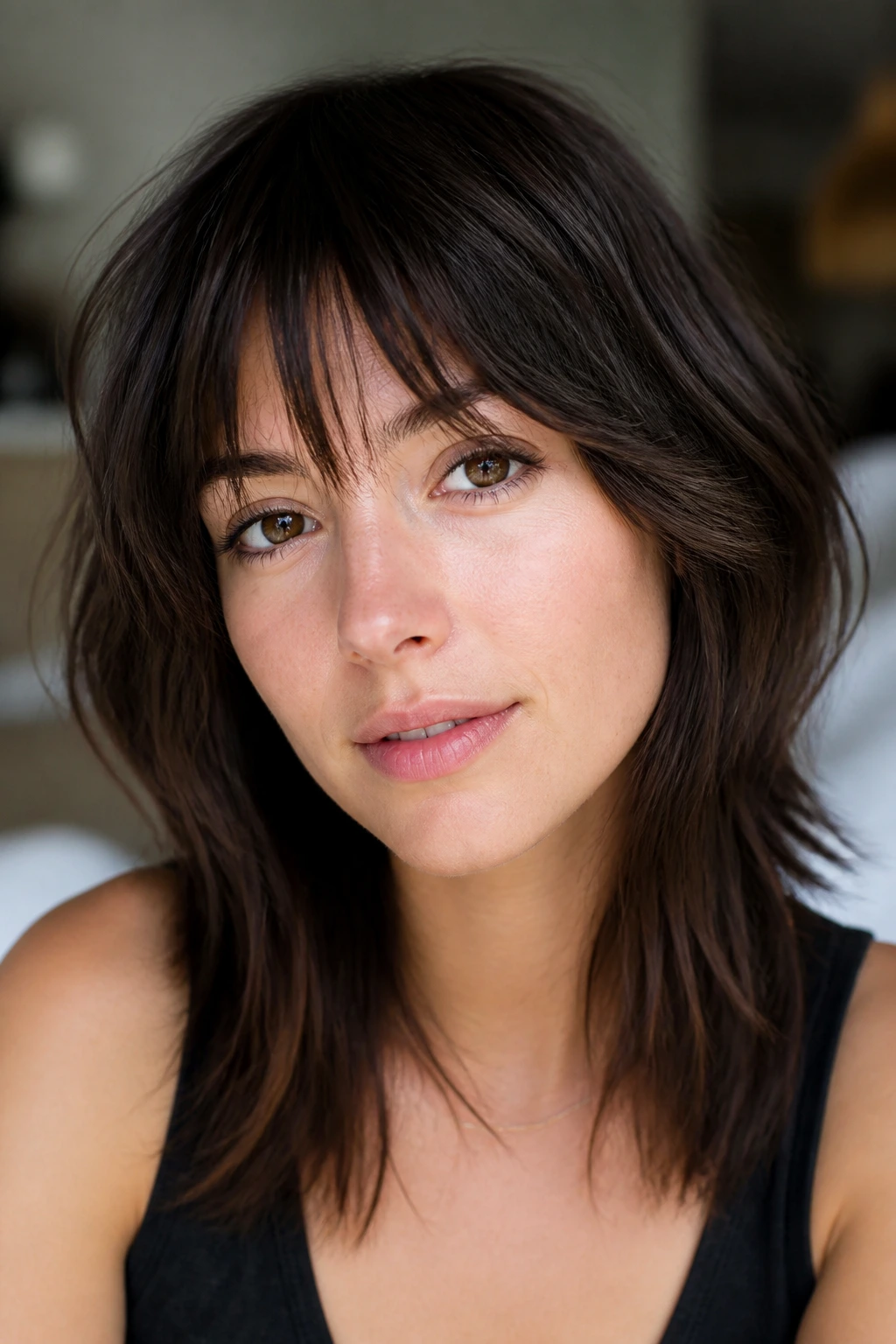
Shag bangs bring attitude, but the soft version is not as wild as it sounds. The choppiness is the point. Those broken layers keep the front of the haircut from becoming one solid shape, which helps a round face look less wide.
I’ve seen this style save thick hair more than once. Heavy hair at the front can puff out near the cheeks and make the face feel broader. Choppy shag fringe cuts through that weight and lets the front pieces move instead of sit there.
Good Signs Your Hair Can Handle It
- Your hair has natural bend.
- You like air-drying more than sleek blowouts.
- You don’t mind a piecey finish.
- You want fringe that grows out in a soft way.
The shag works because it looks a little undone on purpose. That undone feeling is useful here. It takes pressure off the face and keeps the front from feeling too neat or too round.
If your hair is very straight and stubborn, ask for soft texture rather than aggressive choppiness. There’s a fine line between lived-in and ragged. The shag should fall around the face, not break apart into random bits.
11. Soft Blunt Bangs With Point-Cut Ends
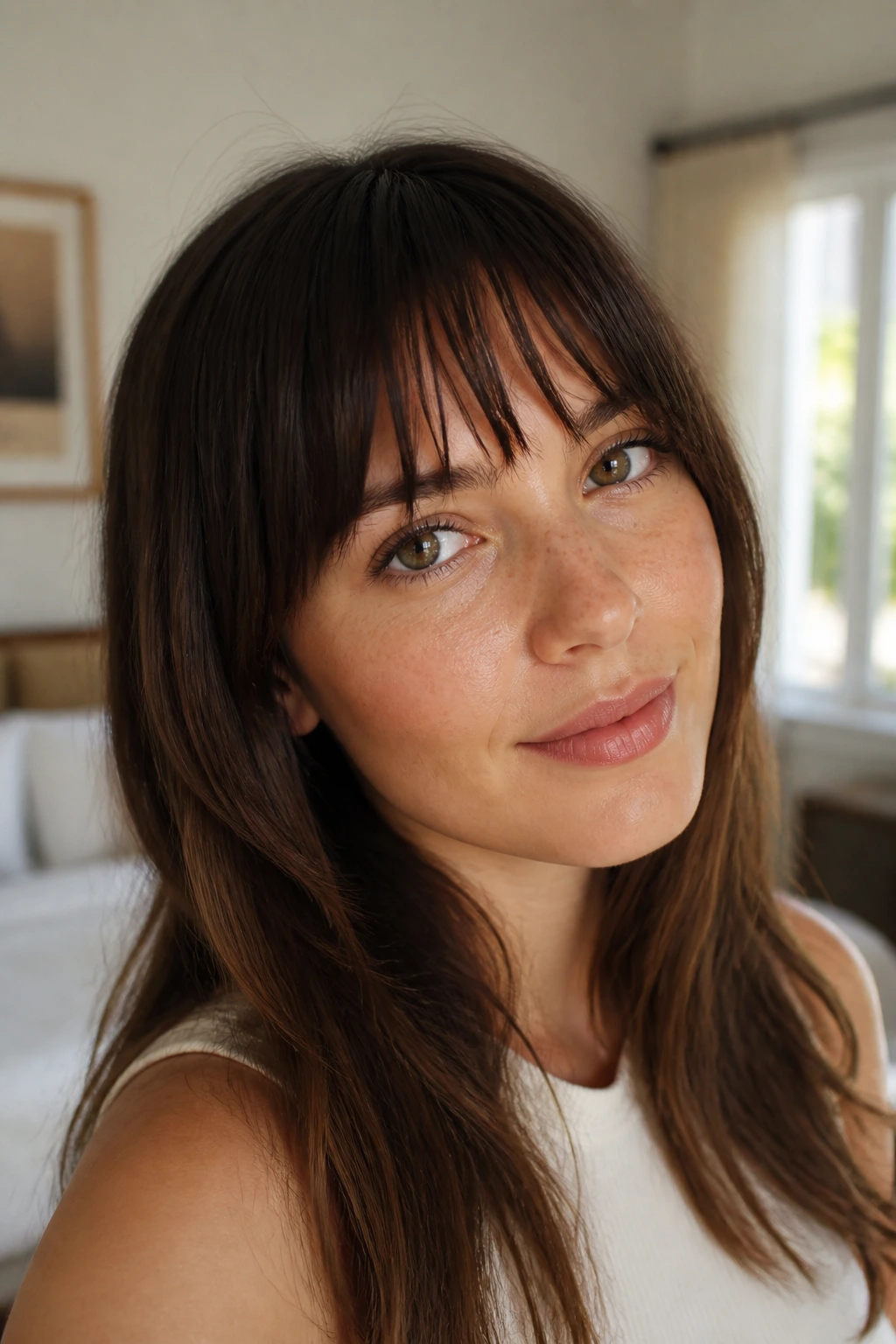
Soft blunt bangs can work on a round face, but only if the edge is broken up. A hard, heavy line is a different story. It can make the face feel shorter and wider, which is not what you want.
The version I like sits around brow level and uses point-cut ends so the line never looks like a solid wall. That tiny bit of texture softens the front while still giving you the polish of a fuller bang. It’s a tidy look with a little give.
This style suits people who like structure. If you hate seeing too much forehead and want a fringe that feels more defined than wispy bangs, this is the lane to try. It can look sharp without being harsh.
The trick is to keep the corners a little longer than the center. That subtle change stops the bang from reading as a rectangle. Tiny detail. Big difference.
12. French-Girl Bangs With a Relaxed Curve
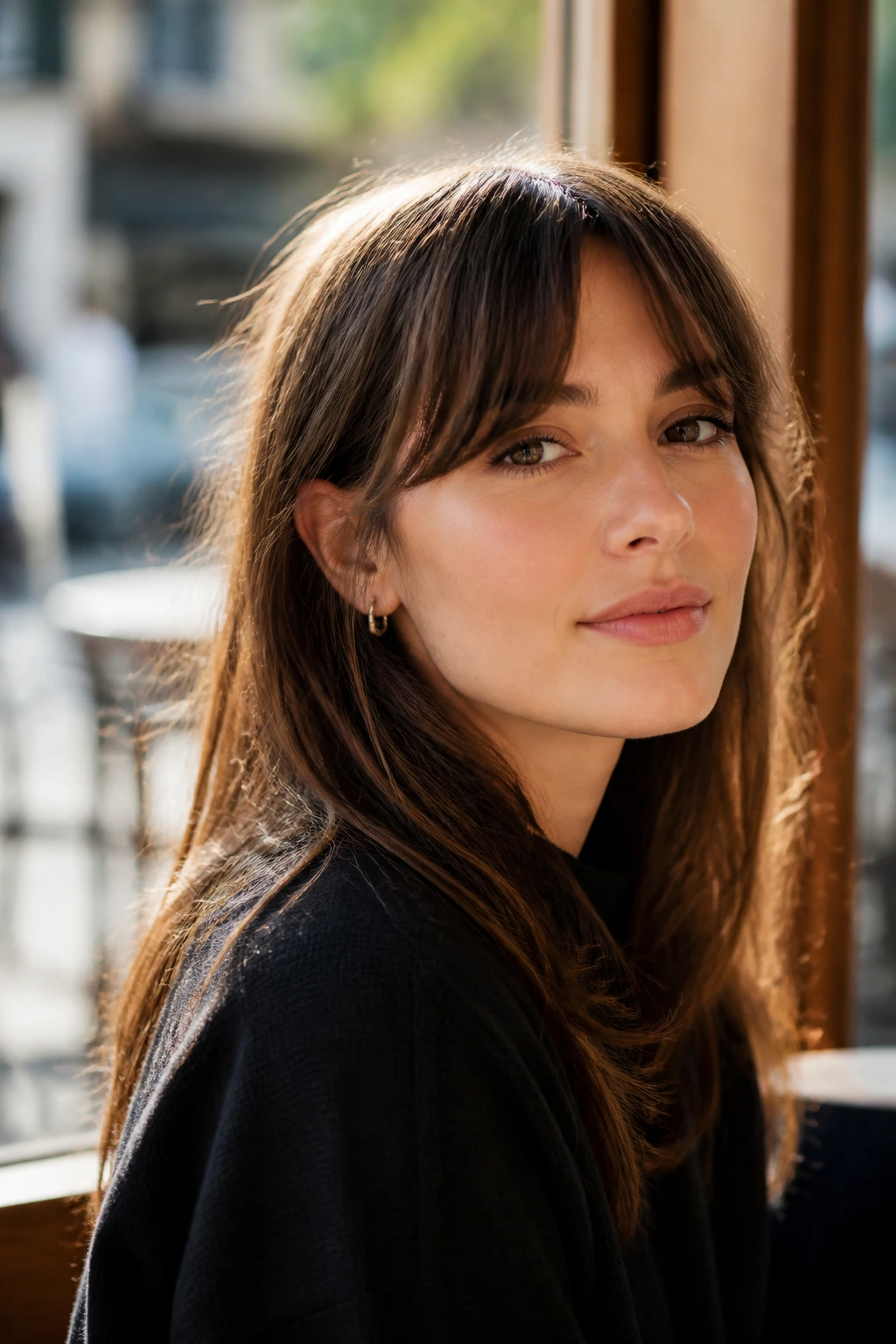
French-girl bangs are not one fixed look, which is part of why they work so well. The soft version has a loose curve, a relaxed finish, and a little movement near the temples. On a round face, that looseness matters.
Unlike a strict brow-skimming fringe, this style leans casual. The bangs don’t have to line up perfectly every day, and that imperfect quality is a good thing. It makes the face feel less boxed and the haircut feel less staged.
I would recommend this if your hair has some natural wave or bends easily with a dryer. The style comes alive when the fringe falls in a soft arc instead of a hard straight line. If your hair is pin-straight, you can still wear it, but you’ll need a small round brush or a bend with a flat iron.
This is also a nice choice if you want the bangs to age well between cuts. They can grow a little and still look intentional, which is more than I can say for a lot of fringe styles.
13. Grown-Out Bangs That Reach the Eyes
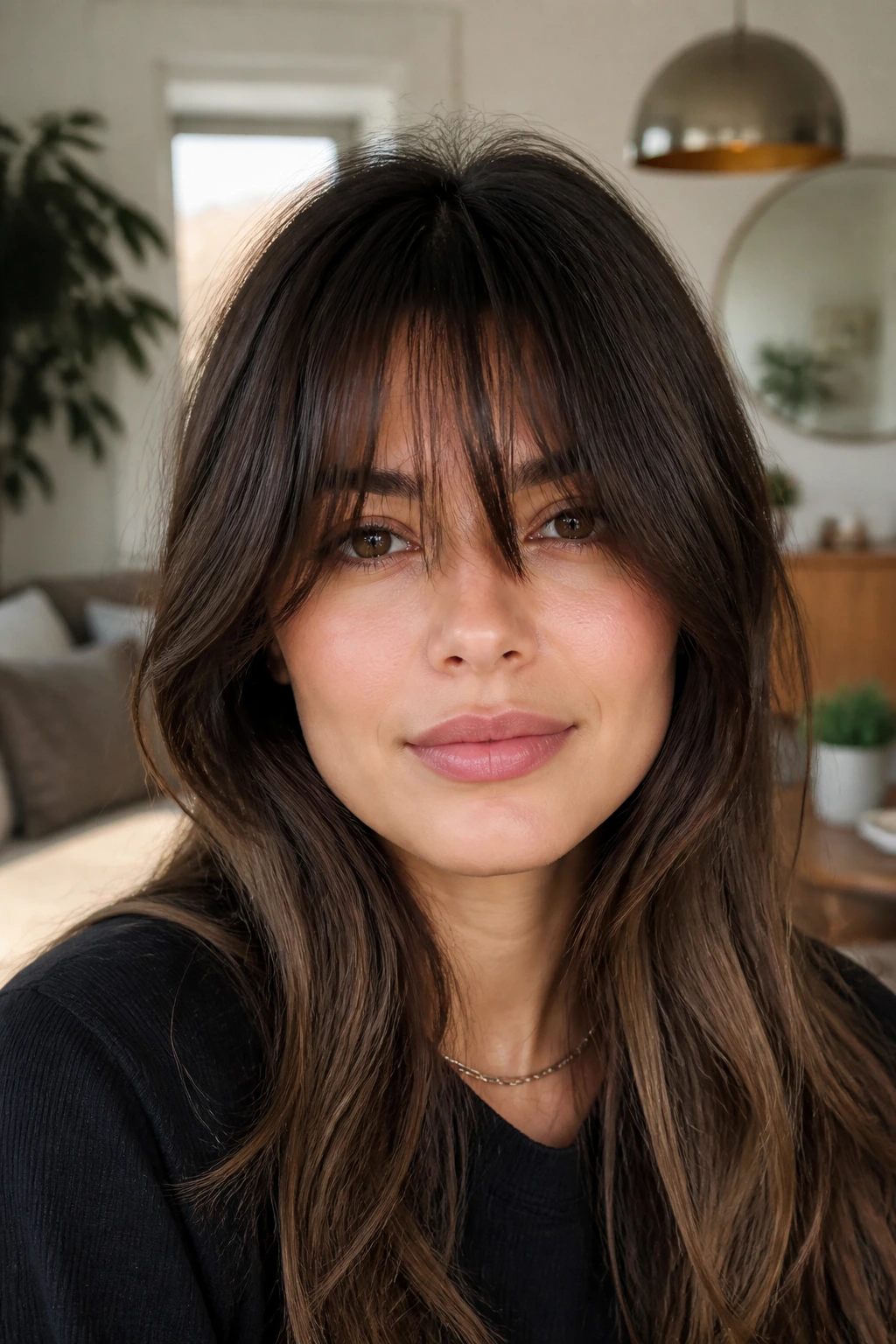
There’s a sweet spot between bangs and no bangs, and grown-out fringe lives there. It skims the eyes, slips a little past the brows, and feels a bit mysterious without trying too hard. For a round face, that length helps draw the eye downward and out.
The appeal is partly practical. You do not need to trim them every few weeks to keep the shape alive. They can sit a little messy and still look good, which makes them a smart choice if you want softness without constant upkeep.
I like this style when it’s worn with a slight center break or a loose off-center part. That prevents the front from becoming a curtain of hair. A small gap gives the face room to breathe, which is useful when the cheeks are already the fullest part.
One caveat: if you wear glasses, pay attention to where the fringe lands. Eyes and frames can get crowded fast. Keep the shortest piece a touch above the lashes if that’s your situation.
14. Chin-Length Face-Framing Bangs With a Soft Front
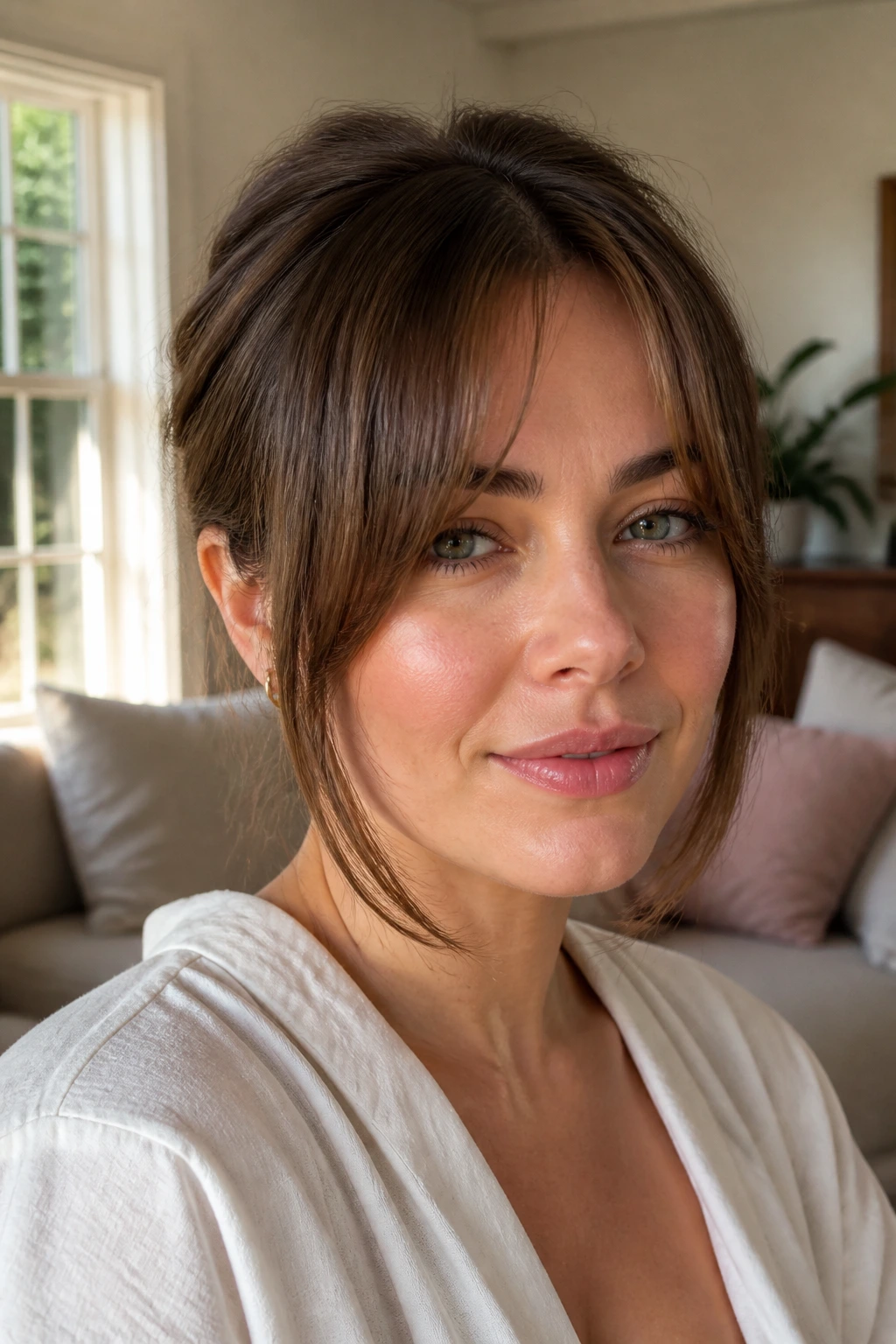
Can bangs be long enough to tuck behind the ears and still count as bangs? Yes. And on a round face, that length can be a gift. Chin-length front pieces create a vertical frame around the cheeks, which is one of the easiest ways to soften width.
How to Ask for the Cut
Ask for a fringe that starts near the brow and angles down to the chin in front. The center can stay lighter, while the side pieces carry more length and sit just beside the jaw.
That shape works because it adds structure without pinning the face in one place. You get movement near the front, but you also get room to tuck, twist, or pin the pieces if you’re tired of hair in your eyes.
This is a good cut for people who wear their hair up a lot. The front pieces still matter when the rest of the hair is in a bun or claw clip. In fact, they matter more then, because they are what stays around the face.
Ask for soft ends, not hard corners. Square ends can look blocky. A gentle taper feels easier.
15. Blowout Bangs That Sweep Away From the Face
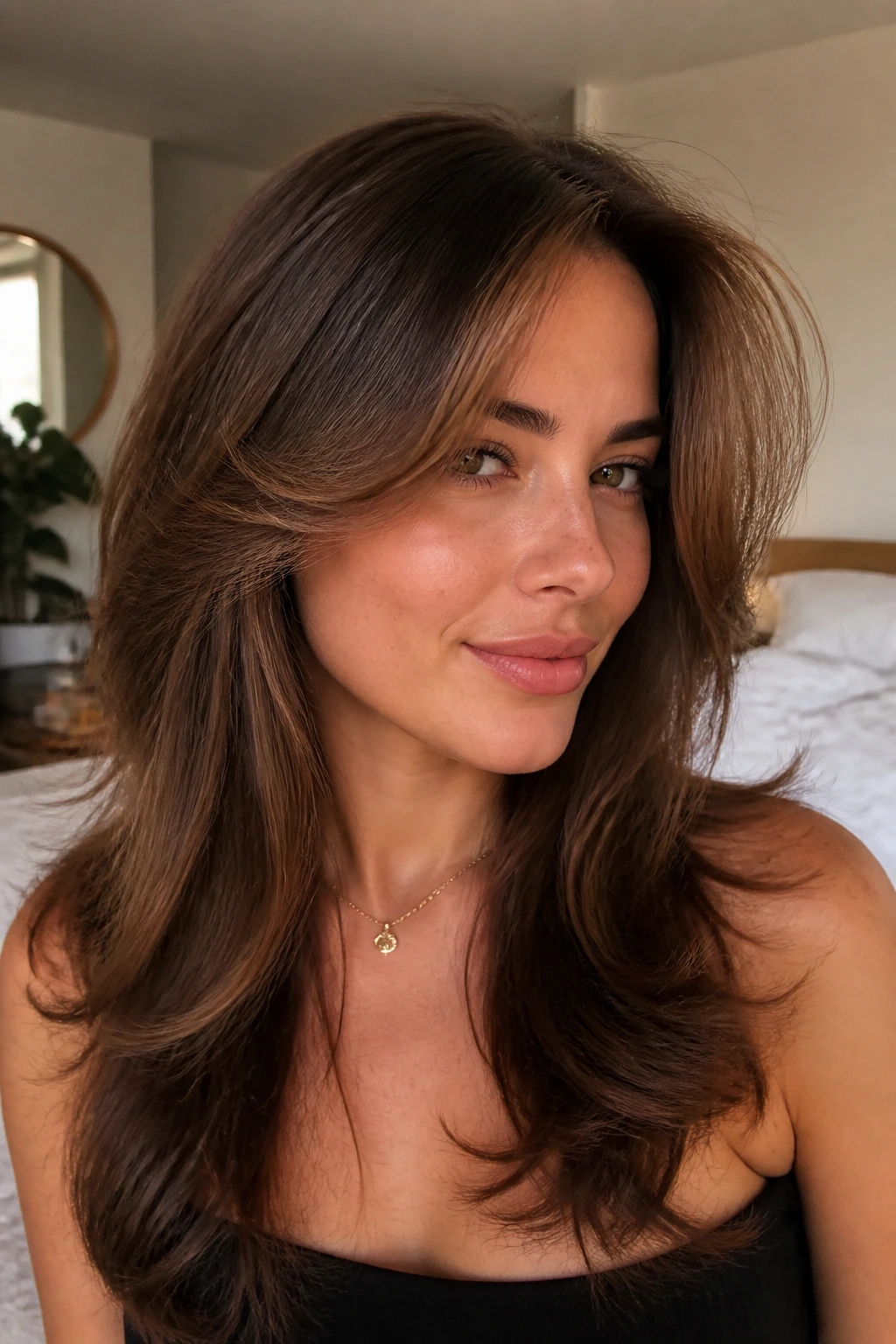
A blowout fringe is less about the cut alone and more about how the cut moves. The front bends away from the face, usually with a rounded brush or a hot brush, so the hair doesn’t sit flat against the cheeks. For a round face, that lift is worth the effort.
I like this style because it feels airy and clean at the same time. The hair opens at the forehead, then curves out near the temples and cheekbones. That keeps the front from forming a little horizontal shelf, which is the thing you want to avoid.
If you go this route, dry the roots first. Clip the bangs up for a minute while they cool, or roll them into a loose velcro roller if your hair holds shape well. That small cooling step helps the bend last longer than a rushed blast with the dryer.
The style pairs especially well with layered shoulder-length cuts. There’s enough movement in the rest of the hair to support the fringe, so the whole shape feels connected rather than separate.
16. Textured Fringe With Tapered Temples
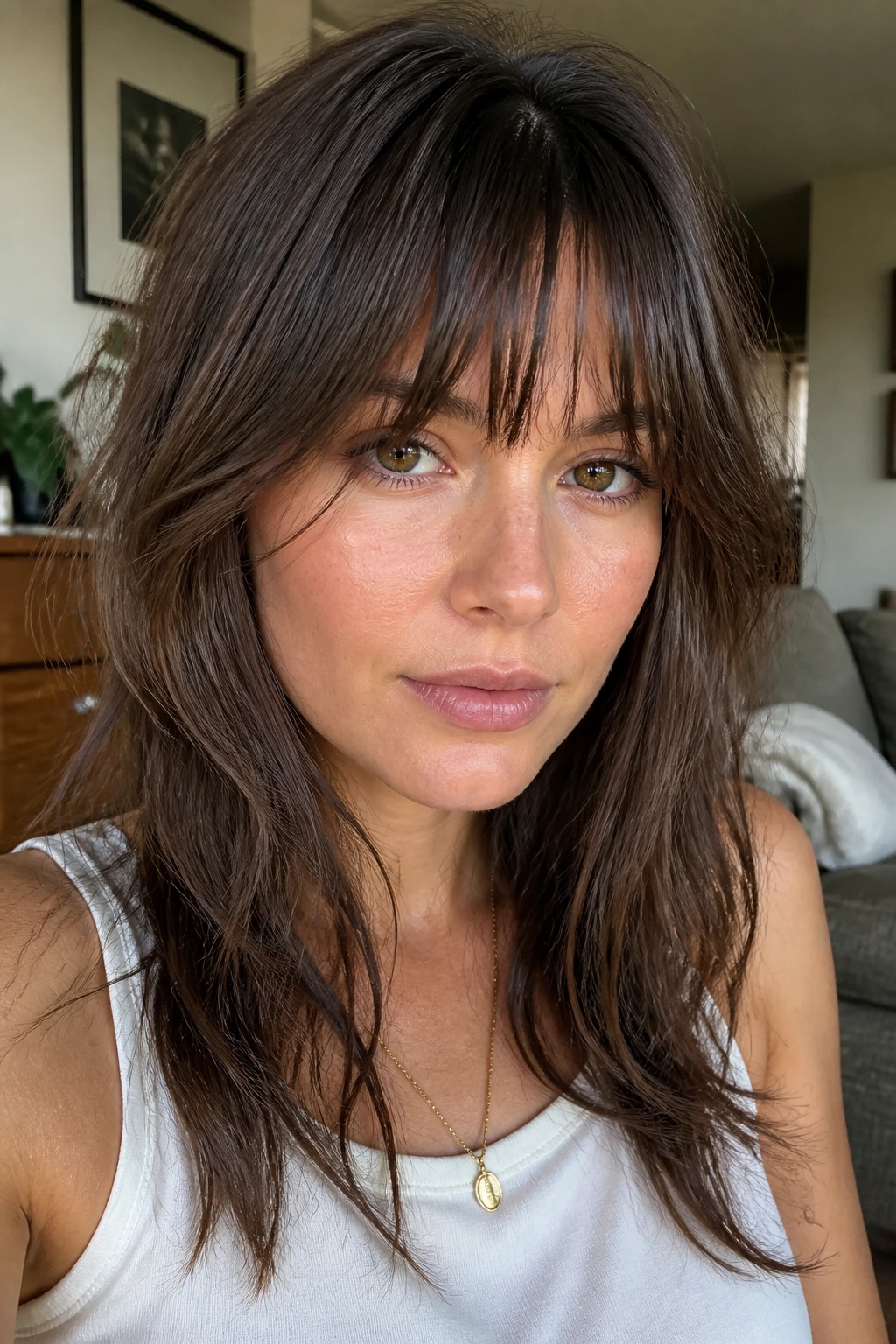
Textured fringe with tapered temples is one of the smartest choices for thick hair on a round face. Why? Because the temple area can get bulky fast. If the sides of the fringe are too full, the face reads wider than it needs to.
The taper softens that problem. The center keeps enough weight to look like bangs, then the sides thin out near the temples so the fringe blends into the haircut instead of sitting on top of it. That blending is the whole point.
What to Ask Your Stylist For
- Point-cut ends through the center.
- Thinner, softer pieces near the temples.
- A fringe that stays slightly longer at the corners.
- No hard line across the front.
This cut works beautifully with messy texture. A tiny bit of mousse at the roots, air-drying, then a finger scrunch is often enough. You do not need a perfect blowout here. A little movement makes the style feel better.
I’d call this the “fix the bulk” option. If your fringe tends to look heavy, this is a clean way to lighten it without thinning the whole front to nothing.
17. Deep Side-Part Bangs With Built-In Lift
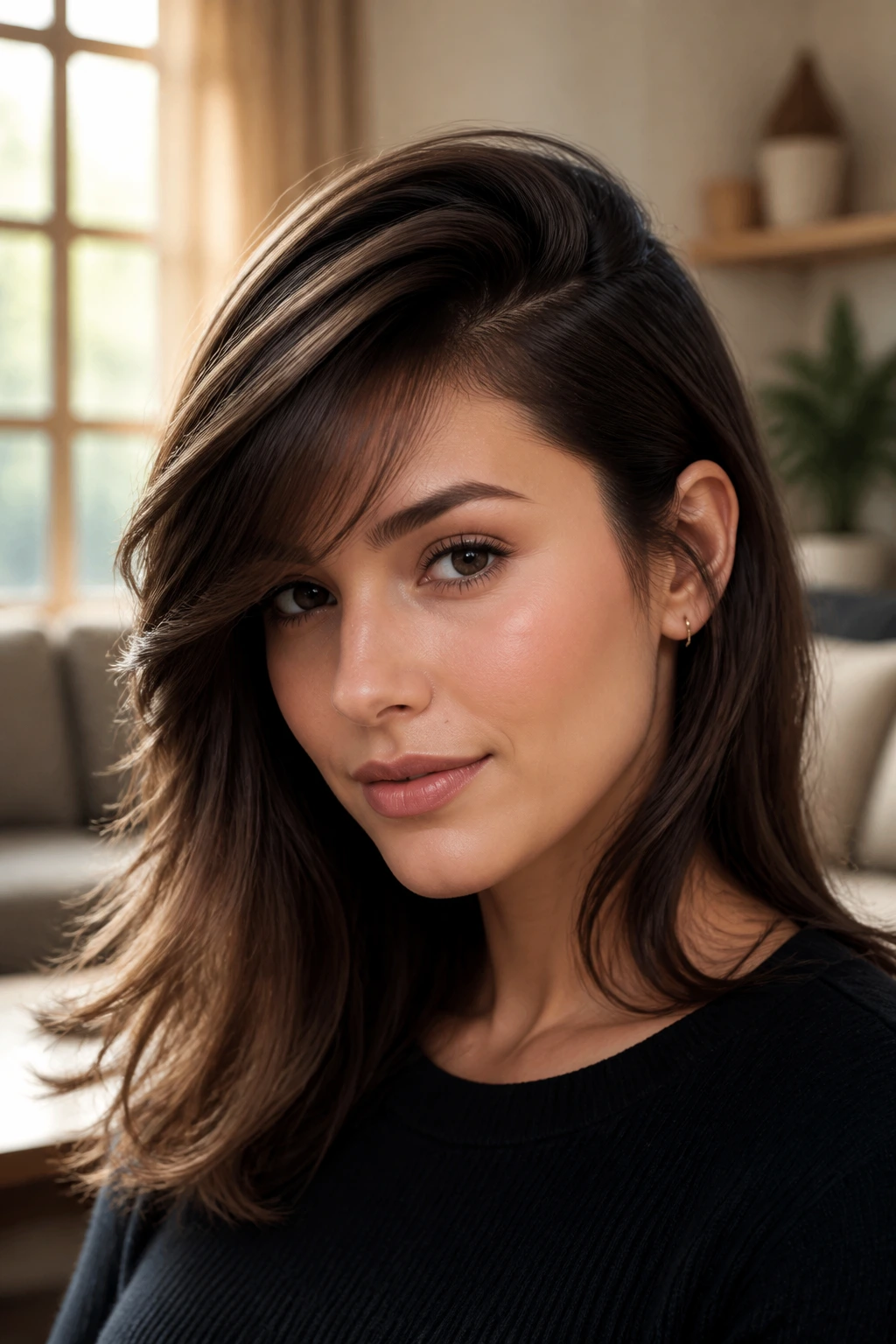
A deep side part does two jobs at once. It breaks up the roundness of the face and adds lift where the hair leaves the scalp. That root lift is not a small thing. It changes how the whole cut sits.
Compared with a center-part curtain bang, this version is sharper and more directional. The hair moves across the forehead with purpose, then drops into the front layers. That movement gives the face a longer line and keeps the widest part from getting too much attention.
This is a strong pick if your hair is fine and tends to lie flat. A deep part gives you a place to tuck in a root clip while the hair cools, which helps the front hold shape. A little spray at the base can keep it from collapsing before lunch.
If you want something that feels polished but not stiff, this is a good lane. It has enough shape to read as a haircut detail, yet it doesn’t scream for attention.
18. Tiny Soft Bangs With Longer Corners

Short bangs can work on a round face, but only when the edges are soft and the corners stay a little longer. A blunt micro fringe on its own can feel too severe. Add taper at the sides, though, and the look changes fast.
The center can sit higher on the forehead, while the corners drift toward the temples. That little length difference keeps the face from feeling boxed. It also gives the eyes a clear open area instead of a straight line sitting above them like a shelf.
This style is not the safest place to begin if you’ve never had bangs. It is, however, a good choice if you want something sharper and you’re willing to style it each morning. A tiny round brush, a quick dry, and a touch of separation at the ends make a big difference.
If you try it, keep the fringe soft from the start. No dense block. No hard edge. The whole cut depends on lightness.
Round faces usually look best when bangs move, bend, or break apart a little, and that rule holds all the way to the shortest styles. The sweet spot is not about hiding the forehead. It’s about keeping the front of the haircut alive, so the face has room to breathe instead of getting boxed into one shape.
If you want the easiest entry point, curtain bangs, side-swept bangs, and soft bottleneck bangs are the safest bets. If you want more texture, shag bangs, feathered fringe, and see-through bangs give you that airy feel without much fuss. The bad move is a thick, flat line that stops right at the widest part of the cheeks. That’s the one I’d skip.
