



Round faces do not need bangs that sit there and square off the forehead. They need fringe that pulls the eye upward, then lets it travel diagonally instead of stopping dead in the middle.
That is why medium bangs work so well here. They give you enough length to play with parting, bend, and softness, but not so much hair that the whole thing collapses into one heavy curtain. Short bangs can feel too blunt. Long face-framing layers can drift away from the category entirely. The middle zone is where the balance lives.
There’s also a practical reason people keep coming back to this length. Medium bangs are easier to grow out than a hard, straight fringe, and they can be styled in a way that changes the shape of the face without demanding a full haircut every time you get tired of them. Good bangs on a round face do one job well: they break width, add a little height, and make the cheeks look less like the widest point on the map.
A stylist’s note worth keeping in your pocket: the shortest point matters less than the longest point. If the corners land around the cheekbone, lip, or jaw, the whole shape feels longer and lighter. If the bangs stop exactly at the broadest part of the face, things get boxy fast. That little detail changes everything.
1. Long Curtain Bangs That Split at the Nose
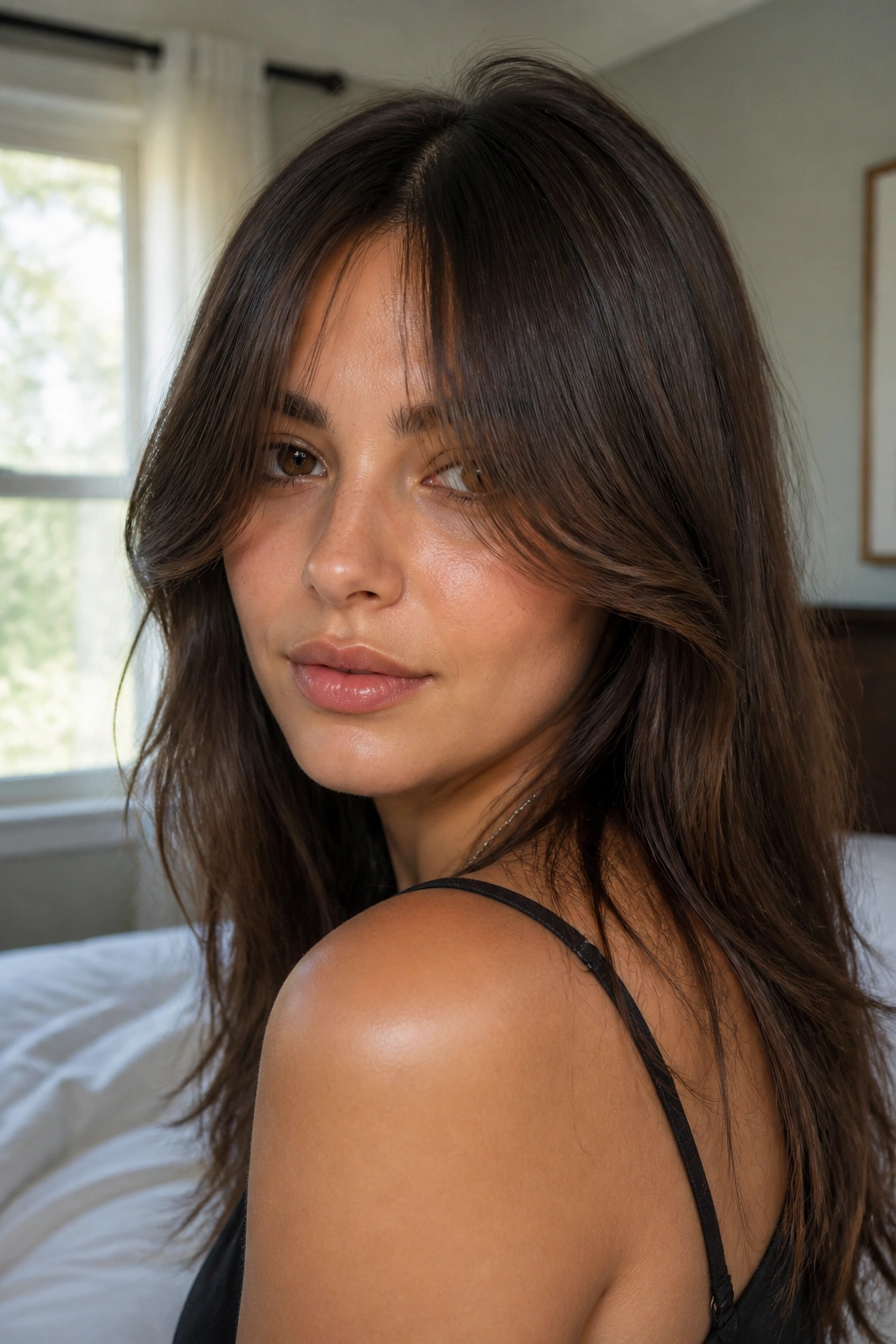
This is the safest place to start. Long curtain bangs part near the nose bridge, open at the center, and sweep out toward the cheekbones, which gives a round face the kind of vertical movement it usually wants.
Why It Works
The center opening keeps the forehead from feeling crowded. The longer sides create two slim lines that run down and out, so the eye does not stay parked on the width of the cheeks. Ask for the shortest pieces to hit just below the brow line when dry, then let the outer corners fall near the top of the cheekbone.
- Keep the center piece around nose-to-brow level.
- Let the sides drop to cheekbone or upper lip length.
- Blow-dry with a 1.5-inch round brush away from the face.
- Ask for soft point-cut ends, not a hard, blunt edge.
Pro tip: dry them fully before judging the length. Wet curtain bangs always look longer than they behave once they dry.
2. Soft Side-Swept Bangs With a Deep Part
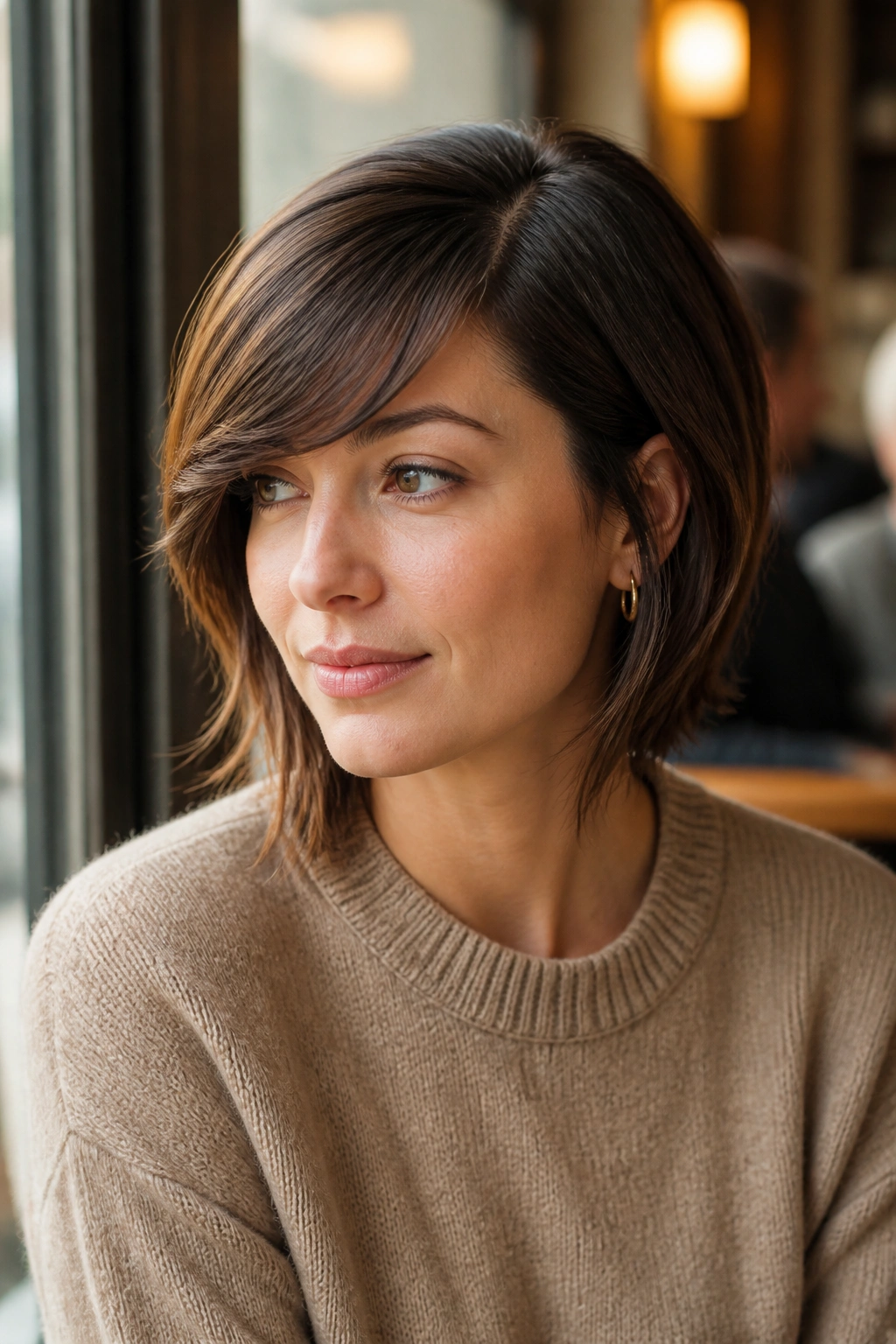
A deep side part does a sneaky bit of face work. It pushes the fringe across the forehead, breaks up symmetry, and gives a round face a line that feels longer than wide.
The trick is keeping the bang soft enough that it bends instead of hanging like a flat strip. I like this shape best when the shortest point lands about an inch above the eyebrow and the longest pieces graze the cheekbone. That diagonal path matters. It shifts the eye away from the center of the face and toward the outside edge, which always helps.
This version is also forgiving if you have a cowlick. A deep side sweep can work with natural growth patterns instead of fighting them. That saves time. And frustration.
3. Wispy Brow-Grazing Bangs With Tapered Ends

Can bangs sit right at the brows on a round face? Yes, if they stay airy.
The mistake people make is going too thick. A solid wall of hair across the forehead tends to emphasize width, while a wispy fringe lets skin show through and keeps the whole thing from feeling heavy. Ask for a soft, brow-grazing line with the ends chipped out a little. The density should be light enough that you can see a little separation between strands.
How to Wear It
- Cut the center just to the top of the brow.
- Keep the sides a touch longer.
- Use a light texturizing spray, not a heavy cream.
- Separate pieces with your fingers after blow-drying.
The feel should be soft, not stringy. That’s a different thing. Stringy looks undercut by mistake. Wispy looks deliberate.
4. Bottleneck Bangs That Open at the Center
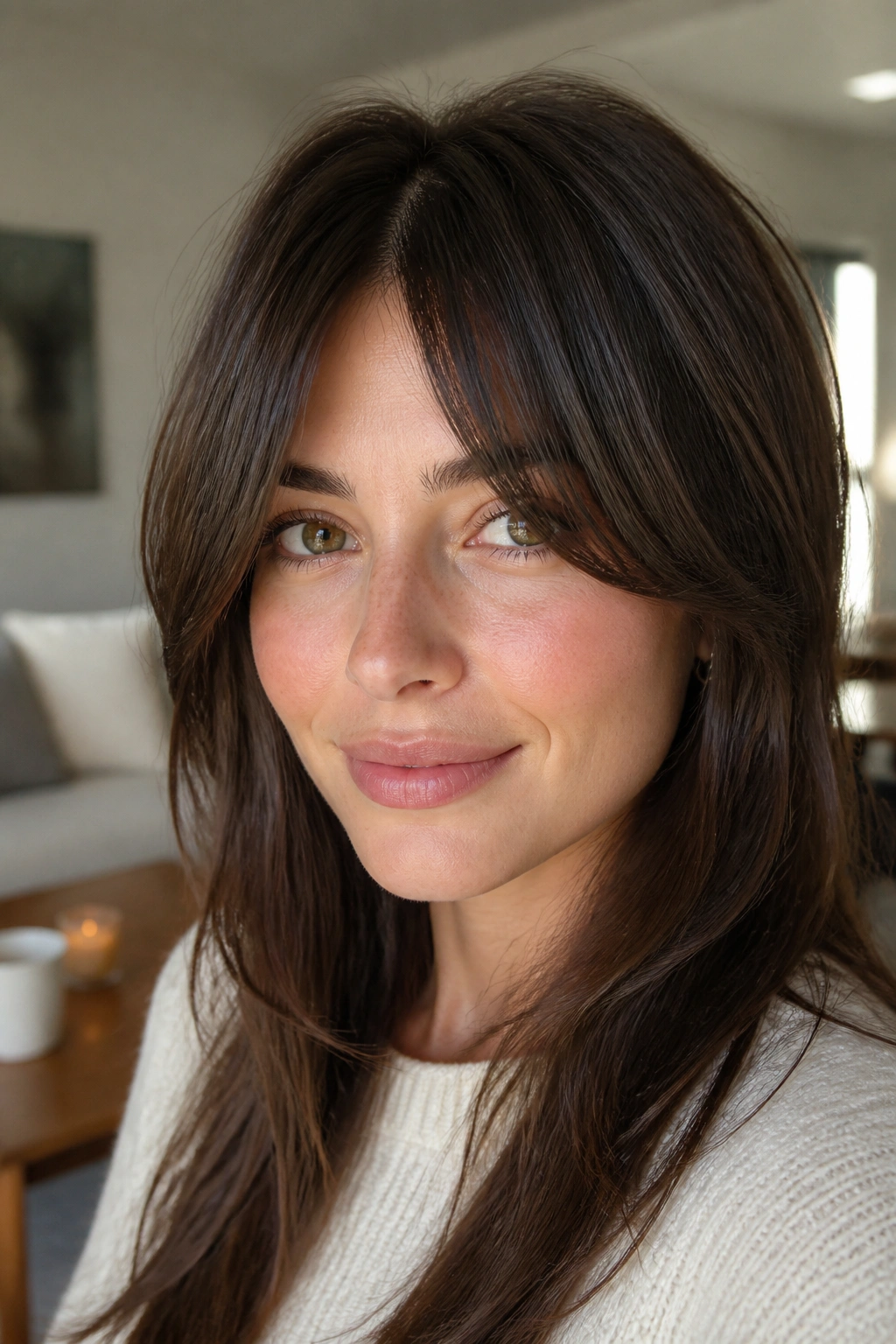
Bottleneck bangs are one of my favorite shapes for round faces because they do two jobs at once. They open at the middle like a curtain, then widen near the temples, which gives the forehead shape without boxing it in.
Think of the middle as the narrow neck and the outer pieces as the wider shoulders. That structure creates a cleaner frame than a blunt fringe, and it pulls the eye up before it travels outward. The result is a face that feels a little longer and a little slimmer without looking carved up.
They also sit nicely with medium-length haircuts because the bang shape echoes the movement of a lob or shag. If you want hair that looks styled even when it’s only loosely blown dry, this is a strong pick.
- Center length: just under the brow
- Temple length: cheekbone to upper cheek
- Best styling tool: round brush or large curling iron
- Best finish: soft bend, not tight curl
5. Shaggy Fringe That Melts Into Chin Layers

Shag bangs and round faces get along because the shape never stays still. A shaggy fringe starts the conversation at the forehead, then disappears into chin-grazing layers before the face starts to feel boxed in.
That movement matters. Round faces often look best when the hair creates a little tension—shorter in the middle, longer at the sides, then broken up by texture. A shag does exactly that. The bangs are usually chopped with a light hand, so they feather instead of sitting in one flat block. You get edge, but not harshness.
What to Ask For
Tell your stylist you want the fringe to blend into the front layers around the chin, not stop above the brow in one clean line. If your hair is thick, ask for internal weight removal so the fringe does not puff out. If it’s fine, keep the layers soft and avoid over-thinning.
This cut looks best when it moves a little. Let it.
6. Arched Bangs That Float Above the Brows
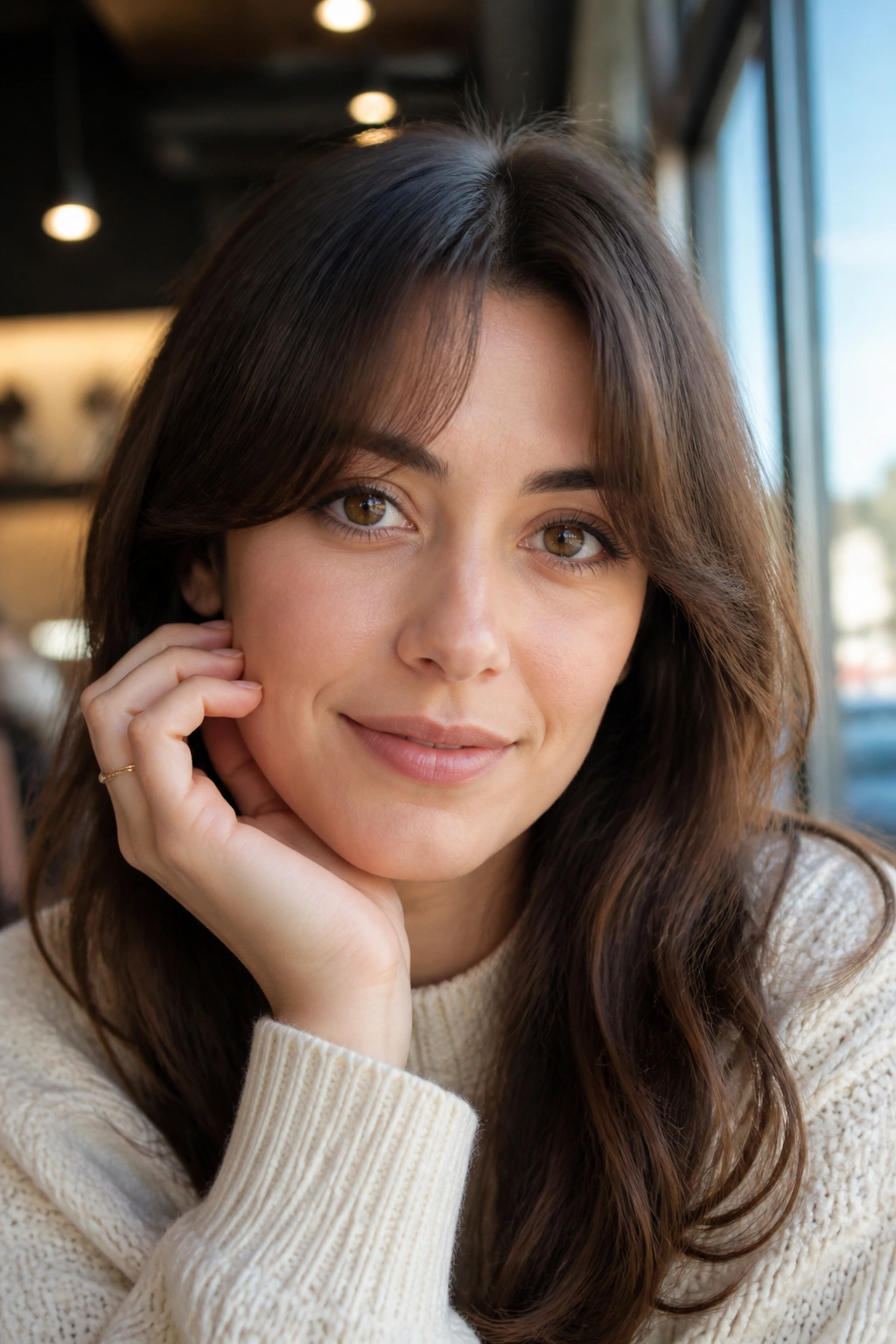
An arched bang is not dramatic in the loud sense. It is dramatic in the smart sense.
Unlike a straight, heavy fringe, an arched shape leaves a little space at the center and longer pieces near the edges. That curve follows the forehead instead of fighting it, which can make a round face look more elongated. If you wear glasses, this shape can be a blessing, because it avoids sitting on the frame line and keeps the eyes visible.
It works best when the center is cut just above the brows and the outer corners dip down toward the temples. The arch should be soft, almost like a shallow smile across the forehead. Too much curve and it starts looking retro in the wrong way.
Best for: people who want fringe without full coverage.
Watch for: a bang that’s cut too short in the middle; that can make the face look wider, not slimmer.
7. Piecey Razor-Cut Fringe With Air Between Strands
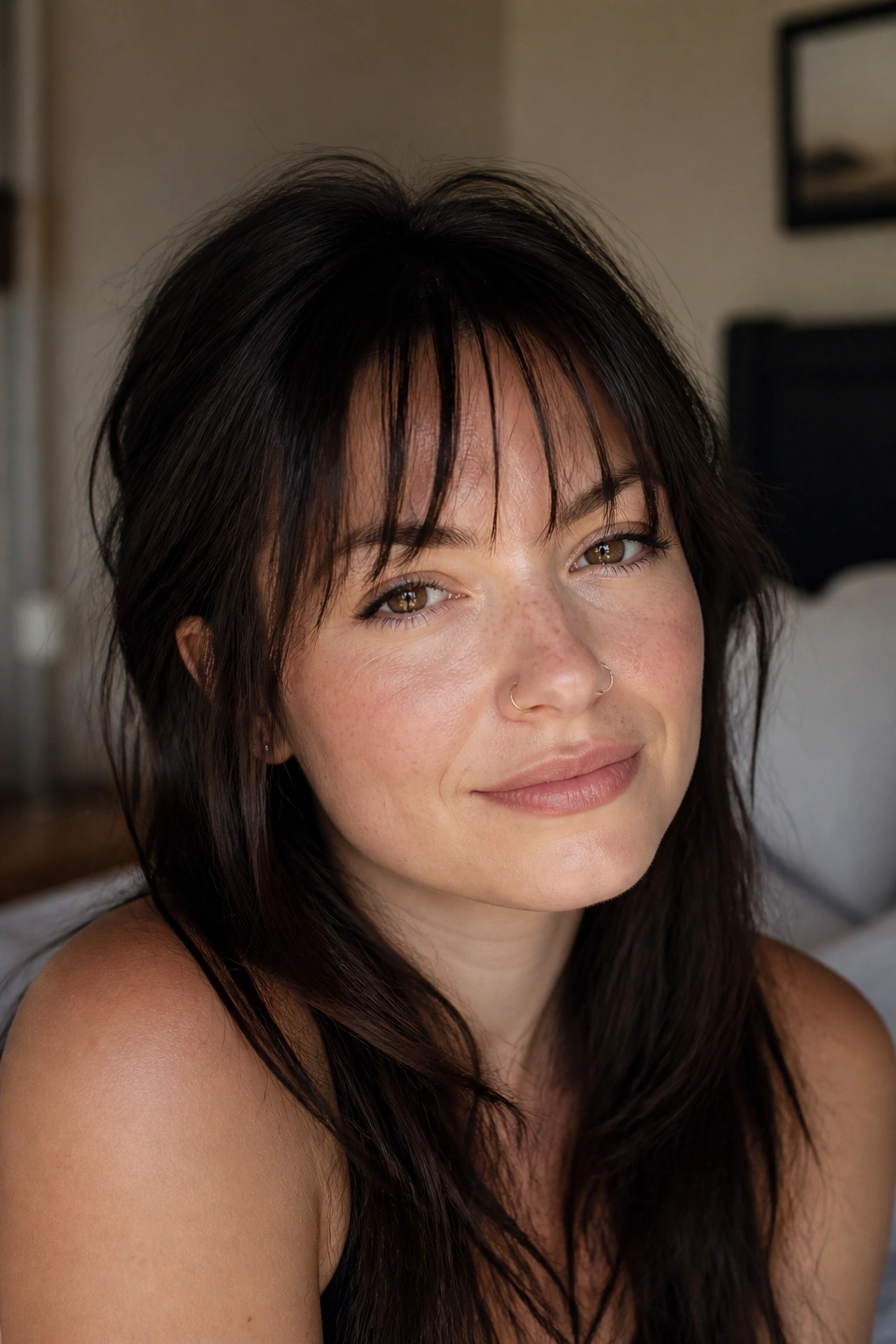
A razor-cut fringe gives the forehead breathing room. That sounds small, but on a round face it makes a real difference.
The spaces between the strands keep the bang from turning into one broad line. Instead, the eye picks up several thin vertical pieces, which breaks up width much better. This is especially good if you like a little undone texture and do not want your fringe to look too polished every day.
How It Works
A razor cut removes bulk and softens the ends at the same time. The shape is light, a little jagged, and easy to push to either side. Use it on straight to slightly wavy hair, where the texture can show without turning fuzzy.
- Finish with a pea-sized dab of styling cream.
- Blow-dry with fingers, not a brush, if you want separation.
- Avoid heavy oils near the roots.
- Keep the length around brow to cheekbone level.
It’s a good choice if you hate the feeling of hair sitting on your skin all day.
8. Long French Bangs With a Soft Bend
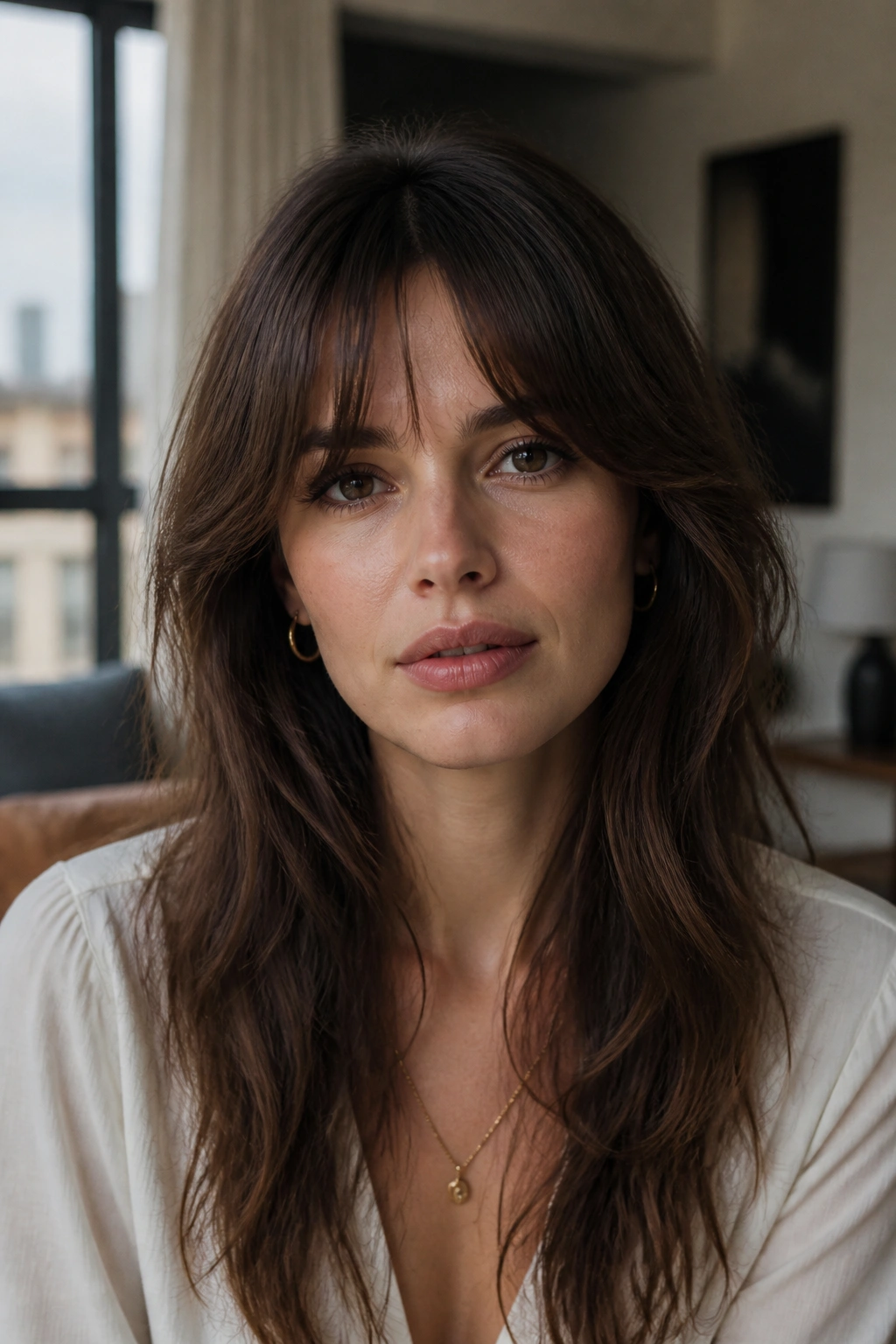
Long French bangs are for people who want fringe with a bit of personality. They sit between the brows and lashes, usually parted slightly off-center, and they bend just enough to look relaxed.
For a round face, that bend is the important part. Straight-down fringe can make the face seem shorter. A French bang opens the forehead a little, then curves away at the sides so the width lands lower and farther out. The whole effect feels lived-in, not stiff.
I like this shape most on hair that already has some natural wave. It does not need perfect polish. In fact, perfect polish can make it look too rigid. Let the ends flip a little. Let them miss each other. That tiny bit of mess gives the face more movement.
If you want fringe that looks good on a casual day and still works with a blazer or a dressy top, this is one of the easiest bets.
9. Cheekbone-Kissing Bangs That Start Wider
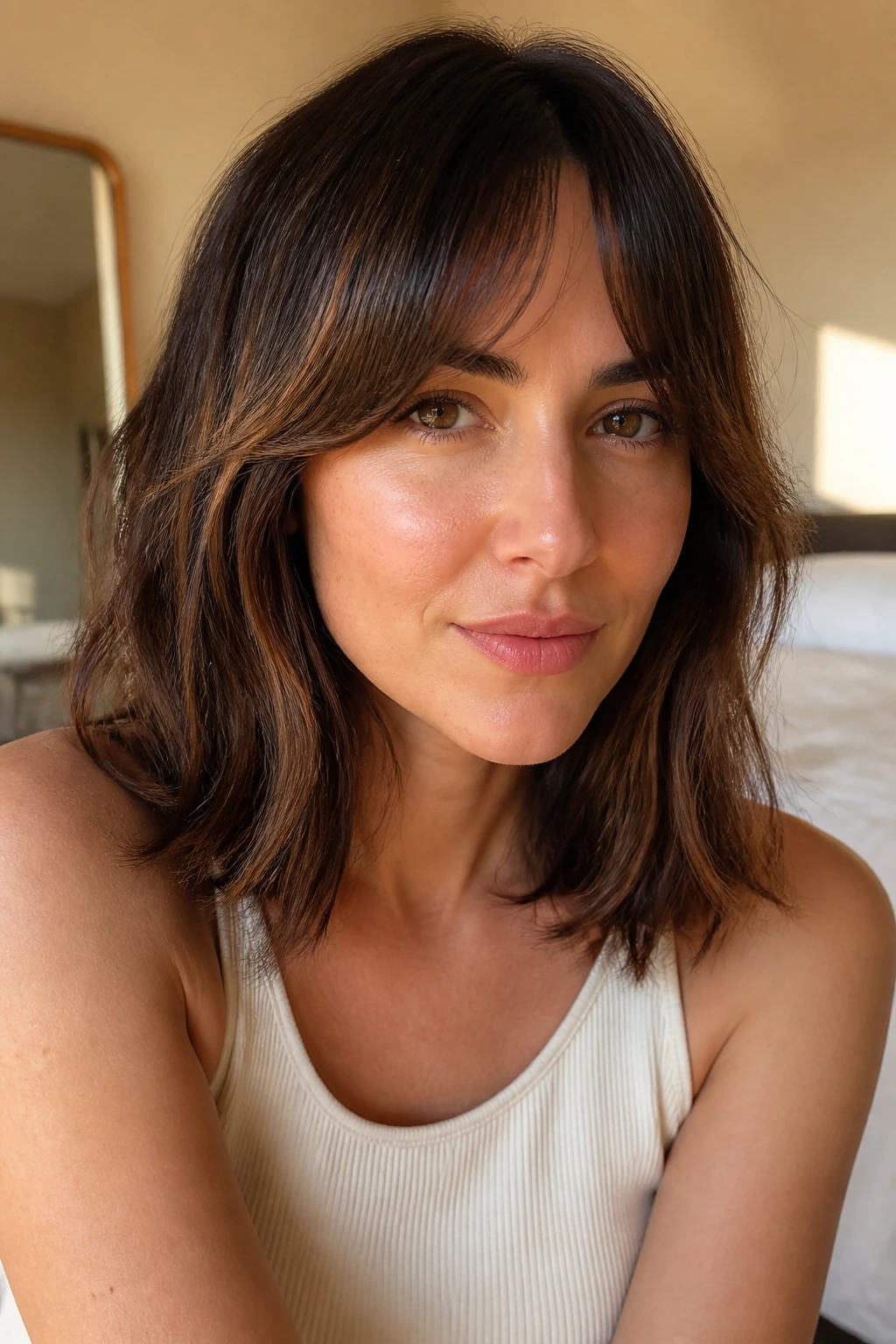
The cheekbone is the real marker here, not the forehead.
Bangs that start a little wider near the temples and narrow toward the center create a shape that draws the eye diagonally down the face. On a round face, that diagonal is gold. It makes the cheek area feel intentional instead of broad. The bang line should almost skim the top of the cheekbone when dry, which is long enough to be flattering but short enough to keep the shape contained.
Why It Flatters
The soft width at the sides works like a frame. The shorter center keeps your eyes open and visible. And because the outer pieces land near the cheekbone, the face gets length where it needs it most.
A small note: this shape looks best when the rest of the haircut supports it. A blunt one-length cut underneath can make the bangs look disconnected. A few face layers fix that fast.
Ask for:
- A center that sits just below the brow
- Side pieces that reach the cheekbone
- Soft graduation, not a hard corner
- A dry check before the final trim
10. Diagonal Bangs That Blend Into a Lob
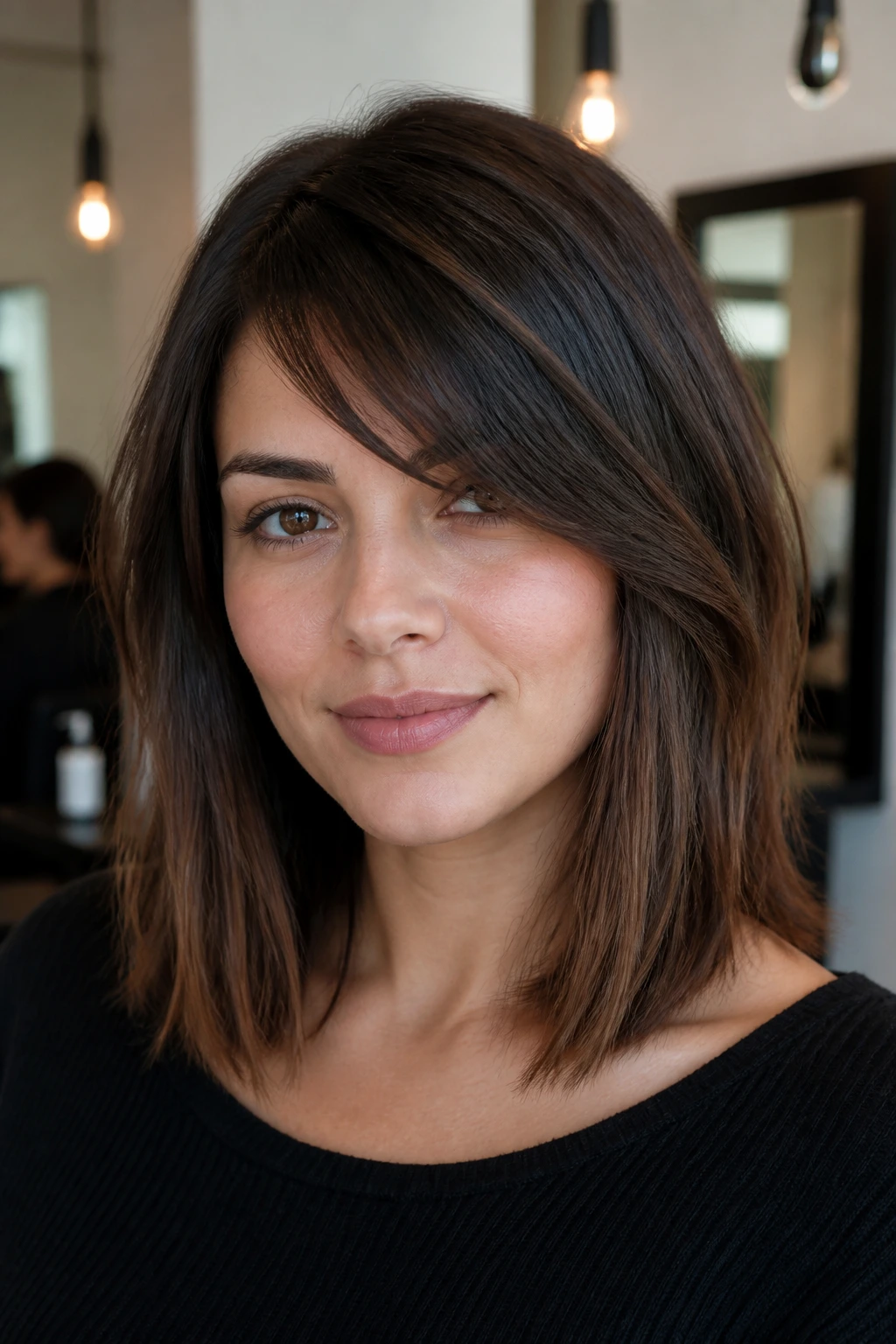
Diagonal lines are your friend. They break the roundness of the face in a way that feels clean and almost invisible.
This bang shape starts nearer one temple and drops diagonally across the forehead, then melts into the front of a lob or shoulder-length cut. It works because the eye follows the angle. It does not sit and stare at the widest part of the face. It moves.
If you wear your hair mostly straight, this can feel especially polished. If your hair waves, the diagonal line softens and becomes more casual, which is fine too. The key is keeping the longest pieces long enough to skim the cheek, not stop at the middle of the face.
I’d choose this one for someone who wants bang energy without a strong bang “moment.” It’s discreet. In a good way.
11. Rounded Fringe With Longer Outer Corners

A rounded fringe sounds risky, but on a round face it works when the outer corners stay longer than the center. That’s the part people miss.
The shape follows the curve of the forehead instead of drawing one flat line across it. Done badly, that can feel too circular. Done well, it softens the upper face and gives the fringe a gentle arch that looks custom. The longer sides are doing the real work here—they steer the eye outward and down.
This is one of those cuts that benefits from a good blow-dry. A round brush, medium tension, and a cool shot at the end keep the arch smooth. If the ends flip too much, the whole thing can get fussy.
A little detail makes a big difference: keep the center light and let the sides carry the shape. That’s what keeps it flattering instead of helmet-like.
12. Split Bangs With a 70/30 Part
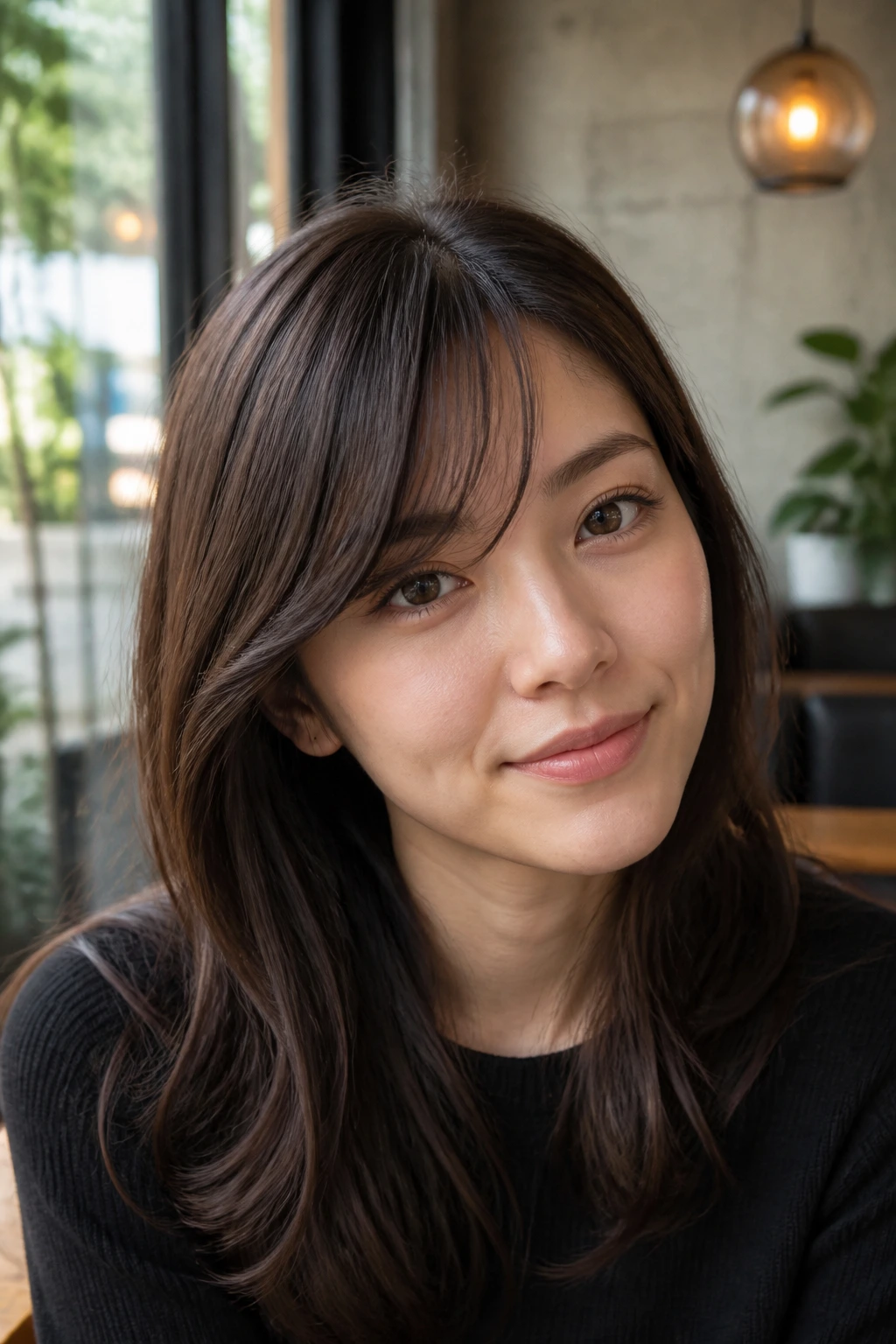
A 70/30 part is a small change that can do a lot. Instead of splitting the bangs right down the middle, you leave most of the fringe to one side and a slimmer section to the other.
For round faces, that off-balance look helps create a longer diagonal across the forehead. It also lets one side of the haircut fall closer to the cheek, which can narrow the face visually. This shape is especially useful if your hair naturally wants to fall left or right anyway. No reason to fight it.
What Makes It Different
Unlike full curtain bangs, the split feels a little more tailored. Unlike side-swept fringe, it keeps enough center openness to avoid a heavy block. It sits in that narrow band between casual and deliberate, which is a nice place to live.
Best length: between brow and cheekbone.
Best styling move: dry the heavier side first so it sets with lift, not collapse.
It’s subtle. That’s the point.
13. Feathered Bangs That Stay Light on Fine Hair
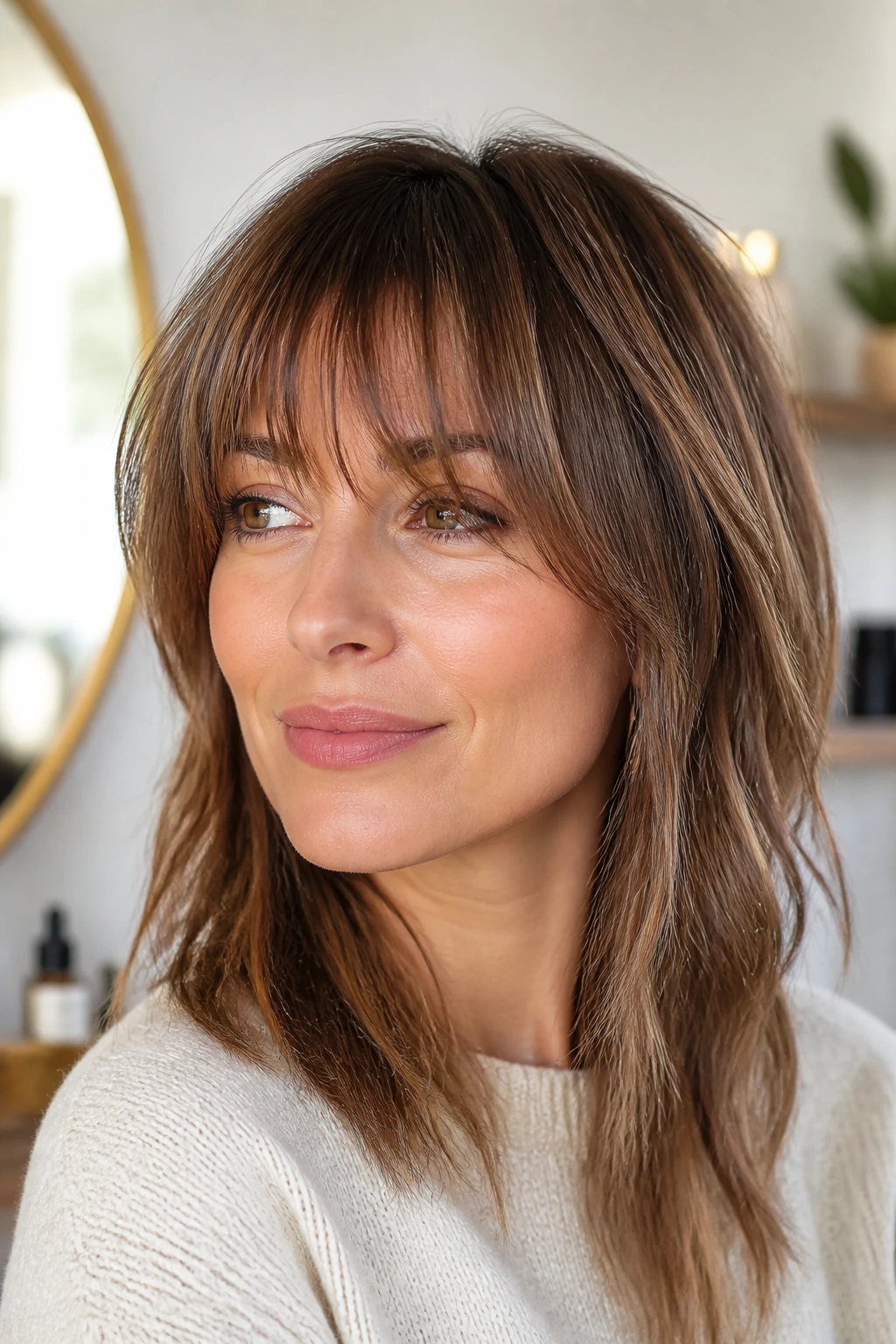
Fine hair can wear bangs beautifully, but only if the cut respects the weight of the hair.
Feathered bangs work because they never ask fine hair to act like dense hair. The strands are cut so they separate easily and sit with a bit of lift, which stops the fringe from clinging flat to the forehead. On a round face, that lift matters. Flat fringe tends to make the face look shorter. Feathered fringe gives it air.
Why It Works
The softness around the edges keeps the bang from cutting the face in two. The lightness at the ends prevents the line from becoming too strong. And because the cut is feathered, you can wear it straight, tucked slightly to one side, or brushed apart with your fingers.
- Use a light mousse at the roots.
- Blow-dry with the nozzle pointed downward first, then lift the roots.
- Skip heavy waxes.
- Keep trims regular so the fringe doesn’t separate too much.
Thin hair needs shape, not weight. This cut gets that balance right.
14. Thick Bangs Made Lighter at the Ends
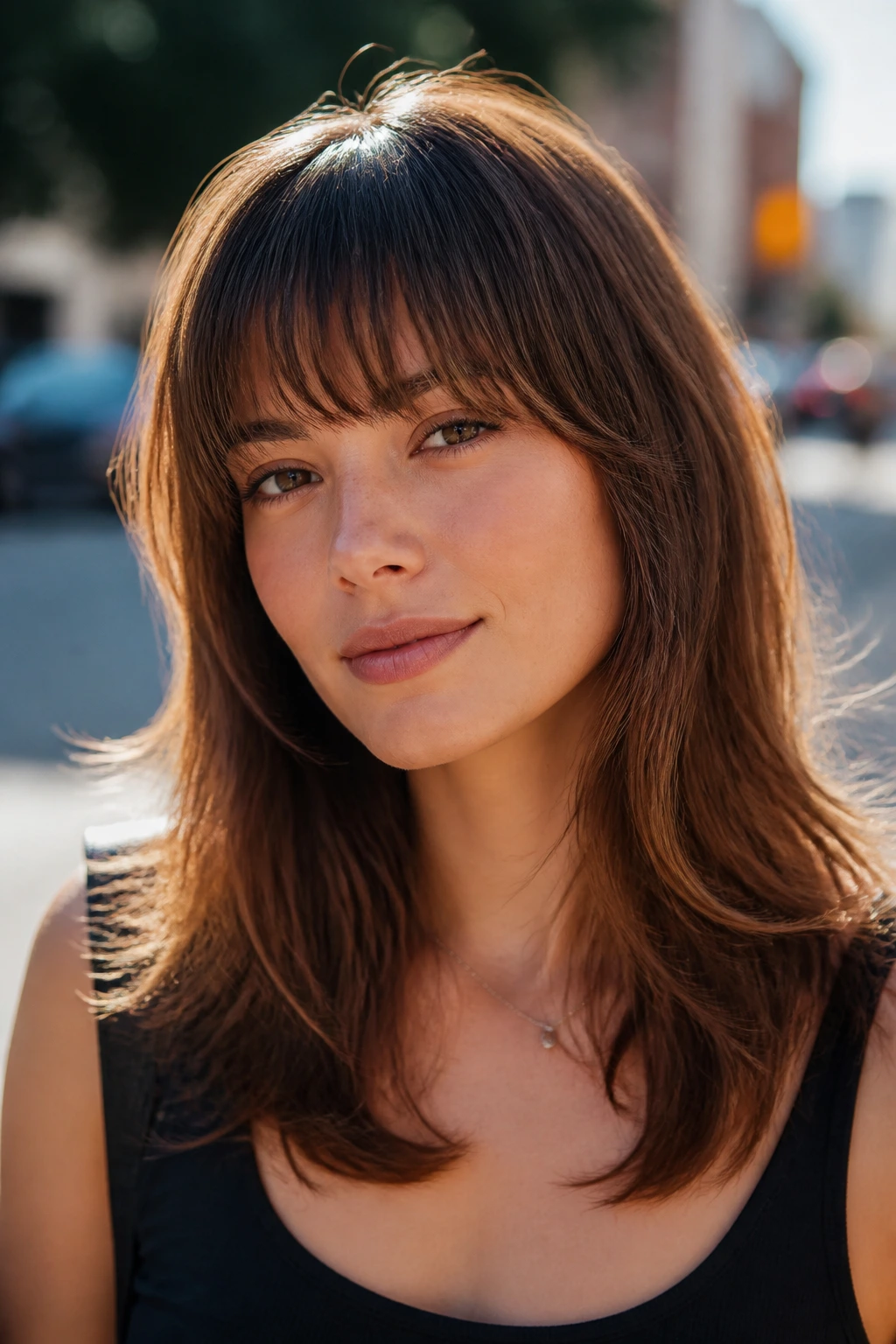
Dense hair can absolutely wear medium bangs. The mistake is leaving all that bulk in place.
A thick fringe on a round face needs internal softness, especially near the ends. If the bottom edge is too blunt, the bangs sit like a shelf across the forehead. That shelf widens the face. But if the stylist point-cuts the bottom and removes weight below the midline, the fringe can still look full without feeling heavy.
The cleanest version starts strong at the root and softens toward the ends. That gives you the coverage of a fuller bang with a much better finish. You still get forehead coverage. You just do not get the boxy edge.
Ask your stylist to keep the shortest pieces around the brows and open the sides toward the temples. And yes, a little texture cream helps. Too much, though, and the whole thing clumps.
15. Wavy Bangs With a Bend at the Temples
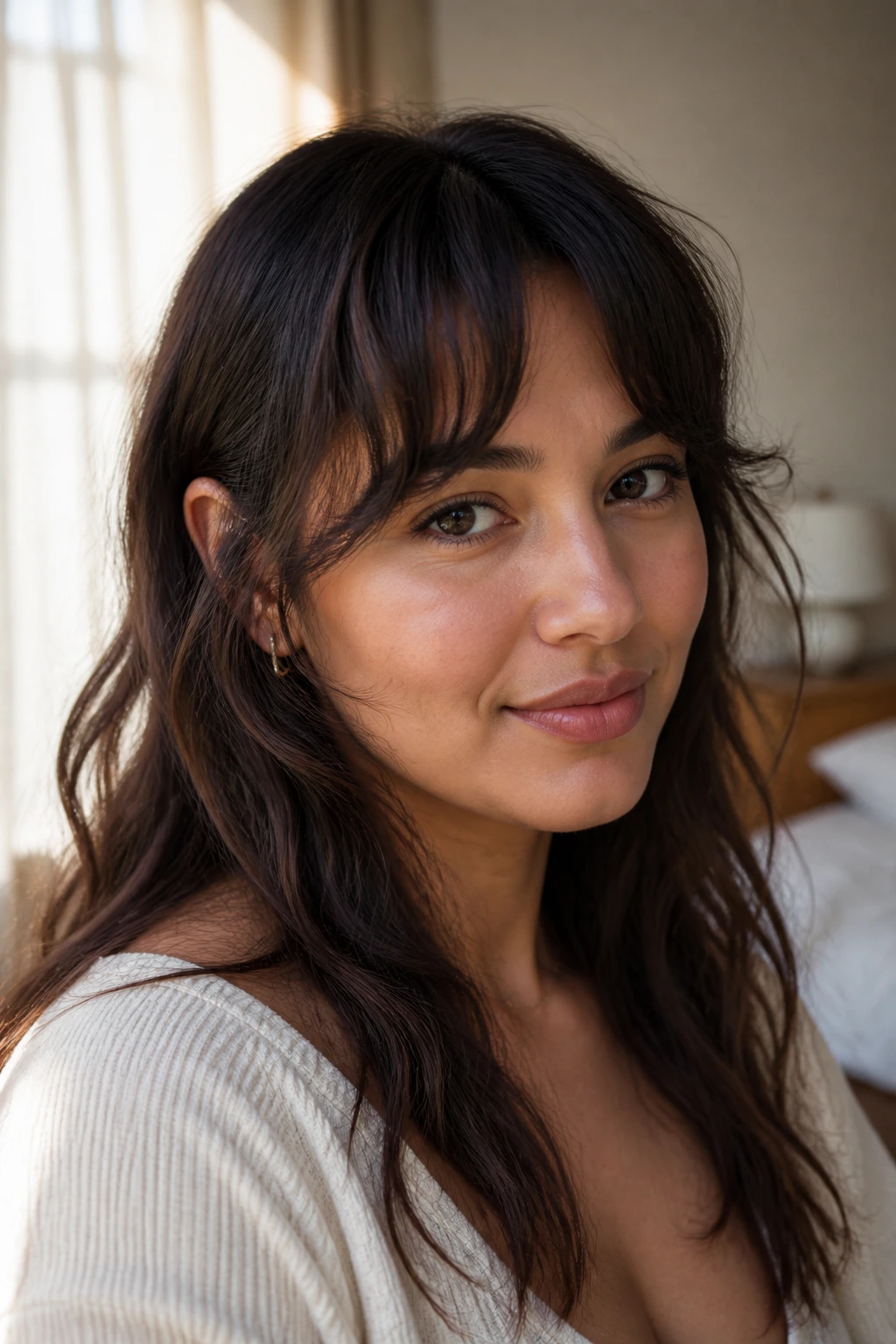
Should wavy hair be forced straight? No. That fight usually ends badly.
Wavy bangs look especially good on round faces when the bend starts near the temples and softens the width of the cheeks. The waves create movement, which keeps the fringe from lying in one wide horizontal strip. That horizontal strip is the thing you want to avoid. It can make a face look wider than it is.
How to Style It
- Dry the bangs in the direction you want them to land.
- Use a small round brush or fingers, depending on the wave pattern.
- Put smoothing product only on the ends if frizz is an issue.
- Let a little natural bend stay in place.
The goal is shape, not flattening. Wavy bangs look best when they feel a little loose around the face. Too much control kills the charm.
And if one piece flips out more than the rest? Leave it. That piece is doing some of the work for you.
16. Asymmetrical Bangs for a Stronger Line

An asymmetrical bang gives the face a line to follow. That’s the whole trick.
When one side is noticeably longer than the other, the eye stops treating the forehead as a single wide shape. It follows the slope instead. On a round face, that can be a smart way to create length and a bit of edge without going full dramatic side shave or extreme cut.
I like this best when the shorter side still clears the eyebrow and the longer side drops toward the cheekbone or even the jaw. That difference does not need to be huge. Sometimes an inch and a half is enough to change the whole feel.
It’s not a quiet look. Good. Some people need a little structure, and this one gives it without feeling stiff.
17. Layered Bangs That Match a Wolf Cut

A wolf cut fringe is not trying to behave. That is part of why it works.
The bangs are usually layered, broken up, and linked to the rest of the haircut rather than sitting alone on the forehead. For round faces, that is useful because the fringe stops reading as one broad block. Instead, it becomes part of a longer, more vertical shape that moves into the sides and back.
This is a strong choice if you like texture and a bit of shape around the crown. The lift on top can help lengthen the face, while the wispy front keeps the bang from getting too heavy. It’s more relaxed than a polished curtain bang, and that’s the whole appeal.
Not the best pick if you want sleek perfection. But if you want personality, this one has it.
18. Blowout Bangs That Lift at the Roots
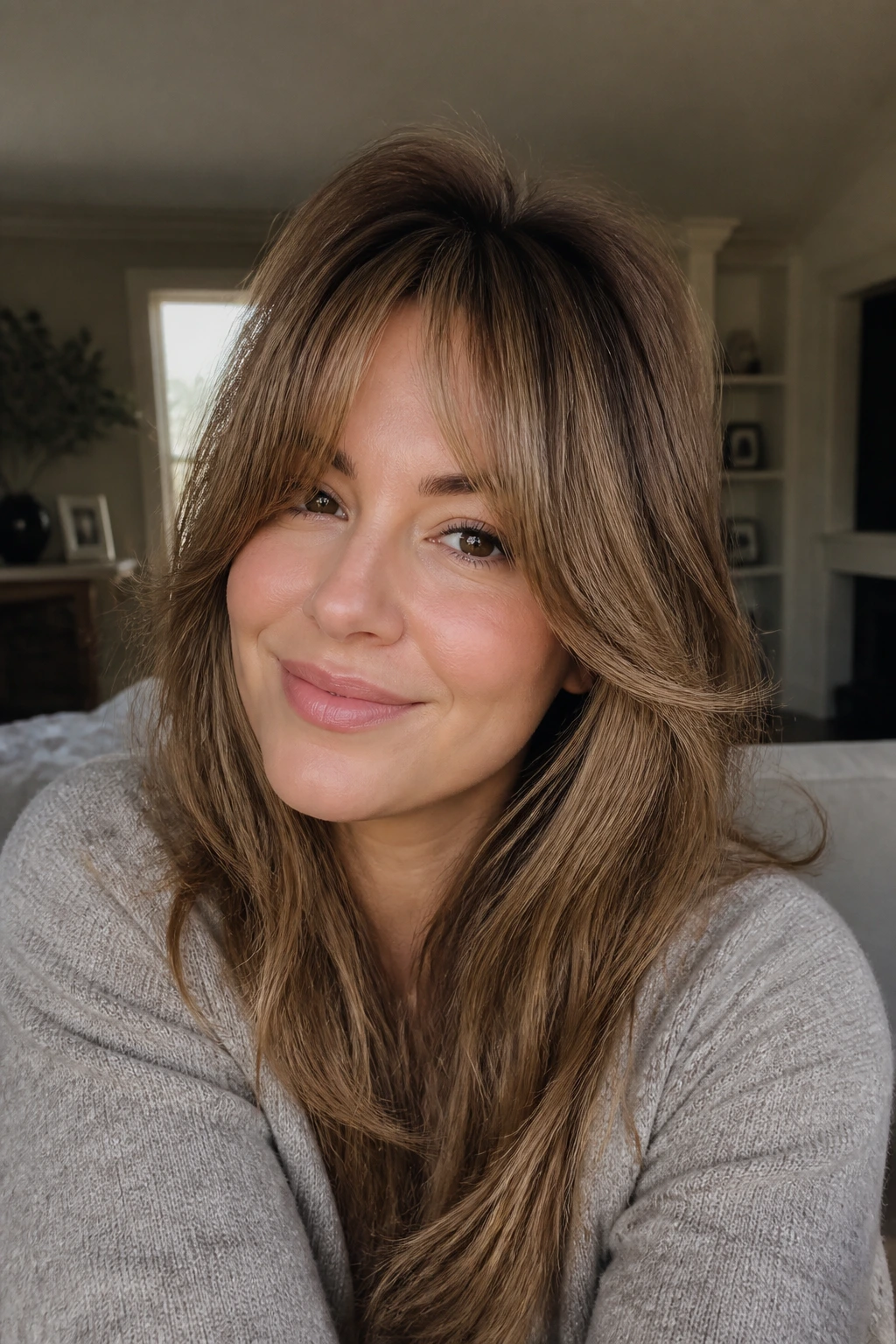
A good blowout can change the face before the cut even does.
Blowout bangs are medium-length fringe shaped with root lift and a soft bend through the ends. On a round face, that lift matters because height pulls the eye up. It breaks the width of the cheeks and gives the whole haircut a little more structure. Think of it as the difference between hair that lies there and hair that sits with intent.
A 1.5-inch round brush works well here, though a Velcro roller can help if you want the root to cool in place. Start by drying the bangs from side to side, then roll them away from the face so the curve opens out. If the ends curl under too hard, the bang can shrink into your eyes.
The good part
You get volume without a hard shape. That means the bangs still move when you turn your head. They don’t look painted on.
19. Razor-Cut Curtain Bangs for Coarse Hair
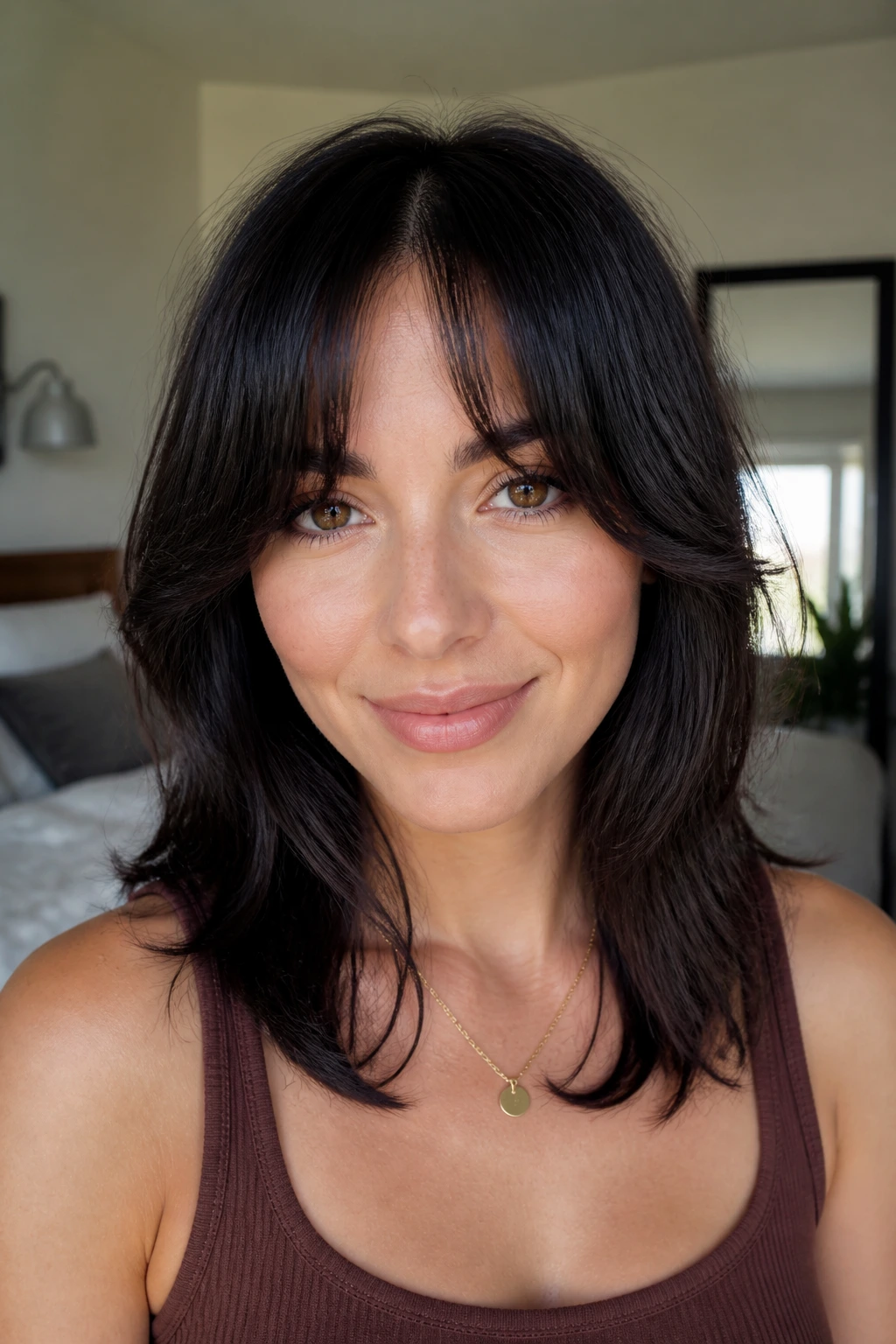
Coarse hair needs a different touch. Heavy scissors can leave it bulky fast.
A razor cut softens the edge and removes the bluntness that can make medium bangs look boxy on a round face. The fringe still has presence, but it moves more freely and lays better against the forehead. That matters when the hair wants to stand up, puff out, or hold a wide shape at the sides.
What to Ask For
- Cut the bangs dry or nearly dry so shrinkage is visible.
- Keep the center around brow level.
- Let the outer sections fall toward the cheekbone.
- Use a smoothing serum only on the ends.
This is not the right move for every coarse texture. Some hair frizzes too much with a razor. But when it works, it gives you a softer finish than shears alone. The fringe still looks deliberate, not chopped into place.
20. Short Curtain Bangs That Still Clear the Brows

Shorter does not have to mean wider. That’s the misconception.
Short curtain bangs can work on round faces if the center stays open and the sides sweep out with enough length to pull the eye down. The shortest point should still clear the brows by a little margin when dry. If it sits too high, the forehead can feel exposed in a way that exaggerates the roundness of the face.
I like this shape when the wearer wants to show more forehead but still wants a frame. It feels crisp. A little cheeky, too. The face looks lifted because the fringe opens rather than closes the center.
The styling rule is simple: do not keep the middle too wide. Let the part sit slightly off-center, and let the sides do the softening. That keeps the cut fresh instead of severe.
21. Grown-Out Bangs That Sit at the Cheekbones
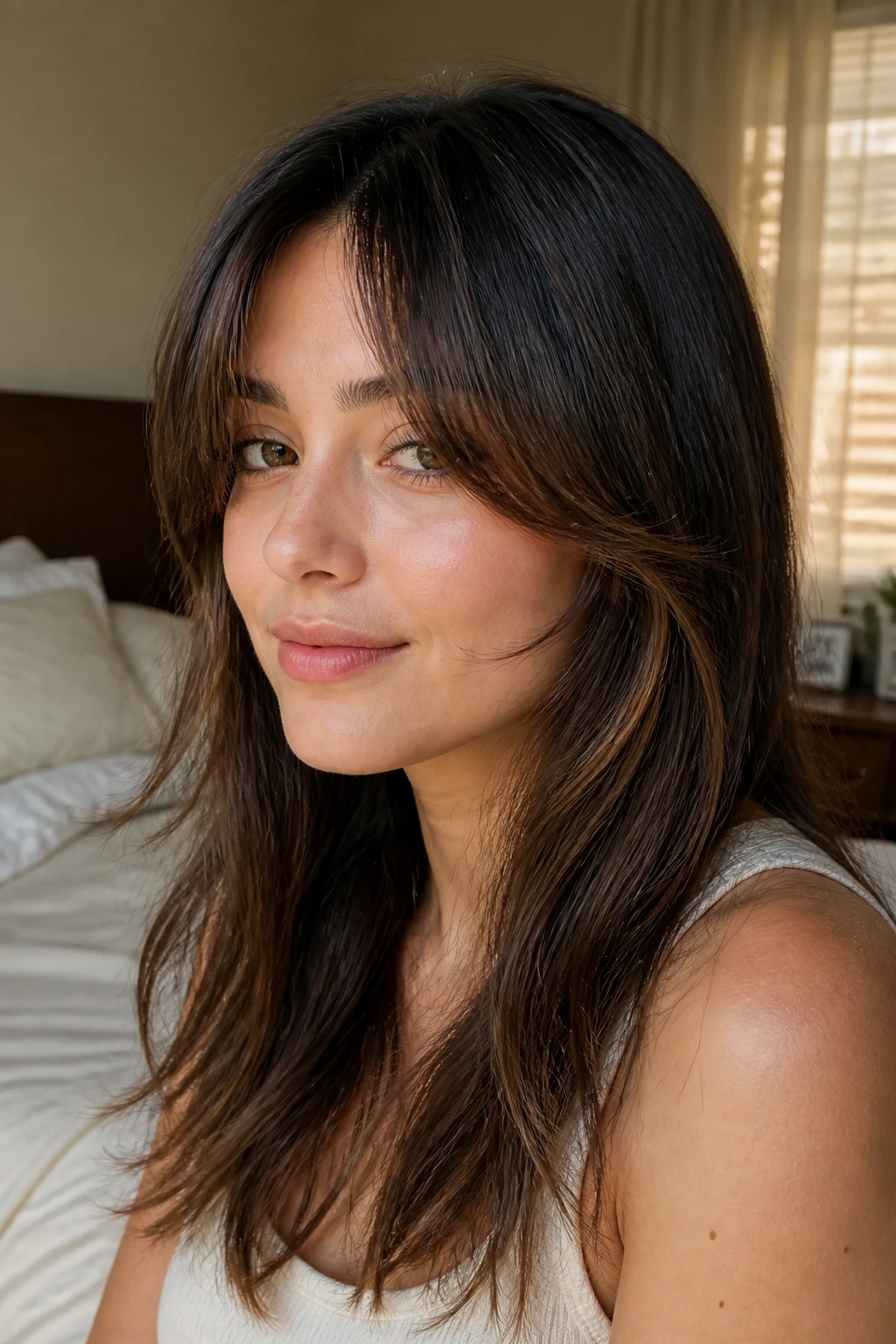
What if you want bangs that look better after a few weeks of growth? Then this is the shape to ask for.
Grown-out bangs are cut with enough length that they sit around the cheekbone, not the brow, so they can drift into face-framing layers instead of needing a strict trim schedule. On a round face, that softness is useful. The hair creates an opening around the forehead and then lands where the face starts to narrow.
How to Ask for Them
Tell your stylist you want the front to blend into the cheekbone area with a gentle sweep. The center should stay longer than a classic fringe. The sides should be feathered, not blunt. You want movement, not a clean line that needs babysitting.
This is a good choice if you like the idea of bangs but hate the feeling of being locked into them. They can be tucked, parted, or brushed forward depending on the day.
And yes, they grow out nicely. That’s half the appeal.
22. Invisible Bangs Blended Into Face Layers
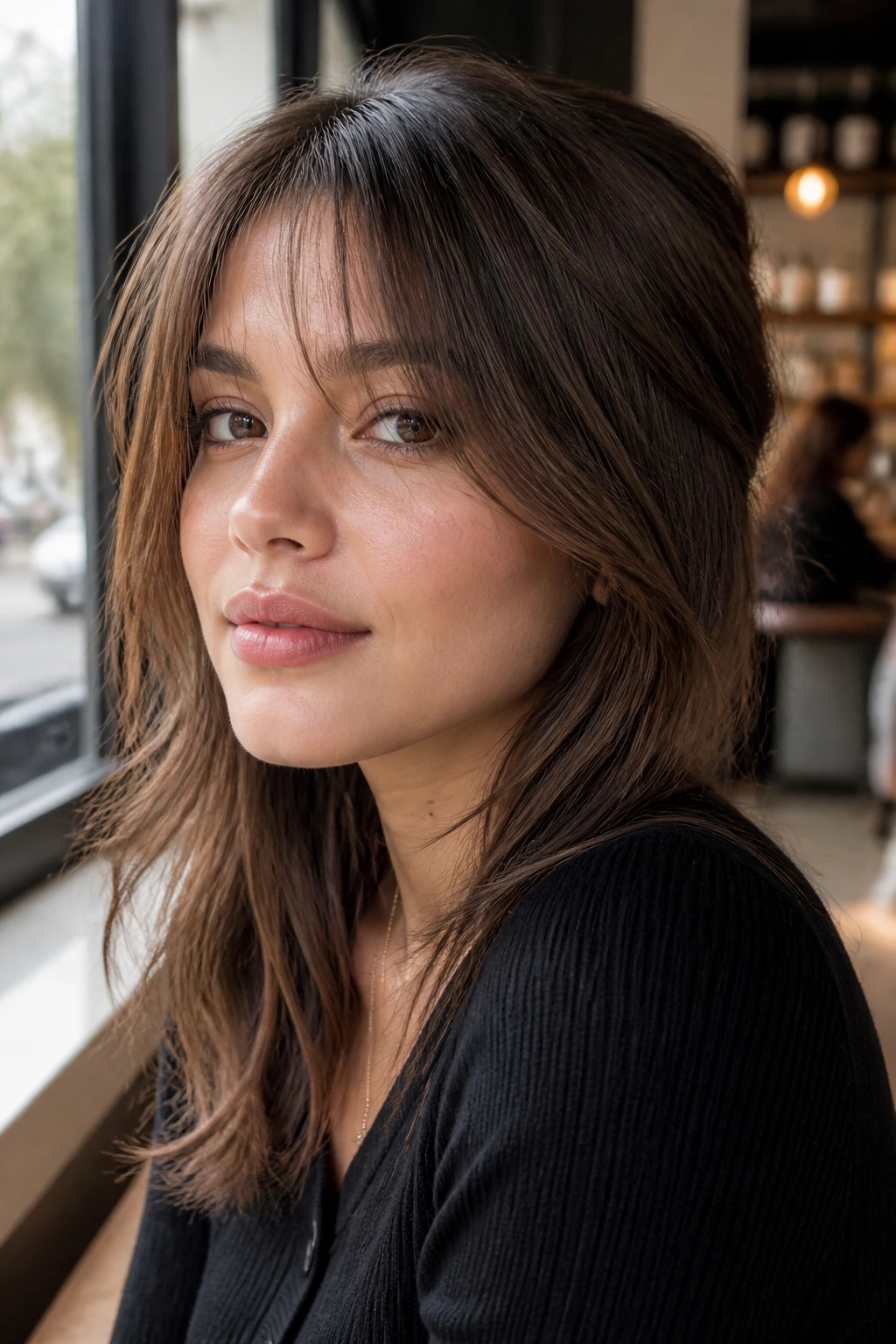
Invisible bangs are the sneaky cousin of face-framing layers.
Instead of announcing themselves with a hard line, they slip into the front pieces of the haircut and stay there quietly. On a round face, that can be a nice compromise. You get the soft narrowing effect of fringe without the visual weight of a dense bang. The hair still moves across the forehead a little, but it never becomes the center of attention.
What Makes It Different
Unlike a classic curtain bang, the layers are softer and less obvious. Unlike simple face framing, they still have enough density to shape the forehead area. The result is easy to wear and hard to overstyle.
- Best for people who want a low-commitment fringe
- Good with lob lengths and shoulder cuts
- Easier to pin back on grow-out days
- Needs a stylist who can blend layers well
If you want bangs without looking like you got bangs, this is the quiet way in.
23. Full Fringe With Tapered Sides
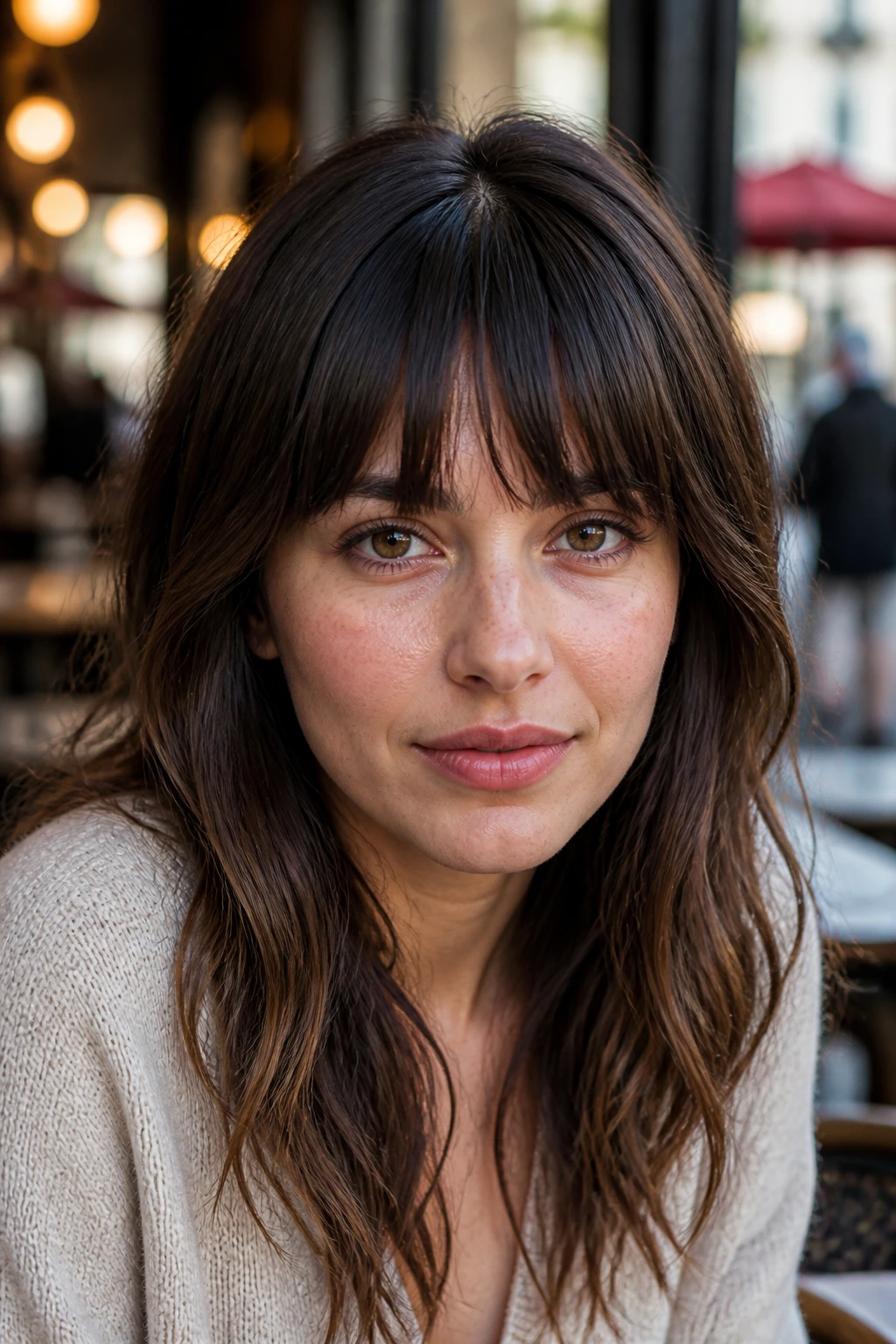
A full fringe on a round face can work. It just cannot stay the same width all the way across.
The safest version has a fuller center and tapered sides that soften into the temples. That keeps the look from becoming a flat rectangle, which is where so many heavy bangs go wrong. The fringe gives forehead coverage, the taper gives shape, and the face gets a cleaner outline.
This shape looks good with strong brows and medium-density hair. If your hair is very fine, it may need extra styling to keep the fullness from disappearing. If your hair is thick, the sides need more softening so the fringe does not sit too wide.
I’d call this a confident choice. It says you want a real fringe, not a suggestion of one. Just make sure the sides do some quiet work.
24. Side-Part Fringe With Long Draped Ends
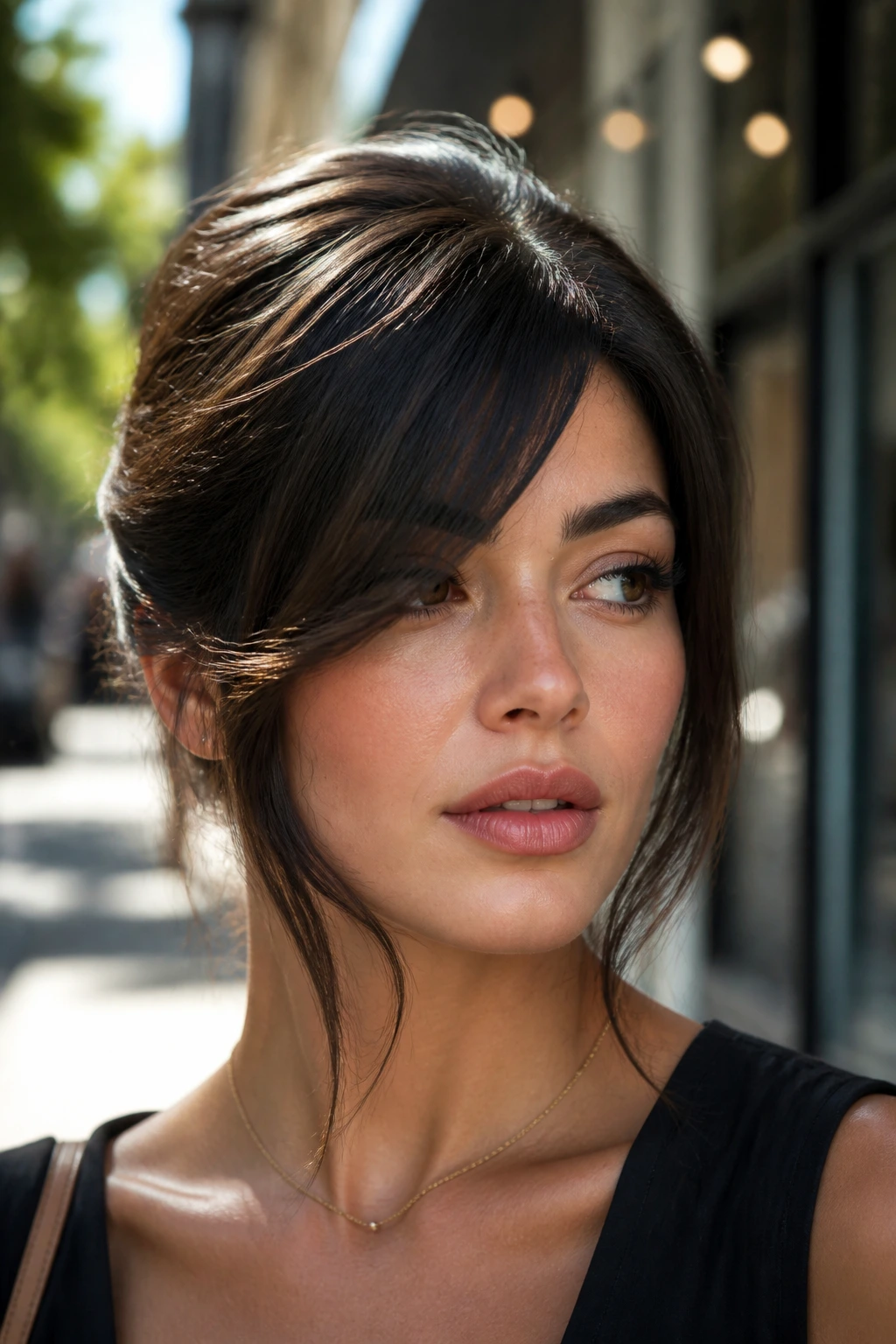
A side-part fringe is one of the easiest ways to keep bangs from feeling too symmetrical.
That matters on round faces because symmetry can sometimes make the width read more clearly. A side part breaks the face into uneven sections, which gives the eye a path to follow. The longer draped ends are important here; they should land around the cheek or jaw rather than hang at the middle of the forehead.
This is also a forgiving style if you wear your hair up often. The bangs can be tucked, swept, or pinned without looking like they’ve been defeated by the rest of the haircut. Nice bonus.
Best for: people who like a soft side sweep but want more coverage than a whisper-thin fringe.
Avoid if: you hate parts that sit noticeably off-center. This one leans into that shape on purpose.
25. Curved Bangs That Follow the Brow Shape

A brow-shaped bang can look almost custom because, well, it is.
The curve mirrors the natural arch of the eyebrow and softens toward the temples. That echo creates harmony on the face, which is especially useful if your features are round and full. The line does not fight the face; it follows it, then lengthens outward at the sides.
Why It Flatters a Round Face
The curve keeps the forehead from reading as one flat field. The longer outer edges add a little downward movement. And because the arch follows the brow instead of cutting straight across it, the whole style feels softer around the eyes.
Ask for the center to land just above the brow with the sides dropping by roughly an inch or two. A light bend at the end helps keep it from looking too neat.
It’s a tidy shape, but not a severe one. There’s a difference.
26. Textured Bangs for Curly and Coily Hair
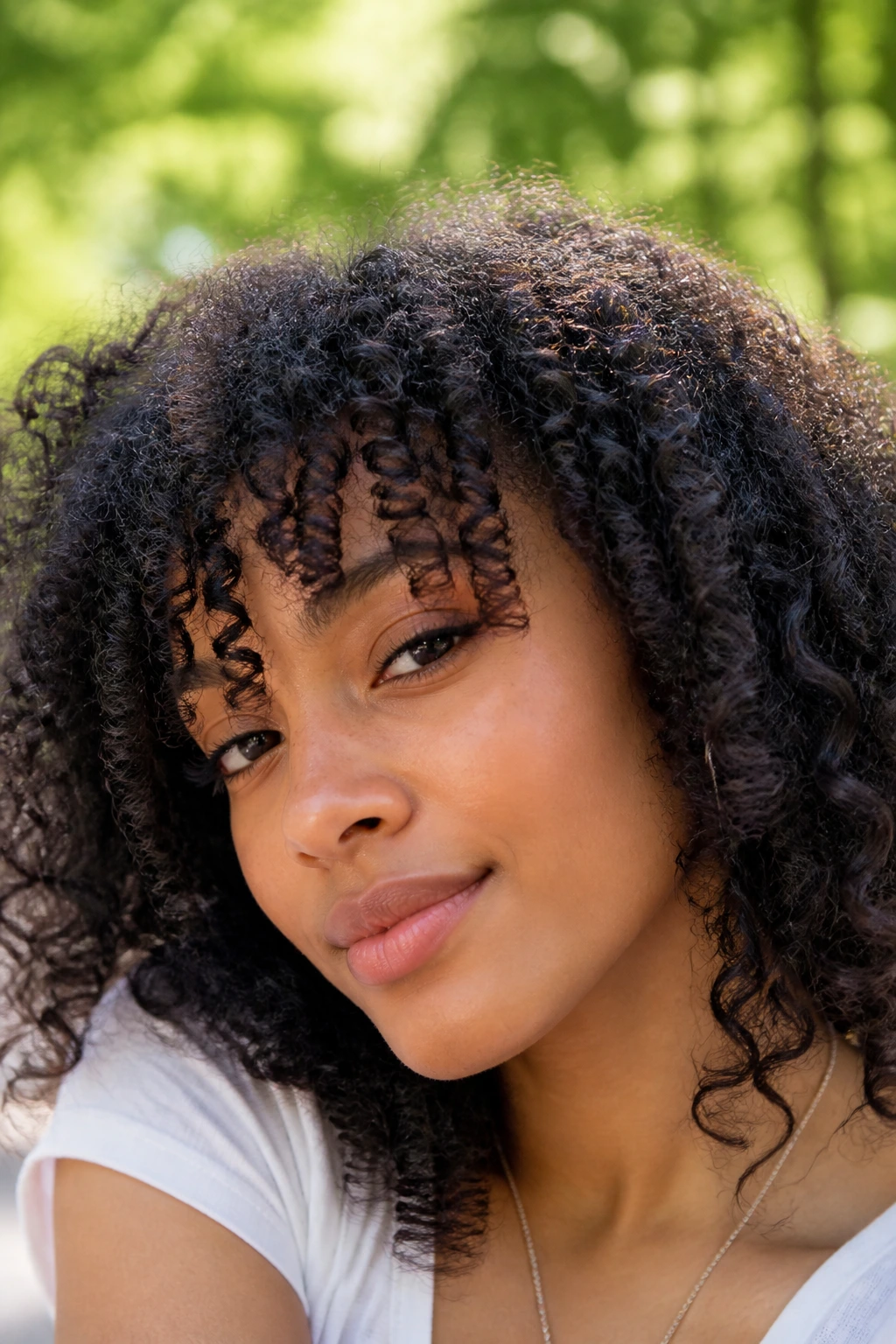
Curly and coily hair can wear bangs beautifully on a round face, but the cut has to respect shrinkage.
The biggest mistake is cutting too short when the hair is wet. A curl pattern can spring up a full inch or more once it dries, sometimes more if the texture is tight. For a medium fringe, that means the dry length should still reach the brow or slightly below. The shape also needs texture so the curls can separate instead of forming one round puff on the forehead.
What to Ask For
- Cut the bangs dry or nearly dry
- Keep the center longer than it first appears
- Let the curl pattern define the finish
- Avoid blunt, one-length edges
That soft separation gives round faces a better outline. The bangs frame the forehead without adding a second round shape on top of the face. If your curl pattern is loose, a bit of twist styling can help. If it’s tight, finger shaping is usually enough.
No need to flatten the curl. That only makes the whole thing look fought over.
27. Chin-Skimming Fringe That Opens the Center

This one lives closer to face-framing territory, but it earns its place because the line around the face matters more than the label.
Chin-skimming fringe pieces can start near the temples and sweep down along the cheeks before reaching the chin. On a round face, that longer path stretches the outline beautifully. The center stays open, the sides create length, and the face gets the kind of frame that feels lean without looking sharp.
I like this shape when someone wants bangs that blend into the rest of the haircut instead of sitting on top of it. It works with lobs, shags, and layered mids. It also plays well with a side part or a soft middle part.
The effect is subtle until you see it from the front. Then it clicks. The face looks longer because the eye keeps moving downward.
28. The Safest Medium Bang Shape for Round Faces
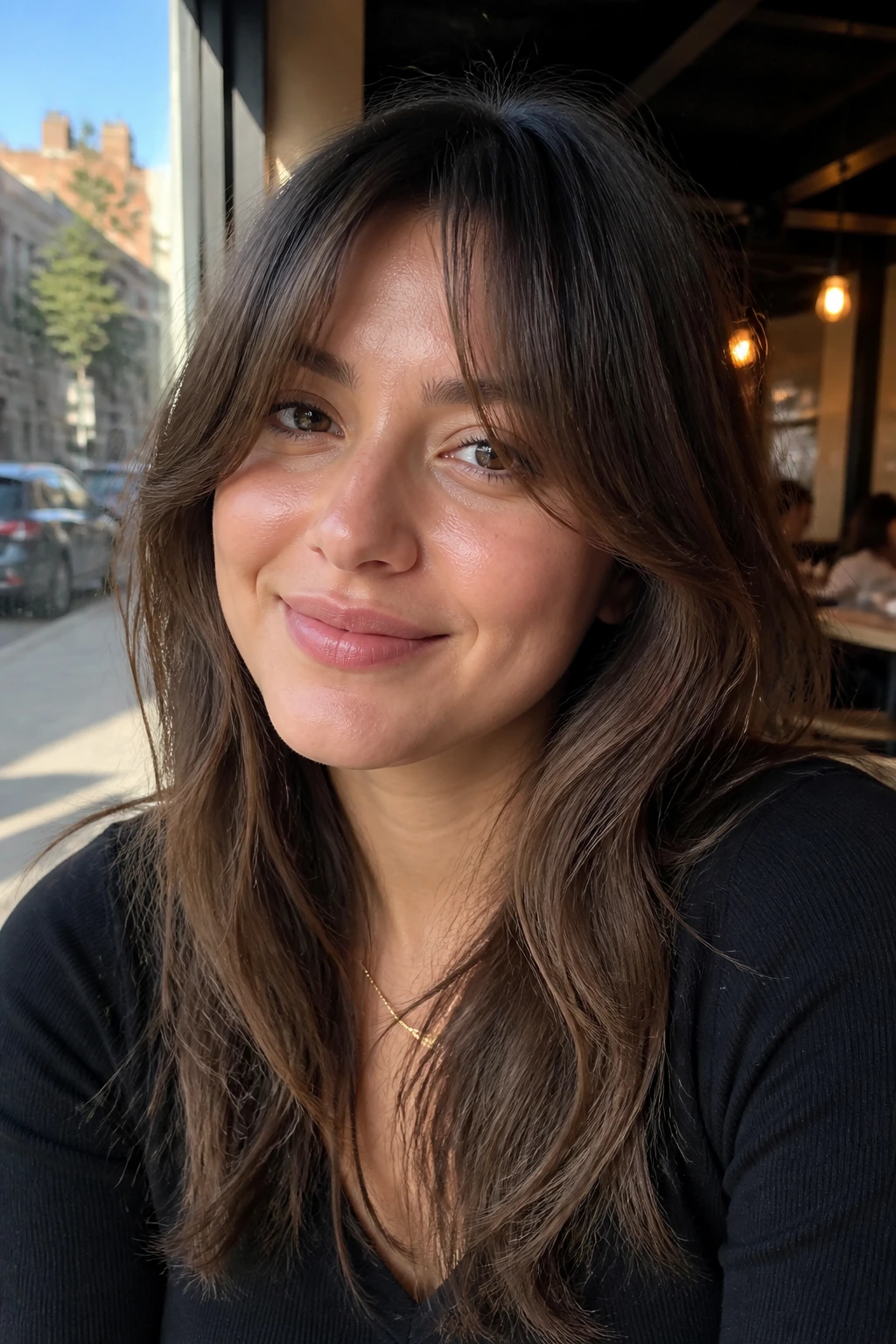
If you want one starting point and none of the guesswork, go with long curtain bangs that open at the nose, taper toward the cheekbones, and stay light enough to move.
That shape does almost everything right for a round face. It opens the forehead, breaks the widest part of the cheeks, and gives you options on days when you want more or less bang showing. You can part it in the middle, nudge it sideways, round-brush it, or let it air-dry with a little bend. It is flexible in a way sharper fringe shapes are not.
I’d ask a stylist to cut the first pass a touch longer than you think you need. Better to trim upward later than to spend three weeks growing out a bang that landed too short. Keep the outer corners soft, not blunt. Keep the center open. That one formula does more good than a dozen trendy variations.
And if you only remember one thing, remember this: the best medium bangs for round faces are the ones that make width look intentional, not accidental.
