



Round faces do not need to be hidden behind long hair. They need shape — a fringe that breaks the width of the face instead of sitting across it like a shelf.
That is where inverted bangs for round faces come in. I’m using “inverted” in the salon sense here: a shape that stays lighter or shorter through the center, then falls longer toward the temples, cheekbones, or jaw. The effect is subtle, but the payoff is real. Your face reads longer. Softer. Less boxed in.
I keep seeing the same mistake: bangs that are cut too blunt, too dense, or too wide for a round face. They can make the face feel shorter and fuller than it is. The better move is a fringe with movement, a little air, and a clear direction. Not stiff. Not heavy. Just enough structure to do the job.
1. Bottleneck Curtain Bangs
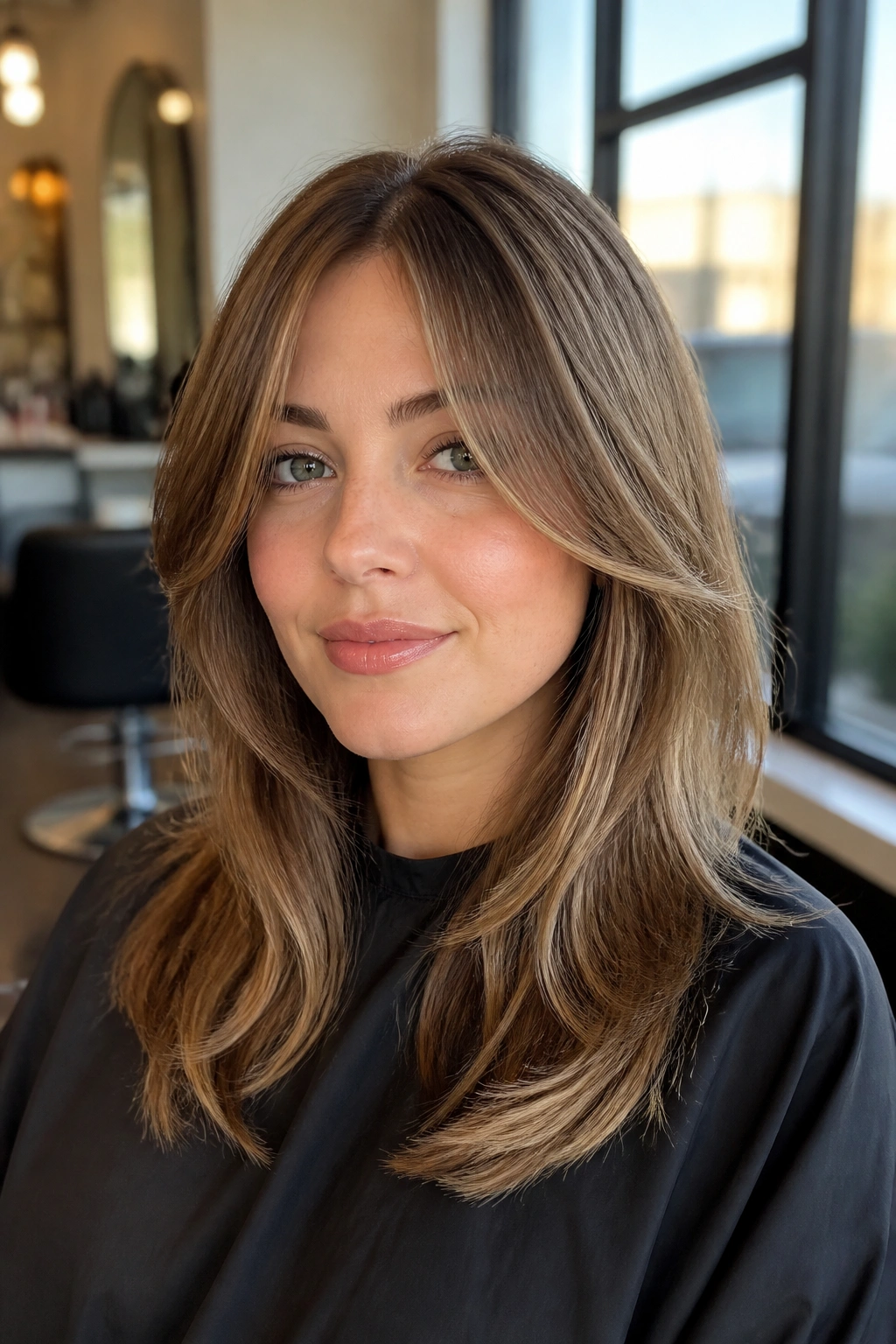
This is the safest starting point for a round face. The center stays narrow and light, then the fringe opens out as it reaches the cheekbones. That shape pulls the eye down the face instead of straight across it, which is exactly why it works.
What to ask for
- Keep the shortest point around the brow line, not high on the forehead.
- Let the sides graze the cheekbones or just skim below them.
- Ask for soft point-cut ends so the fringe does not look like one solid strip.
A good bottleneck cut feels easy, not fussy. It gives you the curtain-bang look without the heavy middle that can crowd a round face. I like it because it grows out with less drama than a straight fringe.
Best trick: blow-dry the center first, then bend each side away from the face with a small round brush.
2. Soft Arched Fringe
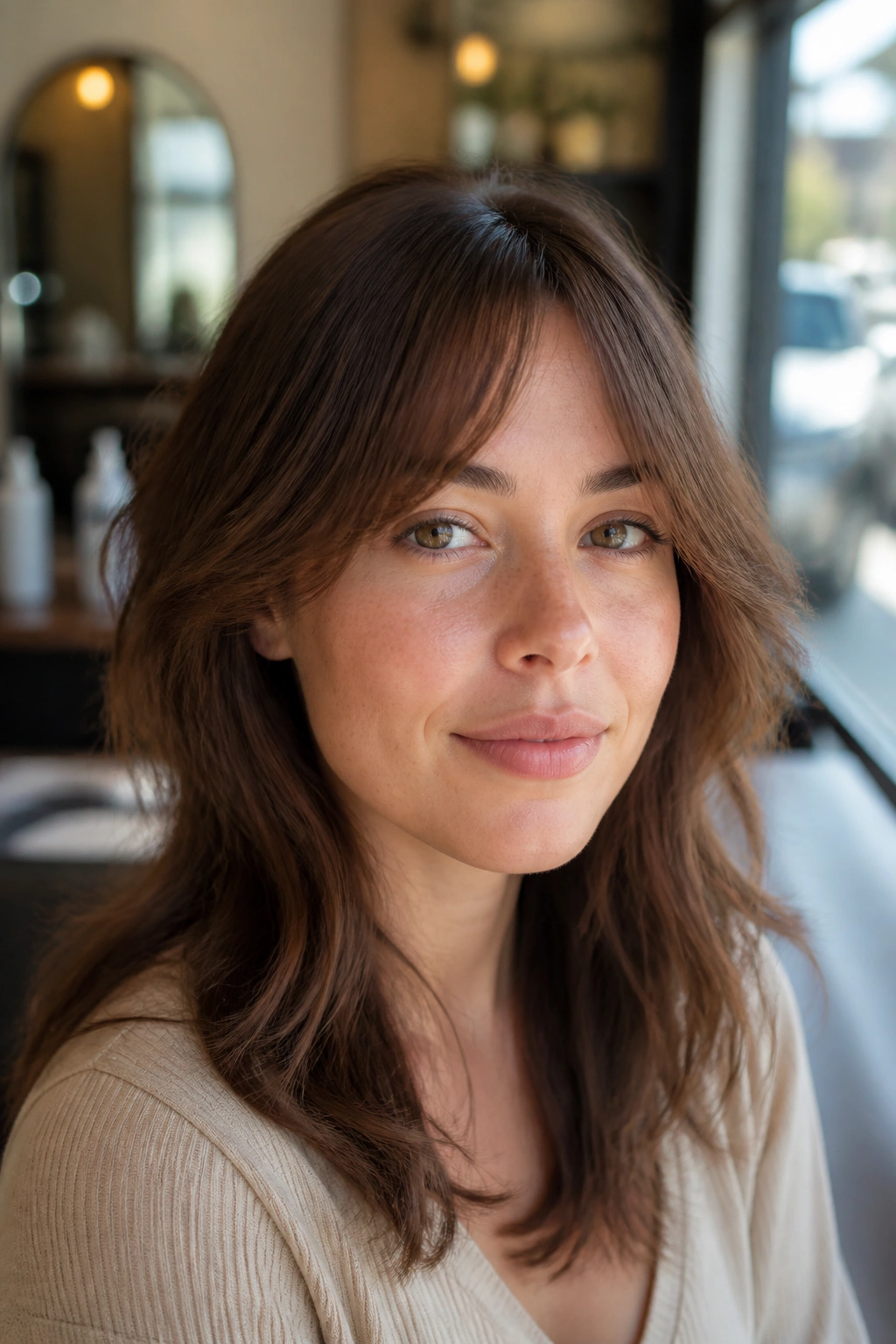
A soft arch gives height without turning the forehead into a hard line. That matters on a round face, where you want a little lift at the center and a gentle fall at the edges. Too much curve looks dated. Too little looks flat.
This version is nice when you want bangs that feel polished but not severe. The middle sits a touch shorter, then the outer corners land lower, almost like a shallow smile line across the brow. It adds shape without shouting for attention.
If your hair is straight or slightly wavy, this shape is easy to live with. It grows out into a flattering curve instead of a blunt block. That alone saves you a lot of salon stress.
3. Cheekbone-Grazing Curtain Bangs
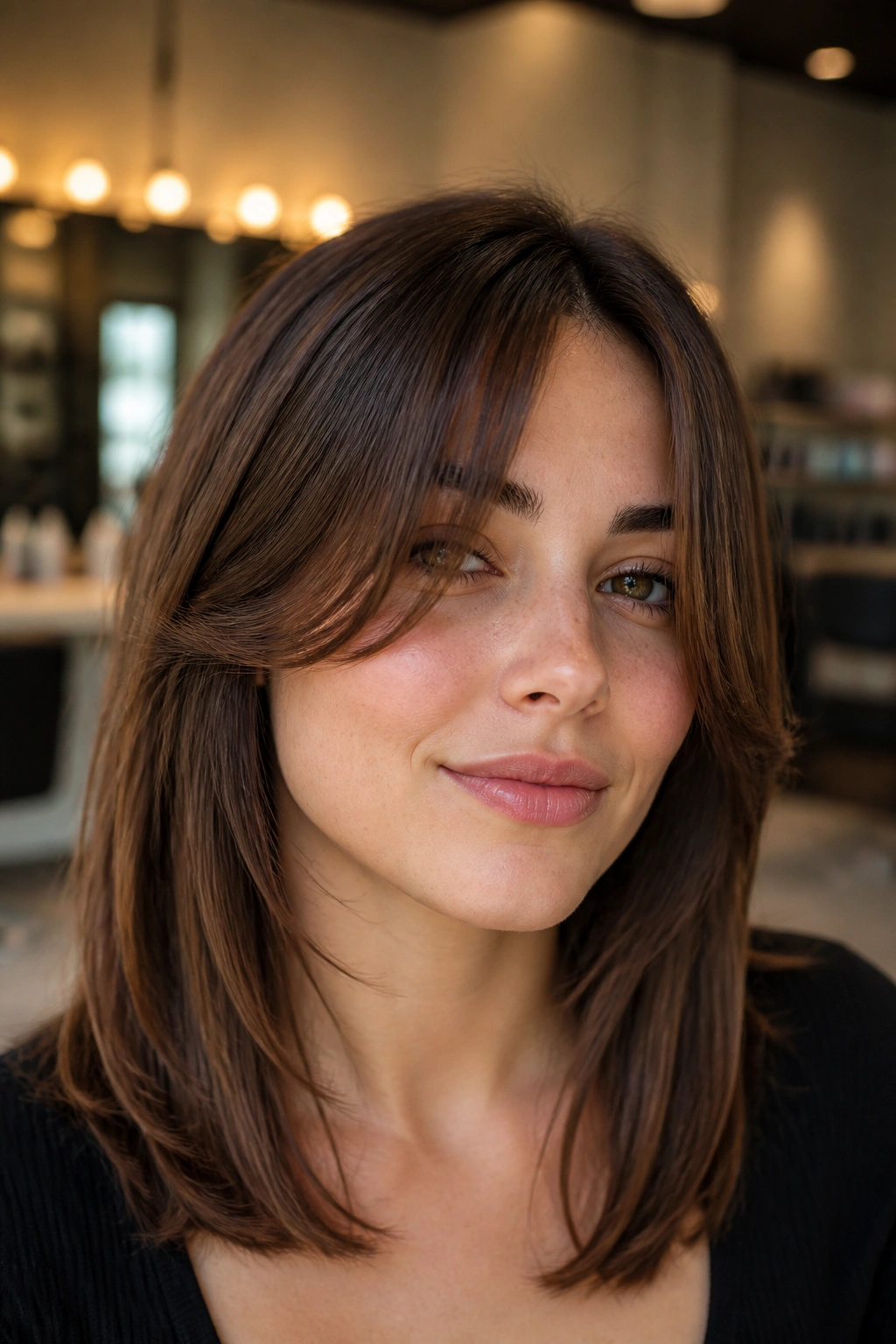
Why do these keep showing up on round faces? Because they place the widest part of the fringe exactly where the face starts to taper. That creates length right where you need it.
A cheekbone-grazing curtain bang also gives you some room to move. You can part it in the middle, slightly off-center, or let it fall forward on one side after a blowout. It never has to sit perfectly still. Good. That would be boring anyway.
How to style them
Start with damp hair and a middle part. Direct the front pieces forward first, then wrap them back and away from the cheeks with a round brush or a blow-dryer nozzle. Finish with a light cream, not a heavy wax.
The goal is soft separation, not stiff bends.
4. Deep Side-Swept Fringe
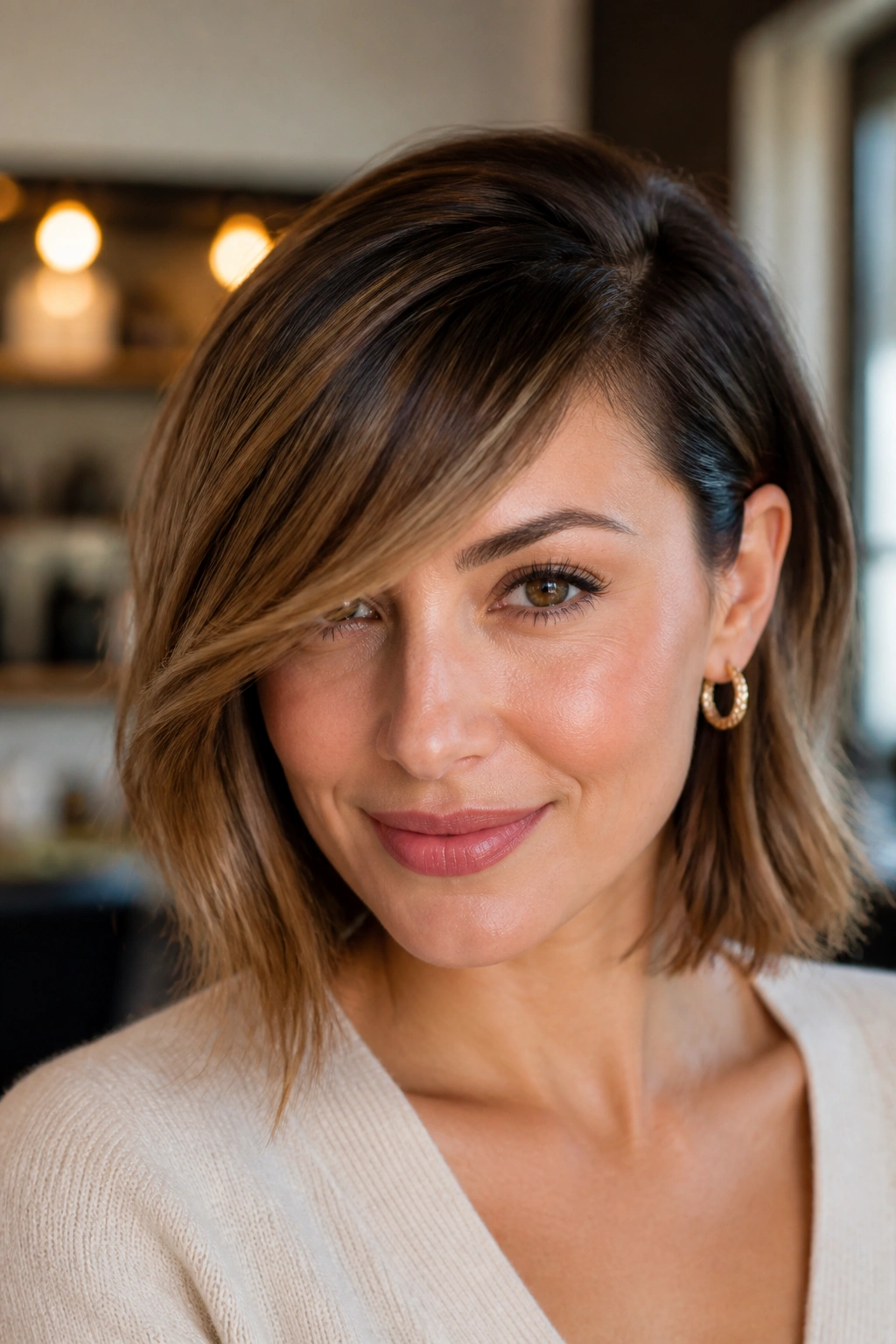
A deep side part changes the whole mood of the haircut. Instead of framing the face evenly, it gives you a strong diagonal line, and that diagonal is your friend on a round face. It cuts across the width in a way that feels natural.
I like this choice for anyone who hates fussing with bangs every morning. A deep side sweep can be brushed into place in under five minutes if the cut is done well. It also works nicely with a bob, a lob, or longer layers.
- Keep the fringe long enough to tuck behind one ear.
- Ask for the shortest point to land near the eyebrow, not above it.
- Use a medium round brush to lift the root and guide the ends outward.
It’s an easy one. Not flashy, but solid.
5. Feathered Birkin Bangs
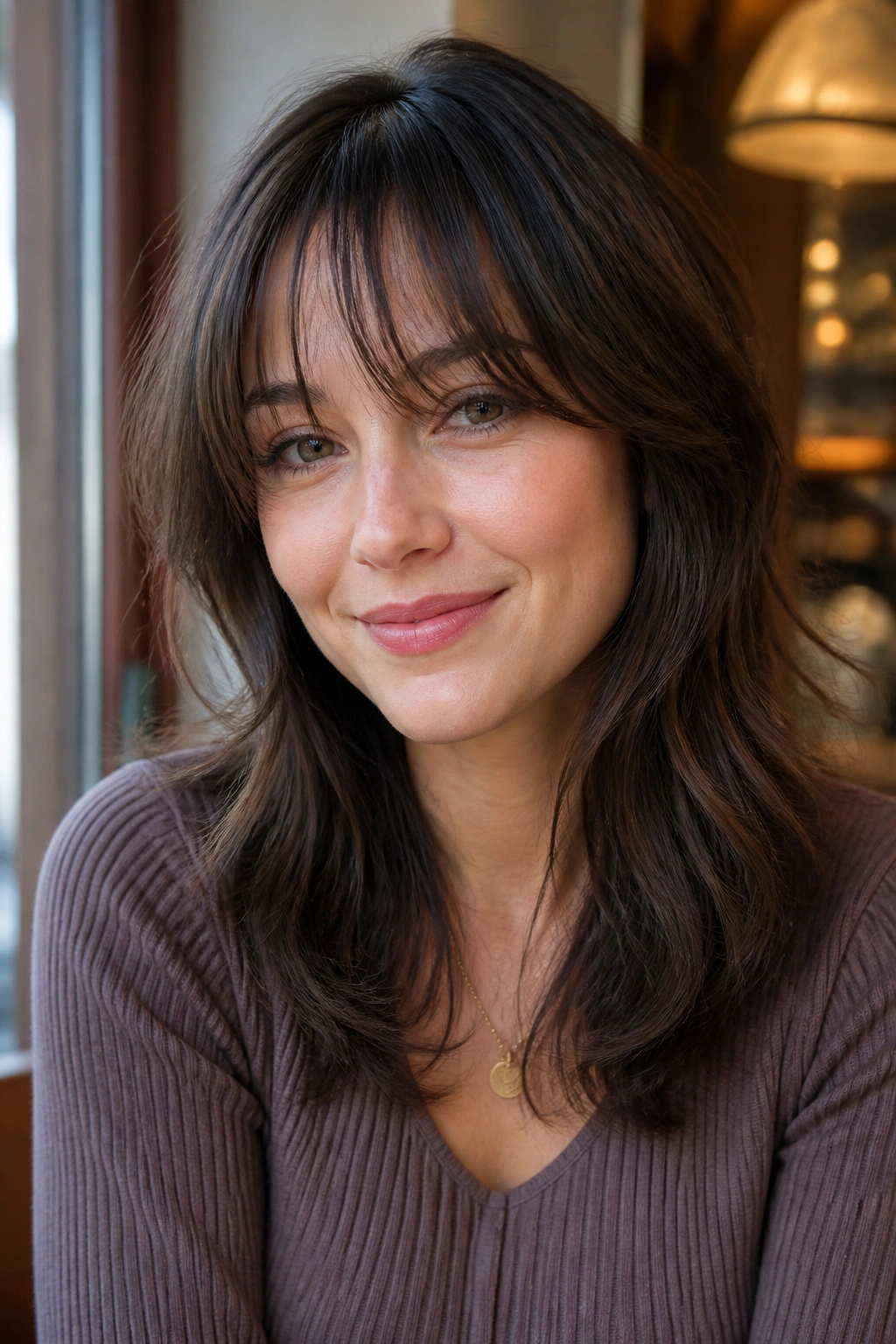
Feathered Birkin bangs have a soft, lived-in feel that flatters round faces without making the forehead look boxed in. The feathering matters. It breaks up the edge of the fringe, so the line across the face stays light.
I love this style on medium-density hair because it gives you presence without bulk. The bangs can be full enough to matter, yet they still move. That movement keeps the face from looking wider. A blunt Birkin cut can be gorgeous on the right face shape, but feathered ends are usually kinder here.
The trick is to keep the center airy and the edges slightly longer. If the fringe is too uniform, you lose the softness that makes this version useful. A little separation at the tips goes a long way.
6. Wispy See-Through Fringe
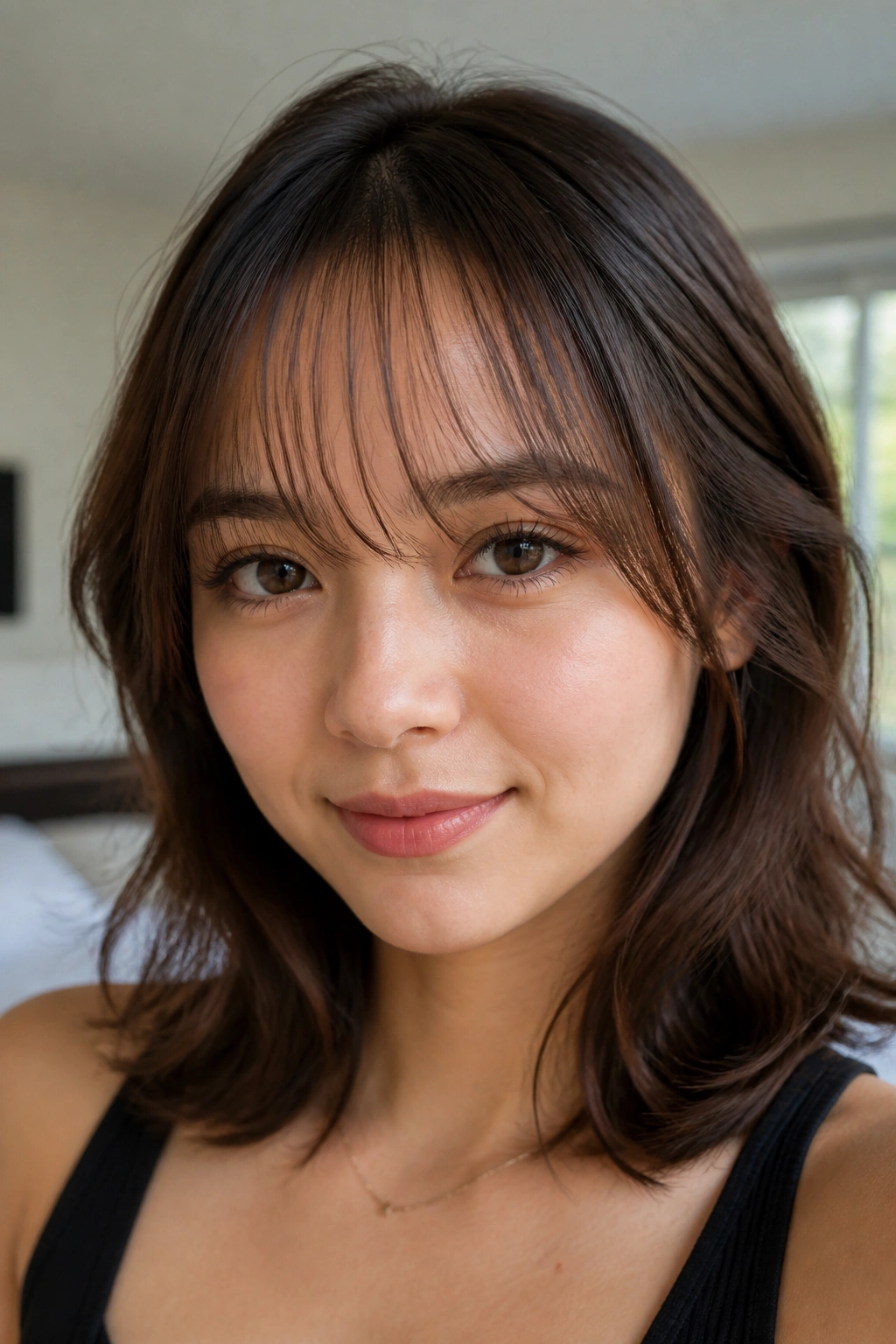
Heavy bangs can sit like a curtain across a round face. Wispy see-through bangs do the opposite. They leave enough forehead visible to keep the face open, which is why they feel so light.
This style is especially nice if your hair is fine or medium-fine. Dense bangs can collapse on that texture and get oily fast. Wispy fringe keeps the front soft, almost airy, and it does not ask for a ton of styling every morning. There’s a catch, though: you cannot over-thin the center. If the middle gets too sparse, the whole shape loses its purpose.
Best for: glasses, smaller foreheads, and anyone who wants bangs without the commitment of a full fringe.
7. Choppy Textured Bangs
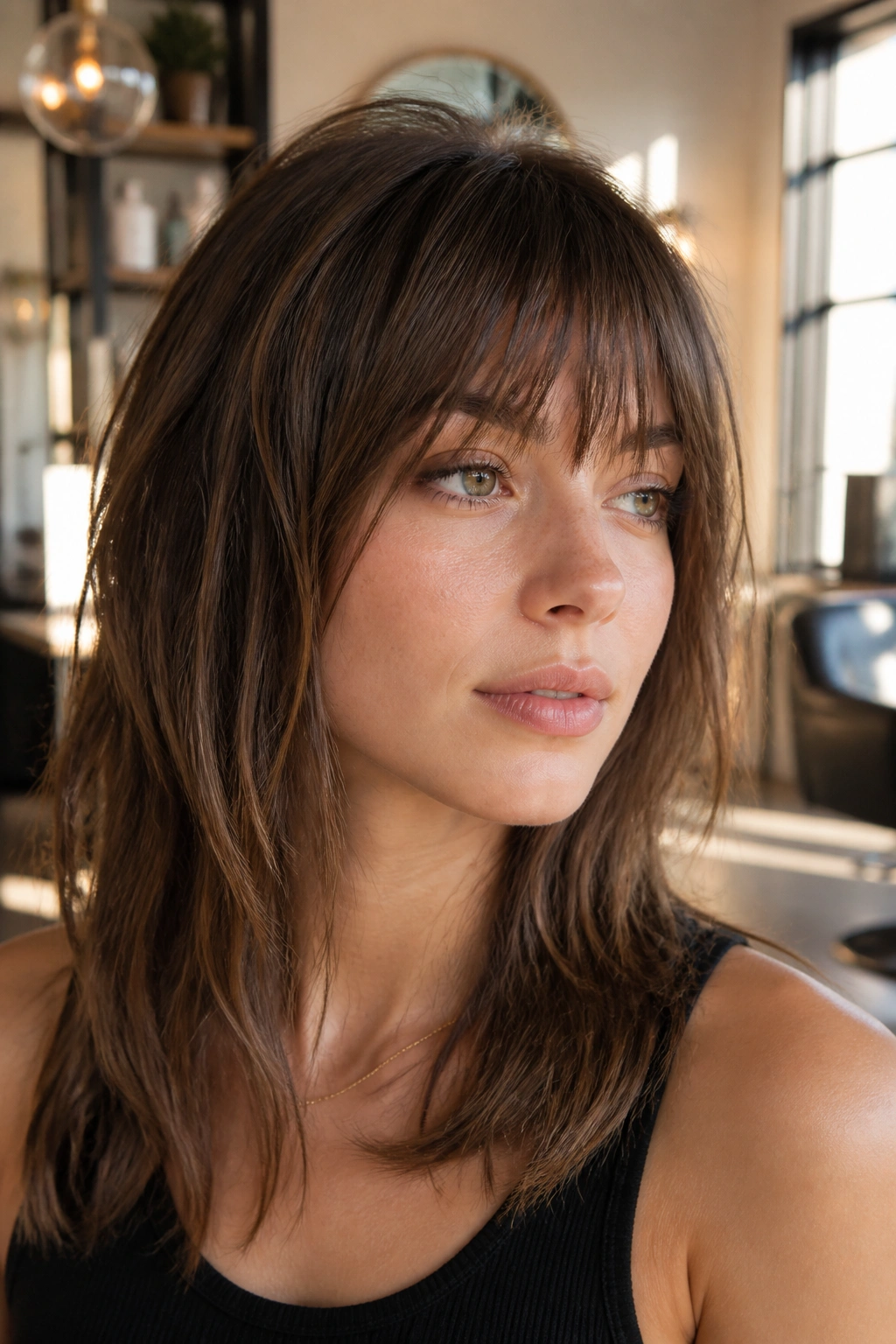
If your hair goes flat fast, this is the one to look at. Choppy texture brings in little breaks and edges that stop the fringe from turning into a heavy block.
The cut matters more than the styling here. You want pieces that vary a touch in length, not ragged ends that look accidental. A stylist who uses point cutting well can make this fringe look airy and modern instead of damaged. That distinction matters.
Nope, you do not need a ton of product. A dab of lightweight paste or cream is enough to separate the pieces. Too much and the texture just collapses into strings.
8. Long Peekaboo Bangs
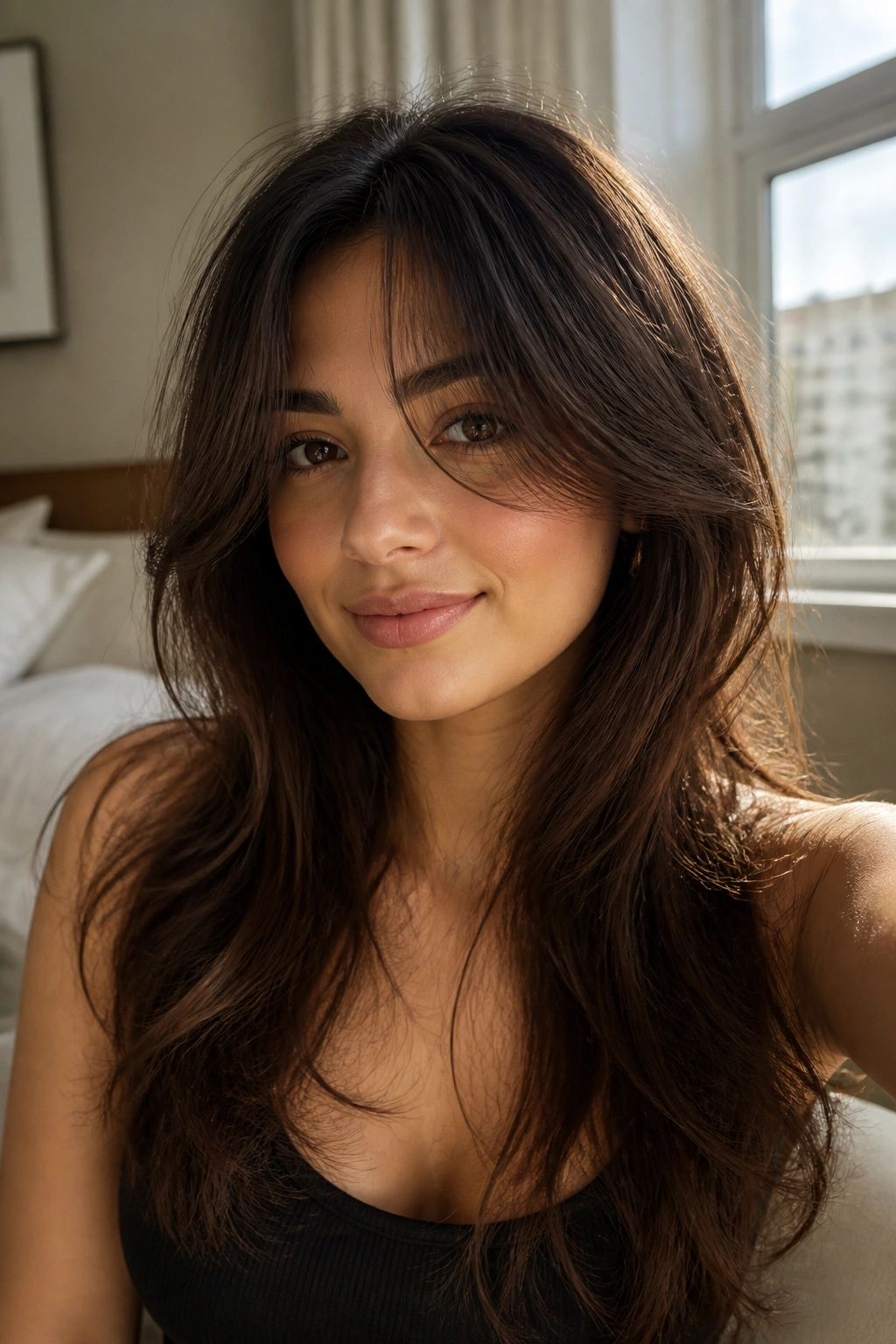
Want bangs that do not announce themselves the second you wake up? Long peekaboo bangs are a smart compromise. They fall forward just enough to frame the face, then they slip partly out of the way.
The reason they suit round faces is simple: they create motion near the eyes and cheekbones without cutting off the forehead too sharply. That keeps the face from feeling wider than it is. They also soften heavier cheeks nicely, which is helpful if you have a very full lower face.
How to get the sweep
Use a low heat blow-dry and brush the fringe from side to side for the first minute. Then set the direction you want and let it cool there. That little cooling step helps the shape hold without stiffness.
It’s a small thing. It works.
9. Asymmetrical Fringe
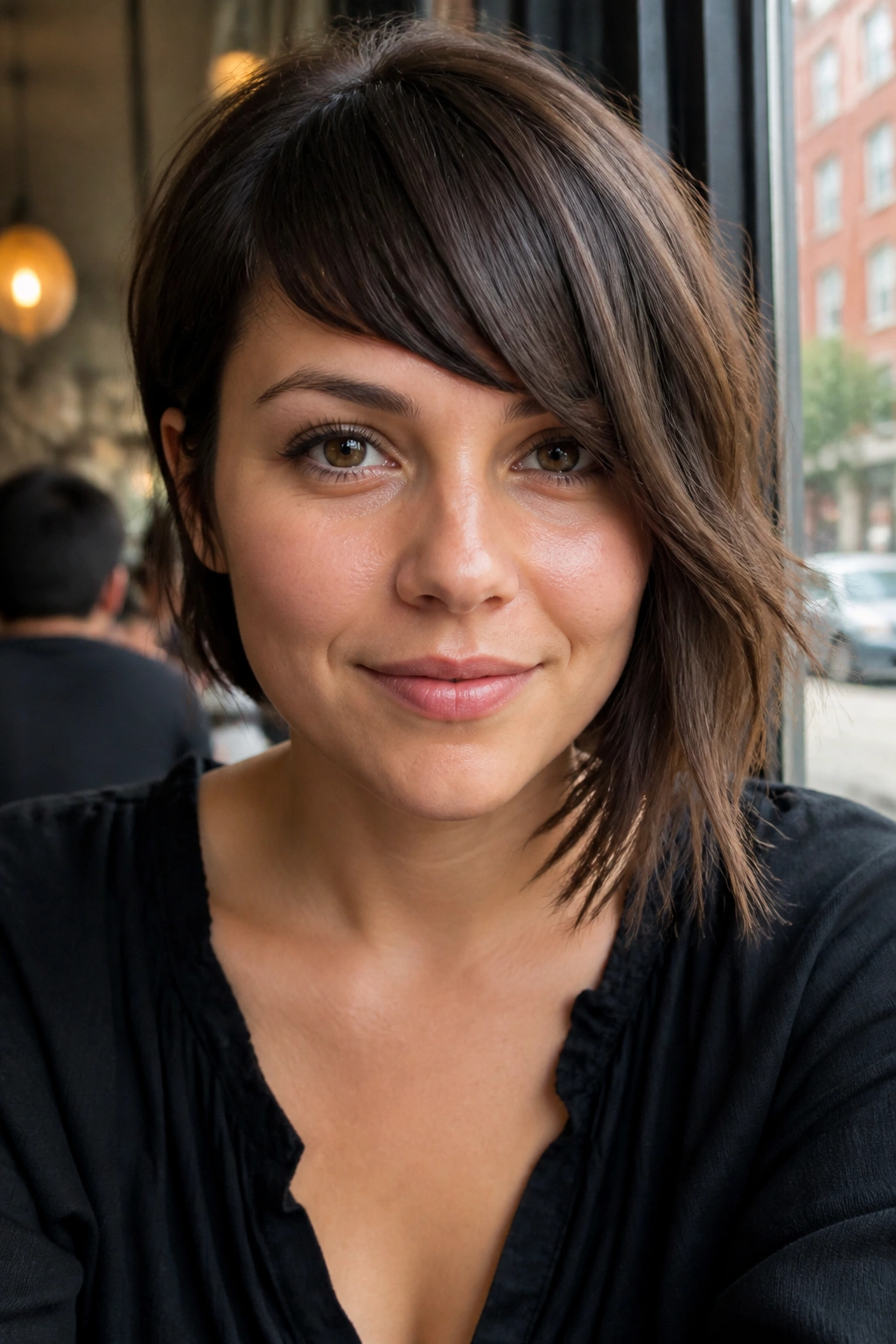
An asymmetrical fringe can be a cheat code for round faces. One side sits shorter, the other side drifts lower, and that unevenness pulls the eye off the widest part of the face. Symmetry is lovely in theory. On a round face, a little imbalance can be more flattering.
This is the cut for someone who likes a bit of edge but still wants the fringe to feel wearable. The shorter side can kiss the eyebrow, while the longer side lands near the cheekbone or jaw. That difference creates a long diagonal line across the face.
- Keep the shorter side soft, not blunt.
- Let the longer side blend into face-framing layers.
- Avoid cutting both sides to the same thickness.
It should look deliberate, not random. That’s the whole point.
10. Face-Framing Shag Bangs
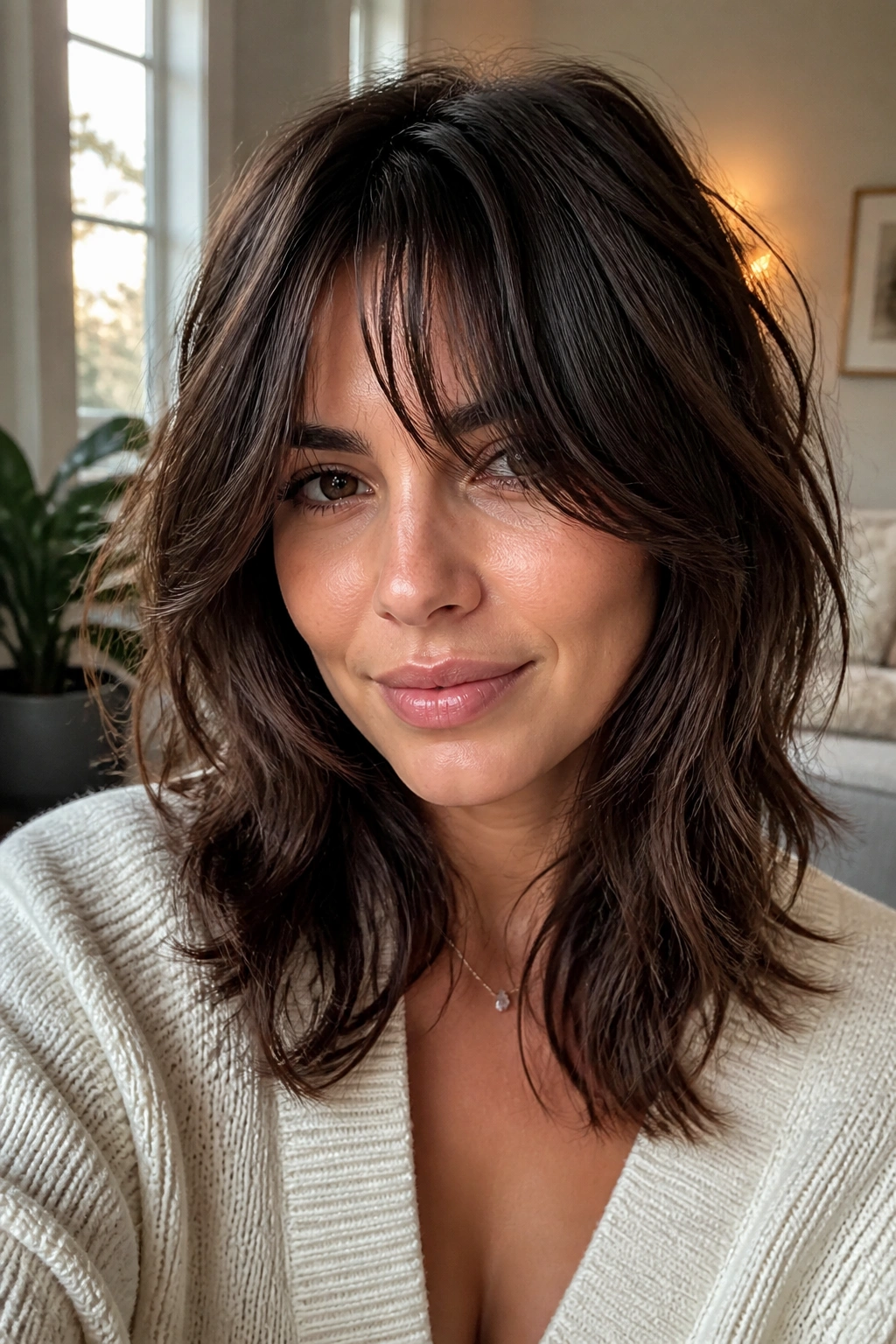
A shag fringe is one of those styles that looks better when it is a little imperfect. The layers around the face break up the roundness and give the haircut a lived-in edge, which helps a lot if you want your features to read longer and slimmer.
I like this on wavy hair most, because the texture does half the work for you. The bangs and the layers talk to each other instead of sitting apart. That means the front of the haircut does not feel heavy, even when it has a decent amount of hair in it.
The only thing to watch is bulk at the cheeks. If the face-framing pieces all hit at the same point, the shape can balloon. A good shag keeps the shortest front pieces light and lets the rest travel down.
11. Sliced Curtain Bangs
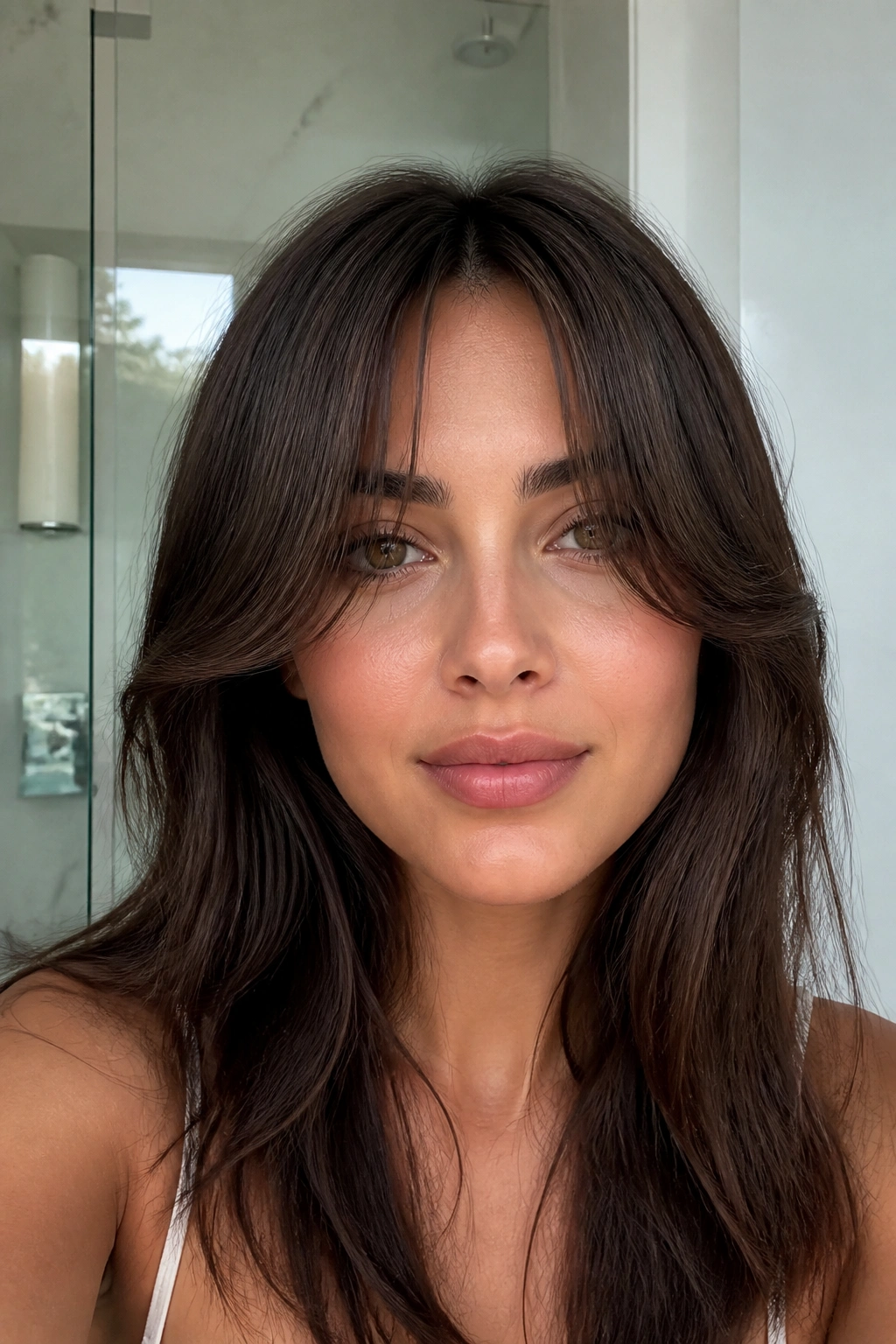
Sliced curtain bangs feel cleaner than feathered ones. The strands separate into neat pieces, so the fringe looks light without turning fluffy. That makes them a smart pick if you like a sharper finish.
On a round face, that clean separation helps carve out vertical space. The center part opens the forehead, and the longer sides draw the eye past the cheeks. It is a small visual trick, but it changes the whole balance of the haircut.
Unlike denser curtain bangs, sliced ones work better when the hair has a little natural slip or shine. They can look stringy if the hair is too dry, so a drop of smoothing serum on the ends helps. Keep it light. Heavy product kills the effect.
12. Rounded Bottleneck Fringe
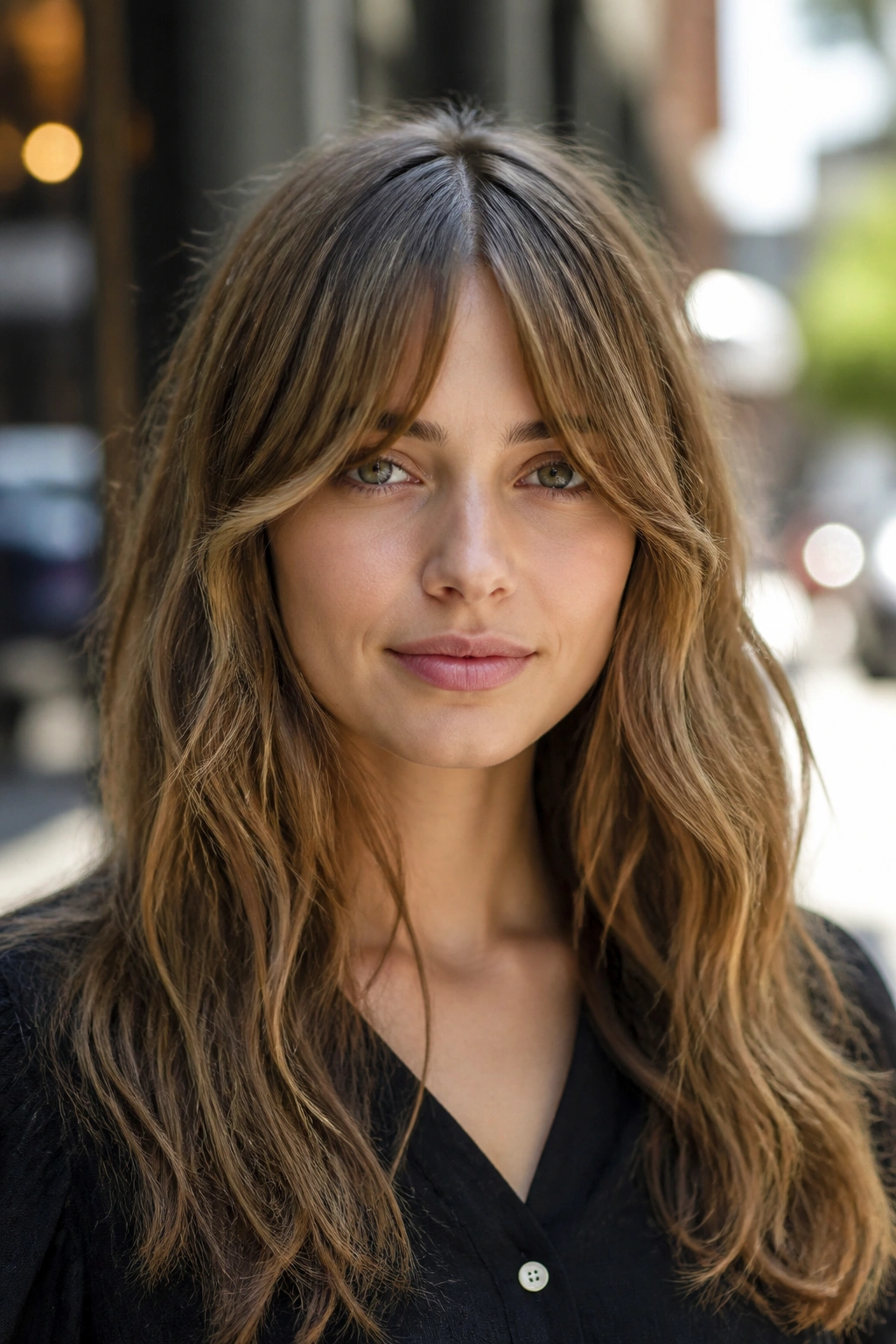
This version keeps the bottleneck idea but softens the outer curve a touch more. The center still stays slimmer, yet the sides round out in a gentler arc that feels less sharp against a round face.
That roundness is useful because it mirrors the face just enough to look natural while still adding length. You are not fighting the shape of your features. You are guiding them. There is a difference.
Quick shape notes
- Shorter through the middle, but not tiny.
- Longer at the temples than at the brow.
- Ends should curve softly, not stop dead.
This is a good choice if you want something flattering but not obvious. It slides into the haircut instead of taking over.
13. Airy French Girl Fringe
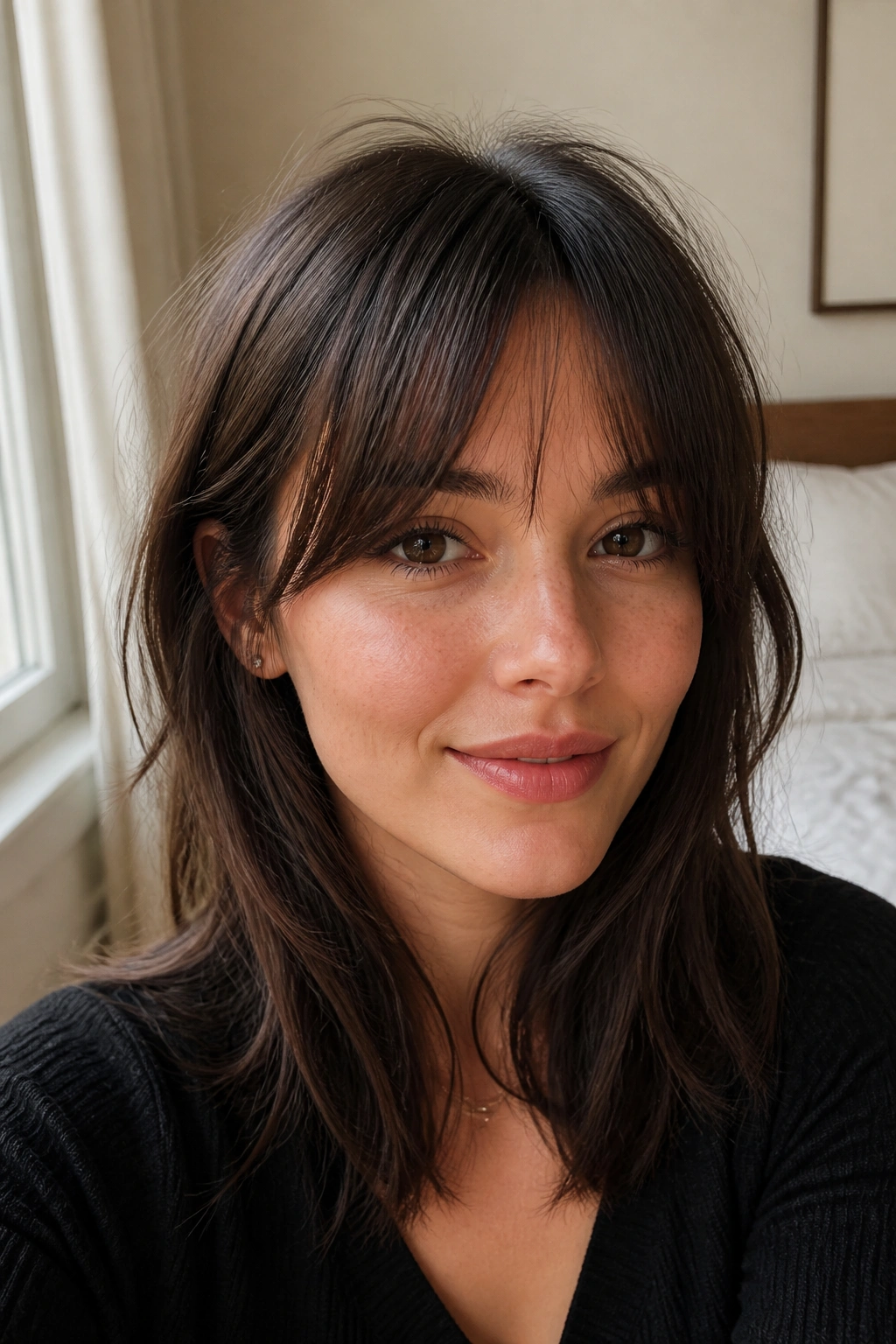
What if you want softness more than coverage? Go airy. French-girl fringe keeps the front light, slightly broken, and a bit undone, which keeps a round face from feeling boxed in.
The look depends on restraint. Too much density and you lose the charm. Too little structure and it just looks grown out. The sweet spot sits somewhere in the middle, with a narrow center and enough width at the sides to frame the cheekbones.
This style is especially nice on straight or slightly wavy hair because the texture gives it movement without much effort. A mist of dry shampoo at the roots can stop the fringe from collapsing. That’s the boring part, but it matters.
14. Tapered Side Bangs
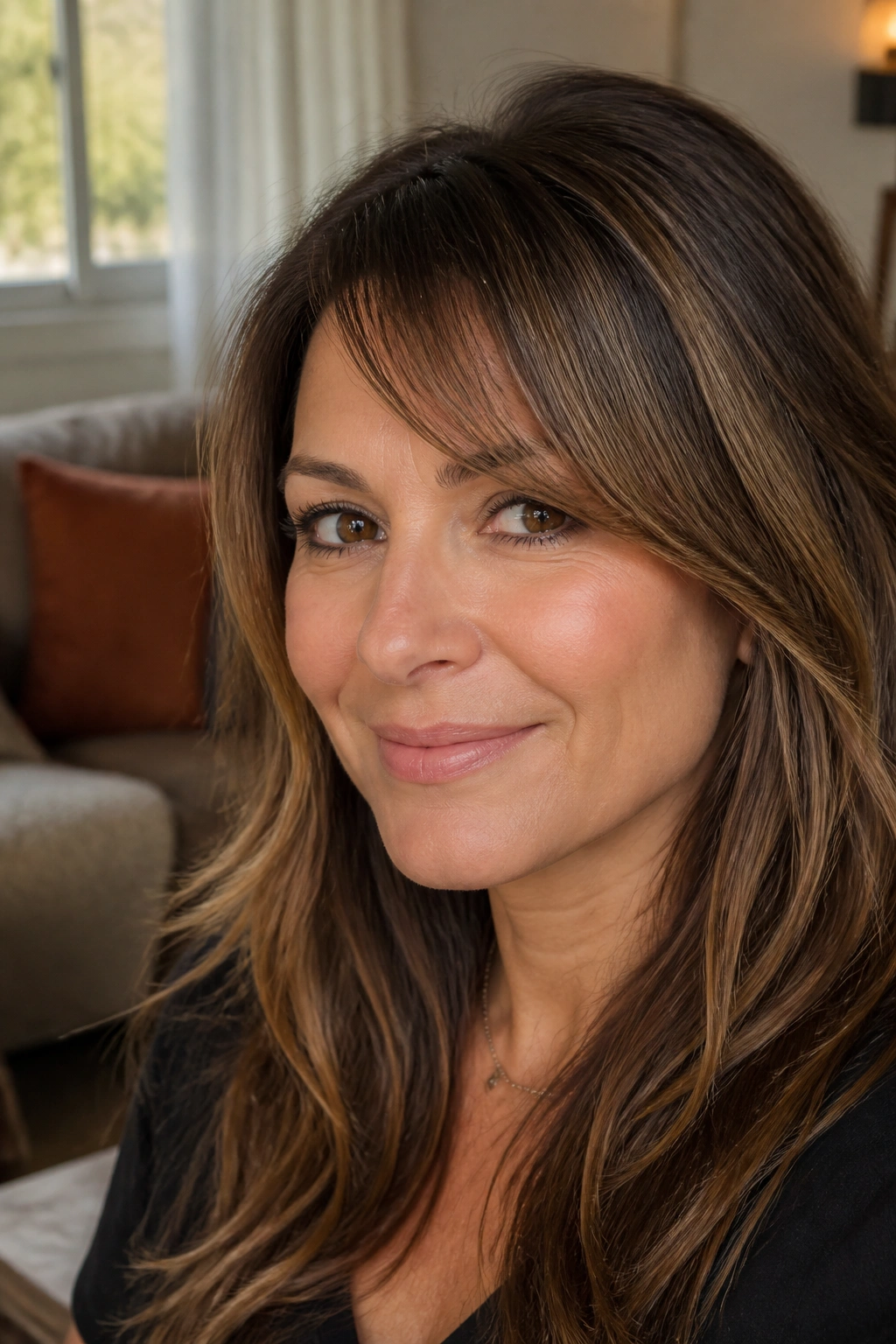
I like tapered side bangs for anyone who wants the face opened up without losing forehead coverage. The taper keeps the front from feeling heavy, and that matters on a round face because bulk at the front can make the cheeks look even fuller.
The shape starts fuller near the part, then narrows as it moves across the forehead. That taper is what keeps the style from looking bulky. It also grows out in a more forgiving way than a blunt side fringe.
If you wear your hair up a lot, this one is useful. It can fall around the face on a casual day, then slide into a ponytail or bun without looking like an afterthought.
- Best if your hair has some bend.
- Works well with a soft blowout.
- Needs a little root lift to stay away from the eyes.
15. Sweeping Layered Fringe
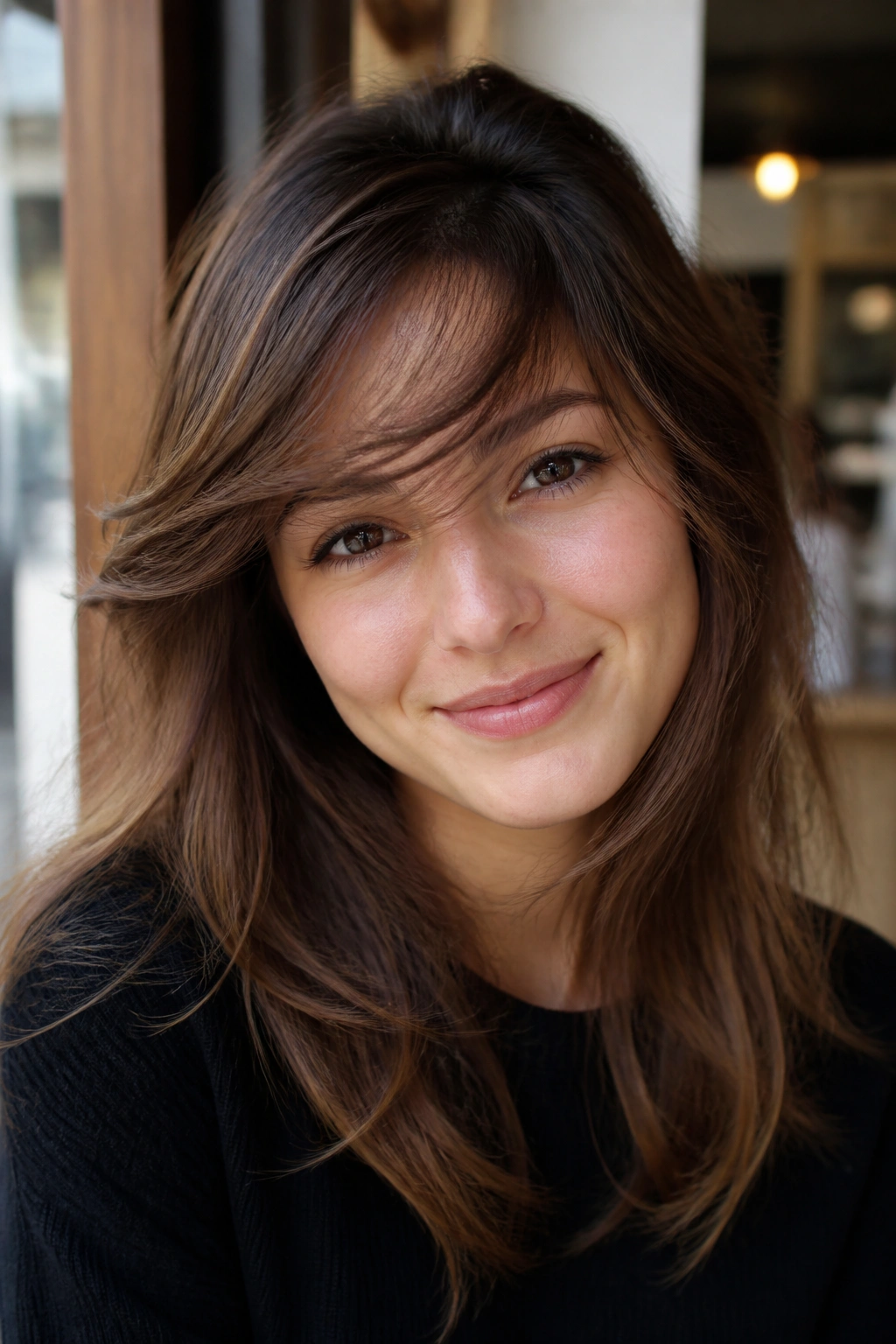
Sweeping layered fringe has a bit more movement than a plain side bang, and that movement is what helps a round face. The layers prevent the front from reading as one solid shape. That makes the haircut feel longer, lighter, and less boxed in.
A round brush helps here, but so does a good cut. If the ends are layered into the fringe properly, the whole front section turns and moves instead of hanging flat. That’s the part people miss when they copy the look from a photo. The styling is only half of it.
I’m a fan of this shape on thick hair because it removes some of the visual weight from the front. Thick bangs can eat a face alive if they are cut too cleanly. Layering gives you room to breathe.
16. Razored Fringe
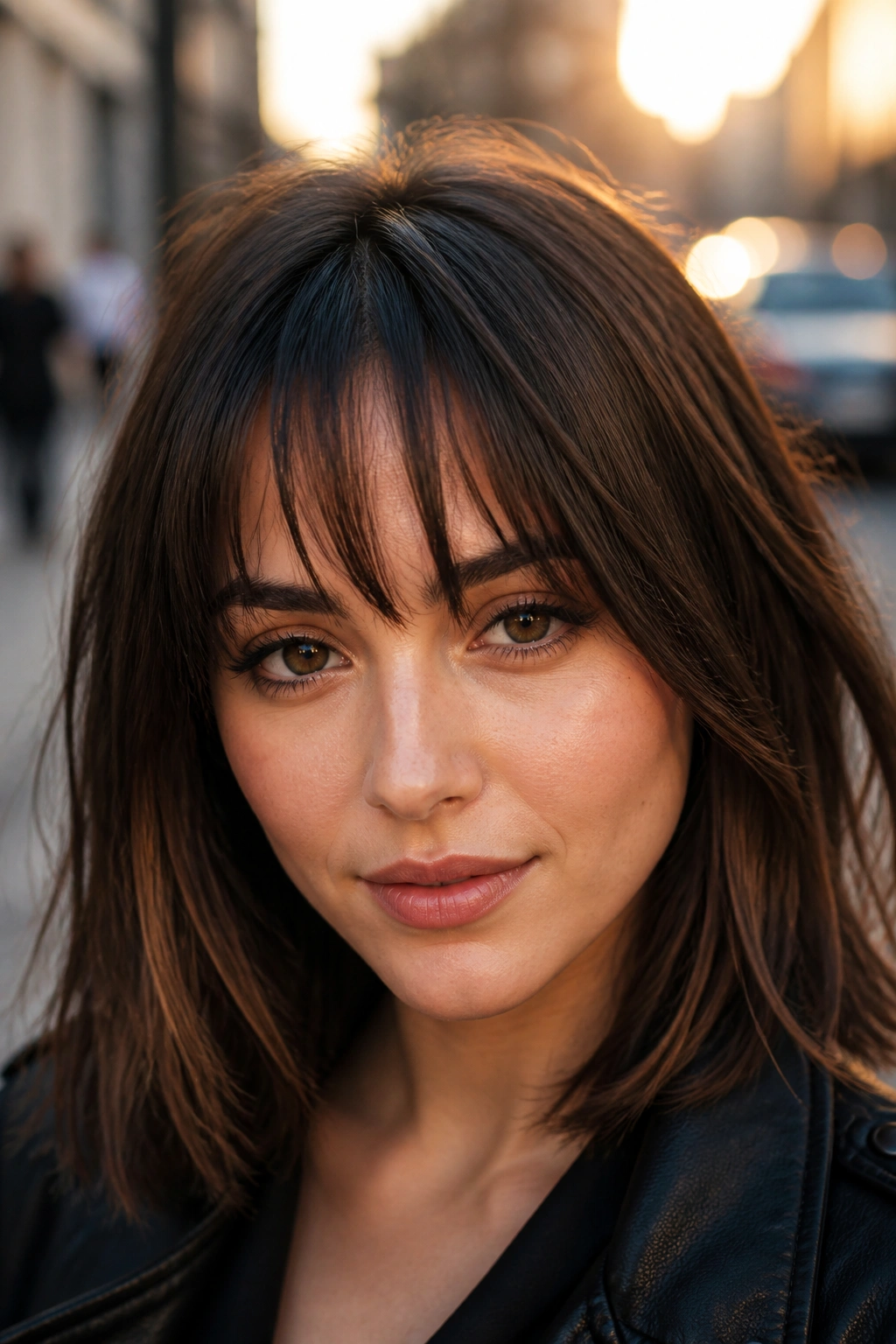
Razored fringe is not for everyone, and that’s fine. When it works, it gives the bangs a light, broken edge that keeps them from sitting like a wall across a round face. When it does not work, it can look frayed. So yes, the tool matters.
The benefit is air. A razor cut can take bulk out of the front without making the fringe look thin in a sad way. That said, coarse hair often needs a light hand, because too much razor work can leave the ends fuzzy. A scissor cut may be safer if your hair already frizzes.
This is the kind of fringe I’d suggest if you like a bit of softness but want a more modern finish than a classic blunt bang.
17. Curved U-Shaped Fringe
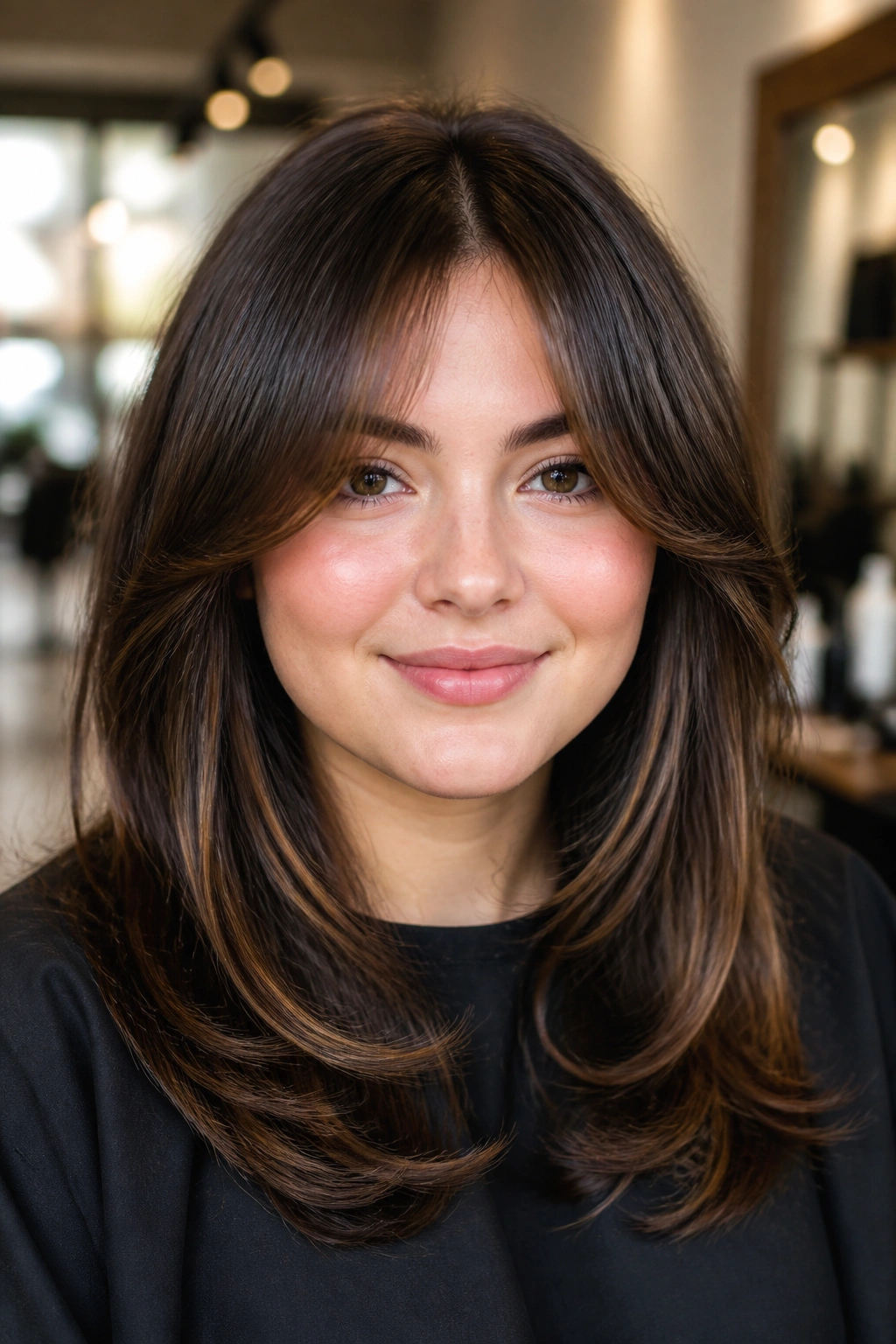
A U-shaped fringe gives you a rounded center with longer sides that fall lower at the temples. On a round face, that lower side line helps stretch the face visually. The shape is gentle, which is why it feels so wearable.
The center should not be too wide. If the U opens too far across the forehead, the fringe starts to compete with the cheeks instead of balancing them. Keep the center narrow, let the outer edges drop, and the shape does the work for you.
This is a nice choice if you like a more classic salon finish. It feels neat, but not rigid. And that balance is hard to beat.
18. Micro Bottleneck Fringe
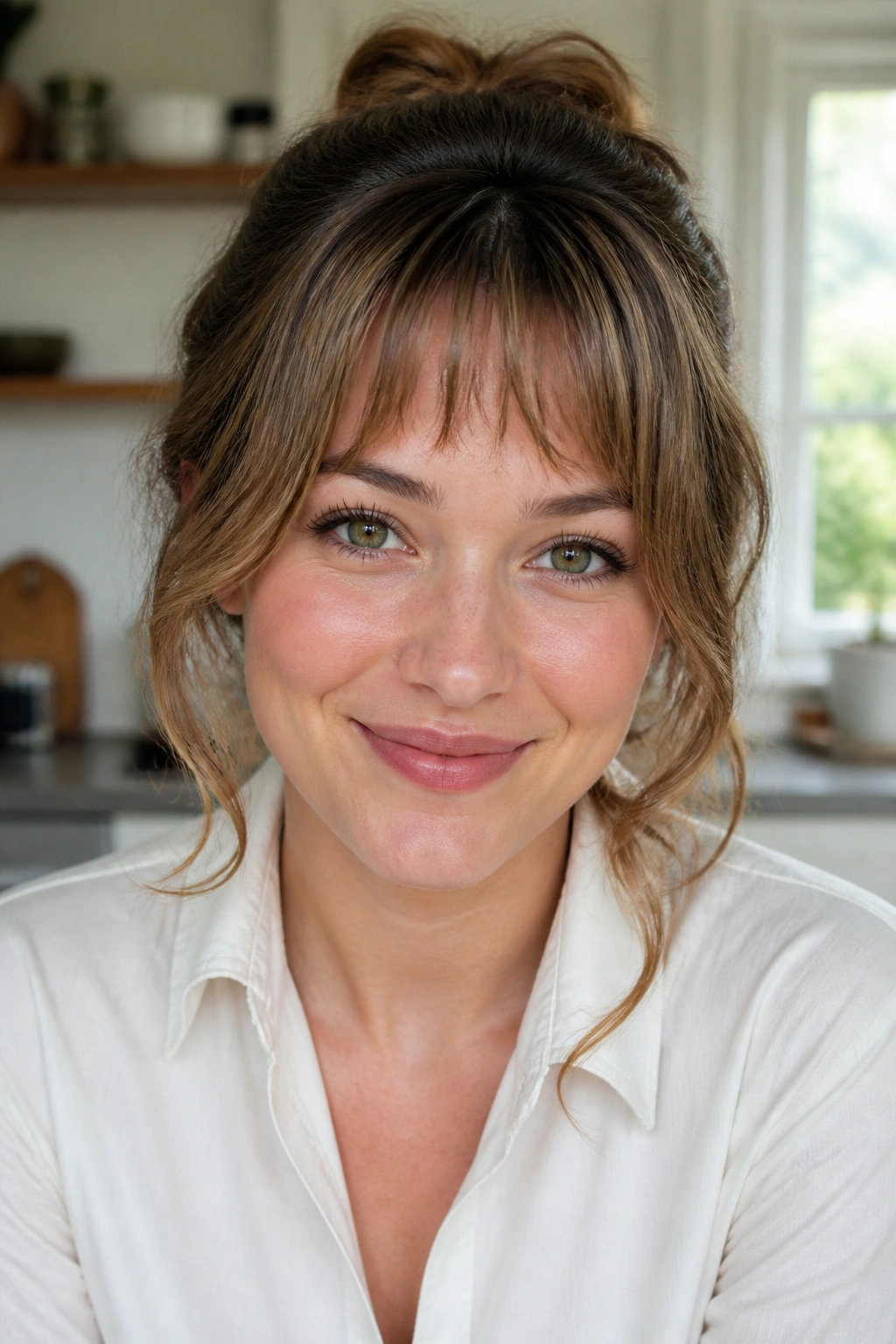
Micro bottleneck bangs are a little more playful. The center is short and airy, while the sides lengthen quickly and slip toward the cheekbones. It is a sharper version of the bottleneck idea, but still soft enough for a round face.
I like this for smaller foreheads or for someone who wants a lighter front without going full baby bang. The short center opens space at the top of the face, and the longer sides keep the width balanced. That combination stops the cut from looking too blunt.
Where it shines
- Fine to medium hair.
- Faces that want a little lift at the center.
- Anyone who likes fringe that grows out into curtain bangs.
It does need regular trims. The short center loses its shape faster than longer fringe.
19. Piecey Center-Parted Fringe
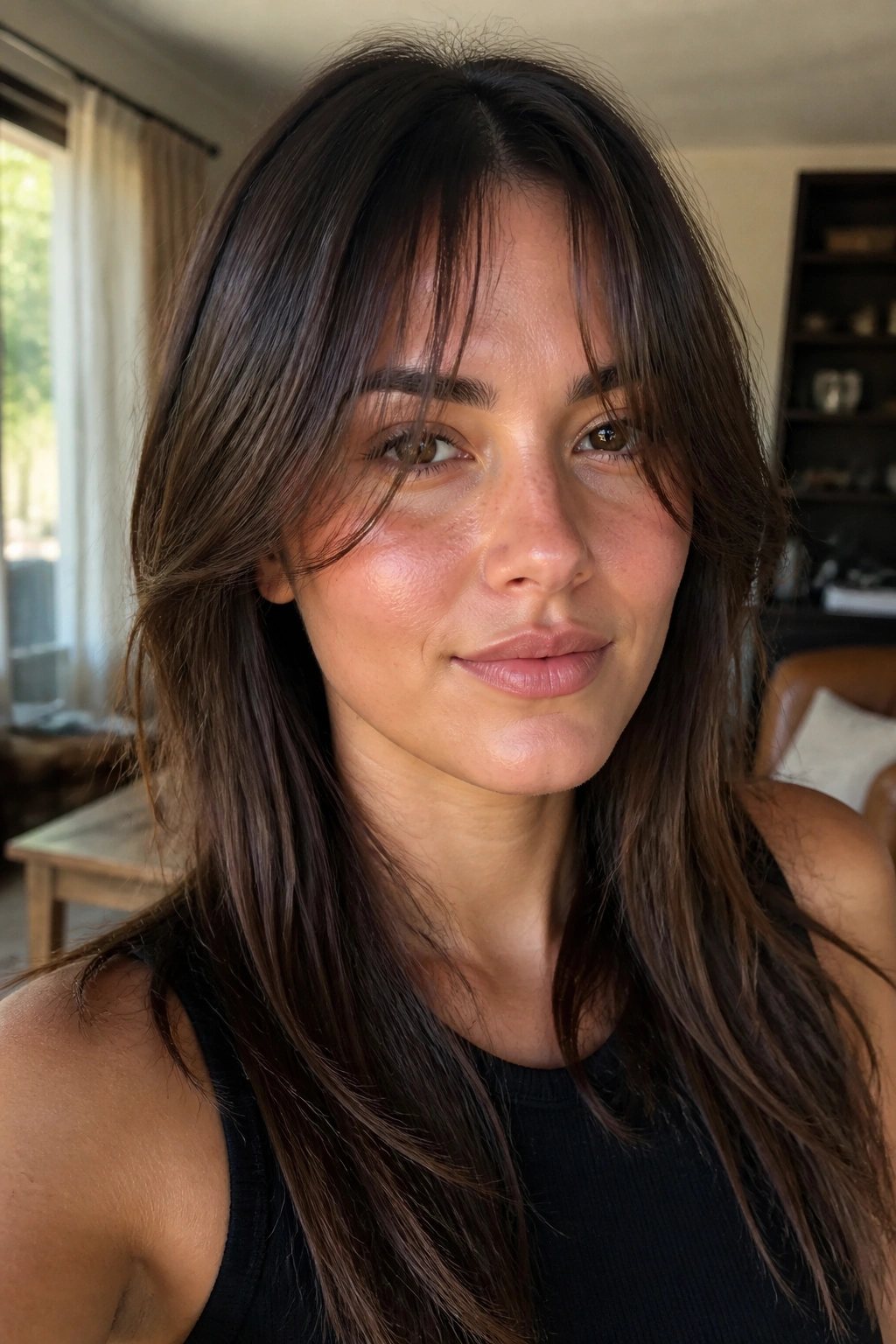
This is one of the easiest ways to keep bangs from swallowing a round face. A broken center part leaves a little forehead visible, then the pieces fall away from the cheeks instead of straight across them.
The effect is relaxed, not severe. Each side can sit slightly differently, which adds some life to the haircut. I prefer this on hair that has a soft bend already, because the natural movement keeps the fringe from looking flat.
If your face is very round, ask for the middle pieces to stay lighter than the outer ones. That small detail keeps the center open and lets the fringe frame rather than crowd. It sounds minor. It isn’t.
20. Wavy Curtain Fringe
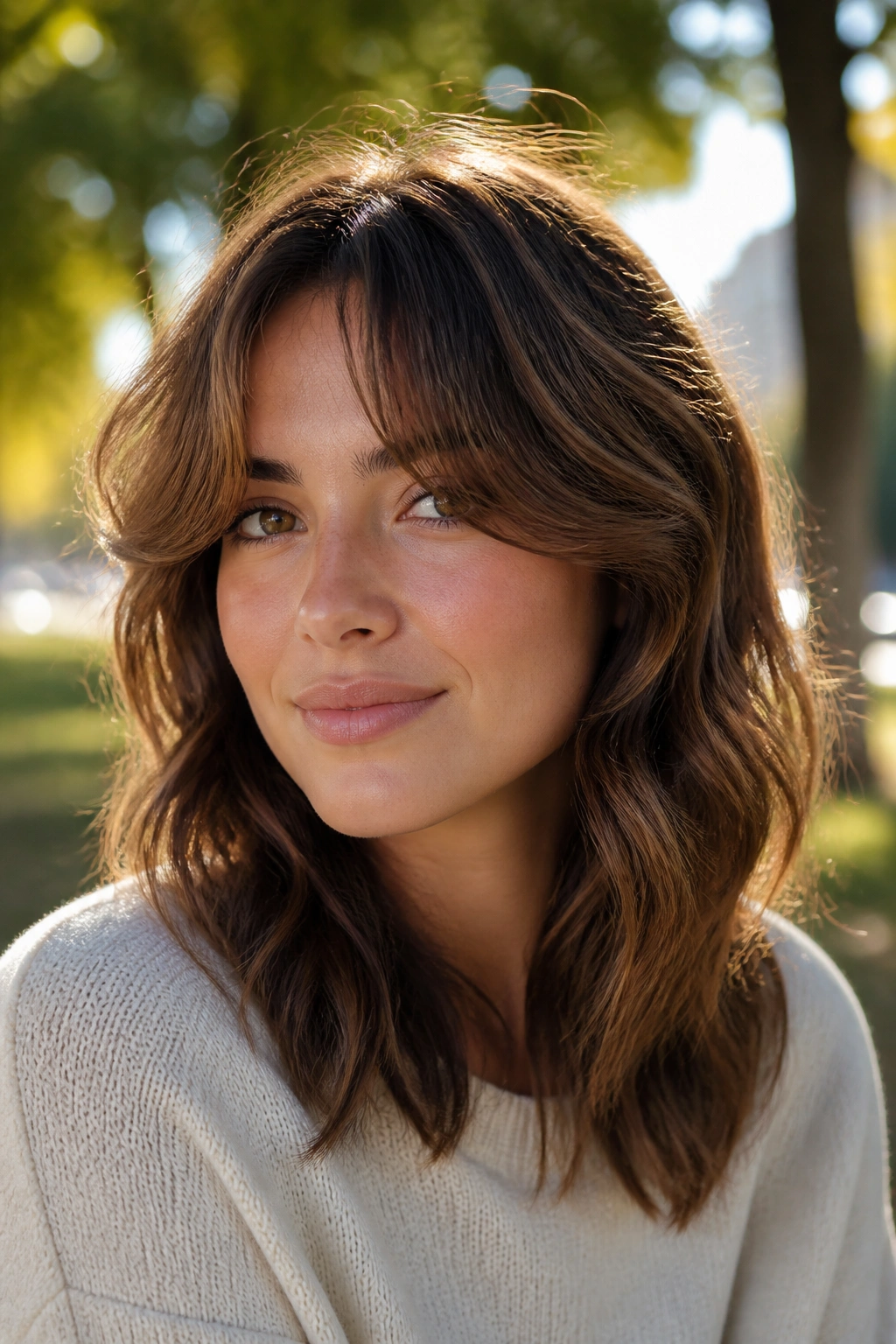
Wavy curtain fringe is one of those styles that looks accidental in the best way. The wave gives the fringe a built-in curve, and that curve breaks the width of a round face without any hard lines.
This works especially well if your hair has a touch of bend when it dries. You can scrunch it, air-dry it, or use a diffuser and let the fringe fall where it wants. The shape still needs a cut that opens at the sides, but the wave carries a lot of the visual interest.
The main caution is frizz. Wavy fringe can puff up if you overload it with product or rough it up too much while drying. Light cream, low heat, and hands off once it starts setting.
21. Collarbone-Skimming Face Fringe
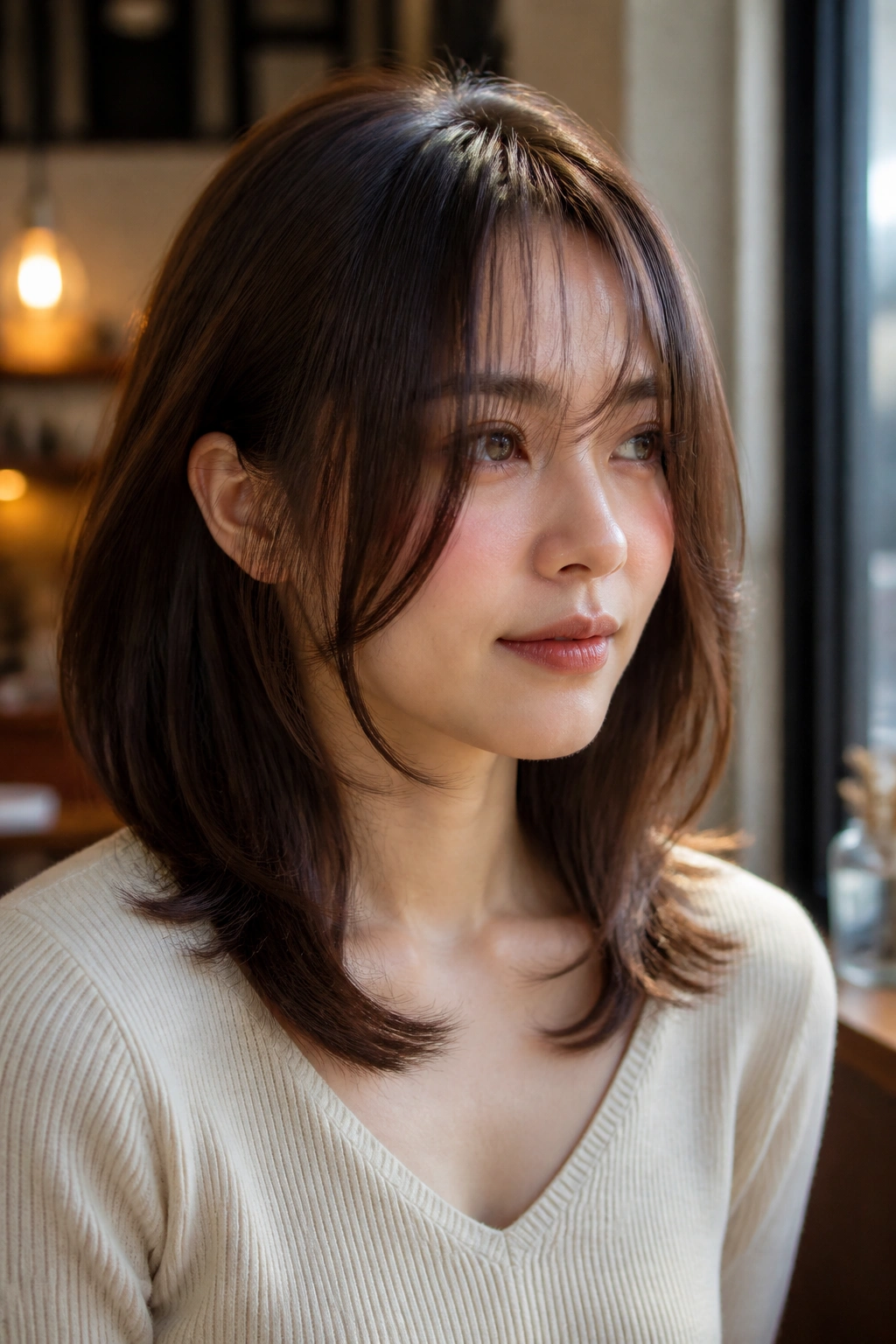
Not every face-framing idea has to stay near the brow. A longer fringe that skims the collarbone can still work for a round face because it creates a long line alongside the cheeks and jaw.
This is the choice for someone who wants the effect of bangs without the daily maintenance of true bangs. The front sections can be swept forward, tucked back, or curled under slightly so they live around the face. That kind of length gives a round face a vertical pull that shorter bangs sometimes can’t.
I’d pick this if you hate the idea of a strict fringe but still want the front of your haircut to do something useful. It’s softer than a bang, but it still shapes the face.
22. Subtle Side-Wing Bangs
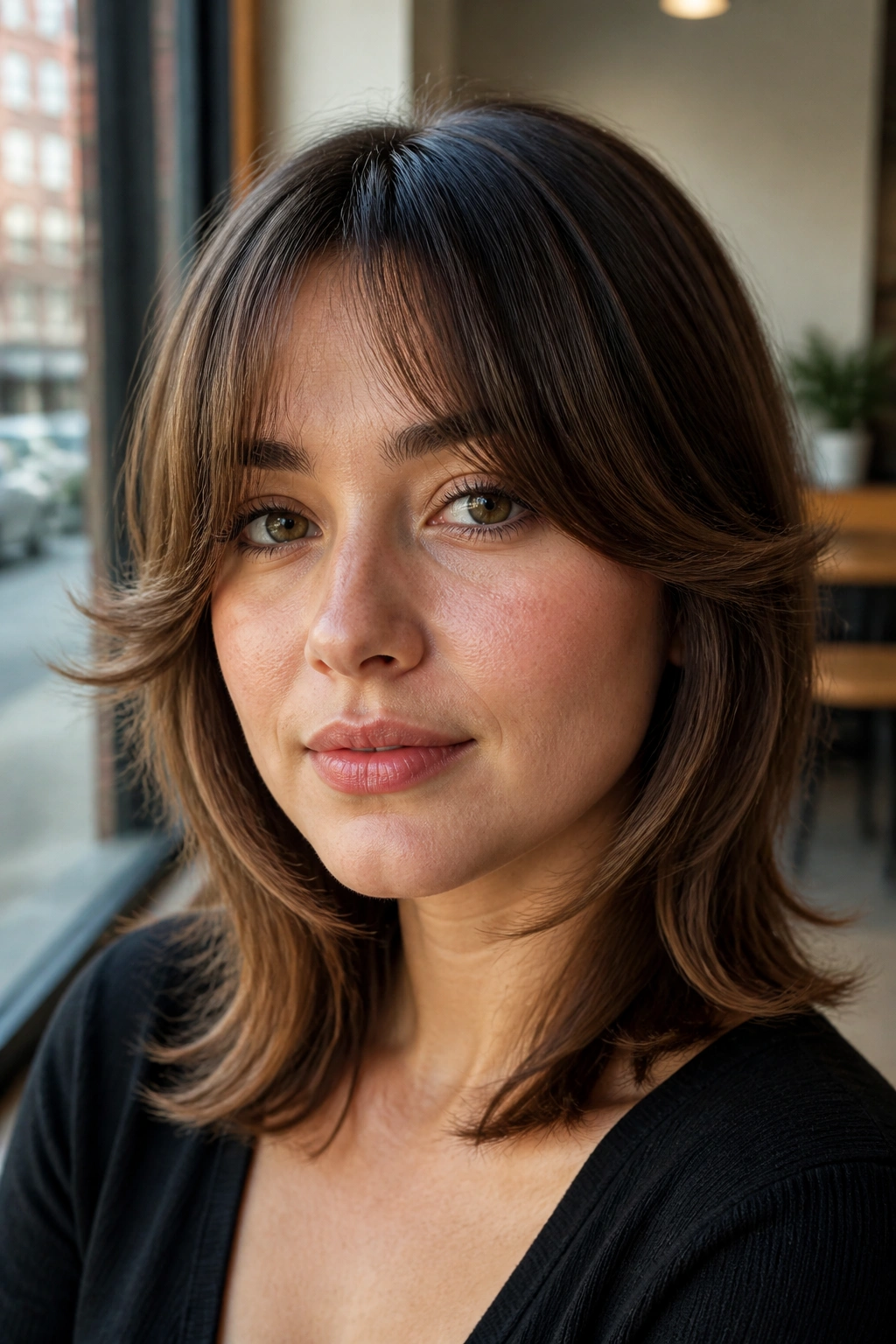
What makes side-wing bangs different from a regular side fringe? The ends flare outward a little at the temples, like small wings, and that flare helps widen the upper face while the overall line still moves downward.
Why the wing matters
The outward turn breaks the roundness of the cheeks. It gives the eye a place to go besides straight across the face. On a round shape, that tiny directional shift can be enough to change the whole balance.
These bangs are especially handy with ponytails, buns, and clipped-back styles. They sit neatly when you need polish, but they still have a little softness. I like that they do not demand constant perfect placement.
- Keep the wing subtle, not dramatic.
- Use a round brush to flick the ends away from the cheeks.
- Pair with long layers if you want even more movement.
23. Disconnected Fringe
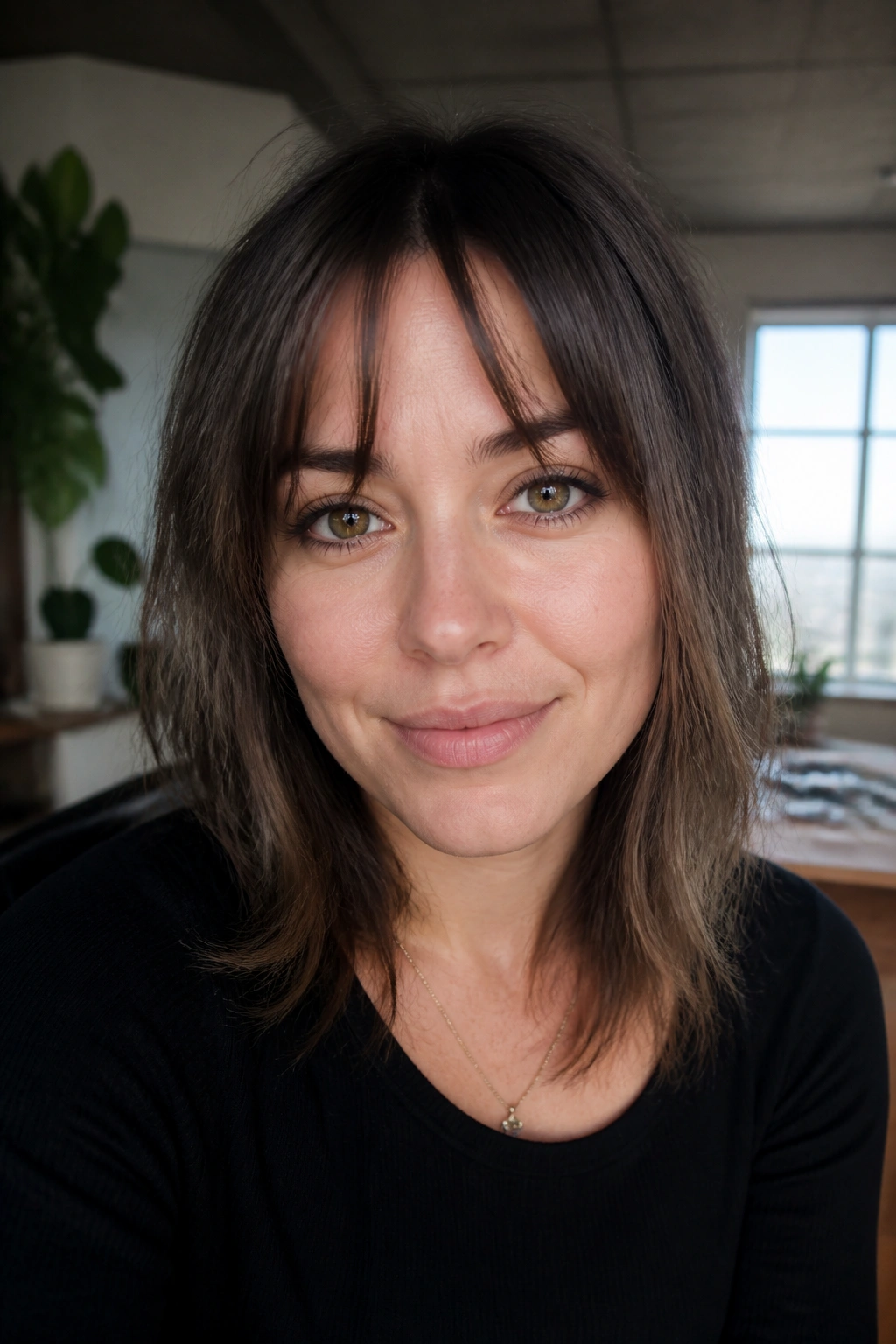
Disconnected fringe has a bit of attitude. The bangs sit apart from the rest of the hair instead of blending in smoothly, and that separation can look very good on a round face because it breaks up the shape.
The cut feels fashion-forward, but it is not impossible to wear. The key is keeping the center light and letting the side pieces carry the framing. If the disconnect is too harsh, the face can look cut off. A softer transition usually wins.
This style is best for someone who likes clean lines and does not mind a little upkeep. It is not a “wash and vanish” fringe. You will notice when it needs trimming. So will everyone else.
24. Grown-In Curtain Bangs
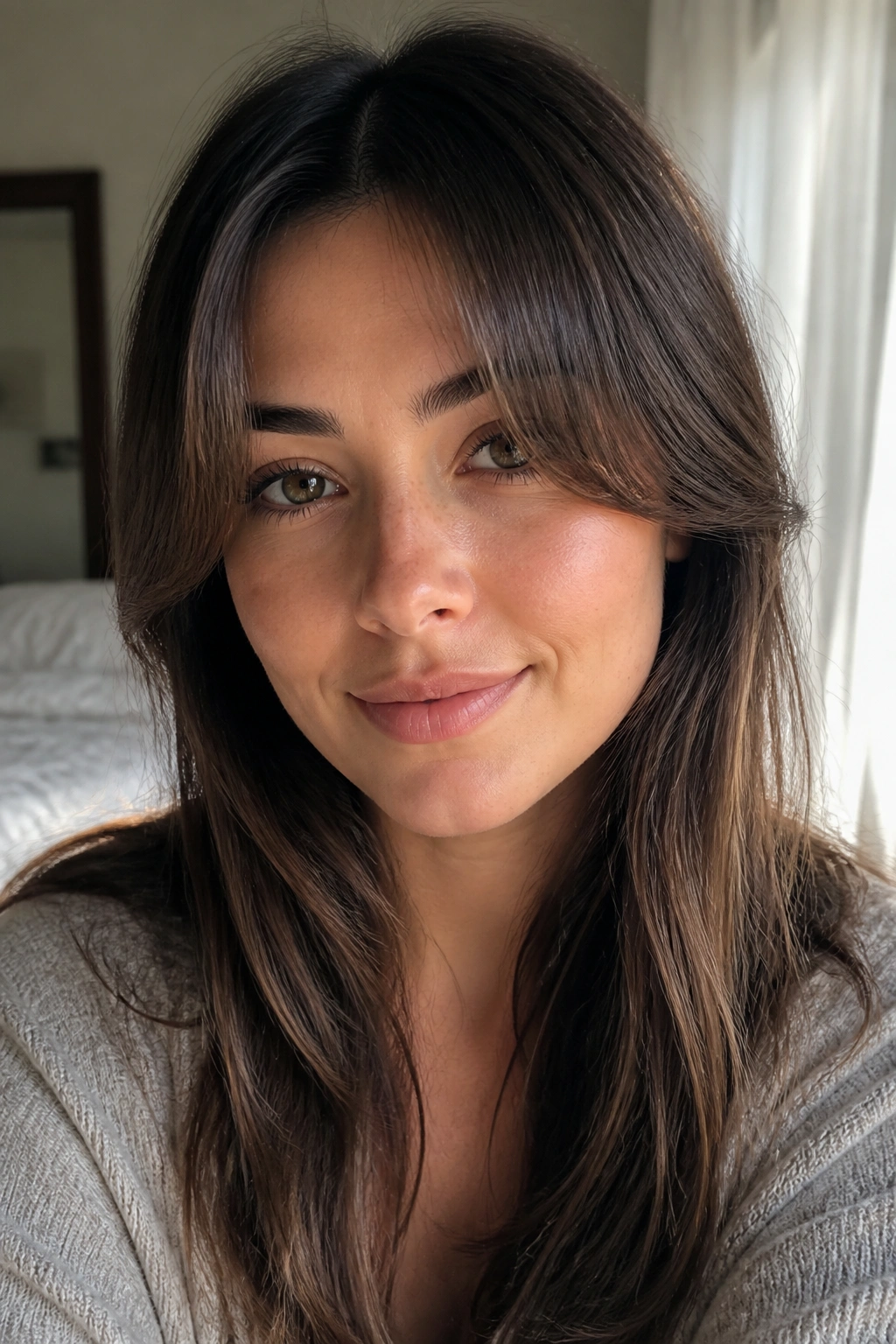
Grown-in curtain bangs are the quiet workhorse of this whole list. They happen after a proper fringe has softened and grown out a bit, and on a round face that in-between stage can be more flattering than the original cut.
Why? Because the longer sides start framing the cheeks while the middle stays open enough to keep the face from feeling crowded. A lot of people panic at this stage and rush to chop the bangs again. I think that’s a mistake if the grown-in shape is already doing good things.
This is a low-drama option for anyone who wants a fringe that does not need constant babysitting. A side part, a bit of root lift, and a quick bend at the ends are usually enough.
25. Long Flicked Fringe
A long flicked fringe gives the face a little lift at the ends, and that lift is what keeps a round face from looking too full. The ends flip away from the cheeks instead of sitting on them, which makes the whole cut feel lighter.
This style works well when the front of the haircut is long enough to move. You want enough length to create a bend, not so much that the fringe just drops flat. A round brush or even a hot brush can help create the flick without making the hair stiff.
My view: this is underrated. It looks polished, but it does not feel precious. And on a round face, that touch of outward motion makes a surprising difference.
26. Glasses-Friendly Fringe
Glasses change the whole equation. A fringe that looks perfect without frames can suddenly feel crowded once the lenses and temples are in play. Glasses-friendly fringe stays light at the center and usually longer at the sides so it sits around the frames instead of crashing into them.
I like this shape because it respects the face and the glasses. The bangs can hover above the frames, split around them, or tuck lightly to either side. What you do not want is a thick sheet of hair meeting a thick frame line. That gets busy fast.
- Keep the middle light.
- Let the sides reach past the frame line.
- Choose a soft texture, not a hard edge.
It’s a small adjustment. It makes life easier every morning.
27. Air-Dry Inverted Fringe
Can you wear inverted bangs without a round brush? Sometimes, yes. Air-dry fringe is for textured hair that wants to fall into place with only a little help. On a round face, it works best when the cut already builds in a gentle center lift and longer side pieces.
How to style it
Start with damp hair and a small dab of cream. Part the fringe where it naturally wants to split, then clip the roots for five to ten minutes so they dry with a little lift. After that, leave it alone. Hands off.
This version is not about perfect polish. It’s about a shape that still flatters when you barely touch it. If your mornings are busy, that matters more than having the most exact fringe in the room.
28. S-Curve Fringe
An S-curve fringe bends, then bends again. That little wave in the shape keeps the eye moving, which is exactly what you want on a round face. Straight-across bangs can stop the eye cold. An S-curve keeps it traveling.
This is the most fashion-forward option in the bunch, but it does not have to look dramatic. The curve can be tiny. A small inward bend near the center and a soft outward sweep at the sides is enough to change the face shape in a flattering way. The goal is motion, not theatrics.
If you want a fringe that feels a little different without crossing into costume territory, this one is worth a look. It has personality. It also knows when to back off.
Final Thoughts
Round faces usually look best with bangs that move away from the cheeks, not bangs that sit on top of them. That means center softness, side length, and a shape that leaves some air around the forehead.
The strongest choices here all do the same basic job in slightly different ways. Some are airy. Some are sharp. Some are easier to style at home. Pick the one that fits your hair texture first, because a flattering cut that fights your hair every morning is not a win.
If you are taking one idea to the salon, bring a photo and point to the exact part that matters most: the center length, the temple length, or the cheekbone line. That’s usually where the difference lives.
