



Round faces can wear bangs. The trick is choosing a fringe that breaks up the width instead of drawing a hard line straight across the forehead.
That is where choppy bangs for round faces earn their keep. The broken ends, soft gaps, and angled pieces change the shape of the haircut in a way that feels lighter and more vertical. A blunt shelf can make the face read wider; a piecey fringe usually does the opposite.
I like bangs that show a little forehead. Always have. They look less boxed-in, they grow out with less drama, and they give the rest of the haircut room to breathe. Heavy, solid bangs can work, but they need a strong cut behind them or they start doing that flattened, helmet-y thing nobody asked for.
Some fringe ideas lean soft and airy. Others are sharper, messier, or a little cooler. Good. A round face does not need one single formula — it needs the right kind of movement in the right places, and that’s what the list below is about.
1. Feathered Curtain Bangs That Split Just Off Center
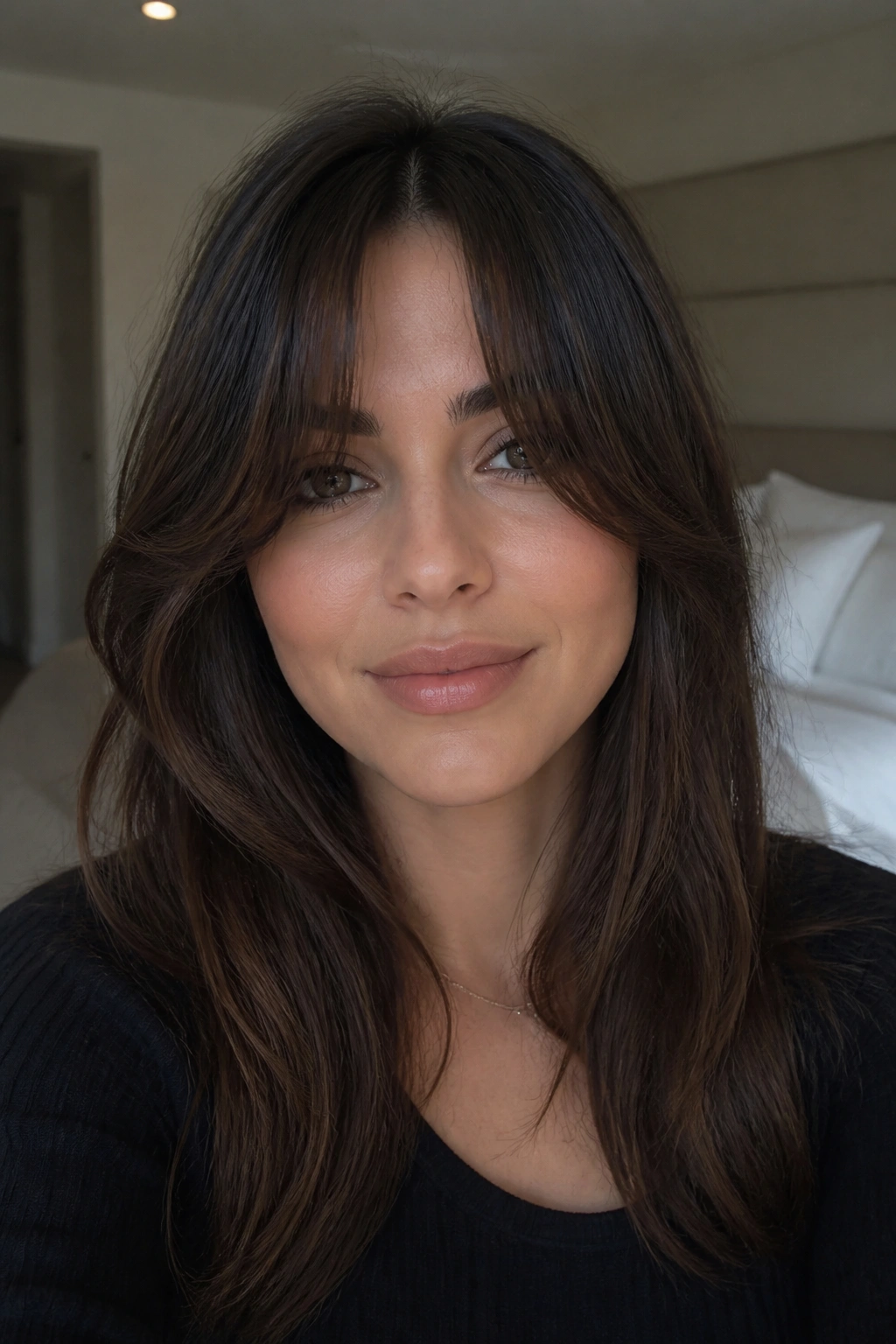
If I had to pick one choppy fringe that plays nicely with a round face, this would be near the top. Curtain bangs create a vertical opening in the middle, and that little gap helps pull the eye up instead of letting it sit on the widest part of the cheeks.
Why It Works on a Round Face
The center split keeps the forehead from looking boxed in, while the longer sides skim past the cheekbone. That diagonal shape matters. It gives the face some length, and it does it without looking severe.
What to Ask For
- Keep the shortest point around the bridge of the nose or just under the brows.
- Let the side pieces fall to the cheekbone or slightly lower.
- Ask for point-cut ends so the fringe looks broken up, not blunt.
- Use a 1 to 1.25 inch round brush when styling.
Best tip: keep the middle opening narrow if your forehead is short. A wide gap can make the fringe feel disconnected.
2. Side-Swept Choppy Bangs That Slice Across the Forehead
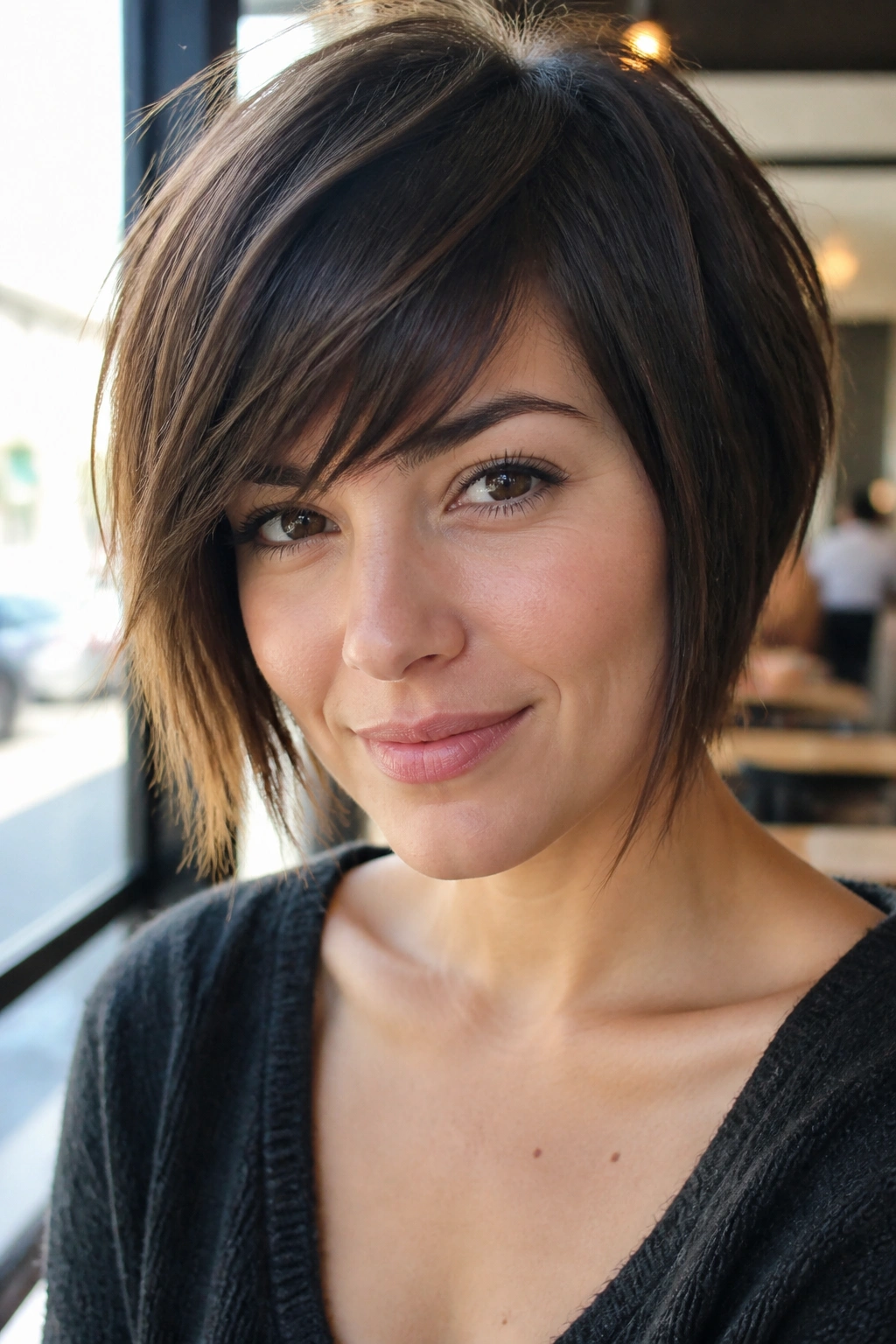
A side-swept fringe can be a gift on a round face, but only when it has some texture in it. A smooth, heavy sweep can look dated fast. A choppy version feels softer and moves better.
The diagonal line does most of the work. It cuts across the face instead of sitting square on it, which adds a bit of length and makes the cheek area feel less dominant. I also like it for people who hate fussing with a center part every morning.
The trick is keeping the ends light. If the bang gets too thick, it turns into a side curtain with no shape. Ask for soft internal layers and a little pieceiness through the middle so the fringe falls in a loose slope rather than a solid sheet.
Works well with straight hair, but it also behaves on a loose wave. A quick bend with a flat iron is usually enough.
3. Bottleneck Bangs With Tapered Ends
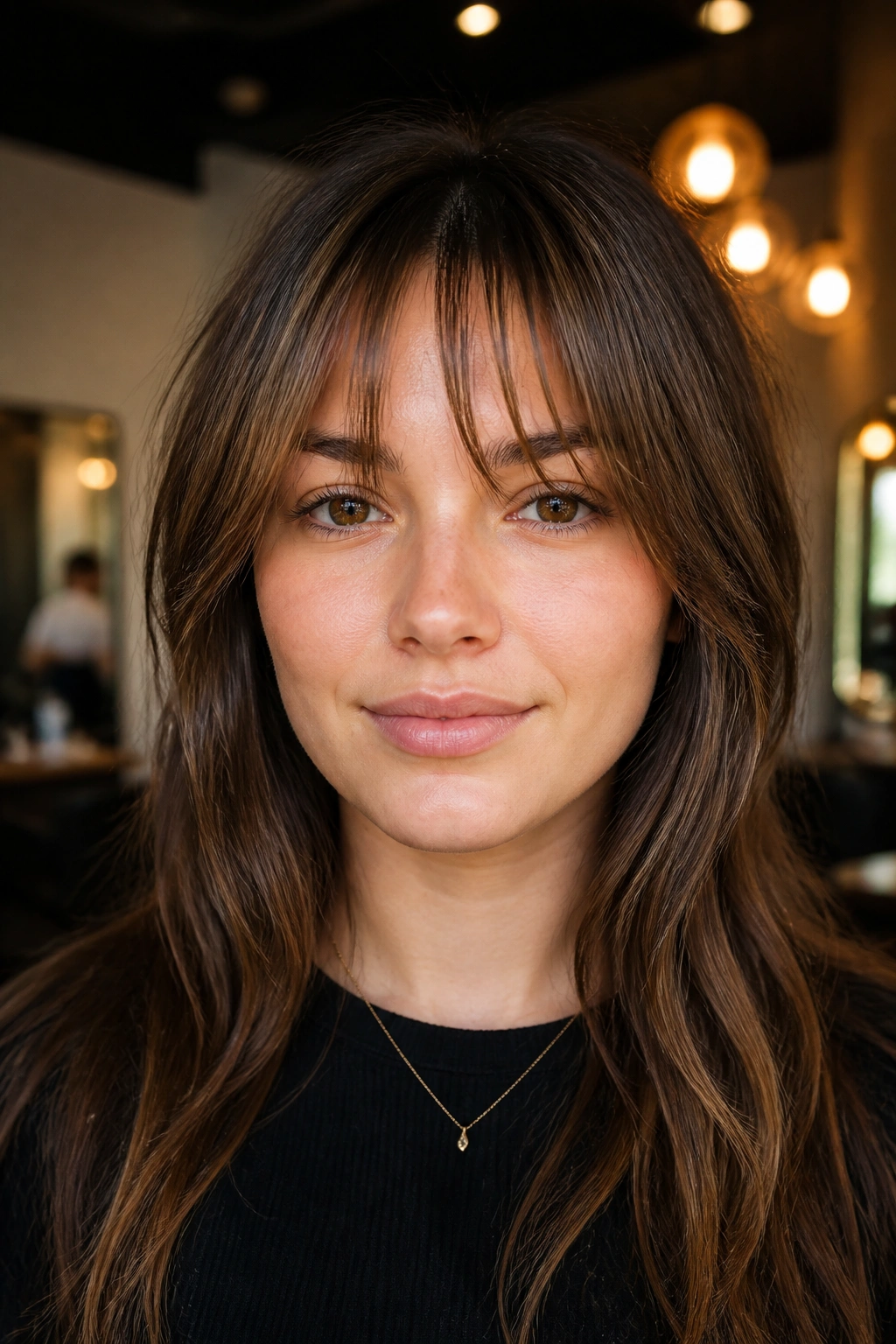
Why do bottleneck bangs show up in so many flattering round-face haircuts? Because they start narrow, then open out. That shape naturally adds structure where a round face often wants it most.
The center sits a little shorter, then the fringe widens as it moves toward the temples. It is a quiet trick, but it works. The eye follows the taper outward and down, which makes the face read a little longer and a little leaner without looking carved up.
How to Ask Your Stylist
Tell them you want the center shorter than the sides, with soft points near the temples. The ends should be broken, not wispy in a flimsy way. Point-cutting helps a lot here.
You can wear bottleneck bangs blown smooth, or let them fall with a bend. Either way, they tend to be forgiving. They grow out in a decent shape, which matters if you do not want to be back in the chair every few weeks.
4. Wispy Brow-Grazing Bangs That Leave Air at the Front
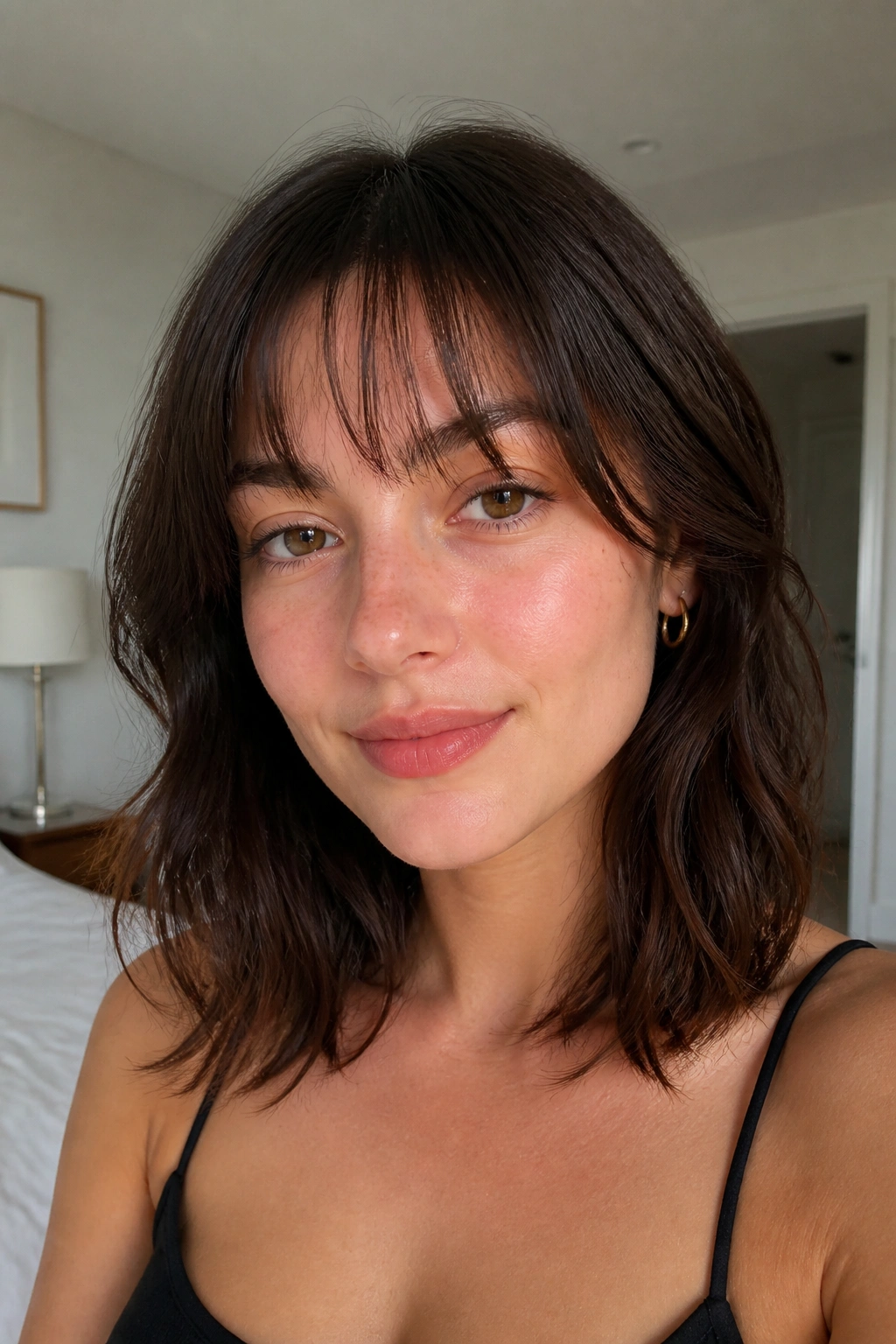
A friend with a round face once told me she was afraid bangs would make her face look “more face-y.” Fair concern. Wispy, brow-grazing bangs are one of the safer answers if you want fringe without a heavy curtain on your forehead.
These bangs sit around the brows, but the line is broken enough that skin still peeks through. That air matters. It stops the fringe from becoming one solid band, and it keeps the front of the haircut from feeling too dense.
- Best with medium-density hair.
- Better if the ends are point-cut or razor-softened.
- Keep the length at the brow or just below.
- Blow-dry with a small round brush and aim the air downward.
A small note: wispy does not mean weak. The shape still needs a plan. If the pieces are too thin, the bang disappears into the rest of the hair and you lose the frame completely.
5. Shaggy Bangs With Razor Texture
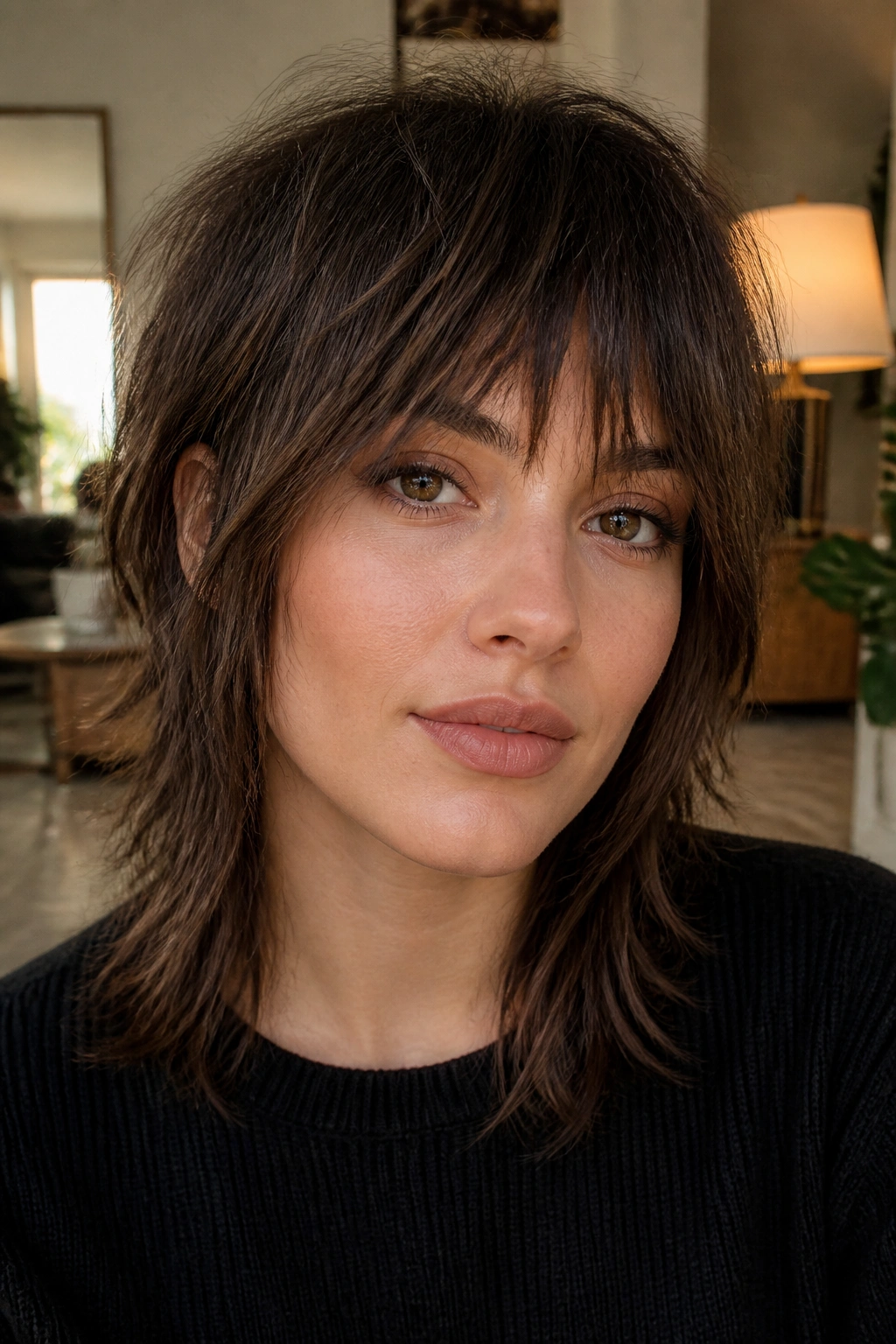
Shaggy bangs are the lazy-seeming fringe that actually takes a bit of thought to cut well. That is part of why I like them. They look effortless, but the real job is getting the weight out in the right places so the bang doesn’t hang like a curtain.
On a round face, shaggy texture works because it creates little interruptions in the line. Those interruptions keep the front of the haircut from reading as one smooth width. The whole point is to make the fringe feel lived-in, not stiff.
This style is especially good if the rest of your haircut already has layers. A shag cut and a round face often get along because the volume sits high and the pieces fall in different directions. That movement gives the face some length.
Be careful with too much razor work, though. Fine hair can turn see-through fast. Thick hair usually handles it better, because the texture can take a little roughness without going flat.
6. Long Choppy Bangs That Blend Into Face-Framing Layers
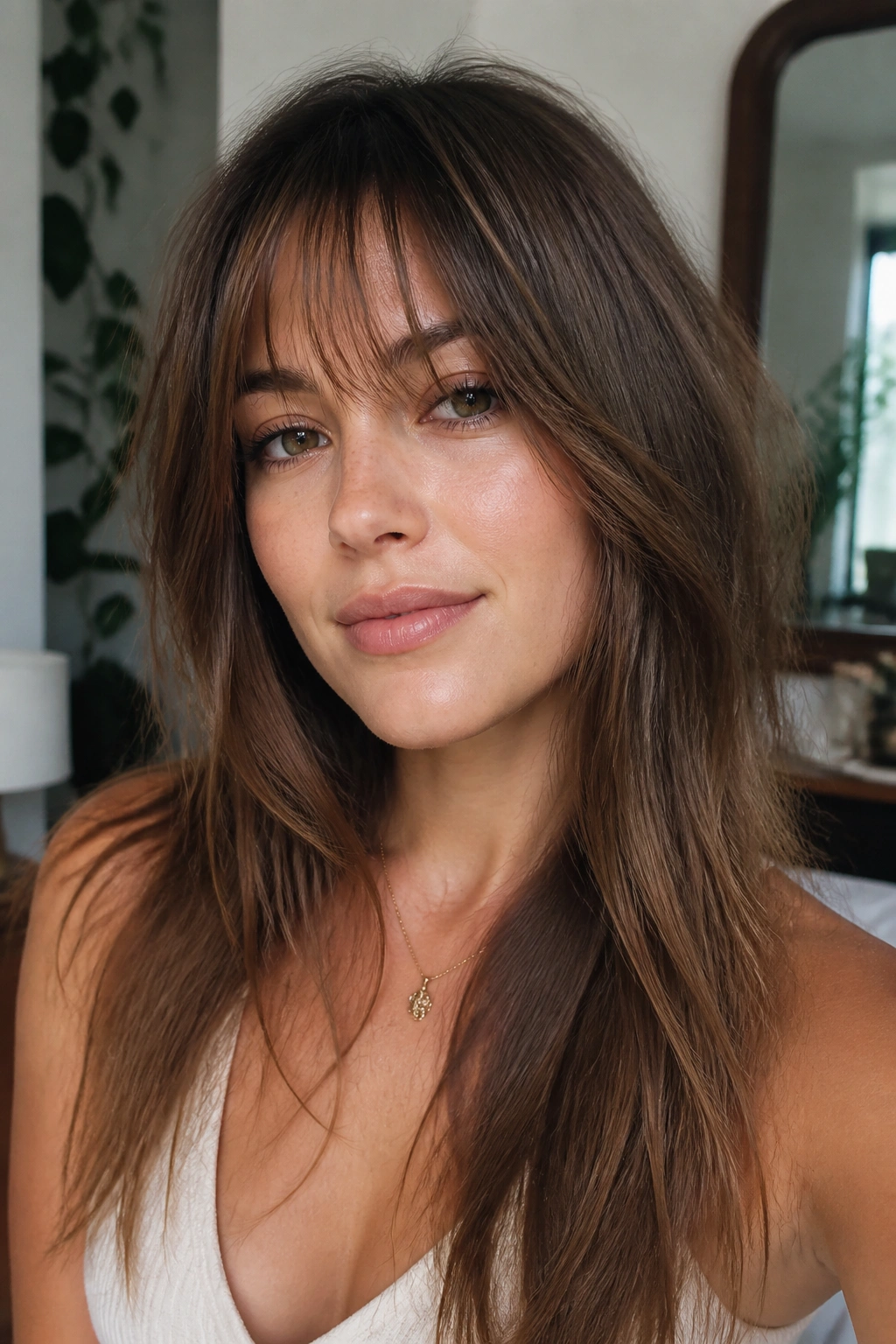
Unlike a shorter fringe, long choppy bangs keep living with the haircut after the first week. They grow into layers instead of fighting them, and that makes them a smart choice if you want bangs but do not want a hard maintenance cycle.
For a round face, the payoff is the line that starts at the forehead and drops toward the jaw. That downward movement helps stretch the face visually. It also gives you options. Tuck them, part them, curl them away, pin them back — all easy.
This style is best if you already wear your hair at chin length or longer. The bangs should not stop abruptly at the brows. They need to melt into the front layers so the whole cut feels connected.
I’d ask for a longer face-framing front, with the shortest pieces around eyebrow level and the longest ones grazing the cheekbone or jaw. That keeps the shape soft while still doing the job.
7. Piecey Bangs With a Deep Side Part
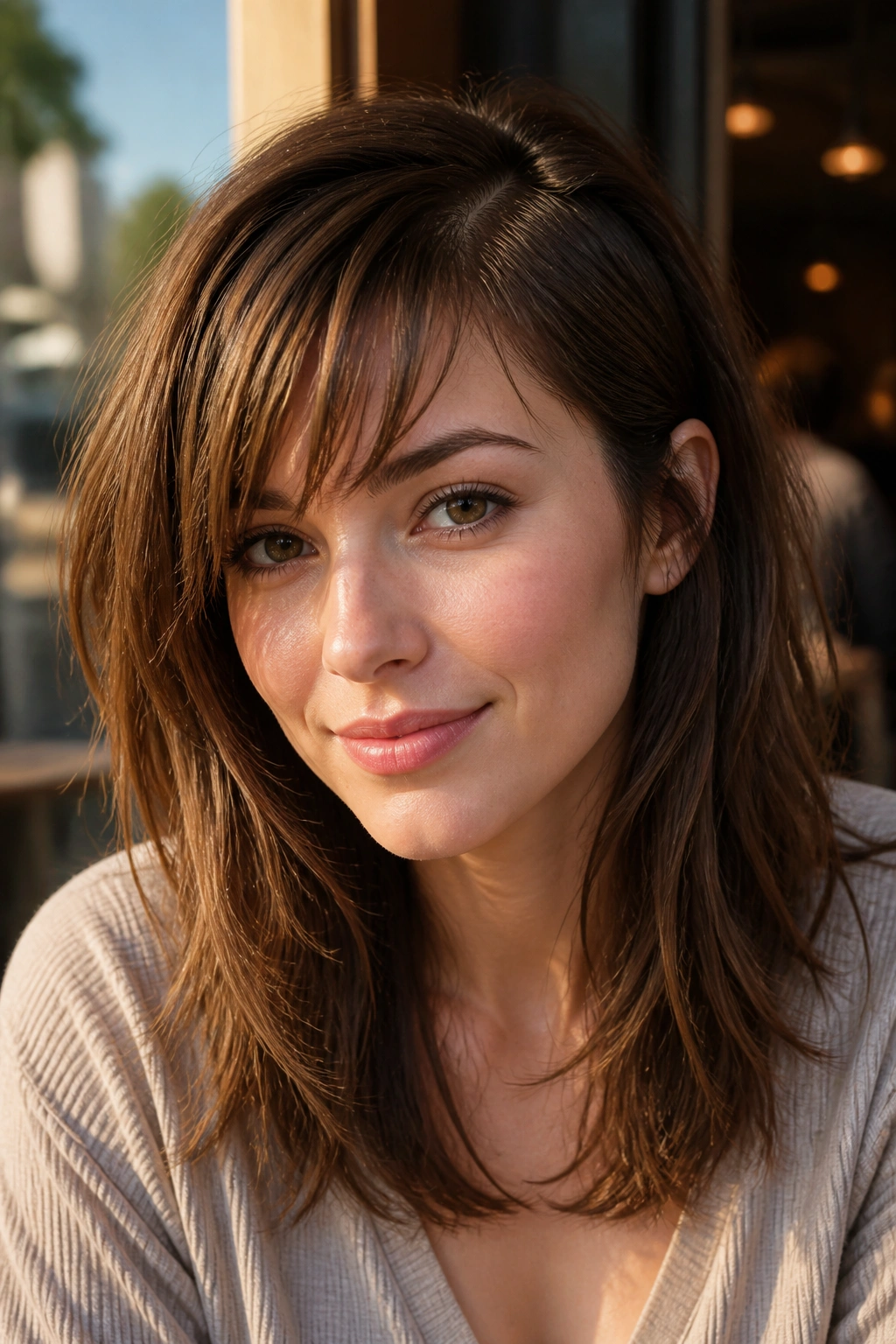
Some bangs are about balance. These are about imbalance — the useful kind.
Why It Works
A deep side part shifts the weight of the hair off the center of the face, which keeps a round face from feeling too symmetrical and too wide at the same time. The piecey texture also stops the fringe from turning into one flat slab. That combination is especially good if your hair is fine and tends to collapse.
Quick Things to Know
- Keep one side heavier, not equal on both sides.
- Ask for point-cut ends and a little separation.
- Use a light paste or cream, not a sticky gel.
- Blow-dry the bangs in the direction they’ll wear, or they’ll fight you all day.
The style looks sharp without being fussy. And if you like to tuck one side back behind the ear, this fringe already knows how to cooperate.
8. Soft Micro Bangs Broken Into Small Pieces
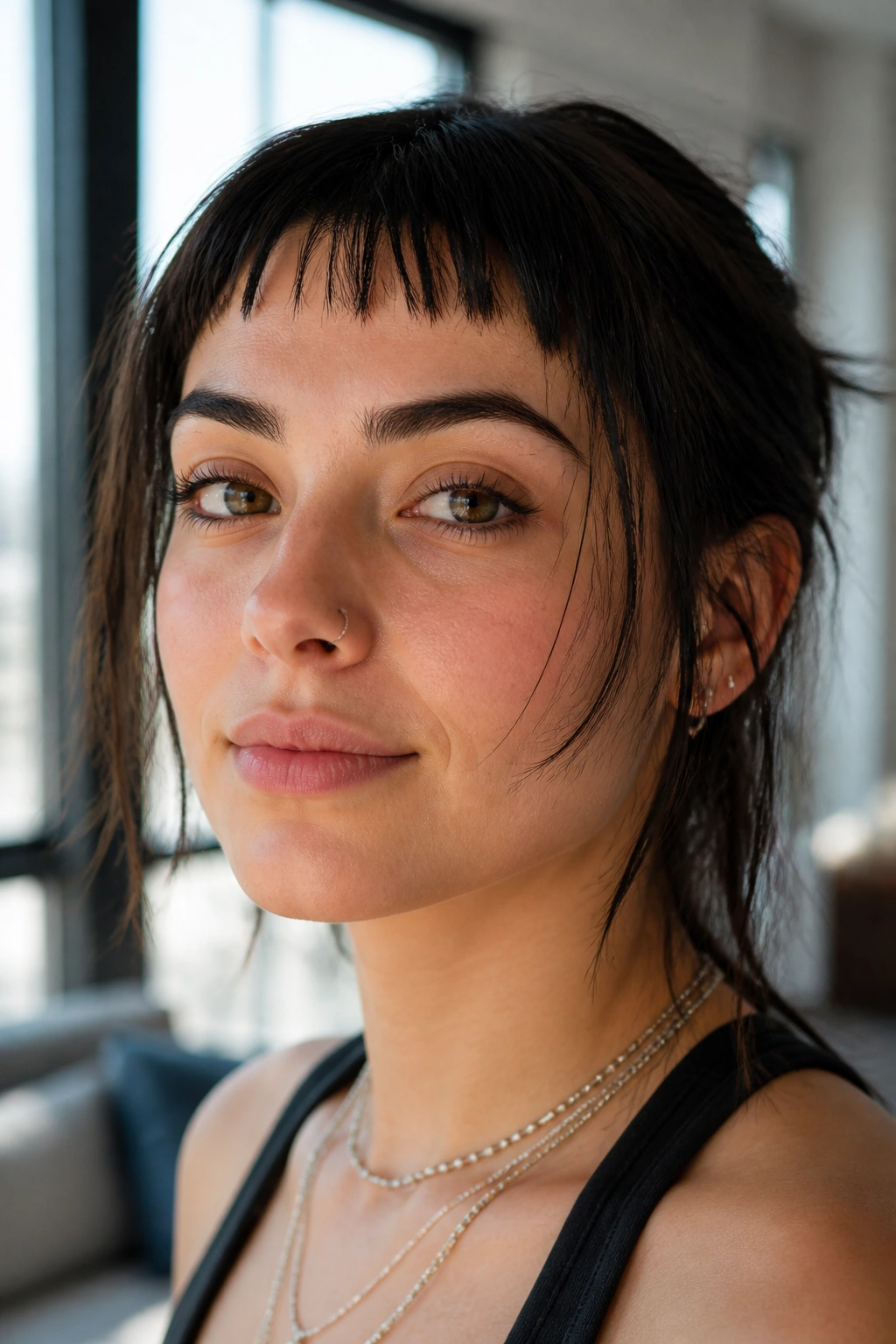
Micro bangs get a mixed reputation, and some of that is fair. A very short, very heavy micro fringe can be brutal on a round face. A soft, choppy version is a different animal.
The key is the break-up. You want tiny pieces, not a dense bar. That lets the forehead show through and keeps the cut from cutting the face in half at the wrong spot. On the right person, it looks sharp and a little artsy. On the wrong one, it can be a mess.
This works best if you have a shorter forehead, strong brows, or a haircut with some edge already built in — a shag, a mullet, a cropped cut with texture. It does not need to be polished. In fact, polished can be the wrong word here.
If you try this, ask for the fringe to sit a touch above the brow and to be softened at the ends. A matte styling paste gives it grip without making it hard.
9. Arched Choppy Bangs That Follow the Brow Line
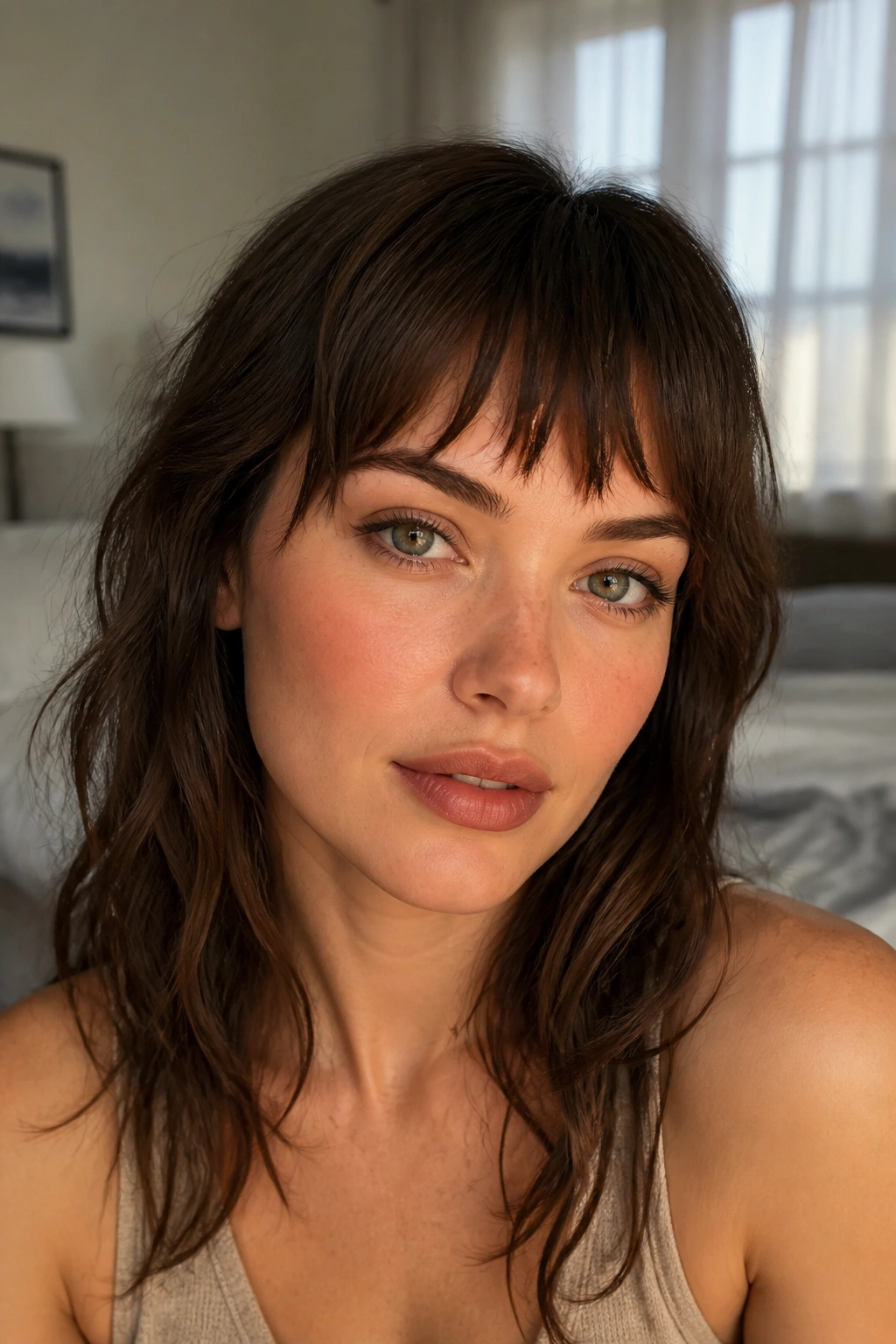
Why do arched bangs look so good when they’re done right? Because they mimic the shape of the brows and then soften it with a broken edge. That little curve is flattering on a round face because it adds a lift without making the front feel severe.
The arch should not be a perfect rainbow. That would look too neat. A choppy arch — slightly shorter in the middle, slightly longer at the sides — feels modern and keeps the eye moving.
What to Ask For
Have the stylist cut the center a bit shorter than the outer corners, then point-cut the edge so the line stays soft. The fringe should curve, not sit in one straight band.
This shape works well on straight hair and on soft waves. If your hair is very curly, the arch can shrink up fast, so you’ll want to leave more length than you think.
10. Split Fringe With Loose Waves

Picture a fringe that falls apart on purpose. Not messy in a bad way. Just open, bendy, and a little undone.
That is what split bangs do well on a round face. The center part creates that vertical line again, but the loose waves on either side keep the shape from feeling too tidy. The result is soft, and soft is usually kinder to a round face than a hard edge.
- Best on hair that already has a natural bend.
- Keep the shortest pieces around the outer brow.
- Let the sides extend toward the cheekbone.
- Use a sea-salt spray or lightweight mousse for grip.
The only real problem is overdoing the split. If the opening is too wide, the bang starts to look separated from the haircut. A narrow center gap, with enough hair on the sides to frame the face, tends to work better.
11. Wolf-Cut Bangs With a Choppy Edge

Wolf-cut bangs are not subtle. That is the point.
They bring lift at the crown, texture through the front, and a slightly wild edge that can be excellent on a round face if the rest of the cut carries enough length. The extra volume up top helps stretch the face visually, while the broken fringe keeps the forehead from feeling boxed in.
The danger is going too heavy. If the top is too fluffy and the fringe is too short, the cut can look top-heavy. I would keep the bangs shaggy, with some longer pieces at the temples to anchor the shape.
This style is happiest on thick hair or wavy hair. Straight, slippery hair can wear it, but it usually needs more product and a bit more effort. If you want a fringe that looks cooler when slightly imperfect, this is one of the better options.
12. Textured Lob Bangs That Tie Into a Shoulder-Length Cut
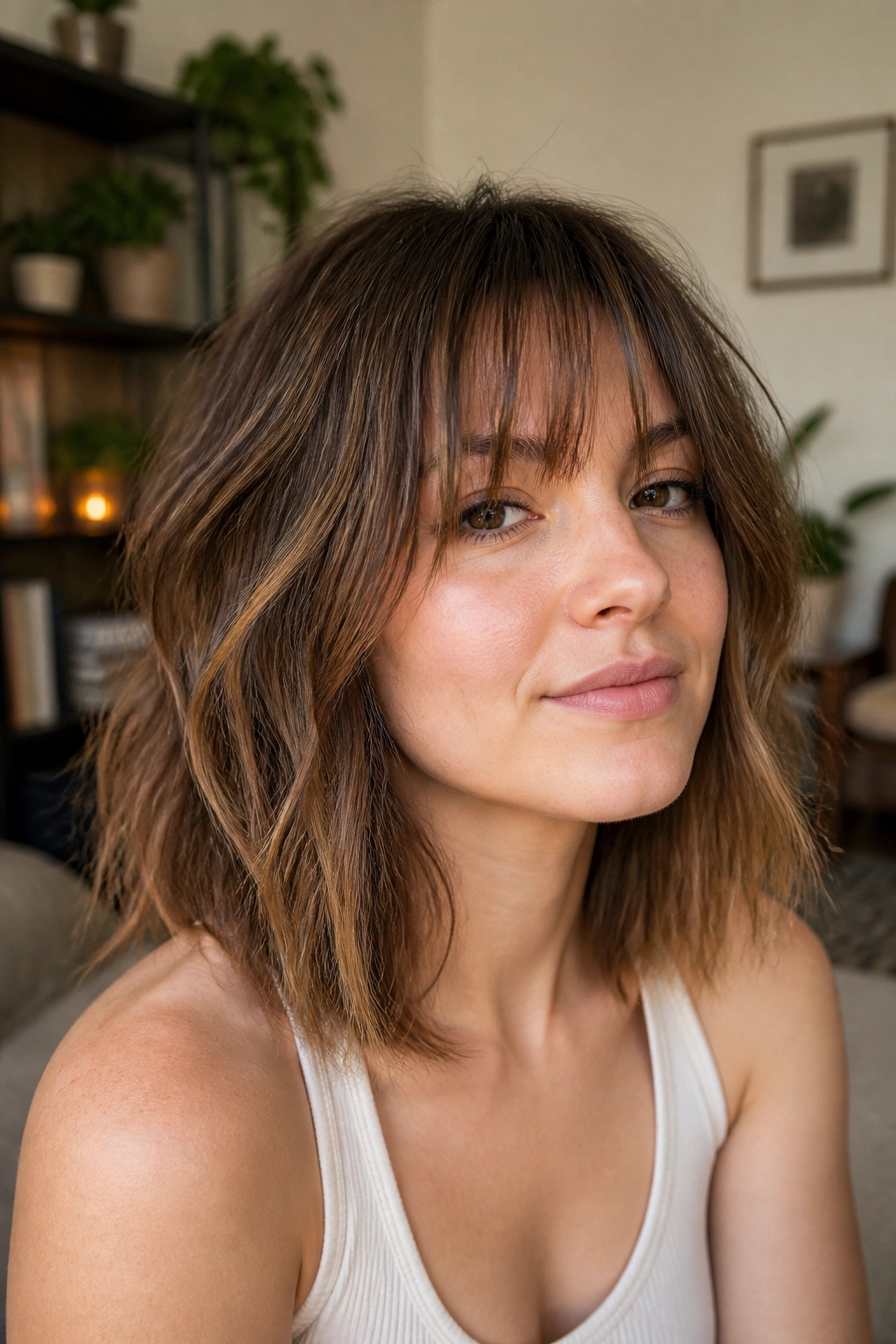
A lob with bangs can go flat fast. Textured bangs fix that. They stop the front of the haircut from turning into one clean block and help the whole shape move with the face.
On a round face, shoulder-length hair already does some nice work by drawing the eye down. Add a choppy fringe that blends into the front layers and the effect gets even better. The key is connection. The bangs should feel like part of the lob, not a separate add-on.
I like this most when the front pieces are a little longer than the center fringe. That keeps the lines soft around the cheeks, which is exactly where round faces need a bit of breathing room.
If you like low-effort styling, this is a strong pick. A quick blow-dry with a medium round brush, a bit of texture spray, and you’re done. No drama.
13. Choppy Blunt-Edge Bangs That Still Move
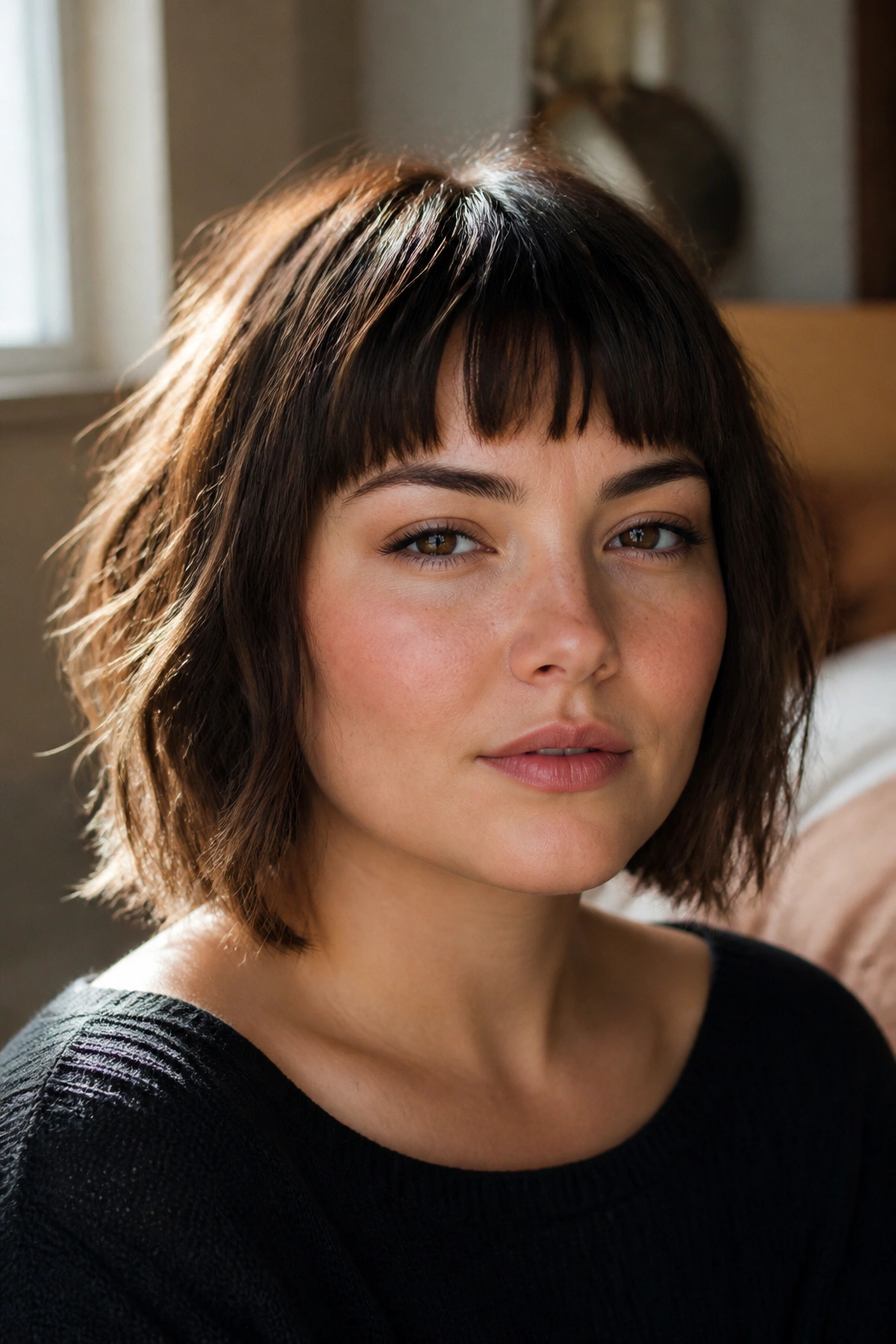
A blunt bang on a round face can be tricky. A choppy blunt bang is the compromise that makes sense.
The Shape Matters
The outline still reads clean, but the interior is broken up with point-cutting or light razor work. That means you get the presence of a full fringe without the heavy slab effect that can widen the face. It is a good choice if you want to keep some edge and still soften the result.
Ask For This Specifically
- A straight visual line at the bottom.
- Internal texture so the fringe does not sit like a board.
- Slightly longer corners to avoid a boxed shape.
- Blow-dry the center first, then the sides.
This kind of bang needs a careful hand. Too much thinning and it looks wispy in a weak way. Too little and it turns into a block. Somewhere in between is the sweet spot, and it is worth being picky about it.
14. Birkin-Inspired Bangs With Ragged Ends

These are the bangs that look a little romantic, a little undone, and a little less precious than people expect. That’s why they work.
Birkin-inspired fringe sits softly on the forehead, then breaks at the ends so it does not form one thick line. On a round face, that broken edge keeps the shape from feeling too square, while the length gives you some coverage without closing off the upper face.
They are better than people think on medium to thick hair. Fine hair can wear them too, but the cut has to avoid being too sparse. You want enough body that the fringe still feels intentional.
I’d keep the sides a touch longer than the middle and let the ends fray a little. Not shredded. Just imperfect enough to keep the eye moving. That small bit of looseness is what keeps this look from feeling like a costume.
15. Airy Temple Bangs That Start at the Sides
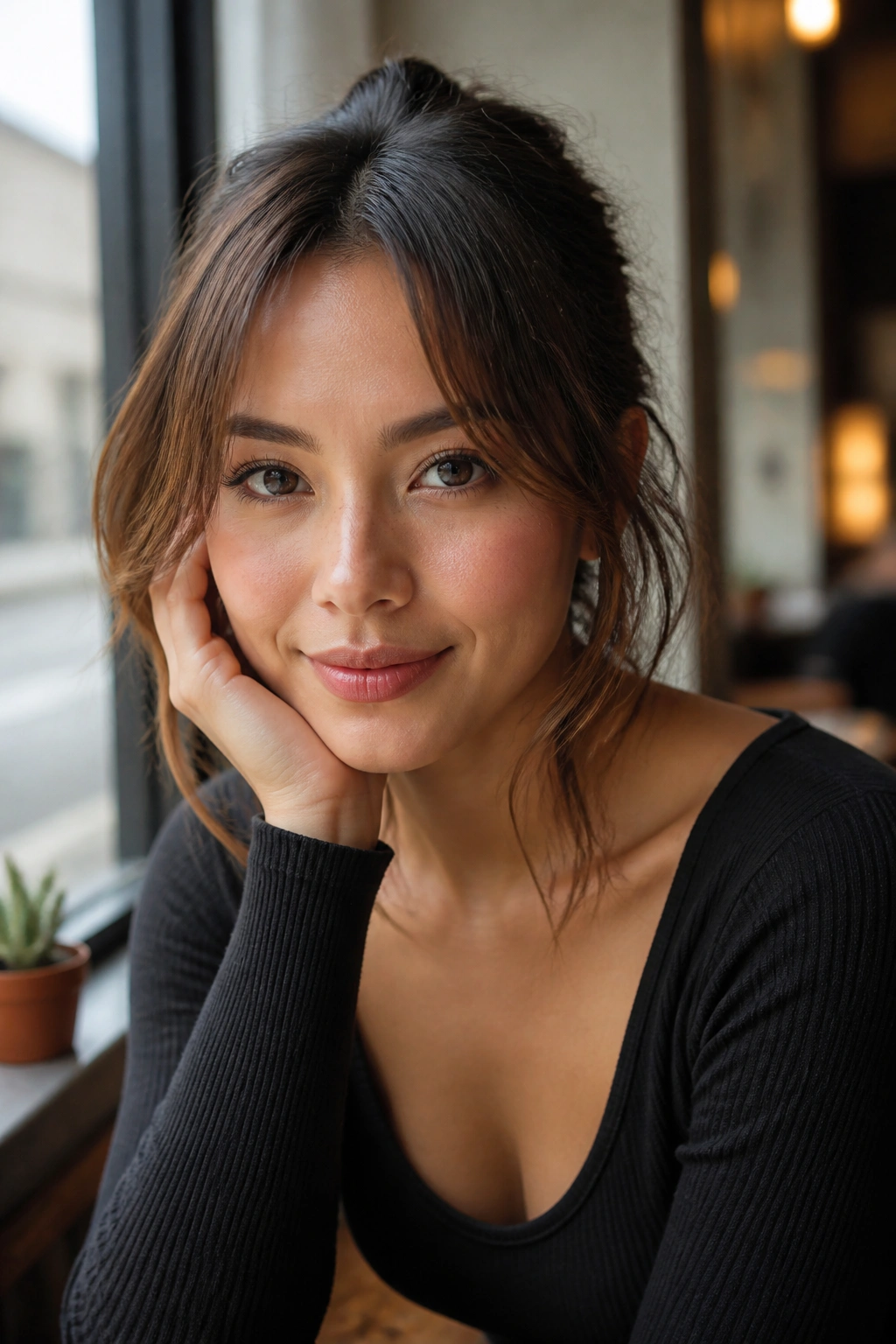
Can bangs work without starting in the middle of the forehead? Yes. Temple bangs are proof.
How They Help a Round Face
Because the fringe starts closer to the temples, it adds framing where a round face often benefits most. The center stays lighter, which avoids piling more width on top of the cheeks. The result is soft and open, not heavy.
How to Style the Taper
- Blow-dry the front away from the face first.
- Keep the center loose and the sides longer.
- Use a light mist of spray, not a crunchy one.
- Tuck the longer pieces behind the ear if you want more lift.
This style is sneaky. It gives you the feel of bangs without the full commitment, which is handy if you want something that looks polished but still breathes.
16. Curly Choppy Bangs Cut for Shrinkage
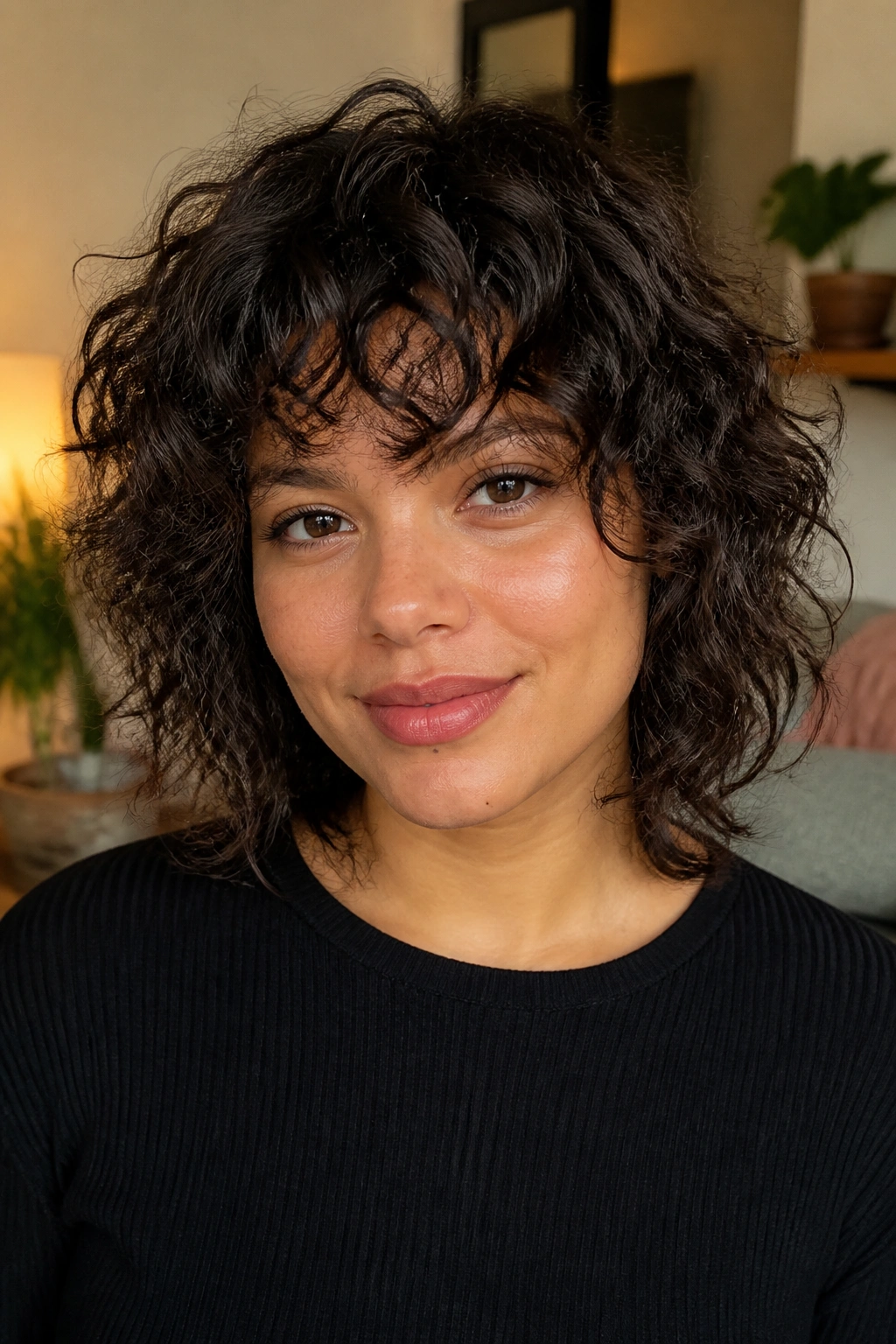
Curly bangs can look incredible on a round face, but they need a dry cut and a plan. Wet curls lie. They shrink, bounce, and twist in ways that can wreck a fringe if nobody accounts for it.
Choppy curly bangs work because the uneven pieces keep the front from turning into one round curl cloud. The texture gives the face some break-up, and that’s useful when the face itself already has soft contours. You want the bang to frame, not crowd.
- Cut them dry, in the curl pattern they naturally wear.
- Leave the front longer than you think.
- Ask for a rounded shape with piecey ends.
- Use curl cream on the ends, not the roots.
The worst mistake here is cutting them too short out of the gate. A curl that lands at the eyebrow when wet can spring up an inch or more. Sometimes more. That one catches people every time.
17. Flipped-Out Choppy Bangs With a Soft Blowout
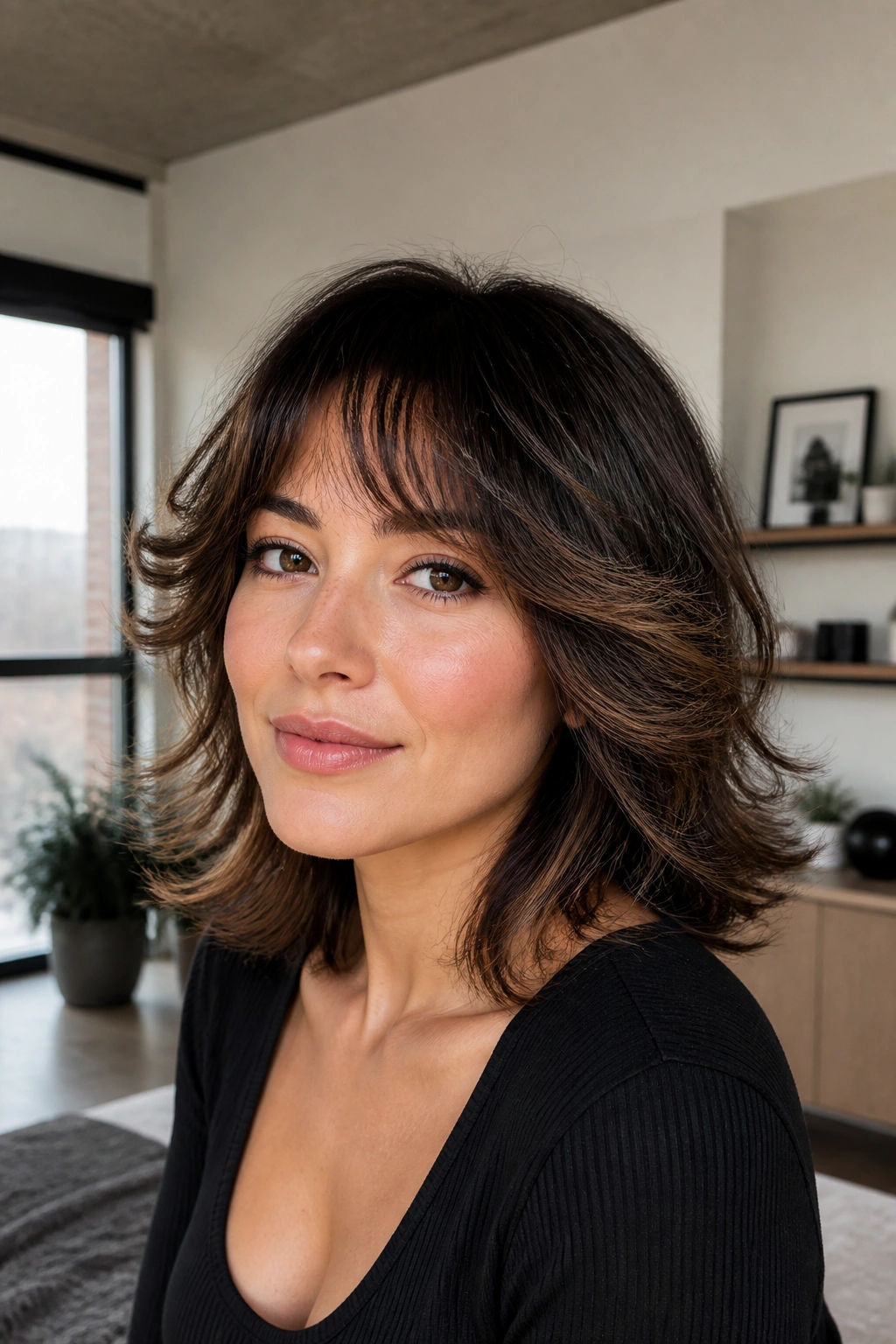
Flipped-out bangs bring movement away from the face, which is exactly why they can flatter a round face so well. The outward bend keeps the fringe from sitting flat against the cheeks and adds a little lift through the front.
This style has a slightly retro feel, but not in a costume way. A round brush or a flat iron bend at the ends is enough. The shape should look touched, not overworked. If the flip is too neat, the whole thing turns stiff.
What I like here is the space it creates. The bangs do not crowd the eyes. They open them. That’s a small thing, but on a round face, small things add up quickly.
If your hair is fine, add a light root spray before blow-drying. If it’s thick, work in sections and cool each bend in your hand for a few seconds so it holds.
18. Thick Fringe Thinned From the Inside
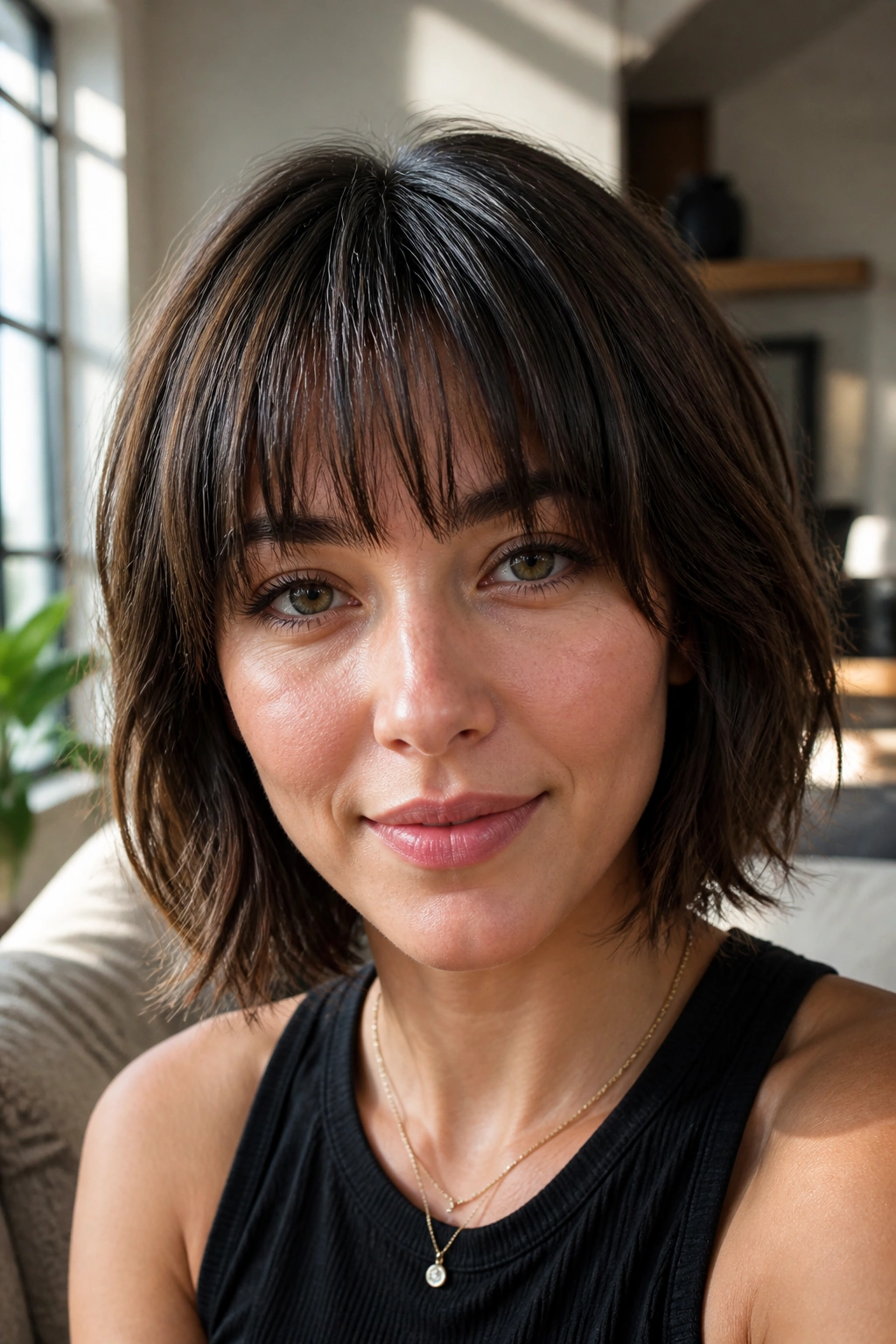
A lot of people with round faces assume they need a super wispy bang. Not always. Sometimes a fuller fringe works better — as long as the bulk is removed from the right places.
The point is to keep the outline while lightening the interior. That way the bang still frames the forehead, but it does not sit like a heavy wall. If the stylist knows how to carve out weight from inside the fringe, the result can be balanced and polished.
This is a strong option for thick hair. Fine hair usually does not have enough spare density for much thinning, and too much removal can leave it patchy. Thick hair, though, can carry the shape and still move.
Ask for internal texture rather than aggressive thinning at the ends. The bottom line is simple: you want the fringe to move when you shake your head, not to fall apart when the wind hits it.
19. Peekaboo Bangs Over a Mid-Length Shag

Peekaboo bangs are for people who like a little mystery in their hair. The fringe drops into the eyes in pieces, then parts and shifts as you move. It keeps the front soft and breaks up the width of a round face without doing anything stiff.
Why It Stays Flattering
The shag behind it gives the fringe somewhere to go. The bangs are not hanging there alone; they are part of a bigger, layered shape. That connection matters, because bangs that float on their own can make a round face look broader.
What to Ask For
- Long, uneven front pieces that skim the lashes.
- Soft texture through the temple area.
- A shag cut underneath so the bangs blend.
- Enough length to tuck back on off days.
I’d choose this if you want bangs that feel casual and easy to grow out. They are not precious. They just hang there, move around, and keep the face from looking too open.
20. Pixie Fringe With a Choppy Top
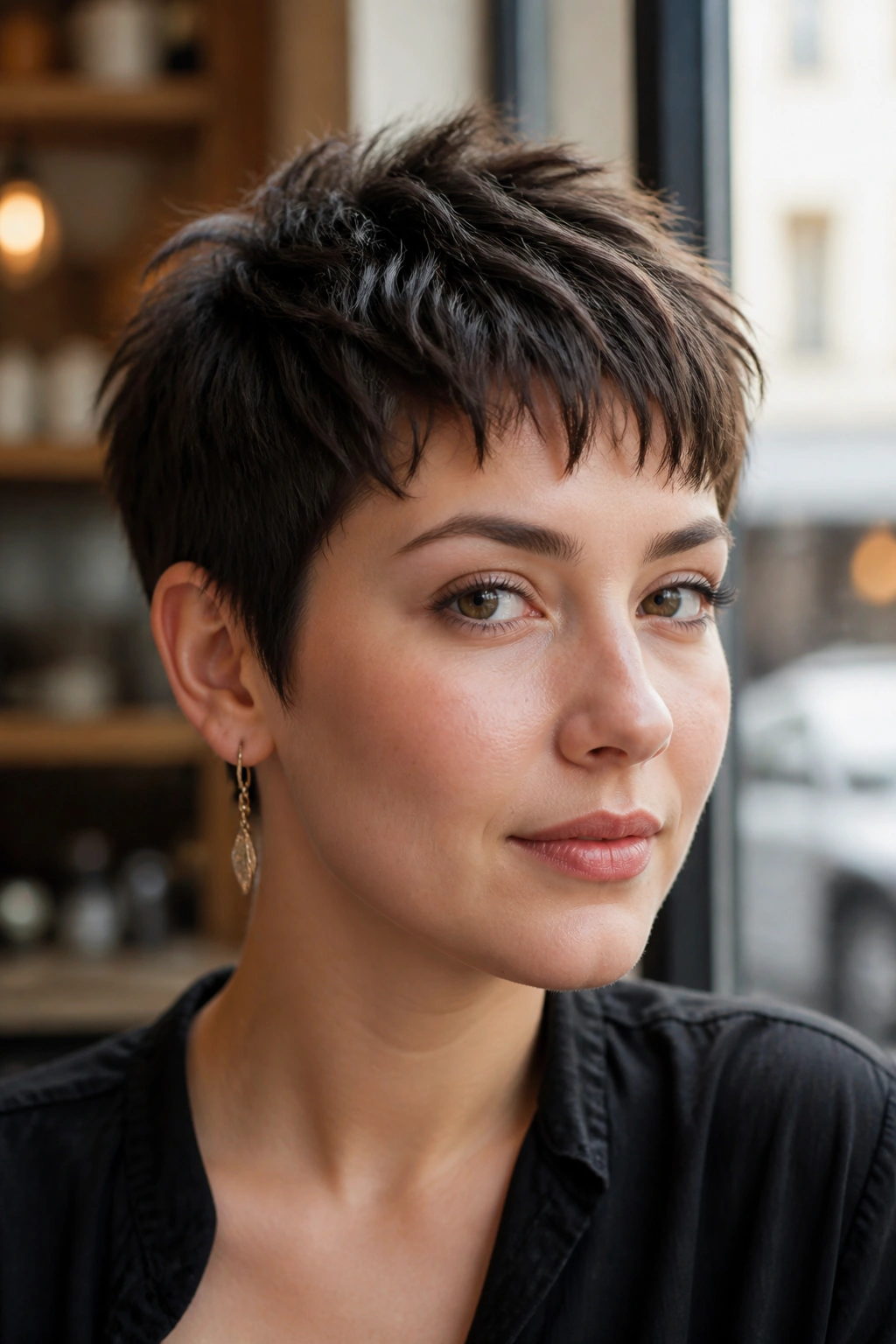
A pixie cut on a round face can be excellent, but the fringe has to pull some weight. A choppy top and a broken front edge keep the cut from making the face look wider than it is.
Short hair on round faces works best when the top has texture and height. The fringe should not be a straight, even line unless you’re going for a very specific look. Piecey bangs, feathered ends, and a little lift at the crown make the whole thing feel sharper.
I’d avoid this if you want a soft, feminine finish with no edge at all. Pixie bangs are honest. They show the face. That can be great, but it does not hide anything.
A matte pomade on the fingertips is enough for daily styling. Pinch, lift, separate. Done.
21. Ponytail-Friendly Choppy Bangs That Still Frame the Face
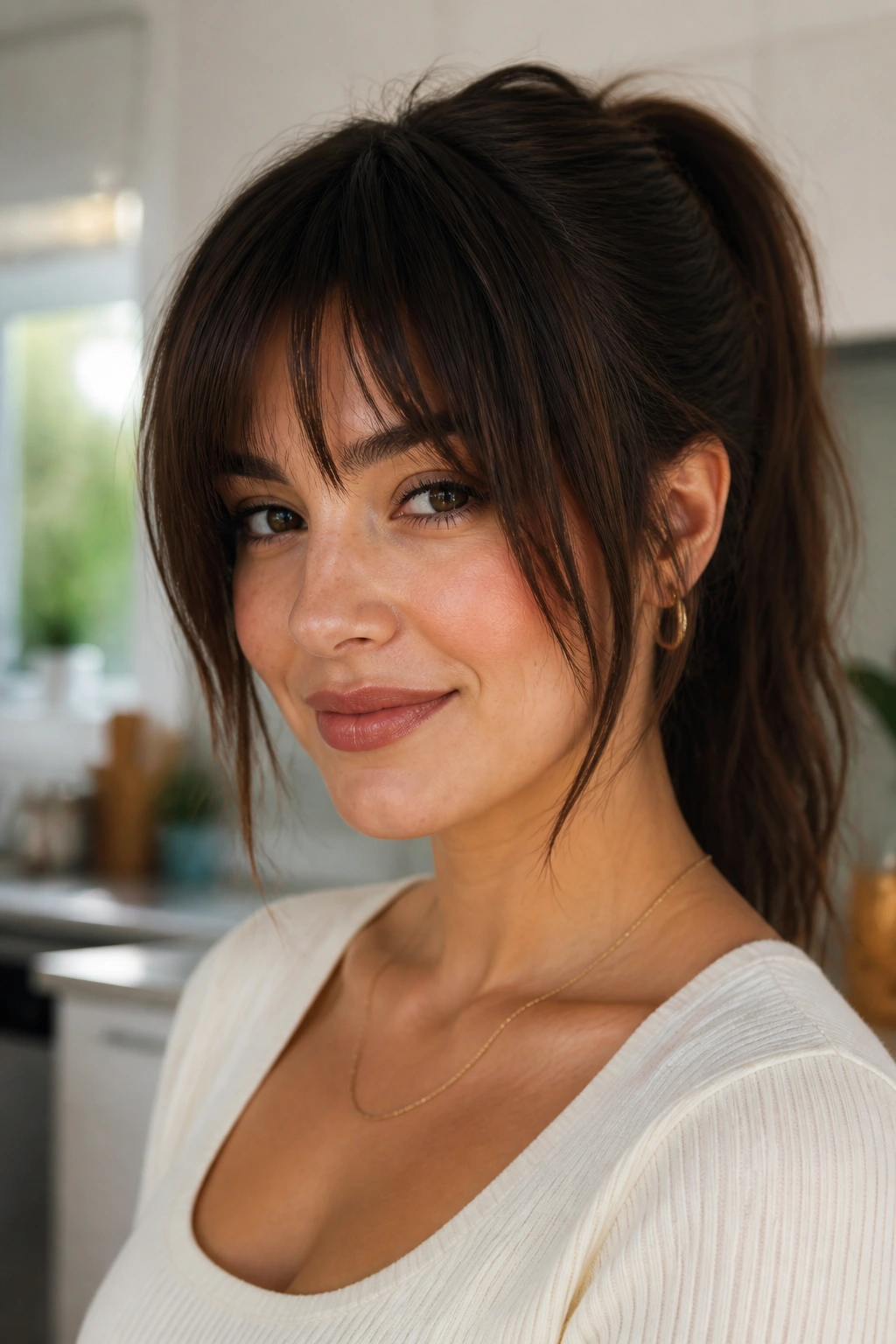
Can bangs work when you wear your hair up all the time? Absolutely. The trick is cutting fringe that still lands in the right place when the rest of the hair goes back.
The Shape to Look For
Ponytail-friendly bangs are usually longer at the temples and shorter in the middle, with broken ends so they do not look too neat. They frame the face even when the hair is tied back, which helps a round face keep some structure around the front.
Styling Note
If you wear ponytails a lot, ask for the outer pieces to hit around the cheekbone. That length gives you enough room to sweep them out when you want a cleaner look, or let them fall forward when you need face framing.
This is a practical cut. No romance, no fuss. It works because it stays useful.
22. Grown-Out Choppy Bangs That Sit at the Cheekbone
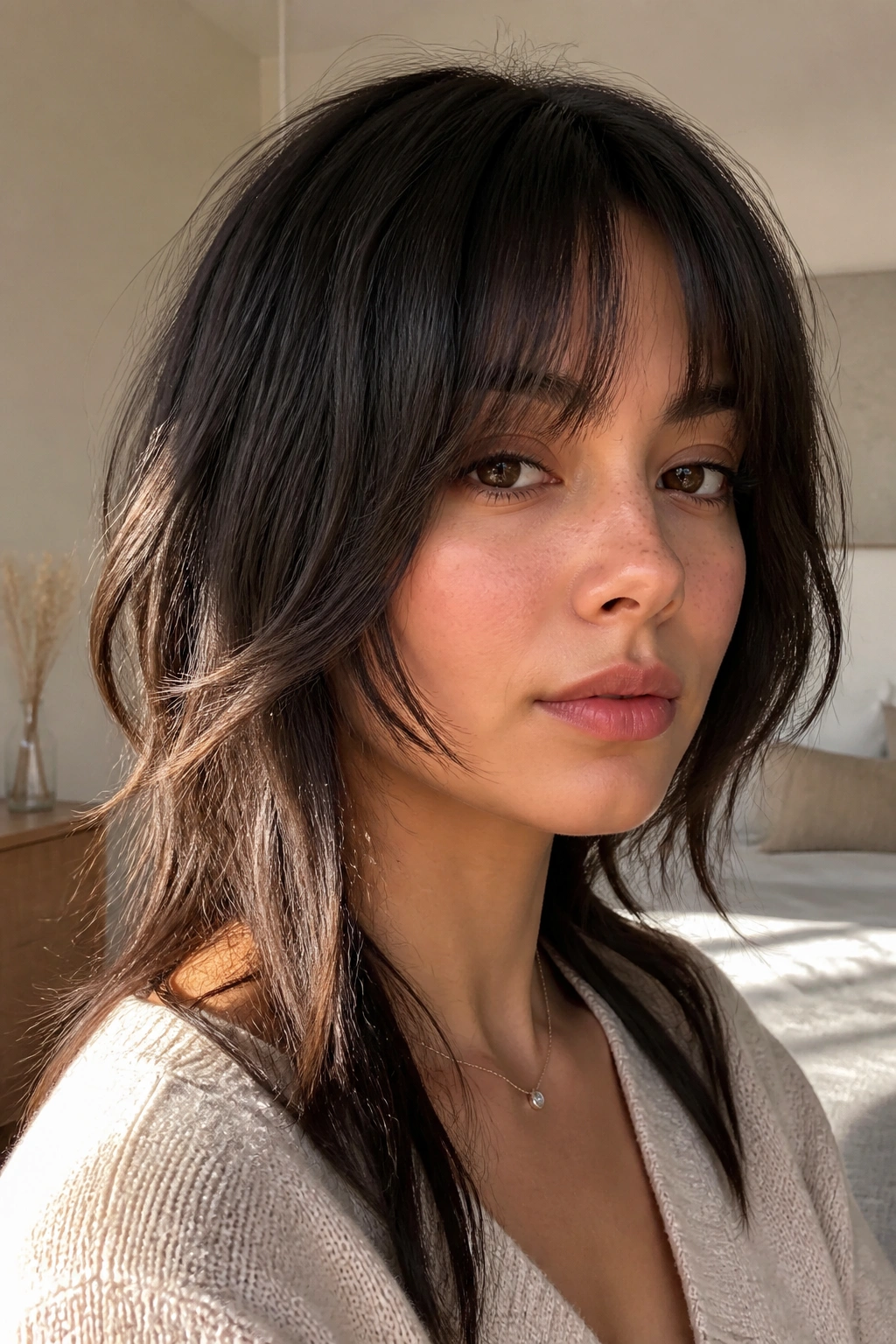
This is the fringe for people who like the idea of bangs but not the upkeep of obvious bangs. Grown-out choppy bangs sit somewhere between fringe and layers, and on a round face that usually means a softer result.
The magic is in the cheekbone length. Pieces that start around the brow and graze the cheeks pull the eye downward and inward at the same time. They also blend into the haircut so the front does not feel separate.
- Best if you hate frequent trims.
- Good with medium-length and long cuts.
- Works well with soft waves, bends, or loose blowouts.
- Ask for the ends to be shattered, not blunt.
I’d call this the easiest way to stay in bangs without looking like you are living in a perpetual grow-out phase. Which, frankly, is a relief.
Final Thoughts
Round faces do not need to avoid bangs. They need the right kind of line, the right amount of air, and a cut that knows when to stop before it gets heavy.
The safest rule is also the simplest one: keep some movement in the fringe and avoid a hard horizontal wall unless the rest of the haircut is carrying real shape. If you want low drama, go longer and choppier. If you want edge, go shorter but keep the ends broken up.
Bring photos to the stylist, yes, but also bring one clear instruction: you want the fringe to slim and frame the face, not sit on it like a straight line. That one sentence saves a lot of regret later.
