



Round faces do not need to avoid bangs; they need bangs that break the circle. A blunt line straight across the forehead can make the face read wider, while an asymmetrical fringe throws the eye off-center and creates a cleaner line from forehead to cheekbone.
The angle does the work.
That is why the best asymmetrical bangs for round faces usually start with a shorter point somewhere near the brow and drift longer toward one side of the face. The length can land at the cheekbone, the temple, or even the jaw, depending on how much forehead you want to show and how much softness your hair has. Hair texture matters too. Fine hair needs movement without too much weight; thick hair needs shape without looking puffy; curly hair needs room for shrinkage, or the shortest bit will spring up more than you expected.
A good fringe should look like it belongs to the haircut, not like it was attached as an afterthought. That is the difference between “nice idea” and the kind of cut you keep going back to in photos for months. And since round faces can be picky about balance, the small details matter more than most people think — the part, the angle, the placement of the longest edge, even how the ends are texturized.
1. Long Side-Swept Bangs That Brush One Brow
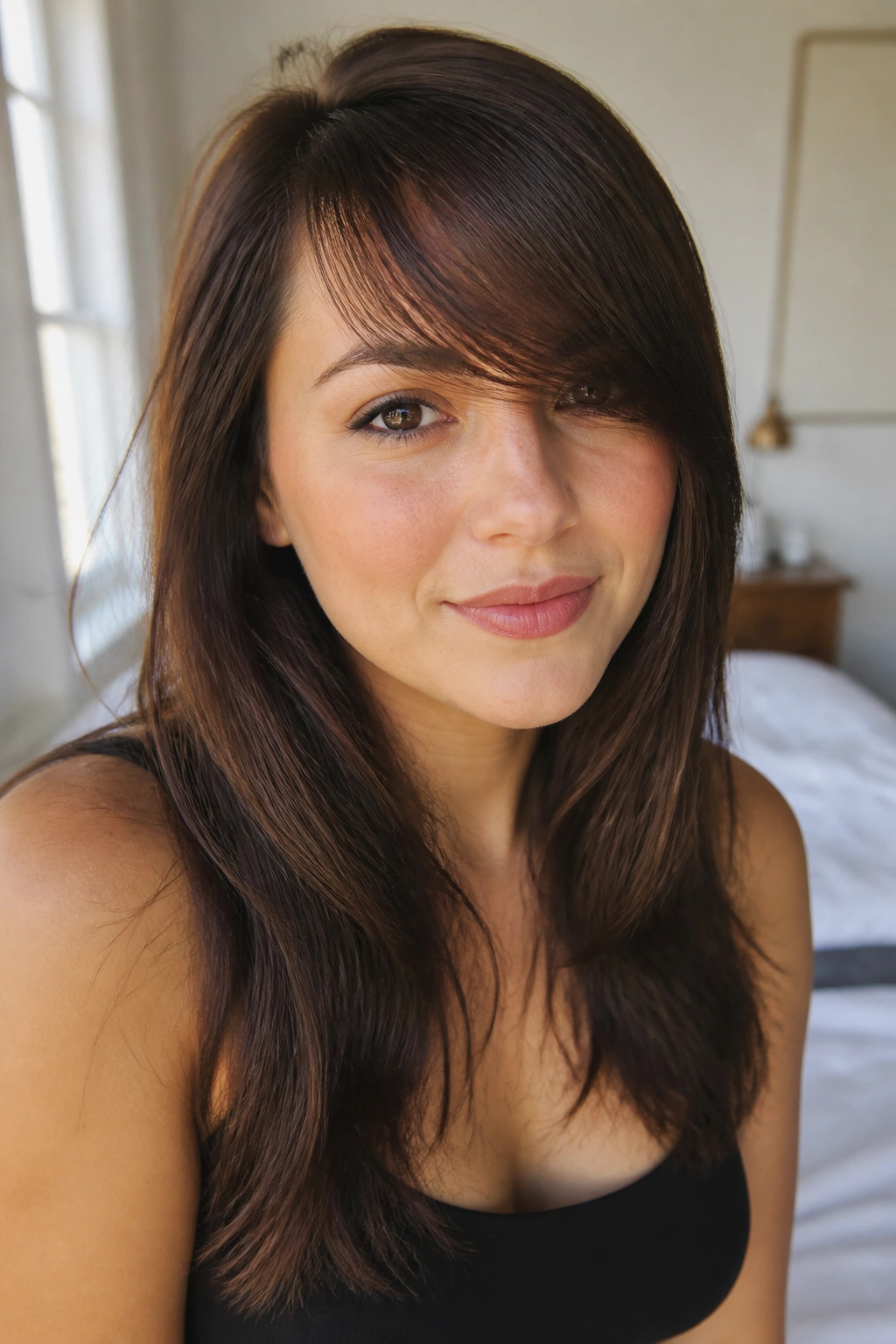
Long side-swept bangs are the safest place to start if you want asymmetry without drama. They give you the diagonal line a round face needs, but they do it softly, which matters if you do not want the front of your hair to look too chopped up.
Ask for the shortest point to land just at or slightly below one eyebrow, then let the fringe slide down toward the opposite cheekbone. The line should feel open, not heavy. A stylist can point-cut the ends so they fall in a feathered way instead of forming one hard shelf.
- Best on straight to loose-wavy hair
- Needs a quick round-brush bend, usually 3 to 5 minutes
- Grows out cleanly between trims
- Works well if you wear glasses, because the longer edge can sweep away from the frame
Keep the edge soft. If the bang is cut too blunt, the whole effect gets boxy fast, and round faces do not need more box.
2. Deep Diagonal Fringe With a Cheekbone Finish
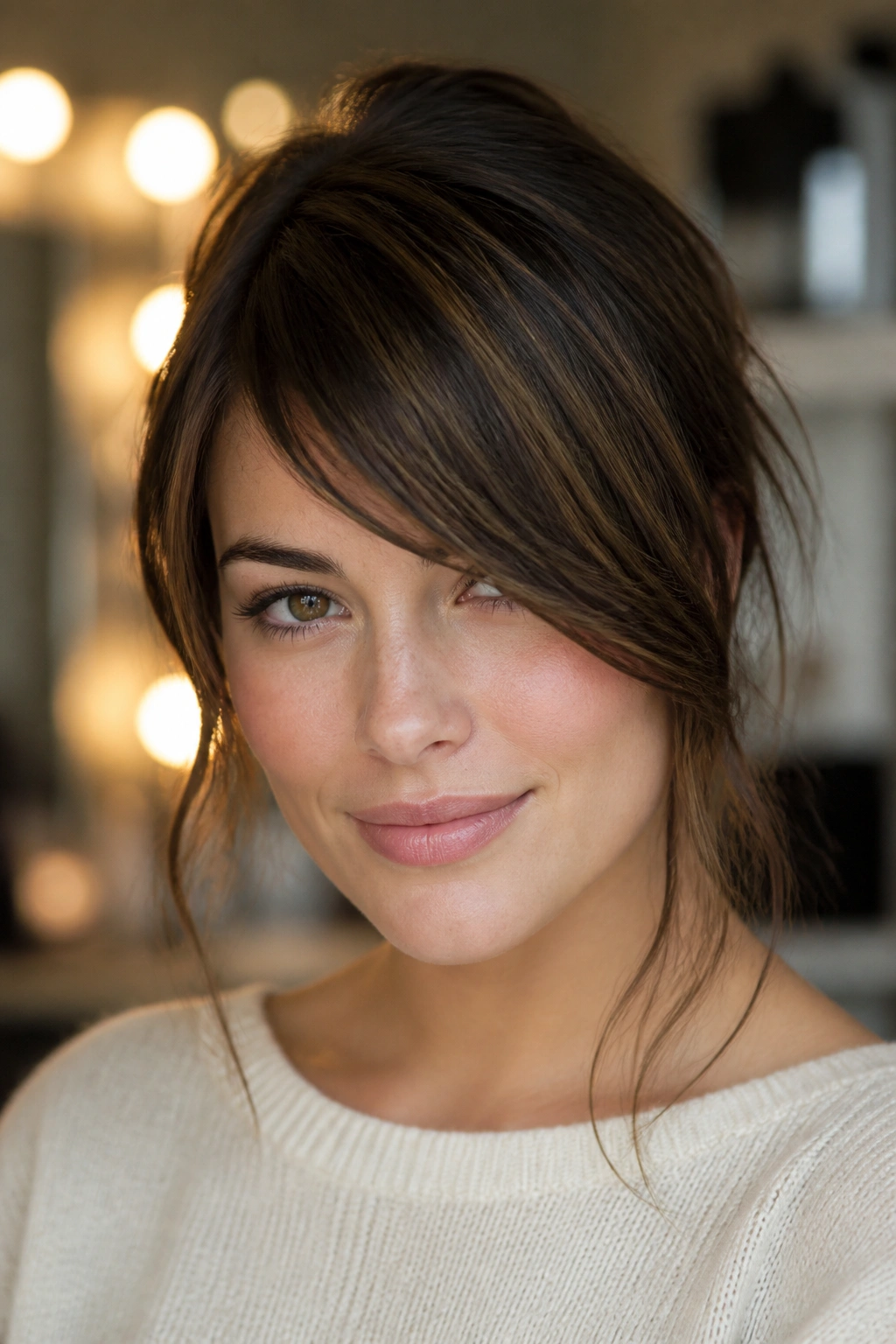
A deep diagonal fringe is the style I reach for when someone wants the face to look a little longer without losing the feeling of having bangs at all. The key is the part. Push it deep enough to create a strong sweep, then let the longer side stop near the cheekbone so the eye travels down instead of out.
That movement matters. Round faces tend to read widest across the cheeks, so a fringe that crosses the forehead on a clear slant gives the eye a line to follow. It is one of those tiny haircut tricks that makes a bigger difference in person than in a mirror selfie.
This cut tends to work best with a cut that has some layering around the face. If the rest of the hair is all one length, the bang can feel detached. If the hair is layered, the diagonal fringe blends in and the whole shape feels deliberate.
Ask for a soft taper, not a sharp corner. A hard corner near the temple can look severe on a round face, and that is the opposite of what you want.
3. Curtain Bangs Worn Off-Center
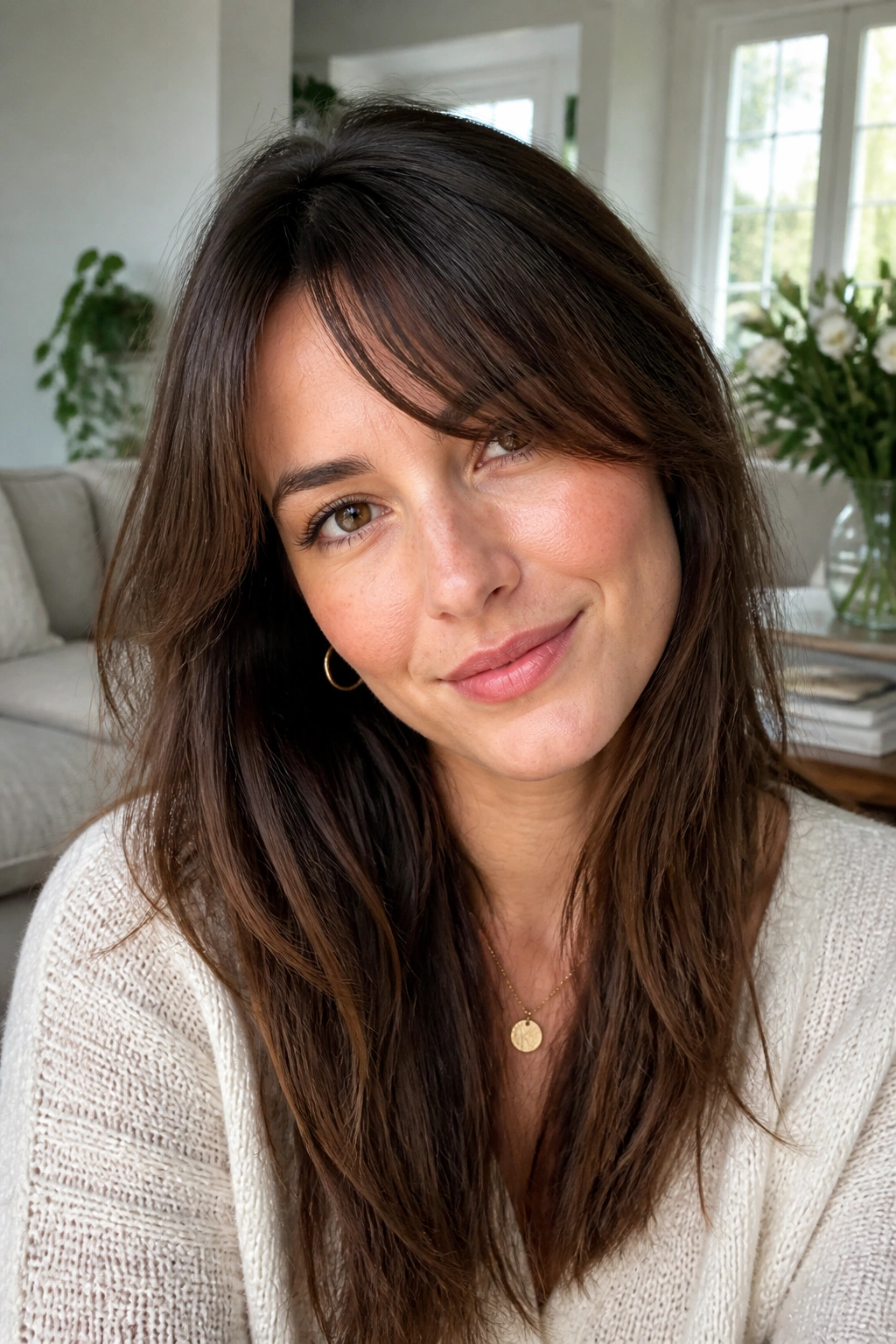
Can curtain bangs work on a round face? Absolutely — if they are not split dead center. A center part can widen the forehead and make the face feel shorter. Shift the part a little to one side, and suddenly the whole cut has more direction.
Why It Works
The off-center split creates a gentle asymmetry without looking like a side bang from the eighties. One side opens the face, the other side frames the cheek. That little mismatch is doing a lot of quiet work. It pulls the eye down and out, which helps the face feel less circular.
How to Style It
Blow-dry the bangs forward first, then roll each side away from the face with a medium round brush. Start at the roots, not the ends. If the roots stay flat, the fringe will collapse into the forehead and lose that floating shape.
A pea-sized amount of lightweight cream or mousse is enough. Too much product makes curtain bangs cling together, and once they clump, the asymmetry turns muddy instead of clean.
The trick is lift at the root and softness at the ends. That mix keeps the style airy while still giving the round face a longer line.
4. Wispy Bangs That Hit at the Cheekbone
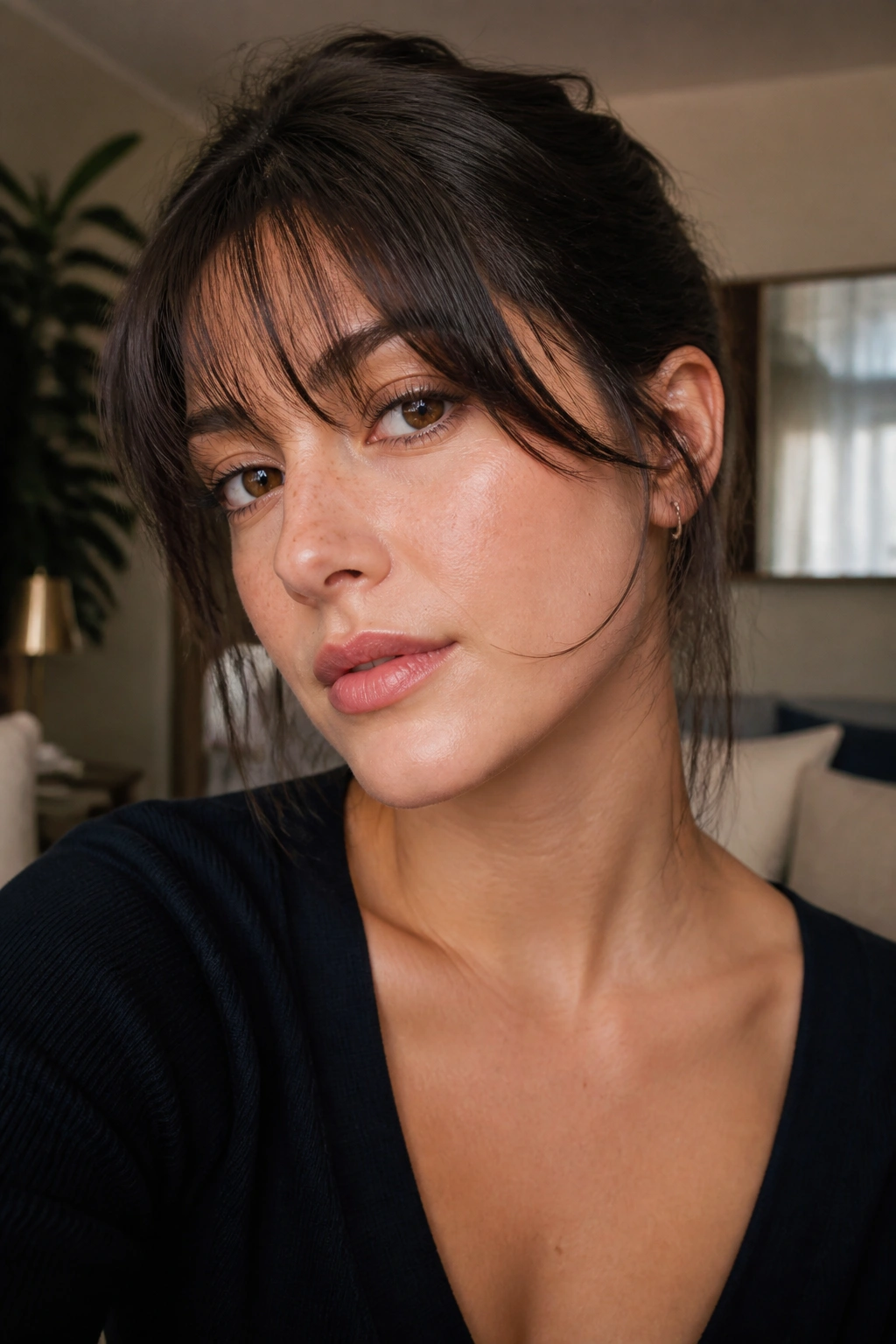
Picture a fringe that almost disappears into the haircut. That is the charm of wispy asymmetrical bangs. They are light enough to soften the forehead, but they do not sit there like a wall, which is exactly why they suit round faces so well.
This style is a nice fit if you hate the feeling of hair always being in your eyes. The longer side can skim the cheekbone, while the shorter side lands somewhere around the outer brow. The result feels relaxed, not severe. It is also friendly to people who wear makeup and want their eyes to stay visible.
A few things help:
- Keep the density low so the fringe does not close off the face
- Use point-cutting or razor-light texturizing on the ends
- Style with a quick bend, not a full polished curl
- Trim every 4 to 6 weeks so the shape does not fall into your eyes
Wispy does not mean flimsy. It means the bang is light in weight, not weak in shape.
5. Heavy Swoop Bangs for Straight Hair
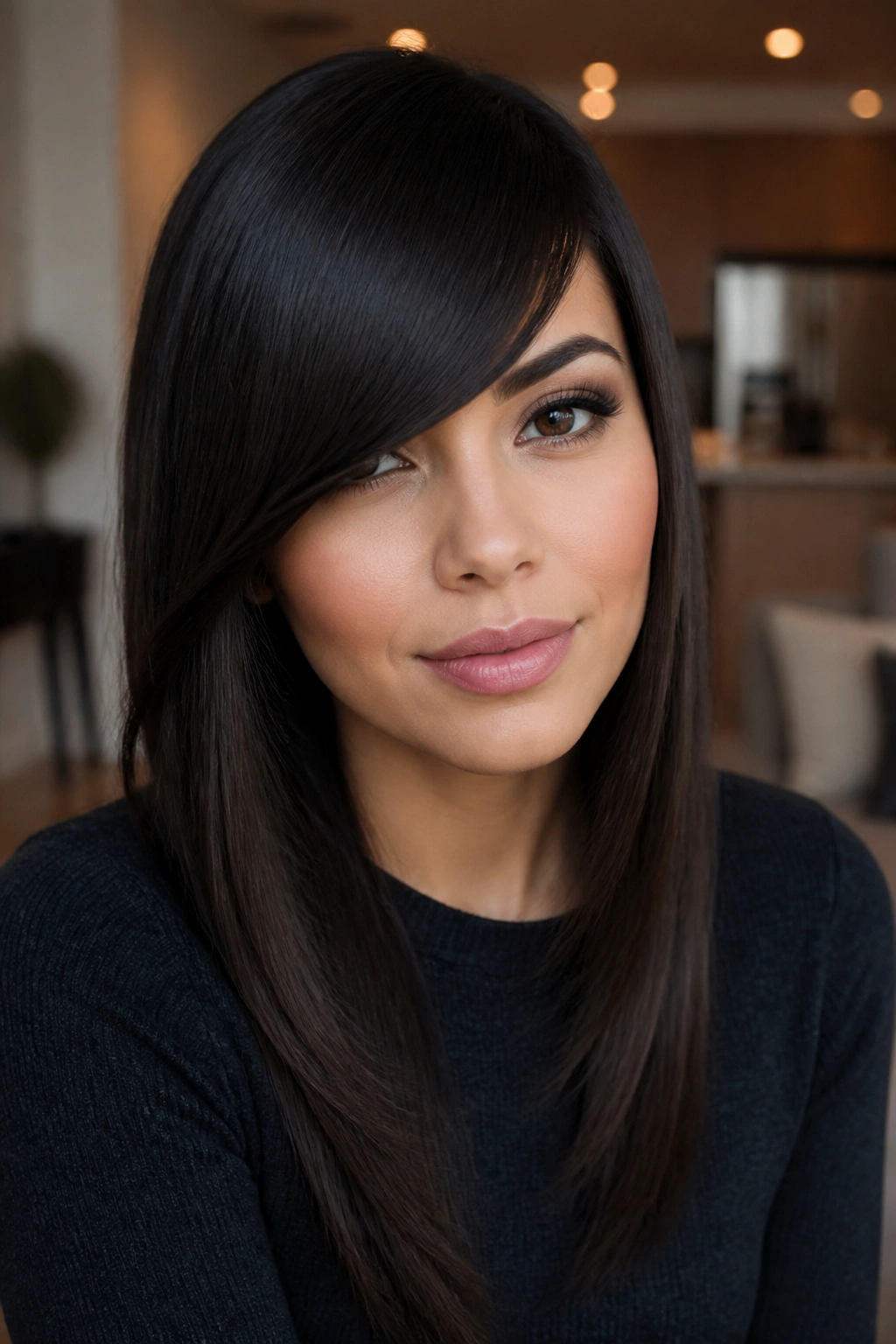
Straight hair can carry a swooping bang better than almost any other texture, because it holds that long diagonal line without fighting it. If your hair is pin-straight and tends to lie close to the head, a heavier swoop can give the front enough presence to make the roundness of the face look less obvious.
The important part is weight distribution. The bang should be fuller at the shorter side and then taper as it moves across the forehead. You do not want the whole thing to feel dense and flat. You want one side to lead, and the rest to follow.
A round brush and a blow-dryer are usually enough here. Pull the bang across the forehead, then curve the ends slightly under the cheekbone side. If you use a flat iron, keep the bend soft. A tight curl at the end looks dated fast, and it does the face no favors.
This is a polished cut, not a fussy one. It looks best when the shape is clean and the finish is smooth, almost satin-like.
6. Piecey Choppy Fringe With a Longer Temple Side
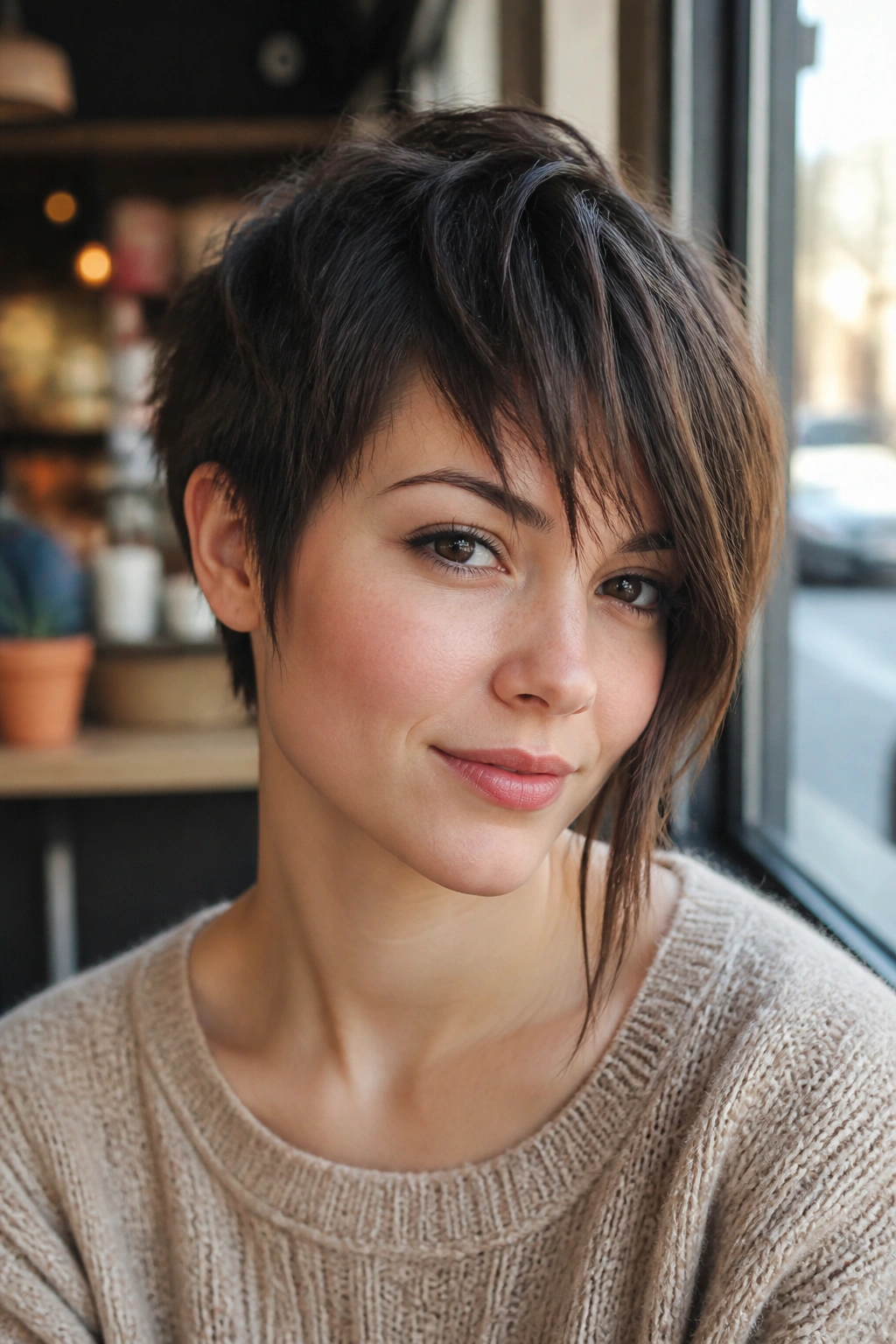
Blunt bangs are the wrong partner for a round face when the goal is length. Piecey, choppy fringe does the opposite. It breaks up the front of the hair into smaller sections, which keeps the forehead from reading like one wide horizontal block.
The longer temple side is the part that really matters. It gives the cut direction, then softens into the rest of the haircut. If you already wear layered hair, this kind of fringe blends easily. If your hair is one length, the texture does some of the heavy lifting by creating movement where the shape is otherwise plain.
What Makes It Different
Unlike a smooth side-swept bang, this one feels broken up and airy. That makes it a better match for people who want a little edge without going full shag.
Who It Suits
- Medium to thick hair
- Natural waves
- Anyone who likes a slightly undone finish
- Hair that gets too flat with heavy fringe
Blunt lines are the enemy here. Keep the ends rough enough to move.
7. Curly Side Bangs That Follow the Hair’s Bend
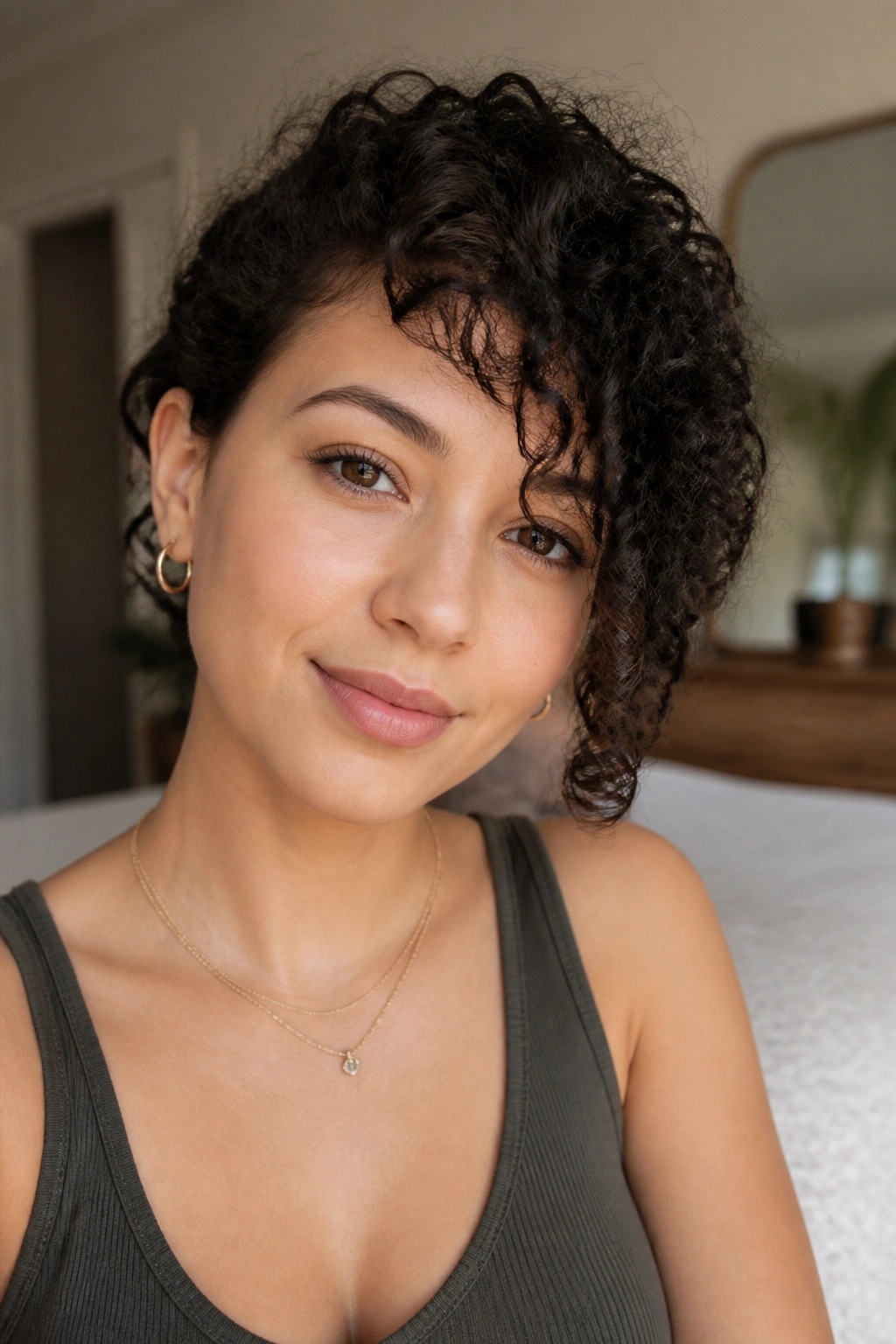
Curly hair can wear asymmetrical bangs beautifully, but the cut has to respect the curl pattern. If the front is cut wet and stretched, the shortest side may spring up higher than you planned. That is how people end up with a bang that looks one inch shorter than the stylist promised.
The better move is to cut curls dry or nearly dry, in their natural fall. Then the shorter side can sit near the brow while the longer side drops toward the cheekbone after shrinkage. That keeps the face open instead of boxed in by a springy line of curls.
A curl cream with a light hold helps the bangs clump in a controlled way. A diffuser can add lift at the root without puffing out the ends. And yes, the round face benefit is real: the side sweep gives the curls direction, which keeps the overall silhouette from widening across the cheeks.
Cut them dry. That one choice saves a lot of regret later.
8. Angled Bottleneck Bangs

Bottleneck bangs usually start narrow in the center and open wider near the temples. On a round face, that shape can work very well if the whole thing is nudged off-center, because you get the softness of a curtain bang with a little more shape through the side.
What to Ask For
Tell the stylist you want the shortest point to land around the eyebrow area, then have the fringe lengthen gradually toward one side. The longest edge should graze the temple or cheekbone, not stop halfway up the forehead. That slow drift is what gives the face a longer look.
Best Hair Types
Dense hair takes to this shape well because the narrow center keeps the fringe from looking too bulky. Wavy hair is also a good match. Fine hair can wear it too, but the top layers need some root lift so the center does not collapse.
This is a good middle ground. It has the softness of curtain bangs and the cleaner direction of a side fringe.
9. Brow-Grazing Bangs With One Tapered Corner
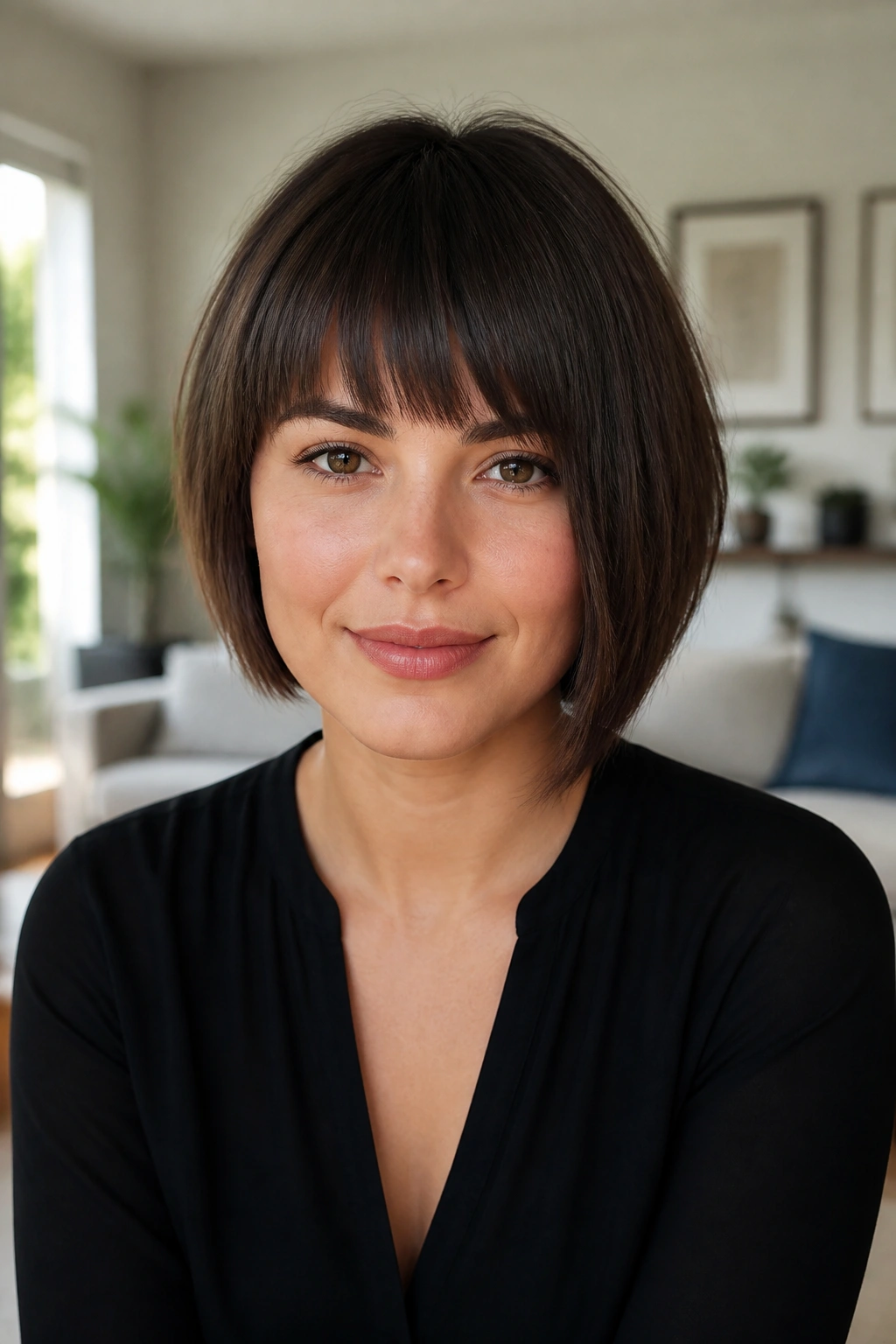
Brow-grazing bangs are a smart choice when you want to keep some forehead visible but still need the front of the haircut to do something useful for a round face. The shortest side skims the brow, the longer corner narrows toward one cheek, and the face gets a clearer vertical line.
Tiny changes matter here.
A half-inch can change the whole mood of the cut. If the shortest side sits too high, the bang starts to feel punky or accidental. If it sits too low, the face can lose the fresh open feeling that makes this style work in the first place. The sweet spot is usually just at the brow, with the longer side tapering softly instead of dropping in one obvious block.
This style pairs well with sleek hair, but it can also work with a loose wave. The trick is not to let the longest piece curl inward too much, or the whole front starts to turn round again.
Keep one corner long enough to skim the eye line. That single detail does more for the face shape than a dramatic chop ever will.
10. Shaggy Fringe Blending Into Layers
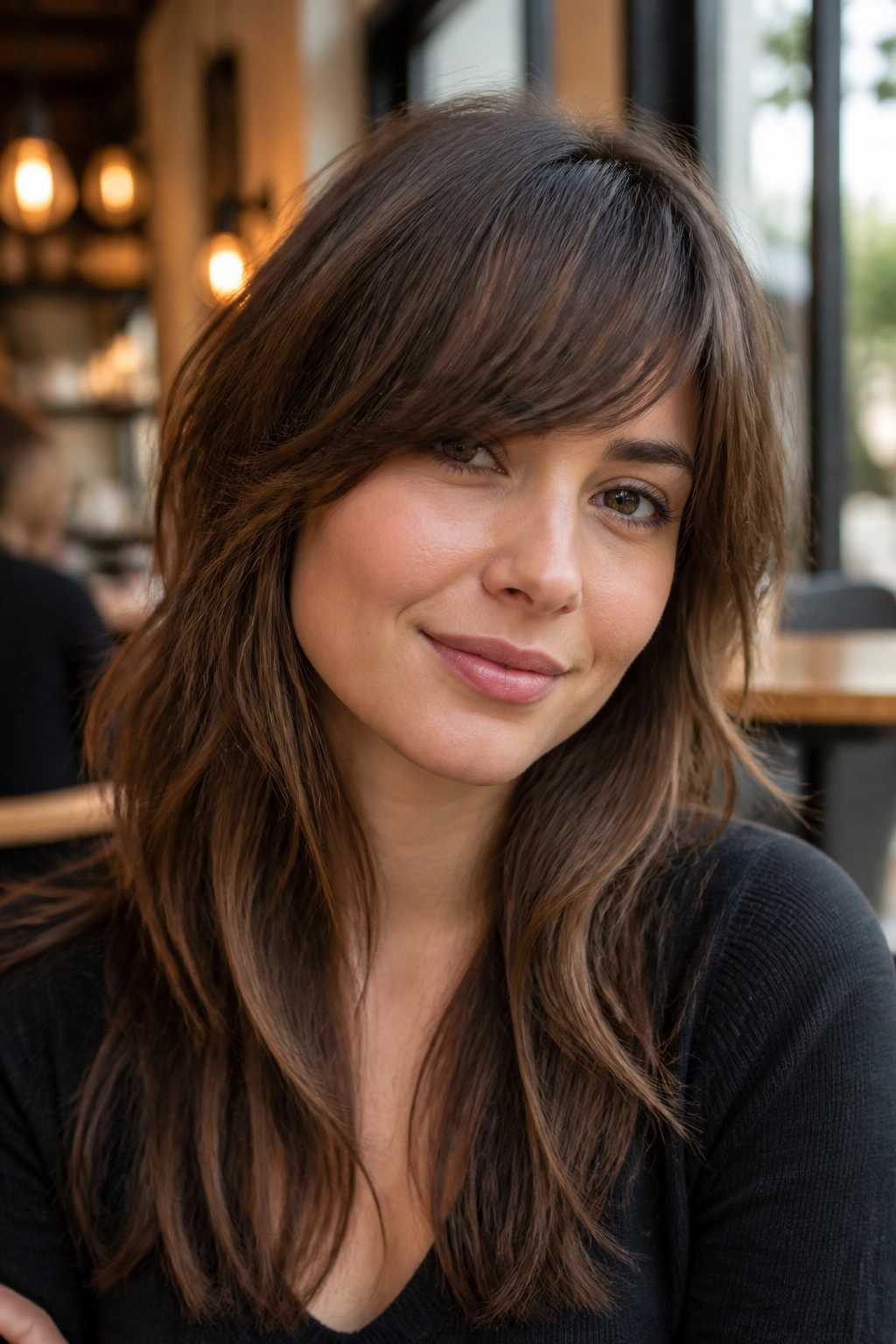
If your haircut already has movement, do not isolate the bangs from the rest of it. A shaggy fringe that blends into layers can make a round face look longer because the eye keeps moving through the cut instead of stopping at one hard line.
This is one of those cuts that looks casual but takes a sharp eye from the stylist. The front section should be shorter near one side of the forehead and then melt into face-framing layers that pass the cheekbone. The layers around the face are not decoration. They are doing the work of narrowing the visual width.
A little texture spray helps here, especially if the hair is straight and slippery. If the hair is wavy, scrunching the front while it dries can be enough. The shape should feel a bit messy, but not random. There is a difference.
- Ask for internal layering, not just surface texture
- Keep the longest point below the cheekbone if the face is very round
- Avoid a heavy center chunk at the front
- Refresh with dry texture spray on day two
This cut is forgiving between trims. That alone makes it worth a look.
11. Side Bangs Paired With a Bob
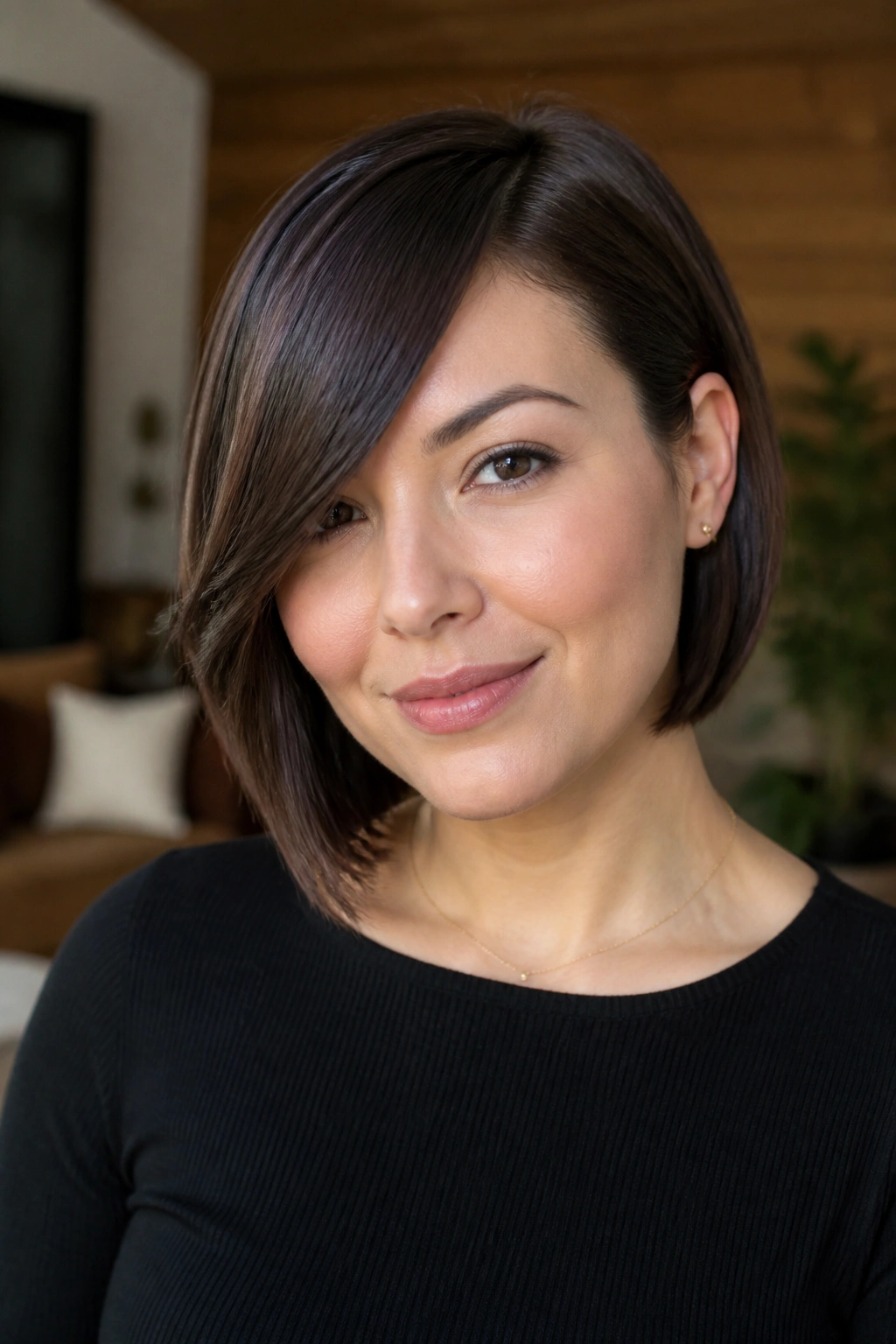
A bob and a round face can be a tricky pair, because the haircut already stops near the jaw or chin. Add the wrong bangs and the whole shape can feel boxy. Add the right asymmetrical side bang, though, and the cut starts to feel sharper and cleaner.
The safest version is a longer side bang that sweeps across the forehead and lands below the cheekbone, paired with a bob that has a little bevel at the ends. That slight inward curve at the bottom gives structure without puffing out the sides. If the bob is too round, the bang has to work harder to balance it.
This style is especially good if you tuck one side of the bob behind the ear. That opens one side of the face and breaks up the width, which helps a round face look more oval. It is a small move, but it matters.
A bob needs direction at the front. Without it, the whole cut can feel like one big circle sitting around the face.
12. Micro Side-Swept Bangs for Short Cuts
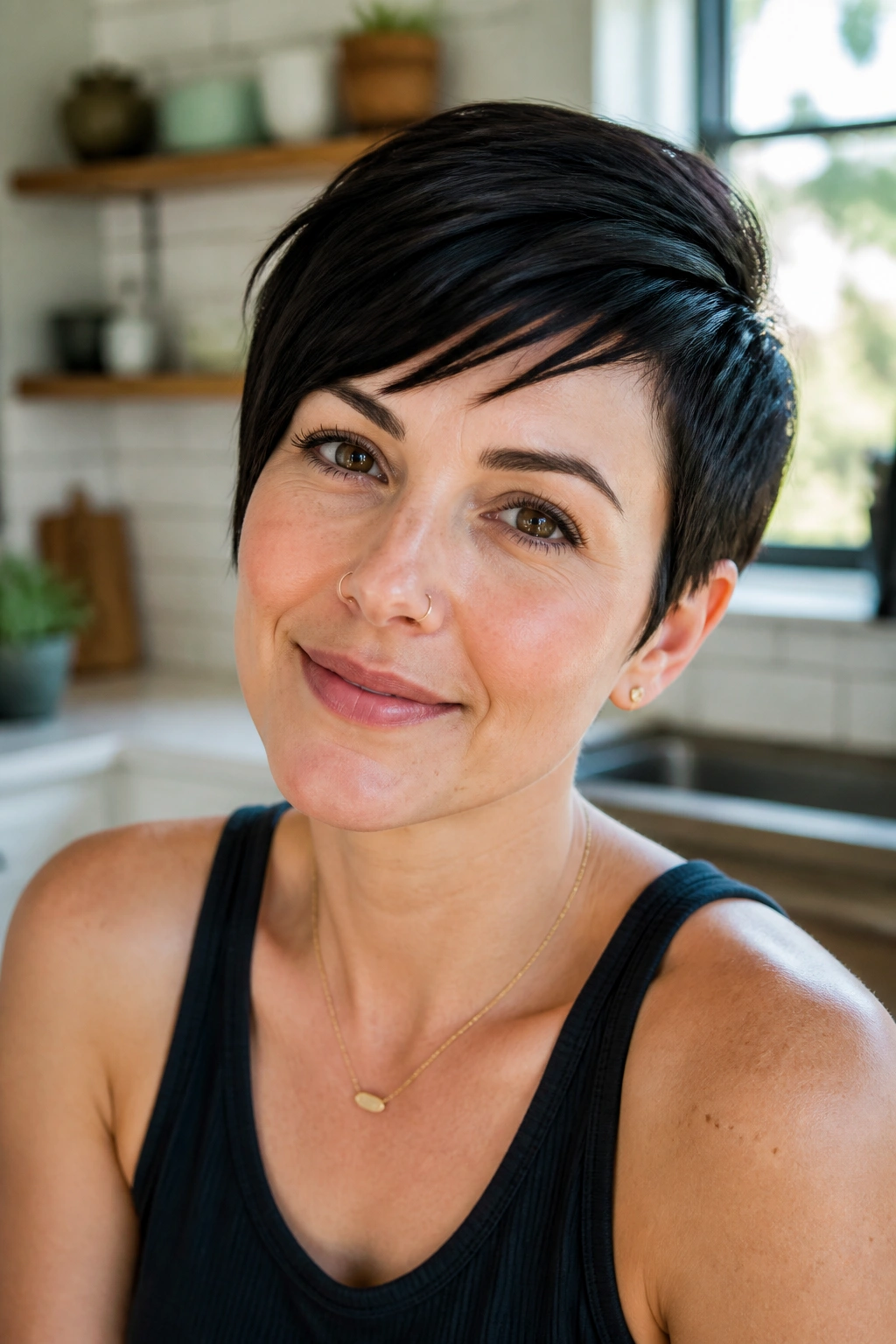
Short hair does not need to abandon bangs just because the face is round. A micro side-swept fringe can work well when it is kept soft and angled, not chopped into a blunt little shelf.
The important thing is length. True micro bangs are a bold move, and on a round face they can sometimes make the forehead feel too short. A side-swept version softens that problem by giving the eye a path to follow. One side should still be long enough to move toward the brow or temple, while the shorter side lifts the front of the cut.
One-sentence reality check: too short is a trap.
If the goal is a lighter look, ask for a tiny bit of separation at the ends and keep the fringe flexible with a small amount of pomade or cream. Short hair styling products can get greasy fast, so use less than you think you need.
13. Face-Framing Bangs With a Longer Eye-Line
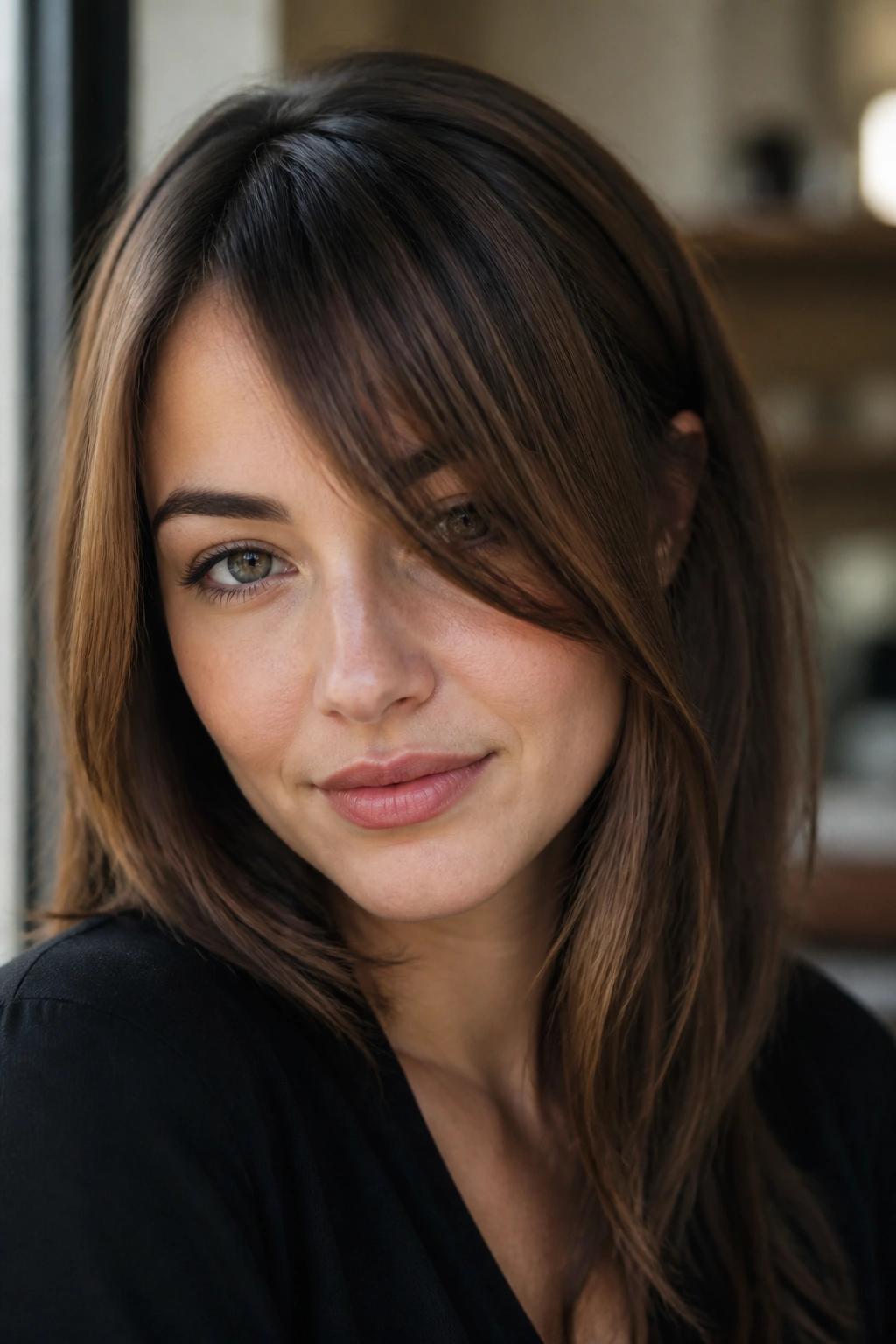
A round face usually benefits from any line that moves the eye downward, and the eye-line is one of the cleanest ways to do it. A face-framing bang that starts near one temple and crosses toward the opposite eye gives just enough asymmetry to slim the front without making the haircut feel heavy.
Best Part Placement
Shift the part slightly off-center, then let the shorter side begin near the brow and the longer side fall toward the cheekbone. If the shortest point sits too high, the cut can feel abrupt. If it sits too low, the face loses the lift that makes this style useful.
Styling Note
Blow-dry the bangs forward first, then guide them away from the face with a round brush. A small nozzle on the dryer helps keep the front smooth, which matters if your hair grows in different directions near the hairline.
This is a nice option if you like to wear the rest of your hair up. The front sections still do the shaping work, even when the ponytail is high or the bun is messy.
The eye-line should feel intentional. If it points somewhere useful, the whole cut feels smarter.
14. Feathered Fringe That Stops Above the Cheek
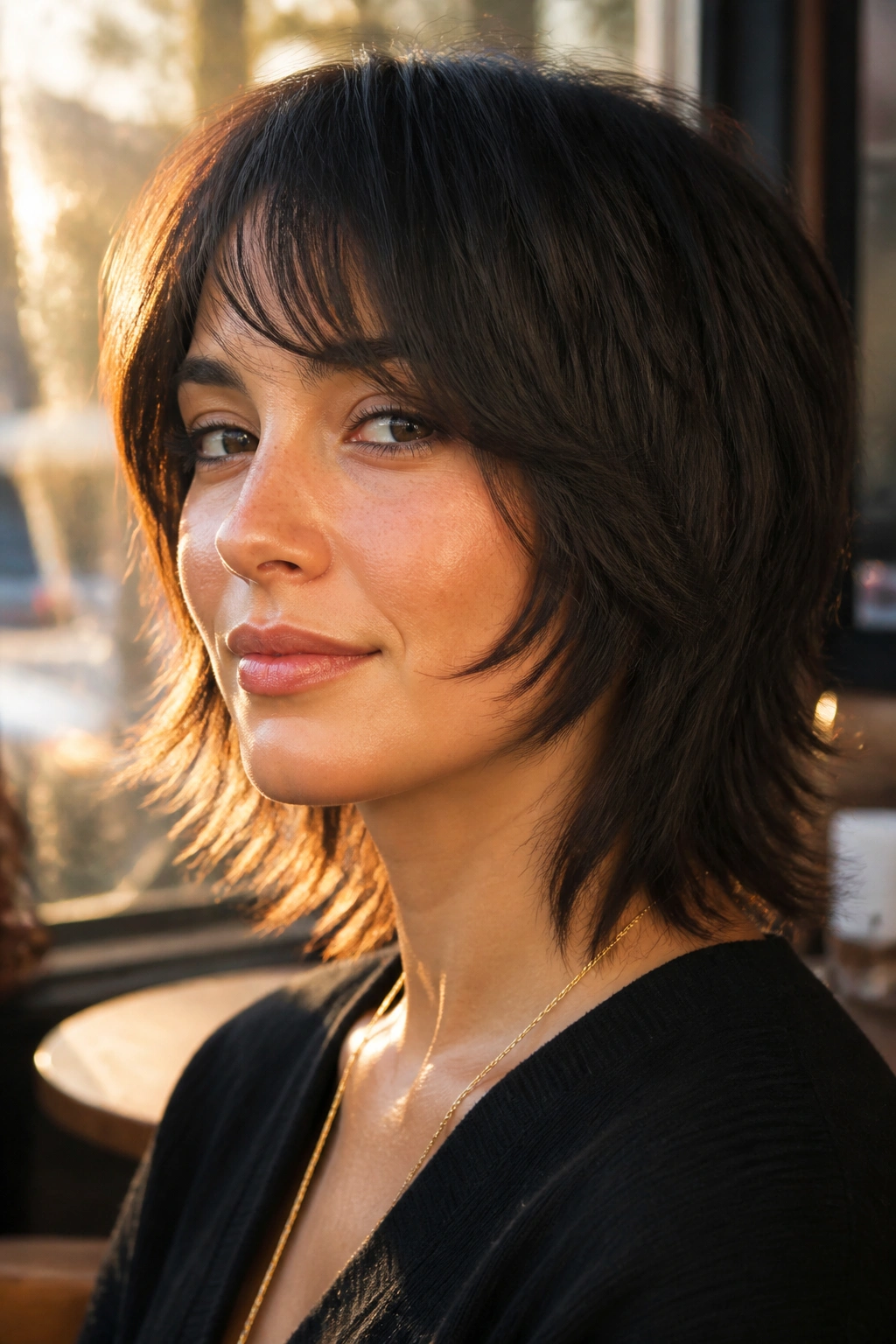
Feathered bangs are underrated on round faces because people often assume softness means width. Not quite. When the feathers are angled and one side runs longer, they can actually make the face look slimmer by keeping the front of the hair from forming one heavy block.
The ends should be light enough to move when you turn your head. That movement keeps the cheek area from looking crowded. A feathered fringe is a good match for thicker hair, which can otherwise get too bulky at the front and sit over the face like a curtain.
- Best when the hair has some natural body
- Better with a layered cut than one-length ends
- Needs light trimming so the feathering does not turn straggly
- Works well with a round brush or blowout brush
Above the cheek is the sweet spot. Lower than that, the face can feel tucked in; higher than that, the fringe can lose its shaping power.
15. Soft Split Bangs With an Uneven Center

What if you like curtain bangs but want them to feel a little less neat? A soft split with an uneven center does the trick. One side starts slightly shorter, the other side carries more length, and the center is broken rather than perfectly mirrored.
That unevenness is the whole point. Round faces do not need exact symmetry from the front. They need movement, and a soft split gives you that without looking sharp or severe. It is a good option if you change your part a lot, because the cut still makes sense even when your hair shifts throughout the day.
A little smoothing cream on damp hair helps the front sit in the right direction. If the hair is wavy, let it air-dry until about 80 percent dry, then shape the front with your fingers. If it is straight, use a brush just long enough to bend the ends away from the center.
Perfection is not the goal here. A lived-in split often looks better than a tidy one.
16. Thick Asymmetrical Bangs for Dense Hair
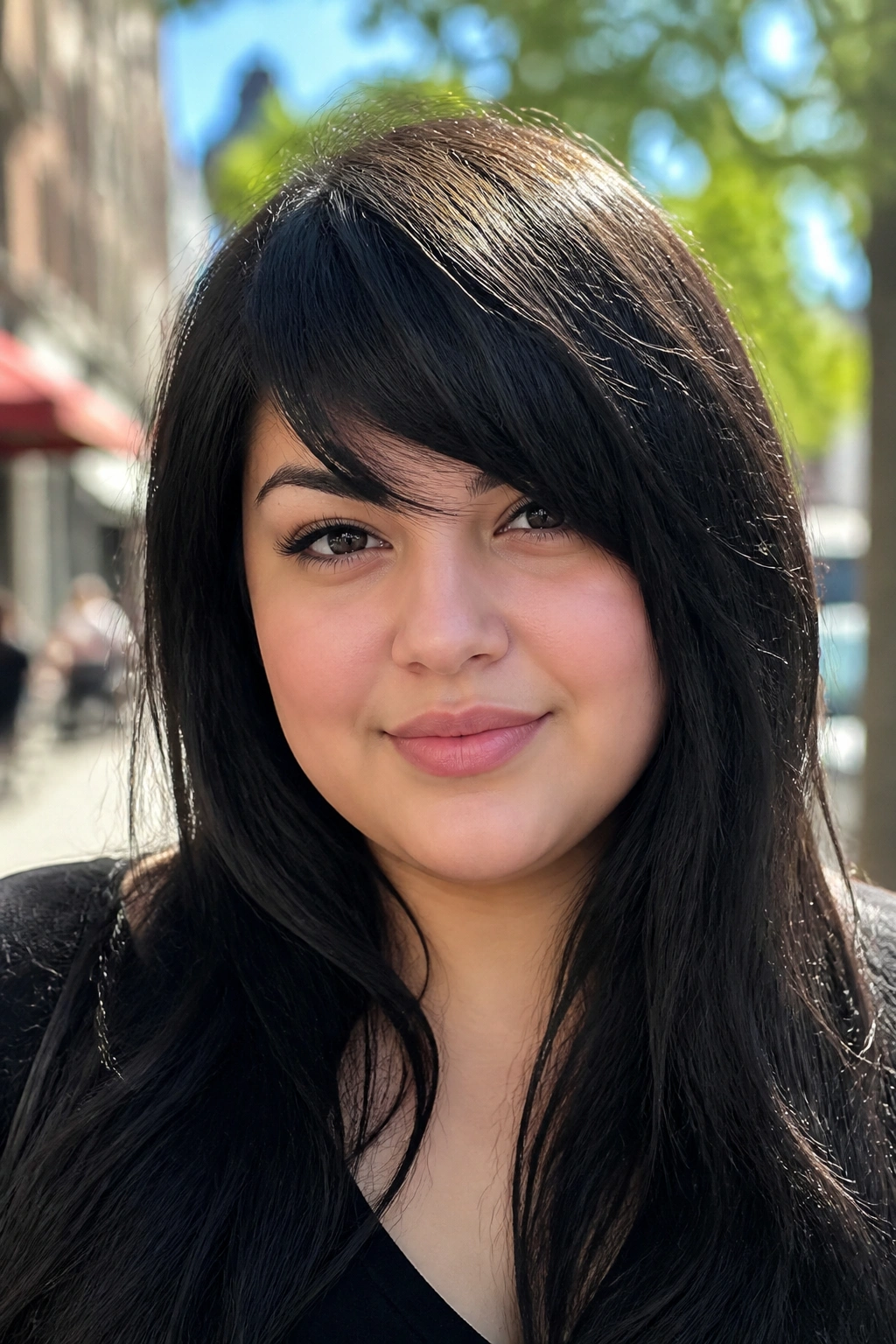
Dense hair can handle more weight at the front, and that is useful on a round face because too-thin bangs can disappear into the rest of the haircut. A thicker asymmetrical fringe gives the face a stronger line, then softens that line by letting one side fall longer.
Unlike wispy bangs, this style needs internal removal of bulk, not just thinning at the ends. If the whole section is heavy from root to tip, it can swell out and widen the face. A good stylist will leave enough density to keep the bang visible, then carve it so the front moves instead of sitting like a helmet.
This is a strong choice for coarse hair, hair that frizzes a little, or anyone whose fringe tends to separate by midday. A denser bang usually holds its shape longer. It also stands up better to humidity, which is a small mercy when you do not want to restyle the front ten times a day.
Keep the weight low and the sweep long. That balance is what keeps the style flattering.
17. Fine-Hair Bangs That Keep the Ends Light
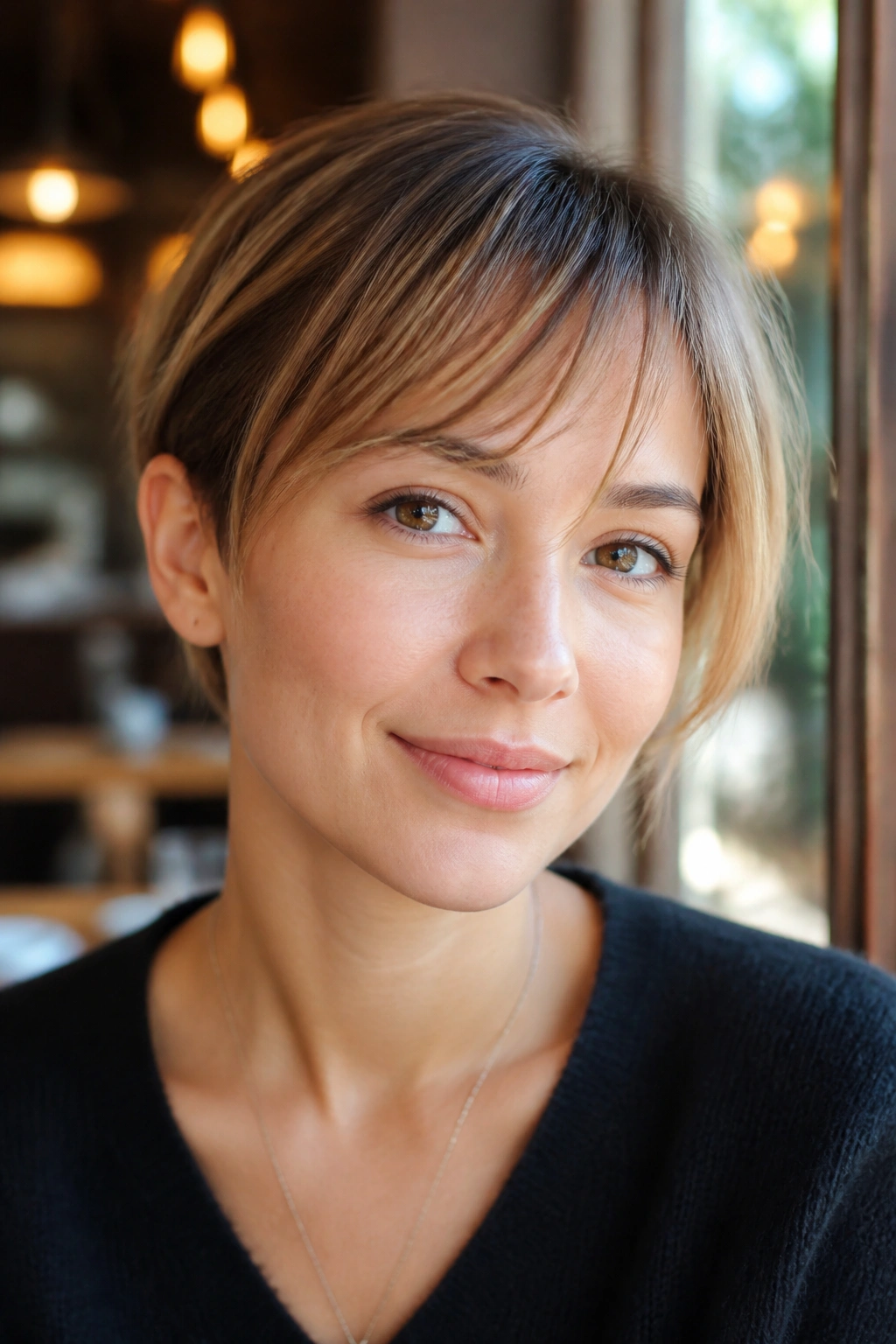
Fine hair needs a different approach. Too much weight at the front can make the bangs collapse against the forehead, and once that happens, the asymmetry stops reading as a shape and starts reading as limp hair.
The best version keeps the ends airy and the roots a little lifted. A short side should still exist, but it should not be packed with too much bulk. The longer side can drift toward the cheekbone, giving the face the same diagonal line the thicker styles use. The difference is in how light the pieces feel.
Heavy product is the enemy.
A mist of root spray, a quick blast with a dryer, and maybe a touch of dry shampoo at the root are usually enough. Avoid oils near the front unless your hair is extremely dry. They weigh down fine fringe faster than most people expect, and once that happens, the bang starts sticking together in a way that looks flat, not soft.
Lightness is the point. Fine hair looks better when the ends move instead of hang.
18. Razor-Cut Side Fringe for a Sharp Finish
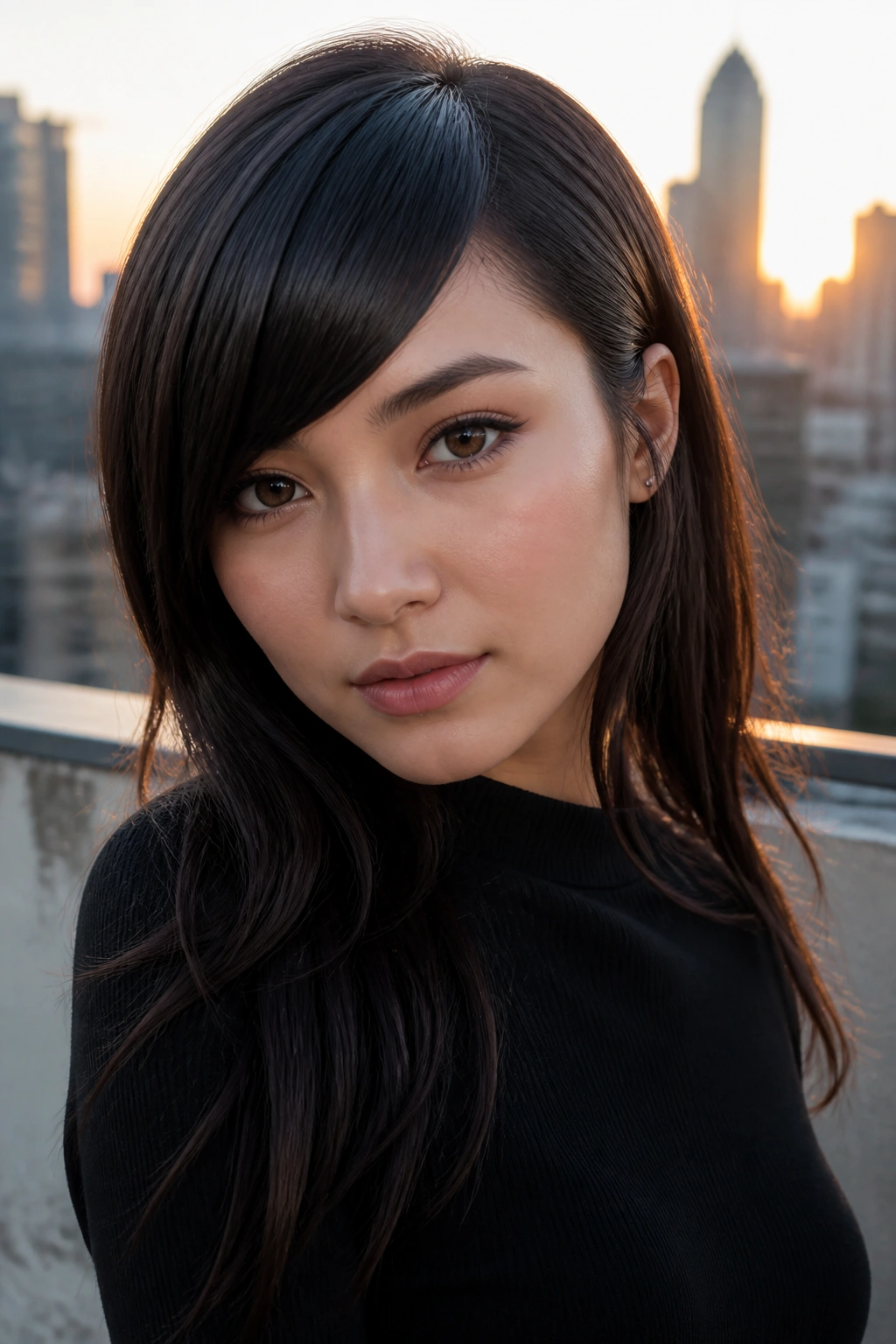
A razor-cut side fringe has more edge than the softer versions on this list, and that can be a good thing on a round face if the shape is controlled. The razor gives the ends a sharper, narrower finish, which keeps the bang from puffing out across the forehead.
Not every head of hair likes a razor. If the hair is frizzy, frayed, or prone to splitting, scissors may be the safer call. But if the hair is straight or smooth-wavy, a razor can create a lovely soft line that bends across the face without feeling heavy.
What to Watch For
- Ask for the longest side to stay below the cheekbone
- Keep the shortest side soft near the brow
- Skip this if your hair is already rough at the ends
- Use a light serum on the tips, not the roots
The finish should feel sleek, not sliced up. Sharp does not mean harsh. That distinction matters more than people think.
19. Long Fringe That Tucks Behind One Ear
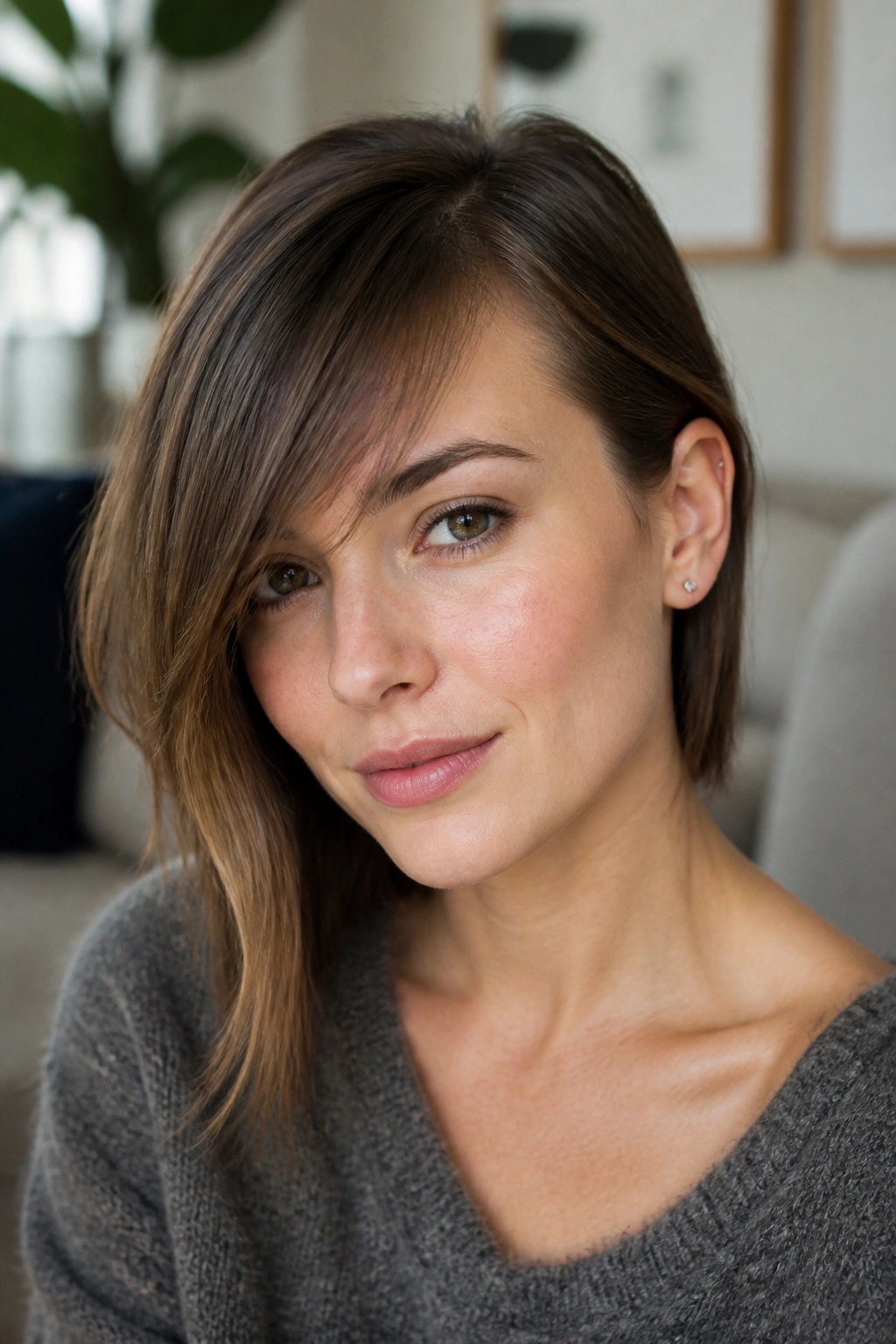
This is the style I like for people who want their bangs to behave during the day. A long asymmetrical fringe that can tuck behind one ear gives you two moods in one cut: face-framing when you want it, cleared away when you do not.
The side that stays out front should sweep across the forehead and land low enough to narrow the face visually. The tucked side can be slightly shorter or simply lighter, which keeps the shape from looking heavy around the temples. That matters on round faces, because temple fullness can make the face feel broader than it is.
It also grows out well. If you are moving from a full fringe into something softer, this cut is a smart bridge. It lets you keep some bang presence without the maintenance of a dense front section. And yes, it looks polished when you tuck one side behind the ear and leave the rest loose.
One tucked side changes the whole read. The face opens up, and the cut stops feeling static.
20. The Low-Maintenance Off-Center Fringe
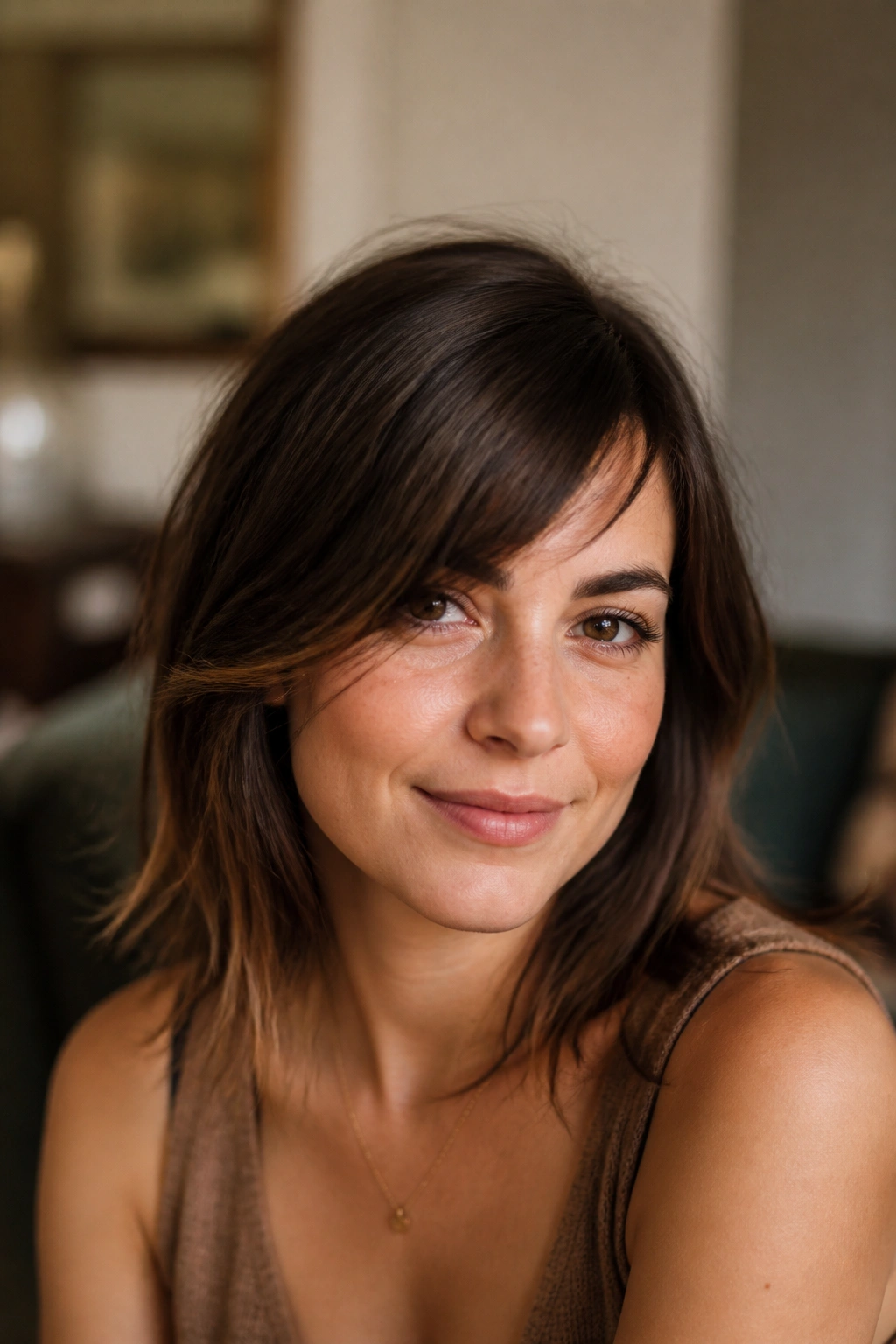
If you want the easiest version of asymmetrical bangs for a round face, start here. An off-center fringe with medium length and soft ends is the least fussy choice on the list, and it is forgiving if your part shifts during the day.
The cut should begin slightly off the center of the forehead, then taper longer toward one cheek. The shortest point can sit near the eyebrow, while the longest point reaches the cheekbone or just below. That gives you the angle you need without turning the front into a high-maintenance project.
A few signs this is the right pick:
- You air-dry more than you blow-dry
- Your hairline has a cowlick or two
- You want bangs that grow out neatly
- You wear your hair half-up a lot
This style is not flashy, and that is the appeal. It works with messy mornings, humid weather, and the odd day when you cannot be bothered to re-style the front. Soft shape, low stress. That combination wins more often than people admit.
Final Thoughts
The best asymmetrical bangs for round faces do one simple thing well: they create a clean diagonal line without making the front of the hair feel heavy. Once you see that, a lot of the confusion disappears. You stop asking, “Can I have bangs?” and start asking, “Where should the shortest point sit, and how far should the longest side travel?”
That tiny bit of placement changes everything. A bang that ends at the cheekbone behaves differently from one that stops at the brow. A soft side sweep does a different job than a razor edge. Even the part matters more than most people think.
If you are showing a stylist a photo, point to the exact spot where you want the shortest piece to land and the exact place where you want the longest edge to fall. That is the part people skip, and then they wonder why the cut misses the mark. The details are the haircut.
