



Black bangs can change a round face fast, but only when the fringe breaks up width instead of echoing it. A heavy straight line across the forehead can make the face feel broader. A cut with angle, softness, or a little movement at the temples usually does the opposite.
That’s the part people miss. The goal is not to hide your face. It’s to give it shape.
Black hair makes this even more interesting, because texture changes the whole conversation. A bang that sits neatly on a silk press can spring up an inch or two once it meets curl, and a fringe that looks airy in a salon chair can turn dense if the front section is cut too thick. Shrinkage matters. So does density. So does where the bangs end in relation to the cheeks.
That part changes everything.
The good fringe choices for round faces tend to do one of three things: create a vertical line, add a diagonal line, or leave the center lighter so the forehead doesn’t become a solid block. Some are soft. Some are sharp. A few are bold enough to make a statement on their own. All of them can work on black hair if the shape is planned with the face, not against it.
1. Black Curtain Bangs That Open at the Center
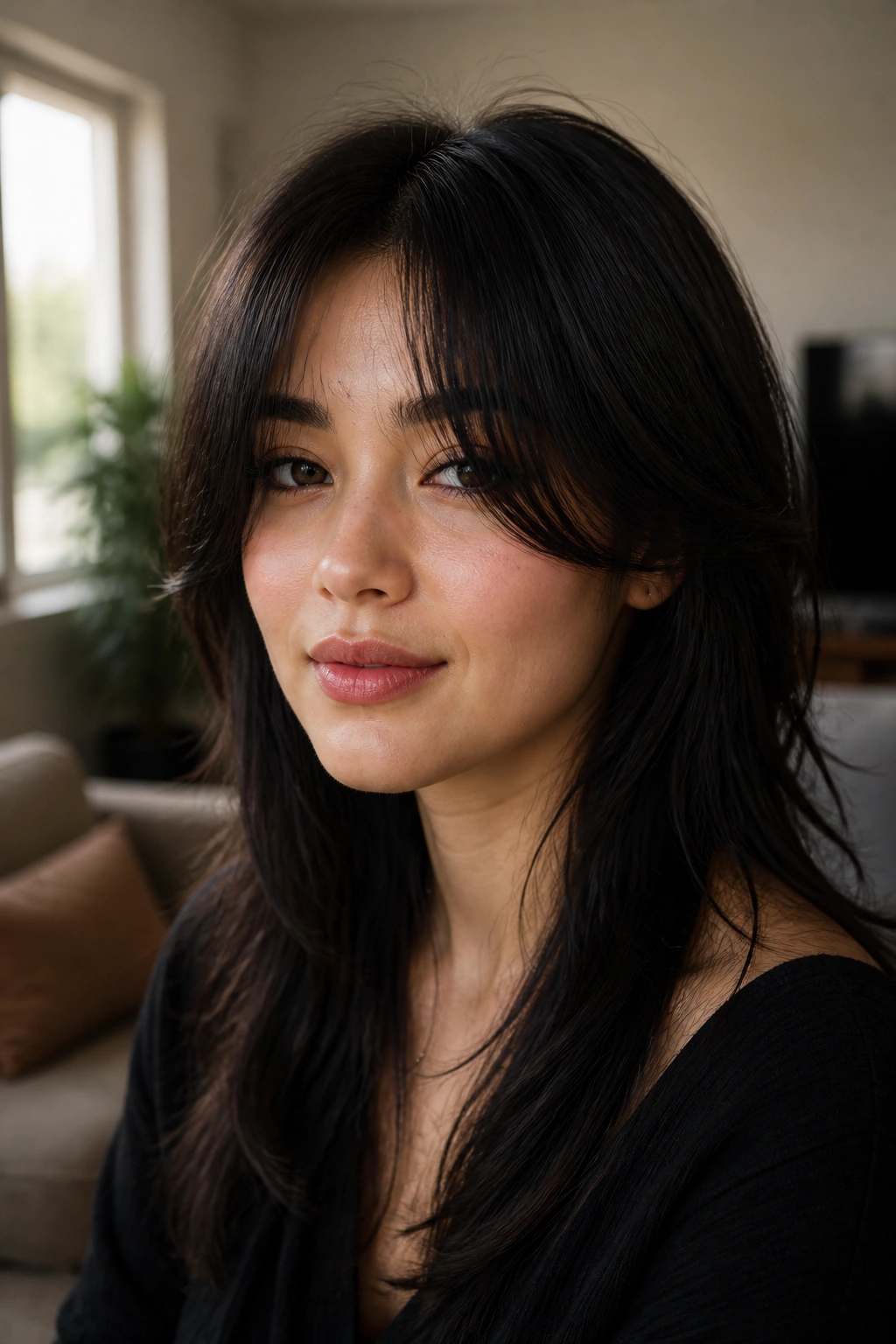
Curtain bangs are the first style I’d hand to someone with a round face because they split the forehead in the middle and fall away toward the cheekbones. That opening at the center gives the eye a place to travel downward, which is exactly what you want when the face is fuller through the cheeks.
Why It Works
Ask for the shortest point to sit just below the brow, then let each side lengthen toward the top of the cheekbone. That keeps the center light and stops the cut from sitting like a shelf. On black hair, especially if it’s thick, the fringe needs a little internal texture so it moves instead of landing in one solid block.
- Keep the center about ½ inch to 1 inch below the brow if you wear the hair straight.
- Let the side pieces graze the cheekbone or upper jawline.
- Blow-dry with a 1.5-inch round brush, turning the ends away from the face.
- Ask for point-cut ends rather than a blunt edge.
Best move: leave the first cut slightly longer than you think. Curtain bangs are forgiving, and that extra length gives you room to wear them straight, tucked, or blown back.
2. Black Side-Swept Bangs With a Deep Part
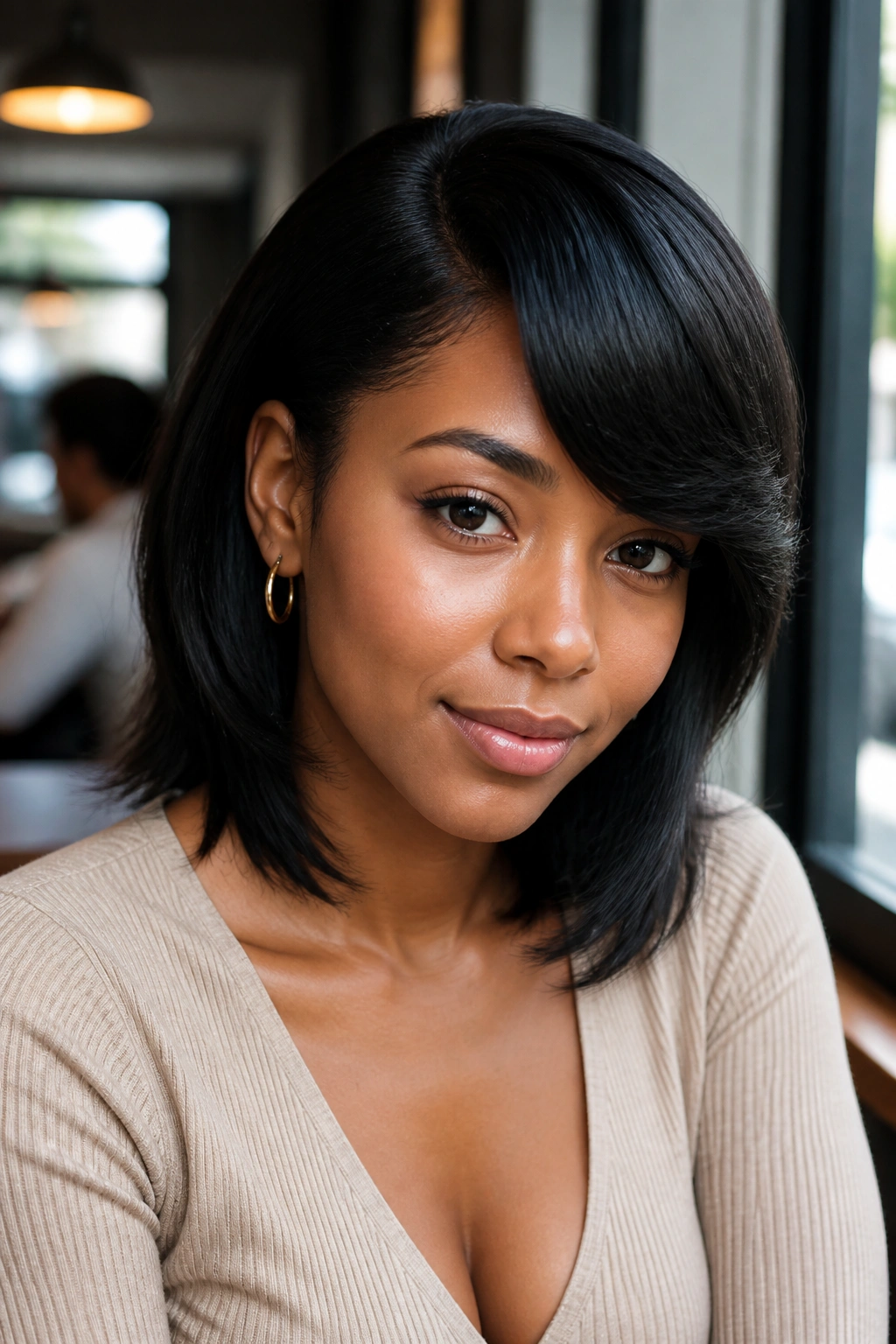
A deep side part does more work than people give it credit for. One diagonal line can make a round face look longer, sharper, and a little more sculpted without making the haircut feel severe. That’s why side-swept bangs stay useful, even when trends keep wandering off in different directions.
The trick is weight. You want enough hair in the fringe to feel intentional, not so much that it turns into a flat curtain over one eye. On straightened black hair, that usually means a heavy side sweep that starts near the crown and lands just past one eyebrow. On curls, the same idea works better when the front is cut long enough to spring into place without puffing out.
Wear this style when you want something low-fuss. It works on relaxed hair, natural blowouts, and silk presses, and it is one of the easiest bangs to tuck behind the ear on a warm day.
Practical note: if the sweep keeps collapsing, dry the roots in the opposite direction first, then flip it back and pin it for 5 minutes while it cools. That tiny step keeps the bend in place longer.
3. Black Bottleneck Bangs That Narrow at the Brow
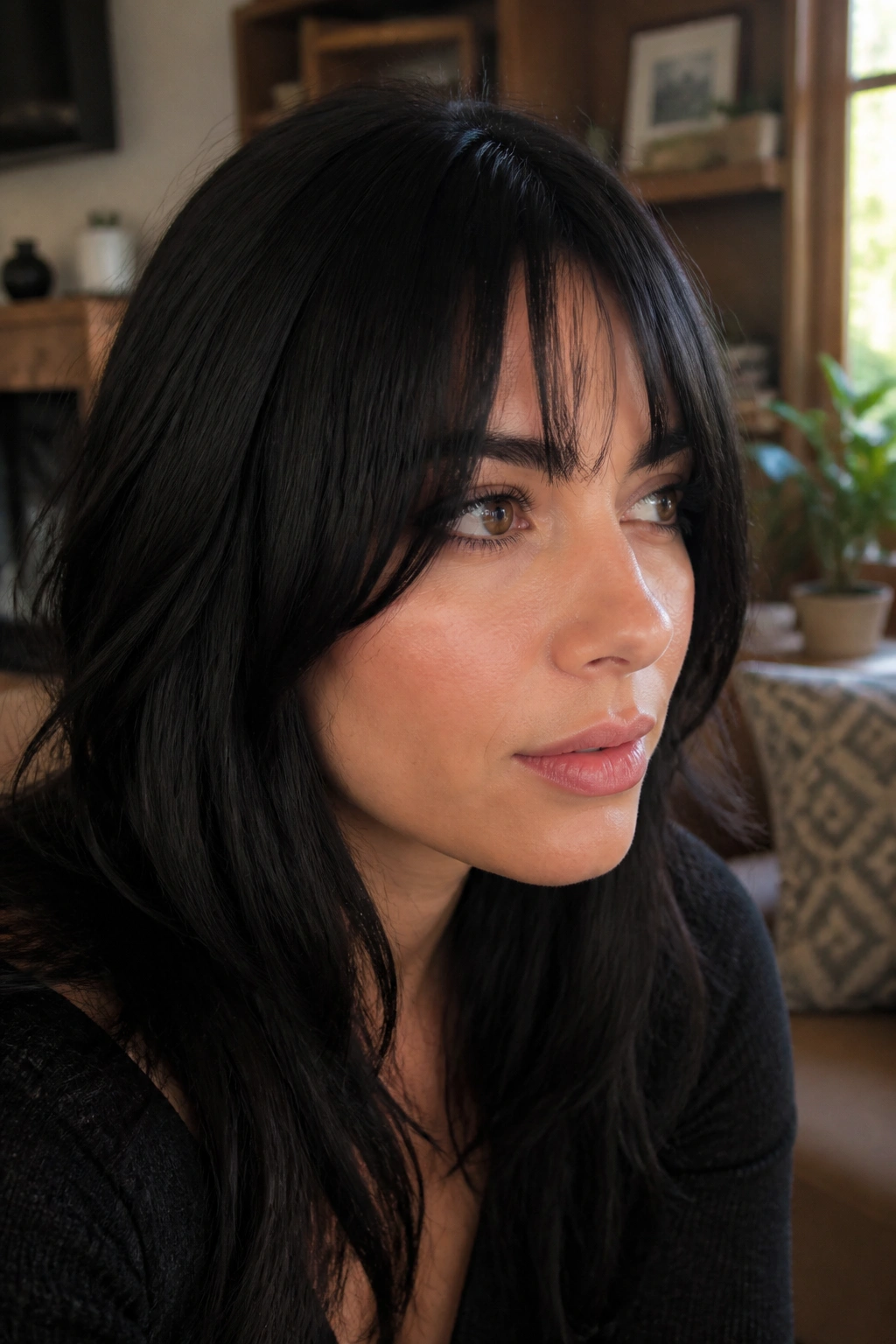
Why do bottleneck bangs keep showing up on round faces? Because the shape does two things at once. It stays lighter through the center, then flares softly at the sides, which keeps the eye moving outward and downward instead of stopping in one heavy line across the forehead.
How to Ask for It
Tell the stylist you want a fringe that sits narrow in the middle and opens near the temples. The shortest strands usually land around the brow, while the longer sides reach toward the cheekbone. On black hair, that side flare matters a lot. It creates the illusion of length without making the cut look like it was carved with a ruler.
This style is especially good if you like bangs but hate the feeling of a full, dense fringe. It sits somewhere between curtain bangs and a soft blunt bang, which gives it range. You can wear it with curls, a blowout, or a pressed finish.
- Keep the center section narrow.
- Let the side pieces land below the outer brow.
- Style with a small paddle brush or fingers, not a heavy brush.
- Trim the fringe every 4 to 6 weeks so the opening stays visible.
4. Wispy Fringe That Skims the Eyebrows
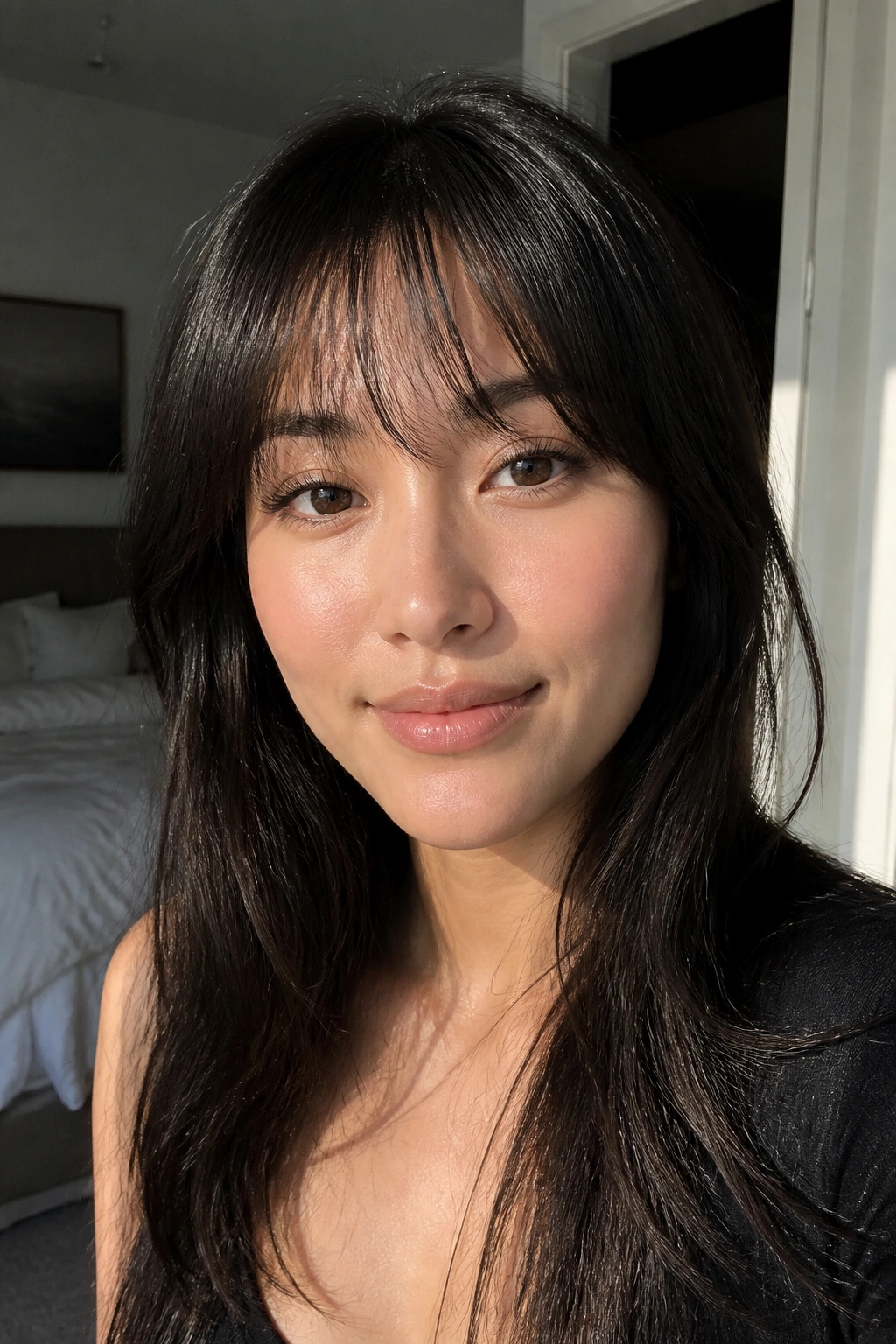
If a full bang feels too heavy, wispy fringe is the softer way in. The forehead still gets a frame, but the skin shows through in places, which stops the style from adding width. On a round face, that airy gap matters more than people think.
This cut works best when the bangs are thin enough to move when you blink. Not see-through to the point of looking unfinished, just light enough that the line breaks up instead of sitting as one block. I like wispy fringe on black hair that has some softness already — a blowout, a gentle silk press, or a stretched natural texture.
What to Watch For
- The fringe should sit at or just below the eyebrow.
- The ends need to look feathered, not blunt.
- Ask for a light density through the front panel.
- Trim frequently if your hair grows fast at the hairline.
A wispy fringe is a good choice when you want bangs that feel friendly. That sounds silly, maybe, but it’s true. Some bangs announce themselves. These don’t. They just sit there, light and useful, and make the face look a little longer without stealing the whole haircut.
5. Curly Bangs Cut Dry for Natural Shrinkage
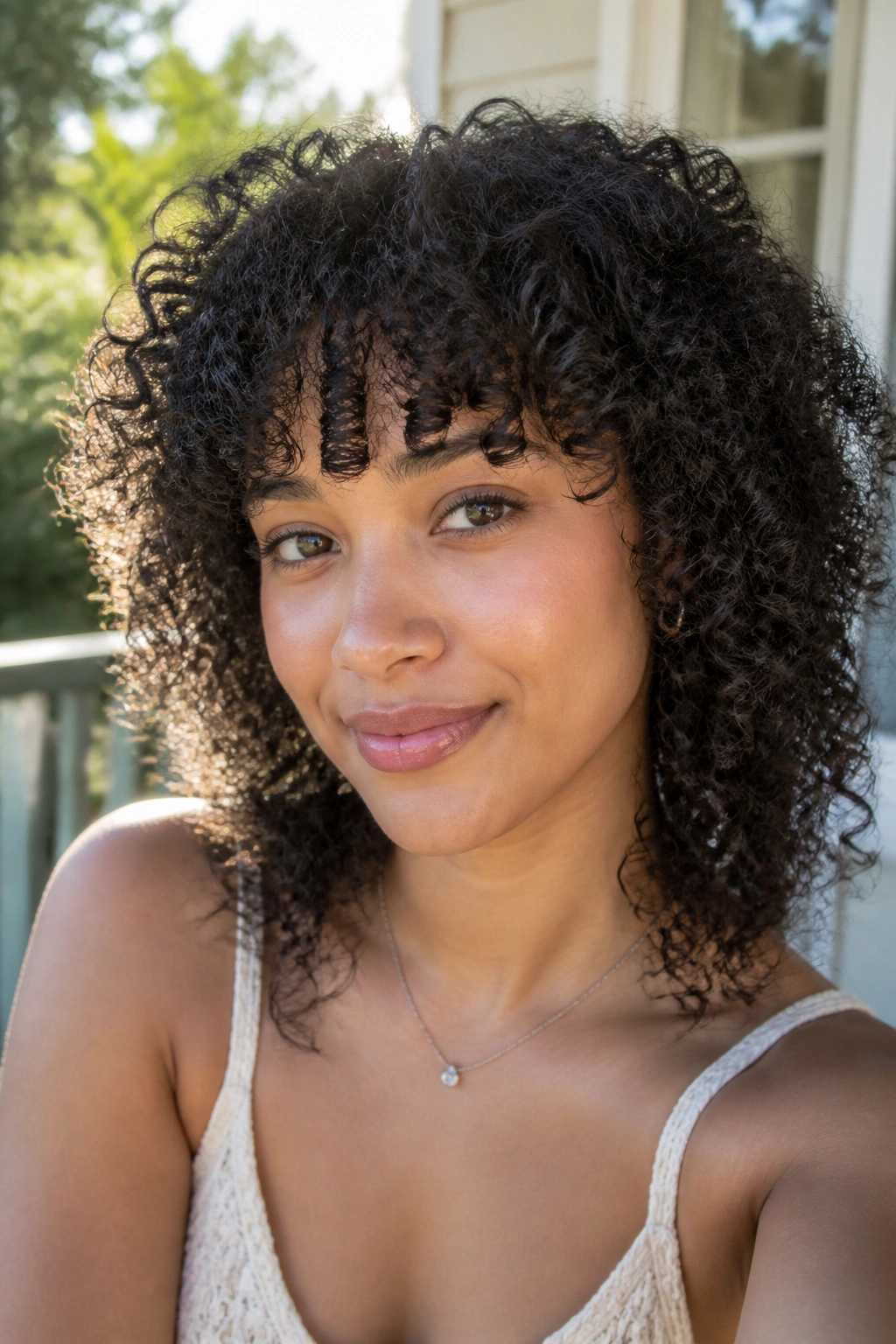
Curly bangs can be gorgeous on a round face. The catch is cutting them the right way, because curls shrink, and shrinkage can turn a nice shape into a short puff right above the eyebrows if the stylist guesses wrong. Dry cutting helps avoid that mess.
Cutting dry lets the curls show where they actually want to live. That matters on black hair, especially if the curl pattern is tight or uneven across the front. The front pieces often behave differently from the rest of the head, and they need room to spring. A good curly fringe should land around the top of the brows when stretched and still sit in a flattering spot once it dries.
Wet curls lie.
Use that warning as a rule, not a slogan. If your curls shrink 1 inch, 2 inches, or more, the bang should be cut with that in mind. I also like a slightly longer shape at the temples, because it keeps the fringe from making the cheeks look wider.
Styling tip: diffuse the bangs first, not last. If you dry the front in place before the rest of the hair, the shape tends to stay cleaner and the curl pattern stays more even.
6. Cheekbone-Grazing Face Framing Bangs
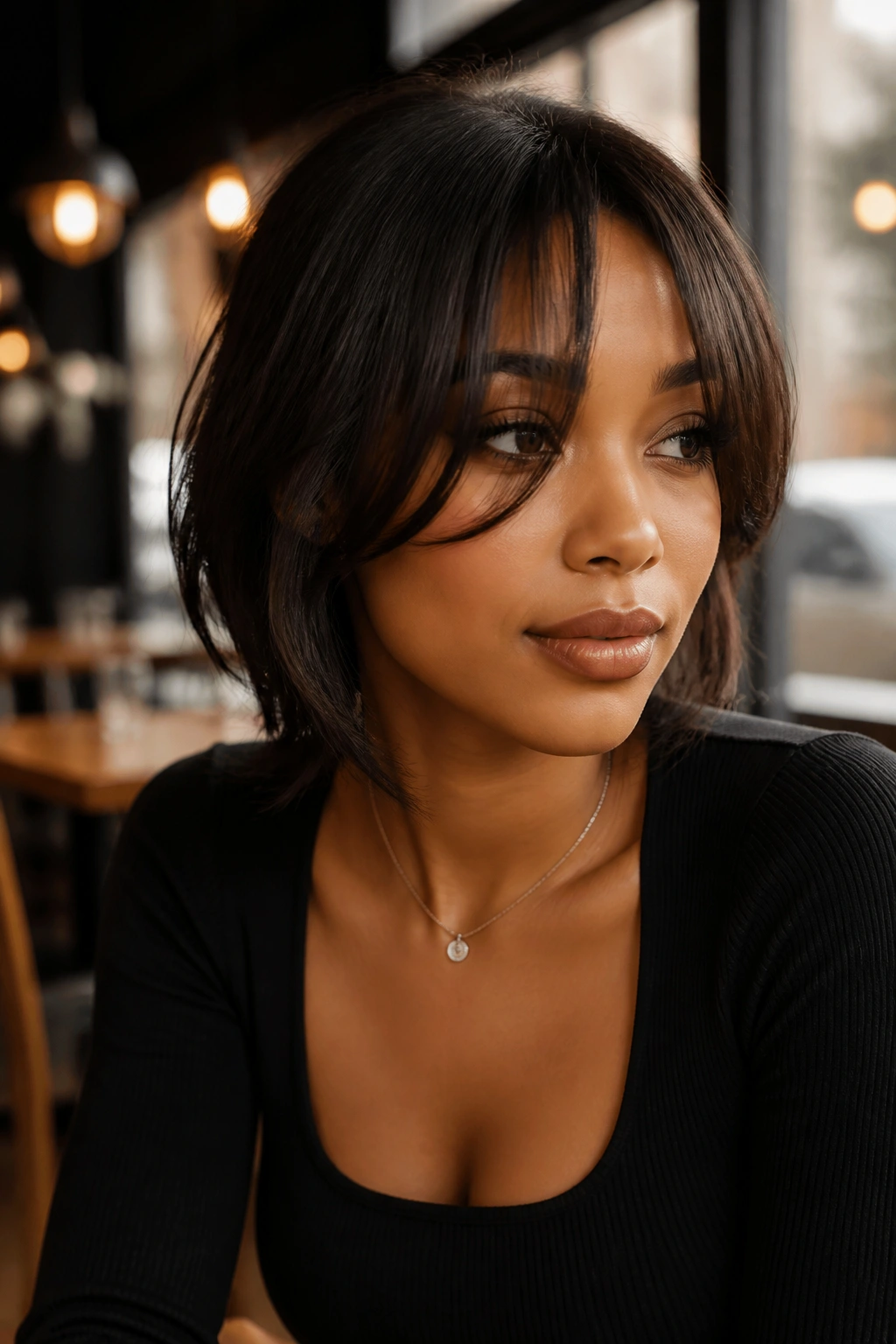
Cheekbone-grazing bangs are not really bangs in the classic sense. They’re more like front pieces that start near the eyes and slide down to the cheekbone, which gives a round face a long, clean line right where it needs one.
That line works because it pulls attention upward and outward at the same time. The eye lands near the cheekbone, then follows the hair down. A round face suddenly gets a little angle. Not a hard one. Just enough to keep the features from reading too circular.
This is one of my favorite shapes on shoulder-length cuts because it looks intentional even when it’s slightly messy. You can wear it with a middle part, a soft side part, or a tucked-behind-the-ear moment. The front pieces still do the work.
- Ask for the shortest point to hit near the corner of the eye.
- Let the ends fall to the top of the cheekbone or just below it.
- Blend the front into long layers so the cut doesn’t stop abruptly.
- Use a light serum on the ends if the hair frizzes near the face.
7. Textured Blunt Bangs With Soft Edges
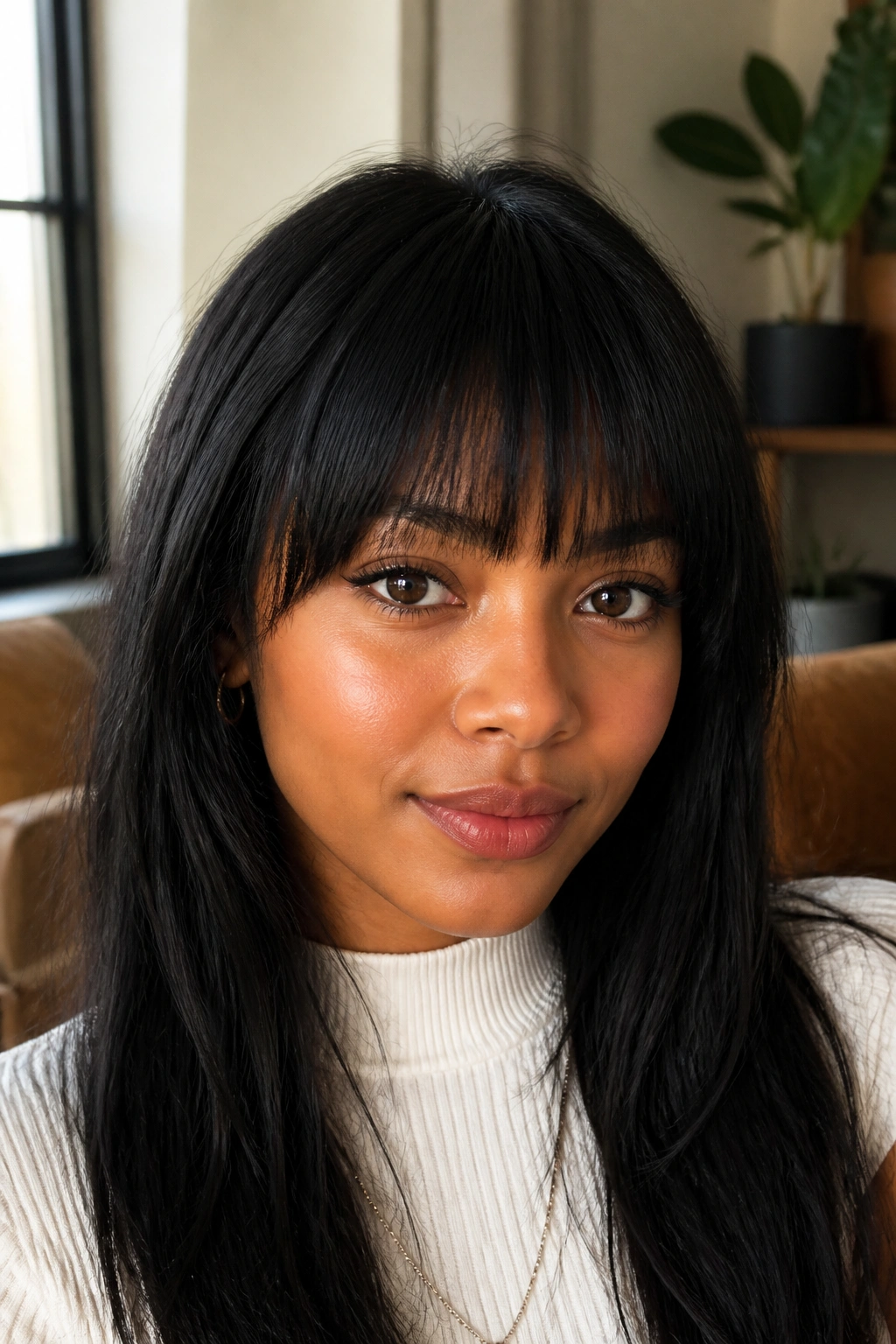
A blunt bang can work on a round face. It just cannot look boxy.
That is the whole game. If the cut is too thick and too straight, it can widen the face and make the forehead feel short. If the stylist softens the edges and keeps the center from becoming a heavy wall, the same style suddenly feels sharp in a good way. On dense black hair, this shape can look fantastic because the line has presence. You just need enough texture to keep it from turning stiff.
What Makes the Edge Work
Ask for a blunt outline with point-cut ends and a slightly longer corner on each side. That little bevel matters. It breaks the horizontal line and gives the eye a softer path across the face. If your hair is relaxed or silk-pressed, a flat iron pass is usually enough to keep the fringe smooth. If it’s natural, a stretched blowout often works better than trying to force it glass-straight.
The main downside is upkeep. A blunt bang loses its shape fast if it grows past the brow, and on black hair with any amount of shrinkage, it can sit higher than expected. Keep trims regular, or it will stop looking deliberate.
8. Arched Bangs That Follow the Brow Line
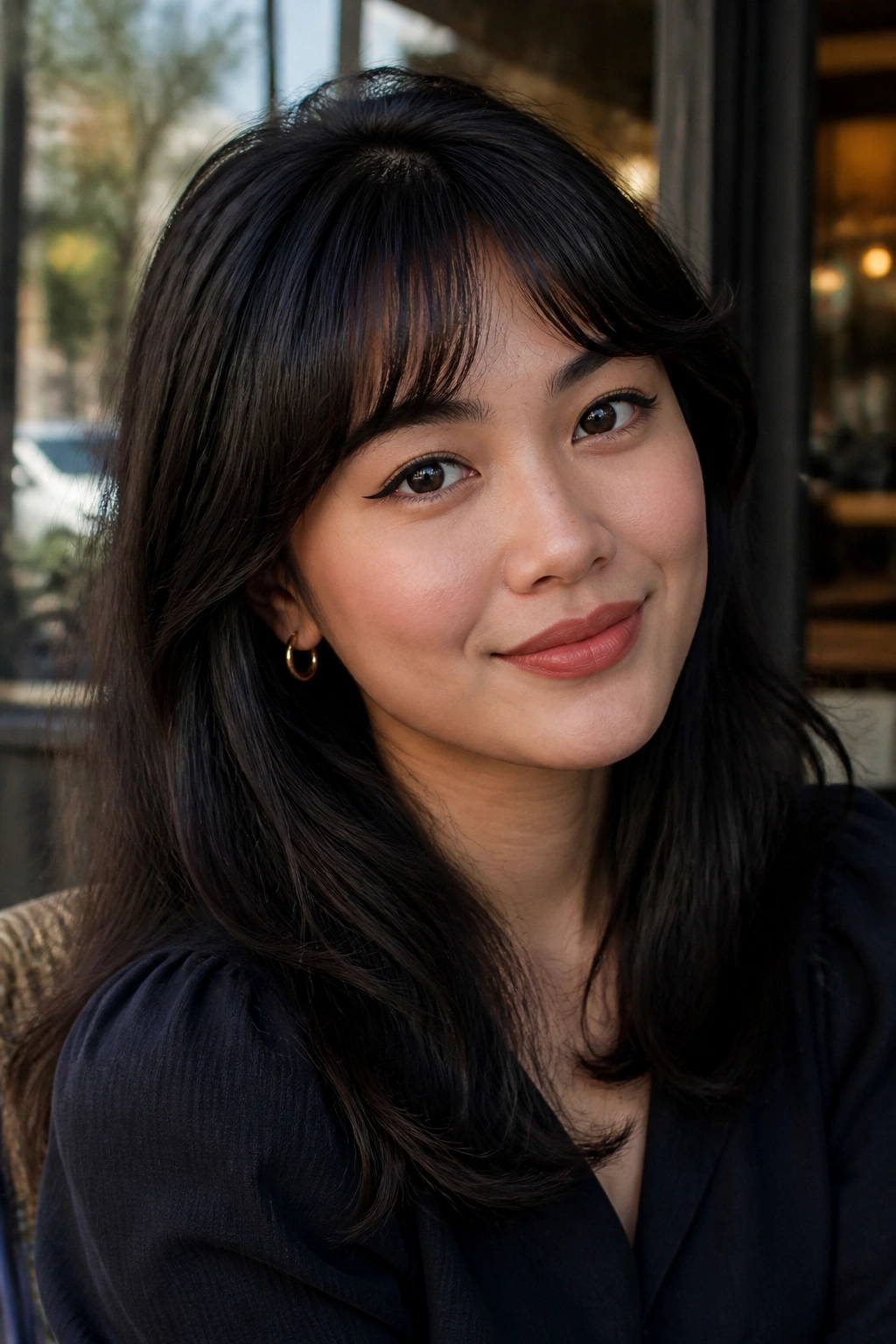
Arched bangs are underrated on round faces. The curve gives the center a little lift while the sides sit lower, which makes the face read longer and less wide. It’s a softer move than a sharp blunt line, but it still has structure.
Unlike a flat fringe, an arch lets the eye travel up first, then down. That tiny change in movement changes the whole look. It also pairs well with black hair that has body, because the curve keeps the bangs from sitting like one heavy panel over the forehead.
A good arched bang should never feel old-fashioned or stiff. The center can sit just above the brow, while the corners skim the outer brow and drift into the temples. That creates a gentle frame without stealing the rest of the haircut.
This shape is especially nice if you wear your hair in a shoulder-length cut with a bit of volume at the crown. The bang and the crown work together. The face looks longer, and the cut feels finished.
9. Micro Bangs With Tapered Sides
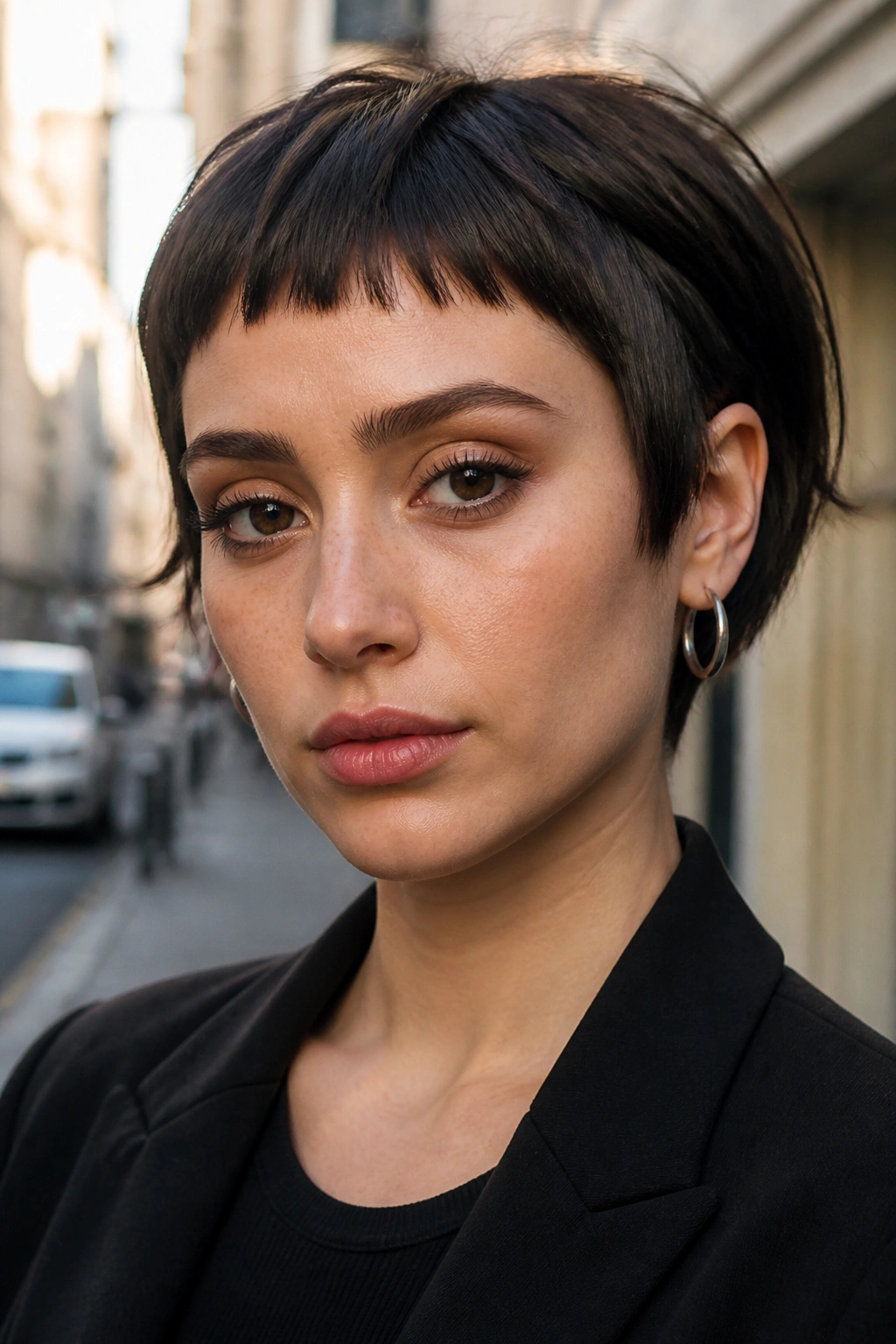
Can micro bangs work on a round face? Yes, but only when the sides are tapered and the rest of the haircut has length or lift. A short, boxy micro fringe can make the face seem wider. A controlled one can look sharp and clean.
How to Keep Them From Widening the Face
The center should stay the shortest point, usually about 1 to 2 inches above the brow depending on the texture. Then the sides need to drop away from the temples, not spread straight across. That taper keeps the style from sitting like a line drawn with a marker.
Micro bangs are best if you like contrast. They look especially good with a bob that hits below the jaw or a crop that leaves height on top. The short fringe gives edge; the longer shape elsewhere keeps the face from feeling boxed in.
- Keep the fringe light through the sides.
- Pair it with volume at the crown.
- Avoid a full, blunt width from temple to temple.
- Trim often, because even ½ inch of growth changes the whole look.
This is not the safe choice. It is the interesting one.
10. Feathered Bangs on Shoulder-Length Hair
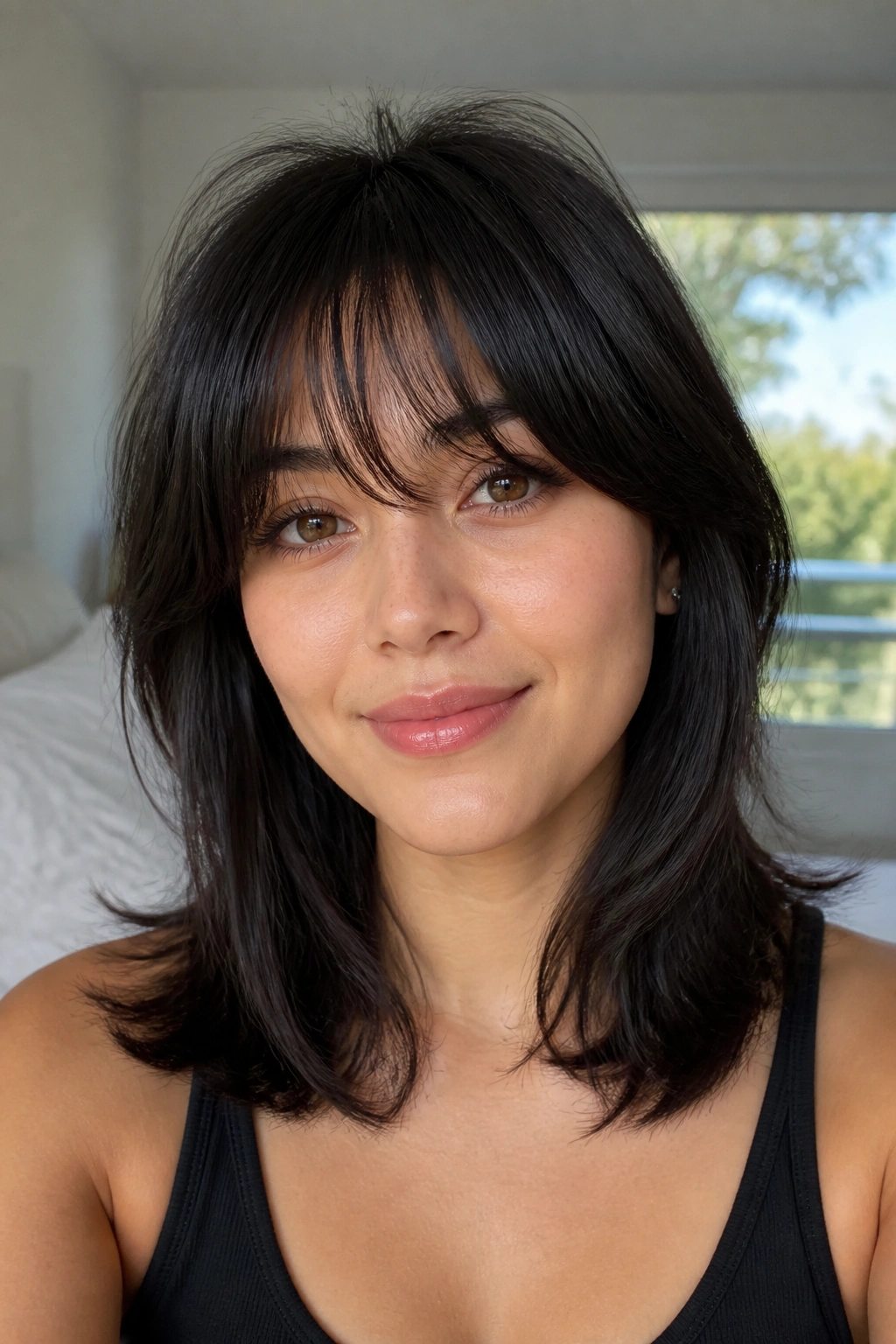
Feathered bangs make a round face feel softer without making it look wider. The point is movement, not coverage. Each strand should separate a little, so the forehead shows through in places and the bangs never become one solid strip.
A shoulder-length cut is the best partner for this shape because the hair below the bangs keeps the eye moving downward. That balance matters. A feathered fringe on very short hair can feel airy in a cute way, but on a round face the longer length below the cheek usually gives the better line.
What to Tell the Stylist
- Keep the bangs light through the center.
- Let the outer pieces blend into jaw-length or collarbone layers.
- Use a round brush or Velcro roller if you want the ends to curve under.
- Finish with a light mist, not a heavy spray, so the texture stays touchable.
There’s a nice 90s feel here, but not the overdone version. More like hair that naturally falls into place after a quick blow-dry. That little softness does a lot of work on a round face.
11. Long Swoop Bangs Blended Into Layers
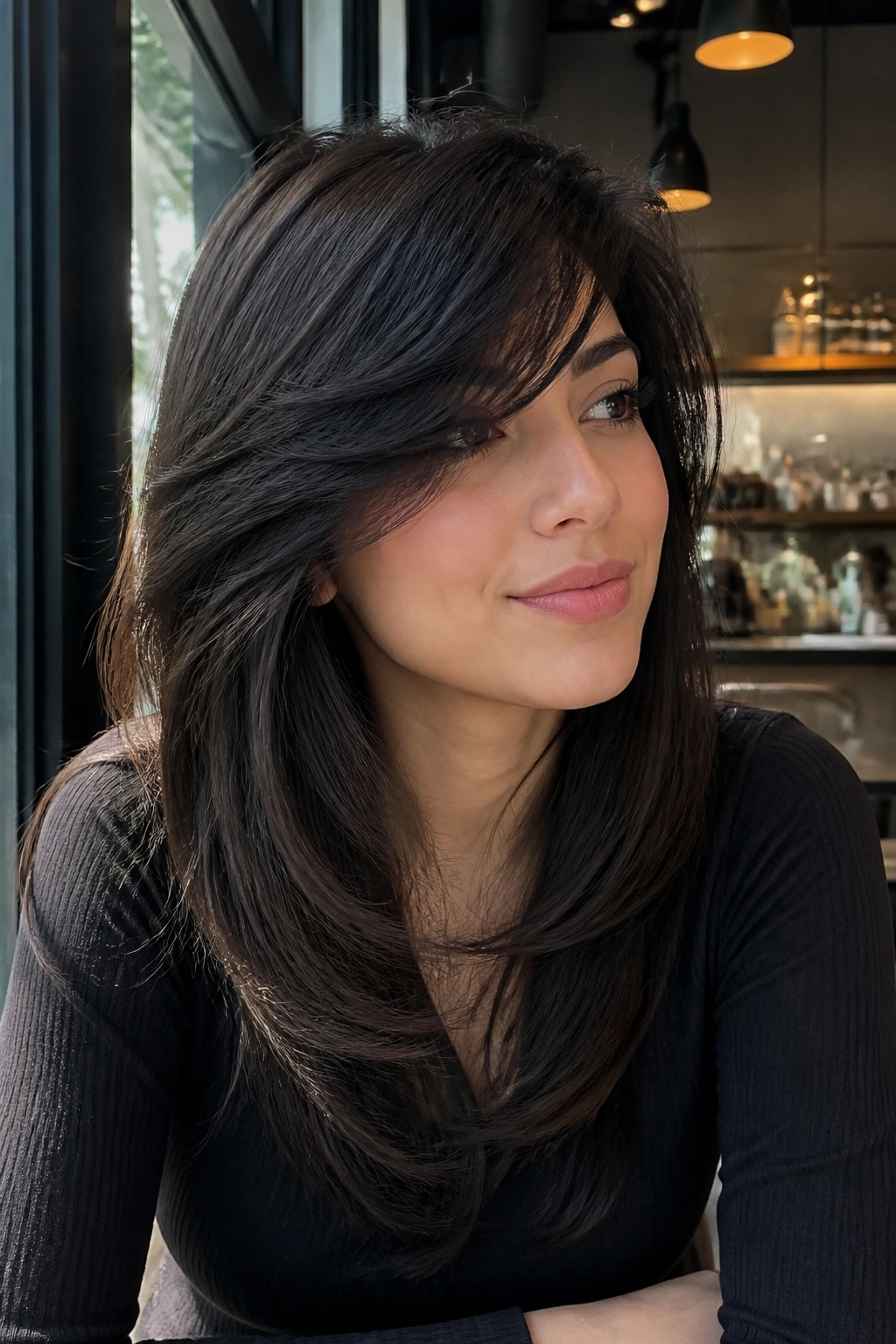
Long swoop bangs are one of the easiest bangs to live with because they behave more like a front layer than a strict fringe. They sweep across the forehead and disappear into the rest of the cut, which makes them useful for anyone who wants shape without a heavy maintenance schedule.
The diagonal line is the real trick. A swoop starts near the opposite side of the part and moves across the face, which keeps the eye from sitting on the cheeks. It also gives black hair a clean sense of movement, especially when the cut has a little bounce at the ends.
I like this shape on medium to thick hair because it takes well to a blowout and still looks good if you let it fall a little imperfectly. You can wear it straight, curled under, or brushed back behind the ear. The bangs keep their job either way.
A quick styling move helps: blow the front in the direction of the swoop, then clip it there for 3 to 5 minutes while it cools. That small pause makes a bigger difference than another round of heat.
12. Asymmetrical Bangs That Add a Sharp Angle
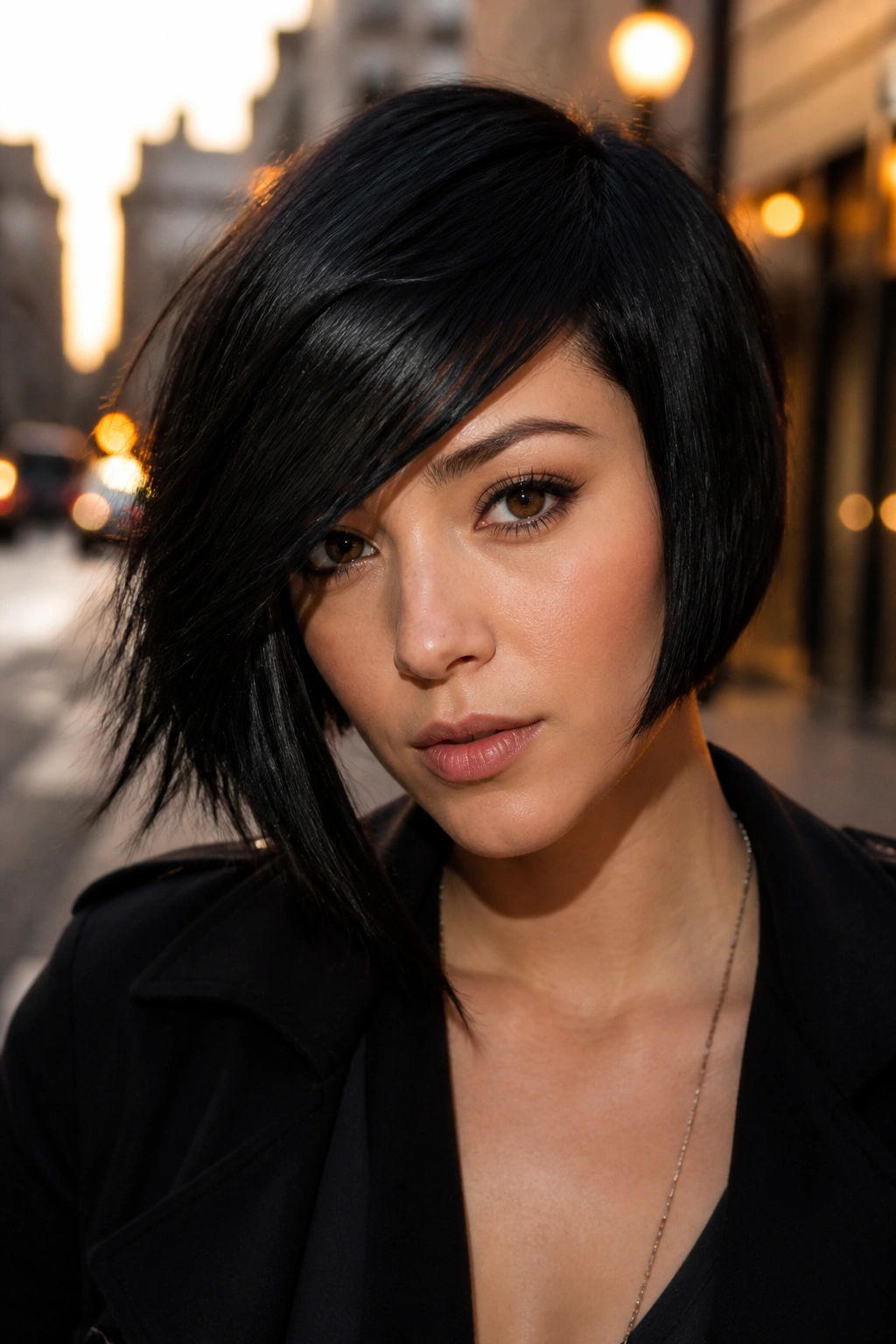
Symmetry can be boring on a round face. Sometimes that’s fine. Sometimes it just feels too polite.
Asymmetrical bangs solve that by creating a clear diagonal line across the forehead. One side lands higher, the other drops lower, and that uneven shape gives the face a stronger edge. It is a good fit for black hair because the contrast reads clearly, even when the hair has texture or volume.
This style is especially useful if you already wear a blunt bob, a shoulder cut with sharp ends, or a pixie with a little top length. The angle in the fringe balances the roundness in the face without needing extra layers everywhere. It feels deliberate. A little bold. Not fussy.
Best of all, asymmetry gives you room to play. You can keep the shorter side brushing the brow and let the longer side skim the cheekbone, or push the longer end down toward the jaw if you want more drama. Either way, the face gets a stronger line to lean on.
13. Rounded Afro Fringe With Soft Volume
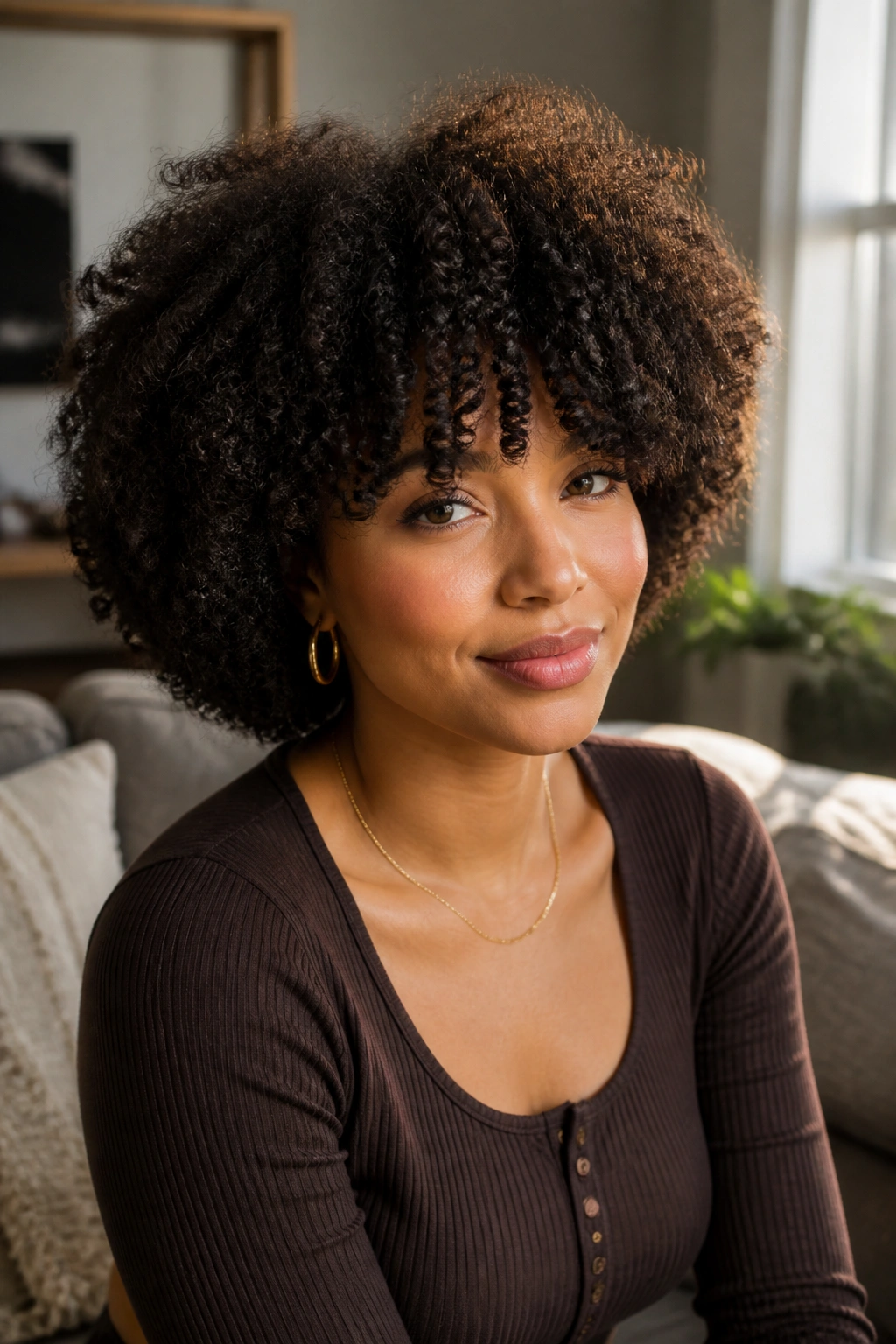
A rounded afro fringe can look stunning on a round face when it’s shaped instead of flattened. The front should echo the curl pattern and keep a little lift, not sit pressed down against the forehead like a helmet.
Cutting Notes for Coily Hair
This is a dry-cut style in most cases. You want to see the true length once the curls spring back. Ask for the fringe to land around the upper brow when stretched, then let the natural coil bring it up. The side edges should stay softer and a touch longer so the face doesn’t lose all its angles.
- Cut with the hair in its natural state.
- Keep the front rounded, not square.
- Preserve a little height at the crown.
- Use a light cream or gel so the curls hold shape without shrinking into fuzz.
Rounded afro fringe works because it keeps the forehead framed while still showing the curve of the face. The style has personality, and it does not need to be tiny to flatter. That’s the mistake people make. They think round faces need bangs to disappear. They don’t.
14. Tapered Coily Bangs That Keep the Face Open
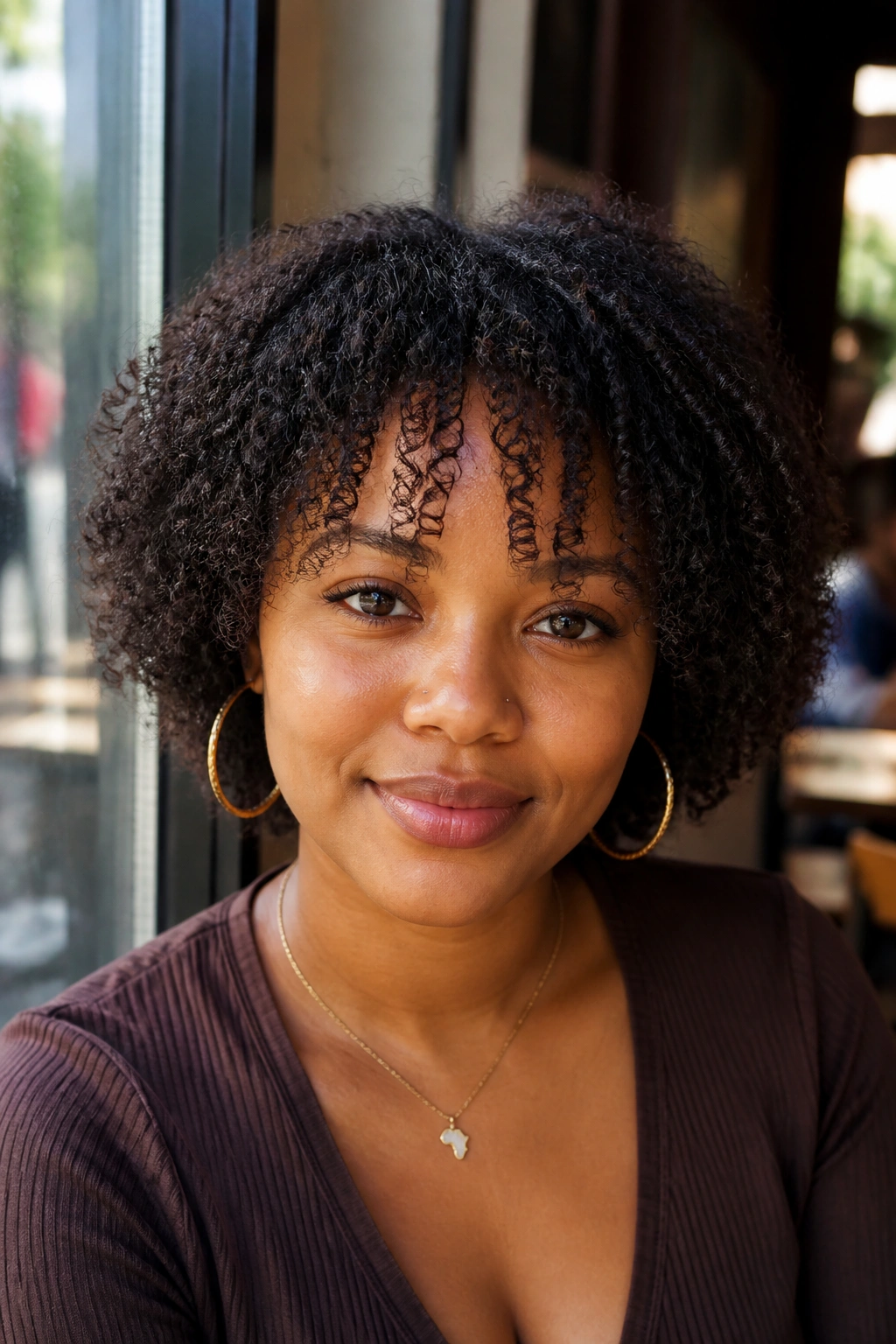
What makes tapered coily bangs different from a standard fringe is the way the sides are left open. The center carries the shortest length, then the hair softly tapers out toward the temples instead of building a full wall across the forehead. On a round face, that open side area matters a lot.
This shape works especially well with twist-outs, rod sets, or stretched coils because the front can show its texture without puffing into a block. The fringe still has body. It just has a cleaner outline. If your coils shrink hard, cut the bangs a little longer than you think, then check the dry shape before making any final trim.
A tapered fringe can also calm down a fuller cheek line. The eyes get drawn to the center of the face, then outward through the taper. That balance makes the cut feel softer and more tailored at the same time.
If you wear your hair in a puff, a bun, or a short natural shape, this is one of the best options. It keeps the forehead framed without stealing attention from the rest of the style.
15. Braided Bangs and Faux Fringe Styles
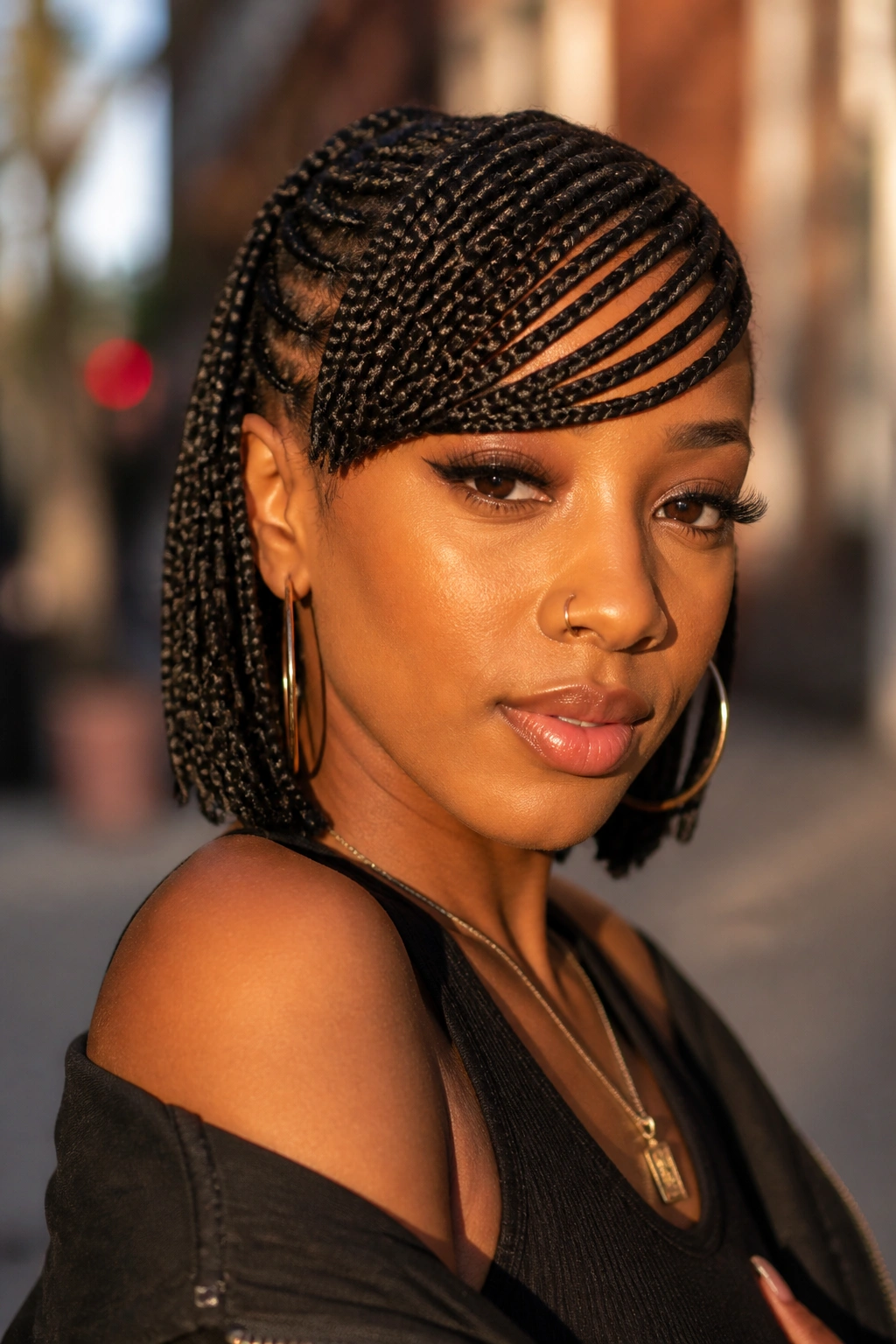
Not every bang has to be cut into the hair. Braided bangs and faux fringe styles give you the same front-frame effect without committing to scissors, which is useful if you like to switch things up or you’re growing out a previous fringe.
The idea is simple: use braids, twists, or a front section of a protective style to create a fringe that falls across the forehead and then angles away. On round faces, that softness matters. A centered, straight braid line can feel too flat, but a side-leaning faux fringe creates the same diagonal movement as a side-swept bang.
Ways to Wear It Without Cutting
- Sweep 2 to 4 front braids toward one side and pin the ends.
- Keep the fringe area light at the hairline so the style doesn’t feel heavy.
- Let a few face pieces fall to the cheekbone or jaw.
- Pair the bangs with a high bun, braids, or a half-up style to keep the face open.
This is a smart choice when you want a bang effect without the trim. It also plays nicely with black hair because the texture of the braids gives the front enough structure on its own.
16. Wolf Cut Fringe With Choppy Layers
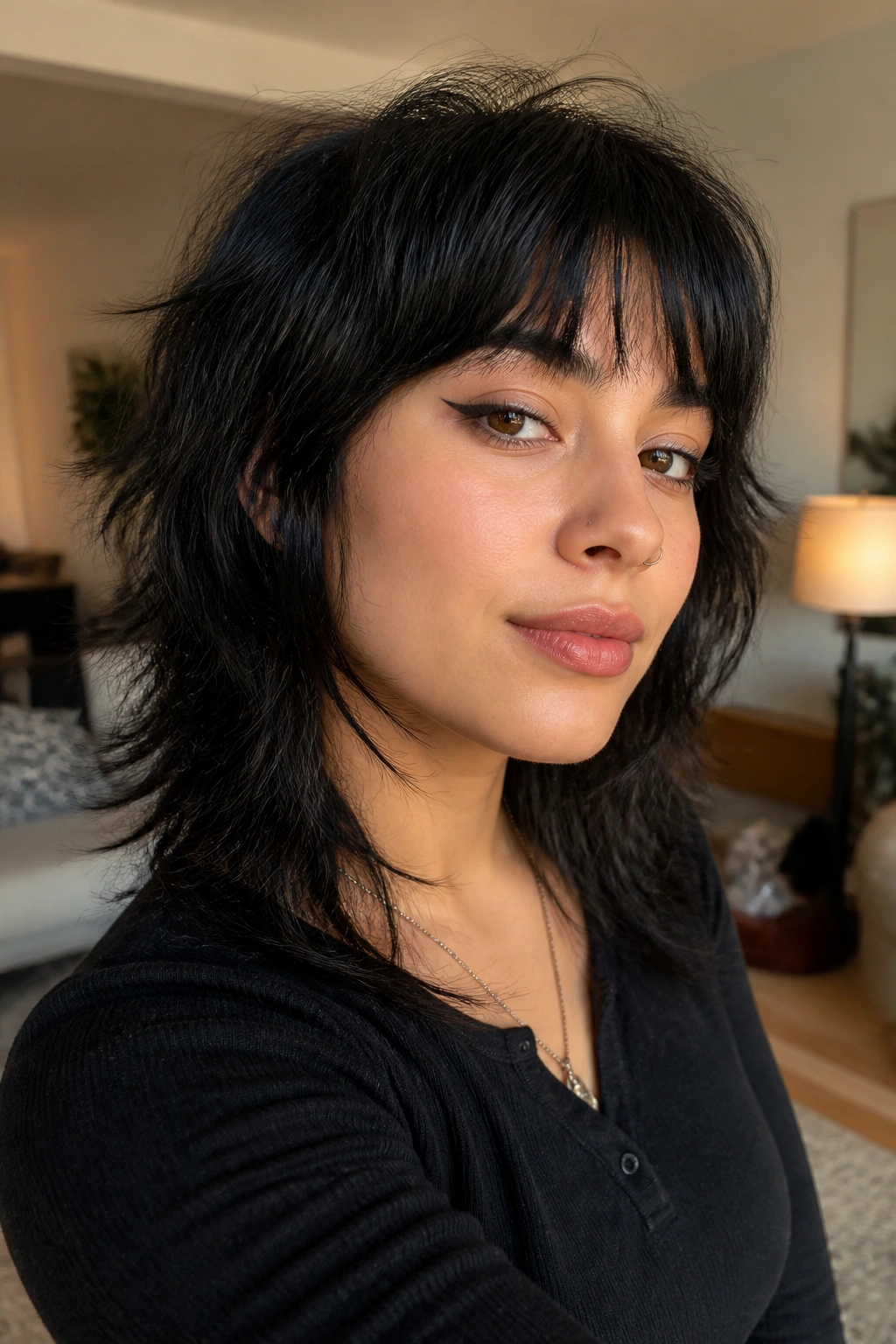
A wolf cut fringe gives a round face more edge than polish, and sometimes that’s the better move. The choppy layers break up the outline, while the fringe sits softly enough that the forehead doesn’t become one blunt plane.
The cut works because it builds lift around the crown and movement through the sides. That stops the face from feeling boxed in. On black hair, especially thick hair, the wolf cut can remove weight near the cheeks and keep the front pieces from sitting too full. You get texture. You get shape. You do not get a helmet.
This is a better choice if you like lived-in hair and you are not chasing a perfectly smooth finish every day. Air-dried waves, blown-out bends, and loose curls all work here. The fringe can be slightly longer at the temples and shorter at the center, which helps the face look longer without pretending the hair is something it isn’t.
I like this option for people who want bangs with a little attitude. It’s not delicate. It’s not precious. It’s practical in a rough-edged way, which is a nice change.
17. Piecey Silk-Pressed Bangs With Movement
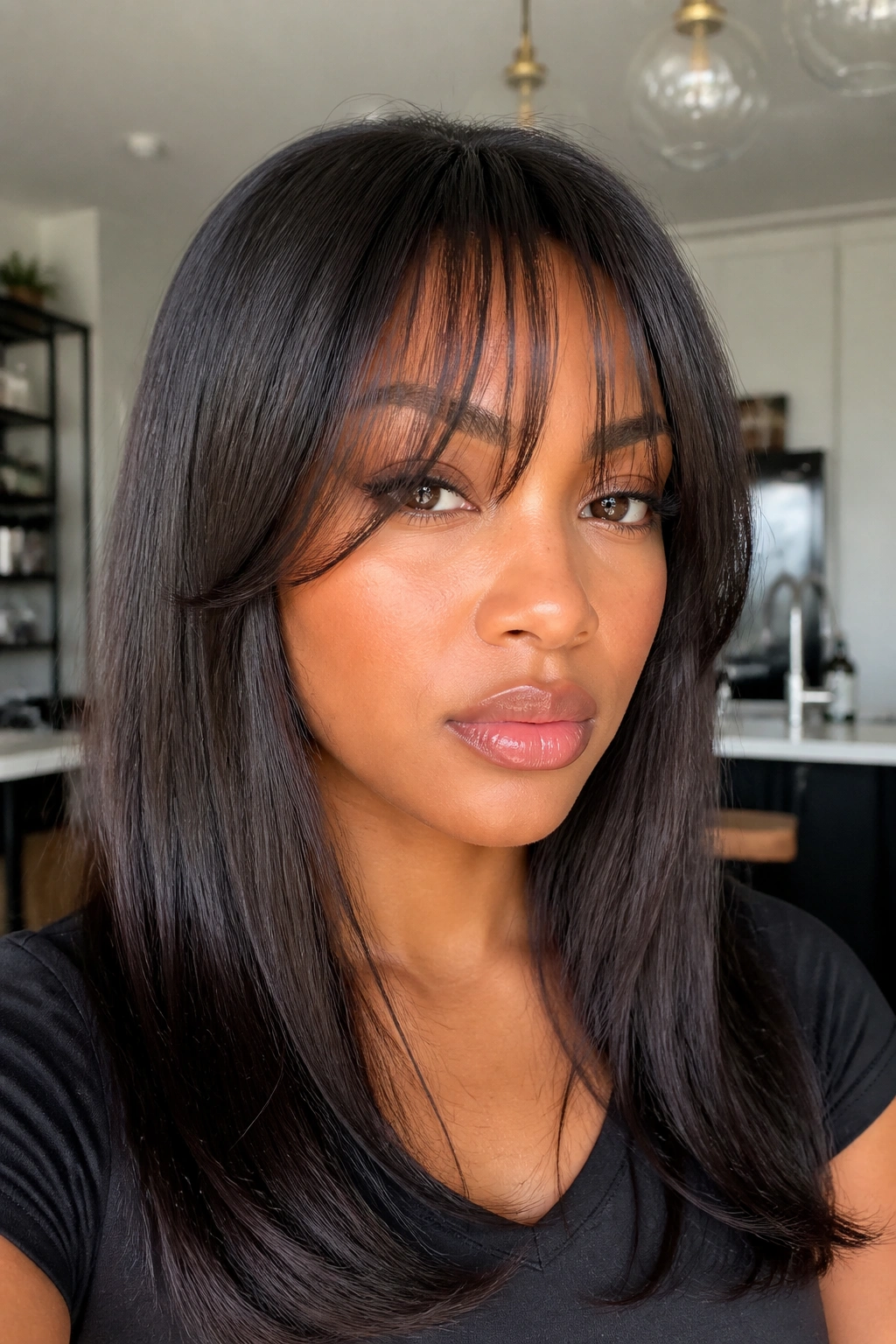
Piecey bangs are better than one thick panel on a round face because separation creates space. A few visible strands across the forehead let the skin show through, and that keeps the front from adding width. On black hair, especially a silk press, the effect can look sleek without becoming flat.
The key is to avoid cutting or styling the bangs into one solid strip. Work in small sections. A fine-tooth comb, a light flat iron pass, and a drop of serum are usually enough. You want visible pieces, not crunchy strands stuck together by too much product.
The style works best when the rest of the haircut carries a little movement too. A smooth bob, a shoulder cut with curled ends, or long layers all help the fringe feel intentional. If the rest of the hair is too heavy, piecey bangs can get lost.
One small detail matters here: keep the corner pieces longer than the center. That tiny shift in length helps the face look less circular and gives the bangs a more tailored finish.
18. Loc-Friendly Bangs Framed by Face Pieces
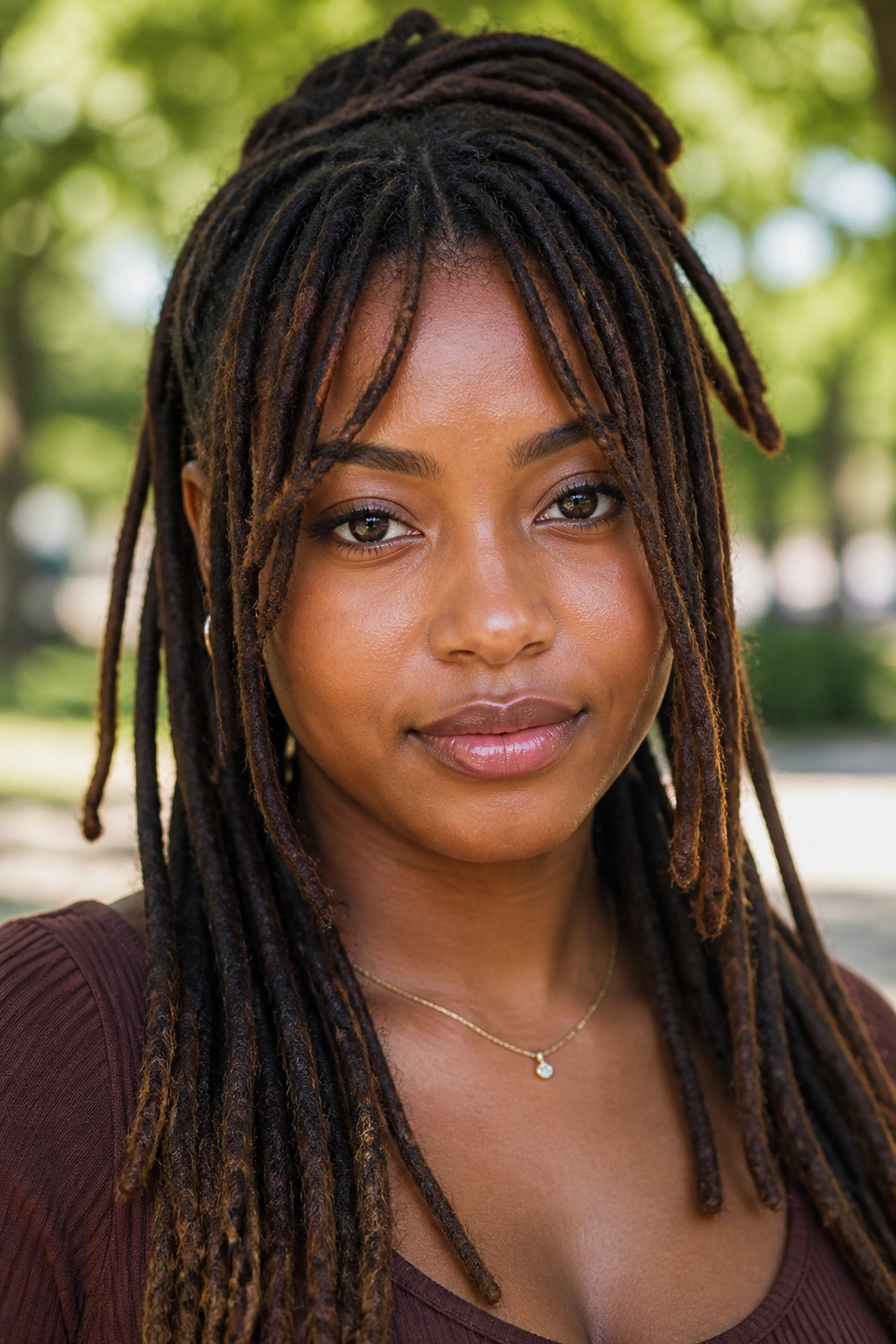
Locs can wear bangs, but I prefer face pieces more than a hard, blunt fringe. A few front locs or twisted sections can fall across the forehead and angle toward the cheeks, which gives a round face the same lengthening effect without forcing the style into a shape it doesn’t want.
The front should stay open enough to show the face. That means no heavy wall right at the hairline. Leave 2 to 4 locs free near the front, or create a side-swept set of pieces that sit at eyebrow level and move toward the jaw. That soft angle does the flattering work.
This is a nice option if you wear your locs in buns, half-ups, or side parts. The face pieces can change the whole feel of the style without extra daily effort. They also help keep the hairline from looking too square, which is a real concern on rounder faces.
If you like a bit of structure, ask for the front pieces to be slightly shorter than the rest and shaped to curve toward one side. That keeps the eyes moving, and that is the whole point.
19. Full Fringe With Soft Corners
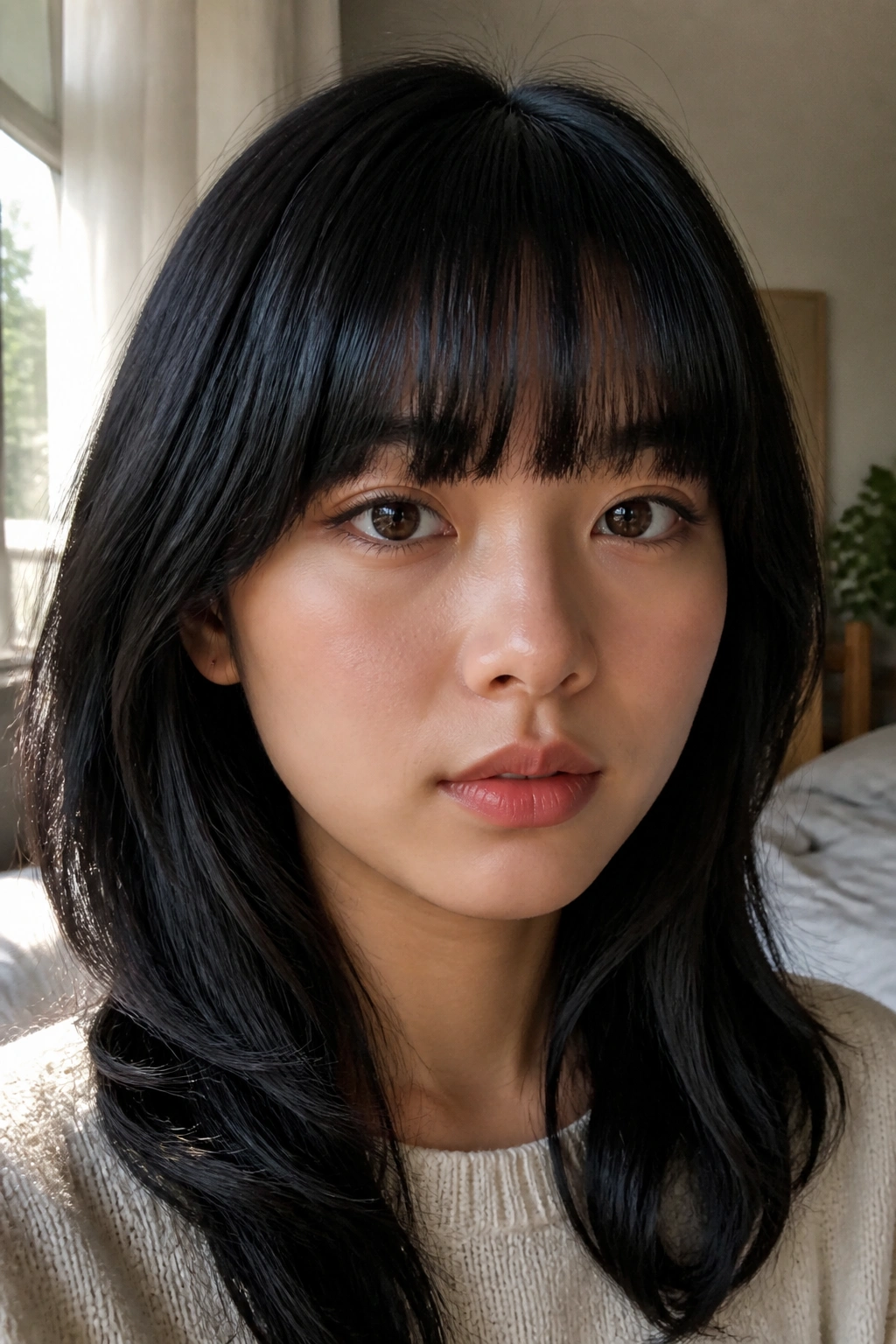
A full fringe can work on a round face if the corners are softened and the center isn’t too dense. That is the part people get wrong. They hear “full fringe” and picture a flat wall across the forehead. That version can close the face in. The better version leaves the middle visible enough to breathe.
The shape should sit just above the brows in the center, then ease downward or outward at the edges. Those soft corners keep the fringe from widening the face. On black hair, especially if it’s straightened or relaxed, the line can look clean and elegant without feeling severe.
How to Keep It Soft
Use a round brush or paddle brush to direct the fringe slightly inward at the center and outward at the edges. A flat iron on low to medium heat can polish the line, but don’t press every strand into the same lane. A little separation keeps the style from going stiff.
This is a strong choice if you like the look of a classic bang but still want room around the cheeks. It has more presence than a wispy fringe, less edge than a micro bang, and enough structure to make a round face look more defined.
20. Tapered Pixie Bangs With a Longer Front
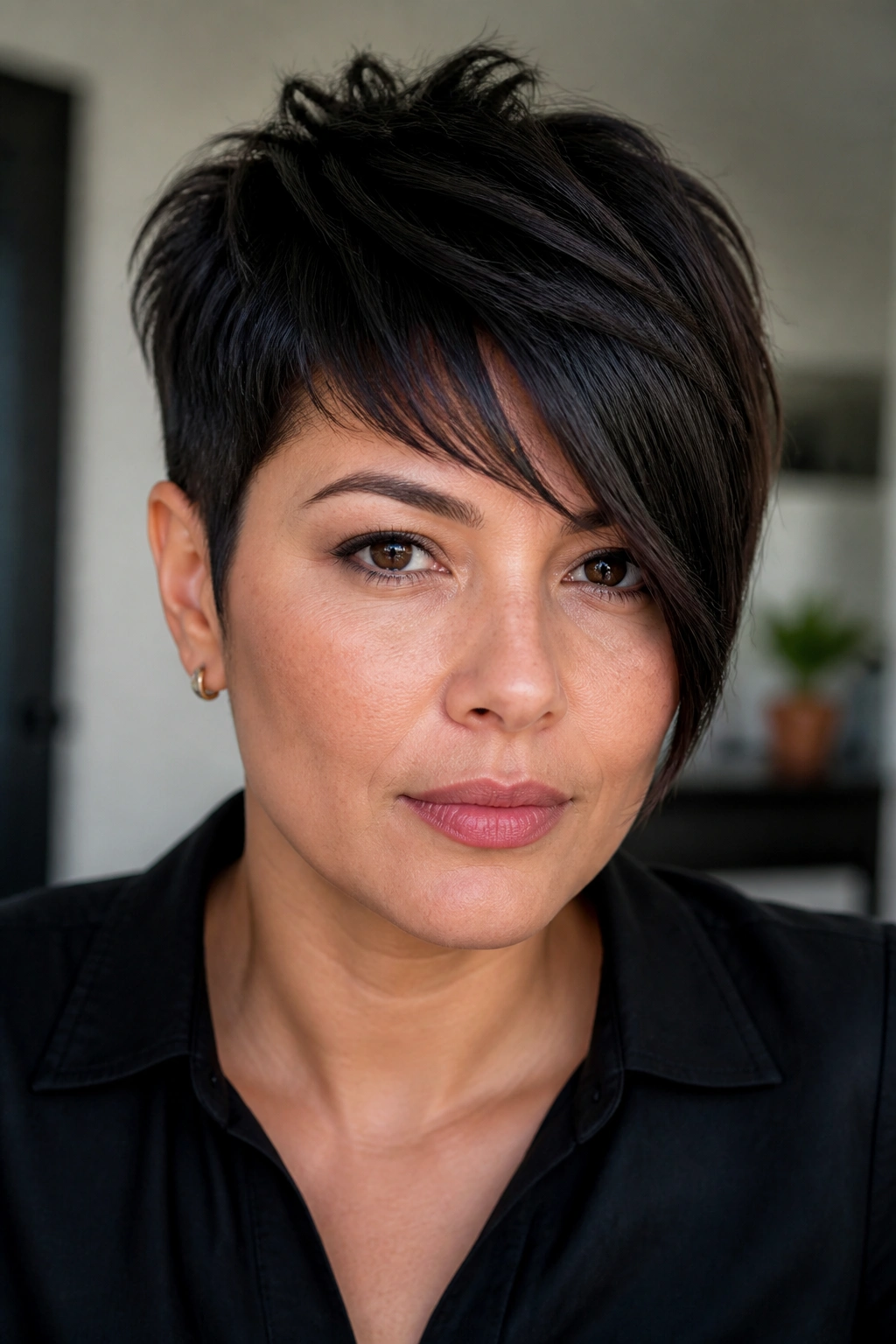
A tapered pixie with a longer front fringe can be one of the sharpest cuts for a round face. The short sides open up the cheeks, and the longer front gives the eye a place to move upward instead of across. That combination is hard to beat when you want clean lines.
The fringe usually works best when it starts around 1½ to 2½ inches in the front and then tapers down toward the temples. That gives the style a little swing without turning it into a heavy bang. On black hair, especially if it has strong texture, the front can be shaped with a small amount of cream or pomade so it stays directional, not puffy.
This cut has a cool, no-nonsense feel. It does not hide much, which is exactly why it flatters a round face so well. The structure is visible. The cheek area stays open. The whole look feels intentional from every angle.
If you want something short but still feminine, or sharp without going full micro bang, this is the one I’d point to first.
Final Thoughts
Round faces do not need bangs that disappear into the hair. They need bangs that make a line, create a pause, or open the face in the right place. That might mean a soft curtain shape, a deep side sweep, or a short crop with a longer front piece. The right answer usually comes down to texture, not just face shape.
Black hair gives you more range than people often admit. Coils can be shaped into rounded fringe. Silk-pressed hair can carry a clean blunt line. Braids, locs, and protective styles can fake the effect without a cut. The trick is choosing a bang that works with your daily routine instead of fighting it.
If you are unsure where to start, ask for the longer version first. A bang can always be shortened by half an inch. Growing out a too-short fringe is a different kind of patience, and nobody needs that drama.
