



Wavy bangs for round faces can be a smart little move when the front of your haircut feels too flat, too heavy, or too much like a straight line across the forehead. The wave softens everything. It breaks up width, pulls the eye downward, and gives the face a little shape without making the fringe feel stiff.
Blunt bangs are not banned. They just need help.
A round face usually looks best when the bangs create some vertical pull or a diagonal line, not a clean horizontal shelf that lands right across the widest part of the cheeks. That’s why soft curtains, bottlenecks, side sweeps, and shaggy fringe keep showing up in real salons. They don’t fight the face shape. They work with it.
Wavy texture changes the whole equation, too. A bend in the hair keeps the fringe from looking heavy, and a little piecey movement stops the front from swallowing your features. If your hair already has a wave, you’re halfway there. If it’s straighter, you can still get this effect with the right cut and a round brush.
The styles below range from barely-there to more dramatic, because not everybody wants the same thing from bangs. Some people want a soft frame they can grow out without panic. Others want a fringe with more personality. Both are valid. The trick is choosing the version that gives your face some length, not more width.
1. Curtain Bangs for Round Faces
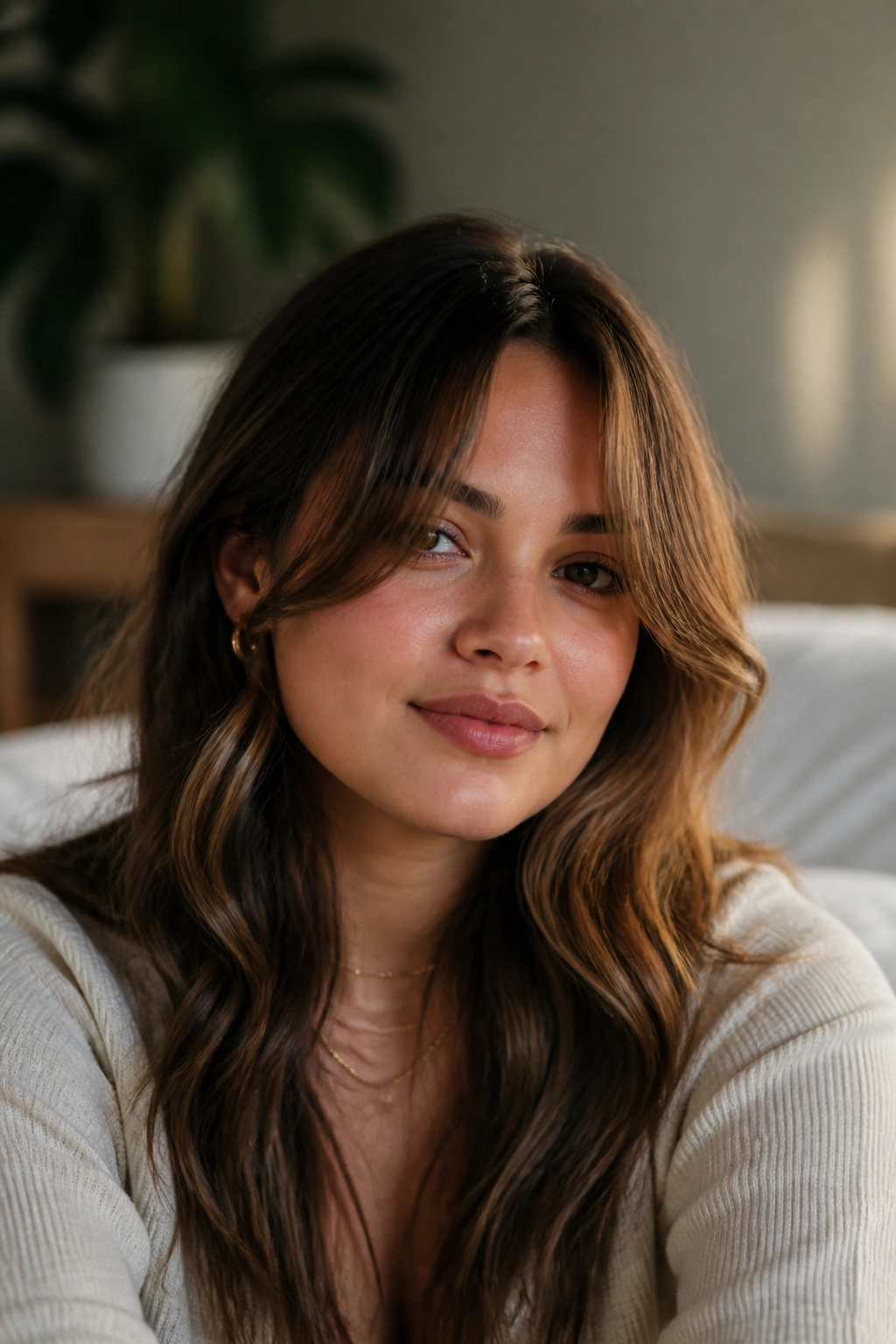
Curtain bangs are the safest place to start if you want movement without committing to a hard fringe line. On a round face, the middle split opens the forehead and lets the sides fall longer, which does a lot of visual work with very little effort.
Why They Flatter Round Faces
The real magic is the shape. A center opening creates a vertical break, and the longer side pieces slide past the cheeks instead of stopping at the widest point. That keeps the face from looking boxed in.
I like this version best when the shortest point sits around the brow and the longest pieces brush the cheekbone. That length gives you room to style them off the face or tuck them in later if you want a change. Nice and flexible. No drama.
- Best on medium-density hair that can hold a bend without collapsing.
- Works well with a middle part or a slightly off-center part.
- Needs only a small round brush and a light mousse or cream.
- Grows out cleanly, which matters more than people admit.
Tip: Ask for the outer corners to stay long enough to hit your cheekbones. If they end too high, the whole effect gets boxy.
2. Bottleneck Fringe for Round Faces
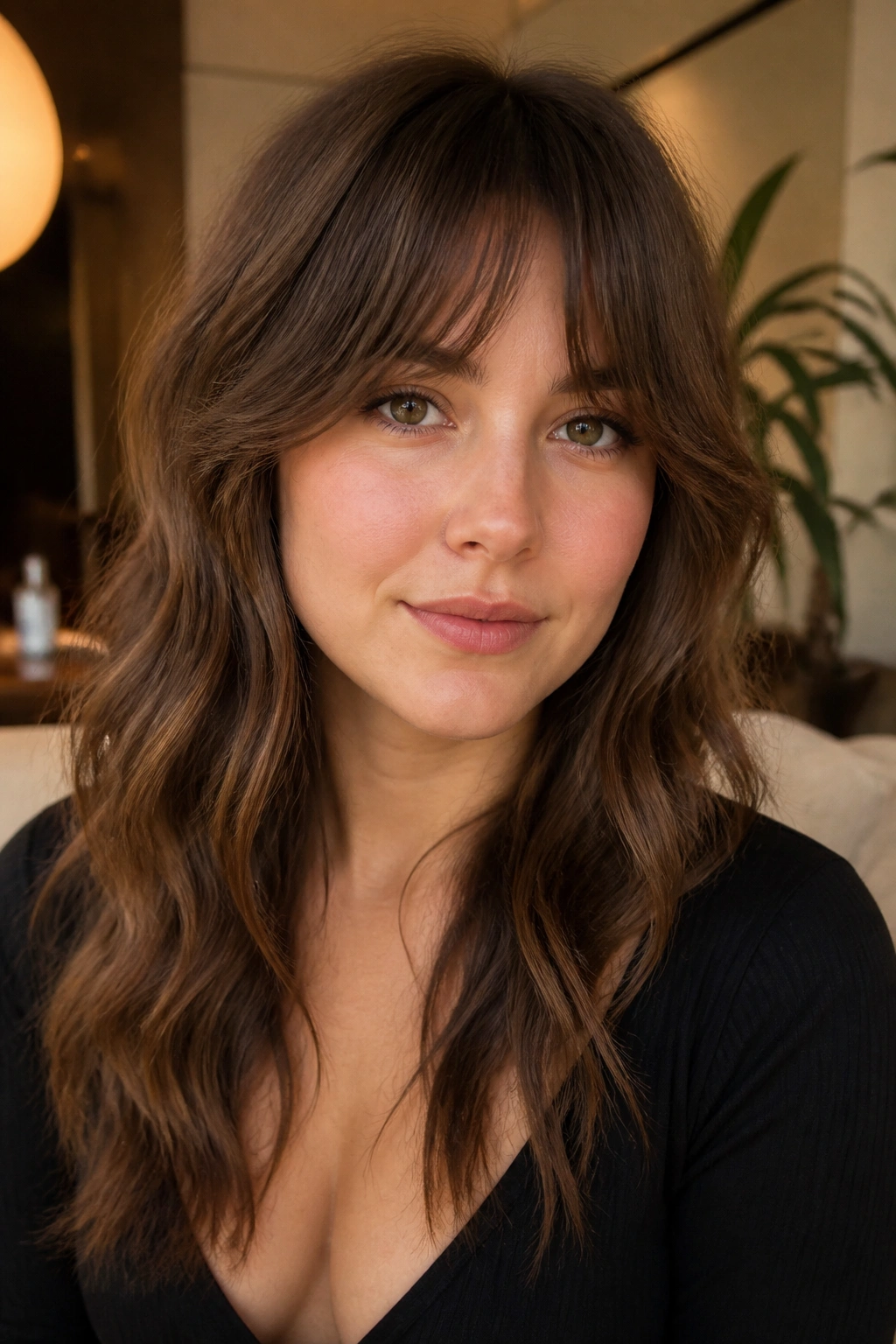
Bottleneck fringe can make a round face look longer without feeling severe. That’s why I keep coming back to it for clients who want bangs but don’t want a full wall of hair across the forehead.
The shape starts narrow in the center, then opens out as it moves toward the temples. That little taper matters. It draws the eye inward at the top and then outward in a soft diagonal, which is a nice trick for anyone whose cheeks carry a lot of width.
I’d ask for the shortest part to sit just above the brow, with the side lengths drifting to the top of the cheekbone. Too short in the middle and it starts looking choppy. Too long everywhere and you lose the shape. The sweet spot is in the middle. Literally.
If your hair is thick, this cut can feel lighter than straight-across bangs. If your hair is fine, it can still work, but the stylist needs to avoid over-thinning the ends. That’s where people get into trouble. The fringe starts to separate in weird little gaps, and it never looks intentional.
3. Deep Side-Swept Wavy Bangs
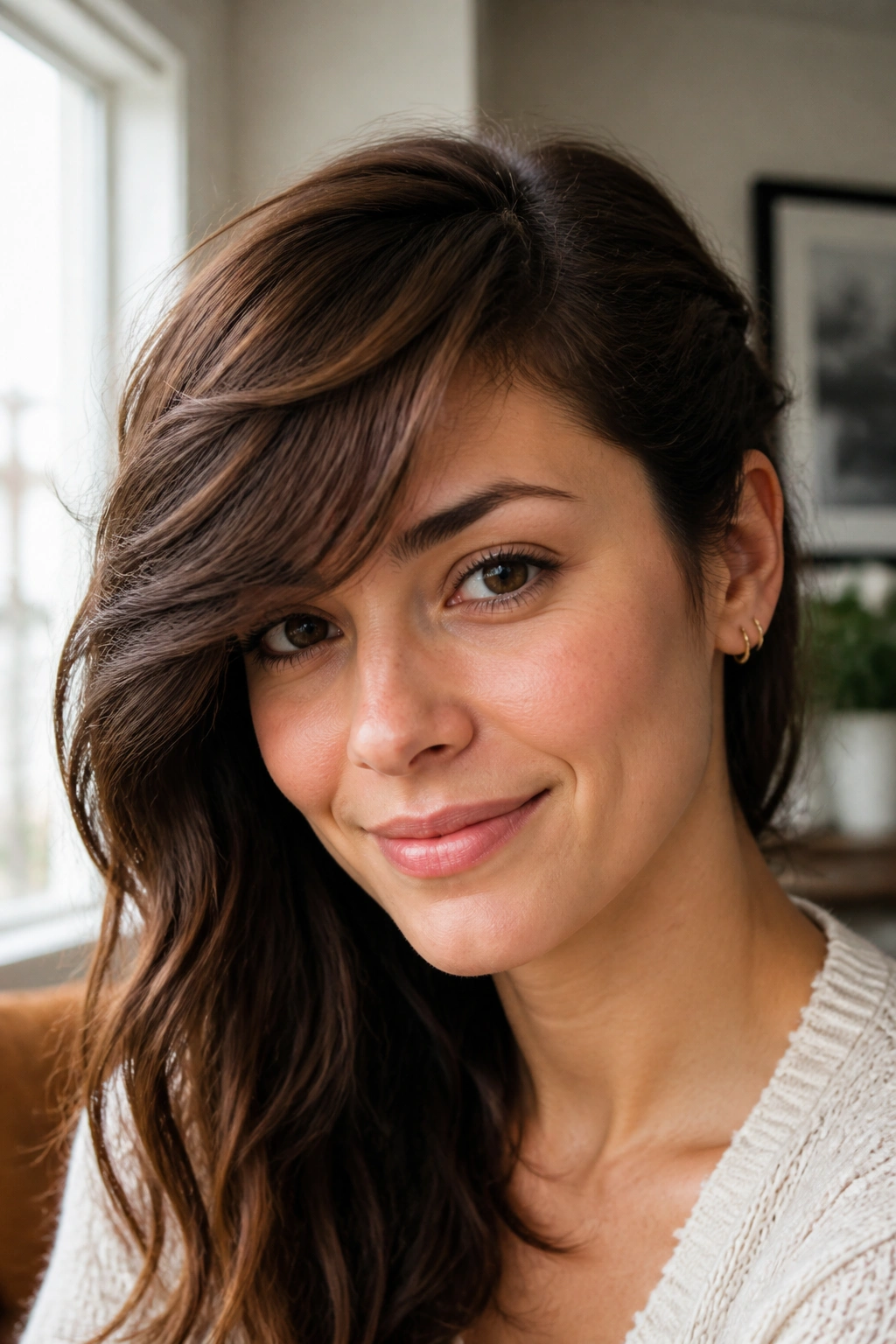
Why does a side sweep look so good on a round face? Because it turns the front of the haircut into a diagonal line, and diagonal lines are your friend when you want less width and more length.
A deep side part shifts the weight of the bangs to one side, which breaks up the symmetry that can make round faces feel broader. Add a wave, and the whole thing gets softer. It doesn’t sit there like a slab. It moves.
How to Style the Sweep
Start with damp hair and direct the bangs away from the part while drying. A 1-inch round brush gives a cleaner bend, but a velcro roller works too if you want less heat. I usually prefer the brush because you get a smoother arc and fewer kinked ends.
- Part about 1½ to 2 inches off center.
- Aim the shortest layer toward the brow, not the middle of the forehead.
- Finish with a light mist of flexible spray, not a crunchy one.
- Tuck one side behind the ear on days you want more face open.
This is one of those styles that looks casual but still does a lot of shape work. That’s a nice combination.
4. Eyebrow-Skimming Wispy Fringe
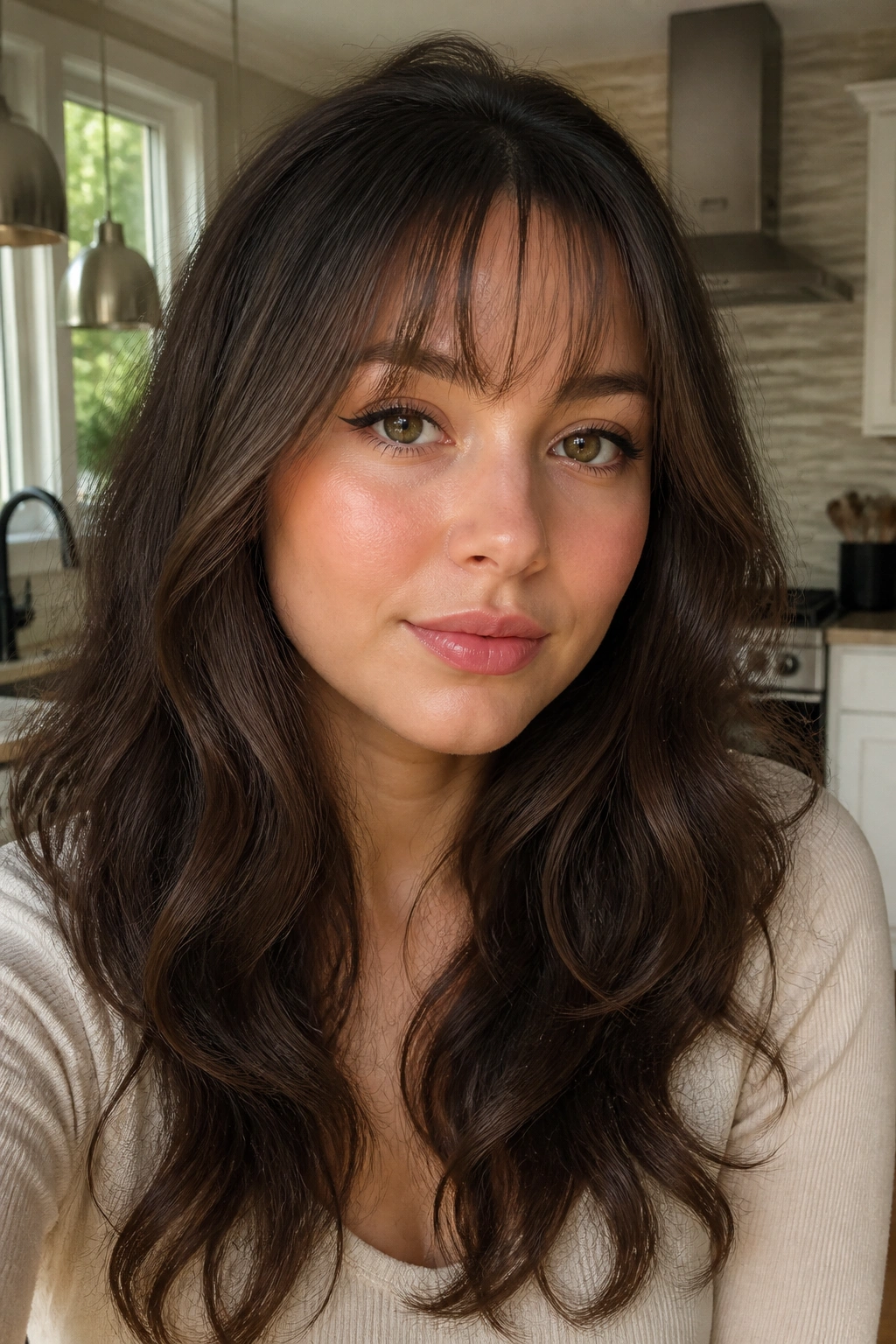
Picture a fringe that barely kisses the eyebrows and breaks into little soft pieces instead of forming one heavy line. That’s the appeal here. It gives you bang coverage without closing off the face.
A wispy fringe is especially helpful if your forehead feels wide but you do not want a dense curtain of hair sitting across it. The see-through spacing keeps the center light, and the ends land softly enough that the roundness of the face doesn’t get emphasized. Tiny difference. Big effect.
What To Ask For
- Length that skims the brows rather than resting on them.
- Point-cut ends so the fringe doesn’t look blunt.
- Lightweight density, especially through the center.
- A dry cut if your wave pattern shrinks a lot.
This style works well on fine hair because it doesn’t need much bulk to look balanced. Thick hair can wear it too, but the stylist has to remove weight carefully or the fringe will puff up and sit like a shelf.
One warning: a strong cowlick can make wispy bangs kick around in strange directions. If that’s you, ask for a little extra length so the hair has room to settle.
5. Long Shag Bangs
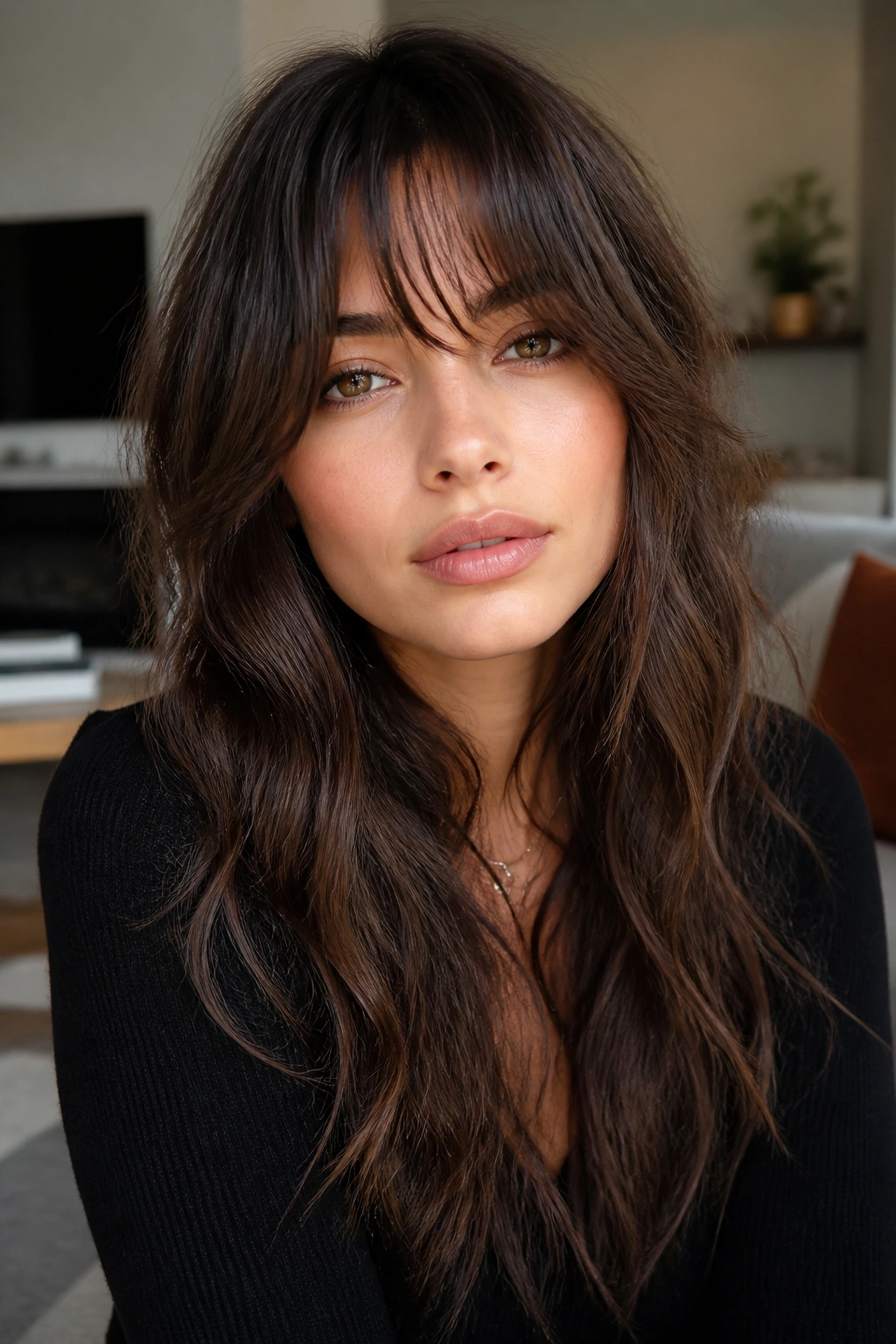
The shag and the round face get along better than people think. The reason is simple: shag bangs are rarely one solid shape. They move, break apart, and fall into the rest of the haircut instead of sitting on top of it like a separate piece.
That loose structure helps a round face because it keeps the eye moving up and down. The fringe blends into cheekbone layers, then into longer pieces around the jaw. Nothing feels trapped. Nothing feels too neat. I like this one when a client wants bangs that look good even after a long day, not just right after the blow-dry.
The downside? It can frizz if you overwork it. A heavy cream makes the front slump, and a flat iron can take the shape out completely. A better route is a small amount of mousse at the roots, then a diffuser on low heat until the fringe is about 80 percent dry.
The shag is also forgiving if your hair grows fast. A little extra length only makes it feel more lived-in. That’s one of the reasons I recommend it to people who hate salon maintenance but still want something with personality.
6. Cheekbone-Grazing Face-Framing Fringe for Round Faces
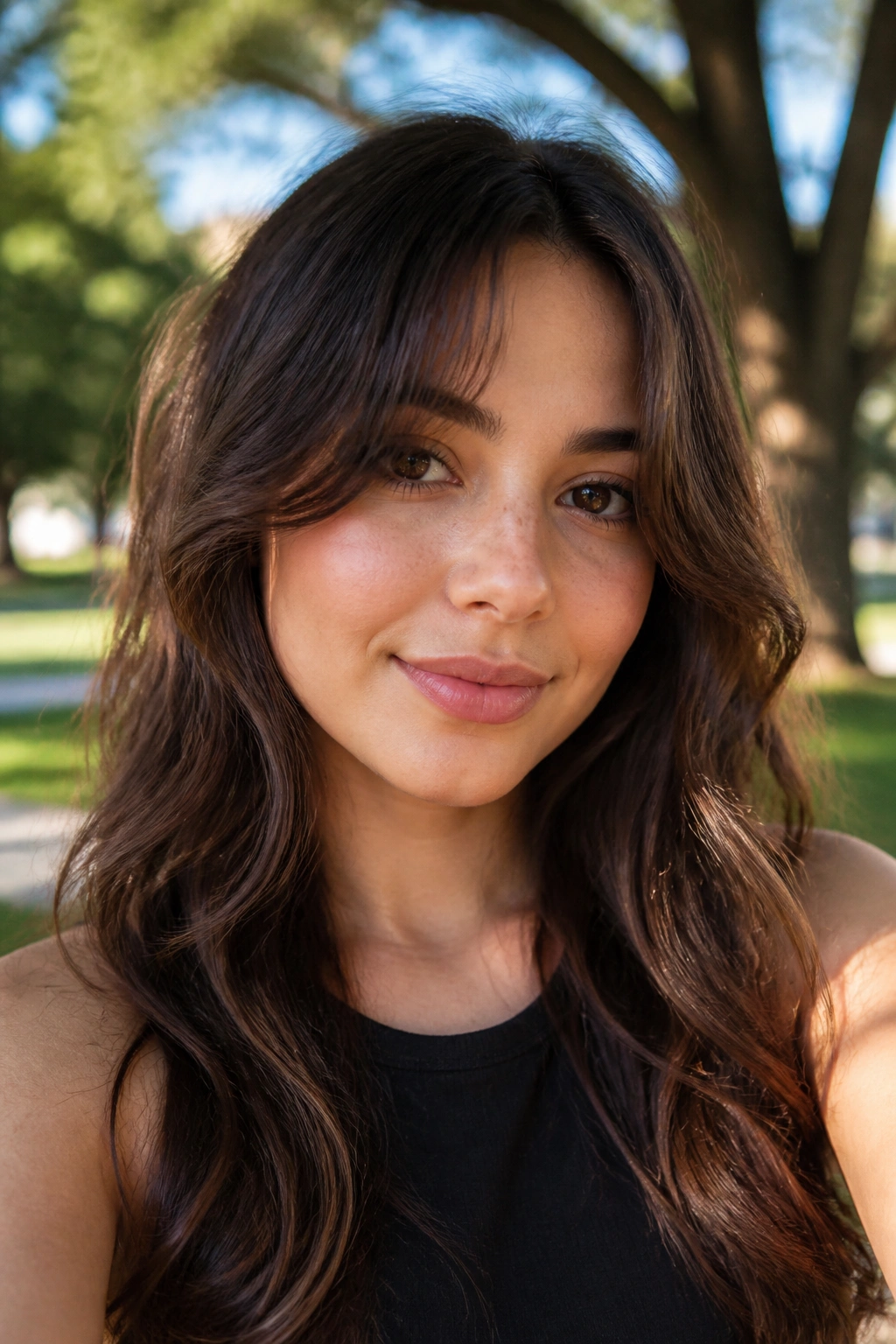
Unlike curtain bangs, this version is less about a clean center opening and more about long front pieces that melt straight into the rest of the cut. The shape is softer, a little quieter, and honestly easier to wear if you like putting your hair up half the time.
The important part is where those front pieces land. If they stop at the cheekbone, they help create a vertical frame around the face. If they hit higher, you lose that lengthening effect. I’d rather see them a little longer and better blended than too short and stuck in the middle of the cheek area.
This fringe is a good fit for anyone who wants bangs but doesn’t want everyone to notice the bangs first. It looks especially nice on wavy hair because the ends can curve away from the face on their own. That soft turn is doing the work.
If you ask your stylist for this, mention that you want face-framing layers that begin near the brow and graduate down past the cheekbone. That one sentence saves a lot of bad interpretations.
7. Feathered Bardot Bangs
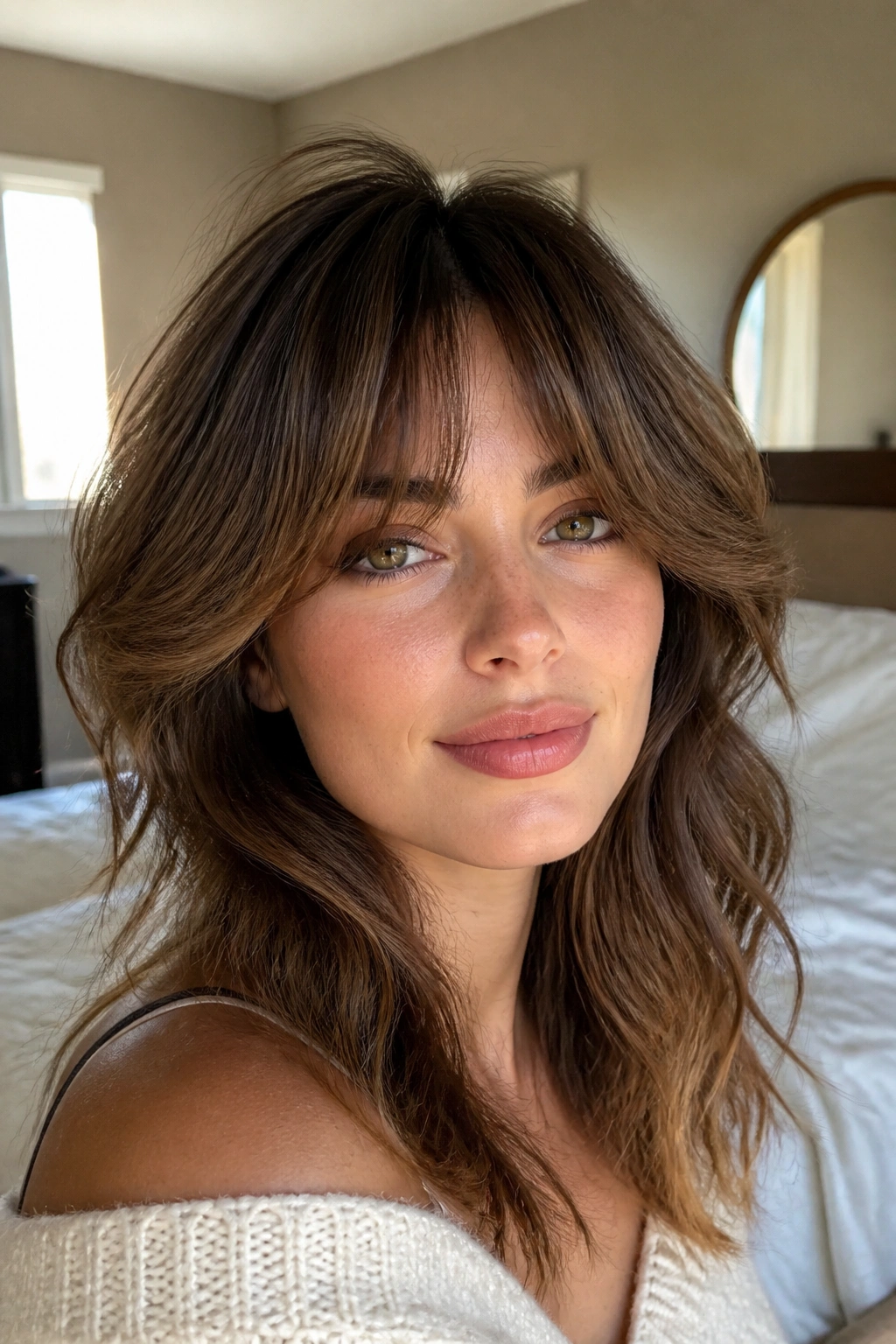
A Bardot fringe has that easy, airy volume people associate with old photos and good blowouts. On a round face, the feathering matters more than the nostalgia. It lifts the eye, opens the center, and avoids the heavy block that can make cheeks look fuller.
The Shape You Want
The bangs should be fuller near the crown, then softer through the middle and sides. Think loose, not flat. A little bend at the outer corners helps, too, because it keeps the line from stopping dead at the middle of the face.
- Best for medium to thick hair with some natural bend.
- Looks strongest with a center part or a very soft off-center part.
- Needs root lift, so dry the bangs upward first, then away from the face.
- Trim every 4 to 6 weeks if you want the feathering to stay crisp.
The best part is how easy it feels. Bardot bangs can look polished, but they don’t have to. A finger-combed finish works almost as well as a brushed one, which is a relief on busy mornings.
I’d avoid this style if your hair is ultra-fine and hangs straight. It can lose the feathered effect and start looking stringy. That’s fixable, but it takes more daily work than most people want.
8. See-Through Wavy Bangs

Thin does not mean weak. See-through bangs can be one of the most flattering options for round faces because they let the forehead show through a little, which keeps the front from feeling heavy.
A dense bang line can sit like a curtain across the cheeks and make the face feel wider. A sheer fringe does the opposite. It adds softness and movement while still leaving space around the eyes and brow. That little bit of transparency matters more than people expect.
If your hair is fine, this style can look airy and expensive without asking for much product. If your hair is thick, the stylist needs to remove weight in controlled sections, not just thin the whole thing out. Random thinning is how you end up with fluffy ends and uneven gaps.
How To Wear It
Ask for point-cut ends, not a blunt edge. Then dry the fringe with your fingers first and a brush second. Too much tension pulls the wave out and makes the hair sit flat against the forehead.
A tiny bit of light cream is enough. Too much, and the bangs clump. Too little, and the wave frays. That middle ground can be annoying, but once you find it, the fringe behaves.
9. Wolf-Cut Fringe

Why does a wolf-cut fringe work on a round face? Because the whole haircut already has lift, layers, and a bit of mess. The fringe isn’t trying to be neat, so it doesn’t add a hard horizontal shape across the top of the face.
The front pieces are usually broken up and a little uneven on purpose. That broken texture helps the bangs move instead of sitting in one solid arc. Around a round face, movement is your ally. It keeps the eye from settling on the widest part of the cheeks.
How To Keep It From Puffing Out
Use a diffuser on low heat and stop drying before the bangs are bone dry. Then pinch a few ends together with a light wax or cream. Do not flatten it with a paddle brush if you want the shape to hold. The point is texture, not polish.
This style is best for thick waves, loose curls, or hair that naturally wants to bend. If your hair is very smooth and straight, the fringe can lose some of its edge and look accidental instead of cool. That is not a moral failure. It just means the haircut wants a different texture.
If you like hair that feels a little wild, this is a good one.
10. Textured Full Bangs
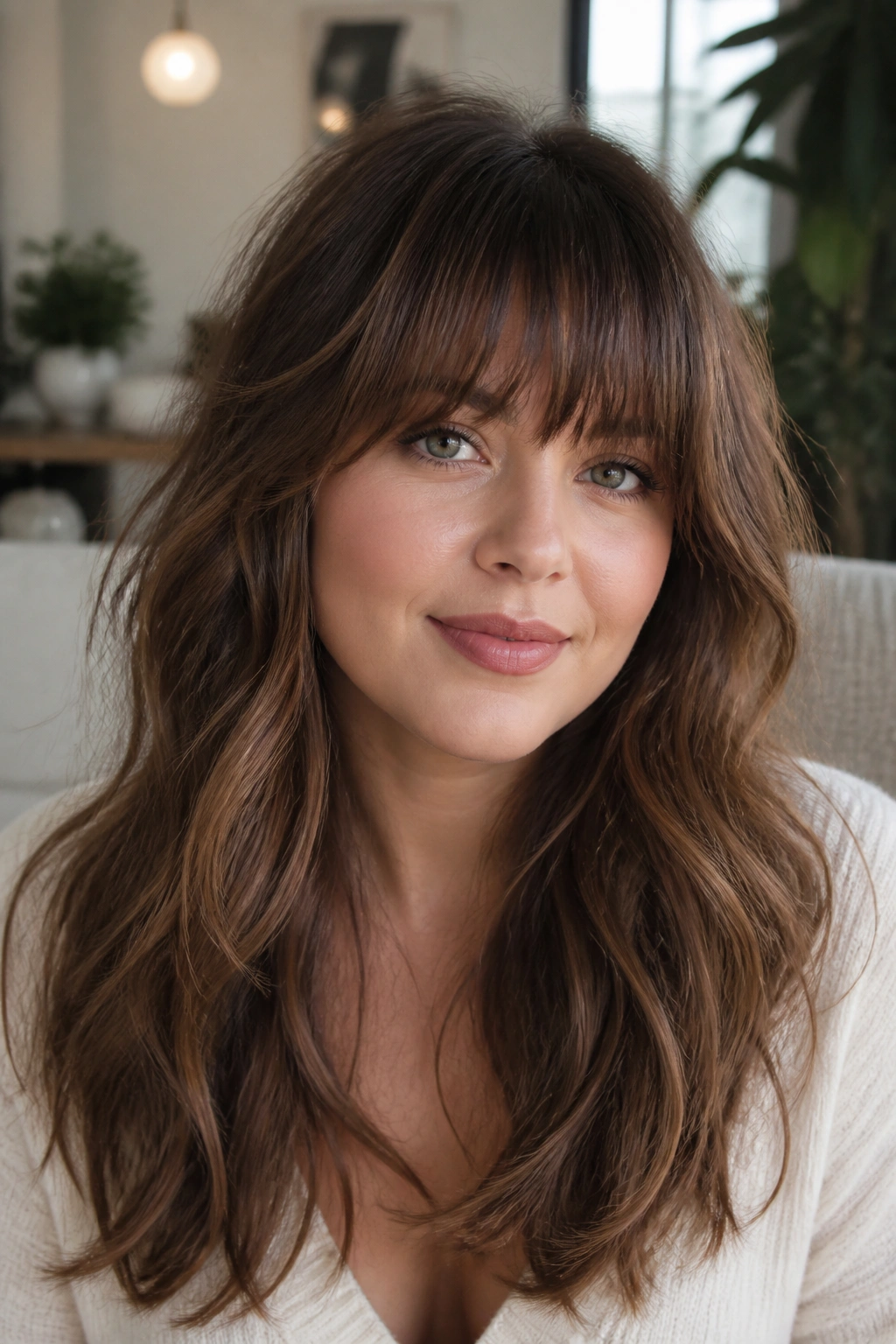
You can wear a fuller fringe on a round face. You just cannot let it sit like a wall.
That’s the main difference between a good textured full bang and a bad one. The good version has internal movement, soft ends, and enough curve to avoid a blunt shelf. The bad one lands straight across the forehead and stops the face from moving. Same category. Very different result.
I like fuller bangs on round faces when the rest of the haircut is layered and the fringe has some bend at the edges. The fullness gives you presence, and the texture stops it from feeling square. It can look especially nice with wavy hair that has a slight bend just above the brow.
- Ask for internal point-cutting, not a heavy blunt line.
- Keep the center a touch shorter than the sides.
- Style with a round brush and a cool shot at the end.
- Use a lightweight spray, not a thick balm.
This style is a better fit if you want the bangs to be the focus. If you want subtle, skip it. If you want a little edge and don’t mind styling, it gives the face a strong frame.
11. Grown-Out Fringe

The in-between stage gets a bad reputation, but on a round face it can be the sweet spot. A grown-out fringe often sits exactly where the face needs it most: long enough to create a vertical line, soft enough to avoid a blunt edge.
I like this option when someone says they want bangs but not a commitment that rules their life. The longest pieces usually sit around the cheekbone or jaw, and the center has already relaxed enough to open the forehead. That gives the face more length and keeps the hair from looking too controlled.
There’s also an ease to it that I find appealing. You can tuck it behind the ear, pin part of it back, or let it fall forward when you want softness. It’s the kind of fringe that works with your day instead of demanding a whole routine before breakfast.
A small trim every 6 to 8 weeks keeps the shape from collapsing. I’d rather do light maintenance than let the ends get shaggy in a bad way. There’s a difference. One looks casual. The other looks like you forgot the haircut existed.
12. Asymmetrical Side-Part Fringe

Asymmetry is one of the easiest ways to take width out of a round face. Instead of splitting the front in the middle or stopping it evenly across the forehead, this fringe leans to one side and moves the eye diagonally across the face.
That diagonal matters. It breaks the circle. A round face usually benefits from shapes that interrupt symmetry a little, and this style does that without looking harsh. The heavier side can skim the brow while the lighter side falls closer to the temple or cheekbone.
This is a good choice if you already wear a side part and you don’t want to fight your natural habit. In fact, fighting the part often leads to weird root lift and bangs that won’t sit still. Better to work with the direction your hair wants.
I’d recommend this to people who like a softer, more editorial look. It feels a little less expected than curtain bangs, but still manageable. If you want the shortest piece to land around the brow and the longest piece near the cheekbone, say that plainly at the salon. Specific beats vague every time.
13. Choppy Micro Fringe
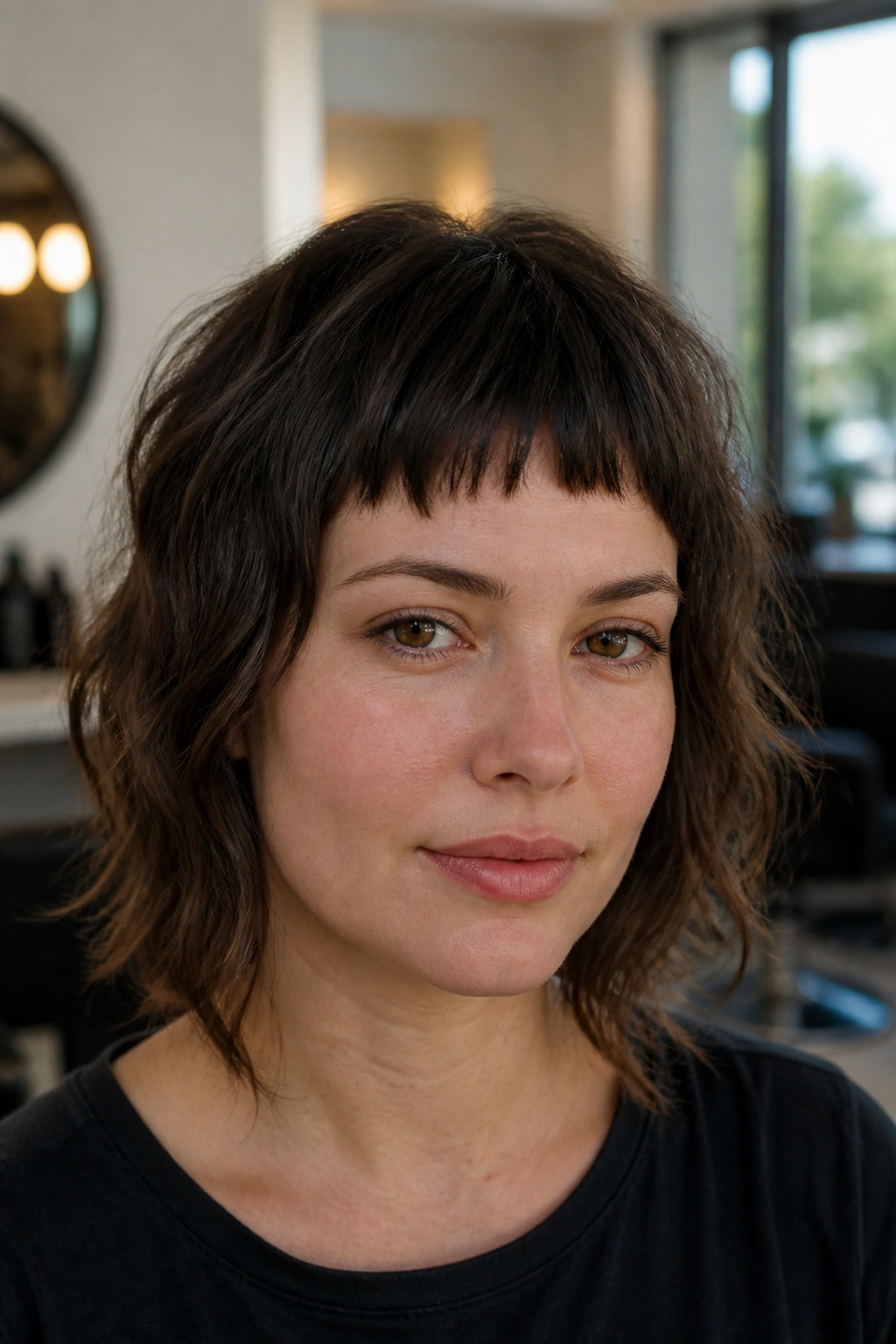
Micro fringe gets a bad rap, and some of that is deserved. It can go wrong fast. But if you like a bold haircut and your wavy texture has enough bounce, a choppy version can look sharp on a round face because it exposes more forehead and keeps the face from feeling crowded.
Who Should Skip It
- Anyone who wants a low-maintenance bang.
- Anyone with a stubborn front cowlick that splits hard.
- Anyone who hates frequent trims.
- Anyone who wants a soft, hidden effect.
That said, if you like strong brows, short fringe can be a cool counterpoint. The trick is keeping it broken up and irregular, not straight and severe. A blunt micro fringe tends to make a round face look shorter. A choppy one does more interesting work because the eye keeps moving.
Ask for a length that sits well above the brows, but not so high that it looks accidental. There’s a narrow line there. I’d also avoid heavy styling products. You want the pieces to sit light, not cling together in one dark strip.
14. Birkin Fringe with Loose Wave
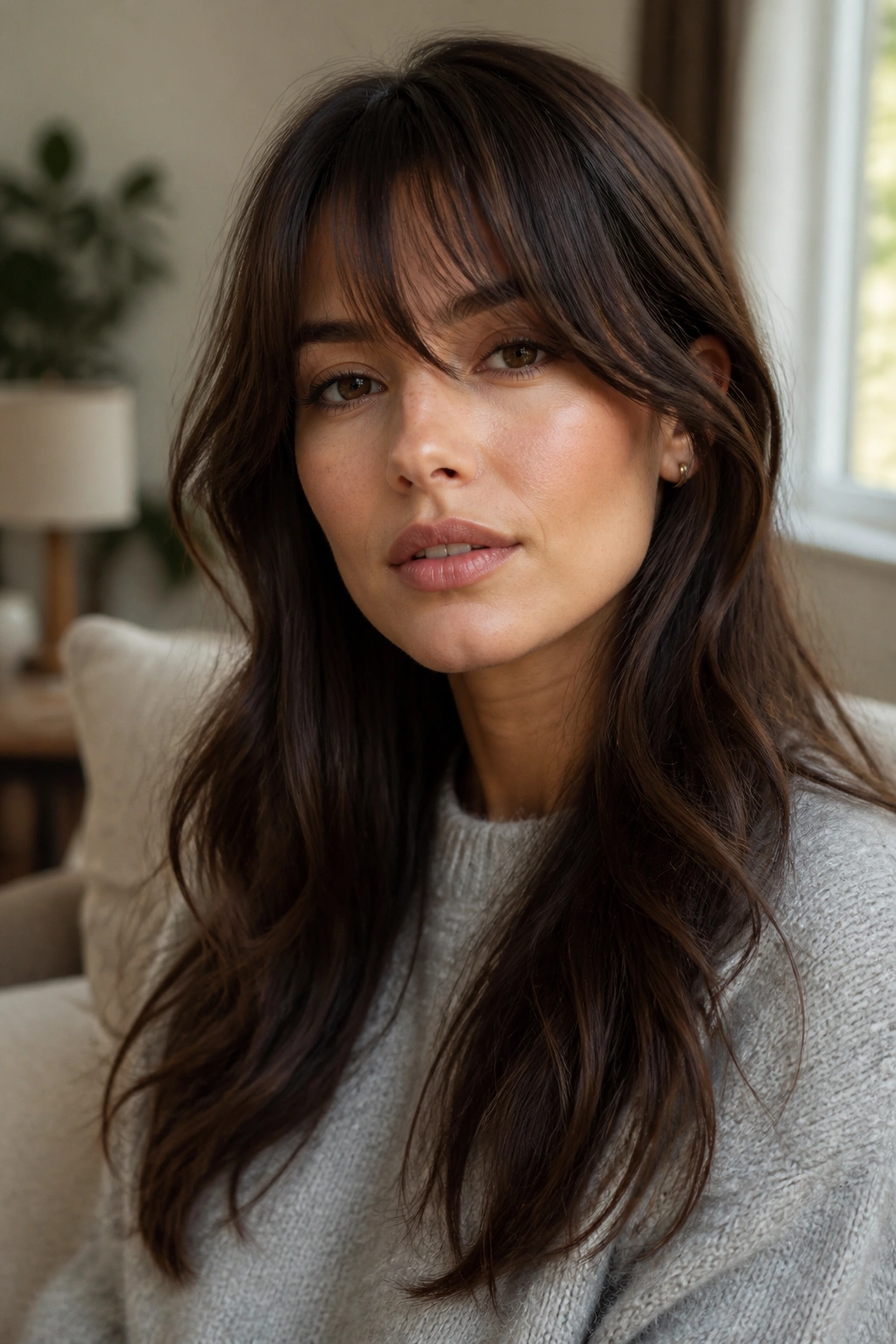
A Birkin fringe can look too heavy if it’s cut too straight, and that’s where round faces get into trouble. But soften the line, add a loose wave, and the whole thing changes. It becomes airy around the eyes instead of boxed in across the forehead.
The length usually brushes the lashes, which gives you that soft, slightly mysterious feel without crowding the face. On a round face, the key is letting the sides taper a bit more than the center so the fringe doesn’t create a wide shelf. That little taper keeps things flattering.
I like this one on medium-density hair that can hold a bend but still move. It’s especially nice if you blow-dry with a large round brush or set the fringe in a roller for a few minutes while you do the rest of your makeup. Old-school methods survive for a reason.
This is not the easiest fringe to ignore. It asks for attention. But the payoff is a front piece that feels styled even when the rest of the hair is loose and imperfect. Some people love that. I usually do.
15. Temple-Opening Split Fringe

What if you want the face-opening effect of curtain bangs, but even more space through the center? Temple-opening split fringe gives you that. The split begins a little farther out, so the middle of the forehead stays more open and the side pieces do the shaping.
That makes it a smart choice for round faces that need a bit more vertical room. The hair doesn’t sit across the widest part of the face. It travels outward first, then down. That small shift changes the whole mood.
How To Ask For It
- Ask for the split to start closer to the temples, not directly between the brows.
- Keep the center pieces longer than you think.
- Let the outer pieces hit at or below the cheekbone.
- Style the front away from the center with a round brush or large roller.
This version can feel lighter than traditional curtains, and that makes it a good pick for people who want bang presence without a dense front. It also grows out in a nice way. The center stays open, and the side pieces turn into layers instead of awkward stragglers.
16. Soft Crescent Bangs
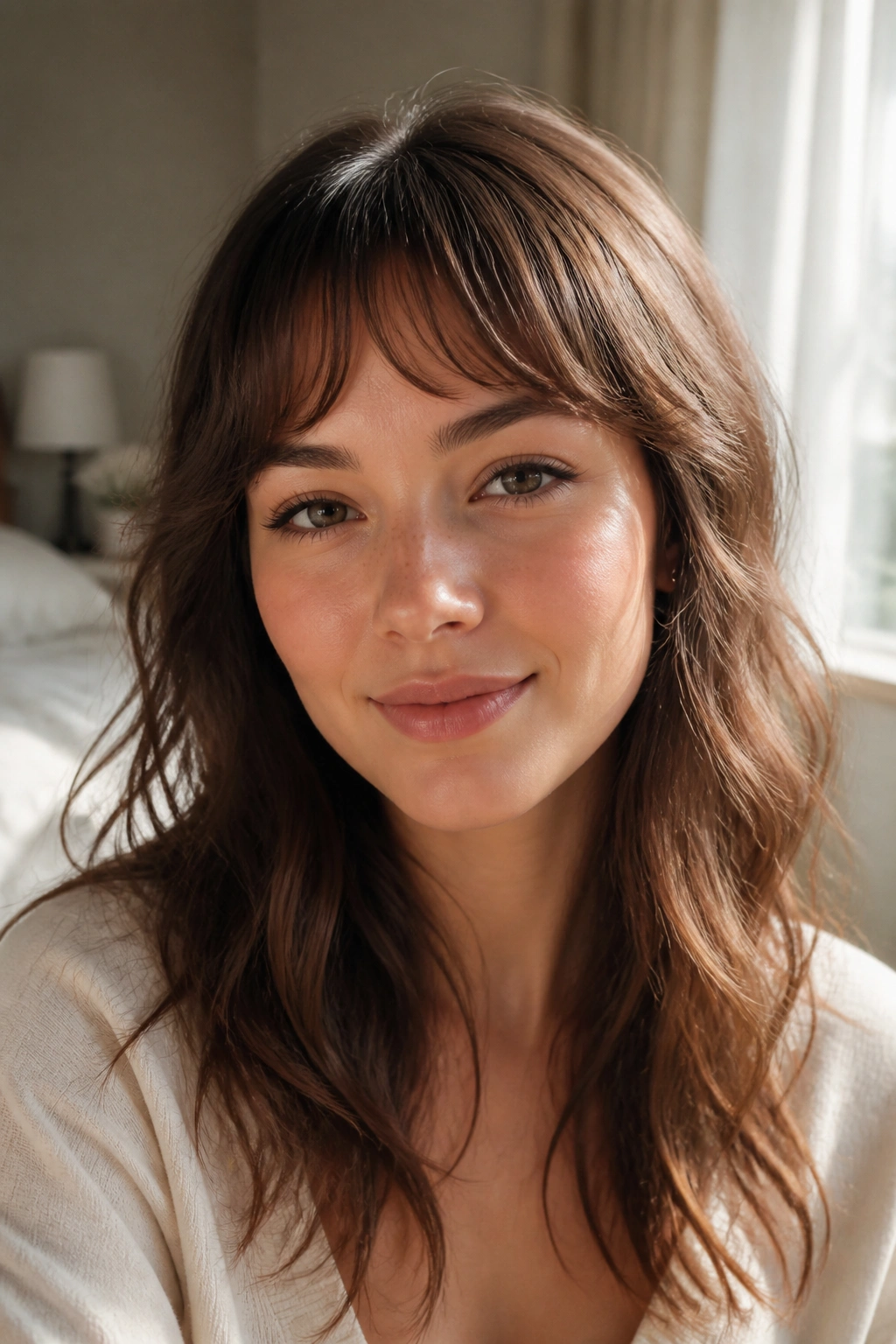
A crescent fringe makes a round face look better when the arc stays gentle. Too wide, and it works against you. Too short in the center, and it gets severe. The soft version lands in the useful middle.
The shape is subtle: shorter through the center, longer at the edges, with a soft curve that follows the brow line. It gives structure without a hard edge. On a round face, that curve can make the cheekbones seem a little higher because the eye follows the bend upward.
This style is a good fit if you want the front of your haircut to feel polished but not stiff. It looks nice on wavy hair because the bend can happen on its own with very little styling. I’d still use a small brush to guide the ends away from the cheeks, though. Tiny bit of control. No helmet effect.
If your forehead is shorter, keep the crescent more relaxed. If your forehead is longer, you can go slightly fuller. Either way, the goal is the same: shape, not weight.
17. Piecey Center-Opened Fringe
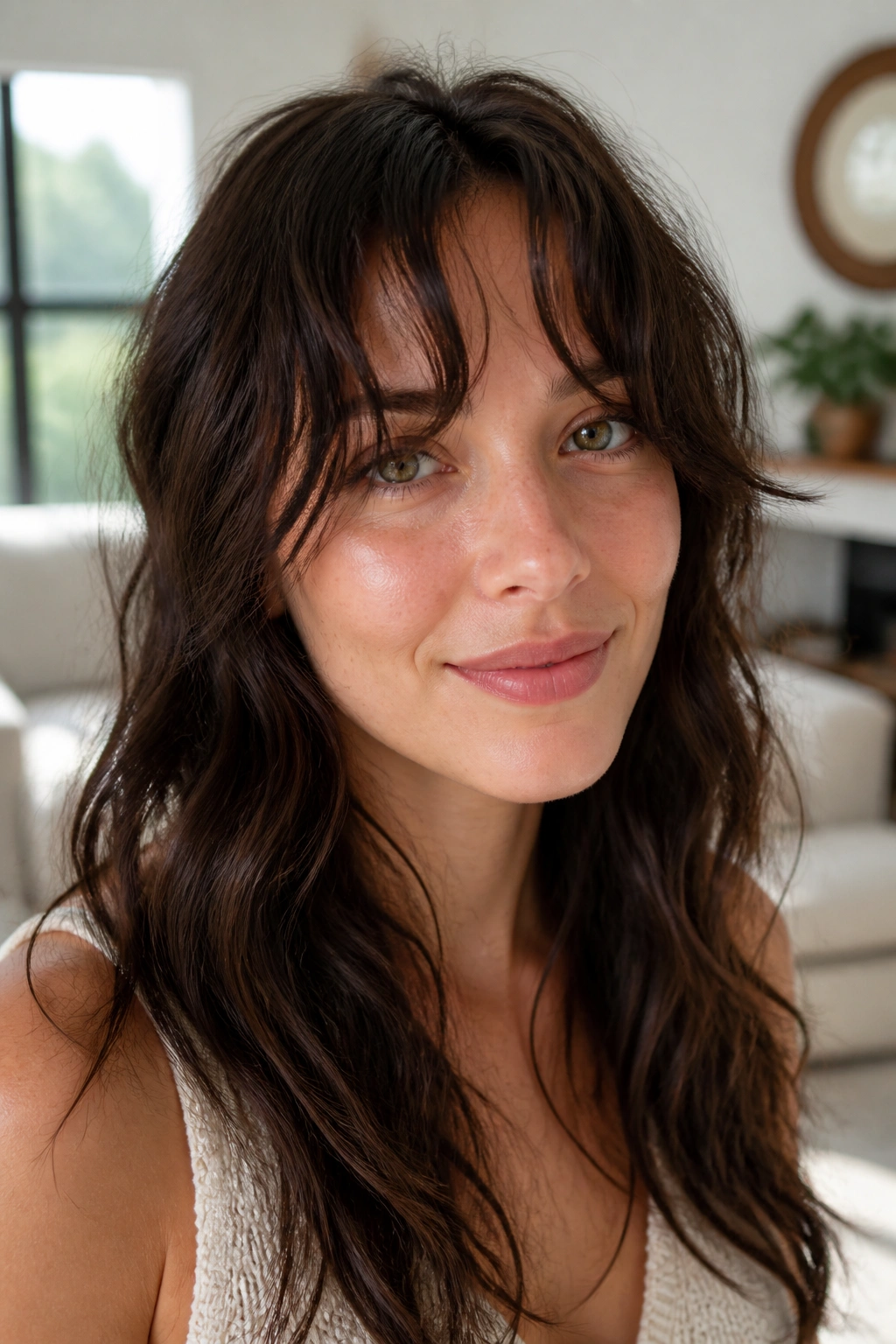
Piecey center-opened fringe is the quieter cousin of curtain bangs. It still parts in the middle, but the pieces are more separated, a little less polished, and a lot more relaxed. On a round face, that separation helps because it stops the bang line from turning into one broad shape.
I like this version when a client wants bangs that look good even when they’re not perfectly styled. The pieces can fall in different directions and still feel intentional. That kind of imperfection is useful. Life does not always hand you a clean blowout.
A little texture spray at the mid-lengths helps. Don’t drown the fringe in product or it turns stringy. That’s the trap. You want loose definition, not sticky ends that hang together in clumps.
This style also works well if your waves are inconsistent. Some pieces can bend more than others, and the haircut still reads as soft and flattering. I’d take that over a too-perfect fringe any day.
18. Long Swoop Bangs
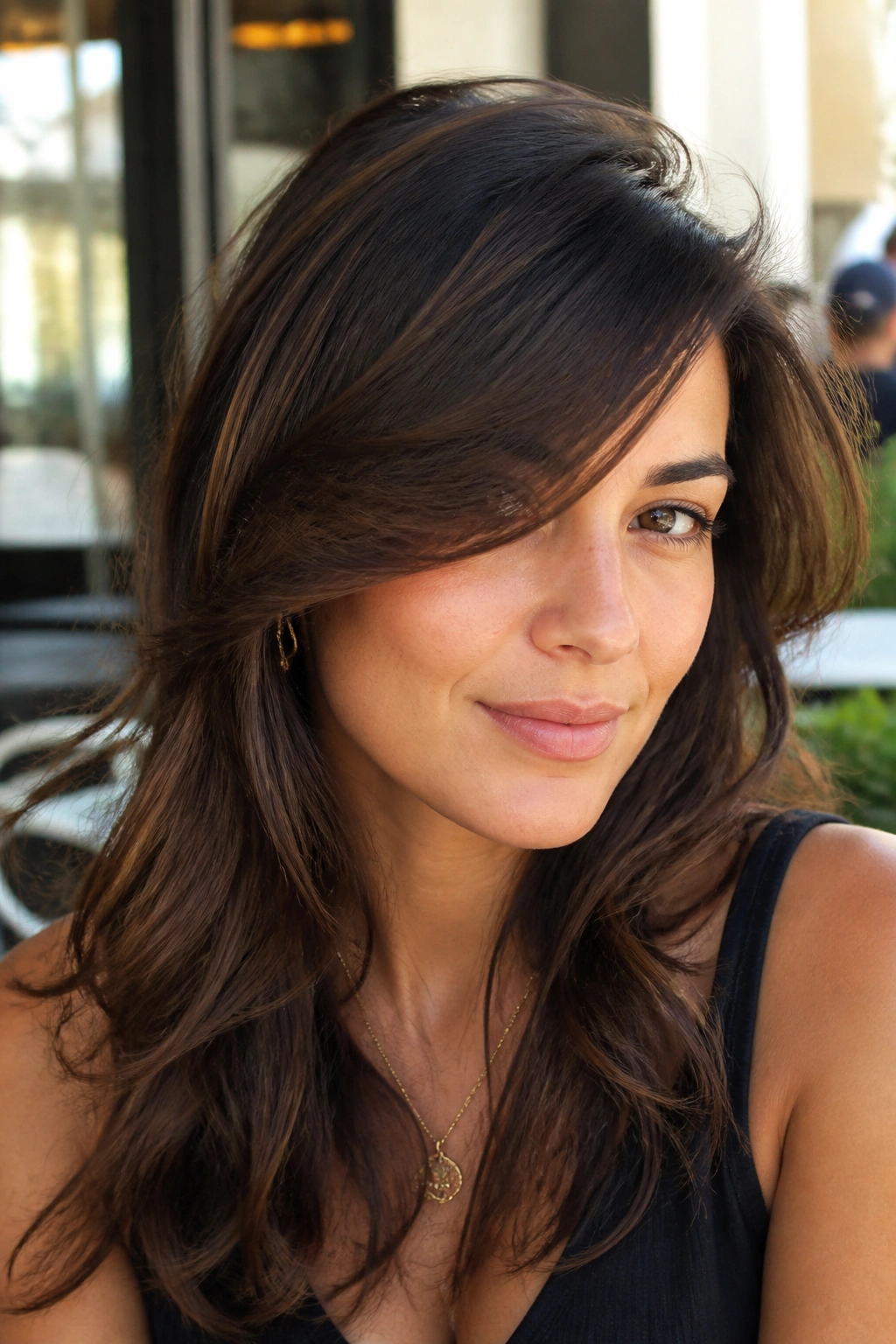
Long swoop bangs are the easiest fringe to tuck, pin, or grow out, and that alone makes them worth a look. On a round face, the long diagonal line gives you movement across the forehead without closing off the cheeks.
Unlike a full fringe, this version doesn’t stop the eye in the middle. It travels. That travel creates length. The front pieces can start near the temple, angle down past the brow, and finish around the cheekbone or even the jaw if you want more drama.
This is a good choice if you want bangs that can disappear into the haircut on a lazy day. You can sweep them over, pin them back, or let them fall loose. That flexibility matters. Not everyone wants bangs that make a daily demand.
I’d recommend asking for a diagonal cut with soft ends and a bend that follows the natural wave pattern. A 1.25-inch round brush usually gives the right shape without making the swoop too tight. And if you want one fringe style that can survive a grow-out phase without looking messy, this is one of the better bets.
Final Thoughts
The best wavy bangs for round faces usually do one thing well: they give the face a little more line and a little less width. That can happen through a center split, a side sweep, or a broken-up fringe with soft edges. The exact shape matters less than the direction it creates.
Start longer than you think you need. Seriously. A fringe can always be shortened, but a bang that sits too high on a round face can make the whole cut feel rushed. Long, soft, and slightly piecey is almost always the safer starting point.
If you’re bringing photos to a stylist, show the length first, then the texture. That helps more than saying you want “bangs like this.” The end point matters. The way the wave falls matters too. Haircuts live or die in those details.
