



Round faces love movement. A side bang can carve out angles the face does not naturally have, but only if the cut leans long and soft instead of heavy and blunt. The difference between fresh and why is this puffing at my temples? is often just a few inches, a better part, and a little patience with the blow dryer.
The best side bangs for round faces do three things at once: they draw a diagonal line across the forehead, they stay a touch longer near the cheekbone, and they keep the widest part of the face from getting boxed in. That sounds picky because it is picky. Hair always is.
Texture changes the whole story. Fine hair needs a light hand so the fringe does not collapse by lunch; thick hair needs internal shaping so it does not sit like a helmet; curls need extra length because they spring up once they dry. A stylist who knows how to dry-cut fringe will save you from a lot of awkward mirror moments.
The ideas below stay on the flattering side of the line — soft, diagonal, face-skimming, never boxy. Some are low-drama, some are sharper, and a few are for people who want bangs without the full commitment of a heavy fringe. Start with the one that matches your hair, not the one that looks prettiest on a flat screenshot.
1. Long Feathered Side Bangs
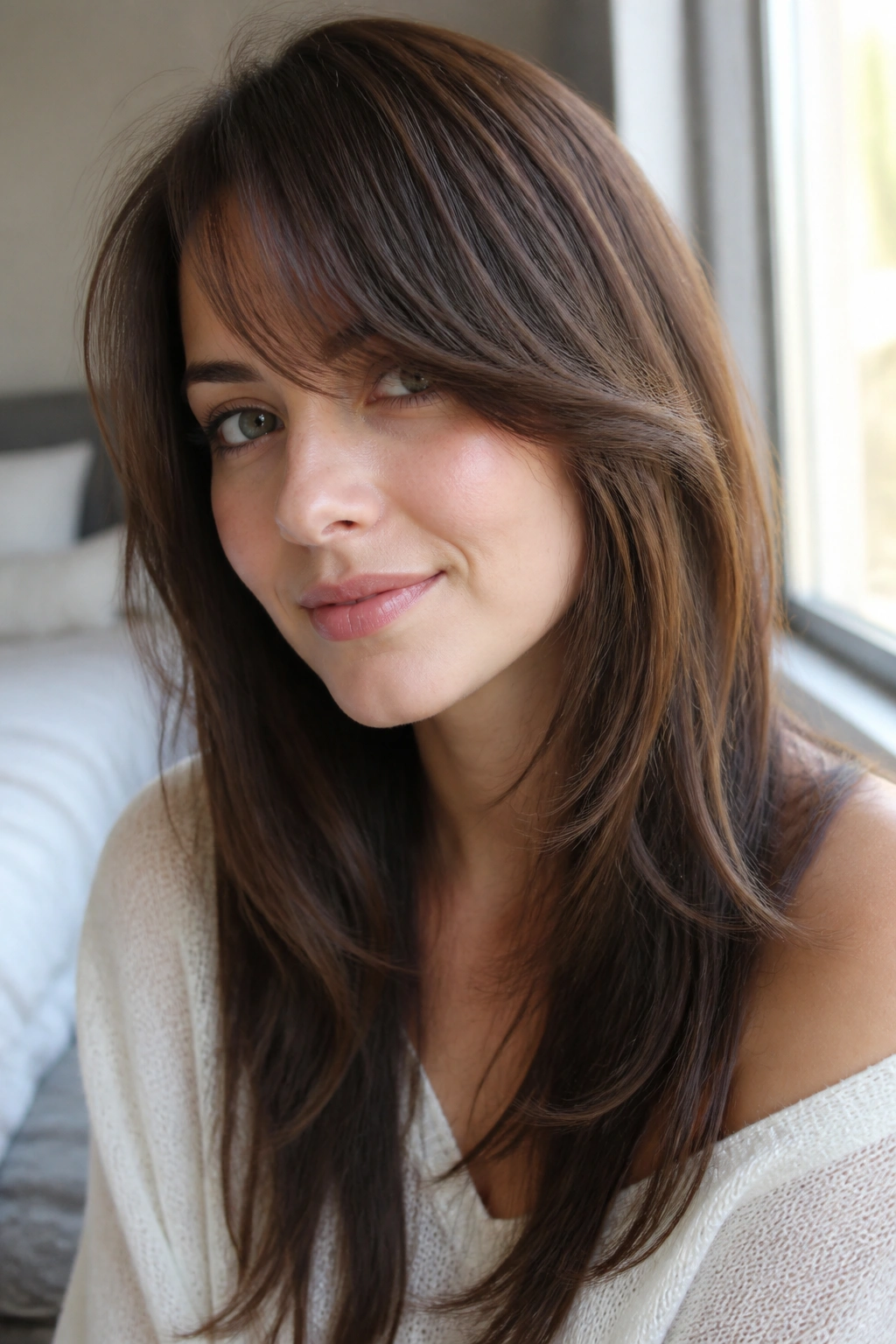
Long feathered side bangs are one of those cuts that quietly does a lot of work. They skim the forehead, bend toward the cheekbone, and then melt into the rest of the hair instead of stopping with a hard edge. On a round face, that feathered finish matters. It keeps the eye moving downward instead of drawing a tidy little circle around the widest part of the face.
Why It Flatters a Round Face
The shape should start around the brow bone and end somewhere near the top of the cheekbone or just below it. That little stretch gives the face a longer look without making the bang feel severe. Ask for point cutting, not a blunt chop. The ends should feel soft when you run your fingers through them.
A round face looks better when the bang has some lift at the roots and some slack through the lengths. Flat, heavy fringe tends to widen the middle of the face. Feathered fringe does the opposite. It breaks up that width.
- Ask for the shortest piece to stay a bit longer than you think.
- Use a 1 to 1.25-inch round brush when drying.
- Blow the fringe down and slightly forward first, then sweep it to the side.
- Finish with a light mist of flexible hairspray, not a crunchy shell.
Pro tip: If your hair flips at the ends, let the fringe cool on the brush for 10 to 15 seconds before releasing it. That tiny pause makes the bend hold.
2. Deep Side-Swept Bangs
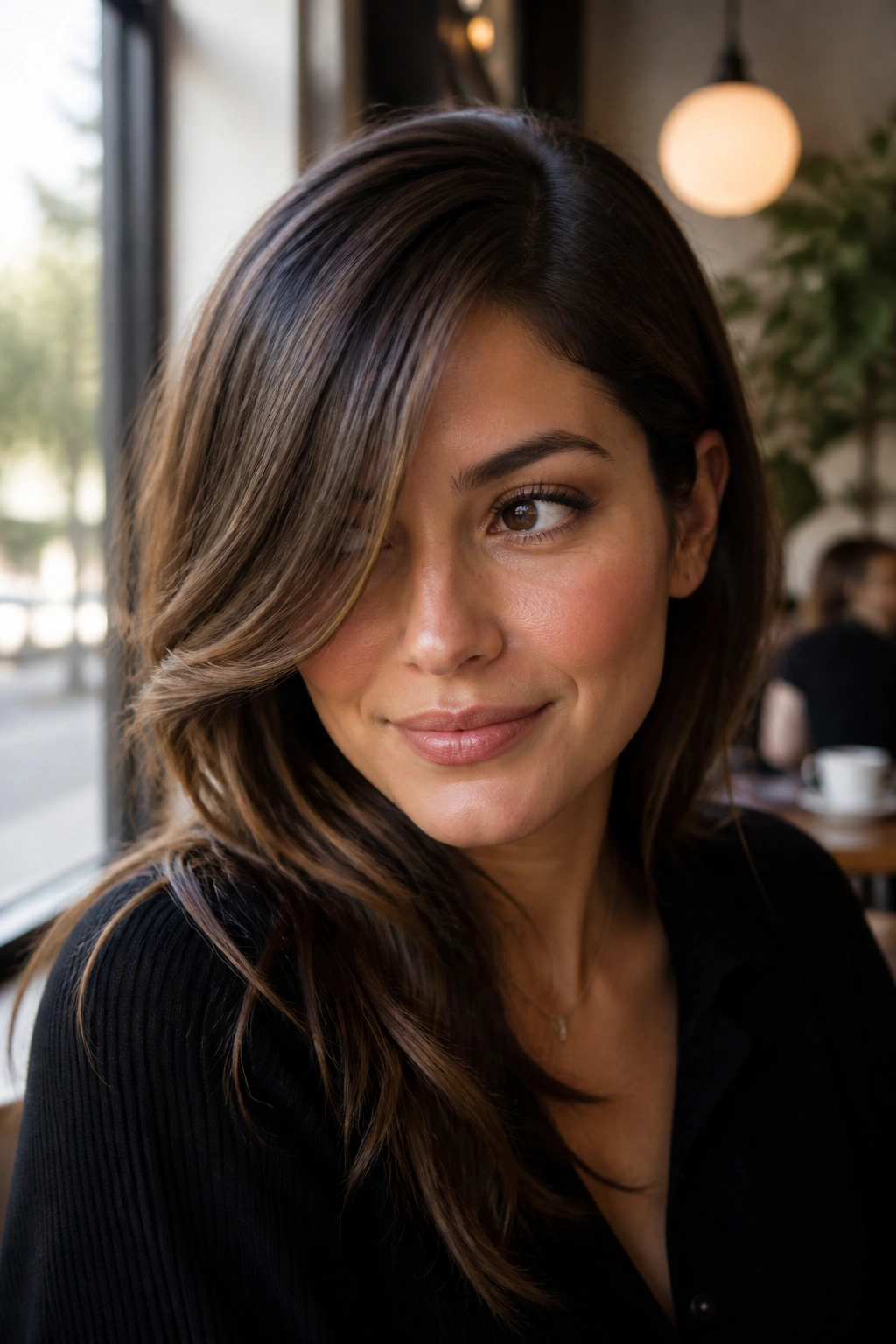
A deep side sweep can make a round face look narrower without turning the haircut severe. That is the charm here. You get a clean diagonal line, a little drama at the part, and enough forehead showing to keep the face open. It feels polished. Not fussy.
The trick is placement. A deep side part usually sits about 3 to 4 inches off center, sometimes a bit more if your hair naturally falls that way. The bang should be directed across the forehead, then softened as it approaches the cheek. If the section is cut too short, it can puff out and lose the sweep. If it is too thick, it starts to look like a curtain.
This style works well with medium-thick hair because there is enough body to hold the sweep. Fine hair can wear it too, but the roots need help. A little root-lift spray at the front makes the difference between swept and flat.
I like this one for anyone who wants bangs that feel grown-up rather than cute. It has a clean line, and round faces usually need that extra line somewhere.
3. Wispy Side Bangs
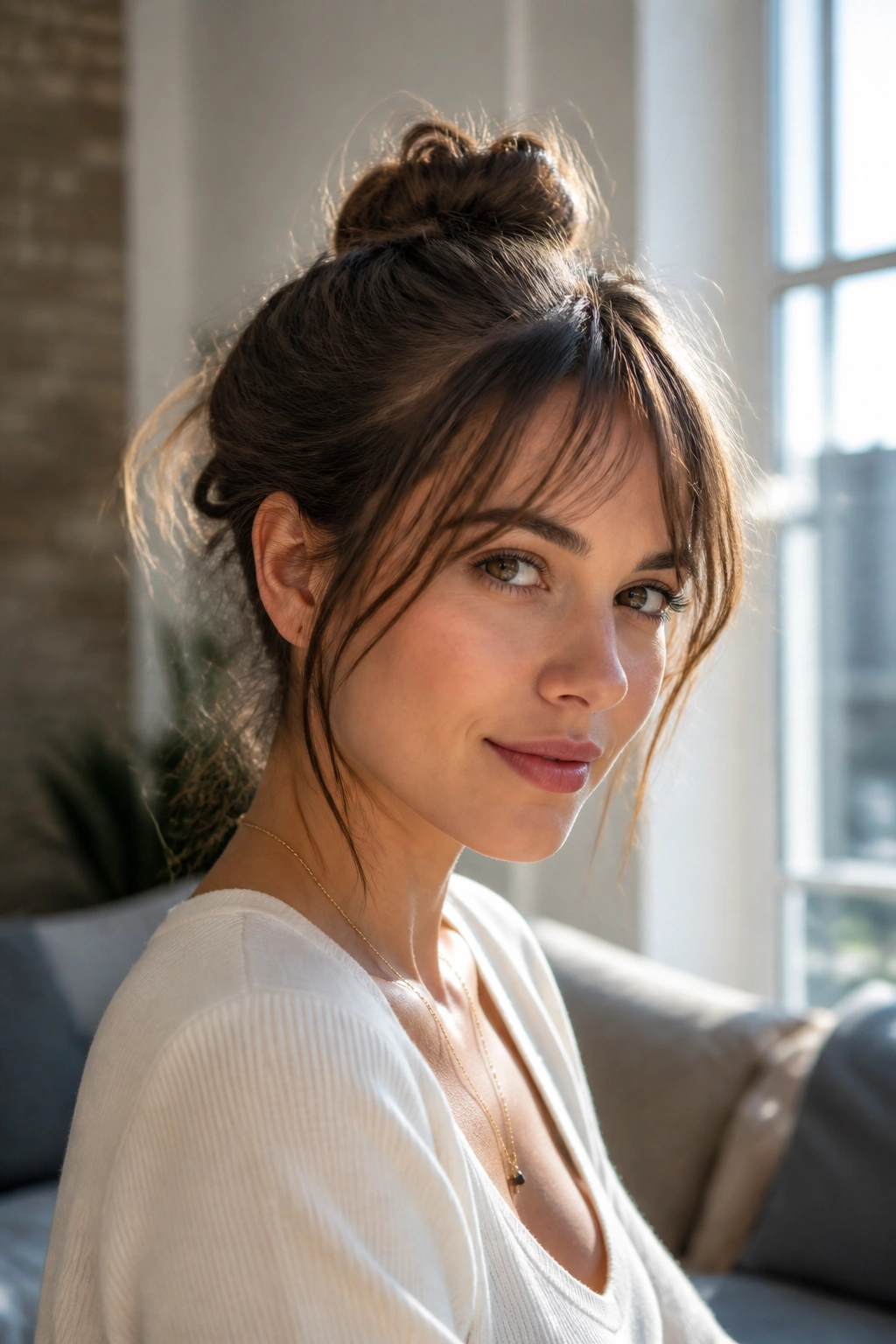
Can wispy side bangs work on a round face? Yes, when they stay narrow and airy. The whole point is to keep the fringe from eating up forehead space. You want a few soft strands, not a solid panel. That see-through quality keeps the face open and gives the haircut a lighter mood.
Wispy bangs are especially useful if your hair is fine or medium-fine and you do not want a heavy commitment. They can also suit round faces that already have a softer jawline. The lightness keeps the style from feeling crowded. No helmet effect. No thick wall.
How to Style It
Dry the roots first, then direct the fringe sideways with your fingers or a small brush. A tiny drop of smoothing cream helps if your hair frizzes at the ends, but use too much and the wispy effect disappears. That part is easy to mess up. A pea-sized amount is usually enough.
A lot of people over-spray wispy fringe, which is a mistake. The hair should move. If it cannot move, it stops looking wispy.
4. Chin-Grazing Side Bangs

If you wear a bob or a lob and keep fighting that little puff around the cheeks, chin-grazing side bangs are a smart fix. The length creates a vertical line that pulls the eye downward, and that is useful on a round face. It also gives the hair a more deliberate shape, which matters when the rest of the cut is short.
The bang should land around the chin or just above it on the longest side. That extra length sounds dramatic, but it is the part that keeps the style from feeling chopped off. If the fringe ends near the jaw, it can widen the face instead of slimming it. Chin-length gives you more room to tuck, twist, or sweep.
- Works well with a lob, blunt bob, or soft layered bob.
- Easy to tuck behind the ear for a cleaner line.
- Looks better with a bend at the ends than with pin-straight stiffness.
- Needs a trim every 4 to 6 weeks if you want the shape to stay open.
One thing I like here: it grows out gracefully. That matters more than people admit.
5. Thick Swoopy Side Bangs
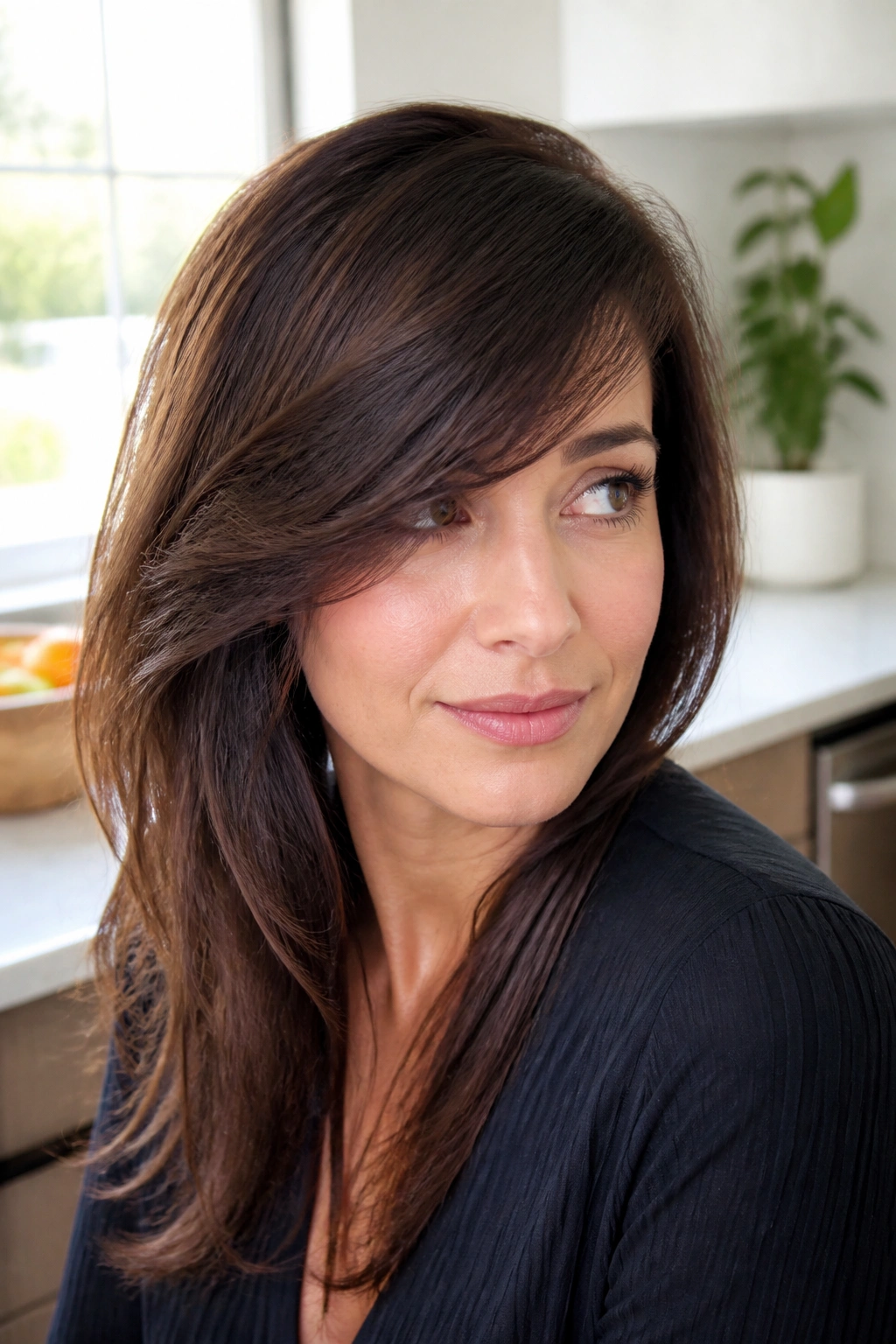
Thick bangs are not off-limits for round faces. They just need shape. A dense, swept bang can look rich and deliberate if the stylist removes weight from the inside and keeps the edge soft. Without that cleanup, it sits like a chunk. With it, the hair folds across the forehead in a smooth arc.
This version works best when the swoop starts higher near the temple and lands longer on one side. The movement creates a diagonal that cuts across the face, which is what you want. Round faces benefit from that angled motion because it breaks the even width from cheek to cheek.
What to ask for is simple: internal layering, a soft edge, and enough length to sweep. Not all at once, not too short, and not razor-thinned to the point of frizz. Thick hair can take the weight removal, but it should still look full.
If your hair is dense and a little stubborn, this is a good one. It has presence. It does not disappear.
6. Side Bangs With Long Layers
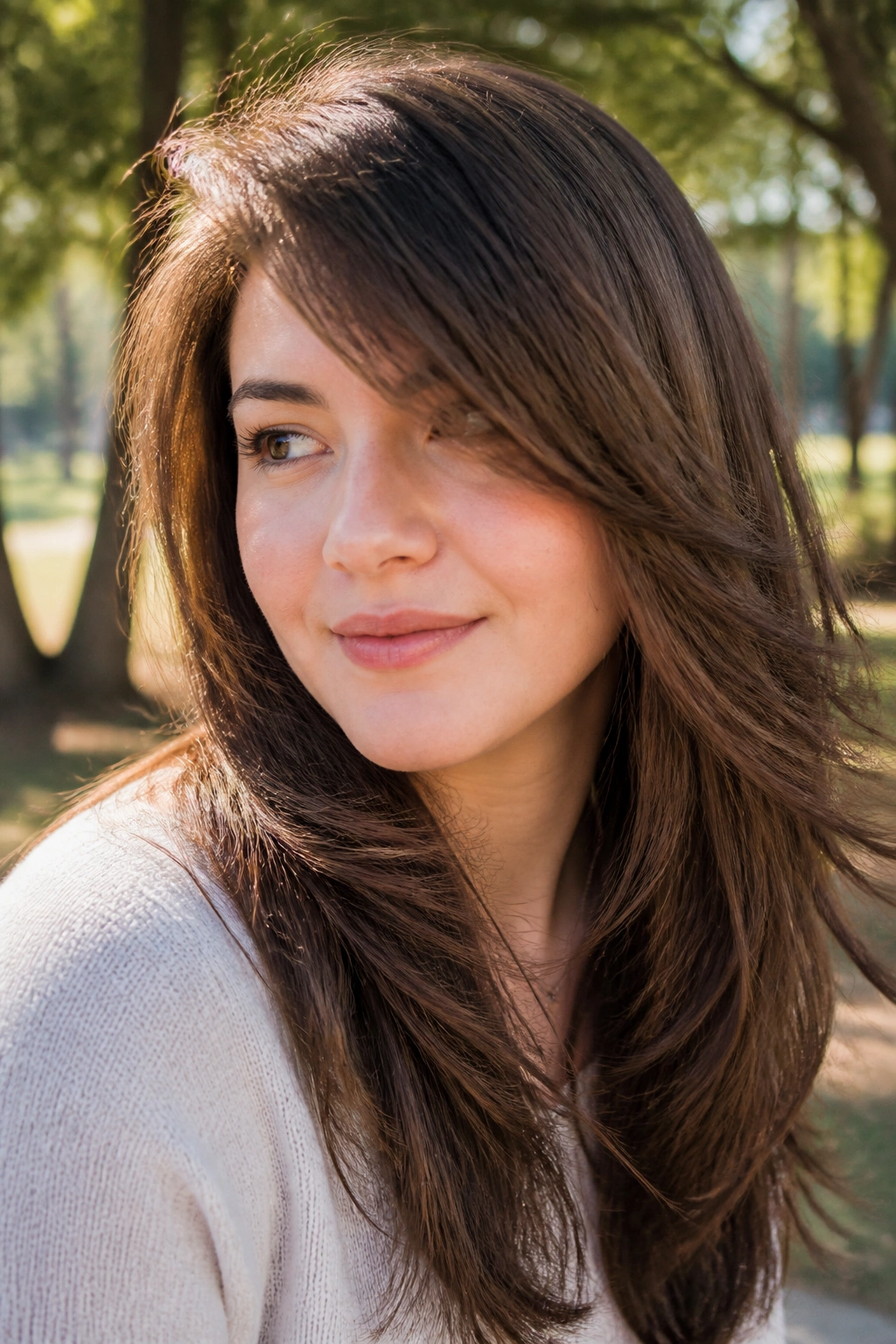
Unlike a bang-only cut, long layers build a path from the forehead down to the shoulders. That is useful on a round face because the eye keeps traveling. There is no hard stop at the cheek, no blunt wall under the eyes, no sudden shelf. Everything softens into the rest of the cut.
The bang itself should blend into the first layer near the cheekbone or mouth. That keeps the side fringe from feeling pasted on. You want the front pieces to act like part of the haircut, not a separate feature. When the layers start at the right place, the face looks longer and less wide.
This is one of the easiest choices if you like your hair long and do not want a dramatic front section. It also works when you wear your hair half up. The side bang still has somewhere to live.
A round face usually looks best when the layer line is not exactly level with the cheeks. Move it lower. Let the hair fall past the widest point before it turns in. Small shift. Big payoff.
7. Piece-Y Side Fringe With a Shag
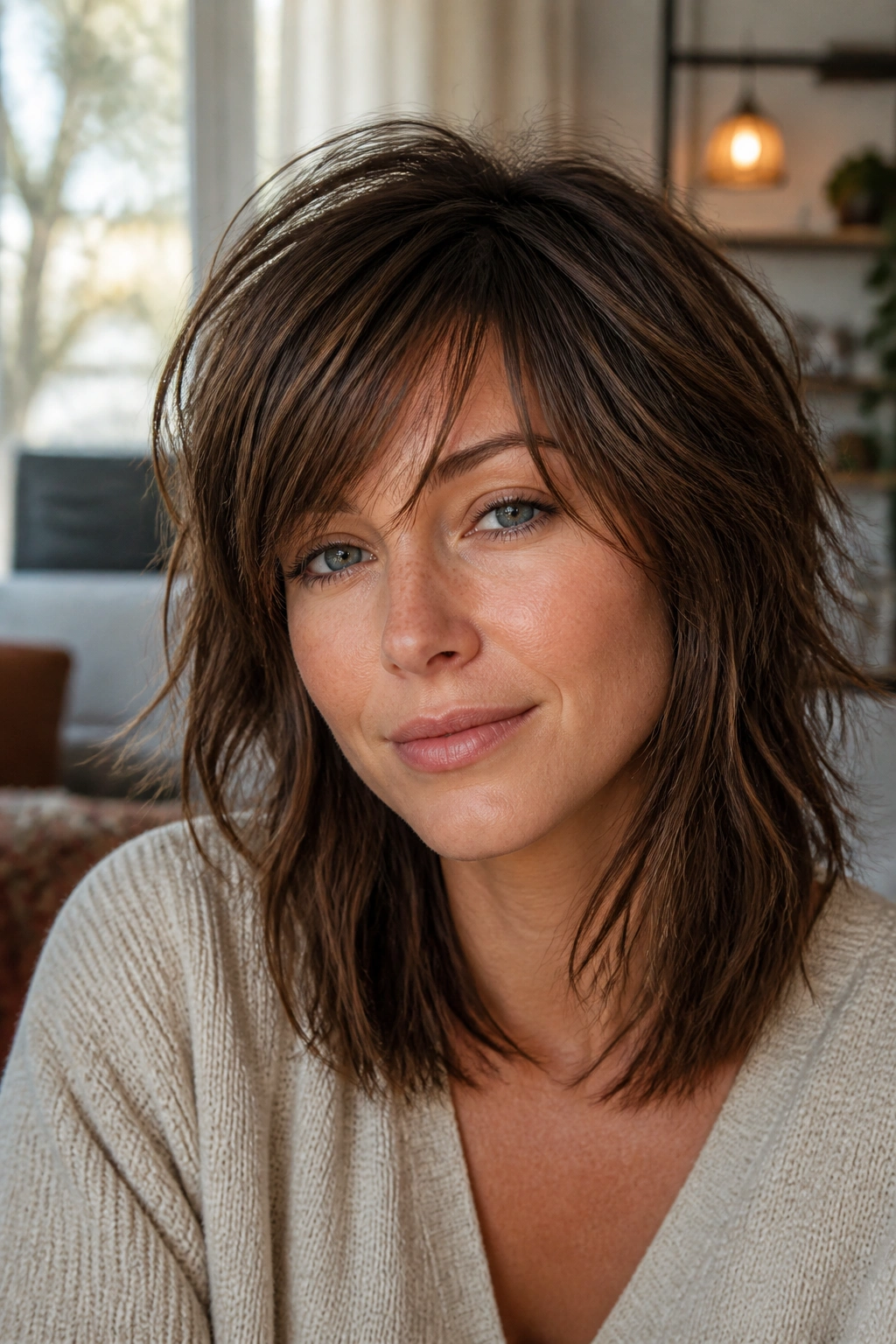
A shag and a round face can be a very good match when the fringe is broken up instead of heavy. The piece-y texture keeps the front from forming one solid shape, and that broken edge adds some edge without making the face look wider. It is a little messy in the right way.
What Makes It Work
The whole cut depends on separation. You want the bangs to fall in small, uneven pieces that still sweep in the same direction. That keeps the forehead visible and stops the style from turning into a thick block. A razor can help here, but only if the hair can handle it. On frizz-prone hair, scissors and point cutting may be safer.
A shag also gives you built-in movement around the jaw and collarbone. That matters because the side fringe should not do all the work by itself. It needs the rest of the cut to help it.
- Use a light mousse at the roots.
- Scrunch or twist the fringe while drying.
- Add a touch of texture spray at the ends, not the scalp.
- Keep the shortest piece long enough to brush sideways.
Best for: people who like lived-in texture and do not mind a little imperfection. This cut looks wrong when it is too neat.
8. Side Bangs With a Pixie or Cropped Bob
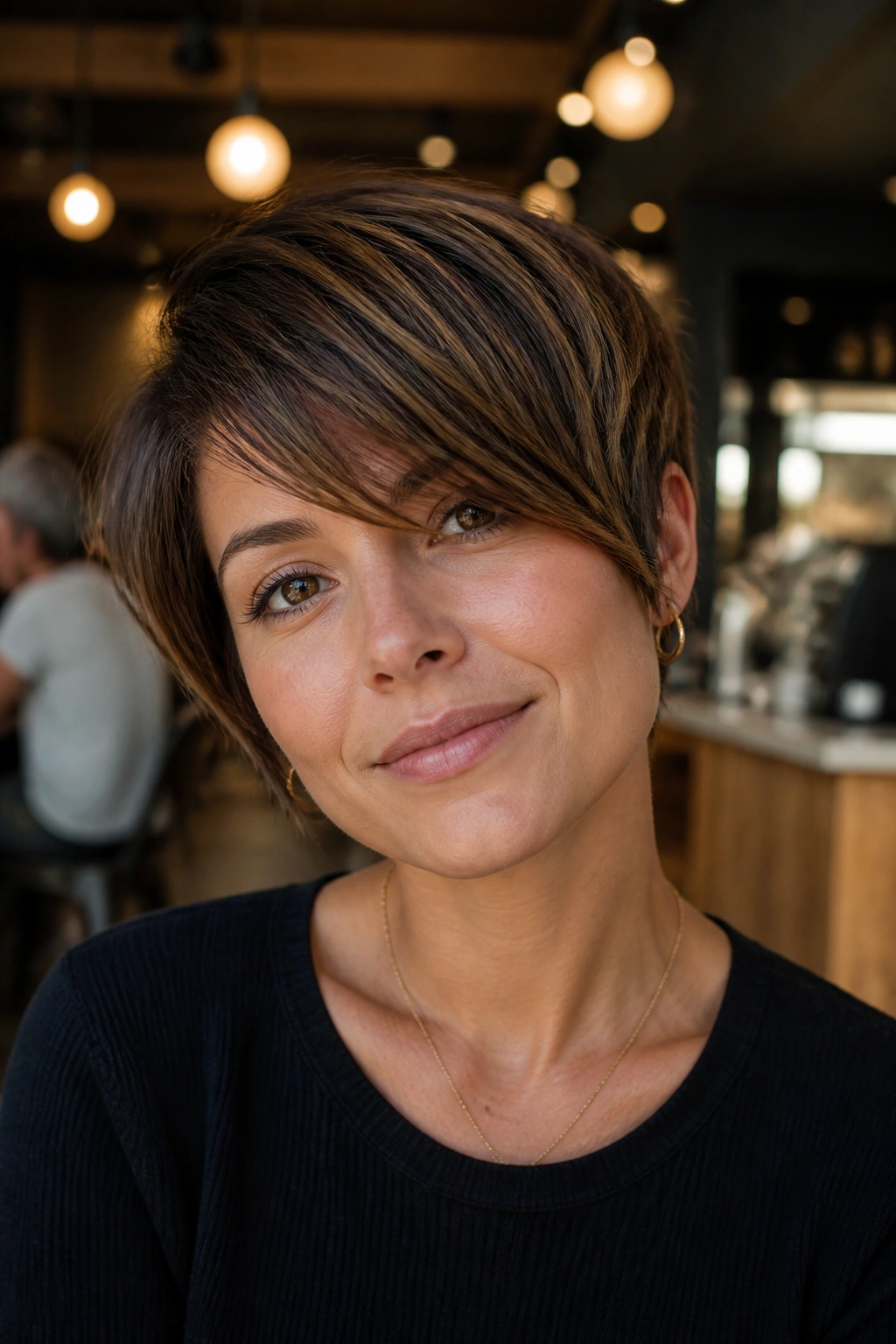
Short hair can handle side bangs on a round face, but the balance has to be right. If the top is flat, the face can look wider. If the crown has lift and the fringe sweeps across the forehead, the whole cut feels sharper and more intentional. It is a small haircut with a lot of opinion.
Think of the bangs as the soft part of the shape. They should bend across the face while the back and sides stay neat. A cropped bob with a longer side fringe gives you that contrast. The diagonal line helps the face look less circular, and the short length keeps the style from feeling heavy.
This is also a good option if you like earrings or glasses. Short hair with side bangs lets those details show. It is a practical bonus, not a style argument, but it counts.
For styling, keep a little paste or styling cream at the roots and use your fingers to direct the bang. Brush it once, then stop. Overworking short fringe makes it stiff fast.
9. High-Starting Side Bangs
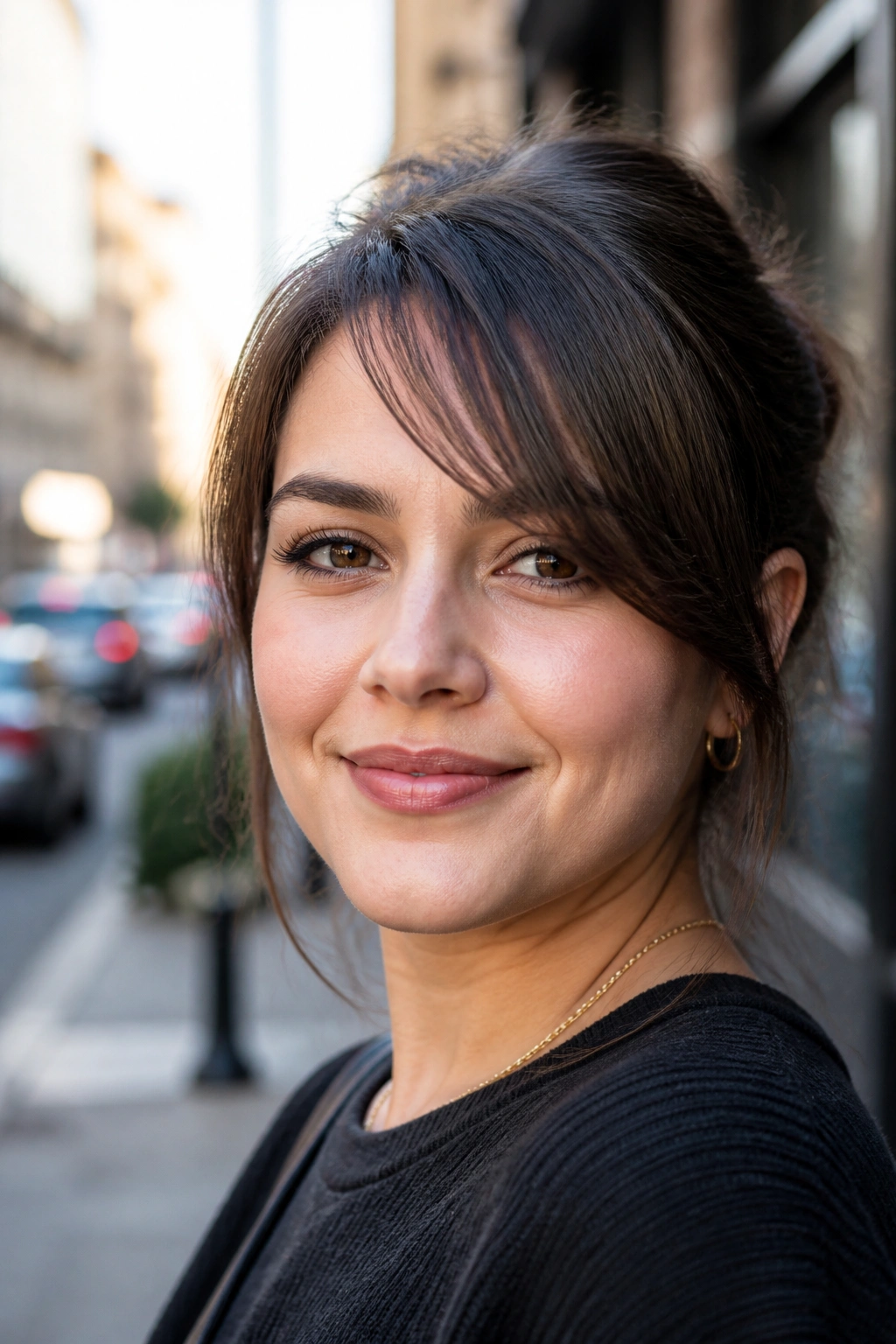
Why start the bang higher than the brow? Because it opens the center of the face and keeps the fringe from sitting like a shelf. A higher starting point also creates more lift around the temple, which helps a round face look longer. That extra space above the eyebrow makes the whole haircut feel lighter.
This style is cut from a point near the temple or even a little above it, then guided down and across. The shortest piece is not the whole story. The shape matters more. A high-starting fringe should still have enough length to sweep, but it should not bury the forehead.
What to Tell Your Stylist
Ask for a side bang that begins above the outer brow and blends into the first layers at the cheek. Say you want softness, not a thick drop. The stylist may thin the middle section slightly so the front does not feel bulky.
This cut works especially well if you have a round face plus fuller cheeks. It gives the face some vertical room up top. Tiny detail. Big visual effect.
10. Side Bangs With Curly Hair
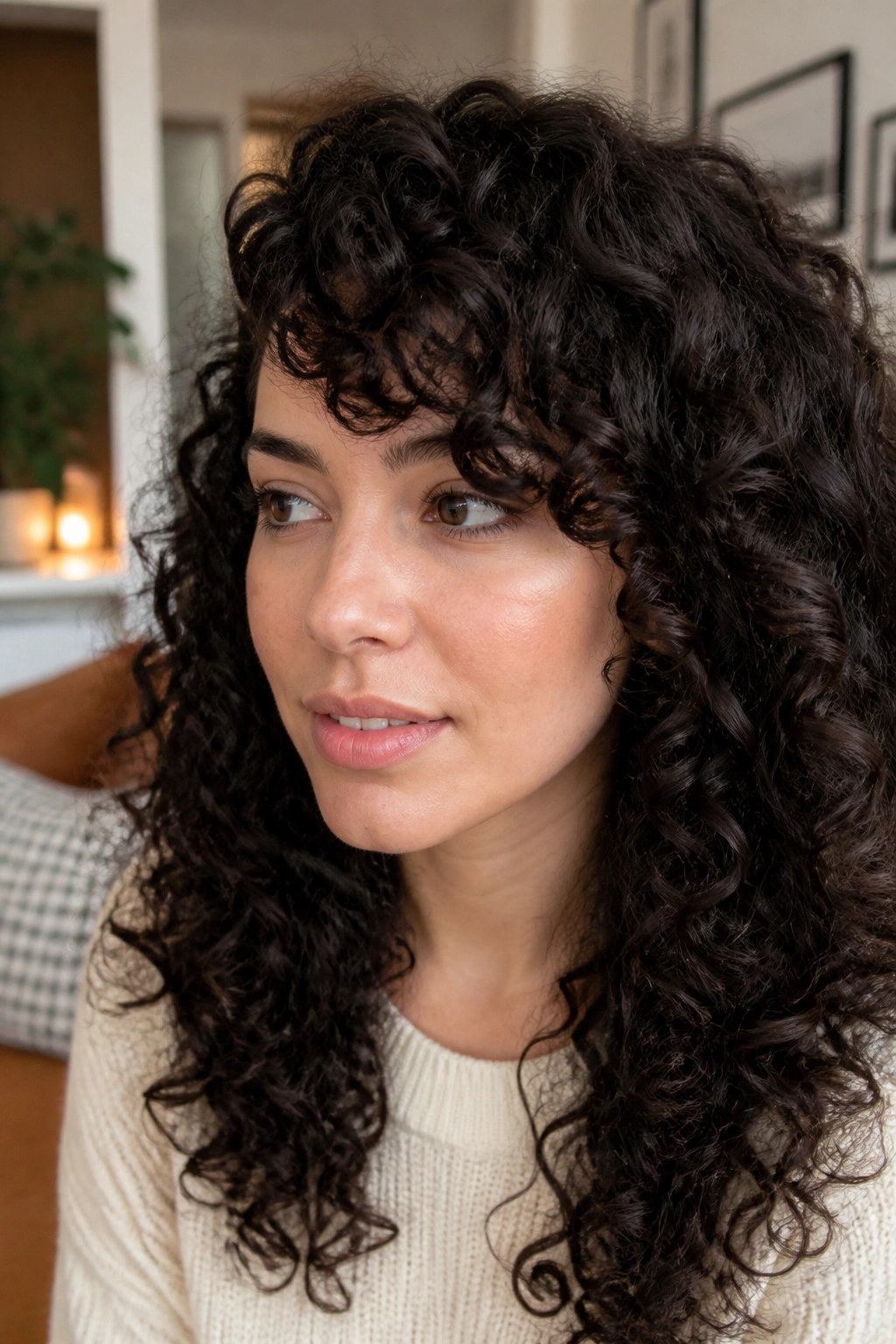
Curly side bangs need more length than straight hair does. That is the first rule, and it matters a lot. Curls spring up once they dry, so a fringe that looks long and relaxed when wet can land much shorter in real life. On a round face, that extra length keeps the curl from bunching at the forehead and making the face look wider.
The best curly side bangs usually start at least a little below the brow when stretched and then fall diagonally across one side. Dry cutting helps because the curl pattern shows its true shape. Wet curls lie. Dry curls tell the truth.
Use a diffuser on low heat, then separate the front curls with a drop of cream or gel. Do not brush them after they set. That is where the frizz starts. If the fringe needs a refresh, wet just the front section and re-scrunch it.
Curly side bangs are not low-effort, but they do look good when cut with respect for the curl pattern. That is the whole game.
11. Side Bangs With Wavy Hair
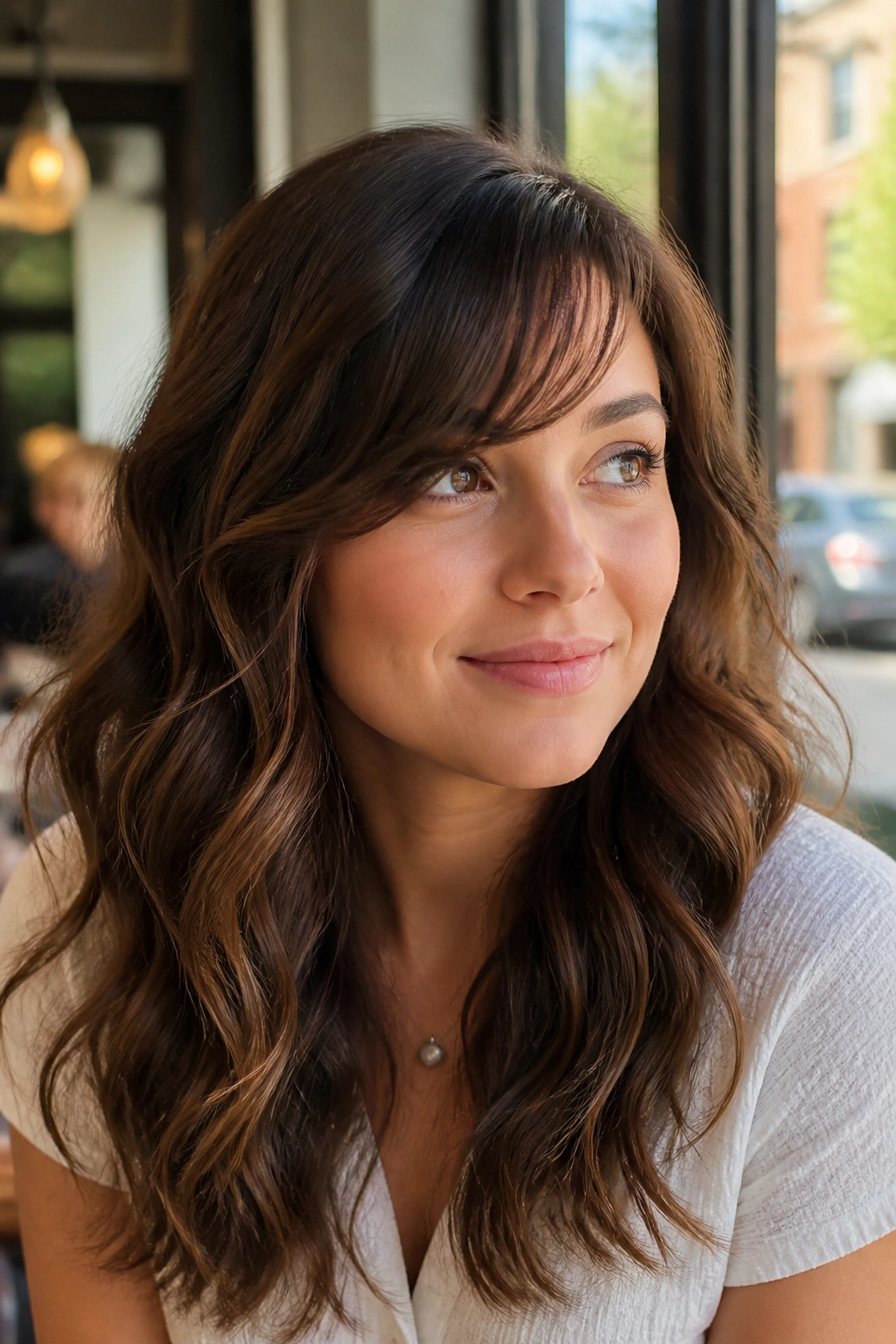
Wavy hair has a nice swing to it. It falls somewhere between neat and loose, which makes it a good fit for side bangs on a round face. The wave gives the fringe a bend without needing a lot of heat, and that natural bend helps create the diagonal line that flatters the face.
The trick is not to fight the wave. If you flatten it too much, the bang can look stringy and awkward. If you let it dry with a little direction, it will usually sit exactly where it should. A side part, a small clip at the roots, and a few minutes of patience can do more than a full round-brush blowout.
How to Get the Shape Right
Twist the front section slightly while it dries, then release it once it has a bend. If it needs more control, run a flat iron over just the last inch or two. Keep the heat low. Wavy hair does not need much.
A round face looks good with this kind of movement because the bang feels casual, not stiff. That casualness keeps the face from looking boxed in. Easy. Clean. Not overdone.
12. Straight Hair With a Soft Sweep
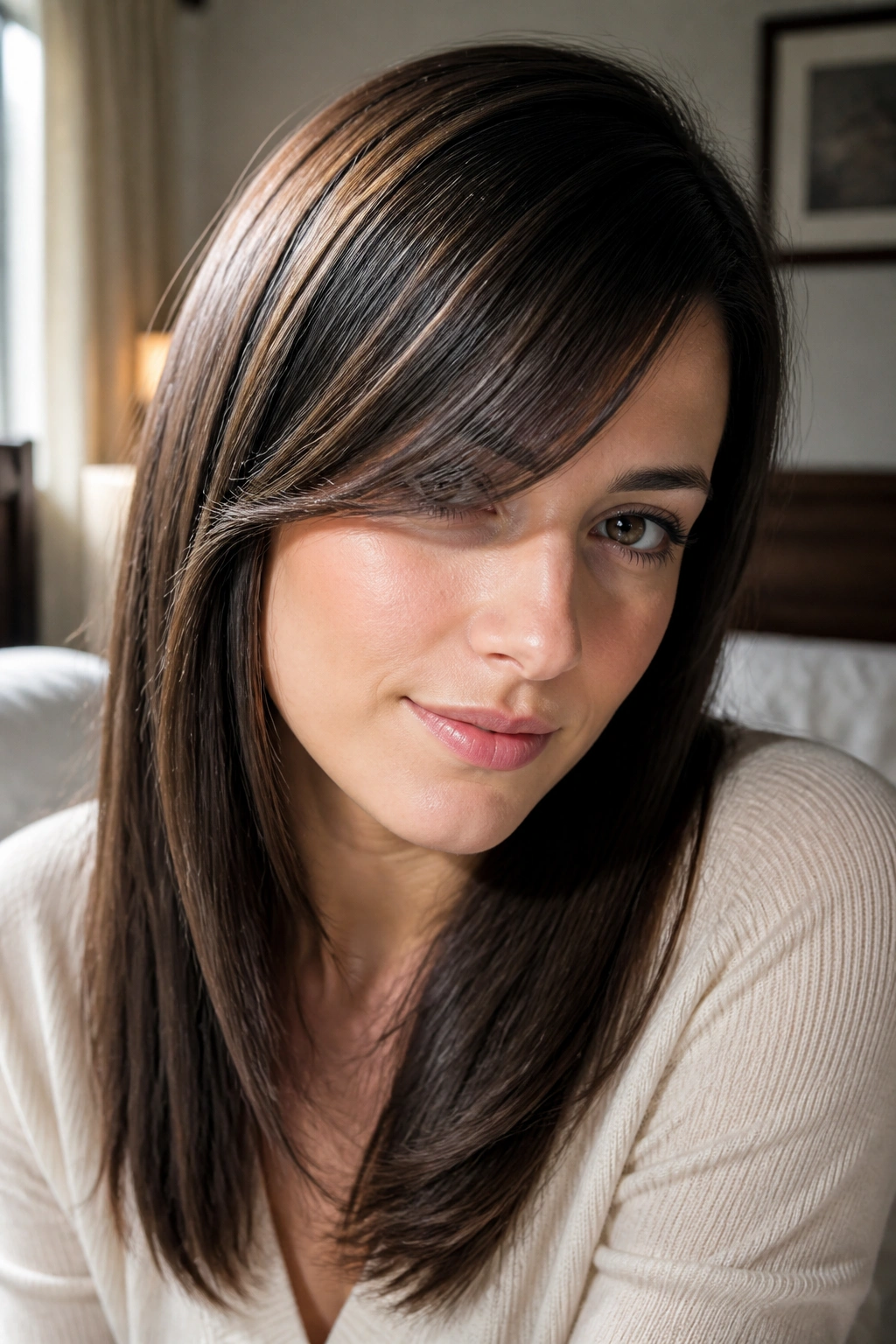
Straight hair can be a little unforgiving with bangs. Every line shows. Every mistake shows. That is why a soft sweep matters so much on a round face. It keeps the front from becoming a blunt curtain and gives the haircut a bit of bend, which is exactly what straight hair sometimes lacks.
The styling move is simple, but it needs patience. Blow the fringe in the opposite direction first, then sweep it across with a round brush or a flat brush. That little back-and-forth adds root lift. If you skip it, the bang can fall flat against the forehead and widen the face instead of softening it.
A velcro roller at the front can help if your hair is very straight. Leave it in while you do the rest of your makeup or get dressed. The fringe picks up a gentle curve without looking old-fashioned. Old-school tools still work.
Straight hair side bangs look best when the ends are slightly beveled rather than blunt. A tiny bend changes everything.
13. Face-Framing Side Bangs That Start at the Cheekbone
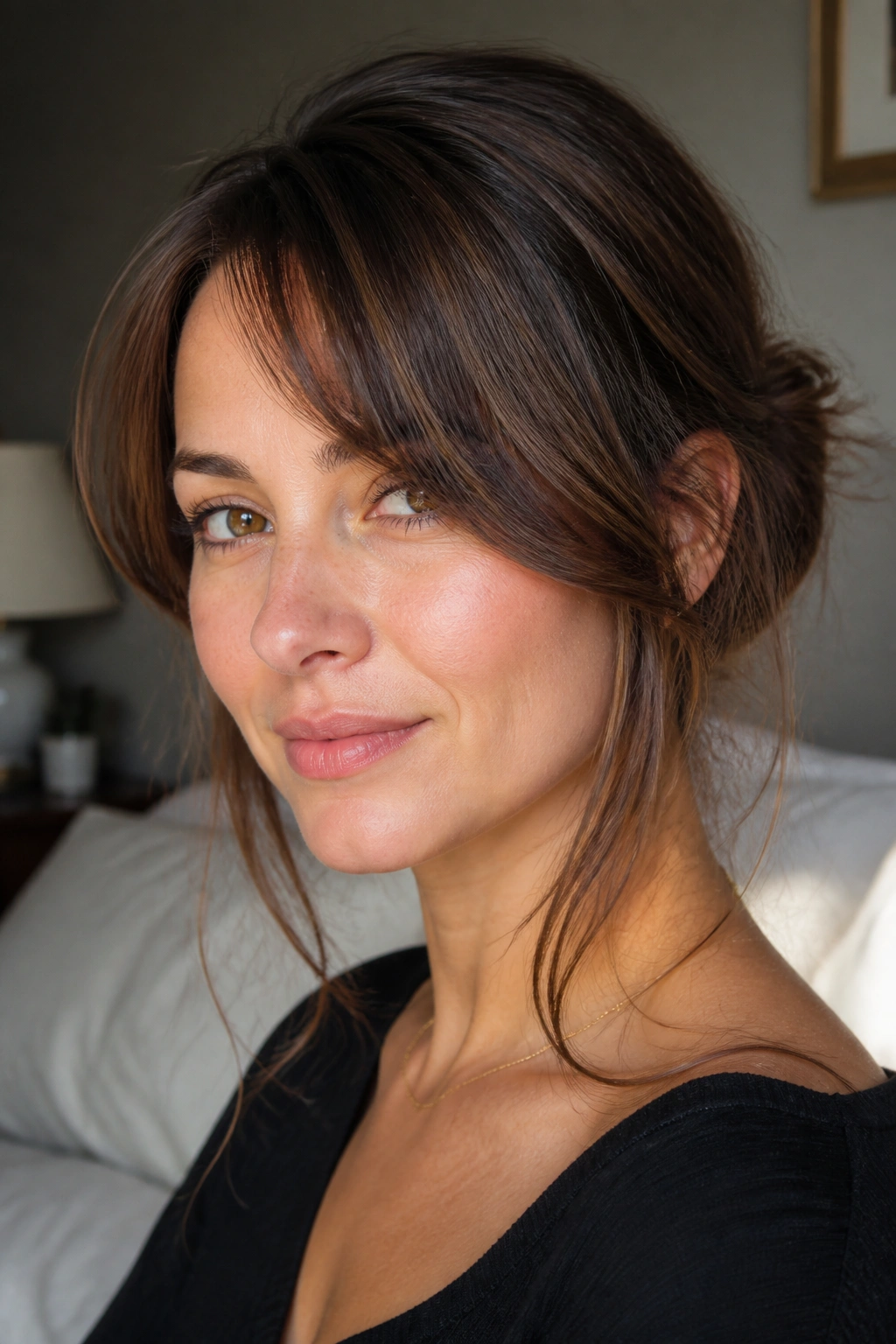
This is one of the smartest options for a round face because the shortest piece lands close to the cheekbone instead of crowding the forehead. That placement gives the face more shape where it needs it most. The bang almost behaves like a face frame first and a fringe second.
Where the Shortest Piece Should Land
The shortest piece usually starts near the outer brow or just below it, then angles down past the cheek. It should not sit right on the widest part of the face. That is the trap. Keep the line moving downward and outward.
Why Cheekbone Starts Work
A cheekbone start helps create a visible contour. The bang draws attention to the top of the face while leaving room around the cheeks. On a round face, that spacing matters more than people realize. It gives the illusion of a longer mid-face.
Styling Note
Use a round brush to curve the front away from the cheek, not into it. A little root lift spray at the base helps the section stay airy. The shape should feel open, not glued.
- Best on layered cuts
- Good for medium to long hair
- Easy to grow out if you change your mind
- Needs a clean side part or it loses the angle
14. Deep Side Part and Bang Combo
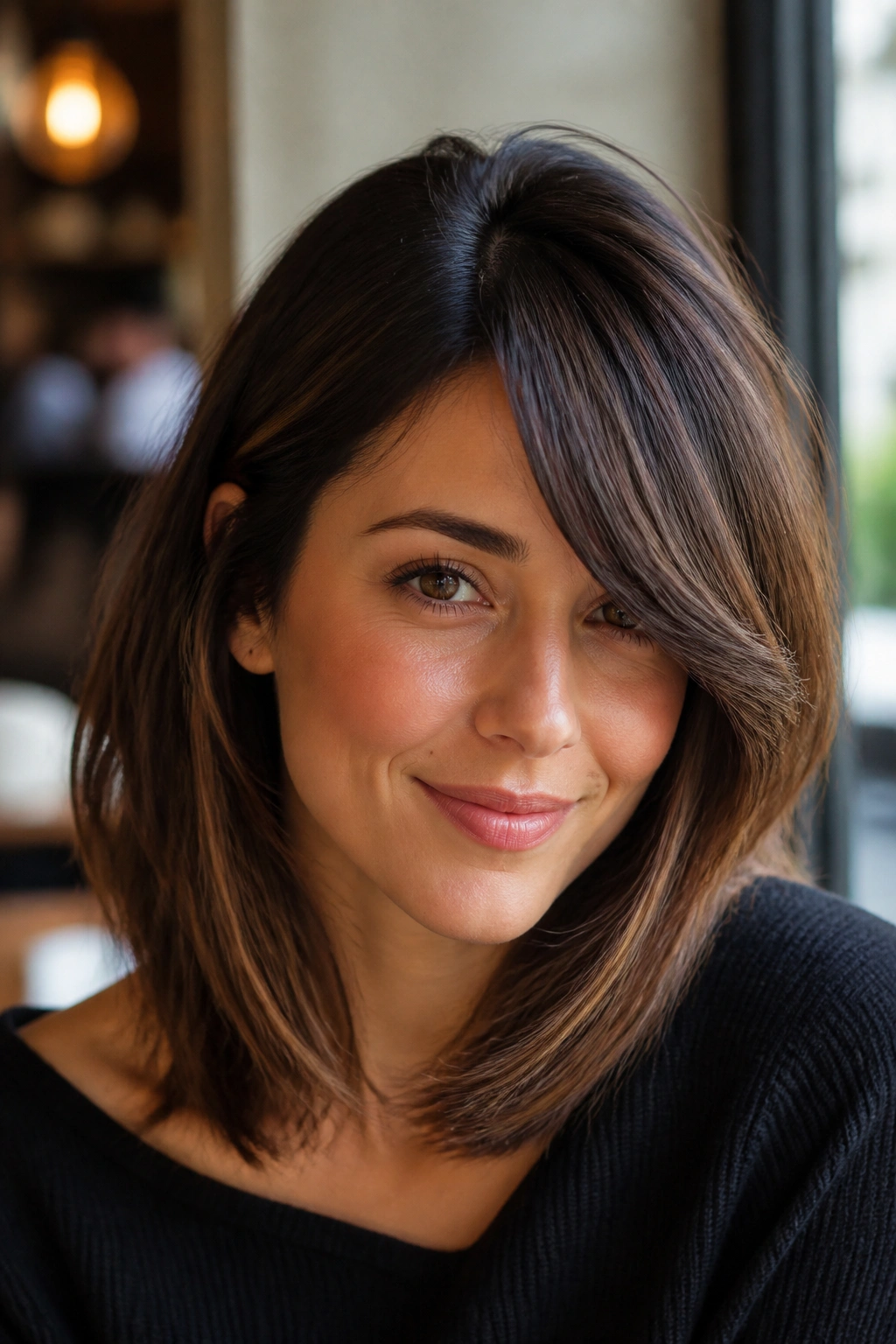
Deep side parts are not just for drama. They shift volume, and that can change the whole shape of a round face. The part creates asymmetry right away, which is useful because symmetry tends to emphasize roundness. Hair that falls a little unevenly often looks more flattering here.
The bang should follow the part instead of fighting it. If the hair wants to travel left, let it travel left. If it prefers right, use that. The best version is the one that works with the growth pattern, not the one that makes you wrestle the crown every morning.
A deep side part also helps if your face is widest at the cheeks and narrower at the forehead. The extra hair at one side gives the face some off-center movement. It feels modern without needing a sharp cut.
This style is not always easy if you have a strong cowlick. Then again, that is not a reason to give up. It just means the part needs to live where your scalp is willing to cooperate.
15. Bottleneck Side Bangs
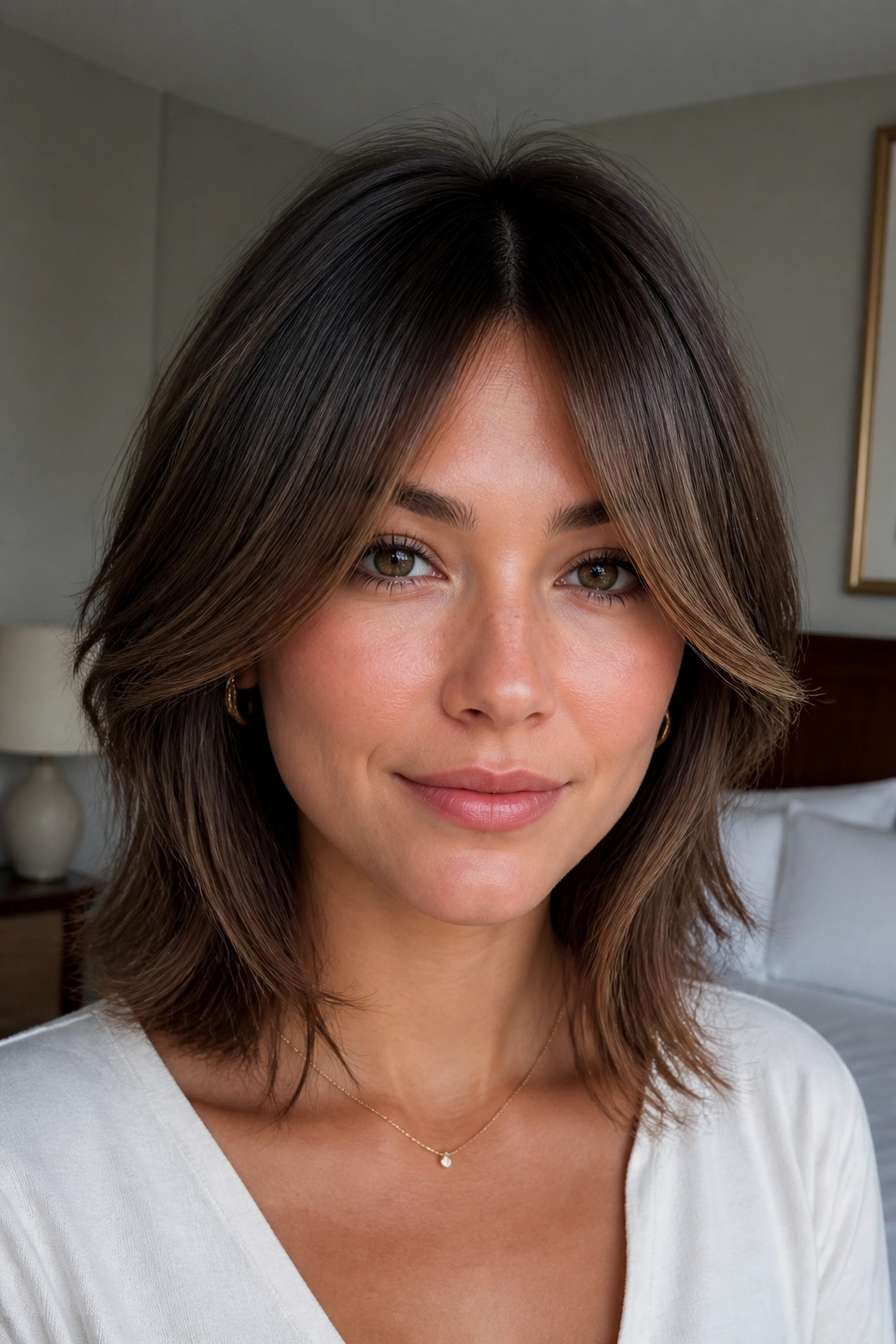
Bottleneck bangs sound fussy, but the shape is easy to understand. The center stays narrower, then the sides widen softly as they move out toward the temples and cheekbones. On a round face, that shape can be useful because it opens the forehead in the middle and gives the face some length on the sides.
The version here should be worn as a side sweep, not as a heavy curtain. That keeps the middle from feeling too closed. If the bangs are cut too short across the center, they can make the face look boxy. Longer bottleneck pieces soften that problem fast.
How to Ask for It
Tell your stylist you want a soft center with longer side pieces that blend into the front layers. Ask for the shortest point to stay below the brows or right at them, then let the outer pieces drop toward the cheek. That balance matters.
- Good if you want fringe without a full bang commitment
- Works with shoulder-length cuts and longer hair
- Easier to part and restyle than a blunt fringe
- Needs a bit of heat styling to keep the bend
This one is especially good when you want shape, not a big haircut identity crisis.
16. Side Bangs That Tuck Behind the Ear
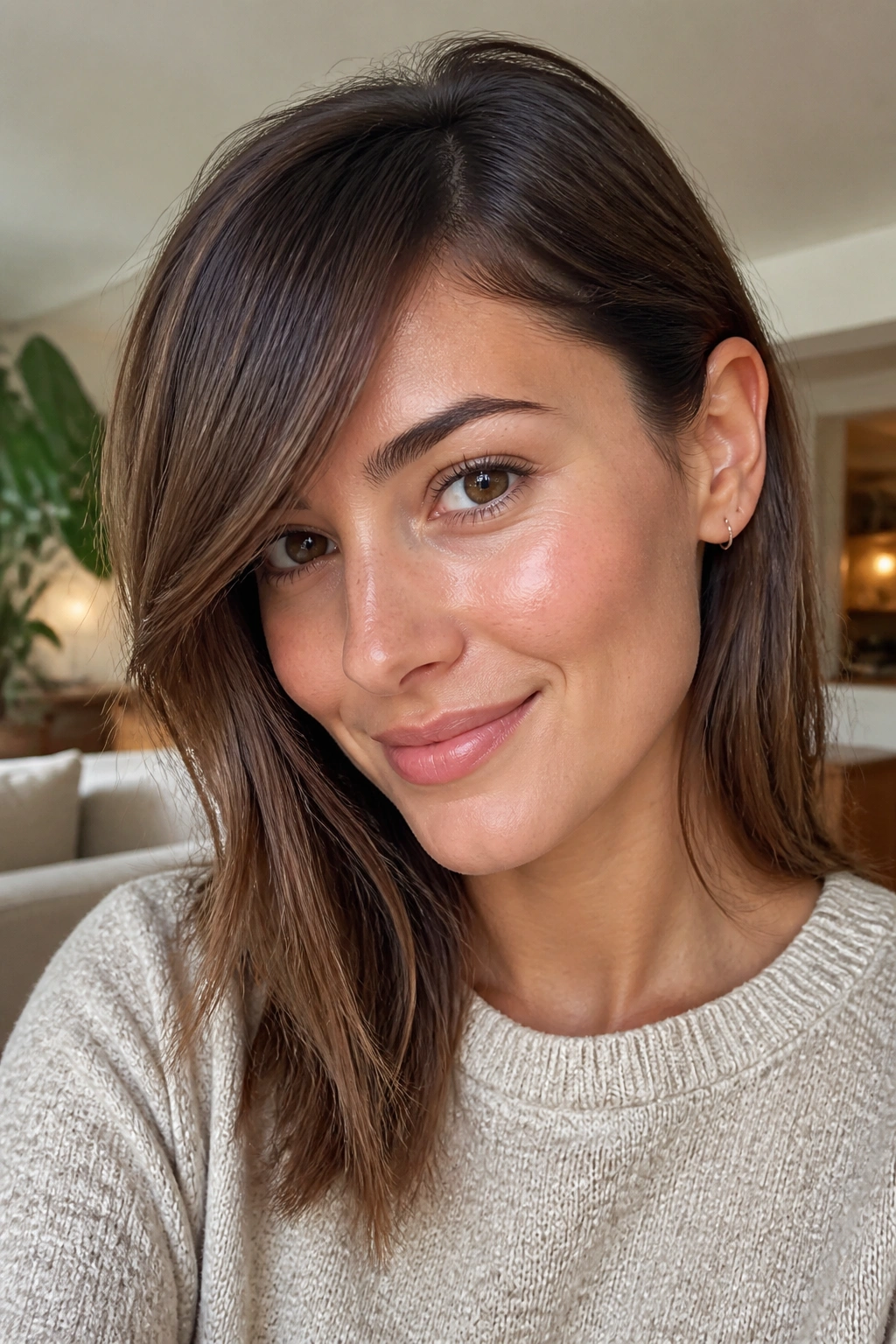
A side bang that can tuck behind the ear gives you freedom. Some days you want the fringe out front. Other days you want your face fully open. That flexibility is part of the appeal, and on a round face it helps because you can show more cheekbone whenever you want to sharpen the look.
The bang needs enough length to reach past the corner of the eye and toward the cheek. If it stops too early, it will pop back out of the ear and behave badly. Longer is safer here. You can always trim later.
- Tuck one side behind the ear for a cleaner line.
- Leave the other side loose to keep the diagonal shape.
- Use a tiny bobby pin under the hair if the tuck slips.
- Smooth the front with a drop of serum before tucking.
The ear tuck works well with earrings, too. It sounds small, but that open space around the face matters. A round face usually looks stronger when the hair gives it room to breathe.
17. Side Bangs for Thick Hair
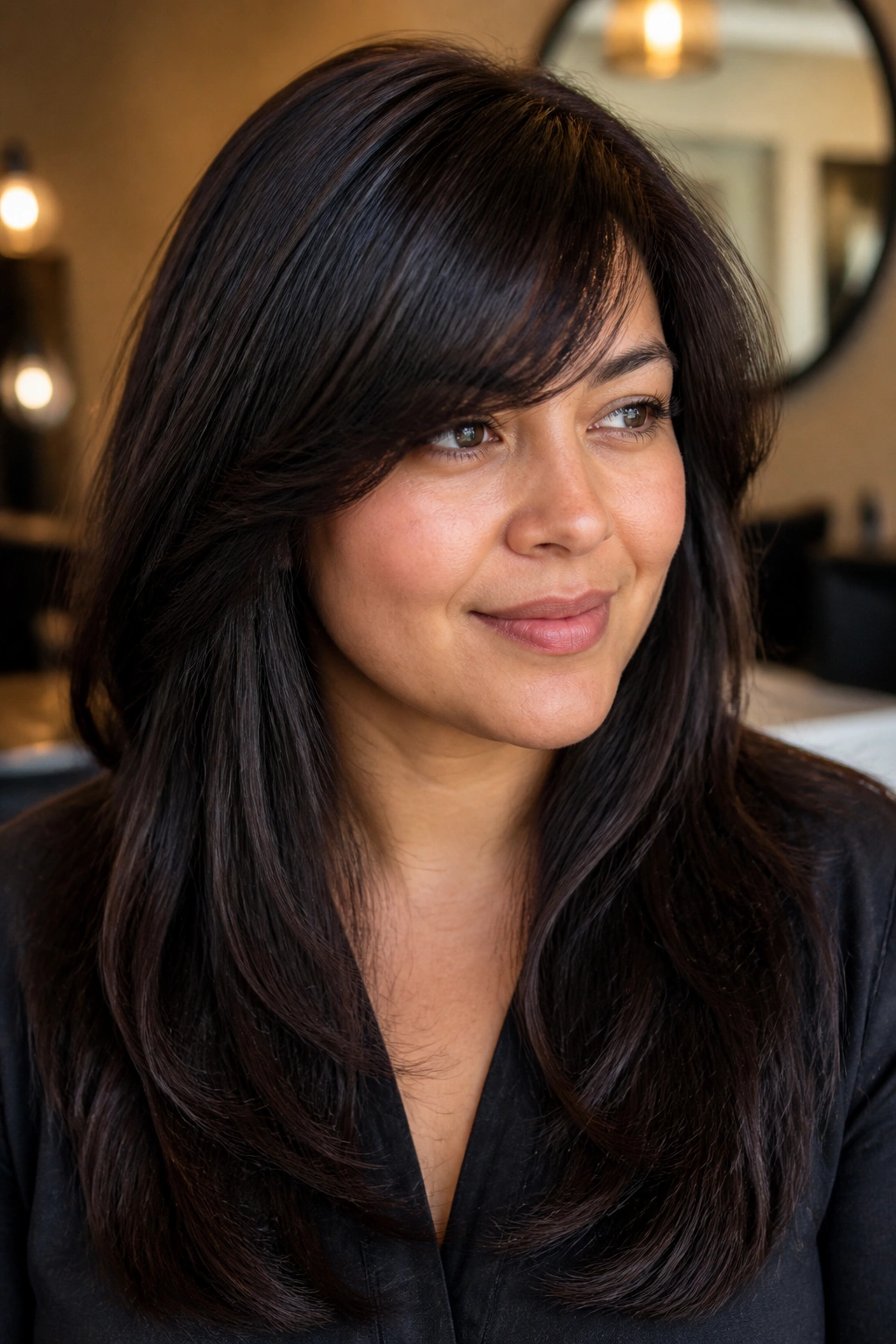
Thick hair needs a different kind of side bang. Not more bang. Better shaping. If the fringe is left too full, it can sit heavy and push the face wider. But when the weight is removed inside the section and the edge is kept soft, thick hair becomes one of the best textures for side bangs.
The key is not to thin the hair too much near the ends. That can leave the fringe frizzy and uneven. Instead, ask for internal weight removal and a smooth outer line. Point cutting is useful here. So is a careful blow-dry that directs the hair sideways while it is still warm.
Thick hair also holds shape well, which means the sweep lasts longer once it is set. That is the upside. You may spend a few extra minutes drying it, but the result usually stays put.
I like thick hair for side bangs when the cut has room to move. Dense hair can look luxurious here, not bulky. Those are not the same thing.
18. Side Bangs for Fine Hair
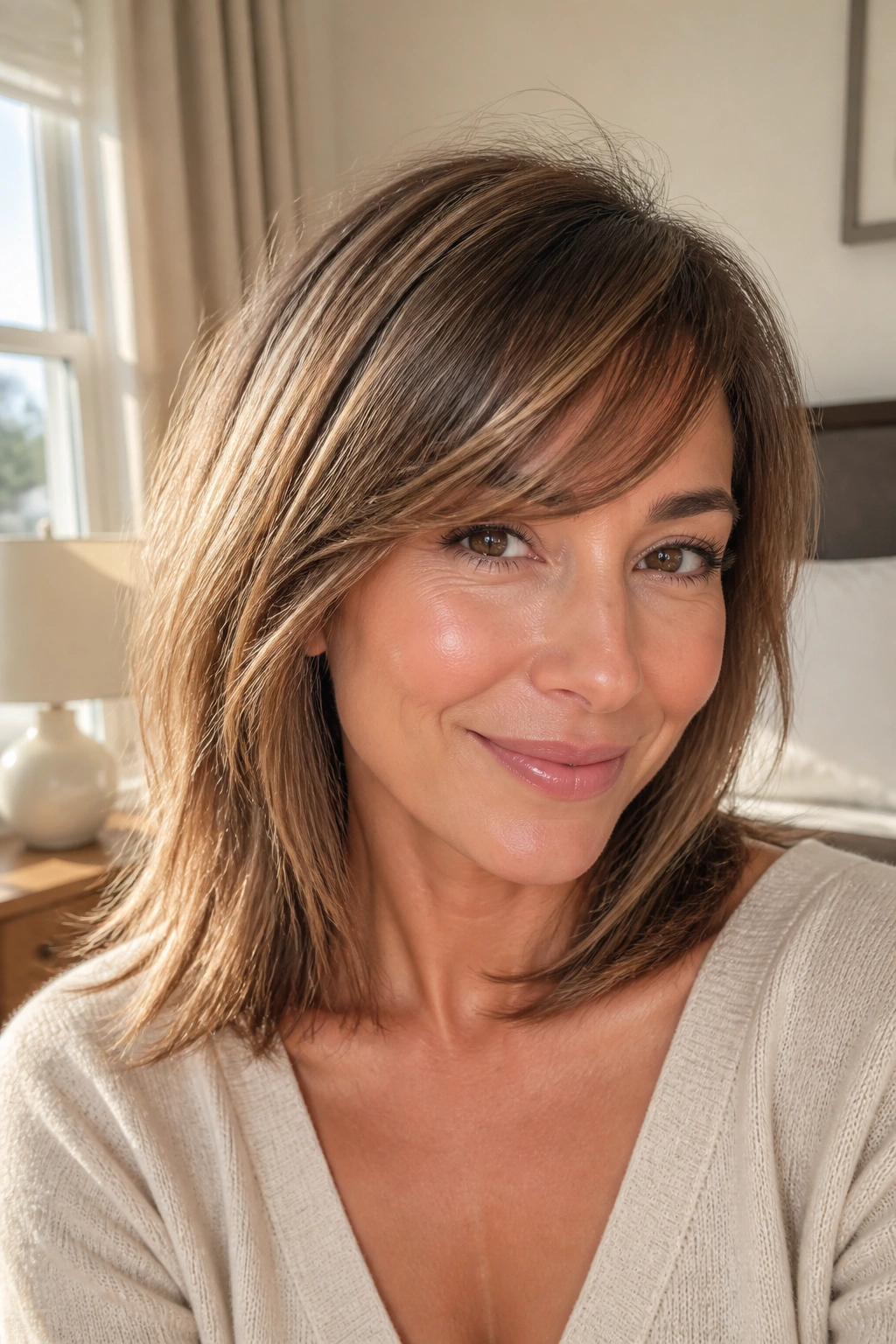
Fine hair can wear side bangs beautifully if the section stays light and the roots get enough lift. The biggest mistake is taking too much hair for the fringe. That makes the front collapse and exposes the scalp in weird spots. A smaller bang section usually looks better and behaves better.
The hair should be cut with a soft angle and kept a little longer than you think. Fine hair loses visual weight fast, so overcutting is a mistake. A side bang that lands near the cheekbone can still look airy while giving the face the diagonal line it needs.
Styling That Helps
Use a root-lift spray at the front, then dry the bang in the opposite direction first. That gives the section a little memory. A light mist of dry shampoo at the roots can also add grip. Not too much. Fine hair gets chalky fast.
A round face with fine hair benefits from bangs that move, not bangs that sit flat and thin. That is the whole point. Softness is good. Limp is not.
19. Side Bangs With Glasses
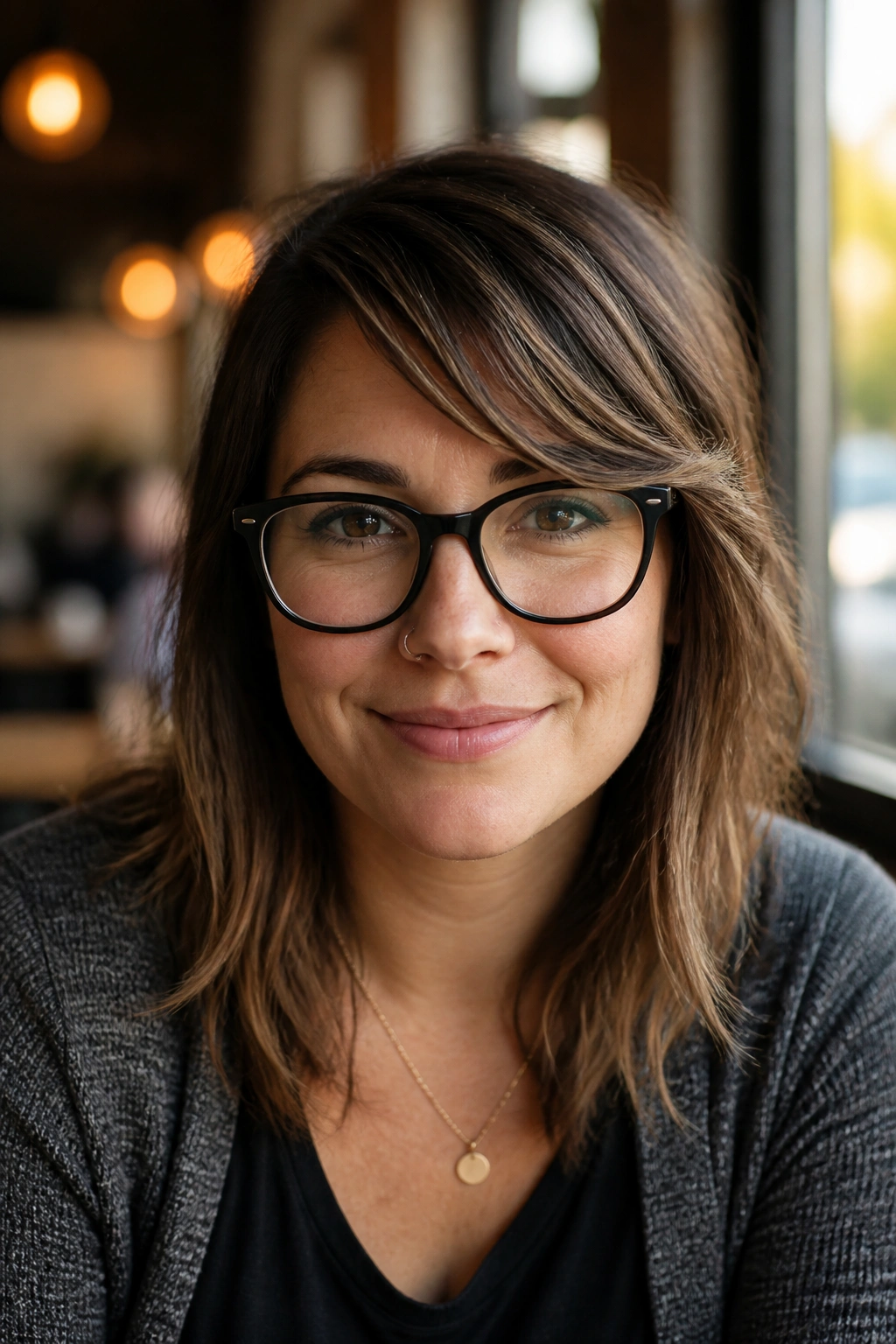
Glasses change the conversation. They add their own strong line across the face, which means the bangs should work with the frame instead of competing with it. On a round face, that matters even more because you do not want too many horizontal lines stacked in one place.
The best side bangs with glasses usually clear the top of the frame or angle away from the lens corner. They should not sit right where the temple arm meets the face. That spot gets cluttered fast. A soft sweep that starts above the brow and ends past the cheekbone tends to look cleaner.
What to Tell Your Stylist
Ask for a fringe that stays slightly longer than frame height. Mention the shape of your glasses. Thick frames need more space. Thin frames can handle a bit more fringe, but not much.
A good glasses-friendly side bang makes the eyes the focus instead of the frame. That is the useful part. The hair should support the glasses, not fight them.
20. Side Bangs With an Asymmetrical Bob
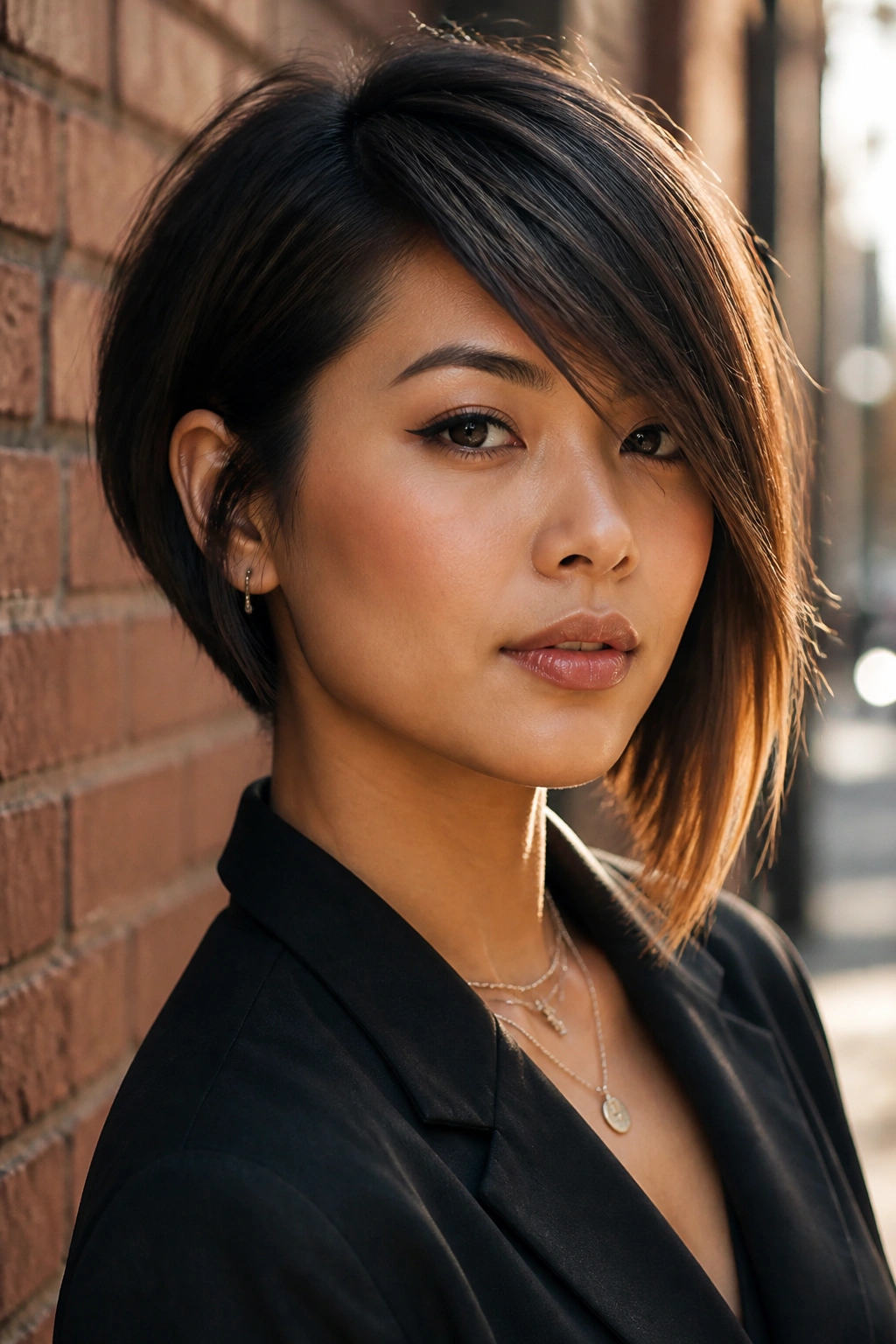
An asymmetrical bob already has attitude. Add a side bang and the whole cut gets a softer front edge, which can be useful on a round face. The uneven length of the bob creates a diagonal line through the jaw, and the bang echoes that line up top. That visual echo is what makes the haircut work.
The longer side of the bob can carry the sweep. The shorter side stays neat and clean. Together, they keep the face from looking broad. You get shape without needing a lot of layers.
- Let the bang follow the longer side of the bob.
- Keep the shortest point soft, not choppy.
- Use a flat iron only on the ends if the front flips.
- Add shine spray to the longer side for a crisp finish.
This is a strong choice if you like structure. It is not a soft little haircut. It has edges, but the side bang keeps it from feeling harsh.
21. Side Bangs With Long U-Shaped Hair
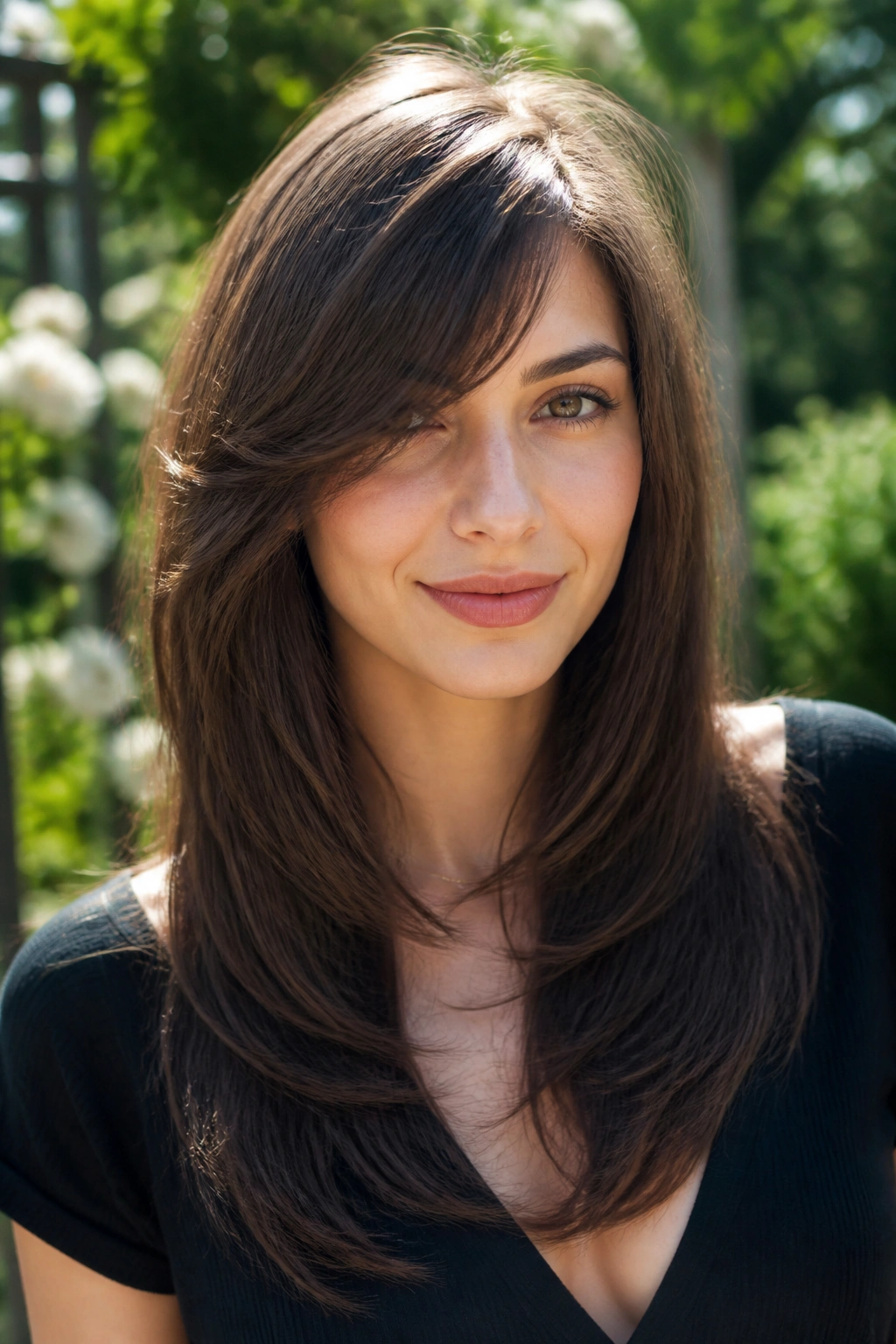
Long U-shaped hair and side bangs make a good pair because the cut keeps length in the back while the front gets movement. On a round face, that front movement matters more than the back length. The bang draws the eye up and over, while the U-shape keeps the rest of the hair from feeling boxy.
The layers should start below the chin or around the collarbone so they do not interrupt the widest part of the face. That is the part people often miss. If layers hit too high, they can crowd the cheeks. Keep them lower and softer. Let the fringe do the shaping near the forehead.
This style is easy to live with if you wear ponytails or loose waves. The side bang still gives the face some structure when the rest of the hair is pulled back. That is a nice payoff for people who want versatility without a huge haircut shift.
It is not flashy. That is the point.
22. Soft Swept Bangs That Fade Into Layers
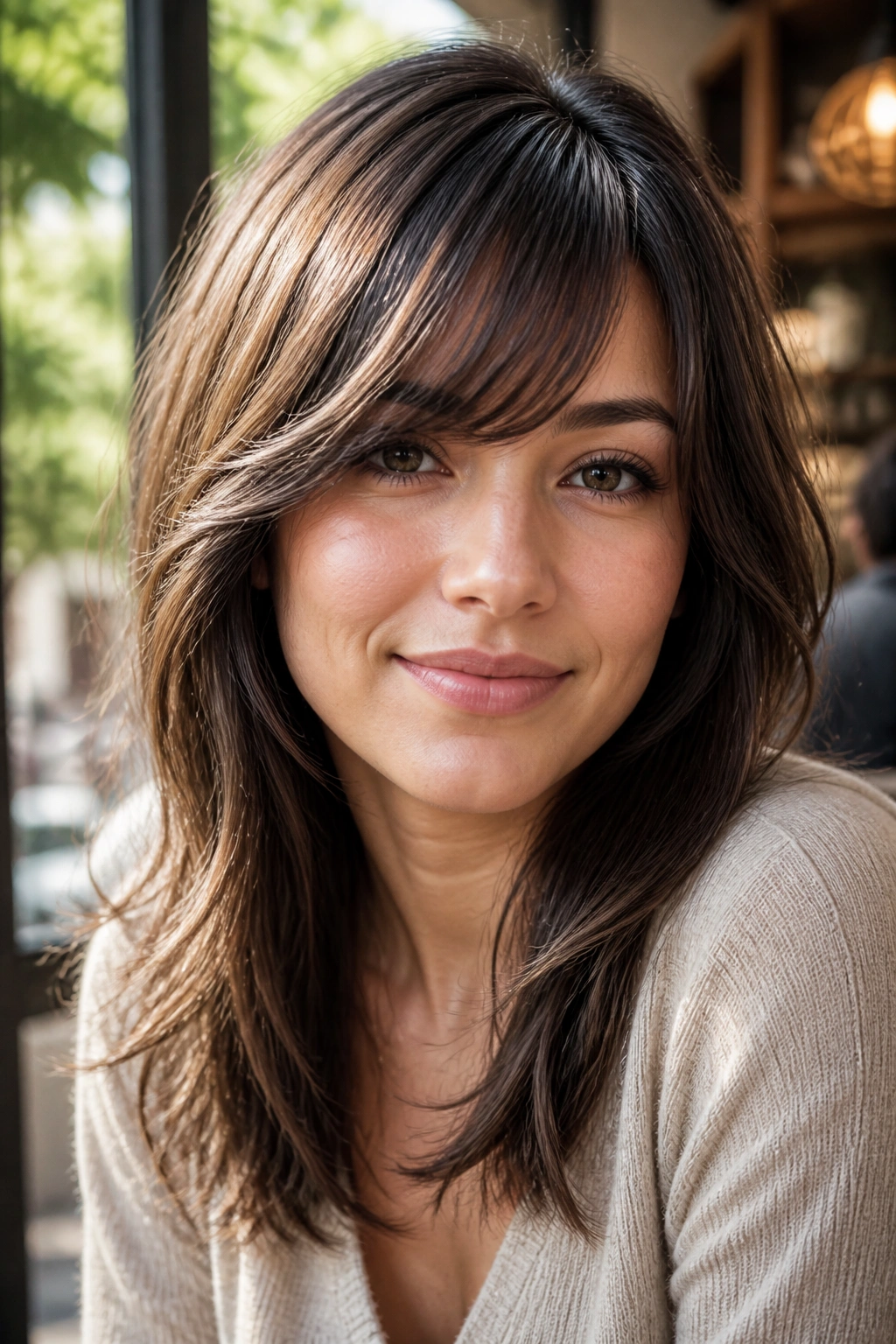
If you want the safest option, this is it. Soft swept bangs that fade into layers give a round face shape without making a loud statement about themselves. The bang starts at the front, sweeps across, and then disappears into the side layers so the haircut never feels chopped. That fade is the magic.
The smartest version begins long enough to move and short enough to stay visible. Too short, and the bang looks blunt. Too long, and it stops reading as a bang at all. Ask for a piecey sweep that blends into the front layers around the cheekbone. That gives the face room and keeps the haircut easy to grow out.
A good stylist will often cut this with dry hair, then trim tiny bits after the first blow-dry. That is the honest way to do it. Hair lies when it is wet. It settles when it is dry.
If you are unsure where to start, start here. Bring two photos, not ten. Ask for softness, length, and movement around the cheekbone. Then leave a little extra room on the first cut. A side bang that looks like it belongs there is always better than one that feels dropped onto the face at the last minute.
