



A round face can take bangs beautifully when the cut has shape, weight, and a little strategy. That’s the part people miss. They see thick bangs and think “more hair, more width,” which is only half the story; the right fringe can also draw the eye downward, sharpen the cheek line, and make the whole face feel longer.
The trick with thick bangs for round faces is not thinning them out until they disappear. It’s about controlling where the density sits. A strong center, a soft curve at the temples, or a diagonal sweep can change the whole mood of the haircut without stealing that rich, full fringe look people want in the first place.
Round faces usually have softness through the cheeks and less visible length from forehead to chin. Bangs that sit too straight and too wide can exaggerate that width. Bangs that break up the line, open at the sides, or blend into longer front pieces usually work better. Small change. Big difference.
And because thick bangs have real presence, the cut has to be done with intention. Heavy fringe that looks blunt on the salon chair can move very differently once it dries, especially on hair with wave or bend. The styles below handle that balance in different ways, from crisp and structured to soft and lived-in.
1. Brow-Grazing Blunt Bangs for Round Faces
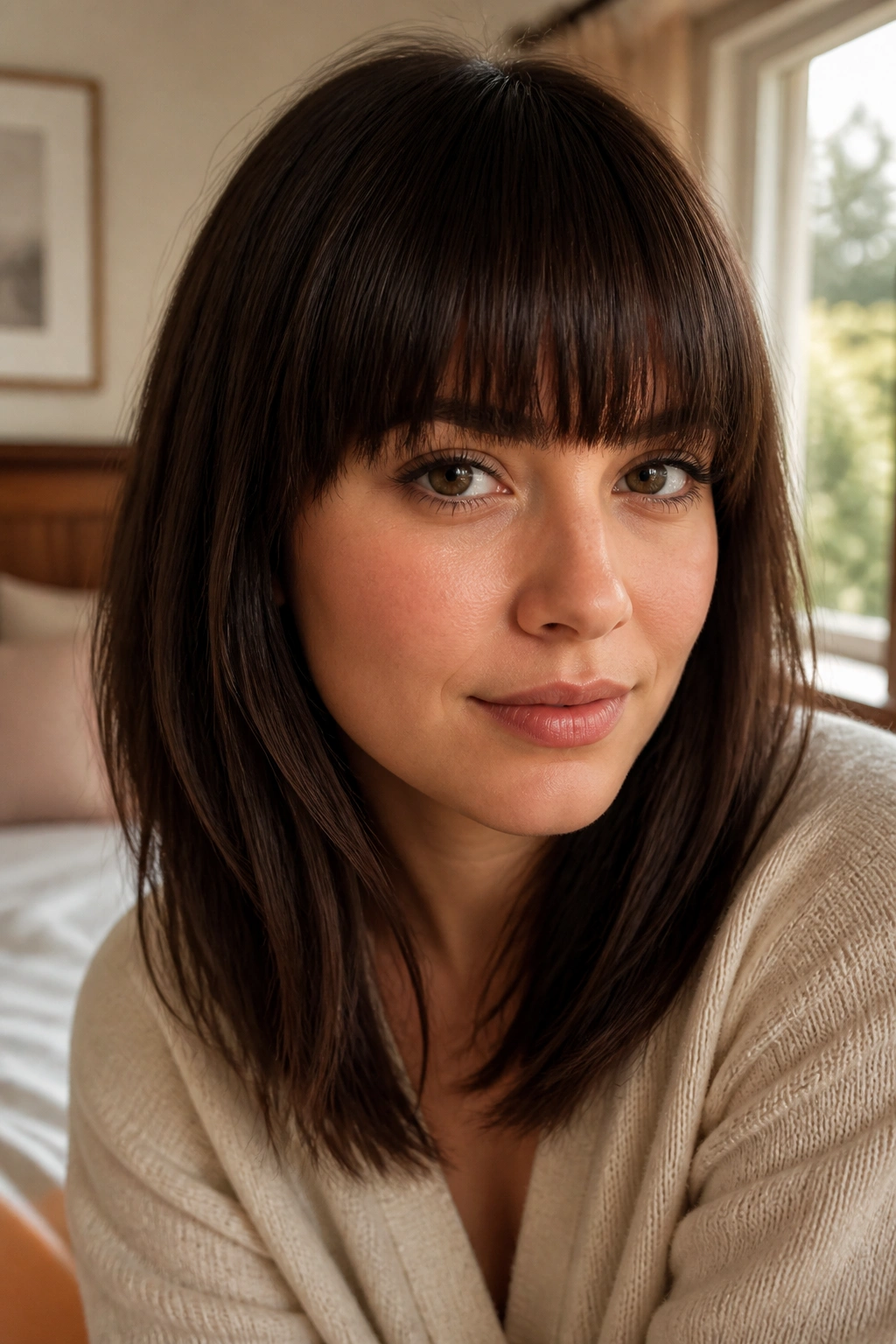
A blunt fringe can work on a round face when it lands right at the brows and keeps the edges a little softer than the middle. That extra weight across the forehead gives the face a stronger top line, which helps it read longer instead of wider.
What Makes It Work
The biggest mistake with blunt bangs is letting them spread too far toward the temples. That creates a wide frame right where a round face already has fullness. Keep the width controlled, and let the corners sit just inside the outer brow rather than drifting toward the cheekbones.
A good version of this cut feels clean, not severe. The center should look dense and intentional, while the ends are lightly point-cut so they don’t land like a hard shelf. That tiny bit of softness matters more than people think.
- Best with shoulder-length hair or longer.
- Ask for the center to skim the brows.
- Keep the corners a touch shorter than the center.
- Style with a flat brush or a small round brush and a quick bend under.
Pro tip: If your hair grows forward fast, ask for the bangs to be cut a little longer than you think you need. They’ll sit better after the first wash and won’t pop up too high.
2. Soft-Curved Blunt Fringe
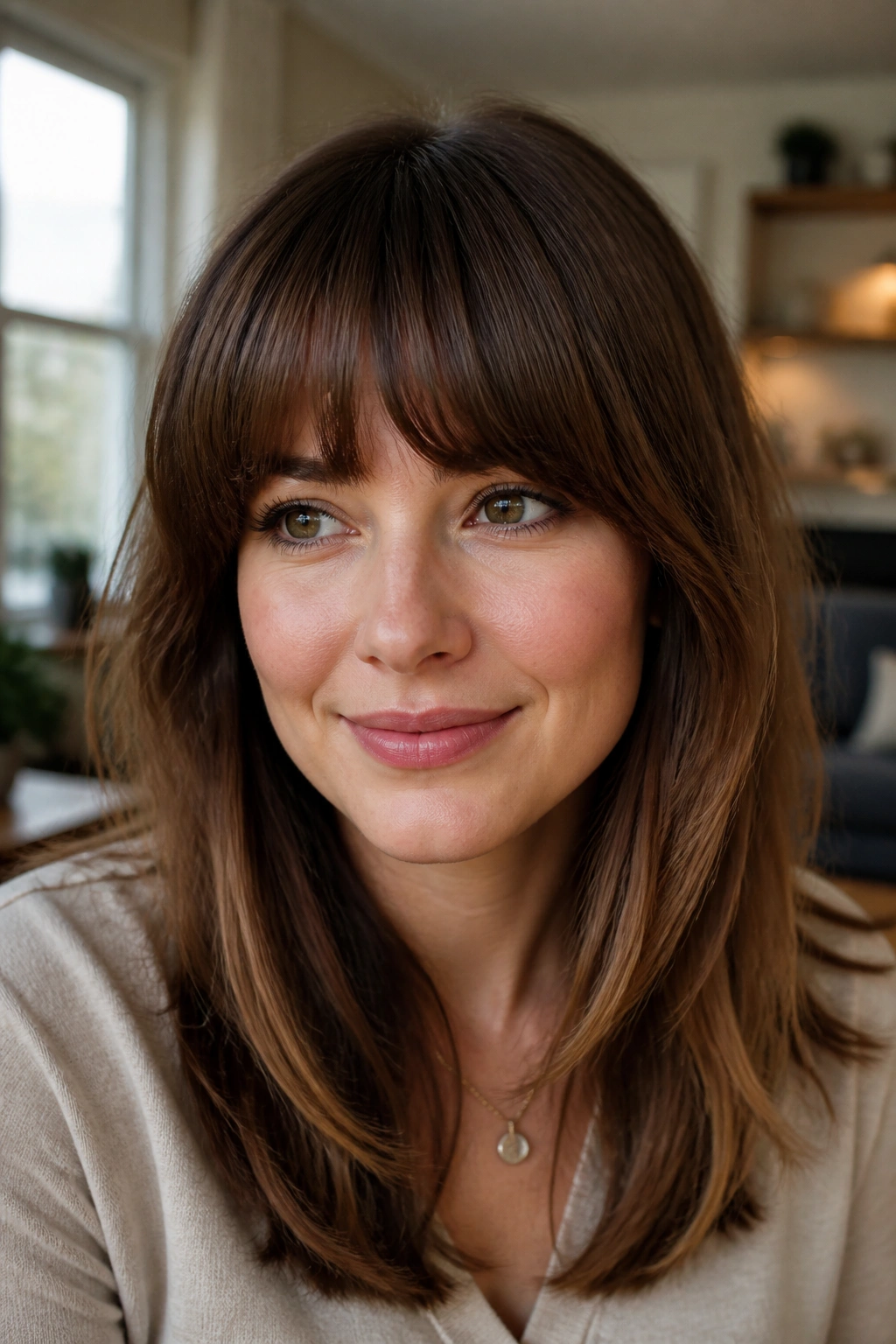
This is the blunt bang for someone who wants shape without a hard line. The curve matters. Instead of sitting flat across the forehead, the fringe bows slightly so the center feels fuller while the sides ease into the rest of the haircut.
That shape helps a round face because it guides the eye upward and back toward the center, not outward toward the cheeks. It also looks less boxy in motion, which is a relief if your hair has any natural wave. Straight across can feel heavy in the mirror. Curved feels gentler.
The cut looks especially good when the hair around it has a little movement. A jaw-length bob can make the curve feel sharper, while longer layers give it a softer landing. Either way, the bangs should still feel thick enough to hold their line when you tuck the rest of the hair behind your ears.
Wear it if you want fringe that photographs like a full bang but still moves when you do. It’s one of those styles that looks deliberate even when it’s slightly imperfect, which is probably why it keeps working so well.
3. Heavy Curtain Bangs for Round Faces
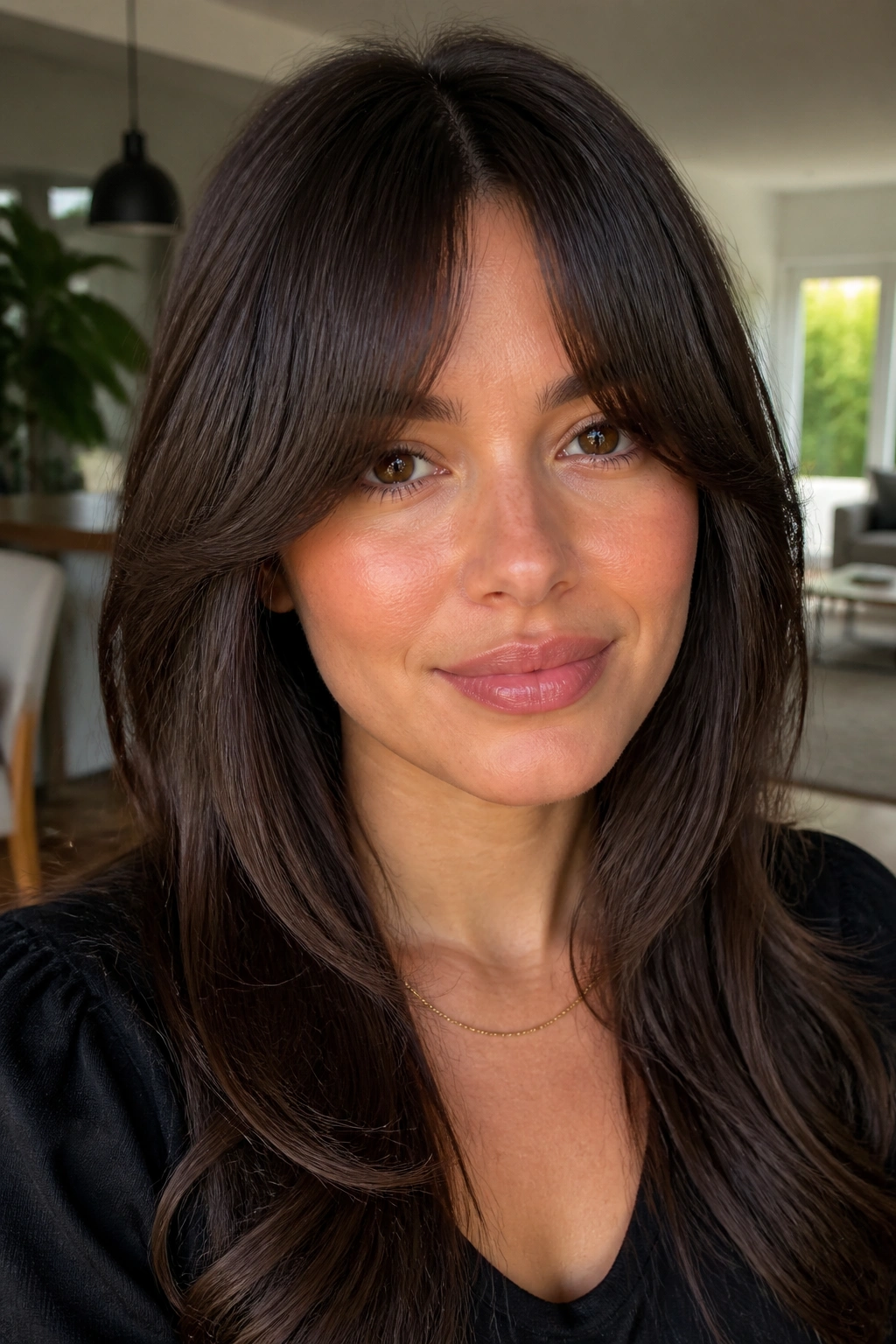
Can curtain bangs be thick? Absolutely. The key is keeping enough density in the middle so the split doesn’t turn wispy and forgettable. On round faces, this version works because it creates a vertical opening at the center of the forehead while the sides slide down toward the cheekbones.
How to Style the Split
Blow-dry the fringe forward first, then part it only after it’s about 80 percent dry. That keeps the root from sticking flat in the wrong direction. A medium round brush gives the ends a soft bend, which helps the pieces sit around the face instead of sticking straight out.
Ask for the shortest point to hit somewhere between the brow and the lash line, then let the outer pieces drop to the cheekbones or even a little lower. That length difference is the whole point. It gives the face more visual length without losing the fullness that makes thick bangs feel satisfying.
- Shortest point: just below the brows.
- Side pieces: cheekbone length or longer.
- Best on dense hair that holds a split.
- Good match for layered cuts, shags, and long bobs.
Watch this part: If the center is cut too short, the style can spring up and lose the soft drape that makes it flattering.
4. Side-Swept Thick Bangs
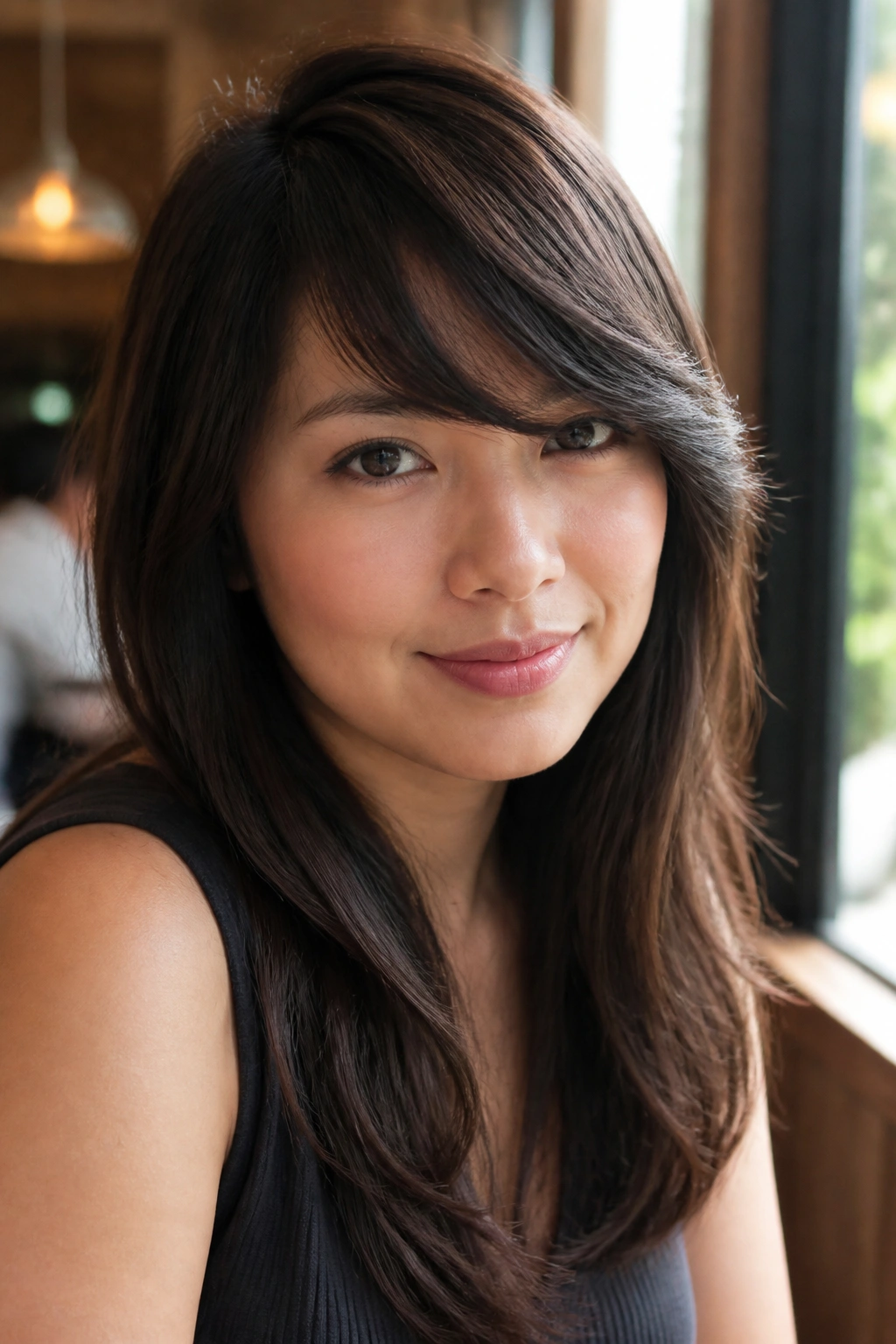
A deep side sweep is one of the easiest ways to keep bangs full without widening the face. The diagonal line works in your favor. It pulls the eye across and down, which gives a round face a little extra length through the front.
I like this style on people who want bangs but do not want to commit to a sharp forehead line. The sweep can be dramatic or subtle, depending on where you place the part. A shallower side part gives a gentle fall. A deeper one creates more lift at the root and more slant across the forehead.
The trick is density. Side-swept bangs need enough hair to feel intentional; otherwise they collapse into a skinny strand that looks like an afterthought. Keep the section thick, then soften the end so the fringe can move into the side lengths instead of sitting there on its own.
This one also grows out well. That matters. Fringe that can survive a few weeks without turning awkward is worth a lot, especially if you like changing your part now and then.
5. Bottleneck Bangs with a Dense Center
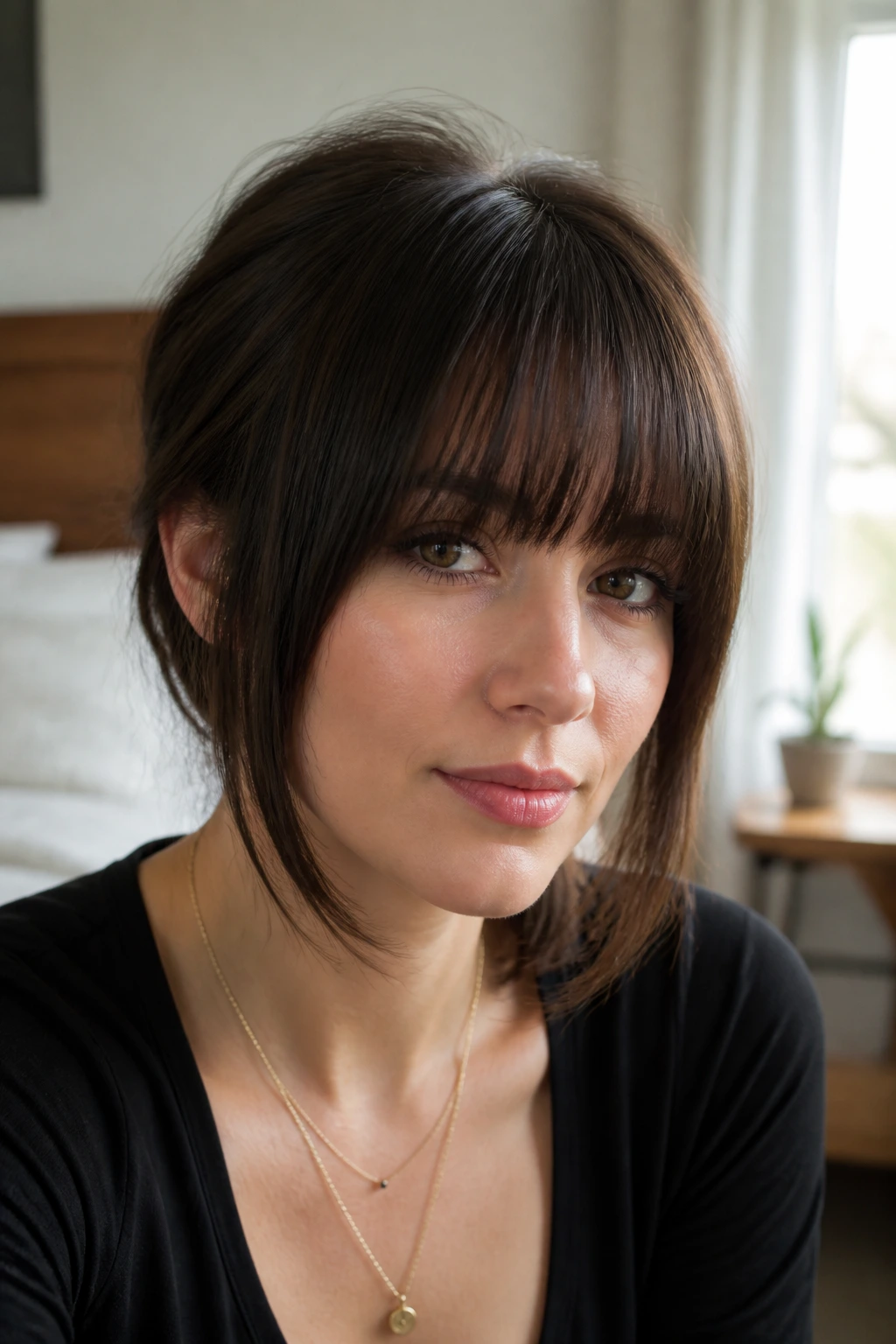
Bottleneck bangs are a smart choice for thick bangs for round faces because they stay full through the center but open at the sides. That shape gives you the visual weight of a strong fringe without boxing the face in from temple to temple.
The name makes sense once you see it. Narrow in the middle, fuller just below the brow, then tapered near the cheeks. It creates a little funnel effect that guides attention downward. Round faces tend to benefit from that kind of movement because the eye is not stuck in one wide horizontal band.
What to Ask For
- A dense center that hits around the brow line.
- Longer sides that graze the cheekbone.
- Soft tapering, not a choppy finish.
- A cut that keeps some bulk near the front hairline.
This style looks especially good with textured layers around the jaw. It gives the fringe somewhere to land. Without that, bottleneck bangs can feel too self-contained and a little stiff. I also like them on thick hair because the fullness shows up right away without needing much styling product.
Best pairing: a collarbone cut, a shag, or long layers with some face framing.
6. Arched Bangs with a Full Middle
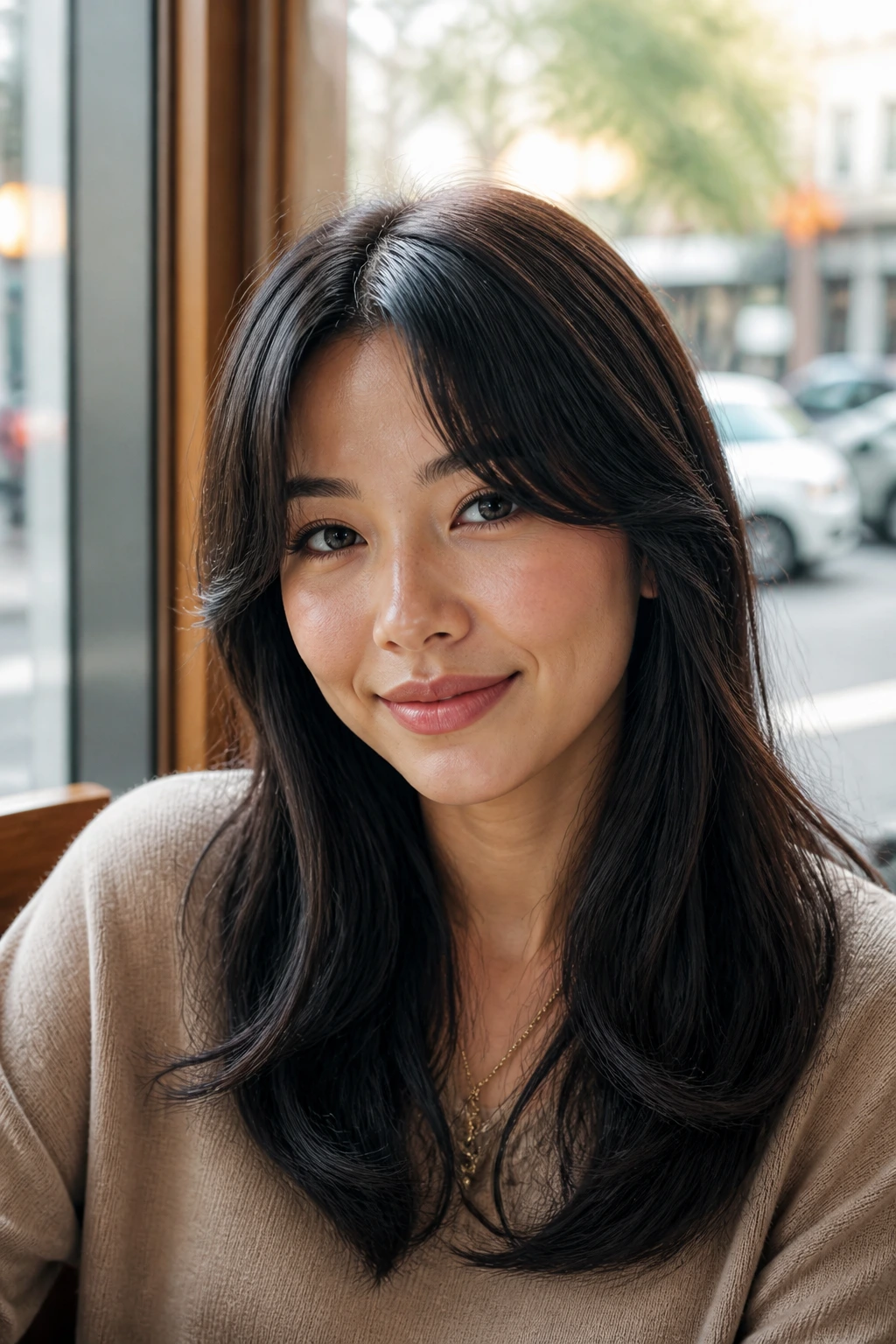
A gentle arch can do more for a round face than a flat line ever will. The reason is simple: it adds a small lift through the center while keeping the sides slightly higher than the widest point of the cheeks.
The effect is subtle, not theatrical. You’re not trying to create a perfect rainbow over the forehead. You want a fringe that rises just enough in the middle to stop the eye from spreading outward. On thick hair, that shape can look luxe instead of severe, especially if the edges are trimmed with a little point-cutting.
The Science Behind It
Hair at the temples usually makes a fringe feel wider. Hair in the center does the opposite. An arched bang puts the density where it helps most, then eases away before it reaches the broadest part of the face. That’s why it works.
If your hair is very straight, this style can look crisp and polished. If it bends a little, the arch feels softer, almost airy. Both versions can work. The main thing is not to over-arch it, because then the style starts to read like a rounded helmet, and nobody wants that.
7. Textured Full Bangs with Point-Cut Ends
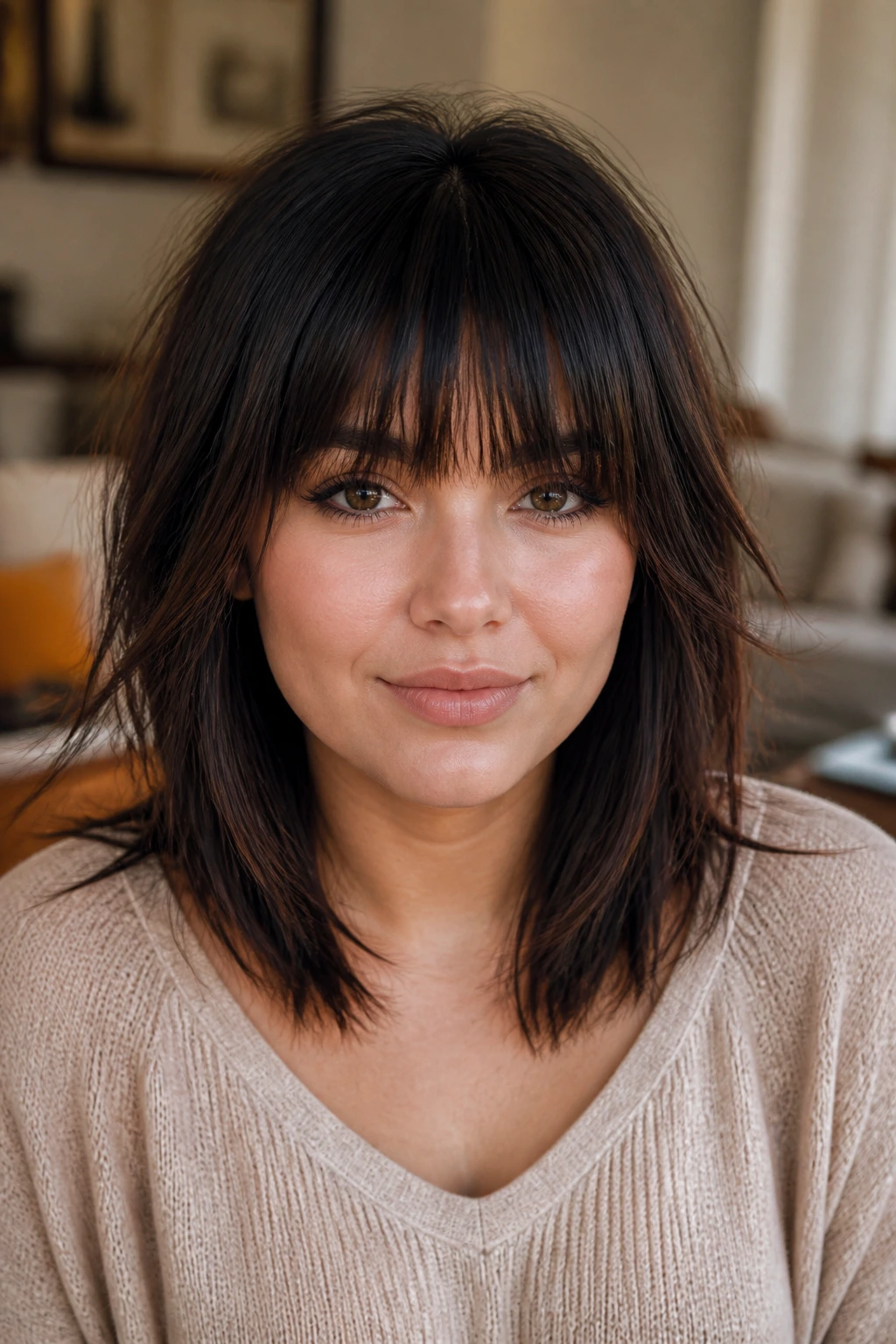
These bangs are for anyone who wants thickness without a hard wall of hair. The fullness stays, but the ends are broken up just enough to keep the fringe from sitting like a block across the face.
Point-cutting is doing the heavy lifting here. It removes tiny bits of weight from the ends, which lets the fringe move and settle instead of puffing out. On a round face, that matters because the cut keeps the upper face framed while leaving the cheek area open.
You’ll see this style look especially good on thicker hair with a little natural bend. Straight hair can wear it too, but then the blowout needs a bit more care. A paddle brush will keep it smooth. A round brush will give it more curve. Pick the finish based on how polished you want the result to feel.
I like this option for people who want fringe that looks expensive in a plain T-shirt. It has that kind of easy structure. Nothing fussy. Just enough detail to make the haircut feel finished.
8. Split Fringe with a Clean Off-Center Part
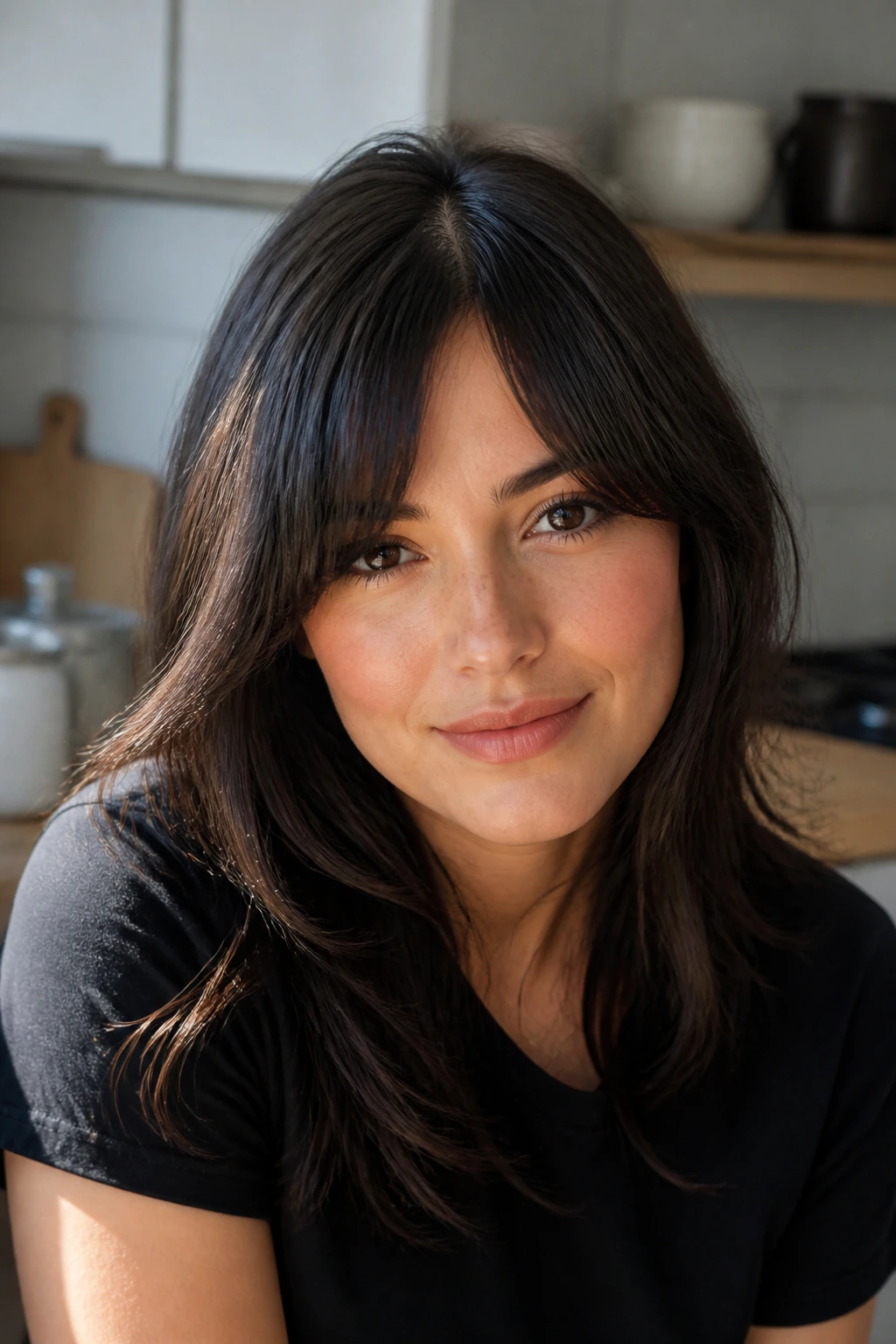
A split fringe does not have to be soft and romantic. It can be sharp. A clean off-center part gives thick bangs a little asymmetry, and asymmetry is useful on a round face because it breaks the circular feel of the shape.
Think of this as the less obvious cousin of curtain bangs. The split is not dramatic, and the center does not have to open all the way down to the nose. You’re creating a slight part that sends more weight to one side than the other. That tiny imbalance helps the face feel longer and less perfectly round.
The style looks best when the bangs are thick enough to hold shape after the part is made. Fine hair can do it, but the result is softer and less defined. Dense hair gives you that cleaner line. If your roots are flat, a quick root lift with a dryer will keep the split from collapsing by noon.
One thing I’d avoid: over-layering the bangs. Too many short pieces and the part stops looking clean. You want movement, not fuzz.
9. Long Eyebrow-Grazing Bangs

Long bangs that skim the brows are a nice middle ground for people who want fullness but not a heavy forehead line. The length lets the fringe tuck, sweep, or separate, which makes it easier to live with day to day.
For round faces, the benefit is in the drop. A longer bang carries the eye lower than a short fringe does. That vertical line can make the face feel less wide, especially when the ends soften toward the temples. The style is also forgiving if your hair grows quickly or your schedule doesn’t leave much room for salon maintenance.
How to Wear It
- Keep the center just at or below the brows.
- Let the outer pieces brush the cheek area.
- Use a light serum on the ends so they don’t frizz up.
- Tuck one side behind the ear when you want a longer, leaner line.
This is a good option if you’re nervous about committing to a blunt cut. It still gives a full bang effect, but the extra length means you can push it to the side, split it, or let it fall straight when you feel like keeping things simple.
10. Shaggy Fringe with Built-In Layers
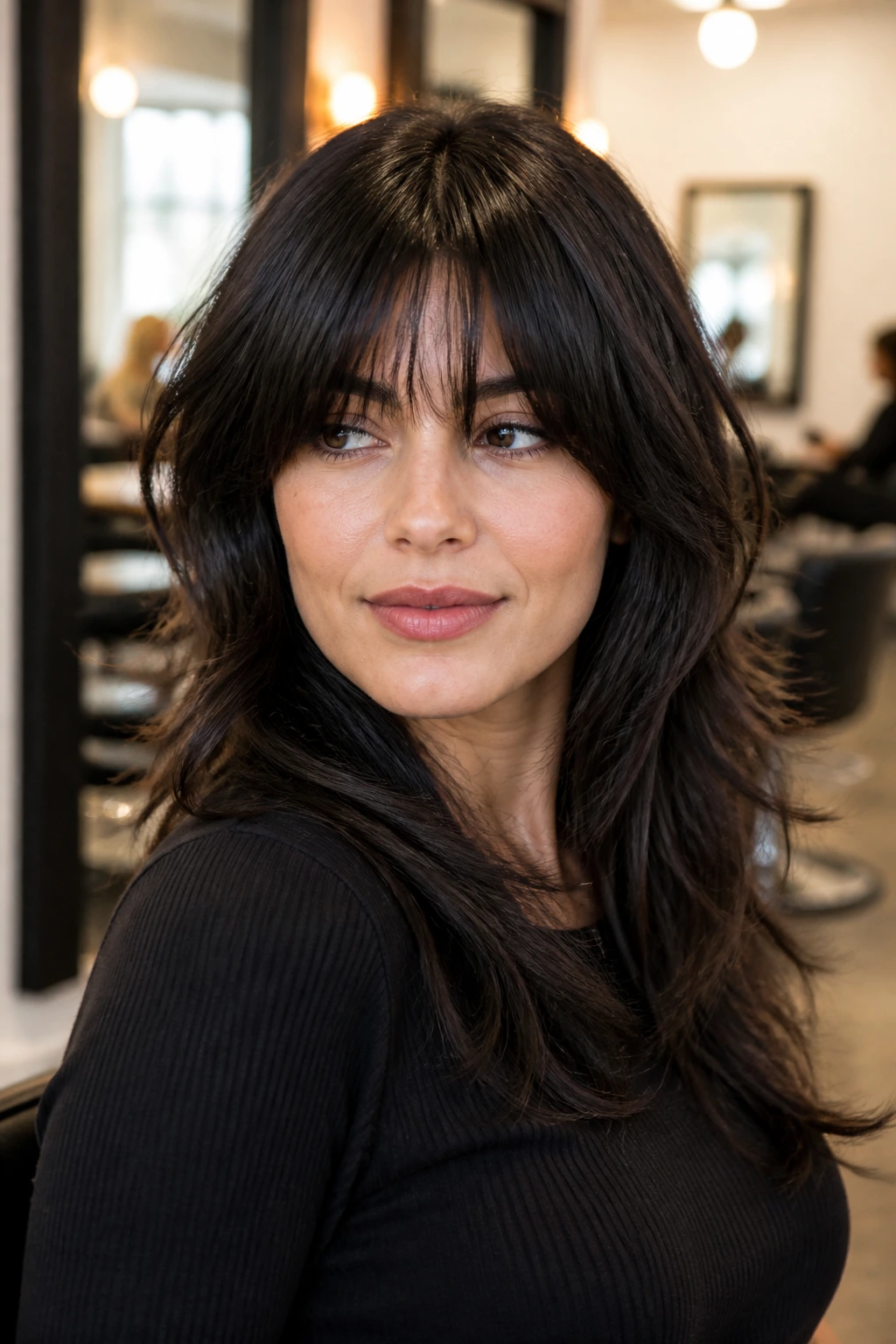
Shag bangs have a sneaky advantage on round faces: they look casual while doing real shape work. The layers keep the fringe from sitting as one wide band, which makes the face feel less boxed in.
The cut usually starts thick near the center and then breaks into shorter, uneven pieces that blend into the front layers. That can sound messy, but on the right hair it looks alive. You want enough texture to show separation, not so much that the fringe disappears into fringe confetti. There’s a line there.
This works especially well if the rest of your haircut already has movement. A shag, a wolf cut, or long layers with face framing all suit it. The bangs don’t have to be perfectly polished. In fact, they look better with a little bend and a slightly undone finish.
What It Feels Like in Real Life
The fringe should move when you turn your head. If it feels stuck, it’s too heavy in the wrong places. If it feels thin, it has been over-thinned. The sweet spot is a full center with broken-up ends that skim the brow and fall into the sides.
11. Feathered Thick Bangs
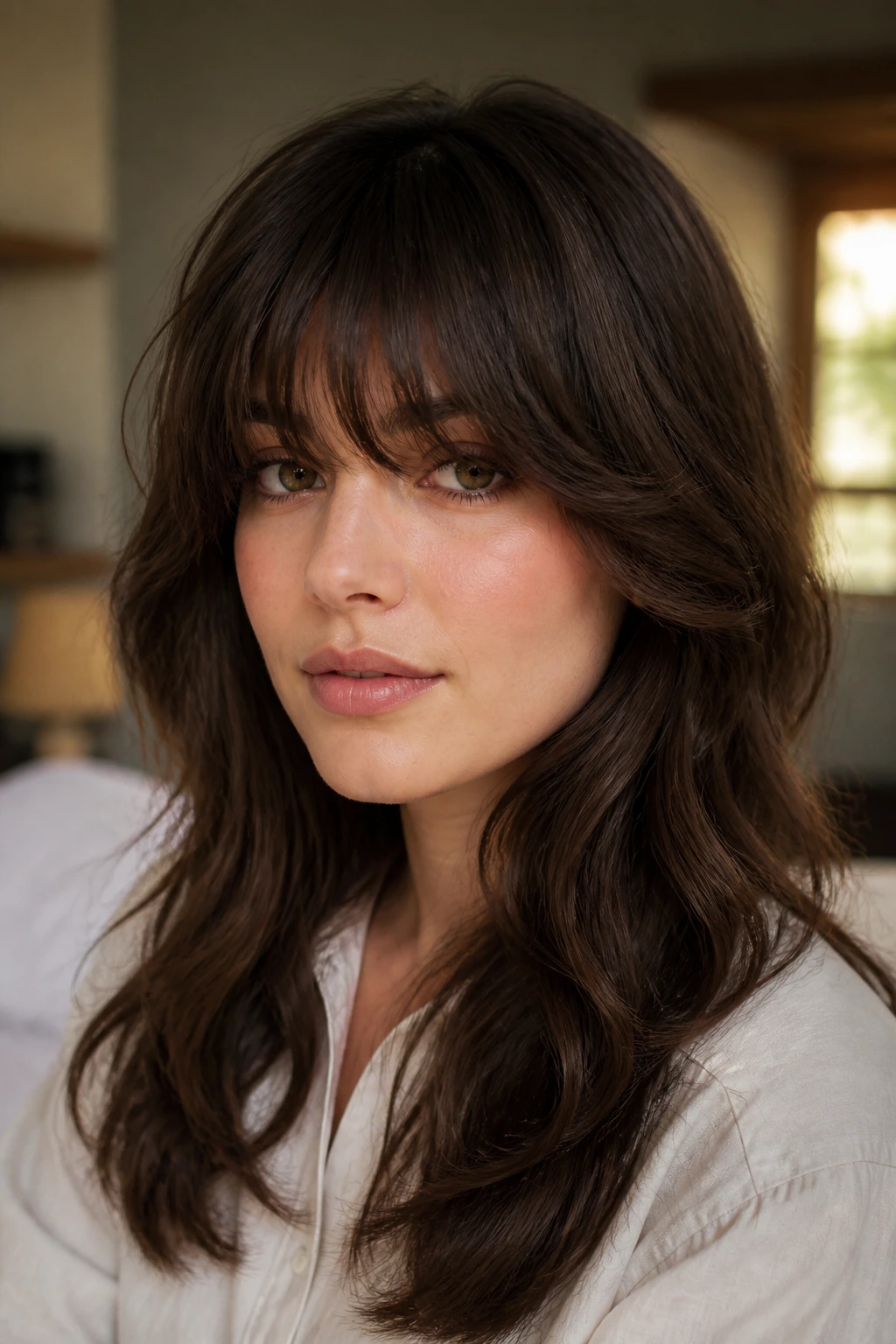
Feathered bangs take the weight of thick fringe and spread it out in a softer way. The result is lighter around the edges, fuller through the center, and easier to wear if you want movement without losing density.
They’re a good match for round faces because they don’t create a blunt shelf right across the forehead. Instead, the hair bends and separates a little as it dries, which keeps the top of the face from looking too wide. Feathering also works well if your hair has some natural wave, because the fringe can settle into that texture instead of fighting it.
A round brush blowout makes this cut look polished, but air-drying can work too if you scrunch the ends and let them fall where they want. Use a very small amount of cream or lightweight balm. Too much product and the feathered pieces clump together, which kills the whole point.
This is one of those styles that looks calm. Not flat. Calm. There’s a difference, and you can usually feel it the second the hair settles.
12. Rounded Fringe with Soft Corners
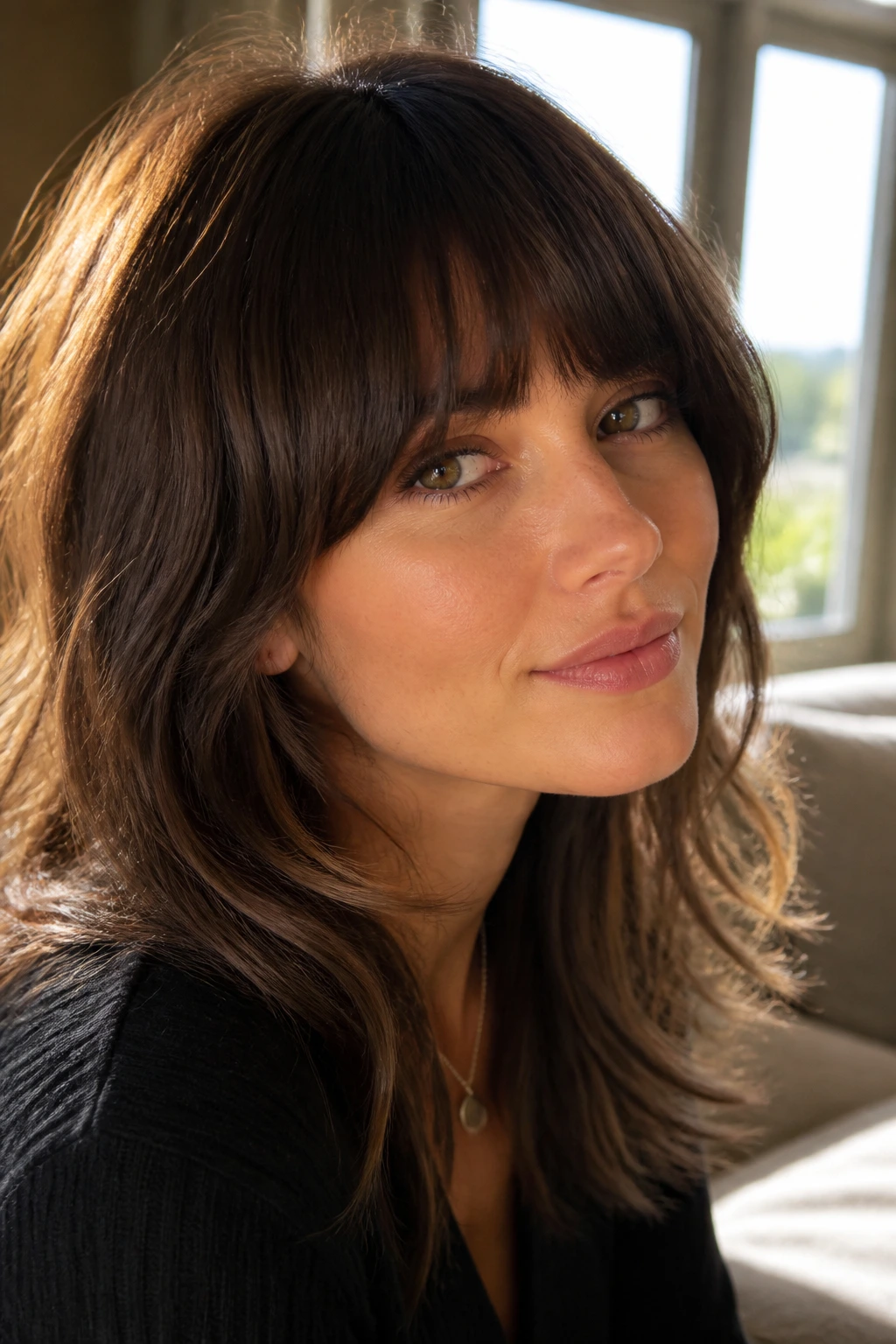
A rounded fringe sounds simple, but the shape is doing a lot. The center sits lower and fuller, then the corners rise slightly so the bangs don’t stretch too far toward the face’s widest point.
That’s the part that makes it work on round faces. The fringe mirrors the curve of the face without copying it too closely. If the cut gets too round, it can start to feel like you’re emphasizing the face shape instead of balancing it. Soft corners keep the look from tipping over into that problem.
What Makes It Different
Unlike a strict blunt bang, this version has a little lift at the outer edges. Unlike curtain bangs, it stays connected across the forehead. It sits between the two, which is handy if you like some structure but do not want a hard edge.
Best of all, it tends to hold up nicely as it grows. The roundness softens into a fuller, longer fringe rather than turning awkward. That buys you a decent amount of time between trims, which is always welcome.
13. Thick Bangs with Face-Framing Layers
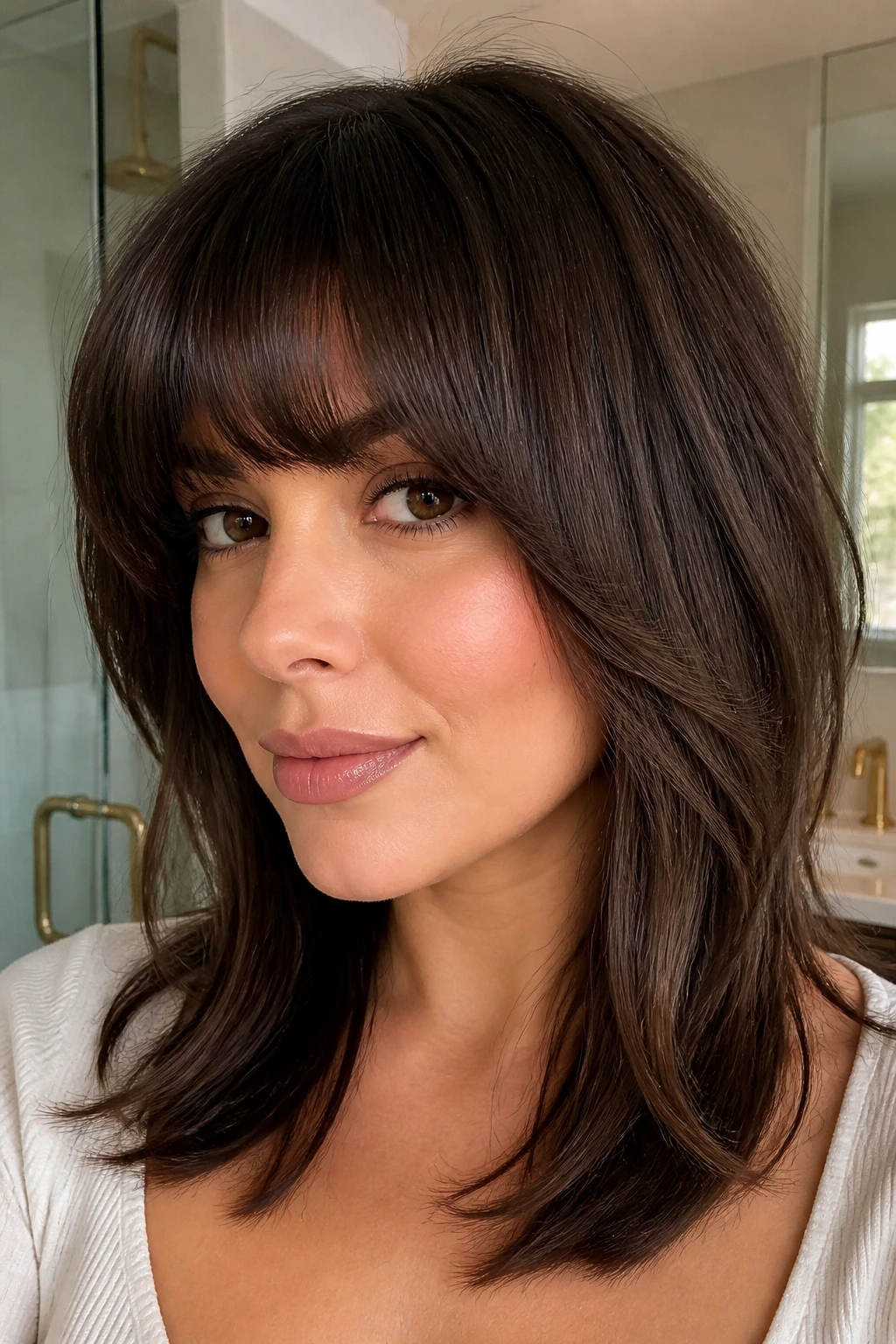
This is probably the safest strong bang choice for a round face. The fringe stays full, but the layers around it pull the eye down and outward in a more flattering way than a straight wall of hair.
A lot of people think bangs and face-framing layers are separate ideas. They’re better together. The bangs can start dense at the brow while the layers begin closer to the cheekbone or jaw, which creates a cleaner path for the eye to follow. That path matters. It keeps the face from reading as one big circle.
What to Ask Your Stylist
- Keep the fringe full through the middle.
- Start the shortest face frame around the cheekbone.
- Make the first layer long enough to tuck behind the ear.
- Avoid over-thinning the front, or the cut loses its shape fast.
This style is also one of the easiest to live with on busy days. You can wear the bangs straight, sweep them to one side, or blend them into a blowout. The haircut does some of the work even when you do very little.
14. Swoopy Retro Bangs
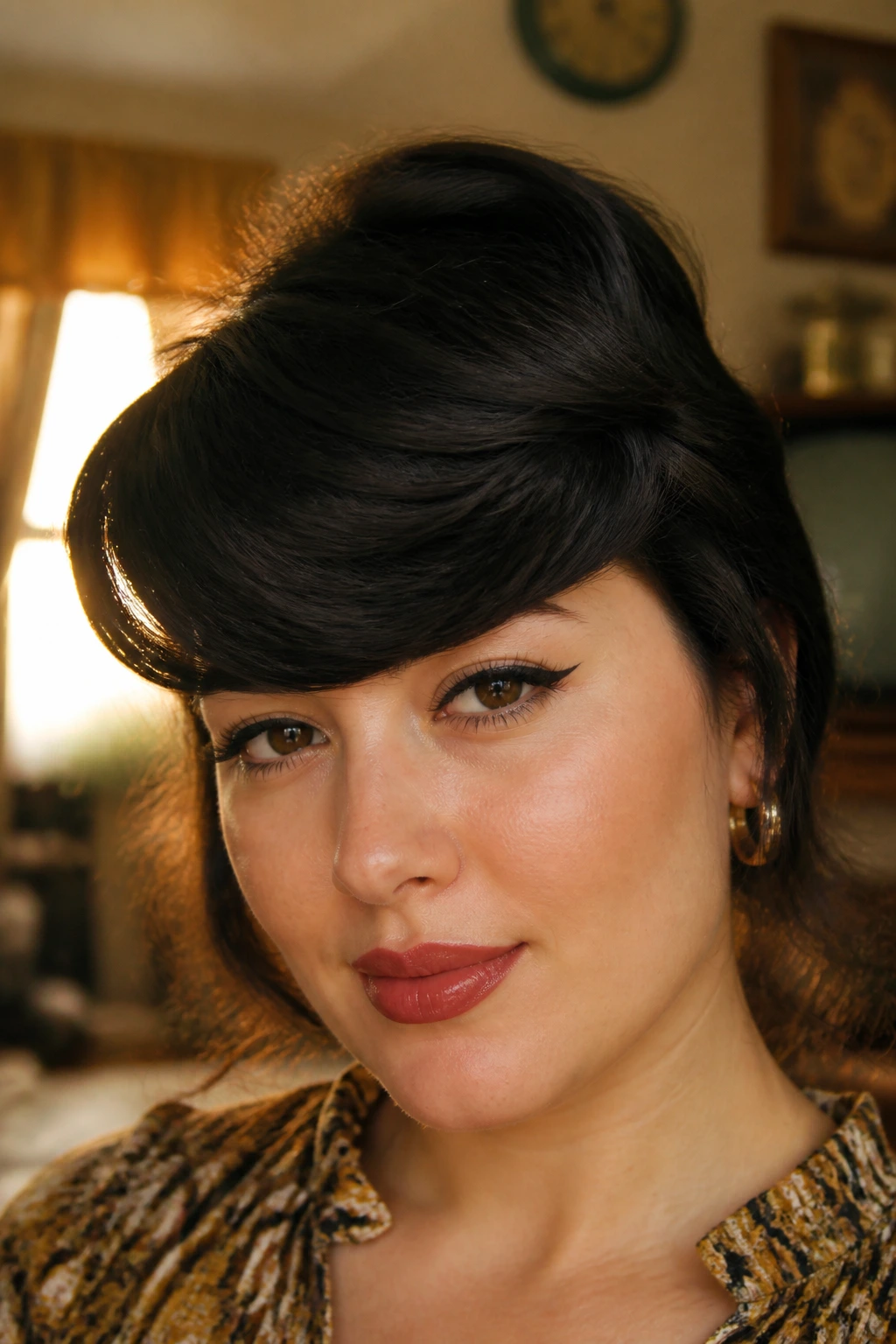
Swoopy bangs bring a little drama, and I mean that in the good way. The sweep creates a diagonal line across the forehead, which is one of the easiest tricks for making a round face look longer.
These bangs work because they have a strong direction. They don’t sit there and ask the face to do all the work. The hair arcs from a deep part, often with a bit of lift at the root, then falls across the forehead and blends into the side lengths. That motion is flattering because it breaks the face’s symmetry just enough.
The retro feel comes from volume. You want the front to have body, not to hang limp against the skin. A round brush, a little heat, and a dry shampoo refresh can make a huge difference here. Flat swoopy bangs just look tired.
I’d wear this with a bob, a shoulder-length cut, or anything with a little vintage bend. It has personality. Quietly, but still.
15. Grown-Out Curtain Fringe for Round Faces
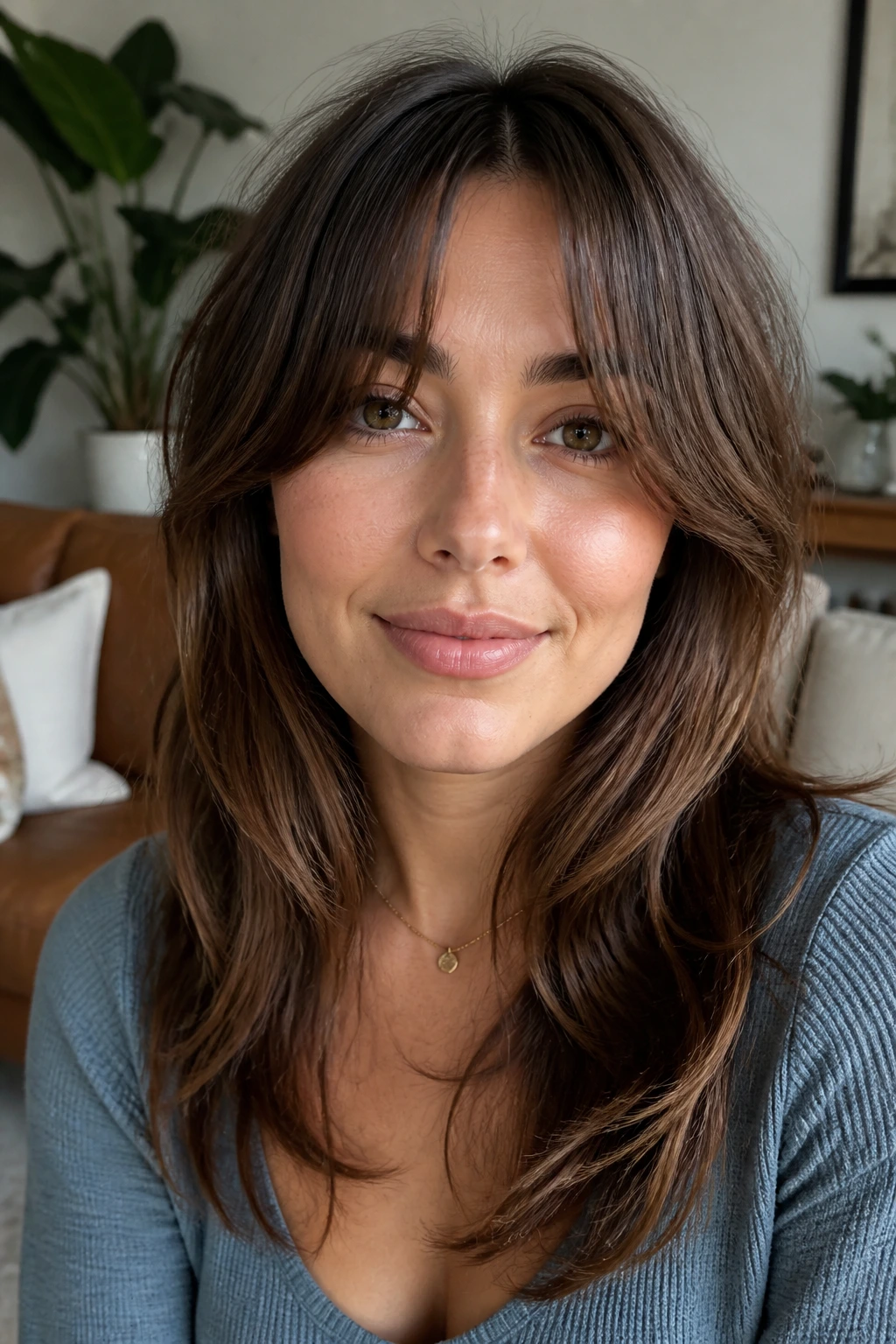
There’s a point where curtain bangs stop looking like a salon cut and start looking like an easy, lived-in frame. That’s the sweet spot for a lot of round faces. The fringe has enough length to elongate, enough density to feel full, and enough openness at the center to keep the face from feeling boxed in.
The grown-out version is especially useful if you like your bangs but hate the maintenance of a fresh trim. The pieces sit lower, often near the cheekbone or upper cheek, and blend into longer layers. That gives the face a vertical line while still keeping the front soft.
This style also plays well with natural movement. A bit of bend? Fine. Straight hair? Also fine. Slight wave? Even better. The cut doesn’t need to be perfect every morning, which makes it a relief for anyone who doesn’t want to fight their hair before coffee.
Good sign: the fringe should look intentional even when it’s a little overgrown. If it starts to feel shapeless, it needs a cleaner re-cut, not more styling paste.
16. Heavy Bangs with a Deep Side Part
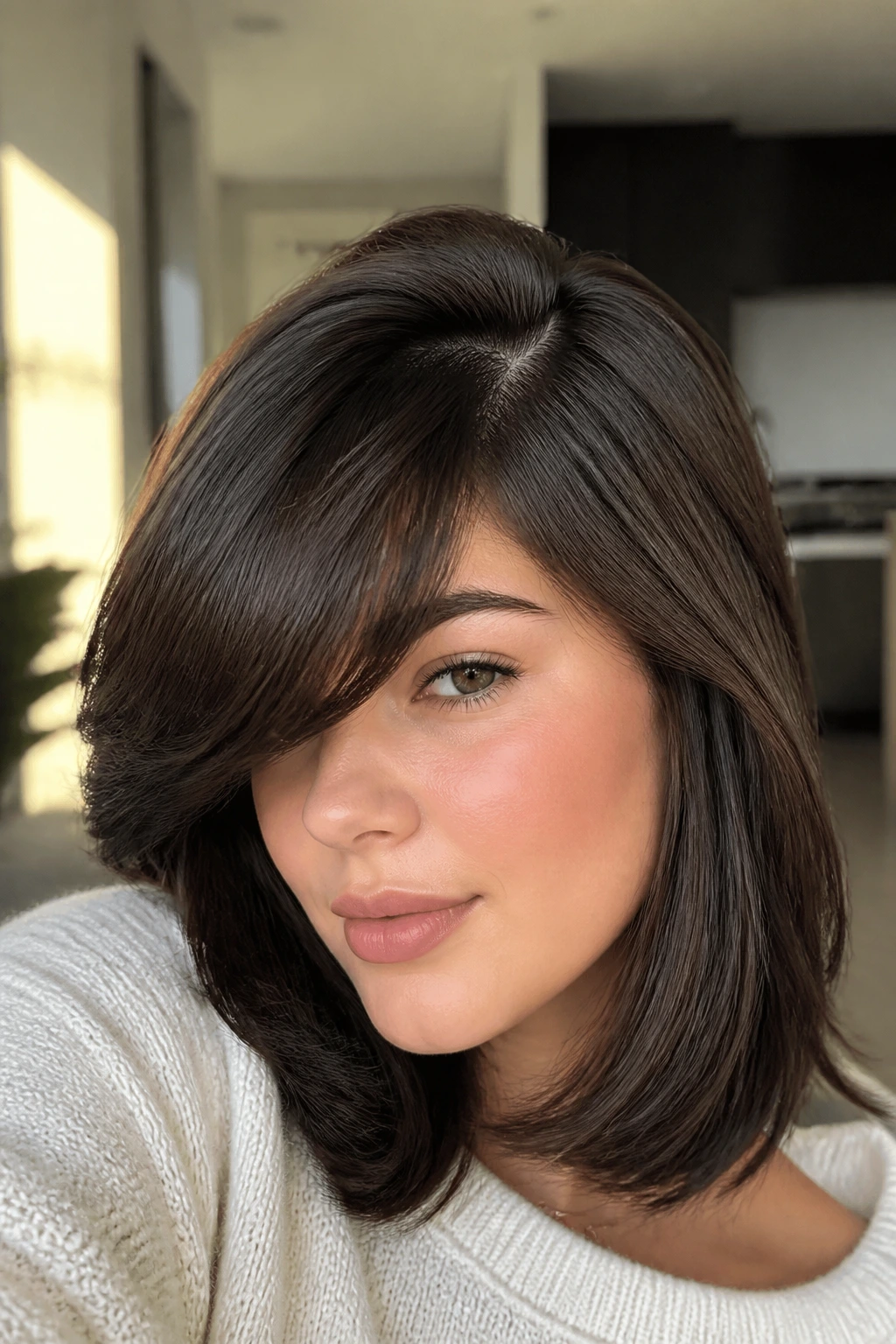
A deep side part can make thick bangs feel sharper and more face-lengthening at the same time. The heavy side gives the style weight, while the opposite side opens up the forehead and creates asymmetry.
Round faces usually benefit from that break in symmetry. It keeps the eye moving. A straight, centered frame can sometimes sit too evenly on the face, but a deep part throws the balance just enough to change the shape of the whole haircut.
This cut looks best when the bangs are dense enough to hold their side sweep without splitting apart. If the fringe is too soft, the deep part turns into a limp curtain. If it’s thick, you get a nice sweep with some real body behind it. That body is the point.
How to Make It Hold
Blow-dry the roots in the opposite direction first, then flip them over once the hair is almost dry. That adds lift where you need it. Finish with a light spray at the roots, not the ends.
17. Wavy Thick Bangs

Wavy bangs can be a headache if they’re cut wrong. They can also be one of the best looks for a round face when the shape is kept thick enough to show the wave instead of fighting it.
The key is to accept that the fringe will bend. A thick wavy bang has more visual depth than a straight one because the hair doesn’t sit on a single flat plane. That broken surface helps soften the width of a round face and keeps the front from feeling heavy in a stiff way.
You want enough length that the wave can form without shrinking too far above the brow. Cut them too short and the bend will jump up. Cut them with a little room, and they’ll settle into a flattering, slightly undone curve.
This style looks best with low-fuss products. A dab of cream or a soft mousse is enough. Heavy oils can collapse the wave and make the bangs stick to the forehead, which is rarely the look anyone wants.
18. Short Blunt Fringe with Longer Sides
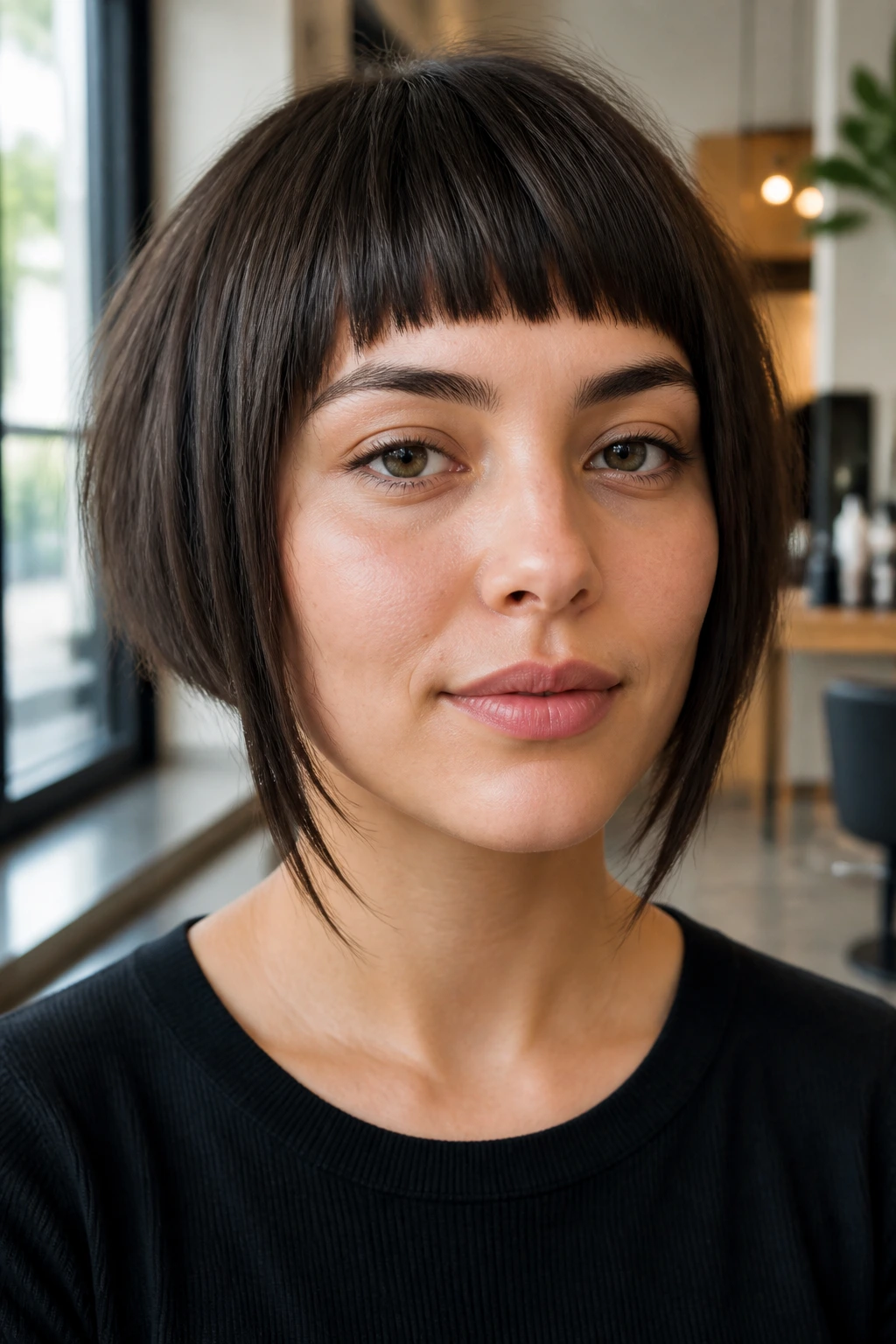
Short bangs can work on a round face, but only if the sides carry some length. That’s the balancing act. The short center shows the forehead, which adds height, while the longer sides keep the cut from turning into a box.
This is not a timid style. It has presence. The fringe usually sits high enough to show the brows, sometimes a little above them, and the side pieces skim downward to soften the face. That contrast is what makes it usable on rounder features. Without the longer sides, the short bang can feel too abrupt.
Why It Stands Out
The short front creates a vertical break at the top of the face. The longer sides act like rails, guiding the eye downward. Together, they stop the haircut from spreading too wide across the cheeks.
This is a better choice for someone who likes structure and doesn’t mind a little maintenance. It grows fast. Very fast. If you hate trims, you’ll get annoyed. If you love a defined look and don’t mind keeping it sharp, it can be a strong option.
19. Tapered Bangs That Thin at the Temples
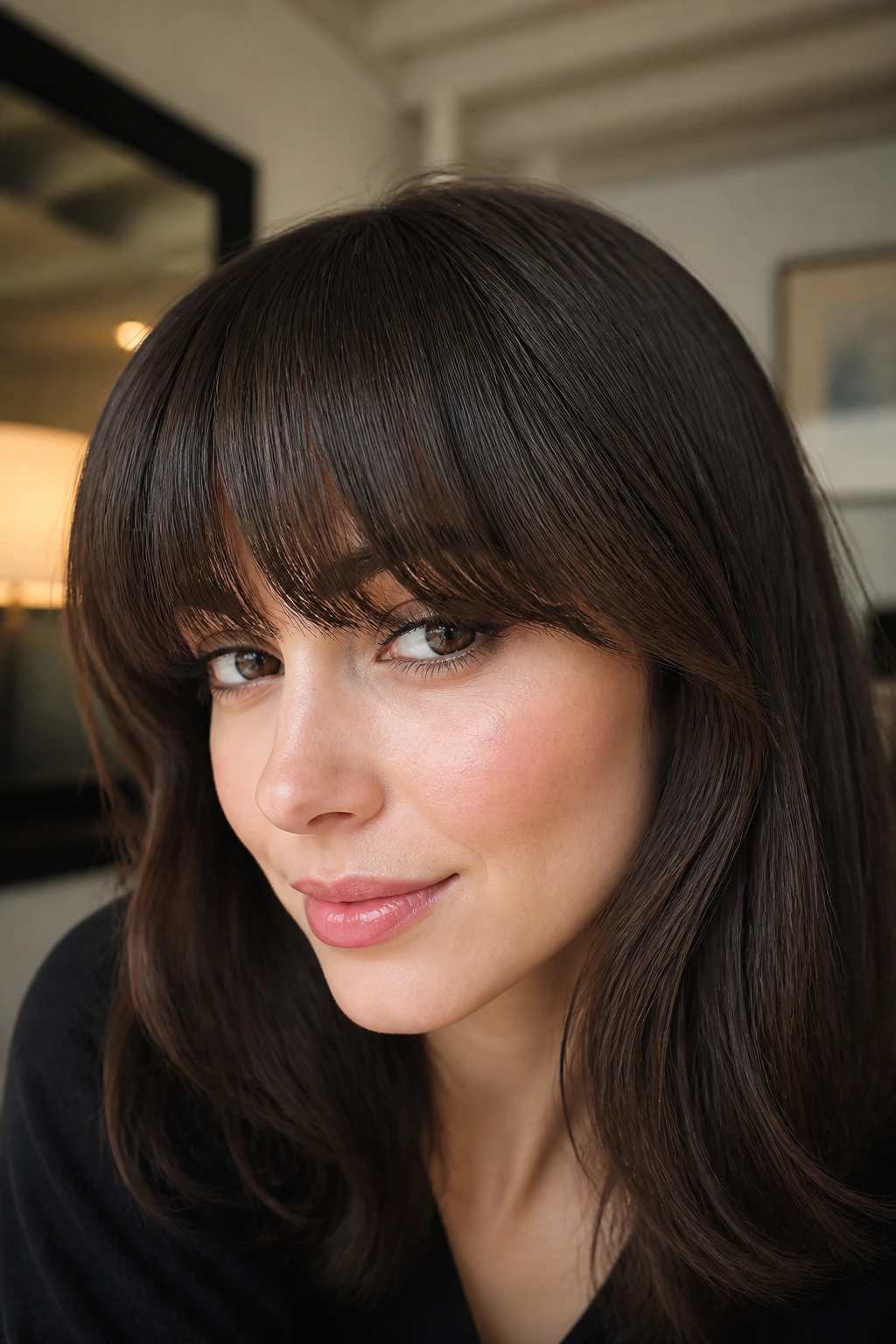
Tapered bangs are one of the cleanest ways to keep a fringe thick without letting it dominate the whole face. The center stays full, then the density thins as it reaches the temples, which keeps the width under control.
That taper makes a round face look leaner through the front. It also helps the bangs blend into layers instead of stopping abruptly at the edge of the forehead. A clean taper is not the same thing as thinning everything out. You still want a real bang. You just want the weight placed where it helps most.
A lot of stylists use point-cutting or slide cutting near the outer edges for this effect. Done well, the fringe feels soft and sculpted. Done badly, it looks shredded. So the hand matters here. A lot.
Wear this with longer layers, a lob, or a haircut that already has movement near the face. It’s a good cut for someone who wants polish without a helmet-like bang line.
20. Piecey Thick Bangs
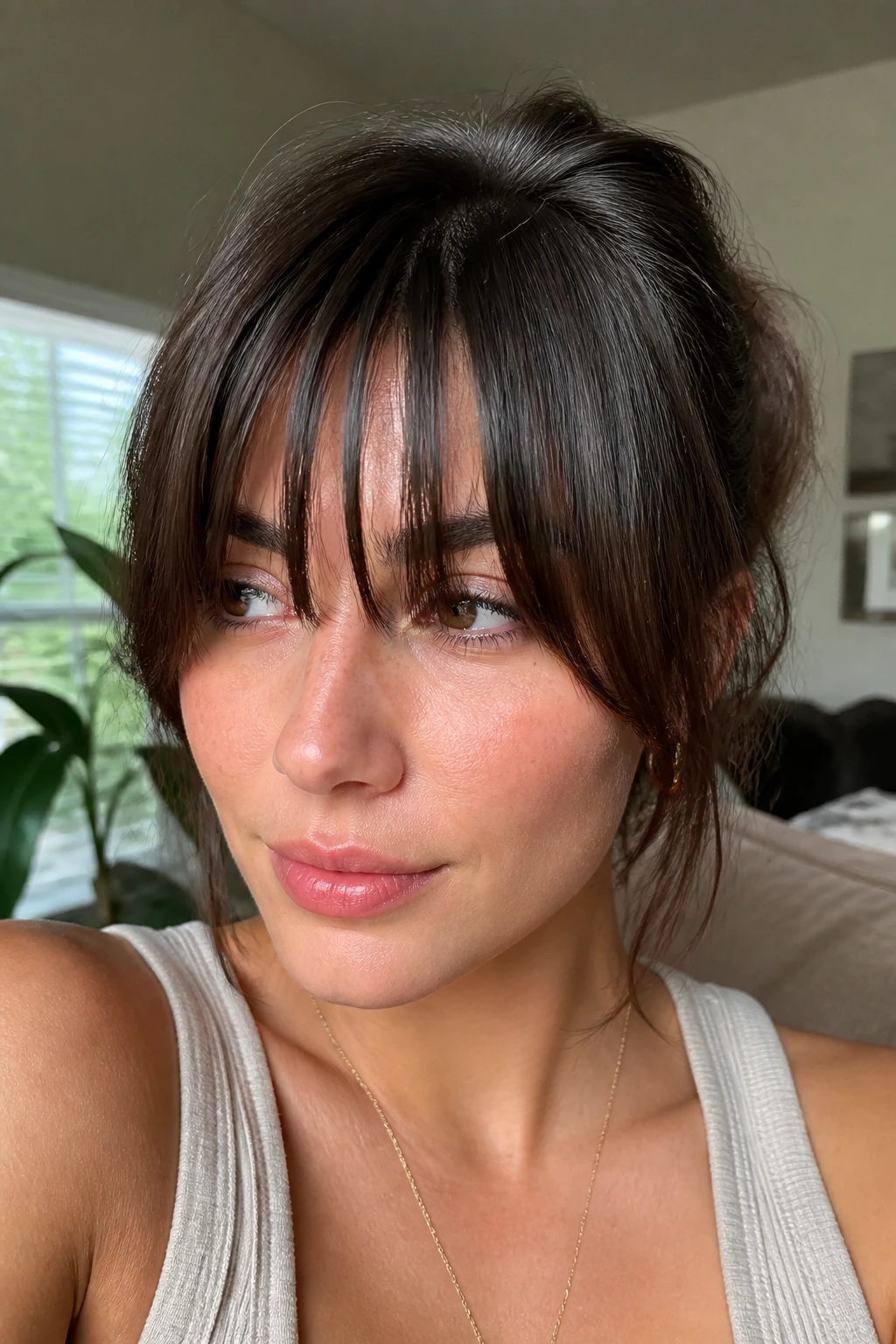
Piecey bangs work best when the pieces are still substantial. You’re not going for thin tendrils. You’re going for separated, visible sections that keep the fringe light on the skin while preserving real fullness.
For round faces, this is useful because the pieces break up the width of a heavy bang. Instead of one continuous band, the forehead gets a few deliberate openings, which makes the face feel less compressed. The look is casual, but not random. There’s a difference.
What to Watch For
- Use a small amount of styling cream, not a heavy balm.
- Twist a few sections while drying to encourage separation.
- Keep the base cut thick enough that the bangs don’t look see-through.
- Don’t overbrush them once they’re dry, or the pieces blend back together.
I like piecey bangs on hair that already has texture. Straight hair can wear them too, but then you’ll spend a little more time shaping the separation. If you want fringe that feels relaxed and modern without losing weight, this is a good lane.
21. Layered Waterfall Fringe
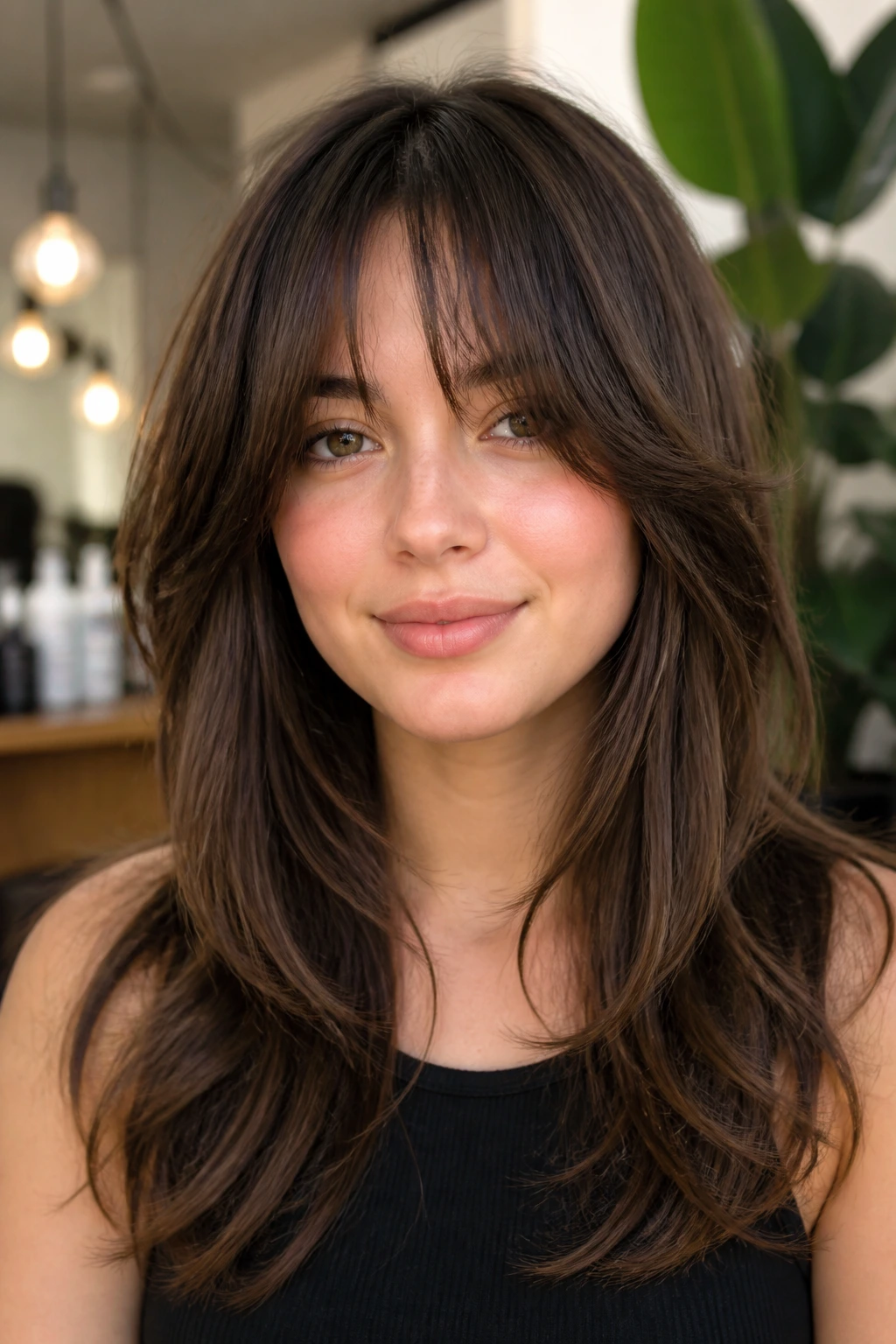
A waterfall fringe is one of the prettiest ways to wear thick bangs on a round face because the hair drops in stages. The shortest pieces frame the forehead, then the lengths fall gradually into the sides. It creates movement without making the face look wide.
The layering matters more than the name. You need a strong enough first section to read as bangs, then longer pieces that melt into the haircut. That stop-and-start effect keeps the cut from sitting like one flat sheet. It also gives the face some vertical emphasis, which round faces usually welcome.
This style looks especially good when the rest of the hair has soft bend or layered body. Too straight and it can feel heavy. Too curly and the steps in the fringe can disappear. Somewhere in the middle is where it shines.
My take: this is one of the most forgiving options if you like fringe but don’t want your hair to feel trapped by it. It grows out with grace, and that is not something every bang style can say.
22. Long Fringe That Tucks Back Cleanly
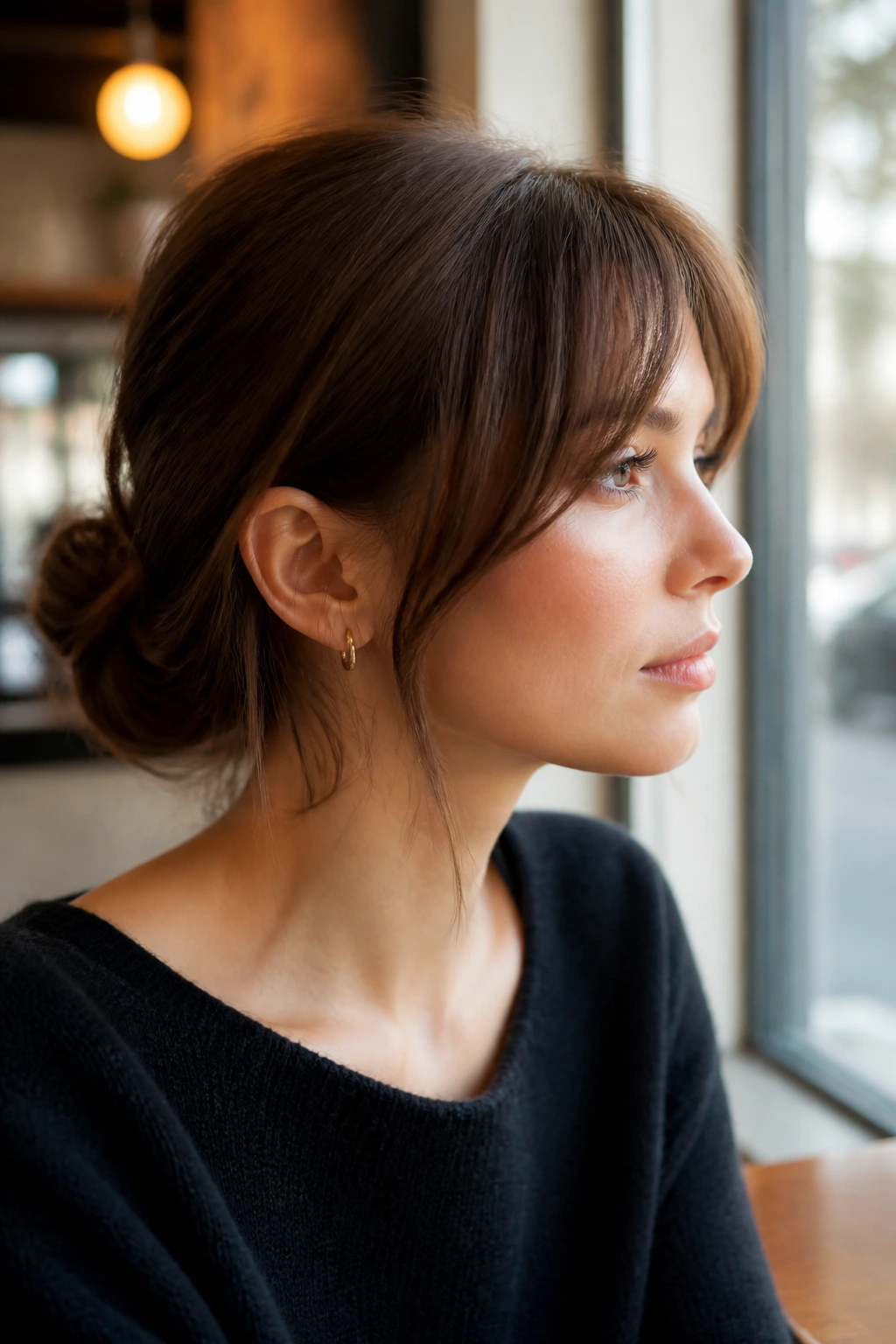
A long fringe that can tuck behind the ears or sweep back from the face gives you a lot of range. That matters for round faces because you can keep the front full on some days and open the face on others without changing the cut.
The shape should start thick enough to count as bangs, then lengthen into the front sections before they hit the cheekbones. That gives the face a downward pull instead of a wide horizontal line. It’s also one of the easiest styles to adapt with styling. Wear it forward and soft, or push it aside for more openness around the eyes.
This is a nice choice if you like options. And honestly, that’s a big deal with bangs. Some people love a strict fringe in theory, then get tired of it by Tuesday morning. A long tuckable fringe avoids that trap. It gives you structure, but it doesn’t boss you around.
If you want the safest path into thick bangs, this is a smart place to land. It keeps the fullness, flatters a round face, and leaves room to change your mind without starting over.
