



Round faces look best with curtain bangs that open at the cheekbones, not bangs that stop dead at the widest part of the face. That’s the whole game with soft curtain bangs for round faces: shape, angle, and a little bit of air around the cheeks.
A blunt front fringe can make a round face feel wider than it is. A softer split fringe does the opposite. It draws the eye down and outward, which gives the face more length without turning the haircut stiff or fussy.
Texture changes everything. Fine hair wants lightness, thick hair needs weight removed in the right places, and wavy or curly hair usually looks better with a longer starting point because the hair springs up once it dries. Miss that detail, and the bangs land in the wrong place fast.
Some versions are barely there. Others have a little drama, but still feel easy. The sweet spot is a fringe that looks like it belongs to your face, not like it was pasted on top of it.
1. Cheekbone-Grazing Curtain Bangs
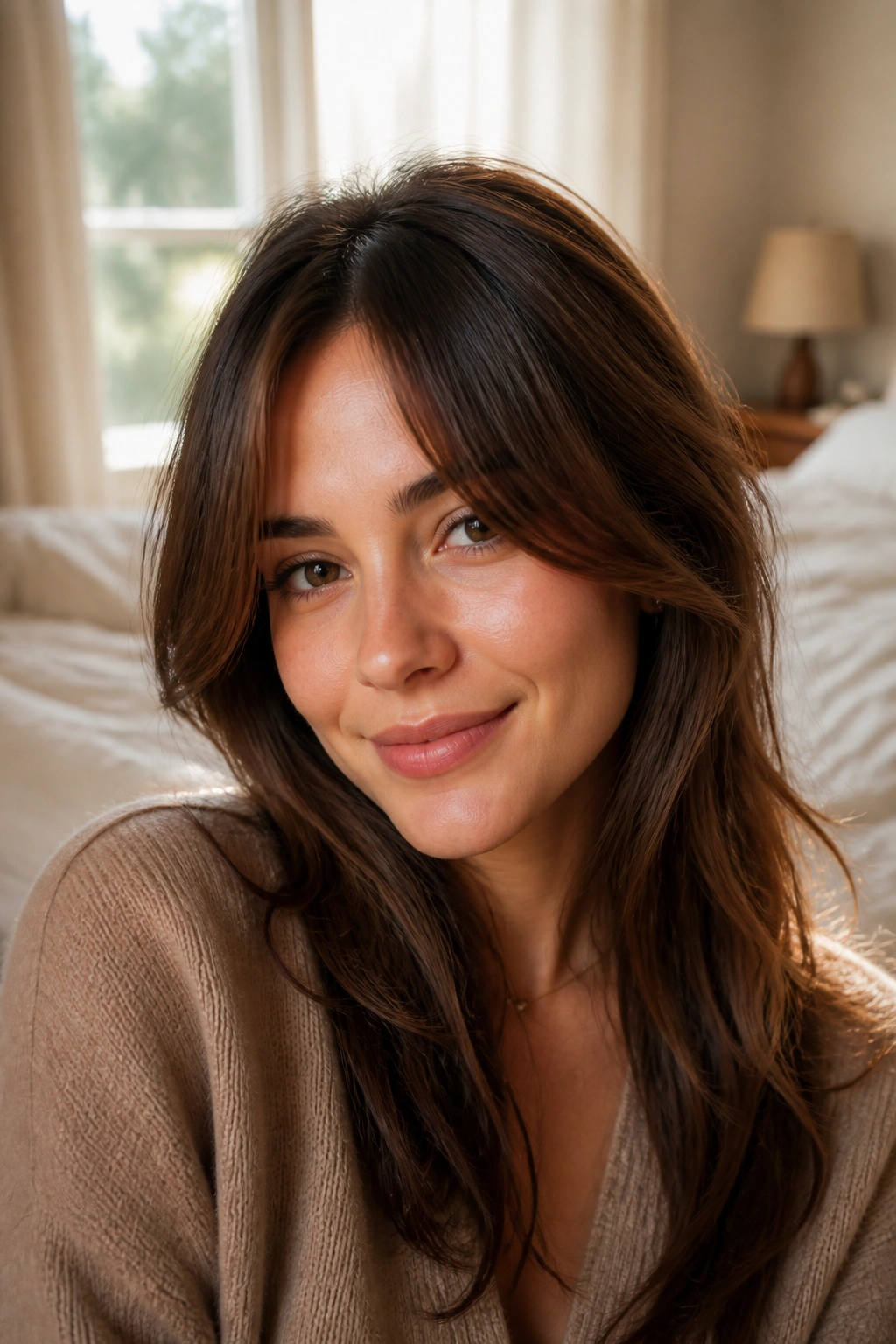
Cheekbone-grazing curtain bangs are the safest bet when you want softness without losing shape. The shortest piece should sit near the outer brow or upper cheekbone, then melt into longer sides that brush past the face instead of sitting on it.
That length matters on a round face. If the bang ends right at the fullest part of the cheek, it can make the face look broader. If it drops just a little lower, the eye follows the line downward and the whole cut feels longer.
Why They Work
The face gets a clean diagonal line, and diagonal lines are your friend here. They break up the roundness in a way that still looks relaxed.
A good cut should feel light when you pinch the ends between your fingers. If the fringe feels heavy or boxy, it usually needs more point cutting at the ends.
- Shortest point: outer brow to top of cheekbone
- Longer sides: just below the cheekbone
- Best hair types: straight, slightly wavy, medium density
- Ask for: soft point cutting, not a blunt edge
Best tip: tell your stylist you want the bangs to open when you part them, not sit as one solid curtain.
2. Brow-Skimming Curtain Bangs With Airy Ends
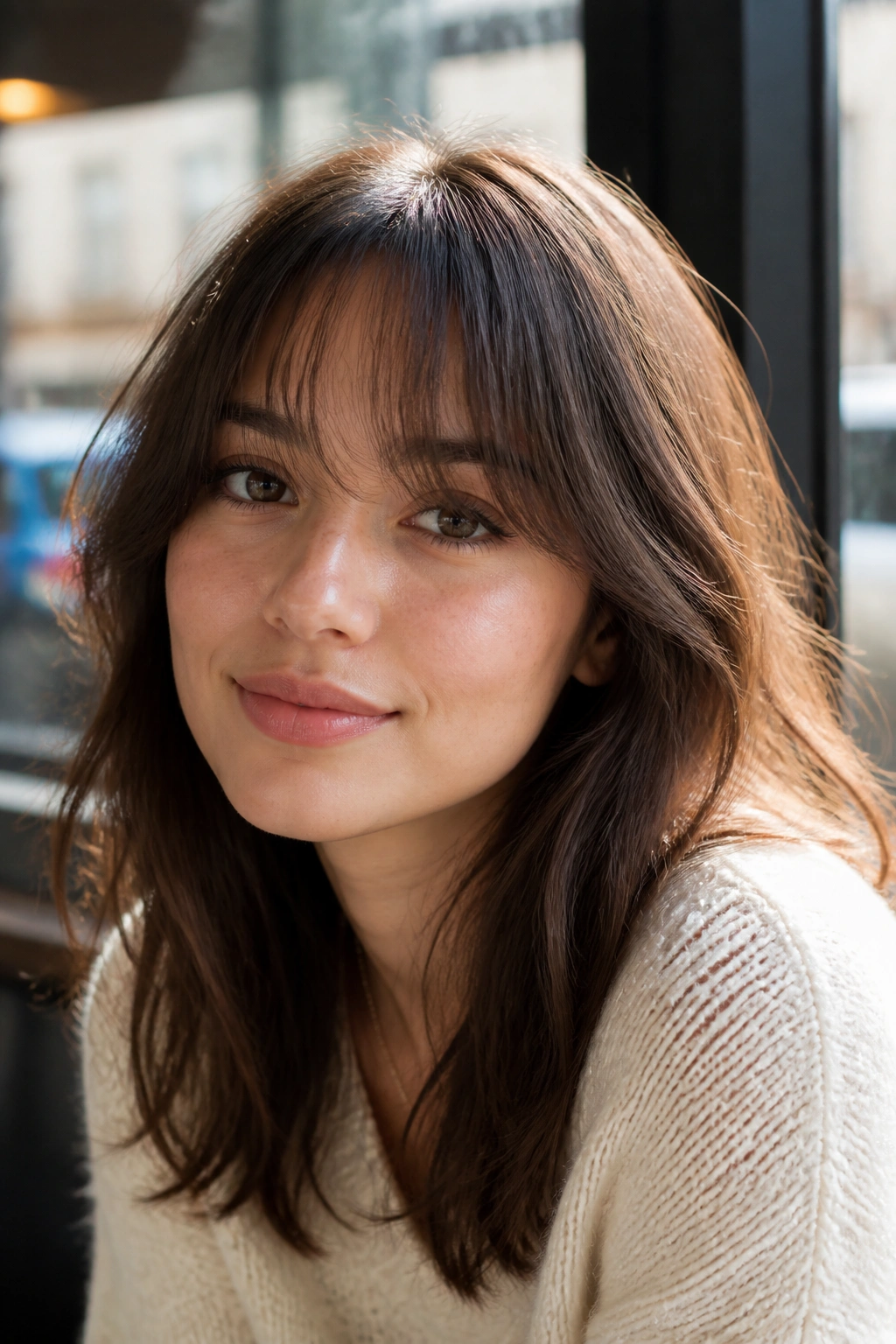
Airy brow-skimming bangs are the easiest way to keep a round face from feeling boxed in. The bang stays light enough to show forehead, but still gives you that soft split shape people want from curtain fringe.
I like this version on fine hair. It does not ask for much density, which matters because too much bulk at the front can make the face feel shorter. A little see-through texture is the point.
The end result should look touched, not carved. That means the edges need movement, and the middle needs enough lift to sit away from the forehead instead of lying flat across it.
The best part is how forgiving it is. A slight bend, a loose blow-dry, even a rough air-dry can still land in the right place.
3. Lip-Length Curtain Bangs With a Soft Split
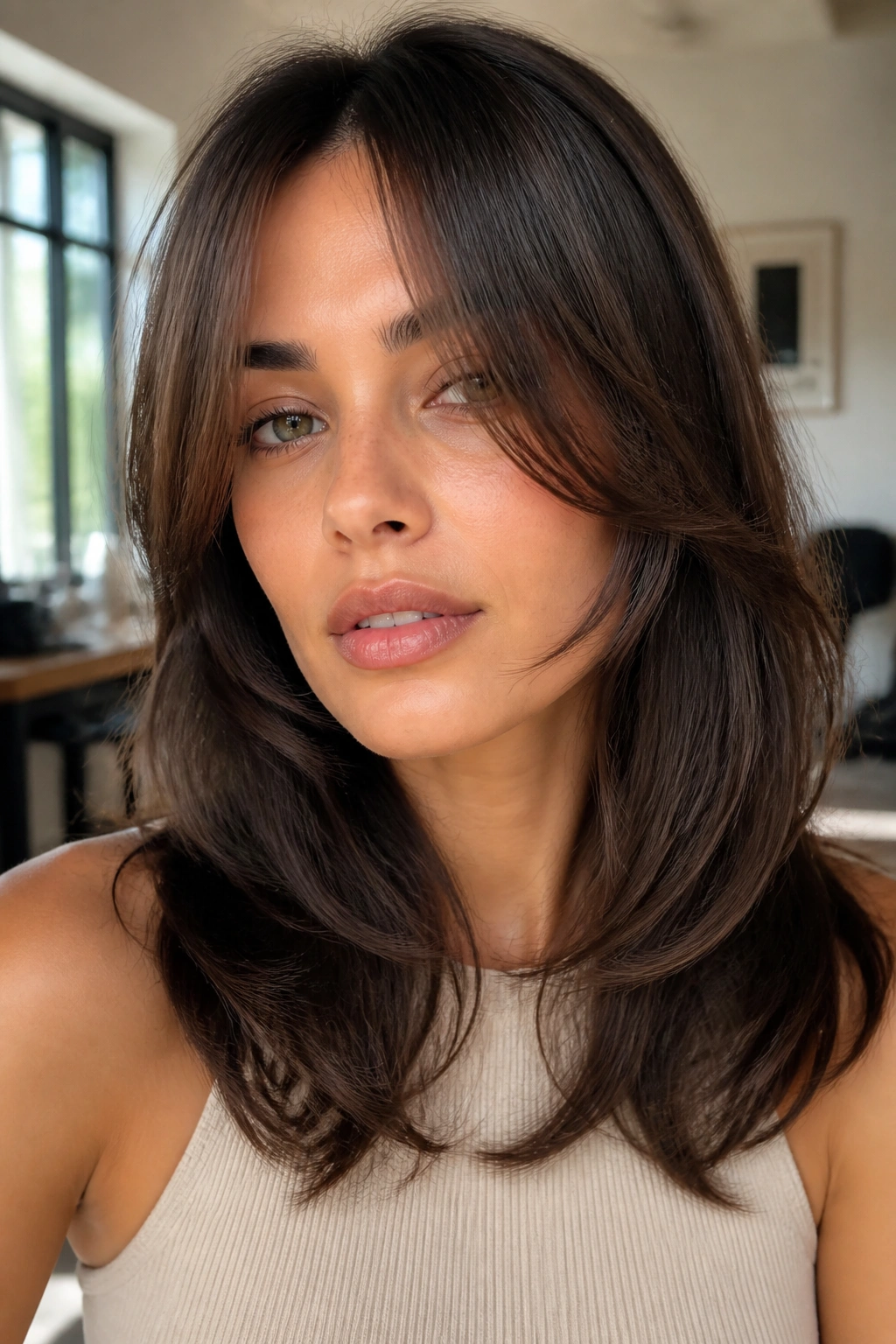
Why do lip-length curtain bangs flatter round faces so well? Because they pull the eye straight down the middle of the face before they fan out. That’s a small thing, but it changes the whole balance.
This length also gives you options. You can wear them parted open, tucked behind one ear, or curled under with a round brush if you want more polish. The hair around the mouth and jaw gets a little frame, which helps the face feel longer without looking sharp.
How to Ask for It
Ask for a center section that starts shorter in the middle and drops to lip level on the sides. That is the bit that matters. If everything is cut at the same point, the curtain effect disappears and you just get a heavy fringe.
A stylist should thin the ends enough to keep the line soft, but not so much that the bangs lose shape. Too sparse is a real problem here.
- Shortest point: just under the brows
- Longest point: lip line
- Best for: fuller cheeks, medium to thick hair
- Styling note: wrap the sides away from the face for the first 30 seconds of blow-dry
Best tip: this cut looks best when the center is still visible. Don’t bury it under too much volume.
4. Bottleneck Curtain Bangs That Narrow at the Center
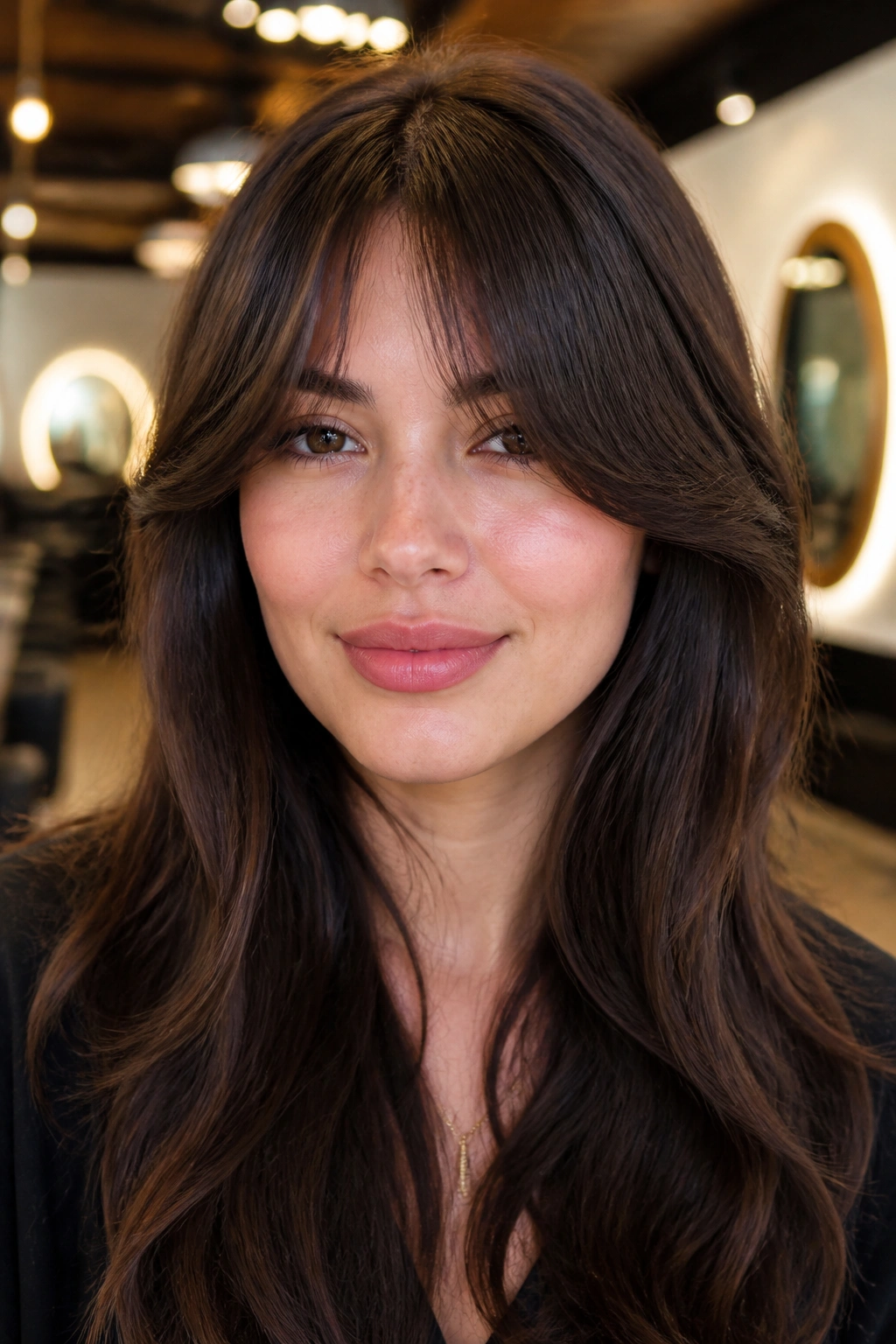
Walk into a salon with a round face and thick hair, and bottleneck curtain bangs are one of the smartest choices on the table. The shape is narrow near the bridge of the nose, then widens as it falls toward the cheekbones and jaw.
That narrow-middle effect matters. It keeps the front from ballooning, which thick hair loves to do if the cut is too blunt or too full.
The style feels softer than a straight fringe and less obvious than a full curtain shape. It’s a little more sculpted, which I actually like when the rest of the haircut is airy and layered.
What makes it different
- Narrower center section that opens gradually
- Wider side pieces that start around the cheekbone
- Better balance for dense hair that wants to puff up
- Good match for shoulder-length cuts and layered lobs
Who it suits best: anyone who wants curtain bangs but hates a wide, heavy front.
One more thing. If your hair frizzes at the front line, keep the center a touch longer than you think. Short bottleneck bangs can spring up fast.
5. Off-Center Curtain Bangs With a Soft Split
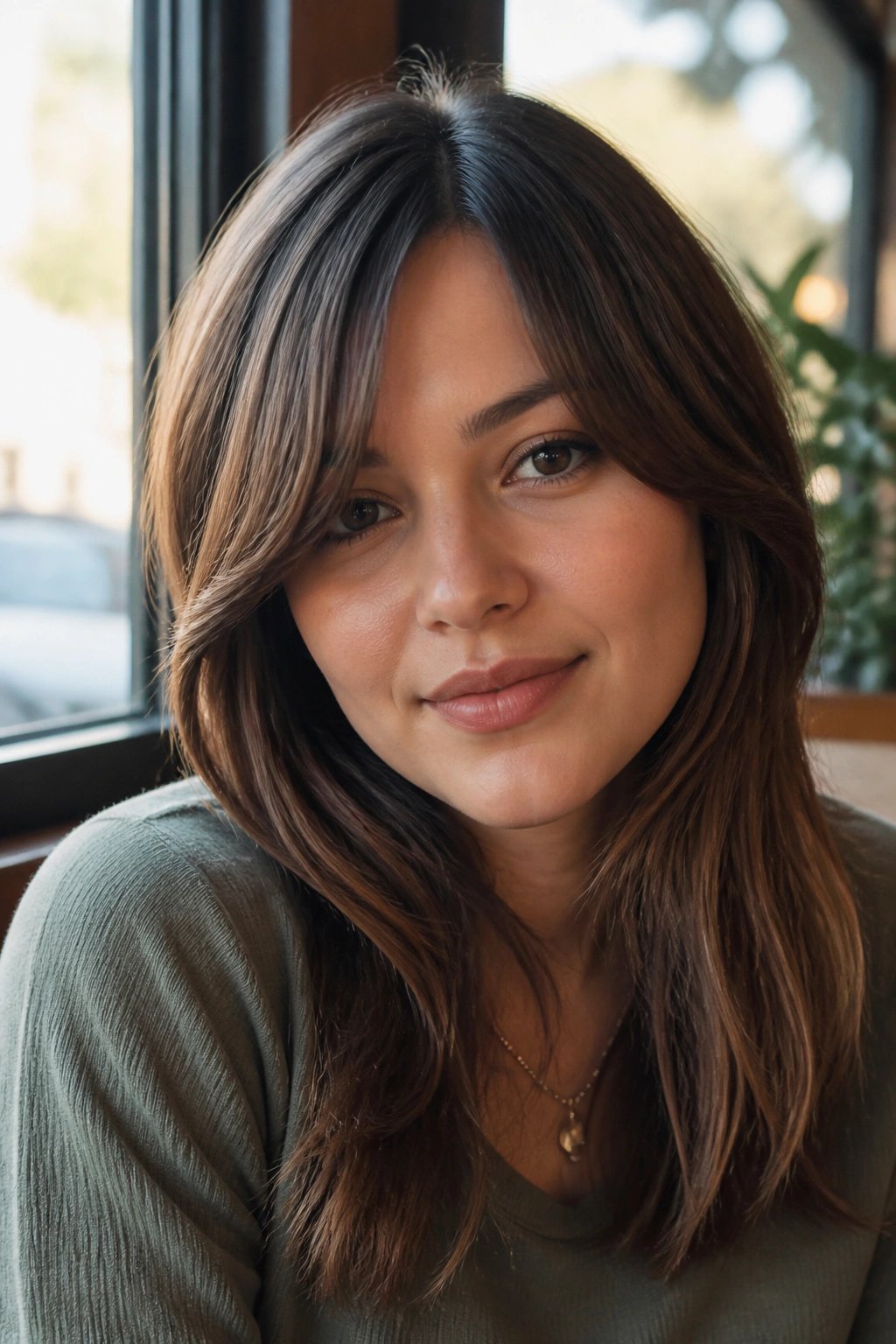
A center part is not mandatory, and that’s worth saying out loud. A soft off-center split can be more flattering on a round face because it breaks symmetry just enough to make the face feel longer and a little slimmer.
This shape is also friendly to cowlicks. If your hair naturally pushes to one side, fighting it every morning is a waste of time. Let the part follow the grain, then build the curtain shape from there.
I prefer this version when the forehead is short or when the face already has a lot of width through the cheeks. The slight shift keeps the bangs from sitting like a frame that’s too even.
The cut should still open near the cheekbones. That part doesn’t change. What changes is the way the front falls, and that small shift can make the whole haircut feel less formal.
6. Shaggy Curtain Bangs That Break Up the Face
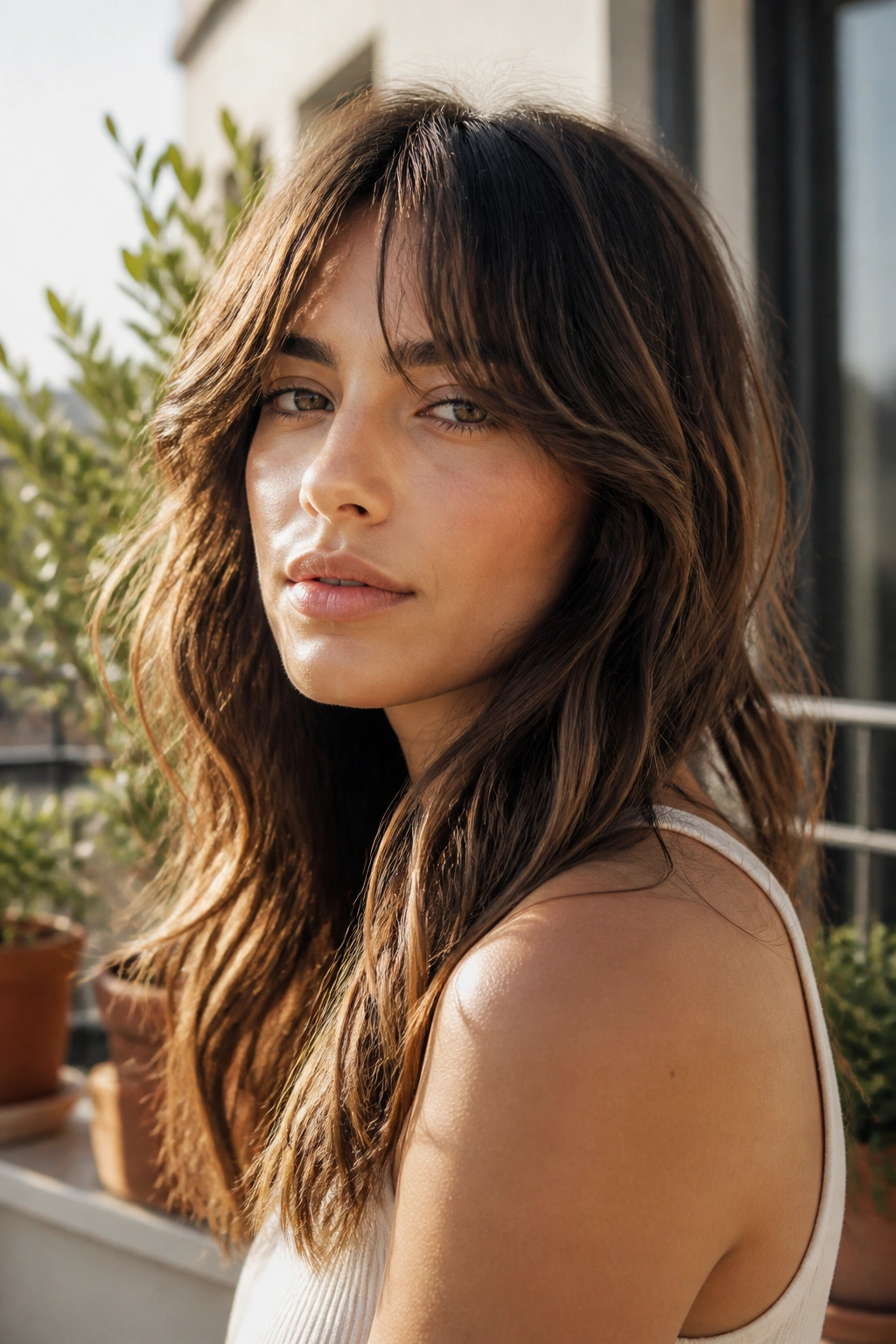
Unlike polished blowout bangs, shaggy curtain bangs depend on texture. That makes them a better fit for people who want movement without having to round-brush their hair every single time they wash it.
The ends should look lightly broken up, not ragged. There’s a difference. Broken up means the fringe moves. Ragged means it looks chewed on, and nobody wants that.
This style works especially well with layered cuts and a bit of wave. On a round face, the extra texture prevents the front from looking like one smooth, wide shape. Instead, the bangs separate into smaller pieces, which makes the face feel less circular.
If you air-dry a lot, this is a strong pick. If you like a very glossy, polished finish, it can still work, but it needs a quick bend with a small round brush or a flat iron twist at the ends.
7. Wispy Curtain Bangs for Fine Hair
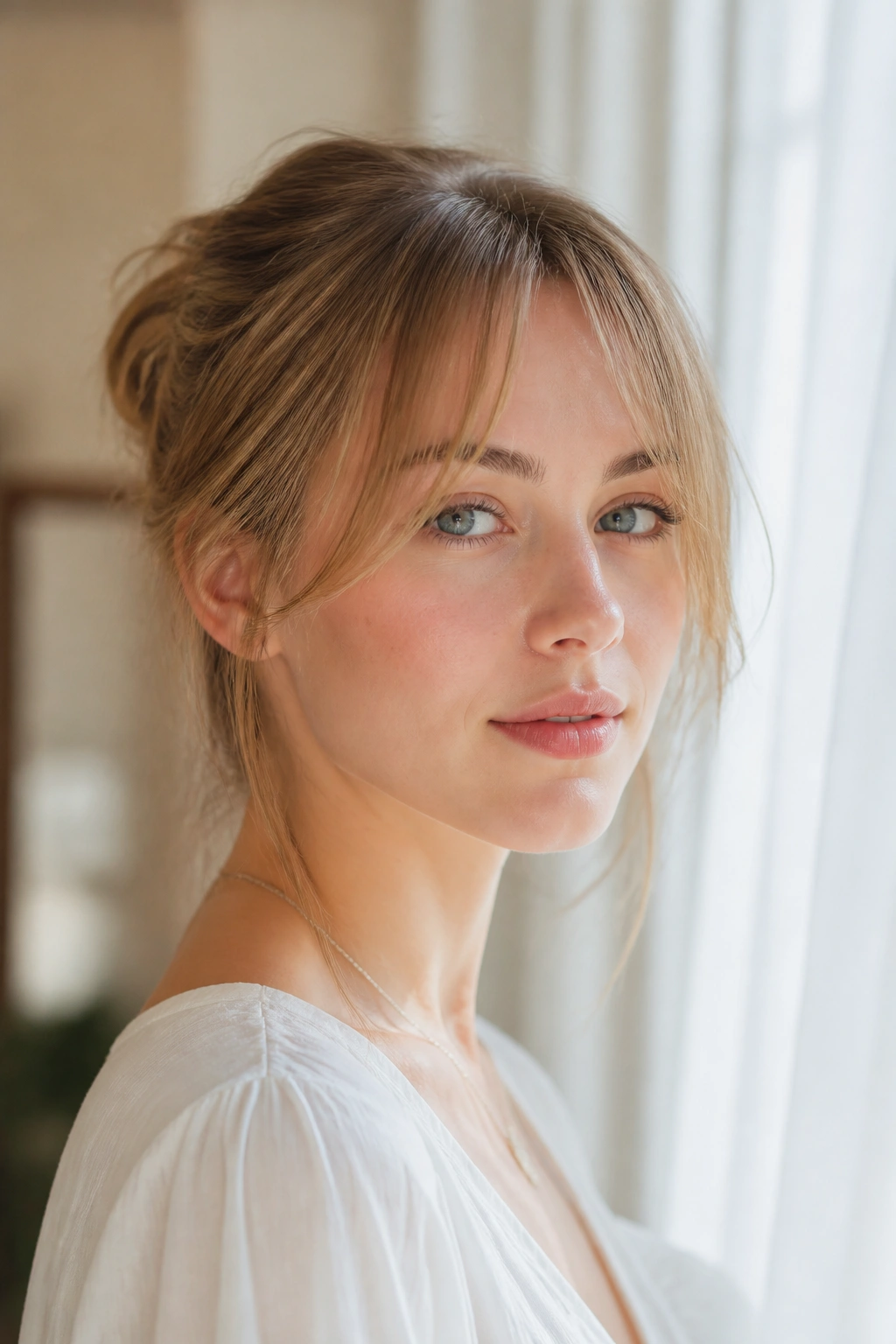
Fine hair can wear curtain bangs, but it needs the lightest hand in the room. Heavy bangs on fine strands go flat fast, and flat bangs around a round face often read as a straight line across the forehead. That’s not the look.
Wispy curtain bangs solve that by keeping the perimeter light and translucent. The bangs should separate a little when you move, almost like a soft veil, not a block of hair sitting at the front.
Why They Don’t Look Thin
The cut is usually done with point cutting, which means the stylist snips into the ends at an angle instead of cutting a blunt line. That leaves tiny breaks in the edge, and those breaks make the fringe move more naturally.
A few things help here:
- Keep the center shorter by only 1 to 1.5 inches, not more
- Ask for a soft taper into the temples
- Blow-dry forward first, then split the bangs open
- Use a lightweight mousse at the roots, not a heavy cream
Best tip: if the bangs start to disappear by midday, the cut may be too long, not too short.
8. Thick Curtain Bangs With Internal Weight Removal
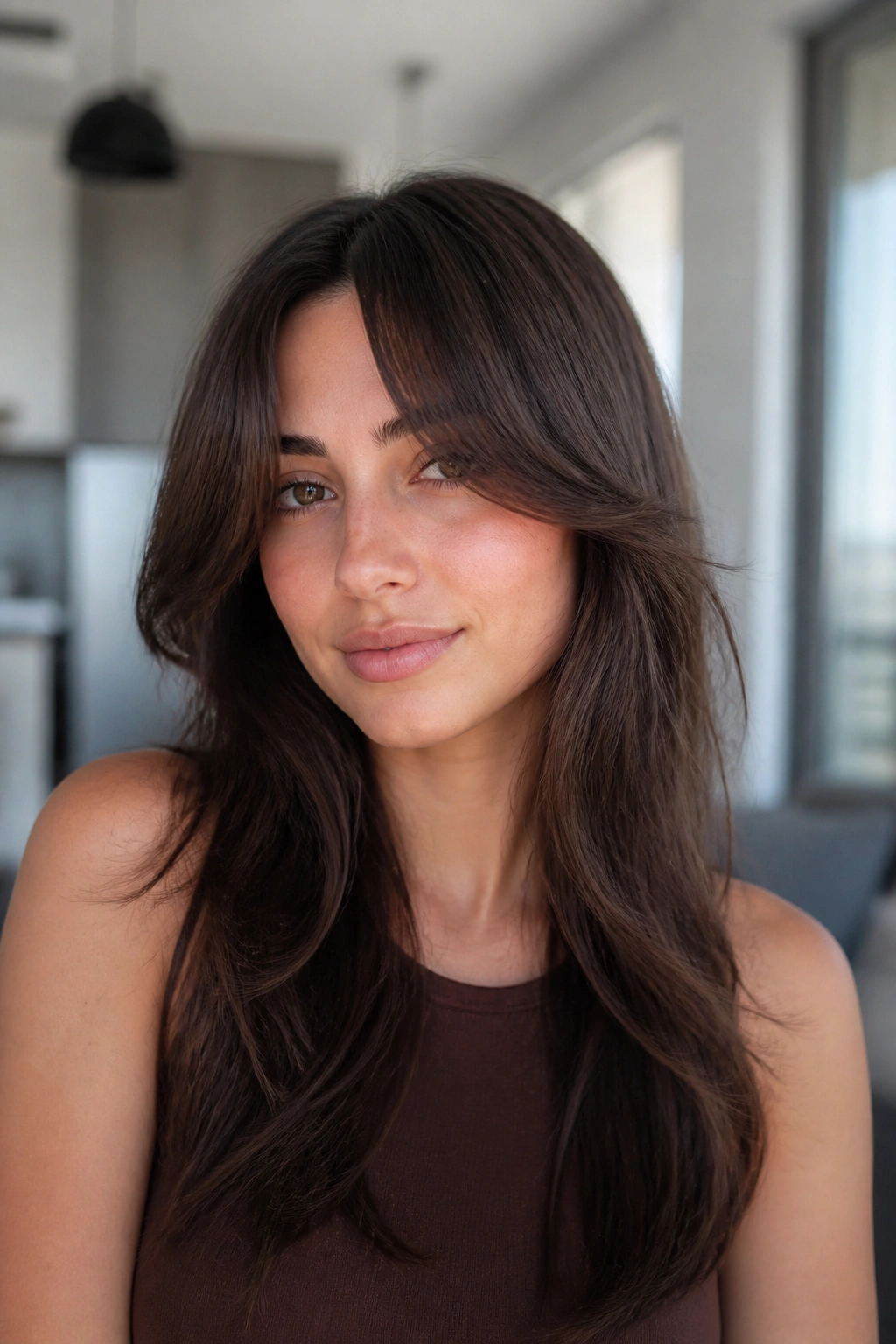
Can thick hair wear curtain bangs without turning into a helmet? Yes. But the bangs need to be shaped from the inside, not just trimmed at the surface.
That means removing bulk under the top layer so the fringe bends instead of puffing out. A solid block of thick hair at the front tends to sit wide on a round face, and that is the opposite of what you want.
This version looks best when the front still has body, just not too much width. The outer pieces can be longer and heavier than the center, which helps the bangs fall in a soft arc rather than spreading across the forehead.
I would not over-thin the ends, though. People do that all the time and then wonder why the bangs go stringy. Thick hair needs structure, not punishment.
If your hair holds heat well, a medium round brush and 60 to 90 seconds of tension while blow-drying will make a big difference.
9. Wavy Curtain Bangs That Sweep Into the Cheeks
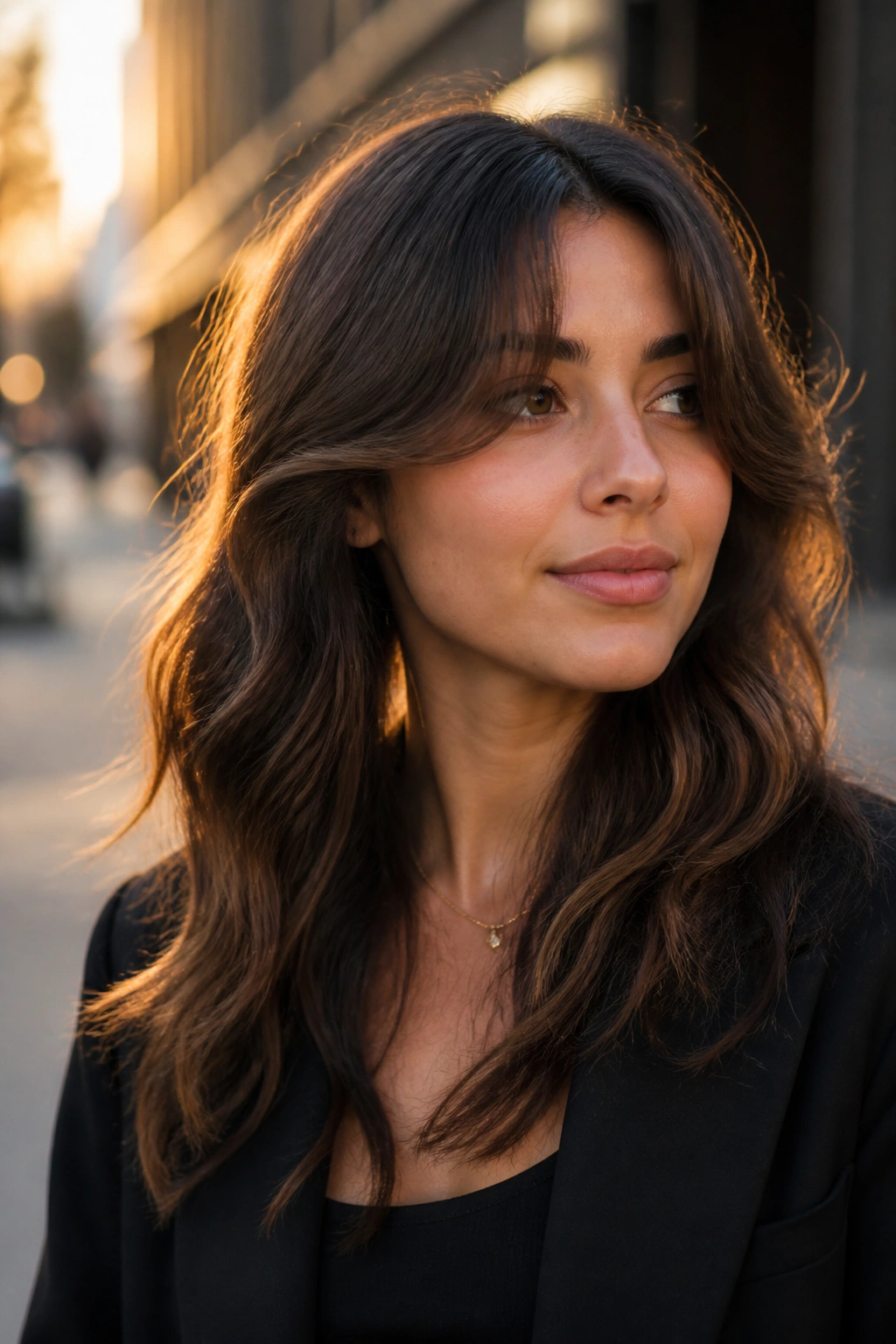
What happens when a round face meets natural wave? If the bang is cut too short, the wave bounces up and widens the front. If it’s cut with enough length, the shape turns soft and elegant without trying too hard.
That’s why wavy curtain bangs should usually start a little longer than straight-hair bangs. The wave needs room to settle. A lip-to-cheekbone range is often better than a brow-length range, especially if your hair dries with a bend.
How to Get the Most From It
The styling matters more here than in straighter hair. Use a blow-dryer nozzle and a small round brush, or bend the bangs with a 1-inch to 1.25-inch curling iron away from the face.
- Start with damp, not soaking, hair
- Mist the roots with heat protectant
- Dry the center forward first
- Sweep each side away from the face for 10 to 15 seconds
A little irregularity is fine. Actually, it helps. Perfectly even waves can look stiff, and a round face rarely benefits from stiffness at the front.
10. Straight Curtain Bangs With Long Layers
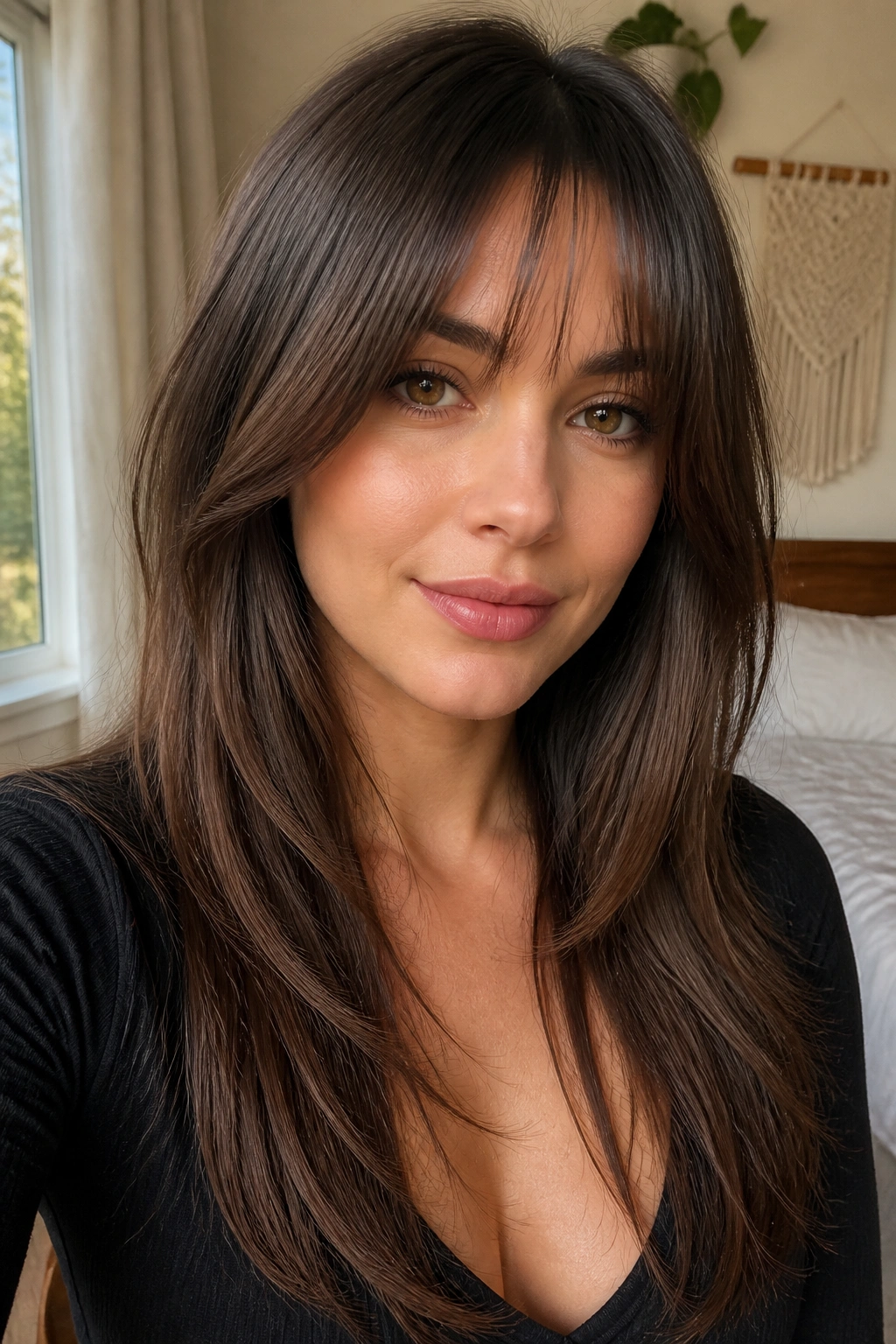
Straight hair shows everything. That can be a blessing or a problem, depending on the cut. With round faces, straight curtain bangs need enough length and layering to avoid looking like a flat shelf.
The outer pieces should not end at the same spot as the center. That is the mistake. The cut needs a gradual fall so the eye keeps moving down the face, then out toward the jaw.
I like this version on long hair because it gives the front some shape without making the haircut busy. The bangs do one job, and the long layers do the rest.
You also get a nice contrast between the smooth bang and the movement in the rest of the cut. That contrast makes the face feel more sculpted, even if you never touch a curling iron.
If your hair is pin-straight and slippery, ask for a little bevel at the ends. Tiny detail. Big difference.
11. Chin-Skimming Curtain Bangs That Lengthen the Profile
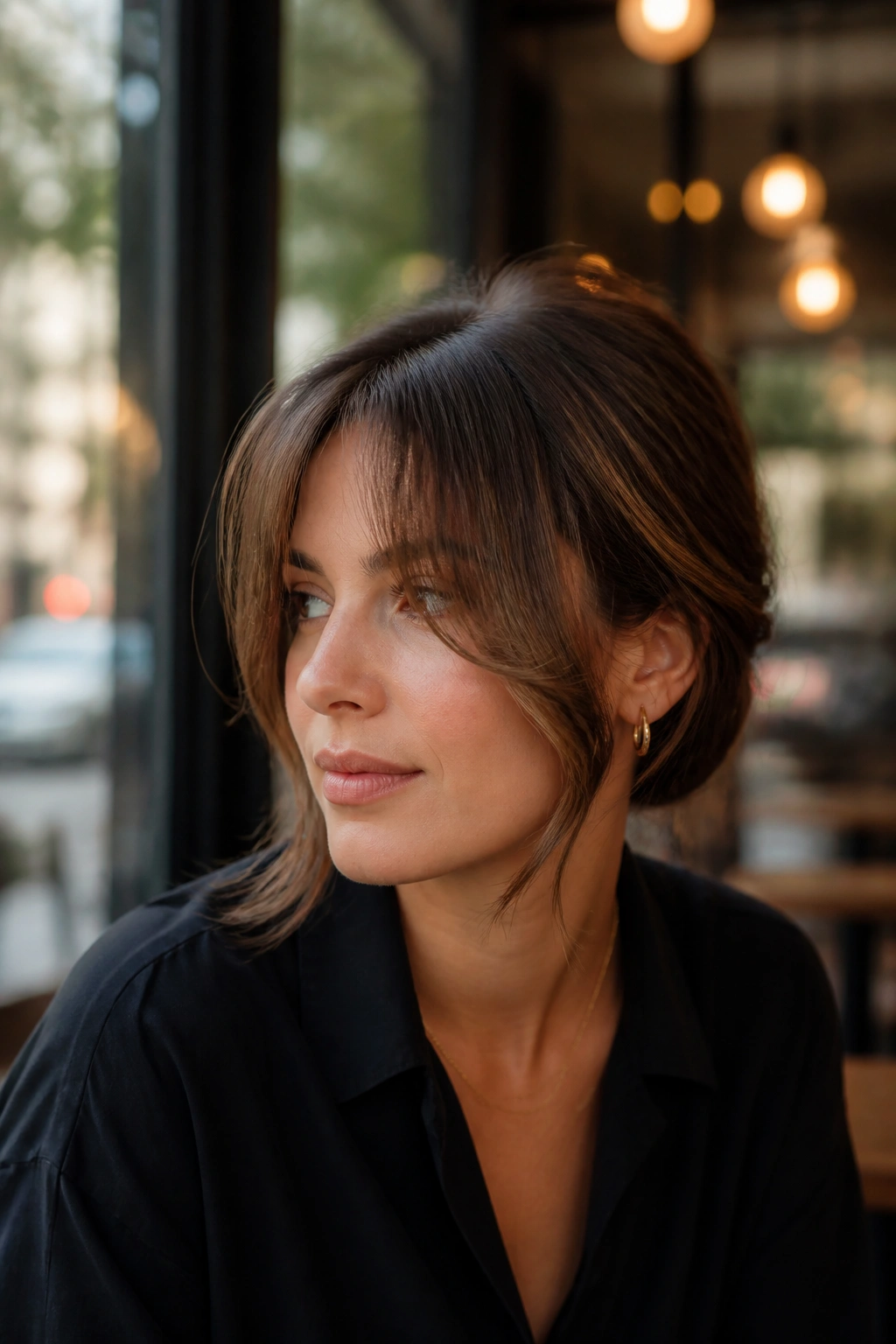
Chin-skimming curtain bangs are one of the best choices when you want the face to look longer without making the fringe feel heavy. The sides land near the jawline, which pulls attention lower than brow-length bangs ever could.
This shape is especially good if your cheeks are the widest part of your face. The longer sides create a line that crosses past the cheeks instead of ending on them, which softens the roundness in a way that feels natural.
A lot of people worry that chin-length bangs will hide the face. They do the opposite when they’re cut well. The center is still open, the sides are still soft, and the jaw gets a little outline without looking harsh.
It’s a strong option for mid-length cuts, too. The bangs and the haircut feel connected, which matters more than most people think. Disconnected bangs can look pasted on. These do not.
12. Curly Curtain Bangs Cut Long for Shrinkage
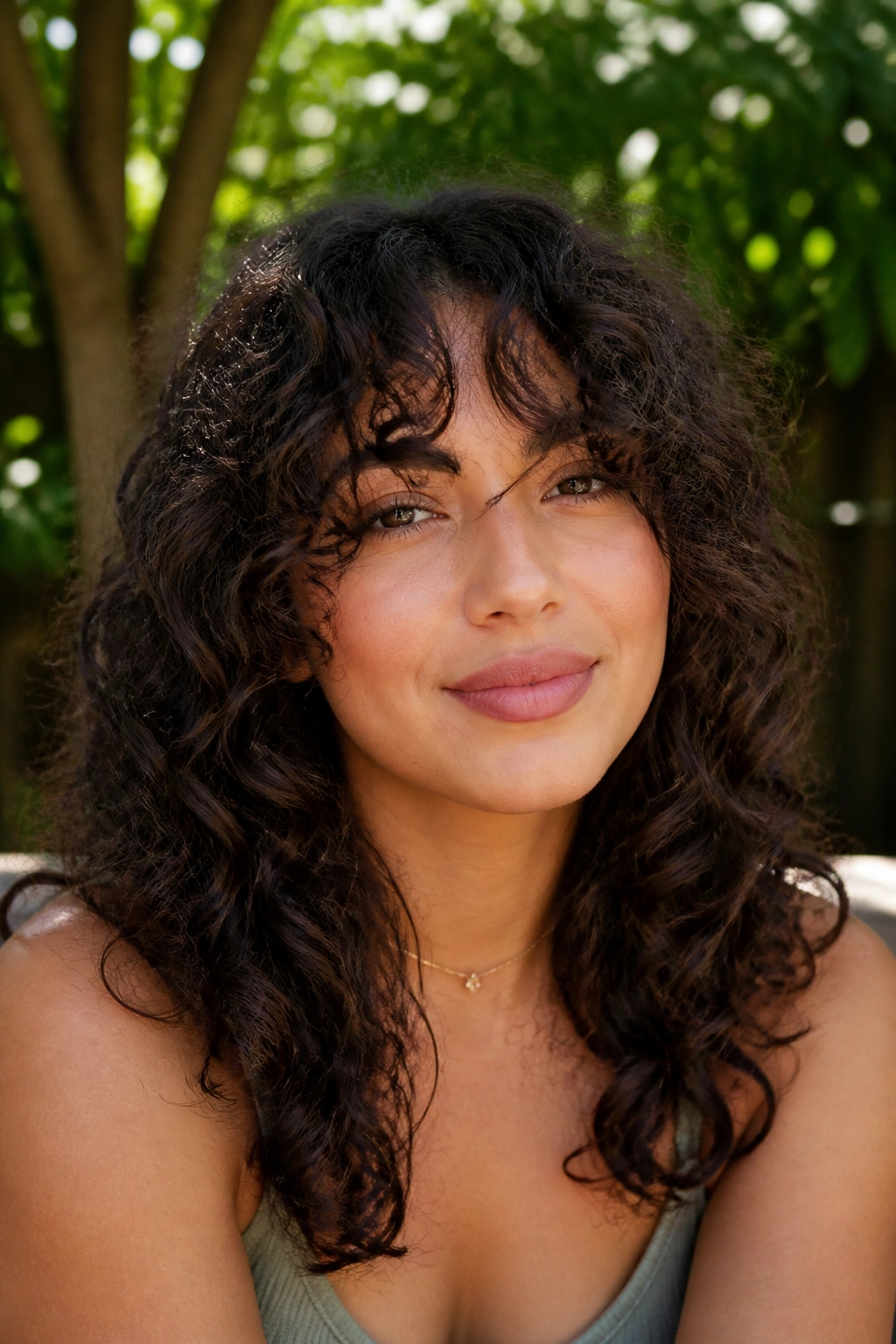
Curly curtain bangs usually need to be longer than you think they should be. Curly hair shrinks, bends, and springs in ways straight hair doesn’t, so a bang that looks perfect wet can land too high once it dries.
That’s why the best curly version is often cut at or below the nose bridge in the center, then longer at the sides. The shape should still open, but it needs room to live.
What to Ask for at the Chair
Ask for the bangs to be cut on dry or mostly dry curls if the stylist knows how to do it. That helps them see where the hair actually falls. Wet curls lie.
- Keep the center longer than straight-hair bangs
- Let the stylist check shrinkage before final trimming
- Avoid a harsh blunt line
- Use a curl cream that keeps the front soft, not crunchy
This style is lovely on round faces because the curls make the bangs feel open and soft instead of flat. Just don’t chase symmetry too hard. Curly hair rewards a looser hand.
13. Razored Curtain Bangs With Soft Points
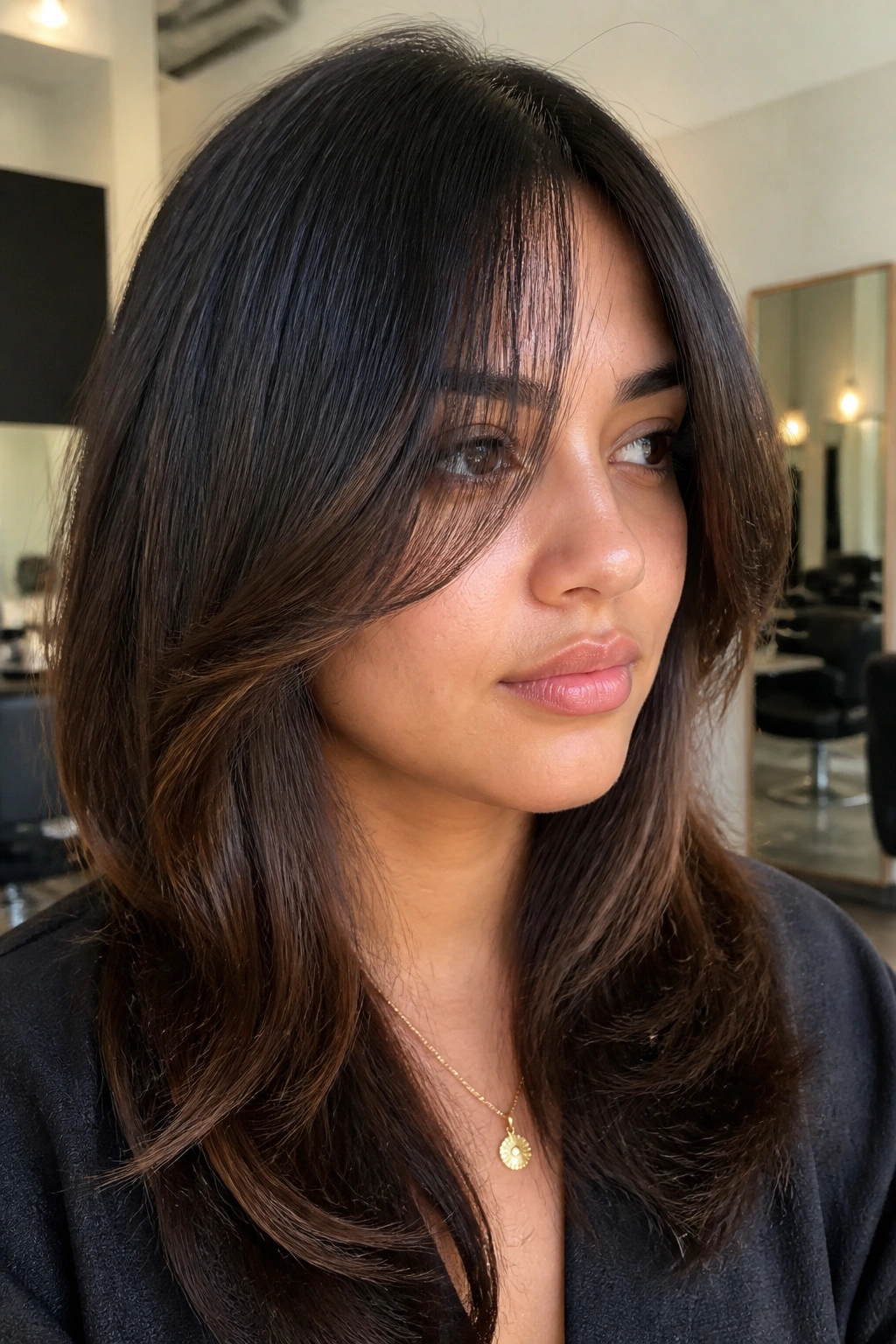
Razored curtain bangs are for people who want edge softness without looking overly polished. The razor takes away some of the density at the ends, so the fringe falls in a lighter, more tapered shape.
That can work well on round faces, especially if the front feels too full with a scissors-only cut. The razor creates wisps and broken ends, which help the bangs fan out instead of sitting as a solid block.
What the Razor Changes
A razor does not just make hair shorter. It changes how the ends move. That matters with curtain bangs because movement is the whole point.
Use this version when:
- your hair is medium to thick
- you want a softer line at the cheekbones
- your bangs feel heavy after a fresh trim
- you like a piecey finish rather than a sleek one
Best tip: skip aggressive razor work on damaged hair. If the ends are already dry, point cutting is usually safer.
The result should feel feathered, not shredded. There’s a fine line there, and a good stylist knows it.
14. Blowout Curtain Bangs With a Rounded Bend
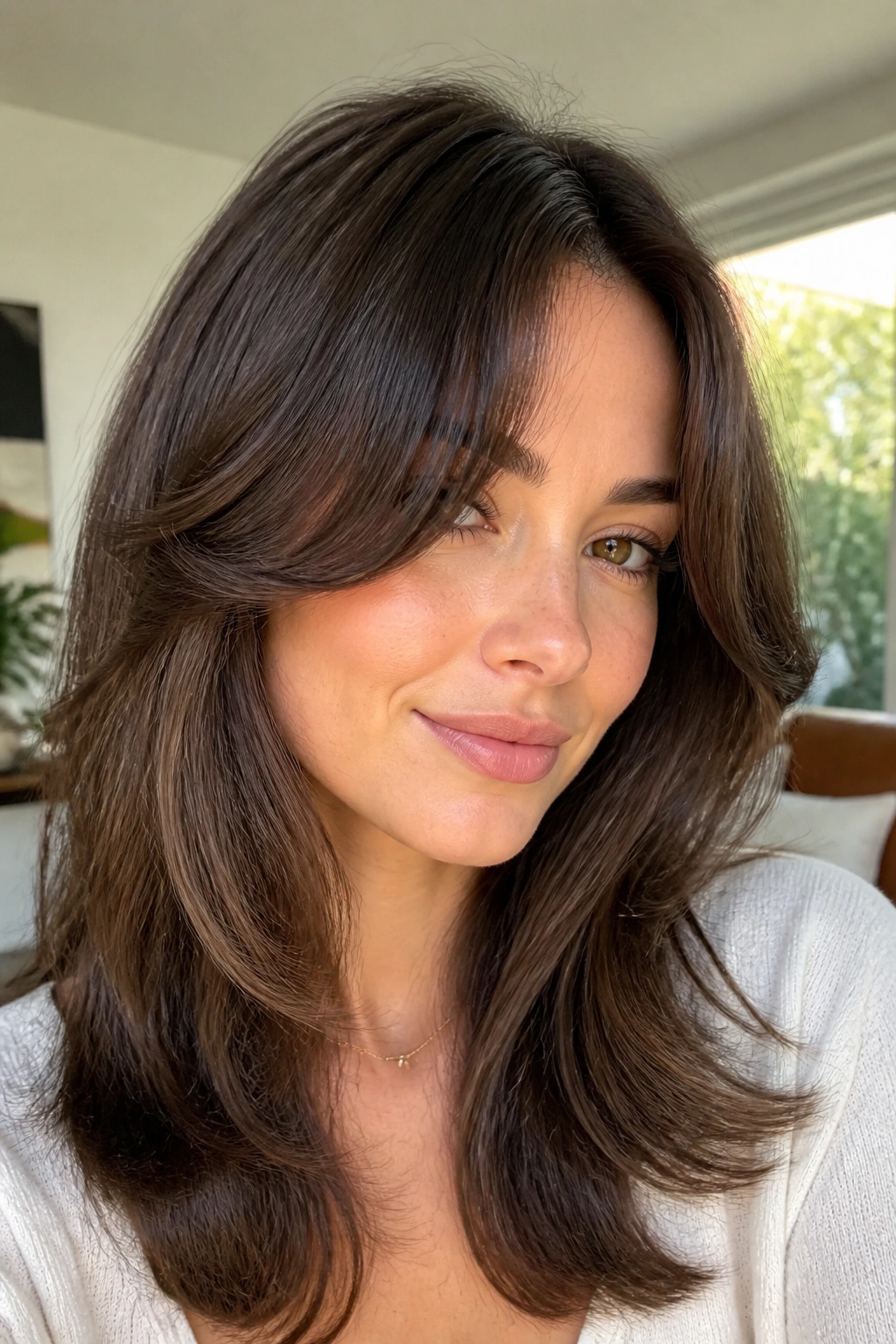
A blowout finish can change the entire feel of curtain bangs for a round face. The shape stays the same, but the styling gives it lift at the roots and a soft curve through the ends, which adds vertical length without making the hair look stiff.
The trick is to dry the bangs forward first, then wrap the sides away from the face with a round brush. Don’t rush that part. If the roots stay flat, the bangs collapse back onto the forehead and the face looks wider again.
Use medium heat and keep tension light but steady. You want the ends to bend, not curl into a tube. That little bevel is what makes the fringe feel airy.
This is the version I recommend if you like a finished look but still want the bangs to move when you turn your head. It’s neat, but not crunchy. And yes, that distinction matters.
15. Deep-Part Curtain Bangs That Start Higher on One Side
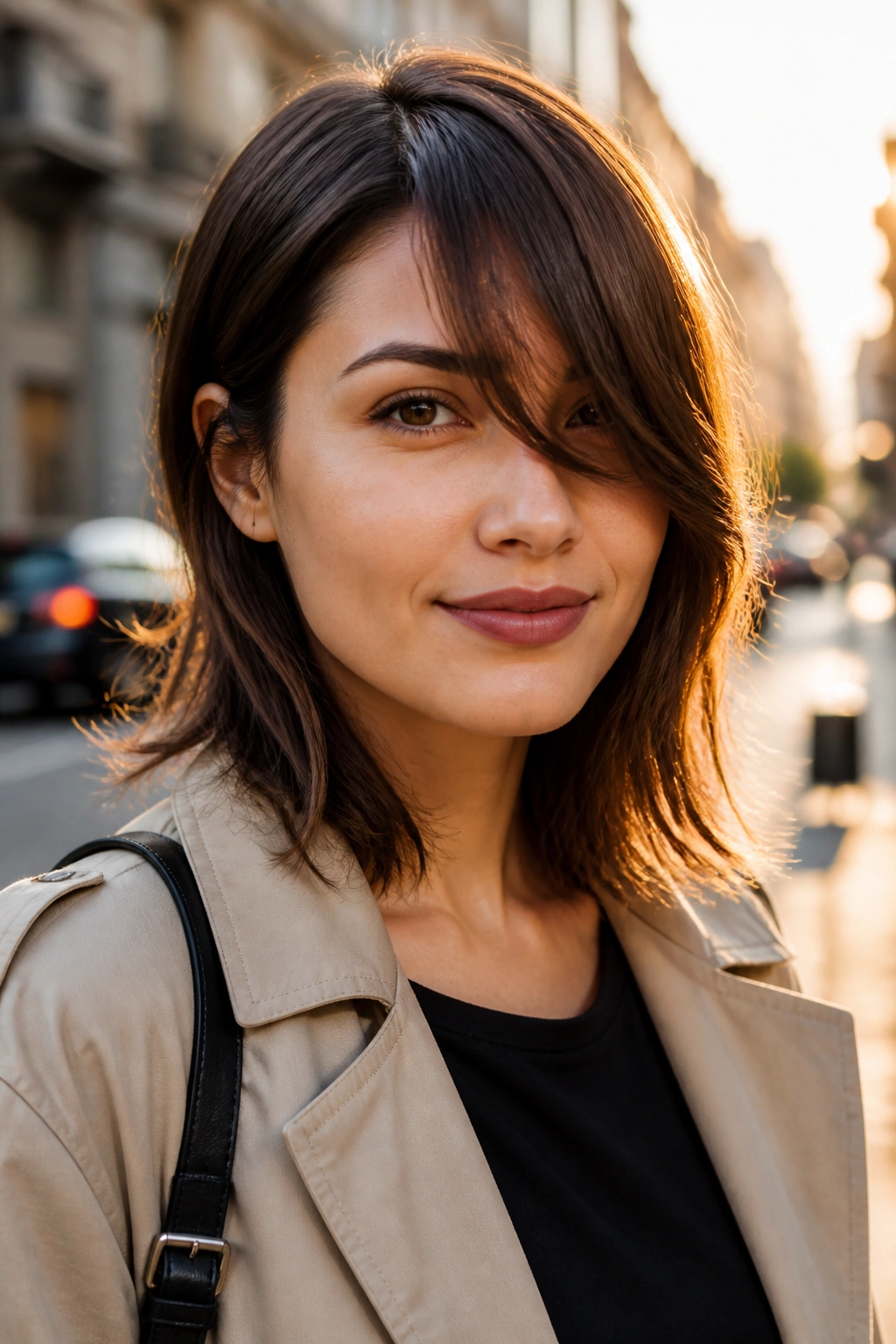
Can a deep part make curtain bangs work better on a round face? Absolutely. A part that sits just off center creates a longer line on one side and a smaller sweep on the other, which breaks up the width of the face in a subtle way.
This is a smart move if you have a strong cowlick, a short forehead, or a face that feels very even from side to side. The off-center part stops the bangs from forming a symmetrical curtain that can sometimes look too wide.
How to Place the Part
Start the part about 1 to 1.5 inches away from the center, then let the shorter side fall softly across the forehead. The longer side should still reach the cheekbone or lower.
A few styling notes help:
- Blow-dry the shorter side first so it doesn’t collapse
- Keep the longer side smooth but not flat
- Recheck the part after the hair cools
- Don’t force perfect symmetry
The result feels casual, but it’s not accidental. That slight shift gives the face more shape than a dead-center split often does.
16. Lob-Friendly Curtain Bangs That Brush the Jaw
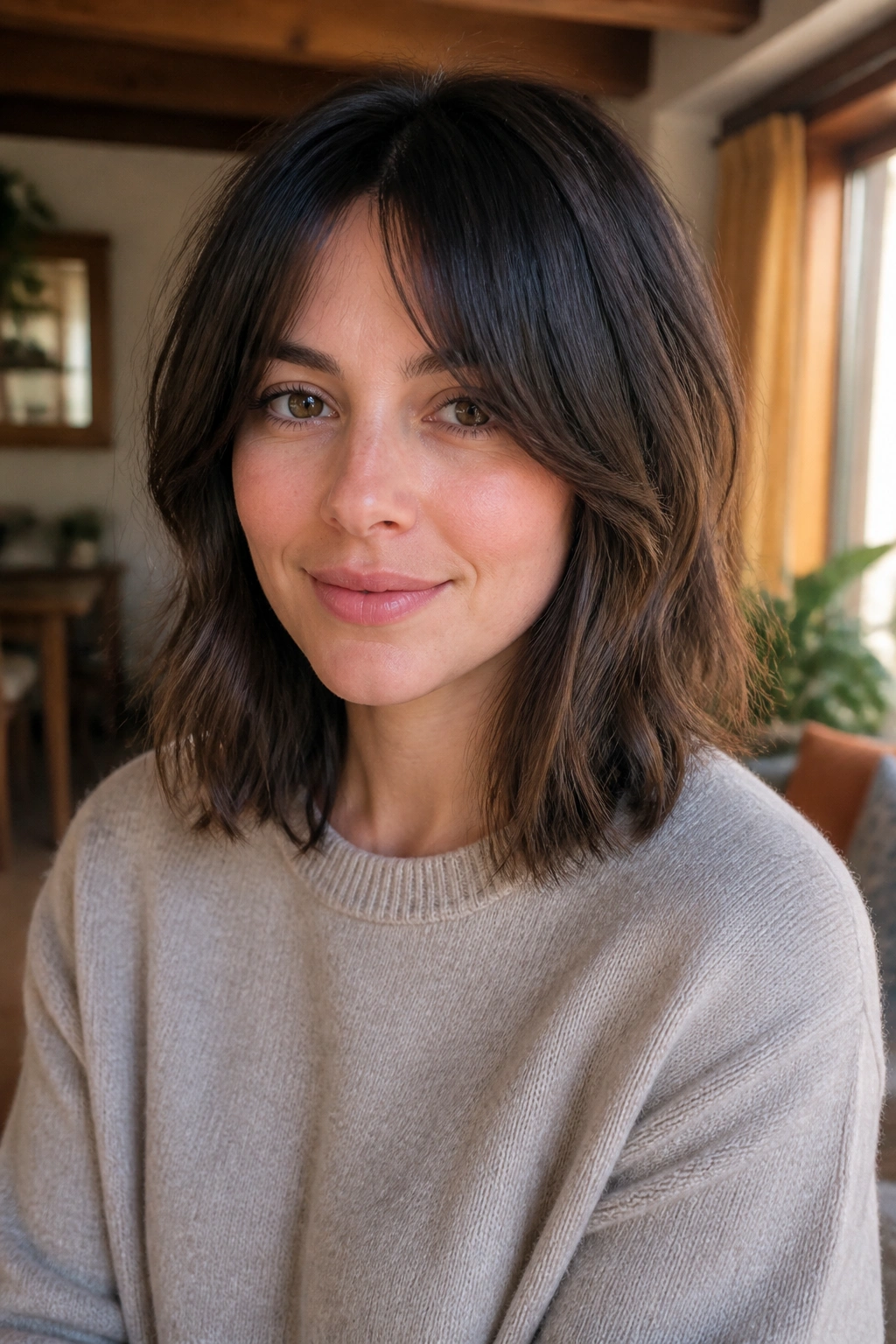
If your hair sits at the collarbone or just above the shoulders, jaw-brushing curtain bangs can make the whole cut feel connected. The fringe doesn’t fight the length of the haircut. It feeds into it.
That matters on round faces because disconnected bangs can chop the face in two. A lob with bangs that drop toward the jaw creates one continuous line, and continuous lines tend to lengthen the look of the face.
The sides of the bang should land lightly on the jaw or just past it. If they hit too high, the face can look wider. If they hit too low, the shape disappears into the rest of the cut.
This style works best when the ends of the lob are soft, not blunt. A beveled edge at the bottom keeps the haircut from feeling boxy. Boxy and round are not friends.
17. Peekaboo Curtain Bangs for a Light Front

Sometimes the best fringe is the one you barely notice at first. Peekaboo curtain bangs are cut so lightly that they disappear into the rest of the hair until you part them open, tuck them back, or bend them with a brush.
That makes them a smart choice if you’re nervous about a big change. They give the face some softness without committing to a heavy front section.
I like this style when someone wears glasses or likes to pin the front back on busy days. The bangs can fall forward when you want them, then slip behind the frames or the ears when you don’t.
The key is restraint. Too much hair at the front ruins the whole idea. The cut should feel breathable. Light. Easy to move.
This is also one of the most forgiving options while growing out a shorter fringe. A little length on the sides helps hide awkward stages, which is useful because bangs always seem to misbehave for a while.
18. Grow-Out Curtain Bangs That Stay Soft
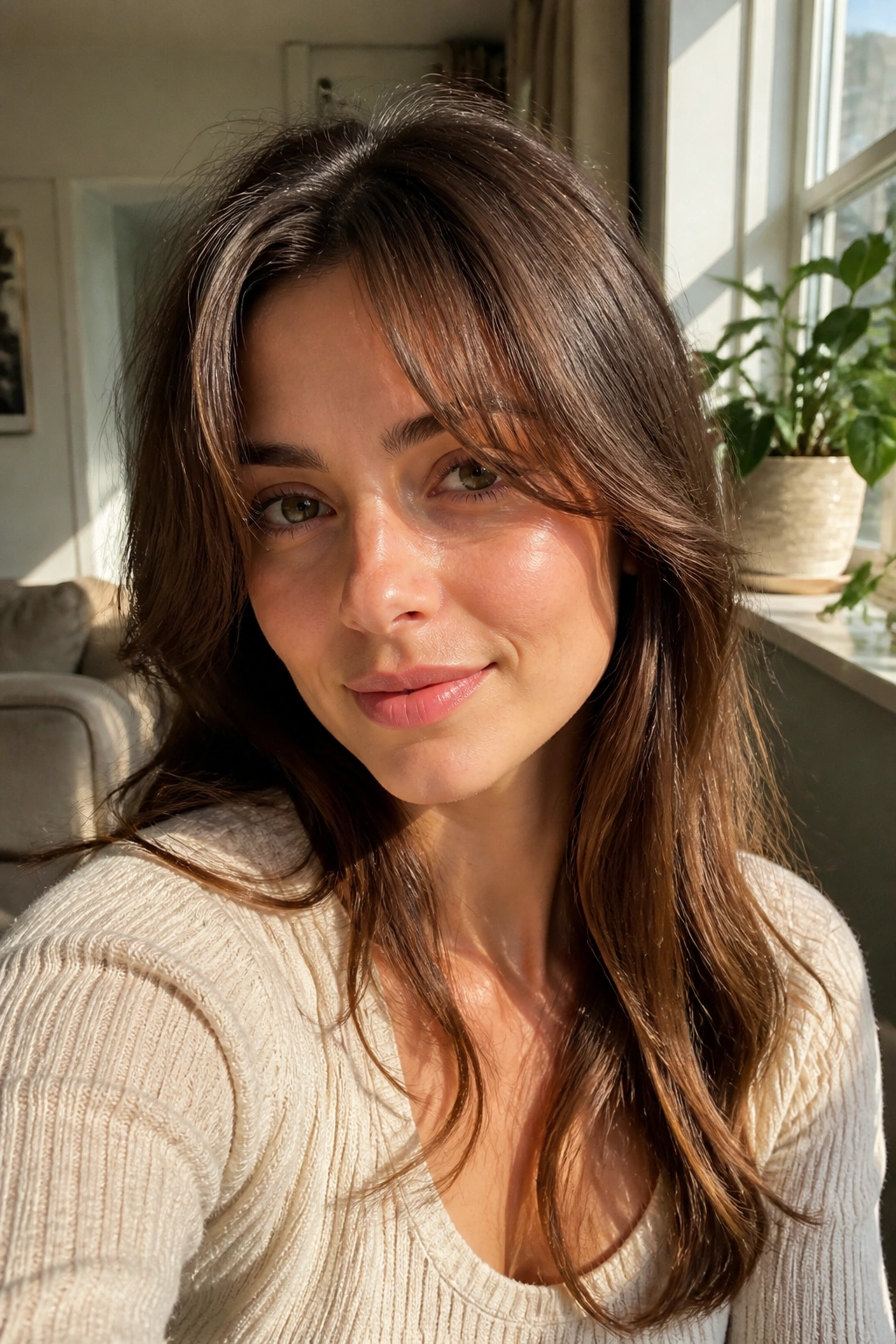
Grow-out curtain bangs are built for people who do not want a haircut that needs constant babysitting. They start with a soft split, a gentle face frame, and enough length to survive that awkward stage between fresh bangs and full layers.
On a round face, that matters more than it sounds. If the cut grows into the wrong place, it can sit right at the cheeks and make the face look broader. A good grow-out shape keeps the shortest point higher and the longer pieces lower, so the balance stays intact as the hair gets longer.
What to Look For
- A soft start near the brow or upper cheekbone
- Longer outer pieces that drop past the cheek
- Internal texture so the front does not puff up
- A shape that still works when tucked back
The best part is how little panic this version creates. You can skip a trim, wear it parted, or let it blend into layers without the front looking unfinished.
It’s the practical choice. And sometimes that’s the prettiest one.
Final Notes
The best soft curtain bangs for round faces usually do three things at once: they open away from the cheeks, they keep the center from getting too wide, and they leave enough length to move. Miss any one of those, and the fringe starts working against you.
Bring photos, yes, but bring better photos. Point to the exact spot where you want the shortest piece to fall, because that detail matters more than the photo filter or the model’s smile.
One last thing. If you wear glasses, spend a little extra time on length. Bangs that land a touch too high can fight with the frames all day, and nobody needs that.
