



Straight hair is unforgiving in the nicest possible way. Every snip shows up. Every layer shows up too, which is why medium curtain bangs for straight hair can look crisp and polished one day, then oddly flat the next if the shape is even a little off.
That does not mean the style is hard to wear. It means the cut has to be specific. On straight hair, the better curtain bangs usually start with a shorter center point, then open out around the cheekbones or jaw, with enough weight at the ends to keep the fringe from splitting into thin, sad ribbons.
A medium-length cut gives you room to play. You can wear it blown out, tucked behind the ears, left to air-dry with a soft bend, or pinned back on a lazy morning. The catch is plain: straight hair does not hide mistakes. A fringe that is too short can look choppy. One that is too thinned out can look see-through.
The styles below all work with that reality instead of fighting it. Some are airy, some are heavy, some are glossy, and some are almost invisible until they move. The best ones do one thing well: they make straight hair look intentional.
1. Soft Medium Curtain Bangs for Straight Hair
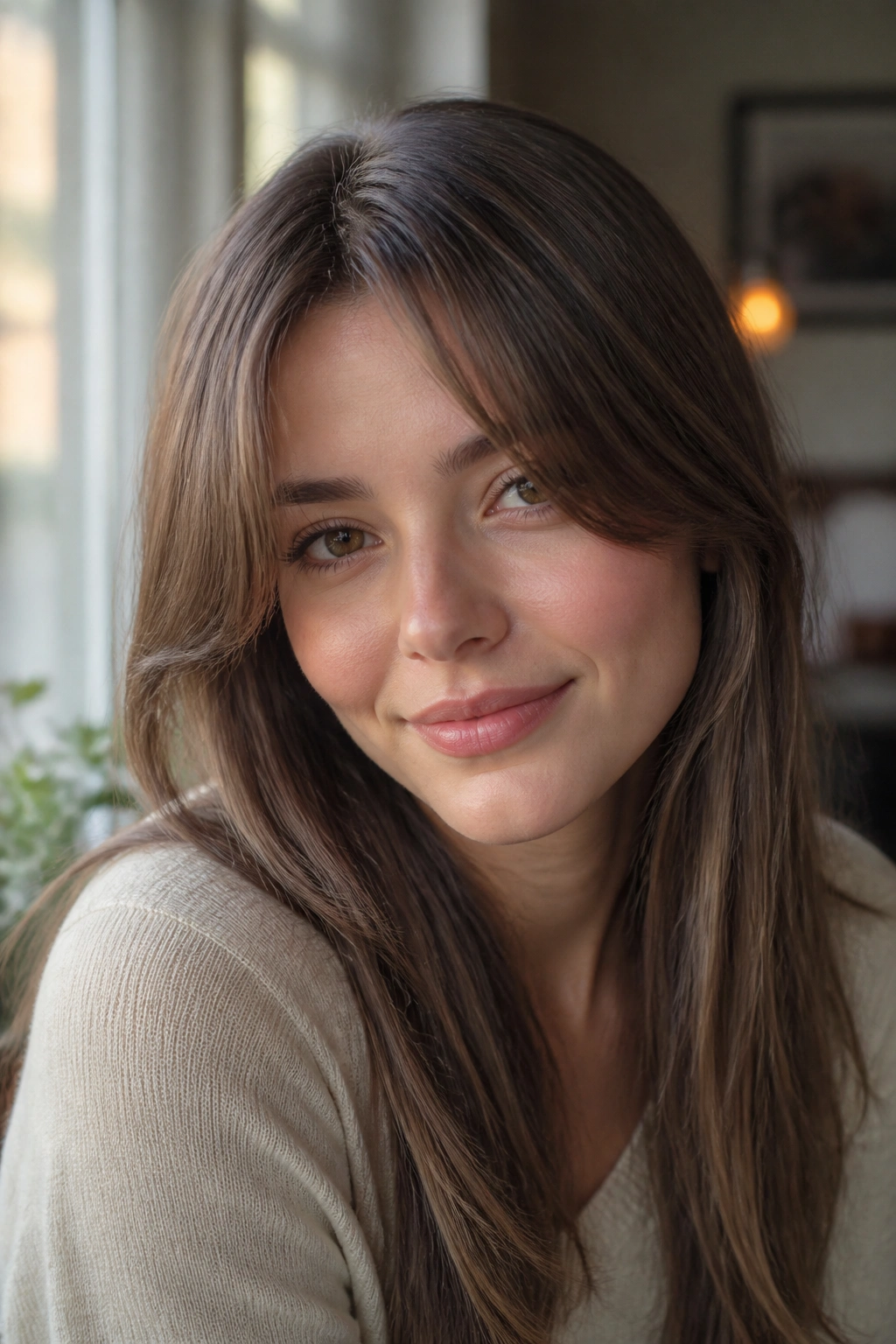
This is the easiest place to start if you want curtain bangs but do not want a dramatic haircut. The center is kept soft, not chopped blunt, and the side pieces skim outward around the cheekbones instead of dropping straight down like a heavy curtain.
That shape matters on straight hair. Flat texture can make bangs look heavier than they are, so a little taper goes a long way. You want enough weight to hold the shape, but not so much that the fringe sits there like a shelf.
Ask for a soft center point, longer wings, and a dry check before the stylist removes more length. A half-inch can change the whole mood. Too short and the cut feels boxy. Too long and it loses that face-opening swing.
What makes it easy to wear
- The shortest point sits around the bridge of the nose or just below the brows.
- The side pieces should hit near the cheekbones on most faces.
- The ends stay soft, not razor-thin.
Best for: first-time bang wearers, medium straight hair, and anyone who wants movement without daily drama.
2. Brow-Grazing Curtain Bangs with Long Wings
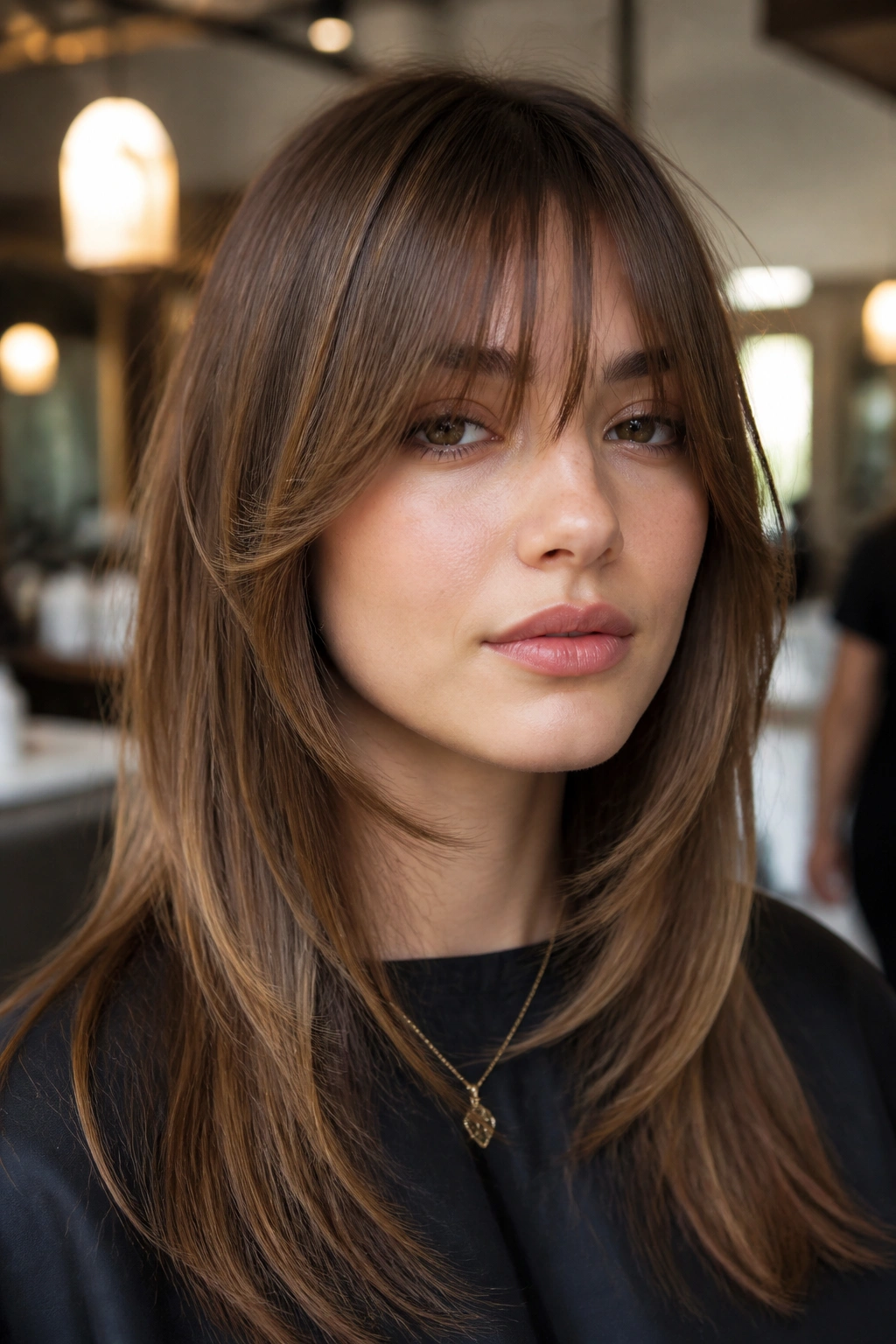
If you want the fringe to feel a little more styled, this is the sharpest version that still behaves well on straight hair. The center grazes the brows, then the sides stretch down into long wings that can blend into the front layers.
The trick is balance. A brow-grazing center gives the cut some edge, but the long sides keep it from feeling boxed in. On straight hair, that contrast reads clean and modern instead of fluffy. It also makes the eyes stand out without swallowing the face.
This shape works best when the blow-dry has a gentle curve, not a tight curl. A large round brush or a flat brush with a wrist bend is enough. You want the front to move away from the face, not curl into it.
One warning: if your forehead is short, keep the center a touch lower. Otherwise the bangs can feel crowded fast.
3. Chin-Skimming Curtain Bangs with Face Frame
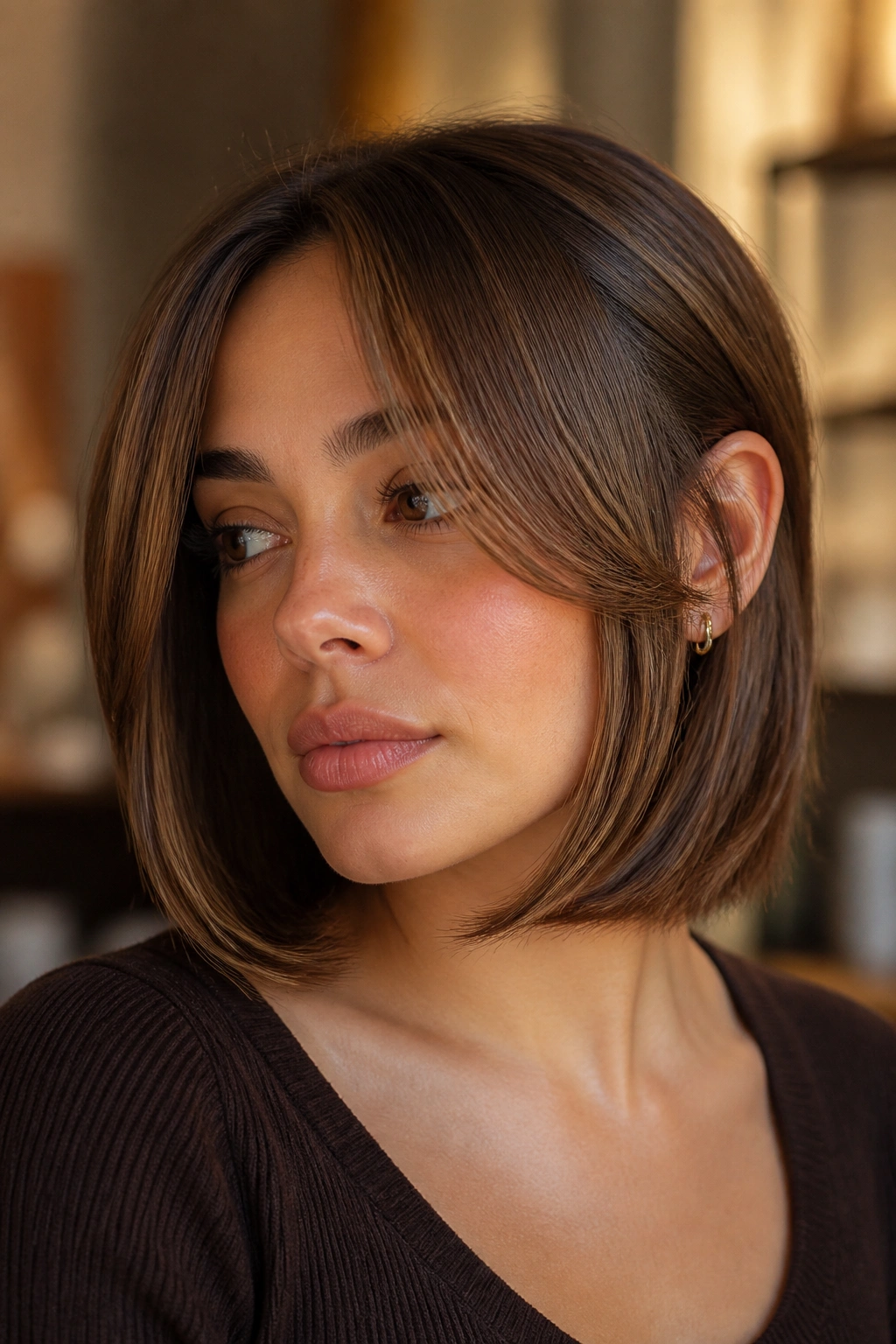
Picture the fringe ending right around the chin, then melting into the rest of the hair. That is the appeal here. The cut creates a longer frame that softens strong angles and gives straight hair a little swing when you turn your head.
Why it flatters straight hair
Straight hair loves line. Chin-skimming curtain bangs use that to their advantage by making the frame look clean instead of fuzzy. The result feels deliberate, almost tailored, because the longest parts land where the jawline starts to matter.
It is a good choice if your hair is medium length and you like to tuck pieces behind one ear. The cut still looks finished when it falls forward, and it does not collapse the second the weather gets annoying. That is a bigger win than people admit.
- Best on square, round, and heart-shaped faces.
- Works well with a center part or a slight offset part.
- Needs a trim every 6 to 8 weeks if you want the chin length to stay neat.
4. Airy Sliced Curtain Bangs for Fine Straight Hair
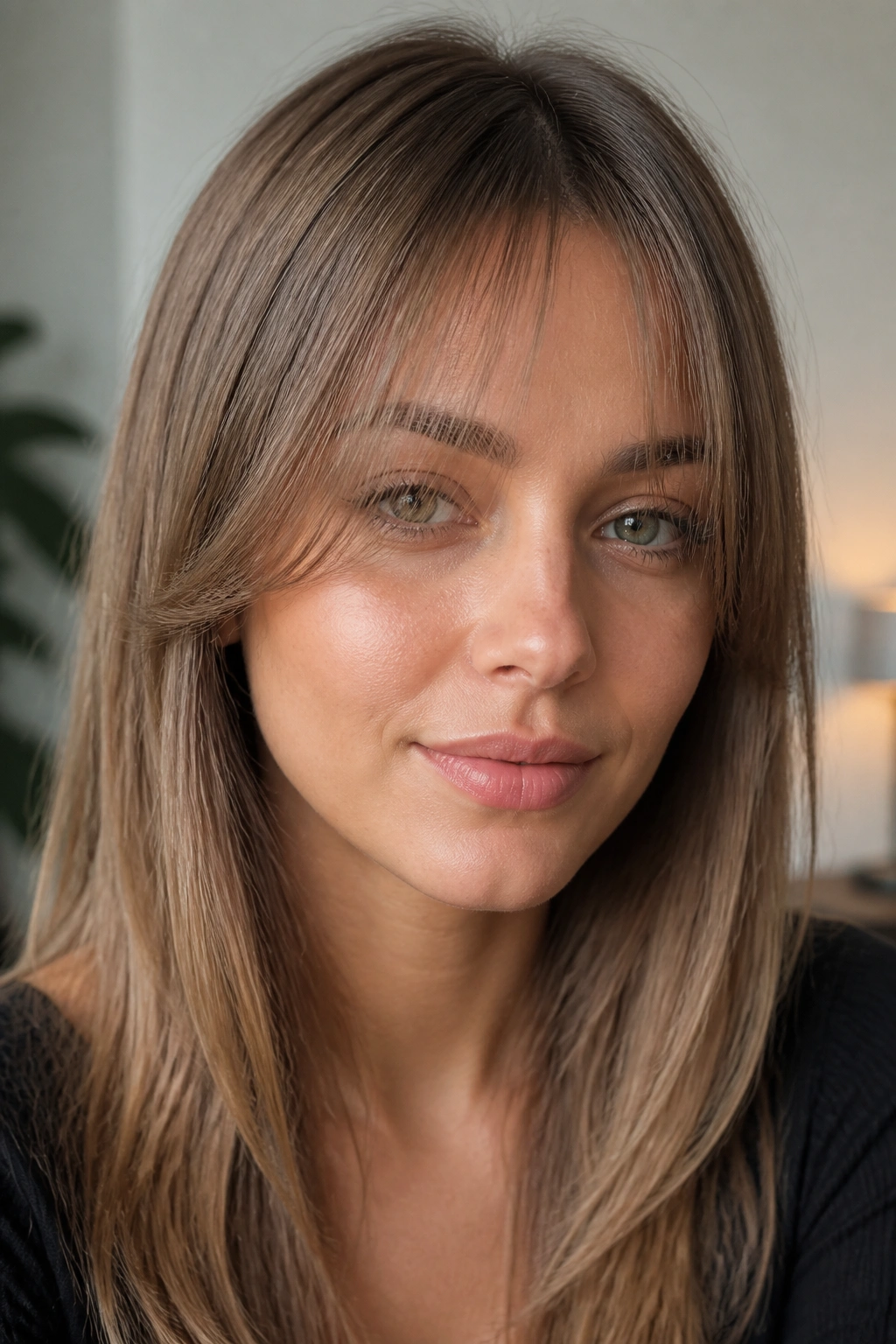
Fine hair does not need more hair. It needs smarter hair.
That is why sliced curtain bangs can work so well on straight texture. Instead of cutting a thick block and then trying to thin it out later, the fringe is built from lighter pieces that taper quickly at the sides. The line is still there, but it breathes. On fine hair, that matters.
What to ask for at the chair
- Point cutting through the ends instead of heavy thinning shears.
- A soft center that starts a little lower than a blunt fringe would.
- Enough width to reach the outer edge of each eye, not just the middle.
The one thing to avoid is over-texturizing. Fine straight hair can lose shape fast if the stylist goes after it too hard. You want lift, not scraps. If the cut is done well, the bangs move a little when you walk, and that tiny bit of motion is usually enough.
5. Slightly Off-Center Curtain Bangs
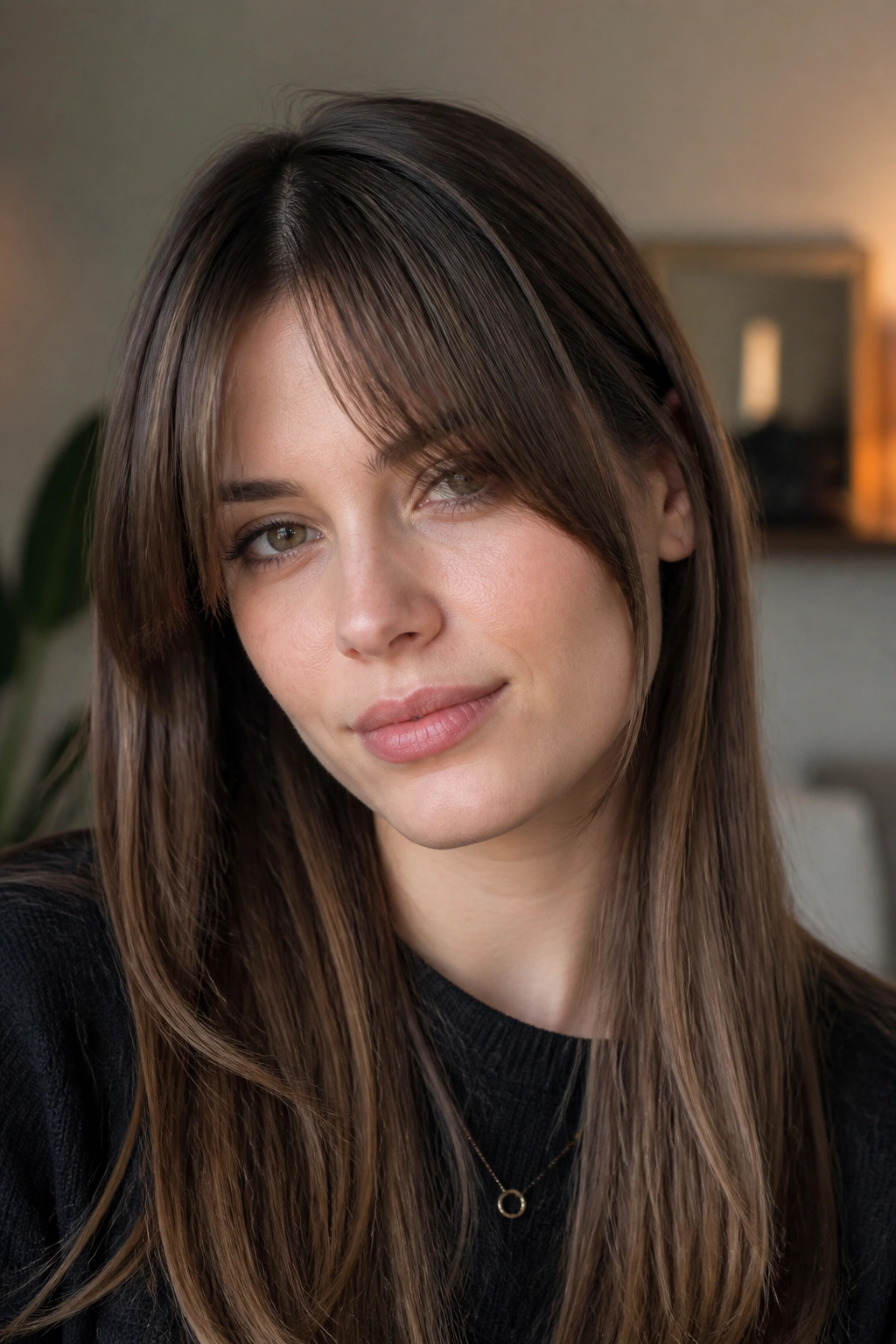
A perfect center part can look crisp on some faces and severe on others. Shift the split a quarter-inch to one side and the whole haircut softens.
That small adjustment is useful on straight hair because the front still lays cleanly, but it no longer feels like two identical halves. One side can sit a touch fuller, while the other opens more quickly toward the cheek. The asymmetry is subtle. You notice it more in motion than in a mirror selfie.
This version is especially good if your face is a little narrower at the temples or if a full middle part makes your features look longer. The offset part gives the bangs a more natural fall, almost like the hair decided to be polite instead of theatrical.
A lot of people overthink this one. Don’t. Part the hair slightly off center, blow-dry it forward and outward, and let the fringe settle where it wants. That tiny shift often does more than adding extra length ever could.
6. Rounded Curtain Bangs for Oval and Long Faces
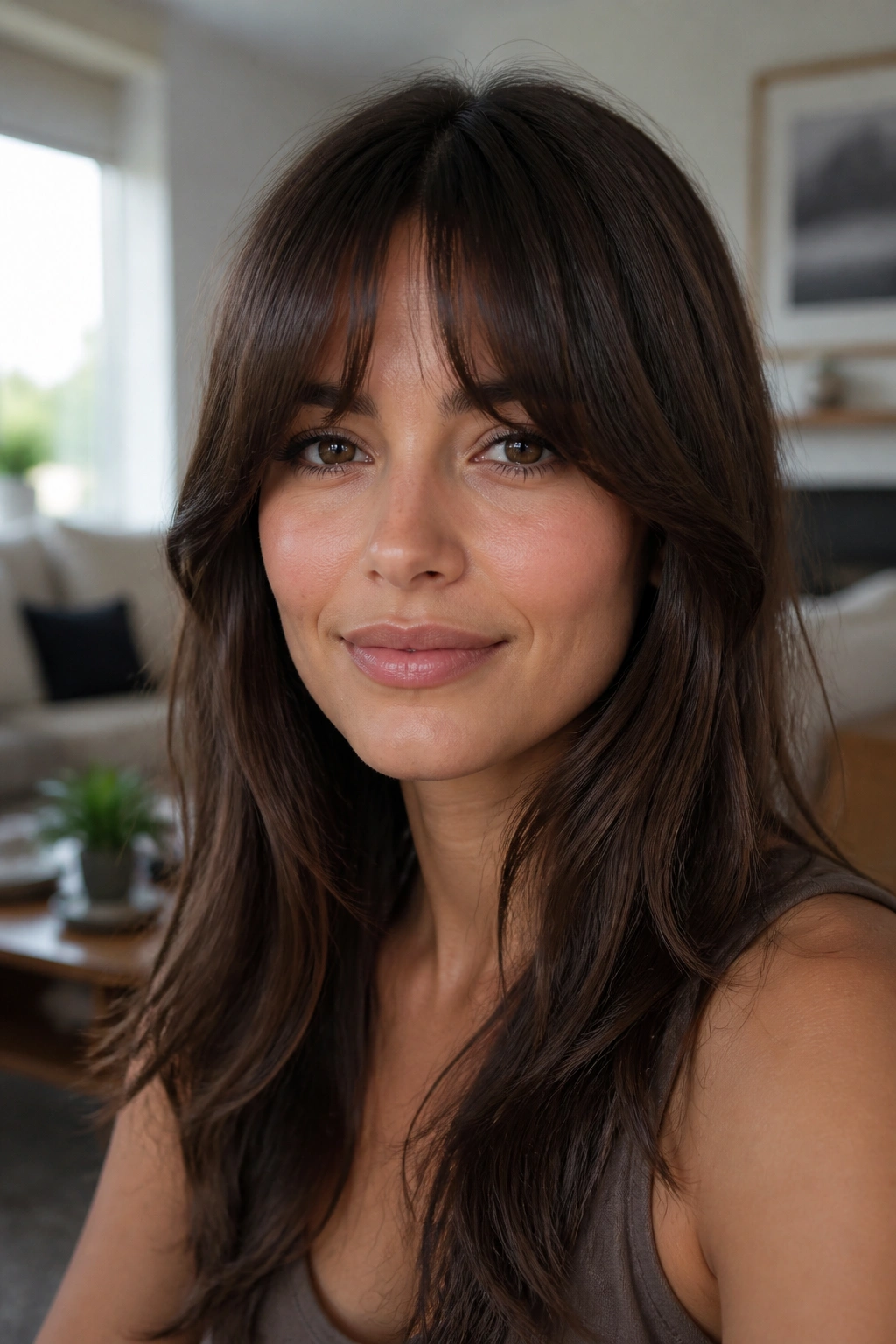
Rounded curtain bangs are a smart fix when you want straight hair to look softer across the top of the face. The shape arcs gently from the center, then curves outward instead of dropping in a sharp V. It feels a little fuller, a little warmer, and much less severe.
That roundness is useful on long faces because it creates width where the eye needs it. The forehead does not look overly exposed, and the front of the haircut fills out the face without crowding it. On oval faces, the same shape adds a bit of presence without changing the proportions too much.
The styling part is easy to botch, though. If you blow-dry the sides too flat, the curve disappears and the whole thing turns limp. Aim the brush slightly under and outward, then let the ends cool before you touch them again. That keeps the bend in place.
A rounded curtain bang is not flashy. It is one of those cuts that looks better in person than in a stiff photo.
7. Feathered Curtain Bangs with Face Layers
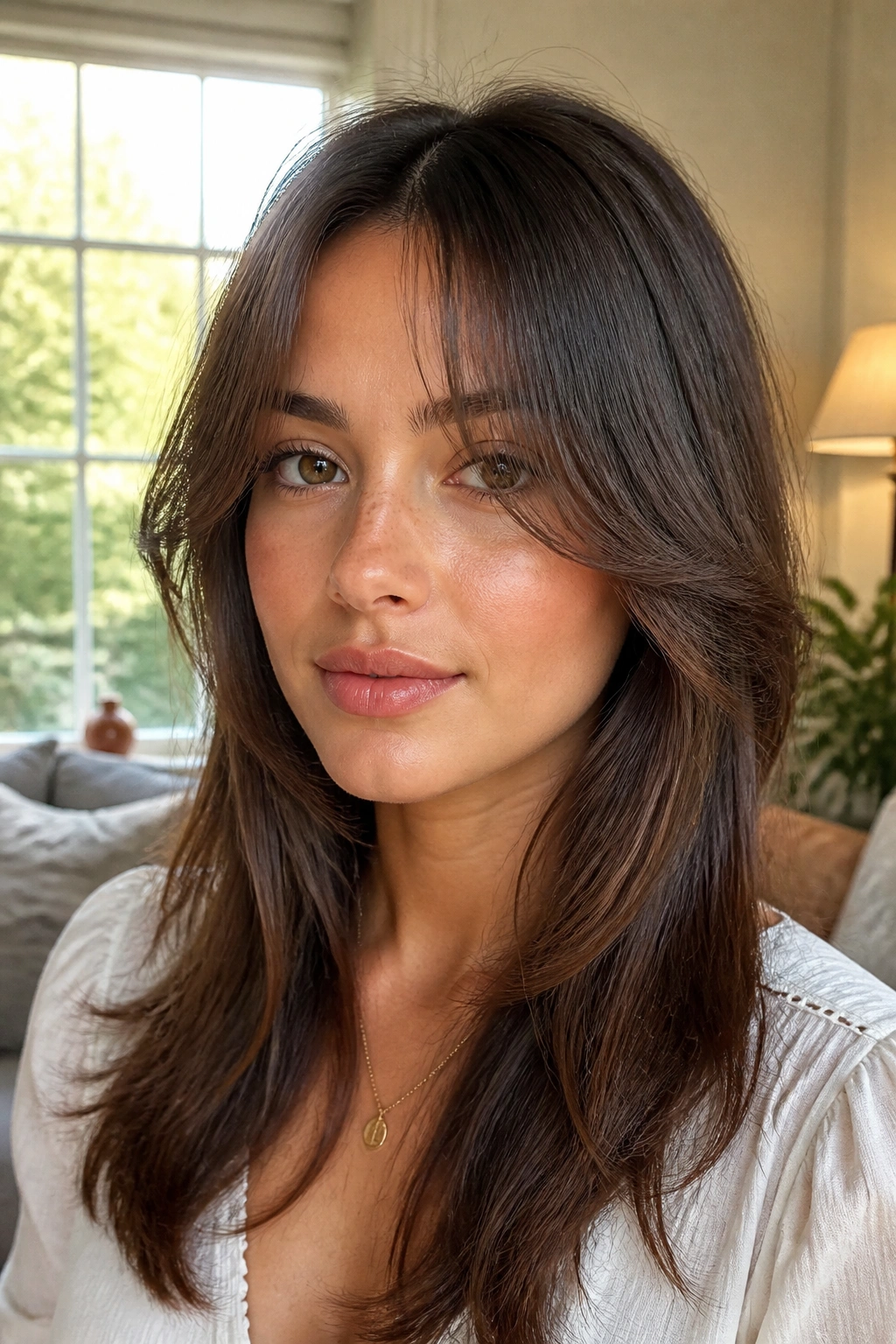
The fringe is only half the cut.
When the bangs feather into face-framing layers, medium straight hair gets a much more natural fall. Instead of a clear break between bang and length, the front pieces melt into the rest of the haircut. That makes the style easier to grow out, which is a relief if you hate the awkward middle stage.
Where the feathering should happen
The softest layers should start somewhere between the cheekbone and the jaw, not right at the nose. That keeps the front from turning wispy too early. On straight hair, feathering works best when it is gradual. Too much slicing near the root can make the fringe split apart.
This version suits people who wear their hair down most of the time and want the front to do more than sit there. It frames the face in a way that still feels relaxed.
- Good for medium-density straight hair.
- Less ideal if your hair is very fine and easily separated.
- Best paired with a light blowout, not flat-ironed stick-straight ends.
8. Heavy Curtain Bangs with a Soft Bend
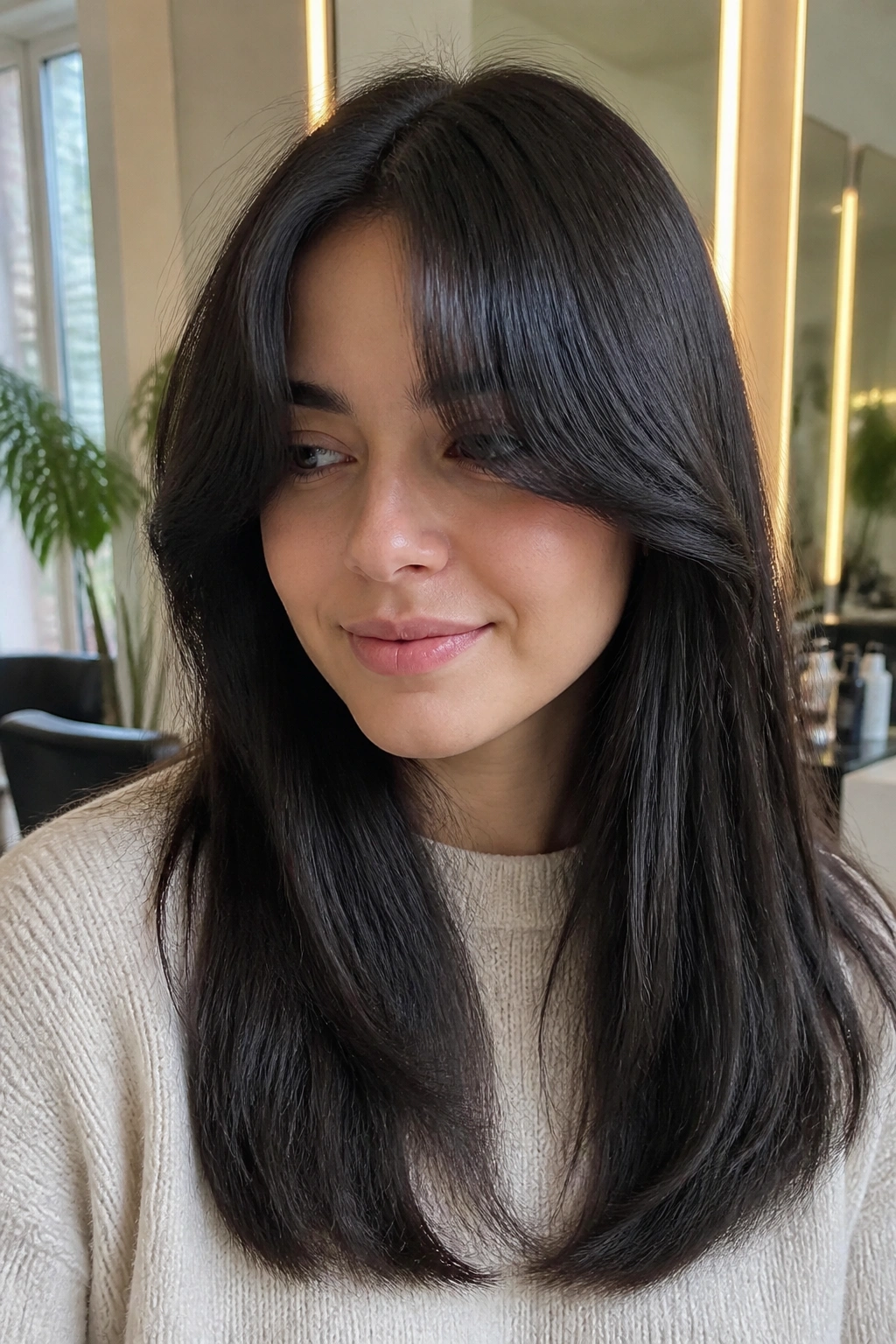
Dense straight hair can carry a heavier curtain bang better than most people think. In fact, a little extra weight often looks better because the hair has enough body to hold the shape without going stringy.
Here, the center section stays fuller, and the taper to the sides happens more slowly. That gives the fringe a richer line at the front, which is useful if your hair naturally falls flat after an hour. A heavier bang also photographs well under normal light because it does not disappear into the rest of the hair.
The catch is bulk. If the stylist removes too much from the middle, the fringe can puff at the sides and leave the center thin. Ask for controlled weight removal, not aggressive thinning. A few interior snips are enough.
This style likes a soft bend more than a big curl. Think rounded and full, not bouncy. It is a good match for people who want their haircut to look finished even when they skip a fancy blowout.
9. Barely-There Curtain Bangs
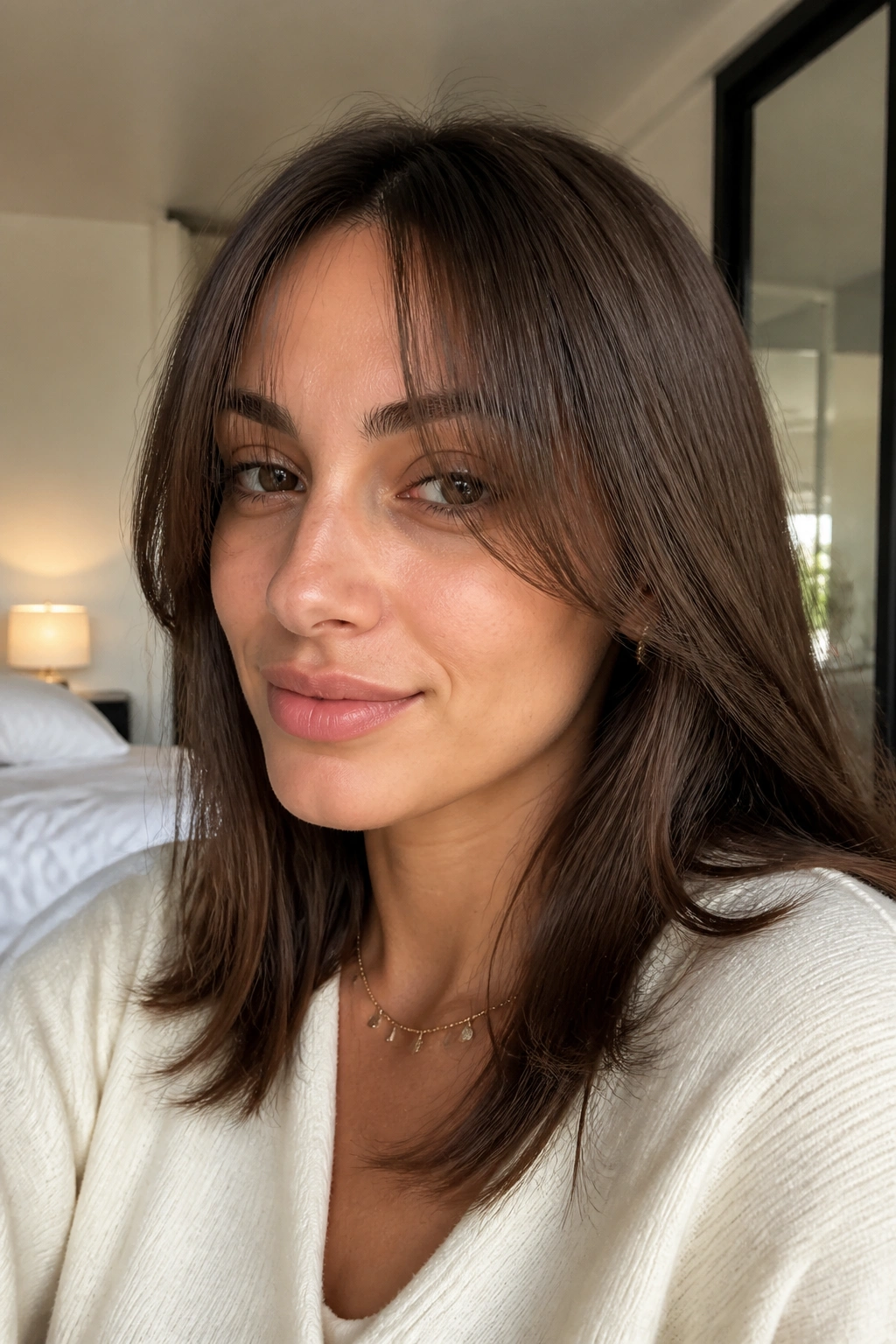
Can curtain bangs be this quiet and still count? Yes. And on straight hair, the whisper-light version can look cleaner than a fringe with too much ambition.
This cut uses narrow front pieces that start around the brows and drift outward in a loose frame. You still get the middle split, but there is less density in the center, so the bangs do not dominate the face. That makes them a nice first step if you are nervous about committing to a fuller fringe.
The style works best when the hair is smooth but not pin-straight. A tiny bit of bend at the ends keeps the pieces from looking like they were clipped by accident. You can also tuck them behind the ears on off days, which helps if you are trying to grow them out later.
It is a soft look. Not shy, exactly. Just quiet.
10. Blunt-Edged Curtain Bangs with Tapered Ends
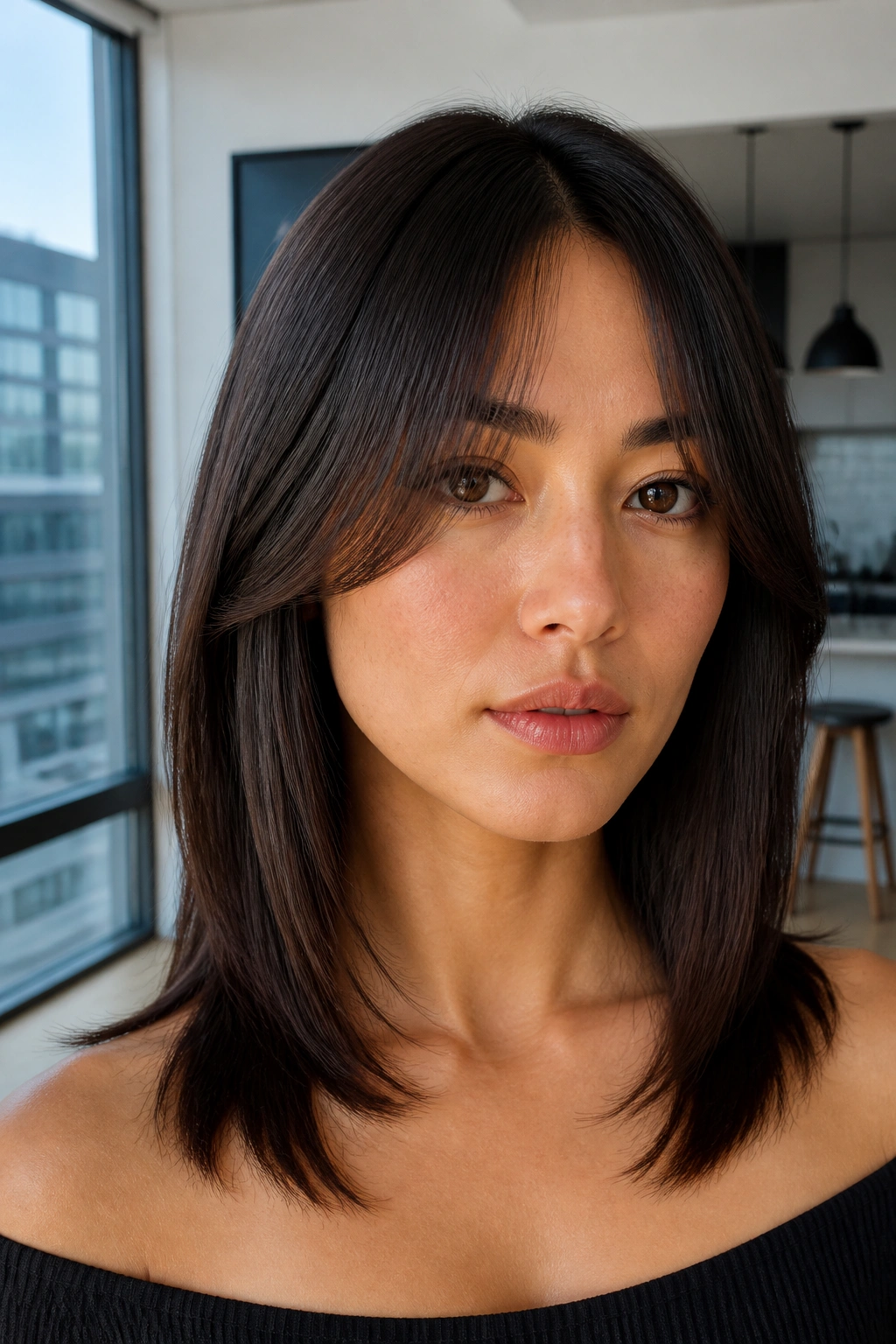
Straight hair can carry a cleaner edge than people give it credit for. If you want a more graphic look, this is the version to ask about: a firmer center line with tapered sides that still open into curtain bangs.
The point is control. The bangs should not be fluffy or over-feathered. They need enough weight at the middle to read as a shape, then softer ends so the sides do not look chopped off. That contrast gives the haircut a little bite.
It works especially well if your style leans sleek, sharp, or minimal. The front of the hair looks deliberate from the first glance, and the taper keeps it from turning too rigid. If your straight hair lies very flat, this can be one of the easiest ways to make the front feel expensive without adding volume everywhere.
A blunt-leaning curtain bang does need regular trims. Once it grows past the sweet spot, the line gets sleepy fast.
11. Long Medium Curtain Bangs for Straight Hair
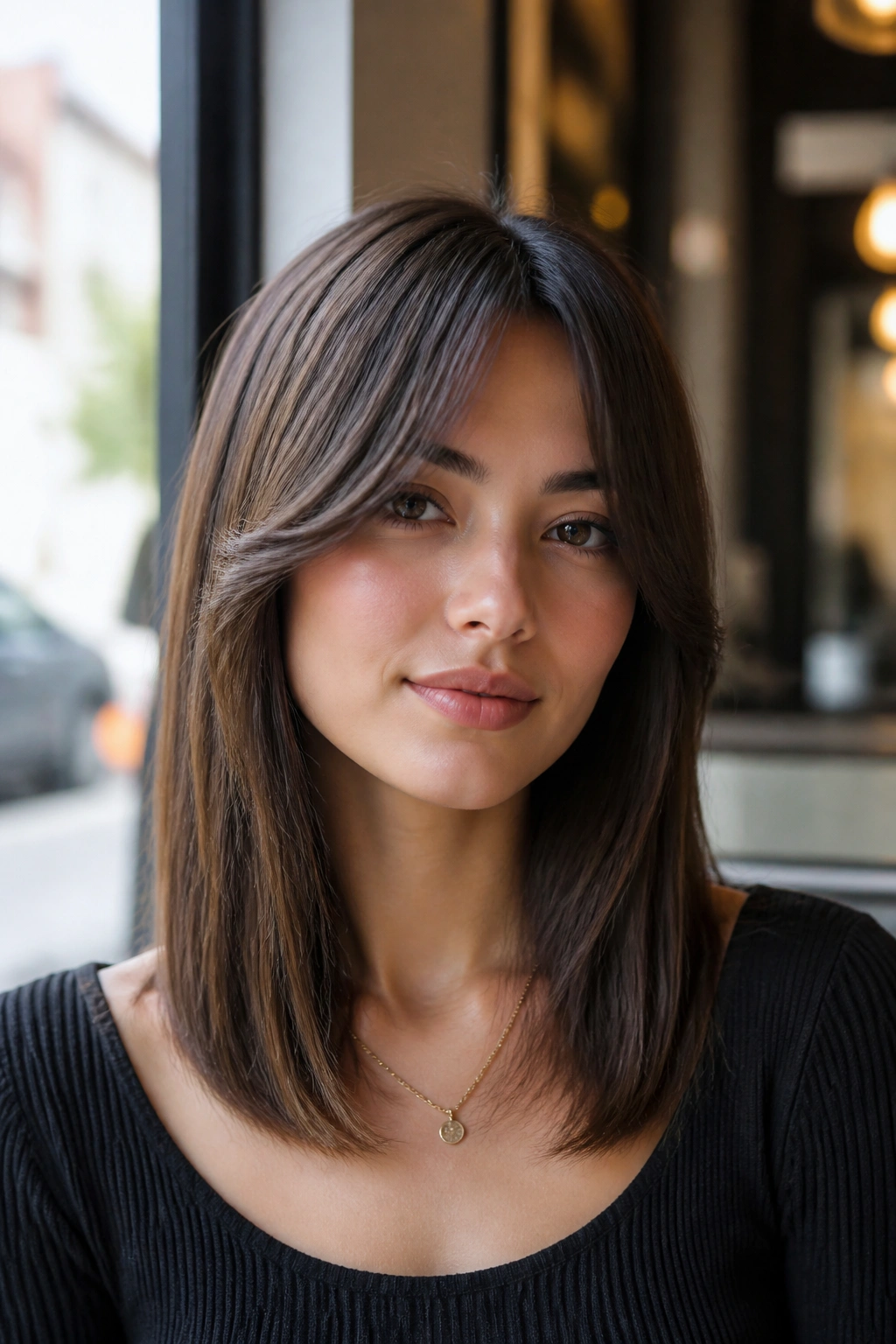
Longer curtain bangs and collarbone layers are a pair that makes sense on straight hair. Both parts of the haircut want to move in the same direction, so the front never feels disconnected from the rest of the length.
This is one of the safest medium styles if you like your hair to look polished but not overworked. The bangs can start around the nose or upper lip and sweep all the way to the cheekbones. Because straight hair shows line so clearly, that longer path keeps the face frame smooth.
The other upside is growth. A long medium fringe usually survives a busy week better than a short one. It can be tucked, split, clipped back, or blown into place with a large brush and a couple of passes.
If you want one version that is easy to live with, this is a strong bet.
12. Voluminous Blowout Curtain Bangs
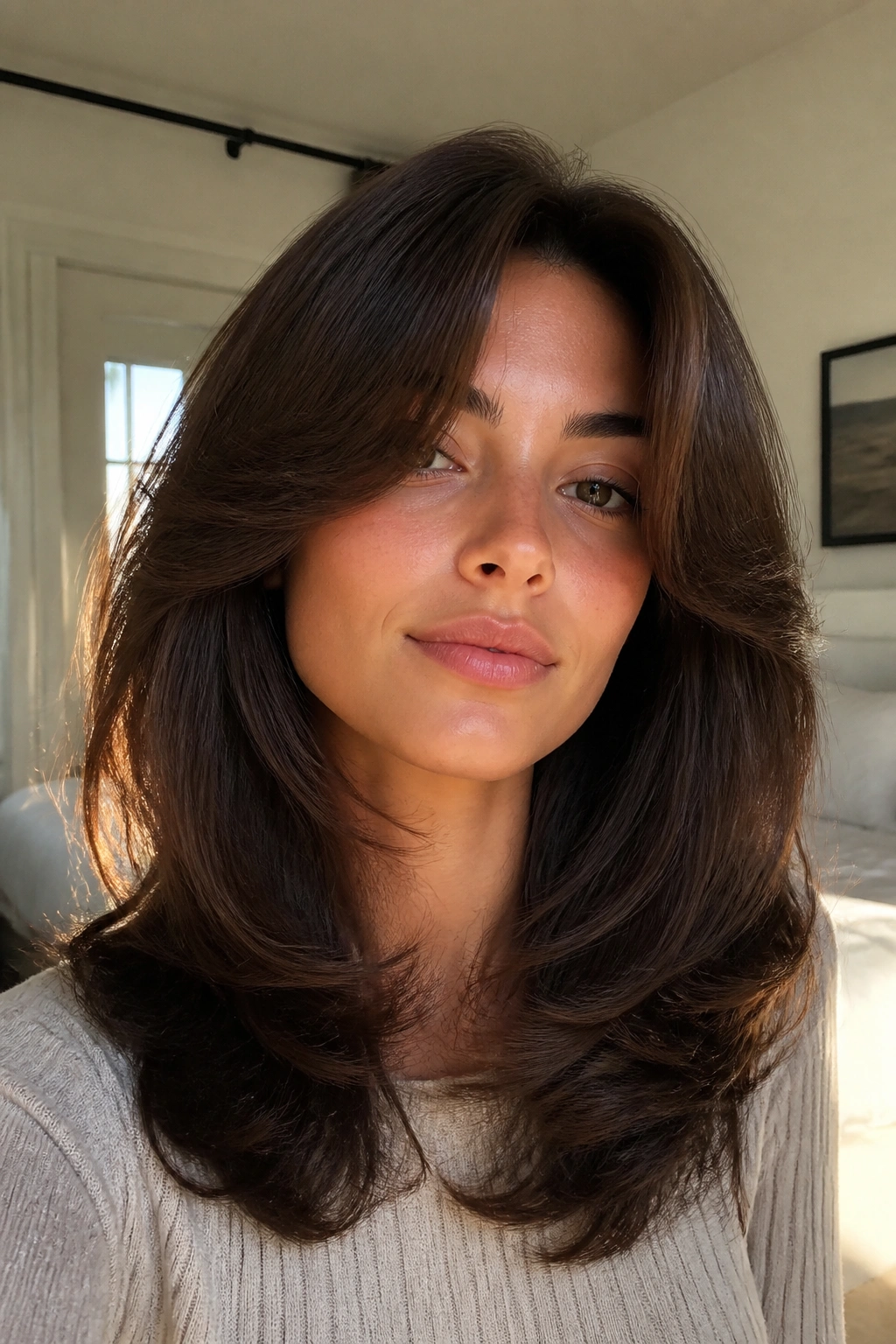
A round brush changes everything here.
The same medium curtain bangs can look flat, airy, or full depending on how you dry them. If you want volume, clip the fringe forward while it cools, then direct the sides away from the face with a medium round brush or a large Velcro roller. That little cooling step is what keeps the bend from collapsing.
How to get the bend
- Start with damp hair and a heat protectant.
- Blow-dry the center down and slightly forward.
- Roll each side away from the face for 30 to 60 seconds.
- Let the bangs cool before you touch them.
Straight hair loves this treatment because it holds a smooth shape without frizzing out. The result is soft, lifted, and a little old-school in the best way. If your hair is medium length, the whole cut starts to look more styled even if the rest of your hair is simple.
Skip heavy oils at the root. They flatten the lift fast.
13. Piecey Curtain Bangs with Texture and Separation
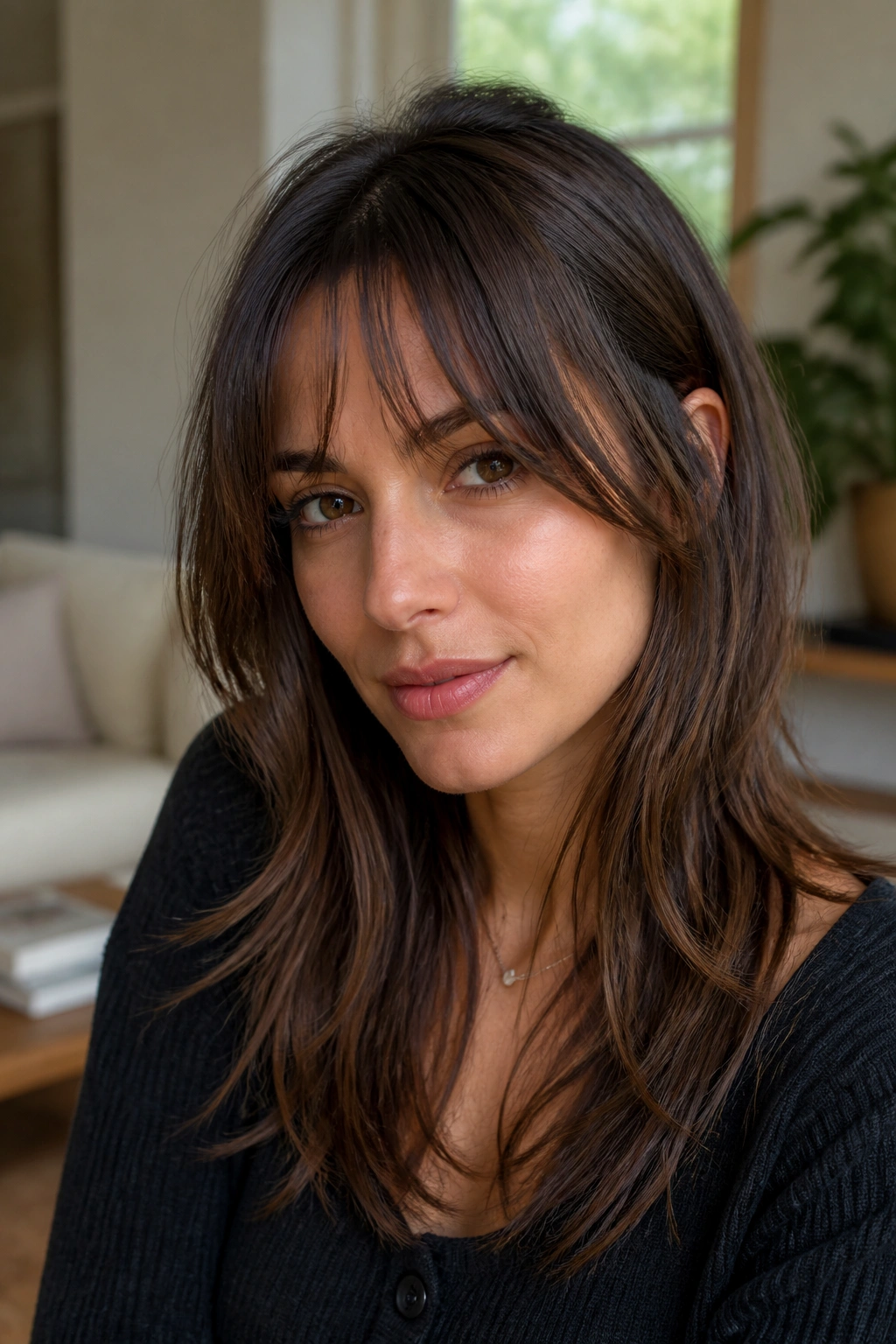
Some fringes look best when they do not stay together. Piecey curtain bangs lean into that idea, which is why they suit straight hair that needs a little grit and movement.
The cut usually uses small sections rather than one smooth block. After drying, you separate the pieces with your fingers or a tiny bit of texture spray, so the fringe breaks into little strands that still frame the face. It is less polished than a blowout fringe, but it has more attitude.
What makes it piecey
- Slightly staggered lengths.
- Soft point cutting at the ends.
- A light styling spray, not a heavy wax.
This version is a good fit if your hair gets oily fast or if you do not want your bangs to look perfect every single day. The beauty of piecey curtain bangs is that a little mess looks intentional. A lot of people over-style this shape and ruin it. Leave some space between the pieces and stop fussing.
14. Curtain Bangs with a Middle-Part Grow-Out
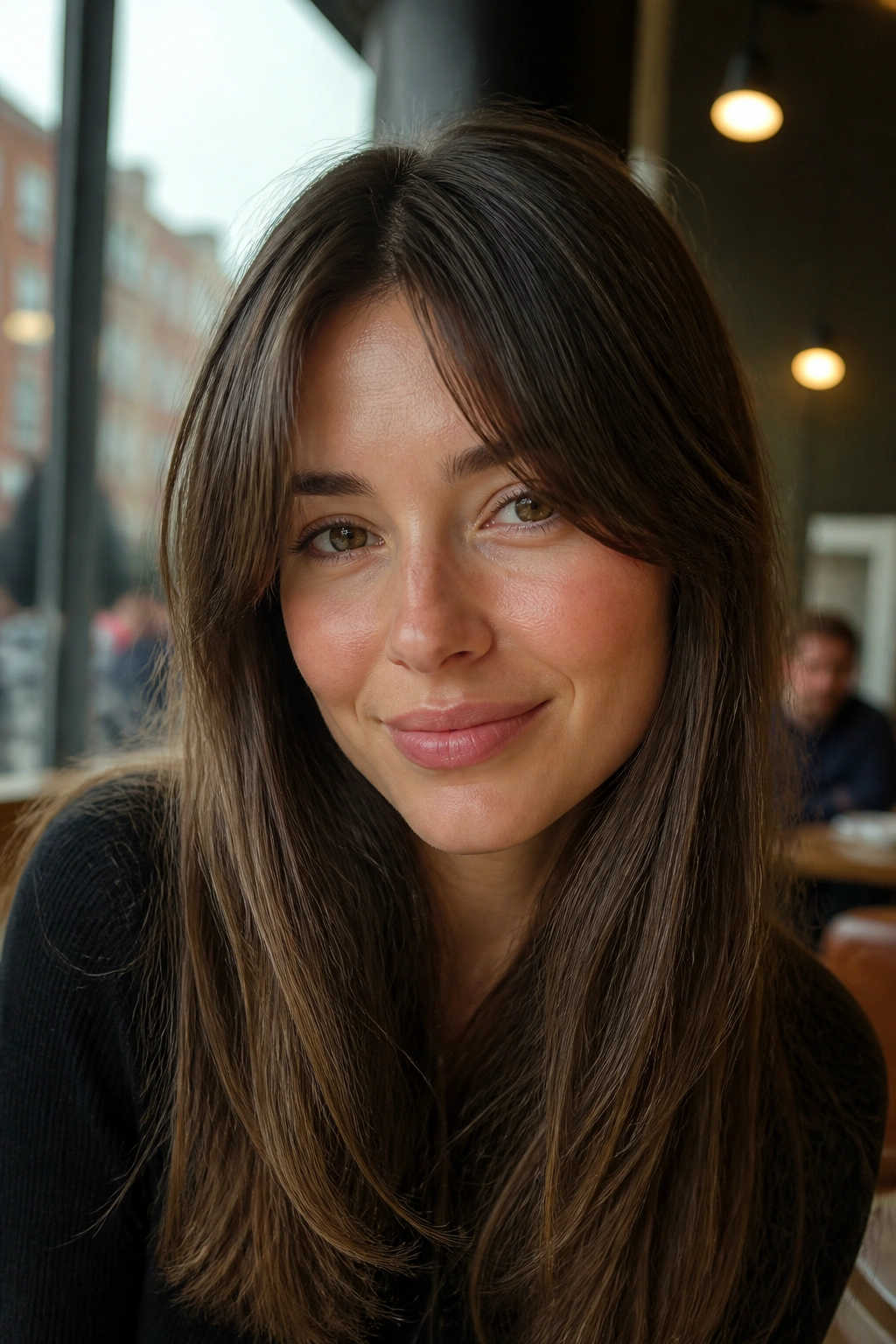
The least annoying fringe is usually the one that grows out with you.
That is why this grown-out curtain bang version is such a smart choice for straight hair. The center pieces stay long enough to blend with the front, while the side wings sweep into the rest of the haircut instead of ending abruptly. You still get the face frame, but you do not get trapped in monthly trim panic.
This is the version for people who tuck their hair behind their ears, clip it back during work, or want a cut that survives a few lazy weeks. Straight hair makes the grow-out line easy to see, so the shape needs to be soft from the start. The bangs should never look like a separate category of hair.
It is not dramatic. That is the point. The cut behaves more like an extension of your medium-length style than a separate feature pasted on top.
15. Curved Curtain Bangs for Narrow Faces
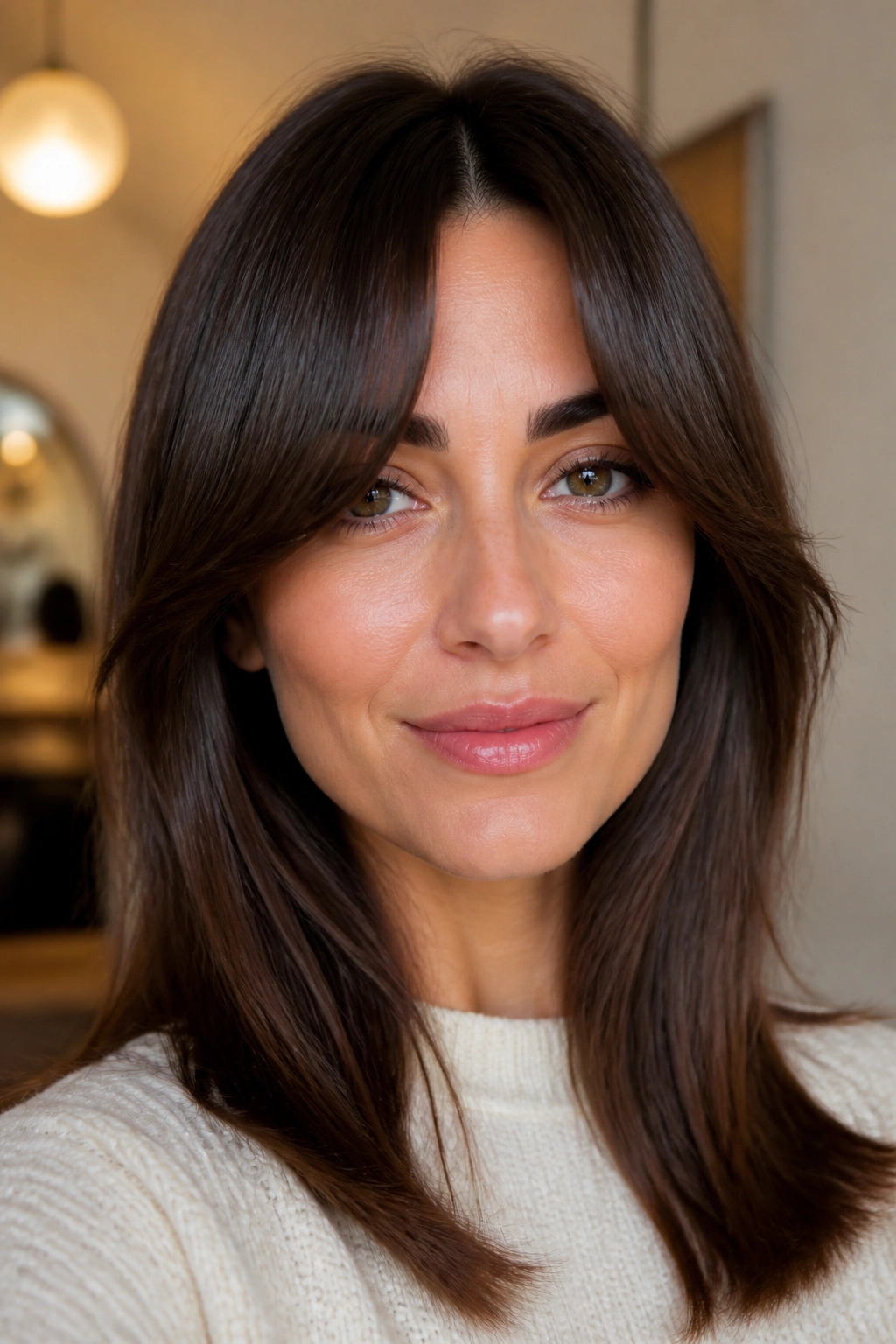
Narrow faces need more width at the temples than most stylists give them. Curved curtain bangs fix that by creating a broader sweep from the center outward, so the front of the hair fills the face instead of slicing down it.
The curve should not be too tight. You want a gentle fan shape that opens from the brows toward the cheekbones and then settles into the sides. Straight hair helps here because the bend stays clean and visible. If the curve is cut well, the face looks wider in the right places and the eyes get a little more room.
This version works well with medium lengths that sit on or just below the shoulders. The bangs and the rest of the cut should move together. If the front is too short and the rest is too blunt, the balance breaks.
A curved fringe is one of those haircuts that quietly changes how the whole head reads. Not flashy. Just smarter.
16. Sleek Curtain Bangs with Minimal Layers
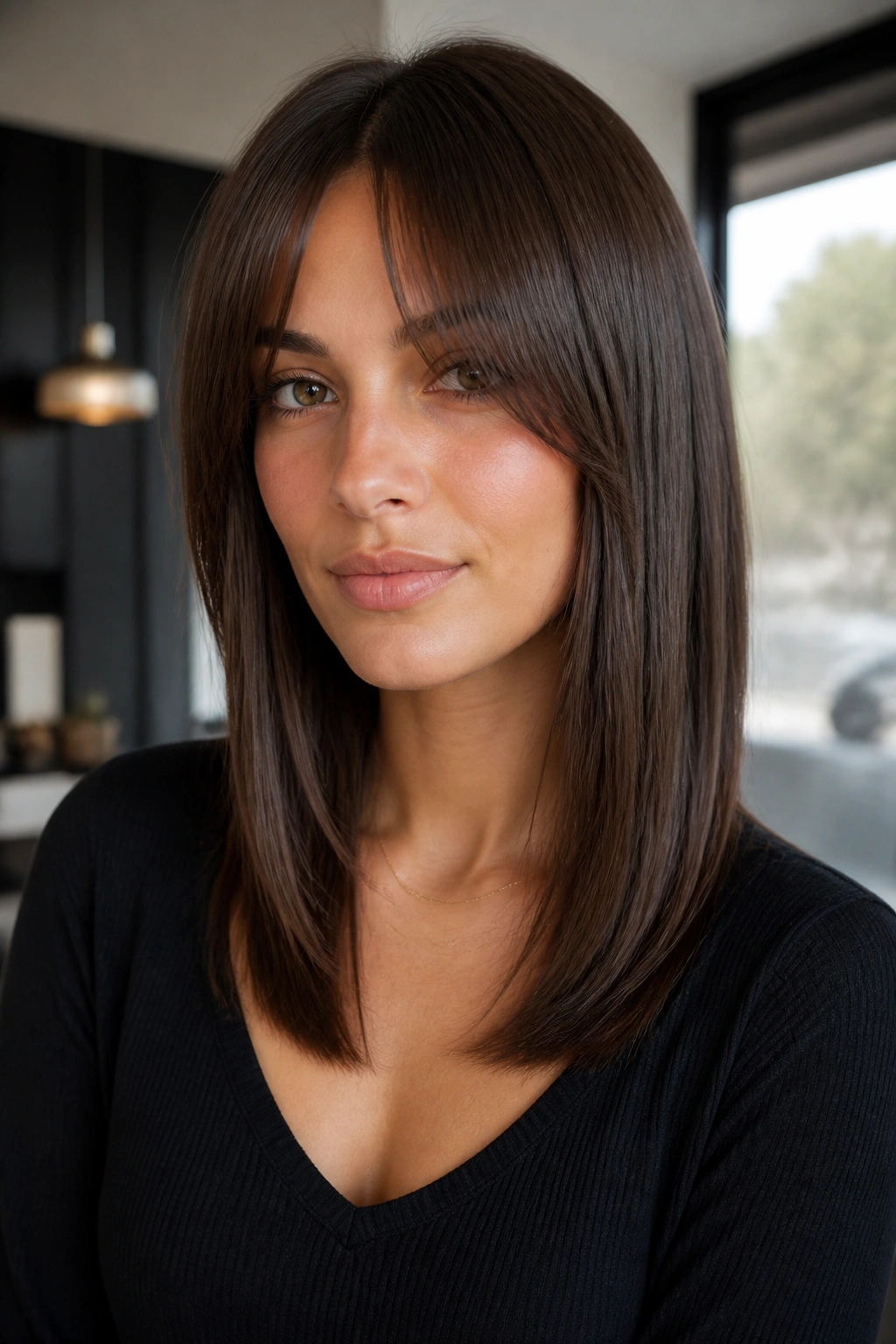
Not every curtain bang needs bounce. Sometimes the strongest choice is a sleek one, especially if your straight hair already lies in a smooth line and you like a cleaner look.
Minimal layers keep the fringe from turning fluffy. The center still parts, the sides still frame the face, but the shape is controlled and close to the head. That gives the haircut a tidy, almost architectural feel. It is especially nice if you wear tailored clothes, sharp glasses, or simple makeup and do not want the hair to fight for attention.
The styling here is plain. Blow-dry the bangs forward, then sweep them out with a brush and finish with a light pass of the flat iron if needed. One pass. Not five. You want the hair smooth, not scorched.
This is a good reminder that curtain bangs do not have to be soft in every direction. Straight hair can carry a crisp front line and still look feminine, polished, and easy.
17. Retro Curtain Bangs with a Soft Flip
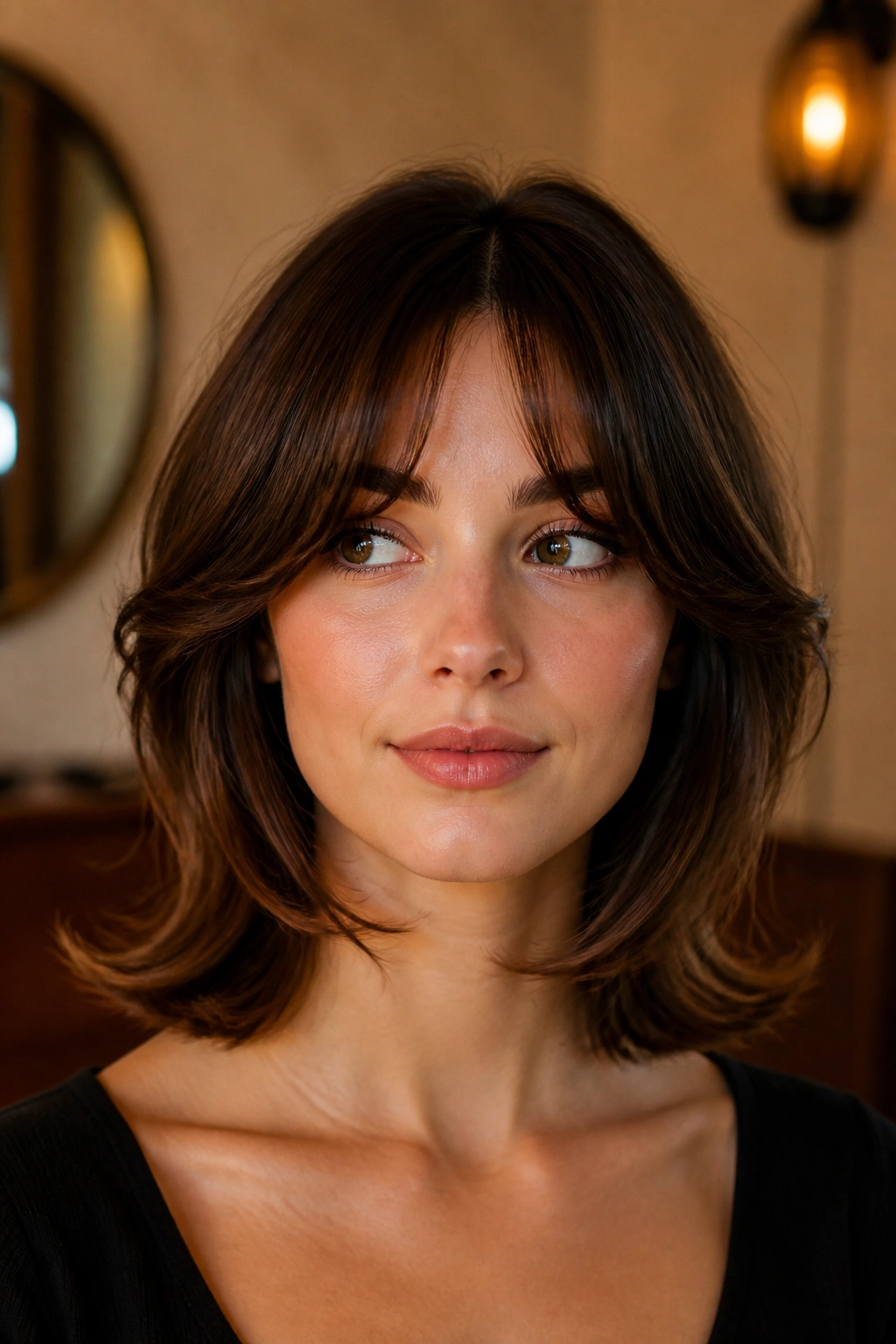
The retro version has one job: move away from the center and flip softly outward.
That little flip changes the whole mood. Instead of hanging straight, the side pieces turn at the ends, which gives medium straight hair a bit of lift and a nod to older blowout styles. The result feels playful without getting costume-y.
Why the flip matters
The flip keeps the bangs from lying too close to the cheeks. That matters if your hair is fine or if your face tends to look a little long with flat front pieces. A small outward bend creates space around the face and makes the haircut feel lighter.
Use a round brush or a flat brush with a wrist turn at the very end. Then let the hair cool while it keeps that curve. If you skip the cooling part, the flip drops fast.
This shape works best with a medium-length cut that already has some movement through the ends. It looks polished, but not stiff. There is a difference.
18. Low-Maintenance Curtain Bangs for Fine Straight Hair
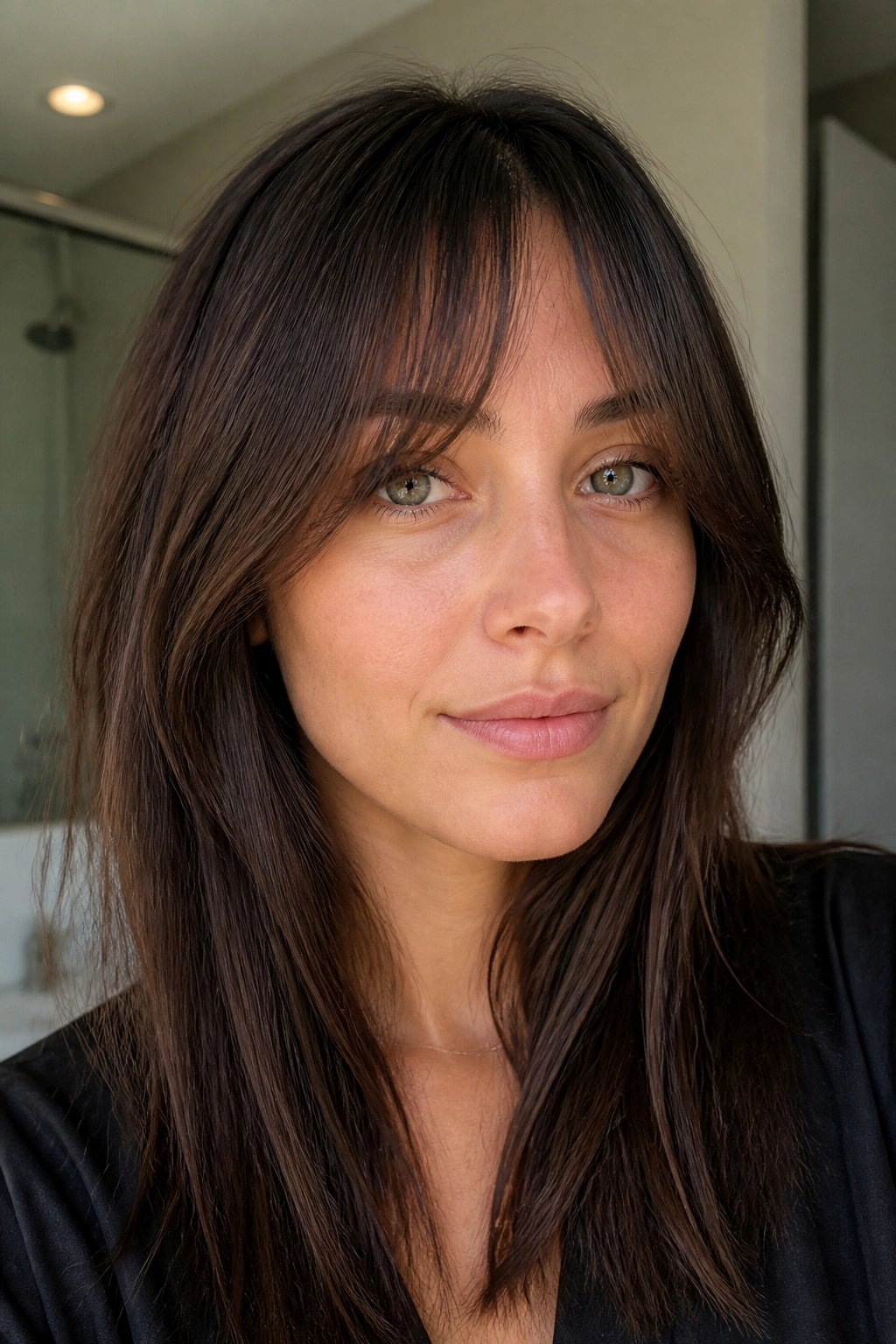
If you hate a high-maintenance fringe, keep the length on your side. That is the whole point of this cut.
Low-maintenance curtain bangs for fine straight hair stay a little longer through the center and taper softly into the rest of the haircut. They do not ask for a lot of daily shaping. A quick blow-dry, a small bend, done. On days when you skip styling, they still fall in a believable way instead of sticking up and accusing you.
The trick is weight distribution. Fine hair looks best when the bangs are thin enough to move, but not so thin that the scalp peeks through. The center should hold together as a single shape. The sides can be looser.
This version is for people who want the feeling of bangs more than the ritual of bangs. It is also one of the easier shapes to grow out later, which matters more than most hair advice admits.
19. Thick Curtain Bangs for Dense Straight Hair
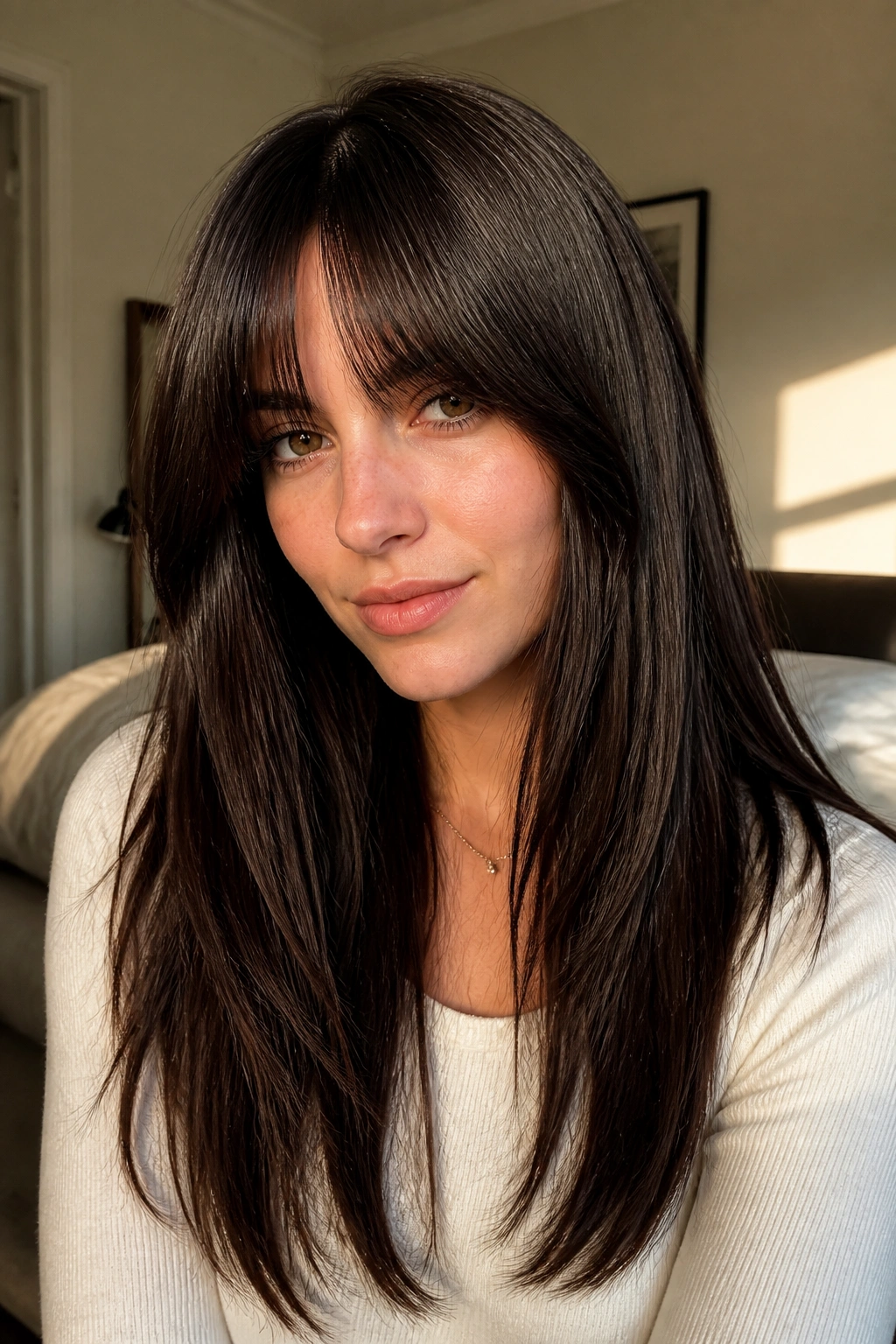
Thick straight hair needs a different kind of respect. If you leave too much bulk in the wrong spot, the fringe becomes heavy and stubborn. Remove too much, and it turns into a fuzzy halo. The middle ground is where this cut lives.
Cutting notes for dense hair
- Keep the center dense enough to hold shape.
- Remove bulk underneath, not from the visible top line.
- Use careful point cutting so the ends do not look blocky.
The reason this works is simple: dense straight hair can support more structure. A fuller curtain bang gives the face frame substance, which can be useful if your hair is naturally big through the crown or if it puffs at the first sign of humidity. The front shape reins it in.
Styling needs a little patience. Dry the bangs in sections so the center does not collapse while the sides stay fluffy. If the cut is good, the fringe will fall into a smooth sweep instead of fighting each other like three different haircuts.
20. Lightly Shattered Curtain Bangs
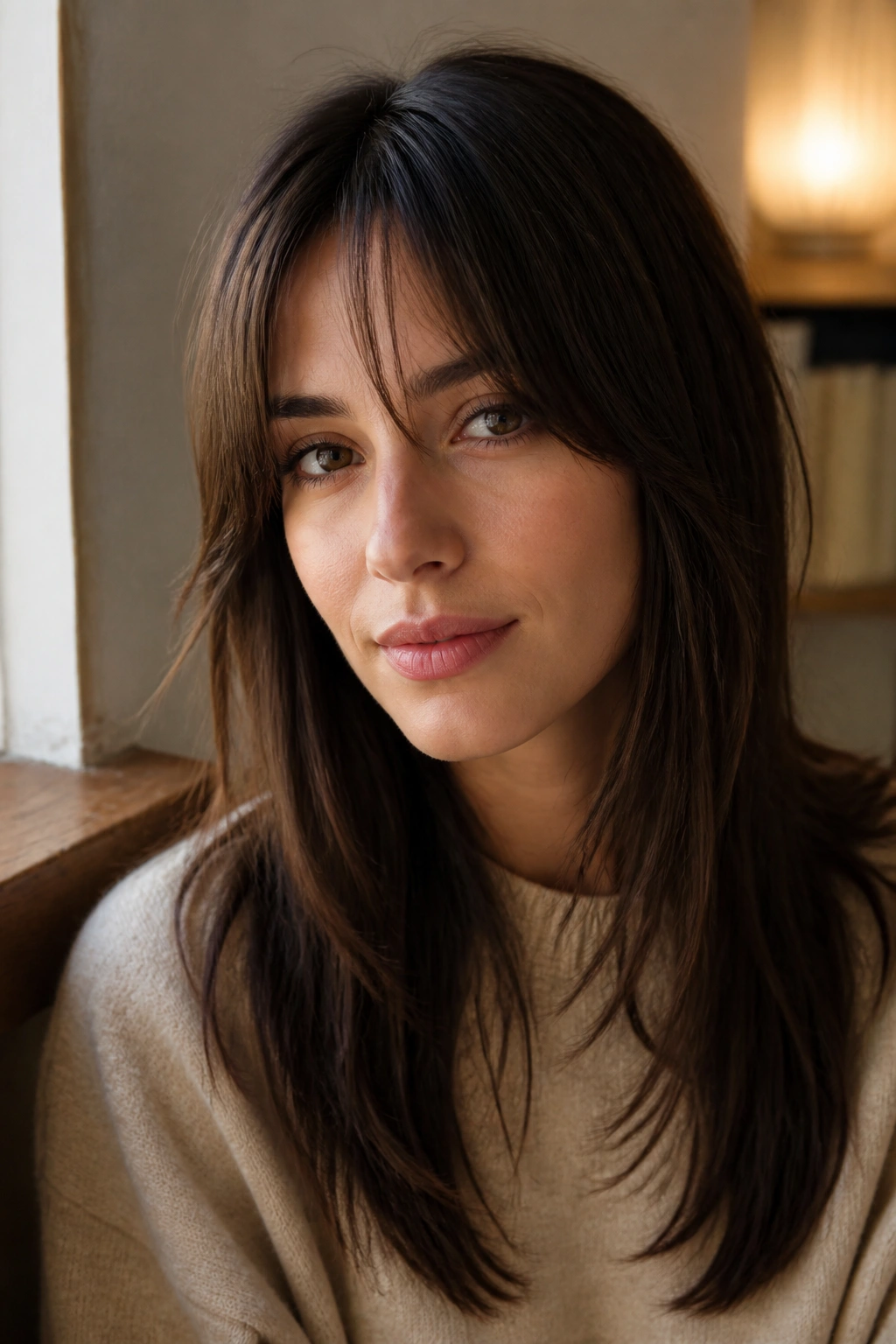
Shattered curtain bangs look like the ends were lightly broken up by hand. That is the point. The line is there, but it is broken enough to feel relaxed and modern.
On straight hair, this can be a strong move because it stops the front from looking too severe. The shattered edges soften the shape around the eyes and cheekbones, especially if the rest of the cut is medium length and fairly simple. You get texture without a lot of bulk.
The key is restraint. If the fringe is shattered too much, straight hair can show every chopped bit and lose its clean outline. A little breakup is enough. You want the hair to fall in soft segments, not separate into a dozen little bits.
This style suits anyone who likes a fringe that looks a touch undone even when the rest of the hair is smooth. It feels casual in a smart way. That is harder to fake than it sounds.
21. Glossy Polished Curtain Bangs
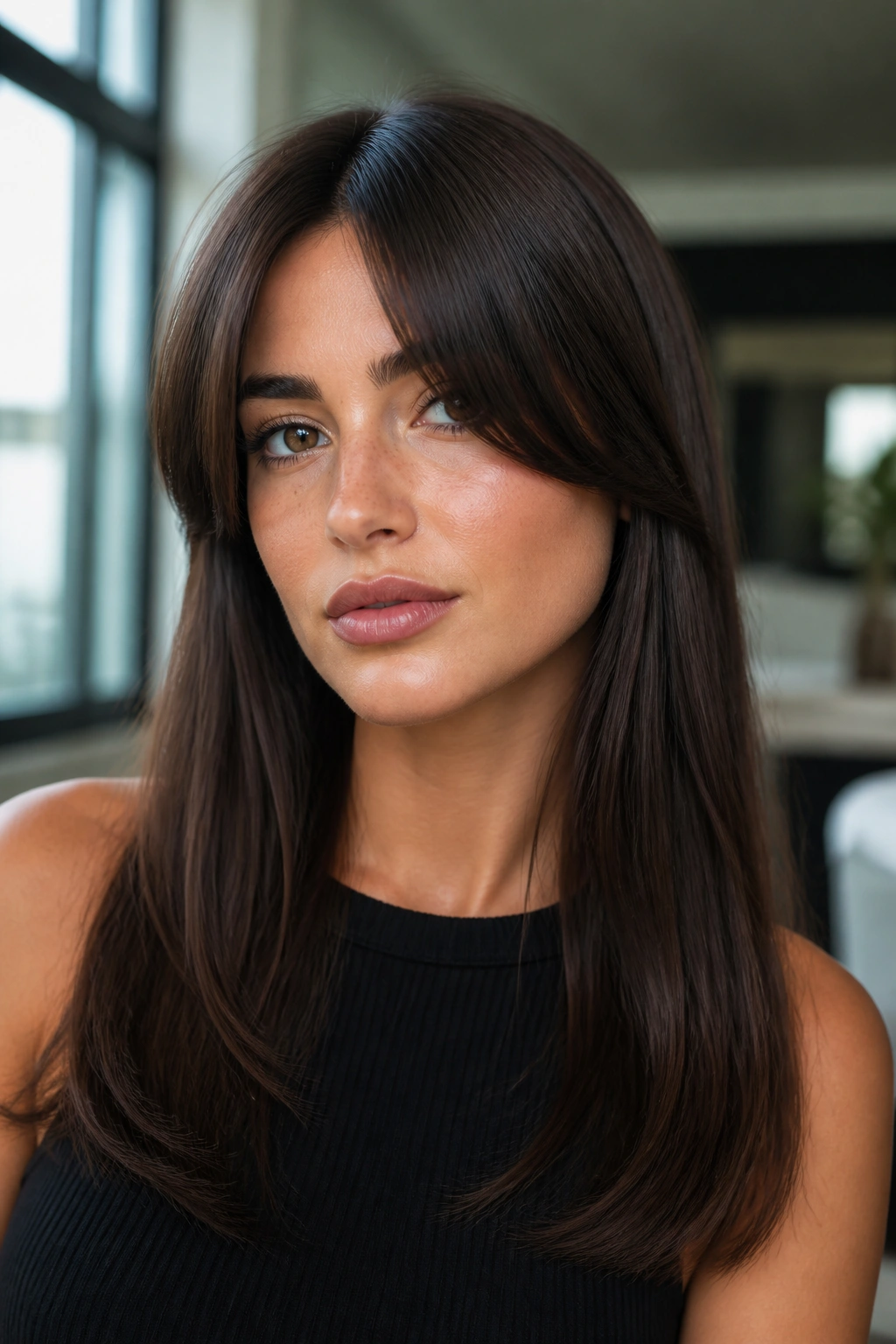
Glossy curtain bangs are less about volume and more about control. The hair lies smooth, the part is clean, and the ends curve with a neat, polished finish that makes straight hair look expensive without trying too hard.
This version works best when the fringe is cut to sit neatly around the cheekbones and then styled with a brush, a dryer nozzle, and a tiny amount of serum on the ends. Not the roots. The ends. A pea-sized amount is enough. Any more and the bangs can go limp fast.
The shine matters because straight hair reflects it well. When the cut is clean, the gloss makes the whole front section look intentional, almost sculpted. It is a strong choice if you wear simple outfits and want your hair to do a bit more visual work.
It is also one of the best looks for dinner, events, or any day you want the front of your hair to look finished by itself.
22. The Most Wearable Medium Curtain Bangs for Straight Hair
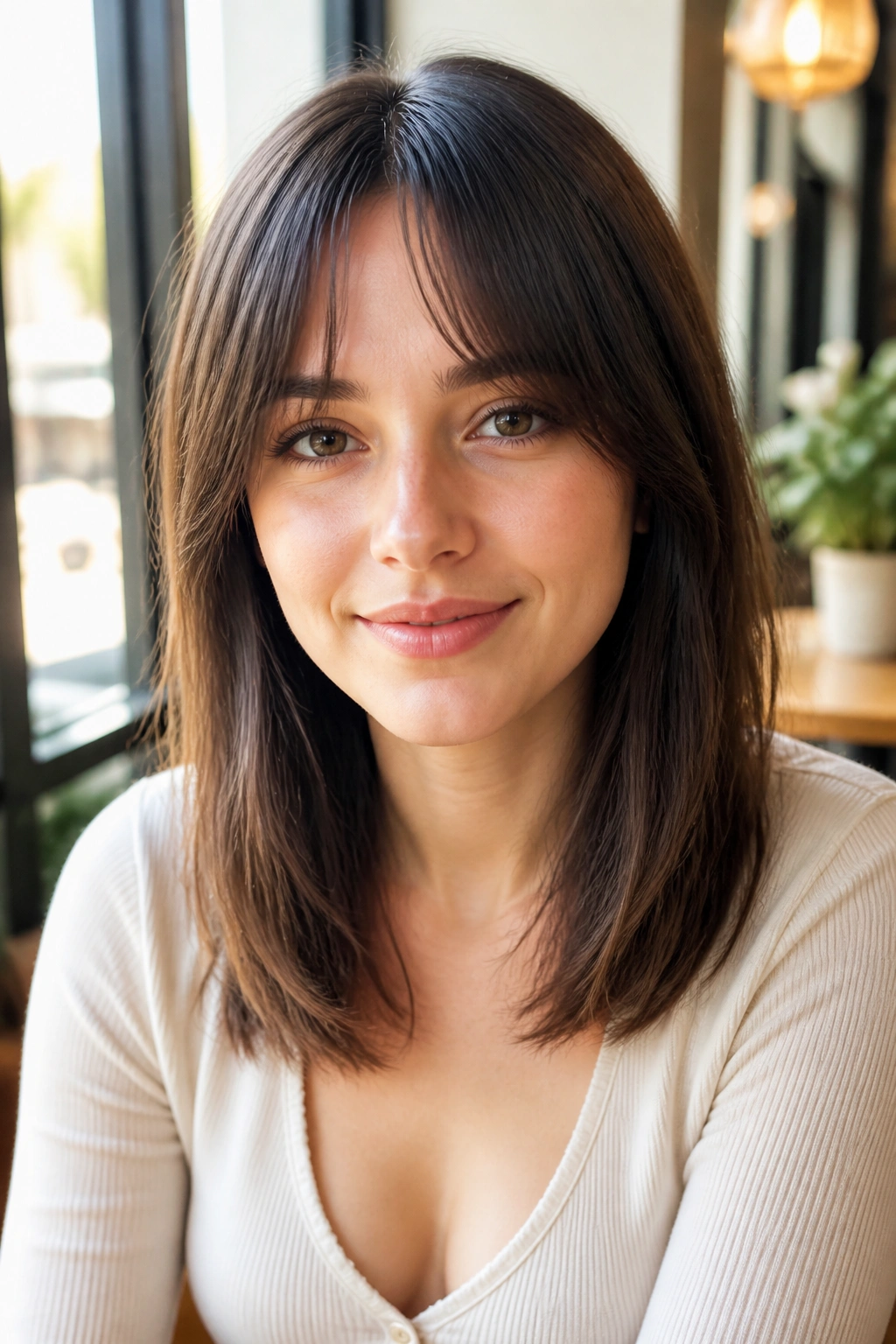
If you want one shape that rarely behaves badly, this is the one to copy. Keep the center point soft, let the side pieces land near the cheekbones, and leave enough length for the bangs to sweep rather than stick out.
That formula works because it gives straight hair room to move. The fringe does not sit too high on the forehead, and it does not fall so long that it disappears into the rest of the cut. The result is balanced, easy to style, and forgiving when you skip a wash day or wear your hair a little messy.
I like this version for people who want bangs that feel like part of their haircut, not a separate project. It trims cleanly, grows out cleanly, and plays nicely with medium-length hair that sits at the shoulders or just below. If your hair is fine, keep the ends airy. If it is thick, keep the center a touch fuller. Same shape. Different weight.
The best curtain bangs are the ones that still look like your hair after a long day. This one usually does.
