



Long straight bangs can be a smart move for a round face, but only when the line falls in the right place. Cut them too short and they widen the cheeks. Let them drop a little lower — past the brows, toward the cheekbones — and the whole face starts to feel longer and cleaner.
That’s the part people miss. A fringe on a round face is not about hiding width with a curtain of hair. It’s about drawing the eye up and down, then giving it a place to rest on the sides. The best versions look soft, not helmet-like. They keep movement near the temples and avoid stopping at the widest point of the face.
Texture matters too. Fine hair can go airy and light. Thick hair can carry a fuller band across the forehead. Cowlicks, a low hairline, or glasses change the game again, which is why one blunt answer never works here. A good fringe respects the shape it sits on.
These 22 long straight bangs ideas lean into that. Some are sleek, some are feathery, some are a little bolder than you’d expect, and a few are the sort of cuts that look simple until you see how well they balance a round face.
1. Curtain Bangs That Split at the Bridge of the Nose
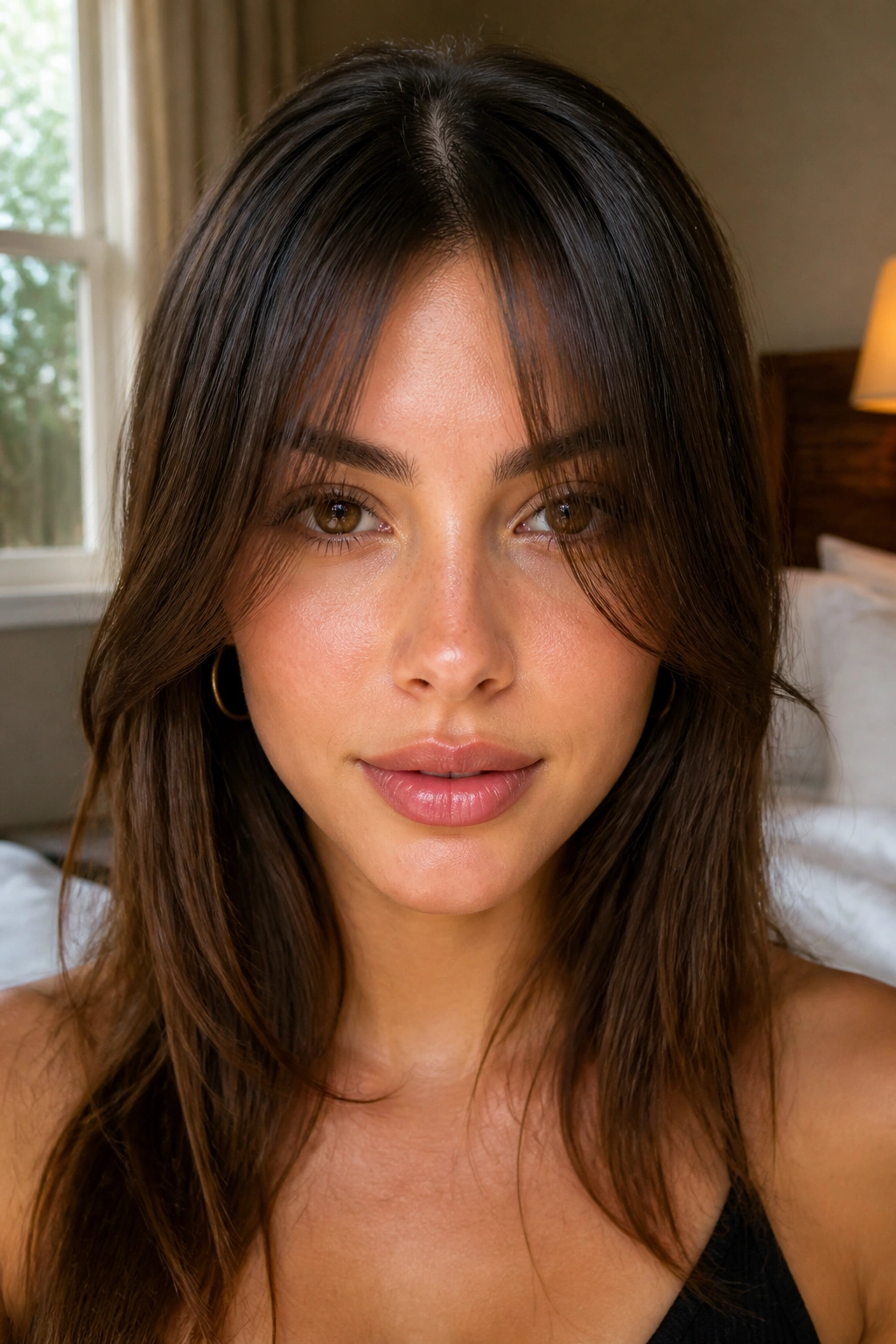
A center split is one of the easiest ways to make long straight bangs work on a round face. The opening in the middle creates a vertical line right where the eye wants to travel, and that alone changes the whole feel of the cut.
Why It Flatters a Round Face
The shortest point should sit around the bridge of the nose or just below it, then fall longer toward the cheekbones. That keeps the fringe from boxing in the face. If the outer corners graze the upper cheek, even better.
- Ask for a middle part that opens softly, not a hard, ruler-straight gap.
- Keep the ends long enough to tuck behind the cheekbone.
- Blow-dry the pieces away from the center so they fall in a gentle drape.
Pro tip: If your face is very full at the cheeks, ask the stylist to leave the outer pieces slightly longer than the center. That tiny shift matters more than people think.
2. A Soft Blunt Fringe That Falls Just Below the Brows
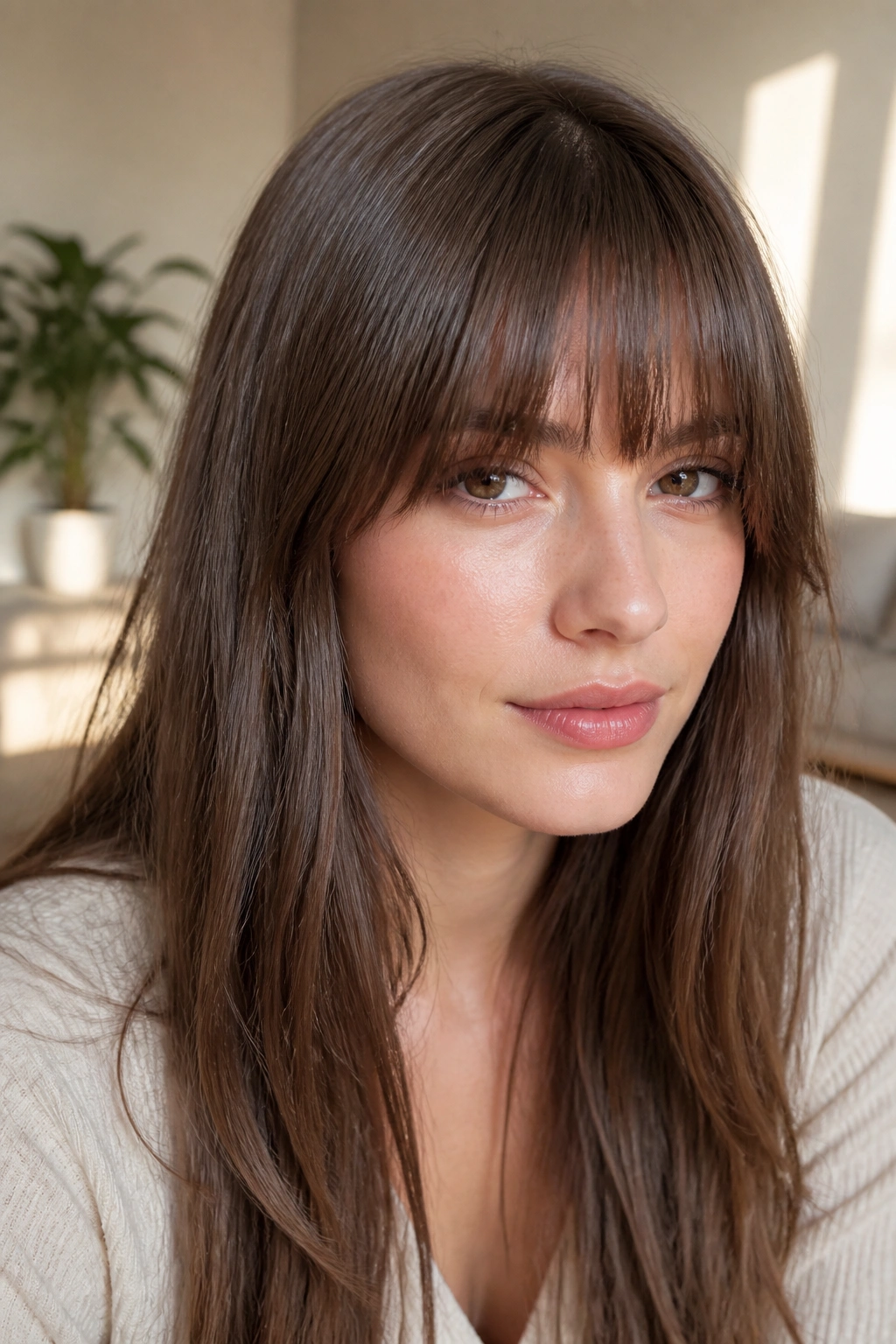
A blunt-looking fringe is not off the table for a round face. It just needs enough length to break the circle.
The mistake is cutting it too short, where it lands right at the strongest curve of the face. Better to let it skim the brows or fall a fraction below them. That little drop gives the eye something vertical to read, and it keeps the fringe from feeling like a shelf.
I like this version best on hair that has some density. Thin bangs can look stringy if they’re cut too blunt. Thick hair, though, can handle the weight and still move.
Keep the ends polished. A flat iron set to a medium heat and one slow pass usually gives the cleanest finish. Don’t overdo it. The goal is a smooth line, not a stiff one.
3. Wispy Straight Bangs With a Narrow Center Opening

Why do airy bangs work so well on round faces? Because they don’t fight the face shape. They soften it.
The center opening here is tiny — almost a whisper — but that small break is enough to keep the forehead from feeling sealed off. The rest of the fringe stays light, so you get shape without heaviness. If your hair is fine or medium, this is often the easiest place to start.
How to Style It
Use a round brush only at the roots. Pull the fringe forward, then bend the ends slightly inward with your fingers while they cool.
- A light mist of flexible spray helps the bangs keep their line.
- Dry from side to side to stop them from splitting in odd places.
- Avoid over-thinning, which makes the fringe see-through in a bad way.
This is a good choice if you want bangs that look finished but not severe. It has polish. No fuss.
4. Cheekbone-Grazing Bangs That Keep the Face Long
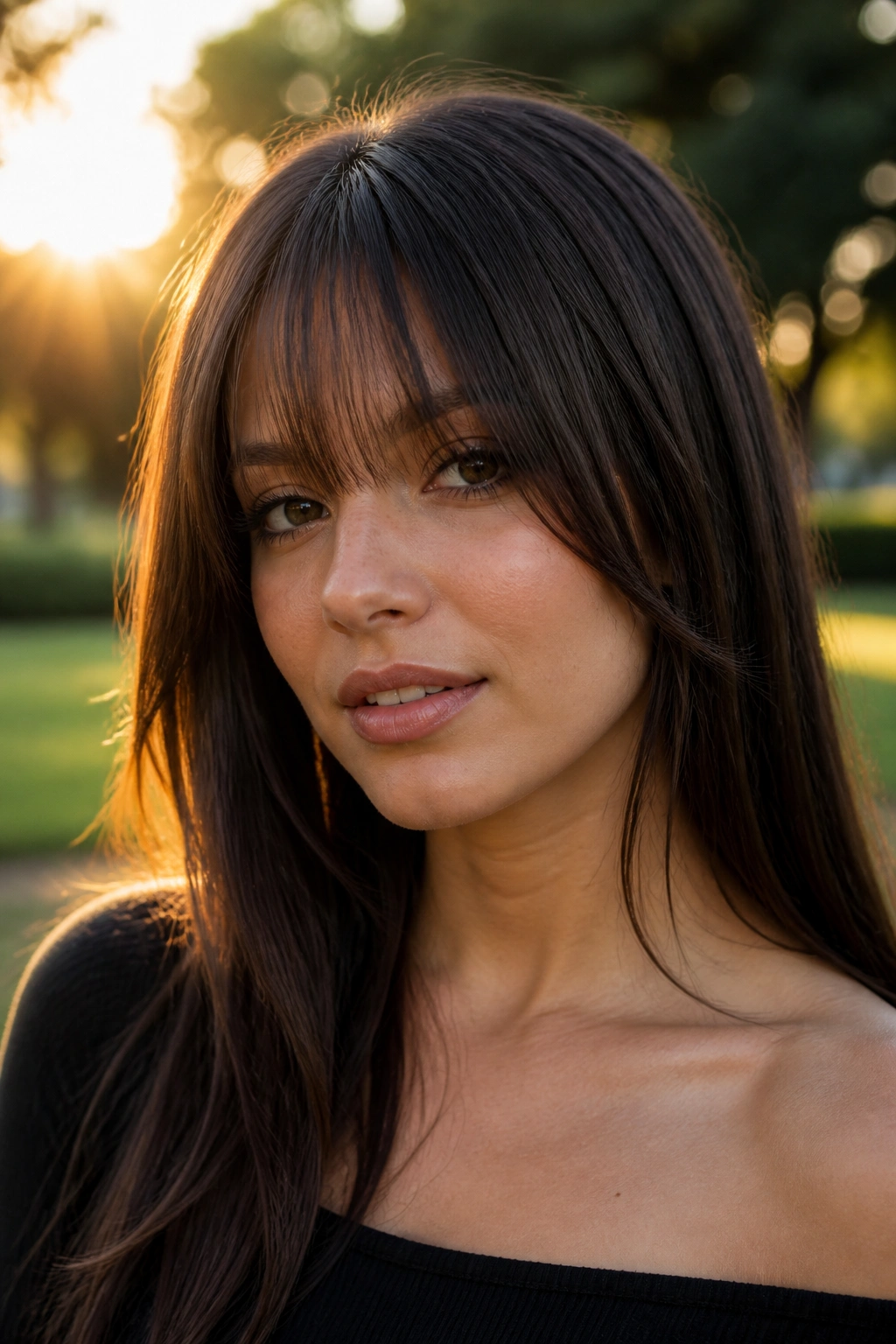
Picture a fringe that stops flirting with the cheekbone and then keeps going. That’s the shape.
This version is one of my favorites for round faces because it puts the visual weight where you want it: along the outer face, not across the widest part. The bangs fall straight, but they never sit dead-flat at one height. They slide a little longer at the sides, which helps the jawline feel less tucked in.
You can wear these with a center part or a slight off-center part. Both work. The key is length — short cheekbone bangs can get choppy fast, while longer ones read as deliberate.
- Best for medium to thick hair
- Good if you wear your hair down most days
- Ask for the outer corners to reach the upper cheek, not the lip line
That last part keeps the shape fresh instead of fussy.
5. A Slightly Arched Fringe That Opens in the Middle
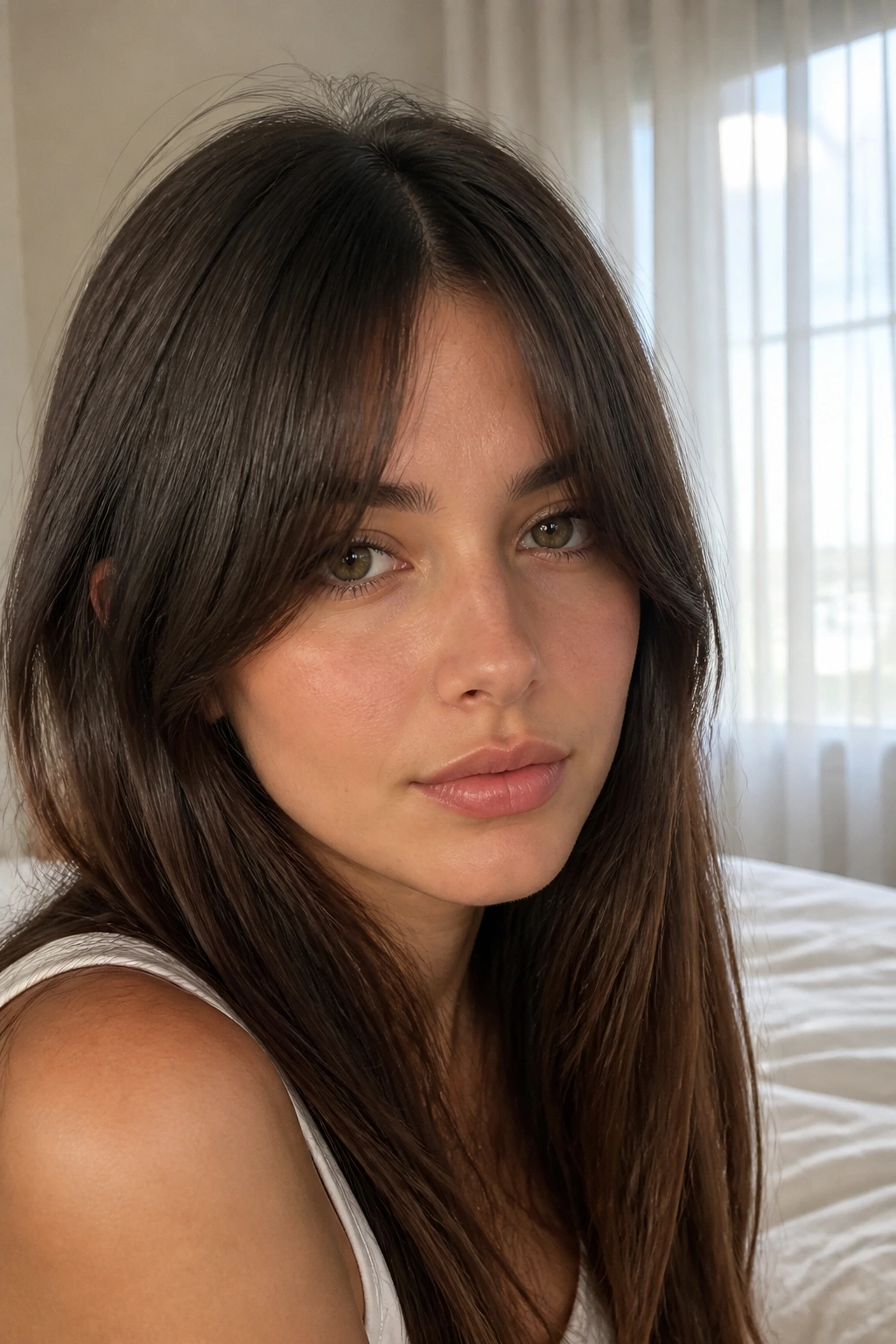
A flat line is not the only option. A tiny arch can do a lot of work.
This cut starts a touch shorter in the center and falls a bit lower toward the temples. It sounds subtle, and it is, but subtle is the point. On a round face, that mild curve stops the fringe from looking like a hard bar across the forehead. The eye moves up, down, and out. That movement matters.
The trick is not to make the arch too obvious. If the middle is dramatically shorter, the look turns old-fashioned fast. Keep the difference gentle — maybe half an inch, sometimes less — and let the hair fall with a soft bend.
I’d pair this with a round brush blowout. The brush gives the center a little lift and keeps the sides from puffing out.
6. Heavy Straight Bangs for Thick Hair
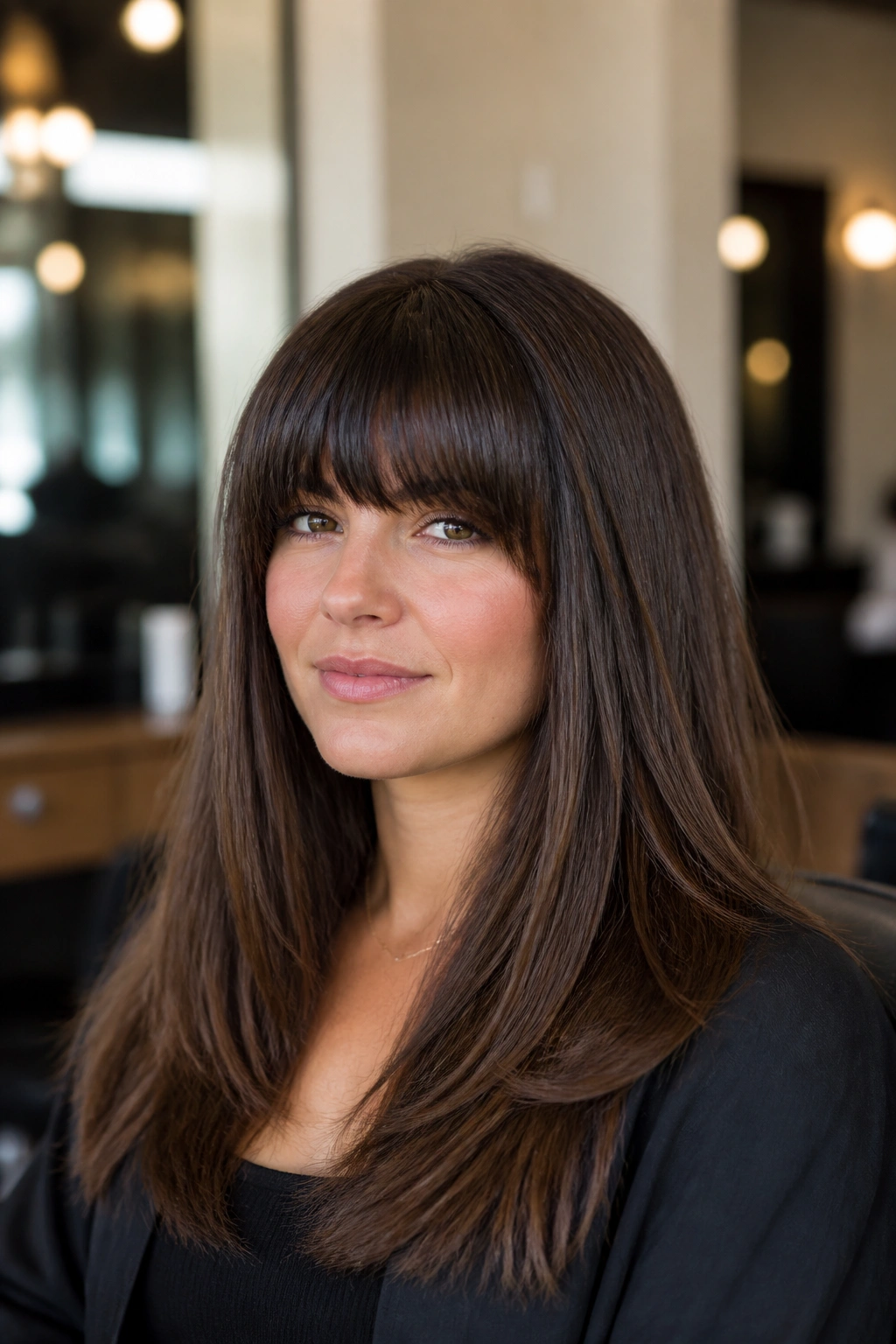
Heavy bangs can flatter a round face. People act as if “full” automatically means “too much,” and that’s just not true when the length is right.
Thick hair gives you a solid curtain across the forehead, which can be useful when you want balance and a little drama. The main thing is to keep the line long enough so the face still feels open below the eyes. If the fringe is dense but sits above the brows, it can press the face wider. If it drops low enough, it starts to lengthen everything.
This is also one of the more forgiving options for humid weather. The weight helps the fringe stay in place. Still, it needs a clean cut every few weeks, because thick bangs grow blunt fast.
Who it suits most? Anyone with dense hair, strong brows, and a face that looks best with clear structure. That’s a pretty good trio.
7. Feather-Light Long Straight Bangs for Round Faces
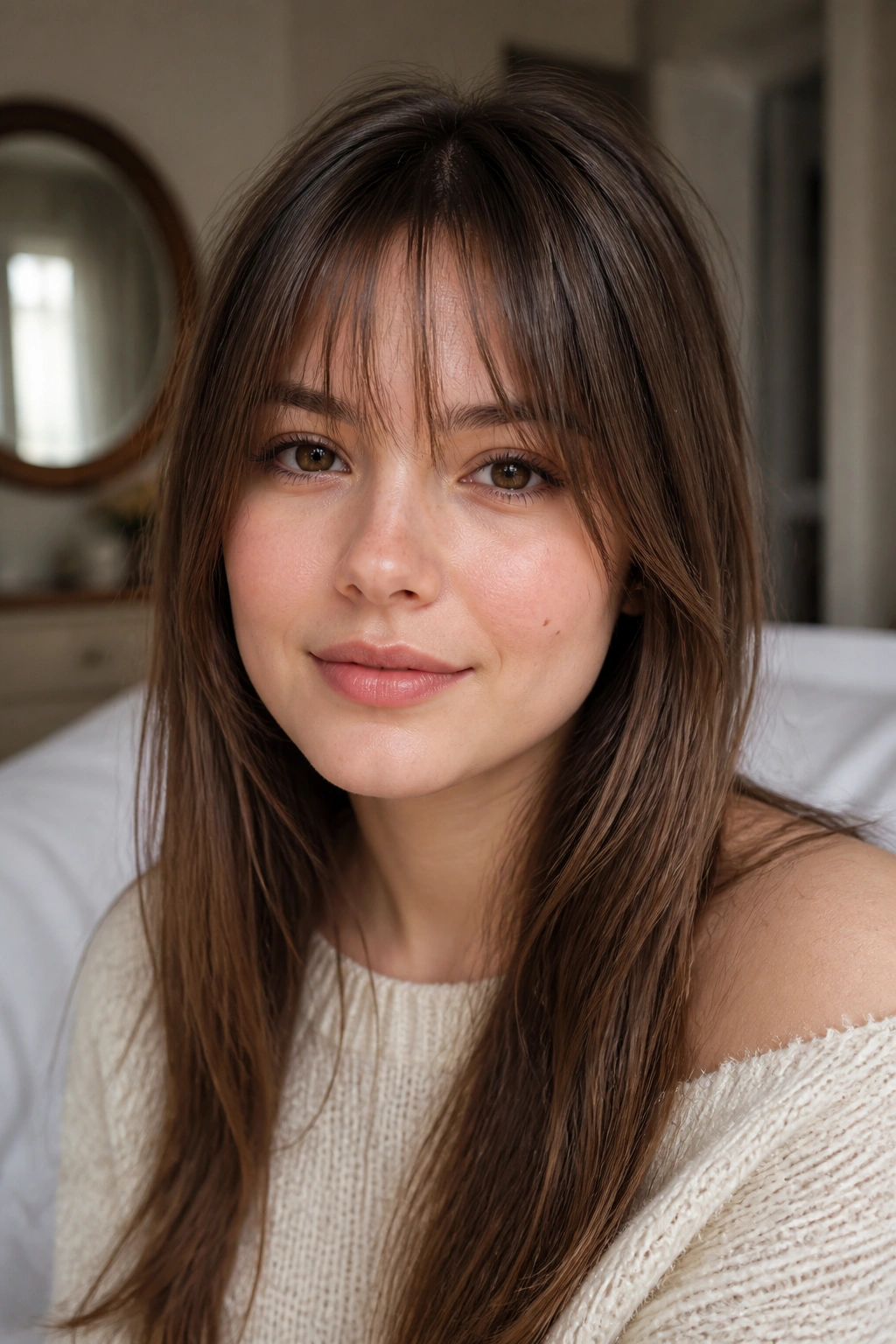
Fine hair needs a different touch. Too much weight disappears into the strand, and too much thinning makes the fringe look wispy in a cheap way.
These bangs stay long, but the interior is softened just enough to avoid a hard block across the forehead. Think of them as a light veil, not a thick curtain. They skim the brows and then open a little at the sides. That small gap helps a round face feel less enclosed.
The trick is cutting them with restraint. Don’t let the stylist over-texturize the ends. A few soft snips are enough. After that, use a small round brush or even your fingers to move the fringe slightly off-center.
Fine hair likes a light hand. So do round faces, most of the time. That is a useful overlap.
8. Side-Swept Straight Bangs With a Clean Diagonal Line
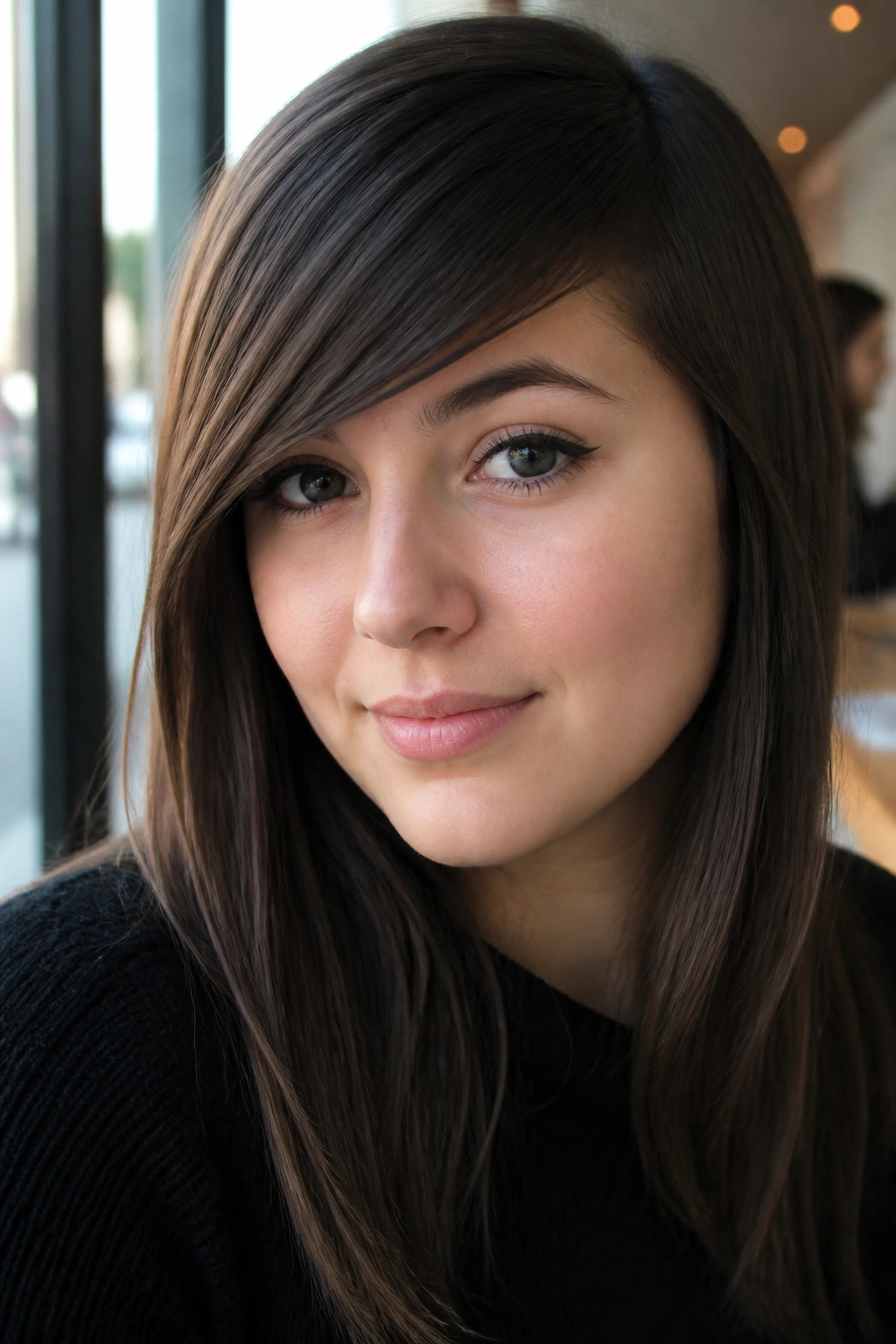
A side sweep gives you diagonal movement, and diagonal lines are one of the easiest ways to soften a round face. They pull the eye across the forehead and down toward the cheek, which creates shape without making the cut look busy.
What Makes It Different
Unlike a center-part curtain fringe, this version commits to one direction. That makes it feel a little sharper and a little more polished. It also helps if one side of your hair naturally wants to fall heavier than the other.
How to Wear It
- Part the hair a little off center.
- Blow-dry the bangs in the direction they will live.
- Keep the ends long enough to skim the outer brow or temple.
A side sweep can be understated or dramatic. I prefer the understated version on round faces. It looks more expensive, if that makes sense, because it doesn’t fight to be noticed.
9. Blended Bangs That Melt Into the Front Layers
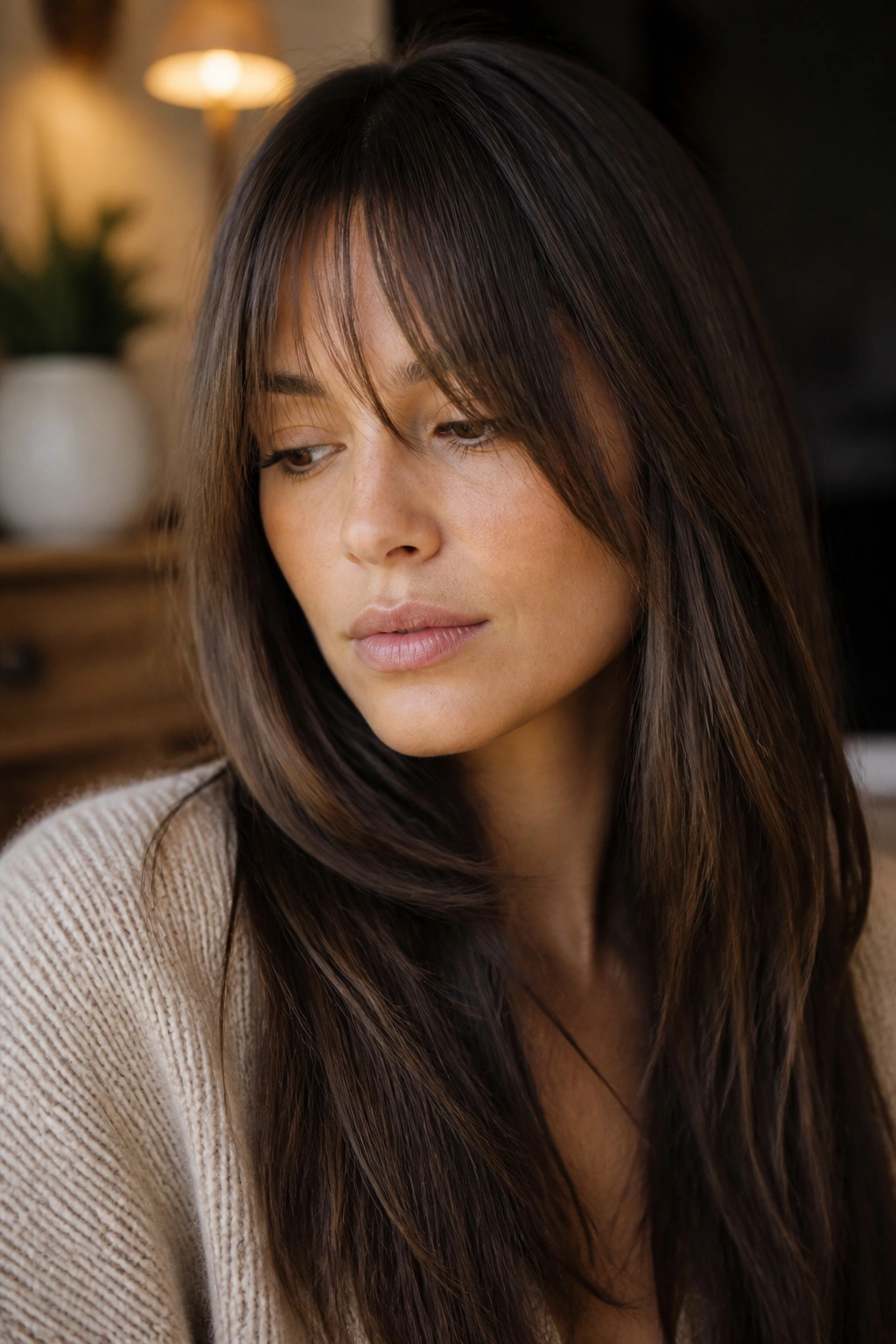
Some bangs should announce themselves. These should not.
The beauty of blended bangs is that they don’t create a hard line at the forehead. Instead, they flow into the front layers, which keeps the face open and long. For a round face, that matters because the strongest part of the cut lands lower and wider — around the cheeks and collarbone — rather than right across the middle.
This is a smart move if you hate the idea of obvious bangs but still want some forehead coverage. It also grows out nicely, which is useful if you’re the type who gets tired of one shape quickly.
Ask for soft point cutting and a gentle connection into the front pieces. You want a transition, not a chop. The whole thing should look like it belongs together from the start.
10. Brows-Visible Bangs With a Tiny Center Gap
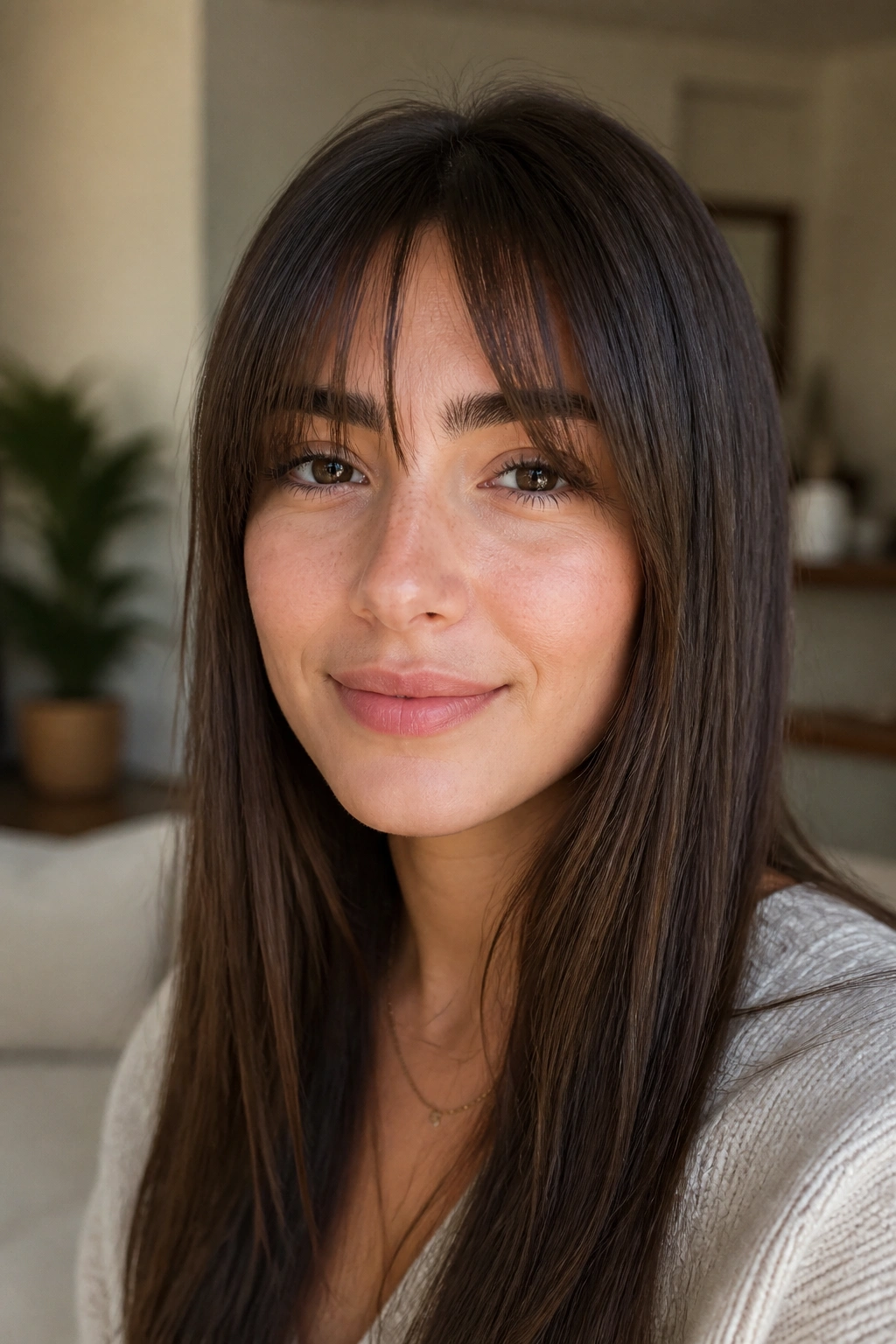
Do you need full coverage to make bangs work? Not at all.
A tiny center gap keeps the fringe from flattening the face. It leaves just enough forehead showing to stop the cut from feeling heavy, while the long sides still add that flattering frame. On a round face, that balance is gold. It gives structure without turning the hair into a wall.
- Center gap should be narrow, not dramatic.
- The shortest hair should sit at brow level or a hair below.
- The side pieces need to be longer than the middle by at least an inch.
That last detail keeps the shape from reading as a straight shelf. If you wear makeup, this is a nice option because it leaves room for brows to show. If you don’t, it still works. The line is soft enough to stand on its own.
11. Long Fringe That Works Well With Glasses

Glasses change everything. Bangs that look perfect in a salon chair can fight with your frames by lunchtime.
A long straight fringe can work beautifully here if the length sits just above the top of the frames or falls lightly over them without crowding the eyes. The goal is clean space. You do not want bangs and glasses competing for the same strip of the face.
This version is especially good when the frame has a strong shape — round, square, or cat-eye. The fringe gives you a soft band, and the glasses give you structure. Together, they can make a round face feel more defined.
Keep the bangs light at the root so they don’t press on the frames. And if your glasses sit high on the nose, ask for a slightly longer fringe. That tiny adjustment saves a lot of frustration.
12. Beveled Ends That Stop the Shelf Effect
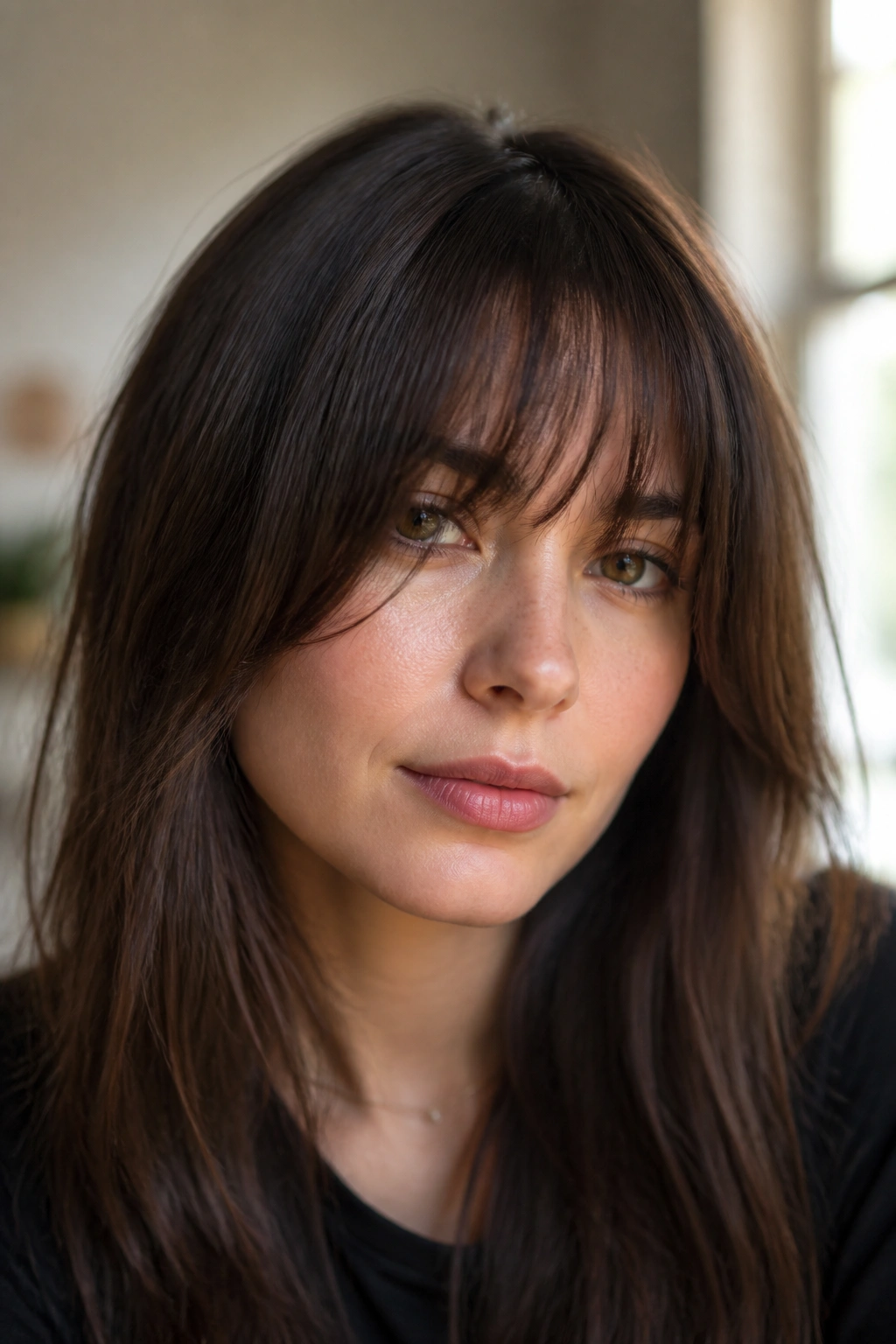
A shelf at the forehead is the enemy here.
Beveled ends fix that. Instead of cutting the fringe into a blunt line that sits like a ledge, the stylist softens the outer edge so the bangs angle down just enough to follow the face. The result is cleaner and less boxy, which matters on a round face where shape is already a little fuller through the middle.
I think this cut is underrated because it looks plain in photos and better in motion. The beveled ends move when you turn your head. They don’t stick in one rigid shape.
A light flat iron bend toward the temples helps. So does a touch of smoothing cream — not much, just enough to keep the line neat. Skip heavy oil. It makes bangs separate in a greasy, sad way.
13. Razor-Cut Straight Bangs With Soft Movement

A razor cut can be gorgeous, but it needs a steady hand.
The appeal is movement. Razor-cut bangs have a softer edge than a scissor-cut blunt fringe, so they don’t sit across a round face like a hard line. They flutter a little, which makes the whole look feel lighter. That can be a relief if your hair is dense or if you dislike anything too precise.
Still, this is one of those cuts that can go wrong if the razor is used too aggressively. Too much slicing and the ends fray. Too little and you lose the point of the cut. You want a feathered edge, not a shredded one.
Best for hair that has some natural slip. If your hair is very coarse, the cut may need more smoothing to show its shape. But when it works, it moves beautifully without looking overdone.
14. Long Straight Bangs for Round Faces With a Deep Side Part
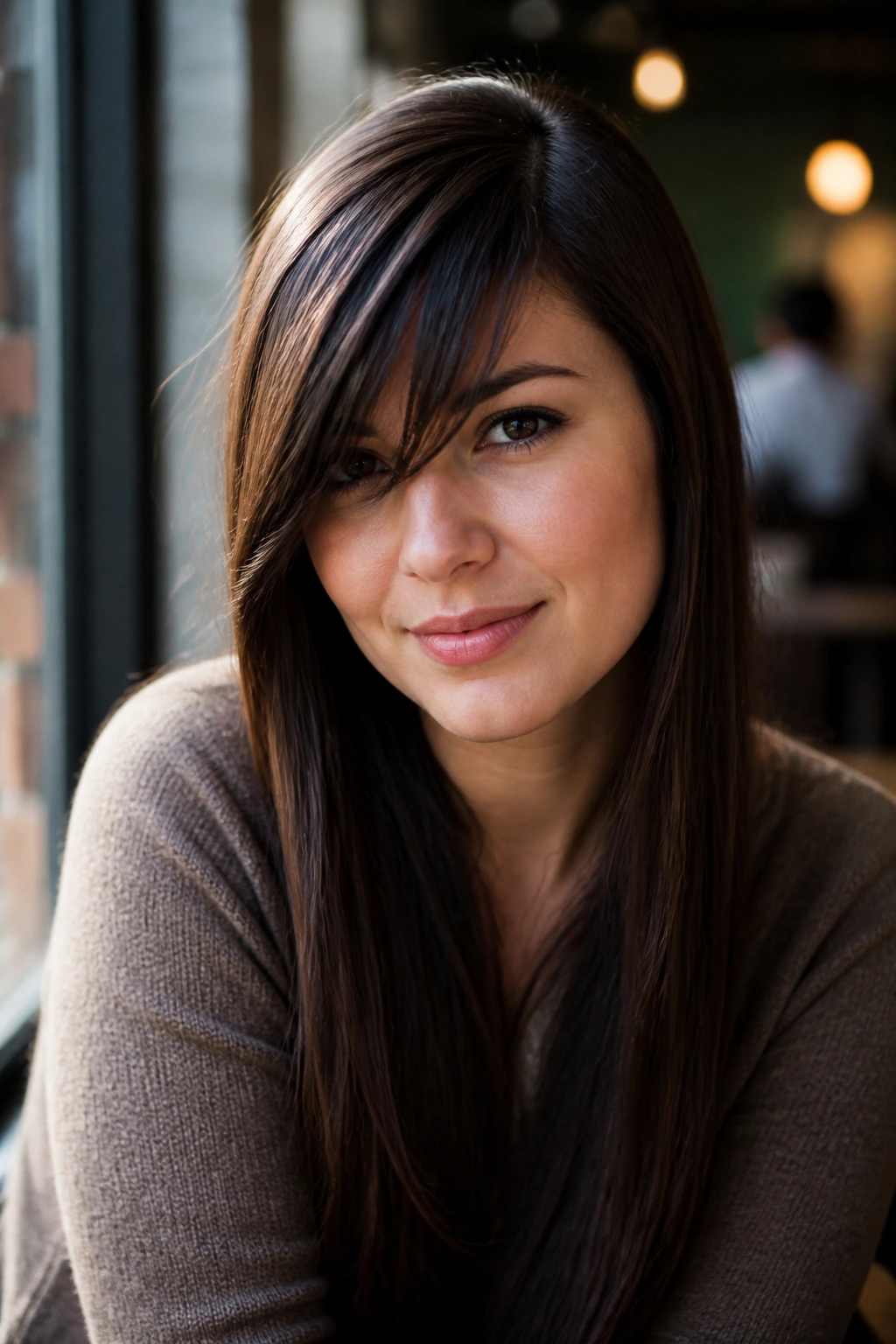
A deep side part gives a round face the easiest shortcut to vertical lines. The part itself does part of the styling work before you even touch a brush.
This fringe starts with weight on one side and then falls across the forehead in a long sweep. Because the mass of hair is not centered, the face reads a little longer and less circular. That’s especially useful if your cheeks are full and your jaw is soft.
What I like here is the imbalance. It feels modern without trying too hard. The side with more hair creates a frame, while the lighter side leaves some open space near the temple.
Use a large round brush or a blow-dryer brush to direct the bangs over the forehead. Then let them cool in place. That cooling step matters. Hair remembers shape when it cools, and bangs are stubborn about it.
15. Internal Layers That Keep the Fringe from Looking Boxy
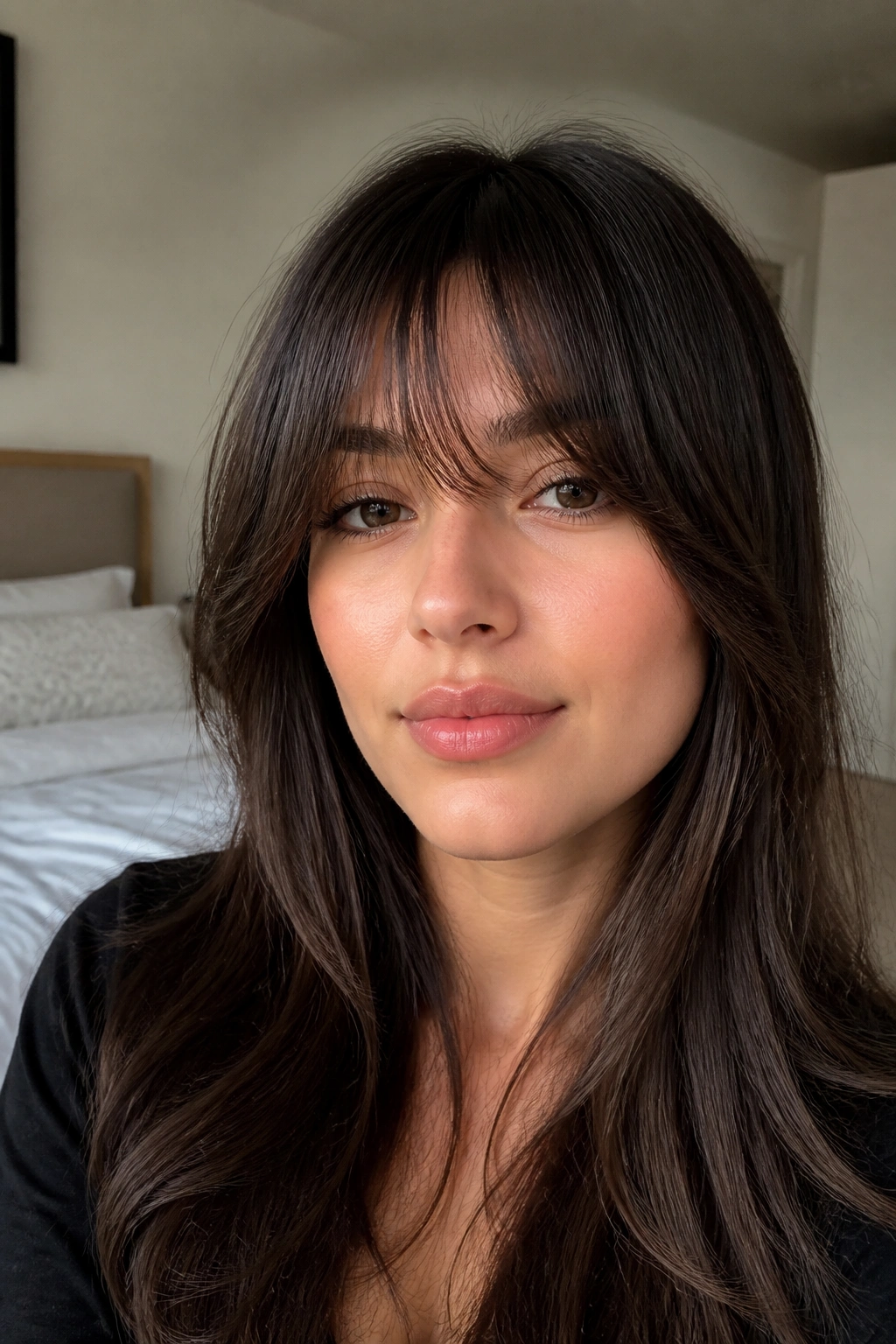
One-length bangs can get boxy fast. Internal layers solve that.
They remove a little weight from the inside of the fringe while keeping the outline long and straight. So from the front, you still get bang coverage. Up close, the hair feels softer and less like a strip of fabric across the face. For a round face, that keeps the look from feeling too wide.
This is a good choice if you want bangs that sit flat but still have movement. It’s also helpful if your hair puffs at the roots. The layers take away bulk without making the fringe sparse.
What to Ask For
Ask for soft internal layering or gentle point cutting, not chunked-out texture. Those are two very different things.
A good cut should still look full enough to frame the brows. It should just breathe a little.
16. Temple-Started Bangs That Narrow the Forehead
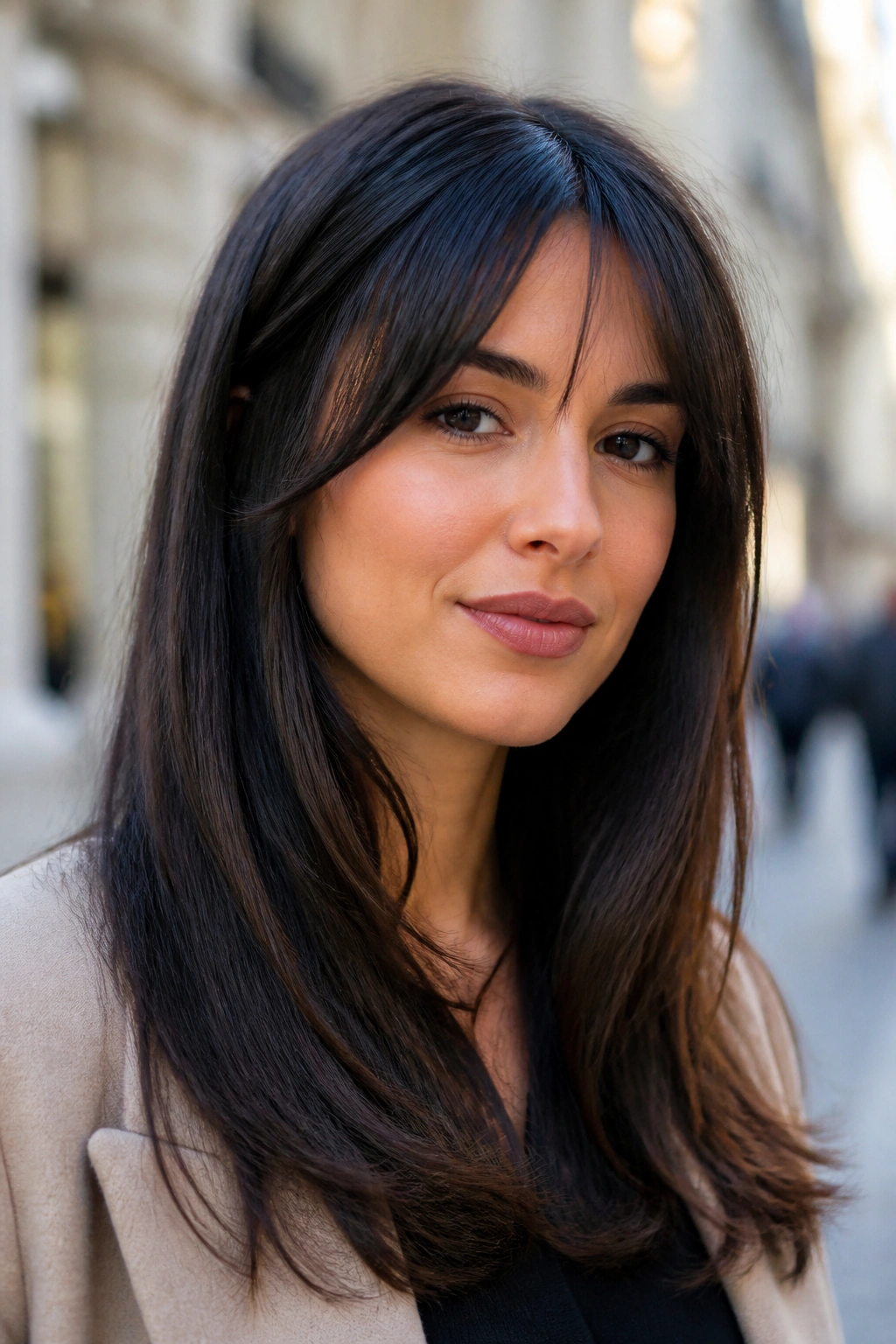
What happens if the fringe begins closer to the temple than the center of the forehead? The face starts to look a little slimmer right away.
That’s the logic behind temple-started bangs. Instead of dropping a thick band right across the middle, the hair is angled inward from the sides. The center stays a touch lighter, which opens the forehead and prevents the face from feeling compressed. On a round face, that small opening is often enough.
This style works especially well if you have a softer jaw or a full cheek area. It gives the top half of the face some shape without taking away too much skin or brow. You still get bangs. You just don’t get the heaviness.
I’d keep this one polished, not over-sprayed. The movement should look natural. If it gets too stiff, the nice shape disappears.
17. Straight Bangs Paired With Long Face-Framing Pieces
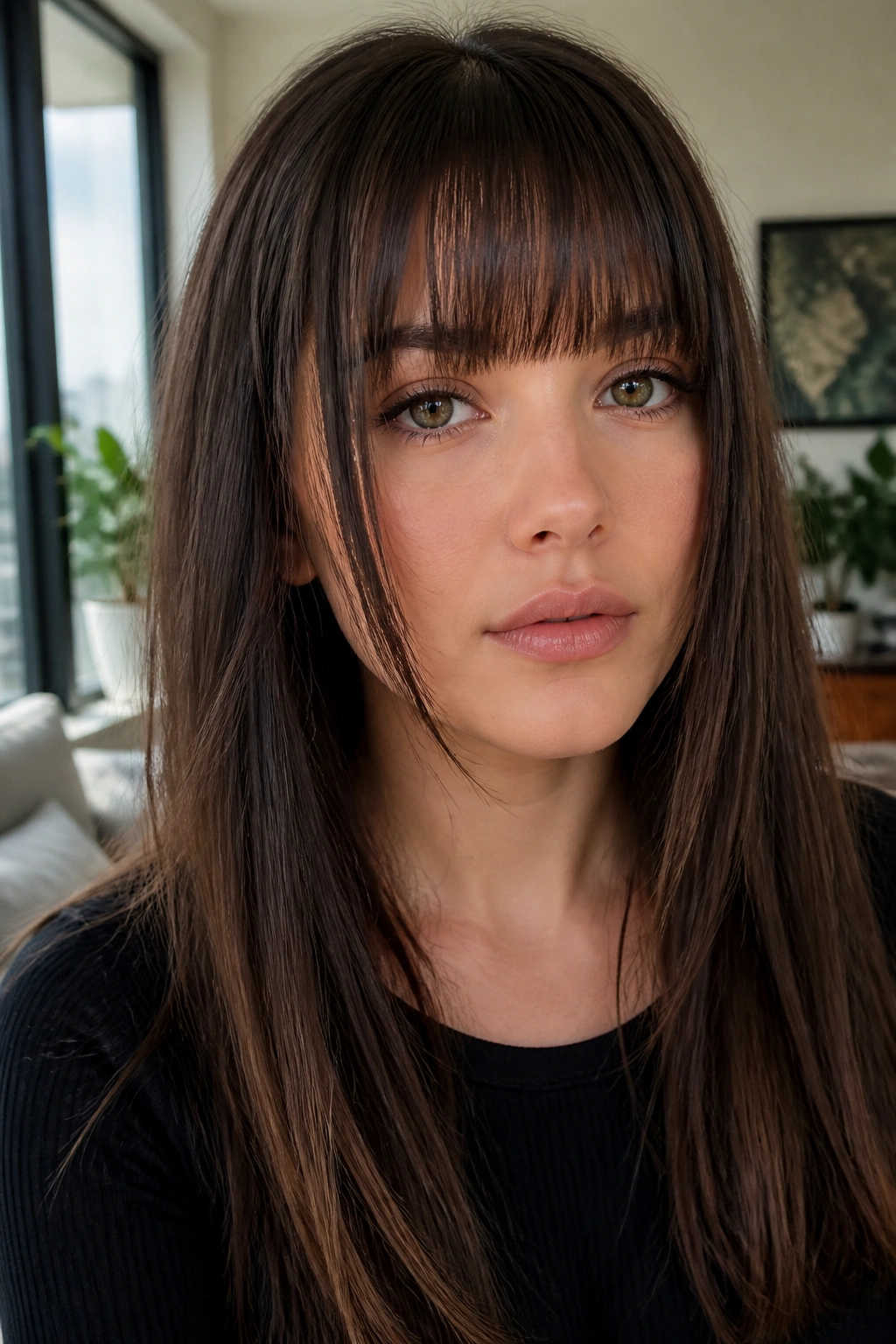
Straight bangs alone can be enough. Add long face-framing pieces, though, and the whole cut becomes more forgiving.
The fringe sets the tone across the forehead. The side pieces take over along the cheeks and jaw, which is where a round face often needs the most help. That combination gives you structure up top and softness around the outer edges. It is a good balance.
This is a favorite if you wear your hair down most of the time. It also suits people who like to tuck one side behind the ear. The face-framing pieces still do their job even when the bangs are pinned back a little.
Keep the framing pieces long enough to reach the jawline or just below it. Shorter and they can puff out in a way that adds width. Longer is calmer. Calmer usually wins here.
18. Long Fringe That Starts Higher at the Temples
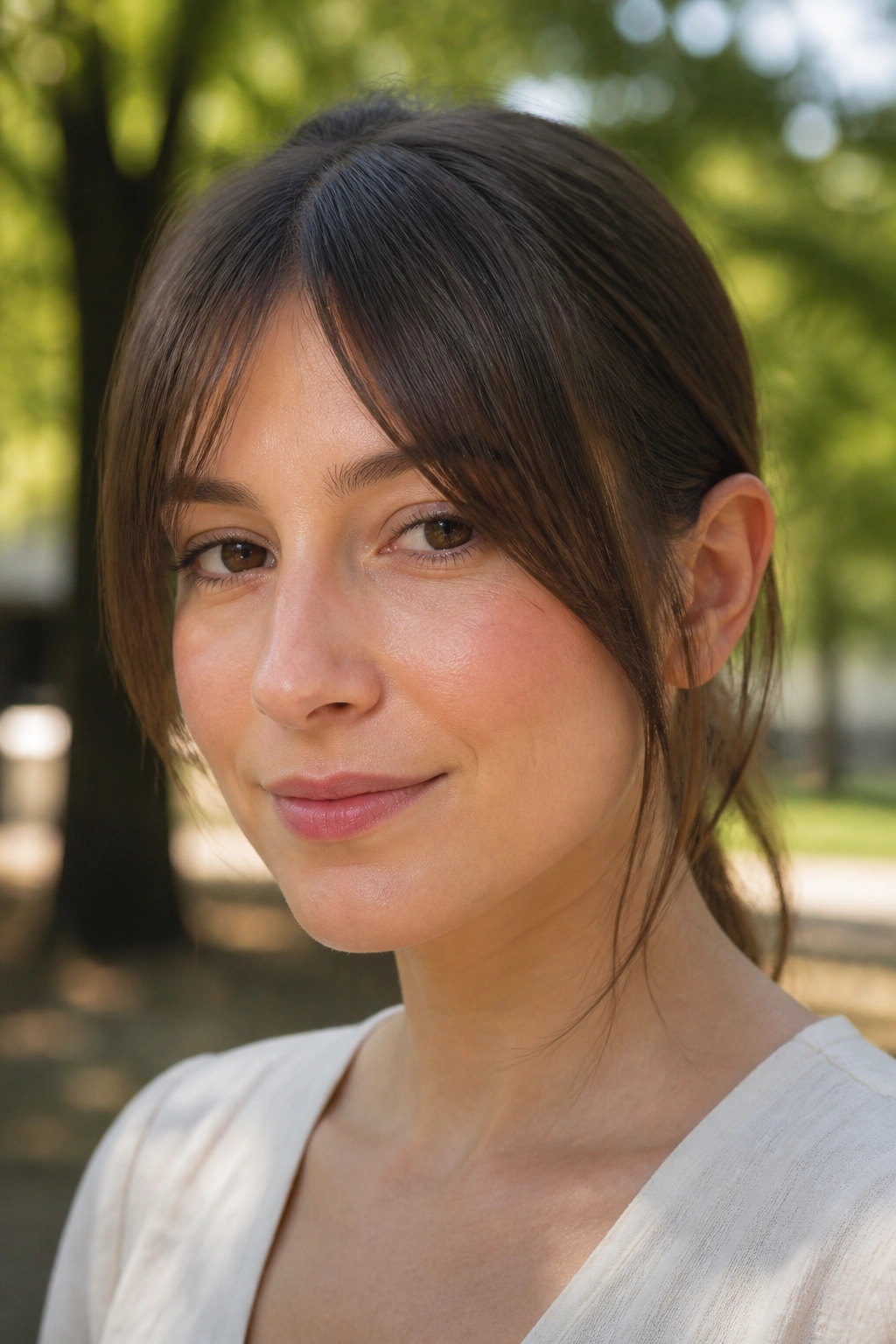
A fringe that starts higher at the temples can feel a little unusual at first. Then you see it on a round face, and it makes sense.
The higher start creates lift near the outer forehead, which helps the face look more oval. The center stays longer and softer, and the sides fall just enough to guide the eye downward. That shape is especially helpful if the cheeks are the widest point on the face.
This cut also gives a nice sense of movement when the hair is tucked behind the ears. The fringe still frames the face, but it doesn’t sit like a fixed band. It’s looser than a blunt bang and less committed than a full curtain.
I’d call this one quietly strategic. It does not scream for attention. It just makes the face look better from a few feet away, which is usually the point.
19. A Low Curve Under the Eyes
A low curve is the little detail most people miss, and it makes a big difference.
Instead of cutting the bangs in a straight line, the hair dips slightly in the middle and curves lower near the outer edges. That shape creates a soft frame around the upper face and keeps the focus from resting too hard on the cheeks. For a round face, that downward motion helps a lot.
You can style it with a round brush or a flat iron, depending on how much bend you want. I tend to like a soft brush-through more than a hard iron line. The curve should feel relaxed, not graphic.
A small note: this style is lovely, but it needs a good trim schedule. If the center grows too long, it can start to hang in the eyes. Then the curve turns into a mess. Tiny trims keep it elegant.
20. Piecey Straight Bangs With Separated Ends
Piecey bangs are not the same as thin bangs. That distinction matters.
Thin bangs can look washed out. Piecey bangs keep enough body to frame the face, but the ends are separated a little so the fringe doesn’t read as one heavy block. On a round face, that separation gives the forehead room to breathe and keeps the style from feeling dense.
You can get this look with a light texturizing spray and your fingers. Don’t rake it apart too much. A few clear separations are enough. Too many and the fringe starts to look broken instead of styled.
This version works well if you like a bit of edge. It also plays nicely with straight hair that tends to cling together. The piecey finish breaks that up in a useful way.
21. Low-Maintenance Long Bangs That Grow Out Gracefully
Some bangs look good on day one and annoying by day ten. These are not those bangs.
Low-maintenance long straight bangs are cut so they still look intentional as they grow. That usually means the line is long, the sides are slightly longer than the center, and the fringe blends into the front layers instead of ending abruptly. On a round face, that kind of grow-out is a lifesaver.
This is the version I’d suggest if you’re testing bangs for the first time. It gives you the face-framing effect without locking you into a short, high-commitment line. You can tuck them, sweep them, wear them center-parted, or let them fall forward on their own.
If you want something easier to live with, this is a smart pick. Not lazy. Smart.
22. Long Straight Bangs With a Soft Side Part
If you only try one version, make it this one.
A soft side part is forgiving, flattering, and easy to wear when a round face needs a little extra length. The bangs stay long enough to move, but the part keeps the line from looking too flat or too severe. It is one of those styles that works in real life, not just in a photo.
The best part is how adaptable it is. Wear it smooth for a cleaner look, or let the ends stay a little airy for more softness. If one side of your hair is stronger than the other, this cut uses that to its advantage instead of fighting it.
I keep coming back to this shape because it solves the main problem without making a fuss: it opens the face, keeps the forehead framed, and avoids that trapped feeling blunt bangs can create on a rounder shape. That is a useful little trio, and honestly, it is hard to beat when you want long straight bangs that still feel easy.
