



Round faces can wear bangs. They just need the right kind.
The problem with fringe on a round face is not the bangs themselves; it’s the shape they draw. A heavy, blunt line across the forehead can make the face read wider, while a softer medium fringe can pull the eye downward, split the width at the cheeks, and keep the whole cut feeling lighter. That is why medium subtle bangs are such a useful option: they sit in that middle ground where they look intentional without taking over your face.
I care more about the line the bangs make than the label on the salon menu. A good fringe on a round face usually does three things at once: it creates a little vertical movement, it opens space near the temples, and it blends into the rest of the haircut instead of sitting on top of it like a lid. If you’ve ever seen bangs that look cute from the front but make the cheeks feel even fuller from the side, you already know how much shape matters.
Hair grows fast enough to be annoying. A quarter inch can change the whole mood of a fringe, which is why subtle bangs are often easier to live with than the dramatic versions people save on mood boards. The best options here are medium in length, soft at the ends, and flexible enough to wear straight down one day and pushed apart the next. Some are airy. Some are cheekbone-skimming. A few are almost bangs, which is often the smartest move of all.
1. Long Curtain Bangs That Split at the Cheekbones
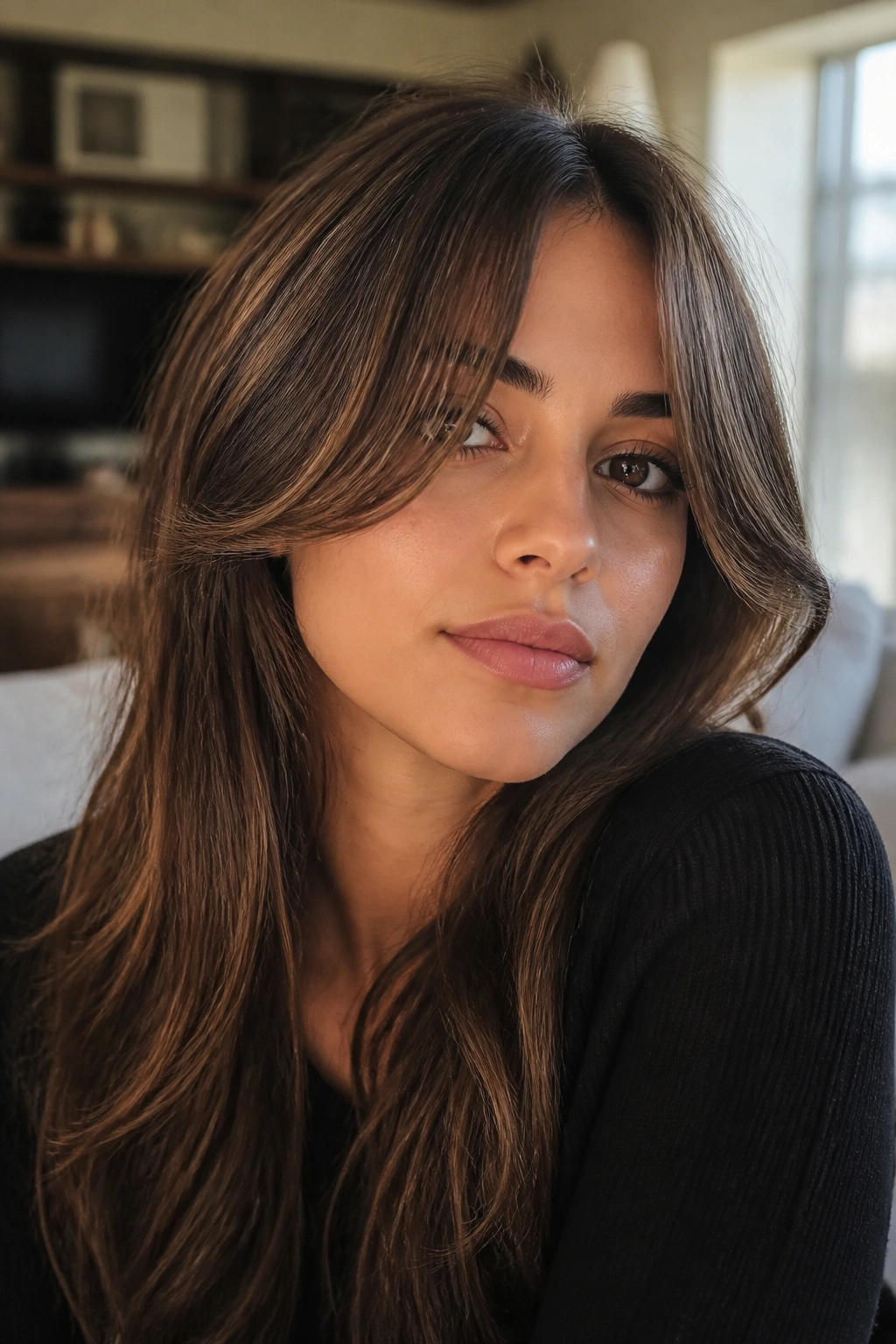
Long curtain bangs are the safest place to start, and I mean that in the best way. They give a round face some vertical movement without boxing it in, and they’re forgiving if your styling routine is only half-serious. The shortest pieces usually sit around the brow or just below it, while the outer corners taper down toward the cheekbones.
Why They Work So Well
The split matters. A clean middle gap or a slightly off-center part creates two diagonal lines instead of one horizontal one, and diagonal lines are your friend here. They make the face feel a little longer and keep attention moving.
A round face often looks widest across the cheeks, so this shape avoids stopping there. The longer sides act like little curtains around the face, but they don’t swallow it. That balance is what makes this style so reliable.
- Ask for the center pieces to graze the brows or sit about 1/2 inch below them.
- Keep the outer edges 2 to 3 inches longer so they fall near the cheekbone.
- Style with a 1 to 1.25-inch round brush and blow the front away from the face.
Best detail: let the front cool before you touch it. Warm hair bends; cool hair remembers.
2. Off-Center Curtain Bangs With a Softer Fall

Why do off-center curtain bangs look so flattering on round faces? Because they break symmetry in a way that feels relaxed, not fussy. A tiny shift in the part changes where the eye lands, and that little shift can stop the face from reading as perfectly circular.
This version is especially good if you like curtain bangs but don’t want the center split to feel too neat. The off-center part gives one side a little more length, so the fringe falls in a soft diagonal and blends into the rest of the haircut. It’s subtle. That’s the point.
I like this shape on medium-length cuts because it adds movement without demanding too much daily styling. You can dry it with your fingers and a round brush, or you can twist the front section away from the face while it air-dries. Either way, the result should feel easy, not architectural.
The real win is how it frames the cheekbones. A round face benefits when the front sections don’t end all at once. This style keeps one side slightly longer and lets the whole fringe taper out in a way that feels gentle.
3. Bottleneck Bangs That Open at the Temples
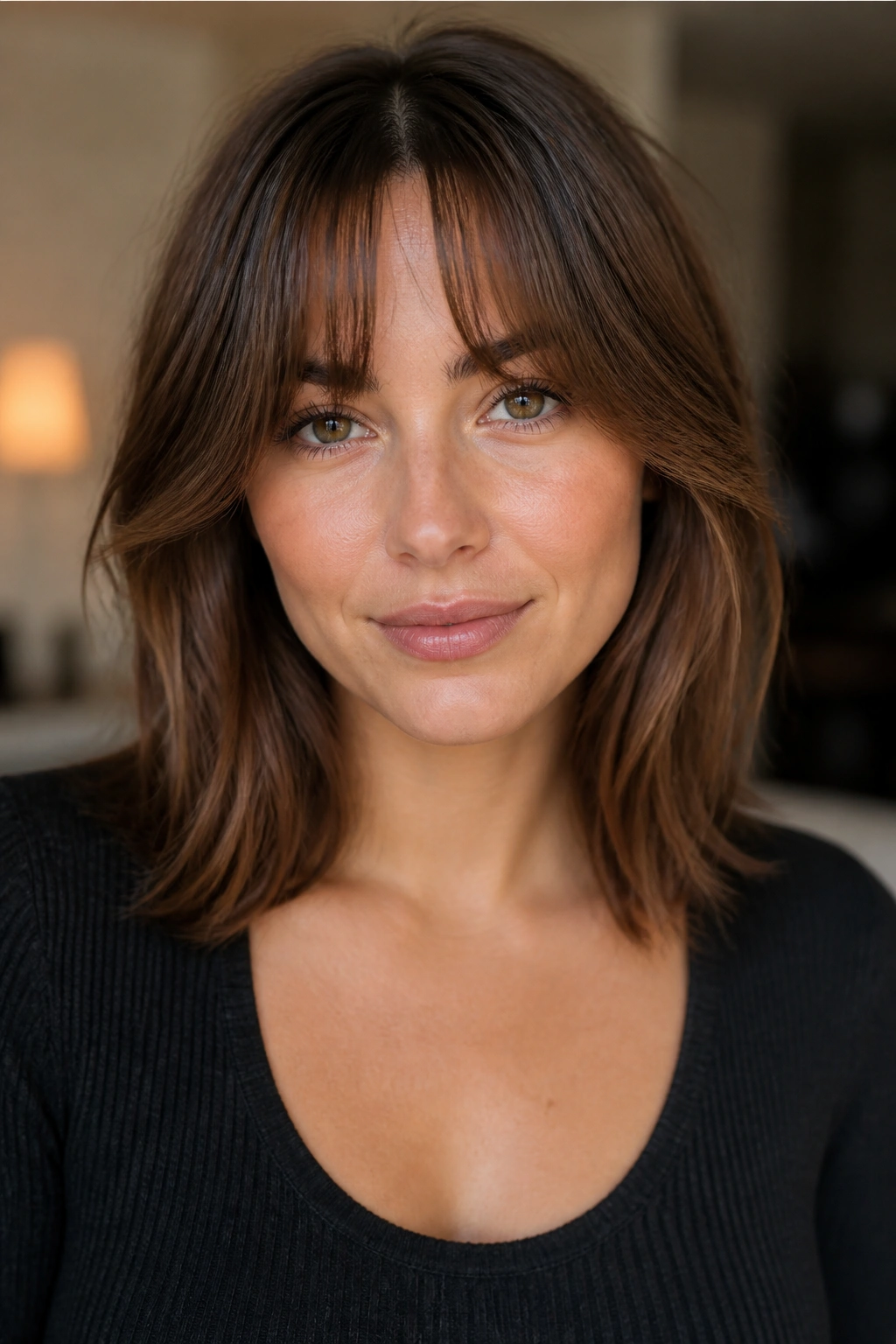
Bottleneck bangs are one of the smartest subtle fringe shapes for round faces. The center stays a little narrower, then the sides widen out near the temples before blending into longer face-framing pieces. That shape gives you softness at the front and some useful structure at the edges.
What Makes Them Different
They’re named for the shape, and the name actually helps. Think narrow in the middle, wider at the sides, then loose and feathered as they reach the cheek area. It’s a quieter version of curtain bangs, which means it can look polished without looking stiff.
On round faces, the temple opening is the secret sauce. It creates a little negative space near the widest part of the face, which makes the cheeks feel less dominant. That sounds technical. In practice, it just looks flattering from every angle.
A good bottleneck bang should never feel thick at the center. If it does, the whole style loses its lightness and starts to sit like a curtain in the wrong place. Keep the center soft and the sides longer.
Ask your stylist for:
- a narrow center that starts around the brows,
- pieces that fan wider at the temples,
- ends that blend into face-framing layers instead of stopping bluntly.
4. Side-Swept Bangs That Start Deep at the Part
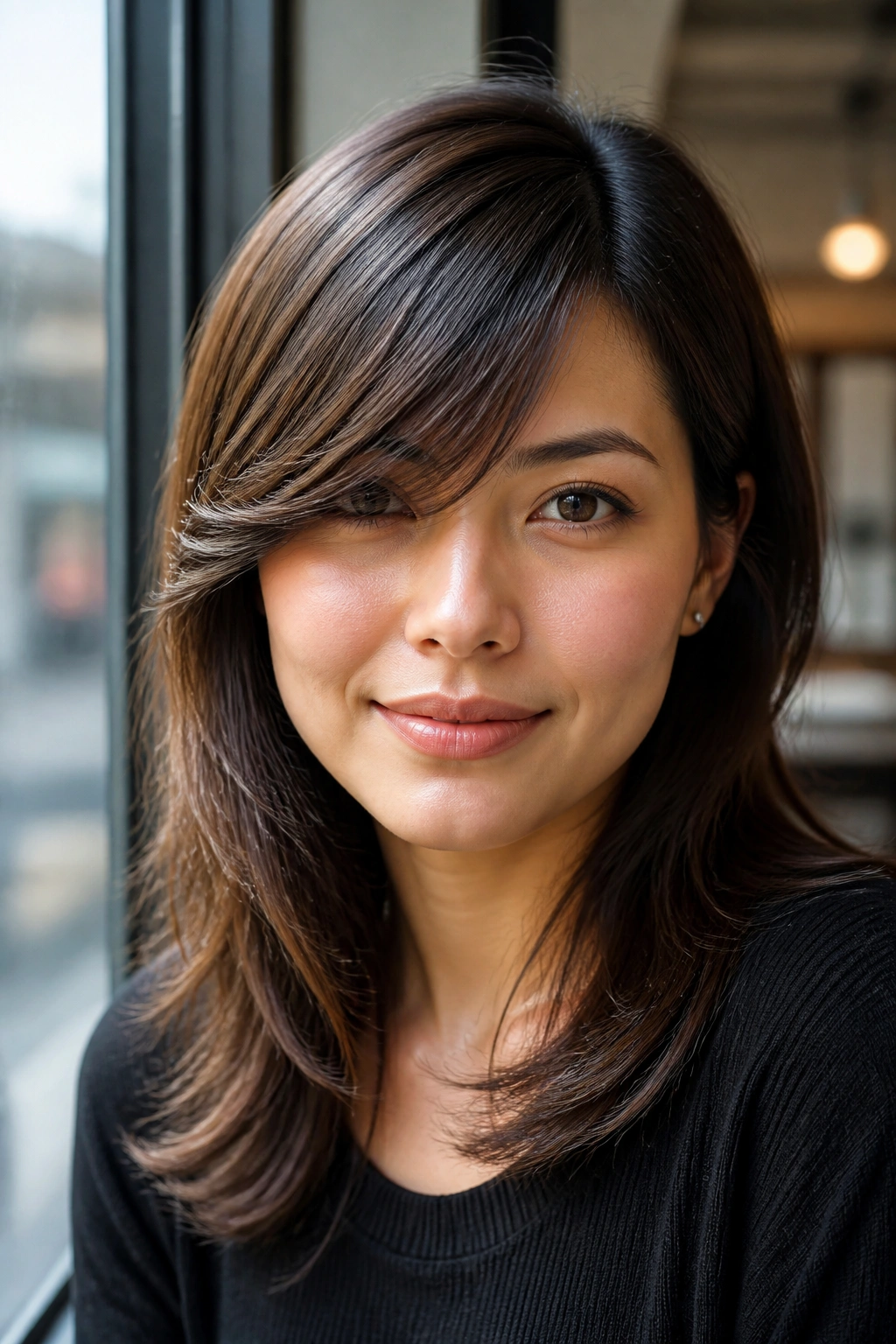
Side-swept bangs still have a place, and on round faces they can be surprisingly useful when they’re cut with enough length. A deep side part gives the forehead a diagonal line, and diagonal lines do a lot of work here. They make the shape feel less symmetrical and a little less broad.
The key is not to cut them too short. Side bangs that end right at the middle of the forehead can push the width higher, which is usually not what you want. Let them begin near the crown and sweep down across one eyebrow before slipping into the front layers.
I’ve always thought this is the best option for anyone who wants bangs but hates the idea of a full fringe commitment. They move. They can be tucked back. They can be pinned. And when you grow them out, they turn into face-framing layers rather than an awkward line you have to fight.
If your hair tends to fall flat, lift the root with a little mousse at the front and dry it in the opposite direction of the part for the first minute. Then sweep it over. That small trick keeps the bang from collapsing onto the face.
5. Wispy Eyebrow-Grazing Bangs
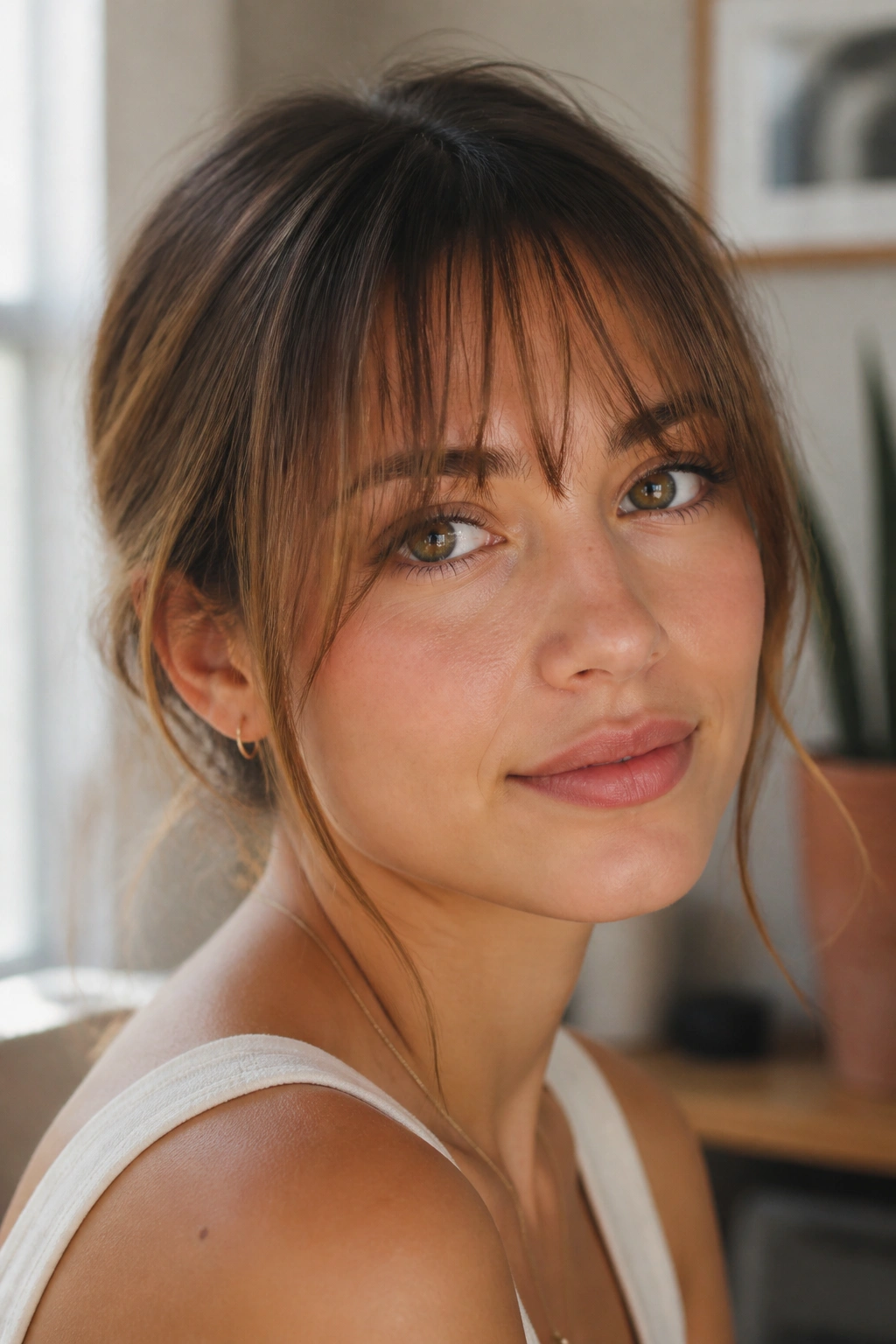
Wispy bangs are for people who want a fringe that feels light enough to breathe through. On a round face, that airiness matters. A dense bang can take over the forehead and crowd the eyes, while a wispy version breaks the line into small, soft pieces.
They work best when the ends are uneven in a controlled way. Not choppy for the sake of being choppy. Just broken up enough that the fringe moves instead of sitting in one hard strip. The sweet spot is usually right around the brows, maybe brushing the lashes if you style them down.
Best Hair Types for This Look
- Fine to medium hair that already lays fairly smooth
- Straight or softly wavy textures
- Hair that doesn’t fight the cowlick in the front every morning
A wispy fringe can look sweet, but it can also go limp if it’s cut too thin. That’s the catch. You want enough density to see the shape, just not enough to create a wall. A point-cut finish helps here because it softens the edge without making the bang look shredded.
Pro tip: use a tiny dab of lightweight cream, then comb it through with your fingers. Brush it too hard and you lose the softness.
6. Feathered Fringe That Melts Into the Layers
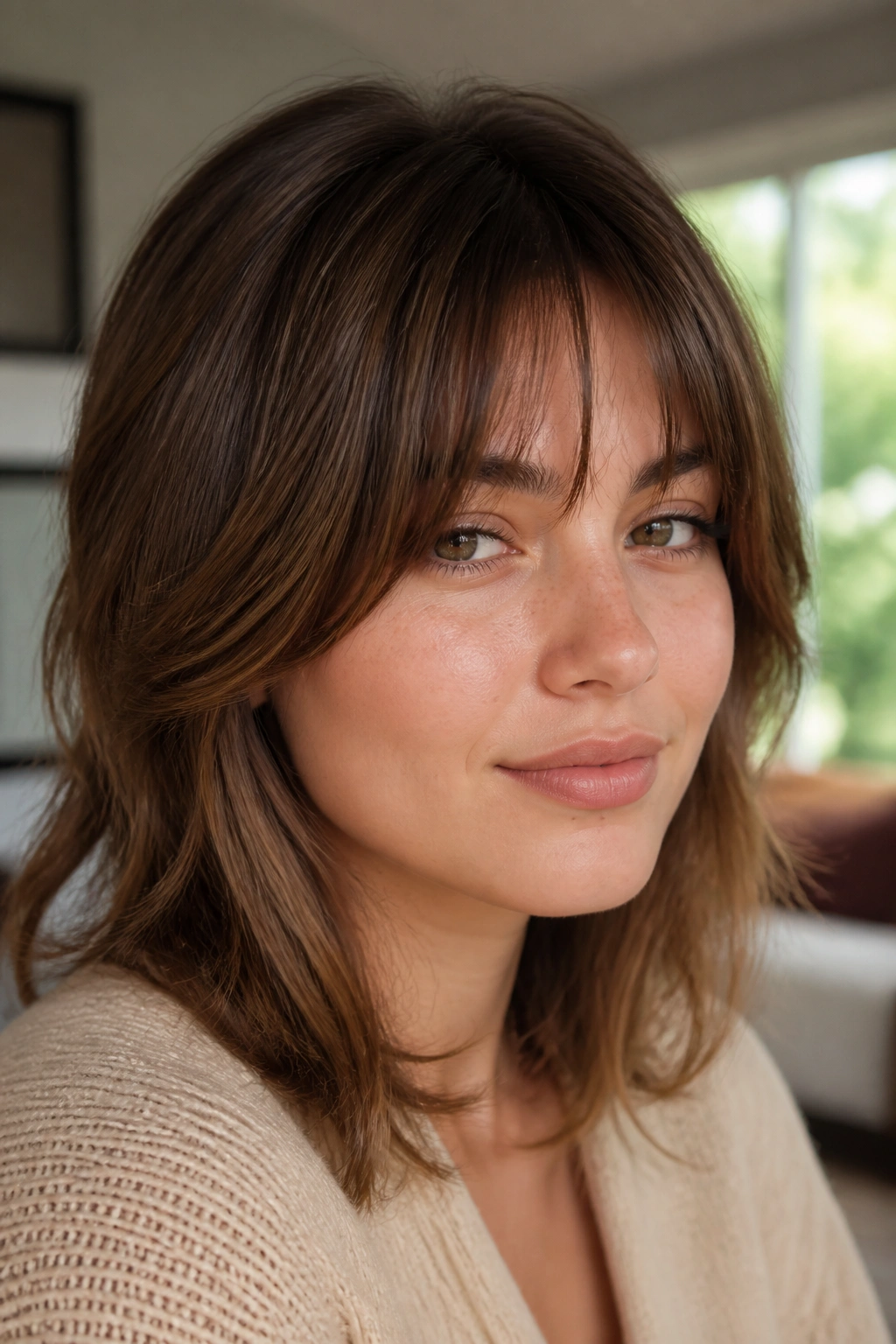
Feathered bangs are a gift for thick hair. If your fringe tends to feel heavy, or if you worry that bangs will make your face look smaller in the wrong way, this is a strong choice. The ends are cut so they melt into the surrounding layers, which takes a lot of pressure off the front of the face.
The style usually starts with a medium-length center section and then gets softer toward the sides. Nothing sits in one heavy block. Instead, the fringe breaks apart and flows into the haircut. On a round face, that flow matters because it keeps the forehead area from looking crowded.
There’s also a nice side effect: feathered fringe tends to move well when you tuck your hair behind the ears. That makes it feel casual, not fussy. I like that. A lot. Hair should not fight you every time you turn your head.
Ask for light internal layering, not aggressive thinning. Too much thinning can make thick hair frizz out at the ends, and then you lose the soft shape you were after.
7. Soft French Bangs With Tapered Ends
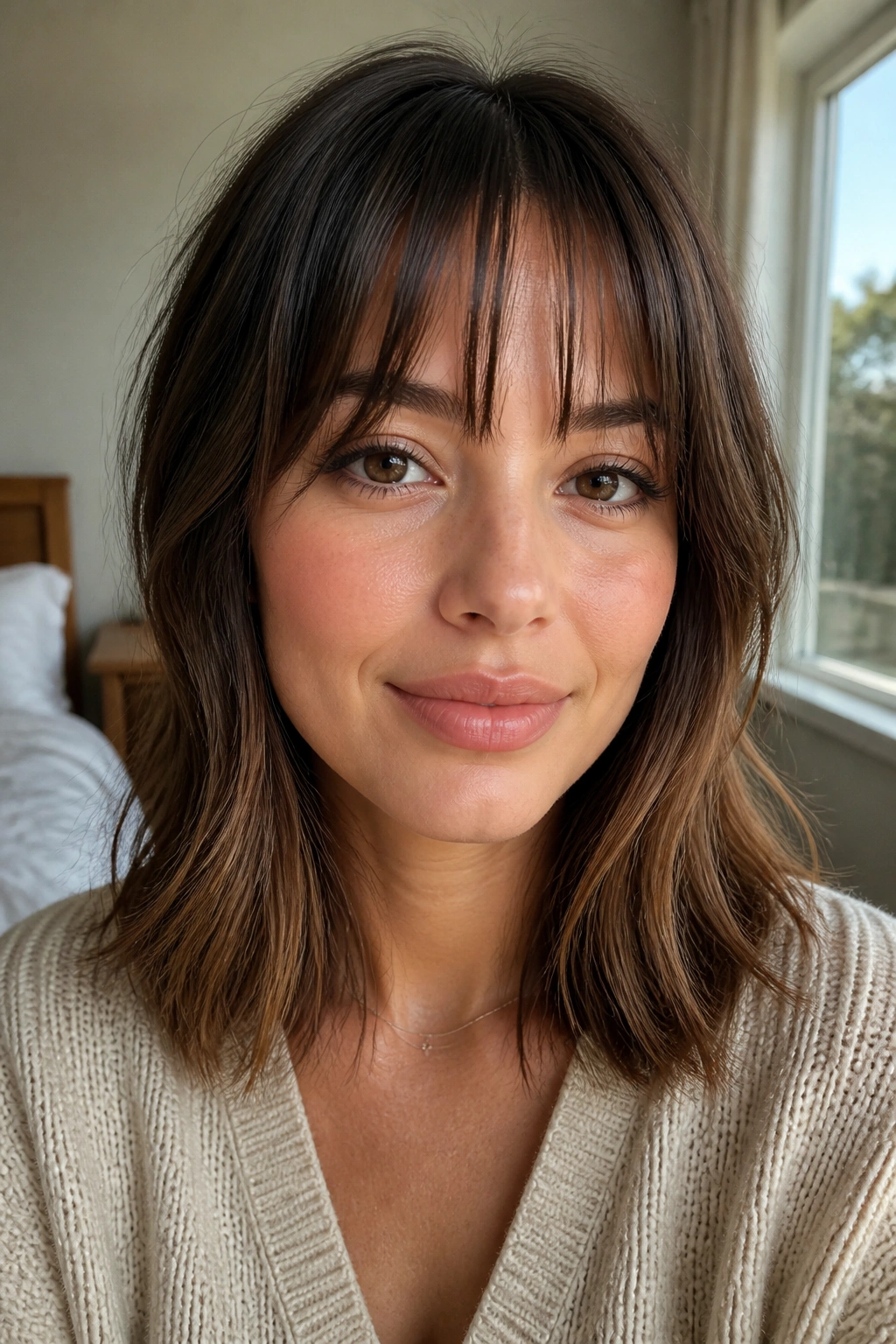
French bangs get talked about like they’re one exact thing, but the subtle version is a lot more wearable than the full, opaque version people imagine. For round faces, the softer take works best: medium length, a little fuller in the center, with the edges tapered so the line doesn’t look blunt.
This style has a bit of attitude without looking hard-edged. The center often hits near the brows, then the corners bend away from the face and disappear into the haircut. The effect is neat but not severe. That’s useful if you want shape without too much drama.
I’d choose this for straight or gently wavy hair that can hold a clean front shape. It also looks nice when the rest of the cut has a little movement. A tidy bob or a collarbone-length cut keeps the fringe from feeling too heavy.
The styling is simple, but not careless. Blow the bangs forward first, then curve them slightly from side to side with a small brush. If the ends are too polished, they can look rigid. You want a bit of bend, not a helmet.
8. Cheekbone-Framing Bangs for Round Faces
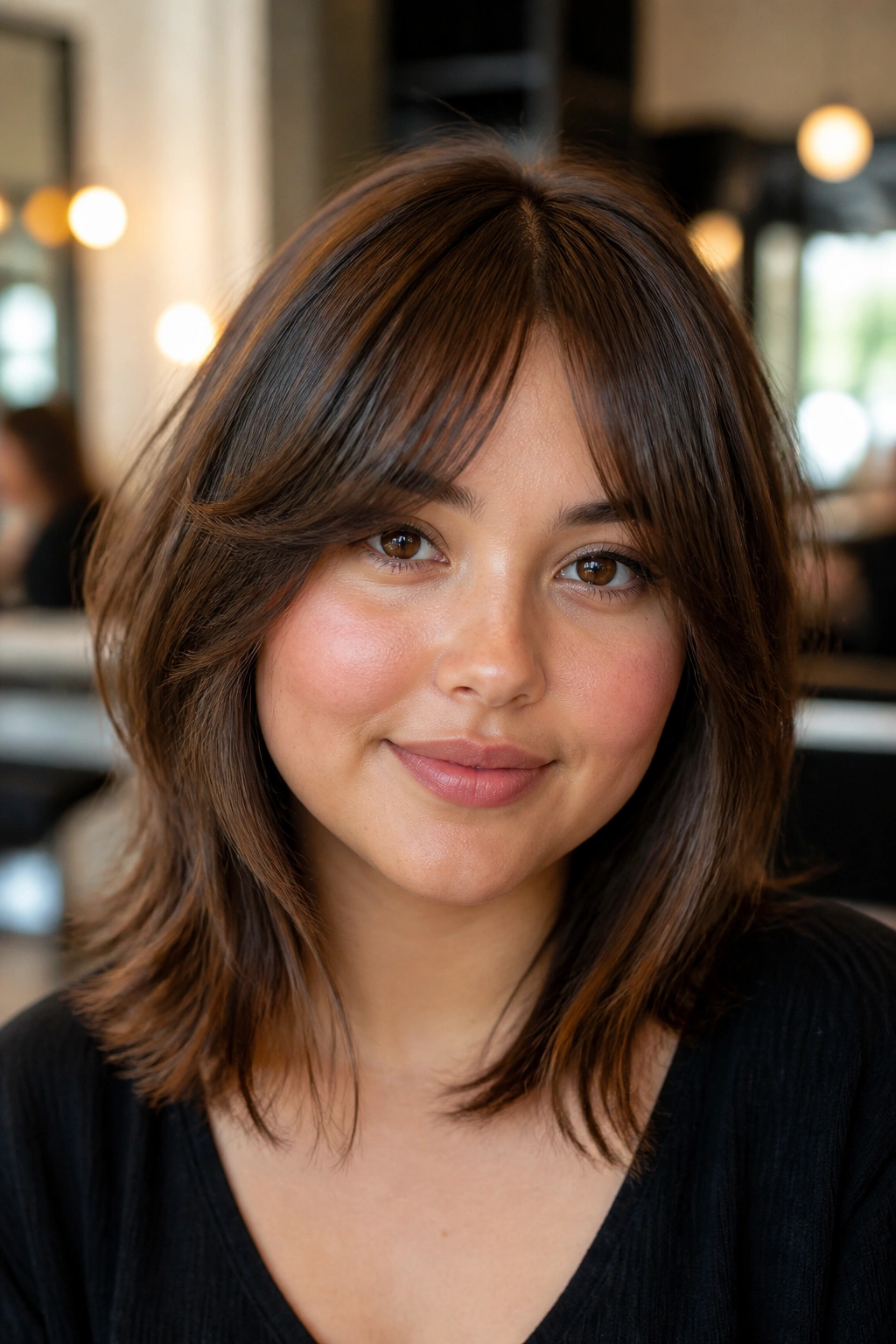
Cheekbone-framing bangs are one of those styles that sound obvious until you see them on someone with a round face. Then the shape clicks. The shortest point sits above or just at the brows, while the longer sides land close to the cheekbones and pull the eye outward in a clean, flattering way.
What to Ask For at the Salon
- Keep the center soft and medium length, not cropped short.
- Let the sides taper down toward the top of the cheekbone.
- Use point cutting at the ends so the fringe doesn’t form a hard line.
That cheekbone placement is the whole trick. If the side pieces end too high, the style can make the face look rounder. If they end too low and heavy, you lose the lift. The best version sits right in that middle zone where the eye naturally follows the line down.
This is a nice choice if you already wear face-framing layers. The bangs should feel like the front part of the haircut, not a separate add-on. When they connect to the layers well, the whole cut looks more thoughtful. Less “I got bangs.” More “this haircut knows what it’s doing.”
9. Razor-Cut Bangs With Piecey Movement
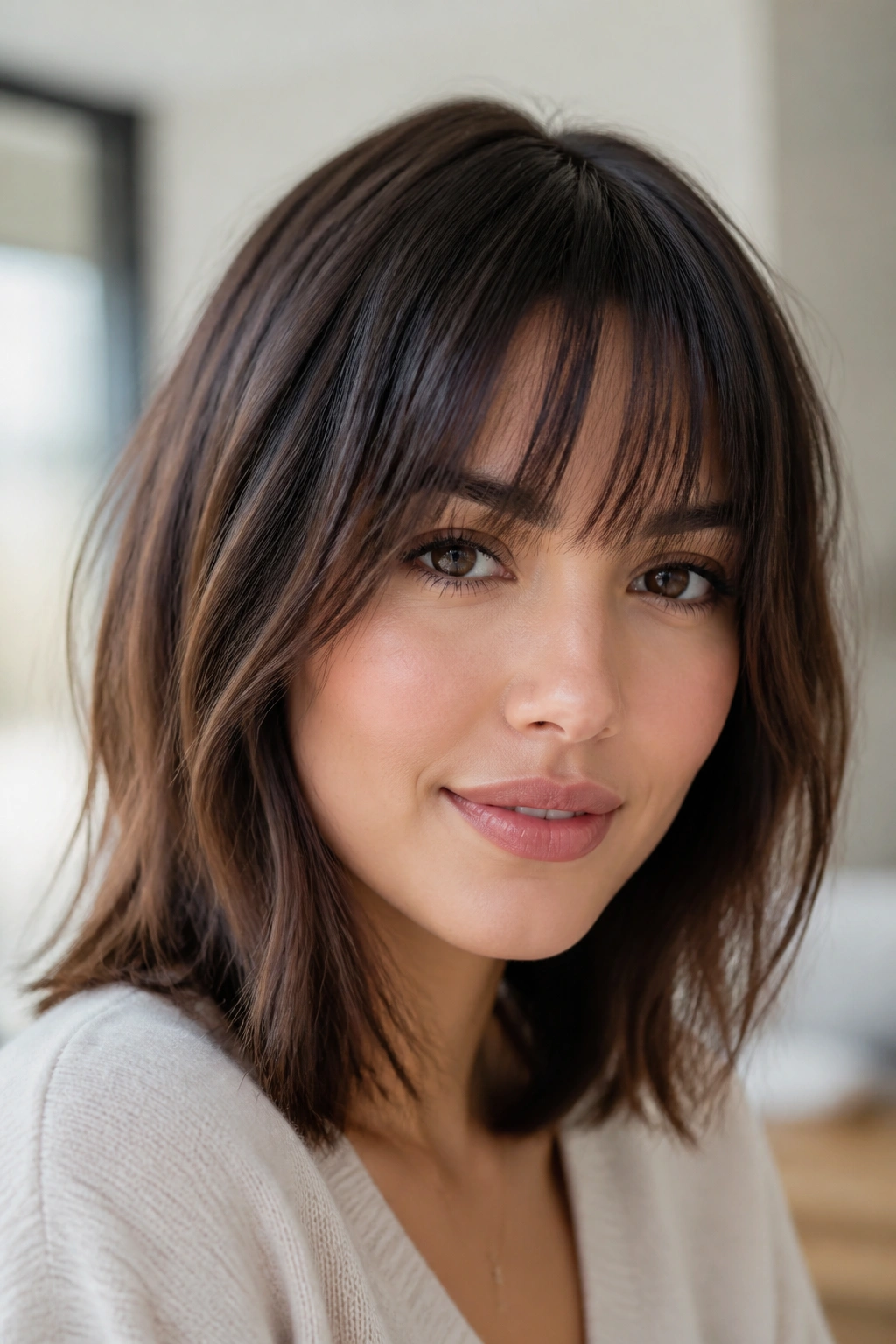
Razor-cut bangs have a very specific feel. They’re softer at the edges, a little separated, and often lighter than scissors-only fringe. On a round face, that piecey movement helps because it keeps the forehead area from becoming one flat shape.
Do not confuse soft with weak. Razor-cut bangs still need enough length to make a shape. What changes is the finish. The ends look broken up, almost like small wisps were lifted away from the main line. That gives the front of the haircut some movement without making it messy.
How to Style Them
Use a light cream or a pea-size bit of paste. Work it through the ends only, then pinch the pieces apart with your fingers. If you rub the product all the way to the roots, the fringe can clump and lose that airy separation.
This look works best on straight or slightly wavy hair. Strong curl or heavy frizz can blur the piecey effect unless you’re willing to smooth it with a brush or flat iron. I wouldn’t force this style on hair that wants to explode in humidity. That’s a battle you do not need.
The nice thing about piecey bangs is that they look better with a little imperfection. A clean little bend near the center, a longer piece near one temple, a slightly uneven edge — those details make the cut feel alive.
10. Center-Part Fringe With a Tiny Gap

A center-part fringe is not the same thing as full curtain bangs, and that difference matters. This version stays shorter and narrower through the middle, then opens just enough to let some forehead show through. On round faces, that little gap helps create a vertical line without making the bangs feel heavy.
It’s a useful option if you like the idea of fringe but don’t want much coverage. The forehead stays visible, the eyes stay open, and the face gets a bit of framing without losing its shape. That balance is especially nice on medium-length cuts where the bangs need to sit lightly.
The gap can be tiny. Really tiny. Sometimes just a slight bend at the roots and a small split at the center is enough to change the whole look. You do not need a full middle part to get the effect.
If your hair naturally wants to fall apart in the front, this is one of the easier styles to live with. If it doesn’t, a quick blast from the dryer and a finger-twist at the center will usually do the job. Leave the ends a little soft. Hard edges make this style feel too planned.
11. Long Layered Bangs for Thick Hair
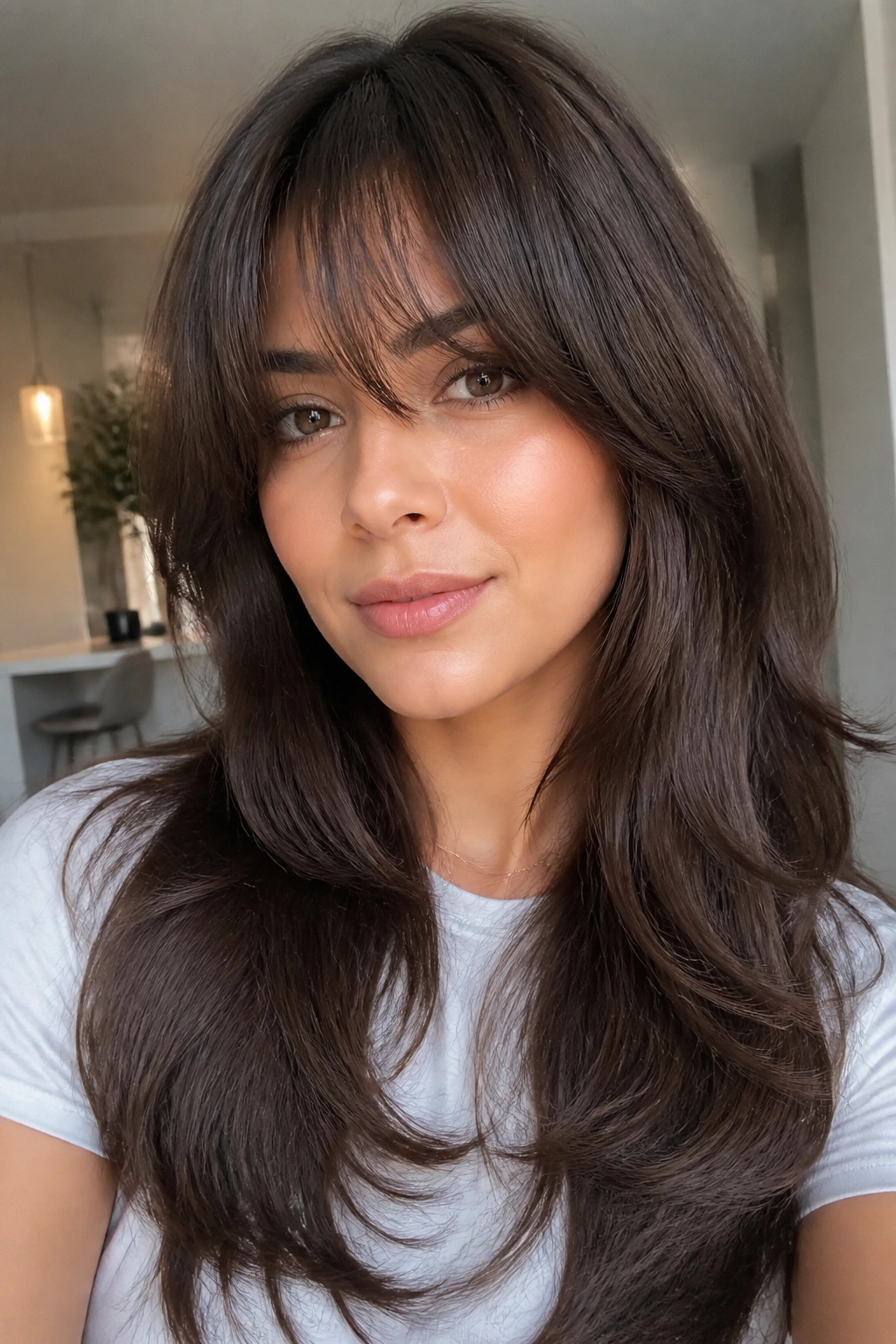
Thick hair and round faces can work beautifully together when the fringe is layered instead of cut into one heavy block. Long layered bangs keep the front light, which matters because thick fringe can swell outward and add width exactly where you do not want it.
The shape usually starts with a medium center section and then feathers down through the sides. The layers should be visible, but not wispy to the point of vanishing. That middle ground is what makes the style look intentional rather than thinned out by mistake.
One thing I see people miss: thick hair doesn’t always need more texturizing. Sometimes it needs smarter distribution. If the bang is too heavily thinned, it can puff up at the ends and behave worse than the original heavy line. Better to remove weight in controlled sections and keep some structure.
A blowout brush helps here, especially if the front wants to split or flop. Dry the roots first, then direct the bangs away from the face for a second or two before letting them fall. That creates a softer frame and keeps the fringe from sitting flat on the cheeks.
12. Curly Curtain Bangs That Keep Their Shape
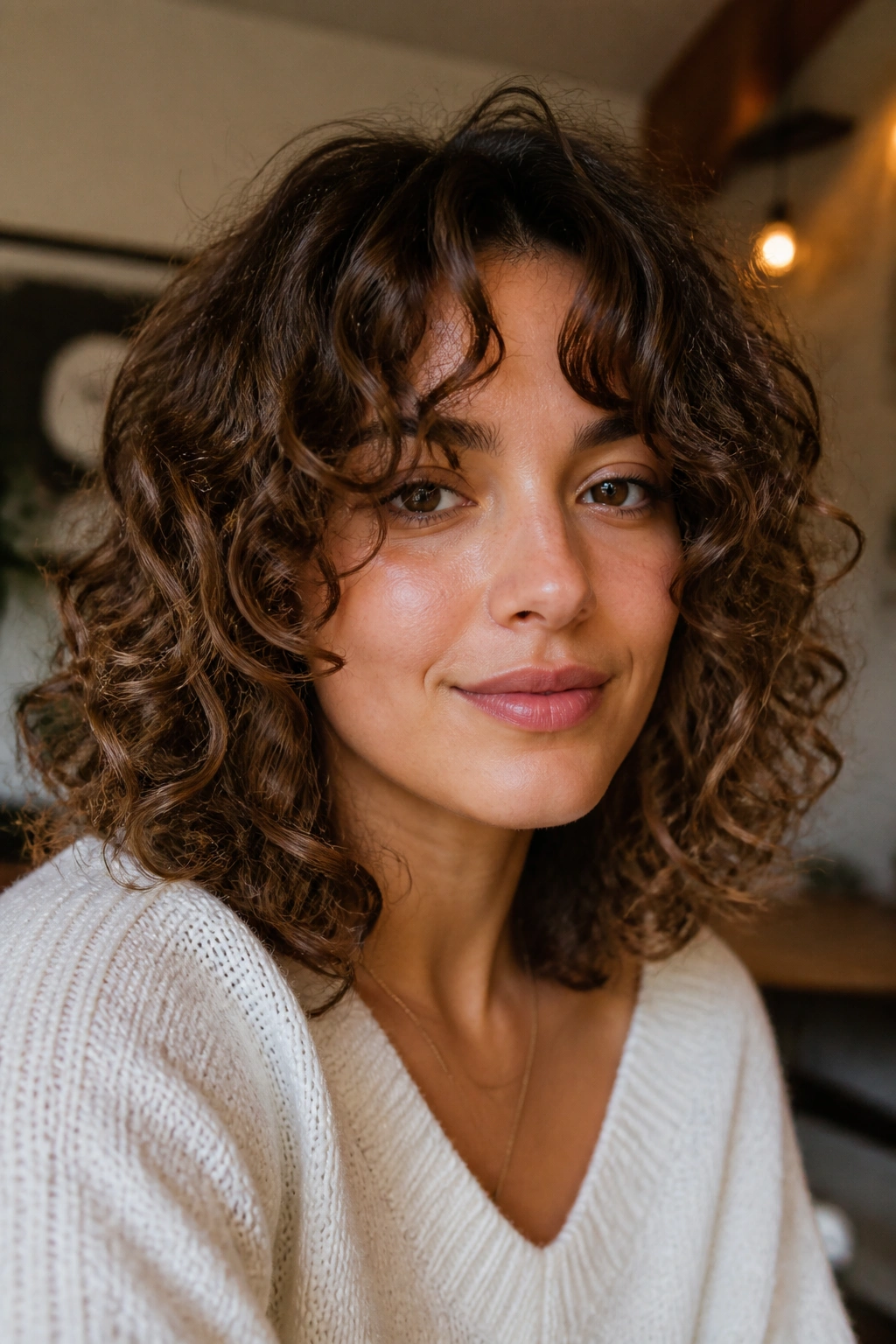
Curly curtain bangs are one of the best ways to add fringe to a round face without flattening the natural texture. The cut has to respect the curl pattern. If it’s too short, the bounce can push the bangs upward and create more width. If it’s too long, they vanish into the rest of the hair.
The best version usually starts a little longer than people expect, then gets refined once the curls are dry. That way the shape reflects how the curls actually sit, not how they look stretched out on a wet head. A round face benefits when those front curls land around the cheekbone or lip line instead of stopping high on the forehead.
What Makes This Work
- Keep the center pieces longer than you think you need.
- Cut or trim the fringe in its natural curl pattern.
- Diffuse on low speed so the shape stays soft.
I’d also avoid trying to force curly curtain bangs into a neat middle split. A looser opening usually looks better. Let the curls choose their own path. They already know what they’re doing more than we give them credit for.
13. Tapered Side Fringe for Wavy Hair
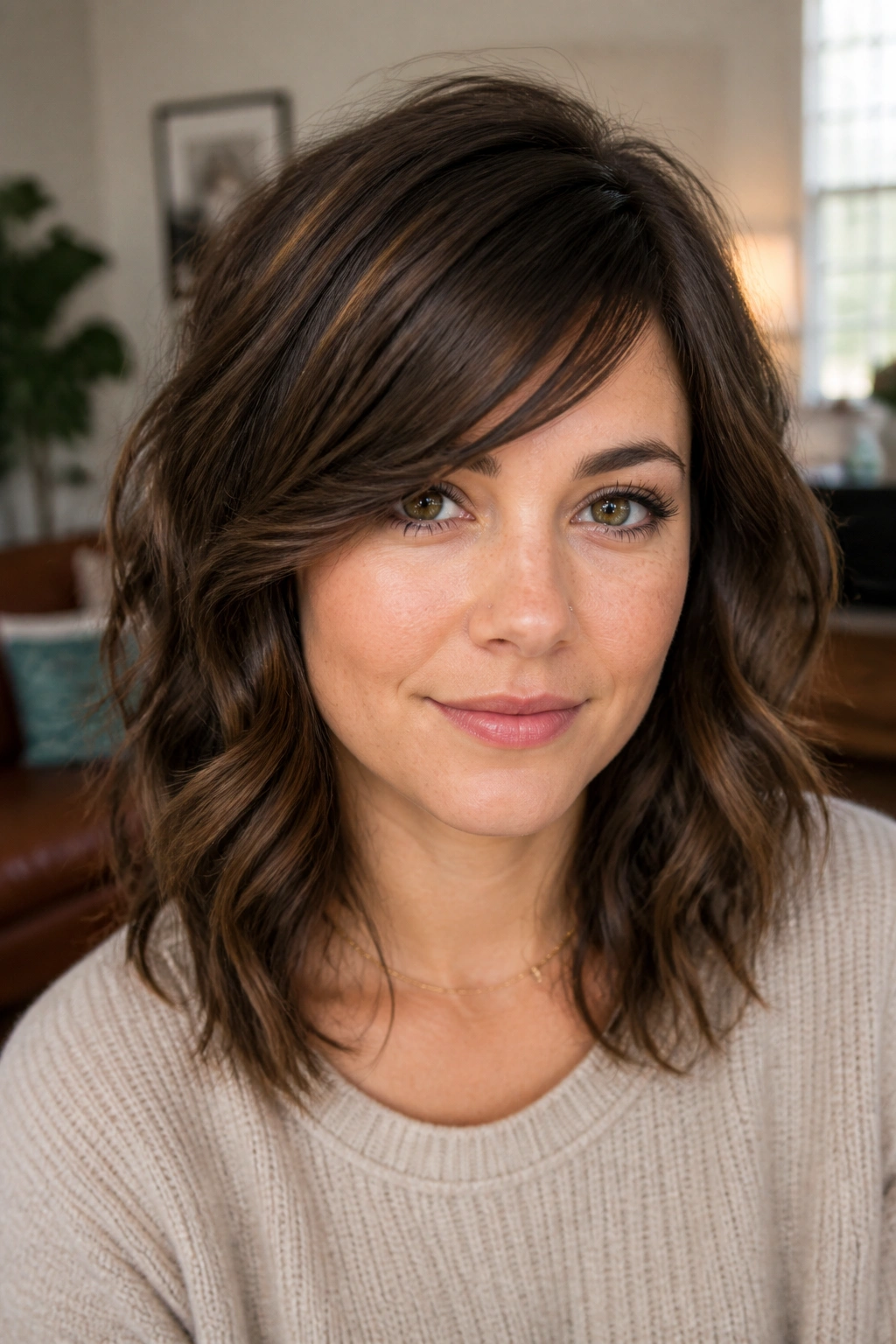
Wavy hair loves a tapered side fringe because the bend in the hair does half the work. The front section sweeps across the forehead, then tapers into the front layers with a soft, uneven finish that keeps the face from looking boxed in.
This is one of the more forgiving options on the list. Wavy hair can be a little unpredictable around the front, and a side fringe gives it someplace to go. Instead of fighting the wave, you let it create the diagonal line that flatters a round face.
You want the longest pieces to sit around the outer brow or upper cheek. That length gives the style room to move. Too short, and the wave can spring up and widen the face. Too long, and the fringe can lose its shape altogether.
A mousse at the roots helps, but use a light hand. Scrunch a little through the front while it’s damp, then sweep it over with your fingers. If you use too much product, the fringe can get stringy and start separating in a way that looks tired rather than casual.
14. An Arched Fringe That Follows the Brow Line
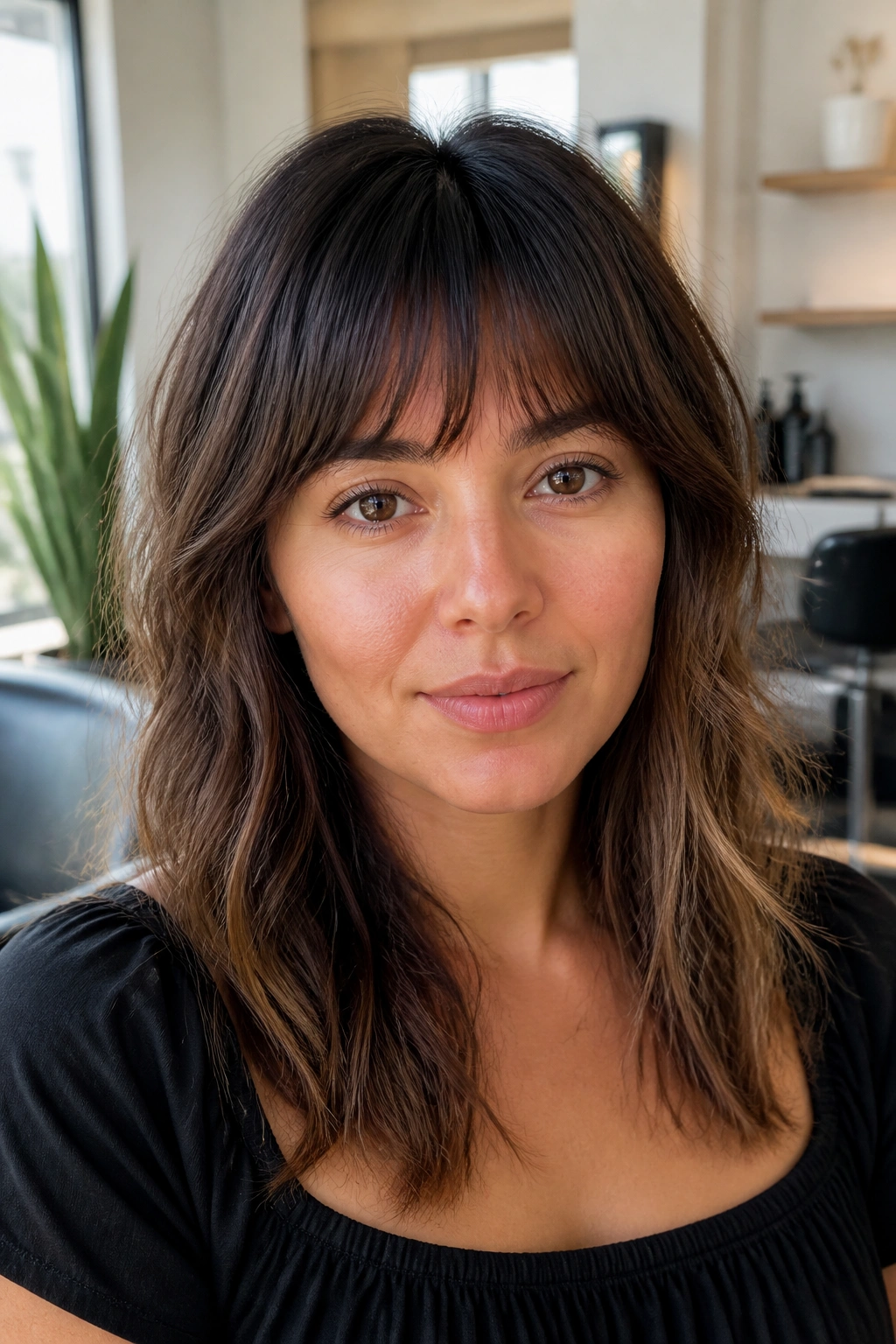
A soft arch across the forehead can look especially nice on round faces because it echoes the shape of the brows while still giving the face some lift. The trick is to keep the arch gentle. Not cartoonish. Not sharply curved. Just enough to lift the center and soften the edges.
This style can be a good fit if you don’t want the front to split too much. The curve draws attention to the eyes and adds shape without a strong horizontal edge. A round face benefits when that center point sits a touch higher and the sides glide lower toward the temples.
The worst version of this cut is too precise. If the arch is carved too sharply, it starts to feel dated fast. So ask for softness at the ends, and let the corners graze the brows rather than sit in a hard line.
How to Get the Shape Right
- Keep the middle a little shorter than the corners.
- Ask for a soft point-cut finish at the edge.
- Blow-dry with a small brush, curving the hair inward only at the last second.
That final bend matters more than people think. It keeps the fringe from puffing outward.
15. Airy See-Through Bangs for Fine Hair
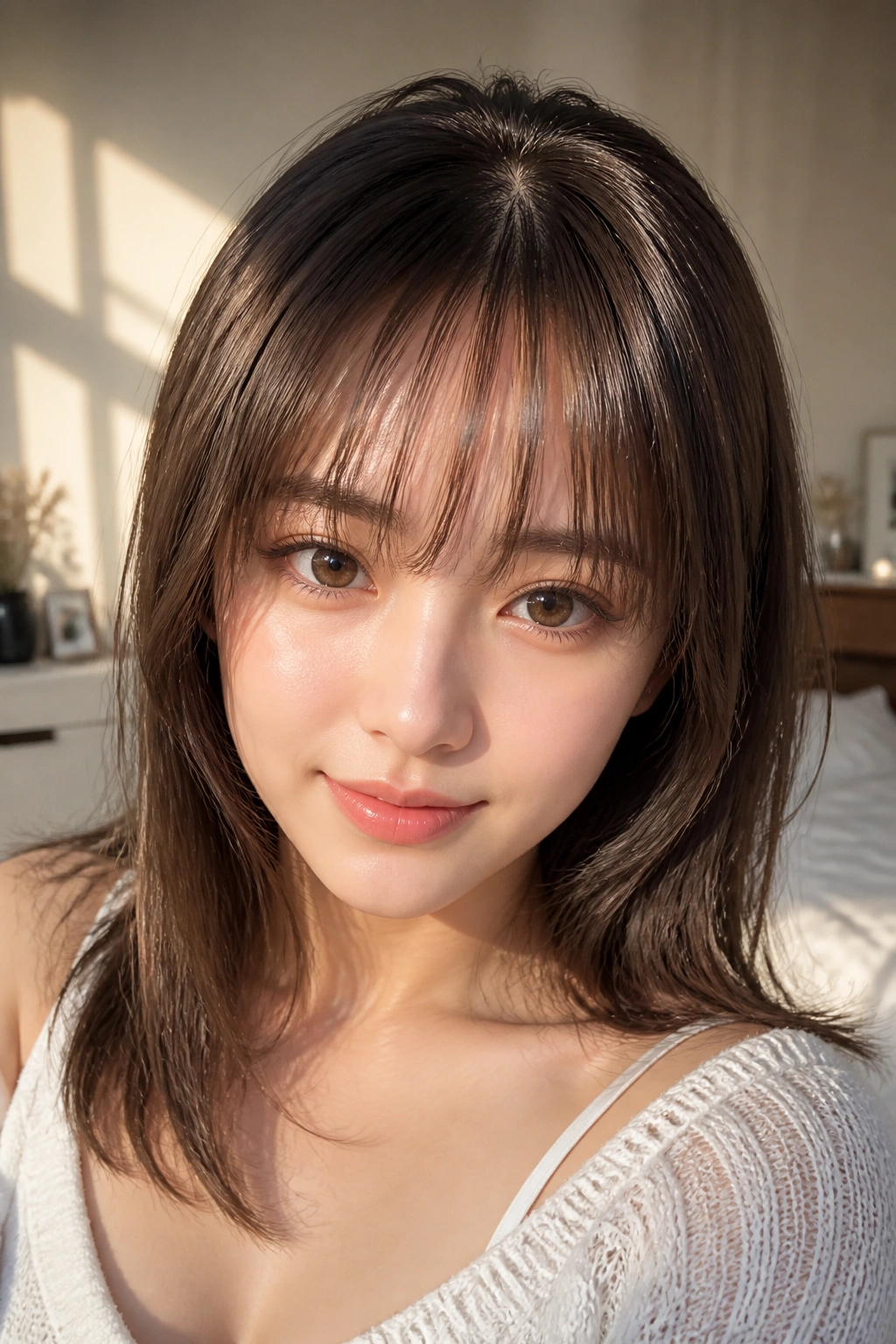
See-through bangs are light by design, which makes them useful if you have fine hair and don’t want a dense block across the forehead. On a round face, the transparency helps because it keeps the front open and lets your features breathe a little.
This is one of those styles that looks tiny on the hanger and quietly smart on the head. The strands are spaced out enough that you can see skin behind them, but there’s still enough structure to shape the face. That balance is the whole point. Heavy fringe can swallow fine hair. Sparse fringe can look accidental. See-through bangs sit in the middle.
The length should usually land around the brows or just beneath them. If they’re too short, they can feel sparse in a bad way. If they’re too long, they lose the lightness that makes the style work.
I’d keep product minimal here. A touch of dry shampoo at the roots, a quick blow-dry, and maybe a little smoothing cream at the ends is plenty. Too much product makes fine bangs separate into strings, and that is never the look you want.
16. Soft Blunt Bangs With Textured Ends
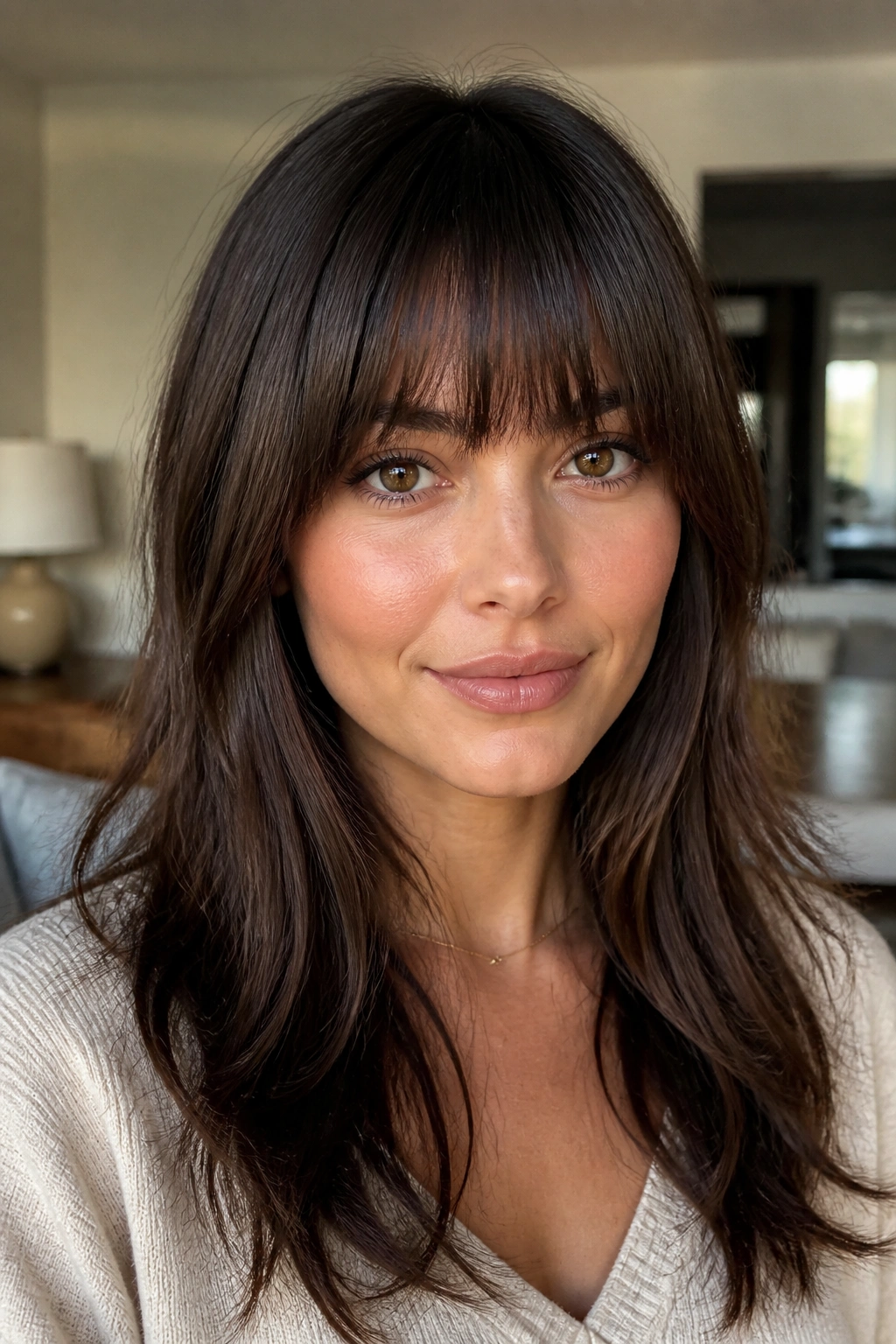
Blunt bangs are often treated like a danger zone for round faces, and I get why. A hard, straight line can widen the face if it’s too dense or too short. But a soft blunt fringe with textured ends is a different story. It keeps the structure while taking the edge off the line.
The center usually sits around the brows, then the ends get lightly broken up so they don’t form a solid wall. That small bit of texture is what makes the style wearable. It also helps the fringe move with the rest of the haircut instead of sitting stiffly on top of it.
This works well on straight hair that likes to lie smooth. It can also be good on medium-density hair that needs a defined shape without a lot of layering. If your hair is very thick, keep the inside weight removed just enough so the bang doesn’t swell.
A lot of people think blunt means severe. Not here. The softness at the edge changes the whole tone. You still get the clean front line, but it feels easier, less rigid, and less likely to overwhelm a round face.
17. Shaggy Bangs With Medium Layers
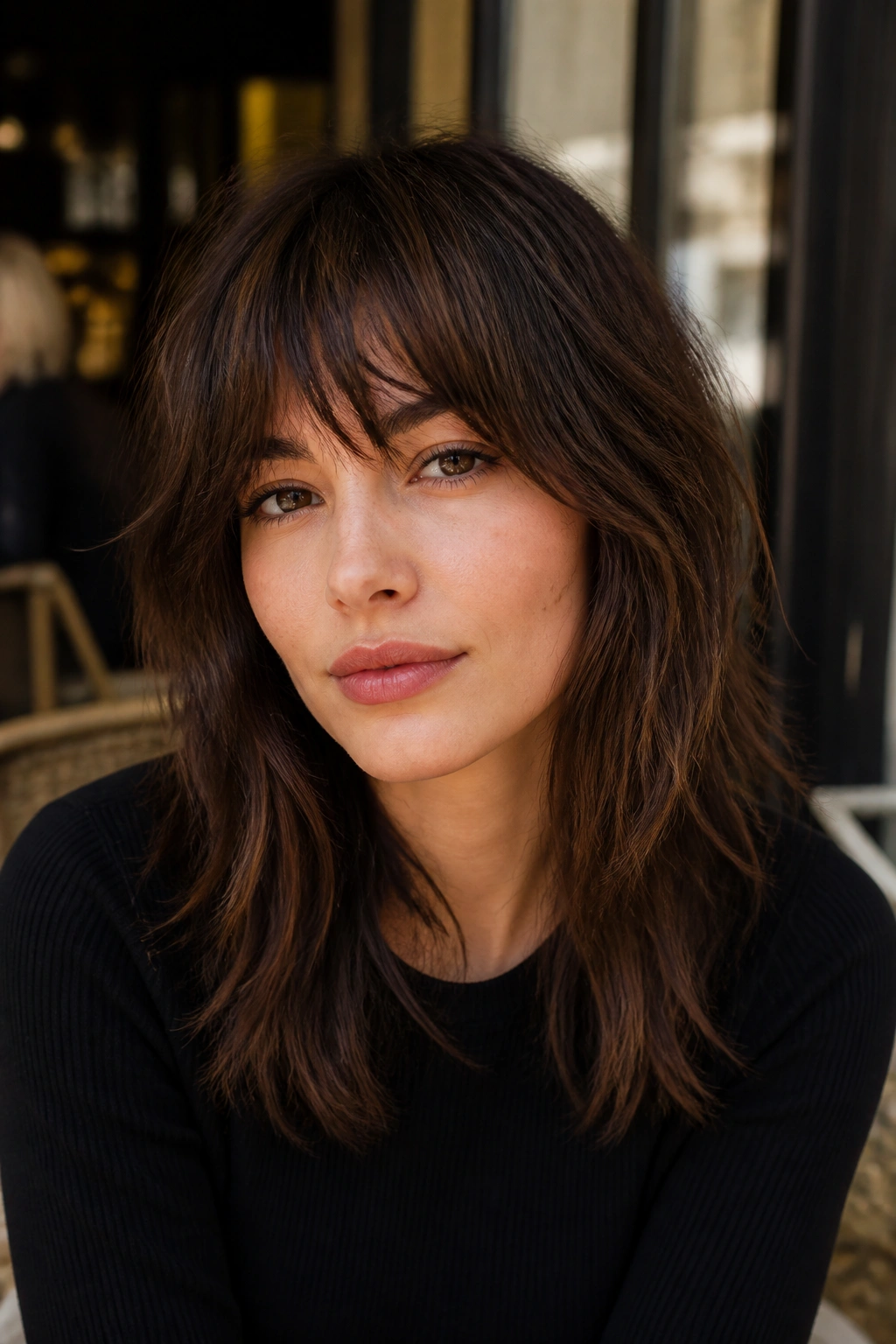
Shaggy bangs are a good fit if you like your hair to look a little undone on purpose. The medium-length version works especially well for round faces because the layers break up the width and keep the front from looking too tidy.
The bangs themselves are usually not one uniform shape. Some pieces fall closer to the brows, others graze the eyes, and a few melt into the cheek area. That unevenness sounds messy on paper, but in person it gives the haircut movement and makes the face look less circular.
You need enough layering in the rest of the cut for this to make sense. A shaggy fringe without supporting layers can feel random. With the right haircut underneath, though, it becomes one of the easiest low-structure options around.
This is one of the few styles here that actually gets better when it’s not overly polished. Let it air-dry a bit. Touch it only once or twice. That slightly imperfect finish keeps the whole thing from feeling overworked.
18. Glasses-Friendly Fringe That Sits Just Above the Frames

Glasses change the whole conversation around bangs, and round faces with frames need a fringe that plays nicely with both. A glasses-friendly version usually ends just above the top line of the frames, with a center that stays soft and slightly longer than the sides.
The reason this works is practical. If bangs land directly on the glasses, they can split, stick, or flare in weird places. If they sit too high, the forehead may feel overly open. The sweet spot is a narrow gap between the lash line and the frame edge, with soft movement toward the temples.
I’d keep this one airy rather than dense. A lighter shape avoids crowding the upper face and keeps your eyes visible. That matters more than people think. Framing the eyes is one thing; fighting with the frames is another.
A small round brush or a quick pass with a blow-dry brush helps tame the front. Sweep the bangs slightly forward, then nudge them just off the frames. They should hover, not land with a thunk.
19. Split Fringe With Longer Outer Corners
Split fringe is the quieter cousin of curtain bangs. The center opens up, but not dramatically, and the outer corners stay long enough to create a soft diagonal line. On a round face, that diagonal is doing all the useful work.
This style can look almost invisible in the best way. From the front, it softens the forehead. From the side, it blends into the haircut and keeps the face from reading as flat. It’s a very good option if you want bangs that stay in the background until you need them.
The longer outer corners matter a lot. They help the fringe fall away from the cheeks instead of ending right at the widest point of the face. That tiny detail changes the balance more than most people expect.
If you like tucking your hair behind your ears, this shape makes life easier. The corners can slip back without creating a sharp line in the middle. It’s a small thing, but it keeps the cut feeling relaxed through the day.
20. Face-Framing Bangs for Lob Haircuts
A lob and subtle bangs are a strong pair on round faces because the haircut gives you one long vertical line and the fringe adds soft movement at the front. The bangs here are less about coverage and more about blending. They start near the front and melt into the lob rather than acting like a separate feature.
The shortest pieces usually sit around the nose bridge or brow, then the rest lengthens toward the jaw and collarbone. That downward motion helps the face read a little longer. It also keeps the haircut from building too much width around the cheeks.
This is a nice option if you’re growing out bangs or don’t want to commit to a true fringe. The front pieces can swing forward one day and get tucked away the next. That flexibility is part of the appeal.
A Smart Way to Ask for It
- Keep the front pieces long enough to tuck behind the ears.
- Blend them into the lob with soft layering, not a hard disconnect.
- Ask for the ends to land around the jaw to collarbone zone.
That last part keeps the whole cut from puffing outward at the cheeks.
21. Low-Maintenance “Almost Bangs” That Grow Out Gracefully
Some people want bangs. Some people want the feeling of bangs without being trapped by them. This is the version for the second group. The “almost bangs” look uses long front pieces that just barely count as fringe, which makes it one of the easiest styles for round faces to live with.
The cut usually starts near the cheekbone or nose and blends into long layers fast. You get movement in the front, but no hard edge to manage. On a round face, that softness can be a relief. The face keeps its openness, and the haircut gets a little shape around the eyes.
This style is also one of the nicest if you’re uncertain. You can wear the pieces down, split them, pin them back, or let them slide into the rest of the hair. That freedom is the whole point. If you’ve ever regretted cutting bangs too short, you already understand why this option exists.
A trim every 6 to 8 weeks keeps the front from falling into your eyes. After that, the grow-out is graceful instead of awkward. Not exciting. Useful. There’s a difference.
22. The Softest Subtle Fringe for Everyday Wear
The softest subtle fringe is the one I would recommend to someone who wants bangs but does not want a personality shift every time they leave the house. It sits lightly at the front, opens near the temples, and stays long enough to move between center part, side sweep, and full-down wear.
For a round face, that flexibility is a gift. The haircut can change depending on how you style it, which means you can lean more open on days you want length and more face-framing when you want softness. The bangs never have to be one fixed thing.
A good version of this fringe should look a little like it grew in with the rest of the haircut. The center may brush the brows, the sides may skim the cheekbones, and the whole thing should feel feather-light instead of cut into a firm shape. That softness keeps the face from feeling boxed in.
If you’re standing in a salon chair trying to decide, this is the safest middle road. Ask for medium length, soft ends, and enough side length to tuck or sweep. Then keep the styling loose. The best subtle bangs do not shout. They make the rest of the face easier to see.
By the time you get here, the pattern should be obvious: on round faces, the smartest bangs are rarely the shortest or the heaviest ones. They’re the ones that bend, split, skim, and soften without drawing a hard line across the forehead. That’s the real trick, and it holds up even when the rest of the haircut changes around it.
