



Round faces don’t need more hair everywhere. They need hair in the right places.
That’s why long fringe hairstyles for round faces work so well when they’re cut with intention. A fringe that falls straight across the widest part of the face can make things feel boxy. A fringe that starts higher, bends diagonally, or opens at the center does the opposite. It pulls the eye down, sharpens the cheek area, and gives the face a little more length.
I’m picky about this stuff. A long fringe should look like part of the haircut, not a heavy curtain dropped on top of it. The best versions move. They bend. They soften. And they never fight the face shape by sitting flat and wide right where the cheeks are fullest.
1. Long Curtain Fringe That Skims the Cheekbones
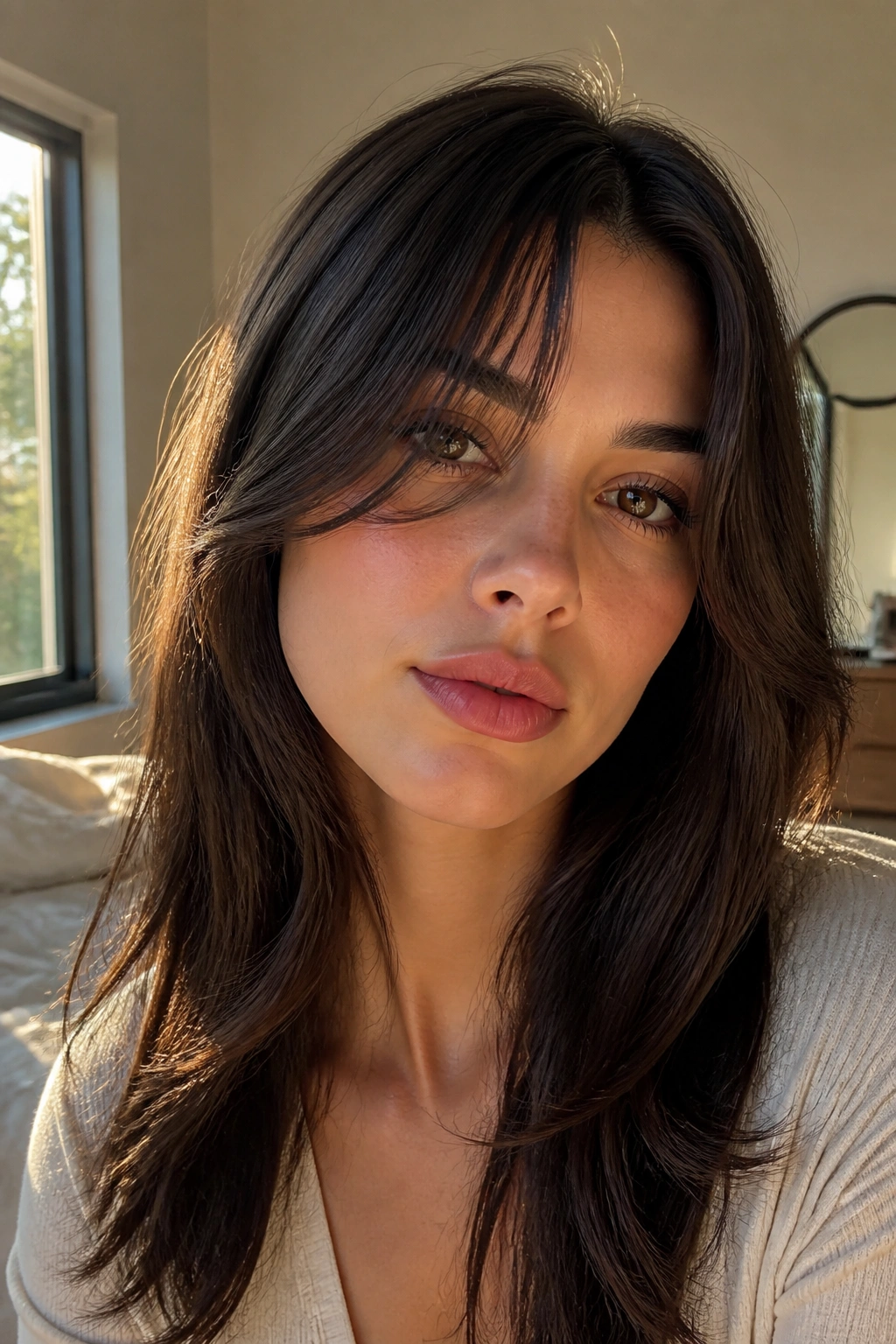
A long curtain fringe is the easiest place to start if you want something flattering without looking overdone. The center breaks open, the sides fall past the cheeks, and the whole thing creates a soft vertical line instead of a wide horizontal one.
Why It Works
The sweet spot is the cheekbone, not the brow. When the shortest pieces land just below the eyes and the longest pieces brush the top of the lip or jaw, the face looks longer almost by default.
- Ask for the center to sit a touch shorter than the sides.
- Keep the ends soft, not blunt.
- Part it down the middle or a little off-center.
- Blow-dry with a round brush, curling the front away from the face.
Best tip: if your fringe keeps flipping inwards, dry it in two directions first, then finish with one smooth bend away from the cheeks.
That tiny bit of movement makes the cut feel expensive, even on a plain T-shirt day. And if your hair is naturally straight, this style is usually the one that behaves without a fight.
2. Deep Side-Swept Fringe With a Strong Part

A deep side part does a lot of quiet work. It breaks up the symmetry of a round face, and symmetry is exactly what can make a face feel wider than it is.
The fringe itself should stay long enough to graze the top of the cheekbone. Not shorter. Not crisp and exact. You want it to sweep in one direction with a little lift at the root, then taper into the rest of the cut so it doesn’t look like a separate piece.
This style is especially good if your hair is fine or flat at the crown. A side-swept fringe gives you a little height where you need it, and that height matters more than people think. It’s the difference between “hair falling down” and “hair shaping the face.”
I like this cut for people who want softness but do not want a full center part. It also plays nicely with ponytails, low buns, and half-up styles, which makes it practical instead of precious. If your mornings are rushed, this one earns its keep.
3. Bottleneck Fringe for Round Faces
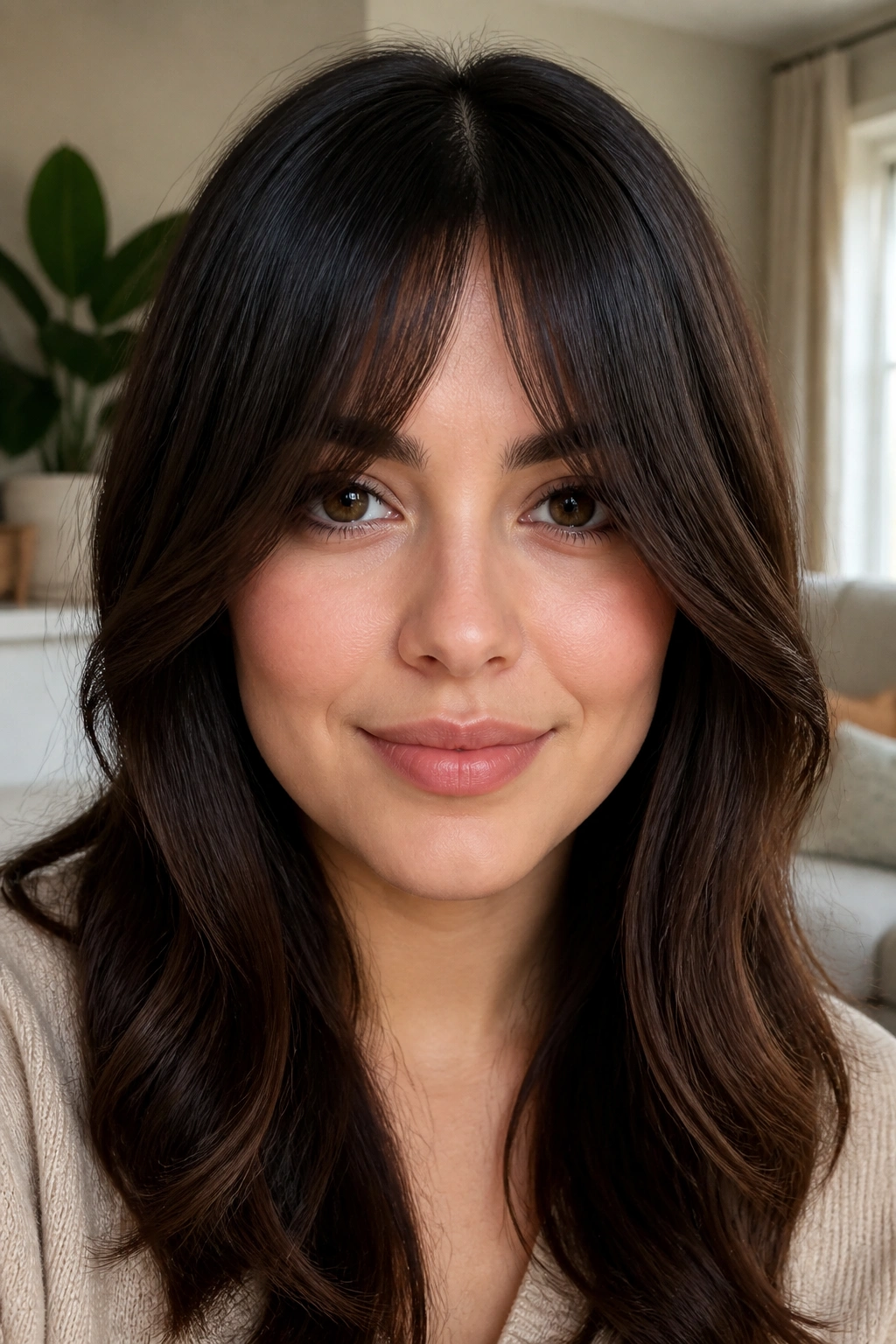
Why does a bottleneck fringe flatter round faces so well? Because it narrows in the middle and opens out at the edges, which keeps the center light while still framing the face.
The shape matters more than the trend label. A true bottleneck fringe is not heavy across the forehead. It starts close to the brow line, gets a little tighter near the center, then drops into longer sides that sit around the cheekbone or just below it. That gradual opening creates a vertical pull that round faces usually benefit from.
How to Use It
Work with the bend, not against it. Blow-dry the center pieces down first, then roll the outer sections away from the face using a small round brush, around 1 to 1.25 inches. If you let the sides sit too straight, you lose the shape.
This fringe looks especially good on wavy hair because the natural bend keeps the middle from looking flat. Straight hair can wear it too, but you’ll want a little soft curve at the ends. Otherwise, the whole thing can feel too sharp.
If you want a fringe that has personality without being fussy, this is a strong choice. It’s one of those shapes that looks deliberate even when it’s a little messy.
4. Cheekbone-Grazing Fringe With Soft Layers
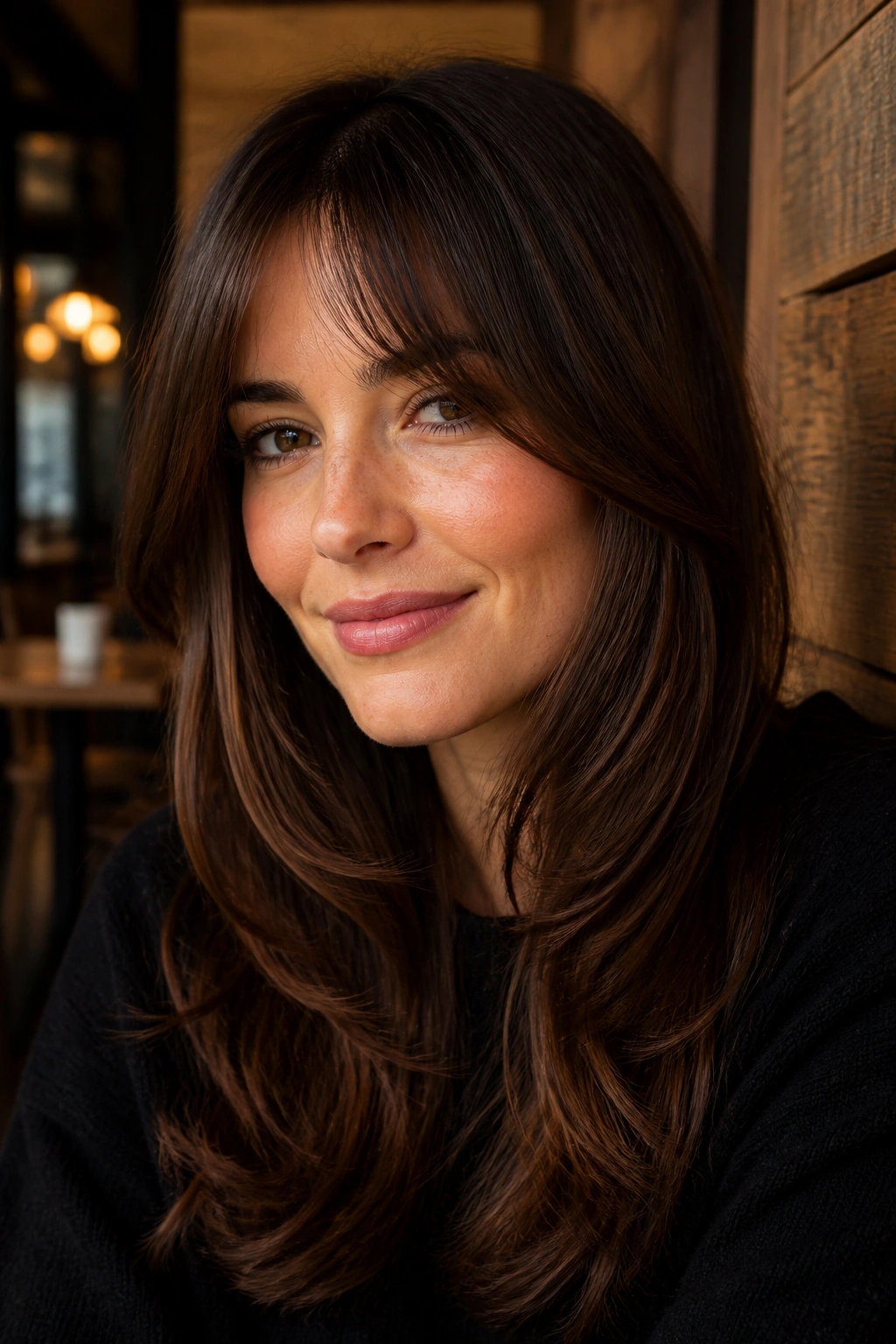
I’ve seen blunt fringes on round faces go from cute to boxy in about two seconds. A cheekbone-grazing fringe with soft layers fixes that by taking weight out of the line and letting the haircut breathe.
The fringe should hit the high point of the cheekbone, then melt into long face-framing pieces that reach the jaw or collarbone. That overlap is doing the real work. It creates movement without making the face look wider, and the layers stop the fringe from acting like a hard stripe.
What to Ask For
- Point-cut ends instead of a sharp straight line.
- Layered pieces that start below the cheekbone.
- A slight bend away from the face.
- Enough length to tuck behind the ear when needed.
This one is great if you wear your hair down most of the time and want the fringe to feel part of the cut, not a bolt-on feature. It also grows out nicely, which matters because not every fringe deserves a salon date every three weeks.
The result is soft, easy, and quietly flattering. Nothing shouty. Just better balance.
5. Feathered Fringe and Long Layers
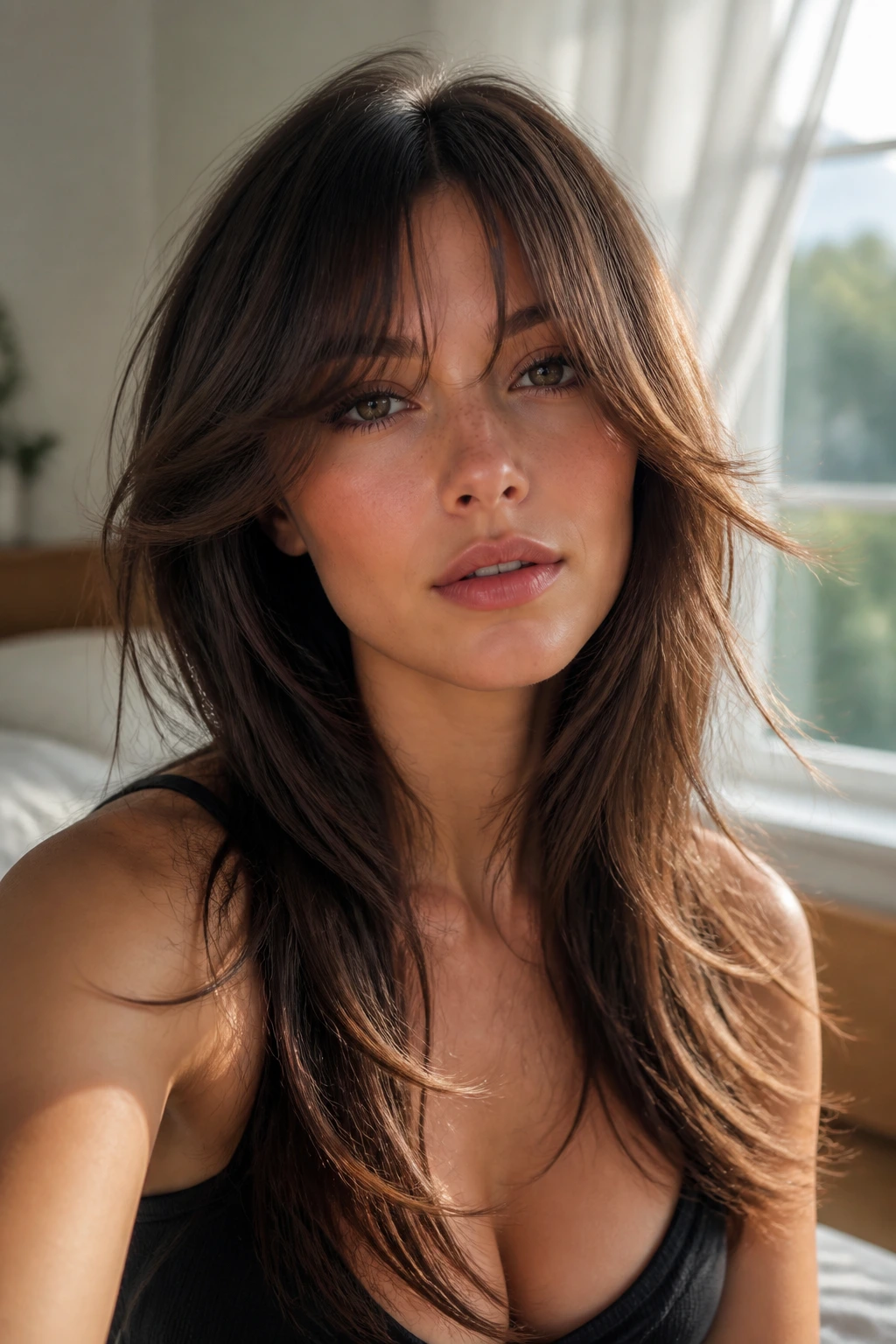
Feathering is old-school in the best way. Done well, it keeps a fringe from sitting in one heavy block across the face, which is exactly what round faces usually don’t need.
The trick is in the ends. They should be sliced or point-cut so they flick a little when the hair moves. That little flick breaks up the width around the forehead and cheeks, then the long layers below continue the same line all the way down.
Hair with a bit of thickness usually loves this cut. Dense hair can carry the shape without collapsing, and the feathered pieces stop it from looking bulky. On straighter textures, a light styling cream and a medium round brush will help the fringe keep its shape without turning frizzy or stiff.
I also like feathering on people who hate a strict, polished fringe. It reads softer in daylight and less “done” at the roots. That matters more than it sounds. A fringe that moves with the rest of the hair is far easier to wear than one that insists on perfect behavior every morning.
6. Wispy Full Fringe With Length at the Sides
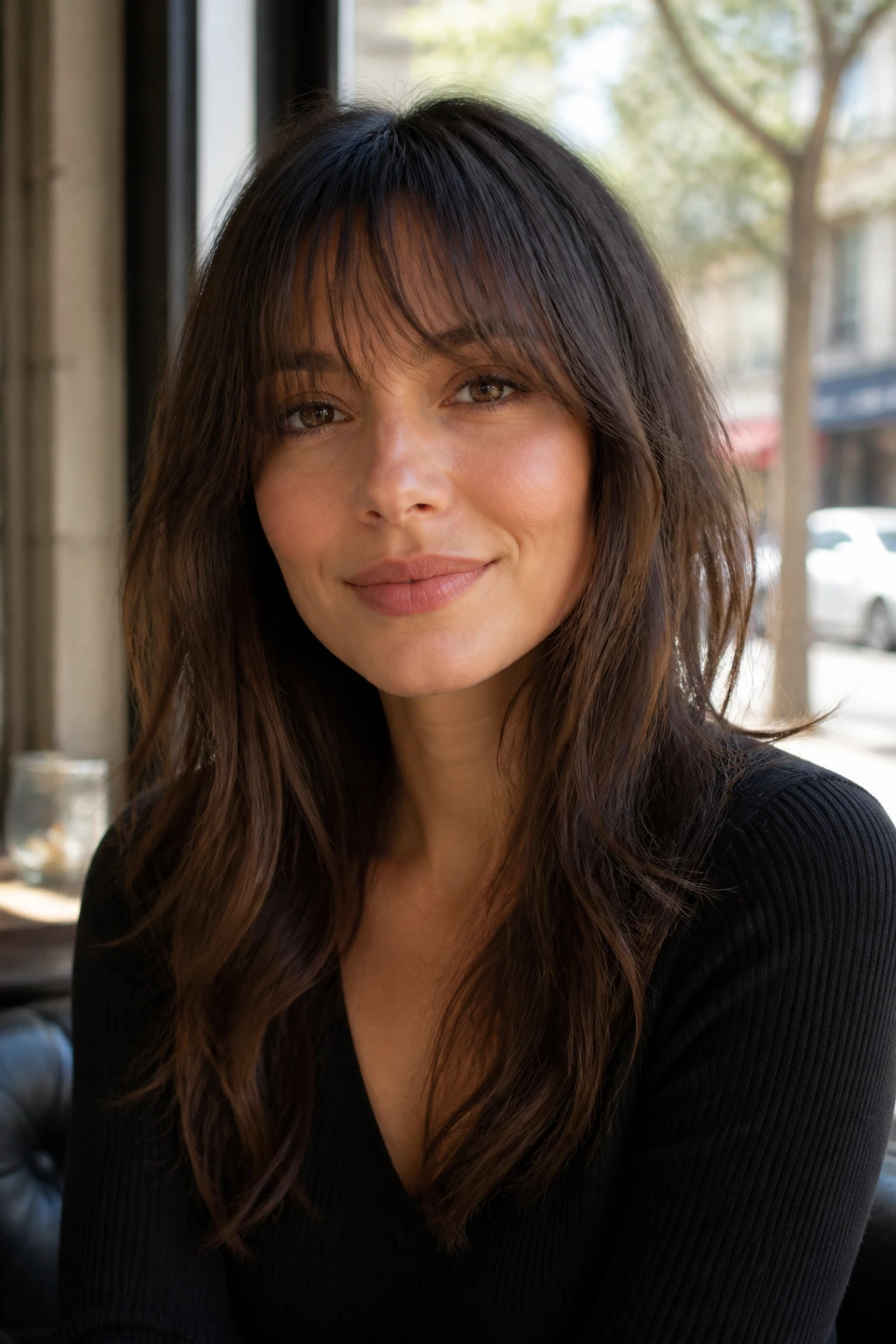
A wispy full fringe is the better cousin of a blunt full fringe. It gives you coverage across the forehead, but it does not slam a hard line across the face.
Unlike a thick blunt bang, the wispy version leaves tiny gaps and softer edges, so the eye keeps moving instead of stopping at one bold stripe. That matters on round faces because a thick, even line can make the face feel broader. The wispy version keeps the forehead framed while letting the sides stay long enough to lengthen the face.
This is the one I’d point to if someone says, “I want bangs, but I’m nervous.” It gives the feeling of a full fringe without the heavy commitment. Straight hair wears it well, and slightly wavy hair can make it look even better because the movement stops it from falling flat.
If you choose this style, keep the density light and the ends a little irregular. Too much fullness turns the whole thing dense fast. Too little, and it looks stringy. The middle ground is where the good stuff happens.
7. Grown-Out Curtain Fringe for Round Faces
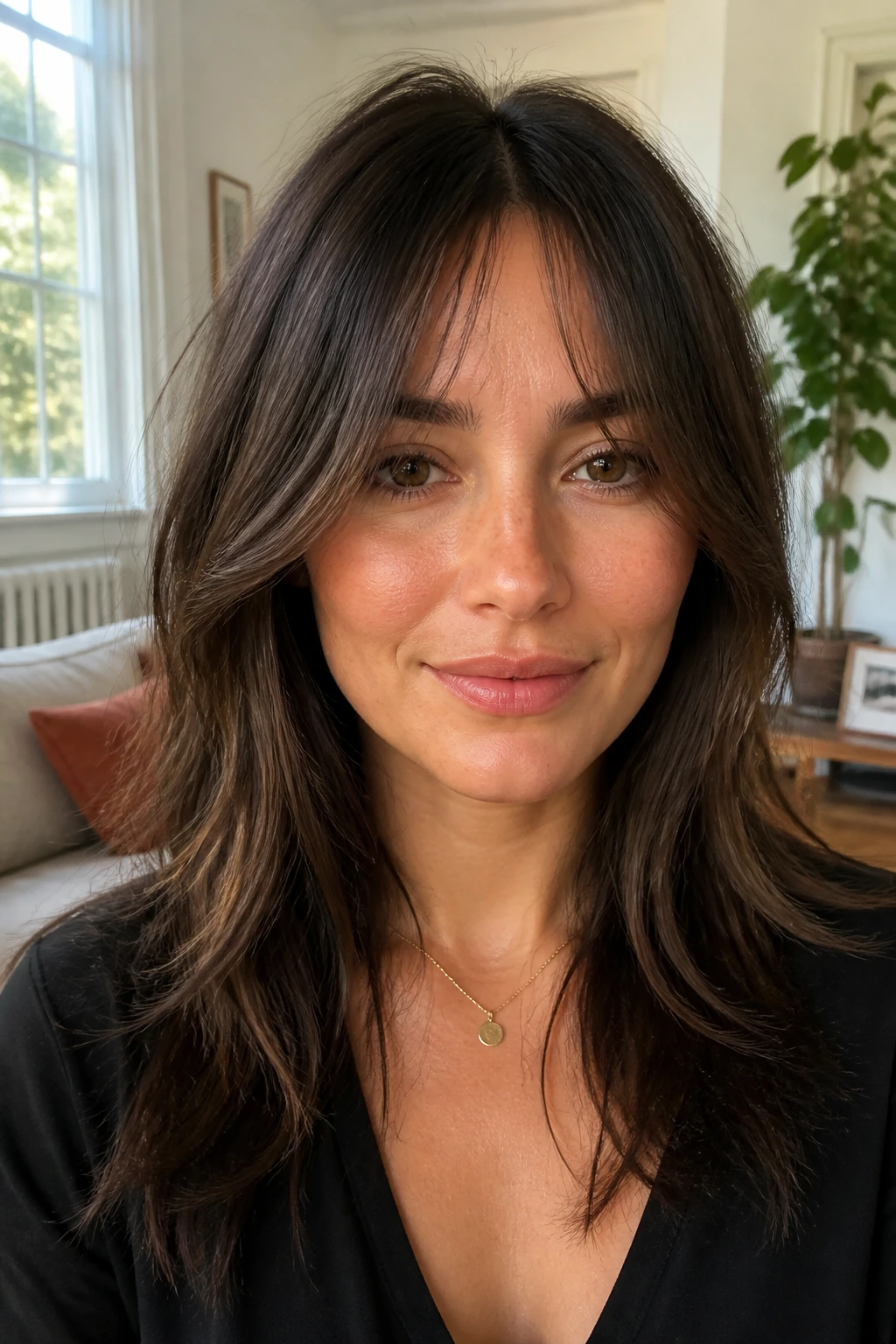
A grown-out curtain fringe can be more flattering than the fresh salon version. That sounds backwards, but it’s true. Once the shortest pieces drop past the brow and settle around the cheekbone, the face gets more length and the fringe starts working with the shape instead of against it.
This is a good option if you like low-maintenance hair that still looks intentional. The ends are longer, the split is softer, and the whole fringe blends into the sides instead of standing apart. On round faces, that blend keeps the eye moving downward, which helps the face feel a touch slimmer.
Quick Styling Notes
- Use a medium round brush, not a huge one.
- Aim the roots up for 3 to 5 seconds, then bend the ends away from the face.
- Mist the roots with dry shampoo if they flatten by midday.
- Trim every 6 to 8 weeks if you want the shape to stay open.
It’s a forgiving style. If you are not the kind of person who wants a high-maintenance fringe, this one is probably the one that will stick.
8. Arched Fringe That Follows the Brows
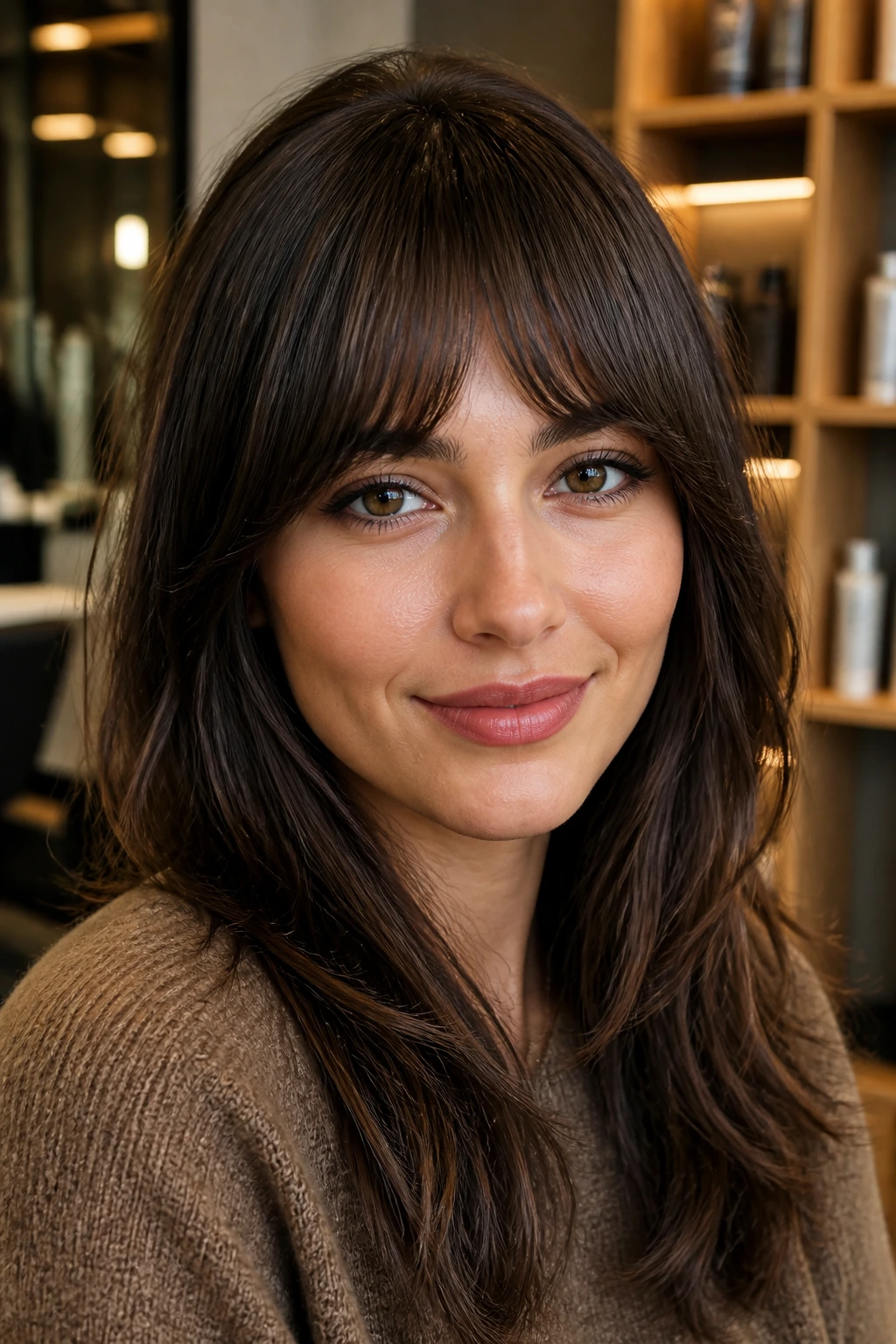
A soft arch across the brow can look cleaner on a round face than a dead-straight line. The curve keeps the fringe from reading like one wide band, and that curve can sharpen the whole face in a subtle way.
What matters here is control. You do not want a perfect semicircle. That gets too round, too fast. Instead, the center should sit a bit shorter, the sides should drop lower, and the whole fringe should echo the brow shape without copying it exactly. That small difference keeps the look modern and keeps the face from feeling boxed in.
This style works especially well on straight or slightly wavy hair because the bend is easy to shape with a blow-dryer and a paddle brush. If your hair is very curly, you can still wear it, but the cut has to be built to respect the curl pattern. Otherwise the arch turns into a puff.
I like this fringe for people with strong brows. It frames them without hiding them, and that balance matters. You still see the eyes first.
9. Piecey Fringe With Collarbone-Length Ends
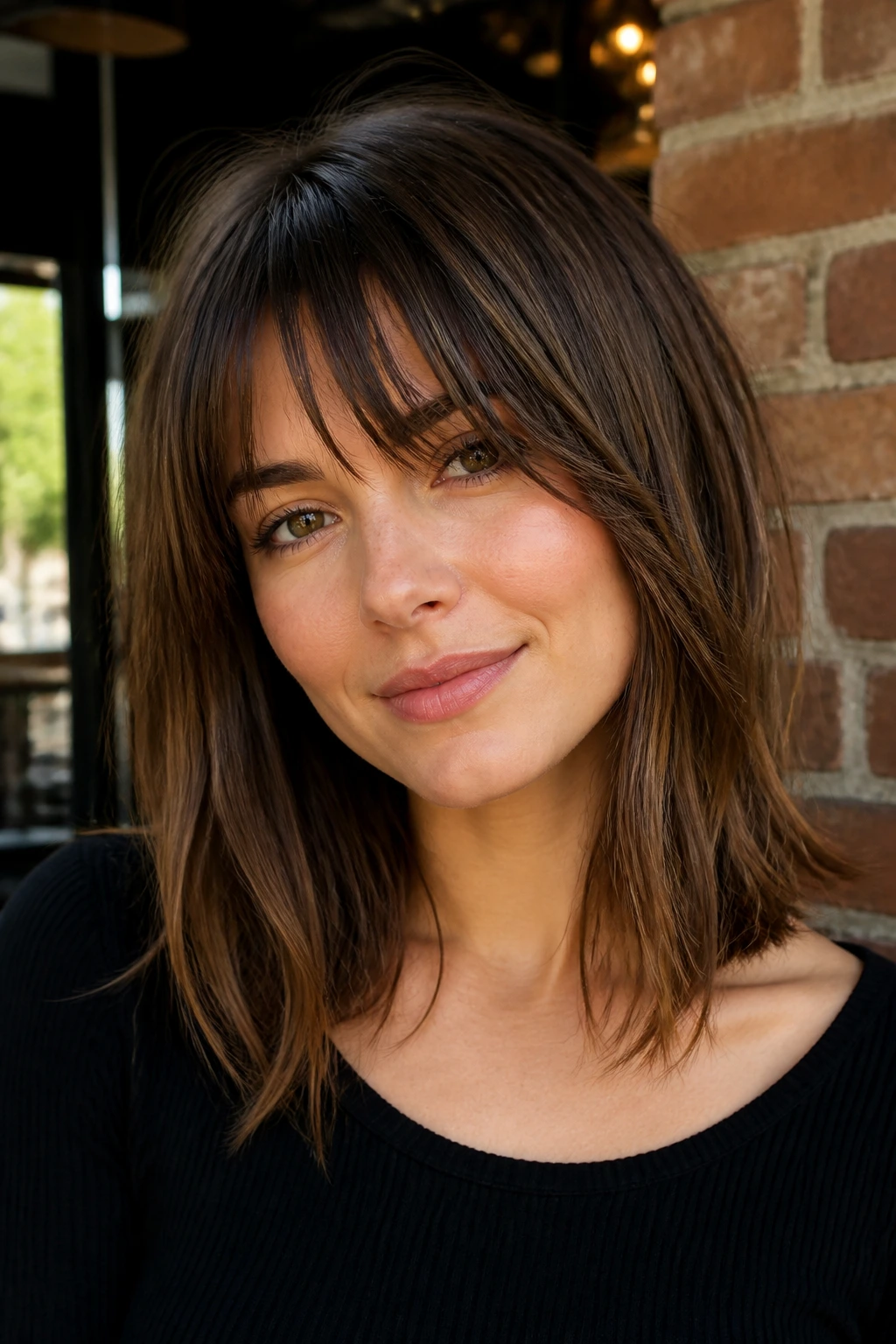
Can a fringe look a little edgy and still flatter a round face? Absolutely. The trick is to break the line into pieces so it never gets too solid.
A piecey fringe uses separation as its friend. The strands sit in small, uneven sections instead of one dense band, and that broken texture gives the face more vertical movement. Pair it with collarbone-length ends and the whole haircut starts to stretch the silhouette instead of widening it.
This is one of the better choices for hair that naturally has grit or a bit of wave. Fine hair can wear it too, but you’ll need a touch of styling wax or a light pomade on the ends, and only on the ends. Too much product at the roots makes it limp fast.
What to Watch For
- Keep the fringe long enough to tuck behind one ear.
- Use a pea-sized amount of product, then separate with your fingers.
- Avoid making every piece the same length.
- Let a few strands fall lower than the rest for softness.
The shape looks modern without trying too hard. Which, frankly, is the point.
10. Split Fringe With Loose Waves
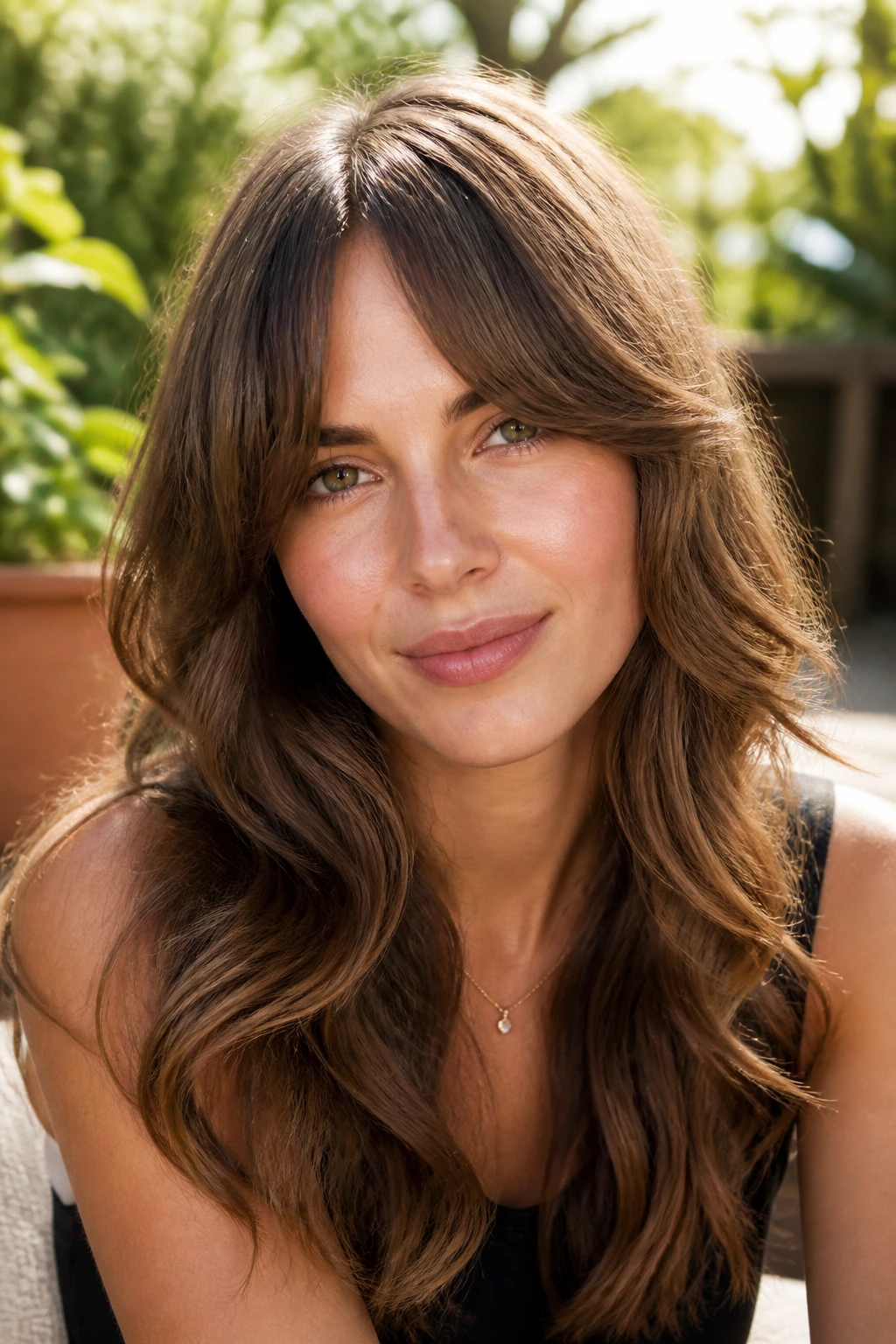
A split fringe gives round faces breathing room. It opens the center of the forehead, sends the sides outward, and lets loose waves carry the eye down instead of across.
The middle part is doing a lot here. Once the fringe splits, the face no longer has one solid band of hair sitting on top of it. You get two softer lines instead, and those lines frame the face in a way that feels natural rather than forced. The waves below matter too, because they stop the ends from hanging in a stiff triangle.
This style works best when the wave pattern is relaxed, not beach-crunchy. A soft bend from a large barrel curling iron or a braid-out can be enough. If the waves are too tight, the fringe can start to compete with the cheeks instead of balancing them.
I’d reach for this cut if you like hair that looks easy on purpose. It has movement, a little softness, and enough shape to be interesting without stealing the whole show.
11. Swoopy Fringe and Jaw-Length Layers
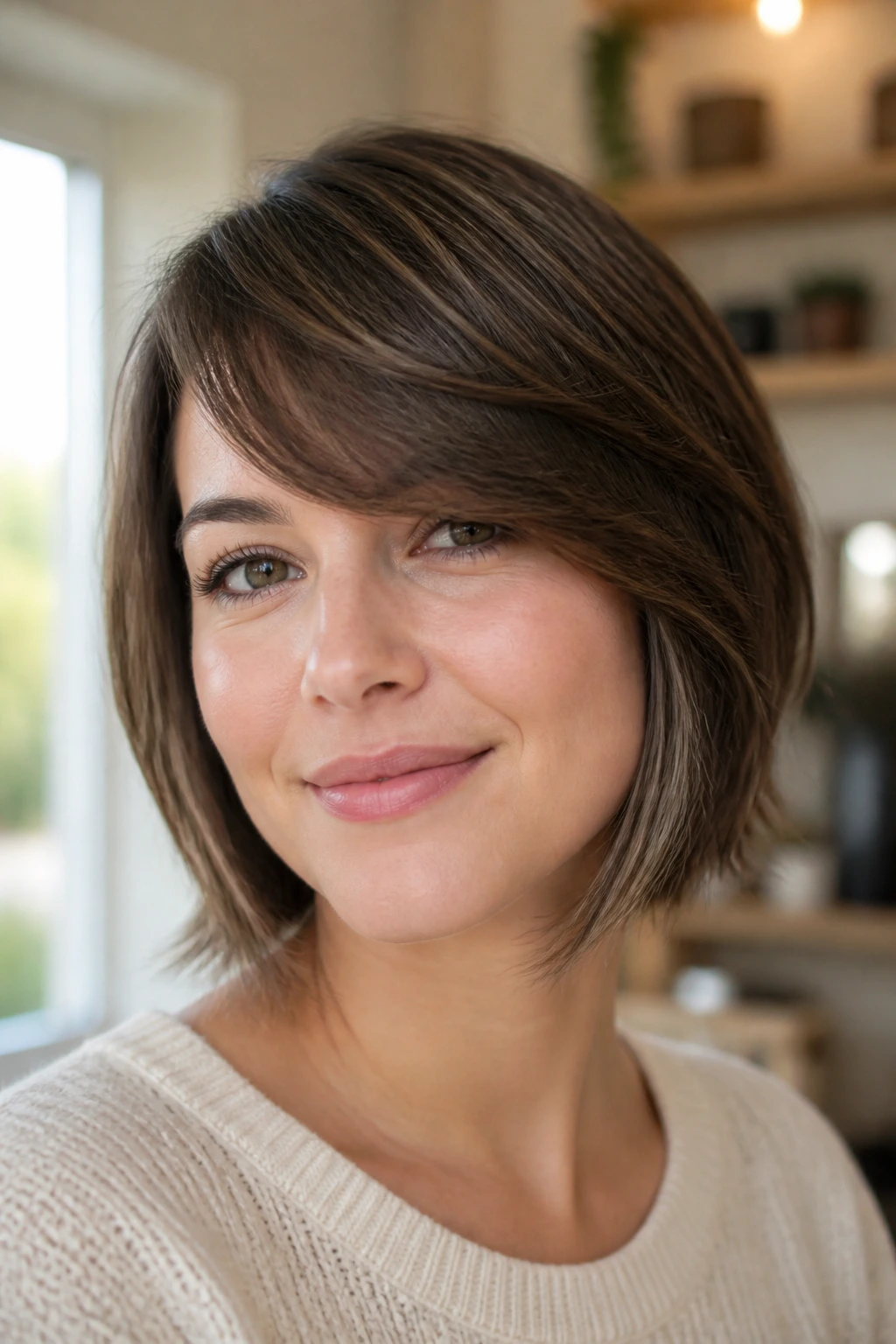
A swoopy fringe is one of those shapes that quietly changes the face. It starts with a diagonal line, drifts across the forehead, and ends near the jaw, which is exactly where a round face can use a little extra length.
The jaw-length layers matter just as much as the fringe. If the longest pieces end around the jaw or slightly below it, they draw the eye down and away from the cheeks. That makes the face read a little longer and a little narrower, even when the hair itself is full.
I like this cut with a blowout that has a bit of bend, not a pin-straight finish. Use a large round brush or Velcro rollers to get that swoop at the front, then let the rest fall in a soft curve. It feels polished without being stiff. And yes, that difference is obvious in real life.
If you want a fringe that can go from office-friendly to weekend-soft without much effort, this is a smart pick. It’s one of the most versatile shapes in the bunch, and it doesn’t shout for attention.
12. Choppy Fringe With Long Shag Layers
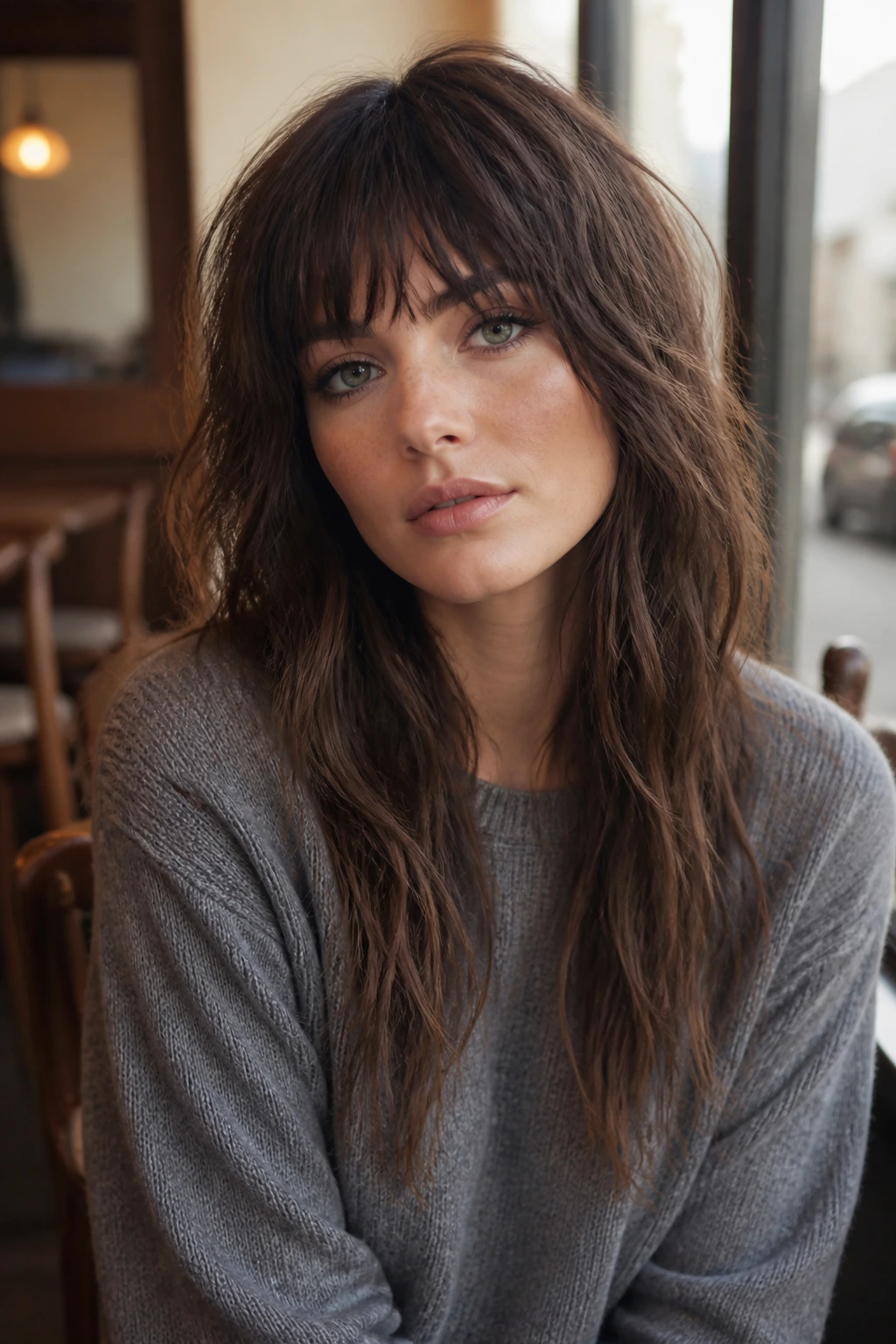
A choppy fringe can be a friend to round faces, but only when the rest of the haircut keeps it from getting too blunt. Long shag layers do that job well. They break the shape up, add movement, and keep the fringe from sitting as one wide block.
Unlike a smooth, even fringe, a choppy one creates little changes in length that stop the eye from reading a single horizontal line. That makes the face look less wide. The shag layers below keep the same idea going, so the haircut has texture from top to bottom instead of one heavy line at the forehead.
This is a strong choice for thicker hair and for people who like a more lived-in look. A little sea-salt spray or a light mousse can help the pieces separate without turning crunchy. If your hair is fine, go easy with texture products or the ends can vanish.
It’s not the prettiest option in a neat little photo, and I mean that as a compliment. It looks better when it moves.
13. Rounded Curtain Fringe With Movement
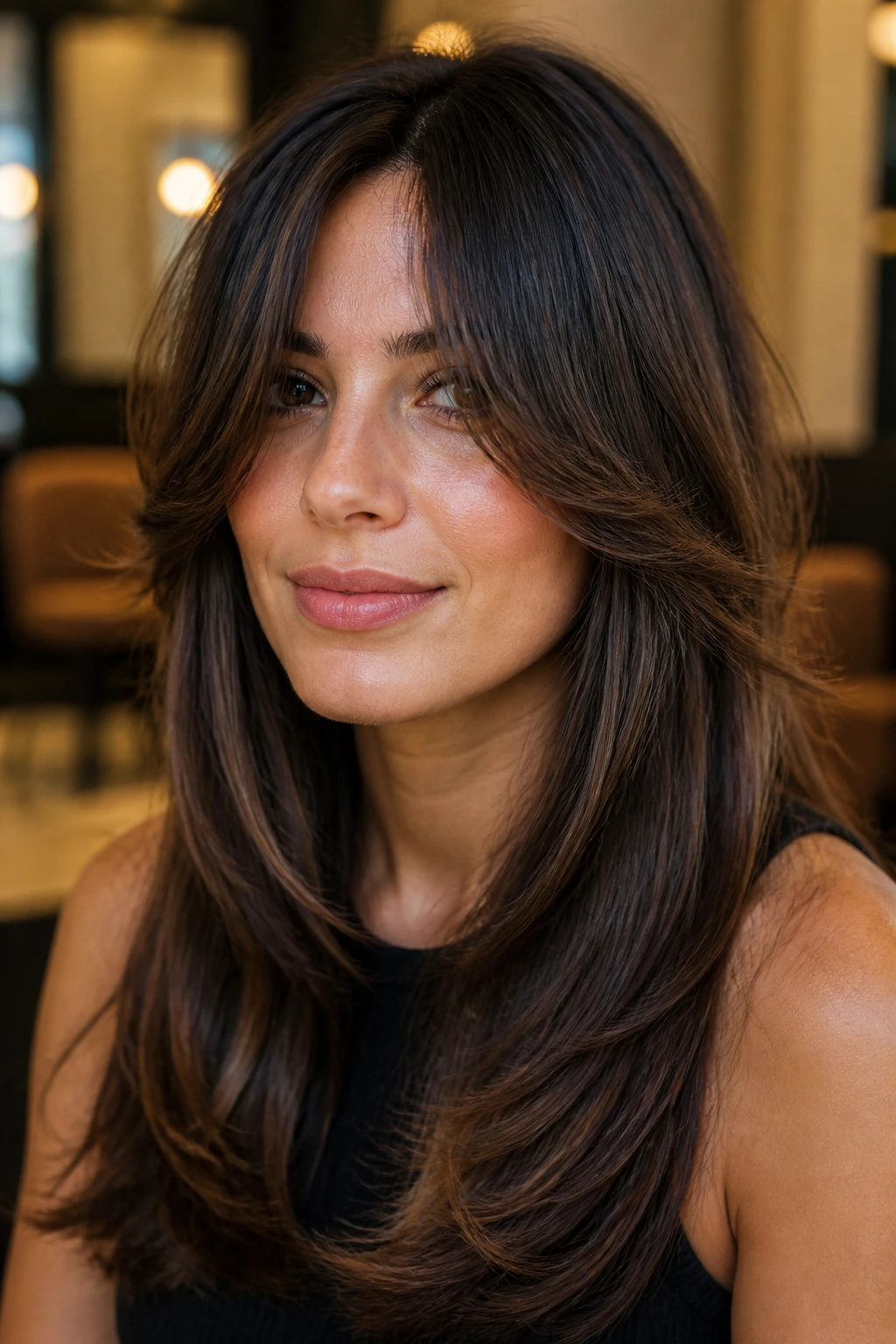
A rounded curtain fringe can work on a round face if the curve opens high enough and the edges stay soft. That’s the part people get wrong. They think any rounded shape is a bad idea. Not true.
Why This Version Flattens Less
The center should still split. The sides should still drop past the cheekbones. What changes is the overall outline: instead of a sharp V or a flat line, the fringe makes a gentle arc that follows the face without matching its widest point. That soft movement gives the cut a calm, polished look.
How to Ask for It
- Keep the shortest point just above or at the brow.
- Let the longest pieces reach the cheekbone or lower.
- Ask for soft blending at the sides.
- Use a round brush only at the roots, then finger-style the ends.
A lot of stylists will understand this as a curtain fringe with a slightly rounded center and longer outer edges. If you want something softer than a classic curtain bang but less severe than a blunt cut, this sits in the middle nicely.
It’s subtle. Sometimes subtle is the smartest move.
14. Airy Fringe and Loose Waves
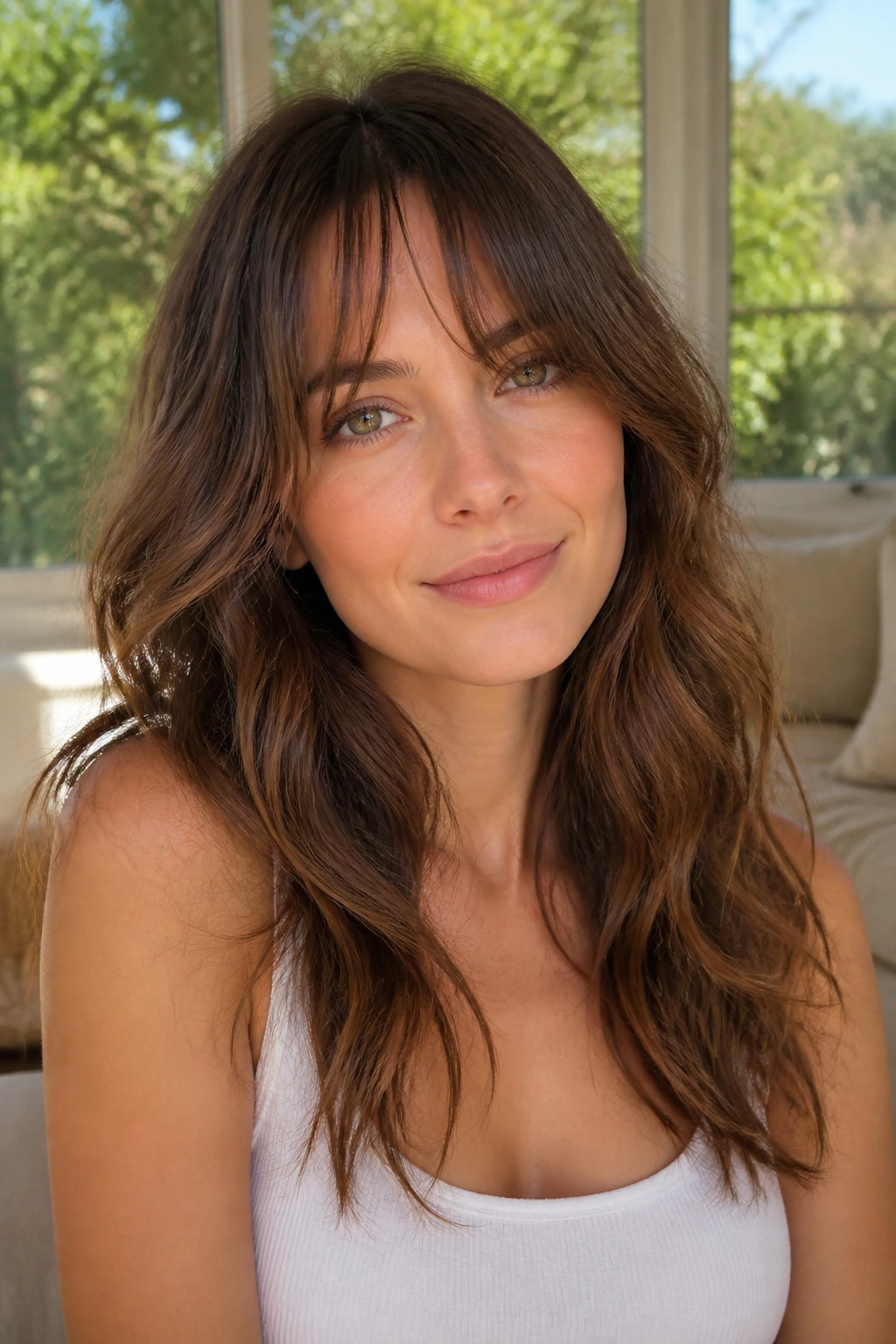
Heavy fringe makes a round face feel fuller. Airy fringe does the opposite because it leaves space between the strands and the forehead, which keeps the whole front of the haircut from looking dense.
That airy quality comes from light layering and a little see-through texture. You still get coverage, but you also get movement and lightness. Pair it with loose waves and the haircut stops reading as one large shape. Instead, it becomes a series of softer lines that guide the eye downward.
This is a useful option for fine hair, because too much density can weigh the front flat. It’s also a nice answer for people who want bangs but do not want them to dominate the face. A blow-dry with your fingers, plus a small round brush only where the fringe needs direction, is usually enough.
I’d choose this style for anyone who likes hair that feels light around the face. It doesn’t pretend to be dramatic. It just makes the proportions easier to wear.
15. Long Fringe With a Center Bend for Round Faces
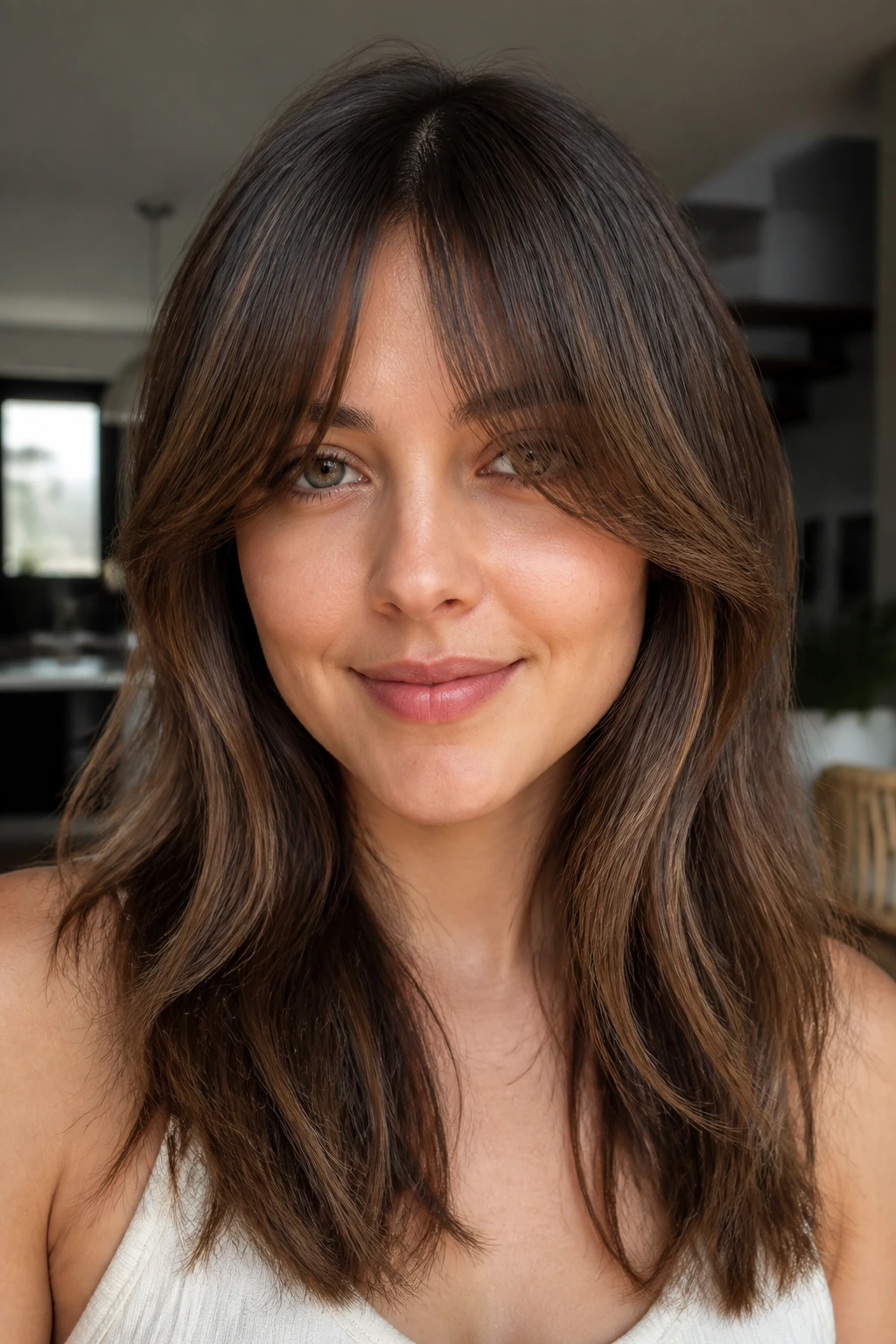
A long fringe with a center bend can be absurdly flattering on round faces. The bend creates a vertical line in the middle, then the longer sides keep the cut open and soft at the cheeks.
The shape works because it never settles into one flat panel. The center falls, bends slightly, and then moves away from the face. That little curve makes the forehead feel longer and the cheeks feel less dominant. If you’ve ever noticed how a tiny shift in parting changes your whole face, this is that idea in haircut form.
How to Style It
Use a flat iron or a medium round brush to make a loose S-bend near the center. Keep the heat low enough that the hair bends, not kinks. Then let the side pieces sit below the cheekbone so the line stays long.
This one loves straight hair, but it can work on waves too if the fringe is cut with enough length. I’d avoid making it too short at the center. Once that center piece jumps up above the brow, the effect changes fast.
If you want one fringe shape that feels sleek, current, and face-friendly all at once, this is a strong place to land.
16. Side Fringe With Chin-Length Layers
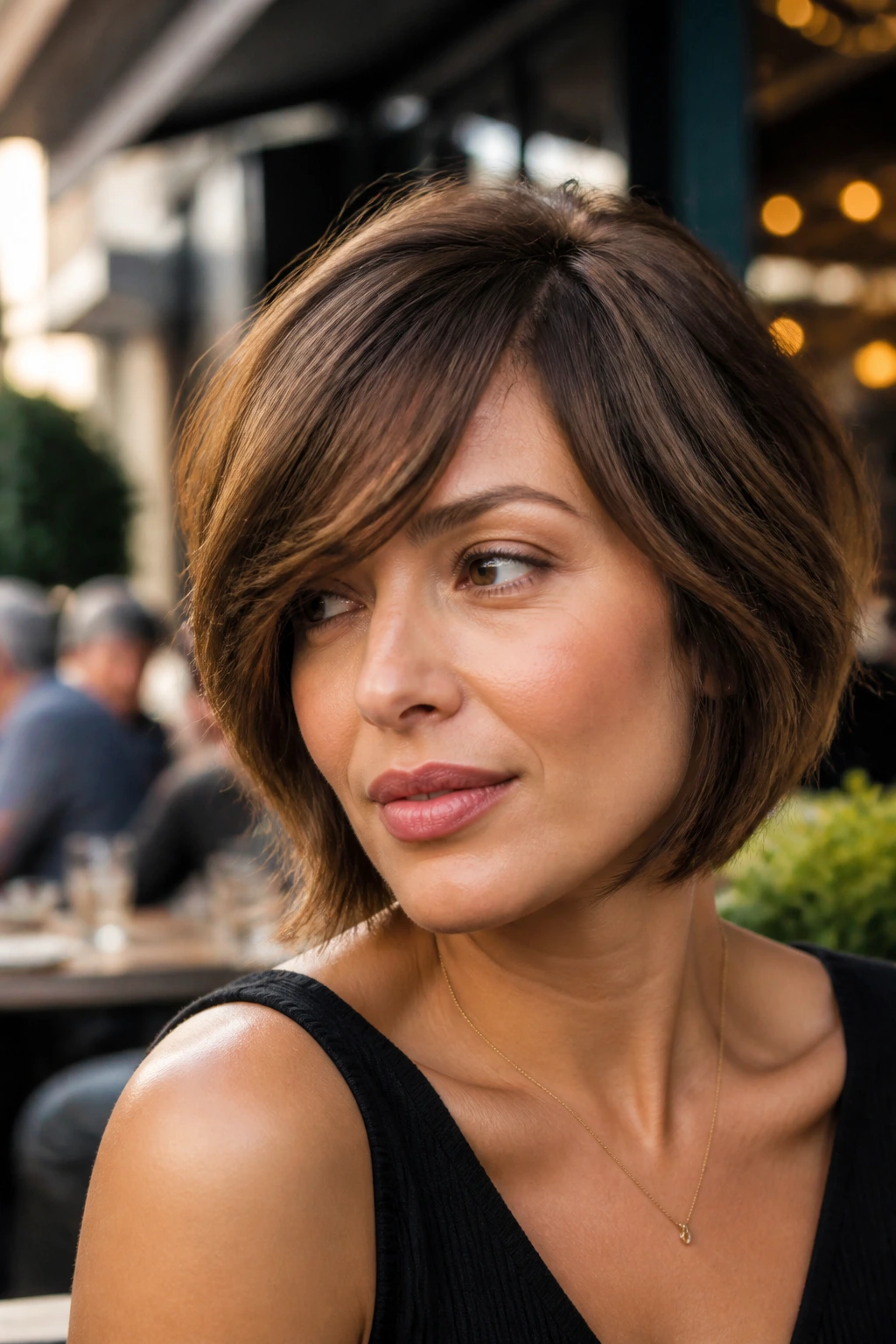
A side fringe paired with chin-length layers can change a round face more than people expect. The fringe pushes the eye diagonally, and the chin-length layers give the face a frame that stops right where the jaw starts to need definition.
That chin-length point is the useful bit. It creates a visible line below the cheeks, which helps the face feel longer. A lot of flattering round-face cuts do this in one form or another. They don’t just cover the forehead; they build a downward path for the eye to follow.
This cut works well if you like hair that can be tucked, flipped, or worn behind one ear. The side fringe keeps it soft, and the layers stop it from feeling blunt. If your hair is thick, ask for a little internal weight removal so the ends don’t bulge at the jaw.
It’s a good reminder that fringe isn’t the whole story. The length around it matters too.
17. Soft, Blended Fringe With Crown Volume
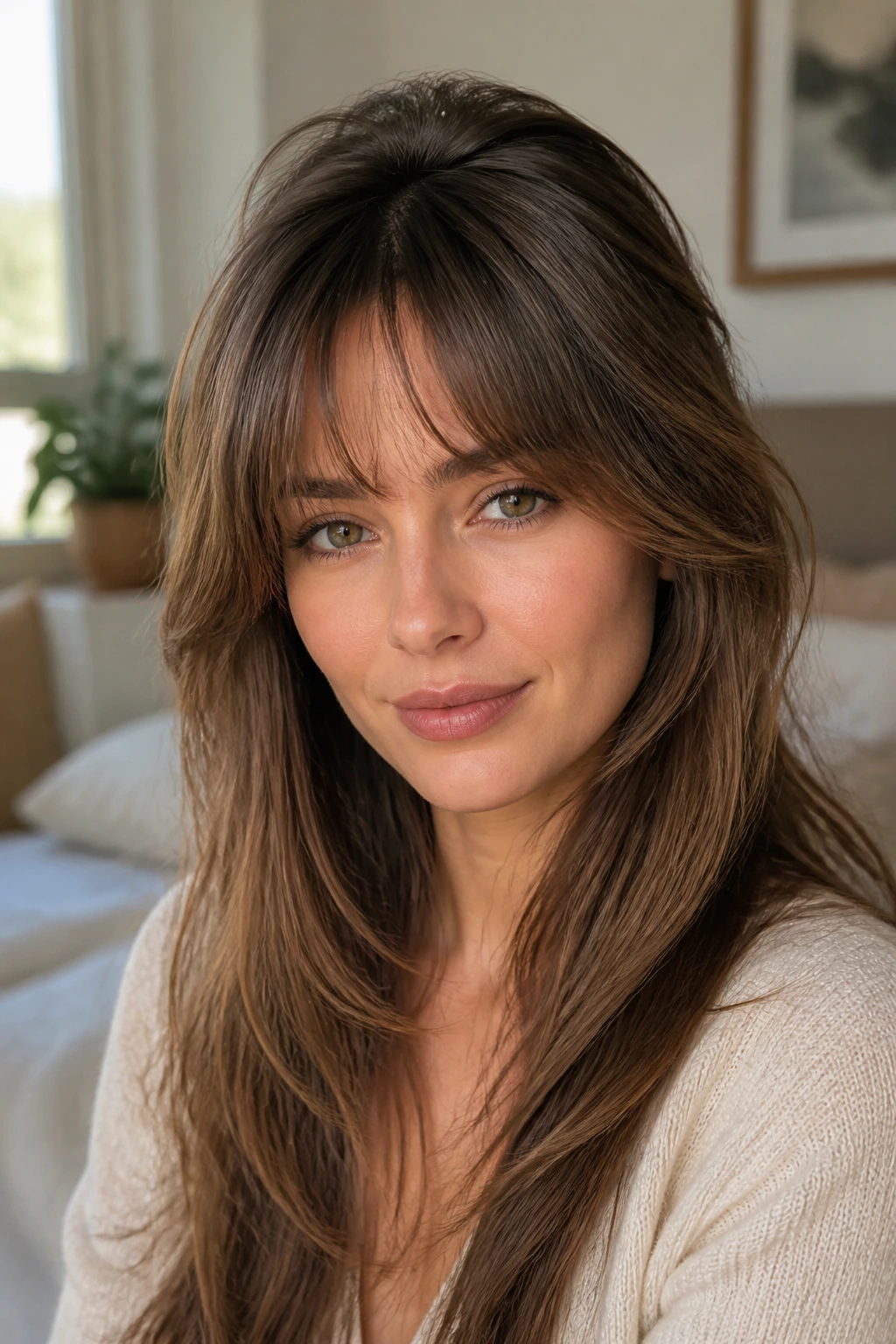
A fringe can do only so much if the crown sits flat. Add a little lift at the top, though, and the whole face changes. Round faces often look sharper when the hair has a bit of height above the forehead, not a lot, just enough to stretch the shape.
Soft blending is what keeps this from feeling dated. The fringe should slide into the rest of the cut, not stop abruptly. The crown volume gives the haircut structure, and the soft front pieces make sure the forehead area still feels open. That combination is especially useful if your hair tends to collapse by midday.
I’d style this by rough-drying the roots first, then smoothing only the fringe with a brush once the rest of the hair is mostly dry. That keeps the top from falling flat while the front stays soft. A light root spray can help, but keep it at the roots, not through the lengths.
This is one of my favorite options for people who want a little more shape without committing to a dramatic fringe. It works quietly, which is often the nicest kind of flattering.
18. Tapered Long Fringe That Melts Into the Length
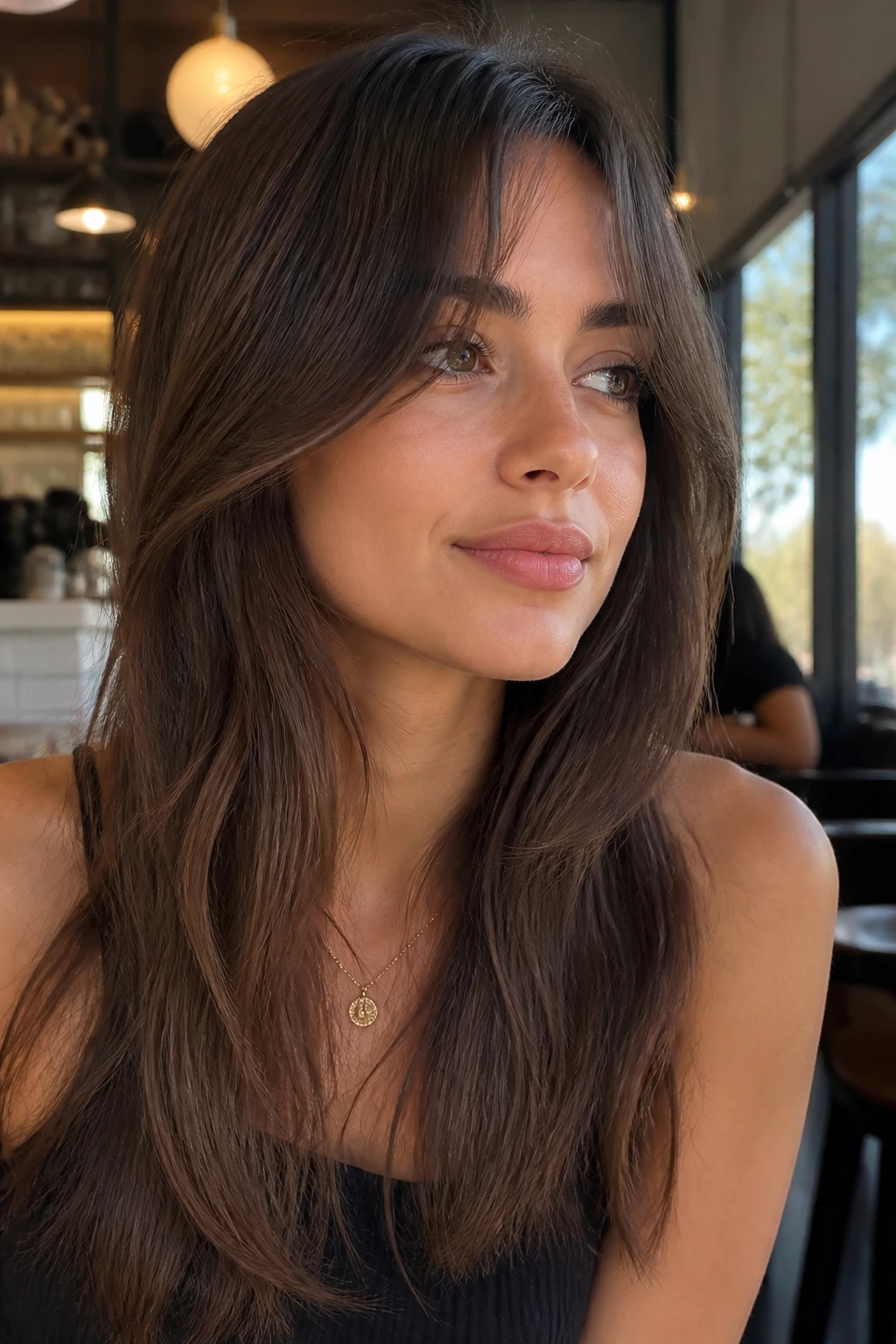
A tapered long fringe is the low-drama answer for anyone who wants face framing without a heavy bang line. It starts near the brows, softens at the sides, and blends into the haircut so naturally that you almost forget where the fringe ends and the layers begin.
Unlike a chunkier fringe, this one never sits like a separate piece. That matters on round faces because the eye keeps moving through the haircut instead of stopping at one wide section. The taper also makes grow-out easier. You can wear it parted, swept, tucked, or curled under a little, and it still looks intentional.
This is the version I’d hand to someone who wants flexibility. It works on straight, wavy, and even looser curl patterns if the cut respects the texture. Ask for soft thinning at the ends, not aggressive texturizing. Too much thinning can leave the fringe wispy in a bad way.
If you want a single place to start, start here. It’s flattering, easy to live with, and it keeps the face open without making the cut feel too precious.
