



Long bangs for round faces work best when they carve a path down the face instead of stopping it with a blunt line. A fringe that splits, sweeps, or bends away from the cheeks can make the whole haircut feel longer and lighter. That matters more than people think, because round faces usually read widest through the cheeks, not the forehead.
A bad bang cut does the opposite. It can sit too short at the center, puff at the sides, and make the face feel wider on wash day than it did in the chair. The fix is not always “no bangs”; it is usually the right length, the right curve, and a little bit of movement.
Texture changes everything. Straight hair needs a different fringe than wavy hair, and curly hair needs a cut that respects shrinkage. Cowlicks, glasses, and a high forehead all matter too—ignore them and even a pretty bang will fight you every morning.
The best versions below lean long, soft, and face-framing. Some are low-maintenance, some need a round brush, and a few ask more from the cut itself than from styling. The trick is matching the bang to the way your hair actually behaves, not the way it looks pinned back in a salon mirror.
1. Curtain Bangs That Split at the Cheekbones
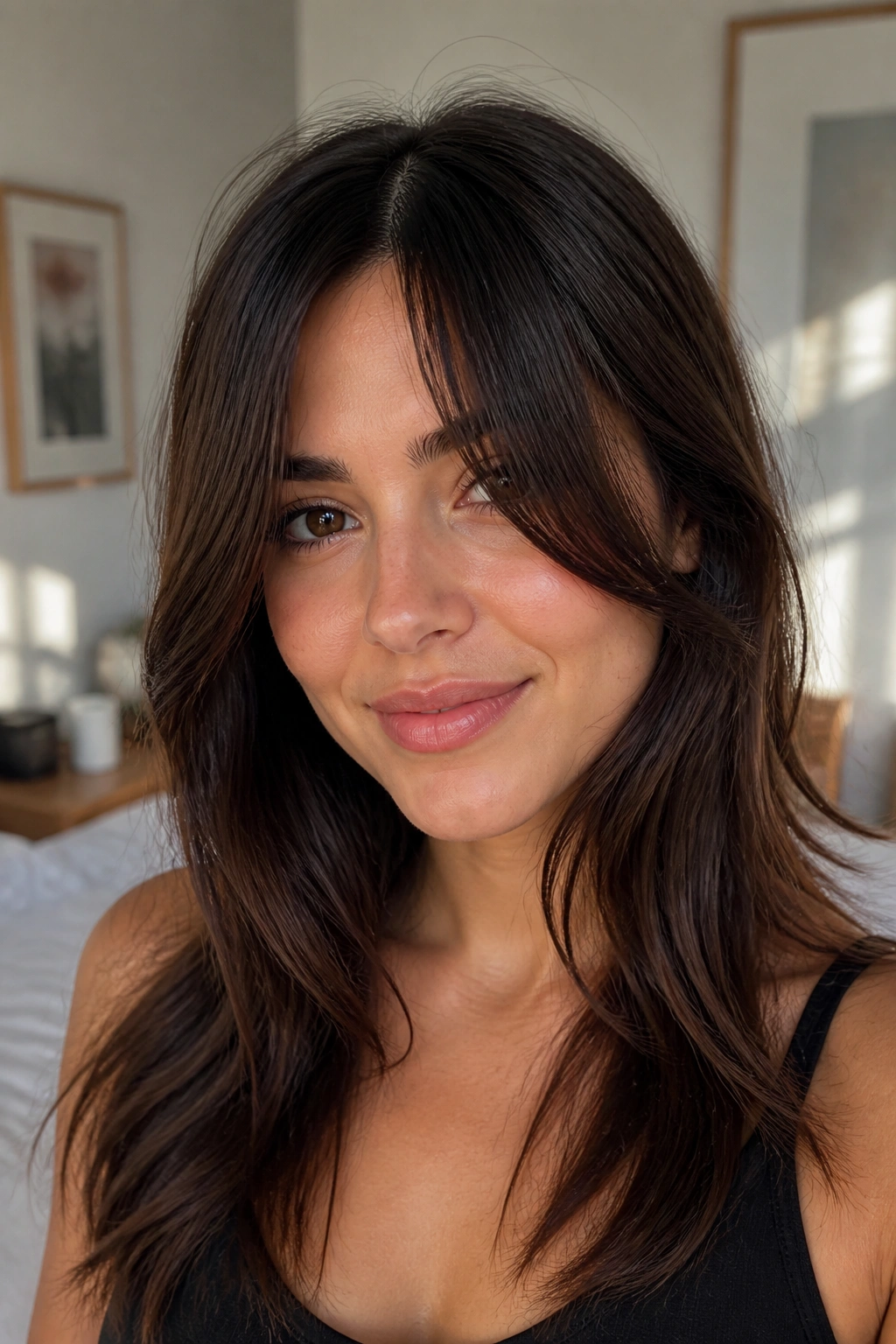
Curtain bangs are still the safest first step for a round face, and the reason is simple: they open the center of the forehead while letting the sides fall long enough to slim the cheeks. Done well, they make the face look a little more vertical without feeling severe.
Why They Work
The shortest point should sit near the bridge of the nose or just below it, then drop outward toward the cheekbones and jaw. That diagonal line matters. A straight-across fringe can feel like a stop sign; curtain bangs feel like a lane change.
Ask for softness around the temples, not a thick block. The goal is movement, not coverage. If your hair is dense, keep the center lighter so the middle does not collapse forward and sit heavy on the brows.
- Shortest point: bridge of nose to top of cheekbone
- Outer length: cheekbone to jawline
- Best parting: center or a very slight middle split
- Styling note: blow-dry away from the face with a round brush
Tiny tip: if your hair springs up when it dries, ask for the cut a touch longer than you think you need.
2. Deep Side-Swept Bangs With a Long Diagonal Sweep
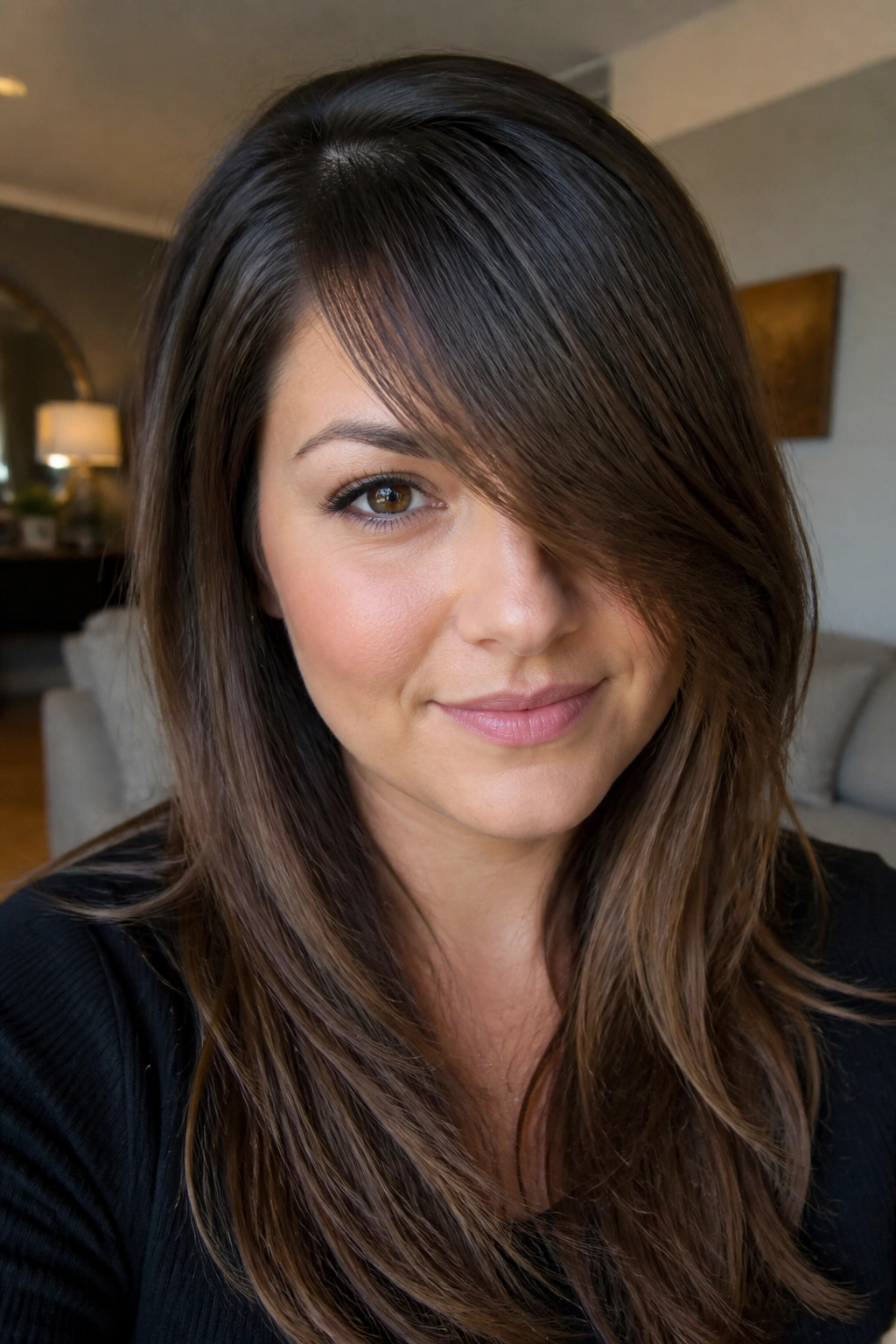
A deep side-swept fringe can be a blunt instrument in the best way. It creates one long diagonal line across the forehead, and that single line does a lot of work on a round face.
The best version starts farther back than people expect. A side part that sits about 1 to 1½ inches off center gives the bangs enough room to fall across one eyebrow and blend toward the opposite cheek. Too shallow, and the fringe looks accidental. Too deep, and it can feel like hair is hiding from itself.
This style shines when you want softness without giving up forehead coverage. It also helps if your hair has a natural bend, because the sweep can hold its shape with less effort. A quick blow-dry at the roots makes the whole thing behave.
A round brush, medium heat, and a strong direction away from the face are enough. Finish with a light mist of flexible hairspray, not the helmet stuff.
3. Bottleneck Bangs That Narrow in the Middle

Why do bottleneck bangs flatter round faces so well? Because they pull the eye inward at the center and then fan back out near the temples, which gives the face a longer, narrower read.
The middle is usually cut a little shorter than the sides, but not so short that it feels chopped. Think of a soft bottle shape: fitted at the neck, wider at the shoulder. That shape keeps the fringe from turning into one solid wall across the forehead, which is the last thing most round faces need.
How to Style Them
A small round brush is enough. Blow-dry the center section straight down, then guide the side pieces away from the face with a slight bend at the ends. The outer pieces should skim the cheekbones or brush the jaw, depending on hair length.
No shelf. That’s the trick.
Bottleneck bangs also work nicely if your face is fuller at the cheeks but narrower at the forehead. The narrow center gives space, while the longer sides do the slimming work.
4. Long Layered Fringe That Melts Into Face-Framing Pieces
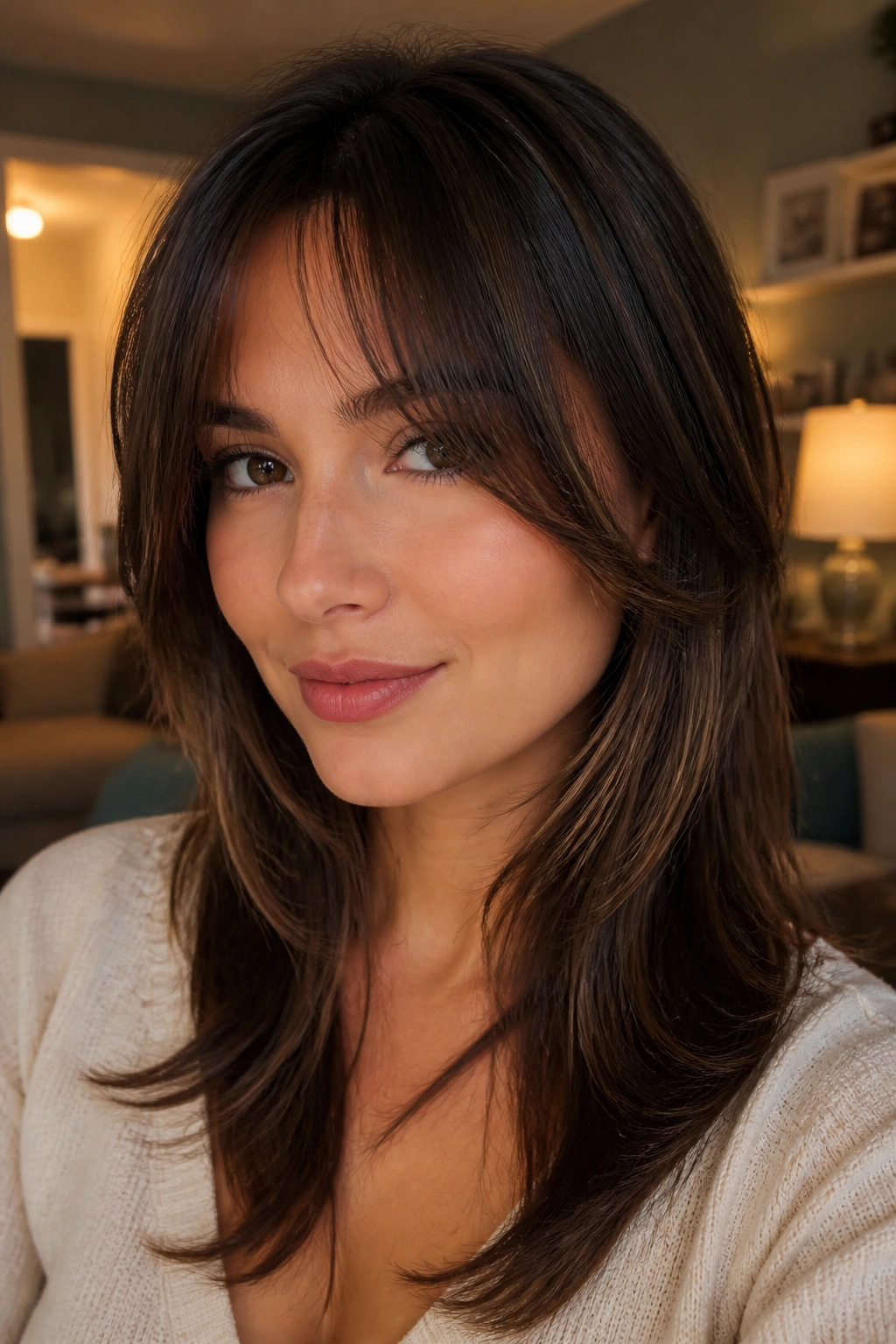
If you hate the feeling of having “bangs” as a separate thing, this is the cut to ask for. The fringe begins as a bang, then quietly becomes a face frame before you even notice the shift.
The smartest version for a round face keeps the shortest pieces around the cheekbone and lets the rest slide down toward the jaw. That shape pulls attention away from width and toward length. It also grows out well, which matters more than people admit. A fringe that still looks decent at week six is worth a lot.
This cut is especially good when you wear your hair up often. A long layered fringe leaves enough around the face that a ponytail doesn’t feel bare. It also keeps the front from looking too heavy if your hair is thick.
Ask your stylist for soft, connected layers through the front—not a hard bang line. The difference is huge.
5. Feathered Bangs With Soft, Flicked-Out Ends
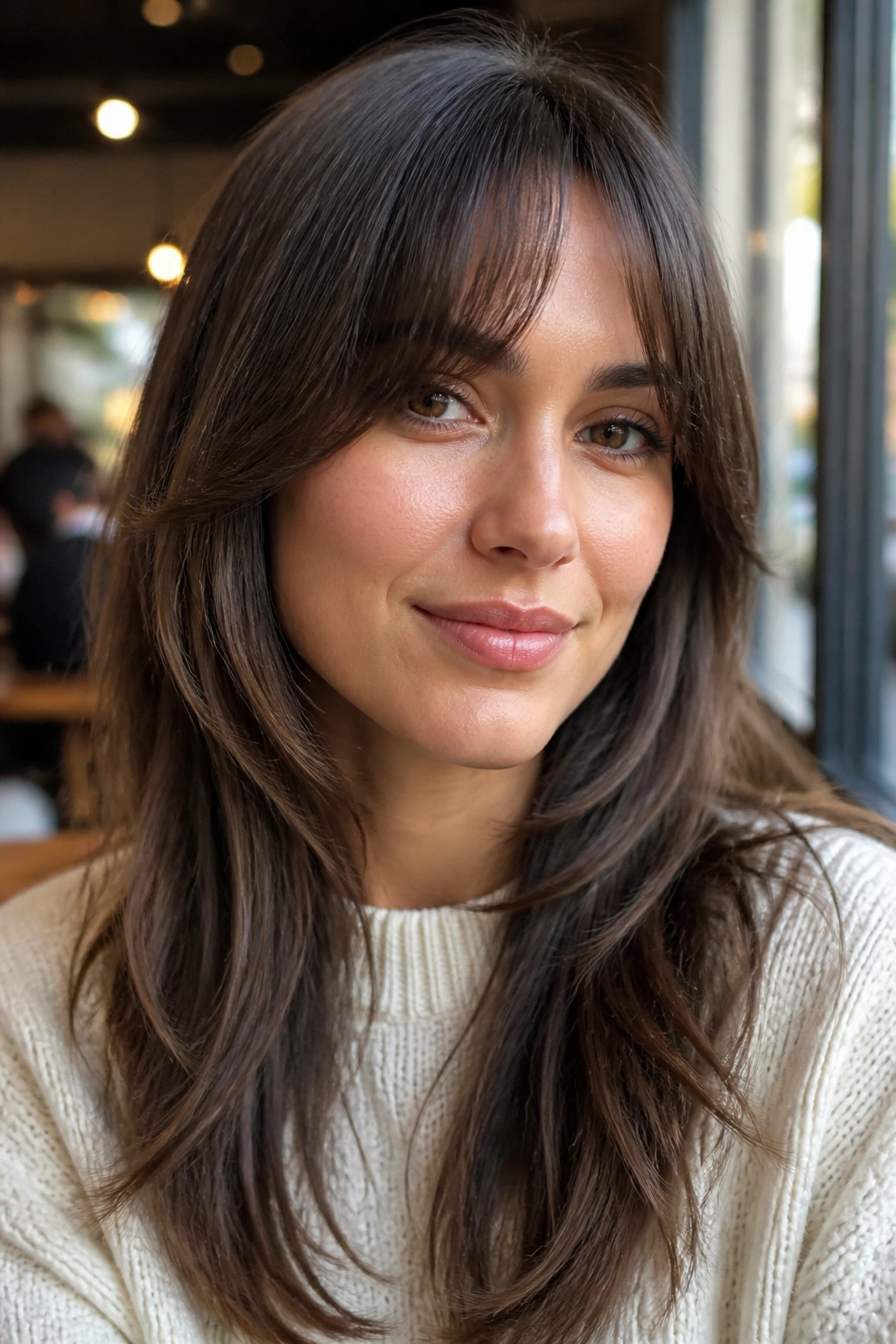
Feathered bangs are the opposite of blocky. They break up the front edge of the haircut so the face never feels boxed in, which is exactly why they work on round faces.
The real magic is in the ends. When the tips are feathered and lightly flicked, they create tiny gaps that let the forehead show through. That little bit of skin changes the whole balance of the cut. The face looks less wide, the bangs feel lighter, and the haircut moves instead of sitting there.
The styling part is not hard, but it does ask for restraint. Use a round brush around 1½ inches wide, keep the heat on the lower side, and bend the ends away from the cheeks. Heavy oil kills this look fast. So does over-brushing.
The ends matter most.
Feathering also helps thick hair behave. Instead of one heavy curtain, you get layers that breathe.
6. Brow-Skimming Arched Bangs Stretched Past the Brows

Brow-skimming arched bangs are a nice middle ground if you want shape but not a full fringe. They curve gently upward at the center and fall longer toward the sides, which gives the forehead some room.
Unlike blunt bangs, an arch follows the brow line instead of fighting it. That makes the eye travel upward before it travels outward. On a round face, that tiny shift can make the whole cut feel less wide. The arch should be soft, though. Too much curve and the fringe starts looking dated or fussy.
This style plays well with glasses, too, because the center can sit just above or just under the frame line without crowding it. Keep the outer pieces long enough to touch the temples or cheekbones. That way the bang still reads as long, not chopped.
If your forehead is short, leave the center a touch lower. If your forehead is tall, you can open it more. Simple adjustment. Big payoff.
7. Cheekbone-Grazing Curtain Fringe With a Soft Center Hinge
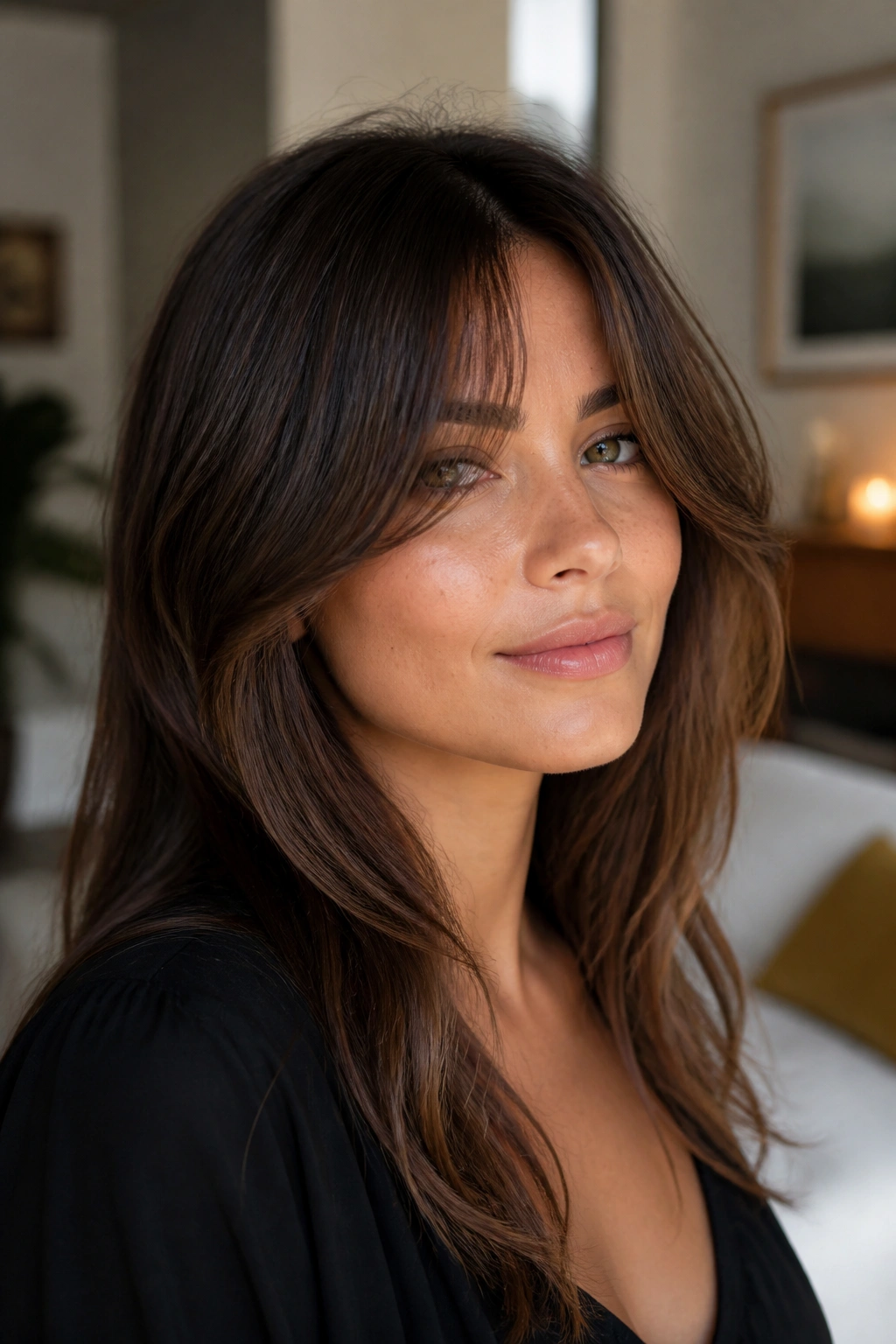
This is the grown-up, relaxed cousin of classic curtain bangs. The center still opens, but the side pieces are long enough to skim the cheekbones and sometimes brush the top of the jaw.
That extra length is why it works so well on round faces. It drops the eye lower, which changes the shape of the whole face in a subtle way. The fringe does not sit on the cheeks; it points past them. There’s a difference, and it matters.
What to Ask For at the Salon
- Center length that lands between the brows and nose bridge
- Outer pieces that reach the cheekbone or top of the jaw
- Soft blending through the temples
- Enough length to tuck behind the ears on days you want them out of the way
This version is great if you hate frequent trims. It grows into a softer face frame instead of turning into a bad bang month. That alone makes it a smart pick.
8. Off-Center Part Bangs That Shift the Whole Face

Can an off-center part change a round face? Yes. A small shift in parting can move the whole visual weight of the haircut.
The trick is not to shove the part all the way to one ear. That usually looks forced. Instead, shift it about an inch off center and let the longer bang side cross part of the forehead. The shorter side should still have enough length to blend in, not sit like a separate chunk.
An off-center fringe works because the eye stops reading the face as perfectly even. That slight imbalance makes the cheeks seem less dominant. It also gives you a place to add volume at the root, which helps the face look a bit longer.
Use a tail comb to place the part, then blow-dry the roots in the opposite direction first. Flip the fringe back and set it with cool air. Small step. Big difference.
9. Piecey, Separated Bangs for a Lighter Line
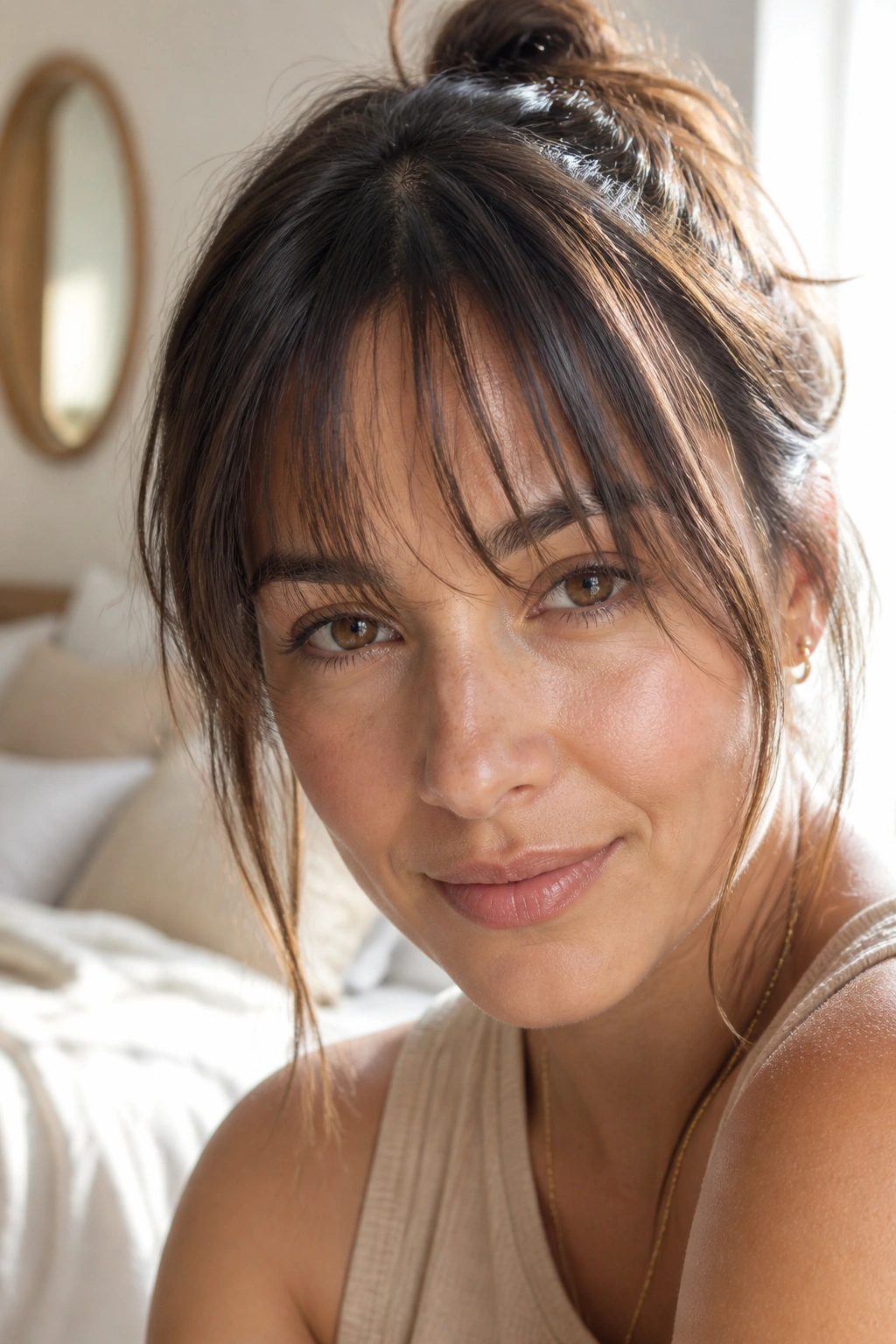
Heavy bangs across a round face can feel like a lid. Piecey bangs feel like movement, and movement is usually kinder to soft face shapes.
The cut matters here. You want point cutting or razor-soft ends, not a blunt slice. That gives the fringe little broken edges that separate naturally instead of clumping into one thick sheet. A few strands can fall across the forehead while others bend toward the temples. That broken line is the whole point.
Day-to-day styling is easy if you keep your hand light. A pea-size bit of matte cream, rubbed between fingertips, is usually enough. Pinch the bangs apart in small sections, then leave them alone. Overworking them makes them stringy.
A short punch paragraph, because it matters:
Less product wins.
This style is especially good on second-day hair, when a little texture makes the bangs sit with more shape.
10. Swept-Over Side Fringe With Invisible Internal Layers
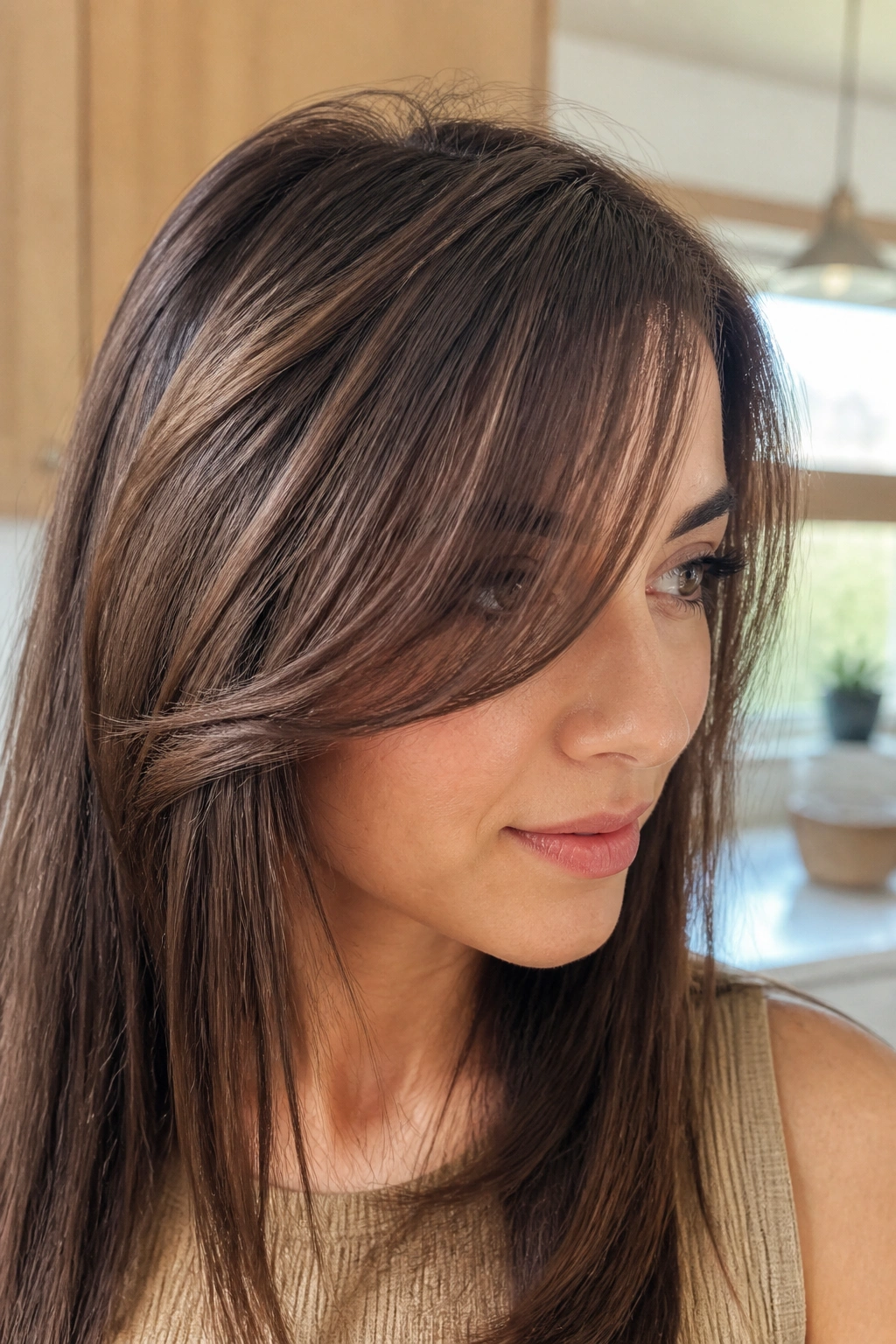
If you want bangs but do not want to lose your forehead completely, this is the sweet spot. The fringe sweeps over, but the internal layers keep it from dropping flat like a slab.
That invisible layering is what makes it flattering for round faces. The bangs can move, bend, and separate a little without exposing too much width across the brow line. It also means the fringe works better on fine hair than a blunt side bang does, because the cut gives it some life.
This is a good choice if your mornings are rushed. A quick blow-dry with a paddle brush can be enough. Aim the airflow from root to tip, then flick the ends toward the cheekbone. If one side wants to split open, dry that area in the opposite direction first and it usually behaves.
It looks easiest when the cut is precise. That’s the part people miss.
11. Long Shag Bangs With Razored Texture
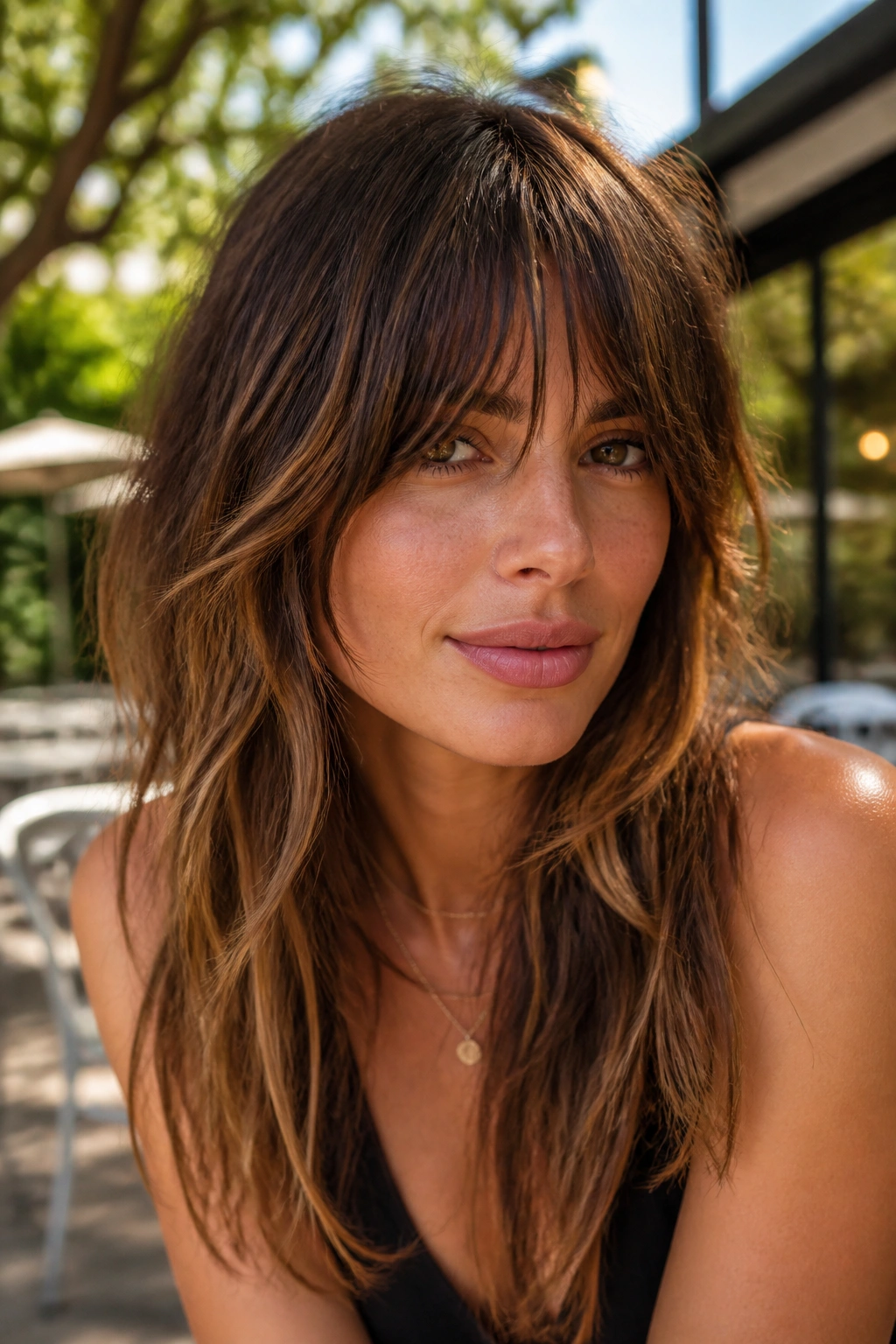
Long shag bangs bring a little grit to a round face, and I mean that in the best possible way. They break up the forehead with layers instead of one clean line, which keeps the front of the haircut from feeling too neat.
The shag works because it creates several lines at once: some pieces land near the brows, some graze the cheekbones, and others drift down toward the jaw. Your eye keeps moving. That motion is useful. A round face needs a little visual interruption, and shag bangs do it without looking stiff.
Wavy hair loves this cut, but straight hair can wear it too if you add a bend with a flat iron or round brush. The important part is not making the fringe too thin. If it gets wispy, the whole style can look unfinished.
A soft mousse at the roots and a quick scrunch through the front can keep the shape loose. Nothing fancy. Just enough grit to hold the texture.
12. See-Through Bangs Kept Airy and Long
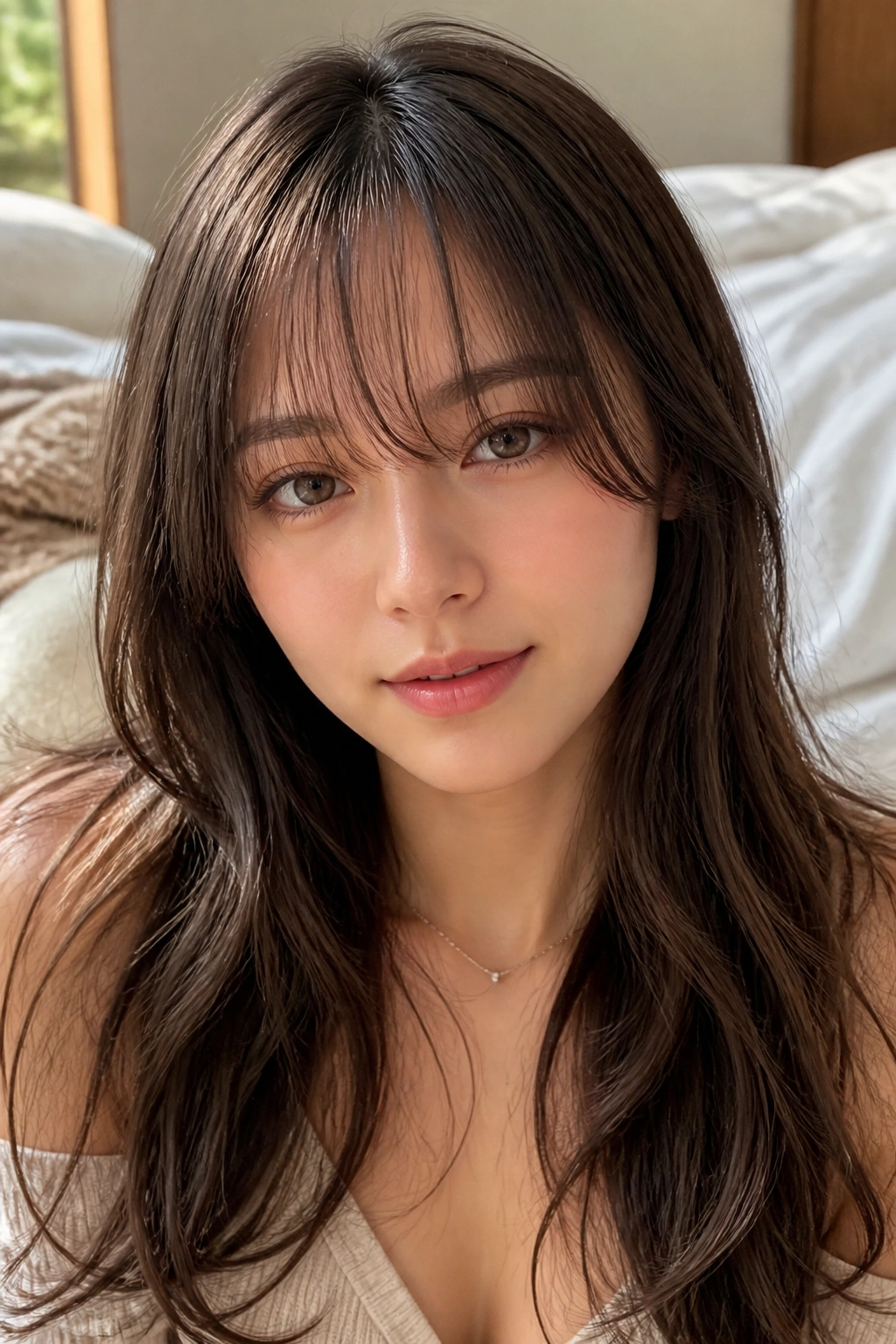
See-through bangs are not about being sparse. They’re about letting some forehead show through so the front of the face doesn’t feel shut down by hair.
What to Ask for at the Salon
Ask for a fringe that stays long enough to brush the brows, with the lightest pieces cut just under the eyebrow line. The density should feel airy, but the ends should still have enough length to bend. If the stylist thins the ends too hard, the bangs can go fuzzy and weak.
This style works best when the hair itself has some natural fullness. On very fine hair, you may need a little root powder or a light texturizing spray so the fringe doesn’t disappear against the skin. On thick hair, the trick is removing bulk inside the bang, not at the perimeter.
Use a round brush the size of a tuna can lid, roughly. Blow-dry the bangs forward, then give them a tiny bend so they don’t sit flat against the forehead. Flat equals wider.
13. Angled Fringe That Tapers Toward the Temples
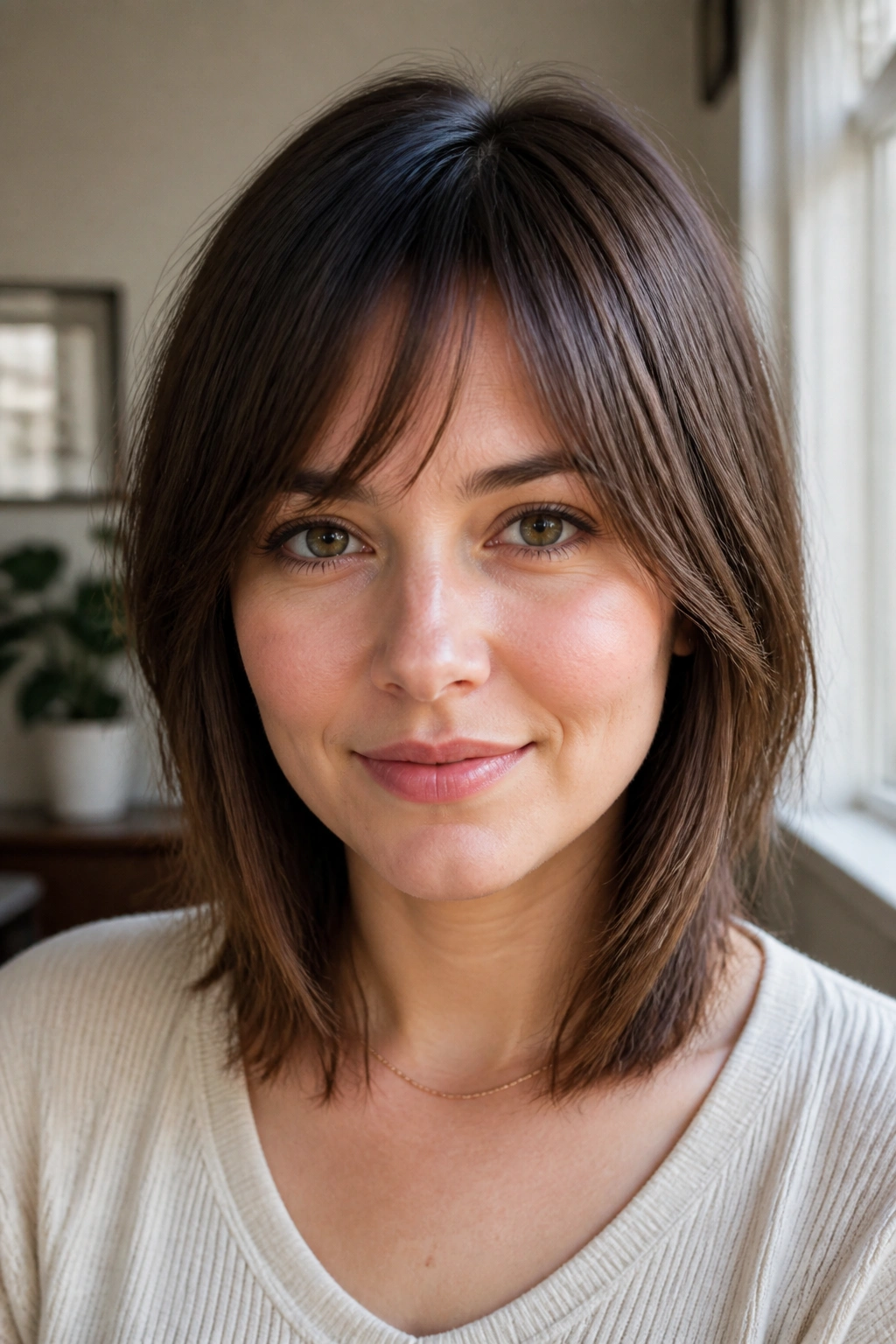
An angled fringe is a quiet problem-solver. It starts shorter near the middle, then drops lower as it moves toward the temples, which is exactly the kind of shape that can help a round face look longer.
Unlike a straight fringe, this cut does not make one hard line across the forehead. The angle pulls the eye outward and slightly down. That motion is useful if your cheeks are the fullest part of your face. It keeps the eye moving instead of resting on the width.
This cut is a good fit if you like a polished look but do not want to spend long on styling. The angle gives the shape, and the shape does most of the work. It can also play well with glasses because the fringe can dip around the frame instead of sitting on top of it.
A good version lands just under the brows in the center and reaches toward the cheekbone at the sides. Anything shorter starts to lose the benefit.
14. Heavy Long Bangs With Internal Texture for Thick Hair
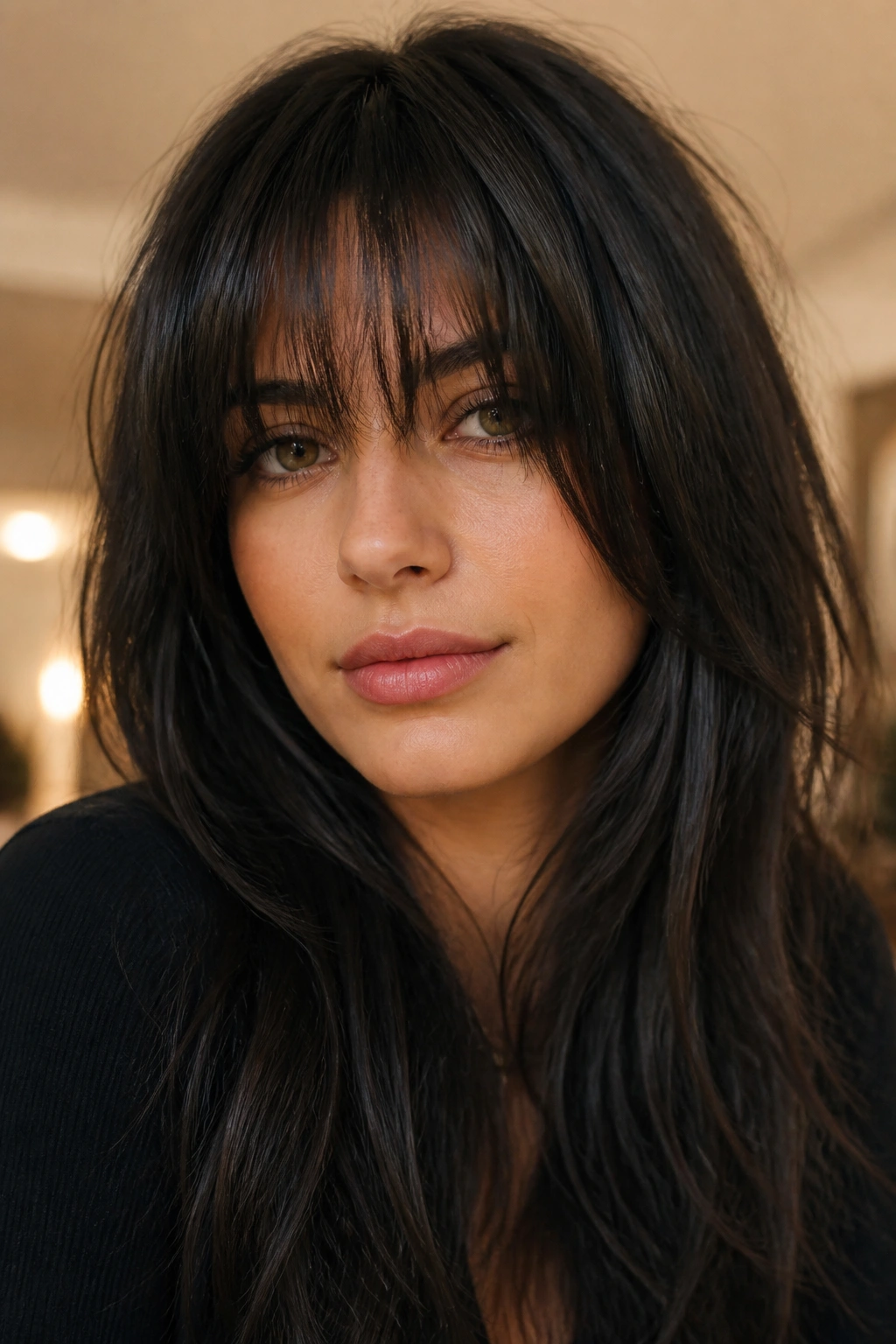
Can heavy bangs work on a round face? Absolutely, if they’re long enough and broken up inside the shape.
Thick hair often needs weight to stay in place, but that does not mean the fringe has to look blunt. Internal texture, slide cutting, and soft point cutting can remove bulk without turning the bangs fuzzy. The front should still feel solid at the edges, just not heavy in the middle.
This style is better when the shortest point sits below the brows rather than right on top of them. That extra length keeps the bang from making the face look shorter. If the hair puffs out, a large round brush and a cool shot at the end help flatten the root and keep the fringe from ballooning.
Bulk is the enemy, not thickness. People mix those up all the time.
A heavy bang can look expensive on a round face when it has shape and a little swing. Without that swing, it just sits there.
15. Long Bangs Paired With Jaw-Starting Face-Framing Layers
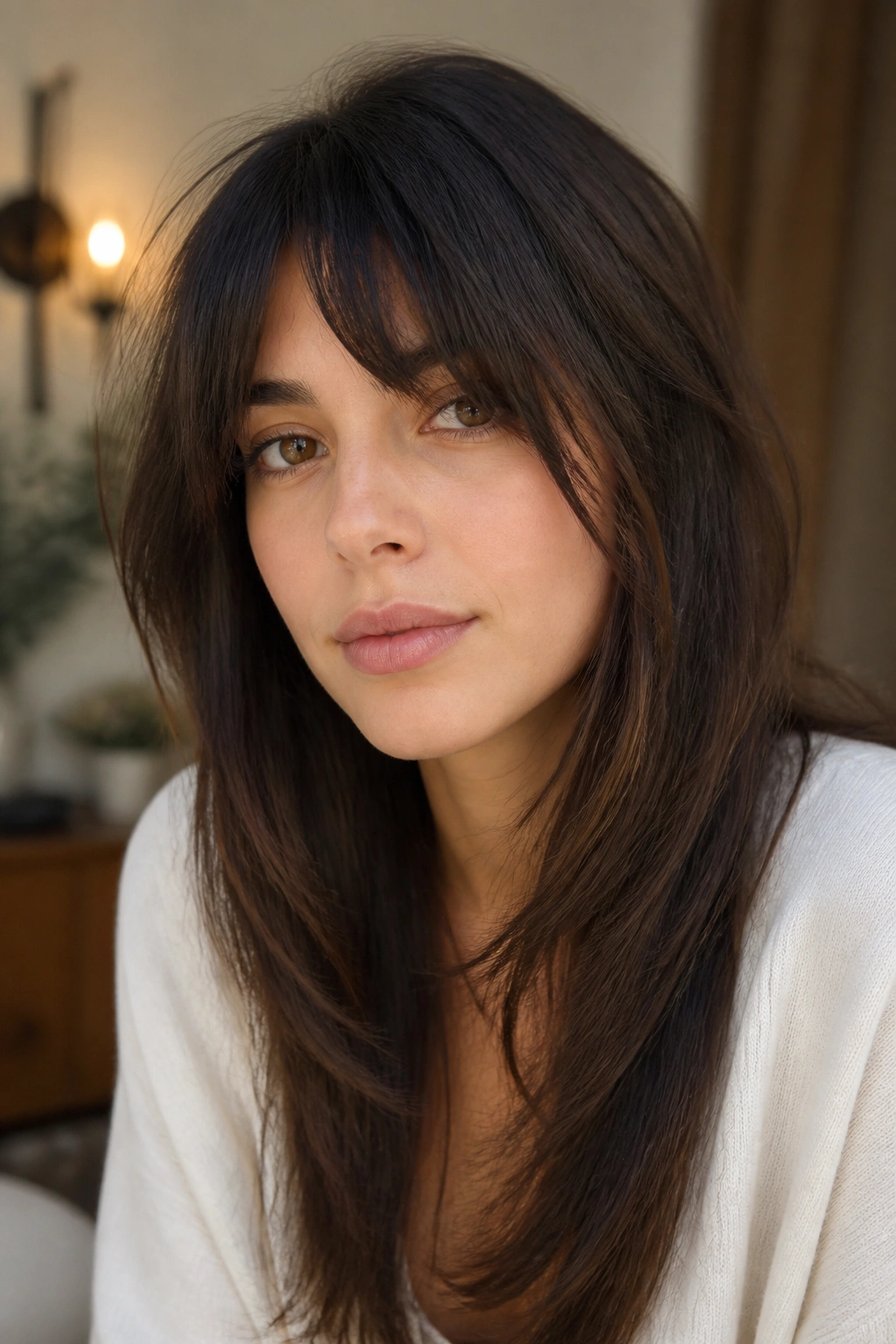
This is less a fringe and more a full front shape, and that’s why it works so well. The bang leads into face-framing layers that begin near the jaw, so the whole front of the haircut pulls the eye downward.
On a round face, that downward line is gold. It takes attention away from cheek width and gives the hair somewhere to go. If your face frame starts too high, right at the cheekbone, the width can land in the wrong spot. Starting lower keeps the widest point cleaner.
This style loves shoulder-length and longer hair. It also looks good tied back, because the front pieces still do something when the rest of the hair is up. That matters if you wear buns, clips, or low ponytails a lot.
A one-sentence paragraph, because the point deserves space:
The bang is only half the story.
The face-framing layers are what make the whole thing feel finished.
16. Soft Retro Side Fringe With a Bent Finish
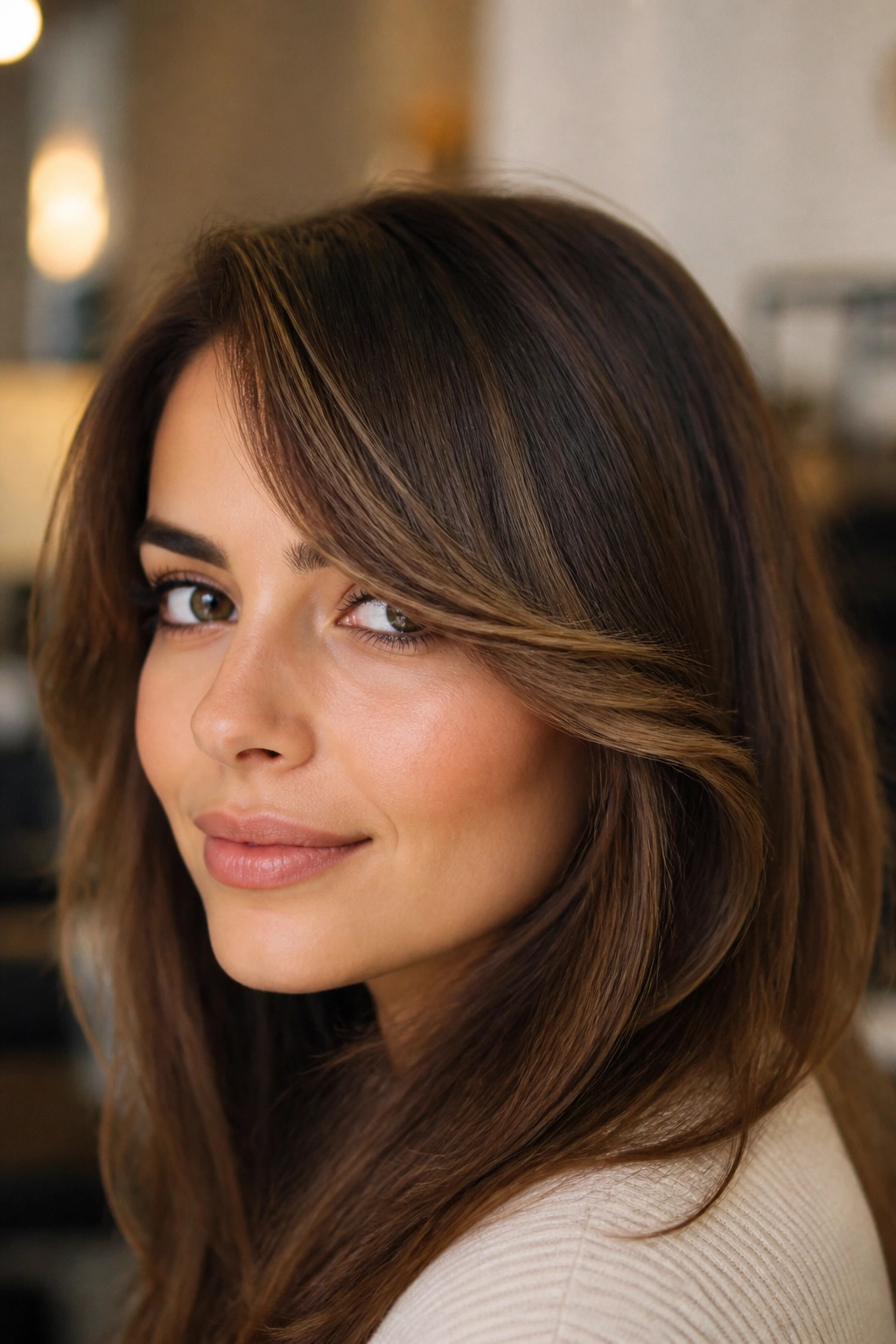
This is the one I’d pick for straight hair that refuses to hold a curl. The bend gives you shape without asking for a full wave.
The finish should curve away from the forehead, then tuck back toward the cheek. Think soft bend, not roller set drama. A 1¼-inch round brush or a flat iron used at a slight angle can make it happen, and a quick cool shot locks it in place. That bend matters on a round face because it keeps the fringe from sitting flat and wide.
It also looks good with a side part that is not too severe. Let the front pieces stay soft. If the line gets too sharp, the style starts to feel more like a comb-over than a fringe, and nobody wants that.
A little root lift at the part helps, too. Tiny detail. Big payoff.
17. Long Curly Bangs Cut to Follow the Curl Pattern
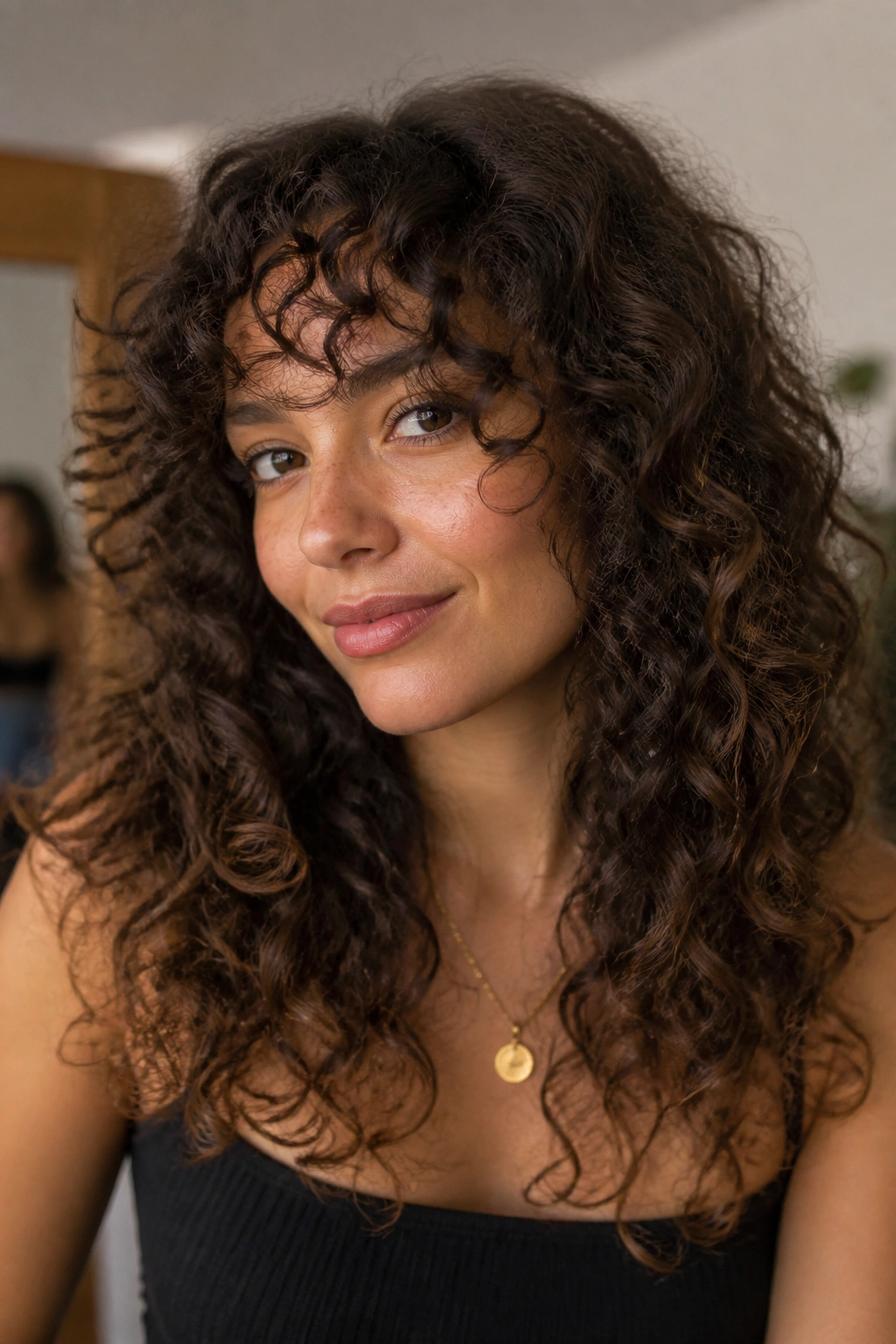
Curly bangs are where a lot of people get nervous, and I get it. If they’re cut wrong, they shrink, puff, and land in the least flattering spot possible. If they’re cut well, they can be gorgeous on a round face.
The key is cutting them dry, or at least fully styled in the curl pattern you actually wear. Curly hair lies when it’s wet. A bang that looks chin-length in the chair can spring up to eyebrow level later, and that is not a fun surprise. For round faces, the best curly fringe usually lands around the cheekbones once it has dried.
What Helps Most
- Dry-cut or cut in the natural curl pattern
- Leave more length than you think
- Trim in tiny steps, not big chunks
- Use a light gel or cream, then diffuse until about 80% dry
A curly bang should frame, not fight. When the curl pattern is respected, it gives the face shape without making the forehead feel boxed in.
18. Air-Dried S-Bend Fringe That Curves Away From the Cheeks
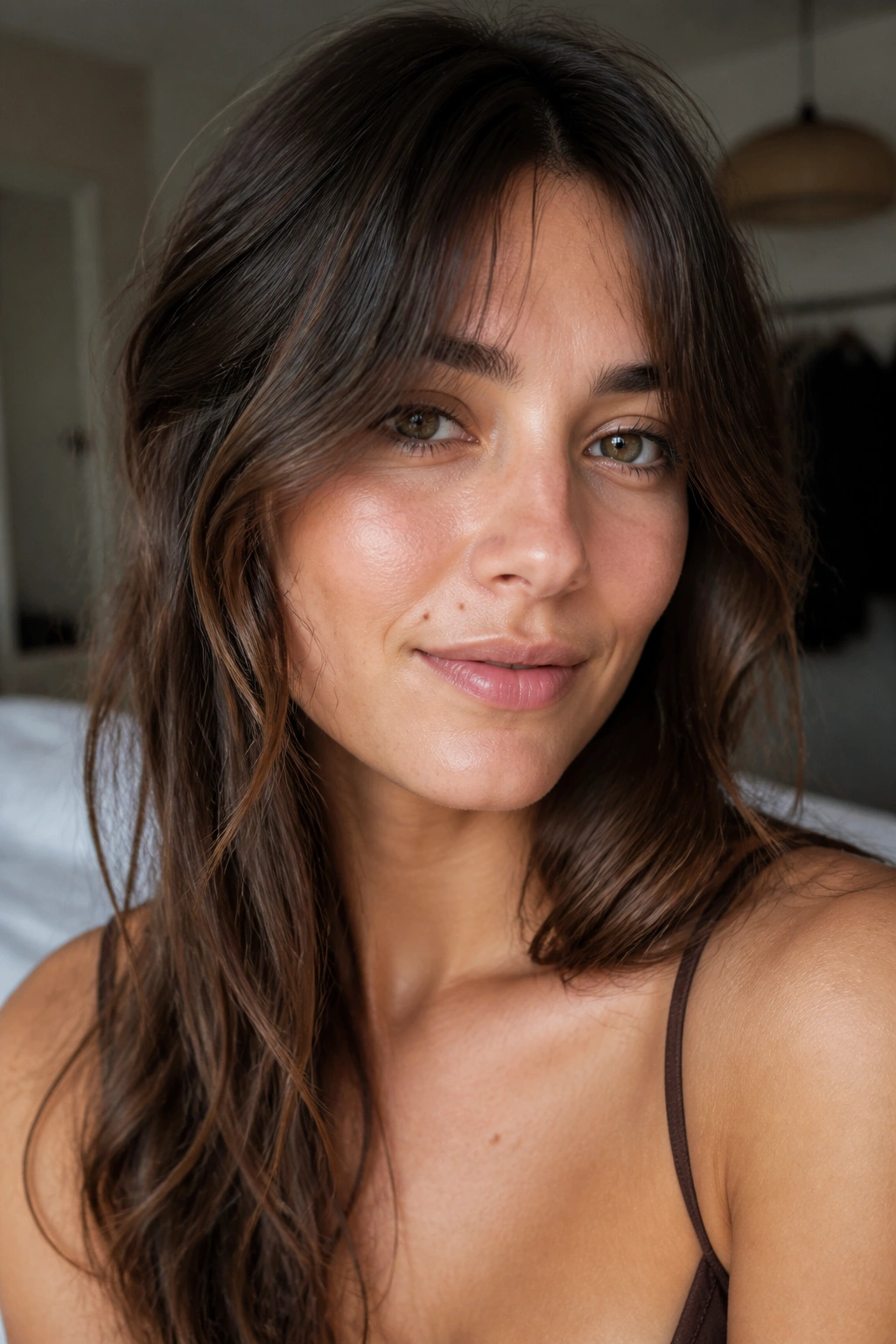
An S-bend fringe is a strong choice if you want softness with almost no obvious styling. The bend starts away from the face, curves lightly, then settles back again. That shape pulls the eye down and out, which round faces usually wear well.
The easiest way to get it is with damp hair and a large roller, or a 1¼-inch curling iron used in a loose wave pattern. Do not curl the whole strand into a ringlet. That gets too round, too fast. You want a gentle bend that keeps the forehead open in the center and lets the sides drift toward the temples.
This style can be air-dried if your hair has enough natural wave. Twist the bangs once or twice while damp, clip them up briefly, then release when they’re nearly dry. A tiny bit of serum on the ends is enough. Too much and the shape collapses.
Good hair days are nice. Low-effort ones are better.
Final Thoughts
The best long bangs for round faces do one of three things: they split the forehead, they sweep diagonally, or they break up the line with texture. That’s the whole game.
If you are stuck between styles, pick the one that still looks decent when you tuck it behind an ear or let it air-dry a little messy. That flexibility matters more than a fringe that only behaves in perfect conditions.
A good bang should work with your face, not sit on top of it like a prop. Get that part right, and the rest gets a lot easier.
