



Round faces and short bangs can get along just fine—if the fringe is cut with some shape. The wrong cut lands like a little curtain across the widest part of the face. The right one pulls the eye upward, sharpens the cheek line, and gives the whole haircut a bit more bite.
The trick is not always length. Sometimes a fringe that sits shorter works better than a longer one because it opens up the brow and keeps the face from feeling boxed in. Other times, a short bang needs a diagonal line, a soft break in the middle, or a little extra height at the crown. Tiny shifts. Big difference.
Texture matters too. Fine hair needs a bang that won’t collapse by noon. Thick hair needs internal weight removed so the fringe doesn’t sit like a shelf. Curly hair needs room for the curl to spring. Straight hair needs some roughness so it doesn’t fall flat and widen the face.
The 20 ideas below are all short, but they don’t all do the same job. Some add lift. Some slim the cheeks. Some soften the forehead. Some give a pixie cut more attitude. That mix is the point.
1. Micro Bangs That Float Above the Brow

Micro bangs are the boldest place to start, and on a round face they can work better than people expect. The reason is simple: they break the face’s horizontal line fast. A fringe that sits about 1/2 to 1 inch above the brow exposes more forehead, which makes the face look a touch longer and the eyes look more open.
Why They Work on Round Faces
The best version is not a heavy Lego-block fringe. It’s lighter than that, with soft ends that look a little chipped at the tips. Ask for the cut to be point-cut or slide-cut, not sliced blunt across the whole width. That keeps the line from feeling too heavy at the center.
- Best on fine to medium hair
- Usually cut around 1/2 inch above the brow
- Looks sharper when paired with a high crown or short bob
- Needs trims every 2 to 4 weeks if you want the shape to stay crisp
My advice: keep the sides a little longer than the center so the fringe doesn’t read as a straight bar.
2. Wispy Baby Fringe With See-Through Ends

This is the softer cousin of micro bangs. Baby fringe sits short, but the difference is the air between the strands. You still get forehead exposure, which helps a round face feel less wide, yet the broken texture keeps the cut from looking severe.
A wispy fringe is one of those styles that looks easy when done well and a little disappointing when it’s too thick. You want thin sections, lightly feathered ends, and enough spacing that you can see skin through the fringe. That tiny bit of transparency matters.
Use a light styling cream or a pea-sized dab of mousse on damp hair, then scrunch or finger-shape it into place. Heavy balm will drag the fringe down and close the gaps you actually need. If your forehead is short, keep the length closer to the brow line. If your forehead is taller, you can go a little shorter and still keep balance.
It’s a nice choice if you want short bangs without the commitment of a hard, blunt line.
3. Side-Swept Short Bangs Cut on a Diagonal
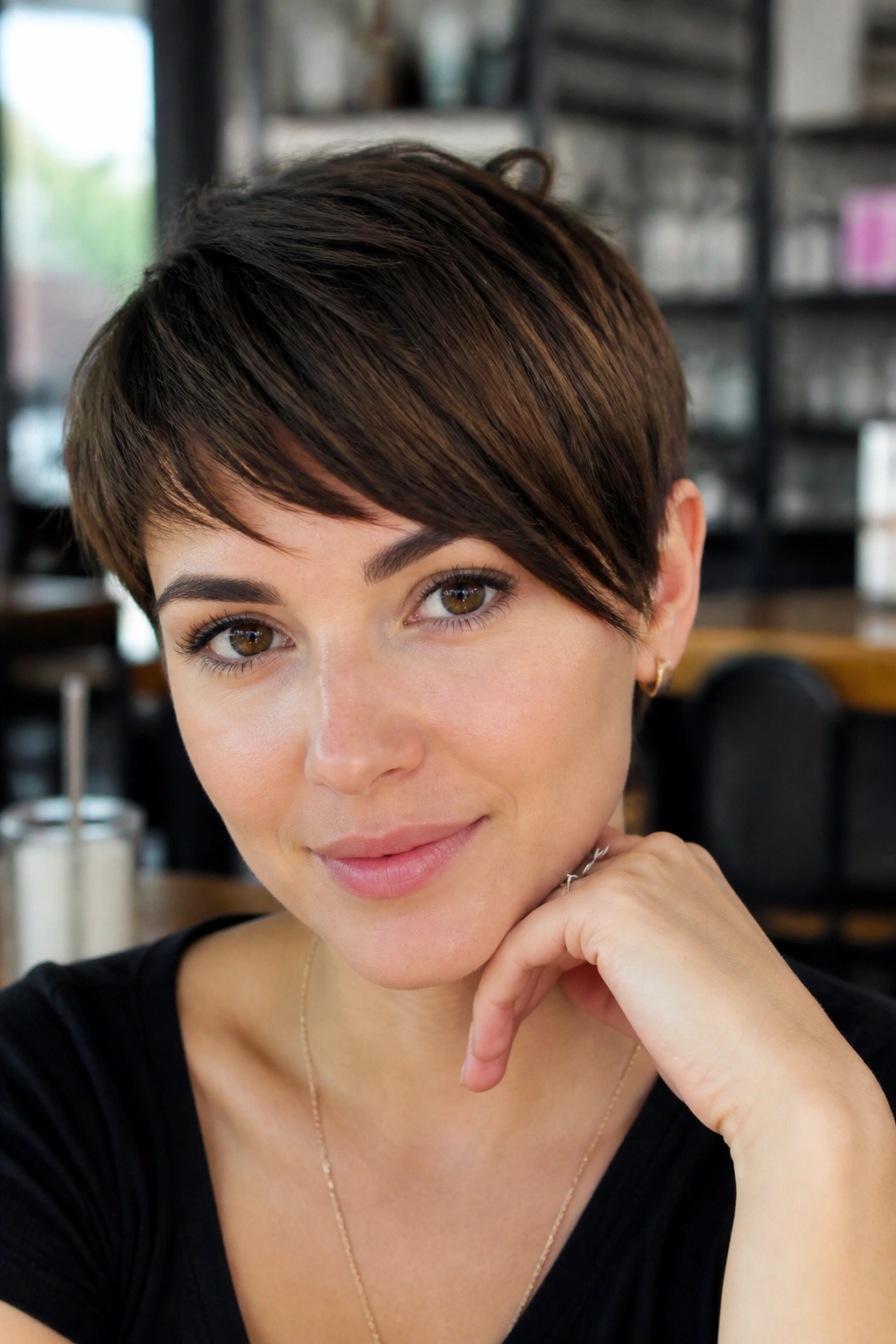
Side-swept short bangs are a quiet fix for round faces because they build a line that moves across the face instead of stopping in the middle. That diagonal motion makes the face read longer and a little leaner, which is usually the goal when the cheeks are full.
The cut should start shorter near the part and sweep down toward the outer brow. Think of it as a soft ramp, not a long swoop that covers half the forehead. If the angle is too flat, you lose the lift. If it’s too steep, the fringe can look disconnected from the rest of the cut.
For styling, blow-dry the bangs in the opposite direction first, then sweep them over while they’re still warm. That helps the root remember the bend. A small round brush or even your fingers can do the job if the hair is fine.
What to Ask Your Stylist
- A short diagonal fringe
- Tapered ends around the temple
- Soft point-cutting through the perimeter
- A length that lands just above or at the brow on the long side
This is one of the easiest short bang ideas to live with if you don’t want a blunt, high-maintenance fringe.
4. Curved Brow-Skimming Fringe With Longer Corners
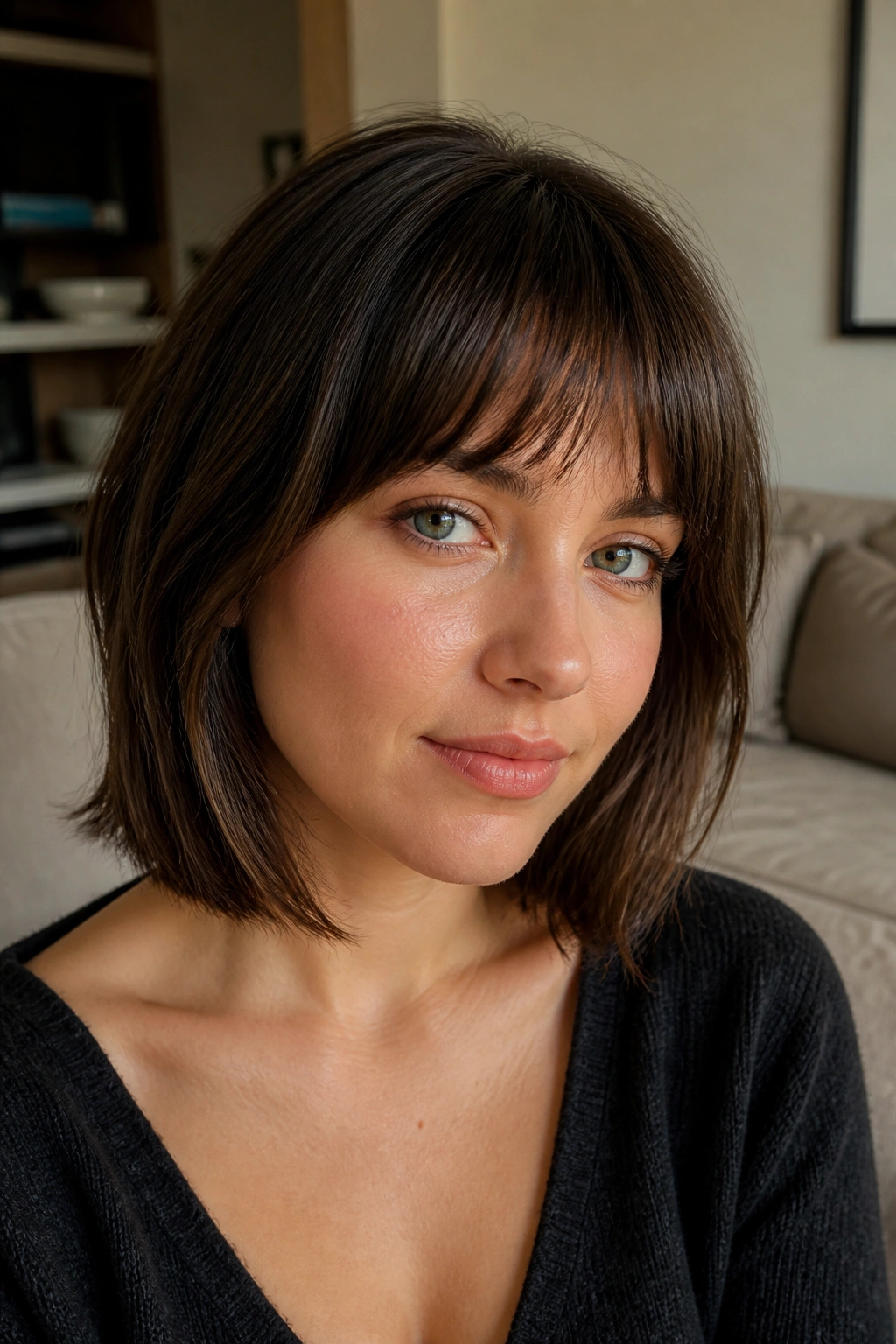
A curved fringe is the one I reach for when someone likes short bangs but hates anything that feels boxy. It follows the brow line in a gentle arc, with the center a touch shorter and the corners left longer. That little curve is doing real work. It keeps the eyes open and gives a round face a more oval feel.
The mistake here is making the arc too broad. Wide curves can echo the width of the cheeks, which is the last thing you want. Keep the curve close to the brow, with the corners kissing the outer edge of the eyebrows rather than swinging all the way out to the cheekbones.
This shape is especially useful on medium-thick hair because it can hold the curve without splitting apart. If your hair is fine, use a root-lift spray at the front and blow-dry the fringe with a small brush, rolling the ends under just a bit.
It feels polished, but not stiff. And that matters.
5. Bottleneck Bangs Cropped Short in the Center
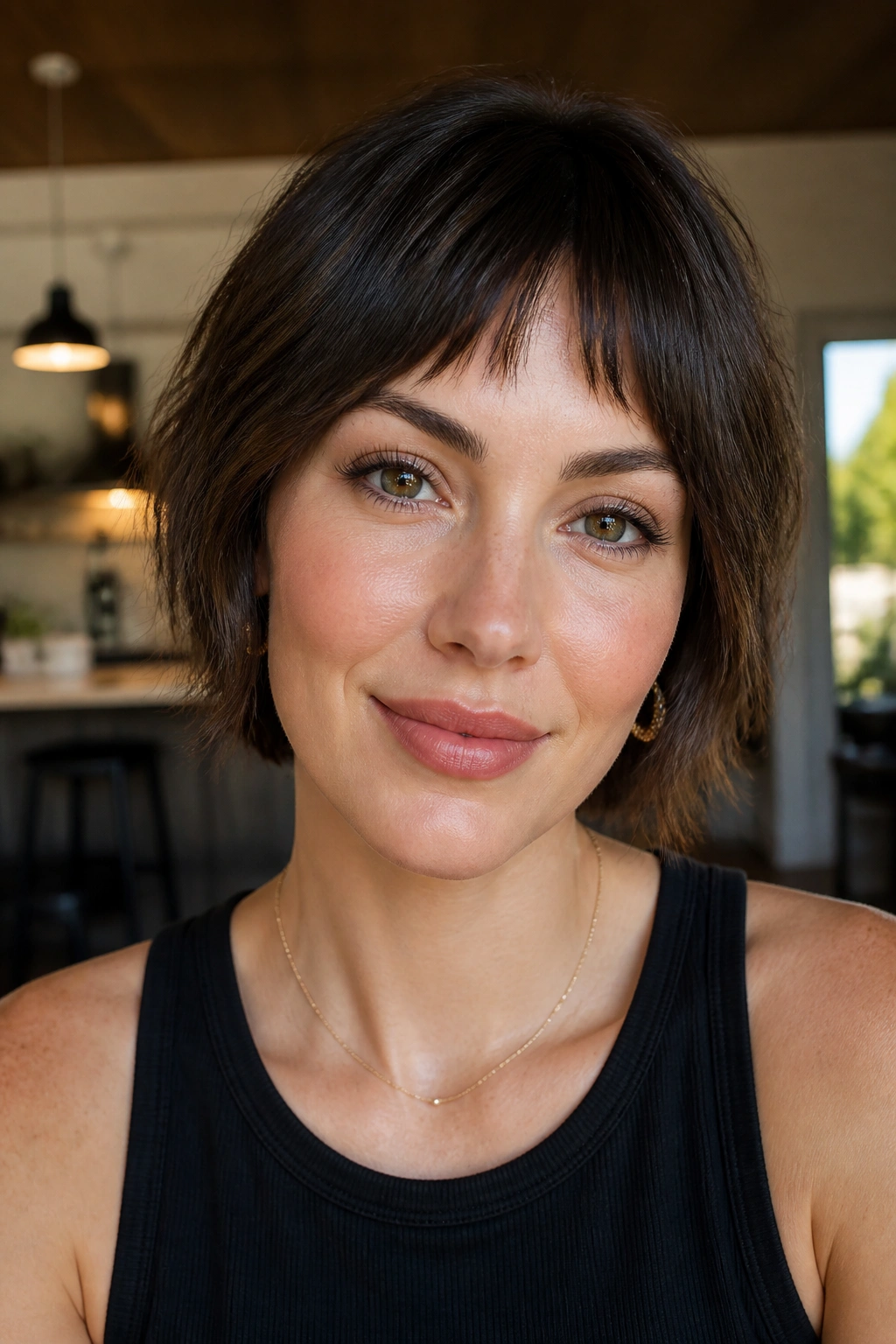
Bottleneck bangs usually get talked about as a longer fringe, but a shorter version can be lovely on round faces. The center is cut shorter, then the sides taper down toward the cheekbones. That narrow center creates lift, while the longer sides give you a little face framing without widening the middle of the face.
The shape has a built-in trick: it draws attention to the center of the face first. Eyes. Brows. Bridge of the nose. That inward pull helps balance fuller cheeks. If you like bangs that feel a little French, a little undone, this is a strong option.
How to Style It
Use a round brush or blow-dry brush to lift the center straight up for a second, then bend the side pieces forward and out. You do not want them fanned wide. You want them to fall in a narrow V-shape that softens the cheeks without adding bulk.
A short bottleneck fringe works especially well on wavy hair, because the waves give the side pieces a natural bend. If your hair is pin-straight, a light texturizing mist keeps it from looking too neat.
6. Choppy Pixie Fringe With Tapered Sides
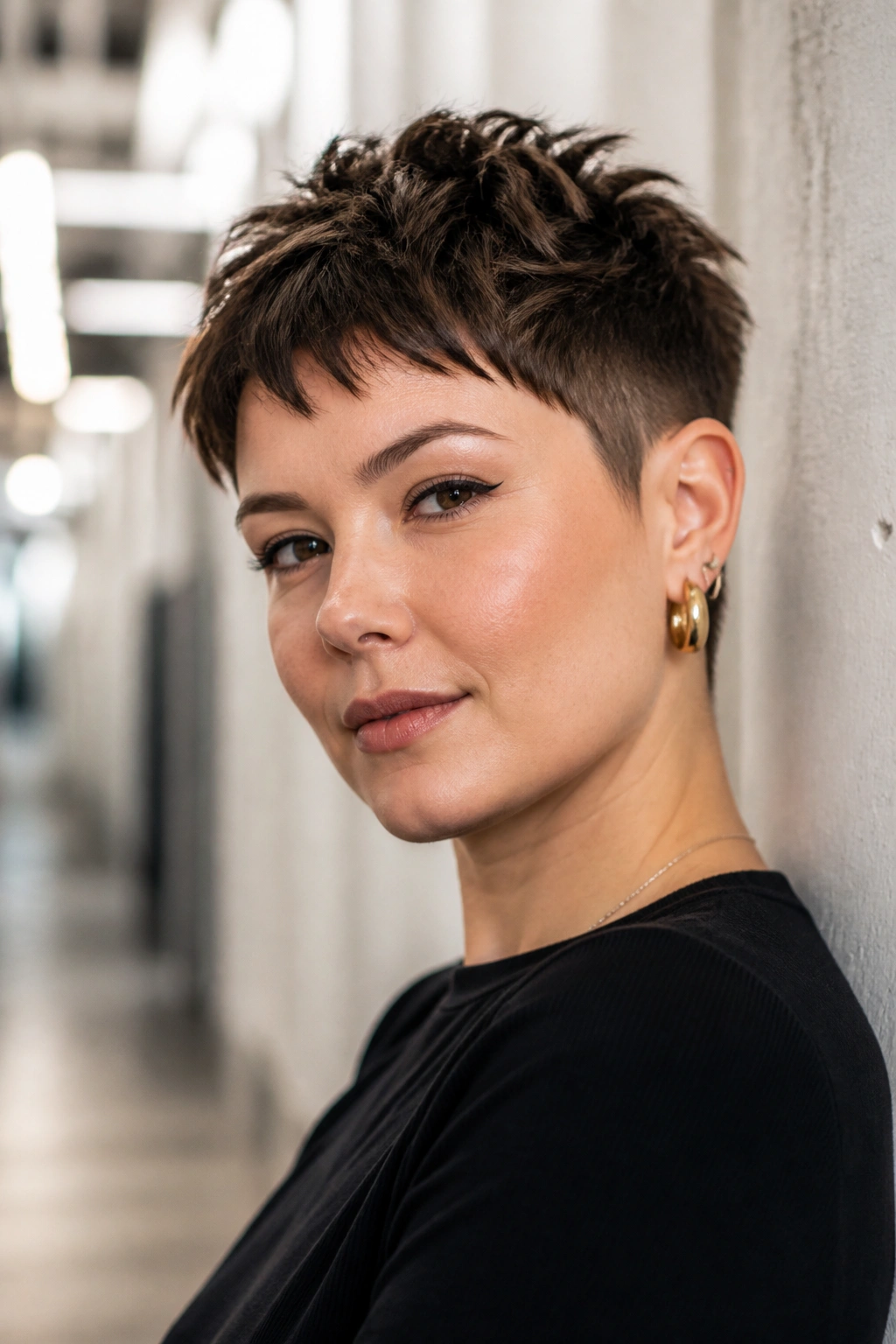
If your hair is already short, a choppy pixie fringe can be a better choice than a neat, straight-across bang. The choppiness breaks the line, which keeps a round face from looking too circular. It also gives the cut a little grit. Not too much. Just enough.
This style is about control at the center and softness at the edges. The fringe is cropped short, often around the upper brow or just above it, then the sides are lightly tapered so the shape blends into the haircut instead of sitting on top of it. A clean edge can work, but only if the rest of the cut has movement.
Ask for point-cutting through the bang area and a bit of length left near the temples. That keeps the fringe from widening the face. If your hair is thick, the stylist may need to remove some internal weight so the bangs don’t puff up like a helmet.
Short, yes. Flat, no.
7. Asymmetrical Fringe That Opens One Side
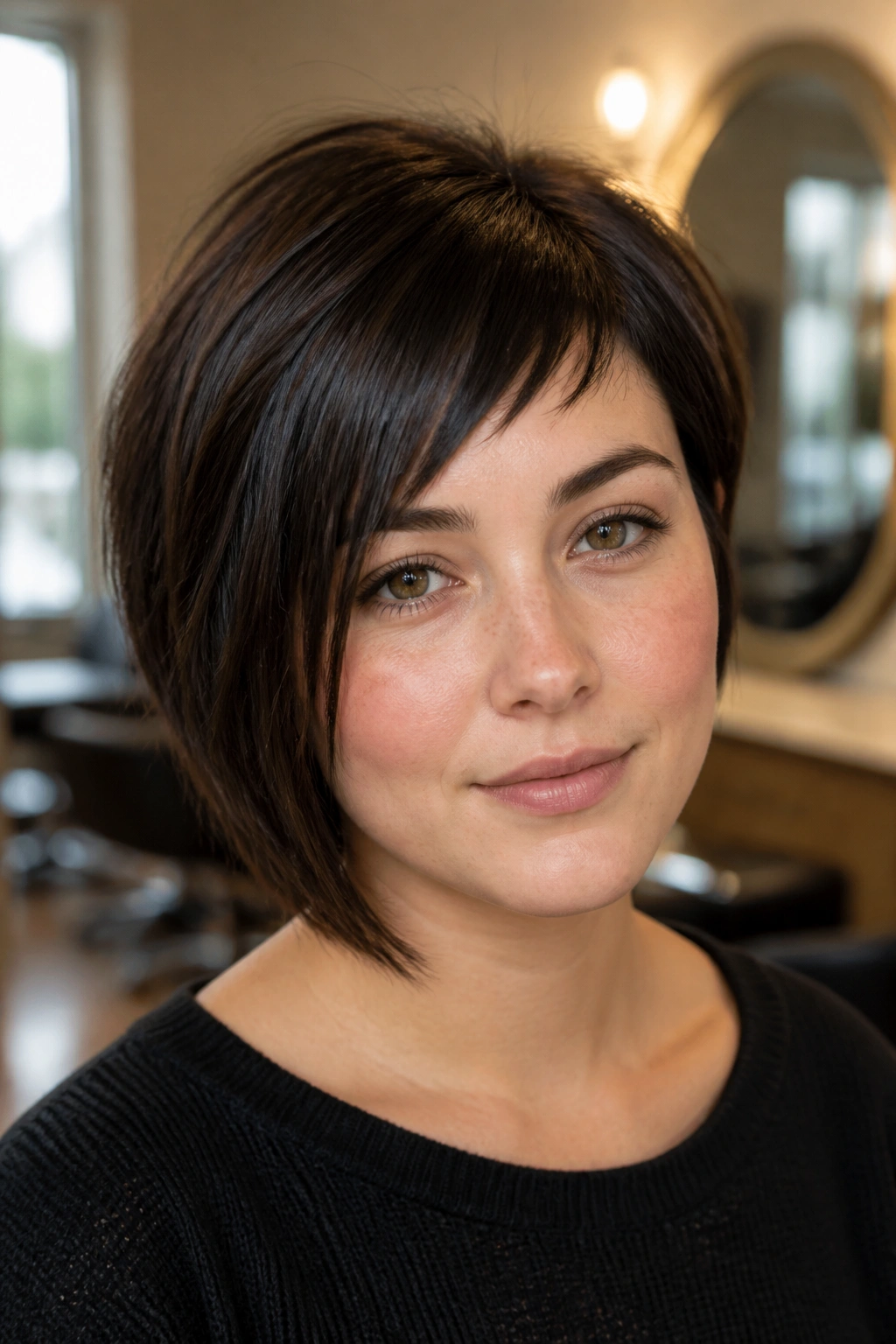
A small asymmetry does a lot for a round face. One side starts shorter, the other side travels longer and lower, creating a line that skews the face visually. That offset is useful because round faces usually need something to interrupt the symmetry a little.
The nice part is that asymmetry can be subtle. It does not need to look dramatic or artsy. A half-inch difference at the front edge can change the whole feel. Enough to avoid a blunt wall of hair. Not so much that it looks like a mistake.
Here’s where this style shines: if you tuck one side behind the ear or pin it back, the face instantly gets a longer frame. That tiny act can make the haircut feel much lighter. The rest of the time, the shorter side keeps the bang from swallowing the forehead.
If you like a little edge but still want the cut to be wearable at work, this is a smart one.
8. Piecey Short Bangs Styled With Dry Texture
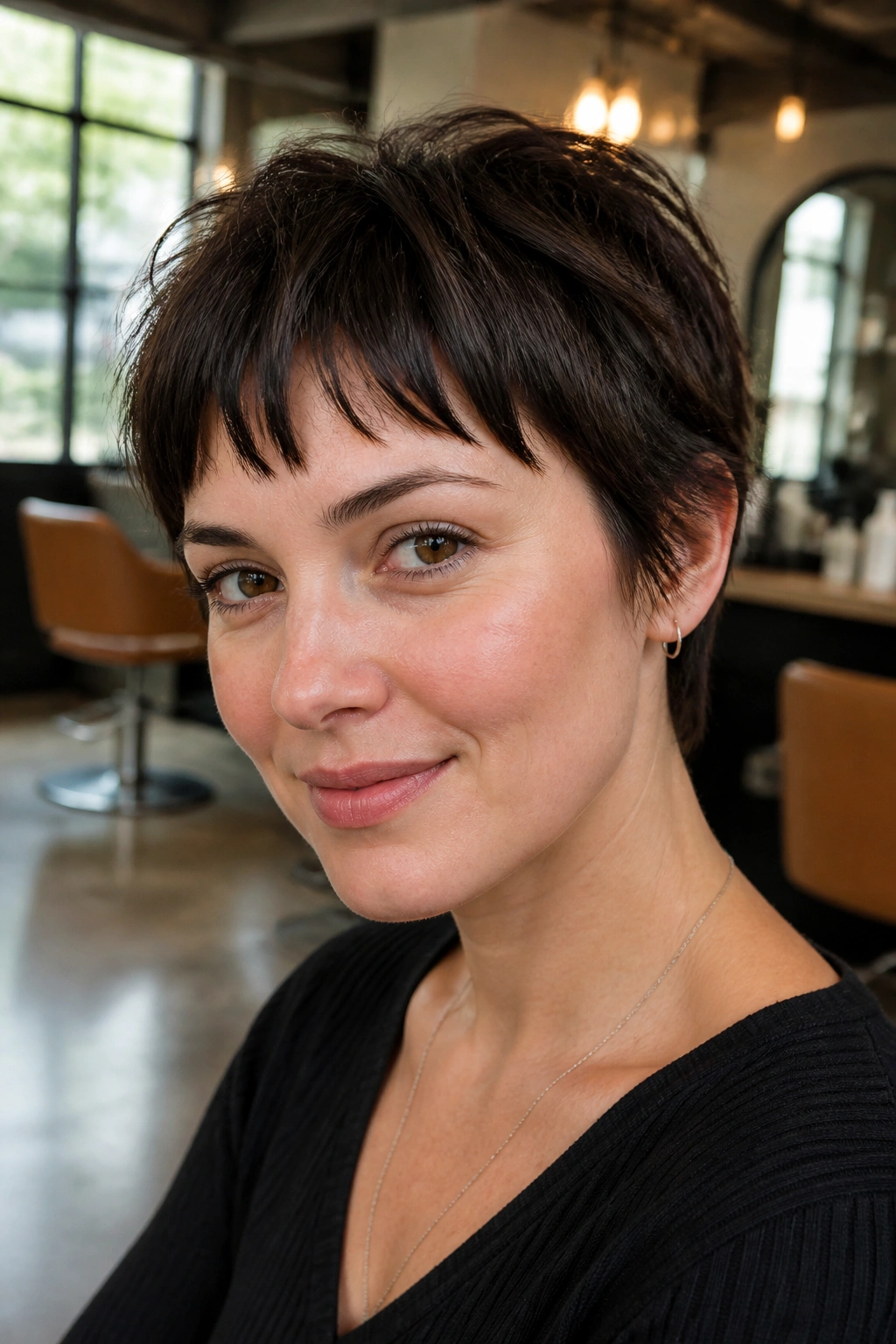
Piecey bangs are my favorite fix for anyone who says, “I want short bangs, but I don’t want them to look heavy.” That’s the whole point. Instead of one solid sheet of hair, you get narrow sections that separate just enough to show forehead and skin between the strands.
The look depends on the cut and the finish. Ask for light point-cutting, then style with a matte pomade or texturizing paste the size of a grain of rice. Warm it between your fingers first. If you put too much product in the fringe, it clumps and sits on the face in one dense strip.
What Makes It Different
- The fringe is cut in small, uneven sections
- Ends are softened, not razor-sharp
- Works best when the roots are blown dry with a little lift
- Can be worn forward, slightly off-center, or broken into two pieces
A piecey short fringe is especially good on round faces because it keeps the front of the haircut from feeling wide or solid. It looks casual, but the shape is doing a lot of quiet work.
9. Soft Blunt Bangs With Longer Temple Pieces
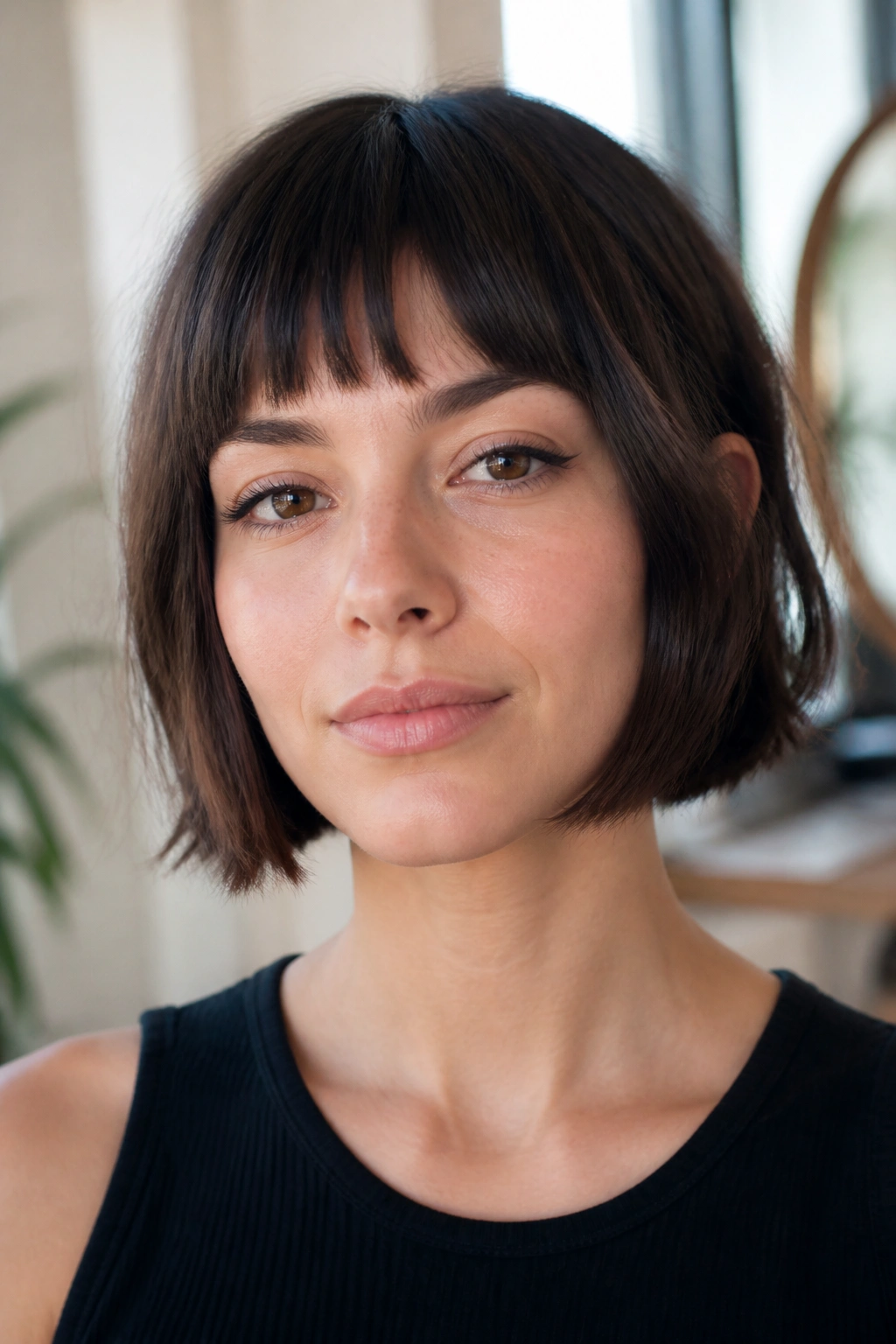
Blunt bangs can scare people with round faces, and fair enough. A heavy, straight edge across the forehead can emphasize width if it’s too thick or too low. But a soft blunt bang, trimmed short with longer temple pieces, can actually look sharp and balanced.
The key is in the corners. Keep the center short enough to open the face, then let the outer edges soften and drift toward the temples. That creates a frame instead of a wall. The fringe still has a line, but it does not stop the eye cold.
This shape plays well with bob cuts, especially jaw-length bobs with a bit of movement at the ends. If the hair is very thick, have the stylist remove weight from underneath the bang so it lies flat enough to be neat. If it’s too puffed up, the fullness lands right across the widest part of the face.
Clean. Slightly soft. No hard shelf.
10. Short Curtain Bangs Split at the Center
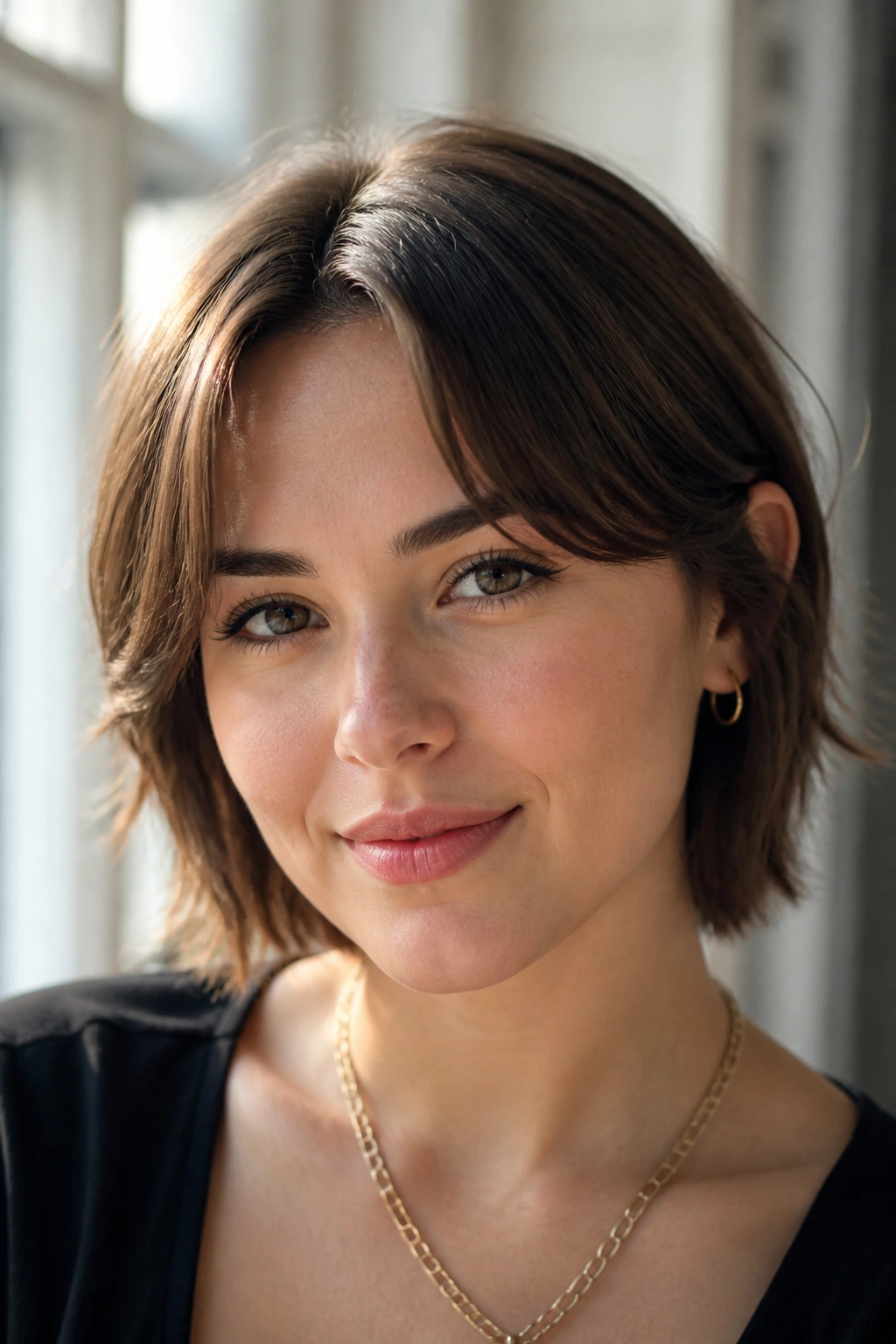
Short curtain bangs are a nice compromise for round faces that want fringe but also want flexibility. They part in the center and fall away from the face in two short wings, which gives the forehead some breathing room and adds a vertical line down the middle.
The length matters here. Too short, and the split looks awkward. Too long, and you’re back in regular curtain-bang territory. A sweet spot is usually around the high brow to just below the brow, with the outer edges grazing the top of the cheekbone. That keeps the middle light while still building a frame.
Use a round brush or blow-dry brush to bend each side away from the face. And yes, a middle part helps. If your natural part is off-center, you can still get the effect, but the shape is strongest when the split is clean.
Short curtain bangs are especially forgiving if you like to pin hair back or wear it in a ponytail. They keep working even when the rest of the style changes.
11. Curly Short Fringe That Follows the Curl Pattern
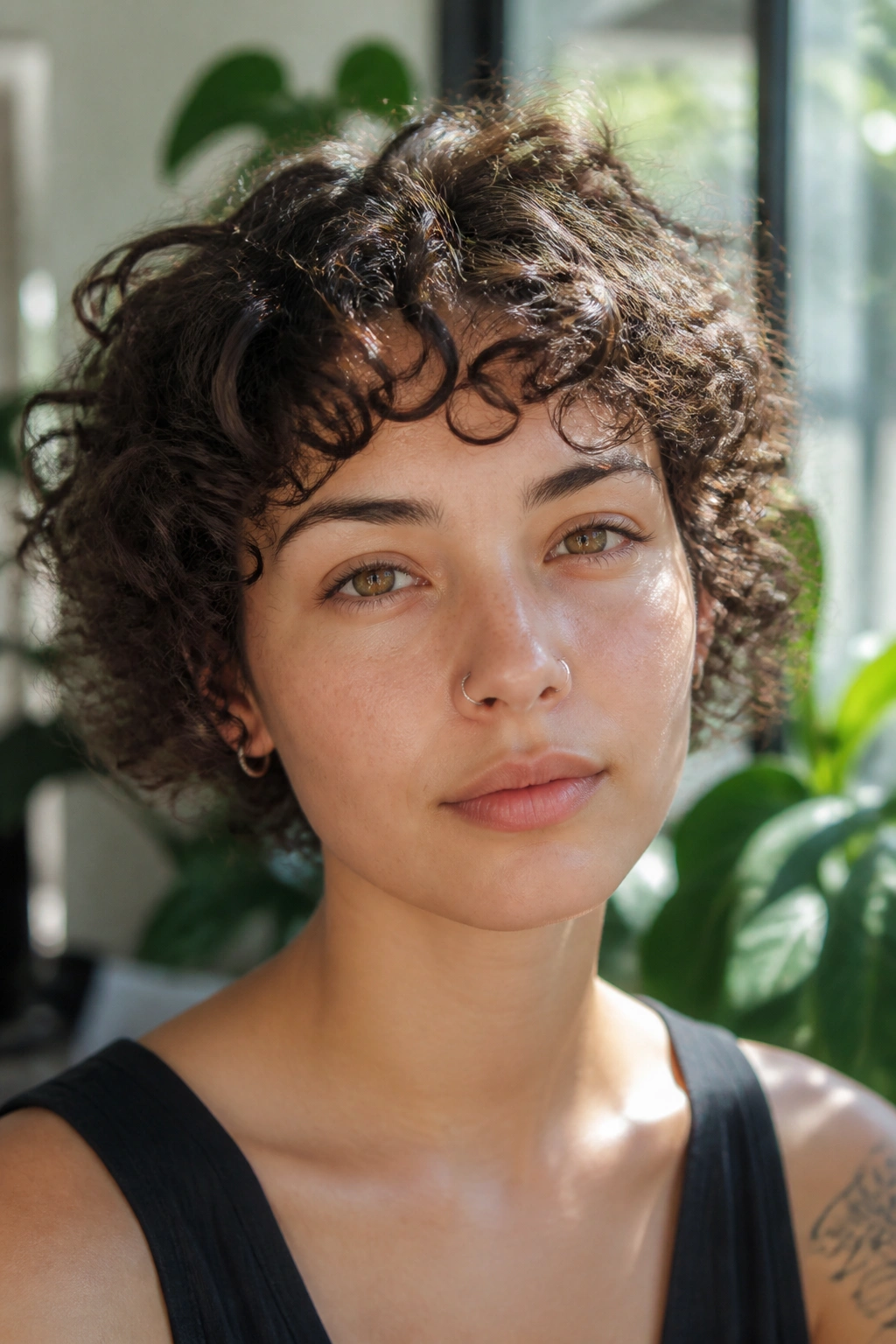
Curly hair and round faces can make a very good pair when the fringe respects the curl pattern instead of fighting it. A short curly bang should usually be cut dry, curl by curl, so the stylist can see where each piece sits when it springs up. Wet curls lie to you. Dry curls tell the truth.
The goal is not a flat fringe. It’s a fringe that sits lightly on the forehead, then lifts and bends with the curl. That natural shape keeps the front of the face from looking broad. It also gives the haircut some energy, which curly hair always does well when it’s not overcontrolled.
How to Wear It
- Let the curls dry about 70% before touching them
- Use a light cream, not a heavy gel, if you want movement
- Trim when the curls start crossing into the eyes or flattening at the front
- Ask for a curl-by-curl cut instead of a blunt wet cut
Short curly bangs can look spectacular on round faces because they bring texture to the forehead area without making the haircut boxy.
12. Feathered Fringe With a Soft Blowout
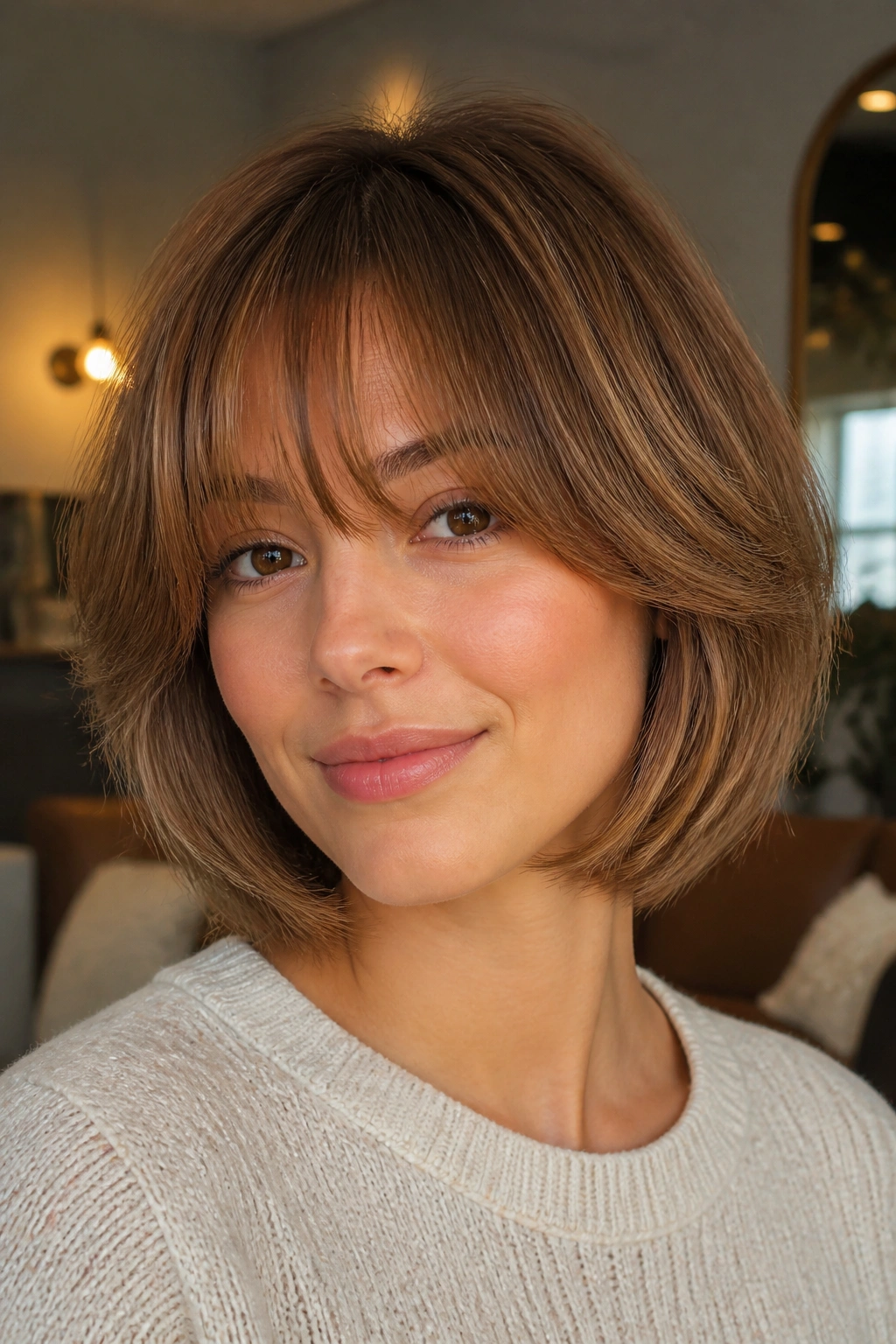
Feathered bangs are the answer for anyone who wants movement without obvious chunkiness. The strands are cut to taper at the ends, so they sweep lightly across the forehead rather than sitting as one solid block. On a round face, that softness helps keep the cheeks from feeling even fuller.
A feathered fringe works best when the blow-dry is part of the cut’s life. That sounds fussy, but it isn’t. A quick round-brush pass at the roots, followed by a curved motion at the ends, gives the fringe lift and a soft bend. Air-drying can work too, but the shape is less predictable.
This style suits hair that has some natural body. If the hair is very fine, use a root spray and a little dry texture spray at the end. If it’s thick, ask for internal thinning so the fringe doesn’t sit too heavy.
It’s one of those bang ideas that looks expensive without being loud about it.
13. Shaggy Pixie Bangs With Crown Height
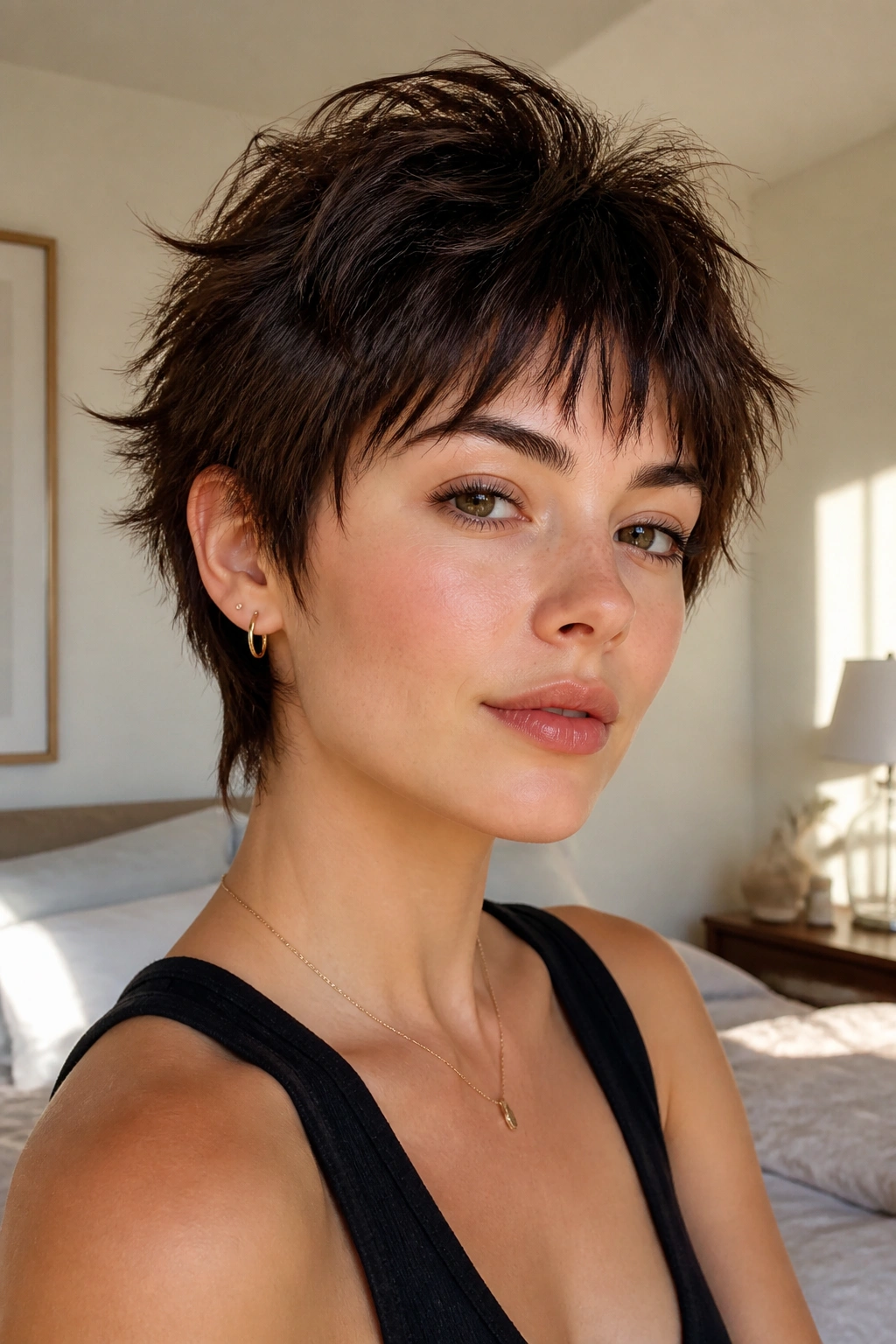
A shaggy pixie fringe is the kind of short bang that loves a round face. Why? Because the crown height adds length, while the irregular fringe breaks the width. The whole cut moves upward instead of outward. That’s the win.
This style usually works best when the top layers are left a little longer and the bangs are chopped with texture. Nothing too neat. A little fray at the edges helps the fringe blend into the rest of the pixie. If everything is too polished, the roundness of the face starts to feel more obvious.
What Makes It Different From a Regular Pixie
- More lift at the crown
- Less density across the brow
- Softer, irregular ends
- Better shape when styled with a matte paste
I like this one for people who do not want to spend ten minutes fussing with the front every morning. A quick tousle, a bit of root lift, and you’re done.
14. French-Inspired Short Fringe With a Clean Edge
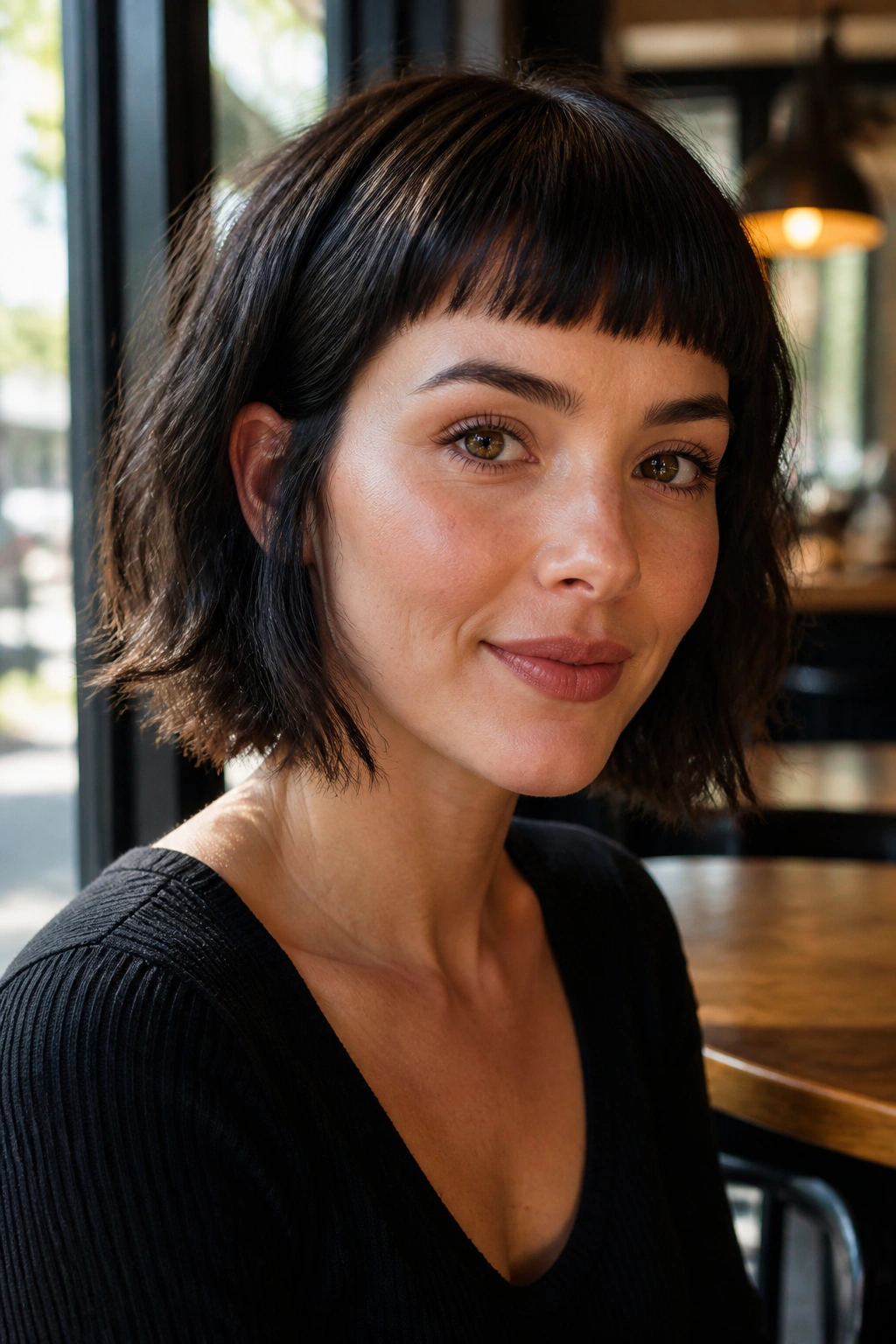
A French-inspired short fringe sounds fancy, but the idea is plain: a short, tidy bang with a little softness at the ends and a face shape that does not fight your features. On a round face, the style works when it is not too wide and not too dense.
The clean edge gives the cut definition. The softness keeps it from becoming harsh. You want the front line to sit close to the brow, with enough taper at the sides to avoid that helmet effect. If the fringe is too blunt from side to side, the face can feel shorter. Not ideal.
This cut looks best on hair that has a slight bend or can be encouraged into one with a round brush. A touch of styling cream is usually enough. Skip heavy oils near the roots; they flatten the front fast and make the fringe cling to the forehead in a way that does nobody any favors.
It’s neat, but not stiff. That’s the sweet spot.
15. Tapered Temple Fringe for Extra Vertical Line
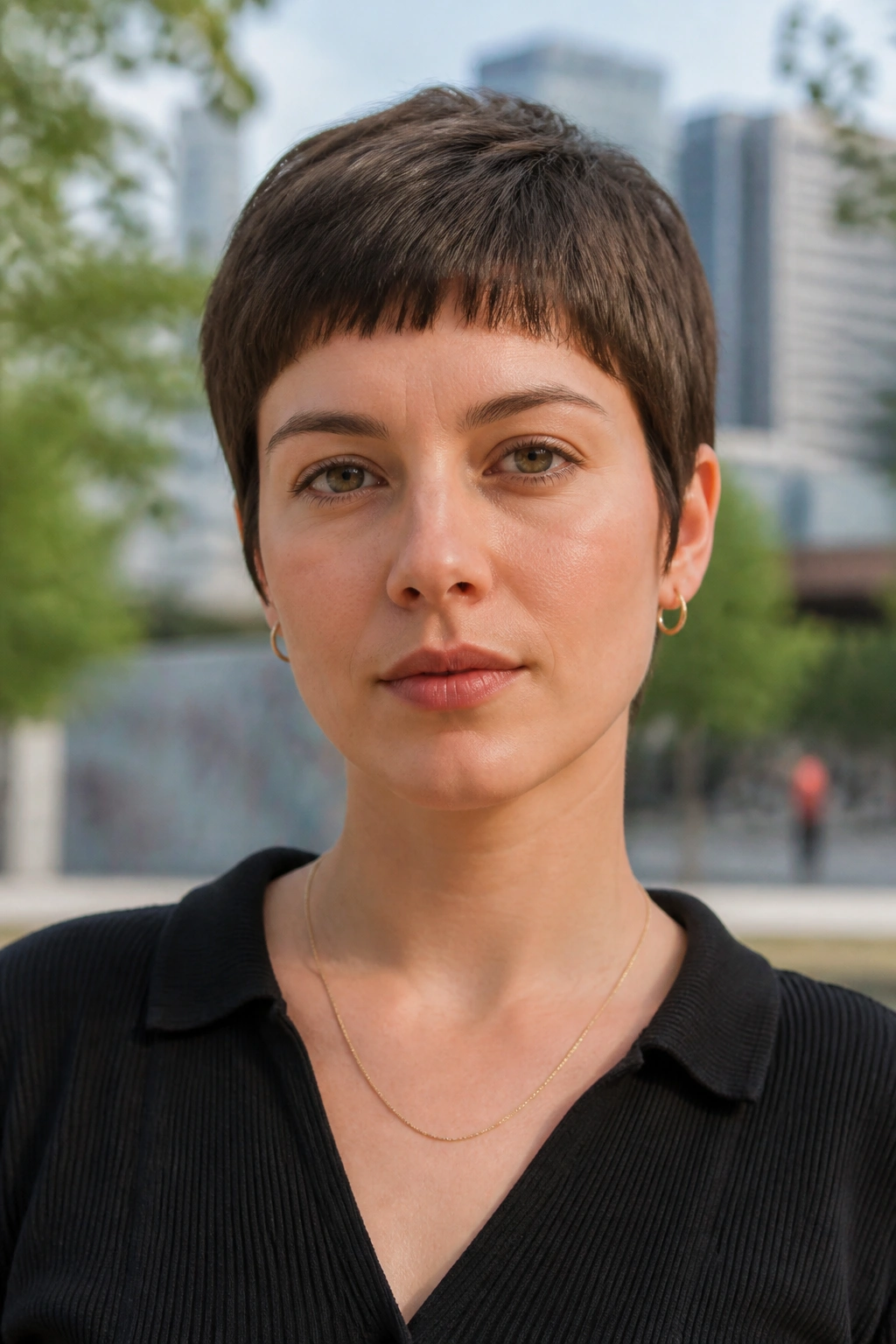
Tapered temple bangs are one of the smartest short bang ideas for round faces because they keep the center focused and the sides narrow. The fringe lands short at the front, then tapers near the temples so the eye is led downward instead of outward. That adds a quiet vertical line.
The shape can be subtle. Sometimes it’s barely a fringe at all, just a short front section that blends into a longer side piece. That is enough. You do not always need a full bang to change the balance of the face.
How to Get the Most From It
Ask your stylist to keep the temple area soft and close to the head, not flared out. If the side pieces puff away from the face, the width comes back. Blow-dry the fringe forward first, then nudge the ends toward the cheekbone with your fingers.
This is a solid choice if your face is round and your hairline grows a little uneven. The taper can hide that and still keep the front sharp.
16. Rounded Baby Bangs With a Tiny Gap
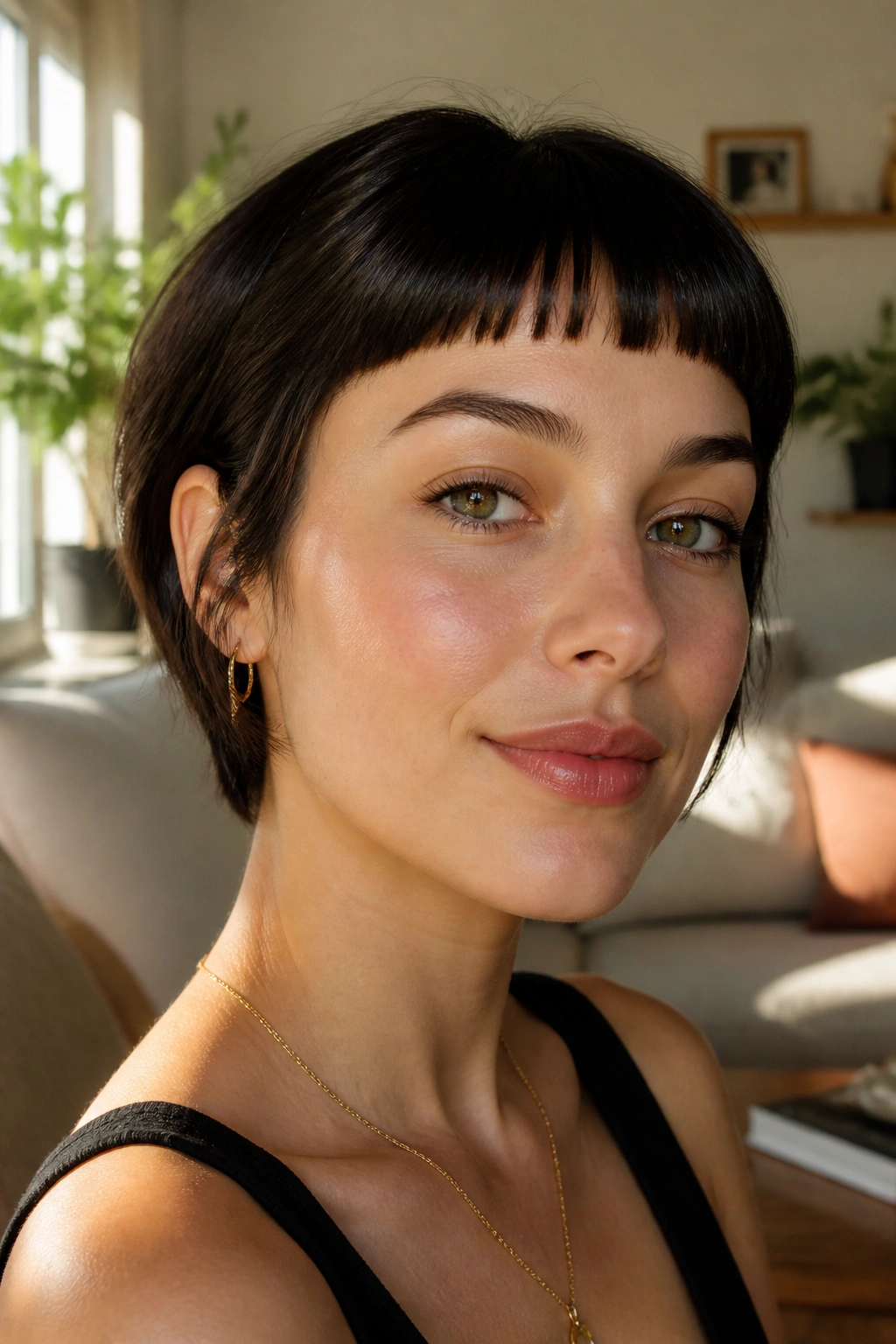
Rounded baby bangs sit short, but they do something different from micro bangs. Instead of cutting a blunt, straight line, the fringe has a slight curve and often a tiny gap near the center or outer edge. That small break keeps the bang from reading too heavy across the forehead.
A tiny gap is a useful trick on round faces because it lets skin show through. Skin matters here. It gives the eye a place to rest, and it softens the bluntness that can make a face look wider. The gap should not be too obvious. Just enough to keep the fringe airy.
This style takes confidence, but it’s not as severe as it sounds. If you wear bold earrings, a short neck, or a sharp collar, the whole look can feel balanced and cool rather than precious. Hair texture helps too. Straight hair tends to emphasize the shape; wavy hair softens it.
Tiny details. That is what makes this one work.
17. Micro Fringe Paired With an Undercut
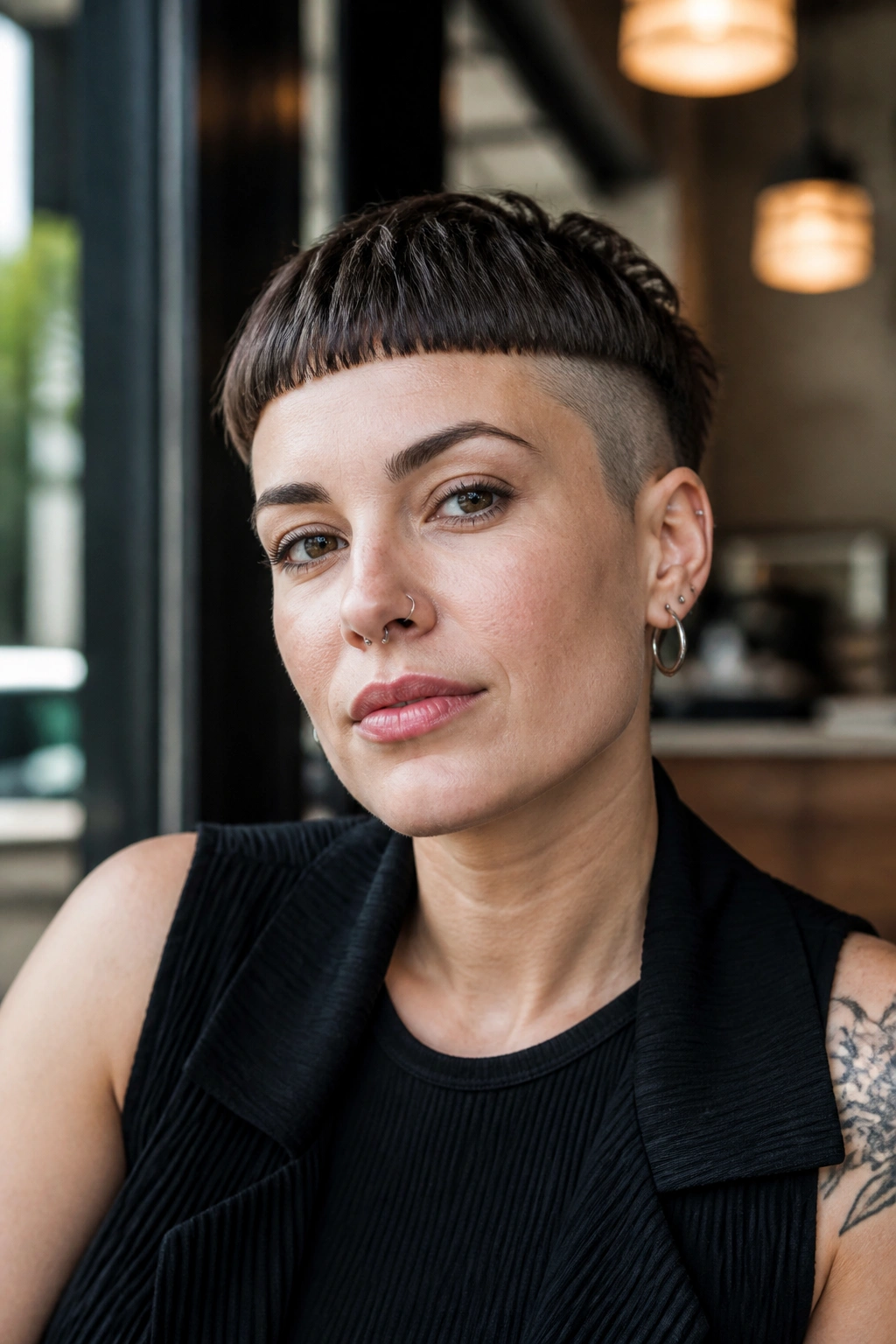
A micro fringe with an undercut is for someone who wants the face to look longer and wants to take some visual weight out of the sides. The undercut does the slimming work below the surface, while the short fringe keeps the forehead open. Together, they create a cleaner vertical line.
This is not a quiet haircut. It has attitude. But the shape is practical, especially if your hair is thick or tends to balloon at the sides. Removing bulk underneath lets the top sit lighter. That means the fringe can stay short without the whole style feeling bulky.
Best For
- Thick straight hair
- Dense wavy hair that puffs at the sides
- People who like a sharp, modern shape
- Anyone tired of spending forever drying the front
The fringe itself can be textured or clean. I prefer slightly textured ends so the look feels less helmet-like. If the undercut is too disconnected, though, the style can get choppy in the wrong way. Keep the transition soft.
18. Grown-In Fringe With Face-Framing Sides
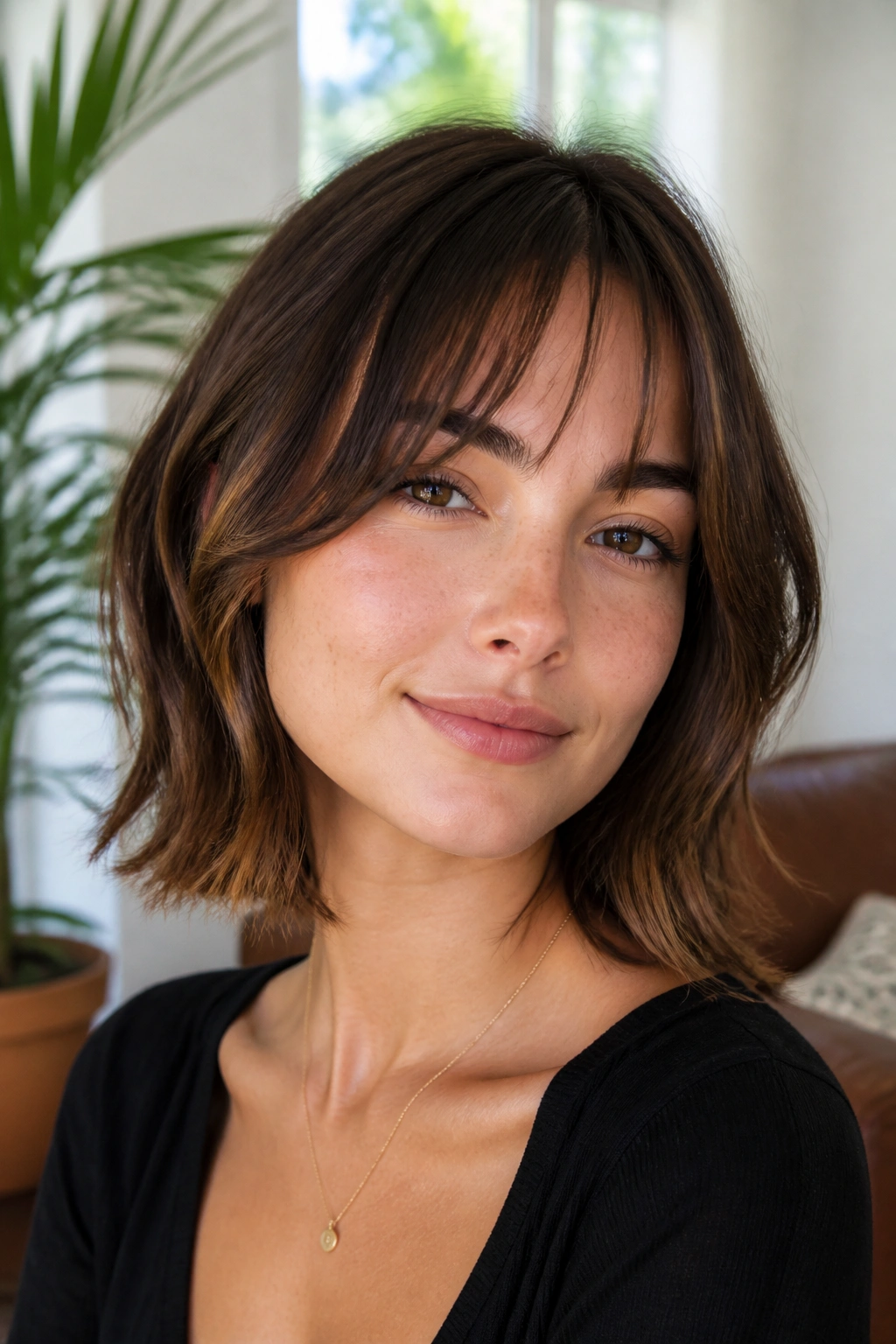
A grown-in fringe is what happens when short bangs soften out a bit and start blending with the front layers. On a round face, that can be a blessing. The hair stops drawing a hard line across the forehead and starts framing the cheeks with more grace.
This is the bang version for people who do not want to visit the salon every three weeks. It still counts as short, but it’s longer at the outer edges and a little less exact at the center. That looseness is what makes it flattering. The eye travels down, then outward, not straight across.
It works especially well when paired with shoulder-length cuts or a soft shag. You can tuck a side piece behind the ear, twist a front section back, or let it fall loose. It does not need a lot of babying. A quick blow-dry and a small touch of texture spray are usually enough.
Honestly, this is one of the easiest ways to wear fringe if you’re wary of commitment.
19. Crown-Lift Bangs That Leave the Cheeks Quiet

Crown-lift bangs are less about the fringe itself and more about what the fringe does to the rest of the haircut. The hair is kept short in front, but the roots at the crown are encouraged upward so the face gains height. That extra lift helps a round face look more oval without making the bangs heavy.
The trick is to keep the bangs light enough that they don’t drag the whole front down. A round brush, a vent brush, or even a quick blast from a blow dryer with a nozzle can help. Lift the roots, direct the air upward for a few seconds, then let the fringe settle. You want volume at the top, not puff at the sides.
This style is a good match for people who hate bangs that lie flat and spread across the face. It also plays nicely with short cuts like bobs, pixies, and shags. The crown gives the eye somewhere to go. Up. That’s the whole point.
20. Deep Side-Part Fringe for an Easy Reset
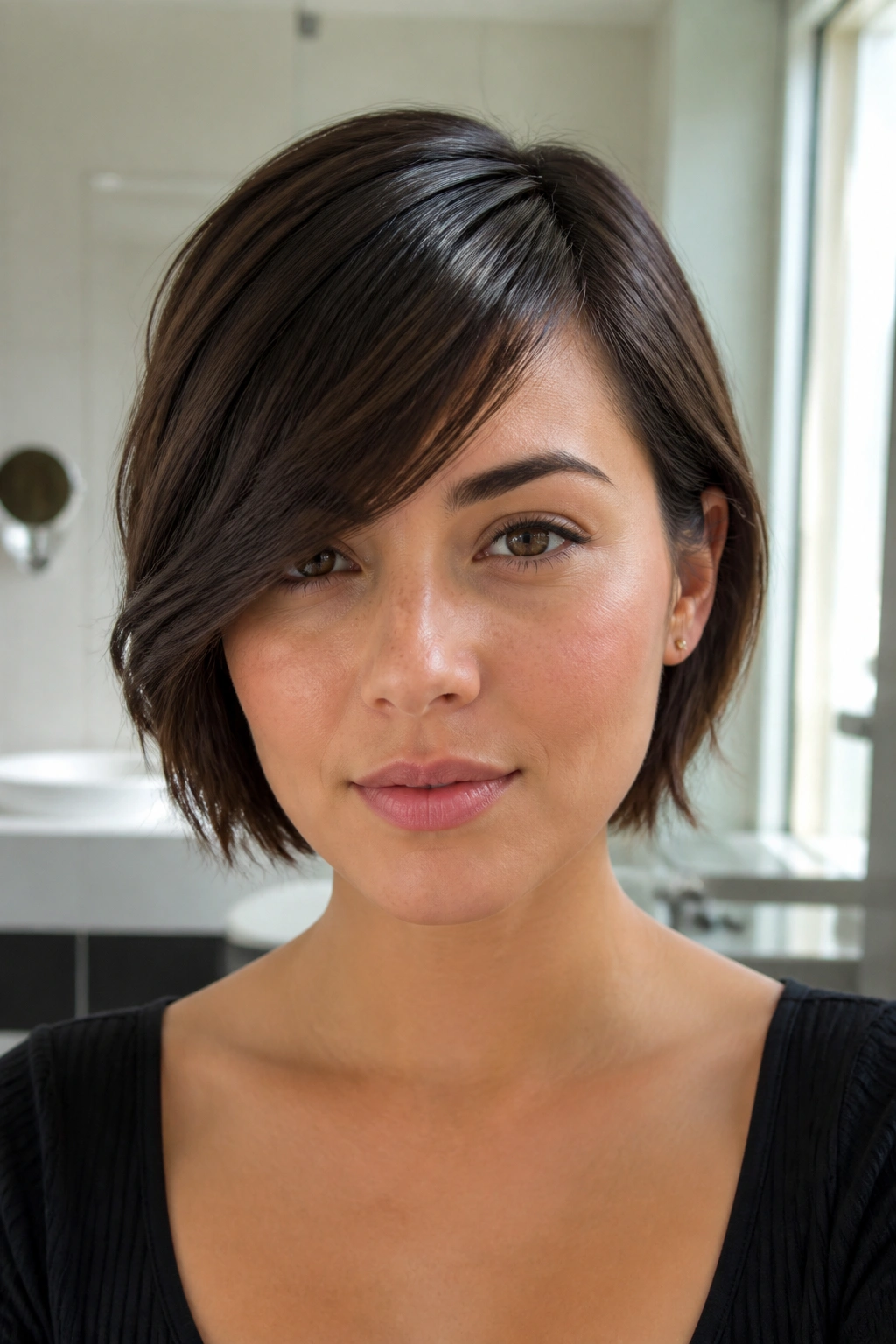
A deep side-part fringe is the most practical short bang idea on this list, and I mean that in the best way. It gives you a strong diagonal, a little forehead exposure, and a clean way to change the face shape without committing to a rigid bang line. For round faces, that off-center movement helps a lot.
What I like most is how forgiving it is on real life hair. It can be blown smooth, rough-dried, tucked behind one ear, or pushed forward on a lazy morning. If the cut is done well, the fringe still falls into a flattering line even when it’s not perfect. That’s rare, and worth paying attention to.
The best version keeps the heavy part away from the center of the forehead and lets the longer side skim the eyebrow or top of the cheekbone. If your hair tends to separate, a side-part fringe can actually use that to its advantage instead of fighting it. A little root lift spray, a quick sweep with the dryer, and you’re out the door.
If I had to pick one short bang idea that survives busy mornings, humidity, and indecision, this would be high on the list.
