



Round faces and long wispy bangs are a better match than a lot of people think. The trick is in the shape, not the fluff: when the fringe stays soft through the center and a little longer at the sides, it pulls the eye downward and breaks up the widest part of the face without feeling heavy.
That’s the part stylists get right when they’re paying attention. A round face usually looks best with movement around the cheekbones, not a hard horizontal line across the forehead. So the bangs shouldn’t stop like a ruler. They should taper, bend, and sit in that sweet spot between the brow and the cheekbone — long enough to slim, light enough to stay open.
Wispy bangs are not the same thing as “barely there” bangs. Good wispy fringe has shape. It may be airier through the middle, but it still needs enough density to show up in real life, under bad lighting, on a humid day, after you’ve tucked one side behind your ear. That distinction matters.
Some versions will flatter fine hair. Some work better on thick, wavy, or curly hair. A few are low-effort and forgiving; others need a round brush, a little bend, and a trim every 6 to 8 weeks. The point is to choose the version that gives your round face length, not width — and to keep it soft enough that it doesn’t turn into a helmet.
1. Center-Part Curtain Wispy Bangs

This is the safest place to start, and I mean that in the best way. Center-part curtain bangs open the face right down the middle, which helps a round shape look a little longer and less compact.
Why It Works on a Round Face
The shortest piece should usually land somewhere around the bridge of the nose or just below the brows, with the side pieces dropping toward the cheekbones. That diagonal line is doing most of the work. It gives you movement without the blunt edge that can make the face look wider.
- Ask for the center pieces to be lightly layered, not thinned to the point of see-through gaps.
- Keep the outer ends 2 to 3 inches longer than the middle for a softer frame.
- Style them with a small round brush or a blow-dryer nozzle so the front bends away from the face.
I like this version because it’s easy to grow out. If you hate the feeling of being trapped by bangs, this one gives you an exit plan.
2. Side-Swept Wispy Bangs That Melt Into the Hairline
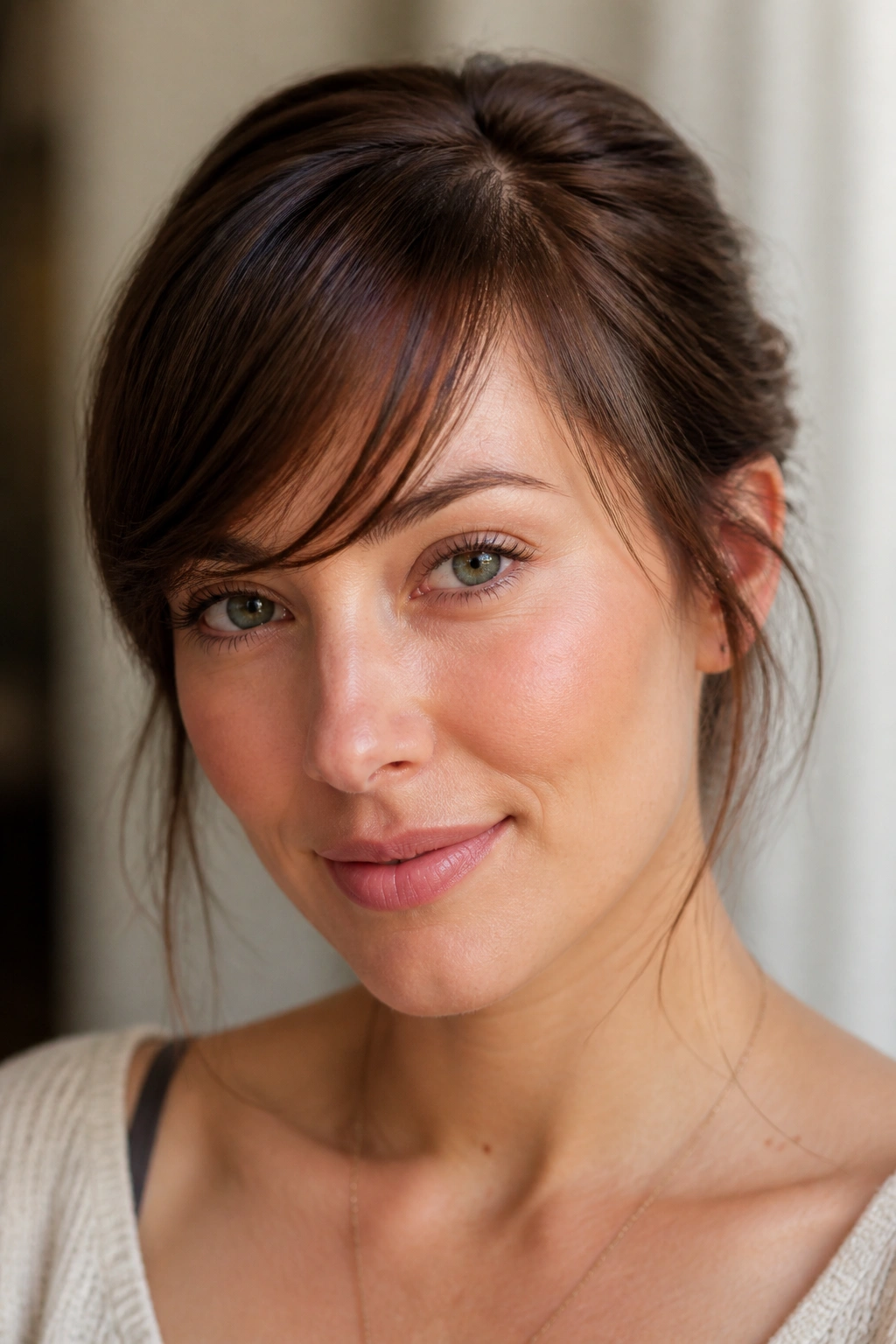
Want something softer than a curtain bang? Side-swept wispy fringe is the easy answer. The diagonal line is the whole trick — it breaks up roundness without screaming “I got bangs.”
A good side-swept cut should start with a longer front corner and then melt into the rest of the hair by the temple. That taper matters. If the bang ends abruptly, it can look chopped off. If it’s too sparse, it disappears. The sweet spot sits in between.
These bangs are nice for people who tuck their hair behind one ear a lot. The shape still works when one side is pinned back, which is more useful than it sounds. A lot of styles look cute only when hair is perfectly arranged. This one survives actual life.
One more thing: ask for the sweep to follow your natural part. Fighting your cowlick is a waste of time.
3. Cheekbone-Grazing Feathered Fringe
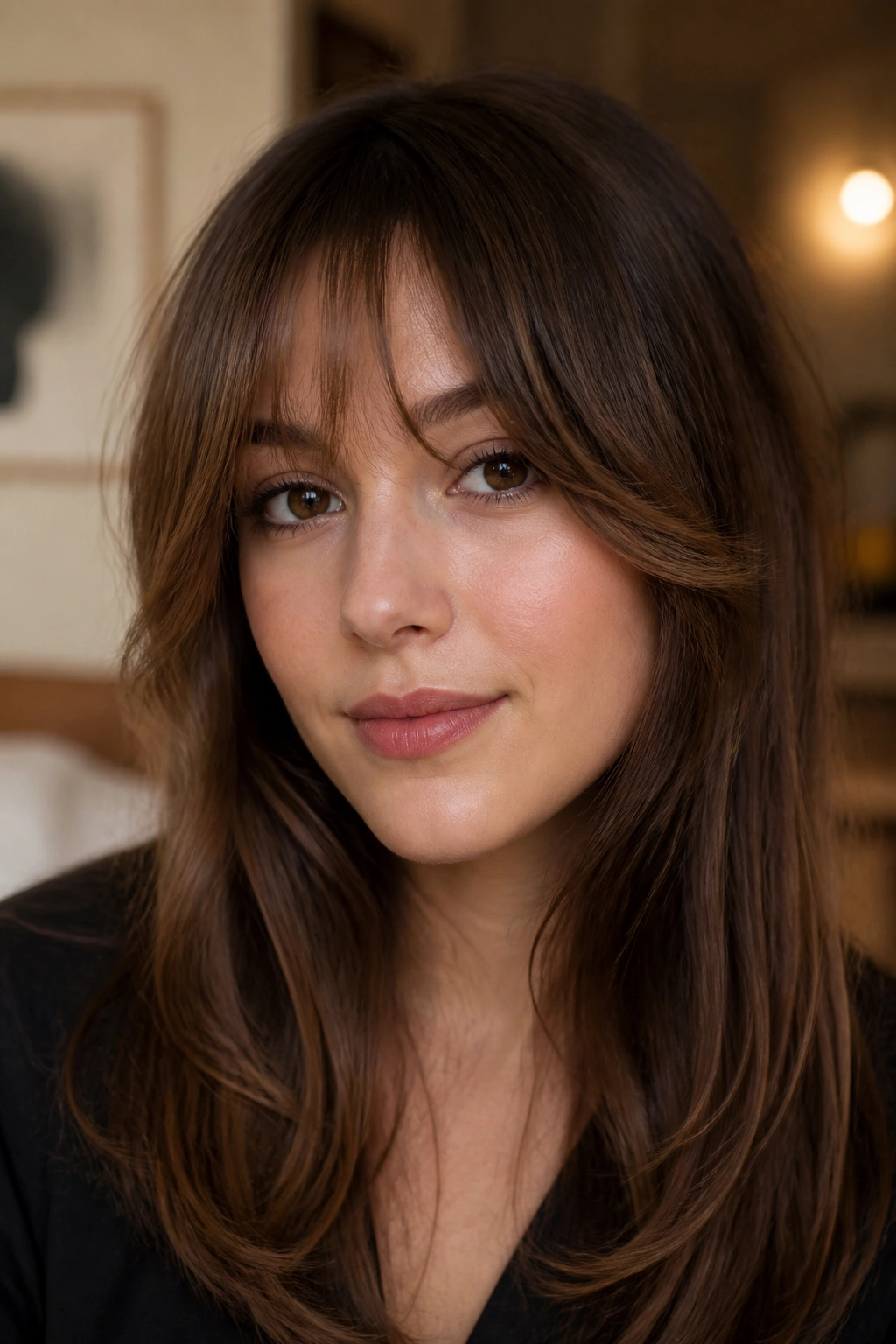
Picture your bangs brushed forward, then softened right where they meet the cheekbone. That’s the appeal here. Cheekbone-grazing fringe gives the face a lifted frame without closing off the forehead.
What to Ask Your Stylist For
Feathering is not random thinning. It should be controlled, especially around the front corners where the hair needs to fall in a clean curve.
- Keep the center long enough to skim the brows or sit just below them.
- Ask for the outer edges to connect into cheekbone layers, not sit as a separate chunk.
- Request point-cut ends so the fringe looks airy instead of blunt.
This is one of my favorites for round faces with fuller cheeks, because it puts visual attention right where you want it. The cut also looks good when it’s slightly undone. In fact, a little movement makes it better. Too polished and it can lose the softness that makes the whole thing work.
4. Bottleneck Wispy Bangs With a Narrow Center
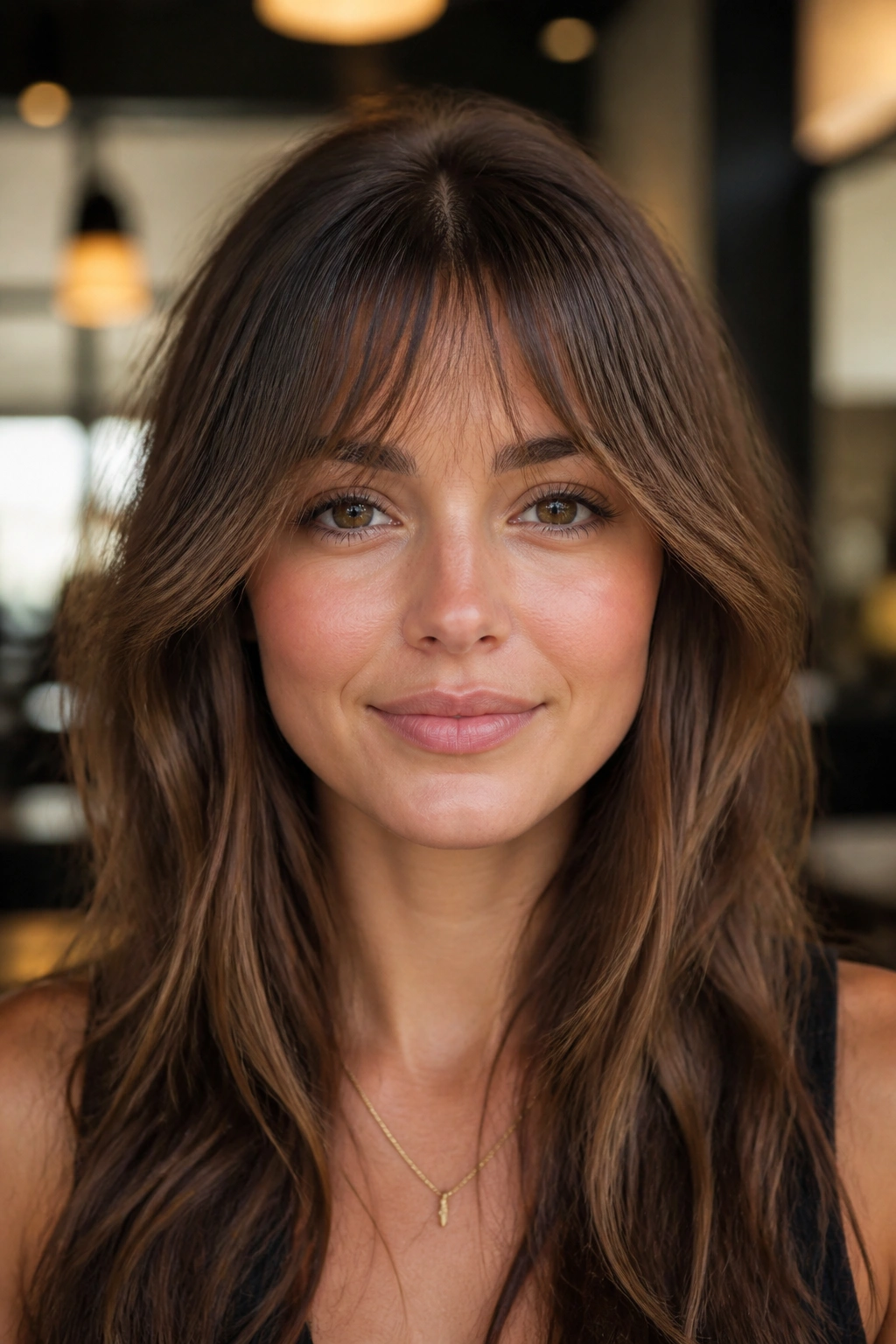
Blunt bangs can make a round face feel boxed in. Bottleneck bangs do almost the opposite. They stay narrow at the center and open wider near the temples, which is a small change with a big payoff.
The shape matters because it gives you a vertical start in the middle of the forehead, then lets the hair fan outward in a controlled way. That opening effect helps the face look less wide across the cheeks. It’s a quieter version of curtain bangs, and I think it suits people who want structure without too much drama.
This cut is especially good if your hair is medium to thick. There’s enough density to create that little bottleneck shape without the fringe vanishing by lunchtime. If your hair is very fine, ask for softness but not over-thinning. That’s a mistake people make all the time. They ask for wispy and end up with gaps.
Best kept a little longer than you think. Short bottlenecks can lose the flattering shape fast.
5. Arched Wispy Bangs That Follow the Brows
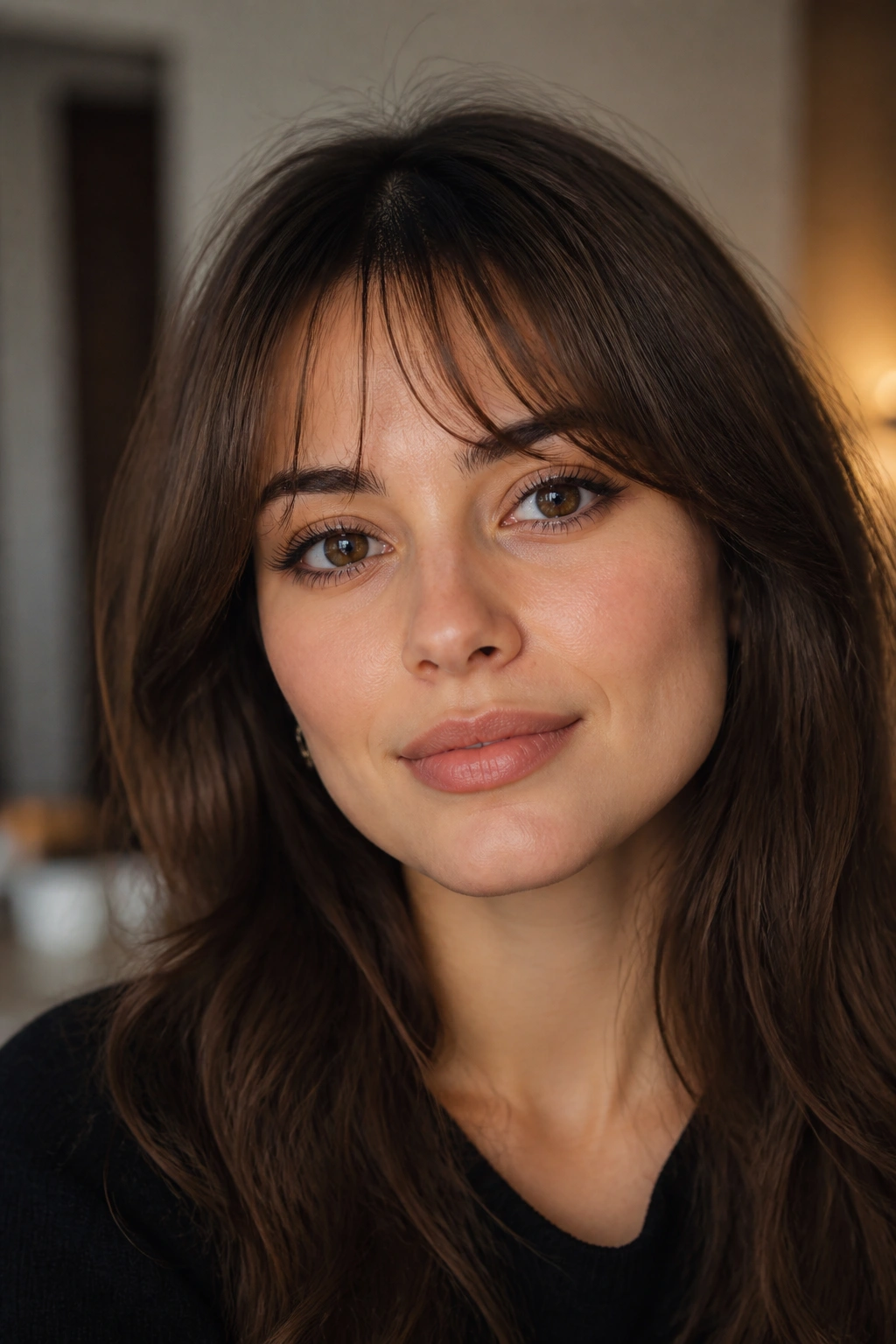
The best arched fringe doesn’t sit there like a ruler. It curves. That gentle arch mirrors the brow line and softens the top half of the face without making the forehead feel crowded.
This shape is sneaky in a good way. It gives definition to the eyes while leaving enough space at the temples for the face to breathe. On a round face, that bit of openness matters. You want the bangs to frame, not press in from every direction.
It also plays well with glasses. Straight-across fringe can fight a frame. Arched wispy bangs usually move around the lenses instead of sitting on top of them.
A good version should never look stiff. If the front is too perfectly rounded, it can feel dated fast. Keep the ends soft and let the arch be more suggested than drawn. That little looseness is what keeps it modern-looking.
6. Soft Shag Fringe With Layered Sides
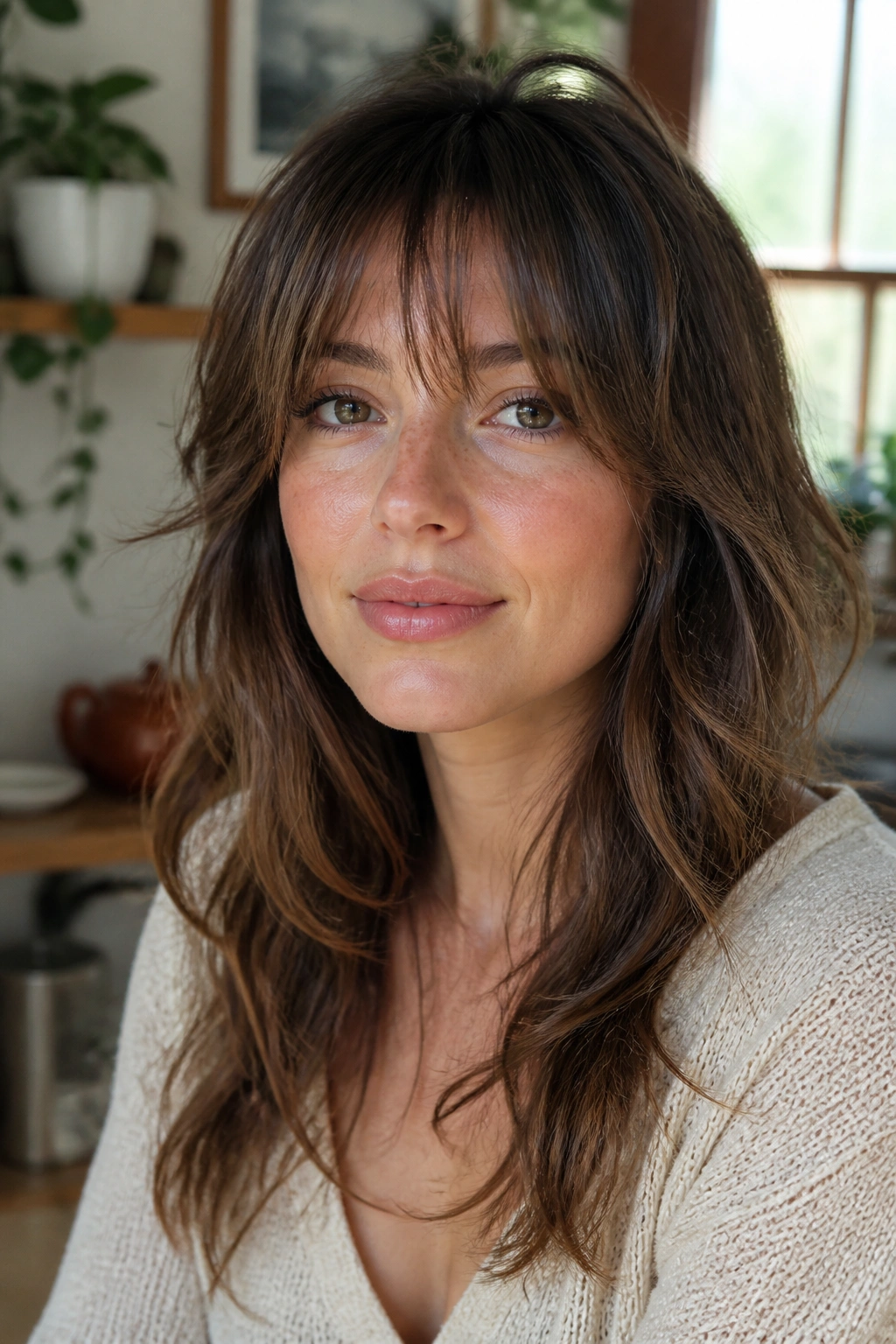
If your hair already has a bend, the shaggy version is probably the friendliest cut on this list. Soft shag bangs give round faces some edge and a lot of movement, which helps the face read a little longer.
How the Layers Should Sit
A shag fringe should not be one solid curtain. The front pieces need to connect into the layers around the cheeks and jaw so the whole front of the haircut feels stitched together.
- Ask for shorter wisps near the center and longer pieces at the sides.
- Keep the crown a little softer so the fringe doesn’t puff upward too much.
- Use a light styling cream or mousse if your hair gets frizzy at the ends.
This is a good choice if you dislike high-maintenance hair. It looks better with a little mess in it. If your hair air-dries with texture, even better. The only real caution: if the shag layers are cut too choppy, the fringe can look busy instead of soft. There’s a line between lived-in and chaotic. Stay on the right side of that line.
7. Brow-Skimming Airy Bangs With Long Sides
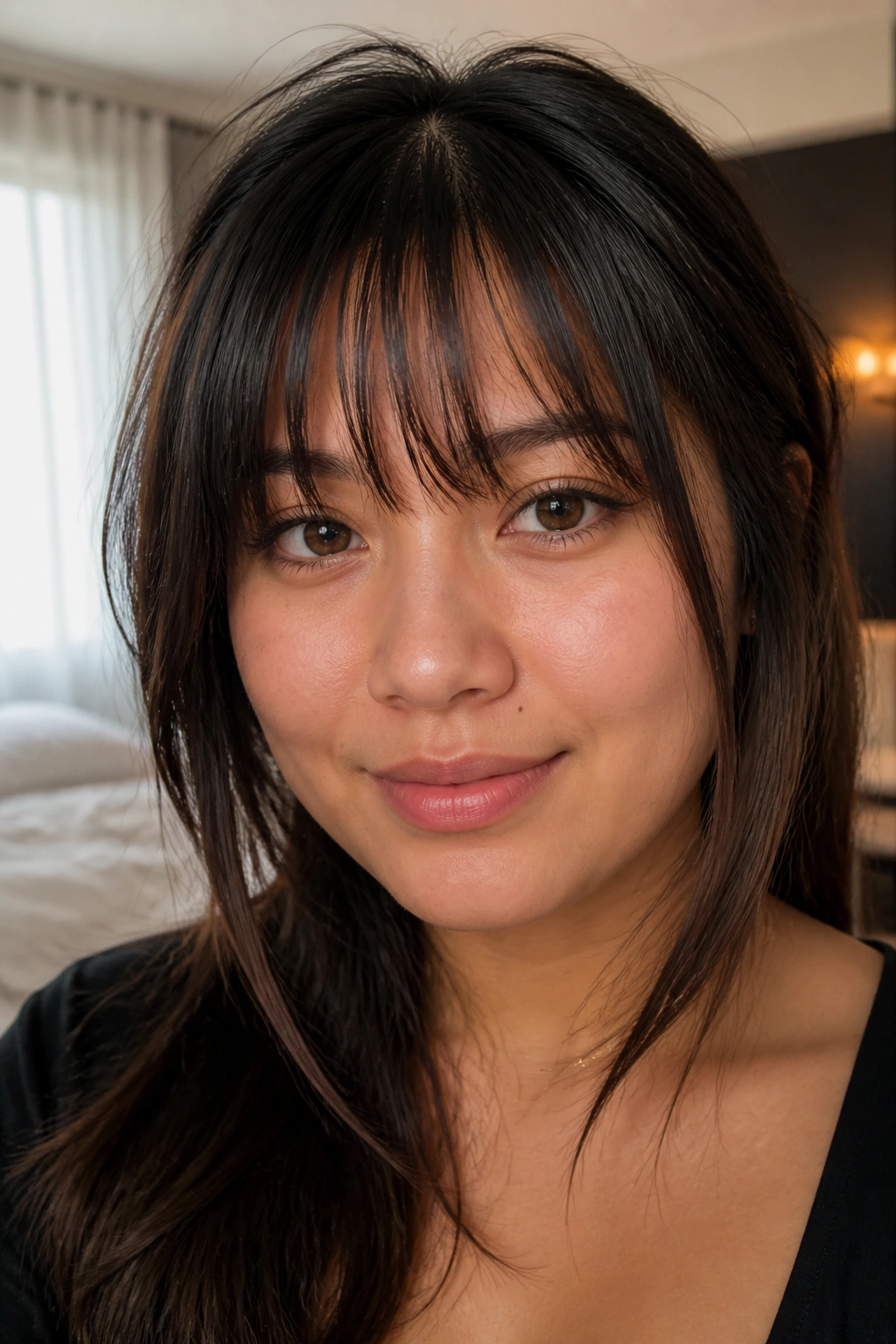
Think of this as a whisper of fringe, not a curtain. Brow-skimming wispy bangs give you just enough front coverage to change the shape of the face without swallowing it.
The reason they work on round faces is simple: they leave the sides open. That open space near the temples keeps the face from looking overly wide. The long side pieces also create a tiny visual triangle, which helps guide the eye downward.
Styling Notes
A fringe like this needs a little direction, but not much. The point is to make it fall in a soft, deliberate way.
- Blow-dry with a small round brush and stop once the ends curve, not curl.
- Keep a light hold spray nearby; heavy gels make this shape collapse.
- Trim before the bangs start touching the lashes, or they can lose the airy effect.
This cut is good if you want bangs that feel present but not loud. It also works well with straight hair that needs a bit of front detail. On very dense hair, the style can get thick fast, so the texturizing has to be restrained. Too much of it and the fringe starts separating in odd little chunks.
8. Swoopy Long Bangs With a Deep Side Part
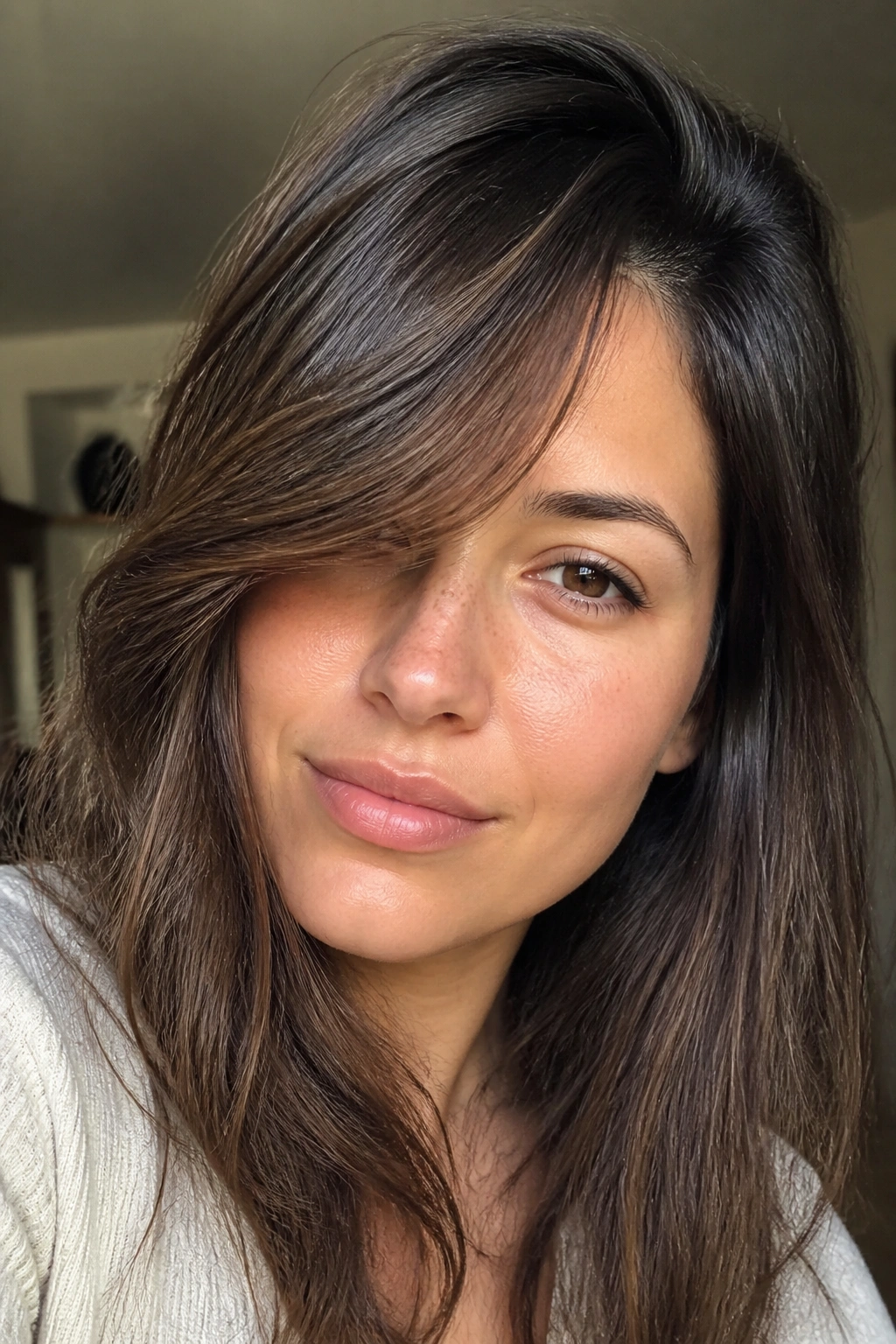
A deep side part is one of the easiest ways to stretch a round face visually. Swoopy bangs create a strong diagonal line, and diagonals are your friend here.
The style has a little drama, but not the heavy kind. One side starts closer to the part and sweeps across the forehead, while the longer side slides down toward the cheekbone or jaw. That asymmetry matters. It interrupts the round shape and gives the haircut more direction.
I’m a fan of this version on hair that already has some volume at the roots. It looks especially good when the front has enough lift to stay off the face. Flat roots make the whole thing lose its shape fast.
Use a medium round brush and lift at the root for a few seconds before pulling the front over. Not forever. Just enough to keep the part from collapsing. A soft swoop with a little height beats a stiff, over-sprayed wave every time.
9. Wavy Wispy Bangs With a Bend
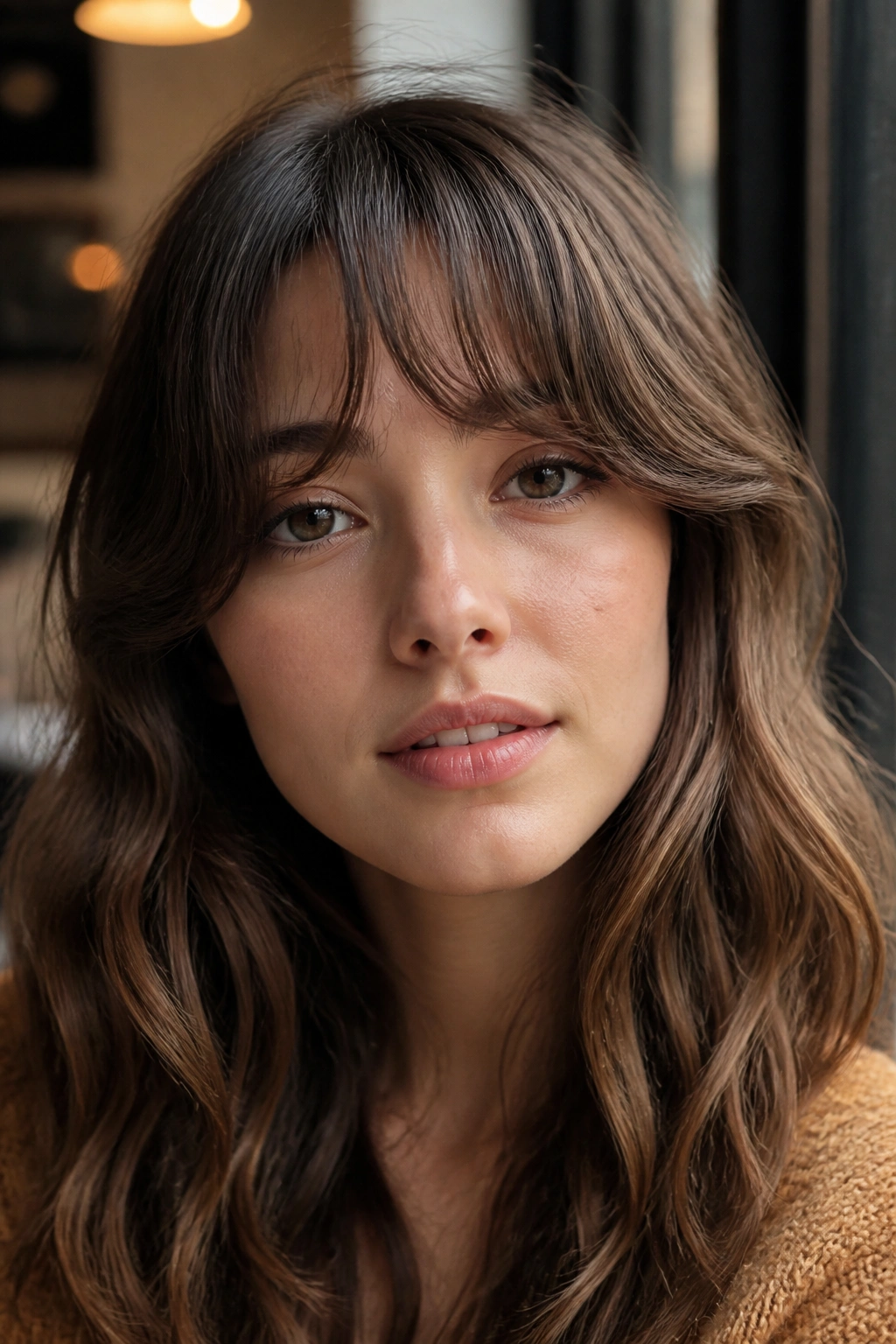
What if your hair is already wavy and you don’t want to fight it? Good. Don’t. Wavy wispy bangs look best when they keep a soft bend instead of being ironed flat.
The bend gives the fringe a natural lift, which helps round faces because it stops the front from sitting like a solid wall. The movement also keeps the bangs from sticking to the forehead, which is a common problem with wave-friendly cuts that are too short.
How to Use It
Let the waves do some of the work, then nudge them in the right direction.
- Dry the fringe with a 1.25- to 1.5-inch brush or a Velcro roller for a few minutes.
- Keep the ends long enough to graze the tops of the cheeks.
- Avoid overblowing the center, or you’ll lose the bend and get puffiness instead.
This is one of those styles that looks better with a little personality. Slight irregularity is fine. Actually, it’s better than fine. If every strand behaves the same way, the fringe can look too tidy and lose the softness that makes it flattering.
10. Collarbone-Length Curtain Fringe
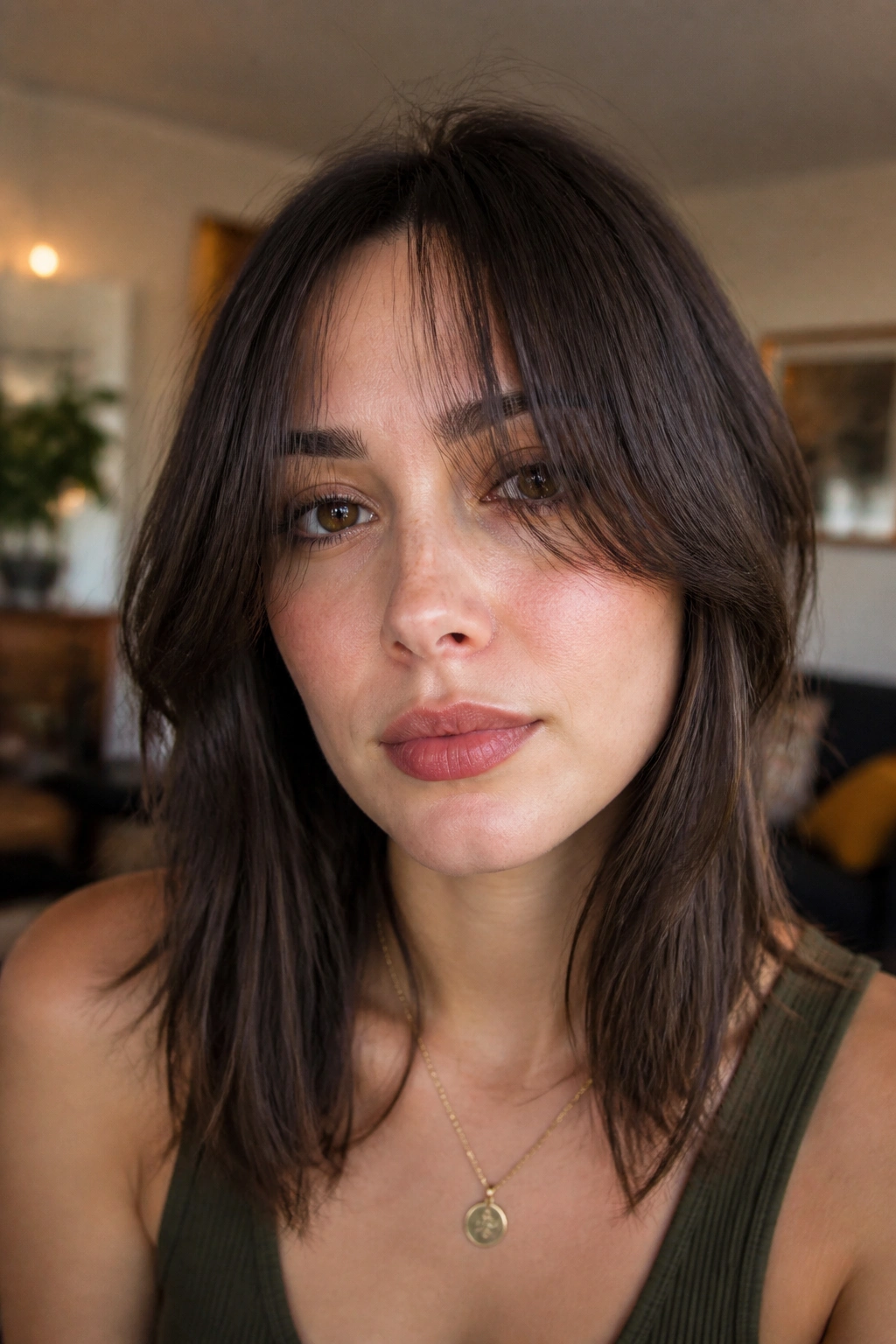
Longer front pieces do a lot of quiet work on a round face. When the side layers reach toward the collarbone, the eye follows them downward, and that alone changes the balance.
This style is for people who want bangs, but not the feeling of having bangs. The fringe starts near the center and then blends into longer face-framing pieces that keep going well past the chin. The overall effect is softer than a shorter curtain bang, and I think it looks especially good with shoulder-length and longer cuts.
There’s also a nice side benefit: it grows out gracefully. If you miss a trim by a few weeks, it still reads as intentional. That kind of forgiveness is worth a lot.
The only thing to watch is bulk. Collarbone-length front layers can turn puffy if they’re cut too thick around the cheeks. Ask for movement through the ends, not all the way up the strand. That keeps the front from swallowing the face.
11. Razor-Soft Feather Fringe
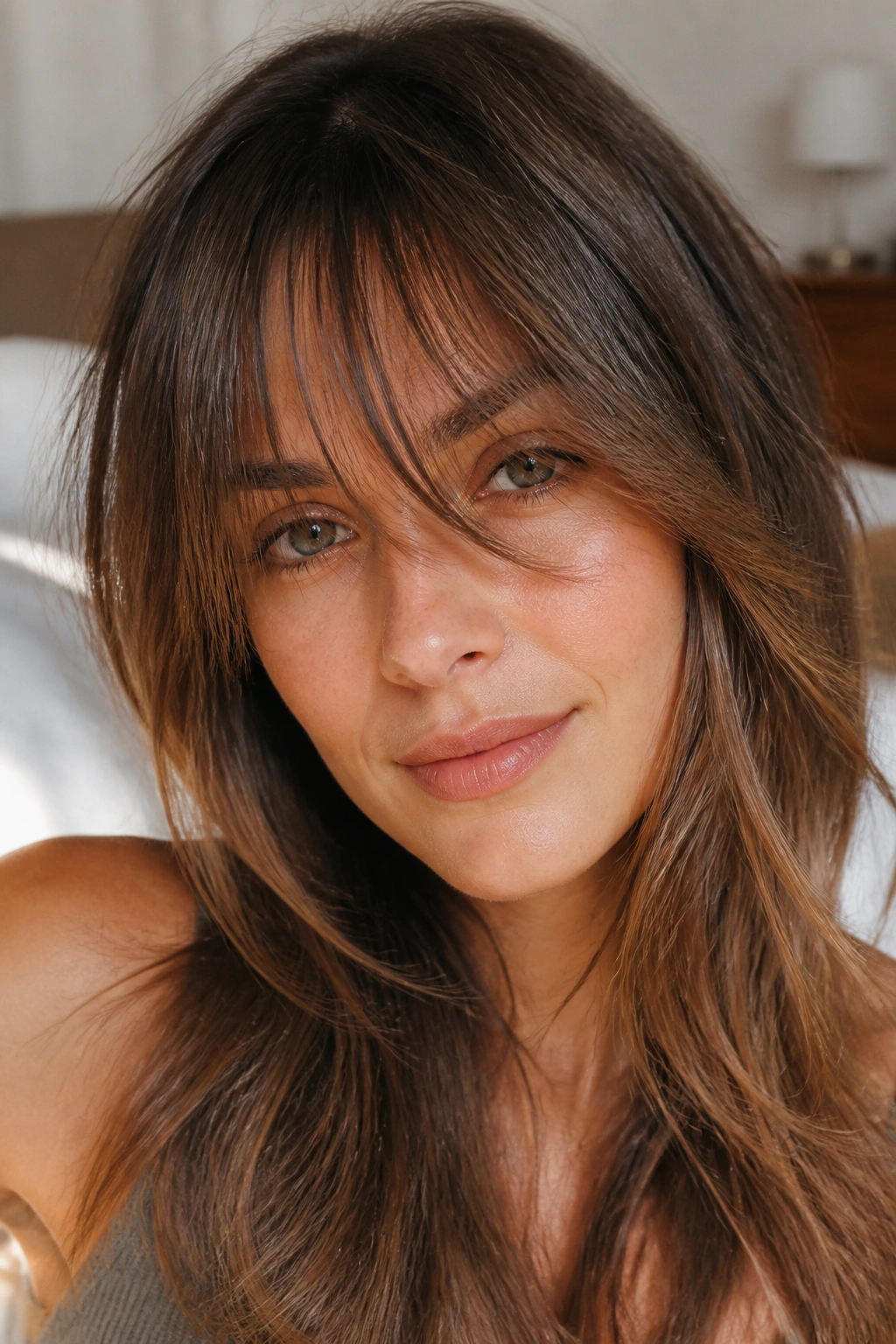
Razor-cut ends feel airy between your fingers. They move. They separate. They don’t sit there like a blunt strip. That airy texture can be perfect for round faces when the goal is softness, not heaviness.
What to Ask For
Razor cutting should be used with a light hand. Too much and the ends can fray in a way that looks dry, especially on fine hair.
- Keep the center slightly longer than brow length so it doesn’t jump too short.
- Ask for feathered ends through the outer corners rather than aggressive thinning through the middle.
- Use a small amount of smoothing cream if your hair tends to puff up at the front.
This style looks especially good if you wear your hair loose and slightly undone. It also works when tucked into an updo, because the fringe still leaves softness around the face. I’d avoid it if your hair is already very wispy and fragile-looking. In that case, the cut can disappear instead of flattering. You want feathered, not faded.
12. Tapered Fringe With Invisible Layers
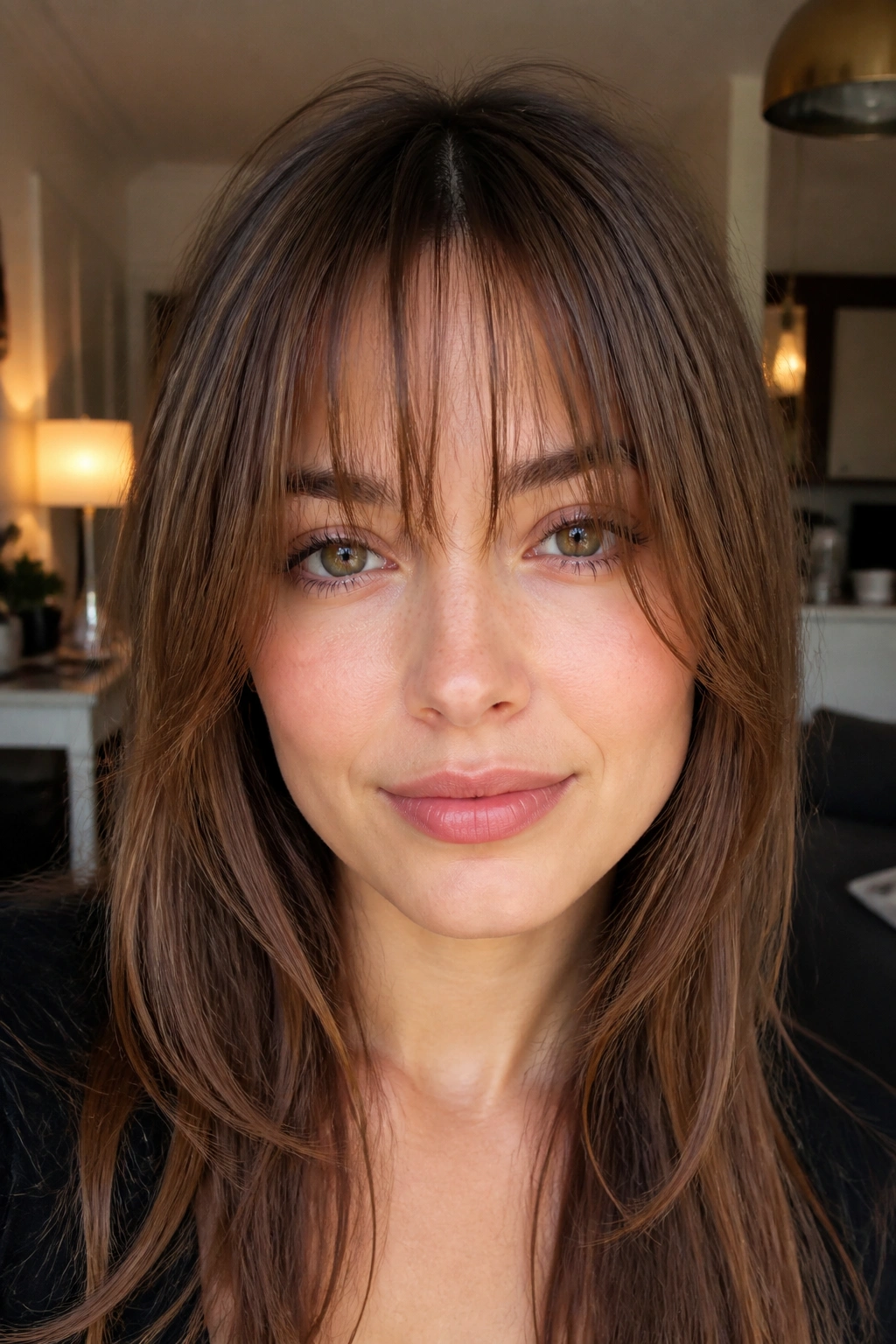
The best taper is the one you barely notice. Invisible layering in the front keeps the bangs soft while still giving them shape, which is a nice fit for a round face that needs some vertical movement.
A tapered fringe starts fuller near the center and then slips into longer side pieces so gradually that you don’t see a hard line. That’s the whole appeal. It makes the face look framed, not chopped into sections.
This style is especially useful if you wear your hair up a lot. The front pieces can come forward without turning into a separate bang section every time you tie your hair back. That little practicality point matters more than people think.
If you ask for this cut, be specific about the taper. “Wispy” alone is not enough. Say you want a soft transition from brow area to cheekbone layers, with no obvious shelf at the temples. The shape should feel blended from the first strand to the last.
13. Rounded Sides, Longer Center Fringe
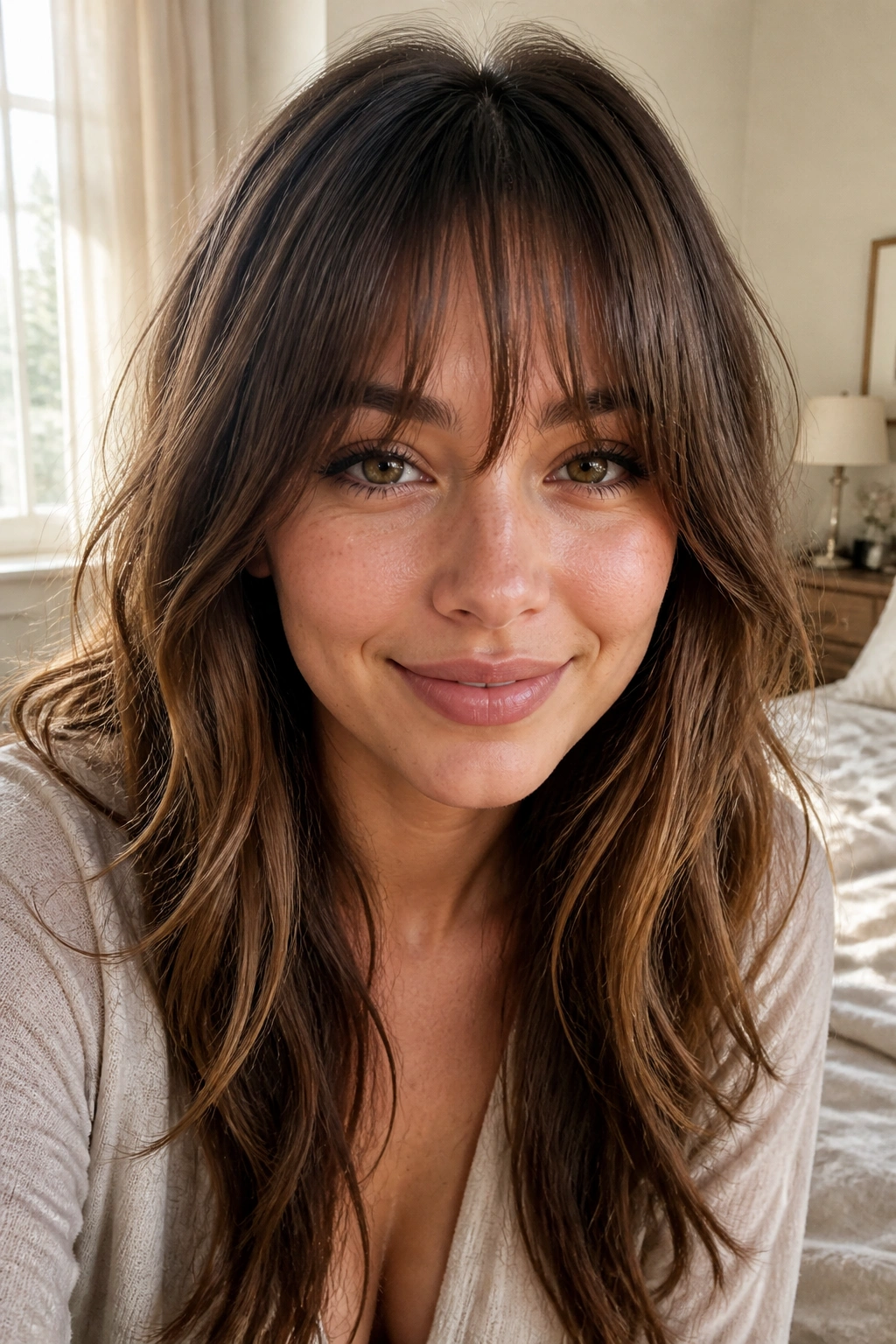
A round face does not need more roundness at the front. It needs shape that moves away from the widest area. A rounded side contour with a longer center piece does that without looking harsh.
Why the Shape Matters
The middle section keeps your fringe from feeling too open, while the sides slide outward and down. That contrast gives the face a longer line through the center and a softer frame near the temples.
- Keep the center just under brow level or a touch below.
- Let the sides meet the cheekbones or upper jaw instead of stopping at mid-forehead.
- Style with a slight bend, not a tight curl, or the curve can get too round.
This one is nice for people who like symmetry but still want movement. It feels balanced without being boxy. The rounder side shape softens the face edges, and the longer center keeps the whole look from collapsing into a heavy fringe. It’s a small adjustment, but it changes the mood of the cut more than you’d expect.
14. Curly Wispy Bangs With Stretch
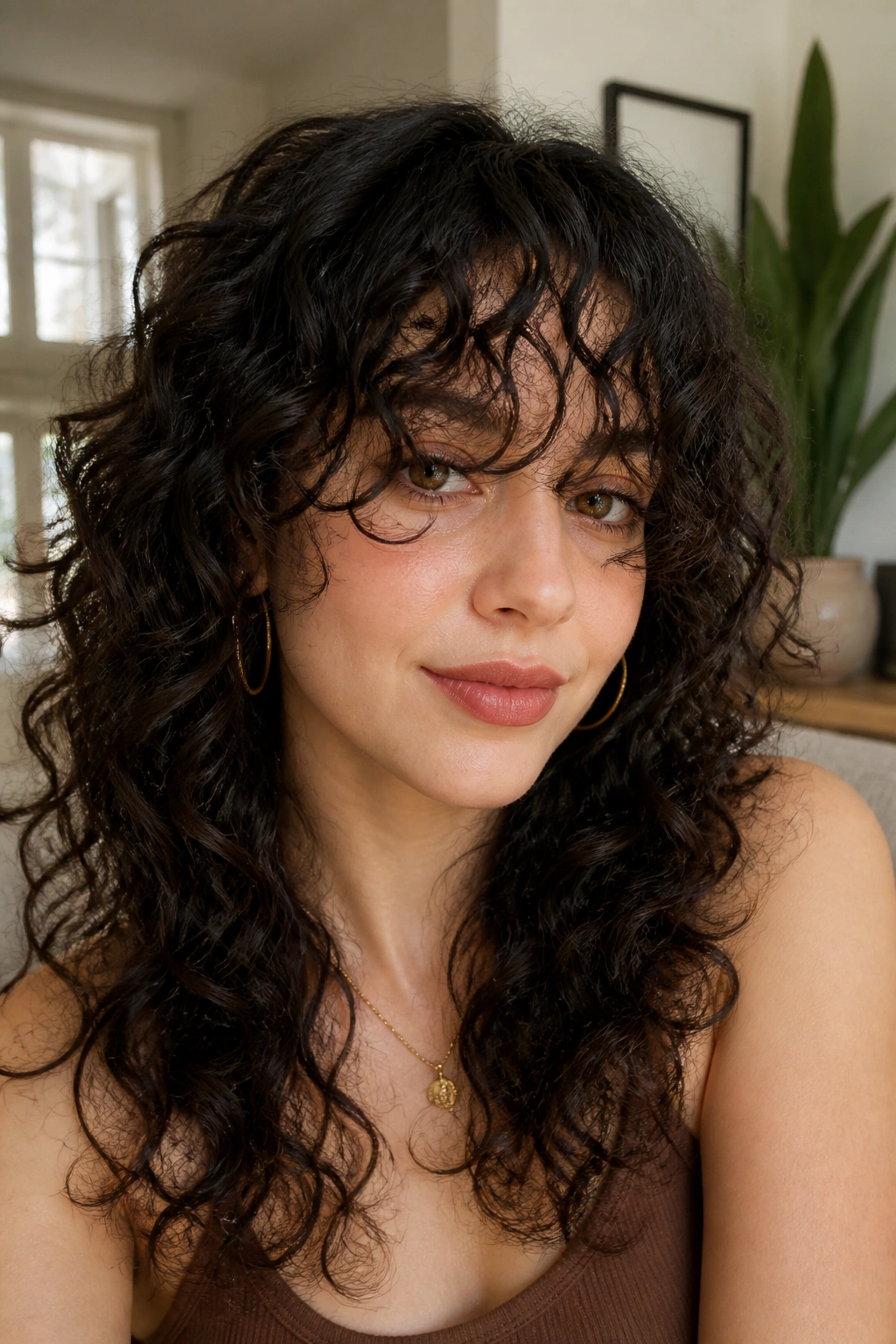
Curly hair can absolutely wear wispy bangs. The trick is to cut for the curl pattern, not against it. A curly fringe works best when it stays longer and is shaped with the curl’s shrinkage in mind.
If your curls spring up a lot, ask for a dry cut or a curl-by-curl shaping session. Wet curls can be deceptive. A bang that looks cheekbone length when wet can bounce up to brow level once it dries, and that is not a pleasant surprise. The front should keep enough length to skim the eyes without floating too high.
How to Make It Work
- Leave the front longer than you think you need.
- Shape the ends so they follow the curl instead of fighting it.
- Refresh with water and a light cream, not heavy oil, or the bangs can separate in greasy-looking chunks.
Round faces often benefit from curly fringe because the texture breaks up the shape. There’s movement in every strand. That movement matters more than perfect symmetry, which curly hair usually refuses to give anyway. Good. It shouldn’t have to.
15. Choppy Airy Fringe With Piecey Ends

Some bangs are all softness. This one has a little bite. Choppy wispy fringe creates tiny gaps of light and texture, which keeps a round face from looking too full at the front.
The key is piecey, not sparse. Those are different things. Piecey means the strands are separated on purpose, with enough hair in each section to still read as a fringe. Sparse means the cut has been over-thinned and lost its shape. One looks styled. The other looks like a mistake.
This cut works well with textured hair and with people who like a more casual finish. It also plays nicely with a little root lift or dry shampoo at the front. I’d avoid making it too jagged near the center if your face is already soft and full. You still need the fringe to guide the eye downward.
The best version feels easy, almost a little messy, but not sloppy. That balance is harder to hit than it sounds.
16. Face-Framing Bangs With Crown Lift
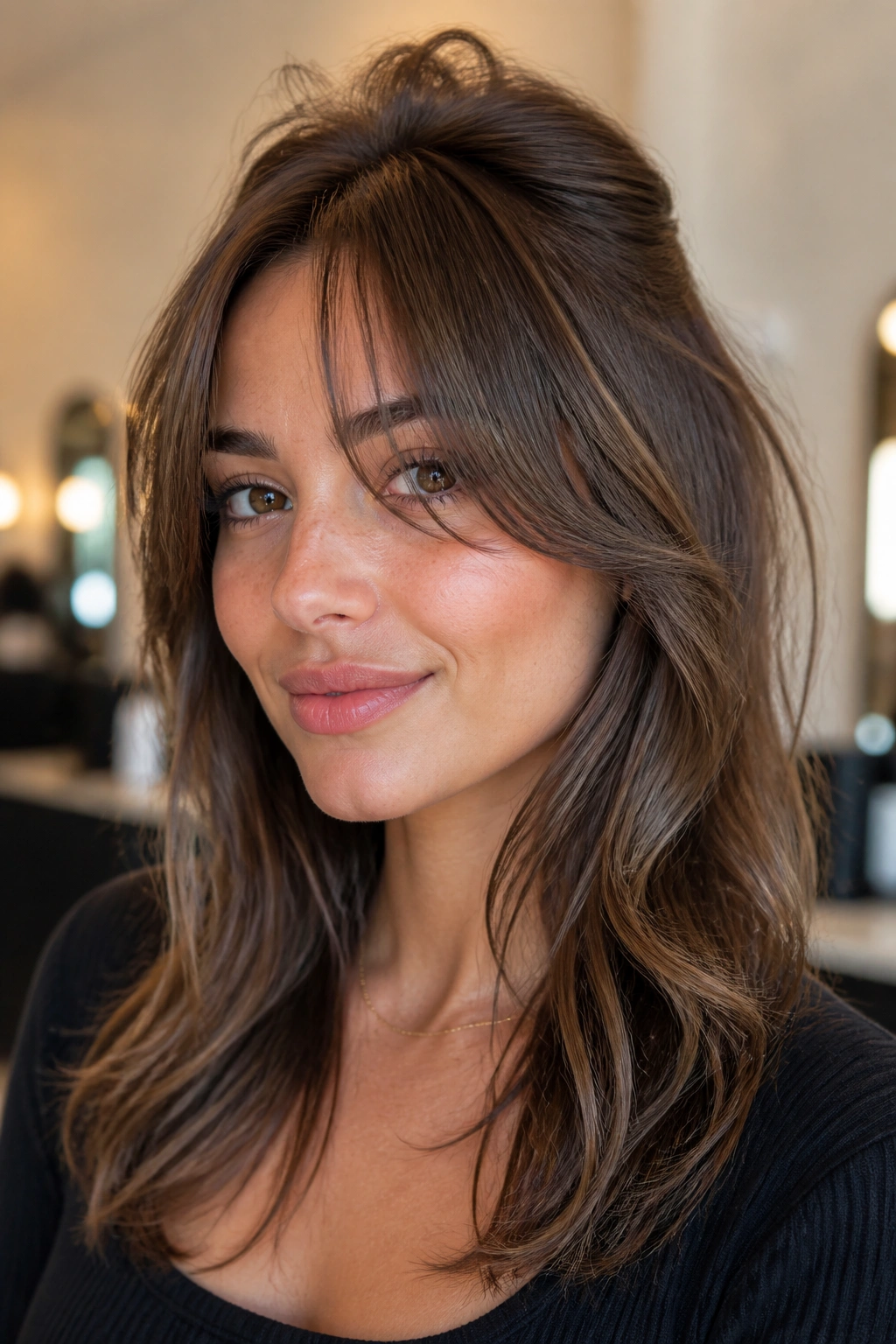
A little height at the crown changes everything. When the front has lift at the roots, a round face looks longer before the eye even reaches the bangs.
This style blends fringe into face-framing layers that start near the temples and continue past the cheeks. The bang itself stays soft and movable, but the crown lift gives the whole cut direction. It stops the front from sitting flat against the forehead, which can flatten the face shape too.
How to Style the Lift
You do not need giant volume. Small, controlled height is enough.
- Blow-dry the roots forward first, then back with a medium round brush.
- Clip the front at the crown for 5 to 10 minutes while it cools.
- Keep the side pieces longer than the center so the front keeps falling away from the cheeks.
This is one of my favorite choices for people who wear their hair in layers anyway. It gives you bangs without making the haircut feel like a separate event. And the lift? It helps more than a lot of people expect. Tiny bit. Big payoff.
17. Long Wispy Bangs With a Soft Bend

Straight, flat bangs can feel severe on a round face. A soft bend gives the front line a little movement, and that movement takes the pressure off the cheeks.
The bend should happen low, around the bridge of the nose or just below it, not in a dramatic curl. The aim is to keep the bangs relaxed. Think of a line that curves gently around the face instead of snapping across it. That softness is what makes the shape flattering.
This version is especially nice if you want to keep the forehead partly visible. A lot of people with round faces think they need maximum coverage. They don’t. They need a shape that doesn’t box them in. The soft bend gives you enough coverage to feel like bangs, but enough openness to keep the cut airy.
If your hair likes to bend naturally, don’t overwork it. A few passes with a brush and a cool shot of air are usually enough. Too much heat can make the ends flip in a way that feels fussy.
18. Low-Maintenance Wispy Fringe That Grows Out Gracefully
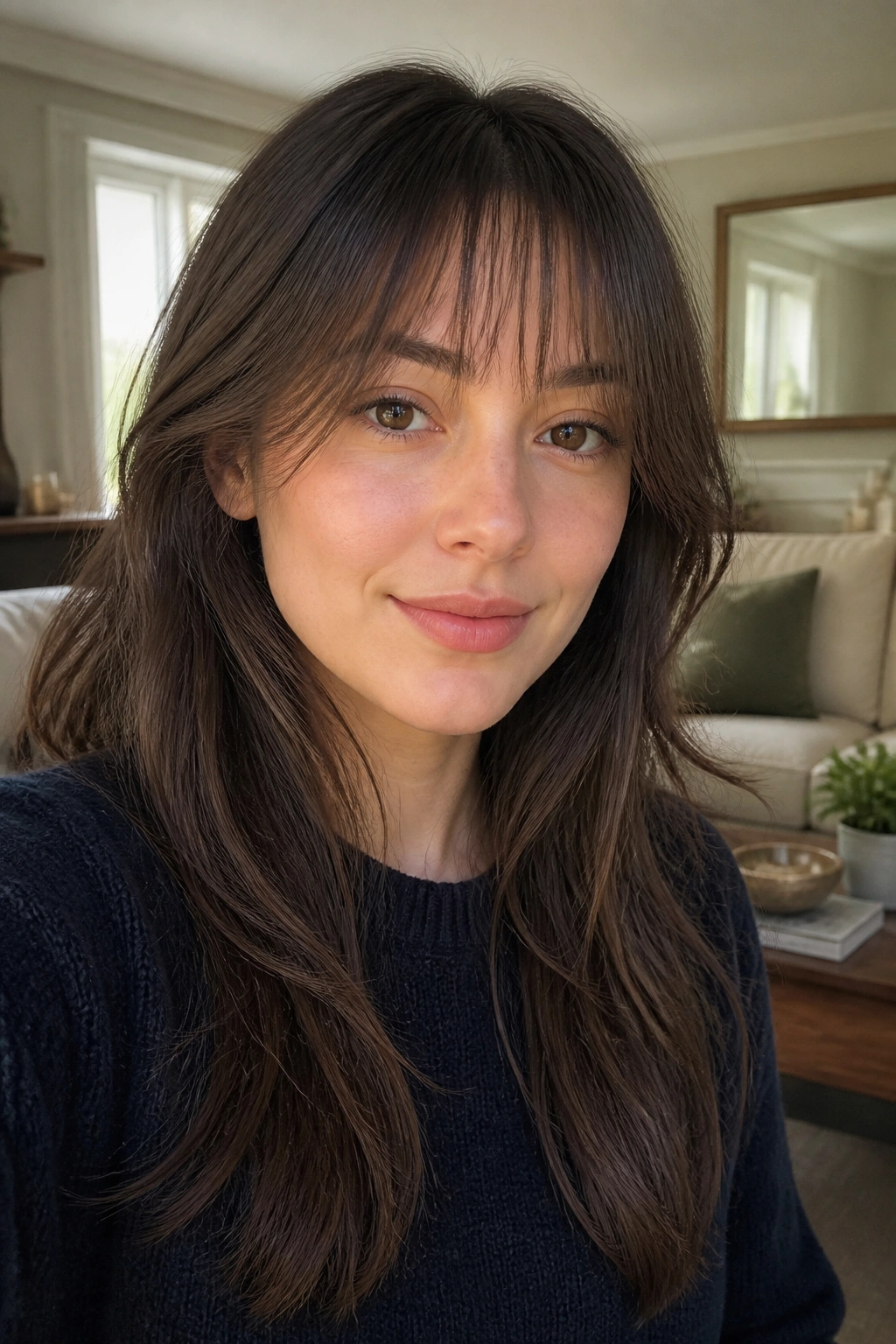
What if you want the least fuss? Then ask for a fringe that still looks good three weeks after the haircut starts to grow out. A low-maintenance wispy bang is longer at the sides, softer at the center, and blended enough to survive an overdue trim.
That blend matters on round faces because grow-out can either soften the shape or ruin it. If the cut is too short and too blunt, the grow-out stage gets awkward fast. If the fringe starts slightly longer, it keeps framing the face even after it begins to shift.
The Practical Version
- Keep the shortest point around brow level or a touch below.
- Make the outer sections long enough to tuck behind the ears if needed.
- Ask for soft point-cut ends, not heavy thinning.
This is the cut for people who like bangs in theory but not in maintenance. I respect that. Not everyone wants to heat-style the front every morning. If you want something forgiving, this is the one I’d steer toward first. It still gives a round face length and movement, just without the daily drama.
Final Thoughts
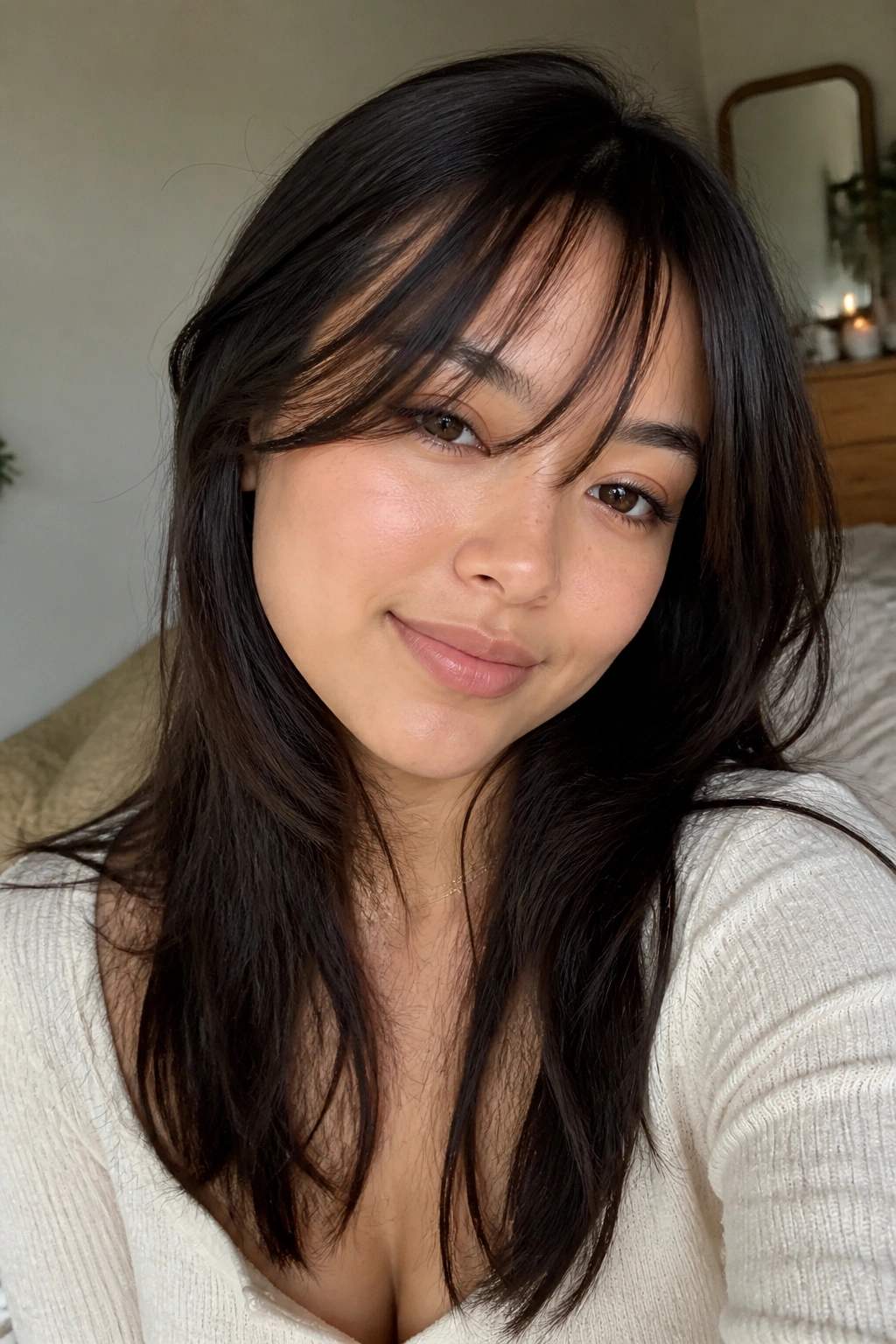
Long wispy bangs can do a lot for a round face when the shape is right. The best versions don’t sit flat across the forehead, and they don’t stop too high on the face. They move. They taper. They leave room around the cheeks.
If you’re choosing between two cuts, pick the one with the longer sides and the softer center. That usually gives you more flexibility later, especially when you want to tuck hair back, wear it wavy, or skip a styling day altogether. Bring a photo, yes, but also describe where you want the shortest point to fall. That detail matters more than people think.
A good fringe should make your face feel open, not crowded. Get that part right, and the rest is mostly maintenance.
