



Round faces are not the problem. A fringe that lands like a solid curtain is. Textured bangs for round faces work because they break up the widest part of the face instead of boxing it in, and they leave small gaps of skin and hair that keep everything from feeling too heavy.
That little bit of movement matters more than people think. A blunt line across the forehead can make cheeks look fuller than they are, while choppy ends, feathering, and a side sweep pull the eye upward and down the face at the same time. I like bangs that look a little imperfect in the mirror; they usually read softer and more flattering than the ones that sit there like a ruler line.
The real trick is not “go shorter” or “make them thinner” and hope for the best. It’s choosing the right texture for your hair density, cowlicks, and styling patience. Fine hair needs a different cut than thick straight hair, and curls need a completely different hand, because the shape changes the minute the hair dries.
That is where these 18 ideas earn their keep. Some are low-maintenance. Some need a round brush and five extra minutes. All of them are built to make a rounder face look a little longer, a little sharper at the cheekbones, and a lot less boxed in.
1. Soft Curtain Bangs with Cheekbone Sweep
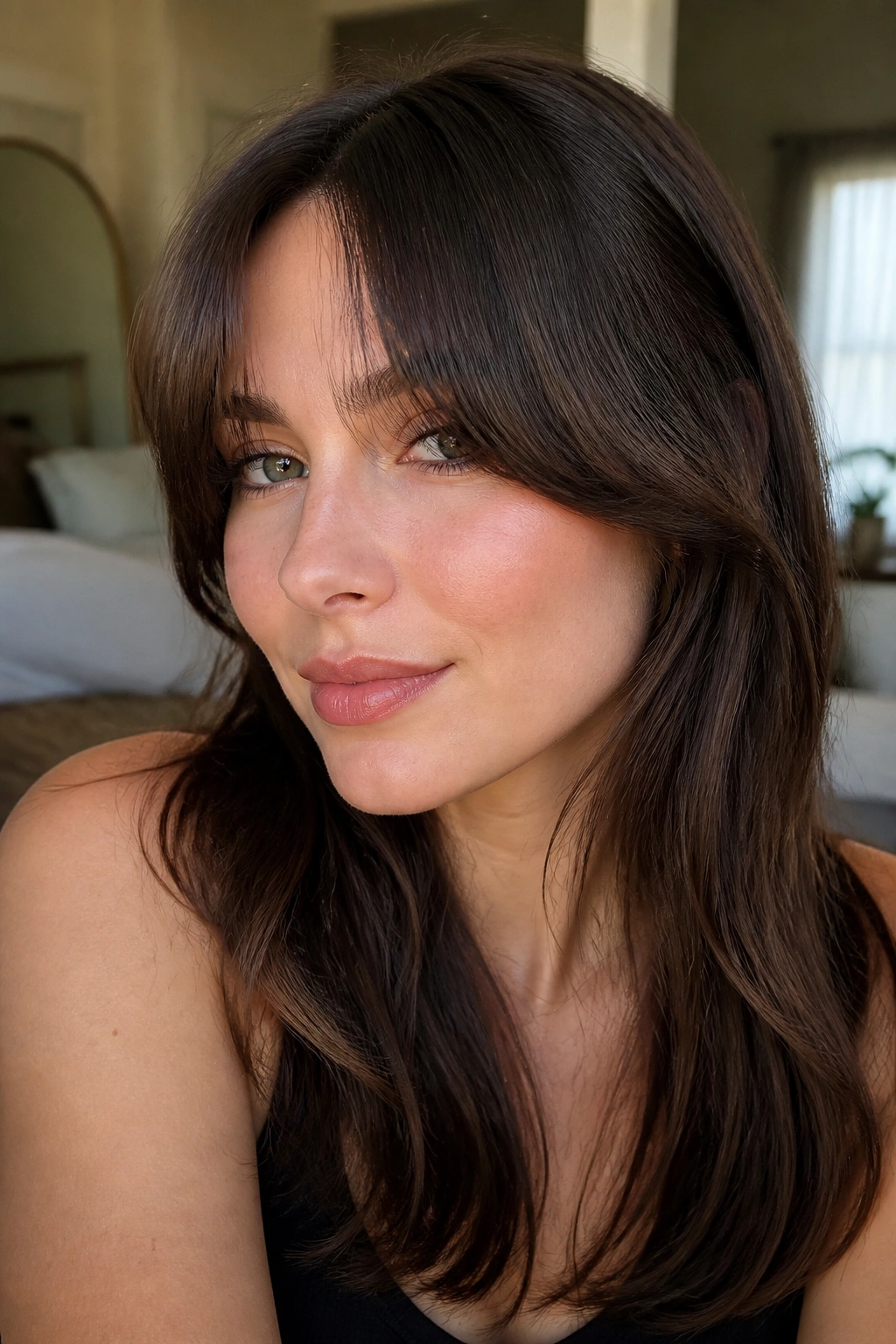
Soft curtain bangs are the easiest place to start if you want texture without a dramatic chop. On a round face, the cleanest version usually begins just below the eyebrow in the center and drifts to the cheekbone by the time it reaches the sides.
That shape does two things at once. It opens the middle of the forehead, then drops diagonal lines that steer the eye downward. If your hair already bends a little, even better; you can rough-dry these with a nozzle and a small round brush instead of wrestling them into place.
Why It Works
Ask for the center to be point-cut, not cut straight across. The ends should look soft enough that you can still see a little skin through them when you move. The whole point is to stop the bang from becoming a shelf.
- Center length: just below the brow
- Side pieces: cheekbone or a touch lower
- Styling: blow-dry away from the face with a 1-inch brush
- Best match: wavy hair, medium density, or hair that bends easily
My favorite version keeps the shortest piece long enough to tuck behind a finger. That tiny bit of length keeps it from feeling too precious.
2. Bottleneck Bangs with a Narrow Center
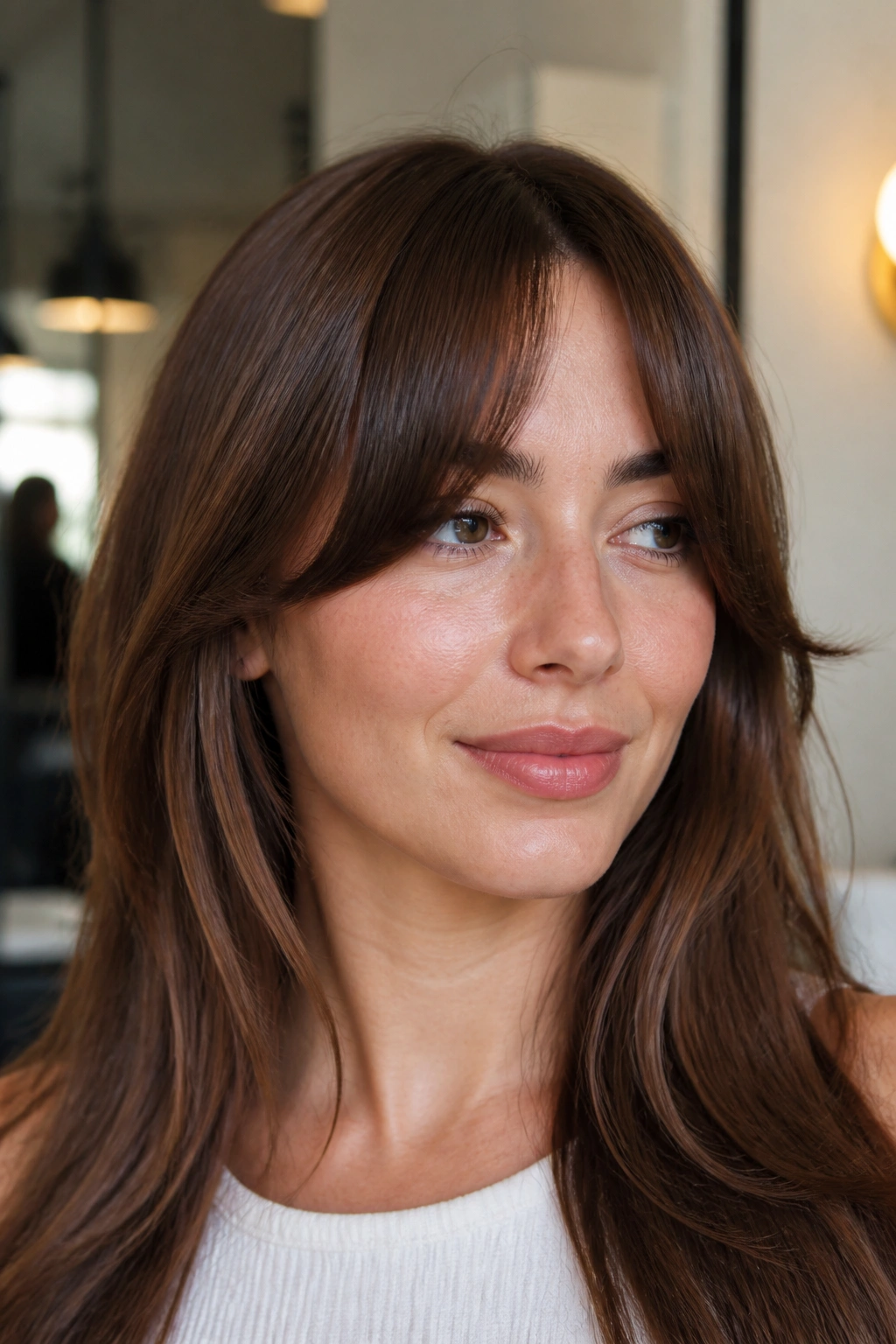
Bottleneck bangs are the safest middle ground if you want shape without a heavy forehead curtain. The center stays narrow and short, then the hair widens as it moves toward the temples, almost like the neck of a bottle opening up.
That opening matters on a round face because it gives you lift at the center without drawing a hard line straight across. The sides also do some useful work near the temples, which helps the face look a little longer instead of wider.
I prefer this shape on hair that can hold a bend, even a small one. If the strands are pin-straight and stubborn, the style can collapse fast and look flat by lunchtime. A light mousse at the roots and a round brush help keep the center piece from sticking to the forehead.
Tell your stylist to keep the center shorter than the sides by about an inch, then soften the edges with point cutting. You want a curve, not a triangle. That tiny difference is what keeps bottleneck bangs from reading too sharp.
3. Side-Swept Razor Bangs
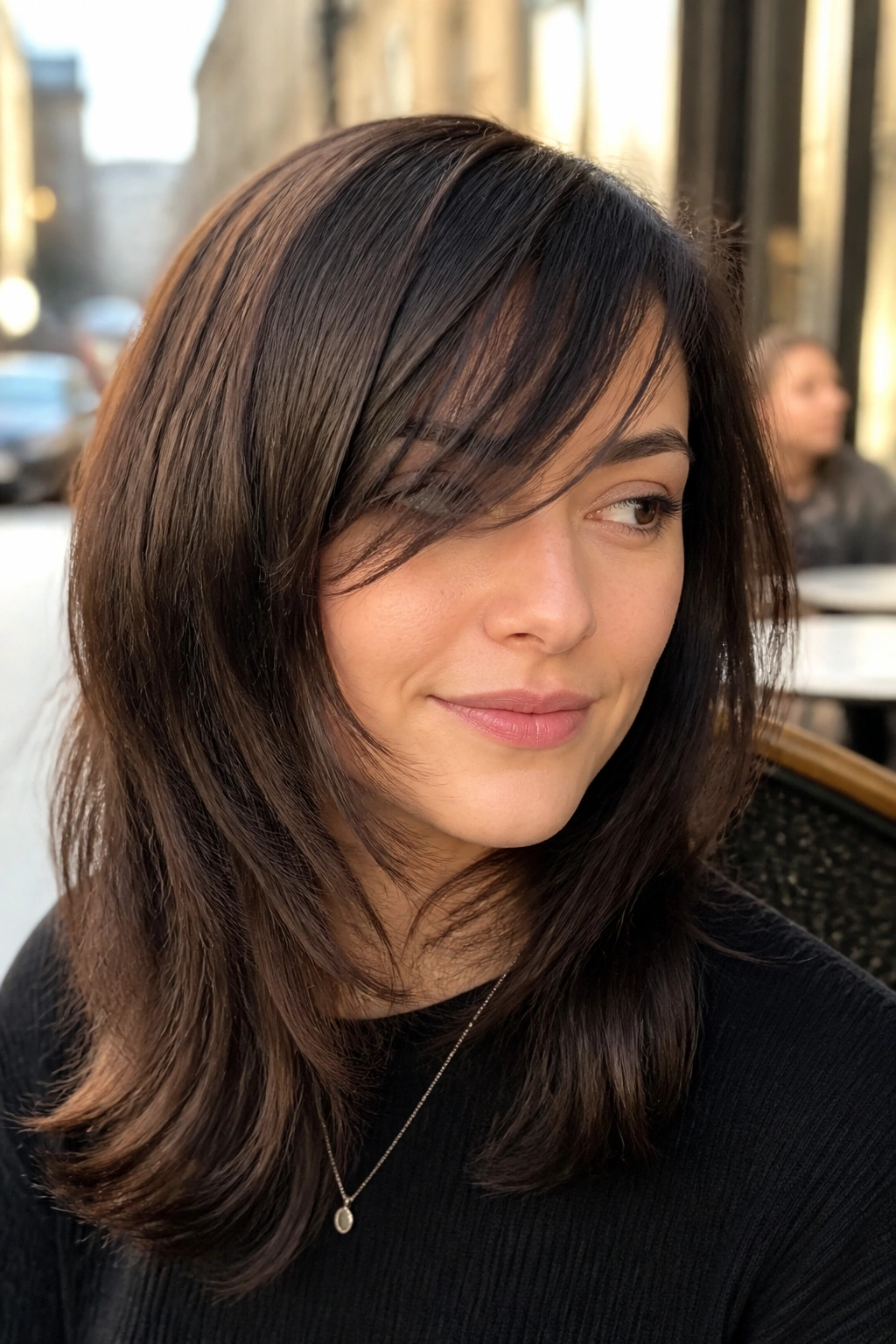
Can side-swept bangs still look modern? Yes, if the edge is broken up and the sweep starts a little farther back than people usually think. A razor cut helps here because it removes weight without leaving the fringe looking chopped into chunks.
For round faces, the best version usually falls from a deep side part and lands somewhere between the eyebrow and the cheekbone. That diagonal line is doing the heavy lifting. It creates length, and length is your friend when the face has soft width through the cheeks.
How to Style It
Use a flat brush or a paddle brush to dry the roots in the opposite direction first, then sweep the bangs across at the end. That keeps the root from collapsing and makes the fringe look fuller at the top. A tiny bit of styling cream on the ends is enough; too much and the razor texture goes limp.
I like these on hair that gets greasy fast. The side sweep hides a little root oil better than a straight-down fringe, which means fewer emergency wash days. Handy. Very handy.
4. Piecey Brow-Grazing Bangs
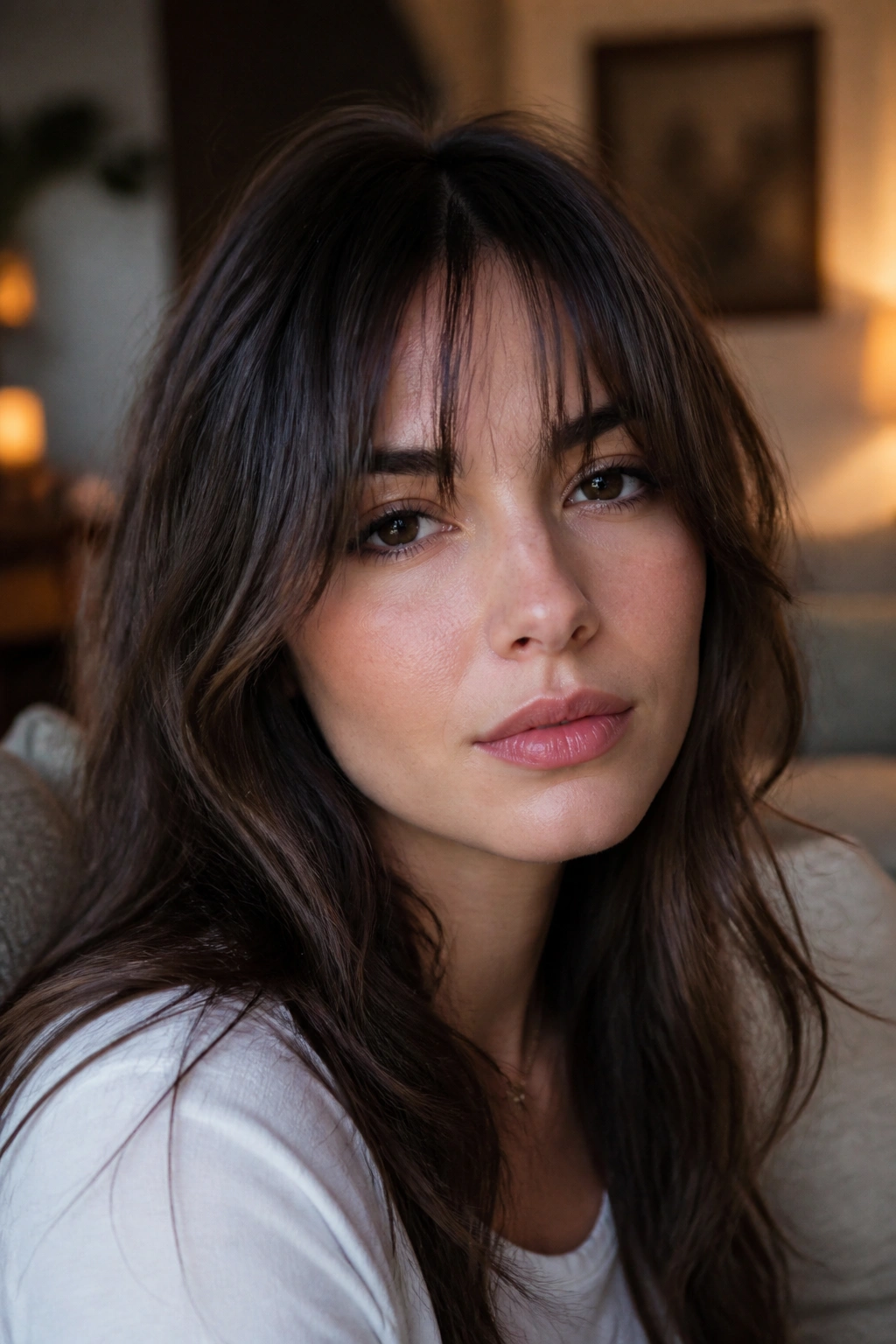
If your bangs puff up every time the weather shifts, piecey brow-grazing bangs may be the fix. They sit close to the eyebrows, but they’re cut into little separated sections instead of one heavy band, so the forehead never feels trapped.
The shape works well on round faces because the eye lands on the space between the pieces, not just the width of the fringe. That gap makes the upper face feel lighter. It also keeps the haircut from looking too sweet or too neat, which is where a lot of round-faced bang cuts go wrong.
- Keep the center barely grazing the brow
- Use point cutting or slide cutting to break the line
- Ask for 3 to 5 visible pieces, not a solid strip
- Style with a pea-sized dab of cream, then pinch sections apart with your fingers
Skip a heavy wax. It can clump the pieces together and make the fringe look sparse in a bad way.
This is one of those cuts that looks better the second day. A little bit of separation gives it life.
5. Long Feathered Fringe
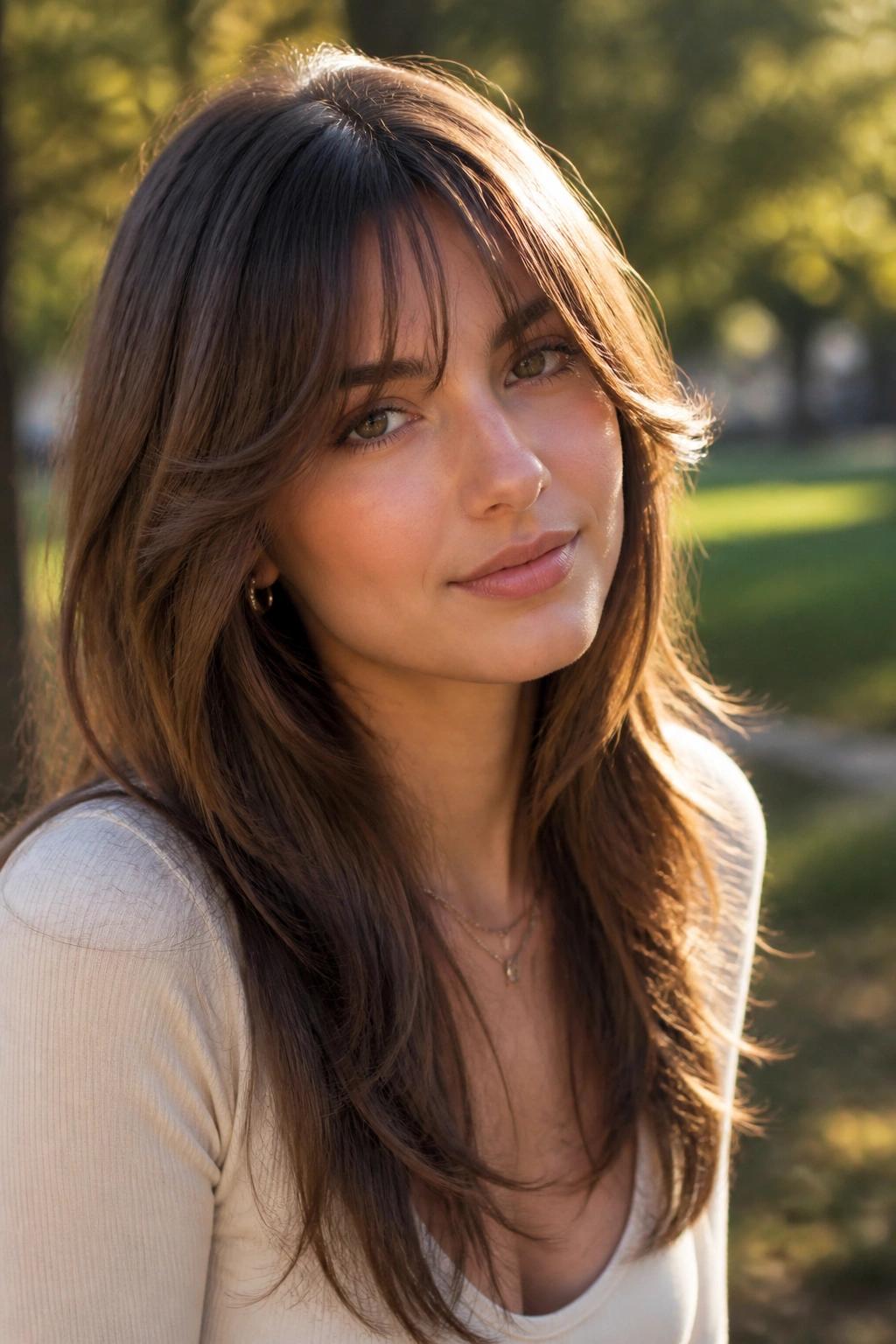
Long feathered fringe is the one I reach for when someone wants bangs but refuses to feel trapped by them. The length usually stays between the eyebrow and the cheekbone, and the ends are softened enough that the fringe slips into the rest of the haircut instead of sitting on top of it.
On a round face, that softness is doing some very specific work. It keeps the eye moving down the face, and it avoids the blunt horizontal effect that makes the middle of the face look wider. The feathering also helps the bang blend into longer layers, which is useful if you want the fringe to feel like part of the cut instead of a separate event.
This style likes hair with some natural bend, but it can work on straighter hair if you have the patience for a round brush. I’d blow-dry the roots forward first, then turn the ends away from the face for a slight curve. Don’t curl it under too much. That can make the fringe look heavy, and heavy is the wrong mood here.
The best version has movement at the temples. That tiny drop on the sides softens the face in a way that a straight-across fringe never quite can.
6. Wispy Micro Bangs
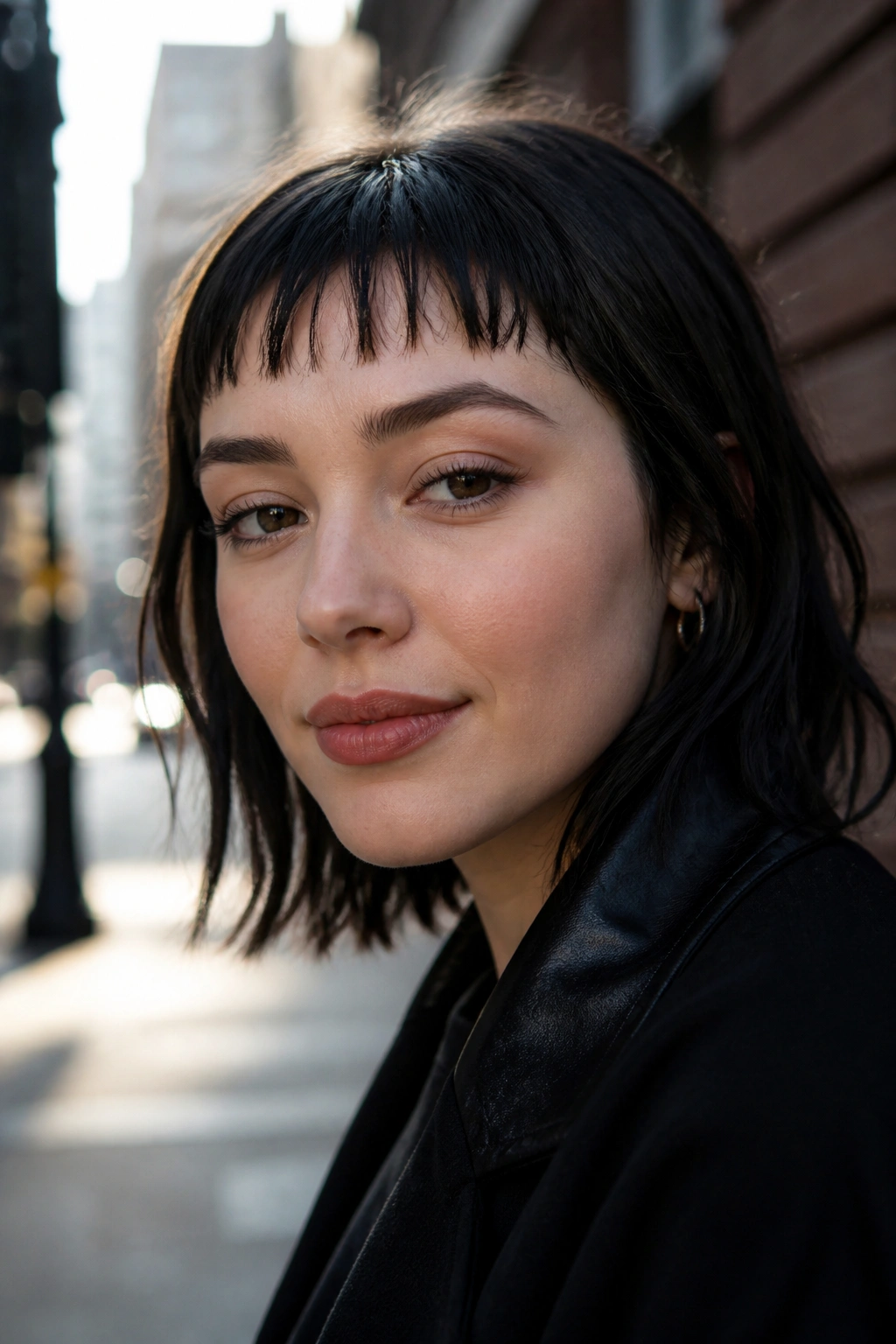
Unlike blunt micro bangs, wispy micro bangs leave enough space at the brow to soften the face. They still sit short—usually somewhere in the middle of the forehead or just above the brow line—but the texture keeps them from feeling severe.
That matters on round faces because a hard micro fringe can make the face look wider and shorter at the same time. A wispy version avoids that by showing skin between the pieces and keeping the edge light. It’s a more forgiving shape, and honestly, it’s the one I’d choose if you like a little edge but don’t want the haircut to fight your features.
These are best for someone who likes styling their bangs every day, even if only for three minutes. A tiny flat iron bend, or a quick finger-dry with texture spray, goes a long way. If the hair is very curly or frizzy, the upkeep climbs fast and the cut can lose its shape by noon.
I’d call this a fashion-forward choice, not a low-maintenance one. If that sounds like your lane, it can be a very good look.
7. Split Fringe with Face-Framing Layers
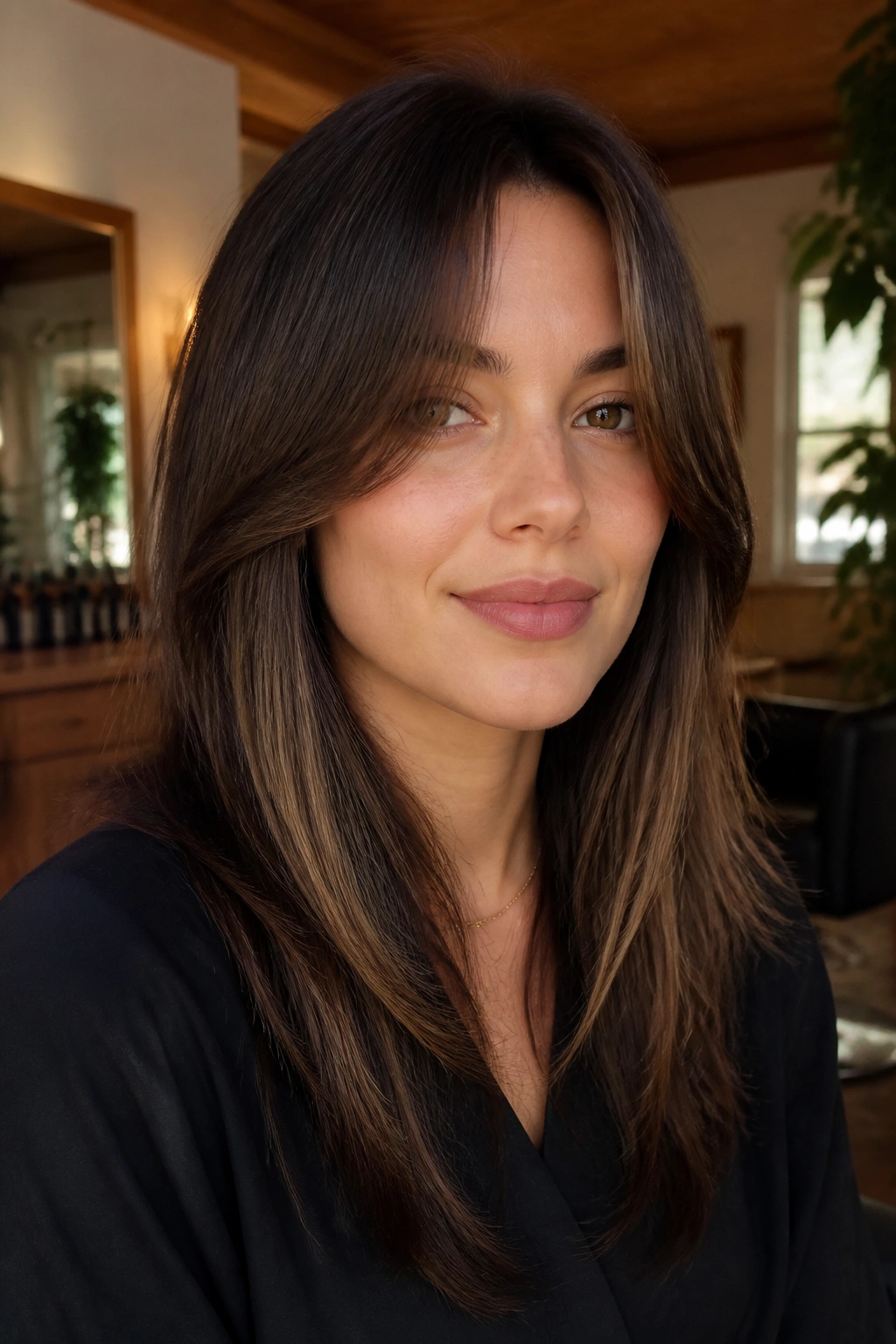
What if you want bangs and you also want your face to look a little longer? Split fringe with face-framing layers handles both jobs without feeling fussy. The fringe opens in the center, then the side pieces slide into longer layers that sit around the cheekbones and jaw.
That open middle is the part that matters most. It gives the forehead breathing room, which helps a round face avoid that closed-in feeling. The layers on the sides keep the style from reading as too symmetrical, and symmetry is often what makes a rounder face feel broader than it really is.
How to Ask for It
Tell your stylist you want a middle opening that starts about an inch above the brows, then longer pieces that blend into the front layers. The shortest pieces should still look soft, not chopped. If the stylist cuts the center too short, the whole thing can jump into baby-bang territory fast.
This one works especially well with shoulder-length hair or a lob. The fringe has somewhere to disappear to, which keeps the haircut from looking top-heavy.
A round face usually looks better when the front pieces have a little drift. This style gives you that.
8. Curly Textured Bangs
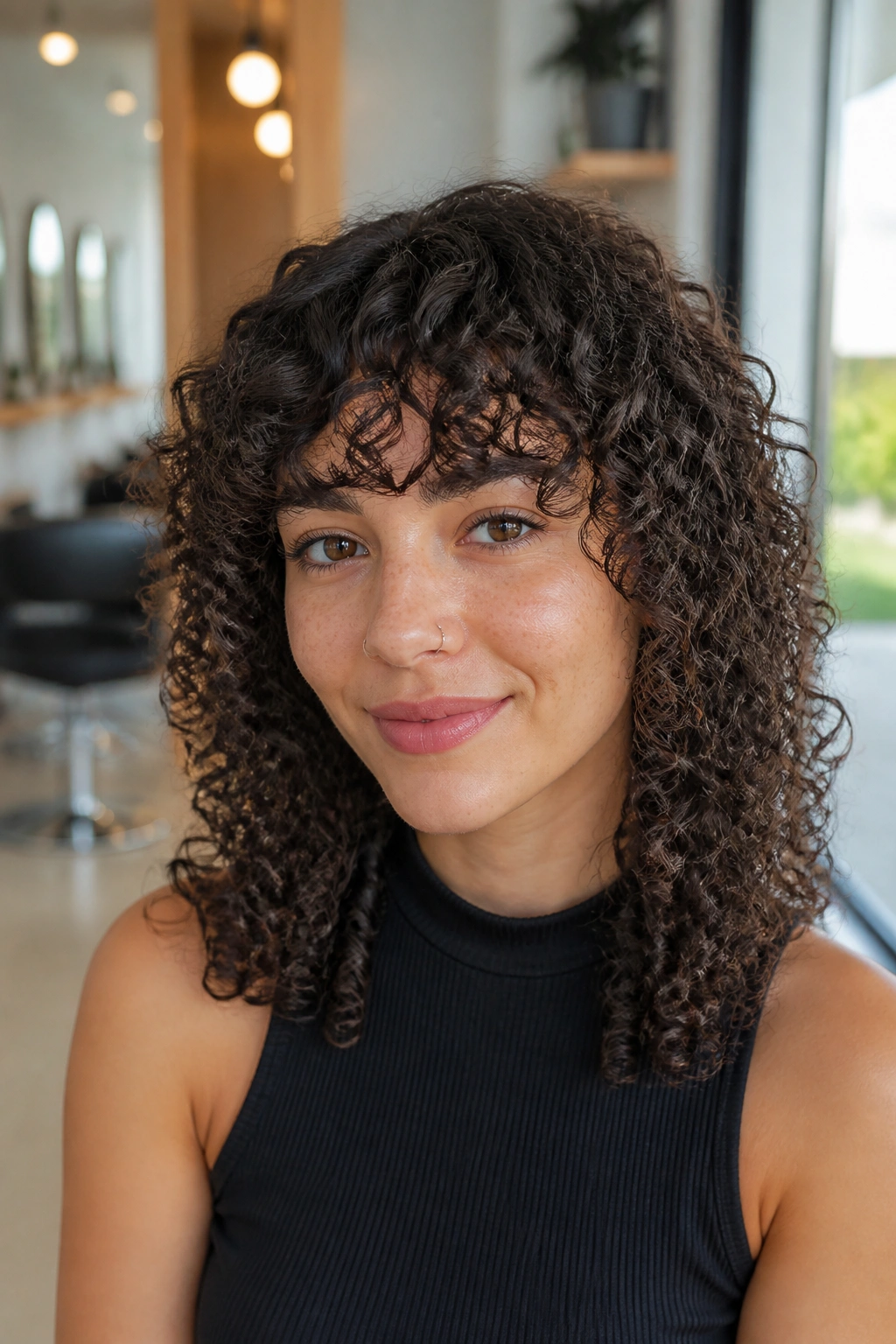
Curly bangs only look awkward when they’re cut like straight hair. Once you stop forcing the curl pattern into a flat line, the whole thing opens up. The best curly textured bangs are cut dry, in their natural shape, and usually a touch longer than you think you need.
That extra length matters. Curls spring up, and on a round face you want the fringe to land somewhere near the brow or just below it after shrinkage. If you cut them too short, they can bounce up and sit high on the forehead, which throws the balance off in a hurry.
I’m a fan of curly bangs that angle slightly longer at the sides. That little taper helps the fringe merge into the rest of the curls instead of sitting like a little helmet at the front. Not a good look. Nobody wants that.
A diffuser helps, but so does patience. Let the bangs dry in the shape you want them to live in, then separate them with a drop of lightweight cream. Pulling at them while they’re wet usually makes the curl pattern frizz out and the shape go sideways.
9. Arched Textured Bangs
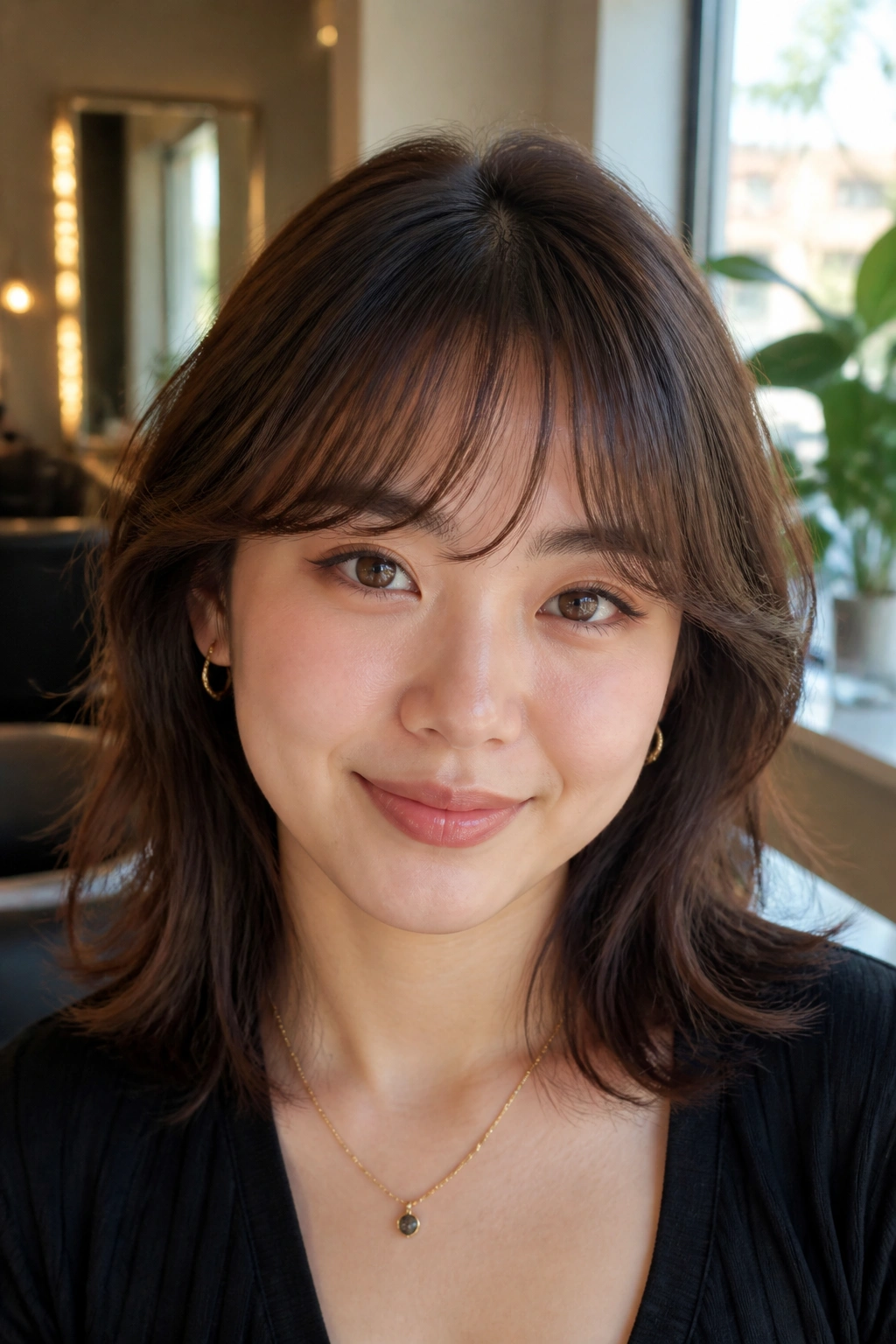
A shallow arch can be smarter than a straight line on a round face. Arched textured bangs follow the brow shape lightly in the center, then dip a little longer at the corners, which creates a gentle frame instead of a hard band.
The reason this works is simple: the arch gives the middle of the face some lift, while the soft edges keep the haircut from feeling boxy. It’s a nice choice if your forehead is on the shorter side or if your hair tends to poof at the temples. The curve keeps the whole thing from widening the face.
- Center: just touching the brow or a touch above
- Sides: slightly longer than the center, not dramatic
- Texture: point-cut ends, never a blunt edge
- Best pairing: layered bob, lob, or shoulder-length cut
If your cowlick splits bangs in the middle, this is often easier to live with than a dead-straight fringe. The curve gives the hair a place to go.
I like arched bangs when someone wants polish but still wants movement. It’s a tidy shape, but not a stiff one.
10. Shaggy Bangs with a Wolf Cut
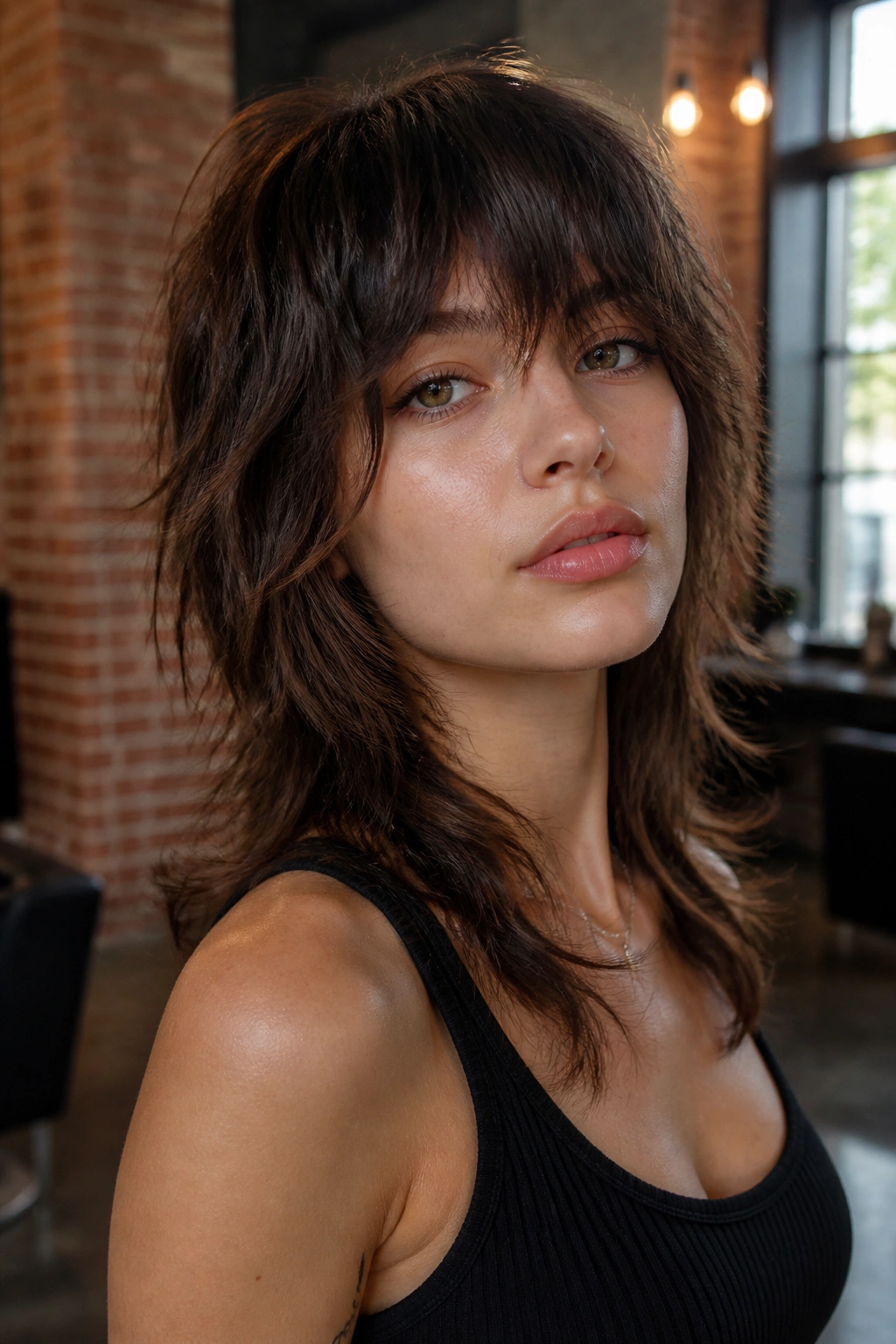
Shaggy bangs and a wolf cut belong together. Separate them, and the whole haircut can lose its nerve. Put them together, and the fringe becomes part of a bigger shape that lifts at the crown, falls through the sides, and keeps the face from looking too round or too full in the wrong places.
The bangs themselves are usually choppy, slightly longer in the middle, and blended hard into the rest of the haircut. That roughness is the point. On a round face, the shaggy texture keeps the eye moving instead of parking it on one dense line across the forehead.
This is not a neat haircut. Good. It should look a little wild when you shake it out. The texture is what makes the face feel longer, because the layers around the cheekbones and temples create vertical movement.
If your hair is thick, this cut can take a lot of bulk off the front. If it’s fine, it needs careful layering so the bangs don’t disappear. Either way, it’s one of the easiest ways to make bangs feel cool rather than polite.
11. Razor-Cut See-Through Bangs
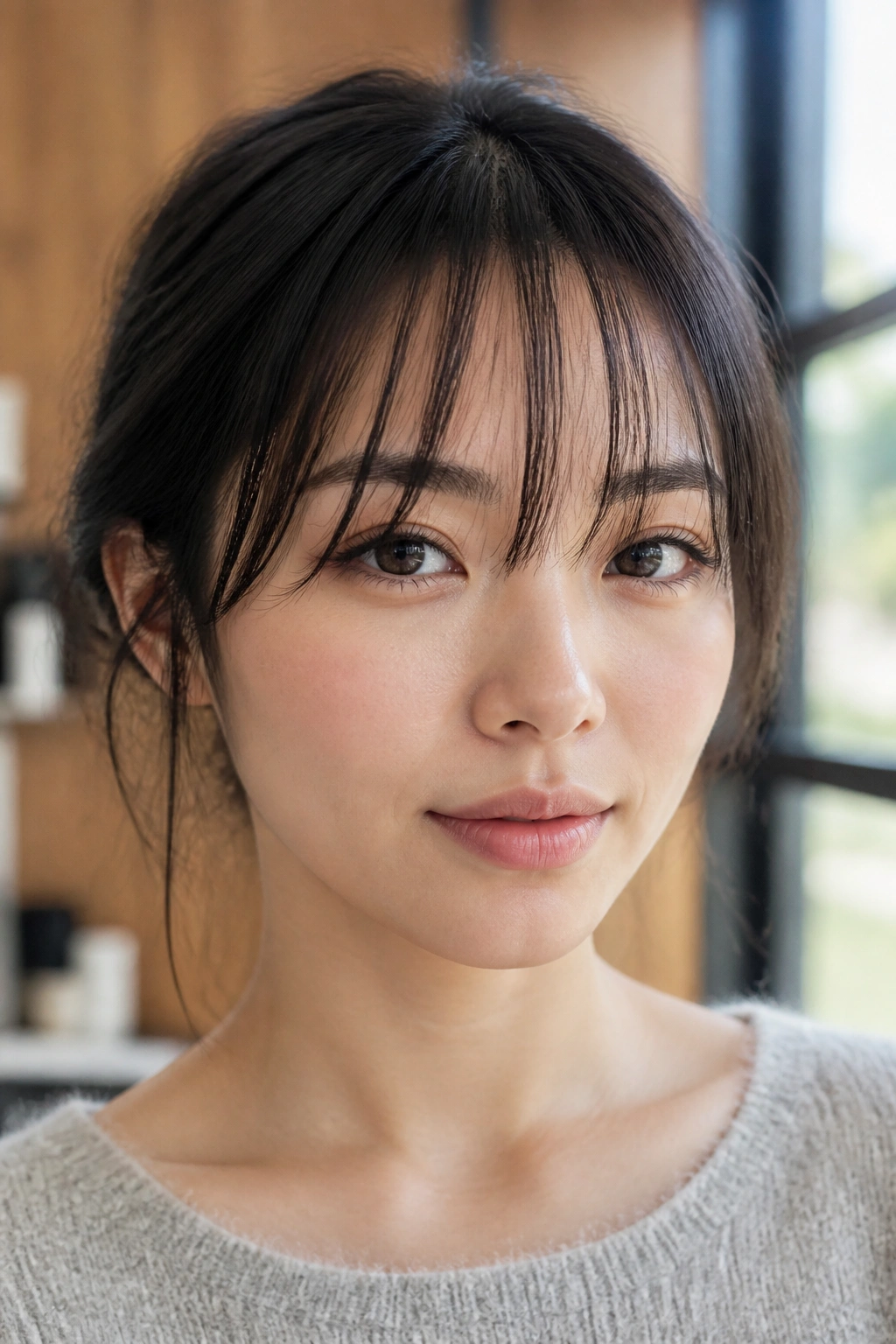
Razor-cut see-through bangs are a different animal from dense fringe. The spaces between the strands let skin show through, which softens the forehead and keeps the style from weighing down a round face.
I like these most on straight to softly wavy hair. The razor gives the ends a little transparency, and that transparency is what makes the shape flattering. A thick, solid fringe can widen the upper face; a see-through fringe does the opposite by breaking up the line and letting the forehead show in small flashes.
They’re also easier to wear if you don’t want your bangs to become the whole haircut. The fringe sits there, does its job, and steps back. That’s a nice quality. Not every bang needs to be the loudest thing in the room.
Ask for the ends to be feathered, not thinned out in a way that creates holes. There’s a big difference. True see-through bangs still have structure; they just have less weight in the middle.
12. Tapered Fringe with Crown Lift
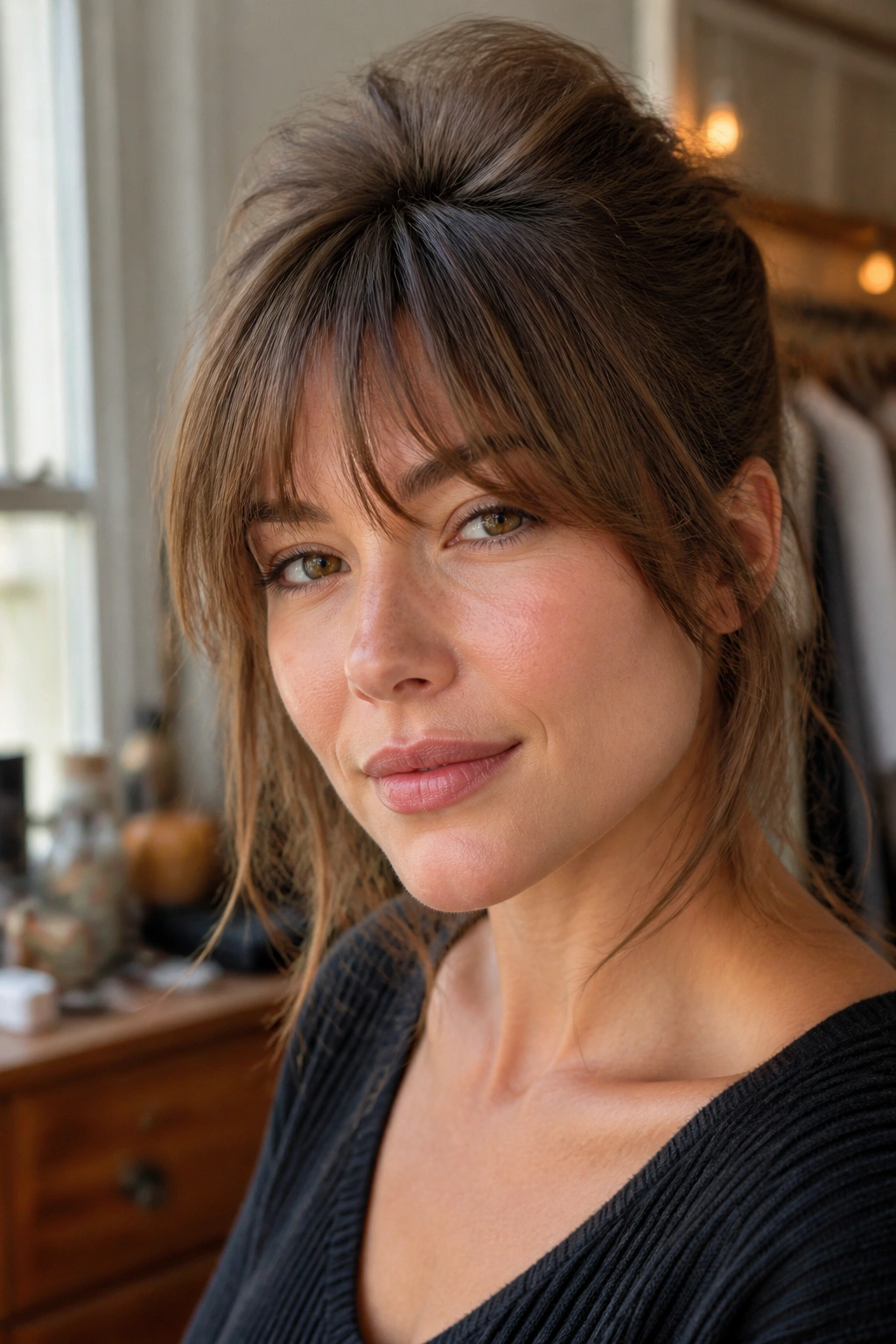
Can bangs make the face look longer without going shorter? Yes, if the roots have some height. Tapered fringe with crown lift uses volume at the top of the head and a gradual narrowing through the ends so the eye climbs up before it comes down.
On a round face, that bit of lift is gold. A flat crown can make the face look wider than it is. A lifted crown changes the proportions fast, and the tapered fringe helps carry that shape forward without creating a heavy curtain.
How to Style It
Use a root-lifting mousse at the front hairline, then dry the bangs upward and slightly back with a round brush. Once the hair is dry, switch the dryer to a cool shot and hold the shape for 10 seconds. That step sounds small, but it helps the lift stay put.
The fringe should narrow near the center and widen softly toward the temples. You do not want a hard peak. You want an easy slope that feels airy and a little undone.
This is one of my favorites for fine hair, because the lift gives the illusion of more body without making the bangs look bulky.
13. Angled Fringe That Opens at the Temples
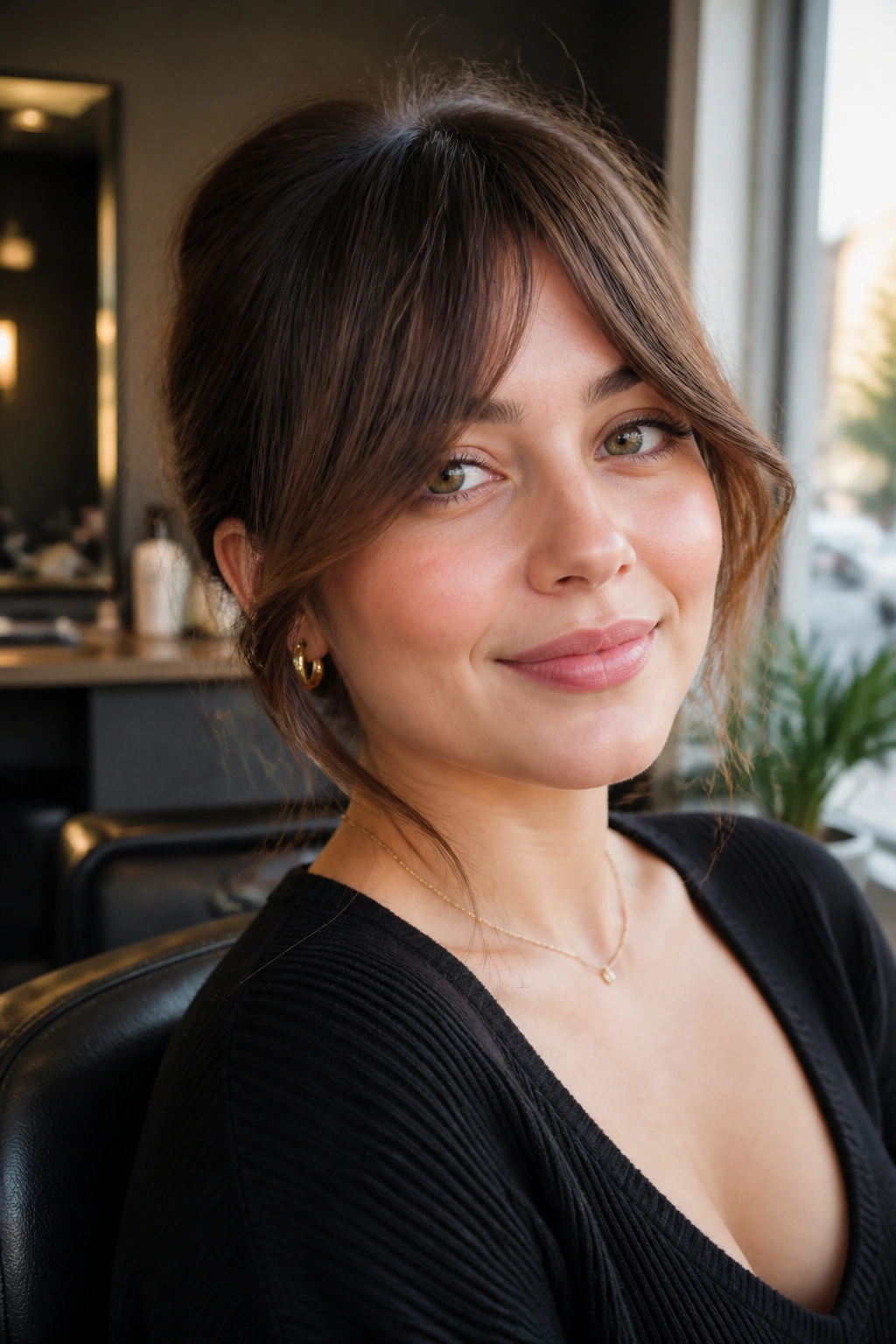
An angled fringe that opens at the temples is one of the most face-lengthening bang shapes in the group. The shortest point usually lands just above or at the eyebrow, then the line drops longer as it moves outward, leaving the temple area a little more open.
That opening is the magic. Round faces benefit from anything that pulls attention toward the outer corners of the face and away from the widest cheek area. A strong angle does exactly that. It gives the haircut direction.
What to Ask for at the Salon
- Shortest point: center front, around brow length
- Outer corners: at or just below the cheekbone
- Cutting method: point cut or slide cut
- Finish: soft edges, not a sharp triangle
This style is especially good if your cheeks are full and you want the fringe to stop sitting on top of them. The angle clears space.
I also like this one because it pairs with both straight hair and soft waves. The shape does the work either way.
14. Choppy Bangs with a Center Part

Choppy bangs with a center part are the right move if you want a fringe that feels casual instead of committed. The part splits the bangs into two narrow sections, and the choppy texture keeps them from looking too polished or too sweet.
On a round face, the center opening gives a little vertical line right where you want it. The face looks less wide, the forehead looks longer, and the whole thing feels lighter than a dense bang. It’s not a deep part, either. A small gap is enough.
This style works especially well if your hairline has a stubborn cowlick. The split gives that natural growth pattern somewhere to go instead of fighting it head-on. The result is a fringe that behaves a little better and grows out with less drama.
I’d ask for the shortest pieces to sit around the brow, then fade into longer side pieces that hit the cheekbone. The choppiness should be visible, but not so rough that the fringe looks hacked at. There’s a sweet spot there, and it’s worth finding.
15. Grown-Out Fringe with Soft Edges
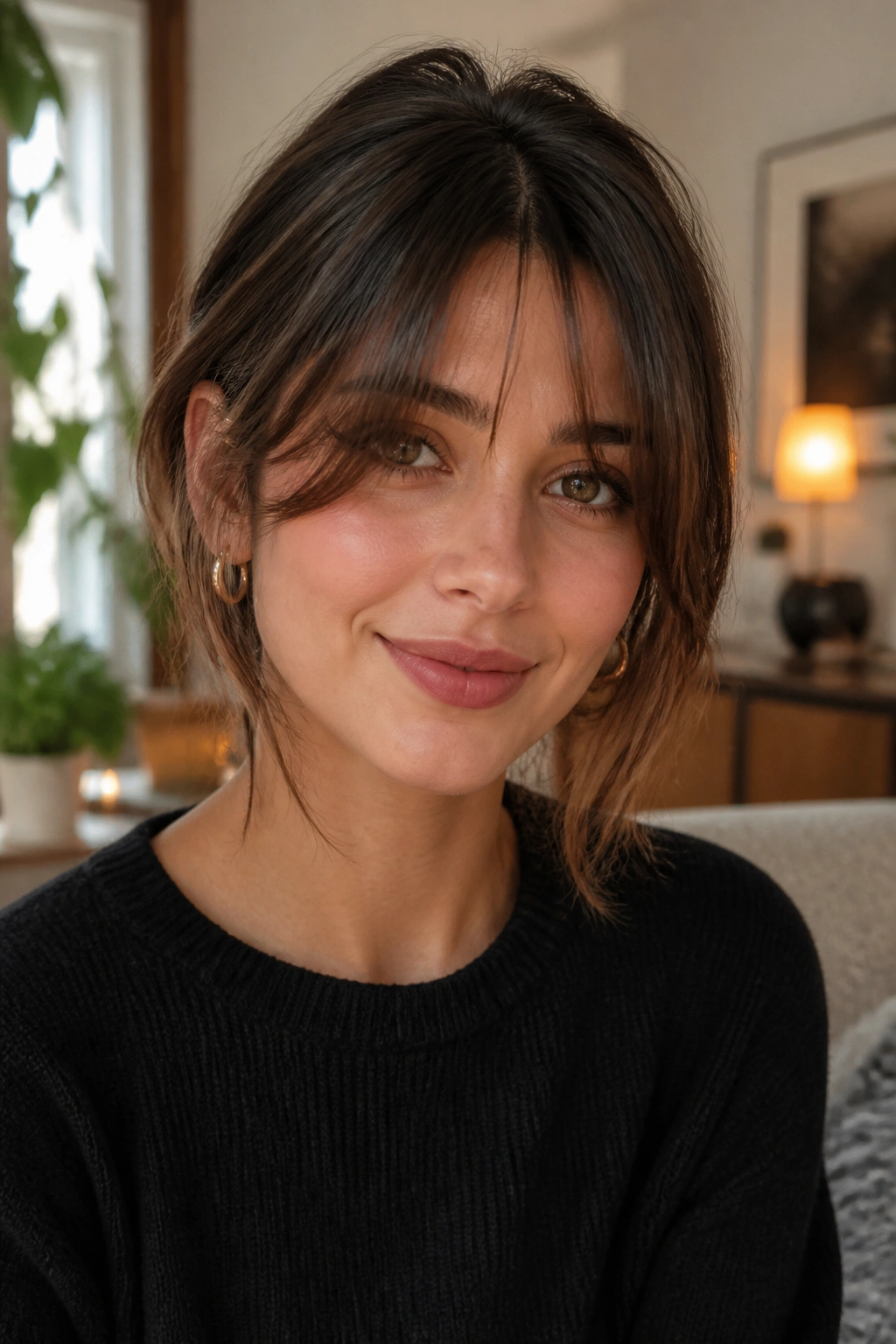
If you hate the idea of high-maintenance bangs, grown-out fringe with soft edges is the smart choice. It sits long enough to tuck behind the ears on a bad day, but still gives you the face-framing effect that makes textured bangs work so well on round faces.
The softness matters more than the exact length. I like this look when the shortest pieces are around the eyebrow and the longest pieces drift past the cheekbone. That spread keeps the fringe from sitting in one obvious line and gives you a little movement every time you turn your head.
- Best when you want easy grow-out
- Good for people who air-dry more than they blow-dry
- Works with medium to thick hair
- Needs a trim every 6 to 8 weeks to stay tidy
This is the fringe I’d choose if you’re nervous about regret. It gives shape without locking you into a sharp silhouette.
It’s also one of the easiest to blend into face-framing layers later, which makes it a practical salon ask.
16. Broken Blunt Bangs
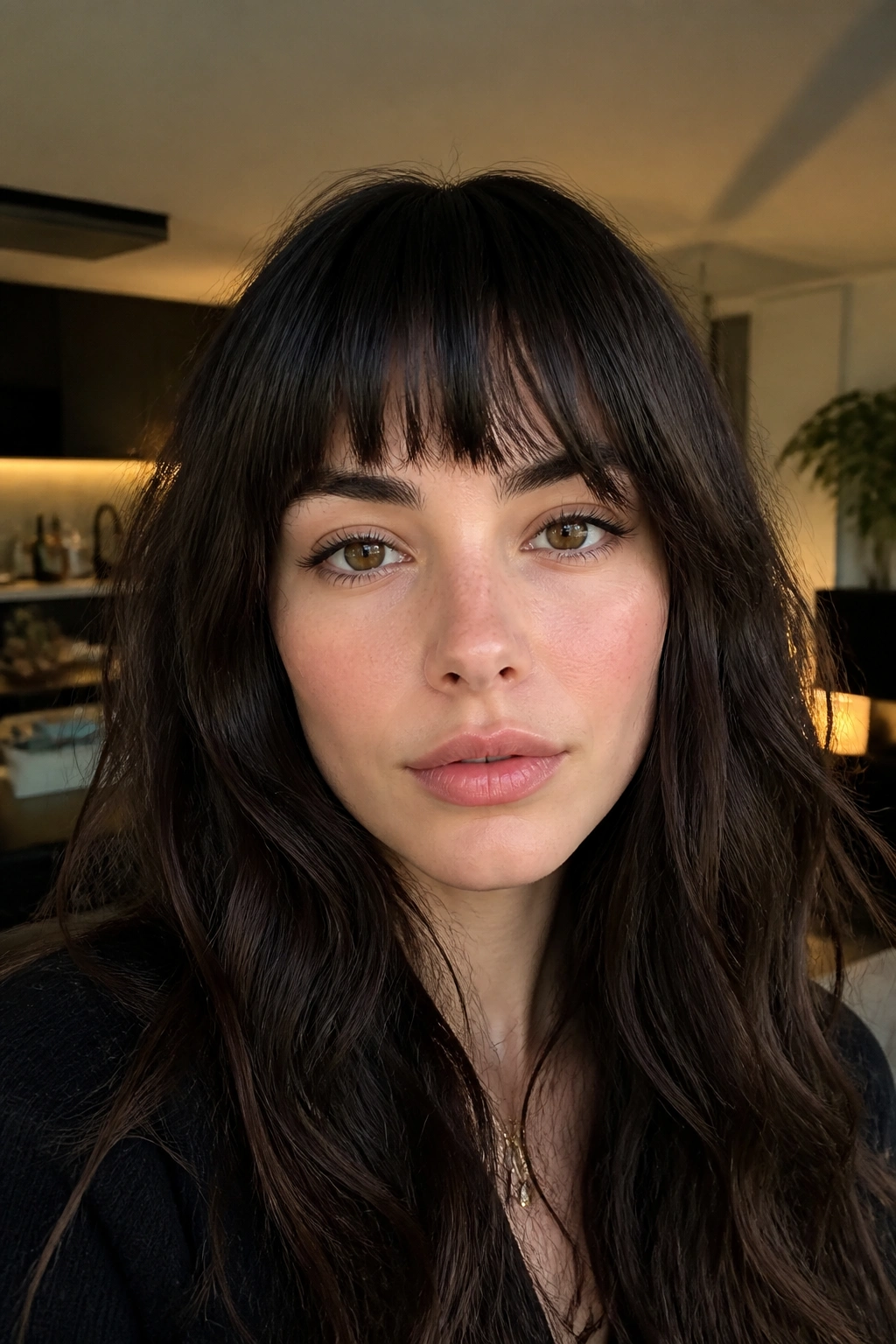
Broken blunt bangs are for thick hair that needs structure but not a heavy wall of it. The base still feels blunt, so you keep the clean line, but the ends are broken up enough that the fringe doesn’t sit like a shelf across the forehead.
That little break in the edge helps round faces a lot. A truly solid blunt bang can cut the face in half in a way that feels boxy. Break the line, though, and the fringe gets shape without losing its edge. It’s a good compromise if you like the idea of fuller bangs but don’t want them to feel severe.
The cut itself usually needs point cutting on the ends and some internal weight removal near the center. Not too much. If you thin it out aggressively, the bangs can split in weird places and lose the whole point of the style.
I like this look with straight hair or a slight bend, because the shape stays visible. On very curly hair, the broken line can disappear fast unless you’re willing to style it every morning.
17. Piecey Fringe with a Lob
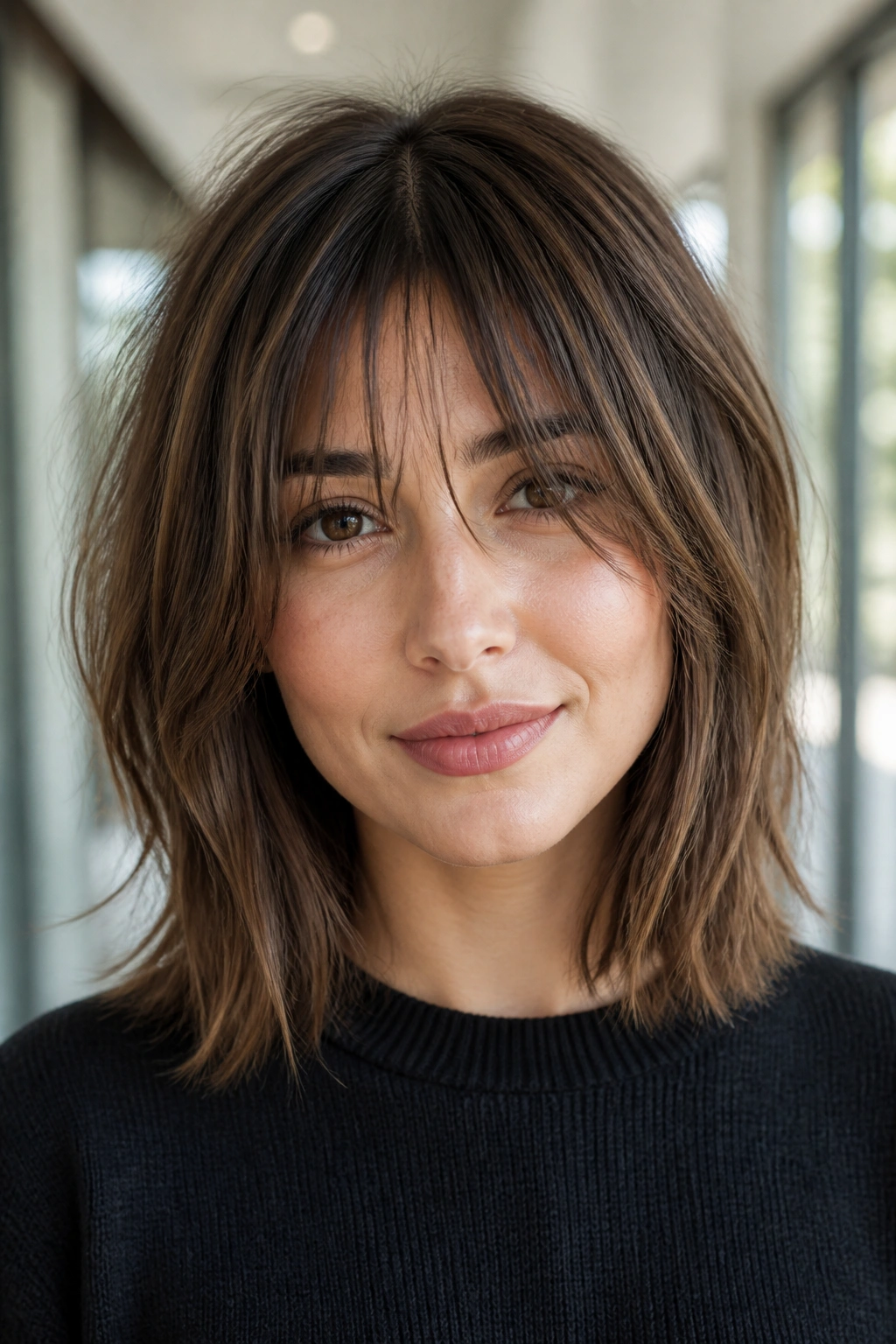
Does a lob make bangs easier? Usually, yes. Piecey fringe with a lob works because the shoulder-skimming length gives the bangs somewhere to blend, and the fringe itself stays light enough to keep the haircut from feeling too heavy at the front.
For round faces, that balance is useful. The lob draws the eye down, and the piecey fringe adds movement around the forehead without swallowing the upper face. The result feels softer than a one-length bob with a dense bang, which can sometimes make the cheeks look fuller.
How to Wear It
Dry the bangs first, then the rest of the cut. If you let everything air-dry at once, the fringe can collapse into the sides and lose its separation. A 1-inch curling wand can also help create a tiny bend at the ends, which makes the piecey texture show up better.
I’d keep the bangs longer at the temples so they melt into the lob instead of sitting on top of it. That detail is small, but it matters. It keeps the haircut from looking top-heavy.
This is a strong choice if you like hair that moves when you walk. Static, solid shapes are the enemy here.
18. Soft Fringe with Flipped-Away Ends
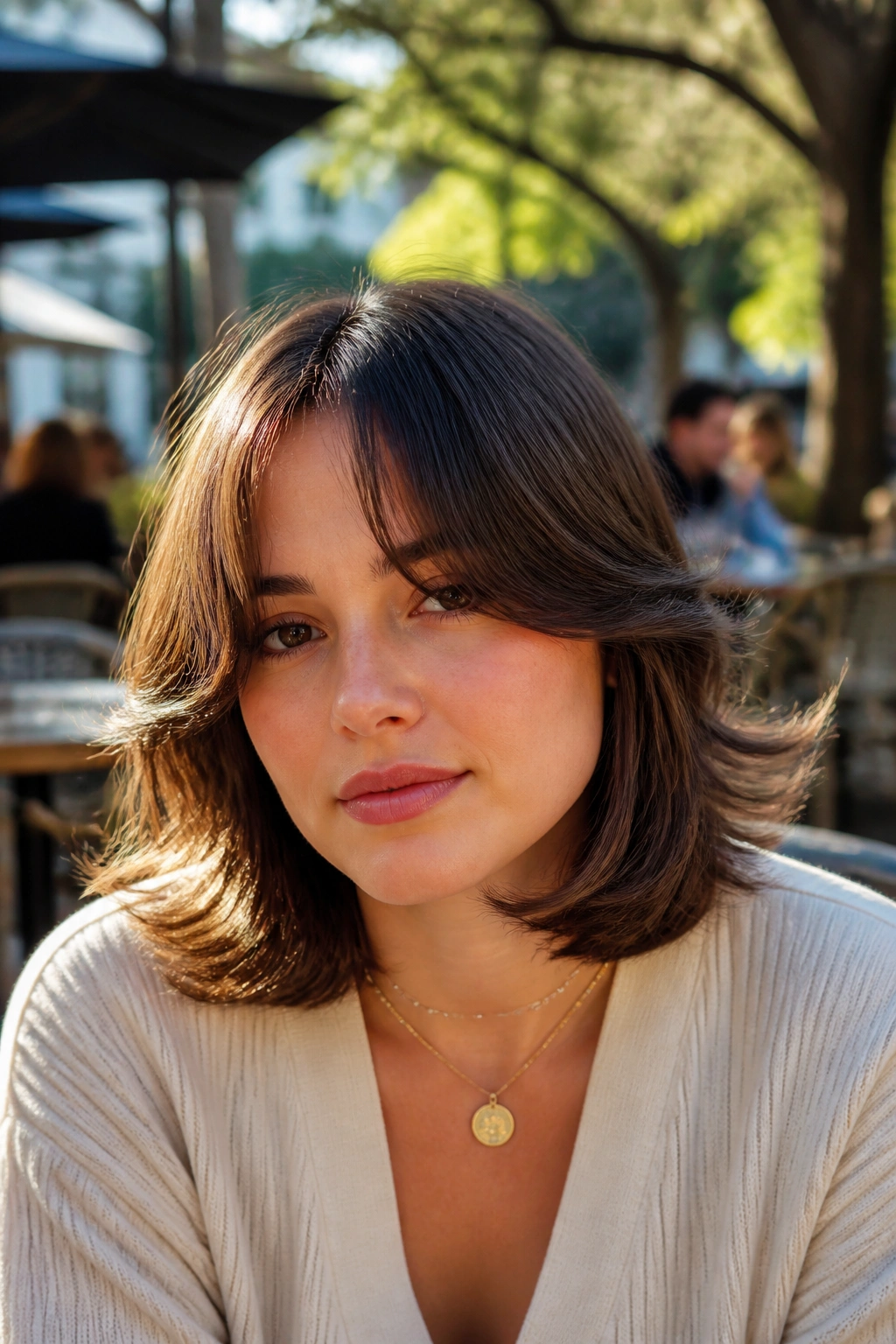
Soft fringe with flipped-away ends has a nice side effect: it opens the face without making the bangs disappear. The ends turn off the cheeks instead of curling inward, so the whole frame feels lighter and a little more awake.
That outward movement helps a round face because it creates space around the cheekbones. Inward-curving bangs can hug the face too tightly and make the lower half look fuller. Flipped-away ends do the opposite. They lift the line and keep the fringe from sitting too close to the widest part of the face.
This version works best with a round brush or a 1.25-inch curling iron, used just at the ends. You are not trying to make ringlets. You just want the last inch of hair to move away from the face instead of hugging it. A little bit of spray wax at the tips is enough to hold the shape without making it stiff.
If you want one textured bang idea that feels polished, adaptable, and not too precious, this is the one I’d send to the top of the pile. It can live with straight hair, loose waves, or a lob, and it grows out without turning awkward overnight. That matters more than people admit. Hair has to live your actual life, not the five minutes after you leave the salon.
