



Soft fringe hairstyles for round faces work best when the front opens the face instead of boxing it in. A fringe that dips at the temples, lands near the brow, or sweeps into the cheekbone can change the whole feel of a cut, even when the rest of the hair stays pretty simple.
The mistake is not fringe itself. It’s a fringe with one hard line from temple to temple. On a round face, that can make the width read louder than it needs to, and nobody wants that from a haircut that’s supposed to feel soft.
Texture matters too. Fine hair needs lighter ends so the fringe doesn’t split into stringy pieces; thick hair usually needs internal layers or point-cut ends so the front doesn’t sit like a shelf. And if your hair has any wave at all, the shape you choose will matter twice as much, because the fringe will dry with its own little opinion.
The styles below lean on softness, angle, and movement. Some are low-maintenance. Some need a careful blow-dry. A few will ask for trims every 4 to 6 weeks if you want the shape to stay crisp. Worth it, though, when the fringe is doing real work.
1. Curtain Fringe With Collarbone Layers
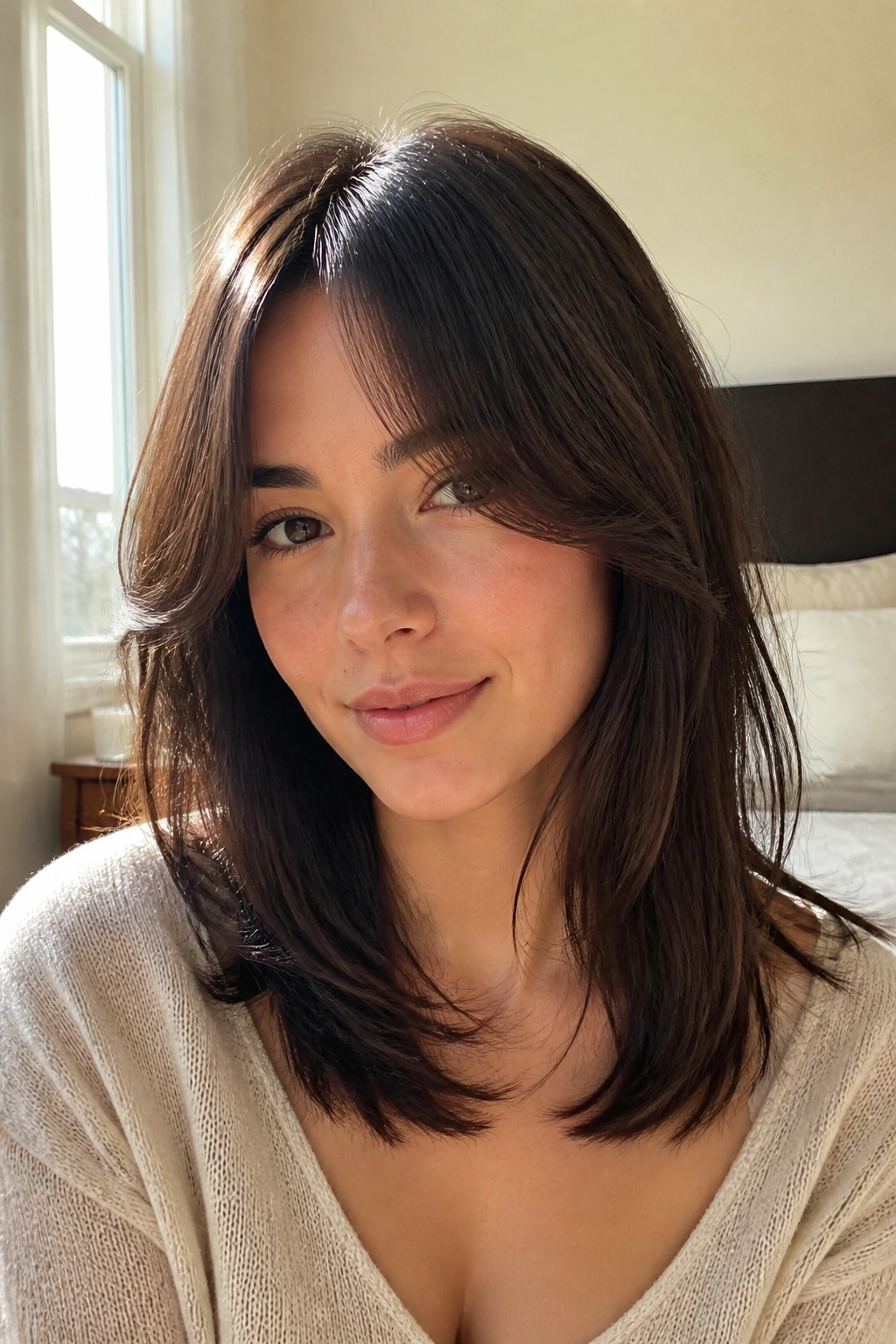
This is the first cut I’d hand to someone with a round face who wants fringe but doesn’t want to feel trapped by it. Curtain fringe with collarbone layers gives the face a clean vertical line in the middle, then lets the hair open out near the cheekbones, which helps stretch the whole shape a little.
What makes it work
The shortest point should sit around the bridge of the nose or just below the brow, then drift longer toward the jaw. That soft slope keeps the front from looking blunt. Collarbone layers are the other half of the trick. They stop the ends from piling up around the widest part of the face.
Ask for:
- A center part or a near-center part
- Fringe that starts soft, not thick
- Longer pieces that graze the cheekbone
- Layers that begin below the chin
A medium round brush and a quick blow-dry toward the face-opening sides are enough. Don’t overthink the finish. A little bend looks better than a stiff curl.
2. Wispy Brow-Skimming Fringe on a Long Lob
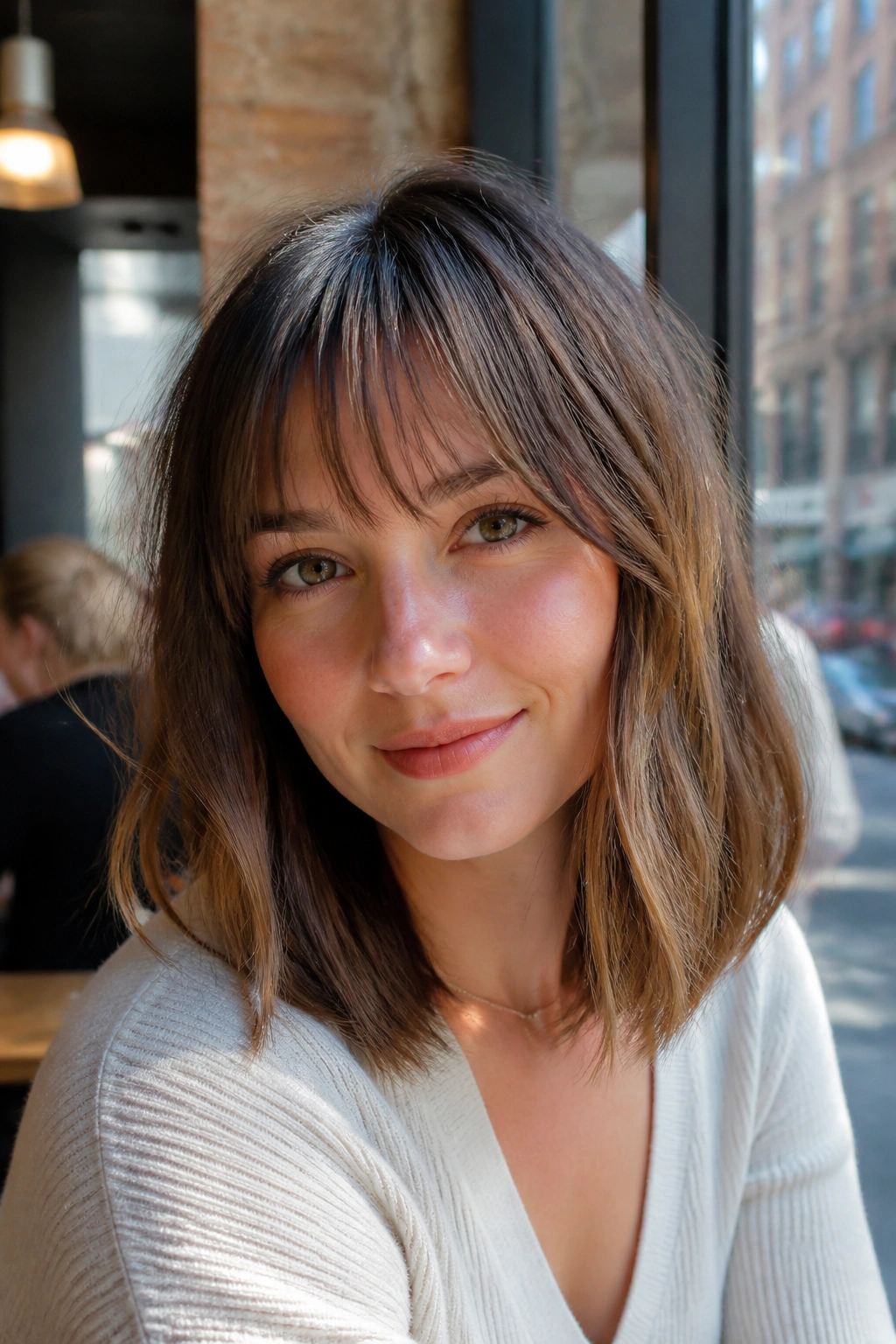
A long lob with a wispy fringe is one of those cuts that looks easy because it is easy. The fringe sits close to the brows, but it stays light enough that you still see forehead through it, which keeps the face from feeling crowded.
That bit of air makes a difference on a round face. Heavy bangs can flatten the top third of the face and make the middle look wider. A wispy fringe does the opposite. It breaks up that block of hair and gives the eye somewhere to move.
Fine hair loves this shape, and so does hair that tends to go flat by lunch. The trick is to keep the fringe piecey, not sparse. If you can see a small amount of scalp through the fringe when it separates naturally, you’re in the right zone. If it looks see-through in a bad way, it probably needs more density and less thinning.
A touch of dry shampoo at the roots keeps the fringe from clumping. That part matters more than people think.
3. Side-Swept Fringe on a Layered Bob
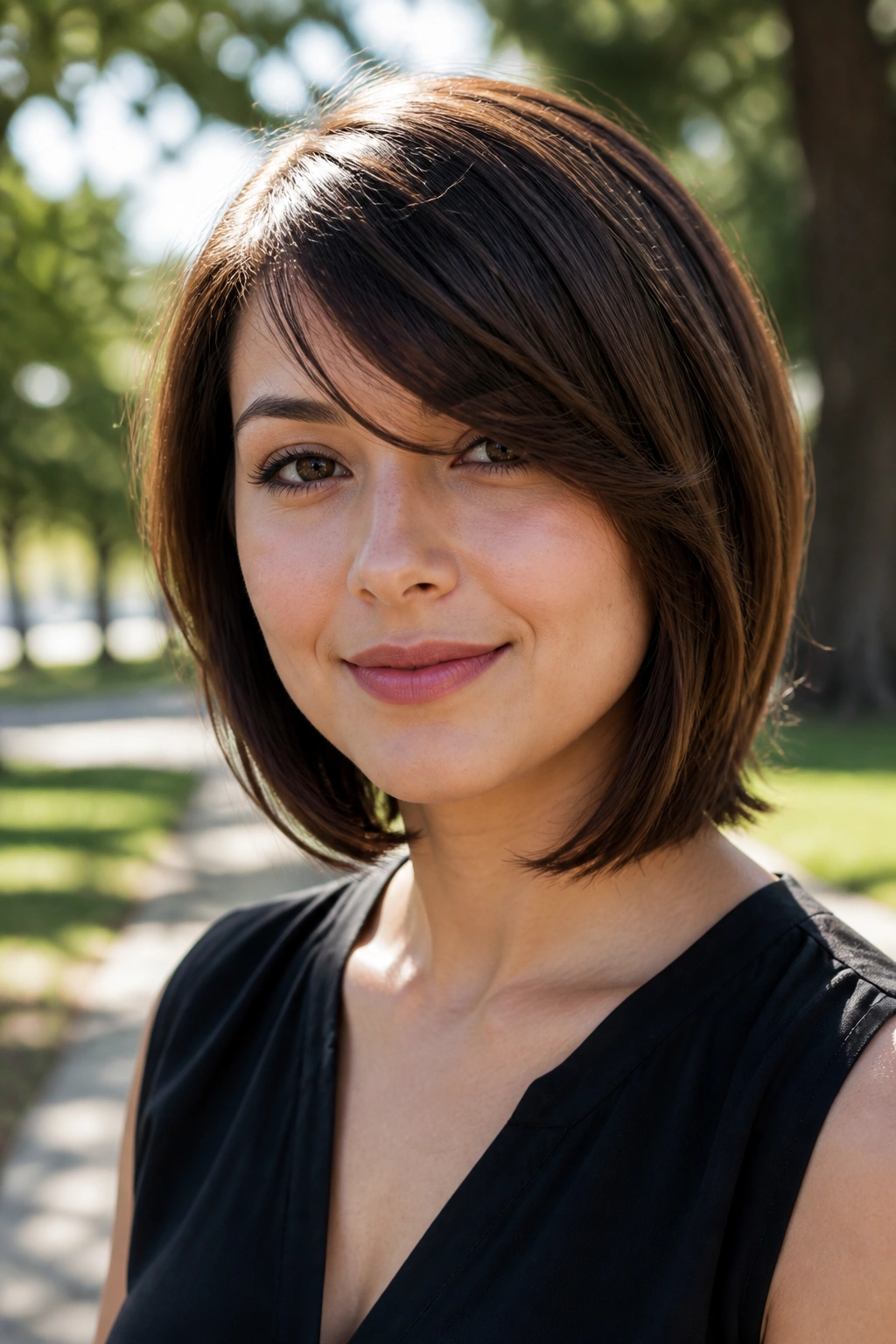
A side-swept fringe is one of the easiest ways to bring angle to a round face without making the haircut feel severe. The diagonal line pulls the eye across the face instead of stopping it right in the middle. Simple idea. Good payoff.
Picture a bob that hits somewhere between the chin and just below the jaw, with a fringe that begins deep on one side and falls across the forehead in a loose sweep. That shape works because the eye sees movement, not width. It also gives you a bit of lift at the crown if the bob has soft layers through the back.
How to wear it
Blow-dry the fringe in the direction you want it to fall, then nudge the ends with a flat brush or the edge of a round brush. Keep the finish soft. If the fringe is too polished, it can start looking like a helmet. No one needs that.
Best of all, this cut grows out well. If you miss a trim appointment, it still hangs on.
4. Bottleneck Fringe With Shoulder-Length Ends
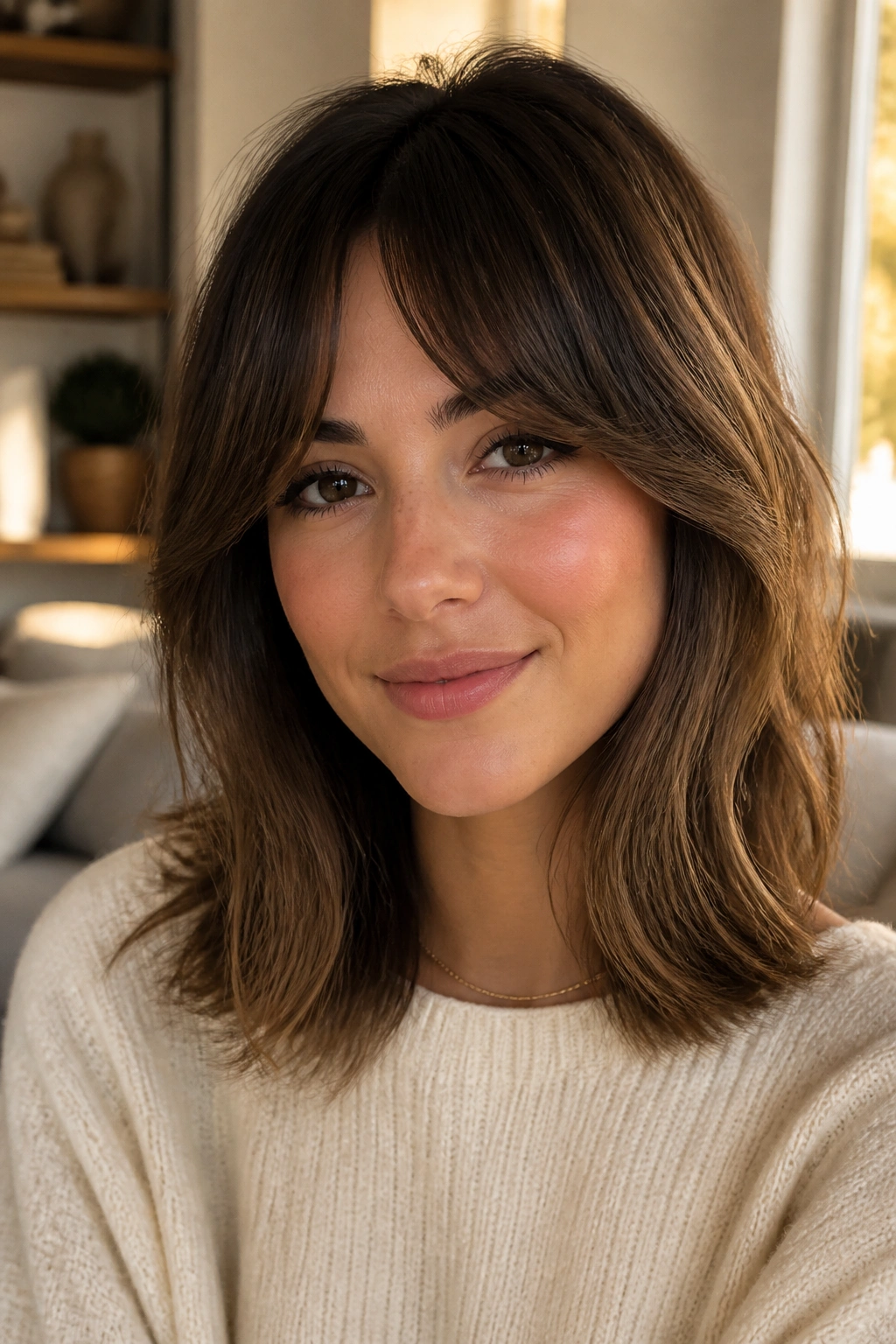
Why does a bottleneck fringe work so well on a round face? Because it’s narrow at the center and wider near the temples, which gives the forehead shape instead of one blunt edge. That little flare near the sides is what makes it feel flattering rather than heavy.
Shoulder-length hair suits it because the ends don’t compete with the fringe. The cut has room to breathe. You can wear it straight, wavy, or with a loose bend, and it still keeps that soft frame around the face.
How to style it
- Blow-dry the middle section first.
- Use a small round brush to bend the side pieces away from the cheeks.
- Leave the ends slightly undone.
- Use a pea-sized amount of cream, not a big glob.
That last point matters. Too much product makes the fringe separate in chunky pieces and ruins the airy look. A bottleneck fringe should feel feather-light near the center, then a little fuller at the edges. If the forehead is fully hidden, the shape loses what makes it good.
5. Feathered Shag With Broken Fringe Pieces
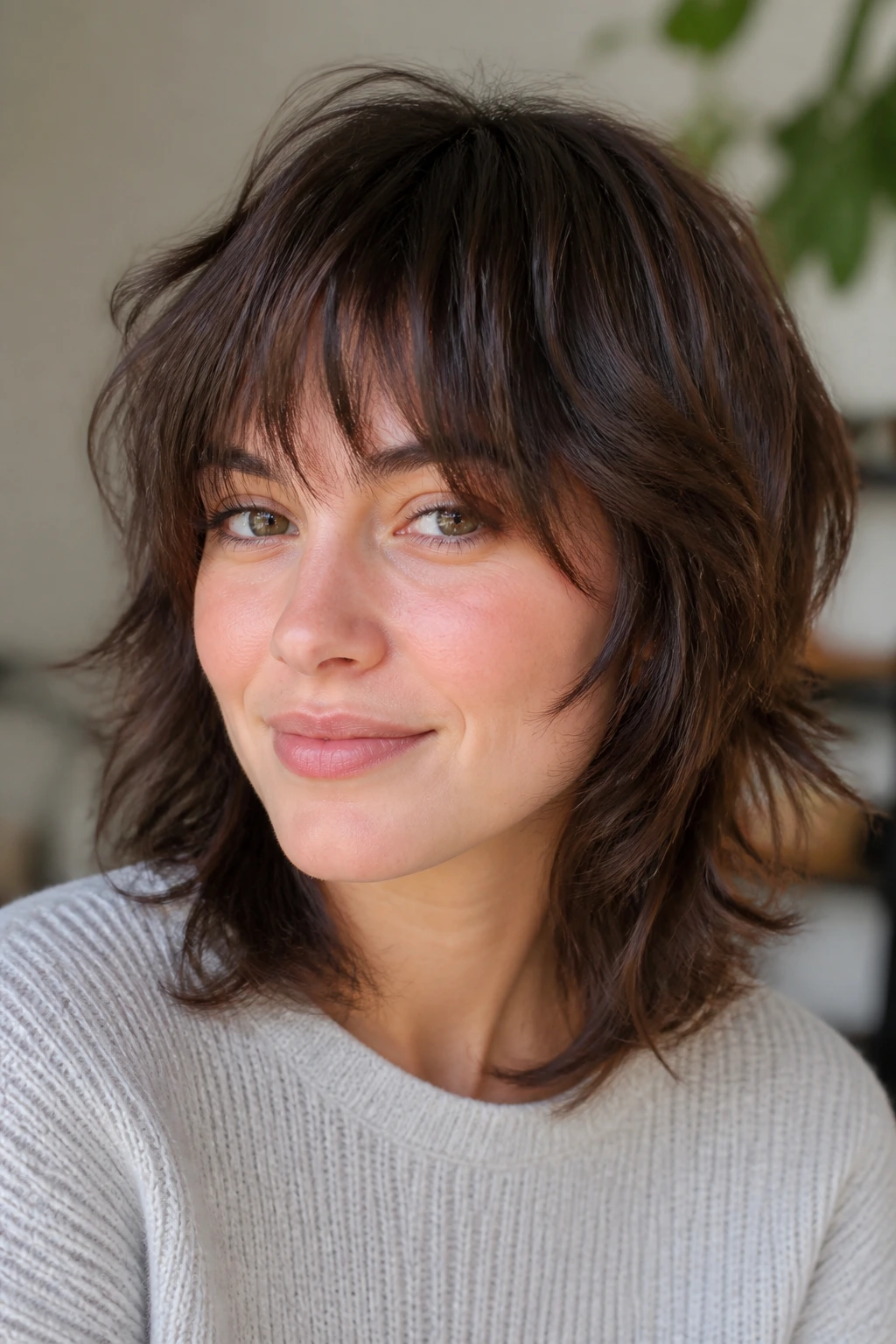
If you like movement, this is the least fussy option in the bunch. A feathered shag with broken fringe pieces takes the roundness out of a face by scattering attention instead of forcing one clean line across the front. It feels a little undone, and that’s the point.
The fringe is not one solid slab. It’s chopped into soft, uneven pieces that fall around the brows and temples. The layers through the crown and around the cheeks keep the shape from sitting heavy. On naturally wavy hair, this cut can look almost better after it’s been slept on a little.
You do need to like texture. If you want a smooth, glossy finish every single day, this may frustrate you. If you want hair that works with a little grit — air-dried, diffused, or scrunched with cream — it makes life easier.
A shag also hides the awkward grow-out stage better than most fringe cuts. That alone earns it a place here.
6. Long Blended Fringe With Face-Framing Layers
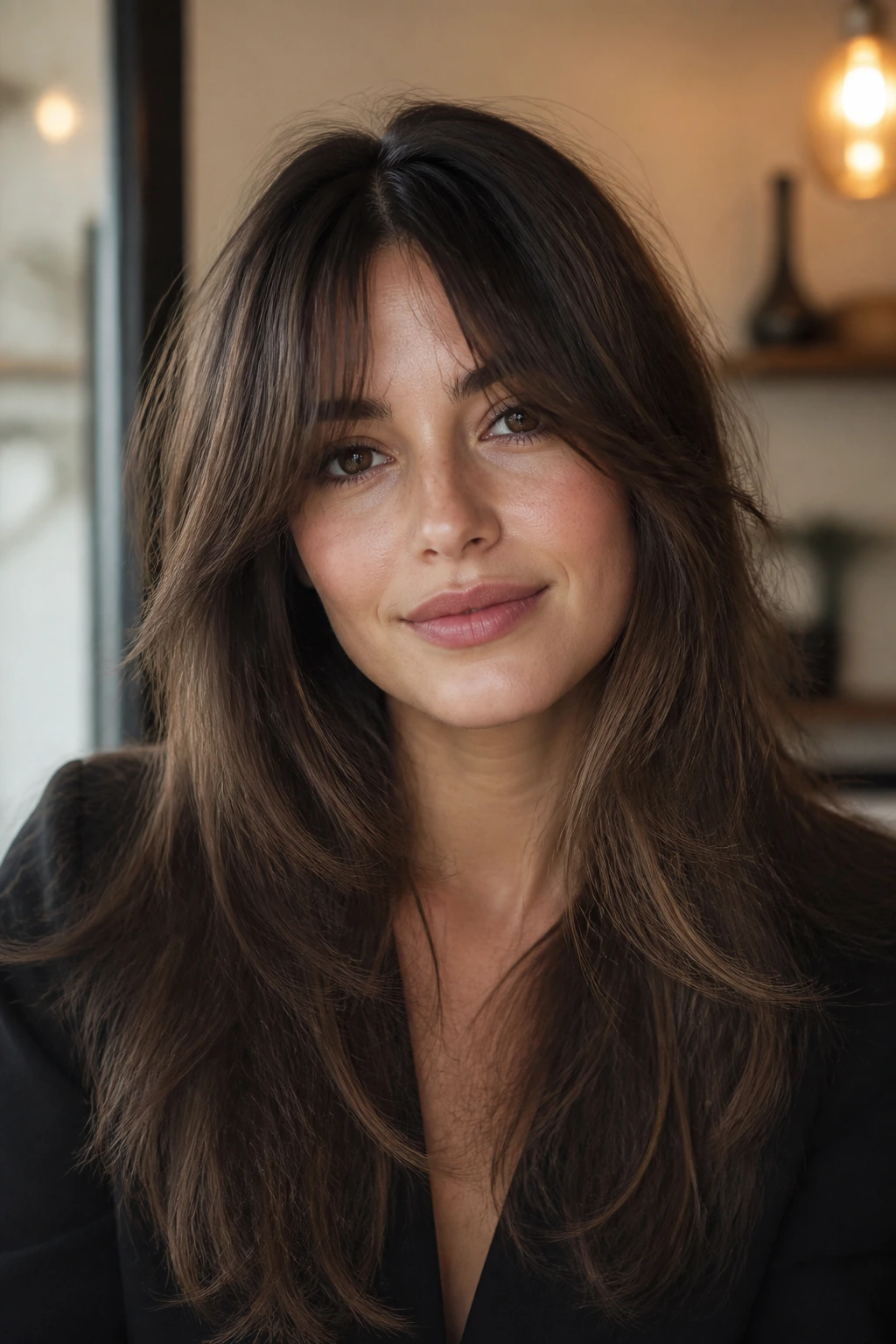
Long hair can swallow a round face if the front is too blunt. A long blended fringe fixes that by keeping the bangs soft and dragging the line downward through the cheek and jaw. The face-framing layers matter as much as the fringe itself, maybe more.
This is one of those styles that looks expensive even when it isn’t styled much. The fringe can start around the eyebrows, but the outer pieces keep going, almost like the cut is melting into the rest of the hair. That blend makes the forehead less boxy and gives the face a little length without shouting about it.
Wear it with a middle part if you want a softer, balanced look. Switch to a shallow side part if you want more lift at the crown. Either way, the front should never feel stuck in one flat plane.
A trim every 6 to 8 weeks keeps the layers from turning into one heavy curtain. That’s the difference between blended and boring.
7. Soft French Fringe With Air-Dried Waves
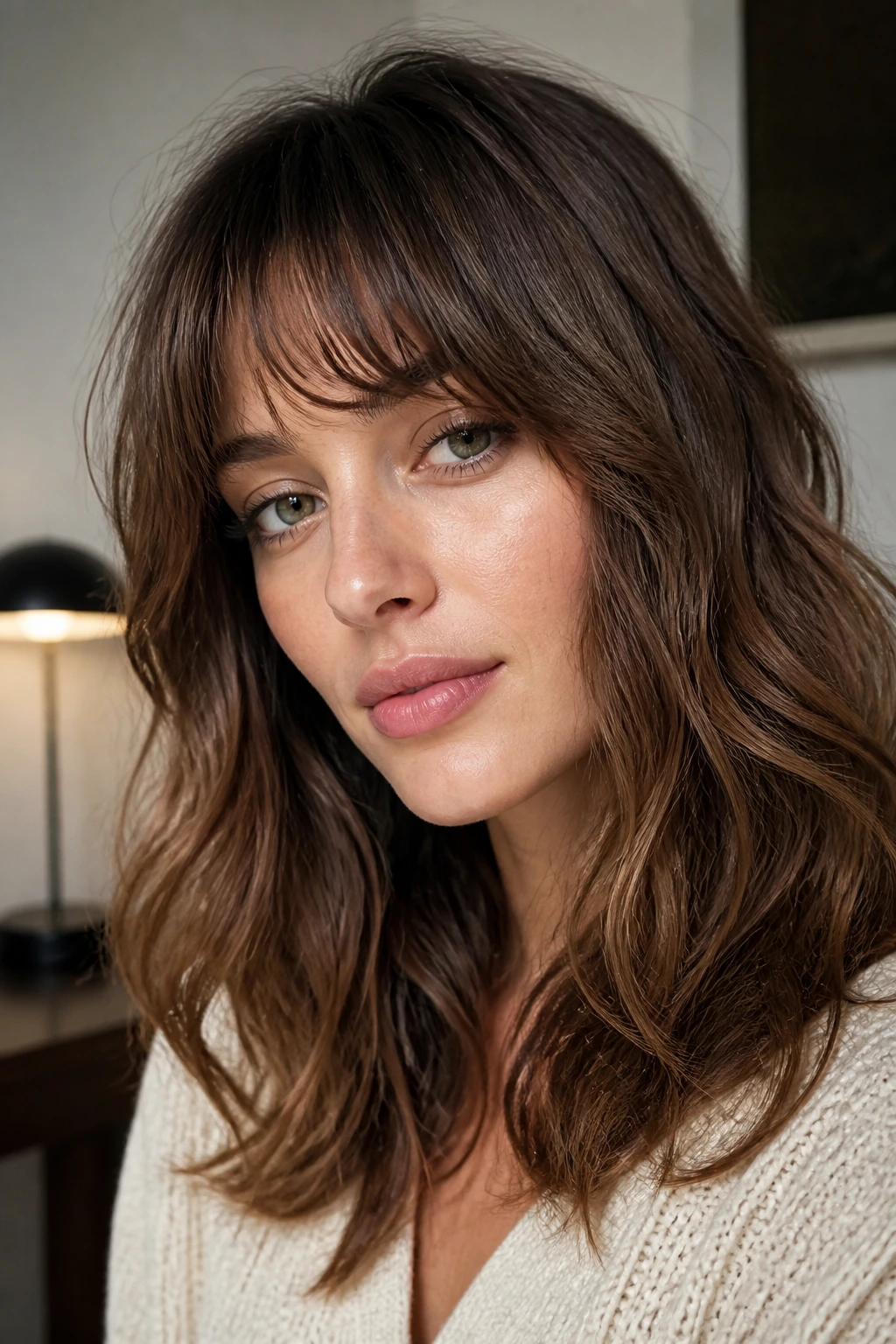
This one has a mood, but not in a fussy way. A soft French fringe sits low enough to feel chic, yet the edges stay broken and loose so it doesn’t turn into a solid band across the forehead. On round faces, that lightness keeps everything from looking too wide.
The best version of this cut works with air-dried waves. The fringe lands in soft bends, the sides tuck inward just a touch, and the shape keeps moving even when you don’t heat-style it. Thick hair benefits from point-cut ends here, because the fringe needs to lie close without feeling blunt.
What to ask for
- Shorter center pieces
- Tapered sides that brush the temples
- Ends that are thinned by hand, not shaved thin
- A bit of length left in the fringe so it can split naturally
This style can look a little flat if the hair is pin-straight and stubborn. If that’s your texture, use a tiny round brush on the front only. The rest can do its own thing.
8. Curly Fringe With Rounded Layers
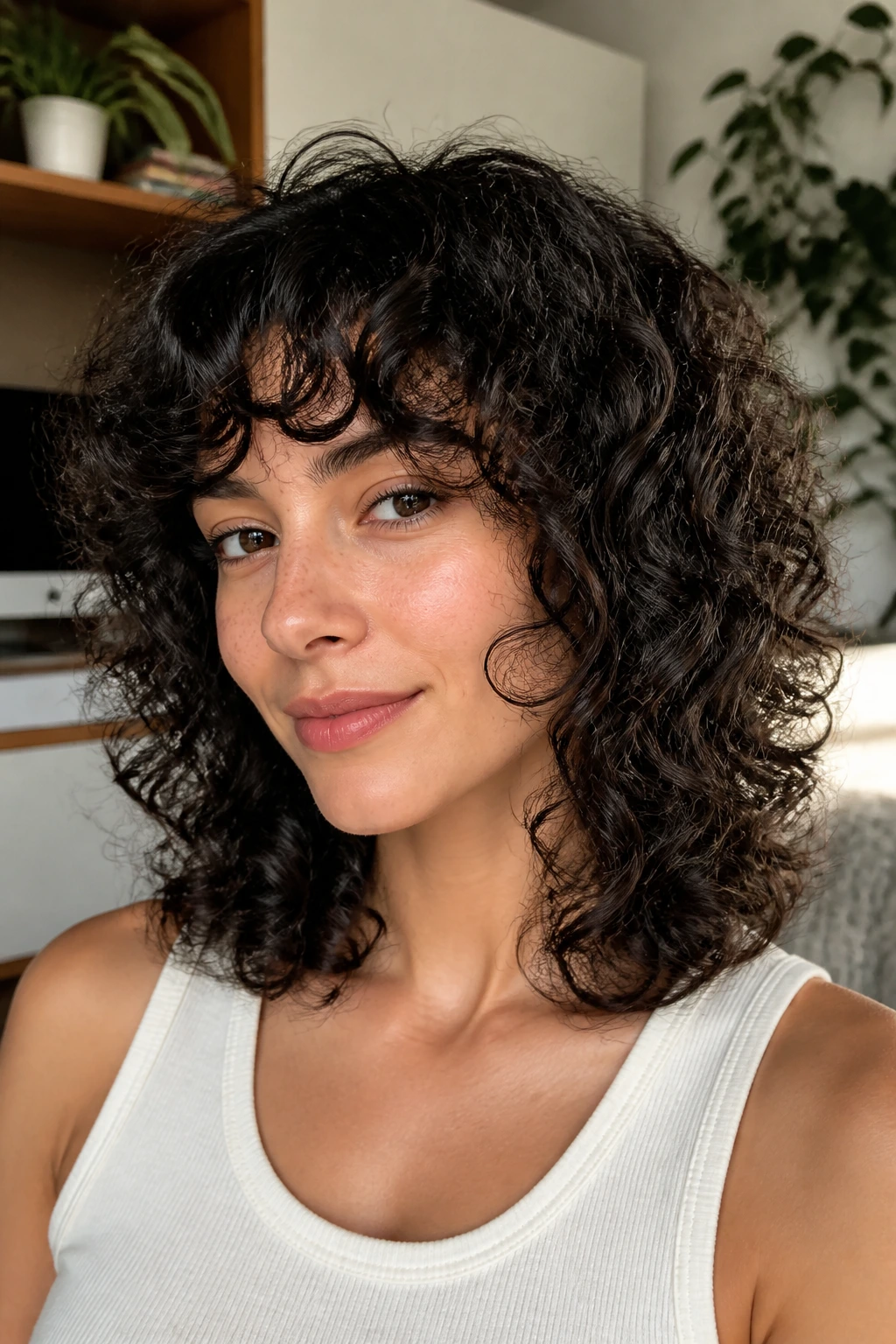
Curly hair changes the whole fringe conversation. A curly fringe can be gorgeous on a round face, but the shape has to be cut with the curl pattern in mind, not against it. If the bangs are cut too short while wet, they spring up and sit too high. That’s where things go sideways fast.
A good curly fringe leaves room for shrinkage. The shortest curls should land around the brows when dry, not wet. Rounded layers around the face then help the fringe blend into the rest of the cut instead of making it look like a separate piece stuck on top.
The part that matters
Ask for the fringe to be cut dry or nearly dry. That lets the stylist see how the curl falls on your face, which is half the battle. Then keep the products light. A curl cream with some hold is usually enough; heavy butter can make the fringe droop and clump.
Curly fringe works especially well when the curls around the cheekbones are left a little longer. That longer edge pulls the eye down and keeps the face from feeling overly circular.
9. See-Through Fringe on a Wavy Lob
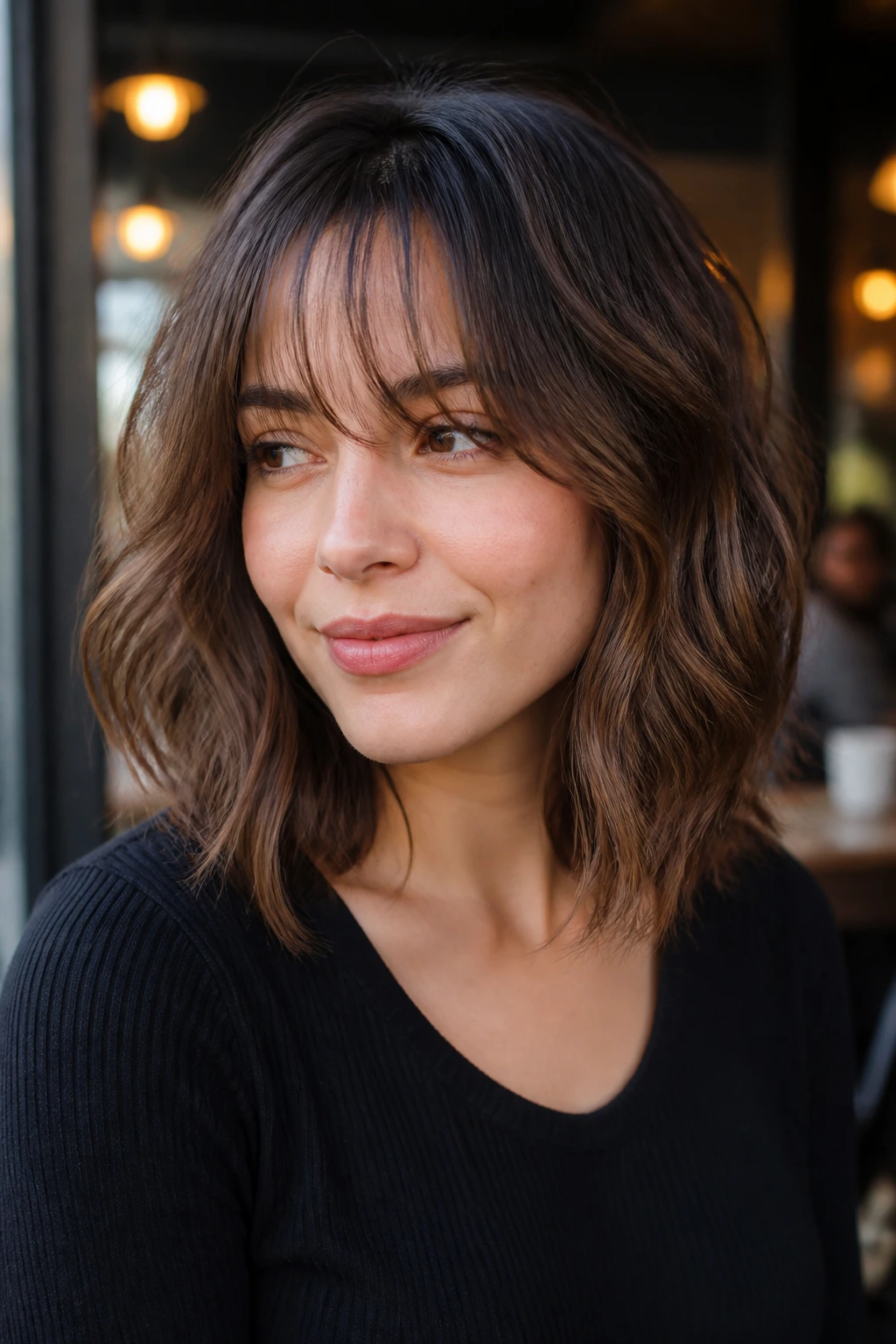
A see-through fringe sounds delicate because it is delicate. You’re not building a thick wall of hair across the forehead. You’re laying down a thin veil of fringe that lets skin show through, which keeps the cut from closing in on a round face.
This style shines on wavy hair. The fringe can be a little uneven in the best way, and the lob underneath gives the hair enough length to stay balanced. If your hair is thick, ask for soft internal thinning near the ends, not all over. Too much thinning makes the fringe look stringy by the second day.
The charm here is the looseness. A sea-salt spray or light texture mist can give the fringe a bit of separation without making it crunchy. A round face usually looks good with soft movement near the cheek area, and this cut gives exactly that.
It is a quieter look than curtain bangs, but quieter is not boring. Not at all.
10. Tapered Pixie With a Long Sweeping Fringe
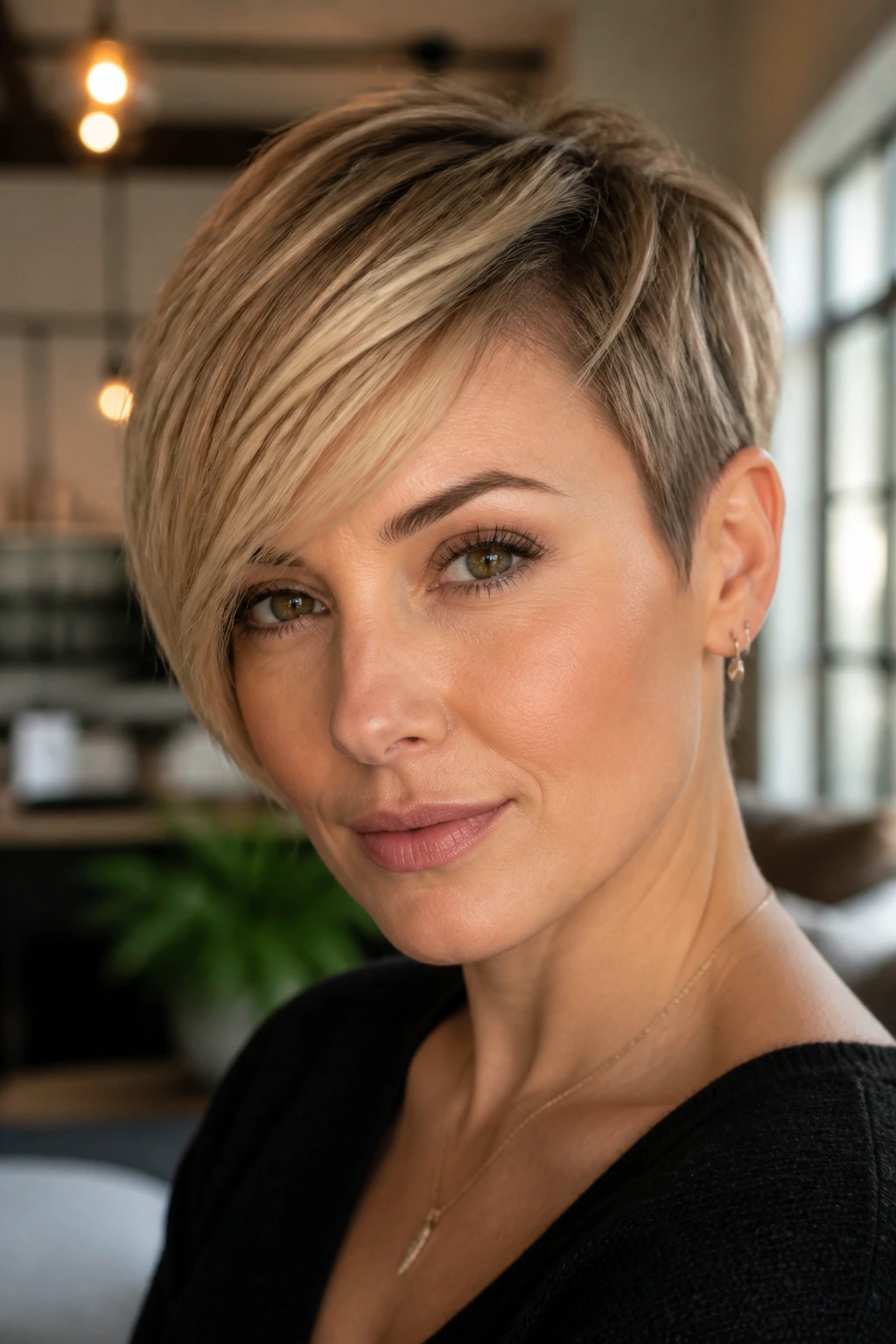
Short hair can work on round faces. In fact, a good pixie often shows the face better than long hair does, because it stops hiding the jaw and cheek line. The catch is the fringe. A blunt mini-bang can make the face feel wider. A long sweeping fringe does the opposite.
This version keeps the sides tapered close, then leaves enough length across the top for movement. The fringe should curve diagonally across the forehead, not lie in one flat strip. That diagonal line is the whole reason it flatters.
Keep an eye on these details
- Ask for length at the front, not a hard chop
- Keep the crown soft, not puffy
- Use a matte paste sparingly
- Avoid over-trimming the temples
A pixie like this needs a little styling most days, but not much. Run product through the front with your fingers, then push the fringe across and slightly forward. Done. If the ends look too neat, mess them up a touch. A round face usually benefits from a bit of edge in a short cut.
11. Deep Side Part With Piecey Fringe
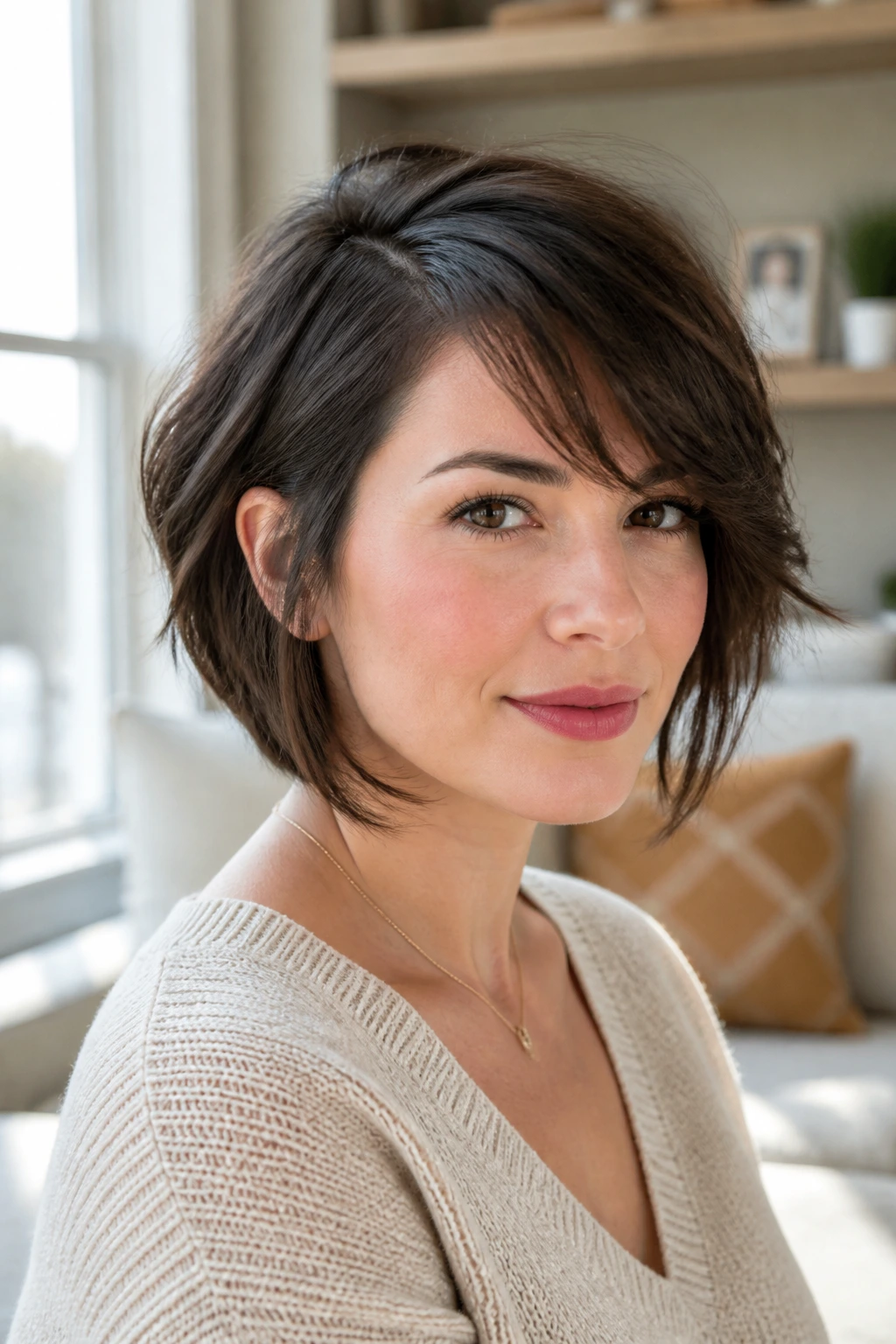
Sometimes the easiest fix is not a full fringe at all. A deep side part with piecey fringe gives you some forehead coverage without committing to a solid bang line, and that can be a smart move if you’re cautious about fringe on a round face.
Unlike straight-across bangs, this shape keeps the eye moving. The hair lifts at one side, falls through the front in separated pieces, and skims the cheek rather than stopping at it. That kind of motion helps break up the circular feel of the face.
It also plays well with long hair. You can tuck one side behind the ear, leave the other side loose, and get a little asymmetry without changing the whole cut. That asymmetry matters more than people think. A round face likes a small break in symmetry because it stops the face from reading as one soft shape from top to bottom.
If your hair is fine, keep the fringe pieces longer. If it’s thick, keep them light but not wispy to the point of disappearing.
12. Butterfly Cut With Curtain Bangs
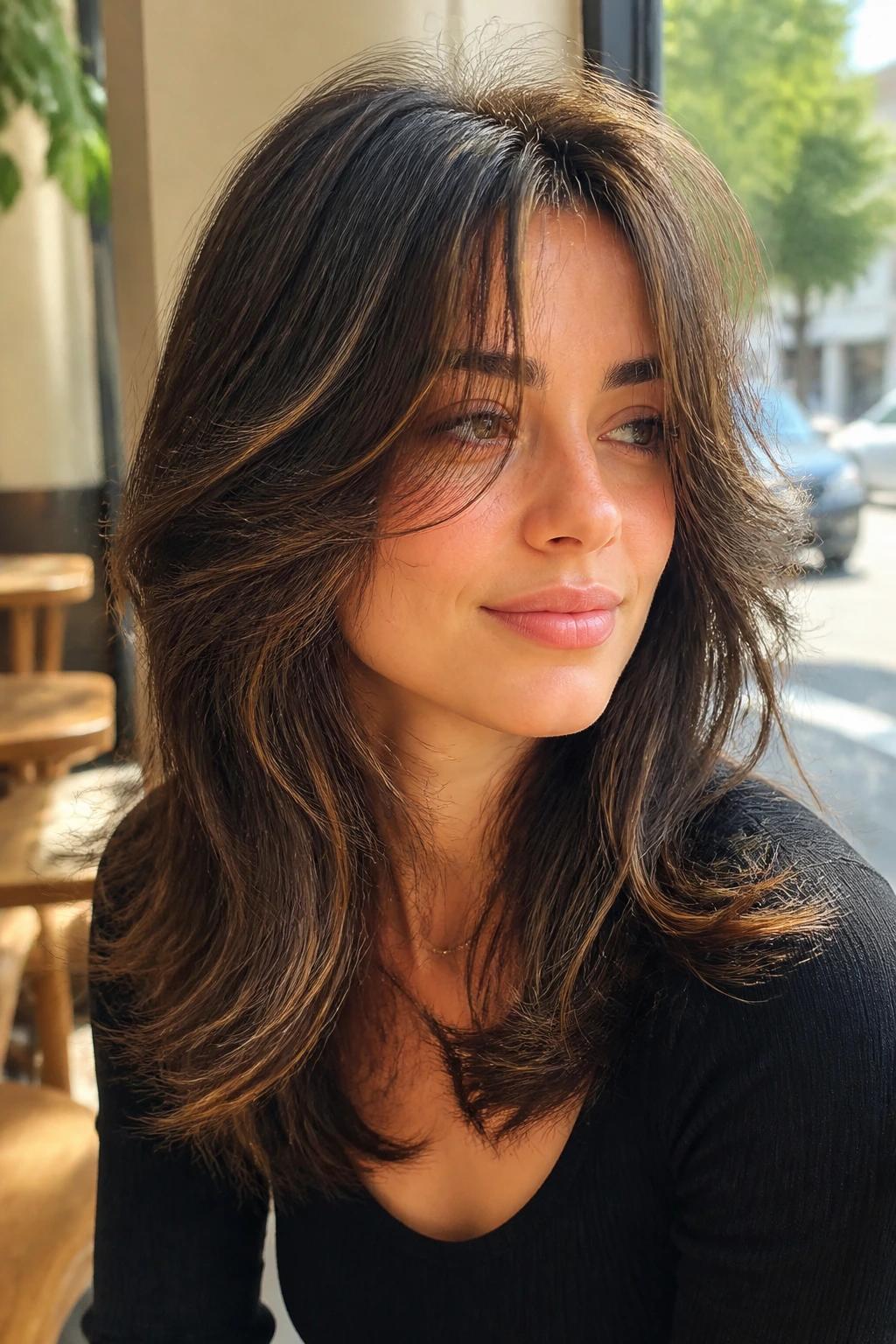
The butterfly cut gives you lift at the top and softness through the lengths, which is exactly why it suits a round face so well. The shorter layers around the crown and cheekbones create shape, while the curtain bangs keep the front from looking heavy. It’s a lot of movement in one haircut, but the pieces still feel controlled.
The fringe should open around the middle of the face and float into the longer layers. That drop from short to long creates a vertical line that helps lengthen the face. If the shortest pieces land too high, the cut can look top-heavy. If they land too low, the bangs lose their shape.
How to style it
Use a 1.25-inch round brush or a large-barrel blowout brush. Lift the crown first, then bend the curtain pieces away from the cheeks. A quick pass with a cool shot helps the shape stay put.
This cut is a little more styling-hungry than a shag, but it looks polished without being stiff. If you like hair that moves when you do, this one earns its keep.
13. Angled Bob With a Soft Diagonal Fringe
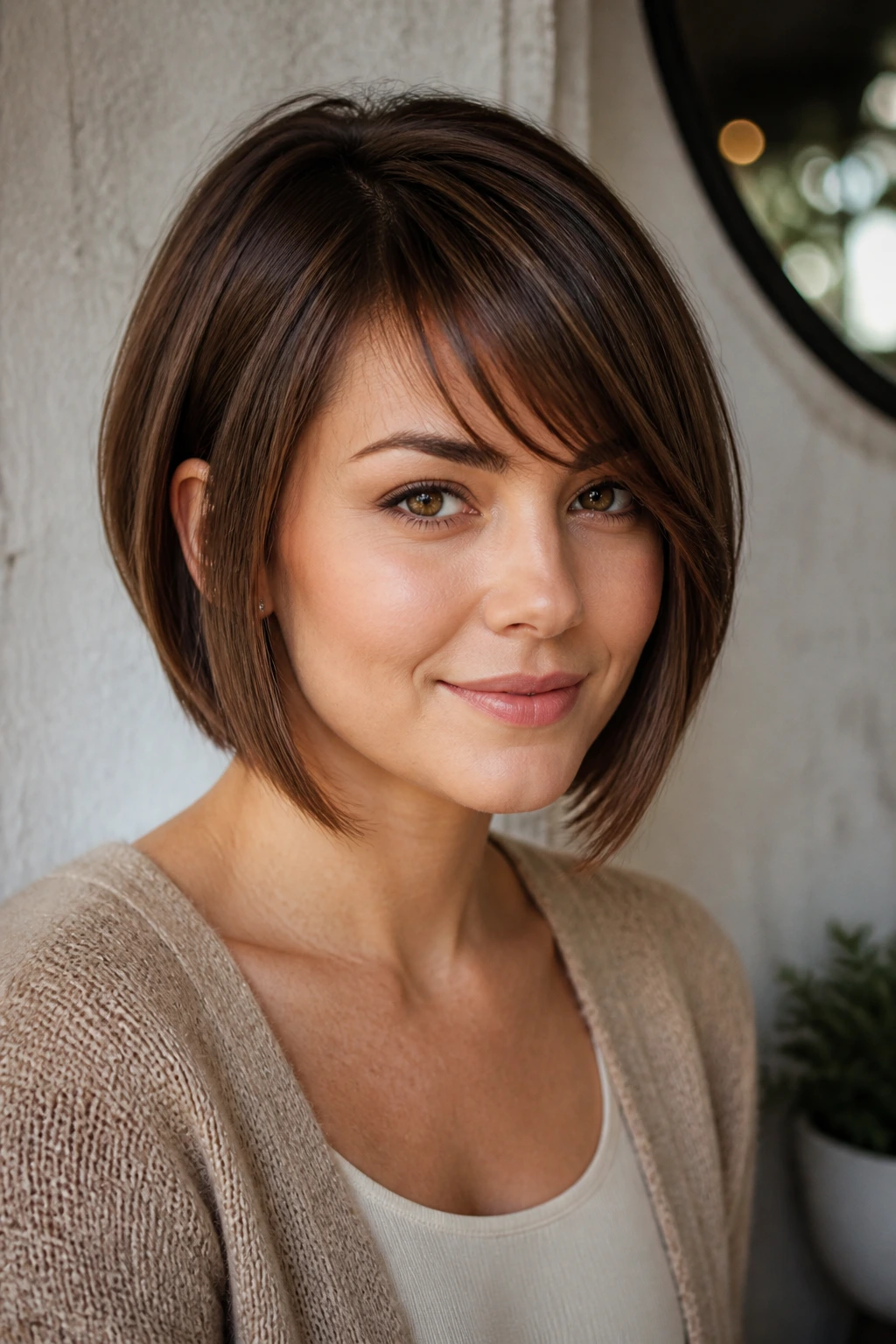
A round face can take a bob, but the bob needs direction. An angled shape — shorter in back, longer in front — gives the face that direction without making the cut feel sharp. Add a soft diagonal fringe, and the whole thing starts doing some very useful work.
The front edge should skim the jaw or land a bit below it. That keeps the widest part of the haircut away from the widest part of the face. The fringe should slide across the forehead with a little bend, not sit like a blunt panel. When those two angles line up, the face looks more oval and less broad.
This is a good cut if you like structure. It’s neat, but not severe. It looks even better with a slight wave at the ends, because that softens the lines and keeps the bob from feeling boxy.
A flat iron can help, but only if you bend the front slightly under or away from the face. Straight and sharp is not the goal here.
14. Shoulder-Length Air-Dried Cut With Long Fringe
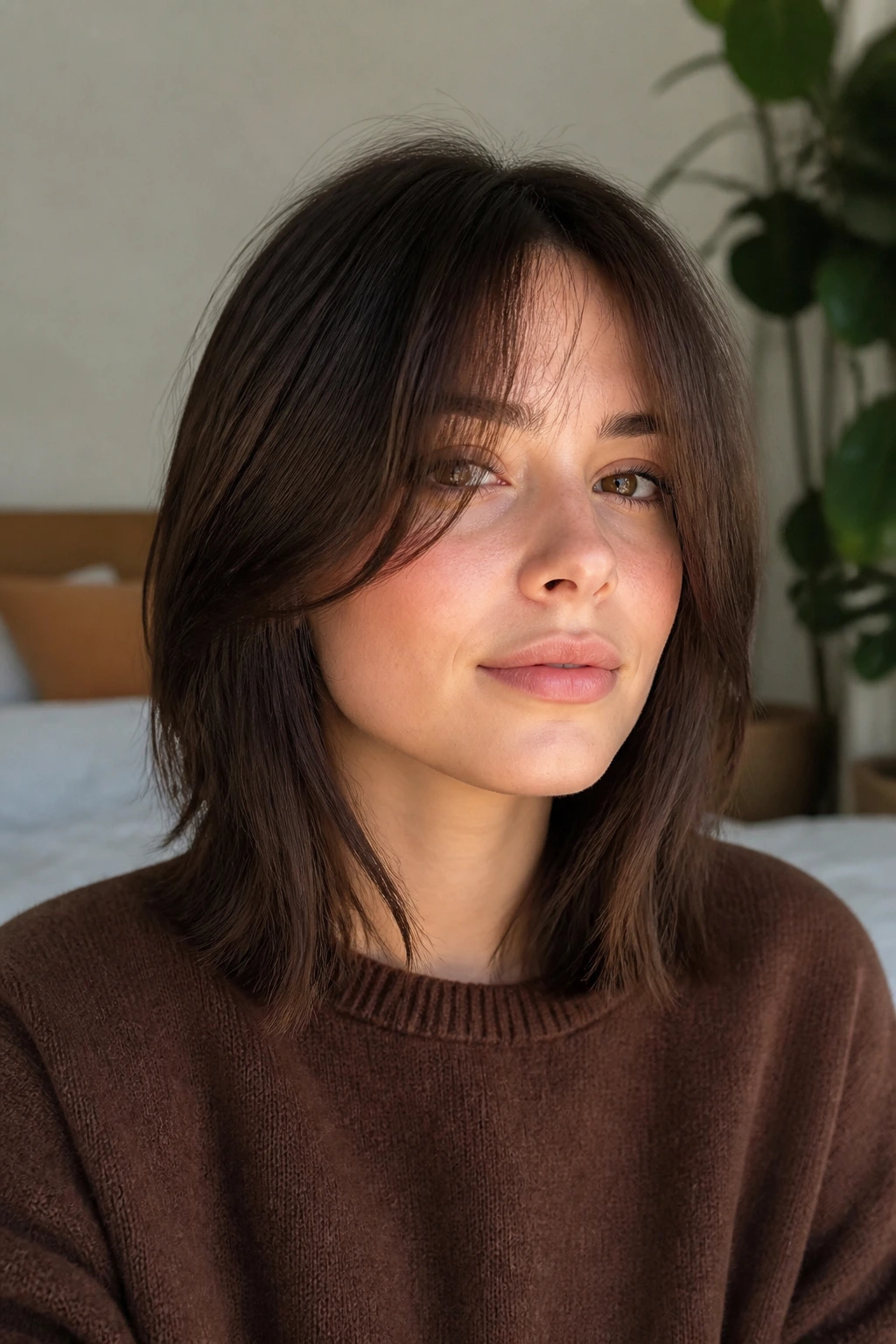
Some people want fringe without the morning ritual. Fair enough. A shoulder-length cut with a long fringe is one of the easier routes, especially if your hair already has wave or bend. The fringe can be worn loose and parted softly, then left to dry on its own while the rest of the hair settles into shape.
What keeps this flattering on a round face is the length of the front pieces. They should start near the brow line and continue down into the cheek and jaw area. That gives the face a longer frame without making the fringe feel heavy. If the hair is cut too bluntly, the whole thing can puff out at the sides, and that’s not what you want.
A microfiber towel and a small amount of mousse go a long way here. Scrunch the roots a bit, comb the fringe where you want it, then leave it alone. Really. The more you fuss with air-dried fringe, the more likely it is to separate in odd places.
This is a good everyday shape. Not fancy. Just useful.
15. Textured Crop With a Side Fringe
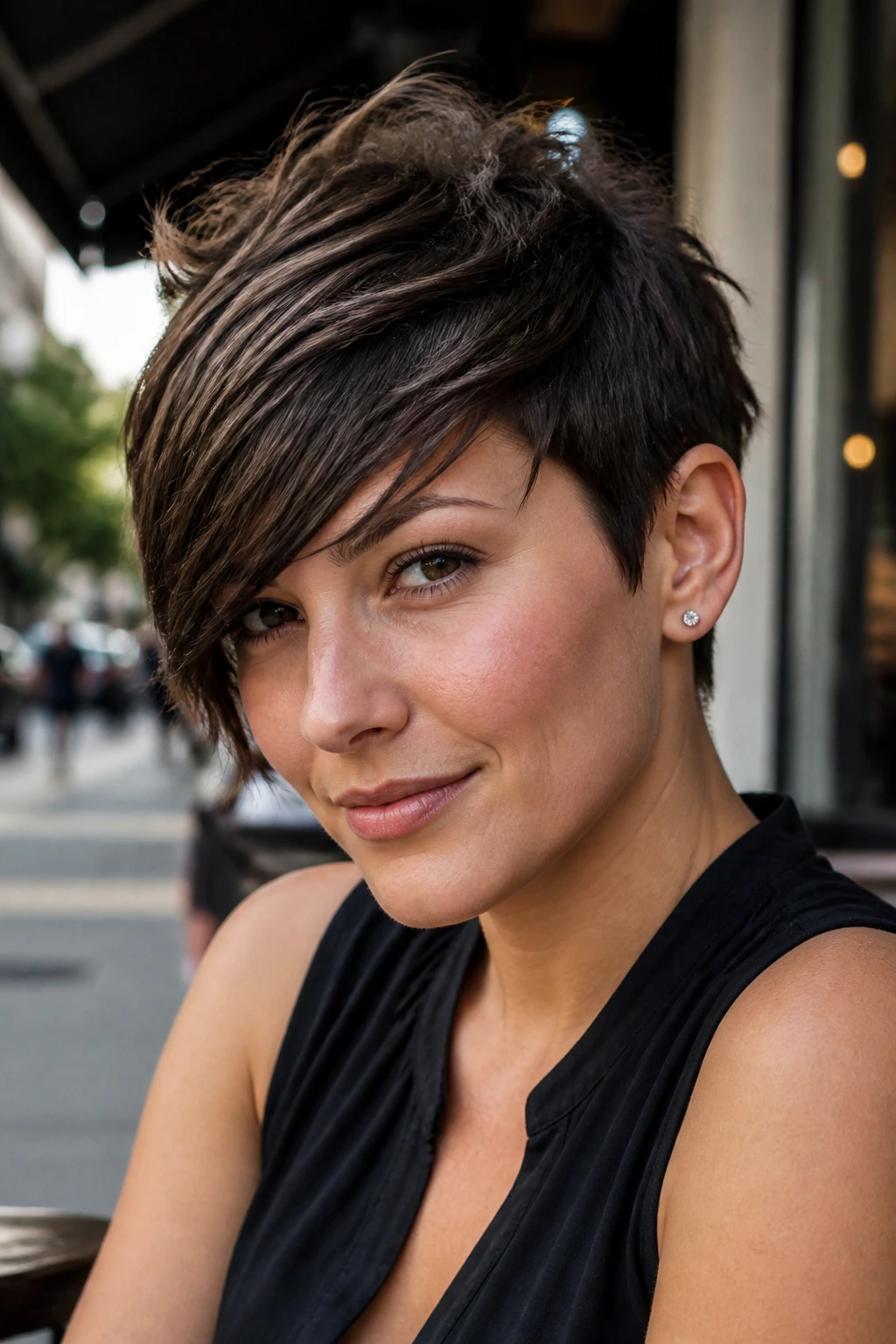
Short hair does not have to be severe, and this crop proves it. A textured crop with a side fringe keeps the top piecey and soft, while the fringe falls across the forehead in a way that breaks up roundness instead of drawing a line around it.
The key is texture at the top, not bulk. You want short layers that move, not a puff of hair sitting above the forehead. The side fringe should start heavier near the part and taper as it crosses the front. That tiny shift keeps the cut from looking blocky.
Best for hair that…
- Needs shape without daily heat styling
- Has some natural bend
- Looks flat in longer styles
- Can handle a little product
A small dab of paste or clay is enough. Work it through the top with your fingertips and leave the ends a bit loose. If the fringe looks too tidy, it will feel older than it is. If it looks slightly roughed up, the cut wakes up. That’s the sweet spot.
16. Soft Wolf Cut With a Long Fringe
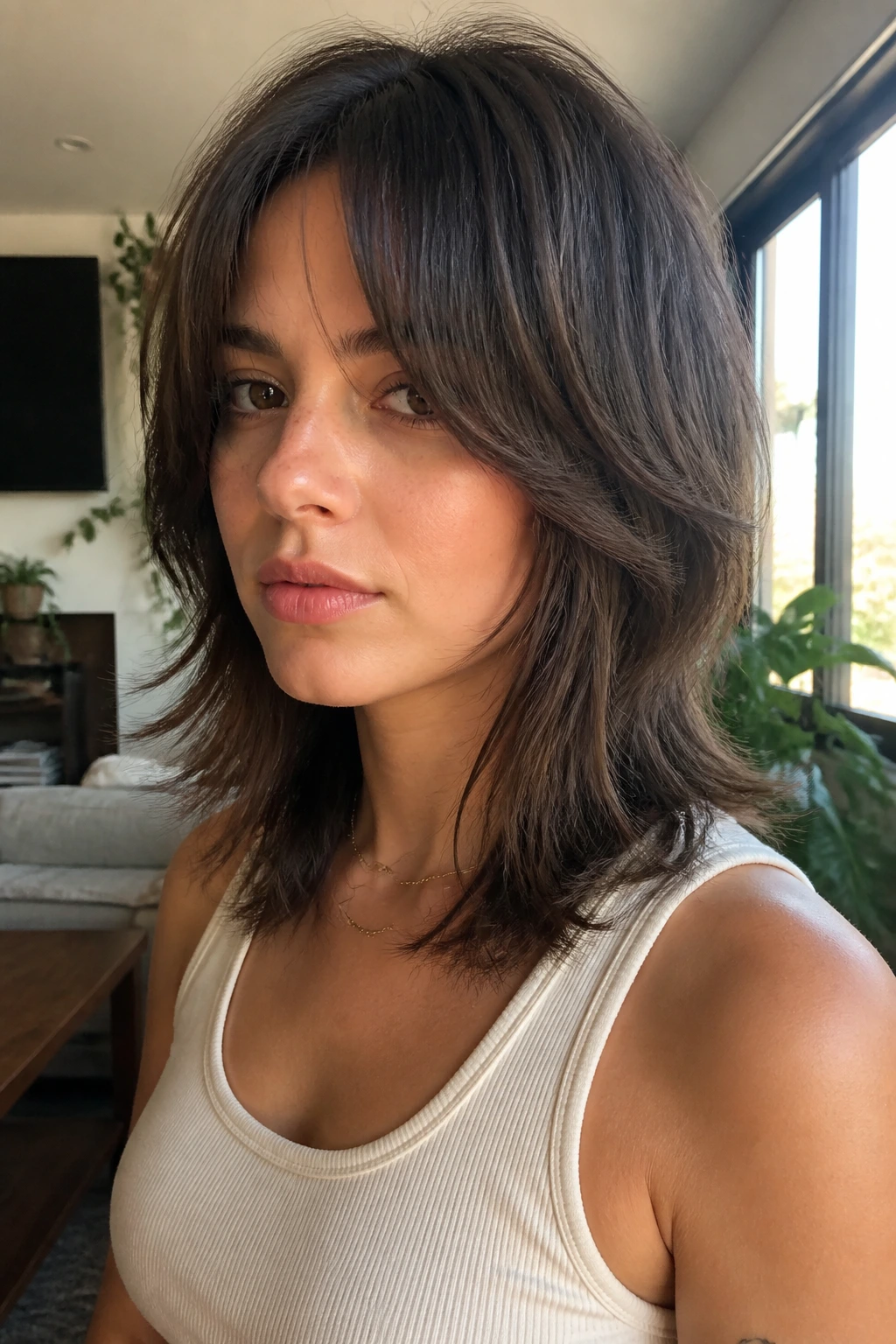
Not every round face needs a polished, smooth haircut. A soft wolf cut has enough edge to feel modern without turning harsh, and the long fringe helps keep the shape wearable. The crown gets a little lift, the mid-lengths get texture, and the fringe stays long enough to soften the forehead.
The reason this works is simple: the layers break up the circle. A round face can sometimes benefit from a little controlled mess because it adds angles where the face is naturally soft. The fringe should flow into the side layers rather than sit apart from them.
This cut is especially good if you like low-effort styling. Air-dry it with a curl cream, rough-dry it with a diffuser, or wrap the front pieces around your fingers while they dry. The fringe does not need to be perfect. It just needs to avoid a blunt line.
A wolf cut can look too heavy if the bottom layer is kept dense. Ask for the ends to be chipped and the face frame to stay soft.
17. Low Ponytail With Loose Face-Framing Fringe
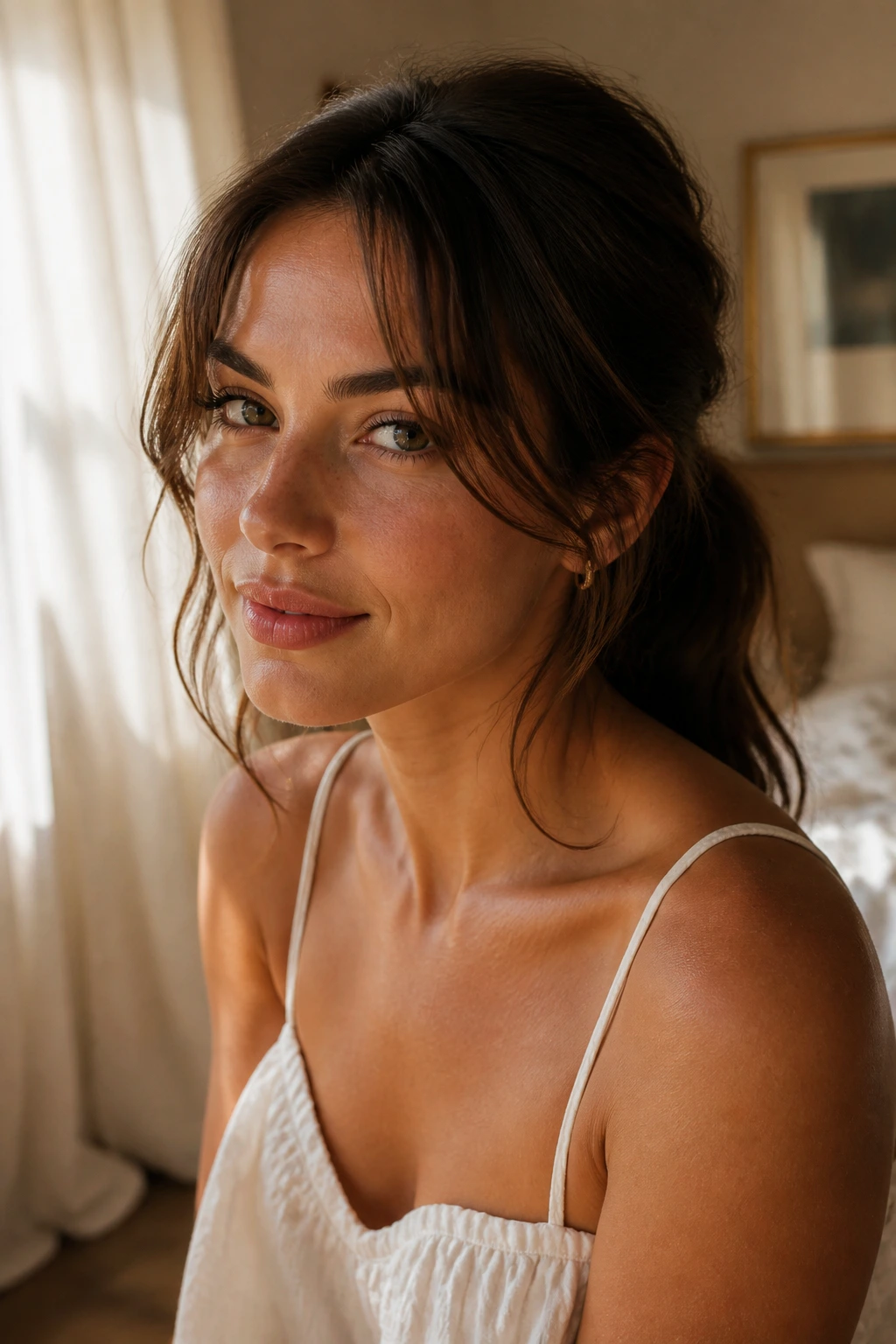
Sometimes the best fringe hairstyle is not a haircut at all. A low ponytail with loose face-framing fringe can be the smartest move on a round face when you want your hair up but do not want your features pulled back into one tight shape.
Leave a few soft pieces around the temples and let the fringe break across the forehead or sweep to one side. That soft front keeps the face from looking too open and too round at the same time. The ponytail itself should sit low and relaxed, not slicked so hard that every angle disappears.
A little volume at the crown helps. You don’t need a full tease, just a slight lift before you secure the ponytail. Wrap a small strand around the elastic if you want the finish to look cleaner. That one move changes the whole feel.
This style is useful on days when you want the face to stay soft but the hair out of the way. It is not loud. It just works.
18. Braided Updo With Wispy Fringe and Temple Pieces
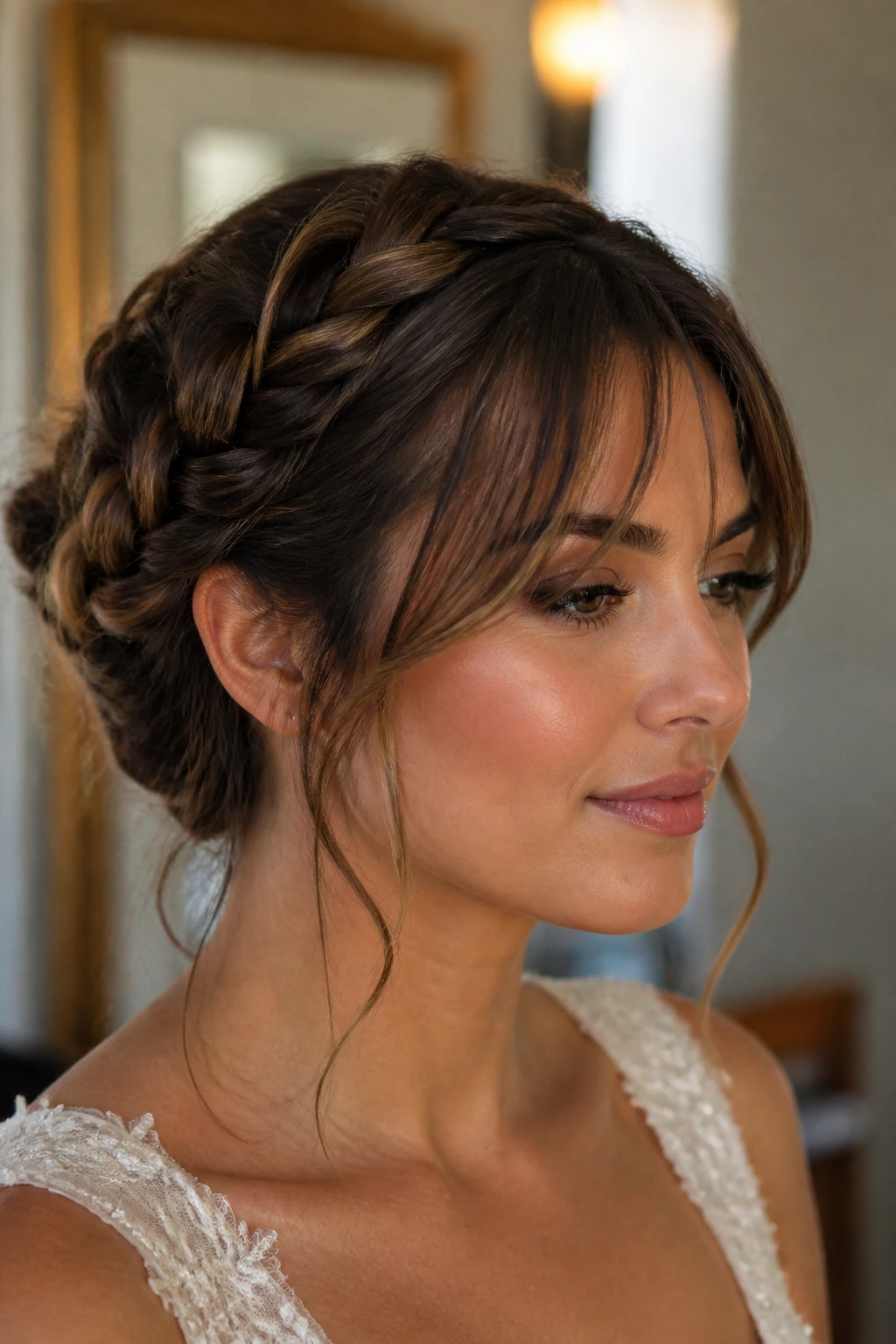
A braided updo can look severe on a round face if everything is pulled tight, so the trick is to leave the fringe and temple pieces soft. Wispy fringe keeps the forehead from becoming the center of attention, and a few loose strands near the temples break the shape in a flattering way.
The braid can be low, side-swept, or pinned into a loose bun. What matters is the front. If the face frame is too slick, the roundness of the face stands out more. If the front is softened with a few pieces that bend around the cheekbones, the whole look feels gentler and more balanced.
Use a texturizing spray before braiding if the hair is silky. That gives the braid grip and keeps the fringe from slipping flat. And don’t pin every last flyaway. A few stray pieces make the style feel lived in, which is a nicer look than the stiff, lacquered version people often default to.
For weddings, dinners, or any night when you want the hair up but still want softness around the eyes, this is the one that keeps the face from feeling boxed in.
