



Round faces can wear bangs. They just need the right kind of mess.
That’s why shaggy wispy bangs for round faces work so well when blunt fringe falls flat. The soft edges keep the forehead from looking boxed in, while the shaggy layers around the cheeks and jaw pull the eye down instead of letting it sit in the middle of the face. Tiny shift. Big payoff.
A heavy, straight-across bang can make the widest part of the face feel wider. A wispy one does the opposite. It breaks the line, leaves a little skin showing, and creates movement that feels lived-in rather than stiff. I like that it gives shape without trying too hard. There’s no helmet effect, no hard shelf of hair sitting across the brow.
The styles below all use that same idea, but each one does it differently. Some lean soft and face-framing. Some are sharper, choppier, or more textured. A few are for curly hair, a few for short hair, and a few are for people who want fringe without the daily drama. Different tools. Same goal.
1. Soft Curtain Shag With Cheekbone-Grazing Bangs for Round Faces
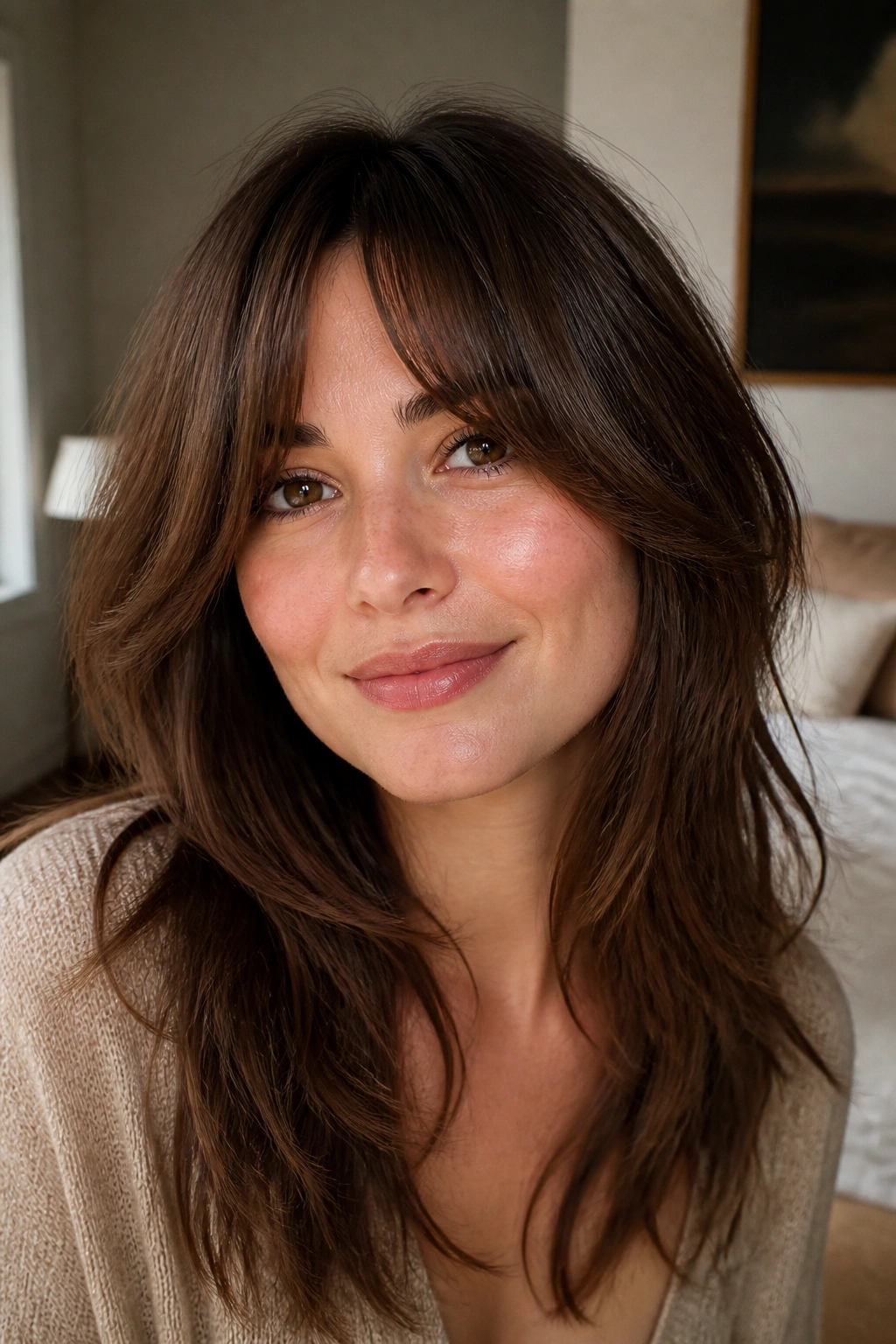
This is the easy favorite for a reason. The center part opens the face, and the longest bang pieces land near the cheekbones, which helps create that longer, slimmer line round faces usually need. The rest of the shag stays loose, so the cut never feels stiff or overbuilt.
Why It Flows So Well
Ask for the shortest pieces to start around the brow or just above it, then let them fall longer toward the temples. That slight drop matters. It keeps the fringe from sitting like a blunt bar across the forehead, and it lets the hair move when you turn your head.
The best version of this cut has point-cut ends and soft internal layers. Point cutting means the stylist snips into the ends instead of chopping a straight line. The result is a broken edge that reads light, not heavy.
- Best on wavy or slightly bent hair
- Strongest length for round faces: cheekbone to upper lip
- Easy to tuck behind the ears when you want the fringe off your face
- Works well with a center or slight off-center part
My rule: if the fringe feels too short in the chair, ask for 1 more inch. You can always go shorter later.
2. Brow-Skimming Feathered Fringe With Airy Layers

Can a fuller fringe still work on a round face? Yes, if it’s feathered instead of squared off.
The brow-skimming version gives a bit more coverage than curtain bangs, but the texture keeps it from closing the face in. The ends should look broken, almost combed apart, not thick and solid. That little bit of separation lets the forehead peek through, which is what keeps the shape from feeling heavy.
How to Style It
Blow-dry the bangs from side to side with a small round brush or even your fingers. You want lift at the root and a soft bend at the ends, not a rigid curl under. A pea-size bit of lightweight cream is enough for most hair types. More than that, and the fringe starts to clump.
A lot of people ruin this cut by flattening it with too much tension. Don’t pull the hair straight down and iron it into place. That makes the face look wider, not slimmer. A soft arc is the point.
Best for: medium-density hair, oval-round face shapes, and anyone who wants bangs that feel present but not blunt.
3. Choppy Mid-Length Shag With Tapered Bangs
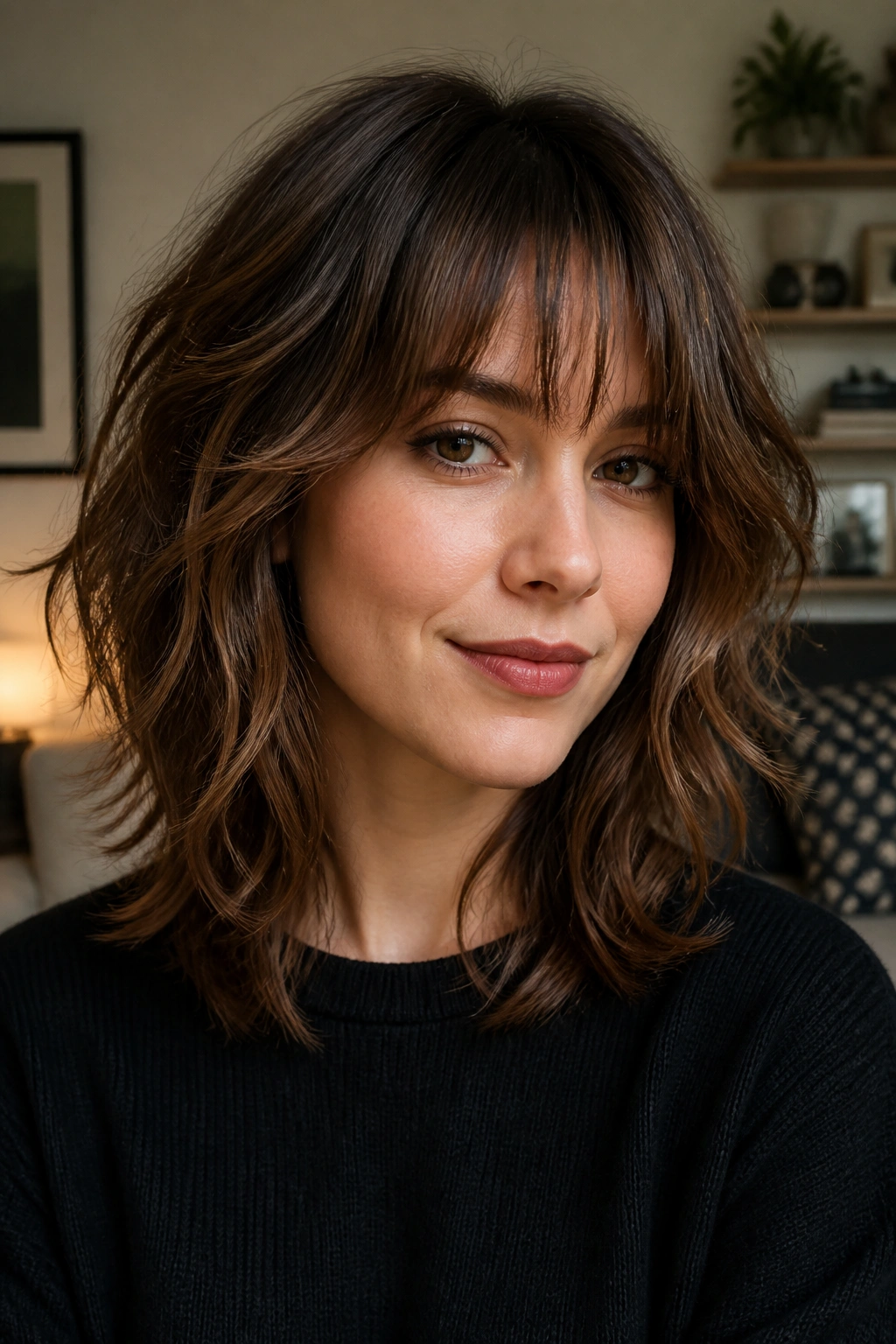
Picture hair that lands between the jaw and collarbone, with bangs that thin out as they reach the temples. That’s the sweet spot here. The cut brings movement below the face, which matters because round faces usually benefit from length that keeps the eye traveling downward.
This one has a lived-in feel that you do not need to overstyle. The choppy layers catch the light in different spots, so the hair looks less like one big shape and more like several smaller pieces working together. That’s the whole trick.
The tapered bang should never end in a hard line. It needs to disappear into the front layers so your eye doesn’t stop at the cheeks. If the front is too dense, the whole style loses its point. And yes, this happens a lot in rushed salon cuts.
It’s a good choice if you wear your hair in a messy bun, a low clip, or a half-up style. The fringe still sits well, even when the rest of the hair is shoved around a little.
4. Side-Swept Wispy Bangs With Loose Shag Layers
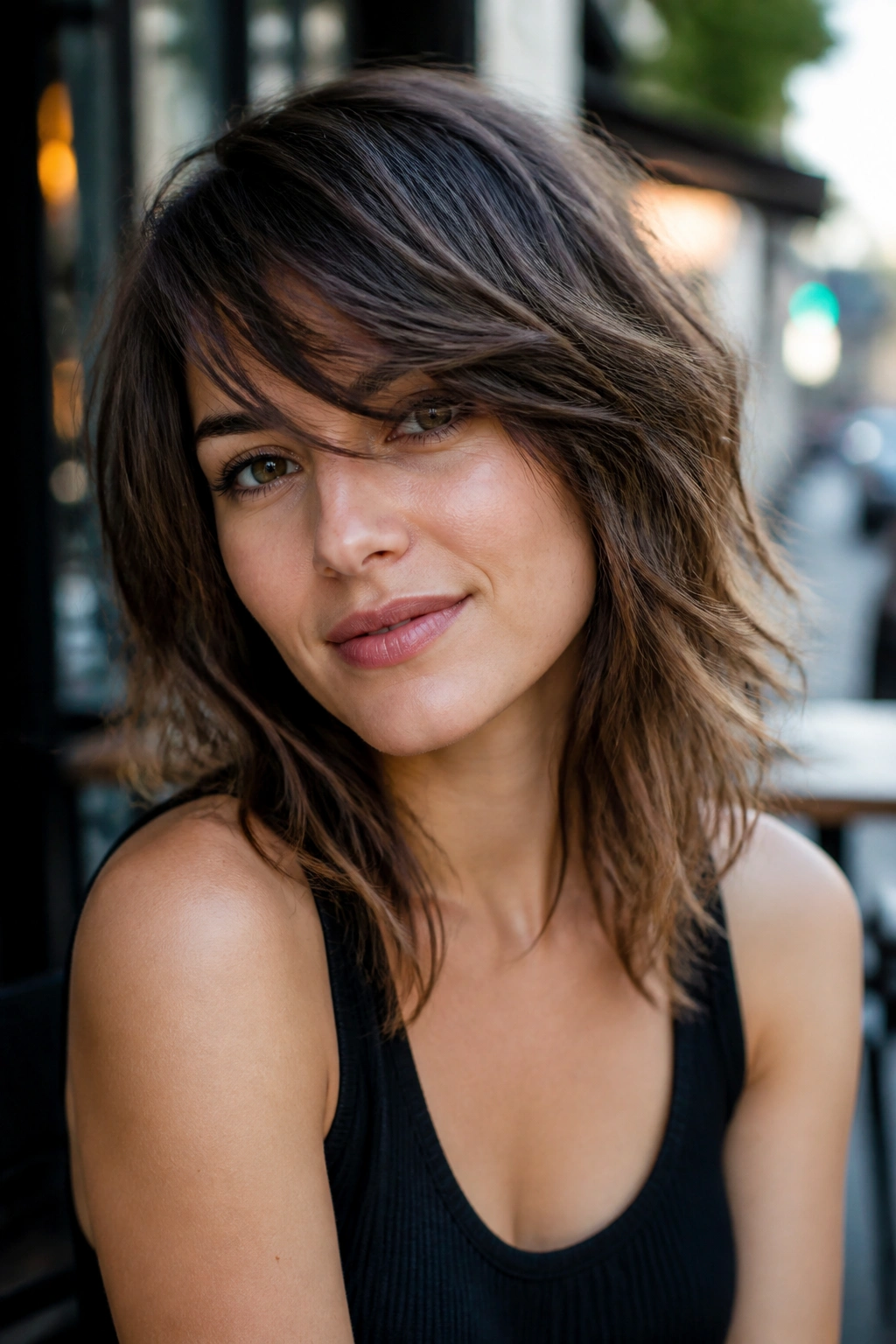
Side-swept bangs can look dated. Or they can look sharp and modern, depending on how they’re cut.
The old version was too smooth and too round, almost like a helmet swoosh. The better version is broken up, airy, and cut on a diagonal so it crosses the forehead without sitting flat across it. That diagonal line helps round faces because it interrupts the width of the cheeks and leads the eye off to one side.
What Makes It Work
The key is texture near the ends. Ask for a light razored finish or point-cutting through the fringe so the bang doesn’t come off as one heavy sheet. The longest edge should fall somewhere between the outer brow and cheekbone.
This is a smart option if you wear glasses. The side-swept shape keeps the frames from fighting with a center curtain fringe, and the longer side gives your hair a little room to breathe around the temples.
- Strong with straight or lightly wavy hair
- Nice choice for side parts
- Easy to pin back on busy days
- Better than blunt side bangs when you want softness
A side-swept fringe only works if it looks a little undone. Too polished, and the charm disappears.
5. Micro-Shag With Airy Baby Fringe
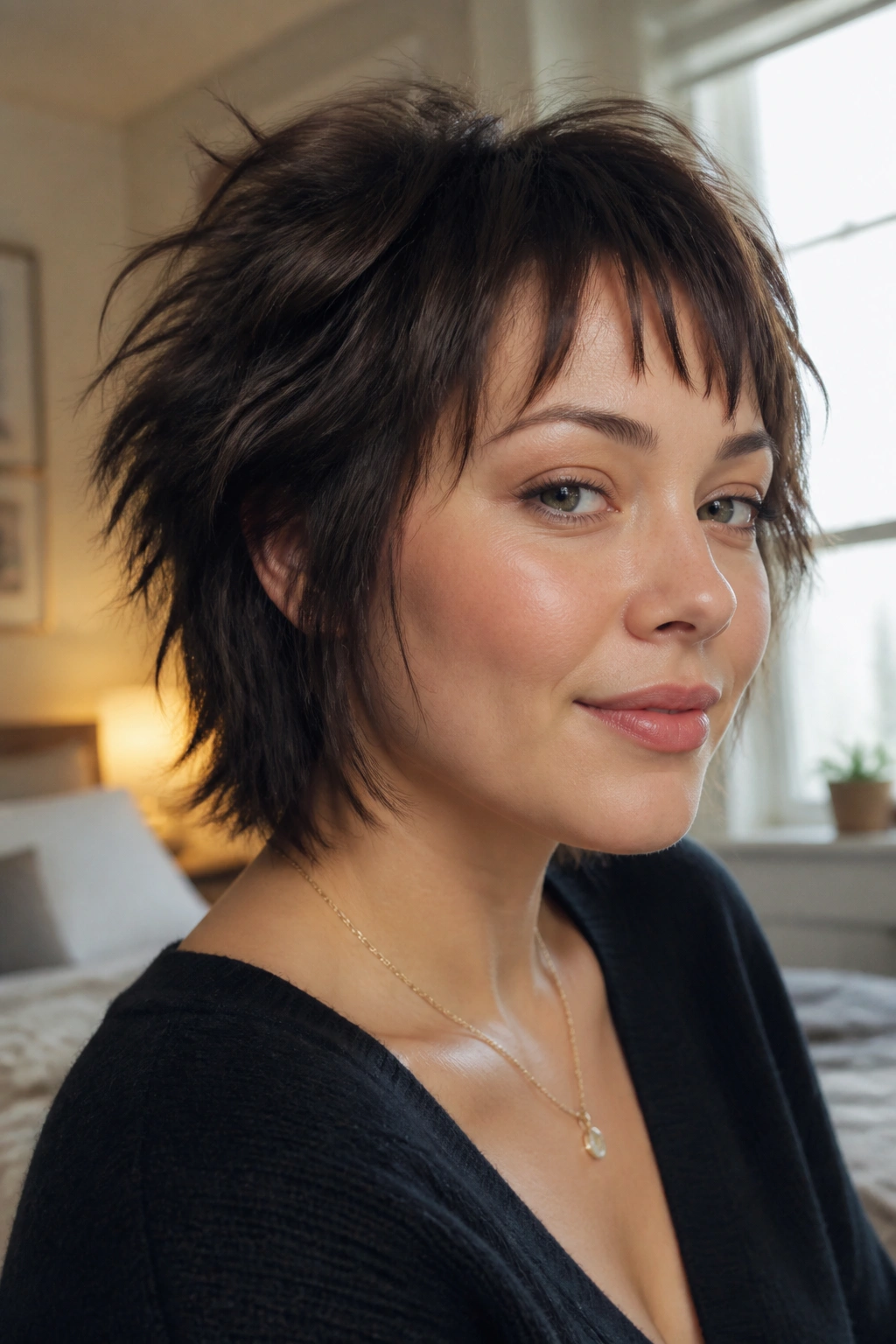
The first thing you notice is the air around it. That matters.
A micro-shag with baby fringe is short, choppy, and a little cheeky, but it can still flatter a round face if the top has enough height. The fringe should be wispy and piecey, not thick and straight. If it sits too solidly across the forehead, the cut gets boxy fast.
What Makes It Stay Light
The crown needs lift. Without it, the whole style collapses into the widest part of the face. Ask for shorter layers at the top and softer sides that fall past the temples. That gives the face more vertical shape, even though the cut itself is short.
This is not the safest option, and I mean that in a good way. It has a point of view. If you want hair that looks neat and polished every day, skip it. If you like movement and don’t mind running your fingers through it, it has real charm.
Best for: fine to medium hair, sharp cheekbones, and people who want a shorter fringe without a thick block of hair on the brow.
6. Long Wolf-Cut Bangs That Melt Into Layers
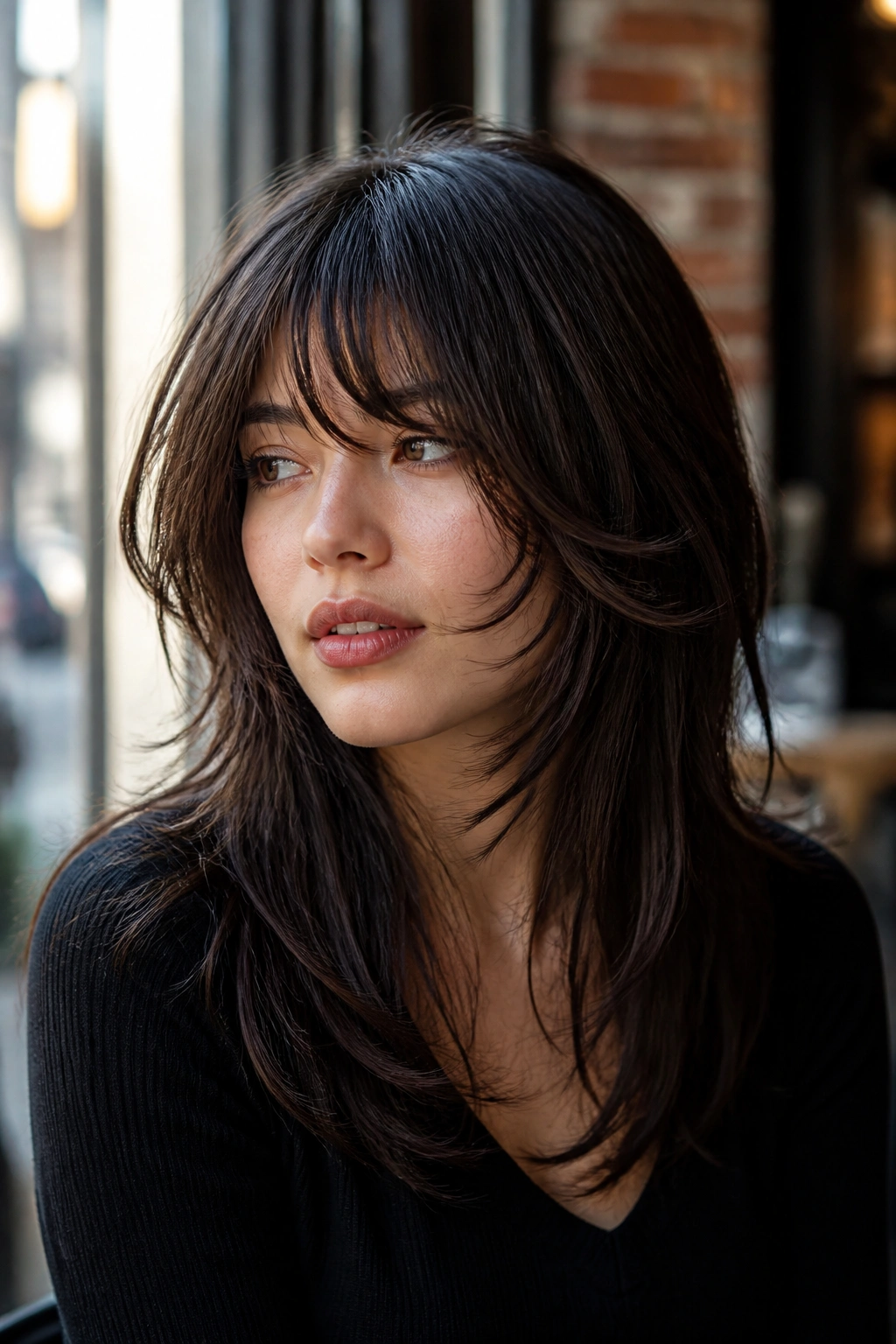
Three things happen when the bangs stay long: the eye drops, the cheekbones stand out, and the haircut feels less round.
That’s why wolf-cut bangs can be such a good match for fuller cheeks. The fringe starts short enough to matter, then melts into longer face-framing pieces that graze the lips or chin. Nothing stops abruptly. Everything slides into the next layer.
How to Ask for the Shape
Tell your stylist you want the front to feel shaggy, not blunt, with the shortest point around the brow and the longest point around the cheekbone or lower. That keeps the bang from sitting too square on the face. If your hair is thick, the stylist should thin the interior, not just the surface.
A little texture spray goes a long way here. Flip your head, mist lightly, and scrunch the front pieces with your fingers. You want separation, not crunch.
This cut is especially good if you like a little edge without committing to short bangs. It’s softer than it sounds. And it grows out better than most people expect.
7. Chin-Skimming Shag With Split Fringe
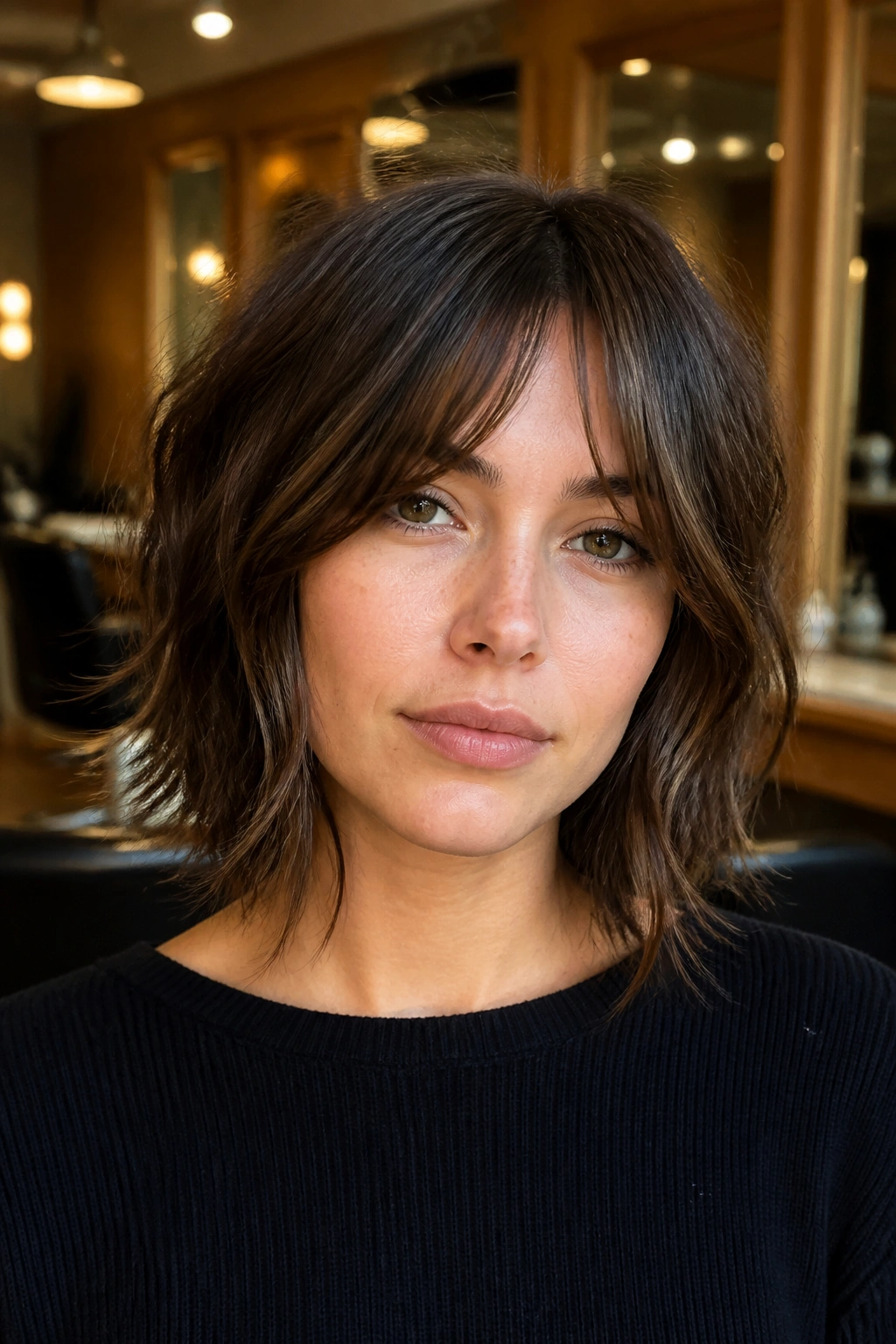
Chin length is the magic line a lot of round faces need.
When the front pieces land near the chin, they draw the eye down past the cheeks and toward the jaw. That vertical pull matters more than most people think. If the pieces stop too high, the face can look wider. If they fall lower, the balance improves fast.
The split fringe should open at the center and then fall away from the face in loose strands. Not curtain-bang heavy. Just enough separation to keep the forehead from feeling boxed in. A round face usually looks best when the bang doesn’t hog the frame.
This style likes straight or wavy hair that can hold a bend. If your hair is very curly, the shape can still work, but the front pieces need to be cut with shrinkage in mind. Otherwise the chin-skimming effect turns into eyebrow-level fluff.
I’d call this one quietly flattering. It doesn’t scream for attention. It just makes the face look a little longer and a little cleaner.
8. Curly Shaggy Wispy Bangs for Round Faces

Can curls do wispy bangs without turning into a puff ball? Yes, if the cut respects the curl pattern.
Curly fringe should be cut dry, curl by curl, so the stylist can see where each piece actually sits once it springs up. That matters a lot. Wet curls lie. Dry curls tell the truth. If you cut them too short while they’re wet, the bangs can bounce up and sit far higher than planned.
How to Wear It
Use a light curl cream or mousse, then scrunch the fringe and let it dry with a diffuser or air-dry it in small sections. Avoid heavy butters or thick oils near the front. They stretch the curl down and make the bangs look stringy instead of soft.
- Keep the fringe a little longer than you think
- Ask for face-framing pieces at the cheekbones
- Diffuse on low heat to keep the curl shape open
- Trim only when the curl is fully dry
This cut is good when you want shape but not control. It moves, it softens the face, and it looks better when it isn’t overhandled.
9. Razored Fringe With Face-Framing Ribbons
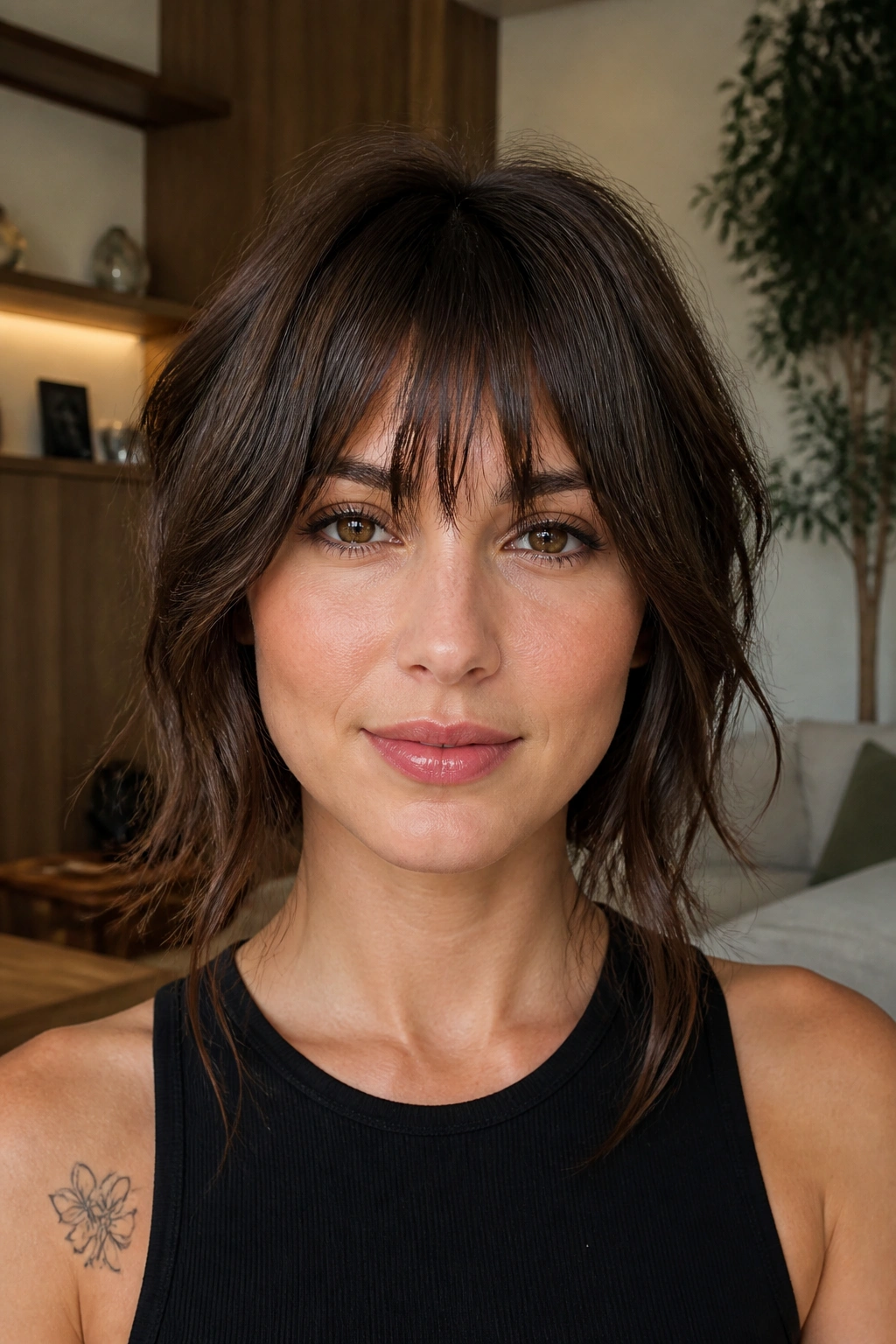
If your hair is dense, scissors alone can leave the fringe too thick.
Razored bangs fix that by removing weight and creating a torn, feathered edge. On round faces, that extra softness helps the front feel less blunt and more vertical. The fringe should land around the brows, then break into longer pieces around the temples and cheekbones. Those longer ribbons are doing more work than they look like they are.
What to Watch For
This approach works best on thick straight hair or thick wavy hair. If your ends are fragile, dry, or split, a razor can make them look worse. In that case, point cutting is safer. There’s no prize for going too thin.
A good razor cut should feel soft, not shredded. If the front looks frayed or see-through in a bad way, the stylist took out too much. That’s not texture. That’s just too much hair gone too fast.
This style pairs well with a loose blowout, especially if the front pieces are flipped away from the face with a round brush. It keeps the whole shape open and easy to wear.
10. Piecey Bottleneck Bangs for Round Faces
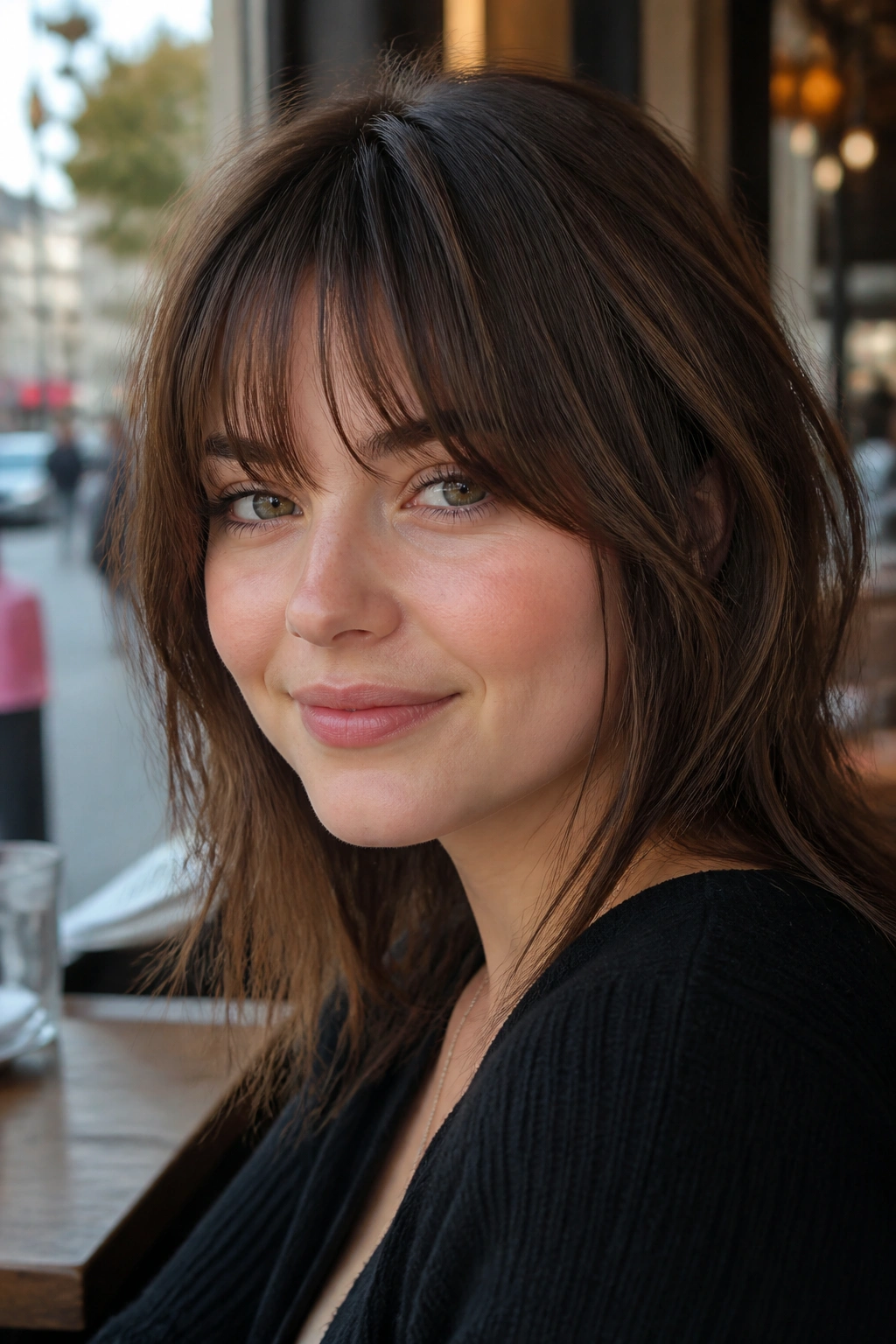
Unlike blunt fringe, bottleneck bangs start shorter in the center and get longer as they move outward. That shape is why they work so well on round faces. The eye lands in the middle, then gets guided down toward the temples and cheekbones instead of stopping at one heavy line.
The piecey finish matters just as much as the shape. You want air between the strands, not a solid curtain. A few separated pieces around the brow are enough to frame the eyes without crowding the forehead.
What to Tell Your Stylist
- Shortest point: between the brow and upper forehead
- Longest point: around the cheekbone
- Finish: piecey, broken, and soft at the ends
- Best parting: center or soft off-center
This is one of the easier fringe shapes to grow out. That’s a big deal, because bangs can be a hassle if you get bored fast. Bottleneck bangs slide into face-framing layers without making a mess of the whole cut.
I reach for this shape when someone wants the fringe to do a lot of visual work without looking loud. It’s subtle, but not boring. That’s a better trade than most people give it credit for.
11. Collarbone Shag With Barely-There Bangs
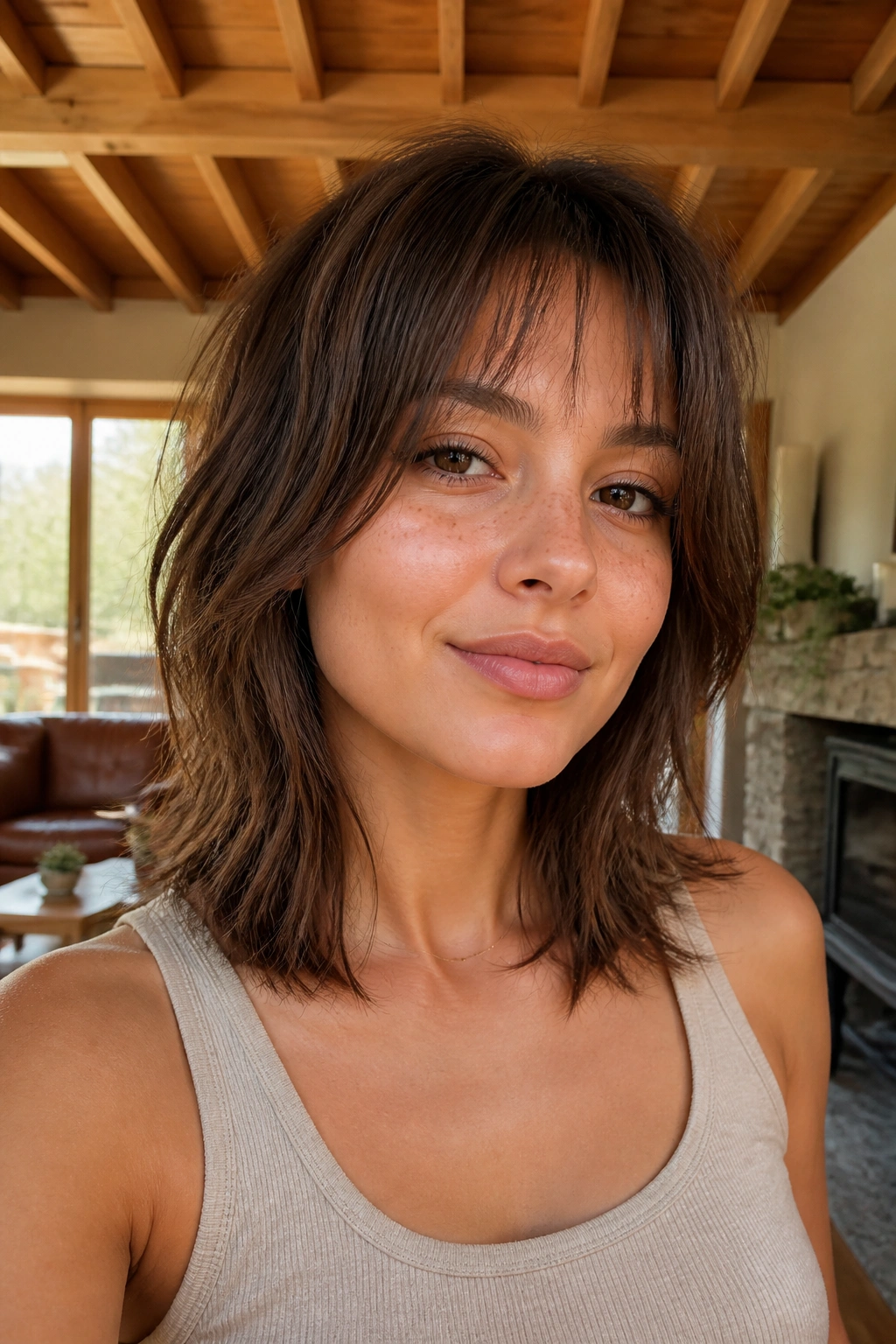
You do not need a heavy fringe to change the shape of a round face.
A collarbone shag with barely-there bangs uses restraint. The bang starts soft near the brow corners, then fades into longer front pieces that hover around the cheekbones. The rest of the cut carries the weight, so the fringe can stay light and still matter.
This is the style for people who want movement without the commitment of full bangs. It works well for office settings, for people who air-dry their hair, and for anyone who hates the feeling of hair sitting on the forehead all day. A little forehead is fine. Better than fine, honestly.
The collarbone length helps too. Hair that stops right there tends to fall in a way that narrows the face naturally, especially if the ends are textured instead of blunt. That makes the fringe feel part of the cut, not pasted onto it.
A lot of stylists overlook this shape because it seems too simple. It isn’t. Simplicity is the whole point.
12. Heavy Layers With Sparse Center Bangs
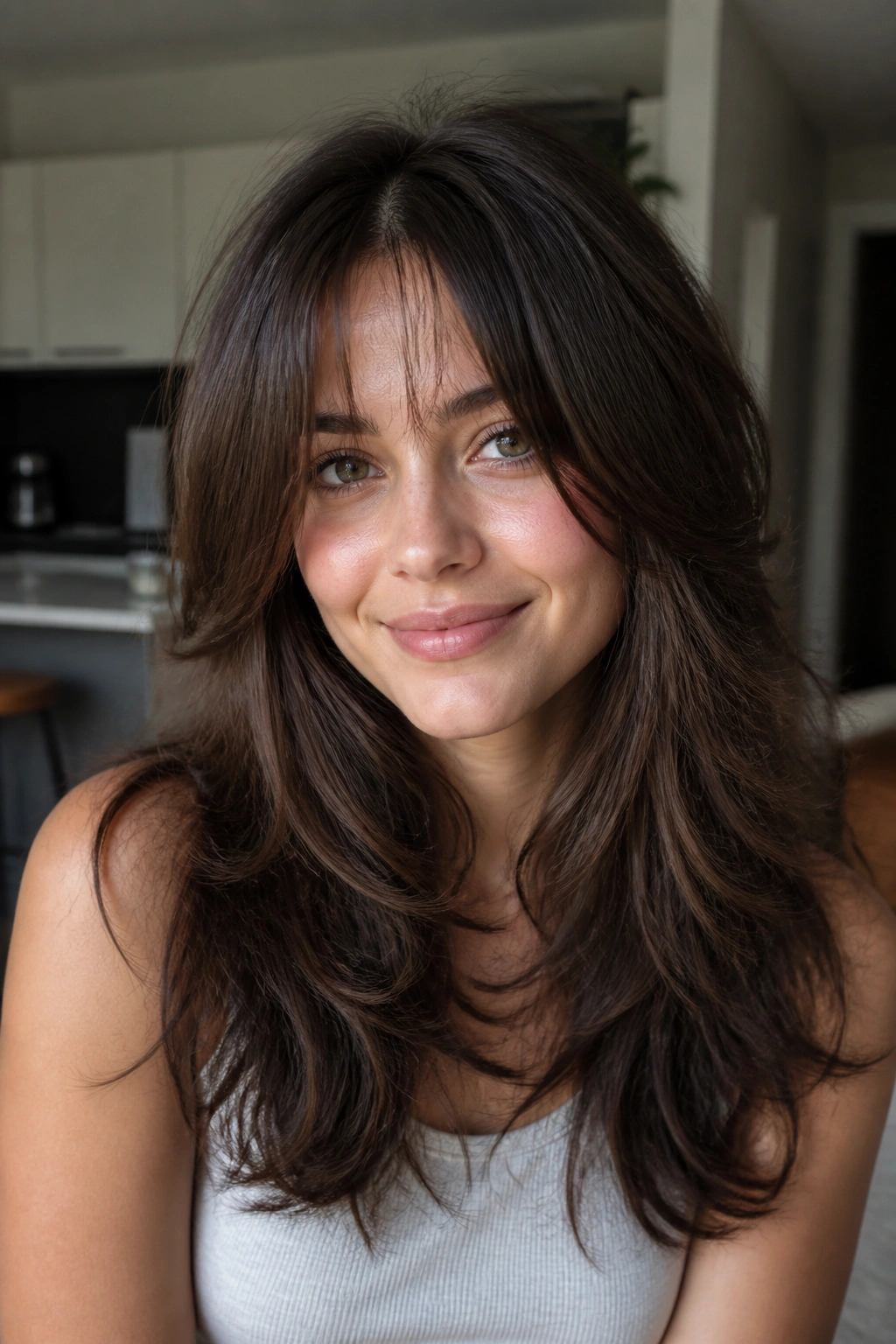
Less forehead coverage can slim more than more coverage. That sounds backwards until you see it in motion.
Sparse center bangs leave some skin showing in the middle while the heavier layers sit lower on the sides. On a round face, that split can be kinder than a thick wall of fringe because it keeps the top of the face open. The result is softer and a little longer-looking.
When Heavier Layers Help
This cut works especially well if your hair is thick or if the sides of your face tend to fill out when you wear shorter bangs. The heavier layers below keep the shape from puffing sideways. They anchor the whole cut.
You still need the front to be broken up. If the center bangs are too dense, the look loses its air. You want a fringe that feels sparse in the middle, then fuller as it blends outward. That gives a better frame than a straight line ever will.
- Good for thick hair that needs control
- Better with a round brush or hot brush
- Pairs well with root lift spray
- Needs trimming before the center pieces drop into the eyes
This is one of those styles that looks casual but takes a careful hand. The softness is doing the work.
13. Flipped-Out Shag With Loose Feather Bangs
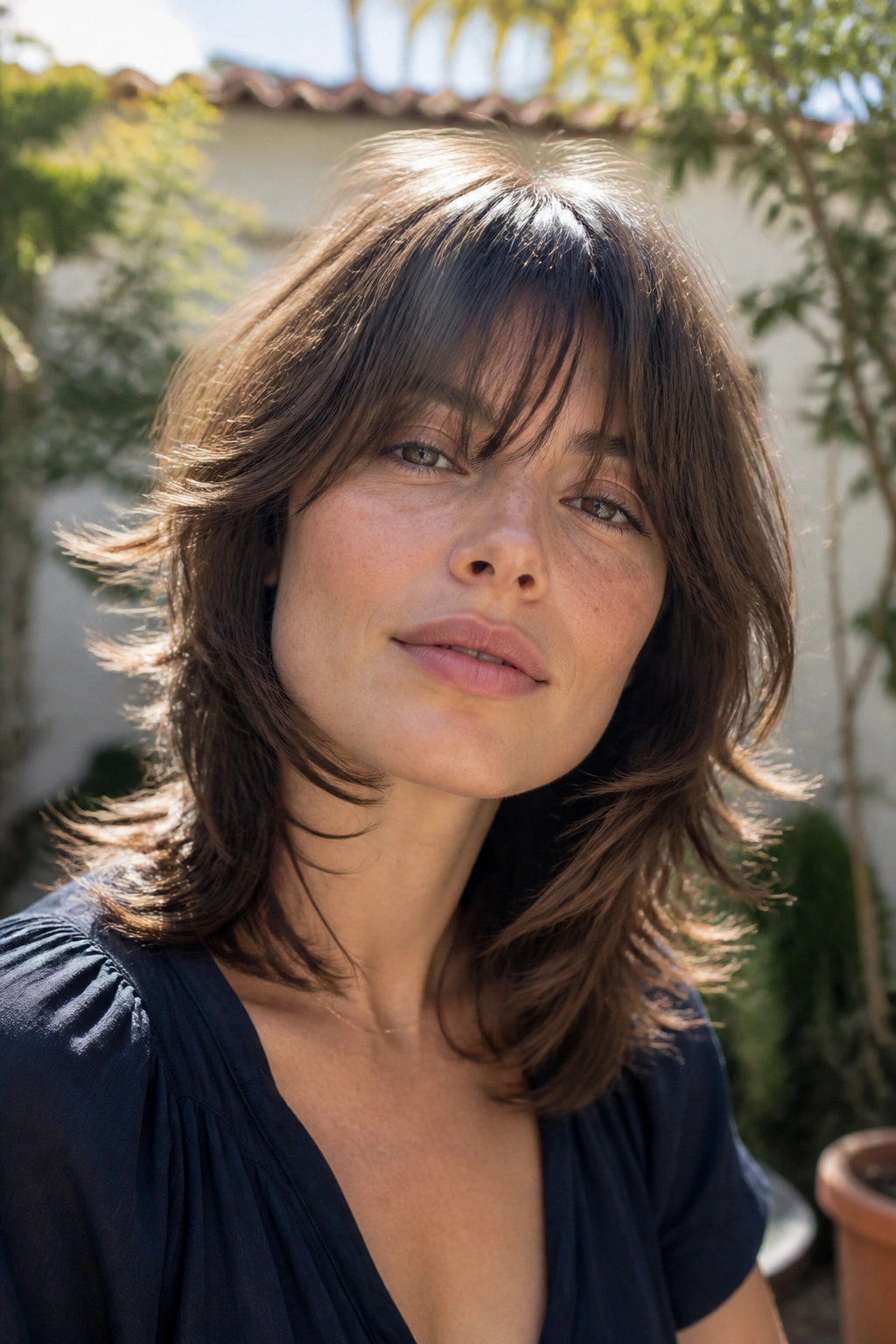
You feel this cut the second you shake it out.
The ends flip away from the face, which keeps the cut from hugging the cheeks too tightly. That matters on round faces because hair that sticks close to the widest part of the face tends to make the face feel wider. Flipped-out ends break that shape and give the front room to breathe.
How to Keep the Ends Soft
A medium round brush and a blow dryer nozzle are enough for most people. Dry the bangs first, then turn the brush slightly away from the face at the ends. You want a bend, not a curl. If the flip gets too sharp, the cut starts to look dated.
The feathered fringe should be light around the brows and looser through the temples. Think broken strands, not one clean sheet. A small amount of dry texture spray keeps the front from falling flat halfway through the day.
This style is a good match for coarse or medium-coarse hair because the natural body helps the flip hold. Fine hair can wear it too, but it usually needs a bit of mousse at the roots first.
It’s a cheerful cut. Not precious. Not fussy. That matters.
14. Tousled Pixie Shag With Soft Fringe
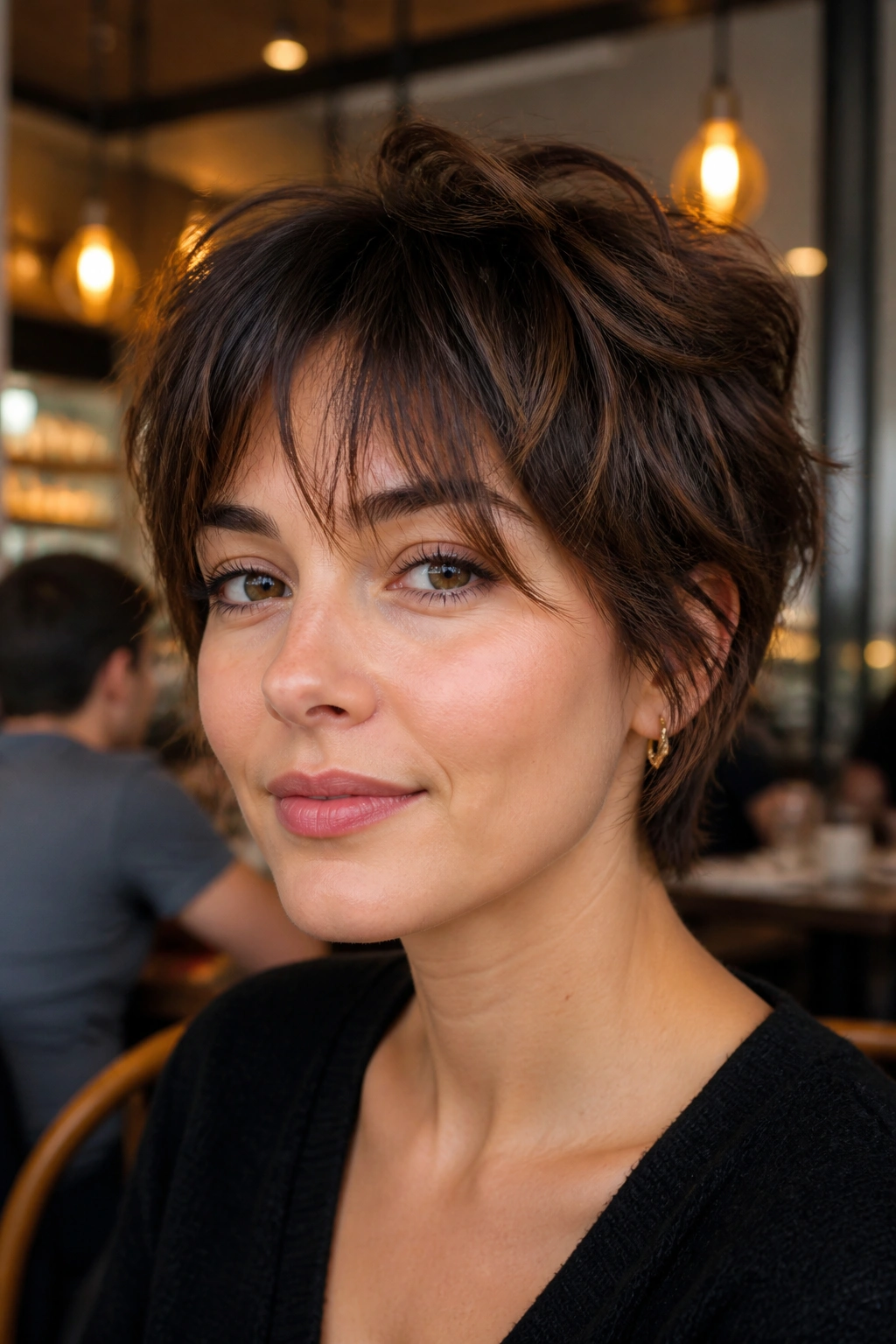
Not every round face needs length.
A short shag with pixie energy can work if the top stays taller than the sides and the fringe stays soft. The goal is to create lift and a little unevenness around the forehead, not to shave everything down into one tight cap. When the crown has height, the face looks longer right away.
This cut is for someone who likes easy styling and doesn’t mind a trim every 4 to 6 weeks. Short shaggy cuts lose their shape faster than longer ones. That’s the price of the cropped length. Still, if you like waking up, adding a pea-size bit of matte paste, and leaving the house, it can be a very good price.
What to Ask For
- Length on top that can be pushed forward or up
- Soft fringe that breaks apart, not a heavy block
- Side sections that stay slim around the cheeks
- Texture through the crown so the cut doesn’t sit flat
The fringe should touch the forehead in pieces, not all at once. That tiny gap keeps the cut from closing in the face. Short can work. It just has to be airy.
15. Shoulder-Length Shag With Wispy Curtain Bangs for Round Faces
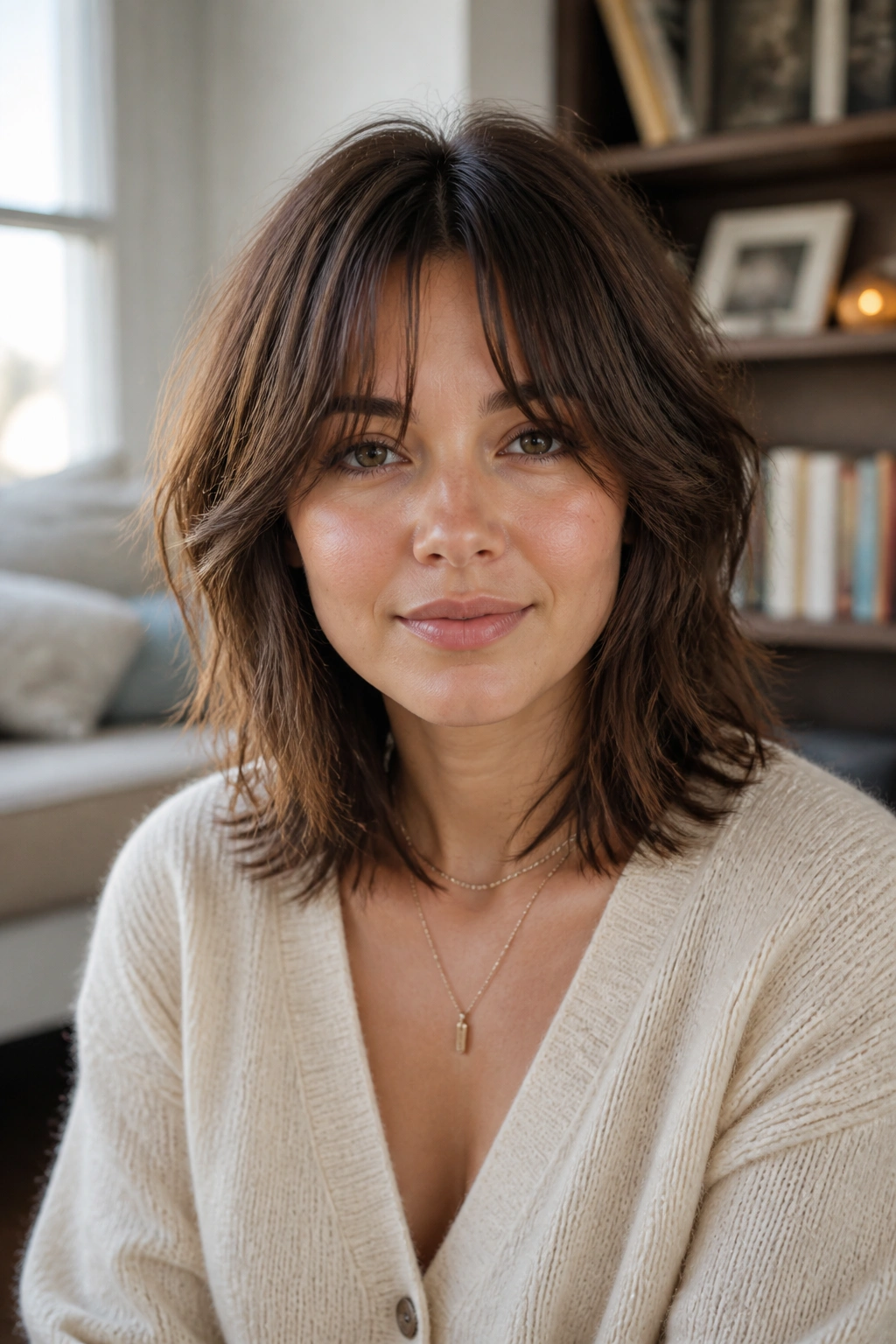
If you want one cut that rarely fights back, start here.
Shoulder length gives the hair enough weight to fall well, and wispy curtain bangs give the face room up top. That combination is kind to round faces because it keeps the sides soft while still pulling the eye downward. The result feels balanced instead of crowded.
The bangs should part easily in the middle, then taper into layers that land near the cheekbones and mouth. If the shortest pieces are too short, the fringe can pop up and widen the forehead. If they’re too long, the bang loses shape. That middle zone is where the magic sits.
This style also plays well with grow-out. A shoulder-length shag does not become awkward as fast as a shorter cut, and the bangs blend into face-framing layers before they get annoying. That makes it a smart choice if you like a fringe but do not want a strict maintenance schedule.
I’d ask for soft internal layers, point-cut ends, and curtain pieces that start at the cheekbone. That one sentence covers most of what makes the shape work. The rest is just styling: a bit of bend, a little separation, and enough lift at the roots to keep the face open.
