



Short side bangs for round faces work because they pull the eye on a diagonal instead of sitting straight across the widest part of the face. That tiny shift changes a lot. Cheeks look a touch softer, the forehead reads longer, and the whole haircut feels more intentional.
Not every side fringe does that job well, though. A heavy bang that ends right at the cheek can make a round face look even rounder, and a bang that’s too wispy can disappear before it does anything useful. The sweet spot is usually a short side sweep with a little texture, a little movement, and enough length to travel from the temple toward the outer brow or upper cheekbone.
Hair texture matters more than people like to admit. Fine hair needs a lighter hand so the fringe doesn’t go stringy. Thick hair needs internal shaping so it doesn’t puff up like a shelf. Curly hair needs extra length because shrinkage is sneaky and relentless. Get those details right, and a side bang stops being a gamble.
That is where the good stuff starts.
1. Wispy Feathered Sweep
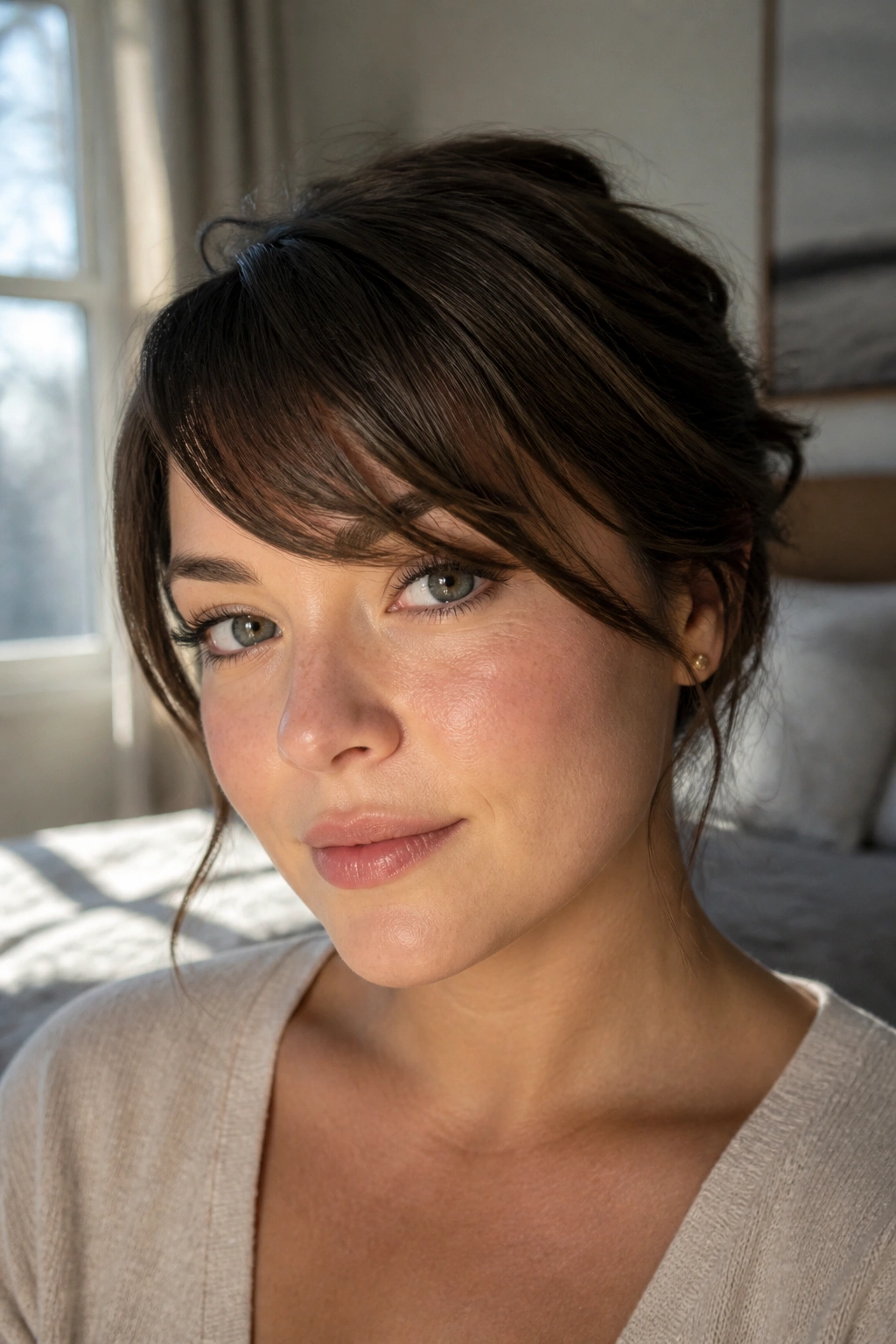
This is the easy place to begin if you want softness without losing shape. A wispy feathered sweep keeps the front light and airy, with the shortest pieces sitting around the temple and the longest pieces drifting toward the top of the cheekbone. The result is a diagonal line that flatters a round face without shouting about it.
Why It Flatters a Round Face
The trick is in the edge. Ask for point-cut ends rather than a blunt line, because blunt lines can look boxy on fuller cheeks. The bang should move when you blink, not sit there like a sticker.
If your hair is straight or slightly wavy, blow-dry the fringe in the opposite direction first, then sweep it across with a small round brush. That little bend keeps the bang from collapsing flat by lunchtime.
- Keep the section narrow, usually from the outer arch of one brow to the hairline at the temple.
- Aim for a length that brushes the outer eye, not the center of the forehead.
- Use a pea-sized amount of lightweight mousse if your hair falls flat fast.
Best move: tell your stylist you want it to “skim” the face, not frame it heavily.
2. Deep-Side Micro Fringe
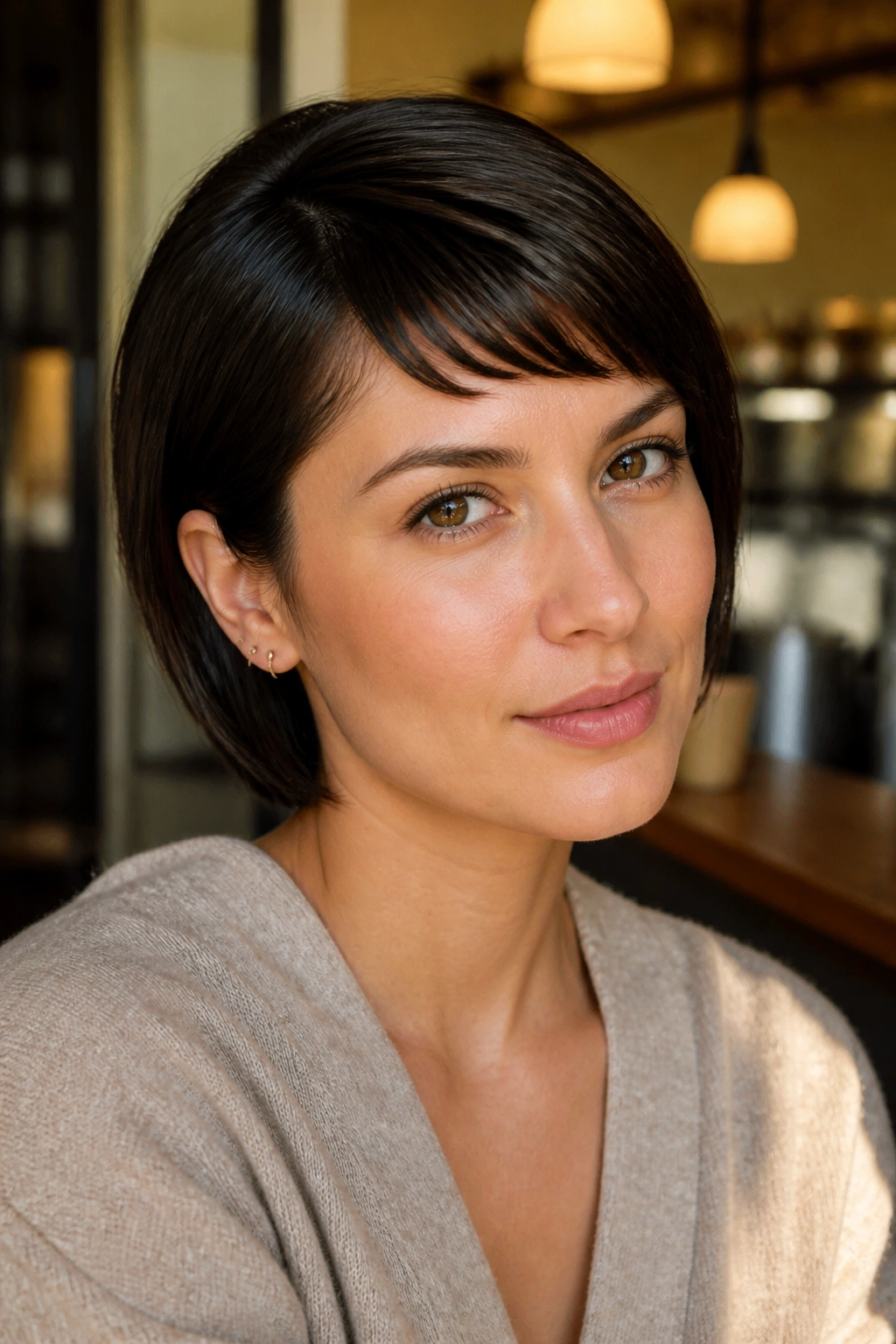
A deeper side part can do more for a round face than a longer fringe ever will. When the part shifts farther over, the front hair has to travel farther across the forehead, which creates a longer line right away. Add a short micro fringe into that shape and you get a little attitude without the bulk.
The key is restraint. Keep the shortest pieces just long enough to tuck under the brow tail, then let the fringe taper into the side of the face. Too much thickness here makes the haircut feel top-heavy. Too little, and the whole thing disappears.
This one works especially well if you like a neat finish in the morning and don’t want a lot of styling drama. A flat brush and a quick blast of air are usually enough. That’s it. No ceremony.
3. Short Side Bangs for Round Faces with a Choppy Finish
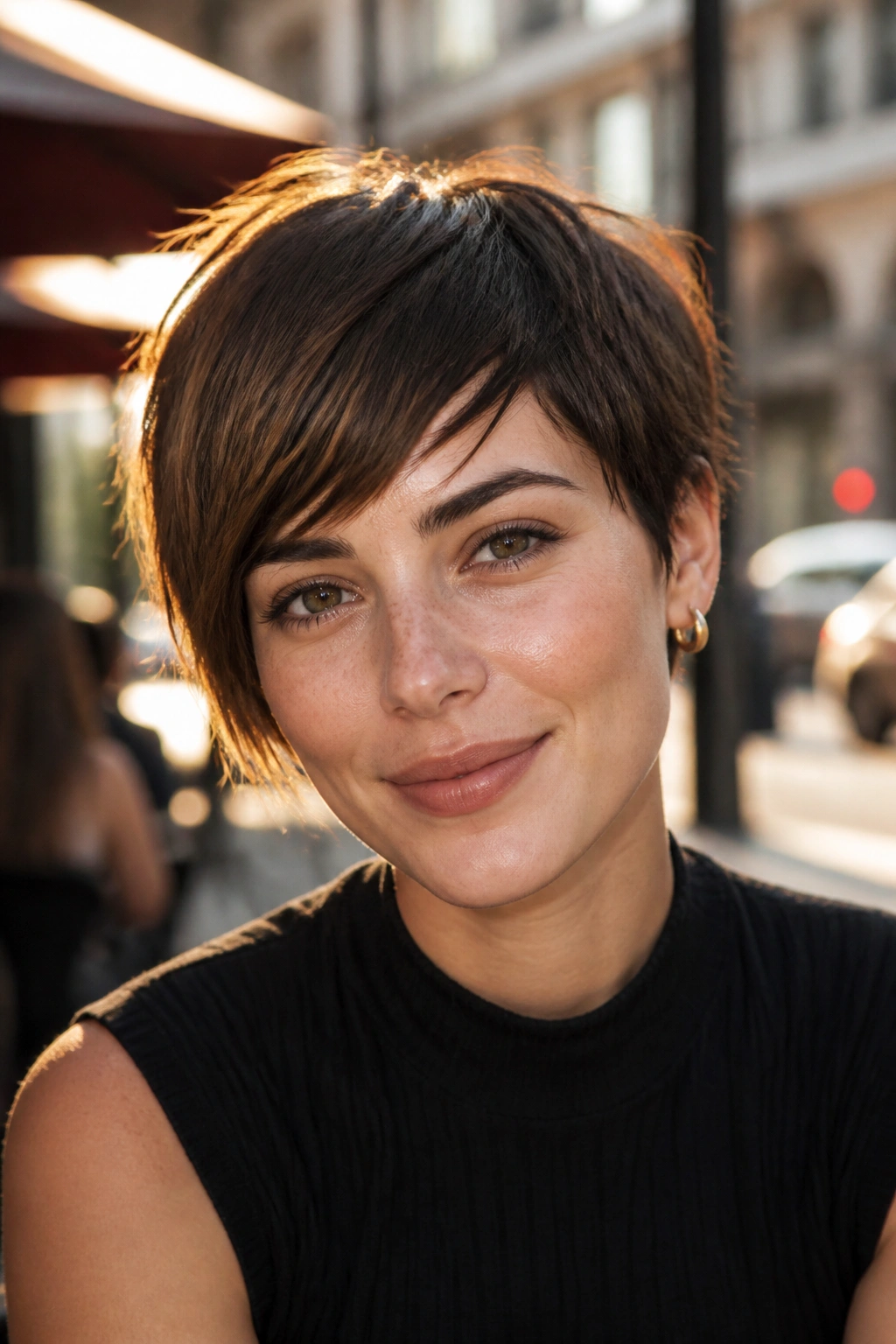
Why does a choppy finish work so well on a round face? Because the broken ends interrupt the curve. Instead of one smooth mass sitting on the forehead, you get little pieces that move independently, which keeps the front from looking heavy.
That matters more than people think. A blunt side bang can be pretty, sure, but on a round face it can also make the face feel shorter. A choppy finish breaks that line up and gives you a little lift near the temple.
How to Style It
Use a dry texture spray or a tiny bit of styling paste on the ends, then pinch the pieces apart with your fingers. Don’t brush it smooth after that; the roughness is the point.
If your hair is thick, ask for point-cutting or slide-cutting at the ends so the bang doesn’t sit in one solid chunk. If it’s fine, keep the texture lighter so you don’t lose too much density.
4. Bixie Side Fringe
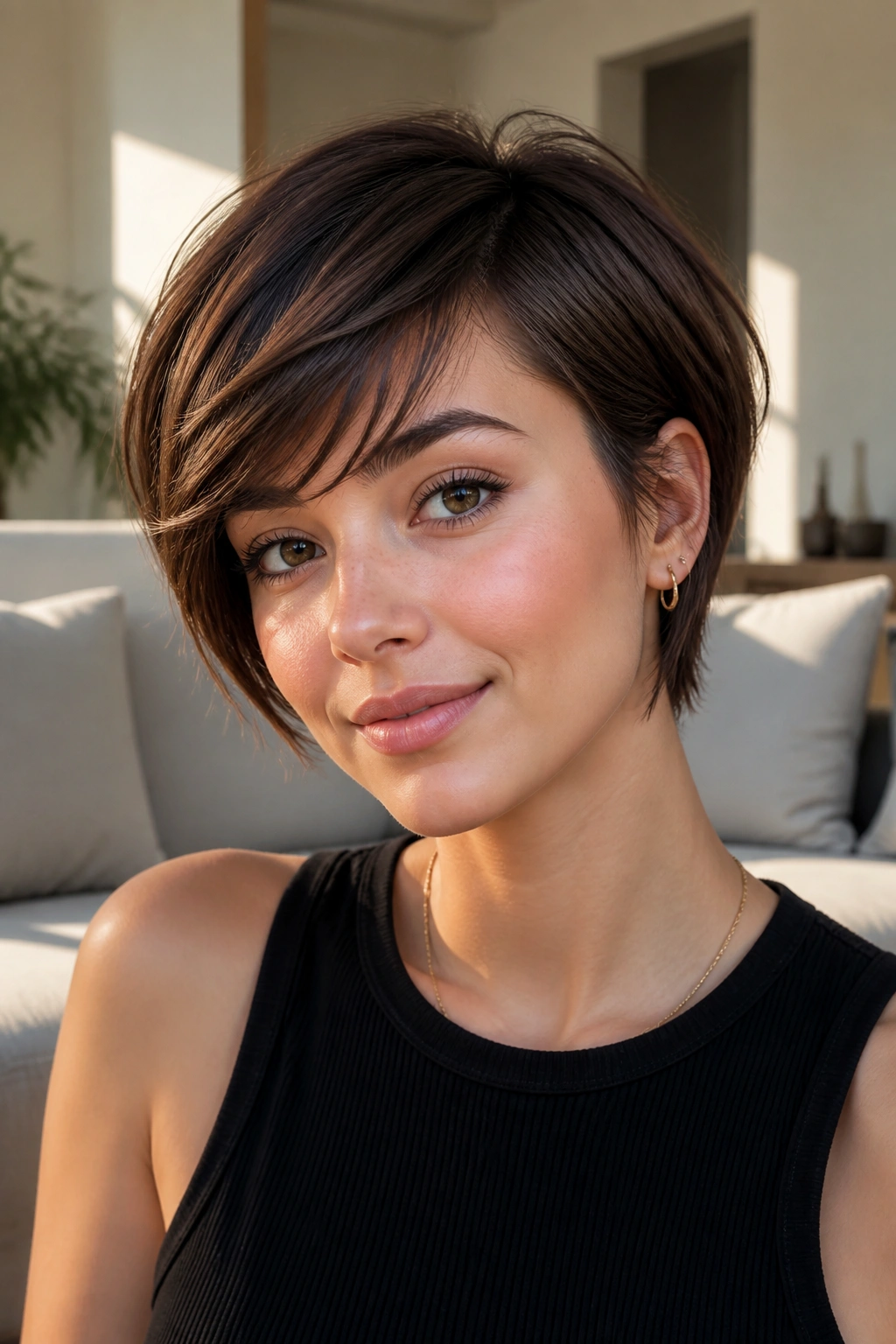
Picture a cut that sits somewhere between a pixie and a bob, with just enough length in front to sweep across one side of the forehead. That’s the beauty of a bixie side fringe. It gives a round face structure without the fuss of a longer haircut.
The short back and sides keep the silhouette close to the head, which is useful because excess width near the cheeks is what usually makes round faces feel wider. The fringe pulls the eye up and over, so the face reads a little longer. Clean, simple, effective.
I like this one for anyone who wants movement around the face but doesn’t want to spend ten minutes fighting a blow dryer. It looks especially good with a little piecey wax at the ends. A dab. Not a scoop.
- Keep the fringe light enough to sweep, not fall forward.
- Let the top layers have a bit more length for lift.
- Ask for soft tapering at the temple so the transition doesn’t look abrupt.
5. Long Pixie Side Fringe
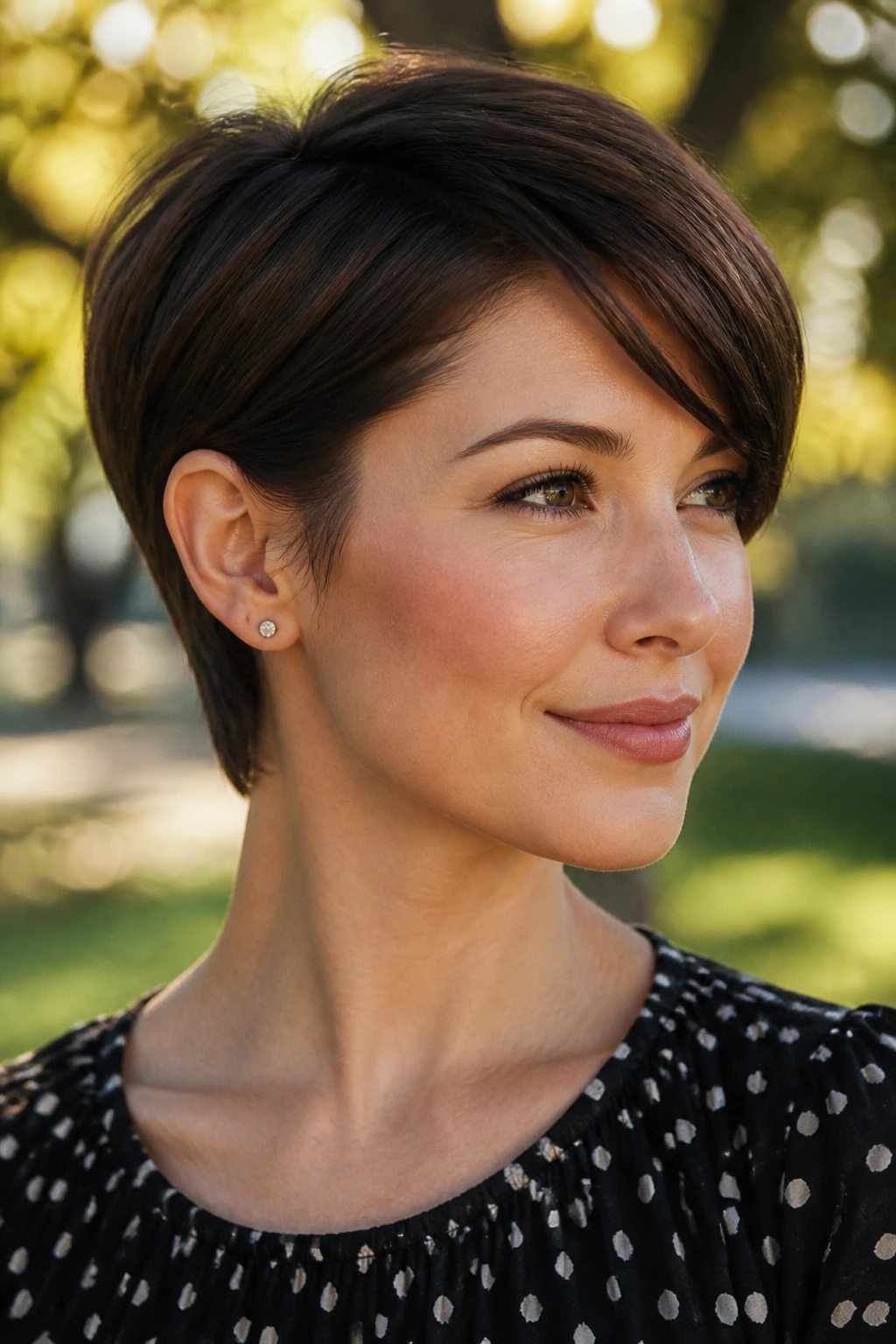
A long pixie gives you more room to play. The side fringe can be cut short enough to feel fresh, but long enough to tuck behind the ear or slide across the brow when you want a softer look. On a round face, that flexibility is the real win.
The shape works because the cut isn’t trying to cover the face. It opens it. The side bang becomes a small moving line rather than the main event, and that keeps the haircut from feeling dense around the cheeks. I’ve always thought this is one of the better choices for people who want a fringe but don’t want to babysit it.
It’s also forgiving on growth. When a pixie starts to grow out, the side bang usually stays useful for longer than a blunt fringe would. That matters. Nobody wants to trim every three weeks.
If you style it at home, start with a little root lift at the crown and push the front forward before sweeping it over. That one step stops the bang from drying flat to the head.
6. Slanted Blunt Fringe
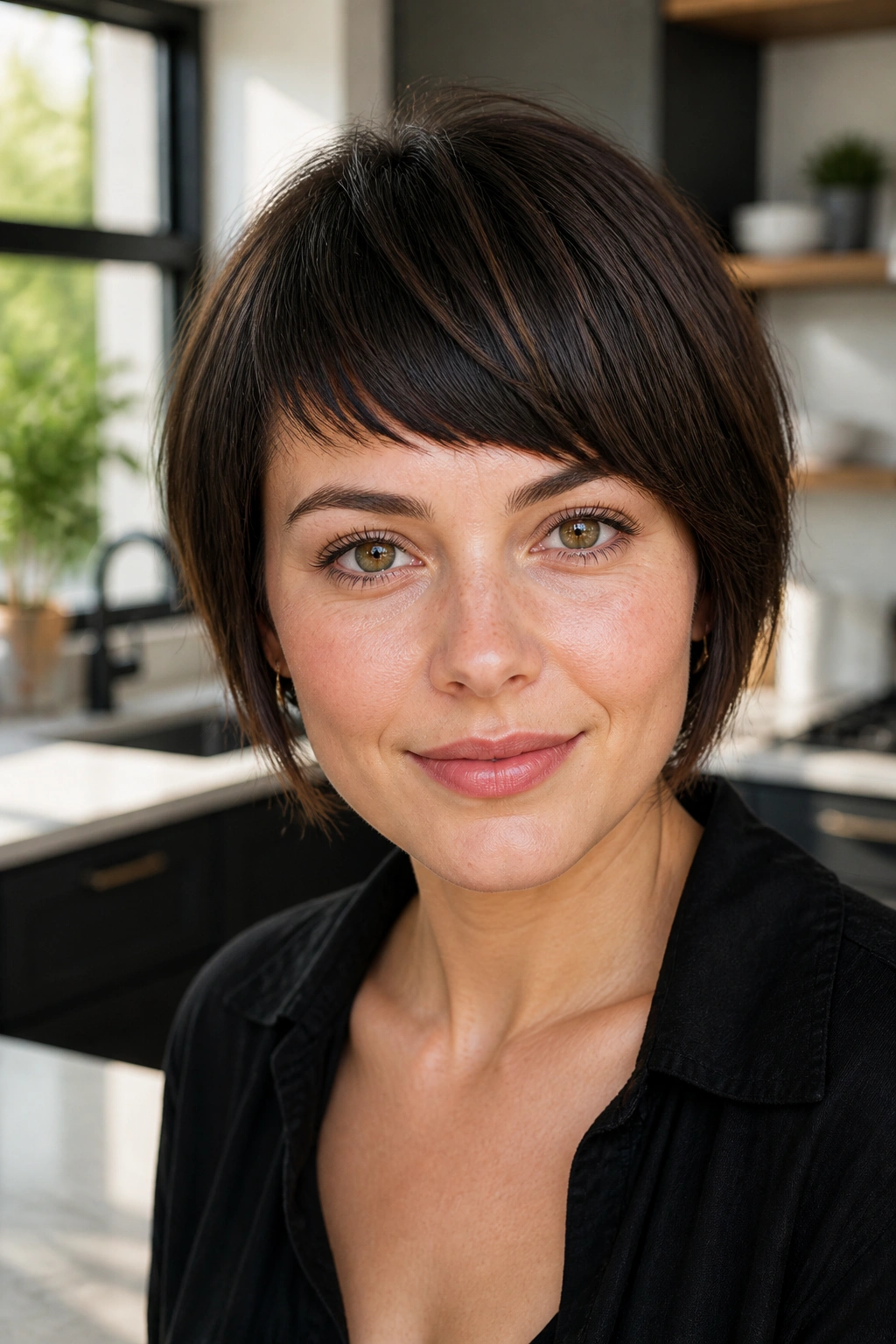
Unlike wispy bangs, a slanted blunt fringe gives you a cleaner edge. That sounds sharper, and it is, but on the right round face it can be a smart move because the diagonal line still does the slimming work while the blunt edge adds polish.
The important part is length. Keep the line shorter near the center and slightly longer as it moves to the side, so the fringe doesn’t cut straight across the face. If it ends too high, it can make the forehead look cramped. If it’s too dense, the whole look feels heavy.
This one is best for straight hair or hair that smooths easily with a blow dryer. If your hair bends a lot, the line can break up faster than you want. When it does work, though, it looks crisp and a little bold.
I’d choose this if you like a more defined haircut and don’t mind spending a few extra minutes with a round brush.
7. Curved Cheekbone Skimmer

A curved cheekbone skimmer follows the face instead of fighting it. The bang starts shorter near the temple, then arcs gently toward the cheekbone, almost like it’s tracing the side of the face. That curve is flattering on round faces because it softens the widest point without adding more width.
What Makes It Different
Most short side bangs sit as a straight sweep. This one bends. That bend is what gives the cut a softer finish, especially if your hair has some natural wave.
Tell your stylist to keep the length just long enough to touch the top of the cheekbone when dry. That “when dry” part matters. Hair almost always moves upward a bit after styling, and a bang cut too short loses its sweep fast.
A medium round brush helps here, but so does a simple tuck behind the ear after drying. The point is motion, not perfection.
8. Shaggy Side Fringe with Crown Lift
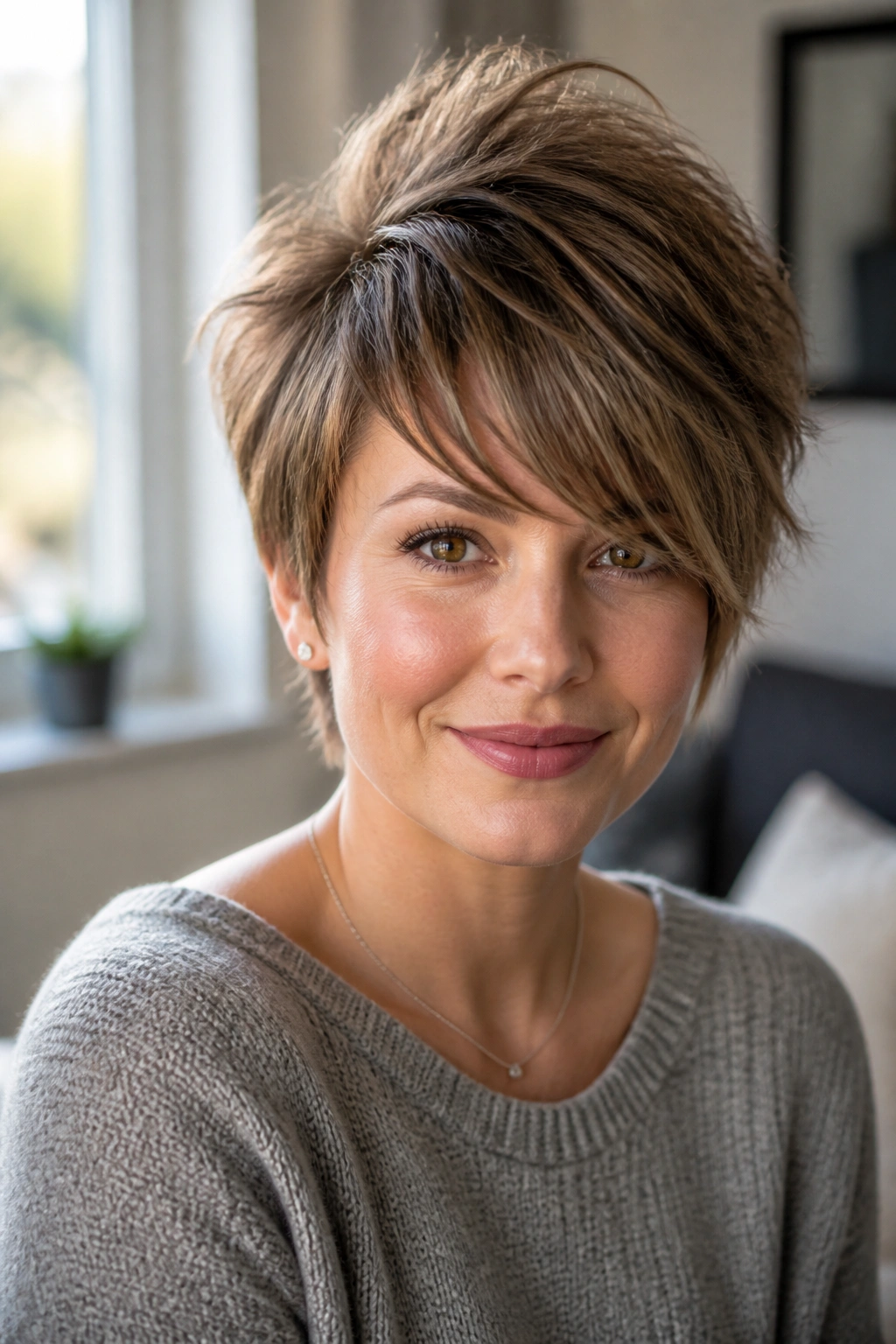
A shaggy side fringe looks casual, but the crown lift is doing the heavy lifting. That extra height at the top of the head helps a round face read longer, which is why this cut works better than people expect. The fringe itself stays light and layered, and the rest of the hair does the balancing.
This is a smart option if your hair likes to collapse on the sides. The shag creates broken texture through the lengths, which keeps the whole cut from feeling like one big circle. Very useful. Especially if you’re tired of cuts that make the face look fuller than it is.
Use a little root spray at the crown, flip your head upside down for a few seconds, then dry the fringe to the side with your fingers. It does not need to be sleek. Sleek is not the goal here.
If you like hair that looks a little lived-in and not overly styled, this one has a lot going for it.
9. Razor-Cut Side Bangs
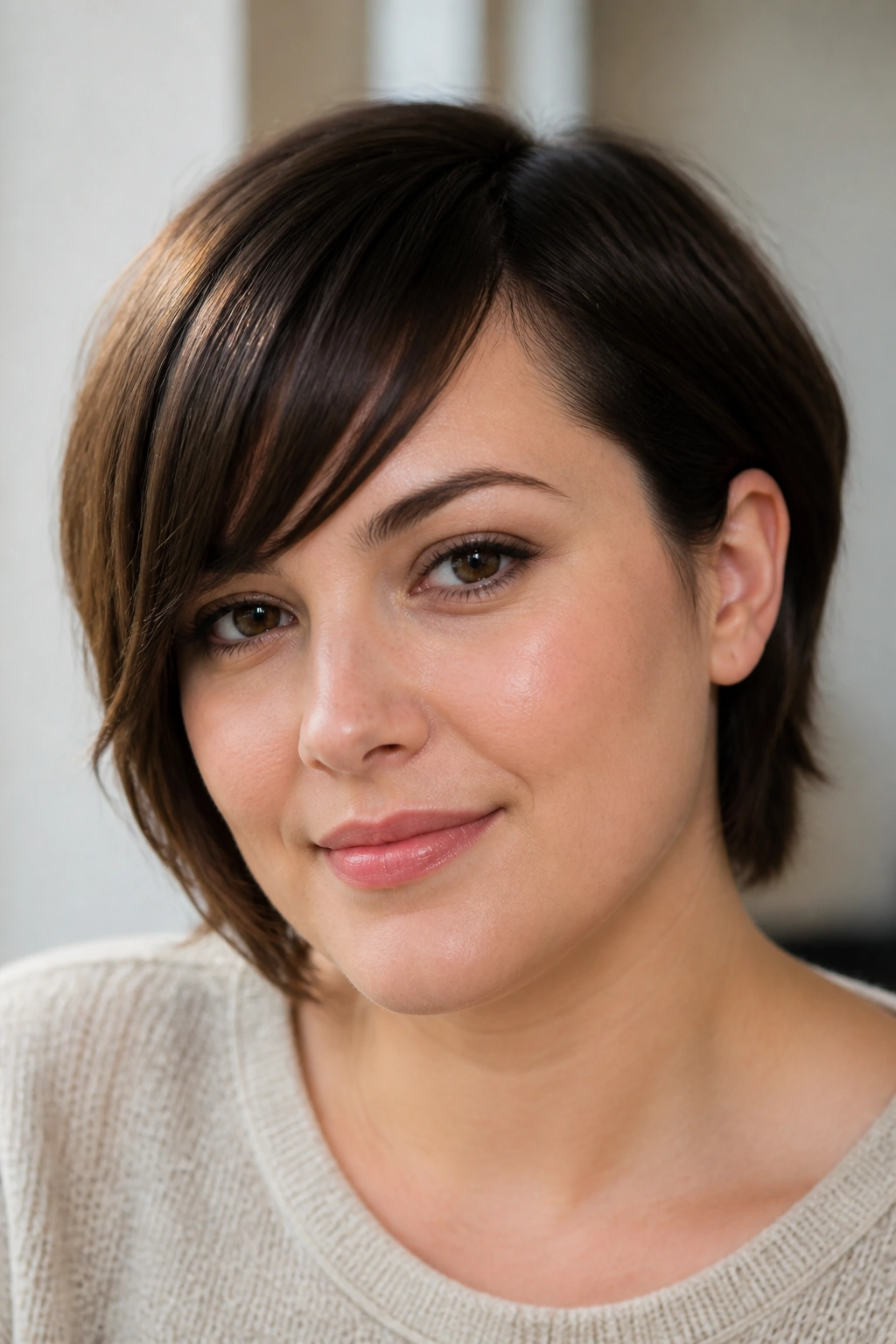
What if your hair is thick and your bangs keep puffing out? A razor-cut side bang is usually the answer. The razor removes some of the weight from the ends, so the fringe falls in a softer line instead of kicking out like a shelf.
That softness matters on a round face because thick, blunt side bangs can make the face feel wider at the temples. Razor cutting breaks up the bulk and gives the hair a little swing. It’s a cleaner way to thin the front without making it see-through.
How to Get the Most From It
Ask for the shortest point near the outer brow, then let the rest taper toward the ear. If the stylist razor-cuts too high into the fringe, it can look ragged instead of airy.
At home, use a smoothing cream only on the middle lengths. Leave the ends a little loose. That’s where the movement lives.
10. Textured Bob with a Side Sweep
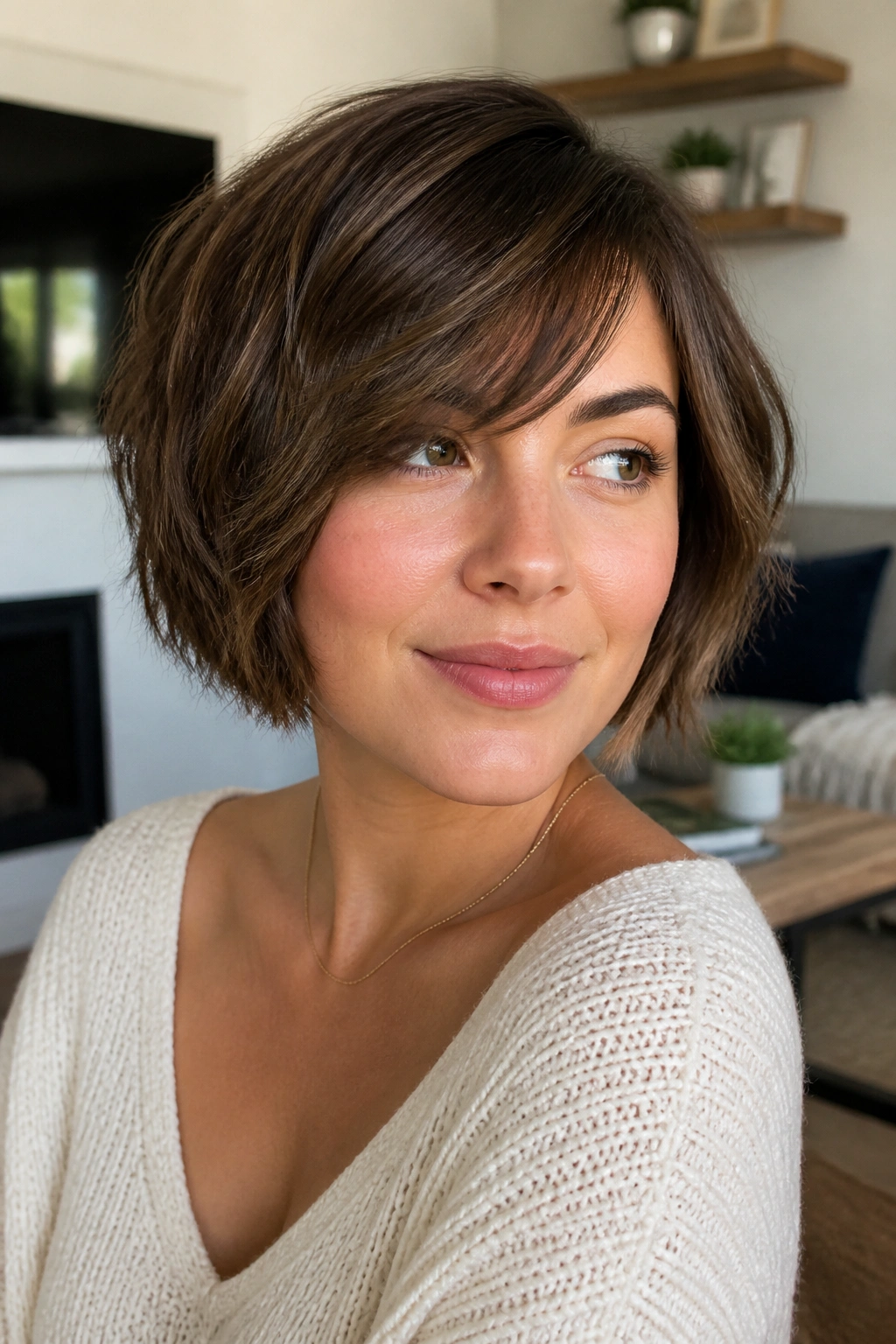
A chin-to-jaw bob can be tricky on a round face, because the line can sit right where the face is fullest. A side sweep fixes that by interrupting the curve. Suddenly the bob has direction instead of sitting like a neat little circle.
I like this pairing because it gives you two useful things at once: shape at the jaw and movement across the forehead. The side bang keeps the front from feeling blocked in, while the bob itself gives structure. If the hair is tucked behind one ear, even better. That little asymmetry helps a lot.
Keep the bang short enough to stay out of the eyes, but not so short that it pops upward. Around the outer brow to cheekbone range is usually the sweet spot.
This is a good cut if you want something polished for work but not stiff. It’s neat, not severe.
- Ask for soft layering through the bob, not a blunt shelf.
- Use a flat iron only on the front pieces if they need a bend.
- Finish with a light spray, not a heavy lacquer.
11. Soft Arched Fringe

A soft arched fringe is one of those cuts that looks almost simple until you see what it does to the face. The center sits a touch shorter, then the line gradually lengthens toward the sides, which gives the forehead a gentle frame without boxing anything in.
On a round face, that subtle arch can be kinder than a straight line. It leaves the middle open, keeps the outer corners soft, and draws attention upward in a way that feels balanced. If you wear glasses, this shape can be especially useful because it avoids a hard line hitting the frame.
The styling is easy, which I appreciate. Blow-dry the fringe side to side, then finish with a round brush aimed under the ends for a slight bend. You want curve, not curl.
If you’re tempted by bangs but nervous about commitment, this is one of the safer shapes to try.
12. Side Bangs for Round Faces with Curly Hair
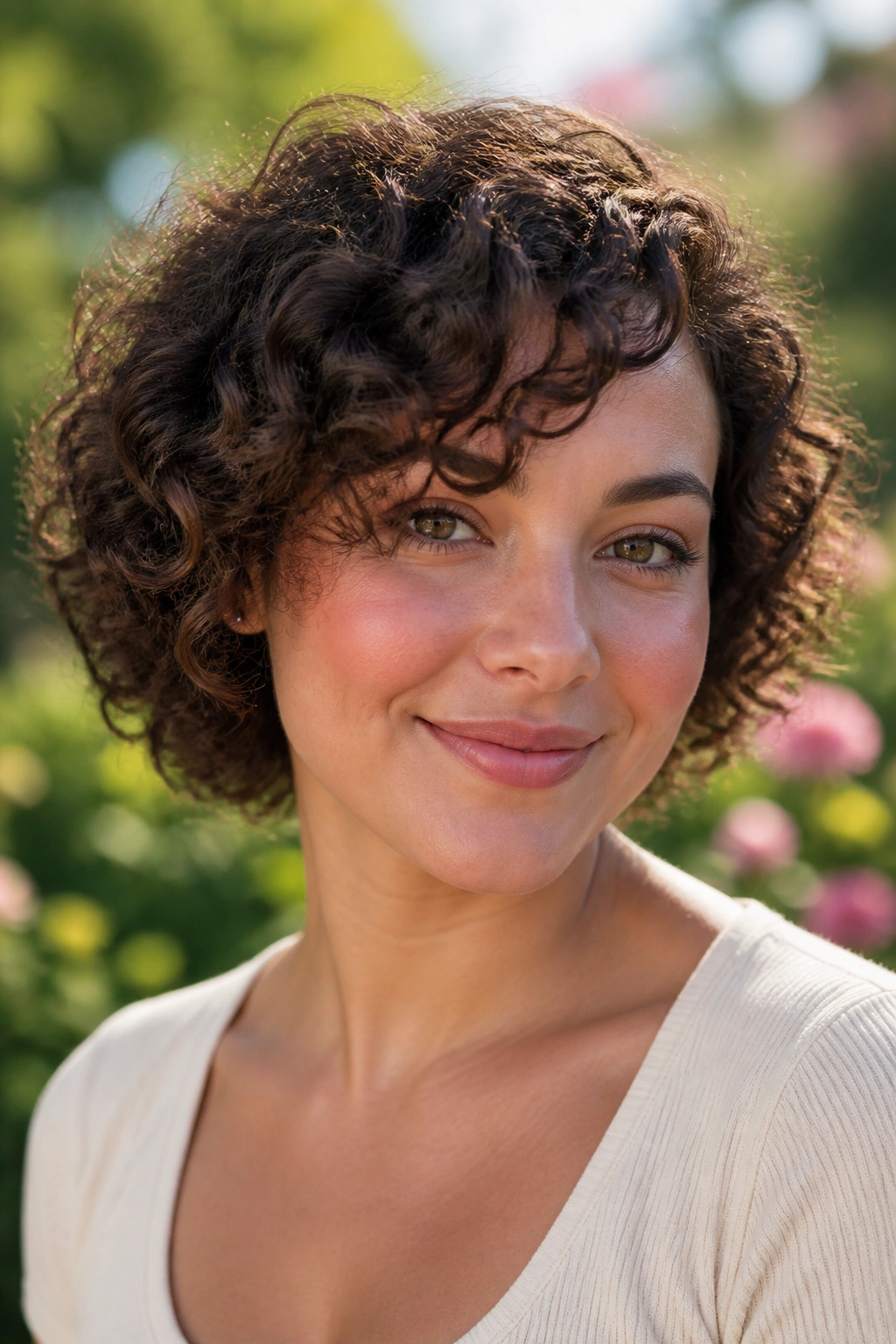
Curly hair needs its own rules. A short side bang on curls should usually be left longer than you think, because shrinkage can pull the fringe up by an inch or more once it dries. Cut too short, and the bang sits in the wrong place fast.
The good part is that curls already give you movement. A side-swept curl fringe can carve a diagonal line across the face without much styling at all. That diagonal is what helps a round face, not a bunch of heavy length. So the goal is to let the curl pattern do the work, not force it flat.
What to Ask For
Ask for a dry cut if possible, or at least a stylist who knows how your curl pattern behaves when it springs up. Leave the front pieces longer near the cheekbone, and keep the section narrow so the bang doesn’t turn into a curtain.
Use a curl cream or light gel, scrunch once, and leave it alone. Too much touching makes the front frizzy.
13. Wavy Lob Side Bangs
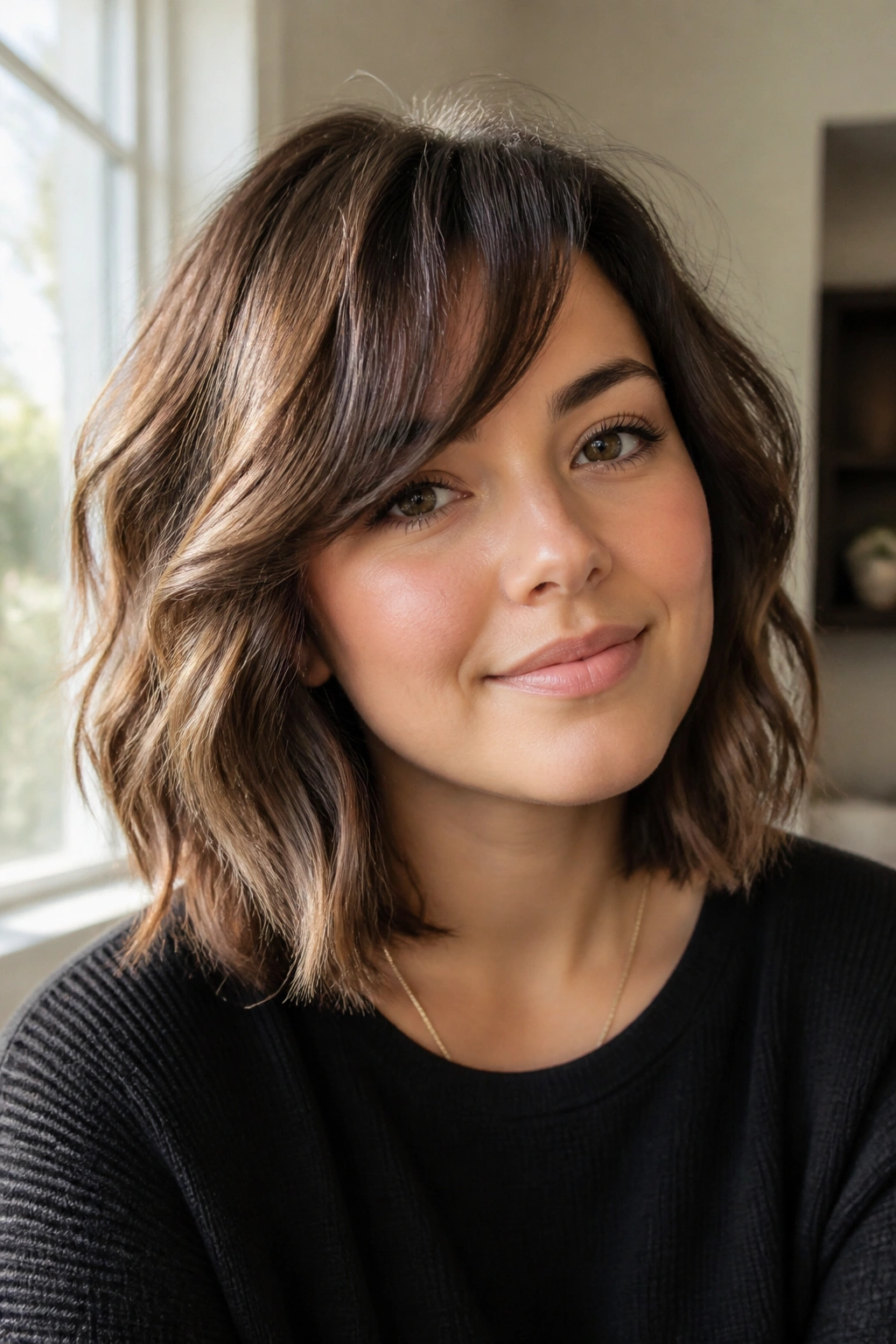
A wavy lob and a side bang get along because neither one wants to sit perfectly still. The wave gives the fringe a soft bend, and the fringe keeps the lob from feeling too symmetrical. On a round face, that broken line is useful. It helps the haircut move instead of spreading outward.
This is a nice option if you like hair that can air-dry and still look finished. The bang should be short enough to stay above the outer cheek, but long enough to blend into the lob’s front layers. If it stops abruptly, the shape feels disconnected.
A little sea-salt spray can help, though I prefer a light cream on dry hair if the texture is already there. Sea-salt can make some waves look rough.
Let the bang fall naturally to one side after drying. Don’t keep forcing it into the same spot every day. A softer switch in direction often looks better on rounder faces.
14. Fine-Hair Side Sweep
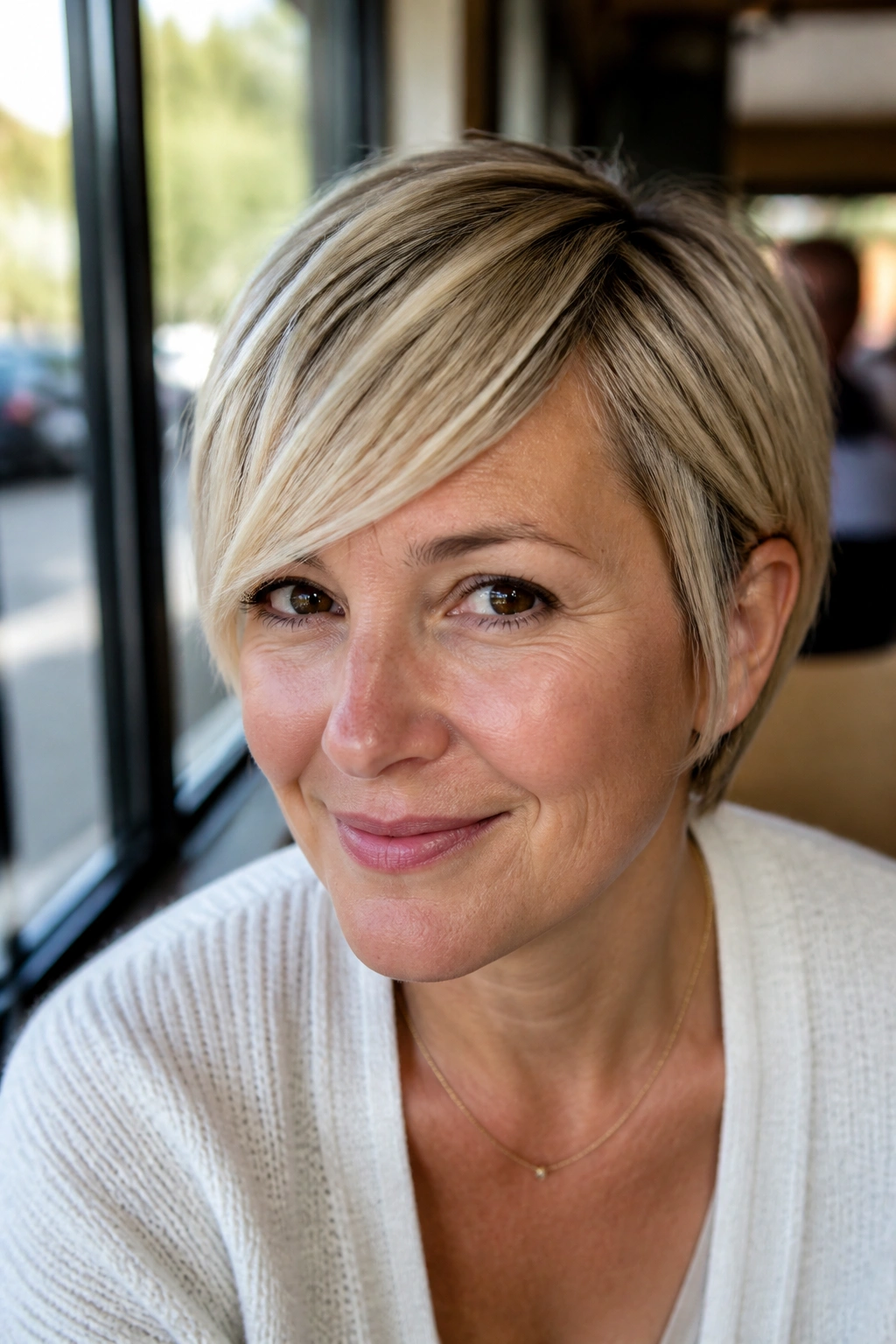
Fine hair needs a lighter bang, not a thinner one. That difference matters. If you over-layer fine hair, the fringe can go limp and stringy, which is the fastest way to lose the face-shaping effect.
A side sweep for fine hair should use narrow sections and soft internal shaping. The bang needs enough body to hold a diagonal line, but not so much weight that it collapses toward the cheek. A little root spray at the base helps more than extra product on the ends.
I’d keep this one slightly shorter at the temple and longer toward the brow tail, so the eye gets a clear direction. If the fringe is too long, fine hair tends to separate in a way that looks accidental. Not ideal.
A quick blow-dry with a small brush usually does the trick. Then stop touching it. Fine hair always gives away too much fussing.
15. Thick-Hair Side Fringe
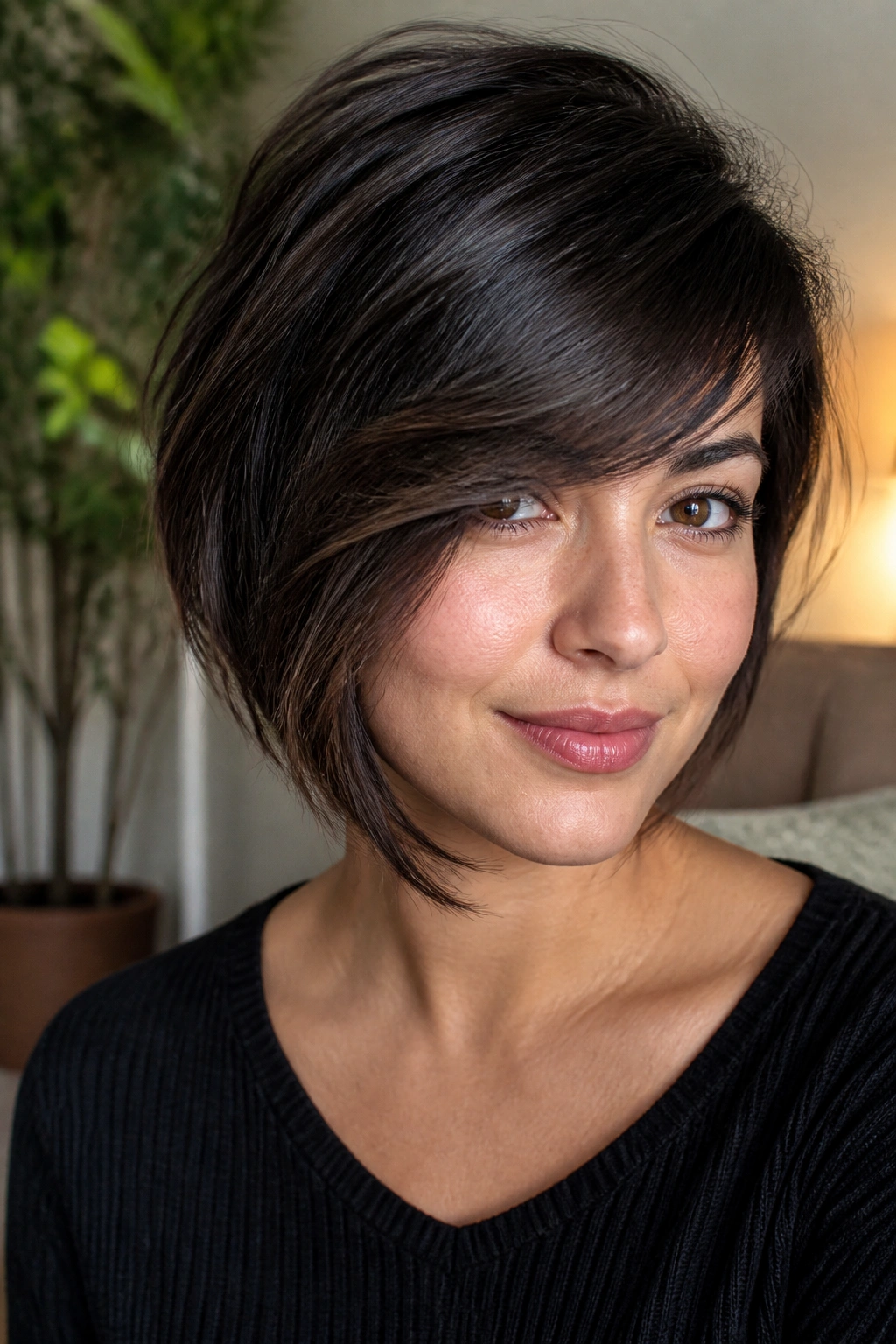
Thick hair can wear a side fringe beautifully, but only if the bulk is controlled from the inside. That’s the part most people miss. If you cut thick hair in one solid slab, the bang will sit too heavy and push the round face outward.
The better move is internal layering, which removes weight under the surface while keeping the outer line looking full. The fringe should still sweep, not split into pieces. If you want a shorter front, keep the shortest point near the temple and let the rest angle down gradually.
What to Watch For
- Avoid over-thinning the ends; it can create frizz and a fuzzy outline.
- Ask for shaping near the root, not just at the tips.
- Use a smoothing cream or light oil only on the last inch.
This style usually needs more blow-drying than fine hair, but it pays off. Thick hair holds the shape longer once it’s set.
16. Side Bangs with Glasses

Glasses change the game. The frame already creates a horizontal line, so the bang should either sit above that line or travel cleanly around it. A side bang that drops straight into the frame can make the front feel crowded fast.
The safest approach is a shorter sweep that starts around the temple and lands near the brow tail, leaving the lens area open. That gives the face room and keeps the glasses from fighting the haircut. On a round face, that open space matters because it stops the upper half from feeling boxed in.
I prefer a bit of softness around the edges here, especially with thicker frames. Sharp edges plus bold frames can look heavy. A lighter sweep makes the whole thing easier on the eye.
If you wear glasses every day, bring them to the salon. The placement of the bang should be judged with the frames on, not guessed from memory.
17. Tapered Temple Fringe
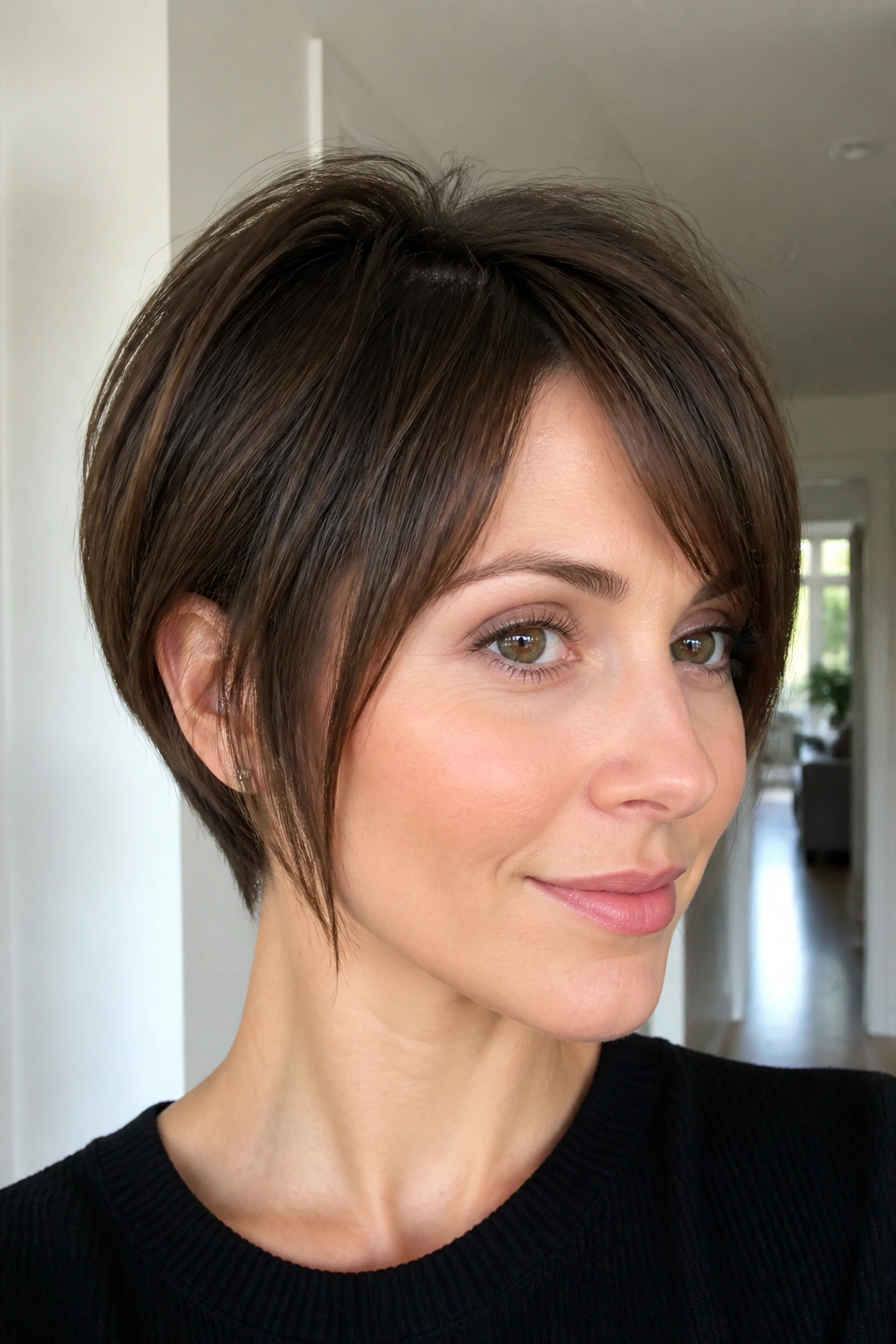
A tapered temple fringe starts short at the temple and grows longer as it moves toward the cheekbone. That taper is the whole point. It opens the outer corners of the face, which is where round faces often need the most help.
This one feels subtle at first, but it’s doing real shape work. Because the shortest point sits near the side of the head, the front doesn’t pile up on the center of the face. Instead, the eye follows the line outward and down. That makes the face feel a little narrower without looking harsh.
It’s a nice choice if you want bangs but not a full fringe moment. There’s less commitment, less styling, and less chance of waking up with a strange triangle at the front.
Blow-dry the root sideways first. If you skip that, the fringe can spring straight up and lose the taper.
18. Jaw-Length Face-Framing Sweep
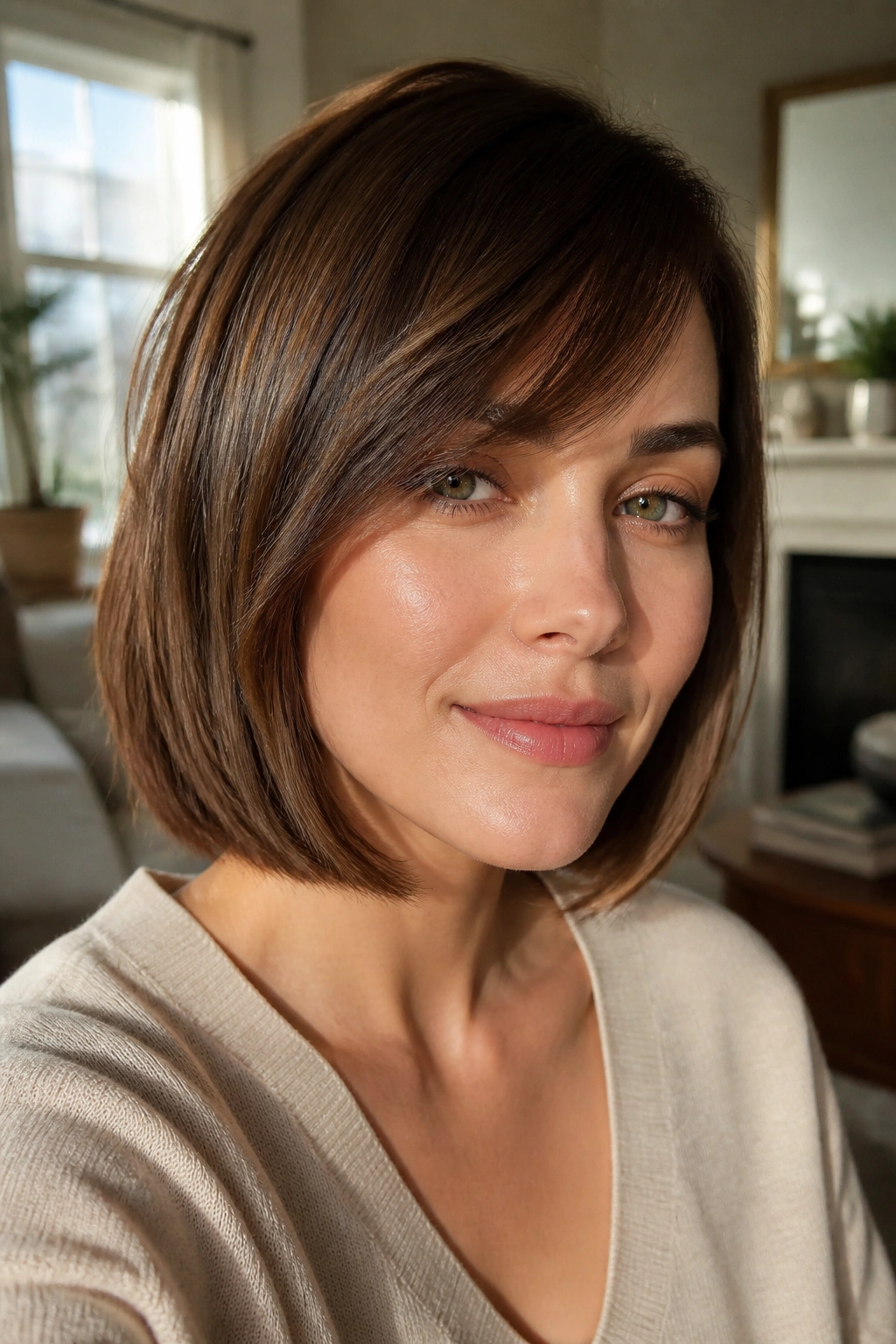
Unlike a bang that ends on the forehead, this one merges into the jaw layers. That’s what makes it useful on a round face. The eye gets a clean path from the front hairline down toward the jaw, which helps stretch the shape.
This is less about a single bang and more about a short front section that melts into the haircut. If the hair is medium-length, the sweep can connect to face-framing pieces that start around the cheek and finish at the jawline. That line works hard. It keeps the haircut from bunching up around the cheeks.
Best for someone who likes movement but doesn’t want a distinct fringe every day. You can wear it forward, tuck it back, or let it split naturally after drying.
The one thing I’d avoid is making it too even on both sides. A little asymmetry is what keeps the look flattering rather than rounder.
19. Undercut Side Fringe
A hidden undercut at the temple changes how a side fringe behaves. It takes away some of the bulk underneath, which lets the top layer fall closer to the head. On a round face, that matters because less side volume usually means a cleaner outline.
This is one of the more practical choices if your hair is thick or coarse. The fringe stays short and wearable, but the undercut keeps it from mushrooming out at the sides. The cut can look edgy, but it does not have to. Most of it stays tucked away.
Why It Works
The undercut removes weight where you don’t see it. The top layer keeps the softness. The side sweep still gives the diagonal line that flatters the face.
If you want low maintenance with less puff, this is a strong option. It does need occasional upkeep, though, because hidden growth shows up faster than people expect.
20. Tousled Air-Dry Bang
A tousled air-dry bang is for the person who wants a side fringe without the morning battle. It works best when the front is cut with enough movement that it settles into place on its own. No hard line. No stiff bend.
The trick is to twist the damp fringe once or twice after washing, then let it dry toward the side you want. A small amount of curl cream or light mousse can help the pieces separate without turning crunchy. That soft separation keeps the fringe from sitting like one heavy strip across the forehead.
This is a good choice if your hair already has a little wave or bend. Straight hair can do it too, but you may need to pinch the ends while they dry. A little patience goes a long way here. A lot of touching does not.
If you like an undone finish that still looks thought through, this is a keeper.
21. French Bob Side Bangs
A French bob can feel too round on its own if the cut is full around the cheeks. A side bang breaks that up. It gives the front a directional line and stops the bob from becoming one big curve around the face.
The side fringe should be short enough to keep the forehead open, but soft enough to blend into the bob’s top layer. You want chic, not helmet-like. That usually means keeping the fringe narrow and allowing a bit of movement at the temple.
This pairing is especially nice if your hair is straight to slightly wavy and you like a neat silhouette. The shape feels deliberate, which helps the round face look more sculpted. A little lift at the roots makes a big difference here, too.
I’d skip a heavy blunt version with this cut. It can crowd the face fast. Lightness is the better call.
22. Layered Shag Fringe
A layered shag fringe looks casual, but the layers are doing all the shaping. Around a round face, the point is to keep the front from sitting flat and wide. The shag breaks up the silhouette, and the side bang gives it direction.
This is one of those cuts that rewards a little messiness. If the fringe is too polished, it loses its charm and starts to look fussy. A few uneven pieces, a little texture at the ends, and a soft lift at the crown are what keep it alive.
If you’re styling at home, rough-dry first, then finish the front with your fingers instead of a brush. That keeps the layers separated. A small amount of matte paste can help if your hair is slippery.
This style tends to look better the second day, when the texture has settled a bit. That’s one of the reasons people keep coming back to it.
23. High-Crown Blowout Bang
Volume at the crown changes the proportions of a round face fast. A high-crown blowout bang uses that lift to create height up top, while the short side fringe brings the eye across and down. It is a simple idea, but it works.
The bang itself should be kept light and flexible. If it gets too heavy, the crown lift loses its effect. You want the front to move with the blowout, not sit on top of it like a cap.
A round brush, a nozzle attachment, and a little patience are enough. Direct the airflow upward at the roots first, then sweep the fringe to the side as it cools. Cooling matters. Warm hair remembers shape better when it sets while still slightly warm and then finishes cooling in place.
This is a good choice for special-occasion hair, but it’s also practical for everyday wear if you don’t mind five extra minutes in the morning.
24. Peekaboo Side Bangs
A peekaboo side bang is subtle, which is exactly why it can be so useful. Instead of sitting as a full block of fringe, it appears when the hair shifts, tucks, or moves across the forehead. On a round face, that little flash of diagonal shape is enough to soften the look without committing to a heavy front.
This is the one I’d suggest to someone who says they want bangs, but not too much bang. Fair enough. That’s a real category of person. The hair can stay mostly open around the face, while the side section gives a soft break in the outline.
It also grows out nicely. Because the fringe is not dense, the in-between stage tends to look intentional rather than awkward. That alone makes it easier to live with.
If you’re nervous about maintenance, start here. The cut is gentle, and gentle usually ages better.
25. Rounded Bob with a Side Break
A rounded bob can be lovely, but it needs a break in the curve or the face can feel too circular. A side bang does that job. It interrupts the outline just enough to keep the bob from hugging the face too closely.
The side break should not be heavy. It’s more like a small slash of movement across the front. That keeps the bob soft while still giving the haircut a little direction. On a round face, direction matters more than people think. Straight-on symmetry usually adds width.
This style suits hair that holds shape well, because the rounded bob depends on structure. If your hair is very fluffy, you may need stronger smoothing at the ends. If it’s fine, a light root lift can help the bob keep its curve without collapsing.
It’s a neat look. Not fussy, just neat.
26. Micro-Layer Side Fringe
Tiny internal layers can change everything. A micro-layer side fringe keeps the outer shape short, but the inside is cut to move. That means the fringe can fall to the side without looking like one stiff strip.
For round faces, that movement is useful because it keeps the forehead from looking boxed in. The layers also help the bang sit a little higher at the root, which opens the face more than a flat fringe would. Small change. Big payoff.
What to Ask For
Tell your stylist you want the fringe to remain short, but not dense. Ask for soft internal texture rather than aggressive thinning. Keep the longest point just past the outer brow so the side sweep has room to land.
This style is especially nice on straight hair that tends to lie too flat. The micro-layers stop it from looking pasted down.
27. Short Side Bangs for Round Faces with a Soft Flip
Why do some side bangs feel playful instead of polished? The soft flip. A tiny outward bend at the end changes the whole mood of the cut, and on a round face it can keep the front from feeling too serious or too tight.
This works best when the bang is cut with enough length to curve, not just fall. The shortest point stays near the temple, while the ends flip lightly away from the cheek. That keeps the face open and gives the haircut a little lift.
I like this for straight or slightly wavy hair, especially if you want something that reads fresh without looking high-maintenance. The flip should be subtle. A tiny round brush or a quick pass with a flat iron is enough.
If the ends turn too much, the bang can look dated. Keep the bend soft and the rest of the cut simple. That balance is what makes it wearable.
28. The Everyday Side Sweep
The safest side bang is usually the one you can wear without thinking about it. A good everyday side sweep lands somewhere between the temple and the outer cheek, stays light enough to move, and doesn’t demand a perfect blowout to look decent. That is a lot to ask of a few inches of hair, but it can do it.
For round faces, I’d always favor a side bang that opens the forehead a little and leaves some space near the cheeks. Space matters. When the front is too full, the face feels wider. When it’s too sparse, the bang does nothing at all. The sweet spot is right in the middle, where the shape is clear but not heavy.
If you want the most wearable version, bring your stylist a photo of a side fringe that’s shorter at the temple and longer near the brow tail. Then say you want movement, not thickness. Those two words usually save a lot of regret.
The best side bangs are the ones that still look decent when the day gets messy. That’s the real test.
