



Round faces and bangs have been treated like a tricky pairing for too long. They’re not tricky. They’re specific.
The sweet spot with short curtain bangs for round faces is shape, not length alone. If the center opens the forehead a little and the sides skim the cheekbones or jaw, the whole face looks longer and more carved. If the fringe sits too compact or too blunt, it can do the opposite and widen everything you were trying to soften.
A good cut matters more than a perfect blow-dry. So does texture. Fine hair needs lightness, dense hair needs internal removal, curls need a dry cut, and straight hair usually looks best when the ends are softened instead of clipped into a hard line. The difference is one of those things you can spot immediately in a mirror: the fringe either folds into the face or sits on top of it like a shelf.
Thirty versions can sound like a lot, but it helps when you see how much variation there really is. Some short curtain bangs are airy and almost invisible. Others are piecey, thick, shaggy, or split with a deeper part. The right one depends on where your face is widest, how much forehead you want to show, and how much styling you’re willing to do before coffee.
1. Cheekbone-Grazing Curtain Bangs
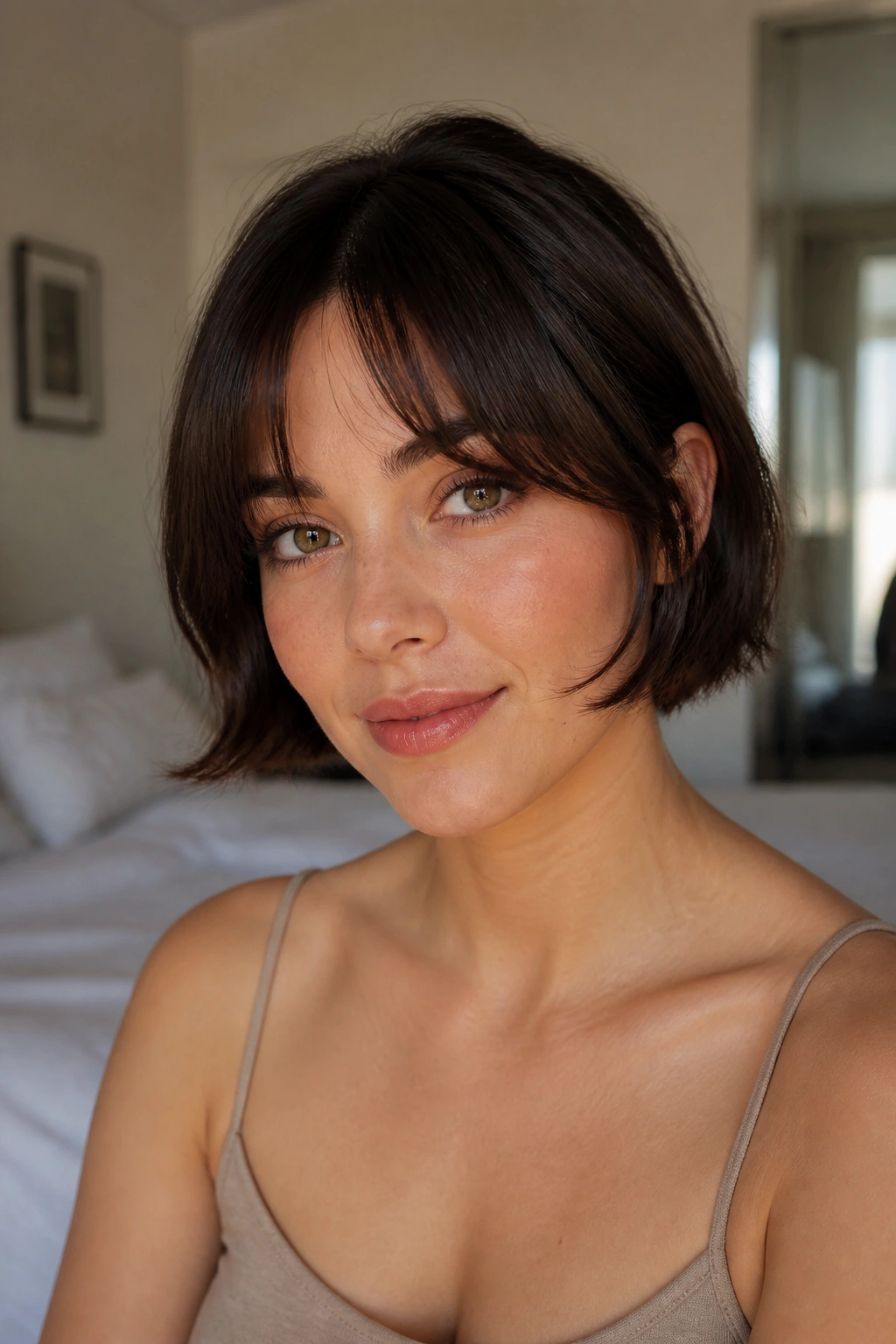
This is the safest short curtain bang for a round face, and I say that without hesitation. The shortest point lands near the brow, then the sides fall right toward the cheekbones, which gives the face a longer line instead of a wide one.
Why It Flatters a Round Face
The cheekbone is the landmark here. When the fringe opens around that area, the eye is pulled upward and outward at the same time. That breaks up the roundness in a way that feels soft, not harsh.
Ask for point-cut ends rather than a blunt edge. The fringe should move when you shake your head, not sit in one solid block.
- Center pieces: just below the brow
- Side pieces: skimming the top of the cheekbone
- Ends: soft, not squared off
- Finish: light bend away from the face
Pro tip: bring a photo that shows the bangs at rest and in motion. That matters more than a polished salon shot.
2. Bottleneck Curtain Bangs
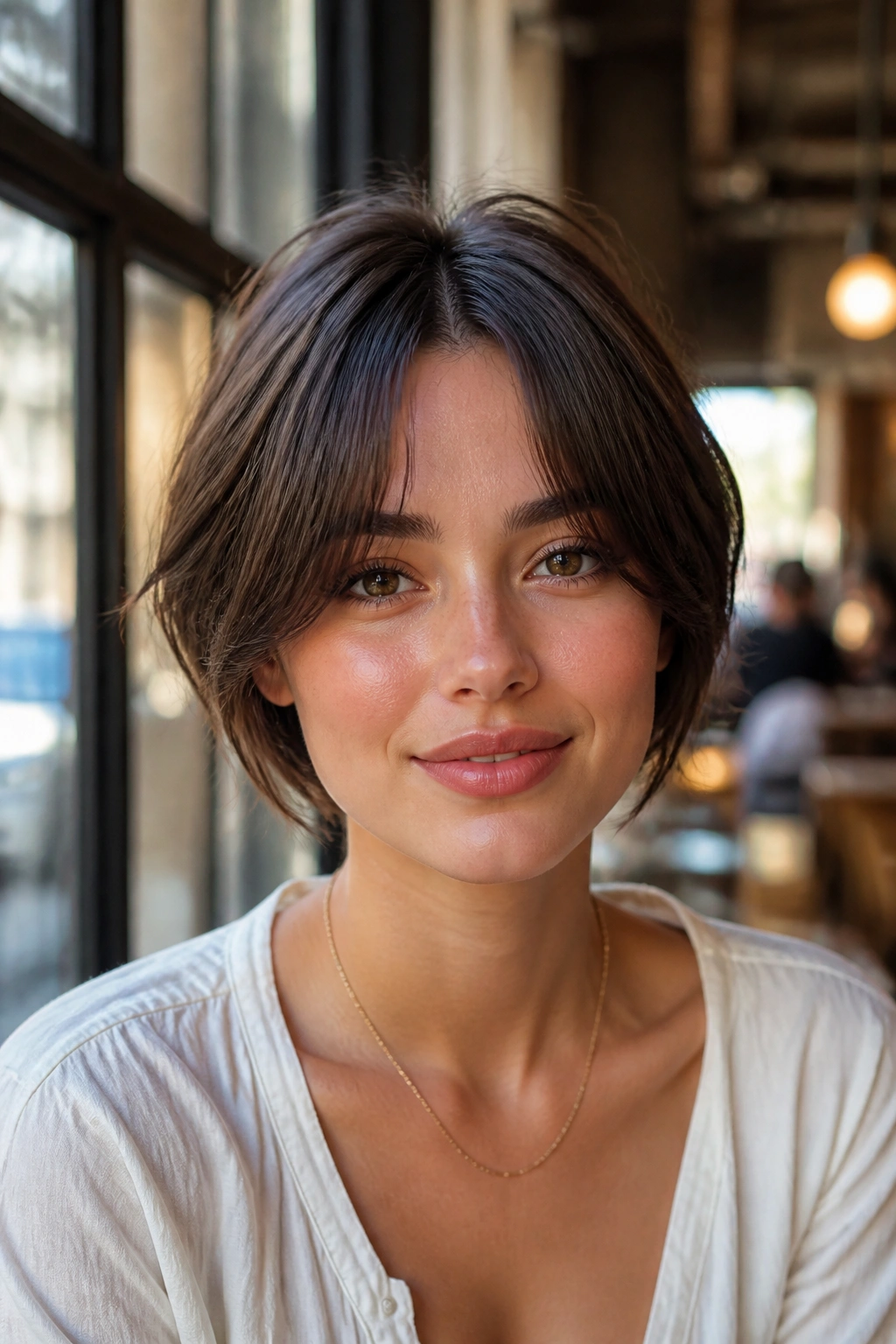
Why do bottleneck bangs work so well on round faces? Because the shape narrows the middle and opens out through the sides, which creates a little breathing room across the forehead. That small visual taper can make a big difference.
The center stays short enough to feel modern, but not so short that it turns into baby bangs. Then the side lengths fan out toward the temples and cheekbones. The result is more vertical than horizontal, which is exactly what a round face likes.
How to Style It
Use a round brush or a medium barrel brush and direct the center section straight down first. Once it’s partly dry, bend the sides away from the face with a slight curve. Do not overflip the ends; you want a soft opening, not a retro curl.
This style suits people who want short curtain bangs but do not want obvious separation. It looks clean, and it grows out gracefully. That alone makes it worth a look.
3. Feathered Curtain Bangs
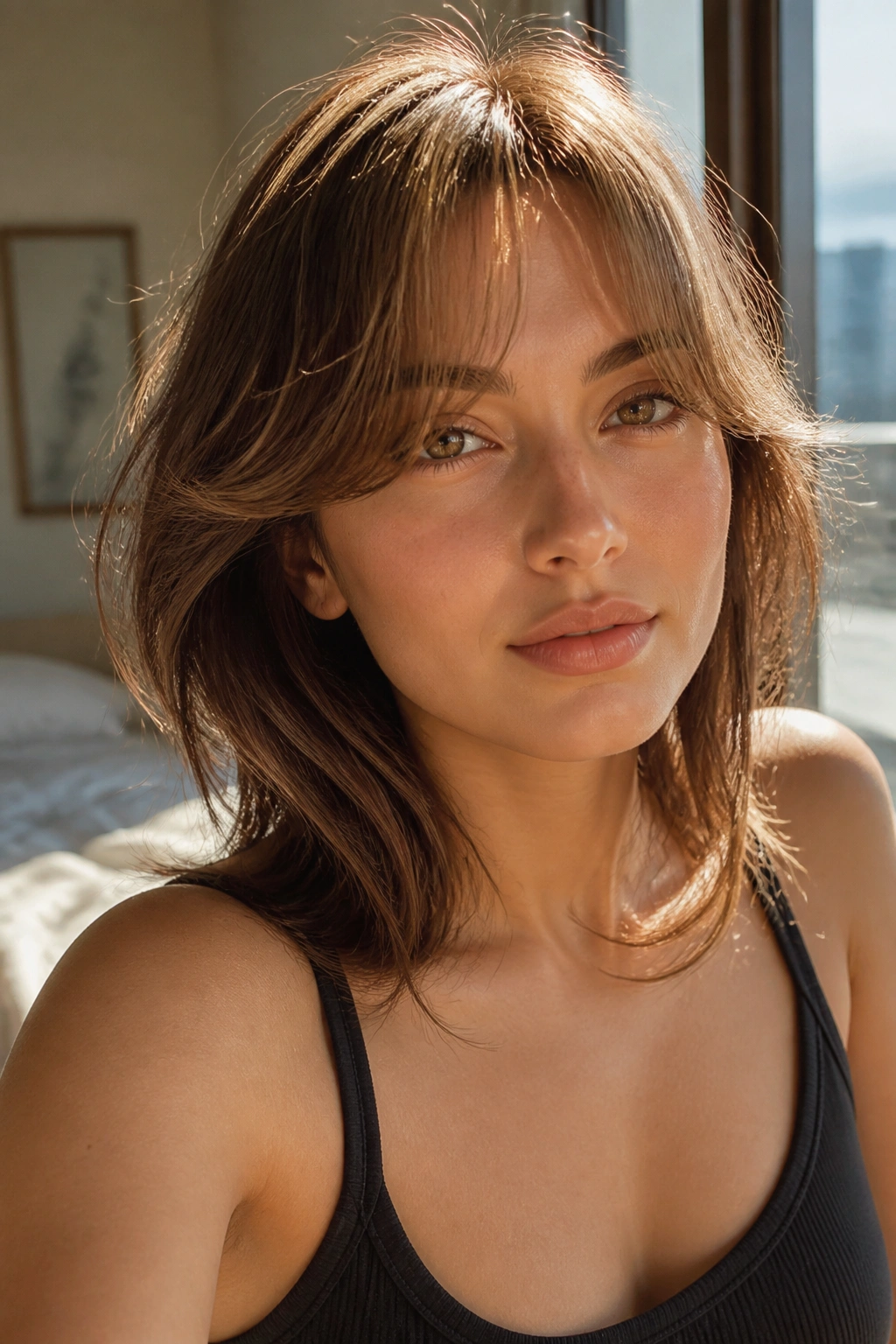
If your bangs tend to look heavy, feathering is the fix. The cut is lighter through the ends, so the fringe breaks apart in a softer way and doesn’t stack up into a dense block across the forehead.
Picture a fringe that almost floats. That’s the goal. The texture should feel airy, with the shortest pieces soft enough to move when you turn your head. Feathered curtain bangs are especially good if your hair has a little natural bend, because the cut helps that movement show instead of fighting it.
What to Ask the Stylist
- Use a feathering technique through the ends
- Keep the center short, but not choppy
- Blend the temples into the side layers
- Avoid a thick blunt line at the bottom
A small warning: if your hair is very frizzy, too much feathering can look fuzzy instead of soft. In that case, keep the feathering controlled and the ends slightly longer.
4. Piecey Split Curtain Bangs
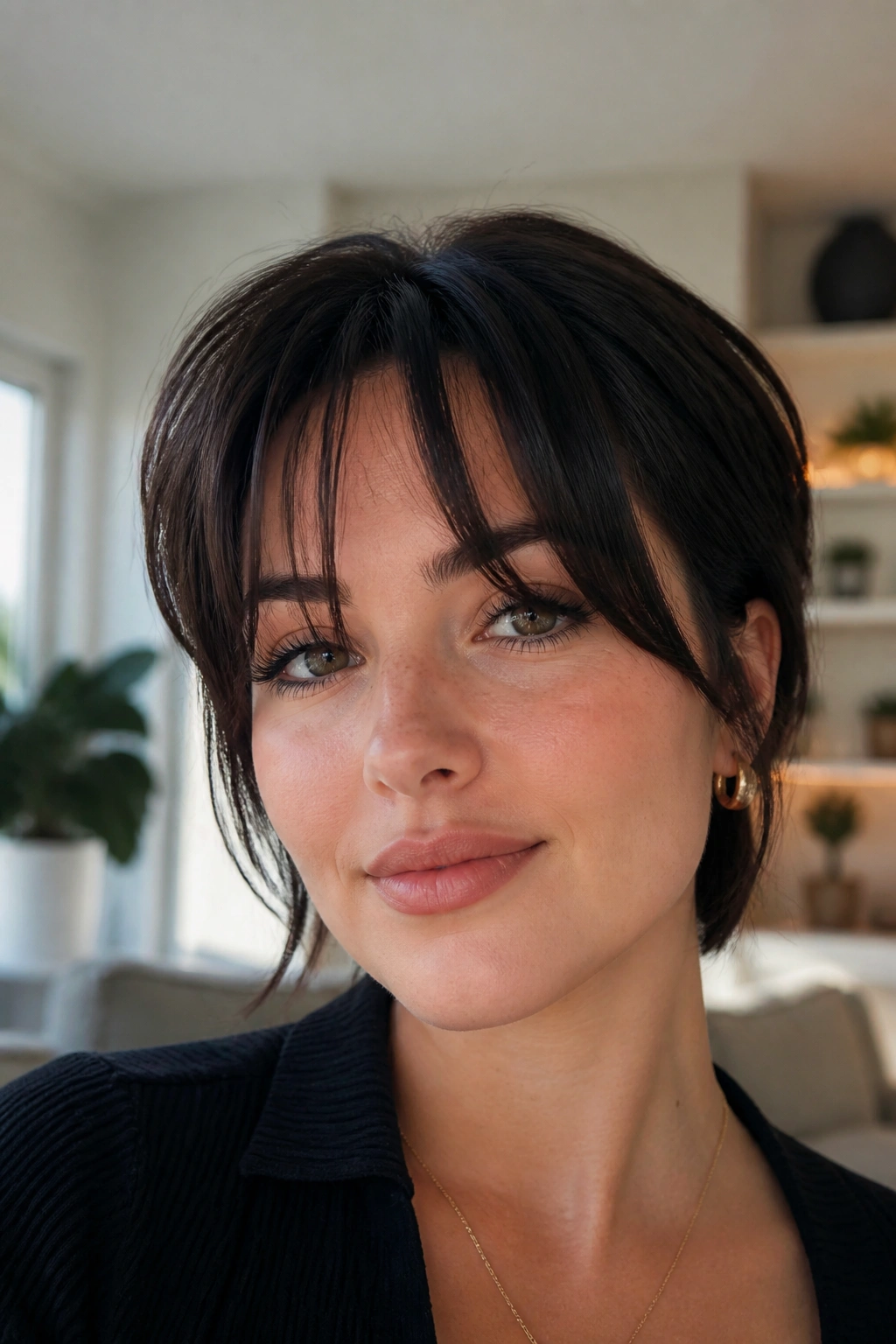
Piecey bangs are not the same as messy bangs. Messy can look accidental. Piecey looks intentional, even when it barely seems styled.
The split creates little openings that stop the fringe from sitting flat across a round face. That matters because a solid sheet of hair across the forehead can make the face feel shorter and wider. Separate pieces, on the other hand, give the front of the haircut some air.
For straight or slightly wavy hair, this is one of the easiest styles to live with. A touch of lightweight cream at the ends is enough. No heavy paste. No crunchy spray. Just enough hold to keep the pieces from fusing together by lunchtime.
Best for: people who like visible texture and don’t mind a little finger styling.
Not ideal for: anyone who hates touching their hair at all.
5. Brow-Skimming Curtain Bangs
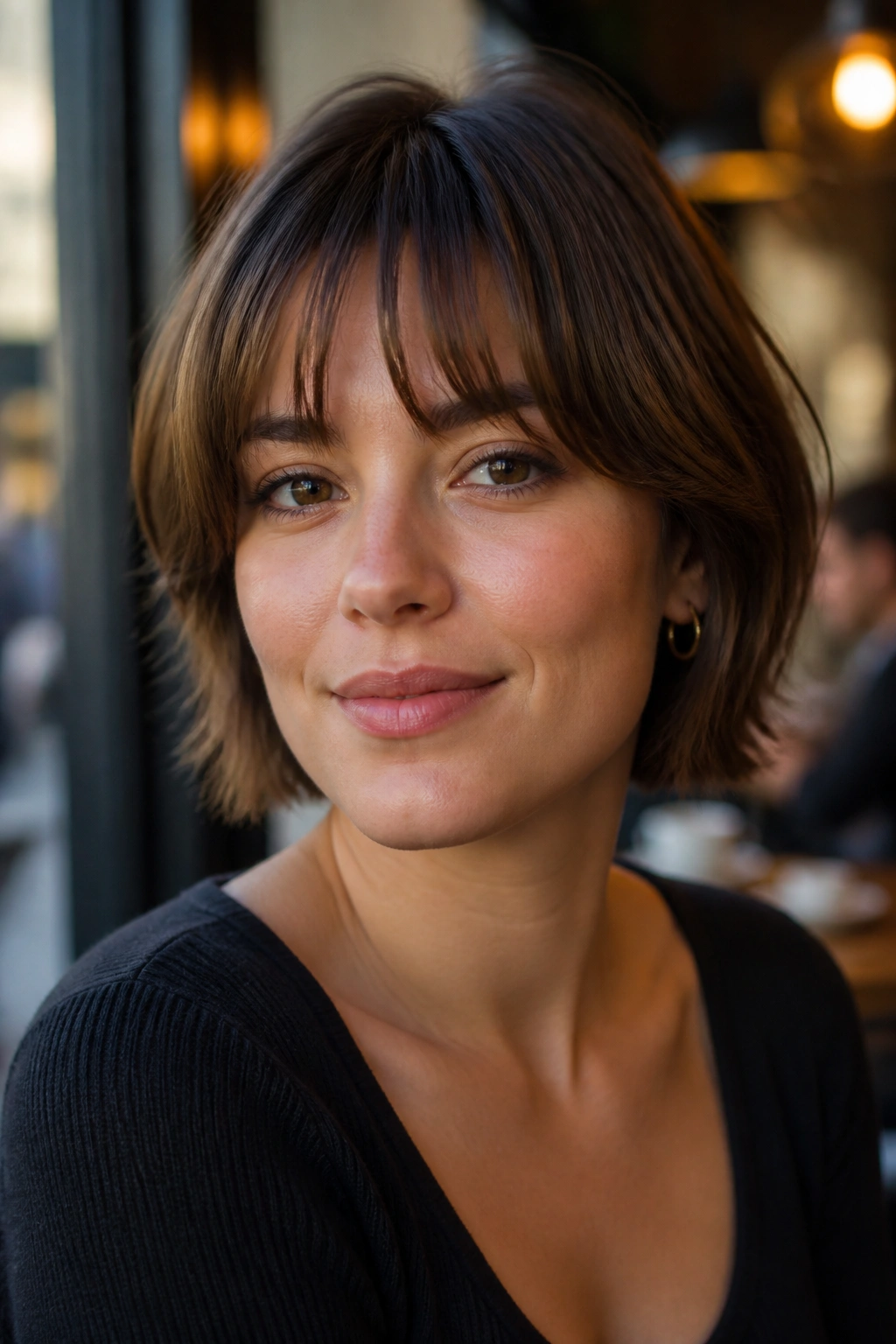
Brow-skimming bangs sit in that useful middle zone where the face still looks open, but the fringe feels short and deliberate. On a round face, that tiny bit of forehead coverage can shift attention upward, especially when the sides taper down cleanly.
What I like about this version is the clean line it gives without turning severe. The fringe stops near the brows, then lifts away at the outer corners. If the cut is done well, it looks like the face has been gently framed rather than boxed in.
It does need maintenance. Hair that gets oily fast tends to separate at the brow, and then the cut can start looking stringy. Dry shampoo helps, but only if the bangs were cut with enough texture to begin with. A flat, heavy brow-skimming fringe is a bad idea on a round face. Soft and lift-ready is the move.
6. Blended Curtain Bangs Into Long Layers
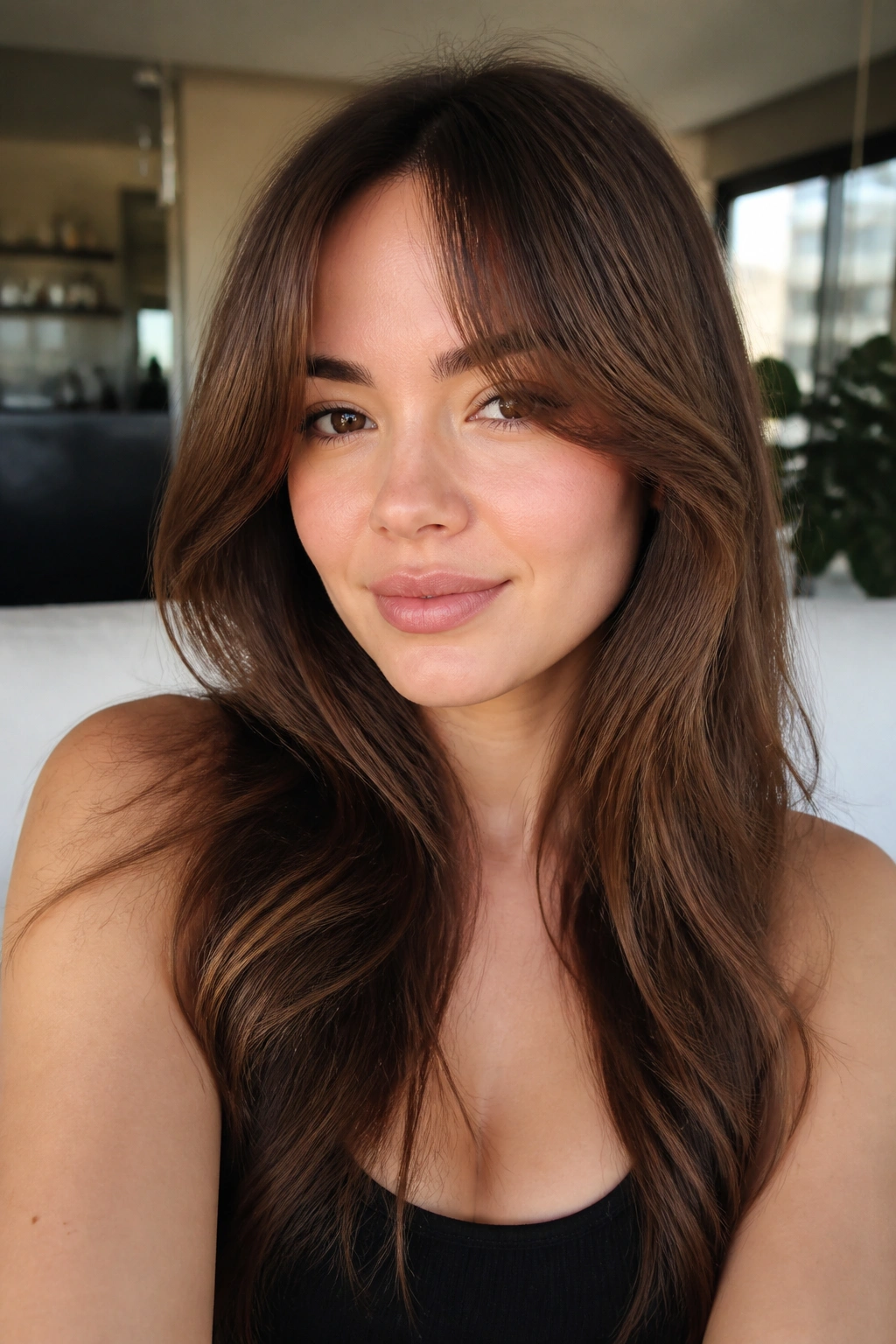
This is the version for people who say they “don’t want bangs,” but still want the face-shaping effect. The fringe melts into the rest of the haircut, so there’s no hard stop where the bangs end and the layers begin.
Why the Blend Matters
A round face can look wider when the hair has one clear horizontal line. A blended fringe breaks that line up. The eye keeps moving downward through the layers instead of stopping at the forehead.
The best version starts with shorter center pieces, then gradually shifts into cheek-length and chin-length layers. The transition should feel soft enough that you can tuck the side pieces behind your ears without seeing a dramatic gap.
What to Tell Your Stylist
- Keep the center open, not dense
- Connect the bangs to the front layers
- Avoid a sharp shelf at the cheekbones
- Leave enough length for easy pinning on bad hair days
This one is forgiving. It grows out well, and it does not scream “fresh haircut” the minute you step away from the chair.
7. Wavy Curtain Bangs
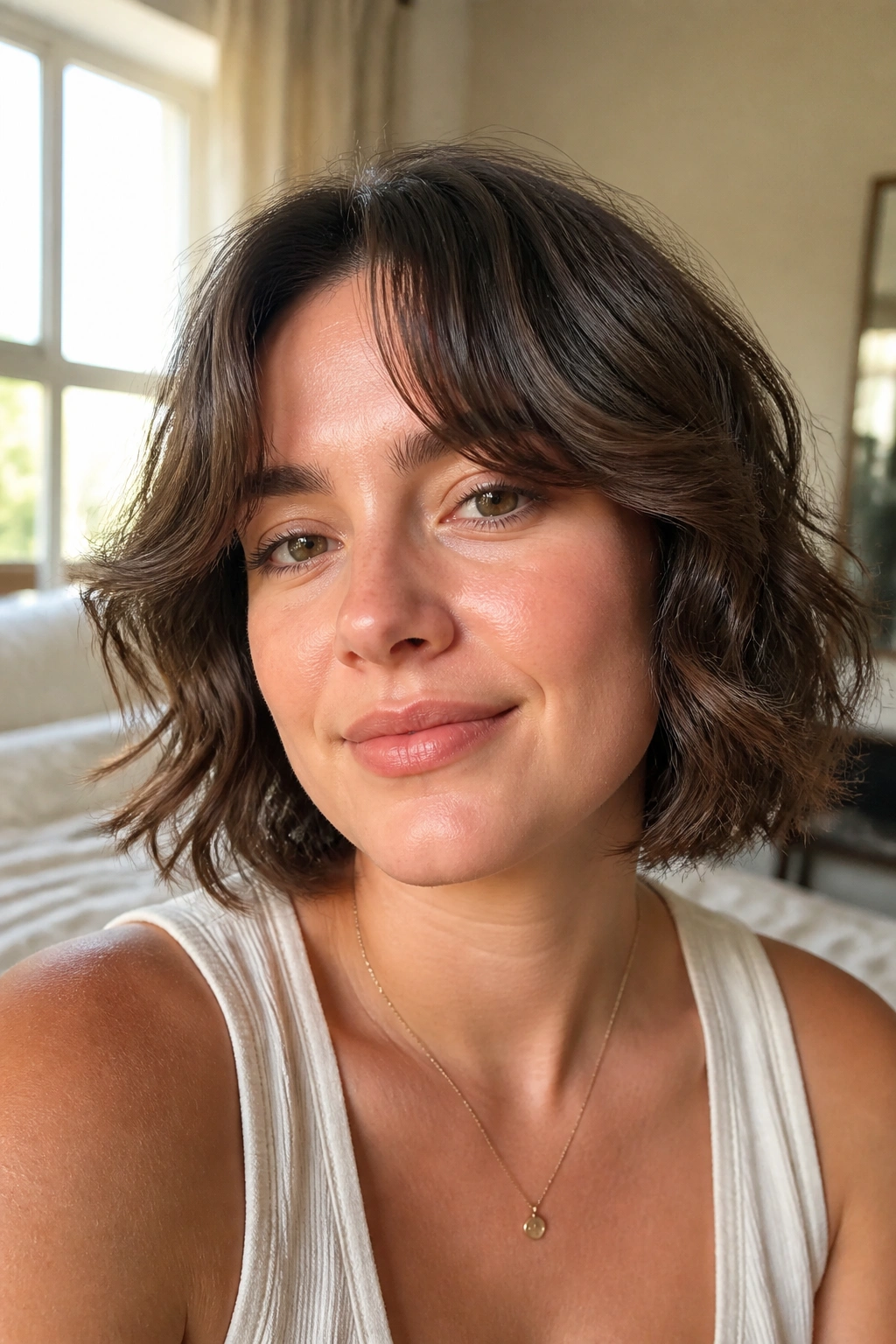
What if your hair already bends on its own? Let it. Wavy short curtain bangs can look better than polished ones on a round face because the motion keeps the front from feeling static.
The key is shape control, not perfect smoothness. A quick blow-dry at the roots can stop the fringe from sticking to the forehead, and then the rest can air-dry with a little natural bend. If you brush the wave out too much, you lose the movement that makes this style work.
How to Keep the Bend in the Right Place
A diffuser helps if your waves are strong. A flat brush can work if they’re mild. Either way, keep the shorter pieces near the center and let the sides fall toward the cheekbones.
The trick is not to chase symmetry. Waves never split in a perfectly even line, and that’s fine. A round face actually benefits from that slight irregularity because it breaks the shape up a little.
8. Curved C-Shape Curtain Bangs
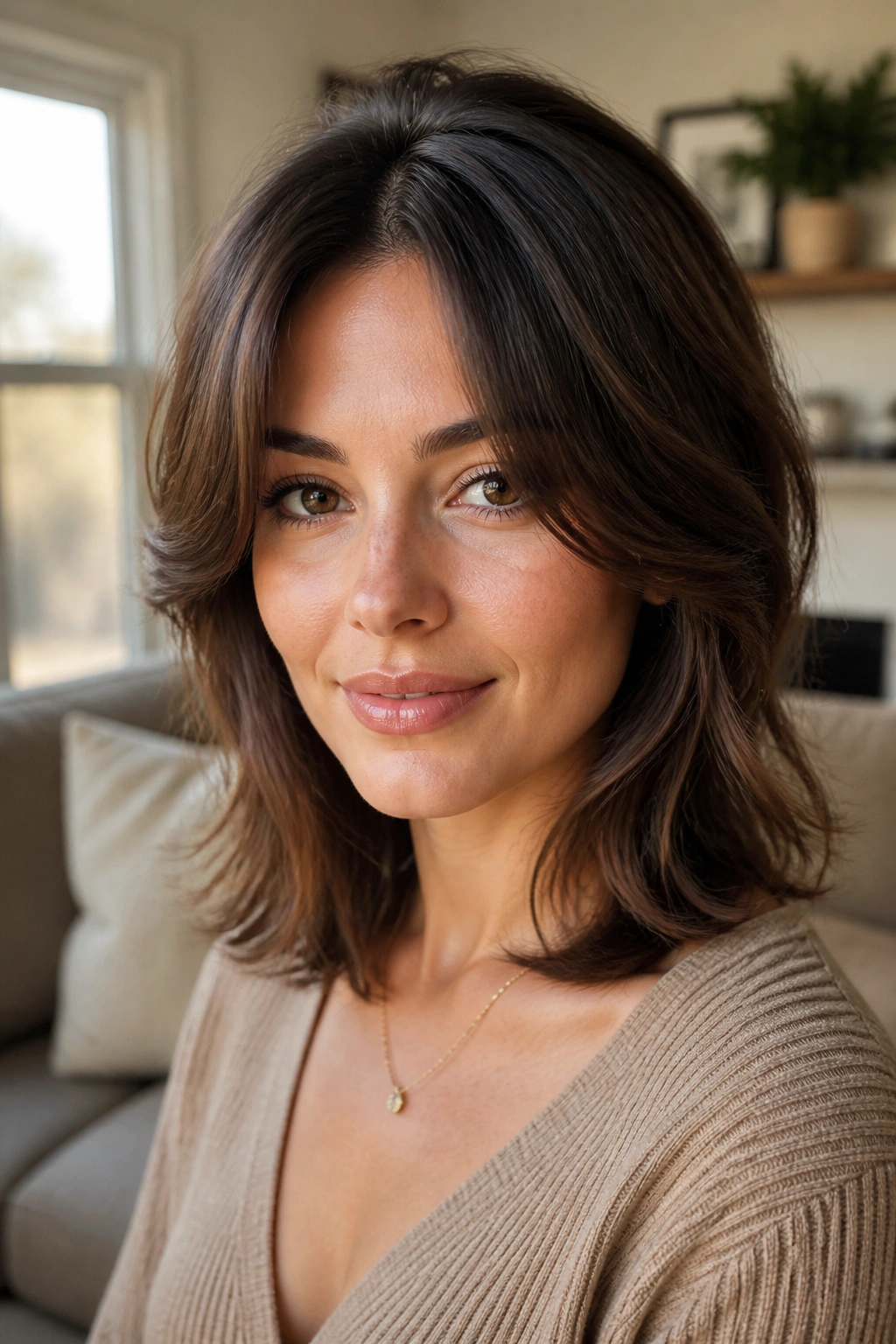
This version has more curve in the side sections, which gives the front of the haircut a rounded sweep. That sounds counterintuitive for a round face, but the curve sits in the hair, not the face, so the effect is more like a frame than a mirror.
The center stays lighter, while the side lengths swing back in a soft C. That motion draws the eye outward and away from the widest part of the cheeks. The look is polished without being stiff.
You do need the right density for it. Very fine hair can fall flat in a C-shape and lose the curve. Very thick hair can turn too bulky if the stylist leaves too much weight in the sides. A clean internal shape matters here.
Works best with: medium to thick straight hair, or hair with a slight bend.
Ask for: a curved front section that sweeps back, not a blunt outer edge.
9. Shaggy Curtain Bangs
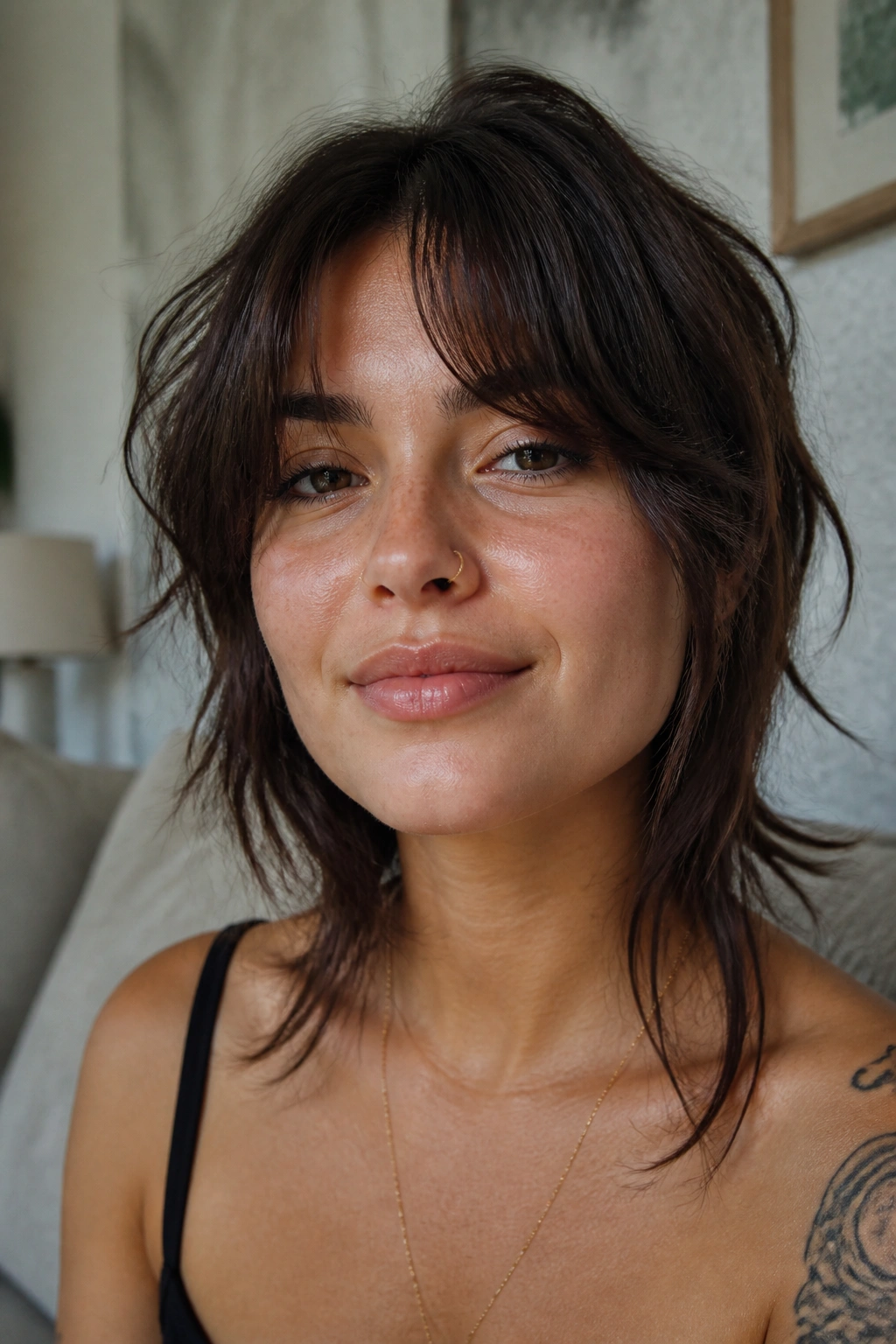
Shaggy bangs are the antidote to anything too precious. They look better when they’re a little broken up, a little imperfect, and a little lived-in.
On a round face, that matters because neatness can sometimes work against you. A shaggy fringe brings irregular edges, which keeps the face from reading as one big circle. The cut usually pairs well with shag layers through the crown and sides, so the bangs feel like part of the haircut rather than a separate feature.
I like this version on people who air-dry often. Add a small amount of texture spray at the roots, scrunch the front once or twice, and leave it alone. Too much combing kills the shape.
It’s not the best choice if you need a polished, glossy finish every morning. But if you like hair that has a little attitude, this one has plenty.
10. Wispy Curtain Bangs for Fine Hair
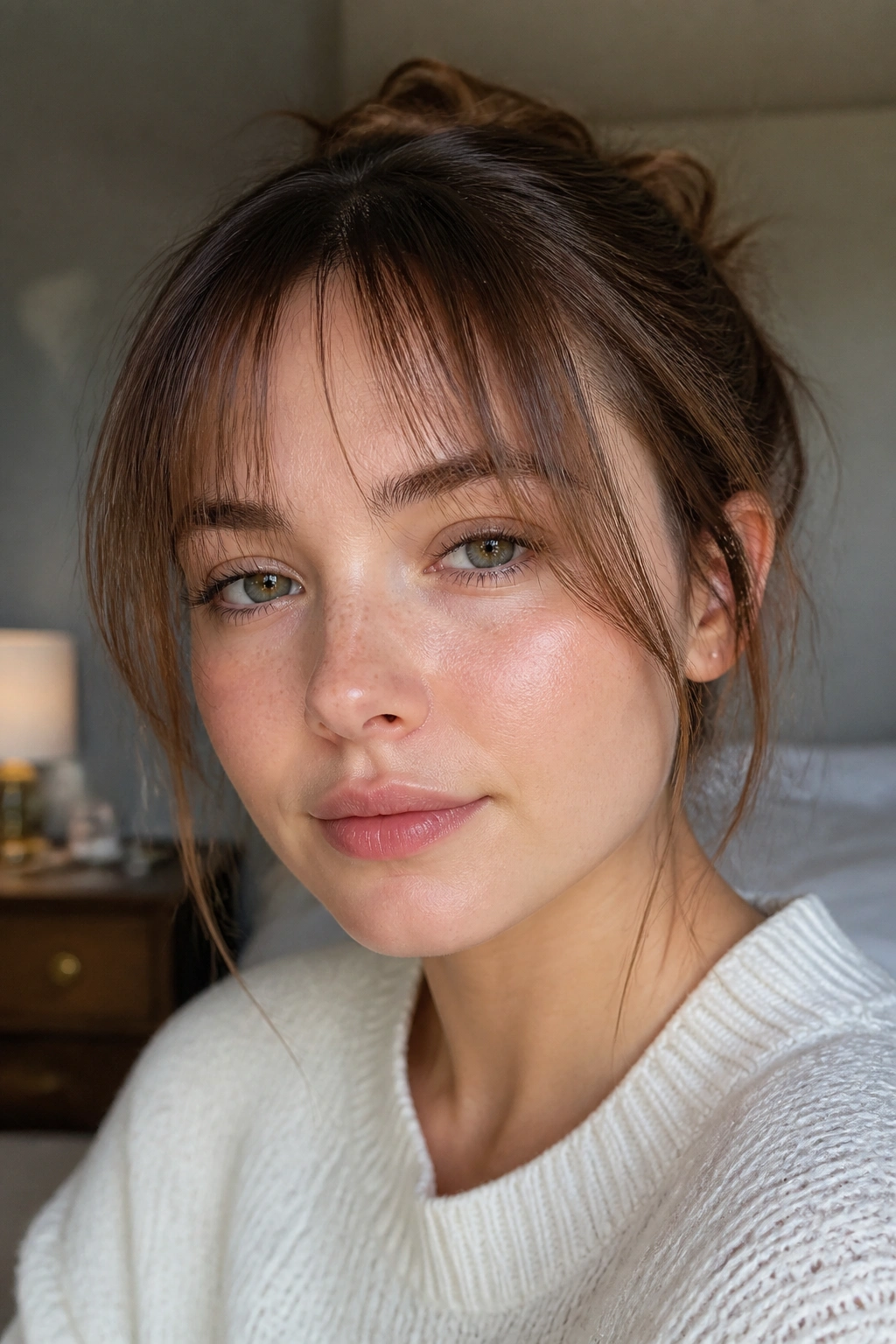
Fine hair can wear short curtain bangs beautifully, but only if the density stays light. Thick-looking bangs on fine hair tend to collapse, which makes the forehead look smaller and the cheeks look wider. Wispy fringe avoids that problem.
What Makes It Different
The strands are spaced enough that you can see bits of forehead between them. That sounds small. It isn’t. Those tiny gaps keep the haircut from feeling heavy.
The stylist should cut with restraint. Not every strand needs to be the same length, and not every edge needs to be visible. Soft snips, a little feathering, and a gentle curve are enough.
- Keep the center light and sparse
- Let the sides taper into the face
- Use a small round brush, not a giant one
- Finish with a touch of flexible spray
If you have fine hair, this is one of the few fringe types that can look expensive without looking overworked.
11. Thick Sculpted Curtain Bangs
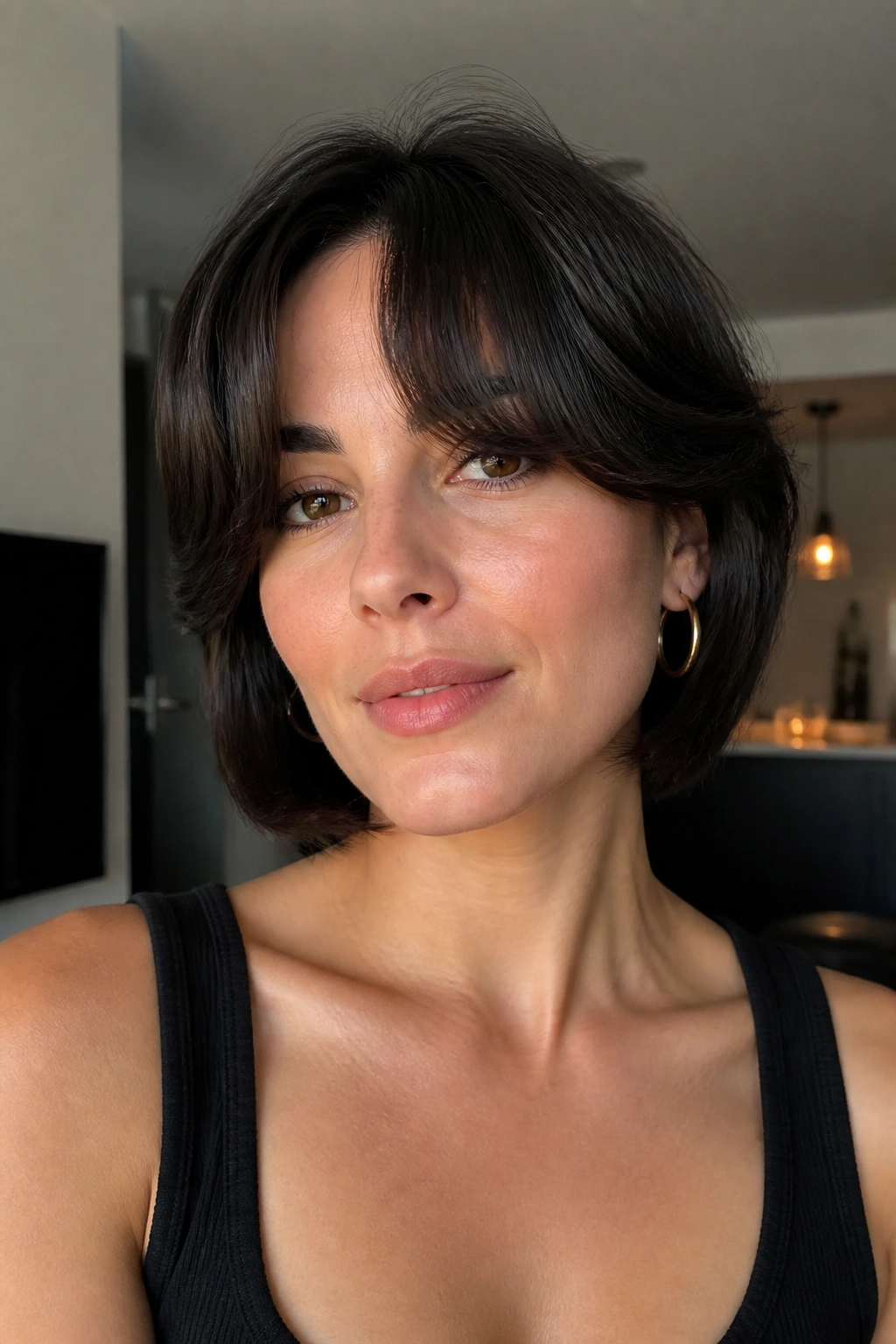
Dense hair needs a different plan. If your fringe is thick and heavy, you cannot just cut it shorter and hope for the best. It will sit there like a curtain in the literal sense, which is not what we want.
This style keeps the bulk, but shapes it. The center is still short, yet the interior is removed enough that the bangs bend instead of puffing outward. Done well, thick curtain bangs can look rich and full while still opening the face.
A common mistake is thinning the very ends too much. That can create a wispy bottom with a bulky top, which looks lopsided in motion. Better to remove weight from inside the section and leave the silhouette clean.
This version likes a stronger blowout and a bit of tension from the brush. If you have coarse hair, that extra control is worth the five minutes.
12. Side-Heavy Curtain Bangs
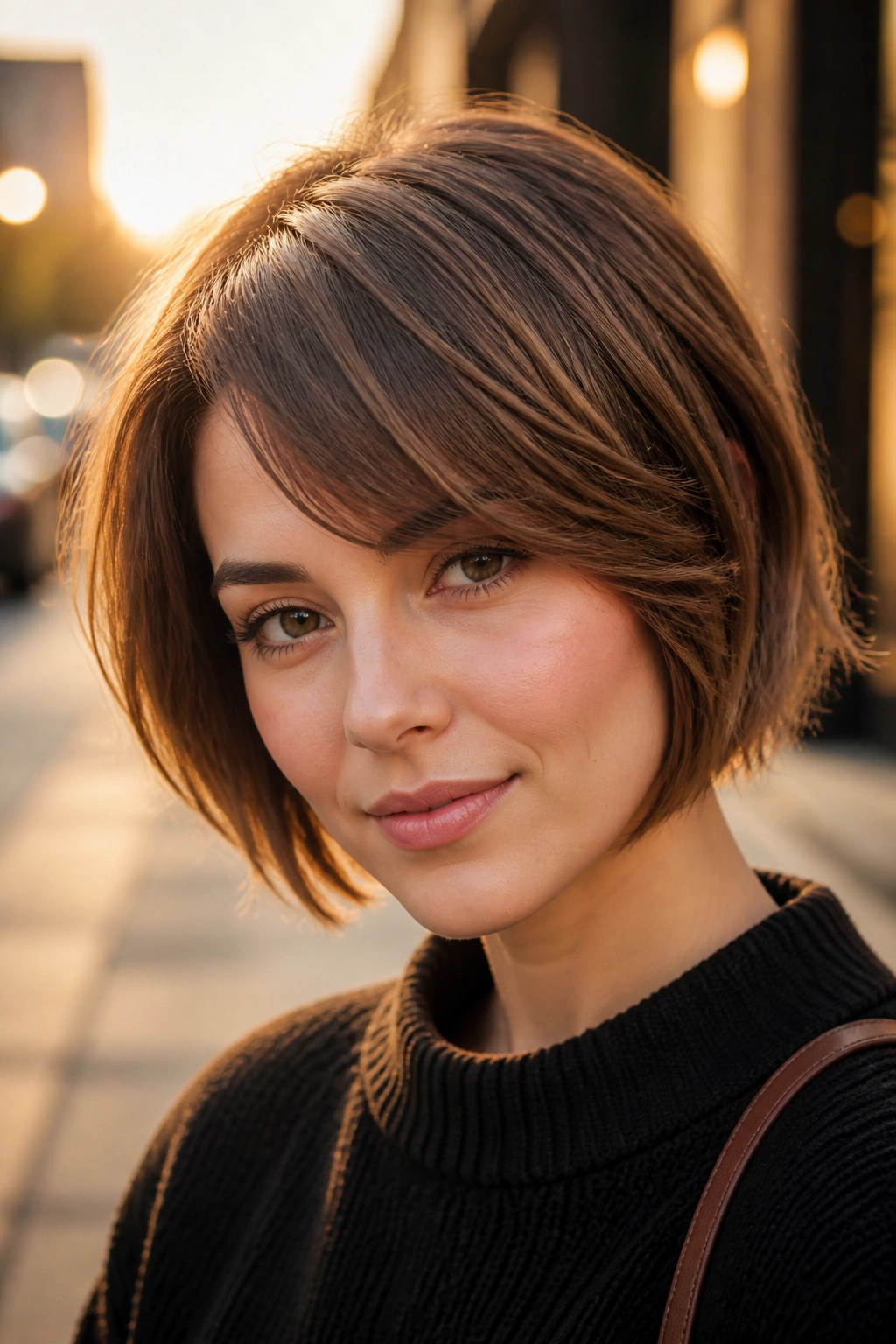
A slightly off-center split can do more for a round face than a dead-center part. Seriously.
The asymmetry breaks the width at the forehead and creates a subtle diagonal line, which gives the face a longer read. One side can fall a touch fuller over the cheek while the other opens a little higher. That small imbalance keeps the front from looking static.
Why It Works
A centered curtain bang is classic. A side-heavy version is sharper. The face looks less symmetrical, which can be a good thing if the cheeks are full and the jaw is soft.
This style is helpful if your face is widest right across the middle. The diagonal movement pulls the eye away from that area. It also hides a stubborn cowlick better than a perfectly centered split.
If you try this, ask for one side to sit just a bit lower than the other. Not dramatic. Just enough to feel intentional when you look in the mirror.
13. Curtain Bangs With a Lob
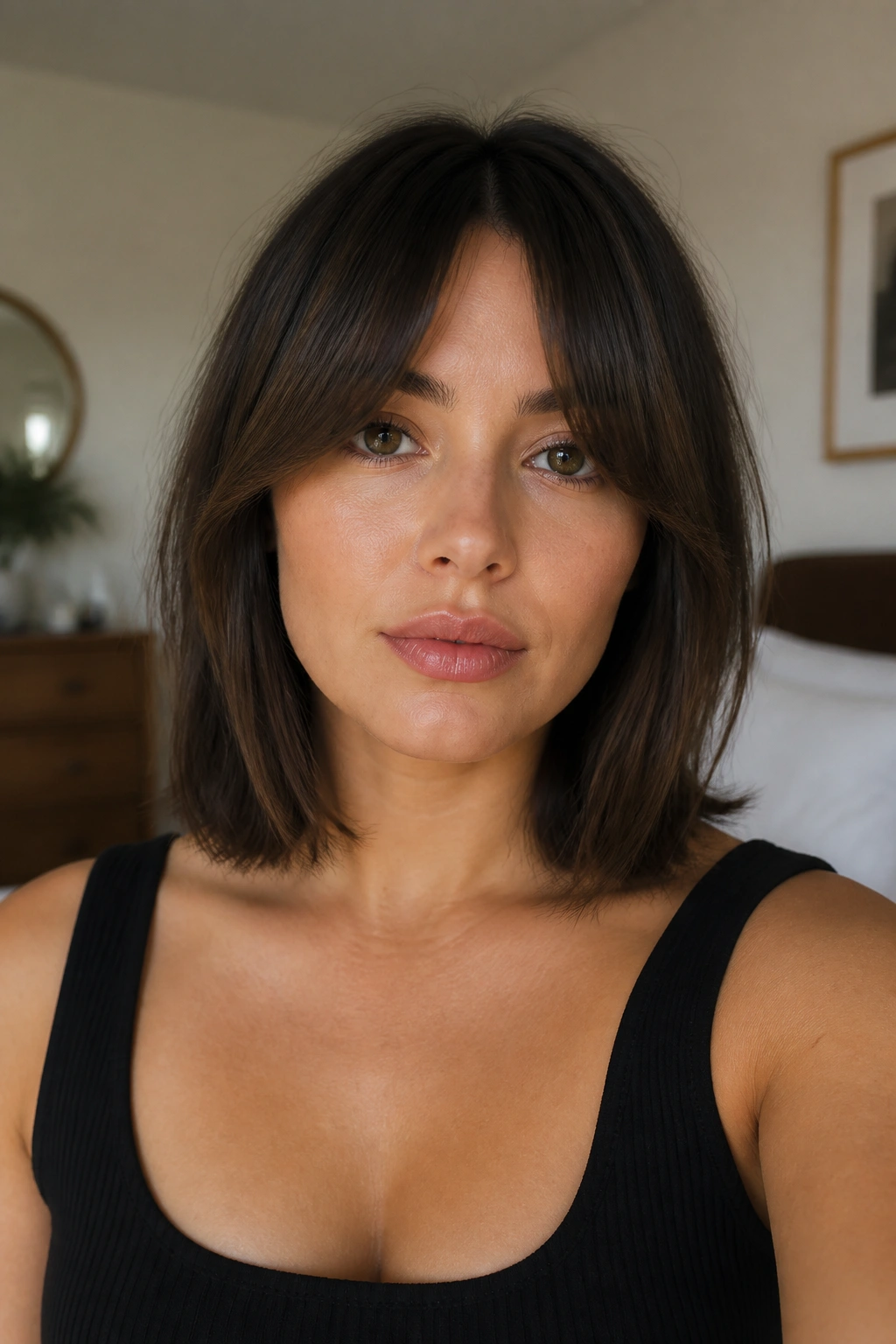
Short curtain bangs and a lob are a strong pair because both cuts work in the same visual zone. The bangs open the forehead, and the lob keeps the bottom line clean around the collarbone or just above it.
That matters on a round face because too many soft layers can make the silhouette puff out. A lob gives the haircut one clear boundary. The curtain fringe does the shaping at the front. Together, they keep the whole look controlled.
I especially like this cut when the hair is straight or softly wavy. You get movement, but not too much width. And when the lob flips under slightly at the ends, the whole thing feels neat without turning severe.
If your hair is thick, ask for a little internal removal around the ends so the shape doesn’t triangle out. That’s one of those boring details that makes the cut work in real life.
14. Face-Framing Curtain Bangs With Cheekbone Layers
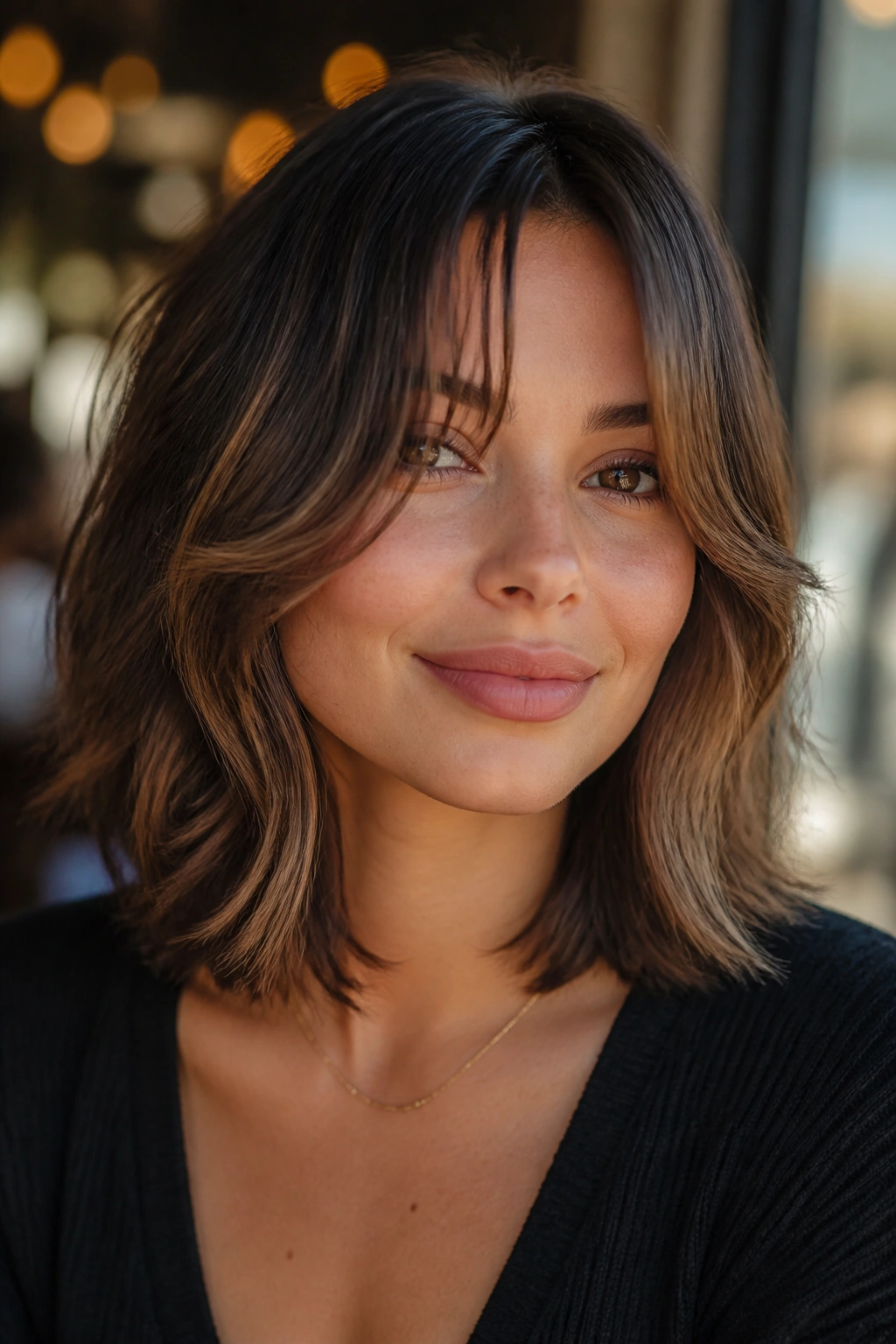
This version is all about the side pieces. The center matters, sure, but the real magic comes from the layers that drop into the cheekbone area and then continue toward the jaw.
The Layer Line
A round face benefits when the hair creates a soft vertical path beside the face. That means the front layers should start high enough to matter, but low enough to avoid looking chopped.
The best cut usually begins with the shortest pieces near the brows, then slides into cheekbone layers that almost graze the outer face. Those longer sections do the slimming work, while the fringe keeps the forehead from feeling too bare.
A stylist who knows what they’re doing will connect the bang and the layer as one shape. If the bang ends and the face frame starts like two separate ideas, the haircut can feel disjointed.
This is one of my favorites on people with fuller cheeks. It makes the face look longer without hiding it.
15. Curly Curtain Bangs
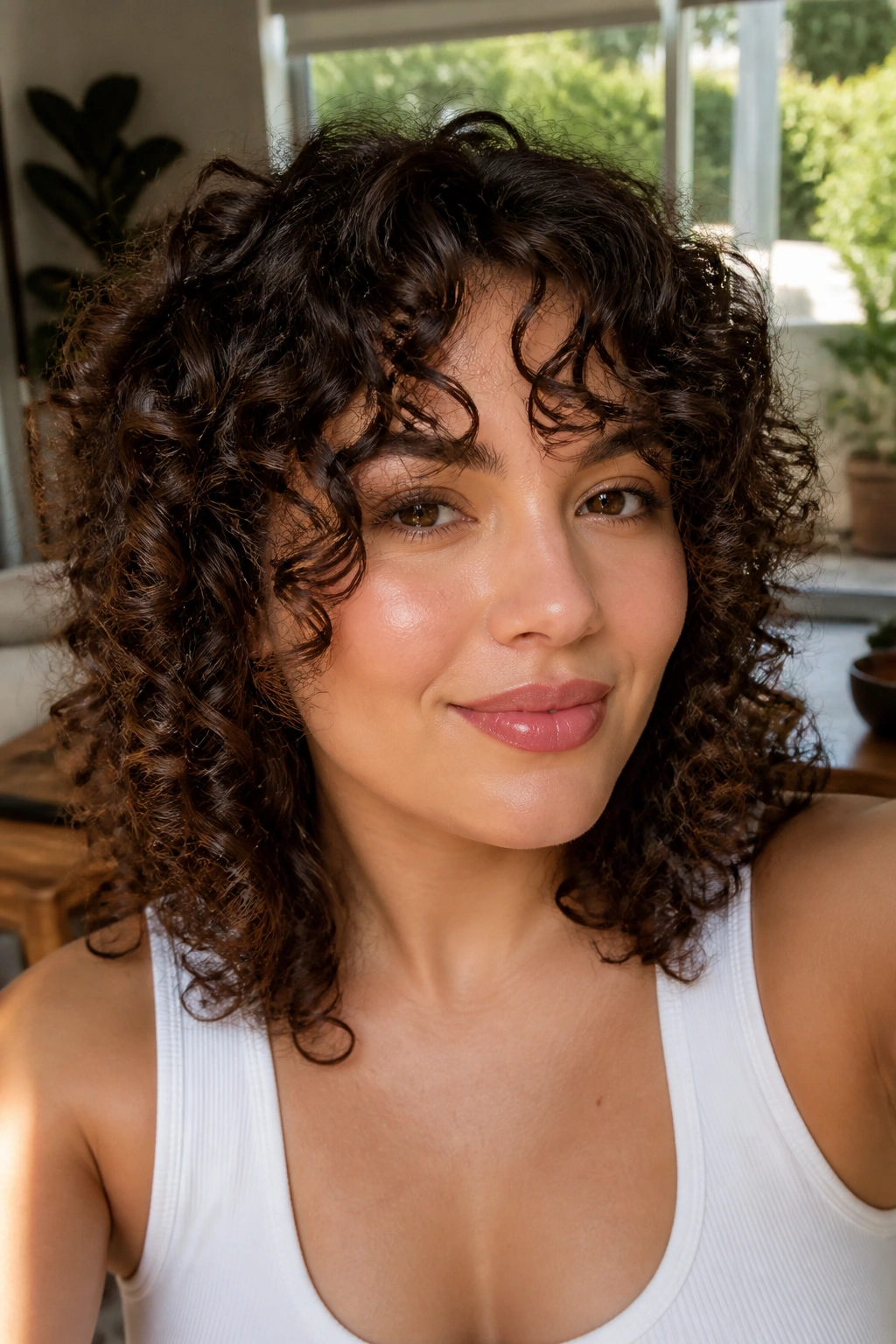
Can curls wear short curtain bangs? Absolutely, if the cut respects shrinkage. That is the part people often miss.
Dry-cutting helps because curls do not sit in the chair the way they sit on your head. A bang that looks cheekbone length when wet may spring up several centimeters once it dries. The shortest pieces should be planned with that in mind, or the fringe can end up too short and too round.
What to Watch For
- Cut the bangs in their natural curl pattern
- Leave room for bounce and shrinkage
- Shape the sides so they open away from the face
- Avoid flattening the root with too much product
Curly curtain bangs can be gorgeous on round faces because the shape is soft, not rigid. They add movement right where the face needs it, and the curl pattern keeps the front from looking flat. The catch is that you have to let the curl do the work.
16. Glasses-Friendly Curtain Bangs

If you wear glasses, the bangs have to share the stage. That means the cut needs enough clearance at the bridge and enough softness at the sides so it doesn’t fight the frames.
The best glasses-friendly version opens a little higher in the center and curves away from the eyes. Short curtain bangs can look especially good here because they keep the top of the face visible, while the side pieces move around the frame instead of sitting on it.
A few things matter in practice:
- Keep the center above the bridge line
- Let the sides brush the outer brow, not the lenses
- Avoid super-thick bangs that press against the frame
- Choose a softer finish if your frames are bold or square
This is one of those cases where the accessory changes the haircut. A fringe that looks fine without glasses can feel crowded with them, and a smart cut solves that before it becomes annoying.
17. Air-Dried Natural Bend Curtain Bangs
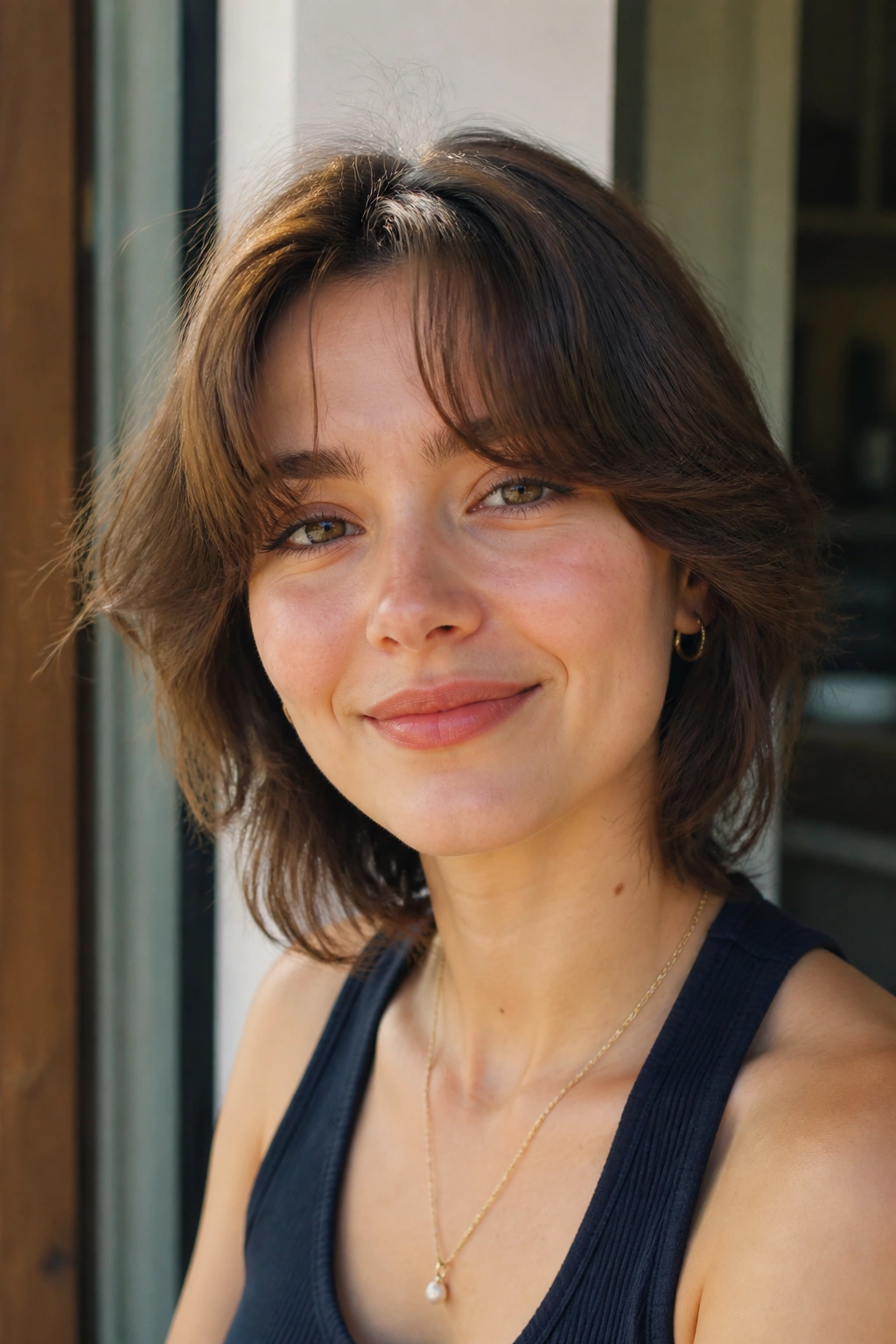
Some people want the look of bangs without the morning ritual. Fair enough. Air-dried short curtain bangs are the low-fuss answer, especially if your hair already has a slight bend.
The trick is to cut them so they fall correctly without a brush. That means the shortest point still has lift, and the outer pieces are long enough to slide into the rest of the haircut. Once the front dries, you want it to fold open on its own.
A tiny amount of leave-in cream can help. So can twisting each side once while it’s damp. But the real work happens in the cut. If the shape is wrong, no amount of product fixes it.
This style is best for people who don’t want to think about bangs every day. It’s not the slickest version. It is one of the easiest to live with.
18. Blowout Curtain Bangs
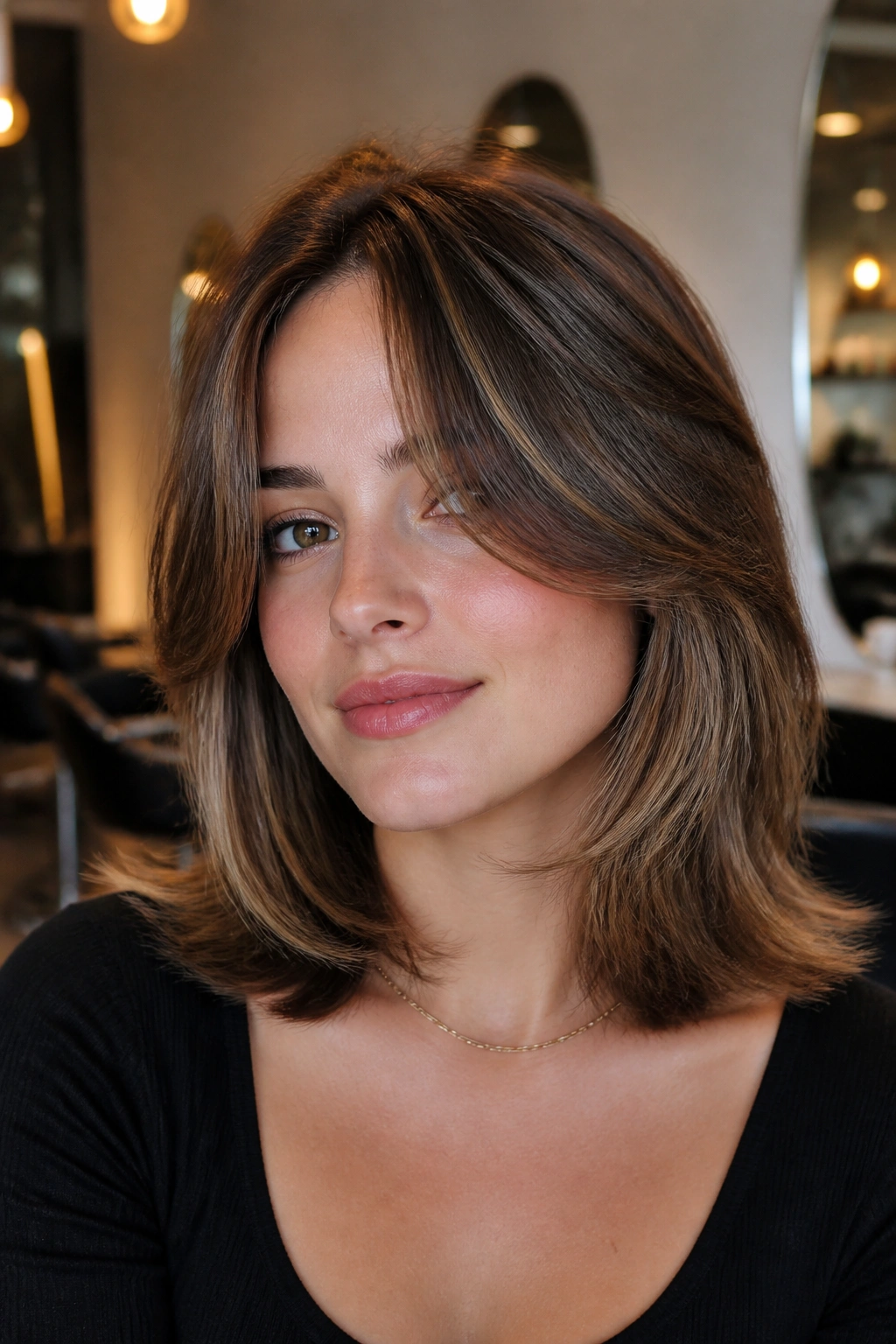
Here’s the polished version. Short curtain bangs with a blowout shape can make a round face look longer because the roots lift and the ends turn away from the cheeks.
How to Set the Shape
Use a round brush and start at the root, not the end. Pull the center section upward for a second or two, then roll the sides outward. A cool shot helps hold the curve once the hair is dry.
The bang should not curl tightly. It should skim. That’s a useful distinction. A tight curl can make the front feel bouncy in the wrong way, while a soft blowout gives the haircut some length.
This look is not hard, but it does take a little patience. If you rush the roots, the fringe collapses. If you overbrush the ends, it flips too much. The sweet spot sits in the middle, and once you find it, the style looks clean for hours.
19. Choppy Micro Curtain Bangs
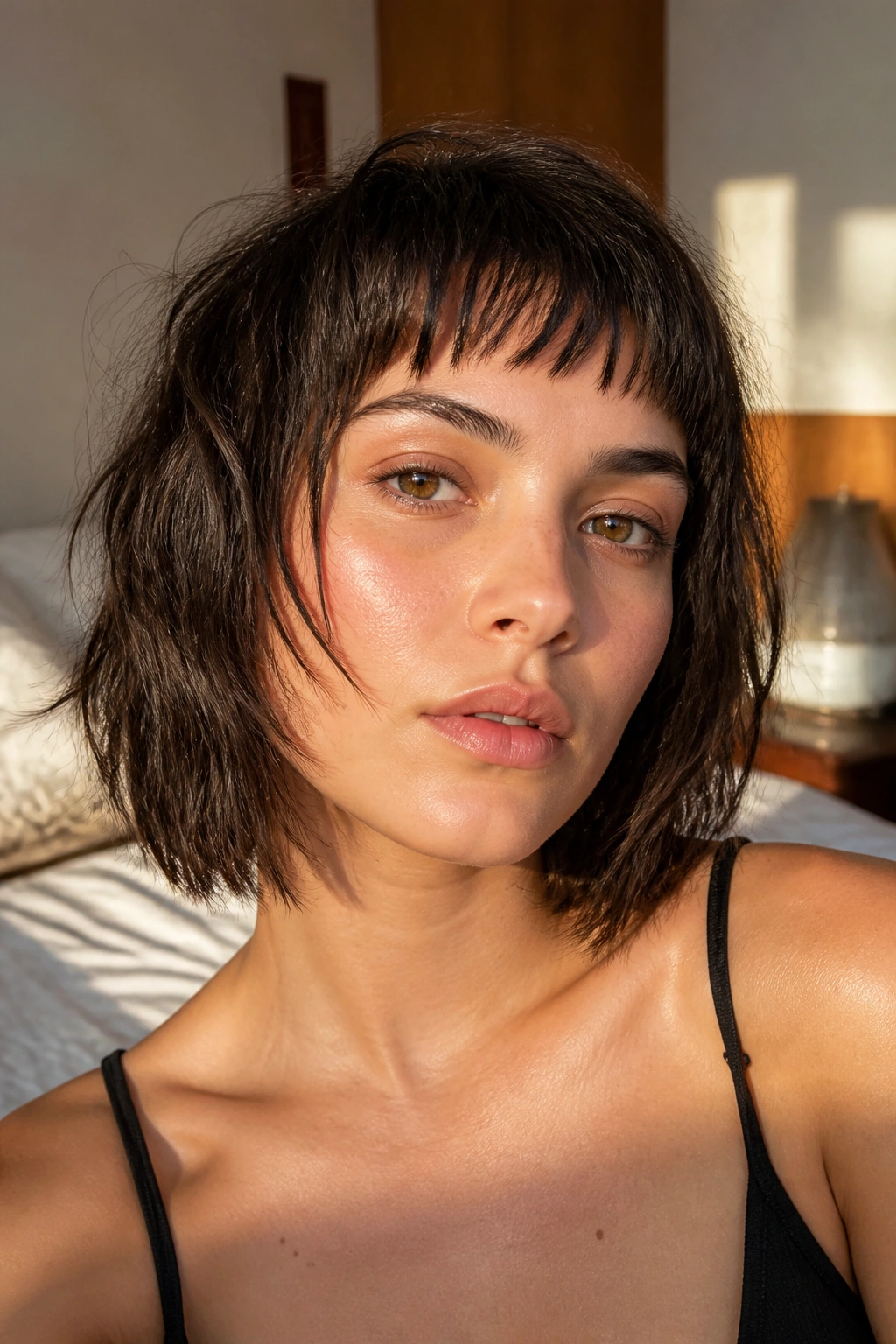
This is the edgy version, and it will not hide in the background. Choppy micro curtain bangs are short, slightly broken at the ends, and full of texture right at the front of the face.
On a round face, the choppiness helps because it interrupts the smooth curve of the cheeks. The effect is more angular than soft. That’s a good thing if you like a sharper haircut and don’t want the front to blend away.
Be honest with yourself here. If you want a fringe you never have to think about, this isn’t it. It looks best when the pieces are a little separated and a little lifted. A matte styling cream can help keep the texture visible without making the bangs greasy.
This style suits bobs, shags, and shorter cuts. It feels modern without trying too hard.
20. Thick Curtain Bangs That Split Easily

Thick hair can fight a center part. The bangs want to stay together, and then you end up with one heavy sheet across the forehead. Not ideal.
The answer is weight control. You want enough fullness to see the shape, but not so much that the fringe refuses to split. The center should be cut so it naturally opens, and the side sections should be long enough to guide the eye downward.
What to Ask For
- Keep the center piece lighter
- Remove weight from the interior, not the ends alone
- Leave longer temple pieces
- Dry the bangs with direction, not random brushing
This style is especially useful if your hair is coarse or dense. A heavy curtain bang can look elegant on the right face, but on a round face it needs movement or it can feel boxy. Split-friendly cutting solves that problem before it starts.
21. Grown-Out Curtain Bangs
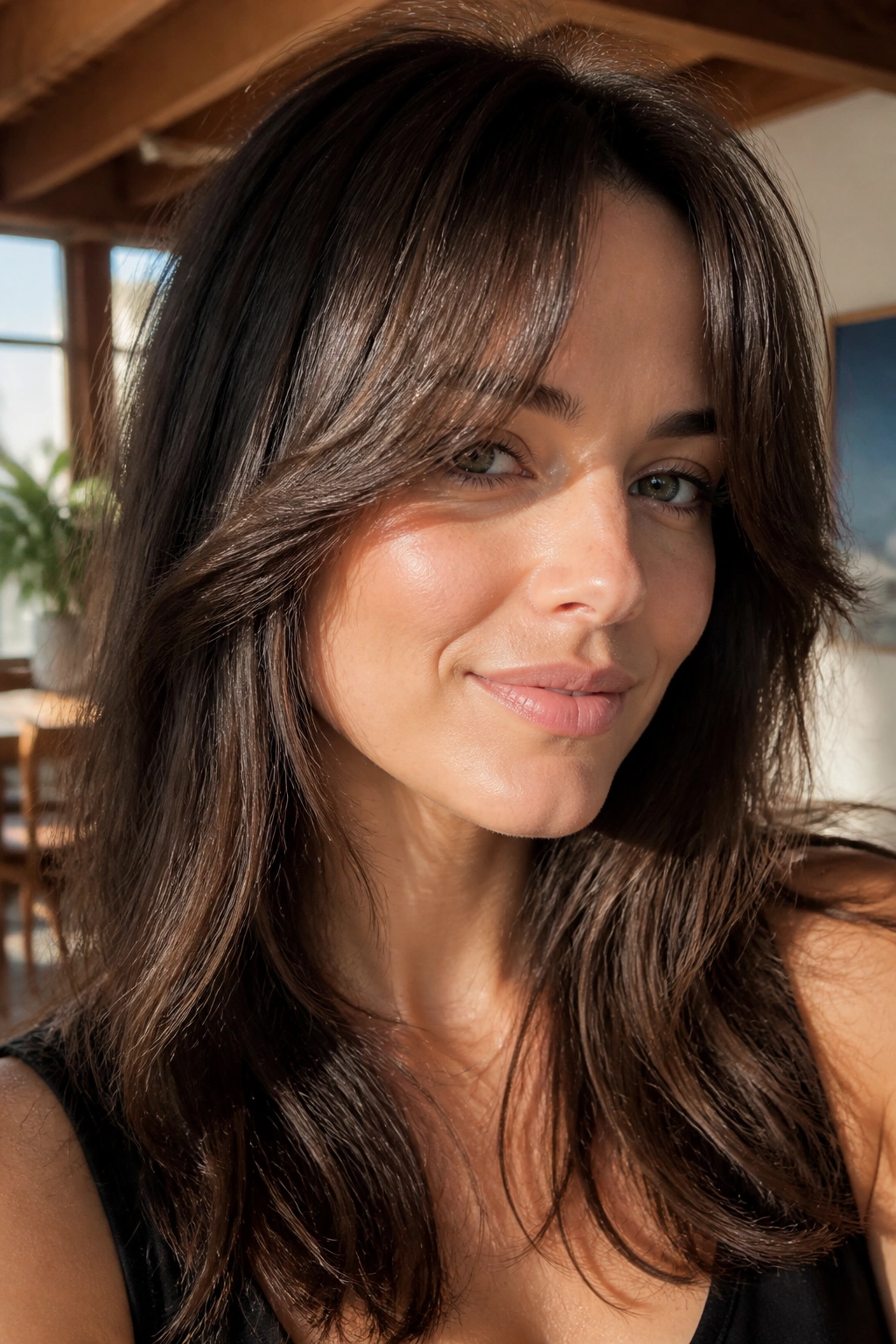
Not every good fringe starts from a fresh cut. Some of the best-looking curtain bangs are the ones that live in that grown-out stage, where they barely qualify as bangs but still shape the face.
That’s especially kind on a round face. The softness at the forehead keeps the front from looking severe, and the longer sides blend into the rest of the hair so there’s no visual stop line. If you’re growing out a straight bang, this shape gives the process a purpose instead of making you endure it.
The key is to keep the center from getting too long and floppy. Once the pieces start falling into the eyes all day, the style loses the open feeling that makes it work. A small trim around the brow area can keep the fringe in that sweet spot.
It’s practical. It’s forgiving. And it never looks like you’re stuck between cuts.
22. Short Curtain Bangs With a Pixie Bob
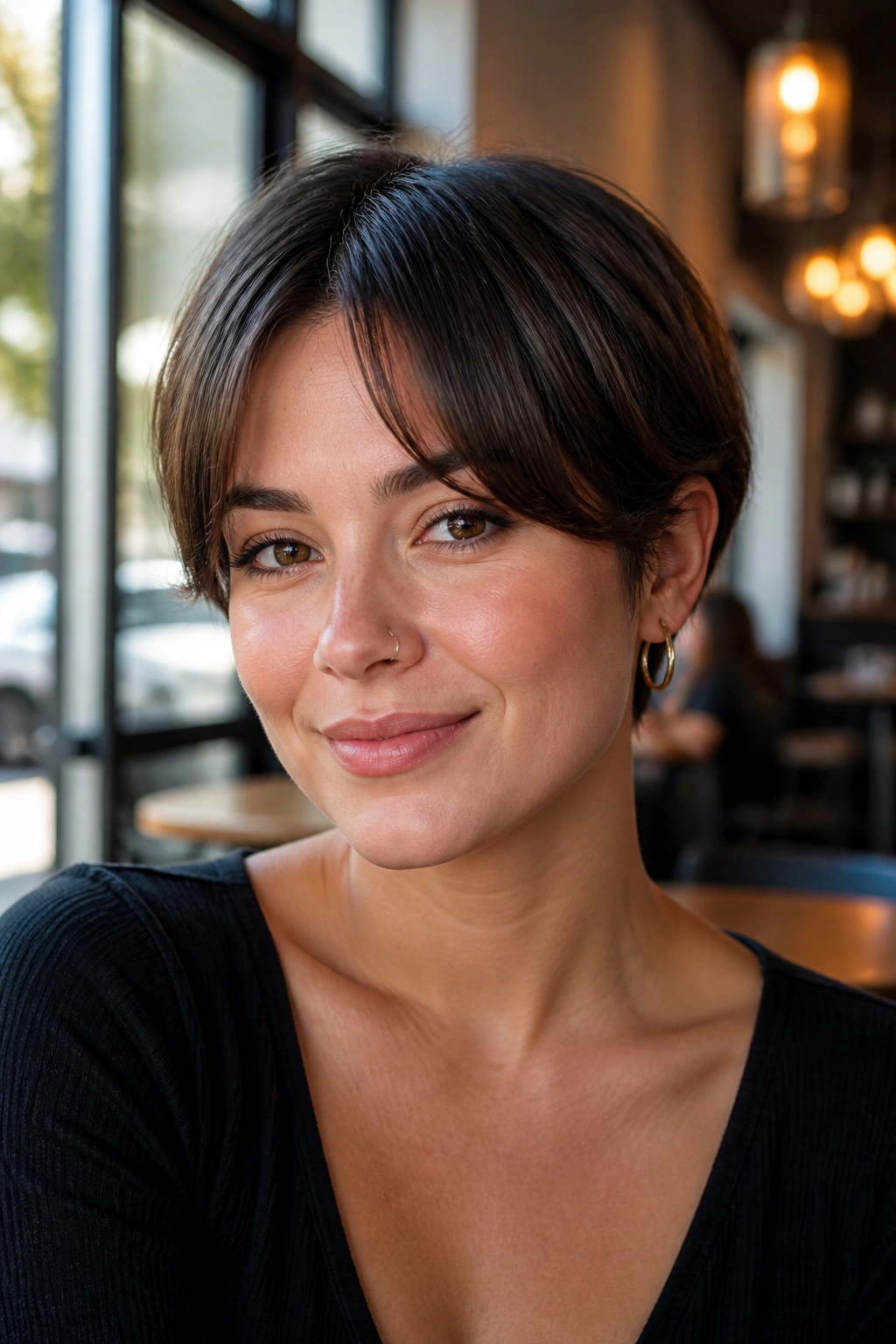
A pixie bob gives short curtain bangs somewhere strong to land. The haircut is cropped enough to feel sharp, but the fringe softens the front so the whole thing doesn’t become too boxy.
Best Shape Details
The center should stay light and slightly shorter than the side pieces. The sides can graze the temples and then fold into the bob shape. That connection matters. If the bangs sit too detached from the cut, the whole look loses flow.
This version works well when the jawline is softer and the cheek area needs a little lift. The short base of the bob keeps the overall silhouette neat, while the curtain fringe adds motion across the forehead.
I’d avoid making the bangs too thick here. A pixie bob already has presence. Heavy fringe can crowd the face fast. Softness wins.
23. French Bob With Curtain Bangs
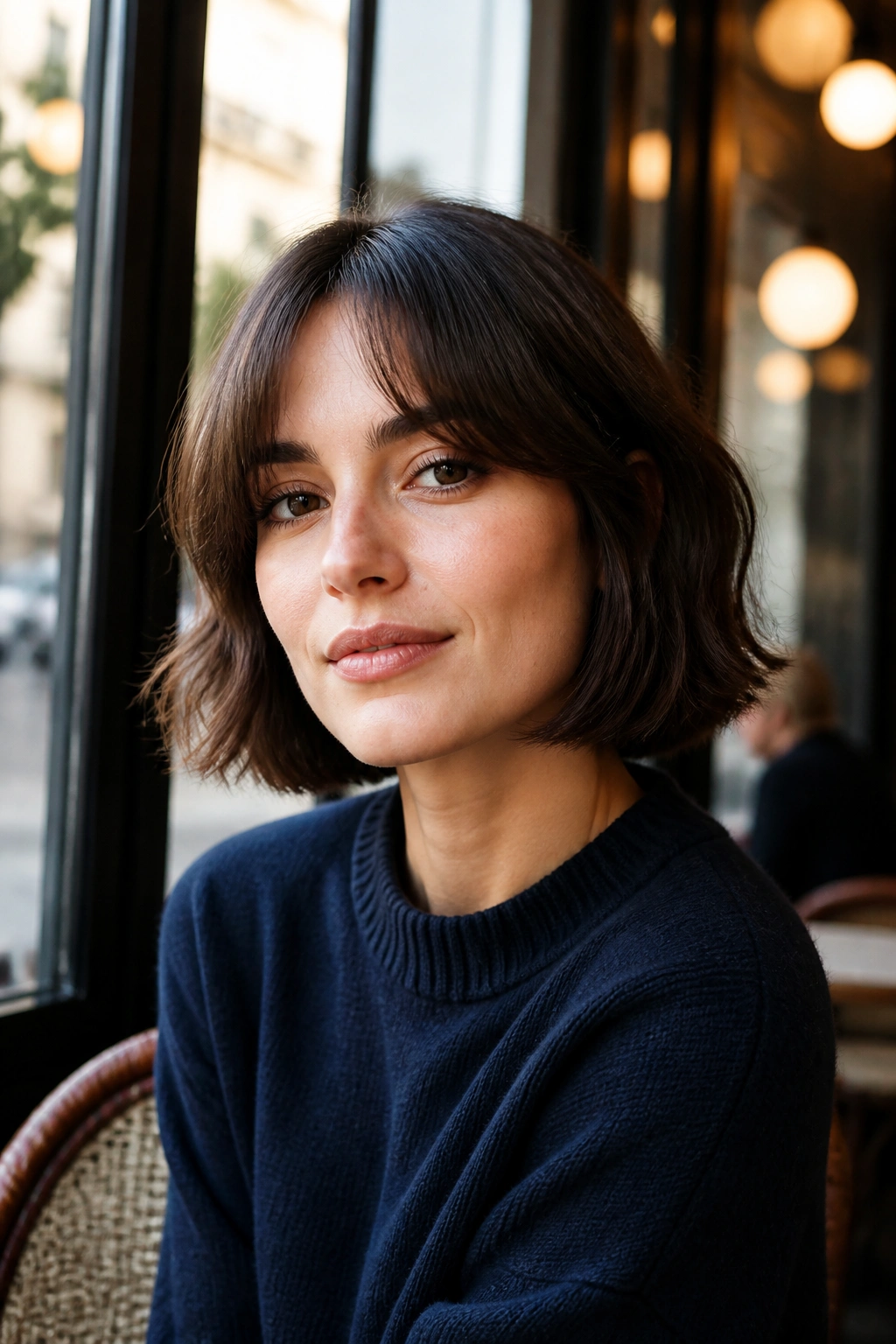
The French bob is all about structure, so the curtain bangs need to be calm enough to match it. Short, airy fringe keeps the cut from feeling severe.
A round face can wear this pairing well because the bob creates a tidy lower edge while the bangs soften the top. That top-and-bottom contrast is useful. It gives the face a cleaner outline, which can be flattering if the cheeks are fuller.
The bangs should not be too wispy if the bob is blunt. There needs to be some substance so the front doesn’t disappear. At the same time, the center has to stay open. You want elegance, not a helmet.
This look is one of the better choices if you like hair that looks deliberate with very little extra styling. A quick bend at the front and a smooth bob line are enough.
24. Flipped-End Curtain Bangs
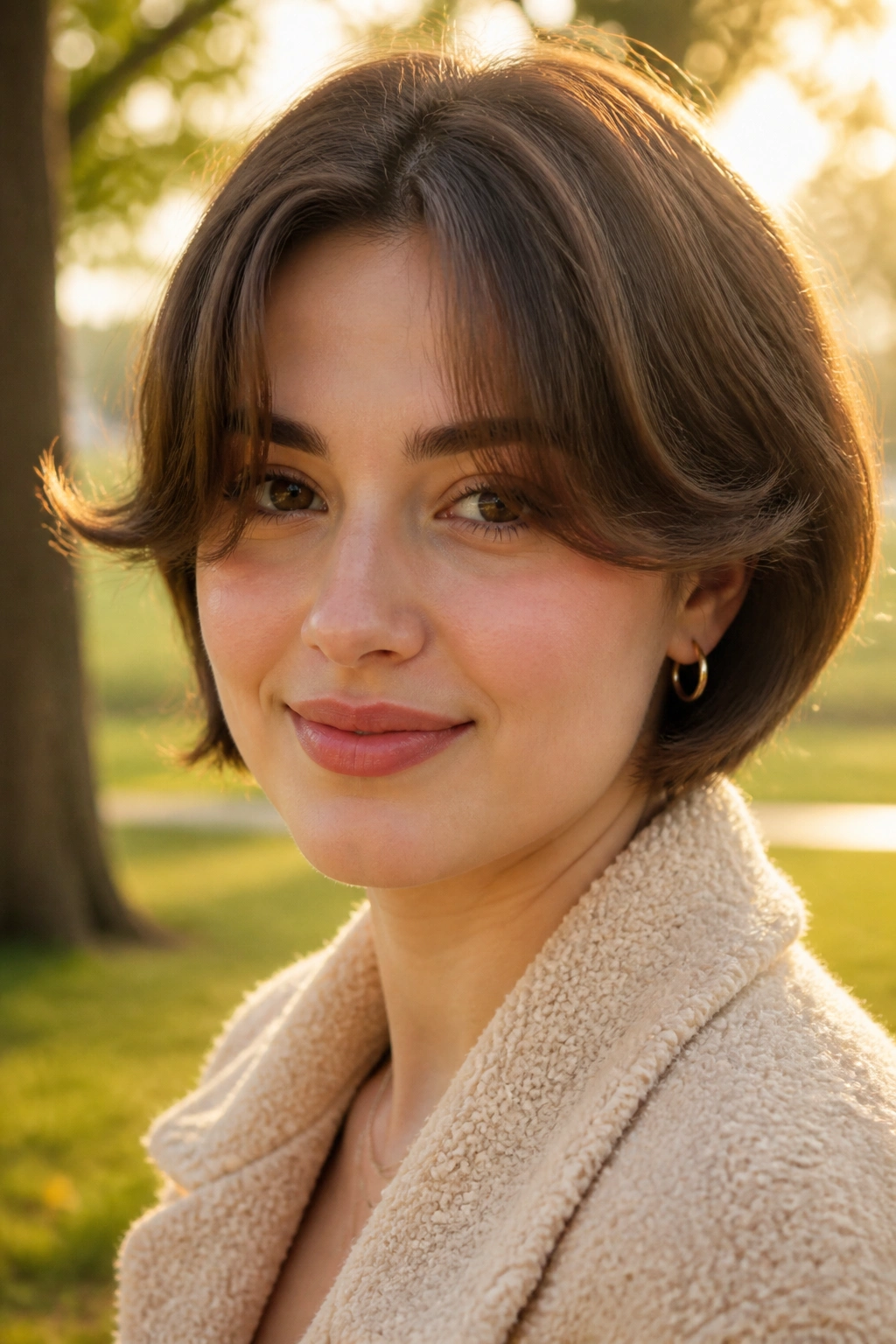
If you like a little drama at the front, flipped-end curtain bangs bring it. The ends turn away from the face with a noticeable bend, which gives the haircut a bit of bounce and helps the cheeks feel less prominent.
Why It Stands Out
A flipped finish adds motion at the edge of the fringe, and that motion breaks up the width across a round face. The flip should be soft, not curled so far back that it looks vintage in the wrong way.
Use a round brush or a small iron to guide the ends outward. A quick pass is enough. Hold the hair too long and you get an overdone curl that fights the rest of the cut.
This style works best on medium-density hair. Too fine, and the flip can vanish by lunch. Too thick, and it may turn bulky unless the interior is thinned carefully.
It’s a good choice if you want your fringe to do a little talking.
25. Color-Popping Curtain Bangs
A fringe like this depends as much on color placement as it does on cutting. A few lighter strands around the face can make the curtain shape easier to see, especially when the bangs are short and feathered.
That does two things. First, it highlights the bend of the fringe. Second, it draws the eye toward the center opening instead of the cheek width. On a round face, that little trick can make the front feel taller and more intentional.
You do not need a full color change. Just a careful face frame, a lighter veil through the bangs, or even a subtle contrast around the temple area can sharpen the shape. Strong contrast makes the cut read louder. Soft contrast keeps it quiet.
This version is for anyone who wants the fringe to show up in photos and in motion. It’s a haircut-color pairing, not a haircut alone.
26. Invisible Layer Curtain Bangs
Some people want the effect of curtain bangs without seeing a separate fringe line at all. That’s what this cut does. The bangs disappear into the front layers, so the whole haircut feels like one continuous shape.
What to Say at the Salon
Ask for a soft center opening, then mention that you want the bang pieces to merge into the front layers without a hard shelf. The transition should be so smooth that the haircut still makes sense if you tuck the front behind your ears.
This is useful on a round face because it reduces width without adding a visible block across the forehead. The shape lives in the movement, not in the line. That can be more flattering than an obvious fringe.
It’s also forgiving when you skip styling. Invisible layers tend to fall into place better than more structured bangs, which makes them a smart choice for people who want low drama and soft shape in the same cut.
27. Diagonal Curtain Bangs
A diagonal curtain fringe is a little more assertive than a symmetrical split. One side stays slightly longer, and the parting line tilts just enough to create a sense of direction.
That direction matters. Round faces often look best when the hair creates a line that moves somewhere instead of sitting evenly across the forehead. The diagonal shape gives the eye a route to follow, which makes the face feel less circular.
This cut is especially flattering if your hair naturally falls to one side already. Instead of fighting the pattern, the bang works with it. That makes styling easier, too. You spend less time trying to force a perfect center part that your hair refuses to hold.
It’s a small shift, but small shifts are often the ones that matter.
28. Temple-Hugging Curtain Bangs
Temple-hugging curtain bangs keep the center clear and let the side pieces fall close to the temples before opening outward. That shape is useful if the widest part of your face sits through the cheeks rather than the jaw.
The temple section creates a gentle vertical line near the sides of the forehead, which helps the face look a little longer. At the same time, the shorter center keeps the overall fringe from feeling heavy. It’s one of the cleanest shapes in the whole group.
What I like most is how practical it is. The sides tuck, the center stays light, and the fringe doesn’t need a perfect round-brush finish to look good. A quick bend is enough.
If you hate bangs that sit in your eyes, this is a smart route. The shape feels controlled without getting stiff.
29. Textured Curtain Bangs for Waves and Curls
Natural texture changes everything here. Textured curtain bangs are cut with movement in mind, so waves and loose curls can take part in the shape instead of fighting it.
The important part is separation. You want enough texture that the bangs don’t clump, but not so much that the front becomes frizzy. A curl cream or light mousse can help define the sections, and a diffuser gives the roots enough lift so the fringe doesn’t collapse into the cheeks.
What Works Best
- Cut the fringe where the curl sits when dry
- Keep the center open and light
- Use products that define, not glue
- Let the side pieces fall in soft arcs
This style is a strong fit for round faces because the natural bend breaks the width of the cheeks. It feels relaxed, and it does not need to look perfectly smooth to look good. That’s part of the charm.
30. The Salon-Safe Starter Fringe
If you’re nervous, start here. This is the safest version of short curtain bangs for a round face: a soft center opening, cheekbone-skimming sides, and enough length to pin back or tuck away if you change your mind.
That flexibility matters. A first fringe should not trap you. It should give you shape without taking away options. The cut can still be flattering, but it should leave room for adjustment while you figure out how you like to wear it.
What to Tell Your Stylist
- Keep the center a little longer than you think
- Let the sides touch the cheekbone area
- Avoid a blunt bottom edge
- Make the transition easy to grow out
This is the version I’d point a nervous friend toward. It gives you the curtain-bang effect without locking you into a hard look. And if you end up loving bangs, you can always go shorter on the next cut.
Final Thoughts
Round faces do not need to hide behind heavy fringe. They need a shape that opens the forehead, moves around the cheeks, and keeps the front from becoming one flat line.
The best short curtain bangs for round faces usually have one thing in common: they look soft at the center and a little longer at the sides. That little bit of geometry does most of the work.
If you’re sitting in a salon chair trying to explain the look, bring photos that show the bangs from the front and the side. Better yet, mention how much styling you’ll actually do on a normal morning. That one detail saves a lot of regret later.
