



Round faces can wear short locs beautifully, but the shape has to do some work. If the locs stop in a hard line right at the widest part of the cheeks, the whole style can feel boxy. Shift the part, add height, or let a few pieces fall forward, and the face changes fast.
That is why the best short locs for round faces usually lean on angles. Side parts, tapered sides, chin-grazing lengths, and a little lift at the crown pull the eye up and down instead of straight across. I like styles that keep the face open without making it look bare. Short locs should frame, not fence in.
The tricky part is that “short” can mean a few different things. For one person, it’s a crisp bob that hits the jaw. For another, it’s a neck-length set that can still be tucked, twisted, or pinned. The sweet spot depends on where your face feels fullest, how much styling you want to do, and whether you like soft movement or a sharper shape.
These 15 looks all use that same idea in different ways. Some add height. Some break up width with asymmetry. A few stay soft and low-key, which matters too. A round face does not need to be hidden.
It needs direction.
1. Side-Parted Chin-Length Loc Bob
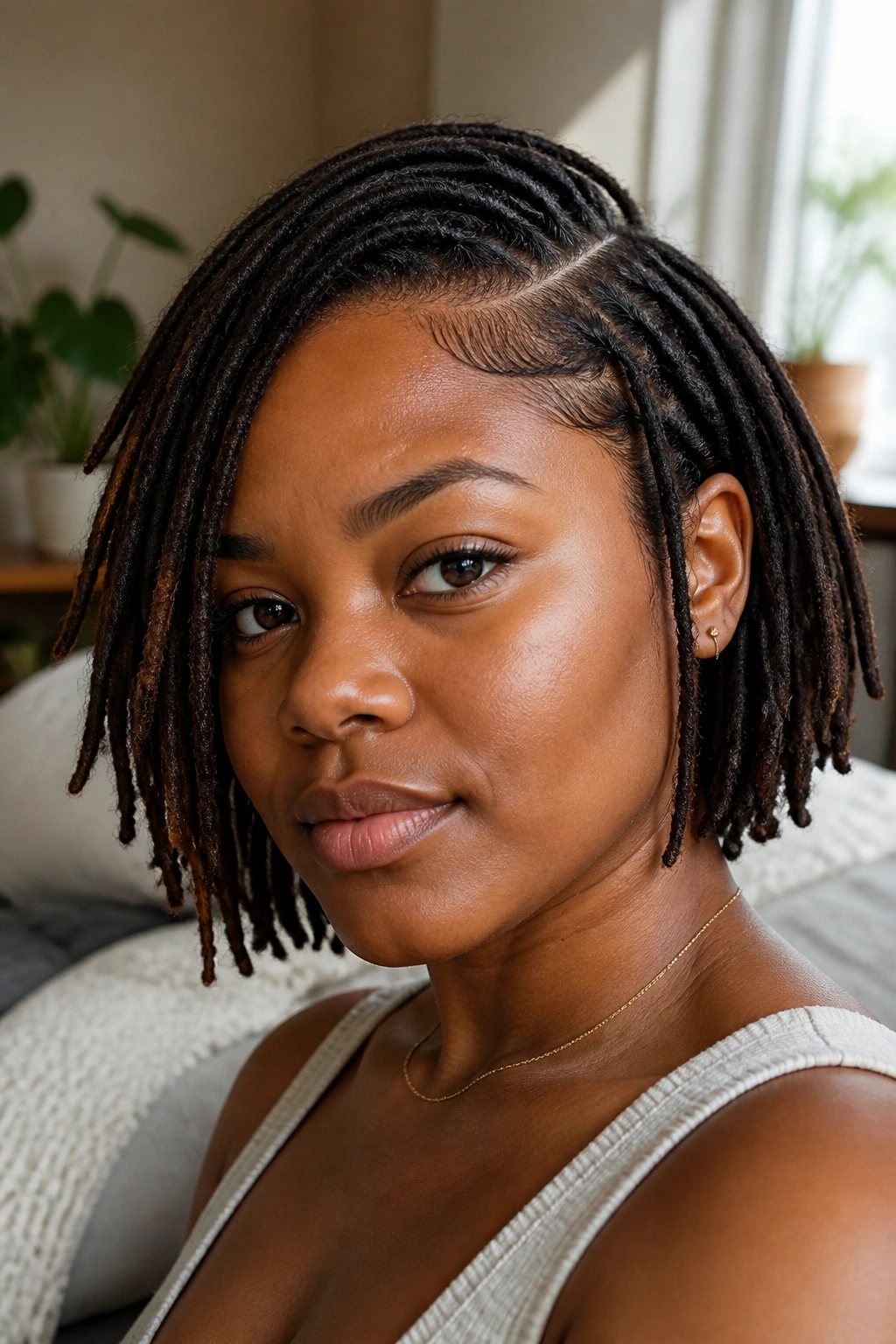
A clean side part does a lot of quiet work here. The diagonal line breaks up the roundness of the face and gives short locs a little swing before you even touch the ends.
Why It Works
The strongest part of this style is the way it shifts attention away from the center of the face. A chin-length bob can feel wide if it sits evenly on both sides, but a deep side part pulls one side down and lets the other side rise slightly at the crown. That small difference matters.
For round faces, I like this cut when the front pieces land just below the jawline. Anything too blunt at cheek level can make the face look fuller. A softer line near the chin tends to read cleaner.
- Best for medium-sized locs that hold shape without puffing out too much.
- Ask for front pieces that are 1 to 2 inches longer than the back.
- Works well with a soft side sweep or a tucked side behind the ear.
- Keep the retwist neat near the part so the diagonal line stays visible.
My favorite detail: leave one or two locs slightly looser near the front. That tiny bit of movement keeps the style from looking stiff.
2. Tapered Crown-Lift Short Locs
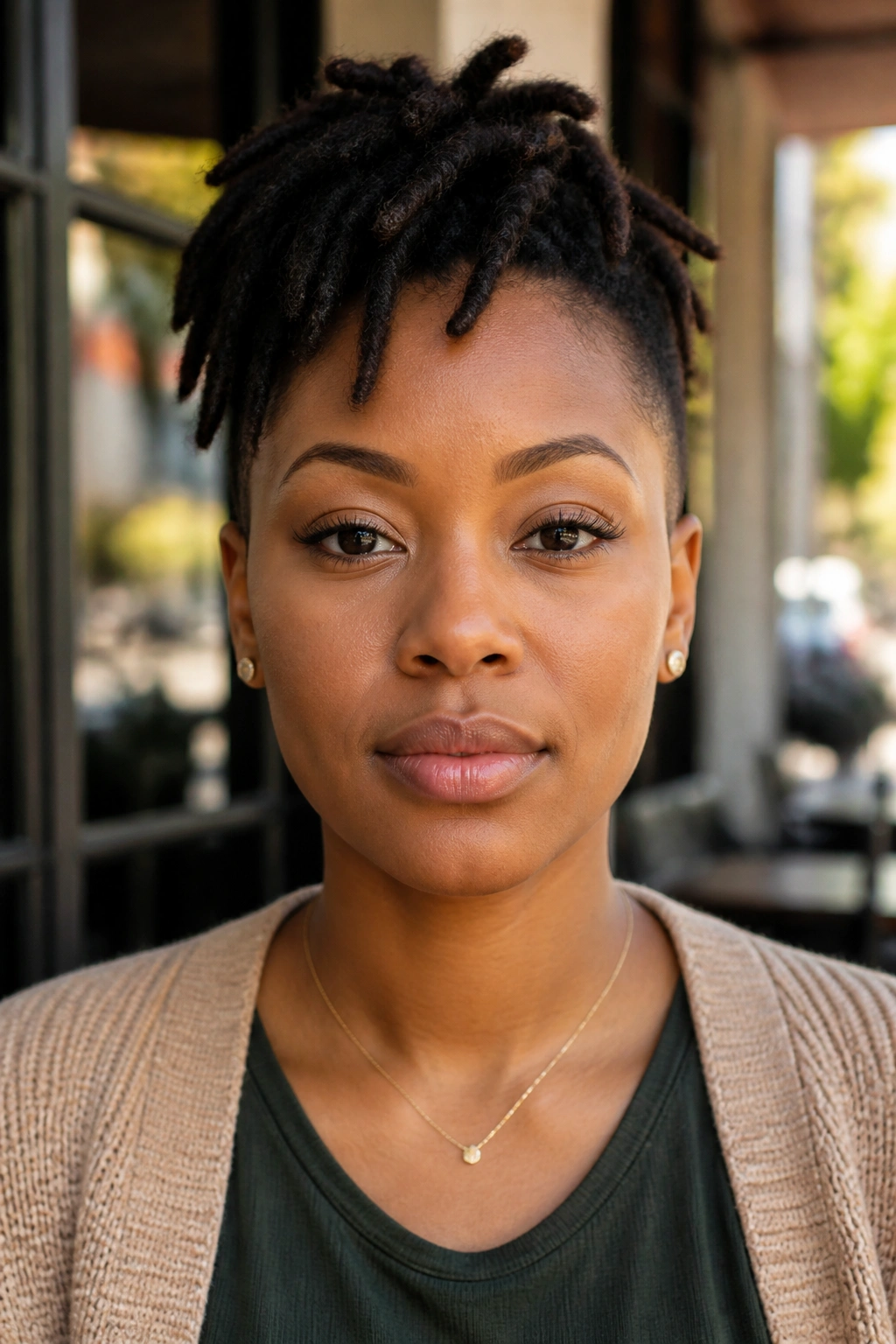
Tapered sides are the blunt answer to a soft face shape. They trim the width where you do not need it and leave the top with enough room to breathe.
There’s a reason this style keeps showing up on round faces. It puts the visual weight where the head needs length, not where the cheeks already carry width. The result feels cleaner, sharper, and a little more intentional than a one-length shape that sits evenly all the way around.
I’d choose this if you like short locs that feel neat from every angle. The back can sit close to the neck, while the crown stays fuller and slightly higher. That contrast is what does the flattering work. You do not need a dramatic undercut to get the effect either; even a gentle taper makes a difference.
If you wear earrings, this style plays nicely with them. The ears stay visible, the neckline stays clean, and the locs keep the face open. Simple. Strong.
3. Asymmetrical Loc Bob With Long Front Pieces
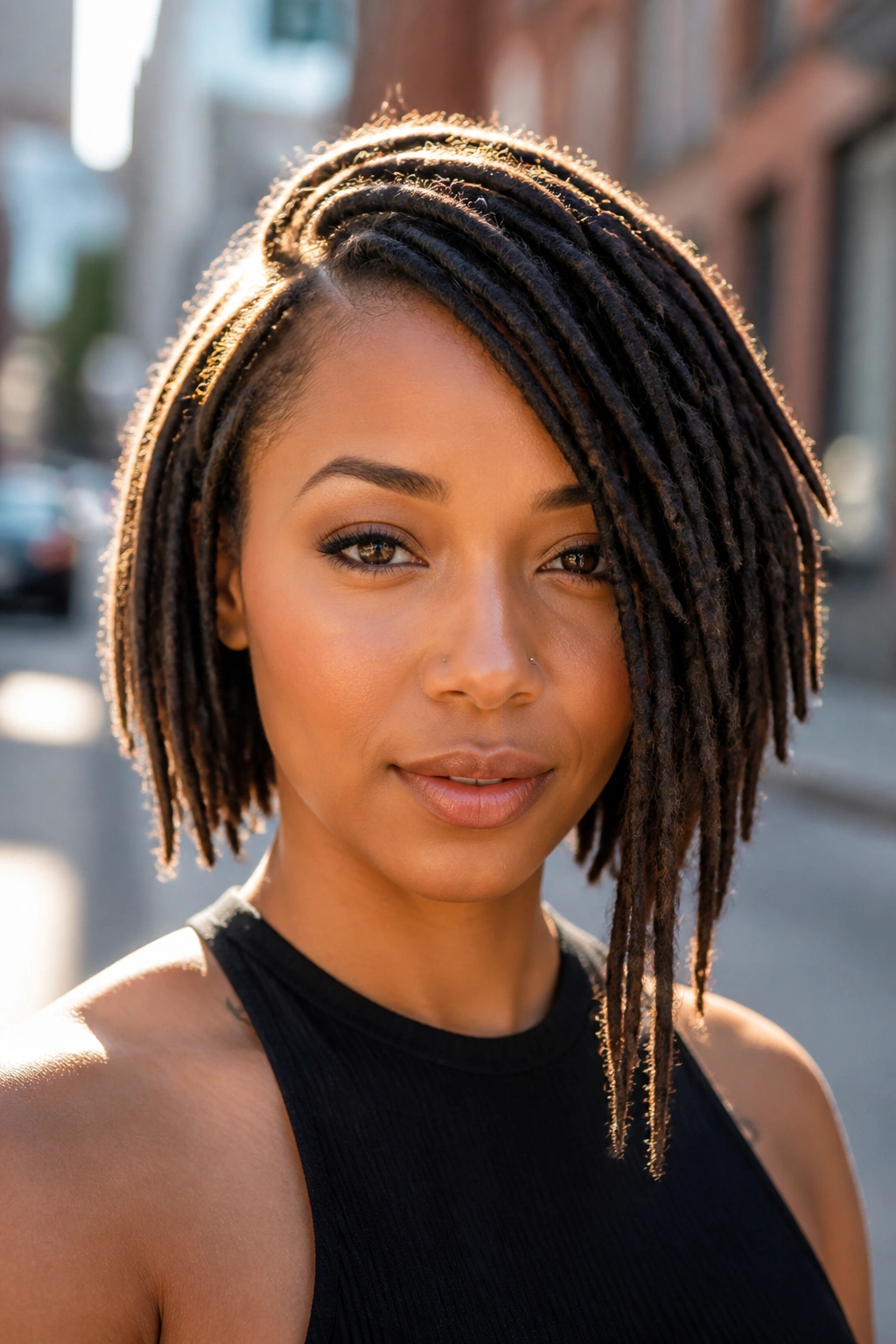
Why does an asymmetrical bob flatter a round face so well? Because the eye follows the longer line first, and that line moves the face visually in a vertical direction instead of a horizontal one.
The front pieces should hit lower than the sides, ideally brushing the top of the collarbone or sitting right at the jaw depending on your loc length. That difference does not need to be huge. An inch or two is enough to change the whole read of the style.
How to Ask for It
Tell your loctician you want one side slightly longer and the front pieces to fall forward rather than sit square across the cheeks. A hard, even edge can make the face look wider. A small angle softens that.
This is one of my favorite short loc looks for people who want movement without lots of styling. The asymmetry gives you shape even on a plain day. And if your locs are a little fuzzy between retwists, the style still holds up because the cut itself carries the design.
4. Curtain-Bang Short Locs
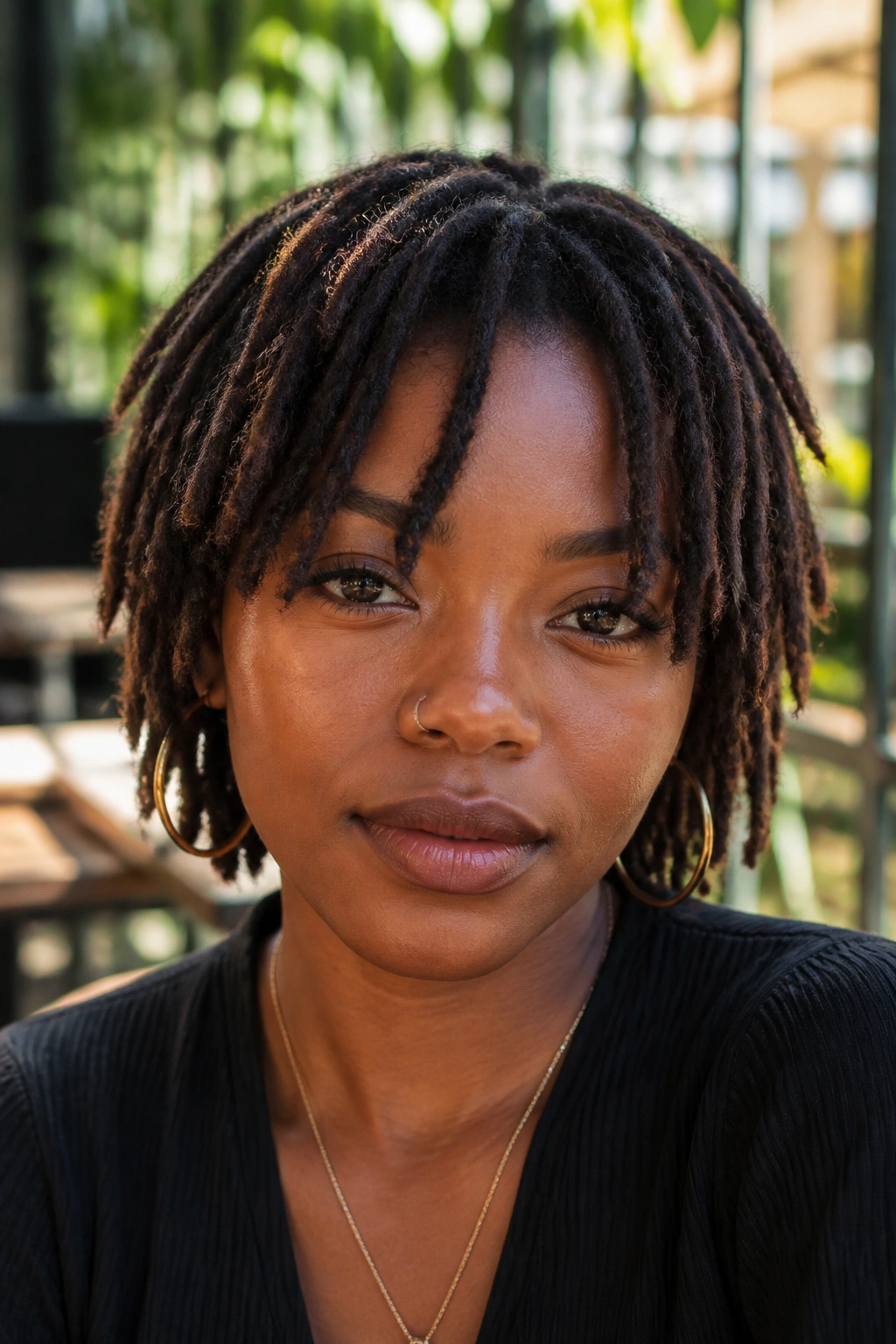
If your locs keep collapsing flat after a retwist, this is the style that gives them a little spine. Curtain bangs split the front open, and that gap down the center creates a longer line through the face.
The real advantage is softness. Curtain bangs do not sit like a heavy wall across the forehead, which is where some round faces get dragged wider. Instead, they fall away from the center and skim the temples, so the shape feels lighter around the upper face.
- Ask for bangs that start around eyebrow level or slightly below.
- Keep the middle part soft, not exact, so the look doesn’t feel severe.
- Let the side pieces stay a touch longer than the center.
- Works best when the locs have enough bend to tuck behind the cheekbone.
I like this style on people who want a face-framing look without too much drama. It’s gentle, but not boring. And if you leave a little texture in the bangs, it looks even better.
5. Half-Up Mini Puff on Short Locs
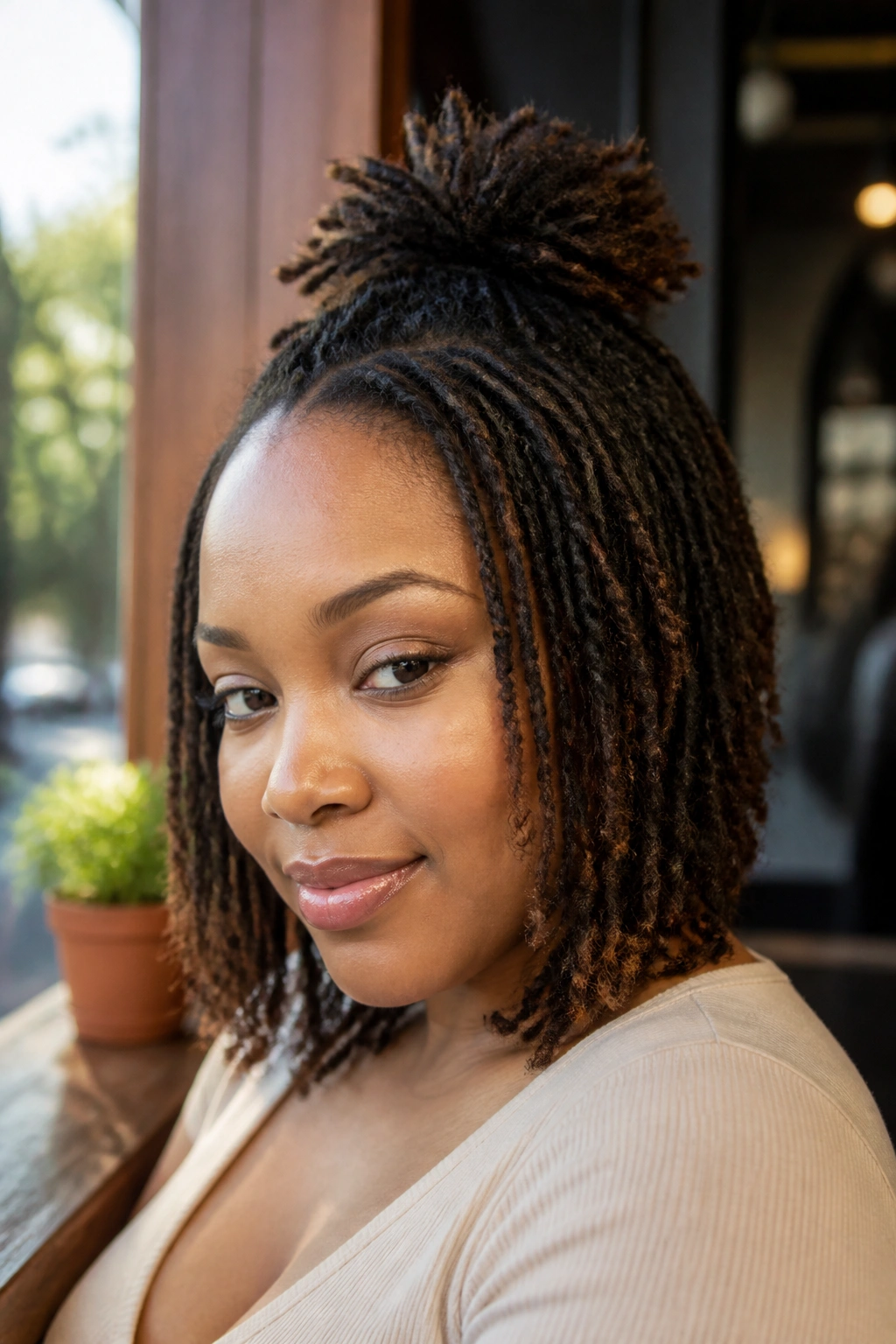
A half-up mini puff is one of those styles that looks playful and practical at the same time. The lift at the crown gives a round face more height, and the hanging locs still keep the shape soft around the jaw.
You do not need a lot of length for this. Even short locs can be gathered at the top if they’re dense enough. The trick is to place the puff high enough to open the face, but not so high that it starts looking top-heavy. Somewhere around the upper crown usually works best.
This style also has a useful side effect: it pulls the eye upward. That means the cheeks stop being the center of attention. The face feels longer, which is exactly what many round faces need from a short style.
I’d wear this when I want short locs to feel loose but still controlled. It works for errands, work, and days when you want your hair out of your eyes without giving up shape. A little edge control at the hairline helps, but don’t slick everything back too hard. That can flatten the face again.
6. Short Loc Faux Hawk
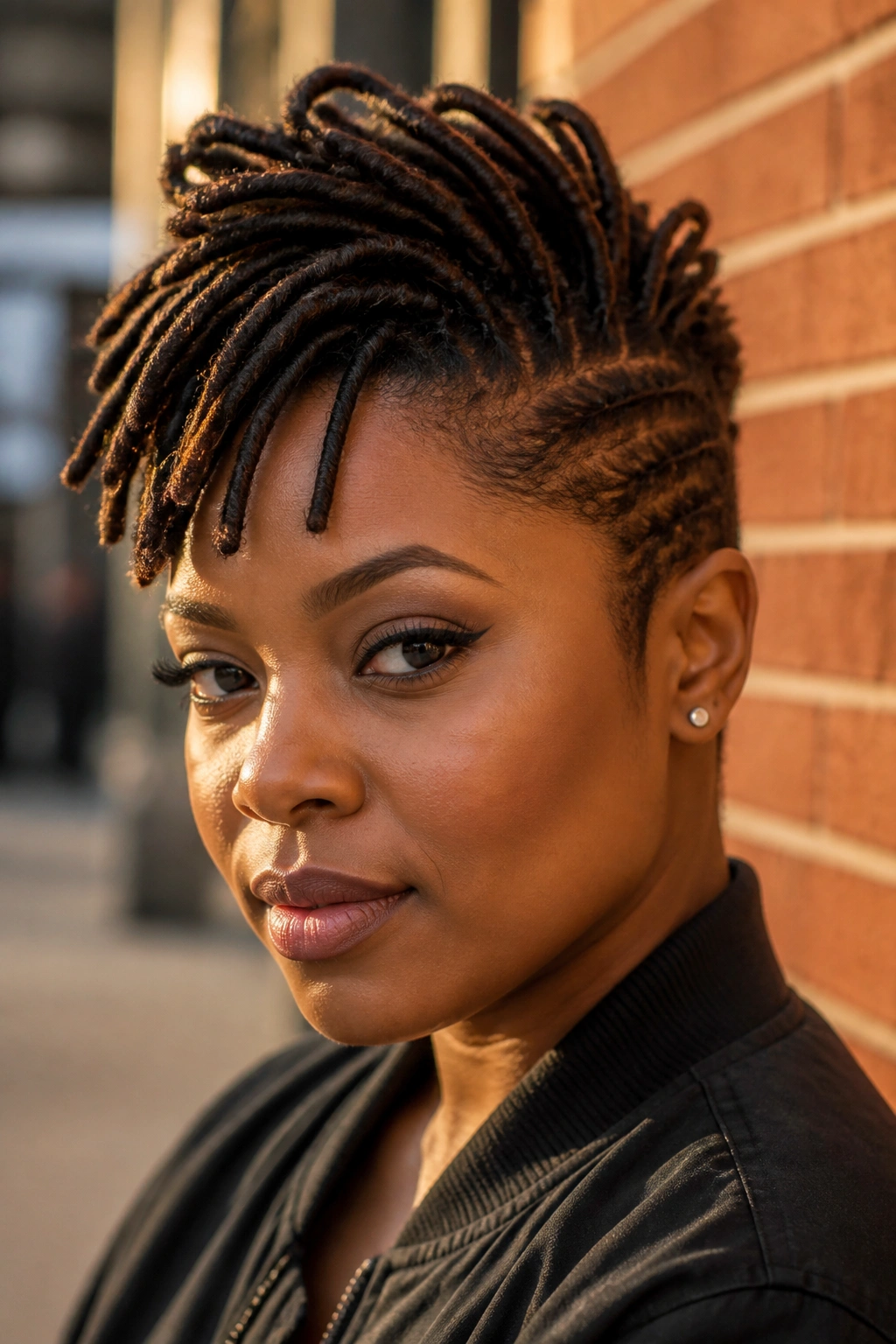
A faux hawk is the fastest way to put height where a round face needs it. The middle section rises, the sides stay tighter, and the whole silhouette gets a long, narrow center line.
Unlike a style that spreads evenly across the cheeks, this one deliberately narrows the sides. That matters. It cuts down on width and gives the face a bit more edge. If you like your hair to have attitude, this is a strong pick.
The best version of this style keeps the locs loose enough to move. Too much product can make the center ridge feel stiff, and stiff hair often looks wider than it should. A little grip is enough. Pin the sides close, lift the top, and let the front pieces stand a bit forward if you want extra length through the face.
This is not a shy style. Good. Round faces do not always need softening; sometimes they need structure.
7. Layered Chin-Length Loc Bob
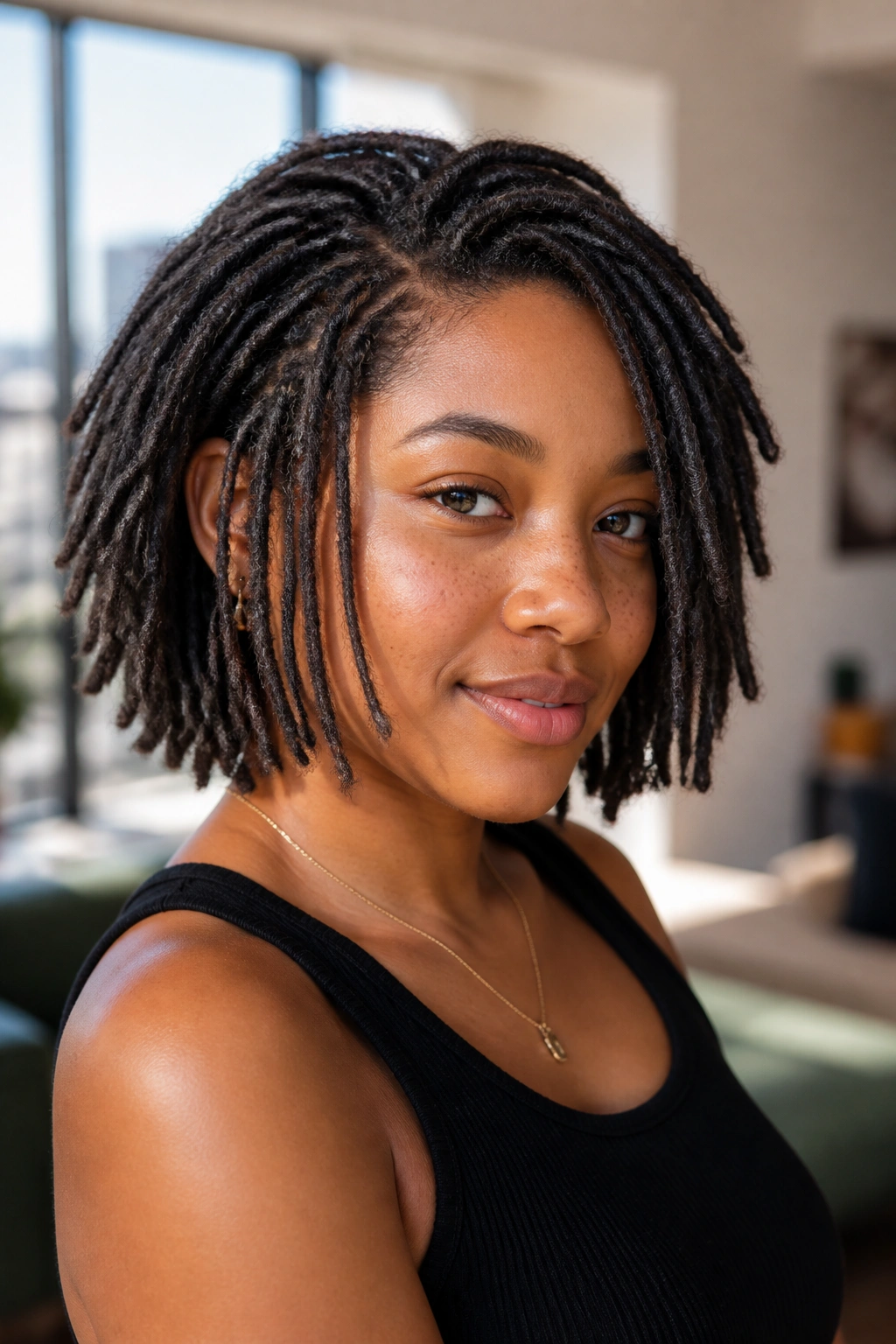
Layering is one of the easiest ways to stop short locs from looking like a heavy block. If the ends all sit at the same point, the shape can feel flat and wide. A few staggered lengths solve that fast.
What Makes It Different
The layers create movement around the jawline, which is the spot most round faces want to slim a little. Shorter pieces near the crown and longer ones near the front give the style a gentle slope. That slope is doing real shape work.
- Ask for subtle layers, not choppy ones.
- Keep the shortest pieces near the crown so the top has lift.
- Leave the front just long enough to skim the cheek, not sit directly on it.
- This cut works especially well with medium-to-small locs that don’t puff out too much.
A layered bob is one of those styles that looks polished without being fussy. You can wear it neat for work or let it loosen up a little on the weekend. It still reads as intentional either way. I reach for this one when someone wants a short loc style that doesn’t fight the face.
8. Side-Swept Short Locs With One Tucked Side
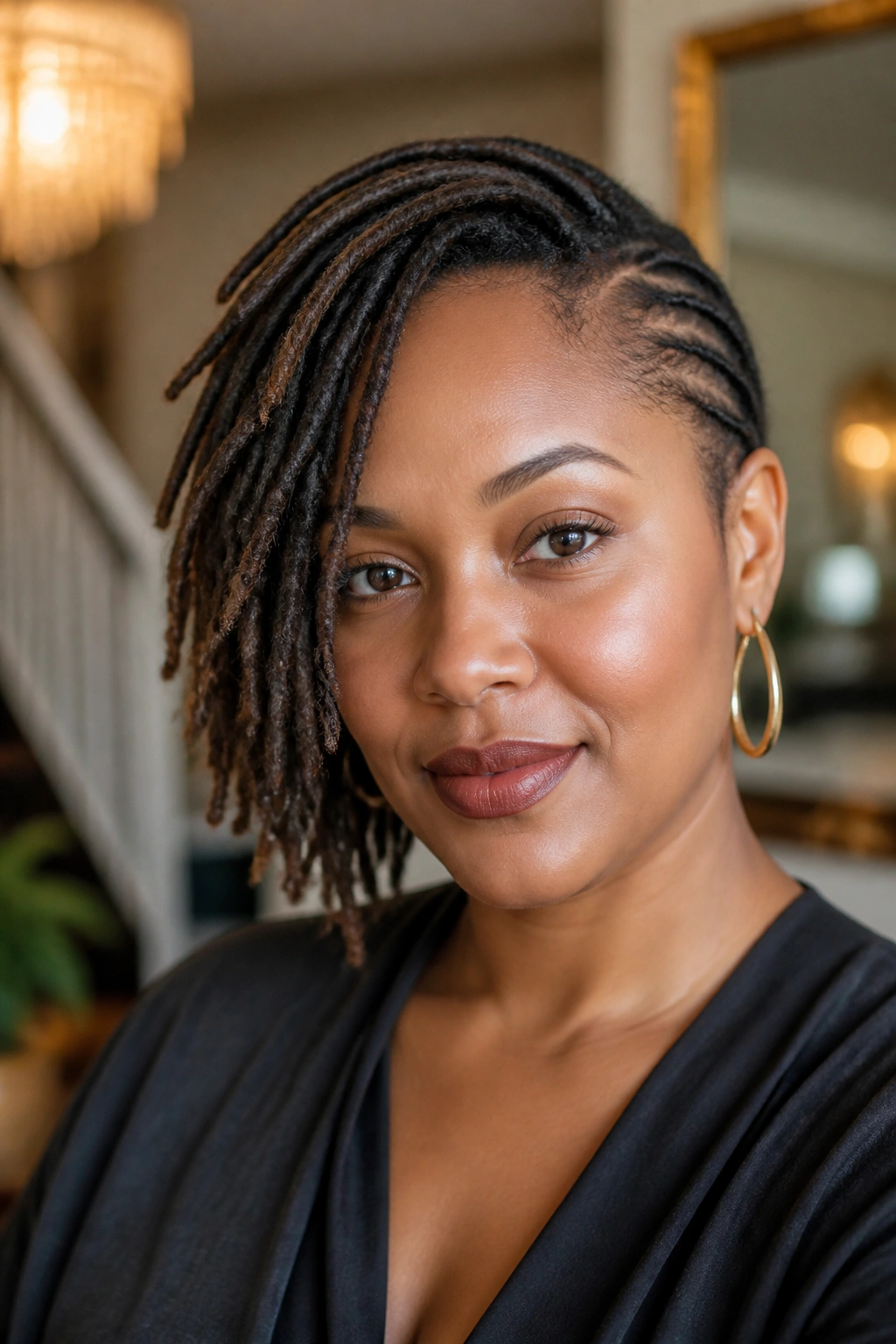
Beads, pins, and a hard side sweep can rescue a plain short set in ten minutes flat. The beauty of this style is that it uses asymmetry without needing a new cut.
The tucked side opens the face, while the other side falls across one cheek in a controlled line. That single sweep keeps the shape from spreading out evenly on both sides. For round faces, that unevenness is the whole point.
If your locs are fresh and springy, this style holds nicely with a couple of discreet pins. If they’re older and softer, even better. The movement looks lived-in instead of overworked. I’d avoid overloading it with big clips or too much shine product, though. The face needs some air around it.
This is the style I’d choose on days when I want a little polish but do not want to sit and shape my hair for twenty minutes. One side tucked, one side free. Done.
9. Beaded Face-Framing Short Locs
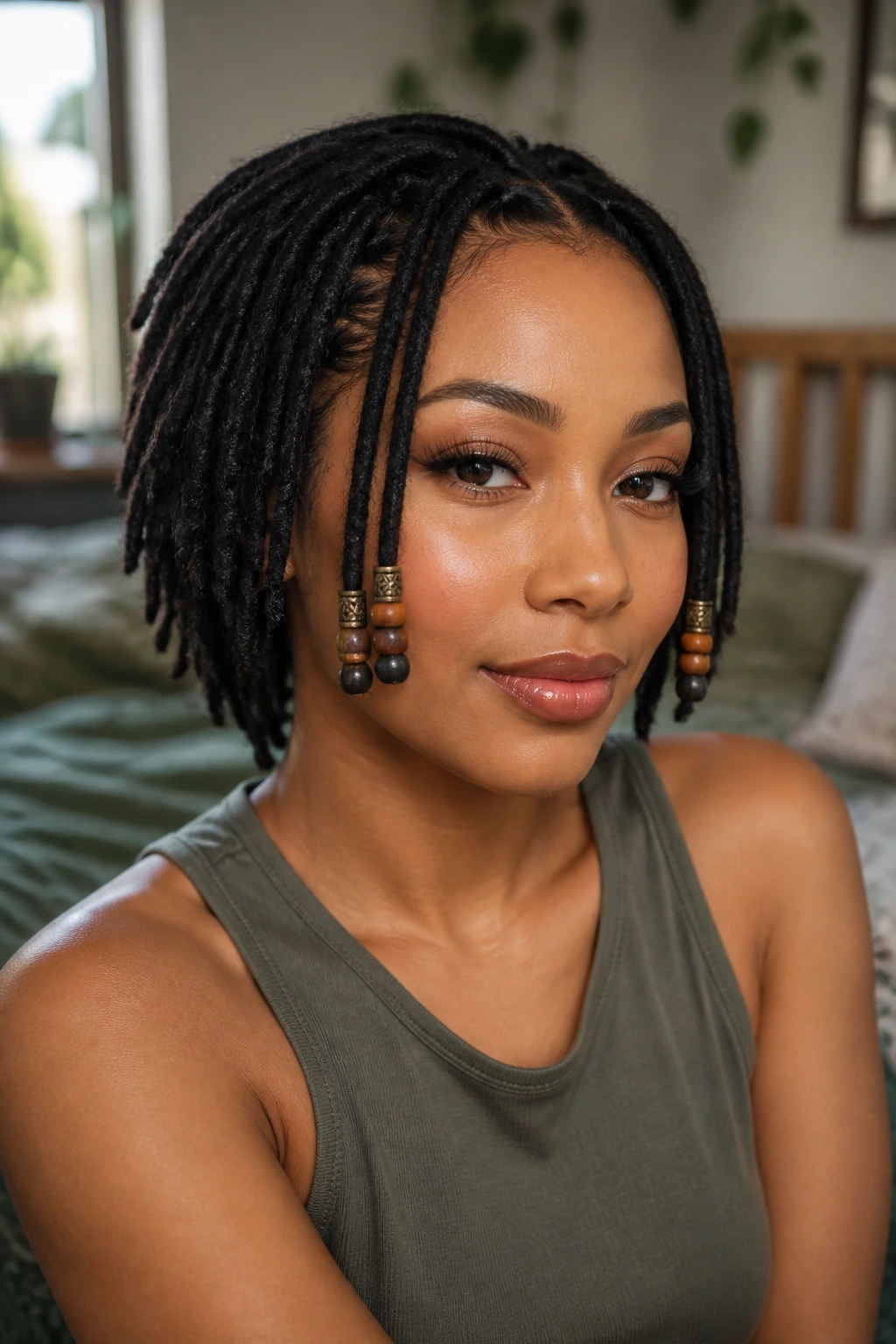
Can beads help a round face without making short locs look busy? Yes, if you place them with restraint and keep the front pieces doing the framing.
The best bead placement sits low on a few front locs, not all over the head. That creates a vertical pull near the cheeks and jaw, which can lengthen the face visually. A few beads in wood, matte metal, or clear resin tend to work better than a heavy cluster of shiny pieces. Too much weight at the sides can make the face feel wider again.
I like this style because it gives you a little personality without forcing a big shape change. The locs stay short and easy to manage, but the beads add a focal point near the chin or collarbone. That means the eye travels downward instead of stopping at the cheeks.
If your locs are on the finer side, keep the beads few and light. If they’re thicker, you can handle a little more detail. Either way, the front pieces should stay soft. That’s what keeps the whole look from tipping into costume territory.
10. Low Nape Knot With Loose Front Locs
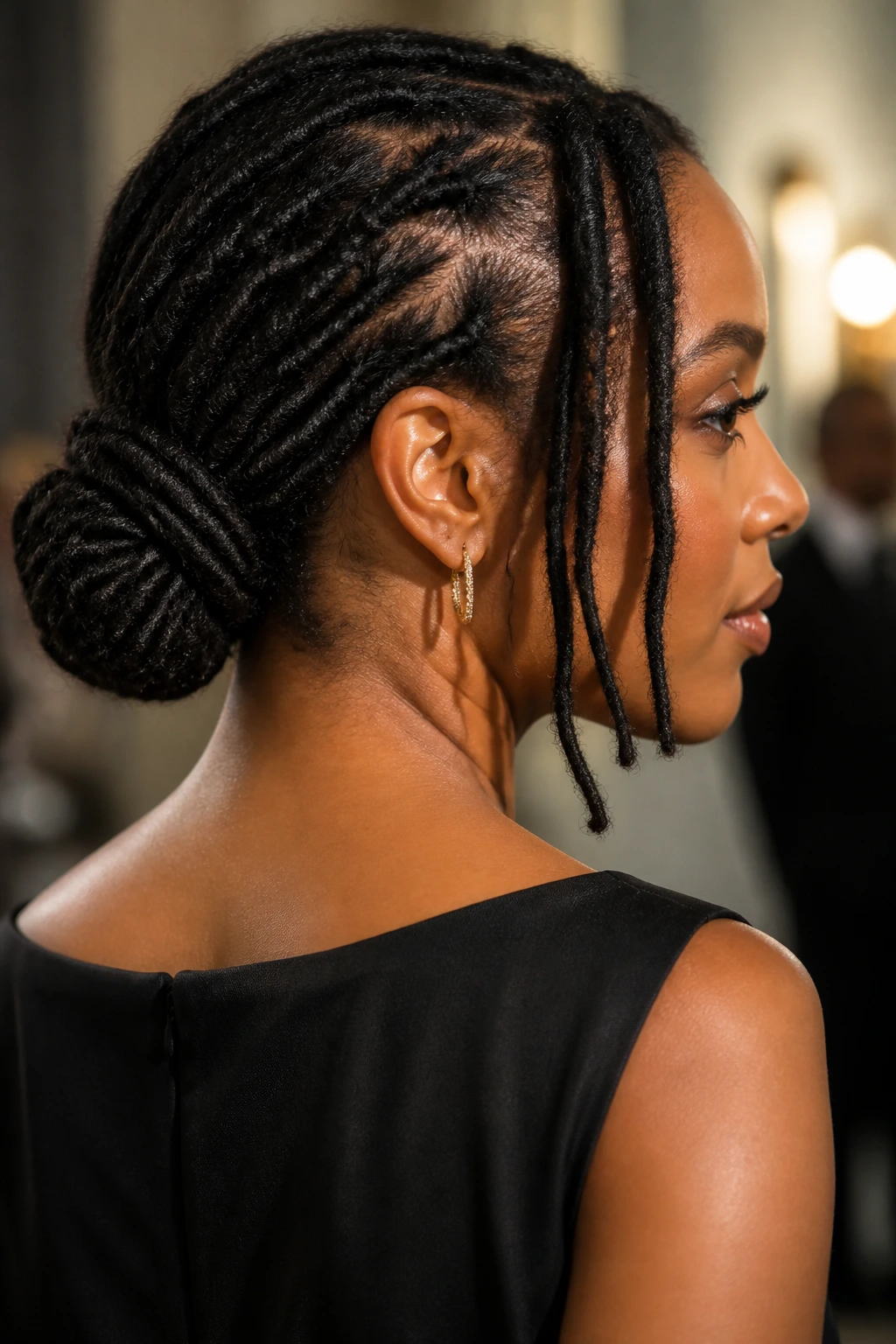
Picture a dinner, a gallery opening, or any night when you want the nape clean and the face open. This is the style that shows up well in that setting.
The knot sits low, usually at the base of the head, while two or three front locs hang free around the face. That contrast matters. The gathered back pulls the hair away from the cheeks, and the loose front pieces soften the line without giving the face too much width.
- Keep the knot small and close to the nape so it doesn’t fight the head shape.
- Leave 2 to 4 front locs free on each side, depending on density.
- Use a few pins to stop the knot from slipping if your locs are heavy.
- Let one front piece fall slightly longer than the others for a cleaner line.
I prefer this when the goal is shape without fuss. It’s elegant in a practical way, not a precious one. And because the front stays loose, the style still works if your locs have a bit of frizz.
11. Two-Strand Twisted Short Locs
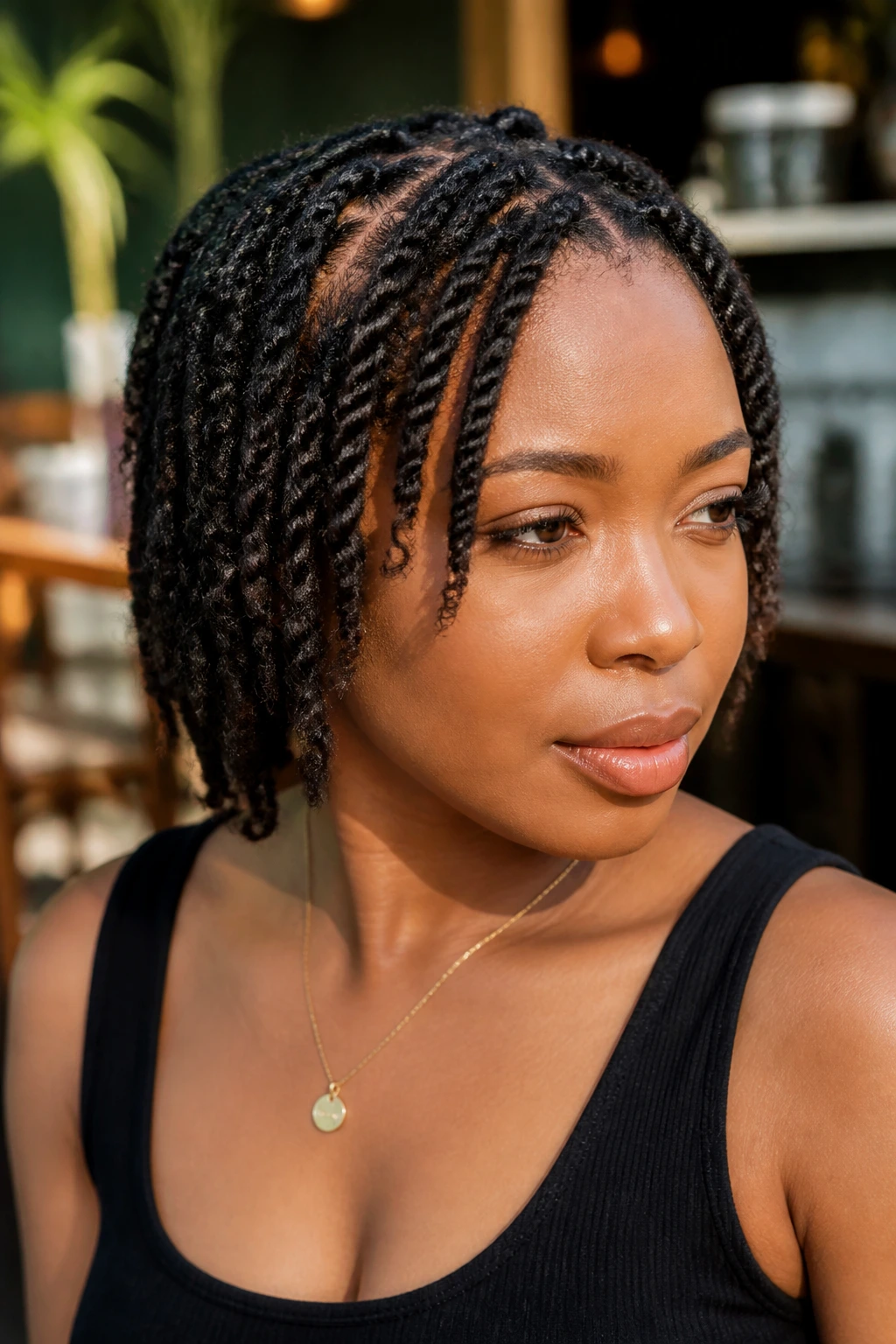
Two-strand twists on short locs are a little underused, which is a shame. They soften the silhouette, break up the width around the cheeks, and give the hair a rope-like texture that feels less blunt than a simple down style.
The best part is how they change the outline without changing the cut. Short locs can sometimes sit as one solid mass, especially when they’re freshly retwisted. Twisting them into pairs opens up space between the sections. That space matters on a round face because it stops the whole style from reading as one big circle.
I like this style when the locs are short enough to feel playful but long enough to hold a twist for the day. If the ends are still a little loose, even better. That soft finish keeps the look from becoming too strict.
You can wear the twists all over, or just twist the front and sides while leaving the back free. The second option is easier and often looks better on round faces because it keeps the top lifted and the edges less boxy.
12. Deep Side Flip Short Locs With Barrettes
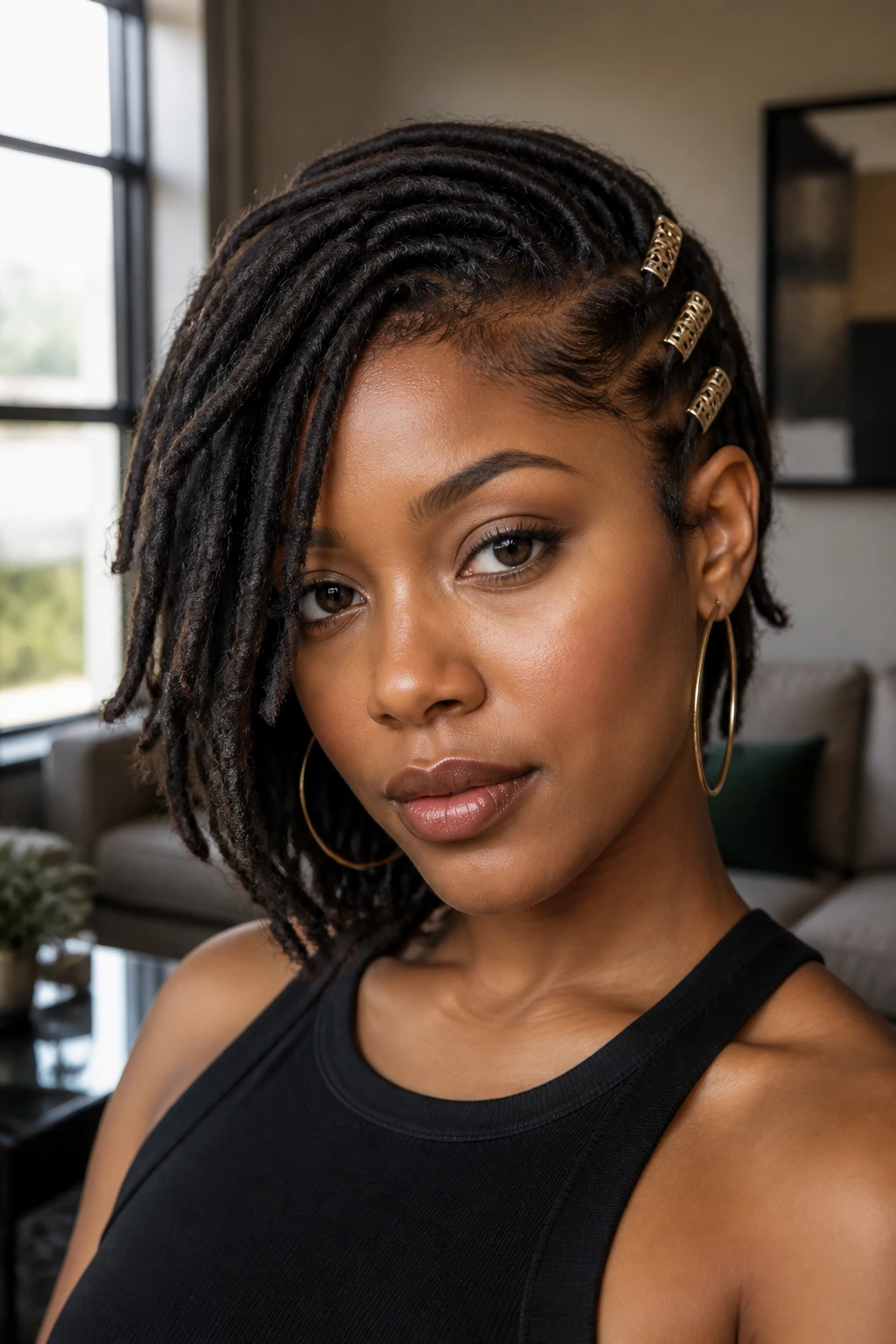
Unlike a centered style, a deep side flip gives the forehead room and keeps the face from feeling too round. That’s why it works so well on short locs.
The flip should start near the arch of the brow and sweep across just enough of the forehead to create a diagonal line. Then the barrettes hold the heavier side in place. I like small metal clips or plain pins here. Big, sparkly barrettes can start pulling attention sideways, which is not the goal.
This style is smart for short locs that want a little structure without a full updo. You get that sleek, tucked feeling on one side and a softer, fuller side on the other. The imbalance gives the face more length than width.
If your locs are thick, use two pins instead of one. One pin often slides. Two hold the line much better and keep the front from drifting back into the face during the day. A little practical detail, but it saves a lot of annoyance.
13. Tapered Undercut Loc Crop
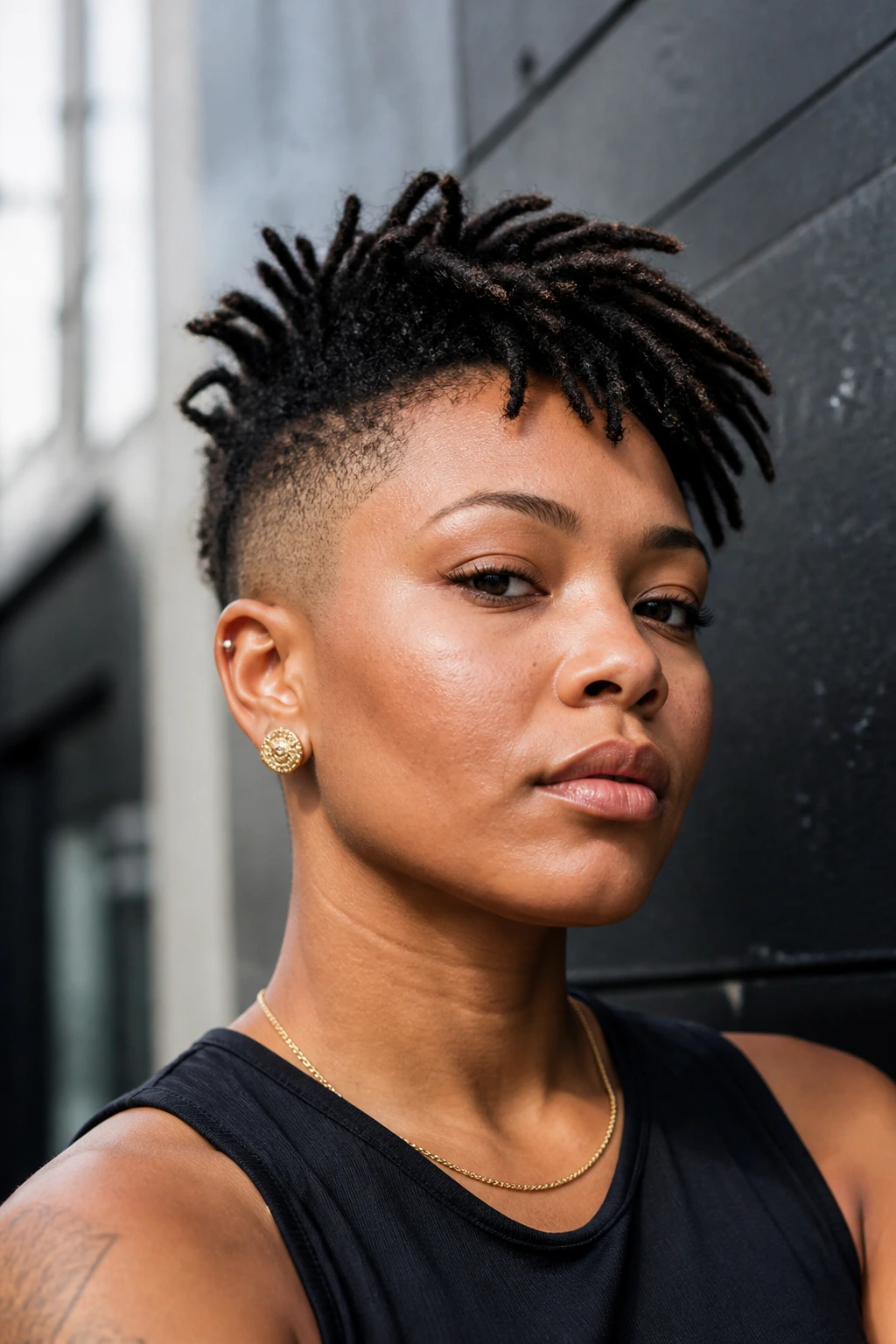
A tapered undercut crop is not subtle, and that’s the point. It takes bulk away from the sides and back, then leaves the top with enough mass to build height where a round face benefits from it.
Why I’d Choose It
This is the style for someone who wants a sharper outline. The undercut clears the sides, the top stays fuller, and the profile becomes a lot more vertical. On a round face, that extra vertical space can make the whole head look more balanced.
- Ask for the shortest taper at the nape and temple.
- Keep the top long enough to sit above the brow line when lifted.
- Works best with locs that can hold a bit of shape after styling.
- Use a light oil on the scalp only; heavy products can make the top collapse.
This is also one of the easiest short styles to maintain day to day. There’s less bulk to fight with, and the silhouette stays crisp longer between appointments. If you like a style that feels modern and tidy without being soft and sweet, this is the one I’d point to first.
14. Crown Twist on Short Locs
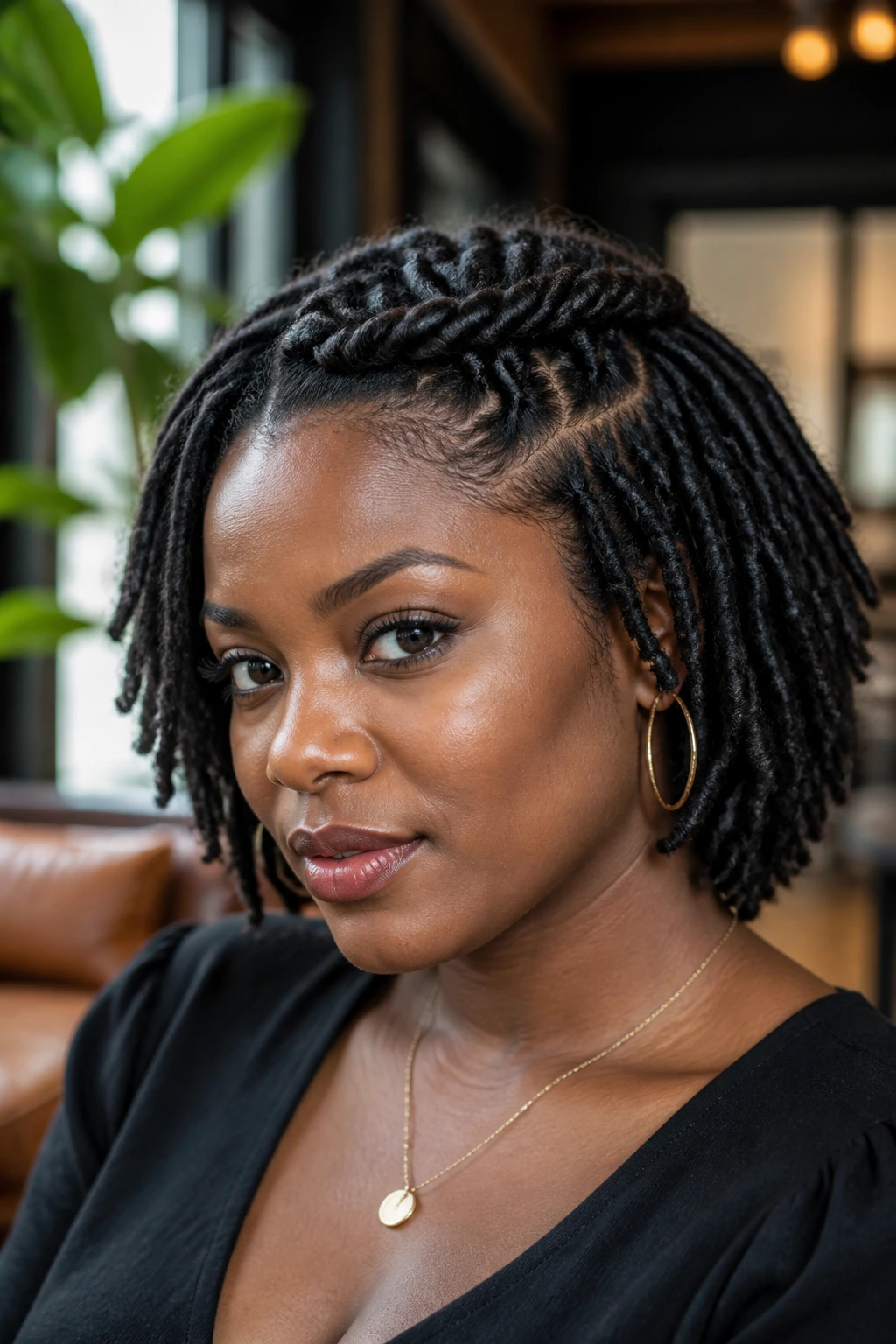
A crown twist gives you lift without asking for a full updo. It wraps some of the front or top locs back and around the crown, leaving the rest free to hang and frame the lower face.
What makes this flattering is the vertical line it creates near the top of the head. That little lift changes where the eye goes first. Instead of landing on the widest part of the cheeks, the eye catches the top shape and then drops down.
You can keep the twist tight and neat, or leave it a little loose so it feels softer around the hairline. I usually prefer the looser version on round faces. The tighter version can look a bit severe if the locs are short and dense.
This style works well for formal days, but it also makes sense for everyday wear if you want the front out of your face. The only real catch is that the twist has to sit high enough to matter. If it hugs the middle of the head too closely, the lift gets lost.
15. Rounded Short Loc Bob With Wispy Front Pieces
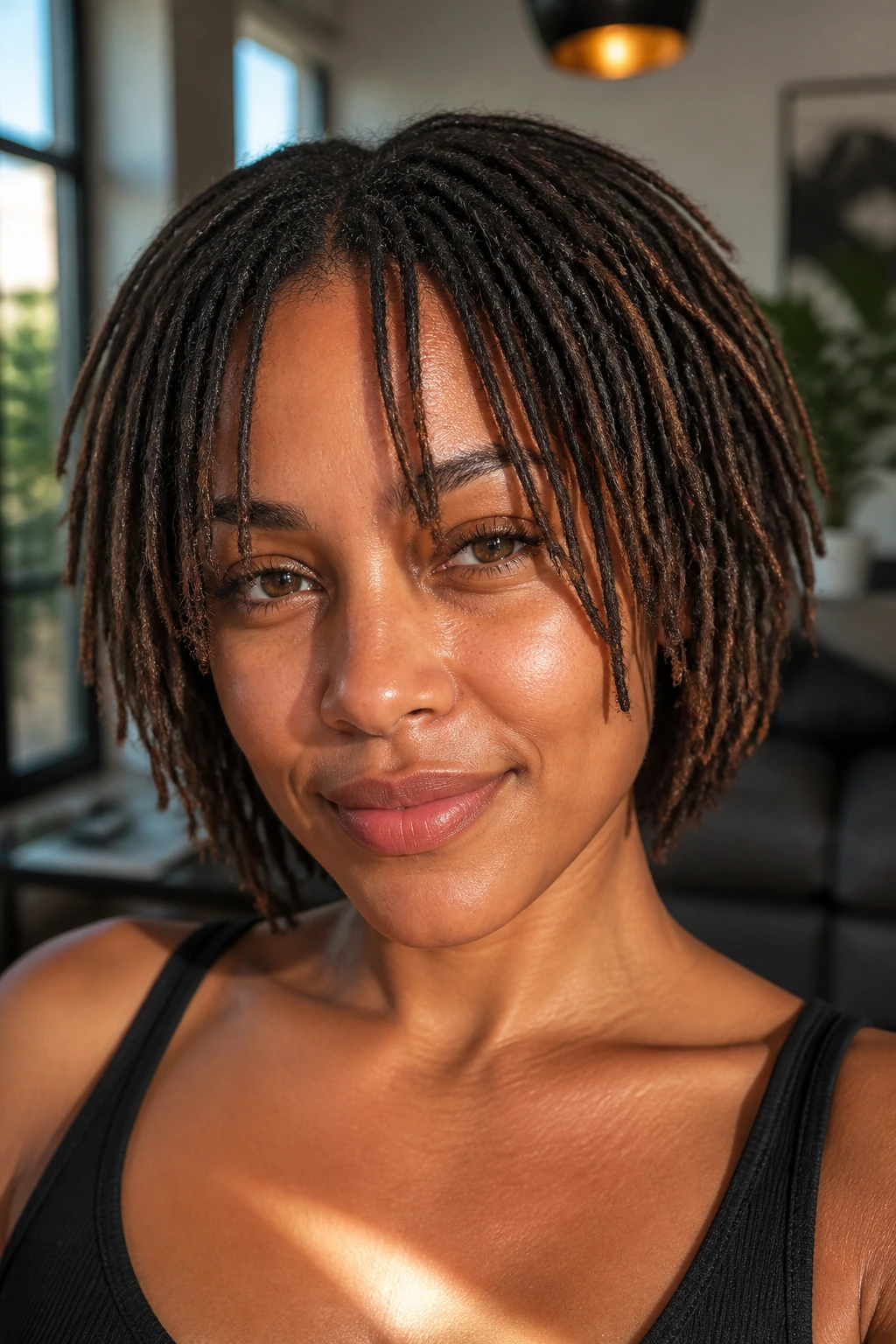
If you want one short loc style that rarely fights a round face, start here. A rounded bob with a few wispy front pieces softens the outline while still giving the face a little shape control.
How to Keep It Soft
The rounded edges keep the style from feeling harsh, and the wispy pieces stop the front from reading as one heavy line. That combination is useful when you want something clean but not severe. The bob should sit neatly at the jaw or just below it, while the front pieces skim the cheeks and taper off near the chin.
I like this option when the goal is balance rather than drama. It’s less angular than the asymmetrical cuts above, but it still gives a round face enough structure to feel polished. If your locs are medium density, the round shape can look especially nice because it carries body without puffing up too much.
A few loose ends at the front make the whole thing feel softer. Don’t over-pin them. Don’t over-slick them either. Let them move a little. That small bit of softness keeps the face from looking boxed in, and it’s often the difference between “fine” and a style you actually want to wear again.
Round faces do not need to hide under length. They need shape, and short locs are good at giving it. The best looks above do the same job in different ways: some add height, some cut down width, and some just keep the eye moving so the face feels balanced.
If you’re choosing between two styles, pick the one that changes the silhouette first and adds decoration second. That usually gets you closer to the right answer.
