



Short locs for round faces can look sharp, soft, and balanced all at once — but only when the shape is doing some real work. The mistake I see most often is people choosing a style because it’s cute on its own, then wondering why it feels a little too wide or too flat once it hits a rounder face.
The trick is not to hide your face. It’s to give it better lines. A little height at the crown, a side part that breaks up the symmetry, and some movement near the cheeks can change the whole read of a cut. Even a few inches of locs can do that if the shape is clean.
Round faces usually look best when the style pulls the eye up or down instead of straight across. That means tapered sides, off-center parts, face-framing pieces, and a neckline that doesn’t compete with the cheeks. Some styles below are neat and close to the head. Some are softer and looser. A few bring a little attitude, because honestly, round faces can handle that better than people give them credit for.
1. Tapered Short Locs With a Narrow Neckline
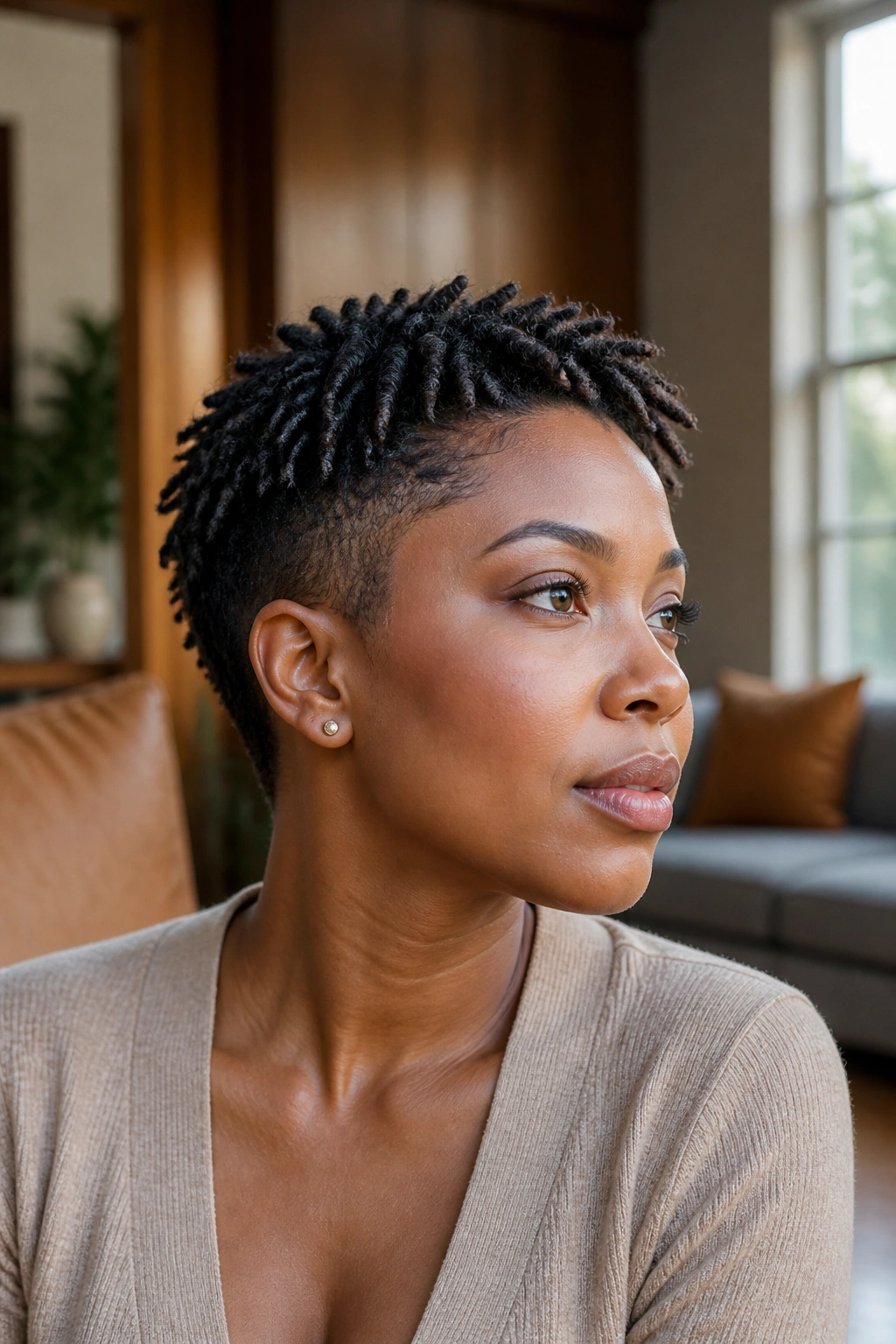
Tapered short locs are one of the easiest wins for a round face. The sides stay close, the nape is clean, and the crown gets to keep a little fullness so the whole style reads taller instead of wider.
Why It Helps the Face Look Longer
The taper creates a slim frame around the jaw and cheeks, which is where round faces tend to feel fullest. When the neckline drops in neat layers, the eye follows that line down instead of getting stuck at the widest part of the face.
- Best on locs that sit between 2 and 5 inches.
- Works well with starter locs, matured locs, or sisterlocks.
- Ask for a tighter nape and softer top layers.
- Keep the crown slightly lifted so the cut does not collapse into a mushroom shape.
My favorite part: it looks polished even on a wash-and-go day, which is rare enough to matter.
2. Side-Swept Loc Bob
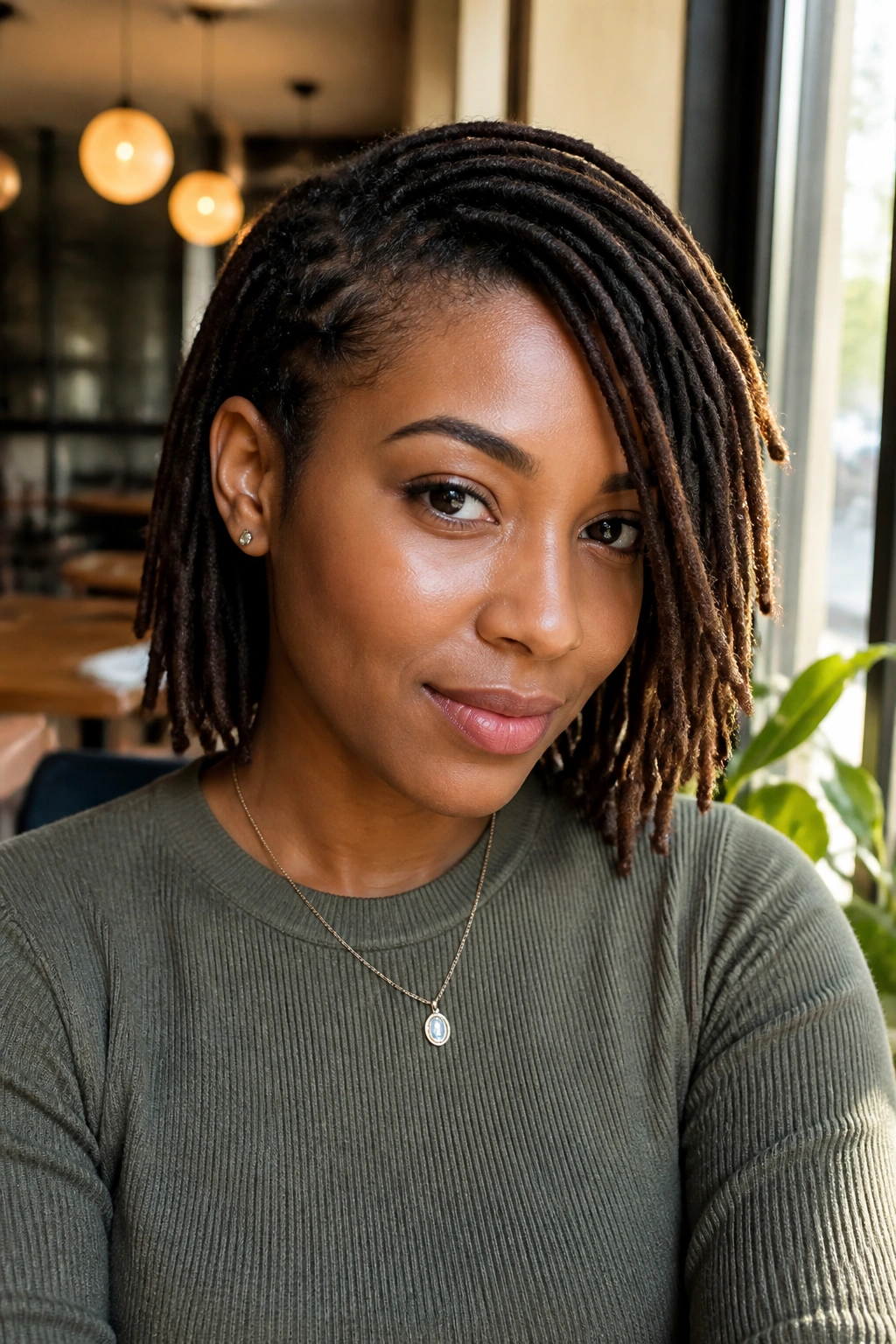
A side-swept bob does something blunt middle parts often don’t: it breaks the circle. That diagonal line across the forehead and cheek area gives the face a stronger shape without making the style feel forced.
The best version keeps one side a touch longer and lets the front locs fall across the temple, not right on top of the cheekbone. That small shift matters. If the hair lands exactly at the cheek width, the face can feel wider. If it skims just above or below it, the whole look feels cleaner.
Wear it with a deep side part and a little tuck behind one ear. That’s enough. No need to over-style it.
3. Curved Bangs That Sit Lightly on the Forehead
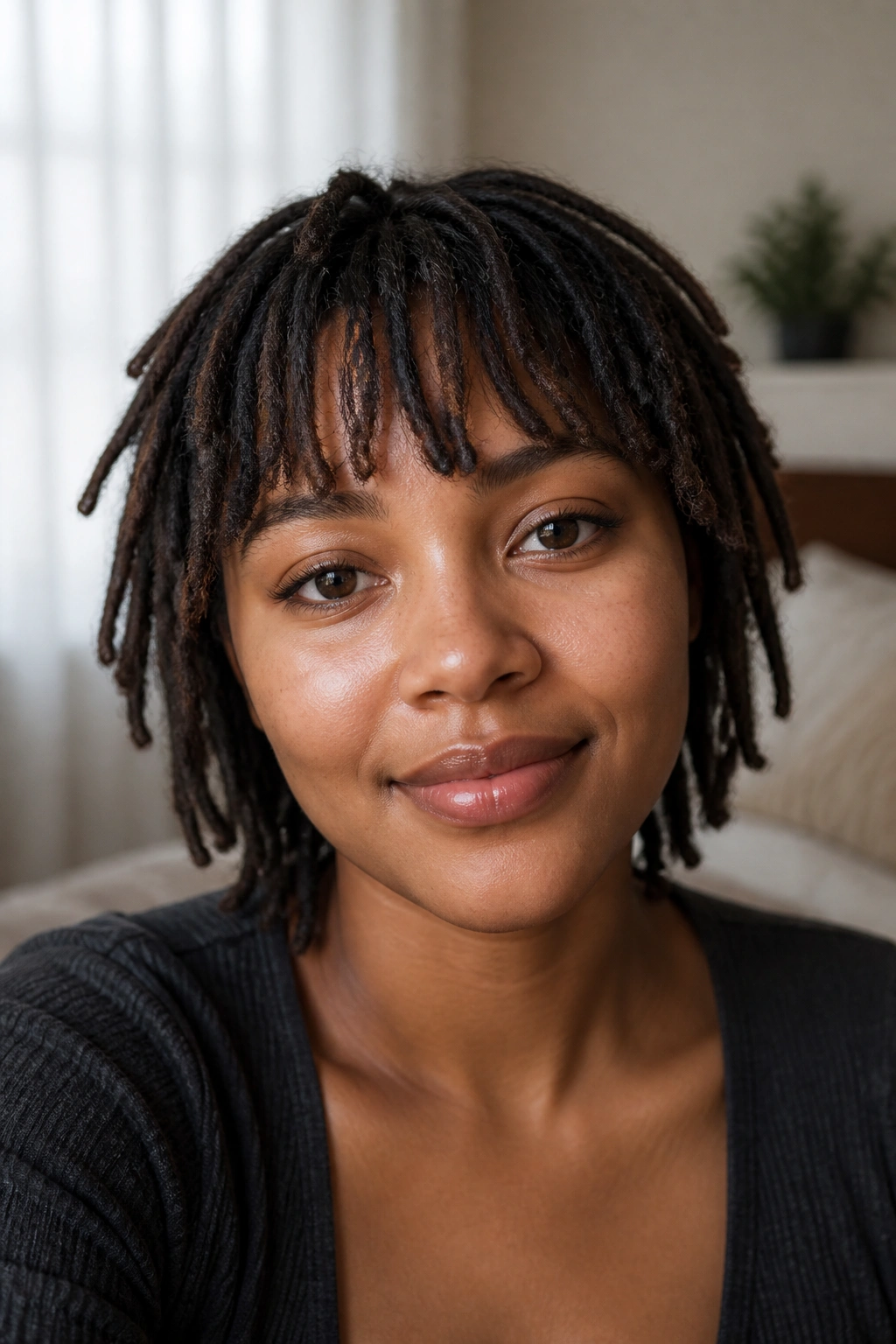
Can bangs work on a round face? Yes, if they’re soft enough to move.
The mistake is cutting a hard, blunt line straight across the forehead. That can shorten the face and pull attention to the widest part all at once. Curved loc bangs do the opposite. They bend slightly at the center, then open up toward the temples, which keeps the face from looking boxed in.
How to Wear Them
Keep the bang length just above the brows or right at brow level, then let a few locs fall a little longer on each side. If your locs are stiff, a quick setting on small rollers overnight helps the bend hold. If they’re softer, finger shaping after a mist of water is often enough.
A little unevenness is good here. Too perfect looks heavy.
4. Layered Locs With Face-Framing Pieces
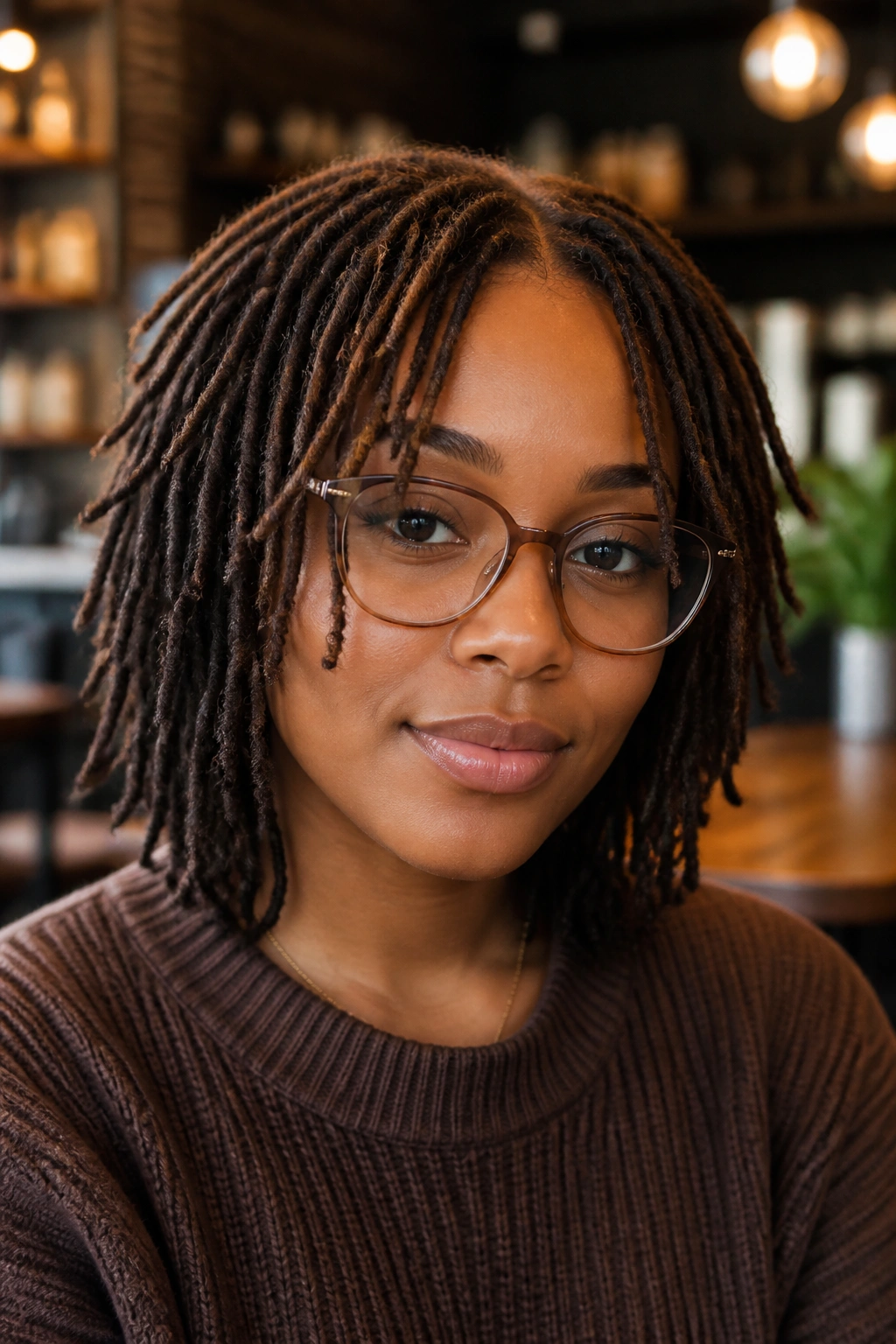
I keep coming back to layers because they solve a boring problem in a good way: short locs can sometimes sit too evenly around the head, and evenly is not always flattering. Layers break that up fast.
The front pieces should be a touch longer than the side pieces, with the shortest layers starting above the jawline. That gives the face some vertical movement and keeps the silhouette from feeling like one solid ring. A round face usually likes that extra motion.
This style is especially nice if you wear glasses. The front locs can sit beside the frames instead of fighting them, which keeps everything from bunching up around the center of the face. It’s a small detail, but it changes the whole balance.
5. Chin-Length Loc Bob With Blunt Ends
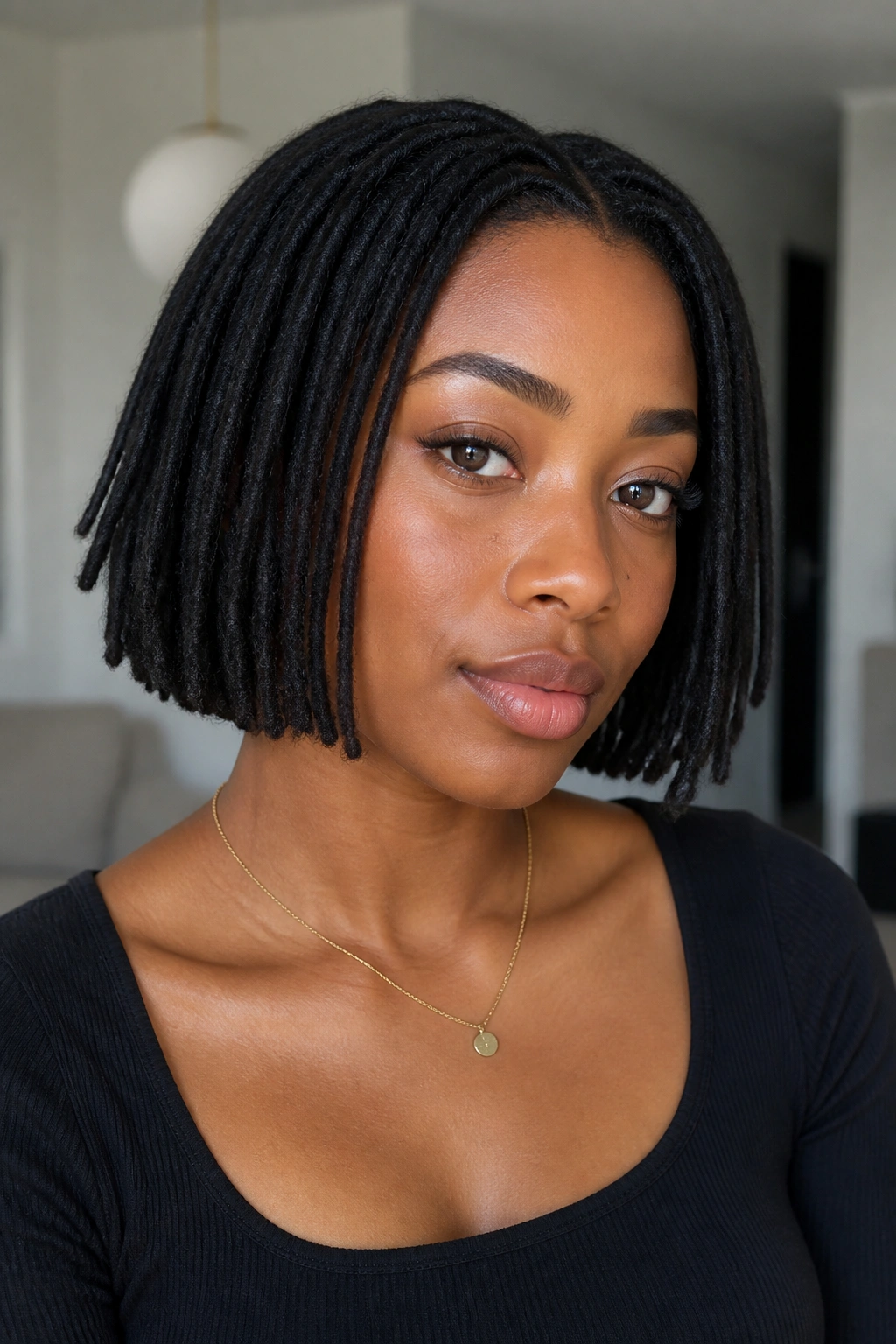
A chin-length loc bob sounds risky for a round face, and sometimes it is. But when the crown has a little lift and the ends are clean, the result can look crisp instead of boxy.
The blunt edge gives the cut a strong bottom line, which can be useful if your locs are fine and tend to puff out at the ends. The key is keeping the top slightly higher than the sides, almost like a soft stack. That stops the bob from landing exactly flat at cheek level.
One-sentence truth: this cut needs shape, not fluff.
If you like a tidy look, this is worth trying. If you prefer movement and loose texture, you may want one of the softer styles farther down the list.
6. Asymmetrical Short Locs
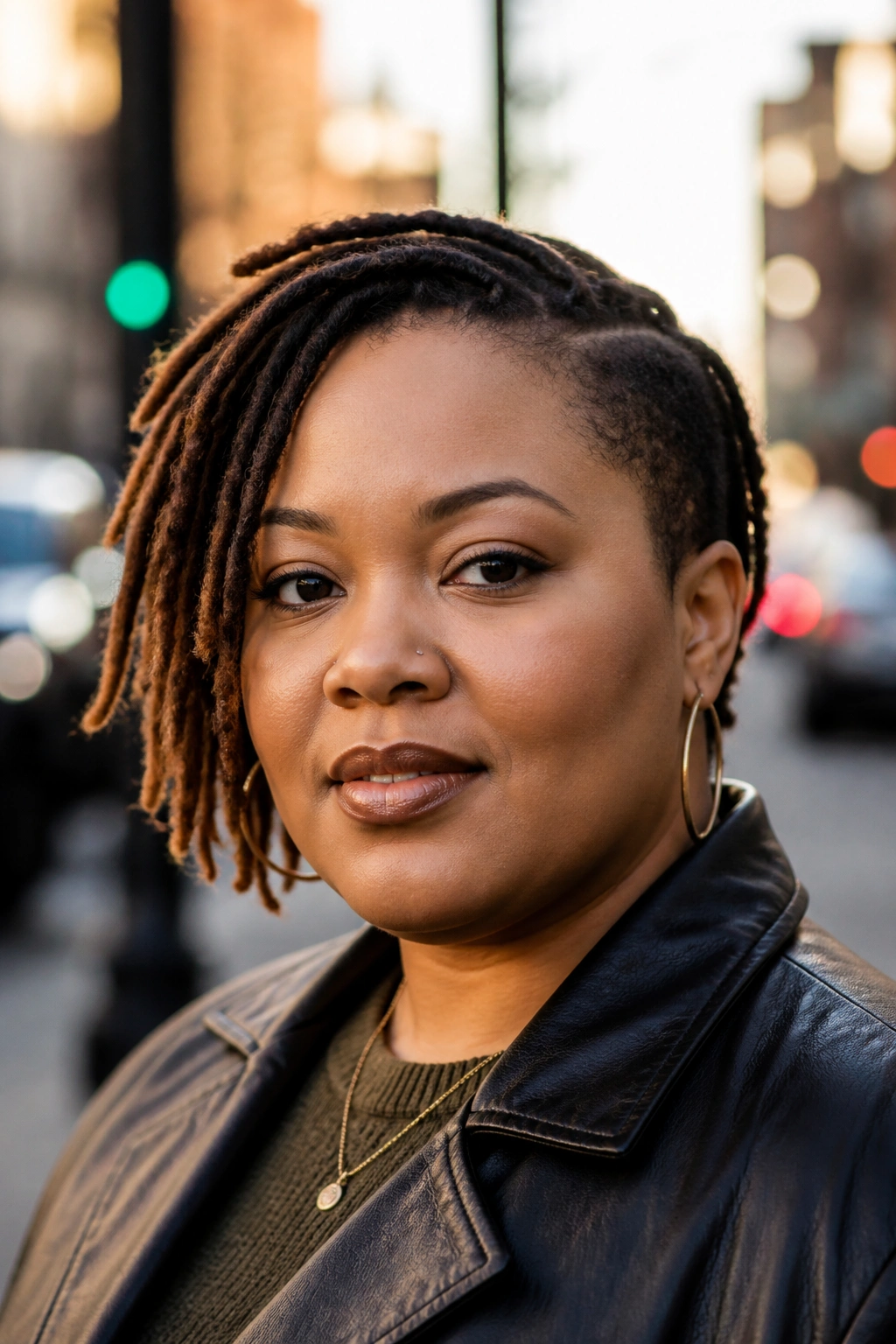
Unlike a symmetrical bob, an asymmetrical cut makes the face work a little harder in a good way. One side is longer, the other stays tighter, and that uneven line pulls attention away from the widest part of a round face.
The difference does not need to be dramatic. Even a one-inch shift can change the whole feel. Too much asymmetry starts to look costume-like, and that usually wears badly once the first photo is over. A mild version is smarter and easier to live with.
Who It Suits Best
- People who like a sharper silhouette.
- Loc wearers with thicker hair that needs direction.
- Anyone who wants a cut that looks styled even on quiet days.
Ask your loctician to keep the longer side falling just below the jaw and the shorter side hovering above it. That keeps the face open without making it look wider.
7. Barrel-Twisted Crown With Short Locs
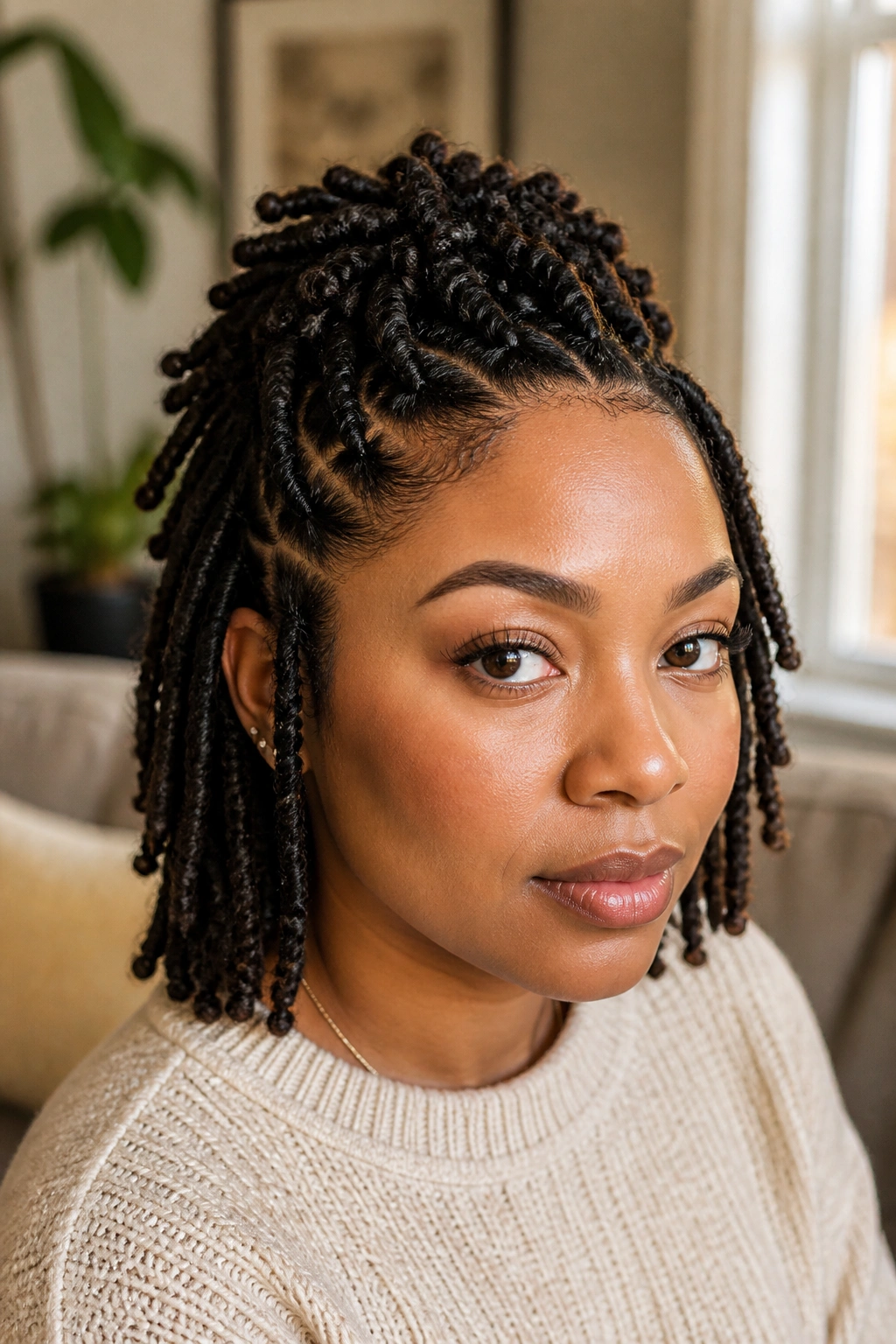
Need height fast? Barrel twists at the crown are one of the cleanest ways to get it.
Short locs can flatten out when they’re left loose, especially around the top of the head. A few neat barrel twists lift that center section, keep the sides tidy, and give the face a longer line from the forehead to the chin. That line matters more than most people think.
Why It Works So Well
The eye goes straight up. That’s the whole trick. Instead of reading the face as wide, the style reads as structured and tall.
You can wear the twists for a few days, then take them down for a soft wave pattern. That gives you two looks from one set. If your edges are delicate, don’t pull the twists too tight at the hairline. Tight edges are a fast way to ruin a style that was doing everything else right.
8. Short Locs With Curled Ends
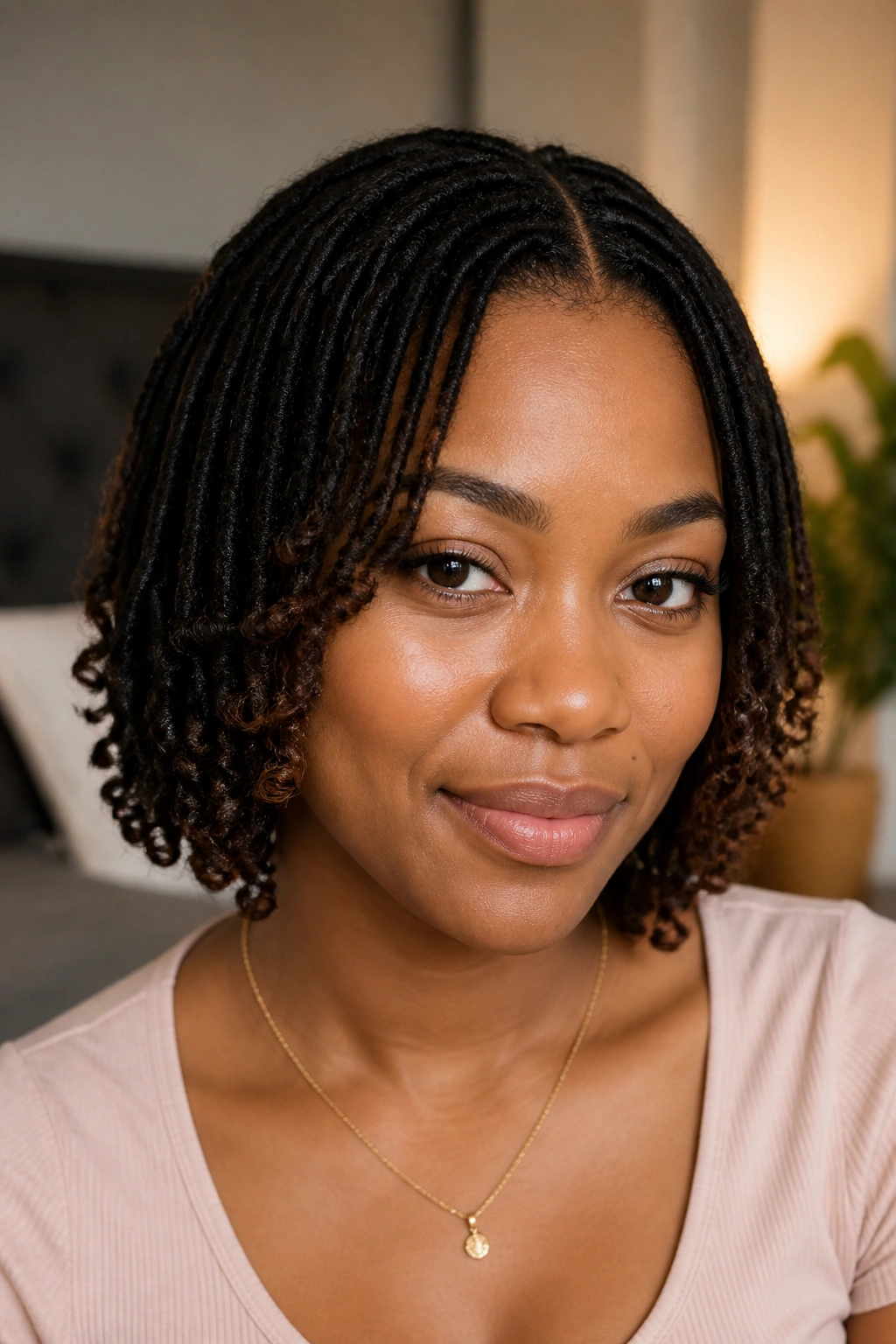
Curled ends are a nice fix for short locs that feel a little stiff. The curl adds softness around the lower half of the face, which helps a round shape look less broad.
Set the ends on perm rods or flexi rods, then let them dry all the way through. Half-dry locs look frizzy, not cute. I’d rather wait an extra hour than deal with limp curls that fall apart by lunch.
- Best when your locs are at least 4 inches long.
- Use medium rods if your locs are thick.
- Keep the root section smooth so the curl shows at the ends.
- Separate the curls only after they’re fully cool.
The face-framing effect is subtle, and that’s why it works. You get texture without losing the short, sharp shape.
9. Tapered Loc Pixie
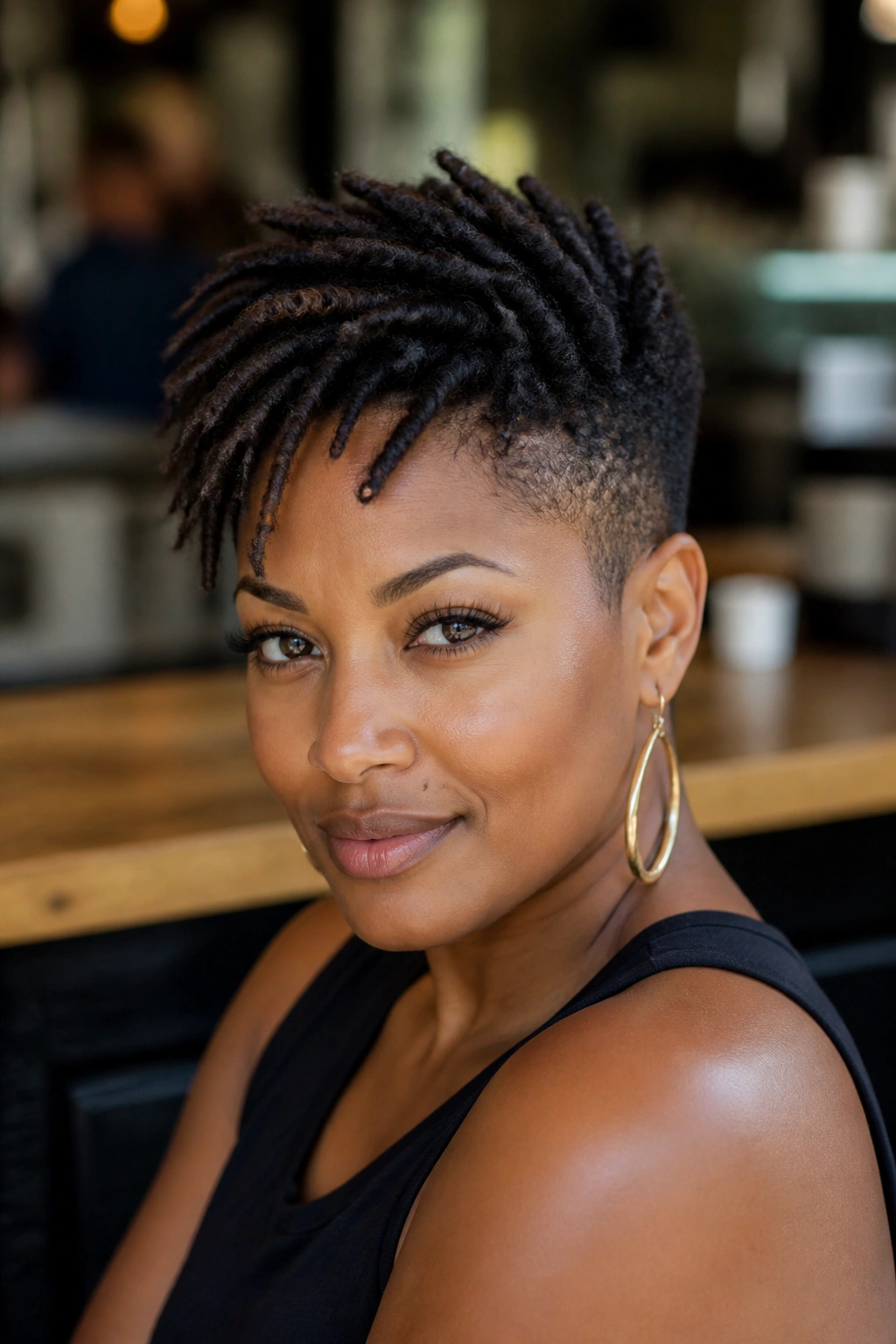
A loc pixie is for the person who wants short hair to look intentional, not accidental. The sides are cropped close, the top stays fuller, and the whole shape points upward.
That upward shape is the part round faces usually like most. It gives the face some lift and keeps the cut from spreading outward at cheek level. If the top is too short, the style can go flat and lose its edge. If the top is too long, it stops being a pixie and starts drifting into bob territory. There’s a sweet spot in the middle.
This one looks best when the front locs are slightly longer than the crown. That tiny detail keeps the face from looking too open. It also gives you room to tuck or sweep the front depending on your mood.
10. Half-Up Loc Puff
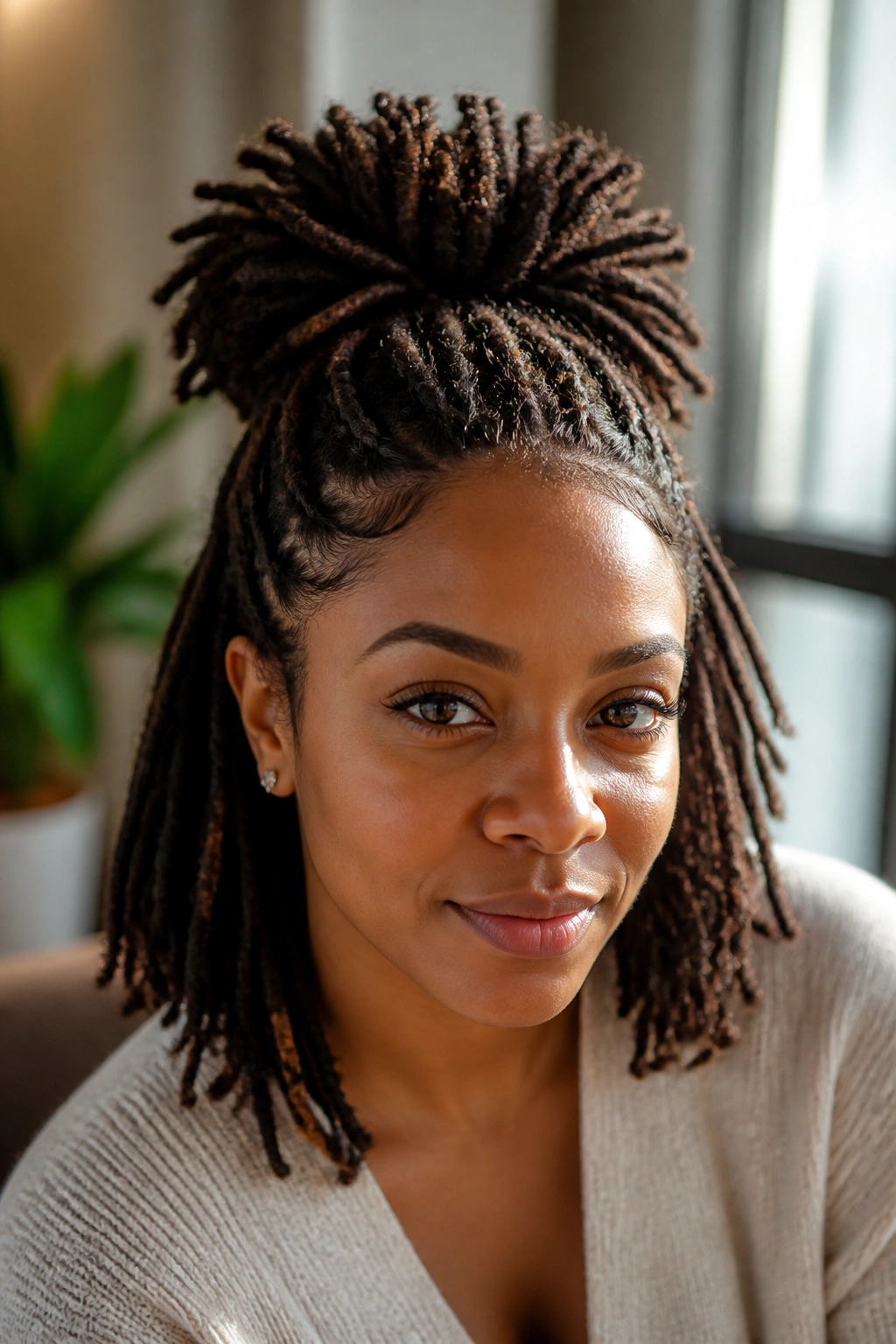
Half-up styles are underrated on round faces. Done badly, they puff out in the wrong place. Done right, they lift the entire style and leave the cheeks open.
The Shape You Want
Pull the top half into a soft puff or small bun high enough to lengthen the face, then leave the bottom locs loose and a little separated. The lift should sit above the widest part of the face, not right at it.
- Works best on locs with enough length to gather comfortably.
- Use a snag-free band or loose tie.
- Keep the puff soft, not tight.
- Leave a few front pieces out if you want more face framing.
This is the style I’d pick for a busy day when you still want the cut to look deliberate. It’s quick, practical, and much better than letting all the weight sit at the sides.
11. Short Loc Mohawk
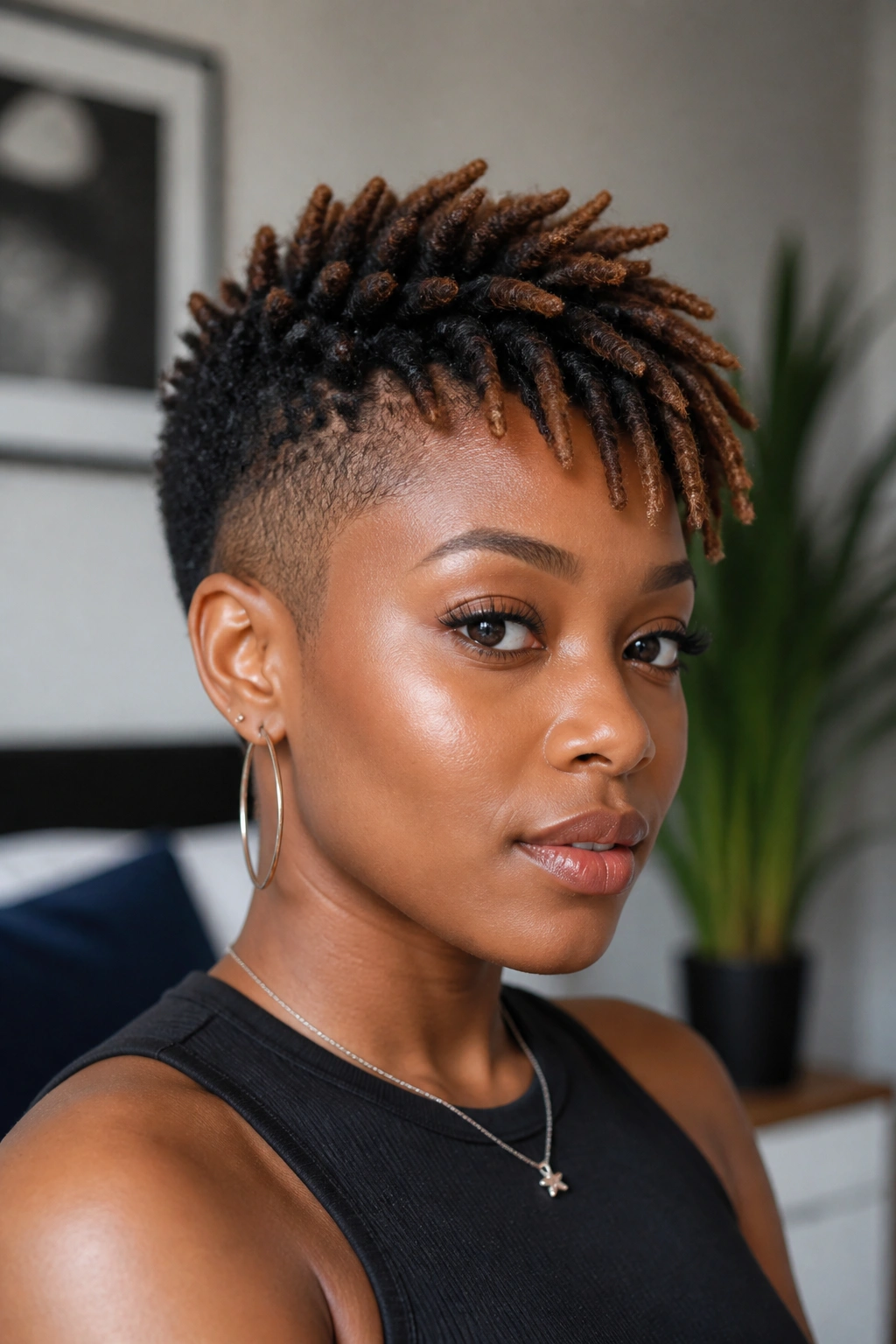
A short loc mohawk is not shy, and that’s the point. The sides stay low or faded, while the center row gets the attention. For a round face, that center lift helps the face look longer and slimmer.
The best version doesn’t need to be extreme. You can keep the top thick and textured while tapering the sides just enough to show contrast. That contrast is what makes the shape work. Without it, the style loses the mohawk feel and turns into a generic pile of locs on top.
If you want edge without a hard look, leave a few locs loose at the front. They soften the forehead and stop the cut from looking too rigid. A mohawk can be sharp, but it does not have to be severe.
12. Side Ponytail With Loose Front Pieces
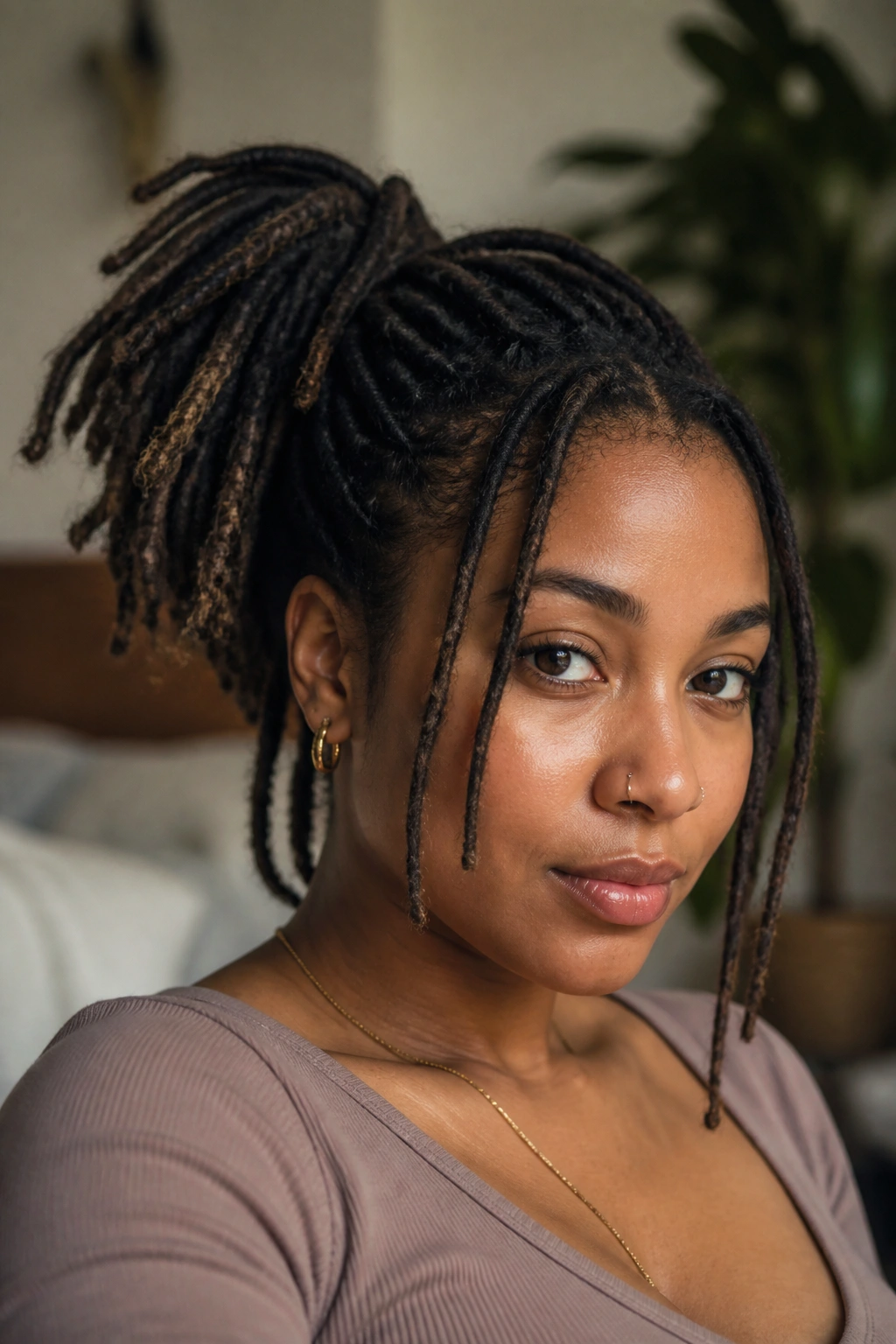
Can a ponytail flatter a round face? Absolutely, if you place it right.
The pony should sit a little above the back of the head or slightly off-center, not low at the nape. A low pony can drag the eye sideways and make the face feel wider. A higher placement does the opposite. It adds lift and keeps the neck visible.
How to Style It
Let two or three locs fall loose at the front, especially near the temples. That little bit of movement keeps the face from feeling locked in. If your locs are short enough that they don’t all fit neatly, that’s fine. A slightly messy pony often looks better than a tight one.
This style works well when you want something fast that still looks like you meant it.
13. Triangle-Parted Short Locs
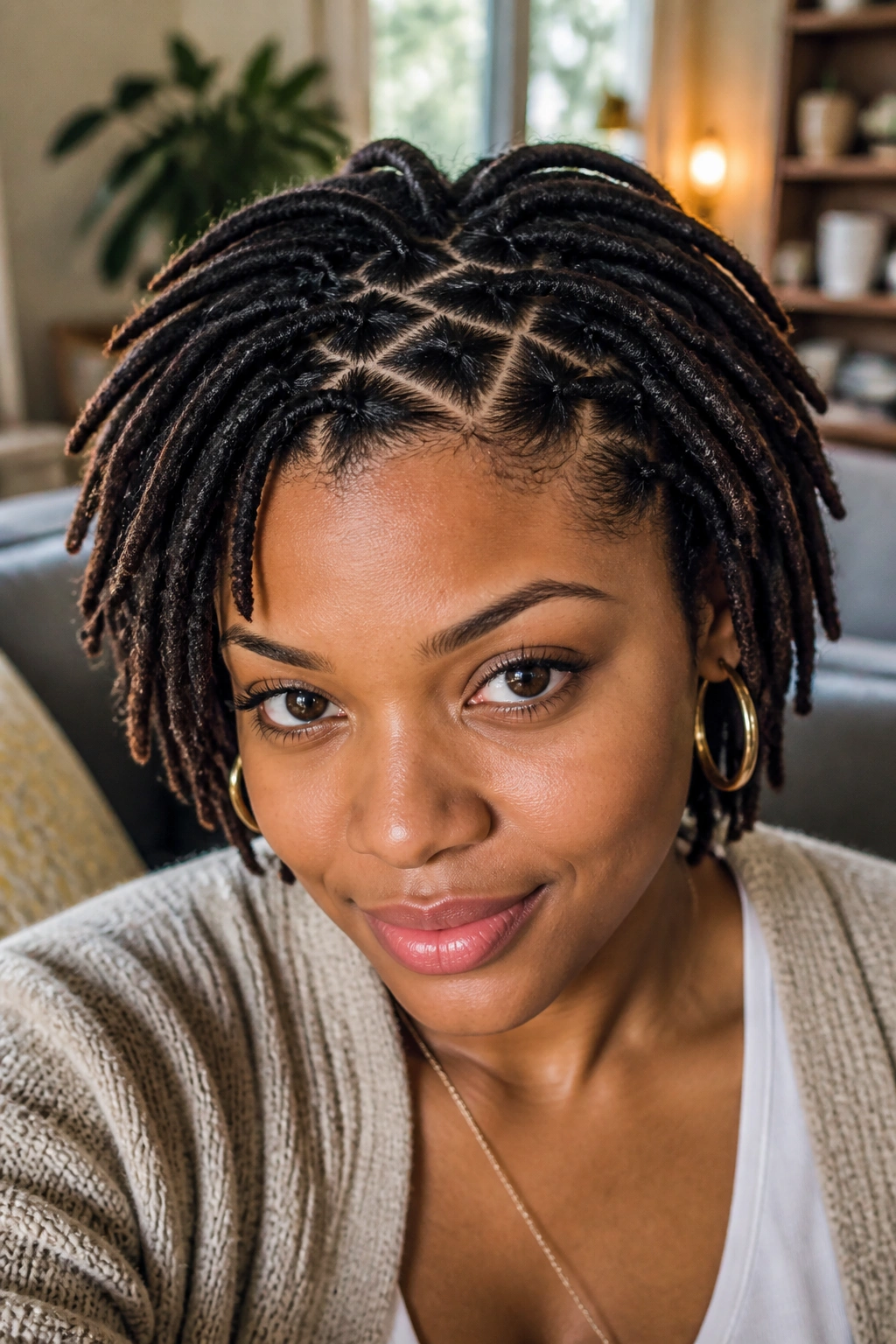
Triangle parts change the whole mood of short locs. They break the face into softer angles, which helps a round face feel less circular.
I like triangle parts more than square parts on short hair because they add movement before the style even starts. The parts become part of the design, not just a technical detail hidden under the locs. That matters when the hair is short and every bit of visual shape counts.
What to Ask For
- Medium-sized triangles, not tiny ones that disappear.
- Clean parting at the front hairline.
- Slightly staggered rows so the scalp doesn’t look too grid-like.
- A shape that keeps volume on top, not only at the sides.
If you’ve worn straight parts for years, this is an easy way to make short locs feel fresher without changing the cut itself.
14. Pinned-Back Crown With Open Sides
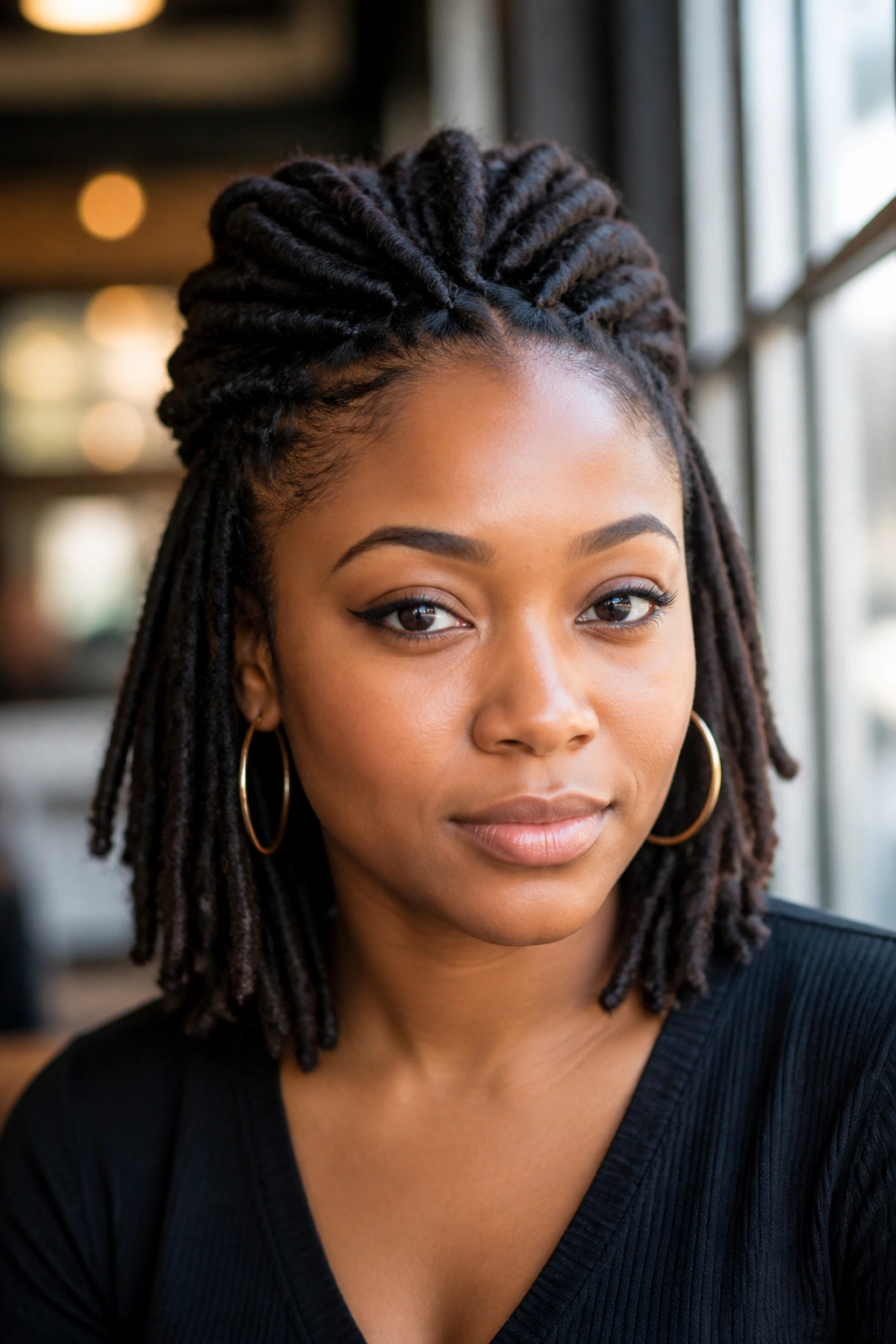
Pinned-back styles are useful because they don’t try too hard. You pull the crown away from the face, pin it lightly, and let the sides fall where they want. That leaves the cheeks open, which is a smart move on a round face.
The trick is not to pin everything flat. A little lift at the roots keeps the head shape from turning into a helmet. Use two or three discreet pins near the crown and let the front locs stay a bit loose. That small bit of mess gives the style life.
This is one of those looks that works for work, dinner, errands, or a day when you just want your face to look less crowded. Simple. That’s the appeal.
15. Sisterlocks or Micro Loc Bob
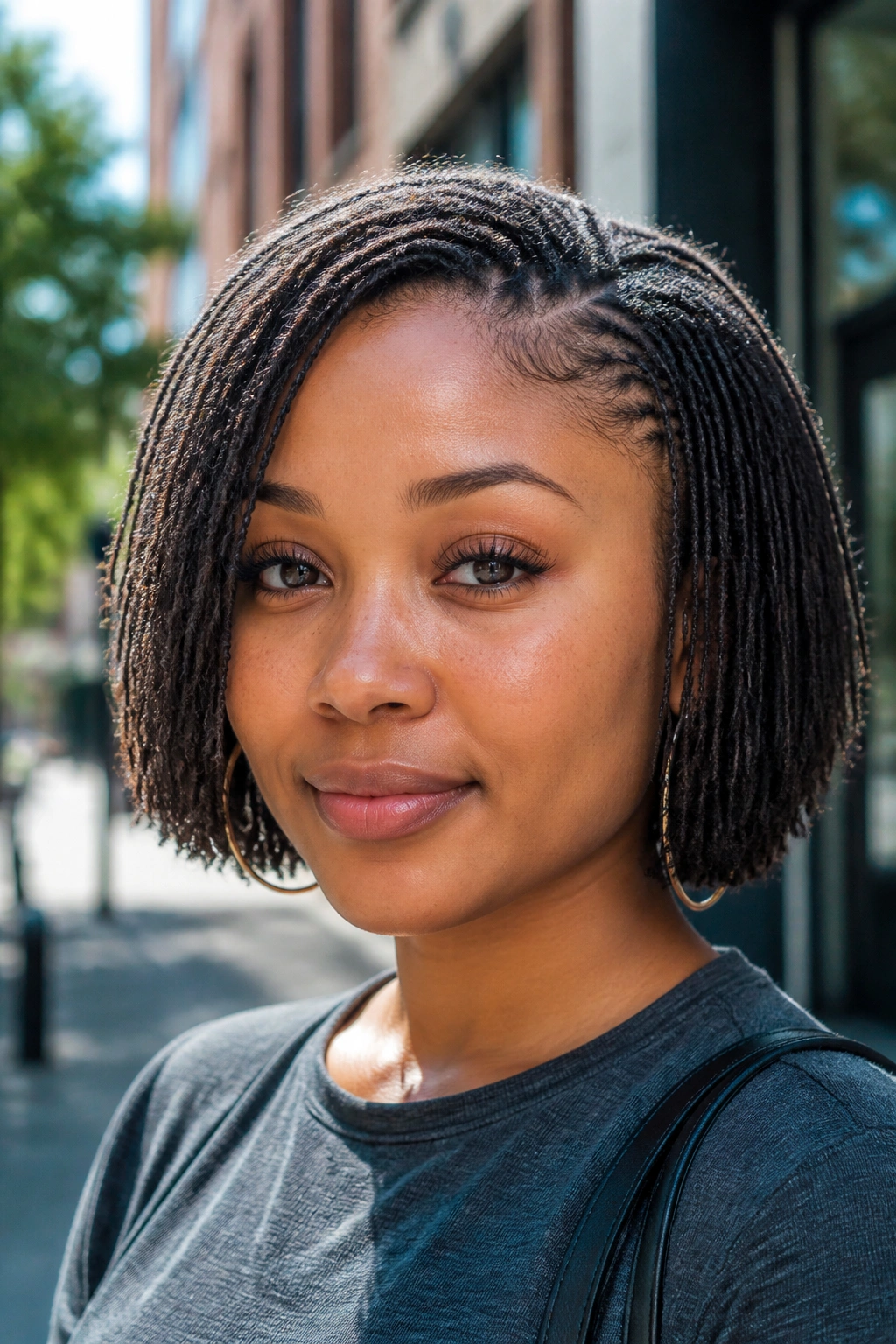
Smaller locs change the scale of everything. Sisterlocks and micro locs create a lighter, narrower look than thicker locs, and that matters a lot on a round face.
The reason is simple: the shape does not bulk out as much at the sides. The silhouette stays airy, so the face feels more open. If you like a bob shape but worry about width, this is one of the safest ways to keep things neat.
Unlike thicker locs, micro locs also hold small styling changes better. A side part stays cleaner. A tucked front stays put longer. A small curl at the end shows up more clearly. If you want short locs that can do a little bit of everything, this is a smart path.
16. Two-Strand Twisted Short Locs
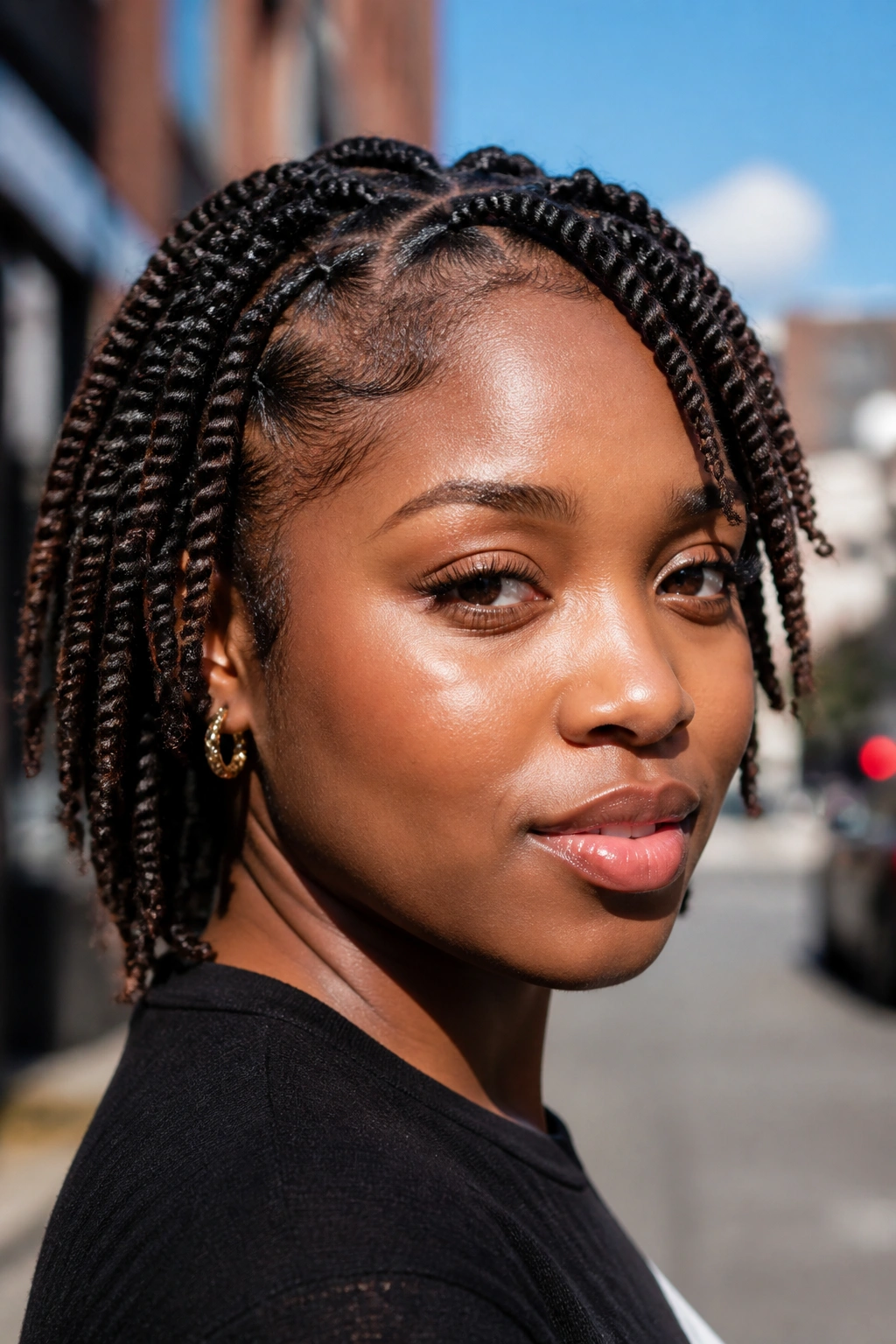
Two-strand twists on short locs give the hair more rope and less block. That alone helps a round face because it introduces vertical texture instead of a heavy, round outline.
Why It Looks Better Than Leaving Them Loose
Loose short locs can bunch up at the cheeks. Twisting them pulls the shape tighter and longer. It also makes the ends behave better, which is one of those annoying little details that matters when you’re trying to keep a style from puffing out by midday.
- Works best on freshly retwisted locs.
- Use a light cream or oil, not a heavy butter.
- Twist in the same direction throughout the head.
- Let them set fully before separating.
You can wear the twists as the style itself or take them down later for soft texture. Either way, the shape stays friendlier to round cheeks than a bulky, loose set.
17. Low Nape Bun With Loose Top Locs
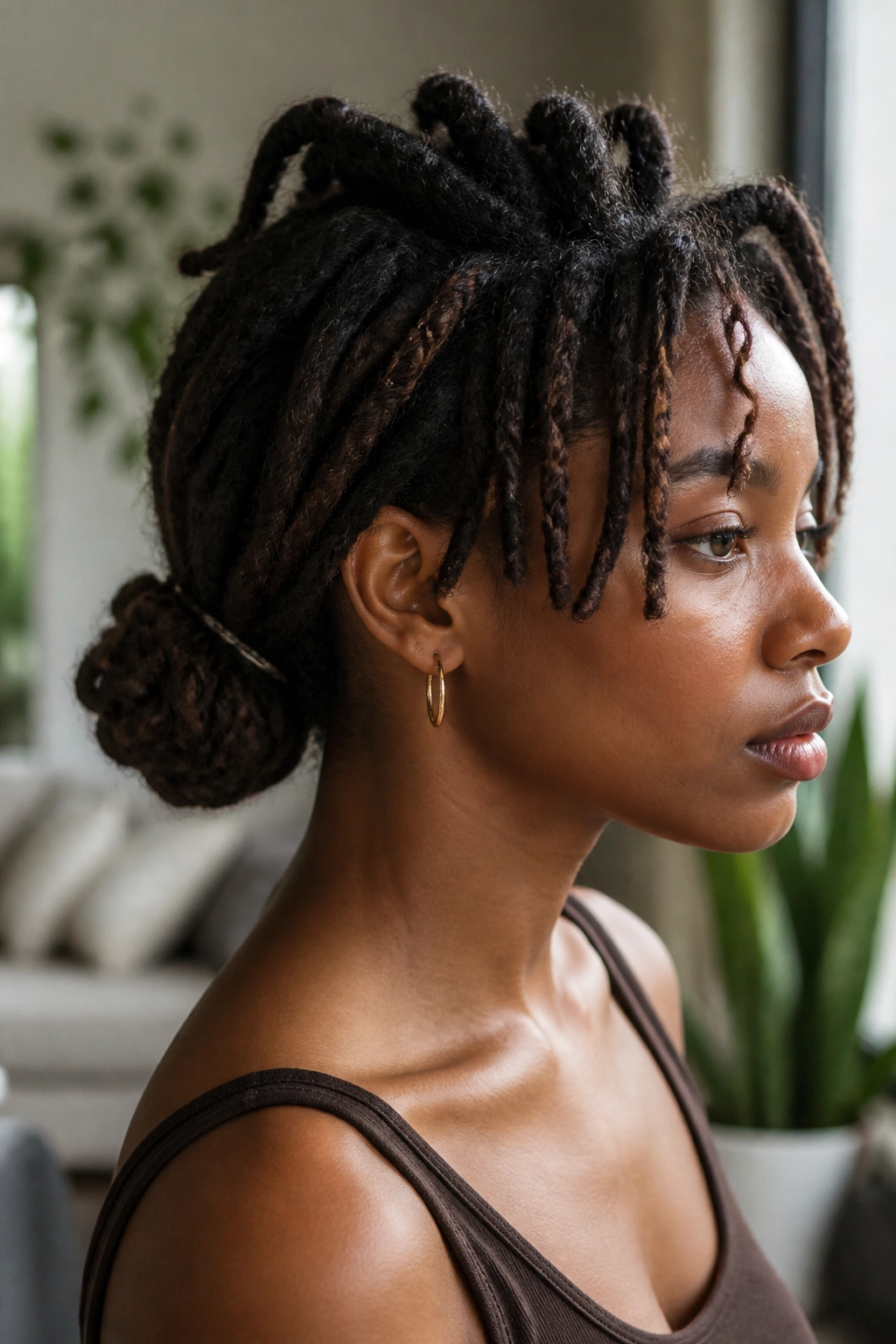
A low bun can work on a round face if you keep it small and low. The bun should sit at the nape, not in the middle of the head, so it doesn’t add width where you don’t want it.
What makes this style work is the contrast between the tucked-back lower section and the looser top. The eye moves up, then settles back down. That gives the face a longer read without making the style feel too formal.
If your locs are short, don’t try to force a perfect knot. Wrap what you can, pin the rest, and let a few ends stay visible. That little bit of texture makes the bun look lived-in instead of stiff.
18. Flat-Twist Front With Open Locs
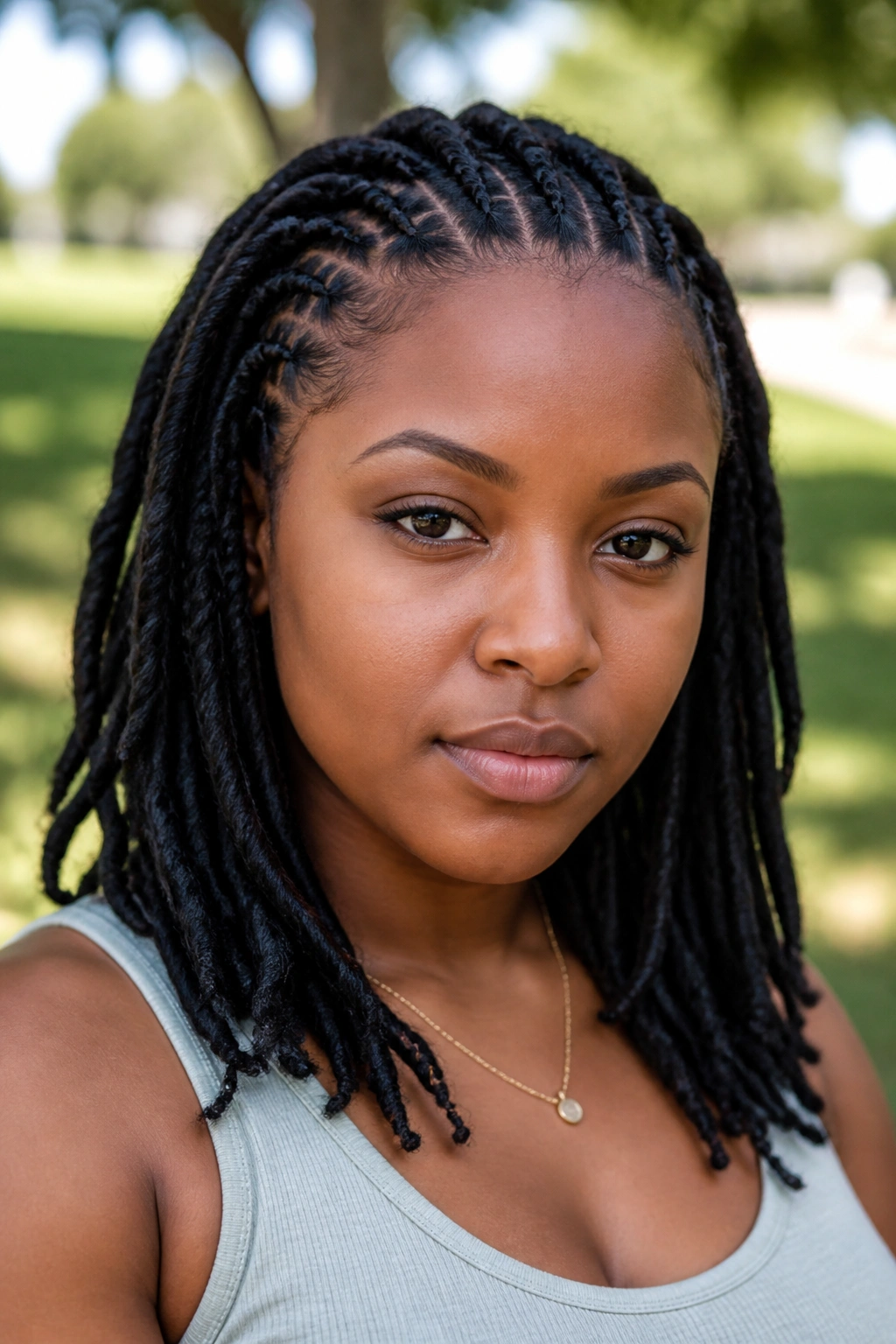
Do you want your face to look cleaner without putting all the locs up? Flat twists in the front are a good compromise.
The twists sweep the hairline back just enough to open the face, while the rest of the locs stay down and keep their length. That balance helps round faces because it creates vertical space through the forehead and temple area. A full pull-back can sometimes make the cheeks feel more obvious. This avoids that.
How to Wear It
Part the front into two or four sections, flat twist toward the crown, and secure the ends under the back locs or with small pins. Keep the twists snug but not tight. If you feel tension at the scalp, loosen them. That pulling look does nobody any favors.
This is one of the better styles for days when you want a little control without losing the softness of loose locs.
19. Choppy Chin-Grazing Loc Lob
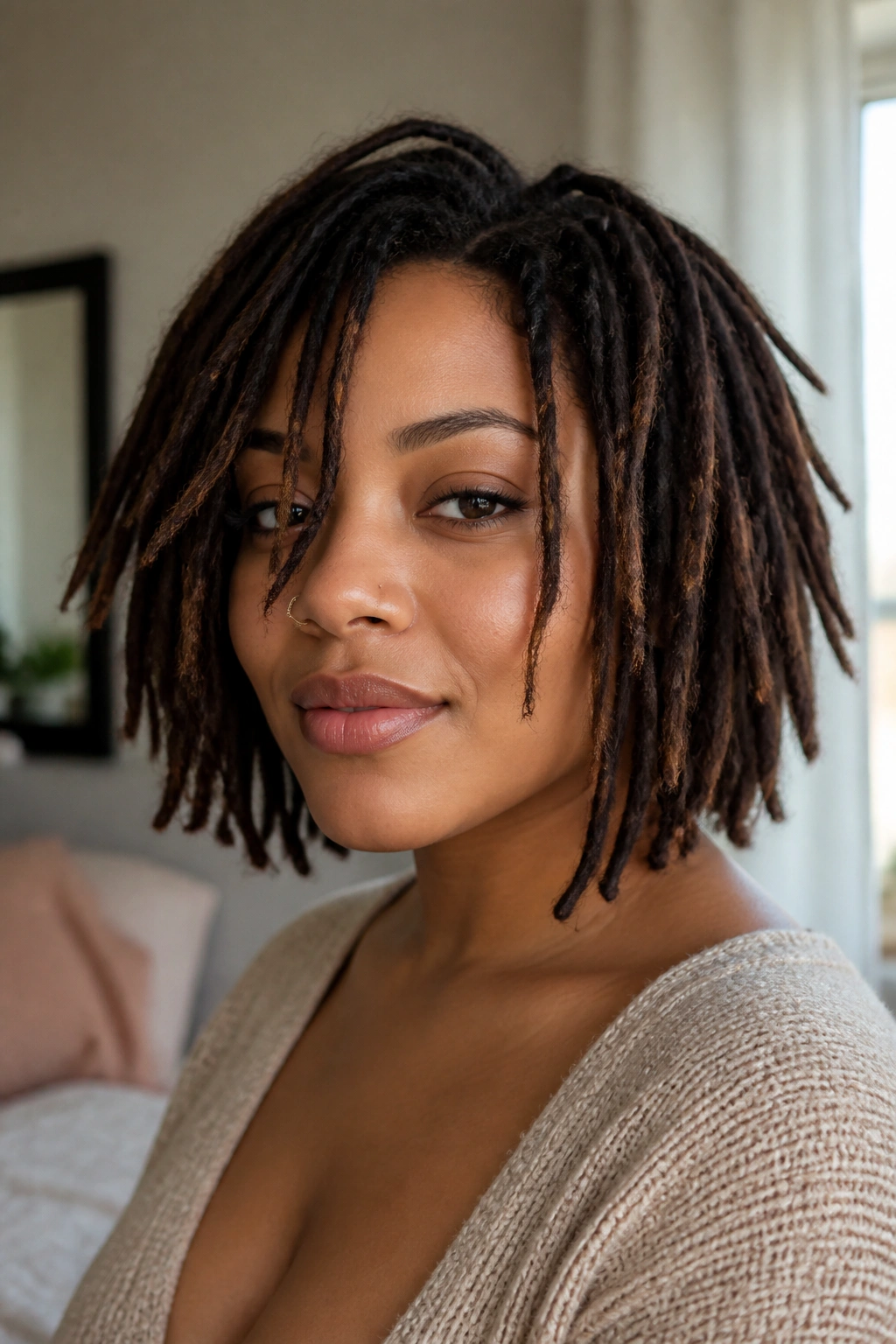
A lob — that slightly longer bob that sits near the chin or just below it — gives round faces more room to breathe than a true chin-length cut. The extra inch or two changes the whole read.
What I like here is the choppiness. A blunt lob can feel boxy. A choppy one moves. It lands in pieces, not as one solid line, so the eye keeps traveling. That motion matters a lot when your face is naturally soft and full at the cheeks.
If your locs are dense, ask for uneven ends rather than a perfectly level cut. It sounds small, but it keeps the silhouette from getting heavy. Also, it grows out well, which is rare enough that I’m willing to call it a real advantage.
20. Tucked Side Sweep
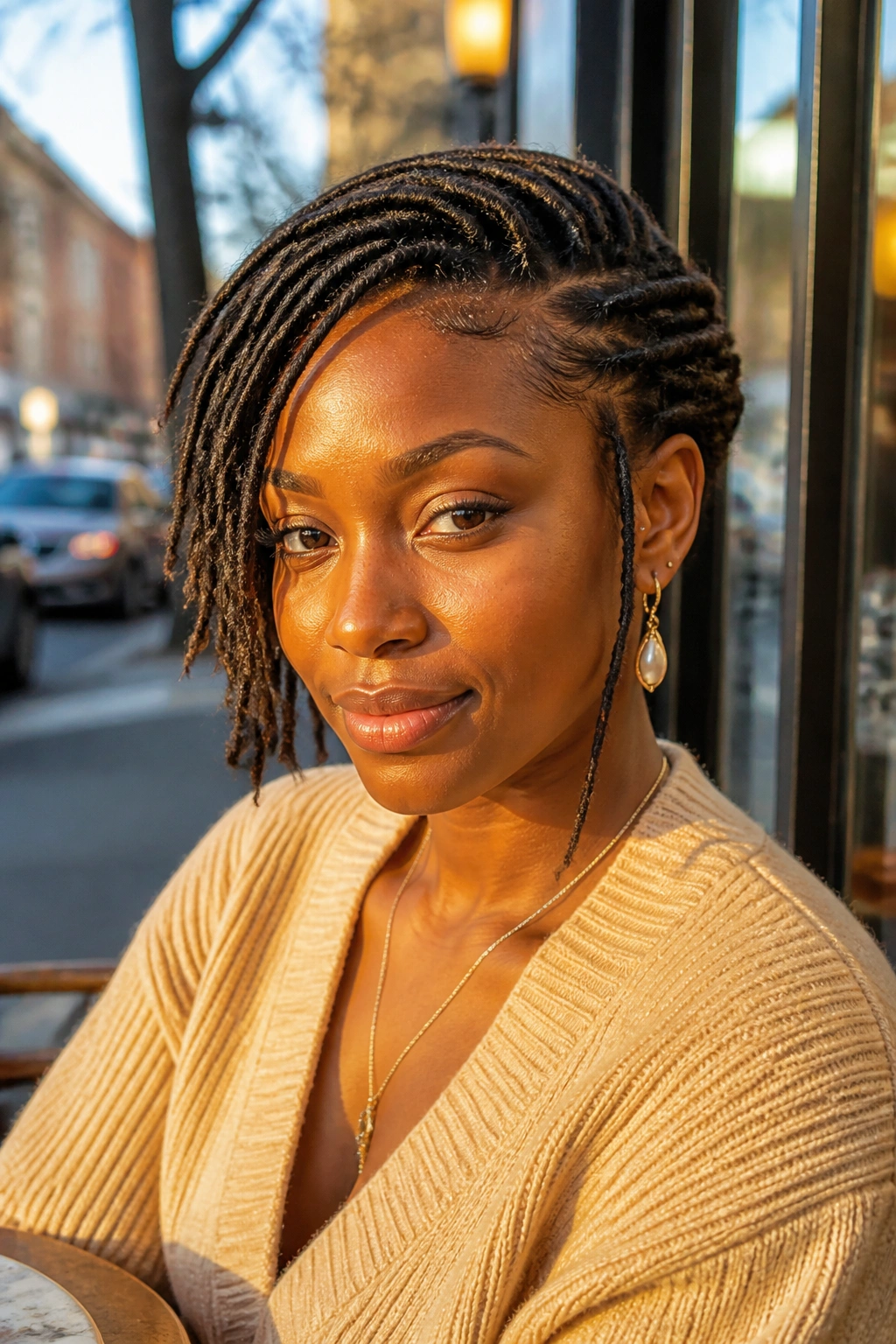
The tucked side sweep is one of those low-effort styles that keeps earning its place. You sweep the locs to one side, tuck the heavier side behind the ear or pin it loosely at the back, and leave the front soft.
That open line across the face is what helps. It breaks the symmetry and makes the face feel less round without looking like you tried to redesign your entire head. The cut can be very short and still work.
A tiny detail: don’t tuck everything. Leave a few strands near the forehead and jaw so the style has movement. If you tuck too much, the shape gets too neat, and neat can turn flat fast.
21. Crisscross Front Locs
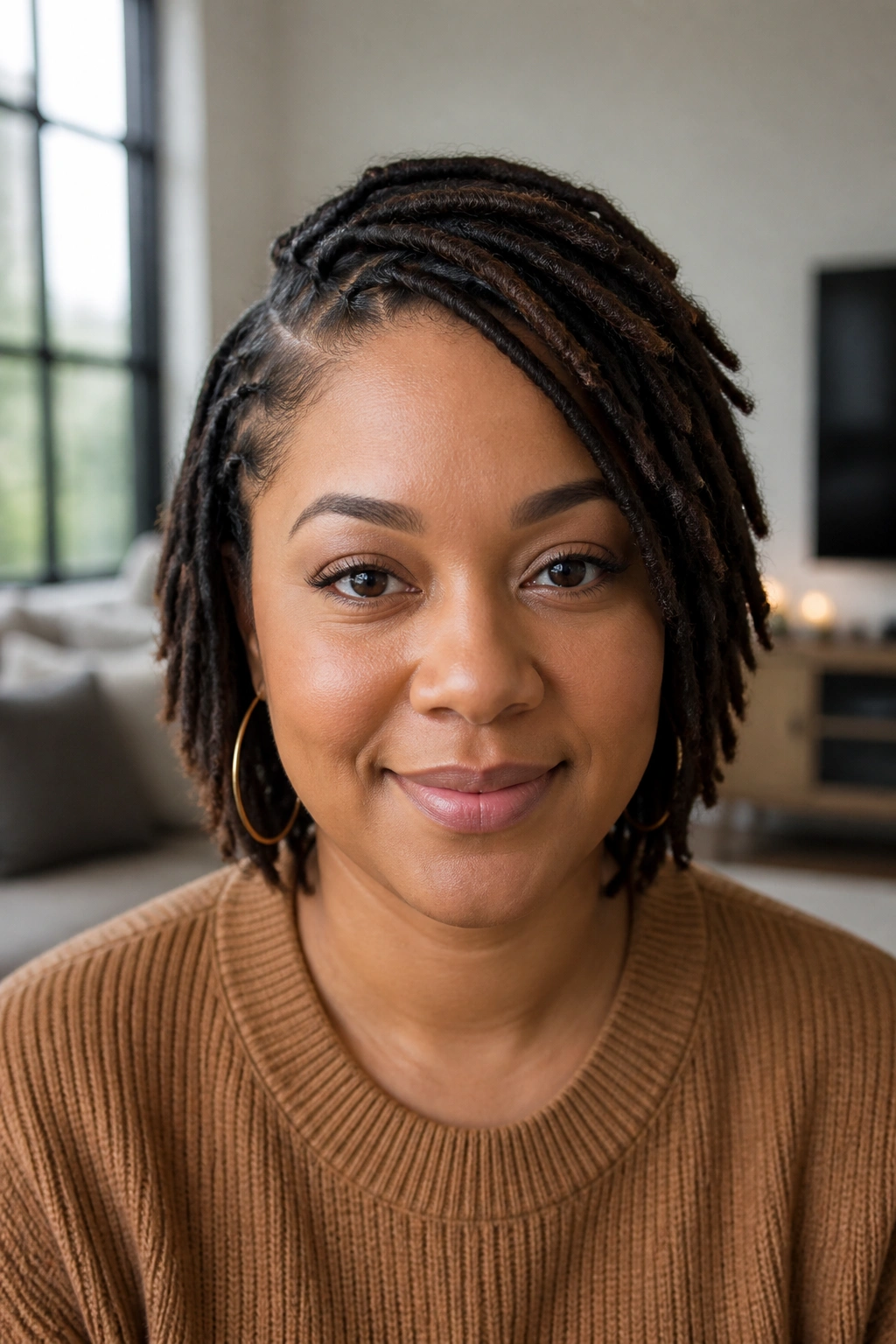
Crisscrossed front locs bring in a little structure right where round faces often need it. Instead of letting the front fall straight down, you cross two or three locs over each other and pin them back softly.
Unlike a simple half-up style, this adds direction without adding height all over the head. That makes it useful if your hair is short and you do not want a big top knot or a bulky puff. The lines at the front do the visual work.
Best Use Cases
- Day-to-night styles.
- Hair that needs a quick refresh.
- Short locs that are just long enough to cross and pin.
Keep the pins hidden if you can. Visible pins can be fine, but the cleaner the front, the more the face stays open.
22. Colored Ends on Short Locs
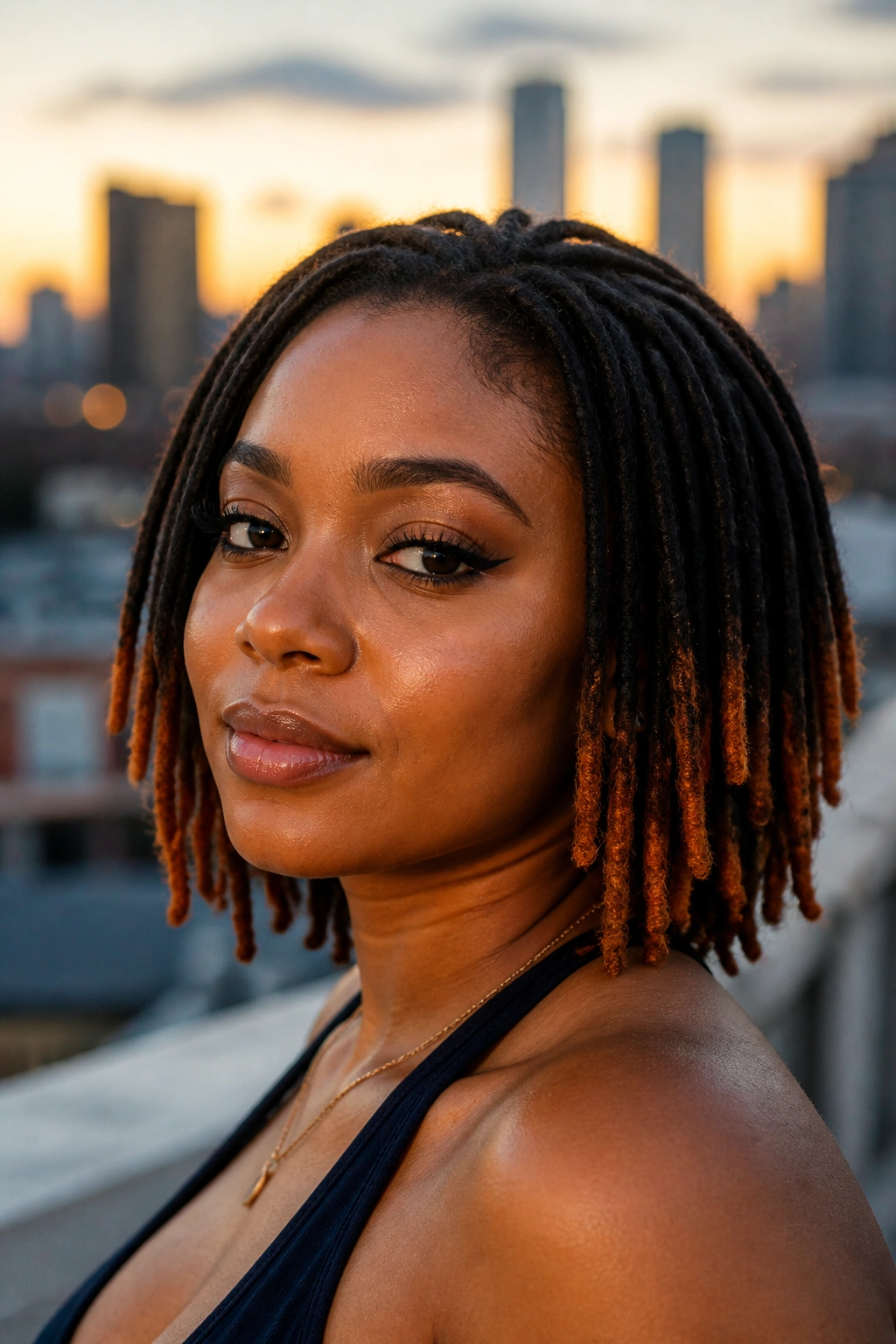
Color placement can change the face shape more than people expect. On short locs, lighter ends draw the eye downward, which helps a round face feel longer.
I prefer color at the tips or on the lower third of the locs rather than heavy brightness near the roots. Bright roots can widen the upper half of the face if the style is already full. Ends are safer. They add interest without crowding the forehead or cheeks.
A Smart Way to Do It
Choose a tone that gives contrast but does not fight your natural base. Warm honey, copper, or deep auburn can look strong on dark locs. If you want something bolder, keep the placement sparse so the hair still looks textured, not painted.
This is not about chasing shock value. It’s about using color as a shape tool.
23. Space Buns With Short Locs
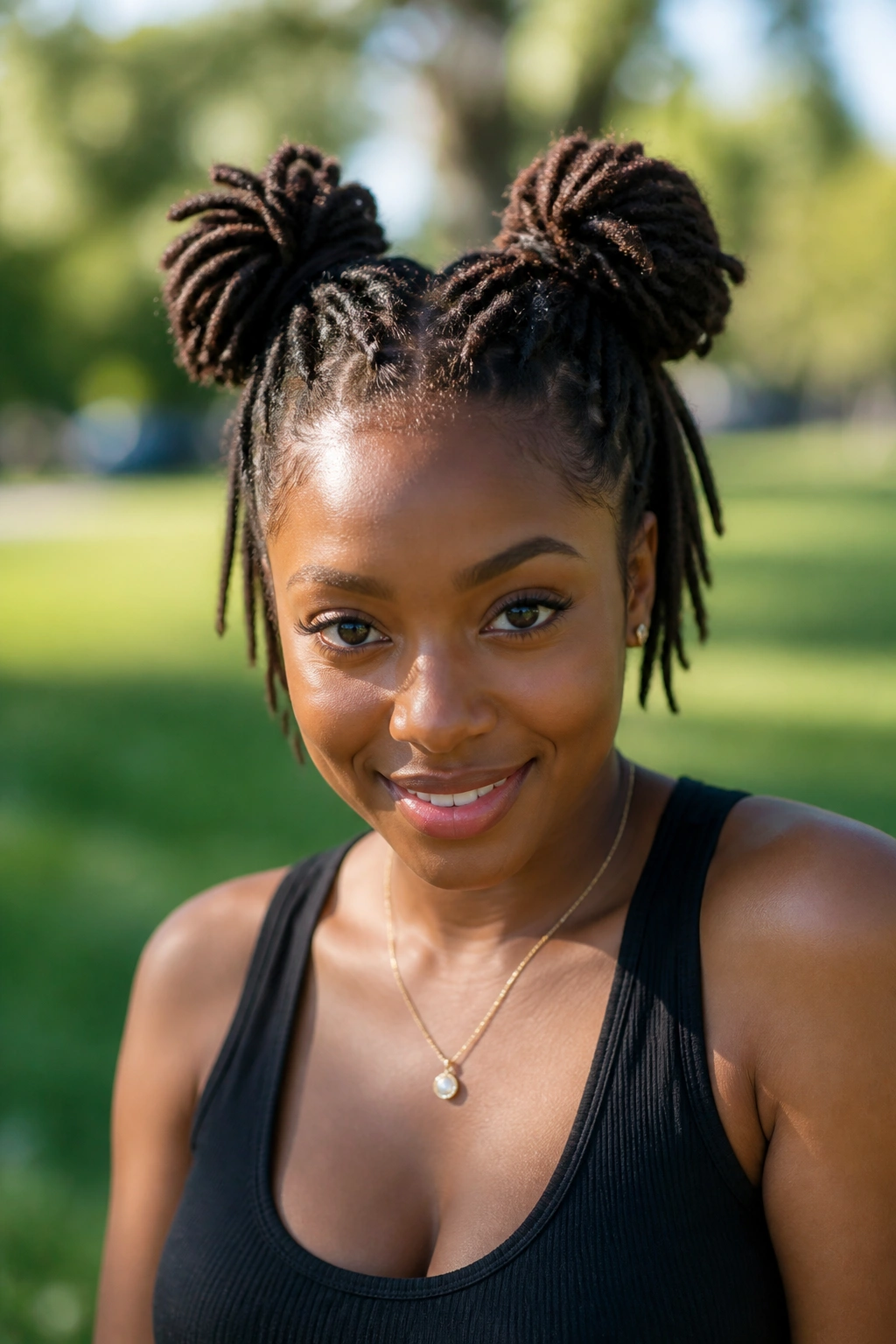
Space buns can work on round faces if you place them high enough and keep them small enough. Two buns sitting low on the sides will widen the face fast. Two buns placed higher and a little closer to the center do the opposite.
The style is playful, sure, but it can also be neat. The key is not making the buns too puffy. A compact bun leaves more vertical space around the face and neck, which keeps the whole look from feeling squat.
If your locs are short, the buns may be tiny. That’s fine. Tiny is not a flaw here. Tiny often looks cleaner, especially when the rest of the locs are well separated and the edges are smooth.
24. Wavy Rod-Set Short Locs
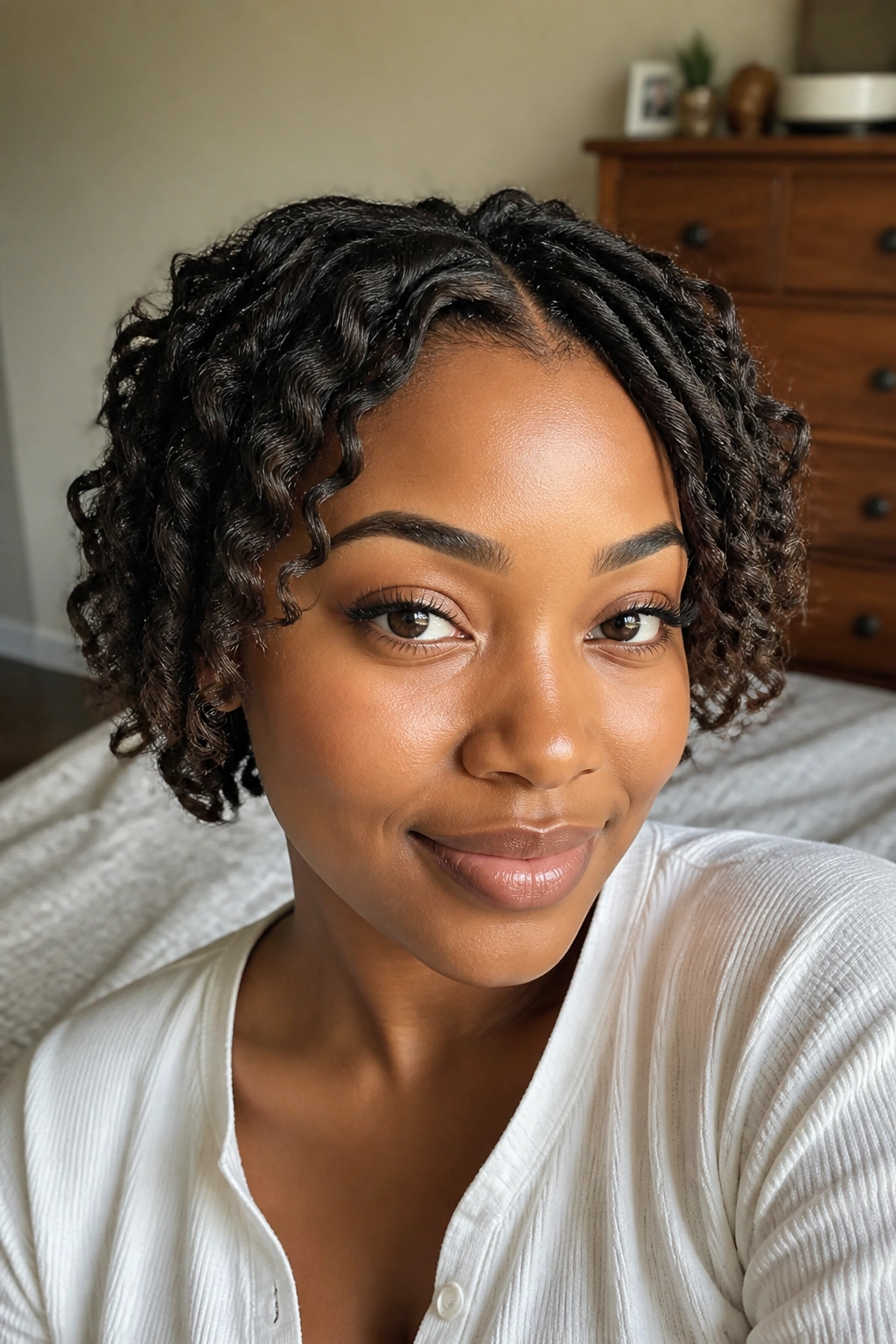
A rod set can make short locs look longer than they are, which is handy if you want softness without adding bulk. The curls stretch the eye downward and keep the shape from getting too round.
How to Get the Best Finish
Wrap the locs on rods after they’re dry enough to hold shape, then leave them until they’re fully set. If you take them down too soon, the curl falls flat and the ends frizz. Not worth it.
- Use smaller rods for tighter waves.
- Use larger rods for a softer bend.
- Let the hair cool before separating.
- Add a light oil to your hands, not directly to the roots.
This style works especially well when you want your short locs to look dressed up without losing the casual feel that locs naturally have.
25. Side-Part Loc Bob With Beads
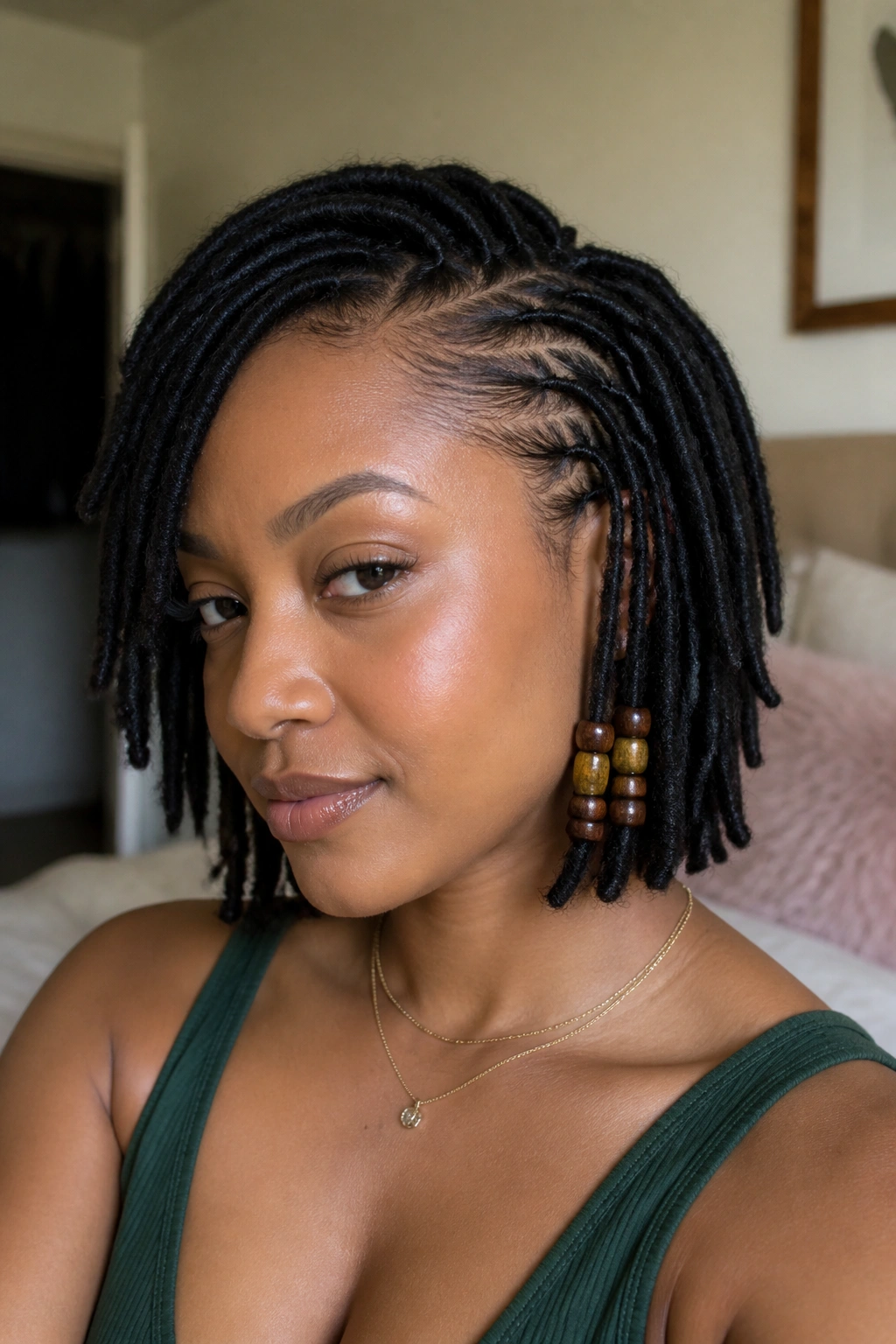
A side part and a few well-placed beads can do a lot for a round face. The part gives the style direction, and the beads add weight near the ends instead of the cheeks, which keeps the face from looking too wide.
The trick is placement. Put beads on the lower half of a few locs, not all over the head. Too many beads near the temples can crowd the face and make the style feel busier than it needs to be. A small cluster is usually better than a full-on scatter.
This style has a nice mix of neat and personal. It looks finished, but not stiff. And that balance is hard to beat.
26. Half Crown Braid Into Short Locs
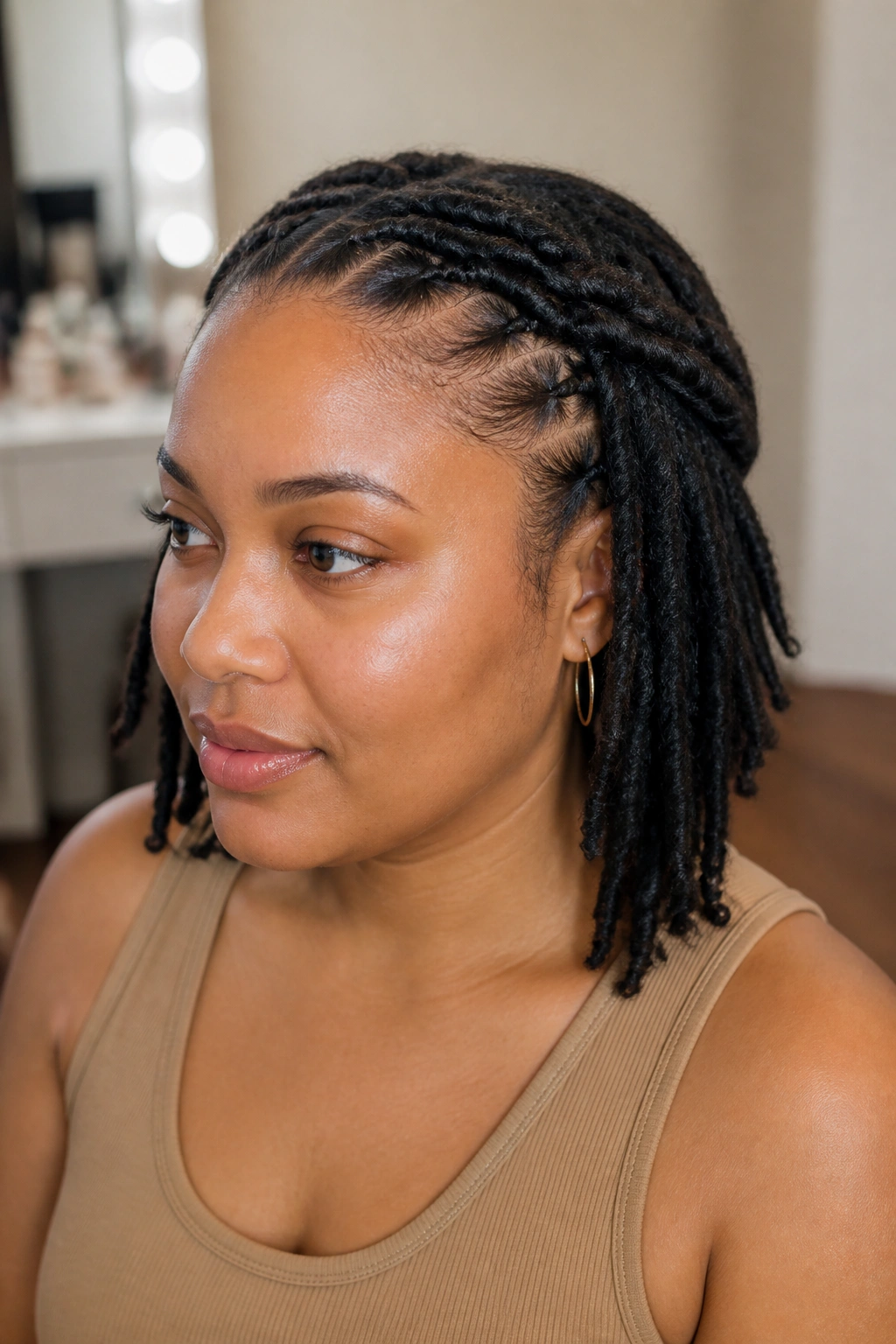
A half crown braid pulls the front and side locs back in a gentle arc, which frames the face without boxing it in. On a round face, that arc is useful because it creates a soft diagonal line across the head.
Unlike a full braided-up style, this leaves the back locs down and keeps the silhouette from getting too severe. It’s a good choice if you want a dressier look but still want some softness around the jaw.
Who Should Try It
- Anyone with enough length to braid the front section cleanly.
- People who want a style that stays put for a day or two.
- Loc wearers who like a little structure near the hairline.
A few loose pieces around the temples help, too. They soften the braid and stop it from feeling too tight.
27. Wrapped Loc Topknot
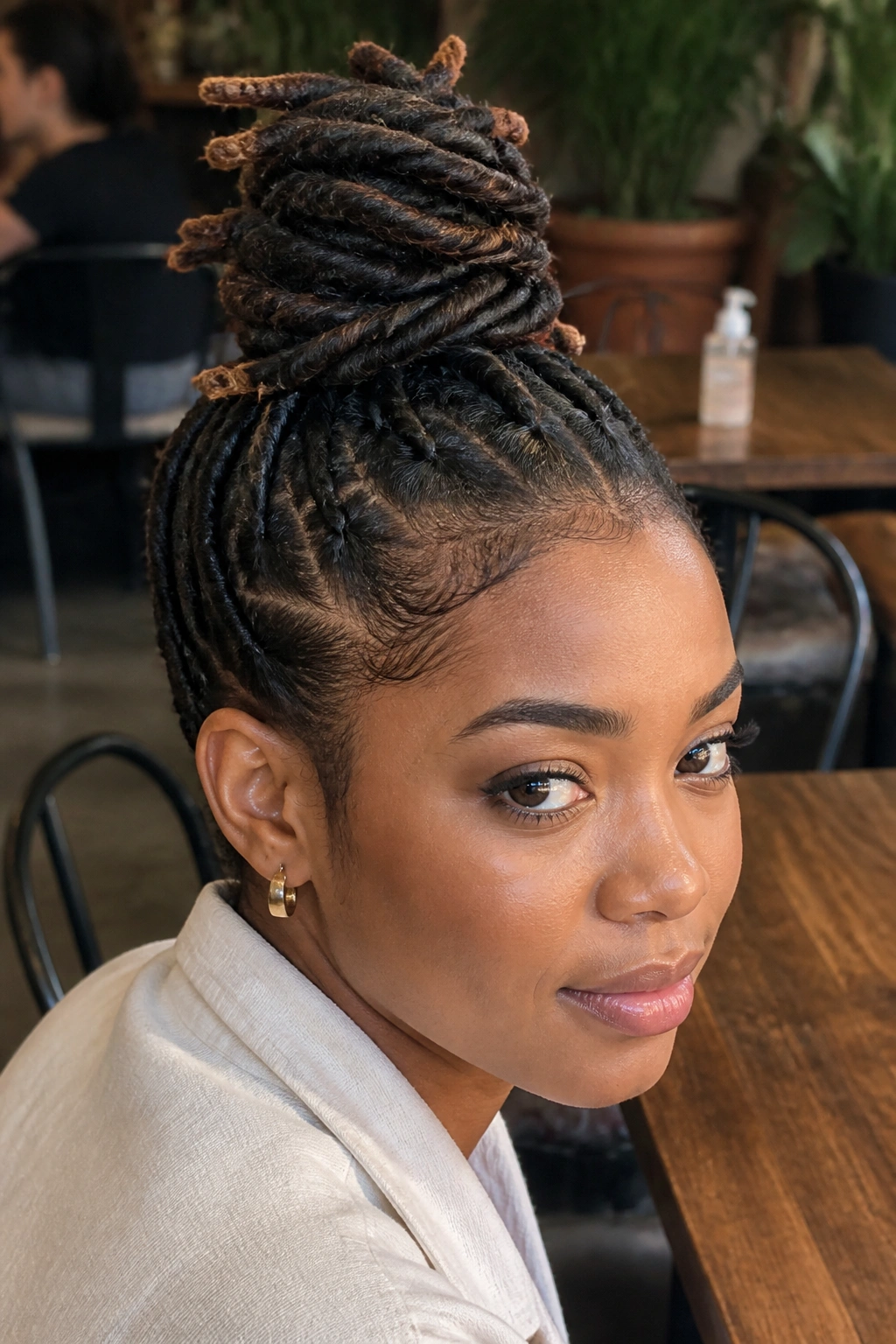
A wrapped topknot on short locs can look surprisingly sleek when it sits high and slightly forward. That placement lifts the face and shows off the jawline, which is useful on a round shape.
The wrap should look deliberate but not polished to death. If every loc is tucked perfectly, the style can feel heavy and overly tight. A few ends peeking out makes it better. Real hair has texture. Let it.
I like this look when the nape is kept neat and the topknot is the main event. It works for a formal setting, a casual day, or one of those times when you want your face to read a little sharper without cutting any length off.
28. Soft-Frame Short Loc Bob
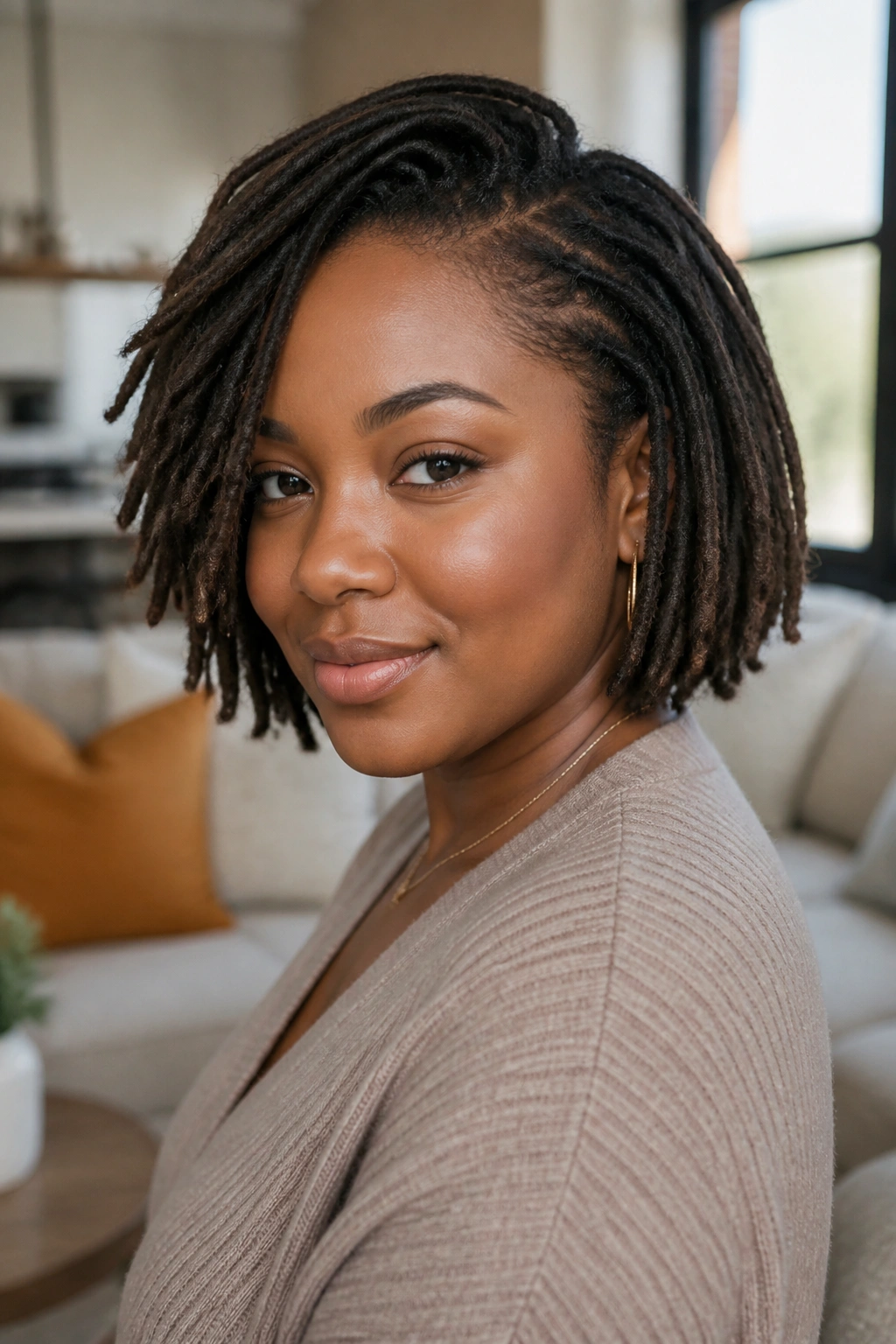
If I had to hand someone one safe, flattering short loc shape for a round face, this would be near the top. The soft-frame bob keeps the cut close enough to feel tidy, but leaves enough movement around the temples and jaw to stop the face from looking too wide.
The best version has a side part, a touch of lift at the crown, and front pieces that graze just below the cheekbone. That combination matters. Short locs on round faces do not need to be dramatic to work. They need direction, and this shape gives it without acting fussy about it.
For a lot of people, this is the style that gets worn the longest because it works on ordinary days. That counts for more than people admit.
If you want, I can turn this into a salon-ready version next — with maintenance tips, face-shape advice, and product notes for short locs.
