



Round faces can look wider than they are when hair falls in a straight line, which is why thick side bangs can be such a good fix—or such a bad one. The right fringe pulls the eye diagonally, gives the cheekbones room, and keeps the face from feeling boxed in. The wrong one stops at the widest point of the cheeks and just sits there. Not flattering. Not subtle.
Dense fringe helps because it carries shape. A wispy side bang can disappear the second you blow-dry it, but a thicker one keeps the sweep intentional, even when the rest of your hair has a mind of its own. That matters even more if you have a cowlick, strong crown growth, or hair that refuses to lie flat without a fight.
And no, there isn’t one single side bang that works for every round face. Some need height at the root. Some need a long cheekbone skim. Some need texture, some need polish, and some need to live happily with curls, waves, or a blunt lob. The good news is that a side fringe can do a lot of heavy lifting when the shape is chosen with some care, so the real question is which version suits your hair and your face line best.
1. High-Swept Side Bangs for Round Faces
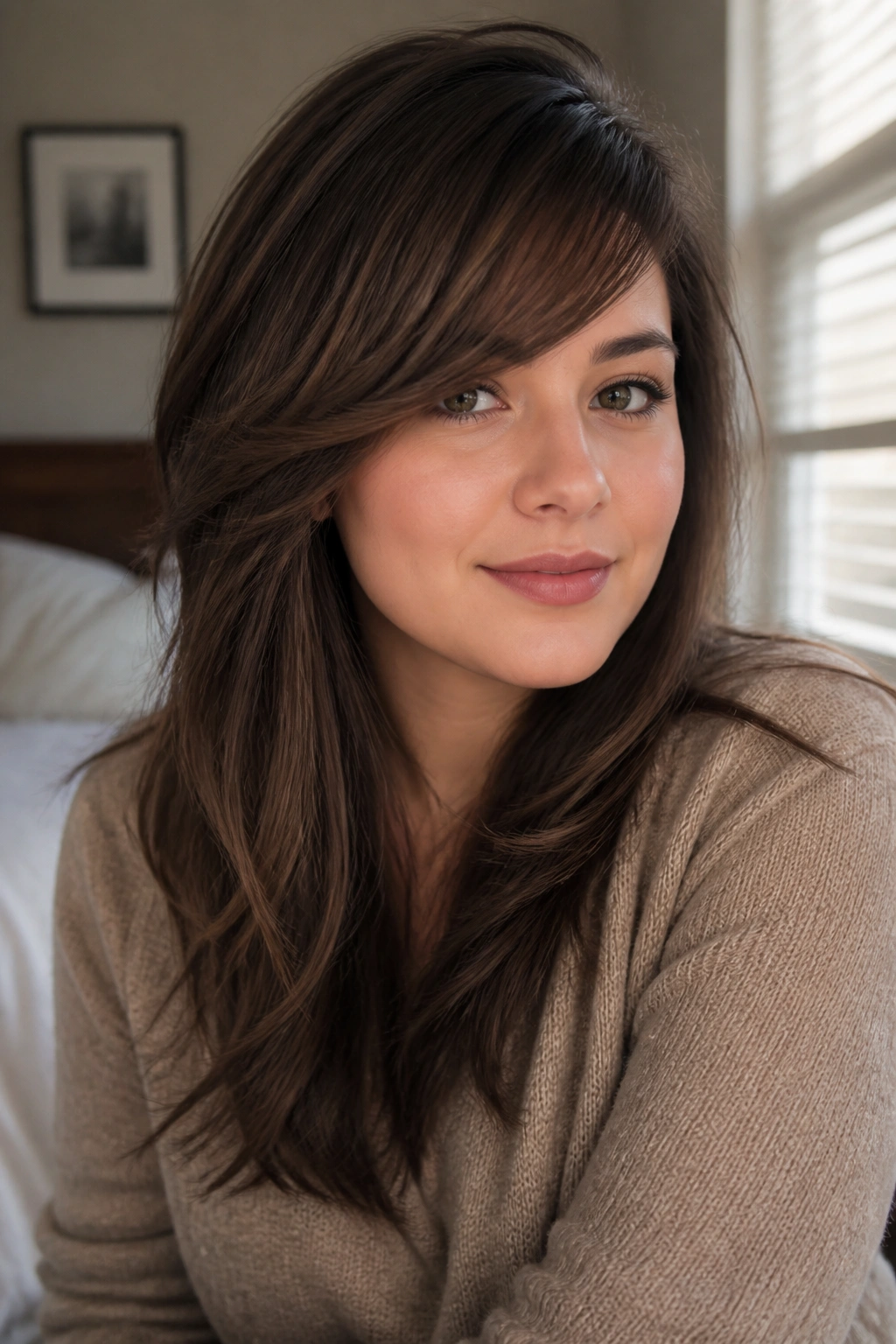
A high-swept fringe is the one I reach for first when someone wants thick side bangs for round faces without making the face look shorter. The lift starts a little higher on the head, which gives you vertical space before the bang crosses over. That little bit of height changes everything.
Why the height matters
A bang that begins too low can feel heavy across the middle of the face. One that starts higher leaves the forehead open near the center and sends the eye upward before it moves sideways. That diagonal is the whole trick.
- Ask for the longest point to land at the outer edge of the eyebrow.
- Keep the root area lifted 1 to 2 inches back from the hairline.
- Blow-dry with a 1-inch round brush, directing the hair across the forehead.
- Finish with a flexible-hold spray from about 8 inches away.
Tip: clip the bang in place while it cools. Hot hair forgets its shape fast.
2. Cheekbone-Grazing Side Bangs With a Long Tail
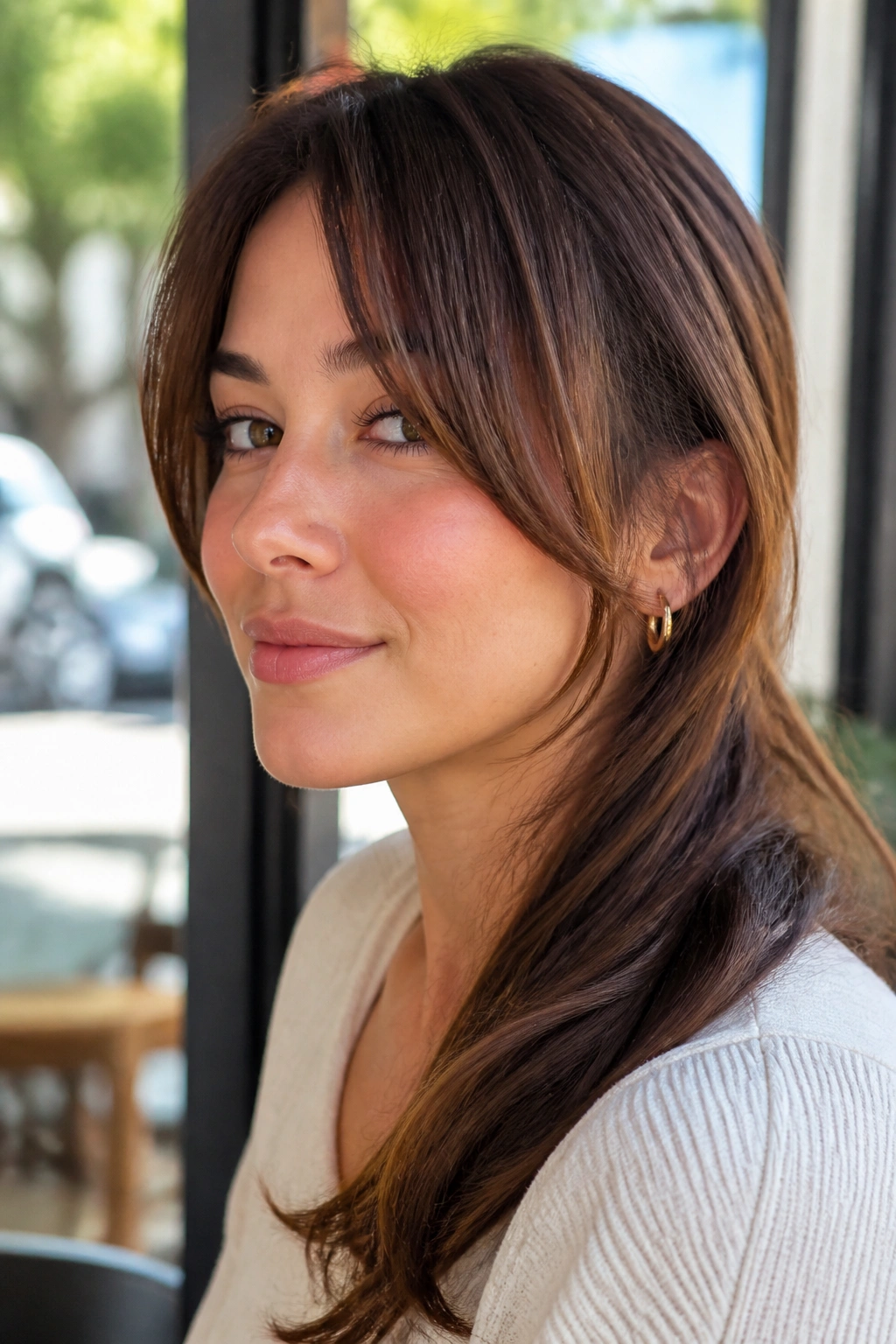
A fringe that ends near the cheekbone does more for a round face than one that stops in the middle of the cheek. It creates a line that points down and out, which makes the face look a little longer and a lot softer. Shorter versions can be cute, but they are risky if your cheeks are the widest part of your face.
This style works best when the front corner is left long enough to move. Think of it as a sweep, not a chop. The bang should skim the highest point of the cheekbone, then taper into the rest of the haircut instead of sitting like a separate piece.
The real magic is in the finish. A little bend at the ends keeps the line from looking stiff, and a small amount of movement keeps the eye traveling. Point-cutting the ends instead of slicing them bluntly helps a lot, especially if your hair is thick and wants to sit in a hard shape.
3. Deep Side-Part Curtain Bangs With Extra Density
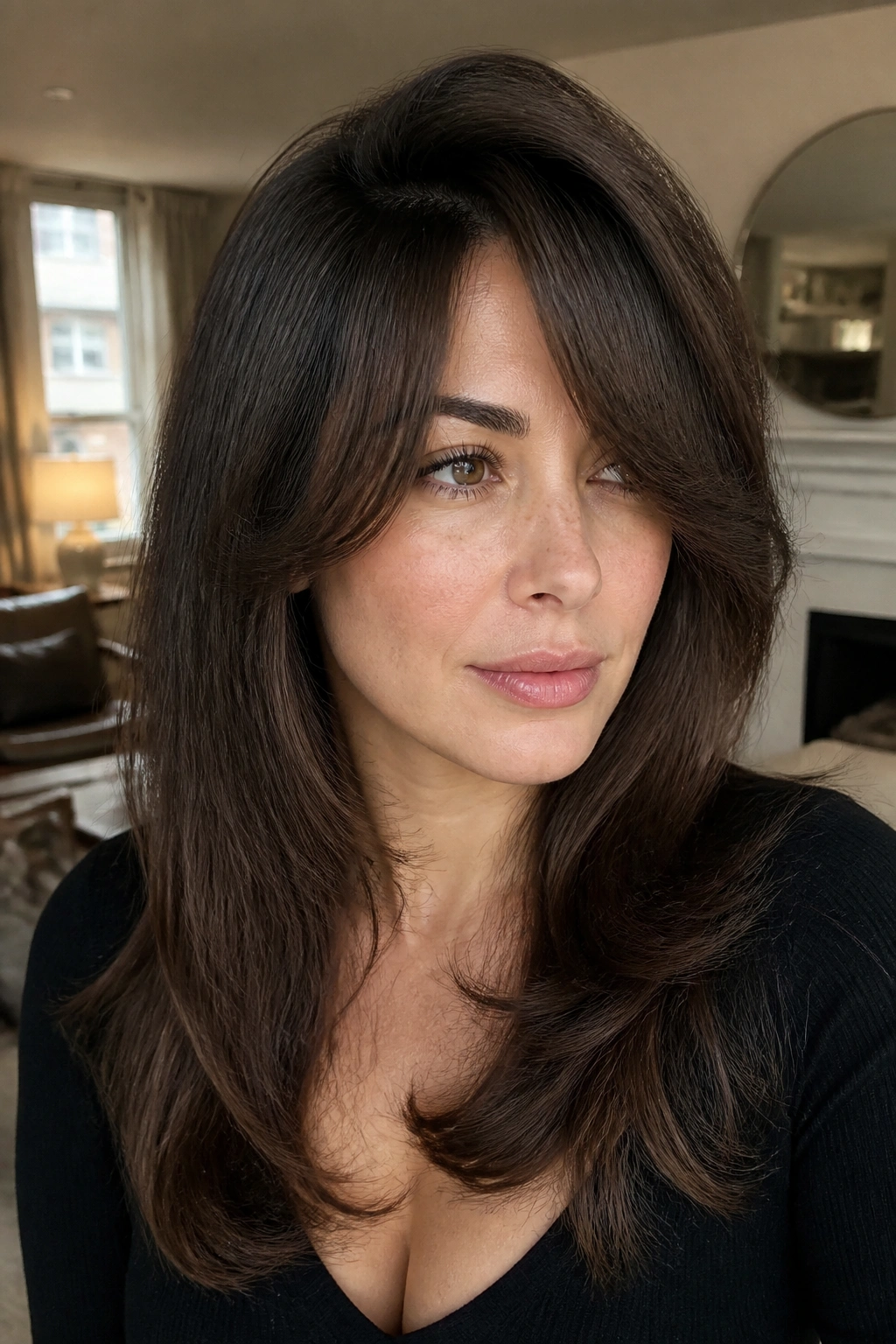
Can a curtain bang behave like a side bang? Absolutely, if one side carries more weight than the other. That’s what makes this version so useful for round faces: it gives you the softness of a curtain fringe, but it still pushes the line diagonally instead of opening the face straight across.
How to wear it
Keep the part three-quarters of an inch to one inch off center. The shorter side should land around the brow or just below it, while the longer side can travel toward the cheekbone. That asymmetry keeps the face from looking too even, which is usually the mistake with rounder features.
A round brush or blow-dry brush makes this one easy to shape. Sweep the shorter piece away from the face, then give the longer piece a gentle curve back toward the jaw. It should look soft, not staged. If it feels too split, comb the top lightly and let one side dominate.
4. Blunt Yet Slanted Side Bangs for Straight Thick Hair
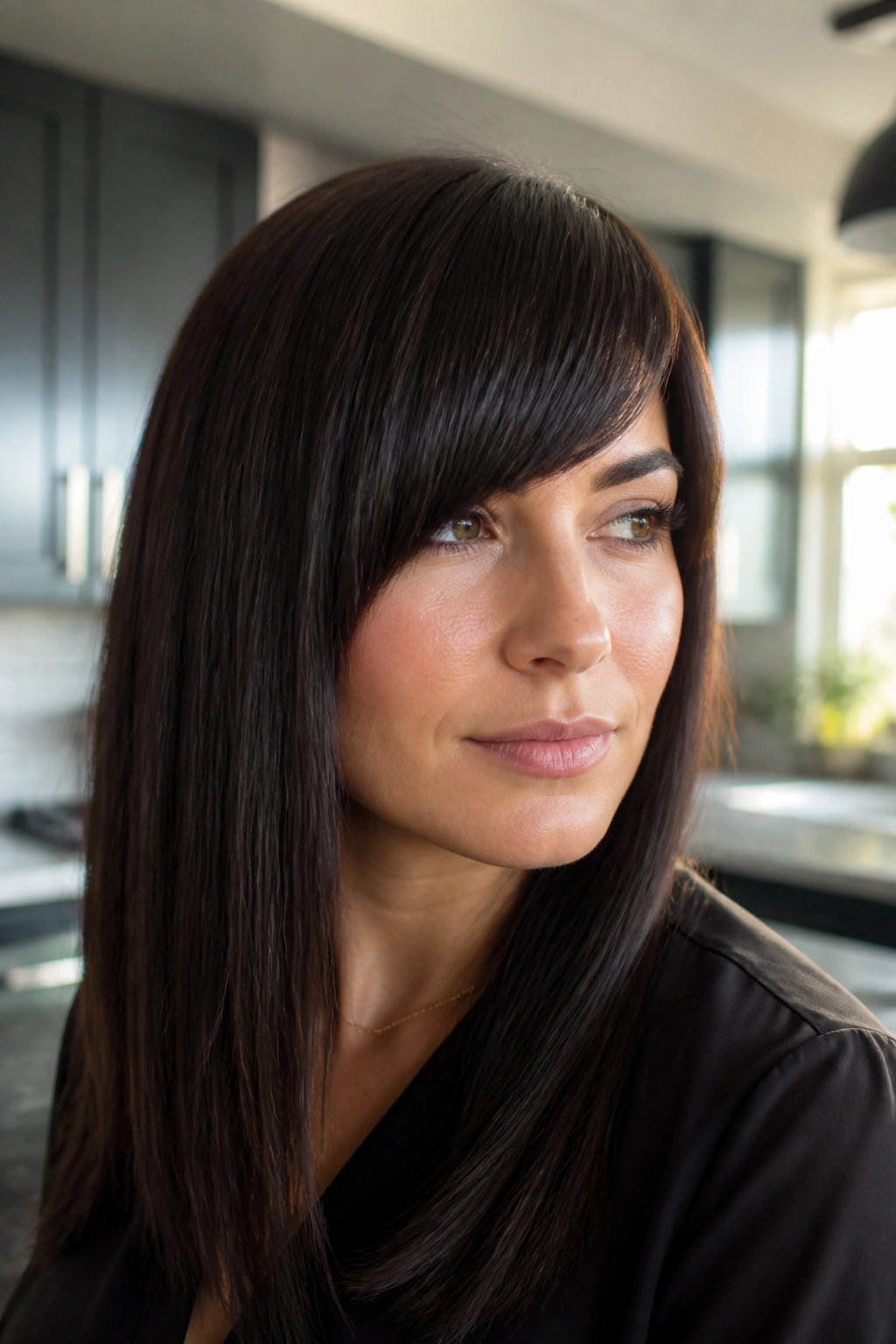
If your hair lies flat and refuses to move, a blunt edge can be a gift. Most people assume thick bangs must be feathered to work on a round face, but that isn’t always true. A blunt side bang can look sharp and clean as long as the line still angles across the forehead.
This style needs a tiny bit of slant, not a perfectly horizontal edge. The bang should still travel from shorter to longer, but the perimeter stays full. That fullness gives thick hair a polished look instead of a puffy one.
- Keep the bottom line clean and dense.
- Add a little slide-cutting at the temple so the bang tilts.
- Blow-dry with the nozzle pointed down the hair shaft.
- Use a pea-sized smoothing cream on the ends, not the roots.
Blunt does not have to mean boxy. In fact, on straight hair, blunt can be the thing that keeps the fringe from looking wispy and weak.
5. Feathered Side Bangs With a Soft Blowout
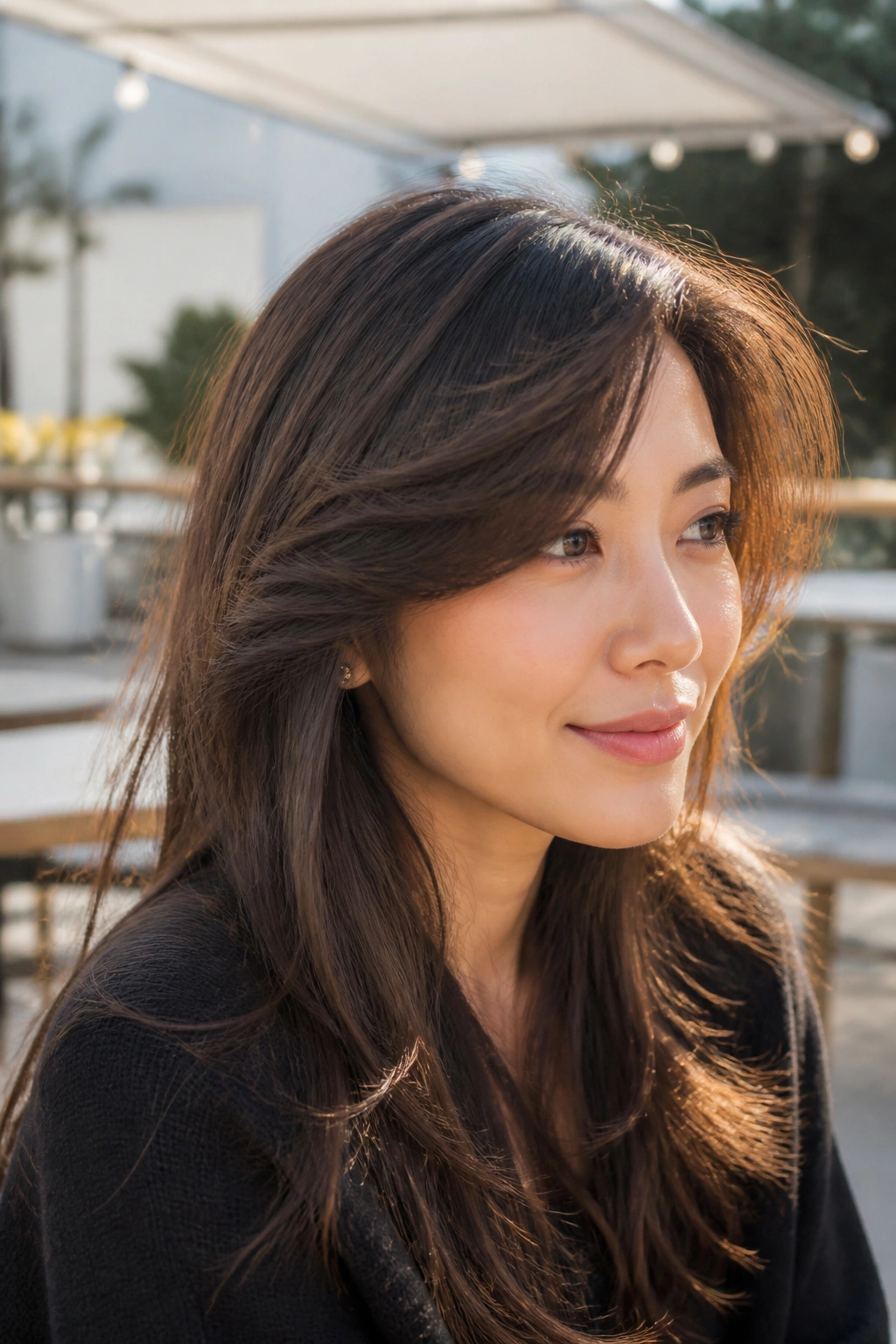
Feathered side bangs are the classic answer for a reason. They move. They catch light. They make thick hair look lighter at the front without destroying density. On a round face, that softness matters because the fringe doesn’t sit as one heavy block.
The best version has a rounded blowout bend through the middle and a softer taper at the ends. I like these bangs when the rest of the haircut has some lift around the crown, because the combination stretches the face a little. If the top is flat and the fringe is fluffy, the whole look can tilt toward old-fashioned in a hurry.
Use a medium round brush and direct the hair away from the cheek first, then over. That little detour helps the bang remember the side sweep. Finish with a cool shot and a touch of spray only at the roots. Too much product makes feathered bangs collapse into greasy little strips.
6. Side Bangs Paired With a Shoulder-Length Lob

A lob gives thick side bangs room to breathe. That’s the simplest way I can put it. When hair stops around the collarbone, it creates a vertical line that helps balance the roundness of the face, and the side bang becomes the accent instead of the whole story.
This pairing is especially good if you wear your hair down most days. The bang can start near the brow, slide into the cheekbone, and then blend into the top layers of the lob. Nothing fights for attention. The shape feels calm.
I’d ask for the front pieces to begin at chin length and angle down toward the shoulders. That keeps the fringe from looking chopped off. If you tuck one side behind the ear, even better. The exposed ear gives the face some breathing room, and the swept side still keeps the softness.
7. Curly Side Bangs That Keep Their Spring
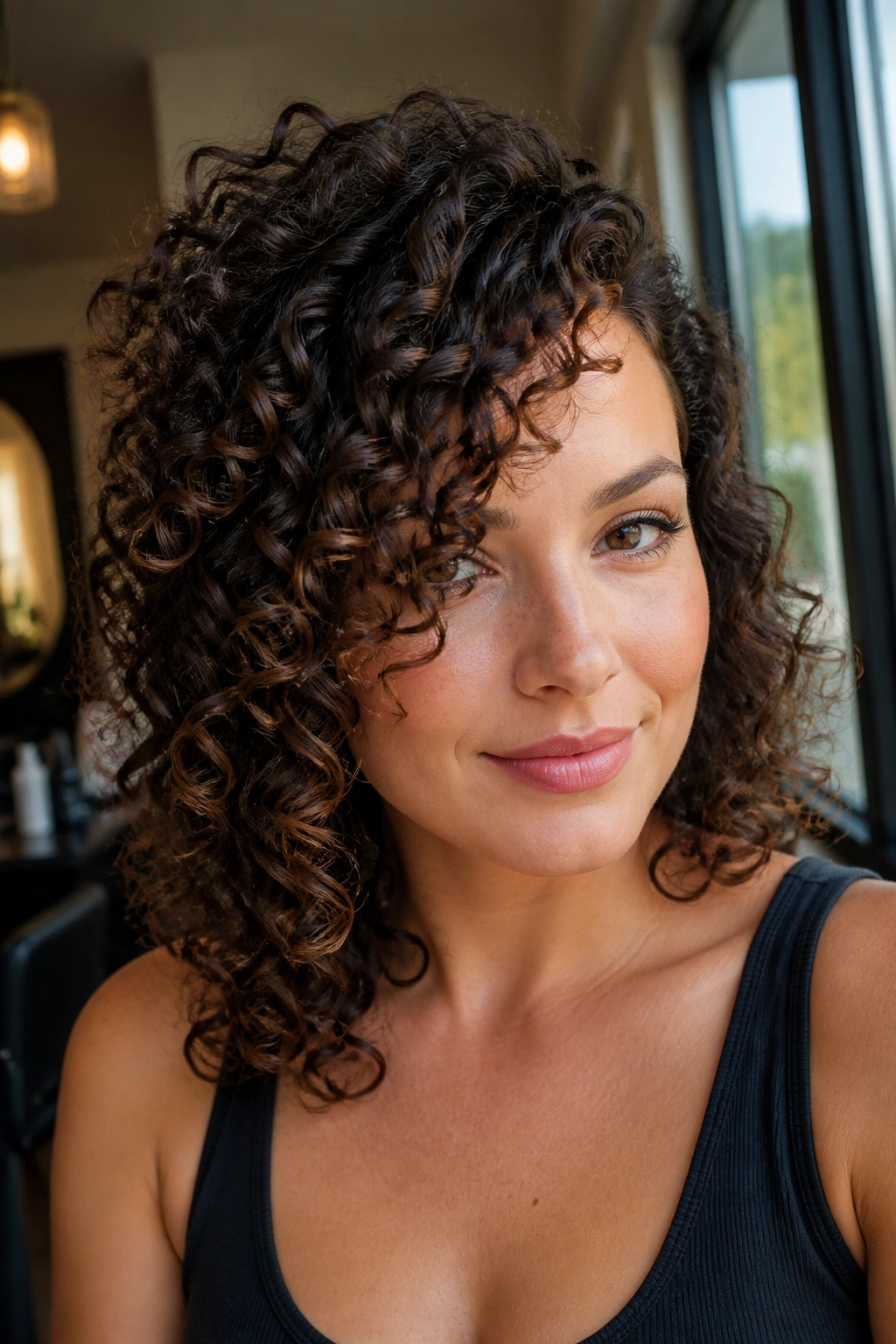
Curly fringe is a different animal, and it should be cut that way. If you straighten curls on the day of the cut and then wonder why the bangs bounce up shorter than expected, well, that part was predictable. Cut them where they live, not where they flatten out on a wet head.
Cut it dry, not soaked
Dry cutting lets the stylist see the curl pattern, the shrinkage, and the places where the bang wants to split. On many textures, the curl can shrink 25% to 50%, sometimes more in the front where the hair is lighter. That means a bang that looks cheekbone length in the chair may end up sitting well above the eye if it’s cut too short.
- Leave the front slightly longer than you think.
- Use a leave-in cream and a small amount of gel for hold.
- Diffuse on low heat so the curl pattern stays intact.
- Avoid heavy thinning shears near the face.
The best curly side bangs look like they belong to the rest of the haircut. They should curve into the side of the face, not float on top of it.
8. Wavy Side Bangs With a Loose Bend at the Temple
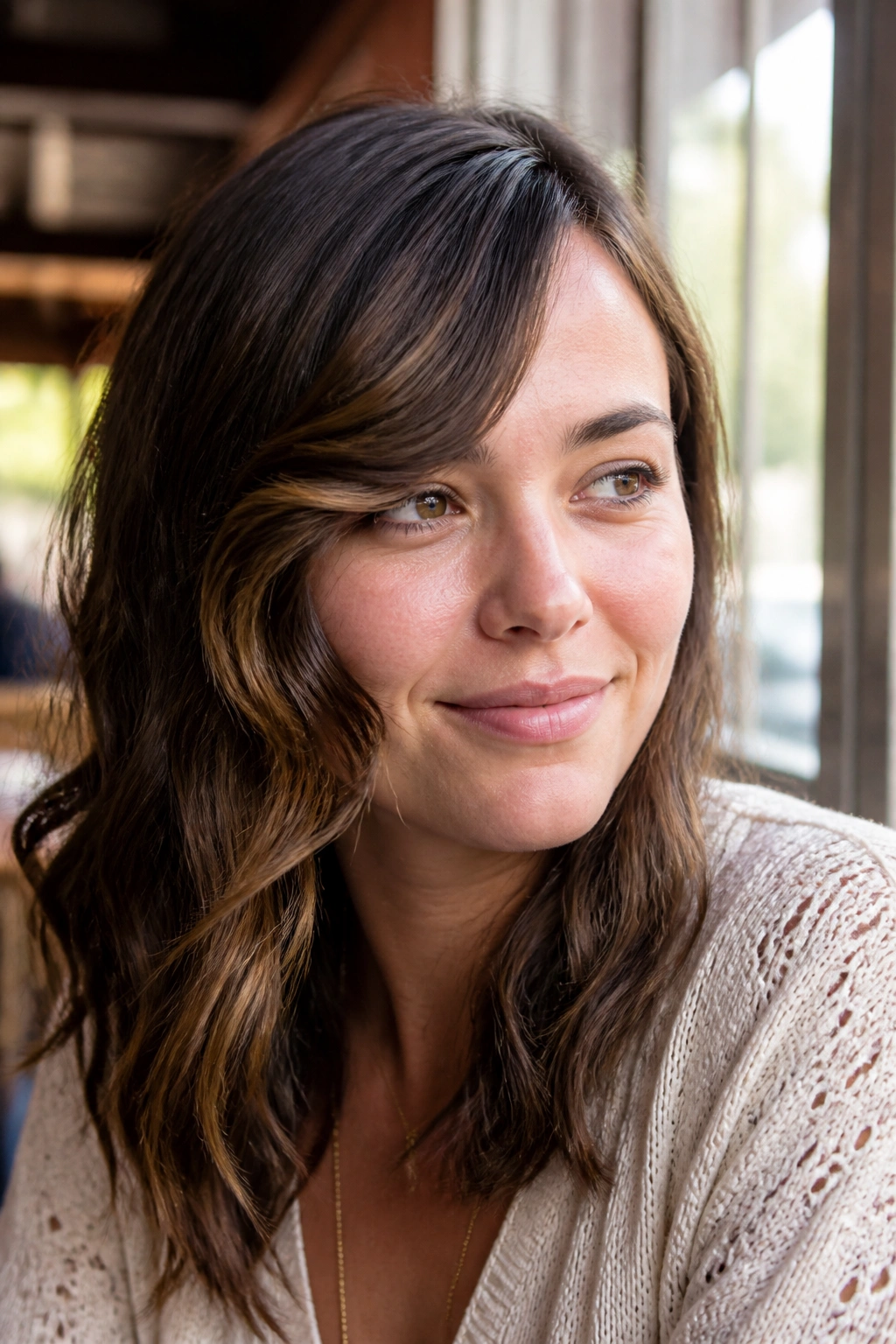
A loose bend at the temple can do more than a full curl pattern ever will. If your hair has natural wave, you do not need to force it into a polished blowout every morning to make side bangs work. In fact, trying too hard usually makes them stiff.
This version depends on movement that feels casual but still planned. The wave should start near the root, bend once across the forehead, and then soften near the cheekbone. That single bend breaks up the roundness of the face without turning the fringe into a hard line.
A little mousse on damp hair gives this shape some memory. Twist the bang around your finger while it’s still wet, then clip it for 10 minutes before letting it dry. That trick keeps the front from puffing too wide. A flat iron is optional here, and I’d only use it to nudge the ends, not flatten the whole sweep.
9. Razor-Cut Side Bangs for Piecey Movement
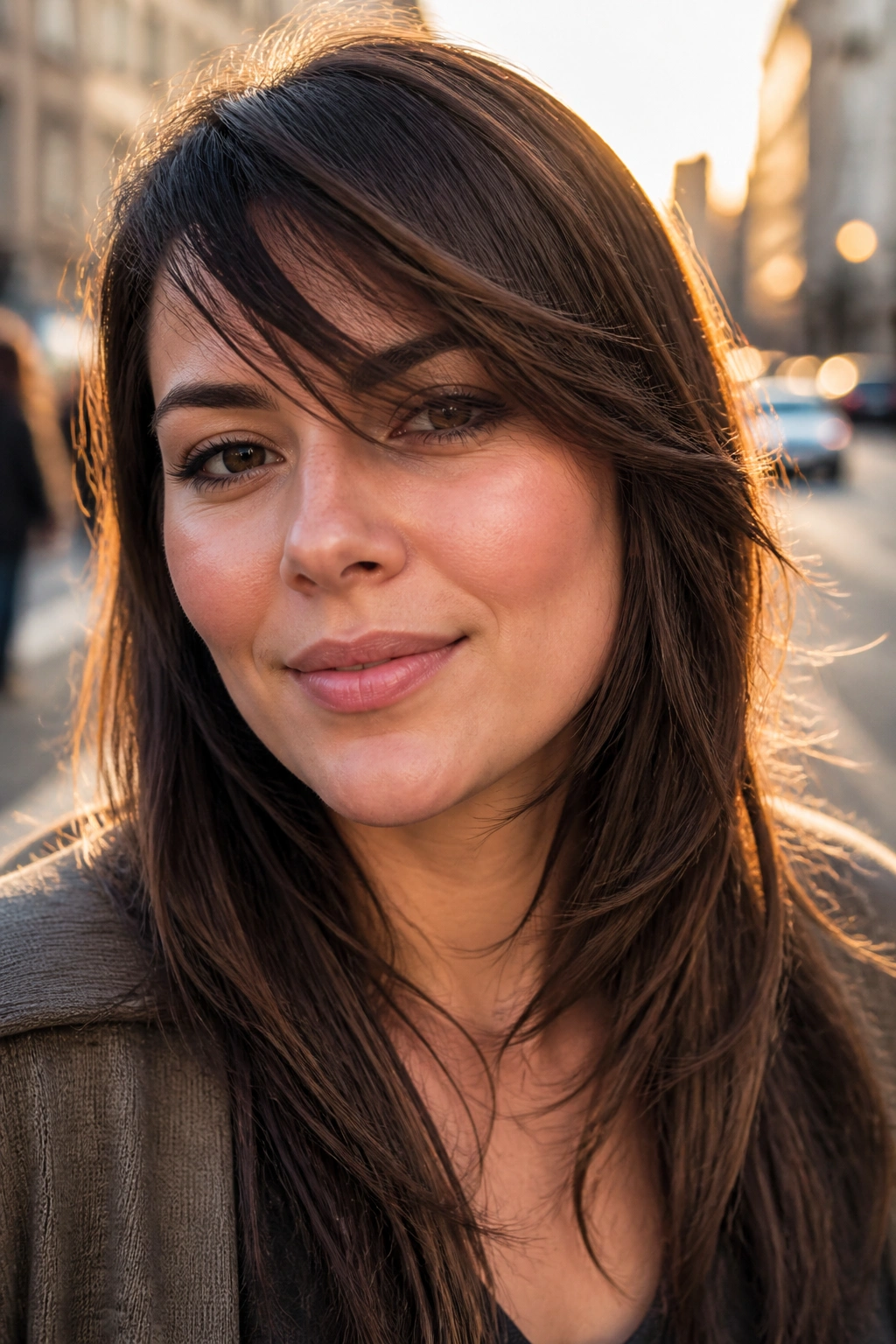
Does razor cutting help thick bangs? Yes, if the hair can handle it. No, if your hair is coarse, frizzy, or prone to getting puffy around the edges. That’s the honest answer, and anyone who says otherwise is selling a fantasy.
What makes it different
A razor softens the outline of the fringe. Instead of one blunt edge, you get slender pieces that move separately. On a round face, that broken-up texture can be a lifesaver because it keeps the front from feeling like one solid curtain.
If you want this look, ask for controlled razor work only on the ends, not through the whole bang. You still need enough density at the base so the fringe reads as thick. The goal is softness, not shredding.
This style looks best on hair that already has some bend or natural separation. Straight hair can wear it too, but you’ll want a small round brush and a tiny bit of styling cream. Too much product kills the piecey effect fast.
10. Side-Swept Pixie Bangs With a Long Front Corner
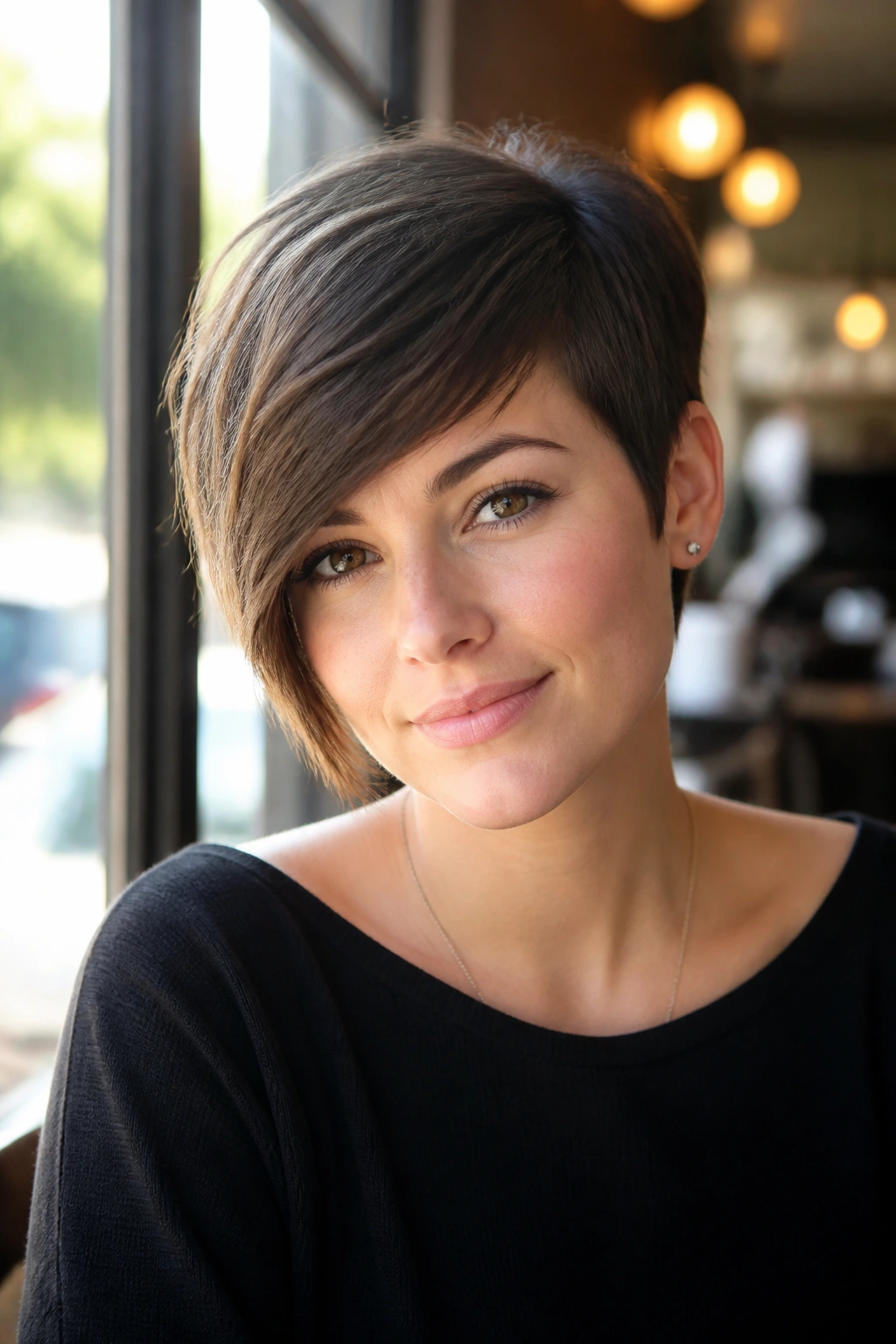
Short hair can be tricky on a round face, and a pixie with the wrong fringe can make the face feel wider. A side-swept pixie bang avoids that by keeping one long corner in play. That corner is the whole point.
The side piece should reach the outer brow or even the cheekbone, while the sides and nape stay clean. That contrast gives the cut shape. Without it, the short front can sit too close to the face and make everything feel compact.
- Keep the longest front strand clearly longer than the rest.
- Shorten around the ears and nape so the sweep stands out.
- Use a pea-sized paste for control, not a heavy wax.
- Blow-dry the fringe in the opposite direction first for lift.
A pixie like this has attitude. It also needs regular trimming, because the line loses its shape fast once the front gets too long.
11. Shaggy Side Bangs With Choppy Layers
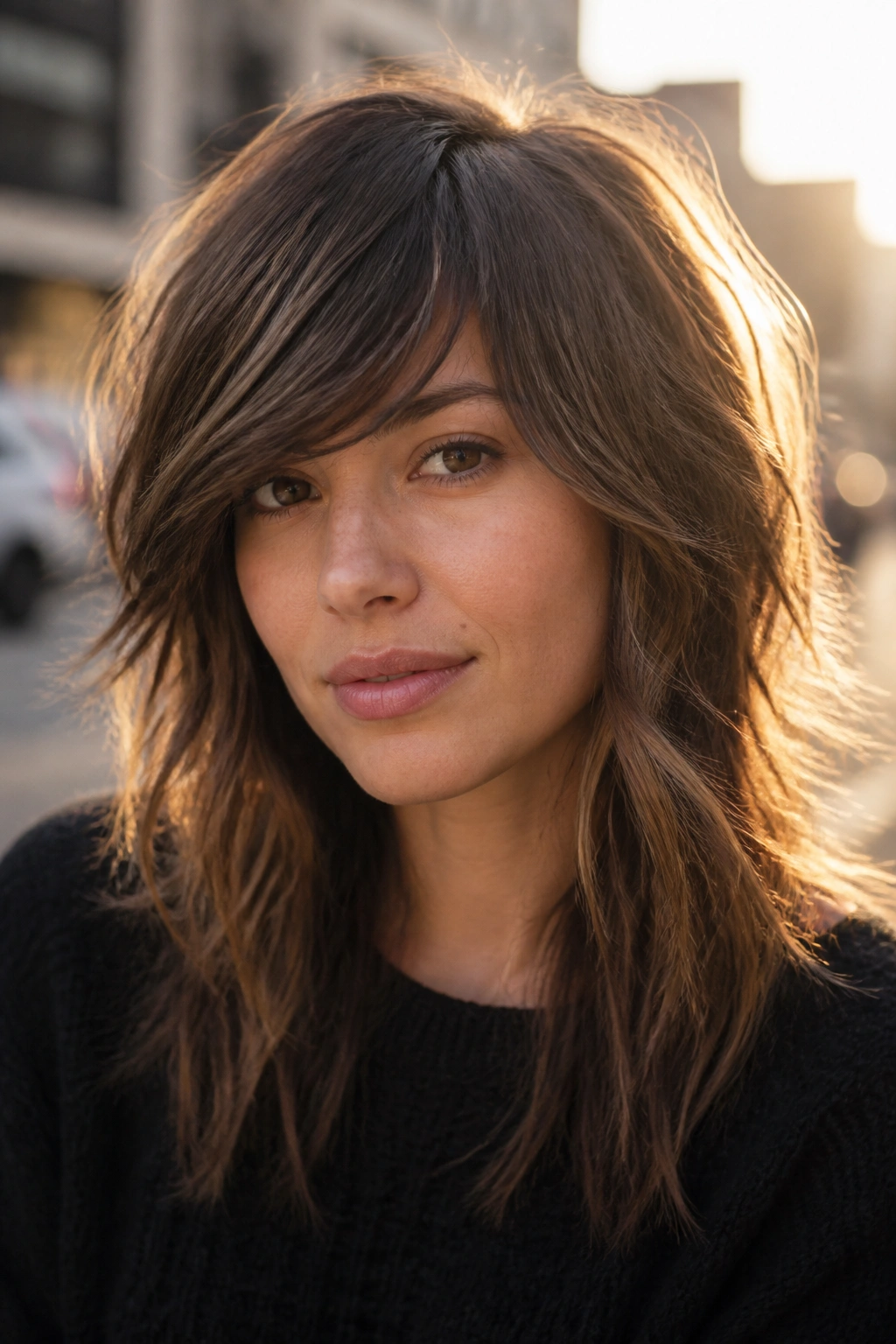
Shaggy side bangs work because they refuse to behave like a single block. The front is broken into pieces, and those pieces move against each other. That messiness is useful on a round face, since it keeps the eye from settling on one wide horizontal line.
The trick is to connect the bang to the layers around the temples. If the fringe sits alone, it can look pasted on. If the front layers flow into the bang, the whole cut feels lighter and more natural. I like this shape on medium to thick hair, especially when there’s a little wave.
Dry texture spray helps, but use it sparingly. Too much and the bangs get crunchy. Too little and they collapse. There’s a narrow middle ground here, and that is usually where the good shag lives.
12. Retro Side Bangs With Big Round-Brush Lift
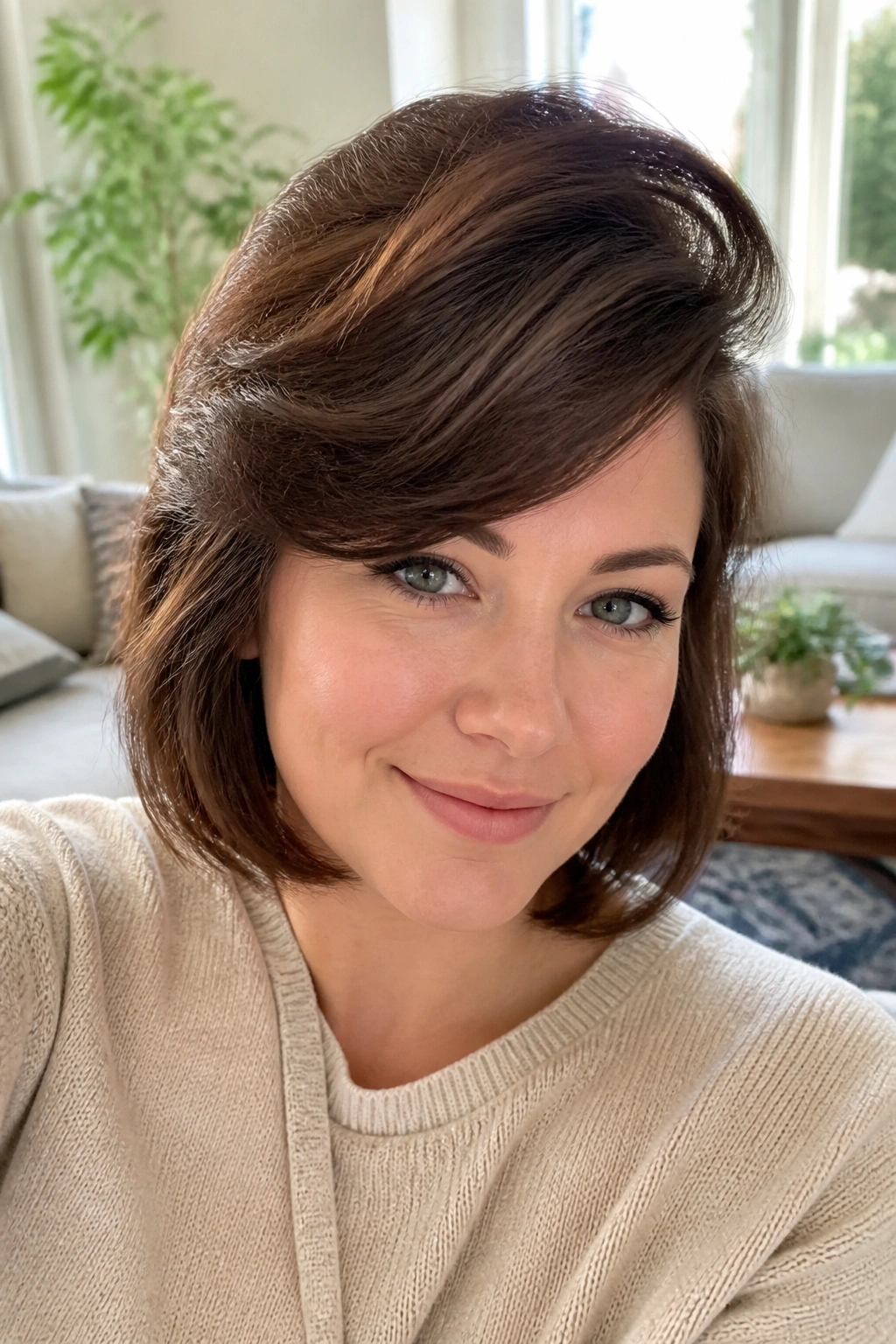
This is the one if you like polish and do not mind spending a few extra minutes at the mirror. Retro side bangs are all about lift, sweep, and a smooth finish that feels deliberate. On a round face, the lift at the crown keeps the style from closing in.
A 2-inch round brush or a large velcro roller works well. Set the bang away from the face, let it cool completely, then brush it into the side. That cooling step matters more than most people think. Warm hair is floppy hair.
The look is happiest on dense hair that can hold a curve. Fine hair can wear it, too, but you’ll need root support and a light spray. Skip heavy oils near the fringe. They make this style fall flat, and flat is exactly what you are trying to avoid.
13. Soft Arched Side Bangs That Open the Brow
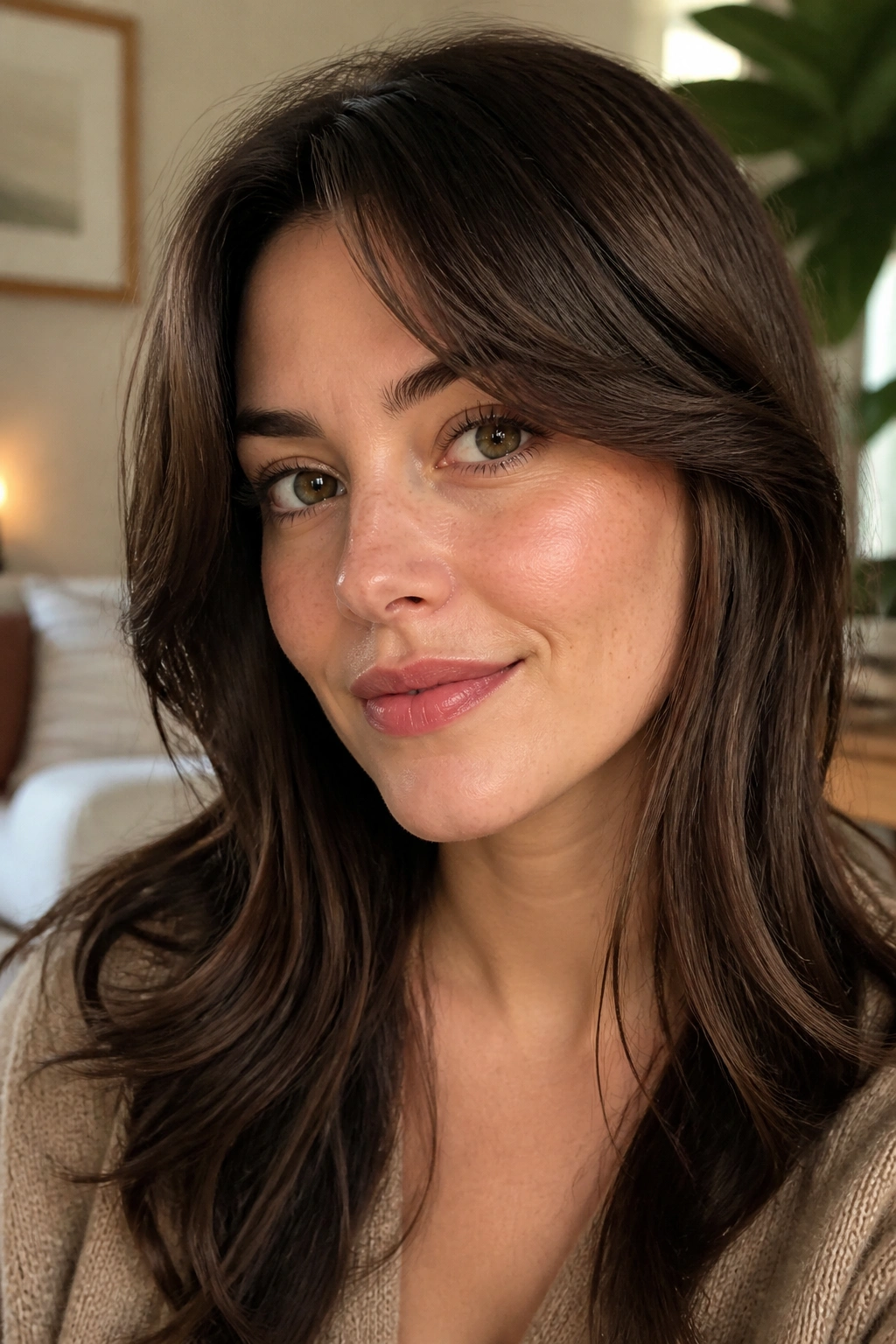
A soft arch is not a hard curve drawn with a ruler. It’s a slight rise in the center of the bang, with the ends dropping away toward the temples. That shape works well on round faces because it opens the brow area without cutting a straight line across it.
Who it flatters
This version suits someone who wants the face to look a touch longer but still likes softness around the forehead. It also helps if your brows are one of your best features, because the arc frames them instead of hiding them.
- Keep the shortest point just above the brow.
- Let the outer edge fall to cheekbone level.
- Ask for minimal thinning so the arch stays full.
- Finish with a medium-hold spray and a soft brush-through.
A good arched side bang looks subtle in motion and cleaner in photos. The shape is simple, but the effect is smarter than it looks.
14. Asymmetrical Side Bangs With One Long Anchor Piece
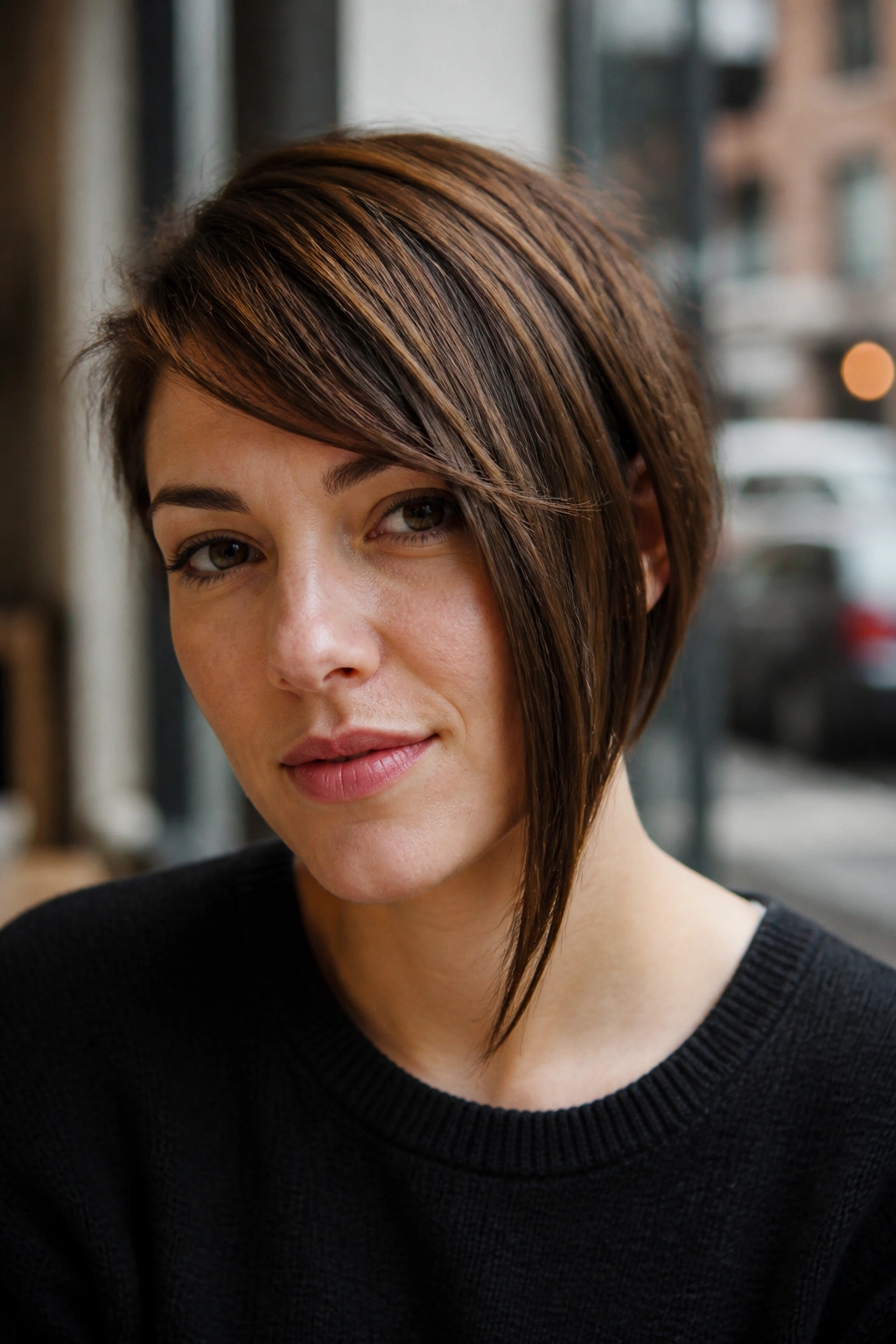
One long anchor piece can lengthen a round face faster than a lot of complicated layering. That’s why asymmetrical bangs hold up so well. The eye follows the long line downward, and suddenly the face feels less circular.
The shorter side can sit near the brow, but the long piece should stay obvious. I like it when that strand reaches the cheekbone or even the jaw, depending on hair length. That long corner gives the whole fringe a sense of direction.
This style is especially good if you like a slightly artsier haircut. It also plays well with strong earrings or glasses, since the fringe doesn’t sit evenly across the face. The one thing to avoid is a long piece that looks accidental. Keep the edge clean enough that it reads as design, not damage.
15. Bottleneck Side Bangs With a Wider Center
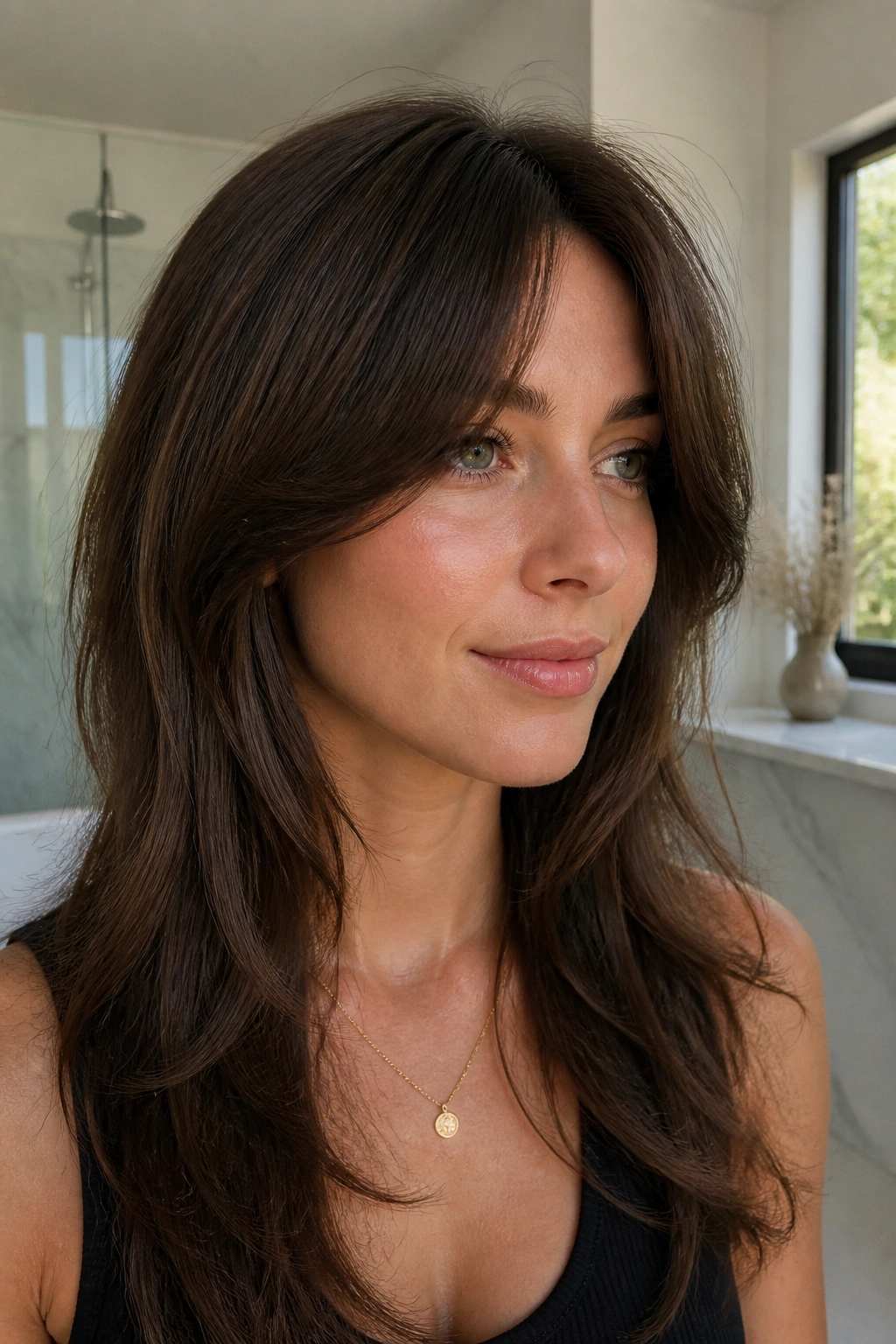
Why do bottleneck bangs work so well on thick hair? Because they put weight where you need it and let the edges soften on their own. The center starts a little narrower, then opens wider toward the sides, which makes the whole shape feel easy instead of blunt.
How to use the shape
For a round face, this cut creates a small lift at the center and soft movement out toward the temples. That combination keeps the face from feeling boxed in. The bang should not be over-thinned near the edges, or the shape loses its strength.
A good version usually has the shortest center piece around the brow, with the longer sides grazing the cheekbone. The thickness stays in the middle, so the front still looks full even when it’s swept over. It’s a clever shape for anyone who wants fringe without committing to a heavy wall of hair.
The styling part is straightforward. Blow-dry the center up first, then sweep each side outward. Done right, the bang looks soft from the front and controlled from the side.
16. Shoulder-Skimming Side Bangs With Long Layers
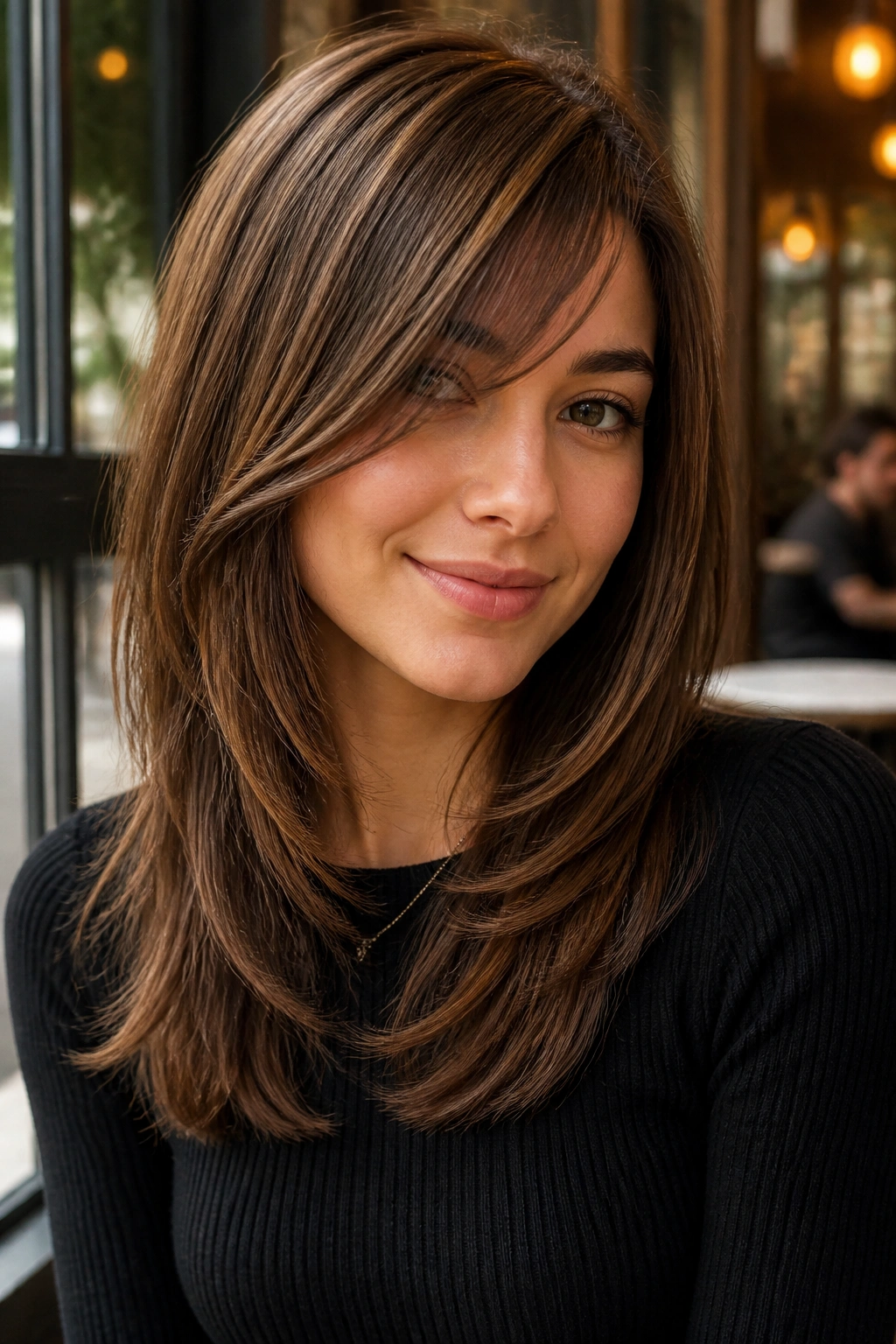
A shoulder-skimming cut gives side bangs a long runway. That matters more than people think. The fringe does not have to carry the whole face shape alone when the rest of the haircut already pulls the eye downward.
This works best when the front layers start around the chin and drift into shoulder length. The side bang can then sit in that same flow instead of fighting against it. On a round face, the effect is clean and lengthening, especially if the ends are kept sleek.
- Keep front layers at chin length or lower.
- Avoid a hard line at the cheek.
- Use a 1.25-inch iron for a soft bend.
- Put serum only on the last 2 inches of the hair.
This is one of my favorite choices for someone who wants bangs but still wants the haircut to feel grown-up and easy.
17. Side Bangs That Make Fine Hair Look Fuller

Fine hair can wear side bangs beautifully, but it needs the right kind of density. The mistake is over-texturizing. People think thin hair needs thinning, which is backward here. The front actually benefits from a denser perimeter so the bang reads as present.
A side fringe can make fine hair look fuller because it gives the front of the haircut a focal point. That visual weight can be more convincing than a soft curtain of hair that disappears by noon. Keep the bang a little longer than eyebrow length so it does not split too easily.
Dry shampoo at the root helps before the hair gets dirty. That sounds odd, but it works because a tiny bit of grip keeps the bang from sliding flat. If your hair is silky, a light mousse at the root before blow-drying can help the front hold its sweep without turning sticky.
18. Side Bangs for Coily Hair With Stretch and Shape
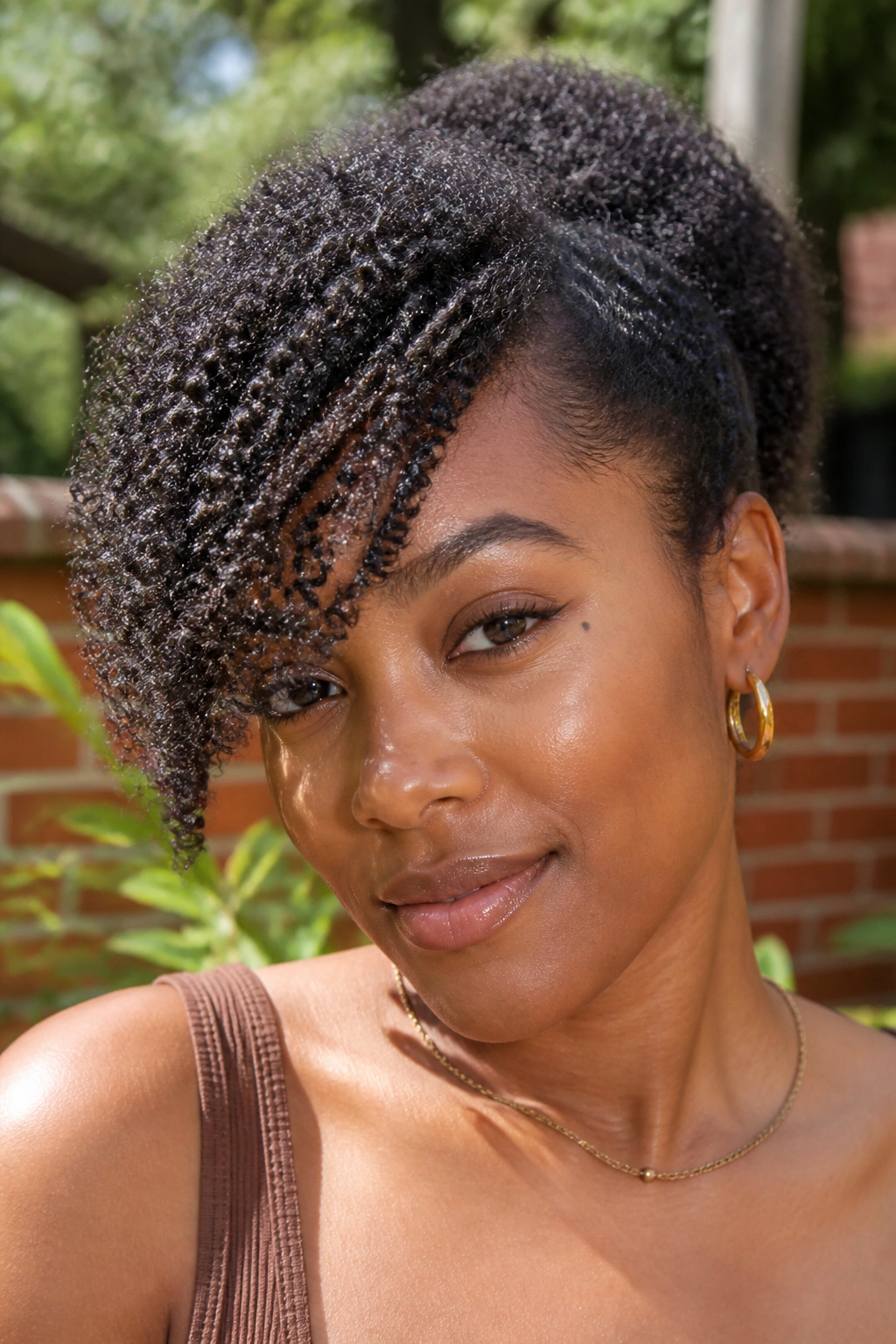
Coily hair should not be forced into a straight fringe just because the style photo looks polished. The better move is to build the side bang around stretch, shrinkage, and the way the coils fall. That keeps the shape honest.
Unlike a fringe that has to stay flat, this one should live in a little curve. The front can be cut on stretched hair, then styled with a twist-out, banding, or low-heat tension so the bang still keeps its diagonal path. That diagonal is the part that flatters a round face.
Use a cream plus gel combination so the front has slip and hold. Keep the longest side a little past the cheekbone, because the coils will bounce up more than straight hair. If the bang is cut too short, it can puff outward and widen the face. That’s the trap. Leave room for movement.
19. Tapered Side Bangs With Airy Ends
Tapering changes the face line more than most people realize. A thick fringe with soft, airy ends still feels full at the root, but it loses weight as it reaches the cheek. That lets a round face keep its softness without looking heavy.
Why tapering helps round faces
The root stays dense enough to count as a real bang, while the ends fade out instead of landing in one blunt line. That subtle shift keeps the eye moving. It also makes the style easier to grow out, which is a nice bonus.
- Ask for point-cut ends instead of a heavy straight edge.
- Keep the front thick enough to show from the front.
- Let the longer side brush the top of the cheekbone.
- Use a tiny bit of light wax on the ends only.
Tapered bangs are one of those cuts that look simple but do a lot of work in the background. I like them because they feel soft without turning flimsy.
20. Side Bangs With a Long Bob and a Clean Neckline
A clean neckline keeps a long bob from feeling heavy around a round face. Pair that with a side bang, and you get a shape that feels balanced from every angle. The hair falls below the jaw, which gives the face room to breathe.
The bang should sweep across the forehead and blend into the top layers of the lob. Nothing needs to be too dramatic. The haircut does the job by creating length at the bottom and movement at the top. That contrast is what keeps the shape from becoming a big circle of hair around a circular face.
This is a good choice if you want something that looks finished even when you do almost nothing to it. A neat neckline, a little side sweep, and a smooth front section can look expensive without being fussy. Practical. Clean. Easy to live with.
21. Tousled Side Bangs With a Loose, Parisian Finish
Do side bangs have to look polished? Not at all. Some of the best ones look like they were touched by a hand, then left alone. That loose, slightly messy finish is what makes them feel modern without trying too hard.
A small flat iron or a 1-inch curling iron can create that bend. You do not want a full curl. You want an S-shape that crosses the forehead, opens near the temple, and settles softly near the cheek. Then shake it out with your fingers. No brush, if you can help it.
How to keep it soft
A mist of texturizing spray is enough. More than that and the bang starts to separate into crunchy pieces, which is not the same thing as texture. If the hair is thick, a little bend at the ends keeps the style from puffing out. If the hair is fine, keep the product light so the front does not go stringy by noon.
22. Side Bangs Framed by Face-Layered Waves
Face-framing waves and thick side bangs can be a strong pair when the layers start low enough. If the shortest layer hits right at the cheek, the face can feel boxed in. If it begins below the cheekbone, the shape opens up.
The bang should lead the eye, and the waves should keep it moving downward. I like a side bang that ends around the outer brow, then gives way to a wave at the jaw or collarbone. That sequence is what makes the haircut feel long instead of round.
- Start the shortest face layer at the outer brow.
- Keep the next layer around jaw level.
- Bend waves away from the cheeks.
- Use a side or off-center part to keep width under control.
This is a very good option if you like hair that looks styled even when it is a little undone. It has shape from every angle.
23. Glasses-Friendly Side Bangs That Clear the Frames
Glasses and bangs can work together, but the distance matters. If the fringe lands directly on the top rim, it can feel crowded. If it clears the frames by a quarter inch or so, the whole face reads cleaner. Small detail. Big payoff.
On a round face, this matters even more because the frames already add shape around the eyes. The bang should sit softly to the side, not fight the glasses for space. That means keeping the front a touch longer and encouraging it to move away from the bridge.
Thicker frames usually need a little more length near the temple so the fringe doesn’t push forward. Lighter frames can handle a shorter sweep. Either way, the bang should still angle down and out, not cut straight across the frame line. That’s the part people miss.
24. Grow-Out-Friendly Side Bangs That Stay Pretty
If you hate regular trims, this is the version to choose. A grow-out-friendly side bang starts with a long diagonal line and enough softness at the edges that it can turn into face-framing layers instead of becoming an awkward in-between stage.
The secret is in the length. Keep the shortest part long enough to tuck behind the brow, and let the longer side blend toward the cheekbone or jaw. That way, when the bang grows, it becomes more of a front layer than a problem. Smart haircuts age better. Period.
This style is ideal if you want the look of fringe without a strict maintenance schedule. A small trim every couple of months keeps it neat, but the cut does not punish you if life gets busy. It still looks intentional when it’s a little longer.
25. Heavy Side Bangs With a Soft Tuck Behind the Ear
A heavy side bang can be a good thing when the tuck behind the ear is part of the design. That little move opens one side of the face and gives the cut a break from all the weight sitting on the forehead. On a round face, the asymmetry helps more than symmetry usually does.
The bang should be thick enough to read as a real fringe, but the edge needs to soften as it reaches the temple. That way, when you tuck the longer side back, it doesn’t puff out in a helmet shape. Nobody wants that.
The tuck matters
Use a light cream or soft balm, not a heavy oil, so the tucked side stays in place without slipping. If you want extra control, set the front with a quick blast of cool air after blow-drying. That helps the curve stay where you put it.
This is a nice option for someone who wants the face framed on some days and opened up on others. Two moods, one haircut.
Final Thoughts
The best side bangs for a round face are the ones that create a diagonal line, a little height, and enough thickness to hold their shape. If the fringe stops at the widest part of the cheeks, it usually works against you. If it sweeps past that point, it tends to do the opposite.
Thick hair helps here, but only if it is cut with some restraint. Too much bulk turns the front into a wall. Too little and the bang disappears by lunchtime. The sweet spot is usually somewhere in the middle, where the shape looks full but still moves.
Bring photos to the salon, but bring the right kind of photos. One front shot is not enough. You want to show the side, the length at the cheekbone, and the amount of root lift you like. And if you have a cowlick at the front, say so right away. That tiny spiral changes everything.
