



A blunt haircut can make even good hair look heavy. Layers fix that fast, but not in some magic, salon-poster way — they work because they take weight out where hair piles up, add shape where hair falls flat, and let the cut move when you turn your head. That matters whether your hair is straight, wavy, curly, thick, fine, or stuck somewhere annoyingly in between.
Layered haircuts for men also get misunderstood. A lot of people hear “layers” and picture long surfer hair or a shag from an old band photo. That’s part of it, sure, but layers show up in short crops, clean side parts, medium-length business cuts, and even tighter styles with a fade. The point is control. Shape. Less bulk. Better flow.
The trick is choosing the right kind of layering for your hair, not the kind that looks good in a still photo and falls apart after one rainstorm. Some cuts need a barber who knows how to point-cut. Some work better with scissors than clippers. Some look better when they’re a little messy. A few depend on beard balance, which people ignore until the side profile looks off.
So here’s the useful part: 30 layered haircuts for men, each with a different feel, a different maintenance level, and a different reason it works.
1. Curtain Layers for Men with Straight Hair
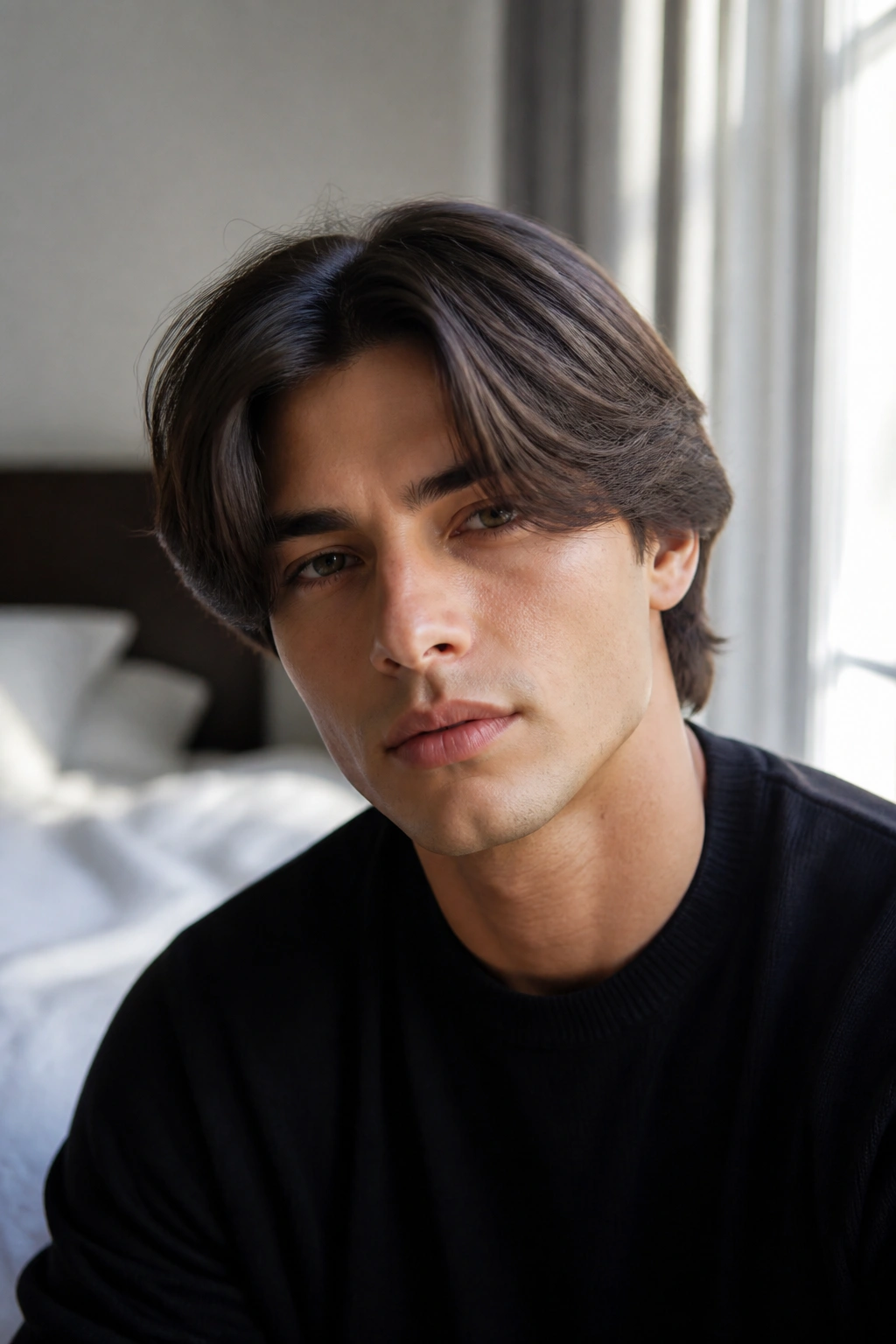
Curtain layers are the easiest way into layered haircuts for men if you want movement without looking overstyled. The middle part gives the cut its shape, and the layers stop the front from hanging like one heavy sheet.
Why This Cut Works
The best version has enough length on top to split cleanly at the center, then softer layers through the sides so the hair bends instead of flopping. On straight hair, that little bit of texture around the fringe makes a huge difference.
- Best for medium-length straight or slightly wavy hair
- Ask for soft face-framing layers, not choppy chunks
- Blow-dry forward, then push the front away from the center
- Use a light matte cream, not a sticky paste
Pro tip: keep the front just long enough to skim the brow. Too short, and the curtain effect disappears.
2. Textured Shag with Shorter Sides
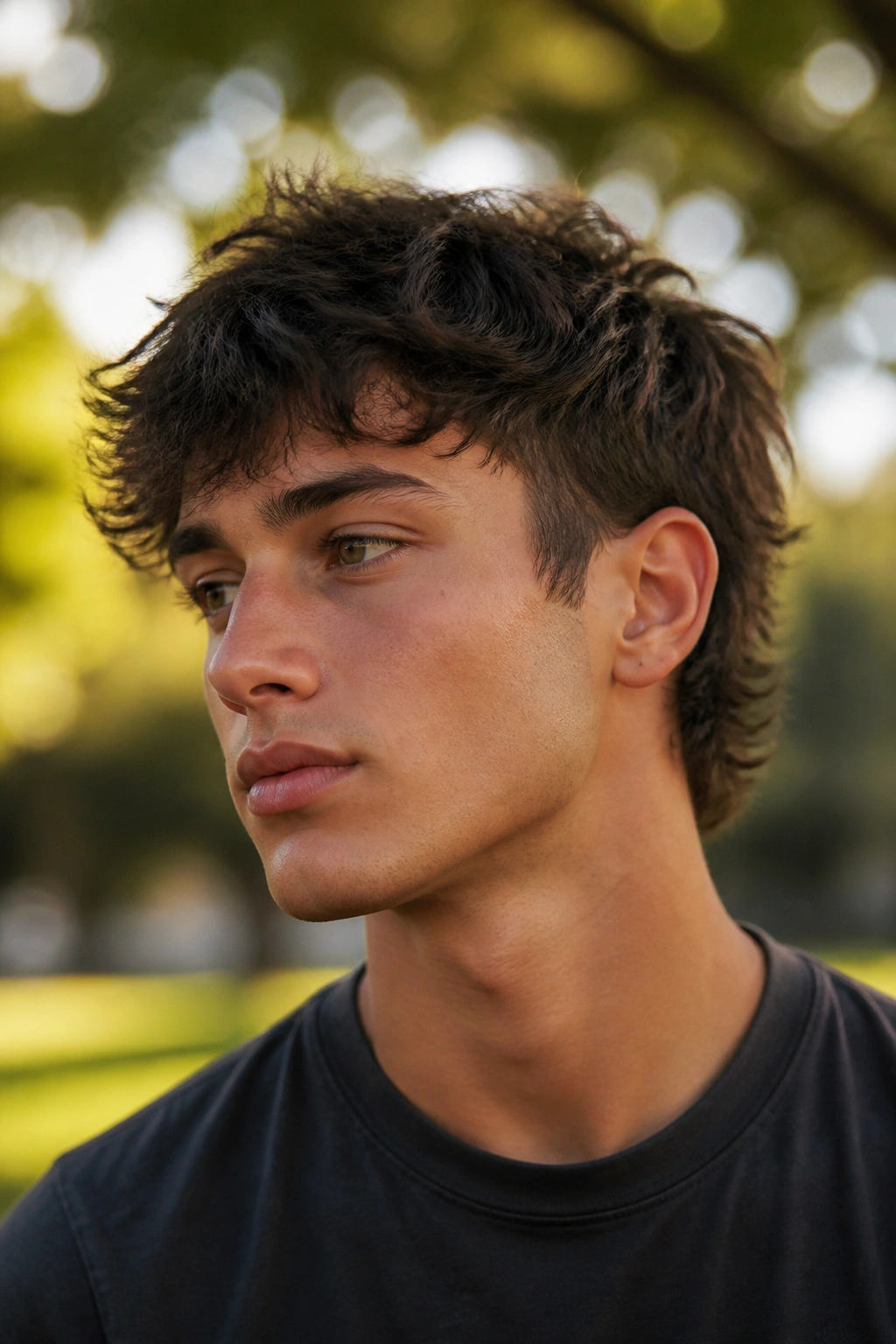
A shag is what happens when layers stop behaving and start working for you. This one looks relaxed on purpose, which is the whole appeal. It’s messy, but not careless.
The cut usually keeps the top and crown full, then uses uneven layers through the sides and back so the shape breaks up instead of sitting in one lump. That makes it a smart pick for thick hair that tends to puff out. It also plays well with a little natural wave, because the bend gives the layers some life.
Wear it with low-maintenance styling. A quick scrunch of sea-salt spray or a fingertip amount of cream is enough. If you try to over-style it, the cut loses its charm.
Seriously. Less is better here.
3. The Wolf Cut for Men Who Want Movement
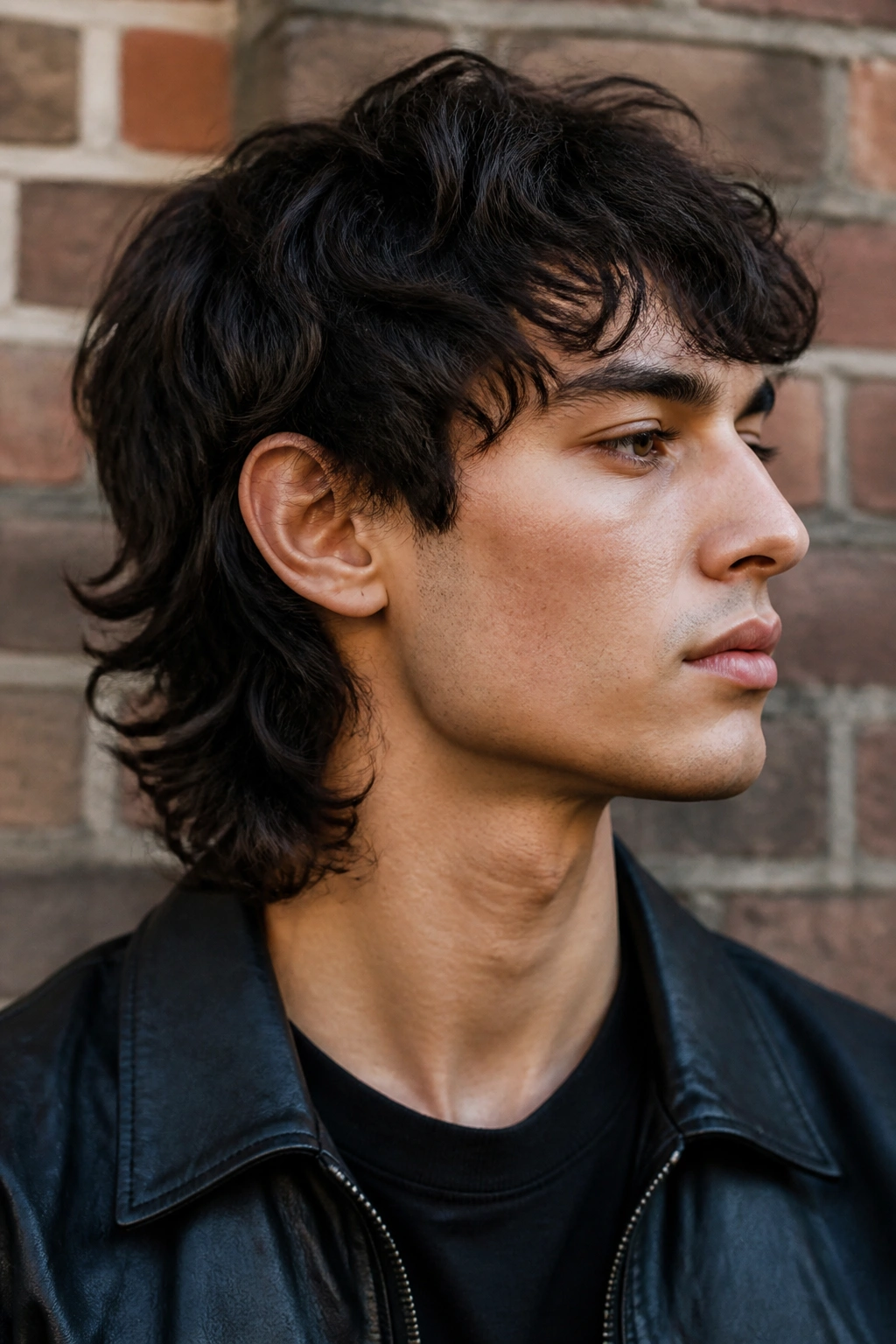
The wolf cut sits between a shag and a mullet, and that’s exactly why it has such a strong shape. The top stays fuller, the back stays longer, and the layers create that slightly wild silhouette people either love or try once and never forget.
How to Wear It
This cut needs confidence, but not costume-level commitment. Keep the layers soft around the temples and heavier through the crown so it doesn’t turn into a broom. If your hair has wave or curl, even better — the layers show up faster and need less styling.
What to Ask For
- Length kept at the nape
- Choppy layers through the crown
- Softer edges around the ears
- Fringe that can fall forward or split apart
A little mousse gives it shape. A matte cream keeps it from frizzing.
4. Layered French Crop with a Choppy Fringe
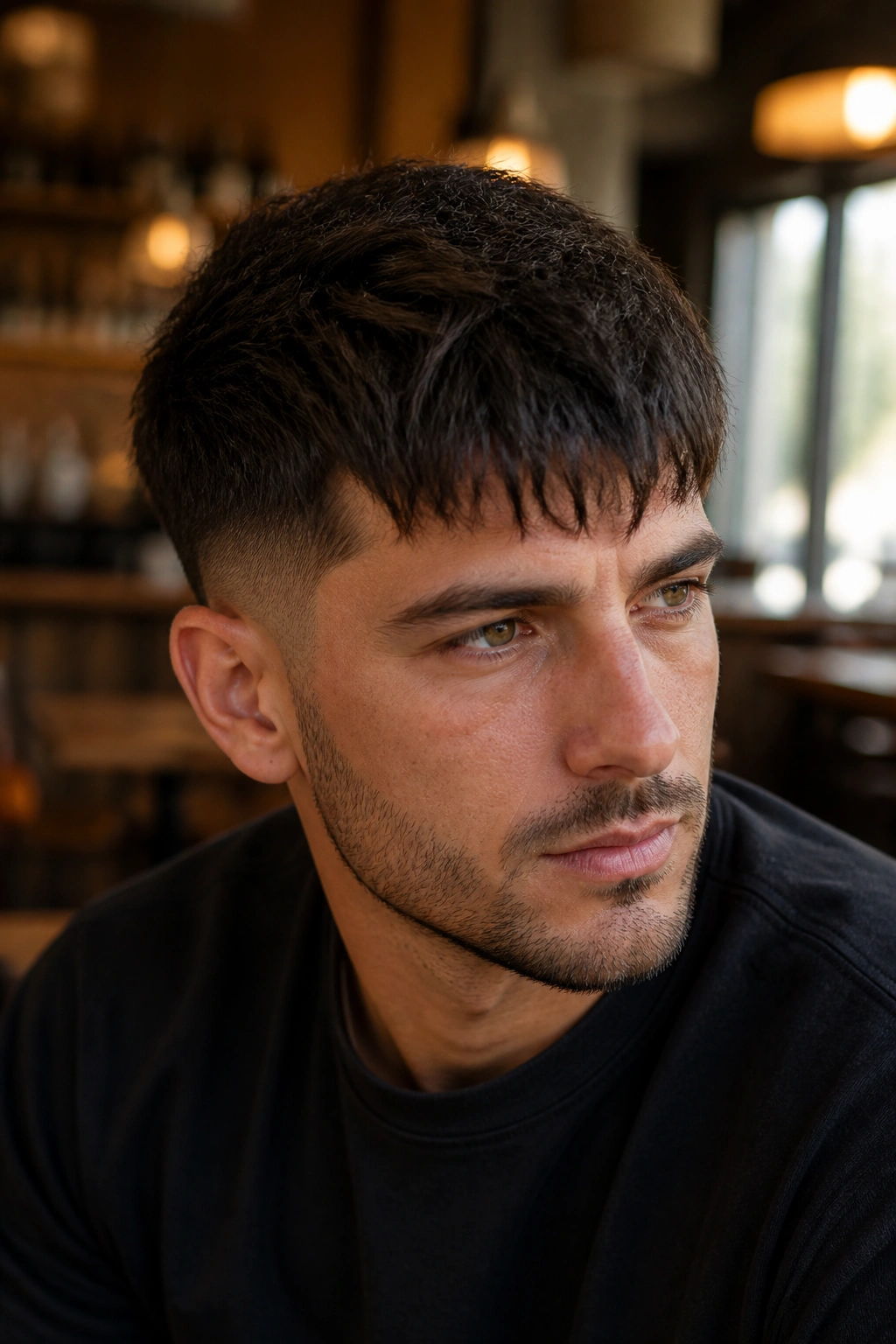
Picture a short cut that still has texture on top. That’s the layered French crop, and it’s one of the cleanest ways to wear layers without growing your hair out.
The fringe is the key. It sits forward, usually blunt-ish but broken up with point cutting, so it doesn’t look like a helmet. The crown gets a little extra texture, and the sides stay tighter with a taper or fade. That contrast keeps the cut sharp.
What Makes It Different
Unlike a plain crop, this version doesn’t lie flat. It has lift, grit, and a little separation in the top layer. That matters if your hair is thick, because the cut removes bulk where it matters most.
- Works well with straight, dense hair
- Easy to style in under 5 minutes
- Best with matte clay or paste
- Good for square and oval faces
5. Medium Swept-Back Layers
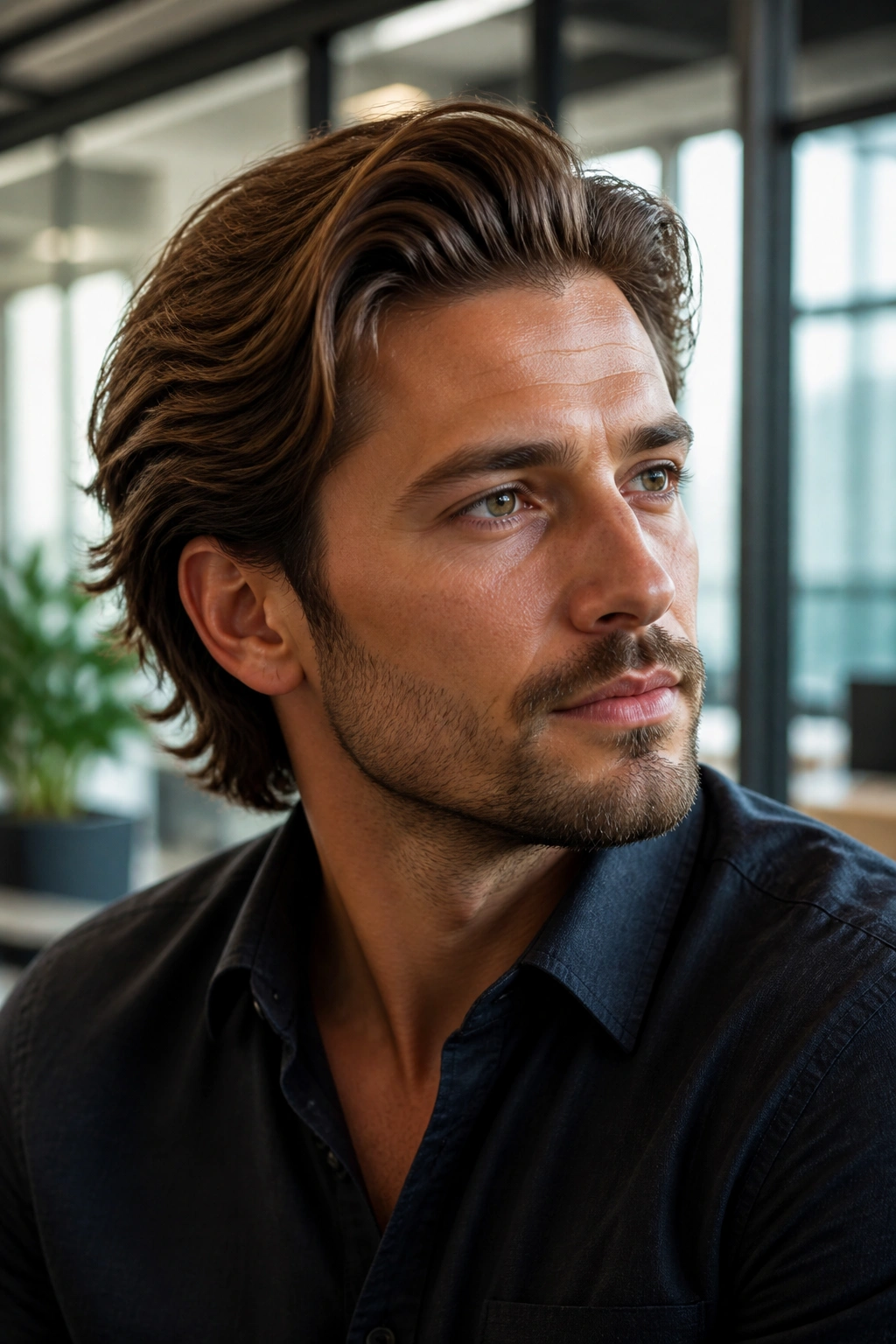
This is the cut for a man who wants polish without stiffness. The hair is long enough to sweep back, but the layers keep it from becoming a glossy block. That’s the real trick.
The shape usually starts with shorter pieces around the crown and longer lengths near the front, so the hair can move back and slightly away from the face. Done well, it looks calm and expensive without trying too hard. Done badly, it looks like you forgot to comb it. The difference is in the layering and the blow-dry.
A round brush helps if you want lift at the front. If you prefer a looser finish, finger-dry the top and use a bit of cream on damp hair.
Keep the sides neat. That contrast makes the top look intentional.
6. Side-Parted Layers with a Clean Taper
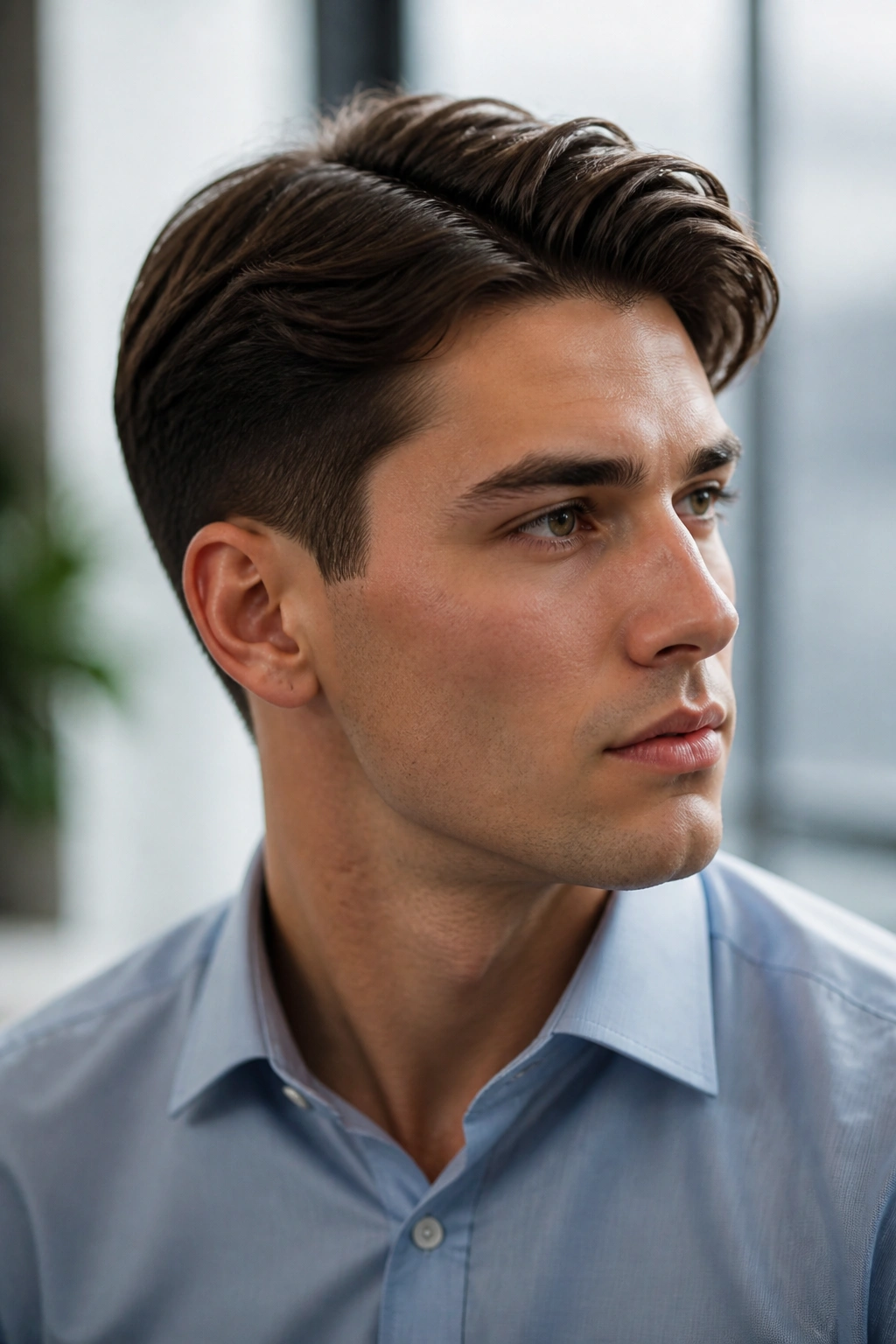
A side part gets boring fast when the hair is cut too evenly. Layers solve that by giving the top some separation, so the part looks structured instead of stiff.
This is one of the more office-friendly layered haircuts for men, which sounds dull until you realize how useful it is. The side part keeps the shape controlled, while the layers stop the top from collapsing into a flat lid by midday. If your hair is thick, this is a good way to keep order without shaving the whole thing down.
It also wears well with glasses and a trimmed beard. That combination sharpens the face without making the cut feel severe. Use a light styling cream if you want movement, or a low-shine pomade if you want the part to hold its line.
7. Long Layers with a Beard Blend
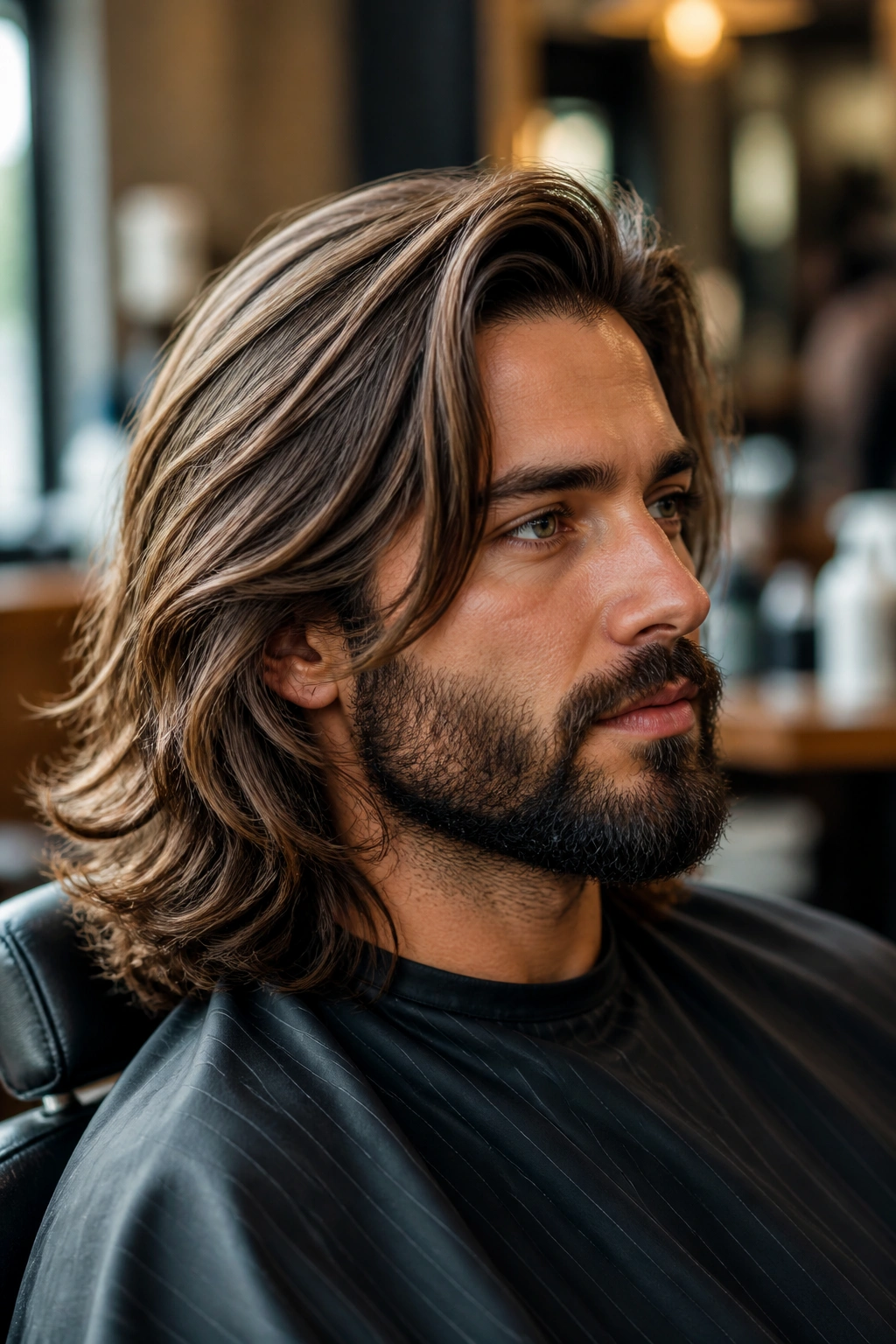
Long hair can get heavy fast. Layers fix that by taking weight out of the sides and the back, so the hair moves instead of hanging like a curtain. With a beard blend, the whole look feels connected.
Quick Details
- Best when the top reaches the nose, lips, or lower
- Ask for long internal layers, not razor-thin ends
- The neckline should stay clean so the back doesn’t look shaggy
- Works especially well with thicker hair and natural wave
The beard matters here because long hair needs a lower anchor point. A tidy beard or even medium stubble gives the cut somewhere to land visually. Without that, the profile can feel top-heavy.
If your hair is fine, don’t over-layer it. You want movement, not holes.
8. Short Choppy Layers for Straight Hair
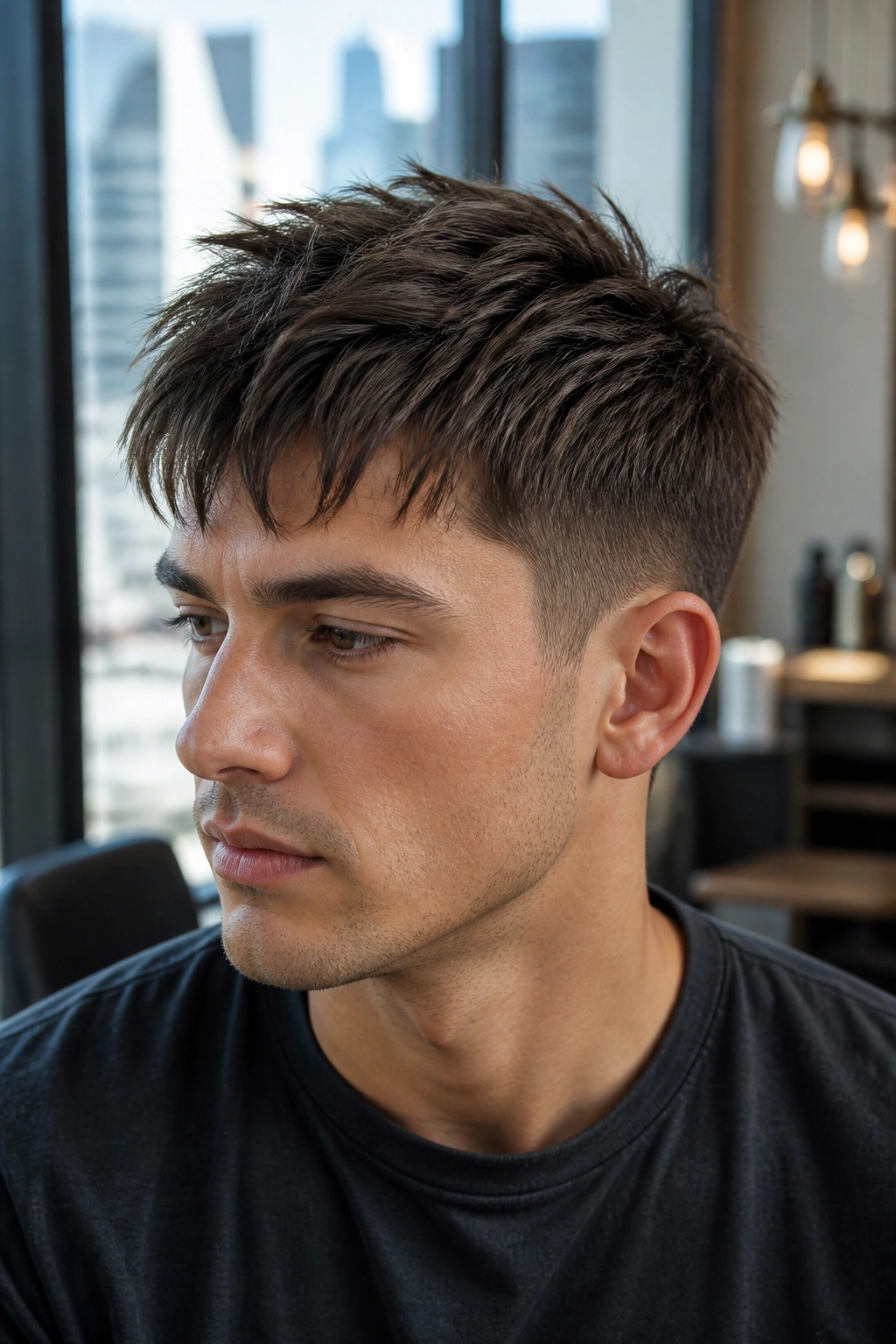
A short layered cut on straight hair can look flat if the barber leaves the top too uniform. That’s why choppy texture is the whole point here. The layers break the surface so light catches differently from piece to piece.
The style works best when the top is clipped or scissor-cut with a little irregularity, then blended into tight sides. It gives you shape without needing much length. If your hair sticks up in one direction, this cut also helps tame that. The layers can redirect the grain instead of fighting it.
Use a matte paste and push the hair forward, up, or slightly to the side. The cut should look a little piecey. Not crunchy. Not perfect.
That’s the sweet spot.
9. Wavy Tapered Layers
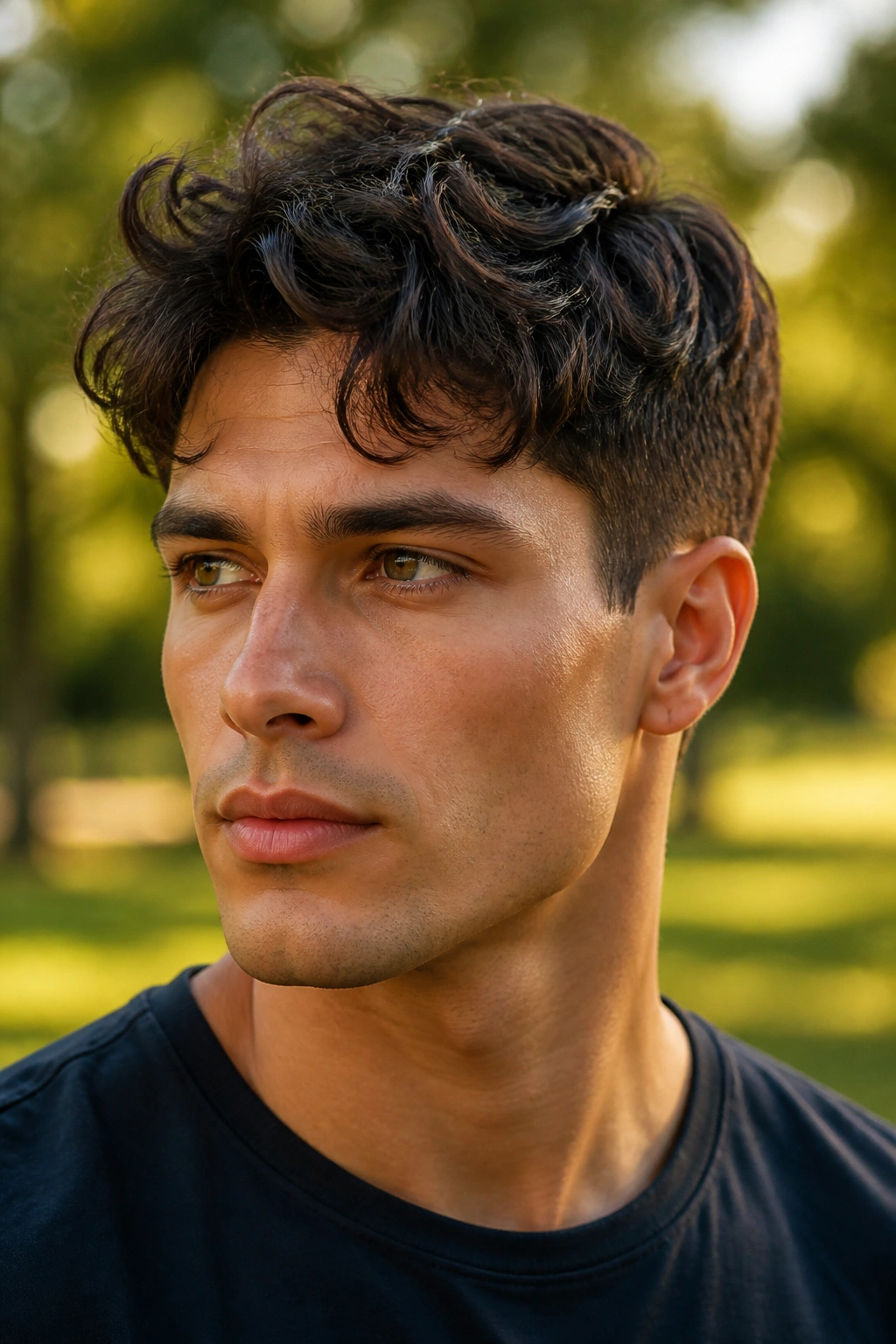
Why do wavy-haired men look good in layers so often? Because the wave does half the work for you. The cut just needs to stop the bulk from building at the sides and crown.
How to Style It
Let the hair dry with a little texture spray, then twist small sections with your fingers while it’s still damp. You’re not building curls from nothing. You’re only encouraging the wave to show its shape. A taper on the sides keeps the finish clean, which matters if your hair spreads wider when it dries.
What to Watch For
- Don’t cut the top too short
- Avoid heavy gel
- Keep the crown layered enough to stop puffiness
- Use a diffuser only if your wave gets frizzy
This is one of those cuts that looks better with a bit of effort and worse with too much of it. Oddly enough, that’s part of the appeal.
10. Layered Quiff with Lift at the Front
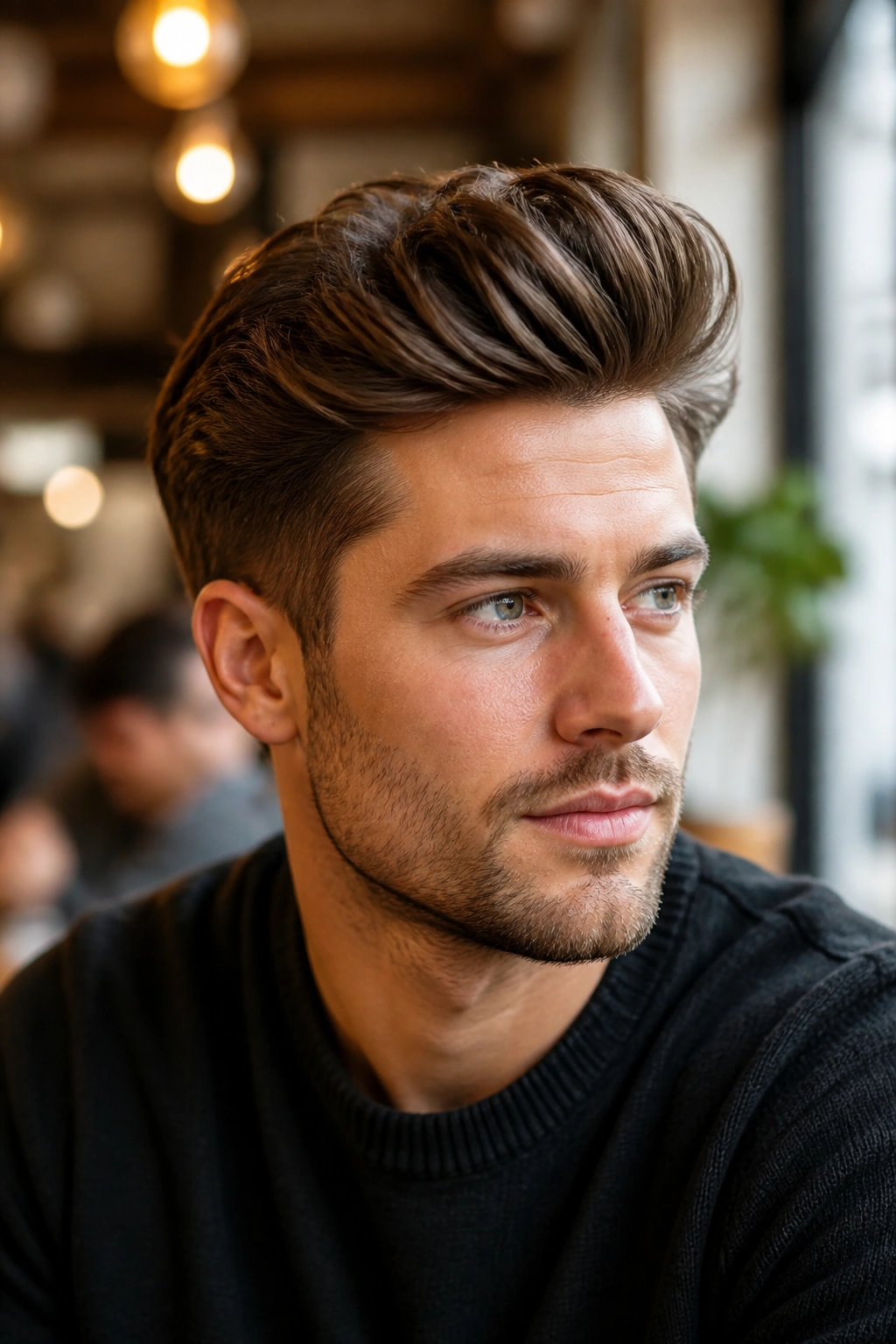
A quiff can go flat fast if the top is cut in one blunt block. Layers stop that. They give the front room to rise, and they keep the top from looking like a solid helmet when you blow-dry it upward.
The best version uses shorter layers near the crown and longer pieces at the front, so the front has something to stand on. That creates height without making the style look stiff. If your hair is thick, this is one of the smartest ways to keep volume under control while still getting lift.
Blow-dry the front up and back with a vent brush. Then add a small amount of matte clay at the roots.
Too much product kills the height. Quickly.
11. Bro Flow with Soft Layers
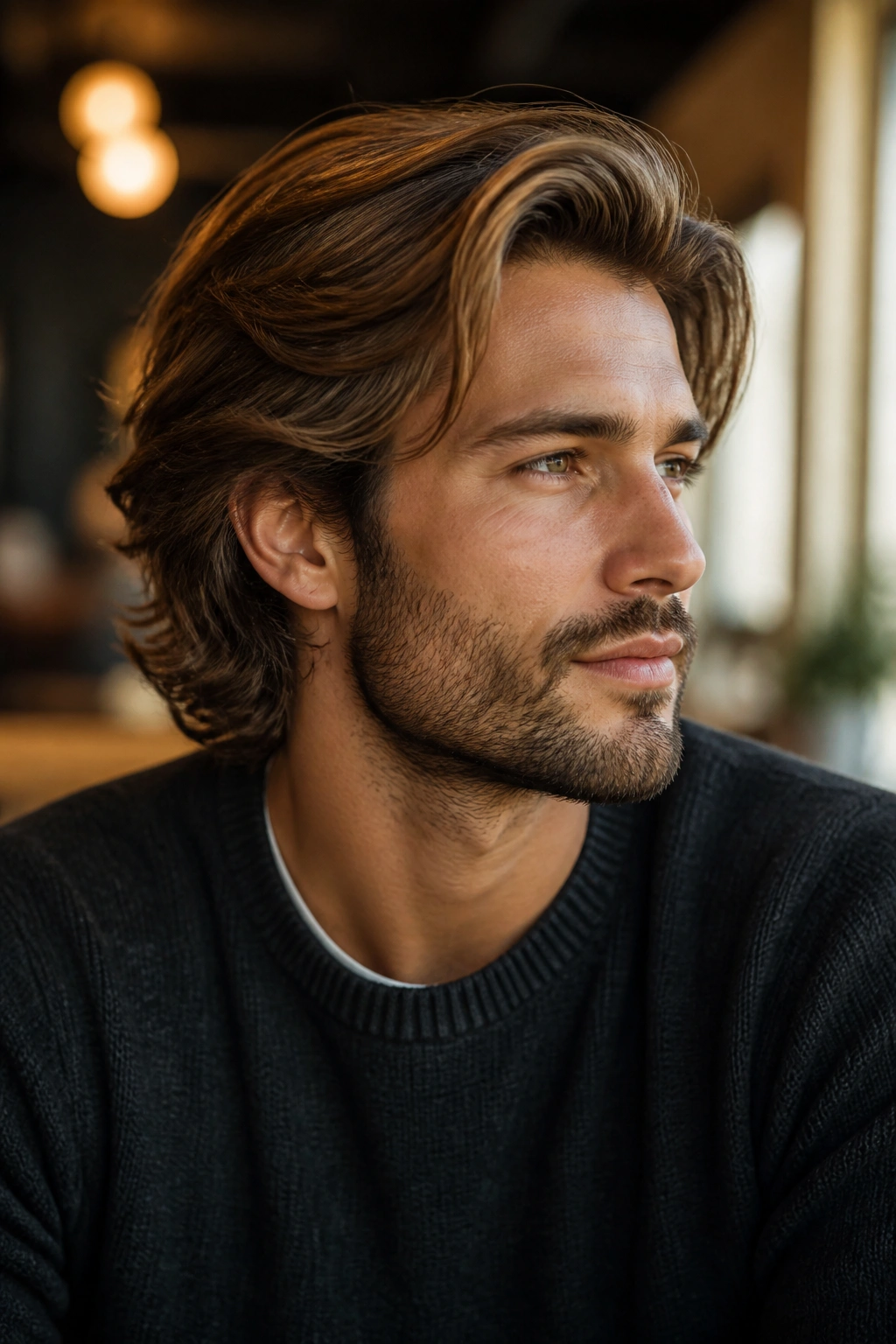
Bro flow sounds casual, but the cut needs more thought than people expect. The hair usually sits medium to long, brushes back from the face, and moves around the ears in a loose way. The layers keep it from turning into one heavy curtain.
What makes it work is softness. The ends should fall with a little bend, not a hard edge. That gives the style a lived-in feel without letting it get sloppy. It’s a good pick if you’re growing your hair out and want the awkward stage to look intentional.
This cut also pairs well with a natural beard or light stubble. The jawline needs some help if the hair is long and relaxed. Don’t overload it with product. A touch of cream or leave-in conditioner is enough.
12. Messy Crop with Layered Top Texture
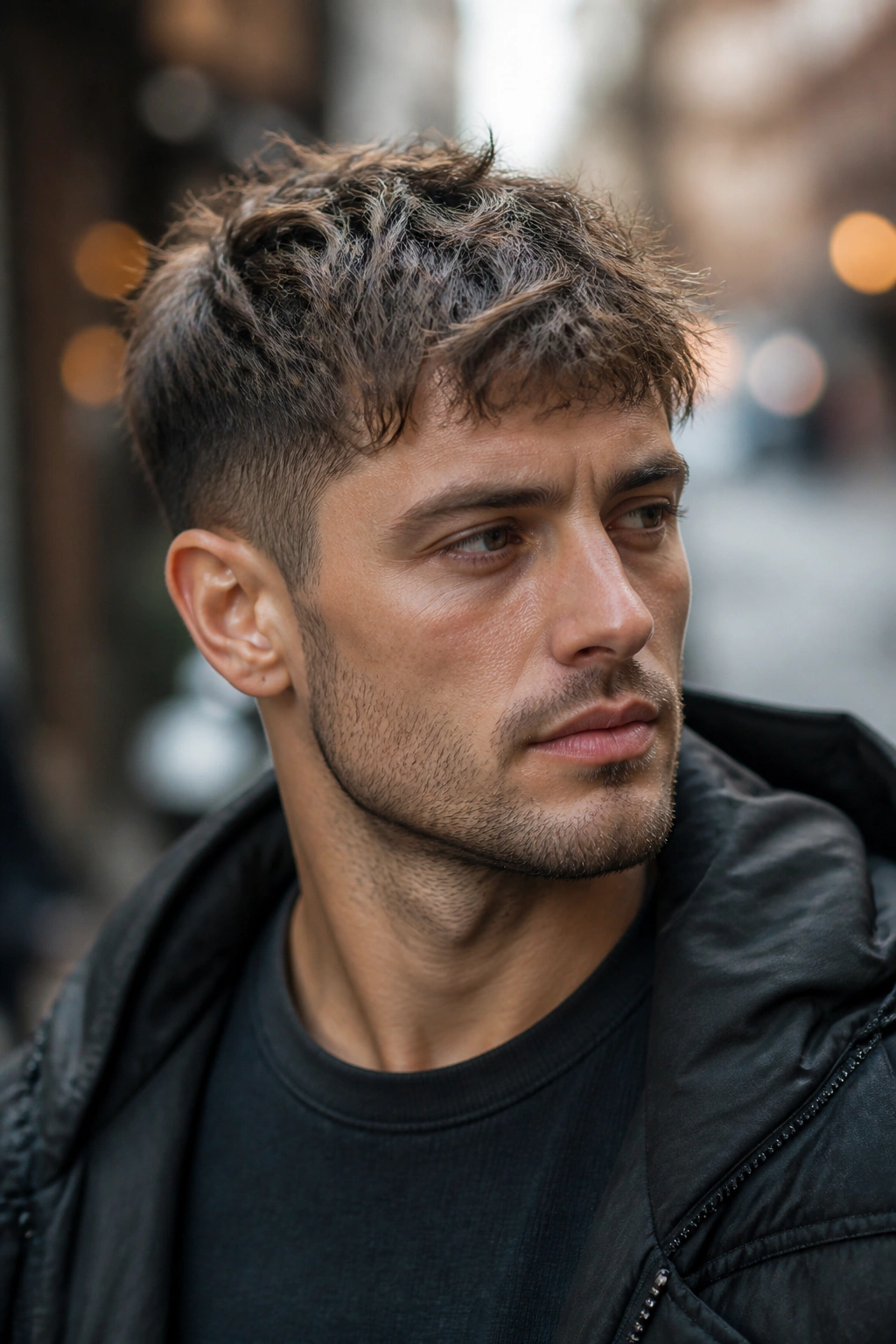
A messy crop is the opposite of precious. It’s short, rough, and built to look better the more you run your hands through it. The layering on top is what keeps it from looking like a plain buzzed shape.
Unlike a smooth crop, this version has a broken-up finish that gives the front and crown some separation. That’s useful if your hair sticks straight up or lies too flat after a wash. The top should feel airy, not packed down.
This style is best for guys who want something fast. Dry it roughly, rub in a matte product, and push sections in different directions. A small amount of mess goes a long way here. If the hair looks too neat, you’ve probably overdone it.
13. Razor-Cut Medium Layers
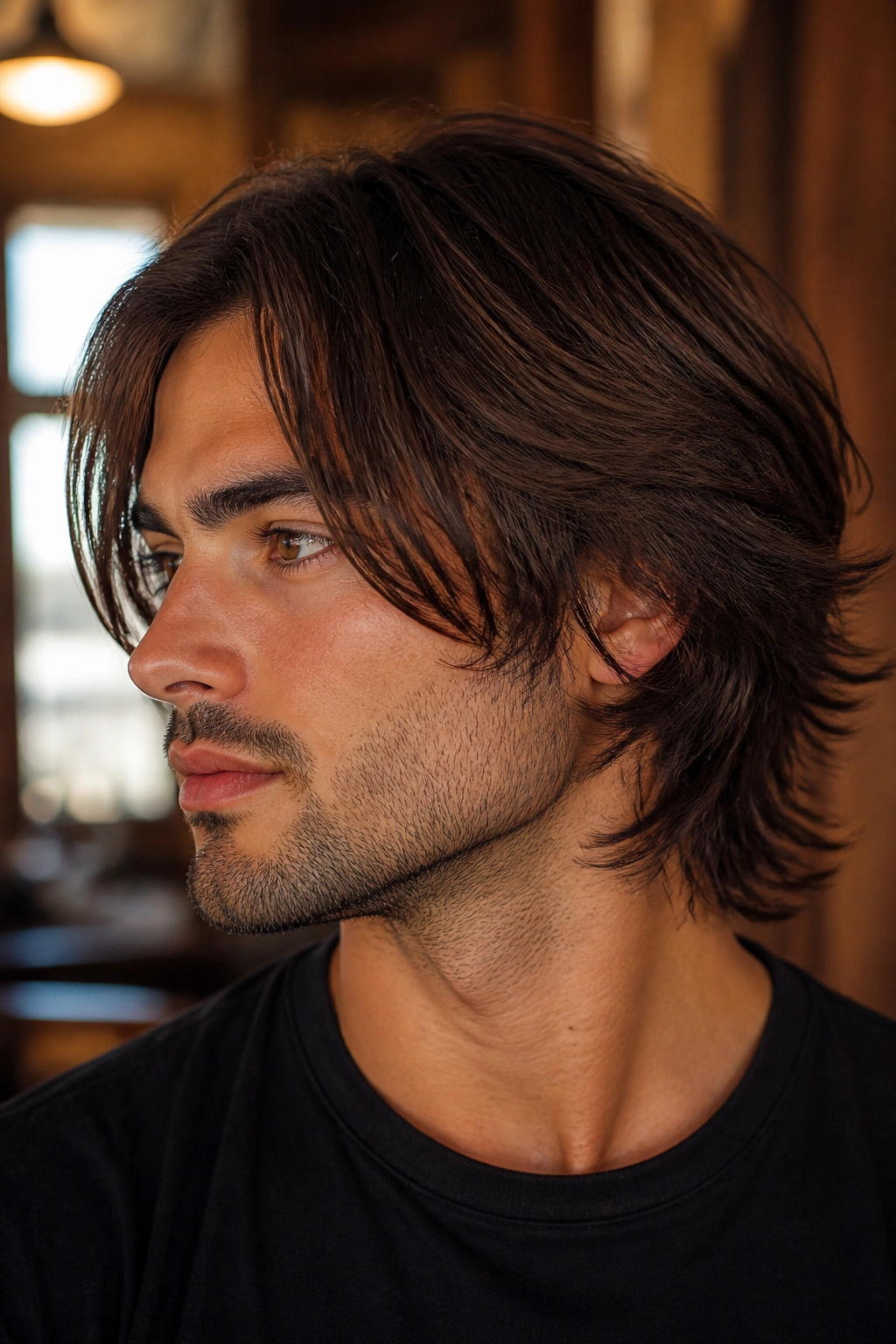
A razor cut changes the texture in a way scissors don’t. It softens the ends and creates a lighter, more feathered finish, which is why medium razor-cut layers can look so fluid on straight or slightly wavy hair.
The Texture Effect
The ends sit a little wispy instead of blunt, which helps the layers blend. That can be great if your hair feels heavy and coarse. It’s less ideal if your hair is already fragile, because overdoing razor work can make it look thin at the bottom.
Best Use Case
- Medium length on top and around the ears
- Stronger movement through the mid-lengths
- Best with a side sweep or loose push-back
- Needs a barber who knows when to stop
This is not the cut for someone who wants a hard, crisp edge. It’s for men who like motion and a bit of softness.
14. Soft Layers for Curly Hair
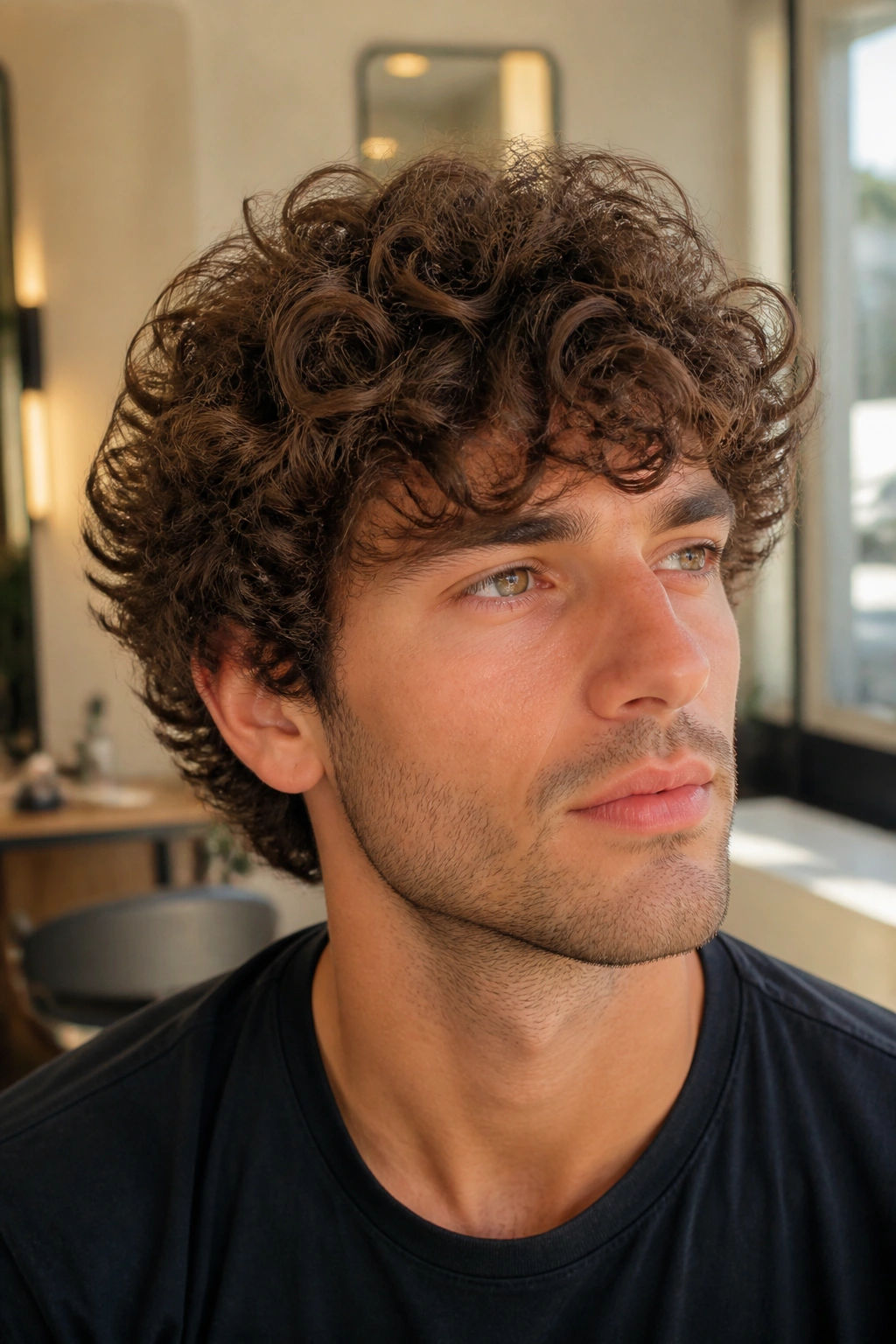
Curly hair does not need to be flattened into obedience. It needs space. Soft layers help curls spring without stacking up into a triangle, which is the shape nobody asks for.
The key is cutting with shrinkage in mind. Curly hair looks longer wet and shorter dry, so the layers have to be planned around how much the curl bounces. A barber who cuts curl by curl, instead of hacking across the head at one level, will usually get a cleaner shape. That’s not fancy talk. It’s the difference between a round, balanced cut and one that balloons on the sides.
Use curl cream on damp hair, then scrunch and leave it alone. The more you touch it while it dries, the frizzier it gets.
Annoying. True.
15. High-Volume Pomp with Layers
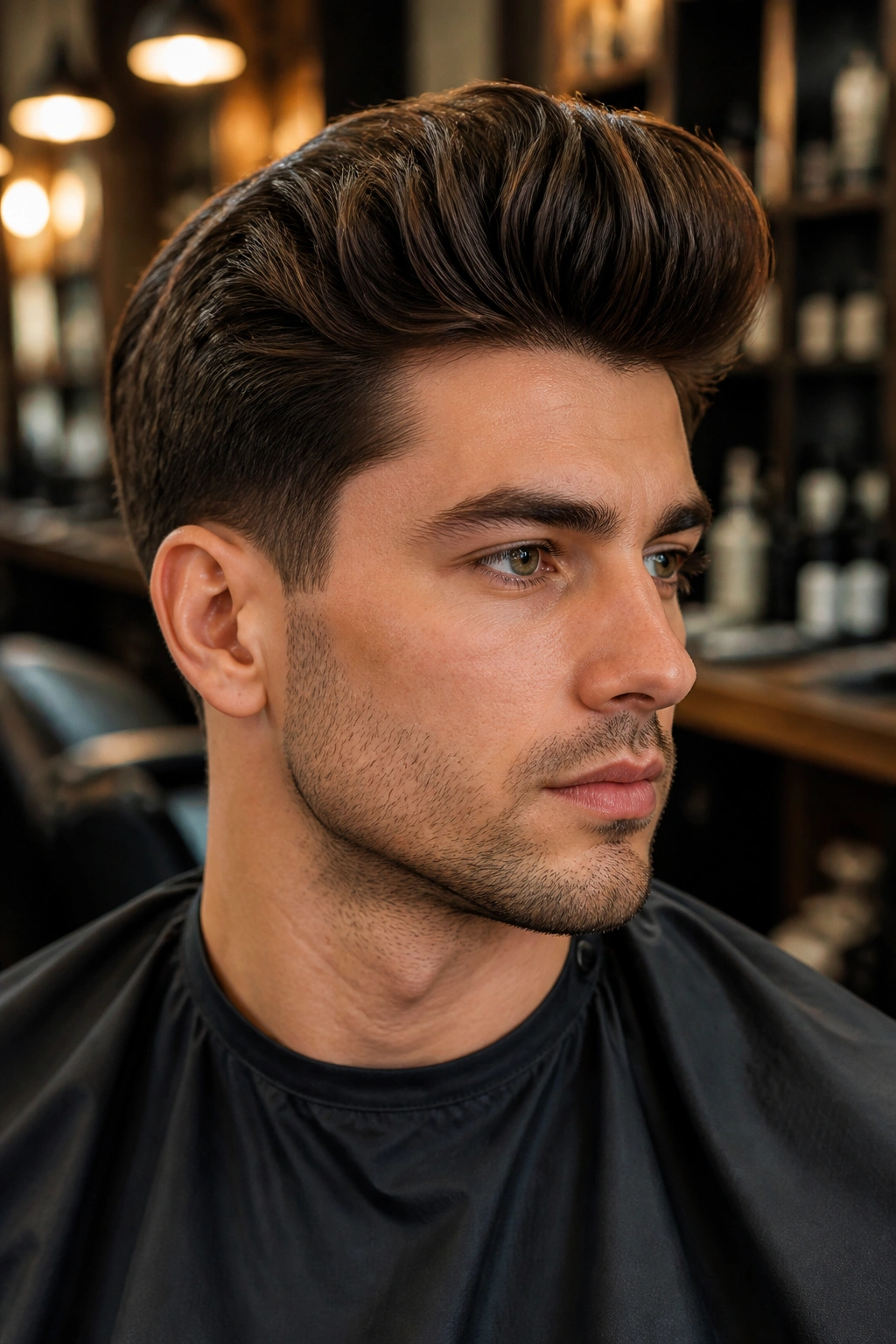
Can a pomp still feel modern without looking frozen in place? Yes, if the top is layered. The extra movement keeps the lift from turning into a stiff block of hair that only works in one direction.
How It Holds Its Shape
The front gets the most height, but the layers underneath support it so the quiff-like shape stays soft at the edges. That matters for thick hair, which can turn puffy fast. A layered pomp gives you control without flattening the hair to your scalp.
Styling Notes
- Blow-dry with a round brush for height
- Use a medium-hold product, not a wet gel
- Keep the sides tapered so the top looks taller
- Ask for gradual layering through the crown
If your hair is naturally fine, this cut can still work, but the lift will need more product and a better blow-dry.
16. Tapered Mullet with Layered Movement
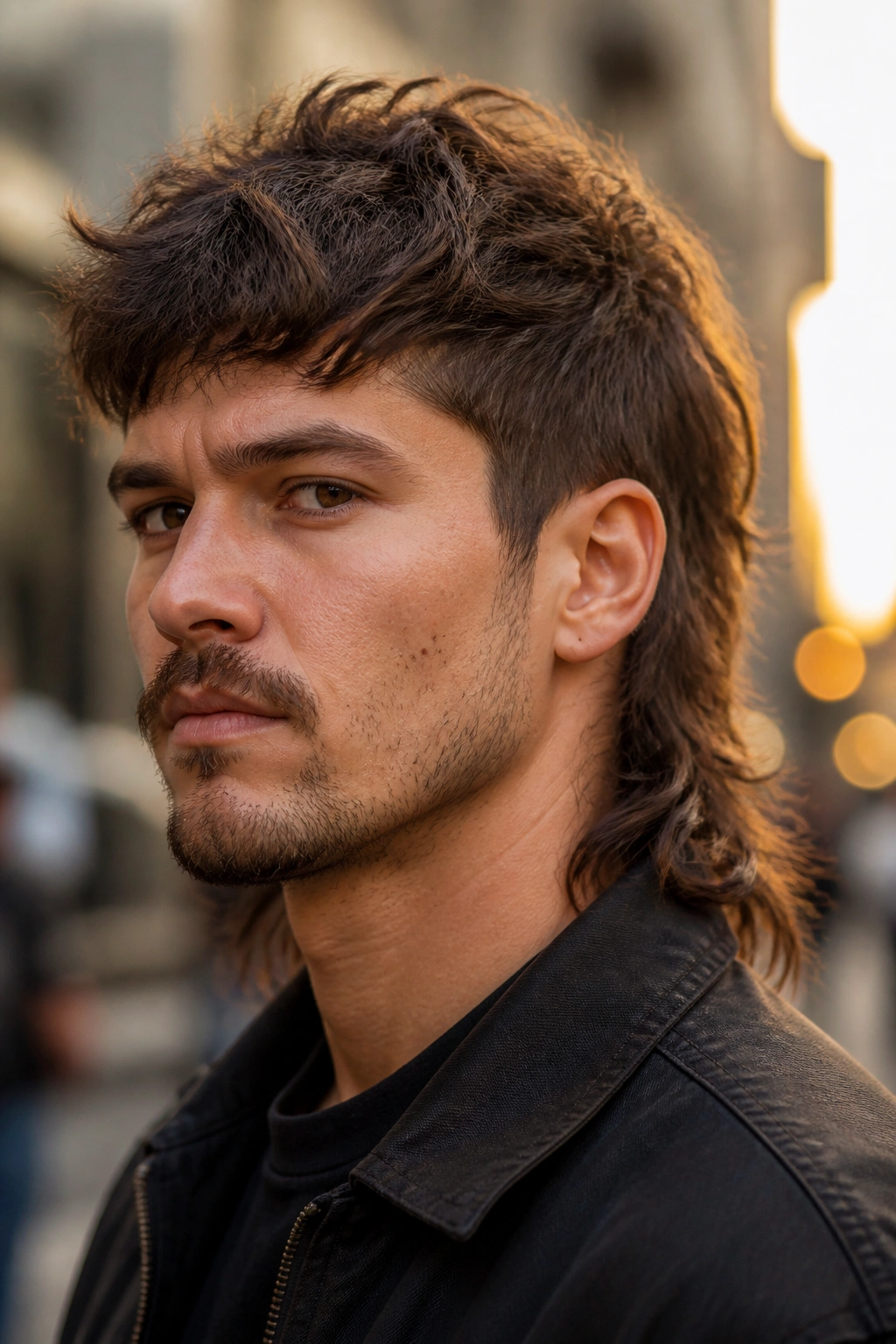
The tapered mullet has a narrow lane to walk. Too much contrast and it looks costume-y. Too little and it becomes an awkward grow-out. Layers are what keep it on the right side of that line.
This version keeps the sides neat with a taper while leaving length at the back. The top and crown get enough texture to stop the haircut from sitting flat. It’s a good cut for wavy hair because the movement makes the length feel deliberate, not accidental.
A lot of people assume this style needs heavy product. It doesn’t. A bit of cream or spray is enough if the cut is shaped well.
The back should move. The top should not fight the back.
17. Layered Undercut with a Disconnected Top
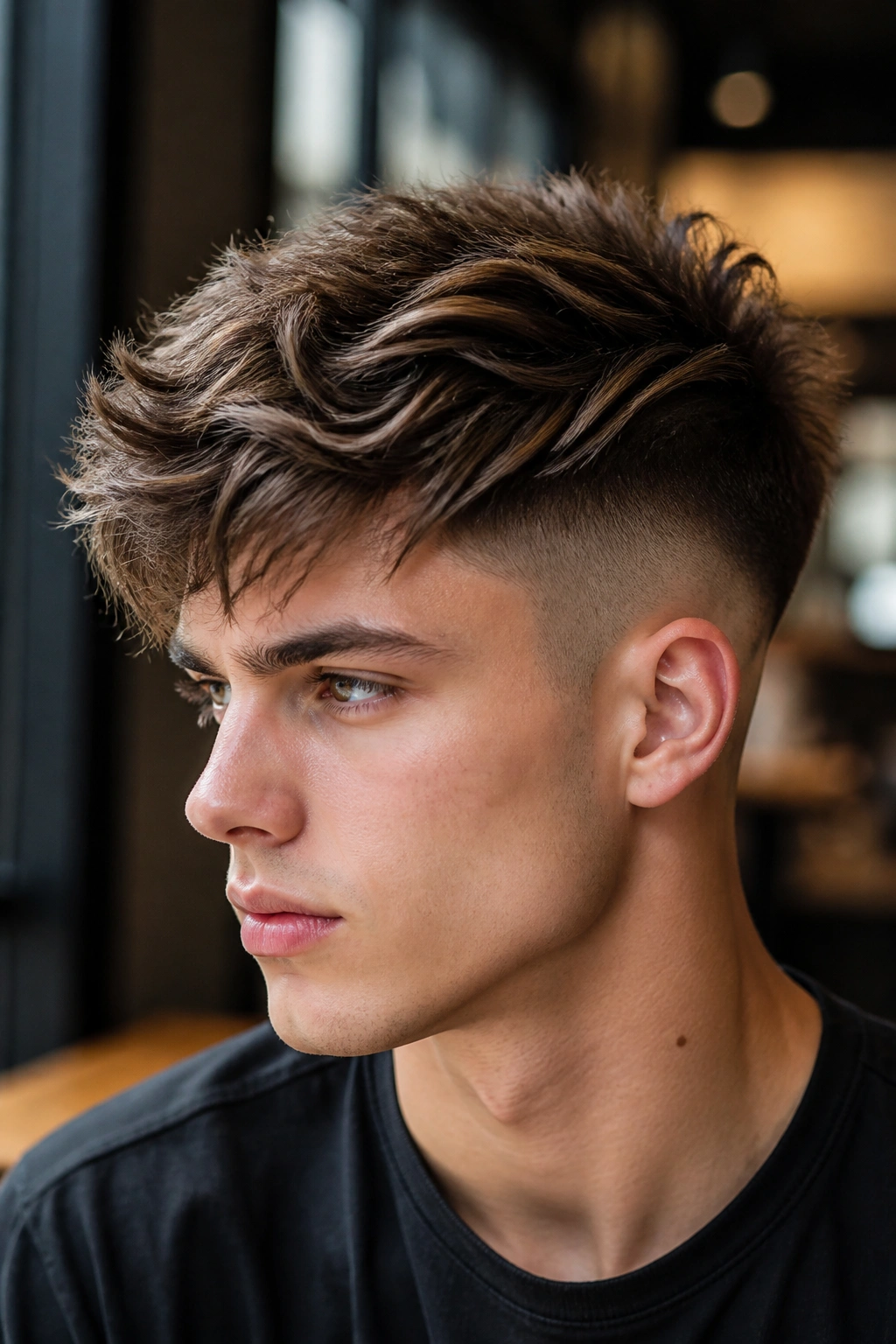
A disconnected undercut is a blunt statement. Add layers on top, and the shape gets softer without losing the contrast that makes it sharp.
The sides stay short and clean, almost severe, while the top holds length and texture. That makes the style useful for men who like a dramatic difference between top and sides. It also works when you want to keep a lot of styling room on top without the haircut feeling bulky.
What I like about this version is the honesty of it. It doesn’t try to blend everything away. Instead, it gives the top a little freedom and lets the undercut do the framing. Use matte paste for separation, or a light pomade if you want more definition. Don’t overdo the top; the contrast does enough work already.
18. Side-Swept Fringe Layers
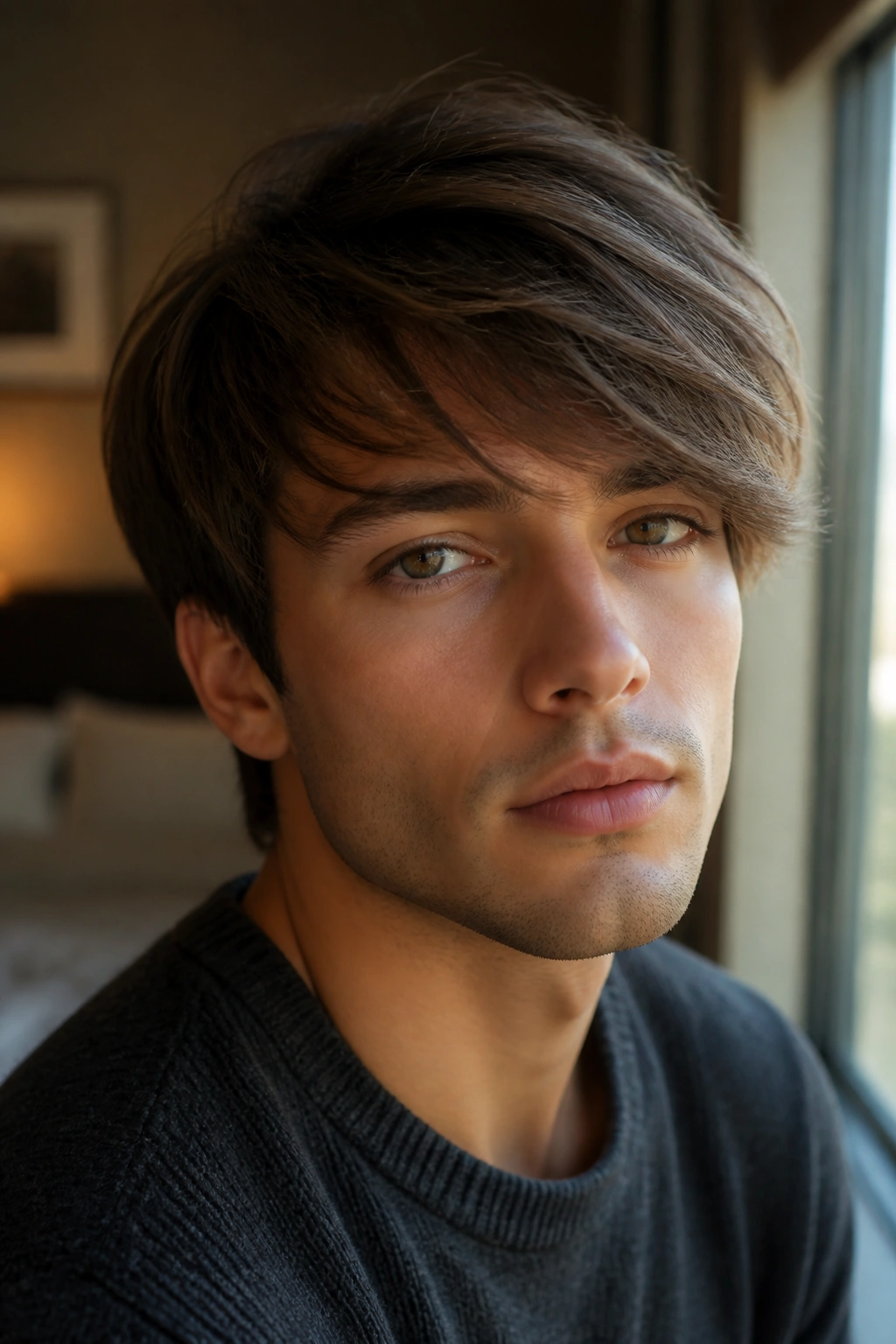
A side-swept fringe is one of the easiest ways to soften a strong forehead or break up a square front hairline. Layers make it easier for the fringe to fall to one side instead of collapsing straight down.
Compared with a blunt fringe, this version feels lighter. The hair around the front is cut with movement, so the sweep looks casual rather than pasted into place. That makes it a strong choice for straight or wavy hair that likes to separate on its own.
It also helps if your hair tends to split oddly in the front. The layers can work with the natural direction instead of fighting it. Keep the fringe long enough to move, but not so long that it pokes into your eyes all day. That’s a short path from stylish to annoying.
19. Classic Scissor-Cut Layered Business Cut
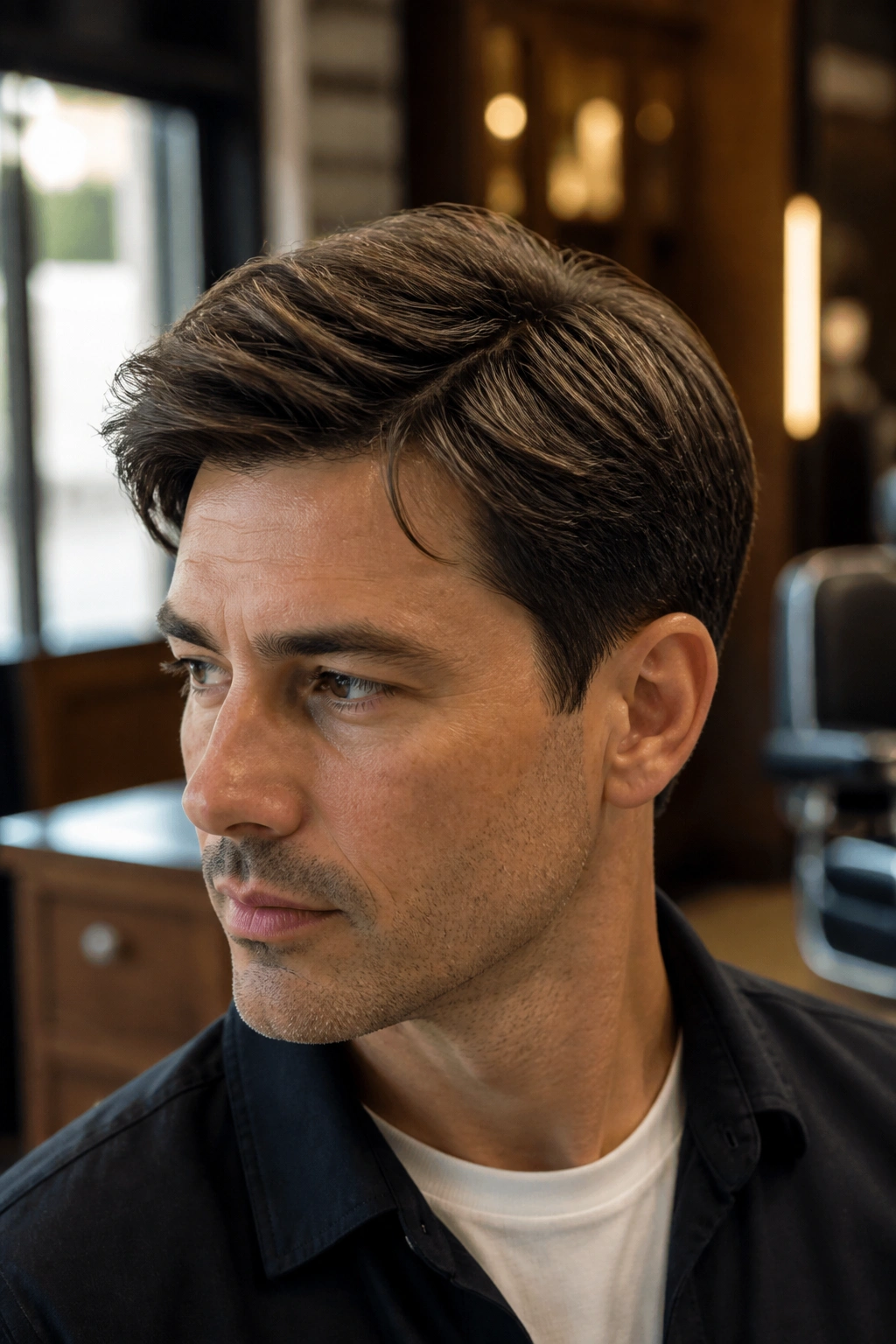
This is the haircut for men who need polish but refuse to wear a flat, lifeless side part. The scissor-cut layers keep the shape clean while giving the top enough movement to feel human.
Why Barbers Like This One
Scissors let the barber build softer gradations through the top and sides, which means the cut grows out more gracefully than a harsh clipper job. That matters if you go longer between appointments. The hair stays tidy for more weeks, and the silhouette doesn’t fall apart fast.
A Few Useful Details
- Best on straight to slightly wavy hair
- Top usually sits around 2 to 4 inches
- Sides can stay neat without skin fading everything
- Works with cream, paste, or light pomade
This is one of the safest layered haircuts for men if you need a style that can move from desk to dinner without a costume change.
20. Medium Shag with a Curtain Fringe
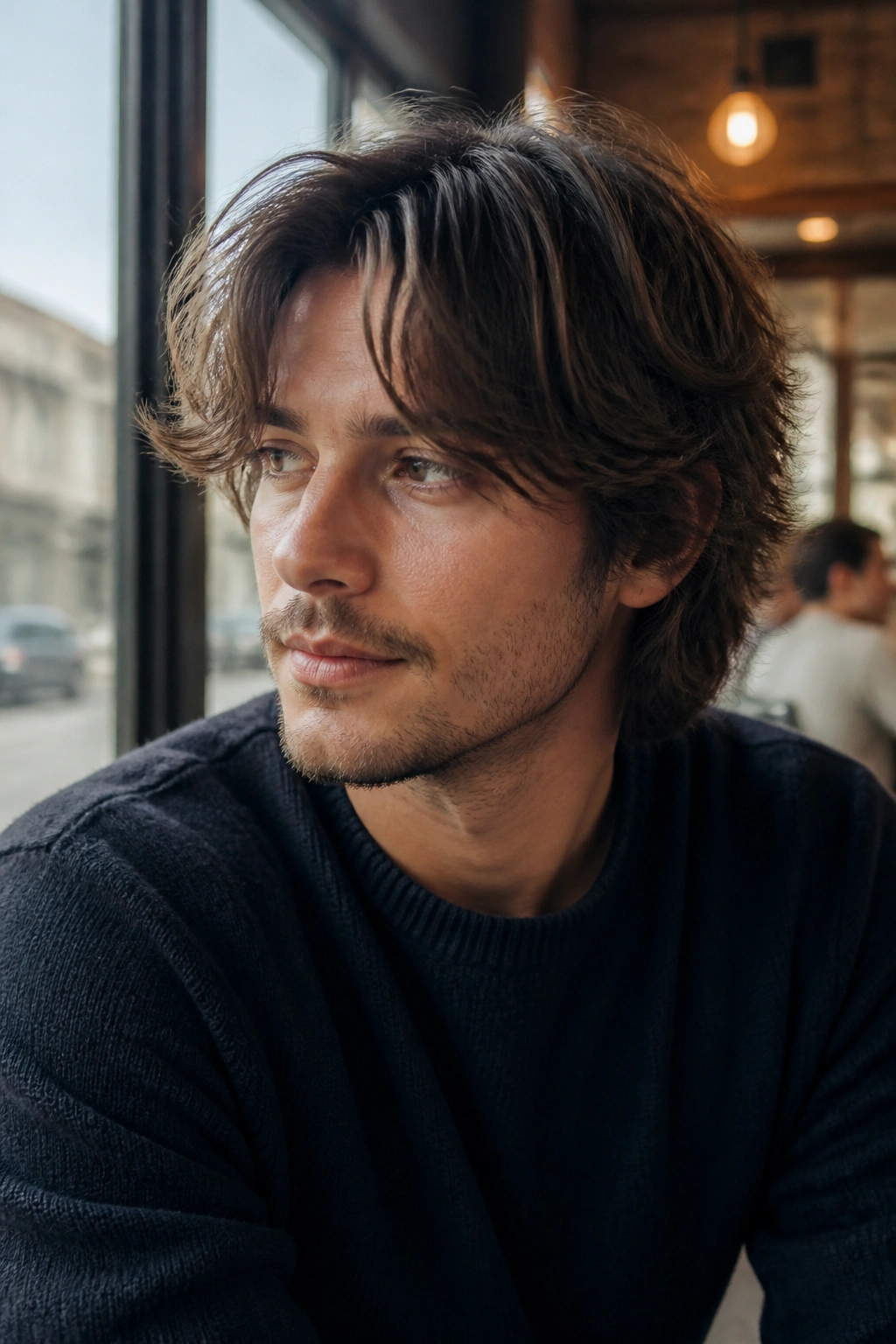
A medium shag with a curtain fringe is basically the cool version of “I let my hair do what it wanted, but I helped a little.” The layers make the shape airy, while the fringe opens the face instead of sealing it off.
The crown usually gets the most texture, which keeps the top from sitting heavy. Then the fringe falls apart in the middle or slightly off-center, landing around the cheekbones. That gives the cut a bit of attitude without making it loud.
This cut works best when the hair has some bend. Straight hair can wear it, but it needs more styling. Wavy hair, though, takes to it fast. A little sea-salt spray and a quick rough-dry is often enough.
If the ends feel too crisp, the shag loses its looseness.
21. Curly Top with a Low Fade and Layers
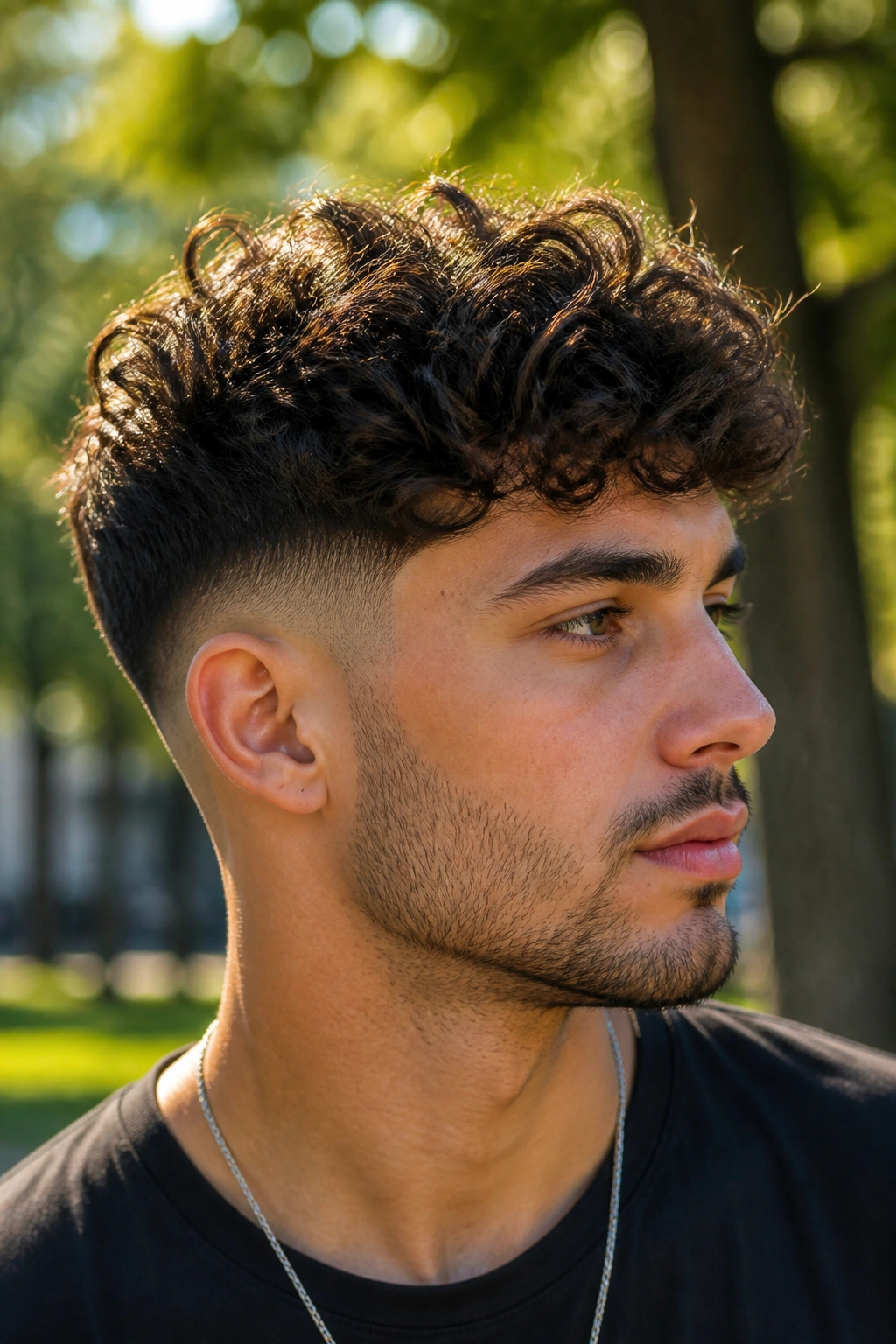
Do curls need a fade to look tidy? Not always, but a low fade can make the layers on top stand out in a cleaner way. The fade keeps the edges neat while the curls keep the style alive.
How the Shape Works
The haircut usually leaves enough length on top for the curls to stack naturally, then layers are added so the top doesn’t puff into one rounded mass. The low fade trims the sides close to the head, which creates a strong contrast and makes the curl pattern easier to see.
What to Tell Your Barber
- Keep the top shaped to the curl pattern
- Don’t cut the crown too short
- Blend the fade low, not high
- Leave enough length for shrinkage
Use curl cream or a light gel. Scrunch, air-dry, and leave it alone if you can. The curl shape should feel soft, not crunchy.
22. Layered Comb-Over with Natural Movement
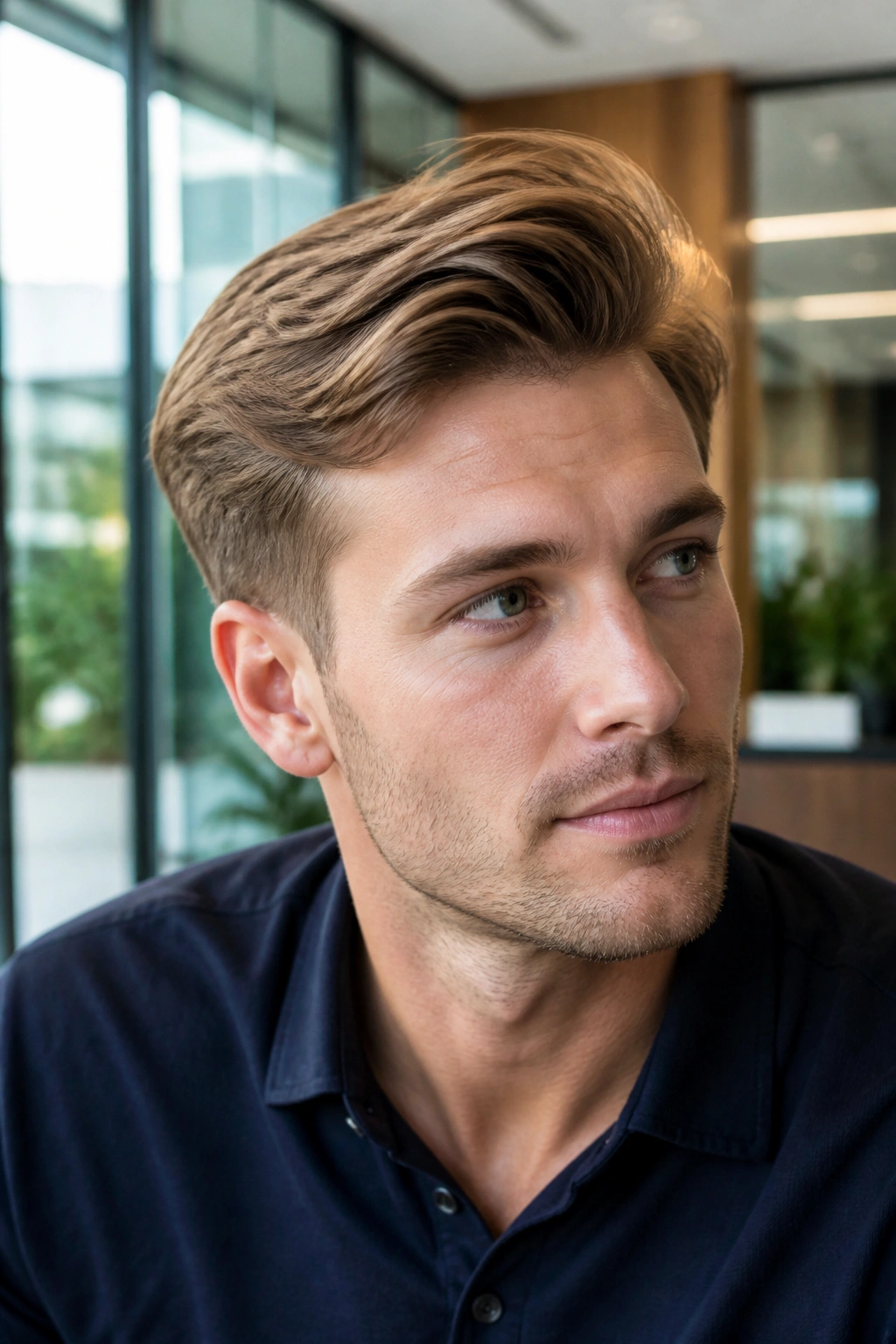
The comb-over gets a bad reputation because too many people wear it like a cover-up. Layers change that. They give the top enough texture so the hair moves when it’s combed over, which makes the style look real.
This version is especially useful if you have fine hair and want a little lift. The layers stop the top from sitting in one flat sheet, and the parting line looks cleaner because the hair isn’t overpacked with product. A light side sweep can also help the cut grow out more neatly.
If your hair thins at the crown, keep the top a little shorter than you think. Too much length can exaggerate the thinness. A matte product is usually better than anything shiny, because shine exposes scalp faster.
23. Long Surfer Layers

Long surfer layers have a loose, easy shape that works best when the hair feels touched by salt, sun, or at least a believable imitation of both. The cut is built to move, not sit still.
The layers are usually subtle, with the most obvious shaping around the ends and face. That stops long hair from turning into a single heavy curtain. If you’ve got natural wave, this cut is a gift. If your hair is straight, it still works, but the finish has to stay softer and less polished.
I like this cut because it forgives a little mess. You do not need perfect symmetry. You need clean ends, enough length, and a touch of product to keep frizz from taking over. Leave-in conditioner helps more than people think.
24. Crop with Heavy Texture and Layered Top
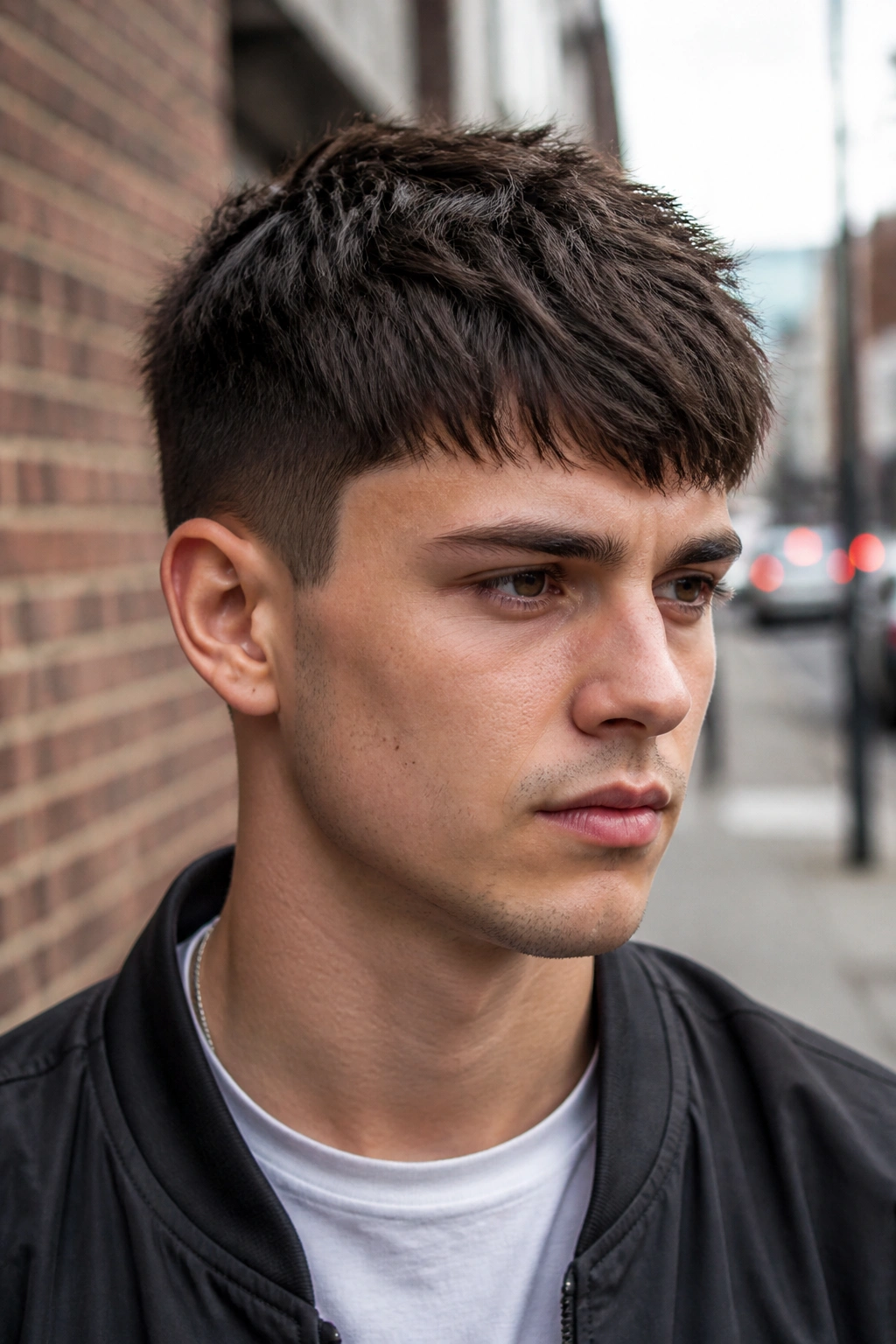
A textured crop isn’t the same thing as a short haircut with random choppiness. The good versions have structure under the mess. Layers on top let the cut break apart in a controlled way.
Compared with a blunt crop, this one feels lighter and easier to style on thick hair. The top has a rough, piecey finish, while the sides stay tighter so the top doesn’t spread outward. That makes the haircut easier to keep neat on busy mornings.
It’s a good option if your hair grows fast and gets bulky at the front. Ask for the front to stay a touch longer so you can push it forward or up, depending on the day. A small dab of matte clay is enough. If you can feel the product from across the room, you’ve used too much.
25. Feathered Layers for Thin Hair

Thin hair needs a lighter hand. Heavy layering can make it look see-through, but feathered layers do the opposite when they’re cut well. They create motion without stripping away too much density.
Why This Works
The ends are softened, not hacked, which helps the hair sit with a little lift. That gives the illusion of more fullness because the strands don’t clump together so easily. A little volume at the front can also pull attention upward, which helps the whole cut feel fuller.
Good Rules to Follow
- Keep the top medium length
- Avoid over-thinning the sides
- Use a blow-dryer to build root lift
- Choose matte products over shiny ones
This is one of the few layered haircuts for men where restraint matters more than drama. Too much texture and the scalp shows more. Too little and the cut lies flat.
26. Spiky Layered Cut
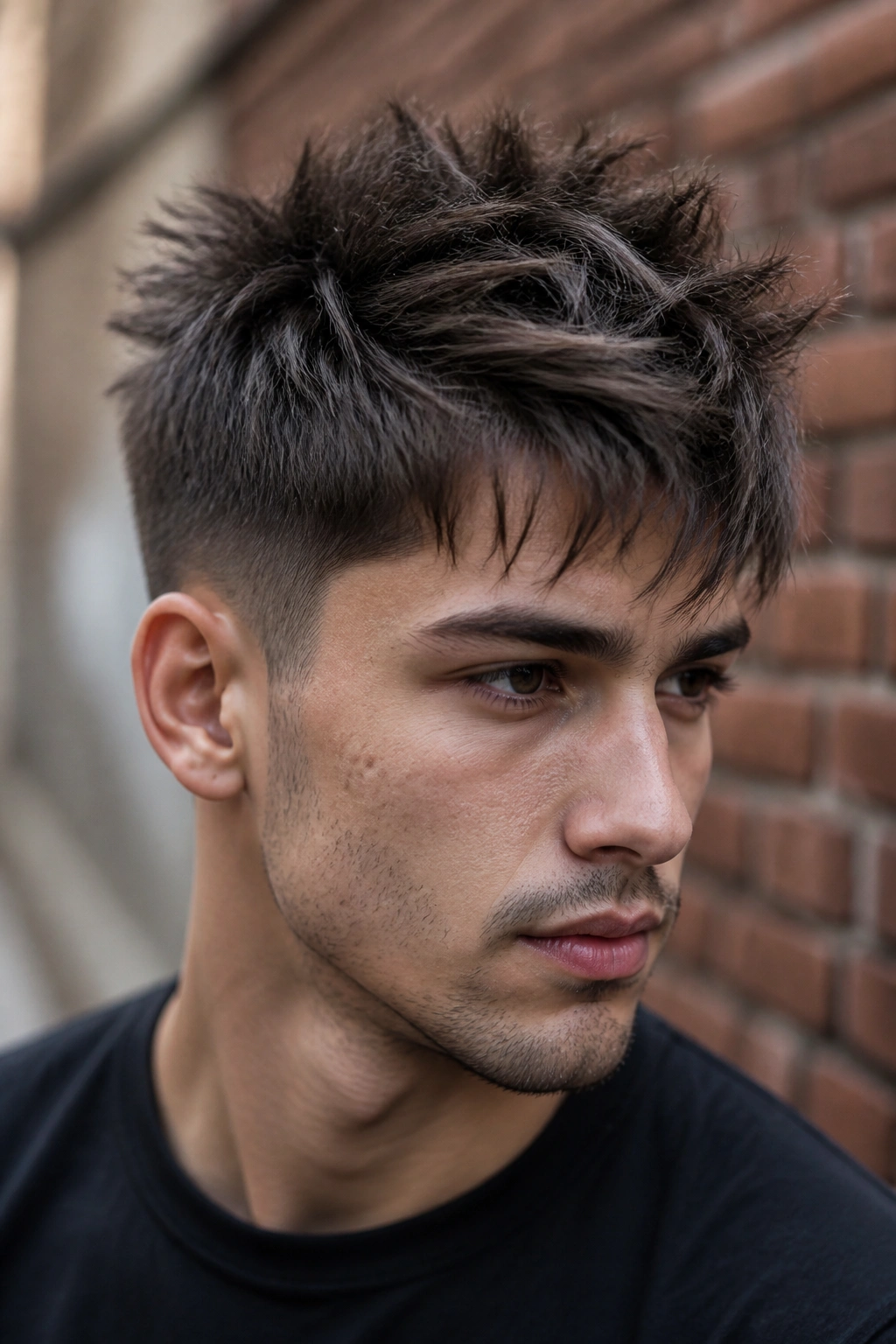
Spiky hair can look dated fast if the spikes are stiff and uniform. Layering keeps it from going that route. The cut gives the top uneven lengths, so the spikes break apart a bit and feel softer.
That makes the style better for short to medium hair that needs some edge without looking frozen. The sides should stay tight enough to frame the top, but not so tight that the spikes feel disconnected from the head. A little taper around the temples keeps it modern.
Use a matte paste or light fiber. Work it through damp hair, then pinch sections upward with your fingers.
Not a comb. Fingers. That’s how you keep the texture from looking fake.
27. Shoulder-Length Layers with Natural Bend
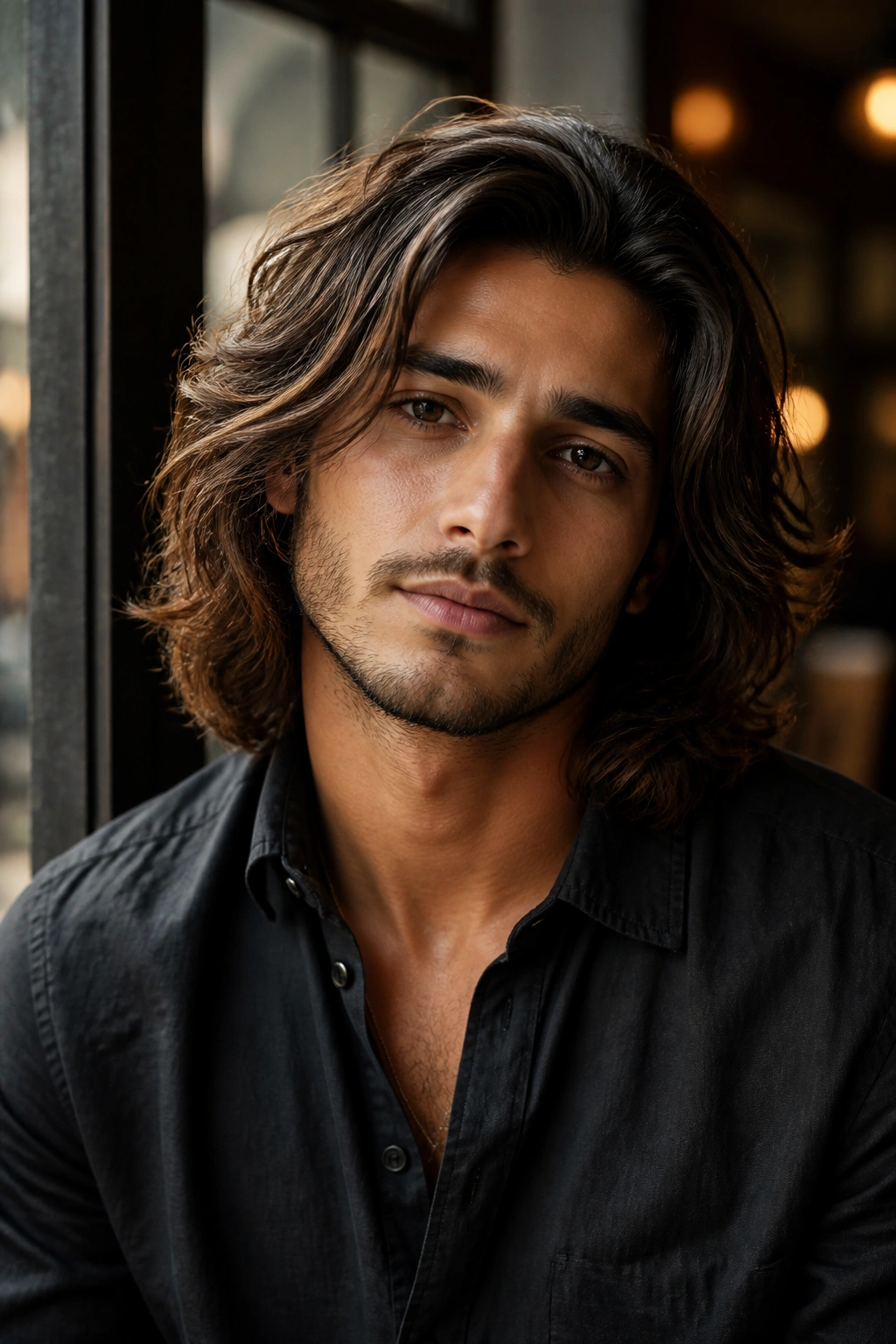
Shoulder-length hair can be handsome or awkward, and the difference usually comes down to layering. Without shape, the length drags everything down. With layers, the hair bends and moves instead of hanging like a damp towel.
How to Keep It Balanced
The upper layers should support the crown and sides, while the lower layers stay long enough to keep the overall length. That balance matters more than people think. If the top gets over-cut, the ends start looking ragged. If it stays too blunt, the style feels heavy and boxy.
Styling Notes
- Best for hair with wave or a slight bend
- Use leave-in conditioner or a light cream
- Avoid brushing it dry if you want movement
- Trim every 6 to 10 weeks to keep the shape
This cut has patience built into it. It looks better when it’s lived in.
28. Hard Part with a Layered Top
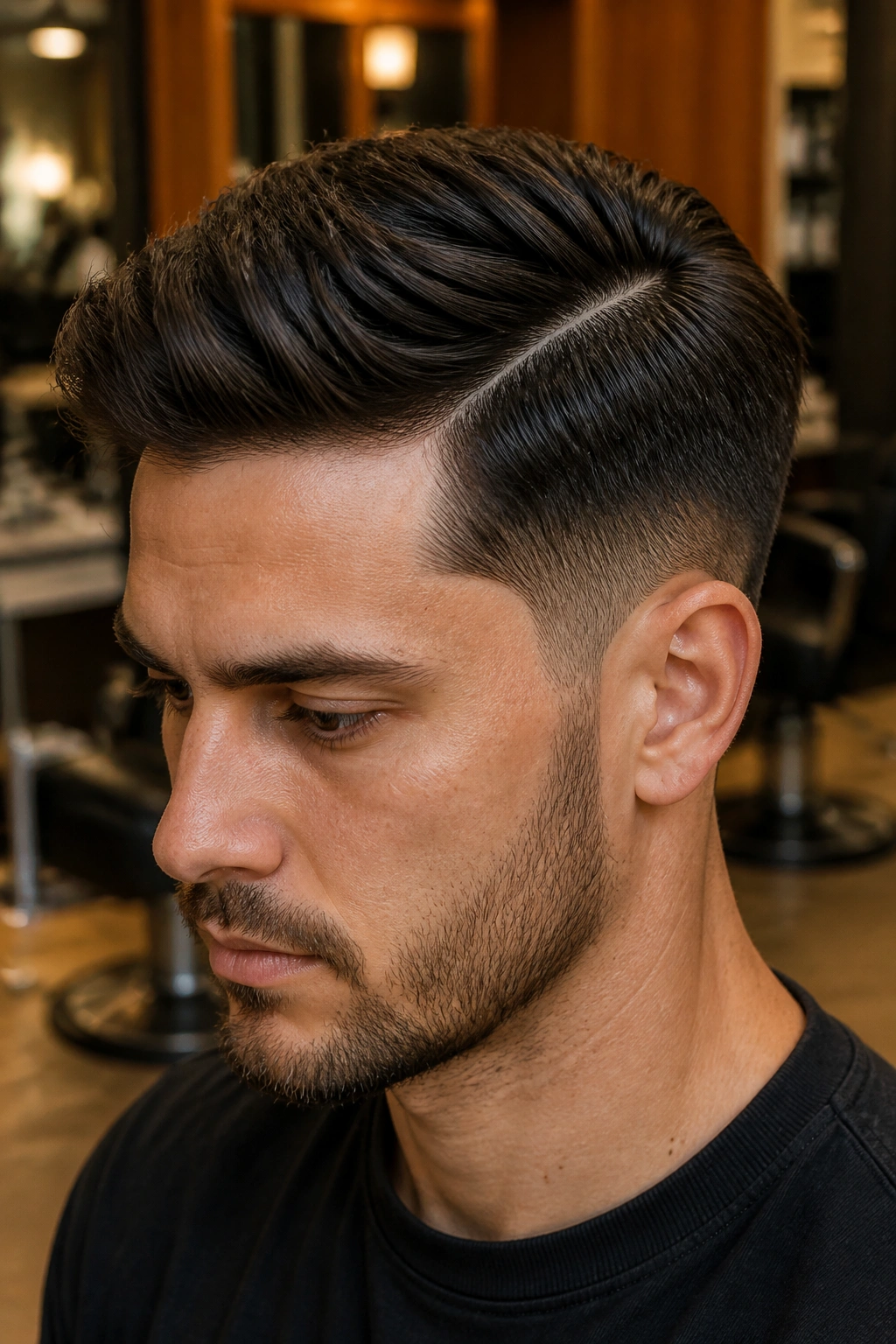
A hard part adds a sharp line, but the top still needs texture or the whole cut feels too formal. Layers keep the hair above the part from collapsing into a flat panel.
This is a useful style for men who like clean edges but don’t want a severe, shiny finish. The hard part gives direction, while the layered top lets the hair move a little when you run your fingers through it. That combination works well with a mid fade or taper because the sides stay neat without swallowing the top.
The part should be cut with care, not drawn in like a marker line. Then the top gets enough length to comb over, push back, or angle slightly forward. Keep the product light. Strong hold can make the part look fixed in place in a bad way.
29. Loose Modern Mullet with Soft Layers
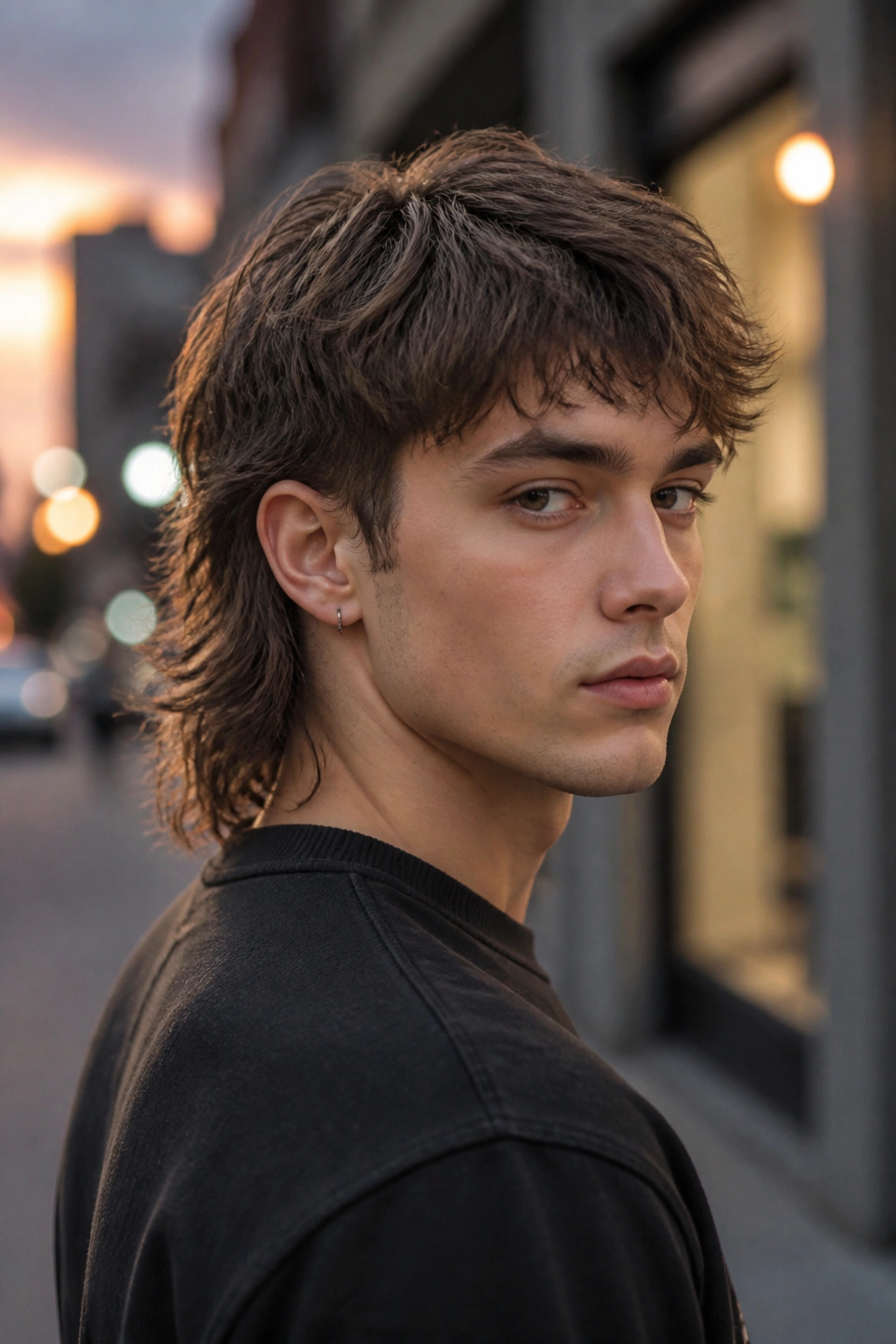
The modern mullet survives because the best versions are more relaxed than people expect. The top is layered for texture, the back carries length, and the sides stay controlled enough to keep the shape from turning clownish.
It works especially well on wavy or curly hair, where the back can fall naturally instead of looking like a separate piece. The layers at the crown help the haircut move as one shape, which is what keeps it from feeling chopped up. I’d call this a confidence cut, but that sounds corny. Still true.
Use a cream or spray that supports movement without crisping the ends. If the back looks too heavy, the barber probably left too much bulk around the nape. A cleaner taper can fix that fast.
30. The Best All-Around Mid-Length Layered Cut
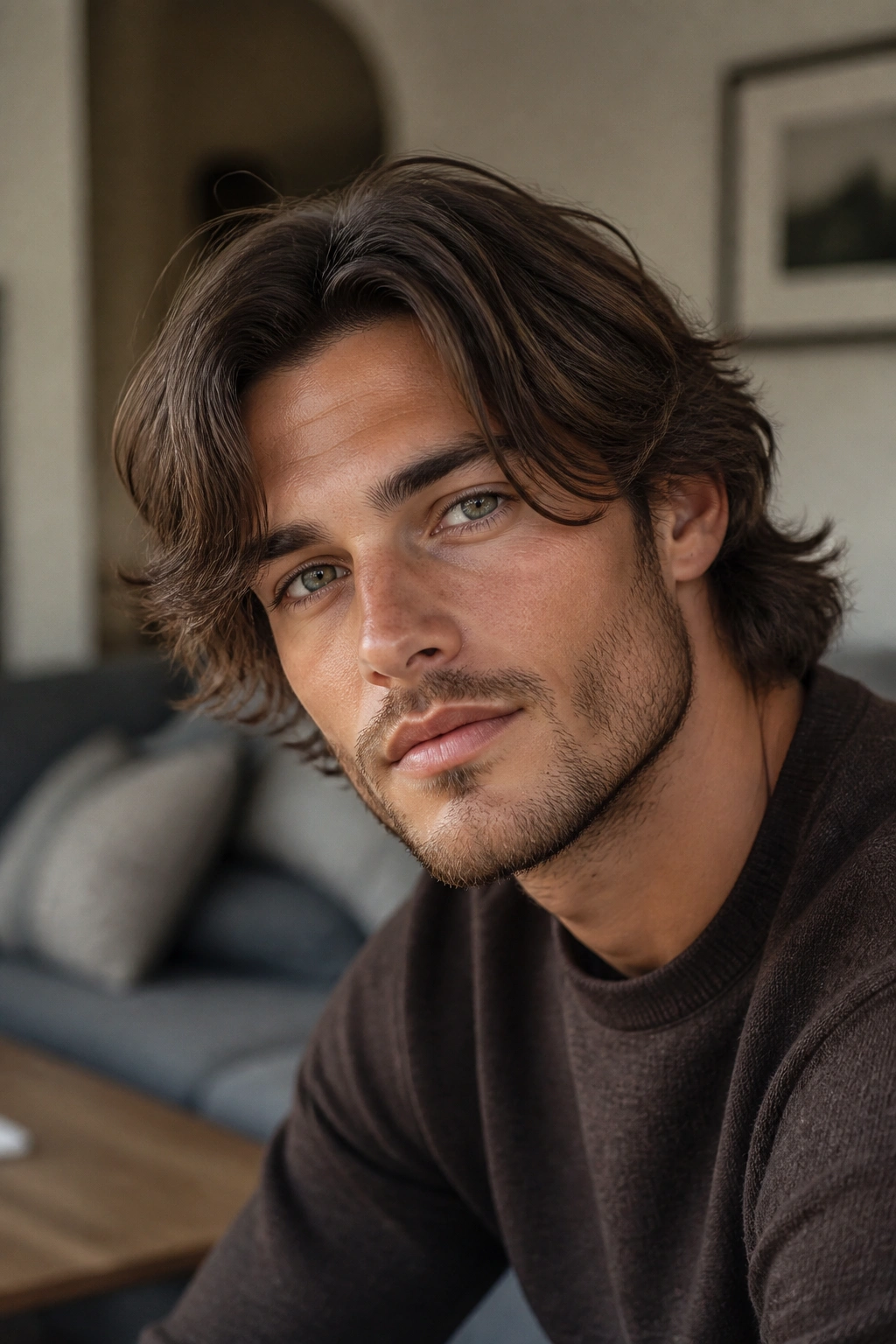
If you want one layered haircut that plays nice with most hair types, this is it: medium length on top, softer layers through the crown and sides, and enough length at the front to wear forward, back, or parted. It’s not flashy. It just works.
That’s why I keep coming back to it. The cut gives you room to style without demanding a full routine, and it grows out in a way that still looks decent between trims. Straight hair gets movement. Wavy hair gets shape. Thick hair loses bulk. Even fine hair can handle it if the layers stay light and the barber avoids over-thinning the ends.
Ask for a medium layered scissor cut with a clean taper around the ears and neckline. If you want a little more structure, keep the front longer. If you want easier mornings, trim the fringe slightly shorter and use a matte cream. Simple. Honest. Hard to mess up when it’s cut well.
