



Fine hair does not need more layers. It needs smarter ones.
That’s the part people miss when they sit in the chair and ask for “something with movement.” Too many snips near the ends can leave fine hair looking wispy in the wrong way, like the shape gave up halfway through the day. The better answer is usually a softer outline, a few well-placed layers, and enough weight left at the perimeter to keep the cut from collapsing.
Subtle layered haircuts for fine hair work because they don’t fight the strand’s natural softness. They build lift where hair can actually hold it — around the crown, through the cheekbones, just below the jaw — while keeping the bottom line clean enough to look full. That balance matters. A blunt edge can look thicker; a little internal layering can keep it from feeling helmet-like.
And yes, the details matter more than the trend name. A collarbone lob with hidden layering behaves very differently from a shag with feathered ends, even if both are “layered.” One gives quiet body. The other gives movement with a bit more attitude. If your hair is fine, the trick is choosing the version that adds shape without stealing density from the places you need it most.
1. Collarbone Lob With Hidden Internal Layers
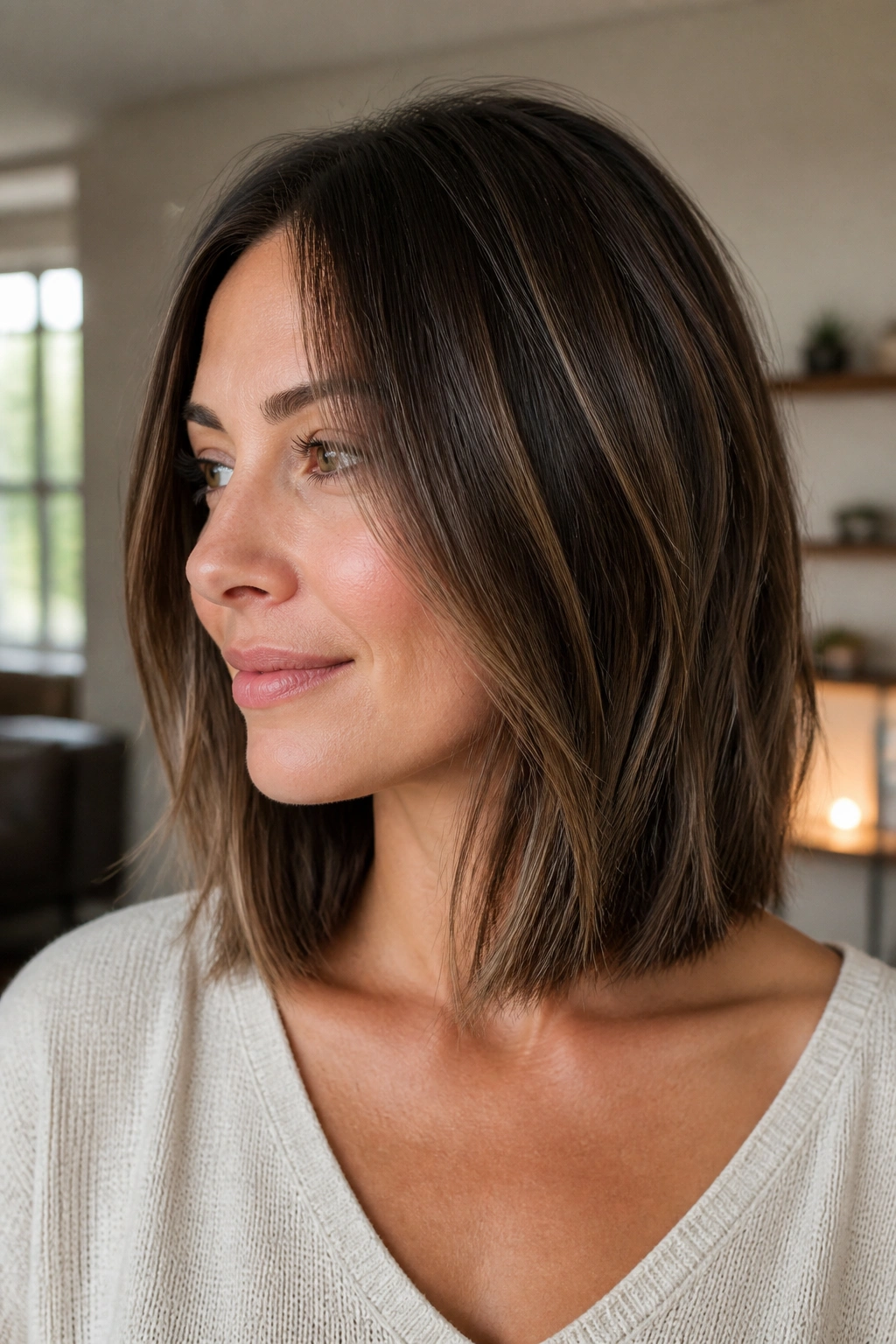
This is the cut I’d put near the top of the list for a lot of fine-haired people. The outline stays solid at the collarbone, which helps the ends look fuller, while the layering lives inside the haircut where it can create lift without obvious choppiness. Clean. Simple. Useful.
Why It Works
Hidden internal layers remove weight from the middle of the shape, not the perimeter. That means the hair can bend a little more easily with a round brush or a loose wave, but the bottom still looks thick. If your hair tends to hang flat by lunchtime, this is one of the safest ways to get movement without losing the look of density.
What to Ask For
- A collarbone-length lob with a blunt-looking outline
- Soft internal layering, not a stacked back
- Ends refined with point-cutting instead of heavy texturizing
- Face-framing pieces kept long enough to hit the cheekbone or jaw
Pro tip: Ask your stylist to keep the very bottom line strong. That tiny detail keeps fine hair from looking see-through.
2. Blunt Bob With Barely-There Ends
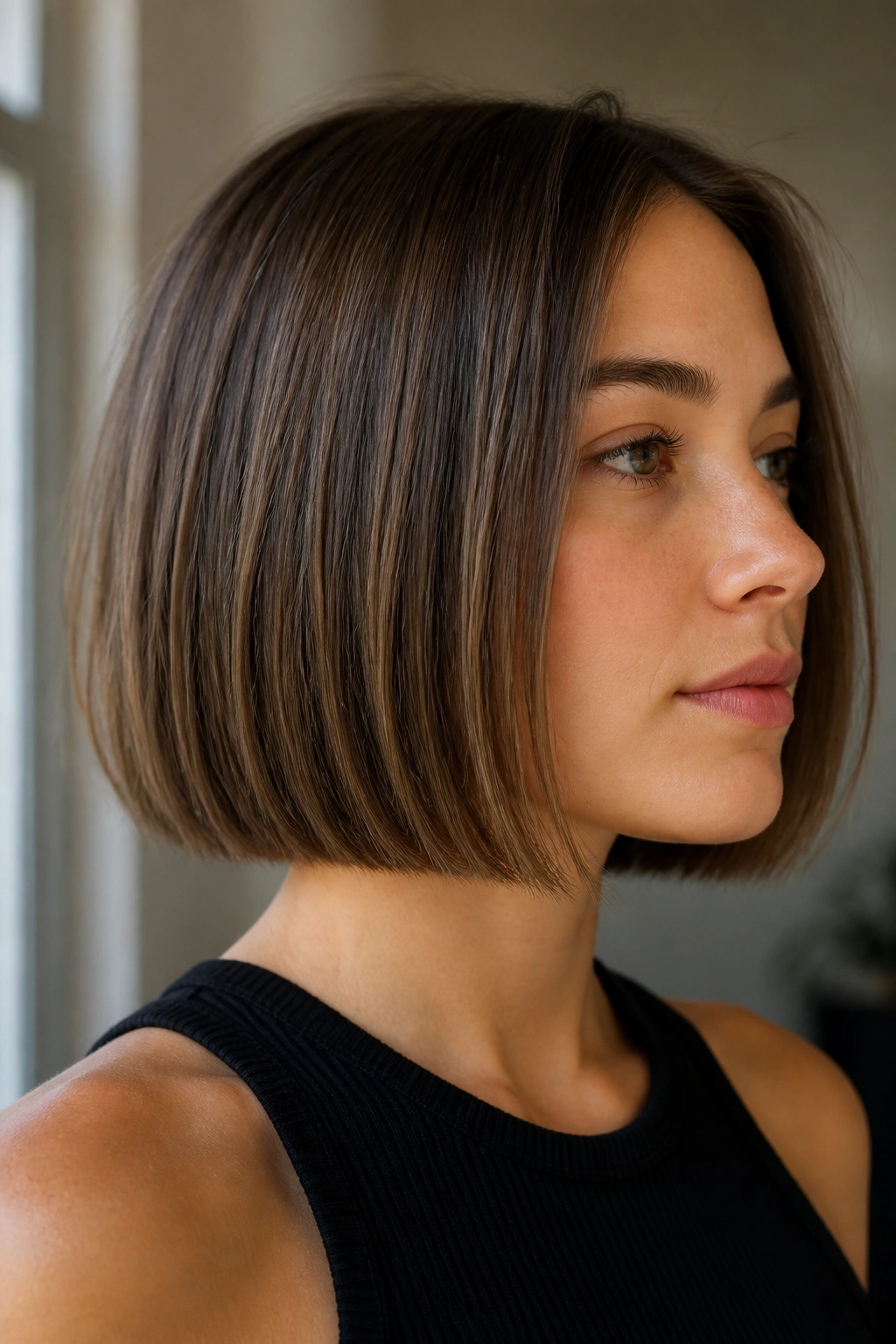
A blunt bob can look thicker than a heavily layered cut. That sounds backward until you see it in a mirror. Fine hair often needs the illusion of fullness more than it needs obvious structure, and a crisp line at the jaw or just below it does that job fast.
The trick is tiny refinement, not visible layers everywhere. A few barely-there internal snips help the bob move, but the perimeter stays solid. When the ends are cut too piecey, the whole shape can start to look sparse. Keep this one clean and let the styling do the rest.
A small bend under the ends helps. So does a side part when the hair is extra flat. If you wear your bob air-dried, rub in a pea-size amount of lightweight cream through the mids and tuck one side behind the ear. It sounds almost too simple, but that little asymmetry keeps the cut from feeling boxy.
3. Long Face-Framing Layers
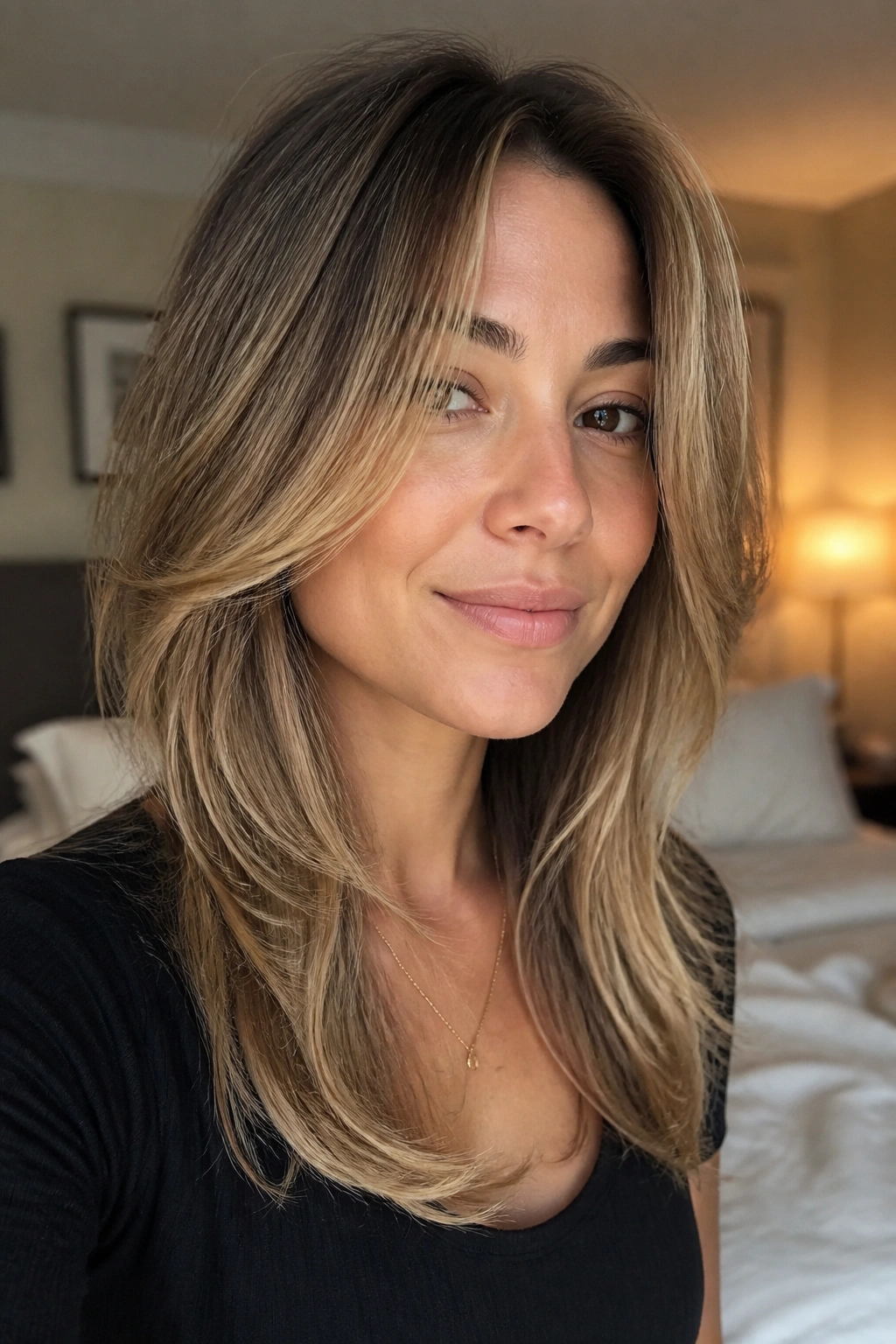
Why do long face-framing layers work so well on fine hair? Because they give shape right where the eye goes first, without stripping volume from the back. The rest of the length can stay mostly intact, which matters if your hair already sits close to the head.
The best version starts around the chin or collarbone and blends down in soft steps. That way the front moves, but the overall shape still reads as full. If those front pieces are cut too short, they can flip in odd ways and make the rest look thinner than it is. Long is safer. Long is often better.
How to Get the Most From It
- Blow-dry the front pieces away from the face with a 1.5-inch round brush
- Add a soft bend, not a curl
- Keep the ends blunt or only lightly feathered
- Use a root spray at the crown if the top lies flat
This cut is a good bridge for people who want a change without going short. It doesn’t shout. It just quietly makes the face look more open.
4. Soft Shag With Invisible Crown Layers
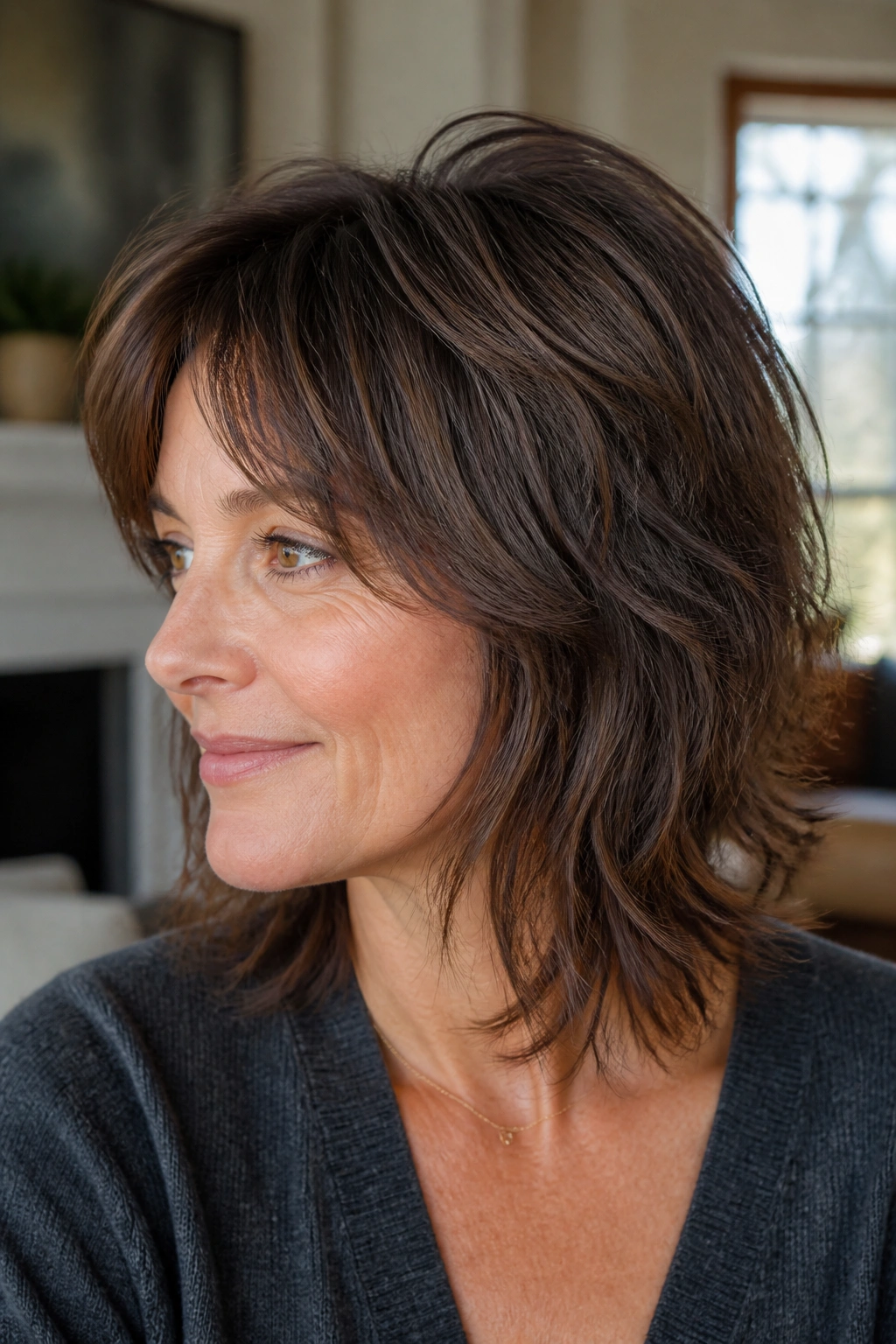
A shag on fine hair can go wrong in a hurry. Too many layers, too much texture, and you end up with a wispy cloud instead of a shape. But a softened shag — with most of the action hidden near the crown — can be a smart choice.
The crown layers lift the top without turning the ends into fray. Think of it as a controlled mess. The perimeter still has enough weight to sit nicely, while the top has enough movement to keep the hair from lying flat against the scalp. That little lift at the roots is often the difference between “my hair looks tired” and “my hair looks like it has a pulse.”
A good styling cream and a diffuser make a difference here. Not a thick one. A light mousse at the roots, then scrunching only halfway down the shaft, usually gives more useful volume than piling product through the ends. Fine hair hates being overloaded.
5. Chin-Length French Bob With Underlayers
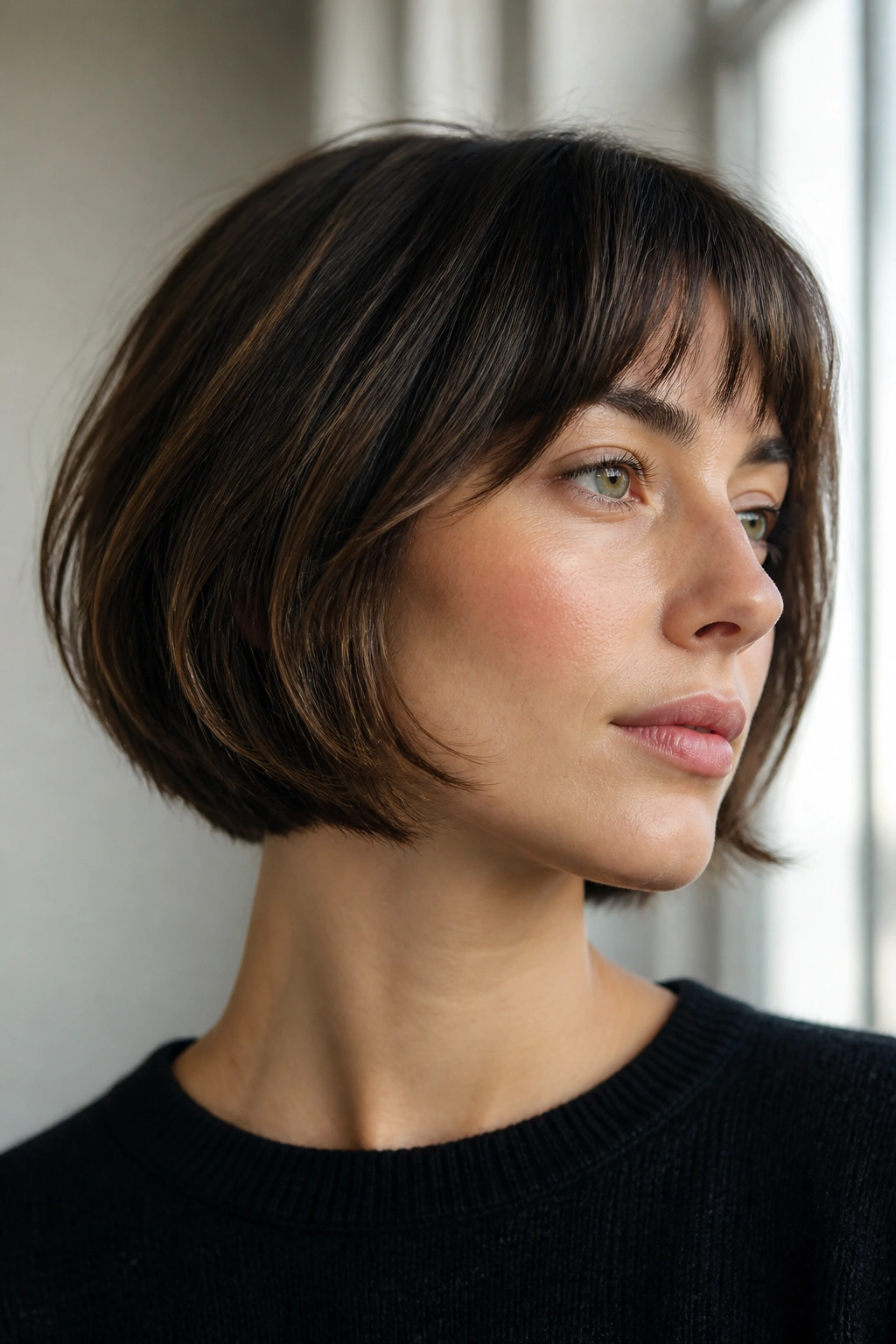
Short does not have to mean sparse. A chin-length French bob can be one of the smartest cuts for fine hair when it’s built with a slightly fuller bottom line and a few hidden underlayers to keep it from ballooning.
The shape looks especially good when the ends turn in just a touch. That soft curve makes the hair feel deliberate, not accidental. If your stylist adds too much layer through the top, the cut can lose its tidy line, and that is the whole point here. The charm of a French bob is in the clean edge and the easy movement around the cheeks.
This one suits straight or slightly wavy texture best. If your hair is very straight, a quick pass with a flat brush and a slight bend at the ends is enough. If it’s wavy, let a few strands do their own thing. The cut can handle that.
6. Butterfly Cut With A Gentle Drop
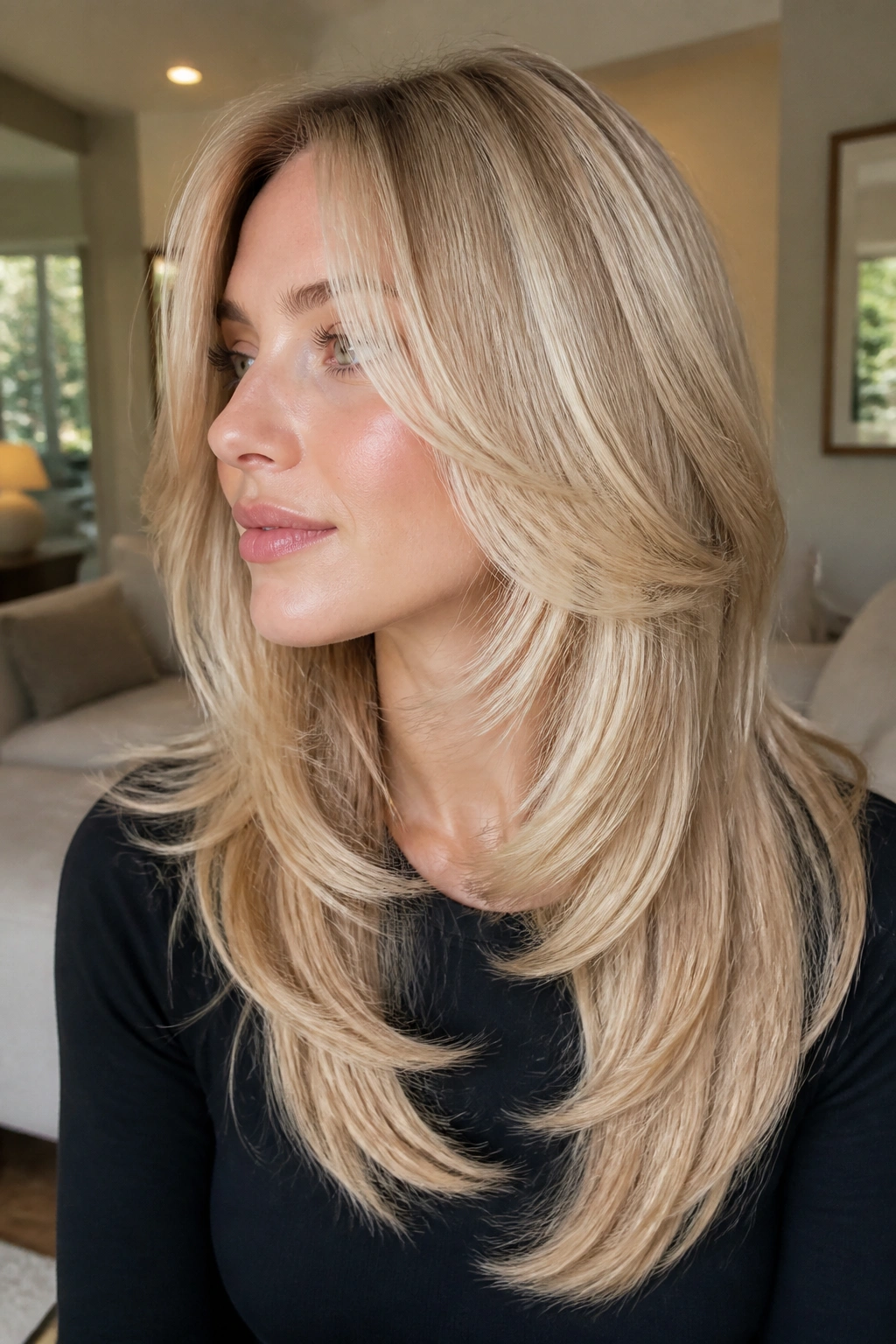
The butterfly cut gets talked about a lot, and for good reason. On fine hair, though, it needs a softer hand than people expect. You want the shorter face-framing layers to lift the top section while the longer length stays intact beneath them. That layered split creates body without making the whole head look hacked up.
The “drop” between the top layers and the long bottom layers should be gentle. If the gap is too dramatic, fine hair can start to look thin at the ends. Ask for blended transitions, not hard steps. The cut should feel like it falls from one level to the next, not like two separate haircuts stacked together.
This style shines when you curl the front away from the face with a 1.25-inch iron. A loose wave through the long layers is enough. No need to create ringlets where you want softness.
7. U-Shaped Cut With Feathered Sides
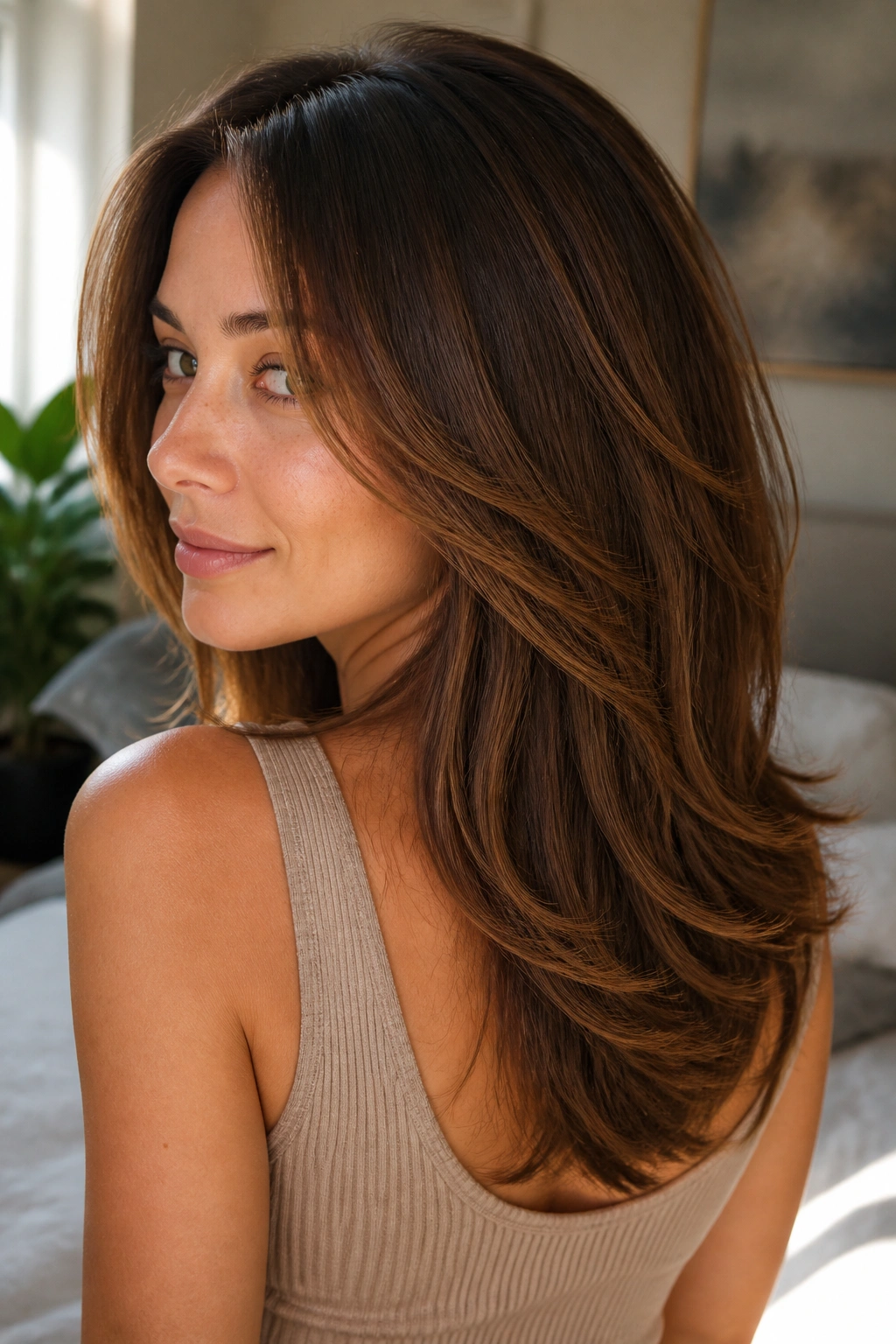
A U-shaped cut keeps the back full while letting the sides move a little more. That shape is useful for fine hair because the center back holds onto weight, and the sides can be feathered just enough to avoid that heavy curtain effect.
The curve matters. A straight-across perimeter can look harsh on longer fine hair, especially if the ends are thin. The U shape softens the outline without sacrificing the feeling of density. Feathering near the sides gives the haircut a bit of swing when you turn your head, which sounds minor until you notice how much more alive the hair feels.
This is one of those cuts that looks better with air-drying than people expect. If you want more shape, twist the front sections away from the face while they’re damp and let them dry that way. Old-school trick. Still works.
8. Shoulder-Length Cut With Curtain Bangs
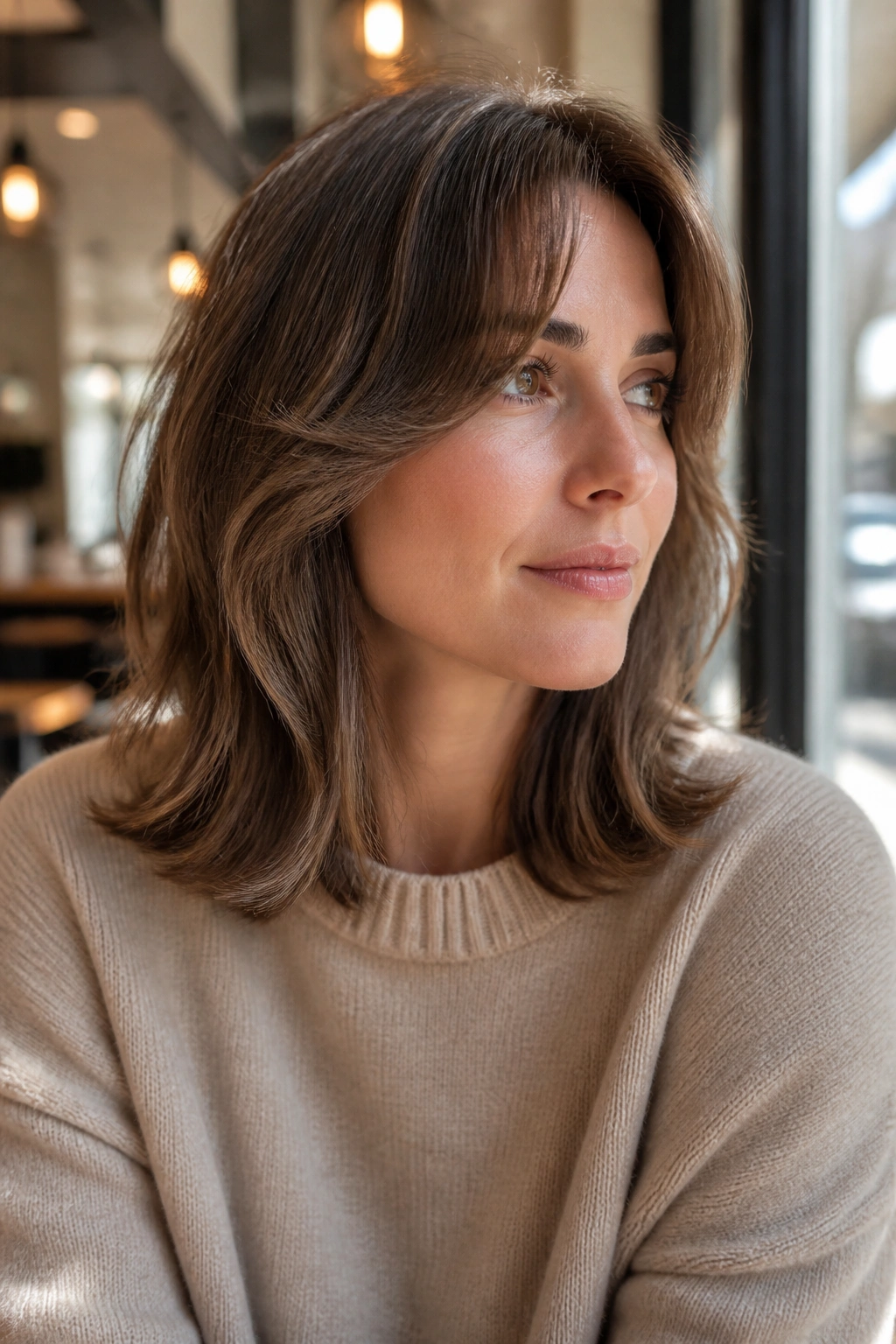
Curtain bangs can be a gift for fine hair, if they’re kept soft and not too dense. They bring attention to the eyes and cheekbones, and they let the rest of the shoulder-length cut stay light. Too thick, and the bangs eat up too much hair. Too thin, and they disappear. The middle ground is where this cut lives.
The shoulders are a smart stopping point too. Hair at that length has enough swing to move, but not so much weight that it drags flat. Add a little internal layering through the sides and the ends, and you get a shape that bends easily around the face.
A round brush and a quick blast of heat are usually enough. Dry the bangs away from the center, then let them settle on their own. If you like a slightly lived-in finish, mist the mids with a texturizing spray and use your fingers, not a brush, to break the shape apart.
9. Sleek Mid-Length Cut With Micro-Layers
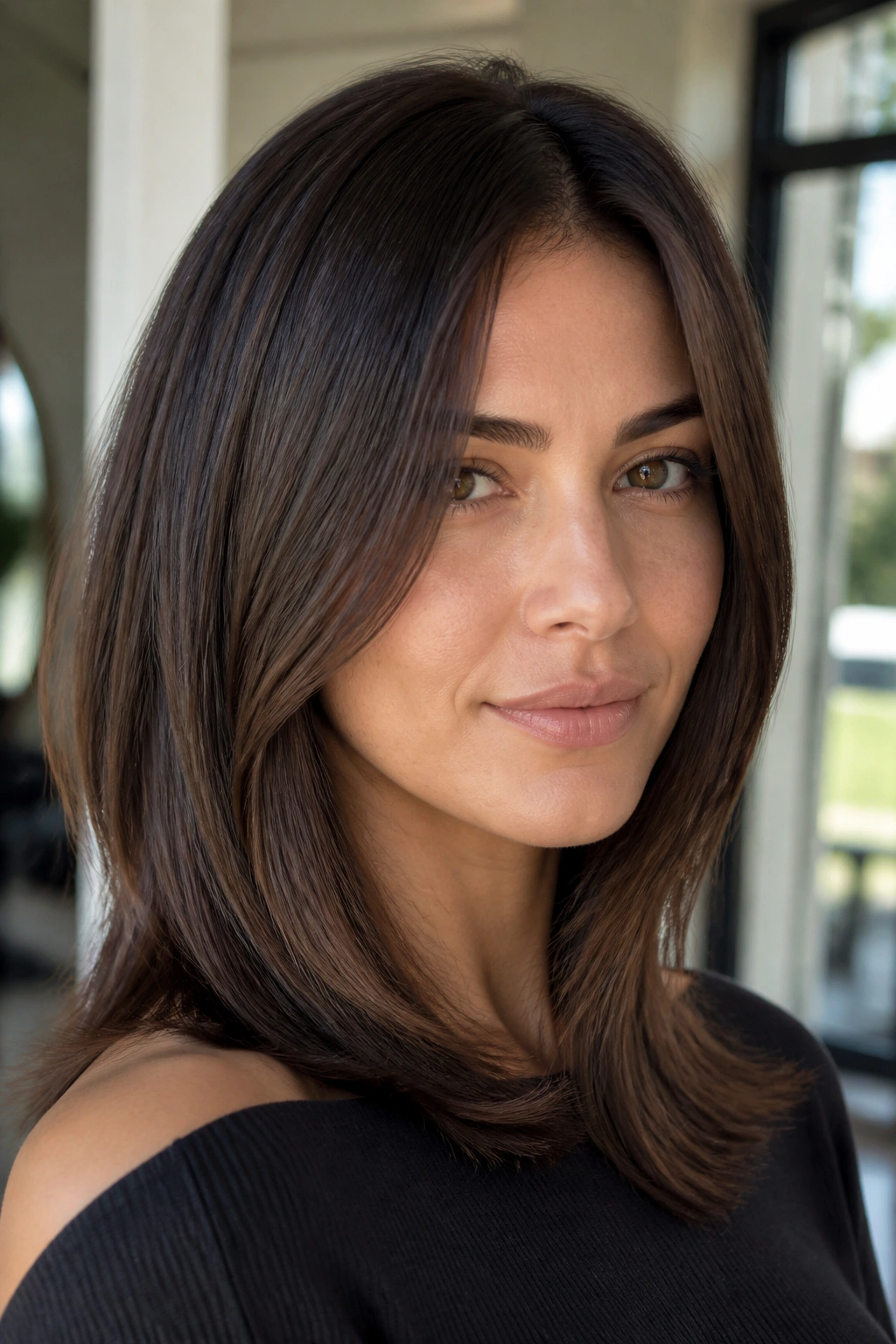
Not every layered haircut has to look layered. Some of the best ones on fine hair are almost invisible until the hair moves. Micro-layers do that job nicely. They take a little weight out of the mids, add a bit of bend, and keep the overall look polished.
This cut is especially useful if you wear your hair straight most of the time. A blunt-ish mid-length cut with tiny internal layers can stop the shape from falling flat against the neck. It also avoids the fluffy ends that happen when layers are cut too high on fine strands.
Keep the styling spare. A heat protectant, a flat brush, and a light serum on the ends are enough. Skip anything heavy near the roots. That’s where fine hair starts to lose its nerve.
10. Textured Pixie-Bob With A Tapered Nape
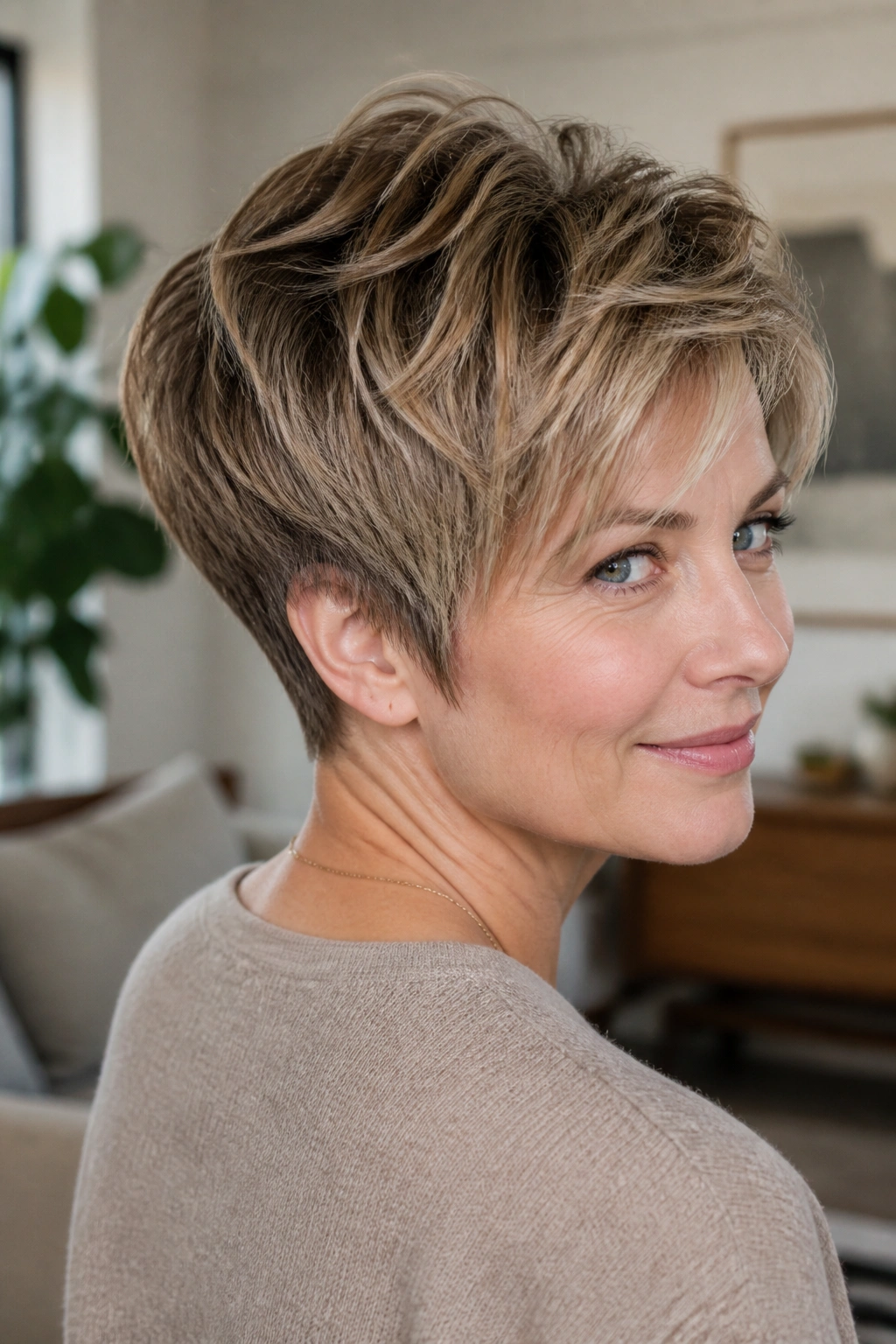
A pixie-bob gives fine hair a chance to look fuller through shape rather than length. The tapered nape opens up the neck, while the top keeps enough length to create lift and a little sweep through the crown.
The nice part is that it can be soft, not spiky. Ask for texture that’s cut into the top in small, controlled sections. Nothing too chopped. Fine hair behaves better when the shape is built with restraint. A clean nape also helps the cut feel neat as it grows out, which matters if you don’t want a trim every few weeks.
This style needs a little push at the roots. A small round brush or even your fingers plus a root spray can bring the top forward or to the side. Quick. Easy. No fussing.
11. Rounded Cut With Softly Curved Layers
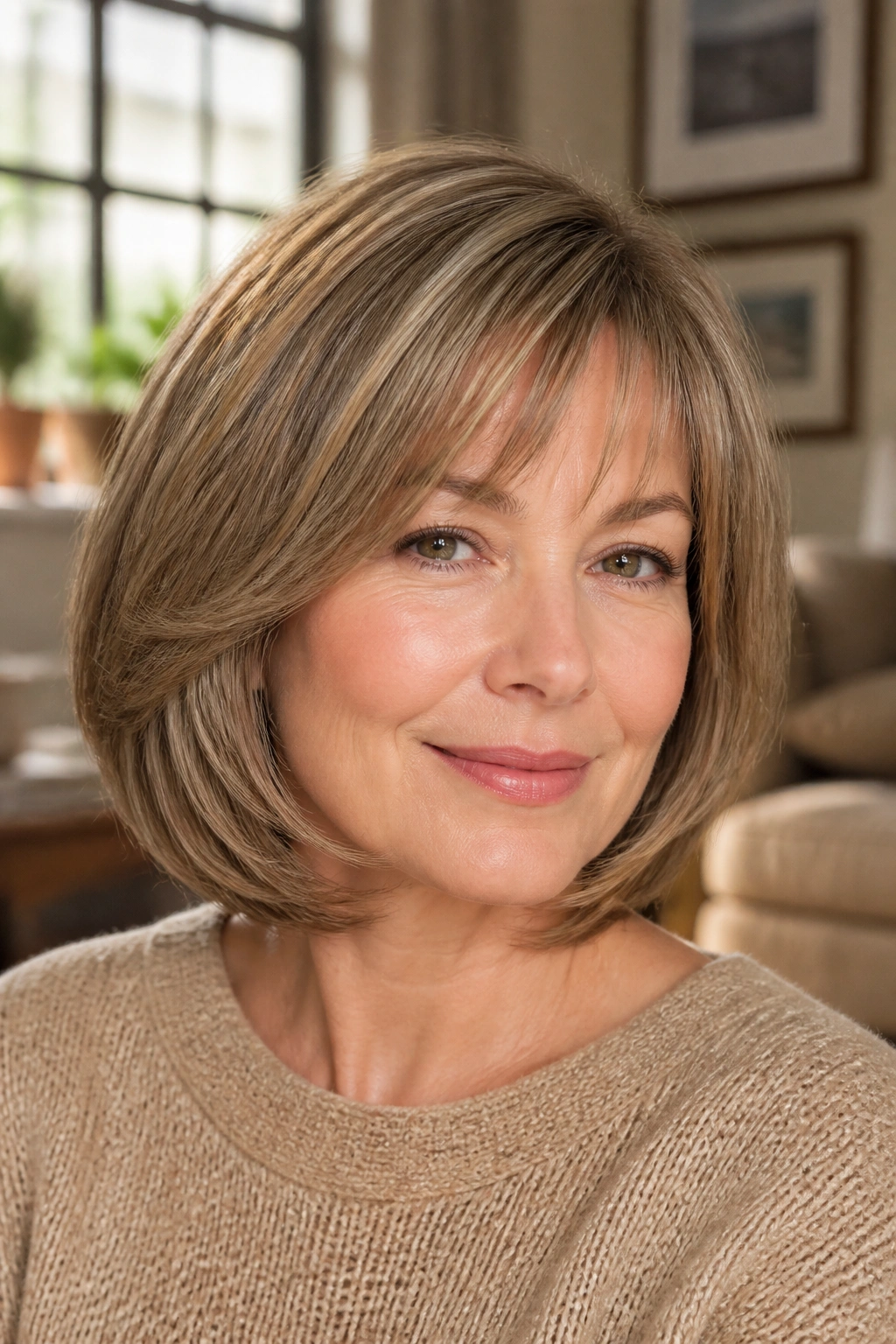
A rounded shape can be a secret weapon for fine hair. It creates the feeling of fullness through the sides and back, which is where many cuts collapse first. The trick is keeping the layers curved and blended so the silhouette stays smooth.
This is not a heavy pageboy. It’s softer than that. The layers should follow the shape of the head and tuck inward a bit, almost like a shell. That curve makes the ends look dense, even when the hair itself is fine. It also keeps the cut from flaring out at the shoulders, which is a common complaint with medium-length hair.
Good Styling Matches
- Blow-dry with a medium round brush
- Tuck the ends under slightly
- Use a lightweight mousse at the roots
- Finish with a flexible-hold spray, not a stiff one
Best for: people who want body without messy texture.
12. Long Layers With A Center Part
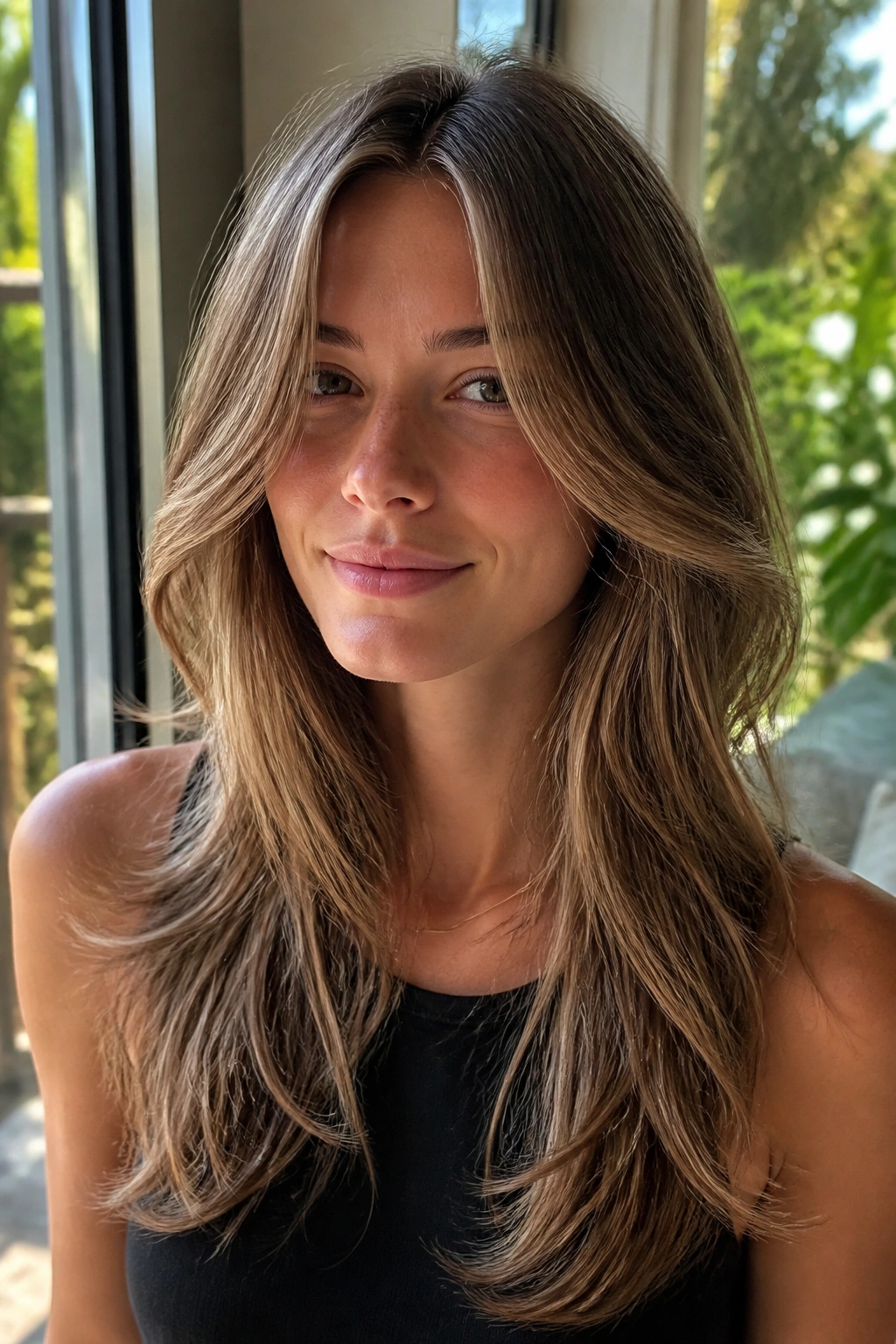
Long hair and fine hair can get along, but only if the layers are handled carefully. A center part with long, low layers gives the face a clean frame while leaving most of the length intact. That’s a good trade when you want movement without giving up the sense of fullness.
The layers should begin below the collarbone in most cases. Higher than that, and the hair can start to look thin through the ends. Lower than that, and the cut may not show enough shape. The middle ground lets the hair fall in soft panels on either side of the face.
A center part works best when the root area has a bit of lift. Dry the crown forward first, then flip the part back into place. Strange little trick, but it helps. Fine hair often needs a bit of memory at the roots.
13. Side-Part Lob With One-Point Layers
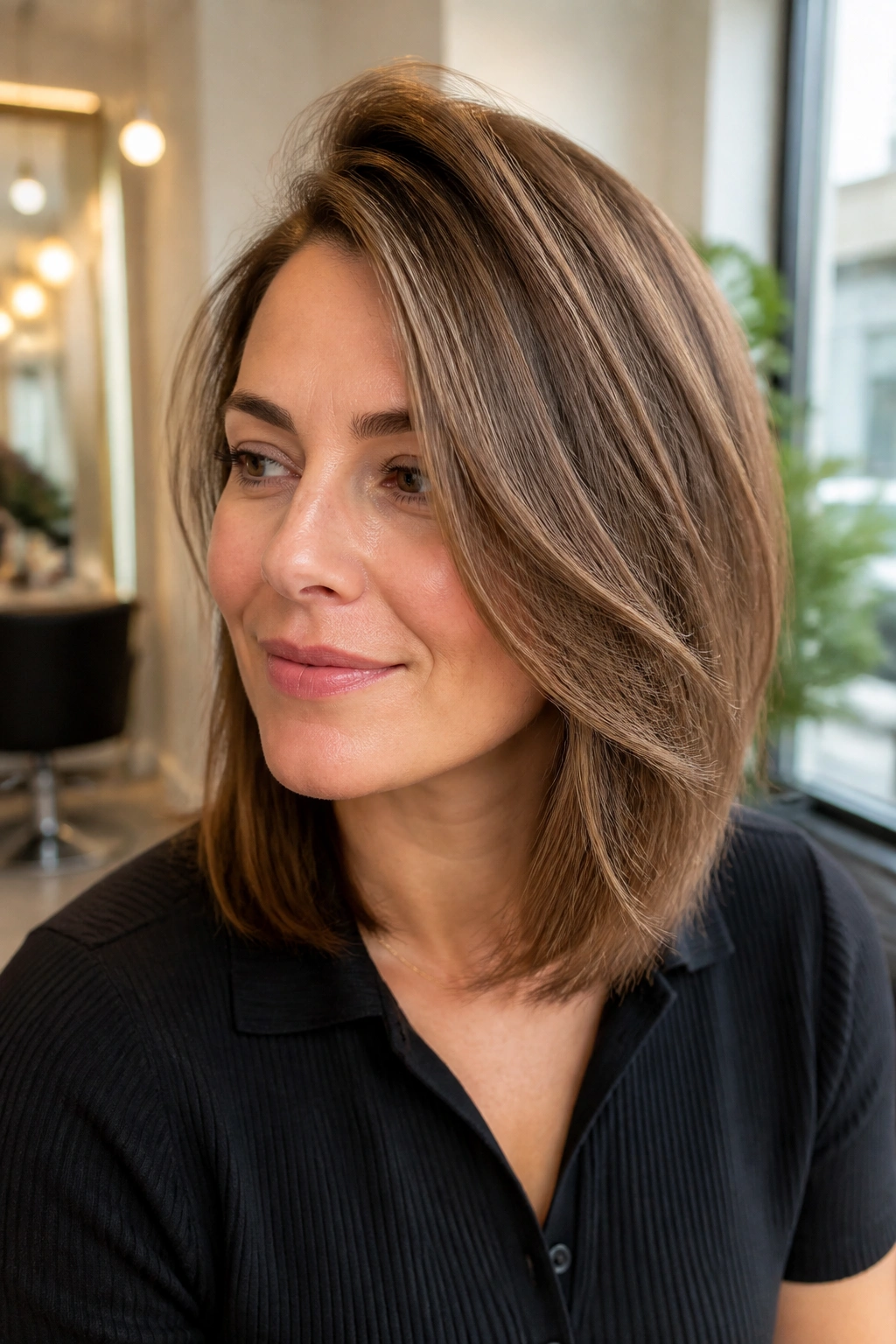
A side part is underrated. It gives fine hair instant lift at the root because the hair has to travel farther to lie flat. Add one-point layers — those delicate, tapering cuts that keep the ends soft — and the lob gets movement without losing weight.
This cut works well if one side of your hair tends to lie flatter than the other. The longer sweep from a side part creates a little natural volume right away. The layers should be subtle and directional, not chopped all over. That keeps the cut from getting fuzzy at the ends.
It’s a nice choice if you want a bit of drama without a dramatic haircut. The shape changes when you tuck one side behind the ear, which is half the fun. Simple move. Big payoff.
14. Wavy Lob With Mid-Length Interior Layers

If your fine hair has even a little natural wave, mid-length interior layers can bring it out without making the cut too airy. The key is to keep the outside line somewhat blunt while building softness inside the shape.
The waves sit better when the weight isn’t all concentrated at the bottom. Interior layers let the bend happen more evenly from mids to ends, so the lob looks loose instead of puffy. That matters. Puffy and full are not the same thing.
A salt spray is not always your friend here. Better to use a light mousse or foam, scrunch the hair until it’s about 80 percent dry, and then stop touching it. Fine wavy hair often looks best when it’s allowed to settle on its own.
15. Airy Wolf Cut For Finer Strands
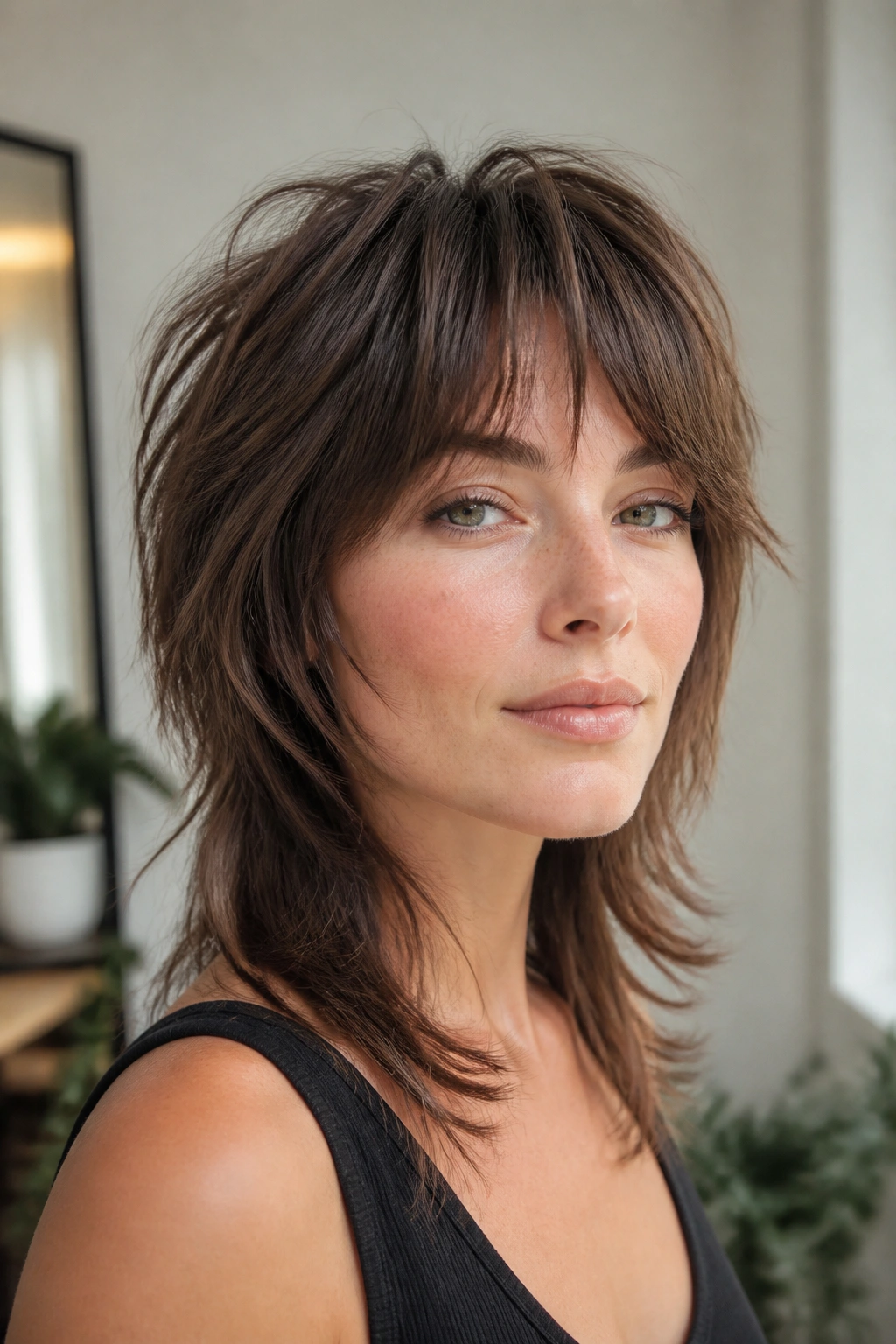
A wolf cut can be too much for fine hair if it’s taken too far. But an airy version, kept soft through the crown and blended through the ends, can bring a surprising amount of movement. It has edge, yes, but not the heavy, choppy look people sometimes fear.
The crown layers create lift. The longer ends keep it from floating away. That contrast gives the haircut shape, and shape is the whole point. You’re not trying to pile texture on top of texture. You’re trying to build a controlled, easy silhouette that moves when you move.
This version likes a rough-dry finish and a bit of finger styling. A small amount of paste through the ends can define the shape, but don’t use much. Fine hair shows buildup fast, and too much product kills the point of the cut.
16. Bixie With Top-Heavy Texture
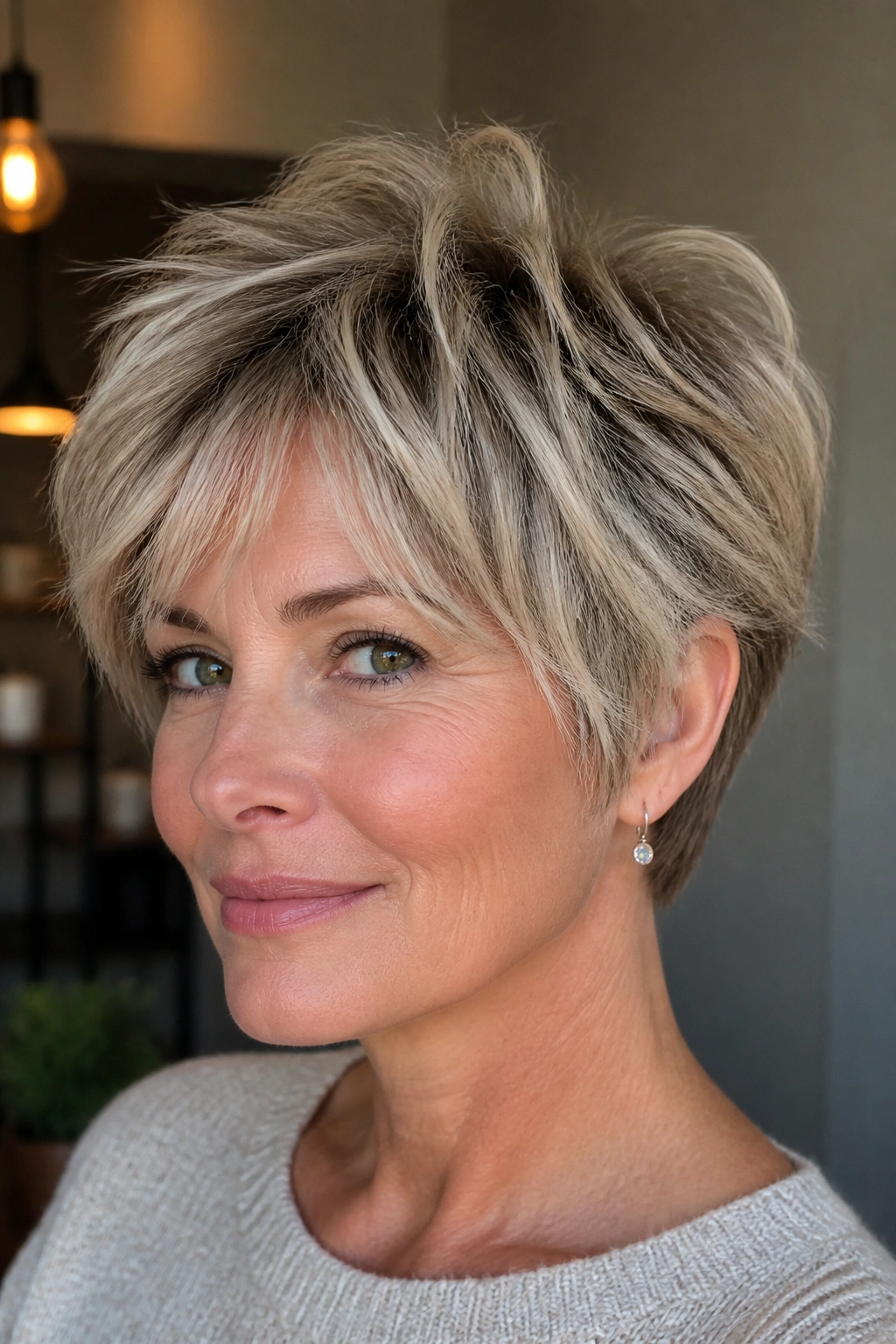
A bixie sits between a bob and a pixie, which makes it a smart option for fine hair that needs lift without a lot of length. Keeping more texture on top and less bulk through the sides gives the cut energy without making it look thin.
The top-heavy balance matters. You want the crown and fringe area to feel airy, while the back and sides stay neat. That contrast helps fine hair appear fuller because the eye reads movement at the top as volume. If the layers are too equal everywhere, the shape can flatten.
This cut tends to grow out nicely if the nape is kept tapered. You can push it forward, tuck it behind the ear, or sweep it to the side. A good bixie does all three without losing its line.
17. Soft Octopus Cut
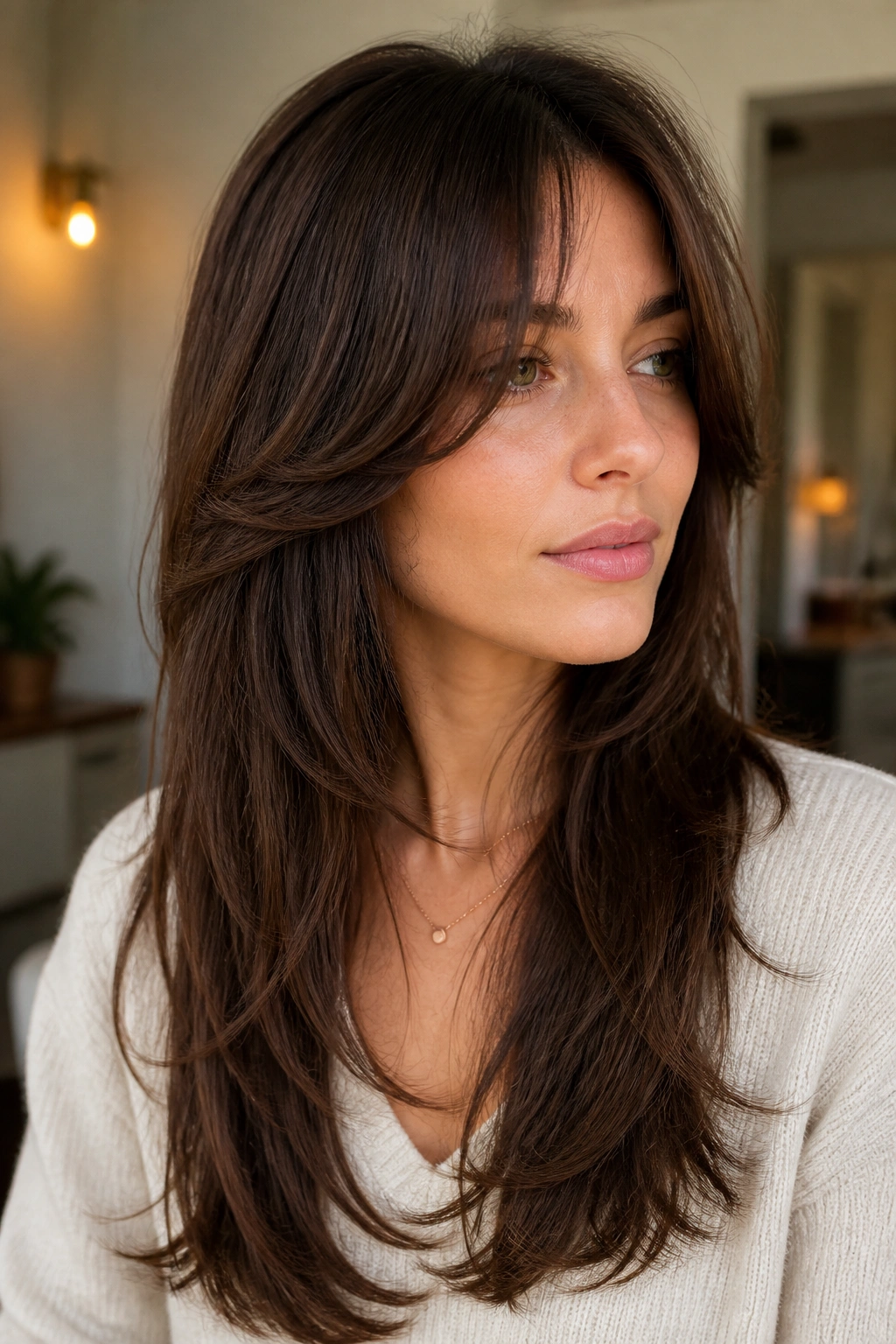
The octopus cut gets a bad rap when it’s overdone. On fine hair, though, a soft version can be brilliant. The top stays lifted and slightly rounded, while the lower layers stay long and airy. It gives the ends a little flick without turning the whole head into a cloud.
What makes it “soft” is restraint. The shorter top layers should blend, not spike. The longer bottom pieces should hang with enough weight to anchor the shape. That balance keeps the cut from looking chopped. It also helps if the texture is created with a brush or iron rather than by aggressive thinning.
A medium-barrel curling iron works well here. Wrap the mid-lengths away from the face for a few seconds, leave the ends out, and brush the curls apart once they cool. You get a loose, feathered finish that looks better than overworked waves.
18. Layered Cut With A Deep Side Sweep
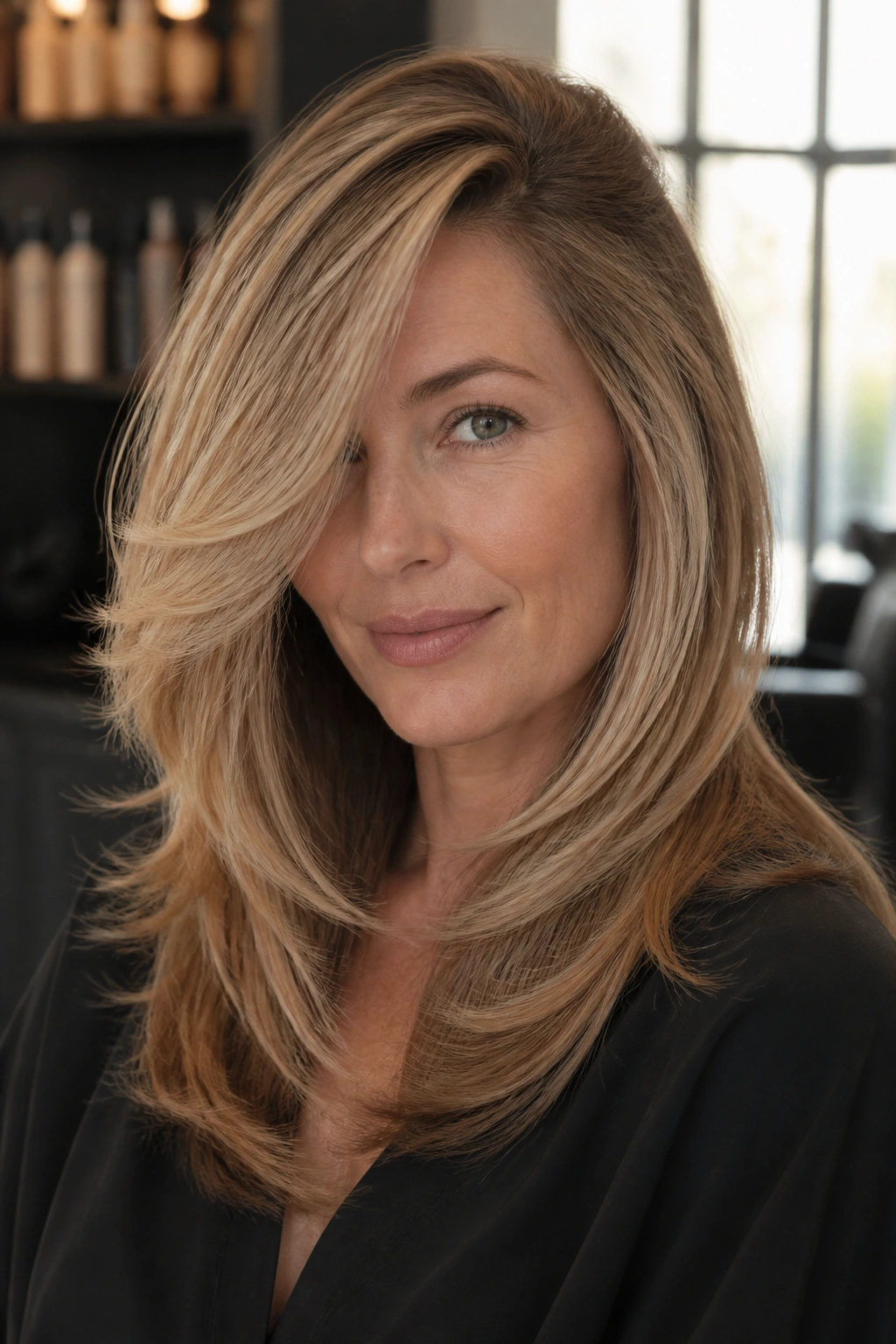
A deep side sweep can do what a lot of products promise and don’t deliver. It creates immediate lift at the root, builds a sense of fullness over one side of the face, and lets fine hair move without needing tons of layer action everywhere else.
The layers in this cut should support the sweep, not compete with it. Keep the side with less hair cleaner, and allow the heavier side to fall into a soft arc. That imbalance is what gives the haircut shape. Fine hair often looks better with a little asymmetry anyway. Perfect symmetry can make it seem flatter than it is.
This is a good cut for anyone who likes a polished finish. A blow-dry focused on the front section and a quick clip while the hair cools can set the shape for the day. Old habit, but effective.
19. One-Length Lob With Face-Frame Only
Sometimes the smartest move is barely layering at all. A one-length lob with face-framing pieces only keeps the perimeter strong, which gives fine hair a thicker look from the side and back. The front gets a touch of softness. The rest stays full.
This cut works because it respects the hair’s limits. Too many layers can make the ends look scraggly. A clean line avoids that and still lets you shape the face with a few well-placed pieces around the cheekbones or jaw. If your hair is naturally straight, this one is especially good.
A flat iron or large round brush can give the face frame a gentle bend. Do not overthink it. The charm here is in the restraint.
20. Cascading Layers Starting Below The Chin
A lot of fine-haired people get scared of layers because they’ve seen too many that start too high. Start them below the chin, though, and the effect changes completely. The top of the head keeps its density, while the lower sections gain enough movement to prevent that flat curtain look.
This cut is useful for medium to long hair that has lost shape at the ends. The layers fall like steps, but soft ones. Nothing abrupt. The hair should still read as one continuous shape when it’s dry. If the layers are too short, they can stick out in odd places and make the ends look thinner than they are.
A loose blowout is the best match. Pull the layers forward around the face, then flip them back. That little shift creates bounce without making the hair stiff.
21. Tucked-Behind-Ear Bob With Minimal Graduation
A bob that tucks neatly behind the ear depends on a good perimeter. Fine hair often looks better when the outline is clean enough to hold that shape. A little graduation in the back keeps the cut from collapsing, but it should be minimal. Too much stacking and the bob starts to look dated.
The ear tuck matters more than people think. It opens the face, shows off earrings, and creates a small lift right where the hair meets the cheek. That visual break is useful. It stops the bob from feeling too uniform. And when fine hair has a simple line, one tiny styling move can change the whole mood of the cut.
If your hair slips out of the tuck, use a light mist of styling spray on the front section. Not the whole head. Just the bit you want to hold.
22. Shattered Ends On A Shoulder Cut
Shattered ends can sound risky on fine hair, and sometimes they are. But when they’re done lightly on a shoulder-length cut, they add movement without creating obvious layers through the body of the hair. The effect is soft and a little undone.
The point is not to thin the ends into nothing. It’s to break up a blunt line just enough so the hair doesn’t look heavy or stiff. That can be especially helpful if your hair is straight and tends to cling to the shoulders. A tiny bit of texture at the bottom helps it swing.
This cut likes a quick bend with a curling wand, then a finger comb once the hair cools. Brush it too much and the shape can go limp fast. Fine hair remembers everything you do to it.
23. Layered Cut For Fine Curly Hair
Fine curls need their own rules. A layered cut for fine curly hair has to respect the spring of the curl while still keeping enough weight at the bottom so the shape doesn’t puff out. That means longer layers, soft shaping, and a very careful hand around the crown.
The biggest mistake is over-layering. Curly fine hair can lose its structure fast if too much weight is removed. The curl then expands unevenly and the ends can look stringy. Better to cut curl by curl, checking how each section falls when it’s dry enough to show its real shape.
A cream or gel-cream combo usually works better than a heavy butter. Scrunch, then leave it alone. That sounds boring, but curls on fine hair often look best when they’re not fussed over.
24. Collarbone Cut With Invisible Debulking
Invisible debulking is one of those things you’ll notice more than you can name. The haircut feels lighter and moves better, but the shape still looks full from the outside. On fine hair, that’s gold.
A collarbone cut gives enough length to feel versatile, and the hidden weight removal keeps it from sitting too flat. The ends stay thick-looking. The interior gets a little breathing room. If you’ve ever had hair that looked good for ten minutes and then collapsed, this kind of balancing act matters.
The best styling is usually simple: a heat protectant, a round brush, and a touch of serum at the very bottom. No drama. No giant curl. Just a shape that does not fight you.
25. Feathered Long Bob With Lifted Crown
Feathering can be tricky. Too much of it and fine hair turns fluffy. Done carefully, though, a feathered long bob with a lifted crown can give you movement where you actually want it — on top and around the face — while keeping the bottom line calm.
The lifted crown is the point worth paying attention to. That little elevation changes the whole profile of the haircut. Hair that lies too flat on top can make the ends seem limp by comparison. A bit of crown lift balances the silhouette and gives the lob a more finished look.
Use a mousse near the roots and blow-dry with your head slightly forward if you need extra lift. Not upside down for ages. Just enough to wake the root up. That’s all this cut usually needs.
26. S-Curve Layers Around The Jaw
S-curve layers create a soft bend that hugs the jaw and cheek area instead of falling straight down. On fine hair, that bend can be enough to create the look of fullness where a flat cut would just hang there.
The shape is subtle, which is why it works. The layers don’t scream for attention. They move in a gentle wave that frames the face and gives the haircut some lift through the front. If your jawline feels a little lost under long, heavy hair, this is a useful fix.
This style looks especially nice with a side-swept finish, but a center part can work too. The important thing is that the front sections are shaped with intent, not chopped randomly. Fine hair notices the difference.
27. Blended Layers With Soft Bangs
Soft bangs can be a smart addition if the rest of the haircut stays blended. The bangs bring attention upward, and the layers guide the eye down through the sides without making the ends look thin. It’s a nice way to get change without losing polish.
The bangs should be light enough to move. Heavy fringe on fine hair can swallow too much density from the front. A wispy, slightly separated bang tends to behave better. Then the layers below should flow into the sides in a way that feels almost seamless when the hair is tucked or brushed back.
This is one of those cuts that changes with styling. Wear it straight for a neat look. Add a tiny bend and it turns softer. That flexibility is a big reason people keep coming back to it.
28. Sleek Lob With Subtle Flicks
A sleek lob sounds plain until you notice the subtle flicks at the ends. Those tiny turns give fine hair movement without breaking the clean line that keeps the hair looking thick. It’s a very small detail, and that’s exactly why it works.
The layers here are minimal. You want the hair to look smooth and tidy, not chopped. The flicks can come from the cut itself or from a quick pass with a brush at the ends. Either way, the shape feels lifted without losing its neat edge.
This one is good for people who like a polished finish but hate hair that looks stiff. The flick keeps the cut alive. The sleek line keeps it full.
29. Grown-Out Pixie With Soft Top Layers
A grown-out pixie can be a gift if you want fine hair to look fuller fast. The shorter sides and back remove bulk, while the top layers keep enough length to sweep, spike softly, or fall forward. That extra length on top is what gives the cut its shape.
The top layers should be soft, not ragged. Fine hair can look thin if the texture is too broken up. You want small sections that move together rather than dozens of tiny pieces that go every which way. A little product through the top helps, but the cut should do most of the work.
This style is easy to live with. It dries quickly, it can be styled in under five minutes, and it grows out in a way that still looks intentional. That matters more than people admit.
30. The Softest Finish: Ultra-Gentle Internal Layers
This is the quietest option on the list, and honestly, one of the most useful. Ultra-gentle internal layers let fine hair keep its outer shape while loosening the inside just enough so it does not fall flat against the head. The cut looks almost one-length until it moves.
That movement is the whole point. You get a softer bend through the mids, a little air around the crown, and ends that still look like they belong to the same haircut. If you’ve had layered cuts that felt too light or too “done,” this version is the correction. Nothing flashy. Nothing chopped up. Just controlled movement.
Ask for soft interior shaping and a perimeter that stays strong. If your hair is straight, this can be air-dried with a bit of root spray. If it’s wavy, the layers help the wave fall more evenly instead of ballooning at the bottom. Either way, the cut should feel easy, not high-maintenance.
The best thing about this style is how forgiving it is. It grows out neatly, it still looks decent on day two, and it doesn’t demand a lot of product. For fine hair, that’s not a small thing. That’s the difference between a cut you admire in the mirror and one you actually keep wearing.
Final Thoughts
Fine hair usually looks best when the cut respects its limits. Strong outlines, soft interior movement, and restraint around the ends tend to beat heavy layering almost every time.
If you’re sitting in the chair and trying to choose, start by asking what the haircut should do first: add lift, create fullness, or make the face look more open. That answer will point you toward the right shape faster than any trend name ever will. And once you find the right balance, fine hair can look surprisingly full with very little effort.
