



Fine hair changes the math. Add too many long layers and the ends start to look see-through; keep everything one length and the whole shape can sit flat, almost pasted to the head. Inverted layered haircuts for fine hair solve that problem by keeping the back shorter, the outline cleaner, and the front a touch longer so the eye sees movement even when the strand count is modest.
The cut has to do the work first. Products help, sure, but a heavy mousse can’t fix a bad silhouette, and a clever blowout can’t fake density at the nape if the haircut removed too much weight. That’s why the best versions of an inverted bob or inverted lob are built with restraint. They lift the crown, carve a soft angle, and leave enough perimeter to stop the style from turning wispy after one shampoo.
There’s a detail stylists notice right away: where the hair naturally collapses at the crown and where it sticks out at the nape. That bend at the occipital bone matters more than most people think. Cut too flat there and the back looks limp. Stack it properly and the whole head shape looks more expensive, even when the hair itself is fine and delicate.
Below are 25 versions that make that idea work in different ways. Some are polished, some are choppy, some lean short, and some keep more length around the face. All of them are about one thing: making fine hair look fuller without forcing it into a helmet.
1. Soft Graduated Inverted Bob
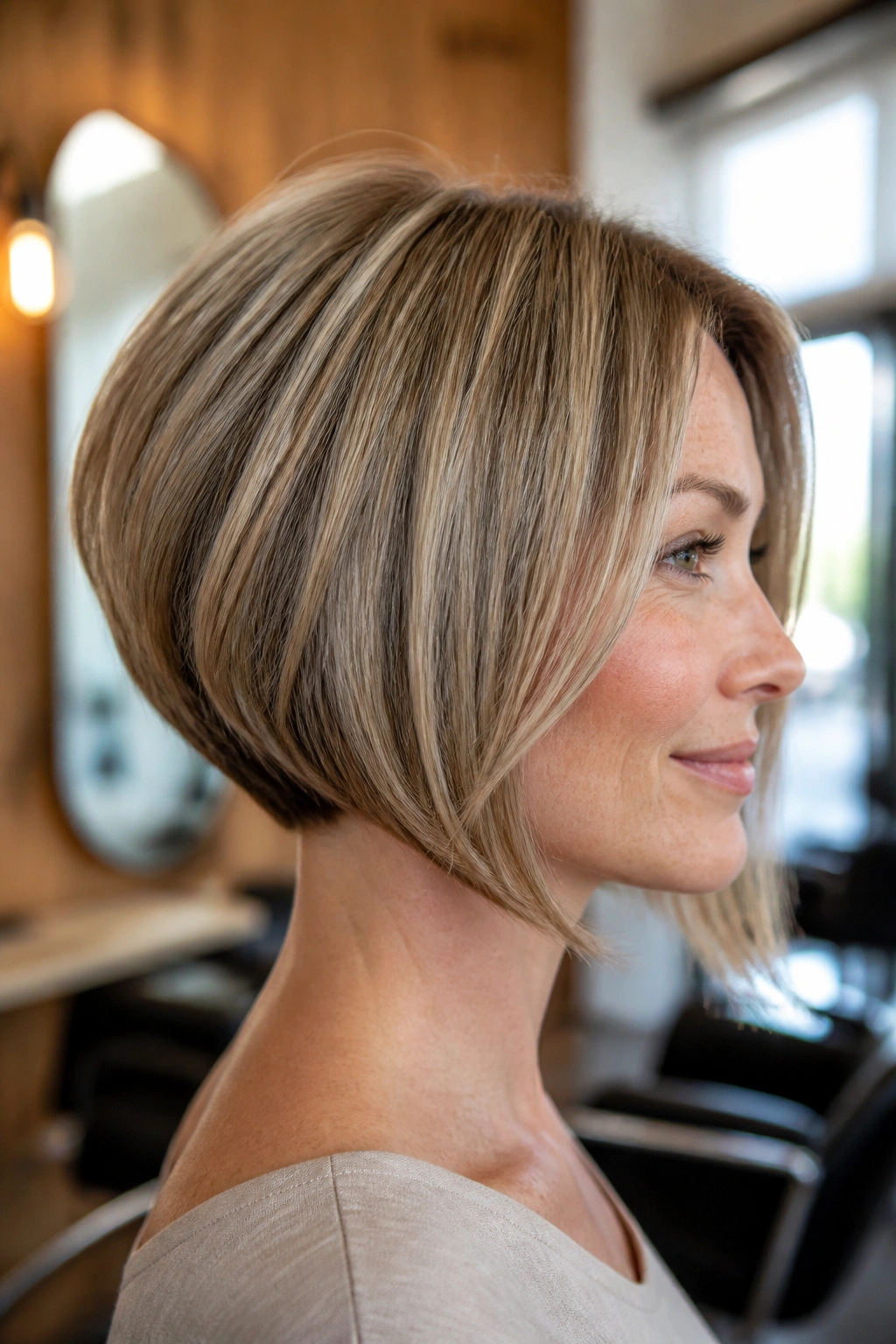
A soft graduated inverted bob is the first cut I point to when someone wants lift without drama. The back sits shorter and slightly stacked, while the front pieces skim the jawline instead of hanging there like tired curtains. On fine hair, that small shift changes everything. The shape looks neat from the back, but it still moves.
Why It Works on Fine Hair
The graduation at the nape builds visual density where fine hair usually goes limp. The front stays longer, so you get angle and softness at the same time. That matters if your hair gets stringy the minute layers are too aggressive.
- Ask for a clean, blunt perimeter through the ends.
- Keep the back stacked, but not choppy.
- Leave the front just long enough to brush the jaw.
Pro tip: If your ends are fragile, skip a razor finish. A sharper scissor cut holds the outline better.
2. Chin-Grazing Inverted Bob with Side Sweep
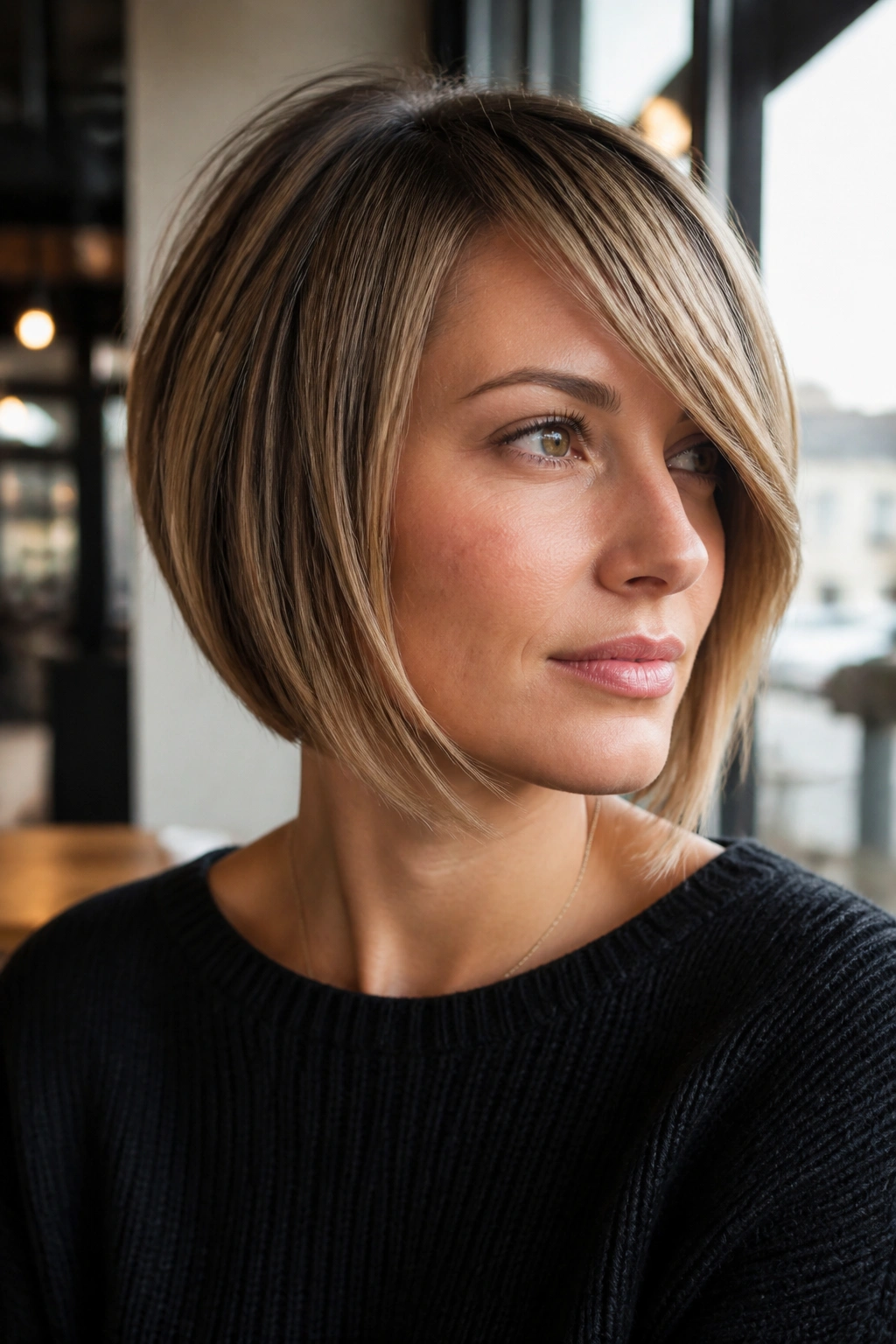
Chin length does a lot of the heavy lifting here. When the front lands at the chin and the back lifts just enough to show the angle, fine hair suddenly looks like it has more shape than it really does. Add a side sweep, and the cut gets even better because the hair falls diagonally instead of collapsing straight down.
This version works especially well if your face needs a little framing around the cheeks or jaw. The side part creates a bit of built-in height at the root, which is handy when your crown is flat and you do not want to fight it with three styling tools before breakfast.
I like this cut on straight, fine hair that tends to separate in the wrong places. Keep the layers subtle. Too much texture here can turn the ends stringy fast, and that is the one thing this haircut should avoid.
3. Stacked Crown Inverted Bob
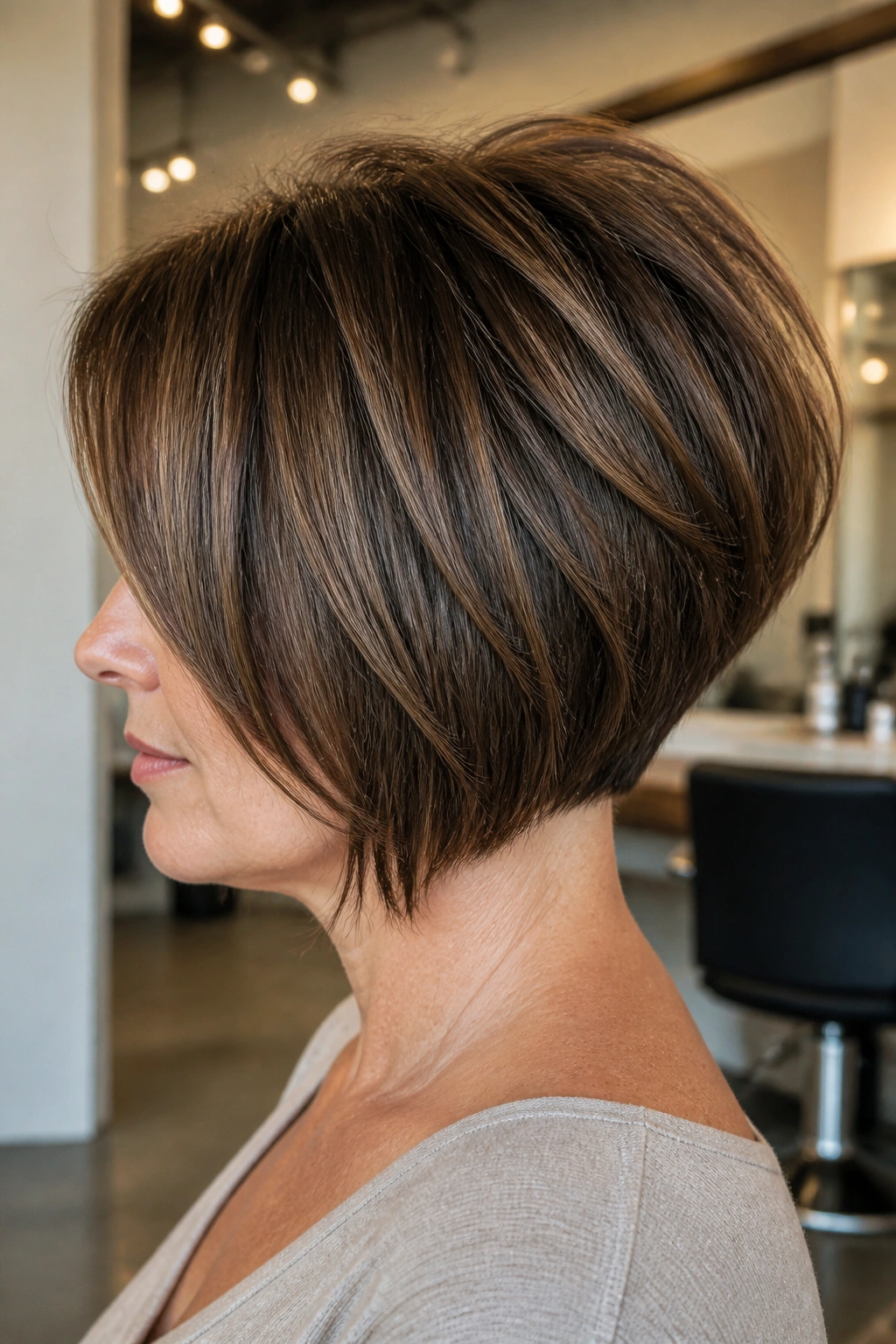
Why does a little extra stacking at the crown matter so much? Because fine hair loses shape fastest where the head curves most. A stacked crown gives you lift exactly where the style wants to collapse, so the back reads fuller without needing loads of product.
How to Wear It
A round brush and a root-lifting mousse are enough for most people. Blow-dry the crown forward first, then direct the hair back so it keeps that lifted bend near the occipital area. Sounds fussy. It isn’t.
- Use a light mousse at the roots.
- Dry the crown in small sections.
- Keep the ends polished, not shredded.
If your stylist over-thins the top, the stack will look airy in a bad way. That’s the trap. You want lift, not holes.
4. Collarbone Inverted Lob with Tapered Ends
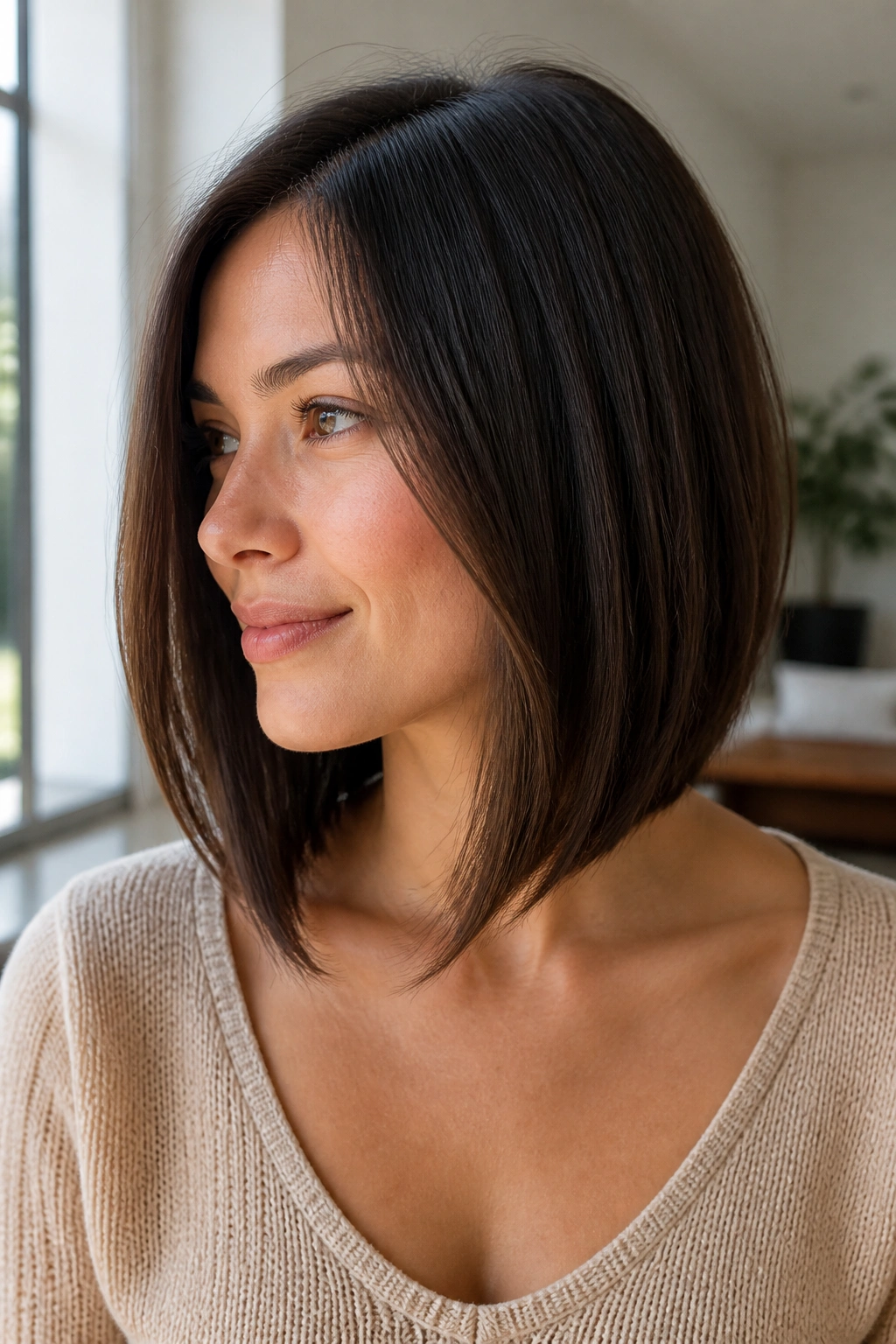
If you keep saying you want length but hate flat ends, this is the one to pin. A collarbone inverted lob keeps enough hair around the face to feel soft, while the back rises just a little so the whole shape looks more alive. Fine hair loves that balance. It gets structure without losing the touchable length people usually want to keep.
The tapered ends matter here. They let the front bend in toward the neck instead of hanging straight. That slight taper also helps the lob move when you turn your head, which is where this cut earns its keep. It looks good standing still, and it looks better in motion.
For styling, a large round brush or a blow-dry brush works best. Keep the finish smooth. Too much texture spray can make the ends look sparse.
5. Asymmetrical Inverted Bob
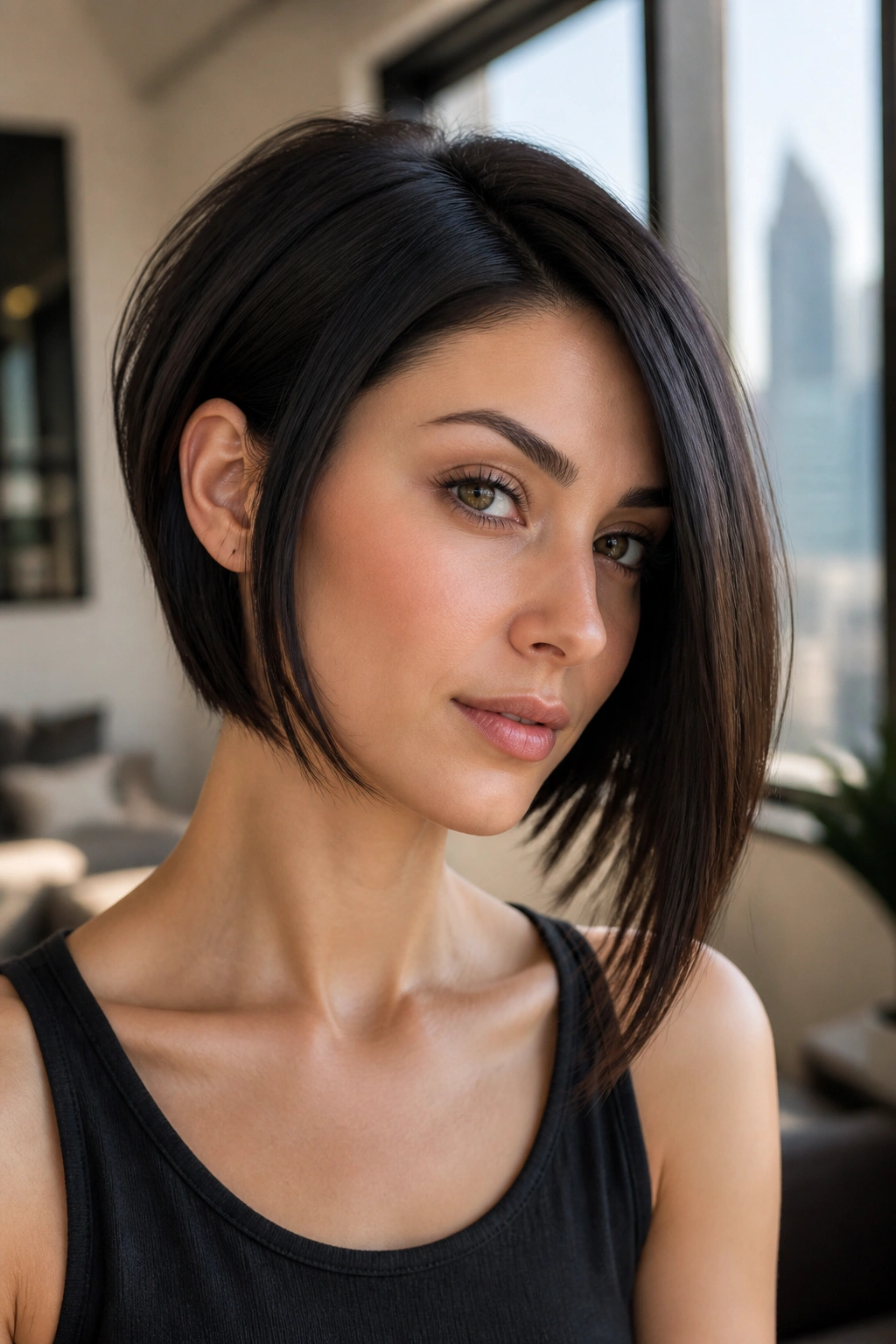
An asymmetrical bob sounds bold, but on fine hair it can actually look cleaner than a symmetrical one. The longer side pulls the eye down in a controlled way, which makes the shorter side feel fuller by comparison. That little contrast is useful when the hair itself is soft and easily flattened.
I like this version when a client wants something with edge but not a lot of daily maintenance. One side can graze the jaw, the other can sit a touch longer near the collarbone. That uneven line creates movement even when the hair is straight and air-dried. No curling iron required.
Keep the difference subtle if your hair is very fine. A huge length gap can swallow the shape. Small asymmetry looks chic. Big asymmetry can look accidental.
6. Inverted Bob with Curtain Bangs
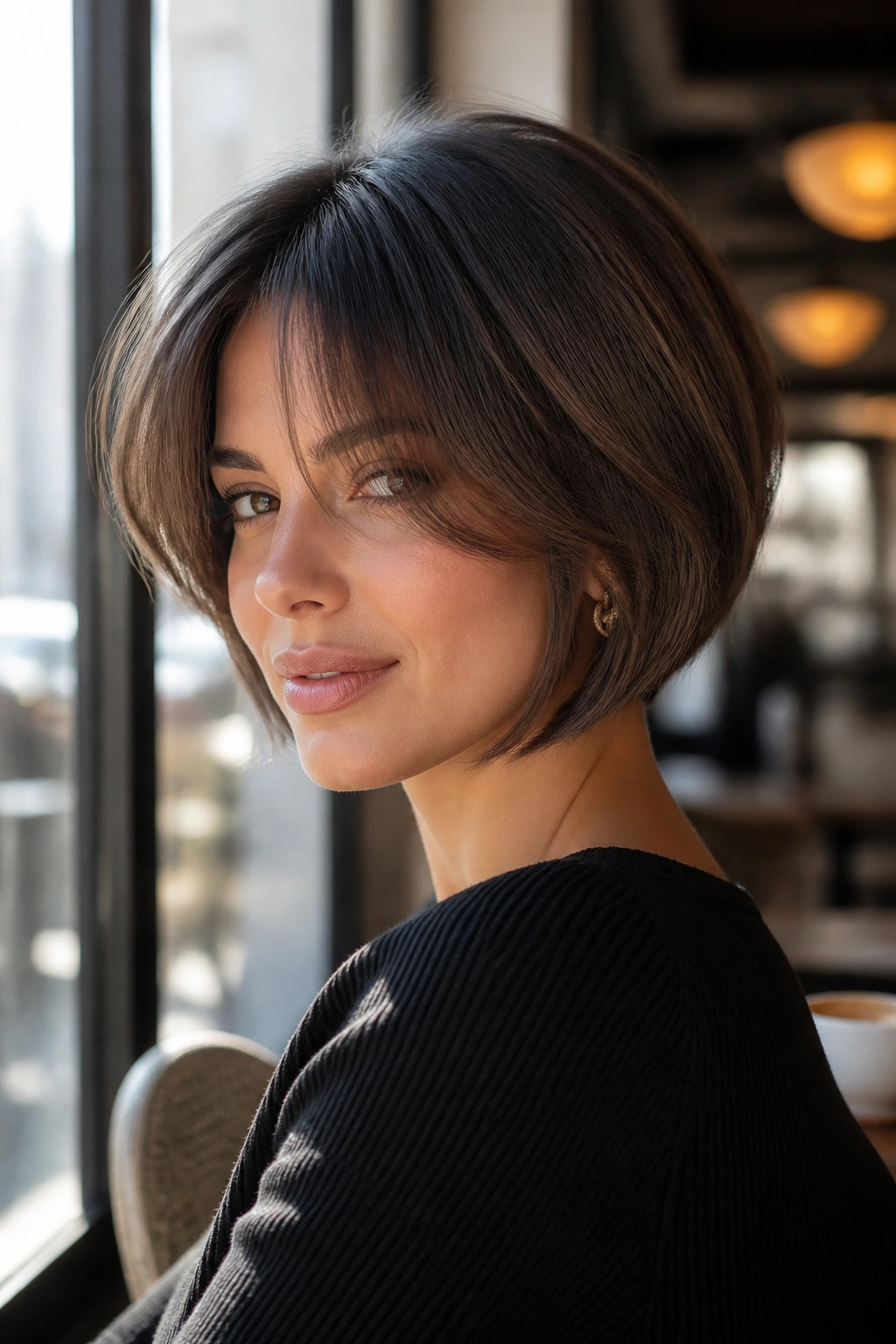
Curtain bangs change the whole read of an inverted bob. Instead of all the attention going to the stacked back, the eye gets pulled to the center of the face and then out toward the cheekbones. That can be a nice trick when fine hair needs more presence up front.
The bangs should stay soft, not sparse. Thin curtain bangs that are cut too wide can split apart and expose the scalp in a way that feels fussy. Keep them narrow enough to sit near the brows and cheekbones, then let them blend into the front layers. The result is gentler than a blunt fringe and less slippery than a long side bang.
This is a smart pick if you want movement around the eyes without losing the angle in the back. It’s a little romantic. Not sugary. Better still, it grows out gracefully.
7. Razor-Textured Inverted Bob
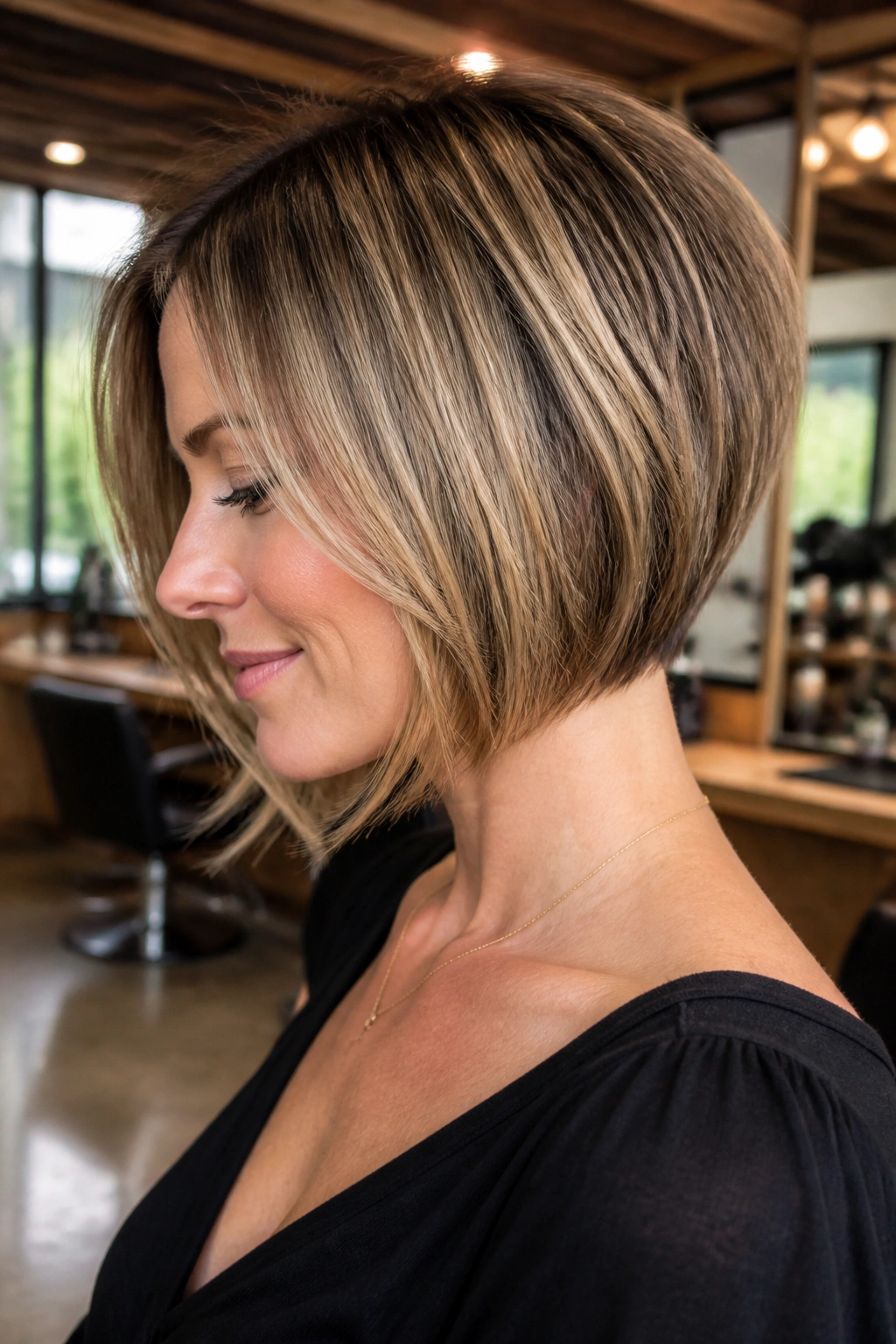
A razor-textured inverted bob can look fantastic on fine hair, but only when the razor is used with a light hand. I’m talking about soft, airy texture near the ends, not a shredded perimeter that falls apart by lunchtime. Fine hair already lacks bulk. It does not need extra help looking thin.
Use the Razor Sparingly
The best razor work removes just enough weight to make the angle feel easy and modern. It should leave the bob moving, not fraying. The front pieces should still feel solid when you pinch them between your fingers.
- Keep the nape mostly clean.
- Razor only the last inch or so if needed.
- Finish with a light serum, not a heavy cream.
Tip: If your hair tangles fast, ask for scissor texturizing instead. It’s safer on delicate ends.
8. Feathered Inverted Layered Bob
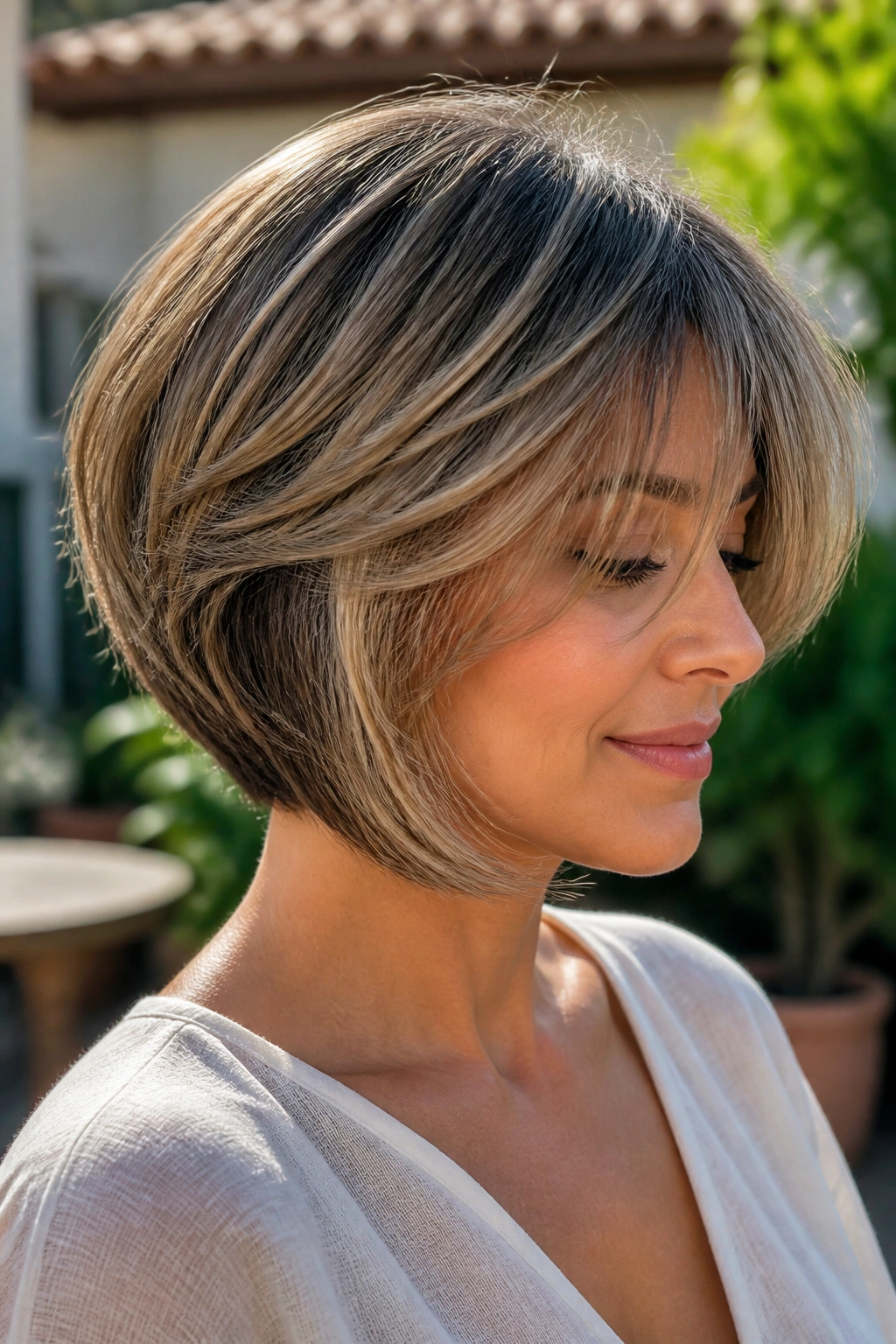
Feathered layers are kinder to fine hair than a lot of people think. Done well, they create a soft, airy edge that lifts away from the neck and keeps the bob from feeling stiff. The trick is that the feathering has to happen in the right places. You want movement at the surface and density underneath.
This cut has a nice, old-school softness to it, but it doesn’t have to look dated. Keep the silhouette inverted and the layers fine enough that they disappear into the shape. The ends should move like a curtain in a light breeze. Not piecey. Not overworked.
I’d reach for this if your hair tends to lie close to the head and you want some swing around the jaw. It’s especially good with a side part and a quick round-brush blow-dry. Simple. Clean. Friendly.
9. French Bob with an Inverted Nape
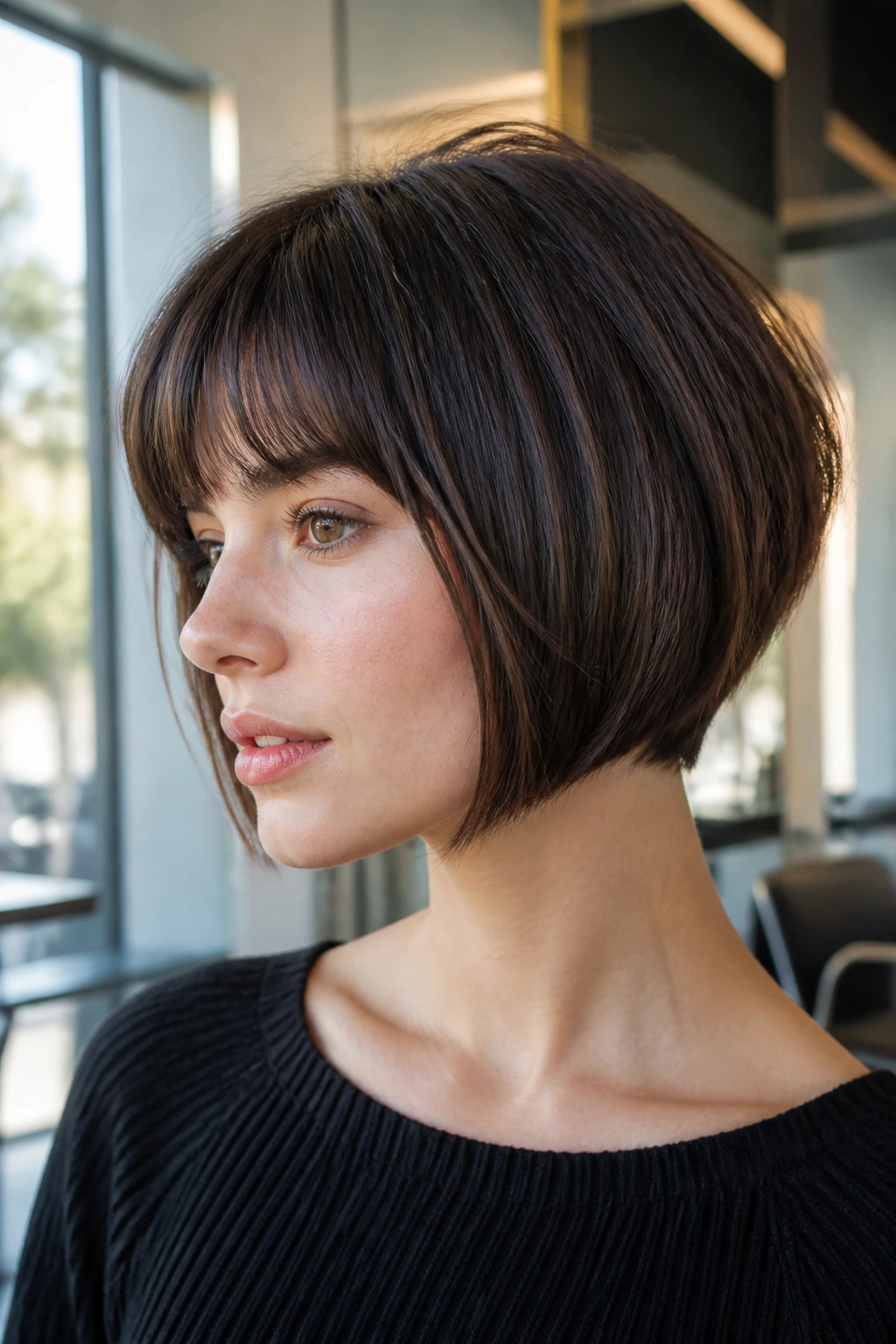
Can a French bob be inverted? Absolutely. In fact, the slight lift at the nape can stop a French bob from looking too boxy on fine hair. You still get the chic, jaw-skimming feel, but the back gets a little more life and the profile looks cleaner.
What Keeps It from Looking Severe
The answer is restraint. Keep the line short, but not heavy. A tiny curve under the jaw and a subtle stack at the back create enough shape without turning the cut into a sharp wedge. That matters if your hair has a soft texture and tends to go flat at the sides.
A short fringe can work here, though I prefer a slightly longer one if the hair is very fine. It gives the cut room to breathe. The whole thing feels crisp, not stiff. That’s the sweet spot.
10. Wedge-Inspired Inverted Cut
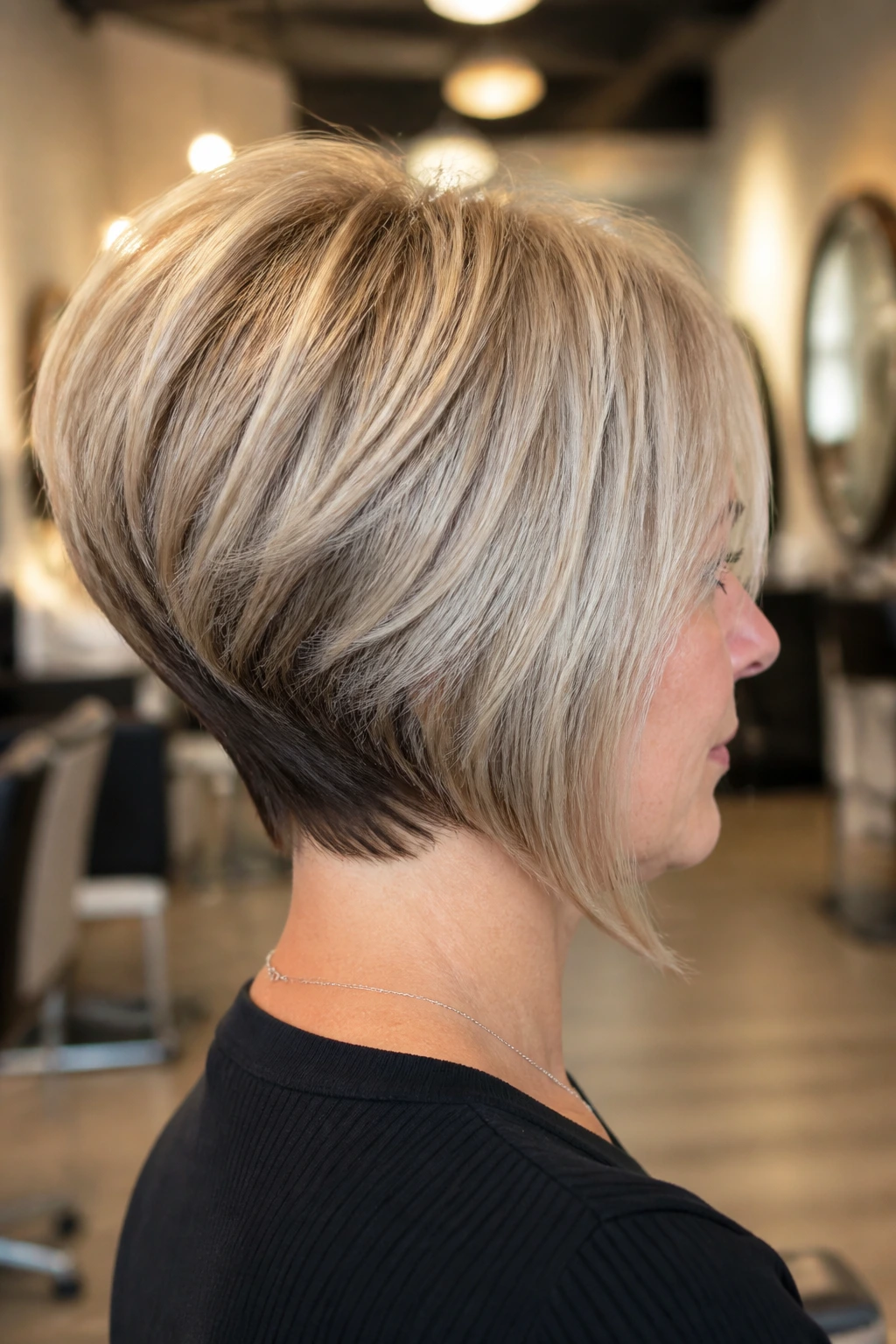
Picture the person who wants height at the back and hates spending 20 minutes on a blowout. This is their haircut. A wedge-inspired inverted cut borrows the strong angle of a classic wedge, then softens it enough for everyday wear. Fine hair gets lift at the crown and a cleaner outline through the sides.
What makes it useful is the stacked structure near the back of the head. That structure creates the illusion of thicker hair because the layers are concentrated where the head curves most. The front can stay a little longer to keep the face from looking boxed in.
- Best on straight to slightly wavy hair
- Works well with a round brush
- Needs regular shape checks at the nape
The cut is honest. It shows off what your hair can do without asking it to be something else.
11. Wavy Inverted Lob with Hidden Layers
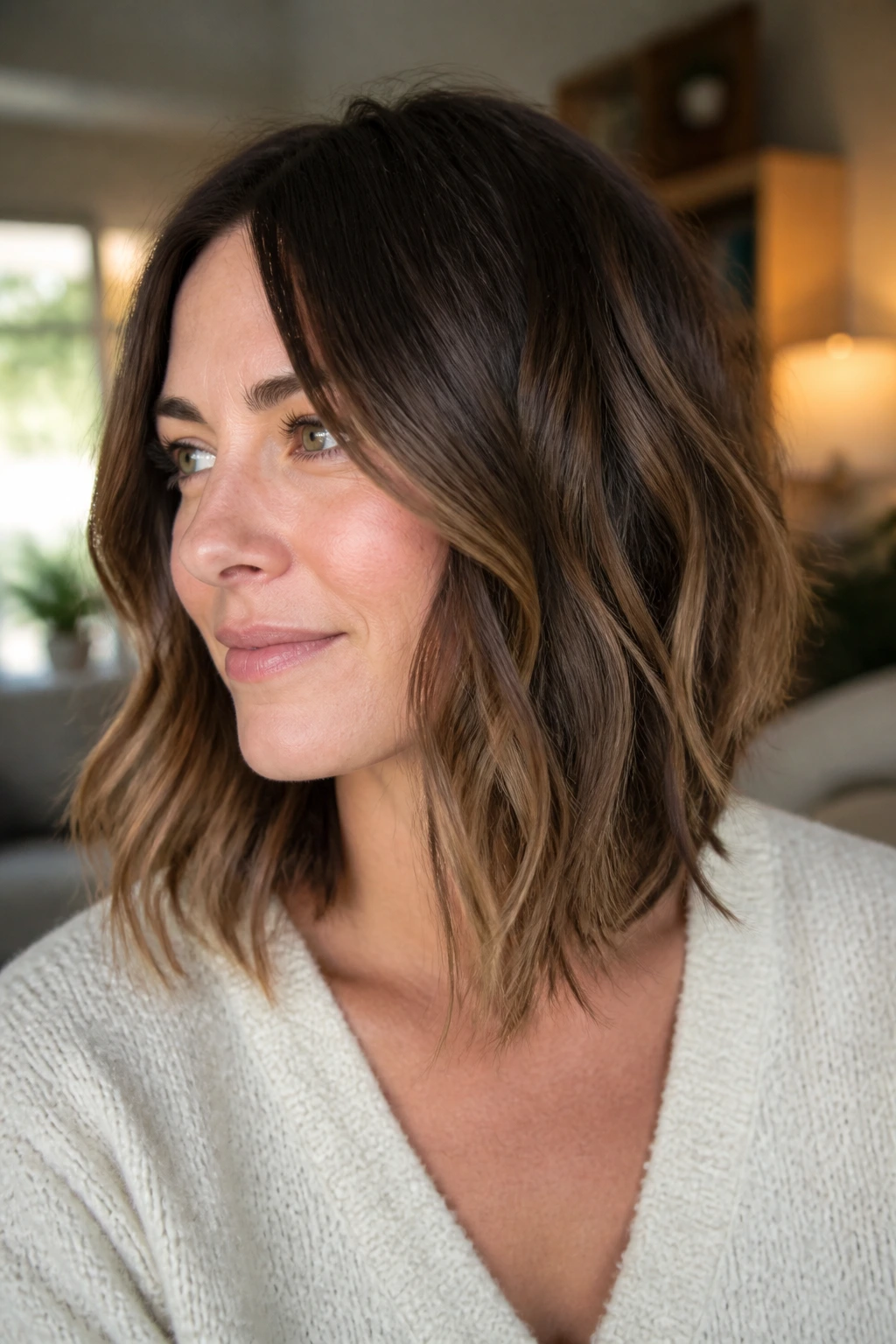
Hidden layers are a gift for fine wavy hair. They keep the outline full while letting the wave bend through the mid-lengths, which is where most people need help anyway. Too many visible layers can make fine hair look broken up. Hidden ones keep the surface smooth.
This inverted lob works because the front still has enough length to drape, while the back rises just enough to keep the whole style from sagging. If your waves have a loose S-shape, the cut will show them off without overfilling the sides. That’s rare, and useful.
Weight is the enemy here. A light mousse or foam usually beats a creamy styling product, which can drag the hair down. Air-dry halfway, then finish with a diffuser if needed.
12. Sleek A-Line Inverted Bob
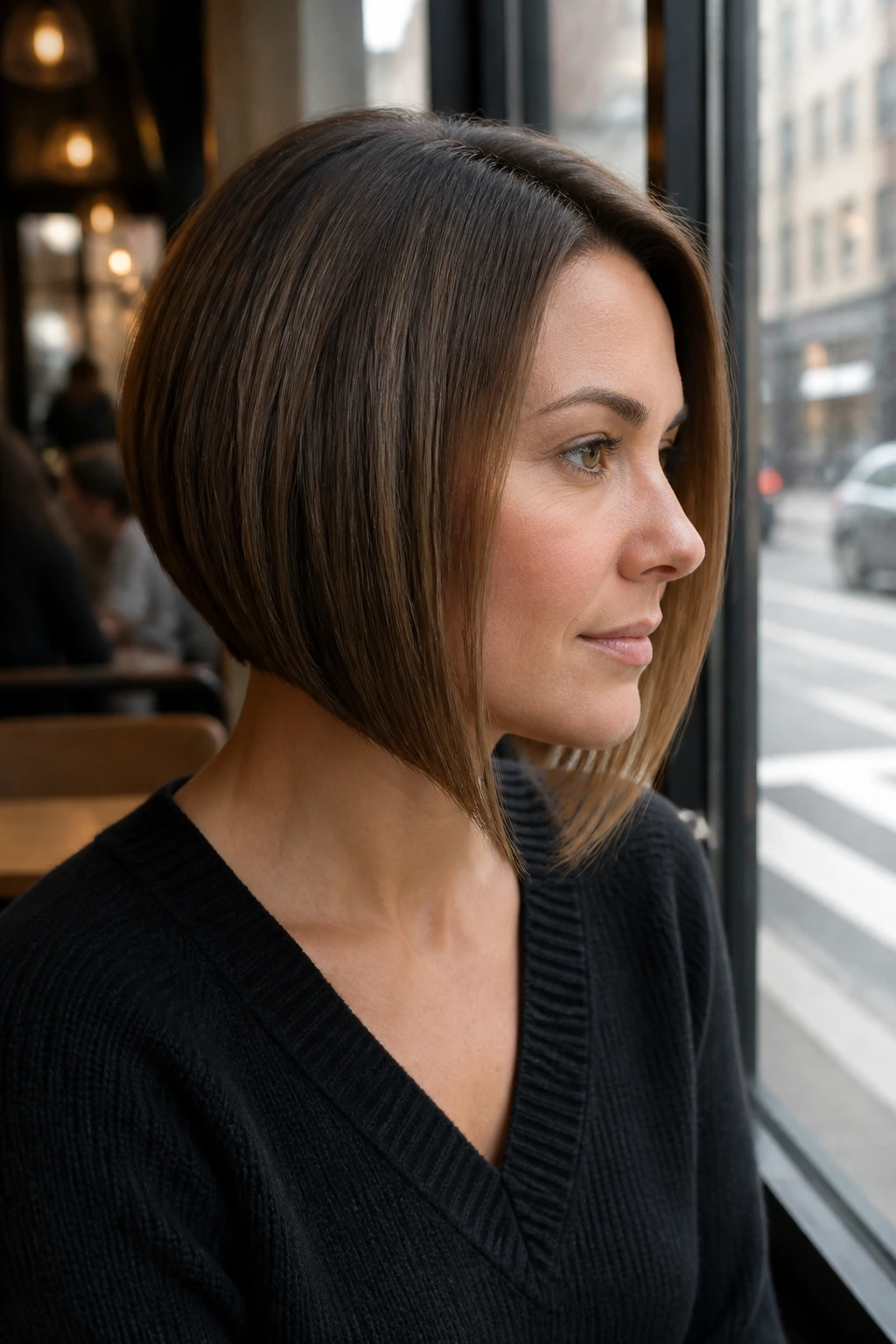
Unlike a shaggy bob, a sleek A-line inverted bob depends on a crisp silhouette. That’s what makes it so good for fine hair that likes to cling to the head in all the wrong places. The line from back to front is clear, and that clarity makes the hair look more deliberate.
This cut is best if you like a polished finish and do not want a lot of broken texture. The back sits snug at the nape, the front gets a longer glide toward the jaw or collarbone, and the whole shape reads clean from every angle. It’s a little formal. In a good way.
If your hair is very straight, this is one of the easiest inverted cuts to keep tidy between trims. A flat iron pass on the front pieces is enough. No need to overdo it.
13. Piecey Side-Part Inverted Bob
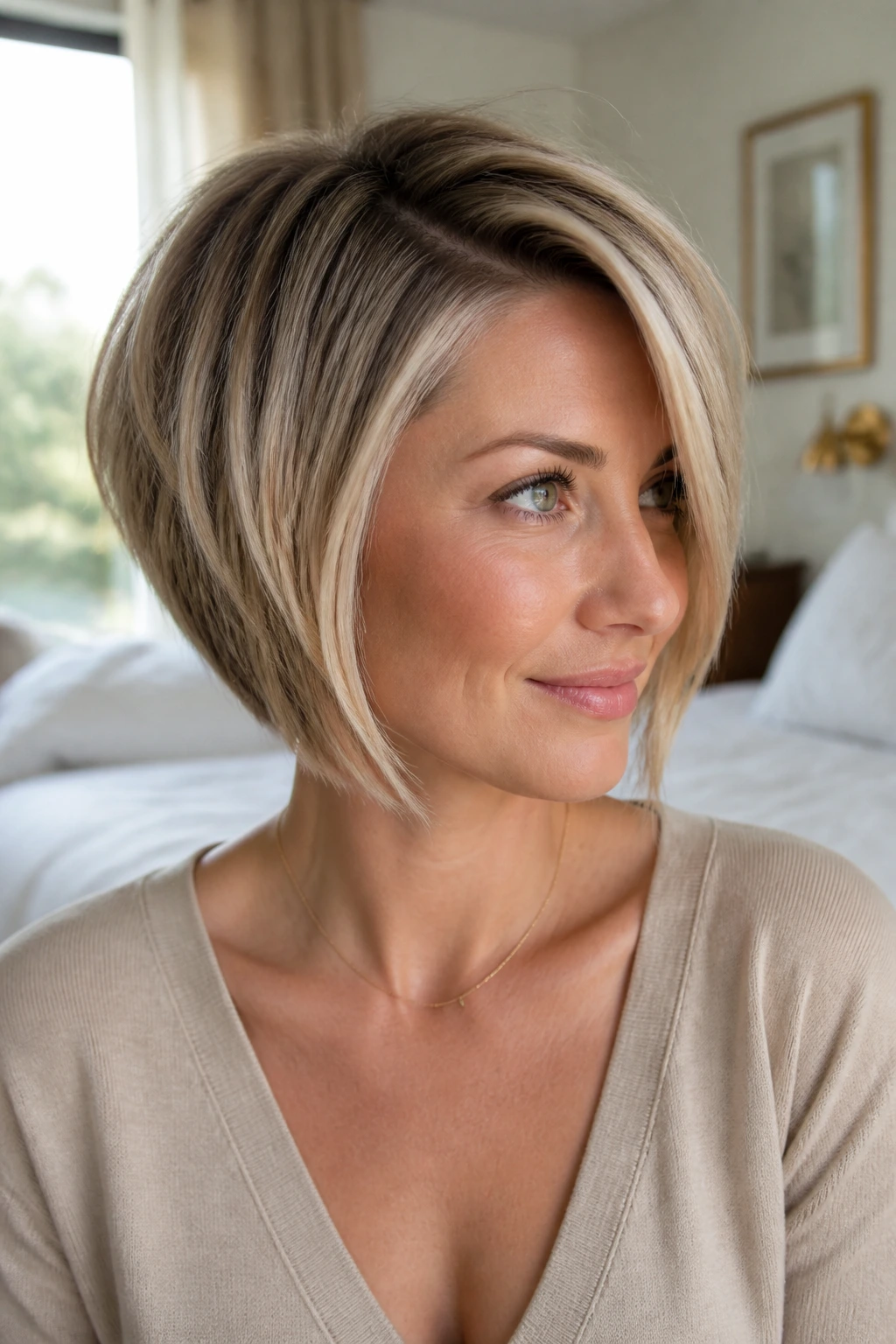
A deep side part can give fine hair the volume it never had naturally. On an inverted bob, that extra lift works twice: the root rises on the heavier side, and the shorter back keeps the overall shape from falling too flat. The result feels casual but not messy.
The Best Part
Piecey layers around the face give you a little separation without making the ends stringy. That’s the whole point. You want enough texture to keep the style from looking dense in a blocky way, but not so much that the ends disappear.
- Part it where the hair resists.
- Use a pea-sized amount of paste at the ends.
- Tuck one side behind the ear for instant shape.
Quick take: This is a strong pick if your hair goes limp by noon.
14. Inverted Bob with Wispy Bangs
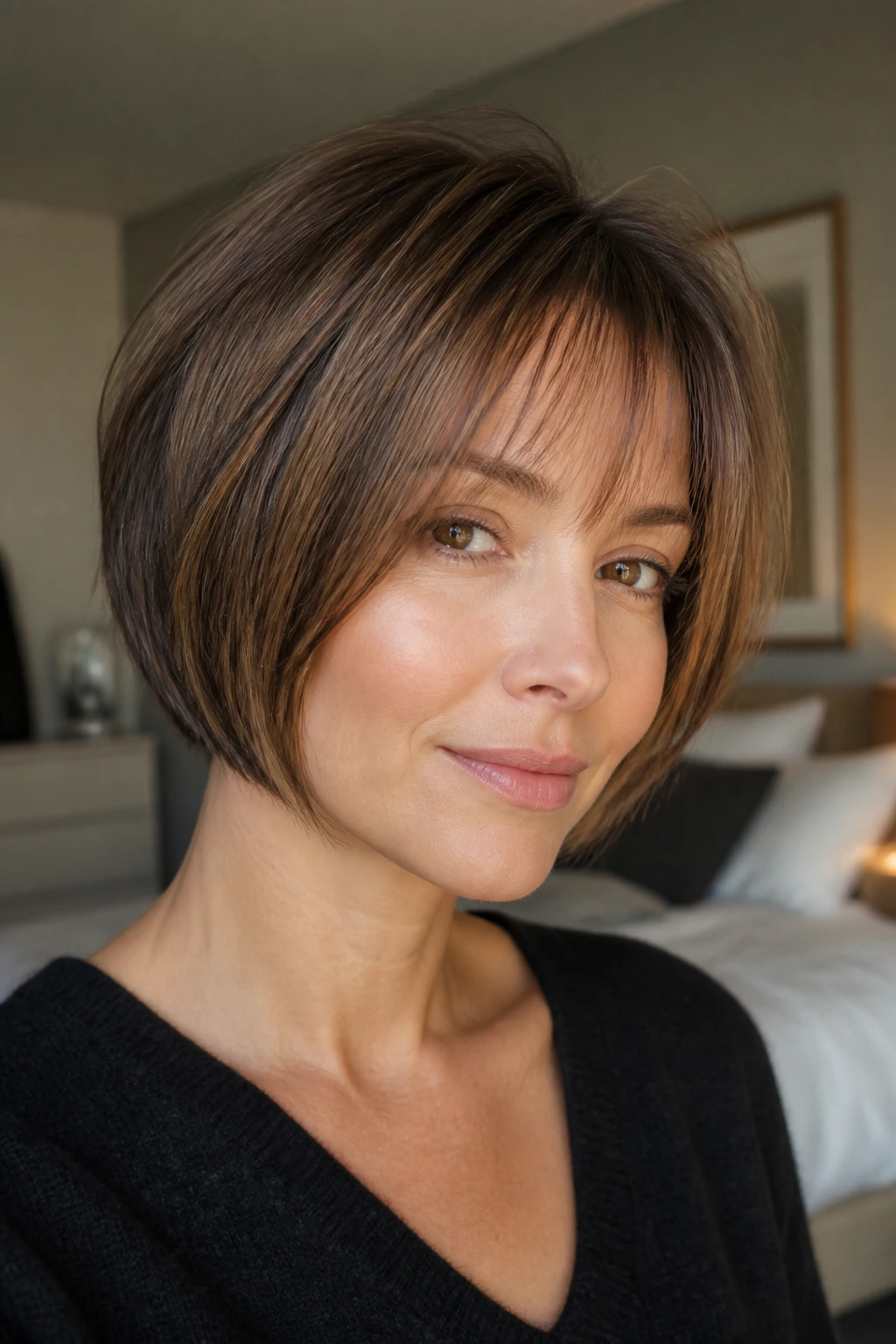
Wispy bangs can save an inverted bob from looking too stern. Fine hair often needs a little softness near the face, and a light fringe does that without stealing too much density from the rest of the cut. The back stays lifted, the front stays airy, and the whole haircut feels less severe.
The bangs should be narrow and lightly graduated, not see-through to the point of disappearing. There’s a difference. You want movement, not gaps. If the fringe is too thin, it will separate and show the scalp. If it’s too thick, it will fight the rest of the haircut.
This version works nicely when you want a youthful shape but do not want heavy bangs pressing into fine strands. A little dry shampoo at the roots helps the front sit correctly. Not much more.
15. Rounded Inverted Bob for Straight Fine Hair
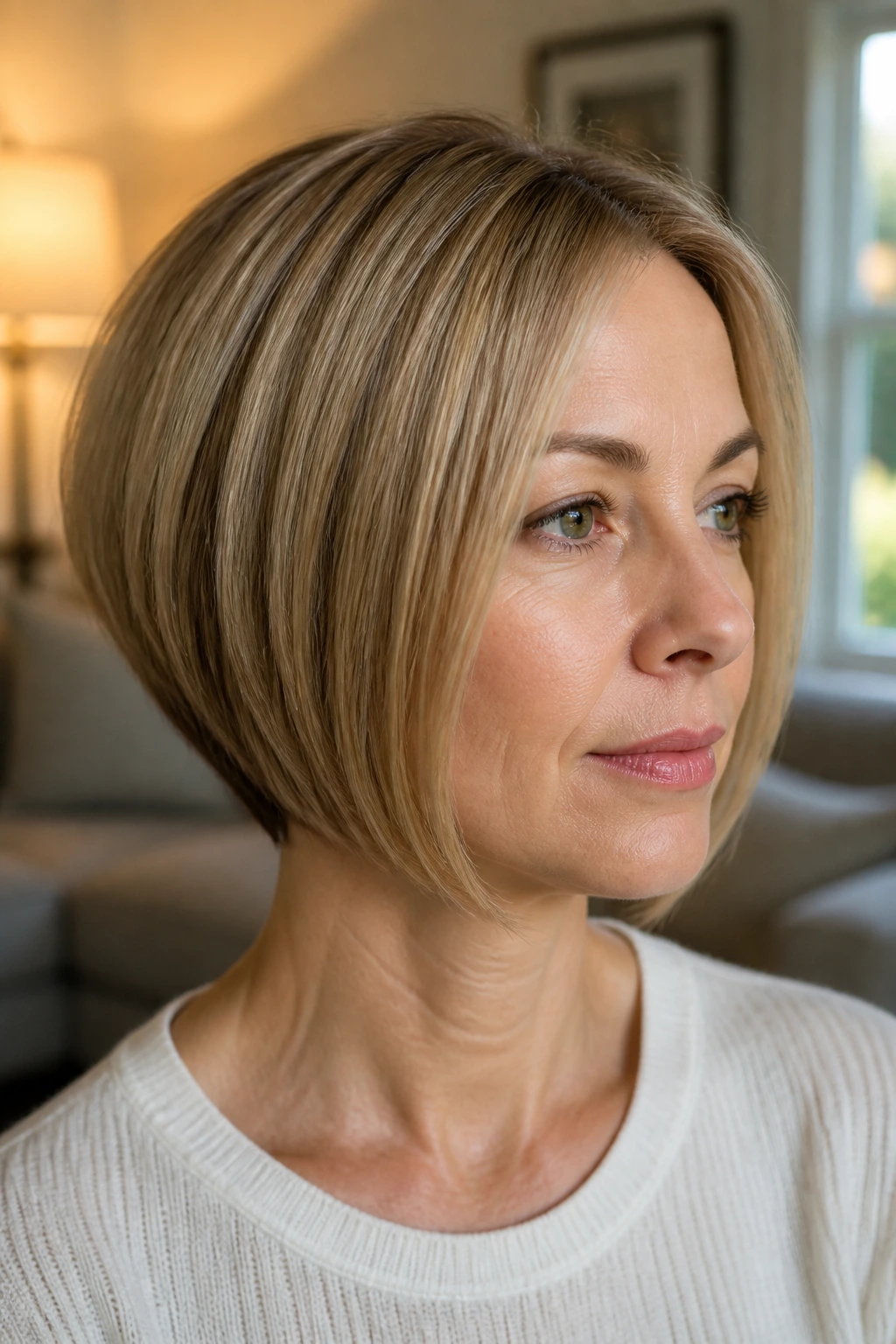
Why does a rounded outline help straight fine hair so much? Because straight strands expose every flat spot. A rounded inverted bob builds a curved frame around the head, so the hair looks fuller from the side and softer at the back. It’s a simple shape, but it makes a big difference.
How to Keep the Curve
Use a medium round brush and set the hair under at the ends. Then clip the crown for a few minutes while it cools. That’s where the roundness starts to last.
- Blow-dry the roots first for lift.
- Direct the ends inward.
- Finish with a light-hold spray.
The cut works best when the surface looks smooth and the silhouette does the talking. No chunky texture. Just shape.
16. Air-Dry Inverted Lob
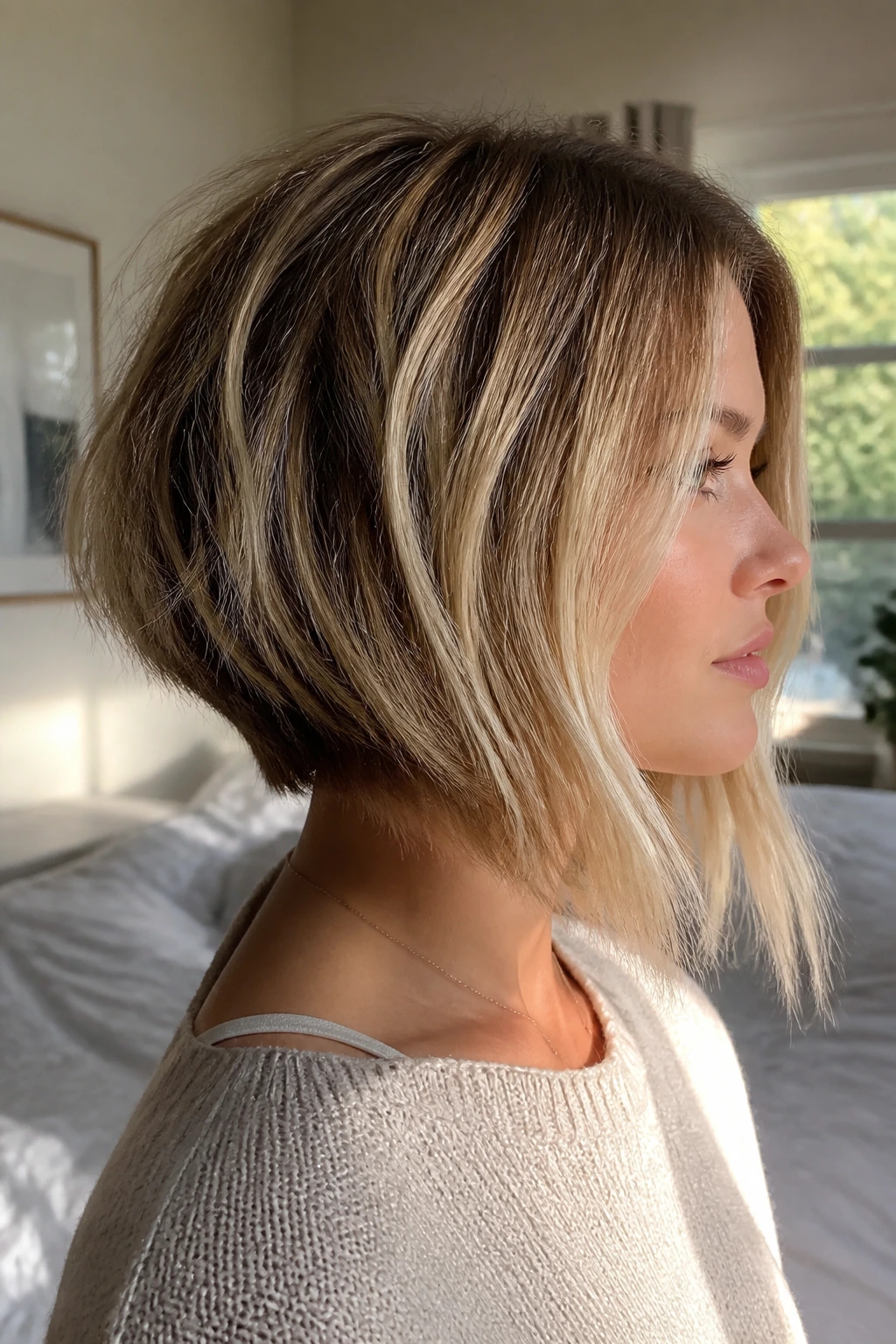
If you live for air-drying, an inverted lob is one of the better choices for fine hair. The back-to-front angle gives the cut shape even when you skip heat styling, and hidden layers keep the surface from falling into one flat sheet. It still needs a good cut, though. Air-dry hair shows every mistake.
The best versions use a slight bevel at the ends and a gentle stack through the back. That means the hair naturally bends in the right direction as it dries. A small amount of mousse or lightweight curl cream can help, but heavy product will crush the lift.
Let the hair dry partway before touching it. Seriously. Fine hair hates being fussed with while it’s damp. Once it starts to set, it holds the shape better.
17. Blunt-Back Inverted Bob with Long Front Pieces
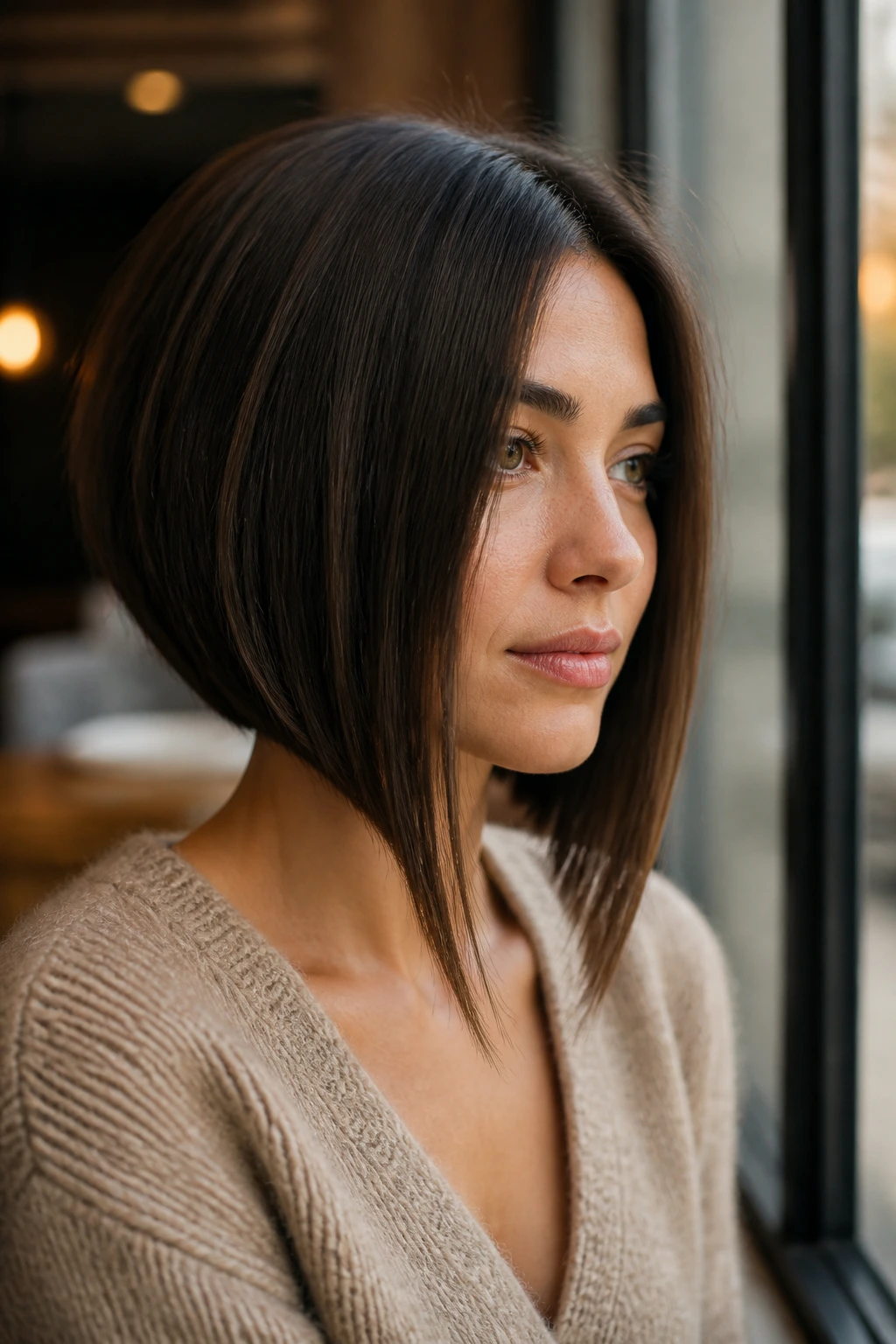
A blunt back gives fine hair a thicker-looking edge. That’s why this cut works so well when you want the back of the bob to look full instead of feathery. The front pieces stay longer and slightly angled, so you still get the softness and motion that makes an inverted shape flattering.
I prefer this version on straight hair or hair with only a slight wave. The blunt line at the nape creates a solid base, which keeps the whole style from looking thin after a couple of days. If a stylist thins the ends too much here, the haircut loses its point.
The long front pieces can graze the chin or dip to the collarbone. Either way, they make the face feel less boxed in. Clean back. Soft front. That’s the whole story.
18. Layered Bob with Undercut Nape
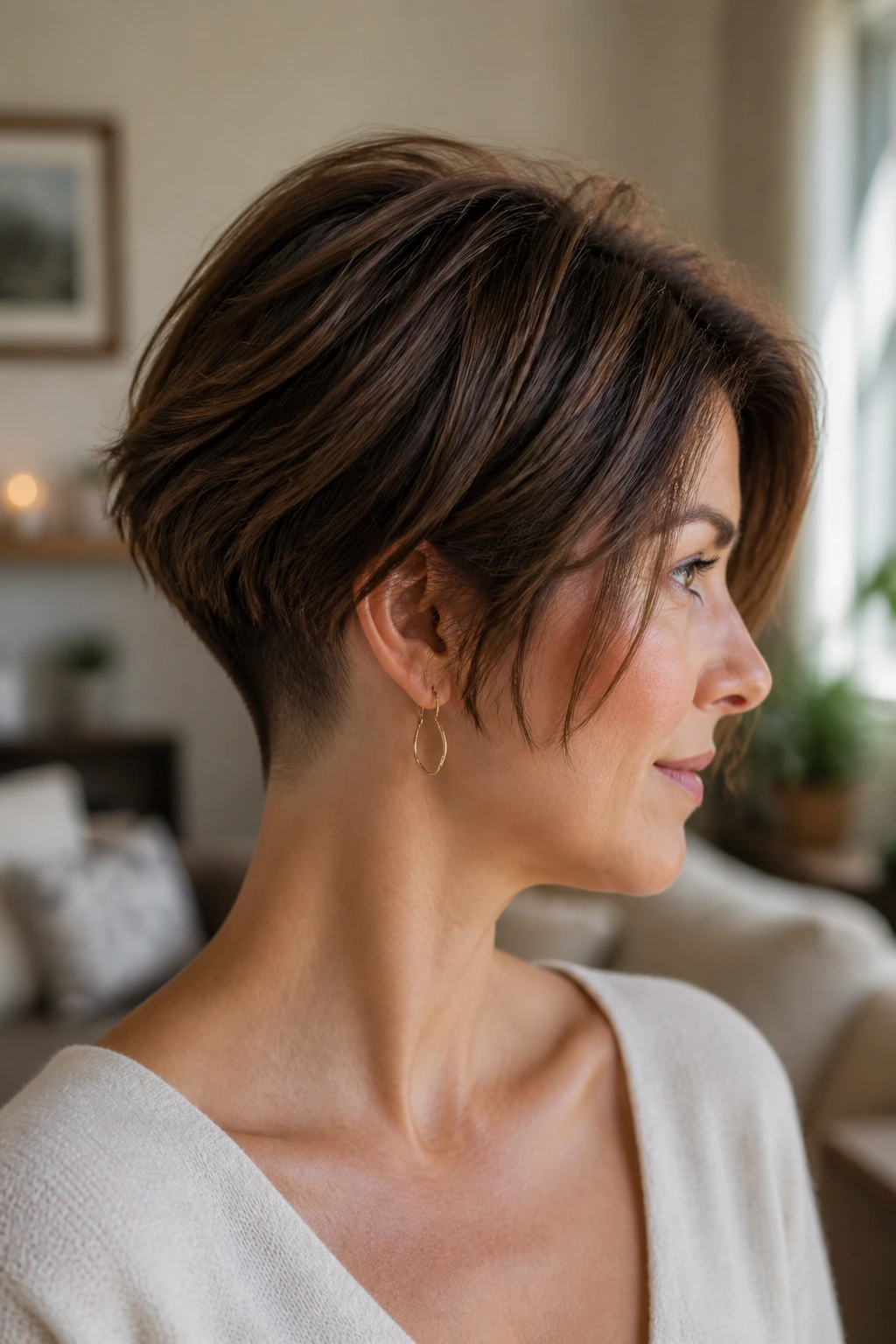
An undercut nape sounds bold, but on fine hair it can remove the bulky puff that makes some bobs stick out in a weird way. The upper layers still keep shape, while the underneath stays lighter and flatter against the neck. That can make the top look fuller by comparison.
This cut is best for people who like a sharper finish and do not mind a bit of maintenance. The undercut will grow out and need a tidy-up. Nothing dramatic, just enough to keep the line neat. If you let it go too long, the shape starts to lose its edge.
Who should skip it? Anyone who wants a very soft outline or hates visiting the salon often. Who should try it? Fine-haired people who want a cleaner back and do not want to stack too much bulk.
19. Short Inverted Crop with Crown Layers
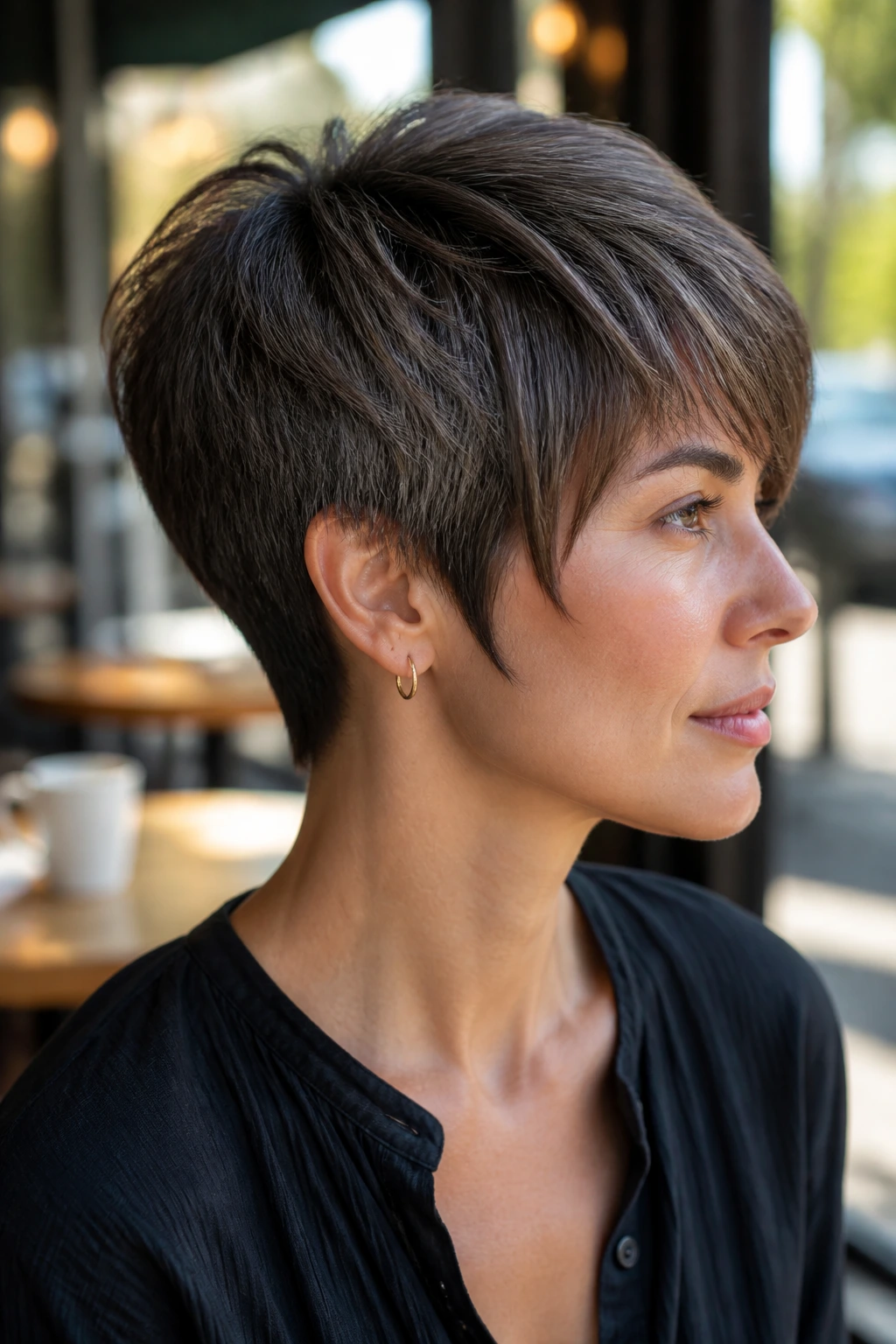
A short inverted crop can give the crown real lift without making the style look puffed up. Fine hair often benefits from that controlled height. The back stays snug, the top gets a little more room, and the sides fall close enough to the head to keep the cut tidy.
What to Ask For
Tell your stylist you want short crown layers but a clean perimeter. That combination matters. If the top is cut too short and too thin, the crop loses its shape fast.
- Keep the nape tapered and neat.
- Leave enough length at the crown for lift.
- Style with a root spray, not a heavy wax.
My opinion: This cut looks strongest when the finish is slightly imperfect, not over-smoothed.
20. Shoulder-Grazing Inverted Cut with Face Framing
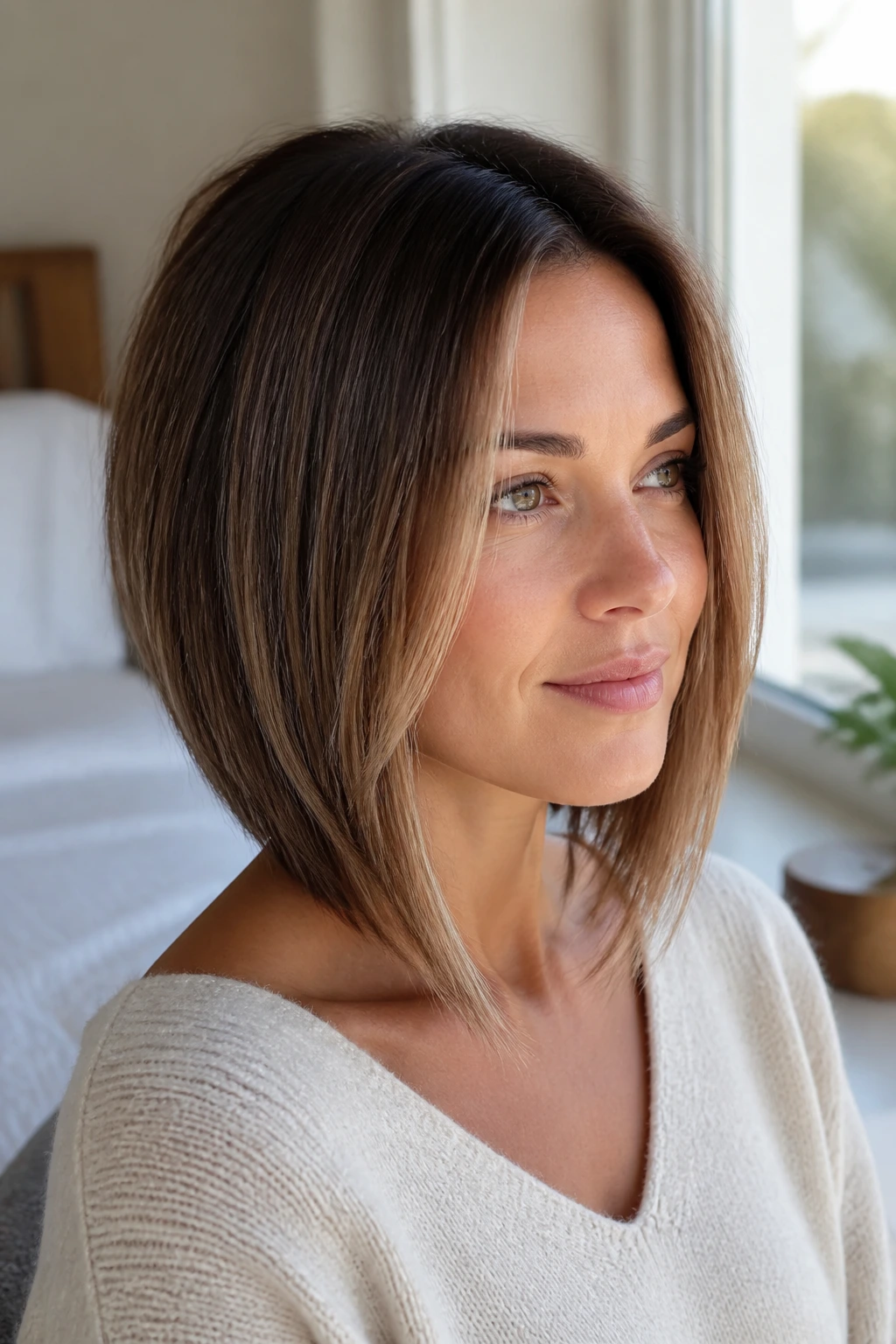
Length does not have to mean limp hair. A shoulder-grazing inverted cut can still work for fine hair if the back is lifted and the front is beveled into longer face-framing pieces. That little angle stops the shape from hanging straight off the head.
The face-framing parts should start around the cheekbone or just below the jaw, depending on your features. Anything shorter can feel severe. Anything longer can drag the silhouette down. The cut sits in a narrow sweet spot, and that’s what makes it useful.
This is a good choice if you are attached to longer hair but want some shape that survives a day of wear. It is one of the more forgiving inverted styles, which is part of why it’s so easy to live with.
21. Glasses-Friendly Inverted Bob

Can an inverted bob work with glasses? Yes, if the front is shaped with intent. Fine hair that sits too close to the temples can fight with frames, but a properly cut inverted bob keeps the sides clear and the front lines neat. That means less puff around the arms of your glasses and fewer pieces getting trapped.
What to Ask for Around the Temples
Keep the side sections slightly shorter near the ear, then let them lengthen toward the chin. That gives the frames room without making the haircut feel chopped up. The nape should still be tucked and clean.
- Ask for a soft temple curve.
- Avoid bulky side layers.
- Tuck the front behind the frames on one side.
A small detail, but it matters. Hair and glasses should sit together, not argue.
22. Soft Curved Inverted Bob for Thin Ends
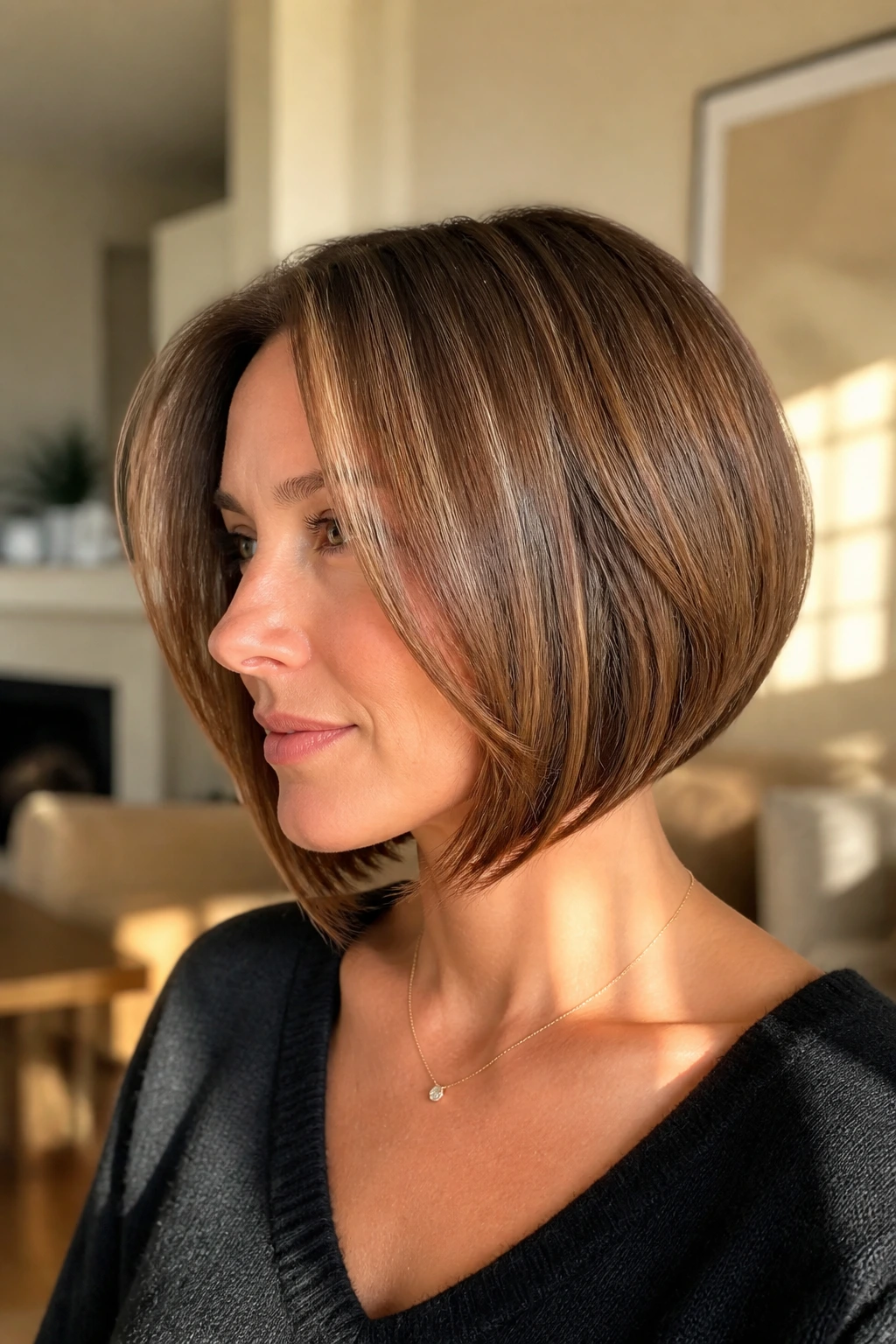
If your ends feel too thin to wear blunt, a soft curved inverted bob is the safer move. The curve helps disguise sparseness because the eye follows the rounded line instead of fixing on every individual strand. Fine hair looks fuller when the perimeter bends instead of dropping straight down.
This cut usually lands between the jaw and collarbone, with a gentle rise at the back. It isn’t harsh. That’s the appeal. The shape feels smoother than a choppy bob and less formal than a sleek A-line, which makes it easy to wear every day.
- Keep the ends beveled inward.
- Use a low-hold cream if the hair frizzes.
- Dry the front away from the face first.
The curve does the heavy lifting, not the product.
23. Low-Maintenance Stacked Inverted Bob
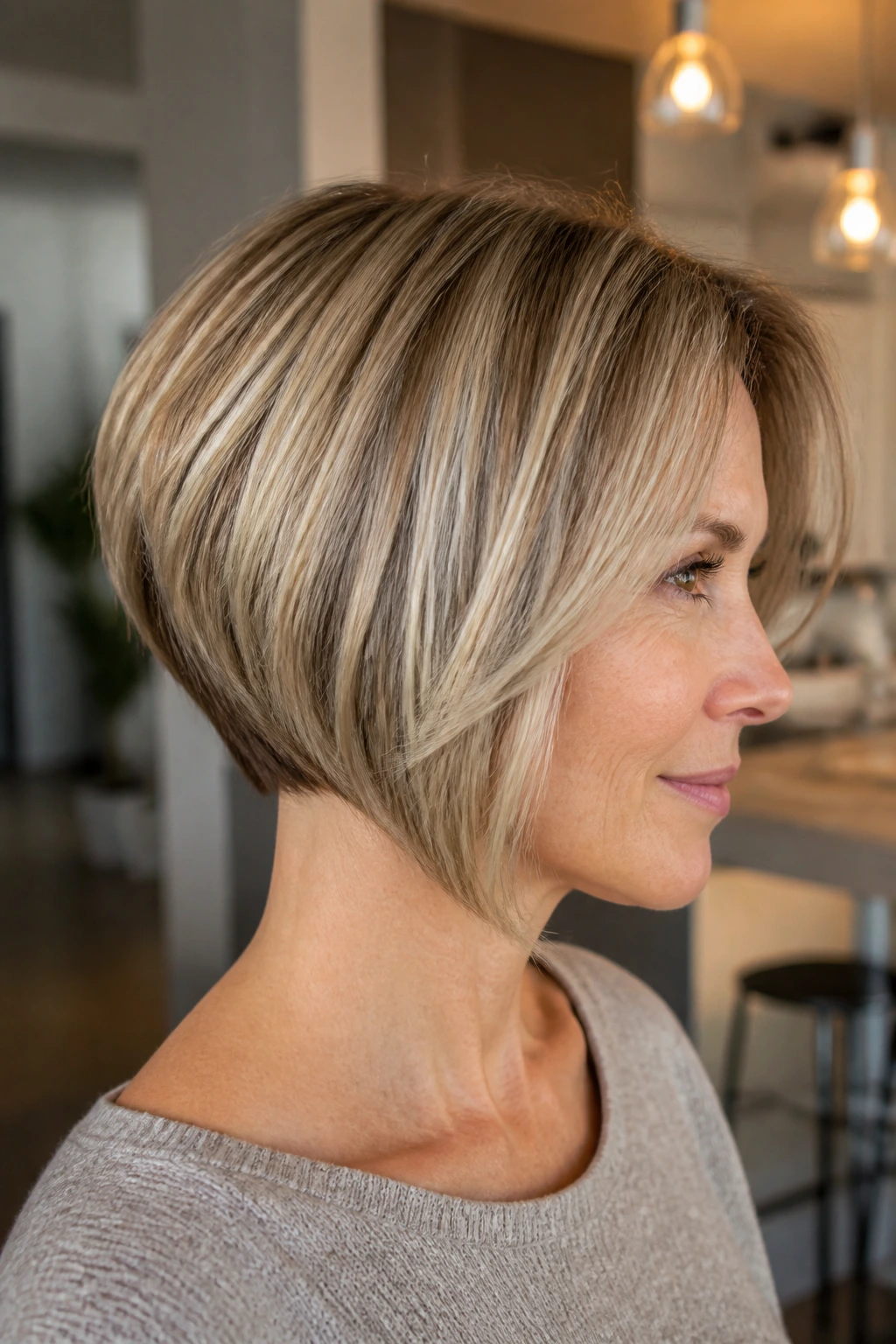
A low-maintenance stacked inverted bob is the cut I keep circling back to for fine hair that needs body without a fight. The stack at the back gives you height, the front keeps enough length to feel feminine or sharp, and the overall shape usually behaves after a fast blow-dry. Not magic. Just smart geometry.
One thing I like here: the hair can grow out a bit before the shape falls apart. That is not true of every inverted cut. Some need a trim the second they pass a certain point, and that gets old fast. This one is more forgiving.
If you want easy mornings, ask for a solid base, modest graduation, and minimal thinning at the ends. That combination keeps the cut from getting fluffy in the wrong places. Solid shape beats fancy texture here.
24. Inverted Shag Bob with Choppy Crown
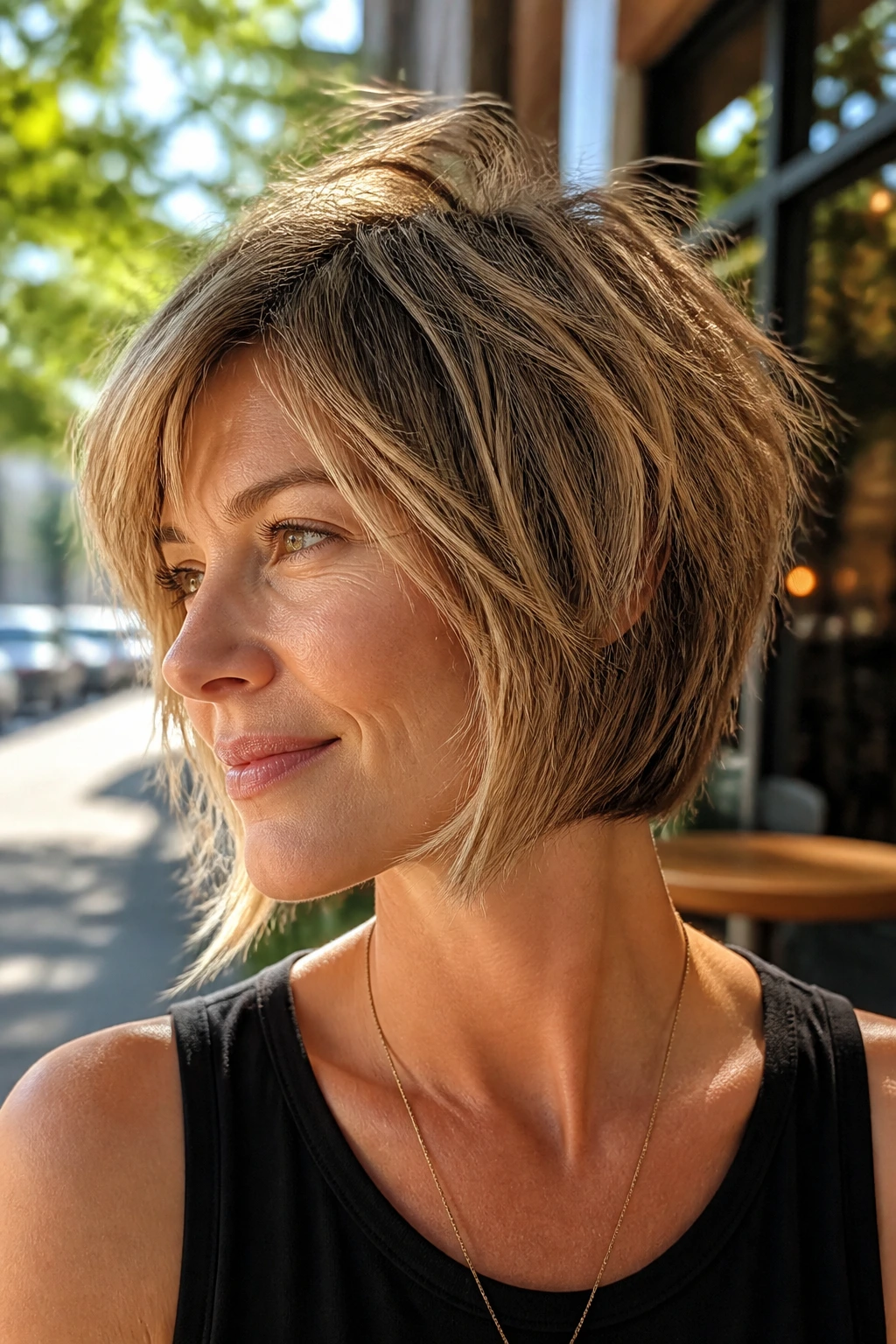
A shaggy bob and an inverted bob sound like cousins who don’t always get along, but on fine hair the mix can be useful. The inverted shape gives the back its lift, while the choppy crown pieces add a little air and movement up top. That can be a relief if your hair falls flat the second humidity shows up.
This version suits people who do not want a polished finish. It likes texture spray, finger styling, and a bit of mess. The key is keeping the ends from getting too skinny. Choppy does not mean weak. It means irregular, with purpose.
If you already wear your hair wavy or have a natural bend, this cut can look relaxed without looking sloppy. Straight hair can wear it too, but it usually needs a quick bend from a flat iron or curling wand.
25. Classic Stacked Inverted Bob
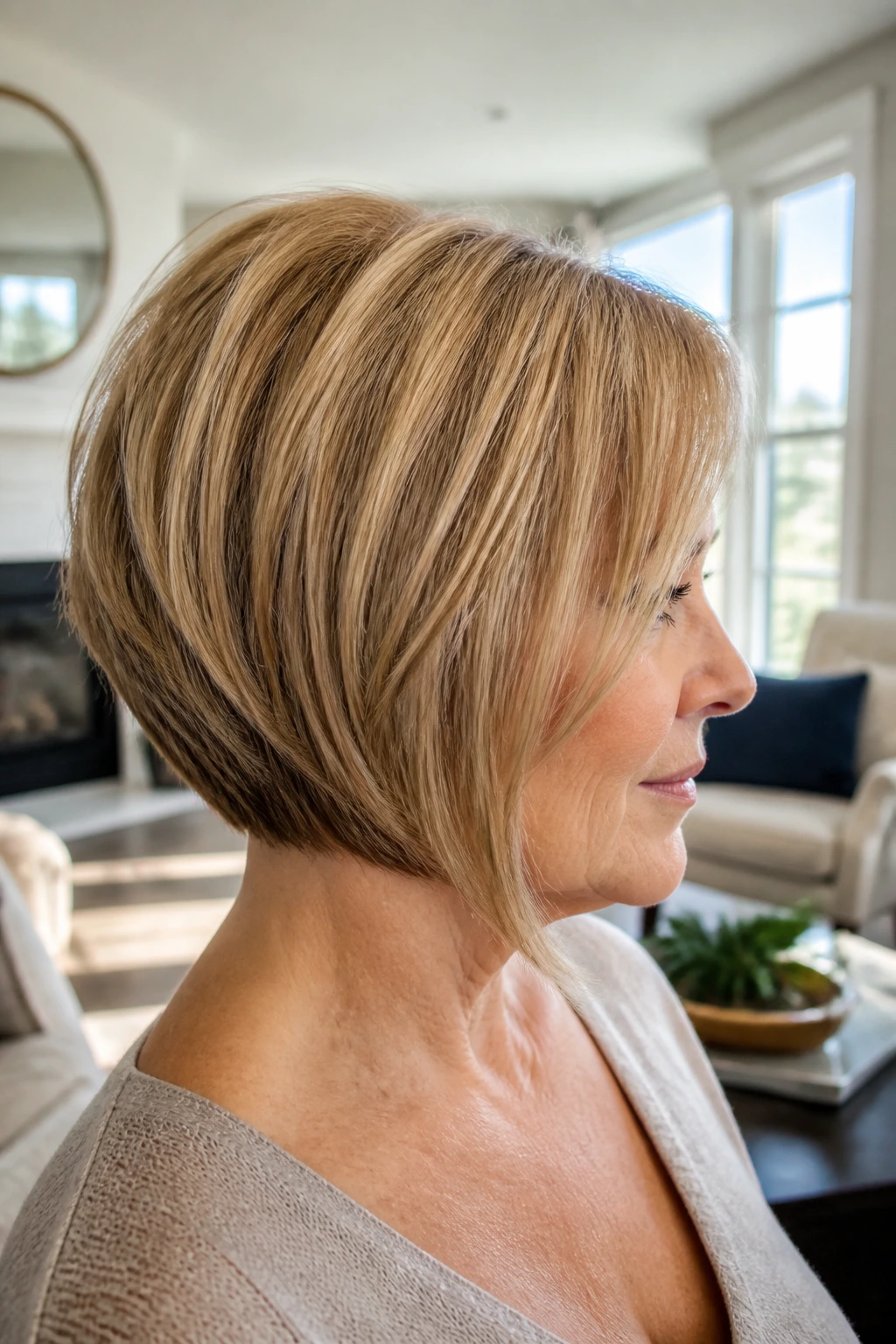
If you want one inverted haircut that keeps showing up for a reason, this is it. The classic stacked inverted bob gives fine hair the most honest kind of fullness: shorter at the nape, graduated through the back, and long enough in front to flatter the face without dragging the shape down. It’s clean. It works.
I like this version because it doesn’t try too hard. There’s no need for heavy layering, no need for shredded ends, and no need for weird tricks to fake thickness. The cut itself does the job if the stack is placed well and the perimeter stays controlled. A little mousse, a round brush, and you’re done.
If you’re bringing this to a stylist, ask for visible graduation at the back, a blunt-ish perimeter, and enough length in front to frame the jaw or collarbone. That combination gives fine hair the best chance of looking full, neat, and easy to wear.
