



Fine hair and waves can be a little rude together. One wrong cut and the ends start looking see-through, the body collapses by lunch, and the wave pattern turns into fluff instead of movement. The best wavy layered haircuts for fine hair do one thing especially well: they keep enough weight at the perimeter to make the hair look fuller, then place movement only where it helps.
That balance matters more than people think. Fine strands do not have much bulk to begin with, so layers that are too short or too high can make the whole cut feel airy in the bad way — stringy, wispy, and a little sad at the ends. A smart shape gives the wave room to bend while still leaving a solid outline around the face and shoulders.
There’s also a big difference between fine hair and thin hair. Fine means the strand itself is small in diameter. Thin means there may be fewer strands on the head. A good haircut has to respect both. Too much texturizing and you lose density fast. Too little shaping and the waves sit there like they are waiting for permission to do something interesting.
1. Collarbone Lob with Invisible Layers
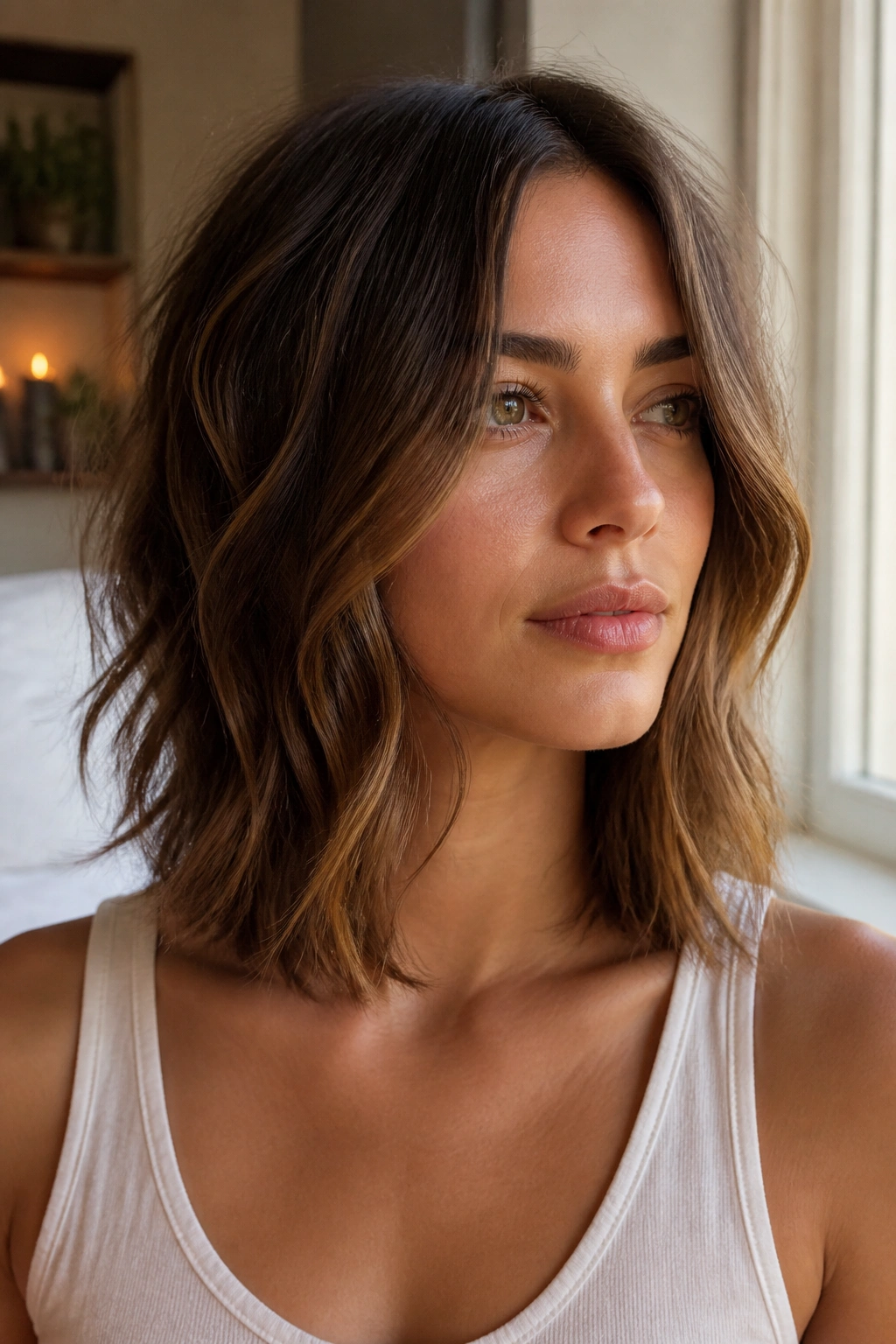
A collarbone lob is one of those cuts that just keeps showing up for a reason. It lands in that sweet spot where fine hair can still look thick at the ends, but the length is long enough to show off a loose wave pattern without dragging the shape down.
The trick is the layering. Ask for invisible internal layers instead of choppy pieces on the surface. That means the stylist removes a little weight inside the cut, usually below the cheekbone, while leaving the outline clean. The ends should still look solid from the front. Not feathery. Not shredded.
This cut works best when the shortest face-framing piece starts around the chin or just below it. Any higher and the front can start to feel airy too fast. Styled with a 1-inch curling iron or a diffuser and a small scoop of mousse, it gives that easy, bent shape that fine wavy hair loves.
2. Chin-Length French Bob with Soft Waves
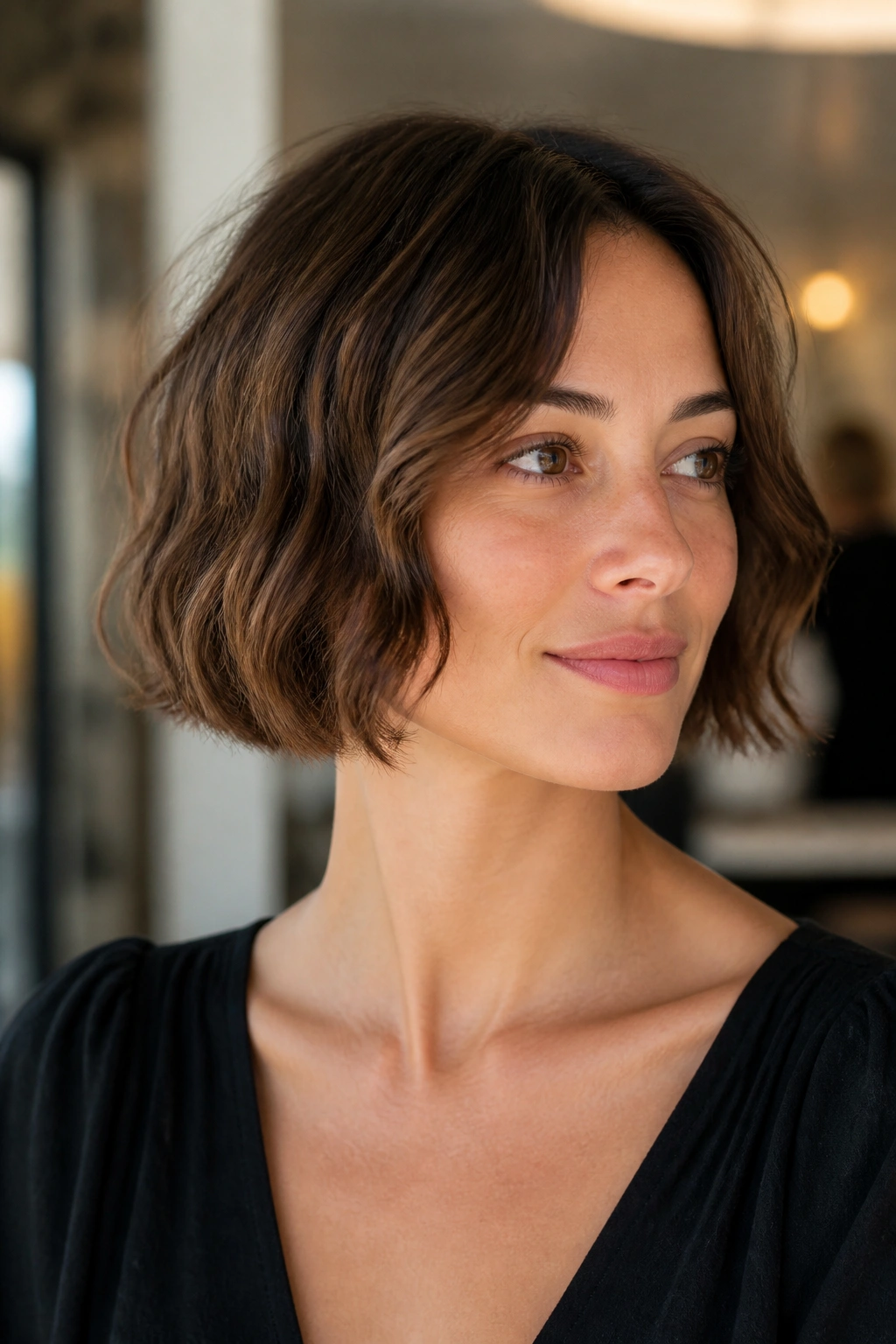
Short hair is not the enemy of fine hair. Over-layering is. A chin-length French bob keeps the hair compact, which makes the density look stronger right away. The wave sits on top of a clean line, and that line does a lot of heavy lifting.
What to Ask For
Ask for a soft, slightly blunt perimeter with just enough internal texture to keep the waves from puffing out. A tiny bit of point cutting at the ends is enough. You do not need aggressive razor work here.
- Keep the length at the jaw or chin
- Leave the outline mostly blunt
- Add only a light bend through the middle
- Keep the nape neat so the shape does not flare out
This cut is a good choice if your hair gets limp when it goes past the shoulders. It also grows out cleanly, which matters more than people admit. Nobody wants a cute bob that turns into a triangle by the third week.
3. Curtain Bang Lob with Face-Framing Pieces
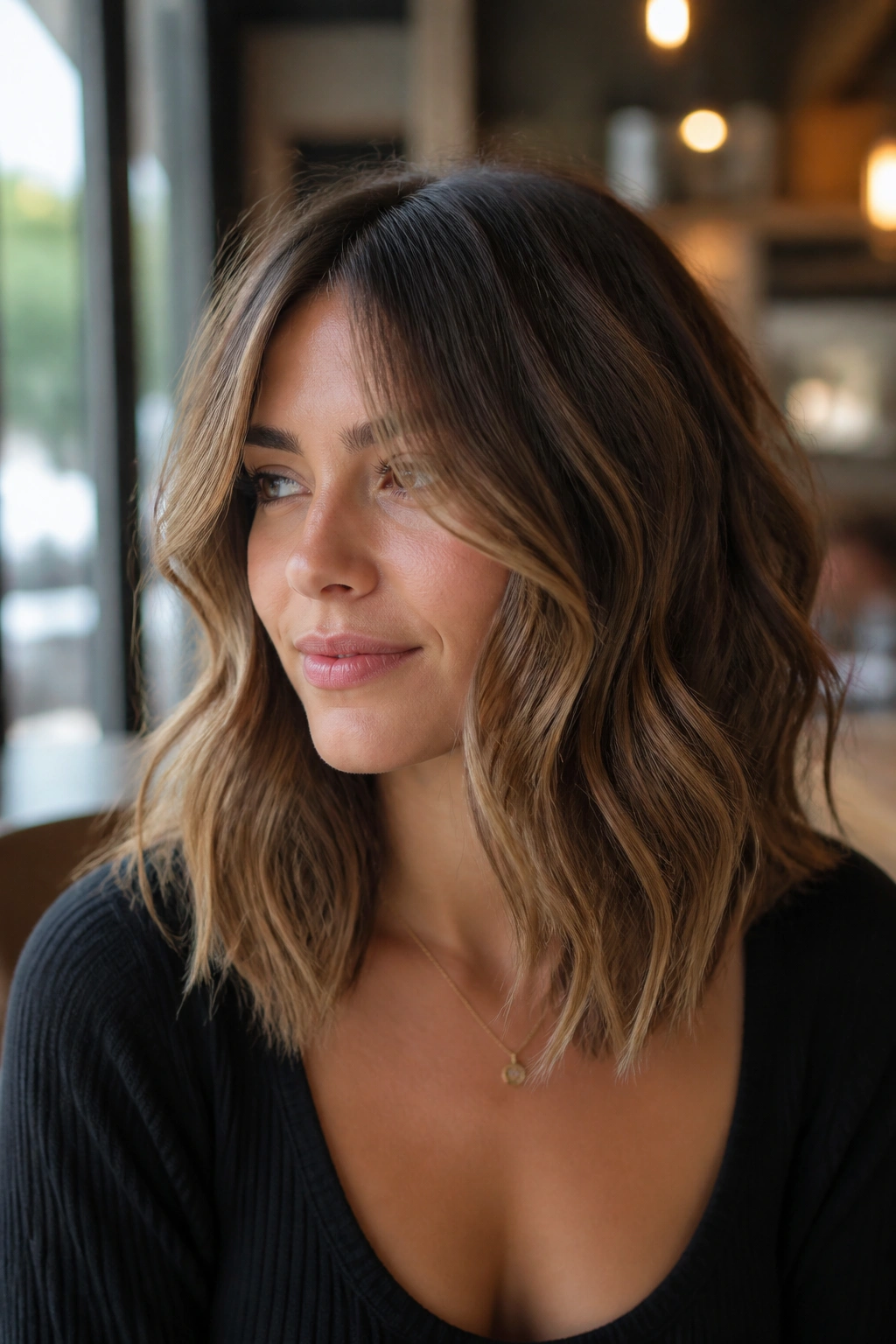
Curtain bangs can do a lot for fine wavy hair because they give the front of the cut some lift without stealing too much density from the rest. A lob underneath keeps the length useful, and the bangs create a soft frame that makes the whole head of hair look fuller.
The important part is placement. Curtain bangs should open around the cheekbones, not sit like a heavy curtain across the forehead. If they are cut too thick, they flatten fast. If they are too short, they stick up and fight the wave pattern. The best version is feathered enough to bend with the rest of the hair.
I like this cut for anyone whose hair falls flat at the crown but still has a decent wave in the mids and ends. It gives you something to style in the front even on lazy days. A round brush, a quick twist of the bangs, and a little dry texture spray are usually enough.
4. Butterfly Layers on Mid-Back Hair
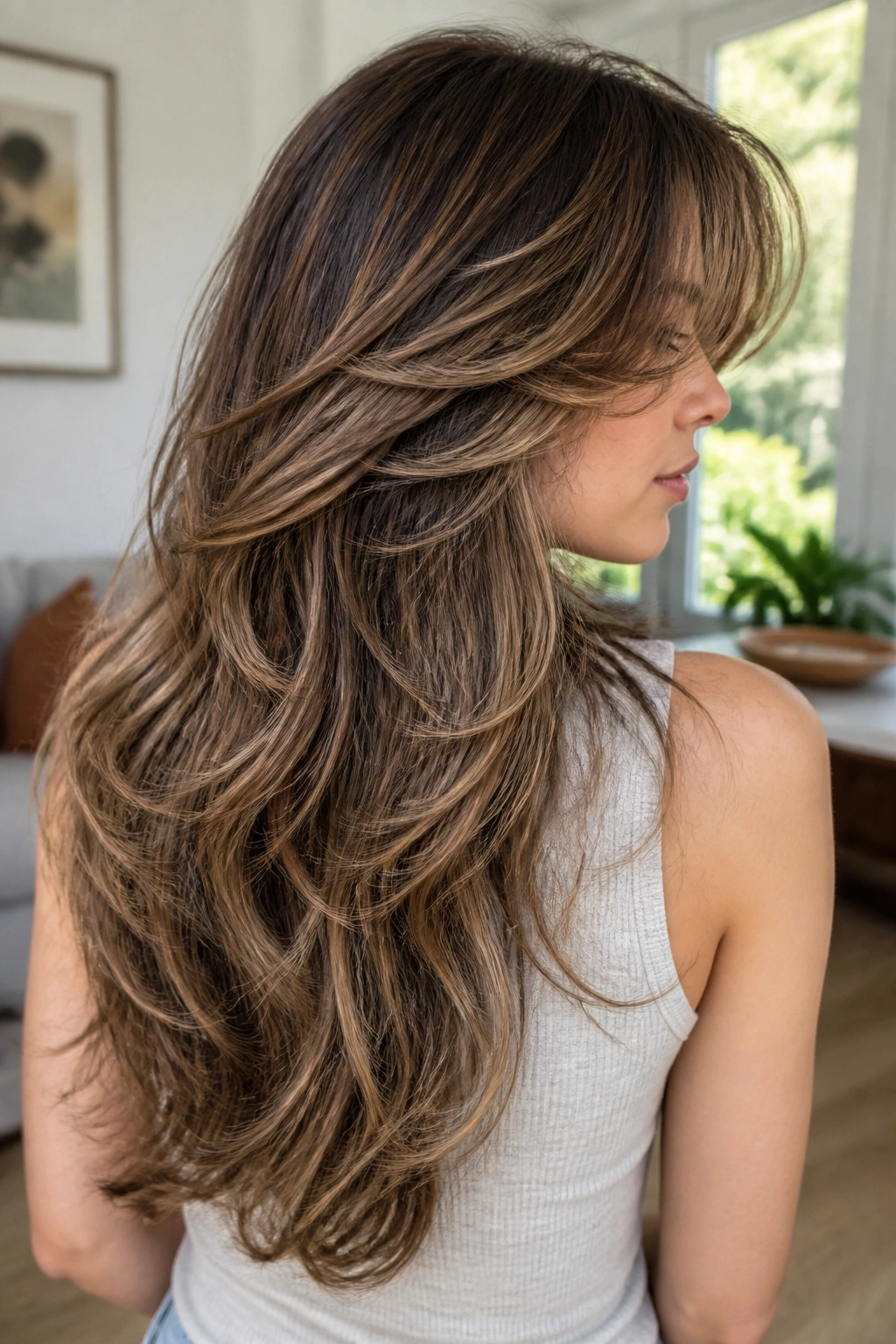
Butterfly layers can be a gift for fine hair if they are kept controlled. The whole point is to keep the long length intact while building movement in the top half of the cut. On wavy hair, that can create a nice floating effect around the face without making the bottom half look sparse.
The catch is restraint. Fine hair does not like too many short layers stacked too high. The top pieces should fall back into the shape rather than sit on top of it. Think soft face-framing pieces, not a dramatic staircase.
This style works especially well if you wear your waves loose and like a little bounce around the cheekbones. When the hair is diffused or air-dried with a curl cream, the shorter front sections lift and the longer sections keep the weight. That mix is what stops the style from looking thin.
5. Feathered Shag for Gentle Movement

A shag can be brilliant on fine wavy hair, but only if it stays soft. The old-school shag with heavy crown chopping can make fine strands look scattered. A gentler version — feathered around the jaw, longer through the back, lighter at the fringe — gives you movement without chewing up the bulk.
Why This Version Works
Fine hair needs shape that bends with the wave, not layers that fight it. Feathering softens the line, and that makes the cut feel lighter without looking sparse. If the stylist uses a razor, it should be on the ends only, and only if your hair has enough strength to handle it.
- Keep the crown lightly layered, not shredded
- Ask for longer pieces around the ears
- Let the fringe blend into the sides
- Skip heavy thinning shears on the interior
The result should feel tousled, not messy. There’s a difference. Tousled hair still looks intentional. Messy hair looks like you lost a fight with a wind tunnel.
6. U-Shaped Long Cut with Kept-Length Ends
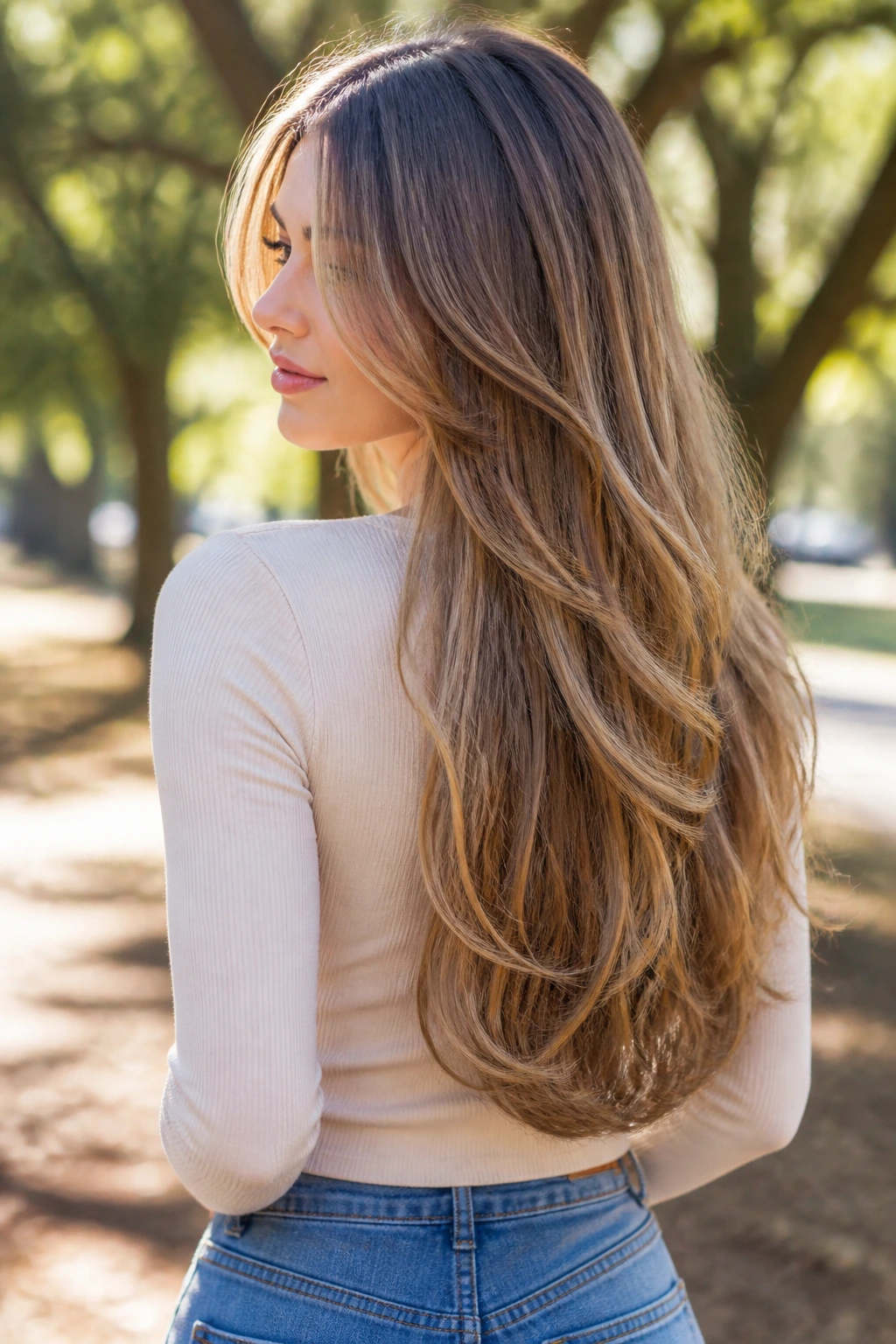
If you love long hair and don’t want to give it up, a U-shape is often the safest move. The curve in the back keeps the hair from feeling boxy, while the perimeter stays fuller than a sharp V-cut. For fine wavy hair, that fuller edge matters a lot.
This cut is especially useful when the ends are the weakest part of the head of hair. A straight, one-length bottom can make waves hang there like wet ribbons. A shallow U gives the ends a little movement while still looking dense from behind.
I’d pair this with long layers that start below the collarbone, not around the cheekbones. The wave needs somewhere to move, but it also needs a base. That base is what keeps the cut from looking stringy when it’s worn down.
7. Blunt Shoulder Cut with Hidden Interior Layers
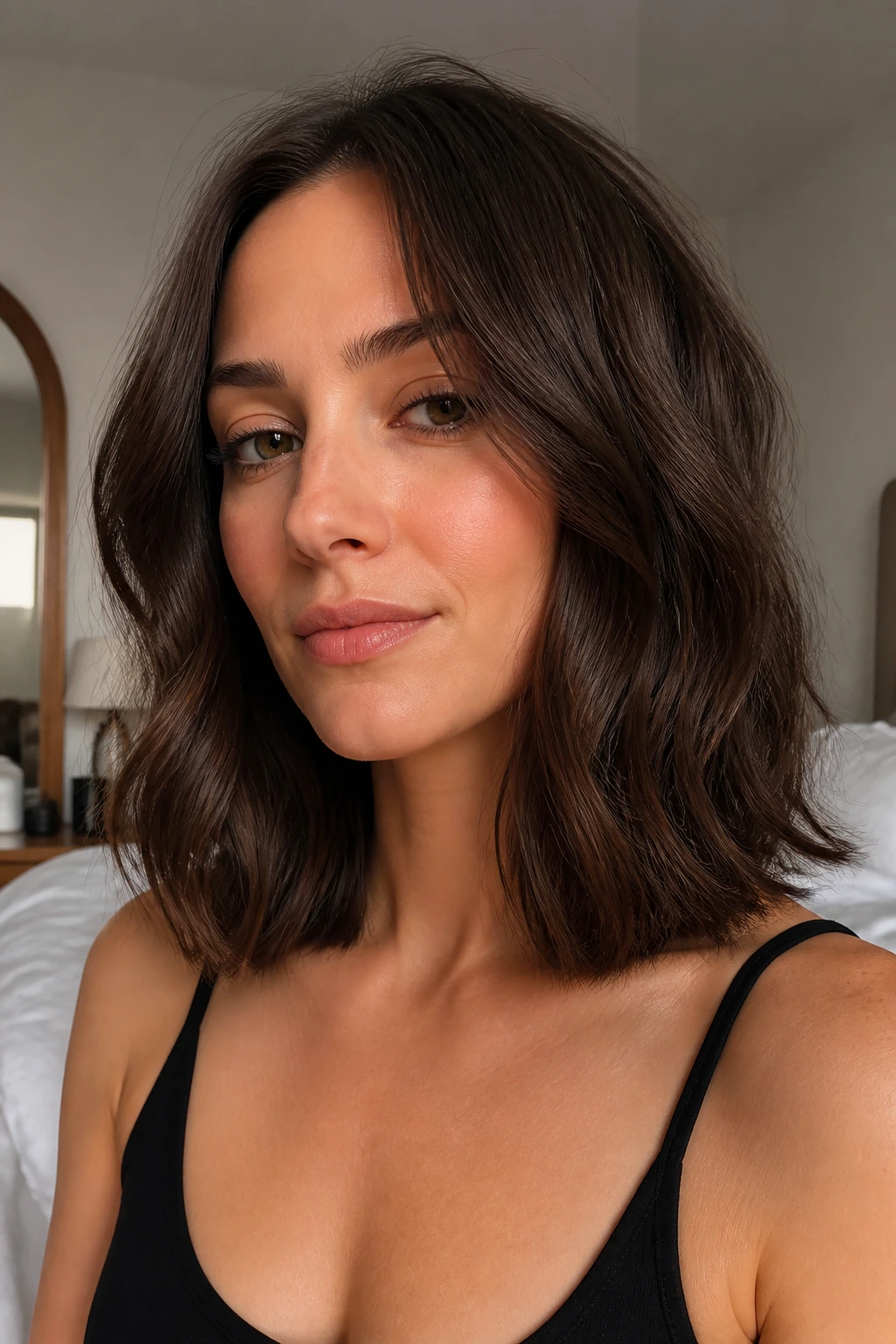
A shoulder-length blunt cut can look surprisingly thick on fine hair, and that’s why I keep coming back to it. The straight outer line creates the illusion of density. Then hidden interior layers stop the waves from sitting like a shelf.
The key is keeping the ends blunt enough to hold their shape. If the perimeter gets too wispy, the whole thing loses its punch. The interior layers should be subtle — a little removal through the middle, not a lot of slicing at the bottom.
This is one of the best cuts for people who want easy styling. A rough blow-dry, a few bends with a flat iron, and a bit of wave-enhancing spray are often enough. The cut does half the work for you, which is honestly the best kind of haircut.
8. Side-Parted Lob with Asymmetric Layers
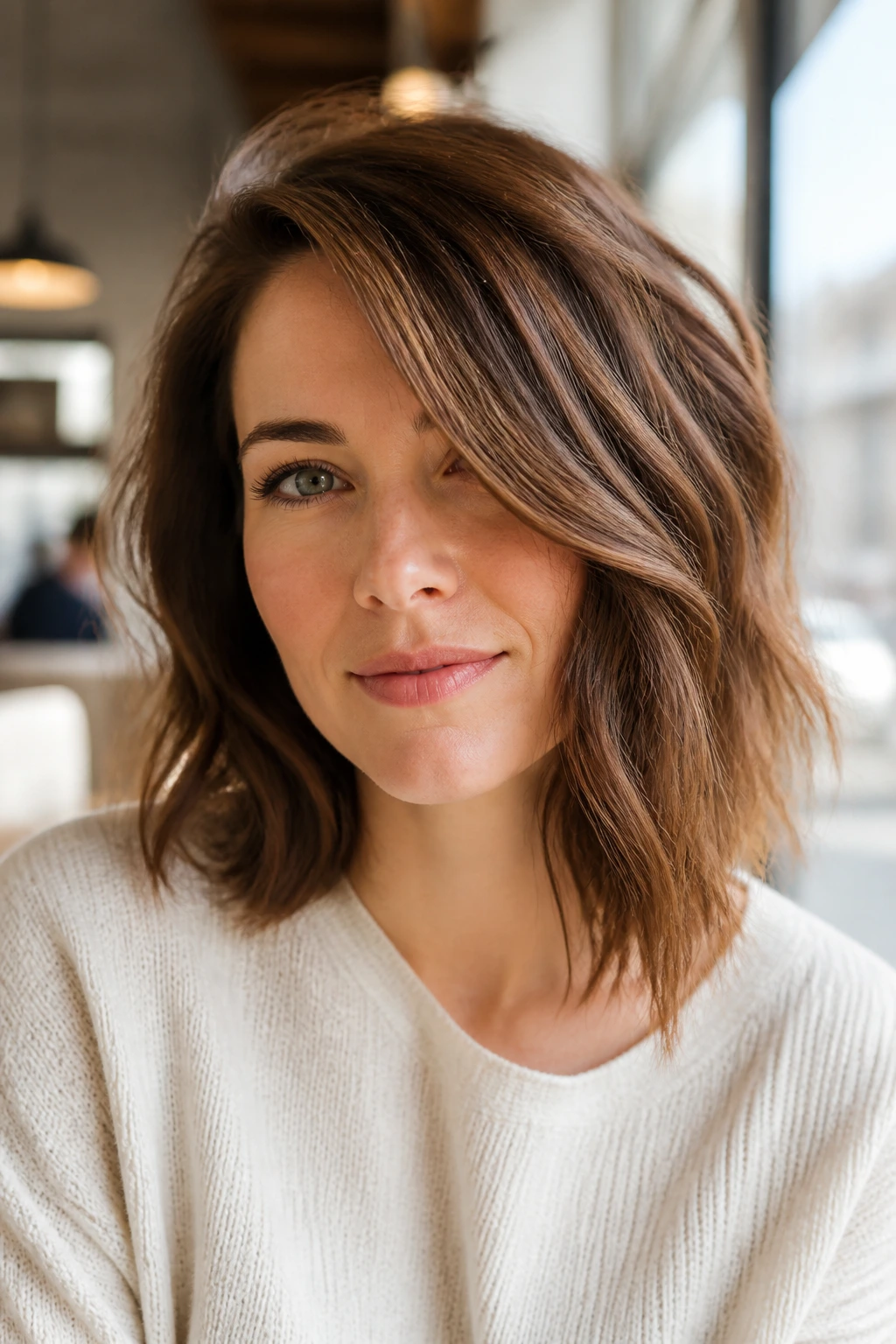
A deep side part can wake up fine hair fast. It moves more weight to one side, lifts the roots on the other, and gives the top of the head a little extra height without needing layers everywhere. Add a lob with asymmetric layers, and the result has a nice swing to it.
The cut should be slightly longer on the heavier side, usually by about half an inch to an inch. Nothing dramatic. Just enough to make the shape feel purposeful. On wavy hair, the longer side tends to form a deeper bend, which gives the whole cut more movement.
This style is a good answer when you want volume but not a lot of fuss. Flip the part, scrunch with mousse, and let the wave pattern do the rest. A small change at the part line can make fine hair look like it has more body than it actually does. That little trick is underrated.
9. Graduated Bob with Light Crown Stacking
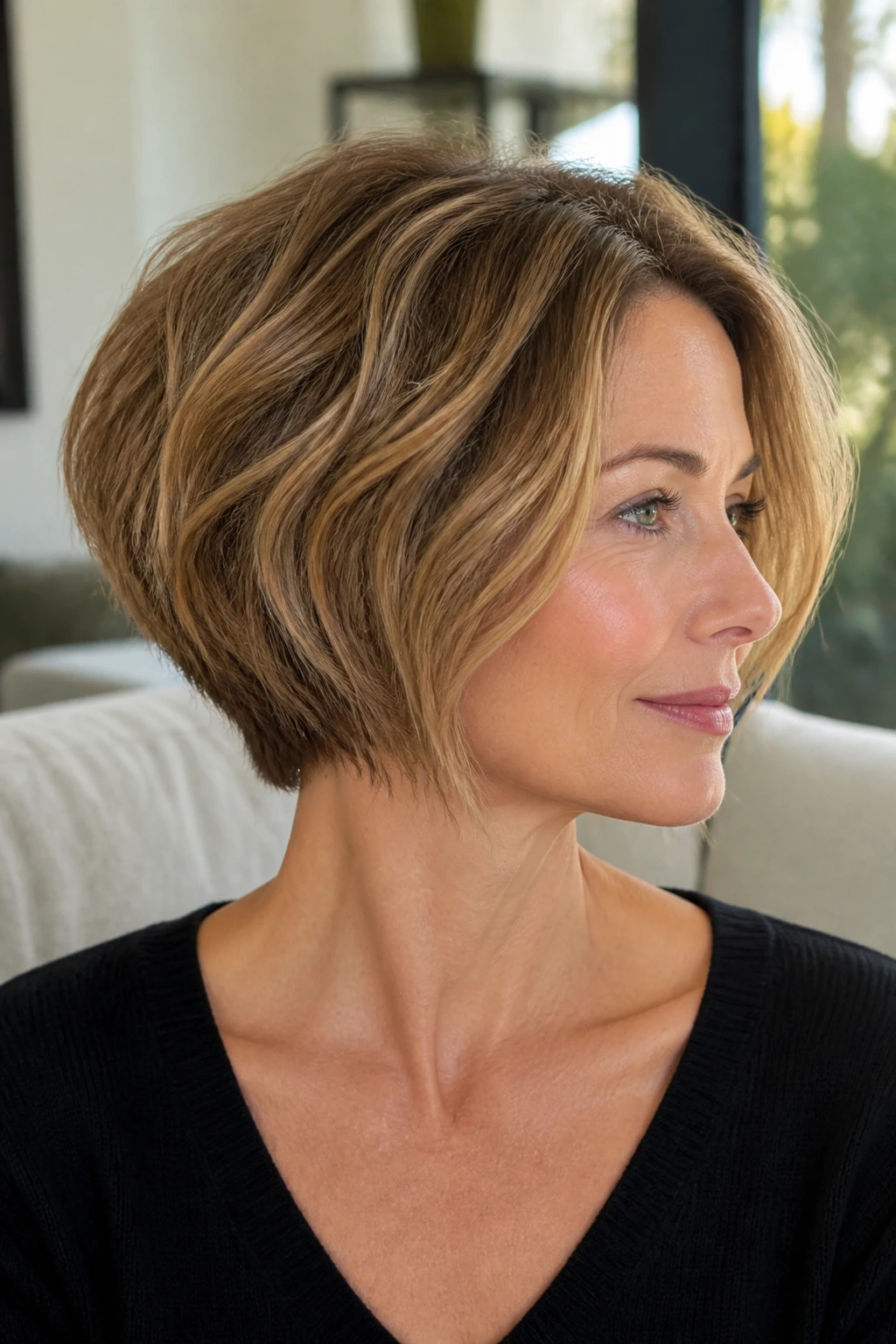
A graduated bob can be tricky on fine hair. Too much stacking in the back and the cut starts to feel dated fast. Too little and the shape collapses. The sweet spot is a light graduation that lifts the nape while keeping the crown soft.
This haircut gives the back some support, which is helpful when the waves are loose and the hair tends to fall flat against the neck. The front can stay a touch longer, around the jaw, so the whole shape feels modern and easy to wear.
I like this cut for people who want a cleaner outline and less movement at the ends. It reads polished without being stiff. If your hair has a medium-fine texture and not just ultra-delicate strands, this shape can hold up especially well.
10. Razored Midi Cut with Piecey Ends
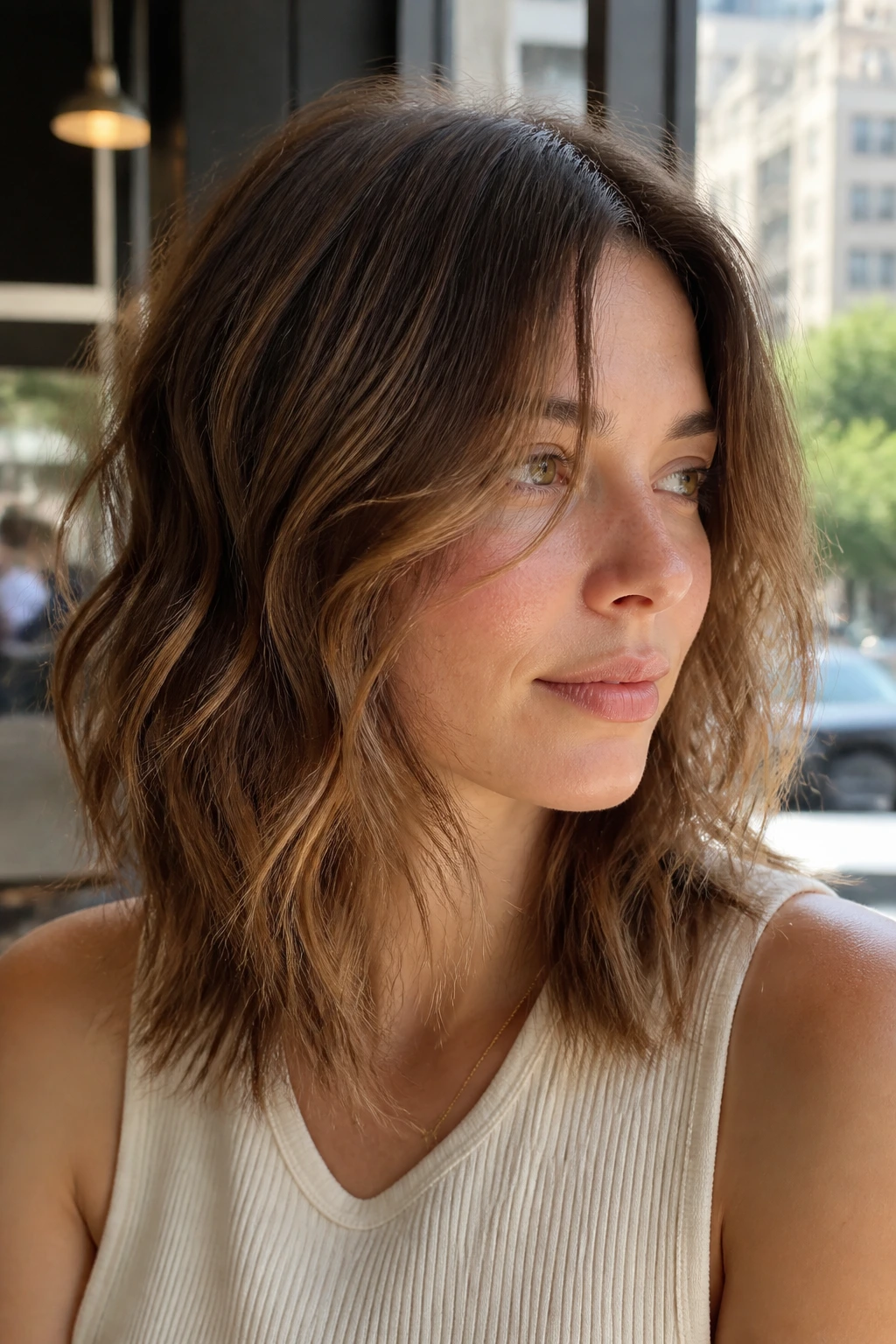
A razor can be your friend, but only in the right hands. On a midi cut, it can create soft, broken ends that let waves separate instead of clumping into one heavy shape. The result is piecey and airy, which works nicely when the hair has enough density to support it.
Where the Razor Helps
A razor is best used on the very ends and on a few face-framing sections. It should not be used to shred the whole head. That’s how fine hair ends up looking hollow.
This cut suits people who want movement more than polish. It has a bit of edge to it. If your natural wave has a loose S-shape, the razored ends will often exaggerate that bend in a good way. Use a lightweight cream, not a heavy curl butter, or the definition disappears.
11. Bottleneck Bangs with Mid-Length Layers
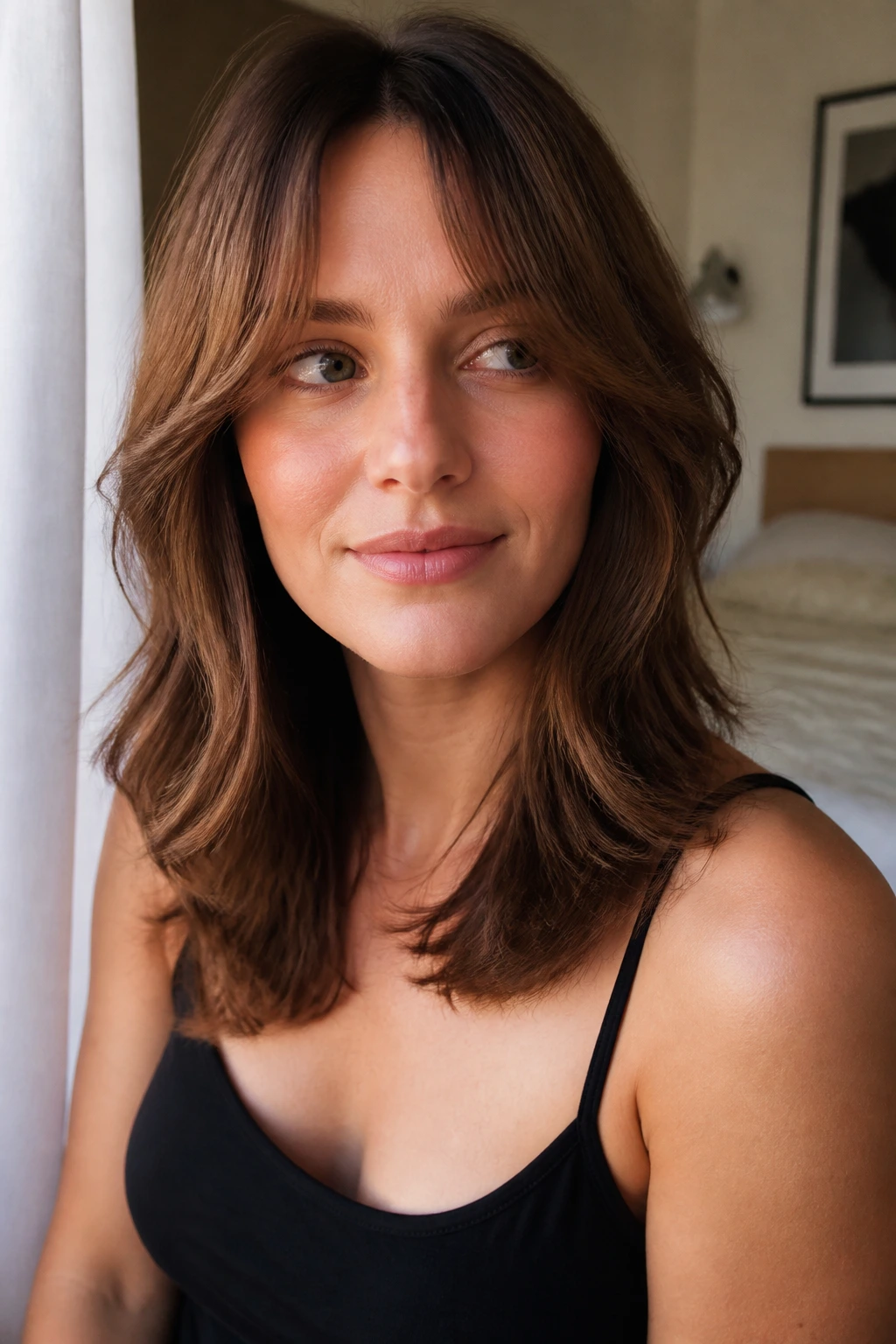
Bottleneck bangs are a smart choice for fine wavy hair because they give shape in the front without taking over the forehead. They start narrow at the center, then open out around the eyes and cheekbones. That soft flare is flattering, and it blends beautifully into mid-length layers.
The layers underneath should stay long enough to keep the cut from feeling thin. You want a gentle cascade, not a chopped-up stack. Around the face, the bangs can be blown forward first, then tucked into loose bends so they join the rest of the hair instead of sitting on top of it.
This is a strong option if you like a little softness around the face but do not want full curtain bangs. It gives the eyes a frame and keeps the cut feeling fresh. On days when the rest of the hair is plain, the bangs still pull their weight.
12. Tapered Long Layers Starting Below the Chin
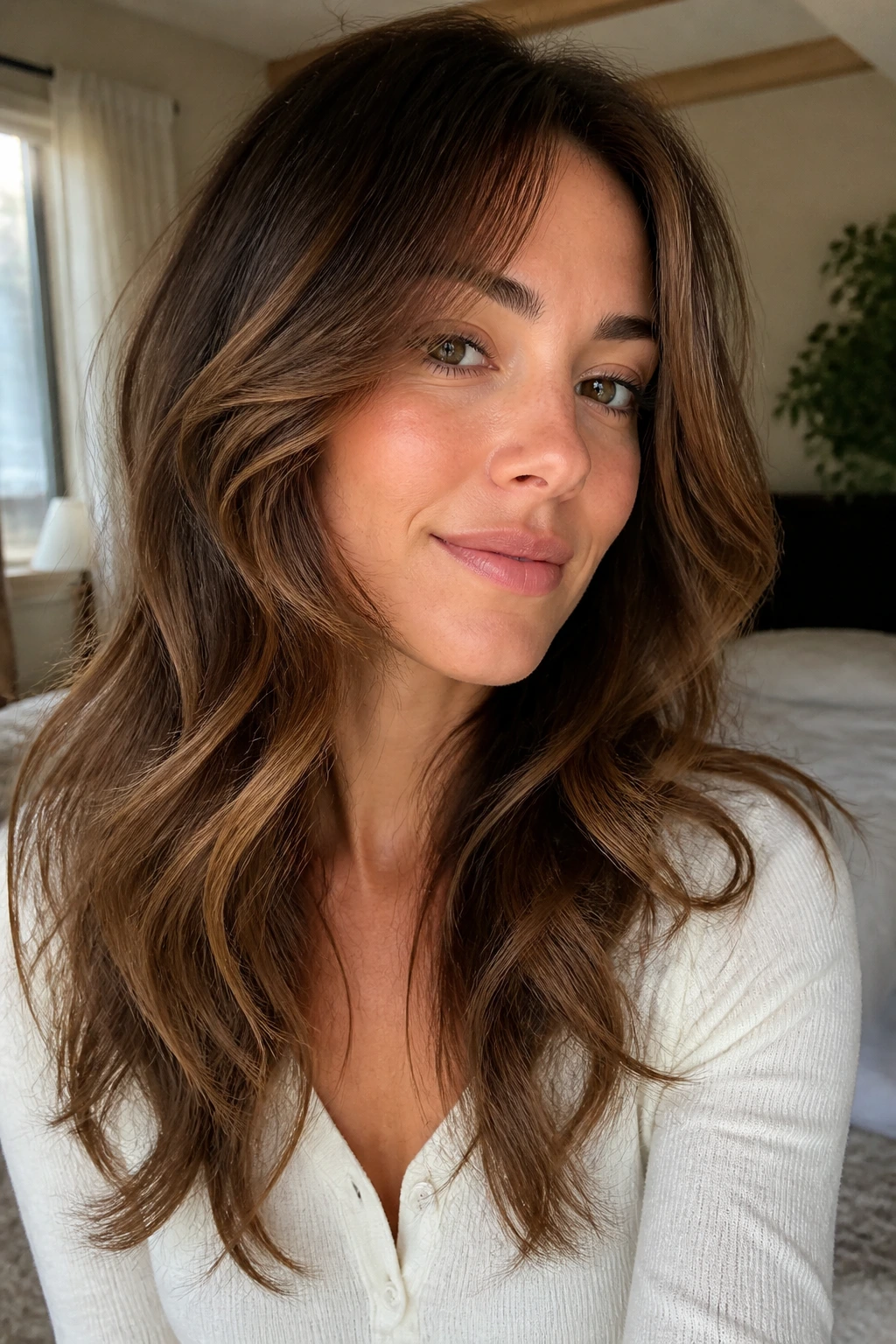
Long layers can work on fine hair, but only if they start low. Once the first layer hits around the chin or lower, the hair keeps more of its body. That means the waves still have space to move, but the length doesn’t get sliced apart.
The taper should be gradual, almost sneaky. A good stylist will remove just enough weight to make the mid-lengths bend, then leave the ends looking full. That’s the whole game with fine hair: less removal, more shape.
This cut is for the person who wants long hair but gets nervous when it starts looking stringy. Fair enough. Long layers that begin too high tend to make the ends feel shy. Starting lower keeps the density where the eye needs it most.
13. Wavy Pixie-Bob with Soft Sides
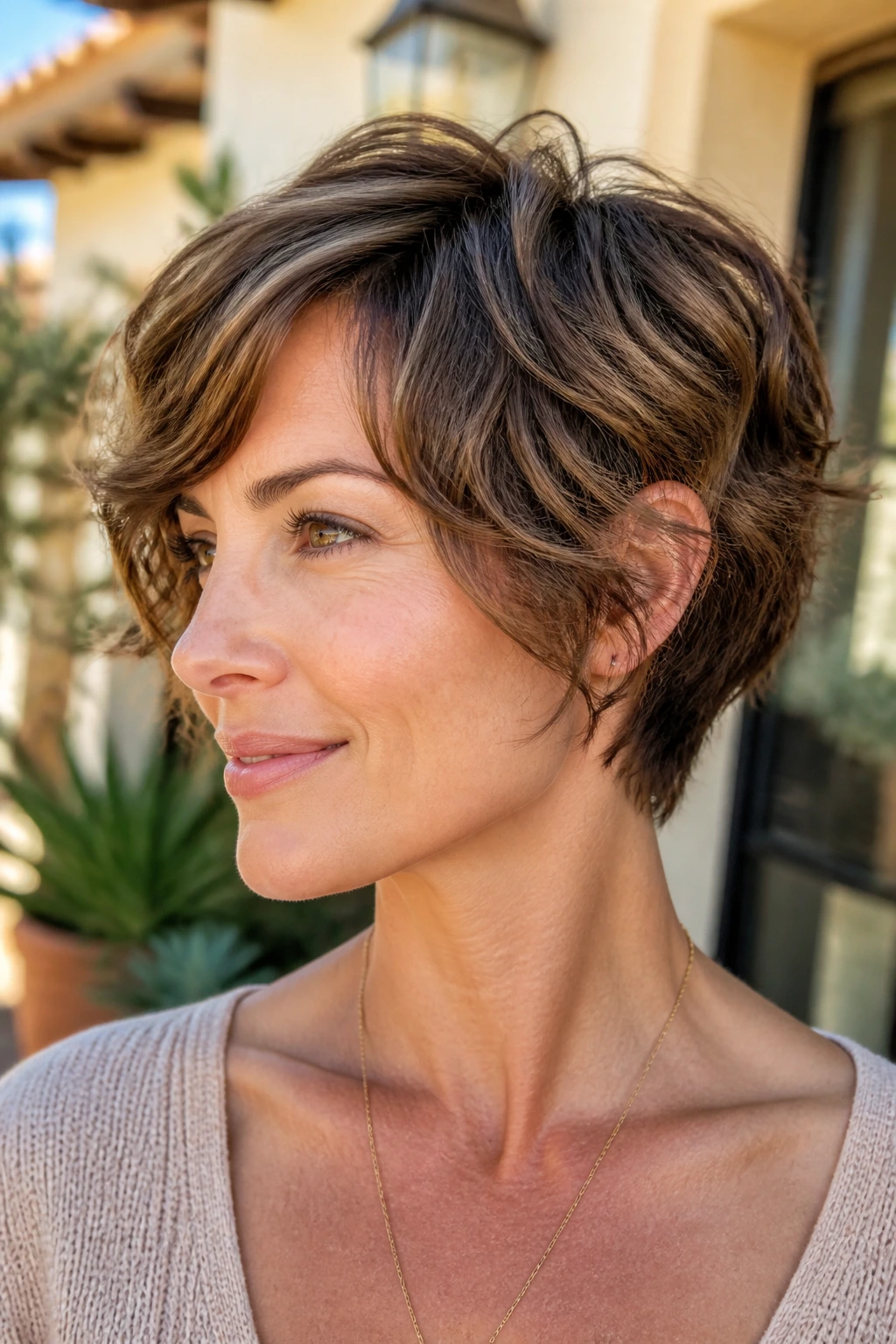
A pixie-bob sounds dramatic, but a soft version can be one of the nicest shapes for fine wavy hair. It’s short enough to create body, but long enough to let the wave pattern show. The sides should stay soft, the nape tidy, and the top just long enough to push forward or to the side.
The best version doesn’t rely on hard edges. It relies on texture. A little bit of layering through the top keeps the cut from sitting flat against the scalp, which is the danger with shorter fine hair. You want lift, not fluff.
This is a good pick if your hair looks thin when it gets long and heavy. Shorter lengths often make the strands look denser. A small amount of styling paste, worked through damp hair, can bring out the wave without making it sticky.
14. Soft Wolf Cut with a Gentle Shape

The wolf cut gets a lot of attention, and honestly, most of the loud versions are too much for fine hair. A softer version is a different story. Keep the crown light, the face frame longer, and the ends less choppy. Then the shape gets that lived-in feel without losing the bottom half of the hair.
This cut works when the wave pattern already has some bounce. It helps the top move without turning the whole head into a frayed halo. The layers around the cheekbones should blend into the rest of the hair, not jump out in obvious steps.
If you like texture and a little edge, this is a fun one. If you like neatness, skip it. There’s no pretending this cut is subtle. But when it’s done well, it gives fine wavy hair a messy, cool shape that still holds onto its density.
15. Flipped-End Collarbone Cut

Flipped ends are underrated. They make the shape feel lively without demanding a lot of length or layering. On a collarbone cut, the ends can turn slightly out or under, depending on how you style them, and the movement keeps the outline from looking too flat.
The haircut itself should be cut with enough softness at the ends to allow that flip. Point cutting helps. So does leaving a little extra weight in the lower third of the hair. If the ends are too thin, the flip looks skimpy instead of playful.
This shape is great if you like a blowout look but don’t want a lot of work. A medium round brush and a few passes at the ends are usually enough. The hair should move, not float away.
16. Choppy Mid-Length Cut with Micro-Layers

Micro-layers are small, quiet layers. That’s why they work. On fine wavy hair, huge layers can feel like too much is missing. Tiny internal layers, cut into the mid-lengths, let the waves separate just enough to show shape without exposing the scalp or thinning the outline.
What to Watch For
The danger here is overdoing the choppiness. You want texture, not shredded ends. The perimeter should stay visible, and the shorter pieces should be tucked inside the shape.
- Keep the base around the shoulders or just below
- Ask for micro-layers instead of heavy graduation
- Leave the ends blunt enough to read as full
- Style with a light spray, not a heavy cream
This is one of those cuts that can look plain in a chair and much better once it dries. That’s the point. It’s built for movement, not for a perfect salon finish.
17. Cheekbone Face-Framing Layers
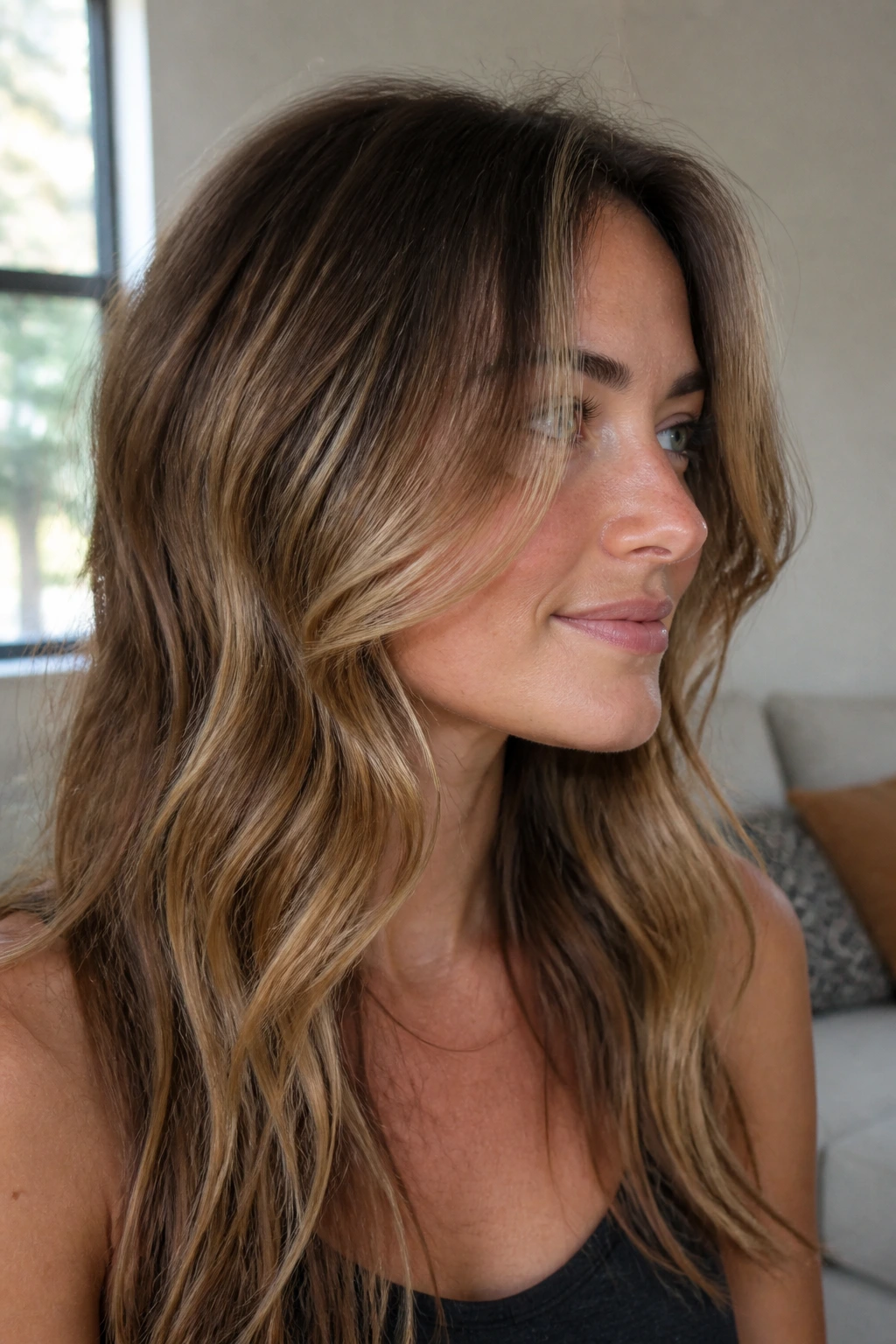
Face-framing layers are one of the easiest ways to make fine hair look more alive. When they start around the cheekbones, they lift the face, pull attention upward, and give the hair a sense of shape even if the rest of it is simple.
The rest of the cut should stay fairly restrained. Long, soft layers through the back keep the ends thick. The front does the expressive work. That’s a smart trade-off for fine hair because the eye sees movement near the face first.
This style is a nice choice if you wear your hair down a lot. It also works well with a side part or loose waves from a diffuser. The frame around the face gives the style some presence, even on days when the rest of the hair is a little lazy.
18. Asymmetrical Wavy Cut with a Deep Side Sweep
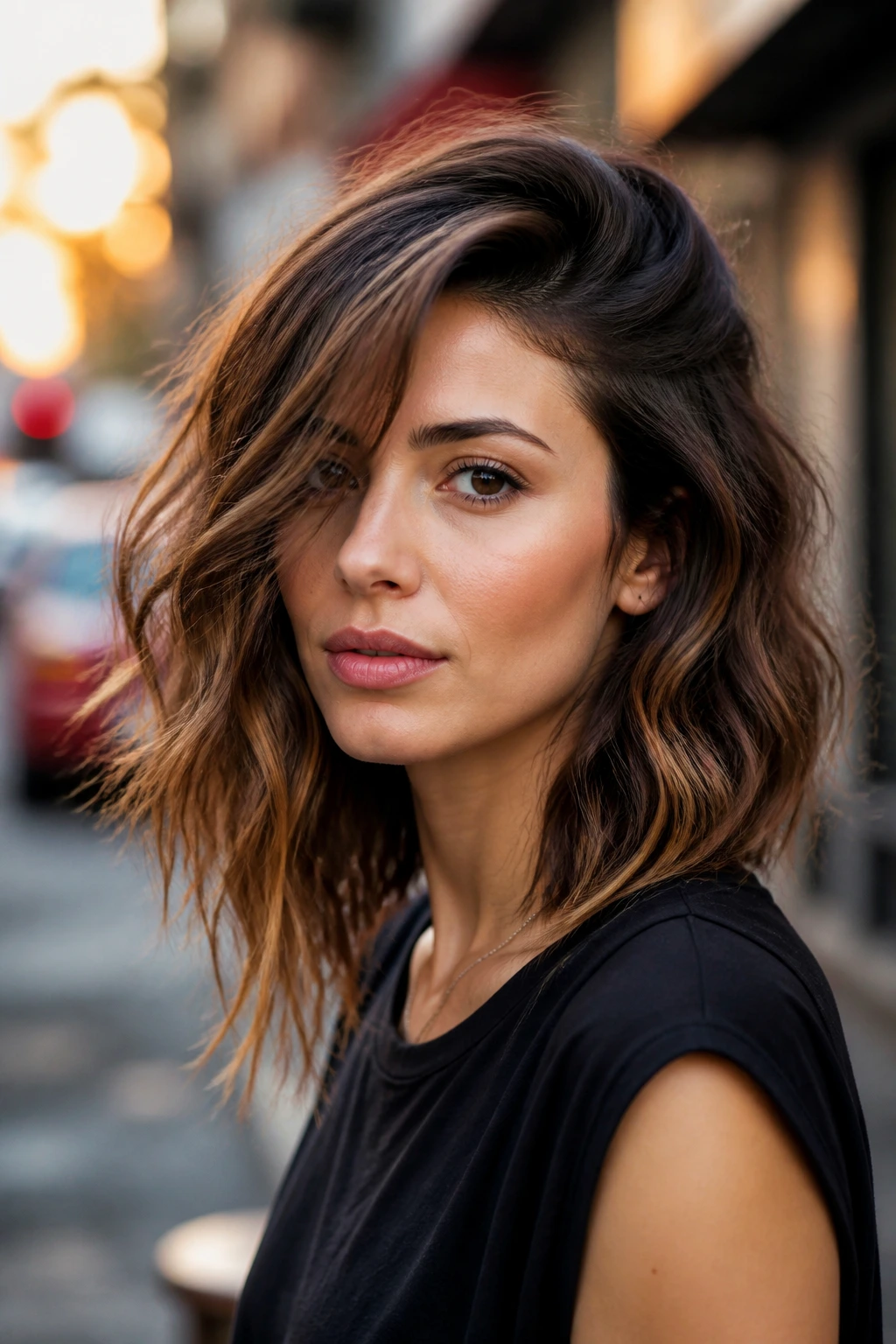
An asymmetrical cut can sound bold, but a slight imbalance can help fine hair a lot. One side stays a touch longer, the part shifts deeper, and the wave pattern gets a stronger direction. That direction creates the look of volume.
The difference does not need to be huge. Half an inch or an inch is enough. The whole point is to make the hair move across the head instead of just dropping straight down. On wavy textures, that sideways motion adds shape that a symmetrical cut sometimes misses.
This cut is good for people who want something that feels a little more styled without daily effort. It has attitude, but not in a try-hard way. The asymmetry does the visual work while the layering keeps the ends from feeling weak.
19. Rounded Clavicut with a Clean Perimeter

A clavicut sits at the collarbone, and a rounded version gives it a softer outline than a straight cut. For fine hair, that rounded edge can help the ends appear fuller from every angle. It avoids the hard boxiness of a blunt line while keeping enough weight to look dense.
The interior should stay lightly layered, not heavily thinned. The goal is a smooth curve that follows the body’s shape. Wavy hair falls into that curve in a nice way, especially when the ends are dried with a diffuser or a soft brush and left a little undone.
I like this cut for anyone who wants something polished that doesn’t look stiff. It grows out with grace, too. That matters because fine hair can start looking tired fast once the shape gets too loose.
20. Long V-Cut with a Soft Point
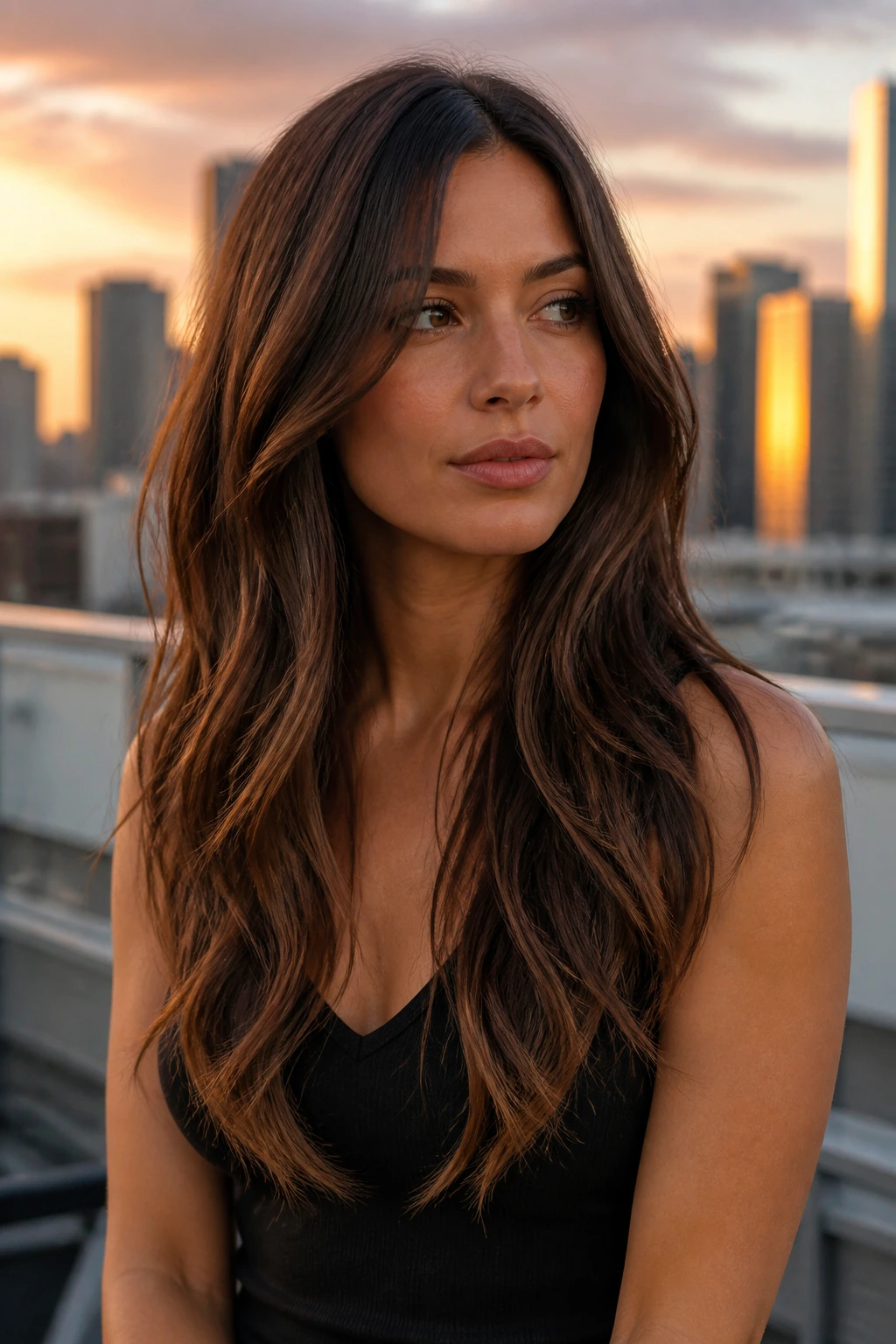
A V-cut can be risky on fine hair if the point is too sharp. A soft V is different. It keeps the bottom length in the middle while allowing the sides to taper gently away, which can make long waves look more sculpted.
The layers should start low and stay long. If they begin high up, the ends can split visually and lose density. A soft V works best when the outer shape is still full enough to read as healthy hair, not just movement.
This cut is for someone who wants long hair with a little more shape than a straight line gives. It looks especially nice when worn half-up, because the sides fall in a clean frame. Leave the point subtle. That’s the part people often get wrong.
21. Air-Dry Layered Cut with Minimal Weight Removal

Some cuts are built for hot tools. This one is built for scrunching and walking away. On fine wavy hair, that can be a gift. The layers stay minimal, the weight stays in the right places, and the natural bend has room to show up on its own.
The best version usually lands between the collarbone and shoulders. Short enough to spring, long enough to keep the ends from scattering. Ask for minimal weight removal through the interior and a soft face frame that blends into the rest of the hair.
A little salt spray can help, but not too much. Fine hair hates being overloaded. A pea-sized amount of curl cream mixed with water in the hands is often enough. Let the hair dry about 80 percent before touching it. That small patience gap makes a difference.
22. Shoulder-Grazing Soft Layers That Grow Out Cleanly
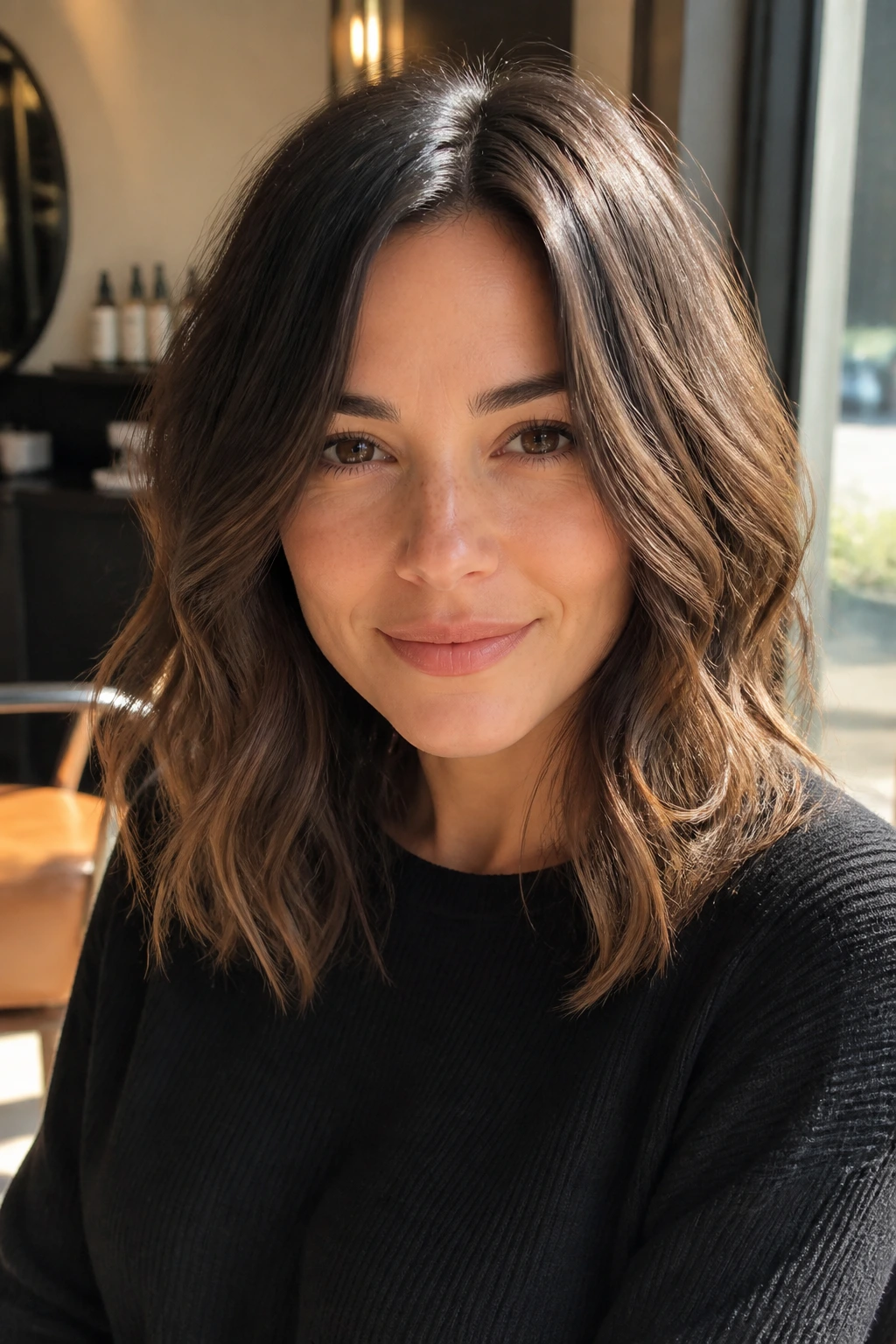
This is the cut for people who want the least drama and the most payoff. Shoulder-grazing layers keep the overall shape full, while the layering sits low enough to let the style grow out without turning ragged. Fine wavy hair needs that kind of mercy.
The shortest layer should stay below the chin, and the ends should remain thick enough to look deliberate. Nothing should feel overcut. When the shape is right, the waves form little bends through the mids and a fuller edge at the bottom, which is exactly what makes the hair look denser.
If you want a haircut you can leave alone for a while, this is a smart place to land. It works with air-drying, it behaves under a diffuser, and it doesn’t panic the second you skip a styling day. That kind of quiet reliability is worth more than a trendy shape that falls apart after one wash.
