



Straight hair tells on a haircut fast. Every line shows, every blunt edge shows, and every layer that sits in the wrong place can make long hair collapse into one flat sheet by lunchtime.
That is the real challenge with long layered haircuts for straight hair: the shape has to do the heavy lifting. A good cut adds movement where you need it, keeps the ends from looking thin, and stops the whole length from hanging there like one long curtain. A bad cut does the opposite. It can look fine when freshly blow-dried and then turn into a dull, stringy thing the moment you step outside.
A lot of stylists will say straight hair is “easy,” and I’ve never fully bought that. Straight hair is honest. Brutally honest. It shows weight lines, uneven blending, and over-thinning in a way wavy hair can sometimes hide. That means the best layered cuts for straight hair are usually the ones that respect density, keep a strong outline, and use layering with purpose instead of chaos.
The good news is that there are plenty of ways to do that without giving up length. Some cuts add soft face-framing pieces, some build a cleaner U or V shape, and some hide the layering inside the haircut so the outside still looks sleek. The trick is choosing the right one for how you wear your hair, because a cut that looks airy on thick hair can go see-through on fine hair in a hurry.
1. Curtain Layers Around a Center Part
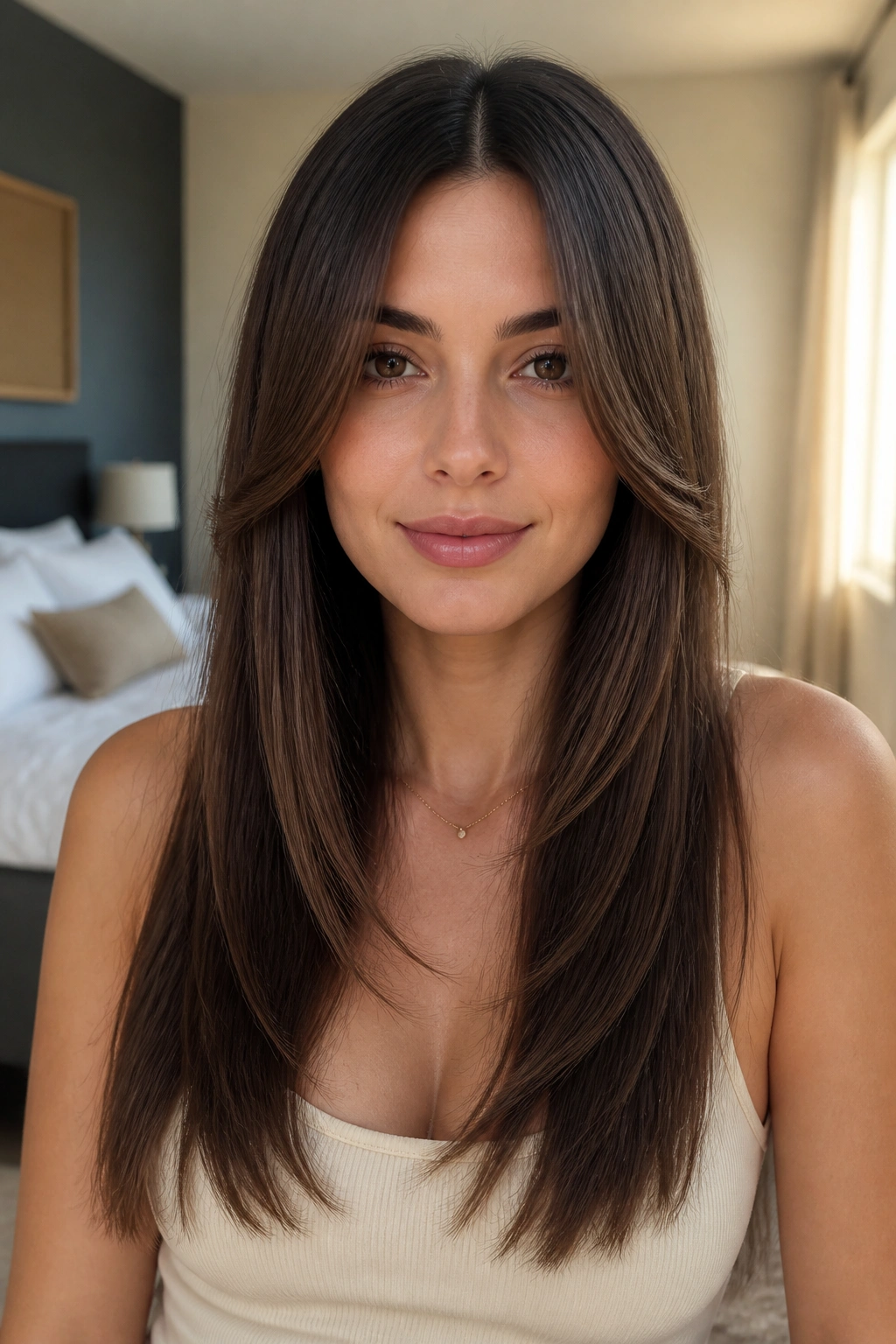
Curtain layers are the easiest place to start if you want movement without sacrificing much length. They open up the face, keep the middle part neat, and still let the rest of the hair fall long and straight.
Why straight hair likes this shape
Straight strands show the shape cleanly, which is why curtain layers can look so polished. Ask for the shortest pieces to start around the chin or a little lower, then taper them longer as they move down toward the chest. If the layers start too high, you can end up with accidental bangs. No thanks.
- Best for a center part that stays put all day.
- Ask for the face frame to begin at the chin or collarbone.
- Keep the back length dense so the ends do not look wispy.
- Works well with a round brush or a quick pass from a flat iron.
Pro tip: tell your stylist you want the front to open softly, not to look chopped up. That one line makes a difference.
2. U-Shaped Long Layers
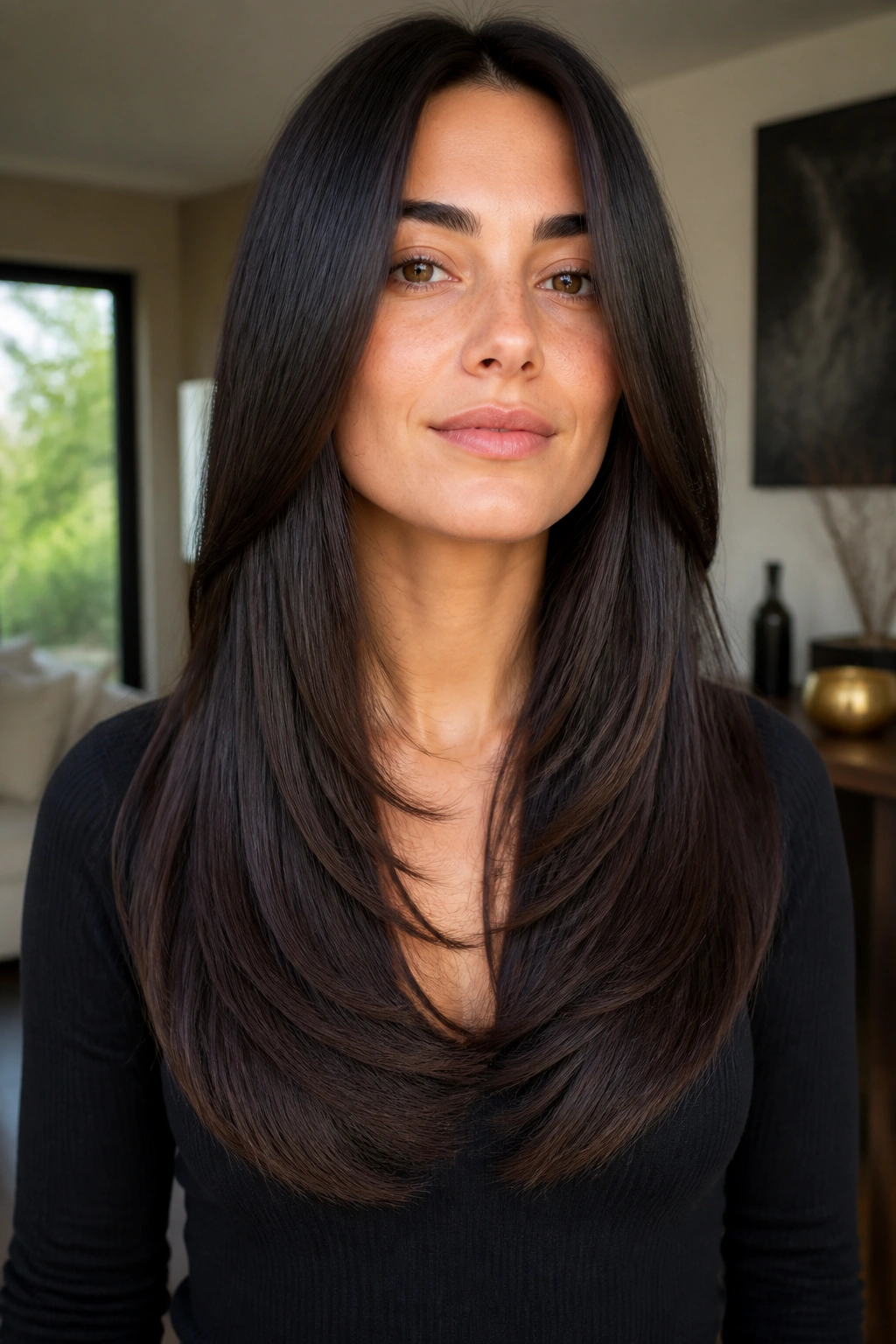
The U-shape is one of those cuts that looks calm from the front and quietly smart from the back. The perimeter curves gently instead of dropping in a straight line, so the hair keeps its weight while the layers add a little lift.
On straight hair, that matters more than people think. A hard, blunt edge can be great, but if you want movement and still want your hair to look full, the U-shaped base gives you a softer landing. It is especially good for thick hair that needs a little release through the middle without turning frizzy or chopped up at the ends.
I like this shape because it grows out politely. Not every haircut does. If you hate getting a trim every few weeks, a U-cut buys you some breathing room while still keeping the line tidy.
3. V-Shaped Long Layers
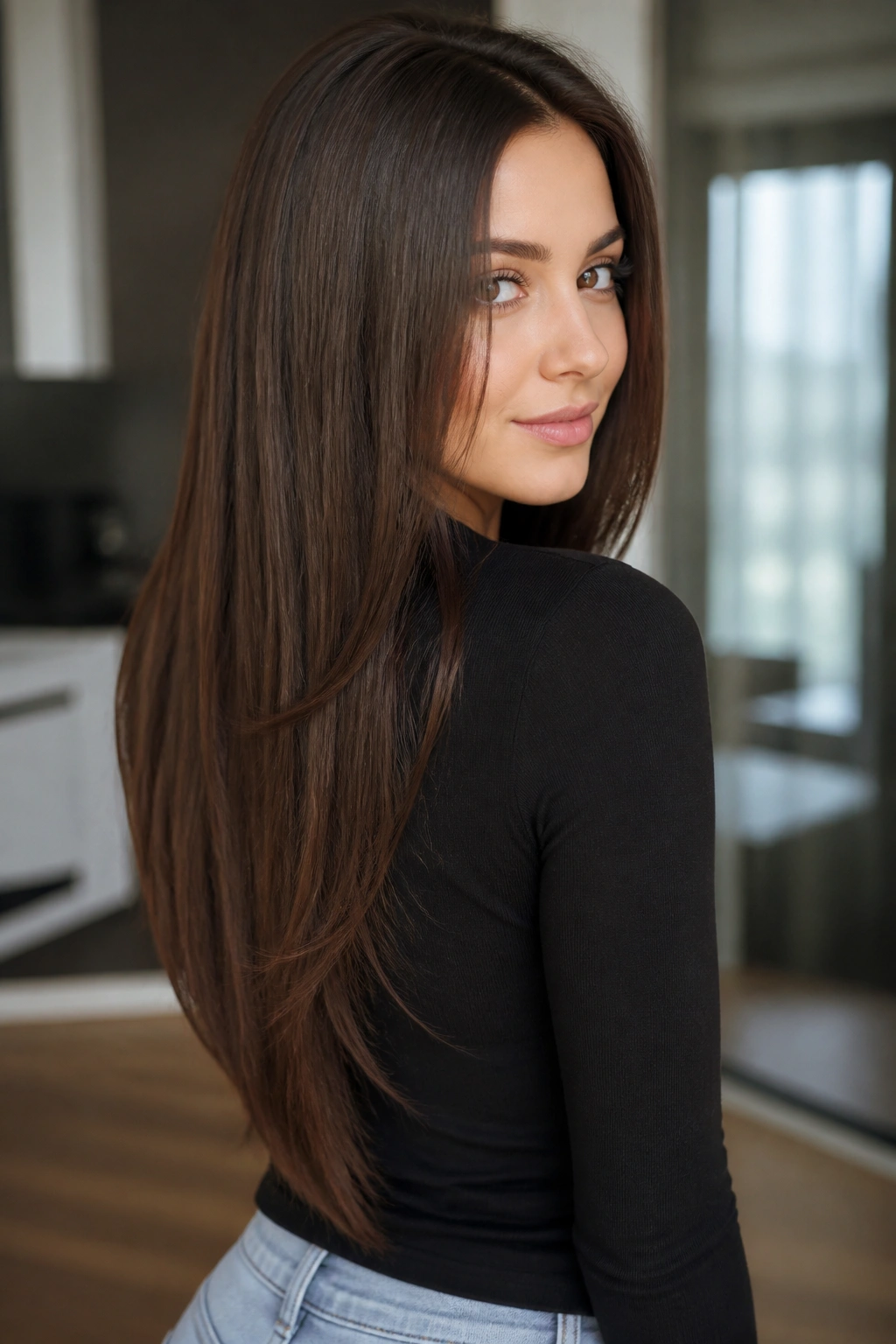
Why does a V-cut look so dramatic on straight hair? Because the point in the back exaggerates length and makes the layers feel more deliberate. The shape pulls the eye downward, which can be useful if you want your hair to look longer and more tapered.
It is not the safest choice for very fine hair. A sharp V can make the ends look thinner than they really are, and straight hair does not hide that. But on medium to thick hair, the shape can be gorgeous. Clean. Sleek. A little sharper than a U-cut, with more visual movement when you turn your head.
If you choose this cut, keep the point soft rather than severe. A dramatic triangle in the back can feel old fast. A gentle V, though, has staying power.
4. Invisible Layers
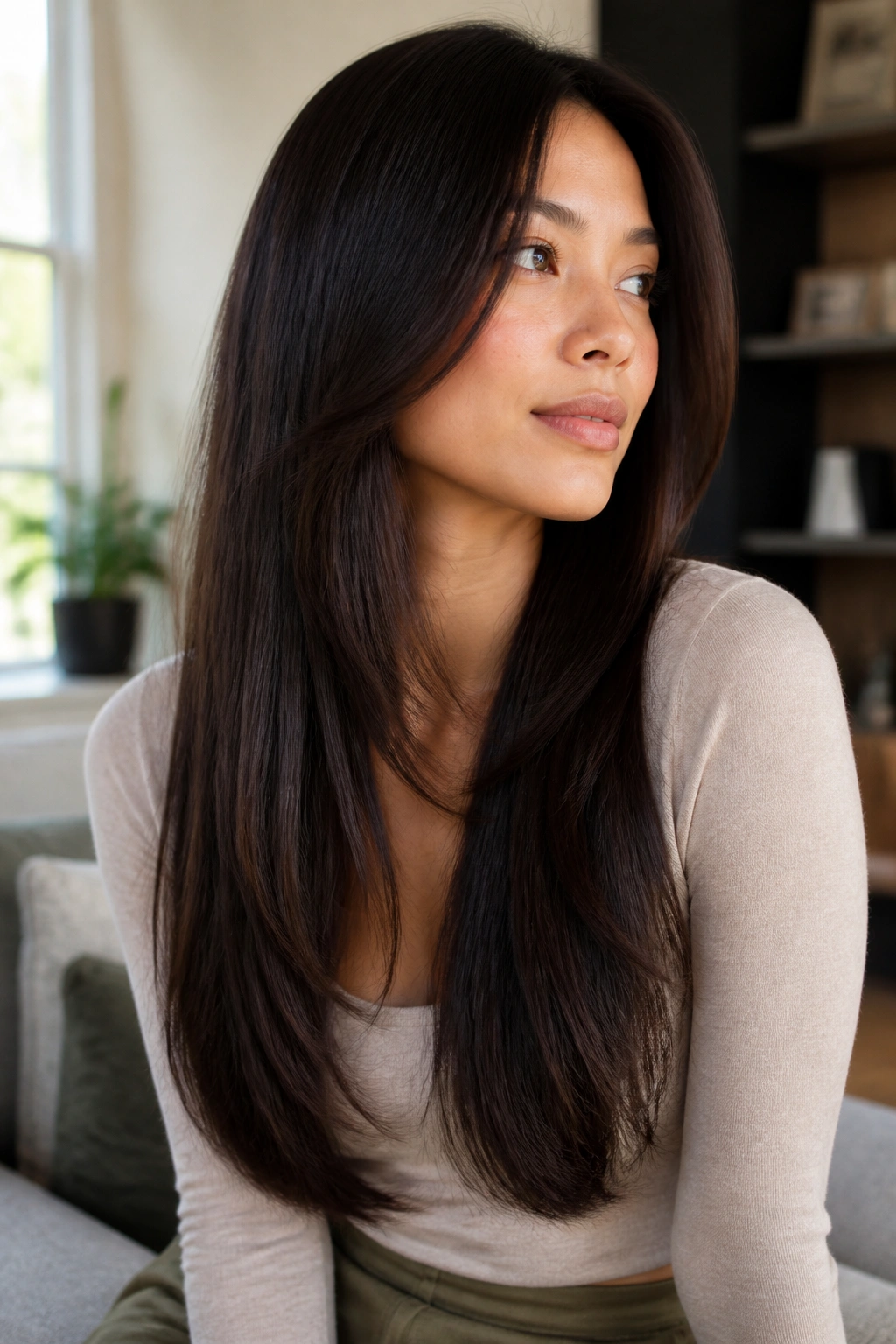
Invisible layers are the quiet ones. From the outside, the haircut still looks long and smooth. Inside, the weight has been removed in a way that helps the hair move instead of sitting like a sheet.
This is a smart option if you like sleek hair and hate obvious step cuts. The stylist removes bulk from the interior sections, usually around the midlengths and crown, while the surface stays relatively smooth. That means the cut can still look polished when you wear it straight, but it stops feeling heavy and flat.
Ask for subtle internal shaping, not dramatic layers. Huge difference. Too much texturizing and the hair starts to feel hollow, which straight hair shows immediately.
5. Face-Framing Layers at the Cheekbone
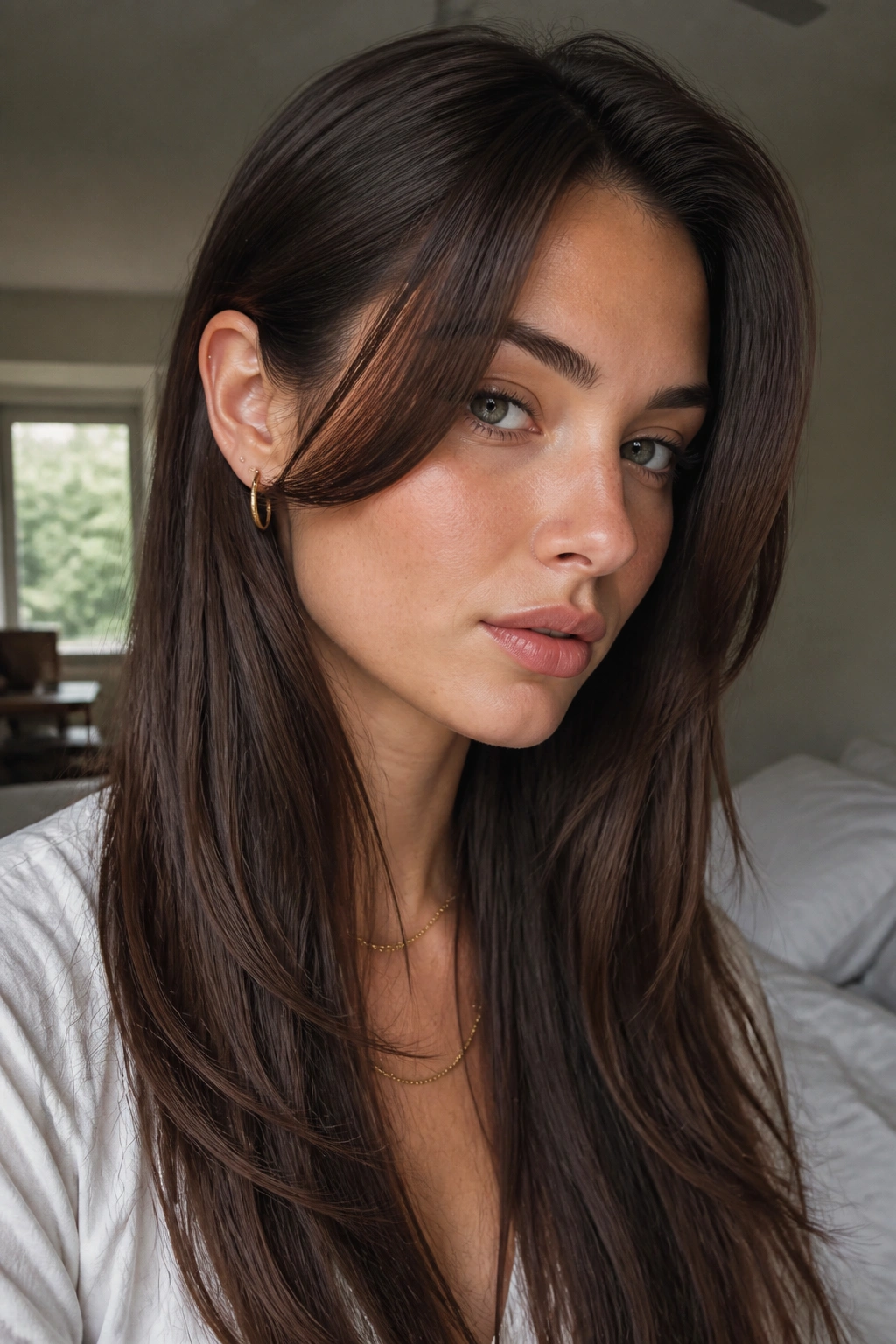
Cheekbone layers do one thing very well: they put the face on display without turning the haircut into bangs. That is useful if you want long hair to look softer around the front but still want your length to do its job.
The placement matters. If the shortest layer lands near the cheekbone, it draws attention upward and gives straight hair a bit of bend around the face. If it lands too low, the whole effect disappears. Too high, and it starts to feel like a fringe. Straight hair is not forgiving here.
This cut works especially well if you usually tuck one side behind your ear. It creates a little shape around the cheek and jaw, even when the rest of the hair is worn plain. Small detail. Big payoff.
6. Butterfly Cut on Long Straight Hair
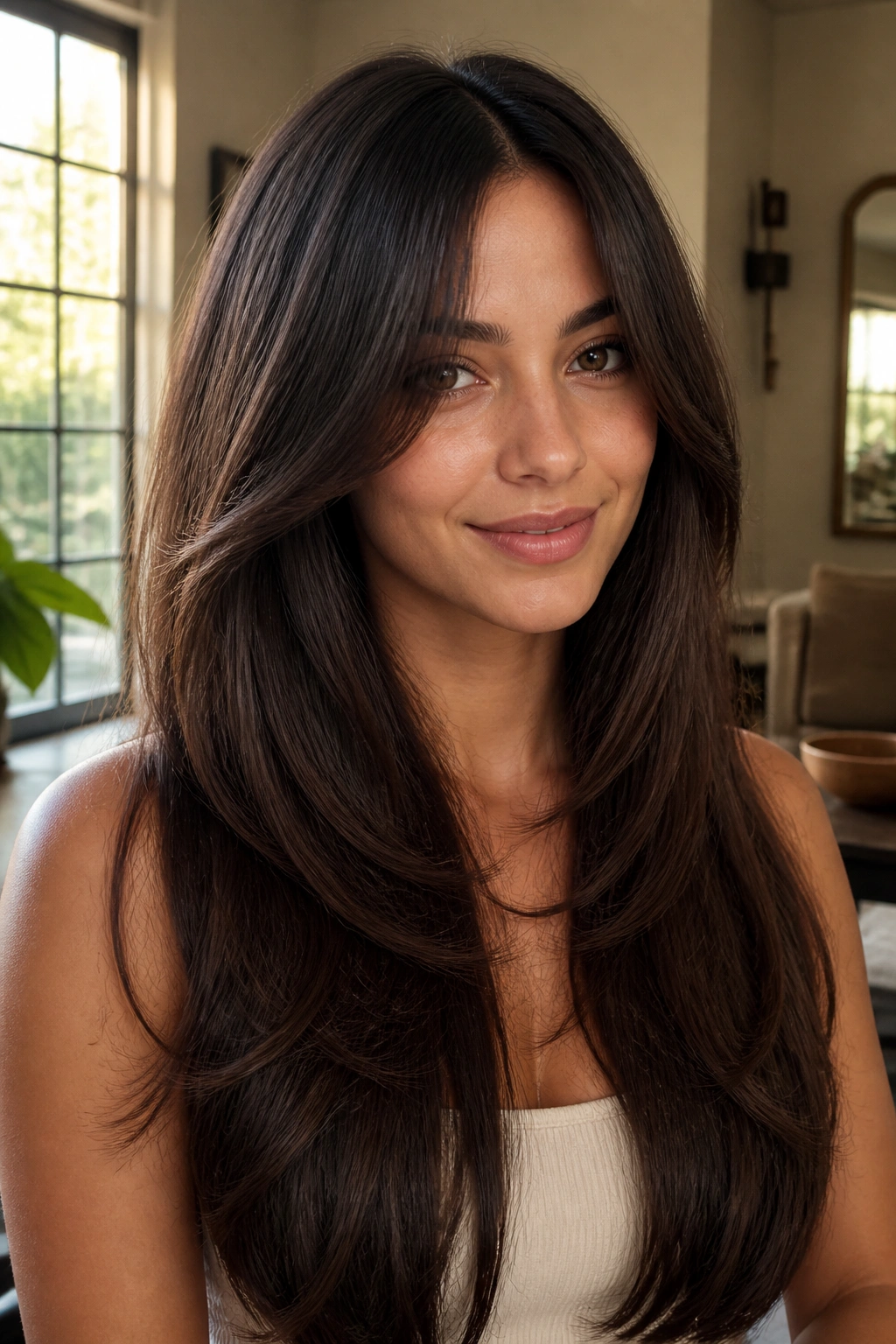
The butterfly cut is basically two haircuts having a conversation. The top layers are shorter and fuller, while the bottom layers stay long, so you get movement without giving up the overall length.
The crown and the lengths
On straight hair, the butterfly shape can be sharp in a good way. The shorter top layers give the crown some lift, and the longer lower layers keep the finish looking long and sleek. It is one of the better choices if you like volume near the top but do not want a shag that looks too broken up.
That said, it can go wrong fast on fine hair. Too many short layers and the ends lose their weight. Then the whole thing looks floated rather than full. Keep the top layers controlled, and ask for soft blending between sections.
A butterfly cut usually looks best with a round brush blowout or soft bends through the front. Flat-ironing it pin-straight can make the structure a little too visible.
7. Long Shag Layers
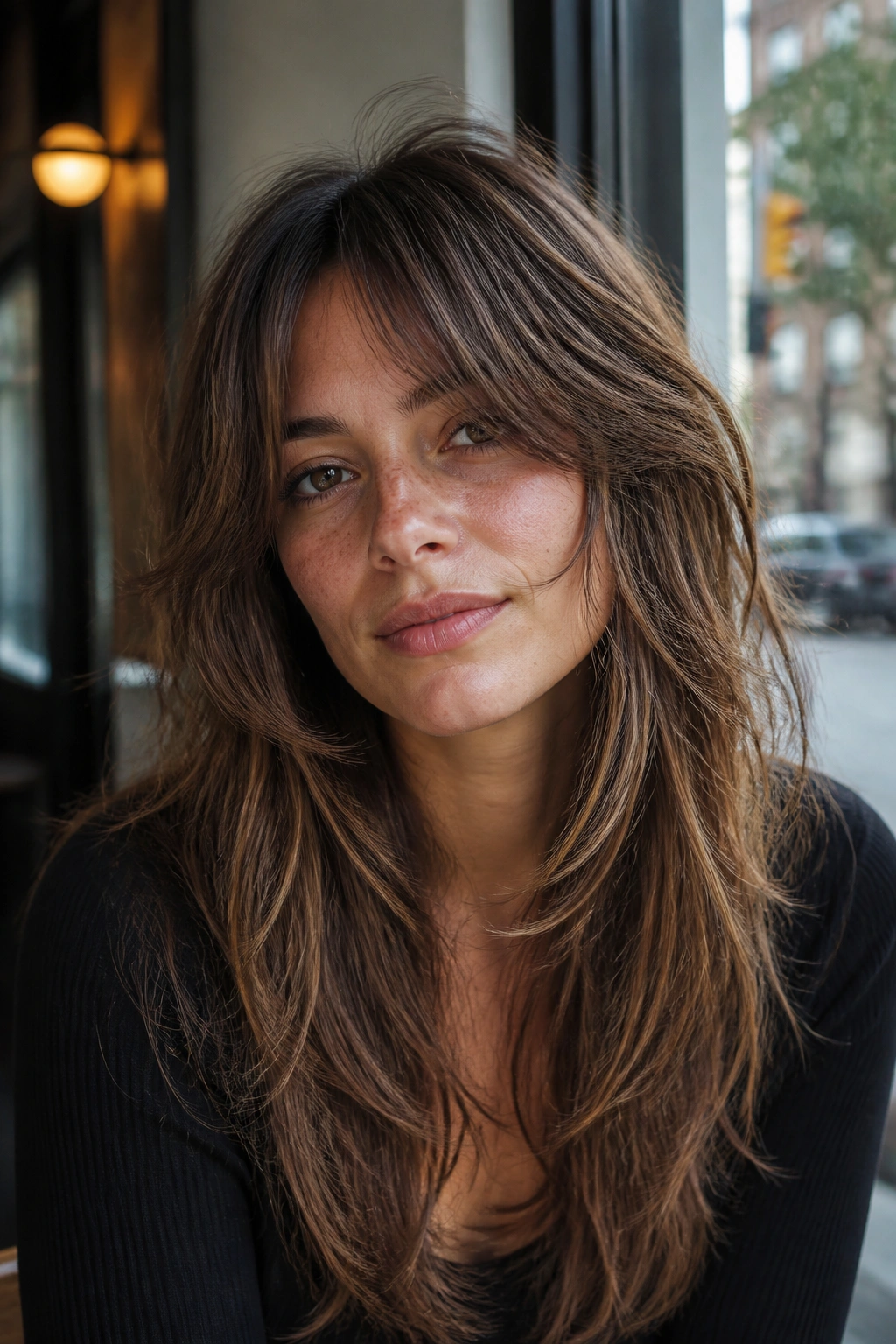
A long shag is for someone who wants a bit of grit in the cut. Not mess, exactly. Just more edge, more texture, more separation between pieces.
What makes it different
The shag uses more layered movement through the top and midlengths than a classic layered cut. On straight hair, that can be a good thing because the shape stays readable. You see the crown lift. You see the ends move. You do not have to beg for volume.
- Layers often start higher than they would in a soft layered cut.
- The ends are usually point-cut or texturized for a lighter finish.
- A little mousse or texture spray helps the shape stay visible.
- Works best if you like air-dried bend or a loose flat-iron wave.
If you want hair that looks too smooth and tidy, skip it. If you like a cut with some attitude, this one has it.
8. Feathered Layers
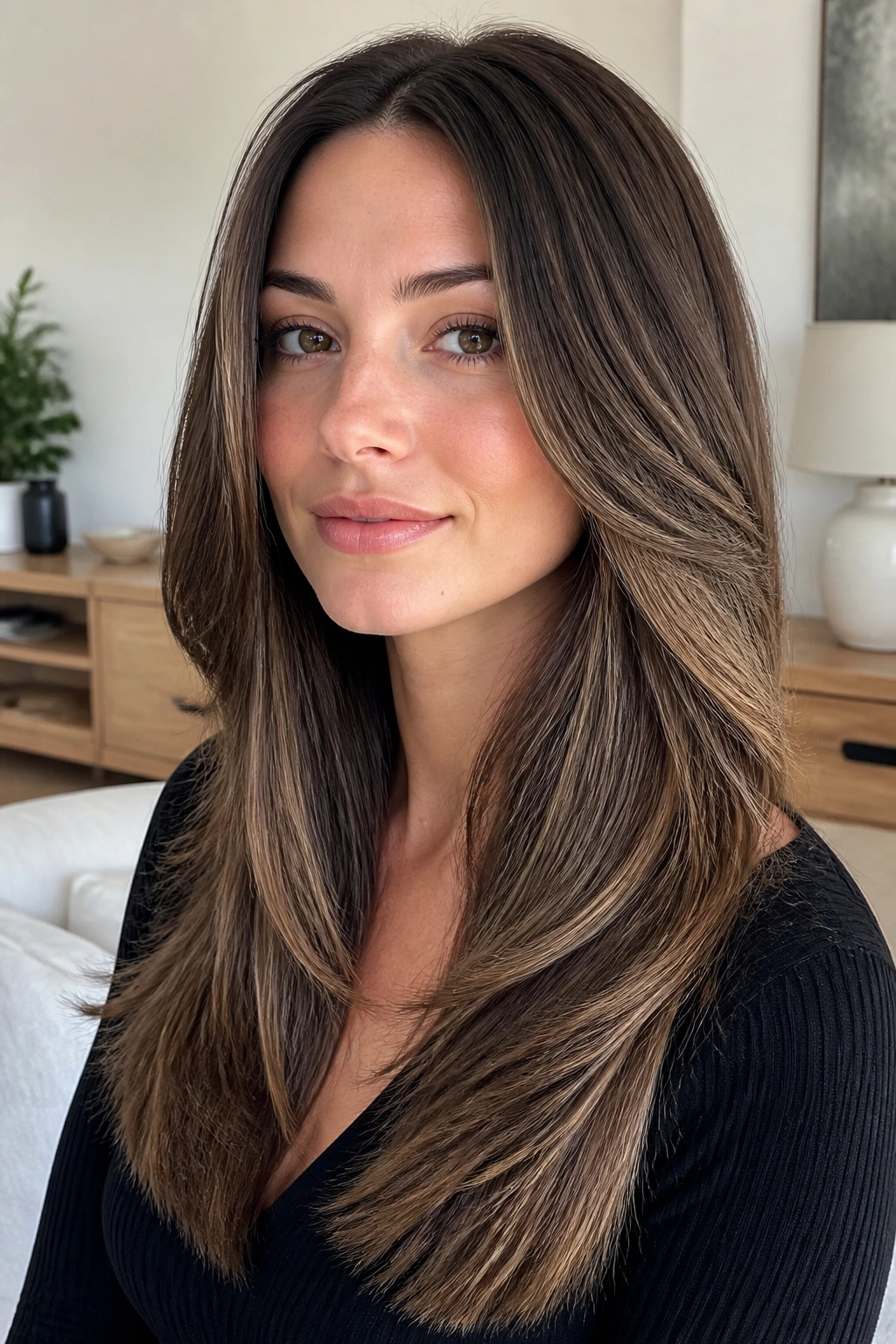
Feathering is one of those techniques that can look dated if it is done heavily, and fresh if it is done with restraint. On straight hair, I usually prefer the restrained version.
The idea is simple: the stylist softens the ends so they move away from the face and down the lengths in a lighter way. That gives straight hair a little sway instead of a blunt fall. It can be especially nice if your hair feels heavy around the shoulders and you want less blockiness without losing much length.
There is a catch. Feathered layers need a clean cut, not over-thinning. If the ends get shredded, they look dry fast. Keep the feathering soft, and ask for a smooth blend rather than a bunch of wispy pieces.
9. Razored Long Layers
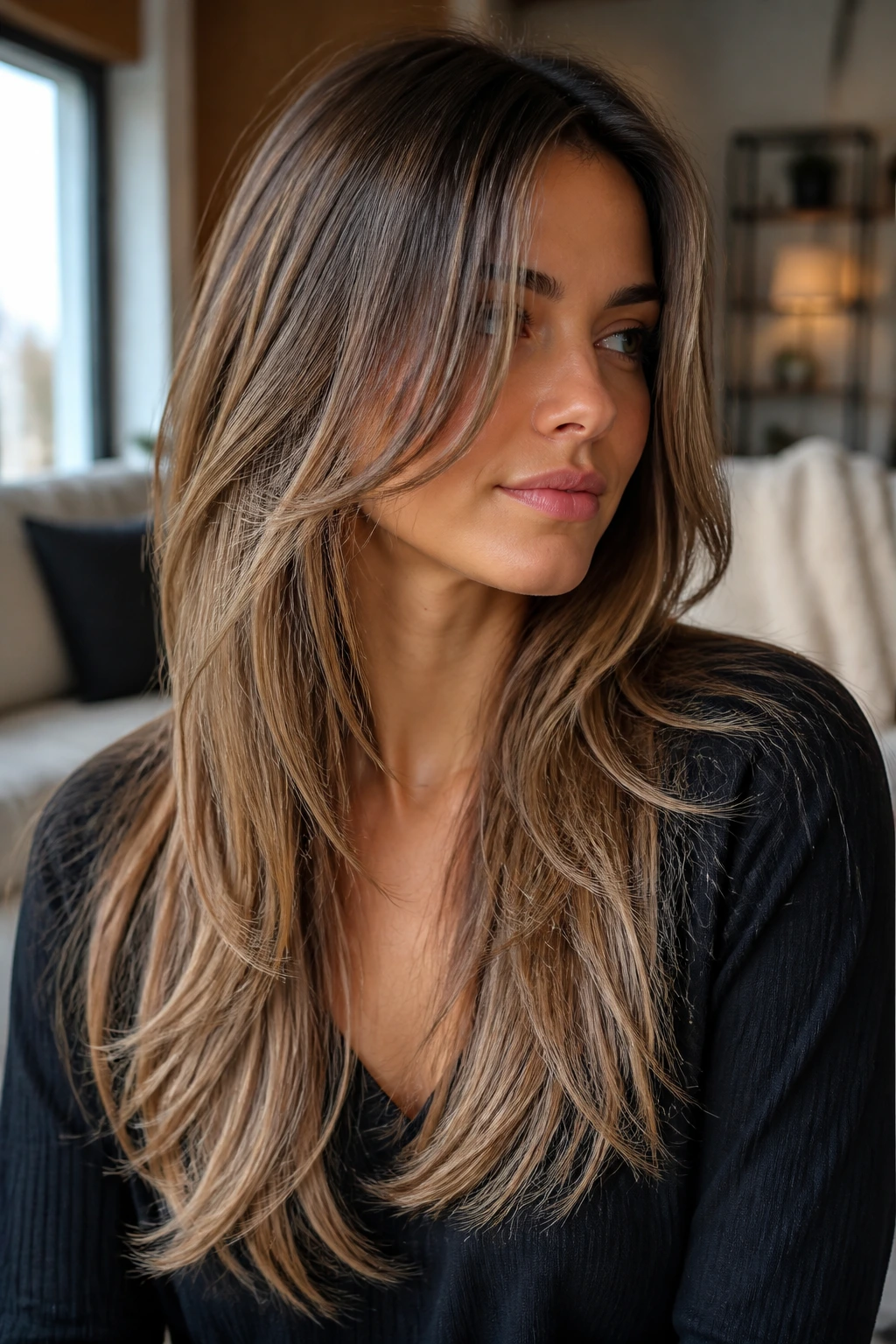
Razored layers can look airy and sharp in a way scissors sometimes can’t match. The edge comes out softer, and the hair moves with less obvious weight.
That makes them a good fit for straight hair that feels thick or a little stubborn. A razor can remove bulk and create a lighter fall through the midlengths. But it has to be used with care. On brittle or already-fried ends, a razor can make the problem worse. The cut may look great on day one and rough by week two.
I’d choose this shape if you want texture that reads without styling too much. I would not choose it if your ends split easily or if your hair is very dry from heat tools. There are safer ways to create movement.
10. Choppy Long Layers
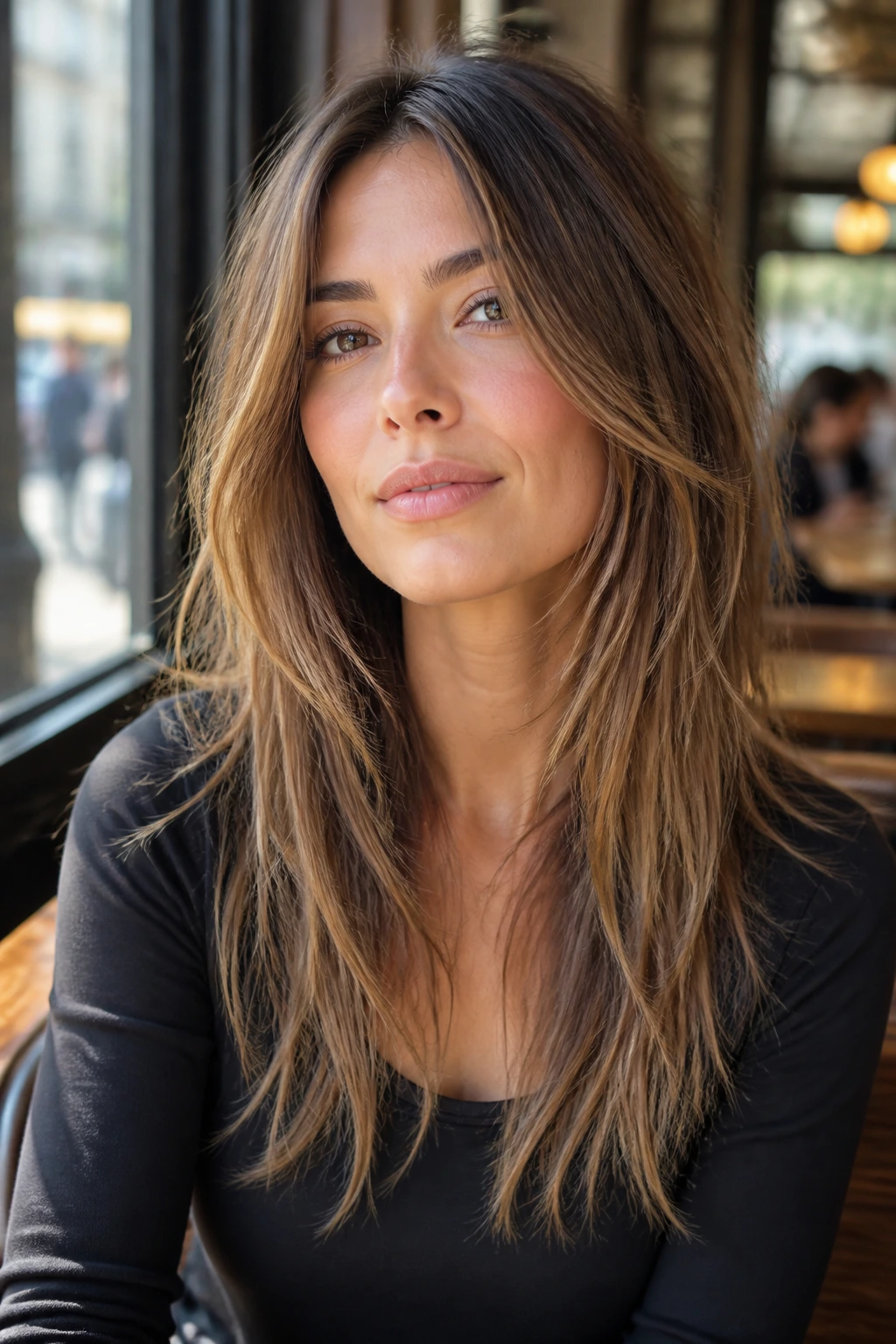
Choppy layers are the opposite of soft blending, and that is the point. They give straight hair a piecey, more separated look that reads clearly even when the hair is worn down.
When to choose them
If your hair falls too flat and you want the layers to show, choppy ends can help. Ask for long pieces that still keep the overall length, but with irregular texture at the ends so the cut does not blur into one shape. A small amount of mismatch between sections makes the movement visible.
- Best on medium to thick straight hair.
- Style with a light mousse or texture cream.
- Keep the shortest pieces well below the chin if you want the length to stay dominant.
- Avoid heavy oils, which can make the choppiness disappear.
One warning: choppy does not mean uneven. The line still has to be intentional.
11. Waterfall Layers
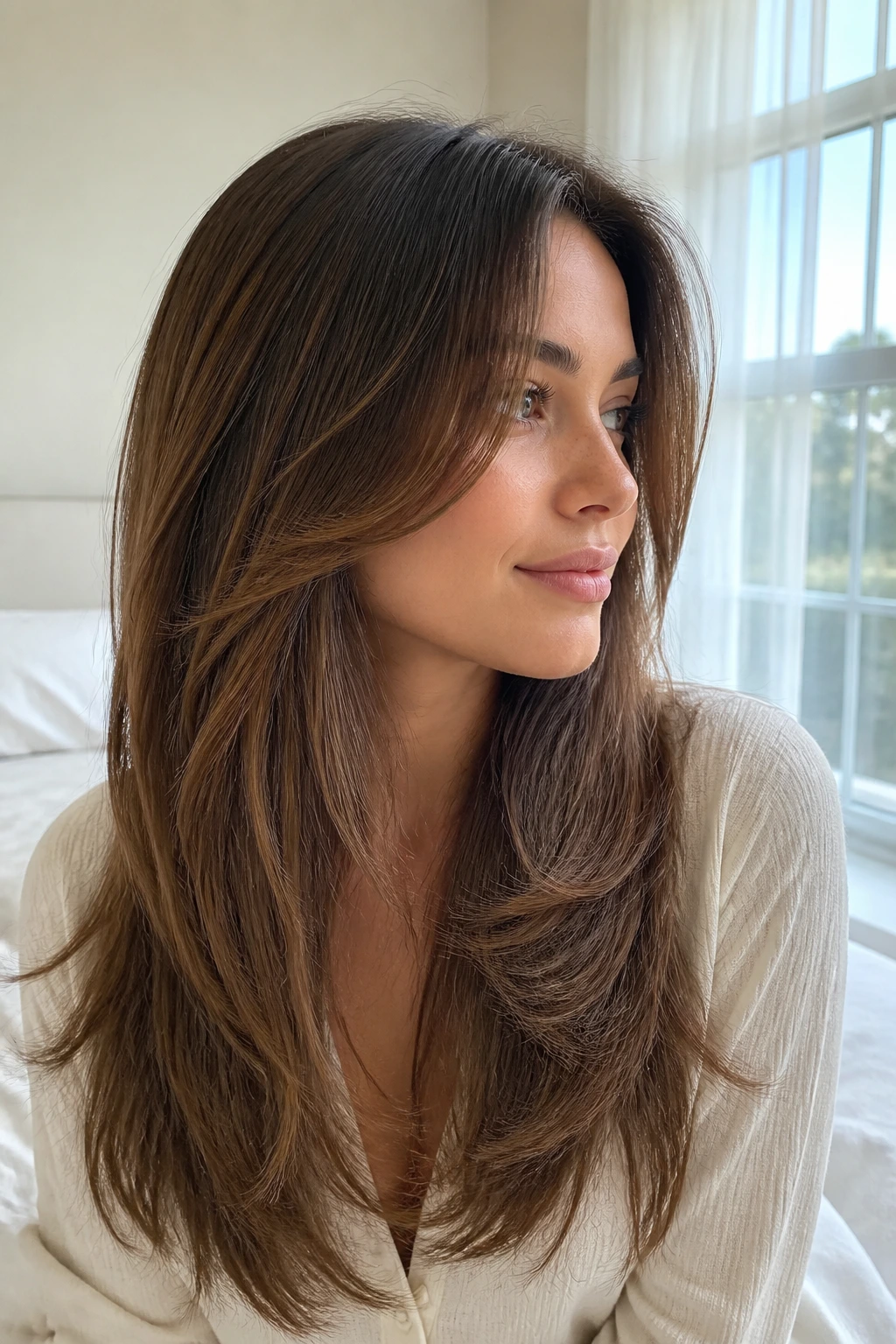
Waterfall layers have a softer cascade than a shag or a choppy cut. The hair drops in a gentle sequence, so each section supports the one below it instead of fighting for attention.
That is why they work so well on straight hair. The shine stays intact, the layers are visible, and the whole cut moves in a way that feels smooth rather than broken up. If you wear your hair straight most of the time, this shape can give you the movement people usually expect from waves without forcing you to curl anything.
I like waterfall layers on medium-density hair. Too much thickness can bury the shape. Too little can make the layers disappear. When the balance is right, though, the haircut has a soft, expensive-looking fall that holds up even on a simple blow-dry.
12. Step Layers
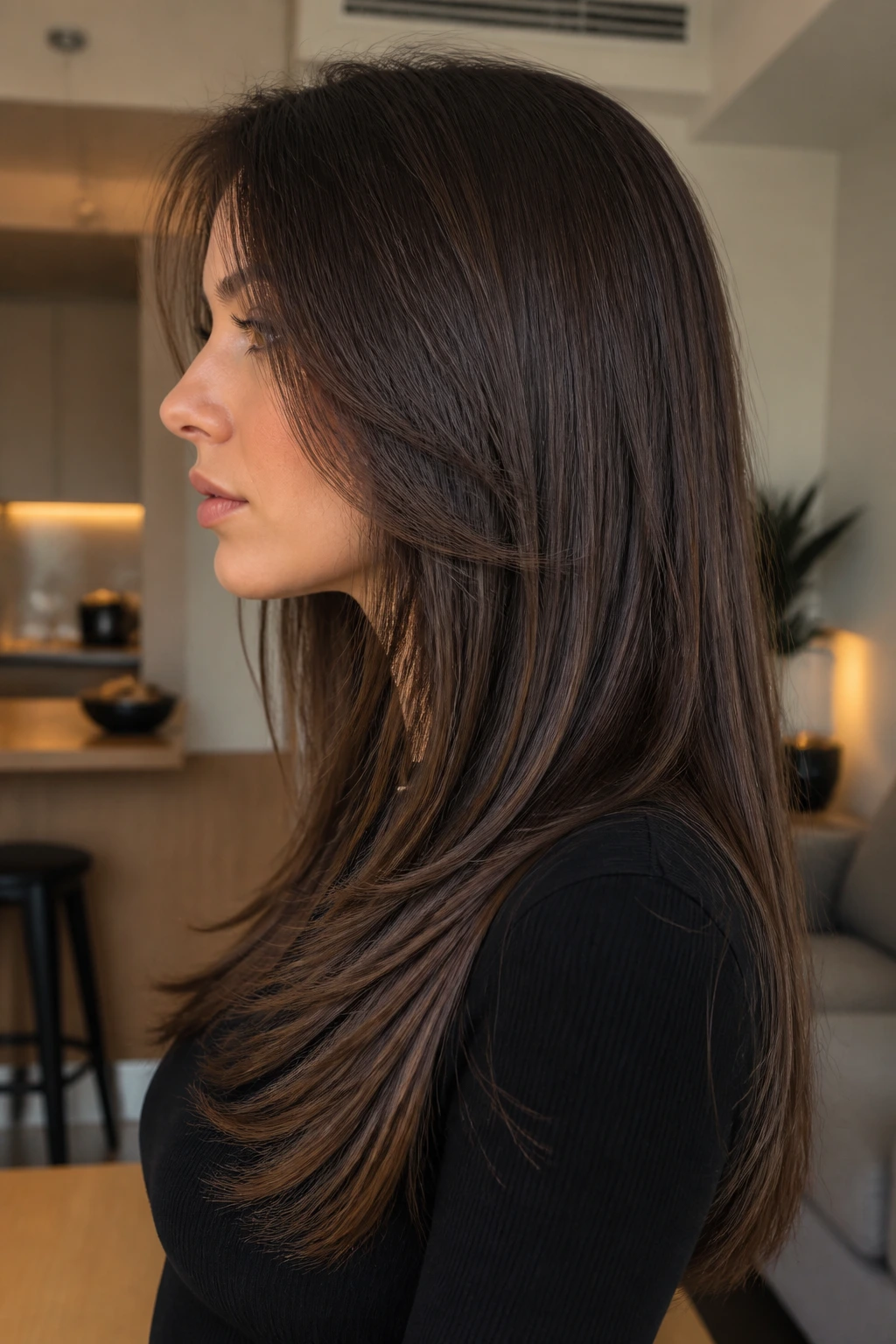
Step layers are more structured than waterfall layers. You can see the transitions. That is the appeal, and it is also why this cut is not for everyone.
How to ask for them
Tell the stylist you want visible tiers that still blend enough to move. If the steps are too sharp, the hair can look blocky. If they are too soft, the whole point disappears. Straight hair shows every shelf, so sectioning has to be clean.
A step cut can be a smart choice if your hair is thick and you want the weight broken up without losing the sense of shape. It gives you a haircut that feels architectural. Not soft. Not messy. Structured.
The styling part matters. A smooth blowout or a flat iron pass makes the steps look deliberate. If you let it dry in a puff, the cut can read much harsher than intended.
13. Internal Layers
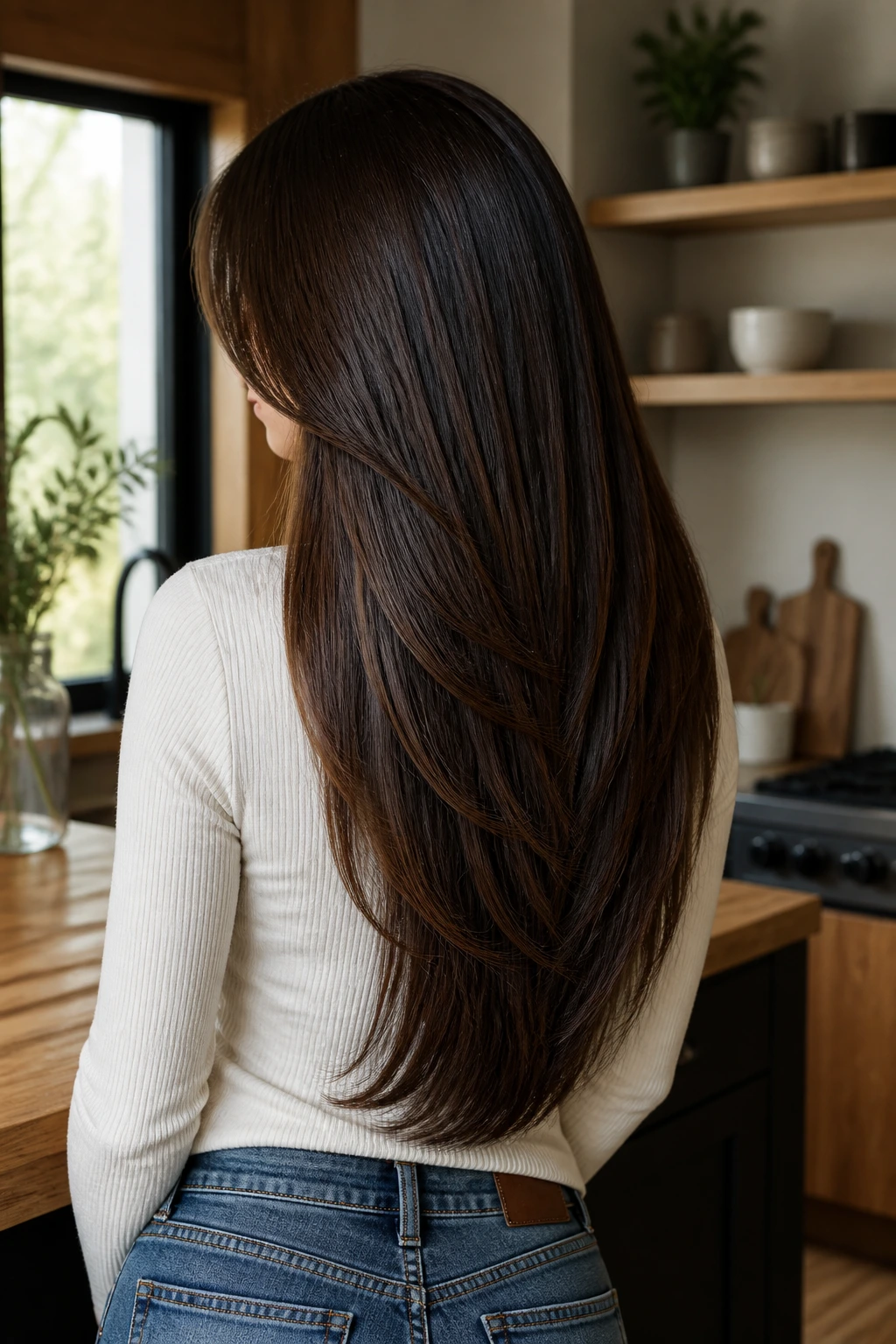
Internal layers are the sneaky fix for hair that feels too heavy but looks nice from the outside. The length stays long. The outline stays full. The bulk gets removed where no one sees it.
Sneaky, but useful.
This is the cut I’d point to if someone says, “I want movement, but I do not want obvious layers.” Straight hair can handle that request well because the clean outer line still shows. Underneath, the hidden removal gives you a little lift through the middle so the ends do not drag.
It is especially good for people who like sleek styles, ponytails, and half-up looks. Because the outside stays tidy, the haircut still behaves when pulled back. You get more shape than a one-length cut, but not the choppy look of a shag.
14. Long Layers with Bottleneck Bangs
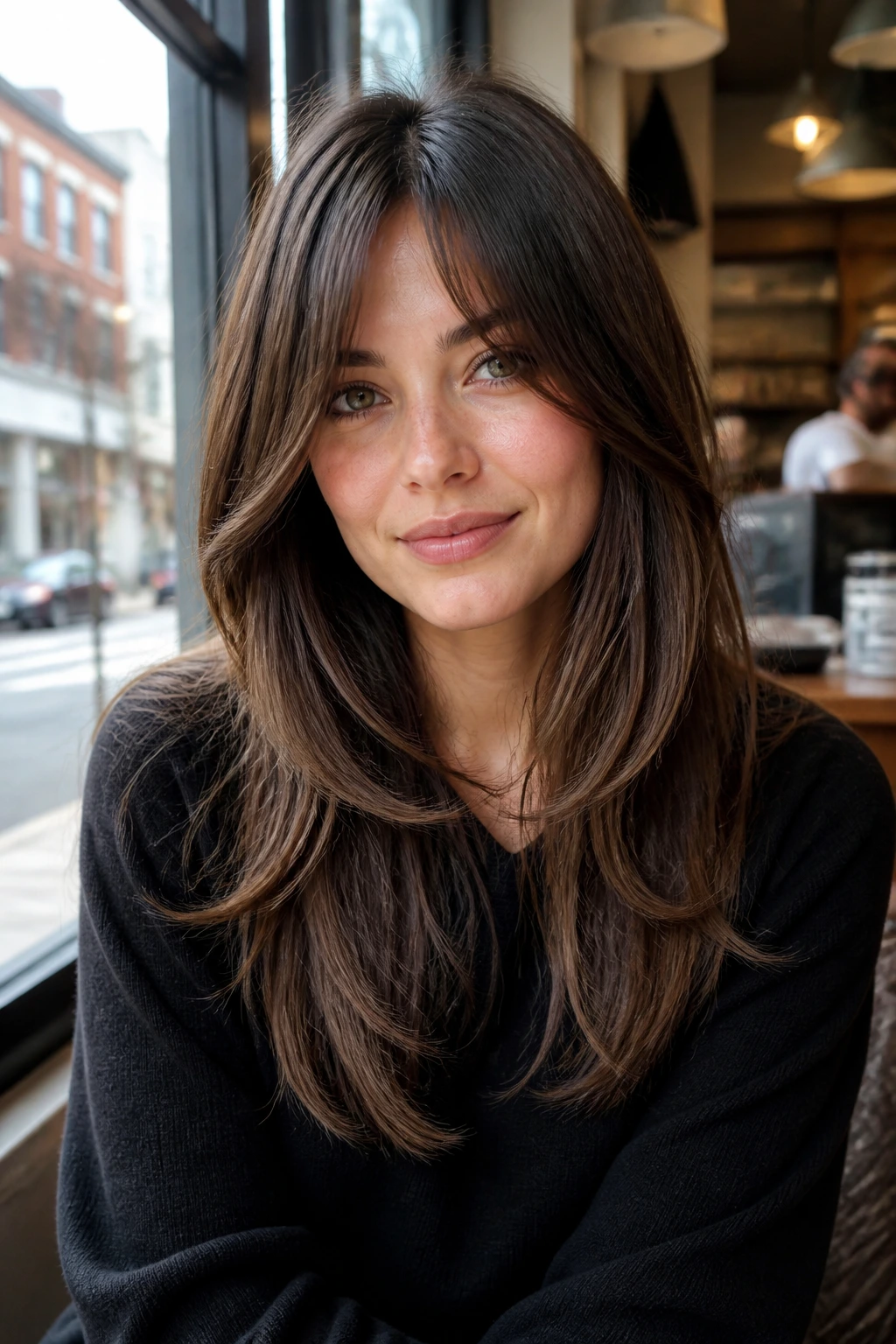
Bottleneck bangs are a nice middle ground if you want face framing without committing to a full fringe. They start narrow at the center and open wider as they move outward, which blends nicely into long layers.
On straight hair, that shape reads cleanly. The bangs sit softly, the side pieces flow into the rest of the cut, and the front never feels too heavy if the length is kept controlled. It is a good way to freshen long hair without chopping off inches.
The downside is upkeep. Bangs, even soft ones, need trimming more often than the rest of the cut. If you want a low-maintenance style, this may annoy you. If you like the look of movement around the eyes and cheekbones, though, it is one of the prettier options on long straight hair.
15. Deep Side-Part Layers
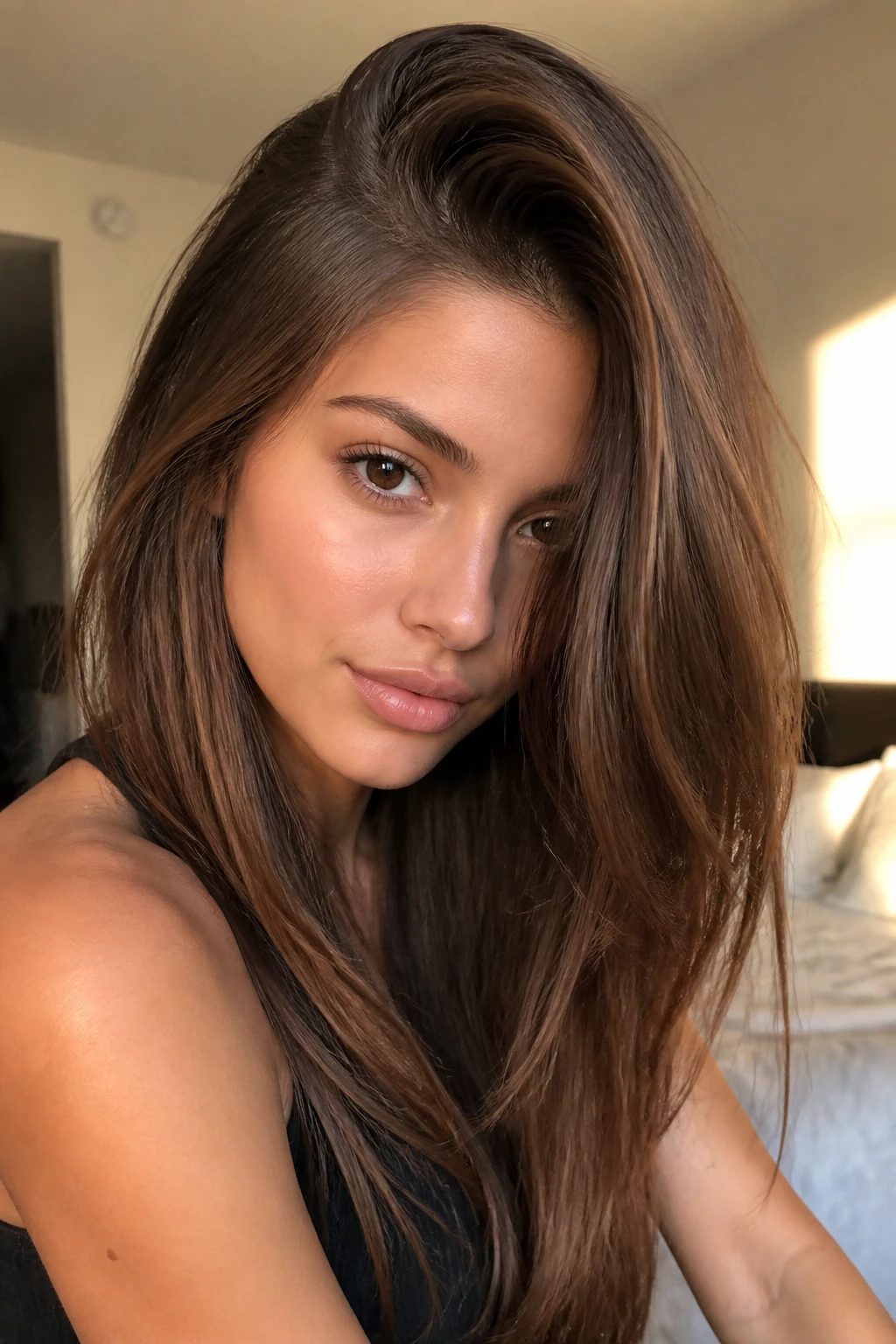
A deep side part can change a long layered haircut more than people expect. It shifts the weight, gives the crown some lift, and lets the layers fall with a little more drama on one side.
This is a good move if your straight hair tends to lie flat at the top. The part creates instant height without teasing, and the longer side drapes in a way that makes the haircut feel more dynamic. It is also a nice fix when your face shape needs a little asymmetry.
Not every cut needs a center part to work. Sometimes the side part does more for the layers than the layers do for the part. That’s the whole point here.
16. Blunt Perimeter with Long Layers
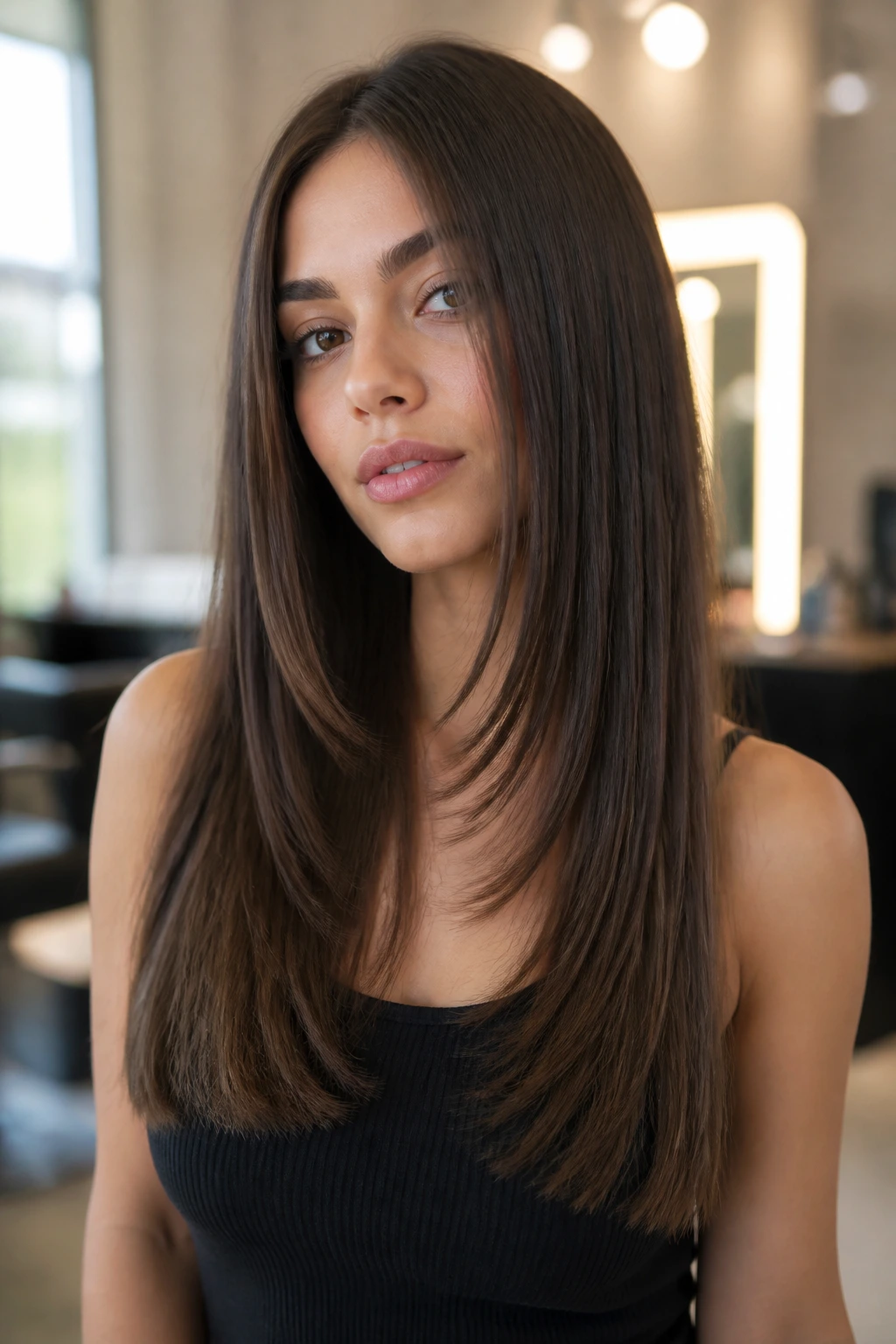
A blunt perimeter plus long layers is one of my favorite combinations for straight hair. The bottom stays thick and clean, while the interior layers bring in movement where the eye needs it.
That blunt edge is doing important work. It keeps the ends from looking stringy, which can happen fast on straight hair once the layer count goes up. If your hair is fine, this is especially worth considering. You get the benefit of shape without losing the visual weight that makes long hair look healthy.
This cut also photographs well in real life, not because it is flashy, but because the line stays sharp. It looks like hair that has been cared for. There’s a difference.
17. Layers That Start Below the Collarbone
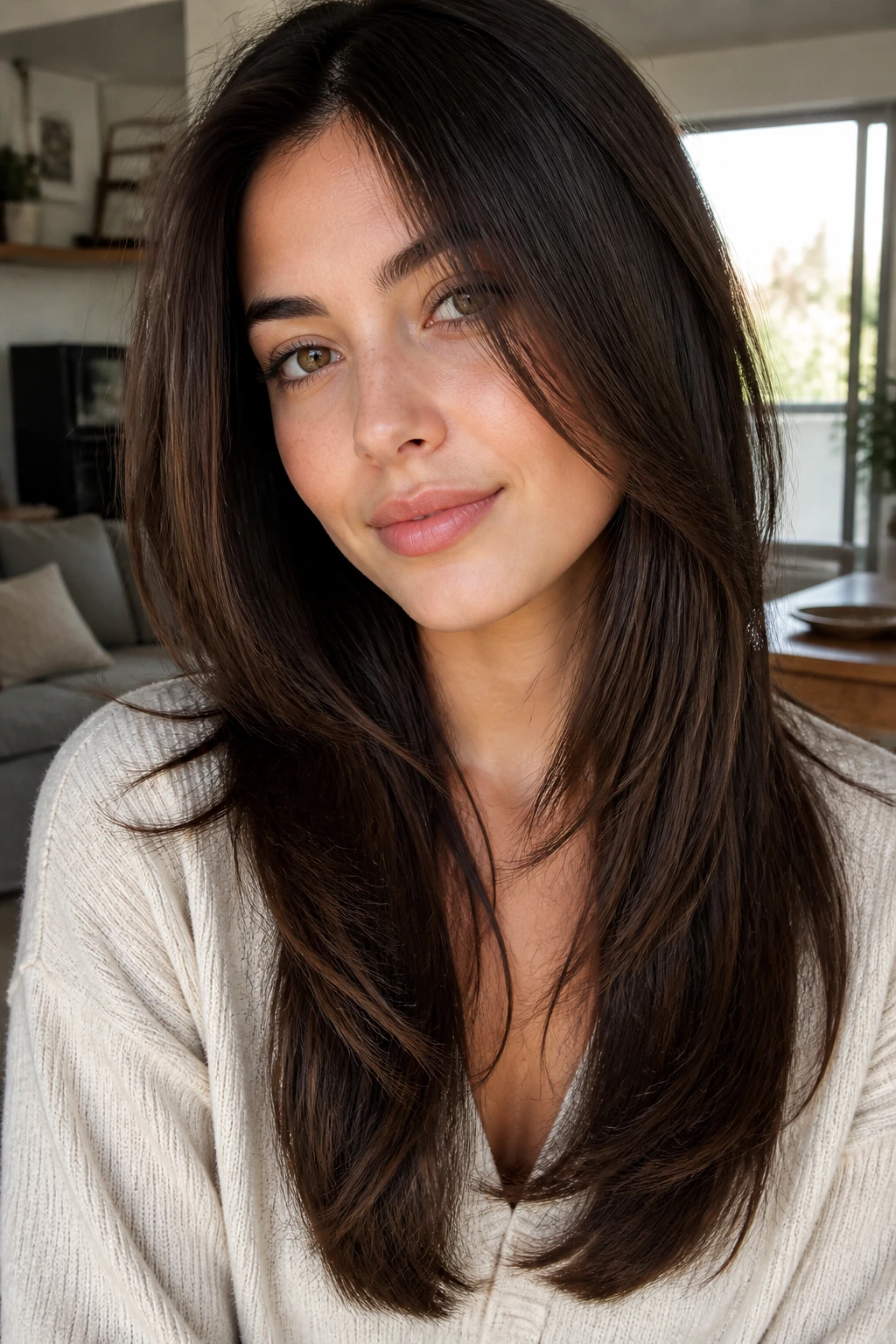
Not everyone wants face framing near the chin. Some people want the haircut to stay mostly long and only start layering once the hair passes the collarbone.
Why the lower start point matters
A lower start point keeps the cut calm. You get movement through the ends and midlengths without changing the front too much. That is helpful if you like tucking hair behind your ears, wearing it in a low pony, or keeping things simple most days.
- Good for first-time layer wearers.
- Keeps the front long and easy to pin back.
- Works well when you want length to stay the main feature.
- Ask for soft graduation, not a steep staircase.
This is the “safe” option, but safe does not mean boring. On straight hair, the clean lower layers can still look expensive and polished if the ends are healthy.
18. Long Layers for Fine Straight Hair
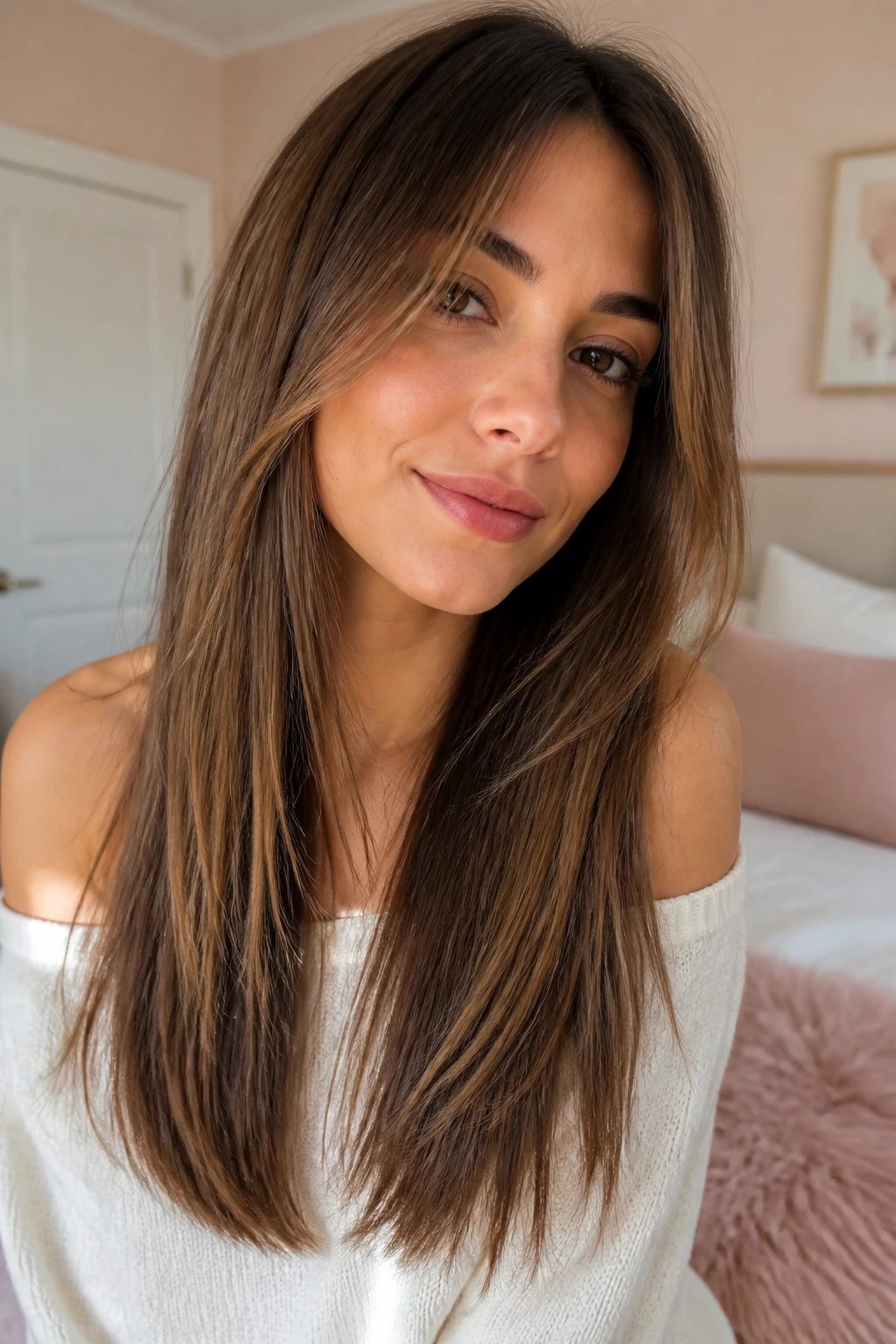
Fine straight hair needs a careful hand. Too many layers can leave it looking thinner than it is, and the ends can go sparse fast.
What to ask your stylist
Ask for long, subtle layers that remove only a small amount of weight. Keep the line mostly full, and avoid short pieces that break up the perimeter too much. Fine hair does better when the haircut keeps its density at the bottom and adds just enough movement to keep it from falling flat.
A root-lifting spray can help, but the cut matters more than the product. If the shape is too airy, no amount of styling will bring the ends back. The best fine-hair layer cuts are modest, not showy.
If you want to keep the illusion of thickness, this is the section to pay attention to. It saves a lot of disappointment.
19. Long Layers for Thick Straight Hair
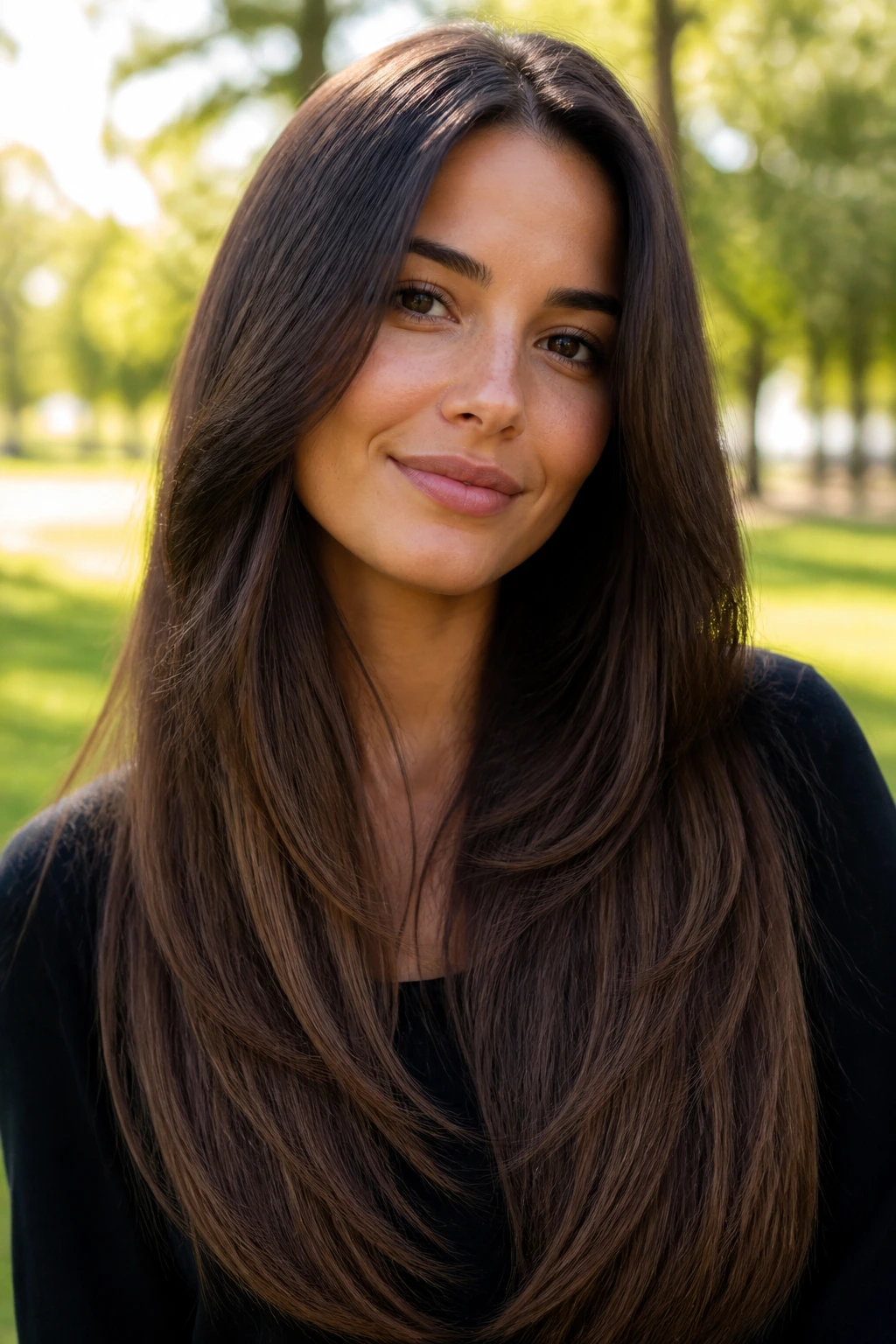
Thick straight hair is the opposite problem. There is usually plenty of length and density, but the haircut can feel heavy, boxy, and hard to move.
The answer is not to shred it to bits. That’s a mistake. Remove weight through the interior and midlengths, keep the edges solid, and let the layers support the shape instead of stealing it. Thick hair looks best when the cut has structure, not when it is thinned into nothing.
Texturizing shears can help here, but only if they are used with restraint. If too much bulk gets removed near the ends, the haircut can puff in humidity and turn hard to control. A good stylist will leave enough density to hold a smooth line.
20. Long Layers for Pin-Straight Hair
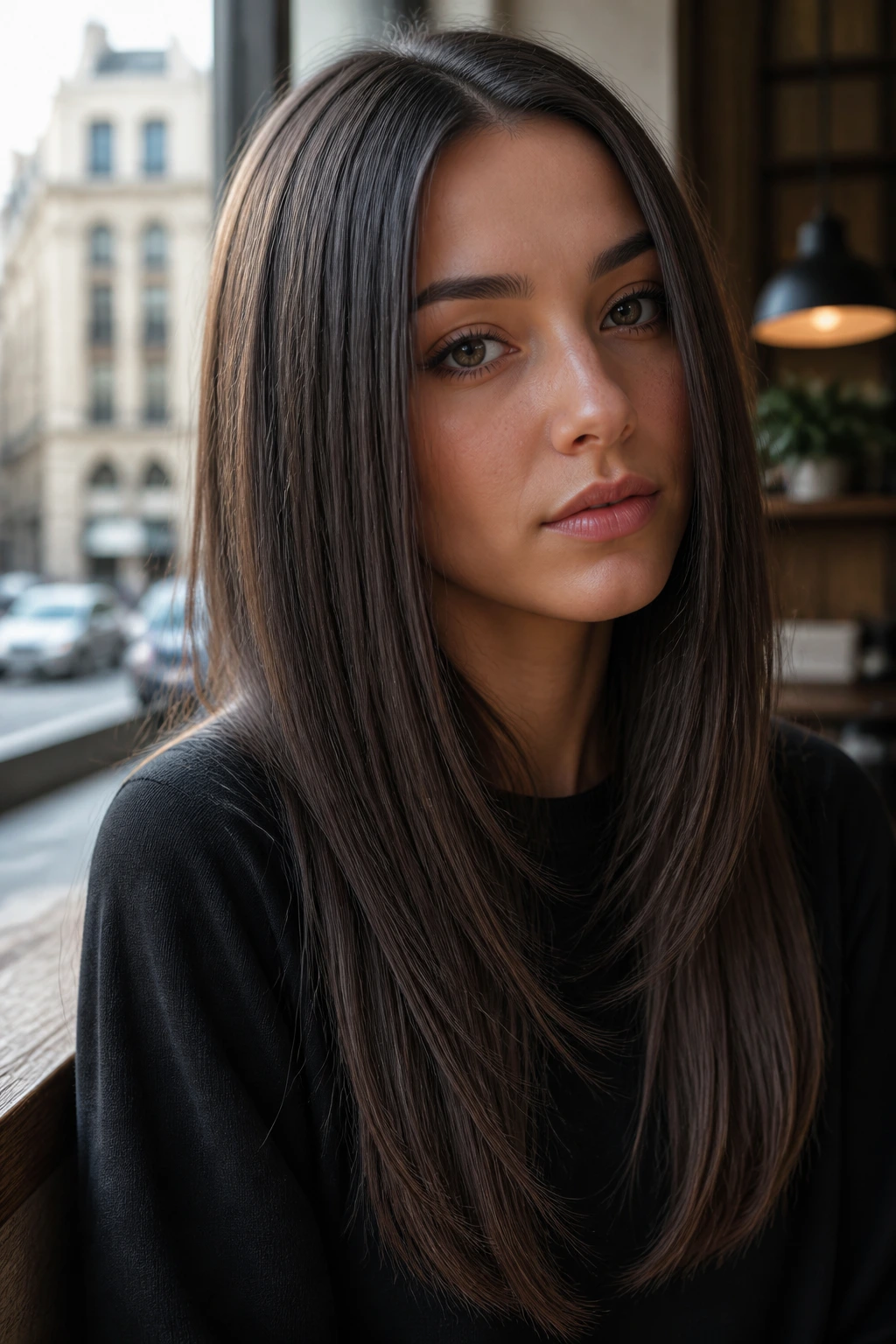
Pin-straight hair shows every decision. Every one. That can be annoying, but it also means a precise cut looks exceptional because nothing hides it.
The safest path is usually soft layering with a clean outline and very deliberate placement. You want the layers to move the eye, not scream from across the room. On this kind of hair, too much texture can look separated in a bad way, so the blending has to be clean and the ends should still feel connected.
A flat iron can make pin-straight layers look sharp, but a round brush blowout often gives the hair more life. The finish changes the cut more than people think. Same haircut. Different mood.
21. Soft-Edge Long Layers
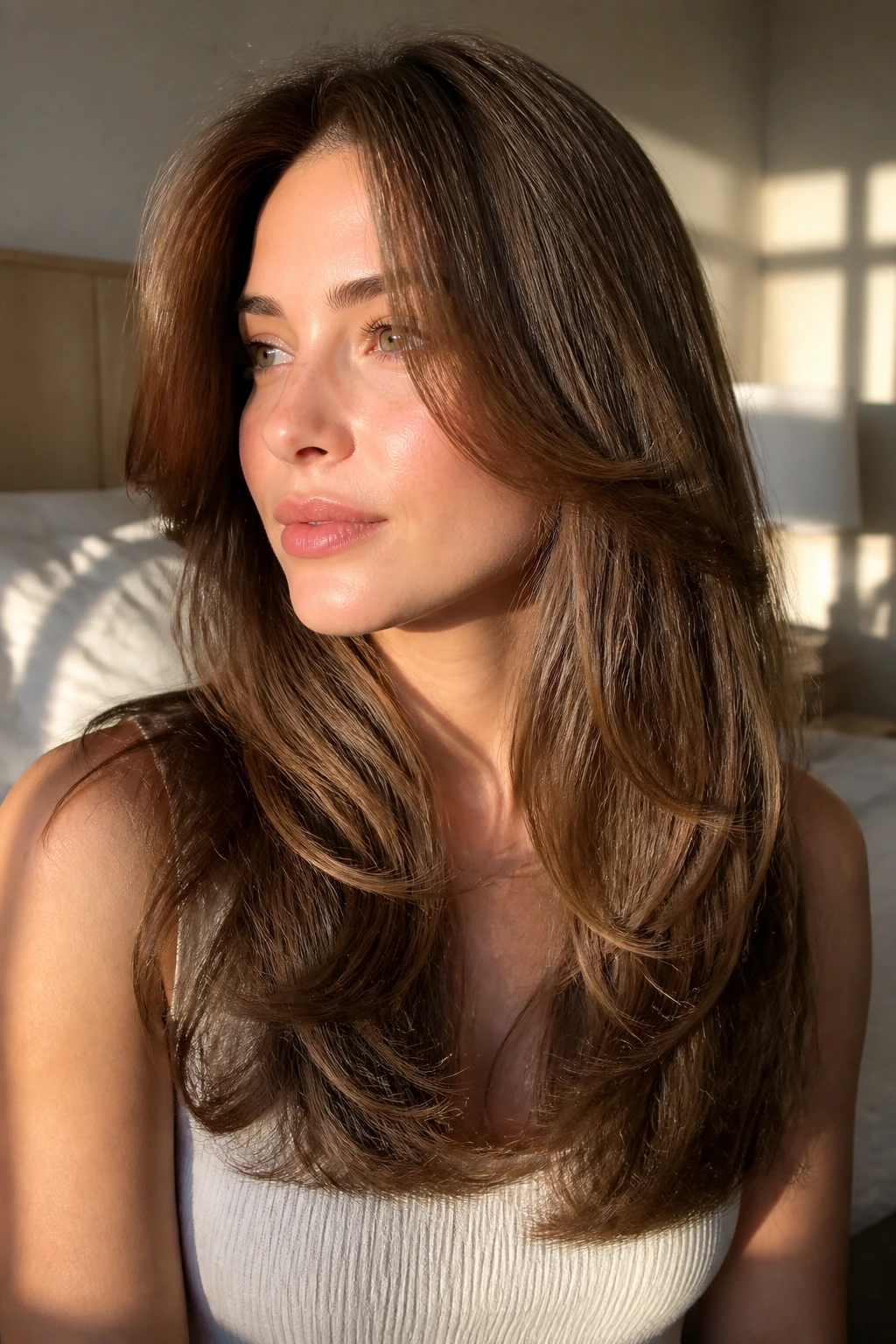
Soft-edge layers are for people who want movement but do not want the haircut to look sliced apart. The ends are lightly softened, usually with point cutting or a gentle hand, so the transition feels smooth.
That softness matters on straight hair because hard lines can show up fast. A cut that is too sharp can feel severe, especially if the hair is long and all one tone. Soft edges keep the length looking healthy while still breaking up the weight enough to give shape.
This is the version I’d choose if someone says they want “something subtle.” It grows out well, it styles easily, and it does not demand a lot of fuss. Some cuts are trying to make a statement. This one just needs to look good.
22. Dramatic Face-Frame Layers
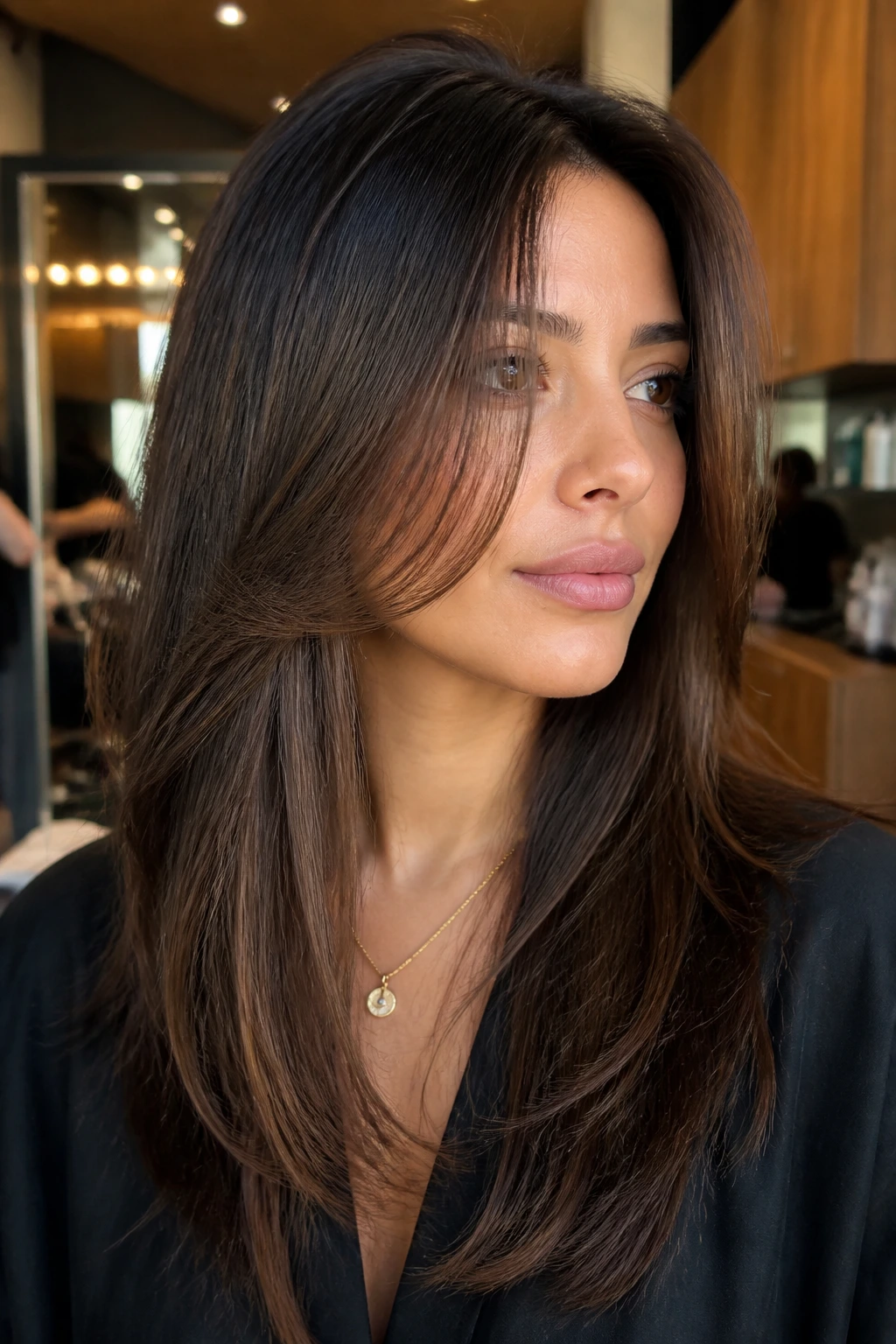
Dramatic face-frame layers change the whole mood of long hair. They begin lower and are usually a little longer than curtain layers, so they give you a more noticeable frame without taking over the cut.
Do you want your hair to open up the face more forcefully? Then this is the one to look at. On straight hair, the pieces fall cleanly along the jaw and collarbone, which creates a strong line around the face. It can be flattering on long faces, and it can also soften a wide forehead without hiding too much length.
The caveat is simple: if the front pieces are too thick, they can dominate the haircut. Keep them blended into the rest of the layers so the front feels intentional, not heavy.
23. Long Layers That Grow Out Well
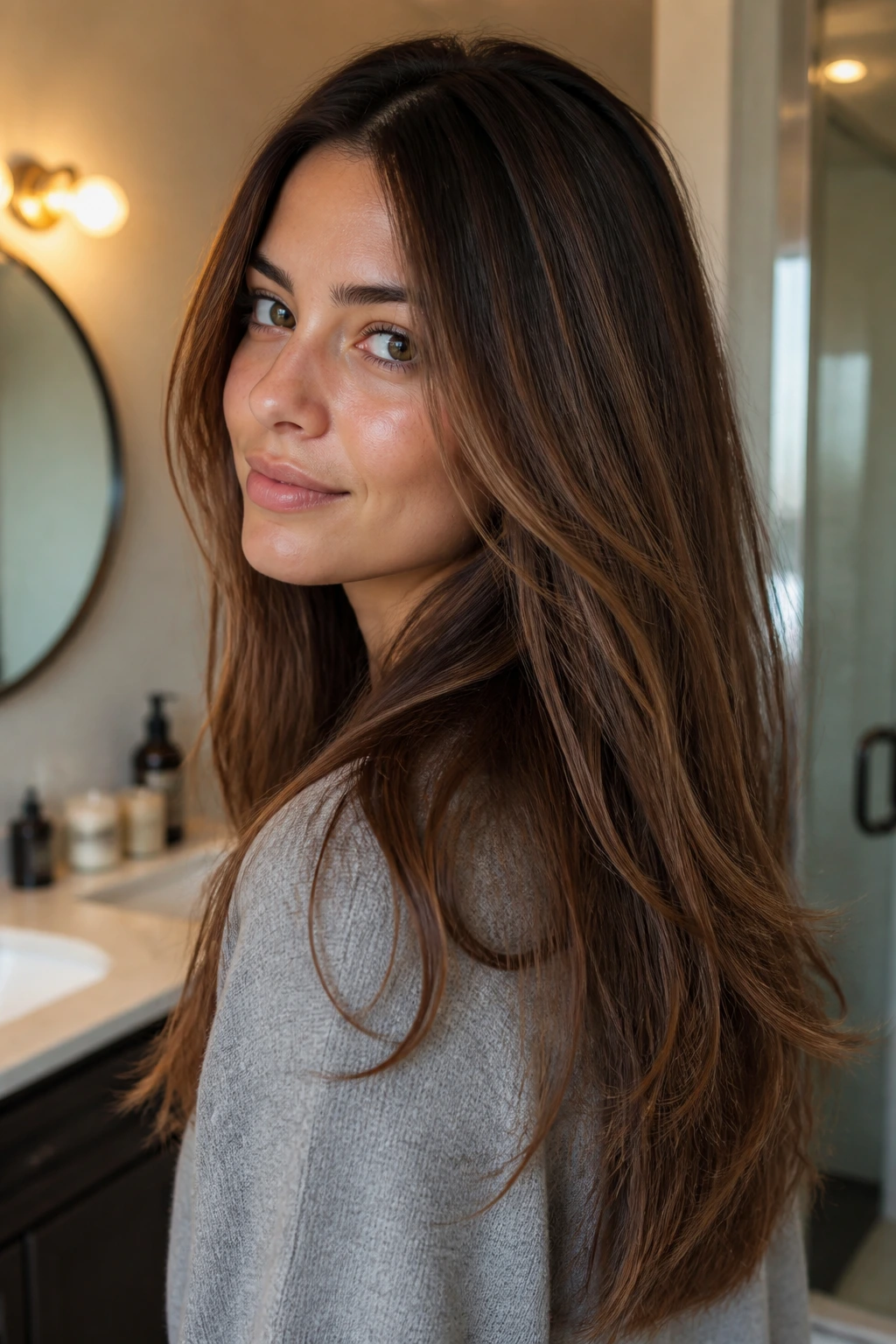
Some layered cuts are high-maintenance by nature. Others keep their shape even after the first trim starts to blur. If you do not want to live at the salon, this matters.
The best grow-out-friendly layers usually start lower, blend softly, and keep a full perimeter. Avoid extreme V shapes and very short face-framing pieces if you want the cut to last. Straight hair makes grow-out lines obvious, so the less dramatic the transition, the easier it is to live with for months instead of weeks.
A trim every 8 to 12 weeks is usually enough to keep the ends looking clean. If your hair grows quickly or the ends split easily, you may need it sooner. That’s not glamorous, but it’s the truth.
24. Blowout-Ready Long Layers
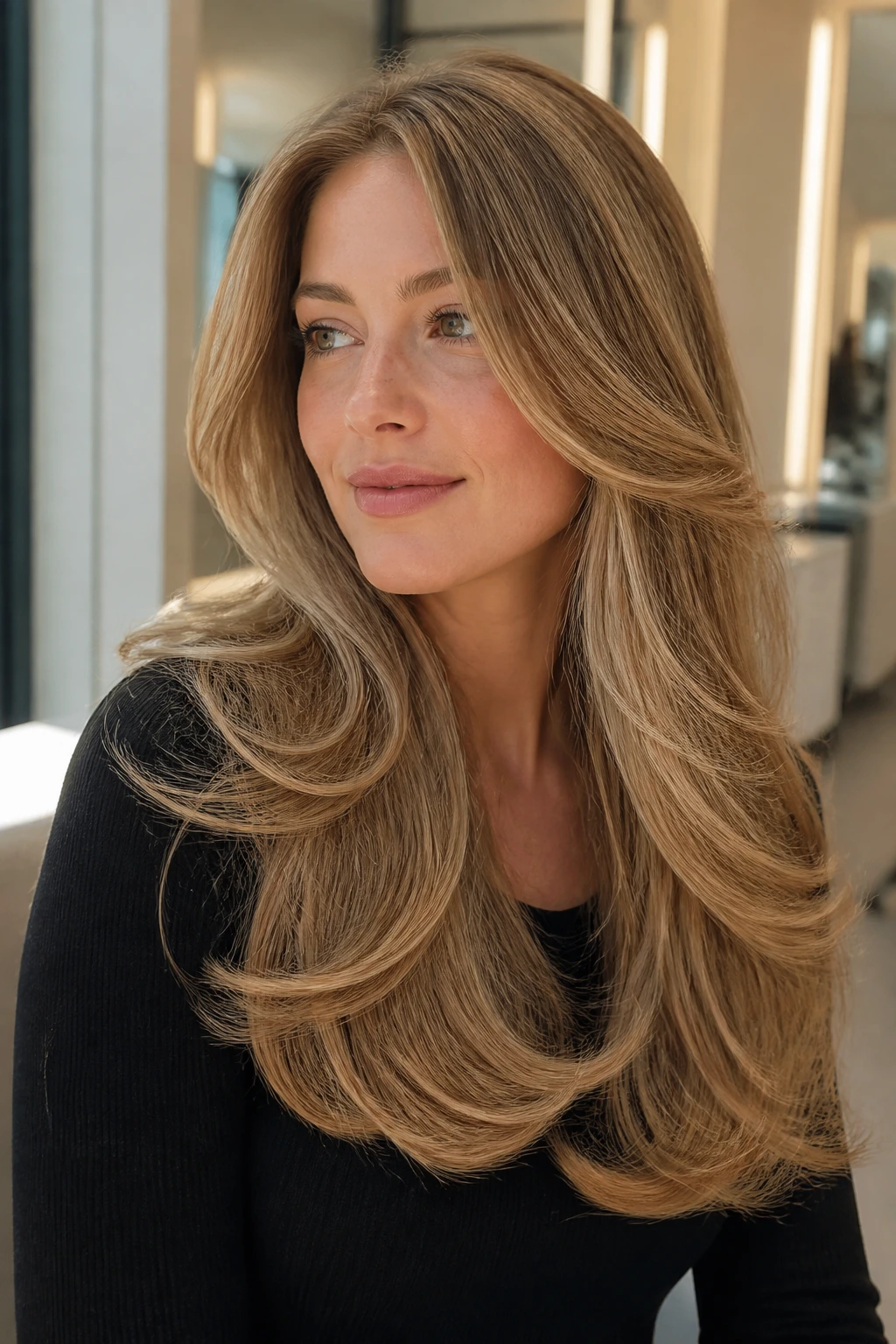
Some cuts are built to live under a round brush. This is one of them. Long layers that are shaped for blowout styling can give straight hair bounce, curve, and a little swing at the ends.
Best styling tools
A 1.25-inch to 1.5-inch round brush works well for most lengths. Use a nozzle on the dryer, aim the airflow down the hair shaft, and turn the brush under at the ends for that clean bend. If the front pieces are a little shorter, they can flip away from the face in a way that feels polished without looking stiff.
- Best for people who style with heat most days.
- Ask for layers that follow the direction of your brush, not random pieces.
- A lightweight heat protectant keeps the finish smoother.
- Finish with a cool shot if you want the shape to hold.
This haircut is plain in the best way. It gives you something to work with.
25. Long Layers with a Rounded Hemline
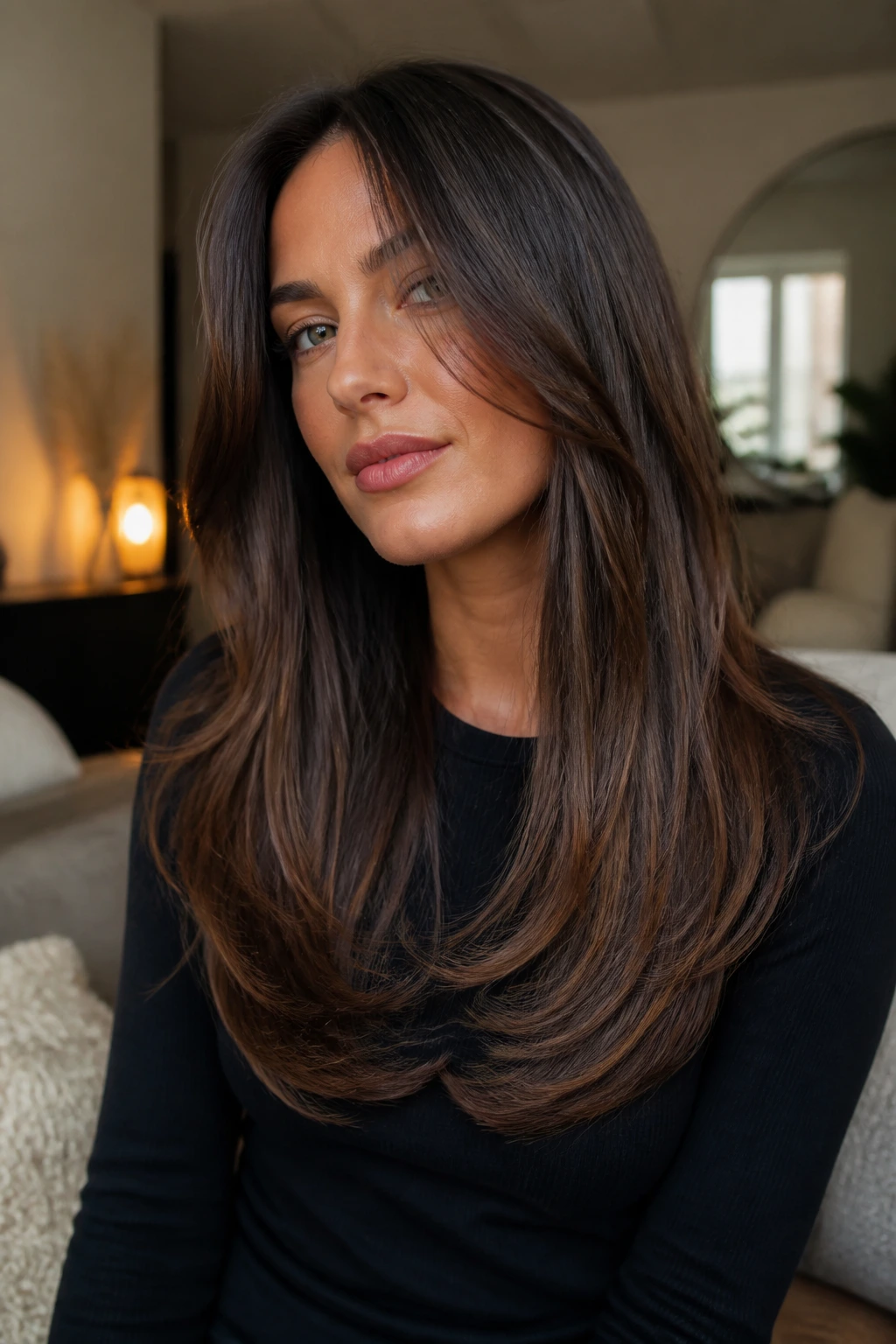
If you want one long layered haircut that plays nicely with straight hair, the rounded hemline is hard to beat. It keeps the ends full and smooth, then curves the silhouette just enough so the cut does not feel boxy.
The rounded base also helps the layers blend. Instead of ending in a hard corner, the hair falls into a softer arc that looks good whether you wear it down, half-up, or tucked behind the shoulders. It is one of the more forgiving choices on this list, which is why I like it for people who are unsure where to start.
There’s a reason stylists keep returning to this shape. It works with the way straight hair falls, not against it. That’s the whole trick.
Final Thoughts
Straight hair rewards good structure and punishes sloppy layering. That can be annoying, yes, but it also means a well-cut shape reads beautifully with very little effort. The best long layered haircuts for straight hair are the ones that keep the bottom line healthy, add movement where it counts, and fit the way you actually style your hair.
If you want the safest route, start with curtain layers, invisible layers, or a rounded hemline. If you want more attitude, the shag, the butterfly cut, or choppy layers will give you that without sacrificing length. And if you love sleek hair more than anything, keep the layering subtle and let the outline do most of the work.
Bring a clear photo to the salon, yes. But bring a second one too — one that shows the back of the haircut. Straight hair leaves nowhere to hide, and a good reference beats a vague description every time.
